
The Motor Mechanics Of Bow

Help publication by preordering now and we will post you a copy signed by Tessa Hunkin at the end of September in advance of publication on October 2nd. Additionally, we are including a complimentary copy of A Hoxton Childhood (cover price £20) with all pre-orders in the United Kingdom. CLICK HERE TO ORDER YOUR COPY

Yaima at Bow Tyres
Over the years, Contributing Photographer Sarah Ainslie & I have visited many railway arches documenting the life of these charismatic spaces where people have sought the liberty of earning a living independently and enriching the city in the process.
At Arnold Rd in Bow, we dropped in on a parade of a dozen arches where garages offering all aspects of motor repair have thrived over recent decades, supplying a reliable and conscientious service to local people.
In common with other railway arches across London and the entire country, we found these small businesses are subject to escalating rent increases which mean they are struggling to make a living and which threaten to destroy their livelihoods entirely.
Yet in spite of this crisis, we received a generous welcome from this mutually-supportive community of twenty-five to thirty mechanics who work together across their different garages, sharing skills and helping each other out as necessary.

Sultan Ahmed at Bow Motor Aid

Minar Uddin and his son Mostafa at Jonota Motors
Mostafa Uddin – “We do mechanics and some body work, small jobs. I have been working here for ten years, learning from my dad. I began by doing stuff with him and now I am running it. My dad set up the business thirteen years ago. He had another garage before this one in Bancroft Rd, but he had to leave that one because the rent was high. Now this rent is sky-high as well, our last recent increase was nearly double. With the amount of rent we have to pay, it is not worth us working for the small income we can make. If the business continues like this, we cannot carry on.”


Opal Meah, proprietor at S Motors
“I do car mechanics and electrics. I have been in business since I left school, over twenty-five years now, and I have been in this arch for about eight years. Every year the rent goes up and now they are increasing it more. I am not making any money. One month you are lucky and you make enough to pay the bills but other months are very hard. I don’t know what I am going to do, I don’t know anything else but car mechanics. I want to stay here, but if I cannot afford the rent how am I going to stay? Before it was good but now it is so tight.”

Mohammed Chowdhury at S Motors –
“It’s really close knit here – like a big family – and everyone looks after everyone else if anyone gets stuck. Everyone has their own speciality and their own trades, so we can always ask everyone else to help us out. Yesterday, I was not too sure how to remove a panel from a Volkswagen golf but the bodyshop next door gave me a hand and I had the job done in a matter of minutes. Round here, it is beautiful because you can rely on each other, if anyone needs help or a push for a car. It is brilliant.
Quite a few new businesses have established themselves here in small arches and then grown substantially and looked for bigger premises and are doing really well. Some of these arches have been renovated and everybody has enough business to keep themselves afloat and cover their wages. It is a great starting point.
Some customers are drive-throughs, other are local. Word of mouth and friends and family have built our business. No-one who works here lives too far off from here.
If someone has background knowledge and they are looking to get into it and pick up some skills, there are opportunities here for young people to learn, develop themselves and climb up the ladder.
Rents are increased here without any reasoning and the landlords want to move this place upmarket, trying to get in other kinds of businesses. But if they are constantly bumping the rent up, how are people supposed to survive? Everyone’s struggling to survive here now, to be honest.”

Faisal Siddiqi at Ali Auto Repairs
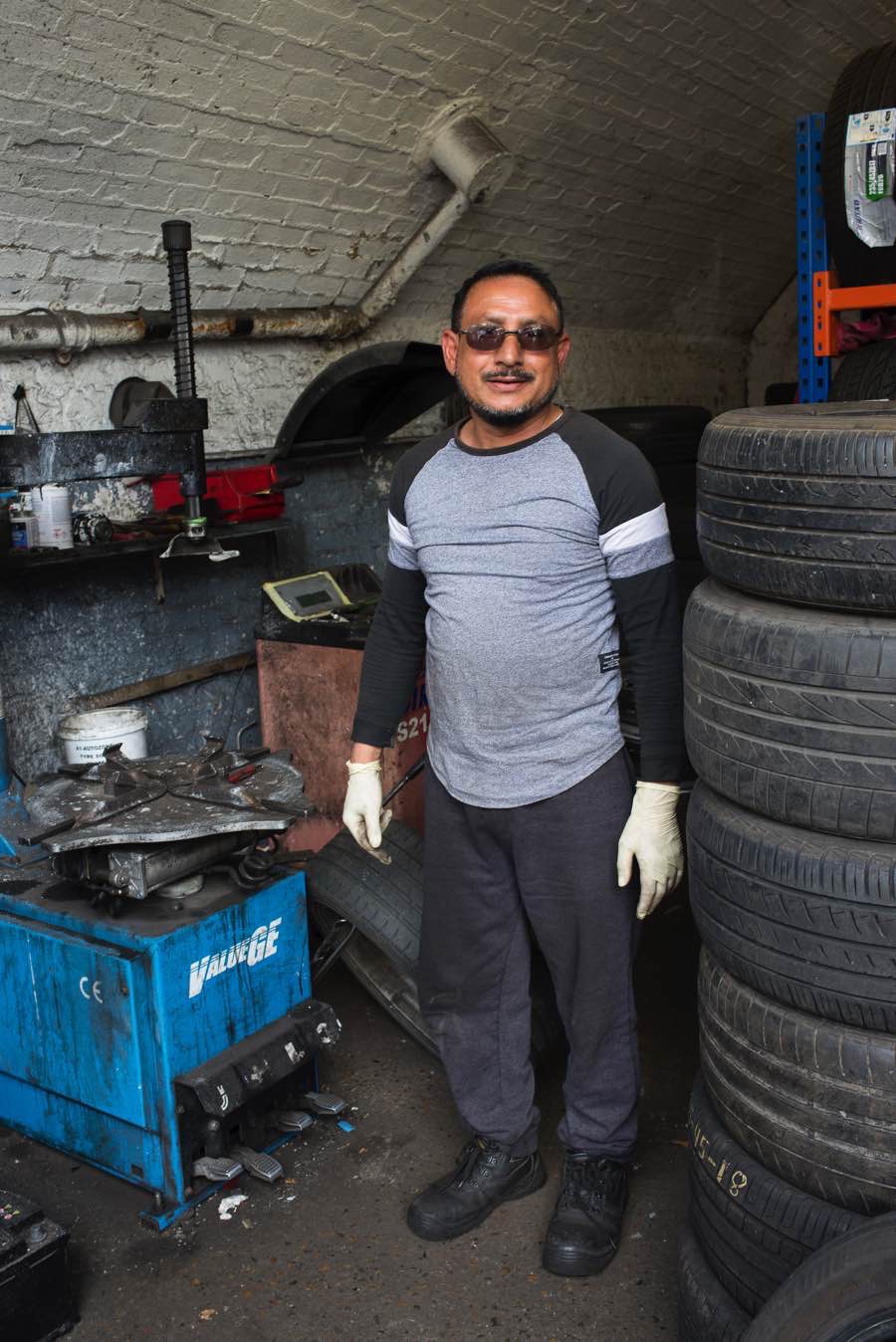
Shajhan at Jonota Motors

Arif Giulam at Reliance Motors

Tommy, Misa Sheink, Sayed Uddin, Arif Giulam and Naiem at Reliance Motors
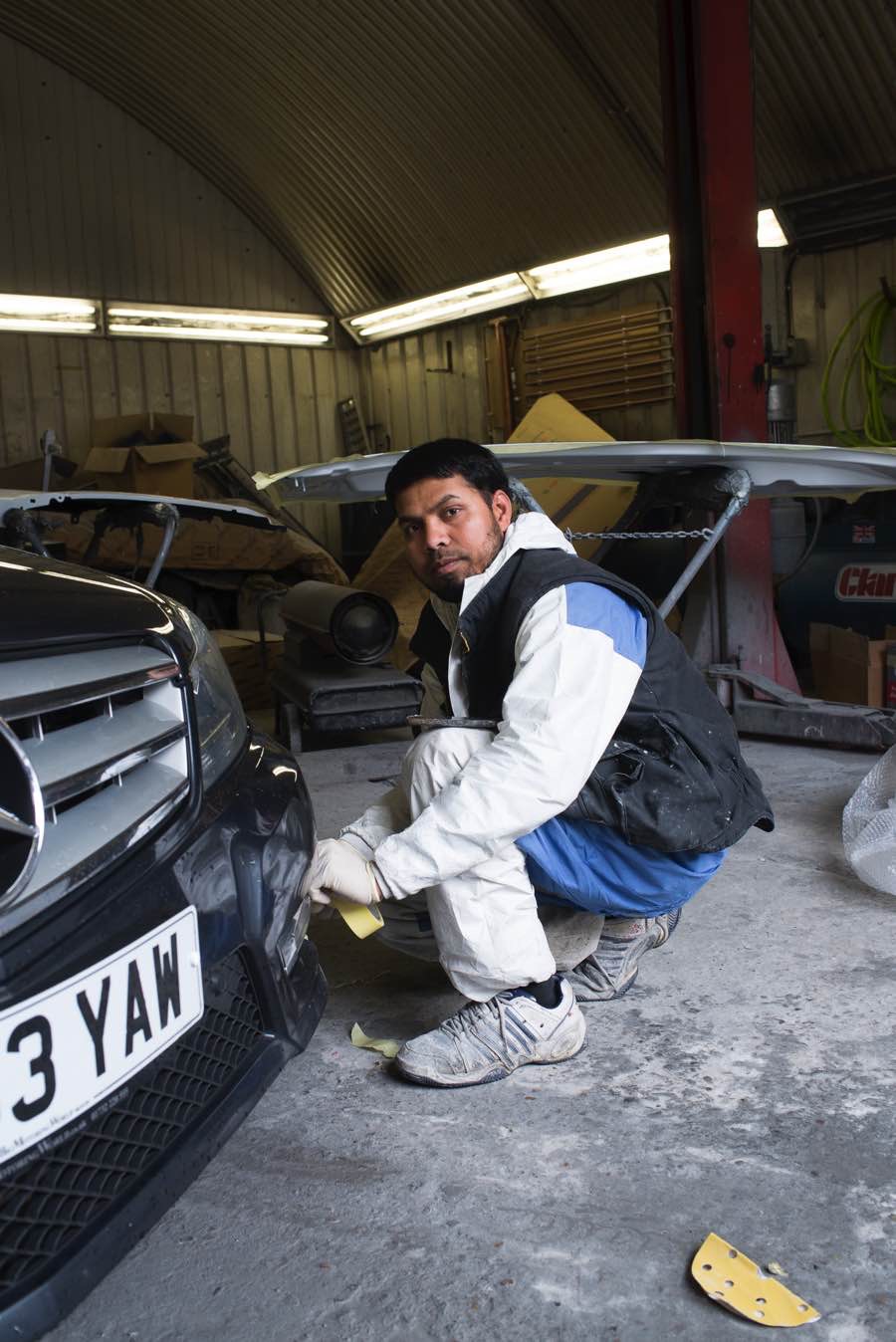
Shajahan Ali at Ali’s Body Work

Ali Noor at Ali Auto Repairs

Ahmed Shuhel at Spanner Work
Photographs copyright © Sarah Ainslie
You may also like to take a look at
At St Andrew’s Chapel, Boxley
Only three more Spitalfields tours left! CLICK HERE TO BOOK
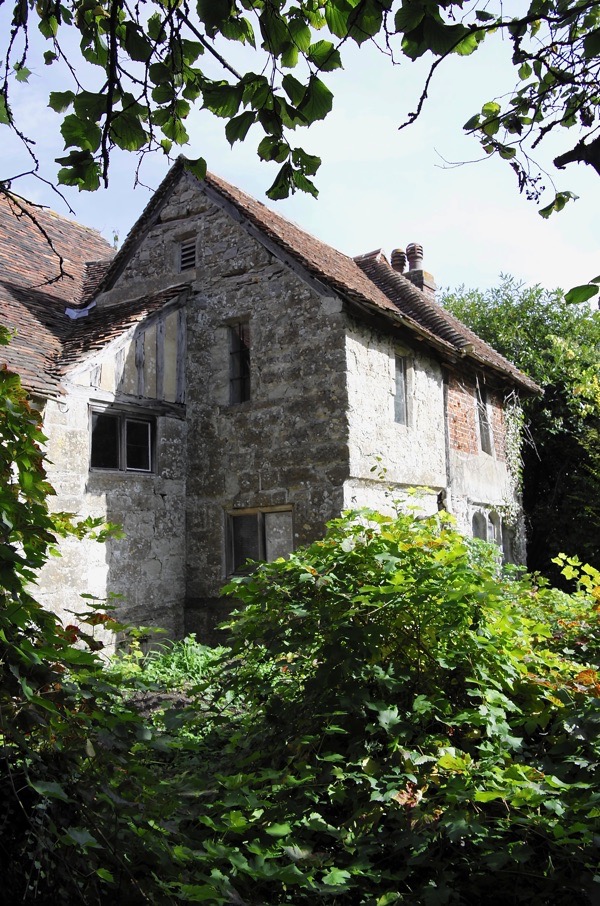
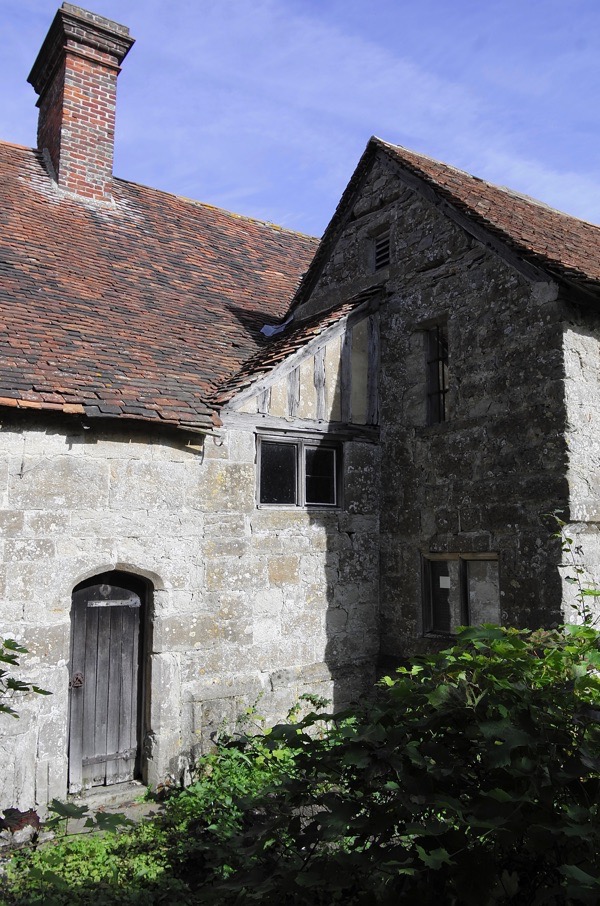
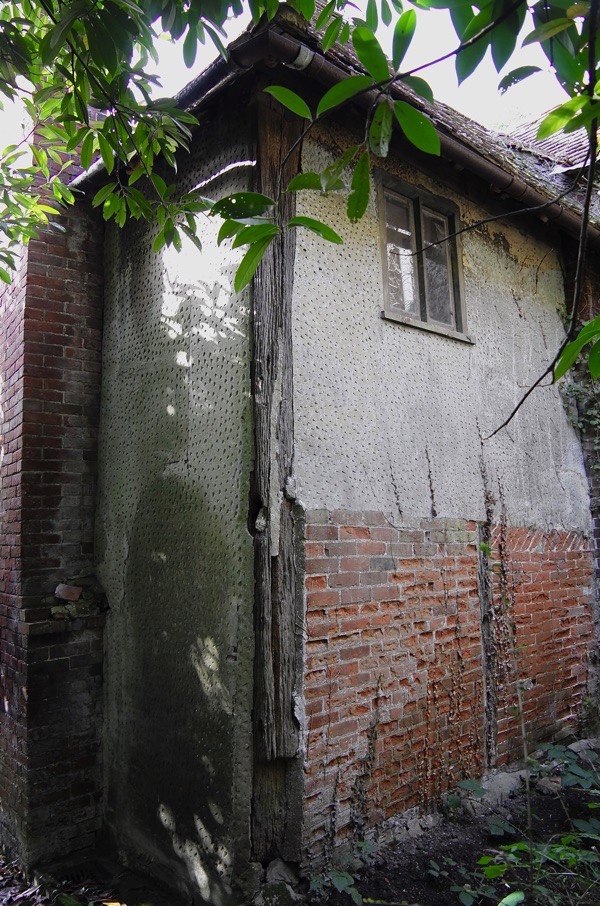
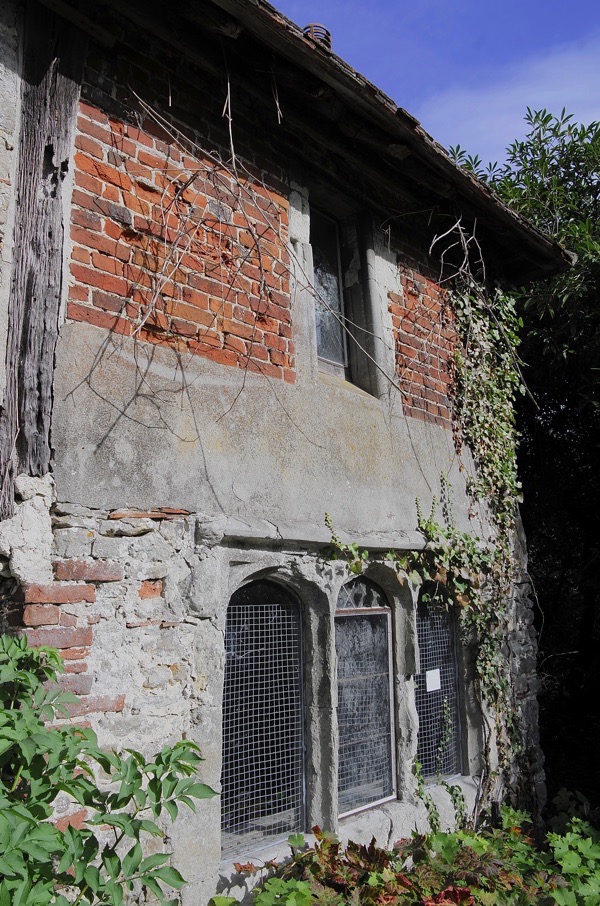
In the autumn of 2019, it was my great delight to accompany Matthew Slocombe, Director of the Society for the Protection of Ancient Buildings, to visit an unspoilt fifteenth century cottage on the Pilgrim’s Way in Kent that the Society had rescued from decades of neglect. Their founder William Morris would have been proud because it is exactly the kind of rural dwelling that he dreamed of in his wistful lyric visions of old England. The cottage had not been inhabited in fifty years or decorated in a century and one exterior wall was close to collapse. Five years later, the building has been repaired and is up for sale at Inigo House.
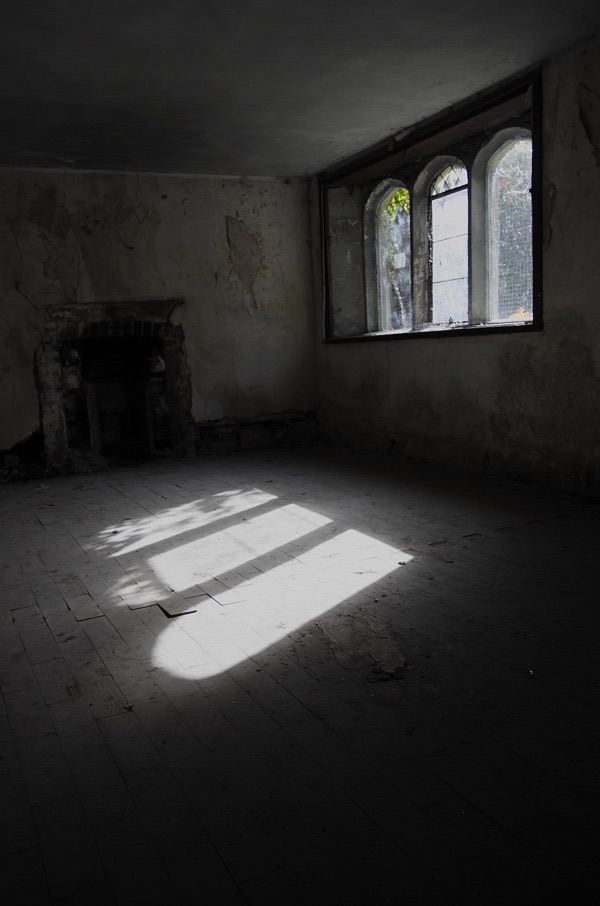
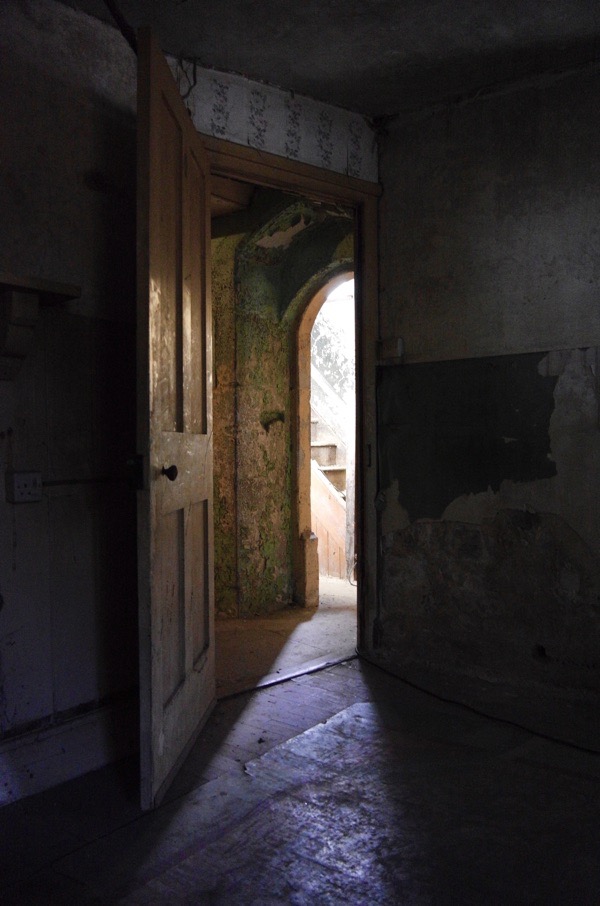
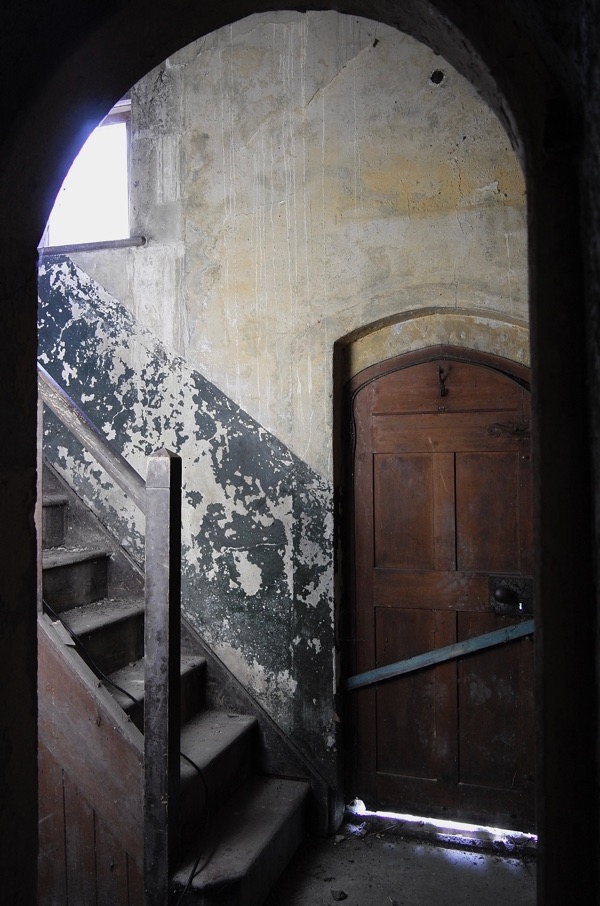
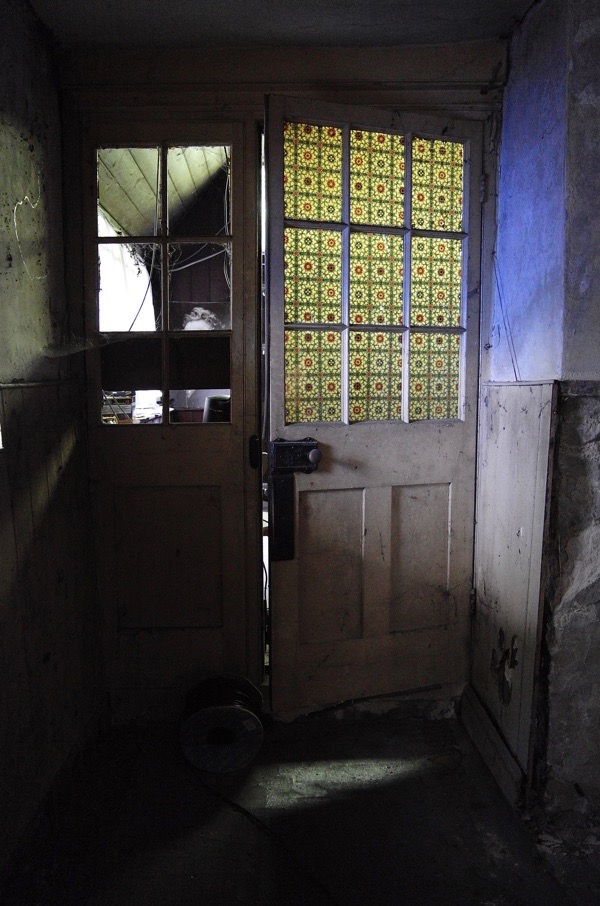
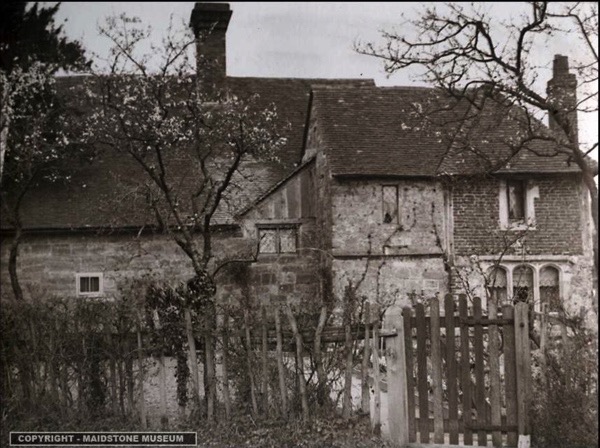
St Andrew’s Chapel in 1911 (Courtesy of Maidstone Museum)
Sarah Ainslie’s Somali Portraits
Click here to book for September and October
Help publication by preordering now and we will post you a copy signed by Tessa Hunkin at the end of September in advance of publication on October 2nd. Additionally, we are including a complimentary copy of A Hoxton Childhood (cover price £20) with all pre-orders in the United Kingdom. CLICK HERE TO ORDER YOUR COPY
Contributing Photographer Sarah Ainslie undertook this fine series of Somali portraits, accompanied with eloquent testimonies dictated by her subjects
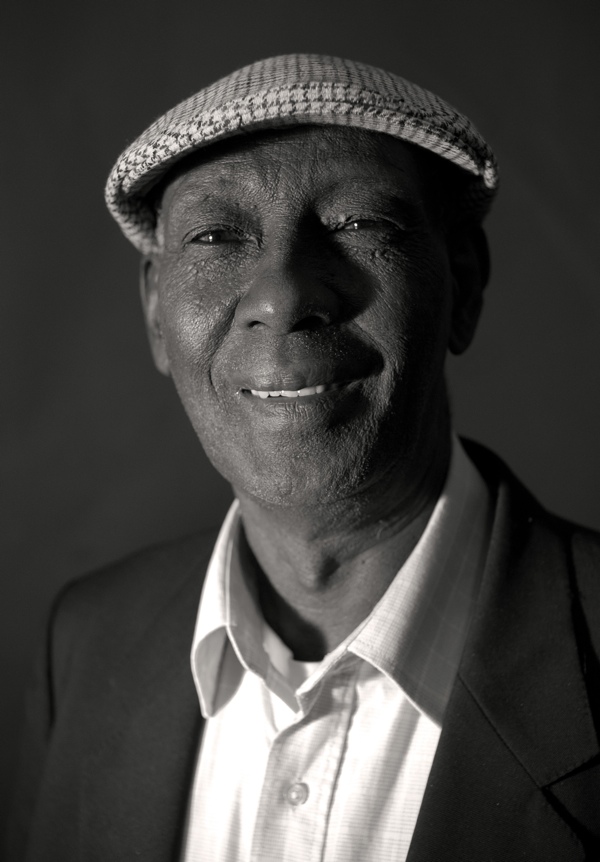
Adan Jama Mohammed – Seaman
“I came to this country when I was twenty years old in 1958. Before than I was in Aden, working on a small passenger boat, but when I came here I was thirty years as a seaman and living in Middlesbrough. I started on 8th April 1959 as a merchant seaman, earning £21.50 a month. Until 1980 it was my job, then I worked on big container ships. We didn’t have much to do. I married in 1987 and I had a family in Middlesbrough, but we had to leave because they closed the docks and the factories. I had a house and a family, and a mortgage I couldn’t pay. The building society said if I didn’t pay £70 a month, they would take the house back. I had to sell the house at half price, and now my children are grown up and don’t want to know me. I live on my own in a flat at the Seamen’s Mission in West Ferry Rd, Isle of Dogs, and my family live on the other side of London. I don’t like living here in this city, there’s too many people – but you can’t help it, if you don’t have a choice. I do have some friends at the Mission. It was a hard life as a seaman.”
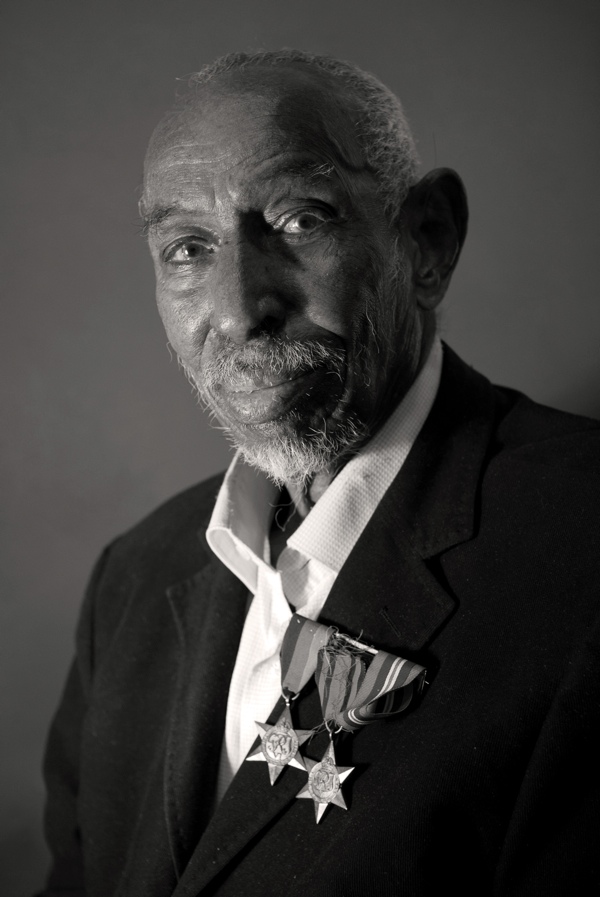
Ahmed Hassan Sulieman – Seaman
“I was born in Aden, when I was a schoolboy everyone over sixteen joined the army. My father was in the First World War and he was killed fighting for the British in Egypt in 1918, when I was four. So my brother and I, we wanted to join the army and take revenge on the people who killed him. All my family were in the army. All the army, they treated us very good – white and black together, no colour bar.
In 1944, I was shot in the leg while I was on a British ship that was sunk by two German U-boats off Durban. We were at sea on a raft for two days and two nights before we were marooned on land without food. I went inland and walked for six days to search for help before the British found us and took us to Durban, and when we recovered they sent us back to fight. In Egypt, four thousand people were being killed a day at that time.
I was also in Germany and Japan, the kamikaze pilots crashed into our ship. It was a very bad war, but we wanted to win – losing was nothing. I am brave because I wanted to beat the Germans and I fought for myself, I didn’t want to be captured. I was happy when we won the war and I’m happy that I’m still alive. I had four medals but I lost two recently, I never asked for them.
At the end of the war, they gave us a passport and a suit of clothes, and they brought us here to the Seamen’s Mission where I live today. So we were quite happy. I’ve been here seventy years. They said you are fit to work and I joined the Merchant Navy. I got £200 a month, before that I only got £24 a month and I had to shovel coal but the food was free. I worked as a merchant seaman until I got too old and I have lived in the Seamen’s Mission for the last forty years. I and my brother we used to go back to Somalia every year, until he was killed in a car crash in Poplar in 1980.
They told me I could bring my family over, but there’s nowhere here for them to stay. I had eight children, all grown up. Now haven’t seen them for over a year and I feel sick, and I want to go home for good. I’m too old and I want to see my children.”

Shamsa Hersi – Manager of Somali Elders Day Centre
“I was born in a town called Burao in Somaliland and I came to UK as a refugee in 1990 when I was a child. From an early age, I wanted to work for UNICEF and in those days my great uncle used to work for the United Nations, he talked to me about his work when I was eight. I cared for my family for many years in Somalia – it is second nature to me, but you have to train to be a Social Worker. I believe that if you can work with people to help them, then it gives you a more rewarding life. I studied at university in the UK and I have a qualification in psycho-therapy and a diploma in working with people who have had traumatic life experiences. It’s about giving something back for the support I received when I came to this country. It takes a lot of guts and hard work and skills to build relationships, but it’s a privilege to work with these people – they are survivors.”
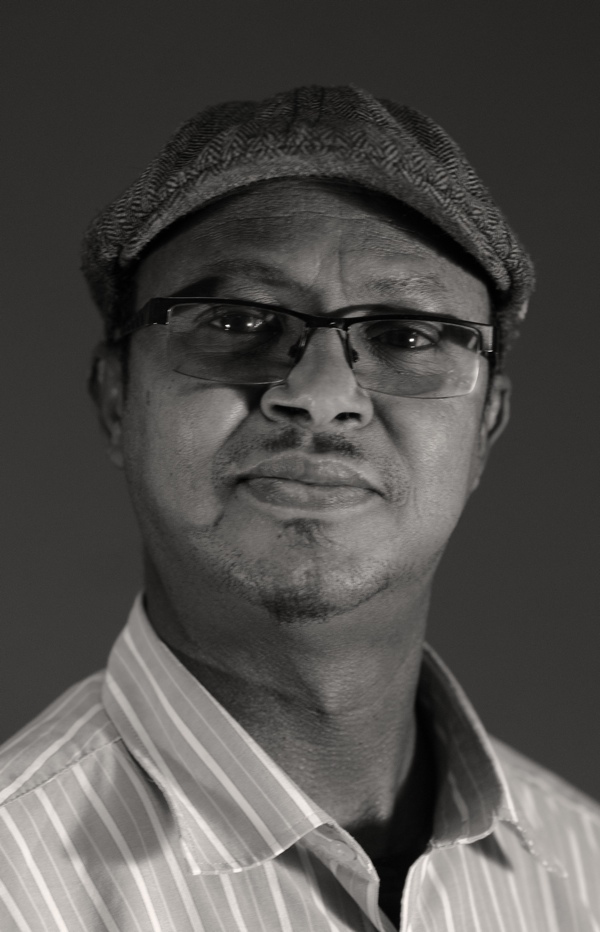
Ali Mohammad – Day Care Officer
“In 1988, there was a civil war in Somalia and I fled to my brother Isaac who was a senior official at the Ministry of Education in Mogadishu. Then, in 1989, there was a massacre – fifty-six people in my tribe were shot. They dug a mass grave and shovelled them in, but there was boy who was not shot and fell in the grave too. He managed to get out and spread the news. My brother told me to go to South Africa or India, anywhere away from Somalia, and he gave me 200,000 Somali shillings and $100. I went to India and then to Bangladesh where I studied at Dhaka University, hoping to come to Europe. My grandfather Uma Hassan sent me some money from London and my visa came through before I graduated, so he told me to come at once and I arrived at Heathrow on August 21st 1992. Because I had a family address, I decided to surprise them. I took a minicab to Poplar and they couldn’t believe it was me when I arrived!
I shared a two bedroom flat with another guy in Woolwich. The country was in recession at that time and there were no jobs. Some of the Somalis who came before me didn’t try to find work, they were so negative. They said, ‘As a black guy, you haven’t got a chance.’ But I tried and, after a month, I got a job as a kitchen porter at Queen Elizabeth Military Hospital in Woolwich, all the kitchen staff and cleaners were employed by a contractor. At first, I found it hard to get all the work completed on time but it got easier after a while. I got £2.85 an hour. Language was a problem and it was a very physical job, I found it exhausting. I couldn’t understand the people I worked with because they spoke colloquially – innit? – whereas I spoke more formal English.
I enrolled at Greenwich University and while I was working seven until seven for five days, on the other two days I did my part-time course. What I earned, I sent home but there wasn’t much left after I paid the bills. I lost my job when the contract ended after one year and eight months but by the time I finished I was earning £4.50 an hour. After three years at university, I left with a diploma in computing but I was unemployed for three months. I could only get work one day a week, doing cleaning and security in the City, I couldn’t find a decent job – they were all shut to me.
Someone told me there was an apprenticeship in Social Care available for a resident of the Ocean Estate. I was still living in Woolwich but I thought, ‘I could move to the Ocean Estate.’ A Somali landlord had a four bedroom flat with an empty room, so I took it and I got the job. They paid £500 a month and I did six months working in Social Care with disabled people, seniors and children. I did well and, in 1995, I spotted a job for a Day Care Officer advertised. By then I had my certificate, so I applied and I won that one. And this is the job I do now here at the Somali Elders Day Centre. I got married in 1997 and I have three daughters and I live in Bethnal Green, five minutes walk from my work. I know everyone in this area.”
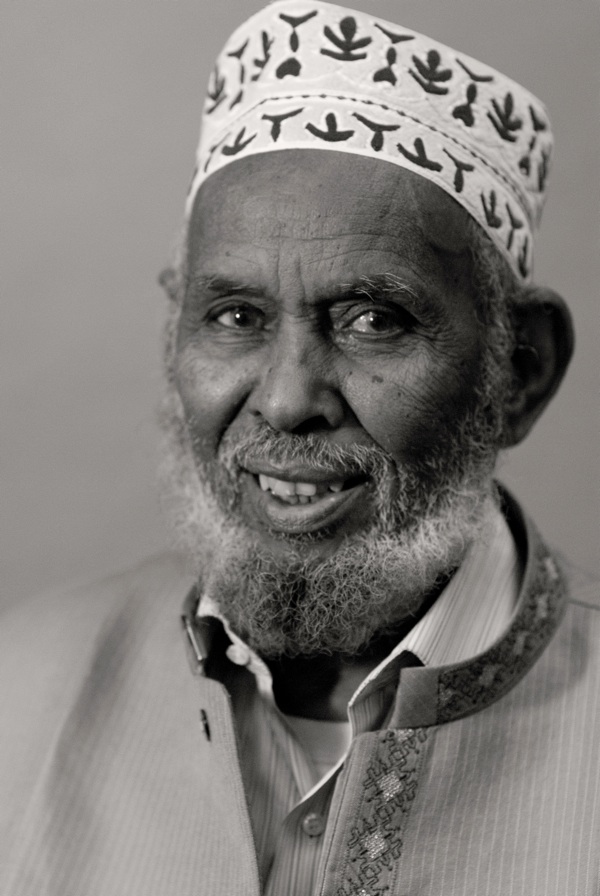
Ahmed Yunis – Seaman
“I came here in 1956 when I was a sailor in the Royal Navy. I felt comfortable in London because at that time my country was a British colony. I came on a Saturday and I left on the Monday. I was only here two days, I went to the Merchant Navy office and they gave me a job which lasted until 1982, when I retired. I lived in Liverpool for twenty-eight years but I consider London my home.
I am ninety-three years old. I have two wives, one here and one in Somalia. My London wife is forty-five and I have four children under eleven, the youngest is six. I am a grateful father. I am also a great-grandfather. If you don’t smoke or drink or kiss women, you stay healthy.”

Kinsi Abdulleh – Artist
“When I got off the plane in the eighties as an eighteen-year-old refugee, I had an older family of relations to go to in Cable St. I remember thinking, ‘We’re going to England.’ and we passed Westminster and the Tower, and we ended up in this run-down, dark little side street. I thought, ‘God, what have we come to? This is really poor, like being in Africa. I’m jumping from the frying pan into the fire!’ But, on the other hand, I fell in love with the place. I went to college and it was exciting that I could get up and go without supervision. I watched the Jackson 5 on TV and bought jeans, even though the older generation expected me to be more conventional. They said, ‘You’ve only been in the city two days and you’re going ice skating!’ They had a false outdated view of my country that I was supposed to believe. I came from the city not the village. People imagine you’ve come from Zululand and you live up a tree. I spent the formative years of my life being displaced, so I should be the one longing for tribal culture, but I am frustrated by the patriarchal tribal culture. I’ve been fortunate to end up in a place where people have extended a hand to me. I can go anywhere in Tower Hamlets, and that’s why I’ve stayed because I can walk down the street here and make my own history.”
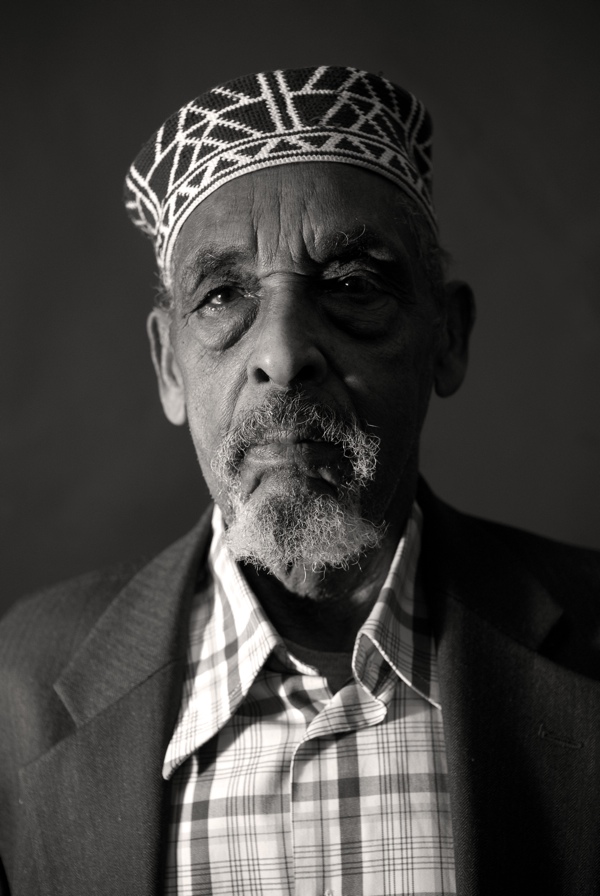
Ali Mohammed Adan – Seaman
“I first came to London by ship in March 1958. I stayed in Aldgate for a night and went to Newport where my cousin had a house. There are many Somalis there. From that day until I retired in 1990, I was in the Merchant Navy, and I brought my family over from Somaliland. In 1970, I moved back to London to Bethnal Green but my wife and daughters chose to stay in Newport.
In Somaliland, I owned over a hundred camels and sheep. Nobody keeps camels anymore, everyone sold them and moved to the city. They say, ‘It’s too much work.’ But keeping camels and sheep and living on a farm, it’s a good life because you eat every day. Everybody wants to do it again now.”
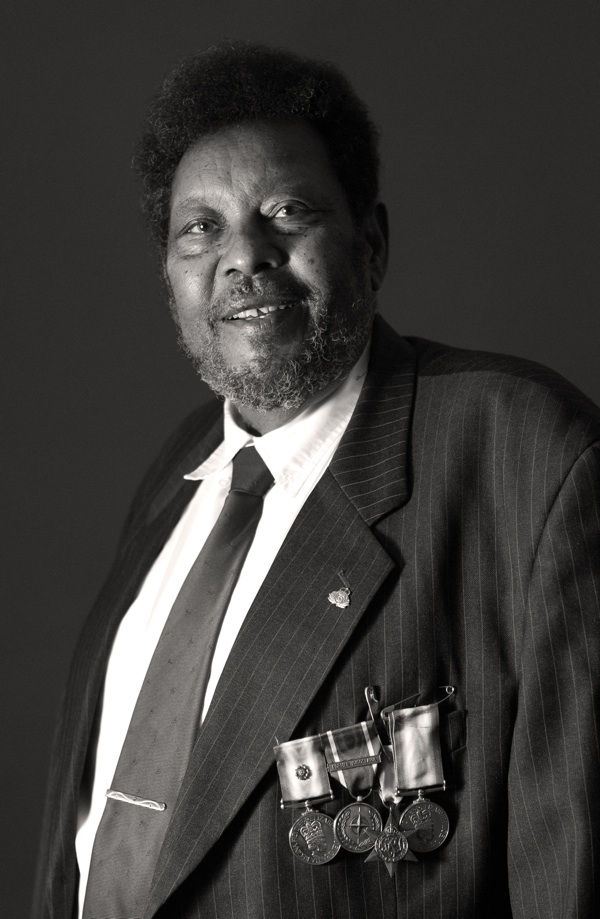
Ismail Ibrahim – Seaman
“I came to this country in 1958 from the South Yemen which was a British colony. I was born a British subject and I am still a British subject. They say to me, ‘Why do you like it so much?’ I say, ‘I don’t know any other government.’ I joined the Merchant Navy in 1960. After we fought in the Falkland Islands in 1982, I came back and joined the Ministry of Defence from 1983 until 2000. I was in Czechoslovakia with the United Nation Forces from 1984-89, then I was in Georgia. I was in Cyprus but when they were going into Iraq, I said, ‘I’m not going.’ I retired four years ago. In the Navy, I worked in the engine room and in the Merchant Navy, I was coxswain.
I was born in British Somaliland, in the city of Berbera, one of six brothers and four sisters. In 1960, we got independence and they joined British Somaliland to Somalia which had been an Italian colony and was run by the mafia – they rape, they kill. So we decided to get our land back and have self-government, and we fought for twelve years. They killed my father, they killed my brother and they killed my children.
In 1991, we got independence again, and we settled down and all was ok in Somaliland. The country needs European help because there are no roads and no facilities. So what can I do now? – I’m ok but a bit old. I’ve got four boys and two girls, and an ex-wife in Somlia that my brother took on, and a wife here in the City Rd that I don’t live with. I was away on a ship while my children were being born, I was always at sea not here with my children as they grew up. They don’t know me. My life was sea, sea, sea.”

Ahmed Esa – Seaman
“I joined the Navy in 1953 in Aden, I was a young guy and I just wanted to work and visit other countries. I came to Plymouth in 1953 and stayed with the Navy until 1969 when I joined the Merchant Navy. I retired in 1988 after thirty-nine years. My brother was in the Merchant Navy too, he was younger than me. He came to London and enlisted, but I never worked in London. All that time, my family was at home, so I fetched them here and they live in London now. I haven’t been back to Somalia since 1996, I can’t afford to cost of the trip. Being in the Navy, it was a hard life – all that time at sea, even if you got to different countries. I’ve have no home, I’m living here in the Seaman’s Mission and waiting for flat of my own. I’m a single man again, now my children have grown up. My brother caught a virus and died in Forest Gate. Life in London is solitary, though I have a few friends at the Mission from the Merchant Navy. I was a deck hand, a carpenter and an able-bodied seaman, an odd-jobs man.”
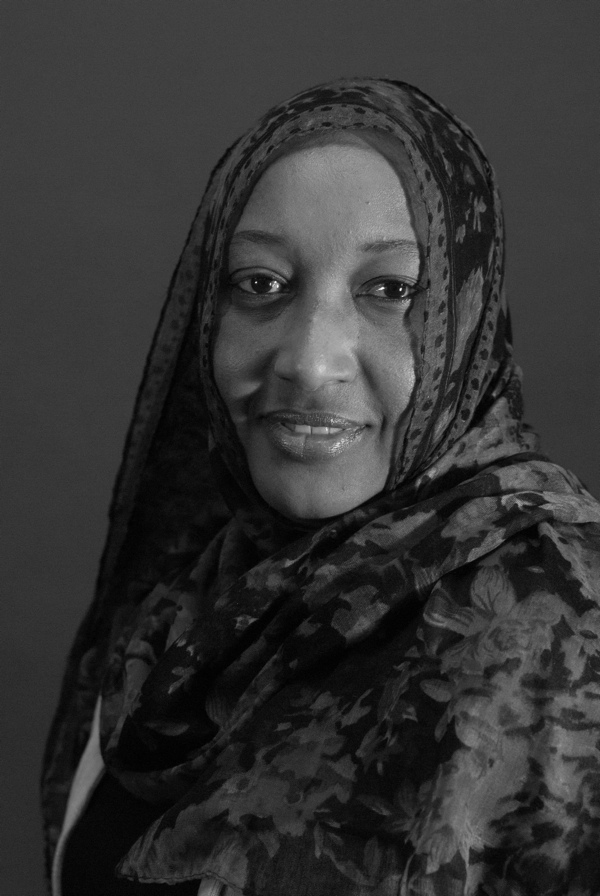
Yurub Qalib Farah – Day Care Officer
“I came to this country on my own as an asylum seeker in 2001. I had friends here to stay with and I went to college in Haringey, studying English Language and Computers – before I came this country I was working as a secretary. In 2002, I started searching for work, and people said Tower Hamlets is the best place to find a job and I learned that Mayfield House was advertising for a Day Care Worker. I called up the number and came for an interview with the manager at 2pm on November 11th 2002, and I have worked here ever since. My ambition is to help people and be a good care worker, and in this job I am using the experience I have had to help others. I got married in February 2004, and we don’t have children but my sister came to join us. I went back to visit my family in Somalia for the first time in ten years last Christmas. There had been some changes and my friends had moved to a different area, so it was like another country to the one I knew. It was safe but so hot. I think I have two homes, here and there – and I’m glad to have that. When I said to my friends, ‘I’m going home,’ they say,‘Which home?’ And then they say, ‘Can we come with you?'”

Ahmed Awad Yusuf – Seaman
“I first came here in 1959 at nineteen years old. At that time Somalia was a British colony and I had a British passport. Seven of us, we took a ship to Marseilles and caught a train to Dover and then arrived at Liverpool St. There were a couple of Somali coffee shops in Leman St and I stayed at one for three days. A friend of mine lived in Newport so I took a train from Paddington and stayed with him for four weeks, and then I lived in Cardiff for three years. First of all, I went to the Social Security and they gave me £2.10 a week, while I was looking for a job. I worked three years in Cardiff Dock. The Merchant Navy were looking for seamen and they gave me a job for twenty six and a half years. I moved back over here to London in 1965, and I lived in Leman St, Cable St and at the Seamen’s Mission in East India Dock Rd, and in 1984, I returned to Somaliland. But in 1990, I came back here with my wife and children. I live in Leman St, it’s the place I first came and it’s where the people I know are. I’ve been all over the world, Africa, Canada, Australia, New Zealand, Gulf States, China, Japan – all the places the British ruled.”

Ruquiya Egeh – Housing Association Manager
“I came here in 1988 as refugee from Somalia at the age of fourteen. I came speaking not a word of English. I was one of twelve children, but both of my parents were teachers and my father was able to send money to support us. Fortunately, my elder sister who I came with was nineteen, that’s why we weren’t fostered, she was old enough to be my guardian. At first, we were taken to the Home Office and then sent to a refugees’ hostel somewhere in London, before being taken to temporary accommodation in Forest Gate. We met some Saudi people at the mosque and I was able to go to Swanley School in Whitechapel. But the other pupils treated me as a stupid person because I couldn’t speak the language and I had playground fights because I thought they were swearing at me. Within a space of two years, I managed to learn enough English to pass seven GCSEs. I came from a good educational background and I wanted to prove I knew something.
I found college much more difficult because there was less support yet I managed to pass Health & Social Care, but I hated it and my sister went through depression at that time too. In the second year of college, I changed courses so that I could use my strengths and I did Arabic, Maths, Chemistry, Biology and Physics, and I did well and applied to University. Getting into University was a big deal and I studied Biomedical Science at Greenwich University. I got married in my second year of college and became pregnant with my first child, which let me down because I was so exhausted I fell asleep in classes. But my husband supported me and his parents looked after the baby so I could work. By the third year of University, I had three children. It made me want to achieve, I was the first person in my family to get a University degree and, when I rang my father, he said, ‘Well done, you made me proud. You were my first child to go University, now I can hold my head up.’
When I work with people who have got language problems, I know their frustration. Now I’m pushing my children. I say,‘You’ve got to be first in the class,’ just like my father said to me. I tell them, ‘If you have a good education, you can get a good job and earn good money. Knowledge is power.'”
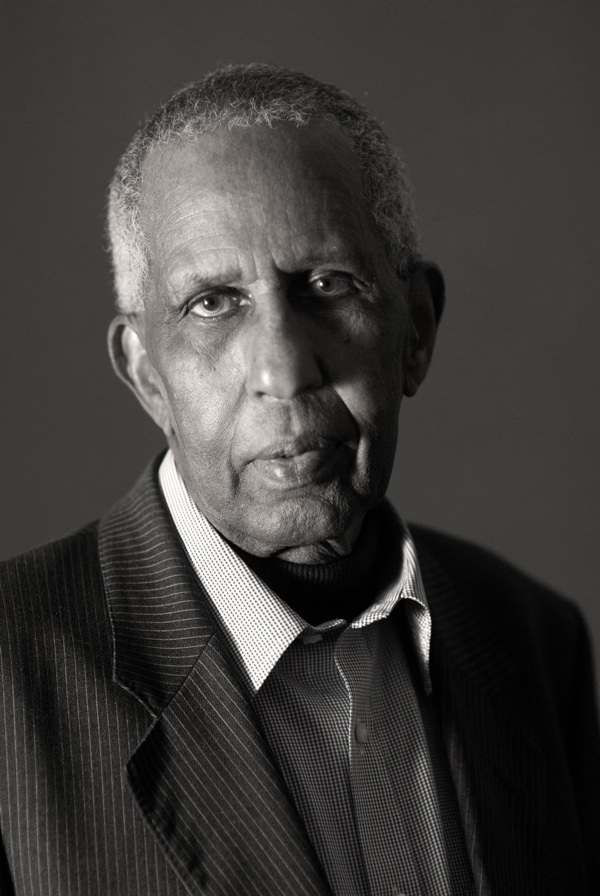
Mahoumed Ali Mohammed – Seaman
“I came to London in 1948 and I stayed here at Seaman’s Mission for a while and for four months at the Strand Palace Hotel. I worked for the British railways for twenty years, as a porter, as an assistant lorry driver and in signalling in the Underground. Then, in the seventies, I joined the Merchant Navy and the Royal Navy for another twenty years until I retired in 1992. I was based in Cardiff but I came back to London in 1996. I have a girl and boy and my wife lives in Cardiff. When I called and said,‘I’m going to London,’ she said, ‘I’m staying here with my kids.’ I’m eighty-eight now and I live in Bethnal Green.”
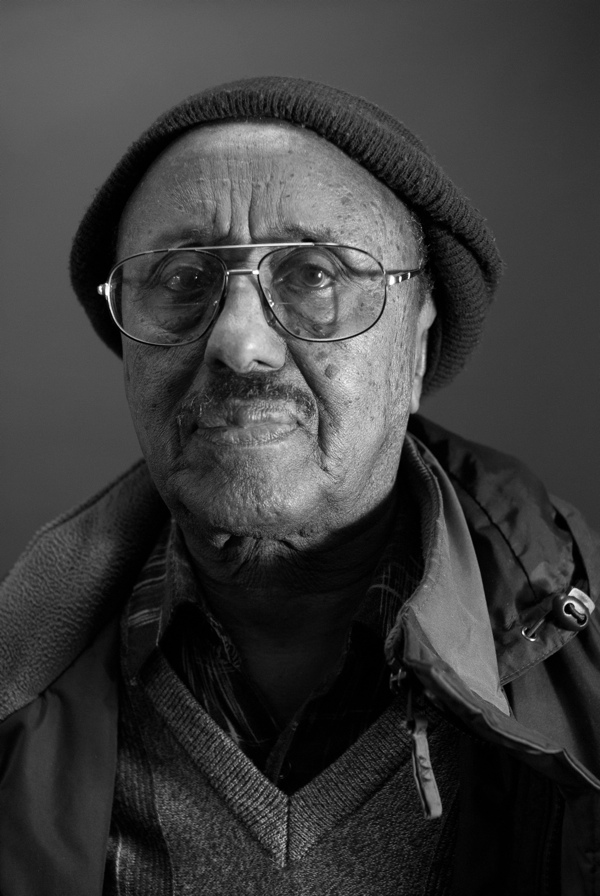
Ibrahim Abdullah – Surveyor of Works
“I first came to London in 1956 and studied at the Brixton School of Building for a Diploma in Civil Engineering and then I went back home. At that time, the British ruled the country and I became a Surveyor of Works. I did not return to Britain until 15th June 1990, fleeing the Civil War, and then I brought my wife and family with me. We became British Citizens and now I come regularly to Mayfield House Day Centre to meet other Somalis who were seamen, and there are lots of them. I find it calm and cool, no problems here.”
Photographs copyright © Sarah Ainslie
You may also like to take a look at
Nicholas Hawksmoor’s Churches
Help publication by preordering now and we will post you a copy signed by Tessa Hunkin at the end of September in advance of publication on October 2nd. Additionally, we are including a complimentary copy of A Hoxton Childhood (cover price £20) with all pre-orders in the United Kingdom. CLICK HERE TO ORDER YOUR COPY

St George’s, Bloomsbury 1716 – 1731
In 1711 Nicholas Hawksmoor was fifty years old yet, although he had already worked with Christopher Wren on St Paul’s Cathedral and for John Vanbrugh on Castle Howard, the buildings that were to make his name were still to come. In that year, an Act of Parliament created the Commission for Building Fifty New Churches to serve the growing population on the fringes of the expanding city. Only twelve of these churches were ever built, but Nicholas Hawksmoor designed six of them and – miraculously – they have all survived, displaying his unique architectural talent to subsequent generations and permitting his reputation to rise as time has passed.
Living in the parish of Christ Church and within easy reach of the other five Hawksmoor churches, I realised that sooner or later I should make a pilgrimage to visit them all. And so, taking advantage of some fleeting spells of sunlight and clear skies in recent days, I set out to the west, the south and to the east from Spitalfields to photograph these curious edifices.
In 1710, the roof of the ancient church of St Alfege in Greenwich collapsed and the parishioners petitioned the Commission to rebuild it and Hawksmoor took this on as the first of his London churches. Exceeding any repair, he remodelled the building entirely, although his design was “improved” and the pilasters added to the exterior by fellow architect Thomas Archer, compromising the clean geometric lines that characterise Hawksmoor’s other churches. His vision was further undermined when the Commission refused to fund replacing the medieval tower with an octagonal lantern as he wished, so he retained the motif, employing it at St George-in-the-East a few years later. Latterly, the tower of St Alfege was refaced and reworked by Hawksmoor’s collaborator John James in 1730. Yet in spite of the different hands at work, the structure presents a satisfyingly harmonious continuity of design today, even if the signature of Hawksmoor is less visible than in his other churches.
Before Hawksmoor’s involvement with St Alfege was complete in 1716, he had already begun designs for St George-in-the-East, St Anne’s Limehouse and Christ Church Spitalfields. In each case, he was constructing new churches without any limitation of pre-existing structures or the meddling hands of other architects. These three churches share many characteristics, of arched doorways counterpointed by arched and circular windows, and towers that ascend telescopically, in graduated steps, resolving into a spire at Christ Church, a lantern at St George-in-the-East and a square tower at St Anne’s. This is an energetic forceful mode of architecture, expressed in bold geometric shapes that could easily become overbearing if the different elements of the design were not balanced within the structure, but the success of these churches is that they are always proportionate to themselves. While the outcome of Hawksmoor’s architecture is that they are awe-inspiring buildings to approach, cutting anyone down to size, conversely they grant an increased sense of power to those stepping from the door. These are churches designed to make you feel small when you go in and big when you come out.
In 1716, Hawksmoor began work on what were to be the last two of his solo designs for churches, St Mary Woolnoth and St George’s, Bloomsbury. Moving beyond the vocabulary of his three East End churches, he took both of these designs in equally ambitious but entirely different and original directions. St Mary Woolnoth in the City of London was constructed upon a restricted site and is the smallest of Hawksmoor’s churches, yet the limitation of space resulted in an intense sombre design, as if the energy of his larger buildings were compressed and it is a dynamic structure held in tense equilibrium, like a coiled spring or a bellows camera held shut.
St George’s Bloomsbury was the last of Hawksmoor’s churches and his most eccentric, completed in 1731 when he was seventy as the culmination of twenty extraordinarily creative years. Working again upon a constricted site, he contrived a building with a portico based upon the Temple of Bacchus in Baalbek and a stepped tower based upon the Mausoleum at Halicarnassus which he adorned with a statue of George I upon the top, flanked by the lion and unicorn to celebrate the recent defeat of the Jacobites. Undertaken with such confidence and panache, Hawksmoor’s design is almost convincing and the enclosed location spares exposure, permitting the viewer to see only ever a portion of the building from any of the available angles.
The brooding presence of Hawksmoor’s churches has inspired all manner of mythologies woven around the man and his edifices. Yet the true paradox of Hawksmoor’s work stems from the fact that while he worked in the Classical style, he could never afford the opportunity to undertake the Grand Tour and see the works of the Renaissance masters and ruins of antiquity for himself. Thus, he fashioned his own English interpretation which was an expression of a Gothic imagination working in the language of Classical architecture. It is this curious disconnection that makes his architecture so fascinating and gives it such power. Nicholas Hawksmoor was incapable of the cool emotional restraint implicit in Classicism, he imbued it with a ferocity that was the quintessence of English Baroque.
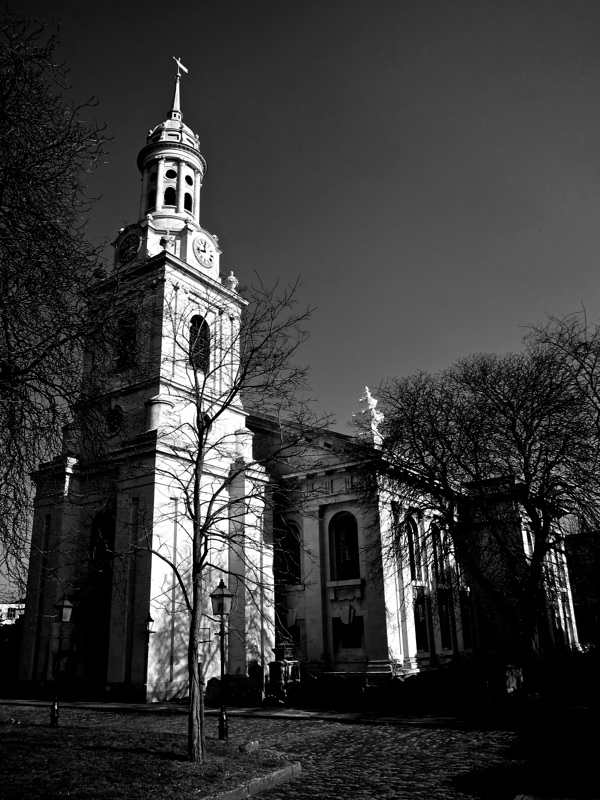
St Alfege, Greenwich 1712-16

St Mary Woolnoth, Bank 1716-24
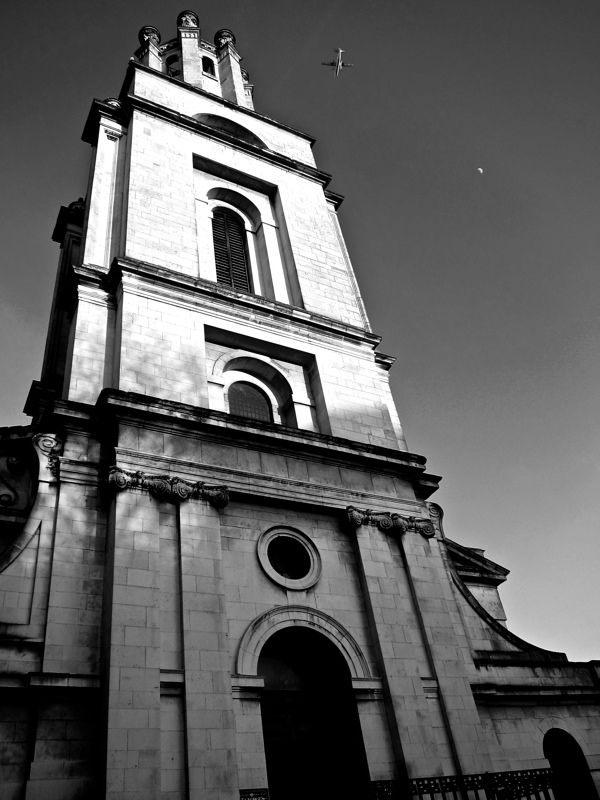
St George-in-the-East, Wapping 1714-1729

St Anne’s, Limehouse 1714-1730

Christ Church, Spitalfields 1714-1729
You may also like to take a look at
Fran May’s Brick Lane
Help publication by preordering now and we will post you a copy signed by Tessa Hunkin at the end of September in advance of publication on October 2nd. Additionally, we are including a complimentary copy of A Hoxton Childhood (cover price £20) with all pre-orders in the United Kingdom. CLICK HERE TO ORDER YOUR COPY
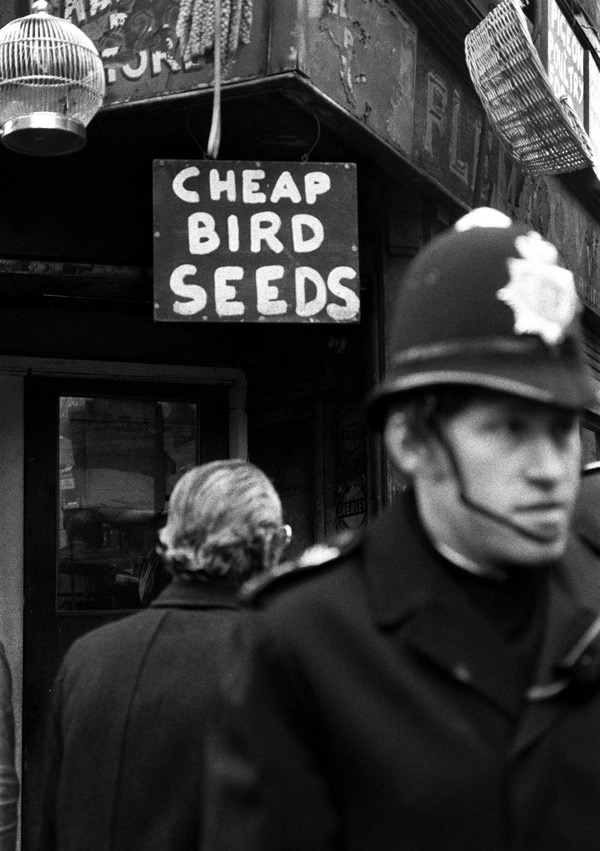
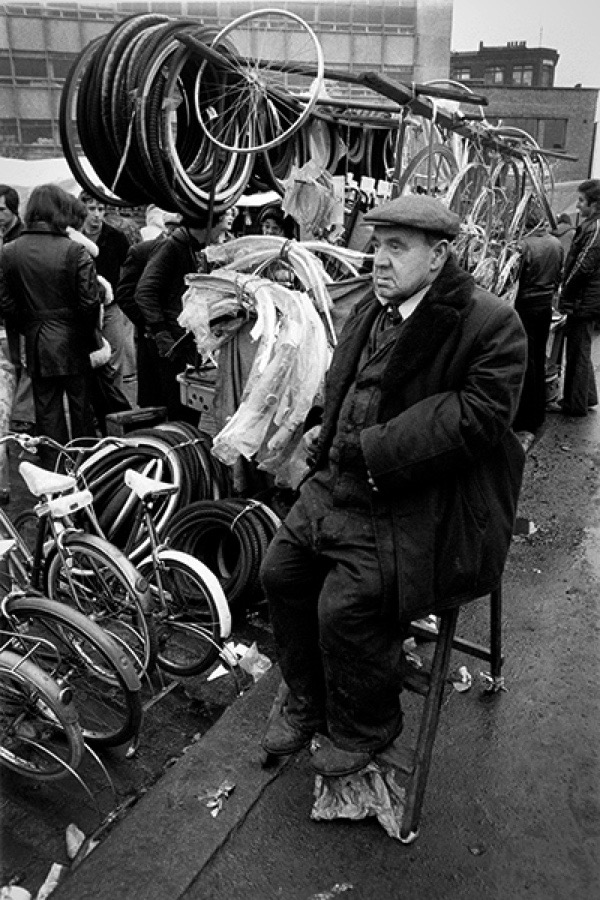
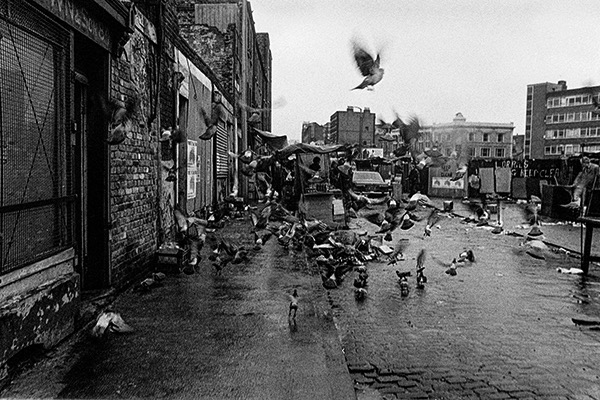
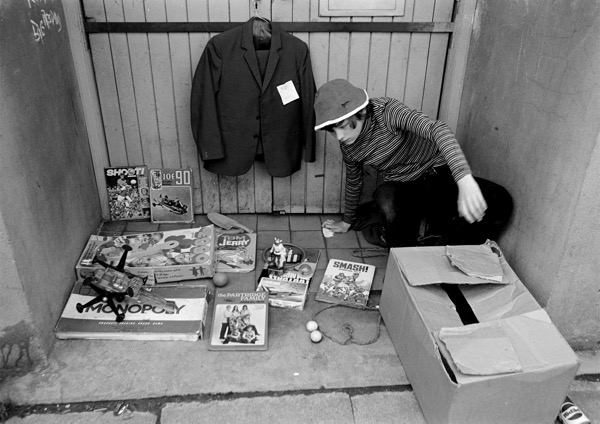
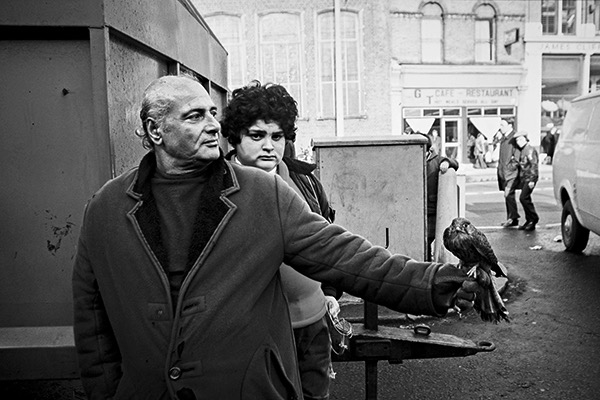
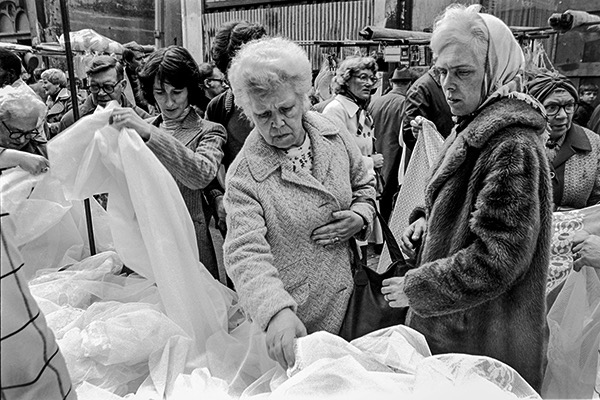
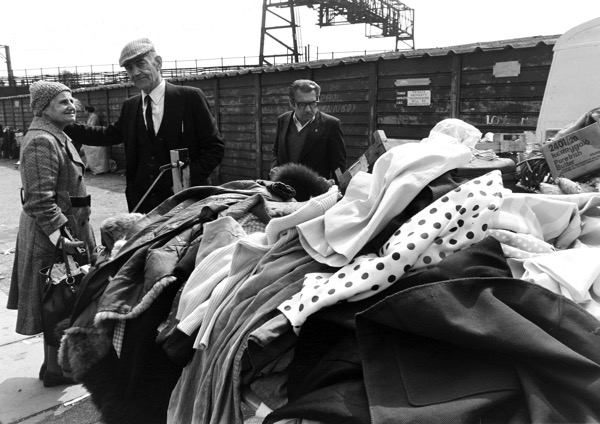
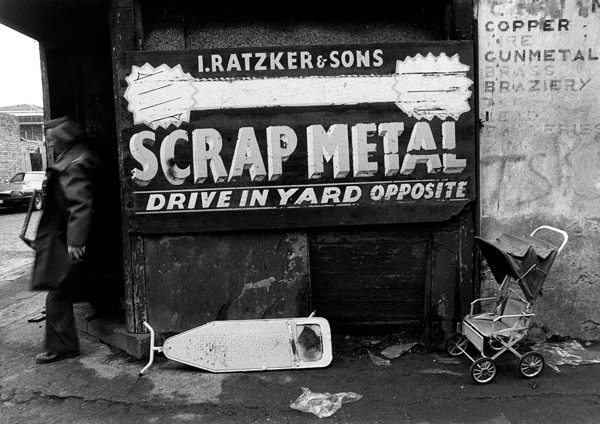
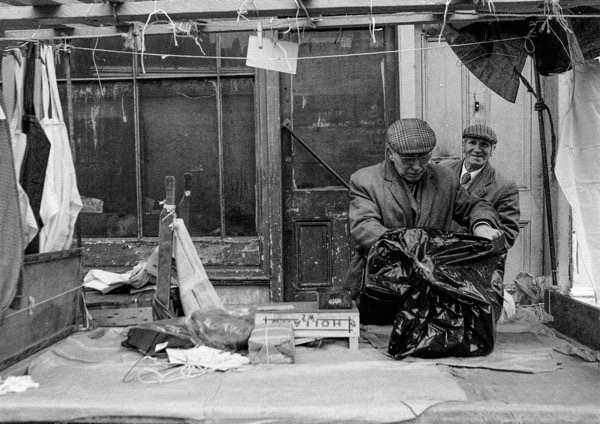
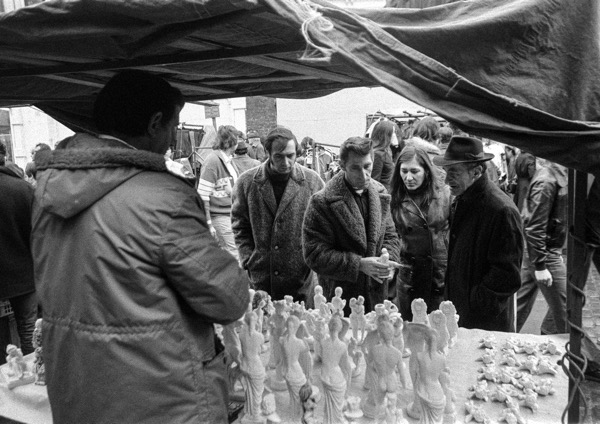
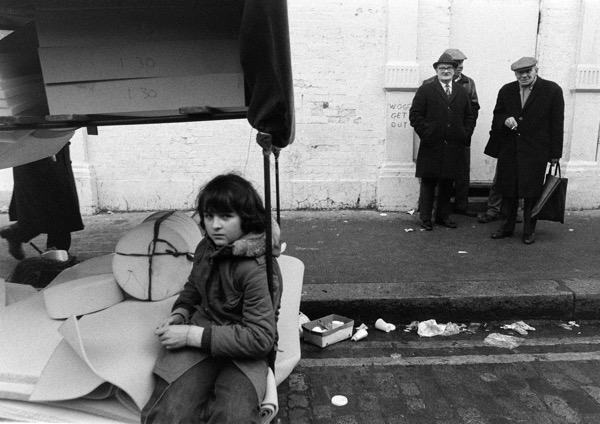
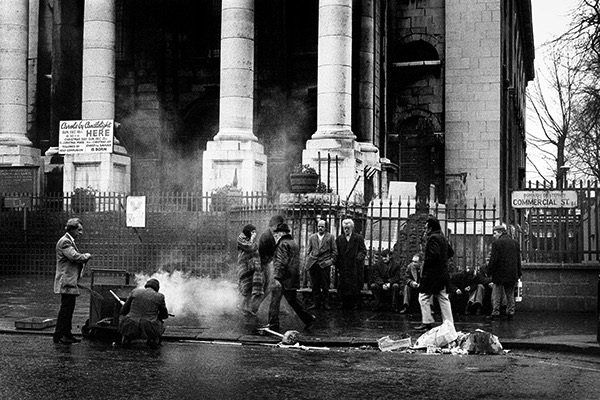
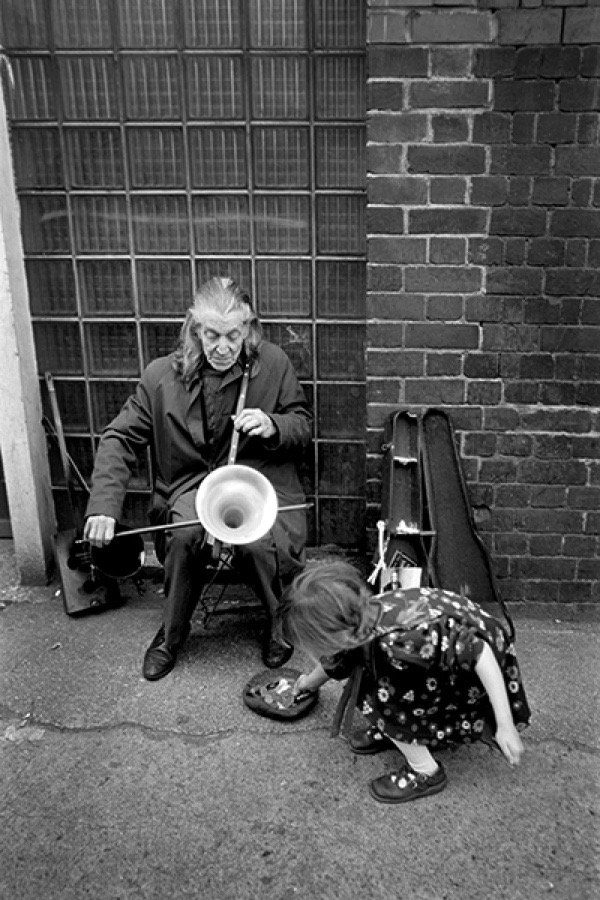
In 1976, Fran May arrived in London at the age of twenty-one to study photography at the Royal College of Art and some of the first pictures she took were of Brick Lane.
“At first, exploring London was daunting, too big and exhausting. Someone suggested I visited Brick Lane, but I would have to get there at dawn for the best of it. An early bird by nature, this was not too difficult. And what a reward. I wore my hair long and had a duffle coat—the perfect disguise. My dominant eye is my left eye, so the camera is always in front of my face. It is like the child of two who covers their eyes and thinks you cannot see them. I had become invisible too. I went time and time again. It was like stepping into a different world, a different universe, a film set. Characters, faces, businesses, from another time, caught in a time warp.
Head of Photography, John Hedgecoe, came to me one day and said I had been selected to be taught by Bill Brandt. The first time I went to his house near Kensington Church St, I took my landscape photographs. I confess I did not know all of Bill Brandt’s work, but I knew of the nudes on the beach. I rang his bell, acknowledged by a woman’s voice, the door clicked open. Once through the open front door, a voice called from beyond. “Come in. Come in.”
Bill sat before a fire in the grate, the light from the flames flickering on his face. “What have you brought me?” he asked in his gentle voice. I placed my portfolio on the floor and lifted the pictures to him one by one. He was silent until he looked at me and said, “I don’t think I can teach you anything, do you?” I did not know how to take this. I packed everything away, thanked him and left.
A couple of days later, I bumped into John Hedgecoe again in the corridor. “How did you get on with Bill Brandt?” he asked. I told him I didn’t think I should go again because Bill had said he couldn’t teach me anything. “No, you must go see him again. You must make the most of your opportunities”. So off I went, this time taking some of the images I had taken while at Sheffield and the more recent ones shot in Brick Lane.
This was a different experience. Bill studied each one for a long time. Seated on the footstool at his feet, Bill moved his reading light nearer and re-settled himself in his chair. I studied the firelight flickering on his face. Then he put the pile of photographs flat on his lap, breaking the silence and said, “Ah, Fran. Let me tell you something. Never loose these images, don’t think of them just as student work, for they will have social significance one day”. His eyes twinkled as he smiled at me.
I returned one more time to visit Bill Brandt. He told me he had not really known what he had achieved until later. The photographs he had taken were commissioned jobs. When they were put together in a particular order, they meant something new and that the passage of time mattered. Well, I did keep these images.”
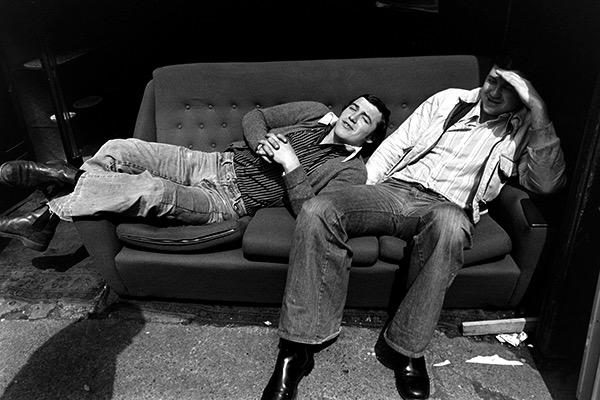
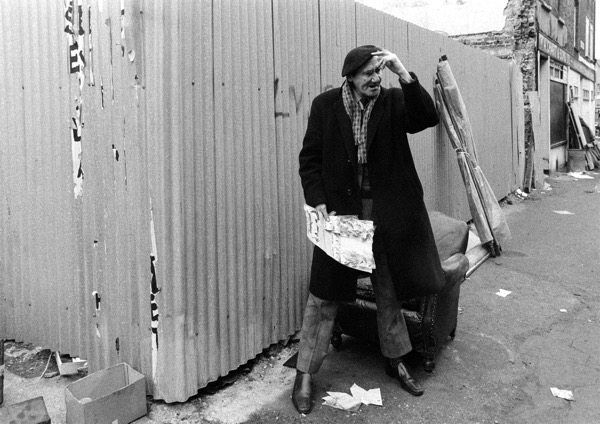
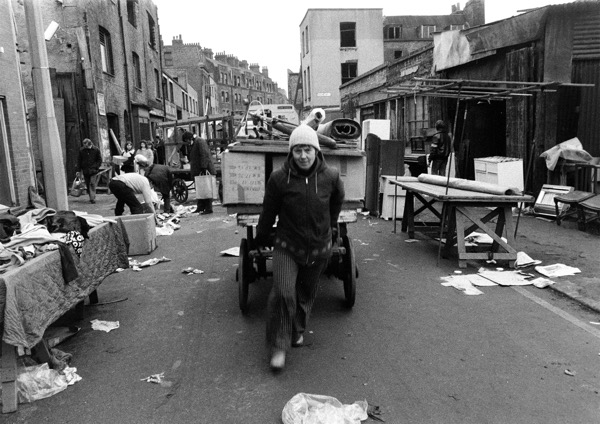
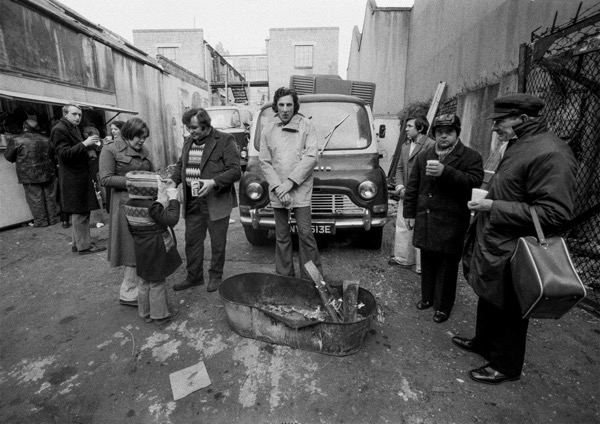
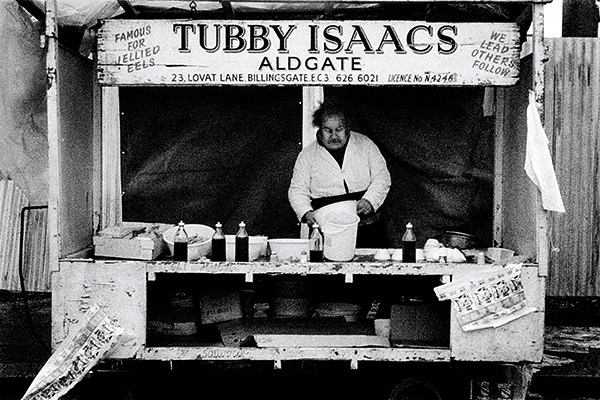
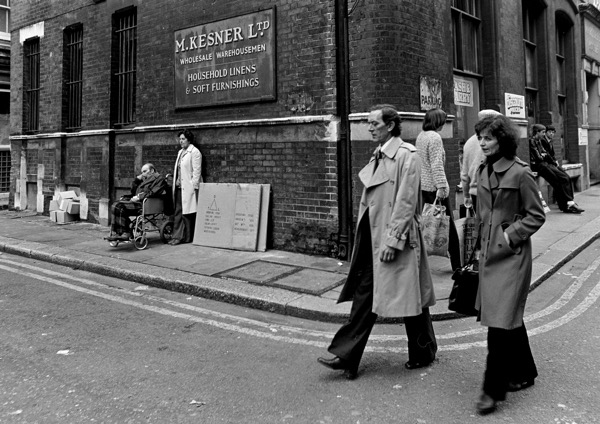
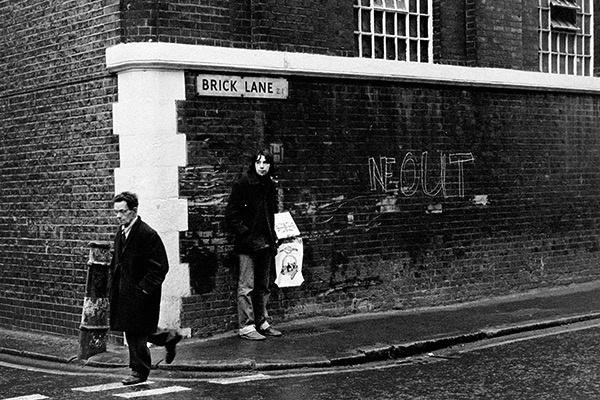
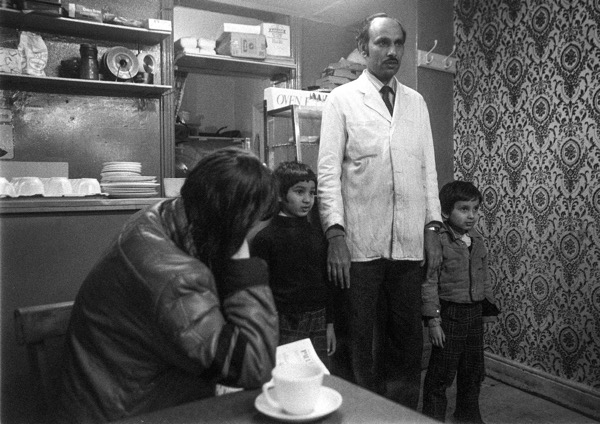
Photographs © Fran May
You may also like to take a look at
Raju Vaidyanathan’s Brick Lane
At Bethnal Green Weightlifting Club
TICKETS AVAILABLE SATURDAYS 30TH AUGUST & 6TH SEPTEMBER. Join me for a ramble through 2000 years of culture and history at the heart of old London followed by tea and cakes served in a 300-year-old house overlooking Christ Church, Spitalfields. CLICK HERE TO BOOK YOUR TICKET

Dominic Patmore, Powerlifter
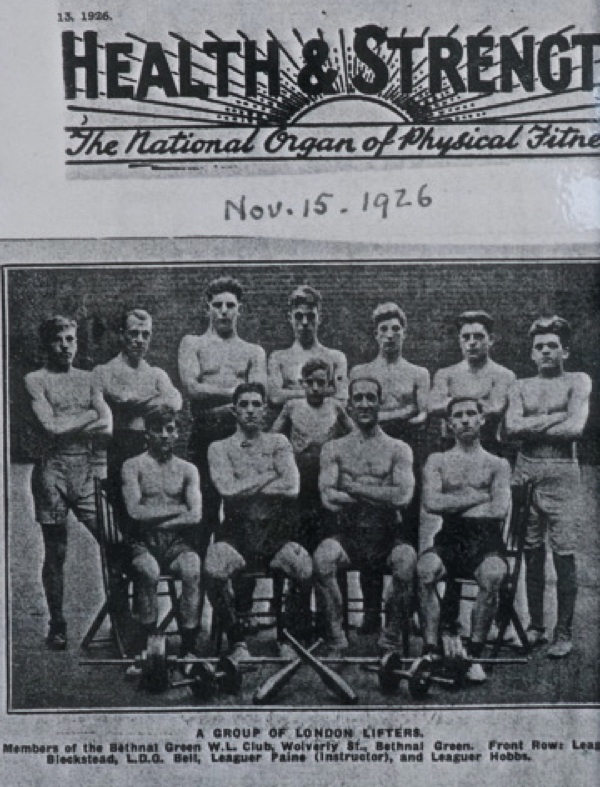
In Turin St, there is a single-storey brick building so unassuming that even the locals do not know what it is, yet this is home to the celebrated Bethnal Green Weightlifting Club. The esteemed members believe their association dates from 1926, but a poster for the New Bethnal Green Weightlifting & Physical Culture Club on the wall inside the gym, dated 1931, suggests that its origin may be earlier.
Even the most senior member, Ron Whitton of Columbia Rd, is a relative newcomer who joined in 1946. He greeted Contributing Photographer Sarah Ainslie & I when we paid a visit, fresh from his twice-weekly swim in the Serpentine and preparing for his twice-weekly weightlifting session to follow. A sprightly octogenarian, Ron is a shining exemplar of the health benefits of body-building and weightlifting. “I’ve always been a keep fit guy,” he vouched, indicating the photos of his former glories upon the wall,“there’s not many guys of eighty-three still training.”
“In 1946, it was just an old shed in the playground with one or two bars and a set of dumbbells, where a couple of guys who’d come out of the forces started weight-training,” Ron recalled fondly, casting his eyes around the hallowed space, “Around 1948, Jack Brenda, Secretary of the Club, opened up this place but it was like something out of the Hammer House of Horrors then, it had been closed for years and there was no equipment, but we got it going and we’ve been here ever since.”
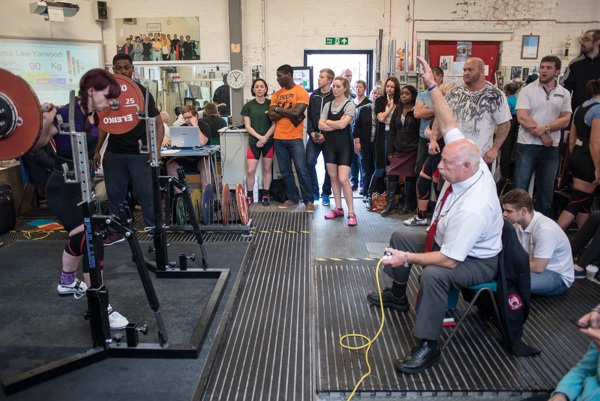
On Saturday morning, we encountered a mutually respectful crew of all sizes of male and female weightlifters absorbed in their training session, punctuated with intense cathartic moments when a major lift was ventured and one among them heaved and strained, channelling the support of their comrades egging them on, before throwing the weight down with a clang onto the mat. Although there were those who had the obvious advantage of size, most compelling in their lifts were those skinny individuals of diminutive stature who appeared to summon resources of strength from the ether in lifting weights that looked far beyond their apparent capacity.
“I started because I liked the idea of being strong,” powerlifter Laura Porter admitted to me, “but now I’m obsessed – it’s the satisfaction when you get a new personal best. I’m not super-duper strong yet, but I’m not bad and I like the feeling of being powerful.”
“It’s a good thing for women to do because it’s good for your bone strength, counteracting any tendency to brittle bones,” she revealed with a blush, “I’m approaching forty so I think about these things, but I hope to be weightlifting and competing in my sixties and beyond.”
A relaxed family atmosphere prevails at Bethnal Green Weightlifting Club, uniting enthusiasts of all ages and walks of life. “There was a time when every London borough had places like these but now there only two left in the entire capital,” Martin Bass, Club Secretary informed me, readily indicated pals that joined with him over forty years ago – and demonstrating the modest camaraderie among all those who seek transcendence of their physical and spiritual limits, here in confines of the gym, as a counterpoint to the external challenges of life’s journey beyond its walls.
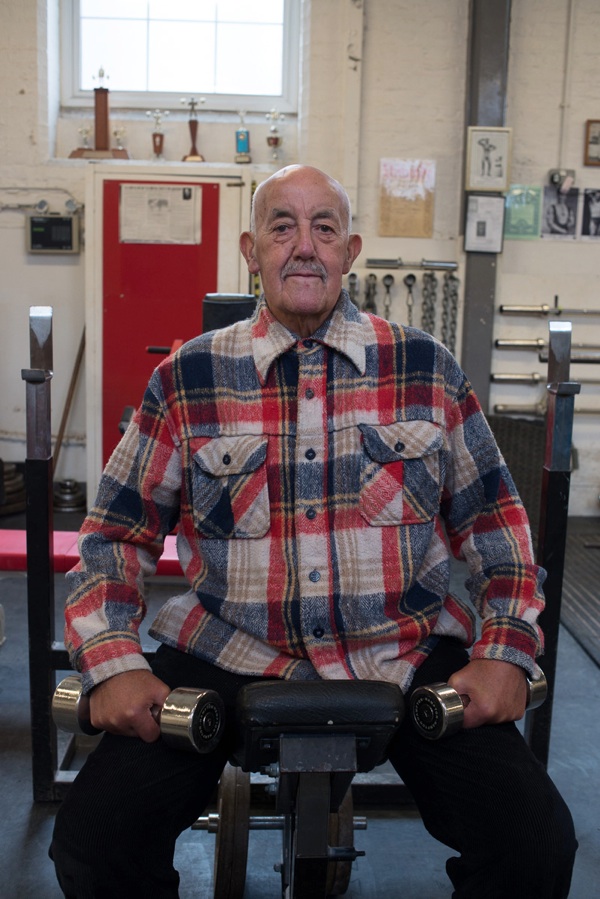
Ron Whitton, still weighlifting at eighty-three

Ron is second from right at the Bethnal Green Physique Contest of 1952 – London’s first body-building contest. “all the other have passed away”

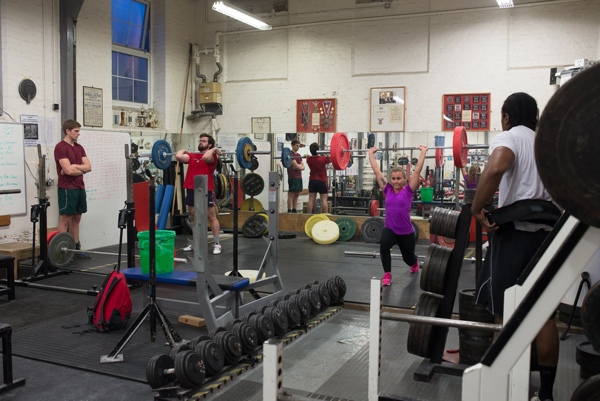
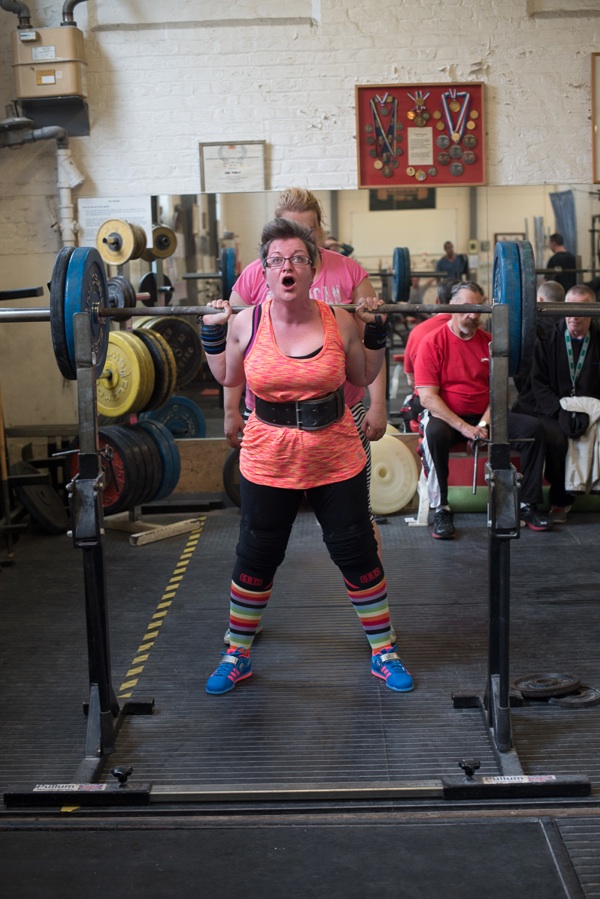
Laura Porter, Powerlifter
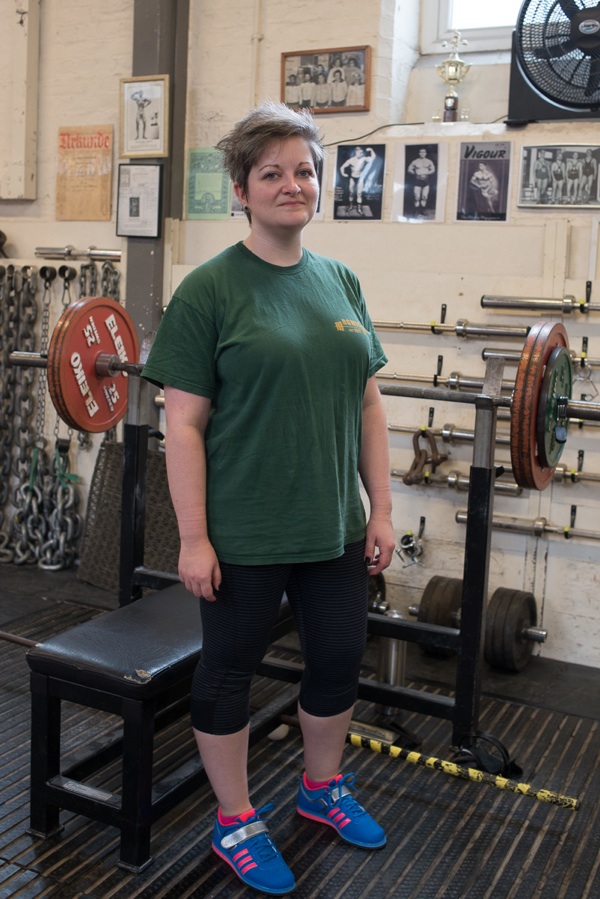
Laura – “I like the feeling of being powerful”

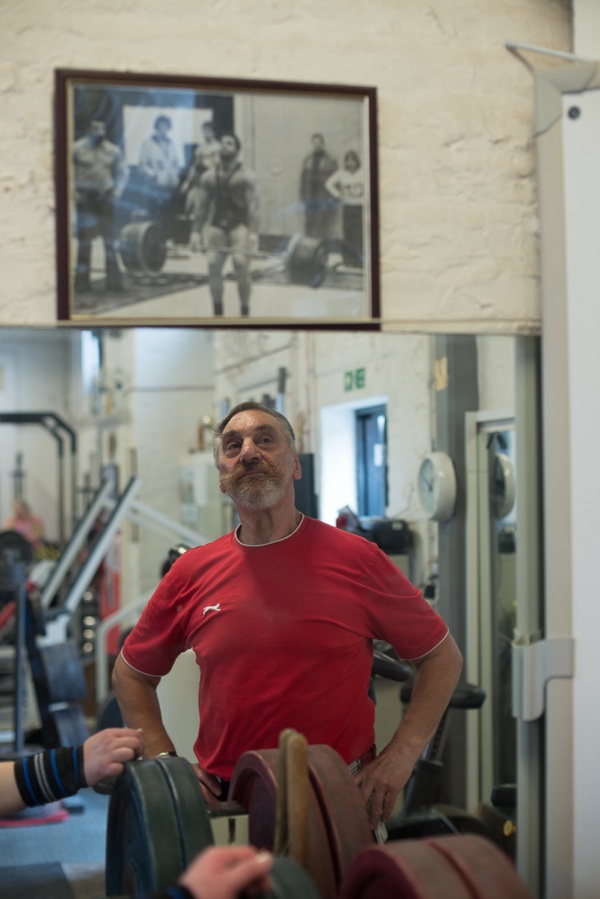

Martin Bass, Club Secretary and Member for forty-five years
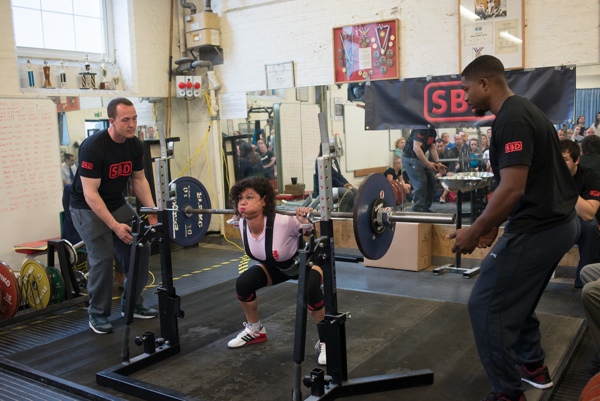
At the Women’s Powerlifting Contest
Photographs copyright © Sarah Ainslie
Bethnal Green Weightlifting Club, 229 Bethnal Green Rd, E2 6AB – entrance in Turin St
You may also like to read about
The Musclemen of Bethnal Green
Chris Chappell, Master of Taoism
Simon Mooney At the Repton Boxing Club
The Loneliness Of Schrodinger

TICKETS AVAILABLE SATURDAYS 30TH AUGUST & 6TH SEPTEMBER. Join me for a ramble through 2000 years of culture and history at the heart of old London followed by tea and cakes served in a 300-year-old house overlooking Christ Church, Spitalfields. CLICK HERE TO BOOK YOUR TICKET
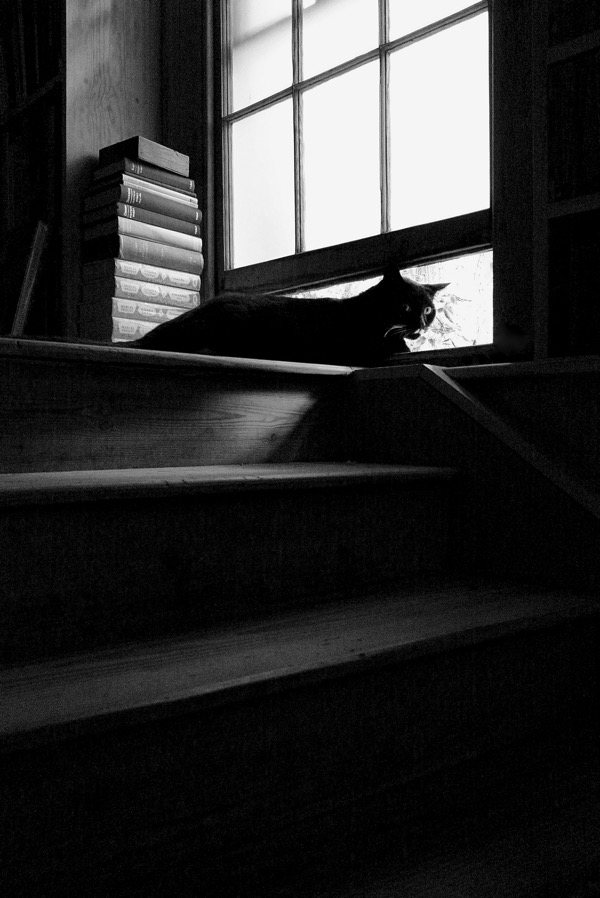
No-one knows where Schrodinger came from. He wandered in from the street one day and made his home in Shoreditch Church, where he lived for two years before he came to me in Spitalfields. In his vulnerability, Schrodinger learned to be lonely as a means of survival. Loneliness became his friend and his self-sufficiency protected him when life was uncertain.
On the street, Schrodinger experienced the capricious nature of humanity. He discovered their indifference to a stray cat. When the church offered Schrodinger a refuge, he spent long nights patrolling the empty building in the dark. Whenever he drew unwanted attention from dogs in the churchyard, he could escape through a metal grille into the crypt and sleep among the dusty coffins. Thus Schrodinger discovered an affinity with solitude.
When Schrodinger arrived in Spitalfields, he hid behind the old wing chair when anyone entered the room and looked over his shoulder warily while eating. If I approached him sitting on the floor, he frequently sprang up to run away – but keeping as much space around him as he did in Shoreditch Church proved a challenge in my house. He was a creature of hauteur who would not tolerate being stroked or petted and he never sought the opportunity to sit upon my lap as you might expect a cat to do.
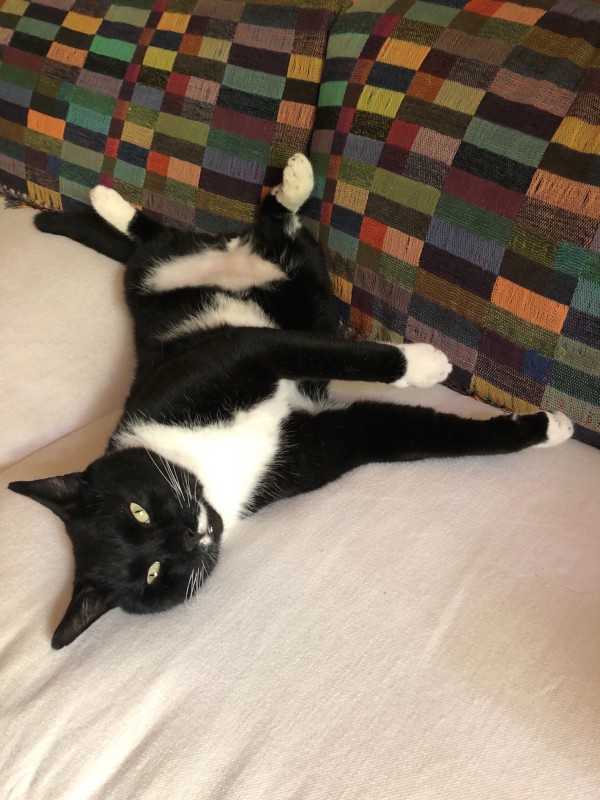
Yet his caution was punctuated by sudden expressions of affection, especially when I presented him with plates of fresh food – as if he could not control his gratitude at such unexpected kindness. By the standards of domestic cats, Schrodinger’s expectations were low and he did not presume any privilege. Only in his sleep was he no longer vigilant. At night I came upon him taking his ease, stretched out and defenceless, even if by day he was circumspect.
These signs gave me hope that Schrodinger might overcome his loneliness and accept that he now has a permanent home where he will always be safe. I often saw him looking at me suspiciously, sizing me up. I wondered if he was questioning how long this episode of good fortune might last and whether it was only a matter of time before he was abandoned on the street again. If loneliness is his custom and source of security, Schrodinger cannot sacrifice it as long as he has uncertainty over his circumstance.
One day while I was writing at my desk, Schrodinger climbed up silently and slipped into the gap between me and the back of the chair. A round face appeared beneath my right armpit and a black tail curled round beneath my left armpit as he rubbed himself against my back and purred affectionately. Schrodinger had found a space where he fitted perfectly. Even if he still remained wary when I encountered him face to face, it was unquestionable progress.
To my delight, this new behaviour evolved quickly. So that he waited each day for me to sit at my desk and then ran to leap up, settling down there, snug between me and the back of the chair. As I sit writing now, I can feel his warmth against the small of my back. I wish I could say that he dictated stories to me but the fact is we inhabit separate reveries. We are peaceful in our mutual companionship that requires no eye contact, and I keep this private intimacy in mind when Schrodinger displays his habitual self-possession in other circumstances.
These days when I walk towards him sitting on the carpet, Schrodinger does not move out of the way in skittish discontent. He sits still, holding his ground and knowing that I will step over him or walk round. He spreads his shoulders and stretches out his front legs in the manner of the Sphinx, expressing a certain assurance in his territory and his right to be there.
As the summer has passed, Schrodinger’s confidence has grown. He will approach visitors to greet them and if I reach out a hand to him, he lifts his head up to meet it now. He knows I am not indifferent to him but I do not require him to become a cuddly domesticated subordinate either.We can exchange glances, even if he is more comfortable inhabiting his implacable vigil.
I observe Schrodinger’s internal isolation ebbing away as he becomes accustomed to his new life with me in Spitalfields, yet I respect his dignified self-possession, his remote sufficiency and his introspection. Loneliness shaped Schrodinger’s personality and it has endowed him with courage and strength of character. Loneliness is an essential part of Schrodinger’s nature. Schrodinger’s loneliness is his wisdom.
You may like to read my earlier story about Schrodinger
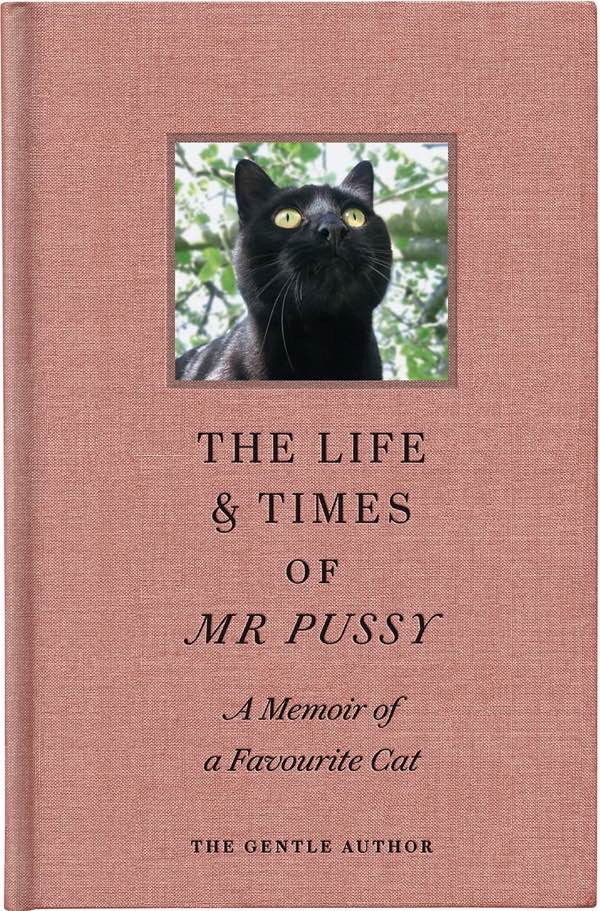
Order this handsome collection of stories of my old cat THE LIFE & TIMES OF MR PUSSY, A Memoir Of A Favourite Cat












