
In Old Spitalfields
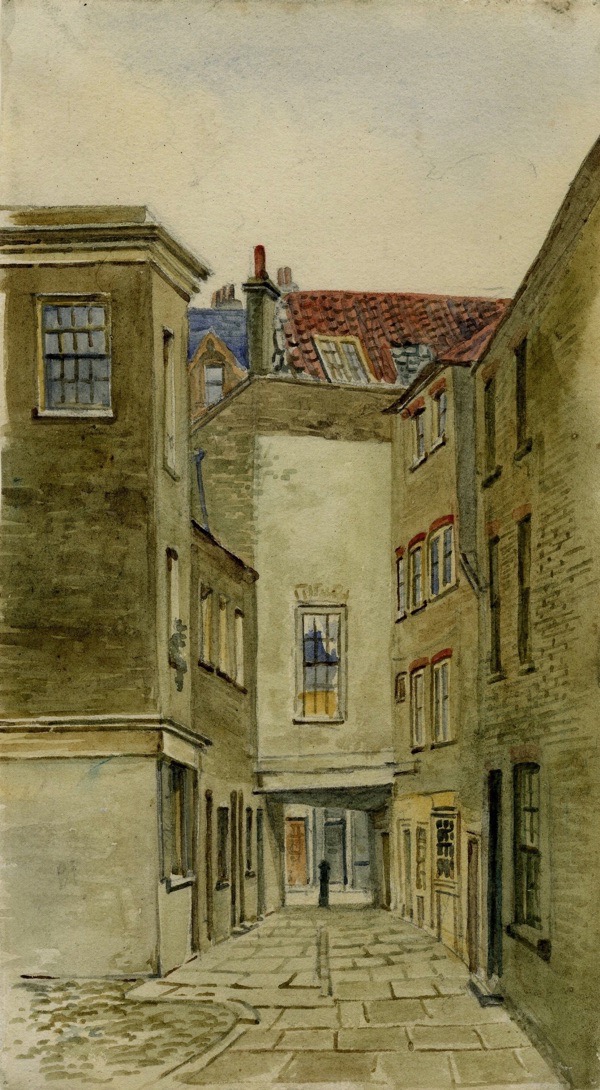
Catherine Wheel Alley
The Bishopsgate Institute has a magnificent collection of nineteenth century watercolours collected by the first archivist Charles Goss, which offer tantalising glimpses of the last surviving tumbledown pantiled tenements and terraces, crooked alleys and hidden yards that once comprised the urban landscape of Spitalfields.
When we think of old Spitalfields, we usually consider the eighteenth and nineteenth century fragments remaining today, yet there was another Spitalfields before this. Before the roads were made up, before Commercial St was cut through, before the Market was enclosed, before Liverpool St Station was built, Spitalfields was another place entirely. Lined with coaching inns, peppered by renaissance mansions and celebrated for its production of extravagant silks and satins, it was also notorious for violent riots and rebellion, where impoverished families might starve or freeze to death.
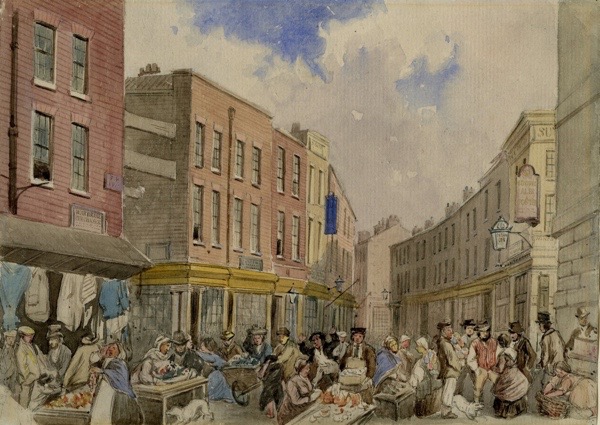
Sunday Morning in Petticoat Lane, 1838
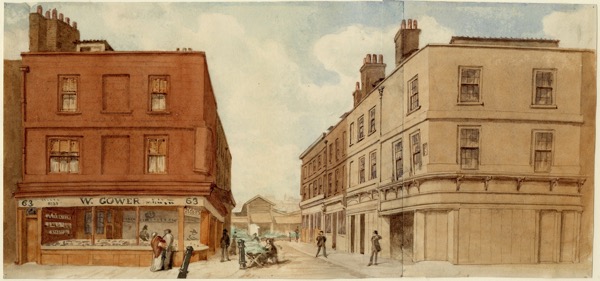
Old Red House, Corner of Brushfield St by J.P.Emslie, 1879
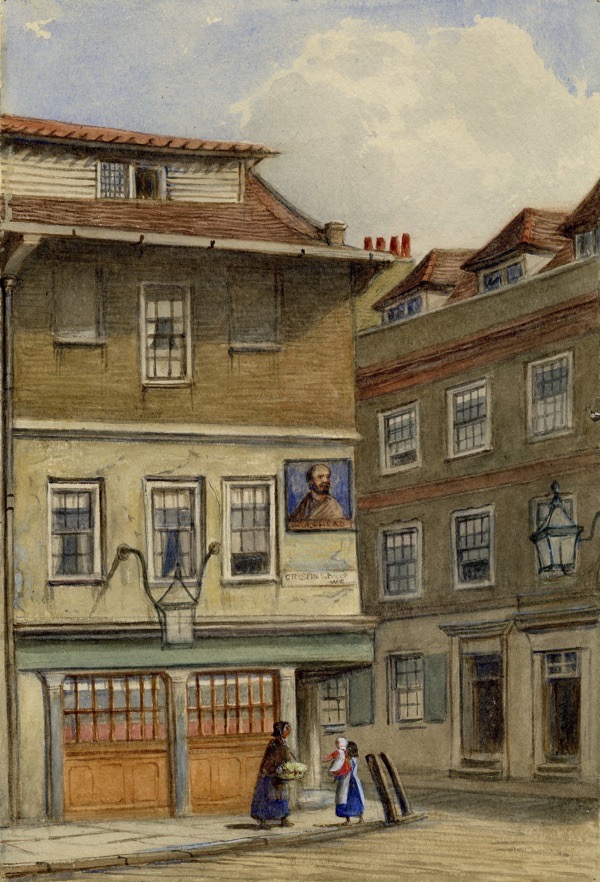
Paul’s Head, Crispin St by J.T. Wilson, 1870
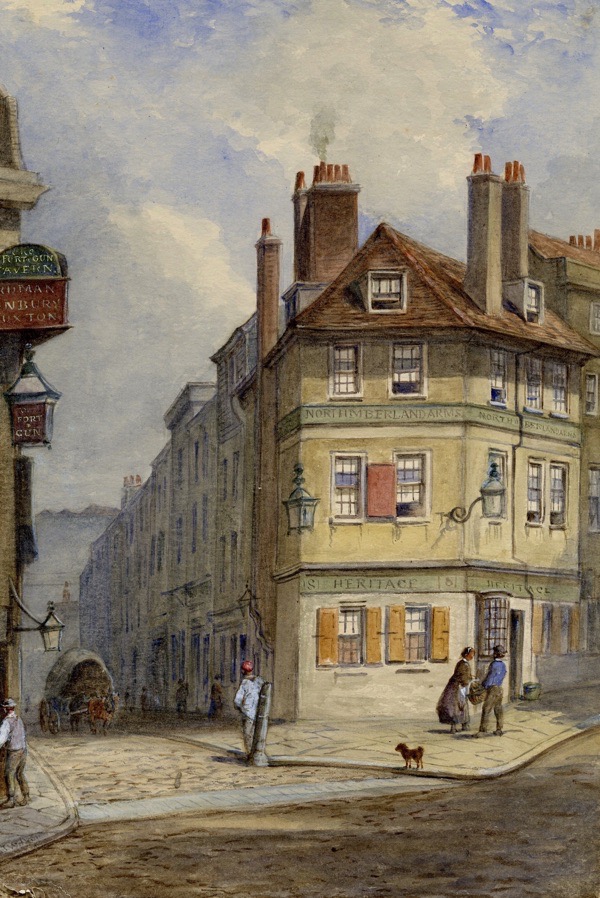
The Fort & Gun Tavern and Northumberland Arms, corner of Fashion St by J.T.Wilson

Dunning’s Alley showing Lucky Bob’s formerly Duke of Wellington, Bishopsgate by J.T.Wilson, 1868
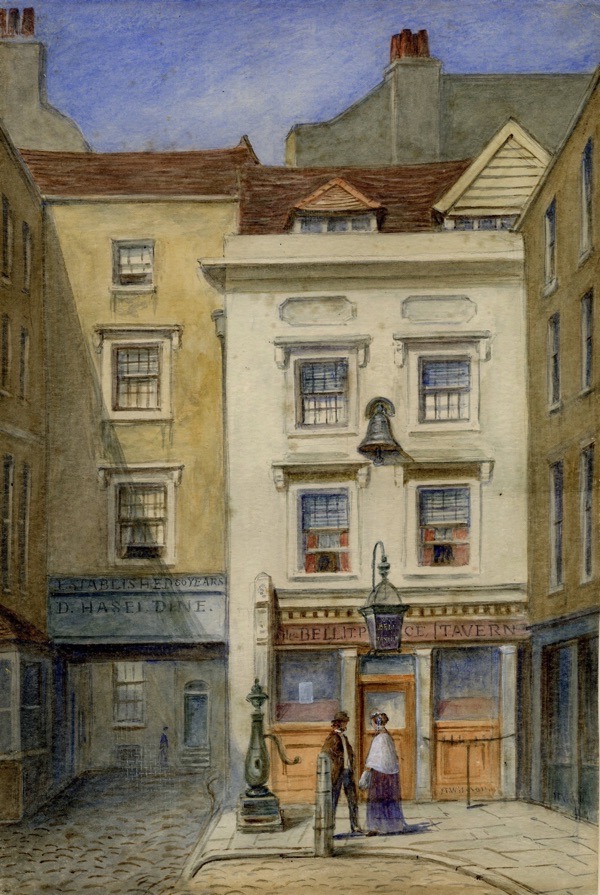
Bell Tavern, Bell Yard, Gracechurch St by J.T.Wilson, 1869
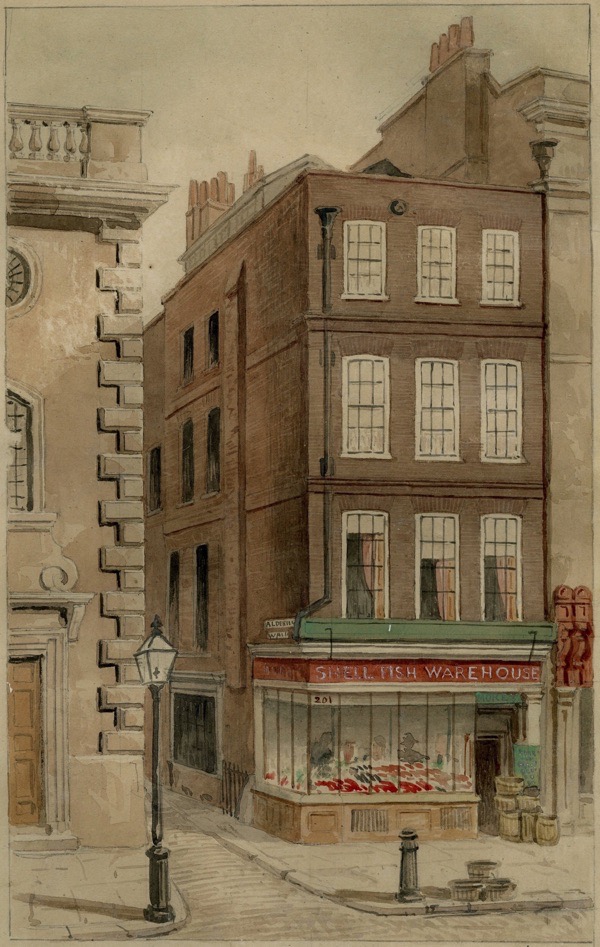
Bishopsgate at the Corner of Alderman’s Walk beside St Botolph’s church by C.J.Richardson, 1871
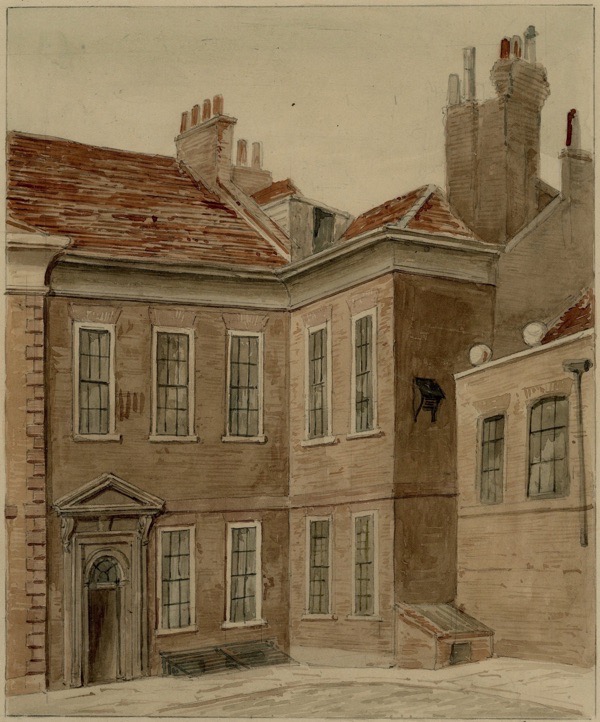
House of Sir Francis Dashwood, Alderman’s Walk, by C.J.Richardson, 1820
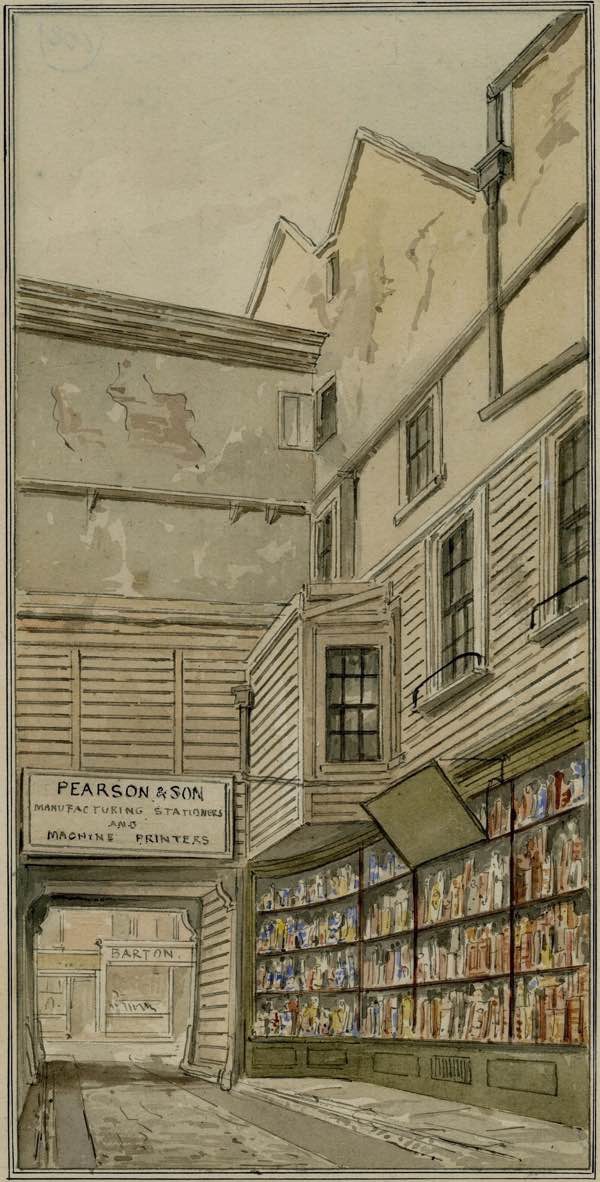
Entrance from Bishopsgate to Great St Helen’s by C.J.Richardson, 1871
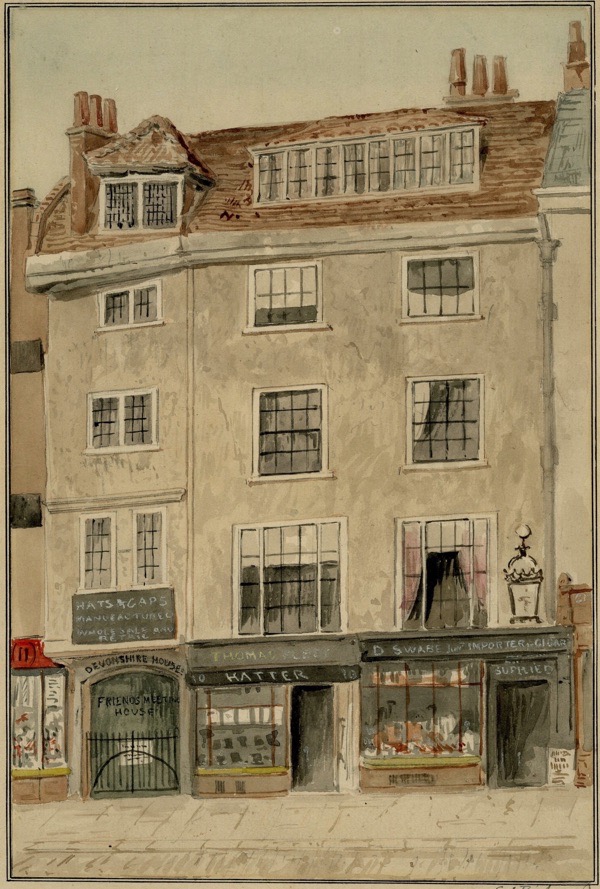
Devonshire House, Bishopsgate by C.J.Richardson, 1871
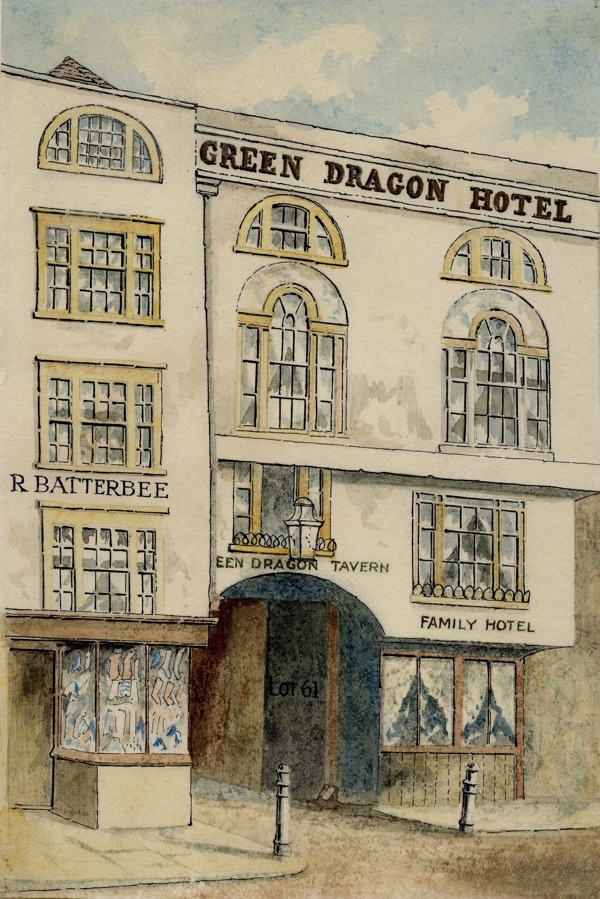
The Green Dragon, Bishopsgate, coloured by S.Lowell
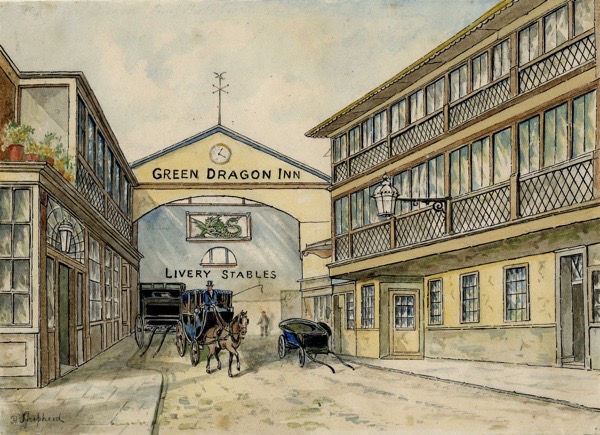
The Green Dragon, Bishopsgate by T. Hosmer Shepherd, coloured by S.Lowell, 1856
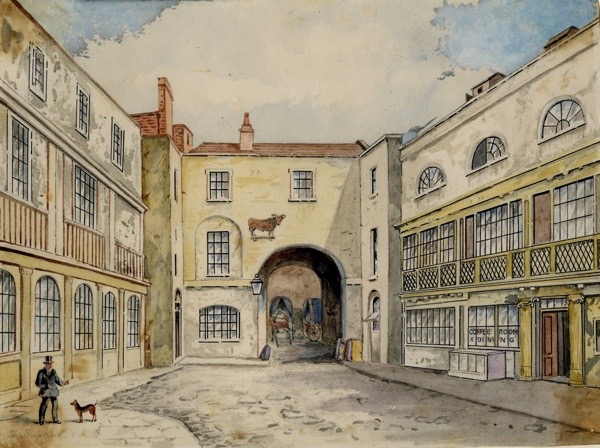
The Bull Inn by T.Hosmer Shepherd, 1856

The Spread Eagle in Gracechurch St by R.B.Schnebblie, 1814
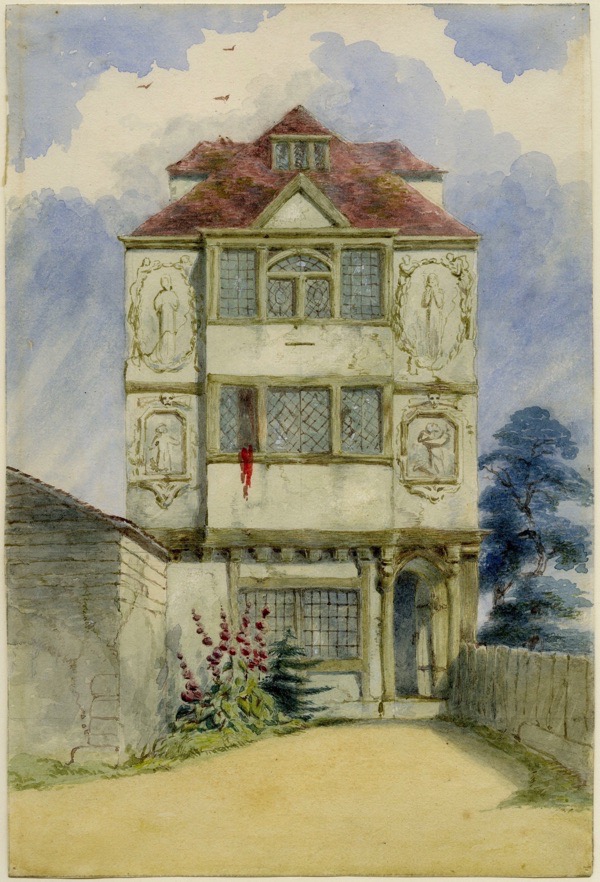
Sir Paul Pindar’s Lodge, Bishopsgate c. 1760
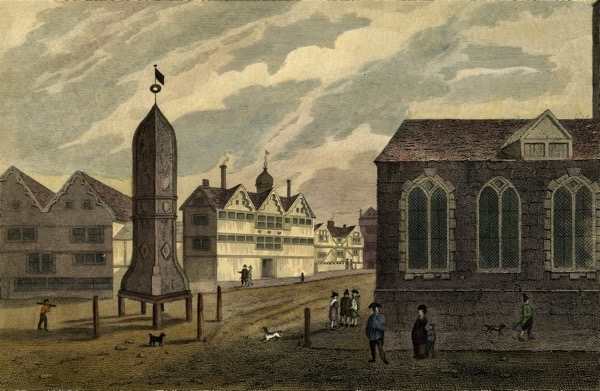
North East View of Bishopsgate Street, 1814
Images courtesy Bishopsgate Insititute
You may also like to take a look at
In Search Of Christopher Marlowe
Poet Niall McDevitt is leading a walk through Shoreditch in search of Christopher Marlowe on Saturday February 18th, commencing with a drink at 3pm at The Society Club in Cheshire St, E1. Click here to book a ticket and join Niall in his quest

“What nourishes me destroys me” – Christopher Marlowe aged twenty-one in 1585
Shoreditch and Norton Folgate comprised theatreland for Elizabethan London, with a monument in St Leonard’s Church today commemorating the actors who once lived locally and tax records suggesting William Shakespeare was a parishioner of St Helen’s, Bishopsgate in 1598. While a warrant issued in September 1589 for the arrest of the mysterious yet charismatic tragedian & poet Christopher Marlowe confirms that the twenty-five year old writer was resident in the Liberty of Norton Folgate. He shared lodgings with fellow playwright Thomas Kyd and his Cambridge friend Thomas Watson, the poet, lived nearby. Marlowe’s plays were likely to have been performed at The Theatre in New Inn Yard and The Curtain in Curtain Rd at this time.
“Thomas Watson of Norton Folgate in Middlesex County, gentleman, and Christopher Marlowe of the same, yeoman….were delivered to jail the 18th day of September by Stephen Wyld, Constable of the same on suspicion of murder” reads the warrant.
The story goes that Marlowe was set upon in Hog Lane – now Worship St – by William Bradley, an innkeeper’s son, over a unpaid debt and Thomas Watson intervened with his sword to protect his friend, stabbing Bradley to death. Although Marlowe took flight, he was arrested and imprisoned in Newgate with Watson for a fortnight. On 3rd December, they were tried and, after Watson’s claim of self-defence was accepted, both were discharged with a warning to keep the peace.
But in May 1592, Marlowe was summoned again to appear at the Middlesex sessions for assaulting two constables in Holywell Lane, Shoreditch – when the constables attested that they went in fear of their lives because of him. Once more, Marlowe was required to keep the peace or to appear before the magistrates at the next general session and receive a penalty of twenty pounds. There is no record whether he ever answered to this charge.
The final years of Marlowe’s life are traced through a series of violent encounters with the law, yet between 1588 and his death at twenty-nine in 1593, Marlowe wrote Edward II, Doctor Faustus, The Jew of Malta and The Massacre of Paris – which means that we may conclude that all or at least part of these plays were written while he was a resident of Norton Folgate.

A manuscript page from The Massacre at Paris, in Christopher Marlowe’s handwriting or that of his secretary Hugh Sanford, which may have been composed while Marlowe was resident in Norton Folgate

Worship St (formerly Hog Lane) where Christopher Marlowe was accosted in 1589 by innkeeper’s son William Bradley, over an unpaid debt, and Marlowe’s friend Thomas Watson killed Bradley

Holywell Lane where Christopher Marlowe assaulted two Constables in May 1592

You may also like to read about
In Search of Shakespeare’s London
Alfred Daniels’ Murals In Hammersmith
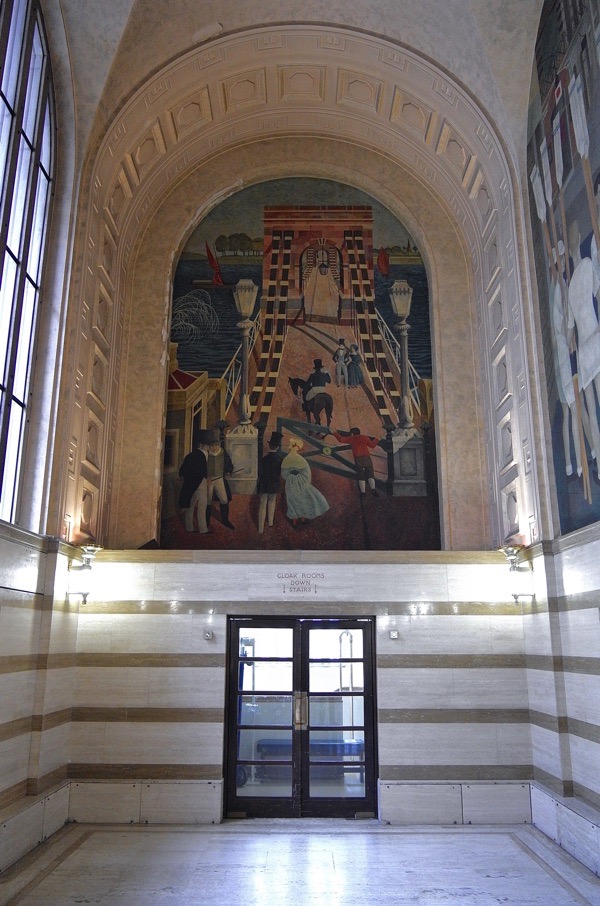
Old Hammersmith Bridge by Alfred Daniels
When I met Alfred Daniels, the painter from Bow, almost the first thing he said to me was, ‘Have you seen my murals in Hammersmith Town Hall? I’m very proud of them.’ So it was with more than a twinge of regret that I went to see the murals yesterday for the first time, over a year since he died, realising I should have gone while Alfred was here to tell me about them.
Yet it proved an exhilarating experience to discover these pictures that declare themselves readily and do not require explanation. Five vast paintings command the vestibule of the old town hall, created with all the exuberance you might expect of a young painter fresh from the Royal College of Art in 1956.
On the south wall, three interlinked paintings show scenes on the riverbank at Hammersmith Mall,which was just across the lawn at the back of the Town Hall before the Great West Road came through. The first looks east, portraying rowers standing outside The Rutland Arms with Hammersmith Bridge in the background. The second painting looks south, showing rowers embarking in their sculls from a pontoon, while the third looks west, showing a Thames pleasure boat arriving at the pier. A walk along this stretch of river, reveals that these pictures are – in Alfred Daniels’ characteristic mode – composites of the landscape reconfigured, creating a pleasing and convincing panorama. In Alfred’s painting the river appears closer to how you know it is than to any literal reality.
These three pictures are flanked by two historical scenes from the early nineteenth century, showing old Hammersmith Bridge and the Grand Union Canal, adding up to an immensely effective series of murals which command the neo-classical thirties interior authoritatively and engagingly, without ever becoming pompous.
This must have once been an impressive spectacle upon arrival at Hammersmith Town Hall, after crossing the small park and then climbing the stairs to the first floor entrance, before they built the brutalist concrete extension onto the front in 1971. This overshadows its predecessor and offers a new low-ceilinged entrance hall on the ground floor which has all the charisma of a generic corporate reception. Yet this reconfiguration of the Town Hall has protected Alfred Daniels murals even if it has obscured them from the gaze of most visitors for the past forty years.
However, the murals can be viewed free of charge when the Town Hall is open and I recommend you pay a visit.. You just need to drop an email to arts@lbhf.gov.uk and make an appointment.
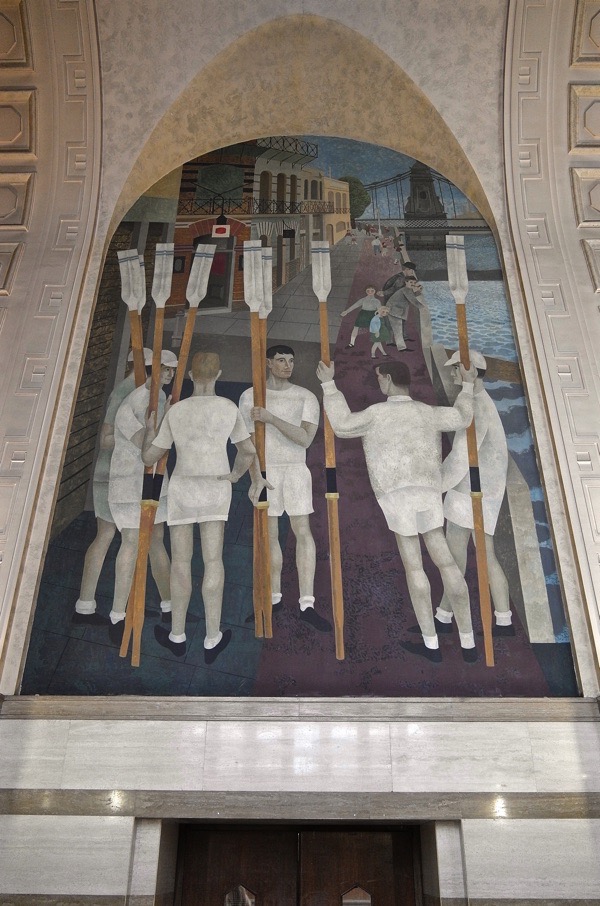
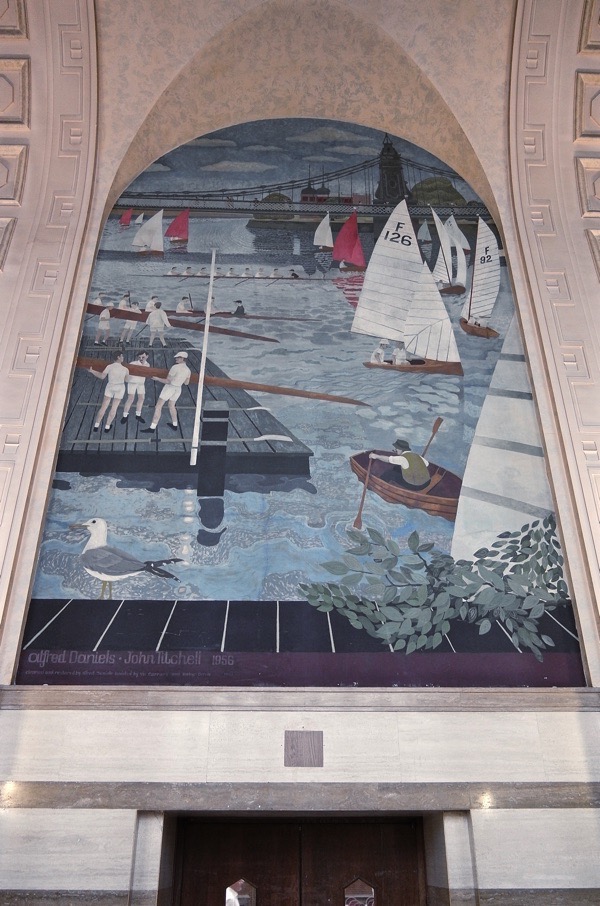
Painted by Alfred Daniels and John Mitchell in 1956, cleaned and restored by Alfred Daniels assisted by Vic Carrara and Robyn Davis, 1983
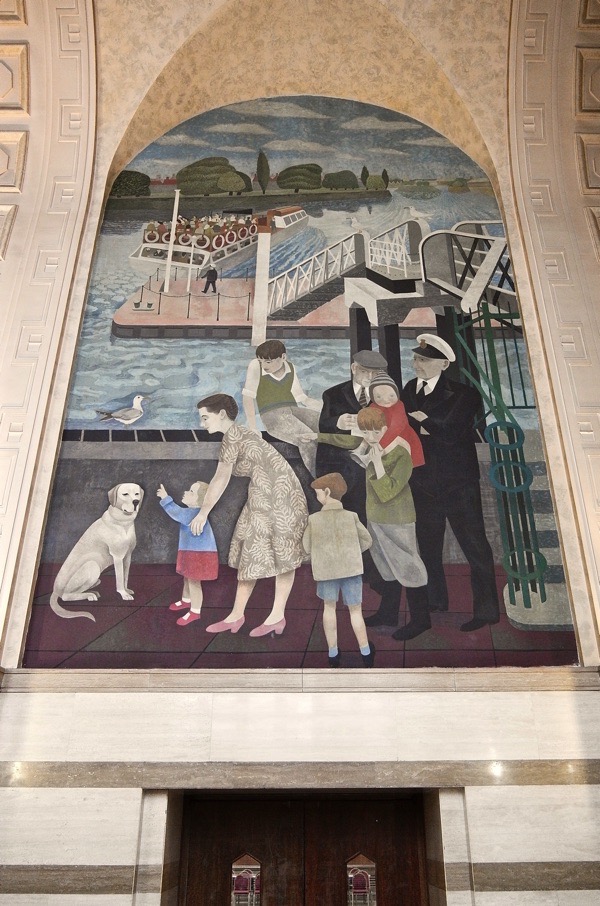
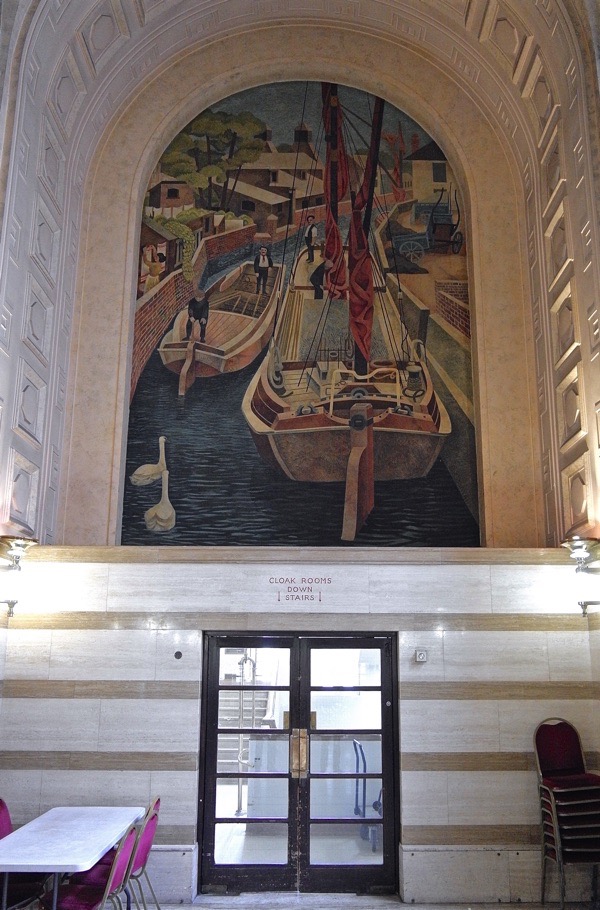
Mural on the west wall
At Hammersmith Pier
You may also like to read about
In Celebration Of High St Traders
Yesterday, I walked over to Leadenhall Market in the City of London to buy some sausages and discovered that, after more than six centuries as a meat & poultry market, the last butcher has gone. Thankfully, Peter Sargent the Butcher in Bethnal Green is still in business, so I got on a bus at Liverpool St and returned home with my quest fulfilled.
The experience made realise the value of independent shopkeepers, who are currently struggling under increasing rents, business rates and competition from chains, so today I publish these die-cut Victorian scraps in celebration of traditional High St traders.
Enlarged here to several times their actual size, the detail and characterisation of these figures is revealed splendidly. Printed by rich-hued colour lithography, glossy and embossed, these appealing images celebrate the essential tradesmen and shopkeepers that were once commonplace but now are scarce.
In the course of my interviews, I have spoken with hundreds of shopkeepers and stallholders – and it is apparent that most only make just enough money to live, yet are primarily motivated by the satisfaction they get from their chosen trade and the appreciation of regular customers.
Here in the East End, these are the family businesses and independent traders who have created the identity of the place and carry the life of our streets. Consequently, I delight in these portraits of their predecessors, the tradesmen of the nineteenth century – rendered as giants by these monumental enlargements.


You may also like to take a look at these other sets of the Cries of London
Geoffrey Fletcher’s Pavement Pounders
William Craig Marshall’s Itinerant Traders
H.W.Petherick’s London Characters
John Thomson’s Street Life in London
Aunt Busy Bee’s New London Cries
Marcellus Laroon’s Cries of London
More John Player’s Cries of London
William Nicholson’s London Types
Francis Wheatley’s Cries of London
John Thomas Smith’s Vagabondiana of 1817
John Thomas Smith’s Vagabondiana II
John Thomas Smith’s Vagabondiana III
Thomas Rowlandson’s Lower Orders
A New Home For The SS Robin
I am delighted to announce that the SS Robin is to have a permanent home at Trinity Buoy Wharf
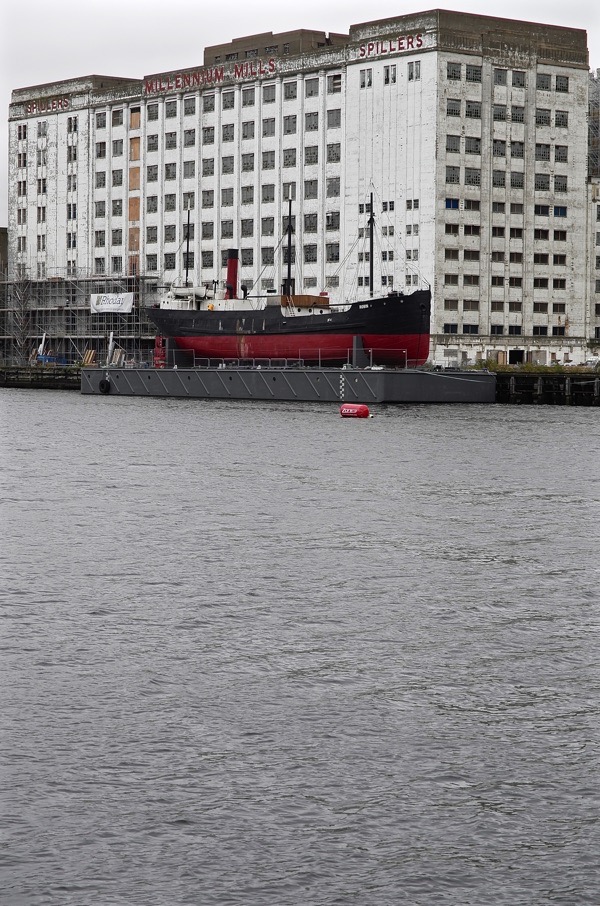
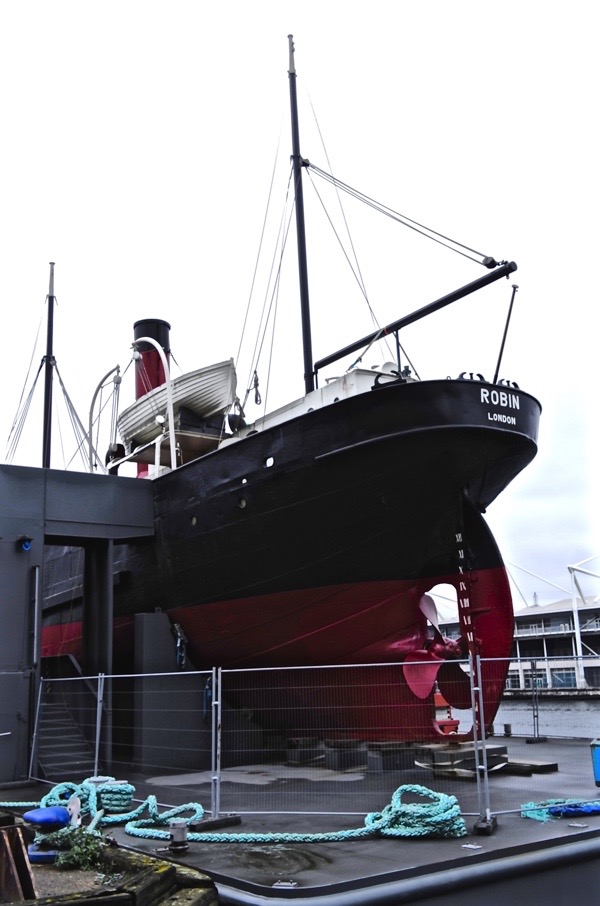
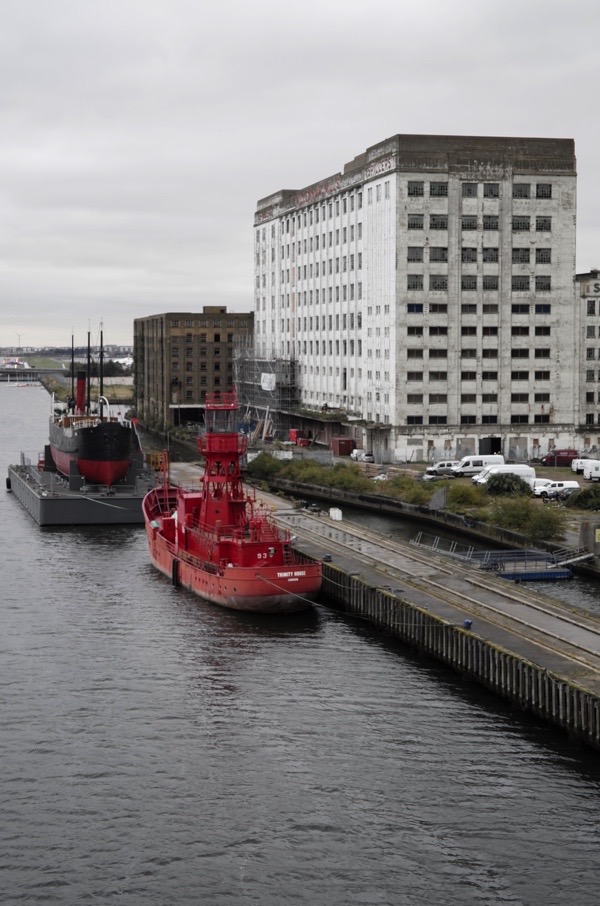
Sitting on a pontoon before the Millennium Mills in Royal Victoria Dock, with her proud crimson breast evoking the bird that is her namesake, SS Robin is the oldest complete steam coaster in the world. Constructed just a few miles away by Mackenzie, MacAlpine & Co at Orchard Yard, Bow, in 1890 alongside her sister ship SS Rook, she was fitted out in East India Dock and equipped with an engine in Dundee. There were once fifteen hundred of these vessels chugging up and down the coastline of the British Isles, competing with the railway to deliver bulk cargoes such as grain, coal, iron ore and china clay – but today only SS Robin survives to tell the story of this lost maritime endeavour.
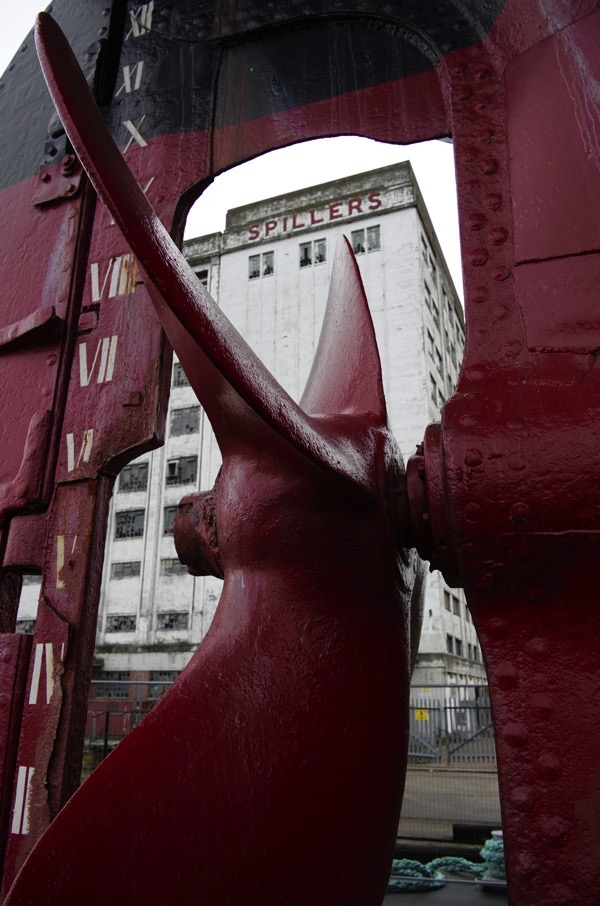
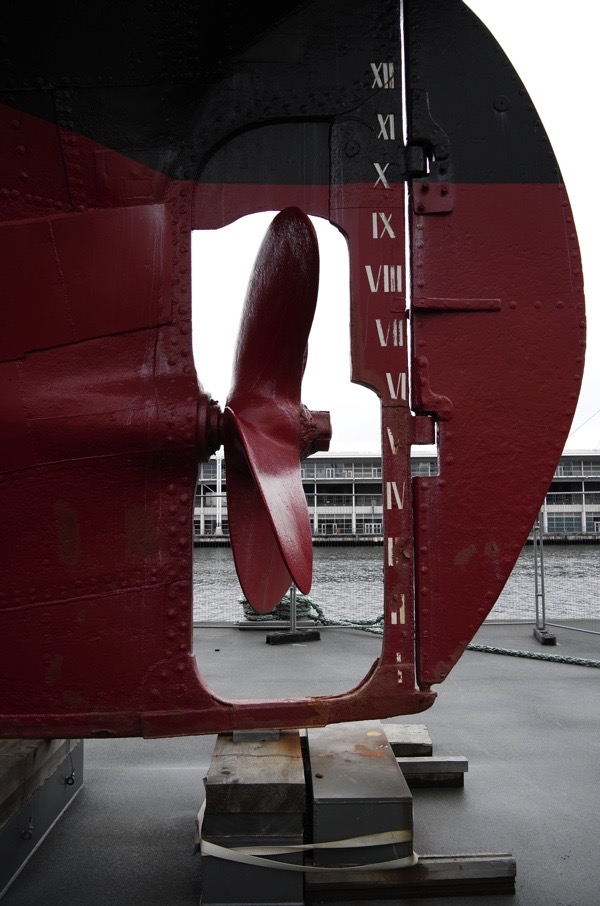
Beneath an occluded sky with rain blowing in the wind, I visited SS Robin within the shadow of Spiller’s derelict Millennium Mills, like some great cliff looming overhead. Repair to the hull of the steam coaster reveals the damage that time has wrought, yet lines of sturdy nineteenth century rivets, once heated and thrown by children, remain visible alongside modern repairs. Of squat design and robust workmanship, these ships were only designed to withstand ten years of use, and SS Robin was sold off to a Spanish owner in 1900 but continued to work the Altantic coastal route from Bilbao for a further seventy-four years, under the guise of ‘Maria.’
“She is as significant a vessel as Cutty Sark,” Matt Friday, who works for the trust set up to care for SS Robin, assured me, “She is just twenty years younger and the last of her class.” SS Robin was due to be broken up in September 1974 but instead, once her final cargo was unloaded in Bilbao in May of that year, she was purchased by the Maritime Trust and steamed back up the English Channel and the Thames to London in June, where she was moored at St Katharine Dock.
In spite of major restoration, SS Robin fell into neglect and, by 1991, had been moved down river to East India Dock. Sold for the sum of just one pound, she was used as a floating gallery for several years until, as this century dawned, it became clear more restoration work was required and the old vessel was no longer seaworthy. 80% of her steelwork would need to be replaced to make her shipshape again and so SS Robin was transferred permanently to a pontoon which permits retention of the original fabric.
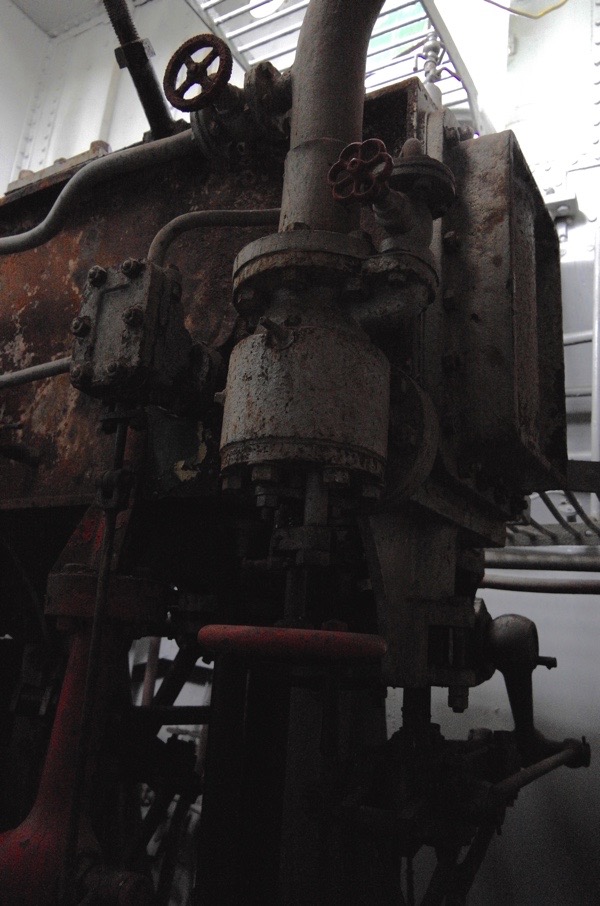
When I visited, a thick layer of asphalt was being removed from the deck – formerly installed as a waterproofing agent, it had become a medium for water to enter the structure. Walking around the pontoon, the elegant sculptural form of the hull was magnificent to behold, while down below, the original cylinders and pistons of the triple expansion engine remain. In spite of its modest origin, this is a vessel of distinguished design and sitting in the vast emptiness of Royal Victoria Dock, once the largest working dock in the world, SS Robin – the last of the ‘dirty British coasters’ – provides the necessary catalyst to evoke the history and meaning of this extraordinary place.
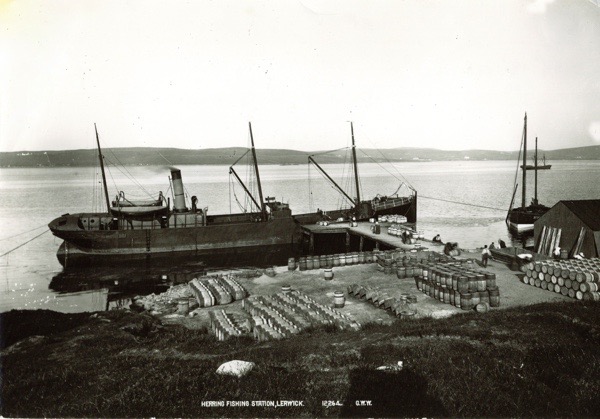
SS Robin in Lerwick (Courtesy of SS Robin Trust)
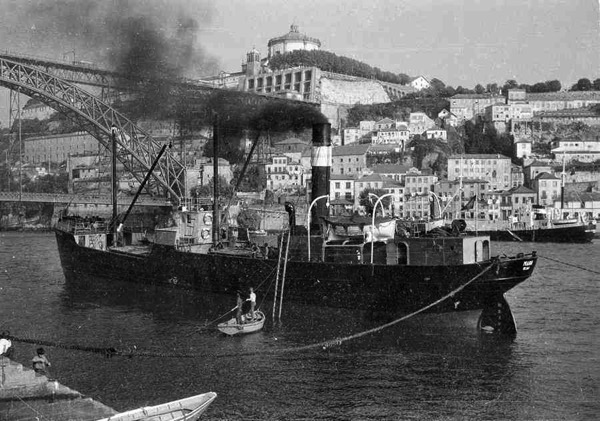
SS Robin in River Douro, Porto, under the guise of ‘Maria’ (Courtesy of SS Robin Trust)
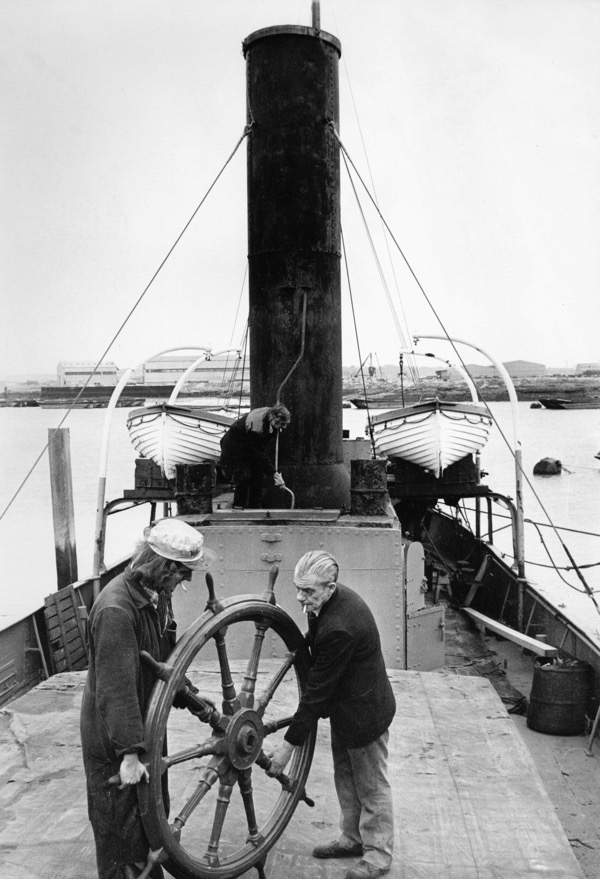
Undergoing restoration in the seventies (Courtesy of SS Robin Trust)
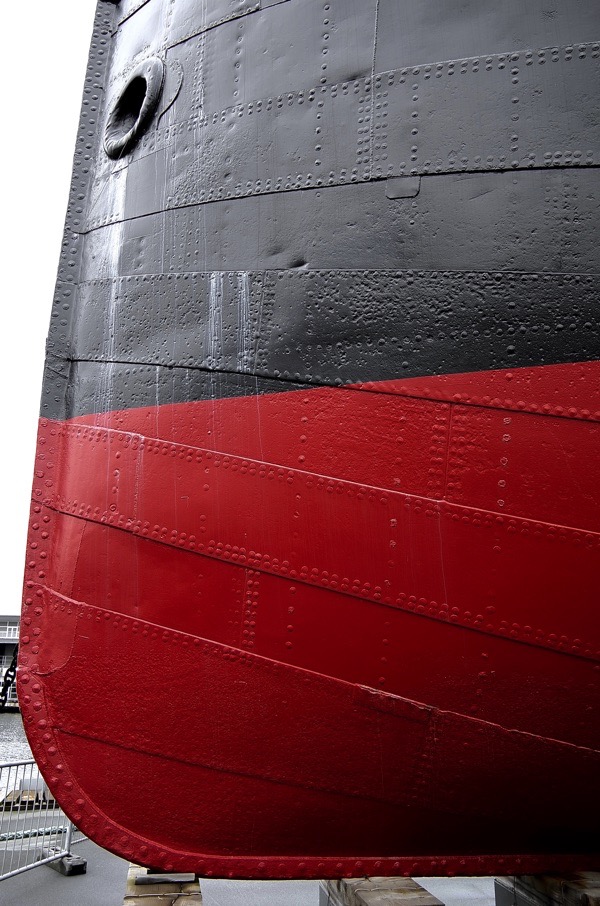
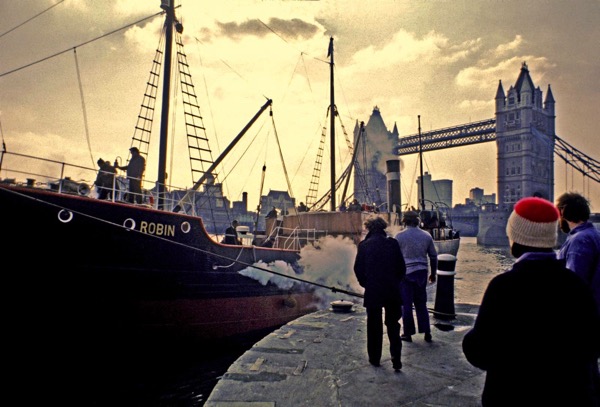
At St Katharine Docks in the eighties (Courtesy of Ambrose Greenway)
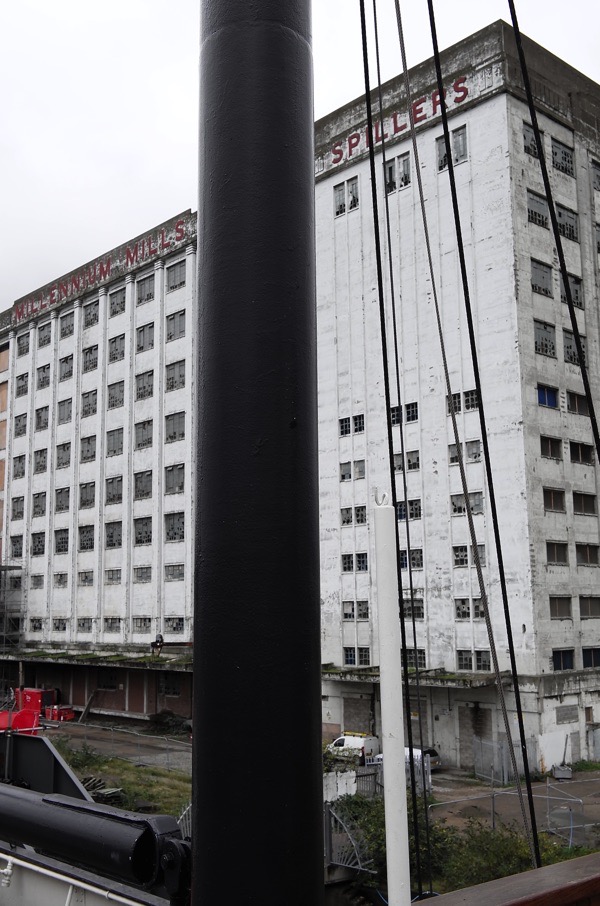
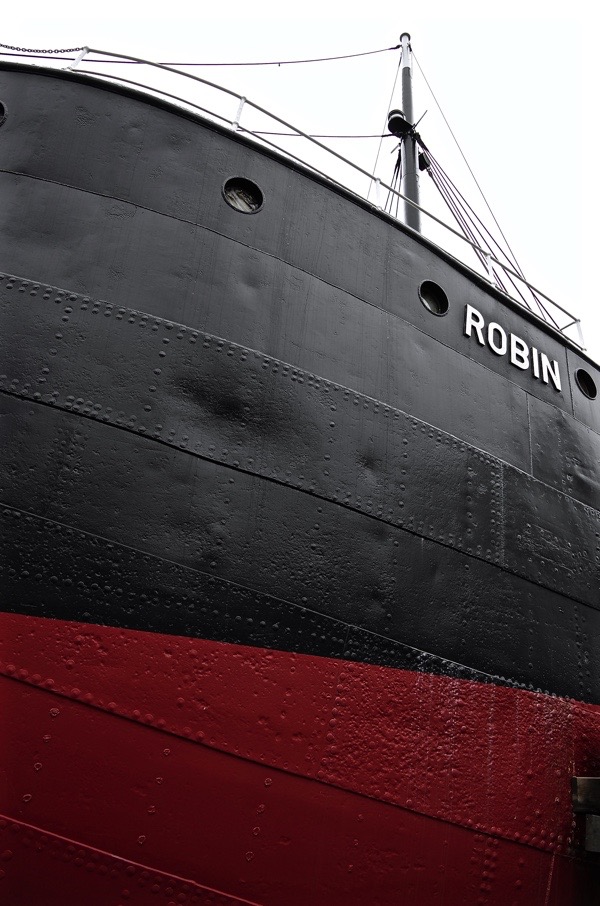
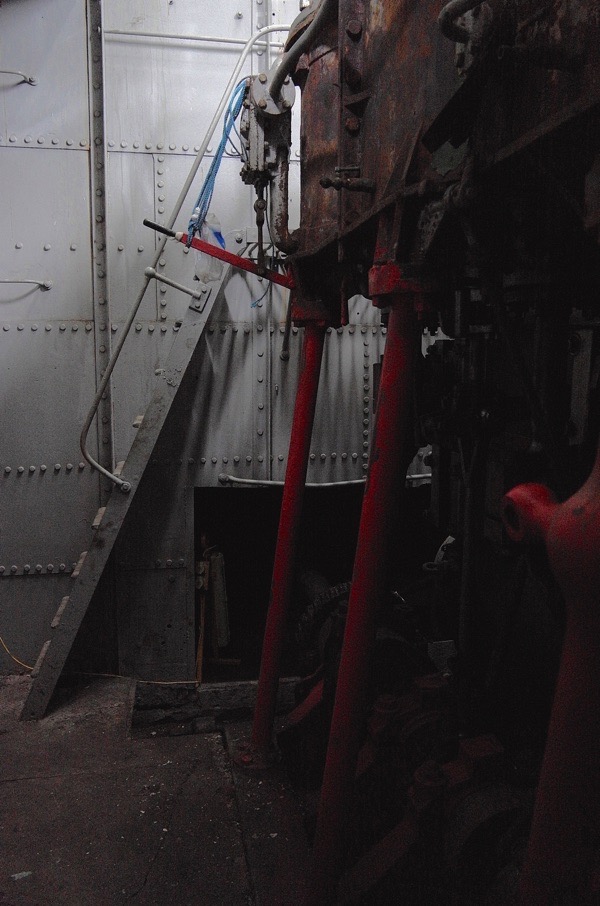
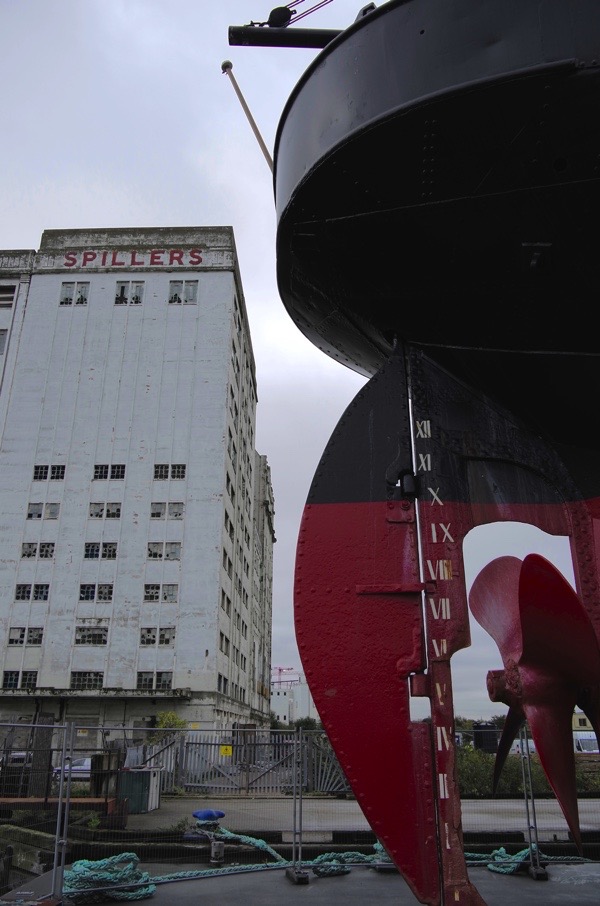
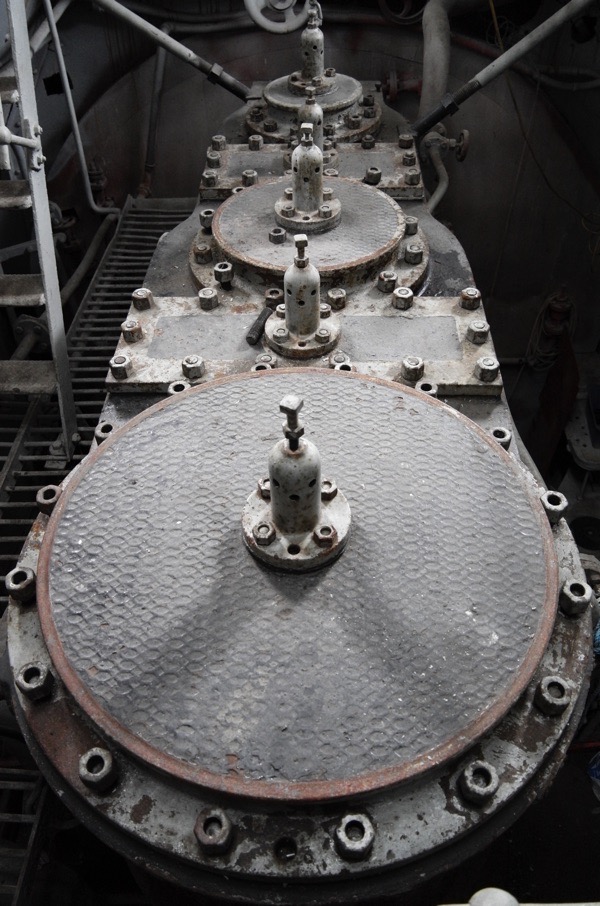
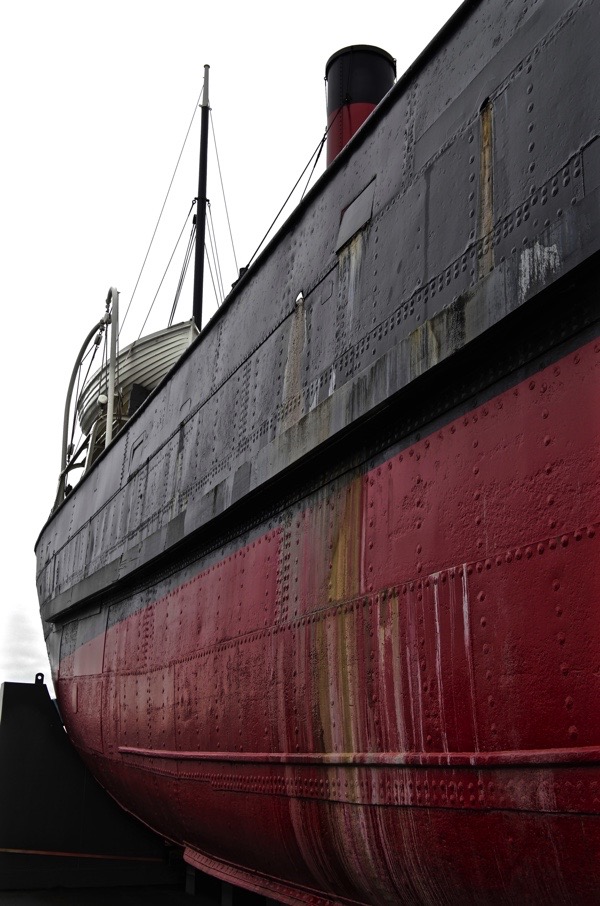
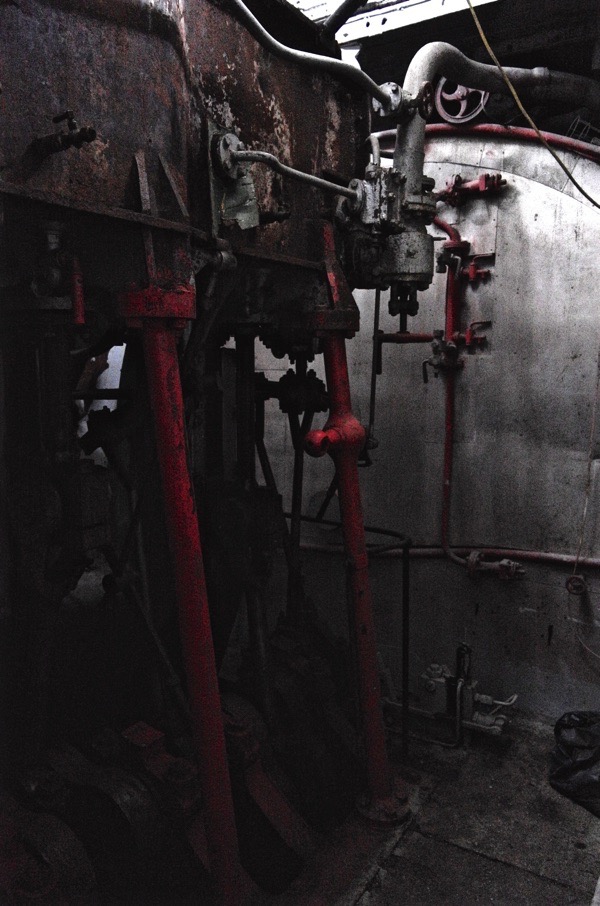
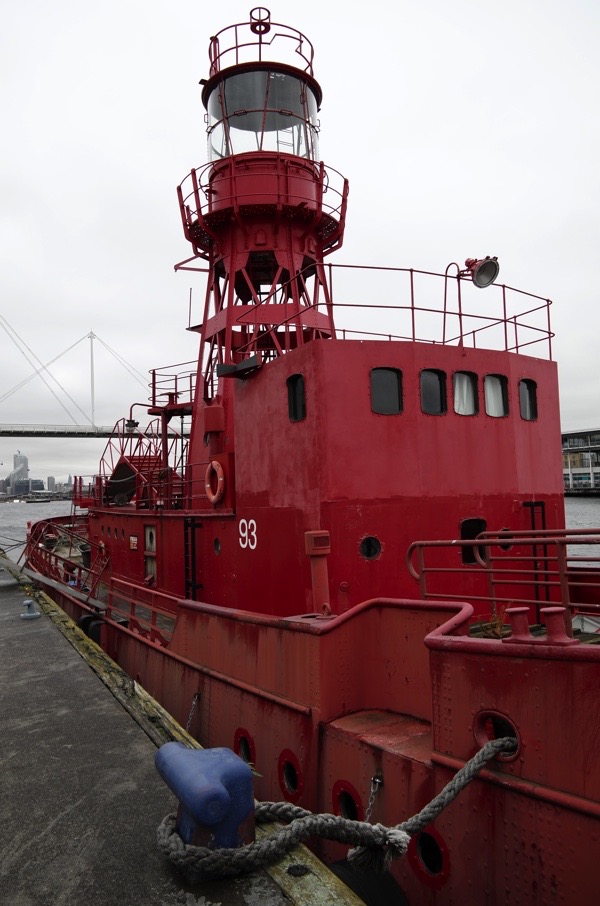
SS Robin’s neighbour in Royal Victoria Dock is a lightship
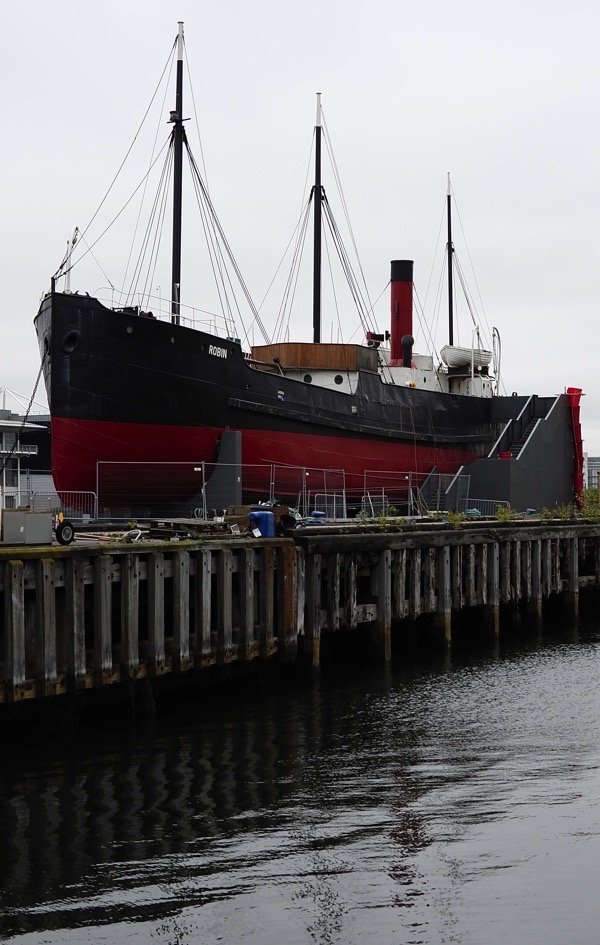
Dirty British coaster with a salt-caked smoke stack,
Butting through the Channel in the mad March days,
With a cargo of Tyne coal,
Road-rails, pig-lead,
Firewood, iron-ware, and cheap tin trays.
from Cargoes by John Masefield
Learn more from SS Robin Trust
You also like to read about
More Philip Cunningham Portraits
More East End portraits of friends and colleagues taken by Philip Cunningham in the seventies and eighties while he was living in his grandfather’s house in Mile End Place and beginning his career as a photographer, youth worker and teacher.
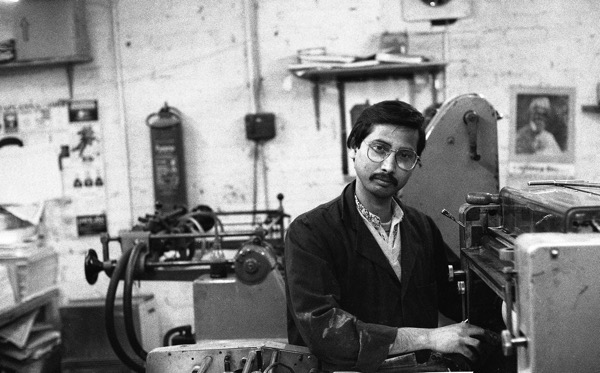
Printer at the Surma newspaper, Brick Lane. The paper supported Sheikh Mujibur Rahman & the Awami League.
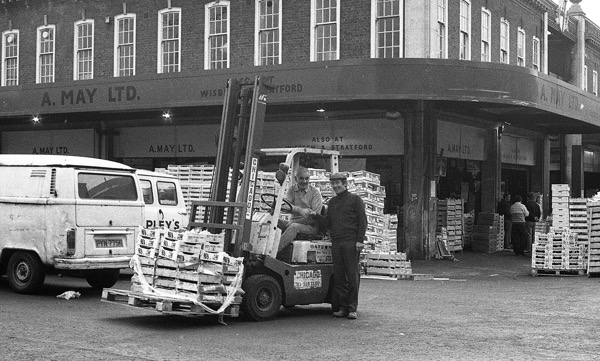
Porters at Spitalfields Market c.1978
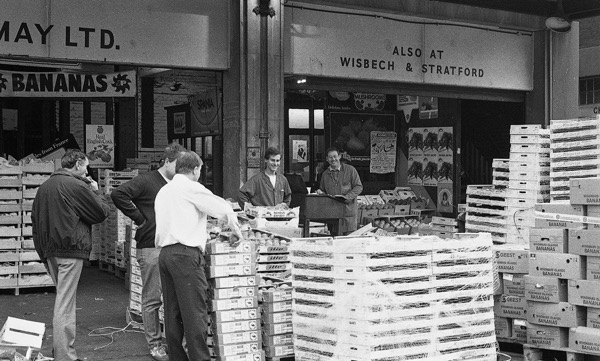
Porters at Spitalfields Market c.1978
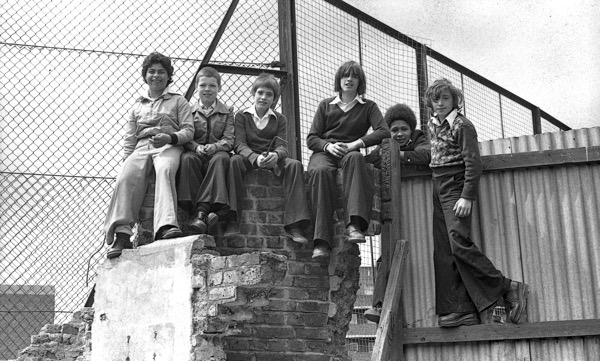
Boys on wasteland, Whitechapel c.1977
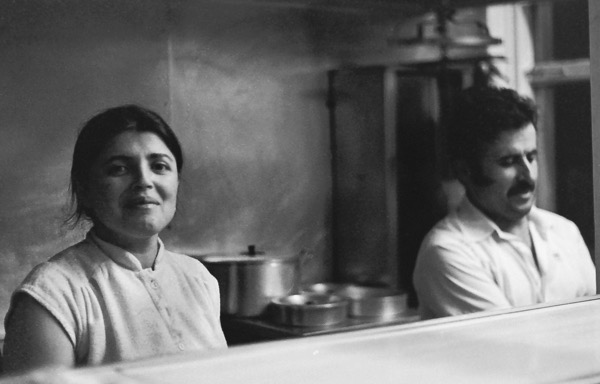
My friends Sadie & Murat Ozturk ran the kebab shop on Mile End Rd. Their daughter Aysher was best friends with my daughter and both went to John Scurr School. We spent alternate Christmases at each others’ home until they returned to Turkey. They were very hard-working and I hope they have prospered. c.1978
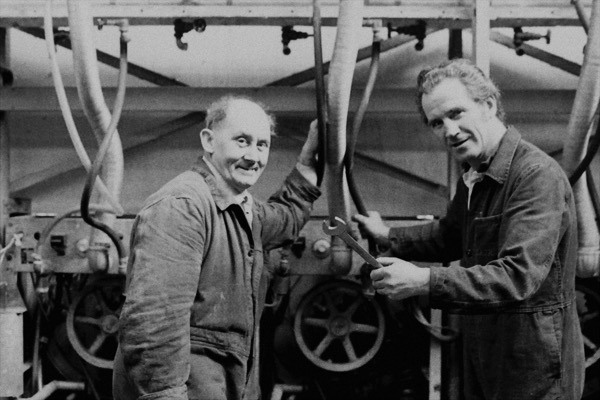
Engineers in the Mile End Automatic Laundry. It was a fantastic facility for people like us, with just an outside toilet and a butler’s sink in the kitchen. It had machines to iron your sheets which was a palaver, but everyone used to help each another. c.1975
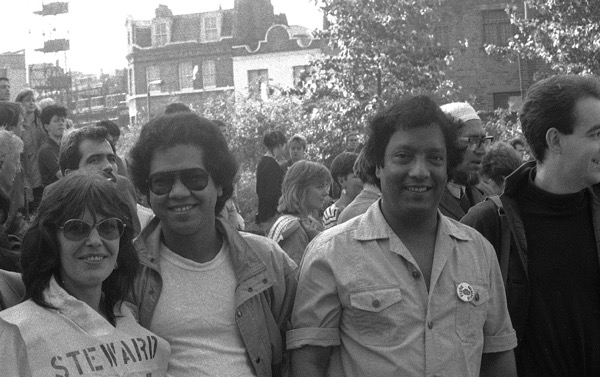
Jan Alam & Union Steward, Raj Jalal on an Anti-Fascist march in Whitechapel
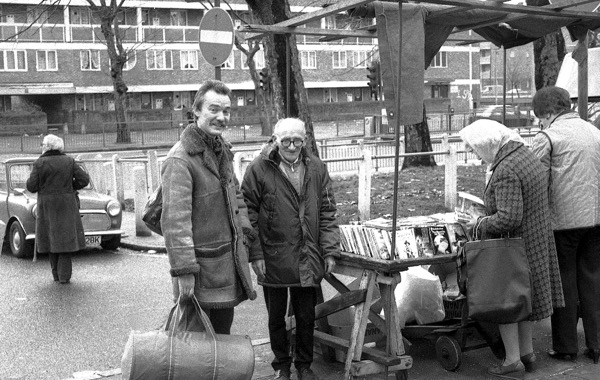
Chris Carpenter & Jim Wolveridge on Mile End Waste. My long-time friend Chris was a teacher at John Scurr School who went to Zimbabwe to teach for a number of years. When he arrived there were very few books in the School, but oddly there was one called ‘Ain’t It Grand’ by Jim Wolveridge. How it got there nobody could explain. Jim Wolveridge used to have a second hand book stall on the Waste every Saturday. In this photo, Chris is telling him about finding his book in his school in Zimbabwe. c.1985
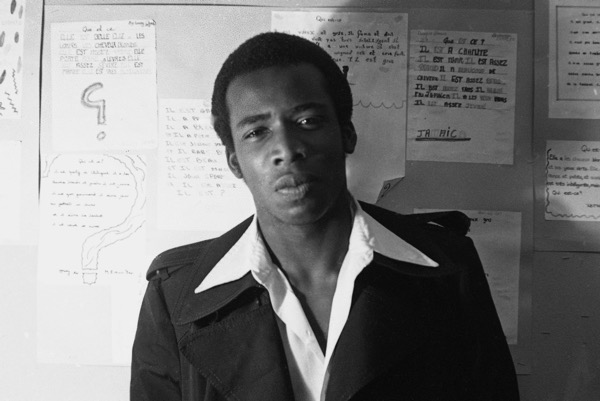
My photography student Rodney at Deptford Green Youth Centre would often say ‘Hush up & listen to the Teach!’
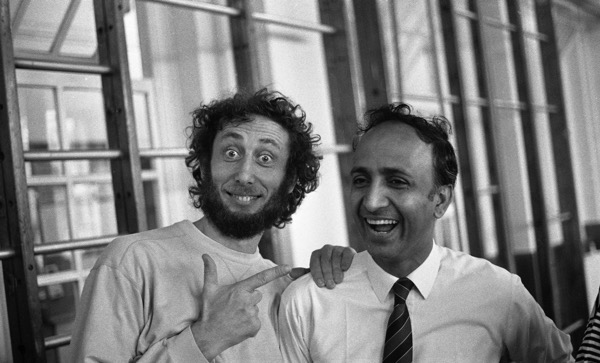
Michael Rosen and Nik Chakraborty both taught my daughter at John Scurr School. c.1979
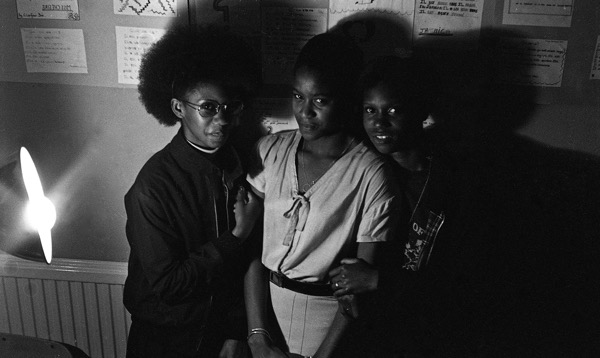
Photography students at Deptford Green Youth Centre. They were eager to learn and I hope they’ve all done well. c.1979
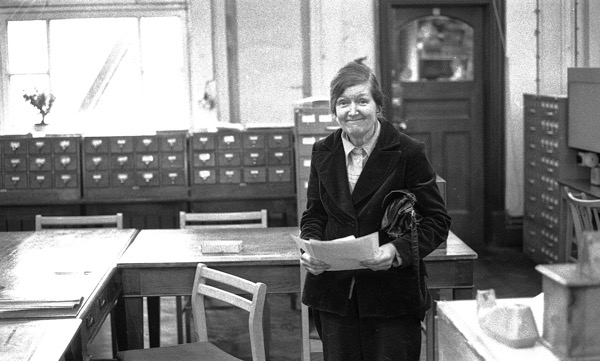
My friend and colleague, Caroline Merion at Tower Hamlets Local History Library where she spent most of her time. I went to her house once or twice and I noticed she had a habit of hoarding bags. c.1979
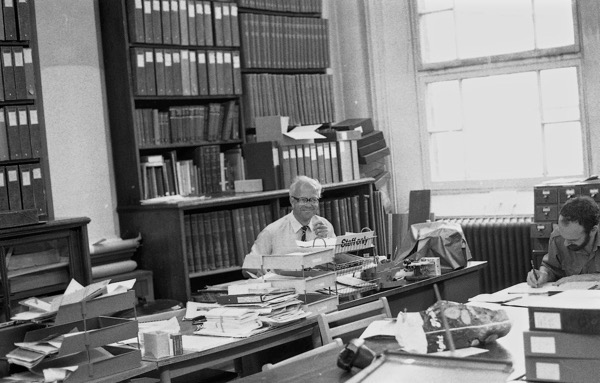
Harry Watton worked in the Local History Library in Bancroft Rd for many years. He was always helpful and had an immense knowledge about Tower Hamlets. c.1979
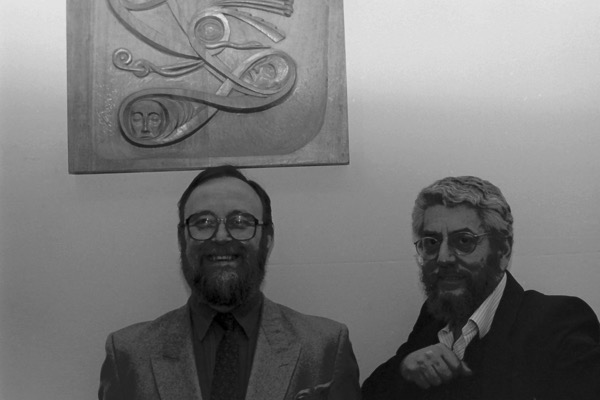
The Rev David Moore from the Bow Mission and Santiago Bell, an exile from Pinochet’s Chile who was a ceramicist and wood carver. He taught David to carve and, on retirement, David built himself a studio and has been carving ever since. This picture was taken at the opening of Bow Single Homeless & Alcoholic Rehabilitation Project and the carving, which was the work of both David and Santiago, depicts the journey of rehabilitation. c.1986
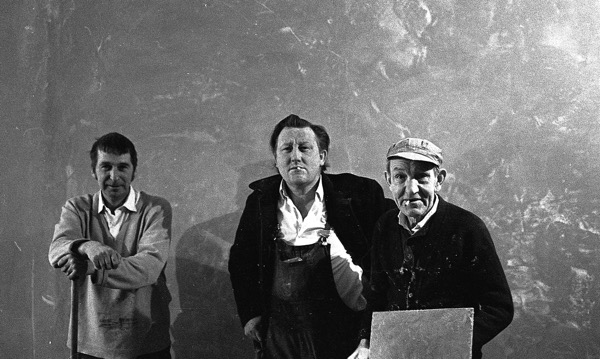
Builders at Oxford House. c.1978
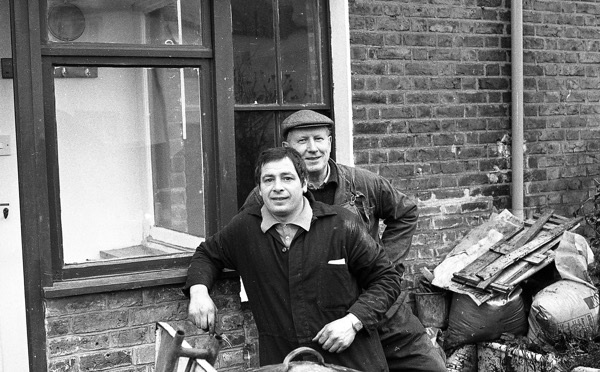
Gasmen at Mile End Place, 1977
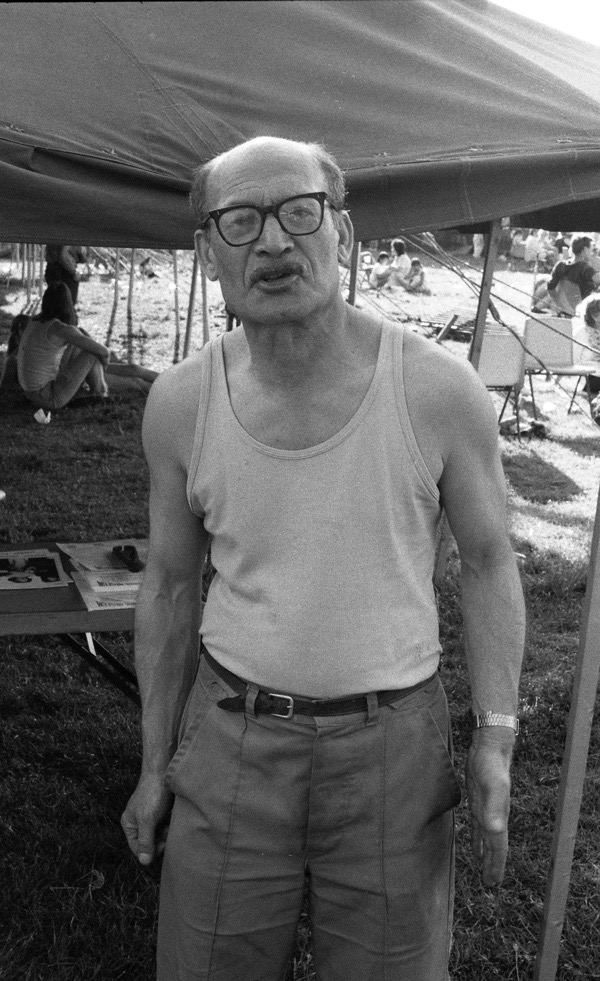
Harry Diamond at a beer festival at Stepping Stones Farm Stepney. After I left art school in 1978, I met Harry at Camerawork in Alie St. He was always generous with his knowledge of photography and, after talking to him, I changed the type of film I was using. Harry was famously painted by Lucien Freud standing next to a pot plant, but when I asked Harry what he thought of Lucien, he did not have a high opinion of the great artist. c.1978
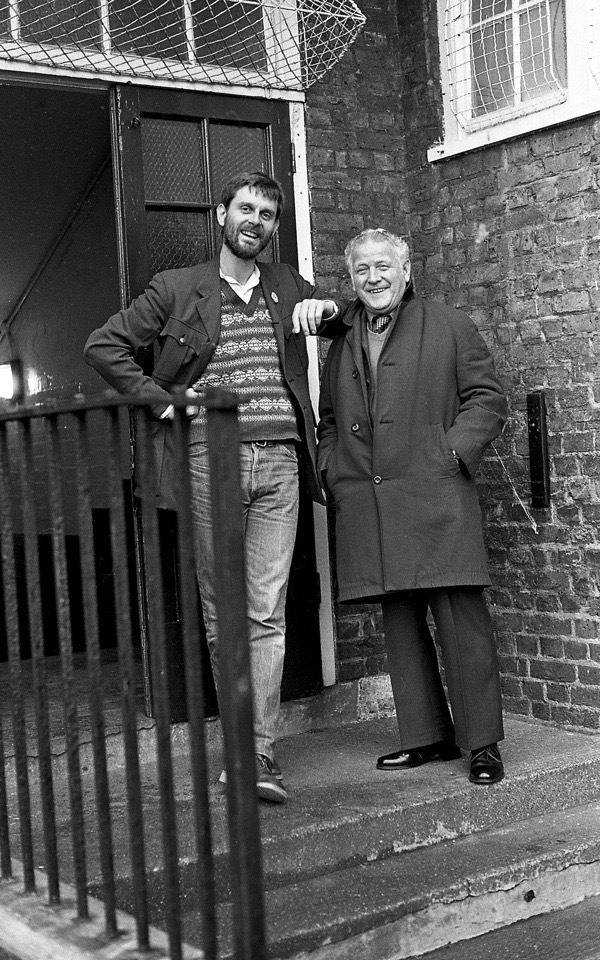
Teacher Martin Cale and Bob the School-keeper (an ex-docker) at John Scurr School. c.1978
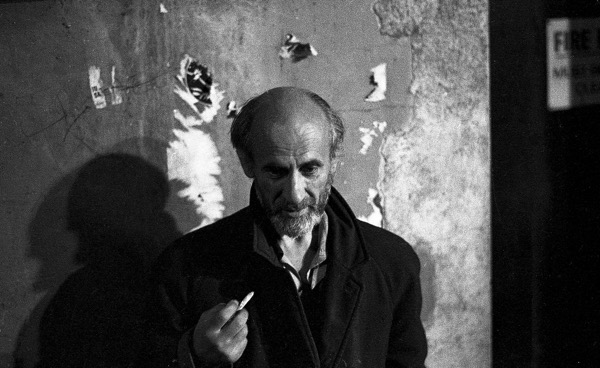
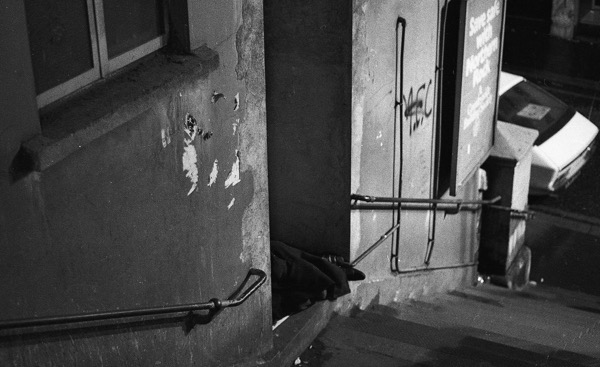
At Hungerford Bridge, I came across this man in a doorway. He was not yet asleep so I asked if I could take his photo. ‘If you give me a cigarette,’ he said. ‘I only smoke rollups,’ I replied. ‘That’ll do.’ I rolled him a cigarette then took his portrait. c.1978
Photographs copyright © Philip Cunningham
You may also like to take a look at
Hilary Haydon At The Charterhouse
Celebrating the opening of the Charterhouse in Smithfield to the public, here is my profile of Brother Hilary Haydon. Charterhouse is open today, and from Tuesday to Sunday each day from 11am until 4:45pm. Admission is free.
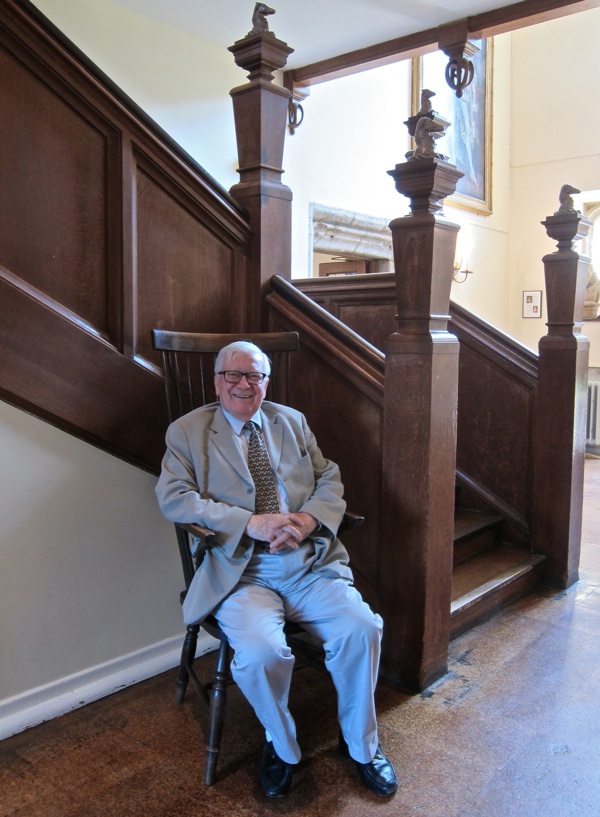
Unlike the hermit monks of the medieval priory that once stood upon this site, the current Brothers at the Charterhouse are a sociable bunch and thus I was able to pay a visit upon Hilary Haydon, the third-most senior Brother, who took me on a tour of the accommodation.
Seniority – in this instance – is based upon how long a Brother has been resident at the Charterhouse, not age. Yet Hilary has a rather more vivid way of expressing it. Gesturing to the pigeon holes for mail, he explained that as residents die the labels of those remaining get moved up. “You start here and then you move along, until you drop off the end,” he informed me with startling alacrity.
It made me realise that residence in the Charterhouse affects the Brothers’ sense of time – inhabiting these ancient stone walls induces a certain philosophical perspective upon mortality, setting the span of an individual’s life against the centuries of history that have passed here. It is both a consolation and an encouragement to recognise the beauty of the fleeting moment, as manifest in the immaculately-tended gardens alive with bluebells and tulips, and as illustrated upon the tomb of Thomas Sutton – the benefactor – by bubbles, symbolising the transitory nature of fame.
I crossed the wide lawn that sets the Charterhouse apart from the clamour of Smithfield, aware that my diagonal path, bisecting the velvet greensward, passed over the largest plague pit in the City of London in which sixty-thousand victims of the Black Death were interred. Arriving at the entrance, I cast my eyes up to the fifteenth century gatehouse of the former Carthusian Priory. Henry VIII met with greater resistance from the monks here than any other religious order and thus he had John Houghton, the prior, cut in four and his right arm nailed to the door.
Yet this grim history seemed an insubstantial dream, as I entered to discover Hilary Haydon waiting in the gatehouse to greet me. He led me along stone passages and into hidden courtyards, through the cloisters and the Great Hall and the chapel, with its flamboyant monument of fairground showiness for Thomas Sutton.
My wonder at the quality, age and proportion of the architecture was compounded by my delight at the finely-conceived planting schemes of the gardens and it was not difficult to envisage this elaborate complex as a Renaissance palace, which it became for the Howard family through three generations until they sold it to Sutton in 1611. The wealthiest commoner in England, he endowed his fortune upon a school and almshouses here, entitled ‘King James’ Hospital in Charterhouse.’ Daniel Defoe described it as “the noblest gift that ever was given for charity, bu any one man, public or private, in this nation.”
Four centuries later, the school has moved out to Goldalming, leaving Smithfield in 1872, yet the almshouses still flourish – offering sheltered accommodation to forty Brothers. Formerly a barrister in the City, Hilary came here twenty years ago when he became a widower. “I have never regretted it,” he assured me with an emphatic grin, “Meals appear, your room is cleaned and the community is supportive.” Hilary revealed to me that among the Brothers, there are solicitors, barristers and priests, as well as an actor currently understudying for ‘The Woman in Black,’ the stage manager of the original production of ‘Oliver!’ and – as we entered the refectory – he introduced a distinguished-looking gentleman as the ballet critic of The Sunday Times.
Each morning, the Brothers are woken by the chapel bell at ten to eight. “I use it as an alarm clock,” confessed Hilary in a whisper, “I attend chapel only for funerals and when I read the lesson.” Breakfast follows in the Great Hall at eight-twenty, succeeded by morning coffee at eleven, lunch at one and afternoon tea at three – and thus time is measured out in the benign conditions of the Charterhouse. “A very silent brother who sat next to me came into lunch one day and died beside me,” Hilary admitted, “As it happens, there was a doctor who was only at the other side of the table and he was across the table like lightning – it was a beautiful way to go.”
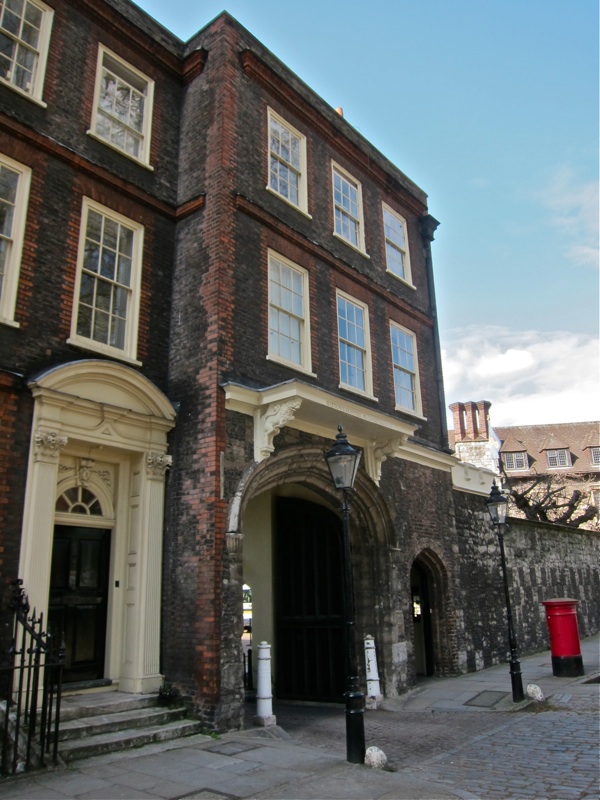
The fifteenth century gate to the monastery is encompassed by an eighteenth century structure
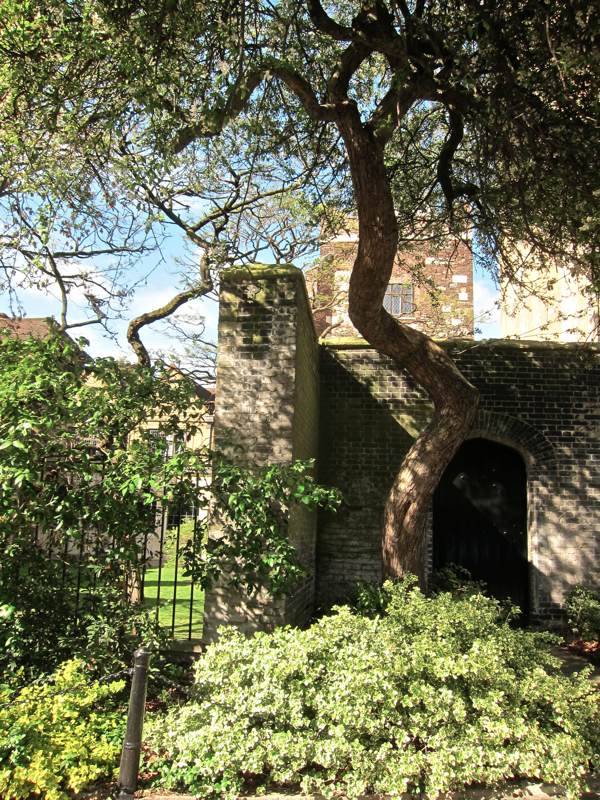
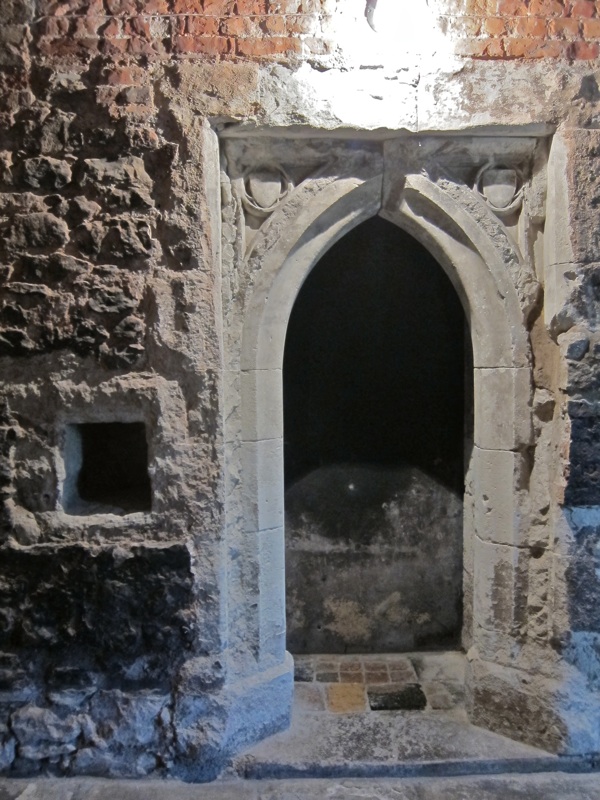
Doorway and cubby hole for passing food through at the entrance to the former priory, dissolved in the fifteen-forties and bricked up ever since.
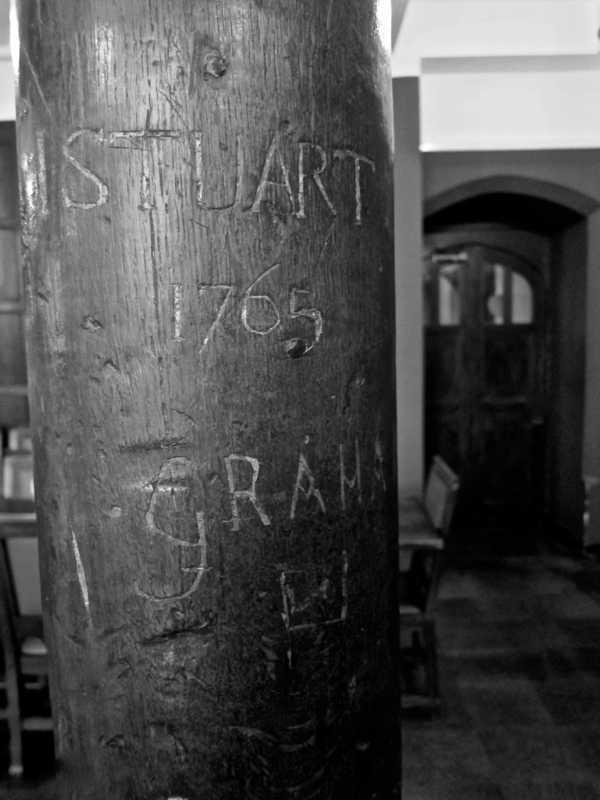
Graffiti from the days this was the refectory for Charterhouse School
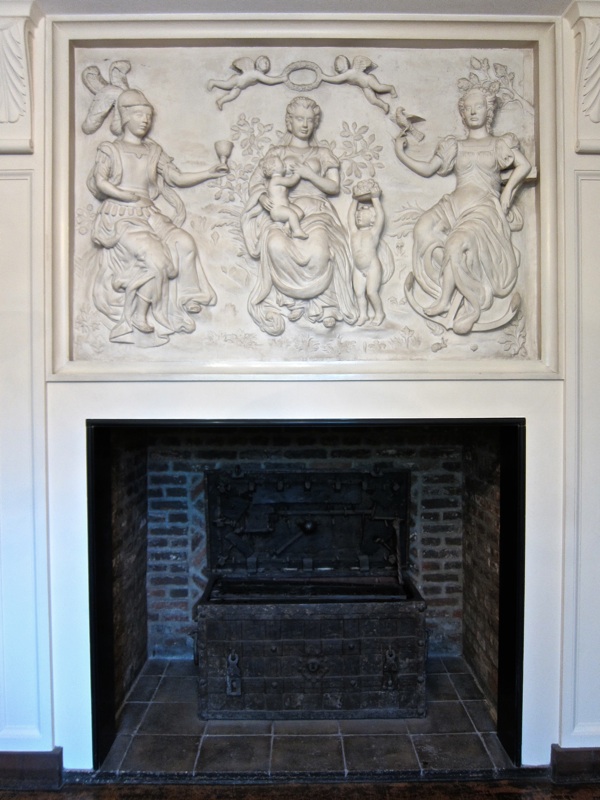
Chimney piece of the three graces and a chest that may have belonged to Thomas Sutton
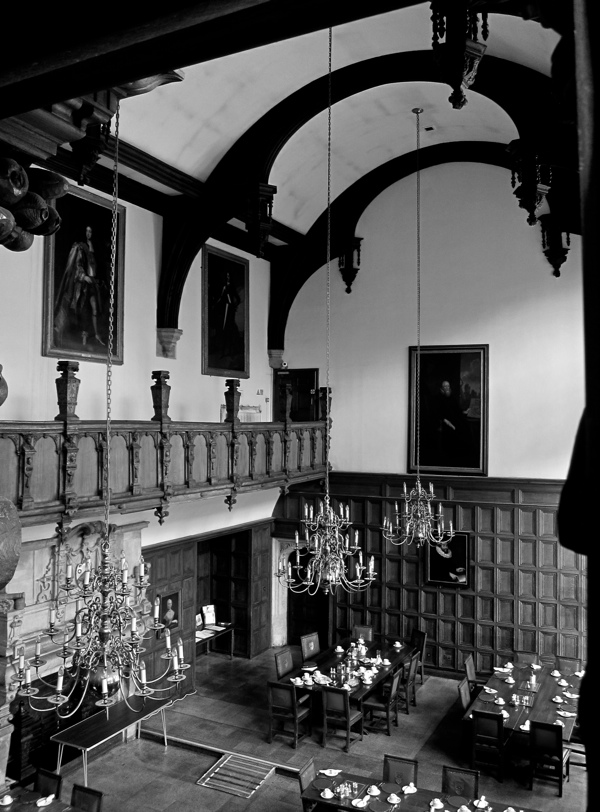
The Great Hall
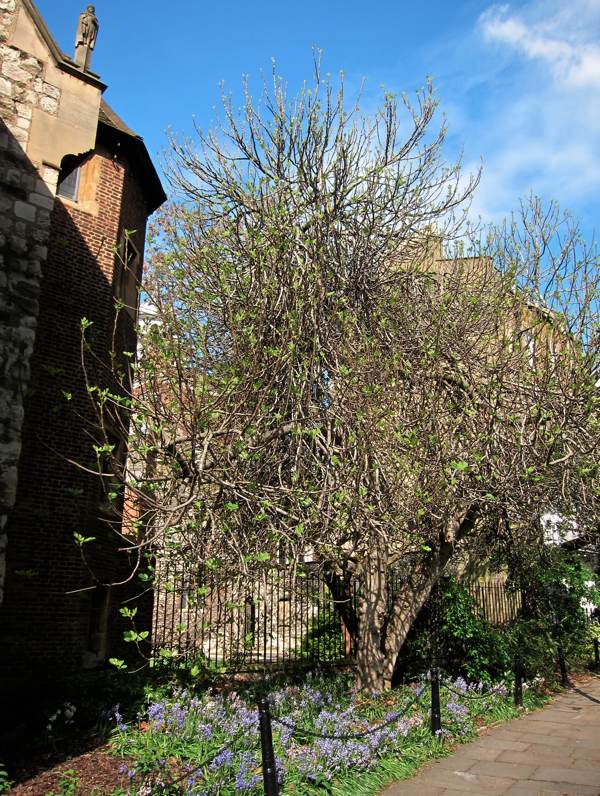
Bluebells and an ancient fig tree at the entrance to the Charterhouse
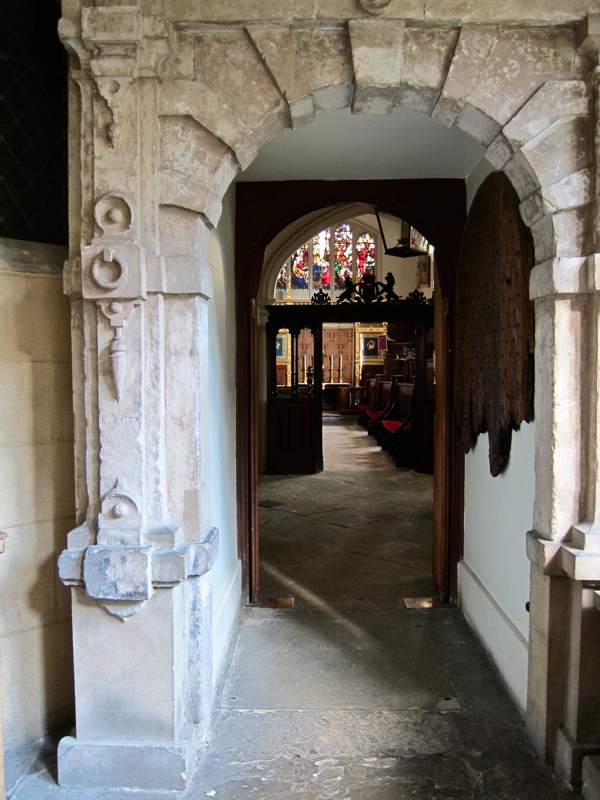
Looking through to the chapel, with the relic of a door damaged an incendiary bomb
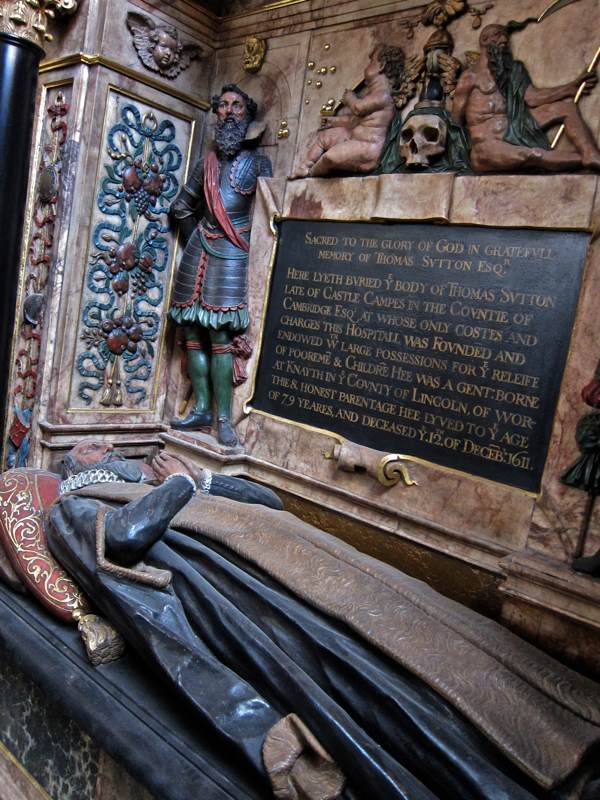
Thomas Sutton, the founder, has lain here for four centuries
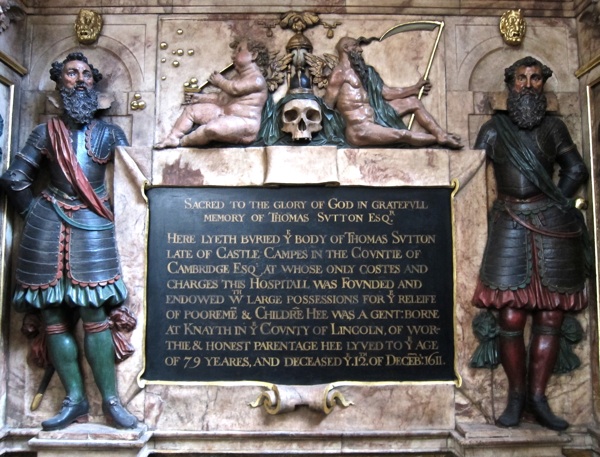
Bubbles symbolise the futility of wordly fame
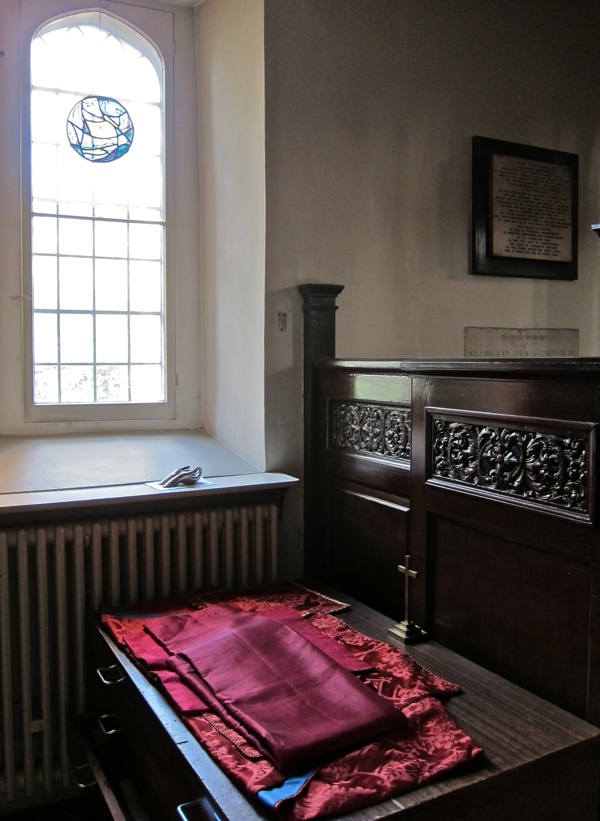
Vestments await the priest in the chapel
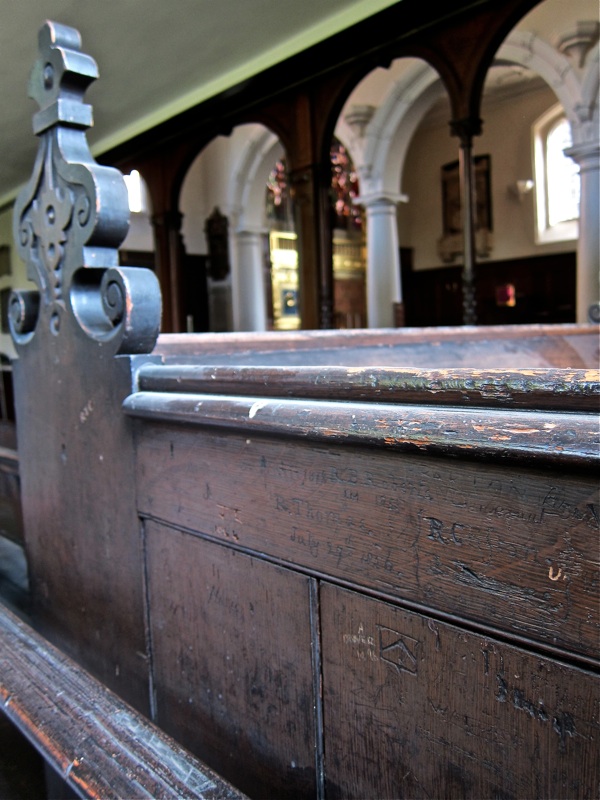
Graffiti carved by the bored schoolboys of the eighteen-fifties in the chapel
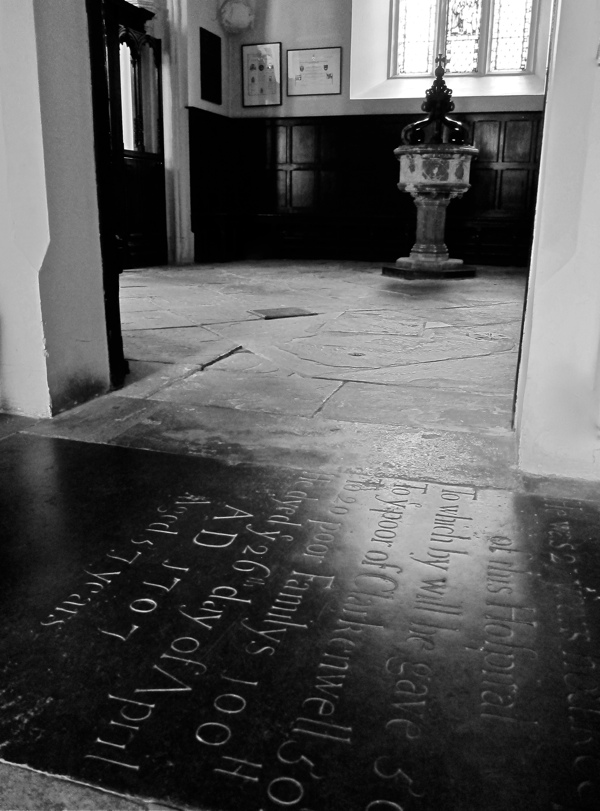
Note the spelling of “Clarkenwell” upon the memorial stone set into the floor
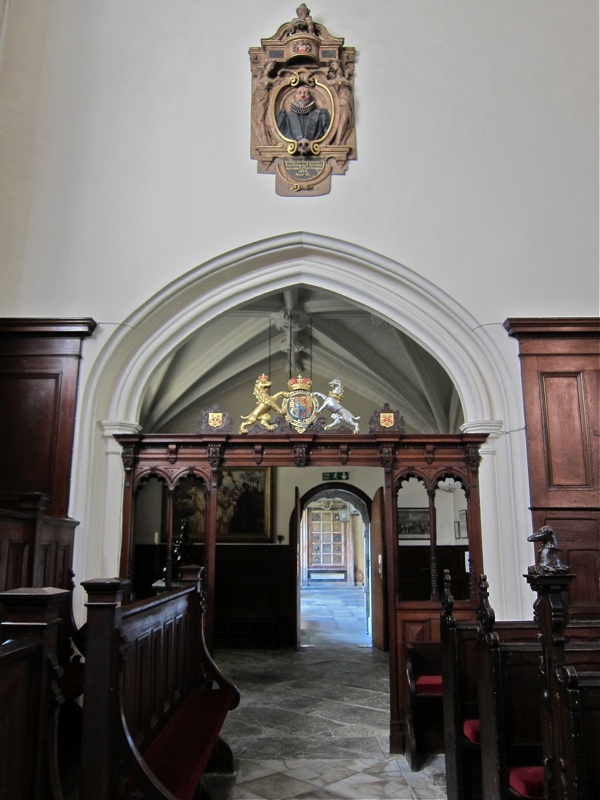
In the chapel
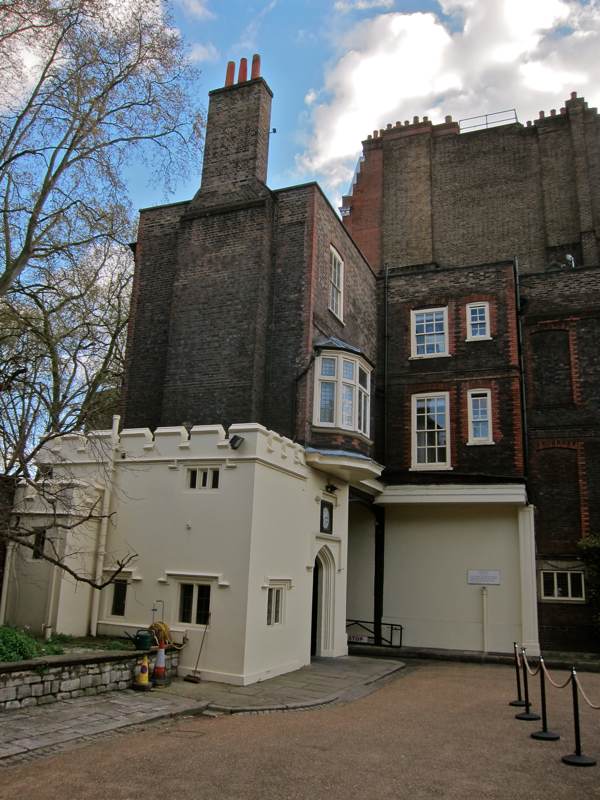
Eighteenth century dwelling built over the ancient gatehouse
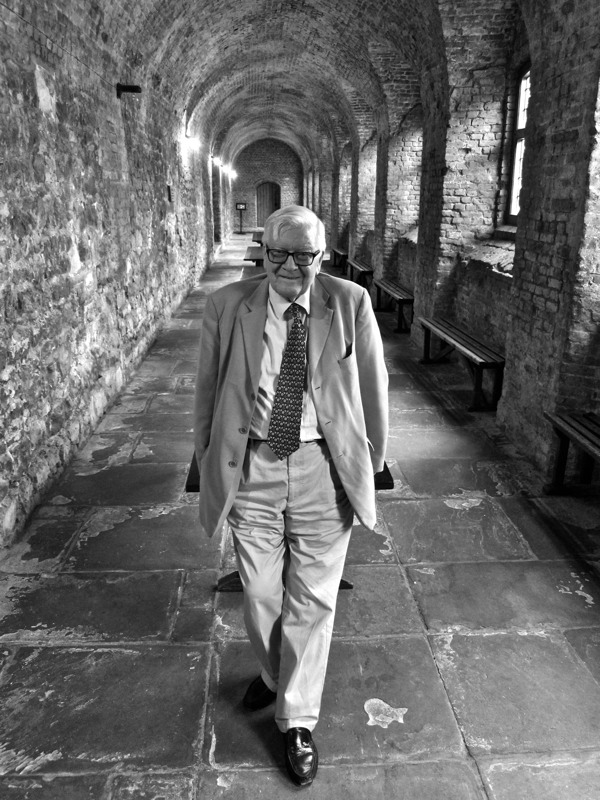
Hilary Haydon in the cloister at the Charterhouse – “It’s always cool in here”
Visit The Charterhouse, Charterhouse Square, EC1M 6AN
You may also like to read about












