
At 45 Hanbury St
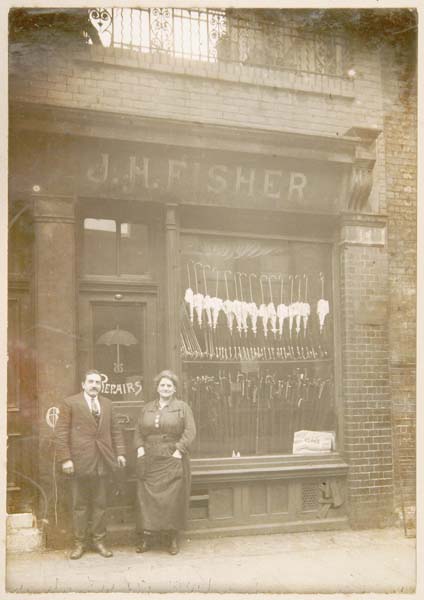
This is 45 Hanbury St in 1919, an address which hardly exists anymore – today these premises serve as the back end of a chocolate shop, one of more than six such establishments in Spitalfields. Yet a century ago it was home to the family business of JH Fisher, making and repairing umbrellas and parasols. In this photograph, taken on 19th November 1919, we see Juda Hersz Fiszer and his wife Malka standing outside their shop. They came to London from Warsaw at the beginning of the twentieth century and, although the family anglicised their name to ‘Fisher,’ Juda and his wife kept their Polish nationality.
Juda Fiszer was a skilled umbrella-maker and established his umbrella business in Spitalfields in 1907. During the First World War, the family moved to the more desirable area of Hackney and set up home at 123 Victoria Park Rd. Their son Morris Fisher continued the family business but, by the thirties, the Hanbury St shop was taken over by a tailor and Morris had a stall in the Whitechapel Rd, selling rather than manufacturing umbrellas.
Spitalfields has good reason to be seen as the place of origin of the umbrella-making industry in this country on account of the local availability of silk and whalebones from the London Docks at the end of the eighteenth century when these popular accessories first became readily available. James Ince & Sons is the longest established company of umbrella manufacturers in Britain and Richard Ince, the current incumbent, can trace origin of his business back to White’s Row in 1815, though he believes it was in existence before that. Today Inces’ Umbrellas trade from Vyner St but they were in Spitalfields for over two hundred and fifty years before moving to Hackney in the eighties.
The last remnant of this former industry in Spitalfields was E Olive Ltd, an umbrella shop and manufacturer at 10 Hanbury St which closed in the late eighties yet, such is the cyclical nature of history, the recent revival in quality British-made umbrellas has the occasioned the arrival of newcomer London Undercover which has traded successfully from 20 Hanbury St since 2013 – selling umbrellas less than fifty yards from JH Fisher a century ago.
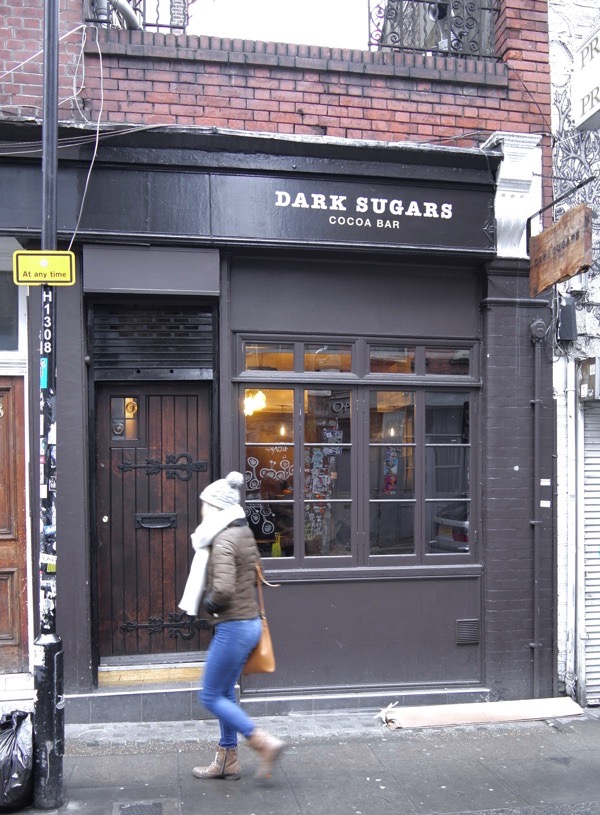
45 Hanbury St today

E Olive Ltd, Umbrella Manufacturers, 10 Hanbury St, 1985 (Photograph by Philip Marriage)

E. Olive Ltd Umbrella Manufacturers, 10 Hanbury St, 1985 (Photograph by Philip Marriage)
Read my stories about umbrellas
Phil Maxwell At Whitechapel Car Boot Sale
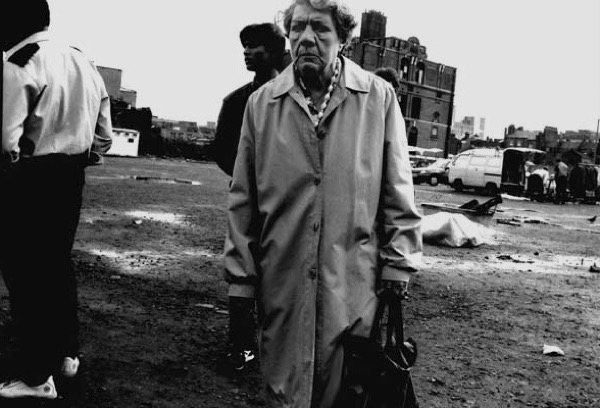
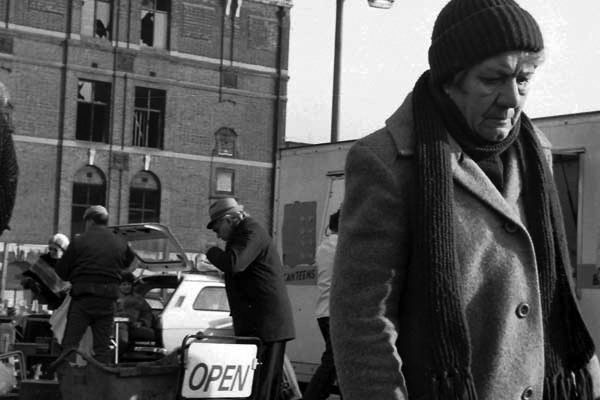
Some readers may be puzzled by the ghost sign which has recently been uncovered next to the Blind Beggar in Whitechapel, advertising the weekly car boot sale that ceased functioning more than twenty years ago when the land at the rear of the tube station – known as Whitechapel Waste – was redeveloped. Fortunately, Contributing Photographer Phil Maxwell lived in Pauline House overlooking Whitechapel for thirty years and documented the life of this lost market and its thriving community during the eighties.

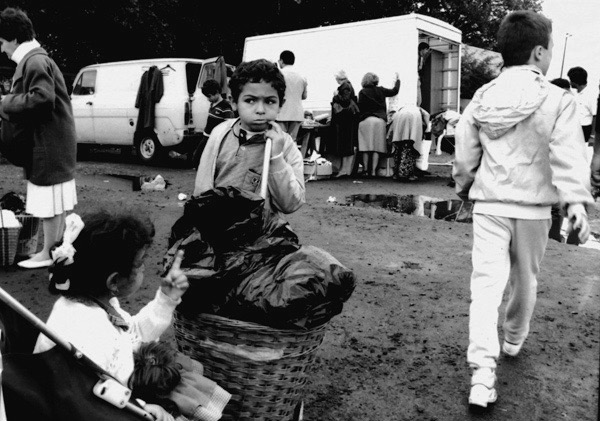
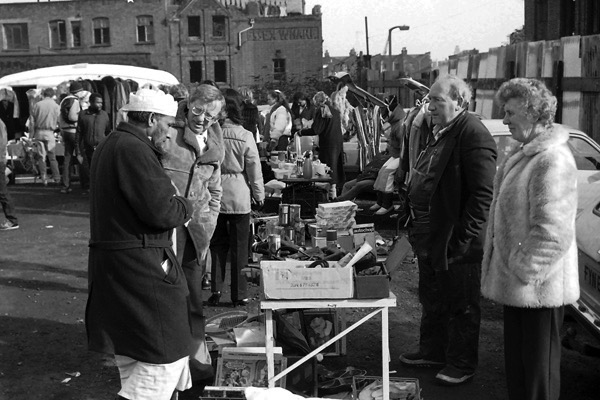
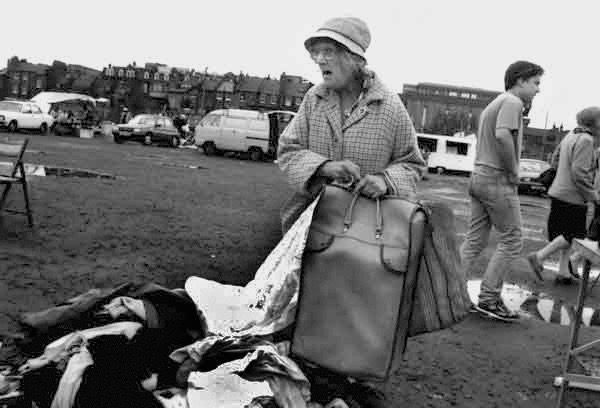
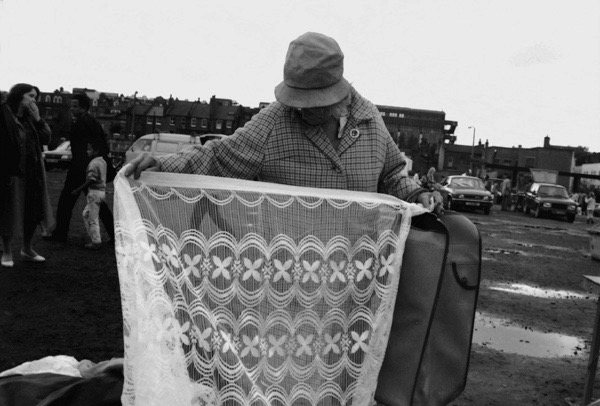
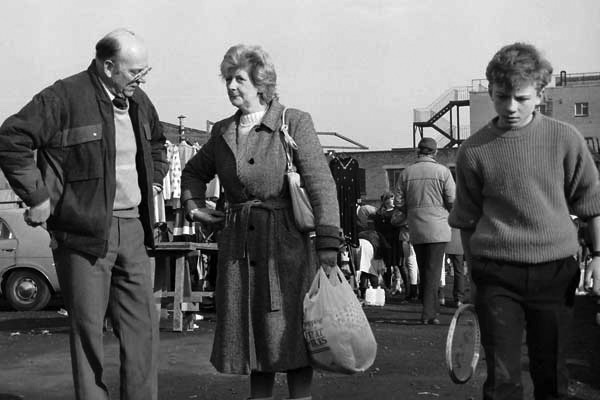
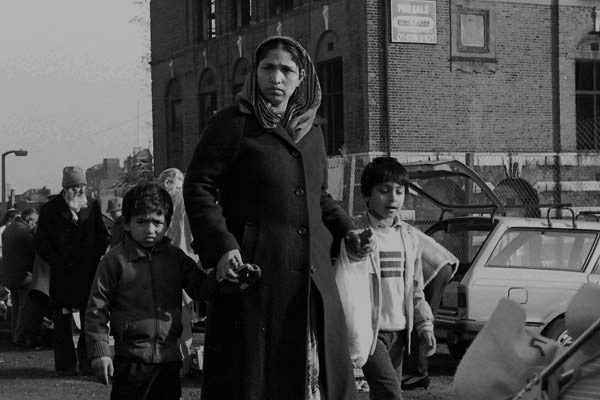

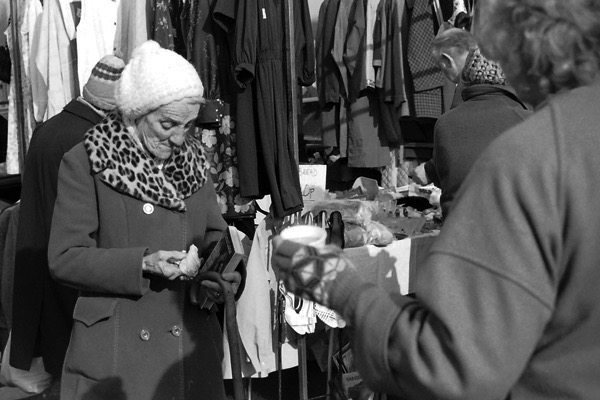

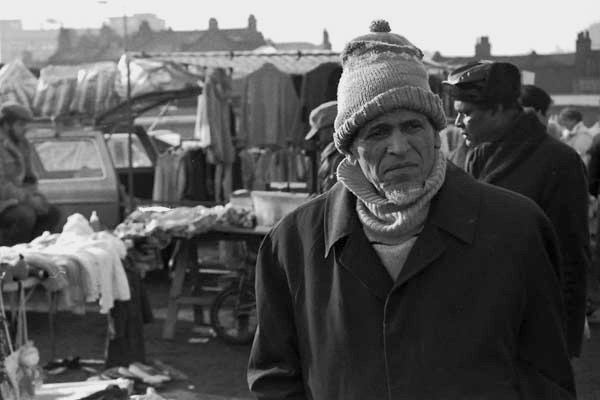
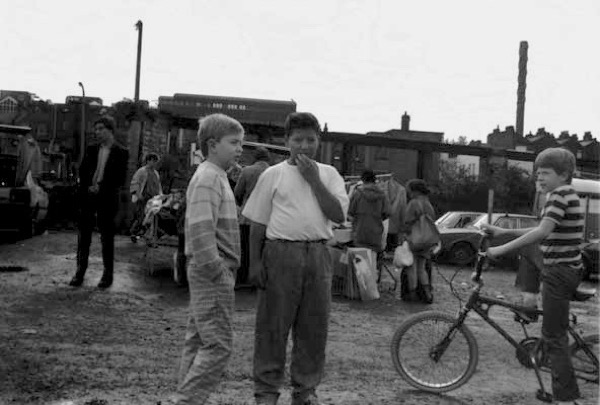
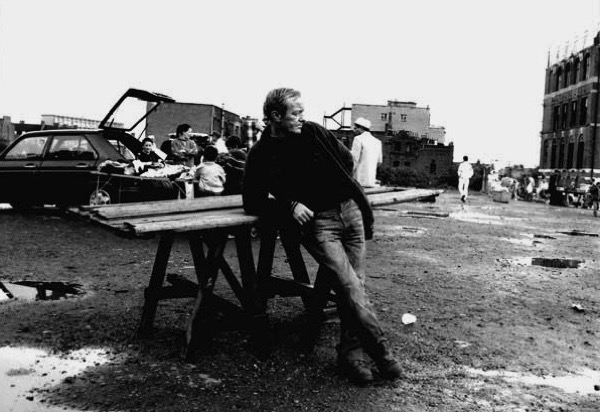
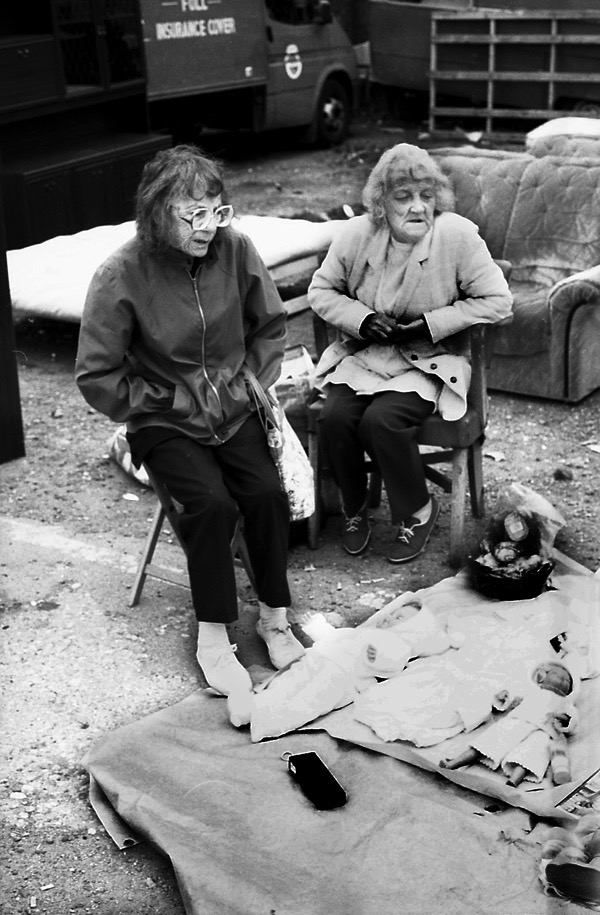
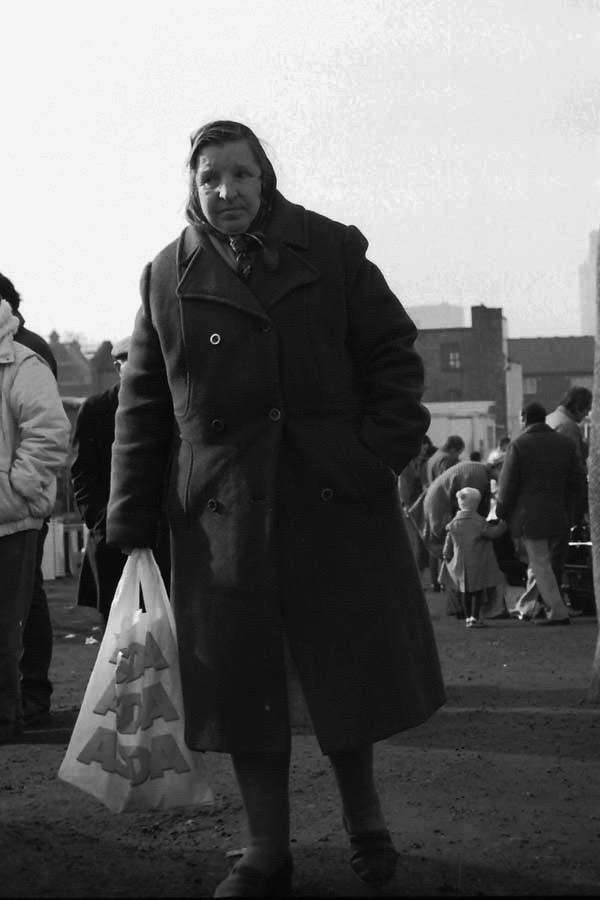
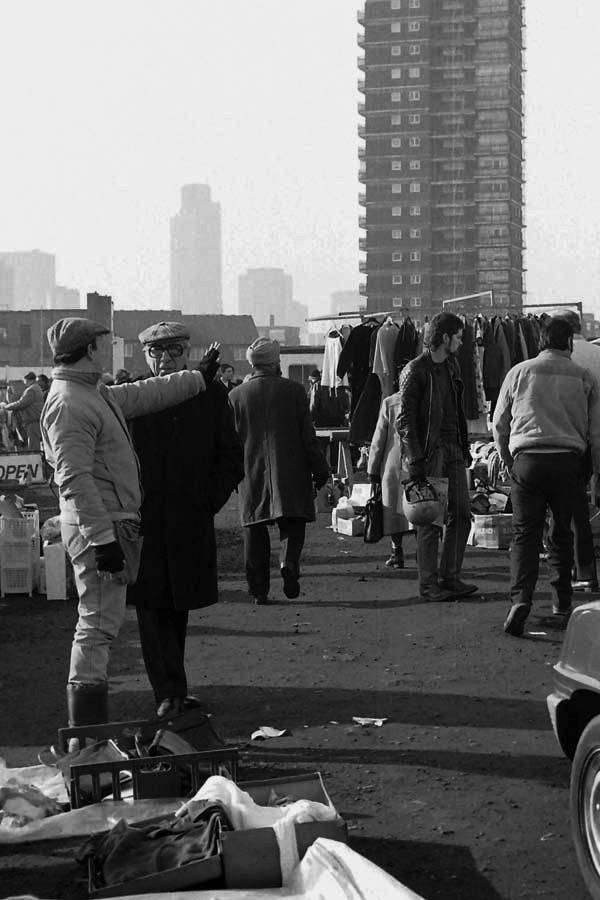
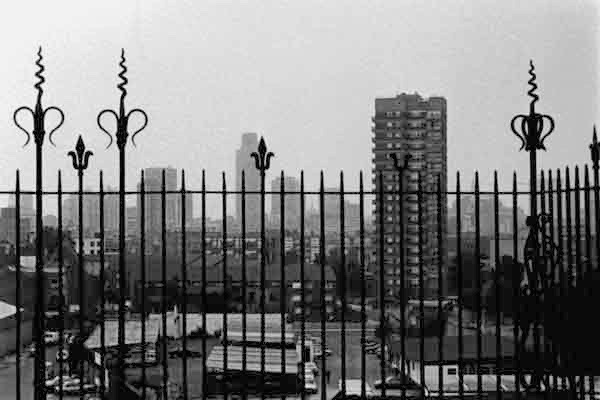
View looking west from the top of Durward St School
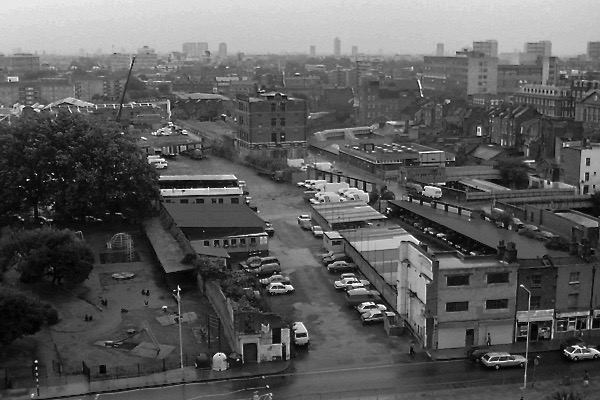
View looking east across Whitechapel from Phil Maxwell’s flat in Pauline House, Hanbury St
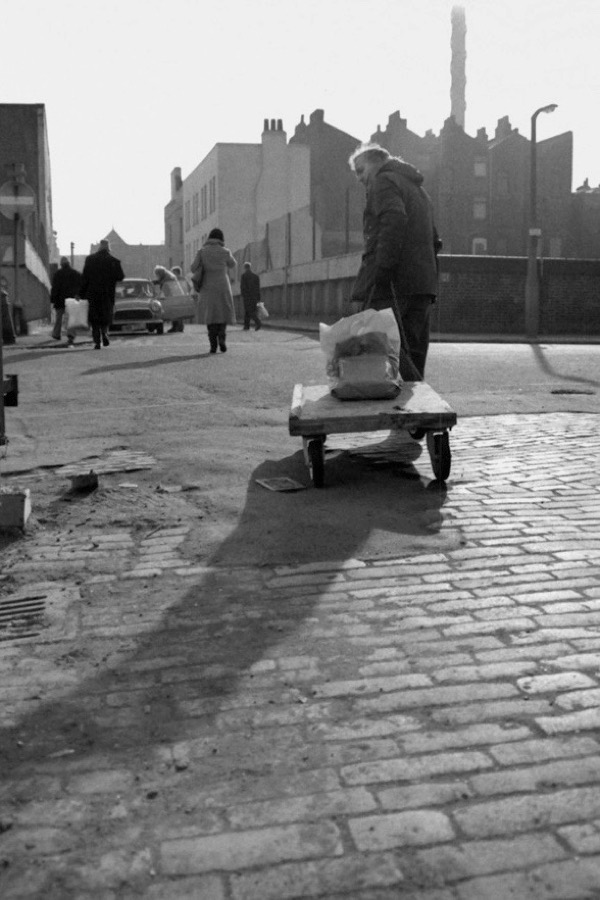
Photographs copyright © Phil Maxwell
You may also like to take a look at
Phil Maxwell in Bethnal Green Rd
Phil Maxwell’s Kids On The Street
Phil Maxwell’s East End Cyclists
An East End Murder & A West End Grave
Contributing Writer Ruth Richardson tells the pitiful tale of Carlo Ferrier or ‘The Italian Boy’ and the current threat to his last resting place in a paupers’ graveyard next to the Cleveland St Workhouse
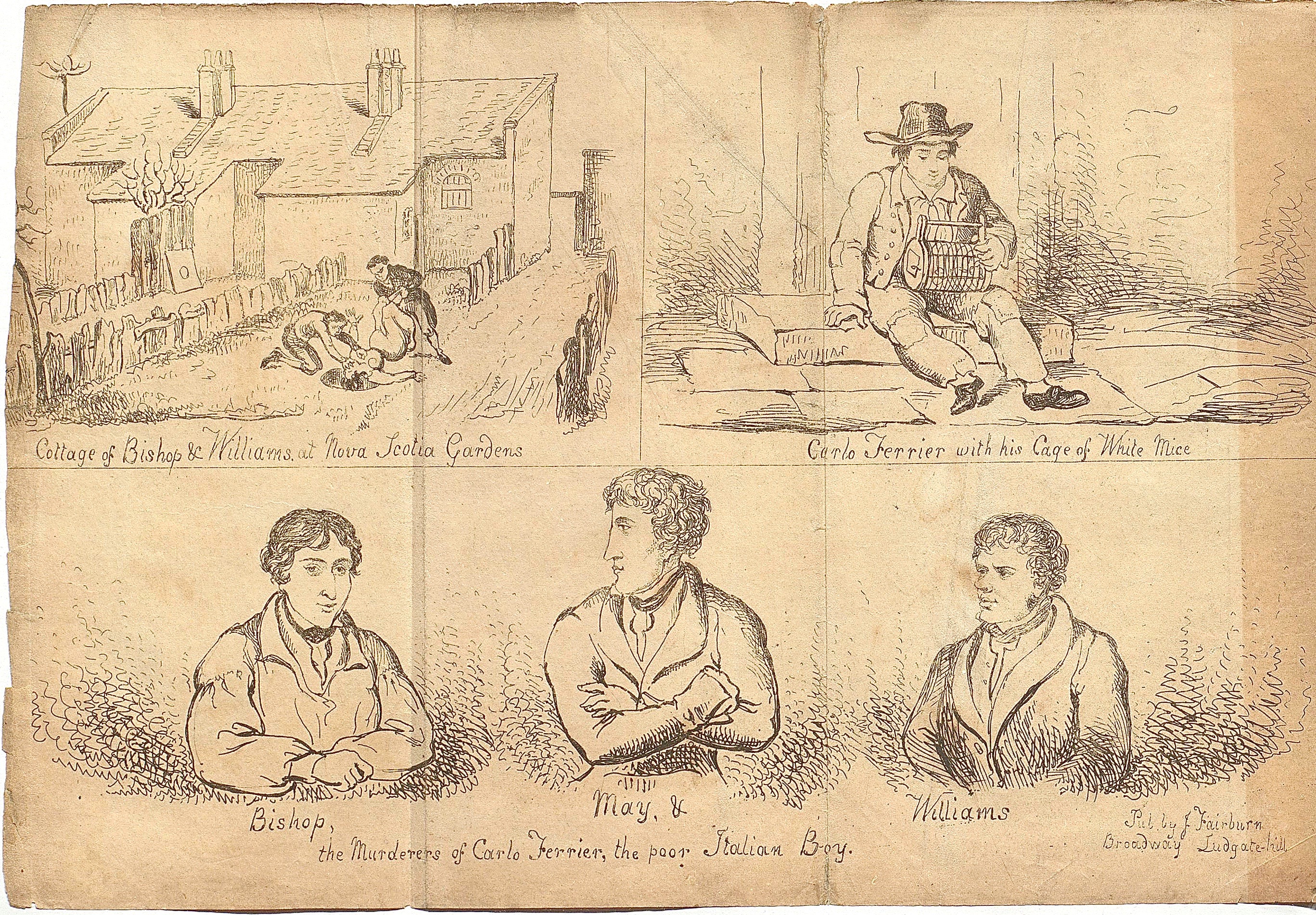
Click image to enlarge (With kind permission of the British Library)
London is a big place, yet its neighbourhoods and boundaries are permeable and people move between them all the time. This is the story of a child murder that took place in the East End in 1831, but where the victim was buried in the West End. It is a sorry tale, made even sorrier by the fact that the old paupers’ graveyard in which the boy was buried is currently being eyed-up by developers.
In 1829, a couple of years before this poor boy’s death, William Burke had been hanged and dissected in Edinburgh. The Burke & Hare murders for dissection had spread a ripple of fear and horror – known as ‘Burkophobia’ – across the nation.
This particular London murder was a copy-cat crime. It took place in an East End slum called ‘Nova Scotia Gardens.’ The perpetrators were two ruffians who usually worked as body-snatchers but who had devised a clever method of murdering new victims for sale to the medical schools. Like Burke & Hare, Bishop & Williams chose people who would not be missed. They selected vulnerable individuals who were part of the drifting population of London. The metropolis was full of migrants from all parts of Britain and from abroad, many of them lone children begging for a living on London’s streets.
Food and warmth were probably sufficient to entice victims into their cottage. Their technique left no marks. They would ply their visitors with spirits or drug them into insensibility, then suspend them head first down a small well in their garden. There was no way the poor souls could save themselves. Their last victim was never satisfactorily identified but he became known Carlo Ferrier or the Italian Boy. He had made a thin living by displaying a little cage with white mice.
The murderers were caught by an astute anatomist at King’s College Medical School who was offered the boy’s corpse for his students to dissect. He noticed that the body was unaccountably fresh, and that it had not been laid out for burial. There was nothing to suggest the body had ever been buried and he found blood in the child’s mouth. Body-snatchers regularly extracted good teeth from their victims’ mouths for sale to dentists for authentic-looking dentures, yet a dead body should not bleed. The anatomist was quick-thinking enough to say to the men that he had only a large bank-note, but could break it by the afternoon if they would return to collect their fee. He preserved the evidence and had the police waiting.
Professor of Anatomy at King’s College, Herbert Mayo, wrote at the time:
“ Two incidents trifling in themselves concur to strengthen in my mind the suspicion resulting from the facts detailed in the report that the boy was intentionally destroyed. The first is that no less than six boys have recently disappeared, as we learn through those, who have visited the station house to identify the body. The second is, that ten days ago, an offer was made by a resurrection man of bringing to us the body of a boy, which was described as remarkably fresh: this offer was refused at the time, as it happened that a body was not then required in the dissecting room: this body was not brought to King’s College. It is perhaps too horrible to suppose that there are villains in London, who kill people to order; but the preceding circumstances point frightfully to this conclusion. For my own part I entertain little doubt that from time to time murder is perpetrated in London for the value of the body of the victim.”
After Bishop & Williams were caught, it was rumoured that they had confessed to sixty murders. Sixty. Other people’s clothes were found buried in the garden at Nova Scotia Gardens, and the discovery of the murder of the Italian Boy and the subsequent trial at the Old Bailey received very wide publicity. Both murderers were hanged and publicly dissected.
It was this terrible case which brought about the passage of the infamous Anatomy Act of 1832 which requisitioned for dissection the bodies of the very poor dying in workhouses and other institutions, instead of hanged murderers. It effectively transferred what had been a most loathed and feared punishment for murder, onto poverty. The politicians that enacted it also passed the 1834 New Poor Law which so successfully established the hated regime of the Victorian Workhouse as a place of privation and punishment.
The Italian Boy had been lodging in the parish of Covent Garden, so that parish undertook the murder prosecution against the brutes who had killed him and his poor body was carried to the burial ground that surrounds the eighteenth century Covent Garden Workhouse in Cleveland St.
This is the same Workhouse which was saved from demolition in 2011 by my discovery that Charles Dickens had lived a few doors away as a child and again, as a teenager. In 1831, when the Italian Boy’s coffin was carried up the street to the Workhouse graveyard, Dickens knew the Italian boy’s destination. Dickens had renewed his Reader’s Ticket for the British Museum Reading Room from the same street that year and he may even have been the reporter of the case as published by John Fairburn of Ludgate Hill in an anonymous pamphlet with illustrations created by the members of the Cruikshank family.
Later in life, in the eighteen-forties, Dickens visited a charitable school for Italian Boys established in Clerkenwell several times: “I was among the Italian Boys from twelve to two this morning… ” he wrote in a letter to his best pal. And when his wealthy friend Angela Burdett Coutts was searching for a site in the East End for her great philanthropic project, Columbia Market, Dickens was very happy to help her identify and acquire the insanitary slum of Nova Scotia Gardens.
The Columbia Market building, a magnificent piece of Victorian architecture, was shamefully demolished in the twentieth century. Fortunately, the same fate has so far been prevented for the Workhouse in Cleveland St because of its association with Dickens and it is now widely accepted that this Workhouse is likely to have been inspirational for his famous novel Oliver Twist. The oppressive regime inside the Cleveland St Workhouse was very like the one he portrayed in the novel: Oliver’s uniform was the same regulation brown and there was a reiterated ban on second helpings of food. Crucially, it has been proved that while Dickens was actually writing the novel, a tallow chandler’s shop opposite the Workhouse was run by a man called Bill Sykes!
The Cleveland St Workhouse later became part of the Middlesex Hospital and it has been eyed by developers since the main Middlesex Hospital building was closed and demolished. Now two new planning applications have been made to gut the Cleveland St Workhouse for luxury apartments and demolish everything else behind it, including its two fine Nightingale wards. A building twice the height of the Workhouse and a car park will occupy almost the entire graveyard, and destroy nearly 250 years of history on this unique site which embodies the story of health care in the capital since the seventeen-seventies.
Swift opposition from numbers of people who care about London’s history will make the planners and developers think more carefully about the historical importance of the entire site, including the consecrated burial ground where so many Londoners still lie. If you are willing to email the planners, please go to www.workhouses.org.uk/ClevelandStreet/ and follow the links.
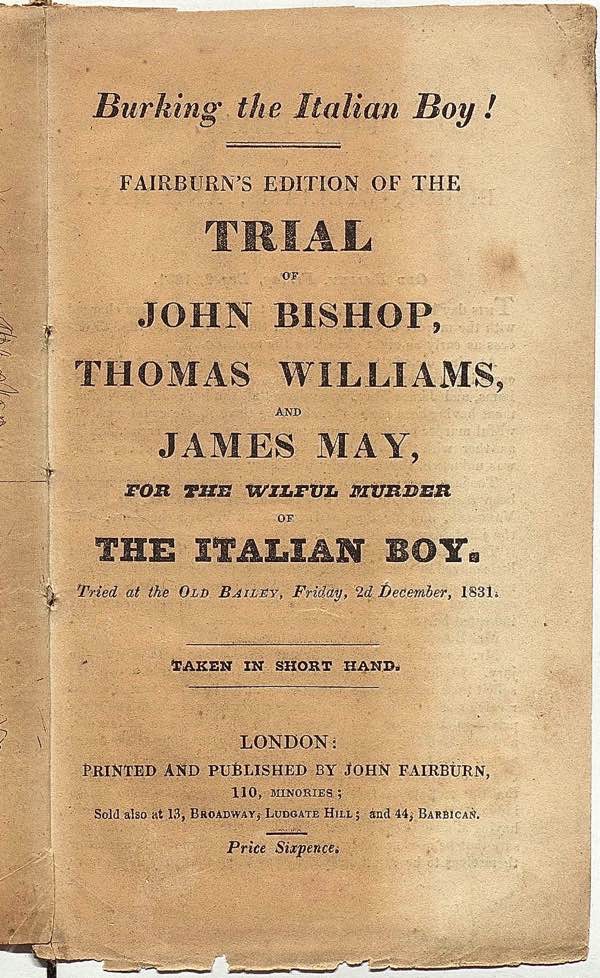
The case of The Italian Boy is believed to have reported by Charles Dickens as cub reporter, published anonymously (With kind permission of the British Library)
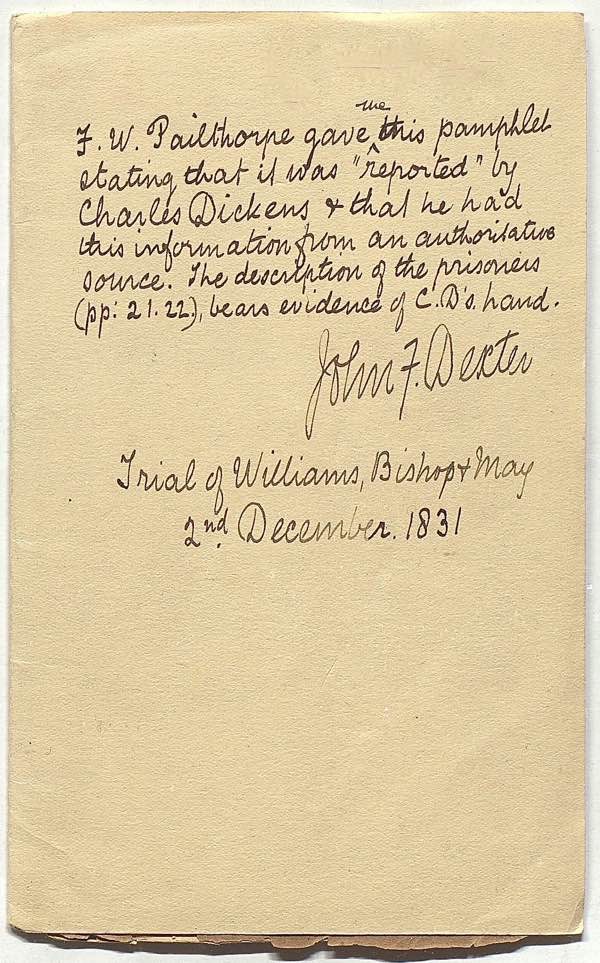
Provenance for Dickens’ authorship of the report of case of the The Italian Boy (With kind permission of the British Library)
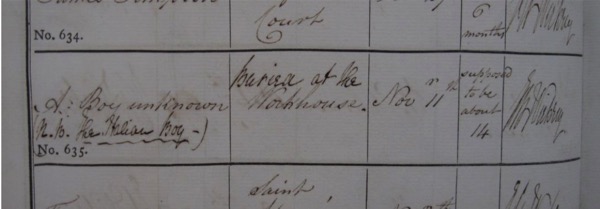
Entry in the Burials Register for St Paul Covent Garden showing the last resting place of the Italian Boy
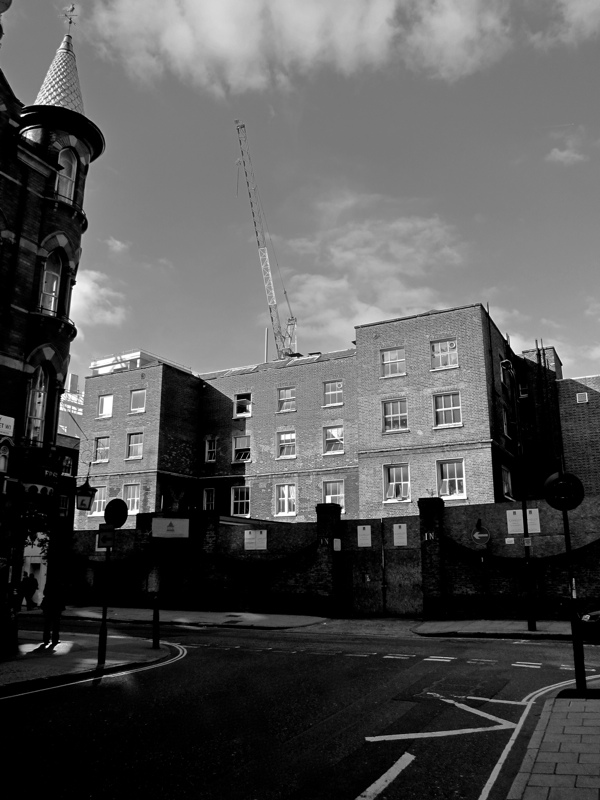
The Cleveland St Workhouse dates from the seventeen-eighties
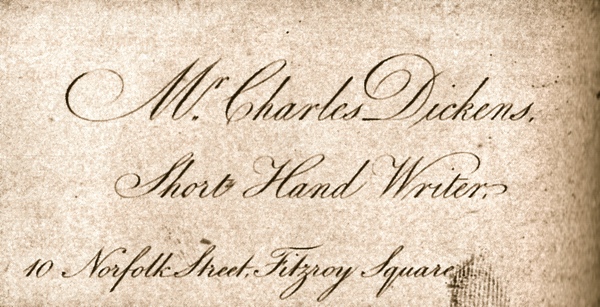
Charles Dickens’ calling card while resident in Fitzrovia (reproduced courtesy of Dan Calinescu)

Nineteenth century glass side of Columbia Market built over Novia Scotia Gardens and demolished in the sixties (Courtesy of Bishopsgate Institute)
You may also like to read about
The Return of Sebastian Harding
Over the last five years, Illustrator Sebastian Harding has been constructing intricate models in paper and card of London’s vanished and vanishing buildings, and recently he has turned his attention to the much-loved Foyles Building in the Charing Cross Rd which is slated for imminent demolition in spite of a campaign of over 5,000 signatures to save it. Now Sebastian is seeking to collect memories of those who worked in or used this building, so please email him at seb.harding1@googlemail.com if you can help or click here to read more about his project.
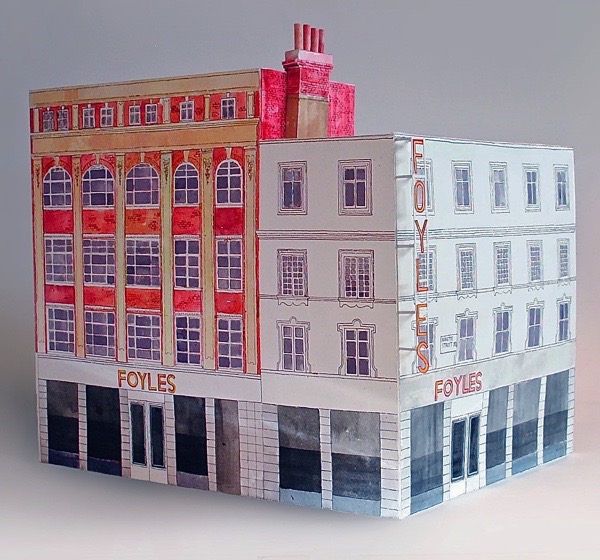
Foyles Building, 113-119 Charing Cross Rd
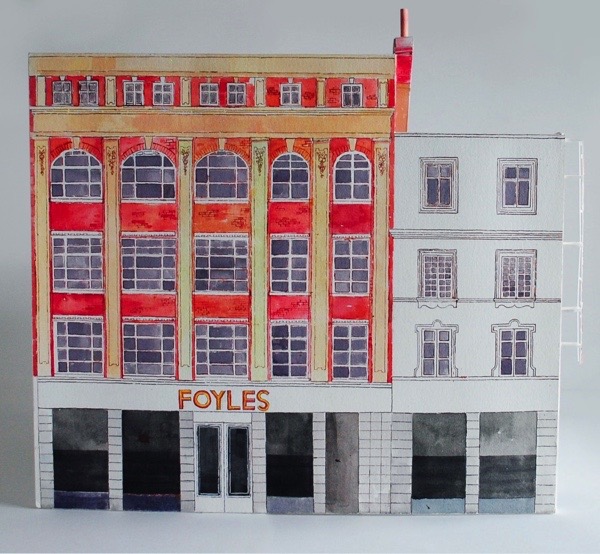
In just a few months, we will see the demolition of 113-119 Charing Cross Rd, better known as the former home of Foyles Bookshop. In 1929 William Foyles opened his newly expanded bookshop here after trading on the same street since 1906 and it soon became known as one of the largest of its kind in Europe.
The Charing Cross Rd facade dates from the early nineteen-hundreds and boasts a simple asymmetric design built of plum red brick with classical columns. The building runs back the length of Manette St with a bolder Art Deco facade dating from 1929 and these two facades are charmingly interrupted on the corner of the building by an early Victorian stuccoed facade.
Regrettably, this major London cultural landmark will soon be demolished to make way for another luxury office development and although SAVE Britain’s Heritage submitted a petition with over 5,000 signatures to the Secretary of State in July, demanding a public enquiry, it was to no avail.
For generations of book lovers, this huge building provided a haven of tranquility in the noisy and chaotic hub of central London. For over eighty years Foyles, with its labyrinthine layout, sprawling floors and large cafe was far more than just a bookshop. Full of oddly-shaped spaces and quiet corners, the place exuded an irresistibly-inviting atmosphere.
The building’s demise stands as a warning of the current wave of short-sighted decision making by the City of Westminster. Over the past ten years, numerous buildings of historical interest in this area have gone. On Charing Cross Rd alone there has been the demolition of The Astoria and neighbouring buildings 157–167 in 2009. This was followed soon after by the block running 135–155 and, in 2014, numbers 140–148 were also razed to the ground.
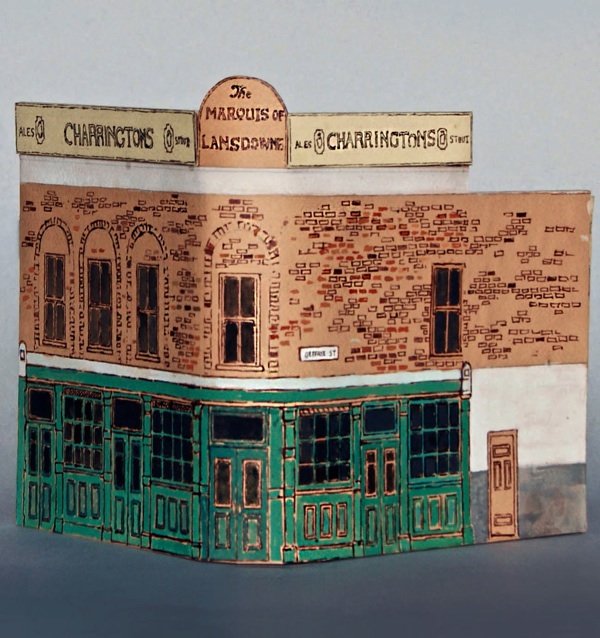
The Marquis of Lansdowne, Cremer St, Hoxton
Opening before 1838, The Marquis of Lansdowne was a typical East End pub which became the focus for workers in the cabinet-making trades which filled the surrounding streets for over a century. After drastic slum clearance and redevelopment in Hoxton in the mid-twentieth century, the pub fell into decline and closed. In 2013 David Dewing, Director of the Geffrye Museum announced the demolition of the pub for the sake of a concrete cube restaurant as part of a multi-million pound revelopment of the museum designed by Sir David Chipperfield. However, largely thanks to a campaign by readers of Spitalfields Life, Hackney Council refused permission for demolition of the historic pub. Subsequently, the Heritage Lottery Fund supported a new scheme by Wright & Wright which requires no demolition, expanding the museum’s galleries by opening up unused spaces in the existing buildings and restores the Marquis of Lansdowne.

The Saracen’s Head, 4-7 Aldgate High St
The Saracen’s Head public house was demolished in 1913. Even in the late nineteenth century, Aldgate survived as a slice of sixteenth and seventeenth century London until the developers moved in from the eighteen eighties to modernise these streets. It was one of the few places to avoid the Great Fire of 1666, where the locals gathered to watch the conflagration. This makes the Saracen’s Head all the more important to the area’s history and, though long gone, there is a plaque at No. 88 Aldgate High St commemorating its existence.
It operated as a coaching inn with a service that departed from the yard at the back, transporting Londoners to East Anglia – hence the building’s location on the main road eastward out of the city. The frontage holds wonderful early examples of Baroque decoration and the ornate moulding echoes the decoration seen on the Baroque post-Fire churches – including St Paul’s – that emerged throughout London at the time. When the building was demolished, it was functioning as the Metropole Restaurant with the Ladies Select Dining Room housed on the first floor. After its destruction, the Guildhall Museum bought the intricate wooden pilaster capitals for their collection, confirming its aesthetic importance.

Nicholas Culpeper’s House, Red Lion Field, Spitalfields
In 1640, when Nicholas Culpeper, the herbalist, married Alice Field, aged fifteen, he was able to build a substantial wooden house in Red Lion Field, Spitalfields, with her dowry. Here, he conducted his practice, treating as many as forty citizens in a morning, and in the land attached he cultivated herbs – collecting those growing wild in the fields beyond. Since Culpeper never finished his apprenticeship, he could not practise in the City of London but chose instead to offer free healthcare to the citizens of Spitalfields, much to the ire of the Royal College of Physicians. In this house, Nicholas Culpeper wrote his masterwork known as Culpeper’s Herbal which is still in print today.
After Culpeper’s death, the building became the Red Lion public house, surviving into the nineteenth century when it was demolished, as part of the road widening for the creation of Commercial St to carry traffic from the London Docks.

186 & 184 Fleet St
If you were to take a stroll down Fleet St today, you might like to take a closer look at the buildings that stand at 186 & 184. They perch immediately to the right of St-Dunstan-in-the-West on the north side of the Street in a row of inconspicuous turn-of-the-century buildings. On closer inspection each appears distinct, but all three are somewhat tall and somewhat narrow. Their cramped proportions are explained by the fact they were built, like much of London, on the site of two ancient pre-fire buildings.
The history of the nineteenth century buildings that occupy the site today relates directly to the rise of the newspaper trade that proliferated in the area. Indeed, Fleet St is still synonymous with British journalism despite all major publications now being headquartered elsewhere.
Today the site of 184 & 186 is home to the Scottish firm D.C. Thomson & Co., who claim to be the last newspaper group to retain a base on Fleet St, and the titles of their publications, The Sunday Post and The Dundee Courier, are still proclaimed in mosaic on the façade of their neighbour at 188.

Part of Rothschild Buildings, Spitalfields
Before their demolition in the seventies, the Rothschild Dwellings were visited by historian Jerry White whose first impression of the buildings was that he had “never seen tenements, so starkly repulsive” and “so much without one redeeming feature” in his whole life.
The Rothschild Dwellings were erected in 1888 by the ‘Four percent Industrial Dwellings Company’ and stood on the sight of what had once been respectable middle class residences in the seventeenth and eighteenth centuries, which had degenerated into lodging houses and slums. In the mid-nineteenth century, the old filthy streets with their myriad alleyways and courts were swept away. In their place, came the wide thoroughfare of Commercial St and large housing blocks such as the Nathaniel Dwellings (1892), the Lolesworth Buildings (1885) and, of course, the Charlotte De Rothschild Dwellings (1887). The tenants of these buildings were respectable working class tradesmen and craft workers able to pay the slightly higher rent.

The Fortunes Of War Public Tavern, Cock Lane, Smithfield
Smithfield Market’s proximity to St Bartholomew’s Hospital betrays a lot about the British public’s distrust of the medical trade. It is fitting therefore to focus on one building that catered to both trades – The Fortunes Of War Public Tavern.
Let us place ourselves in the eighteenth century as we watch a student of anatomy making his way into the tavern. He is here, not as you would expect for his leisure, but for his studies. He is led by the landlord down dank mouldering stairs to the cellar. Rows of sacks give off a pungent smell of rotting meat, yet these are not the carcasses of swine or cattle but the bodies of recently dead Smithfield residents.
This was the secret trade of the Body Snatchers or Resurrectionists that supplied students and professors of anatomy with fresh corpses. For a God-fearing public, it was immoral and barbarous in the extreme, for this was a time when many believed a soul would only be granted into heaven if their corporeal body was intact, while being dissected meant an eternity in purgatory.

John Aston’s House, Charterhouse Lane
John Aston was a priest in the parish of Smithfield, arrested at the same time as the influential protestant leader John Rogers. Queen Mary’s secret police randomly inspected any priests who had been advocates of protestantism before her ascension to the throne in 1553.
Unsurprisingly, the inspections would usually find a protestant bible or a mass being held. Typically, the raids were held on Sundays and John Aston’s misfortune was to be found eating meat in one of these raids. The tyrannical catholic religion of the sixteenth century forbade any consumption of meat on Sunday and he was burnt at the stake for this trifling pretence.

20 Cock Lane, Smithfield
The name of this street can be traced to its proximity to the market, where poultry would once have been traded, but it also serves also as a risqué innuendo, since for hundreds of years it was the preferred haunt of prostitutes. It was on this street that fraud, haunting, murder and sex were all intertwined in one story.
Late one November night in 1760,William Kent was away on business in Norfolk. His wife Fanny, wishing to alleviate the loneliness of her nights alone, invited Betty the youngest daughter of the Parsons – the landlord’s family – to sleep in her bed. In the night, Fanny was disturbed by scratching sounds like claws on wood and lay frozen with fear. On appealing to Mr & Mrs Parsons, she was told a shoemaker lived next door and her fears were assuaged. But the next night was Sunday when no good Christian would ever work, yet the scratching came again, brought to a terrifying end by a loud bang.
After William Kent returned the next night the sounds were not heard again. Then, two months’ later, after a furious row, Mr Parsons threw the Kents’ possessions out onto the street, even though William had not received a penny of the money he had loaned to his landlord the previous year. Subsequently, Fanny succumbed to smallpox and died on February 2nd 1761.
Some time later, the Parsons family began to hear the same scratching again and made sure it became a talking point for superstitious members of the community. The methodist preacher John Moore held a séance and ,when he asked if a spirit was present, a knock rang out. A second question followed – “Was the spirit that of the late Fanny?” Another knock. “Was Fanny murdered by her husband?” the reverend asked and then followed the loudest banging the party had heard.
Subsequently, William Kent was hanged, but afterwards the events were revealed as a fraud motivated by the feud between Mr Parsons and his tenant over the loan. Parsons was sentenced to three years in prison and three days in pillory, but later became regarded as something of a celebrity.

Mother Clapp’s Molly House, Field Lane
This was not a coffee house as we would know it, but rather a private club for gay gentlemen, where they could meet and form relationships without fear of discovery. The discretion of fellow members was crucial and entry was only permitted to those who knew a password. There were even gay marriage ceremonies conducted in locked rooms between men, with one donning a bride’s dress and the other a groom’s jacket. Mother Clapp herself presided over all, only leaving to get refreshments from the pub across the street.
Everything we know about this secret sub-culture stems from the raid by The Society For The Reformation Of Manners which had placed secret police inside the house. One man, a milkman, was hung for being found in the act of sodomy and Mother Clapp was sentenced to a day in the pillory. The crowd was so furious that they ripped the pillory from the ground and trampled it, and Mother Clapp died from the injuries sustained.

Sebastian Harding
Illustrations copyright © Sebastian Harding
You may also like to read about
Yet More Philip Cunningham Portraits
In the seventies and eighties, Photographer Philip Cunningham took these portraits of his friends and colleagues while living in his grandfather’s house in Mile End Place, and employed as a Youth Worker at Oxford House in Bethnal Green and then as a Probationary Teacher at Brooke House School in Clapton.

Paul Rutishauser ran the print workshop in the basement of St George’s Town Hall in Cable St
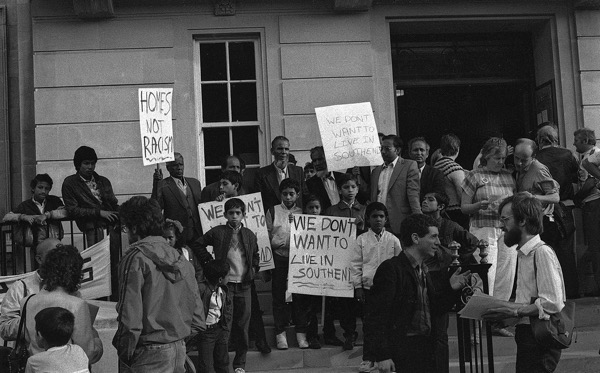
‘We don’t want to live in Southend’ – Housing demonstration on the steps of the old Town Hall
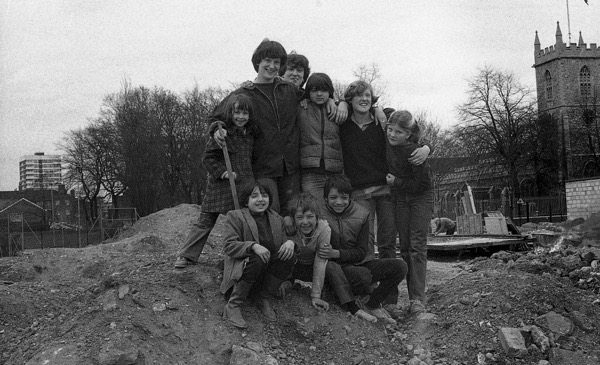
Kids from Stepping Stones Farm in Stepney c.1980
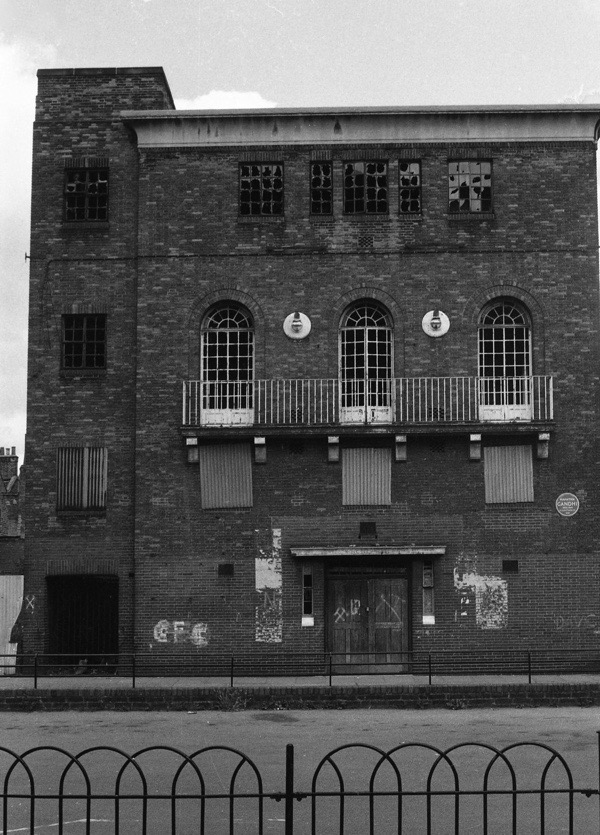
“Kingsley Hall was a Charles Voysey designed building off Devons Rd, Bow, that had fallen into disrepair and which we were trying to turn into a community centre.”
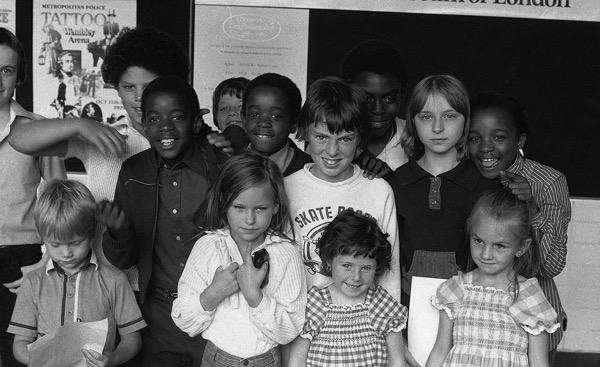
Kids from Kingsley Hall
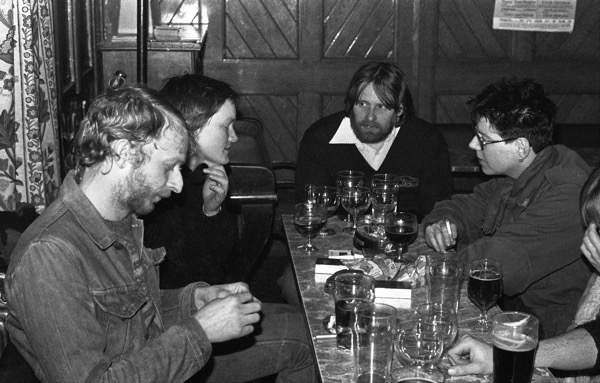
In the pub with Geoff Cade and Helen Jefferies (centre and right) who worked at Kingsley Hall
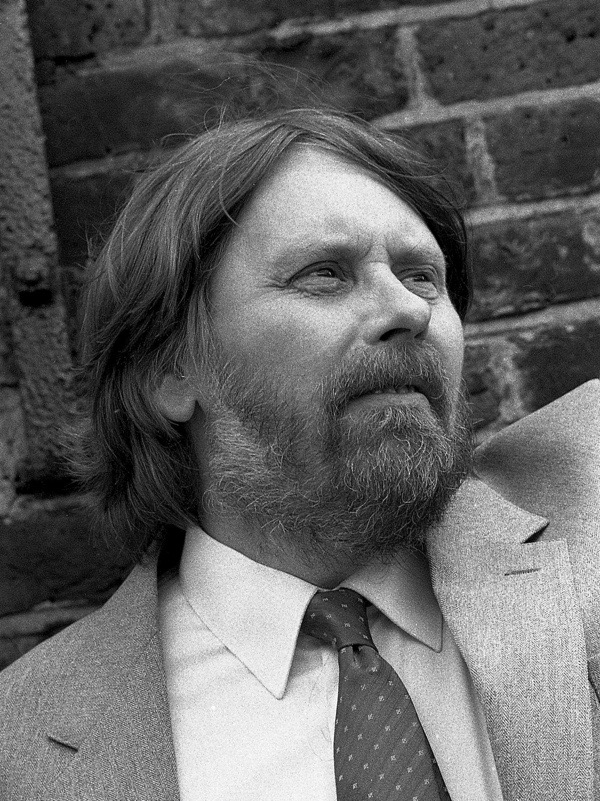
“Geoffrey Cade worked at Kingsley Hall from about 1982. He fought injustice all his life and was a founding member of Campaign for Police Accountability, a good friend and colleague.”
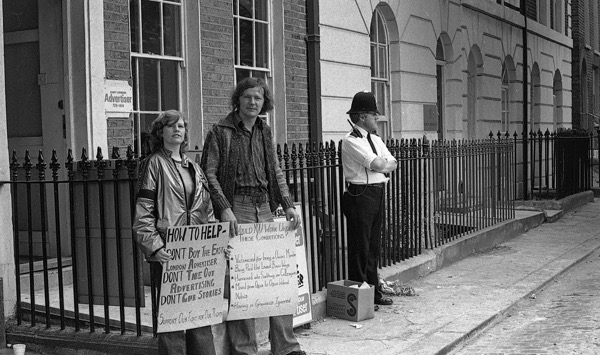
East London Advertiser reporters strike in Bethnal Green, long before the paper moved to Romford c.1979
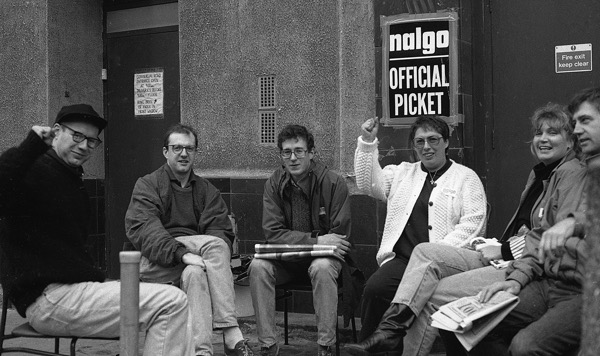
National Association of Local Government Officers on strike at the Ocean Estate
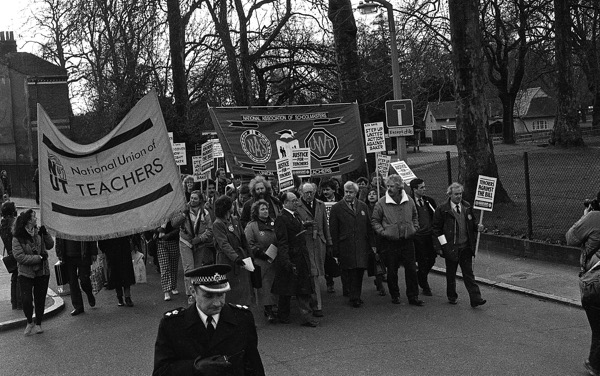
Teachers on strike c. 1984

Policing the Teacher’s Strike c. 1984
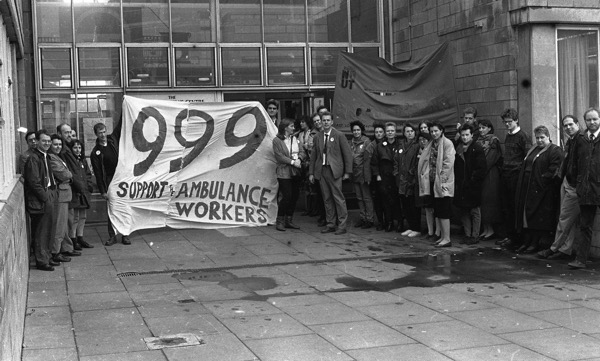
Teachers of George Green’s School, Isle of Dogs, in support of Ambulance Crews c. 1983
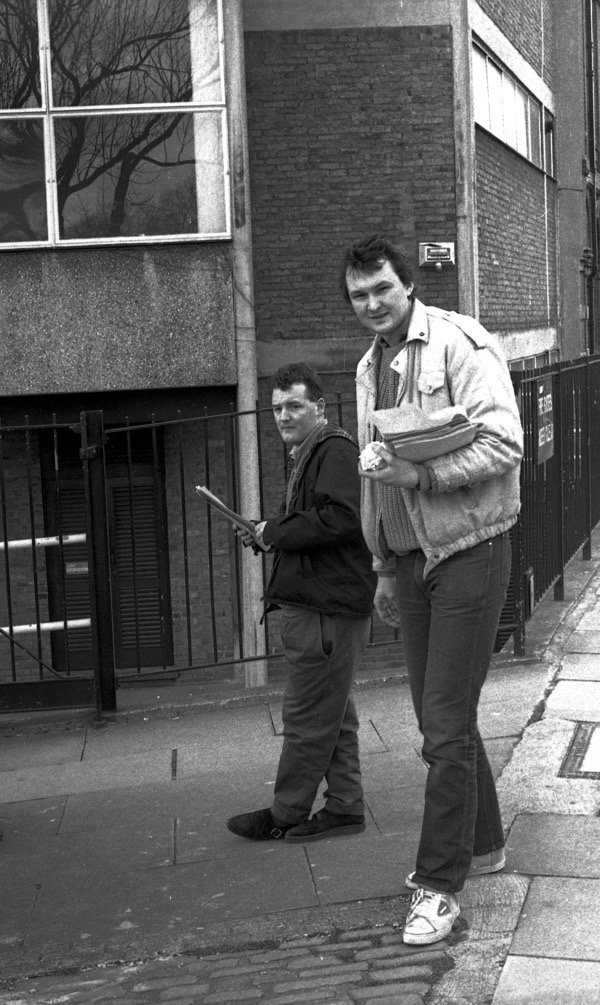
Kevin Courtney was my National Union of Teachers Representative when I began my teaching career
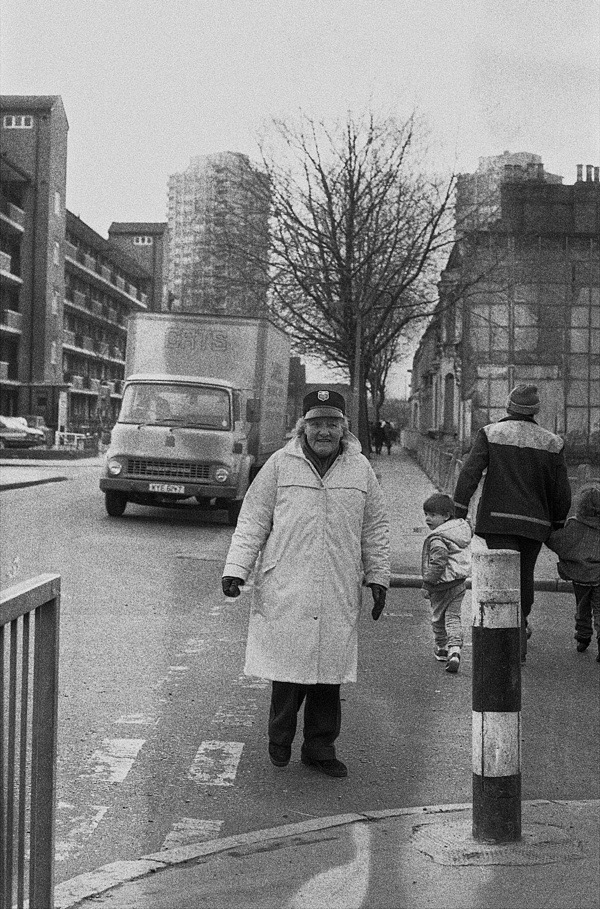
Lollipop Lady in Devons Rd, Bow
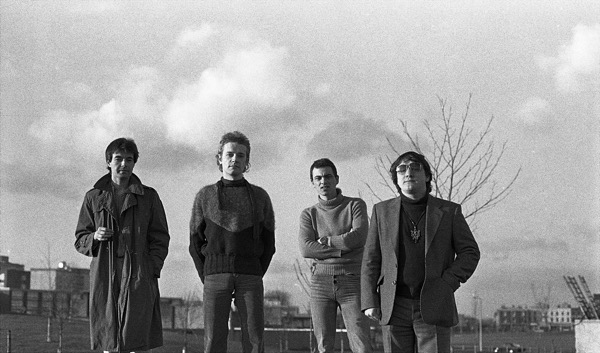
“Our first play scheme was in the summer of 1979. One of the workers was a musician called Lesley and her boyfriend was forming a band, so they asked me to photograph them and, as they lived on the Ocean Estate, we went into Mile End Park to do the shoot.”
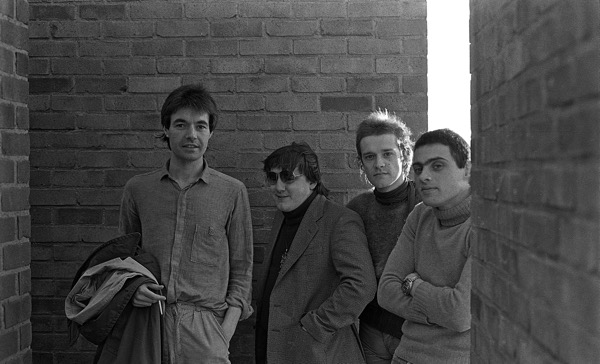
Does anyone remember the name of this band?
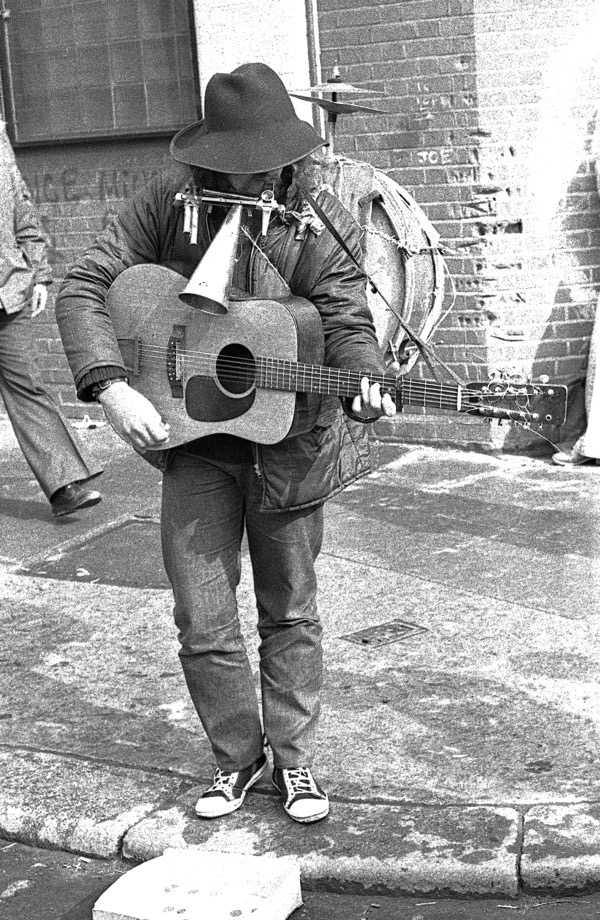
Busker in Cheshire St c. 1979
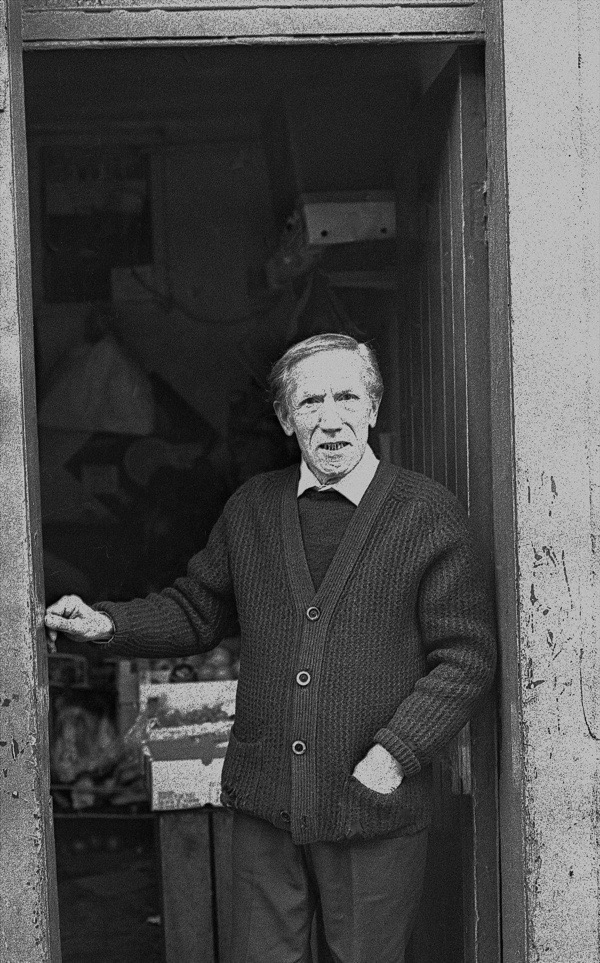
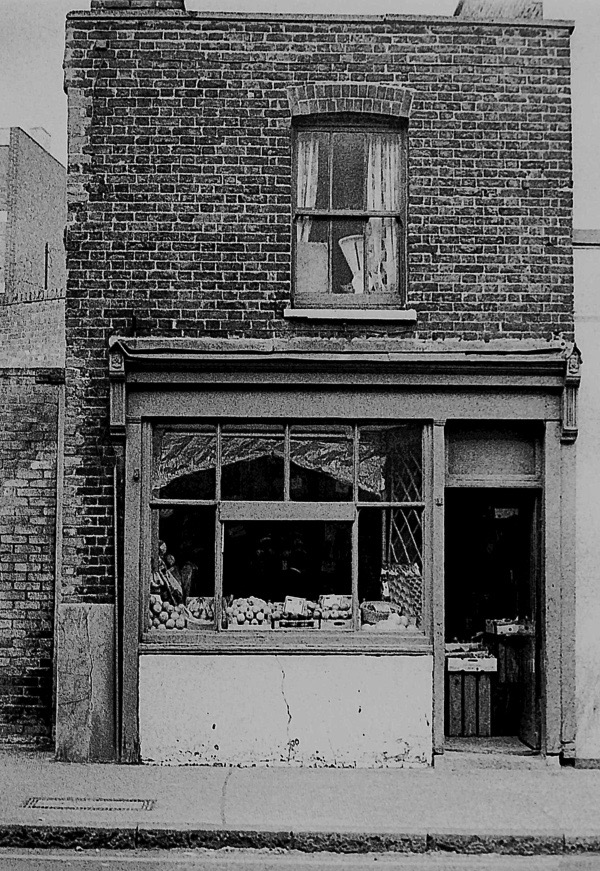
“We bought our fruit and vegetables every Saturday from John the greengrocer in Globe Rd who did all his business in old money.” c.1980
Photographs copyright © Philip Cunningham
You may also like to take a look at
Philip Cunningham’s East End Portraits
Some Vinegar Valentines
As Valentine’s Day approaches and readers are preparing their billets-doux, perhaps some might like to contemplate reviving the Victorian culture of Vinegar Valentines?
When I met inveterate collector Mike Henbrey in the final months of his life, he showed me his cherished collection of these harshly-comic nineteenth century Valentines which he had been collecting for more than twenty years.
Mischievously exploiting the expectation of recipients on St Valentine’s Day, these grotesque insults couched in humorous style were sent to enemies and unwanted suitors, and to bad tradesmen by workmates and dissatisfied customers. Unsurprisingly, very few have survived which makes them incredibly rare and renders Mike’s collection all the more astonishing.
“I like them because they are nasty,” Mike admitted to me with a wicked grin, relishing the vigorous often surreal imagination manifest in this strange sub-culture of the Victorian age. Mike Henbrey’s collection of Vinegar Valentines has now been acquired by Bishopsgate Institute, where they are preserved in the archive as a tribute to one man’s unlikely obsession.
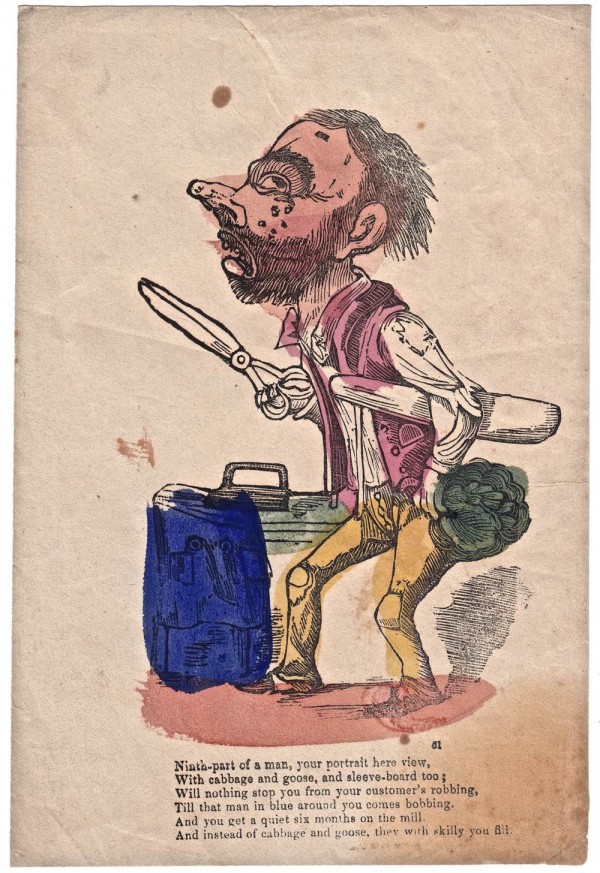
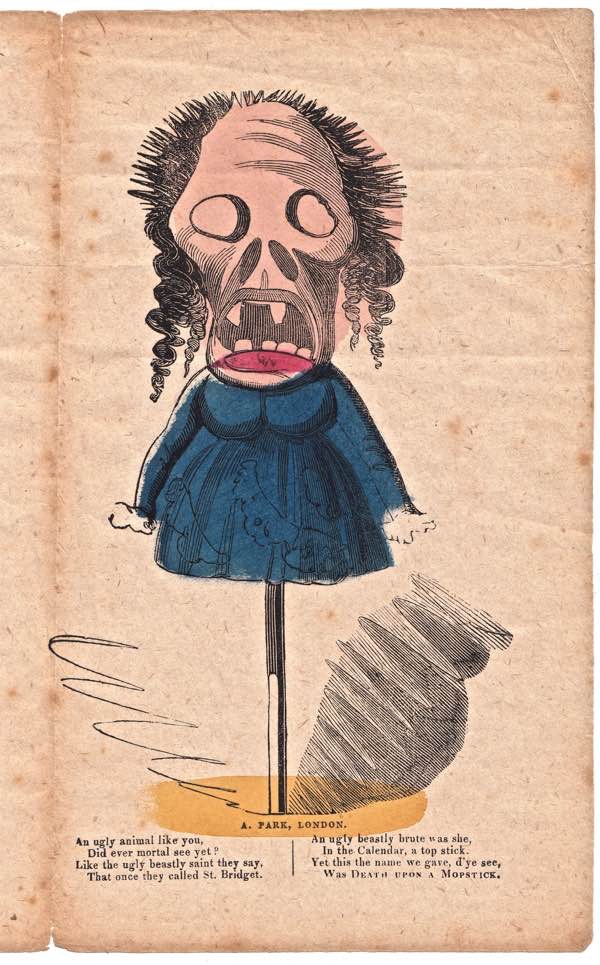
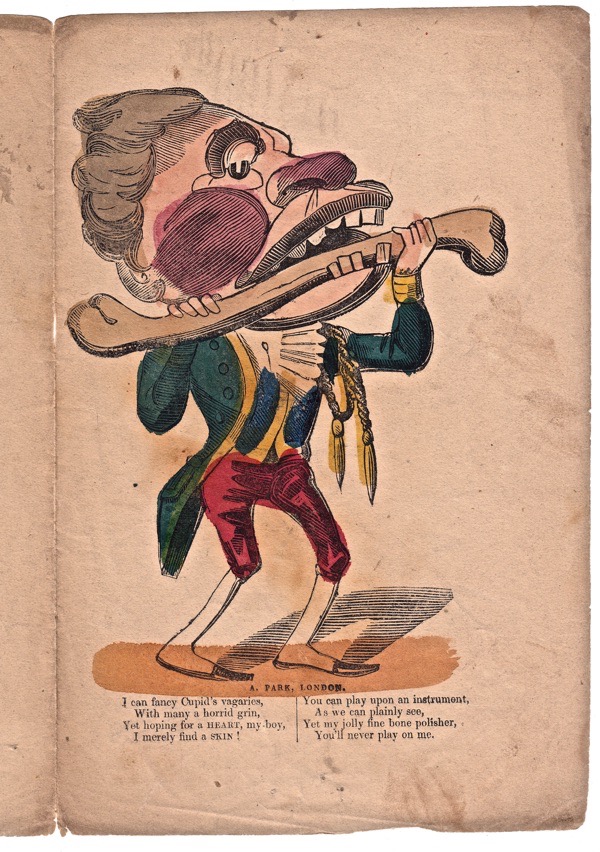
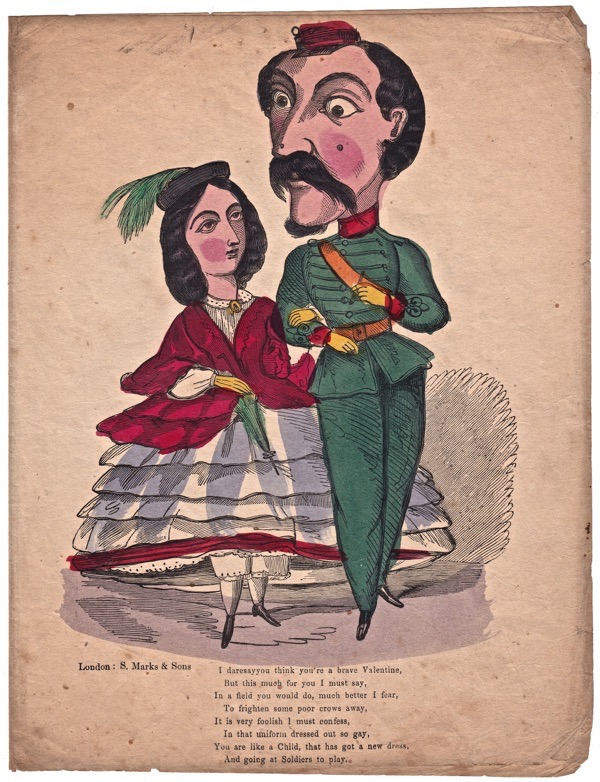
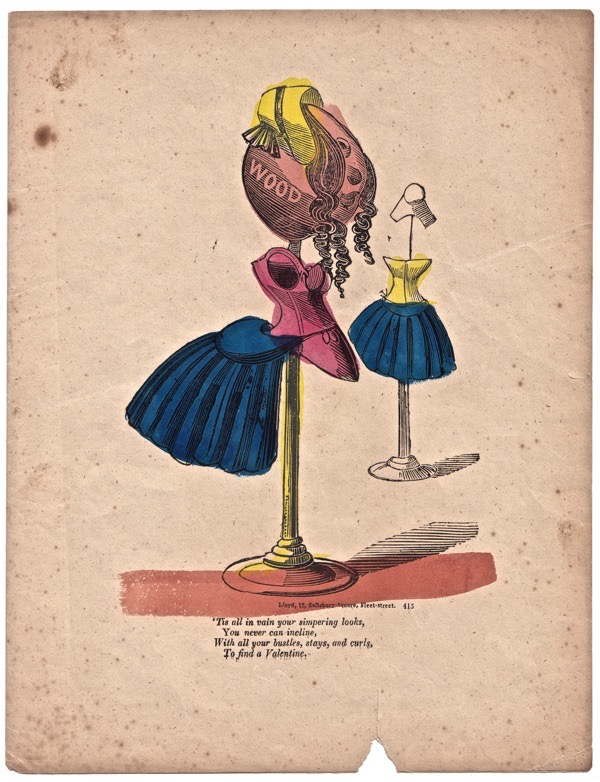
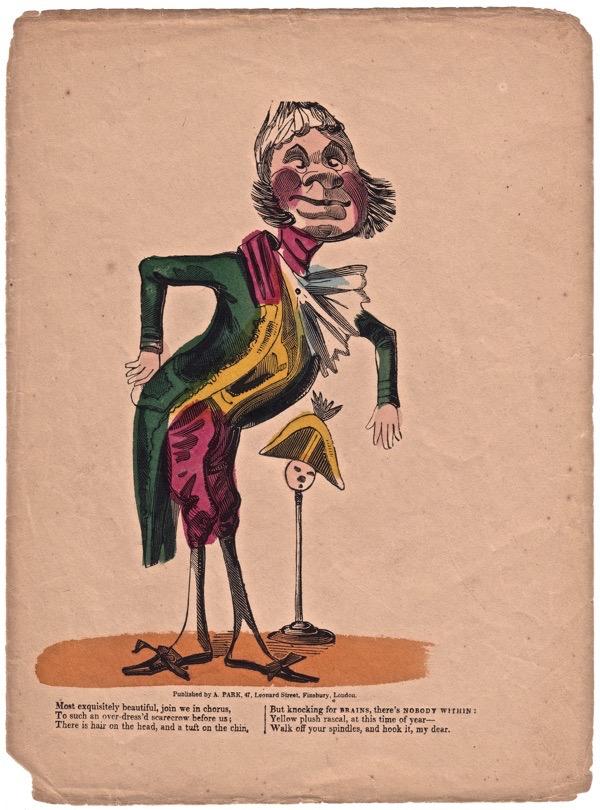
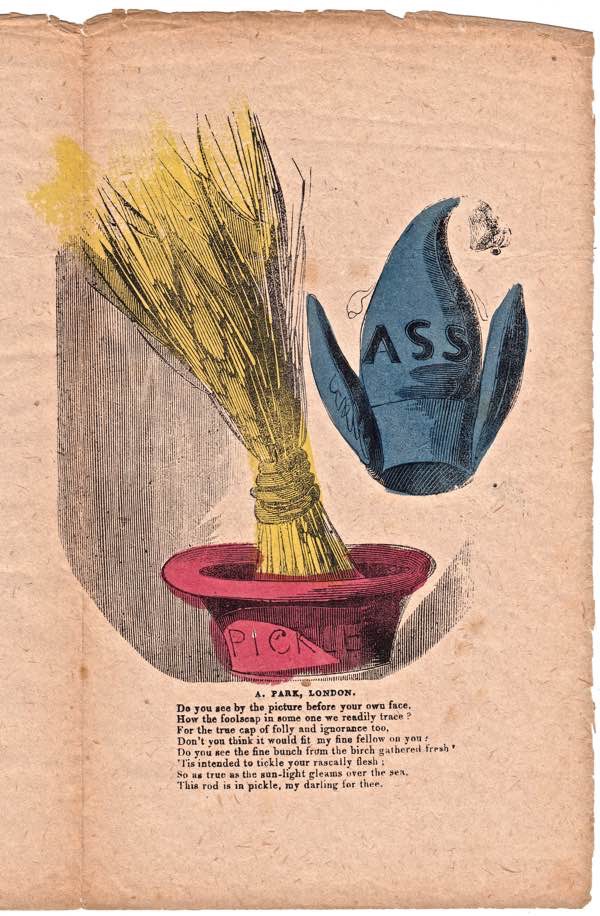
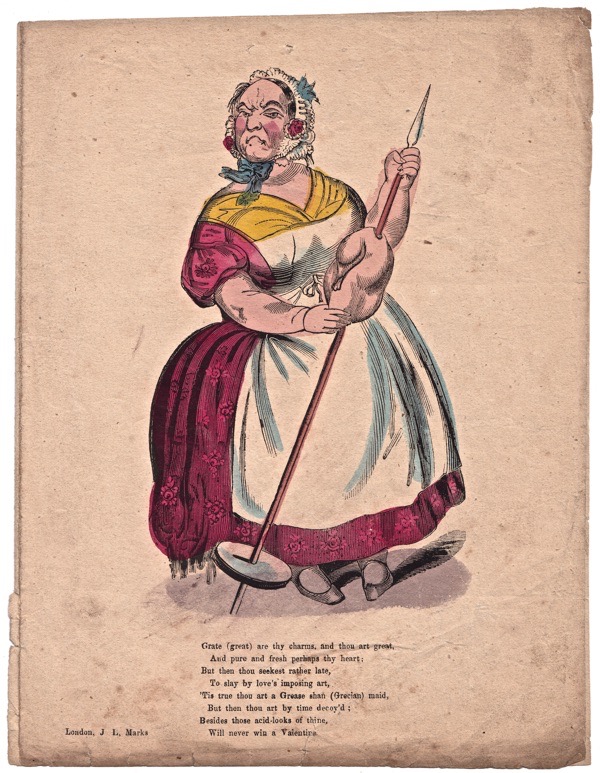
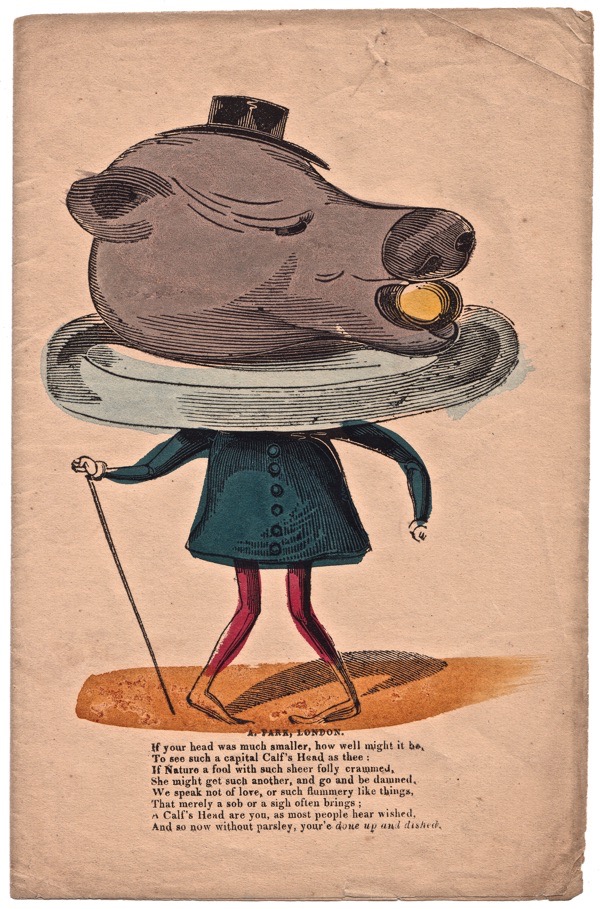
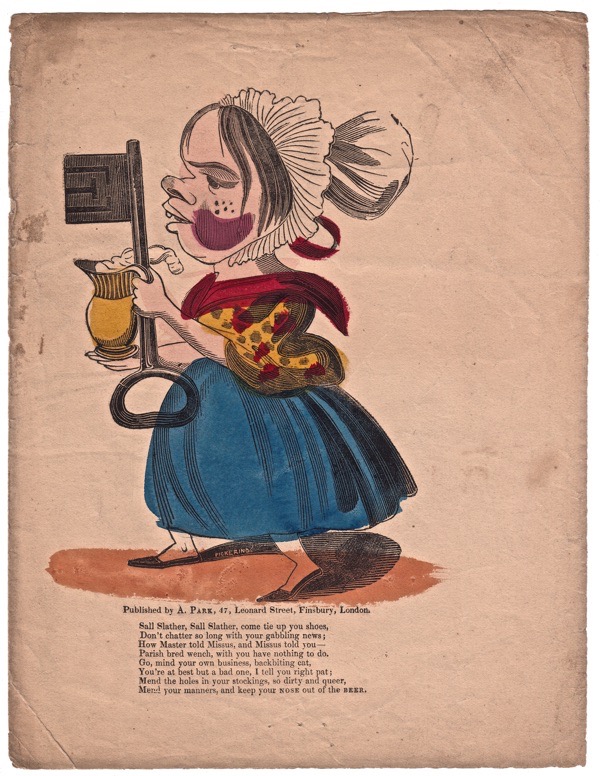
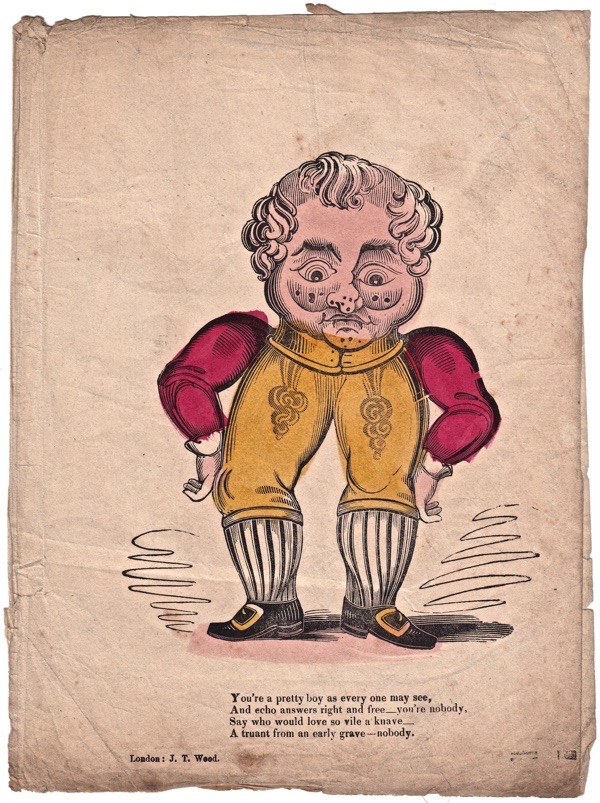
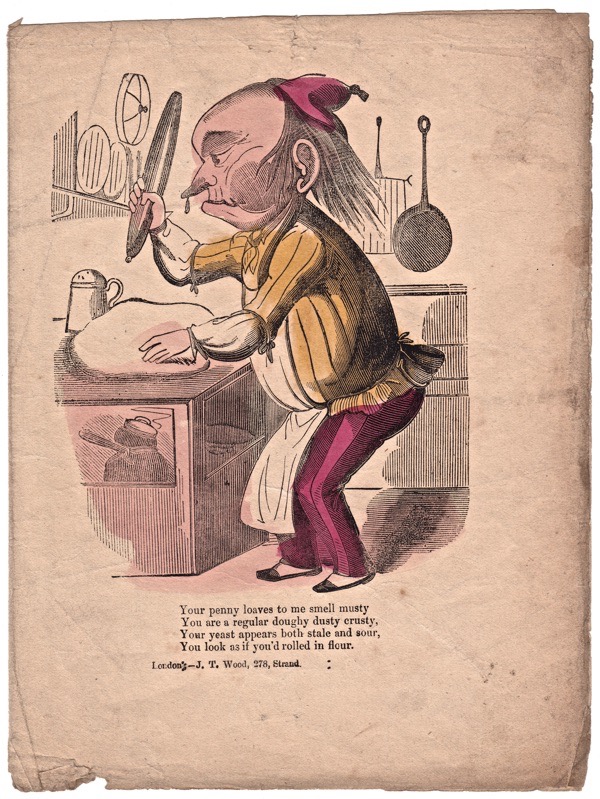
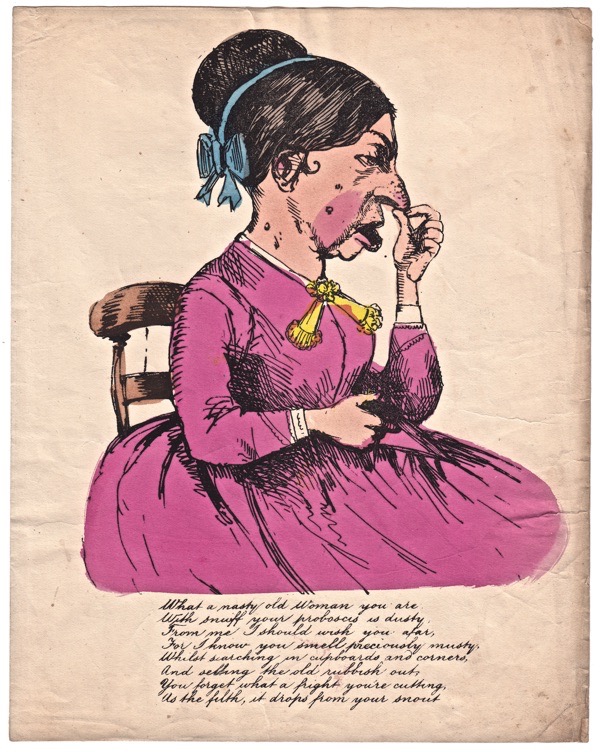
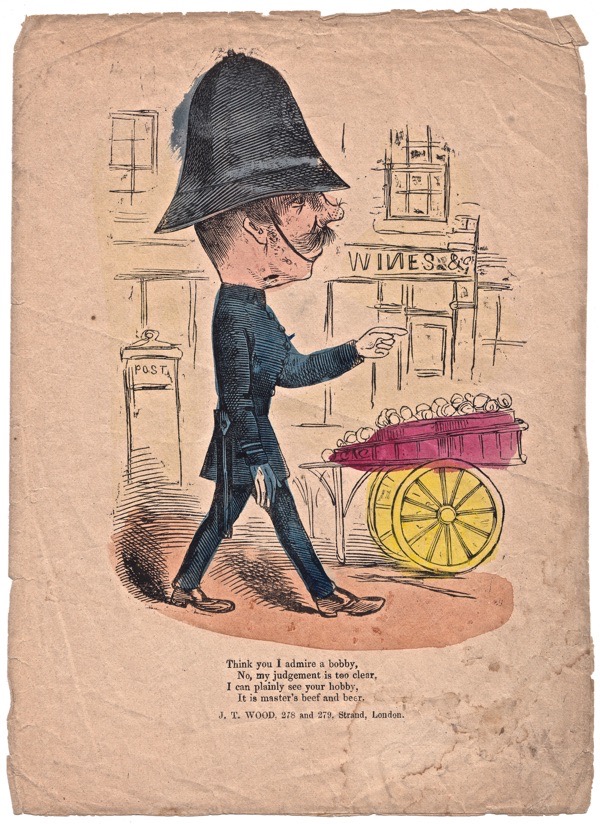
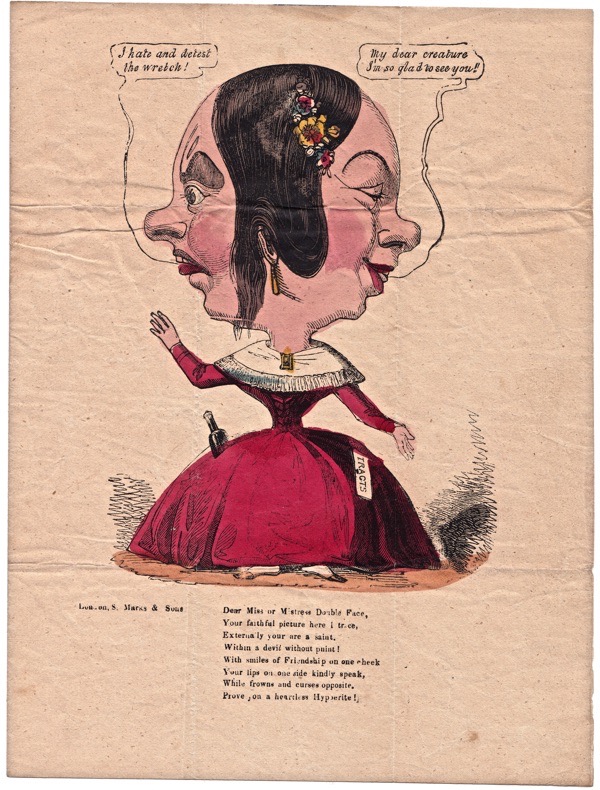
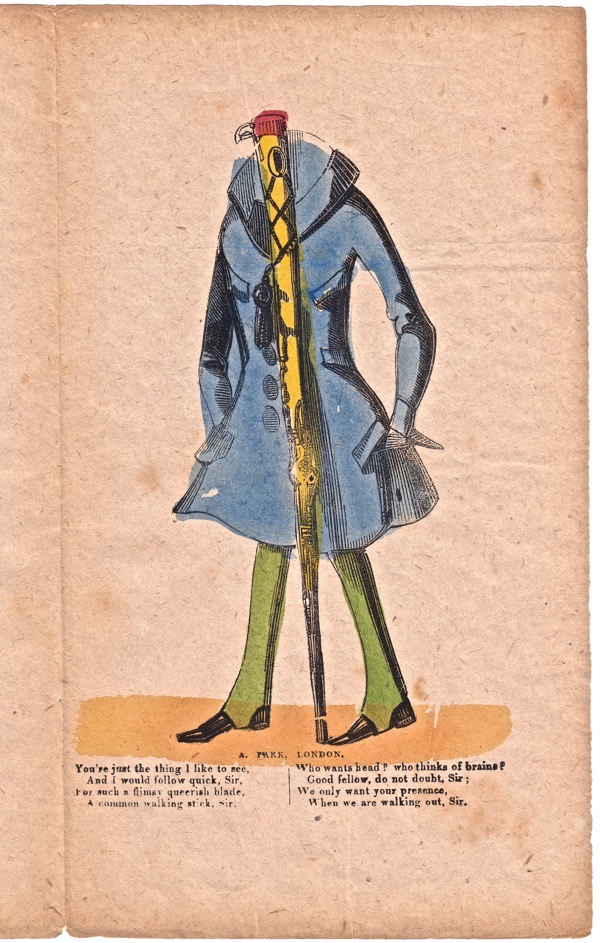
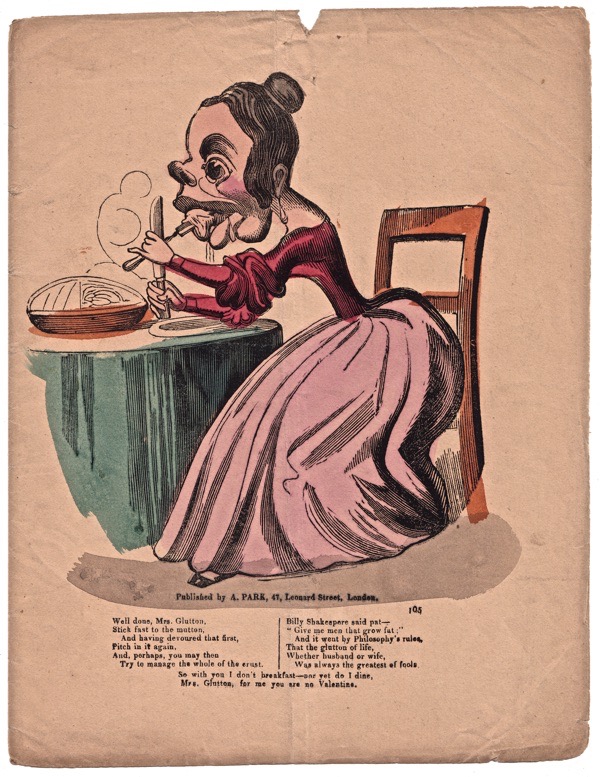
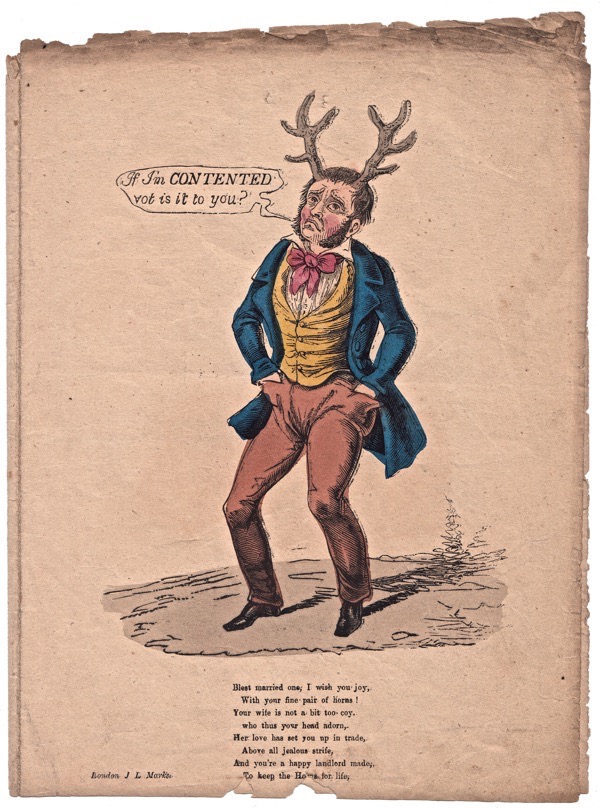
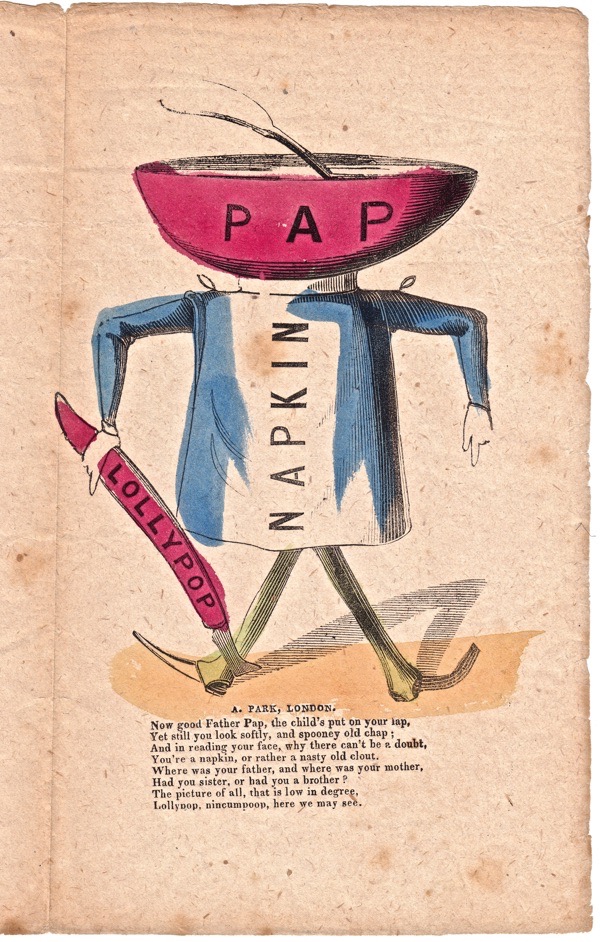
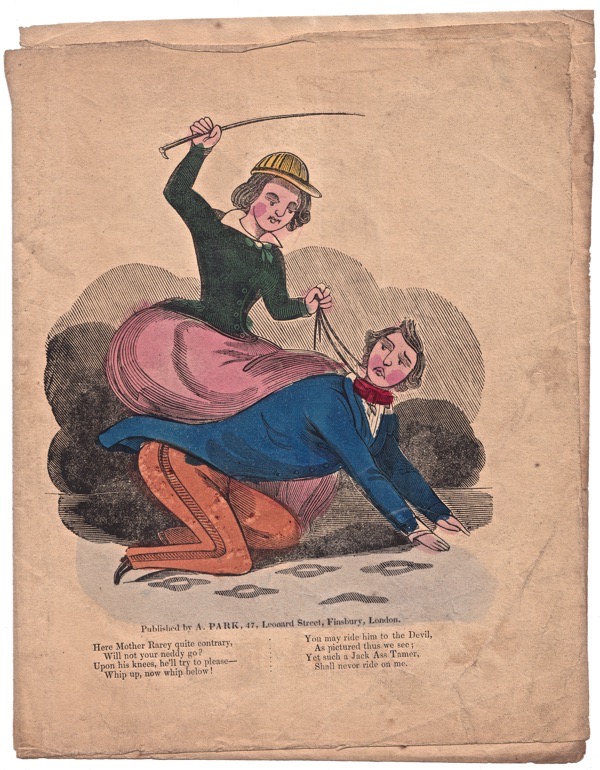
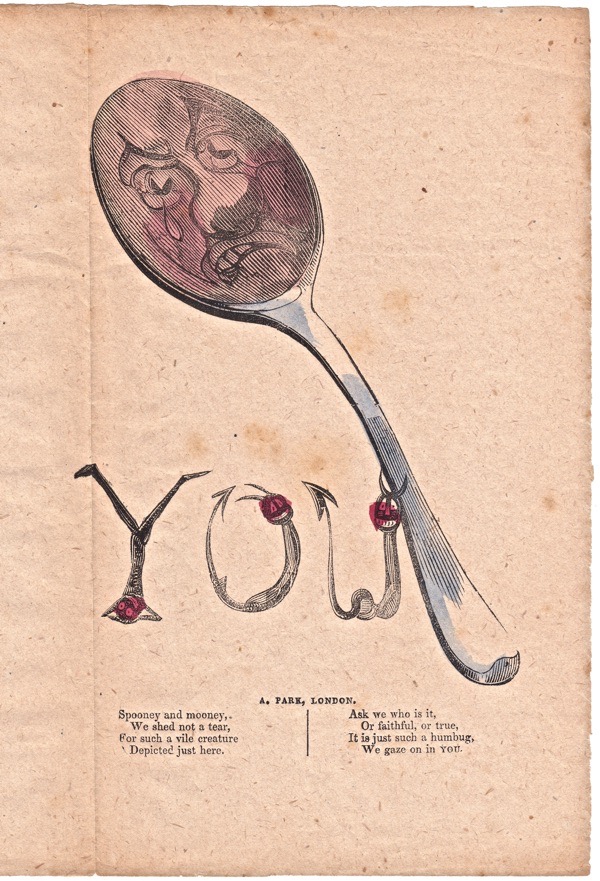
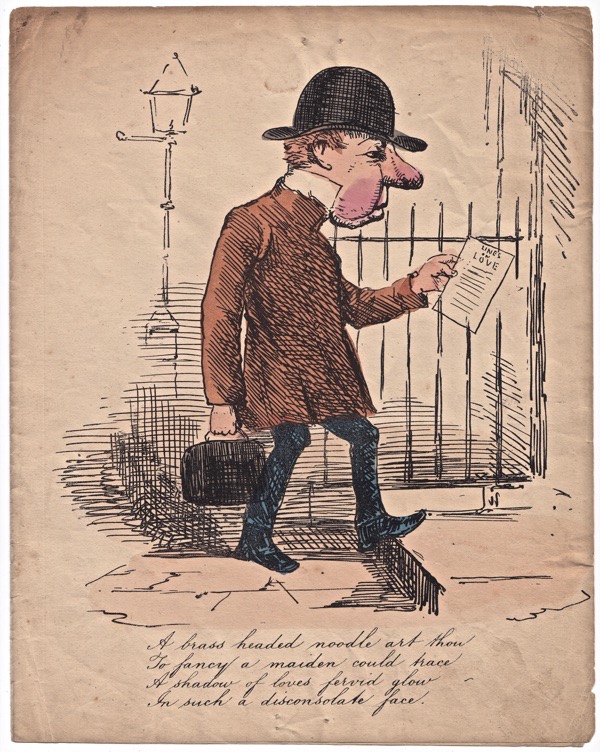
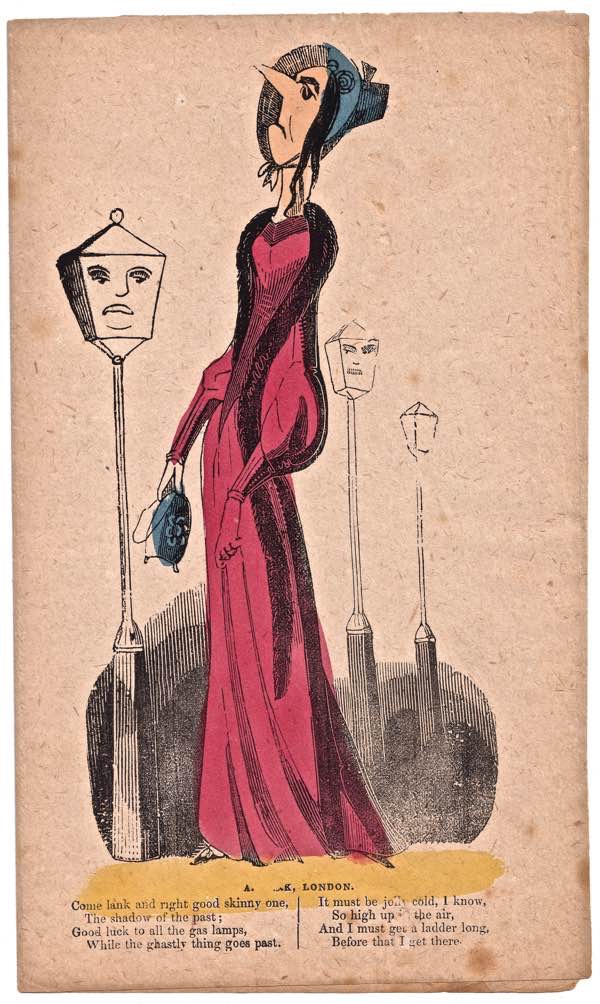

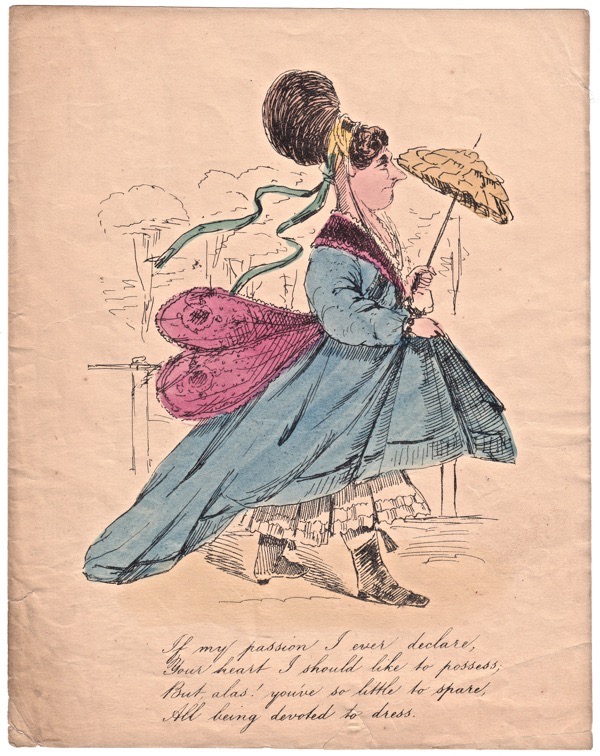
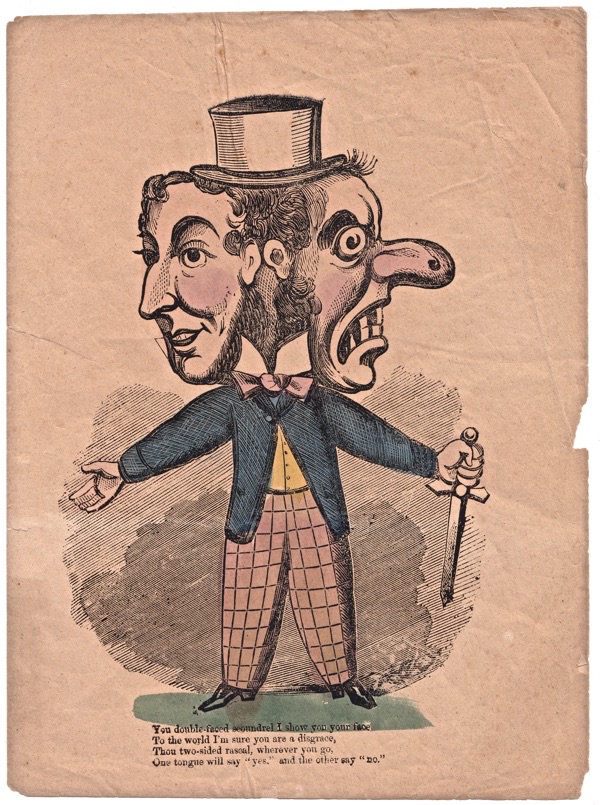
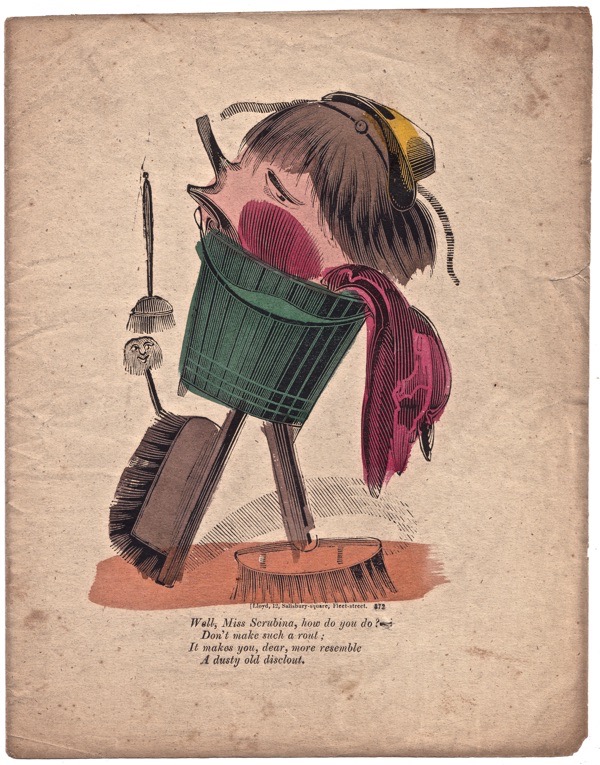
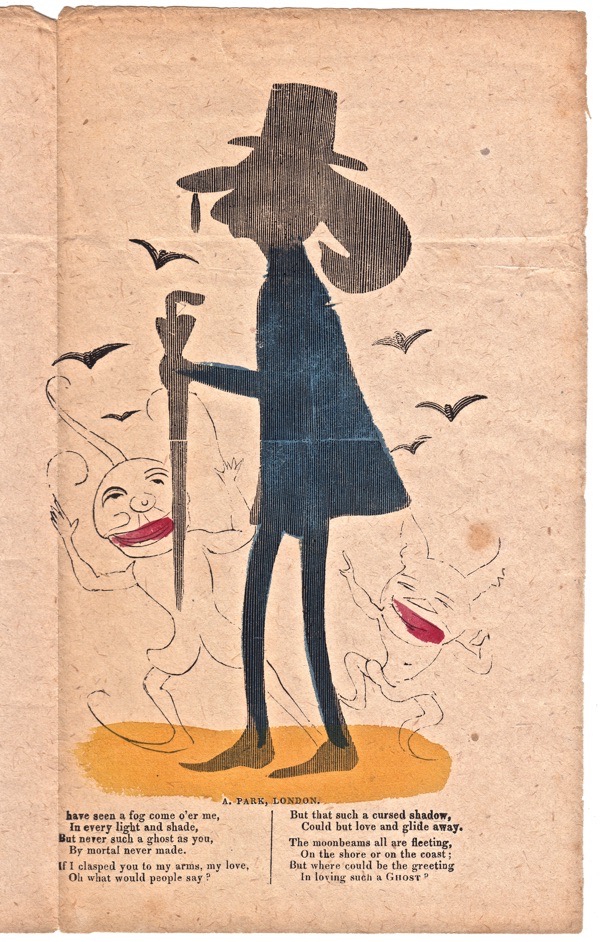
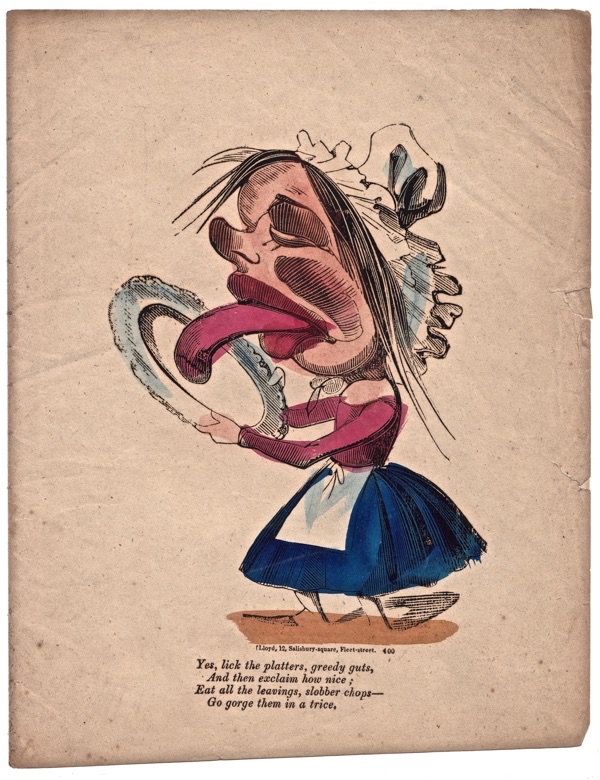
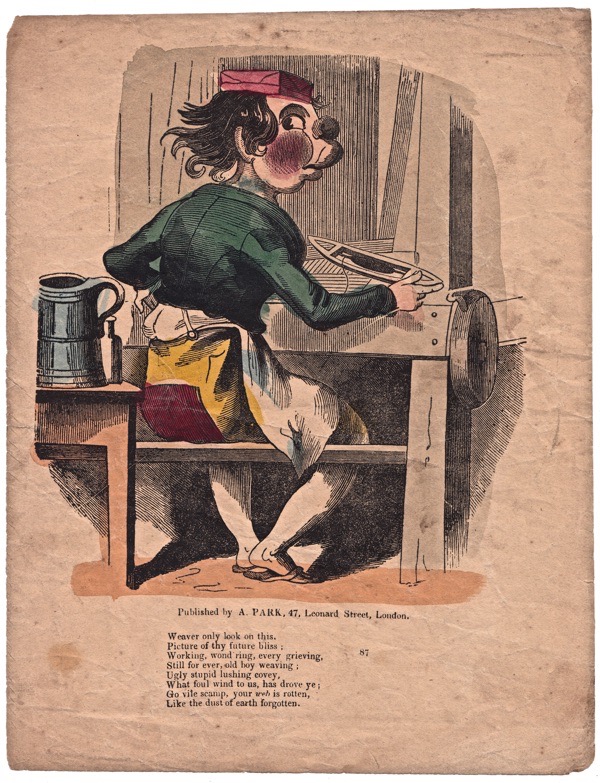
Images courtesy Mike Henbrey Collection at Bishopsgate Institute
You might also like to look at
Bug Woman & A London Inheritance
With another of my Spitalfields Blog Courses coming up on March 4th & 5th, it is my pleasure to present recent work by two of my unashamedly favourite alumni – Bug Woman and A London Inheritance. Click here for more information about the Course

BUG WOMAN, ADVENTURES IN LONDON, Because a Community is More Than Just People
Dear Readers, When I visited St Pancras & Islington Cemetery after Christmas, there seemed to have been an eruption of artificial poinsettia. It was the first choice of those who had come to visit the graves of their loved ones during this poignant season. And now, as the wind shook the bare branches and the sun shone indifferently, the red ‘flowers’ imparted an incongruously festive air.
Although January is the middle of winter for us, the starting gun has already sounded for many birds. The trees and bushes were full of robins singing, blackbirds chucking and great tits making a right old racket. The width of the band of black on the chest of a great tit is related to testosterone levels, as is the black bib under the chin of a male house sparrow. The wider the band, or the bigger the bib, the more aggressive and dominant the bird is. I shall leave you to decide on the possible nature of the little chap above.
At this time of year, there seem to be large gangs of young magpies about. There was a group of four or five in the cemetery and they were a noisy, rambunctious lot, harassing a pair of crows and then turning their attentions to terrifying some jays. I once watched twenty magpies in an Islington square forcing some crows to abandon their nest. Fortunately, the crows had not yet laid any eggs and the magpies soon departed to annoy someone else. I imagine this is pre-breeding behaviour which will cease once everyone is paired up and has their own eggs to worry about.
One of the cemetery kestrels watched serenely. I first spotted this bird on top of a hawthorn bush. It has endless patience, making the occasional reconnaissance flight across the gravestones and then returning to sit and watch. I know there are lots of small rodents here and the fact the cemetery supports a pair of kestrels means they are good at finding them. I always get a thrill when I see a kestrel, they may be small but they have the enigmatic nature of all predators, a self-assurance that I find very moving. Kestrels also eat small birds and so the superabundance of berries and rose hips this year, which will attract thrushes and other small avians, helps too.
And so I turned for home, stopping only to wish ‘Happy New Year’ to a very under-dressed man clutching a can of beer. He was shivering with cold but strolled off briskly into a wooded area to finish his drink. The cemetery is a magnet for lost souls of all kinds and my heart went out to him. No one is born to end up in a cemetery in a tattered shirt with drink as the only solace.

At this time of year, there are gangs of young magpies about

The cemetery supports a pair of kestrels

A superabundance of berries and rose hips this year
A LONDON INHERITANCE, A Private History of a Public City
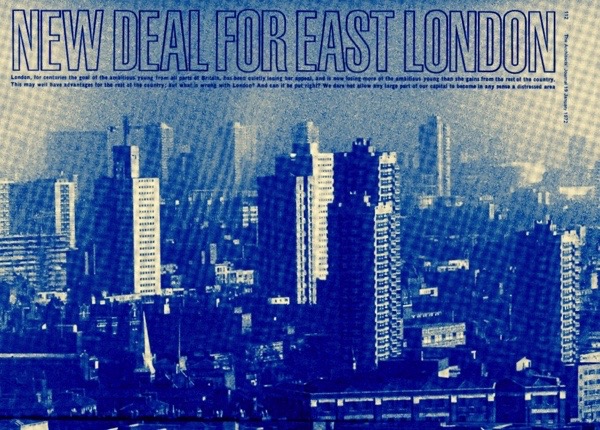
One of my father’s books is stuffed full of pages and cuttings from professional journals, including a complete copy of an Architects’ Journal dated 9th January 1972 with a lengthy feature titled New Deal For East London. The feature reported on the challenges facing East London which had been in continuous decline since the end of the war, along with the future impact of some of the early plans for major developments.
• The impact on the London Docks of large cargo ships coming into service
• The lack of any strategic planning for the area and the speculative building work taking place, mainly along the edge of the Thames.
• The location of a possible Thames Barrage.
• The impact of the proposed new London Airport off the coast of Essex at Foulness.
• The need to maintain a mixed community and not to destroy the established communities across the area.
Architects’ Journal gives an example of what happens when prosperous families arrive: “Some well-to-do families moved into a small terrace of new houses by the river, and were approached by the small boys of the neighbourhood with offers of ‘Guard your car, sir?’ for some trifling weekly sum. The car-owners brushed these knowing offers aside, but soon found their cars, if left in the street, being persistently vandalised, scratched and mucked about by those they had casually frozen out.”
The article paints a depressing picture of East London at the start of the seventies: “This is the poorest part of the capital with the greatest need for all the social services provided (or permitted to be provided) by the local authorities, and – not surprisingly – with the highest rates. Today this is a going downhill area in which neither the growing tourist industry, nor the entertainment industry, nor the new light industries show any interest. Such industries prefer to expand near the prosperous West End or in some part of the country, such as the new towns, where they will be eligible for an industrial development certificate and all the financial assistance that implies.
The rag trade may still flourish in the east, but its best products will be sold in the boutiques and department stores of West London, none of which consider the East End area worth opening up in. Even the great chain stores seldom open up a new branch in this area, while there are obviously more profitable sites to be found to the west. The entertainment industry, too, takes little interest and one reason for this may well be the very poor public transport system in those parts, which must inevitably limit both the catchment area and the enjoyment of an evening out.
There is no comparison between the provision of public transport in the west and the east. The Underground provides a fast network of frequent trains, north, south, east and west – on the west of the City of London. No such network serves the East End, and even the newly proposed Fleet Line only touches north-east London at Fenchurch St.”
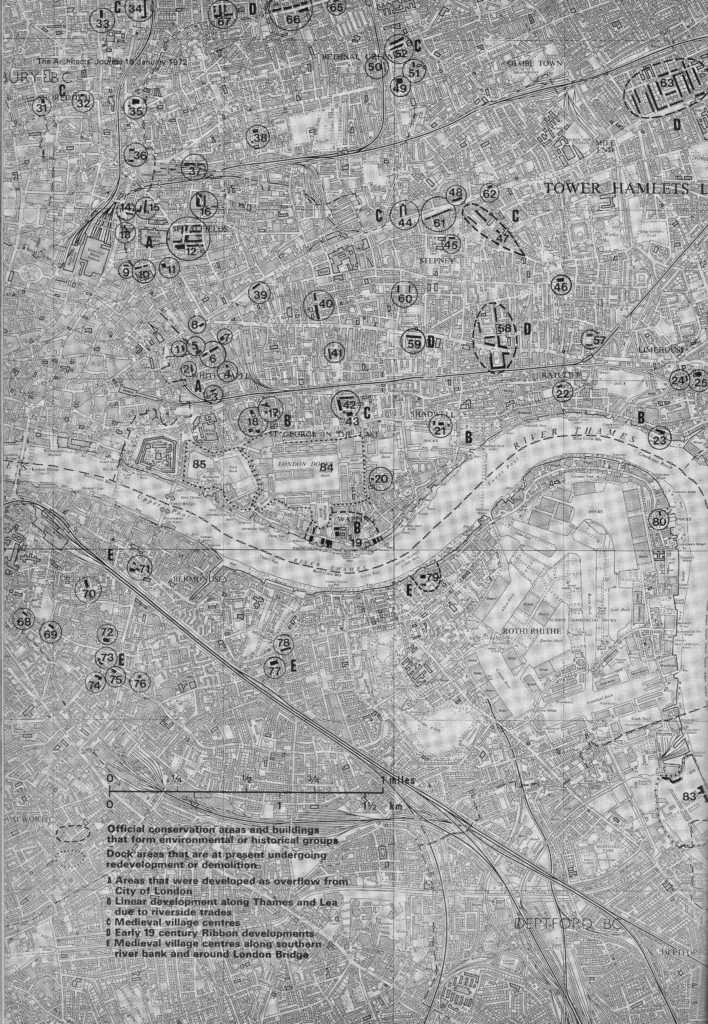
A key focus of Architects’ Journal was a concern that, should there be comprehensive development of the area in the coming years, a range of pre-1800 buildings should be preserved. When I see an old map – such as this – with locations marked, I always wonder what is there now, so there was only one thing to do – to visit the locations in Whitechapel and see if the buildings identified in 1972 as worthy of preservation have survived the development of East London over the past forty-five years.
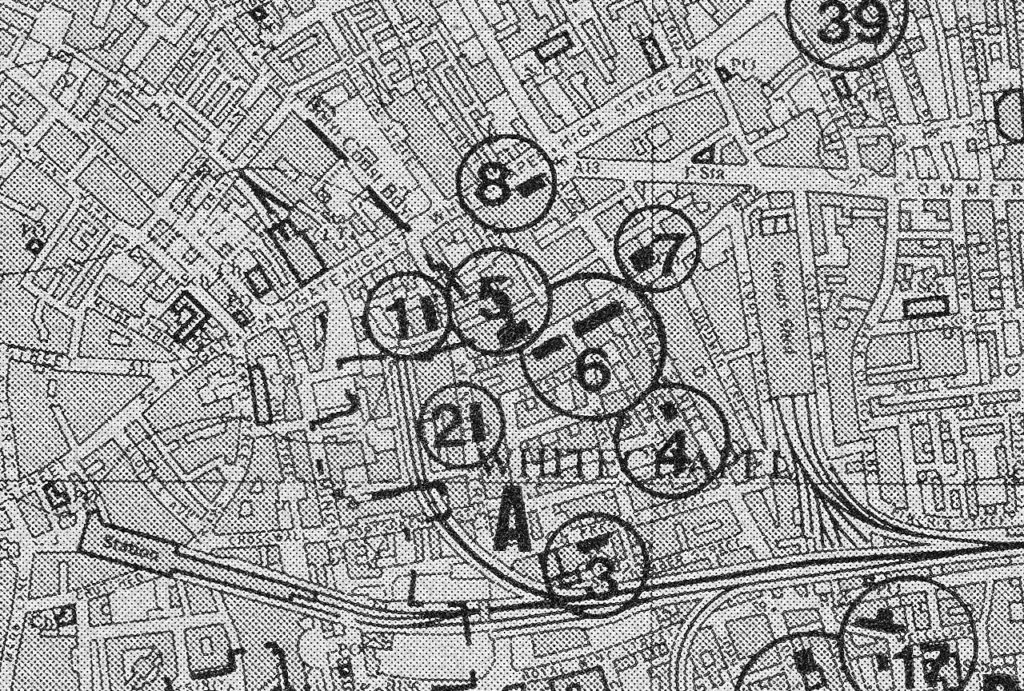
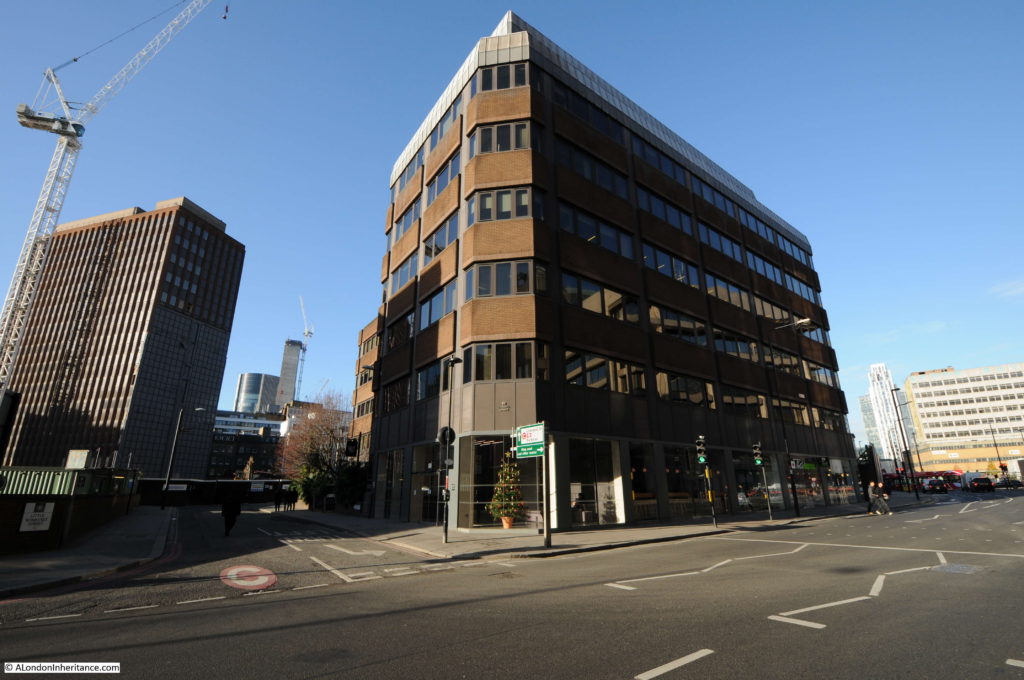
Site 1 – Pair of Early-Eighteenth Century Buildings
Turning off Aldgate High St, I walked down Mansell St to where site ‘A’ should be according to the Architects’ Journal map, on Mansell St at the junction with Little Somerset St. There was nothing to be found that resembled an early-eighteenth century pair of buildings and the site is now occupied by an office block. Not a very good start!
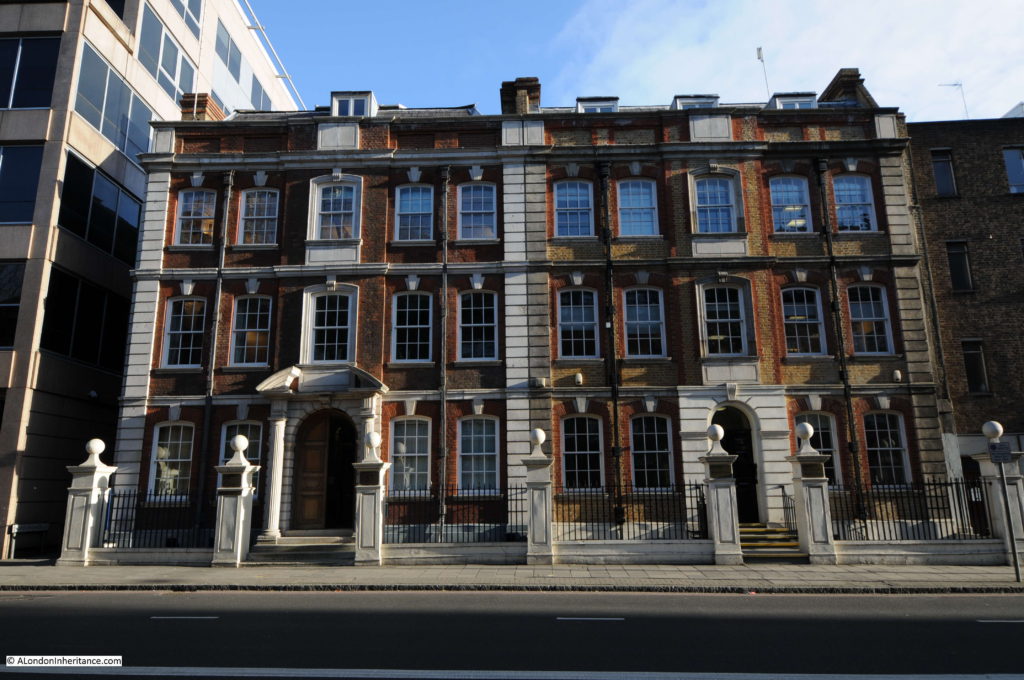
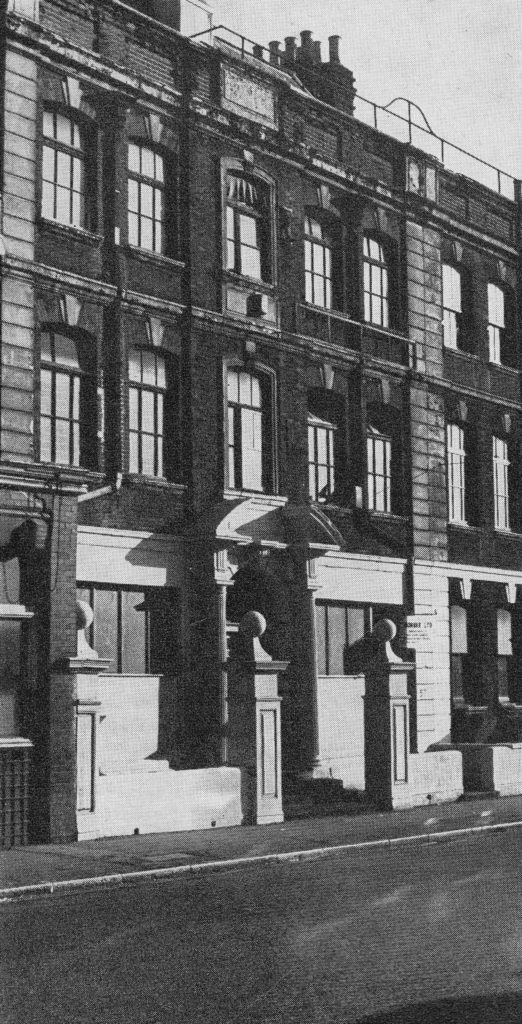
Site 2 – Pair of Eighteenth Century Buildings
The next location was further down Mansell St, on the opposite side of the road where I found a pair of well-preserved buildings. These are from the seventeen-twenties with possible Victorian updates to the facade. The doorways would originally have been symmetrical but the one on the right has lost its pedimented Doric doorcase and cornice. The photo in the Architects’ Journal shows the state of the buildings in 1972 and they continued to crumble into the eighties when the ground floor housed an Indian take-away. I am not sure when they were restored but it was good to see the second location in fine condition.
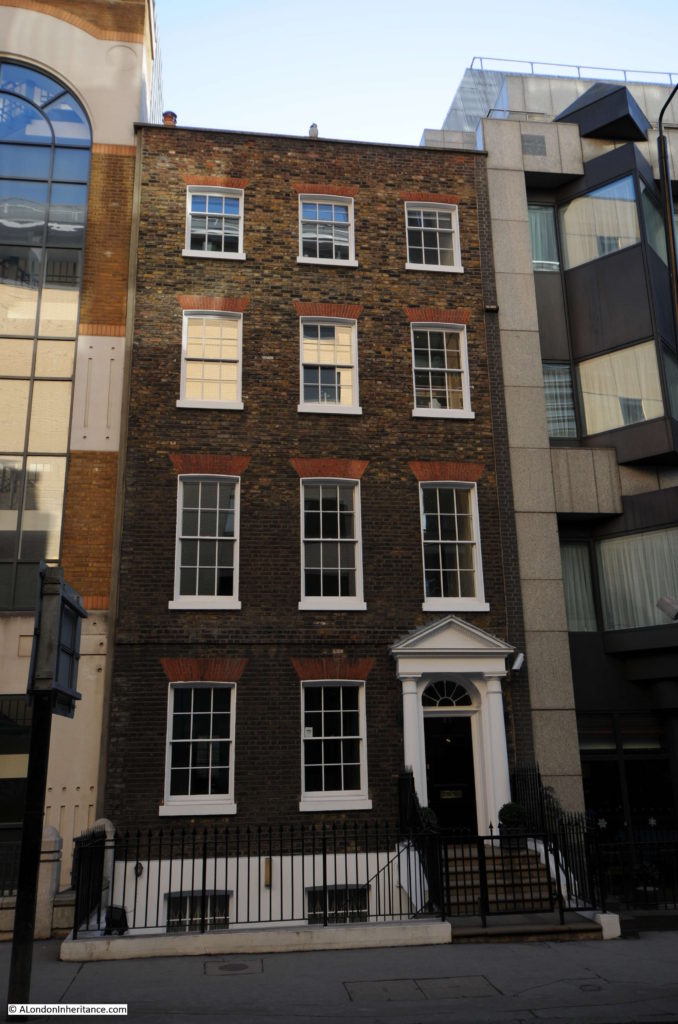
Site 3 – Group of Eighteenth Century Buildings
To reach site these, I walked to the end of Mansell St and turned left into Prescot St. Here I was looking for a group of eighteenth century buildings on the south side at the western end of the street. Looking along the street, I could only see one building of the appropriate architectural style and age, squashed between a Premier Inn and an office building. Architects’ Journal described this location as a group, so I assume that originally there were similar buildings on either side of this lone survivor, possibly once part of a terrace. It was strange to see this old building sandwiched between two very different and much more recent structures.
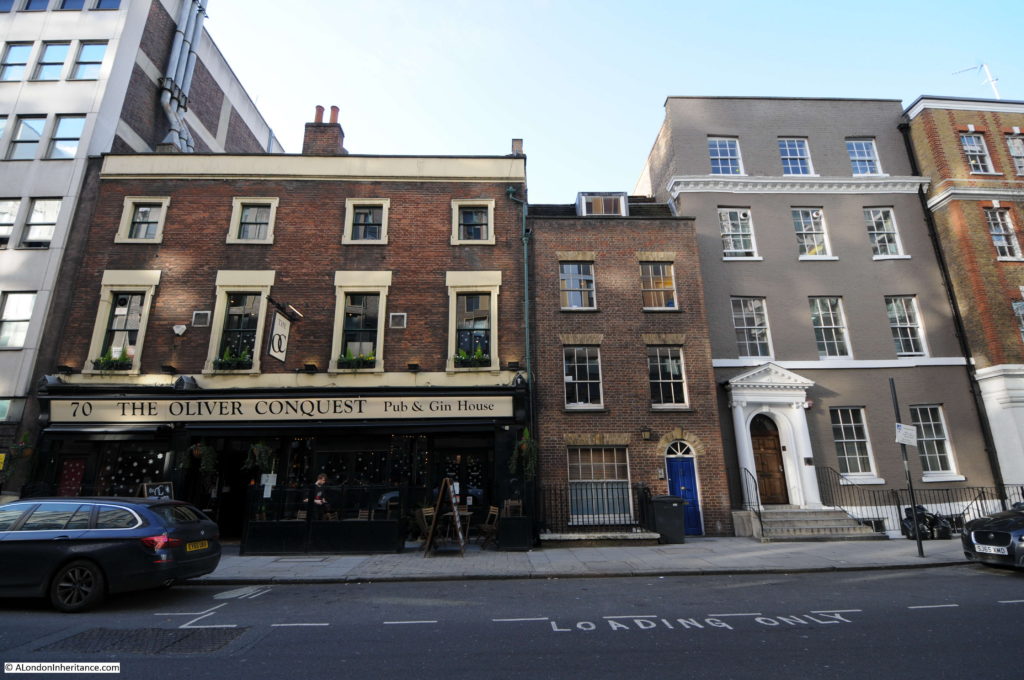
Site 4 – Single Large House of 1760
At the end of Prescot St I turned left into Leman St and walked along the to where the map showed the location of a 1760 house. In the expected location, I found this cluster of three buildings. I assume that the single large 1760 house is the building on the right.
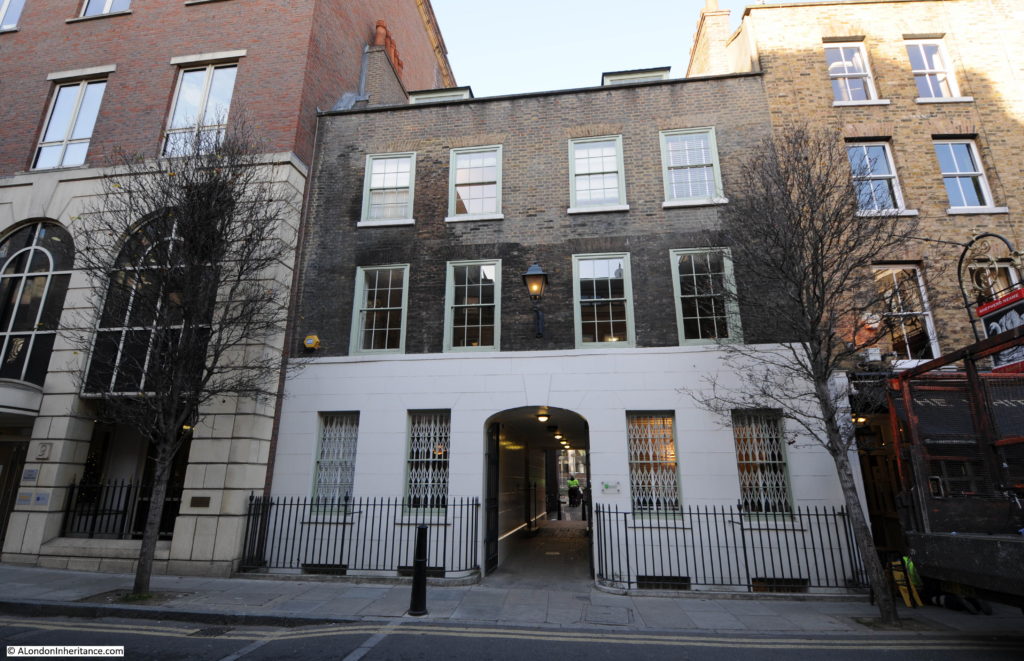
Site 5 – House over Half Moon Passage
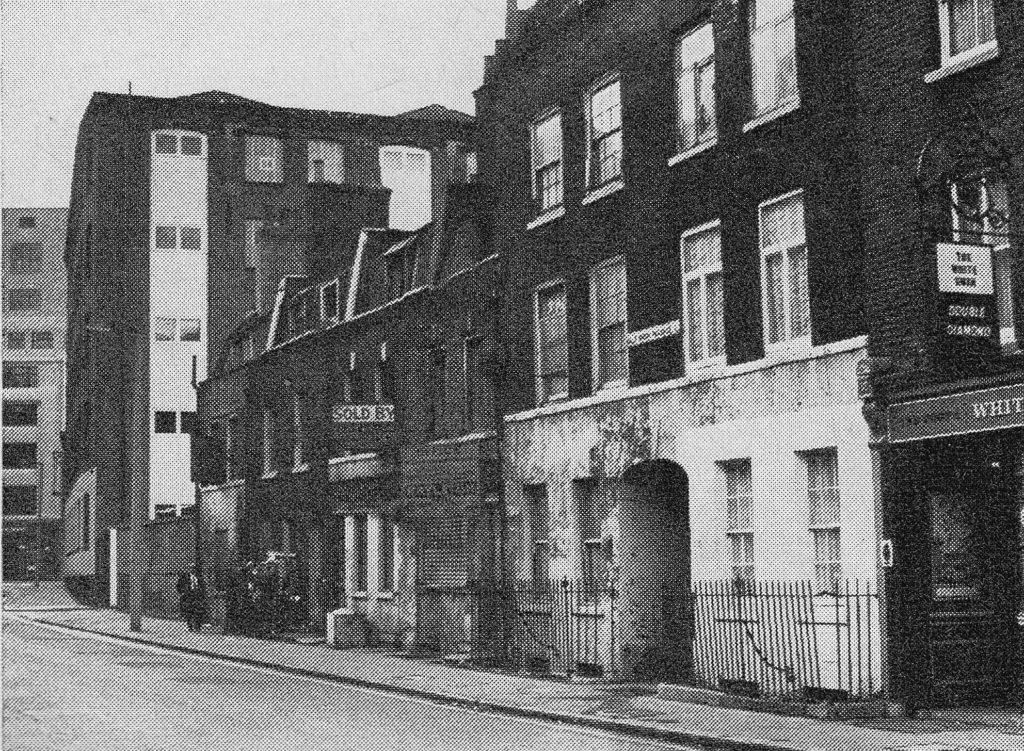
I continued along Leman St and turned left into Alie St. Walk along Alie St to where I found the house over Half Moon Passage. I have found a couple of references to the origin of the name ‘Half Moon Passage.’ One that refers to the graphic representation of an unpaid sixpence on a customer’s tally used in pubs and ale houses, while the other refers a tenement that stood here in Tudor times called the Half Moon. The photo from Architects’ Journal shows Half Moon Passage and the building around the passage in 1972, but the buildings on the left have been replaced by an office block. The pub on the right, The White Swan is still there, although it is impossible to get a pint of Double Diamond today.
Site 6 – 1710 Terrace in Alie St
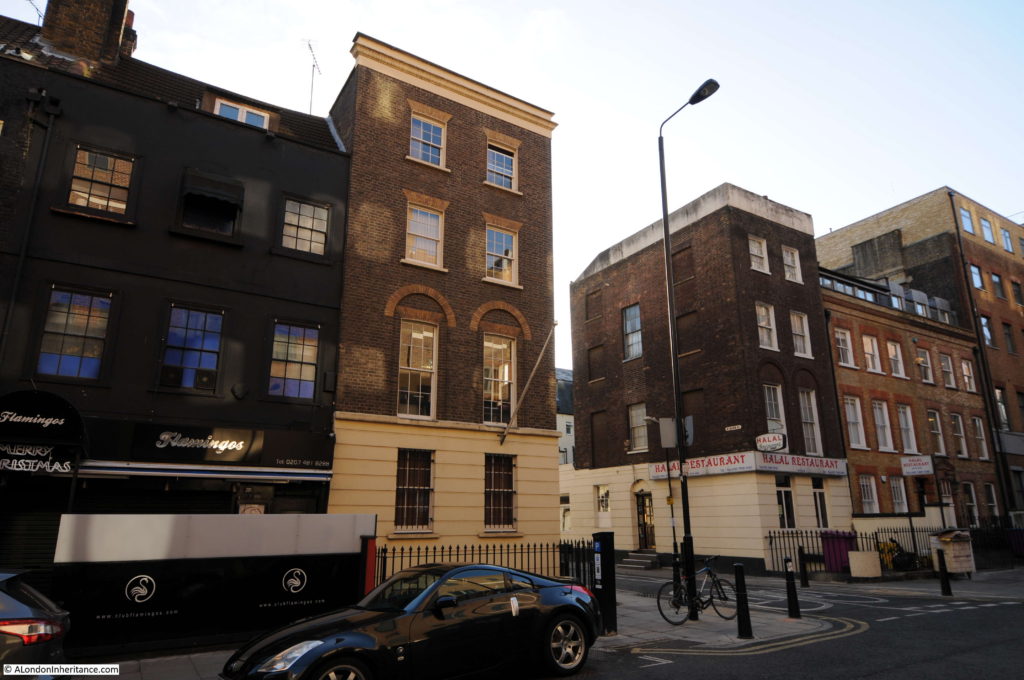
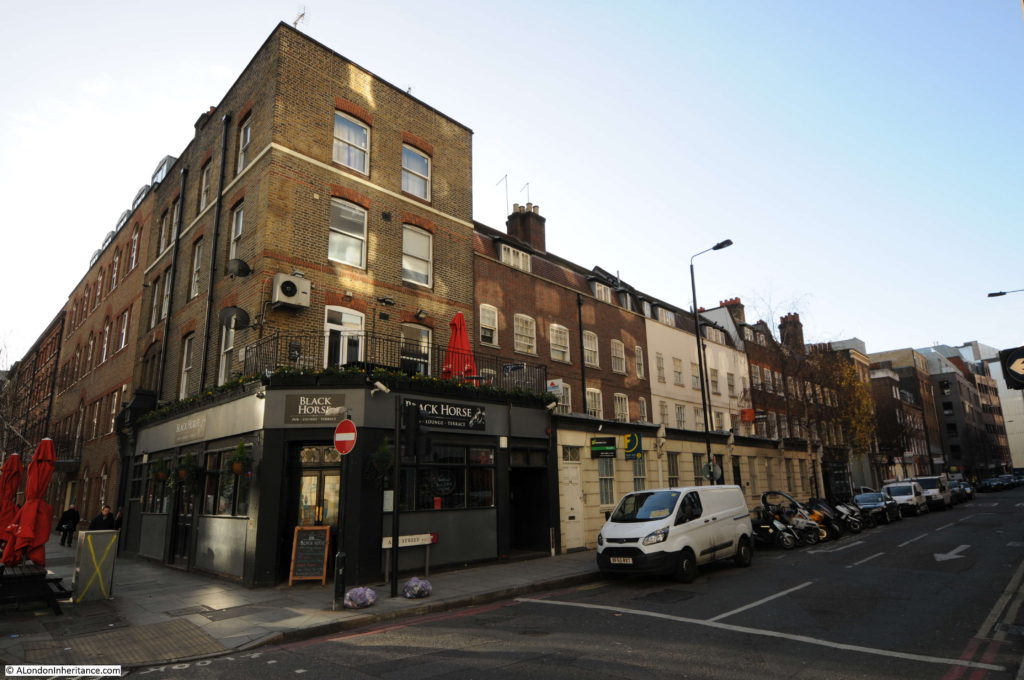
Opposite The White Swan is a terrace that runs along Alie St, on either side of St. Mark St, with a pair of symmetrical, four-storey buildings standing on each side of the junction with St. Mark St. Although extensions to the edge of the pavement obscure the lower floor, the upper floors of this terrace are visible.
Site 7 – Seamen’s Chapel of 1760
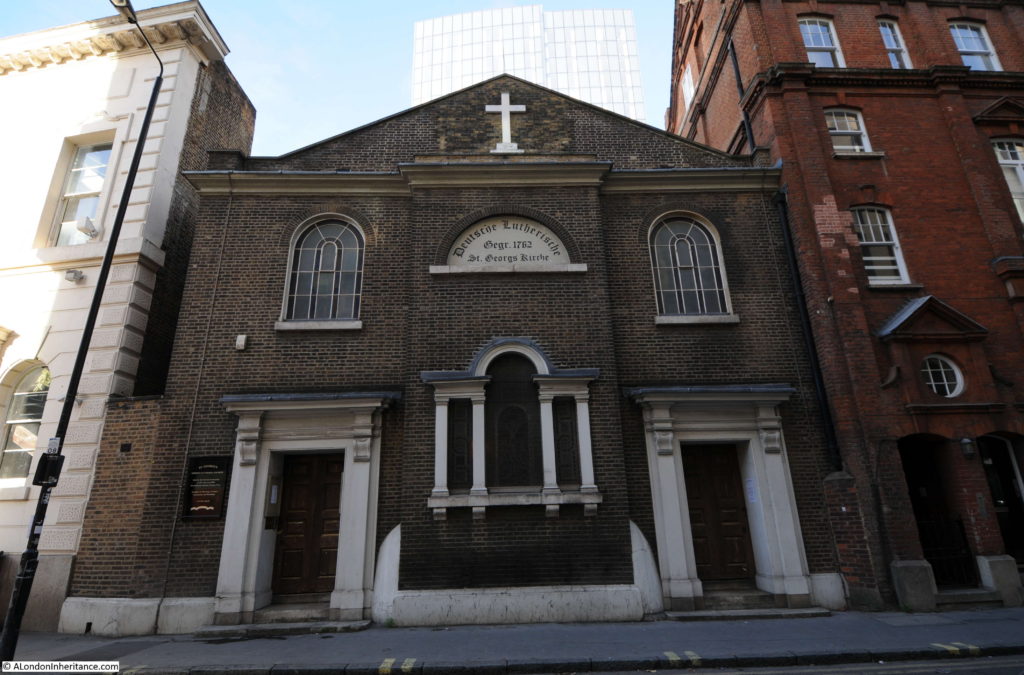
Just past the junction with Leman St, still on Alie St, is the German Lutheran Church of St. George dating from 1762, the “Deutsche Lutherische St. Georgs Kirche.” This is the oldest German Church in the country, originating from when Aldgate and Whitechapel was home to a large population of German immigrants. In the nineteenth century, this was the largest number of German-speaking people living outside Germany.
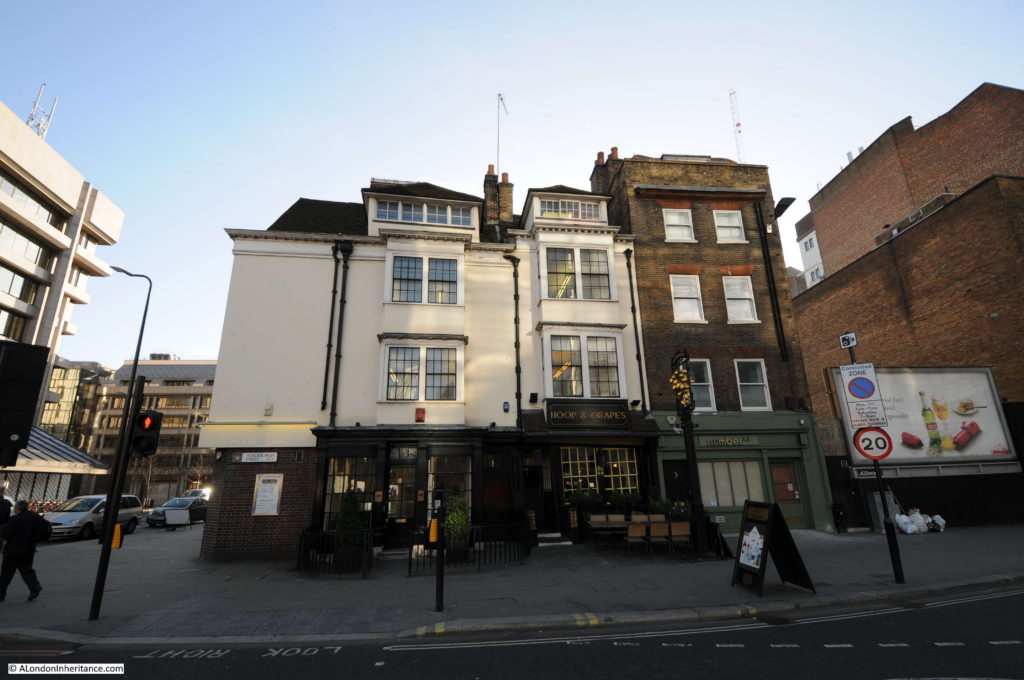
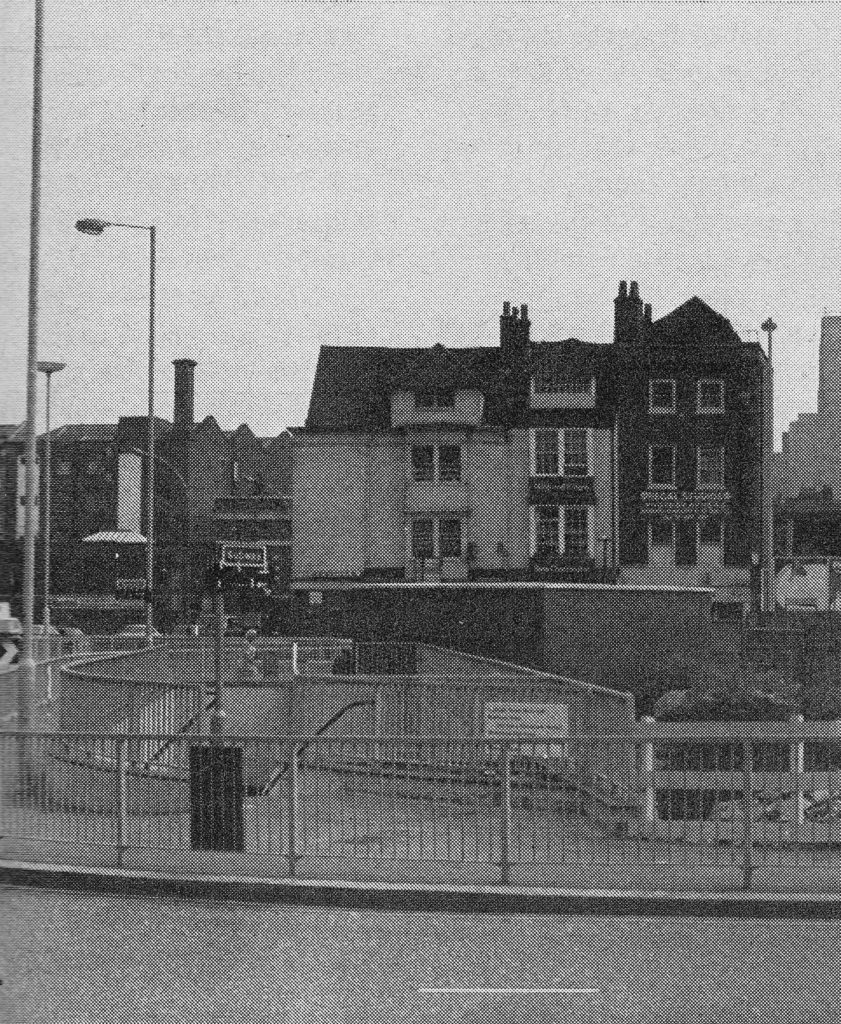
Site 8 – Seventeenth Century Hoop & Grapes Pub
The final site on Architects’ Journal’s map of buildings in Whitechapel is The Hoop & Grapes, with foundations going back to the thirteenth century. Due to the the way buildings evolved rather than being built new as a single construction, parts of the building could well date to the sixteenth century with additions to the facade added in the seventeenth century.
Forty-five years after the original Architects’ Journal article, I was pleased to discover that seven out of the original eight buildings that the article proposed should be considered for preservation have been restored and survive into the twenty-first century.

HOW TO WRITE A BLOG THAT PEOPLE WILL WANT TO READ – 4th & 5th MARCH
Spend a weekend in an eighteenth century weaver’s house in Spitalfields and learn how to write a blog with The Gentle Author.
This course will examine the essential questions which need to be addressed if you wish to write a blog that people will want to read.
“Like those writers in fourteenth century Florence who discovered the sonnet but did not quite know what to do with it, we are presented with the new literary medium of the blog – which has quickly become omnipresent, with many millions writing online. For my own part, I respect this nascent literary form by seeking to explore its own unique qualities and potential.” – The Gentle Author
COURSE STRUCTURE
1. How to find a voice – When you write, who are you writing to and what is your relationship with the reader?
2. How to find a subject – Why is it necessary to write and what do you have to tell?
3. How to find the form – What is the ideal manifestation of your material and how can a good structure give you momentum?
4. The relationship of pictures and words – Which comes first, the pictures or the words? Creating a dynamic relationship between your text and images.
5. How to write a pen portrait – Drawing on The Gentle Author’s experience, different strategies in transforming a conversation into an effective written evocation of a personality.
6. What a blog can do – A consideration of how telling stories on the internet can affect the temporal world.
SALIENT DETAILS
The course will be held at 5 Fournier St, Spitalfields on 4th & 5th March from 10am -5pm on Saturday and 11am-5pm on Sunday. Lunch will be catered by Leila’s Cafe of Arnold Circus and tea, coffee & cakes by the Townhouse are included within the course fee of £300.
Accommodation at 5 Fournier St is available upon enquiry to Fiona Atkins fiona@townhousewindow.com
Email spitalfieldslife@gmail.com to book a place on the course.












