Mary Burd, Clinical Psychologist
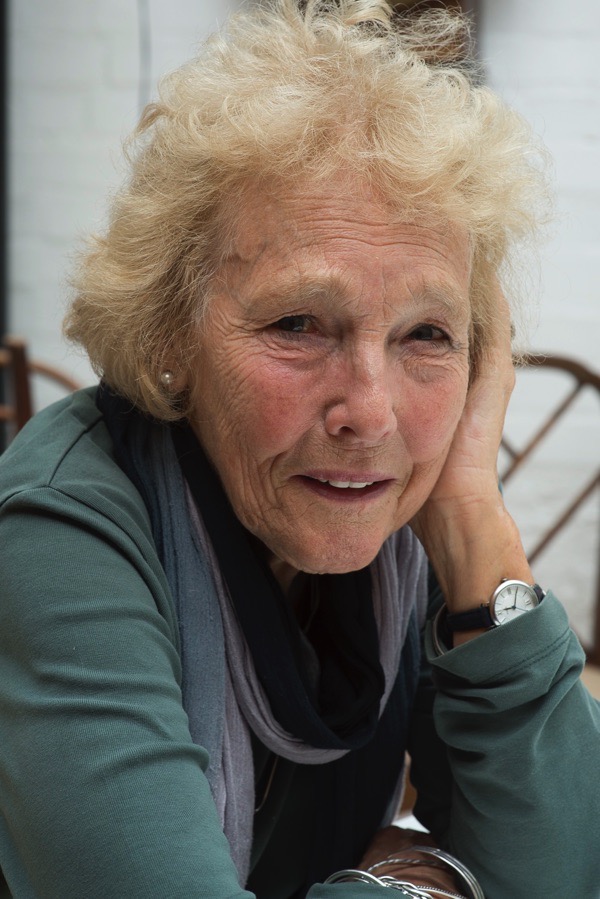
‘You cannot overestimate sitting down quietly with someone and listening to what they have to say’
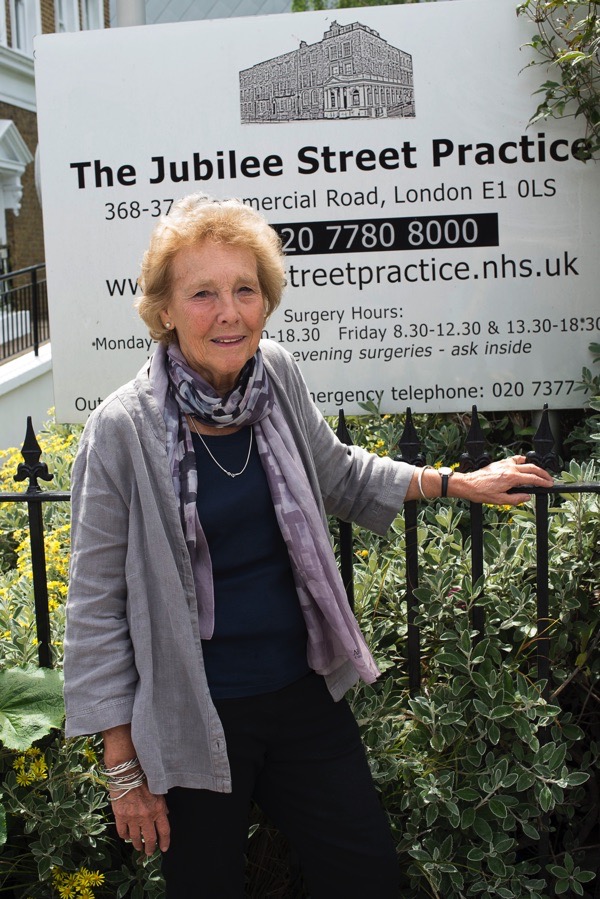
Mary Burd worked as Clinical Psychologist at the Jubilee St Practice in Stepney between 1979 and 2009, beginning as a mental health trainee and eventually becoming Head of Mental Health Services in Tower Hamlets. Over this time, she saw great changes both in the nature of the East End and in the health service itself. In thirty years of work, Mary grew deeply engaged with the lives of those that she served and, when I interviewed her recently, she spoke to me with deep affection for the people and the place.
“When I was twenty and first came to London in the sixties, a friend of mine said to me on a spare evening, ‘Why don’t you come to the East End? I work in a youth club there.’ That visit to Dame Colet House was my very first time working in Tower Hamlets, I helped out in the youth club and I can remember it was pretty tough. I had to guard the cash box from Les whose main interest was to raid it.
Ultimately, it was chance that brought me to work in the East End. In my early thirties, I decided that I needed to change career – I had been working in publishing – so I went and did a psychology degree at Brunel University and then studied Clinical Psychology at the University of East London. It was a three year course with placements and I was based at the Royal London Hospital in Whitechapel. In my final year I could chose, and I always wanted to work in General Practice, so I went to the Jubilee St Practice in 1977 which was operating in portacabins then.
I remember sitting around the table with the group of GPs. A rather elderly gentleman asked me, ‘What are you doing here?’ I said, ‘I’ve come because I would like to provide psychological help within practices, rather for everybody to have to go to the Outpatients Department.’ And he said, ‘I think you’d be better off working in John Lewis.’
In spite of this, I had an amazing time and I did a lot of work with Health Visitors, helping them with babies and toddlers who had behavioural problems. Often, they couldn’t sleep or didn’t eat properly. I used to accompany the Health Visitors and help them think about what was going on. I got a research grant to look at the application of psychology in Primary Care, but it was really just an excuse to stay on at the Jubilee St Practice. At the end of that, the Director of Nursing said, ‘We really like the work you have done with Health Visitors and we are creating a psychology post for someone to do that sort of work.’ So that was how I started off.
I had a job that I loved working in General Practice in the East End. In those days, there was very little mental health provision and I was lucky enough to go into a practice which was forward thinking. It comprised three doctor’s practices that had come together and, when one of those GPs died, his relationship with his patients was so strong they all joined his funeral cortege.
When I first came to the East End, there were only a few practices that had more than one doctor and a few helpers. There were a lot of elderly doctors operating out of converted shops. I remember going to a practice to talk about the service and the only examination couch was in the kitchen, and it was propped up on old medical journals. There was so much dust you could write your name in it and there were files scattered about the place without any proper confidentiality. It was completely archaic and that was in the early eighties, not so very long ago. Because healthcare was so prized by people in the East End, who had never been used to decent medical services, I think they put up with things that people in other areas of London might not have done.
Jubilee St Practice became my home in the East End. I was always ambitious and I used every attempt to get funding for my work, and I taught on the East London Vocational Training Scheme, training GPs. I found that GPs who came onto the East London Scheme tended to stay in Tower Hamlets, so I got to know them all. It meant that, when they came to practice, they were receptive to the things I was doing and it gave me easy access into the world of General Practice.
As the doctors practicing in High St shops retired, the Family Practitioner Council invested in new practices. The new GPs coming in were of a high calibre and they wanted to practice in decent surroundings to give the best possible care. They were keen on the idea of a multi-disciplinary team, so they worked with nurses and Heath Visitors. By the time, I left every practice in Tower Hamlets had onsite psychological support.
In the early days, I set up a referral service. So a GP could come to me and say, ‘I’ve Mrs X and she’s terribly depressed at the moment, do you think you could see her?’ I would not work with a practice unless they would give a minimum of an hour a month to discuss the patients. There was a tremendous sense of partnership. We worked so closely and it was a fantastic time.
I was very often asked to write housing letters but in all my time I only wrote two, because I knew there was absolutely no point. Instead, I can remember writing the the local authority saying, ‘What is the point of me providing a service to a young woman with four children living on the fourteenth floor of a tower block?’ By then, many families were moving out but there were still many extended families. I remember asking a young mother, ‘How often do you see your ma?’ and she said, ‘Oh not very often, only three times a week.’ I think living cheek by jowl brought pressures. The positive was stronger than the negative but, even so, some people were oppressed, not the young children but the mothers. Their own mothers used to go round and do the washing for them, and there was a real dependency.
I was in Jubilee St during the big influx of Sylheti people and we had a big problem in that General Practices did not refer people with mental health problems from that community. In the eighties, we were the very first to set up a Bangladeshi counselling service and we trained somebody who spoke the language to run it, and then we did the same for the Somali community. There is a difficulty because some people think that a service by their own community is not as good as one provided by white healthcare professionals. We used the insights of the Bangladeshi and Somali counsellors to help us to work with those populations.
Patients would sometimes talk to me about ‘those Paki bastards’ and I would always point out that this language was not acceptable. In my time, I saw a lot of people from the Bangladeshi community. I can remember one woman whose husband was a complete nightmare but culturally there was no way she could leave him. It was very hard to work with her because it was absolutely clear where her distress was coming from – it was from her relationship with her husband – but she could not alter that in any way. I could only offer her a place to talk about it and a place to consider other things that she might be able to do to improve her life, so that she understood she was not totally alone with her problem.
I did a lot of teaching of young doctors and medical students and I think – wherever in the world you are – you cannot overestimate sitting down quietly with someone and listening to what they have to say. Doctors who are always trained to do things find that very difficult to understand.
I joined the Jubilee St Practice in 1979 and I retired in 2009. I also worked in St Stephen’s Rd, Bow, in an all women practice which was unique in the East End at the time, when most doctors were older men. The working atmosphere at the practice was collegiate and they were very interested in the emotional life of their patients, which I think was unusual then. They looked after their staff very well.
I also worked in Wapping, where the GP had a bed with a pink quilt. I thought, ‘What’s this doing in the General Practice?’ In fact, it was where the GP slept when he was on call at night. He had his own bedroom at work. I observed the changing nature of the Wapping population. When the City people started to move in, they had much higher expectations and demanded to be seen when they needed to be seen.
There are a lot more children now with mental problems than when I started. There are multiple reasons. Not all children are in families where they get the nurturing that they need. Diet has a bit to do with it too. We could talk about air pollution. A lid used to be kept on by quite severe discipline. In general, children are much more disturbed now than twenty years ago. Families are much more disconnected with less extended families.
Over thirty years in the East End, I saw a major improvement in health services. District nursing and health visiting was of a very high quality in Tower Hamlets. The great thing about the East End was that it attracted people who are creative and want to improve health care. Every healthcare professional who has worked in Tower Hamlets and moved on still talks about working in the East End because there was a tremendous sense of collaboration and the patients were inspiring – because life was not easy for them.
I had a fantastic career, I was so lucky. Every year, the Bengali services had a Disability Awareness Day at Swanlea School in Whitechapel. The Bengali Disability Council set it up and they presented me a wonderful plaque for my services to the Bengali people of Tower Hamlets. That was the most moving occasion I have ever experienced. I got the MBE for services to healthcare in East London too, but the other award meant more to me because it meant I had been accepted by the community.”
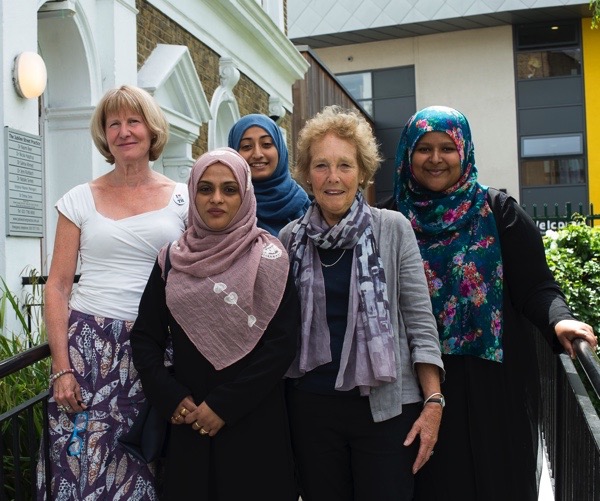
Mary with former colleagues at the Jubilee St Practice
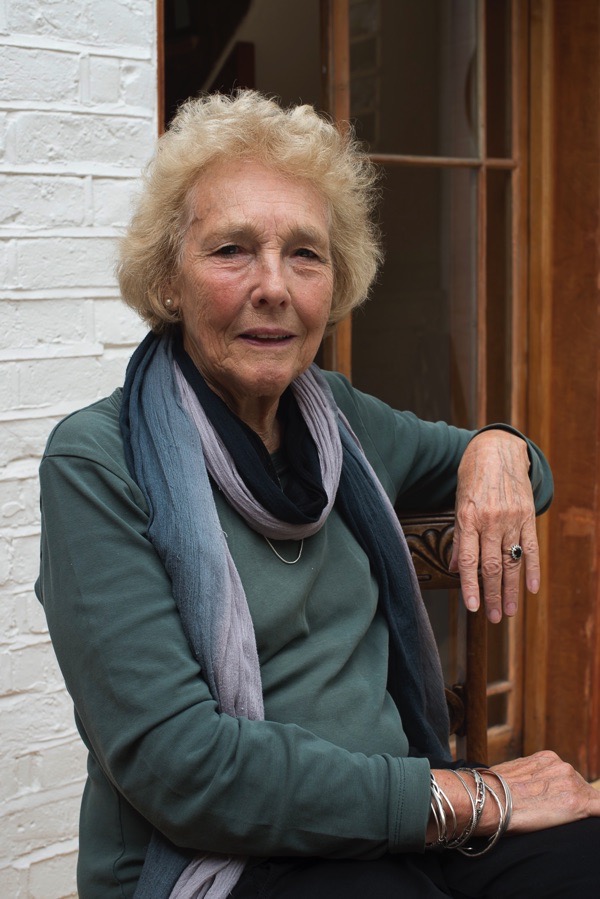
Mary Burd, Clinical Psychologist
Photographs copyright © Sarah Ainslie
You may also like to read about
Hop Picking With Colin O’Brien
A year ago I lost my friend, the late & great photographer Colin O’Brien, and I celebrate his memory with this account of our hop picking excursion to Lamberhurst with Company Drinks in 2015
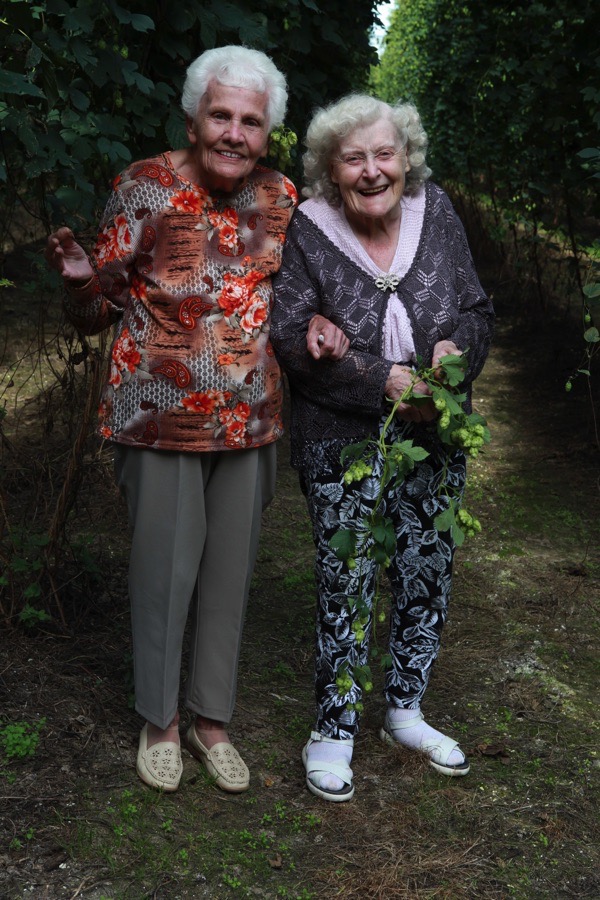
Flossie Reed & Vi Charlton
Contributing Photographer Colin O’Brien & I joined two coachloads of East Enders on a trip to Kent for a spot of hopping at Little Scotney Farm, courtesy of Company Drinks. As you can imagine, it was not the first time in the hop gardens for many of the participants which cast a certain emotionalism upon the day – Flossie Reed first visited in 1927 and Vi Charlton in 1930, as babes in their mothers’ arms.
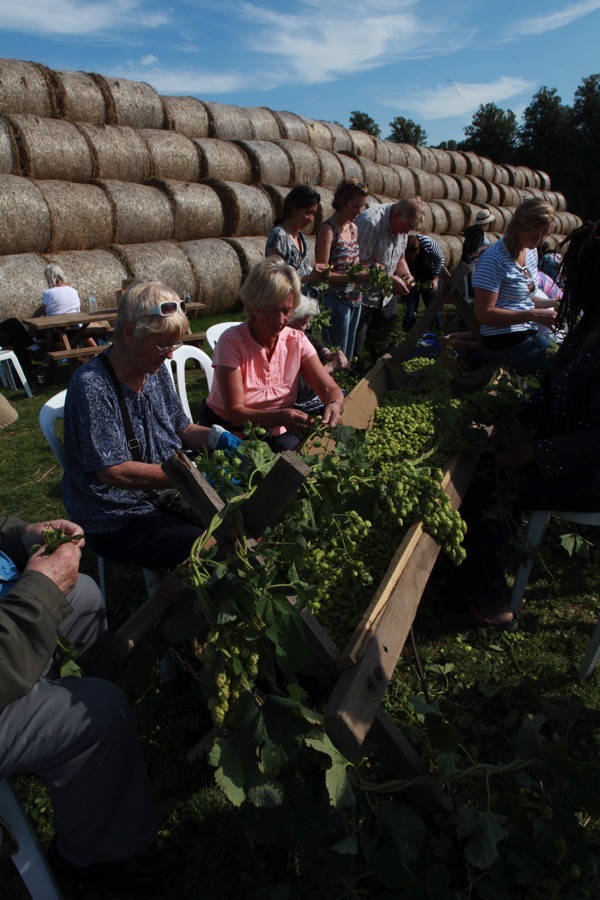
Hop harvest in Kent takes a month and we were blessed with a warm day for our visit in the midst of the picking season. The pickers set to work enthusiastically pulling the flowers from the bines and tossing them into a long bin set on the grass, just up the hill from the hop gardens and in the shadow of the oasthouses looming overhead.
The pungent bittersweet smell of the hop flowers proved a powerful catalyst for memories of hop picking years ago. Vi Charlton recalled her childhood joy at encountering the fresh green of the rural world after the dirty sooty atmosphere of Wapping in the thirties. “I had an aunt who was a champion picker,” she admitted to me,“Nobody liked her because she showed everyone else up.”
“It was a matriarchal society,” Vi confirmed with a philosophical shrug,” but the men would come down at the weekend and drink away the money the women had earned in the week.”
“We were greedy pickers,” continued Flossie Reed widening her eyes with enthusiasm, “We had to borrow money from a money-lender to come down and we had nothing left at the end once we’d paid for our food, but it was a lovely holiday.”
“I first came here when I was ten and now I’m eighty-four,” declared Ronald Prendergast without pausing from his picking,“it was a way of life. There were eleven of us in my family and we came down every year from West Ham. We were very poor in those days and by coming here we earned a little money to buy things for Christmas.”
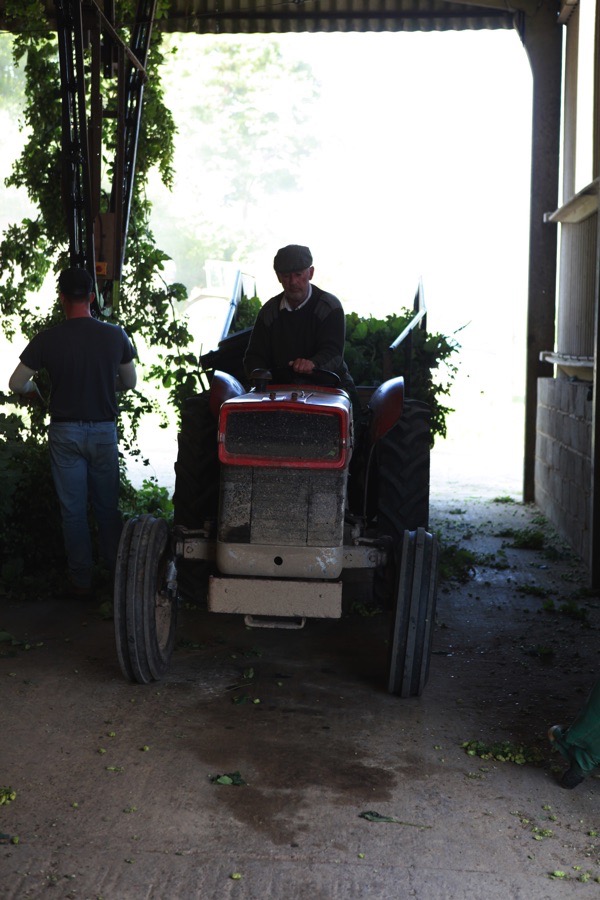
As we sat along either side of the bin at our work, tractors rattled up and down the lane all day delivering the bines from the gardens to the barn at the top of the hill. There they were hooked onto chains that carried them through a machine which stripped off the flowers. Then a conveyor belt whisked the hops up to where it was stored in sacks prior to being spread out to dry in the oasthouses. Thus a dozen people were able to achieve a harvest once undertaken by armies of pickers.
I climbed up into the loft where Graham Watkins was shovelling hops through a chute in the floor to the room below, where it was parcelled up into bales ready for sale. Graham showed me the conical oasthouses in which hops is dried for six hours at a stretch night and day, and as he opened the doors I was hit by a wave of humid air emanating from within.
Little Scotney is one of the last of a handful of farms in Kent still growing and processing hops in the traditional way, yet numbers stencilled on the wall testify to the growing output of the farm through the decades and the rapidly-increasing demand in this century, thanks to the revival in brewing led by microbreweries.
In the afternoon, Evin O’Riordan founder of Kernel Brewery in Bermondsey arrived to collect the hops we had picked that would find their way into a green hop ale before the end of the day. “It’s an opportunity to express something of a place and a moment in time,” he confided to me with succinct eloquence.

Ronald Prendergast – “I’d sooner pick hops than sit in front of a computer”
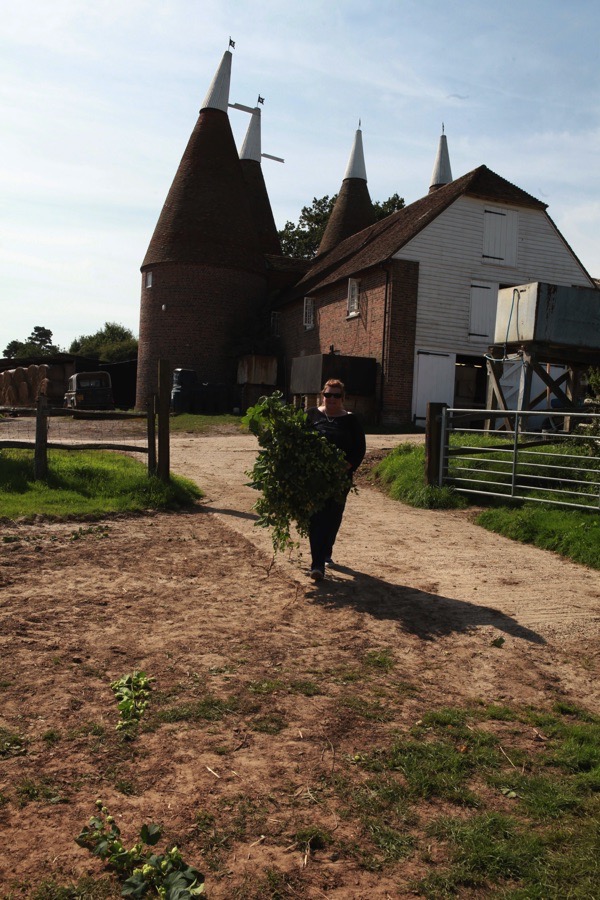
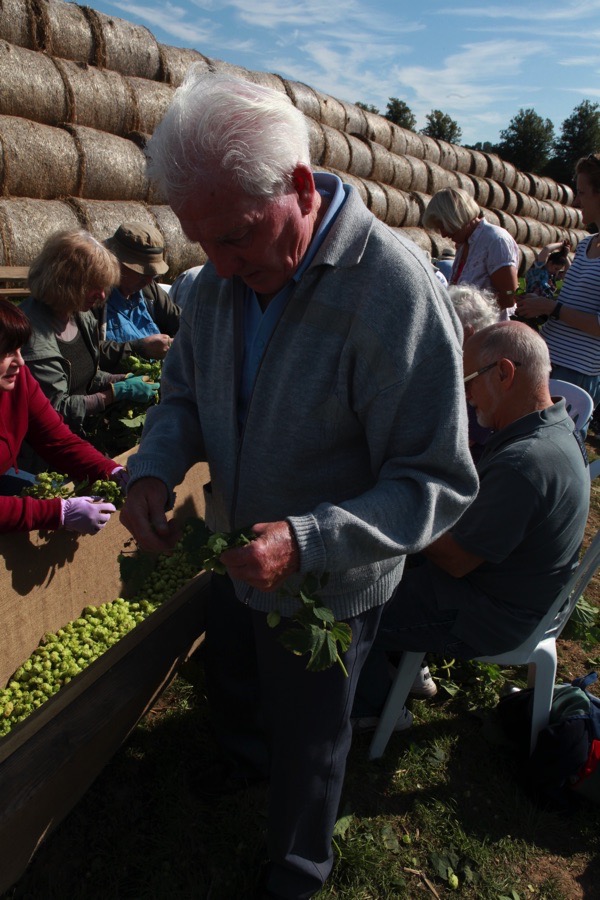
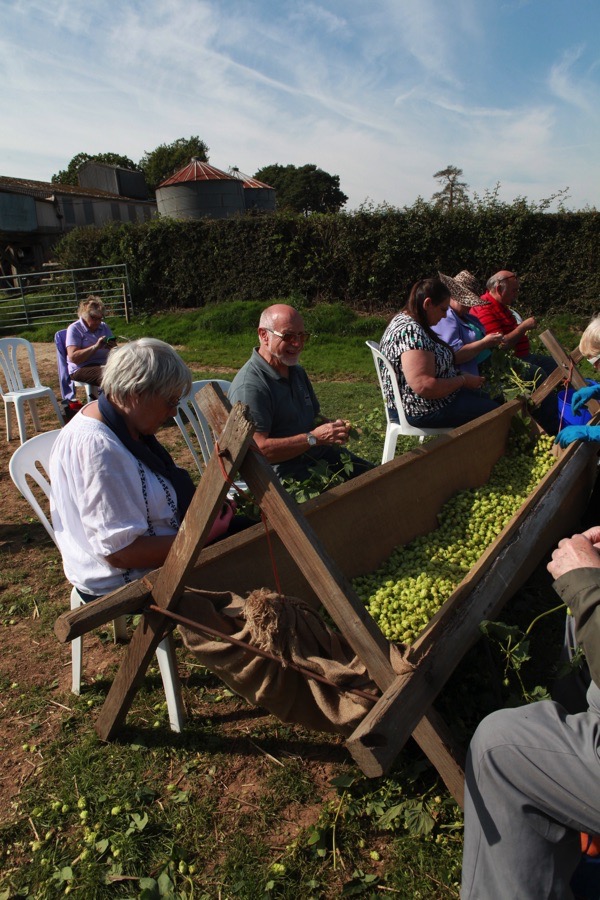
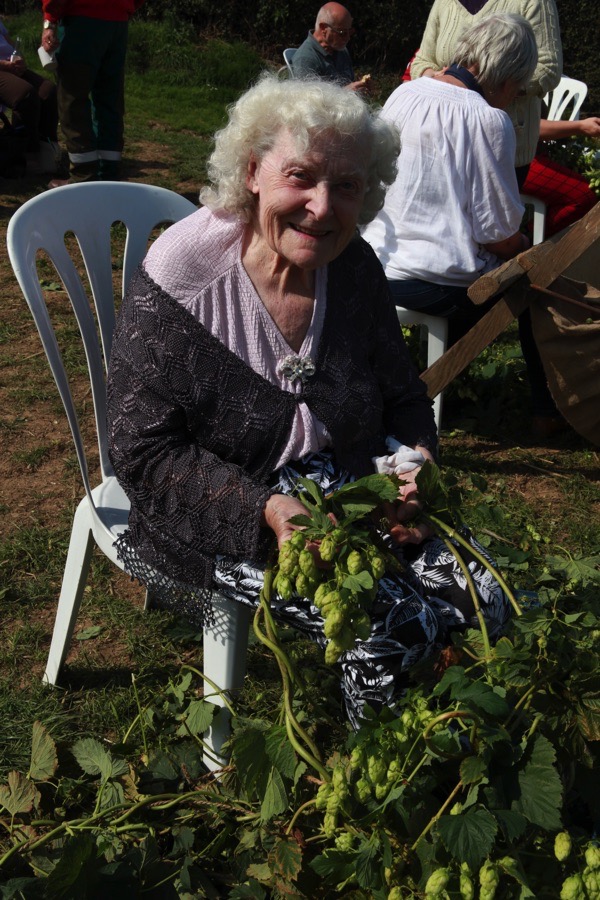
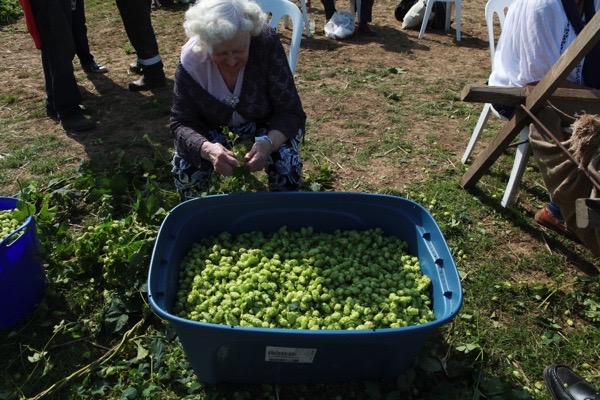
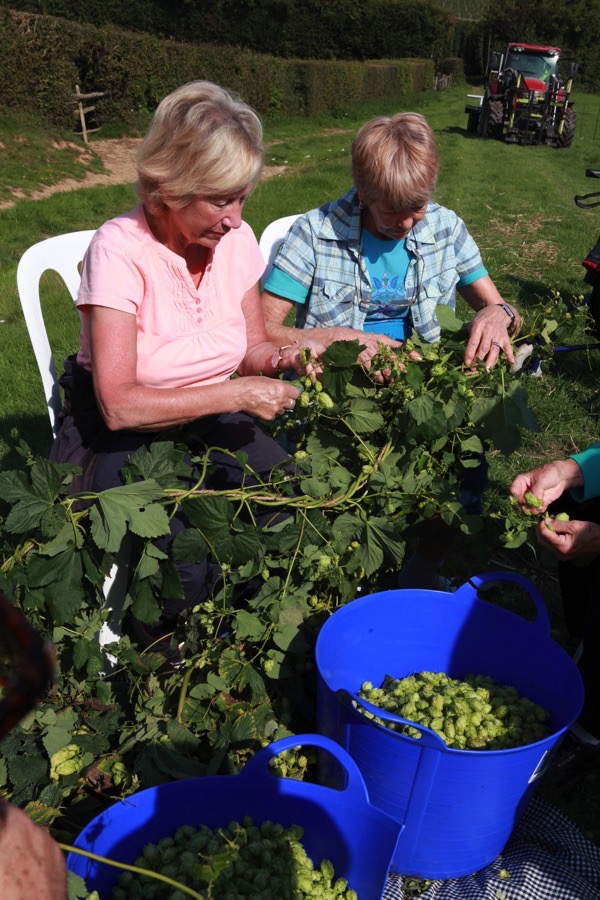
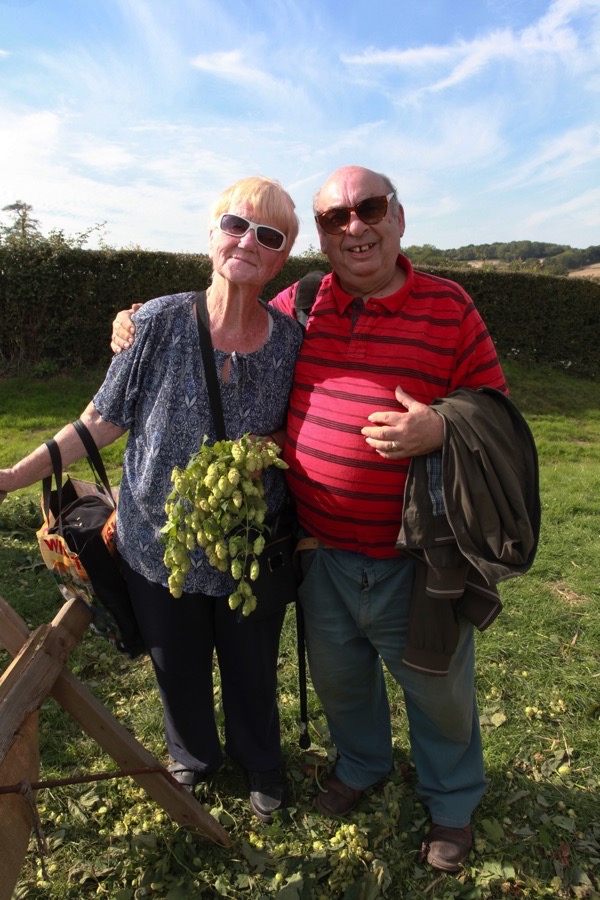
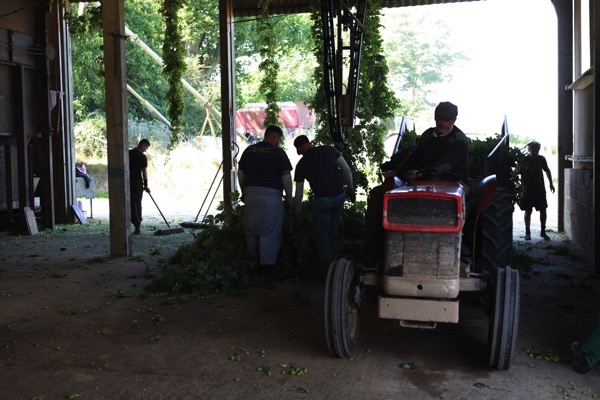
Delivering the bines from the garden
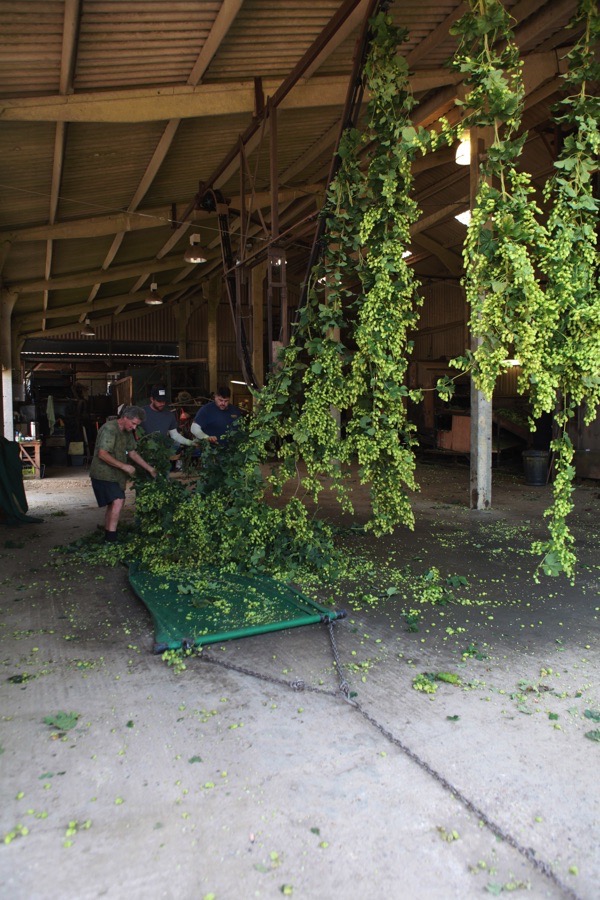
Hooking up the bines
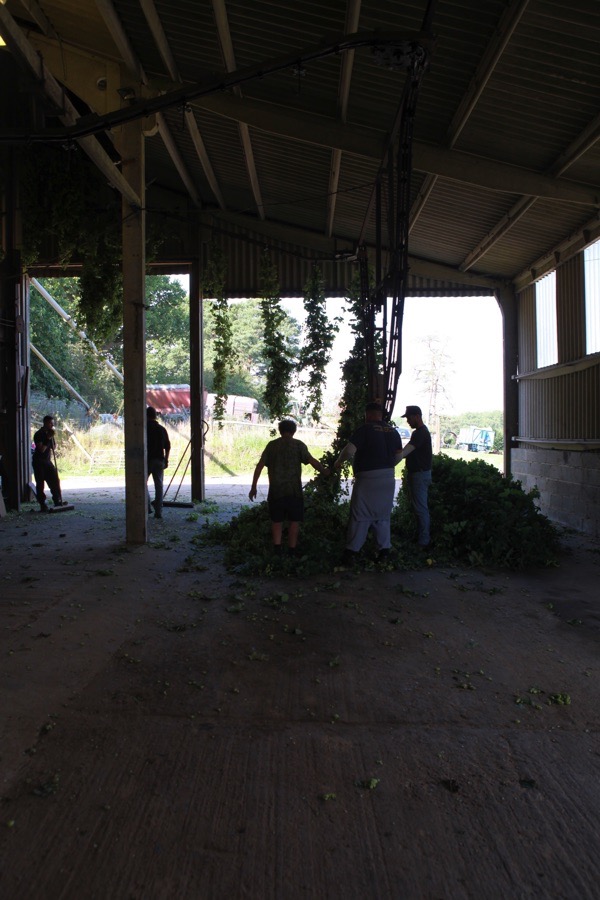
The bines move along a conveyor
The bines heading into the machine that strips the flowers
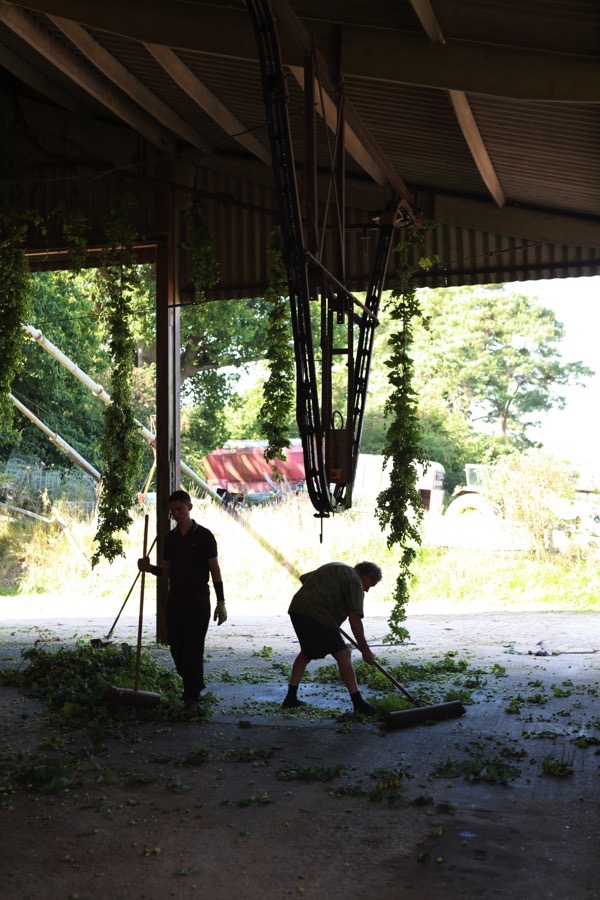
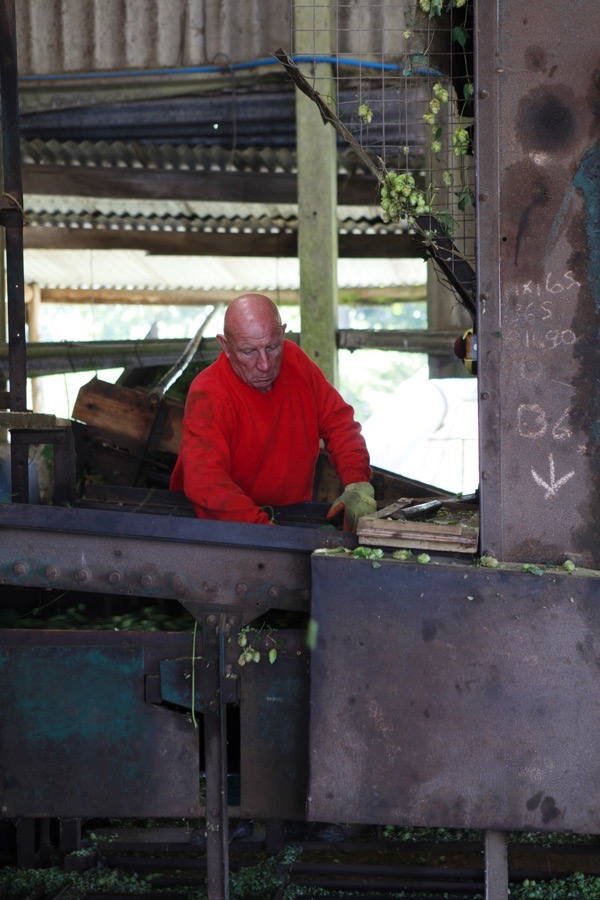
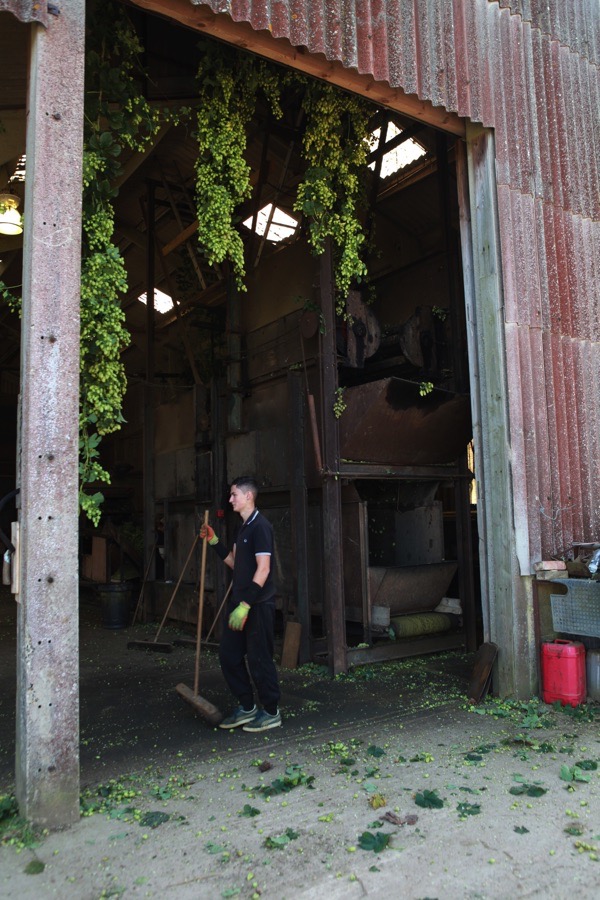
Sorting the hops

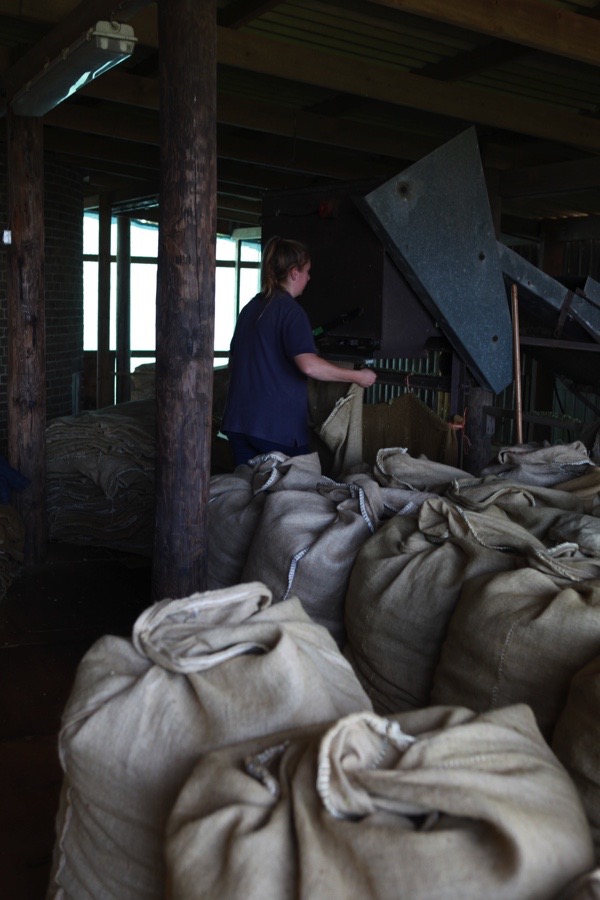
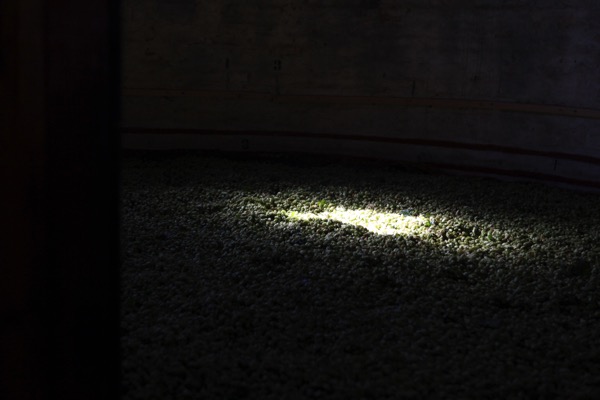
Hops drying in the oasthouse
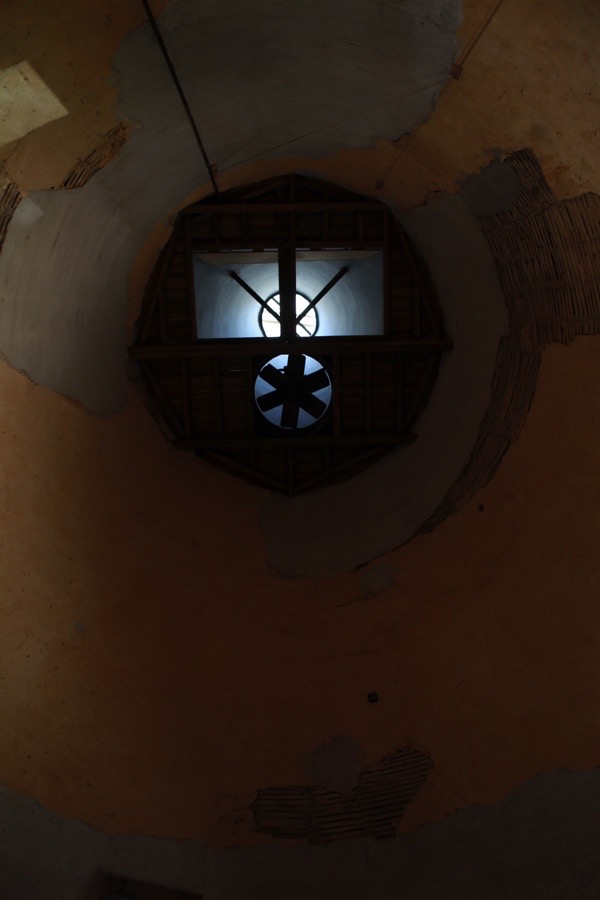
Inside the oasthouse roof
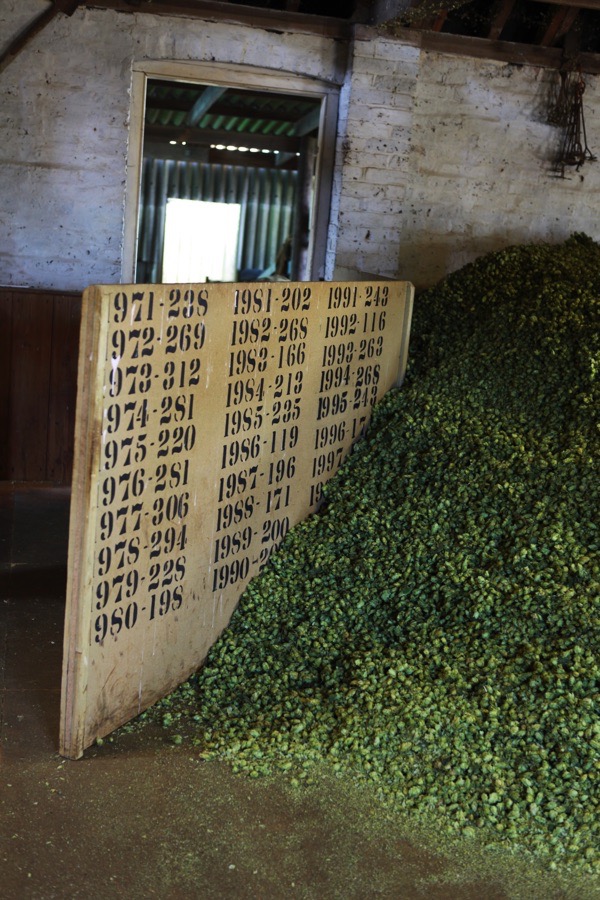
Recording the number of pockets (bales) of hops produced each year
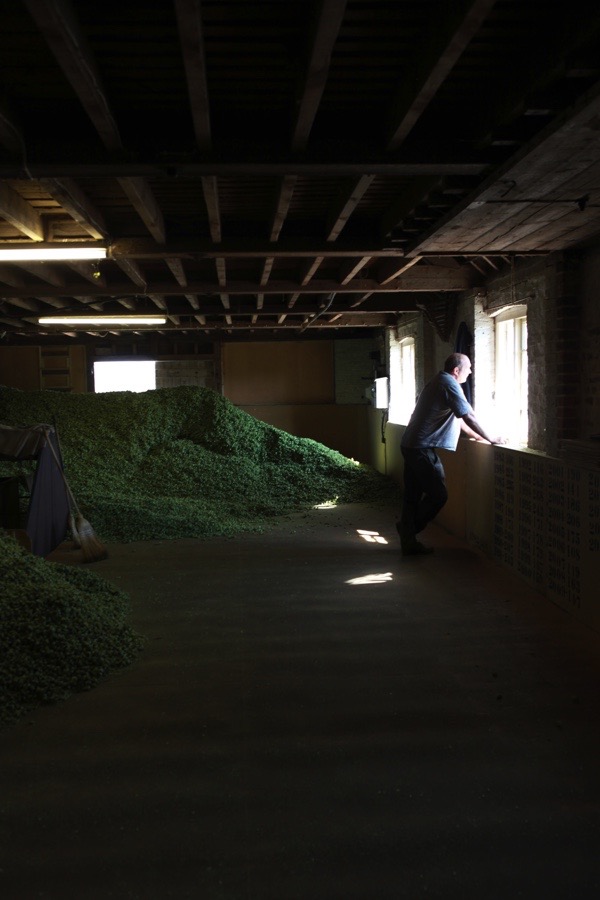
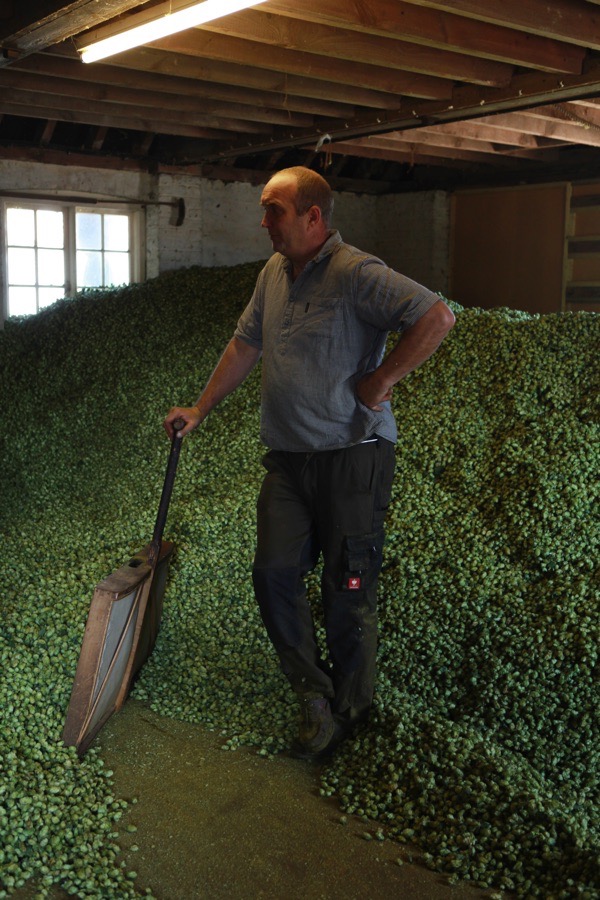
Graham Watkins
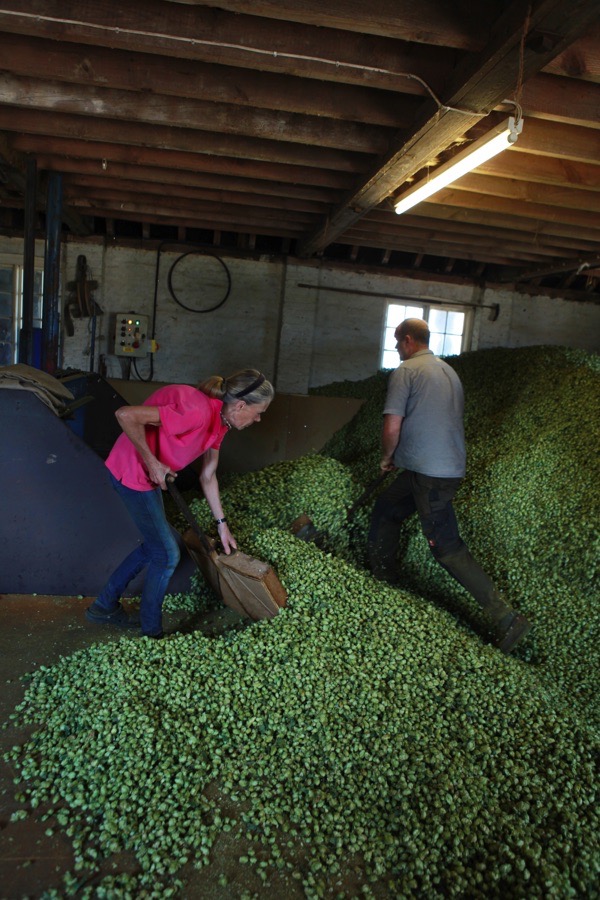
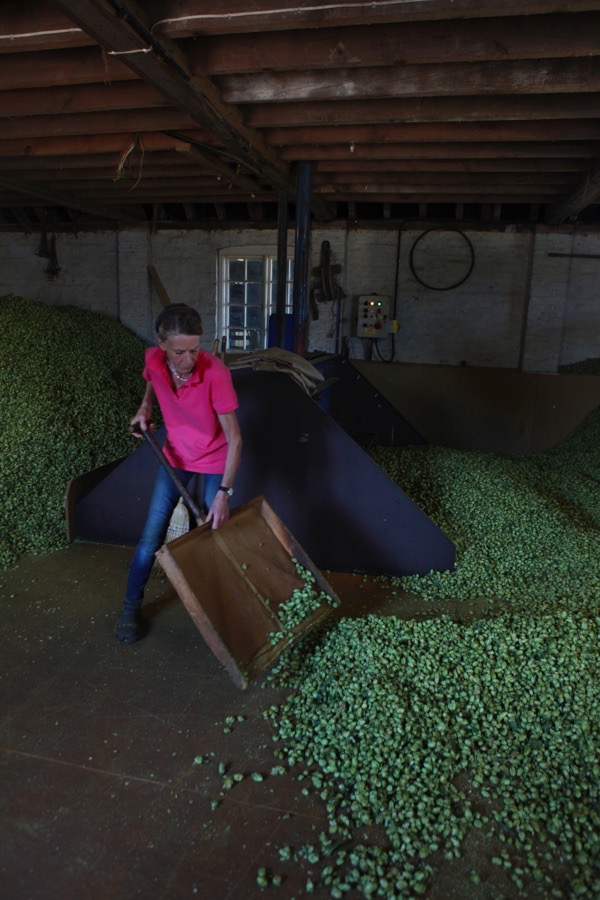
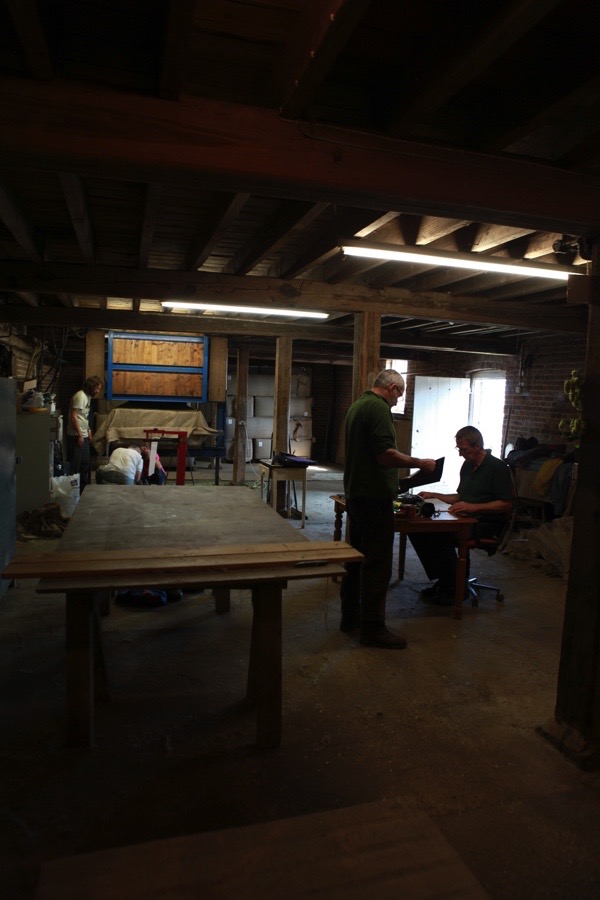
Baling up the hops
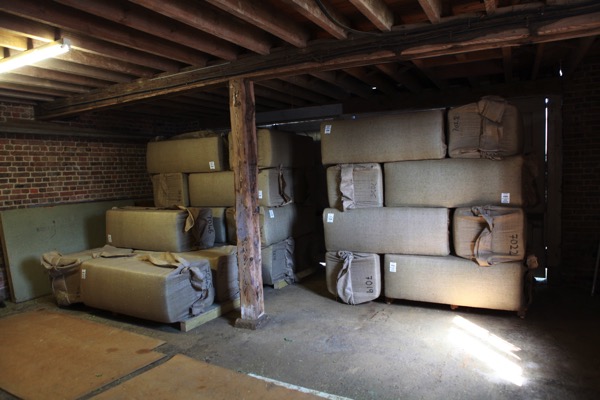
Bales of hops ready for sale

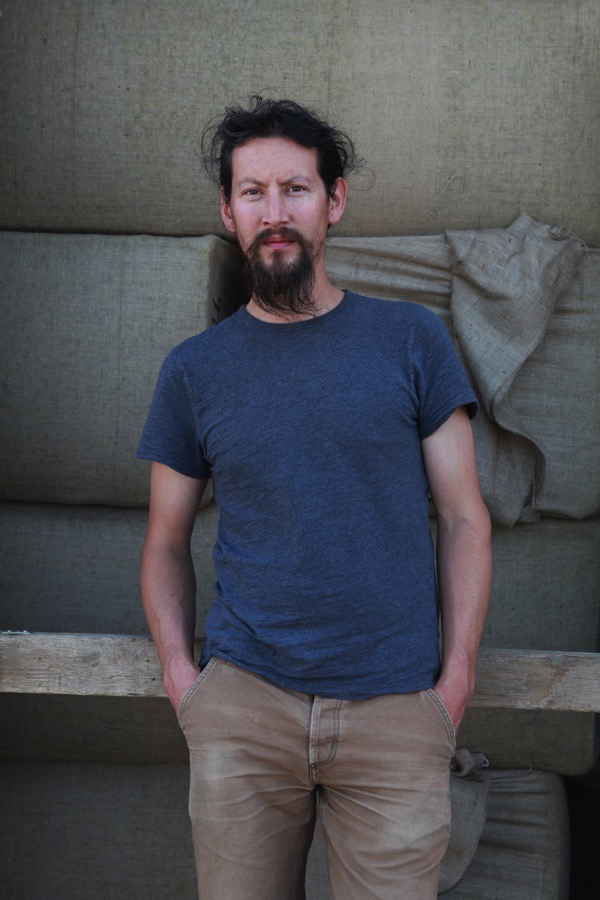
Evin O’Riordan of Kernel Brewery in Bermondsey

Little Scotney Farm
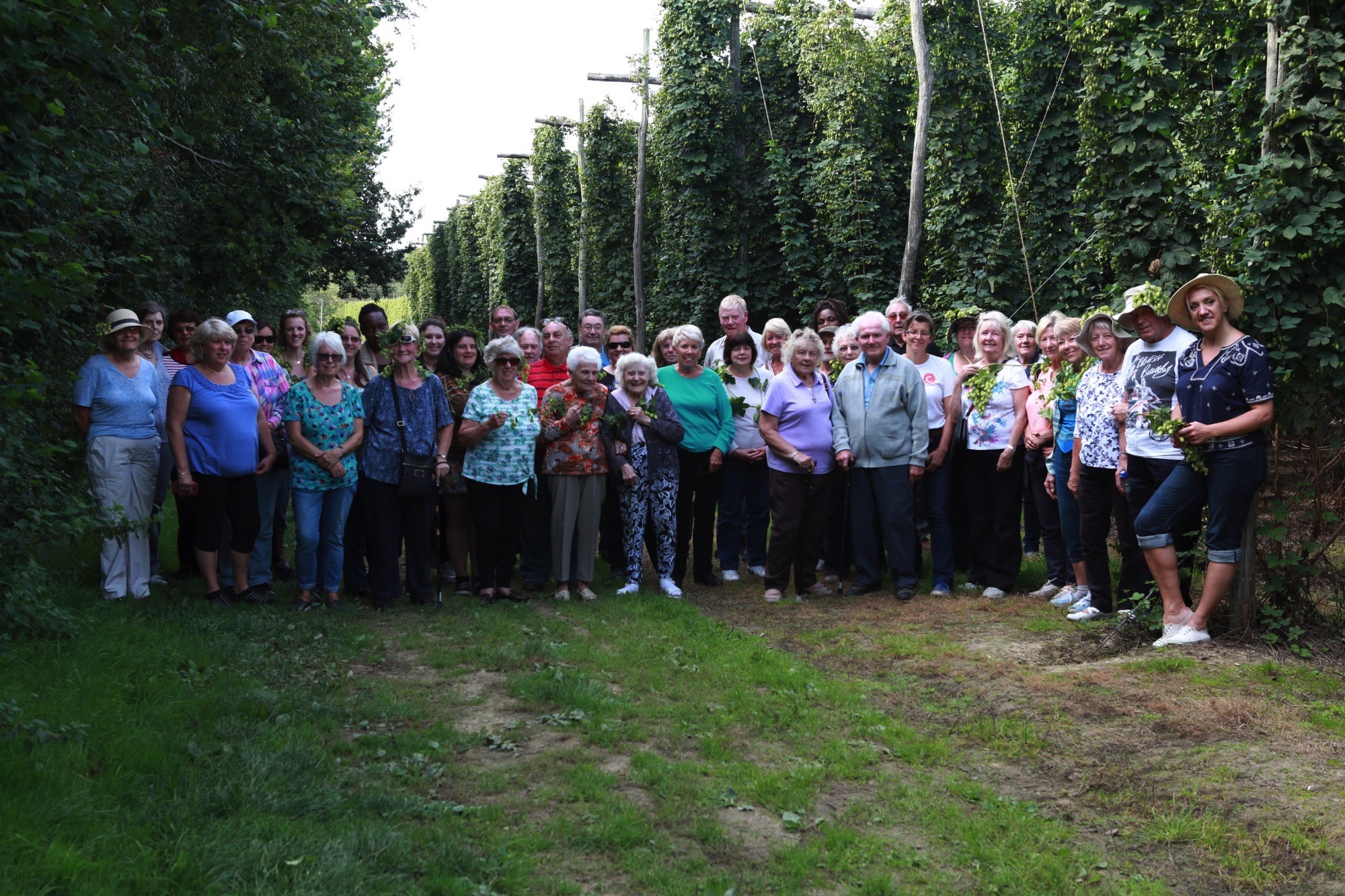
The hopping party (click photograph to enlarge)
Photographs copyright © Estate of Colin O’Brien
Movements, Deals & Drinks is a project by international artist group Myvillages, founded in 2003 by Kathrin Böhm, Wapke Feenstra & Antje Schiffers. The project was commissioned by Create and is registered as a Community Interest Company with the name Company Drinks. Company Drinks is supported by the Borough of Barking & Dagenham.
You may also like to read about
In Tenterground
Norman Jacobs sent me this unpublished memoir written by his father Isaac (known as ‘Ikey’) Jacobs, entitled Fleish or no Fleish? Below I publish extracts from his extraordinarily detailed manuscript, comprising a tender personal testimony of a Spitalfields childhood in the years following World War I.

Ikey Jacobs in 1959
My Tenterground consisted of six streets in the form of a ladder, the two uprights being Shepherd St and Tenter St, and going across like four rungs. Starting at the Commercial St end were Butler St, Freeman St, Palmer St and Tilley St – and this complex was encapsulated by White’s Row, Bell Lane, Wentworth St and finally Commercial St.
Our family lived in Palmer St which had about ten houses each side. They were terraced with three floors, ground, first and top. Each floor had two rooms, the front room overlooking the street and the back room overlooking the yard. By today’s standard the rooms were small. The WC and water tap were in the yard, and there was no inside toilet or running water.
The house we lived in contained three families. On the ground floor was a tailor who used his two rooms as a workshop. He was a foreigner, or – to us – a Pullock. All foreign Jews were called Pullocks by English Jews, no matter which part of Europe they came from. It was a corruption of Pollack. Should my mother be having a few words with a Pullock, she would tell them to go back to Russia – Geography not being her strong point. Incidentally, if we had words with an English family they would tell us to go back to Palestine. So it evened itself out. Our family, with roots of settled residence in England traceable back to the seventeen-nineties, spoke no Hebrew or Yiddish worth mentioning, and I’m ashamed to say paid but only lip service to Jewish holidays.
Jack Lipschitz was the tailor’s name. He threatened me with dire consequences for mispronouncing his name – his surname of course. He had a sewing machine in his front room where his wife and daughter, Hetty, worked and a sewing machine and long bench for ironing in the back. He did all the ironing whilst his brother, Lippy – also part of the menage – worked the back room machine. In the summer, Jack did all the pressing in the yard where there was a brick fire for the irons. How these four people lived and slept there too, I don’t know.
Up one flight of stairs to a small landing saw the door to Solly Norton’s rooms, which he shared with his wife, Polly, and son, Ascher, who was about my age. They had the first gramophone I ever saw, the type with the big horn. I would often go down and play with Ascher to hear it. The Nortons kept a fruit stall in the Lane.
Up another flight, along another very small landing, the door to our front room faced you. We moved to Palmer St from Litchfield Rd in Bow where we had lived in my Aunt Betsy’s house. She was one of my mother’s elder sisters, so I assume my parents must have rented a room or two off her.
I came into the world as the second child on December 21st 1915, my sister Julia having joined the human race on on April 30th 1914. The move to Palmer St must have taken place in late 1916 or early 1917. Once there, the family increased at a steady pace – Davy 1917, Woolfy 1919, Abie 1921, Joe 1923 and Manny 1924. We were named alternatively, one on Dad’s side of the family and one on Mum’s, Julia being the name of Dad’s mum and Isaac the name of Mum’s dad.

Rebecca & John Jacobs
My father was by trade a French polisher. When there wasn’t much in that line – which was often enough – he would turn his hand to other things. He was a very good lino-layer and, as he knew quite a few furniture shops along the Whitechapel and Mile End roads, he would get the occasional job doing that. From time to time, he would act as a waiter at the Netherlands Club in Bell Lane (note the connection with the Dutch Tenterground). He did this with a tall elderly man called Phillip, and I would often boast to my friends that my father was Head Waiter at the Bell Lane Club, which is what we called it.
My mother worked as a Cigar Maker, when she was single, in a firm she referred to as Toff Levy. Like many other cigar and cigarette firms of that time, it was situated in Aldgate. It was all handwork and girls were cheap labour. Working in the same firm was a certain Sarah Jacobs, and a friendship sprang up between her and Mum. This friendship sealed my destiny for – although as yet I was unborn – Fate had decreed that I was to be a Jacobs.
My mother was christened Rebecca (but known ever after as Becky), and she was the eighth child of Isaac and Clara Levy, born in the heart of the Lane at 214 Wentworth Dwellings on November 22nd 1888, just a few months after Jack the Ripper was supposed to have written the cryptic message “The Juwes are the men who will not be blamed for nothing” on one of its walls. My Nan, who had produced this heavenly babe, was herself a midwife. But alas for poor Isaac Levy, whose forename I proudly bear, he died at the turn of the century in company with Queen Victoria. My mother had told me that she left Castle St School at thirteen years of age, which seems to coincide with the death of her Dad, who had been a lifelong cripple and had to wear, as my mother put it, a high boot.
My dad, John, first saw the light of day on March 7th 1892 at 23 Bell Lane as the first child to bless the union of David and Julia Jacobs. His arrival was followed in quick succession by that of a brother Woolf and sister Sarah, the eventual link between John and Becky when she too worked for Toff Levy.
Upon our arrival in Palmer St, a stone’s throw as the crow flies from both Wentworth Dwellings and Bell Lane, we were a family of four, but we steadily increased to nine. Living on the top floor with this ever-expanding family had its problems – getting the pushchair up and down stairs, the occasional tumble down the stairs by one of the little ones, carrying up all the water and then the disposal of the dirty water again. Sharing one WC between three families didn’t help either.
On entering our front room, on the far right wall was a small coal-fired range, grate and oven. To its right, in a sort of recess, was a bed which was occupied by Mum and Dad, and generally the latest arrival. To the left of the fireplace, was a dresser which held the plates, cups and saucers and jam jars. Cups had a high mortality rate amongst us kids, so stone jam jars were pressed into service. Most of the cups were handleless. Some of the plates were of the willow pattern design and Mum would often tell us the story they depicted – “Two little boys going to Dover” etc.
We slept in the back room. We never had pyjamas, I don’t think we’d ever heard of them. So going to bed was quite a simple procedure – jersey, trousers, boots and socks off and into bed in our shirts. I can’t remember Julie’s night attire, she slept with the younger ones. We older boys slept like sardines, heads top and bottom, with all our legs meeting in the middle.

Ikey Jacob’s Map of Dutch Tenterground
On reflection, I suppose we were a very poor family. Dad did not seem to have regular work and the burden of feeding our ever increasing family fell heavily on the shoulders of mother. In the main, we lived on fillers like bread, potatoes and rice, but it wasn’t all doom and gloom. When Dad was working we did have good meals, but memory tells me there may have been more lean times than fat ones.
Bread and marge was the usual diet for breakfast and tea. Rice boiled with shredded cabbage or currants was served for dinner many a day. Potatoes, with a knob of marge, or as chips did service another day. Fried ox heart or sausages sometimes accompanied the potatoes. Fried herrings and sprats were issued when they were plentiful and cheap. There were times we would have a tomato herring and a couple of slices of bread, William Bruce was the name on the tin of these delicacies, still a favourite of mine today.
It was a common practice in our house to buy stale bread. One of us would be sent to Funnel’s with a pillow case and sixpence to make the purchase. Early morning was the best time to go as many other families did the same thing. We were not always lucky but when we were the lady would put four or five loaves in the pillow case, various shapes and sizes, for our tanner. When we got them home mum would sort out the fresher, or shall I say the least stale, for eating, and the remainder would then be soaked down for a bread pudding. Delicious.
We would also buy cakes that way too from Ostwind’s in the Lane. Six penn’orth of stale pastries was our order to the shop assistant and she would fill a paper bag up with them, probably glad to get rid of them. When in funds, large cakes were also bought on the stale system and I would often be sent to Silver’s, high class baker in Middlesex St, to purchase a sixpenny stale bola, a large posh-looking cake.
Itchy Park was the only park in the area. Not very large, it contained the usual gravestones, seats, trees and a few swings. As boys we were not always welcomed by our elders, who would probably be trying to have a kip. I used to like picking the caterpillars, little yellow ones, off the trees and putting them in matchboxes. Someone had told me they would eventually grow into butterflies but, after watching them carefully for a few days and finding nothing had happened, I would discard them – box and all.
The park was contained by a small wall from which sprouted high railings. Along this wall, sat the homeless and down and outs. It was said the park got its name from these people rubbing their backs against the railings because they were lousy. A drinking fountain, was set in between the railings with a big, heavy metal cup secured by a heavier chain. It was operated by pressing a large metal button, and the water emerging from a round hole below it.
In front of this stood a horse trough, much needed then as most of the traffic serving Spitalfields Market was horse drawn. The Fruit & Vegetable Market was very busy, especially in the morning when Commercial St would be choked with its moving and parked traffic. All the produce would be laid out on sacks, in baskets or in boxes, and one of the sights of the market was to see porters carrying numerous round baskets of produce on their heads. For me, this was the best time of day to go looking for specks – these were bad oranges or apples thrown into a box. Selecting those with half or more salvageable, I would take them home where the bad parts were cut away and the remainder eaten.

Ikey Jacobs in 1938
There were times when Dad would have to pay the Relieving Officer a visit. I don’t know how the system worked, but if you could prove you were in need he would allocate certain items of foodstuffs, and, I suppose, a few bob. After all, the rent had to be paid. His establishment was popularly called the bun house. When Dad returned we all gathered round to inspect the contents of the pillow case as he placed them on the table. The favourite was always the jar of Hartley’s strawberry jam. Being a stone jar, when emptied, and that didn’t take long, it served as another cup. The least popular item was the cheese, suffice to say we called it ‘sweaty feet.’
Our main provider in the winter months was the soup kitchen in Butler St. It opened two or three nights a week and issued bread, marge, saveloys, sardines and of course soup. The size of the applicant’s family decided how many portions they were entitled to – the portions ran from one to four. When you first applied they issued you with a kettle, we called it a can. It had a number stamped on the side depicting how many portions you were to get. Ours had four.
When it opened for business we would all line up outside along Butler St. Once inside, six crash barriers had to be negotiated in a single line till the door leading to the serving area was reached. There would be two men doing the serving, both dressed in white and wearing tall chef’s hats. The first one would give me four loaves, always brick loaves, two packets of Van den Burgh’s Toma margarine and two tins of sardines. If I preferred saveloys to soup, he would give me eight of those. I was always told to get the soup, because we had saveloys once and they were 80% bread.
Having dealt with the grocery department, I moved along to the soup-giver. He was a great favourite of mine, known by our family as ‘the fat cook,’ a stout, domineering man with a fine beard. As I gave him the can, he would look me in the eyes and ask, “Fleish or no Fleish?” If you did not want any meat you’d say “No Fleish.” Although, as a rule, the meat was 50% fat, I was always instructed to get some. So I would look up into his eyes and reply in a loud voice “Fleish.” He would glare at me and go off to a large boiler to get it.
There was a long table with form seating down each side, set out between the boilers and the servers, where anybody, Jew or Gentile, could go in and sit down to a bowl of soup and a thick slice of bread. They did three different varieties of soup – rice, pea and barley alternatively, one variety per night. People who did not want the soup at all, but just the groceries, were given a metal disc with the portion number stamped on it. Funny, not wanting soup in a soup kitchen.
Every Passover, before they closed for the summer, we would be given four portions of groceries for the holiday. Four packets of tea and of coffee, (I loved the smell of that coffee, its aroma came right through the red packet with Hawkins printed on it) Toma marge and many other foodstuffs. But not matzos – these were obtainable from the synagogue. Dad would come back from Duke’s Place Shul with about six packets of these crunchy squares. The ones we disliked most were Latimer’s because they were hard, but generally he would bring Abrahams & Abrahams, a trifle better. But beggars can’t be choosers and I suppose we were beggars, now I come to think of it.
Eventually the time came when we were told we were to leave the Tenterground. It was going to be pulled down. All I felt was despair. I knew no other place or way of life. Those dirty streets and slum houses were part of me. Long after we left, I would dream I was back there only to wake up to the reality that the Tenterground had gone for ever. Well, not quite for ever, there is still a little boy who haunts those long vanished streets – Ikey Jacobs.

A page of Ikey Jacobs’ manuscript
You may also like to read about
At Sandys Row Synagogue
Author and artist Rachel Lichtenstein writes about Sandys Row Synagogue, accompanying Morley Von Sternberg‘s photographs of one of Spitalfields’ magnificent hidden wonders
You can visit this historic synagogue on 29th & 31st August plus 5th, 7th, 12th, 14th, 26th & 28th September as part of A SPITALFIELDS JOURNEY, comprising a joint ticket for Dennis Severs House and Sandys Row. Click here for tickets
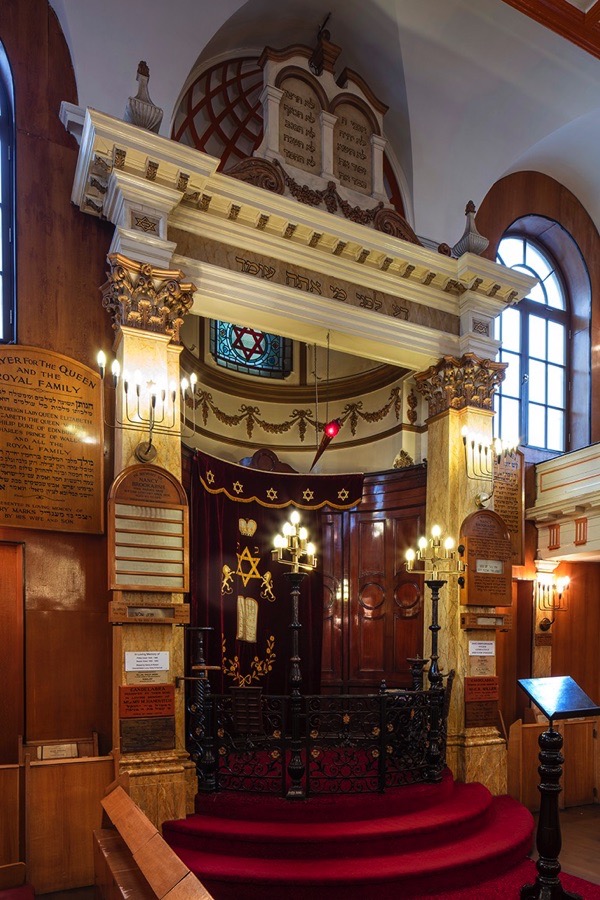
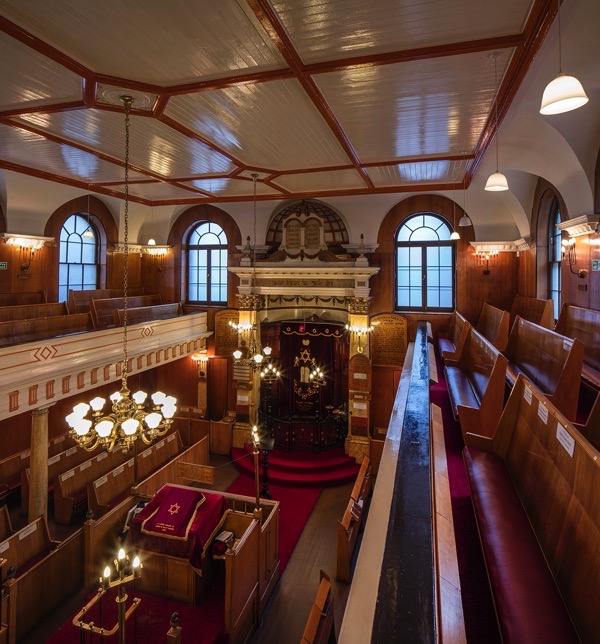
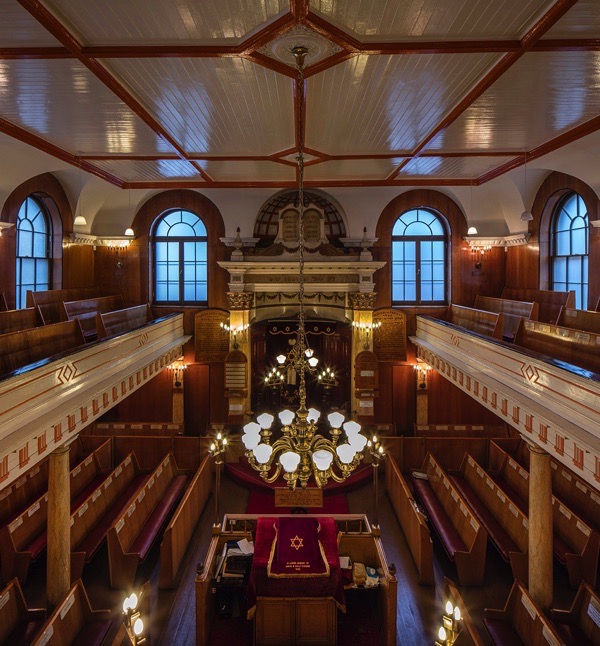
There were once nearly one hundred and fifty synagogues operating in East London, yet today Sandys Row is the last functioning Ashkenazi synagogue in Spitalfields, situated at the heart of the former Jewish East End. Dutch Jewish migrants, who began arriving in London from Amsterdam in the 1840s, established the synagogue in 1854. They were economic migrants seeking a better life, rather than refugees fleeing persecution like the thousands of Ashkenazi Jews who came after them in the 1880s from the Pale of Settlements.
The majority of the Dutch Jews settled in a small quarter of narrow streets in Spitalfields known as the Tenterground. They continued to practise the trades they had bought with them from Holland, which were predominately cigar making, diamond cutting and polishing, and slipper and cap making. Many small workshops were established and businesses passed down through generations.
This small, distinctive, tight-knit Dutch Jewish community of a few hundred had their own traditions and customs which were different from other Ashkenazi Jewish groups. To the frustration of the more established Anglo-Jewish population living in London at the time, the Chuts (as they were known locally) refused to join any of the larger existing synagogues. They wanted their own establishment.
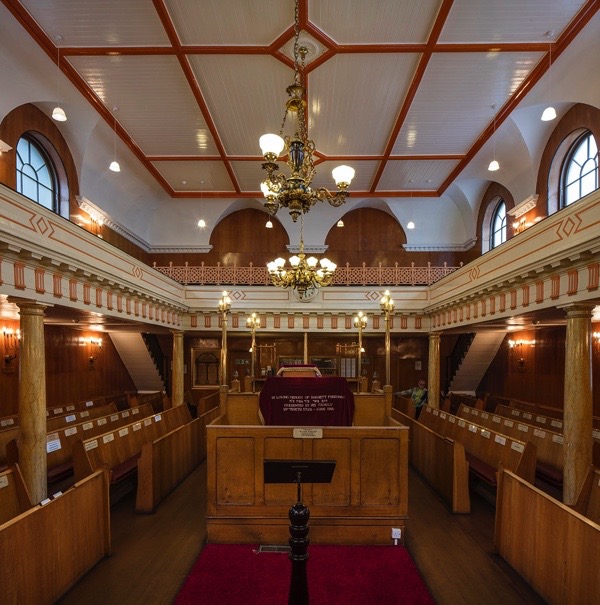
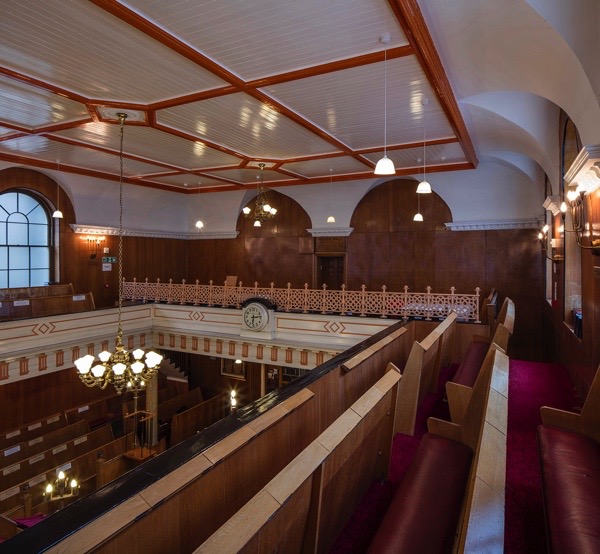
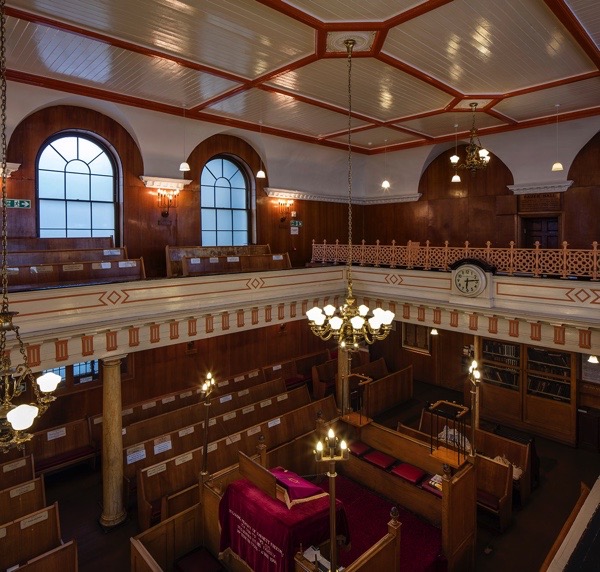
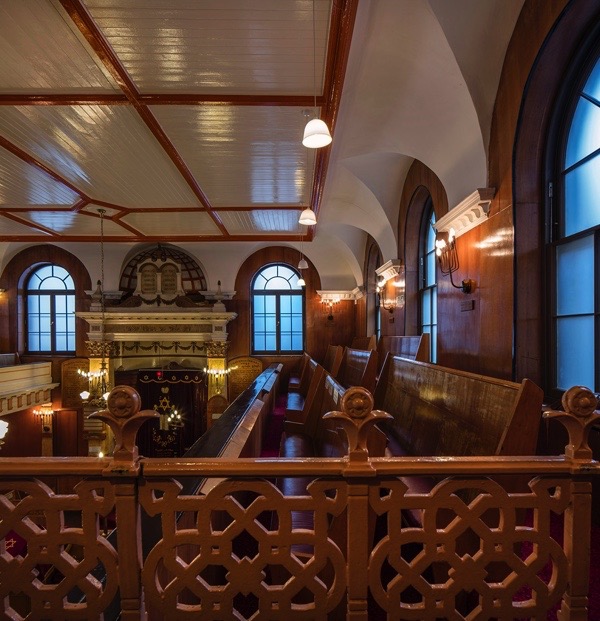
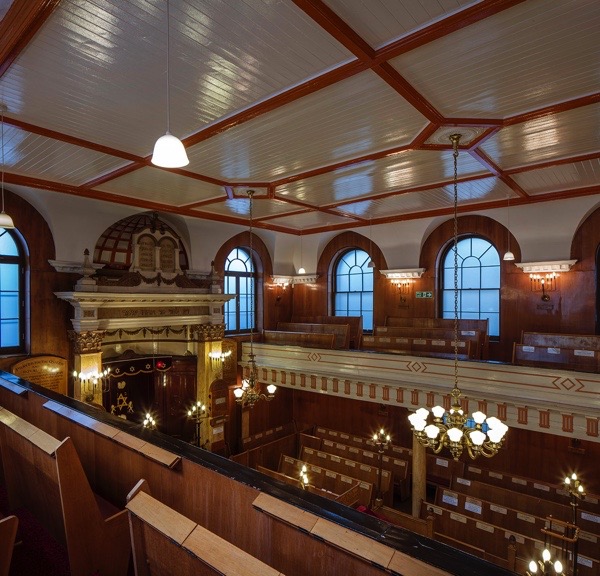
In the early years of the community, they met in a house on White’s Row which served as a makeshift house of prayer, while for festivals and high holy days they rented Zetland Hall in Mansell St. In 1854, fifty families from this community formed the Society for Comfort of the Mourners, Kindness, and Truth, which originally functioned as a burial and mutual aid society and later became a way of raising funds to purchase their own building. By 1867, the Society had amassed enough money to acquire the lease on a former Huguenot Chapel in Sandys Row, a small side street in Spitalfields. The chapel was particularly suitable to adapt into a synagogue because it had a balcony (where women worship in many orthodox synagogues) and was on an East-West axis (Jewish people in this country pray facing east towards Jerusalem).
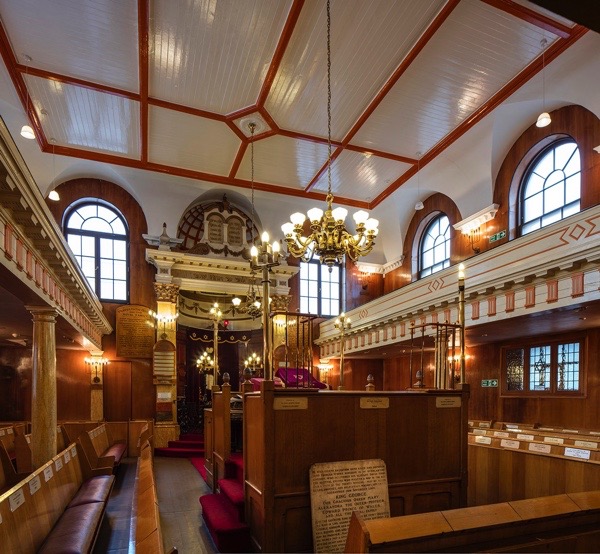
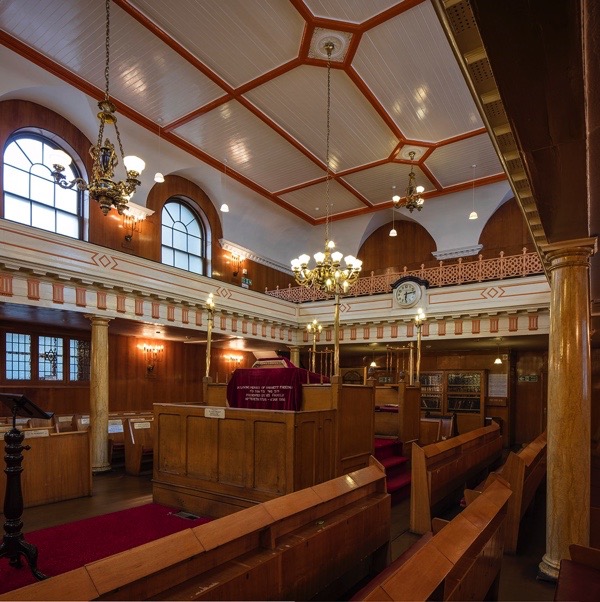
The community employed Nathan Solomon Joseph, one of the most famous synagogue architects of the time, to remodel the chapel. He kept many original features of the Georgian interior, including the roof and the balcony and added a new three-storey extension onto the building, creating a vestry and accommodation for the rabbi and caretaker. He also designed a beautiful mahogany ark, which can still be seen recessed into the eastern wall of the building framed by neo-classical columns. Since it was consecrated in 1870 with ‘an immense throng of Jewish working men assembled – with devotion, enthusiasm and solemn demeanor – to join in dedicating the humble structure to the worship of God’ Sandys Row Synagogue has never closed its doors.
Apart from some pine wood paneling, which was added in the fifties along with some pine pews, the synagogue today looks much the same as it did when it opened in the nineteenth century. It was described in the Jewish press in 1870 as ‘a sacred place…simple, yet charming,’ a building that ‘invites the worshipper to religious meditation.’ The same holds true for the interior of Sandys Row today, it is an oasis of calm from the bustle of the City outside. The building still evokes the sense of awe and quiet meditation described by the journalist who witnessed the consecration ceremony nearly a hundred and fifty years ago.
Until recently, little has been known outside the congregation about this wonderful building and the Dutch Jewish community who established the synagogue. But in 2013, Sandys Row Synagogue was awarded a grant from the Heritage Lottery Fund for an oral history and community heritage project, Our Hidden Histories – collecting memories, photographs and artefacts relating to the building, as well as uncovering more about its role in the community. I was appointed as Project Manager and, thanks to a generous grant from an anonymous benefactor, have continued to work in the building part-time since then.
During the last few years, I have fallen in love with the place and its unique history, which is connected to my own family heritage. My paternal grandparents were Polish Jewish migrants who met in Whitechapel in the thirties and married at the nearby Princelet St Synagogue. I wrote about their story and my long connection to the Jewish East End in Rodinsky’s Room and now I am working on a new book, exploring the history of Sandys Row Synagogue, an untold history of one of the earliest Ashkenazi Jewish communities in London in the nineteenth century.
My role at Sandys Row has involved depositing material from the synagogue at the Bishopsgate Institute, a Victorian philanthropic institution established to provide educational facilities and a library for the poor of East London. This transfer process took many months and was undertaken with the help of volunteers working in collaboration with Chief Archivist Stefan Dickers and his team.
Over time, most of the synagogue’s records had been scattered around the building. Some were found in the safe in the vestry, but the majority were retrieved from the eighteenth century basement which is practically unchanged from when the building was erected in 1766 as a Huguenot Chapel. The documents we found include nineteenth century marriage certificates and an almost complete collection of handwritten minute books from the time the synagogue opened until the mid-twentieth century. Everything has been safely deposited now and we are digitizing and transcribing the entire collection, which is available for visitors to view in the reading rooms at the Institute.
Alongside this work, I have also been involved in collecting oral histories of past and present members of Sandys Row. We have recorded interviews at member’s homes in Pinner, Golders Green, Redbridge and other places on the outskirts of London, where most of the former Sandys Row community now live, as well as locally with the few elderly members who remain in East London. These people spoke of a neighbourhood once bursting with life, filled with kosher butchers, bewigged women, friendly societies and Yiddish speaking traders. They told of a time when there was a synagogue or house of prayer on nearly every street in the area and the vicinity of Sandys Row was filled with Jewish shops, workshops and thousands of stalls from Petticoat Lane.
‘Everybody was so friendly, you could leave your doors open. Mum left a jug of milk on the table so the neighbours could come in and help themselves,’ recalled Minnie Jacobson. She also spoke of visiting the baths in Goulston St, ‘Three times a week, Mummy would take me over. You had this green soap. You had room numbers and if the temperature wasn’t right, you’d call out: “Hot water number 9,” or “Cold Water for number 7.”
All of our interviewees had fond memories of Sandys Row Synagogue, some like Pamela Freedman and board member Rose Edmands are directly related to the Dutch founding members. ‘It was a family shul, they used to call it the Dutch shul. All my late husband’s family were members. He was the president, his uncle was the president, I think the grandfather was president,’ said Pamela.
Rose, whose original Dutch surname was Engelsman, remembered high holy days as a child: ‘There used to be the wardens who sat in the box in front of the bimah (reading desk) with top hats on. We used to have a great time on Simchat Torah (A Jewish holiday celebrating the conclusion of the annual cycle of Torah readings) where we’d have apples and flags and march around the bimah.’ Her entire family were members, ‘my great aunts used to sit in the front row and my mother’s generation sat in the row behind, and we kids sat in the back. And, now I sit in the front row – there’s nobody. So the reminder of time passing is very poignant there.’ I loved hearing their stories of this lost world.
The current president of Sandys Row, Harvey Rifkind, told me ‘during the fifties and sixties, the synagogue flourished. On Shabbat there were one hundred to two hundred people there and on the high holy days you could not get a seat. People literally sat on the floor in the aisles.’
Today it is almost impossible to get any sense of a Jewish presence in the neighbourhood. Spitalfields has changed beyond recognition but Sandys Row Synagogue remains as both a reminder of a bygone era and a living example of Jewish culture and religion, where every weekday the building is open for afternoon prayers.
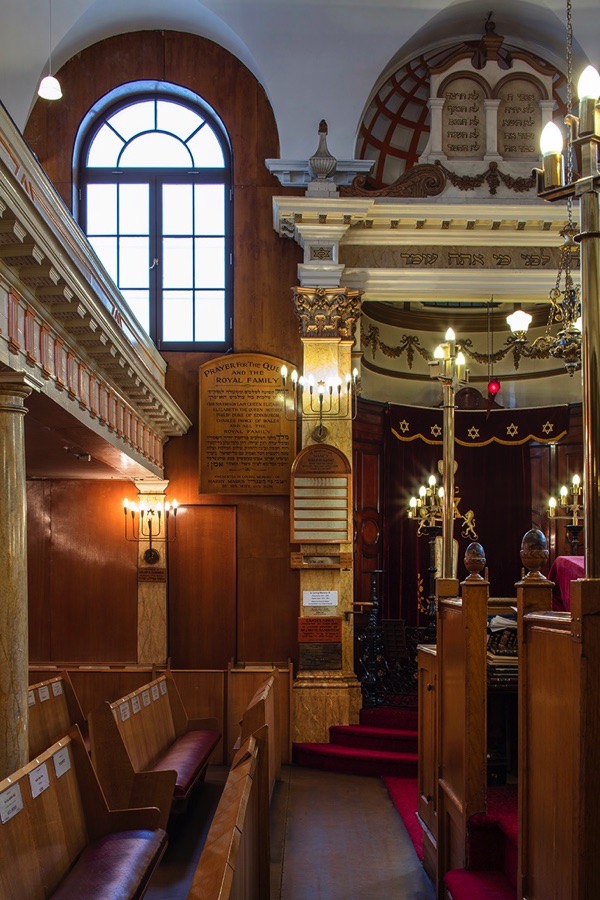
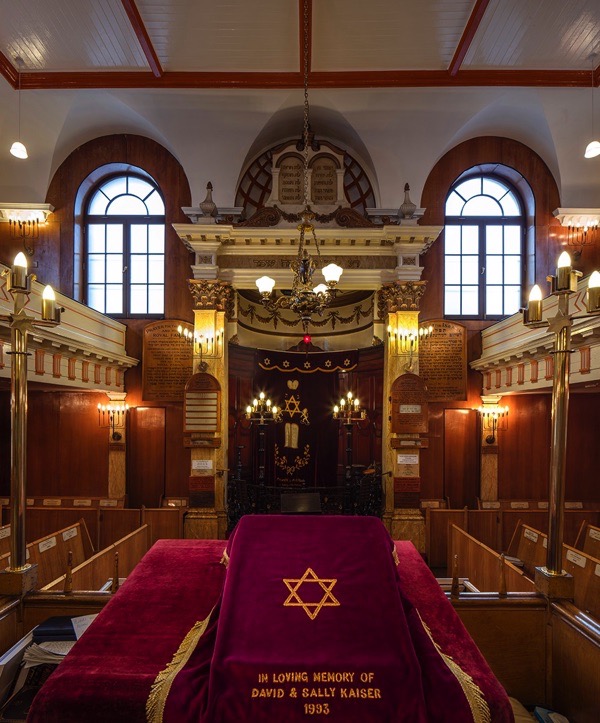
Photographs copyright © Morley Von Sternberg
Rachel Lichtenstein‘s books include Estuary, Diamond St, Rodinsky’s Room (with Iain Sinclair) and On Brick Lane.
You may like to read these other pieces by Rachel Lichtenstein
A Walk With Rachel Lichtenstein
You may like to take a look at these other pictures by Morley Von Sternberg
So Long, Mr Pussy
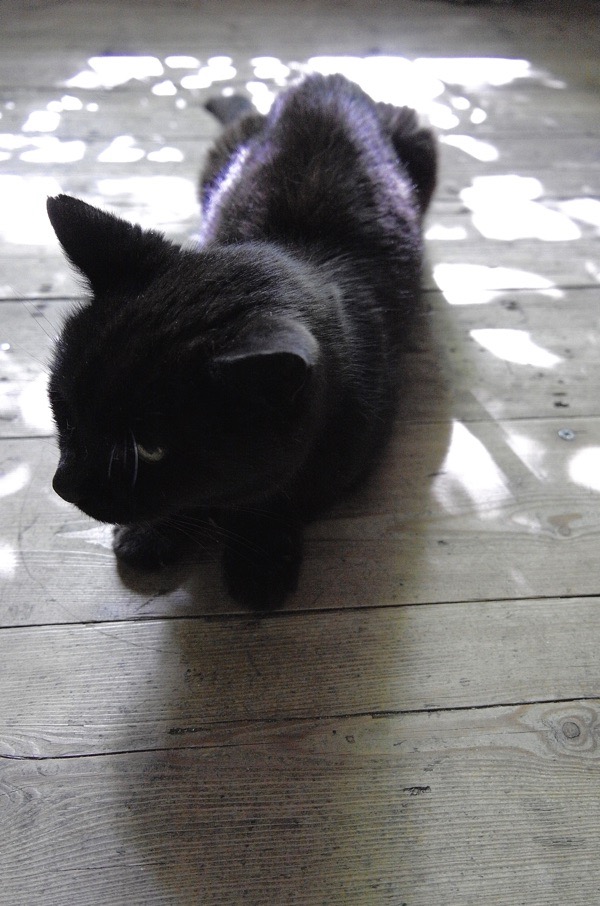
Mr Pussy 2001-2017
The other night, I woke in the small hours to the sound of a clock ticking and I walked through the dark rooms, mystified at the origin of this strange rhythmic beat in my house which has no mechanical timepieces. Then I returned to my bedroom and I discovered the source of the sound. In the manner of Captain Hook’s crocodile, the ticking was coming from inside my old cat Mr Pussy. I squatted down to touch him where he lay, stretched out in the wing chair, and I discovered to my alarm that his breathing had become a harsh muscular spasm convulsing his body.
Next morning, his breathing softened and he lay stretched out in weary endurance upon the wooden floor. Occasionally, he would stand and change position. He would not eat but, if I held a dish out to him, he could lap up water and swallow it. I stroked his head and he purred at my touch. Overcoming his lethargy, Mr Pussy walked to the window and took up his usual position, peering over the sill with pleasure at the wonder of sunlight upon leaves and the infinite minutiae of the living world.
It is more than six months since I have had an unbroken night’s sleep. Consistently Mr Pussy has woken me with his cries and overcome my resistance to wake and pay attention to him. As I arose, he would run from the bedroom, expecting me to follow, and either make his way to the kitchen or the front door. If it was the front door, I opened it even though he had his own cat door. Secure in the knowledge of my oversight, Mr Pussy would take a wary look outside and, if all was clear, he would wander off into the night. If he led me to the kitchen, he would sit by his dish and look up at me in overstated expectancy, even if there was food already upon his plate. Often, after I fed him, he would follow me back to the bedroom and cry again. This charade might be repeated several times through the night until I could find some novelty to appease him – by running water in the bath for him to lap up or discovering some forgotten chicken liver in the fridge.
Sometimes, Mr Pussy would just sit and cry at me. I could not understand his night terrors. How I wished for words in those moments. As a last resort, I took him to bed and cuddled him against my chest – as I had done when he was a small kitten – until he quietened.
Only once, I lost patience and shut the door to him, foolishly hoping that he could be silenced and I might get some sleep. His cries were vigorous enough to wake the entire street and, unwilling to risk complaints from my neighbours, I had no choice but to let him in again and resume our pitiful nocturnal ritual. In the morning, Mr Pussy would be peaceful and climb onto the bed to slumber. When I could, I slept late or took afternoon naps to recover. I was disappointed at myself that I could find no comfortable resolution, though I feared that a resolution would come of its own accord before too long. Mr Pussy had been afflicted with anaemia for a while, although the precise cause of this was never diagnosed and medications proved to be of limited effect against the inevitable.
Denying he might not recover, I still had hope when I took him to the veterinary surgery that there might be a way to restore his breathing. Meanwhile, peering from the taxi window, Mr Pussy was overwhelmed with surprise at the vast spectacle of the city and its streets, a new vision of another universe revealed beyond his domestic existence.
Nothing could be done that would extend Mr Pussy’s life, improve his breathing or restore his being, and I gave my consent to end his days. The vet fitted a tube to Mr Pussy’s leg and I sat on a chair next to the table where he stood to face his death while still gasping for life. His body was strong but his internal organs had failed him. Mr Pussy looked at me and I stroked his head as the vet administered a lethal dose of anaesthetic. I expected Mr Pussy to grow weary and fade out, but he crumpled immediately like a punctured balloon and the life was gone from him in an instant. His furry carcass was dead at once upon the table.
Mr Pussy possessed a strength of spirit and presence of mind that never ceased to fascinate and inspire me. Equally, he spent every day of his life among humans and he studied them with his quick intelligence as a source of never-ending interest. It was a relationship of mutual curiosity.
How grateful I am that his deep golden eyes were undimmed until the end and the extraordinary softness of his black fur was never corrupted. Whenever I picked him up, I was always astonished by the miracle of his small lithe body, quivering alive. How I loved the honey-sweet fragrance of the short fur between his ears.
For sixteen years, through the travails of my life, my cat Mr Pussy was with me. When my mother died, he consoled me. When I sold my childhood home and left, he travelled with me. When I walked all night through the streets of London on Christmas Eve, he waited for my return. When I broke my arm and lay alone in bed shivering, he was beside me. Writing is a solitary activity but, as I sat working each day, through the long hours and the years, he was always at my side as a calm and patient presence. I could never be lonely while he was here.
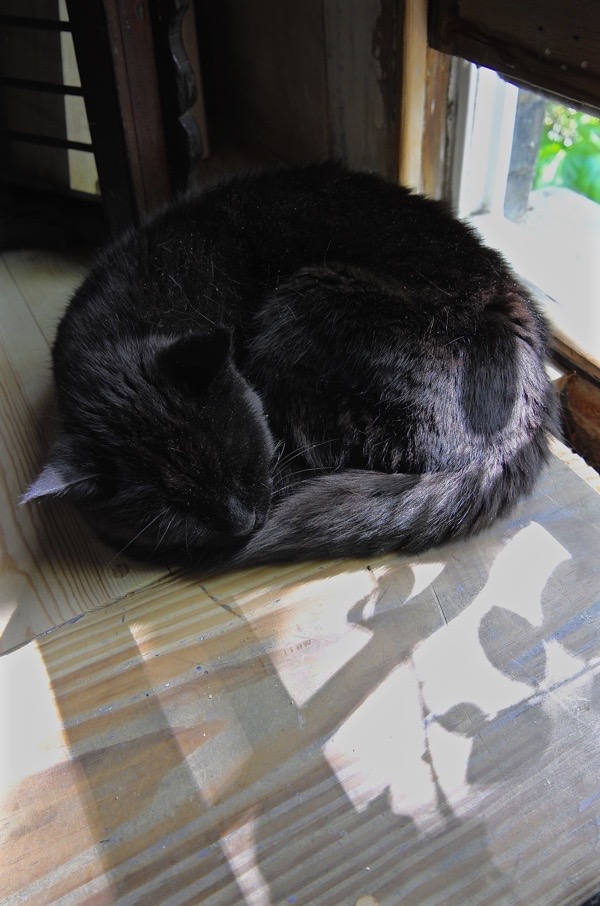
I realise now that he was always in the periphery of my vision and, even now that he is gone, he remains in the margin of my sight. It will be a while before he fades from my familiar expectation. I hear sounds in the house and attribute them to him without thinking. Thanks to the reflex of my unconscious recognition, any deep shadow or dark shape I spy transforms itself into him. Even now, I expect him to enter the room or to come upon him in any of his familiar spots. Yet he is not here any more and his favourite places are vacant. Returning last night, I could not rest at home and left to wander the streets for an hour instead to calm my troubled spirits. The house had never felt so empty.
I cast my mind back through time. Exactly half a century has passed since I acquired my first cat, a grey female tabby whom I named simply ‘Pussy.’ For my birthday, I was given the right to choose a kitten for myself from a litter that were born in the next street, in recognition of my progress in life, shortly before I commenced preparatory school.
How curious, fifty years later, to be confronted with my former self, a lonely child delighted by a tiny kitten, and to appreciate – for the first time – my mother’s motives in giving me a cat. Although she never expressed it overtly to me, I realise now that she saw a pet as the solution to ameliorate the loneliness of her only child. She encouraged me to read books and to write stories of my own too.
All these summers later, I sit here now alone after the death of my old cat and I am grateful for this recognition of her insight and kindness, newly granted. Writing has filled my life and I understand how this moment today is the outcome of that earlier moment a lifetime ago, when the world was a different place and I was a different person too. It was the first moment when a cat came along to guide me, leading me on the long journey, through all that time to the point of writing these words.
Mr Pussy was a fine creature and he lived a fine life.
Mr Pussy was my cat.
How I miss him now I mourn him.
READ ABOUT THE LIFE & TIMES OF MR PUSSY
James McNeill Whistler In The East End
Writing my new book EAST END VERNACULAR, Artists who painted London’s East End streets in the 20th century to be published by Spitalfields Life Books in October, has brought me to a new appreciation of the work of James McNeill Whistler.
In the mid-nineteenth century, Whistler was the first artist to appreciate the utilitarian environment of the East End on its own terms, seeing the beauty in it and recognising the intimate relationship of the working people to the urban landscape they had constructed. Many other artists became fascinated by Whistler’s vision and were inspired to follow in his footsteps, some embracing his medium of etching, like Joseph Pennell, while others like Frank Brangwyn and C R W Nevinson – and more recently, John Minton, Roland Collins and Jock McFadyen – were attracted by the spectacle of the docks and the life of the river.
Click here to preorder your copy of EAST END VERNACULAR
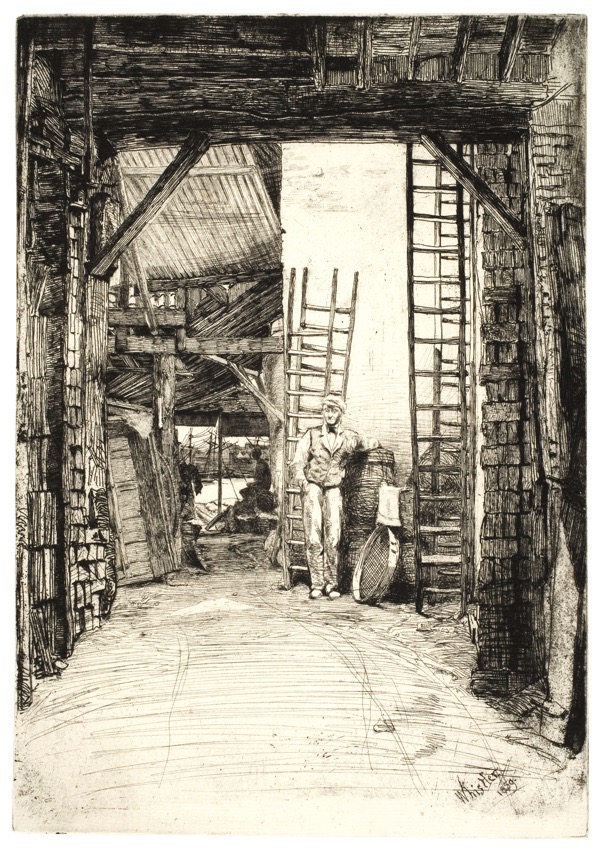
William Jones, Limeburner, Wapping High St
American-born artist, James Abbott McNeill Whistler, was only twenty-five when he arrived in London from Paris in the summer of 1859 and, rejecting the opportunity of staying with his half-sister in Sloane St, he took up lodgings in Wapping instead. Influenced by Charles Baudelaire to pursue subjects from modern life and seek beauty among the working people of the teeming city, Whistler lived among the longshoremen, dockers, watermen and lightermen who inhabited the riverside, frequenting the pubs where they ate and drank.
The revelatory etchings that he created at this time, capturing an entire lost world of ramshackle wooden wharfs, jetties, warehouses, docks and yards. Rowing back and forth, the young artist spent weeks in August and September of 1859 upon the Thames capturing the minutiae of the riverside scene within expansive compositions, often featuring distinctive portraits of the men who worked there in the foreground.
The print of the Limeburner’s yard above frames a deep perspective looking from Wapping High St to the Thames, through a sequence of sheds and lean-tos with a light-filled yard between. A man in a cap and waistcoat with lapels stands in the pool of sunshine beside a large sieve while another figure sits in shadow beyond, outlined by the light upon the river. Such an intriguing combination of characters within an authentically-rendered dramatic environment evokes the writing of Charles Dickens, Whistler’s contemporary who shared an equal fascination with this riverside world east of the Tower.
Whistler was to make London his home, living for many years beside the Thames in Chelsea, and the river proved to be an enduring source of inspiration throughout a long career of aesthetic experimentation in painting and print-making. Yet these copper-plate etchings executed during his first months in the city remain my favourites among all his works. Each time I have returned to them over the years, they startle me with their clarity of vision, breathtaking quality of line and keen attention to modest detail.
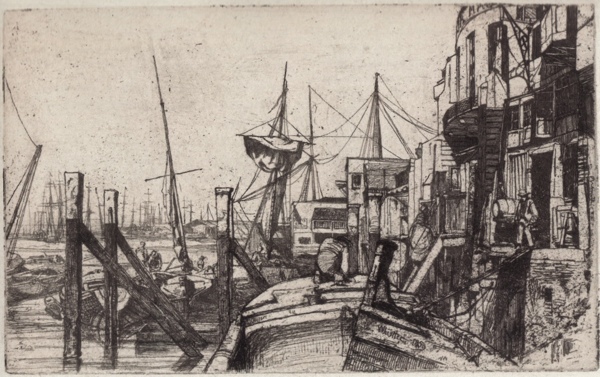
Limehouse and The Grapes – the curved river frontage can be recognised today

The Pool of London
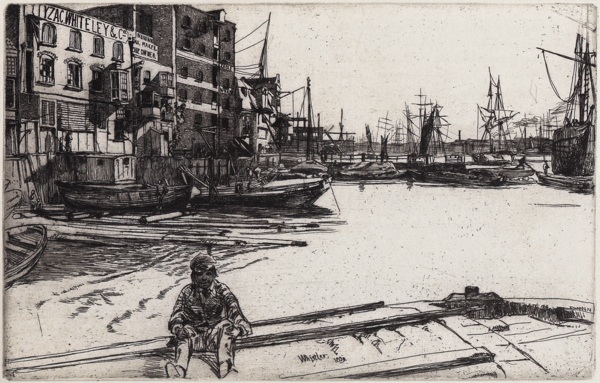
Eagle Wharf, Wapping
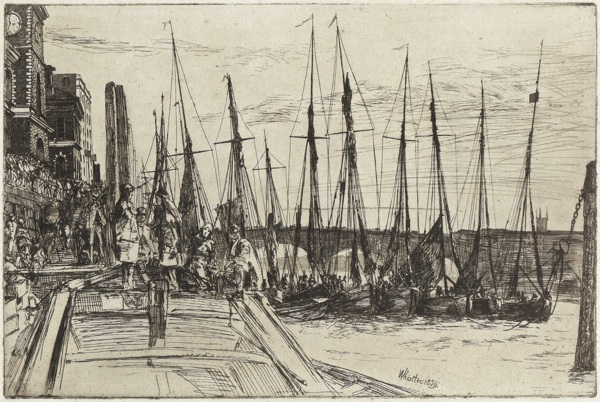
Billingsgate Market
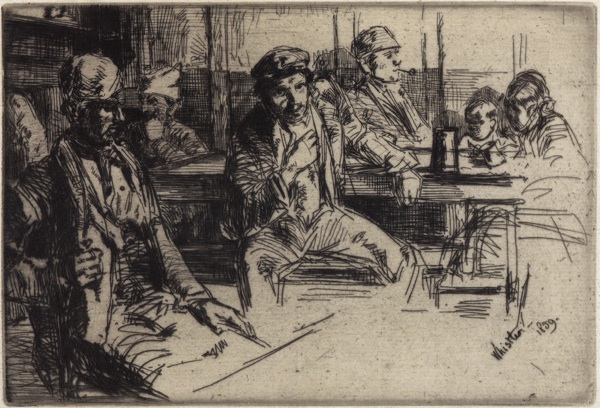
Longshore Men
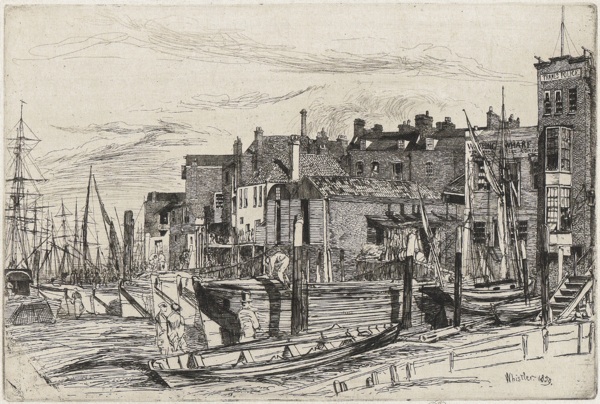
Thames Police, Wapping

Black Lion Wharf, Wapping
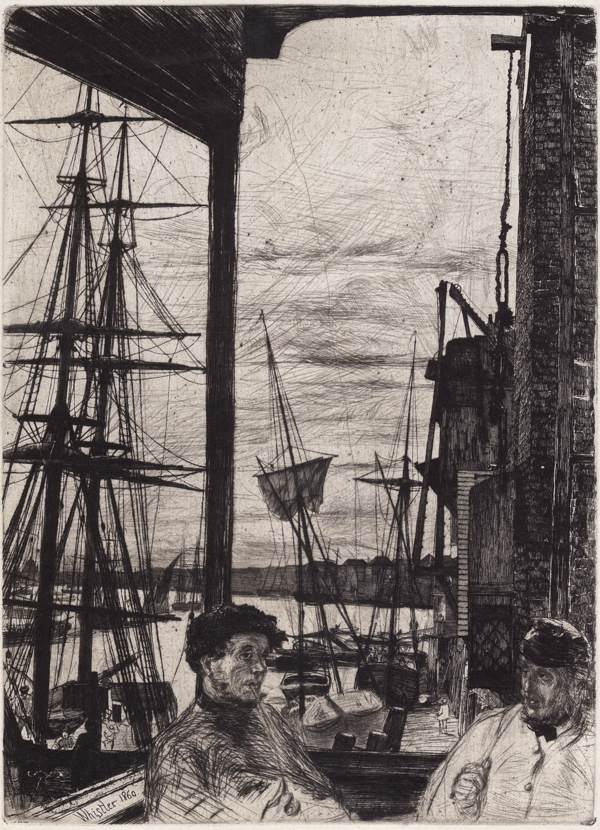
Looking towards Wapping from the Angel Inn, Bermondsey
You may also like to read about
Dickens in Shadwell & Limehouse
Madge Darby, Historian of Wapping
Views from a Dinghy by John Claridge
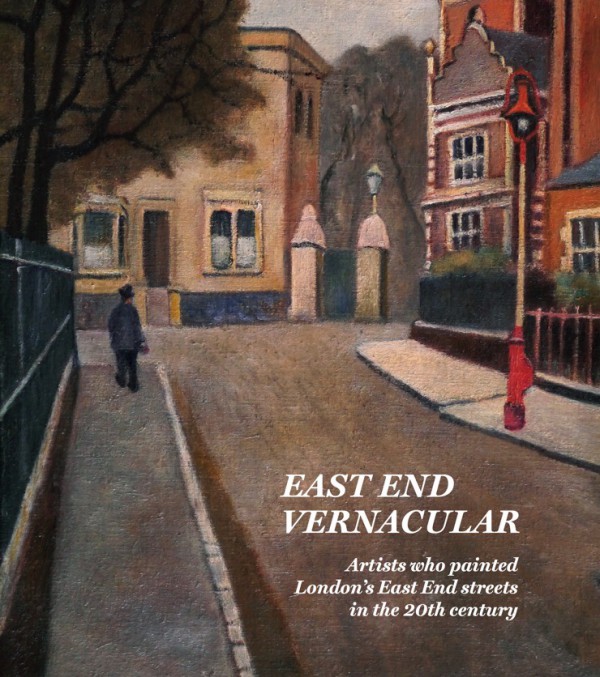
Click here to preorder a copy of EAST END VERNACULAR for £25
At Empress Coaches

Peter Stanton
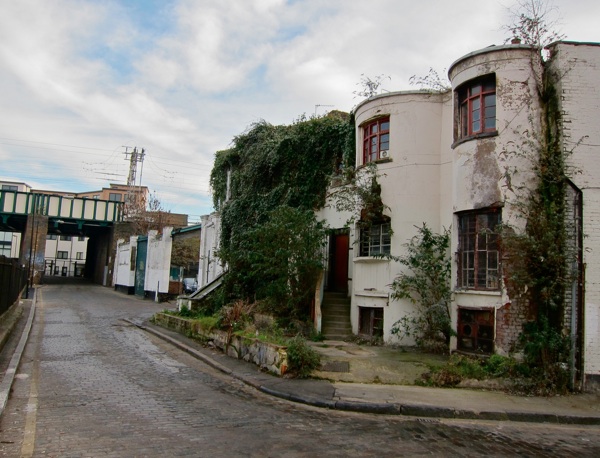
One of the corners of the East End that intrigues me most is at the boundary of Bethnal Green and Hackney, where a narrow path bordered by crumbling old brick walls leads up from the Hackney Rd to the junction of Mare St and the Regent’s canal. Cutting through at an angle to the grid of streets, it has the air of a field track that was there before the roads and the railway. Looming overhead against the skyline is a tall ruinous structure with the square proportions of a medieval castle, London’s last unreconstructed bomb site, left to decay since an incendiary hit in World War II. Beyond this, you pass under the glistening railway arches to arrive at the canal where, to your left, a vista opens up with majestic gasometers reaching up the sky and a quaint old building with bay-fronted windows entirely overgrown with ivy, cowering beneath. This is the headquarters of Empress Coaches.
Here I received a generous welcome from Peter Stanton, third generation of the Stanton family at the coach yard and still operating from the extravagantly derelict premises purchased by his grandfather.
Edward Thomas Stanton was an enterprising bus driver who bought his bus in 1923 and created a fleet operating from a yard in Shrubland Rd, London Fields, whence he initiated several familiar bus routes – including the No 8 pictured above on the office wall – journeys that became part of the perception of the city for generations of Londoners. In 1927, he bought the property here in Corbridge Crescent but when the buses were nationalised in 1933, he made £35,000 from the sale of the fleet, permitting him to retire and hand over to his son Edward George Stanton, changing the business from buses to coaches at the same time. “It was a bloody fortune then!” declared Peter, his grandson still presiding with jocularity over the vestiges of this empire today. Outside the fleet of coaches in their immaculate cream paintwork, adorned with understated traditional signwriting sat dignified and perfect as swans amidst the oily filth of the garage, ready to glide out over the cobbles and onto the East End streets.“A coach yard within two miles of the City of London, it will never happen again,” declared Peter in wonder at the arcane beauty of his inheritance.
“My father came here at sixteen with his sister Ivy who did all the accounts,” he explained, sitting proudly among framed black and white photographs that trace the evolving design of coaches through the last century. At first, the bodies of the vehicles were removed in the winter to convert to flat trucks out of season and these early examples resemble extended horsedrawn coaches but, as the century wore on, heroically streamlined vehicles took over. And the story of Empress Coaches itself became interwoven with the history of the twentieth century when they were requisitioned during World War II to drive personnel around airfields in Norfolk, while the staff that remained in London took refuge in the repair pit in the coach yard as a bomb shelter during the blitz.
“My father didn’t encourage me to come into the business,” admitted Peter, who joined in 1960, “But after being brought up around coaches and coming up here every Saturday morning with your dad, it gets into your blood and I could think of nothing else but going into it. I started off at the bottom, I was crawling under the coaches greasing them up. I was a mechanic for twenty-two years but then me and my brother Trevor bought out the company from the rest of the family, and the two of us took it over.”
“In those days, people didn’t go on holidays, they had a day out to the sea on a coach. And they had what they called “beanos,” pub and work excursions going to Margate or Southend and stopping at a pub on the way back and arriving back around midnight. Those pubs used to lose their local trade because people didn’t want to go into a bar filled with a lot of drunken East Enders. They were very rowdy and the girls were as bad as the boys.” revealed Peter, able to take amusement now at this safe distance and pulling a face to indicate that there is little he has not seen on the buses. “Put it like this, I used to say that when you took a coachload of girls out on a beano and their boyfriends and husbands came to pick them up at one o’clock – if they knew what I knew these girls had been up to they wouldn’t be so welcoming. In other words, they were not so innocent in those days as people thought they were. But the police were the worst, they went bloody barmy and they did things they would nick anybody else for doing!”
“When I first started there were six beanos every Saturday in the Summer but in the whole of the last year we only did two.” he admitted with a private twinge of disappointment. As the beanos decreased in the sixties, Empress Coaches were called upon by the military for troop movements. “We used to do the Trooping of the Colour, we drove the troops from Caterham Barracks with a police escort. It was the time of the IRA and they had to check all the bins along the way and have a guy with a jammer sitting in the front of the bus, so if there was a remote-controlled bomb it wouldn’t go off. They told us, ‘Whatever you do, drive on. Even if you hit someone.’ There’d be twenty of our coaches full of soldiers plus an escort.”
These are now the twilight years at Empress Coaches, after the family sold the business and are simply employed to keep it ticking over, which explains why little maintenance is undertaken. Yet the textures of more than eighty years of use recall the presence of all those who passed through and imbue the place with a rare charmed atmosphere. I was not the first to recognise the appeal of its patina, as I discovered when Peter reeled off the list of film crews that had been there, most notably “Tinker, Tailor, Soldier, Spy” who wallpapered his office with the gold wallpaper you see in the top picture. “We’ve had Michael Caine here,” he boasted, “Gary Oldman, Ray Winstone and Dennis Waterman too.”
“After I spent fifty-two years of my life here, I’ve got be here.” Peter assured to me, biting into a sandwich and chewing thoughfully,“It’s more than likely this place will be redeveloped before too long and that will be the end of it, but in the meantime – I’m just trying to keep this show on the road!”

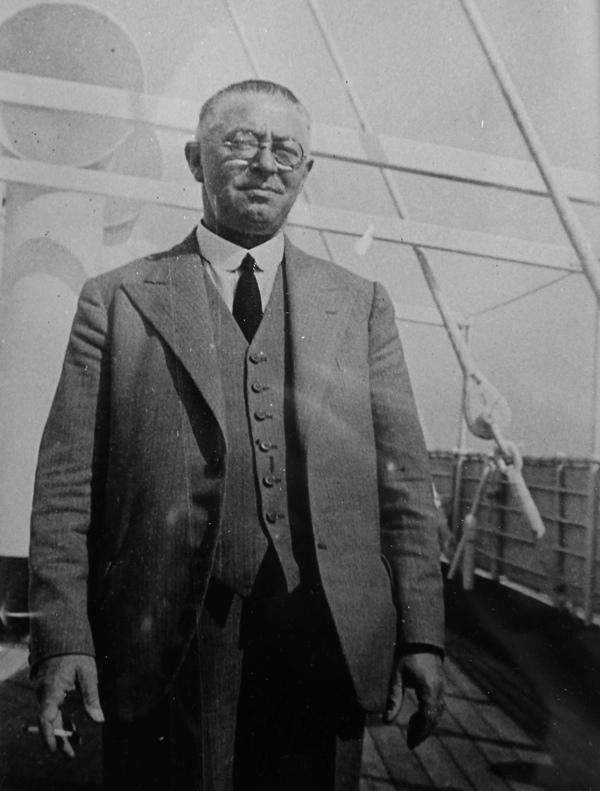
Edward Thomas Stanton, the enterprising bus driver who invented the number eight bus route.

Edward George Stanton in his leather bus driver’s coat.
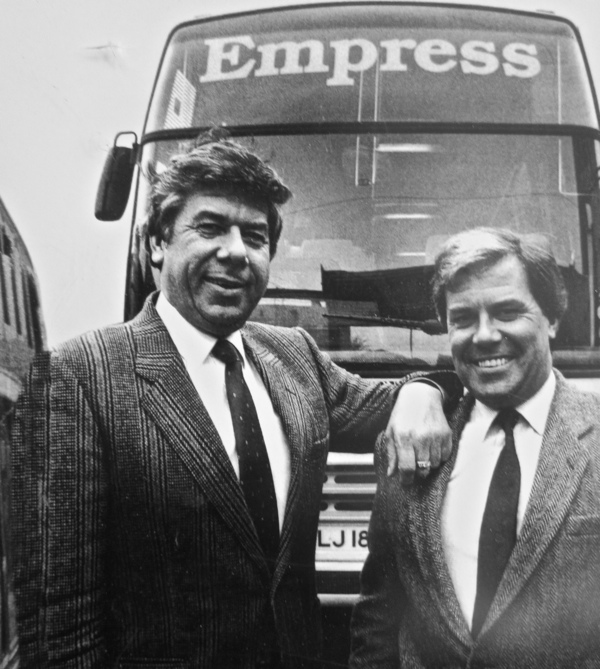
Brothers Peter and Trevor Stanton.
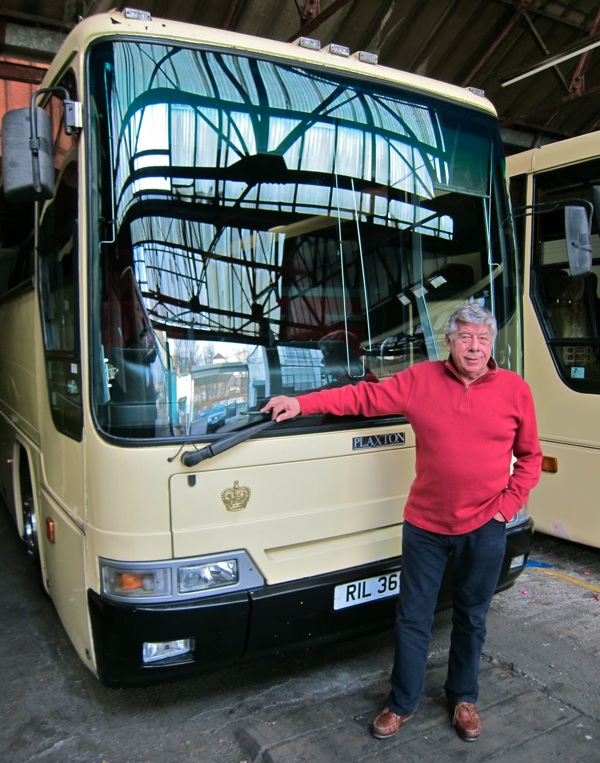
Mark Stanton, Trevor’s son.

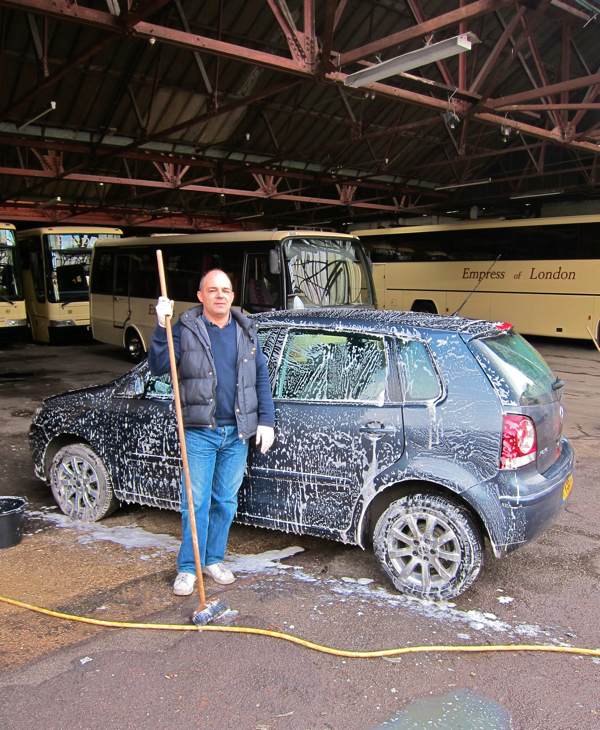
Jason Stanton, Peter’s son.
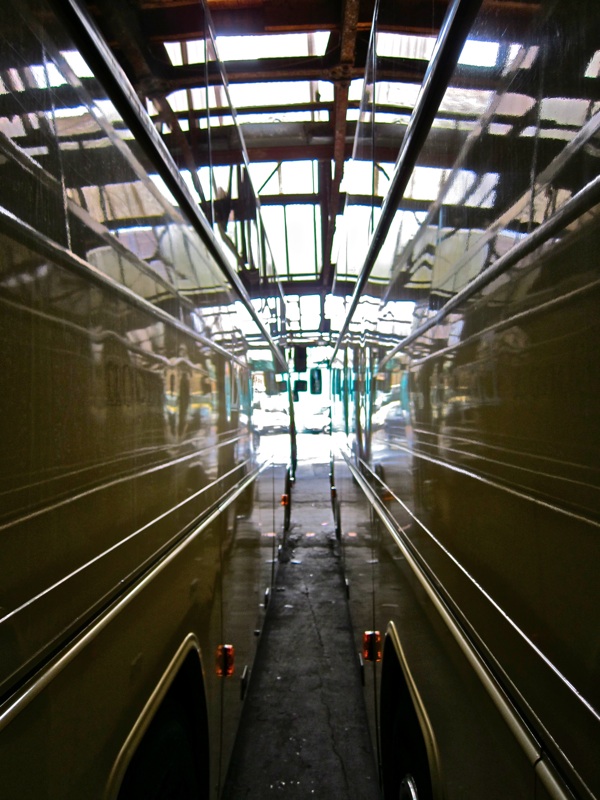
Between the coaches.
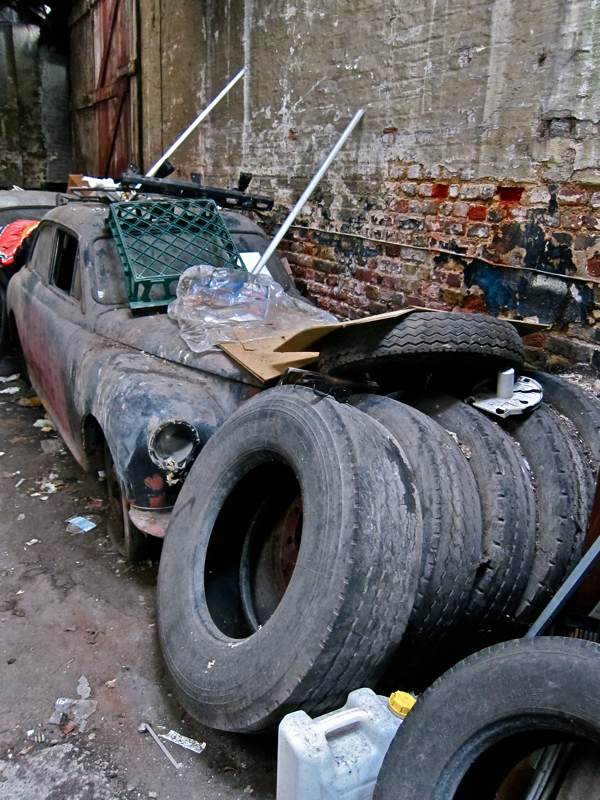
A forgotten corner of the yard.
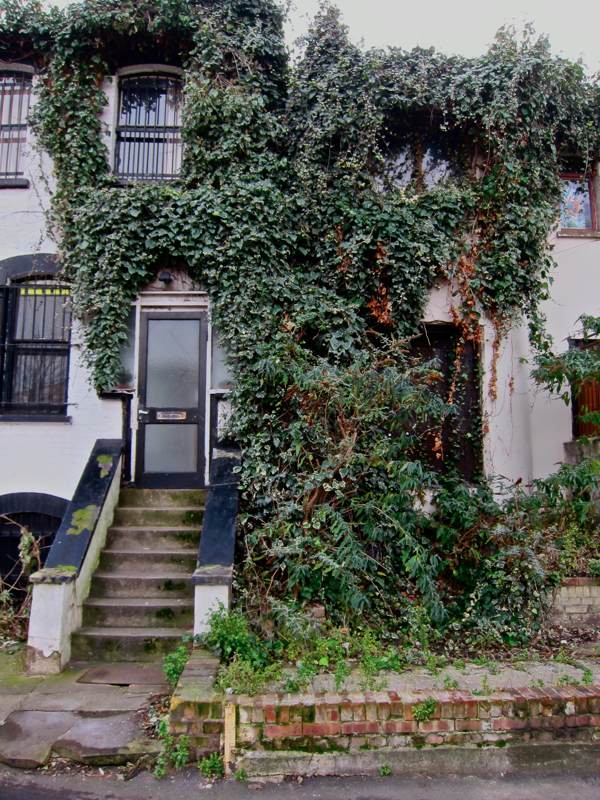
Empress Coaches, the office entrance.


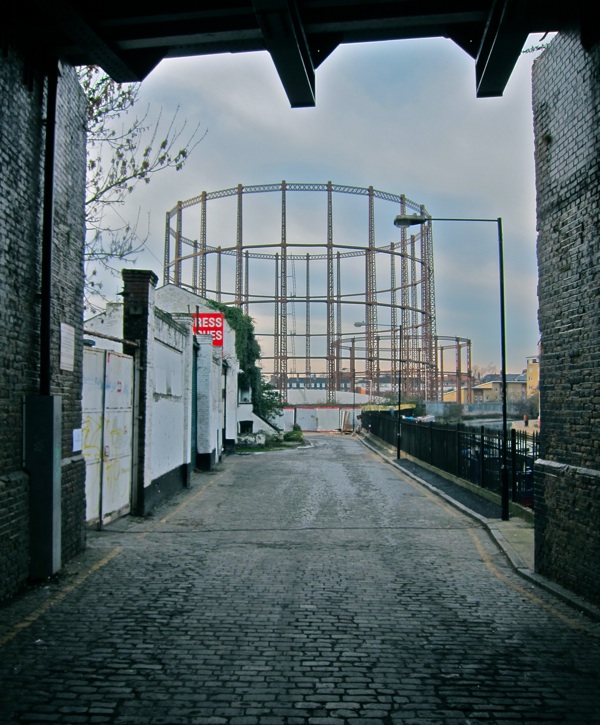
Corbridge Crescent, with the canal to the right.

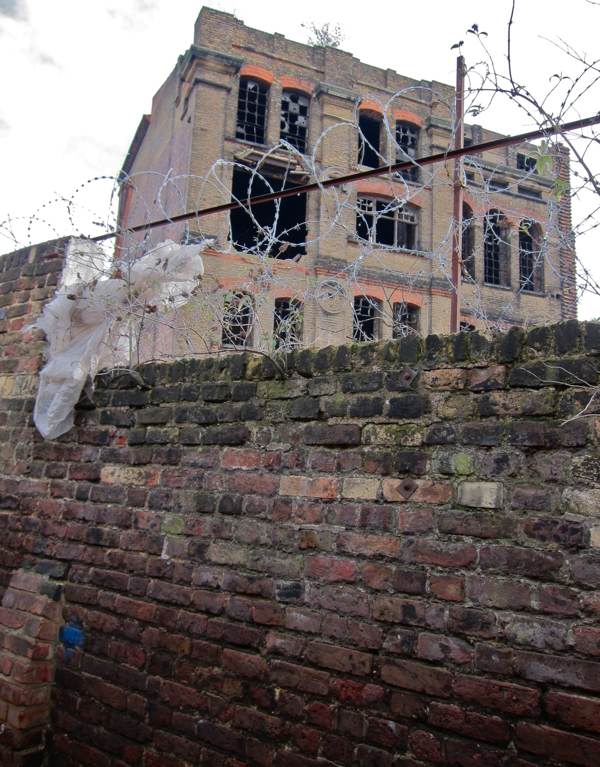
London’s last unreconstructed bomb site.
You may also like to read about two nearby industries