
Summer At Arnold Circus
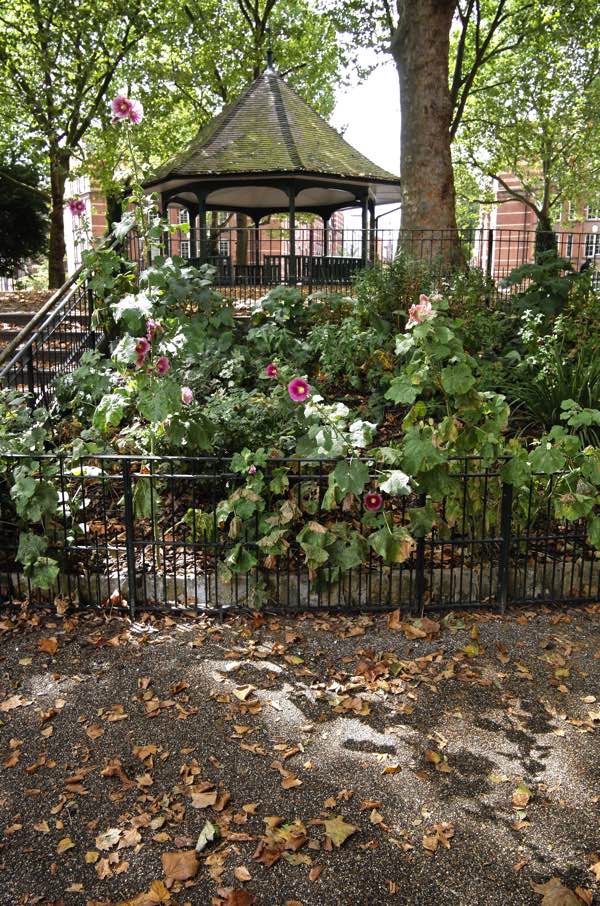
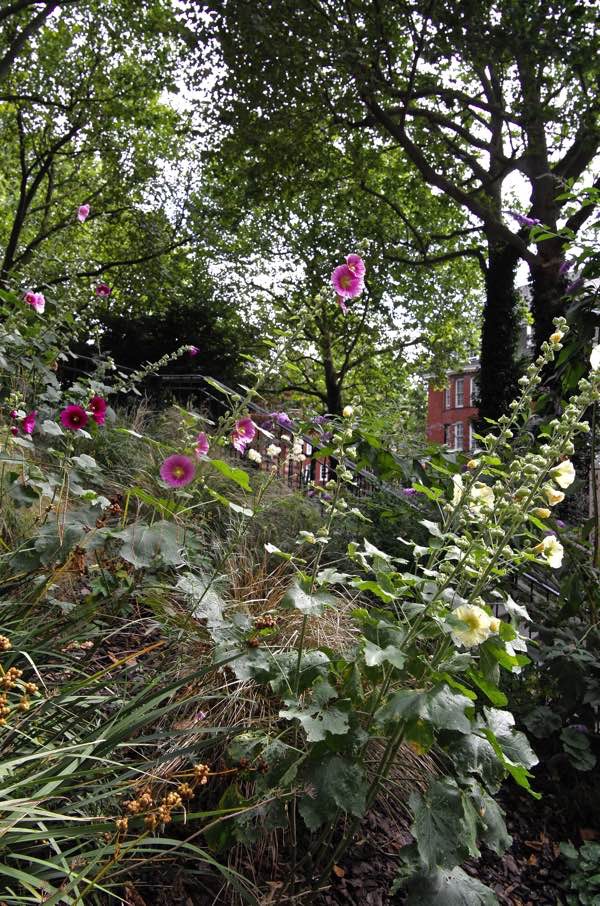
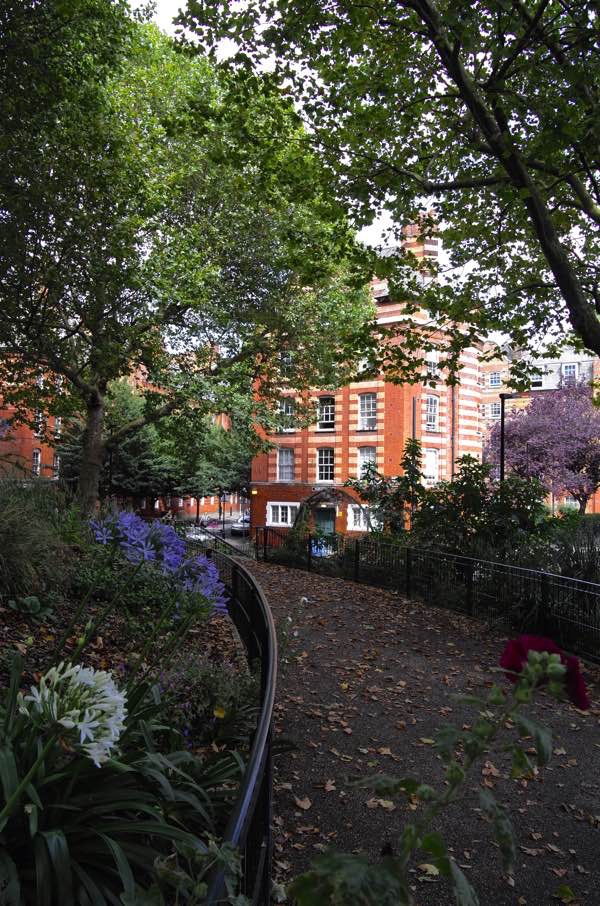
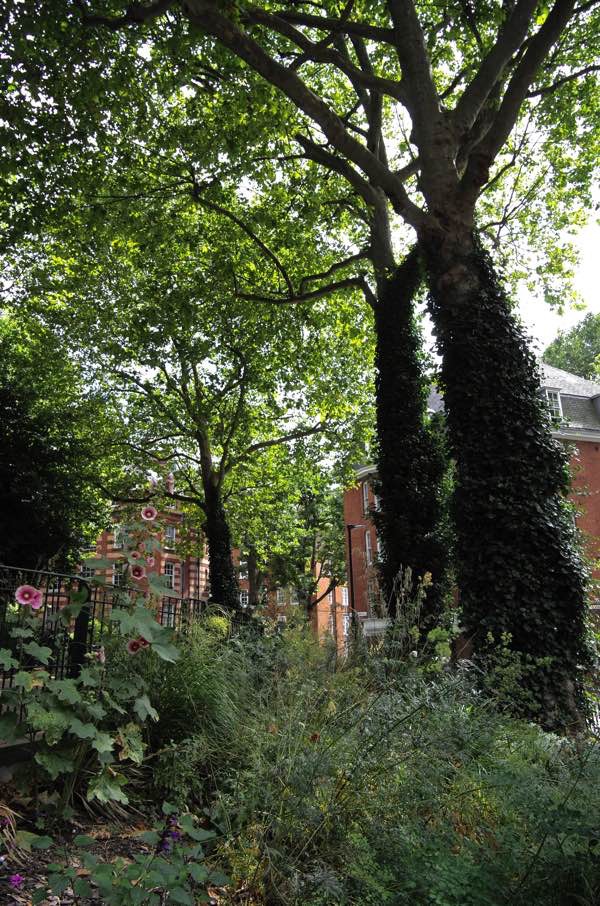
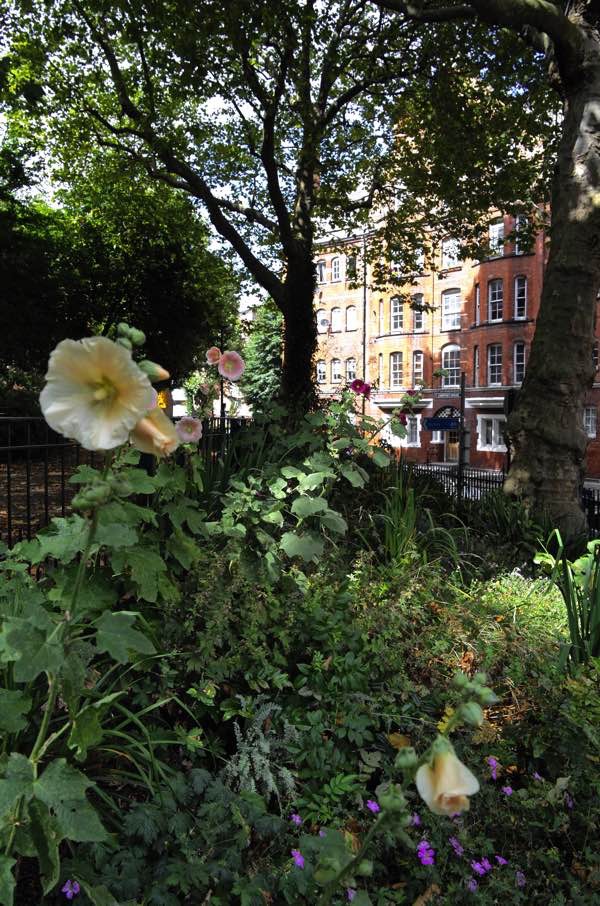
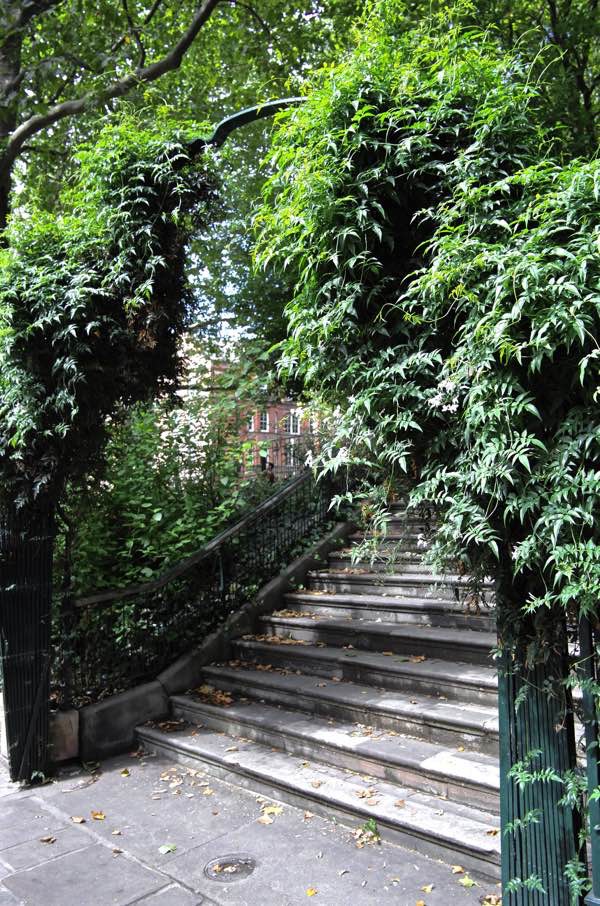
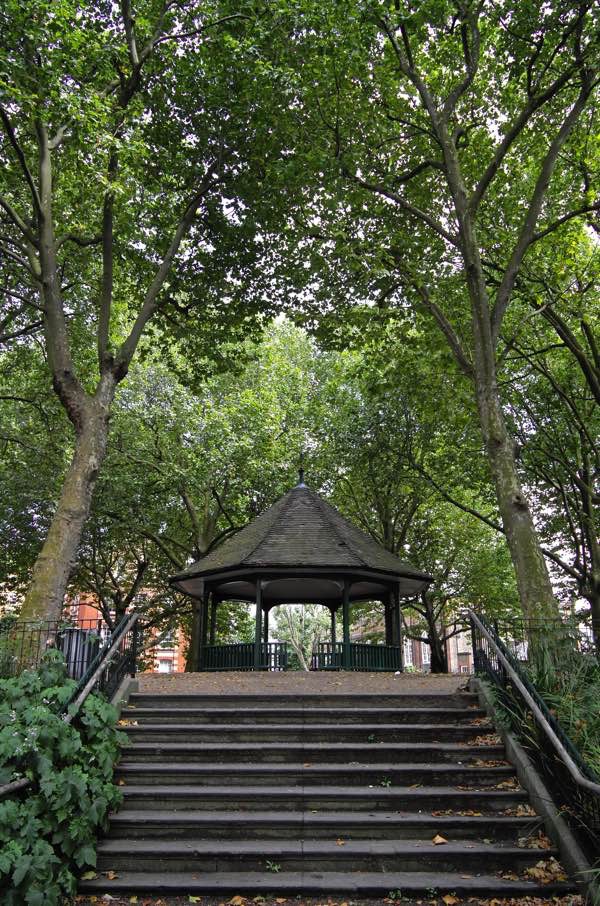
At this time of year, the canopy of trees over-arching Arnold Circus is an awe inspiring sight to behold, as if a forest clearing had been magically transported and placed at the centre of a maze of city streets. From within the tiny park you see the towering red brick mansion blocks framed by trees, imparting an atmosphere of lyrical romance entirely in tune with the Arts & Crafts ethos of Britain’s first Council Estate.
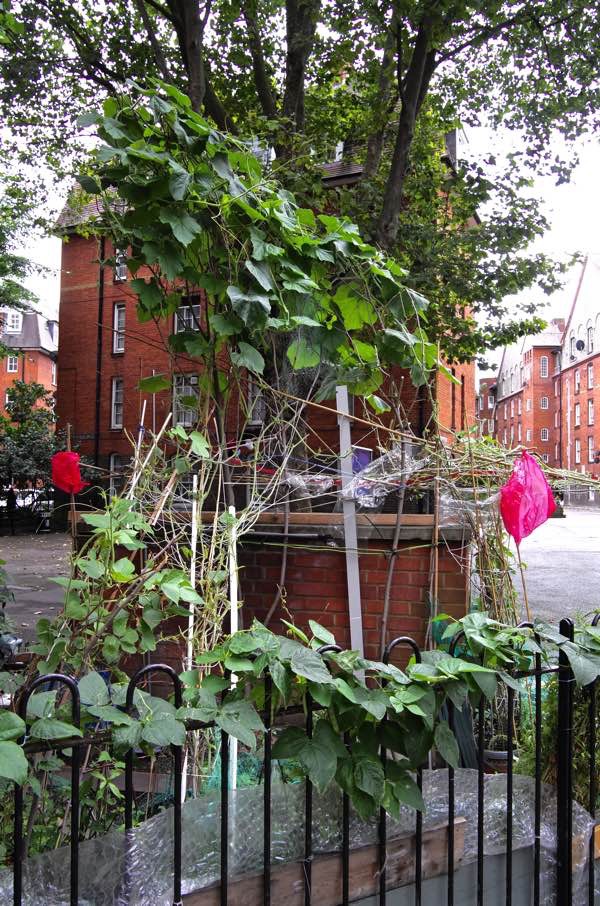
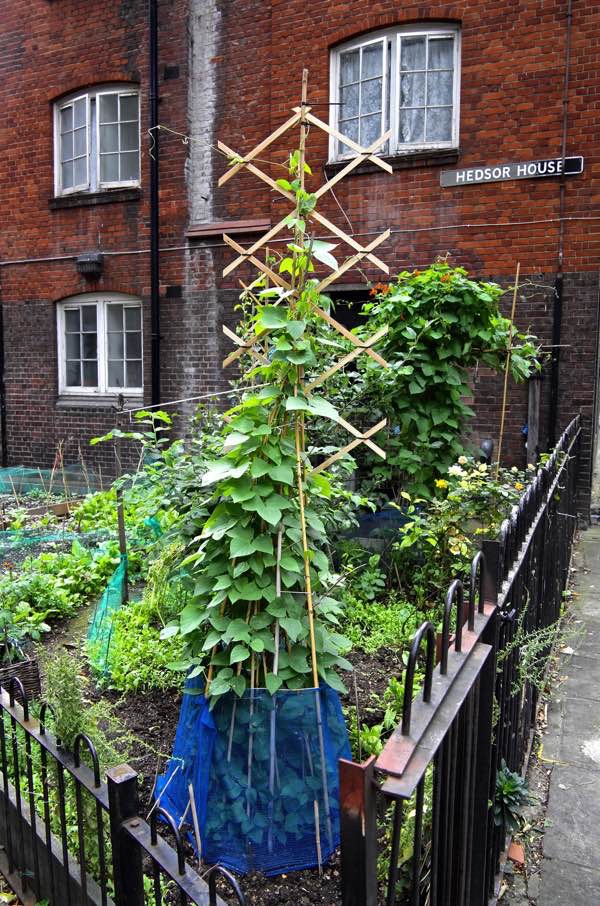
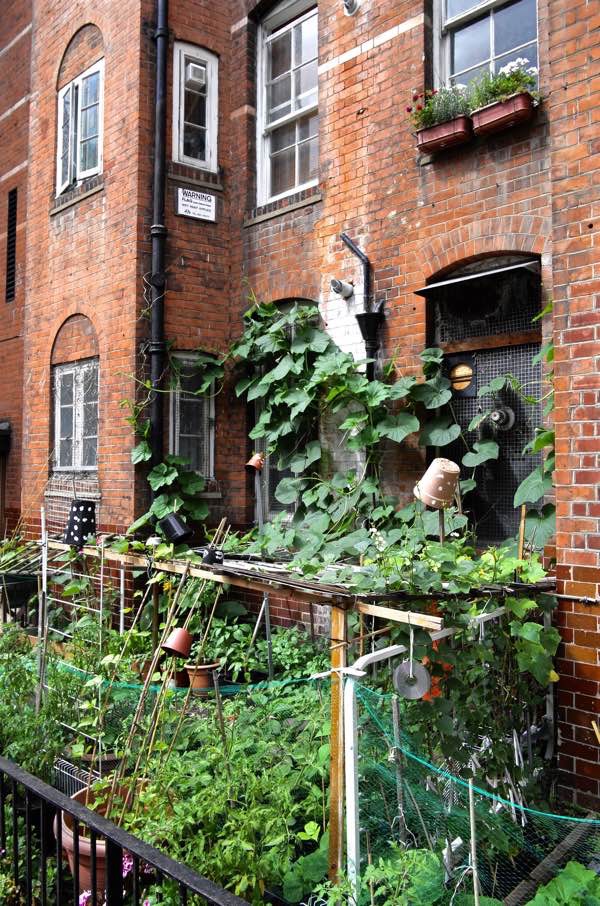
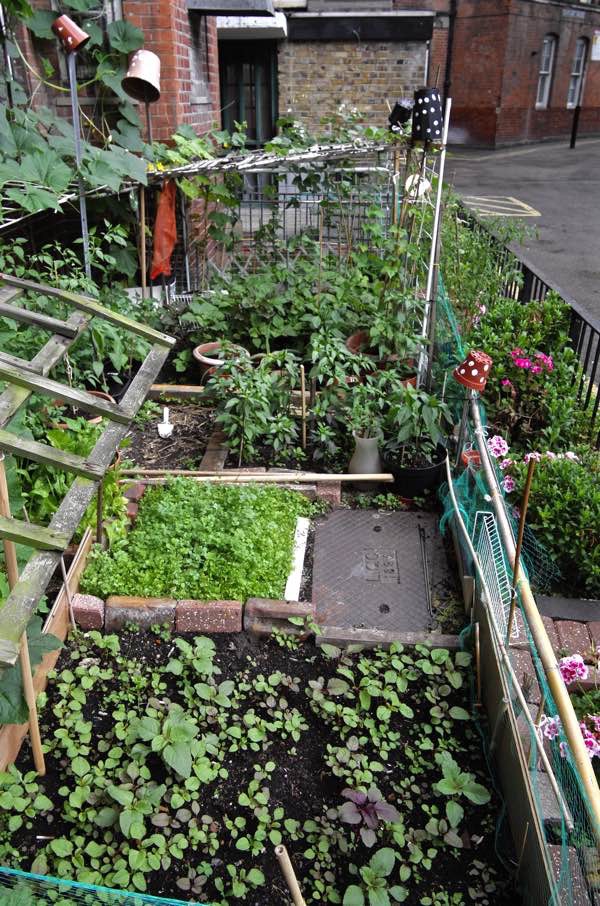
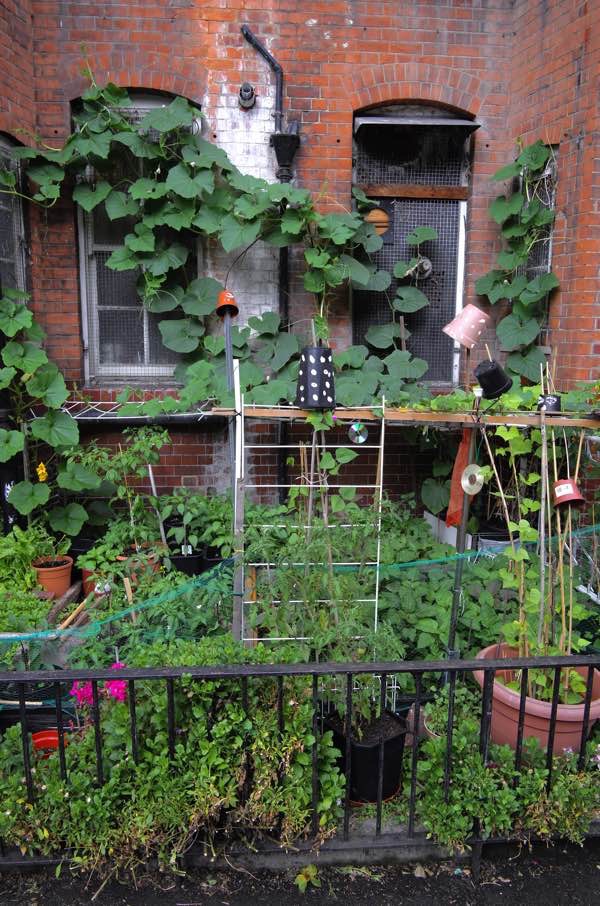
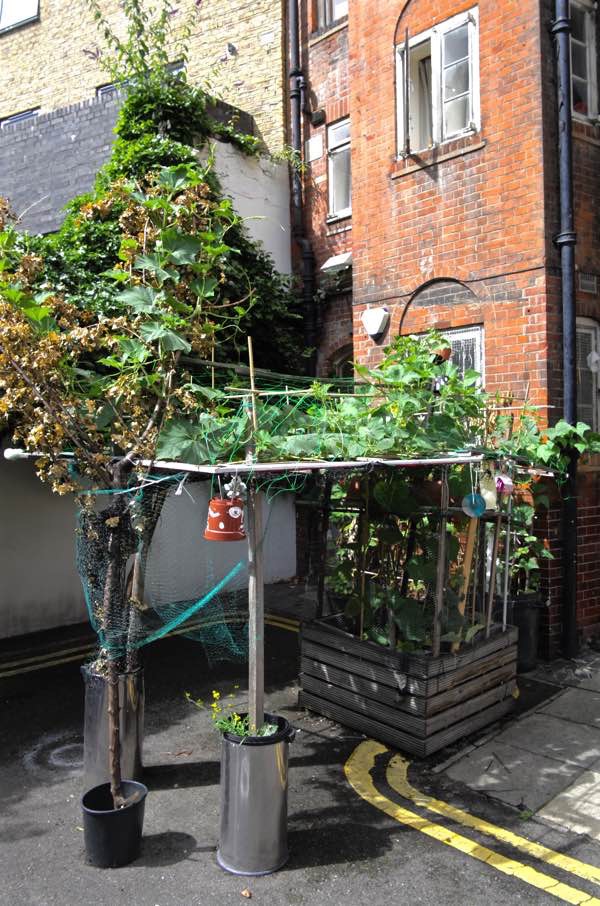
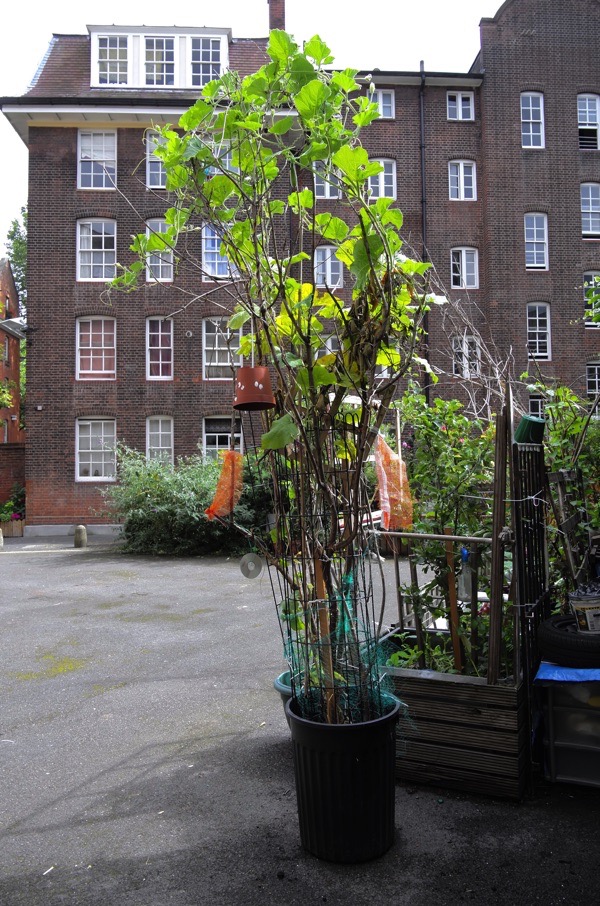
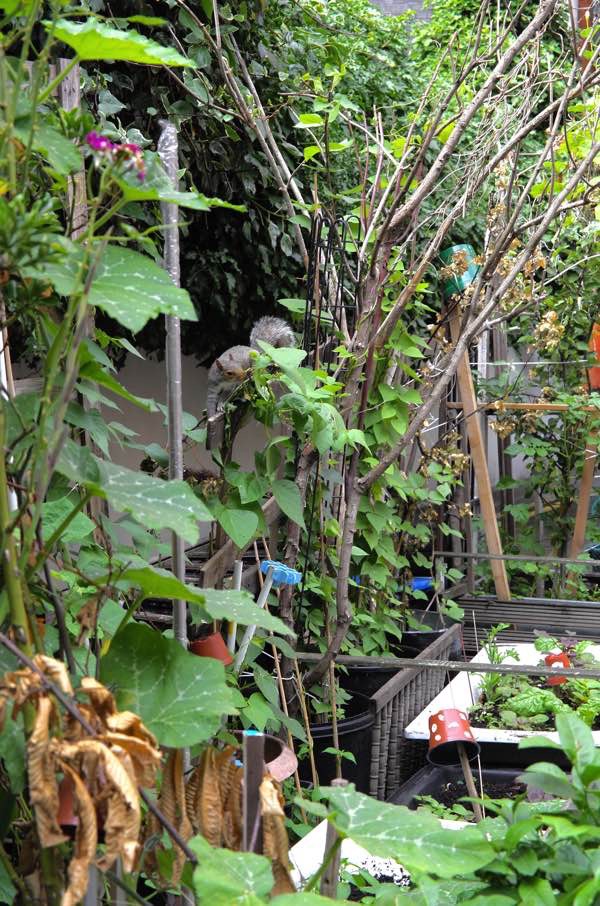
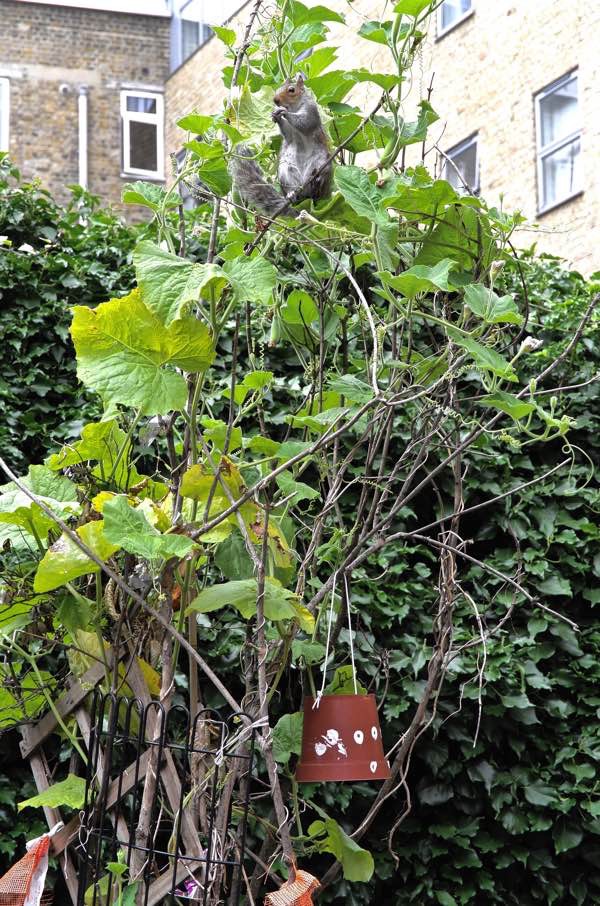
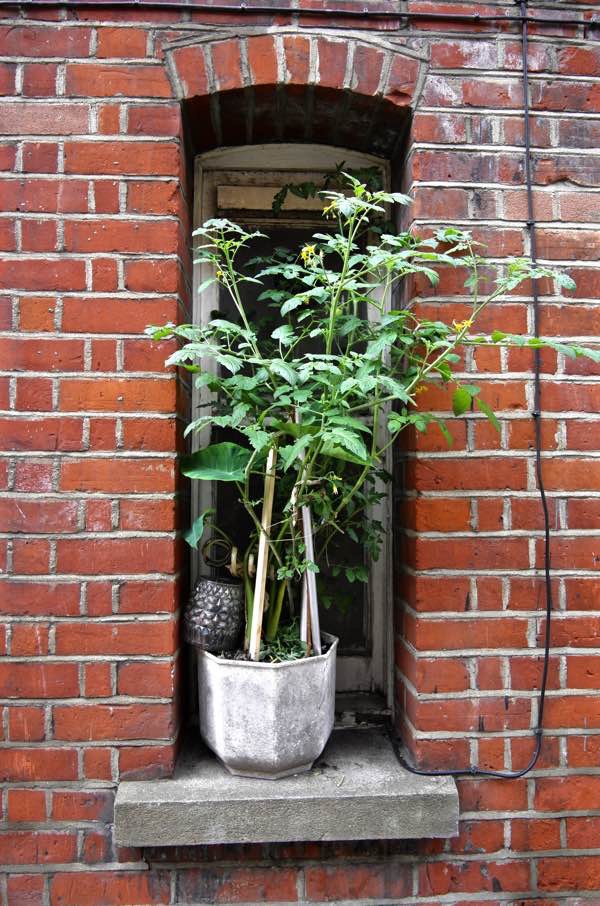
Yet, if you wander further within the Estate, you come upon satellite gardens contrived by the residents using old baths, canes and twigs as a means to create temporary vegetable plots among the yards between the buildings. The idiosyncratic forms of these curious contraptions hung with glinting things offer a sympathetic complement to the regularity of the architecture and it makes your heart leap to see cherished home grown vegetables nurtured so tenderly in unexpected circumstances.
You might also like to take a look at
At David Kira Ltd

To anyone that knows Spitalfields, David Kira Ltd is a familiar landmark at 1 Fournier St next to The Ten Bells. Here, at the premises of the market’s foremost banana merchant – even though the business left more than a quarter of a century ago – the name of David Kira is still in place upon the fascia to commemorate the family endeavour which operated on this site for over half a century.
By a fluke of history, the shop that trades here now has retained the interior with minimum intervention, which meant that when David’s son Stuart Kira returned recently he found it had not been repainted since he left in 1991 and his former office, where he worked for almost thirty years – and even his old chair – was still there, existing today as part of a showroom for shoes and workwear.
This is a story of bananas and it began with Sam Kira in Southend, a Jewish immigrant from Poland who became naturalized in 1929 and started a company called “El Dorado Bananas.” Ten years later, his son opened up in Fournier St as a wholesaler, taking a lease from Lady Fox but having to leave the business almost at once when the war came, bringing conscription and wiping out the banana trade. Yet after the war, he built up the name of David Kira, creating a reputation that is still remembered fondly in Spitalfields and, since the shop remains, it feels as if the banana merchants only just left.
“When I first came to the market as a child of seven, we lived in Stoke Newington and took the 647 trolley bus to Bishopsgate and walked down Brushfield St. Every opportunity, I came down to enjoy the action and the atmosphere, and the biggest thrill was getting up early in the morning – I always remember being sent round to the Market Cafe to get mugs of tea for all the staff. When I joined my father David in 1962, aged sixteen, my grandfather Sam had died many years earlier. There was me and my father, John Neil (who had been with my father his entire working life), Ted Witt our cashier, two porters, Alf Lee and Billy Alloway (known as Billy the thief) and we had an empty boy. Our customers were High St greengrocers and market fruit traders, and we prided ourselves on only selling the best quality produce. Perhaps this was why we had a lot of customers. It was hard work and long working hours, getting up at half past four every morning to be at the market by five thirty. I used to sleep for a couple of hours in the afternoon when I got home, until about six, then I’d get up and return to bed at eleven until four thirty – I did that six days a week.
We received our shipments direct from Jamaica through the London Docks – bananas in their green state on long stalks – they arrived packed in straw on a lorry and it was very important that they be unloaded as soon as they arrived, whatever time of day or night the ship docked, because the enemy of the banana is the cold. They were passed by hand through a hatch in the floor to the ripening rooms downstairs – it took five days from arrival until they were saleable. Since the bananas came from the tropics, it was not so much the heat you had to recreate as the humidity. We had a single gas flame in the corner of each ripening room, the green bananas hung close together on hooks from the ceiling and, when the flame was turned down, a little ethylene gas was released before the door was sealed. Once they were ripened, they had to be boxed. You stood with a stalk of bananas held between your legs and struck off each bunch with a knife, placing it in a special box, three foot by one foot – a twenty-eight pound banana box.
During the sixties, dates were only sold at Christmas but in the seventies when the Bangladeshi people arrived, we started getting requests for dates during Ramadan. I contacted one of the dates suppliers and I asked him to send me thirty cases, and they were sold to Bengali greengrocers in Brick Lane before they even touched the floor. Subsequently, we sold as many dates as we could get hold of, more even than at Christmas. During this period, we also saw the decline of the High St greengrocers due to the supermarkets, however we found we were able to compensate for the loss of trade by fulfilling the requirements of the Asian community.
Eventually, they started importing pre-boxed bananas in the eighties, so our working practices changed and the banana ripening rooms became obsolete. My late father would be turning in his grave if he knew that bananas are now placed in cold storage, which means they will quickly turn black once they get home.
In 1991, when the market moved, we were offered a place in the new market hall but trading hours became a free-for-all and, although we started opening at three am, we were among the last to open. By then I was married and had children, and without the help of my father and John Neil who had both retired, I found it very difficult to cope. It was detrimental to my health – so, after a year, I sold the company as a going concern. I didn’t know what I wanted to do, but by chance I bumped into a colleague who worked in insurance and he introduced me to his manager. I realised in that type of business I could continue to be self-employed, so I trained and qualified and I have done that for the past twenty years. When I think back to the market, I only got two weeks a year holiday and I felt guilty even to put that pressure on my father and John Neil when I was away.”
Proud of his father’s achievement as a banana merchant, Stuart delighted to tell me of Ethel, the rat-catching cat – named after the ethylene gas – who loved to sleep in the warmth of the banana ripening rooms and of Billy Alloway’s tip of sixpence that he nailed to the wall in derision, which stayed there as his memorial even after he died. Stuart cherishes his memory of his time in the market, recognising it as a world with a culture of its own as much as it was a place of commerce. Today, the banana trade has gone from Spitalfields where once it was a way of life, now only the name of David Kira – heroic banana merchant – survives to remind us.

Sam Kira (far right) dealing in bananas in London and Southend.

Sam Kira’s naturalization papers.

David Kira at the Spitalfields Fruit Exchange – he is centre right in the fifth row, wearing glasses and speaking with his colleague.
 The banana trade ceased during World War II.

David Kira as a young banana merchant.

David Kira (left) with his son Stuart and business partner John Neil.

David Kira and staff.


Stuart Kira stands in the doorway of his former office of twenty years, where his father and grandfather traded for over fifty years, now part of a hairdressing salon.

David Kira Ltd, 1991
First and last pictures copyright © Mark Jackson & Huw Davies
You may also like to read about
Jimmy Huddart, Spitalfields Market Porter
Peter Thomas, Fruit & Vegetable Supplier
Ivor Robins, Fruit & Vegetable Purveyor
John Olney, Donovan Brothers Ltd
Jim Heppel, New Spitalfields Market
Blackie, the Last Spitalfields Market Cat
and take a look at these galleries of pictures
Hopping Photography
This selection of favourite Hop Pickers’ photographs is from the archive of Tower Hamlets Community Housing. Traditionally, this was the time when East Enders headed down to the Hop Farms, embracing the opportunity of a breath of country air and earning a few bob too.

Bill Brownlow, Margie Brownlow, Terry Brownlow & Kate Milchard, with Keith Brownlow & Kevin Locke in front, at Guinness’ Northland’s Farm at Bodiam, Sussex, in 1958. Guinness bought land at Bodiam in 1905 and eight hundred acres were devoted to hop growing at its peak.

Julie Mason, Ted Hart, Edward Hart & friends at Hoathleys Farm, Hook Green, near Lamberhurst, Kent

Lou Osbourn, Derek Protheroe & Kate Day at Goudhurst Farm

Margie Brownlow & Charlie Brownlow with Keith Brownlow, Kate Milchard & Terry Brownlow in front at Guinness’ Northland’s Farm at Bodiam, Sussex, in 1950

Mr & Mrs Gallagher with Kitty Adams & Jackie Gallagher from Westport St, Stepney, in the hop gardens at Pembles Farm, Five Oak Green, Kent in 1959

Jackie Harrop, Joan Day & George Rogers at Whitbread’s Farm, Beltring, Kent in 1949

Mag Day (on the left at the back) in the hop gardens with others at Highwood’s Farm, Collier St, in 1938

Pop Harrop at Whitbread’s Farm, Beltring, Kent in 1949

Sarah Watt, Mrs Hopkins, Steven Allen, Ann Allen, Tom, Albert Allen & Sally Watt in the hop gardens at Jack Thompsett’s Den Farm, Collier St, Kent in 1943

Harry Watt, Tom Shuffle, Mary Shuffle, Sally Watt, Julie Callagher, Ada Watt & Sarah Watt in the hop gardens at Jack Thompsett’s Den Farm, Collier St, Kent in the fifties

Harry Watt, Sally Watt, Sarah Watt holding Terry Ellames in the hop gardens at Jack Thompsett’s Den Farm, Collier St, Kent in 1957

Harry Ayres, a pole puller, in the hop gardens at Diamond Place Farm, Nettlestead, Kent

Emmie Rist, Theresa Webber, Kit Webber & Eileen Ayres in the hop gardens at Diamond Place Farm, Nettlestead, Kent

Kit Webber with her Aunt Mary, her Dad Sam Webber and her Mum, Emmie Ris,t in the hop gardens at Diamond Place Farm, Nettlestead, Kent

Harry Ayres with his wife Kit Webber in the hop gardens at Diamond Place Farm, Nettlestead, Kent.

Richard Pyburn, Mag Day, Patty Seach and Kitty Gray from Kirks Place, Limehouse, in the hop gardens at Highwoods Farm, Collier St, Kent

The Gorst and Webber families at Jack Thompsett’s Farm, Fowle Hall, Kent in the forties

Kitty Waters with sons Terry & John outside the huts at Pembles Farm, Five Oak Green, Kent in 1952

Mr & Mrs Gallagher from Westport St, Stepney, with their grandchildren in the hop gardens at Pembles Farm, Five Oak Green, Kent in 1958

Sybil Ogden, Doris Cossey, Danny Tyrrell & Sally Hawes near Yalding, Kent

John Doree, Alice Thomas, Celia Doree & Mavis Doree in the hop gardens near Cranbrook, Kent

Bill Thomas & his wife Annie, in the hop gardens near Cranbrook, Kent

The Castleman Family from Poplar hop picking in the twenties

Terry & Margie Brownlow at Guinness’ Northland’s Farm at Bodiam in Sussex in 1949

Alfie Raines, Johnny Raines, Charlie Cushway, Les Benjamin & Tommy Webber in the Hop Gardens at Jack Thompsett’s Farm at Fowl Hall near Paddock Wood in Kent
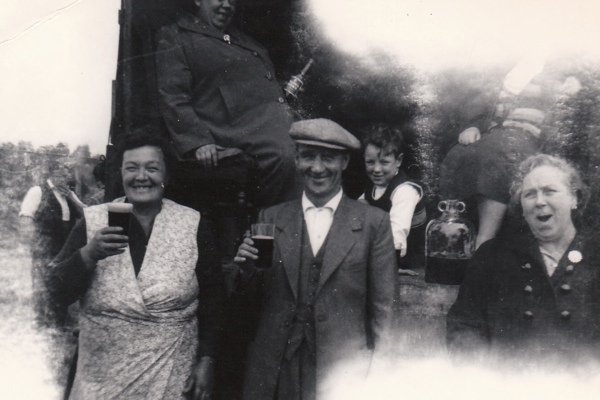
Lal Outram, Wag Outram & Mary Day on the common at Jack Thompsett’s Farm at Fowl Hall near Paddock Wood in Kent in 1955

Taken in September 1958 at Moat Farm, Five Oak Green, Kent. Sitting on the bin is Miss Whitby with Patrick Mahoney, young John Mahoney and Sheila Tarling (now Mahoney) – Sheila & Patrick were picking to save up for their engagement party in October

Maryann Lowry’s Nan, Maggie ,on the left with her Great-Grandmother, Maryann, in the check shirt in the hop gardens, c.1910

Having a rest in hop gardens at Whitbread’s Farm, Beltring, Kent in 1966. In the back row are Mary Brownlow, Sean Locke, Linda Locke, Kate Milchard, Chris Locke & Margie Brownlow with Kevin Locke and Terry Locke in front.

Margie Brownlow & her Mum Kate Milchard at Whitbreads Farm in Beltring, Kent in 1967. These huts were two stories high. The children playing outside are – Timmy Kaylor, Chrissy Locke, Terry Locke, Sean Locke, Linda Locke & Kevin Locke.

Chris Locke, Sally Brownlow, Linda Brownlow, Kate Milchard, Margie Brownlow, Terry Locke & Mary Brownlow at Whitbread’s Farm, Beltring, Kent in 1962

Johnno Mahoney, Superintendant of the Caretakers on the Bancroft Estate in Stepney, driving the “Mahoney Special” at Five Oak Green in 1947

The Clarkson family in the hop gardens in Staplehurst. Gladys Clarkson , Edith Clarkson, William Clarkson, Rose Clarkson & Henry Norris.

John Moore, Ross, Janet Ambler, Maureen Irish & Dennis Mortimer in 1950 at Luck’s Farm, East Peckham, Kent

Kate Fairclough, Mrs Callaghan, Mary Fairclough & Iris Fairclough at Moat Farm, Five Oak Green, Kent in 1972

A gang of Hoppers from Wapping outside the brick huts at Stilstead Farm, Tonbridge, Kent with Jim Tuck & John James in the back. In the middle row the first person on the left is unknown, but the others are Rose Tuck, holding Terry Tuck, Rose Tuck, Danny Tuck & Nell Jenkins. In the front are Alan Jenkins, Brian Tuck, Pat Tuck, Jean Tuck, Terry Taylor & Brian Taylor.

Nanny Barnes, Harriet Hefflin, “Minie” Mahoney & Patsy Mahoney at Ploggs Hall Farm

In the Hop Gardens at Jack Thompsett’s Farm at Fowl Hall, near Paddock Wood in Kent in the late forties. Alfie Raines, Edie Cooper, Margie Gorst & Lizzie Raines

The Day family from Kirks Place, Limehouse, at Highwoods Farm in Collier St, Kent in the fifties

Annie Smith, Bill Daniels, Pearl Brown & Nell Daniels waiting for the measurer in the Hop Garden at Hoathley’s Farm, Hook Green, Kent

On the common outside the huts at at Hoathley’s Farm, Hook Green, Kent – you can see the oasthouses in the distance. Rita Daniels, Colleen Brown, Maureen Brown, Marie Brown, Billy Daniels, Gerald Brown & Teddy Hart , with Sylvie Mason & Pearlie Brown standing.

The Outram family from Arbour Sq outside their huts at Hubbles Farm, Hunton, Kent. Unusually these were detached huts but, like all the others, they made of corrugated tin and all had one small window – simply basic rooms, roughly eleven feet square

Janis Randall being held by her mother Joyce Lee andalongside her is her father, Alfred Lee in a hop garden, near Faversham in September 1950

David & Vivian Lee sitting on a log on the common outside Nissen huts used to house hop pickers

Gerald Brown, Billy Daniels & Dennis Woodham in the hop gardens at Gatehouse Farm near Brenchley, Kent, in the fifties

Nelly Jones from St Paul’s Way with Eileen Mahoney, and in the background is Eileen’s mum, “Minie” Mahoney. Taken in the fifties in the Hop Gardens at Ploggs Hall Farm, between Paddock Wood and Five Oak Green.

At Jack Thompsett’s Farm at Fowl Hall, near Paddock Wood in Kent

Ploggs Hall Farm Ladies Football Team. Back Row – Fred Archer, Lil Callaghan, Harriet Jones, Unknown, Unknown, Nanny Barnes, Liz Weeks, Harriet Hefflin, Johnno Mahoney. Front Row – Doris Hurst Eileen Mahoney & Nellie Jones

John Moore, Ross, Janet Ambler, Maureen Irish & Dennis Mortimer in 1950 at Luck’s Farm, East Peckham, Kent

The Outram and Pyburn families outside a Kent pub in 1957, showing clockwise Kitty Tyrrell, Mary Pyburn, Charlie Protheroe, Rene Protheroe, Wag Outram, Derek Protheroe in the pram, Annie Lazel, Tom Pyburn, Bill Dignum & Nancy Wright.

Sally Watt’s Hop Picker’s account book from Jack Thompsett’s Den Farm, Collier St, Kent in the fifties

You may also like to take a look at
At William Gee Ltd

Speaking as a lifelong connoisseur of quality haberdashery, let me say that if you are in need of a button or a reel of thread, there is no finer place to go than William Gee Ltd at 520 Kingsland Rd. For the haberdashery lover, even the windows at William Gee set the pulse racing with their ingenious displays of words contrived from zips – yet it was my privilege recently to explore behind the scenes at this glamorous theatre of smallwares, trimmings, threads, buttons and zippers, visiting the mysterious warren of storerooms at the rear of the shop, where I met the self-respecting guardians of this beloved Dalston institution that styles itself as “trimmings for all trades.”
My guide was Jeffrey Graham, maestro of the proud company boasting London’s largest selection of zip fasteners. He led me up an old brown lino-covered staircase between walls panelled in wood-effect formica to the locked, dusty upper room lined with happy photos of works’ outings and jamborees of long ago. Here Jeffrey brought the title deed to the property dating from the sixteenth century when this was Henry VIII’s land – Henry was the king that the Kingsland Rd refers to – and he had stables here for hunting when there was still forest, recalled today only in the name of Forest Rd. Then, once we had established this greater chronological perspective, Jeffrey brought out the tiny sepia photograph of William Goldstein that illustrates where the haberdashery business began.
“William Goldstein started in 1906 with two pounds in the kitty selling buttons and trimmings, and he changed the company name to William Gee. This was across the road where Albert’s Cafe is now, but after several years he needed larger premises and moved into the current building. He had two sons, Alfred & Sidney, and I knew both of them. Alfred died in 1970 and Sidney worked until he was eighty-five, and died four or five years ago. They grew the business and made it one of the largest of its type in the country, at a time when there was a large textile industry in the East End – which was full of clothing factories until a few years ago.
In the middle of the last century, there were more than eighty people working here. I remember coming in as a child and there were twelve ladies who all had their own button-making machines for covering buttons and they’d all be sitting there jabbering away making buttons, and some had machines at home and even carried on making them there too. When I was twelve or fourteen, I did a holiday job helping out and going out on deliveries with the drivers, so I saw a lot of the places we delivered to. My impression was that everything was bustling, everyone was busy, no-one had any patience and everyone knew everyone.
My father, David Graham, had a similar business at 77 Commercial St. He served all the factories in the little streets around Spitalfields and my grandfather had a haberdashery shop before him, on Brick Lane, M.Courts – it was still there in name until very recently. In the early sixties, the two businesses merged and my father became managing director of William Gee and we were supplying manufacturing companies that made uniforms and corporatewear, brideswear companies, hospitals, sportswear companies, hatters in Luton, – anyone really.We were doing a wholesale business in bulk that was very competitive.
The heyday was in the sixties through into the eighties, before manufacturers began to have their clothes made by cheaper labour in Eastern Europe, North Africa, or the Far East where much of the clothing is made today. It closed many factories and suppliers, they could not compete. It was no accident that people talk about “sweatshops,” because there wasn’t legislation to control how they should be organised then, but after legislation was enforced employers could not compete with overseas competitors.
It became a thing that you were delivering to shippers rather than factories, and then the types of customers became smaller and more varied – from engineers and printers, to film and theatre companies like the Royal Shakespeare Company and the Royal Opera, and lots of designers including, Gareth Pugh, Alexander McQueen Matthew Williamson, Vivienne Westwood, Caroline Charles and Old Town. What has come instead is a cottage industry, where individual designers are setting up and making a business out of it, and one of the largest sources of sales in recent years have been the colleges for fashion, textiles and art departments. But there are so many of them now that I wonder what will all the students do afterwards?”
Leaving this question to resolve itself we set out to visit the departments. First the button department which fills the shop next door, where buttonmaker, Janet Vanderpeer, presides over neat shelves stacked with rare ancient buttons from companies that closed years ago. Here I found her secreted behind a curtain in a cosy den, placidly making fabric-covered buttons at a press. Did she like it? A nod to the affirmative. How long had she been doing it? “A good while.” And without missing a beat she kept the buttons coming.
From here, we passed behind the shop to the three storey warehouse where the comprehensive supply of zip fasteners are kept and tended by their own designated keeper “You might think a zip is just zip,” said Jeffrey, rolling his eyes and gesturing to the lines of shelves. Then we stepped out into Forest Close whence the works’ coach parties departed in the nineteen fifties and crossed the road to the large warehouse where Janet’s brother David Vanderpeer, despatch manager, who joined the company thirty years ago at the age of sixteen, inhabits his own cosy den complete with microwave and ceramic leopard.
All fourteen staff at William Gee today have been there at least ten years and there is a sense of quiet mutual understanding which enables everything to run smoothly. Jeffrey told me a man will come in to say that his grandmother sent him here to buy buttons as a child and then ten minutes later another senior gentleman will come in to say the same thing. Yet in this appealingly utilitarian shop, that appears sublimely unaffected by any modern intervention, whoever comes through the door to stand between the two long counters is met with respect and patience. Even the old lady who did a high kick to place her ankle on the counter, when I was there, in order to display the kind of elastic she required was met with unblinking courtesy. And when Jeffrey Graham informed me authoratively, “The styles of clothing may have changed but the basic components are the same whatever the fashion.” I could hardly disagree.

William Goldstein’s haberdashery shop in 1906, that became William Gee.

A leaving party for Ivy Brandon in the seventies, with David Graham on the far right and Sidney Gee on the far left.

Sidney Gee & David Graham celebrate the seventy-fifth anniversary in 1981

The warehouse round the corner in Forest Rd.

Princess Diana in a coat with lining supplied by William Gee, 1986.


Jeffrey Graham, Managing Director of William Gee.

Janet Vanderpeer, Buttonmaker.

David Vanderpeer, Despatch Manager.


S. R. Badmin In Wapping
Today I present another extract from my new book EAST END VERNACULAR, Artists who painted London’s East End streets in the 20th century to be published by Spitalfields Life Books in October. Click here to preorder your copy
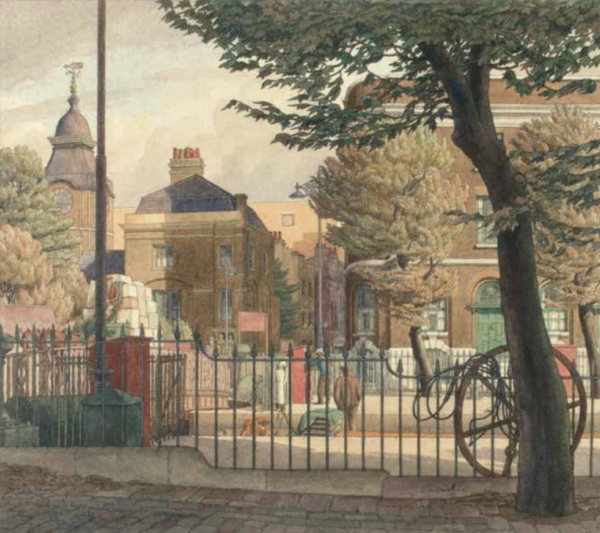
Wapping Pier Head, 1935
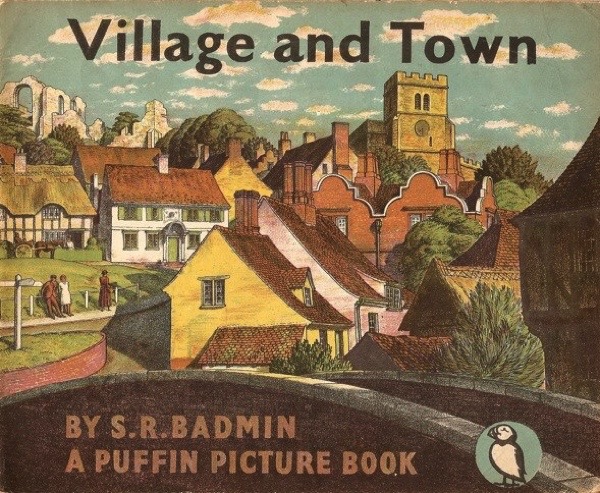
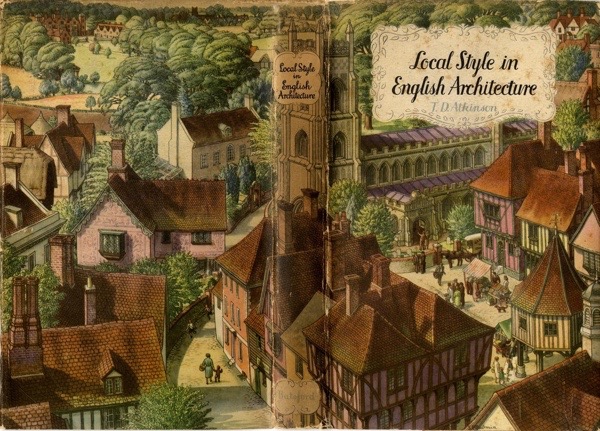
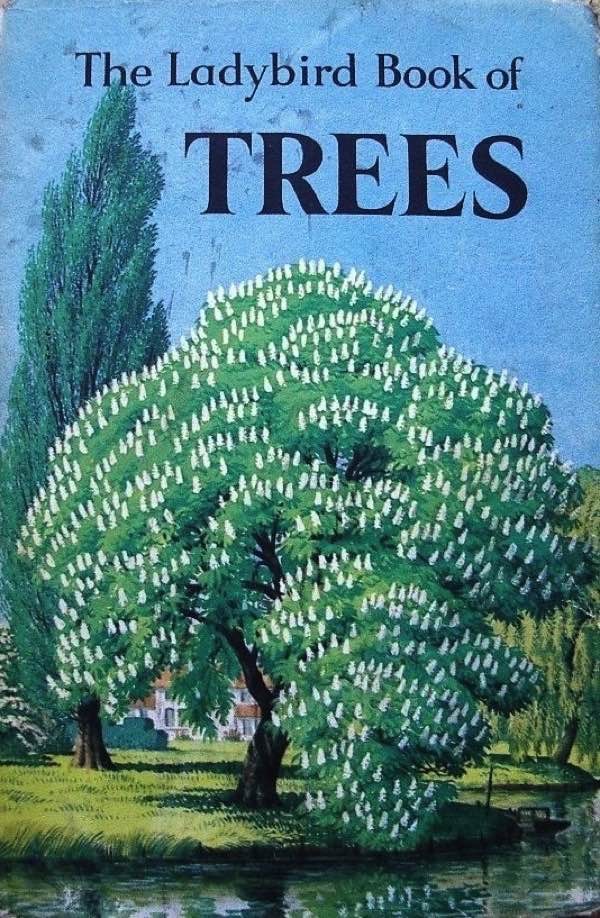
In the second half of the last century, the meticulously rendered paintings of Stanley Roy Badmin (1906–89) achieved universal recognition among millions who may not have known his name but were familiar with his ubiquitous style. His work appeared on the covers of such popular publications as Readers’ Digest and Radio Times, in books such as the Puffin Picture Book of Village & Town, 1939, and the Ladybird Book of Trees, 1963 – as well as gracing Christmas cards published by Royle on both sides of the Atlantic.
Born in Sydenham to a family that originated in Somerset, Stanley often visited his grandfather who was a cabinet maker in the Mendips and his love for the English countryside remained a central theme throughout his artistic life. An interest in waterways, rivers, canals and bridges was part of Stanley’s fascination with the rural landscape and it was perhaps this which drew him to paint Wapping Pier Head. Certainly, there is very little in the picture to indicate that this is an urban scene. Remarkably in Wapping, where after the closure of the London Docks and their subsequent redevelopment very little remains of the past, Stanley’s view of Wapping Pier Head survives unaltered today.
At Camberwell Art School in 1922, Thomas Derrick encouraged Stanley to paint familiar subjects. “He gave me a good talking to about painting things around me and not ladies in crinolines,” recalled Stanley. Winning a place at the Royal College of Art, Stanley switched from painting to design with the blessing of William Rothenstein.
Graduating in 1927, he soon won commissions for magazine illustrations which were followed by a string of books, beginning with Highways & Byways in Essex in 1937. Additionally, Stanley travelled around the country, working for the Pilgrim Trust from 1940 as part of its Recording Britain scheme, dedicated to documenting views and buildings that were at risk, either from neglect, demolition or enemy bombs.
Postwar, Stanley’s lyrical vision of the rural English landscape caught the national imagination. Yet it avoided the nostalgic romanticism of his contemporaries through a concern with the reality of agricultural life as expressed in its working detail, farm machinery and infrastructure.
Above all, Stanley’s paintings confront the viewer with wonder at the astonishing minutiae of the world, sometimes rendering every twig and leaf in the sharp focus of a dream, and inviting us to peer into his pictures as if we are looking through a window.


Wapping Pier Head reproduced courtesy of Museum of London
The Estate of SR Badmin is represented by Chris Beetles Gallery
Take a look at some of the other artists featured in East End Vernacular
Mr Pussy’s Chair

Mid-afternoon in Spitalfields, Mr Pussy snoozes
Is that an old fur hat on that chair in the corner? You would be forgiven for making such a simple mistake, but in fact it is my old cat, Mr Pussy, slumbering the hours away in the armchair that is his ultimate home, the place where I first laid him down as a tiny kitten and the place where he has spent more hours of his life than anywhere else – even if it has now moved over two hundred miles from one end of the country to the other. It is Mr Pussy’s chair.
My mother bought this chair in 1963. She had been married five years and had a three year old child, and she was still struggling to furnish our house. She was patient, doing without and waiting until the opportunity arose to acquire suitable things. She had very little money to spend but she wanted furniture that would last, and the passage of time has proved she chose wisely. I think she bought this chair in a sale and, although I do not know if it can truly be memory on my part, I see her searching among the cut-price furniture in the shop and filling with delight to discover this handsome Queen Anne style wingchair that was within her budget.
It was a deep green velvet then and one of my earliest memories is of standing upon the seat, safe between the wings of the chair, and reaching up vainly attempting to grasp the top. I yearned for the day when I would be tall enough to reach it, for then I should grown up beyond my feeble toddler years. The chair seemed huge to me and I could climb beneath it comfortably, much to my father’s frustration when he was sitting in it on Saturday afternoons and attempting to take note of the football results from the television, in order to complete his pools form and discover if he had become wealthy.
He never became wealthy yet he never gave up hope of winning either, sitting in this chair and filling in the football scores every Saturday, for year after year, until he died. Just a few weeks after his funeral, I bought a small black kitten for my mother as a means to ameliorate her grief and the tiny creature slept curled up in the corner of the armchair, seeking security in its wide embrace. It was his earliest nest. By now the green velvet had faded to a golden brown and the cushion has disintegrated, so that if a stranger were to visit and sit down quickly upon it they would fall right through the seat. Yet this did not matter too much to us, because we kept the chair exclusively for the use of the cat who did not weigh very much.
Eventually, to rejuvenate the chair, we had a new seat cushion made and a loose fabric cover of William Morris’ Willow Leaves pattern, which is still serviceable more than ten years later. Once my mother began to lose her faculties in her final years, I often sat her in it that she might benefit from its protection, when her balance failed her, and not fall off onto the floor as she did from chairs without wings. After she died, it became the cat’s sole preserve and it still delights me to see him there in the chair, evoking earlier days. It is almost the last piece of furniture I have from my childhood home and, although I do not choose to sit in it much myself, I keep it because I can still see my father sitting there doing his football pools or my mother perched to read the Sunday supplement.
One day, I mean to have the armchair reupholstered in its original deep green velvet but until then, by his presence, Mr Pussy keeps the chair and the memories that it carries alive. I realise that Mr Pussy is keeping the chair warm for me and I am grateful to him for this service that he offers so readily.


You may also like to read
Mr Pussy Gives his First Interview
and take a look at
The Cats of Spitalfields (Part One)
Nathaniel Kornbluth, Artist
Today I present another extract from my new book EAST END VERNACULAR, Artists who painted London’s East End streets in the 20th century to be published by Spitalfields Life Books in October. Click here to preorder your copy
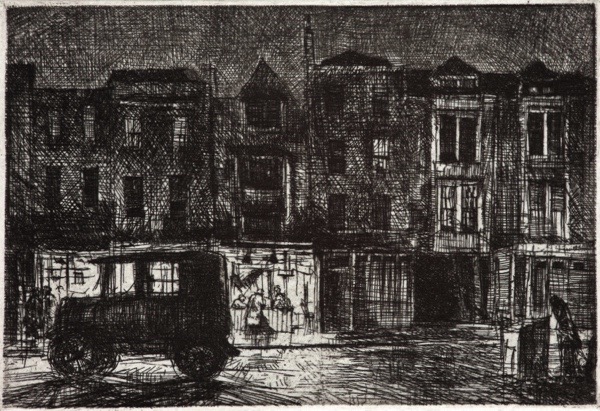
Butchers’ Row, Aldgate, 1934
This view was a familiar one for Nathaniel Kornbluth (1914–97) because he spent his working life running the family menswear business at 56 Whitechapel High St, just a few hundred yards away. As a child of Polish immigrants, Nathaniel found his aspirations to an artistic career were discouraged, yet he proved himself a loyal son by devoting himself to the wholesale clothing trade by day, while taking evening classes in printmaking at night.
Nathaniel learnt the techniques of etching at classes at Hackney Technical School in the thirties and then came under the influence of some of the most important printmakers of his time at the Central School of Arts & Crafts in the forties.
While Nathaniel’s choice of medium and subject matter display an awareness of Whistler, a distinctly twentieth century expressionist influence may also be perceived in the moody atmosphere that prevails. His prints reveal an artist of superlative technical accomplishment, with a rigorous quality of draftsmanship, a commanding sense of space and a subtle appreciation of the grim utilitarian beauty of the working city, especially the riverside.
During the thirties, Nathaniel first exhibited his etchings at the East End Academy at the Whitechapel Gallery, which was situated directly across the road from his family business. Subsequently, his prints were purchased for major collections both nationally and internationally, and he was holding solo exhibitions of new work until the nineteen-eighties.
Although Nathaniel sought subject matter all over the capital, his intricately detailed representations of the London Docks in particular survive as an invaluable record of a lost industry.
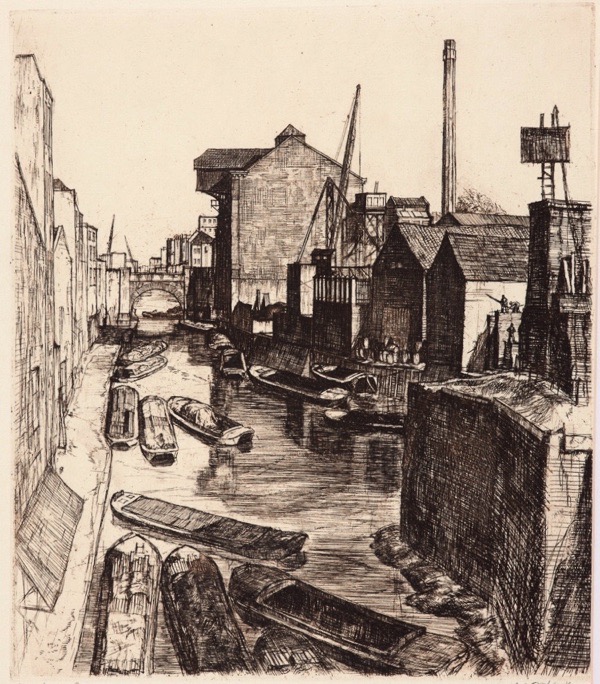
Limehouse Cut, 1935-6
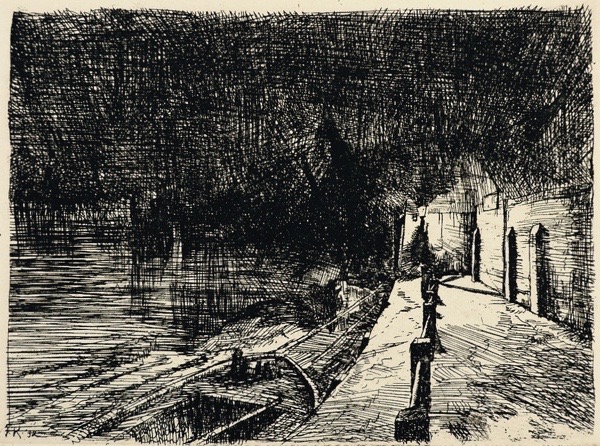
Lovell’s Wharf, Greenwich, 1932
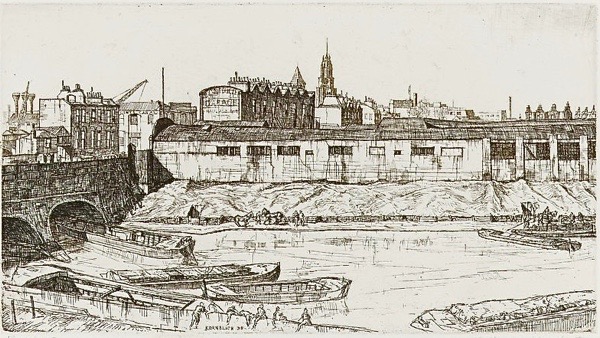
Regent’s Canal, Stepney, 1934
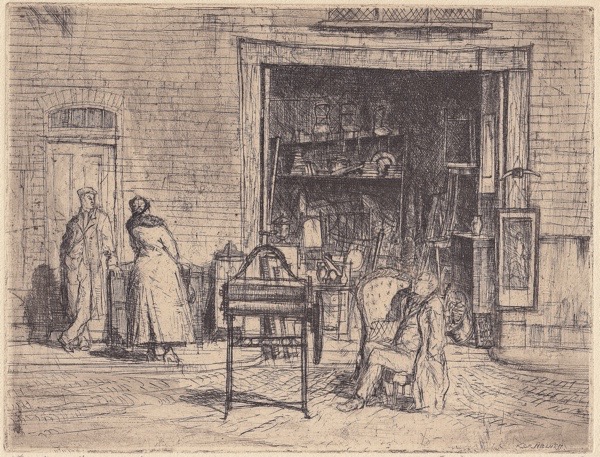
Junk Shop, Limehouse, 1935
Butcher’s Row & Limehouse Cut courtesy of Tower Hamlets Local History Library & Archives
Take a look at some of the other artists featured in East End Vernacular












