
John Minton’s East End
Martin Salisbury author of The Snail that climbed the Eiffel Tower, a monograph of John Minton’s graphic work, explores Minton’s fascination with the East End.
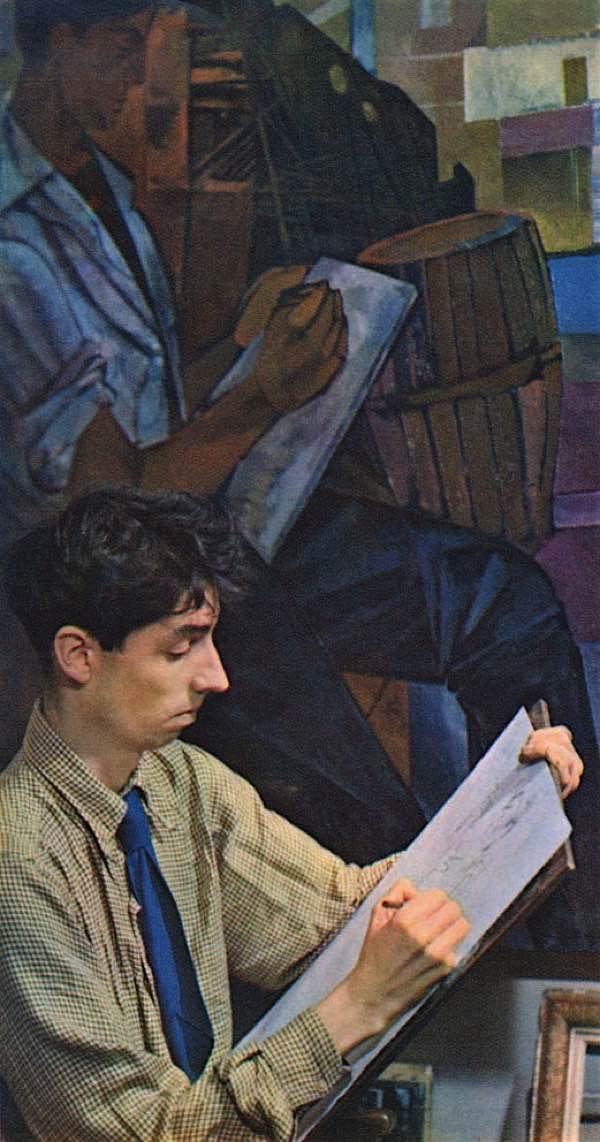
Never quite accepted by the establishment during his brief, rather tragic life, artist John Minton (1917—1957) has divided opinion ever since. Brilliant illustrator, inspirational teacher, prodigious habitué of Soho and Fitzrovia drinking establishments, Minton was bound to enter the folklore of post-war London. Somehow, he embodied the mood of elegiac romanticism that pervaded the arts through the forties and into the early fifties before fizzling out to be replaced by a more forward-looking, assertive art in the form of American abstract expressionism and British ‘kitchen-sink’ realism.
His life, riddled as it was with contradictions, began on Christmas Day 1917 in a wooden house near Cambridge, of an architectural style that some have termed ‘Gingerbread,’ and ended just under forty years later in Chelsea. He had apparently taken his own life.
This year’s centenary of Minton’s birth bring recognition to an artist who has not previously enjoyed the attention that has come the way of those other mid-century greats, Edward Bawden, Eric Ravilious and John Piper. An exhibition at Pallant House, Chichester this summer gathered many of his paintings that have received mixed responses over the years. Rooms were devoted to his portraits, his various epic narrative paintings and his neo-romantic landscapes. Alongside his ‘longing to be away’ paintings of Corsica, Jamaica and Spain, there were also many depictions of London. In particular, it was London’s dockland that he returned to repeatedly.
Arguably, John Minton was at his best as a graphic and commercial artist, perhaps best known for his sublime illustrations for publisher John Lehmann to Elizabeth David’s highly influential food writing and Alan Ross; Corsica travel journal, Time Was Away, a lavish anti-austerity production. Yet Minton’s urban romanticism found its way into many commercial commissions too. Wartime drawings of bombed-out buildings in Poplar still exhibited the samr overwrought theatricality that was a feature of his work while under the spell of friend and fellow artist, Michael Ayrton.
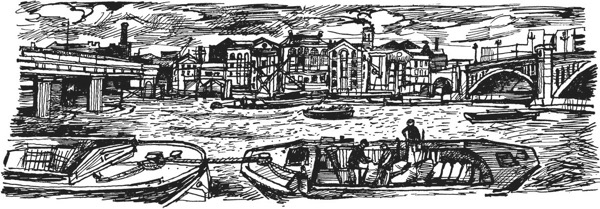
In the immediate post-war years, as Minton’s work drew more consistently on direct observation, his visual vocabulary matured and his frequent visits to the river resulted in a mass of drawings of the cranes and wharves of the Port of London and Bankside. Rotherhithe from Wapping was painted in 1946 and a three-colour lithograph of the same composition followed two years later, renamed Thames-side.
The flattened perspective in this pictures embraces barges in the foreground and the jumble of warehouses on the far bank in the background. Typically, this image includes a pair of male figures in intimate conversation. Minton’s sexuality was central to his work and these dockland images embody the frustration he felt as a gay man at a time when sex between men was illegal. The many hours that Minton spent haunting the riverside allowed him not only to draw but to enjoy the company of sailors and dockers. Time and again, his pictures feature solitary male figures or distant pairs, huddled together, walking at low tide or working on boats, dwarfed by the surrounding buildings and brooding clouds.
John Minton’s only commission for London Transport came from publicity officer, Harold F. Hutchison in the form of a ‘pair poster’ titled London’s River. This concept involved posters designed in adjoining pairs, with one side featuring a striking pictorial image and the other containing text. The familiar dockland images are reworked here in gouache, in similar manner to the series of paintings commissioned for Lilliput in July 1947, London River.
An unpublished rough cover design for The Leader magazine executed in 1948 features another of Minton’s favourite motifs, the elevated street view. In this instance, the foreground figure gazing from an upper window bears more than a passing resemblance to the artist himself. The composition takes us beyond the streets below to the Thames via the dome of St Paul’s. A similar view, this time of the author’s native Hackney, graces the dust jacket of Roland Camberton’s Rain on the Pavements, published in 1951 by John Lehmann. This was the second of Camberton’s two novels, both with dust jackets designed by Minton, and tells the story of David Hirsch’s early years growing up in Hackney Jewish society.
In his 2008 article Man in a MacIntosh, Iain Sinclair followed in the footsteps of a fellow Hackney writer, recognising, “Camberton, in choosing to set ‘Rain on the Pavements’ in Hackney, was composing his own obituary. Blackshirt demagogues, the spectre of Oswald Mosley’s legions, stalk Ridley Rd Market while the exiled author ransacks his memory for an affectionate and exasperated account of an orthodox community in its prewar lull.”
John Minton’s magnificent jacket design draws us into that world with effortless elegance.
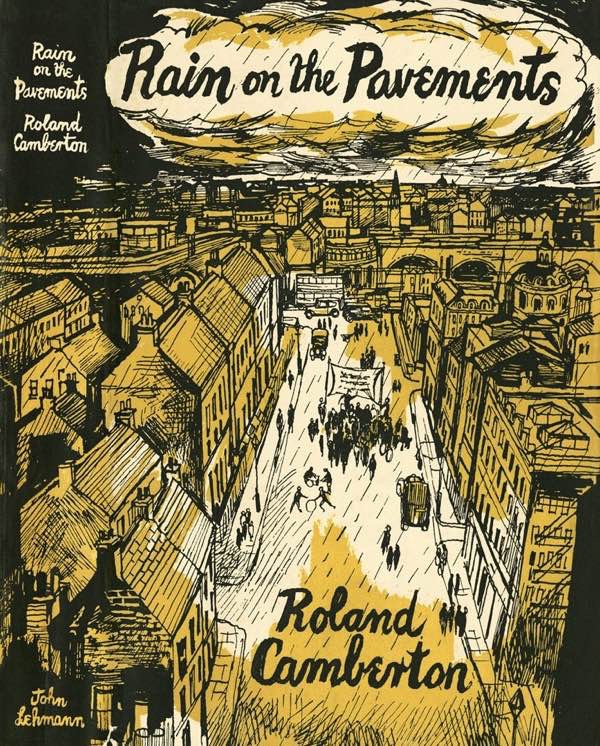
Rain on the Pavements, 1951
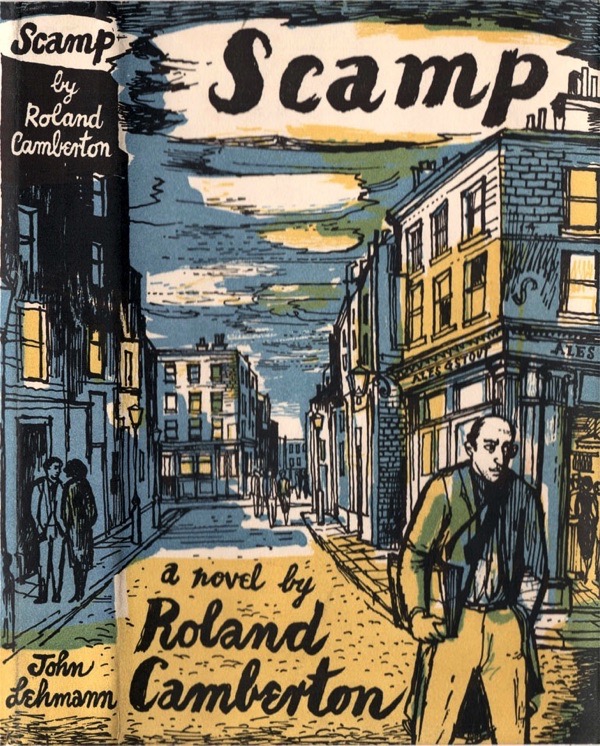
Scamp, 1950
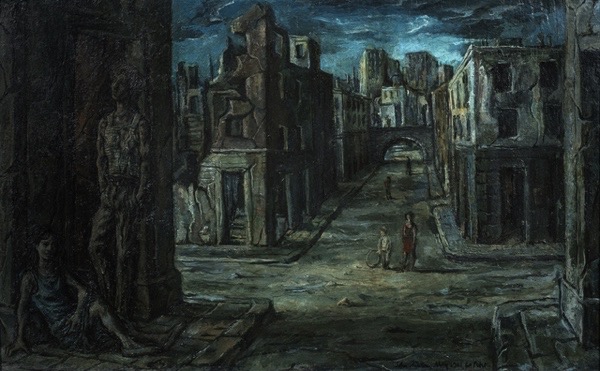
Wapping, 1941
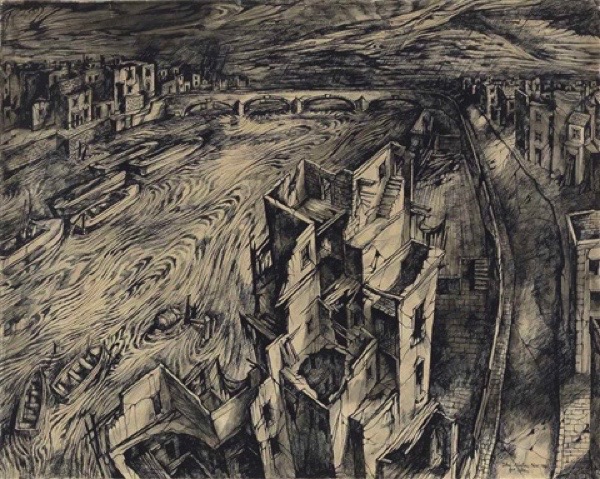
Bomb-damaged buildings, Poplar, 1941
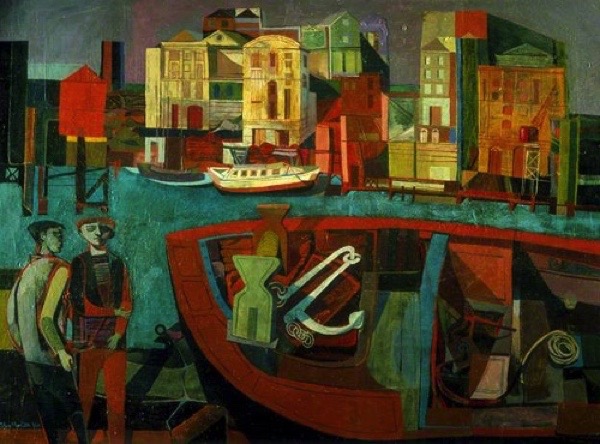
Rotherhithe from Wapping, 1946
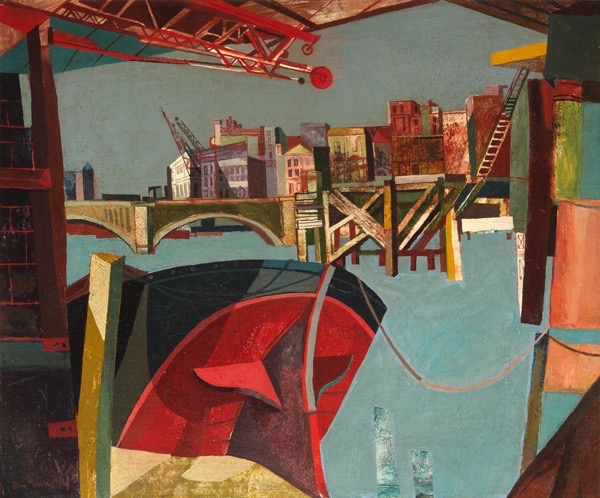
London Bridge from Cannon Street Station, 1946
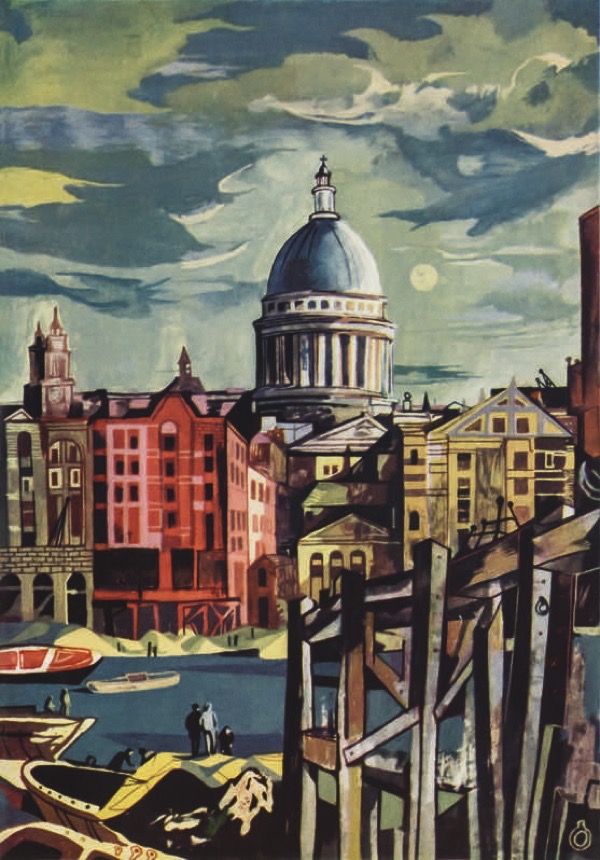
London’s River, Lilliput 1947
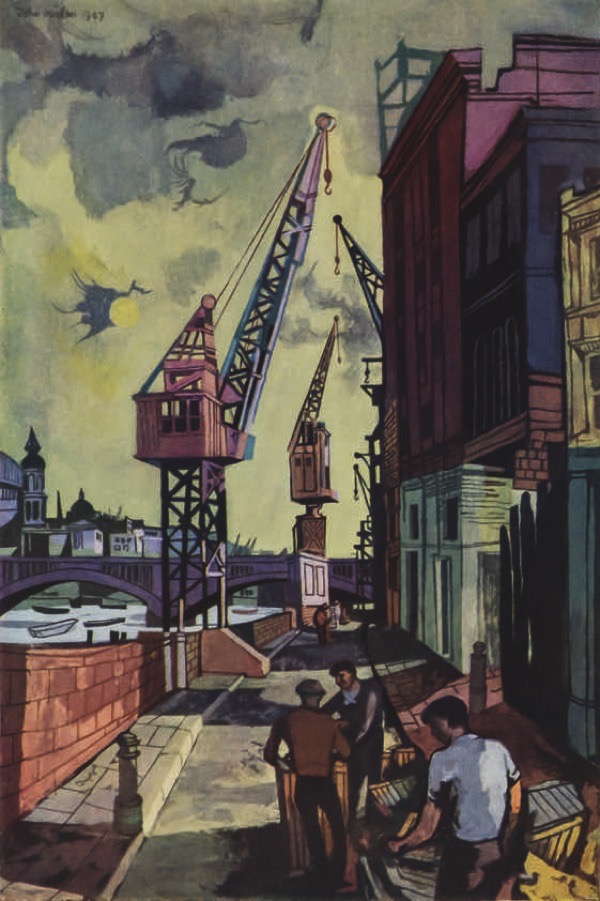
London’s River, Lilliput 1947
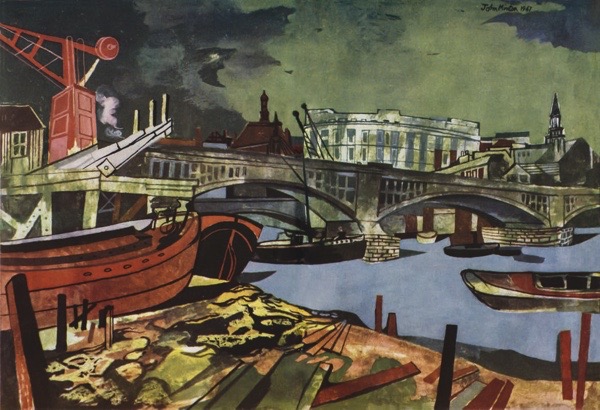
London’s River, Lilliput 1947
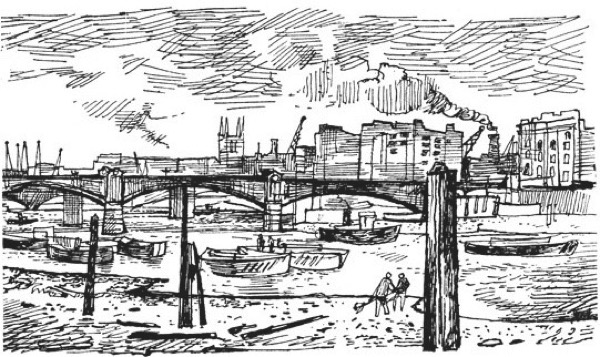
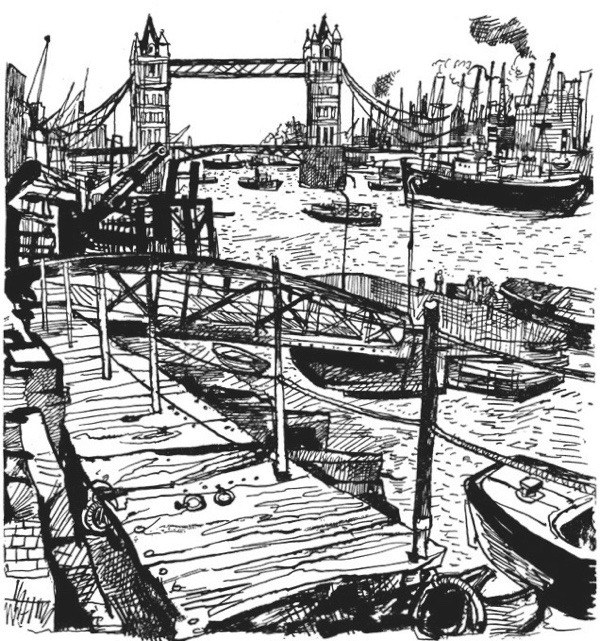
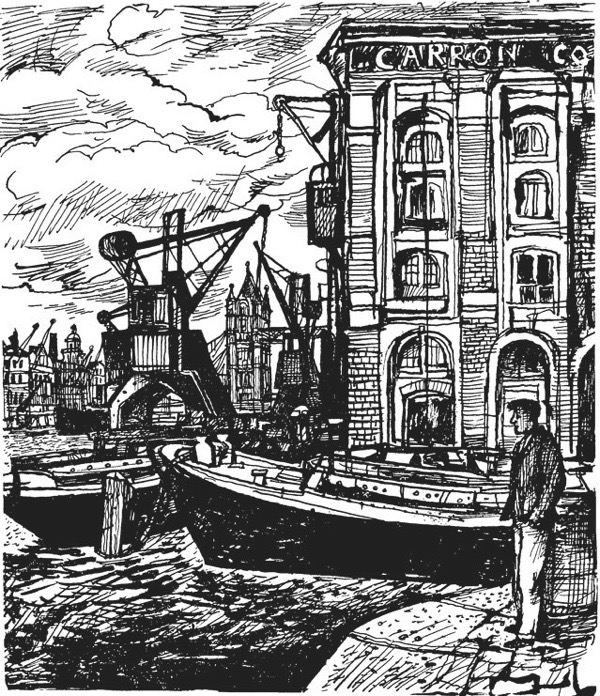
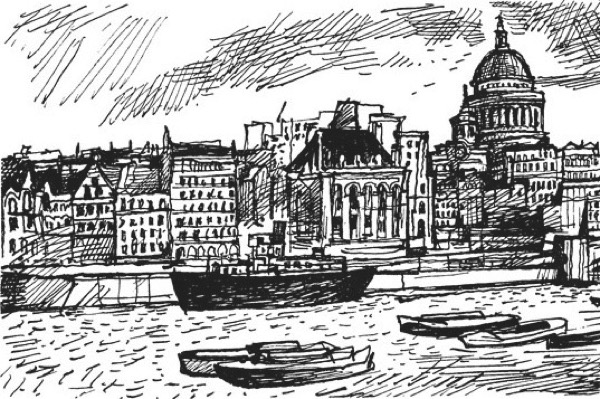
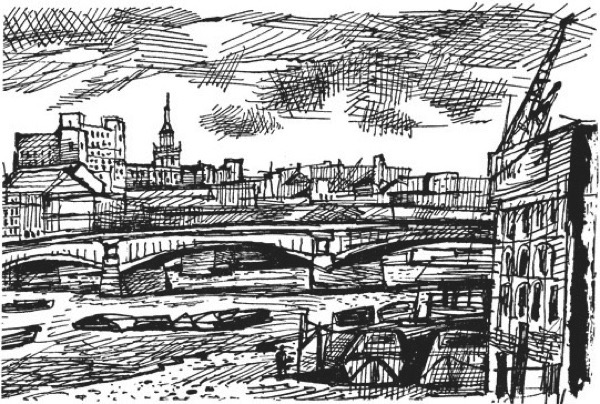
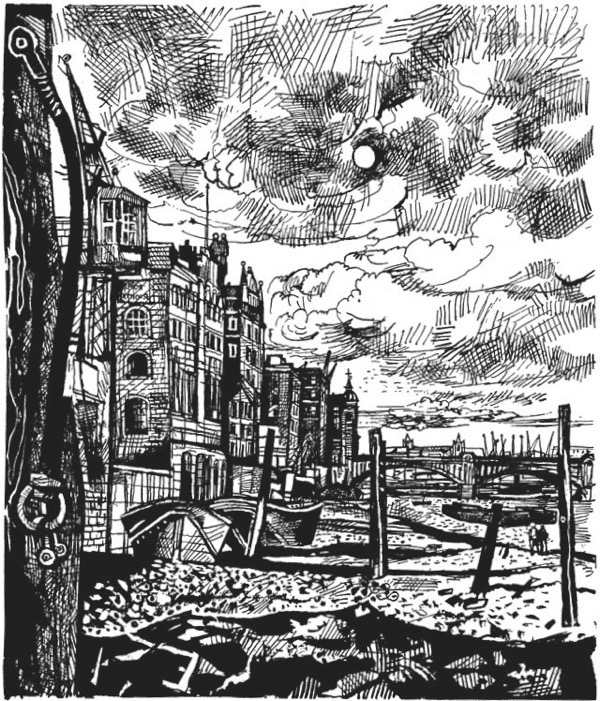
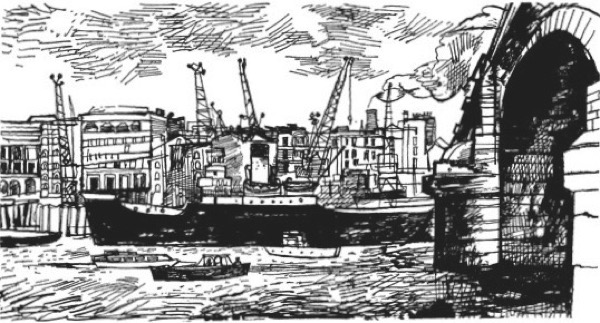
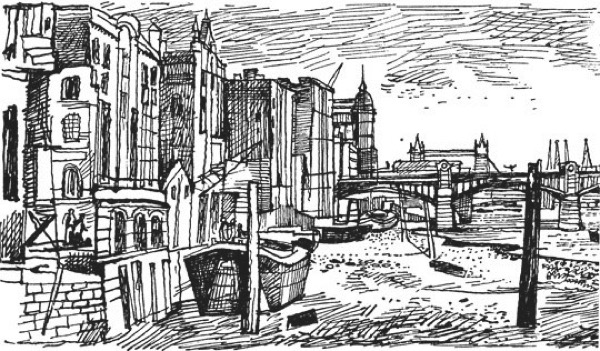
Illustrations from Flower of Cities, 1949
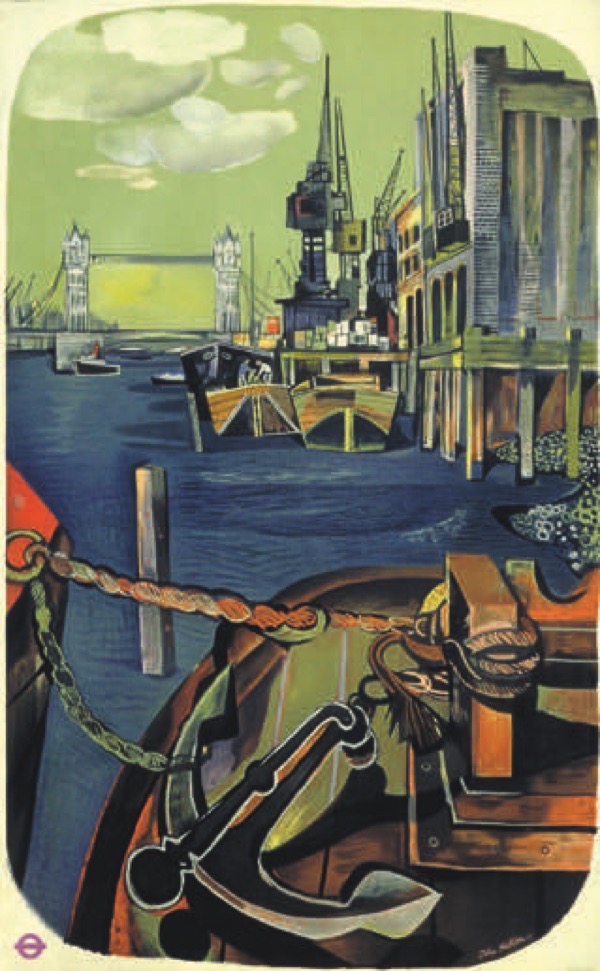
London’s River: Pool of London, London Transport, 1951
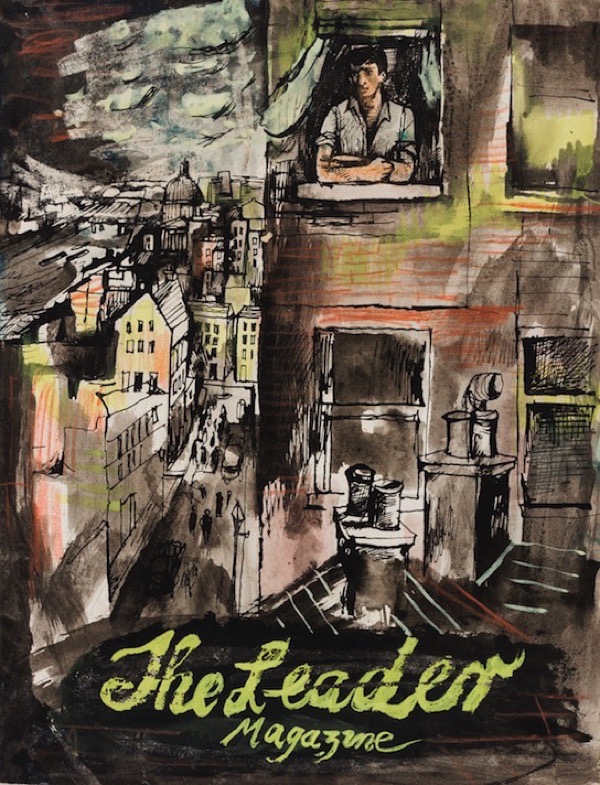
The Leader, 1948
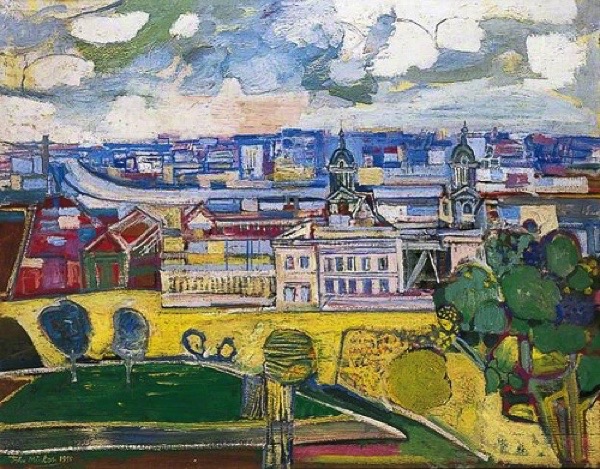
Isle of Dogs from Greenwich, 1955
Illustrations copyright © Estate of John Minton
You may also like to read about Alfred Daniels & Terry Scales who were taught by John Minton
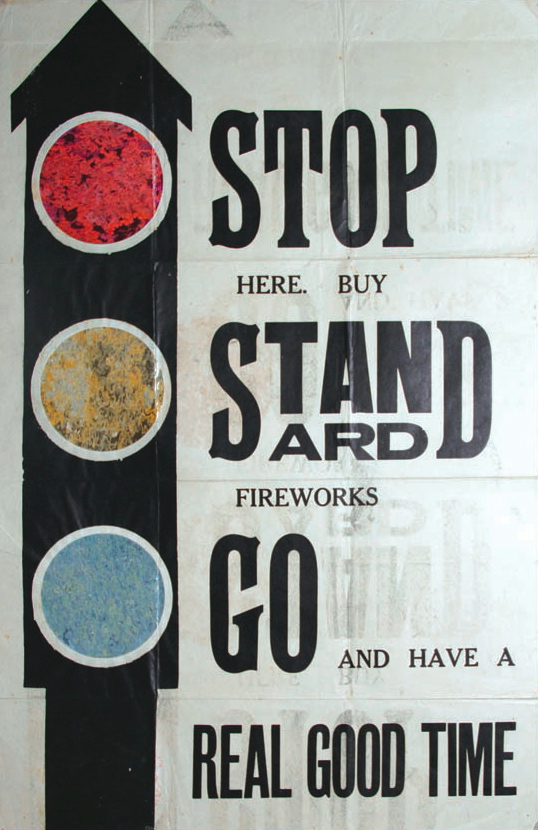
Maurice Evans, Self-Taught Pyrotechnician
On Bonfire Night, my thoughts turn to Maurice Evans, Britain’s Pyrotechnician Extraordinaire

Maurice Evans
Maurice Evans has been collecting fireworks since childhood and now over eighty years old, he has the most comprehensive collection in the country – so you can imagine both my excitement and my trepidation upon stepping through the threshold of his house in Shoreham. My concern about potential explosion was relieved when Maurice confirmed that he has removed the gunpowder from his fireworks, only to be reawakened when his wife Kit helpfully revealed that Catherine Wheels and Bangers were excepted because you cannot extract the gunpowder without ruining them.
This statement prompted Maurice to remember with visible pleasure that he still had a collection of Second World War shells in the cellar and, of course, the reinforced steel shed in the garden full of live fireworks. “Let’s just say, if there’s a big bang in the neighbourhood, the police always come here first to see if it’s me,” admitted Maurice with a playful smirk. “Which it often isn’t,” added Kit, backing Maurice up with a complicit demonstration of knowing innocence.
“It all started with my father who was in munitions in the First World War,” explained Maurice proudly, “He had a big trunk with little drawers, and in those drawers I found diagrams explaining how to work with explosives and it intrigued me. Then came World War II and the South Downs were used as a training ground and, as boys, we went where we shouldn’t and there were loads of shells lying around, so we used to let them off.”
Maurice’s radiant smile revealed to me the unassailable joy of his teenage years, running around the downs at Shoreham playing with bombs. “We used to set off detonators outside each other’s houses to announce we’d arrived!” he bragged, waving his left hand to reveal the missing index finger, blown off when the explosive in a slow fuse unexpectedly fired upon lighting. “That’s the worst thing that happened,” Maurice declared with a grimace of alacrity, “We were worldly wise with explosives!”
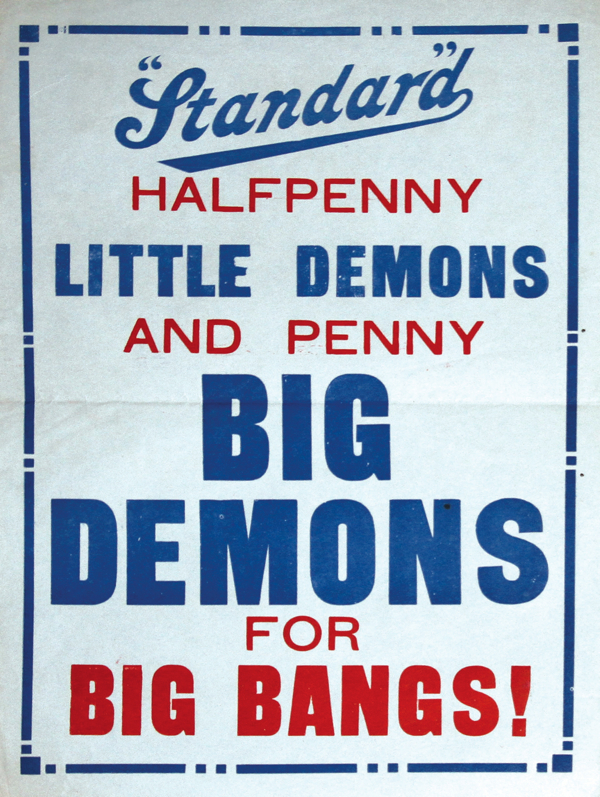
Even before his teens, the love of pyrotechnics had taken grip upon Maurice’s psyche. It was a passion born of denial. “I used to suffer from bronchitis and asthma as a child, so when November 5th came round, I had to stay indoors.” he confided with a frown, “Every shop had a club and you put your pennies and ha’pennies in to save for fireworks and that’s what I did, but then my father let them off and I had to watch through the window.”
After the war, Maurice teamed up with a pyrotechnician from London and they travelled the country giving displays which Maurice devised, achieving delights that transcended his childhood hunger for explosions. “In my mind, I could envisage the sequence of fireworks and colours, and that was what I used to enjoy. You’ve got all the colours to start with, smoke, smoke colours, ground explosions, aerial explosions – it’s endless the amount of different things you can do. The art of it is knowing how to choose.” explained Maurice, his face illuminated by the images flickering in his mind. Adding, “I used to be quite big in fireworks at one time.” with calculated understatement.
Yet all this personal history was the mere pre-amble before Maurice led me through his house, immaculately clean, lined with patterned carpets and papers and witty curios of every description. Then in the kitchen, overlooking the garden lined with old trees, he opened an unexpected cupboard door to reveal a narrow red staircase going down. We descended to enter the burrow where Maurice has his rifle range, his collections, model aeroplanes, bombs and fireworks – all sharing the properties of flight and explosiveness. Once they were within reach, Maurice could not restrain his delight in picking up the shells and mortars of his childhood, explaining their explosive qualities and functions.
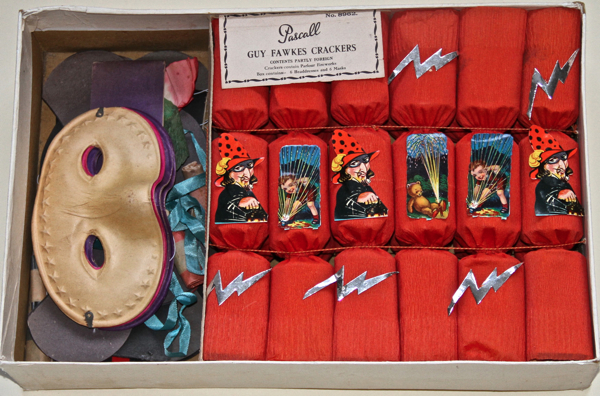
But my eyes were drawn by all the fireworks that lined the walls and glass cases, and the deep blues, lemon yellows and scarlets of their wrappers and casings. Such evocative colours and intricate designs which in their distinctive style of type and motif, draw upon the excitement and anticipation of magic we all share as children, feelings that compose into a lifelong love of fireworks. Rockets, Roman Candles, Catherine Wheels, Bangers, and Sparklers – amounting to thousands in boxes and crates, Maurice’s extraordinary collection is the history of fireworks in this country.
“I wouldn’t say its made my life, but its certainly livened it up,” confided Maurice, seeing my wonder at his overwhelming display. Because no-one (except Maurice) keeps fireworks, there is something extraordinary in seeing so many old ones and it sets your imagination racing to envisage the potential spectacle that these small cardboard parcels propose.
Maurice outgrew the bronchitis and asthma to have a beautiful life filled with fireworks, to visit firework factories around Britain, in China, Australia, New Zealand and all over Europe, and to scour Britain for collections of old fireworks, accumulating his priceless collection. Now like an old dragon in a cave, surrounded by gold, Maurice guards his cellar hoard protectively and is concerned about the future. “It needs to be seen,” he said, contemplating it all and speaking his thoughts out loud, “I would like to put this whole collection into a museum. I don’t want any money. I want everyone to see what happened from pre-war times up until the present day in the progression of fireworks.”
“My father used to bring me the used ones to keep,” confessed Maurice quietly with an affectionate gleam in his eye, as he revealed the emotional origin of his collection, now that we were alone together in the cellar. With touching selflessness, having derived so much joy from collecting his fireworks, Maurice wants to share them with everybody else.

Maurice with his exploding fruit.

Maurice with his barrel of gunpowder

Maurice with his grenades.
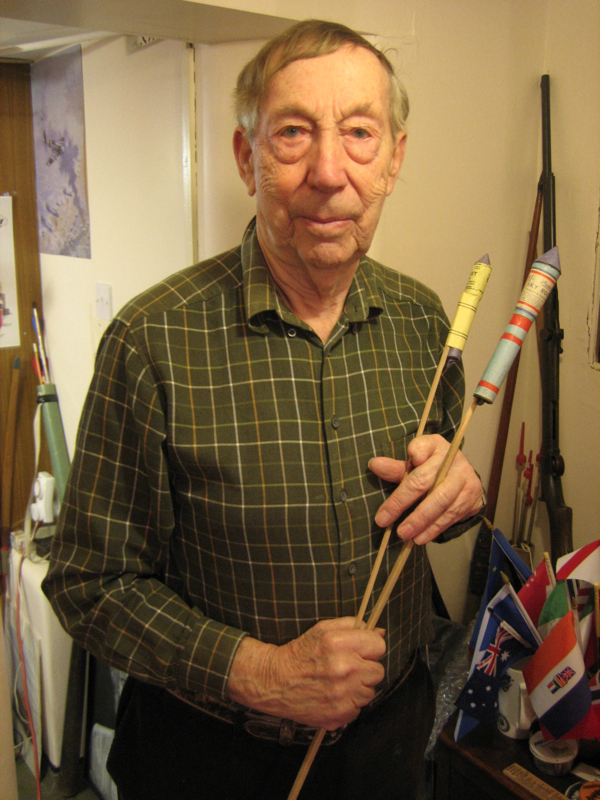
Maurice with two favourite rockets.


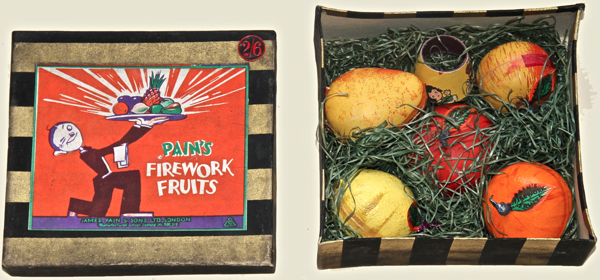





Firework photographs copyright © Simon Costin
Read my story about Simon Costin, The Museum of British Folklore
So Long, Glenys Bristow
Linda Hayes wrote with the sad news that her mother Glenys Bristow died aged ninety-five last Sunday. Today we celebrate the life of a woman of astonishing resilience who lived and worked in Spitalfields during the Second World War.
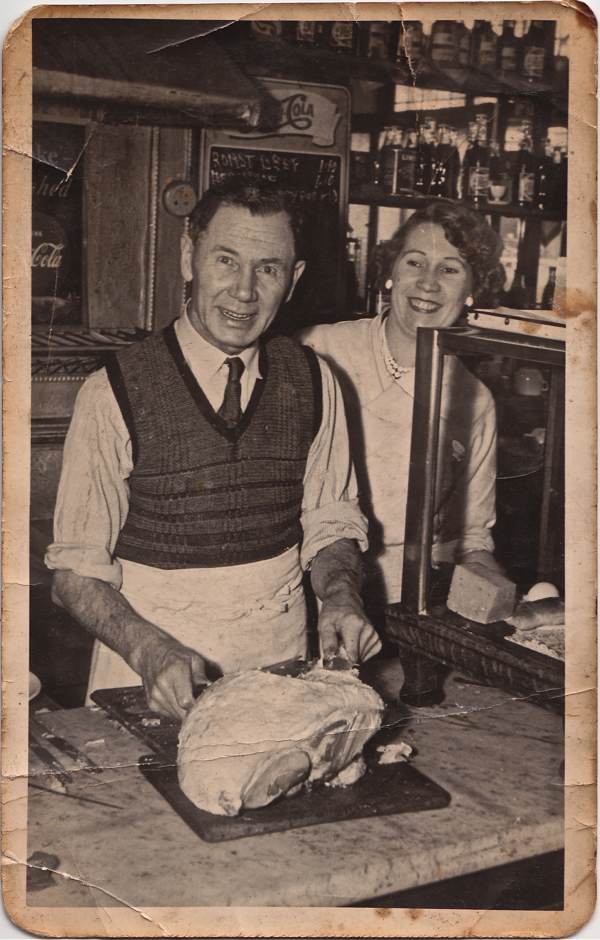
Glenys with her dad Stanley Arnabaldi in their cafe at 100 Commercial St
When I met Glenys Bristow, she did not live in Spitalfields anymore but in a well-kept flat in a quiet corner of Bethnal Green. Glenys might never even have come to Spitalfields if the Germans had not dropped a bomb on her father’s cafe in Mansell St, down below Aldgate. In fact, Glenys would have preferred to stay in Westcliff-on-Sea and never come to London at all, if she had been given the choice. Yet circumstances prevailed to bring Glenys to Spitalfields. And, as you can see from this picture taken in 1943 – in the cafe she ran with her father opposite the market – Glenys embraced her life in Spitalfields wholeheartedly.
“I came to London from Westcliff-on-Sea when I was fifteen. I didn’t like London at all. At first we were in Limehouse, I walked over to Salmon Lane and there was Oswald Mosley making a speech to his blackshirts. The police told us to go home. I was sixteen and I missed Westcliff so, me and my friend, we took a job in a cafe there for the Summer. We were naive. We weren’t streetwise. We didn’t have confidence like kids do today.
The family moved to Mansell St where had a cafe – our first cafe – and we lived above it. My father’s name was Arnabaldi, I used to hate it when I was at school. My father always wanted to have a cafe of his own. His father had come over from Italy and ran a shop in Friern Barnet but died when my father was only eleven, and my father told me his mother died young of a broken heart.
In September 1940, we were bombed out of Mansell St. Luckily no-one was inside at the time because it was the weekend. It was a big shock. My mother, sister Rita and brother Raymond had gone to Wales to visit my grandparents in the Rhonda Valley. I’d left that afternoon with my husband Jack, who was my boyfriend then. We had something to eat at his sister’s then we went by bus to my future in laws at Old St, where we slept in an Anderson shelter. On Monday morning, we were walking back to Mansell St and these people asked, “Where are you going?” I said, “Home, I’m going to change before going to work.” “You’ll be lucky,” they said. When we got there we found the site roped off. It was all gone. Just a pile of rubble.”
Glenys got married at eighteen years old at Arbour Sq Registry Office when Jack was enlisted.”We didn’t know if we were going to be here from one day to the next,”she told me, describing her experience of living through the blitz, suffering the destruction of her home in the bombing and then finding herself alone with a baby while her husband was at war.
“In late 1942, my father got the cafe at 100 Commercial St, Spitalfields, and I was living in a little house in Vallance Rd and had my first baby John and he was just eleven months old. My father bought the cafe and he arranged for me to stay in the top floor flat next door at 102, Commercial St. We just had two rooms above some offices with a cooker on the landing and a toilet. When the air raid sirens went, I didn’t want to get out of bed so my dad fixed up a bell on a string from next door. I used to wrap my baby in an eiderdown and wait until the shrapnel had stopped flying before I went out of the door into the street to the cafe next door.
I did a bit of everything, cooking, serving behind the counter. People came in from the Godfrey & Phillips cigarette factory, the market and all the workshops. The fruit & vegetable market kept going all through the war but, because of the blackout, it started later in the night. We were lucky being close to the market, we were never short of anything.
At the end of the war, Jack came back and worked for my parents until, after a few years, the lease on the cafe ran out and we had to give it up. In 1956, we rented a little cafe in Hanbury St that belonged to the Truman Brewery, but we were only there three years before we had to move again because they had expansion plans. We bought the cafe opposite where Bud Flanagan had been born and called it Jack’s Cafe. And we were there from 1960 until 1971.
Because of the market, we had to have dinner ready to serve at nine in the morning, and again from twelve ’til two. Nothing was frozen, everything was cooked daily and Jack used to buy everything fresh from the market. They said we had the best and the cleanest cafe in the Spitalfields Market, and a lot of our customers became friends. My daughter met her husband there, he was a porter – his whole family were porters – and my son went to work as a porter, he was called an empty boy until he got his badge.
I just took it for granted. We used to open at half past four in the morning and I used to try and get cleaned up by half past six at night. It was very hard. Eventually, we sold it because I had back trouble and my husband bought a couple of lorries. In 1976, we moved from Commercial St to Chicksand St. I had four children altogether, only three that lived.
When it all changed, we went back – my daughter and I – to visit our old cafe. It had the same formica on the wall my husband had put up and I kept trying to look in the kitchen. I loved it when we worked for my mum and dad, and when we had our own place. I loved it and I miss it. They said I was the best pastry cook in Spitalfields.”
Glenys Bristow was a woman of astonishing resilience, possessing quick wits and a bright intelligence. Random events delivered her to Spitalfields in wartime, where she found herself at the centre of a lively working community. Losing everything when the bomb fell on her father’s cafe, and living day-to-day in peril of her life, she summoned extraordinary strength of character, bringing up her family and working long hours too. Glenys had no idea that she would live into another century, and enjoy the advantage of living peacefully in Bethnal Green and be able to look back on it all with affection.

Glenys Bristow (1922-2017)
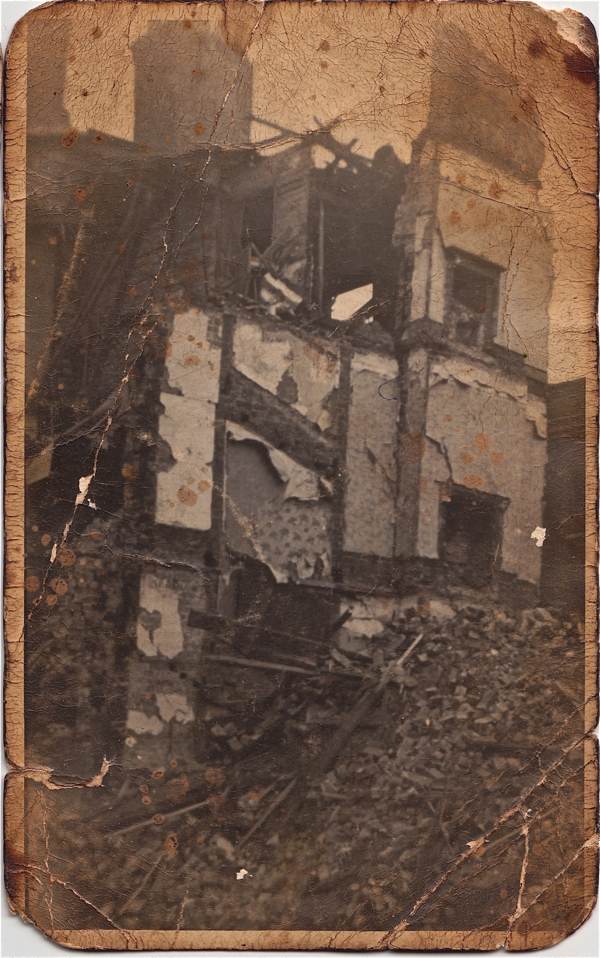
Glenys’ home in Mansell St after the bomb dropped in 1940.
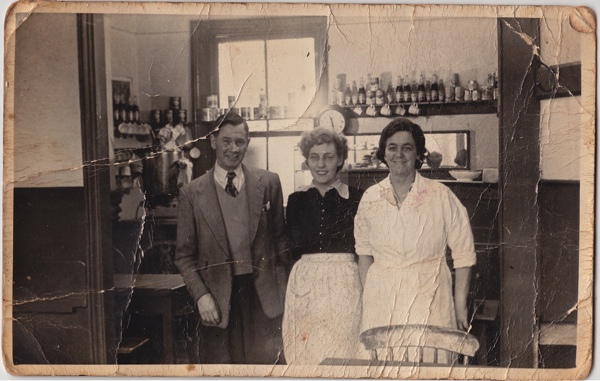
At the cafe in Mansell St.
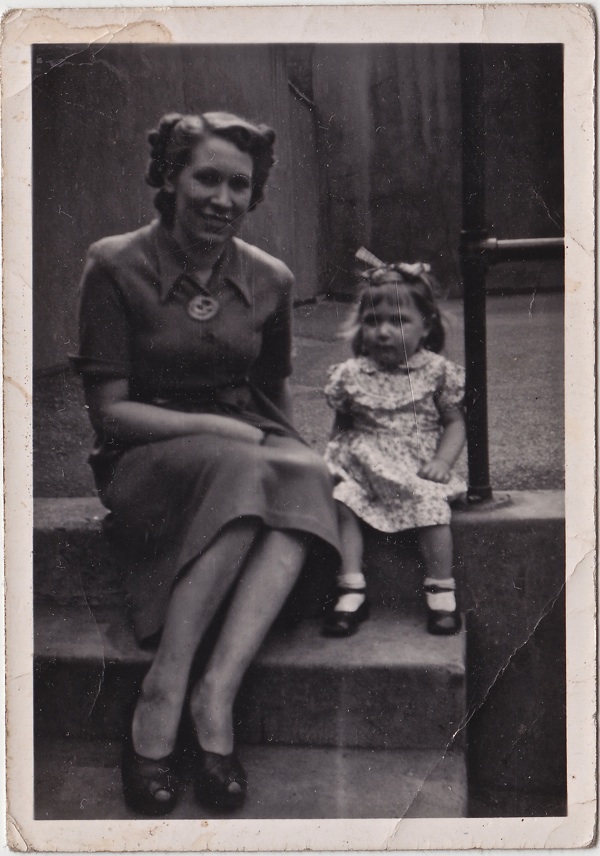
Glenys and her daughter Linda, 1950
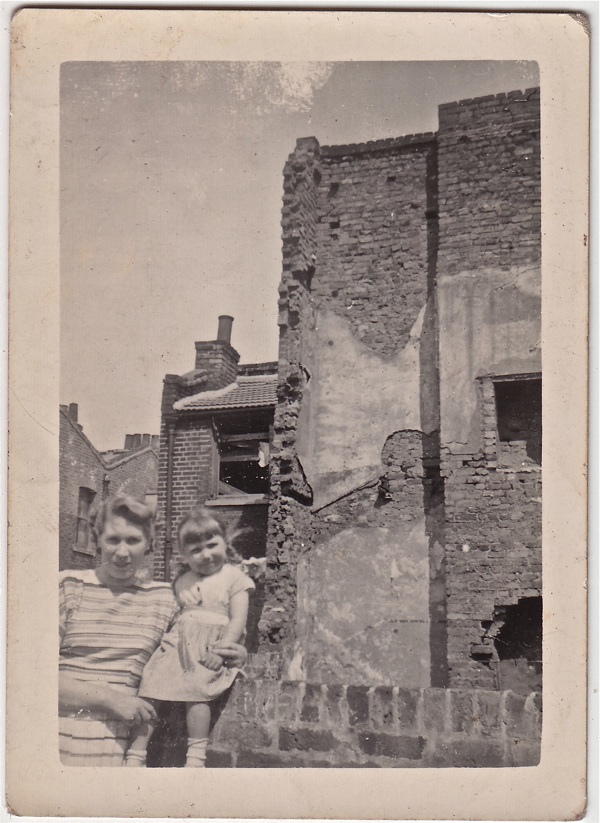
Glenys and Linda visit the site of the former cafe in Mansell St, 1951.
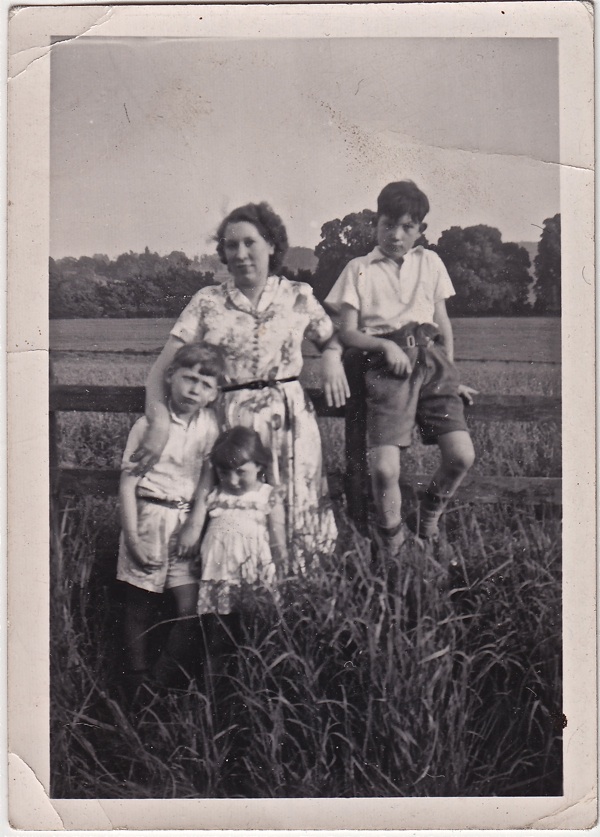
Glenys with her children, John, Linda and Alan.
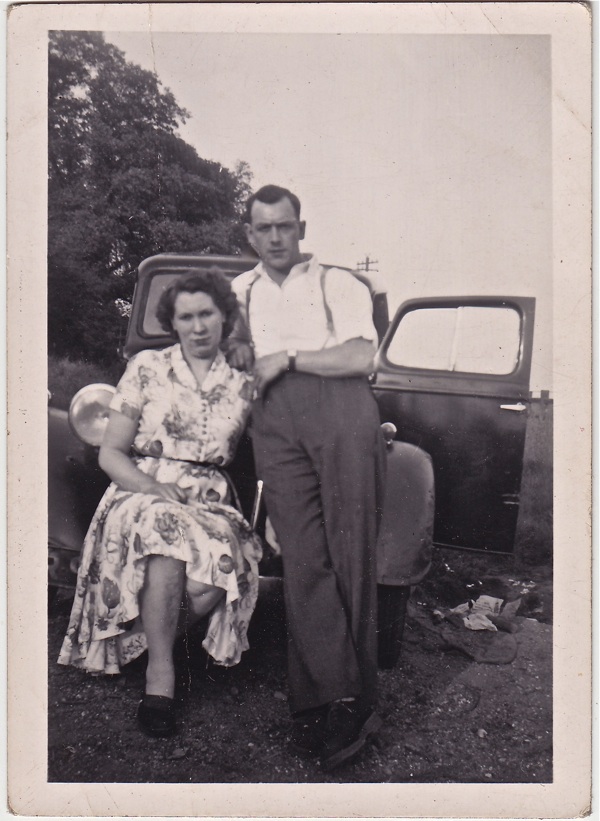
Glenys and her husband Jack with their first car.
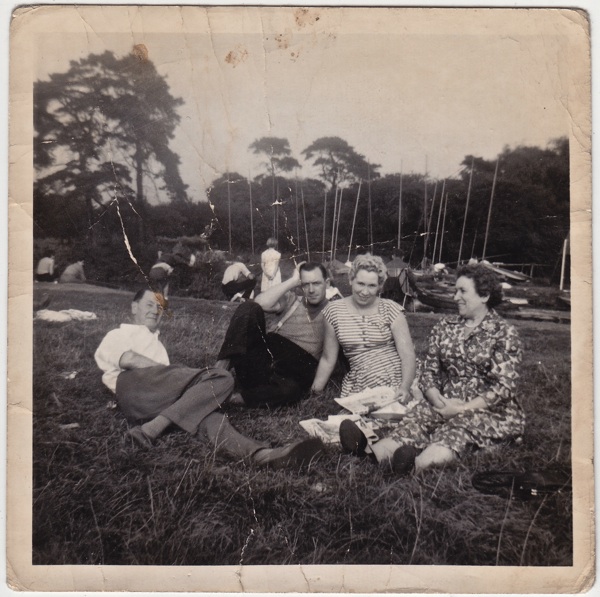
Stan, Jack, Glenys and her mother Anne on a day trip to Broxbourne.
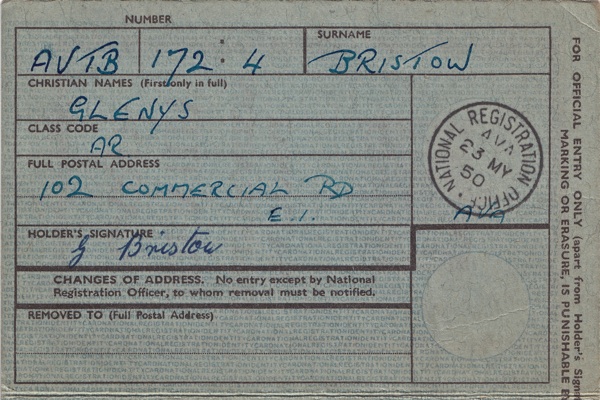
Glenys’ identity card with Commercial Rd mistakenly substituted for Commercial St.
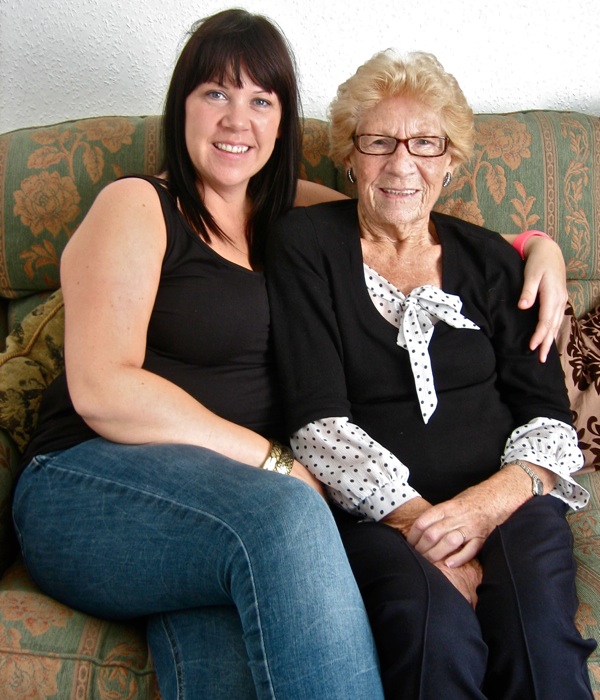
Glenys with her granddaughter Sue Bristow.
You may also like to read about
How To Eat A Pomegranate
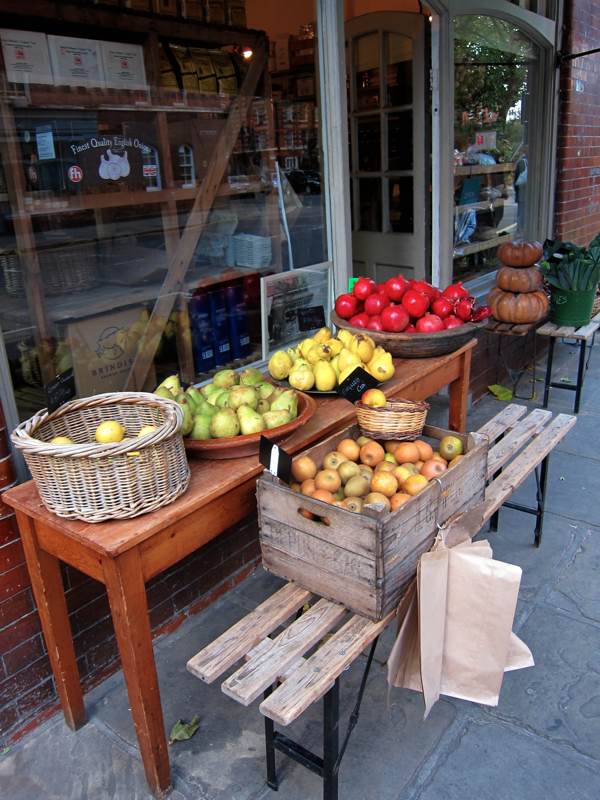
Now is the season for pomegranates. All over the East End, I have spotted them gleaming in enticing piles upon barrows and Leila’s Shop in Calvert Avenue has a particularly magnificent display. Only a few years ago, these fruit were unfamiliar in this country and I do remember the first time I bought a pomegranate and set it on a shelf, just to admire it.
My father used to tell me that you could eat a pomegranate with a pin, which was an entirely mysterious notion. Yet it was not of any consequence, because I did not intend to eat my pomegranate but simply enjoy its intriguing architectural form, reminiscent of a mosque or the onion dome of an orthodox church and topped with a crown as a flourish. This was an exotic fruit that evoked another world, ancient and far away.
As months passed, my pomegranate upon the shelf would dry out and wither, becoming hard and leathery as it shrank and shrivelled like the carcass of a dead creature. A couple of times, I even ventured eating one when my rations were getting low and I was hungry for novelty. It was always a disappointing experience, tearing at the skin haphazardly and struggling to separate the fruit from the pithy fibre. Eventually, I stopped buying pomegranates, content to admire them from afar and satiate my appetite for autumn fruit by munching my way through crates of apples.
Then, last year, Leila McAlister showed me the traditional method to cut and eat a pomegranate – and thus a shameful gap in my education was filled, bringing these alluring fruit to fore of my consciousness again. It is a simple yet ingenious technique of three steps. First, you cut a circle through the skin around the top of the fruit and lever it off. This reveals the lines that naturally divide the inner fruit into segments, like those of an orange. Secondly, you make between four and eight vertical cuts following these lines. Thirdly, you prise the fruit open, like some magic box or ornate medieval casket, to reveal the glistening trove of rubies inside, attached to segments radiating like the rays of a star.
Once this simple exercise is achieved, it is easy to remove the yellow pith and eat the tangy fruit that is appealingly sharp and sweet at the same time, with a compelling strong aftertaste. All these years, I admired the architecture of pomegranates without fully appreciating the beauty of the structure that is within. Looking at the pomegranate displayed thus, I can imagine how you might choose to eat it one jewel at a time with a pin. It made me wonder where my father should have acquired this curious idea about a fruit which was rare in this country in his time and then I recalled that he had spent World War II in the Middle East as a youthful recruit, sent there from Devon at the age of nineteen.
Looking at the fruit opened, I realised I was seeing something he had seen on his travels so many years ago and now, more than ten years after he died, I was seeing it for the first time. How magical this fruit must have seemed to him when he was so young and far away from home for the first time. They call the pomegranate ‘the fruit of the dead’ and, in Greek mythology, Persephone was condemned to the underworld because of the pomegranate seeds that she ate yet, paradoxically, it was the fabled pomegranate which brought my youthful father back to me when he had almost slipped from my mind.
Now, thanks to this elegant method, I can enjoy pomegranates each year at this time and think of him.


“its intriguing architectural form, reminiscent of a mosque or the onion dome of an orthodox church and topped with a crown as a flourish”
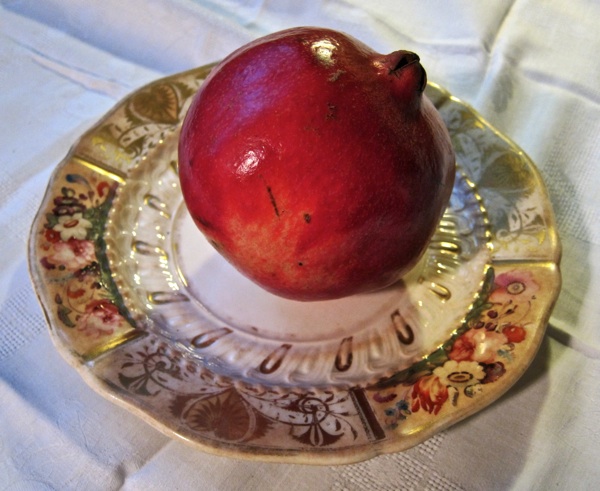

First slice off the top, by running a sharp knife around the fruit, cutting through the skin and then levering off the lid.

Secondly, make radiating vertical cuts through the skin following the divisions visible within the fruit – between four and eight cuts.
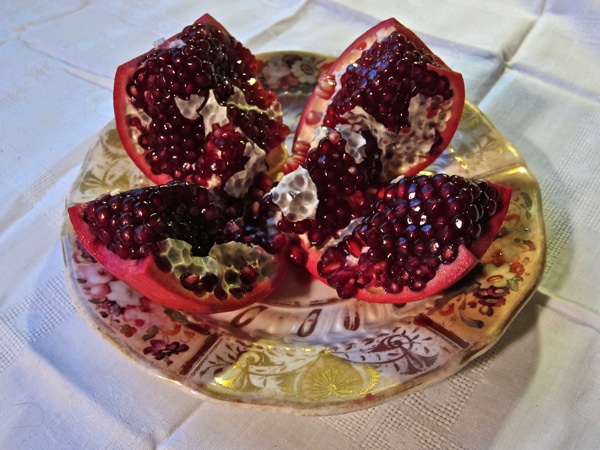
Thirdly, split open the pomegranate to create a shape like a flower and peel away the pith.
[youtube JLUCSi4jRew nolink]
Leila’s Shop, 15-17 Calvert Avenue, London E2 7JP
You may also like to read my other stories about Leila’s Shop
Vegetable Bags from Leila’s Shop
Barn the Spoon at Leila’s Shop
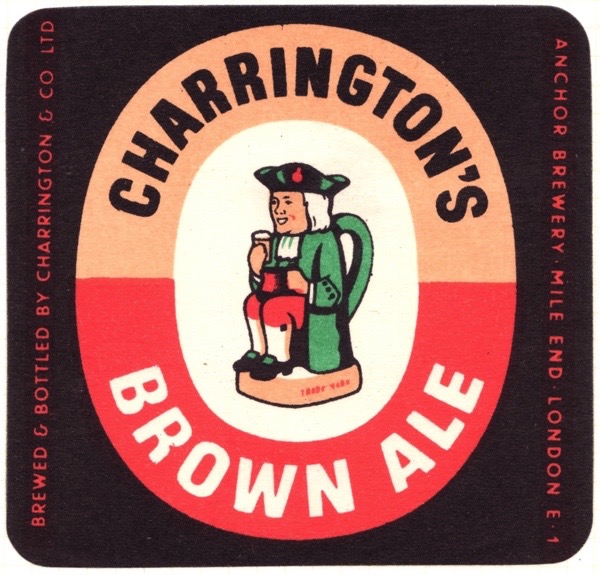
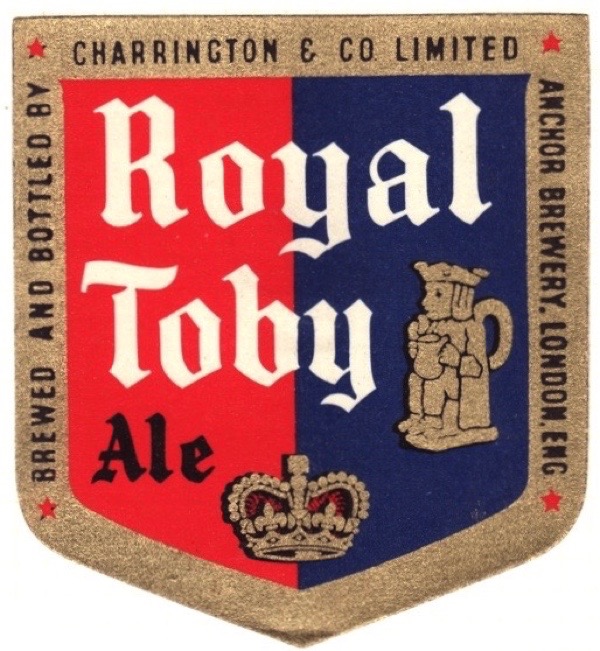
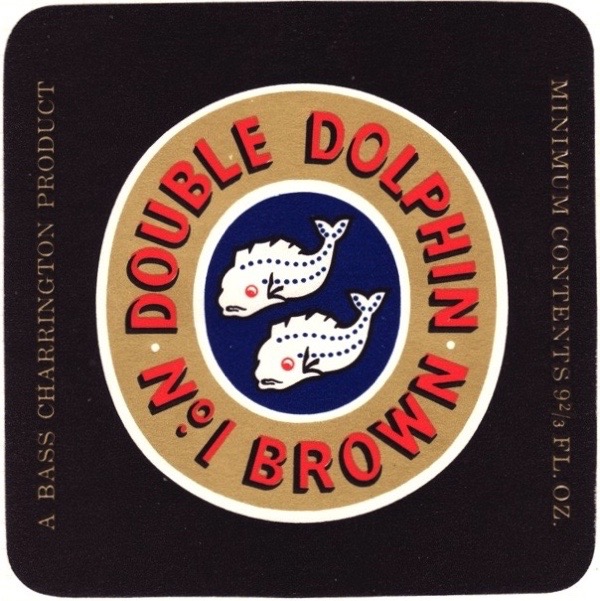
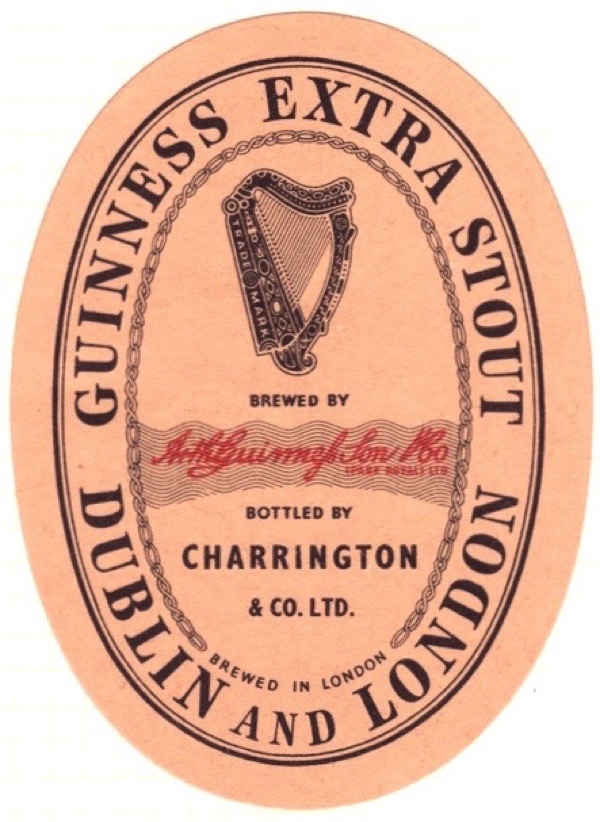
East End Beer Bottle Labels
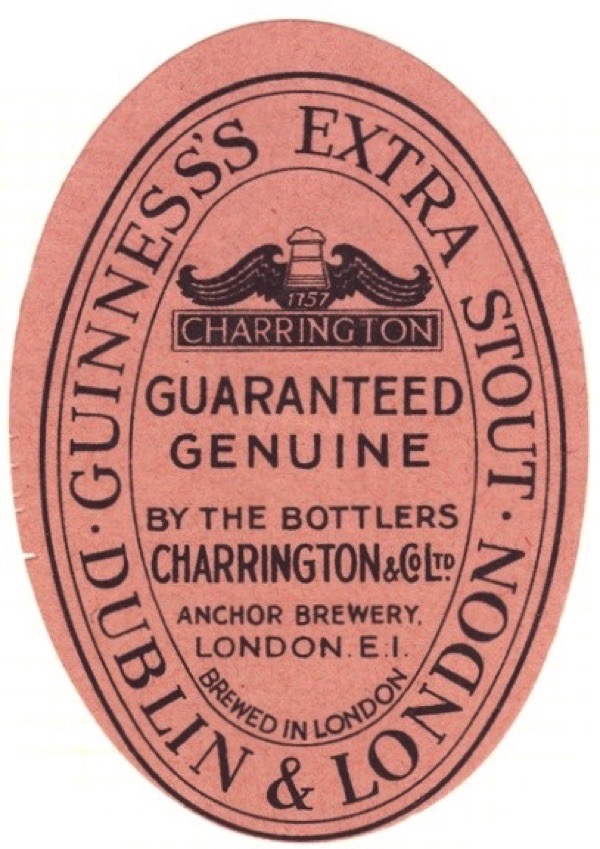
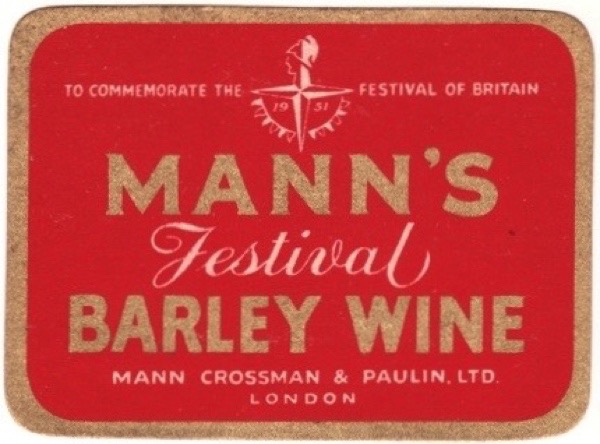
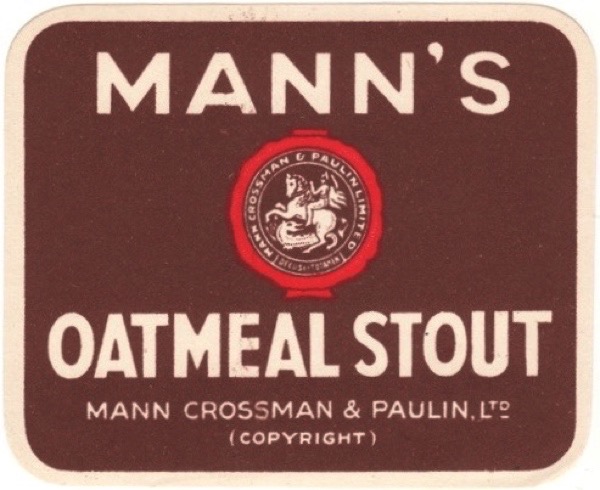
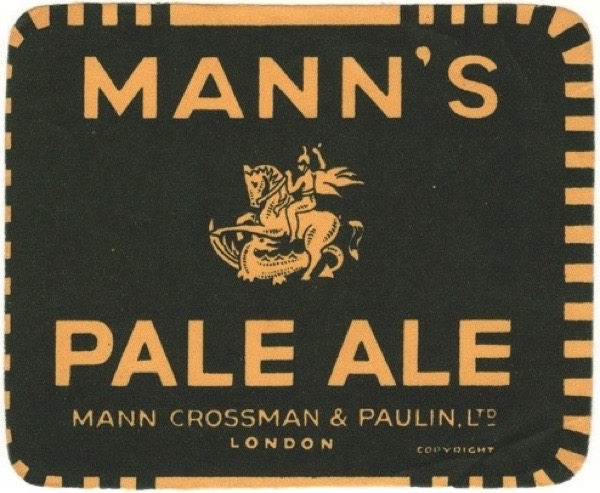
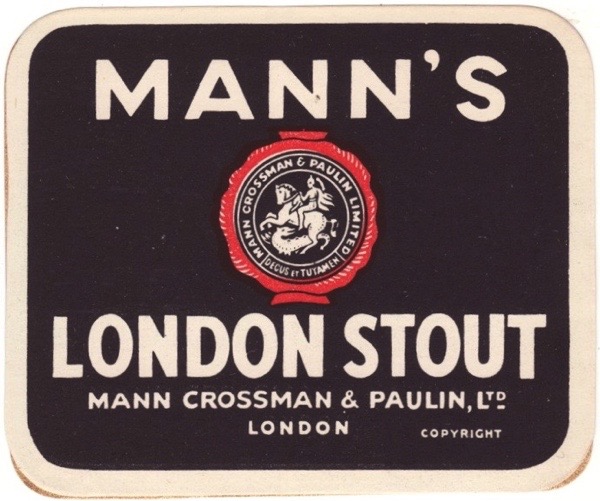
Paul Shearsmith kindly sent me these splendid mid-twentieth century labels from Charrington’s at the Anchor Brewery in Mile End and Mann Crossman & Paulin at the Albion Brewery in Whitechapel. It makes me thirsty just contemplating their bold designs, strong typefaces and vibrant warm colours. Anyone fancy joining me for a pint of Toby Brown Ale or a glass of Mann’s Barley Wine? Cheers!


You may also like to take a look at
So Long, Myra Love
Myra Love, Maori princess, jazz singer & long-term Bethnal Green resident, died last Wednesday aged eighty-three after complications following heart surgery. Today I publish my profile of Myra as a tribute to one of the most spirited women I ever met.

“We are a warlike people!”
“My mother was the Queen of Rarataonga, so I am a princess,” revealed Myra Love, with a gentle ambivalent grin, when I pressed her to admit her royal lineage. Her ancestry on her father’s side was equally impressive, she was a Maori of the Te Ati Awa tribe of Petone, and her ancestors included two eighteenth century Scotsmen from Selkirk – an explorer and an whaler – who married Maori princesses, Robert Park (brother of Mungo Park) and John Agar Love. “I always say my legs are Scottish,” Myra added with a smile, claiming the European part of her family with pride.
Although Myra’s residence was a one bedroom flat in Bethnal Green – as far away as it is possible to be from her ancestral land – she carried the weight of responsibility to her people, revealing a passionate sense of duty when she spoke of the politics of land. “I never learnt Maori because my grandmother said ‘English is the language of power, and you have to be fluent in English and get the land back’ – and we have. We formed corporations and we’re able to reclaim it today because the leases are coming up after a hundred years. There’s loads of land that we gave away for beads and blankets, and we’re getting it back.” Myra told me, swelling with magnificence and widening her eyes in skittish delight, adding, “Most of Wellington belongs to us now, and we got the railway station back last month.”
In that moment, I was afforded a glimpse of the woman who was born to be Queen of Rarataonga, because even though she did not choose to enact her public role, Myra’s abiding concern was the stewardship of the land on behalf of her people and her driving force was her desire to leave it in a better state. In another age, Myra might have led her tribe in battle, but in her time she fought at the High Court instead. “We are a warlike people!” Myra informed me proudly, accompanying the declaration with a winning smile. She knew that the success of her endeavour would define her legacy when she was long-gone, and in this sense, her concerns were parallel to medieval English royalty, seeking to unify the realm for generations to come.
“When I was a child, there was a feeling that we were second-class citizens.” continued Myra with a shrug, “If I was put down for being a Maori, my grandmother would say ‘Remember they’re walking on our land,’ and she owned quite a lot of land. My father was going to change how land was owned in our part of the country but he went to war and got killed instead. He was a leader of men. I was only five when he left. He went to Sandhurst and was the first Maori to command a battalion in World War II, but Maori leaders always fight alongside their men, and he was shot.
I was the youngest of three siblings so I didn’t count for very much until they died, and then I became very important because now I own a lot of land. I’m getting some of the land in New Zealand and some of the land in Rarataonga. And their siblings are fighting me for it and I am defending it in the High Court. I’m partitioning it out because I don’t want it for myself and I don’t want them to sell it, and I intend to stay as healthy as possible because they all want me to die.”
Stepping into Myra’s warm flat, painted in primary colours and crowded with paintings, plants, photographs, legal books, jewellery and musical equipment, Contributing Photographer Patricia Niven & I entered the court of a woman of culture. Not in the least high-faluting, she balanced her serious intent with an attractive emotional generosity, which made it an honour to sit beside her as she opened her photo album. Myra confessed that she became the author of her own destiny, when she made the break at twenty-one and ran away – like Audrey Hepburn in Roman Holiday – to find a new life in the wider world.
“Once my grandmother died, the family disintegrated and I was moved out of the family house, so I decided to leave. Every Christmas we met together, but when she was gone there was a fight for the land, so because my family were all angry, I chose to go to America and become a jazz singer.
I sold a piece of my land to my uncle for £300 and bought a P&O ticket to San Francisco. You think everywhere’s going to be like New Zealand, so it was a bit of a shock when I got off the boat, because I was bit of a hokey girl. But it was exciting and, going through the Golden Gate Bridge, I thought, ‘My dreams are coming true.’ And some girls on the boat told me they knew Oscar Peterson, and they took me to the Black Hawk Club and there was Oscar Peterson. But I thought, ‘I’m going to New York,’ so I got on a train. It was 1958 and I had £100 left. I was an innocent abroad. In New York, I stayed on Bleecker St, just around the corner from Marlon Brando.
It was such a joy to visit places you’d only read about in books. At school I learnt Wordsworth’s Composed Upon Westminster Bridge and when I came to London I had to go there at dawn. By then, I had only about £25 left, but money went a long way in those days.”
Myra told me it takes thirty years to learn to be a jazz singer, but she also filled those thirty years with getting married, having three children and getting an Open University degree. “I got divorced because he wouldn’t let me go on singing,” she confided, spreading her hands philosophically, “When we broke up, I did a teacher training course and my first job was in the East End. I’ve always worked in underprivileged areas, and I’ve sent more kids to university than I’ve had hot dinners. These kids they know a little about a lot, and they’ve got the ability to latch onto something. They’re more than people who don’t live in the area know, because their struggle has been long. I’ve always believed that knowledge is power and that’s what I’ve tried to teach these kids.”
Discovering a recognition that the situation of the people of the East End equated with the circumstance of her own race, Myra discovered a sense of camaraderie here which drew her to adopt Bethnal Green as her home from home. So it was that, Myra Love, the heroic Maori princess – devoted to fighting for the rights of her tribe – became a popular figure in the East End, renowned for singing jazz at the Palm Tree. “I get my kicks from meetings with old East Enders,” she confessed enthusiastically, “They’re a tough breed. These people are just like me – they’re Maoris!”
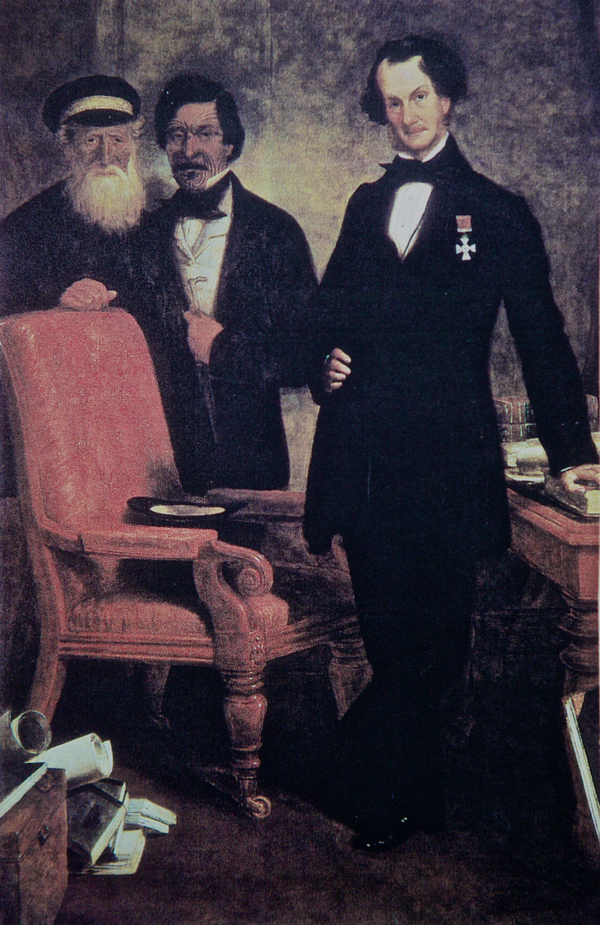
This painting of 1858 by William Beetham shows the Maori Chiefs of Wellington with Dr Featherstone at the time of treaty of Waitanga which established peaceful colonial government in Aotearoa. On the left is Hon Tako Ngatata MLC and in the centre Honiana Te Puni Kokopu, from whom Myra was descended
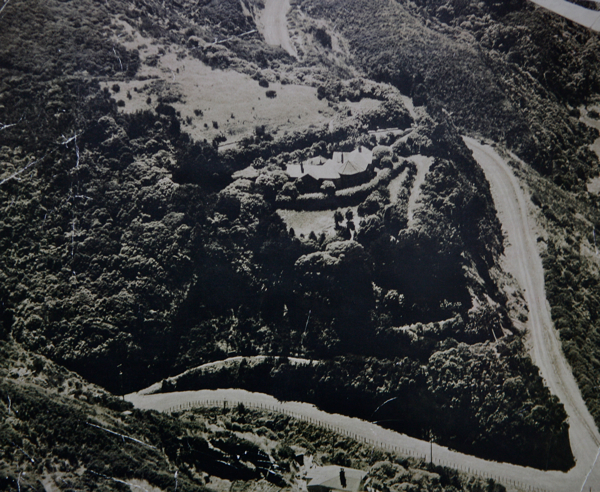
Taumata, Koro Koro Rd, Petone – “My grandmother had this house built in 1898, she picked this hill so she could see where she was born and where she would be buried. And I was born there November 8th, 1934, and I will be buried there too.”
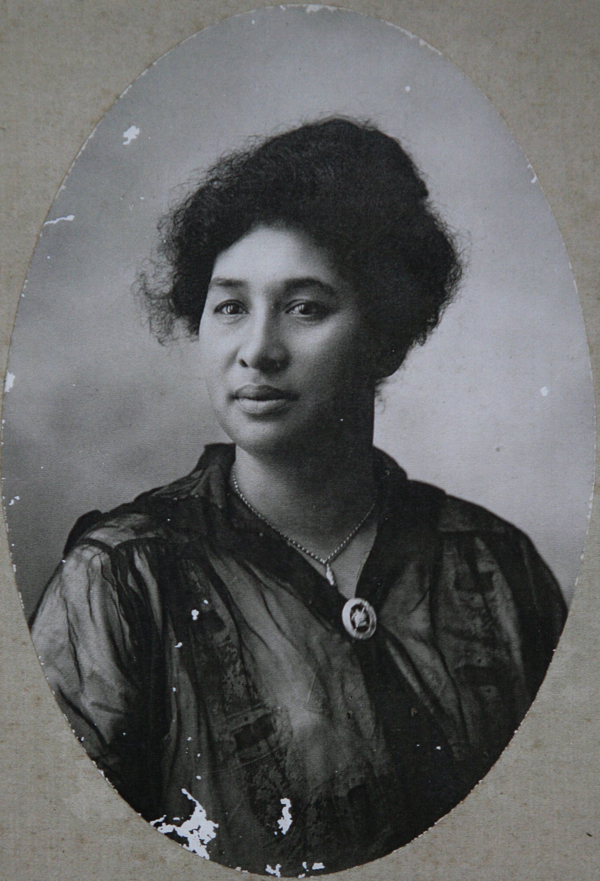
Myra’s grandmother, Ripeka Love
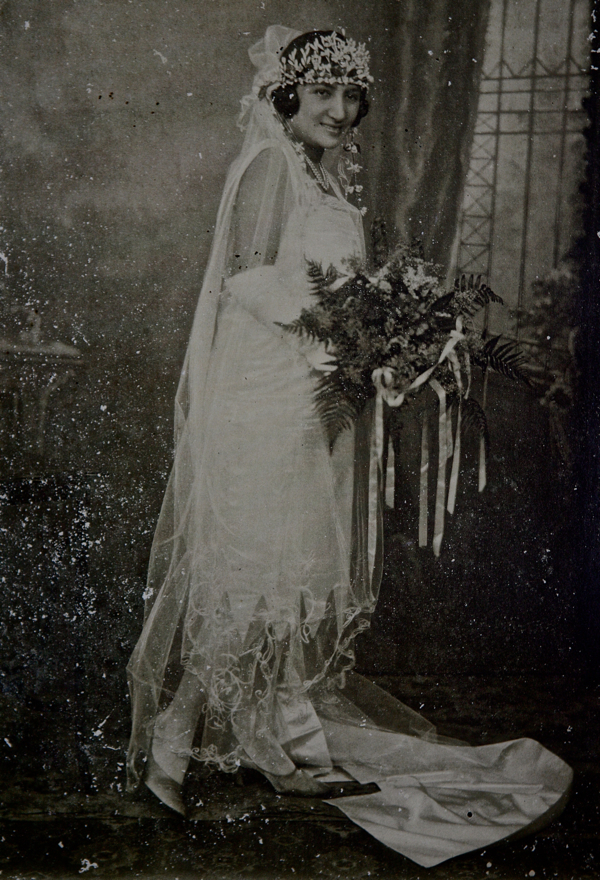
Myra’s mother, Takau Upoko-o-nga Tinirau Makea Nui Ariki Love, Queen of Rarataonga
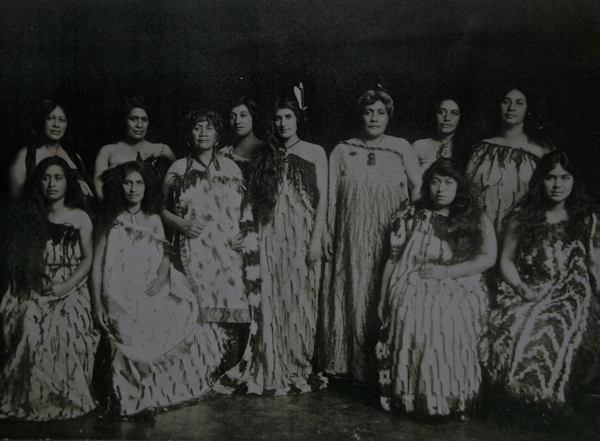
Rangitira women of the Te Ati Awa tribe. At the centre is Lady Pomore, standing to her right Romahora, then Grandaunty Mata with Grandma Ripeka Love at the end of the row.
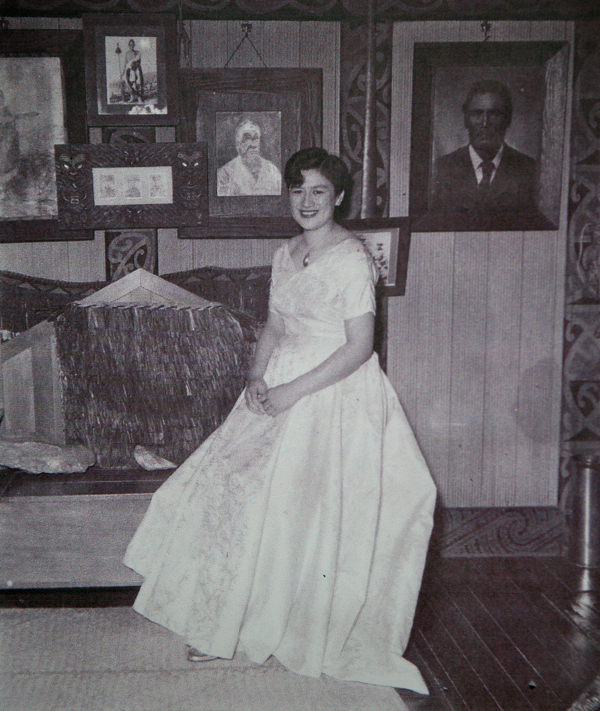
Myra Love in her debutante’s dress – “We are really very posh in the Maori way of thinking!”

Myra Love (1934-2017)
Portraits copyright © Patricia Niven
A Brief History Of Crypts
Malcolm Johnson, author of Crypts of London, offers this brief history of crypts. Malcolm was formerly Rector of St Botolph’s, Aldgate, where he ran a homeless shelter in the crypt.
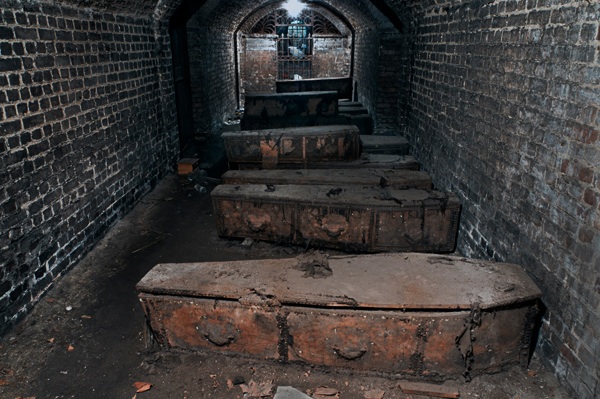
At St Clement, King Sq
After the Great Fire of 1666, it was decided not to replace thirty-two out of those churches destroyed in the Square Mile. Yet St Paul’s Cathedral and fifty-one churches were rebuilt by Sir Christopher Wren, Robert Hooke and others, and almost all of these new buildings were given a crypt of the same extent as the ground floor. This was also true for churches in Westminster and those on the edges of the City such as in Spitalfields, Shoreditch and St Clement, King’s Sq.
What were these spaces intended for? Charity schools? Storage? Meeting rooms? There was no chance of any of these, because the clergy and their vestries soon realised that good money was to be made by charging wealthy parishioners to stack coffins containing their dead family members under the church.
In doing so, they went against the advice and opinions of both architects and others, who doubted the wisdom of burying the dead among the living. In 1552, Bishop Hugh Latimer thought it “an unwholesome thing to bury within the city,” considering that “it is the occasion of great sickness and disease.” Mainly for architectural reasons, Wren and Vanbrugh were also opposed to burial in or close to a church, although when Wren was interred beneath St Paul’s when he died.
In my research, I found that in the eighteenth century most parishes received around seven per cent of their income from interments, although at St James Garlickhythe the average was nearly twenty-seven per cent. All five Westminster parishes had a high burial income by the end of the eighteenth century – around thirty-five per cent of the wardens’ income at St Martin-in-the-Fields and twenty-five per cent at St James Piccadilly.
After the Reformation, burial within a church was seen as a mark of social distinction – the nobility regarding it as their right – but by the mid-seventeenth century the professional classes were also seeing it as a sign of a successful career. Over the next century, doctors, solicitors, high-ranking soldiers and ‘gentlefolk’ frequently left instructions in their wills for intra-mural burial, although some cautioned prudence and economy in arranging it, because fees could be high. Coffins of the clergy were placed in the vault below the altar and the vicar of St Martin-in-the-Fields allowed Nell Gwyn to be interred in his space there.
Why were families willing to pay large sums for a crypt burial when churchyard fees were much cheaper? Some hoped for an ‘eternal bedchamber’ because they knew that bodies in the churchyard would be dug up after thirty or so years and the bones placed in a charnel house when the space was needed for new burials. Others hoped the congregation worshipping above the crypt would continue to pray for them and many more were apprehensive that body-snatchers might plunder the churchyard. Yet, in crypts, bodies were sometimes tipped out of their coffins so that the lead could be sold together with the metal handles.
Rarely do published histories of our churches mention these undercrofts. Obviously it is possible to visit those churches that have survived and establish precise details of their crypts – where it is not possible to enter, burial registers can give details of size and layout. For the churches that have not survived, the best descriptions of their crypts are often found in the faculties which authorised their destruction, and in the Vestry minutes recording the process of emptying the remains and transferring them to a cemetery. Written accounts are rare, because few people visited these dark, dismal places apart from the sexton.
The lucrative burial income ended abruptly in 1852 when sanitation legislation forbade further interments in crypts and churchyards. Joint-stock cemeteries such as Kensal Green were opened to receive London’s dead and the clergy lost the links with parishioners although they were still financially recompensed, even if the vestries and sextons lost their burial dues. The removal of human remains from crypts began for a variety of reasons – such as demolition of the building, its sale to raise funds or road widening. If the building remained and a new use for the crypt was found, then an appeal for funds was made, such as at St Bride Fleet St in the nineteen-fifties when its museum was equipped from gifts of nearby publishing firms. Other churches have attracted grants from the Lottery fund, statutory bodies, charitable foundations, businesses and individual donors.
The first crypt to be cleared of human remains for use other than storage was in 1915 when the vicar of St Martin-in-the-Fields, Dick Sheppard, set up a canteen to welcome men returning from the Front. Two learned reports of the Council for British Archaeology describe the clearance of coffins and remains from the crypt of Christ Church, Spitalfields in 1984/5. Nearly one thousand bodies were carefully examined and researched. Interment in a crypt obviously preserves a corpse and coffin longer than if it was buried in a churchyard but the state of preservation of those in coffins in Spitalfields’crypt varied from virtually complete, including skin, hair and internal organs to a just sediment of crystal debris being all that remained of the bones. When lead was used, as it was in this crypt after 1813, this preserved the cadaver longer, but if air or water was allowed to penetrate then decomposition was much quicker.
Where were coffins and remains from crypts taken? A minority went to the East London Cemetery, Plaistow, or to the Great Northern London (now New Southgate) Cemetery. Some relatives were allowed to transfer the coffin of a family member to a burial ground of their choice, but most went to Brookwood or the City of London Cemetery, Ilford.
Some two thousand two hundred acres of land owned by Lord Onslow on Woking Common at Brookwood were purchased by the newly-formed London Necropolis & National Mausoleum Company. Despite opposition, Royal Assent was given to the London Necropolis Bill on 30th June 1852, but the first funeral was not held until 13th November 1854. Soon afterwards, several Westminster parishes, including St Anne Soho, St Giles-in-the-Fields and St Margaret Westminster, reserved plots there. Coffins and mourners were transported by special trains from a private terminus near Waterloo to the cemetery’s two stations, one for Anglicans and one for others. The Bishop of London was apprehensive that the coffin of ‘some profligate spendthrift’ might be in the same compartment as a respectable member of the Church. A notice in the station refreshment room at Brookwood reads ‘Spirits served here.’
The City of London Cemetery, used by nearly all the City parishes, opened in 1856 and is approximately eight miles north-east of the City. Since then, over forty City parishes have removed their crypt remains to Ilford, which is today one of the most beautiful cemeteries in the country.
Today, around half of London’s crypts have been emptied. Some, such as that of St Martin-in-the-Fields house a restaurant, bookshop and meeting rooms which contribute a very large sum to the Parish Church Council. Others are chapels and columbaria, yet others are museums while – sadly – two which were once homeless centres are now empty. Those with coffins still in place await a use – as at St Clement, King Sq, where David Hoffman took the photographs which accompany this article.

Coffin plates from Holy Trinity, Minories – now demolished
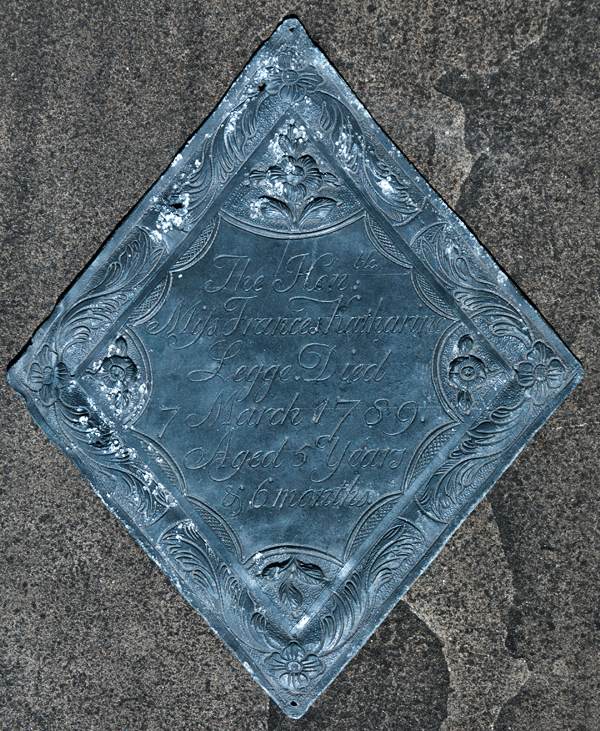

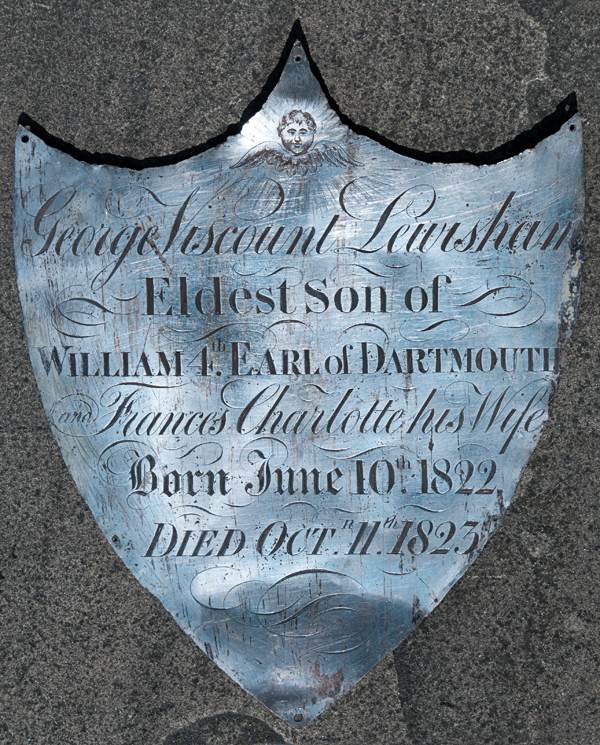
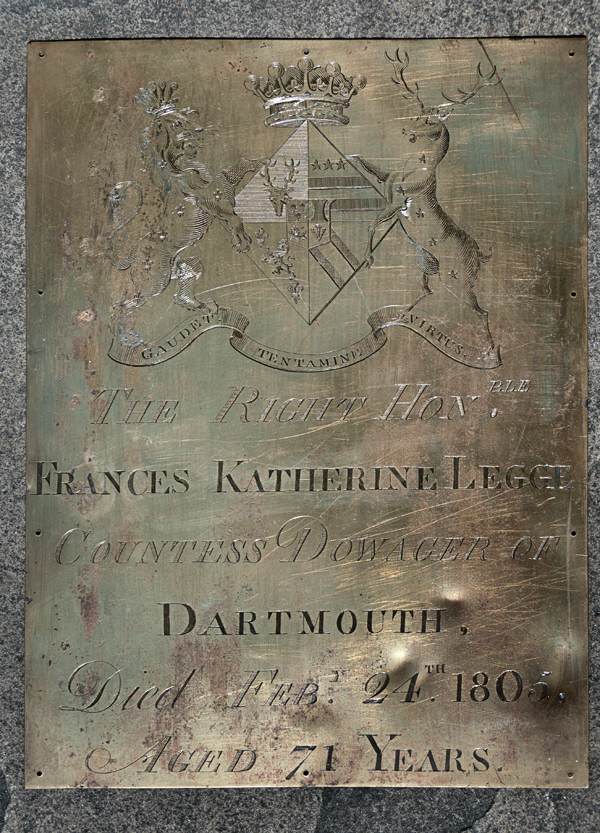
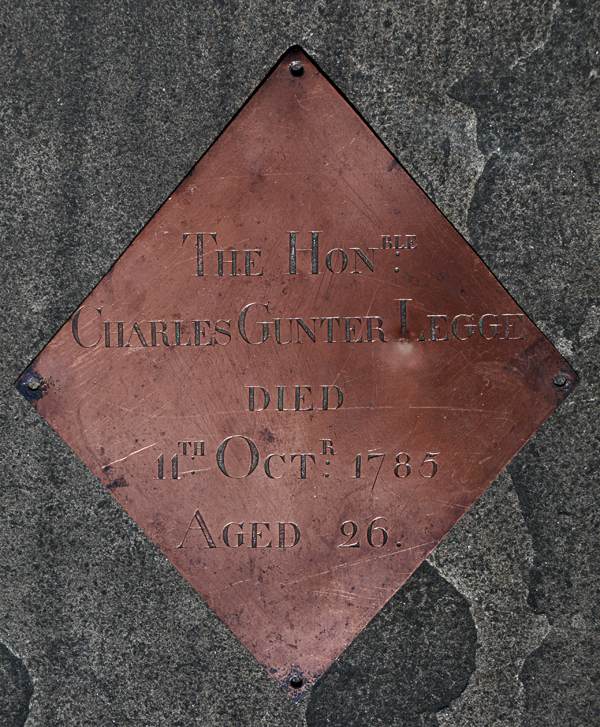
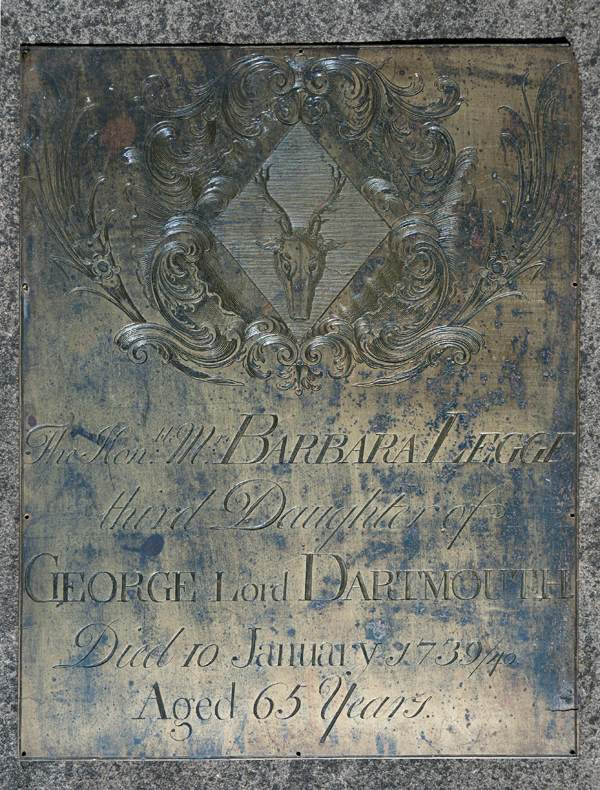
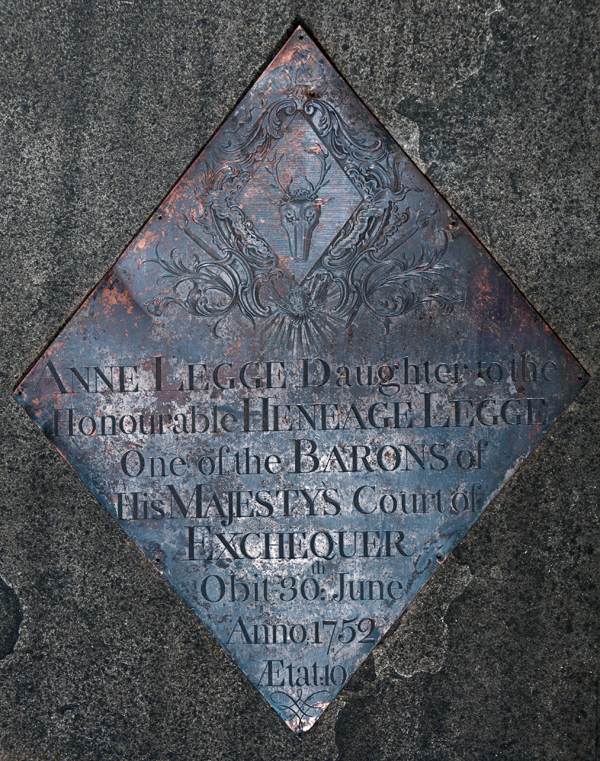
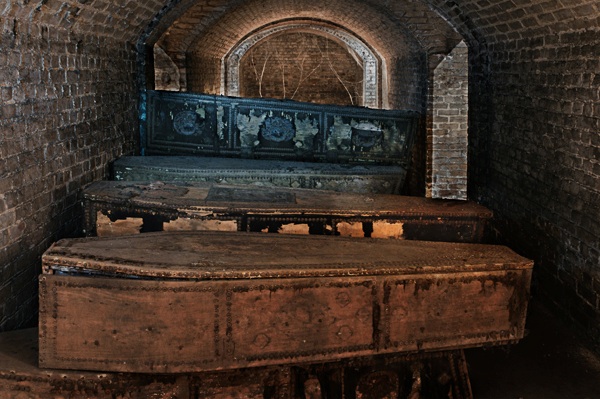
At St Clement, King Sq
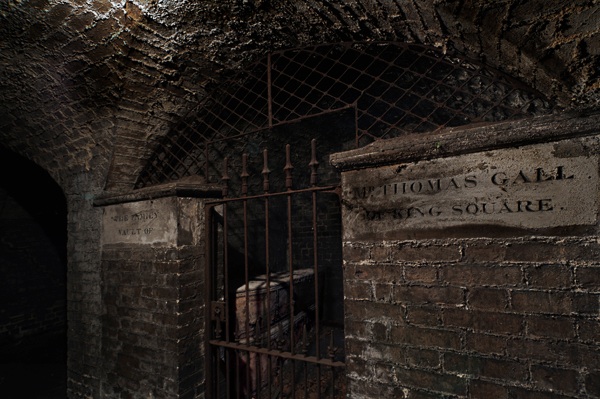
The entrance to the family vault of Mr Thomas Gall of King Sq
Crypts of London by Malcolm Johnson is published by the History Press
Photographs copyright © David Hoffman
You may also like to take a look at












