
At House Of Annetta
Today, I publish my photoessay of House of Annetta, 25 Princelet St, a project managed by Assemble, as a prelude to James Binning’s lecture at the Bloomsbury Jamboree next weekend, telling the story and outlining the work of this celebrated architectural collective.
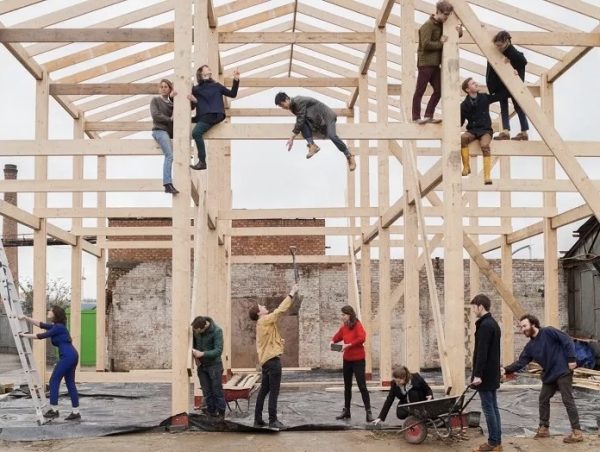
ASSEMBLE: PEOPLE, PLACES & COMMUNITIES
A talk by James Binning – founding member of the inspirational, Turner-prize winning, architectural collective Assemble.
Assemble is a multi-disciplinary collective working across architecture, design and art. Founded in 2010 to undertake a single self-built project, Assemble has since delivered a diverse and award-winning body of work, while retaining a democratic and cooperative working method that enables built, social and research-based work at a variety of scales, both making things and making things happen.
James’ talk will focus on Assemble’s early work and how they produced innovative projects that were resourceful and responsive to the challenges they saw as young people and practitioners in London and around the UK.
In 2025 James set up Common Treasures, a new organisation focussing on the role for design to address challenges facing rural places, economies and communities. He is working with the Ecological Land Co-operative, an organisation that aims to build a living working countryside in ways that are equitable and ecological, through democratising access to land and supporting the development of better networks of local, regenerative food and material production, and developing low cost and low impact housing for land workers.
Click here to book for James Binnings’ lecture at 12:15pm on Sunday 16th November
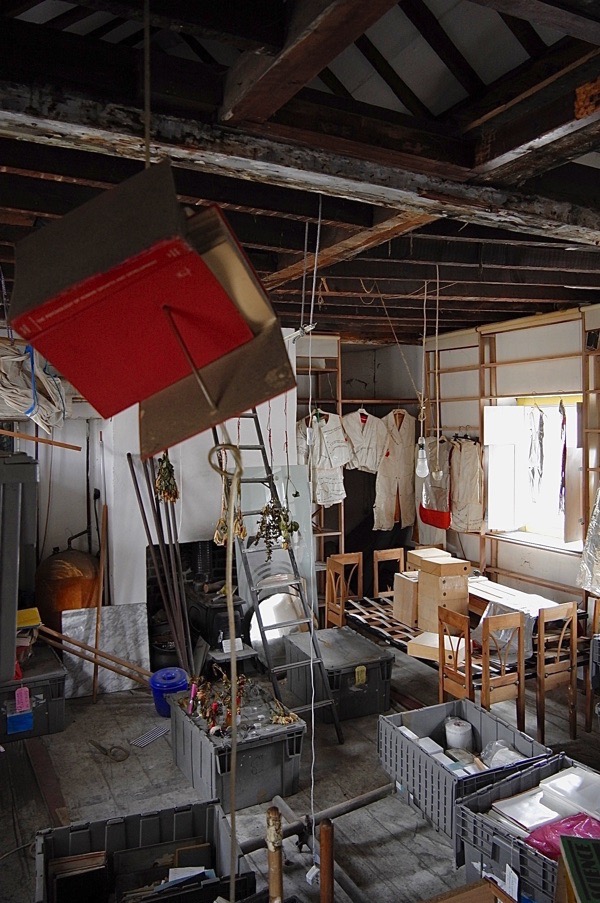
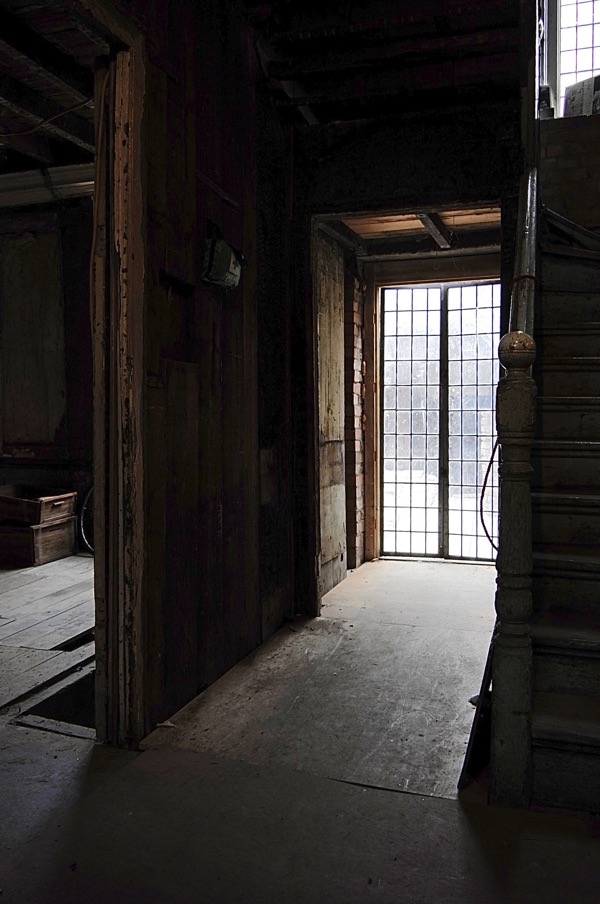
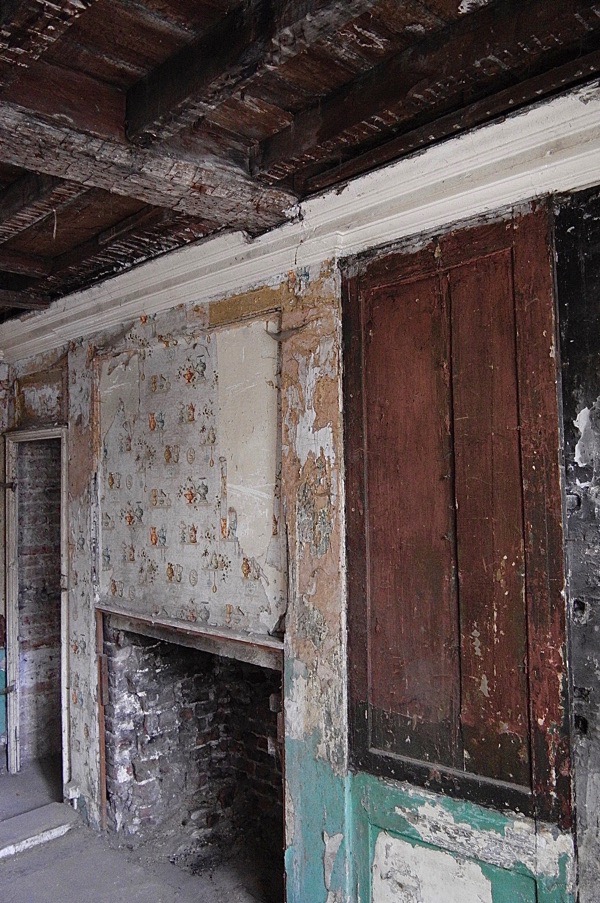
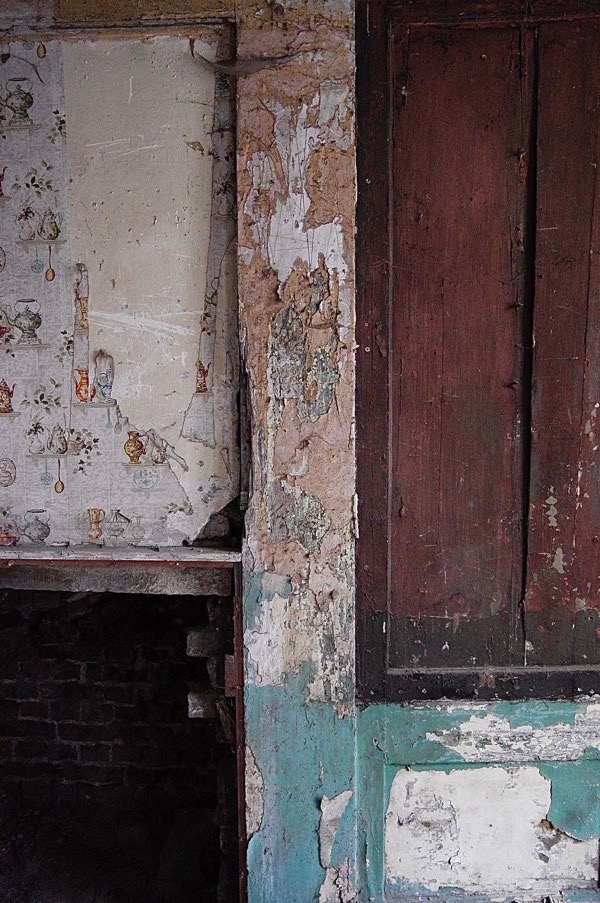
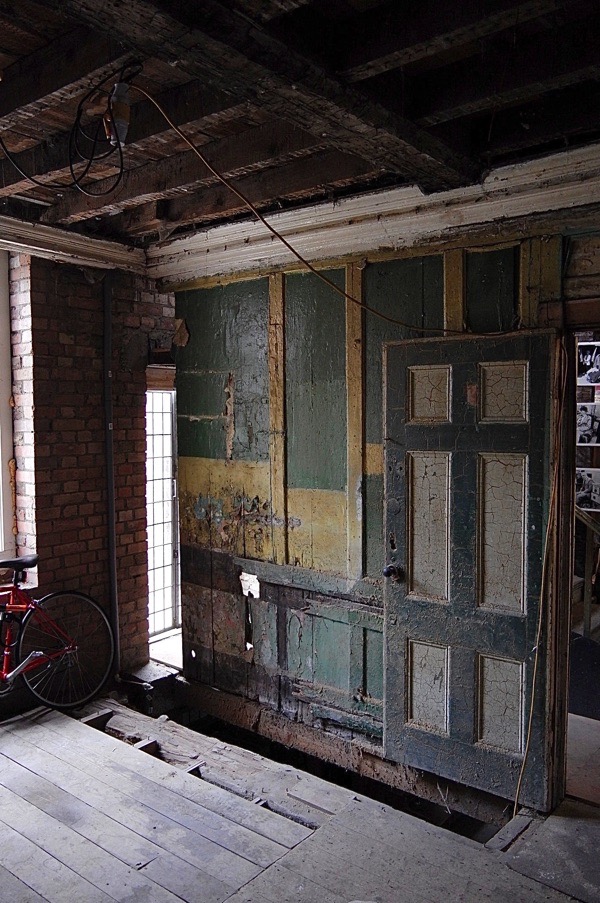
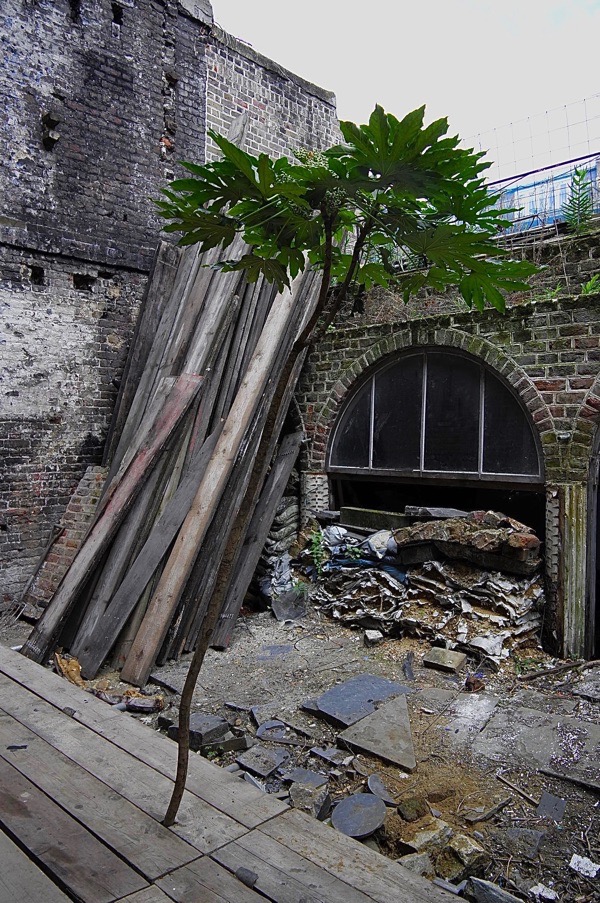
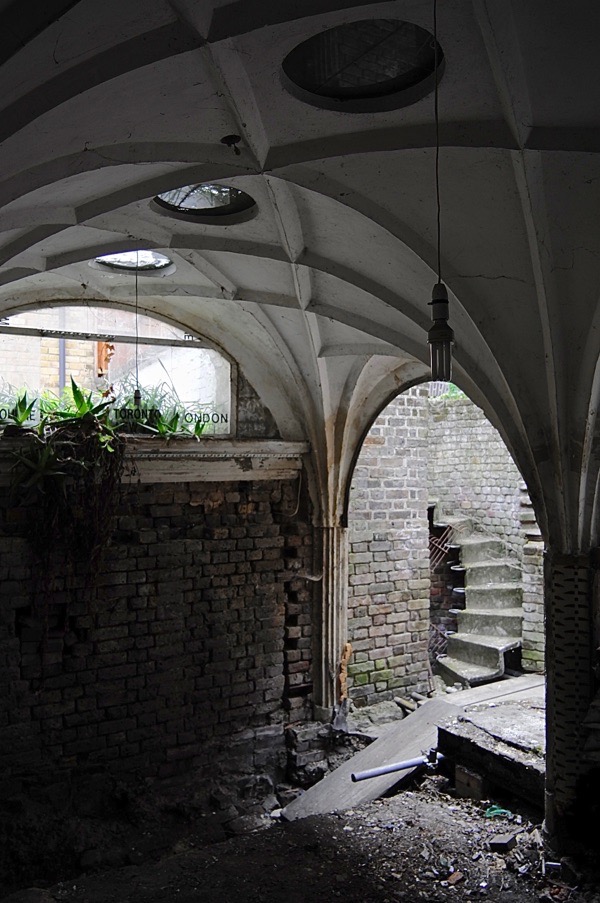
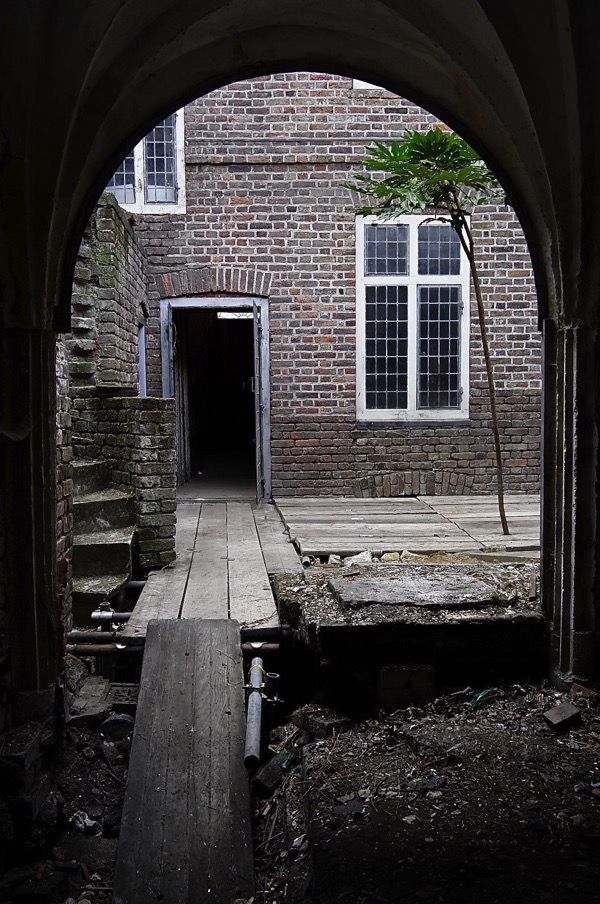
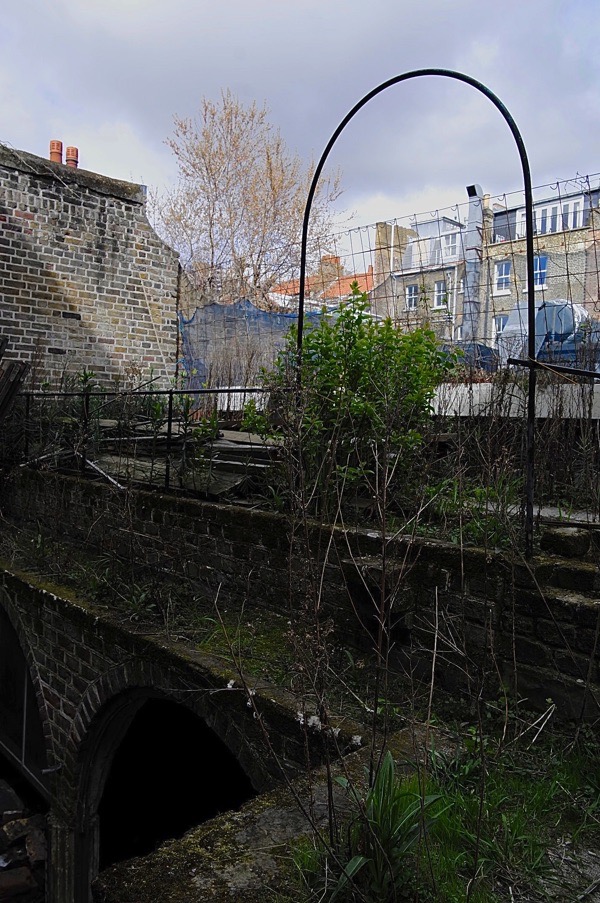
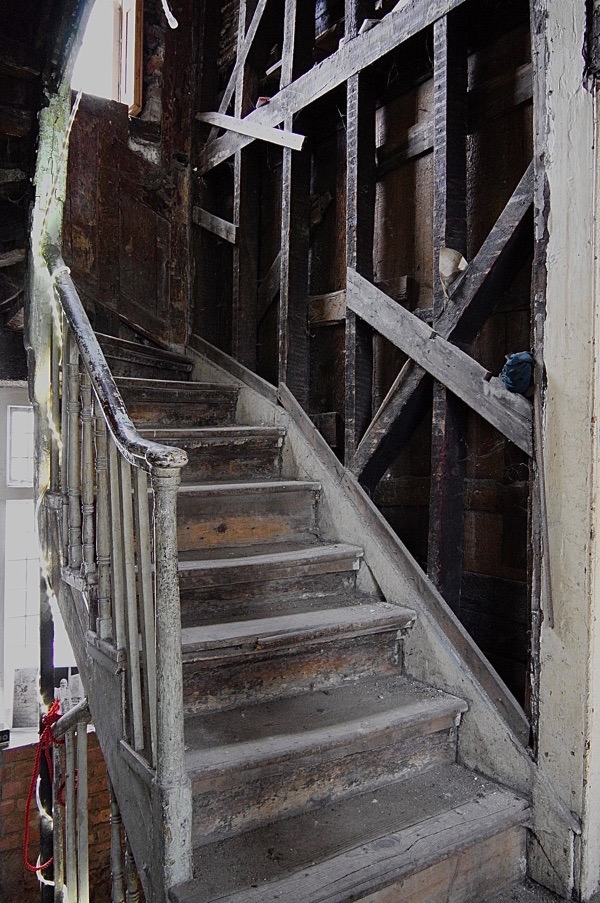
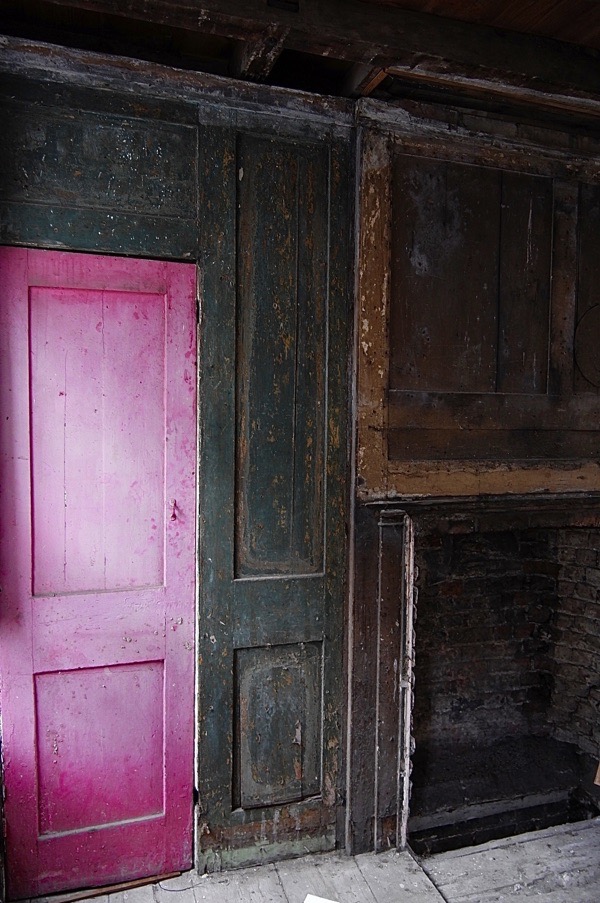
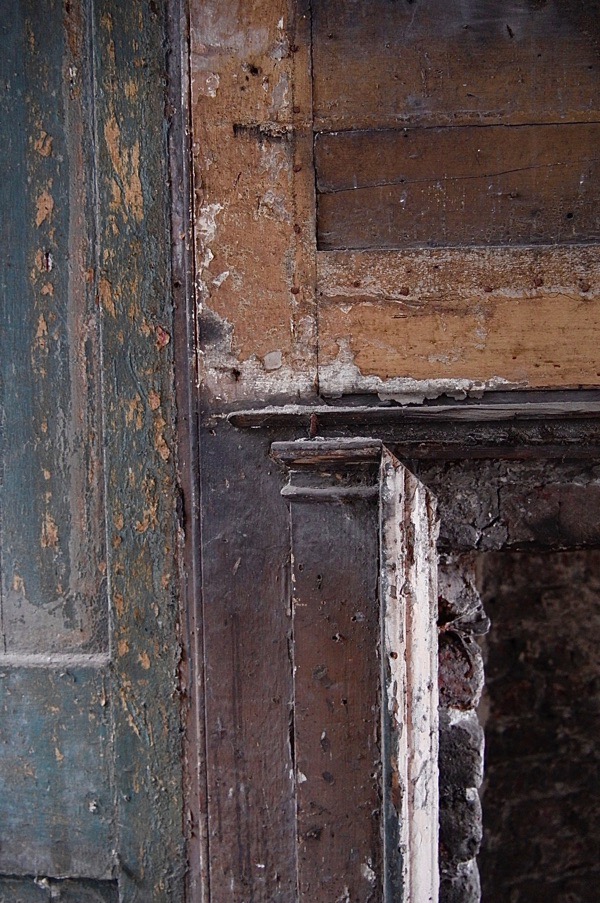
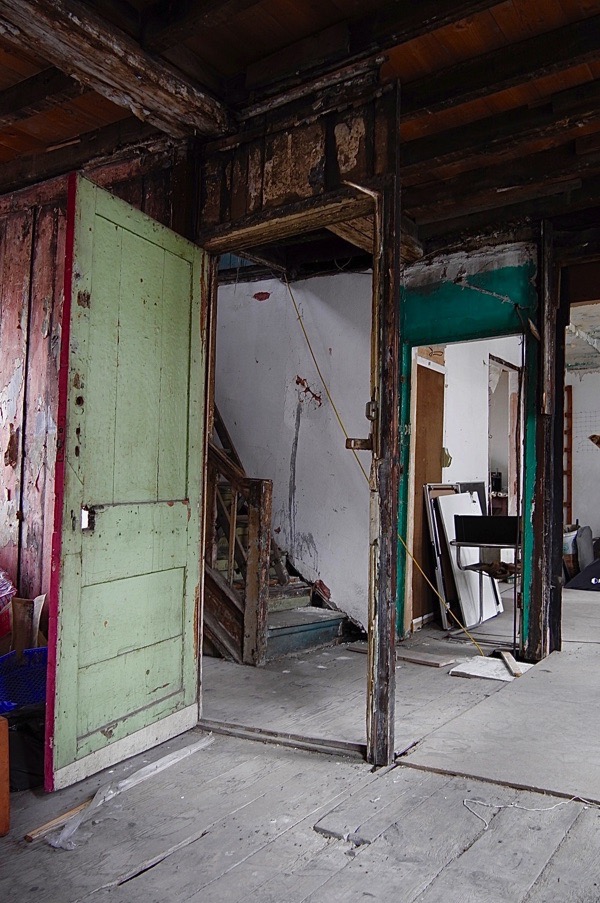
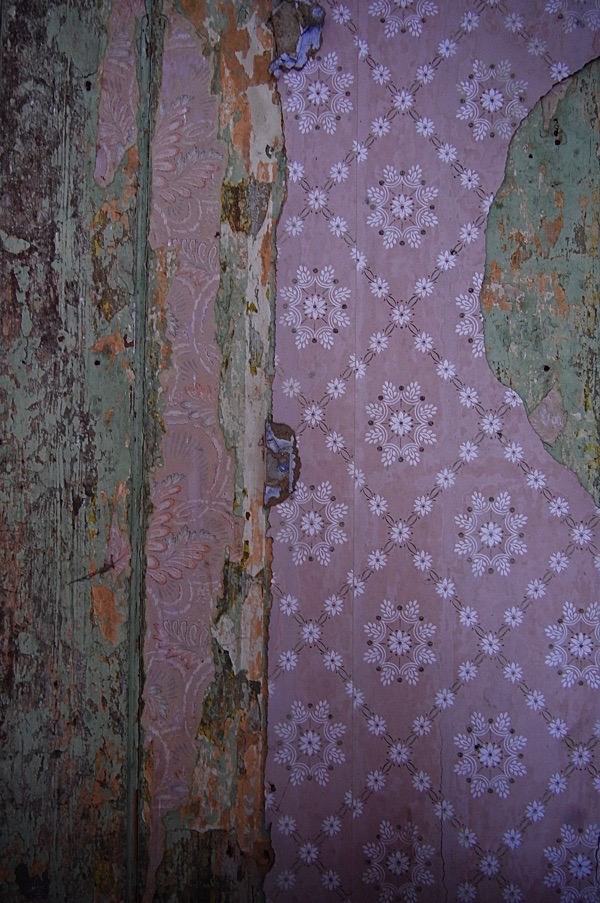
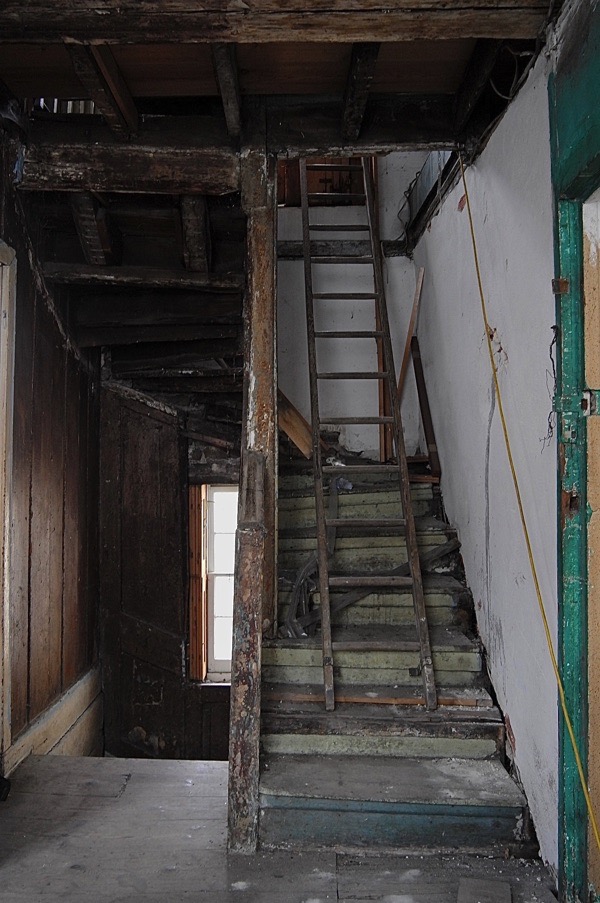
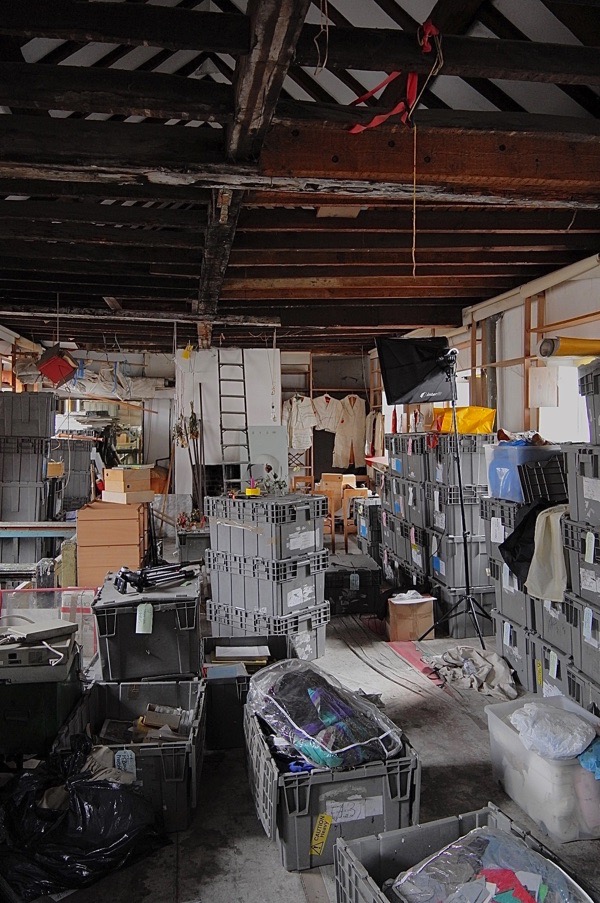
When artist Annetta Pedretti died a couple of years ago, her relatives gave her eighteenth century house in Princelet St to the Edith Maryon Foundation who commissioned Assemble to turn it into HOUSE OF ANNETTA, a community centre with a focus on spatial justice – the politics of land ownership and access to housing – which is a subject of great relevance in Spitalfields. My photographs document this extraordinary partly-deconstructed house from 1710 just as it was after Annetta left it.
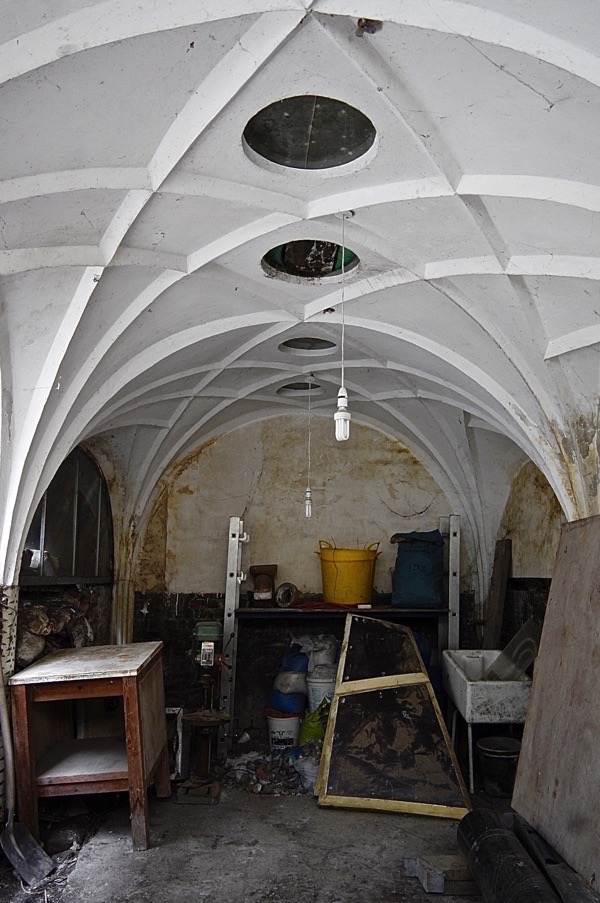
Annetta created this vaulting in her garden summer house
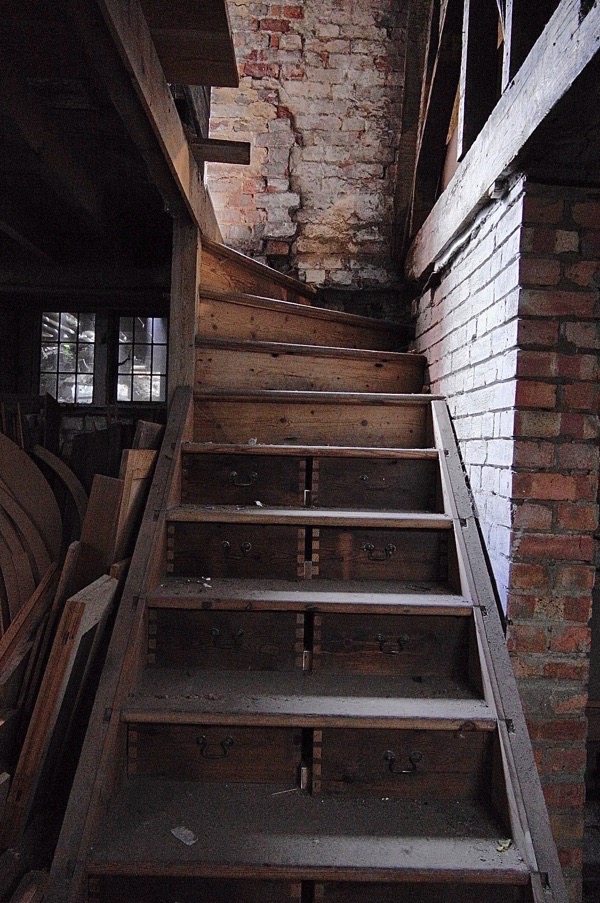
Annetta built these drawers into her staircase
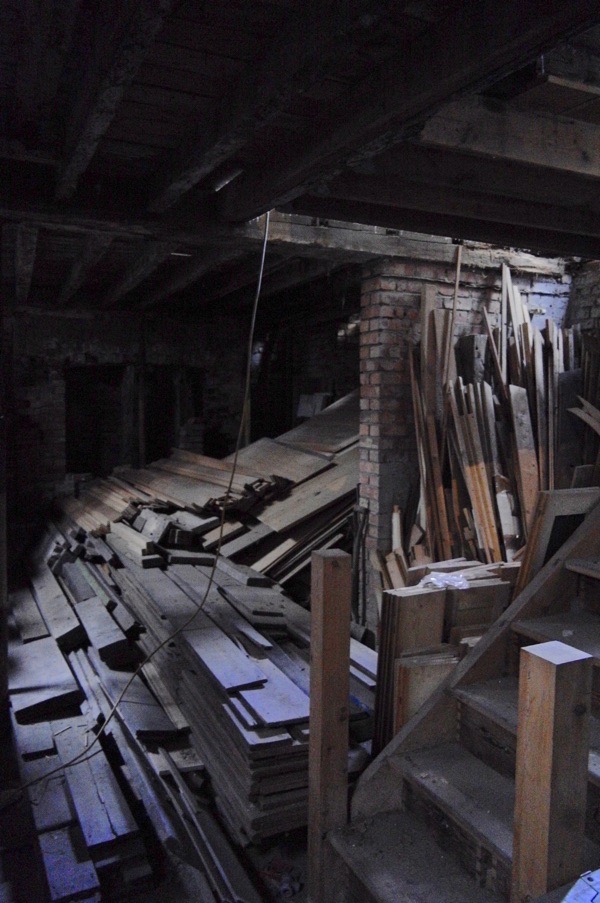
Annetta’s timber supply for repair of her house fills the cellar
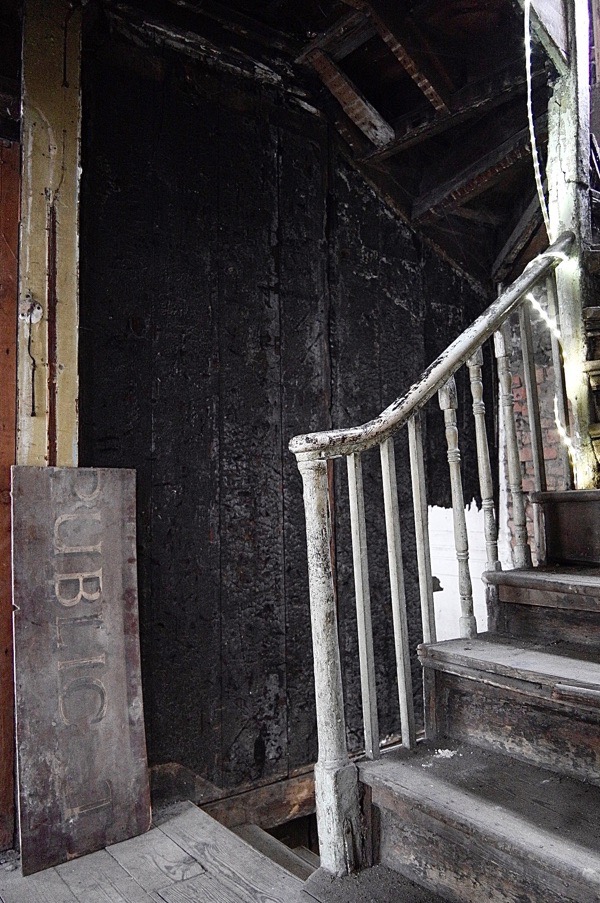
Fire damage on the first floor
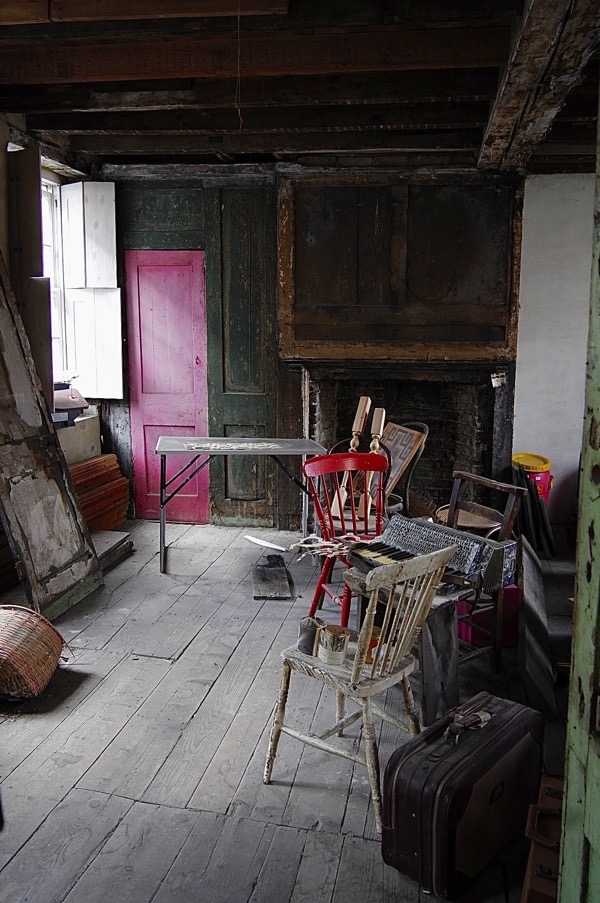
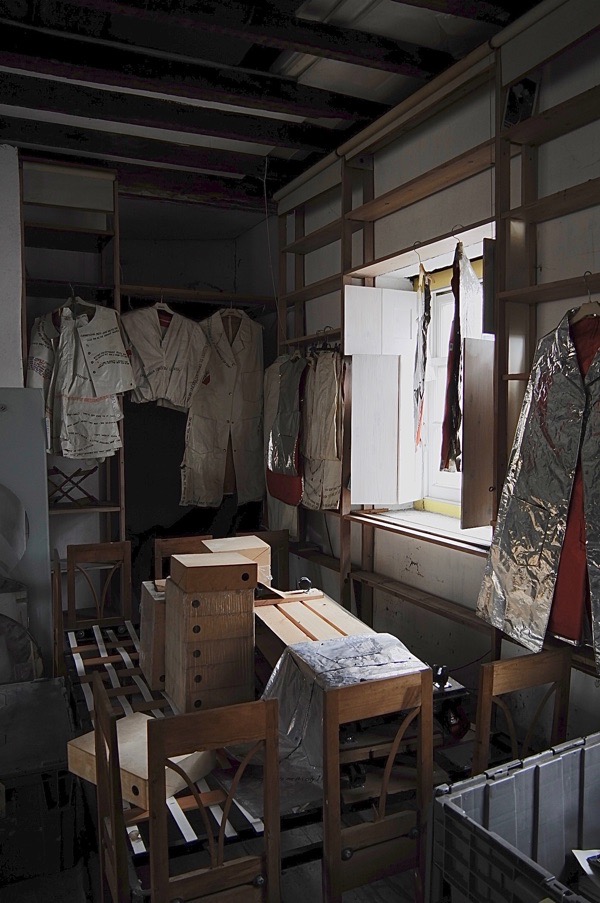
Annetta made her bed of chairs and designed the paper clothes hanging above
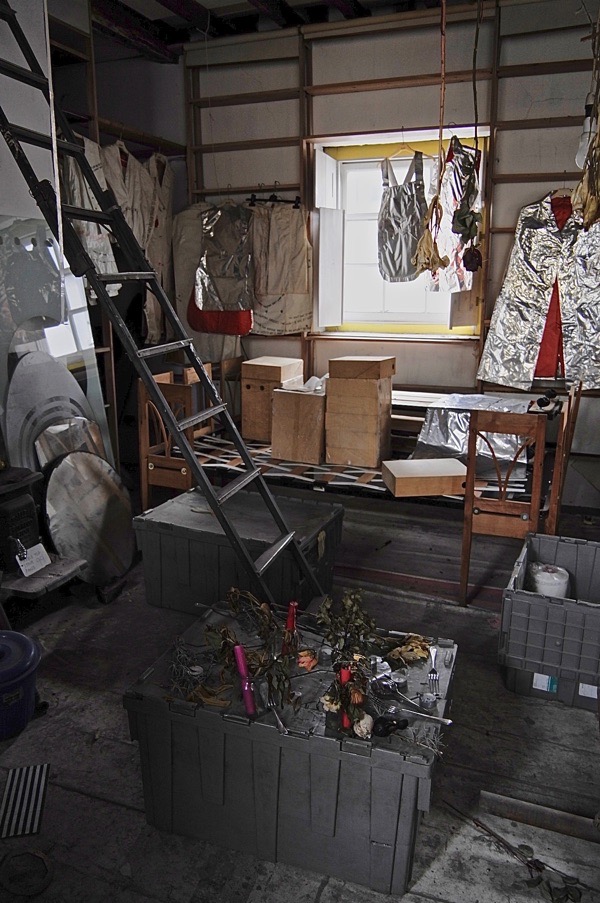
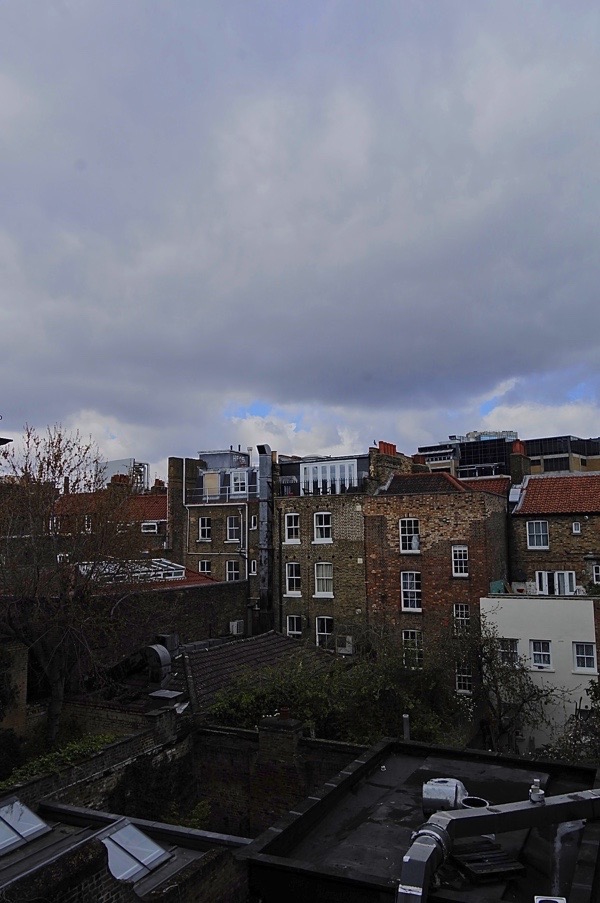
The view over Hanbury St from the attic
Tessa Hunkin’s Hackney Mosaic Lectures
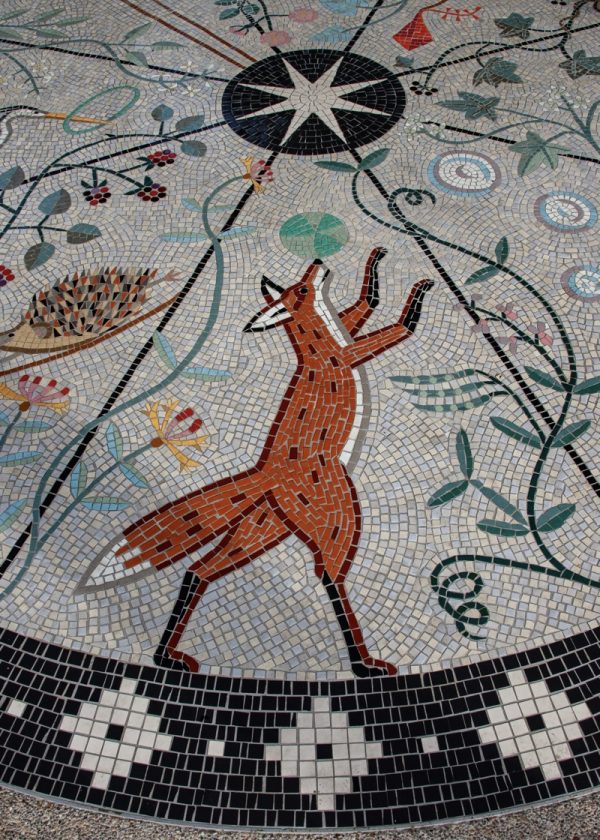
This month there are two opportunities to hear Tessa Hunkin speaking about her Hackney Mosaic Project, showing the mosaics, explaining how the project started and revealing how mosaics are made. Tessa will be signing copies of her book at both events.
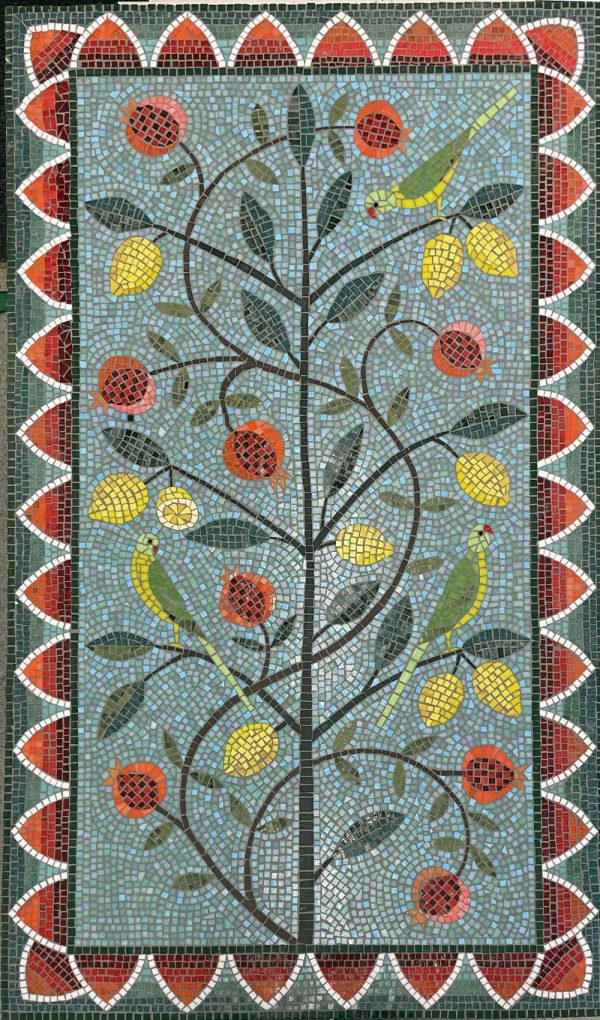
Click here to book for Tessa Hunkin’s talk on Saturday 15th November at 12:15pm at the Bloomsbury Jamboree, Art Workers’ Guild, 6 Queen Sq, WC1N 3 AT (Ticket includes entrance to the Jamboree)
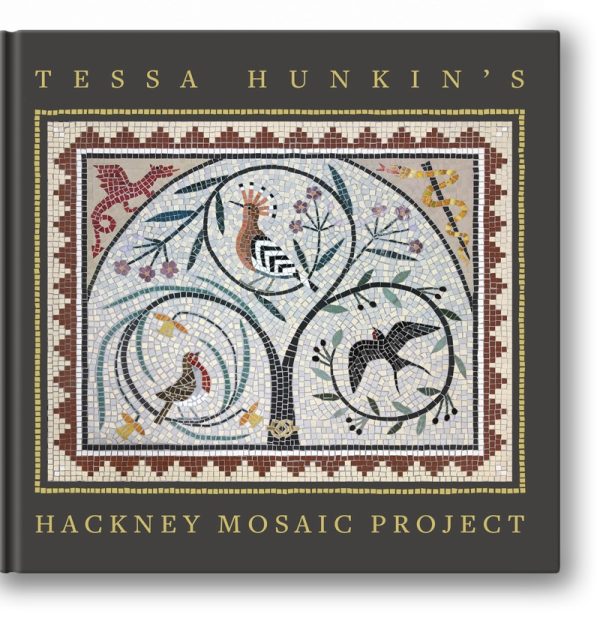
Click here to buy a copy of Tessa Hunkin’s Mosaic Project

On Publication Day For ‘Journal Of A Man Unknown’
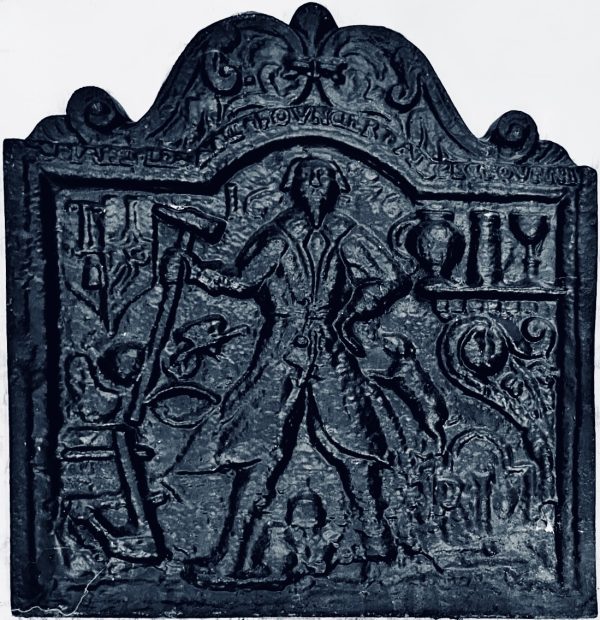
Seventeenth century fireback of an iron worker
Today is publication day for Gillian Tindall’s novel Journal Of A Man Unknown. As readers will know, Gillian died last month at the age of eighty-seven. Although I am deeply sorry that she did not live to see her book published, I take consolation in the knowledge that it is here and ready to be distributed to thousands of readers, thereby fulfilling her dying wish.
Below I publish an extract, recounting the protagonist’s first year in London, to give you a flavour of the novel.
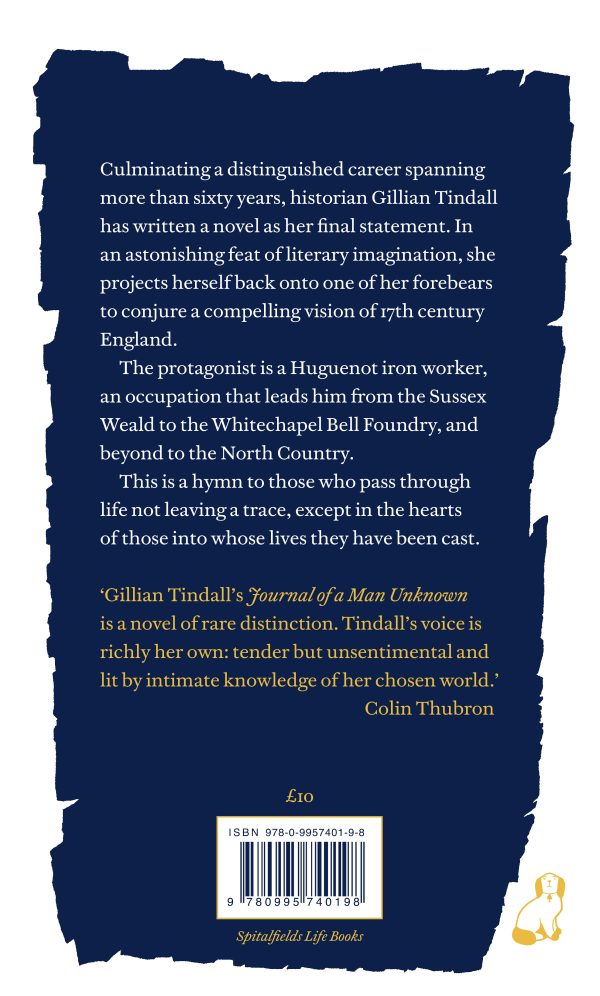
Culminating a distinguished career spanning more than sixty years, historian Gillian Tindall wrote Journal Of A Man Unknown as her final statement. In an astonishing feat of literary imagination, she projected herself back onto one of her forebears to conjure a compelling vision of seventeenth century England.
The main character is a Huguenot iron worker, an occupation that leads him from the Sussex Weald to the Whitechapel Bell Foundry, and beyond to the North Country.
This is a hymn to those who pass through life not leaving a trace, except in the hearts of those into whose lives they have been cast.
If you have not already booked to attend the publication party at Hatchard’s Piccadilly on 19th November when Colin Thubron will speak and Alan Cox will read from the novel, please drop me a line to spitalfieldslife@gmail.com
CLICK HERE TO BUY JOURNAL OF A MAN UNKNOWN FOR £10
TOM HARTHURST’S FIRST YEAR IN LONDON
An edited extract from ‘Journal of A Man Unknown’ published today
The reality of my aloneness truly came to me in London. So used I was to a world in which nearly every face, if not actually known to me, was of a familiar kind that I felt that in London I was moving through the innumerable, unknown noisy crowds as if I were a ghost – as unperceived by others as they were alien to me. It must be like this, I thought for a dead man to return after many years to the world of the living, when all he once knew are gone.
I believe I spent that time mainly walking around with nothing to do but solve the problem of what to do next. How was my new life to begin? I knew, of course, that I must somehow get a job within my trade and my abilities: I had my hand tools with me for that purpose. But what job, exactly? I had not made any proper plans. Wandering in Clerkenwell, I noticed a number of clockmakers, but though I knew my skills with blade-making and ring-fittings were good I doubted if I would be what an employer there wanted.
And so far I had failed to find the community of the French with metal-workers among them. Exploring the City, and the districts expanding fast on the western side of it, I had not ventured upon the Spital Fields outside the City walls, further to the east.
I was also much bothered by the continuous noise of the Town streets – shouting vendors, quarrelling idlers, continuous wheels on stones, chiming bells. All that which I had found exciting now oppressed me, a dweller in woodland pathways.
Later, of course, I too, like any Londoner, learnt to ignore the tumult and also many of the poor misshapen wretches whose only home is the street, and to pick my own way through the labyrinth, but at first I felt stunned and belittled by it all.
Meanwhile, I ate sparingly: mainly of bread and cheese bought in pen’orths, though tempted on all sides by the mass of street sellers crying wares of everything from fresh-baked sardines to winter-kept pears. I had my lodging to pay, meagre as it was, and dreaded using up all the money I had brought with me.
Today, when there are many more Huguenots come to live in London and elsewhere in England, and the Spital Fields are builded up with their houses, some of them quite fine, many an Englishman will tell you `Ah, they’ve all come since ’85’. But the truth of the matter is Huguenots had been escaping to our shores all this past century and especially once King Charles was back on our throne. They crossed the Channel by some means, often in perilous little boats, and so up the River Thames under cover of night. And they brought their skills, as weavers or jewellers or metal-workers, which they hastened to put to use.
The very first Sunday I went to the Huguenot Chapel in Threadneedle Street, I made contact with a man employed as a metal-worker at the White Chapel Bell Foundry. His name was Jean Orange, of the town of Orange in the far-distant southern regions of France. I owe to him my reception into their world and hence the whole course of my life since.
As was natural in that place and time, he addressed me first in French. But when he saw my confusion he switched at once to the heavily accented English he had acquired, and soon I was explaining to him my origins among the French iron-workers of Sussex. Then he introduced me to another from his own workplace. A workplace which, within a couple of weeks, also became mine.
It was not a job that used all my skills, or that was very well paid. But it was work within my capacity, and I was infinitely relieved and thankful to find myself, for the time being, in that situation. Also, men were proud to work in the White Chapel Foundry. Bells from there, as they said, go out not only all over England but these days to far off lands. And bells are at the heart of human life: they mark the hours, they ring in joy and celebration, and in warning, and they toll for our losses and our dying.
I felt that, like a cat foolishly jumping from a high place, I had nonetheless landed on my feet. At first I was wary of spending much money (for everything was in money in London, whereas in Sussex much then was done between ourselves by exchange of work, food-stuffs, grain, and unspoken understanding), so I remained in my attic room high up in Field Lane.
By and by I felt secure enough in my job to ask Jean Orange if he knew of anyone who might rent me a room on the east side of Town nearer to our work?
He suggested me to a family of silk-weavers called Regnier. They lived not far from him in a new row of houses called Flower-and-Dean Street, leading out of Brick Lane. The Lane, I came to understand, was an old one, and it still led then to smoking brick-kilns, but the products of the kilns were rapidly being used to cover the land about. Brick Lane itself was now lined with houses and new small streets ran out of it filling in the land in some places all the way back to the Bishops Gate, though there were still open tenter fields then in which London’s washing blew to dry.
The Regniers were the hardest working family I ever met, which is how skilled silk-weavers make a good deal of money. Their son had lately married into a family of weavers based near St Giles Church, beyond Holborn, where there was another nest of Huguenots, so a small room in the house in Flower-and-Dean Street was free for me to take. I did so, and soon came to find the sound of looms on the floor above me, sometimes far into the evening, not disturbing but reassuring.
On the occasional evening, I made the effort to dress myself in my best and visit Garraway’s Coffee House again. I saw and talked anew to Richard Hooke, and it was at this time that he showed me the museum in Gresham College: a remarkable assemblage of Egyptian mummies, skeletons of men and beasts, serpents, crocodiles, beautiful – but dead – birds from far off places, and even a unicorn’s horn. In which last I did not, on reflection, entirely believe. I was grateful to Hooke for his attentions to me, but I came to realise, after that visit, that I do not really appreciate museums or `cabinets of curiosity’ as they are termed. Beasts, birds and other living things only seem to awake feelings in me when they are in their natural habitat.
He told me that, in spite of all the deaths in Plague-years that the century had seen, the growth of population was inevitable and, taking one ten-years with another, essentially constant. London, he reckoned, doubled in size each forty years. And that the whole population of England did so every three hundred and sixty years.
‘The growth of London,’ he said, ‘should, I have calculated, stop by the year eighteen hundred. It will by then be eight times the size it is now. More than large enough. At any rate it must stop by 1840.’
At the time – my first year in Town, 1674 – the year 1800 seemed too far off to trouble about. But now, of course, as I write this in the year 1708, I reckon that some babes born in Town today might indeed, if gifted with truly long life still be alive to confront the problem lying in wait at the century’s end.
Another time he remarked to me that, if the present rate of building beyond the City continued, in two hundred years, or three at the most, London would extend from Bedford in the north to the coast by Newhaven in the south. There were others present then, and the idea provoked some laughter, as if at something quite fantastical, but I do believe he meant it. And, following his computations, that he was right.
And thus the winter passed – not so cold in Town as on the Sussex Weald, as if all those coal-smoking chimney stacks conspire to keep Londoners from the frost – and it would soon be a whole year since I had left my native place.
Maurice Evans, Firework Collector
CLICK HERE FOR MORE INFORMATION

Maurice Evans collected fireworks since childhood and at over eighty years old, he had accumulated the most comprehensive collection in the country – so you can imagine both my excitement and my trepidation upon stepping through the threshold of his house in Shoreham. My concern about potential explosion was relieved when Maurice confirmed that he had removed the gunpowder from his fireworks, only to be re-ignited when his wife Kit helpfully revealed that Catherine Wheels and Bangers were excepted because you cannot extract the gunpowder without ruining them.
This statement prompted Maurice to remember with visible pleasure that he still had a collection of World War II shells in the cellar and, of course, the reinforced steel shed in the garden full of live fireworks. “Let’s just say, if there’s a big bang in the neighbourhood, the police always come here first to see if it’s me,” admitted Maurice with a playful smirk. “Which it often isn’t,” added Kit, backing Maurice up with a complicit demonstration of knowing innocence.
“It all started with my father who was in munitions in the First World War,” explained Maurice proudly, “He had a big trunk with little drawers, and in those drawers I found diagrams explaining how to work with explosives and it intrigued me. Then came World War II and the South Downs were used as a training ground and, as boys, we went where we shouldn’t and there were loads of shells lying around, so we used to let them off.”
Maurice’s radiant smile revealed to me the unassailable joy of his teenage years, running around the downs at Shoreham playing with bombs. “We used to set off detonators outside each other’s houses to announce we’d arrived!” he bragged, waving his left hand to reveal the missing index finger, blown off when the explosive in a slow fuse unexpectedly fired upon lighting. “That’s the worst thing that happened,” Maurice declared with a grimace of alacrity, “We were worldly wise with explosives!”
Even before his teens, the love of pyrotechnics had taken grip upon Maurice’s psyche. It was a passion born of denial. “I used to suffer from bronchitis and asthma as a child, so when November 5th came round, I had to stay indoors.” he confided with a frown, “Every shop had a club and you put your pennies and ha’pennies in to save for fireworks and that’s what I did, but then my father let them off and I had to watch through the window.”
After the war, Maurice teamed up with a pyrotechnician from London and they travelled the country giving displays which Maurice devised, achieving delights that transcended his childhood hunger for explosions. “In my mind, I could envisage the sequence of fireworks and colours, and that was what I used to enjoy. You’ve got all the colours to start with, smoke, smoke colours, ground explosions, aerial explosions – it’s endless the amount of different things you can do. The art of it is knowing how to choose.” explained Maurice, his face illuminated by the images flickering in his mind. Adding, “I used to be quite big in fireworks at one time.” with calculated understatement.
Yet all this personal history was the mere pre-amble before Maurice led me through his house, immaculately clean, lined with patterned carpets and papers and witty curios of every description. Then in the kitchen, overlooking the garden lined with old trees, he opened an unexpected cupboard door to reveal a narrow red staircase going down. We descended to enter the burrow where Maurice has his rifle range, his collections, model aeroplanes, bombs and fireworks – all sharing the properties of flight and explosiveness. Once they were within reach, Maurice could not restrain his delight in picking up the shells and mortars of his childhood, explaining their explosive qualities and functions.
But my eyes were drawn by all the fireworks that lined the walls and glass cases, and the deep blues, lemon yellows and scarlets of their wrappers and casings. Such evocative colours and intricate designs which in their distinctive style of type and motif, draw upon the excitement and anticipation of magic we all share as children, feelings that compose into a lifelong love of fireworks. Rockets, Roman Candles, Catherine Wheels, Bangers, and Sparklers – amounting to thousands in boxes and crates, Maurice’s extraordinary collection is the history of fireworks in this country.
“I wouldn’t say its made my life, but its certainly livened it up,” confided Maurice, seeing my wonder at his overwhelming display. Because no-one (except Maurice) keeps fireworks, there is something extraordinary in seeing so many old ones and it sets your imagination racing to envisage the potential spectacle that these small cardboard parcels propose.
Maurice outgrew the bronchitis and asthma to have a beautiful life filled with fireworks, to visit firework factories around Britain, in China, Australia, New Zealand and all over Europe, and to scour Britain for collections of old fireworks, accumulating his priceless collection. Like an old dragon in a cave, surrounded by gold, Maurice guarded his cellar hoard protectively and was concerned about the future. “It needs to be seen,” he said, contemplating it all and speaking his thoughts out loud, “I would like to put this whole collection into a museum. I don’t want any money. I want everyone to see what happened from pre-war times up until the present day in the progression of fireworks.”
“My father used to bring me the used ones to keep,” confessed Maurice quietly with an affectionate gleam in his eye, as he revealed the emotional origin of his collection, once that we were alone together in the cellar. With touching selflessness, having derived so much joy from collecting his fireworks, Maurice wanted to share them with everybody else and he gave his collection to the Museum of British Folklore.

Maurice with his exploding fruit.

Maurice with his barrel of gunpowder

Maurice with his grenades.
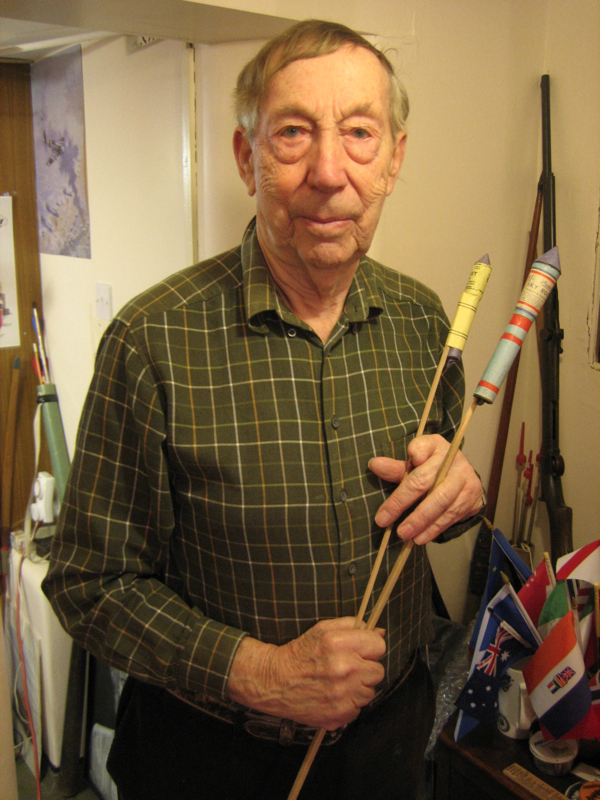
Maurice with two favourite rockets.


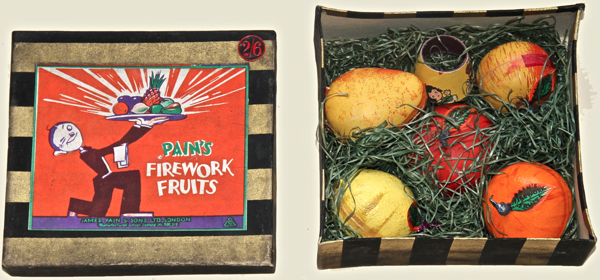


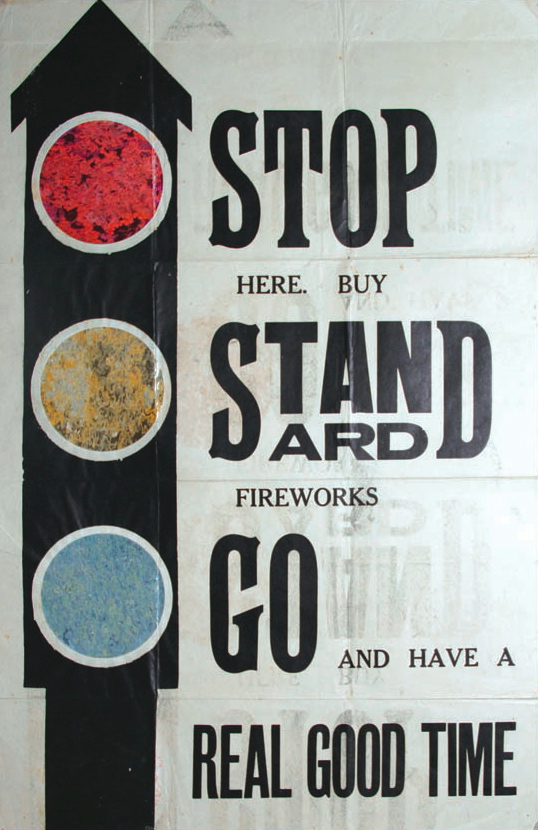
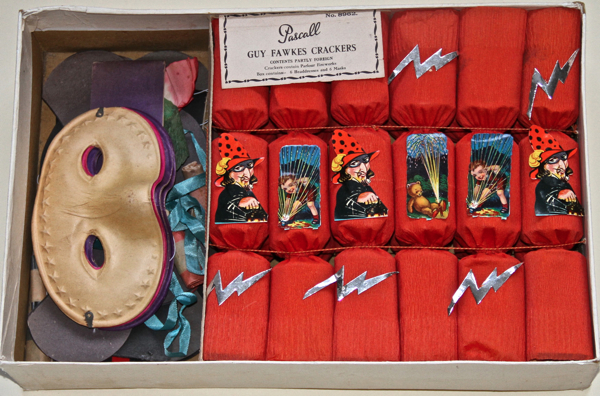


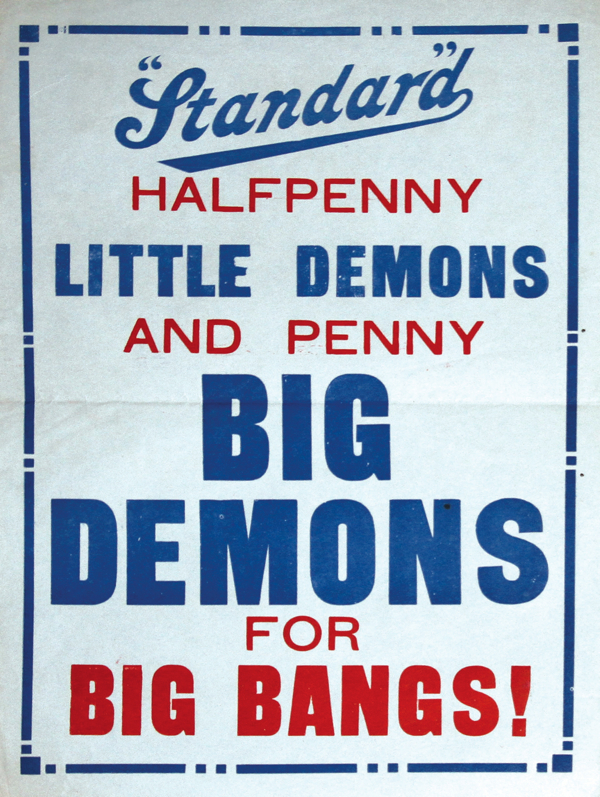

Firework photographs copyright © Simon Costin
Read my story about Simon Costin, The Museum of British Folklore
Invitation To The Launch of ‘Journal Of A Man Unknown’
The Gentle Author invites you to the publication party for
WEDNESDAY 19TH NOVEMBER 6-8PM
At 7pm Colin Thubron will speak
and Alan Cox will read from the novel
HATCHARD’S
187 Piccadilly, London, W1J 9LE
As numbers are limited, please email spitalfieldslife@gmail.com to let us know if you can join us and if you wish to bring a guest
CLICK HERE TO ORDER A COPY OF JOURNAL OF A MAN UNKNOWN FOR £10
Click here to read Gillian Tindall’s obituary in The Guardian
Taylor’s Buttons & Belts Is Saved!
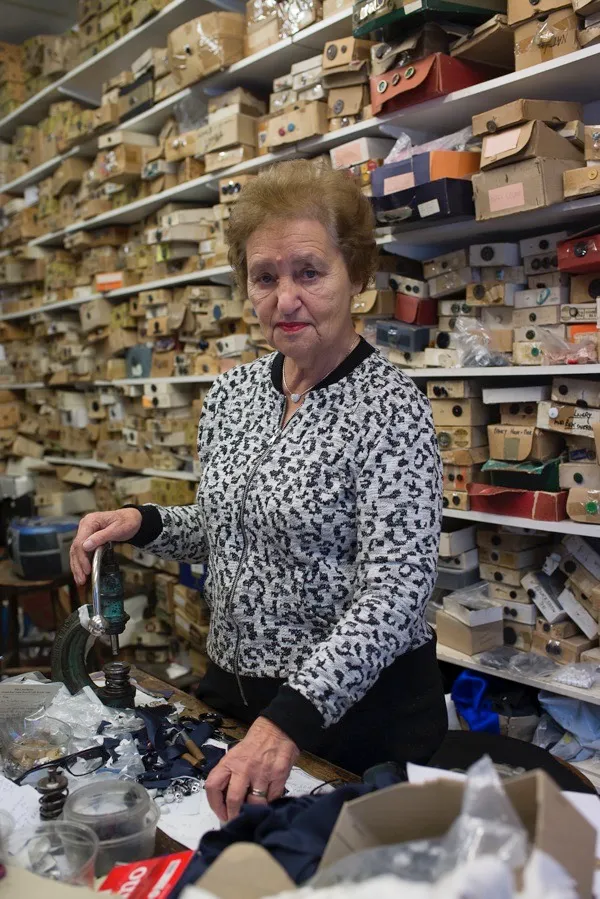
Portrait of Maureen Rose by Sarah Ainslie
Thanks in no small part to the generosity of you – the readers of Spitalfields Life – Taylors Buttons & Belts is saved. On Friday, I published my post about the crowdfund to raise £17,000 and by Saturday afternoon the total was achieved with 697 contributors.
Maureen Rose has been making buttons at her hundred year old shop in Cleveland St Fitzrovia for over fifty years and this outcome reflects the love and esteem that people have for Maureen and her wonderful emporium of buttons.
£17,000 is the rent arrears Maureen owes her landlord for the Covid lockdowns and unless she could pay this by November 14th, they were refusing to renew her lease. Thankfully this problem is now solved and the beloved institution may continue.
This has been a magnificent example of team work. Maureen’s friend Antonia Brecht contacted me last week about the crowdfund which had been running for two weeks and stood at around £400. Once I ran my story on Friday it took off, thanks particularly to the community of dressmakers, designers and costumers who all rallied round to support Maureen. Good job everybody!
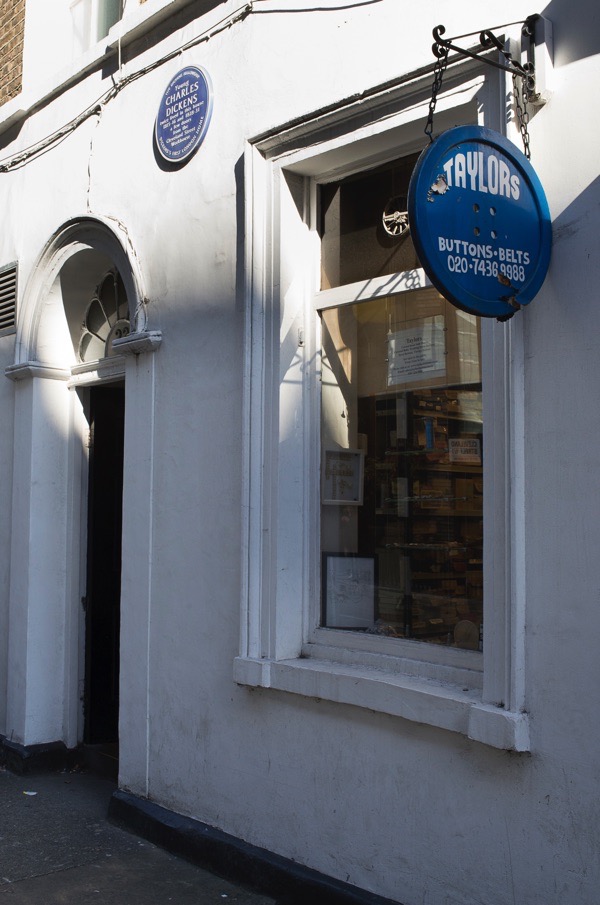
Photographs copyright © Sarah Ainslie
Visit Taylor’s Buttons & Belts, 22 Cleveland St, Fitzrovia, W1T 4JB
Open Tuesdays and Wednesdays 11am- 3:30pm
You make like to read my original story
Bloomsbury Jamboree Lectures 2025
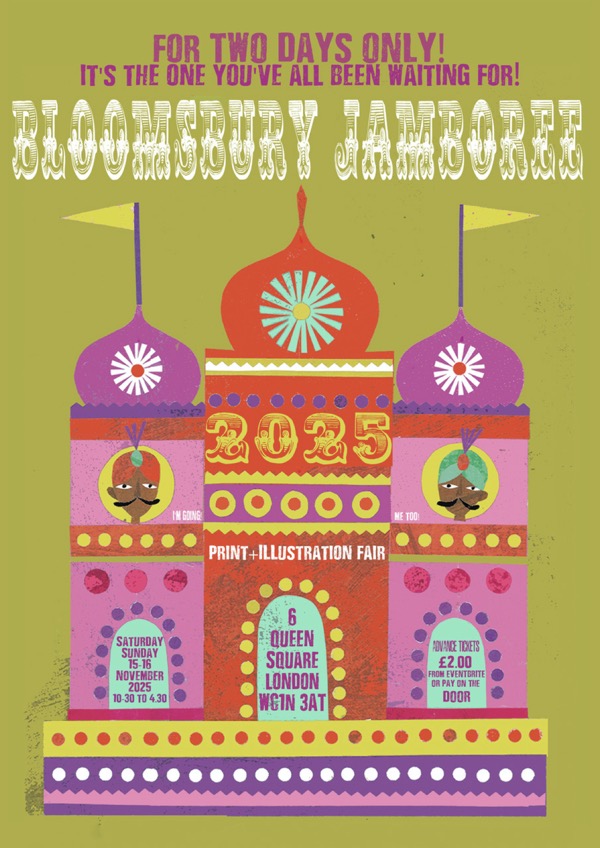
You are invited to our annual BLOOMSBURY JAMBOREE which runs from 10:30am – 4:30pm, Saturday 15th & Sunday 16th November at Art Workers’ Guild, 6 Queen Sq, WC1N 3AT.
We are showing the work of our favourite makers and are proud to present these accompanying lectures. Tickets include entry to the Jamboree.
Photograph by Alun Callender
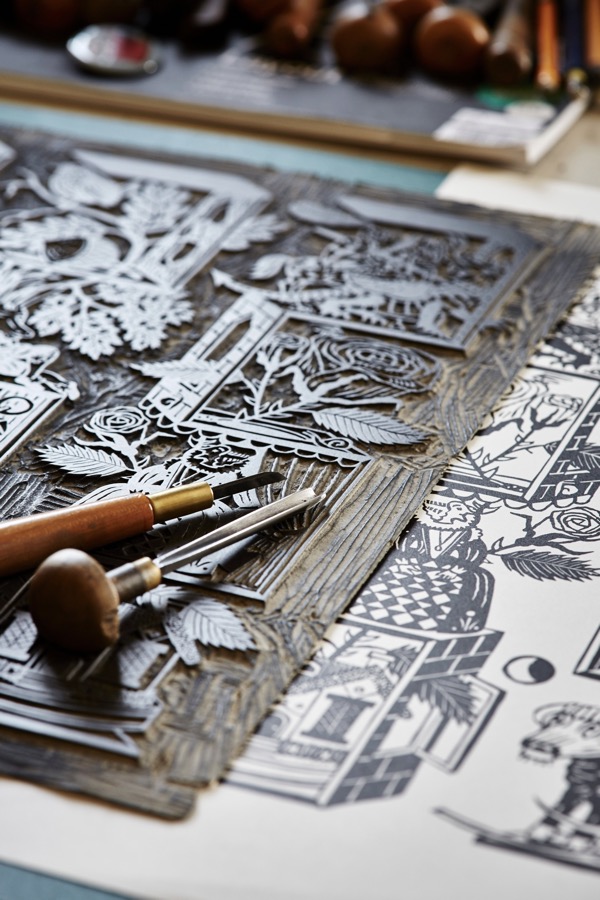
THE ART OF COLLABORATION: TWENTY YEARS OF ST JUDE’S
Join St Jude’s co-founders Simon and Angie Lewin in conversation with long-time collaborator and printmaker Christopher Brown. They will discuss the meeting points of fine art and commercial design, the creative partnerships that shape their work, and the lasting influence of artist-designers Edward Bawden and Eric Ravilious.
Click here to book for St Jude’s lecture at 7pm on Friday 14th November
Photograph by Anthony Crolla
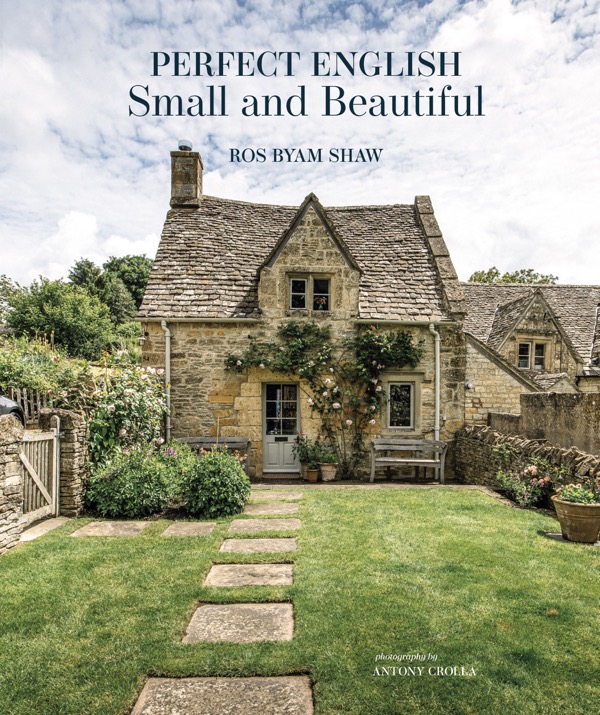
SMALL TALK
Ros Byam Shaw, author of the acclaimed Perfect English series and writer for House & Garden, Cabana and The World of Interiors, introduces her new book, Perfect English Small and Beautiful.
In this illustrated talk, Ros shows that Perfect English style can be scaled down to work in a home of any age, size or shape. She visits twelve pint-sized homes that are perfect examples of this ever-popular look, including a terraced townhouse in Ludlow, a gardener’s cottage in Kent, a tiny London flat and a perfect Cotswolds country cottage.
At a time when sustainability and environmental concerns are at the top of the agenda, Perfect English style prioritises reuse, recycling and upcycling, and happily accommodates objects that are worn, faded, and mended.
After her lecture, Ros will be signing copies of Perfect English Small and Beautiful published by Ryland Peters & Small.
Click here to book for Ros Byam Shaw’s lecture at 11am on Saturday 15th November
Photograph by Lucinda Douglas Menzies
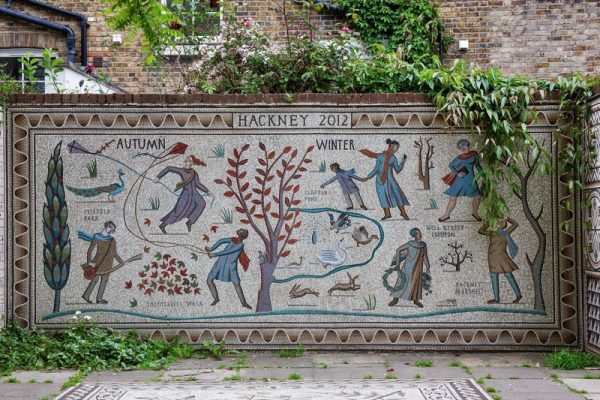
TESSA HUNKIN’S HACKNEY MOSAIC PROJECT
Tessa Hunkin’s Hackney Mosaic Project has been responsible for some of the most witty and imaginative mosaics of recent years.
In a bold reinvention of the classical tradition, Tessa has assembled a passionate and diverse team of makers, creating beautiful mosaics that have become cherished landmarks, celebrating community and elevating the streets of East London.
In this illustrated lecture, Tessa tells the story of Hackney Mosaic Project and shows some of the mosaics, ranging from modest pieces in private gardens to expansive murals and pavements in public parks. From its beginnings as a temporary Olympic Celebration in 2012 to its development into a unique community craft workshop Tessa will also explain how the work is created and the development of the ideas behind it.
After her lecture Tessa will be signing copies of Hackney Mosaic Project published by Spitalfields Life Books.
Click here to book for Tessa Hunkin’s lecture at 12:15pm on Saturday 15th November
Photograph by Ola O. Smit
FORGOTTEN CRAFTS & CUSTOMS IN POLISH FOLK ART
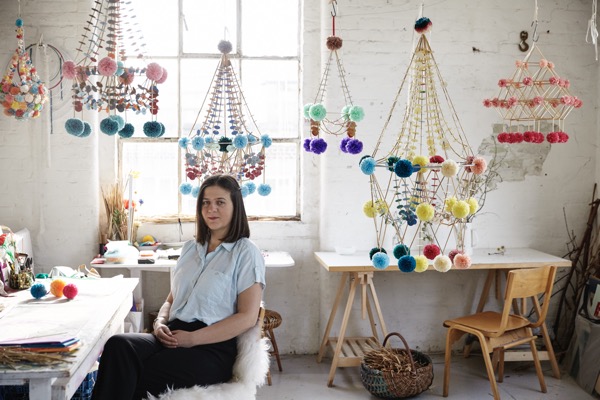
Inspired by Polish folk art, Karolina Merska of Folka started creating pająki chandeliers in London in 2015.
Pająki (pah-yonk-ee) are chandeliers constructed of rye straw and paper with a history dating back to the mid-18th century, made by country women as decorations for their homes at festivals.
Karolina keeps the pająki tradition alive using traditional techniques and materials as well as experimenting with new ones to give her work contemporary look, and she is the author of Making Mobiles: Create Beautiful Polish Pająki from Natural Materials.
Join Karolina’s talk to discover the richness of Polish folk art. As well as introducing her practice of making pająki, she will present the work of her folk artist collaborators, share memorable moments from her travels in search of Polish folk and reveal her favourite Christmas Polish customs and traditions.
Click here to book for Karolina Merska’s lecture at 2pm on Saturday 15th November
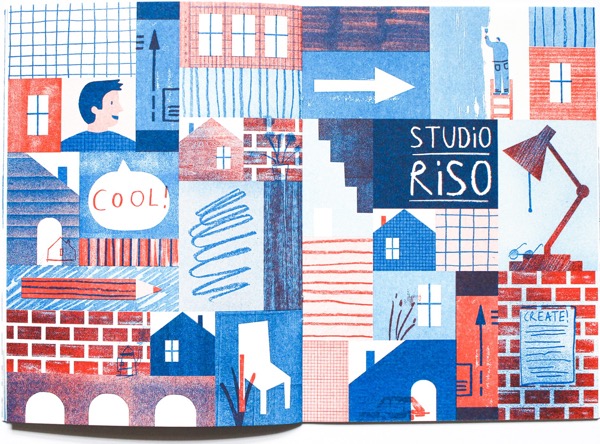
Design by Beth Izatt
RISOGRAPH: PLAY, PRINT & POSSIBILITY
The Risograph, a machine with endless possibilities and a vibrant ink palette is a staple in the contemporary visual arts scene – but how has it impacted play, print and process? In this talk, Beth Izatt explores this machine’s rich history and how it revolutionised print, paving a way for fast and economical printing, whilst ushering in a much-celebrated DIY movement. We discuss how its various settings and colour blend options have sparked a wave of play in a variety of processes – and why this is important now more than ever.
This talk will feature Beth Izatt’s book Hello! Riso! With this helpful introduction to the world of Risograph, and our exploration into its impact, you will learn how you can utilise the magic of Riso.
After her talk Beth Izatt will be signing copies of Hello! Riso! published by Design For Today.
Click here to book for Beth Izatt’s lecture at 3:15pm on Saturday 15th November
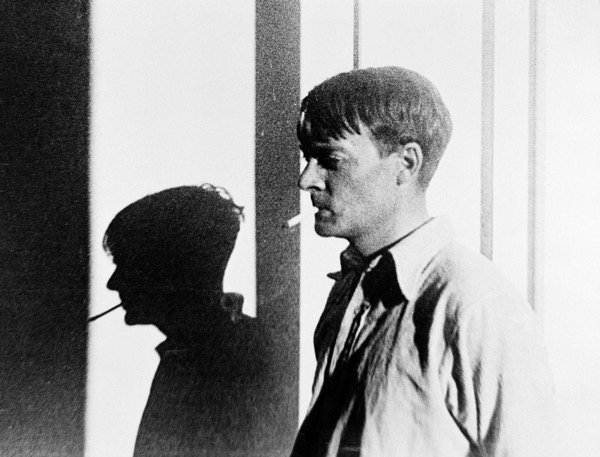
MEET MR RAVILIOUS
Alan Powers explores the work of Eric Ravilious in the words of his friends and contemporaries .
How many people knew of his work in his lifetime, and what did they think of it? The answer to the first question is unknowable in terms of numbers, but he did not get major publicity. Even so, what was written about him, often by friends, is revealing. After his early death, writers often saw him as an influence for the future, representing a stream within English art and design that arguably only emerged into the light in recent years.
After his lecture Alan Powers will be signing copies of Eric Ravilious in the Eyes of his Contemporaries published by Mainstone Press.
Click here to book for Alan Powers’ lecture at 11am on Sunday 16th November
ASSEMBLE: PEOPLE, PLACES & COMMUNITIES
A talk by James Binning – founding member of the inspirational, Turner-prize winning, architectural collective Assemble.
Assemble is a multi-disciplinary collective working across architecture, design and art. Founded in 2010 to undertake a single self-built project, Assemble has since delivered a diverse and award-winning body of work, while retaining a democratic and cooperative working method that enables built, social and research-based work at a variety of scales, both making things and making things happen.
James’ talk will focus on Assemble’s early work and how they produced innovative projects that were resourceful and responsive to the challenges they saw as young people and practitioners in London and around the UK.
In 2025 James set up Common Treasures, a new organisation focussing on the role for design to address challenges facing rural places, economies and communities. He is working with the Ecological Land Co-operative, an organisation that aims to build a living working countryside in ways that are equitable and ecological, through democratising access to land and supporting the development of better networks of local, regenerative food and material production, and developing low cost and low impact housing for land workers.
Copies of both Assemble’s recent book, Building Collective published by Thames & Hudson, and Volumes 1 & 2 of Common Treasures, which focus on issues including food, farming, land, housing, planning and construction will available on the day.
Click here to book for James Binnings’ lecture at 12:15pm on Sunday 16th November
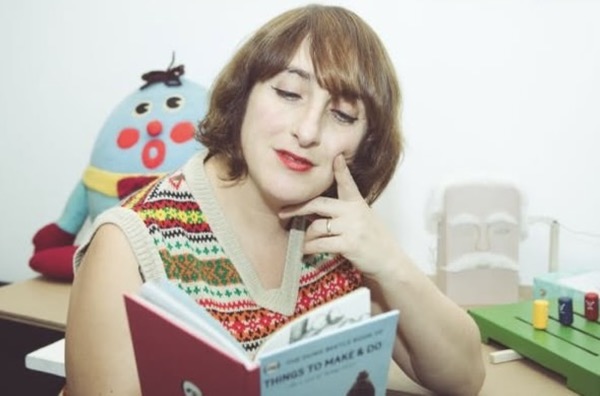
I SAW AN ART FAIR & TEN YEARS OF DUNG BEETLE BOOKS
We welcome artist, broadcaster and writer Miriam Elia for a talk, a book signing and more than a few laughs. It is the tenth anniversary of Miriam’s Dung Beetle Books which have sold an amazing 250,000 copies.
It’s been a rollercoaster of a journey and Miriam will be reflecting on when she was sued by Penguin, and the time Marina Abramovic personally asked her to write a surrealist comedy about her. Then too, how she became an artist and what makes her laugh.
After her talk, Miriam will be signing copies of her latest title I Saw An Art Fair, a micky-take of art fairs and modern art in general, seen through the lens of a fifties ‘tick the box’ children’s book.
Click here to book for Miriam Elia’s lecture at 2pm on Sunday 16th November
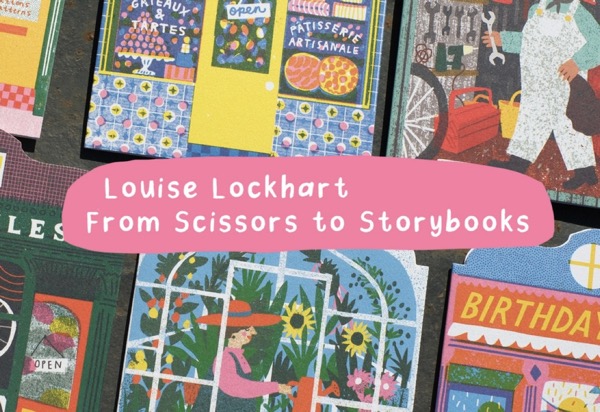
Design by Louise Lockhart
MY PROCESS IN PAPER, PRINT & PACKAGING
Louise Lockhart is an illustrator living on a farm in rural Wales. She spends her days creating designs from paper cut outs and line drawings, observing things that others may overlook.
She has turned her pen to non-fiction children’s books as well as working on illustrations for packaging from Easter eggs for M&S to pyjamas for Mini Boden.
Inspired by mid-century printmakers and retro colour palettes, her playful work often bridges the gap between graphics, fine art, illustration and textiles. As well as working as a freelance illustrator, Louise also applies her pictures to products which she sells in her online shop The Printed Peanut.
This talk showcases Louise’s influences and inspiration from early life to documenting her working methods. She will discuss how she likes to cut out shapes from paper to make different types of print, focusing on analogue and handmade techniques.
“[Louise Lockhart’s] work is reminiscent of Eric Ravilious, but through a joyful sixties Technicolor telescope,” Bibelot Magazine
Click here to book for Louise Lockhart’s lecture at 3:15pm on Sunday 16th November












