
Bloomsbury Jamboree 2025
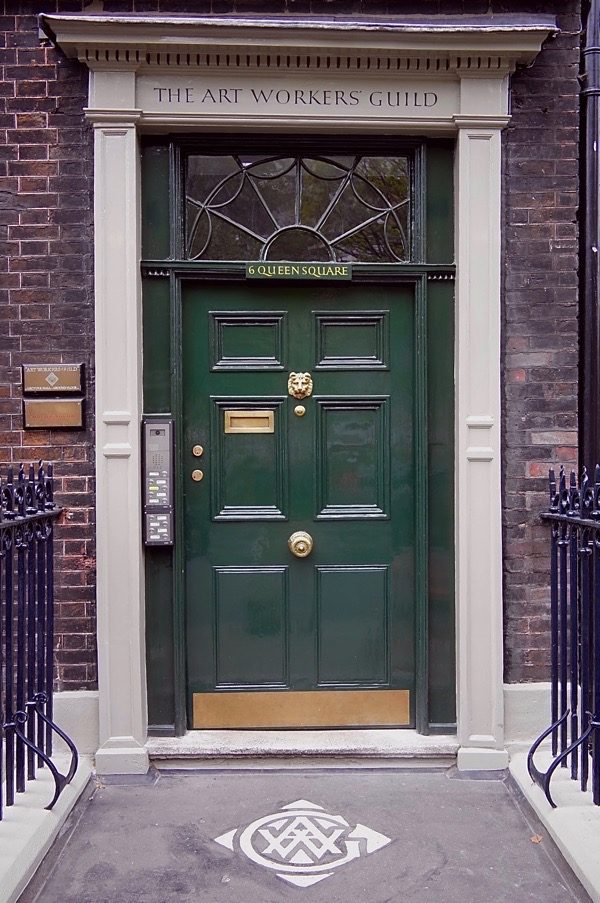
In gleeful collaboration with Tim Mainstone of Mainstone Press and Joe Pearson of Design for Today, I am hosting our annual BLOOMSBURY JAMBOREE, a festival of books and print, illustration, talks and seasonal merriment on SATURDAY 15th & SUNDAY 16th NOVEMBER from 10:30am until 4:30pm.
It takes place at the magnificent ART WORKERS GUILD, 6 Queens Sq, WC1, which was founded in 1884 by members of the Arts & Crafts movement including William Morris and C R Ashbee. These oak panelled rooms lined with oil paintings in a beautiful old house in Bloomsbury offer the ideal venue to celebrate our books, and the authors and artists who create them.
There will be a programme of ticketed lectures and readings plus we have invited our talented friends to exhibit, including print and paper makers, small press publishers, toy makers, potters, craft workers and importers for food by small producers. We present a selection of the work of some of our exhibitors below.
We need volunteers all day Saturday and Sunday. We offer bags of books and other goodies as rewards – if you can help us, please email hello@inkpaperandprint.co.uk
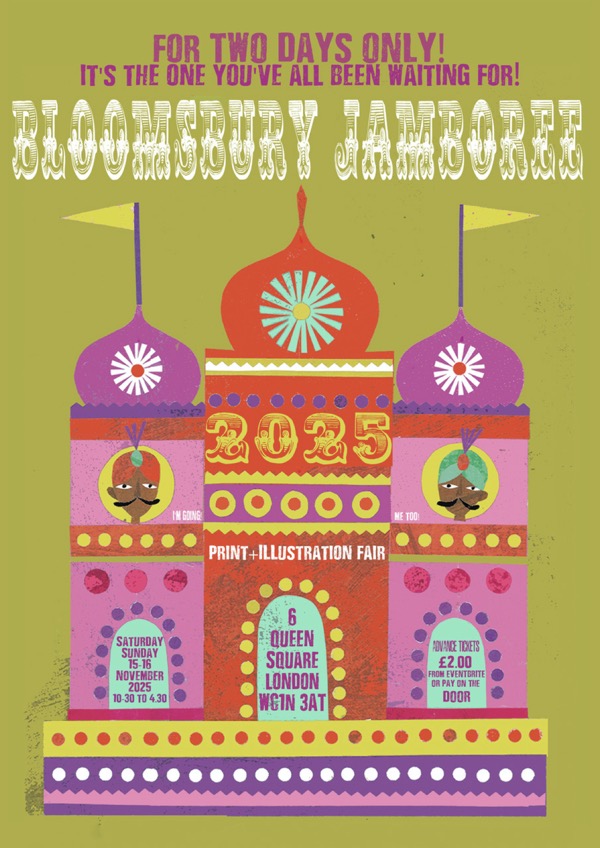
Poster by Marion Elliot
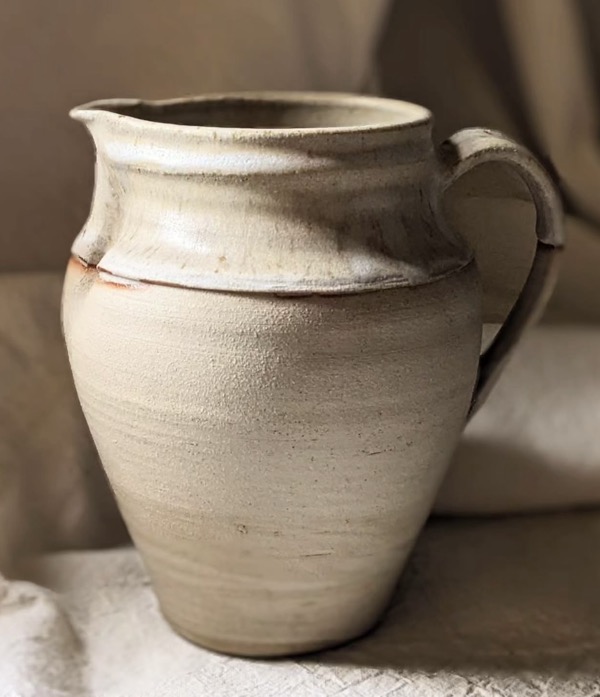
Jug by Richard Fuest
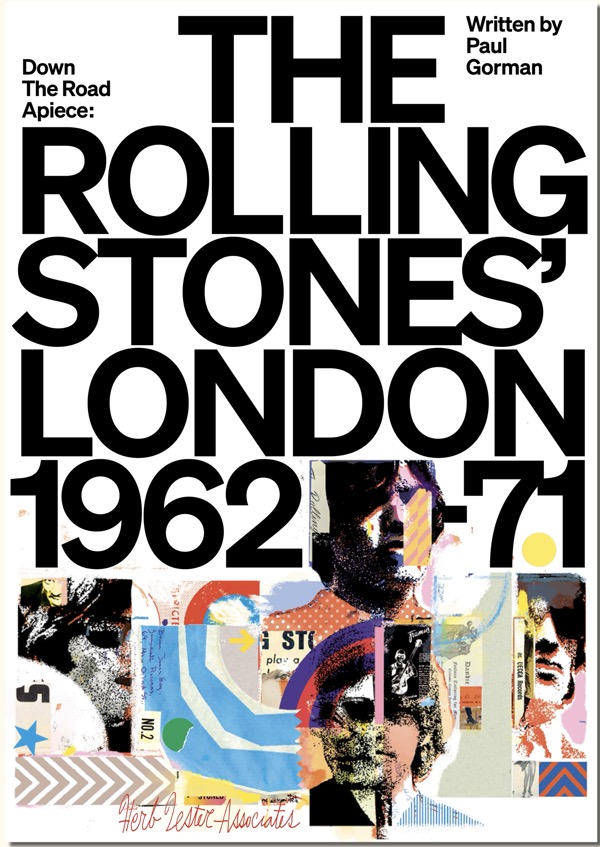
Map of The Rolling Stones’ London by Herb Lester Associates
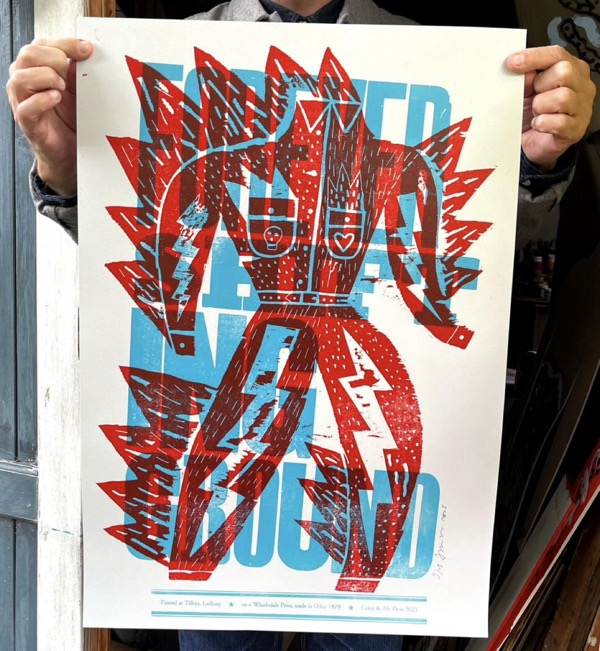
Rocketman by Jonny Hannah

Riso print by Louise Lockhart AKA The Printed Peanut
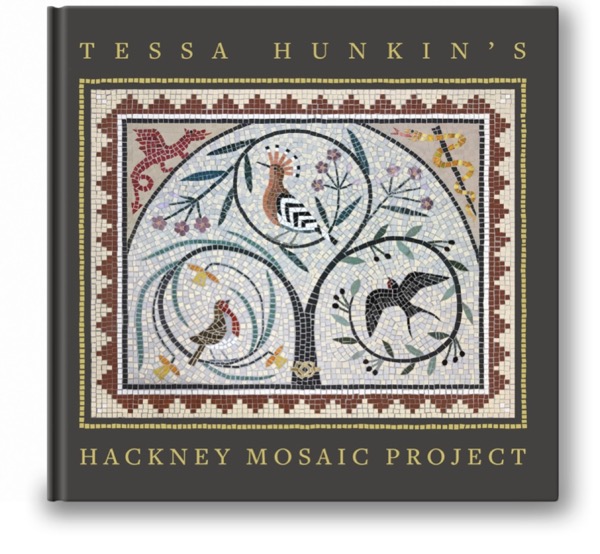 Tessa Hunkin’s Hackney Mosaic Project published by Spitalfields Life
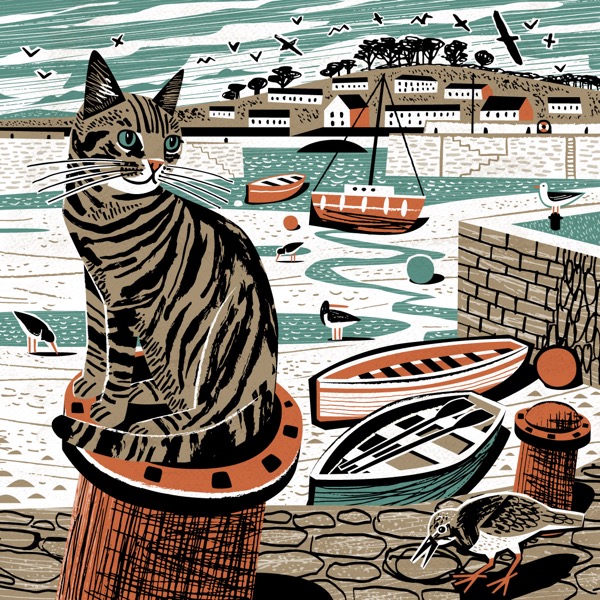
St Michael’s Mount Harbour, Dave the Cat print by Matt Johnson
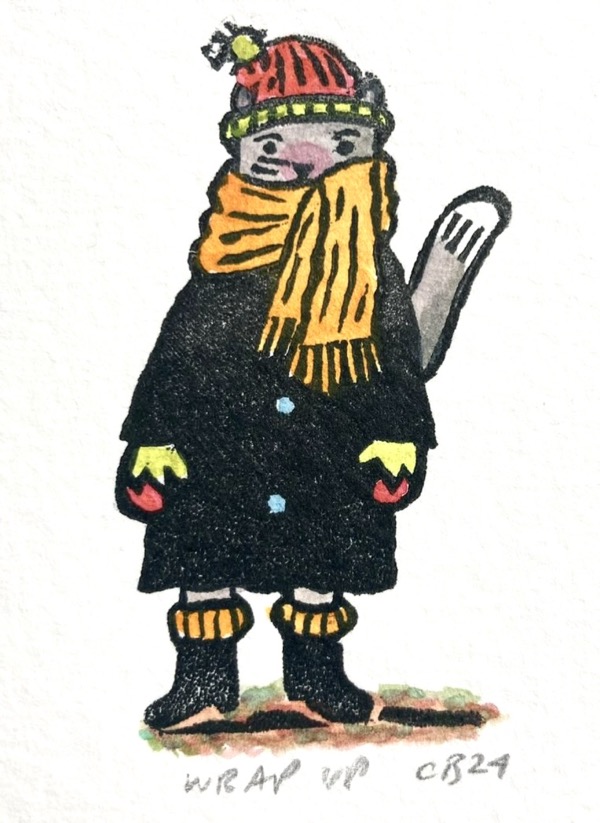
Print by Chris Brown
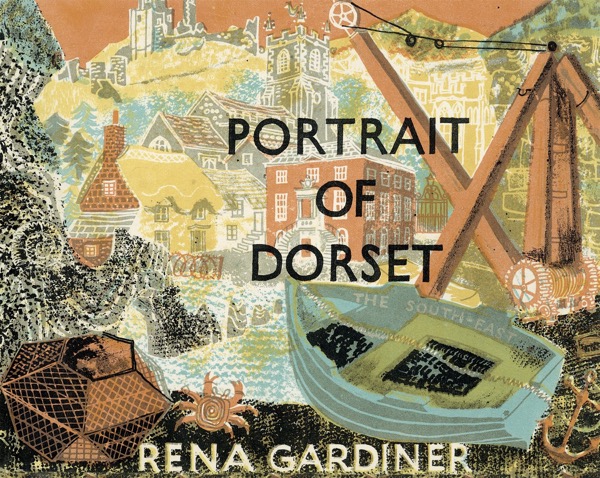
Portrait Of Dorset published by Design For Today
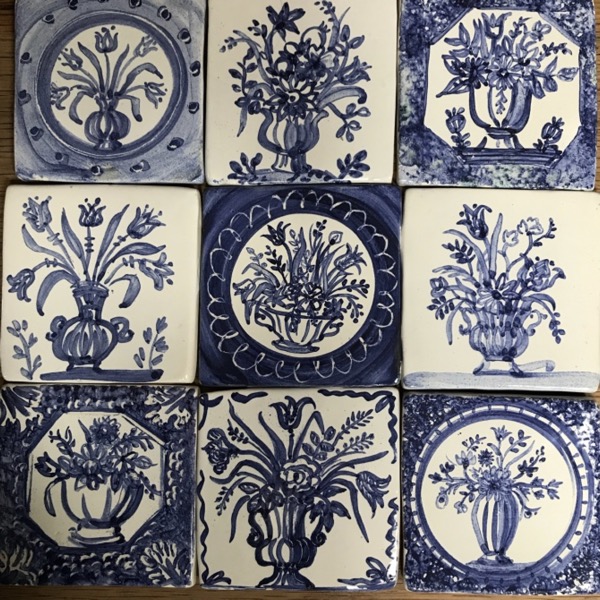
Delft tiles by Matilda Moreton
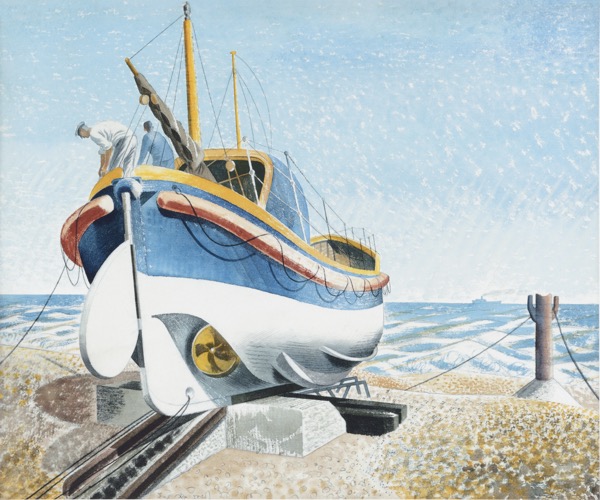
Eric Ravilious lifeboat print published by Mainstone Press
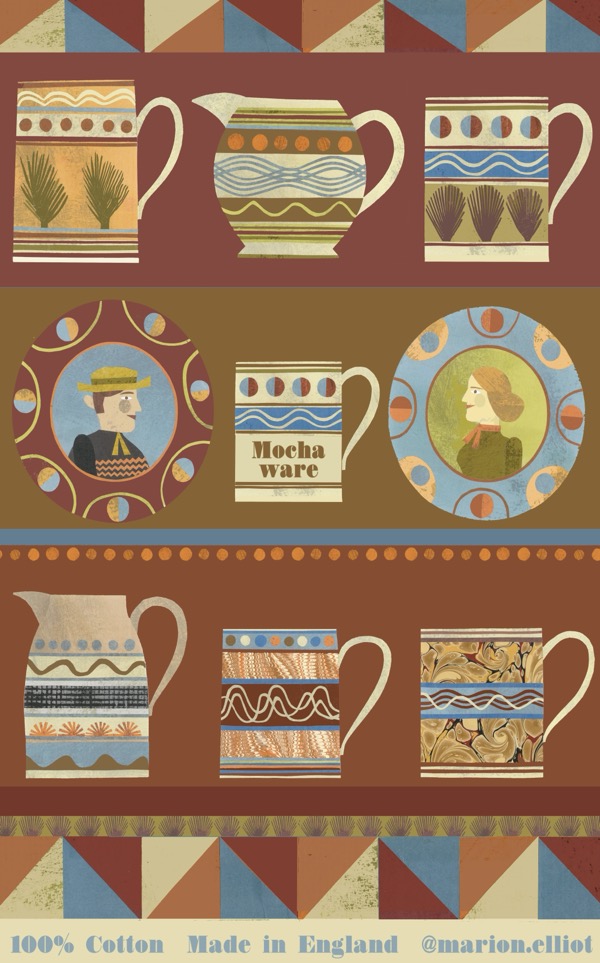
Tea towel by Marion Elliot
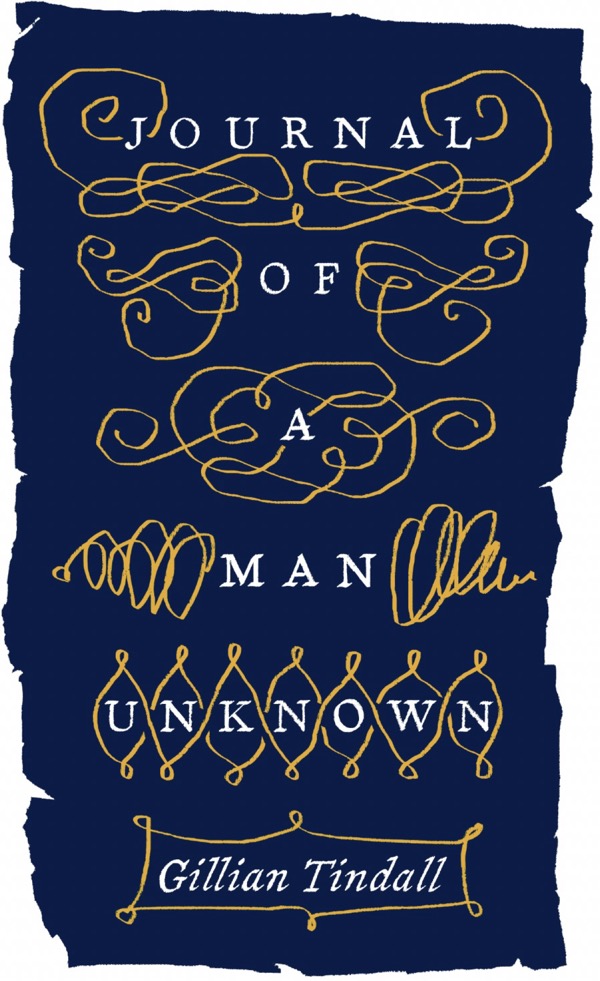
Journal Of A Man Unknown by Gillian Tindall published by Spitalfields Life
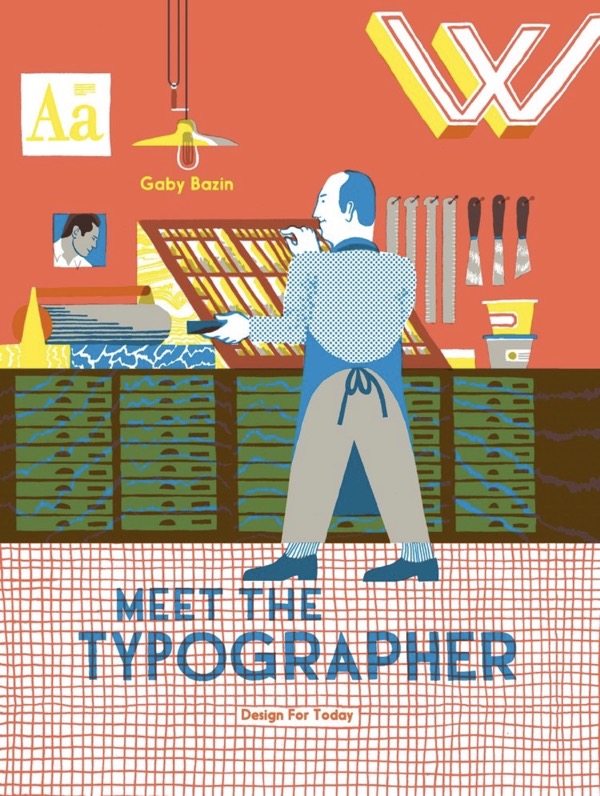
Meet the Typographer by Gaby Bazin published by Design For Today
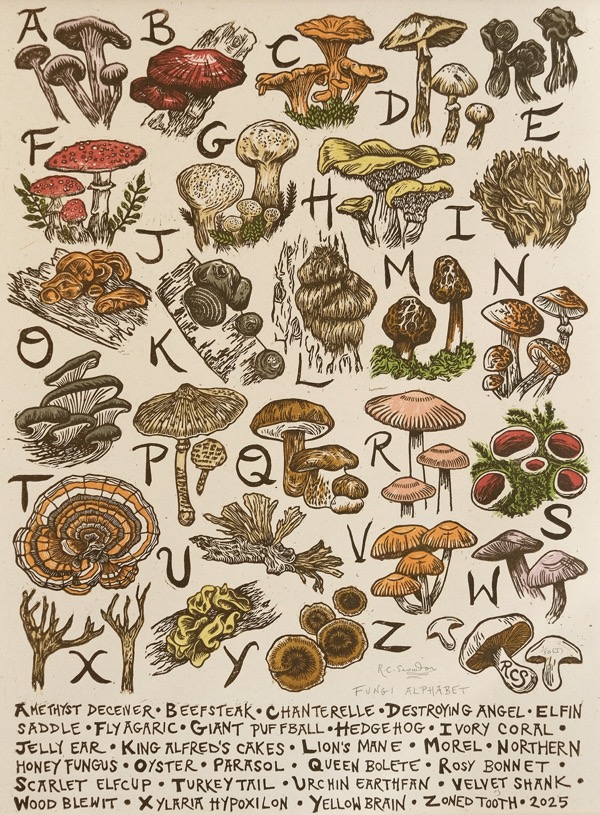
Fungi Alphabet print by Rachel Snowden
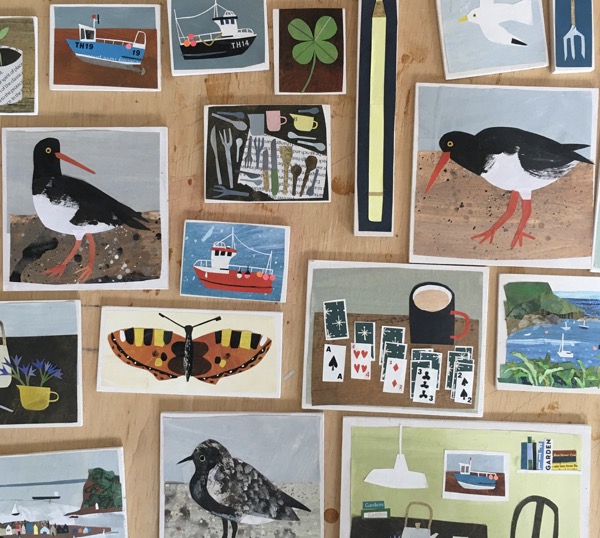
Collages by Clover Robin
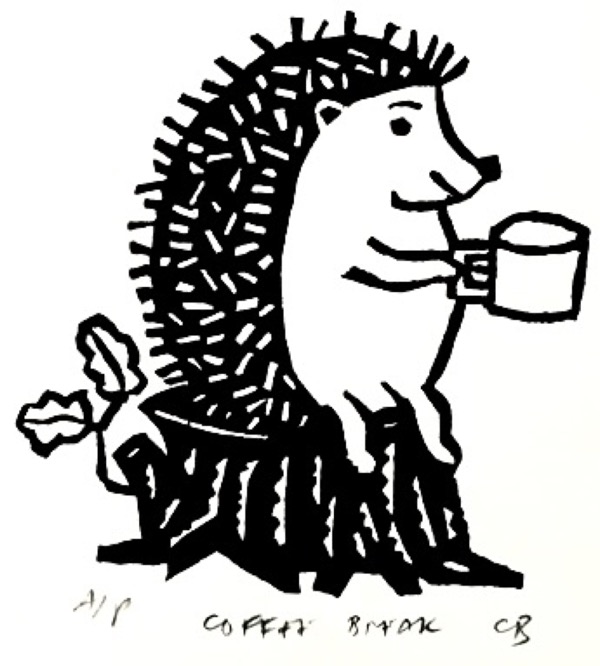 Hedgehog taking a coffee break, print by Chris Brown
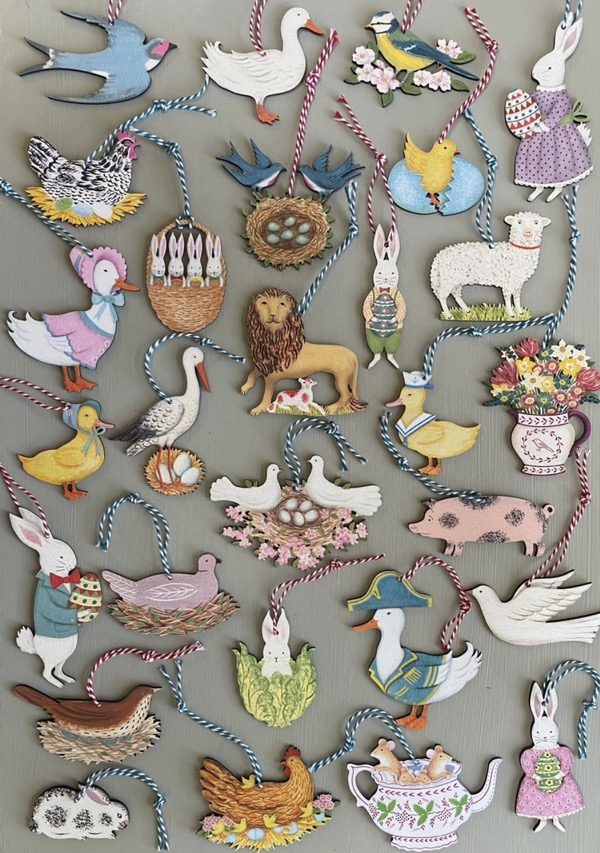
Printed wooden decorations Elizabeth Harbour
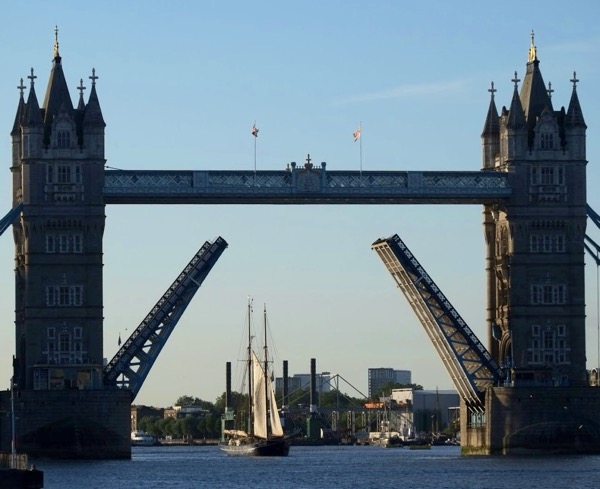
Sal Cargo bringing produce from small producers across the world to London by sail power
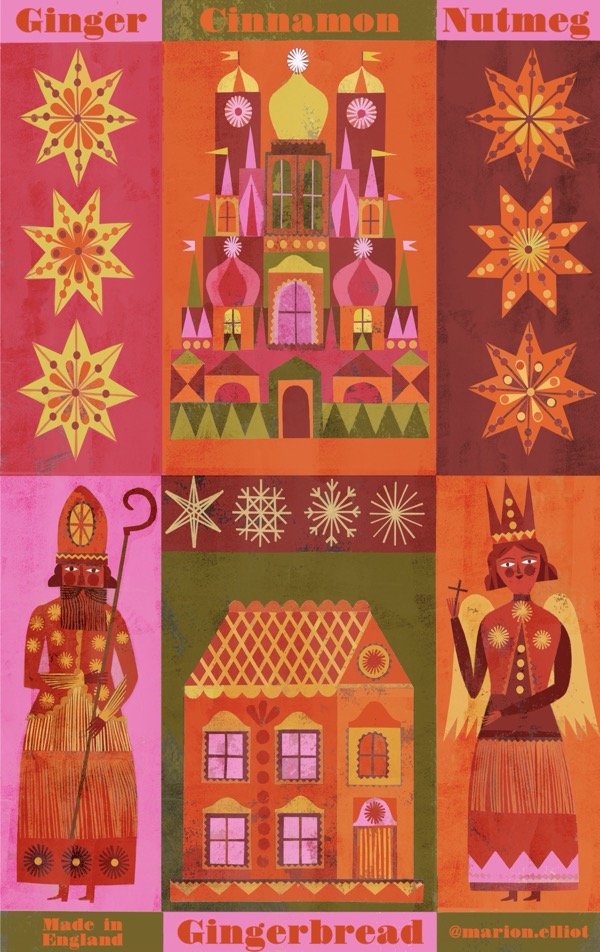
Tea towel by Marion Elliot
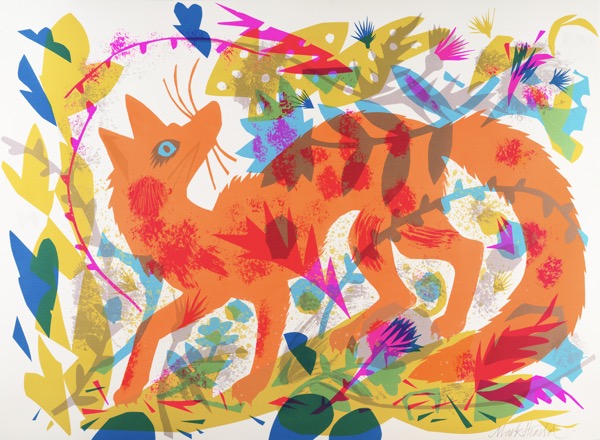
Print by Mark Hearld published by Penfold Press
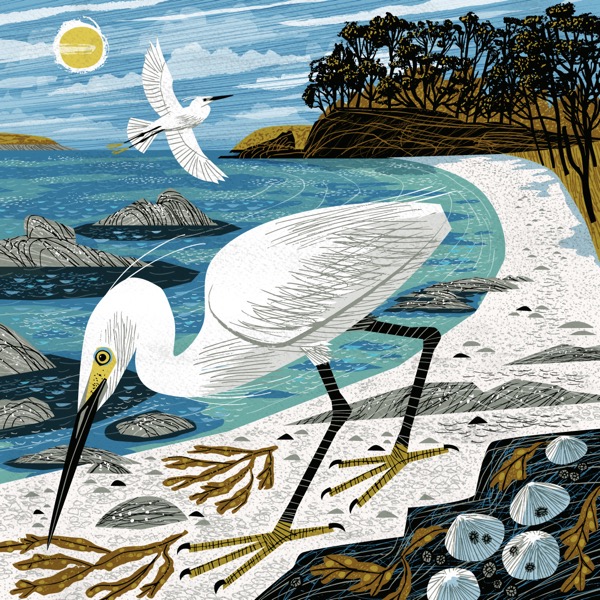
Helford River Egrets print by Matt Johnson
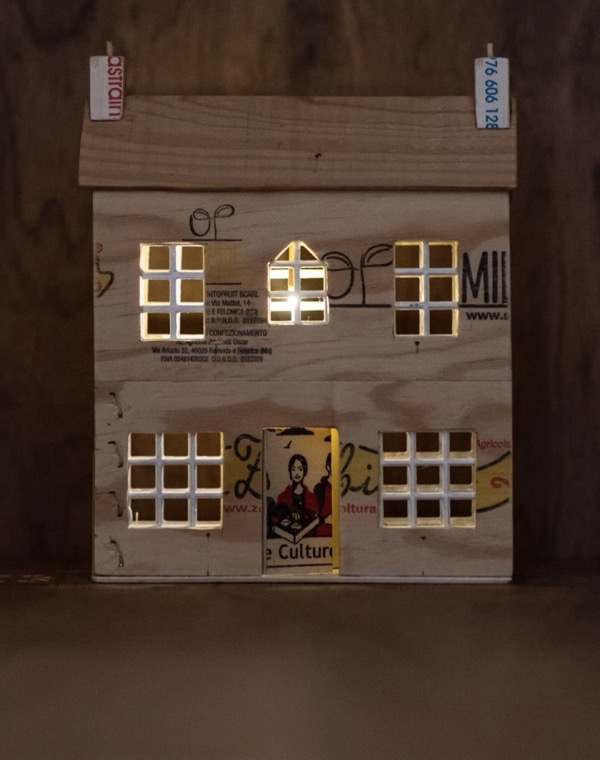
Solar powered house made of boxes from Whitechapel Market by Robson Cezar
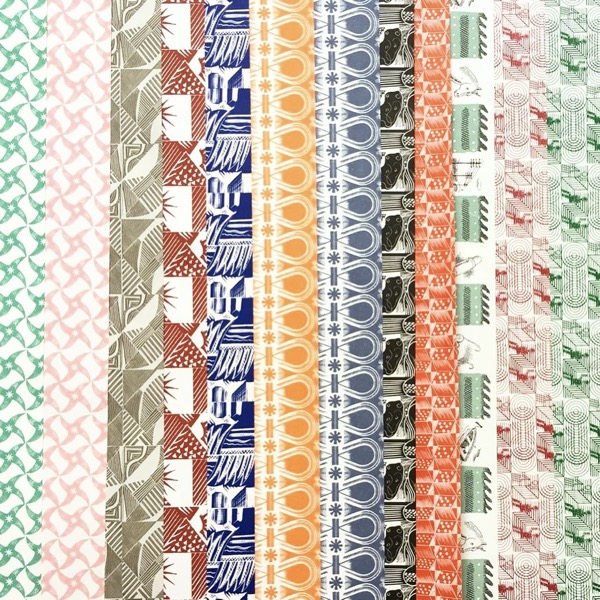
Wrapping paper to designs by Eric Ravilious and Enid Marx produced by Judd St Papers
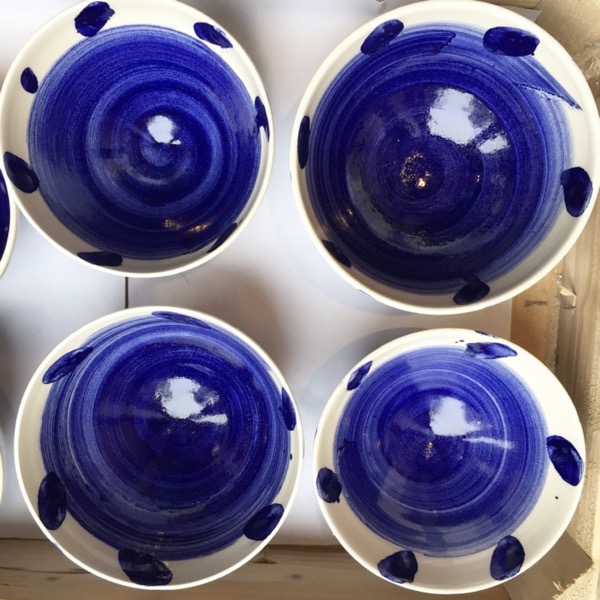
Ceramic bowls by Matilda Moreton
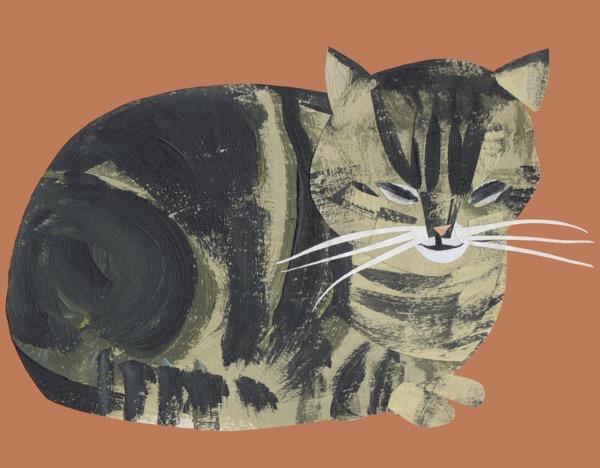
Collage by Clover Robin
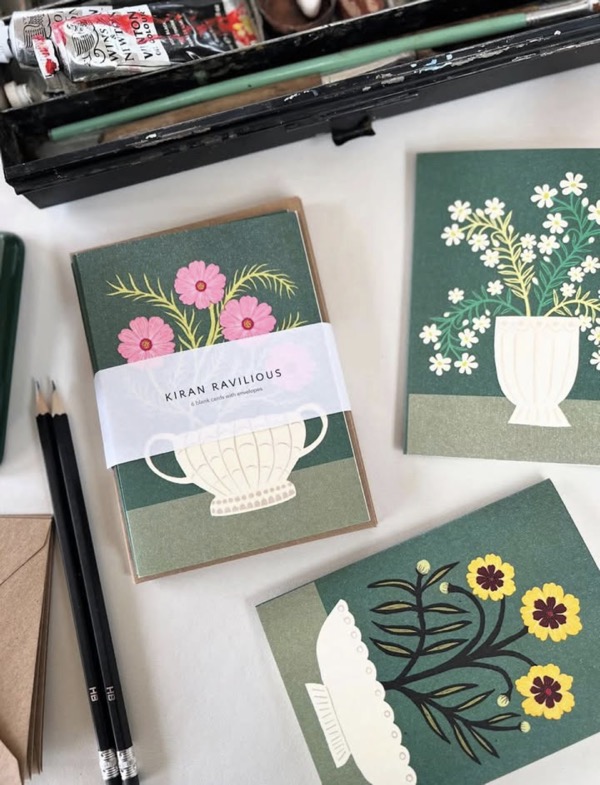
Cards by Kiran Ravilious
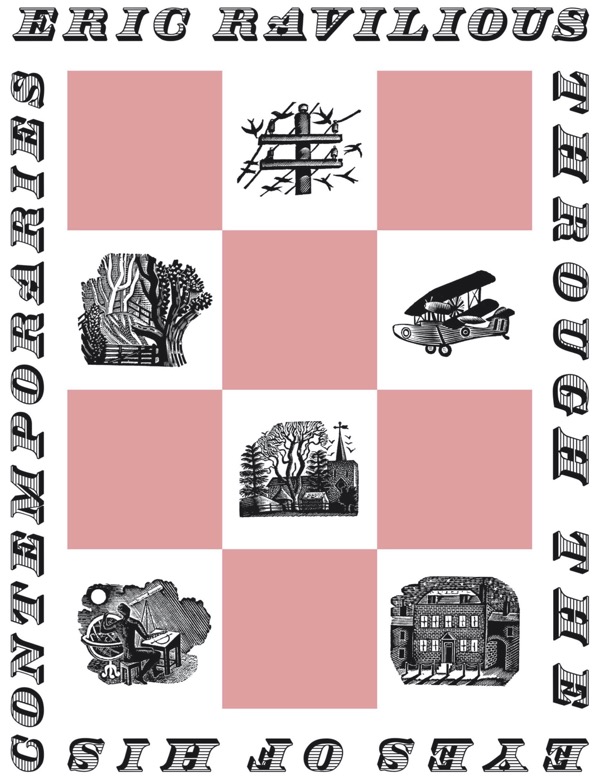
Eric Ravilous Through the Eyes of his Contemporaries published by Mainstone Press
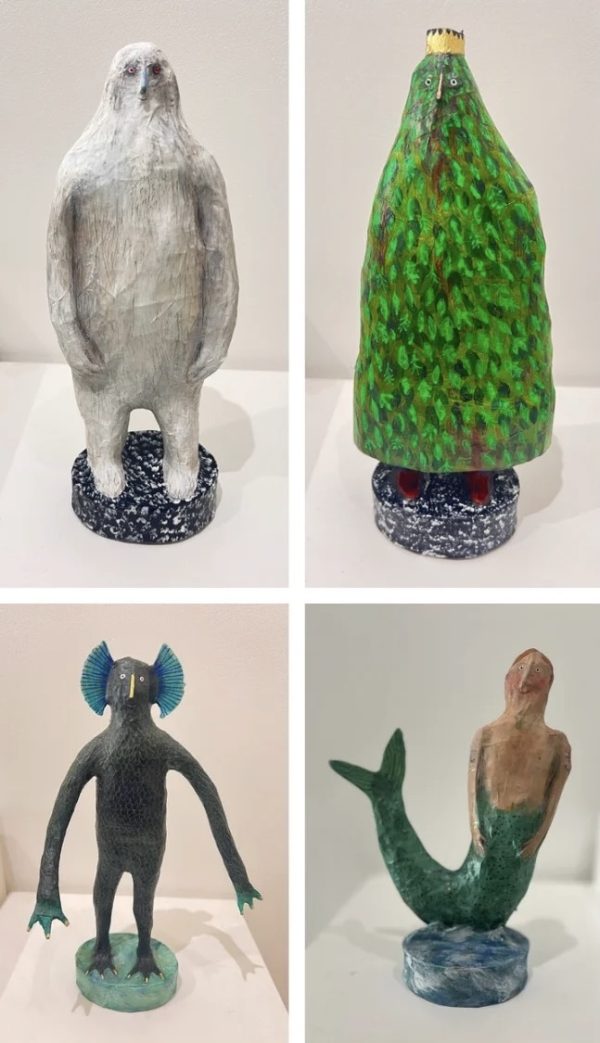
Paper mache figures by Emily Warren AKA Stealthyrabbit
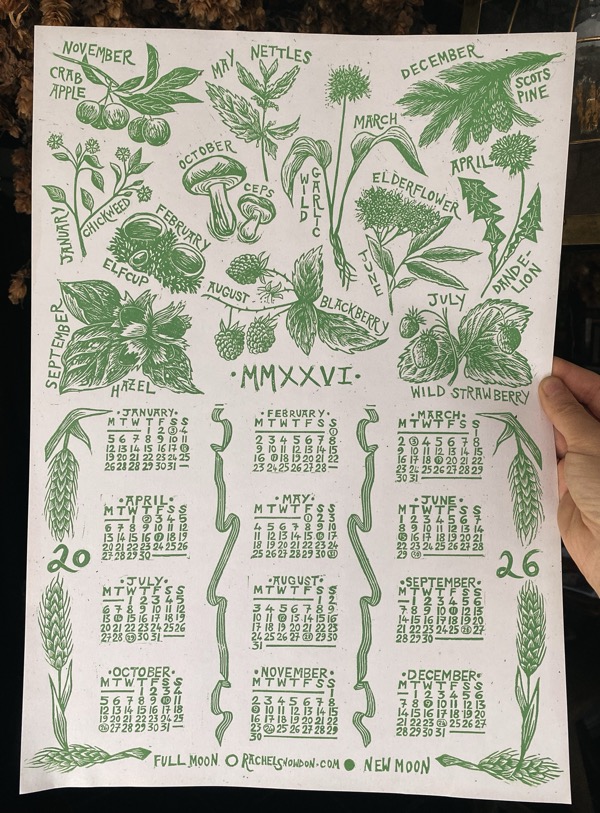
Linocut calendar by Rachel Snowden
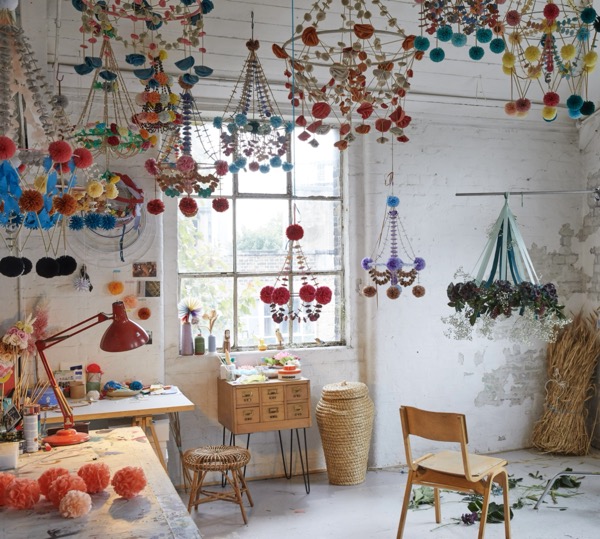
Polish folk art chandeliers by Folka
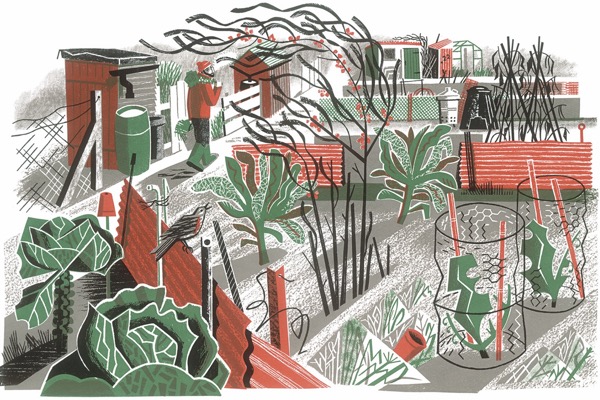
Shortest Day print by Clare Curtis published by Penfold Press
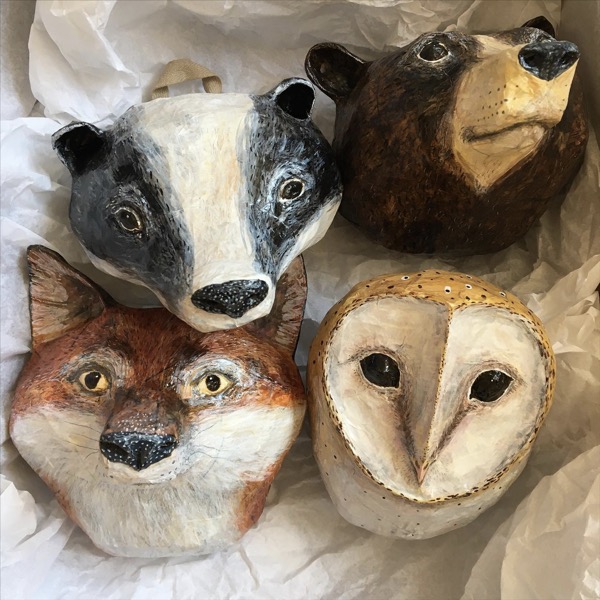
Paper mache animal masks by Emily Warren AKA Stealthyrabbit
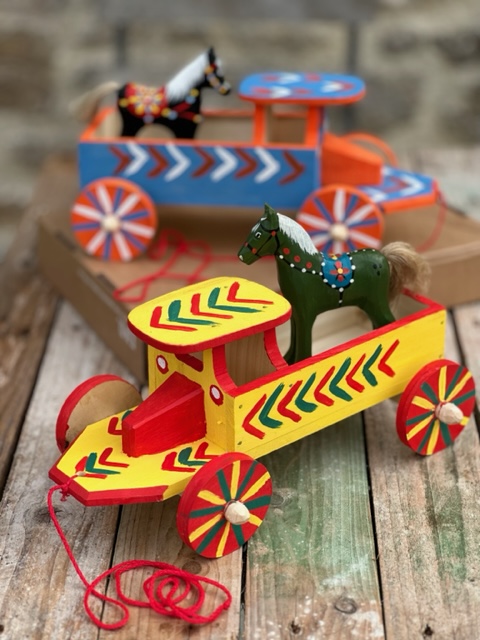
Polish handmade toys from Frank & Luisa
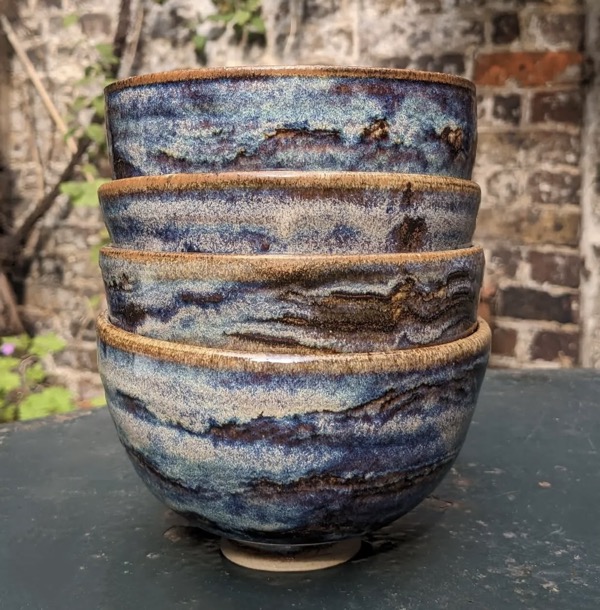
Ceramic bowls by Richard Fuest
Save Taylor’s Buttons & Belts
Taylor’s Buttons & Belts will close forever in November unless Maureen Rose can raise enough to pay off her rent arrears from the Covid lockdowns. Please click here to support Maureen’s crowdfund
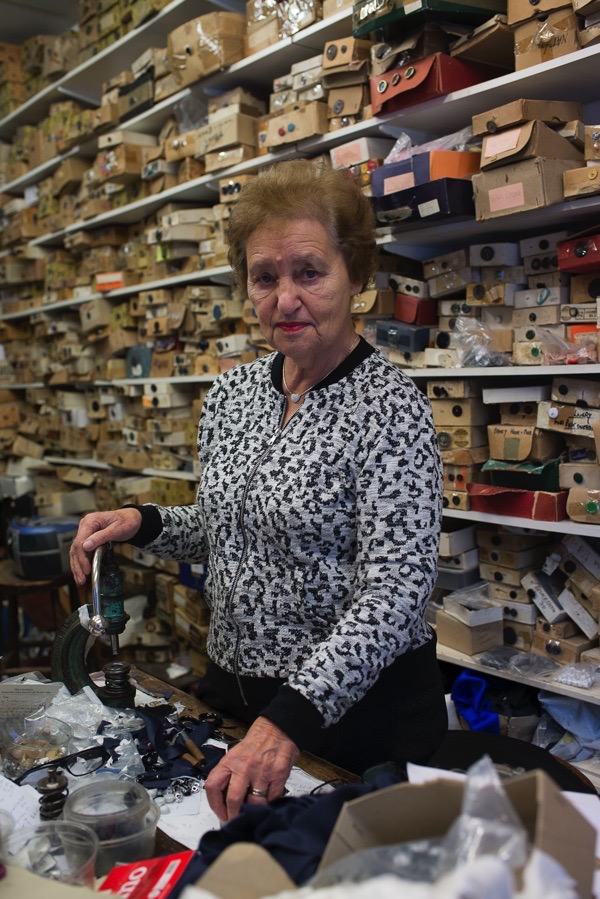
‘Every button tells a story’
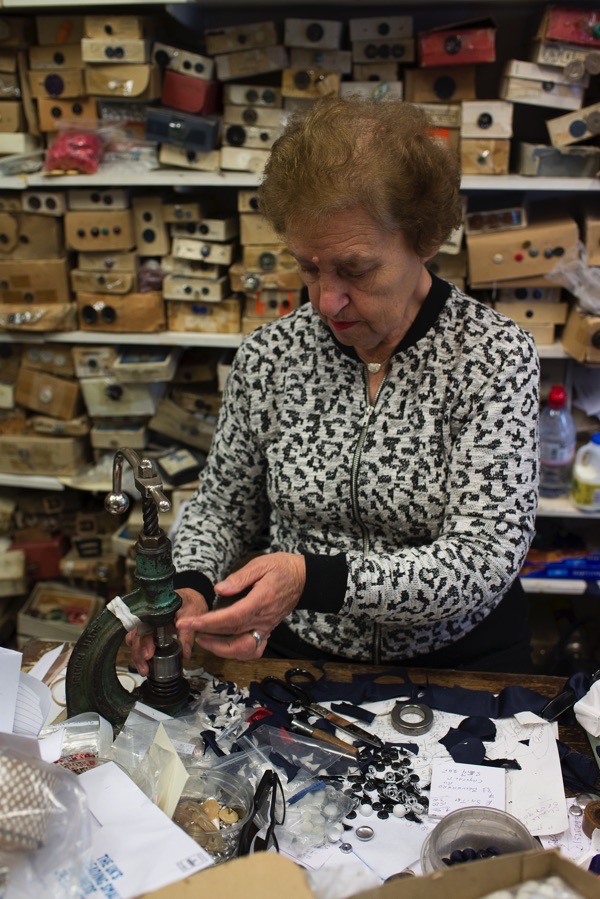
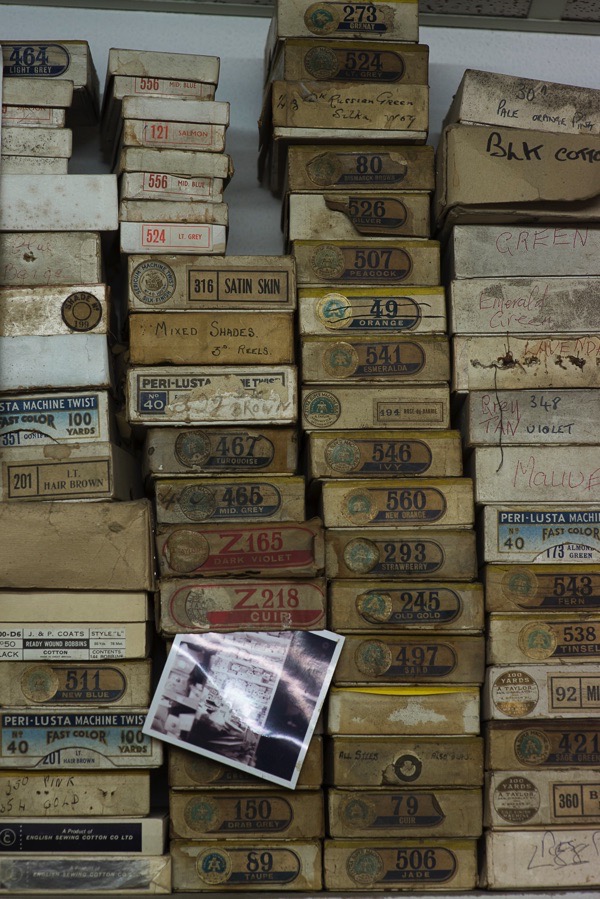
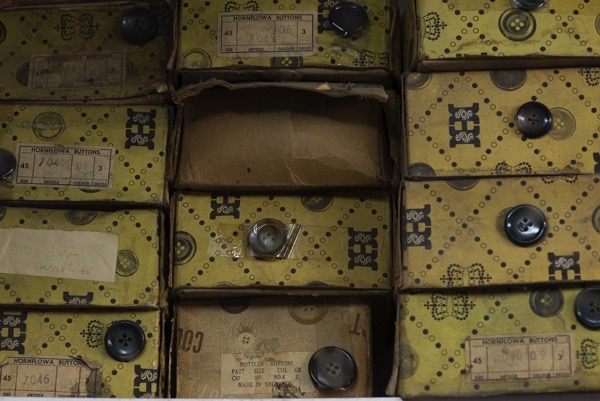
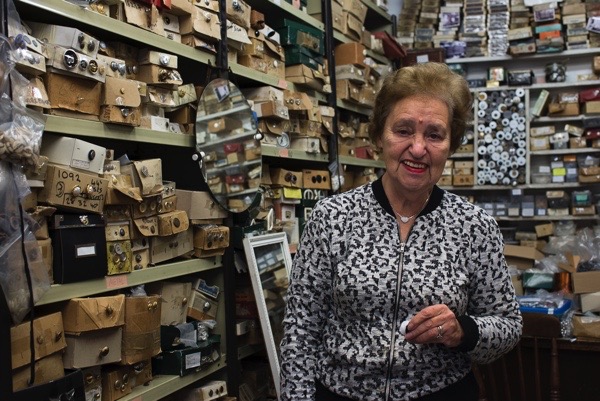
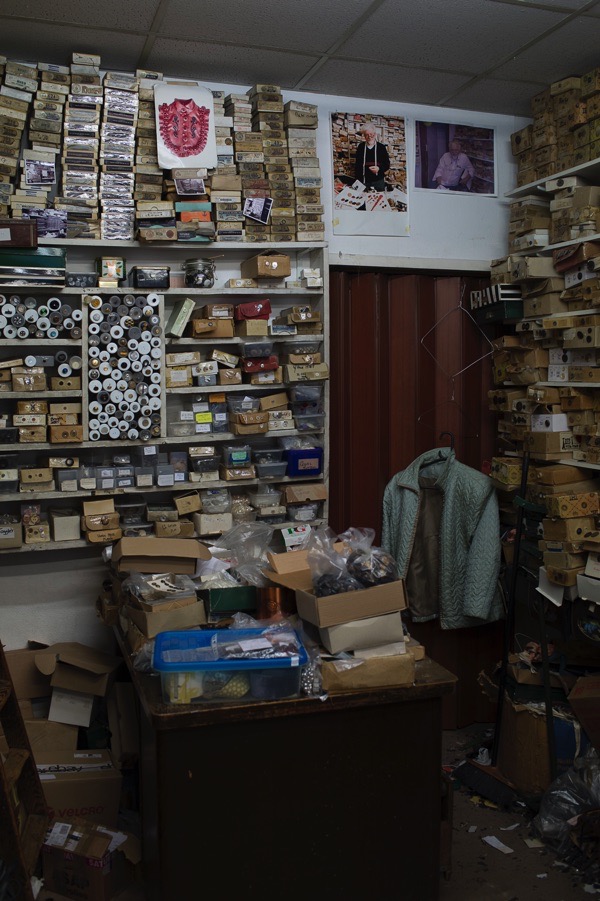
On the ground floor of the house where Charles Dickens grew up at 22 Cleveland St in Fitzrovia is a wonderful button shop that might easily be found within the pages of a Dickens novel. Boxes of buttons line the walls from floor to ceiling, some more than a hundred years old, and at the centre sits Maureen Rose, presiding regally over her charges like the queen of the buttons.
“A very nice gentleman – well turned out – stood in my doorway and asked, ‘Charles Dickens doesn’t live here anymore, does he?'” Maureen admitted to me with a sly grin. “I said, ‘No, he doesn’t.’ And he said, ‘Would you have his forwarding address?’ So I said, ‘No, but should I get it, I’ll put a note in the window.'”
Taylor’s Buttons & Belts is the only independent button shop in the West End, where proprietor Maureen sits making buttons every day. It is a cabinet of wonders where buttons and haberdashery of a century ago may still be found. “These came with the shop,” explained Maureen proudly, displaying a handful of Edwardian oyster and sky blue crochetted silk buttons.
“Every button tells a story,” she informed me, casting her eyes affectionately around her exquisite trove. “I have no idea how many there are!” she declared, rolling her eyes dramatically and anticipating my next question. “I like those Italian buttons with cherries on them, they are my favourites,” she added as I stood speechless in wonder.
“Let me show you how it works,” she continued, swiftly cutting circles of satin, placing them in her button-making press with nimble fingers, adding tiny metal discs and then pressing the handle to compress the pieces, before lifting a perfect satin covered button with an expert flourish.
It was a great delight to sit at Maureen’s side as she worked, producing an apparently endless flow of beautiful cloth-covered buttons. Customers came and went, passers-by stopped in their tracks to peer in amazement through the open door, and Maureen told me her story.
“My late husband, Leon Rose, first involved me in this business. He bought it from the original Mr Taylor when it was in Brewer St. The business is over a hundred years old with only two owners in that time. It was founded by the original Mr Taylor and then there was Mr Taylor’s son, who retired in his late eighties when he sold it to my husband.
My husband was already in the button business, he started his career in a button factory learning how to make buttons. His uncle had a factory in Birmingham – it was an old family business – and he got in touch with Leon to say, ‘There’s a gentleman in town who is retiring and you should think about taking over his business.’
Leon inherited an elderly employee who did not like the fact that the business had been sold. She had been sitting making buttons for quite some time and she said she would like to retire. So at first my mother went in to help, when he needed someone for a couple of hours a day, and then – of course – there was me!
I was a war baby and my mother had a millinery business in Fulham. She was from Cannon St in Whitechapel and she opened her business at nineteen years old. She got married when she was twenty-one and she ran her business all through the war. As a child, I used to sit in the corner and watch her make hats. She used to say very regularly to me, ‘Watch me Maureen, otherwise one day you’ll be sorry.’ But I did not take up millinery. I did not have an interest in it and I regret that now. She was very talented and she could have taught me. She had done an apprenticeship and she knew how to make hats from scratch. She made all her own buckram shapes.
I helped her for while, I did a lot of buying for her from West End suppliers in Great Marlborough St where there were a lot of millinery wholesalers. It was huge then but today I do not think there is anything left. There was big fashion industry in the West End and it has all gone. It was beautiful. We used to deal with lovely couture houses like Hardy Amies and Norman Hartnell. I used to go to see their collections, it was glamorous.
I only make buttons to order, you send me the fabric – velvet, leather or whatever – and I will make you whatever you want. We used to do only small orders for tailors for suits, two fronts and eight cuff buttons. Nowadays I do them by the hundred. I do not think Leon ever believed that was possible.
Anybody can walk into my shop and order buttons. I also make buttons for theatre, television, film and fashion houses. I do a lot of bridal work. I am the only independent button shop in the West End. I get gentleman who buy expensive suits that come with cheap buttons and they arrive here to buy proper horn buttons to replace them.
My friends ask me why I have not retired, but I enjoy it. What would I do at home? I have seen what happens to my friends who have retired. They lose the plot. I meet nice people and it is interesting. I will keep going as long as I can and I would like my son Mark to take it over. He is in IT but this is much more interesting. People only come to me to buy buttons for something nice, although I rarely get to see the whole garment.
I had a customer who was getting married and she loved Pooh bear. She wanted buttons with Pooh on them. She embroidered them herself with a beaded nose for the bear and sent the material to me. I made the buttons, which were going down the back of the dress. I said, ‘Please send me a picture of your wedding dress when it is finished.’ She sent me a picture of the front. So I never saw Pooh bear.
A lady stood in the doorway recently and asked me, ‘Do you sell the buttons?’ I replied, ‘No, it’s a museum.’ She walked away, I think she believed me.”
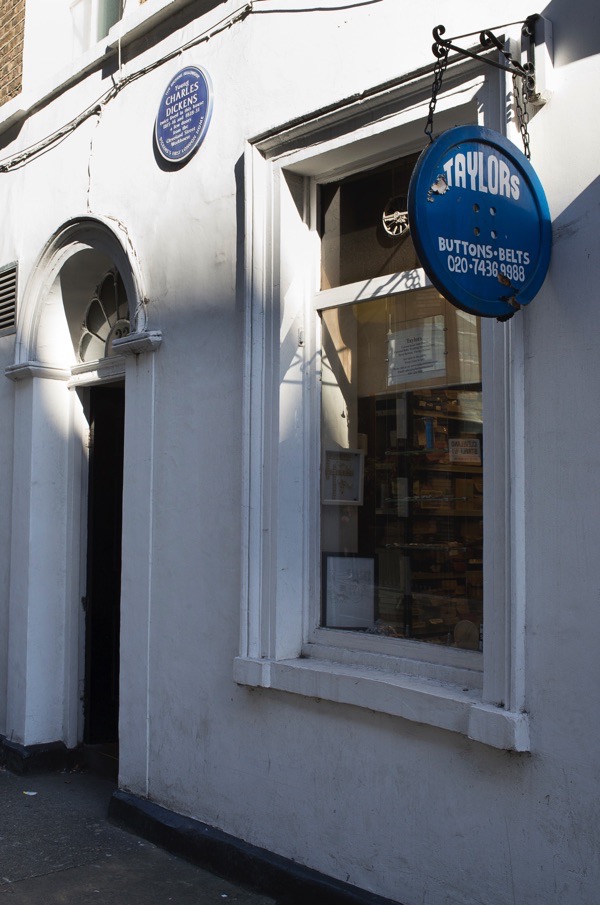


‘Presiding regally over her charges like the queen of the buttons’
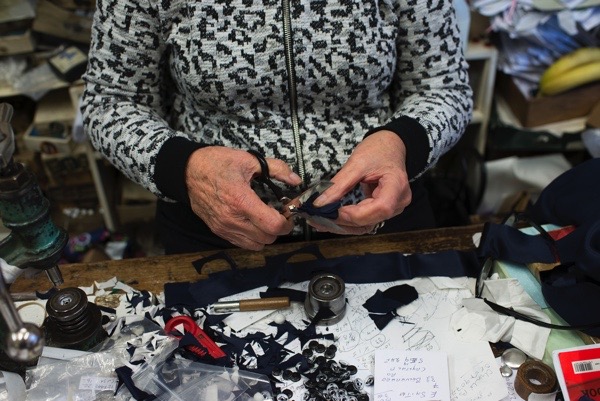
Cutting a disc of satin
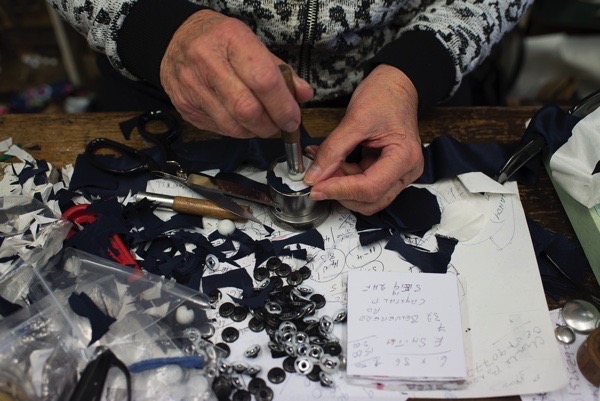
Placing it in the mould
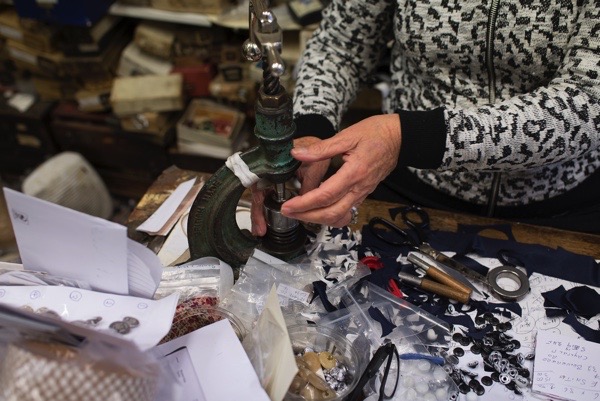
Putting the mould into the press
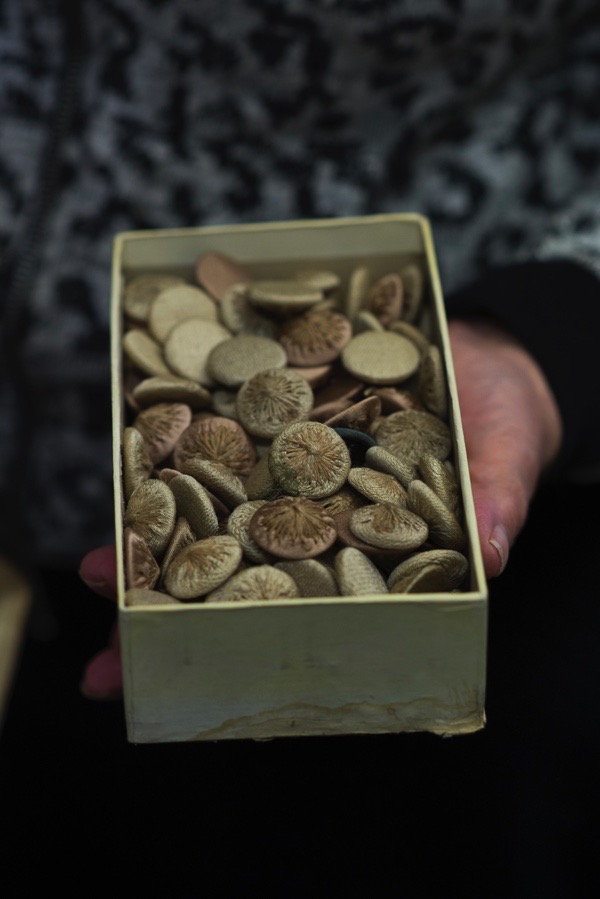
Edwardian crochetted silk buttons
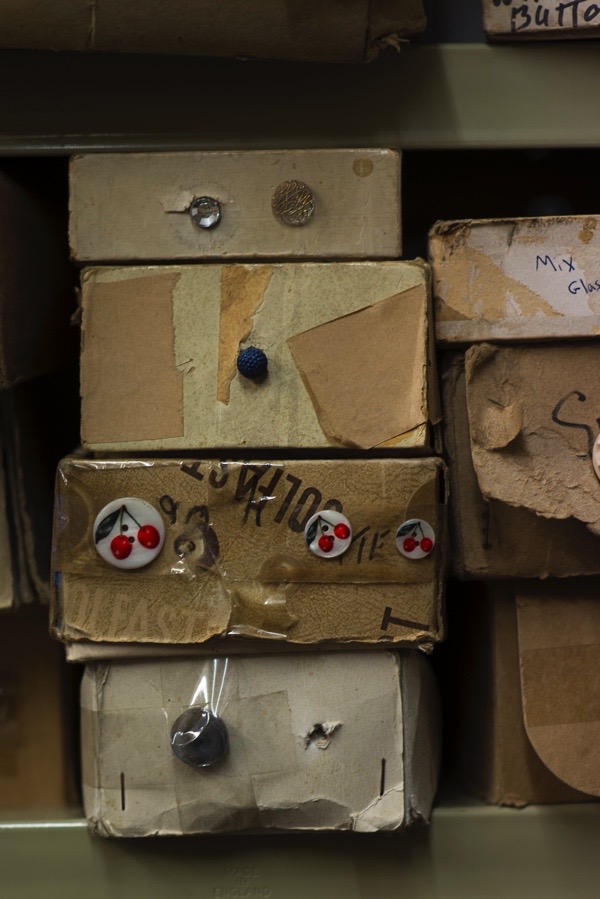
“I like those Italian buttons with cherries on them, they are my favourites”
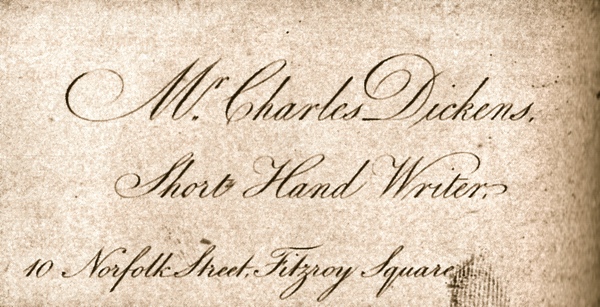
Dickens’ card while resident, when Cleveland St was known as Norfolk St (reproduced courtesy of Dan Calinescu)
You may also like to read about
Upon The Nature Of Terror
 CLICK HERE FOR MORE INFORMATION
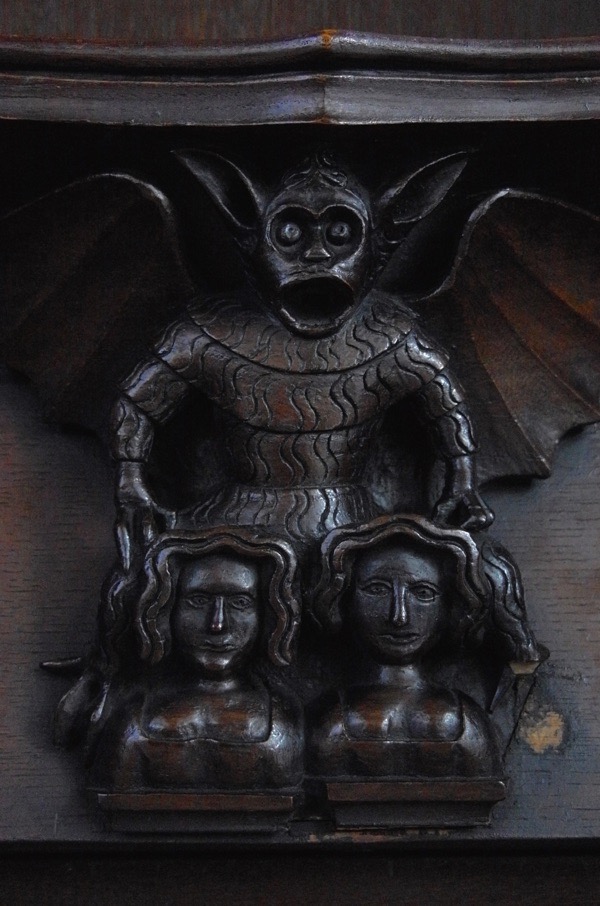
I believe I was born with a medieval imagination. It is the only way I can explain the explicit gothic terrors of my childhood. Even lying in my cradle, I recall observing the monstrous face that emerged from the ceiling lampshade once the light was turned out. This all-seeing creature, peering at me from above, grew more pervasive as years passed, occupying the shadows at the edges of my vision and assuming more concrete manifestations. An unexpected sound in my dark room revealed its presence, causing me to lie still and hold my breath, as if through my petrified silence I could avert the attention of the devil leaning over my bedside.
When I first became aware of gargoyles carved upon churches and illustrated in manuscripts, I recognised these creatures from my own imagination and I made my own paintings of these scaled, clawed, horned, winged beasts, which were as familiar as animals in the natural world. I interpreted any indeterminate sound or movement from the dark as indicating their physical presence in my temporal existence. Consequently, darkness, shadow and gloom were an inescapable source of fear to me on account of the nameless threat they harboured, always lurking there just waiting to pounce. At this time of year, when the dusk glimmers earlier in the day, their power grew as if these creatures of the shades might overrun the earth.
Nothing could have persuaded me to walk into a dark house alone. One teenage summer, I looked after an old cottage while the residents were on their holiday and, returning after work at night, I had to walk a long road that led through a deep wood without street lighting. As I wheeled my bicycle up the steep hill among the trees in dread, it seemed to me they were alive with monsters and any movement of the branches confirmed their teeming presence.
Yet I discovered a love of ghost stories and collected anthologies of tales of the supernatural, which I accepted as real because they extended and explained the uncanny notions of my own imagination. In an attempt to normalise my fears, I made a study of mythical beasts and learnt to distinguish between a griffin and a wyvern. When I discovered the paintings of Hieronymous Bosch and Pieter Breughel, I grew fascinated and strangely reassured that they had seen the apocalyptic visions which haunted the recesses of my own mind.
I made the mistake of going to see Ridley Scott’s The Alien alone and experienced ninety minutes transfixed with terror, unable to move, because – unlike the characters in the drama – I was already familiar with this beast who had been pursuing me my whole life. In retrospect, I recognise the equivocal nature of this experience, because I also sought a screening of The Exorcist with similar results. Perhaps I sought consolation in having my worst fears realised, even if I regretted it too?
Once, walking through a side street at night, I peered into the window of an empty printshop and leapt six feet back when a dark figure rose up from among the machines to confront my face in the glass. My companions found this reaction to my own shadow highly amusing and it was a troubling reminder of the degree to which I was at the mercy of these irrational fears even as an adult.
I woke in the night sometimes, shaking with fear and convinced there were venomous snakes in the foot of my bed. The only solution was to unmake the bed and remake it again before I could climb back in. Imagine my surprise when I visited the aquarium in Berlin and decided to explore the upper floor where I was confronted with glass cases of live tropical snakes. Even as I sprinted away down the street, I felt the need to keep a distance from cars in case a serpent might be lurking underneath. This particular terror reached its nadir when I was walking in the Pyrenees, and stood to bathe beneath a waterfall and cool myself on a hot day. A green snake of several feet in length fell wriggling from above, hit me, bounced off into the pool and swam away, leaving me frozen in shock.
Somewhere all these fears dissolved. I do not know where or when exactly. I no longer read ghost stories or watch horror films and equally I do not seek out dark places or reptile houses. None of these things have purchase upon my psyche or even hold any interest anymore. Those scaly beasts have retreated from the world. For me, the shadows are not inhabited by the spectral and the unfathomable darkness is empty.
Bereavement entered my life and it dispelled these fears which haunted me for so long. My mother and father who used to turn out the light and leave me to sleep in my childhood room at the mercy of medieval phantasms are gone, and I have to live in the knowledge that they can no longer protect me. Once I witnessed the moment of death with my own eyes, it held no mystery for me. The demons became redundant and fled. Now they have lost their power over me, I miss them – or rather, perhaps, I miss the person I used to be – yet I am happy to live a life without supernatural agency.
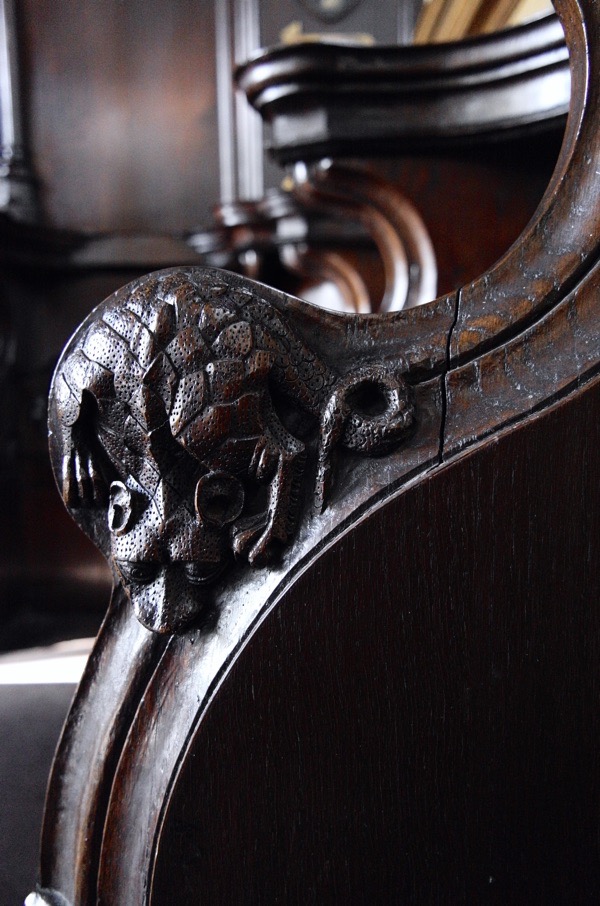
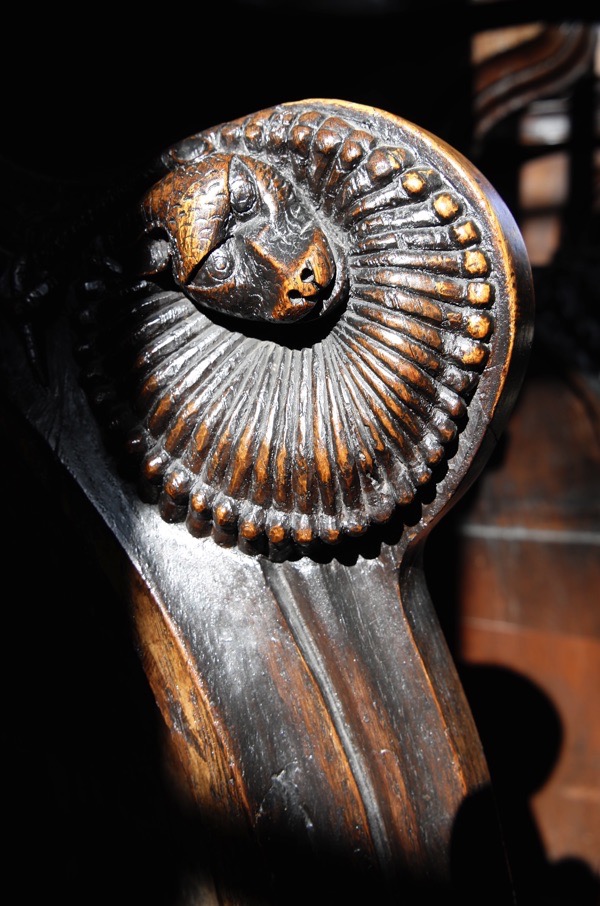
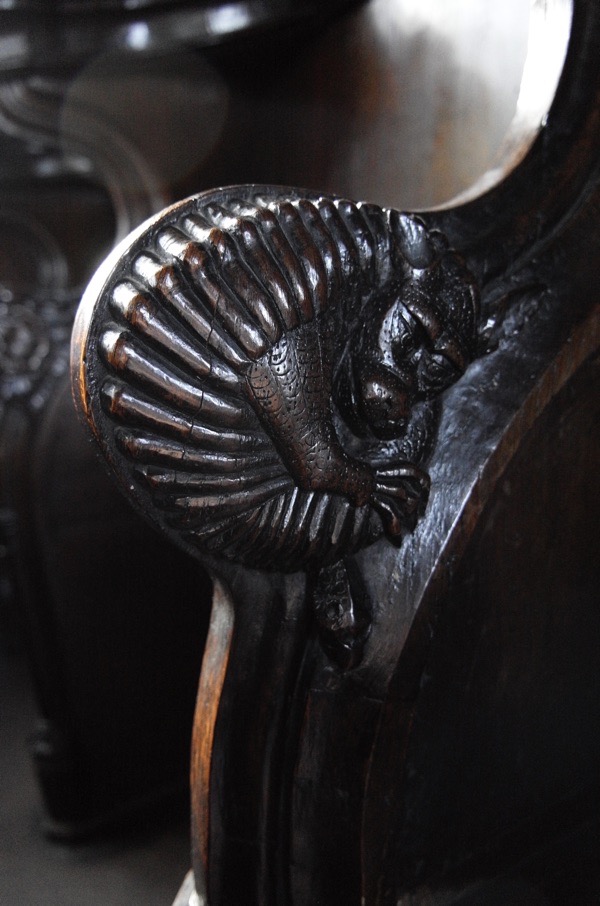
Fourteenth century carvings from St Katherine’s Chapel, Limehouse
The Dance Of Death
CLICK HERE FOR MORE INFORMATION
More than twenty years have passed since my father died at this time of year and thoughts of mortality always enter my mind as the nights begin to draw in, as I prepare to face the spiritual challenge of another long dark winter ahead. So Luke Clennell’s splendid DANCE OF DEATH engravings inspired by Hans Holbein suit my mordant sensibility at this season.
First published in 1825 as the work of ‘Mr Bewick’, they have recently been identified for me as the work of Thomas Bewick’s apprentice Luke Clennell by historian Dr Ruth Richardson.
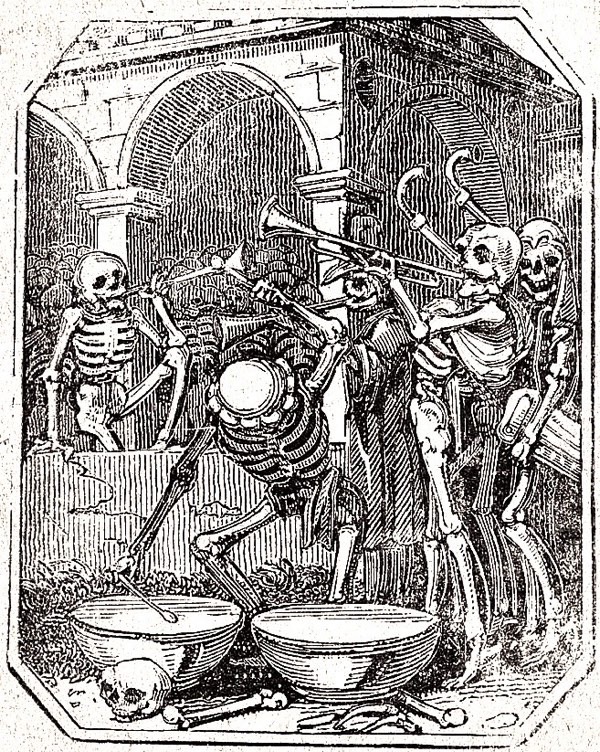
The Desolation
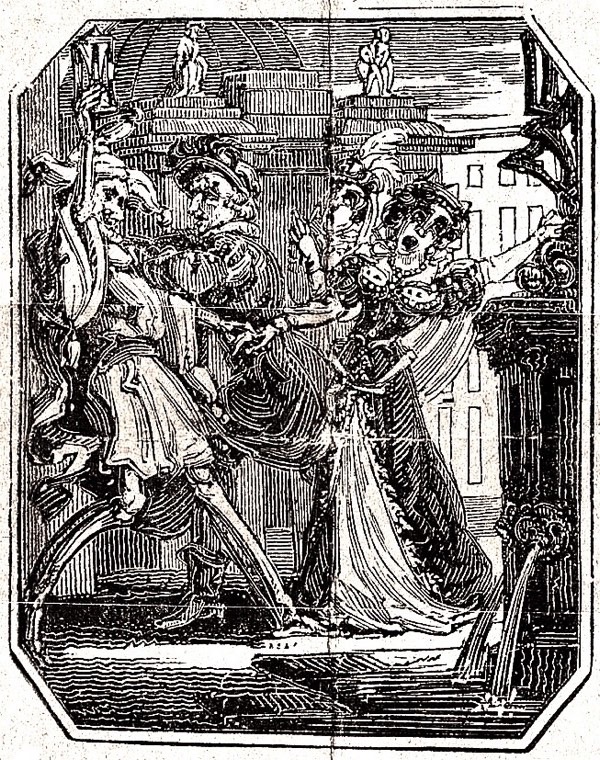
The Queen
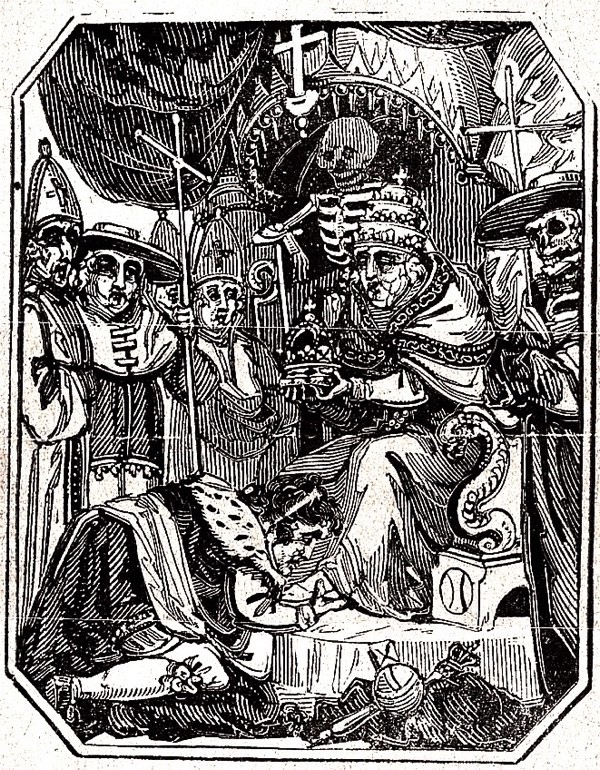 The Pope
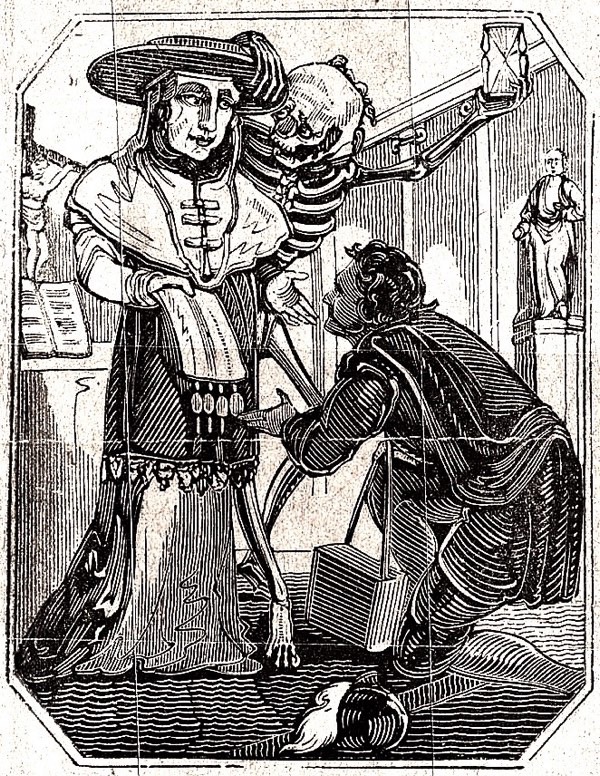
The Cardinal
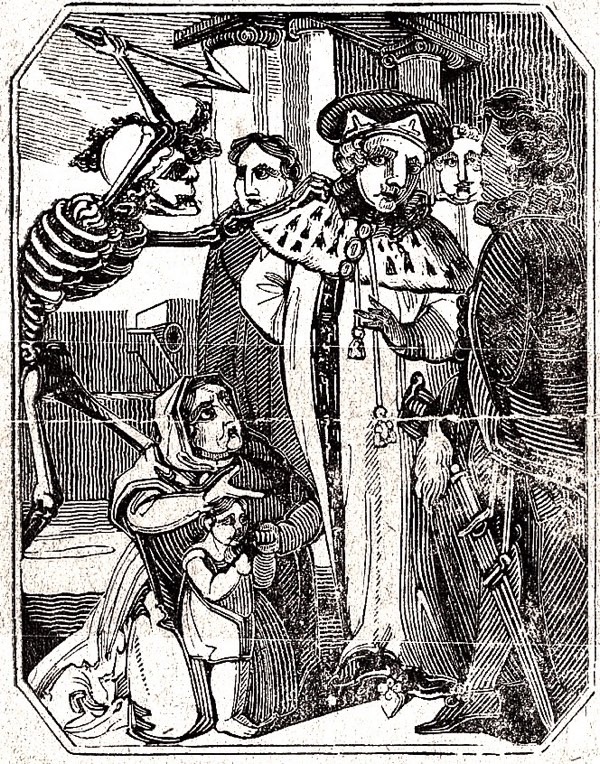
The Elector
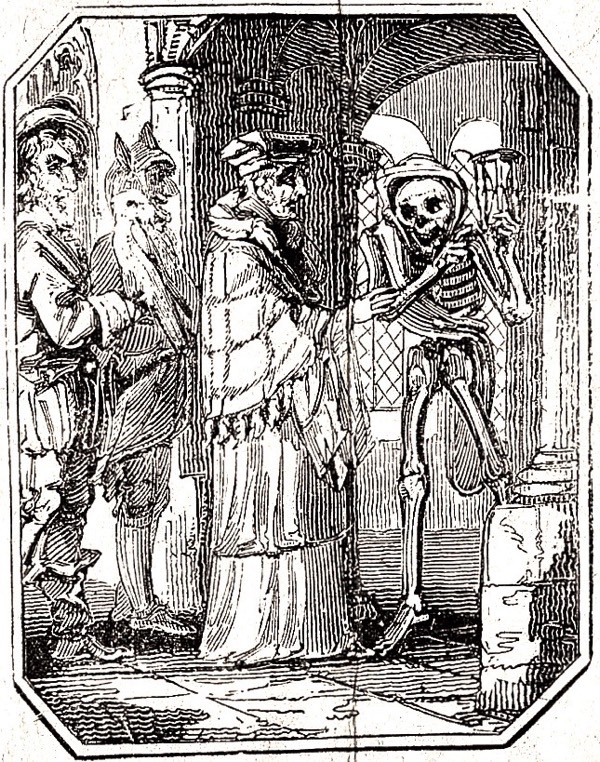
The Canon
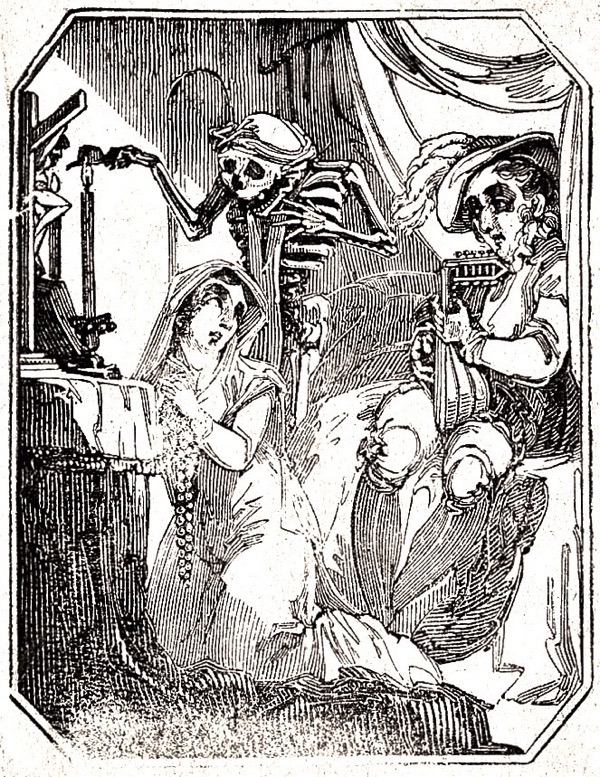
The Canoness
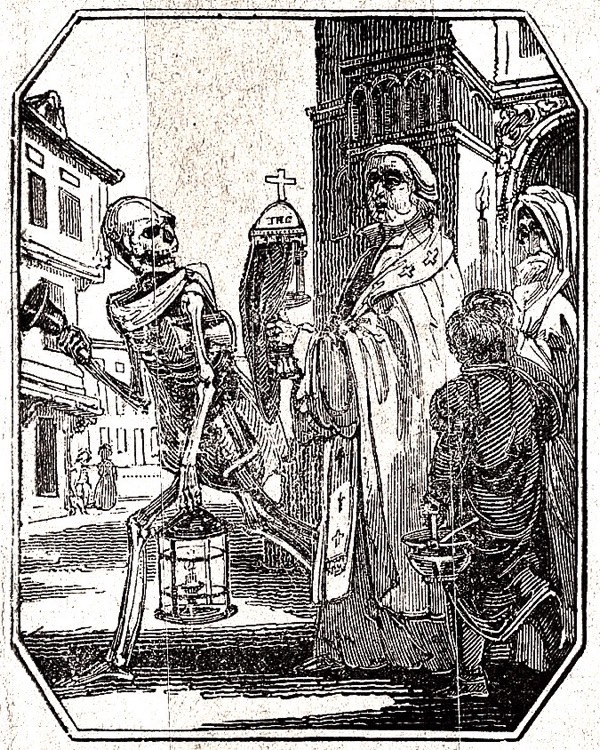
The Priest
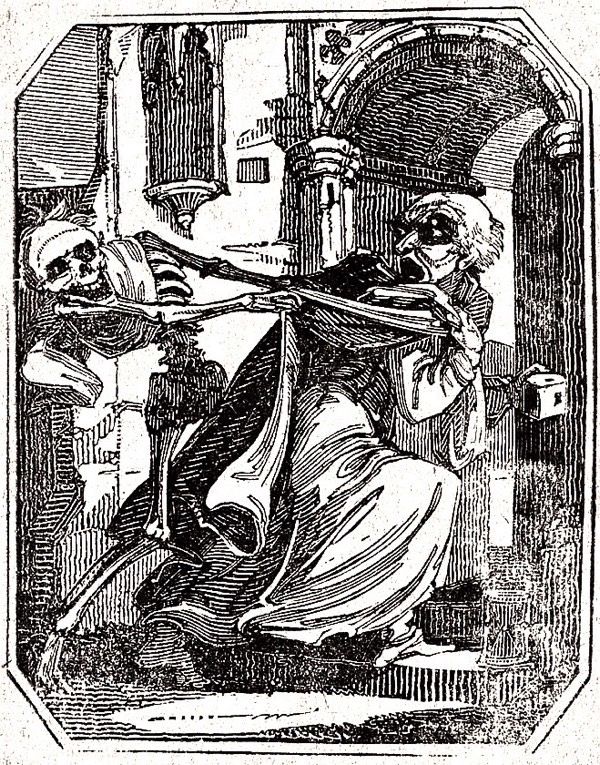
The Mendicant Friar
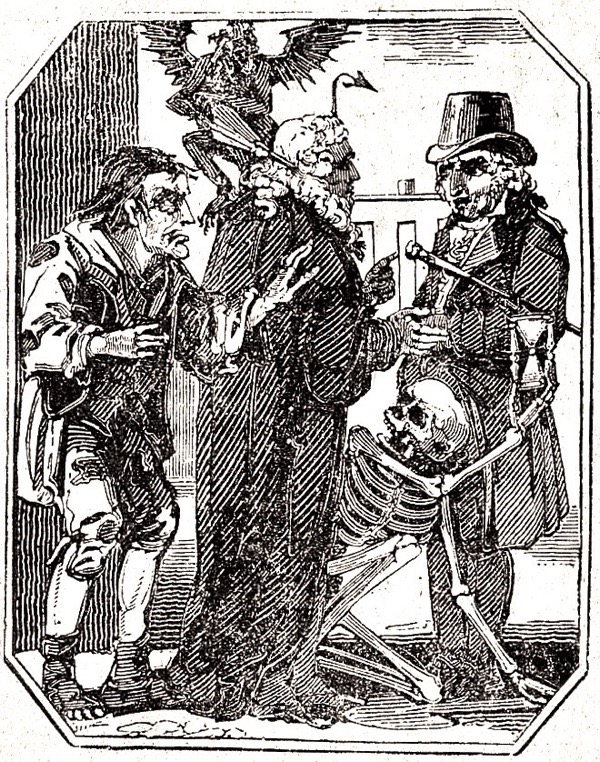 The Councillor or Magistrate
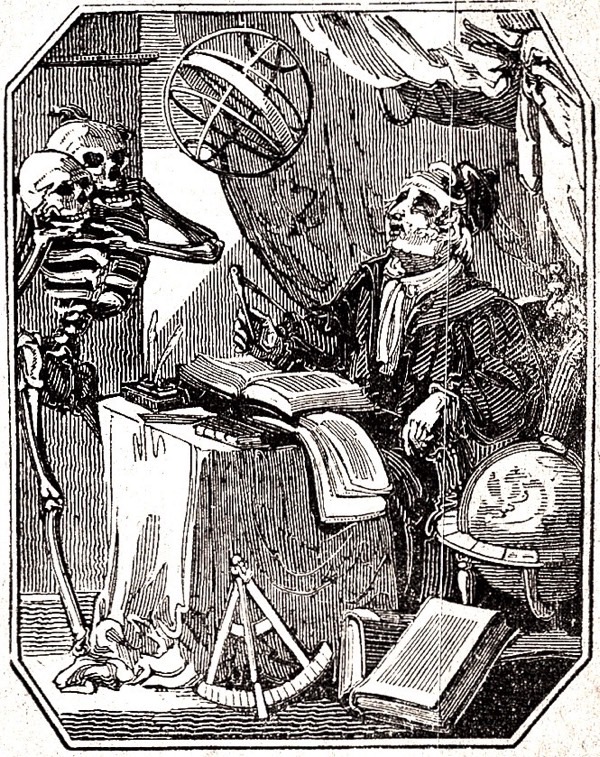
The Astrologer
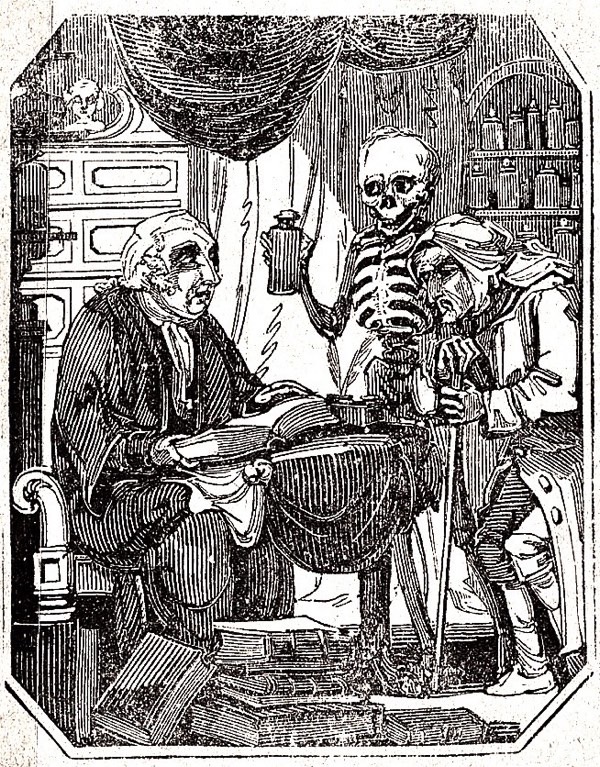
The Physician
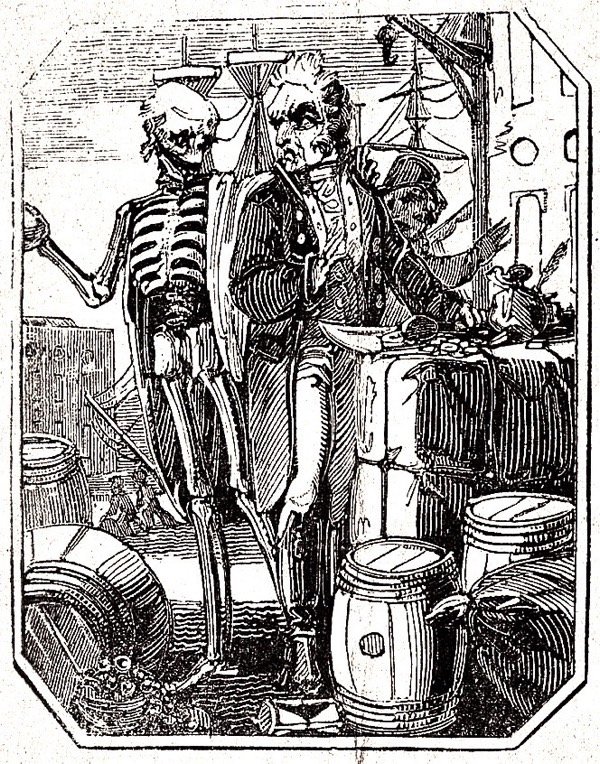
The Merchant
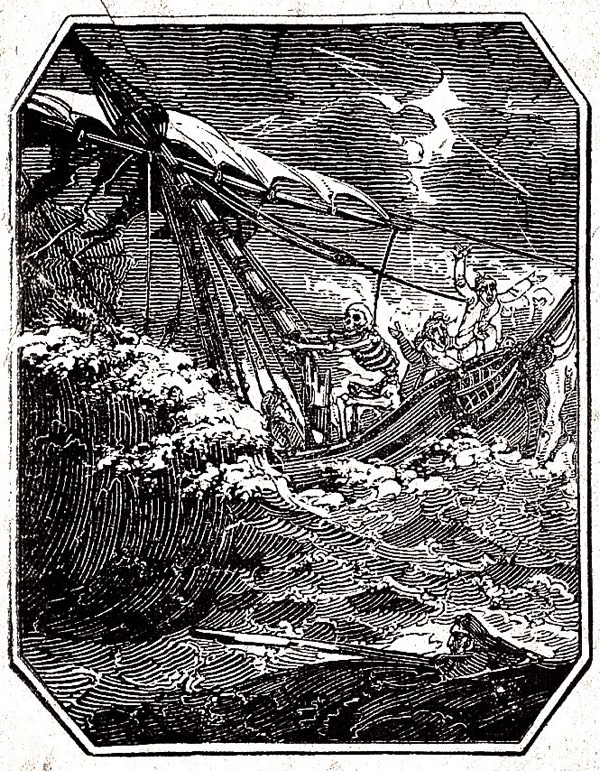
The Wreck
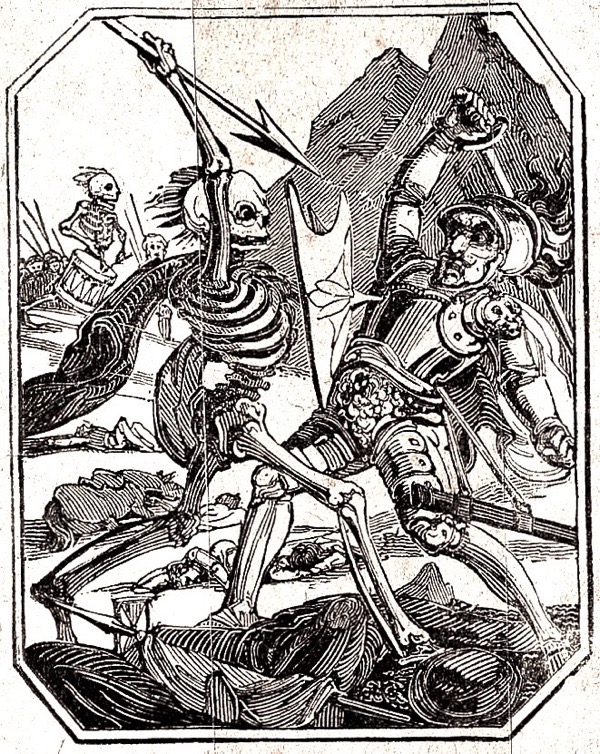
The Swiss Soldier
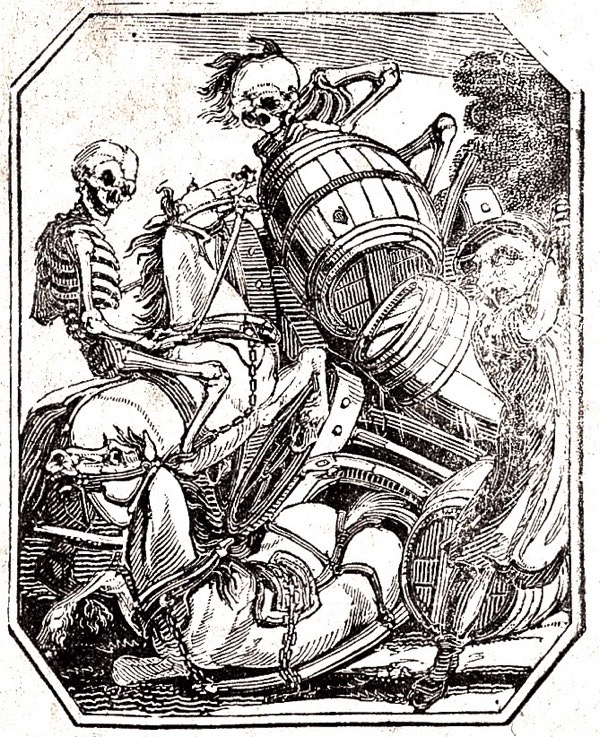
The Charioteer or Waggoner
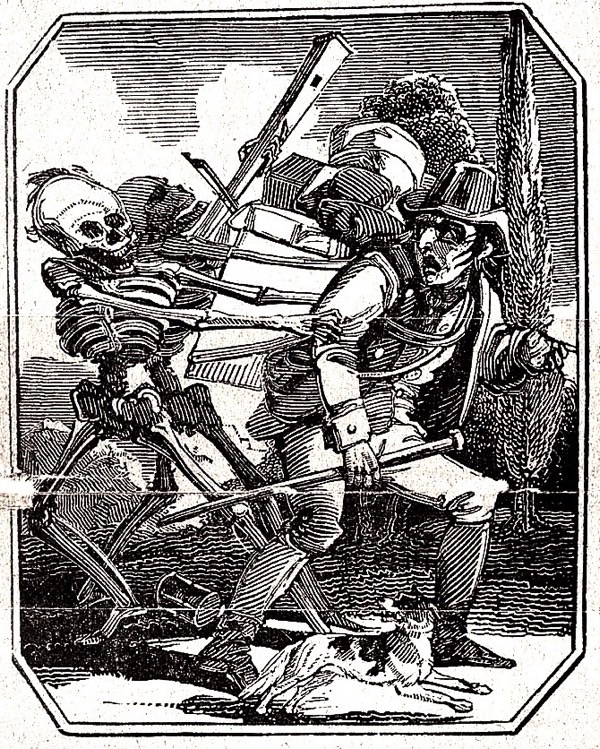 The Porter
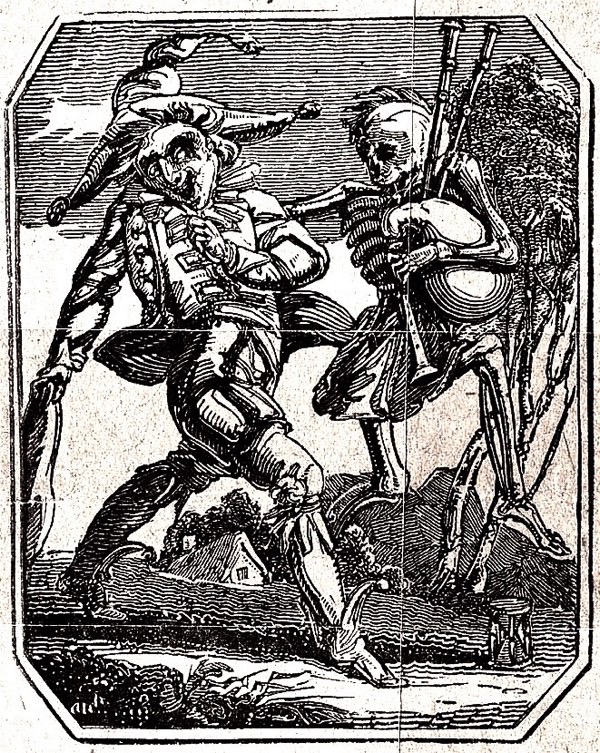
The Fool
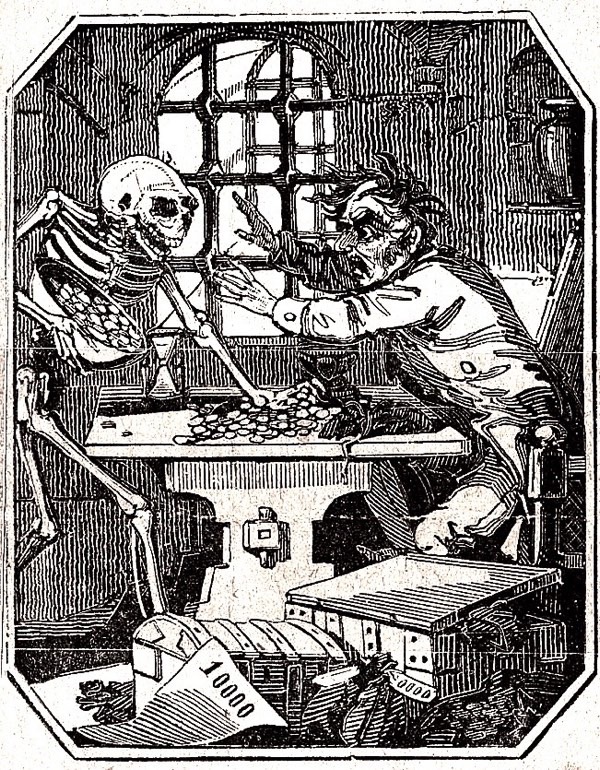 The Miser
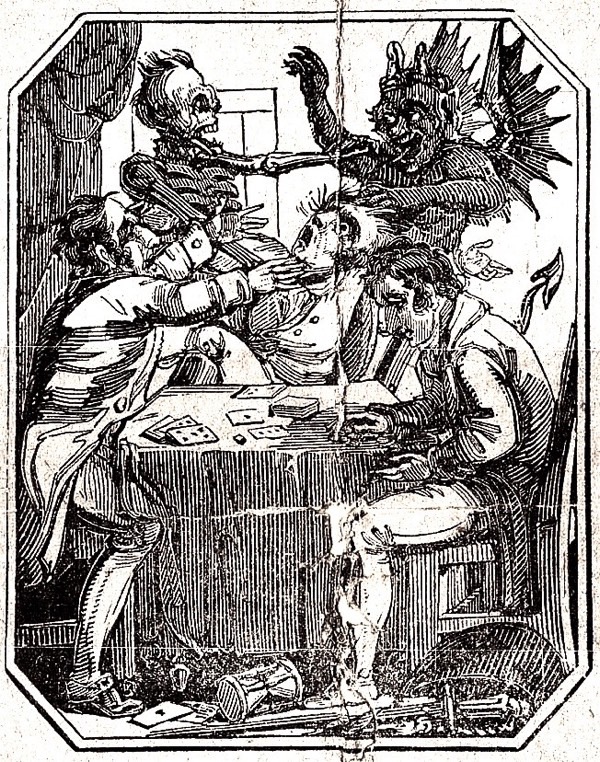 The Gamesters
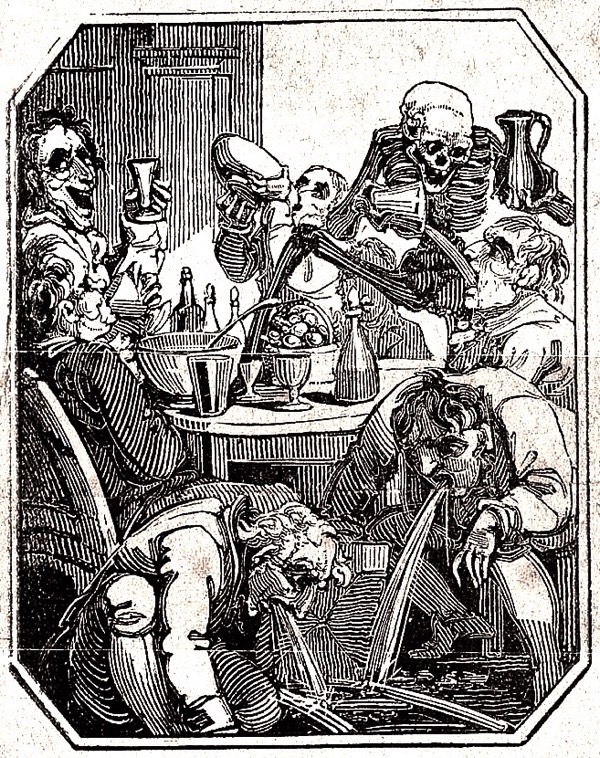
The Drunkards
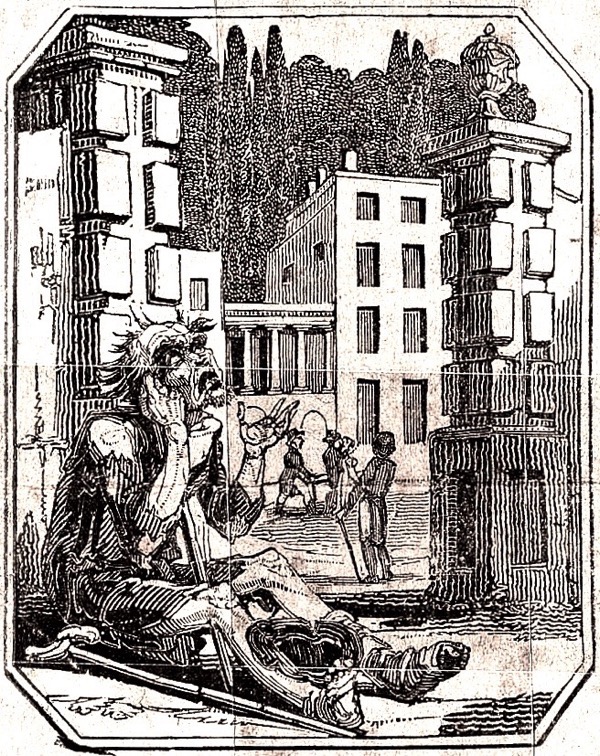
The Beggar
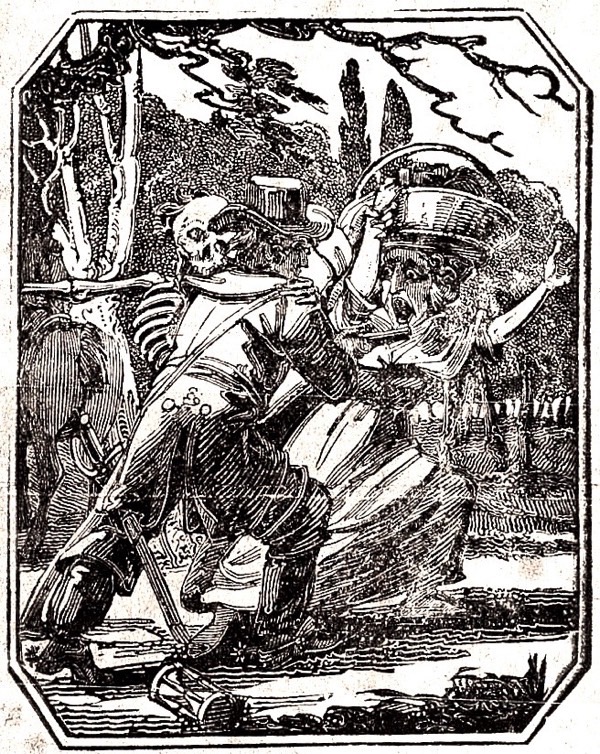
The Thief
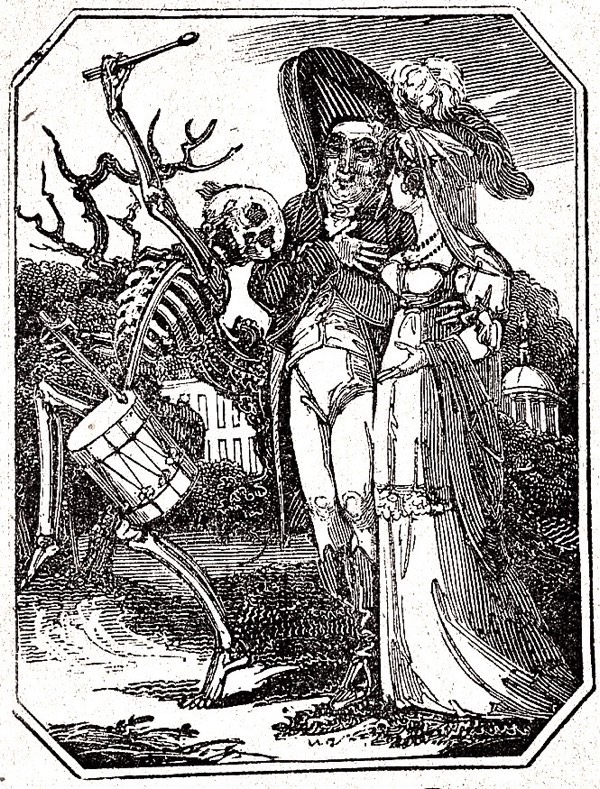
The Newly Married Pair
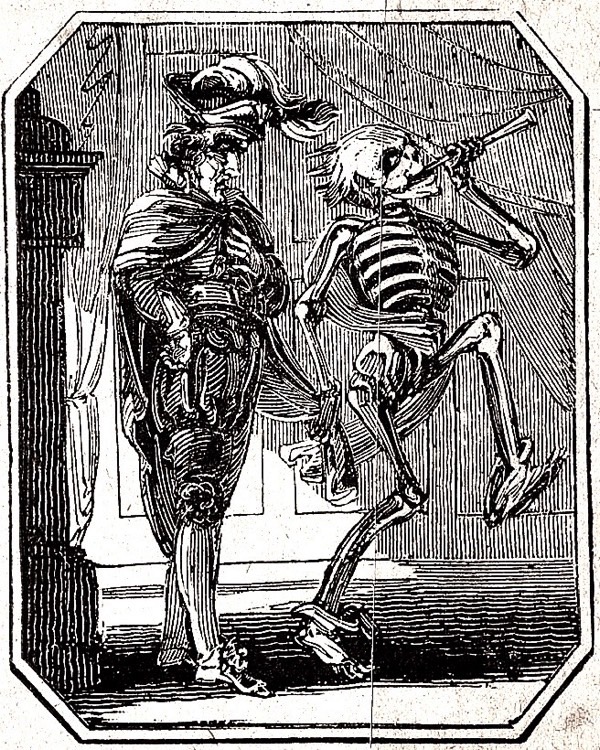
The Husband
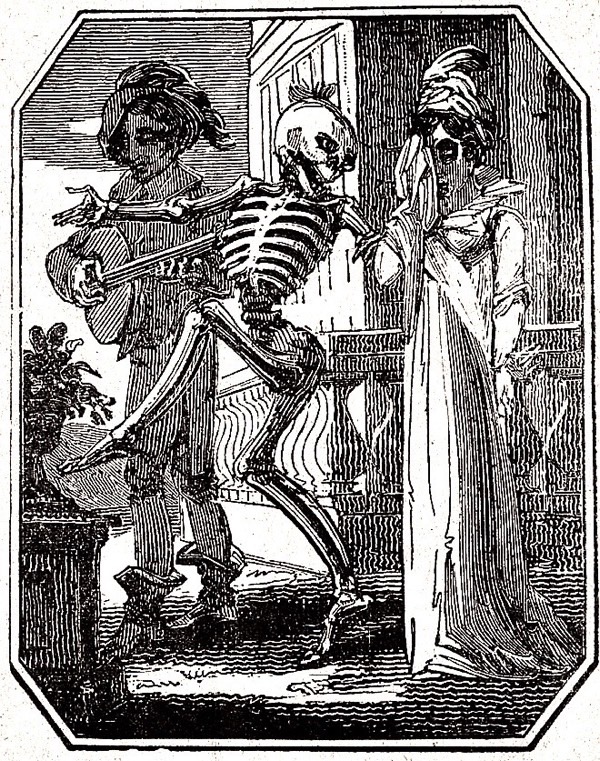
The Wife
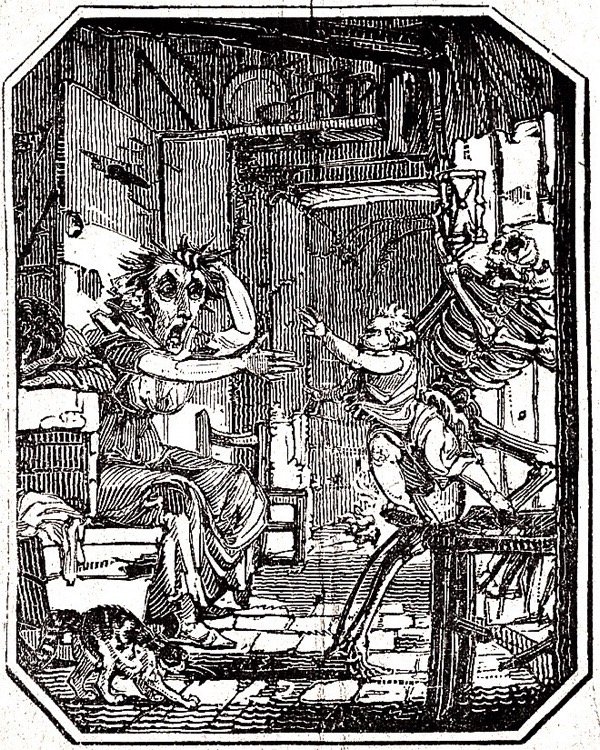
The Child
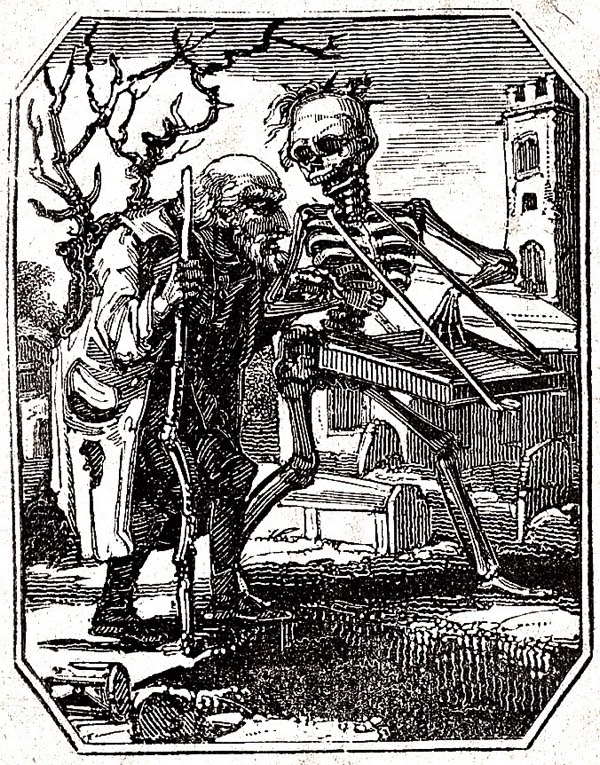
The Old Man
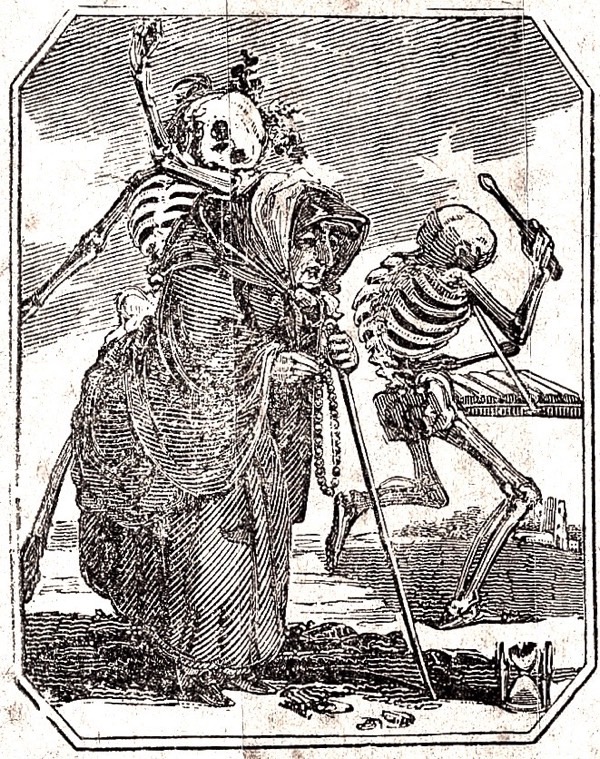
The Old Woman
You may also like to take a look at
The Dead Man In Clerkenwell
CLICK HERE FOR MORE INFORMATION

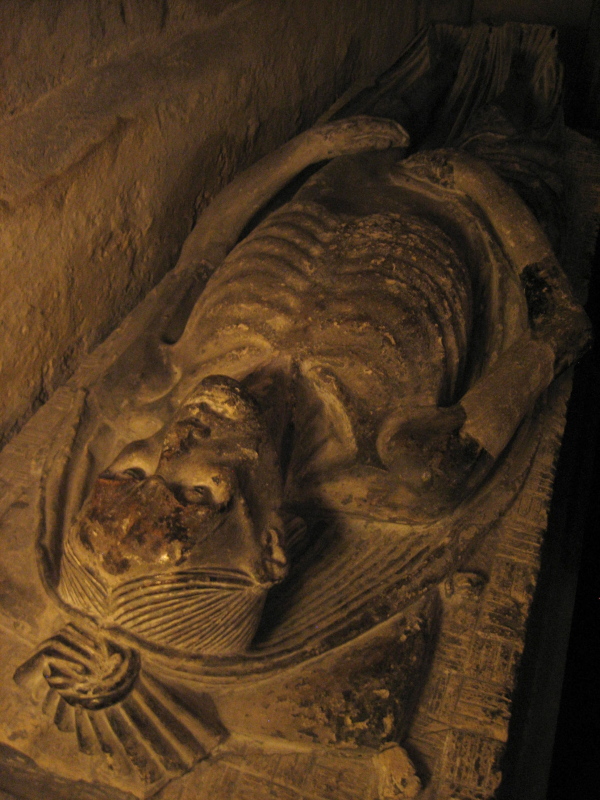
This is the face of the dead man in Clerkenwell. He does not look perturbed by the change in the weather. Once winters wore him out, but now he rests beneath the streets of the modern city he will never see, oblivious both to the weather and the wonders of our age, entirely oblivious to everything in fact.
Let me admit, although some might consider it poor company, I consider death to be my friend – because without mortality our time upon this earth would be worthless. So I do not fear death, but rather I hope I shall have enough life first. My fear is that death might come too soon or unexpectedly in some pernicious form. In this respect, I envy my father who always took a nap on the sofa each Sunday after gardening and one day at the age of seventy nine – when he had completed trimming the privet hedge – he never woke up again.
It was many years ago that I first made the acquaintance of the dead man in Clerkenwell, when I had an office in the Close where I used to go each day and write. I was fascinated to discover a twelfth century crypt in the heart of London, the oldest remnant of the medieval priory of the Knights of St John that once stood in Clerkenwell until it was destroyed by Henry VIII, and it was this memento mori, a sixteenth century stone figure of an emaciated corpse, which embodied the spirit of the place for me.
Thanks to the curator at the Museum of the Order of St John, I went back to look up my old friend after all these years. They lent me their key and, leaving the bright October sunshine behind me, I let myself into the crypt, switching on the lights and walking to the furthest underground recess of the building where the dead man was waiting. I walked up to the tomb where he lay and cast my eyes upon him, recumbent with his shroud gathered across his groin to protect a modesty that was no longer required. He did not remonstrate with me for letting twenty years go by. He did not even look surprised. He did not appear to recognise me at all. Yet he looked different than before, because I had changed, and it was the transformative events of the intervening years that had awakened my curiosity to return.
There is a veracity in this sculpture which I could not recognise upon my previous visit, when – in my innocence – I had never seen a dead person. Standing over the figure this time, as if at a bedside, I observed the distended limbs, the sunken eyes and the tilt of the head that are distinctive to the dead. When my mother lost her mental and then her physical faculties too, I continued to feed her until she could no longer even swallow liquid, becoming as emaciated as the stone figure before me. It was at dusk on the 31st December that I came into her room and discovered her inanimate, recognising that through some inexplicable prescience the life had gone from her at the ending of the year. I understood the literal meaning of “remains,” because everything distinctive of the living person had departed to leave mere skin and bone. And I know now that the sculptor who made this effigy had seen that too, because his observation of the dead is apparent in his work, even if the bizarre number of ribs in his figure bears no relation to human anatomy.
There is a polished area on the brow, upon which I instinctively placed my hand, where my predecessors over the past five centuries had worn it smooth. This gesture, which you make as if to check his temperature, is an unconscious blessing in recognition of the commonality we share with the dead who have gone before us and whose ranks we shall all join eventually. The paradox of this sculpture is that because it is a man-made artifact it has emotional presence, whereas the actual dead have only absence. It is the tender details – the hair carefully pulled back behind the ears, and the protective arms with their workmanlike repairs – that endear me to this soulful relic.
Time has not been kind to this figure, which originally lay upon the elaborate tomb of Sir William Weston inside the old church of St James Clerkenwell, until the edifice was demolished and the current church was built in the eighteenth century, when the effigy was resigned to this crypt like an old pram slung in the cellar. Today a modern facade reveals no hint of what lies below ground. Sir William Weston, the last Prior, died in April 1540 on the day that Henry VIII issued the instruction to dissolve the Order, and the nature of his death was unrecorded. Thus, my friend the dead man is loss incarnate – the damaged relic of the tomb of the last Prior of the monastery destroyed five hundred years ago – yet he still has his human dignity and he speaks to me.
Walking back from Clerkenwell, through the City to Spitalfields on this bright afternoon in late October, I recognised a similar instinct as I did after my mother’s death. I cooked myself a meal because I craved the familiar task and the event of the day renewed my desire to live more life.




The Museum of the Order of St John, St John’s Gate, Clerkenwell, EC1M 4DA
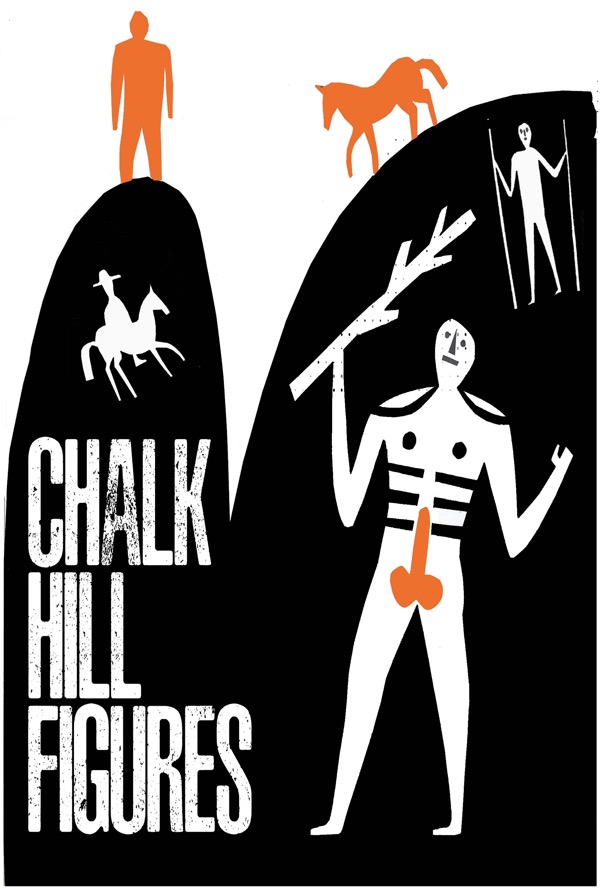
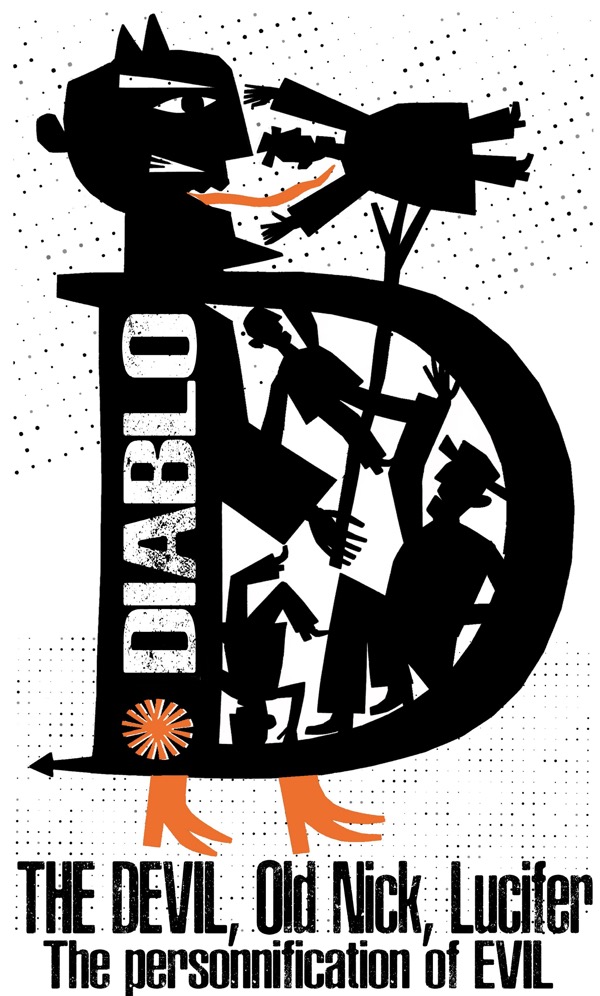
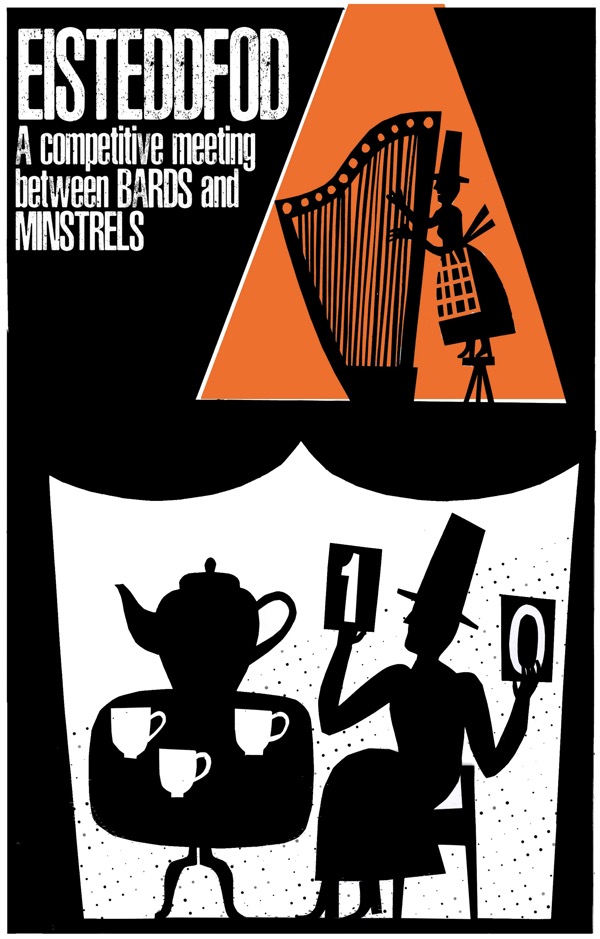
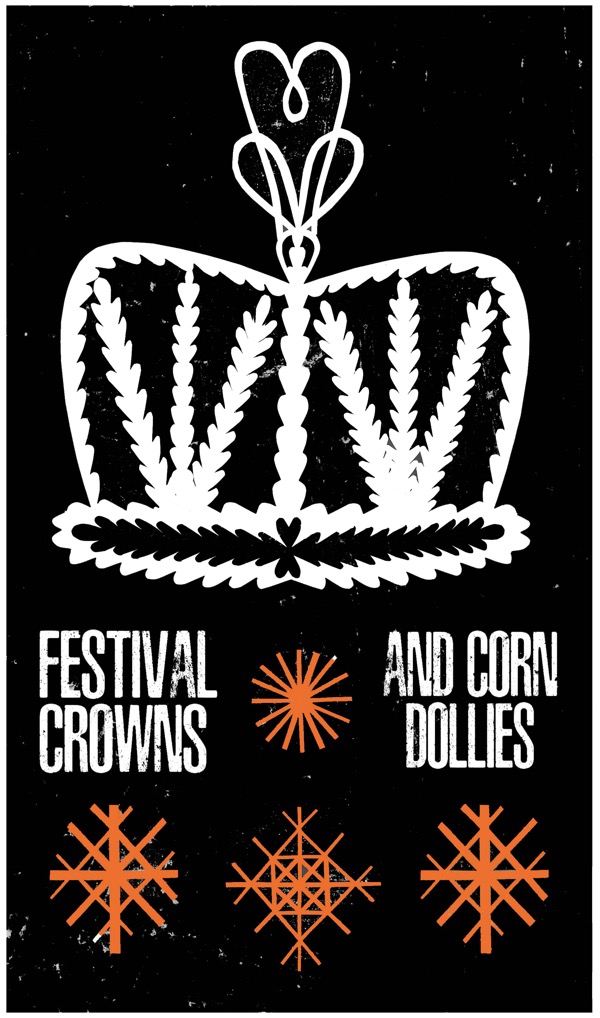
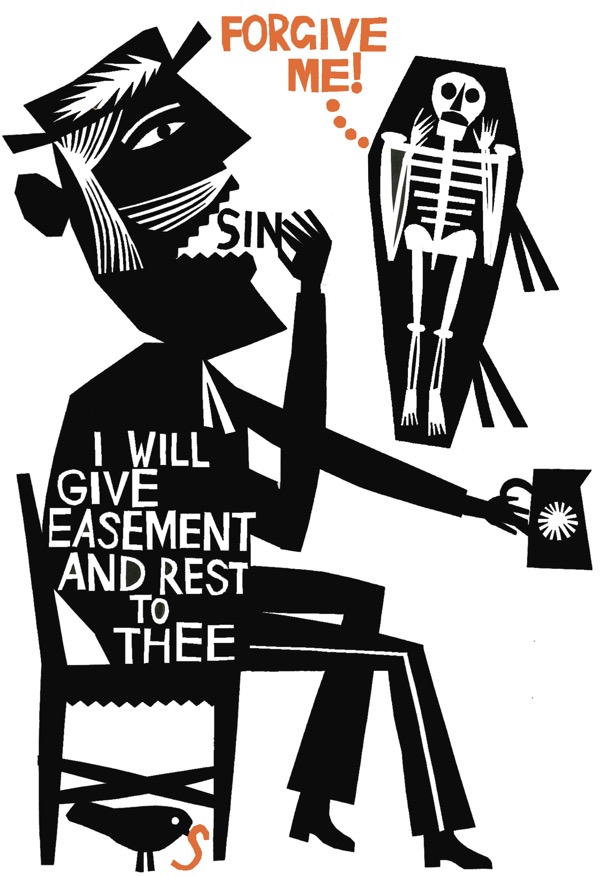
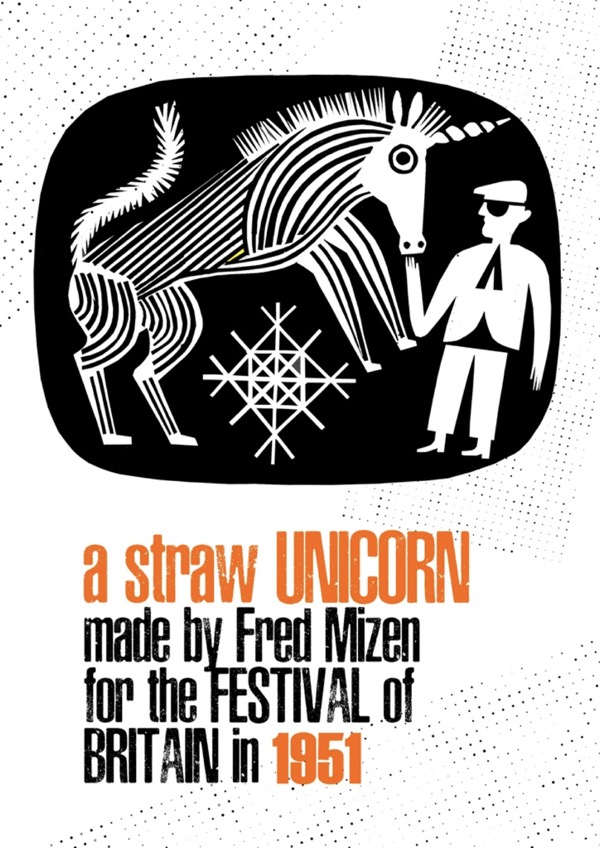
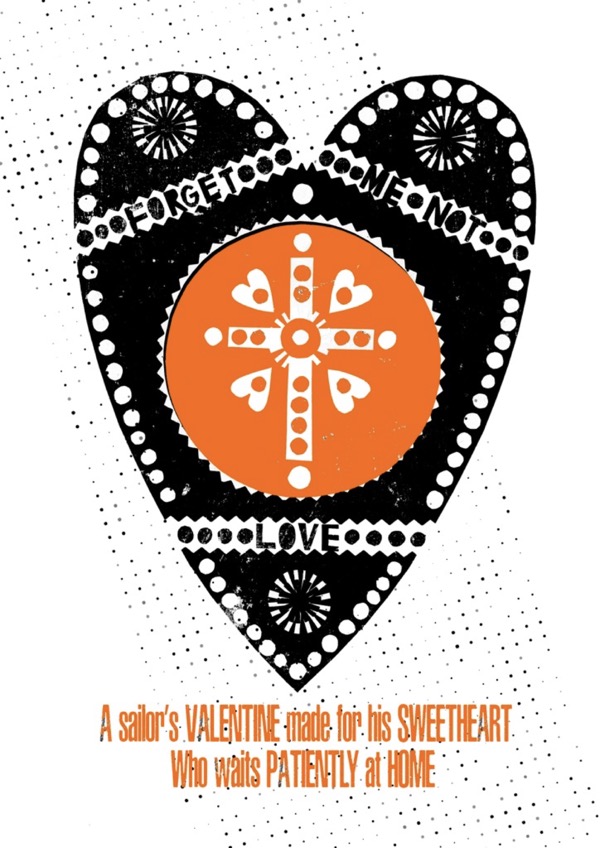
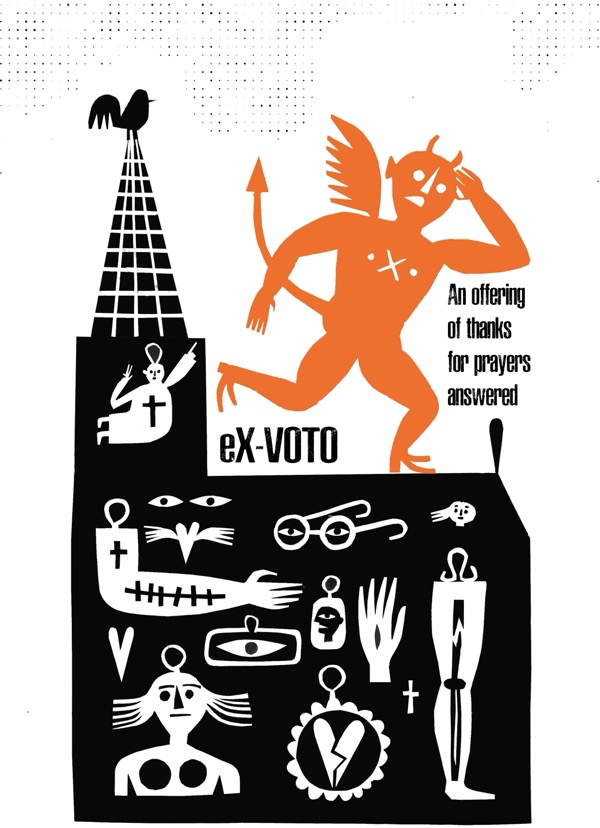
Marion Elliot’s Halloween Alphabet
Favourite illustrator Marion Elliot has conjured this magnificent alphabet of folk, superstition and lore as part of FROM A-Z & BACK AGAIN, an exhibition of three risograph alphabets by John Bradley, Marion Elliot & Jonny Hannah, which opens at Townhouse, Fournier St, this Saturday 1st November and runs until Sunday 16th November.

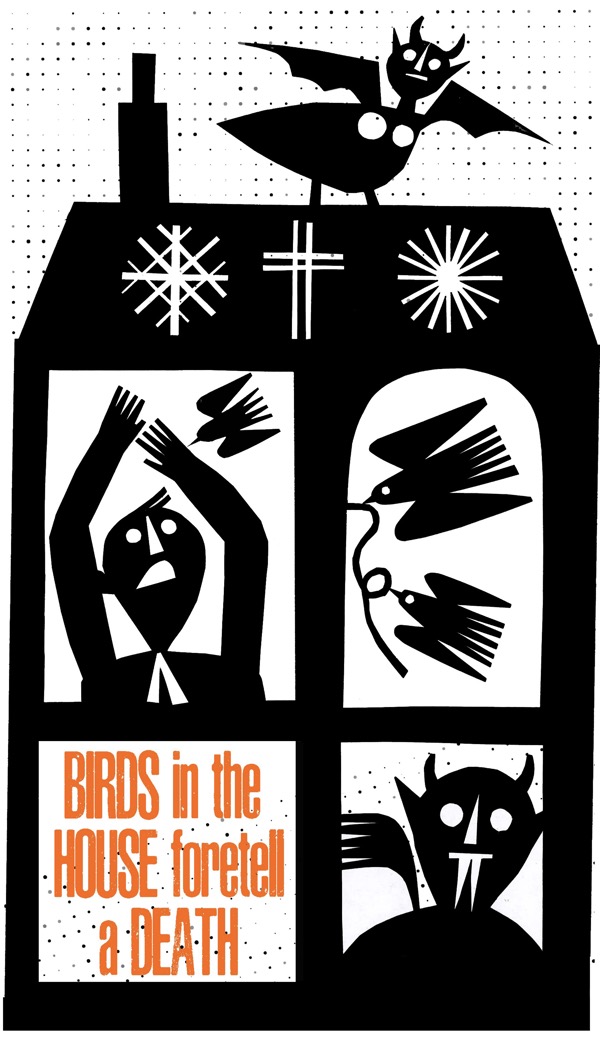
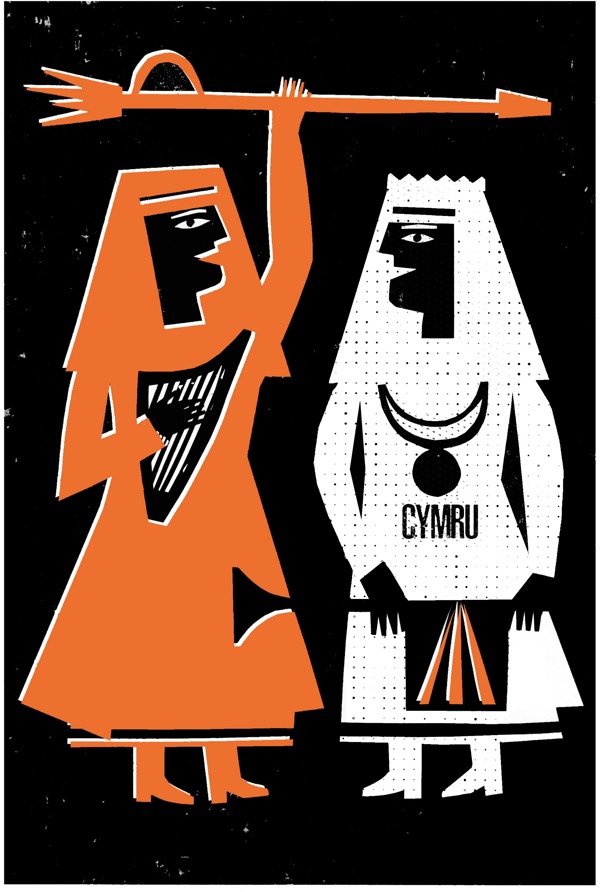
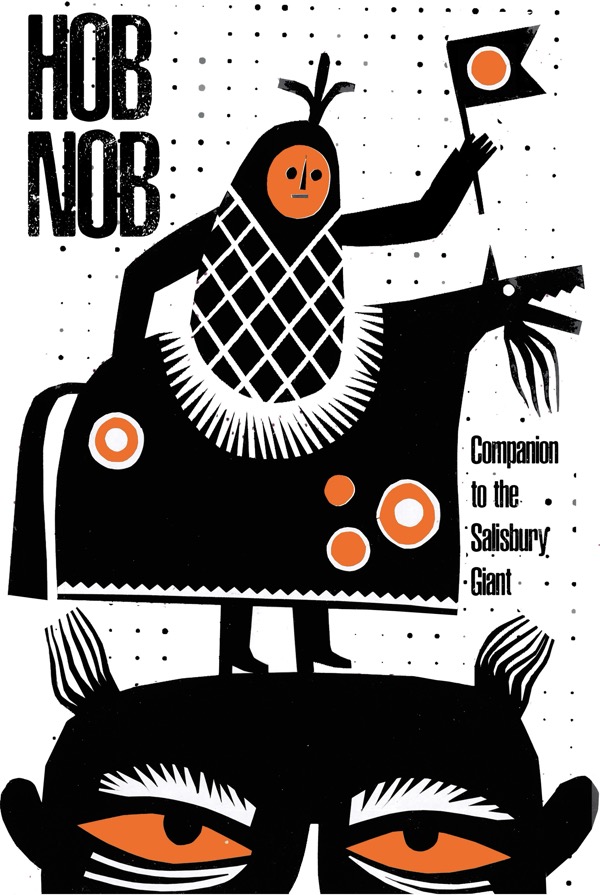
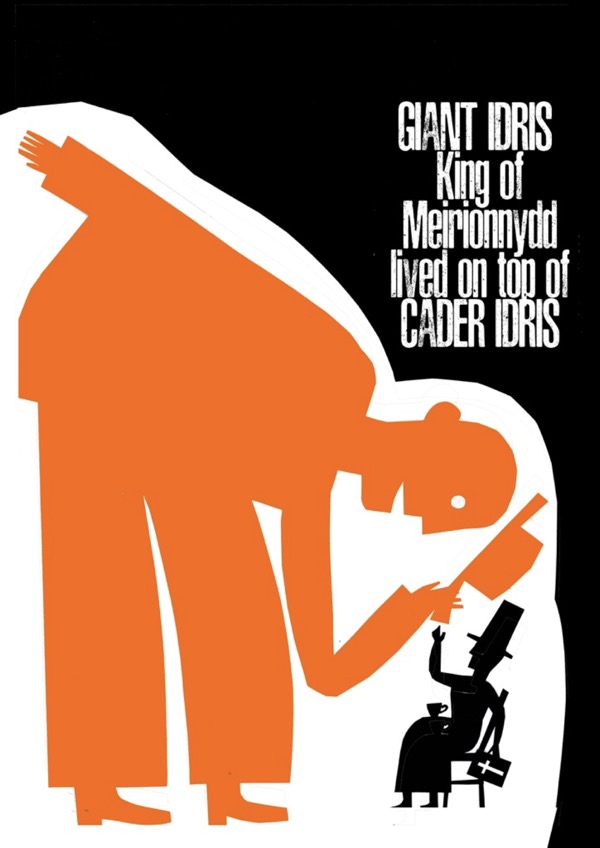
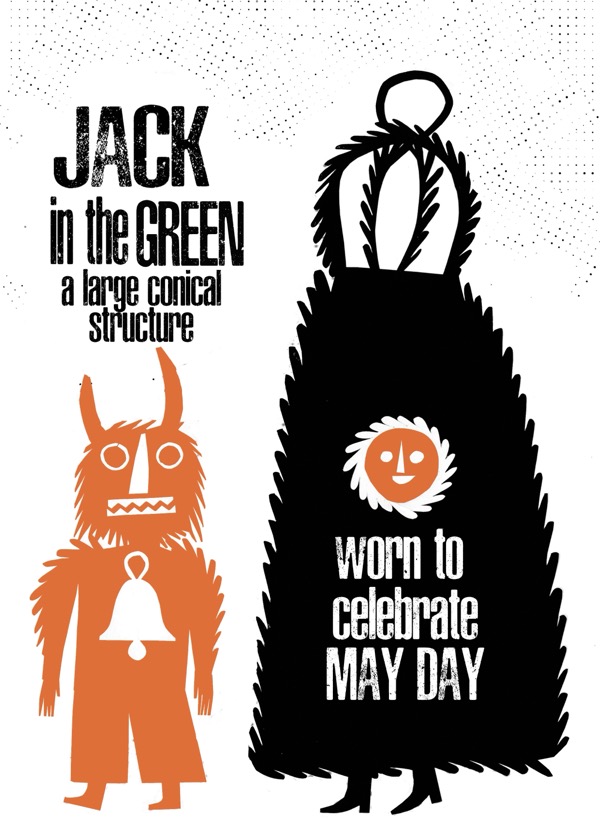
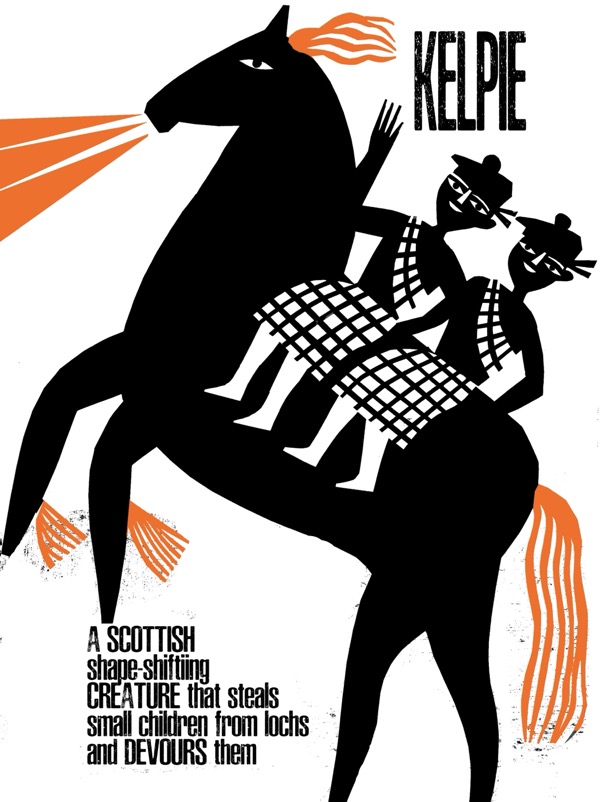
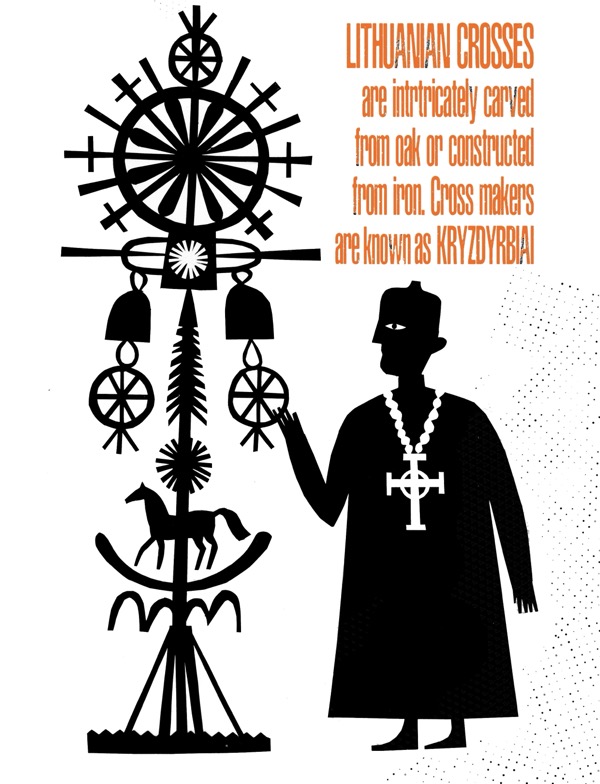
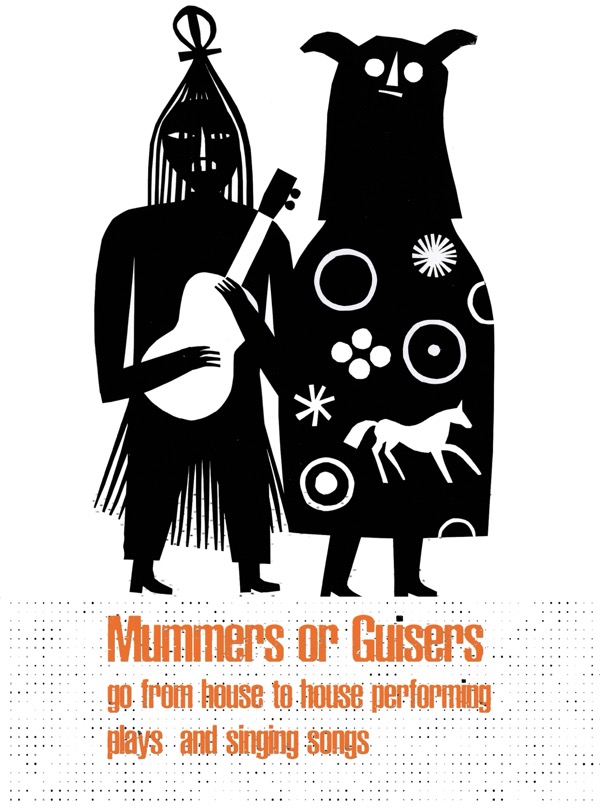
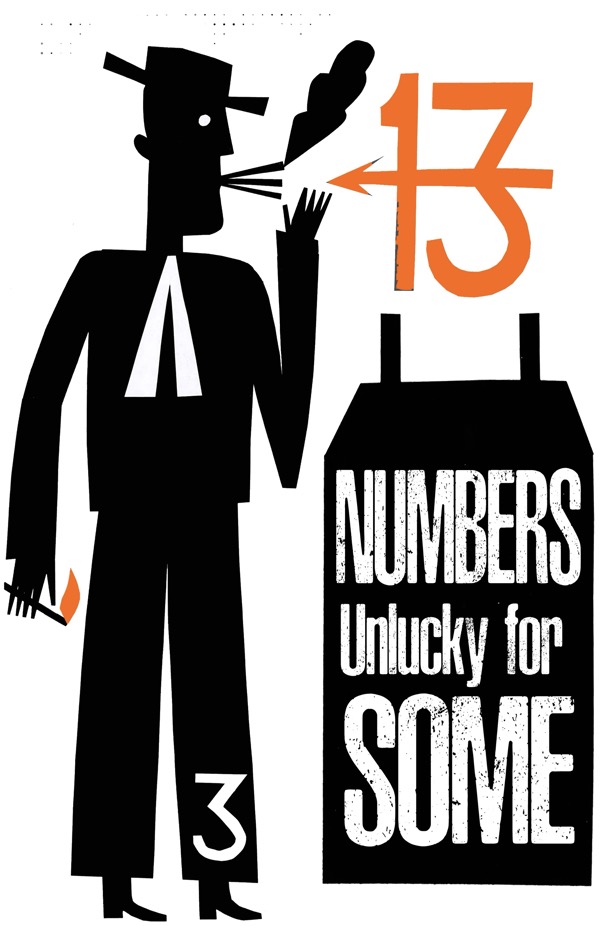
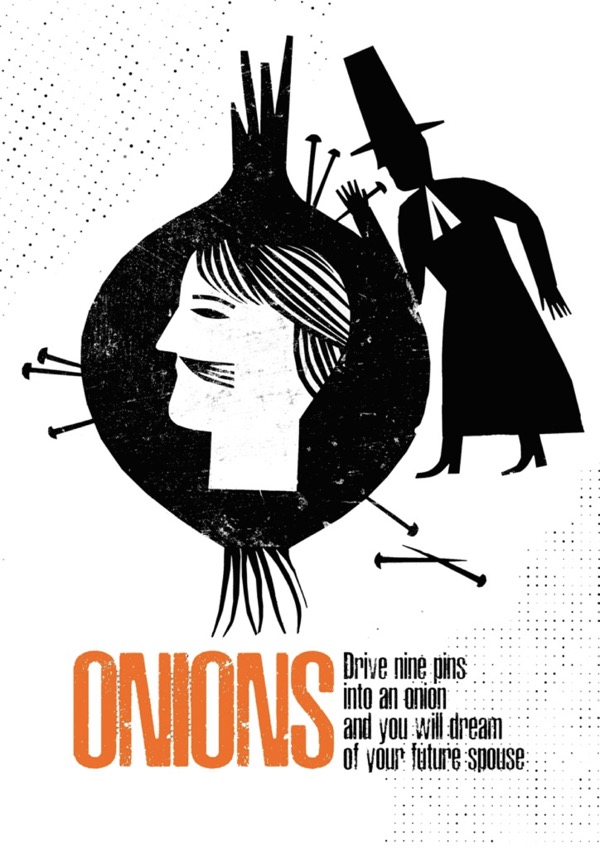
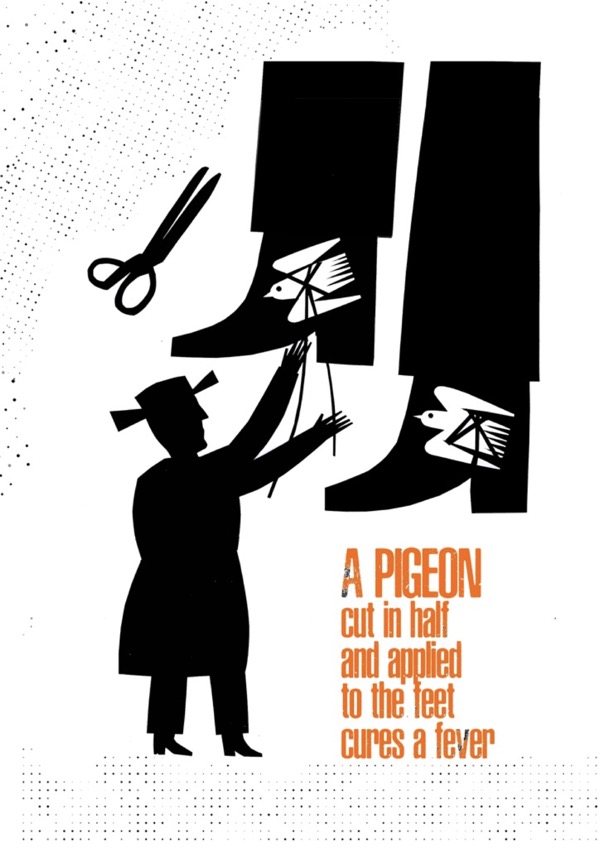
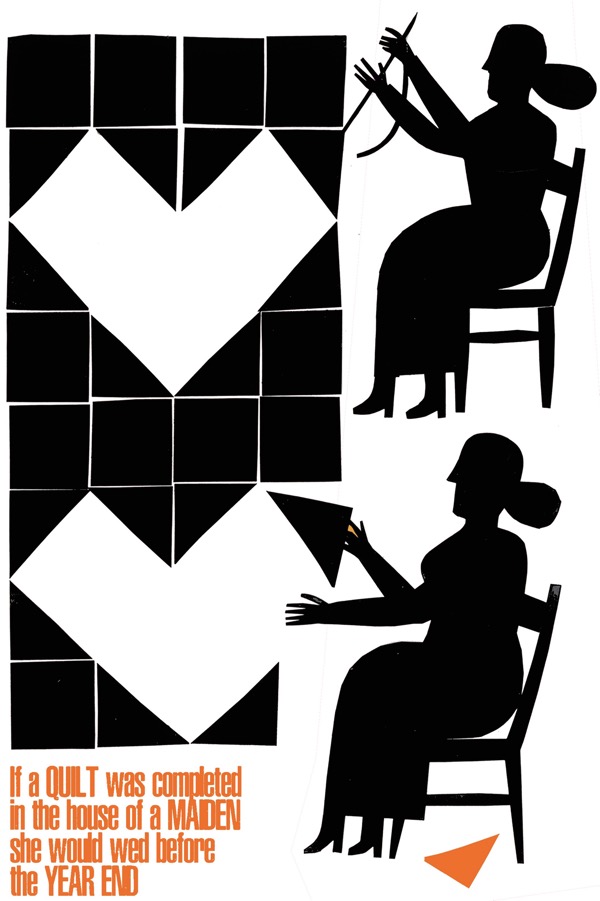
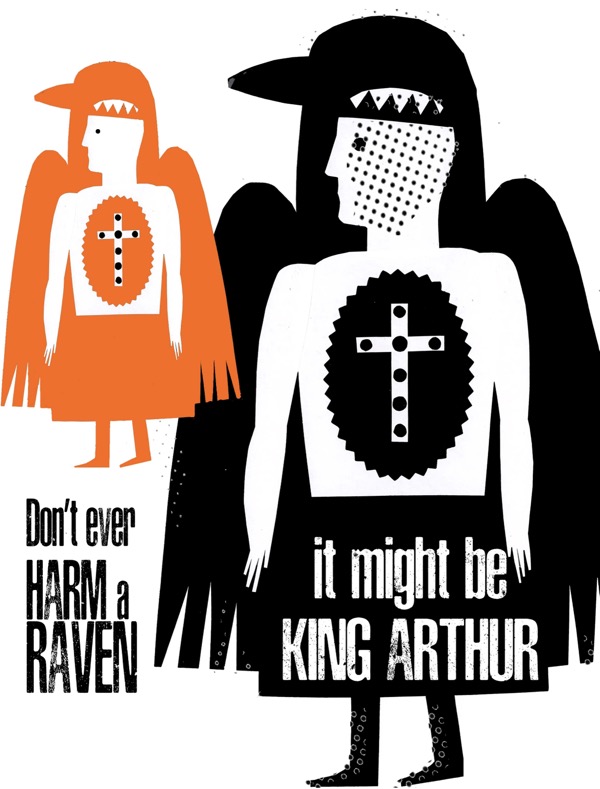


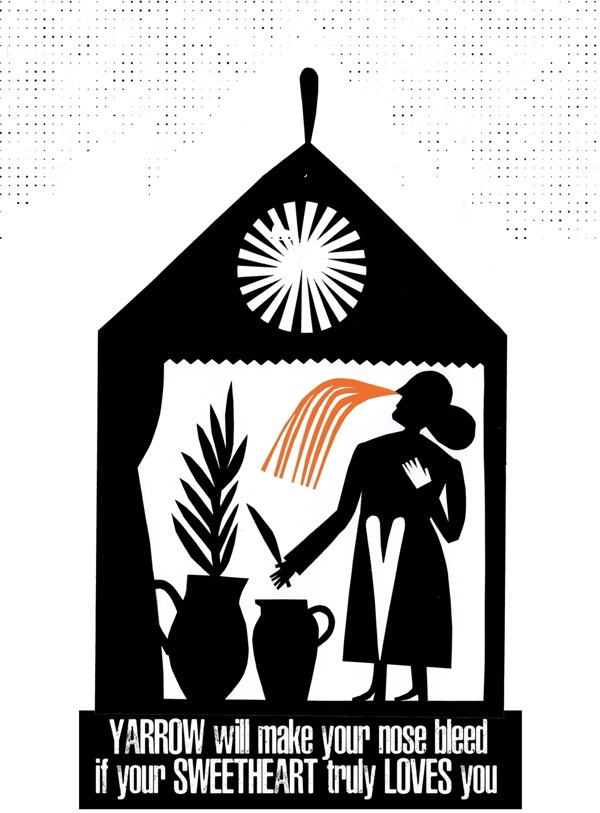
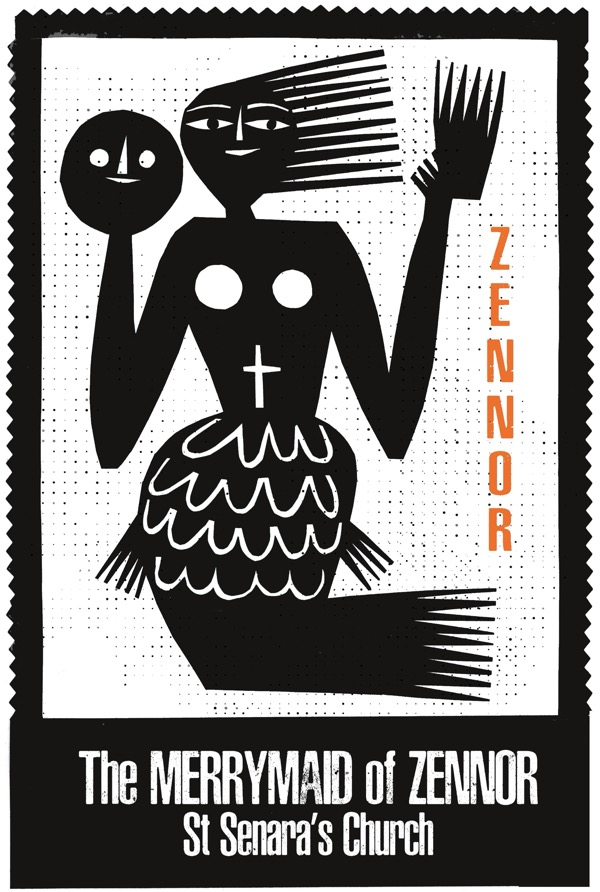
Images copyright © Marion Elliot
You may also like to take a look at
Marion Elliot, Printmaker & Illustrator
At The Archbishops’ Palace In Charing
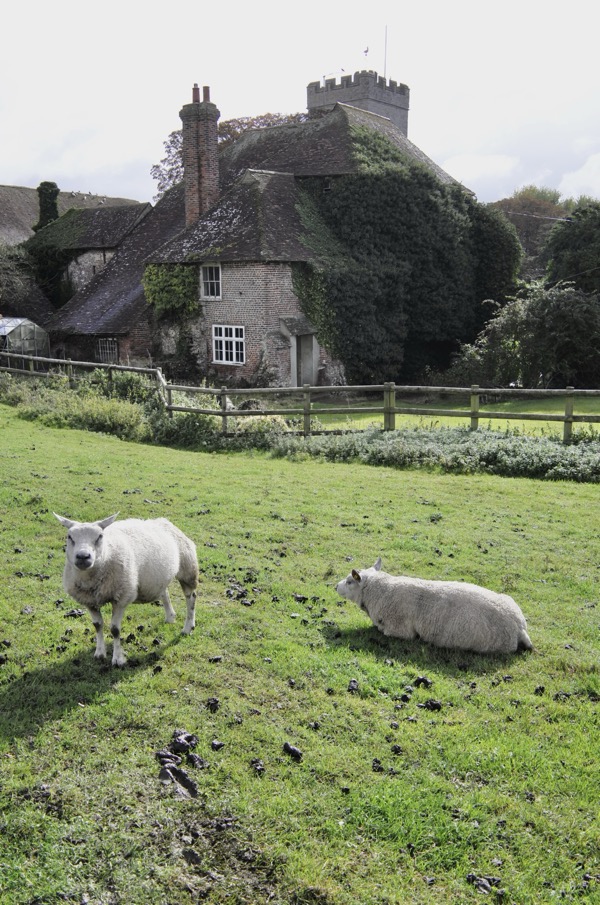
In the heart of the Kentish Weald, at the centre of the village of Charing, lies a collection of ancient flint buildings that comprise the remains of a majestic archbishops’ palace dating back to the eighth century. Within the precincts sit a gatehouse, an enormous barn with a soaring timber roof that was once the great hall (where Henry VIII and Catherine of Aragon dined in 1520 on their way to meet Francis I at the Field of the Cloth of Gold), a manor house and a stable block.
The romance of these weathered structures of glittering flint from the thirteenth and fifteenth centuries, riven with medieval stone work, and repaired and extended with Tudor bricks, is spellbinding. This is the particular humane medieval vernacular that inspired Philip Webb and Edwin Lutyens. At Charing, venerable walls enclose a sheltered yard granting the potential to create a garden with deep herbaceous borders and lavender-lined flag-stoned paths. Anyone who loves the gardens at Sissinghurst cannot resist harbouring the desire to create such a horticultural enclave of their own, enfolded by an array of charismatic old stone dwellings – and the opportunity is here and waiting.
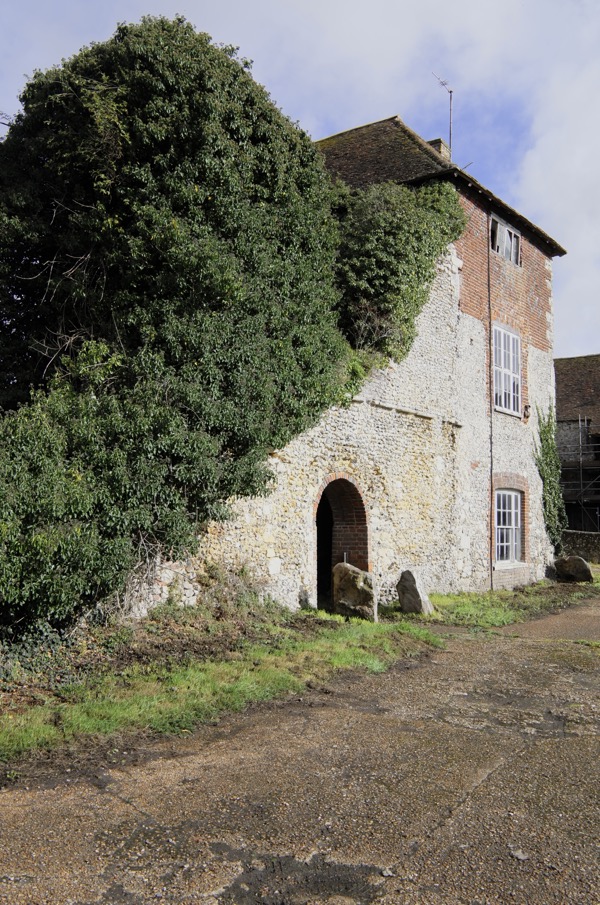
For more than five centuries, this was the stopping-off point for archbishops travelling between Canterbury and Lambeth Palace in London, until the Reformation when it was seized by the crown and transferred to private ownership with the great hall reconfigured as a barn and the chapel converted to a manor house. Nestling in a fold of the North Downs, beside the parish church, in the midst of a village abounding in beautiful old houses, this is a place where history passed through and then left it behind, where the residual atmosphere is of peace and tranquillity, enhanced by the benign climate of Kent.
Standing in the loftily proportioned barn, empty today save for the fluttering of doves, and gazing up to the magnificently timbered roof, it is impossible not to succumb to the magic of this hallowed spot. In our troubled times, it grants a sense of proportion to reflect upon how life persists here despite despite the ceaseless turmoil of political history.
The Spitalfields Trust rescued these Grade I-listed buildings from decline, just as they have done with so many over the past half century. They repaired and sold the gatehouse and a cottage as dwellings, to serve as exemplars of what can be done, and now they seek a purchaser or partner to take on the rest.
The fine manor house is habitable, granting a comfortable home to a potential owner and custodian willing to embrace the soul of this favoured corner of Kent while undertaking gentle restoration to the rest of the site. This collection of buildings could provide accommodation for an extended family, just as at Sissinghurst Castle. Equally they offer the possibility for creative reinvention as a location for running a business, an artist’s studio, a micro-brewery, a stables or a smallholding (significant land is attached) – and all just an hour from London.
Click here to buy the Archishops’ Palace at Charing in Kent
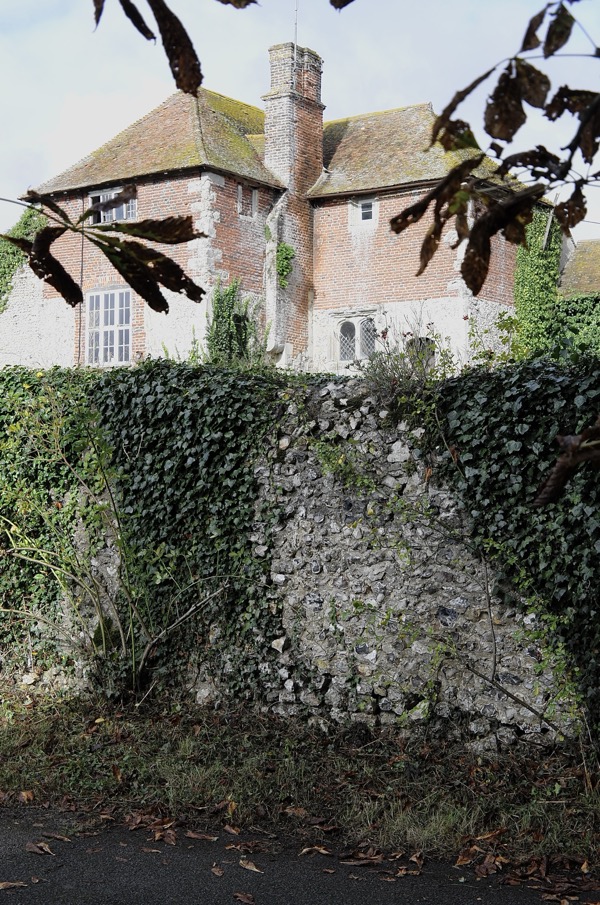
The manor house seen from over the churchyard wall
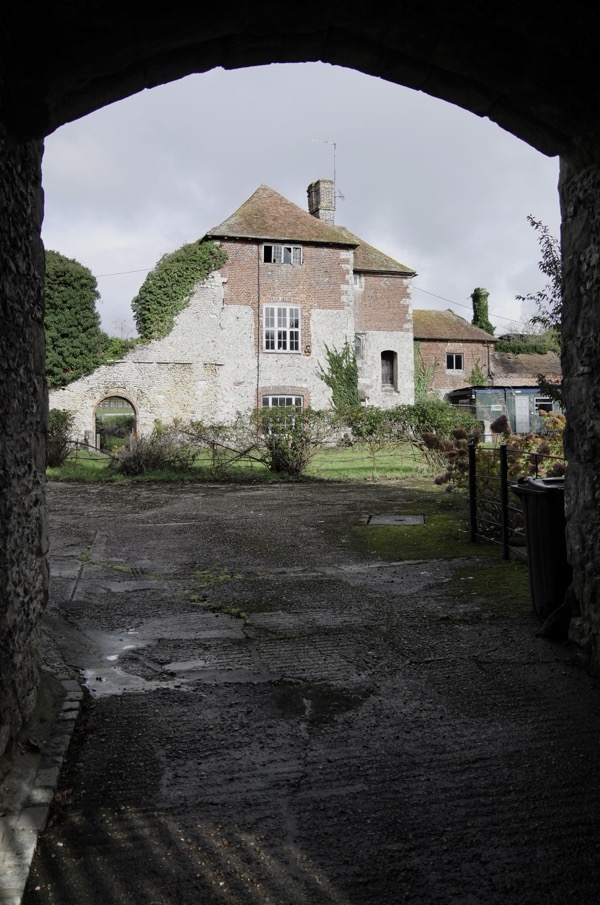
The manor house
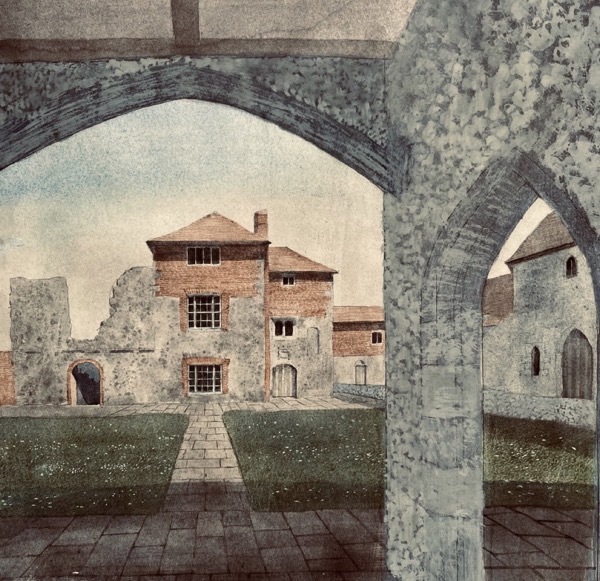
Visualisation of the manor house and yard restored, by Chris Williams
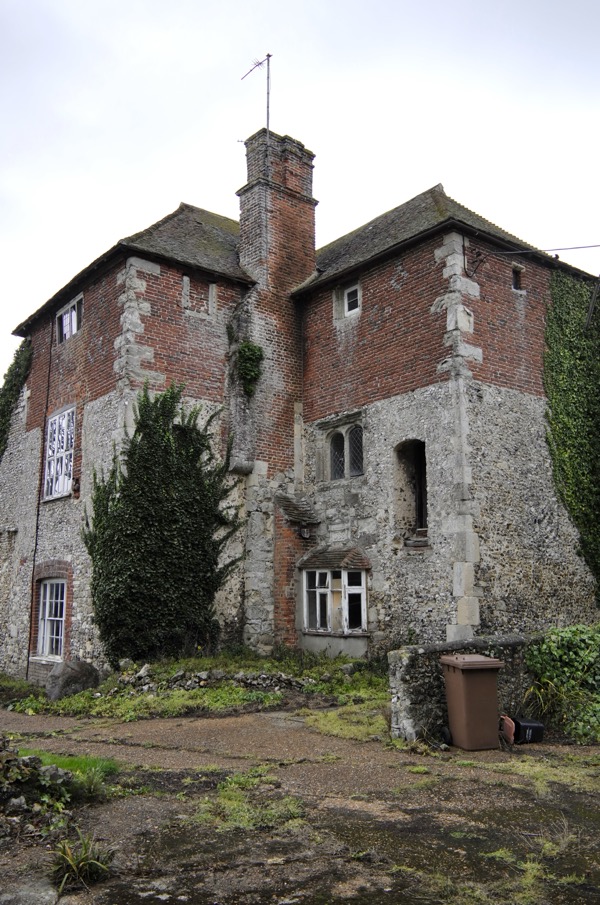
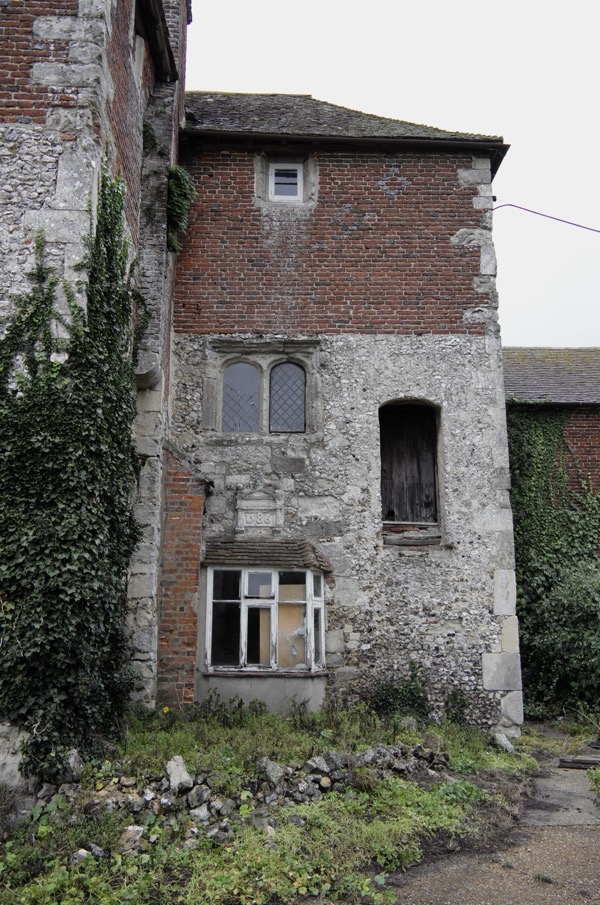
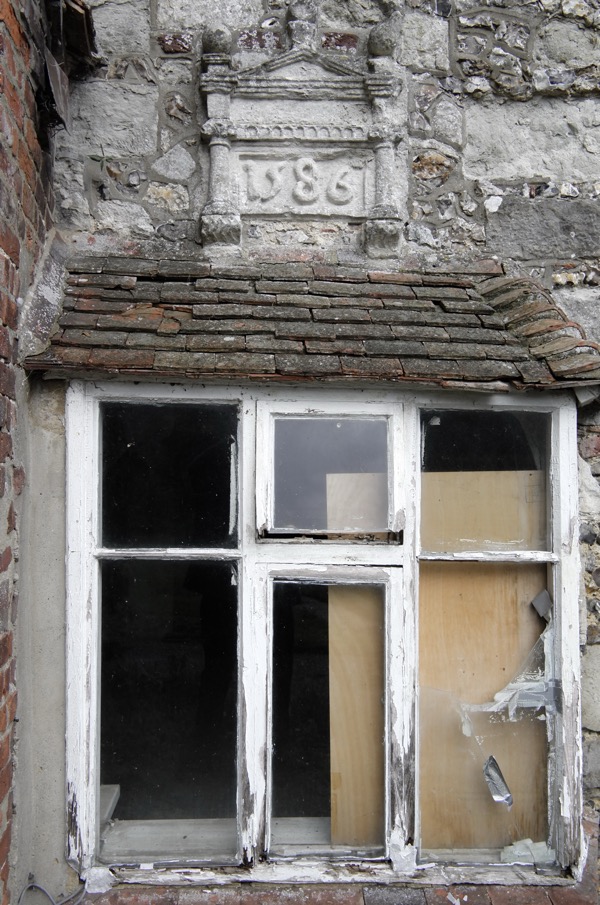
Plaque on the manor indicating conversion to a dwelling after the Reformation
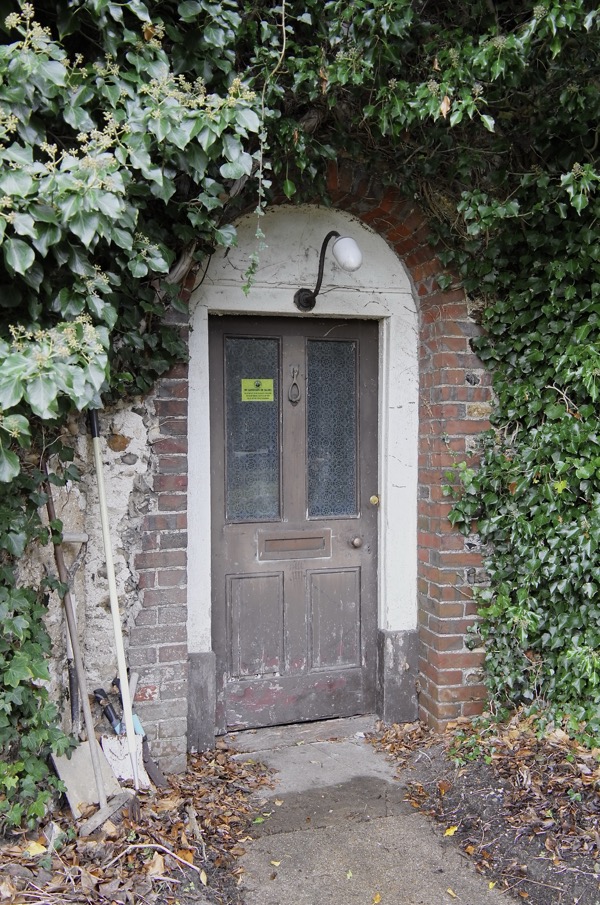
The manor house front door
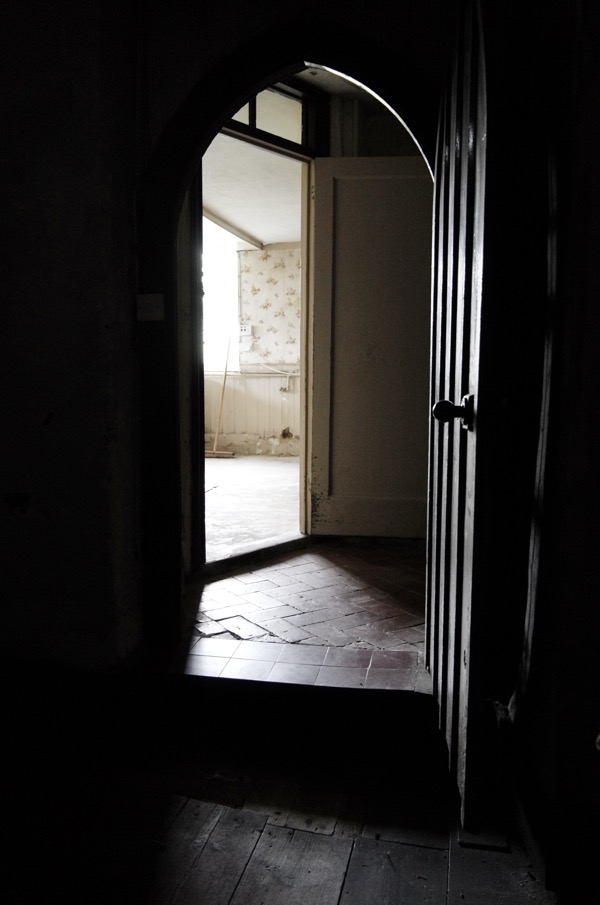
Inside the manor house
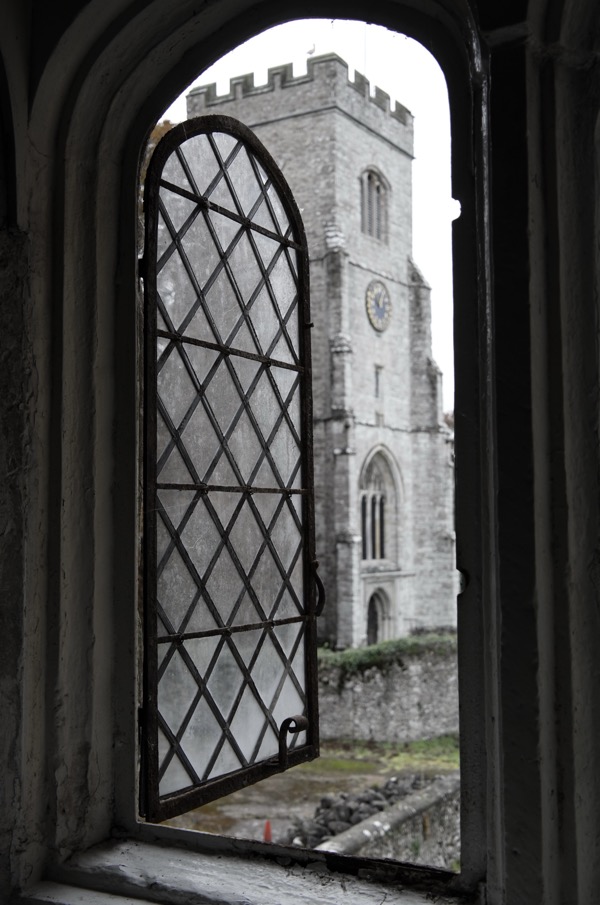
View towards the church from one of the manor house bedrooms
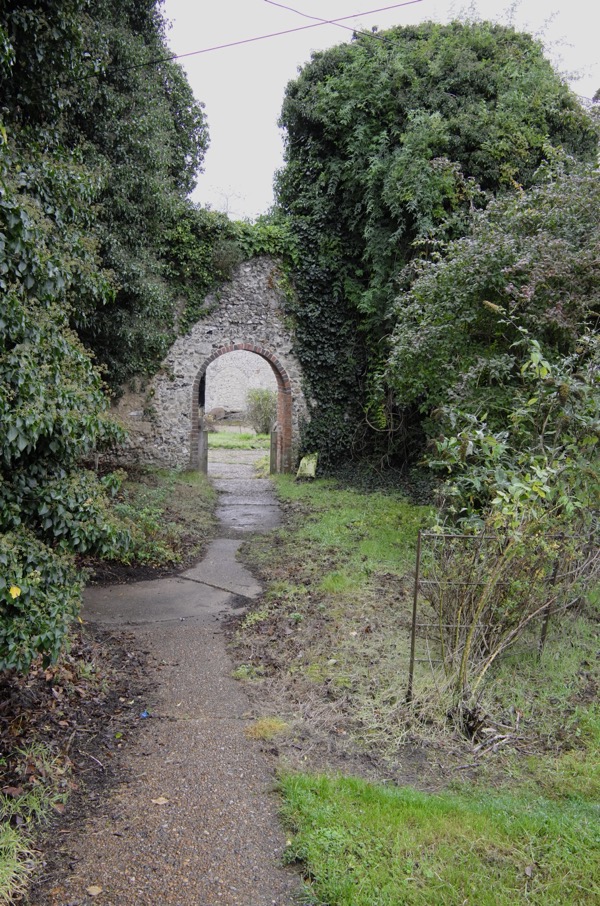
Looking back from the manor house towards the yard
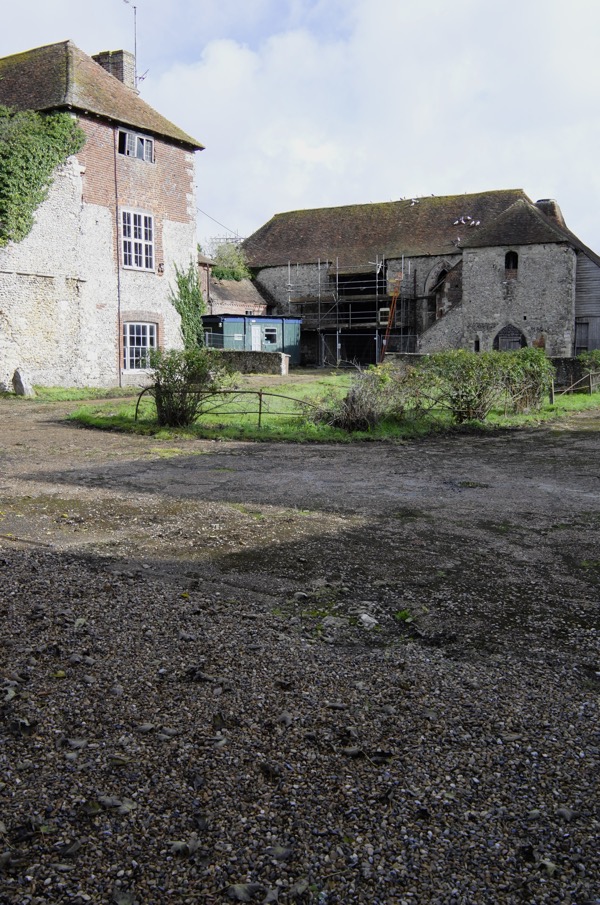
View across the yard towards the manor house and the barn, formerly the great hall
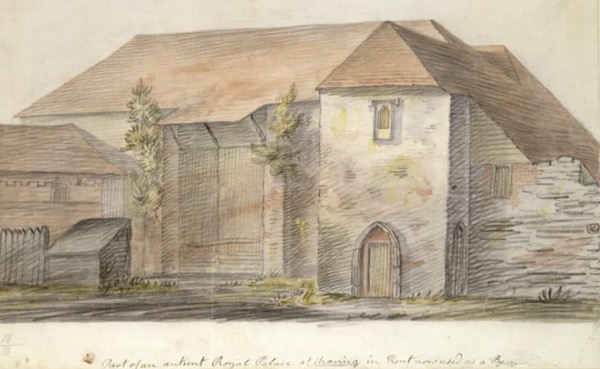
‘Part of an antient Royal Palace at Charing in Kent now used as a barn,’ nineteenth century watercolour (courtesy of British Museum)
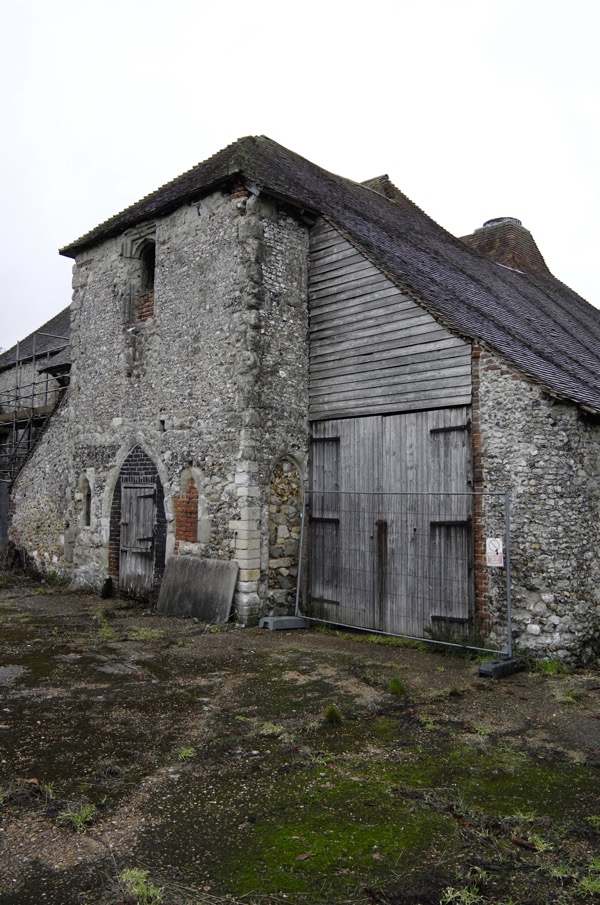
The barn
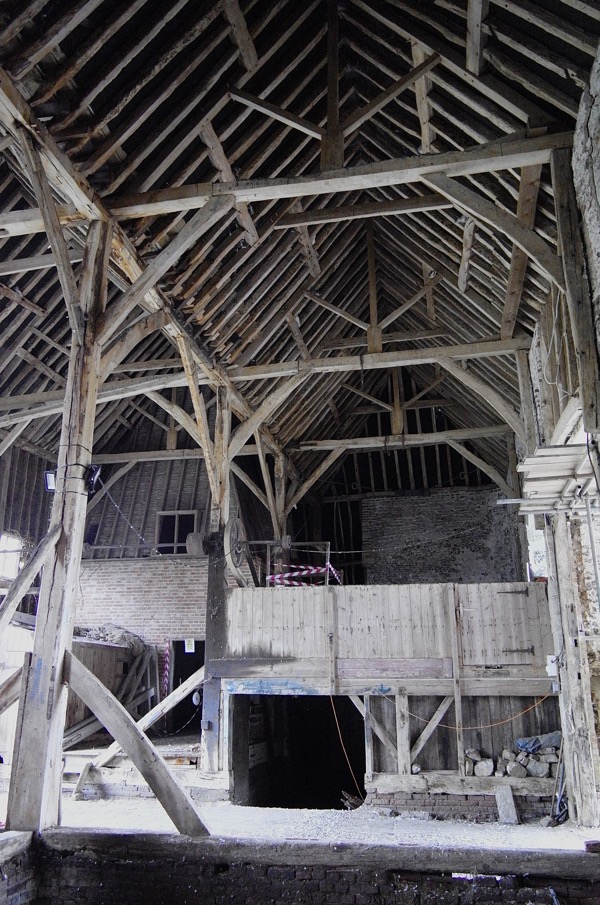
This was the great hall where Henry VIII and Catherine of Aragon dined
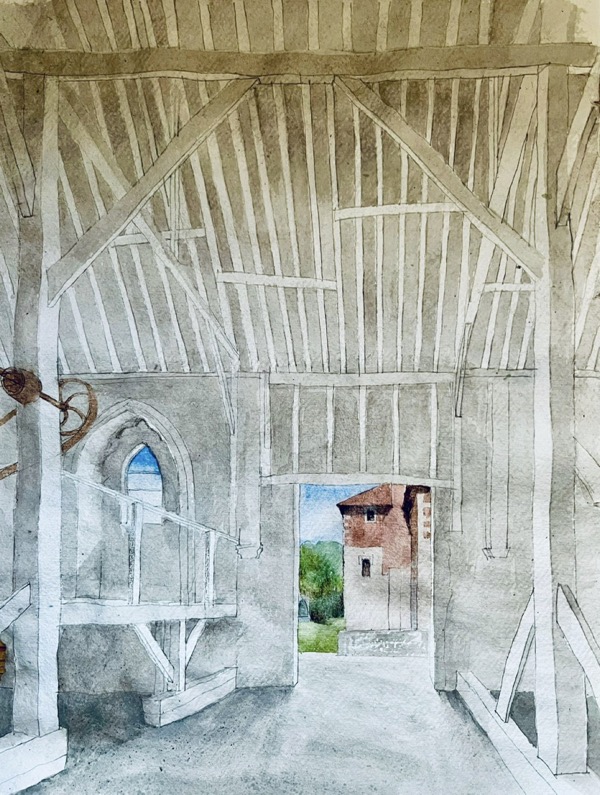
Visualisation of the barn repaired, looking to the manor house, by Chris Williams
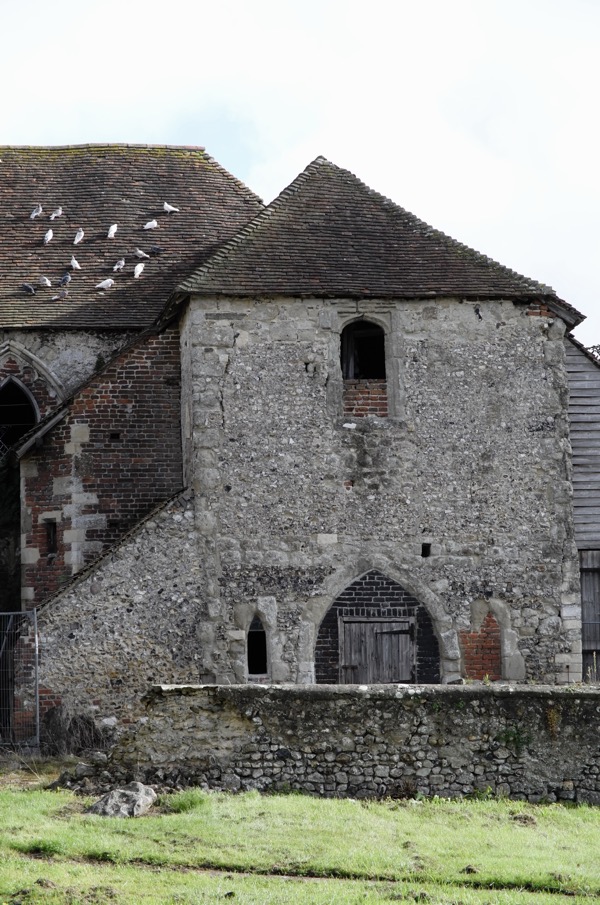
Doves roosting on the barn roof
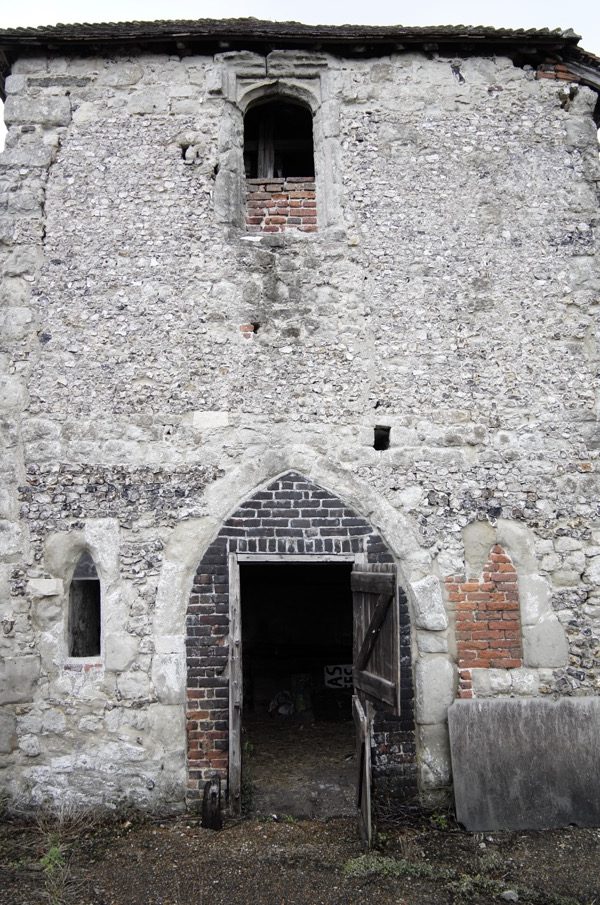
Medieval windows and door in the barn
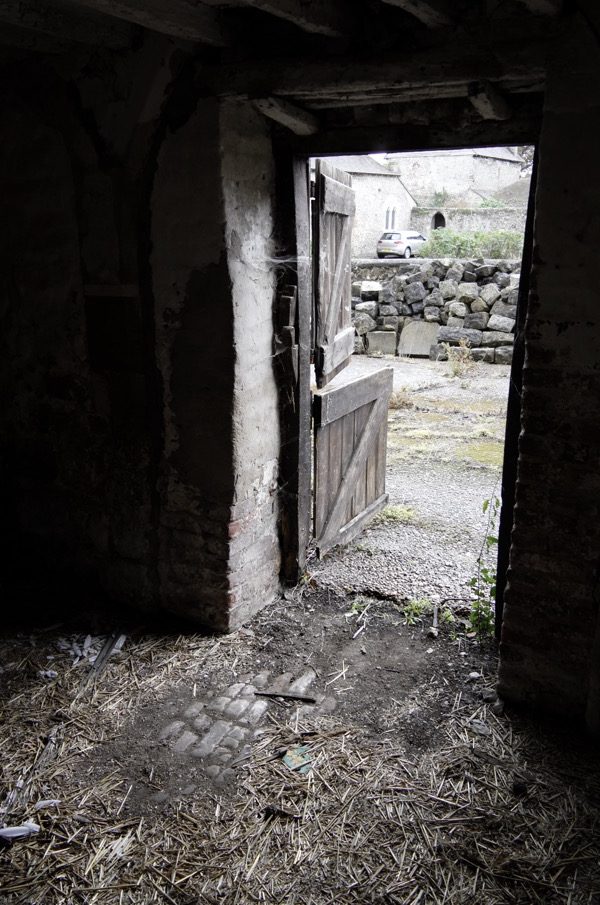
Old brick floor inside the outbuilding
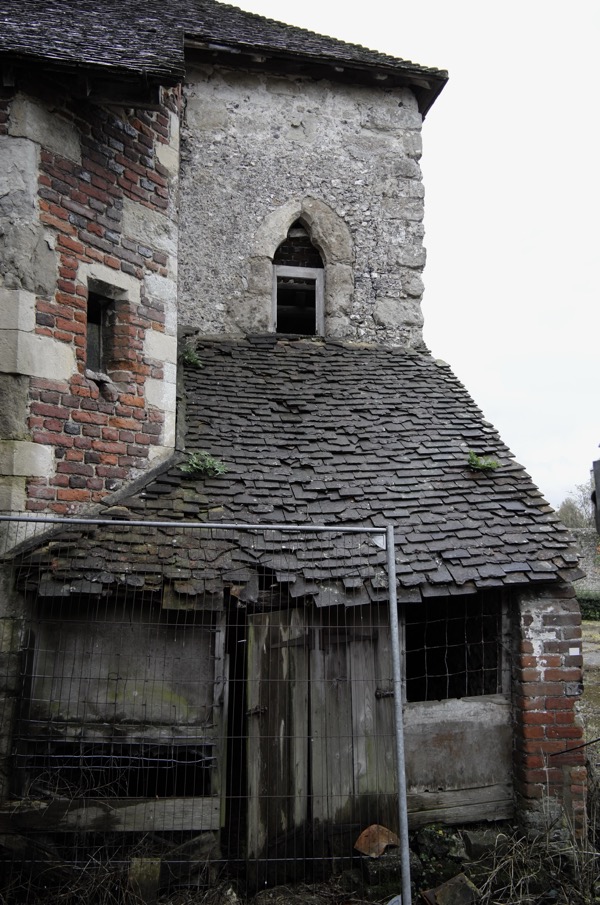
Architectural details of the barn
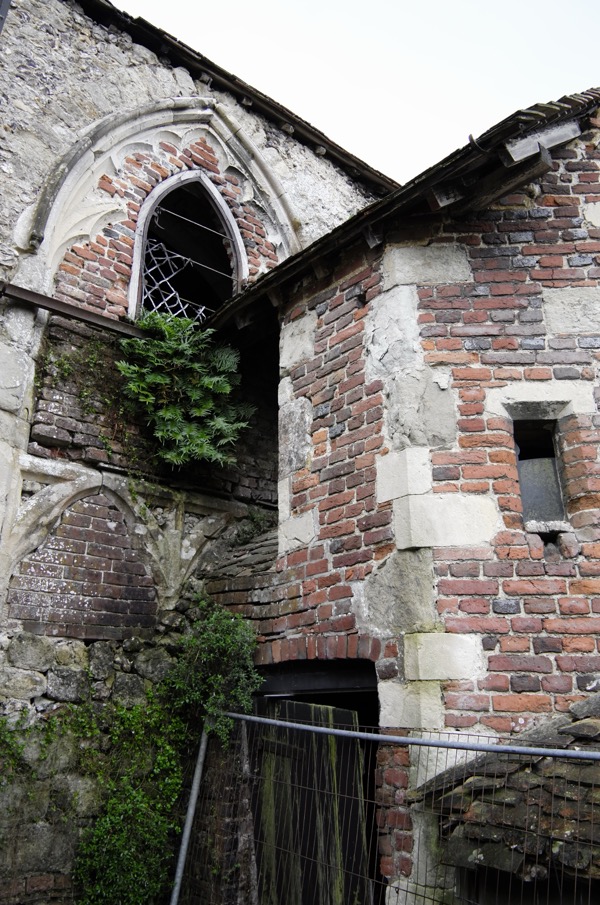
Medieval windows at the barn
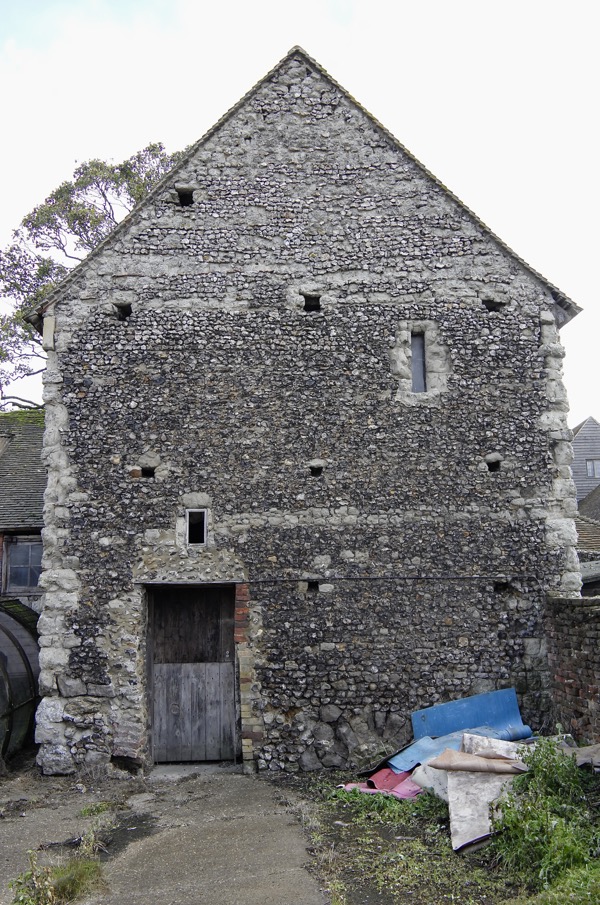
Stable block
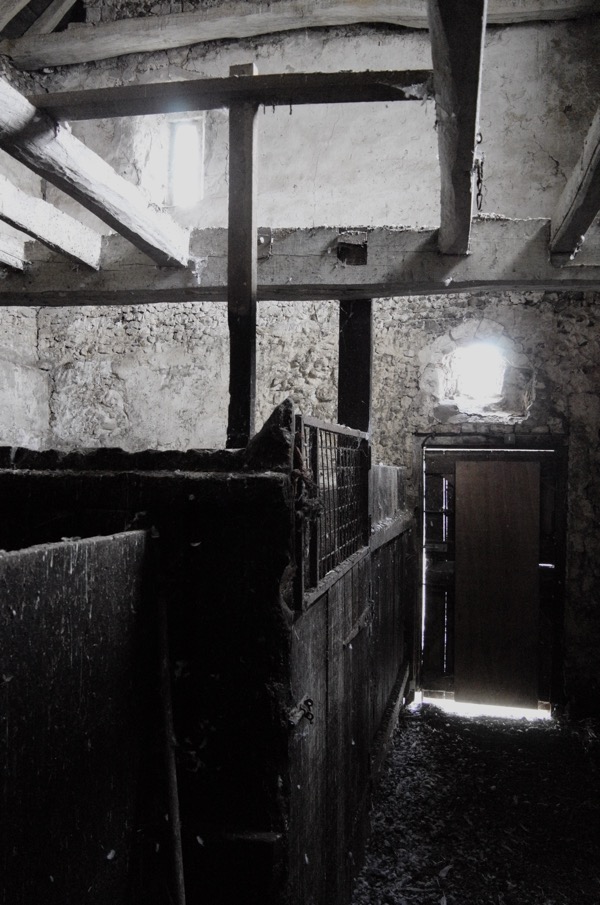
Inside the stable block
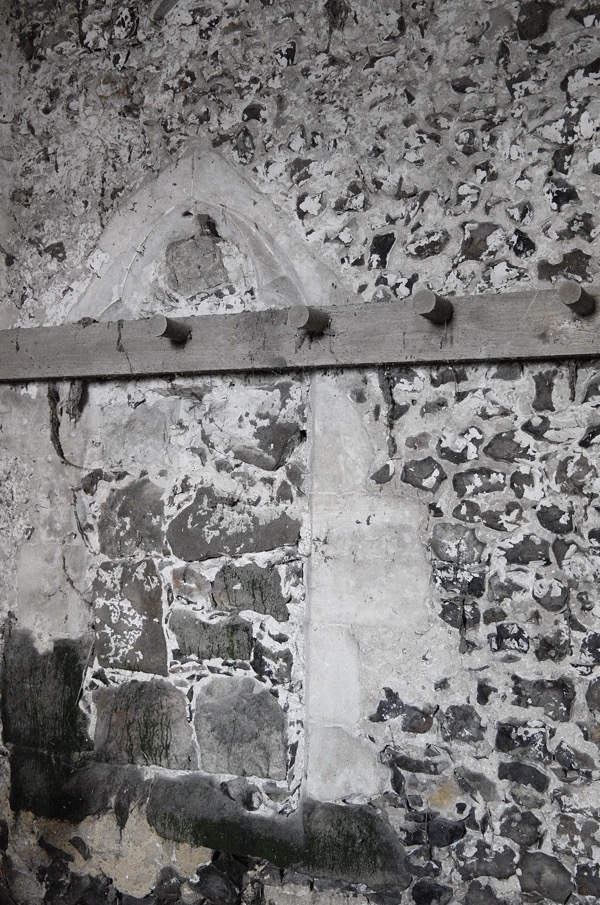
Blocked medieval lancet window in the stable block
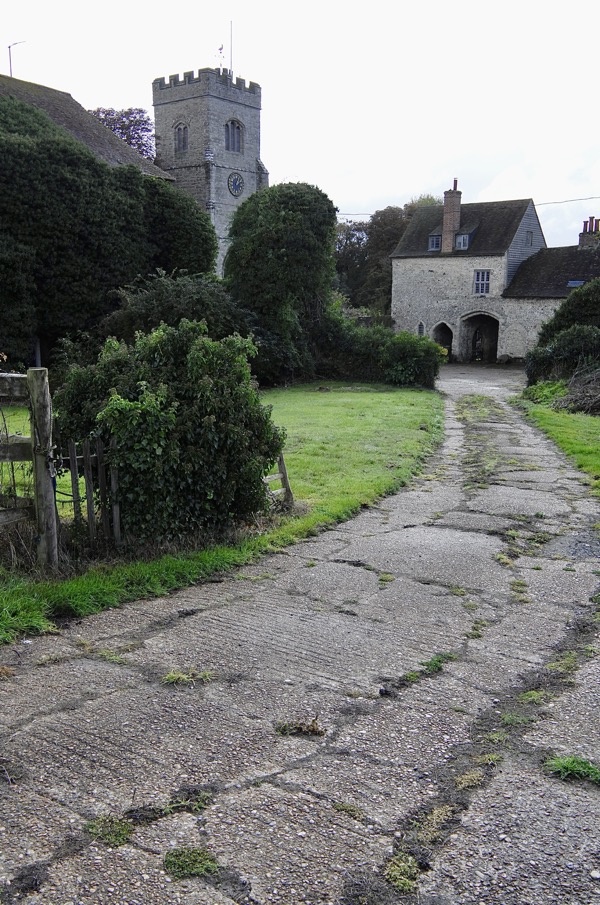
Looking downhill to the yard with parish church beyond
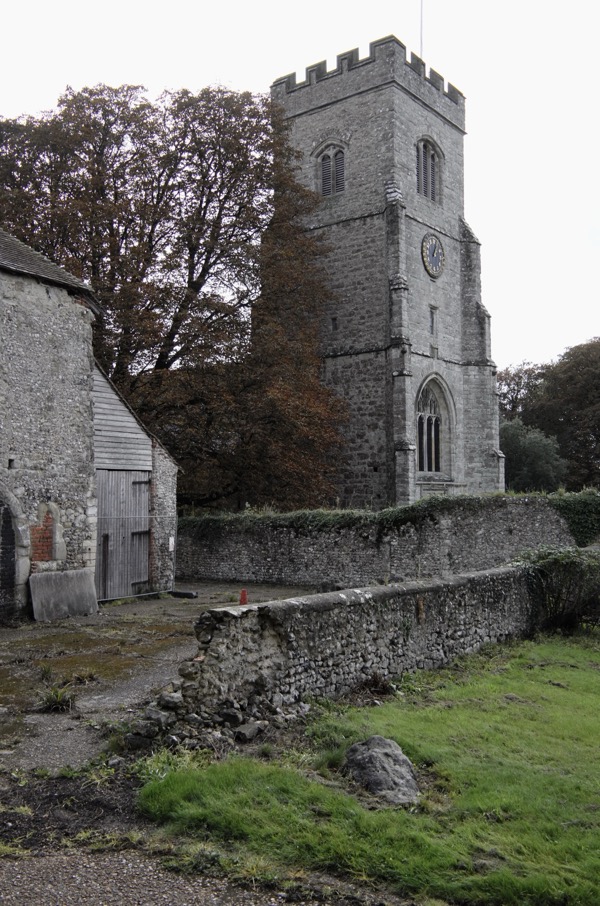
The parish church overlooks the yard
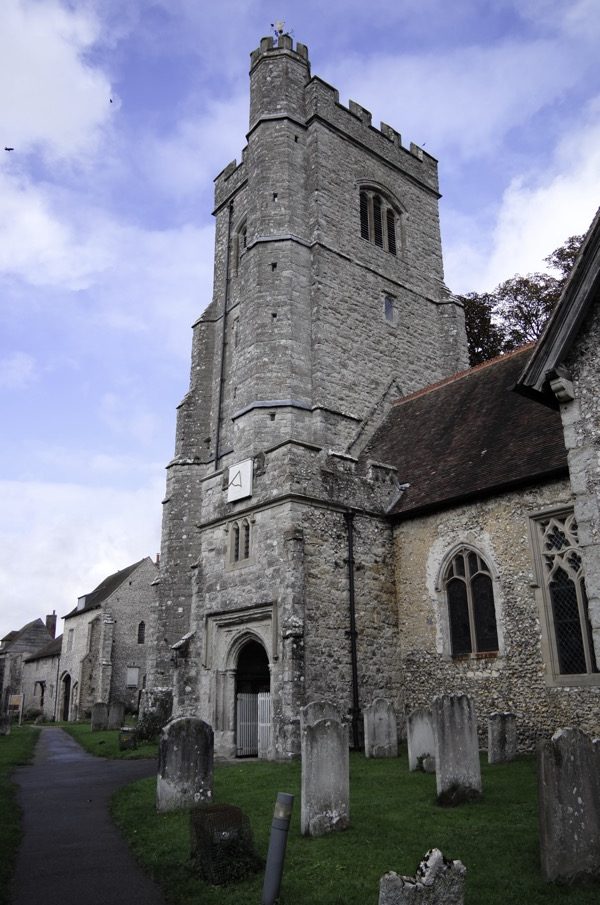
The parish church at Charing












