
Working People & A Dog

Click here to book for The Gentle Author’s Tour this Saturday

Groundsman, E.15 (1965)
“This is the groundsman at the Memorial Ground where I played football aged ten in 1954.”
Some of my favourite people are the shopkeepers and those that do the small trades – who between them have contributed the major part to the identity of the East End over the years. And when I see their old premises redeveloped, I often think in regret, “I wish someone had gone round and taken portraits of these people who once manifested the spirit of the place.” So you can imagine my delight and gratitude to see this splendid set of photos and discover that during the sixties photographer John Claridge had the insight to take such pictures, exactly as I had hoped.
When John went back ten years later to the pitch near West Ham Station where he played football as a child, he found the groundsman was just as he remembered, with his cardigan and tie, and he took the photograph you see above. There is a dignified modesty to this fine portrait – a quality shared by all of those published here – expressed through a relaxed demeanour.
These subjects present themselves to John’s lens as emotionally open yet retaining possession of themselves, and this translates into a vital relationship with the viewer. To each of these people, John was one of their own kind and they were comfortable being photographed by him. And, thanks to the humanity of John’s vision, we have the privilege to become party to this intimacy today.

Kosher Butcher, E2 (1962) – “The chicken was none too happy!”

Brewery, Spitalfields (1964) Clocking in at the Truman Brewery, Brick Lane.

Lady with Gumball Machine, Spitalfields (1967) – “She came out of her kiosk and asked, ‘Will you photograph me with my gumball machine?'”

Saveloy Stall, Spitalfields (1967) – “It was a cold day, so I had two hot dogs.”

Whitechapel Bell Foundry, E1 (1982) Established in 1598, where the Liberty Bell and Big Ben were cast.

Rag & Bone Man, E13 (1961) – “Down my street in Plaistow, there were not many cars about – all you could hear was the clip-clop of the horse on the wet road.”

Shoe Repairs Closed Saturday, Spitalfields (1969) – “I asked, ‘Why are you open on Saturday?’ He replied, ‘I was just busy.'”

Spice, E1 (1976) – “Taken at a spice warehouse in Wapping. The smells were fantastic, you could smell it down the street.”

Portrait, Spitalfields (1966) – “This is a group portrait of friends outside of their shop. The two brothers who ran the shop, the lady who worked round the corner and the guy who worked in the back.”

Anglo Pak Muslim Butcher, E2 (1962)

Butchers, Spitalfields (1966) -“I had just finished taking a picture next door, when this lady came out with a joint of meat and asked me to take her photograph with it.”

Fishmongers, E1 (1966) Early morning, unloading fish from Grimsby.

Beigel Baker, E2 (1967) -“After a party at about four or five in the morning, we used to end up at Rinkoff’s in Vallance Rd for smoked salmon beigels.”

Newsagent, Spitalfields (1966) -“I said, ‘Shame about Walt Disney dying, can I take your picture next to it?’ and he said, ‘Alright.'”

Selling Shoes, Spitafields (1963) – “My dad used to tell me what his dad told him, ‘If you’ve got a good pair of shoes, you own the world.'”

Strudel, E2 (1962) – “You’ll like this, boy!’ I had just taken a photograph outside this lady’s shop. I said, ‘I think your window looks beautiful.’ and she asked me in for a slice of apple strudel. It was fantastic! But she would not accept any money, it was a gift. She said, ‘You took a picture of my shop.'”

Number 92, Spitalfields (1964)

Tubby Isaac’s, Spitalfields (1982) – “Aaahhh Tubby’s, where I’ve had many a fine eel.”

Junkyard Dog, E16 (1982) – “I was climbing over the wall into this junkyard. All was quiet, when I noticed this pair of forbidding eyes – then I made my exit.”
Photographs copyright © John Claridge
You may also like to take a look at
Along the Thames with John Claridge
At the Salvation Army with John Claridge
A Fireplace In Fournier St
Click here to book for The Gentle Author’s Tour this Saturday

The scourging
There is a fine house in Fournier St with an old fireplace lined with manganese Delft tiles of an attractive mulberry hue illustrating lurid Biblical scenes. Installed when the house was built in the seventeen fifties by Peter Lekeux – a wealthy silk weaver who supervised two hundred and fifty looms and commissioned designs from Anna Maria Garthwaite – these lively tiles have survived through the centuries to educate, delight and inspire the residents of Spitalfields.
Tiles were prized for their value and their decorative qualities, and in this instance as devotional illustrations too. Yet although Peter Lekeux was a protestant of Huguenot descent, a certain emotionalism is present in these fascinating tiles, venturing into regions of surrealism in the violent imaginative excess of their pictorial imagery. The scourging of Jesus, Judith with the decapitated head of Holofernes, the Devil appearing with cloven feet and bovine features, and Jonah vomited forth by the whale are just four examples of the strangeness of the imaginative universe that is incarnated in this fireplace. Arranged in apparent random order, the tiles divide between scenes from the life of Jesus and Old Testament saints, many set in a recognisable Northern European landscape and commonly populated by people in contemporary dress.
It is possible that the tiles may date from the seventeenth century and originate from continental Europe. Their manufacture developed in Delft when, at the beginning of the sixteenth century, Chinese ceramics were imported from Portuguese ships captured by the Dutch, and because these were in demand local potters tried to copy them, starting a new industry in its own right. The earthenware tiles were covered with a tin glaze to create a white ground upon which the design was pricked out from a stencil, and then the artist simply had to join up the dots, producing the images quickly and to a relatively standard design.
“I’m not sure what this is supposed to illustrate!” exclaimed Sister Elizabeth at St Saviour’s Priory in Bethnal Green, colouring slightly when I showed her the tile of the topless woman dragging a bemused man towards a bed, “Maybe the woman taken in adultery?” Yet she was able to identify all the other stories for me, graciously assenting to my request when I called round to the priory seeking interpretation of the scenes in my photographs – after I had spent a morning in Fournier St crouching in the soot with my camera.
Upon closer examination, several hands are at work in these tiles – with the artist who drew Jesus confronting the Devil in the wilderness and Jonah thrown up by the whale, setting the dominant tone. This individual’s work is distinguished by the particular rubbery lips and fat round noses that recall the features of the Simpsons drawn by Matt Groenig, while the half-human figures are reminiscent of Brueghel’s drawings illustrating the nightmare world of apocalypse. More economic of line is the artist who drew Jesus clearing out the temple and Pilate washing his hands – these drawings have a spontaneous cartoon-like energy, although unfortunately he manages to make Jesus resemble an old lady with her hair in a bun.
There is an ambivalence which makes these tiles compelling. You wonder if they served as devout remembrances of the suffering of biblical figures, or whether a voyeuristic entertainment and perverse pleasure was derived from such bizarre illustrations. Or whether perhaps there are ambiguous shades of feeling in the human psyche that combine elements of each? A certain crossover between physical pain and spiritual ecstasy is a commonplace of religious art. It depends how you like your religion, and in these tiles it is magical and grotesque – yet here and now.
My head spins, imagining the phantasmagoria engendered in viewers’ imaginations over the centuries, as their eyes fell upon these startling scenes in the glimmering half-light, before dozing off beside this fireplace in a weary intoxicated haze, in the quiet first floor room at the back of the old house in Fournier St.


In the wilderness, the Devil challenges Jesus to turn stones into bread.

Joseph and Potiphar’s wife.

St Jerome with the lion in the wilderness.

Jesus drives the traders from the temple.

Jesus meets the Samaritan woman at the well.

Sampson and Delilah, cutting Sampson’s hair

Noah’s flood.

The woman who touched Jesus’ robes secretly and was instantly cured of her haemorrhage.

Judith with the head of Holofernes

Pilate washes his hands after Jesus is bound and led away.

Jesus and the fishermen

Jonah sits under the broom tree outside Nineveh.

The soldiers bring purple robes to Jesus to rebuke him when he claims to be an emperor.

Jonah is cast up by the whale upon the shore of Nineveh.

You may also like to read about
At The Eagle Tavern
Click here to book for The Gentle Author’s Tours

I wish you would take me out to the theatre. I dream of leaving the gloomy old house one evening and joining the excited crowds, out in their best clothes to witness the spectacular entertainments that London has to offer. The particular theatre I have in mind is the Grecian Theatre attached to the Eagle Tavern in Shepherdess Walk, City Road between Angel and Old St.
The place seems to have developed quite a reputation, as I read yesterday, “The Grecian Saloon is really a hot house or a black hole, for the number of human beings packed in there every night would induce a supposition there was no other place of entertainment in London. At least two thousand persons were left unable to procure admission.” This was written in 1839, demonstrating that the popular art of having a good time – still pursued vigorously in the many pubs and clubs here today – is a noble tradition which has always thrived in the East End, outside the walls of the City of London.
“Up and down the City Road, in and out the Eagle, that’s the way the money goes…” The Eagle public house in the rhyme still exists to this day, though barely anything remains of the elaborate entertainment complex which developed there during the nineteenth century – apart from a single scrapbook that I found in the archive of the Bishopsgate Institute. All the balloon ascents, the stick fights, the operas, the wrestling and the wild parties may be over, and the thrill rides closed long ago, but there is enough in this album to evoke the extravagant drama of it all and fire my imagination with thoughts of glamorous nights out on the town.
You only have to walk through Brick Lane and up to Shoreditch on a Saturday night, through the hen parties and gangs of suburban boys out on a bevy, jostling among the crowds of the intoxicated, the drugged and the merely overexcited, to get a glimpse of what it might have been like two hundred years ago. With as many as six thousand attending events at the Eagle Tavern, we can assume that lines must have formed just as we see today outside nightclubs.
On the site of the eighteenth century Shepherd & Shepherdess Pleasure Garden, the Grecian Saloon developed at the Eagle Tavern to provide all kinds of entertainments, from religious events to conjuring and equestrian performances. There are only tantalising hints that survive of these bygone entertainments. Yet sentences like “We are glad to find that little Smith has recovered her hoarseness” and “We have little to find fault with save that the maniac was allowed to perambulate the gardens without his keeper” do set the imagination racing. There are many fine coloured playbills in the cherished album, crammed with enigmatic promises of exotic thrills. I wonder who exactly was the beautiful Giraffe Girl, or General Campbell, the smallest man in the world. Amongst so much hyperbole there is a disappointing modesty to learn that the central attractions are merely supported by the “artistes of acknowledged talent.”
Elaborate pavilions with all manner of special effects were constructed at the Grecian Saloon, which in turn became the Grecian Theatre in 1858 where Marie Lloyd made her stage debut aged fifteen. Eventually the building was acquired in 1882 by General William Booth of the Salvation Army and the parties came to an end. Yet this site saw the transition from eighteenth century pleasure garden to nineteenth century music hall. The many thousands of souls who experienced so much joy there over all those years impart a certain sacred quality to this location, even if it is now mostly occupied by Shoreditch Police Station.


Watercolours of the New Grecian Theatre in 1899, built during the management of George Augustus Oliver Conquest in 1858 and later purchased by General William Booth of the Salvation Army


Images courtesy Bishopsgate Institute
In Search Of The Yiddish East End
Click here to book for The Gentle Author’s Tours
Writer & biographer M. Syd Rosen is on a quest to discover his family’s past and explore the significance of Yiddish culture today

My grandfather’s cousins’ butcher’s shop in Wentworth St photographed by Shloimy Alman
I live in a former hat factory opposite the school that Emanuel Litvinoff writes about in his memoir Journey Through a Small Planet. I moved back to Bethnal Green and into this building about eight years ago and Aleph, my partner, joined me here about two years ago. I say ‘moved back’ but I should not. I am not from Bethnal Green, no matter how long I live in the shadow of Litvinoff.
I use the word ‘shadow’ almost literally because a new yoga studio nearby has recently painted the author’s face on the side of their building in Cheshire St. Now, every day, as I head back from a walk or a visit to the shops, Litvinoff’s great bespectacled face looks down at me.
You have to go back two or three generations to find my family’s roots in Stepney, Whitechapel, and Spitalfields. This, I was always told, was a nowhere land, a place abandoned to the whims of the Luftwaffe. By the time I got here the Bethnal Green my family knew had long gone, the residents deceased or otherwise departed, taking with them as much of their language and culture as they could. To many, Yiddish meant little more than either tired humour or the unfamiliar world of Hasidism. In isolation, it was hard to argue otherwise. 2011 saw the end of Friends of Yiddish, a literary club for native Yiddish speakers that had been meeting at Toynbee Hall for the best part of a century. Nothing ever took its place because nothing ever could.
My grandfather on my mother’s side was the only member of my family—myself included—with an inkling of why it was that the East End remained important to us. Nudged into recollection by my imminent move east, my grandfather recalled teenage summers spent helping out at his cousin’s butchers shop on Petticoat Lane Market. My mind flashed to white coats speckled with blood and the rhythmic plucking of dead chickens before Litvinoff’s oversized face leapt into view and reminded me to keep the nostalgia in check. Nevertheless, here was something for me to grab ahold of, a marker so visceral that even a vegetarian such as myself wanted to just reach out and grab it.
Once, Wentworth St had fourteen butchers. Tired with time, my grandfather could not recall the location of his family’s shop nor quite what it looked like, only that it stood on a corner. Resigned to the fact that the area had long since changed, I hoped at least to be able to identify the right address.
My grandfather is decidedly English, a fact that obscures how close he was to the mass migration of Jews into East London from Eastern Europe—how close we are still, despite it all. Some of my family came from Czernowitz (Chernivtsi), a city in what is now Ukraine. Czernowitz is best remembered by Yiddishists for having played host to a hugely influential conference on the state of the language in 1908. Today the city is a common stopping-off point for those seeking refuge in nearby Romania.
There would be no mass Yiddish tomorrow as dreamed of by the linguists of Czernowitz. But still Yiddish thrived in London, as it did all over the world, leaving in its wake a voluminous and varied cultural output to which my generation have next to no recourse, whatever our backgrounds.
Aleph and I wanted to try to do something about this. We set up a project dedicated to exploring the past, present, and future of Yiddish culture, particularly how it relates to contemporary struggles over memory and power. We wanted to learn more about where Yiddish culture came from and where it still might be able to take us.
In preparation, I decided to rewatch a number of films with an eye to what we could screen, including Carol Reed’s A Kid for Two Farthings (1955). Written by Wolf Mankowitz, the film takes its name and structure from ‘Chad Gadya’, a Jewish song dating back to the sixteenth century. Traditionally sung at Passover, ‘Chad Gadya’ concerns the fate of a poor little goat who is eaten by a cat who is in turn bitten by a dog who is then beaten by a stick. On it goes, in familiar shaggy-dog fashion.
In A Kid for Two Farthings our hero Joe is an imaginative little boy living in a bustling but deprived East End street market. Joe dreams not of a goat but of a unicorn magical enough to grant his friends and family their wishes. Filmed in the summer of 1954, A Kid for Two Farthings showed Petticoat Lane at both its heyday and its swansong. Amidst establishing shots of hawkers and housewives and spinsters and spivs, Joe spies a pigeon and decides he must have it. As I watched Joe hunt his prey in vain I suddenly spotted a blurry blue butcher’s shop in the background. If you squint hard enough, ‘Frankel’ comes into view, the surname of my grandfather’s London relatives. Like Joe, my unicorn was flickering into technicolour life.
A Kid for Two Farthings was mostly shot on location, so I knew there was a high chance this was a real building. For the sake of convenience, though, Reed stitched together his make-believe market out of several different streets, making use of sets and dressing real buildings when necessary. Checking a commercial directory, I learned that L. Frankel was indeed located at 30 Wentworth St, sharing a corner with Goulston St, just as it appeared to do in Reed’s film.
Though the entire film revolves around Wentworth St, the only glimpses of L. Frankel are to be had in these two brief shots. Happily, the building still stands today. The attractive green tiles and hand-painted sign are gone, but the capitals on either side of the shopfront remain.
Families like mine stopped speaking Yiddish around the time Reed’s cameras arrived in Spitalfields. By that stage it had long been derided as zhargon, ‘jargon’, one of those ‘miserable [and] stunted’ half-languages better suited to the ‘stealthy tongues of prisoners.’ These words belonged to no less influential a figure than Theodore Herzl, whose determination to crush Yiddish meant abandoning not just a way of speaking but a deep link to our collective past. Herzl was, of course, wrong. It gave Aleph and I no small pleasure to call our new project Jargon, in celebration of a language and a culture all too readily dismissed.
London is still home to tens of thousands for whom Yiddish is their mother tongue. Many others continue to learn it, for either sentimental reasons, out of alignment with the values of diasporic life, or to work their way through a vast and largely untapped cultural heritage. Our project is not just for Yiddish speakers though. We are setting up a book club for Yiddish literature in translation, organising film screenings that consider the meaning of ‘Jewish cinema’, hosting artists’ talks and authors in conversation, and running book sales. We want to find a way to talk about this world without romanticising it, to critique it without isolating it.
Jargon is launched next Sunday 25th May at House of Annetta, 25 Princelet St, E1 6QH. For a full programme and to purchase tickets, visit jargon.org.uk.

The corner of Wentworth St and Goulston St today

L. Frankel’s butcher shop at the corner of Wentworth St and Goulston St in the background of this still from A Kid for Two Farthings in 1954

L. Frankel’s butcher shop in the background of another still from A Kid for Two Farthings in 1954

Emmanuel Litvinoff gazes down onto Cheshire St
You may also like to read about
Crowdfund Report

Thanks to the generosity of 230 readers who contributed to our crowdfund and some other donors, we have raised the budget for Tessa Hunkin’s Hackney Mosaic Project which will be published on Thursday 2nd October.
I am especially pleased to publish this book because I believe Hackney Mosaic Project is an inspirational model of how local people can come together and collaborate to beautify their neighbourhood and celebrate community. In such troubled times, we surely need hopeful and positive examples of human creativity dedicated to the common good.
Thank you Carl Adamak, Rose Ades, Karen Alexander, Kate Amis, Elizabeth Aumeer, Michael Babcock, Joan Bailey, Gaynor Baldwin, Madeleine Ball, Rosie Barker, C. M. Barlow, Gillian Baron, Karen Beesley, Hilary Blackstock, Bookartbookshop, Richard & Jenni Bowley, Lindsay Bown, Iain Boyd, Christopher Brown, Michael Jake Brown, James Buchan, Claire Burkhalter, Sarah Campbell, Helen Carpenter, Patricia Carroll, Lynne Casey, Janet Cheffings, Christine Chinnery, Shirley Collier, Wendy Cook, J. A, Cooper, Valerie Cottle, Eleanor Crow, John Curno, Rachel Darnley-Smith, Rosie Dastgir, Victoria Diggle, Catherine Howard-Dobson, Clare Edwards, Josephine Eglin, Marion Elliot, Janet Ellis, Sian Evans, Susan Fine, Simon Foley, Sue Grayson Ford, Doreen Fletcher, Susie Freedman, Nancy Frankin, Vivian French, John Furlong, Chris Gad, John Gillman, Gillygrannyruth, Dorothy Twining Globus, Michael Gornall, Sophie Green, Nina Grunfeld, Melanie Hamill, Jayne Hamilton, Catherine Harris, Julia Harrison, Claire Hayward, Patricia Haupt, David Heath, Lesley Hemming, Lubaina Himid, Tony Hollington, Tim Hunkin, Barbara R. Jones, Matthew Kay, Hilda Kean, Michael Keating, Patricia Kelly, Sara Kermond, Colette Khan, Deirdre Lacey, L Langmead, Oliver Lazarus, David Lester, Howard Lewis, Jenny Linford, Pauline Lord, John Patrick Lowe, Sarah Ludford, Stephen Makepeace, Tim Mainstone, Anne Manion, Fiona Marlow, Hellen Martin, Sara Mason, Rachel Matthews, Ava Mayer, Phil Mayer, Frances Mayhew, Jill Mead, Julia Meadows, Jennifer, Michael, Helen Miles, Janet H. Mohler, Iain Monaghan, Annie Moreton, Matilda Moreton, Isabel Morris, Zoë Mulcare, Angus Murray, Margaret Nairne, Jennifer Newbold, Ros Niblett, Geoff Nicholls, Bernadette Nolan, Gilbert O’Brien, Jan O’Brien, Sharon O’Connor, Vivienne Palmer, Enrico Panizzo, Peter Parker, Pamela Percy, Lynne Perrella, Fiona Pettitt, Andrea Petochi, Dame Siân Phillips Stoodley Pike, Alison Pilkington, Kate Pocock, Kay Porter, Molly Porter, Alice Patullo, Jeffrey Ian Press, Deb Rindl, Gaby Robertshaw, Corvin Roman, Anne Sally, Tim Sayer, Julia Scaping, Elizabeth Scott, Kate Scott, Mary Scott, Janet Sharples, Silvervanwoman, Ellen R. Sippel, Charles Saumarez Smith, Mary Smith, Roderick Smith, A. Sparks, Alexander Spray, Lawrence P. Stevenson, Lexy Stones, Harriet Storey, Christine Swan, Amanda Talsma-Willians, Catherine Thomas, Penelope Thompson, Sophie Thompson, E. G. Timlin, Penny Tunbridge, Cathey Unwin, Sarah Vaughan, Jonty Wareing, E. Walker, Arabella Warner, C. C. C. Waspie, Lianne Weidmann, Karen Wesley, Robert Whitney, Hilary White, James White, Carol Whitman, Margaret Willes, Jane Williamson, Jill Wilson, Mary Winch, Julian Woodford, Michael Zilka and many others who choose to be anonymous.


The Docks Of Old London

Within living memory, the busiest port in the world was here in the East End but now the docks of old London have all gone. Yet when I walk through the colossal new developments that occupy these locations today, I cannot resist a sense they are merely contingent and that those monumental earlier structures, above and below the surface, still define the nature of these places. And these glass slides, created a century ago by the London & Middlesex Archaeological Society for magic lantern shows at the Bishopsgate Institute, evoke the potent reality of that former world vividly for me.
Two centuries ago, the docks which had existed east of the City of London since Roman times, began an ambitious expansion to accommodate the vast deliveries of raw materials from the colonies. Those resources supplied the growing appetite of manufacturing industry, transforming them into finished products that were exported back to the world, fuelling an ascendant spiral of affluence for Britain.
Despite this infinite wealth of Empire, many lived and worked in poor conditions without any benefit of the riches that their labour served to create and, in the nineteenth century, the docks became the arena within which the drama of organised labour first made its impact upon the national consciousness – winning the sympathy of the wider population for those working in a dangerous occupation for a meagre reward.
Eventually, after generations of struggle, the entire industry was swept away to be replaced by Rupert Murdoch’s Fortress Wapping and a new centre for the financial centre at Canary Wharf. Yet everyone that I have spoken with who worked in the Docks carries a sense of pride at participating in this collective endeavour upon such a gargantuan scale, and of delight at encountering other cultures, and of romance at savouring rare produce – all delivered upon the rising waters of the Thames.

Deptford Dock Yard, c. 1920

Atlantic Transport Liner “Minnewaska” – The Blue Star Liner “Almeda” in the entrance lock to King George V Dock on the completion of her maiden voyage with passengers from the Argentine, April 6th, 1927.

Timber in London Docks, c. 1920

Wool in London Docks, c. 1920

Ivory Floor at London Dock, c. 1920

Crescent wine vaults at London Dock – note curious fungoid growths, c. 1920

Unloading grain – London Docks, c. 1920

Tobacco in London Docks, c. 1920

Royal Albert Dock, c. 1920

Cold Store at the Royal Albert Dock showing covered conveyors, c. 1920

Quayside at Royal Albert Dock, c. 1920

Surrey Commercial Dock, c. 1920

Barring Creek, c. 1920

Wapping Pier Head, c. 1920

Pool of London, c. 1920

Mammoth crane, c. 1920

Greenwich School – Training ship, c. 1910
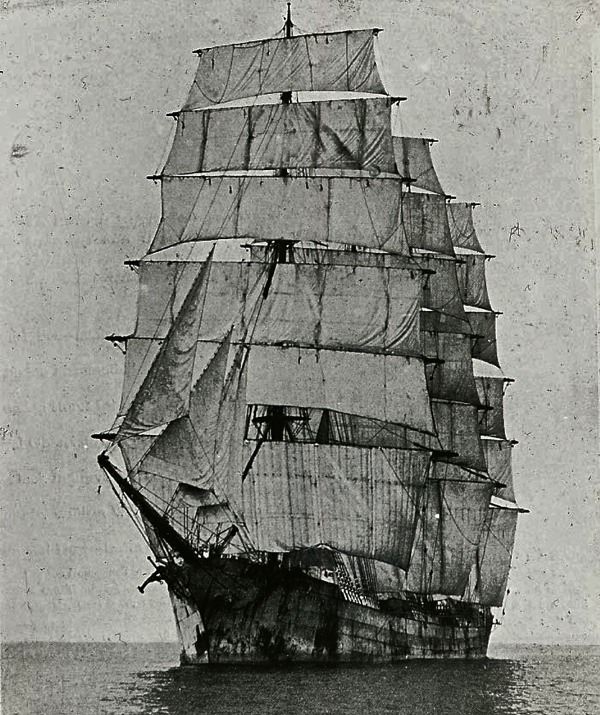
The Hougoumont on the Thames, c. 1920
Images courtesy Bishopsgate Institute
You may like to read these other stories about the London Docks
Views from a Dinghy by John Claridge
Along the Thames With Tony Bock
Whistler in Limehouse & Wapping
Dickens in Shadwell & Limehouse
Sarah Ainslie In Covent Garden

In the eighties, Contributing Photographer Sarah Ainslie photographed the street performers of Covent Garden and her pictures are currently being exhibited at Paul Smith, 40-43 Floral St, WC2E 9TB until 11th June as part of the 50th Anniversary of Covent Garden Street Theatre.
The square outside St Paul’s Covent Garden, designed by Inigo Jones, has offered a space for street performers since the seventeenth century. In 1975, after the fruit and vegetable market closed, this became the Covent Garden Street Theatre created by Alternative Arts led by Maggie Pinhorn.
The community was able to preserve it as a public space through resistance from the local residents, traders and activists who came together to halt the plans to demolish the old market buildings. It was an inspiring example of people working collaboratively to manage their own spaces and the importance of public art as a living experience, in a place where street entertainers have been part of the history and culture of the area for over three hundred years.


Photographs copyright © Sarah Ainslie
You may also like to take a look at


