
So Long, Doris Halsall
Doris Halsall died on 29th October aged one hundred and one
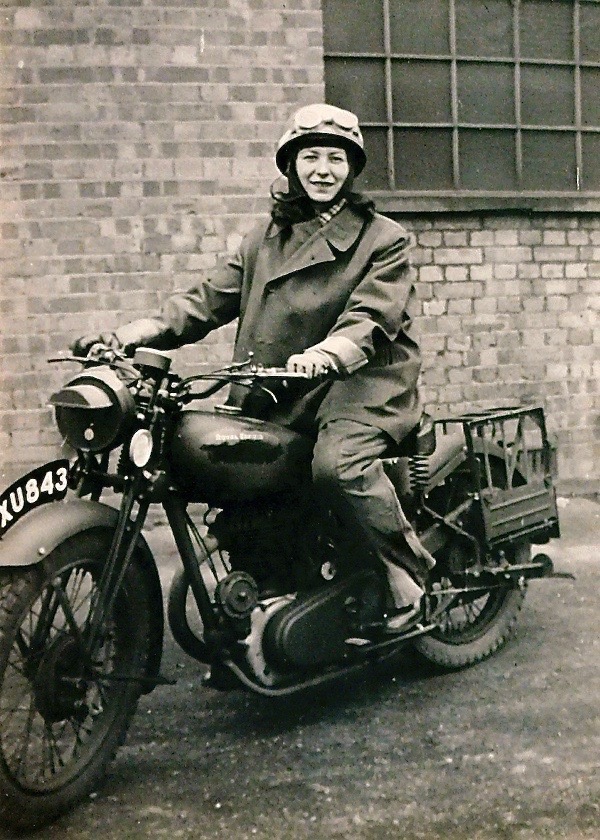
Doris Halsall, Despatch Rider, 1944
I took the train over to Chigwell to visit Doris Halsall – still vital and independent up to her one hundredth year – who recounted for me the story of her circuitous journey through the twentieth century and away from the East End. Blessed with keen intelligence and an adventurous nature, Doris embraced the possibilities for advancement that came her way – especially riding a motor bicycle – with enthusiasm and fearless determination, boldly constructing a life for herself that transcended her modest beginnings.
“I was born in 3 Venner Rd in Bow in 1920. My mother, Rosina & father, Alfred White lived in the downstairs with my sister, Rose and I. But later, when my mother’s sister died leaving a little boy of ten days old, Jack, my father said ‘Let us adopt him,’ even though my mother had eight or nine sisters.
Mrs Blewdon, who owned the house, lived upstairs and she came down every morning with her bucket and jug to empty them in the outside toilet and fill them again in the scullery. She stayed the whole day in her room and, each evening, she left us a note on the stairs, ‘I’m in for the night, Mrs White, Good Night.’ I always laughed because I used to love that little note on the stairs.
My father was in the army in the 1914-18 War and I’ve got a certificate to say that in 1916 he was unfit for service. There was no reason given but my mother always insisted that he was gassed and he was ill because of it, although his death certificate said ‘tuberculosis.’ When he came out of the army he did all sorts of jobs. I remember one day he was hoping it would snow, so he could go and do some snow shovelling. Eventually he joined the GPO and he would always bring newspapers to show me the events of the day. He died when I was ten years old in 1930. We were all there at the very last when he was dying. We didn’t think it was terrible, we just accepted it. In the family, there were others that died of tuberculosis.
My mother worked at home and we all helped her. I could cover you an umbrella now! She used to go up to the City and came back with the cloth and the umbrella frames, and we would fit the covers, the three of us – my mother, my sister & I – preventing, tying-in and tipping. Then next day, my mother would take the bundle back on the tram. It was hard for her schlepping up to the City everyday. I still have one of her tram tickets which I use as a bookmark. Later on, she used to knit angora berets and I sewed them up. She was always afraid we’d go into the workhouse, Bromley by Bow Workhouse was nearby.
After my father died, we were no more or less poor than we were when he was alive. My mother had a ten shillings a week pension, five shillings for my sister and three shillings for me – nothing for my cousin. We never saw ourselves as poor. We just accepted life. I was quite a happy child but my sister wasn’t, she was always unhappy and I don’t know why – I think it’s the way you are born. So I was never unhappy, but our circumstances were dreadfully poor. The coalman came round to our road but we couldn’t afford to have a sack of coal, it was half a crown for a hundredweight.
In Burdett Rd nearby, there was a little row of shops including a sweet shop with these different kinds of sweets in sections. All I ever wanted was to buy a quarter of pear drops for tuppence and I thought, ‘When I grow up, I’ll buy them.’ There were fruit stalls with oranges that came in fine crates made of wood which the stallholders would just throw down and the council would come and collect them, but we could go along and pick up the wood and take it home and put it on the fire. So why did you need to buy a hundredweight of coal for half a crown?
My sister & I played all the time in the street with my brother-come-cousin sat in the pushchair outside the house. We had all our friends on the street, our neighbour Mrs Franklin had nine children, and there was always entertainment on the street. The barrel organ would come along with these men dressed as women. We didn’t know anything abut transvestites, but they sang and danced and someone turned the barrel organ. The milk cart came along with a big churn and we would take a jug out. We’d buy jam at the little corner shop. We took a cup along and they’d weigh the cup and then they’d fill it with two penny worth of jam from a big jar.
When I was about twelve, I remember walking up to a shop in the City next to the Aldgate Pump to buy a postcard of Leonardo Da Vinci that I had learnt about from a very good art teacher at my school. The question was, ‘How to get tuppence?’ so there was no question of taking the tram or bus, I walked there. I can’t remember if I ever went to the West End but my mother used to take us to Southend for the day by train. I remember looking over the bridge from Bromley by Bow station at the workhouse. All the women used to sit along the wall in their blue and white dresses and, on the other side, sat all the men in their blue and white shirts, separated.
I remember Mosley’s blackshirts when they came down as far as Canal Bridge and I remember going down to see them. I was sixteen and I didn’t think too much about it. They were marching and they’d strayed over as far as Canal Rd. They’d been pushed back and after the Battle of Cable St and they were milling about trying to find a way home.
Opposite Stepney Green station, there was a Methodist Mission and there was this couple, Mr & Mrs Mackie and they took a group of girls under their wing. They took us on holiday for a week and we paid them ten shillings. They were very good to us. They ran a competition for ‘Recitation’ but I called it ‘Elocution.’ I went to a school where they always impressed on us that, if you come from the East End, it doesn’t mean you have to speak like someone from the East End. My cousins made fun of me because I spoke differently, mimicking me, but I didn’t care. I won the District and then the All-London Competition and I got invited stay to tea. That was a real treat. I still have my medal. My recitation began ‘No strong drink for this champion..’ and I had to sign the Temperance pledge. Conveniently, my memory is clouded about when I broke that.
I went to a very good school and I won a Junior County Scholarship with a grant of twelve pounds a year and, when I was fourteen, another grant of twenty-one pounds a year. It was very sad really. Most of the parents wanted their children to leave school and go to work. You were brought up to go and work when you were fourteen. My sister had left at fourteen and was already working and my mother wanted me to leave, but when I did she had to give me money for fares to London and for lunches so she wasn’t much better off.
I wanted to go into the Civil Service which most of my friends were doing but you couldn’t take the exam until you were eighteen. I worked in an office and went to night school, after I left school at sixteen, and finished my education that way. This lady in the office, who seemed ever so much older than me, said ‘Don’t stay here.’ Fortunately, I passed the Civil Service exam and went to work at the Ministry of Agriculture office in Leonard St in Shoreditch and it was all very nice until the War came along.
I was evacuated up to Lytham St Anne’s. We were put into seaside boarding houses and every morning we could smell our rations going past our doors! It was all girls, eight or nine of us, and Mrs Brooks did us well. We had a great time. We borrowed each other’s clothes and went out to the Tower Ballrooms. It was lovely. I was promoted in the Ministry of Agriculture and sent to Bournemouth. We were importing agricultural machinery from America and my job was to look after the shipments as they came in.
My mother stayed in the East End of London all through the war, even though she had a bomb drop next door and had to move out for a while, but she went to work in munitions and became quite well off. She had the Anderson shelter in the garden and she wasn’t a worrier. Yet all the bomb debris in the East End was horrible and cousin of mine was killed in her house with her two little children.
During the war, I wanted to go into the forces but I was considered too useful so I wasn’t allowed to be released from my job. I tried to get into the airforce, in the Meteorological section. I was attracted to the challenge but I wasn’t allowed to do this. Then an offer came along to be a Despatch Rider for the Home Office. My friend Claire & I signed up for that right away, and we went to Hendon Police for week and learnt to ride a motorbike. It was great.
At that time, we were quite sure there was going to be an invasion. In preparation for this, we had to drive around to Police Stations and hand in ‘despatches’ but we never knew what they were – probably a blank sheet. It was just practice and quite soon we knew exactly how to get to the various police stations.
Claire & I often got caught up in the American convoys with all the GIs sitting out on the tailboards while we were on our bikes. They would shout ‘Gee, they’re dames!’ and they wouldn’t let us overtake them – so we had a high time, until they turned left. I had various boyfriends. All the girls in the office had boyfriends or fiances and ever so many of them were killed. I had some boyfriends that weren’t English who went off and I never knew what happened to them.
When the invasion was expected, I was brought back from Bournemouth to London and I went back to live with my mother and she made a great fuss of me. My mother had married again, to Jim Mason, a crane driver in Ilford and they had moved out to Seven Kings. He was a nice man and I liked him ever so much. My mother was glad to leave the East End.
I was married in 1947. I met my husband, Harold Halsall at holiday camp on the East Coast. I had a travelling job then for the Ministry of Agriculture and I visited regional offices examining the accounts. Leaving London by train, I remember once I realised I had left some papers at the office, so I left my case on the platform and went back to the office and, when I returned, it was still there.
After we married we bought a house and lived in Ilford and had two little girls, Pauline & Julia. Rationing continued after the war but there were ways and means of getting hold of what you needed. When I was travelling I visited all the farming towns, so I had eggs and bacon and cheese and milk – and I stayed in hotels, there was no rationing in hotels. It was lovely. I was very fortunate. I have had such a great time. I don’t miss the East End because I wanted to have something better. It was hard, a tough existence and this was a much nicer life.”
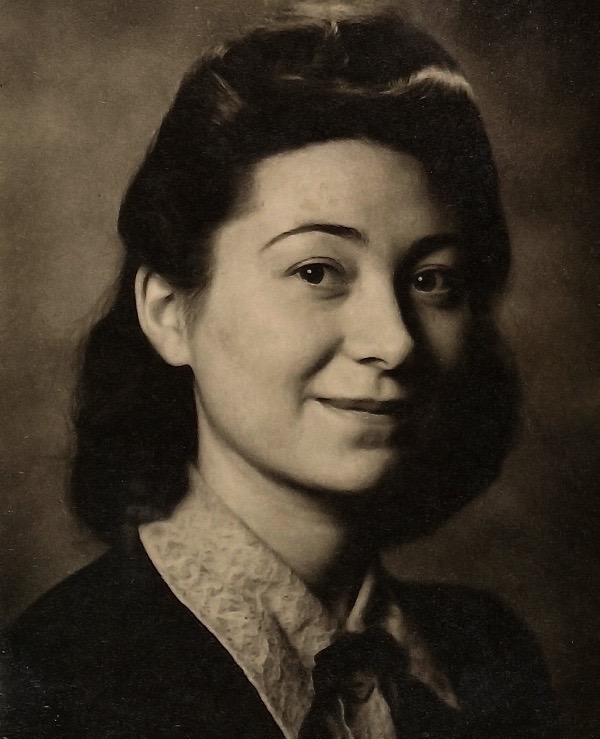
Doris in the forties
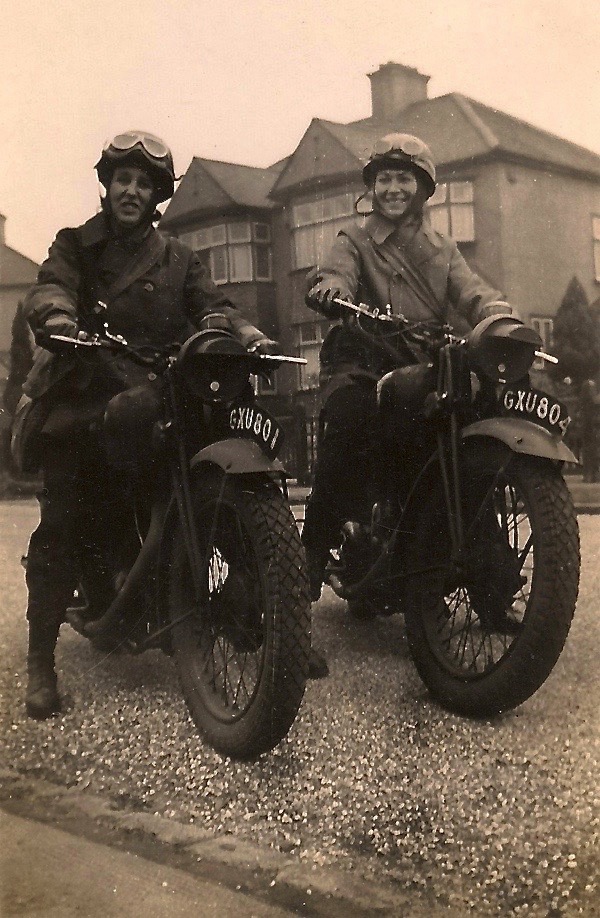
Doris & her friend Claire, Despatch Riders in 1944
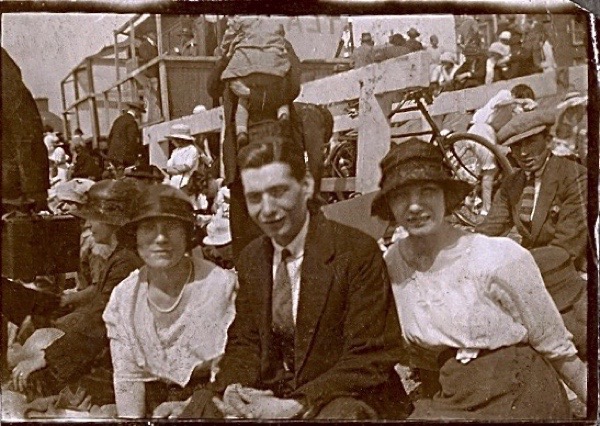
Doris’ mother Rosina and father Alfred, and his sister Emily, photographed at Southend in 1919
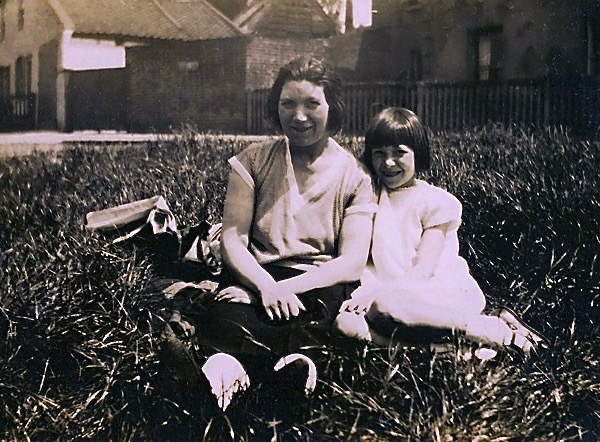
Doris with her mother, Rosina, in the twenties
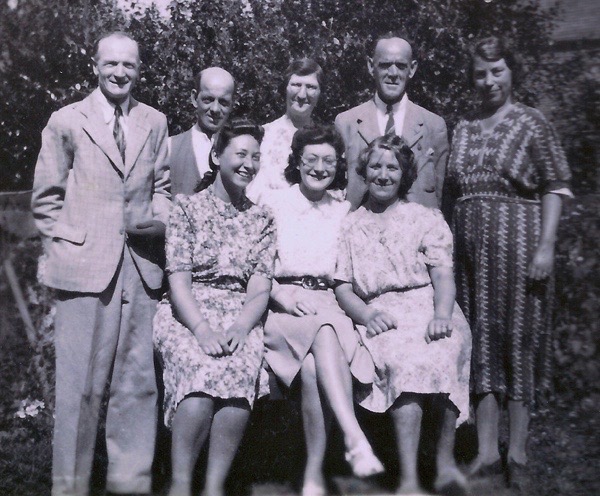
Doris’ family in 1940 – Doris, her sister Rose and their mother Rosina in front.
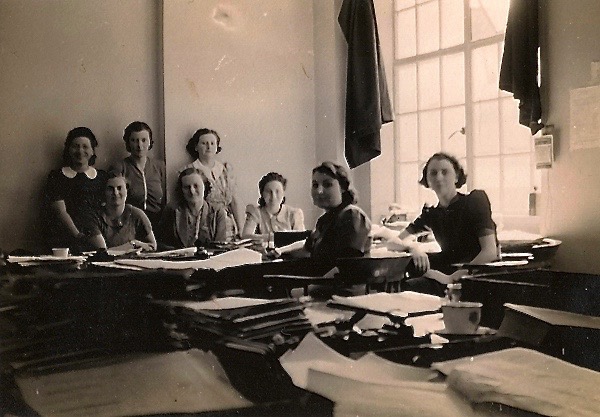
Doris at the Ministry of Agriculture, Baker St Office, 21st May 1940
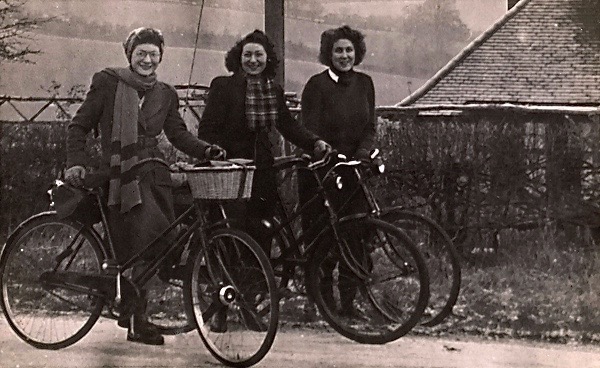
Youth Hostelling – Doris’ sister Rose, Doris, Doris’ friend Claire
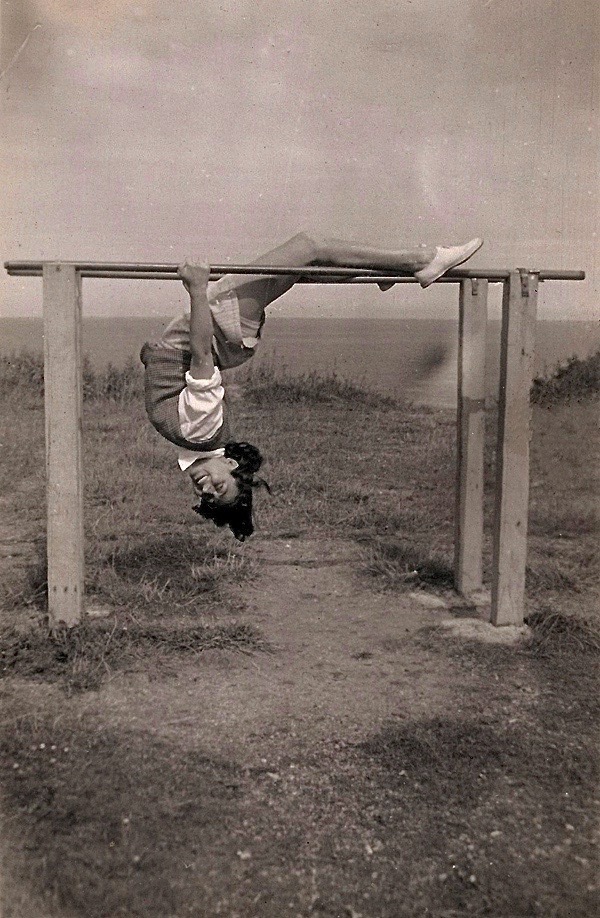
Acrobatics by ‘Daredevil Doris,’ Corton, 1948
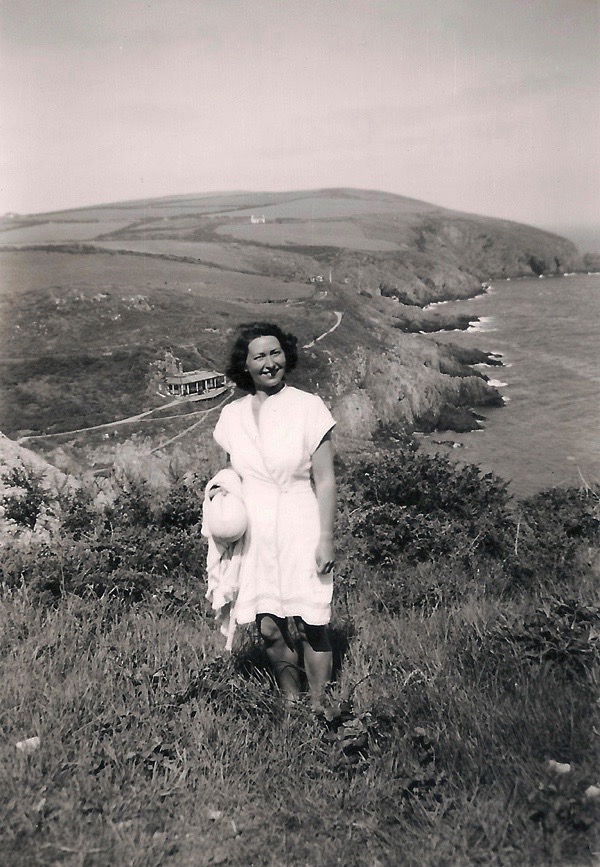
Doris in her new beach-robe, Howstrakes, June 1947
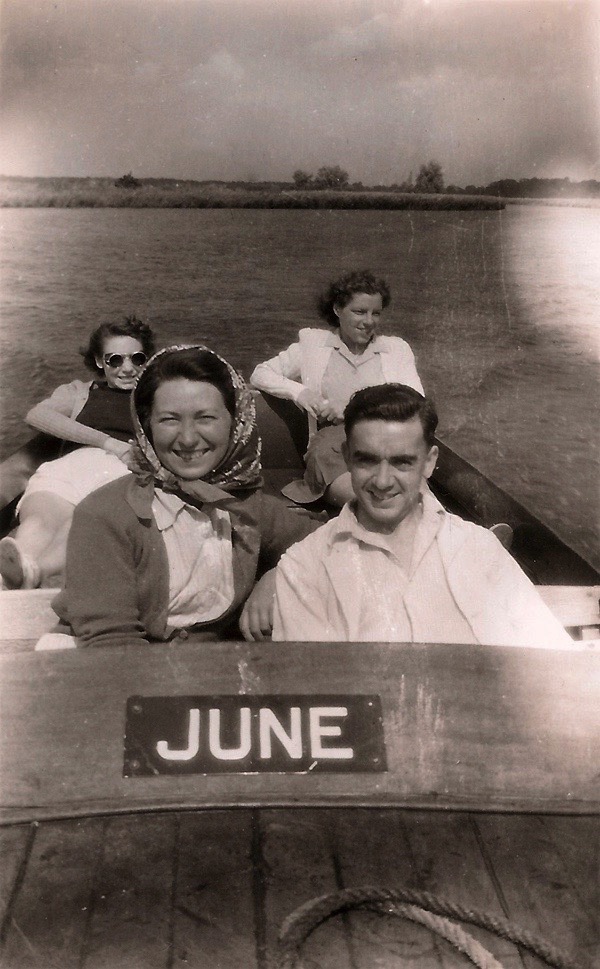
Doris with Harold Halsall on Oulton Broad, July 1947 – the year of their marriage
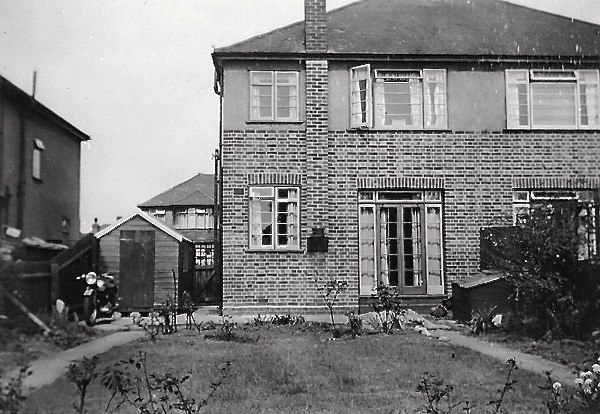
The first house which Doris and Harold bought on Kirkland Avenue in Ilford – note Doris’ motorbike
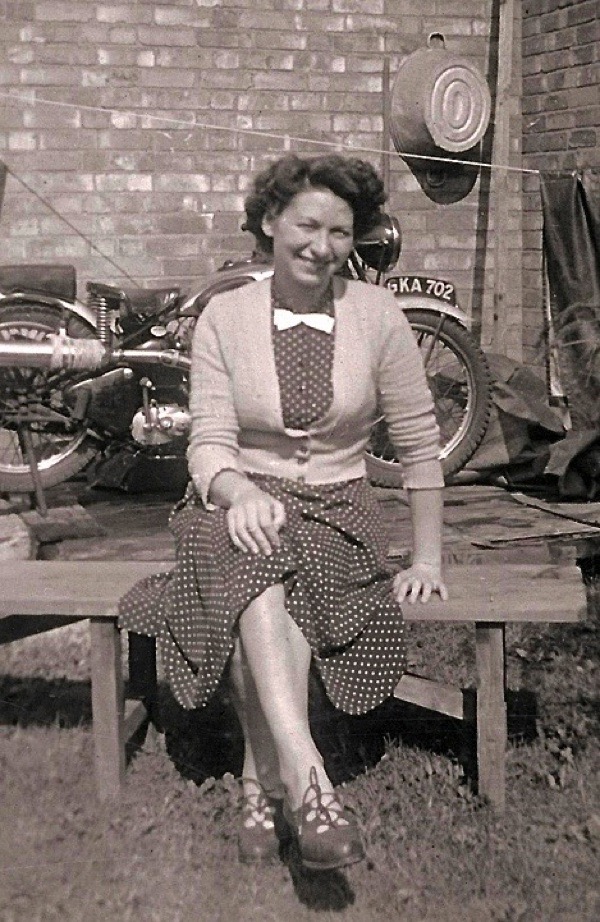
Doris, 1949
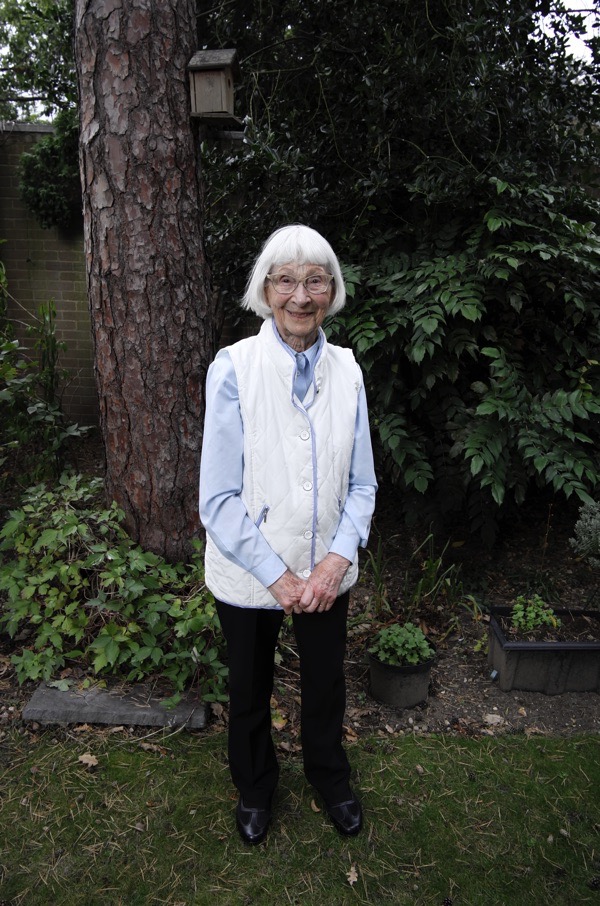
Doris Halsall (1920-2021)
You may also like to read about
The Nights Of Old London

The nights are drawing in and I can feel the velvet darkness falling upon London. As dusk gathers in the ancient churches and the dusty old museums in the late afternoon, the distinction between past and present becomes almost permeable at this time of year. Then, once the daylight fades and the streetlights flicker into life, I feel the desire to go walking out into the dark in search of the nights of old London.
Examining hundreds of glass plates – many more than a century old – once used by the London & Middlesex Archaeological Society for magic lantern shows at the Bishopsgate Institute, I am in thrall to these images of night long ago in London. They set my imagination racing with nocturnal visions of the gloom and the glamour of our city in darkness, where mist hangs in the air eternally, casting an aura round each lamp, where the full moon is always breaking through the clouds and where the recent downpour glistens upon every pavement – where old London has become an apparition that coalesced out of the fog.
Somewhere out there, they are loading the mail onto trains, and the presses are rolling in Fleet St, and the lorries are setting out with the early editions, and the barrows are rolling into Spitalfields and Covent Garden, and the Billingsgate porters are running helter-skelter down St Mary at Hill with crates of fish on their heads, and the horns are blaring along the river as Tower Bridge opens in the moonlight to admit another cargo vessel into the crowded pool of London. Meanwhile, across the empty city, Londoners slumber and dream while footsteps of lonely policemen on the beat echo in the dark deserted streets.

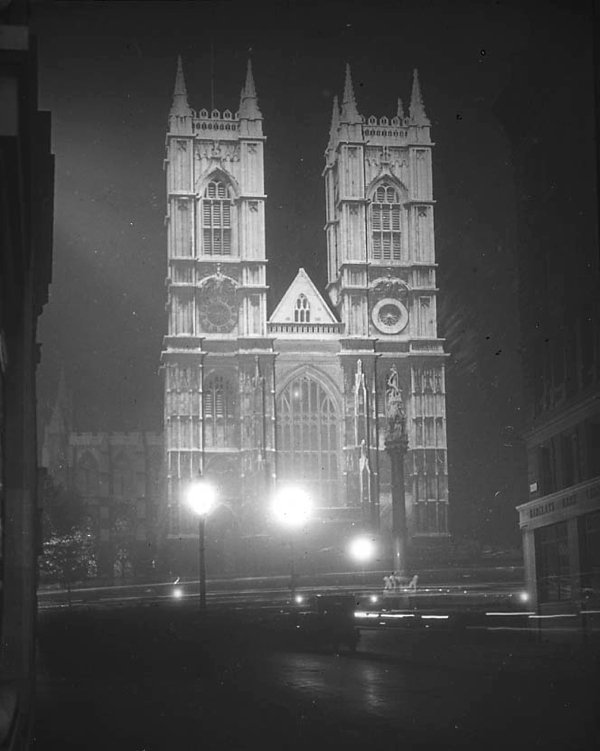


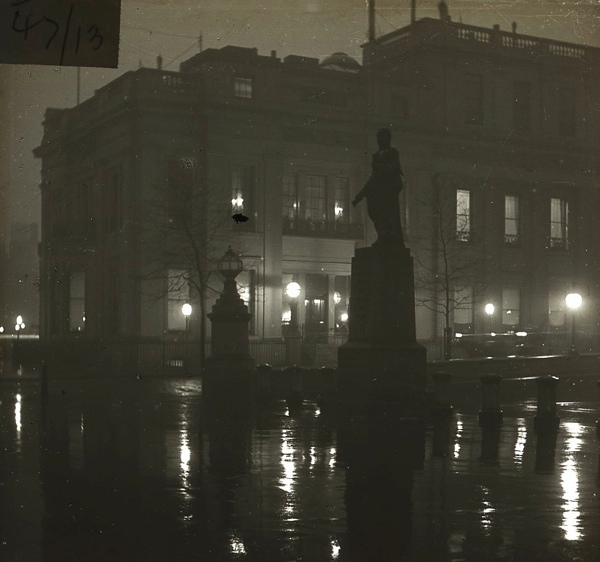


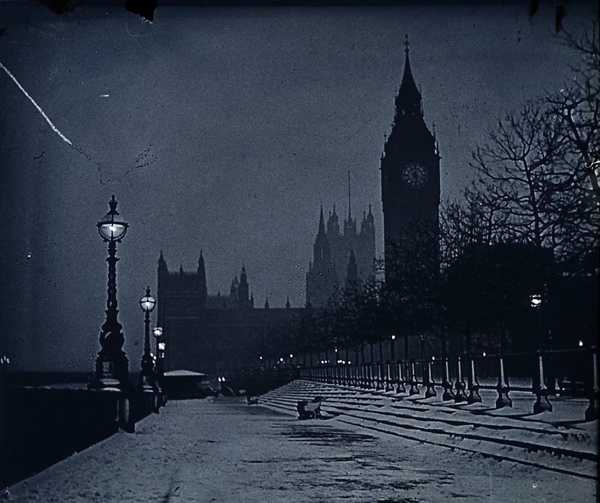


Glass slides courtesy Bishopsgate Institute
Read my other nocturnal stories
The Night City By W S Graham
Inspired by W S Graham’s poem, I took a walk through the nocturnal city, following in the poet’s footsteps with my camera to create this photoessay as an homage to Harold Burdekin
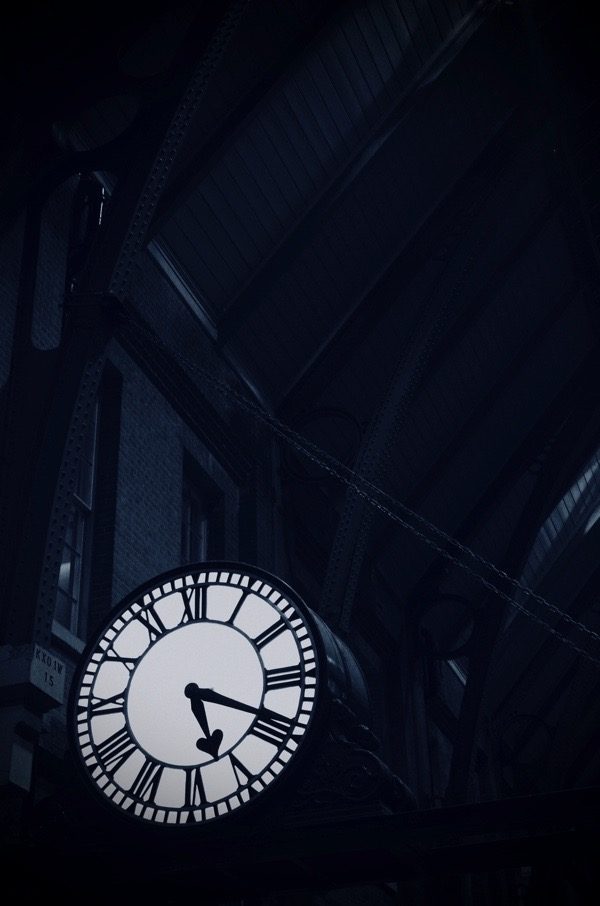
The Night City
Unmet at Euston in a dream
Of London under Turner’s steam
Misting the iron gantries, I
Found myself running away
From Scotland into the golden city.
I ran down Gray’s Inn Road and ran
Till I was under a black bridge.
This was me at nineteen
Late at night arriving between
The buildings of the City of London.
And then I (O I have fallen down)
Fell in my dream beside the Bank
Of England’s wall to bed, me
With my money belt of Northern ice.
I found Eliot and he said yes
And sprang into a Holmes cab.
Boswell passed me in the fog
Going to visit Whistler
Who was with John Donne who had just seen
Paul Potts shouting on Soho Green.
Midnight. I hear the moon
Light chiming on St. Paul’s.
The City is empty. Night
Watchmen are drinking their tea.
The Fire had burnt out.
The Plague’s pits had closed
And gone into literature.
Between the big buildings
I sat like a flea crouched
In the stopped works of a watch.
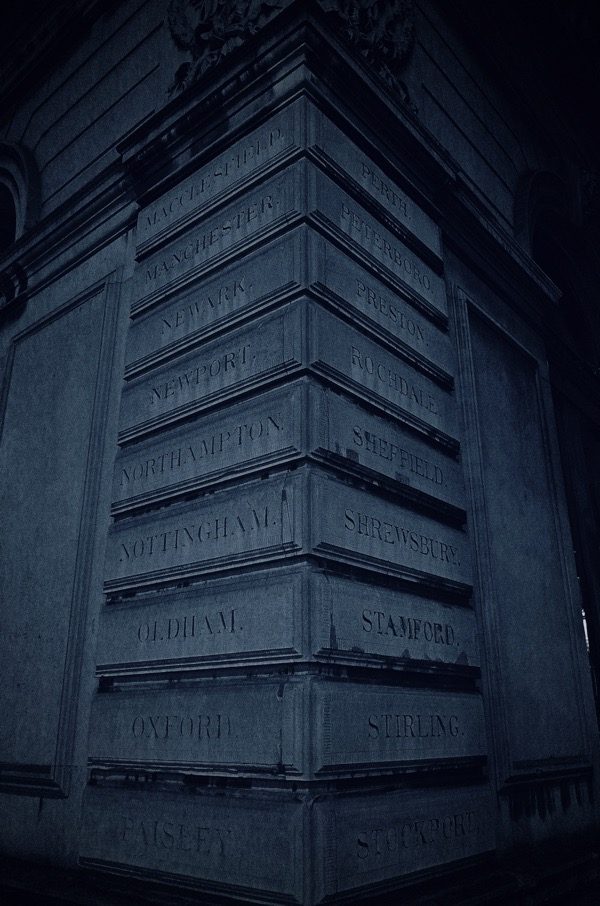
Unmet at Euston in a dream…
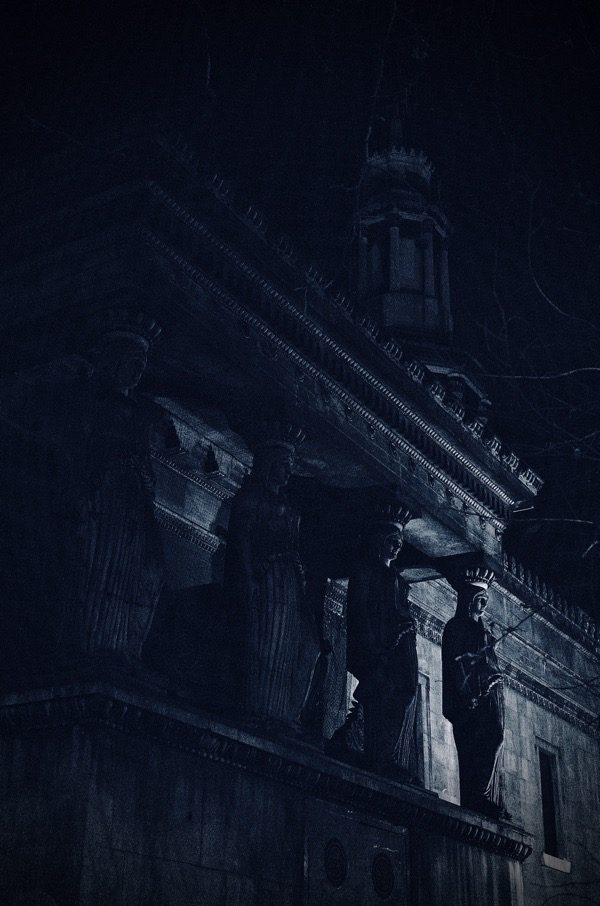
St Pancras Church
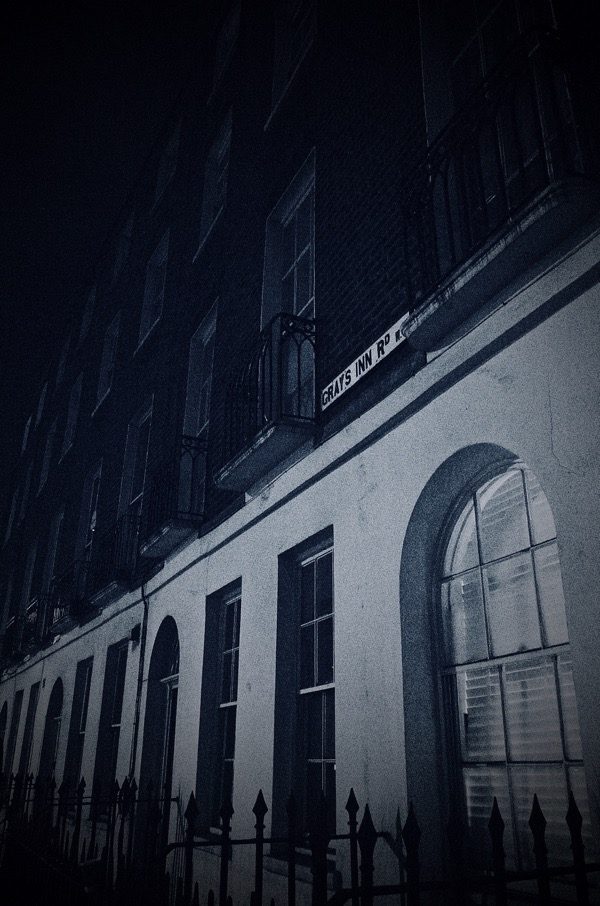
I ran down Gray’s Inn Road…
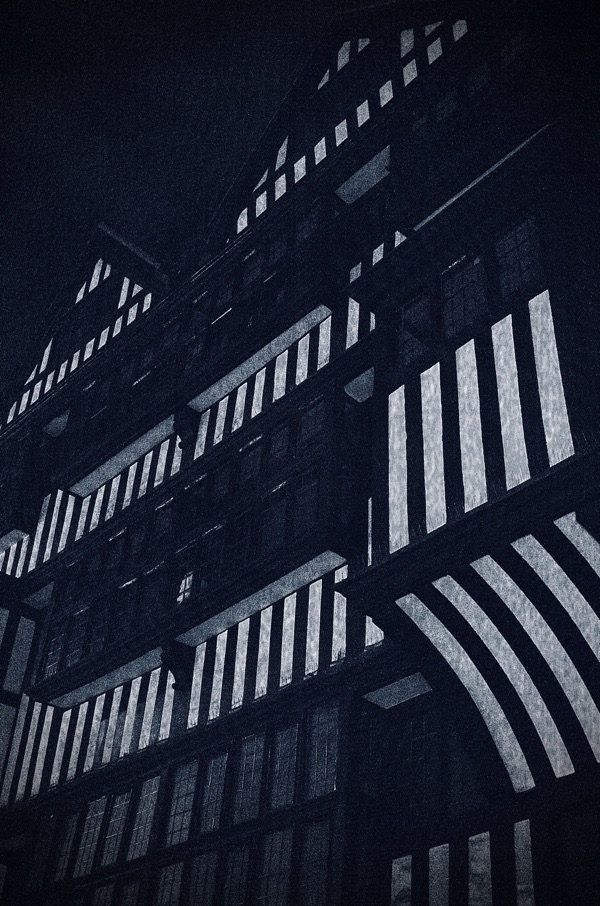
High Holborn
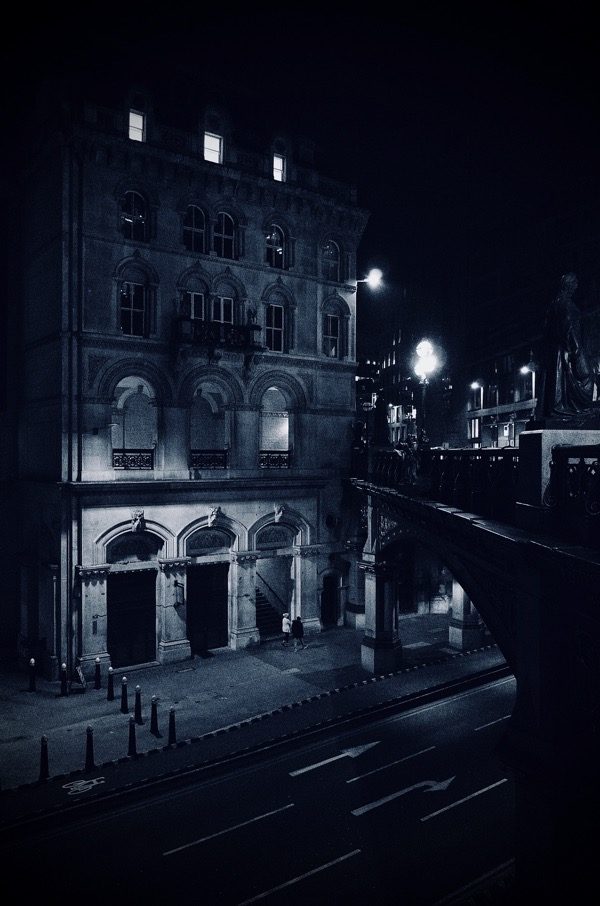
and ran till I was under a black bridge…
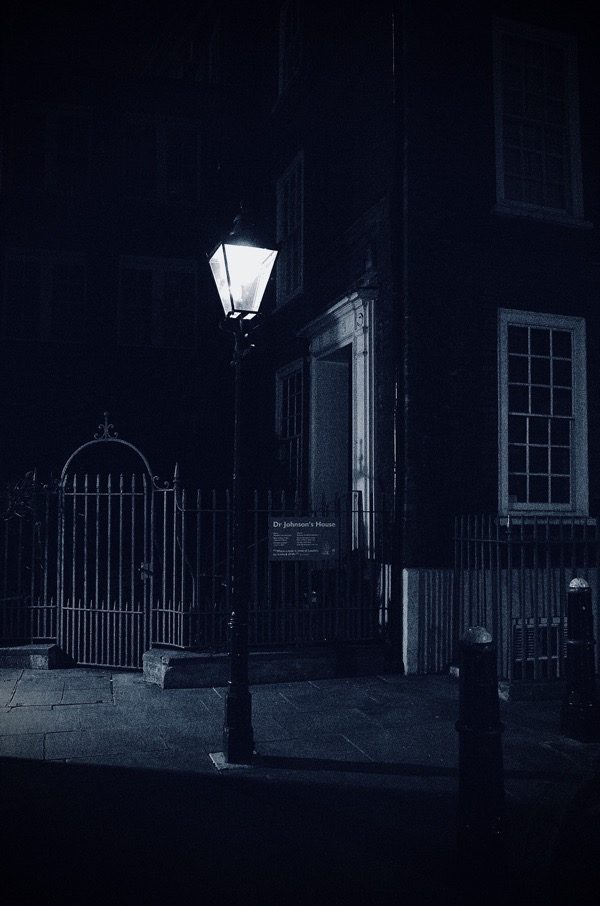
Boswell passed me in the fog…
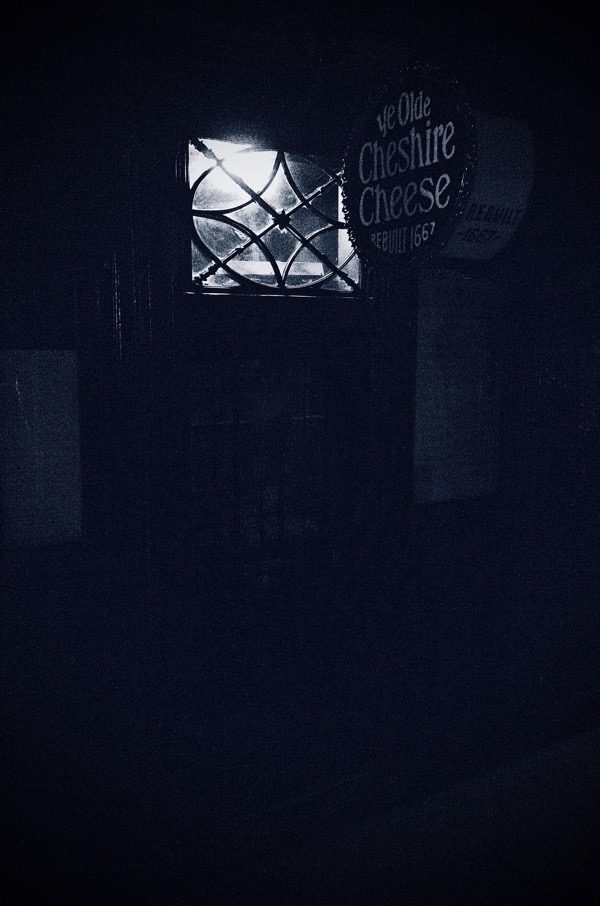
Ye Olde Cheshire Cheese
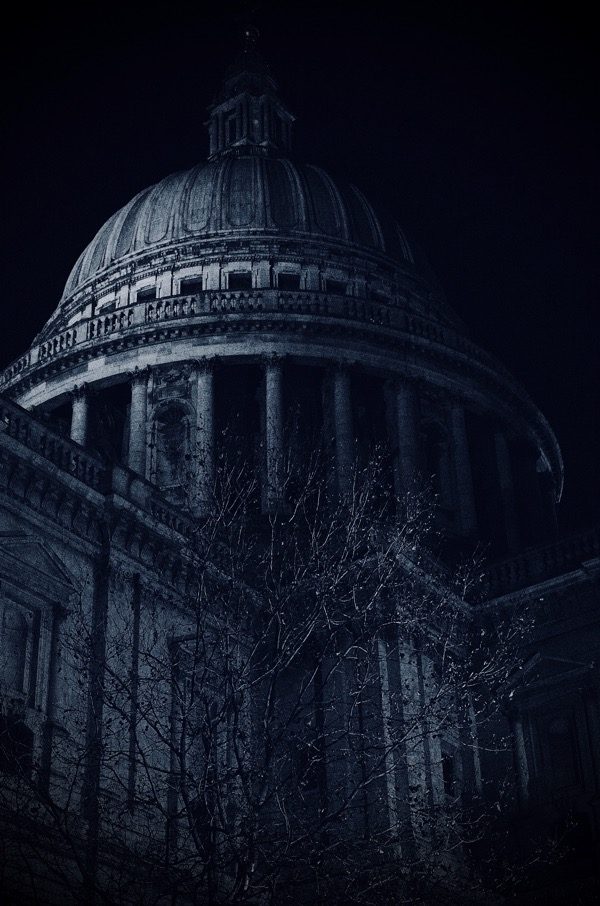
I hear the moonlight chiming on St. Paul’s…
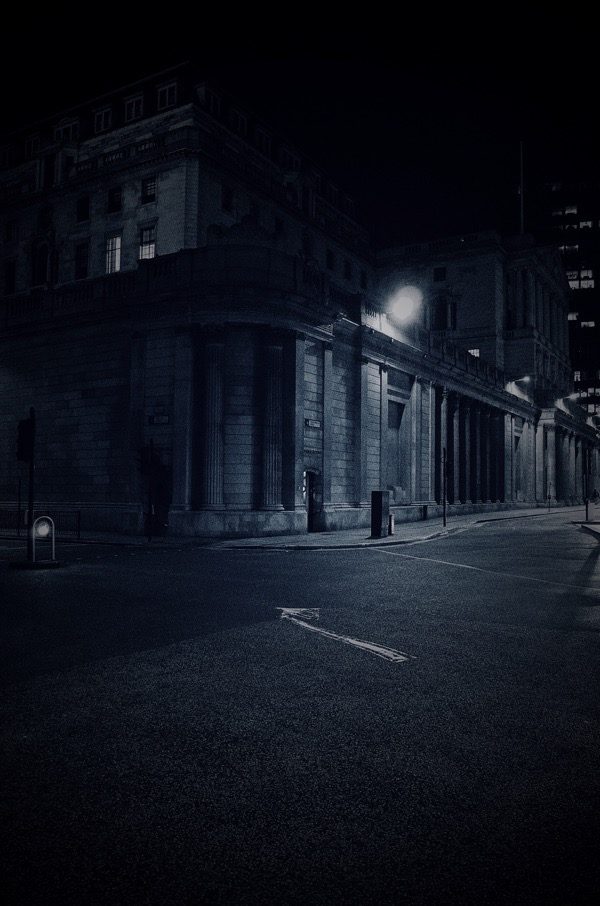
Fell in my dream beside the Bank of England’s wall to bed…
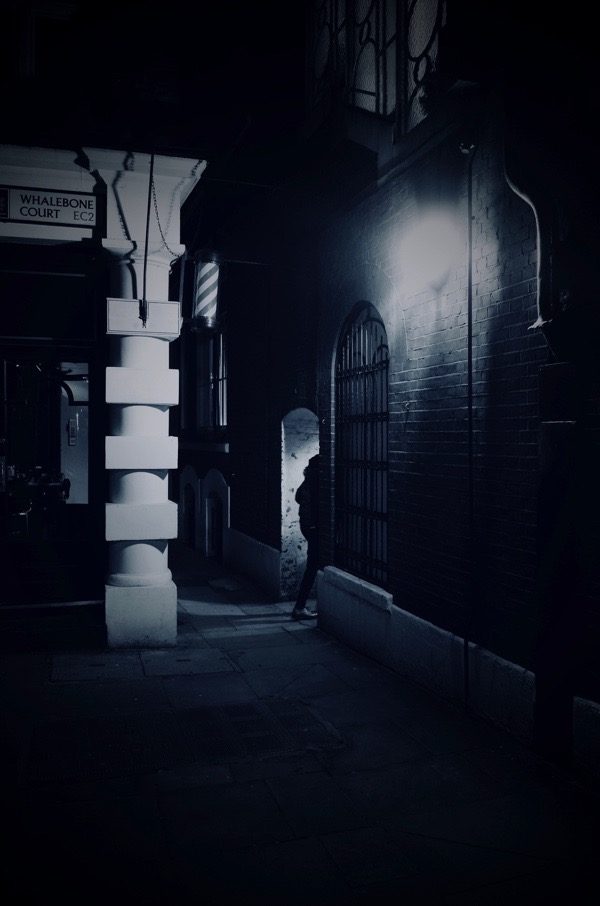
Whalebone Court
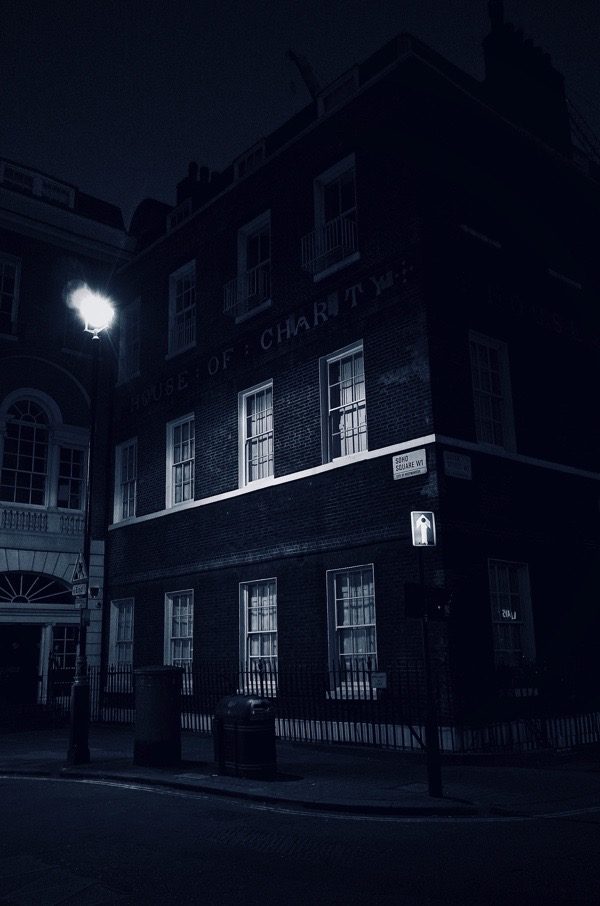
…just seen Paul Potts shouting on Soho Green…
Poem copyright © The Estate of W S Graham
You may also like to take a look at
Burdekin’s London Nights
At this time of year, I close the curtains in the late afternoon and settle down to contemplate Harold Burdekin’s nocturnal photography of London, as a celebration of darkness and the city, from the comfort of my old armchair

East End Riverside
As you will have realised by now, I am a night bird. In the mornings, I stumble around in a bleary-eyed stupor of incomprehension and in the afternoons I wince at the sun. But as darkness falls my brain begins to focus and, by the time others are heading to their beds, then I am growing alert and settling down to write.
Once I used to go on night rambles – to the railway stations to watch them loading the mail, to the markets to gawp at the hullabaloo and to Fleet St to see the newspaper trucks rolling out with the early editions. These days, such nocturnal excursions are rare unless for the sake of writing a story, yet I still feel the magnetic pull of the dark city streets beckoning, and so it was with a deep pleasure of recognition that I first gazed upon this magnificent series of inky photogravures of “London Night” by Harold Burdekin from 1934 in the Bishopsgate Library.
For many years, it was a subject of wonder for me – as I lay awake in the small hours – to puzzle over the notion of whether the colours which the eye perceives in the night might be rendered in paint. This mystery was resolved when I saw Rembrandt’s “Rest on the Flight into Egypt” in the National Gallery of Ireland, perhaps the finest nightscape in Western art.
Almost from the beginning of the medium, night became a subject for photography with John Adams Whipple taking a daguerrotype of the moon through a telescope in 1839, but it was not until the invention of the dry plate negative process in the eighteen eighties that night photography really became possible. Alfred Stieglitz was the first to attempt this in New York in the eighteen nineties, producing atmospheric nocturnal scenes of the city streets under snow.
In Europe, night photography as an idiom in its own right begins with George Brassaï who depicted the sleazy after-hours life of the Paris streets, publishing “Paris de Nuit” in 1932. These pictures influenced British photographers Harold Burdekin and Bill Brandt, creating “London Night” in 1934 and “A Night in London” in 1938, respectively. Harold Burdekin’s work is almost unknown today, though his total eclipse by Bill Brandt may in part be explained by the fact that Burdekin was killed by a flying bomb in Reigate in 1944 and never survived to contribute to the post-war movement in photography.
More painterly and romantic than Brandt, Burdekin’s nightscapes propose an irresistibly soulful vision of the mythic city enfolded within an eternal indigo night. How I long to wander into the frame and lose myself in these ravishing blue nocturnes.

Black Raven Alley, Upper Thames St

Street Corner
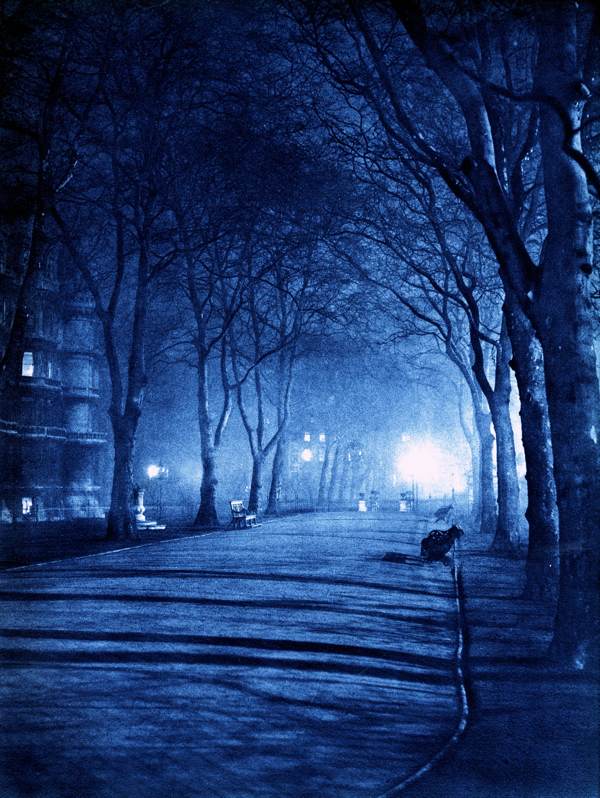
Temple Gardens
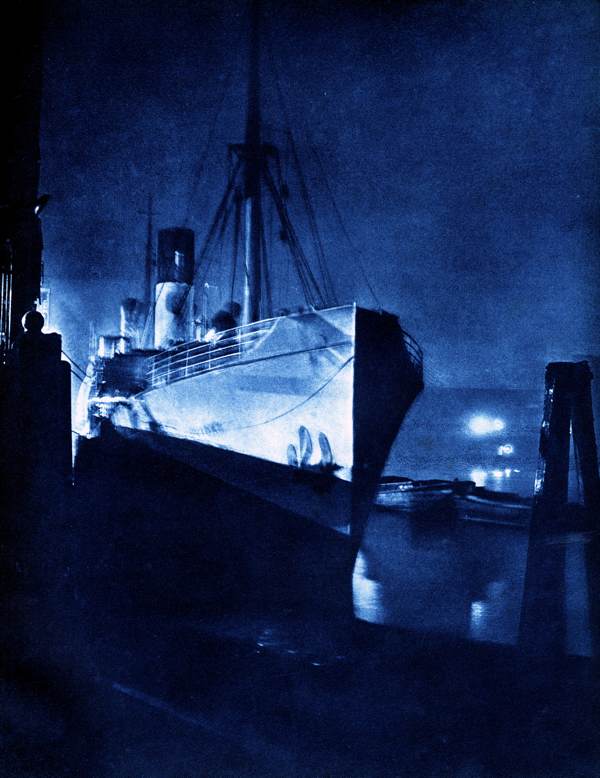
London Docks
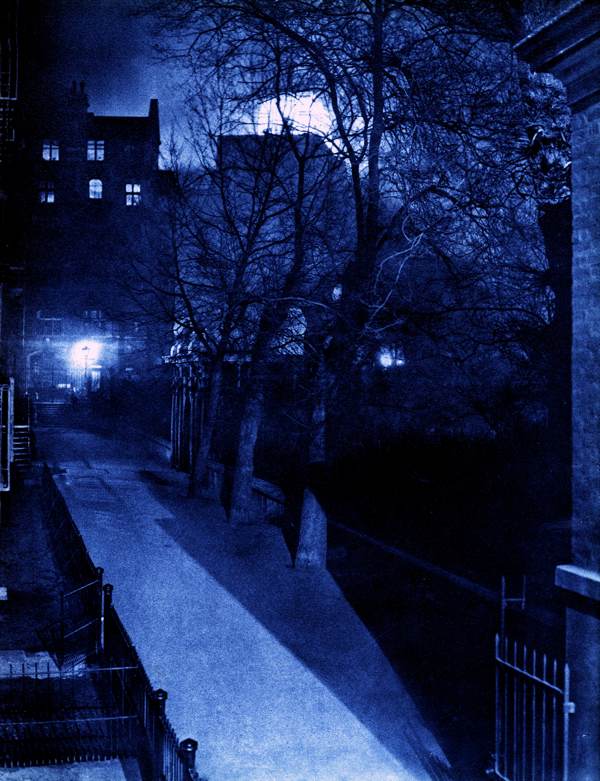
From Villiers St
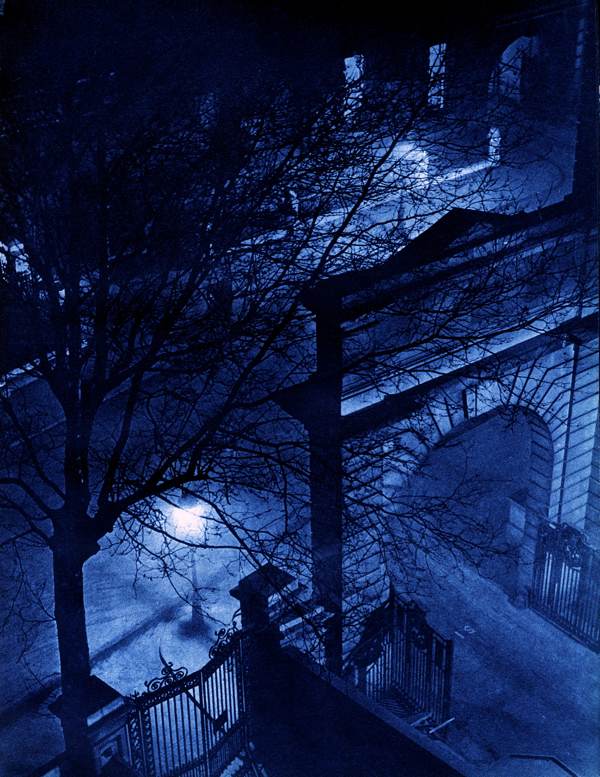
General Post Office, King Edward St
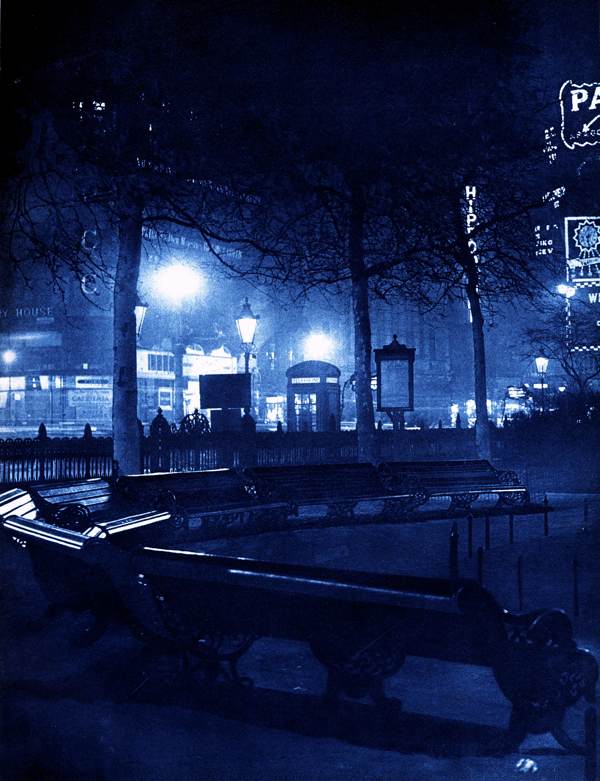
Leicester Sq
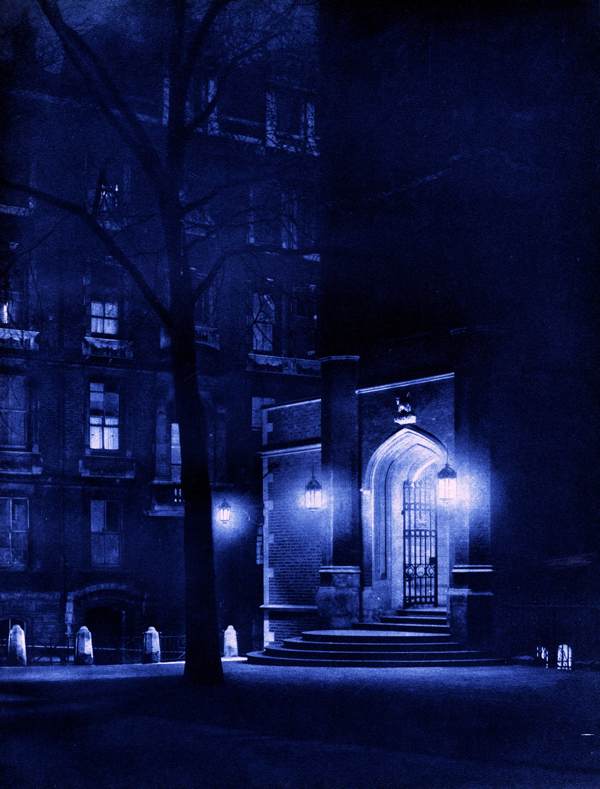
Middle Temple Hall
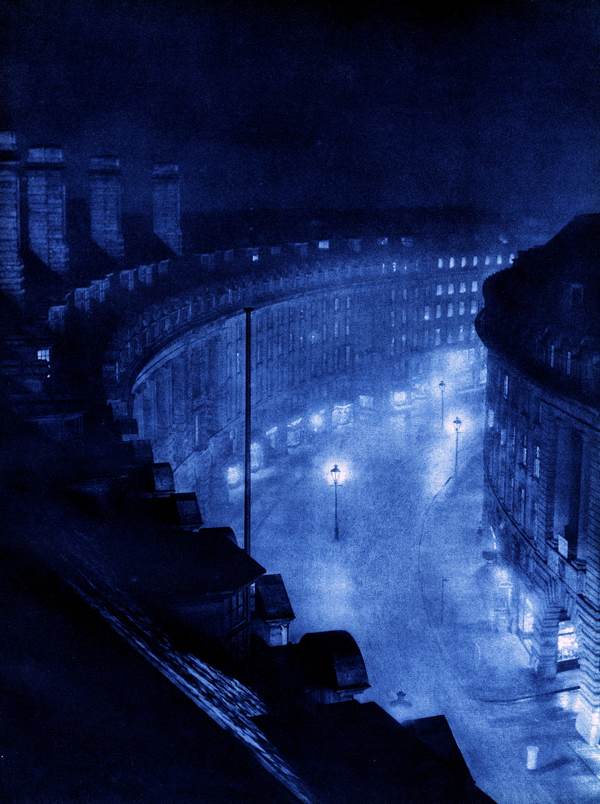
Regent St

St Helen’s Place, Bishopsgate
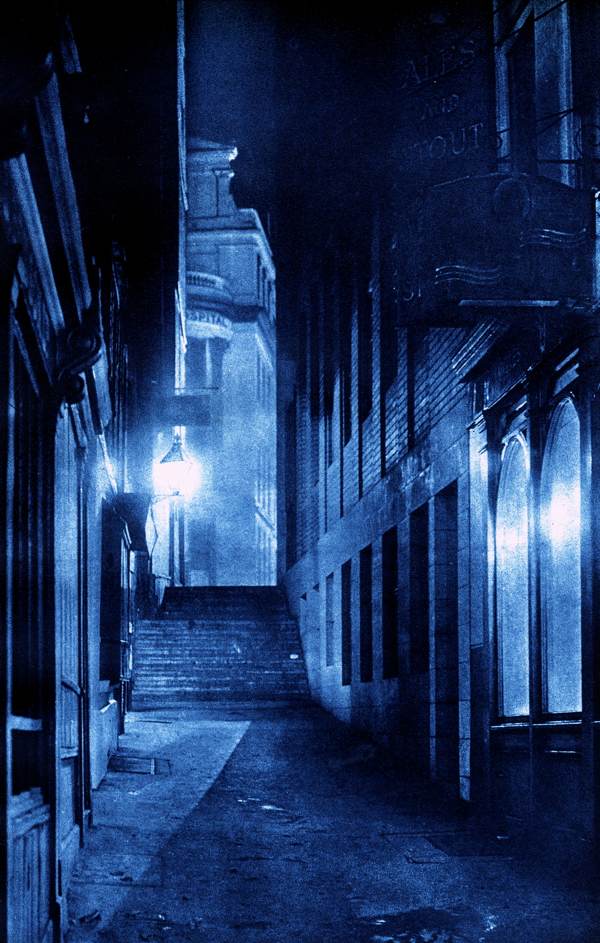
George St, Strand
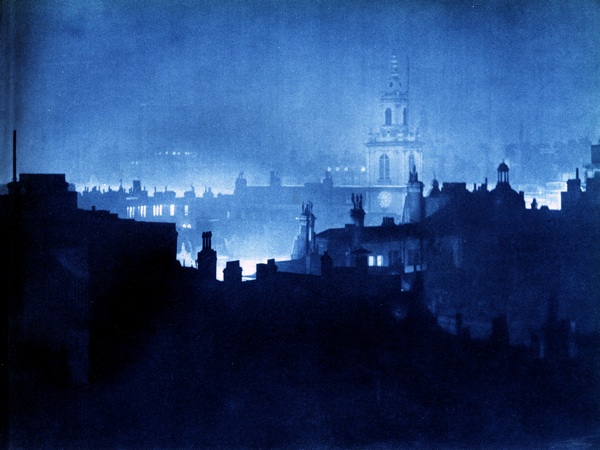
St Botolph’s and the City

St Bartholomew’s Hospital, Smithfield
Images courtesy Bishopsgate Institute
You might like to read these other nocturnal stories
On Christmas Night in the City
Maurice Evans, Firework Collector

Maurice Evans has been collecting fireworks since childhood and now at over eighty years old, he has the most comprehensive collection in the country – so you can imagine both my excitement and my trepidation upon stepping through the threshold of his house in Shoreham. My concern about potential explosion was relieved when Maurice confirmed that he has removed the gunpowder from his fireworks, only to be reawakened when his wife Kit helpfully revealed that Catherine Wheels and Bangers were excepted because you cannot extract the gunpowder without ruining them.
This statement prompted Maurice to remember with visible pleasure that he still had a collection of World War II shells in the cellar and, of course, the reinforced steel shed in the garden full of live fireworks. “Let’s just say, if there’s a big bang in the neighbourhood, the police always come here first to see if it’s me,” admitted Maurice with a playful smirk. “Which it often isn’t,” added Kit, backing Maurice up with a complicit demonstration of knowing innocence.
“It all started with my father who was in munitions in the First World War,” explained Maurice proudly, “He had a big trunk with little drawers, and in those drawers I found diagrams explaining how to work with explosives and it intrigued me. Then came World War II and the South Downs were used as a training ground and, as boys, we went where we shouldn’t and there were loads of shells lying around, so we used to let them off.”
Maurice’s radiant smile revealed to me the unassailable joy of his teenage years, running around the downs at Shoreham playing with bombs. “We used to set off detonators outside each other’s houses to announce we’d arrived!” he bragged, waving his left hand to reveal the missing index finger, blown off when the explosive in a slow fuse unexpectedly fired upon lighting. “That’s the worst thing that happened,” Maurice declared with a grimace of alacrity, “We were worldly wise with explosives!”
Even before his teens, the love of pyrotechnics had taken grip upon Maurice’s psyche. It was a passion born of denial. “I used to suffer from bronchitis and asthma as a child, so when November 5th came round, I had to stay indoors.” he confided with a frown, “Every shop had a club and you put your pennies and ha’pennies in to save for fireworks and that’s what I did, but then my father let them off and I had to watch through the window.”
After the war, Maurice teamed up with a pyrotechnician from London and they travelled the country giving displays which Maurice devised, achieving delights that transcended his childhood hunger for explosions. “In my mind, I could envisage the sequence of fireworks and colours, and that was what I used to enjoy. You’ve got all the colours to start with, smoke, smoke colours, ground explosions, aerial explosions – it’s endless the amount of different things you can do. The art of it is knowing how to choose.” explained Maurice, his face illuminated by the images flickering in his mind. Adding, “I used to be quite big in fireworks at one time.” with calculated understatement.
Yet all this personal history was the mere pre-amble before Maurice led me through his house, immaculately clean, lined with patterned carpets and papers and witty curios of every description. Then in the kitchen, overlooking the garden lined with old trees, he opened an unexpected cupboard door to reveal a narrow red staircase going down. We descended to enter the burrow where Maurice has his rifle range, his collections, model aeroplanes, bombs and fireworks – all sharing the properties of flight and explosiveness. Once they were within reach, Maurice could not restrain his delight in picking up the shells and mortars of his childhood, explaining their explosive qualities and functions.
But my eyes were drawn by all the fireworks that lined the walls and glass cases, and the deep blues, lemon yellows and scarlets of their wrappers and casings. Such evocative colours and intricate designs which in their distinctive style of type and motif, draw upon the excitement and anticipation of magic we all share as children, feelings that compose into a lifelong love of fireworks. Rockets, Roman Candles, Catherine Wheels, Bangers, and Sparklers – amounting to thousands in boxes and crates, Maurice’s extraordinary collection is the history of fireworks in this country.
“I wouldn’t say its made my life, but its certainly livened it up,” confided Maurice, seeing my wonder at his overwhelming display. Because no-one (except Maurice) keeps fireworks, there is something extraordinary in seeing so many old ones and it sets your imagination racing to envisage the potential spectacle that these small cardboard parcels propose.
Maurice outgrew the bronchitis and asthma to have a beautiful life filled with fireworks, to visit firework factories around Britain, in China, Australia, New Zealand and all over Europe, and to scour Britain for collections of old fireworks, accumulating his priceless collection. Now like an old dragon in a cave, surrounded by gold, Maurice guards his cellar hoard protectively and is concerned about the future. “It needs to be seen,” he said, contemplating it all and speaking his thoughts out loud, “I would like to put this whole collection into a museum. I don’t want any money. I want everyone to see what happened from pre-war times up until the present day in the progression of fireworks.”
“My father used to bring me the used ones to keep,” confessed Maurice quietly with an affectionate gleam in his eye, as he revealed the emotional origin of his collection, now that we were alone together in the cellar. With touching selflessness, having derived so much joy from collecting his fireworks, Maurice wants to share them with everybody else.

Maurice with his exploding fruit.

Maurice with his barrel of gunpowder

Maurice with his grenades.
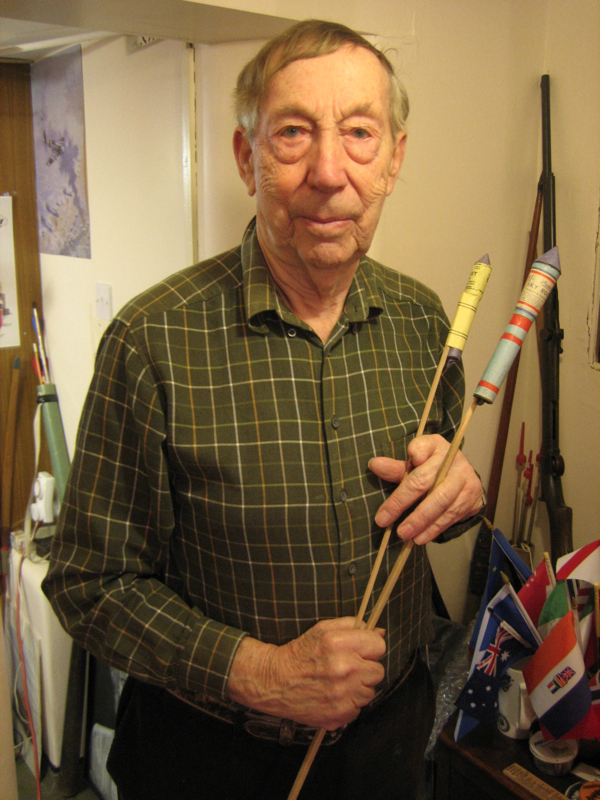
Maurice with two favourite rockets.


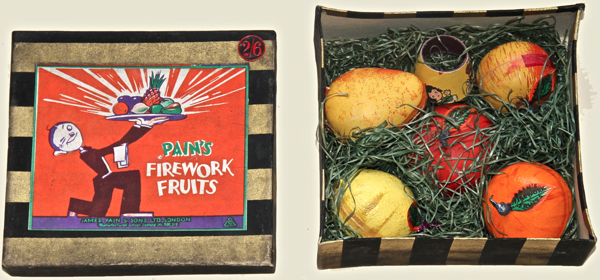


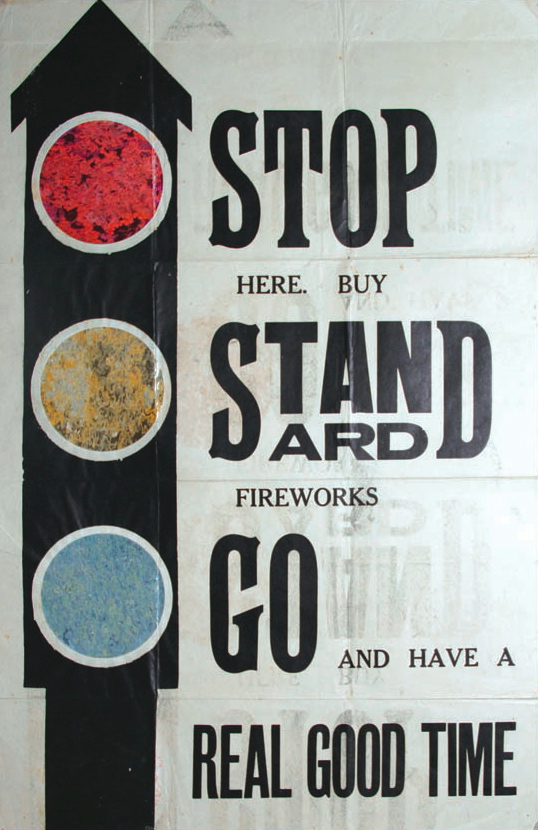
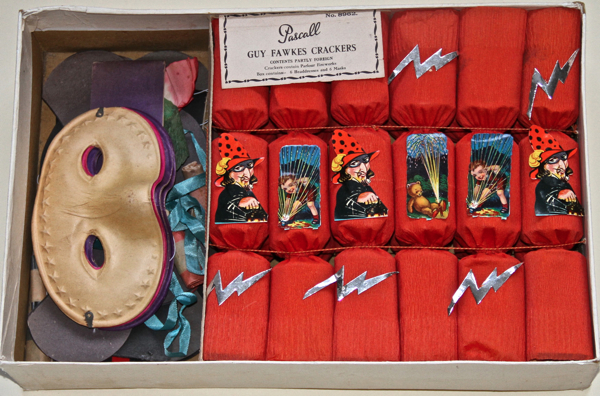


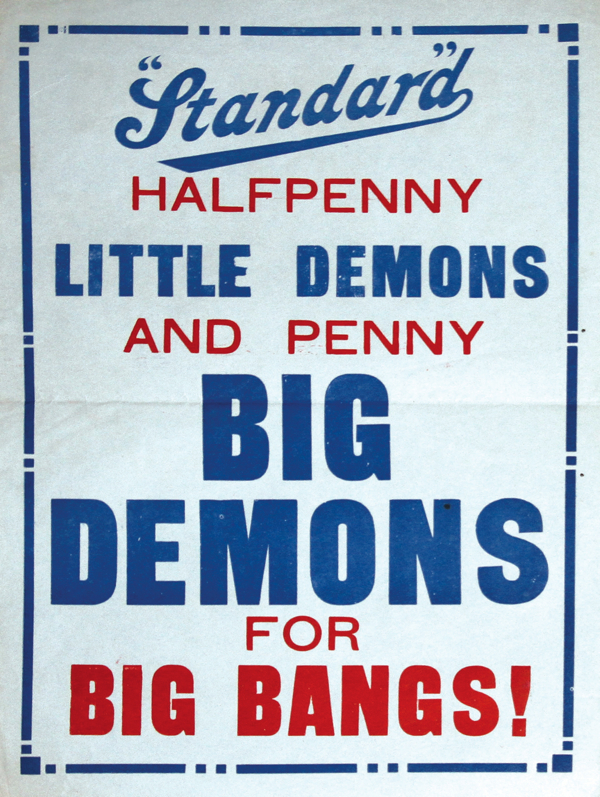

Firework photographs copyright © Simon Costin
Read my story about Simon Costin, The Museum of British Folklore
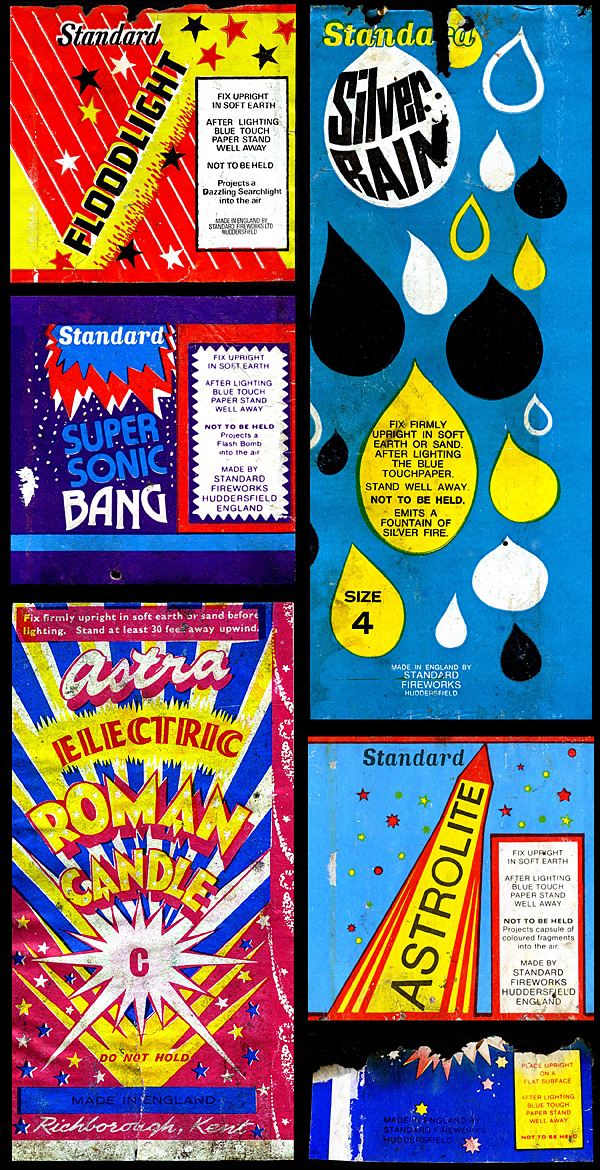
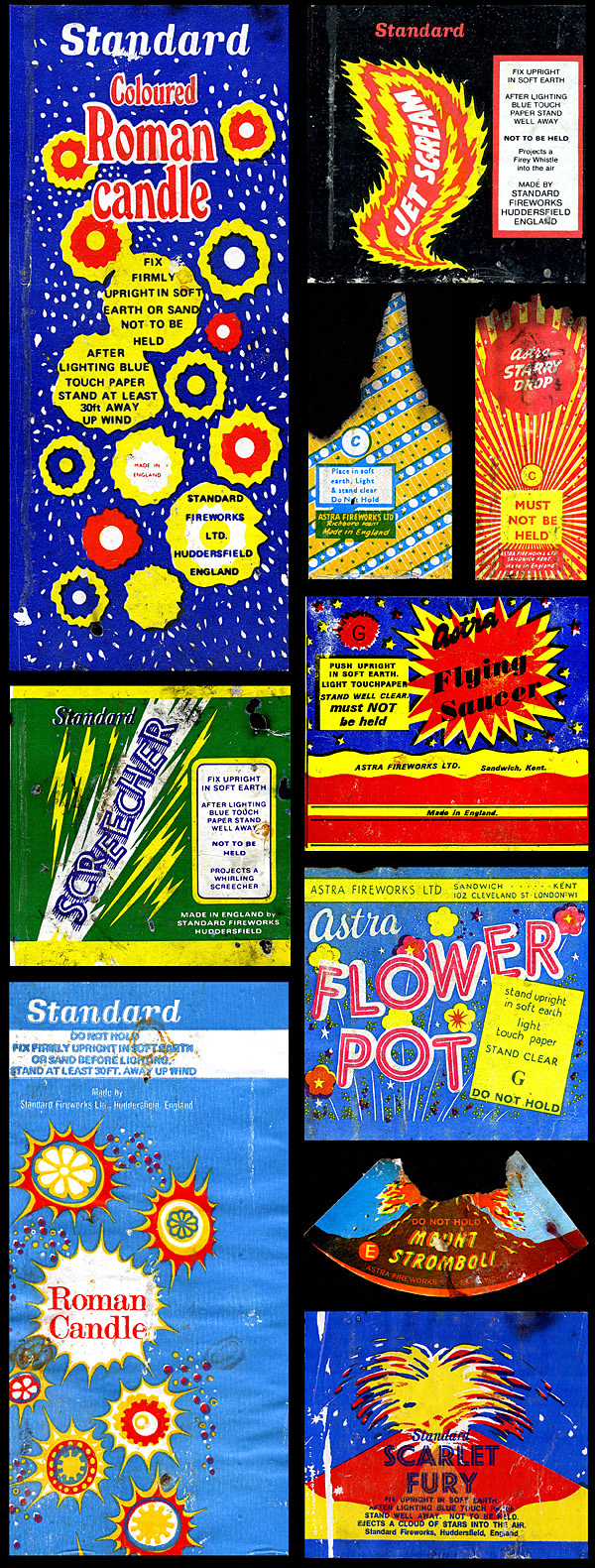
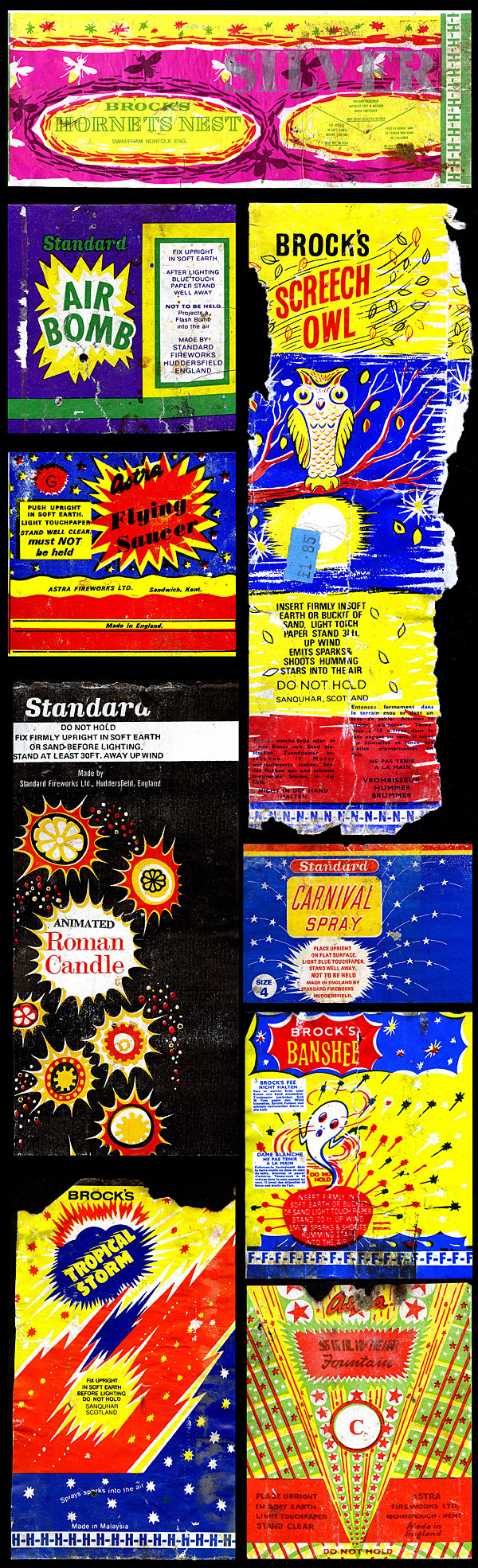
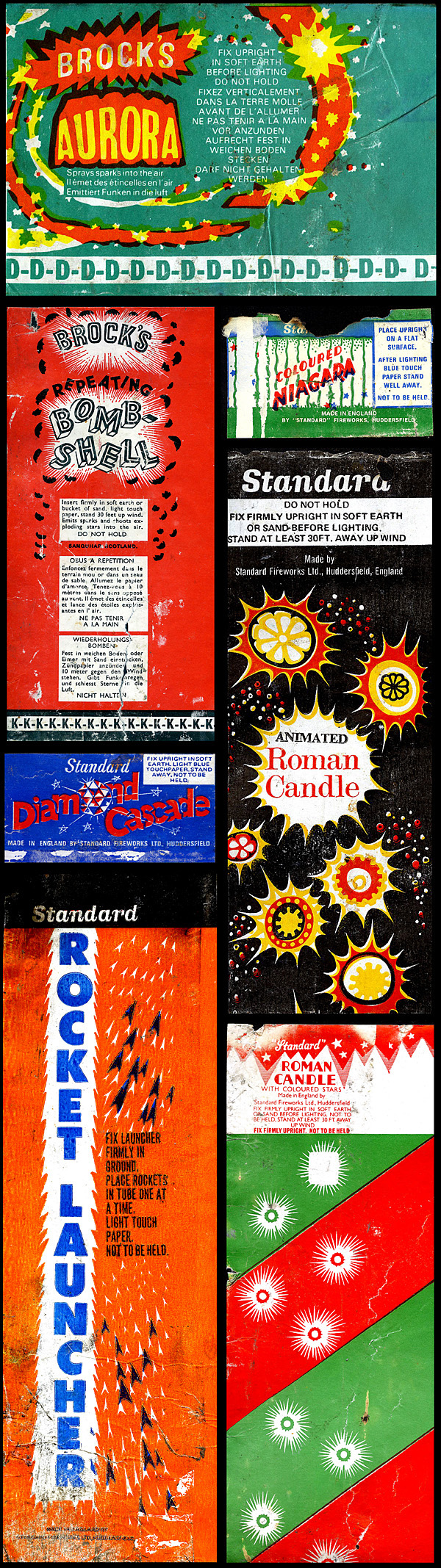
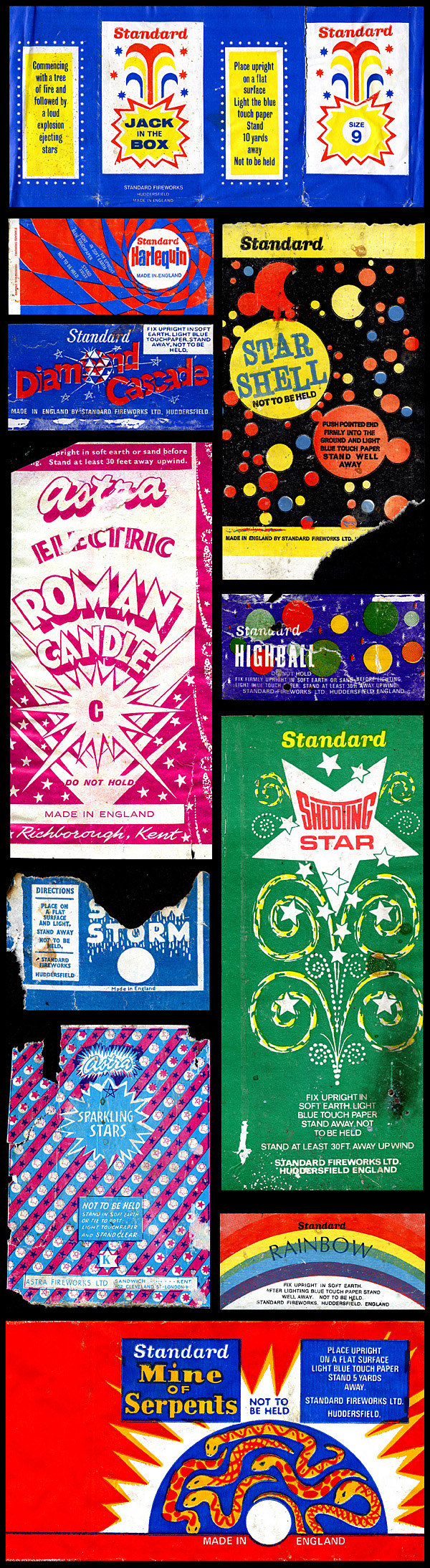
Philip Marriage’s Firework Labels
Philip Marriage sent me this glorious collection of firework labels. He said, “If these look as if they’ve been buried or blown up and burnt, it’s because they have!”
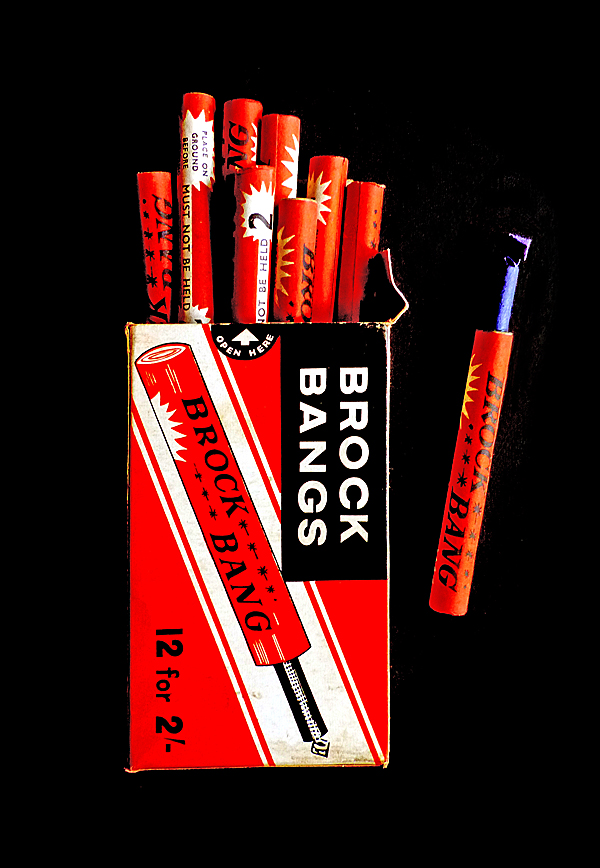
“This box of Brock’s bangers was a left-over from my teenage years, preserved in a tin box in the garage for past sixty years. These firework labels give a snapshot of a time when the cry of ‘A penny for the Guy’ was any child’s means to purchase a packet of tuppenny bangers.
I kept them because they possess the unsophistication of another era, bought not only for their visual appeal but primarily for the power of their explosive content.
Brock’s Fireworks go back a long way, founded in 1698 and manufacturing in Islington before moving to Whitechapel in 1815 where their factory blew up in an accident. They moved to Hemel Hempstead in 1910 just down the road from Redbourn in Hertfordshire, where I lived for a decade after I was married in 1968.”
Philip Marriage
You may also like to take a look at
So Long, Ivan Kingsley
Today, I publish my portrait of market traders, Ivan & Irene Kingsley, as a tribute to Ivan who died on Sunday aged eighty-eight.

Ivan & Irene walking through Petticoat Lane Market
Although it may not be apparent to the casual visitor, Middlesex St is the boundary between the Borough of Tower Hamlets and the City of London. It is a distinction of great significance to residents of this particular neighbourhood, because – as Irene Kingsley, who lived there her whole life, put it to me with succinct humour – “When you are in the gutter, you are in Tower Hamlets but when you are on the pavement, you are in the City.”
“I live in the City now, but I spent most of my life in Tower Hamlets.” she added as a qualification, just in case I should take her quip in the wrong spirit. Although Irene had ascended to the lofty heights of a flat in Petticoat Tower on the City side of Middlesex St, she was not bragging that she had gone up in the world, but rather admitting that her heart remained back on the other side of the street where she started out. And when I went to visit her and her husband Ivan, I understood the difference at once, as I climbing the steps from the shabby Petticoat Lane Market into the well-tended courtyard garden of Petticoat Tower, quite a contrast to comparable developments in Tower Hamlets.
In the hallway of their flat on the seventeen floor more plants flourished, these were tended by the Kingsleys. I had only a moment to contemplate them before Ivan appeared to hustle me through the modest yet comfortable flat to the living room where Irene was waiting. Then, as I entered, my eyes were drawn by the yawning chasm of the view over the City from their window. “Everyone goes straight for the view!” Irene declared, exchanging a knowing smile with Ivan. “We used to be able to see the Tower of London, until they built that,” she said, indicating a blue glass block. “And we could see the Monument, before the Gherkin went up,” said Ivan, pointing in the other direction. With such an astonishing prospect, I could understand how anyone might get a little proprietorial.
“We’ve seen a lot of changes in Petticoat Lane.” Irene admitted to me as we sat down, exchanging another a glance with Ivan which was the cue for him to serve tea and biscuits. I knew this was the beginning of her story.
“I was born in Brune House in Toynbee St. My father was a bus conductor and my mother was a seamstress.” she explained, “My grandfather was a cobbler in Artillery Passage and my grandmother had a tea stall in Leyden St, she had seven daughters and they all worked with her, and as time went on all the daughters had their own stalls and they were passed down to grandchildren. I left school at fifteen to work in the office of a clothing factory in Golding St, near Cable St. Until I was fifteen, I lived at Brune House, then I to moved to Herbert House nearby to live with my aunt, she had a daughter of her own and she took me in because I lost my mother. She treated me just like a mother, she took over as my mother.
In 1956 I went to Los Angeles. I took the Queen Mary to New York and then I went by plane from New York to Los Angeles. I worked in the office of an insurance company and I loved it there but I was very homesick, so after a year I came back to pick up the pieces. I had various office jobs and I enjoyed travelling with girlfriends but I never settled down. When I turned fifty, I decided to go into the market selling baby clothes and that’s where I met my husband…”
At this point Ivan and Irene exchanged big smiles, because this was the part where it became a shared narrative.
“We both started out as casual traders,” continued Irene, still looking at Ivan and saying “casual traders,” as if it were a term of endearment, “You had to put your name down on the list and wait around until there were available pitches and it just happened that while we were waiting we used to go to a cafe together. Then the old lady at the stall next to us, she had a granddaughter and we were both invited to the Bell for a celebration and we haven’t look back since!
This was the moment when Ivan took over.“I am not an East End boy,” he announced, “though until I was seven I lived on Underwood St in Spitalfields and from there we moved to Ford Sq in Whitechapel, until in 1940 when we moved to Stoke Newington which in those days was upmarket. I ran a furniture factory in Newington Green until 1976, when I took a job as milkman and from there I went to work for Conway Trading in Toynbee St. They sold socks and underwear for men, and I learnt about that trade, so when they went bankrupt I put what I had learnt into practice, I used to go up North to the sock makers, buy stock and sell it to the retailers. I even applied for the lease to the Conway Trading shop, but for some reason the council refused me and the place is still empty, all these years later.”
By now, I realised where this was going, because – like Irene – the climax of Ivan’s story was becoming a market trader.
“So I decided to start trading in the market.” he said, speaking like a true zealot, “Sundays was brilliant and when I started, even in the week, it was good. It was a wonderful experience because you met so many different kinds of people, all sorts, and, because you were all working in the gutter together, you got to know each other. We were all friends since we were all in the same position. At one point, the council wanted to stop casual traders for nine months, so we went on strike and marched to Bethnal Green Town Hall and demonstrated there. They realised the market could fold and they couldn’t take away the livelihood from seventy people, so from then on we got licences to trade. It was an education, and it was a hard life too, but while you are working you enjoy it.”
Irene and Ivan had stalls side by side and then they combined stalls, unifying their presence in the market, just as their lives became intertwined in marriage. “I retired from the market when my husband was seventy-five and I was seventy-two, so we felt we’d done enough,” explained Irene, clasping her hands in satisfaction.
Yet both acknowledged that trading in the Petticoat Lane Market was a highlight of their existence, a source of livelihood, a social education and a romantic adventure too, which all goes to prove that sometimes the gutter can be a better place to be than the pavement.
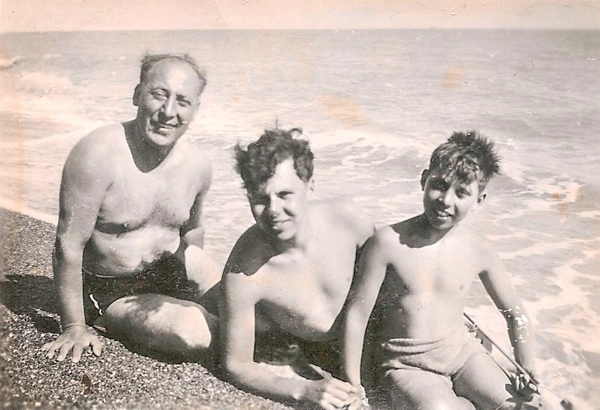
Ivan (centre) as a young man on Hythe Beach with his family
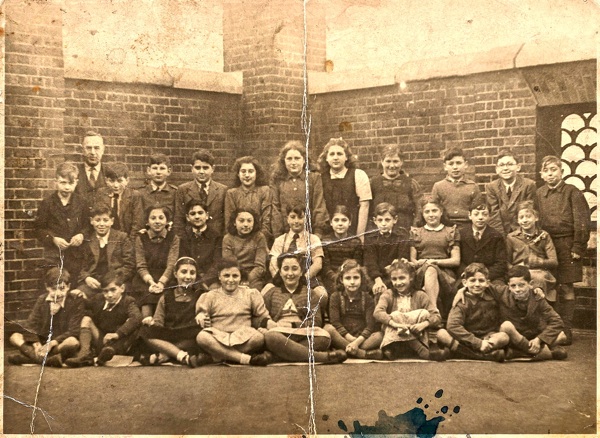
Irene at Canon Barnett School, 1947 – she is the sixth from the left in the back row

Irene Kingsley, Herbert House, Spitalfields 1957

Irene (left) at Riccione Beach in 1970 with her friends Phyllis Gee, Stella Spanjar and Celina Martin
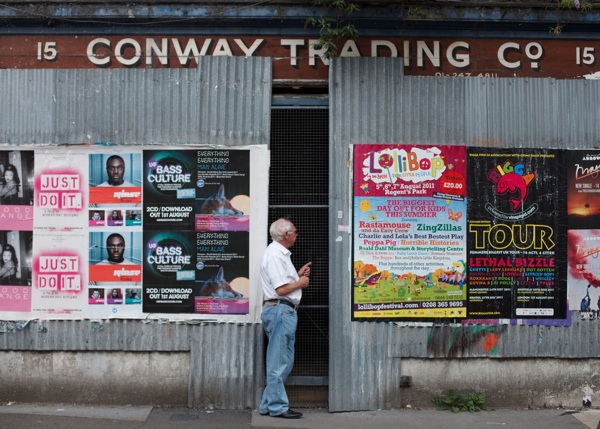
Ivan returns to Conway Trading on Toynbee St where he worked in the seventies. Ivan tried to lease it from the council forty years ago but they refused and it was been empty until it was redeveloped three years ago

Irene & Ivan Kingsley in their flat in Petticoat Tower

Looking towards the City from Irene & Ivan’s flat in Petticoat Tower
Photographs copyright © Jeremy Freedman
You might also like to read about
Laurie Allen of Petticoat Lane












