My Winter Bulbs
This is your last chance to support our JANUARY BOOK SALE which ends at midnight. We only have nine titles left in the warehouse and some are on the brink of going out of print, so you can assist us clear the shelves by buying copies at half price to complete your collection, or as gifts for family and friends.
Click here and enter code ‘2022’ at checkout to get 50% discount

‘No enemy but winter and rough weather…’ As You Like It
Every year at this low ebb of the season, I cultivate bulbs and winter-flowering plants in my collection of old pots from the market and arrange them upon the oak dresser, to observe their growth at close quarters and thereby gain solace and inspiration until my garden shows any convincing signs of new life.
Each morning, I drag myself from bed – coughing and wheezing from winter chills – and stumble to the dresser in my pyjamas like one in a holy order paying due reverence to an altar. When the grey gloom of morning feels unremitting, the musky scent of hyacinth or the delicate fragrance of the cyclamen is a tonic to my system, tangible evidence that the season of green leaves and abundant flowers will return. When plant life is scarce, my flowers in pots acquire a magical allure for me, an enchanted quality confirmed by the speed of their growth in the warmth of the house, and I delight to have this collection of diverse varieties in dishes to wonder at, as if each one were a unique specimen from an exotic land.
And once they have flowered, I place these plants in a cold corner of the house until I can replant them in the garden. As a consequence, my clumps of Hellebores and Snowdrops are expanding every year and thus I get to enjoy my plants at least twice over – at first on the dresser and in subsequent years growing in my garden.


Staffordshire figure of Orlando from As You Like It
More Furniture Trade Cards Of Old London
Last chance to support our JANUARY BOOK SALE which ends on Sunday. We only have nine titles left in the warehouse and some are on the brink of going out of print, so you can assist us clear the shelves by buying copies at half price to complete your collection, or as gifts for family and friends.
Click here and enter code ‘2022’ at checkout to get 50% discount

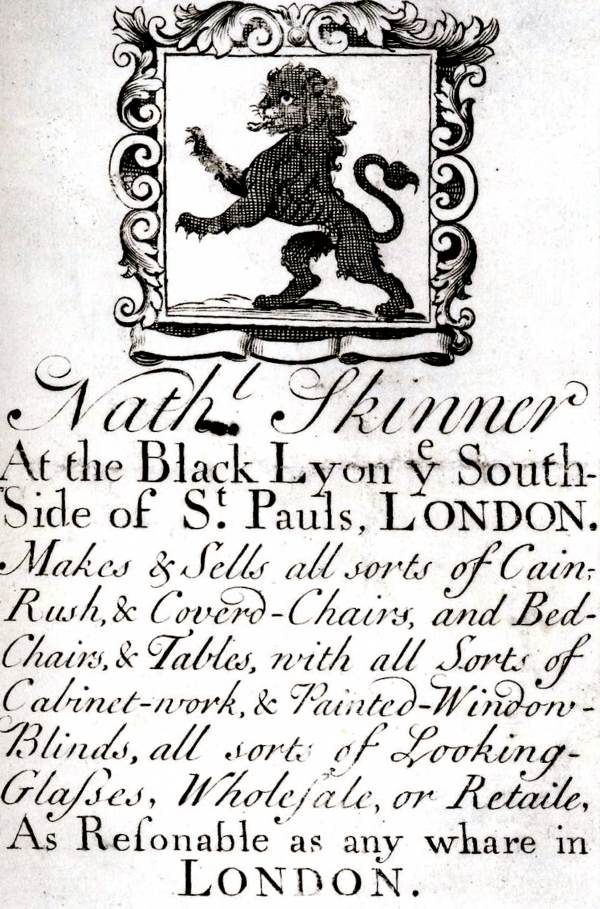
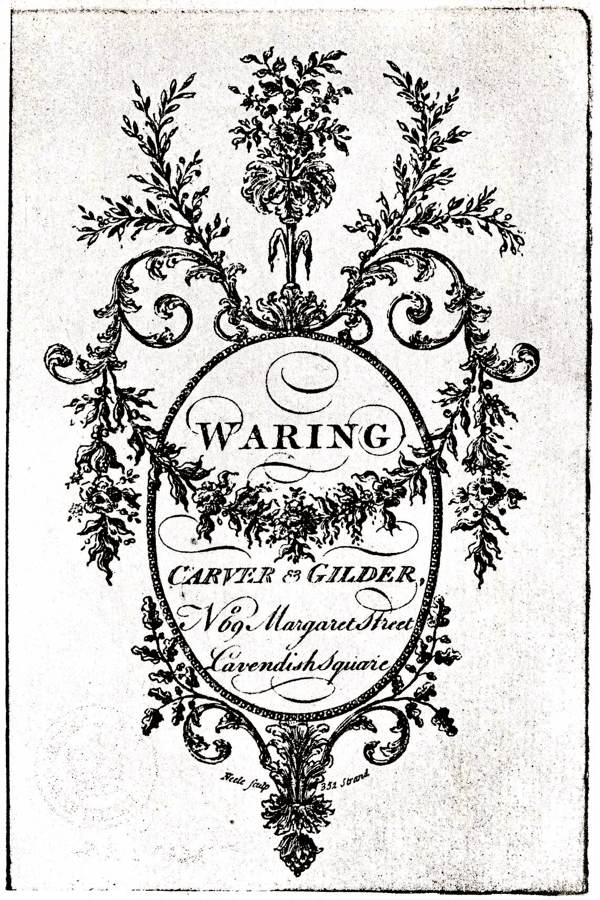
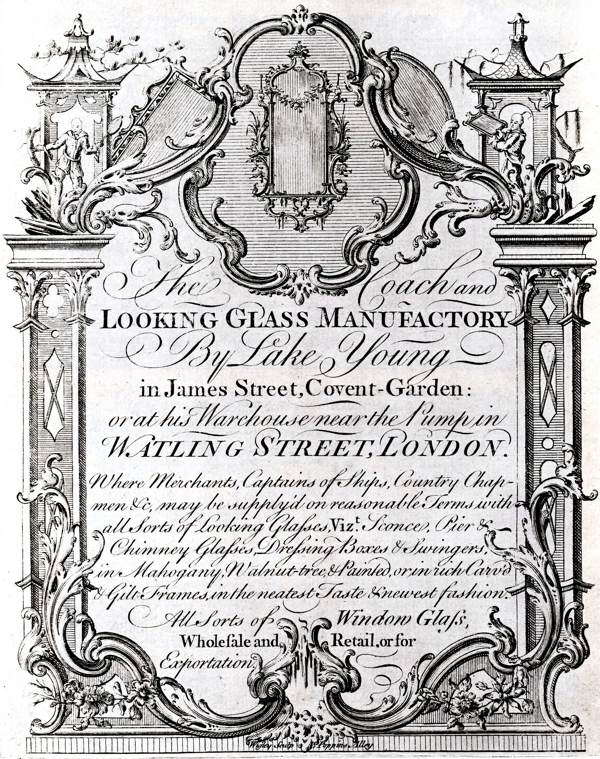
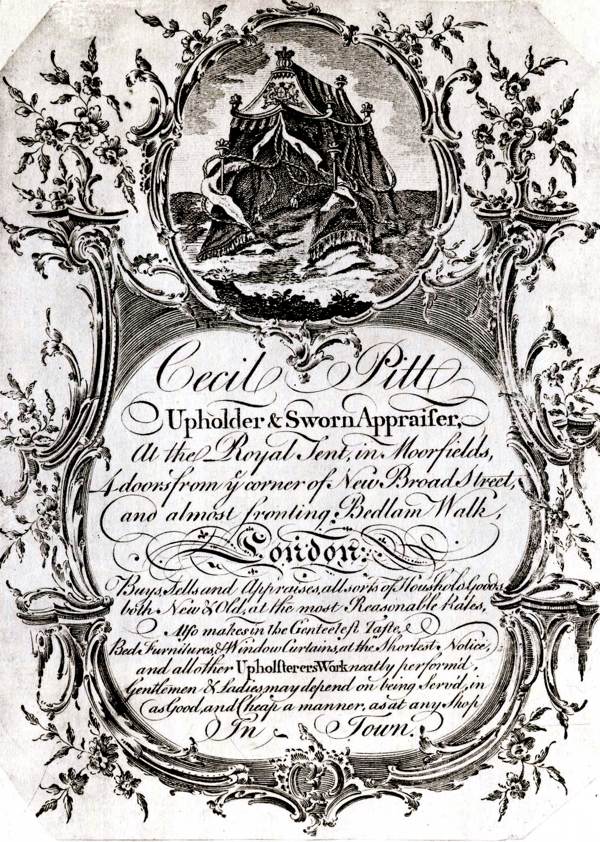
Since I published a selection of furniture trade cards that might have been found in the secret drawer of a hypothetical cabinet in the eighteenth century, it is my pleasure to show this further selection discovered stashed behind a plate on the top shelf of a hypothetical alcove.

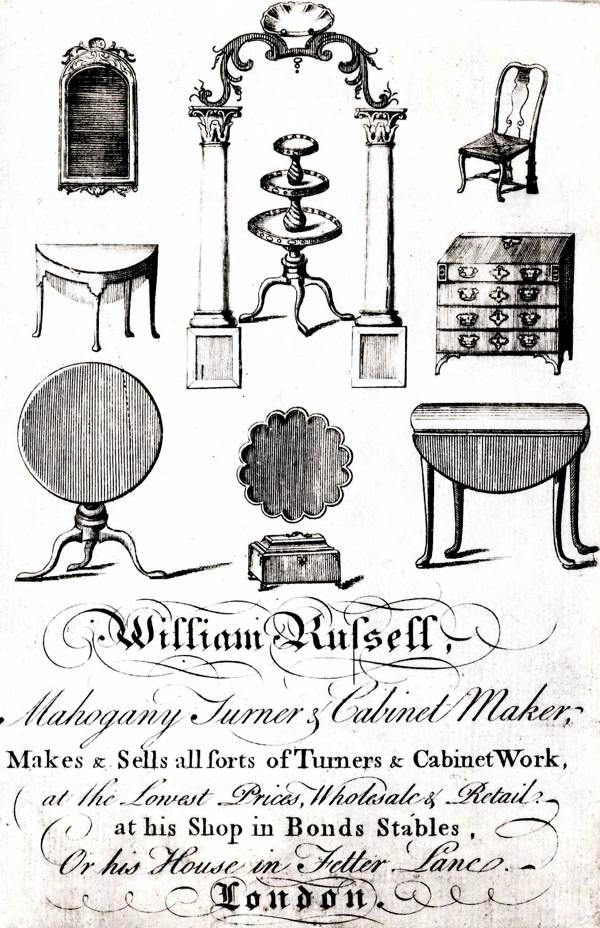


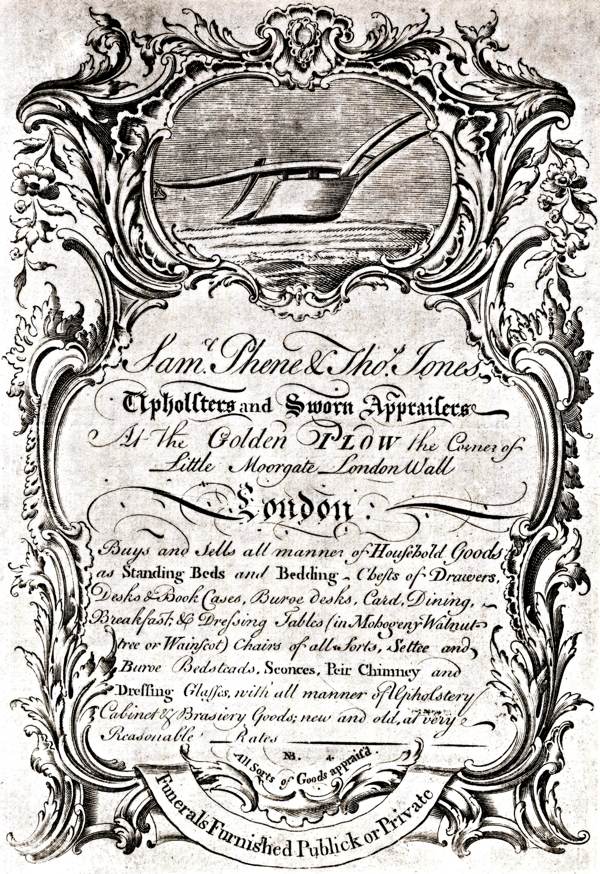

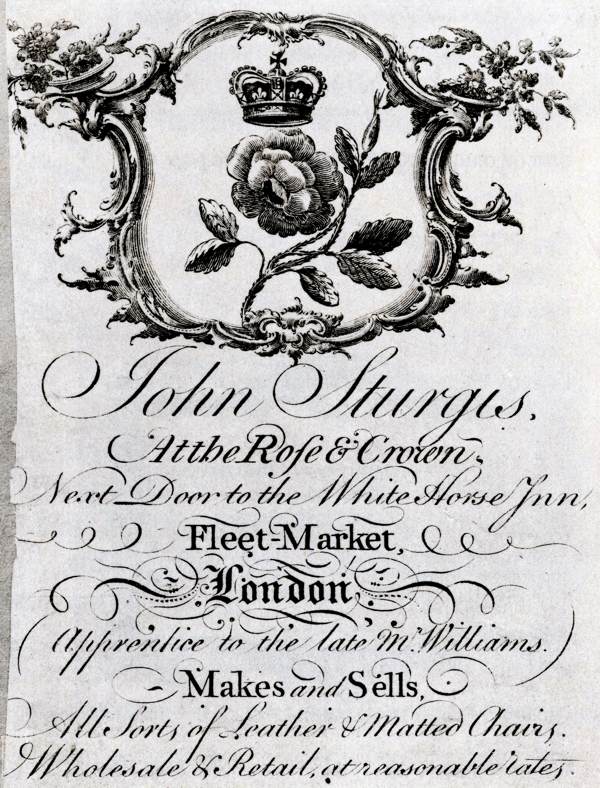

Images courtesy Bishopsgate Institute
You may like to see my earlier selections
Furniture Trade Cards of Old London
More Trade Cards of Old London
Yet More Trade Cards of Old London
Even More Trade Cards of Old London
The Fogs Of Old London
Only three days left to support our JANUARY BOOK SALE which ends on Sunday. We just have nine titles left in the warehouse and some are on the brink of going out of print, so you can assist us clear the shelves by buying copies at half price to complete your collection, or as gifts for family and friends.
Click here and enter code ‘2022’ at checkout to get 50% discount
Londoners are advised to avoid physical activity outside today due to high levels of air pollution
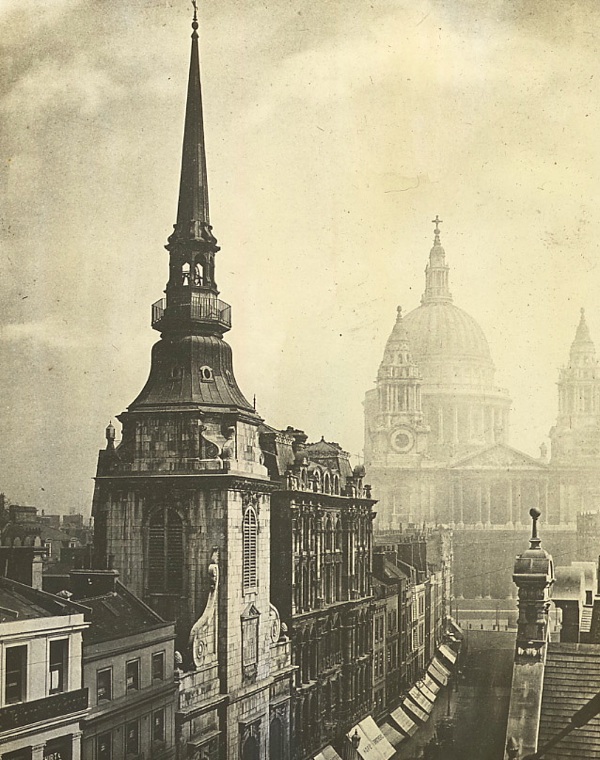
St. Martin, Ludgate with St. Paul’s Cathedral, c. 1900
At this time of year, when dusk gathers in the mid-afternoon, a certain fog drifts into my brain and the city itself grows mutable as the looming buildings outside my window merge into a dark labyrinth of shadows beyond. Yet this is as nothing compared with the smog of old London, when a million coal fires polluted the atmosphere with clouds of filthy black smoke carrying noxious fumes, infections and respiratory diseases. In old London, the city resounded with a symphony of fog horns on the river and thousands of people coughing up their lungs in the street.
Looking at these glass slides of a century ago, once used for magic lantern shows by the London & Middlesex Archaeological Society at the Bishopsgate Institute, the fogs and smogs of old London take on quite another meaning. They manifest the proverbial mythic “mists of time,” the miasma wherein is lost all of human history, save the sketchy outline that some idle writer or other jotted down. Just as gauzes at the pantomime conjure the romance of fairyland, the hazes in these pictures filter and soften the images as if they were faded memories, receding into the past.
The closer I examine these views, the more I wonder whether the fog is, in some cases, an apparition called forth by the photographic process itself – the result of a smeary lens or grime on the glass plate, or simply an accident of exposure. Even so, this photographic fogging is no less evocative of old London than the actual meteorological phenomenon. As long as there is atmosphere, the pictures are irresistibly atmospheric. And old London is a city eternally swathed in mist.
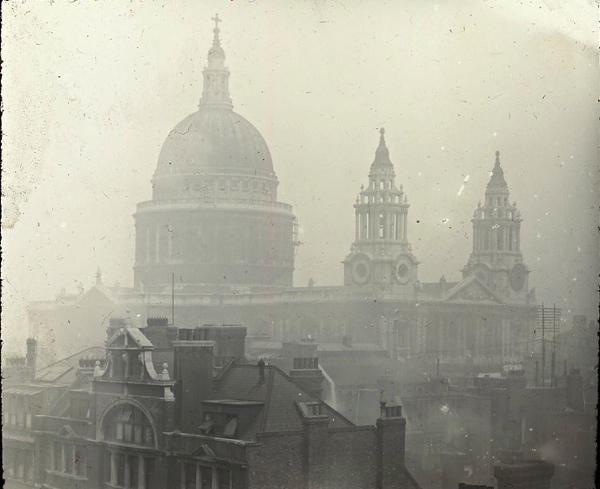
St Paul’s Cathedral from the north-west, c. 1920

Pump at Bedford Row, 1911

Cenotaph, 1919

Upper Thames view, c. 1920
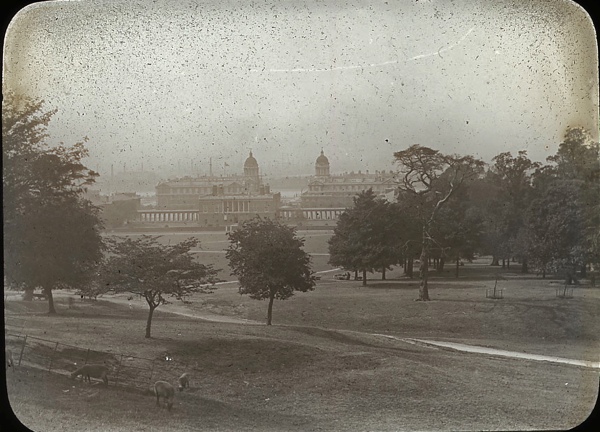
Greenwich Hospital from the Park, c. 1920

City roadworks, 1910

Looking north across the City of London, c. 1920
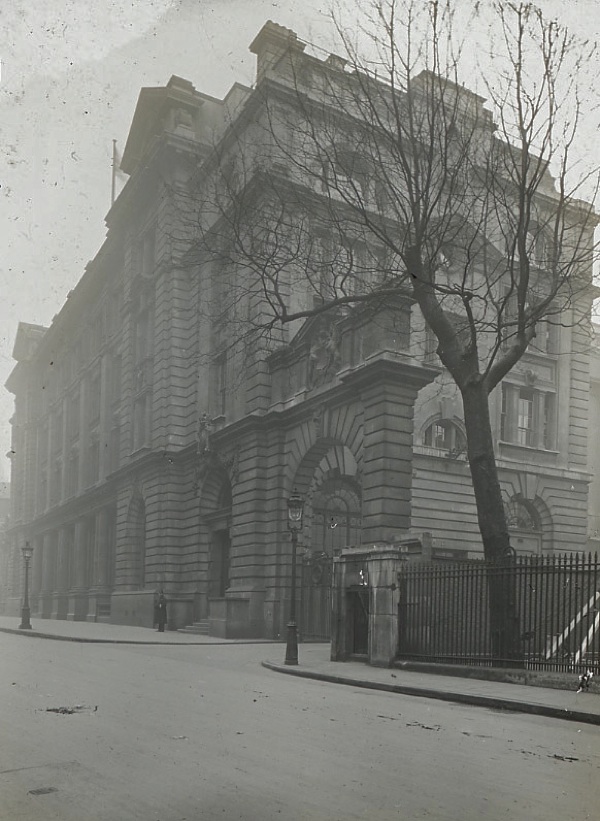
Old General Post Office, c. 1910

View eastwards from St Paul’s, c. 1910

Hertford House, c. 1910

New River Head, c. 1910

The Running Footman public house, c. 1900
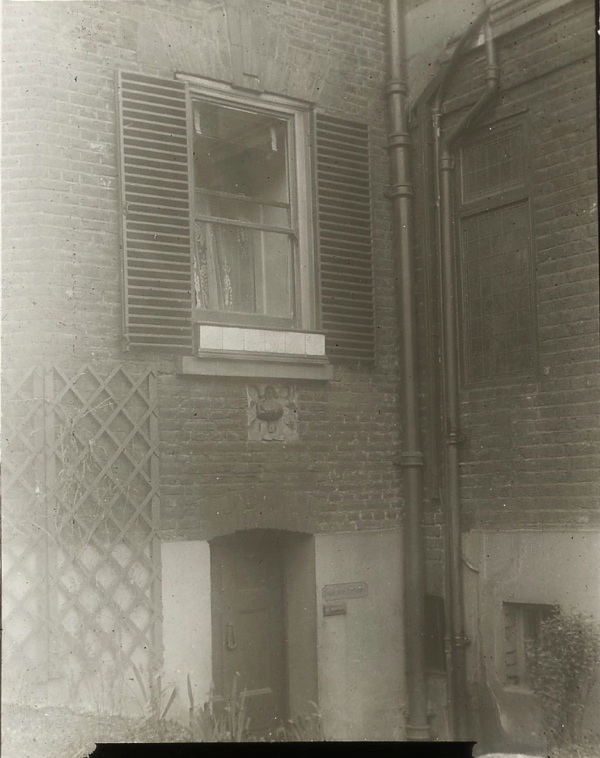
Unidentified building, c 1910

Church Row, Hampstead, c. 1910

Danish Ambassador’s residence, Wellclose Square, Wapping c. 1910

Church of All Hallows, London Wall, c. 1890

Drapers’ Almshouses, Bromley Street, c. 1910

Battersea Bridge, c. 1910

32 Smith Grove, Highgate, in the snow, 1906

Unknown public building, c. 1910
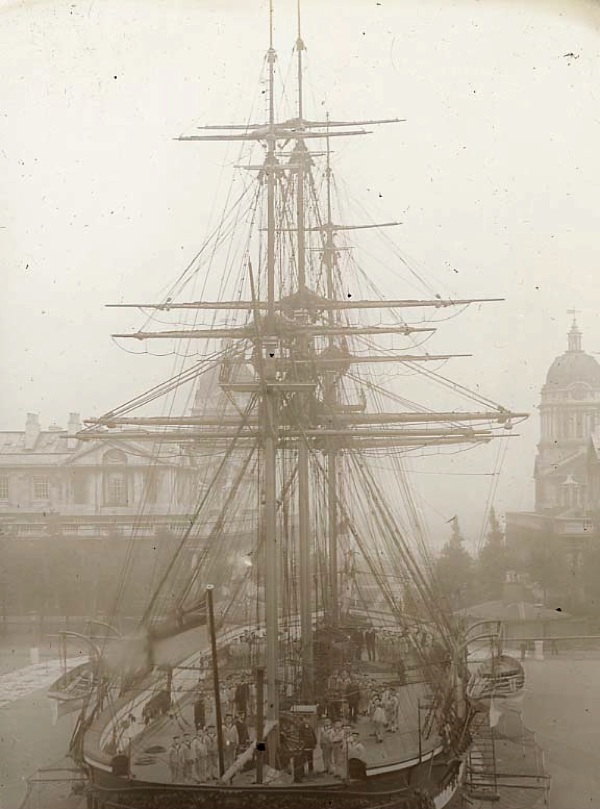
Training ship at Greenwich, c. 1910

Flooded moat at the Tower of London, c. 1910

The Woodman, 1900

Bangor St, North Kensington, c. 1910

Terrace of the Houses of Parliament, c.1910
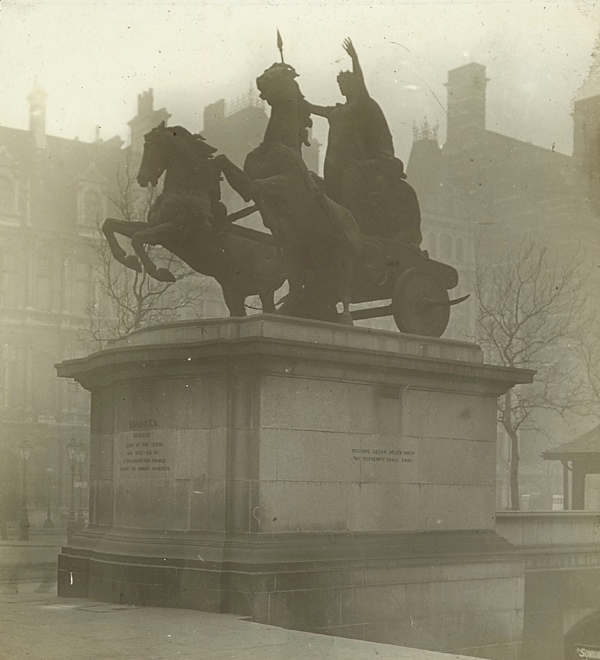
Statue of Boudicca on Westminster Bridge, c. 1910
Glass slides courtesy Bishopsgate Institute
You may also like to take a look at
A New Future For The Custom House
Please support our JANUARY BOOK SALE. We only have nine titles left in the warehouse and some are on the brink of going out of print, so you can assist us clear the shelves by buying copies at half price to complete your collection, or as gifts for family and friends.
Click here and enter code ‘2022’ at checkout to get 50% discount
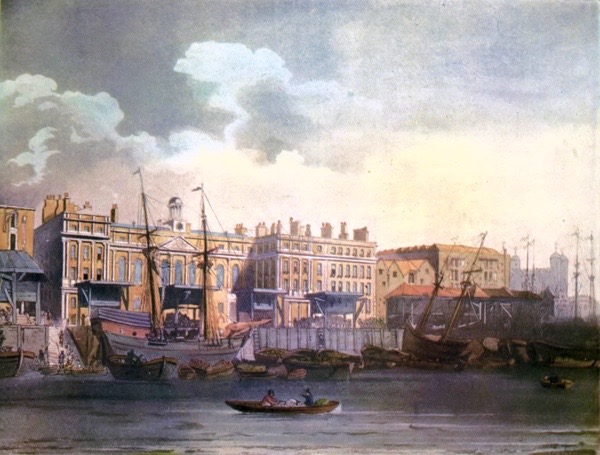
The Custom House by Augustus Pugin & Thomas Rowlandson, 1805
You will recall that last year a planning application was submitted to the City of London to convert the Custom House into a boutique hotel and destroy much of the historic interior. I am delighted to report that – thanks in no small part to letters of objection submitted you, the readers of Spitalfields Life – this plan was rejected.
After receiving around one hundred letters of objection, the committee responded by rejecting the hotel scheme unanimously. How different from Tower Hamlets Council, where over 7000 objections to the Truman Brewery shopping mall were casually brushed aside.
The future of the Custom House is now to be decided by Public Inquiry in February at which The Georgian Group will put forward their scheme which proposes restoring the building and opening the major spaces including the Long Room for cultural use with full public access.
The offices, which comprise the largest surviving suites of Georgian offices in existence, would be restored and employed for start-ups and small enterprises as part of the City of London’s inclusivity and diversity programme. In this way, the building can be where the City’s future is created, by opening the door to those who have previously been excluded. When you consider that the Custom House was where all the loot came into this country for centuries, such a repurposing is an appropriate step towards a just outcome.
Click on The Georgian Group’s scheme below to enlarge and read more.
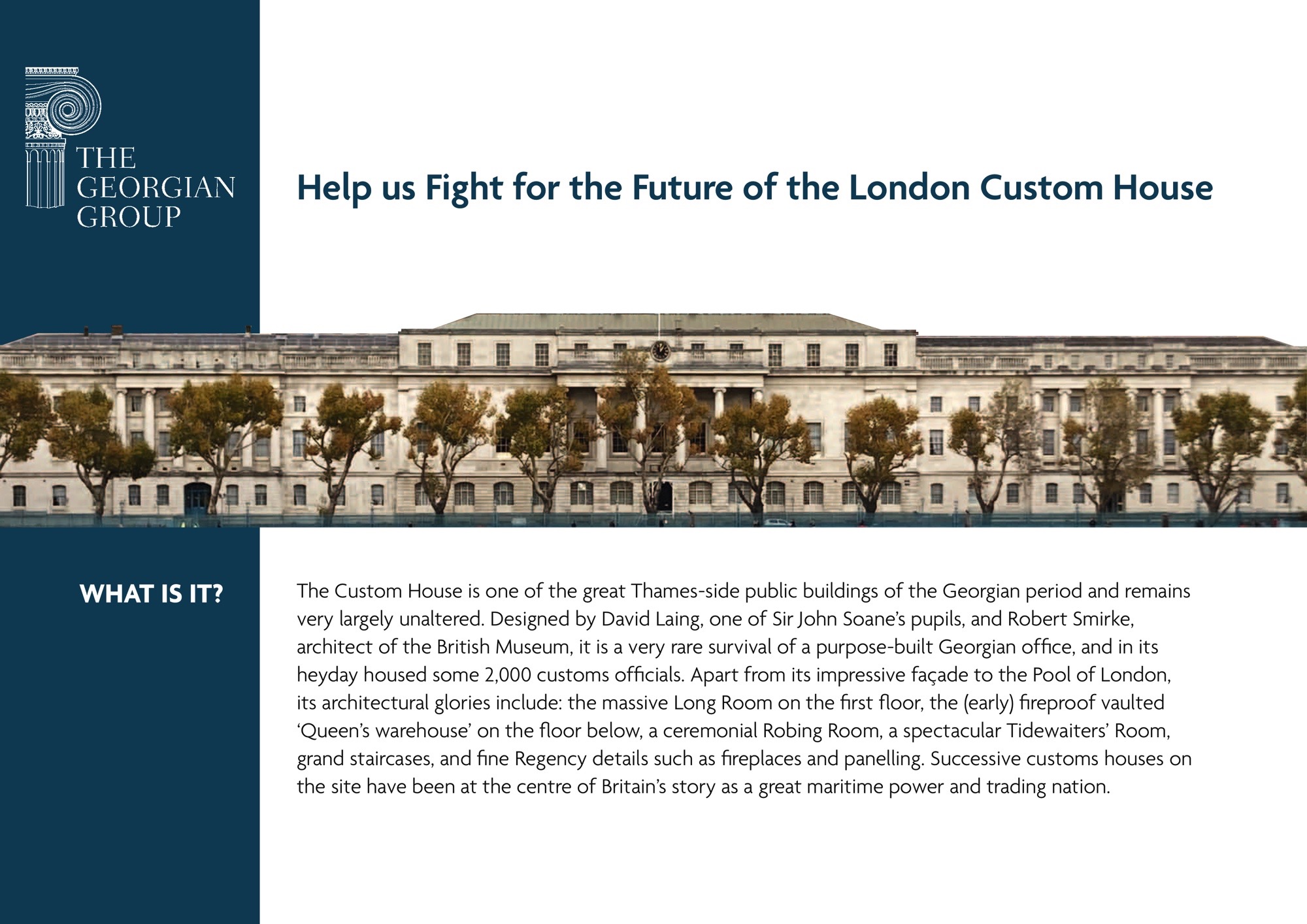
Click on this to enlarge
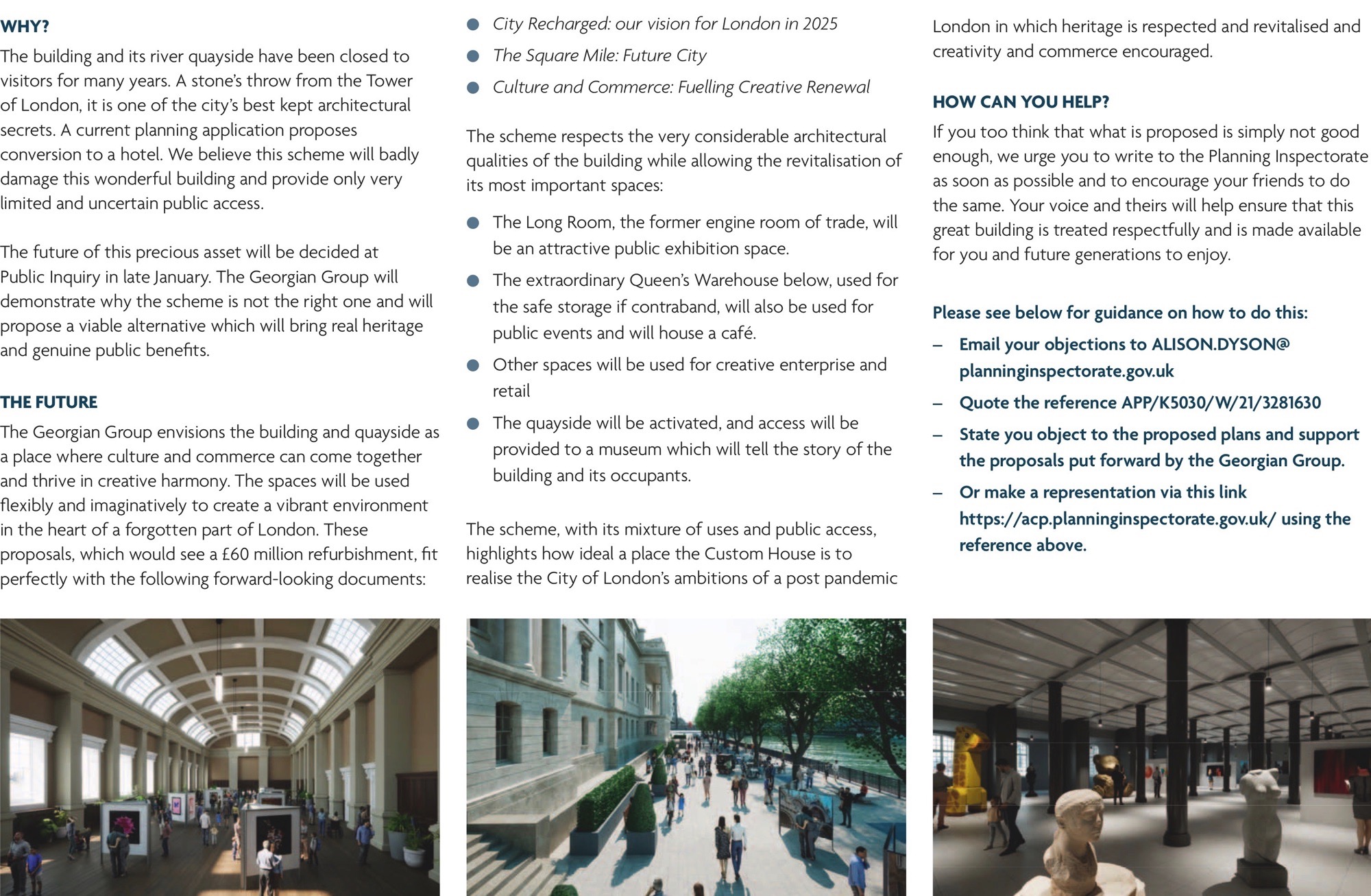
Click on this to enlarge
HELP SAVE THE CUSTOM HOUSE FOR LONDONERS
To save the Custom House as a public building, we need you to write to the Inspector who is holding the Public Inquiry.
Send your email as soon as possible to Alison.Dyson@planninginspectorate.gov.uk
Quote reference APP/K5030/W/21/3281630
Make it clear that you object to the proposed hotel plan and explain in your own words why you support The Georgian Group’s scheme.
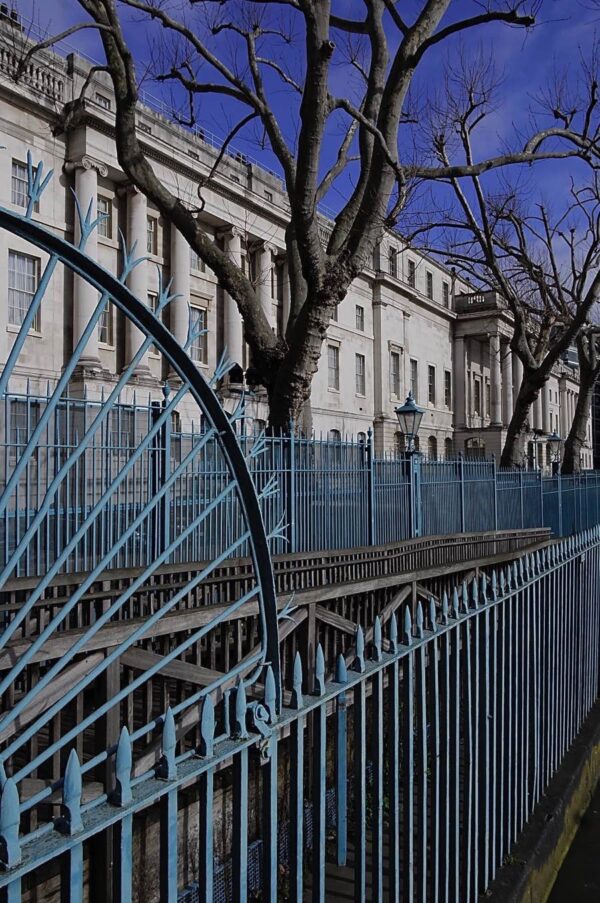
Custom House by Robert Smirke, 1825, with elements by David Laing, 1817
For years, I was unaware of the nature of this enormous austere building which presents an implacable front of Portland stone to the Thames between the Tower of London and old Billingsgate Market. Once I understood its purpose, then its commanding position over the Pool of London became evident.
For more than seven hundred years, the Custom House was where all cargoes passing through the Port of London were declared and duties paid, as well as serving as a passport office for migrants, registering upon arrival and departure. Perhaps no building is as central to our history as a seafaring nation than the Custom House. In recent years, we have come to re-evaluate the morality of the creation of Empire and the wealth it delivered. London was the financial capital of the system of slavery and the centre of the sugar trade, and the Custom House was part of this.
The evolution of the Custom House through the centuries follows the growth of Britain’s status as a trading nation, which makes this a pertinent moment to reflect upon the history of the building and the legacy it embodies.
In the eighteenth and nineteenth centuries, the epic Long Room – claimed to be the longest in Europe – at the heart of the Custom House was renowned as a wonder in its own right. Londoners came to observe the variety of races of traders from across the globe who attended to fulfil their obligations in the form of tariffs and taxes.
When Geoffrey Chaucer worked as Comptroller of the Customs of Wools, Skins and Tanned Hides in the Custom House, constructed by John Churchman in 1382, duties had formerly been collected since 1203 at Wool Quay just to the east. Tudor expansionism was reflected in an enlarged Custom House of 1559, destroyed a century later by the Great Fire.
Afterwards, the rebuilding of the Custom House was the first priority and it was Christopher Wren who established the pattern of the central Long Room surrounded by smaller offices, which has been maintained in the subsequent buildings each larger than the one before. It is a template that has been replicated in Custom Houses around the world.
Wren’s Custom House was destroyed by fire in 1717, initiating a series of ill-fated replacements that suffered multiple calamities. The next Custom House, designed by Thomas Ripley, caught fire in 1814, resulting in an explosion of gunpowder and spirits that dispersed paperwork as far as the Hackney Marshes. Simultaneously, the unfinished replacement, designed by David Laing, foundered when builder John Peto died unexpectedly leaving the project with insufficient financial backing.
Within two years of completion, Laing’s new Custom House developed structural problems, revealed when the ceiling of the Long Room partially collapsed in 1824. Canny architect Robert Smirke advised occupants to move out of the Long Room two days before it fell down and undertook an investigation which exposed shoddy workmanship and unstable riverfront foundations done on the cheap.
Unsurprisingly, Smirke was employed to rebuild and repair the Custom House, and he replaced the entire central section containing the Long Room in 1825. It is Smirke’s sober sensibility that prevails today, incorporating Laing’s east and west wings into an authoritative frontage of uniformity with an institutional restraint in embellishment and a spare, sombre proportion throughout.
For decades, the Custom House has been inaccessible to the public which explains why a building of such central significance has become relatively unnoticed, yet it is publicly-owned. The obvious precedents of Somerset House and Tate Modern demonstrate how the Custom House could be put successfully to public use again.
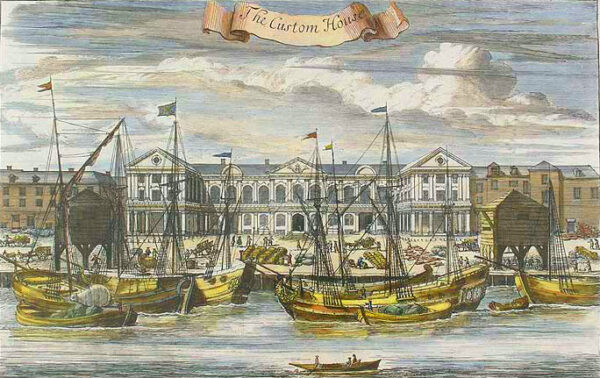
Christopher Wren’s Custom House
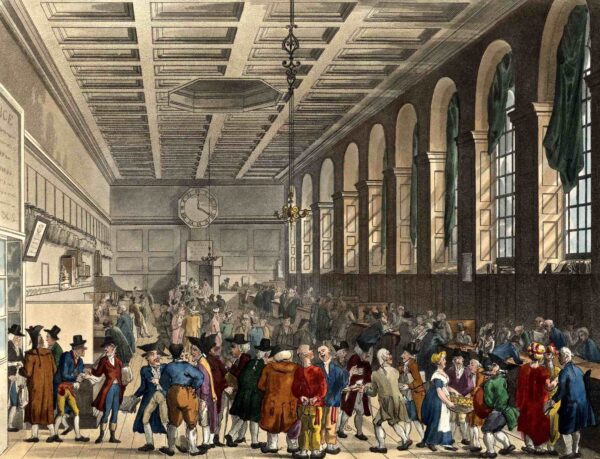
“The Custom House, in the uppermost of which is a magnificent room running the whole length of the building. On this spot is a busy concourse of nations who pay their tribute towards the support of Great Britain. In front of this building, ships of three hundred and fifty tons burthen can lie and discharge their cargoes.” From The Microcosm of London by Augustus Pugin & Thomas Rowlandson 1805 (Image courtesy Bishopsgate Institute)
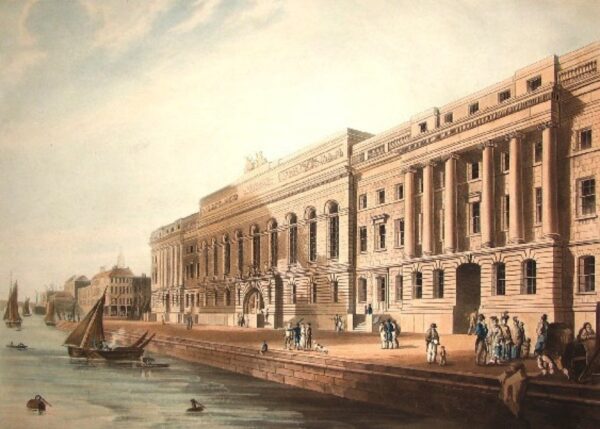
David Laing’s Custom House, 1817
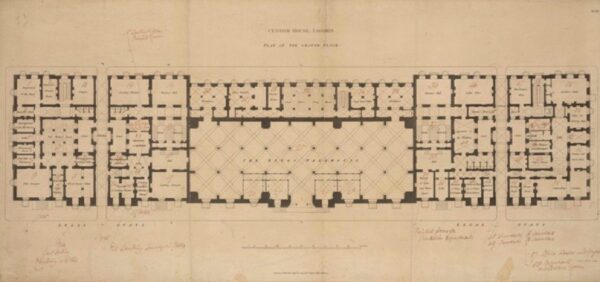
Plan of Laing’s Custom House
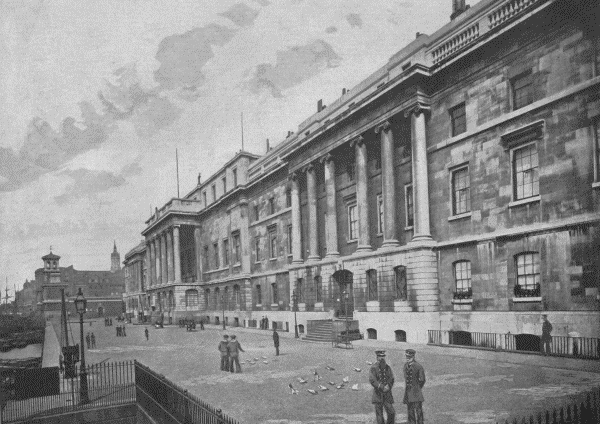
“Between London Bridge and the Tower, and – separating it from the Thames – a broad quay that was for long almost the only riverside walk in London open to the public, is the Custom House. Five earlier buildings on the same site were destroyed by fire, and the present structure was erected in 1814-17, the fine facade being designed by Sir R. Smirke. Some 2,000 officials are employed at the Custom House, and in its famous Long Room alone -190 ft by 66 ft – eighty clerks are habitually engaged. This is not surprising, for the trade of the Port of London is by far the greatest of any port in the world. The building, which is entered from Lower Thames St, contains an interesting Smuggling Museum.”
From The Queen’s London: a Pictorial & Descriptive Record of the Streets, Buildings, Parks & Scenery of the Great Metropolis, 1896
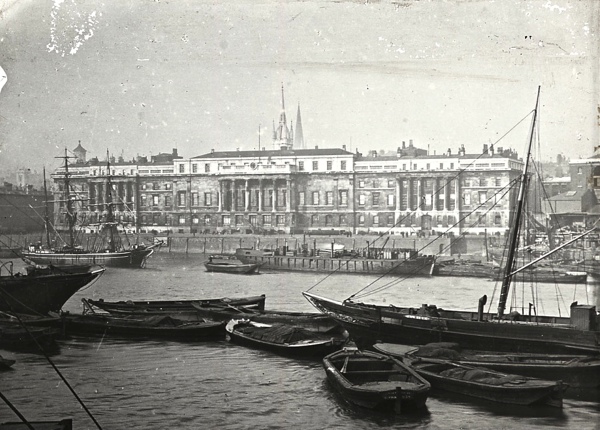
Custom House c. 1910 (Image courtesy LAMAS Collection, Bishopsgate Institute)
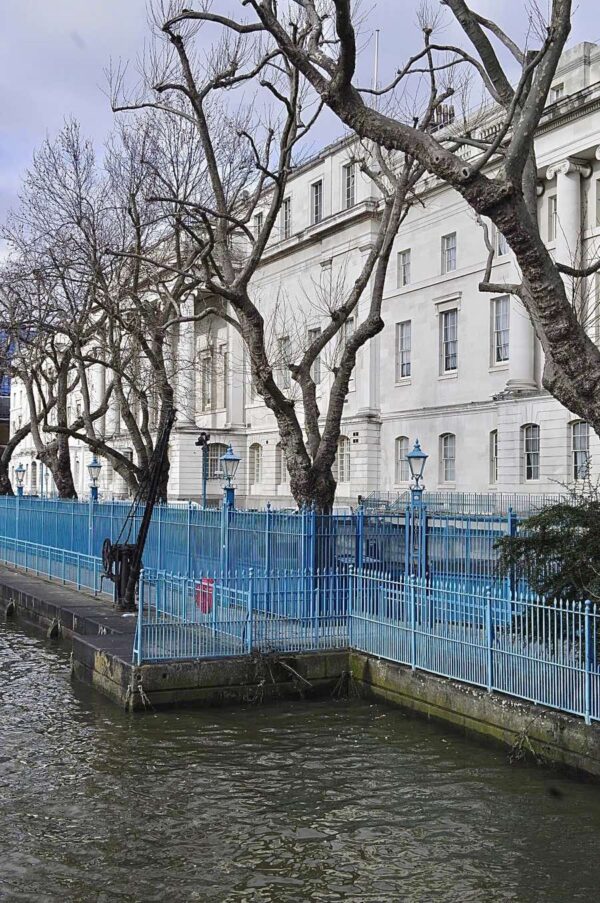
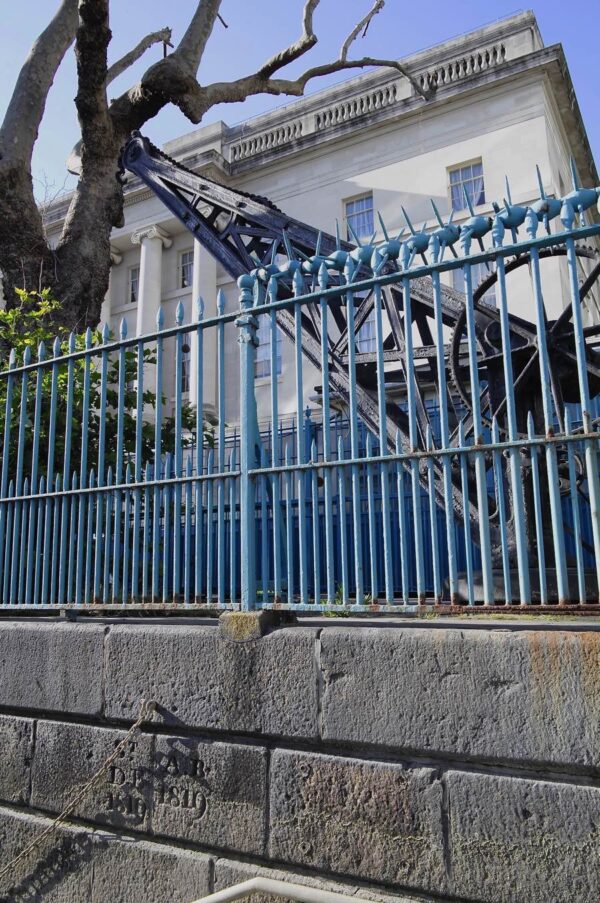
Boundaries of the parishes of All Hallows by the Tower and St Dunstan in the East, marked on the river wall which was designed by John Rennie, 1819
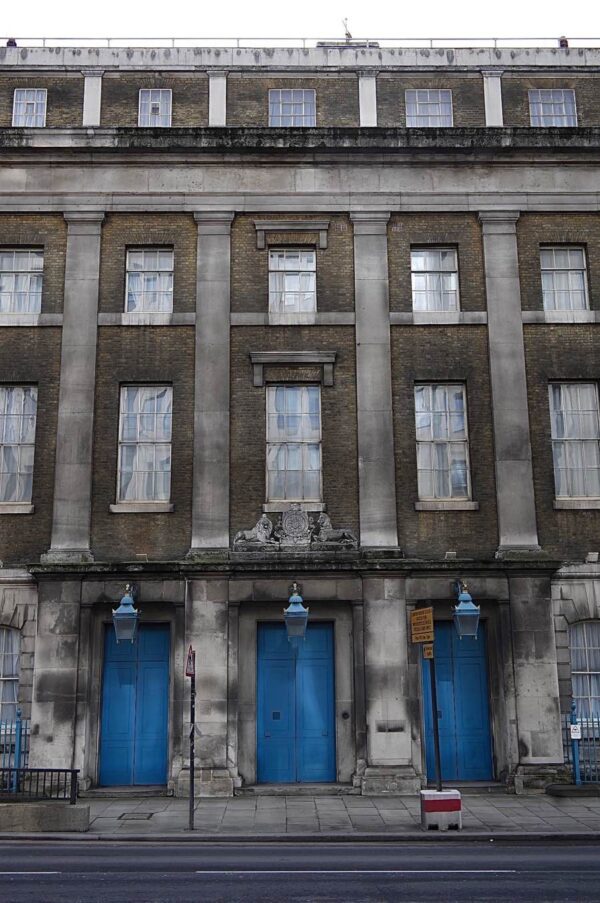
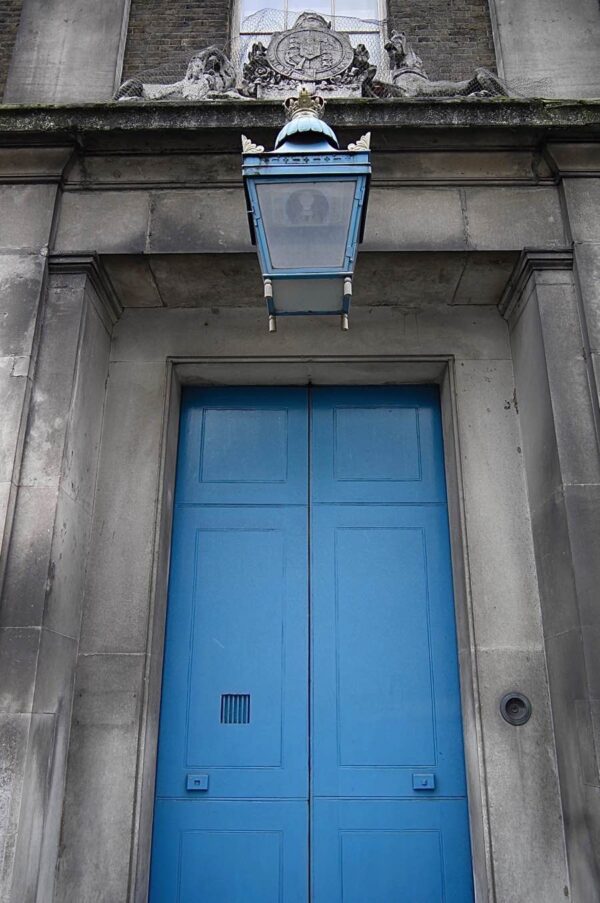
The Lower Thames St frontage with the main entrance
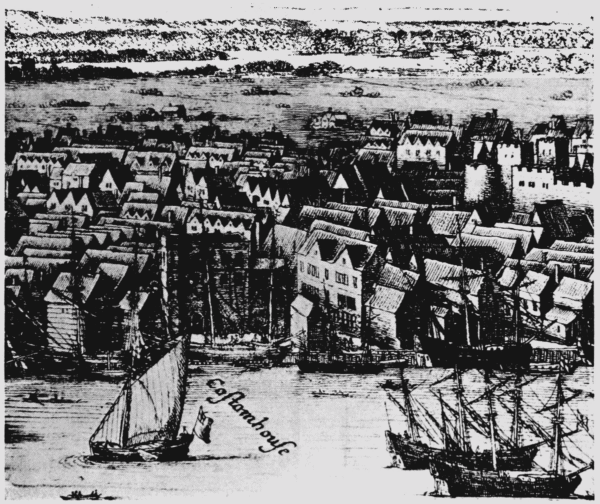
The Custom House as it appeared before the Great Fire by Wenceslas Hollar, 1647
You may also like to read about
Peta Bridle’s East End Sketchbook
Please support our JANUARY BOOK SALE. We only have nine titles left in the warehouse and some are on the brink of going out of print, so you can assist us clear the shelves by buying copies at half price to complete your collection, or as gifts for family and friends.
Click here and enter code ‘2022’ at checkout to get 50% discount
Every few months, Peta Bridle sends me a collection of her sketches and here are some of the latest
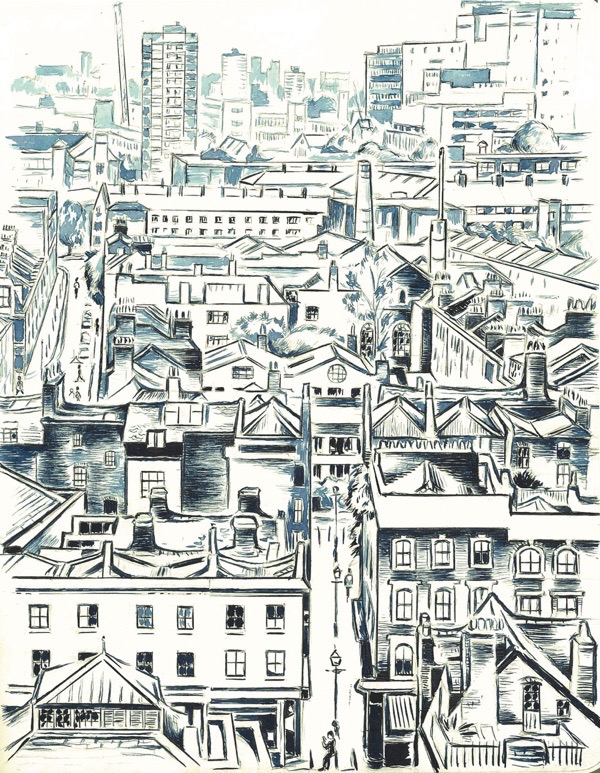
View Over Spitalfields
During Open House weekend I was granted this magnificent view. Far below, a man leans against a bollard in Puma Court while, to the right, the rooftops of Fournier St meet Brick Lane Mosque and the former Warner Bell Foundry chimney. At the end of Puma Court is Wilkes St with chimney stacks and weaver’s lofts, while to the left, someone is crossing Princelet St. In the distance, Spitalfields’ old terraces recede to meet the tower blocks of Whitechapel.
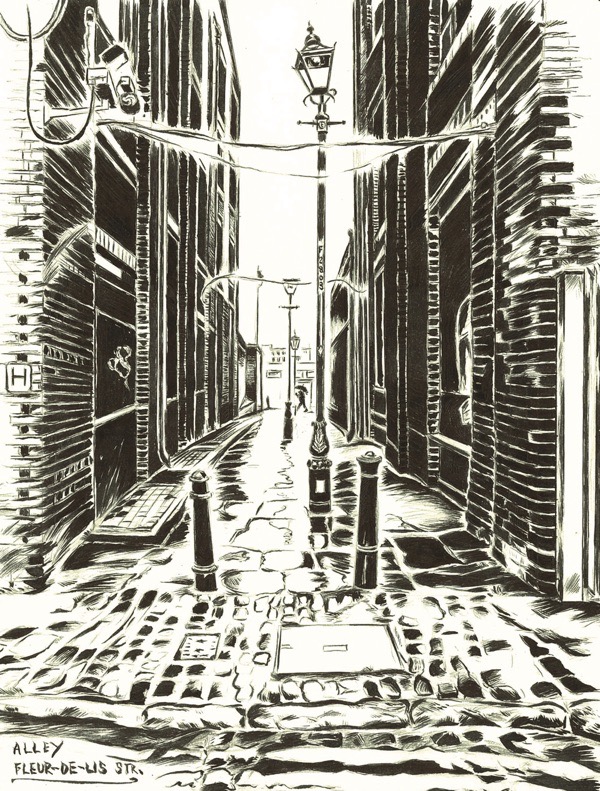
Fleur De Lis Alley
With its three tottering lampposts, this ancient paved alley once linked Shoreditch High St and Blossom St in Norton Folgate. I wandered round here photographing the black-bricked Victorian warehouses and cobbled streets before the redevelopment, but now all I have are my old photos to remind me.
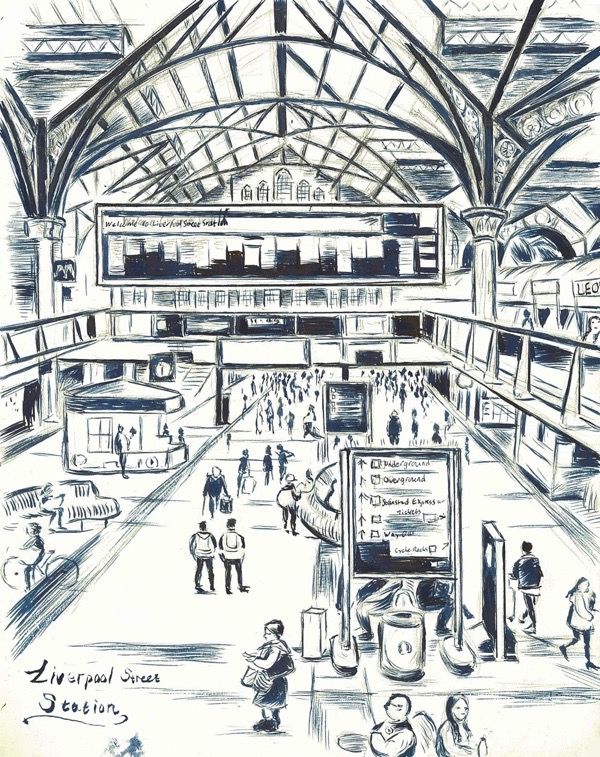
Liverpool St Station
Pigeons swoop from one end of the roof of Liverpool St Station to the other as if in a giant aviary. From my position on a raised walkway, I could observe the continuous rush of running feet, bicycle wheels, pushchairs, wheelchairs and suitcases crossing the concourse beneath. This station is like a glass cathedral supported by decorative ironwork and flooded with light.
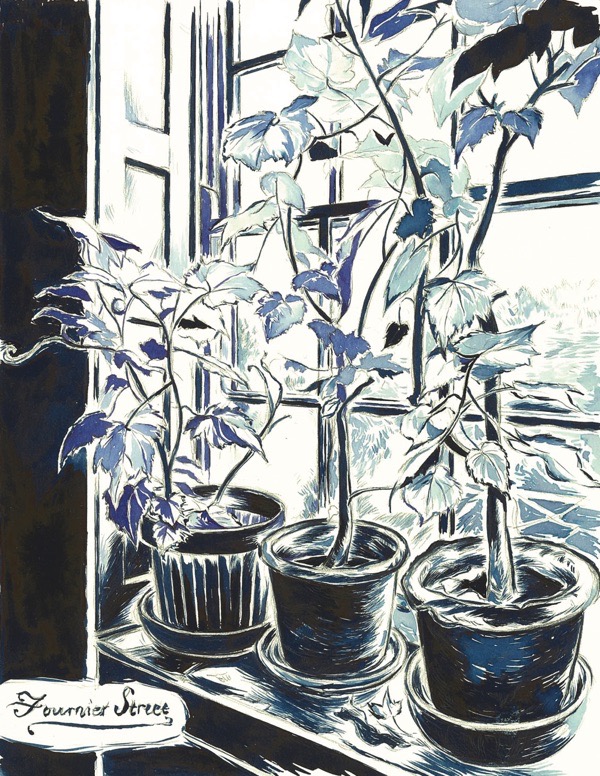
Three Pots On A Sill In Fournier St
I met Rodney Archer only once when he had a sale at his home of art, antiques and collectables, where I bought a small paper pattern for silk weaving. Now I regret not asking if I could visit to make an etching of his beautiful house. After he died, I returned but the atmosphere was sombre, so just I took a photograph of these flowerpots on the sill overlooking the garden. As I took my pictures, one of Rodney’s cat sat on the stair and pawed my hair clip through the bannisters, wanting attention, so I stopped what I was doing and gave him a stroke.
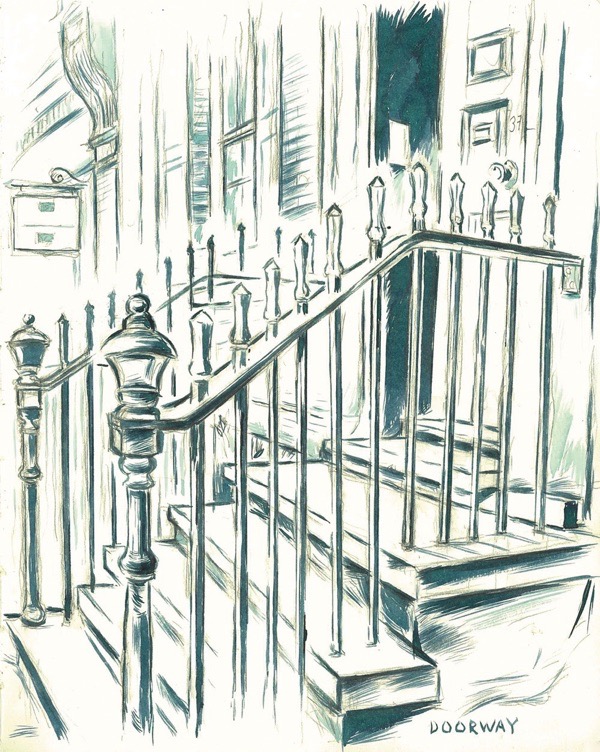
The Society For The Protection Of Ancient Buildings
This is the last Georgian house in Spital Sq which was once lined with fine mansions built by silk merchants. It was the attractive contrast of the blue railings and shutters against the red painted doorway that caught my eye.
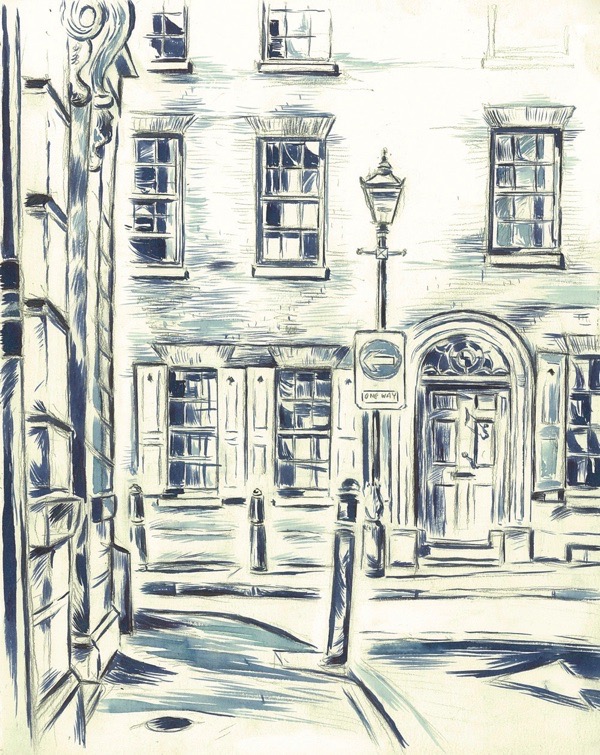
Wilkes St
Two trips were required to render these beautiful terraces. I pencilled them in on one day and returned another to ink in my sketch.
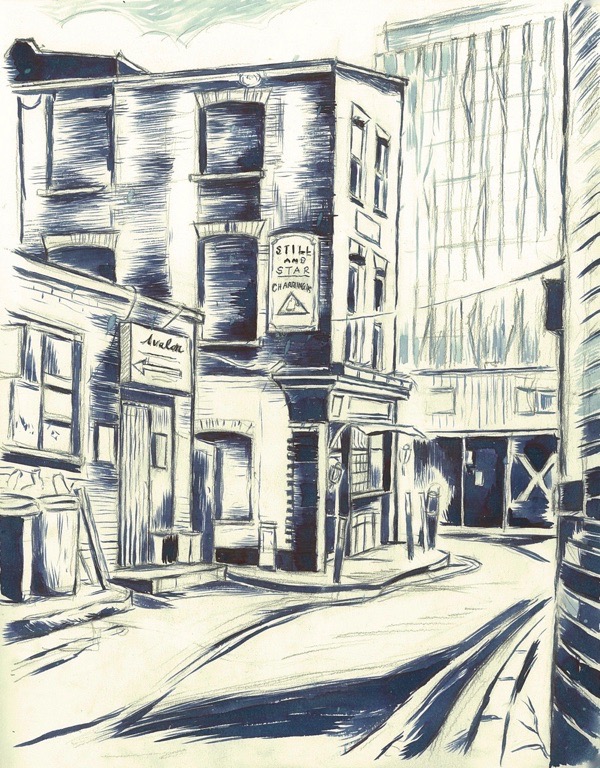
The Still & Star, Aldgate
I took shelter under the arch of Little Somerset St when it started to rain but a few drops splashed onto my picture and I had to retreat further. Many passersby stopped to talk to me about this historic pub and its pitiful fate. Hoardings surround the development site and I was surprised to see the pub still standing, so I took the opportunity to make this sketch before its demolition.
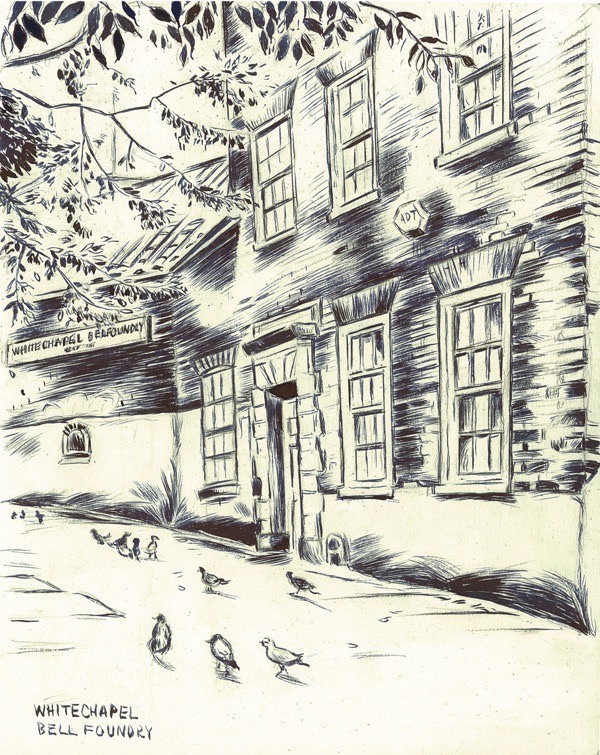
The Whitechapel Bell Foundry
I sat with my back to a large lamppost facing the long foundry wall to make this sketch. Many locals stopped to express their disappointment and sadness that the foundry has closed and the resultant loss to the community. Currently the building is occupied by property guardians and, after the pandemic, I wonder if the threatened redevelopment into a boutique hotel will ever go ahead.
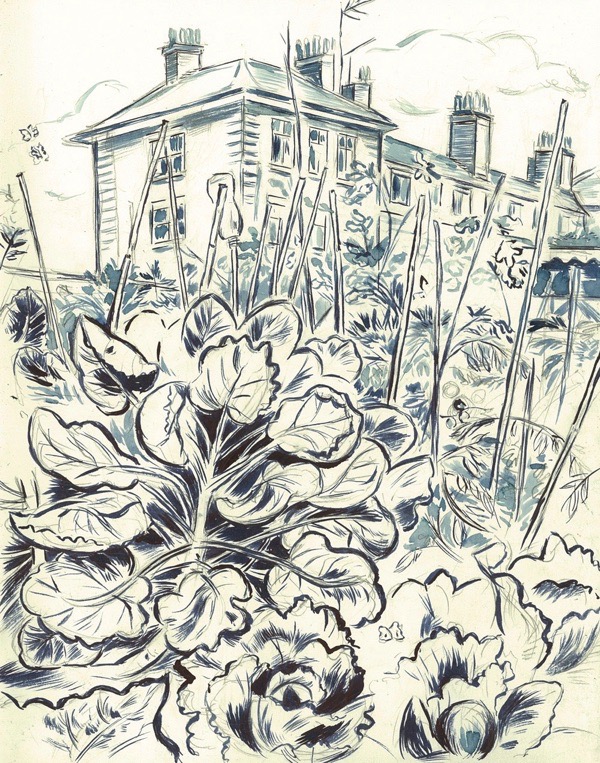
Brussel Sprouts & Cabbages, Spitalfields City Farm
An occasional East London Line train rattled past beyond the fence as I was drawing. After I finished, one of the gardeners kindly showed me around, pointing out what was growing and how to cook it. Even though the brussel sprouts have not yet appeared, there was already an abundance of green leaves in the cabbage patch.
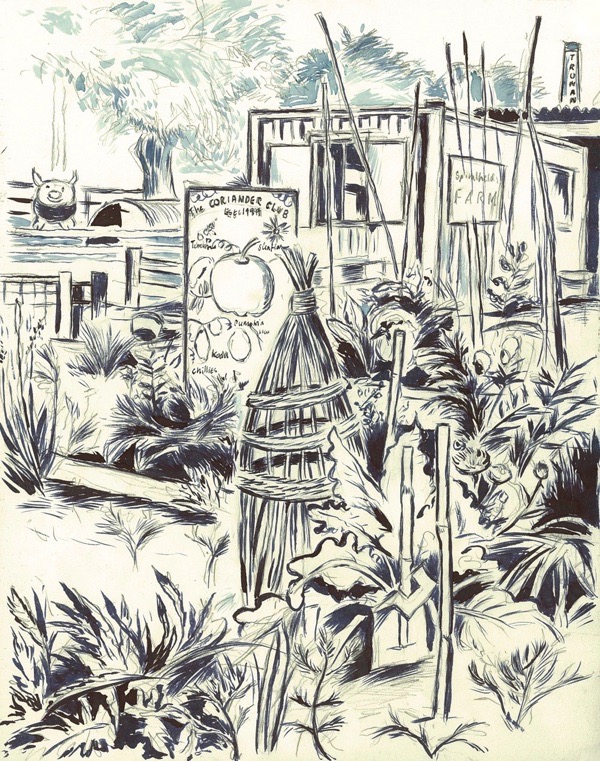
The Vegetable Patch, Spitalfields City Farm
Over the summer I made many visits to the farm as it offered such a lovely environment for drawing. On my first visit, I made this sketch overlooking the vegetable beds with the pigsty in the background. That day, there was a party of school children in the yurt, mums and dads exploring with their babies and toddlers, with the sound of chickens, ducks and sheep in the background.
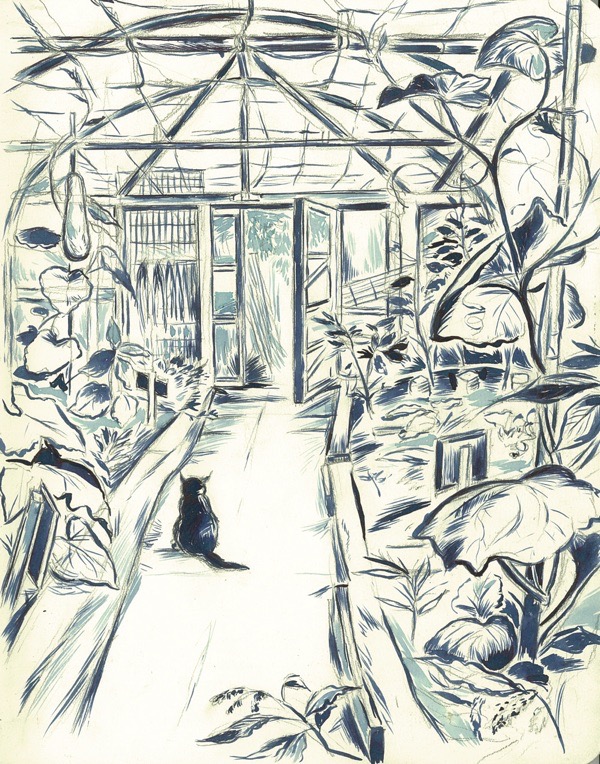
Bella The Cat, Spitalfields City Farm
In the poly-tunnel, there were chard, courgettes, sunflowers, cucumbers supported on string and sticks, and a hefty kodu dangling on the left. Although summer rain drummed on the roof, I was quite dry inside. Some school children took shelter briefly too, followed by Bella the farm cat, who sat staring out of the doorway, waiting for the shower to pass. I took the opportunity to include her in my picture but, when I looked again, she had disappeared.
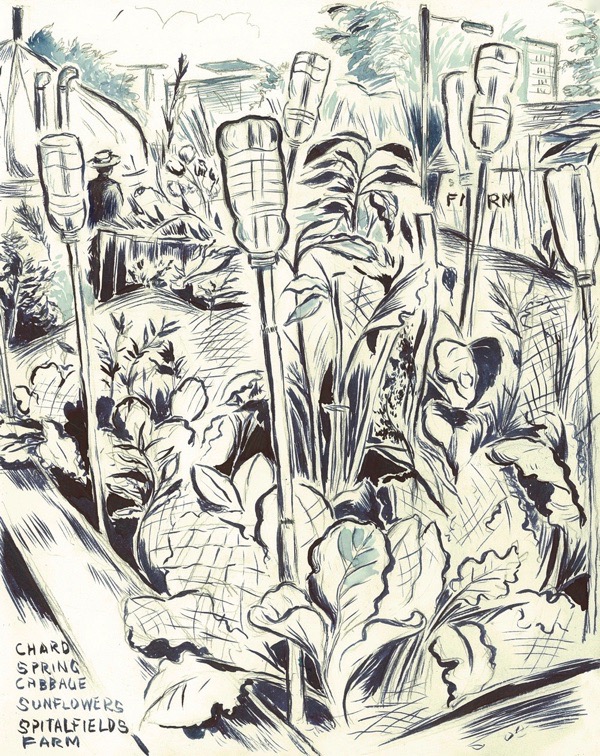
Chard, Spring Cabbage & Sunflowers, Spitalfields City Farm
On each visit, the scenery changes at the farm, with plants sprouting profusely, accelerated by alternating bouts of rain and sunshine. Plastic bottles rattled gently on top of the canes amongst the greenery, while – on this day – a group of gardeners were busy digging and harvesting.
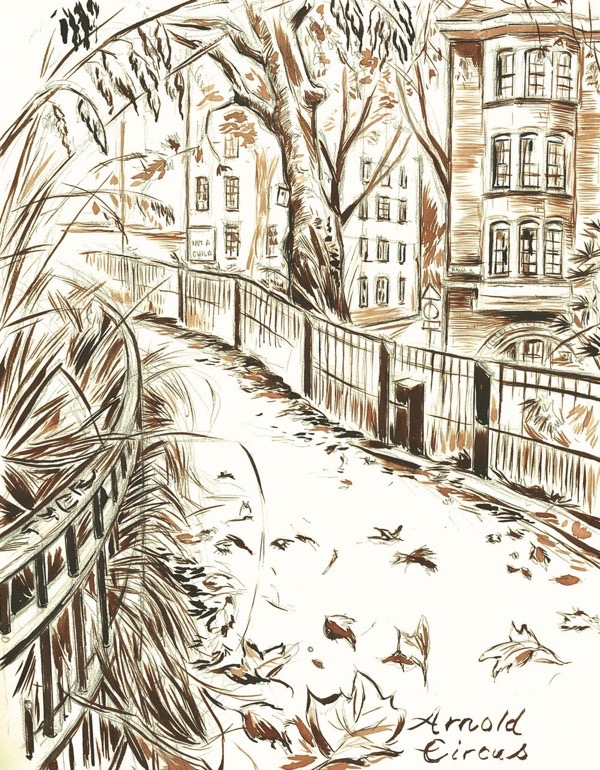
Arnold Circus
An unusually mild day in October granted ideal conditions to visit Arnold Circus, as leaves from the plane trees were falling and the wind was sending them skittering around the pathways. The bandstand sits on top of a circular mound, which was made from the demolition pile of former slum housing, when the area was cleared to build the red brick council dwellings that surround the gardens today.
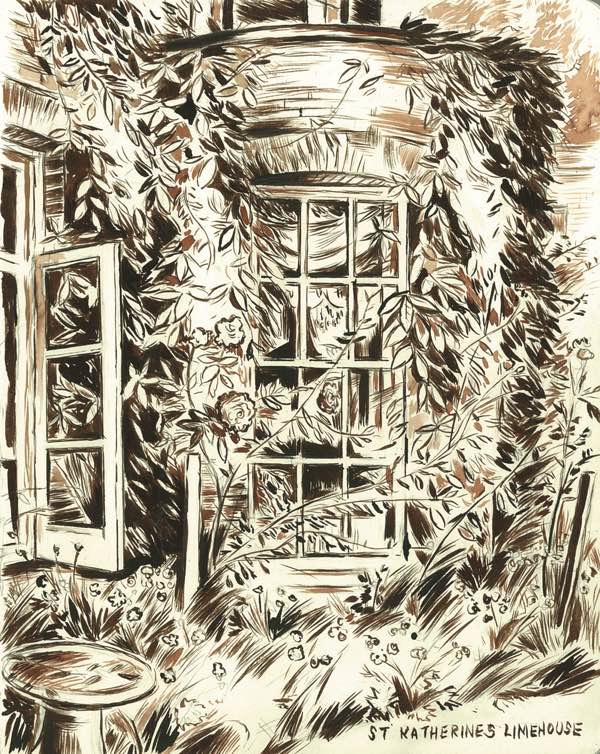
The Master’s House, St. Katharine’s Precinct, Limehouse
I found a shady corner of the garden to sketch, when the lawns were dappled in shade and a few people sat outside enjoying the tranquillity. Yet, above the noise of birdsong, I could hear background traffic and the Docklands Light Railway trains. A robin perched on a chair next to me to observe what I was doing, and a very peaceful and enjoyable day was spent at St Katharine’s Precinct.
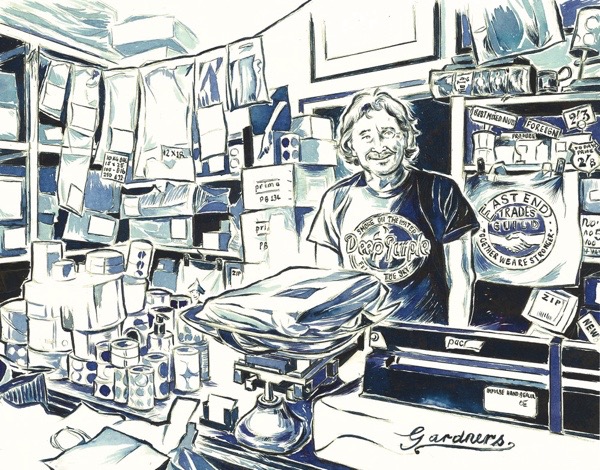
Paul Gardner, Gardner’s Bags, Leyton
Paul’s family ran a bag and market sundries shop in Spitalfields for one hundred and fifty years. Just before the pandemic, he moved out to a new shop in Leyton and it was a pleasure to visit him there. Plastic bags on strings hang like bunting overhead and rolls of fluorescent stickers are stacked up on the old wooden counter. Paul stands with a large set of green scales in front of him with his old greengrocers’ fruit and vegetable signs displayed behind him. He has made use of all his available wall space to create a gallery of the many artworks that have been done celebrating Gardner’s Bags.
Drawings copyright © Peta Bridle
You may also like to take a look at
Peta Bridle’s Riverside Sketchbook
Peta Bridle’s Gravesend Sketchbook
Peta Bridle’s City of London Sketchbook
Billy & Charley’s Shadwell Shams
Please support our JANUARY BOOK SALE. We only have nine titles left in the warehouse and some are on the brink of going out of print, so you can assist us clear the shelves by buying copies at half price to complete your collection, or as gifts for family and friends.
Click here and enter code ‘2022’ at checkout to get 50% discount

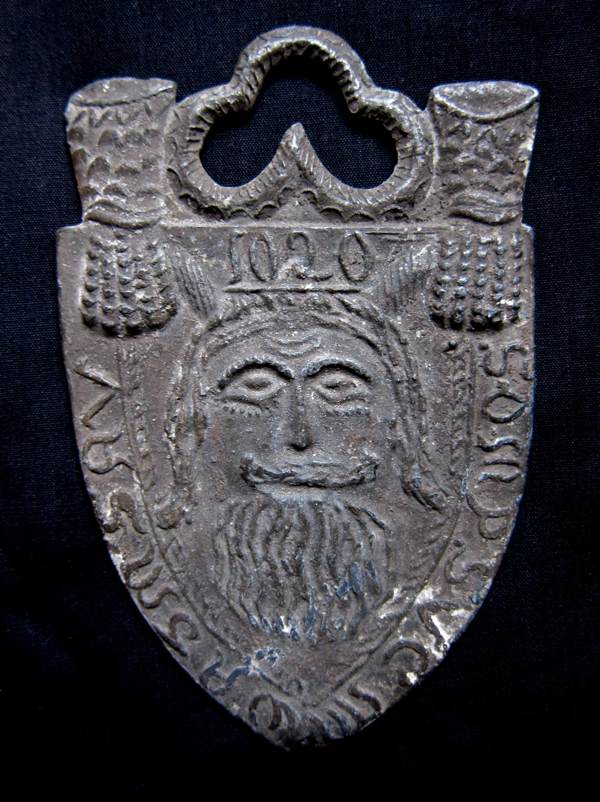
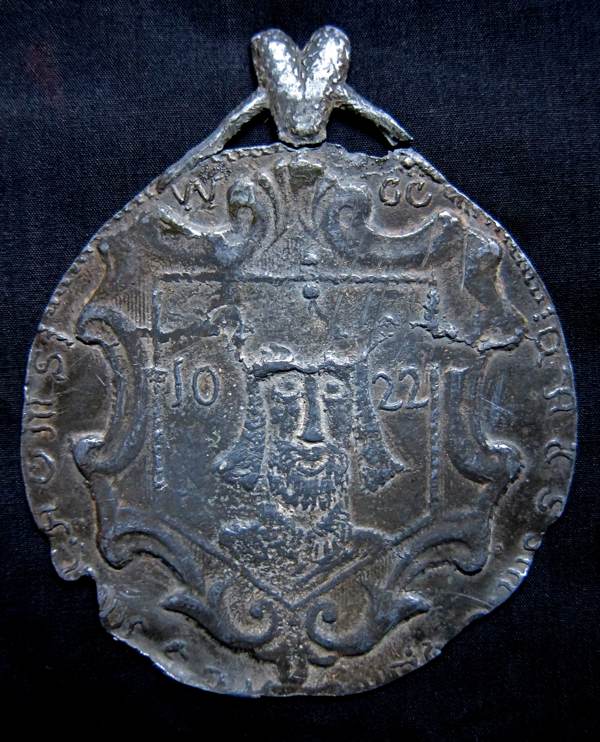
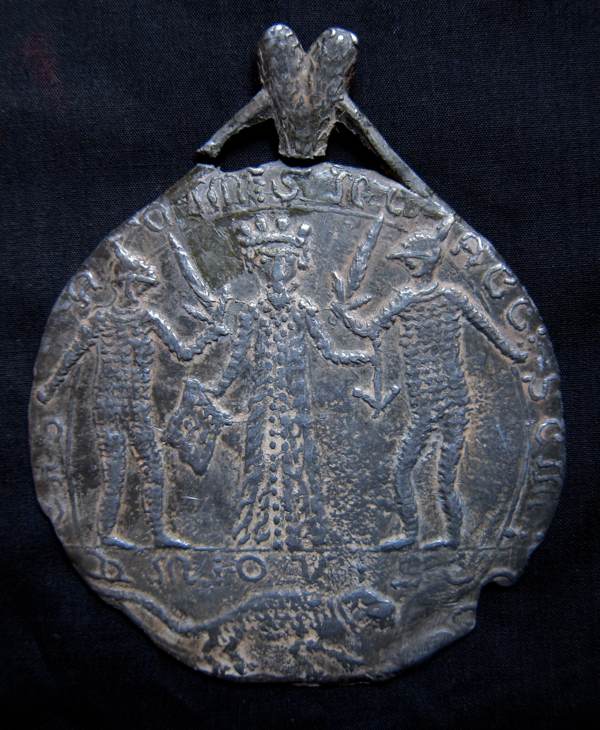
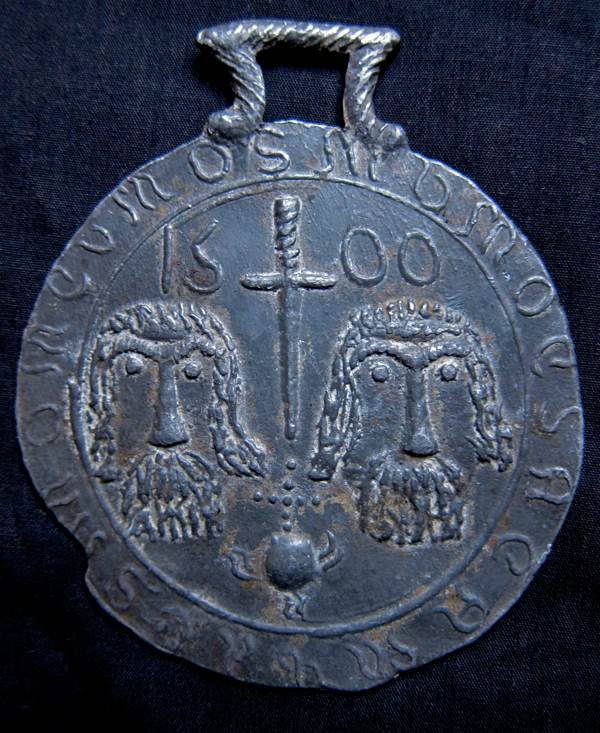
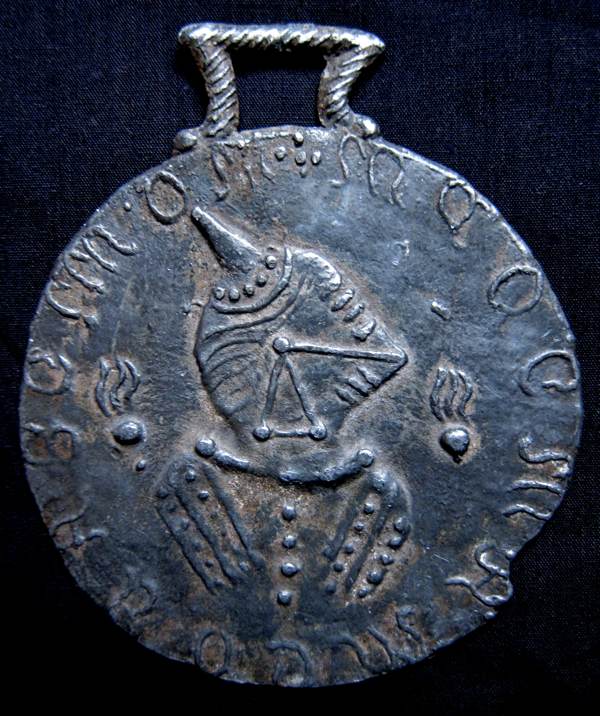
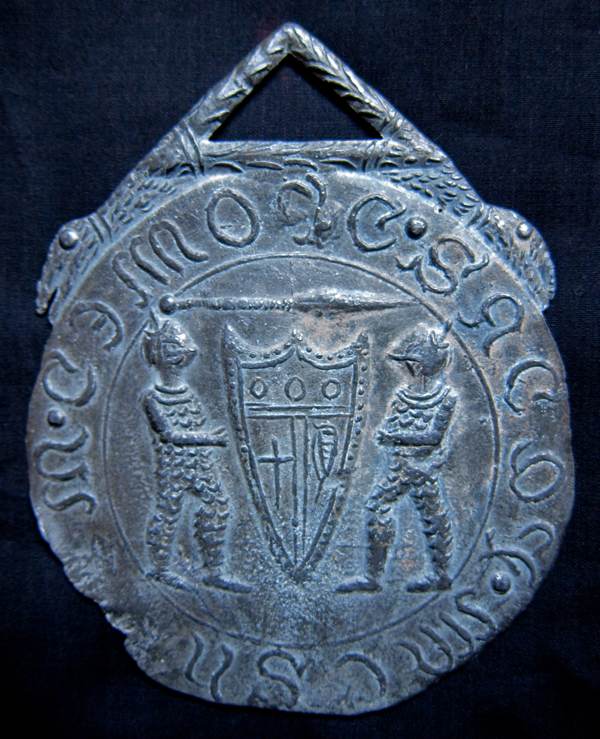
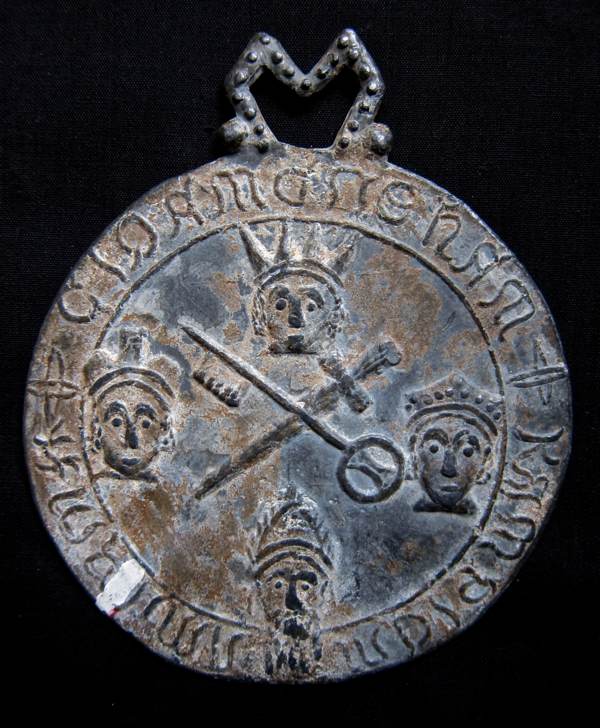
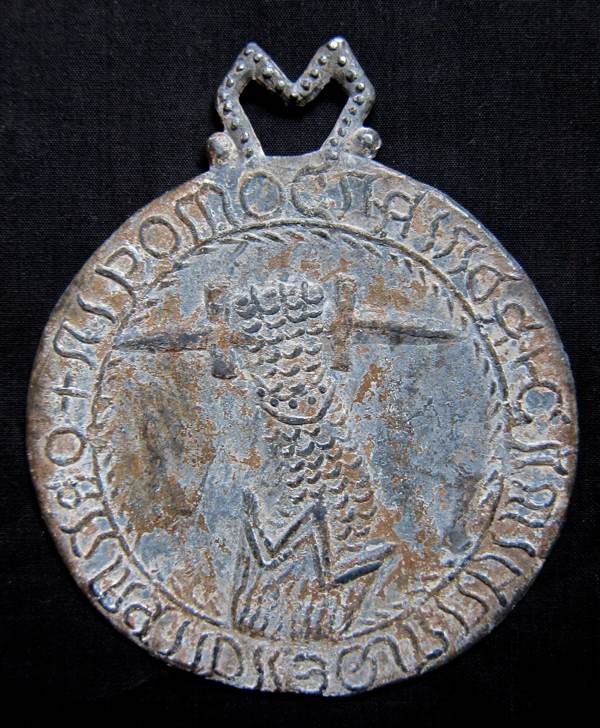
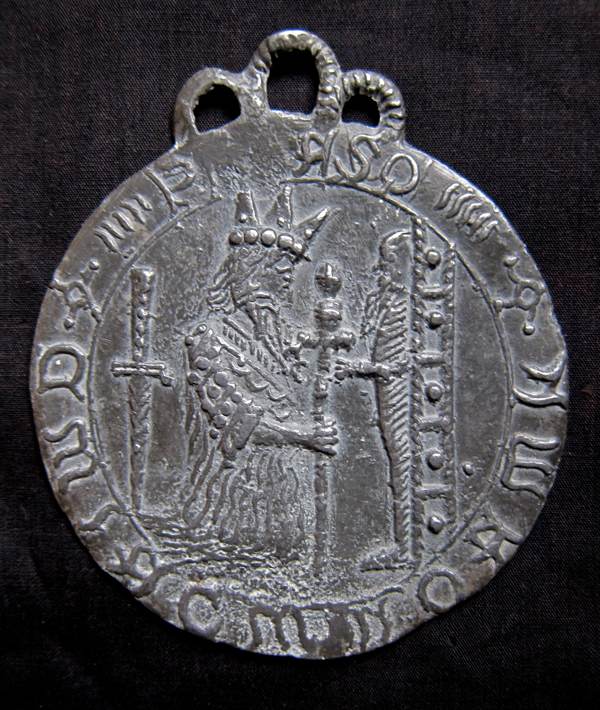
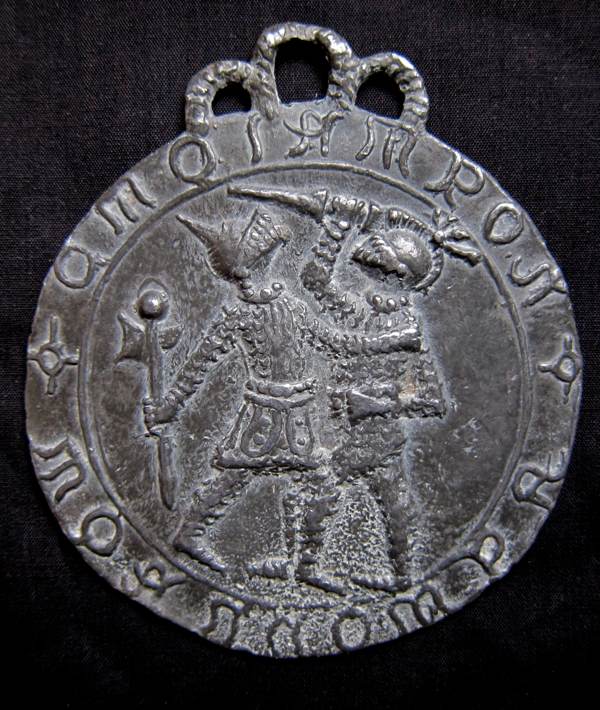
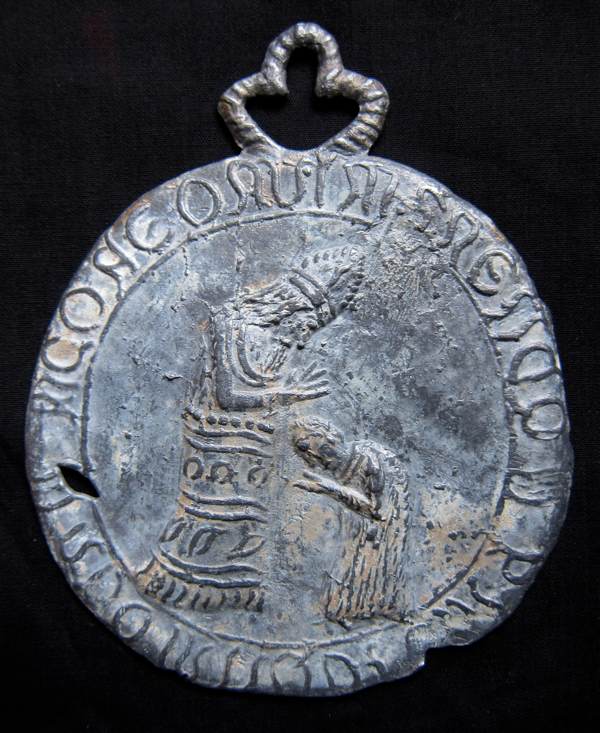
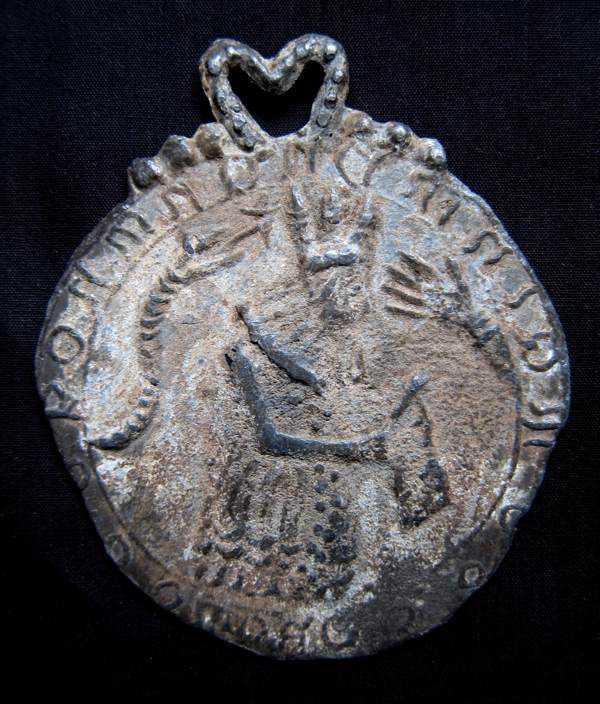
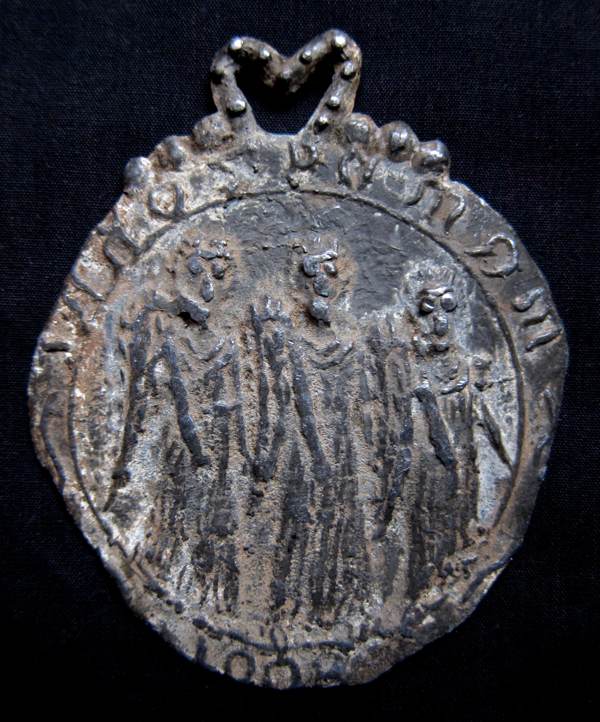
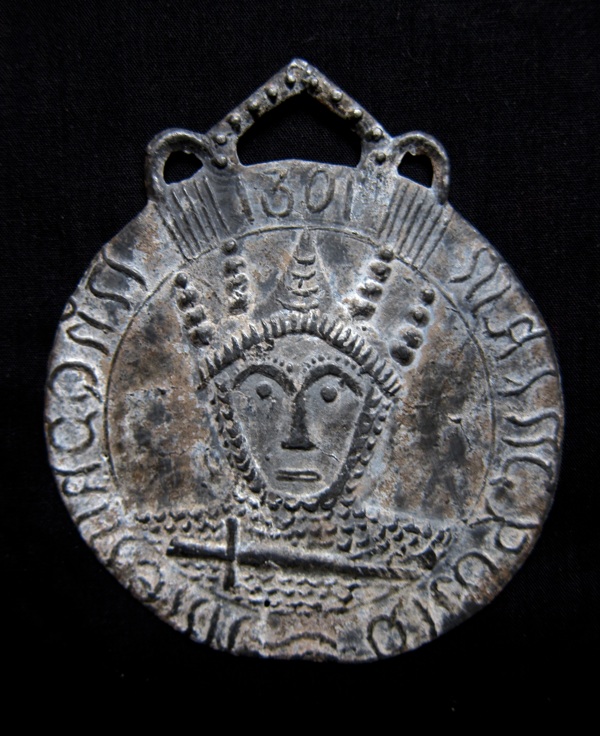
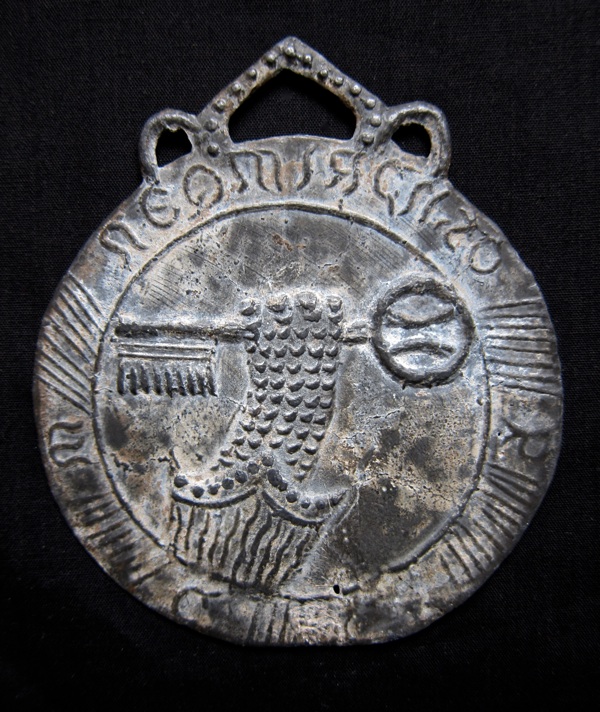
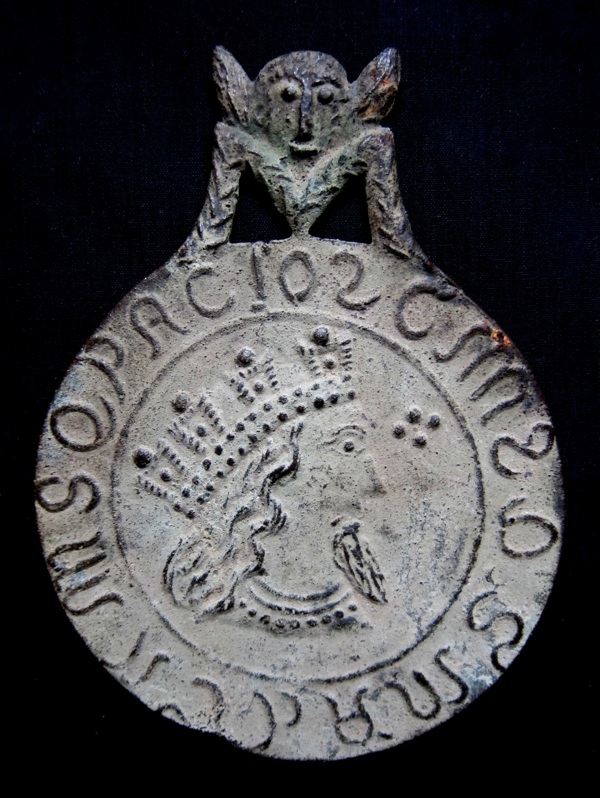
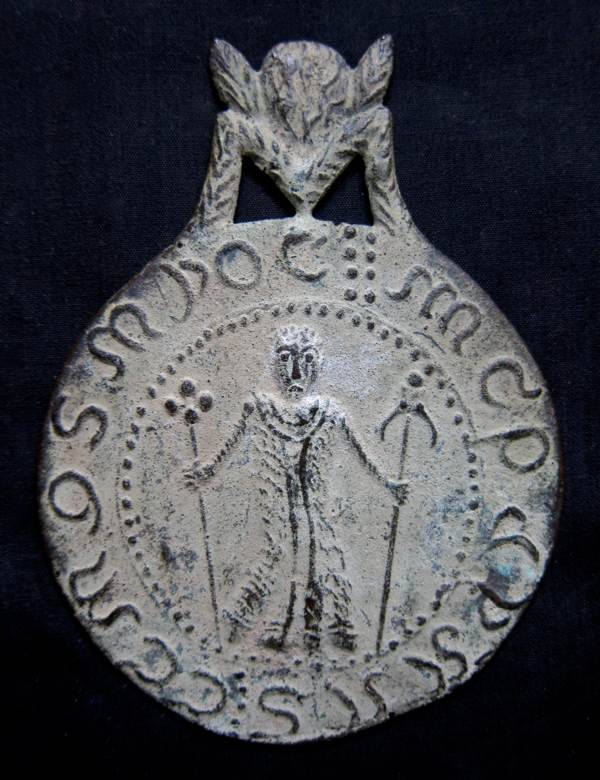
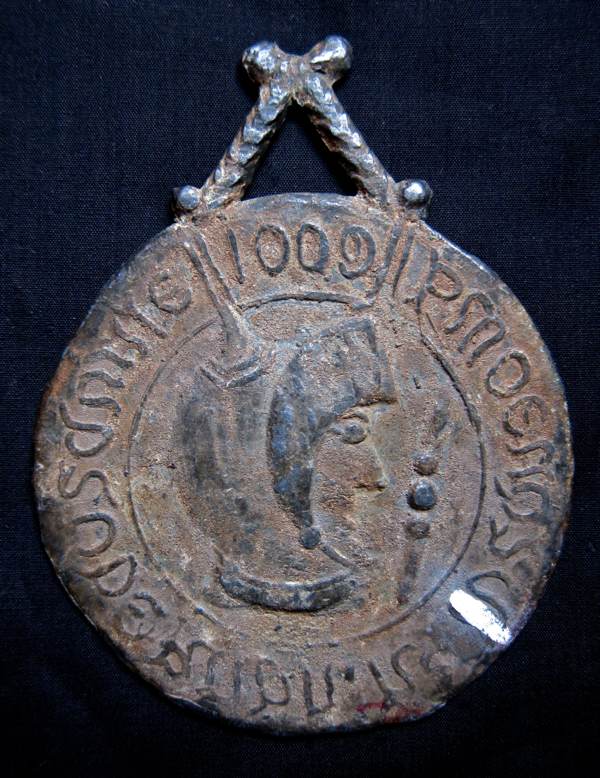
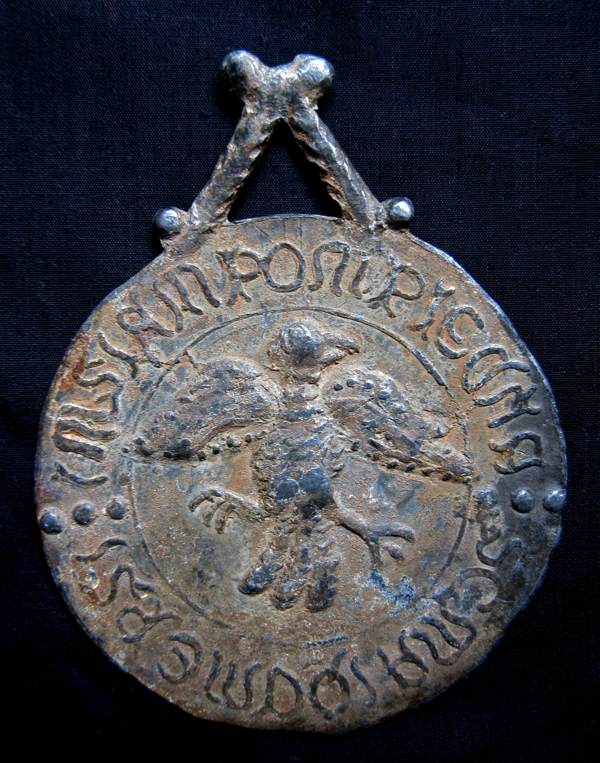
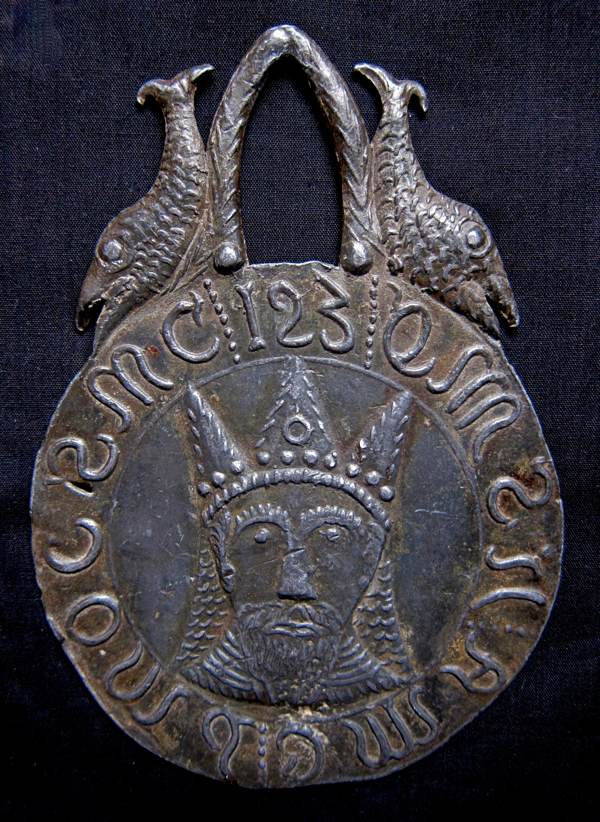
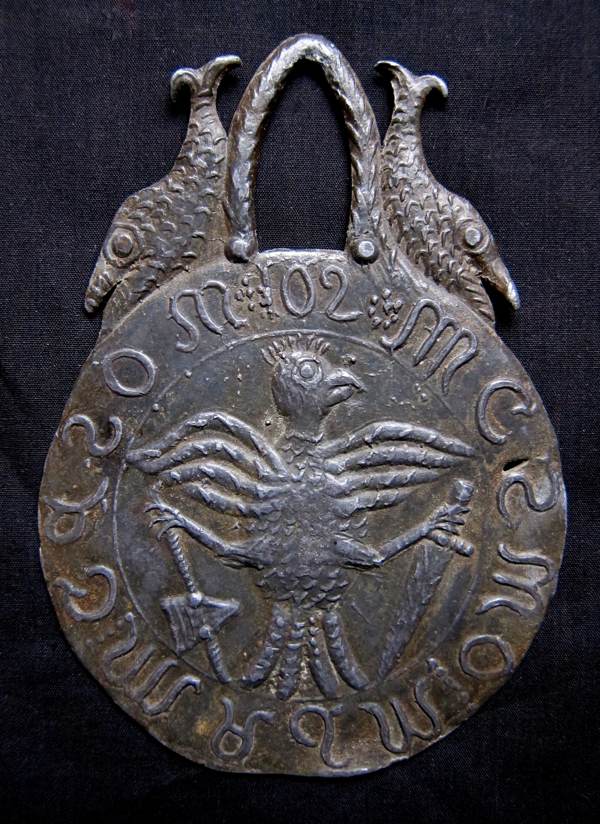
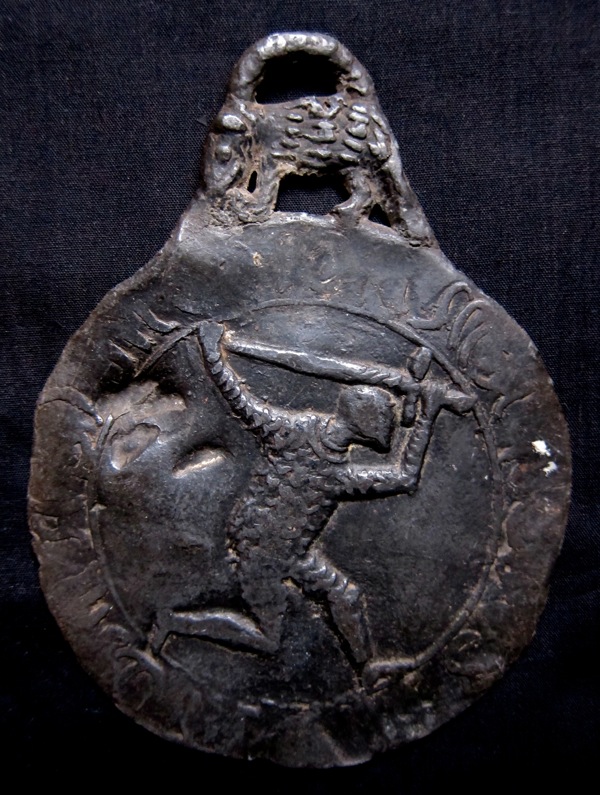
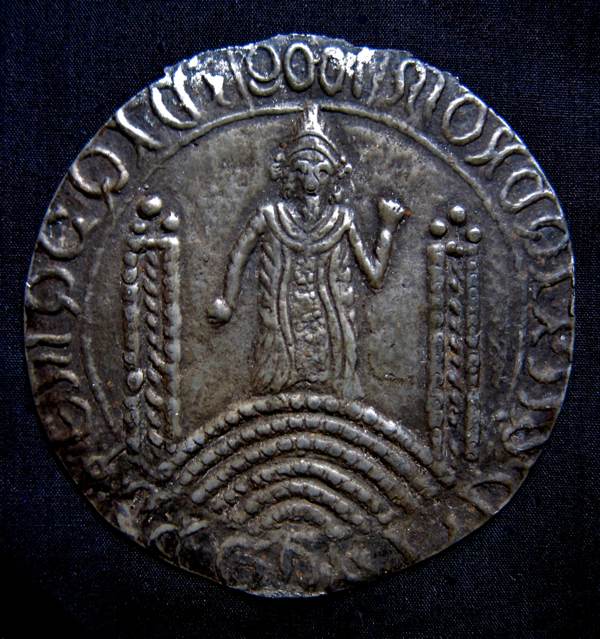
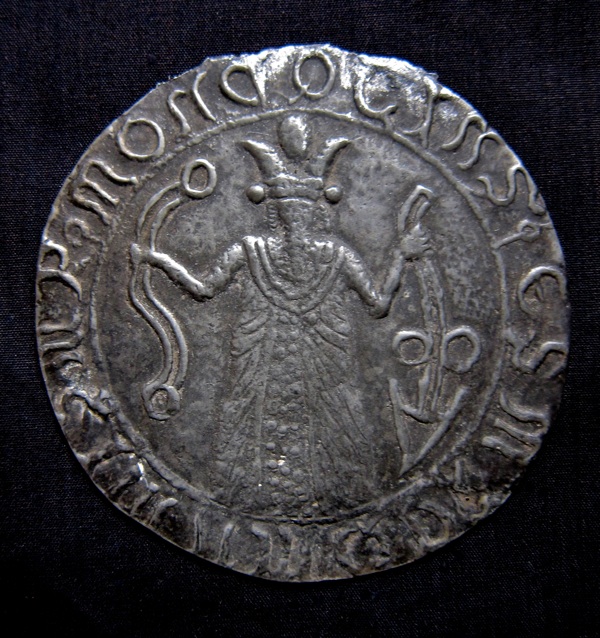
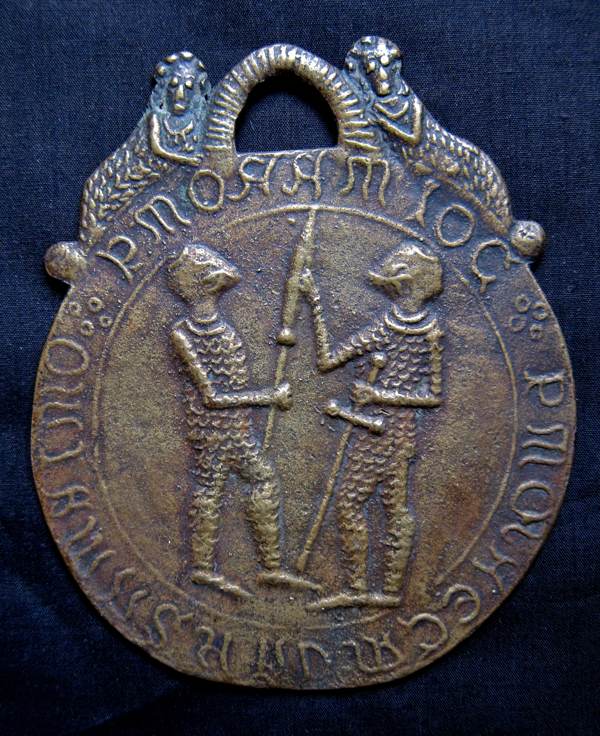
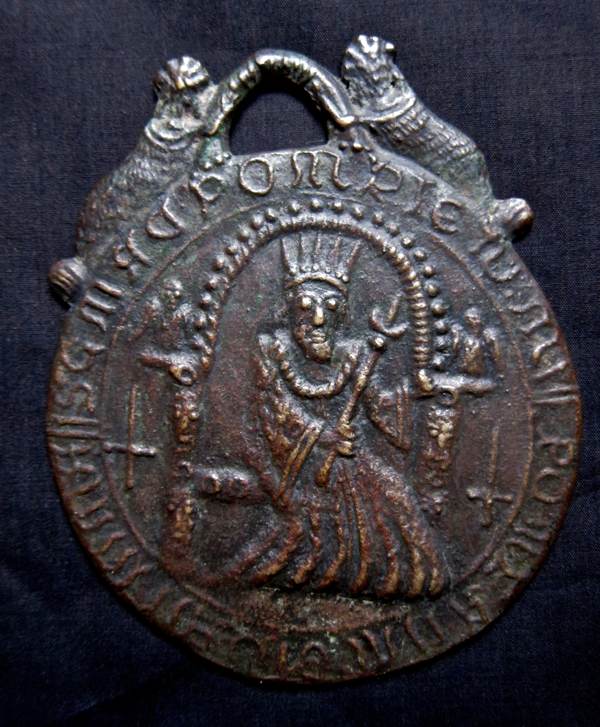
William Smith & Charles Eaton – better known as Billy & Charley – were a couple of Thames mudlarks who sold artefacts they claimed to have found in the Thames in Shadwell and elsewhere. Yet this threadbare veil of fiction conceals the astonishing resourcefulness and creativity that these two illiterate East Enders demonstrated in designing and casting tens of thousands of cod-medieval trinkets – eventually referred to as “Shadwell Shams” – which had the nineteenth century archaeological establishment running around in circles of confusion and misdirection for decades.
“They were intelligent but without knowledge,” explained collector Philip Mernick, outlining the central mystery of Billy & Charley, “someone told them ‘If you can make these, you can get money for them.’ Yet someone must also have given them the designs, because I find it hard to believe they had the imagination to invent all these – but maybe they did?”
Working in Rosemary Lane, significantly placed close to the Royal Mint, Billy & Charley operated in an area where small workshops casting maritime fixtures and fittings for the docks were common. Between 1856 until 1870, they used lead alloy and cut into plaster of paris with nails and knives to create moulds, finishing their counterfeit antiquities with acid to simulate the effects of age. Formerly, they made money as mudlarks selling their Thames discoveries to a dealer, William Edwards, whom Billy first met in 1845. Edwards described Billy & Charley as “his boys” and became their fence, passing on their fakes to George Eastwood, a more established antiques dealer based in the City Rd.
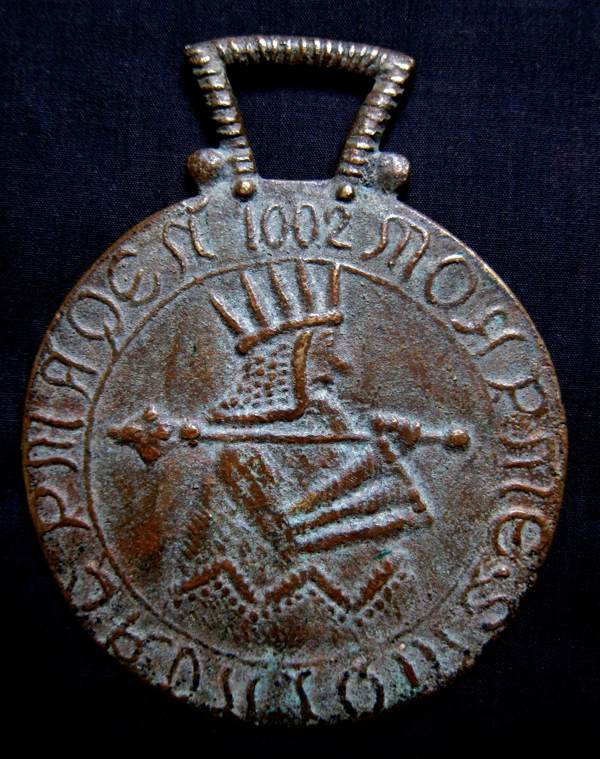
Badges, such as these from Philip Mernick’s collection, were their commonest productions – costing less than tuppence to make, yet selling for half a crown. These items were eagerly acquired in a new market for antiquities among the middle class who had spare cash but not sufficient education to understand what they were buying. Yet many eminent figures were also duped, including the archaeologist, Charles Roach Smith, who was convinced the artefacts were from the sixteenth century, suggesting that they could not be forgeries if there was no original from which they were copied. Similarly, Rev Thomas Hugo, Vicar of St Botolph’s, Bishopsgate, took an interest, believing them to be medieval pilgrims’ badges.
The question became a matter for the courts in August 1858 when the dealer George Eastwood sued The Athenaeum for accusing him of selling fakes. Eastwood testified he paid £296 to William Edwards for over a thousand objects that Edwards had originally bought for £200. Speaking both for himself and Charley, Billy Smith – described in the record as a “rough looking man” – assured the court that they had found the items in the Thames and earned £400 from the sale. Without further evidence, the judge returned a verdict of not guilty upon the publisher since Eastwood had not been named explicitly in print.
The publicity generated by the trial proved ideal for the opening of Eastwood’s new shop, moving his business from City Rd to Haymarket in 1859 and enjoying a boost in sales of Billy & Charley’s creations. Yet, two years later, the bottom fell out of the market when a sceptical member of the Society of Antiquaries visited Shadwell Dock and uncovered the truth from a sewer hunter who confirmed Billy & Charley’s covert means of production.
As they were losing credibility, Billy & Charley were becoming more accomplished and ambitious in their works, branching out into more elaborate designs and casting in brass. It led them to travel beyond the capital, in hope of escaping their reputation and selling their wares. They were arrested in Windsor in 1867 but, without sufficient ground for prosecution, they were released. By 1869, their designs could be bought for a penny each.
A year later, Charley died of consumption in a tenement in Wellclose Sq at thirty-five years old. The same year, Billy was forced to admit that he copied the design of a badge from a butter mould – and thus he vanishes from the historical record.
It is a wonder that the archaeological establishment were fooled for so long by Billy & Charley, when their pseudo-medieval designs include Arabic dates that were not used in Europe before the fifteenth century. Maybe the conviction and fluency of their work persuaded the original purchasers of its authenticity? Far from crude or cynical productions, Billy & Charley’s creations possess character, humour and even panache, suggesting they are the outcome of an ingenious delight – one which could even find inspiration for a pilgrim’s badge in a butter mould. Studying these works, it becomes apparent that there is a creative intelligence at work which, in another time, might be celebrated as the talent of an artist or designer, even if in Billy & Charley’s world it found its only outlet in semi-criminal activity.
Yet the final irony lies with Billy & Charley – today their Shadwell Shams are commonly worth more than the genuine antiquities they forged.






You may also like to read about
Chaplin In Spitalfields
Please support our JANUARY BOOK SALE. We only have nine titles left in the warehouse and some are on the brink of going out of print, so you can assist us clear the shelves by buying copies at half price to complete your collection, or as gifts for family and friends.
Click here and enter code ‘2022’ at checkout to get 50% discount
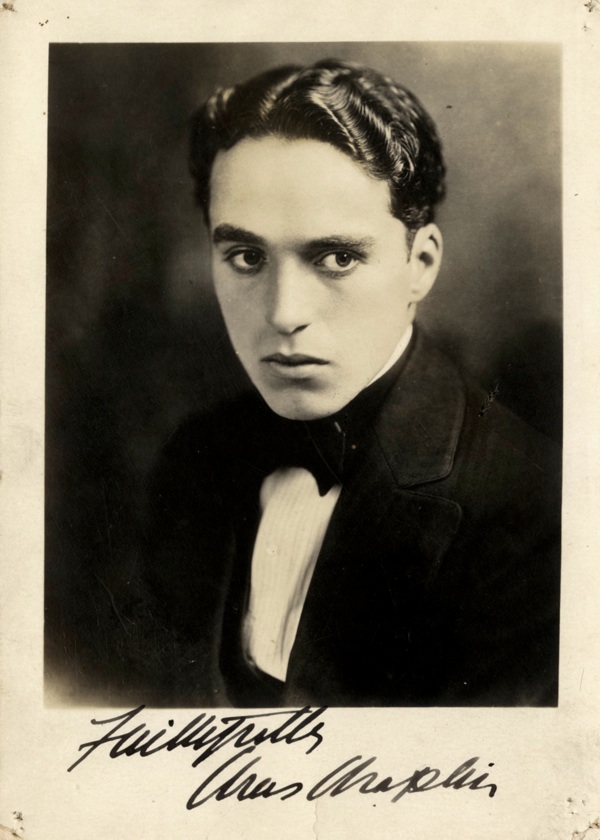
Somehow, it came as no surprise to discover that he had been here – because I always thought of Charlie Chaplin as the one who carried a certain culture of the penniless, the ragged and the downtrodden from Europe across the Atlantic, translating it with such superlative success into an infinite capacity for hope, humour and resourcefulness in America. For centuries, Spitalfields has offered a refuge to the homeless and the dispossessed, so it makes sense that the most famous tramp of all time should have known this place.
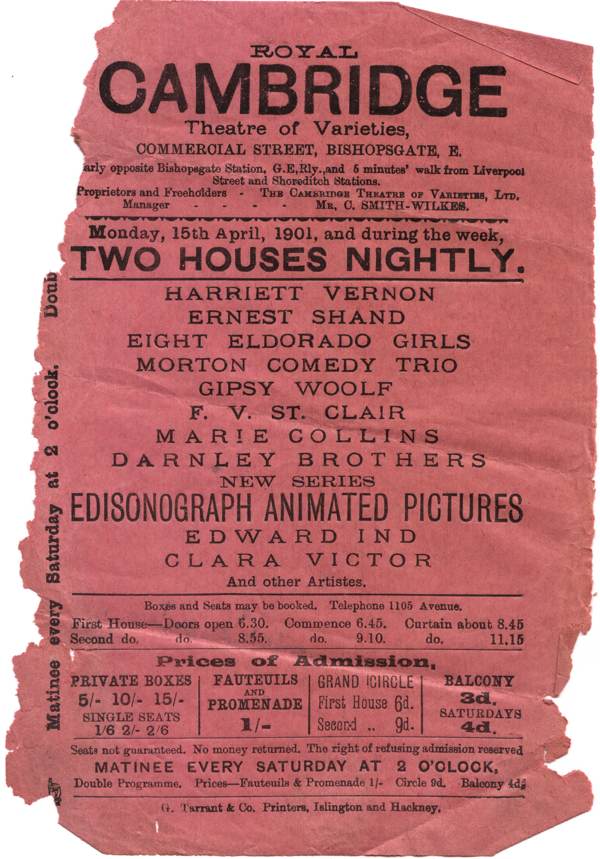
Vivian Betts who grew up in The Primrose in Bishopsgate gave me handful of playbills that had been in the pub as long as she remembered and which she took with her when they left in 1974 before the building was demolished. These bills were for the Royal Cambridge Theatre of Varieties in Commercial St. Opening in 1864, this vast two thousand seater theatre with a bar capacity of another thousand must have once presented a dramatic counterpoint to the church on the other side of the Spitalfields Market. Yet in the nineteenth century, it was one among many theatres in the immediate vicinity, in the days when the East End could match the West End for theatre and night life.
The ten-year-old Chaplin performed here as one of The Eight Lancashire Lads, a juvenile clog dance troupe, on Tuesday 24th October 1899 as part of the First Anniversary Benefit Performance, celebrating the reopening of the theatre a year earlier, after a fire that had destroyed it in 1896.
Before he died, Chaplin’s alcoholic father signed up his son at the age of eight, in November 1898, with his friend William Jackson who managed The Eight Lancashire Lads, in return for the boy’s board and lodgings and a payment of half a crown a week to Chaplin’s mother Hannah. The engagement took Chaplin away from his pitiful London childhood and from his mother who had struggled to support him and his elder brother Sydney on her own, existing at the edge of mental illness while moving the family in and out of a succession of rented rooms until her younger son ended up in the workhouse at seven.
“After practising for eight weeks, I was eligible to dance with the troupe. But now that I was past eight years old, I had lost my assurance and confronting the audience for the first time gave me stage fright. I could hardly move my legs. It was weeks before I could do a solo dance as the rest of them did.” Chaplin wrote of joining The Eight Lancashire Lads with whom he made his debut in Babes in the Wood, on Boxing Day 1898 at the Theatre Royal, Manchester.“My memory of this period goes in and out of focus,” he admitted later, “The outstanding impression was of a quagmire of miserable circumstances.”
Yet Chaplin’s experience touring Britain when Music Hall was at its peak of popularity proved both a great adventure and an unparalleled schooling in the method, technique and discipline that every performer requires to hold an audience. “Audiences like The Eight Lancashire Lads because, as Mr Jackson said, we were so unlike theatrical children. It was his boast that we never wore grease paint and our rosy cheeks were natural. If some of us looked a little pale before going on, he would tell us to pinch our cheeks,” Chaplin recalled,“But in London, after working two or three Music Halls a night, we would occasionally forget and look a little weary and bored as we stood on the stage, until we caught sight of Mr Jackson in the wings, grinning emphatically and pointing to his face, which had an electrifying effect of making us break into sparkling grins.”
The handbills that Vivian Betts gave me for the Royal Cambridge Theatre of Varieties date from 1900 and, significantly, one contains the announcement of Edisonograph Animated Pictures as part of the programme, advertising the new medium in which Chaplin was to become pre-eminent and that would eventually eclipse Music Hall itself.
As soon as he had mastered the dance act, Chaplin was impatient to move on to solo comedy. “I was not particularly enamoured with being just a clog dancer in a troupe of eight lads. Like the rest of them I was ambitious to do a single act, not only because it meant more money but because I instinctively felt it would be more gratifying than just dancing,” he wrote later of his precocious ten-year-old self, “I would like to have been a boy comedian – but that would have required nerve, to stand on the stage alone.”
It was in Whitechapel in the autumn of 1907 that the seventeen-year-old Chaplin made his solo comedy debut, at a Music Hall in the Cambridge Heath Rd. “I had obtained a trial week without pay at the Foresters’ Music Hall situated off the Mile End Rd in the centre of the Jewish quarter. My hopes and dreams depended on that trial week,” he declared. Yet the young Chaplin made a spectacular misjudgement. “At the time, Jewish comedians were all the rage in London, so I thought I would hide my youth under whiskers. I invested in musical arrangements for songs and funny dialogue taken from an American joke book, Madison’s Budget.” Chaplin was foolishly unaware that a Jewish satire might not play in the East End in front of a Jewish audience. “Although I was innocent of it, my comedy was most anti-Semitic and my jokes were not only old ones but very poor, like my Jewish accident.”
The disastrous consequences of Chaplin’s error in Whitechapel were to haunt him for the rest of his career. “After the first couple of jokes, the audience started throwing coins and orange peel and stamping their feet and booing. At first, I was not conscious of what was going on. Then the horror of it filtered into my mind. When I came off stage, I went straight to my dressing room, took off my make-up, left the theatre and never returned. I did my best to erase the night’s horror from my mind, but it left an indelible mark on my confidence.” he concluded in hindsight, conceding, “The ghastly experience taught me to see myself in a truer light.”
In 1908, Chaplin signed with Fred Karno’s comedy company in which he quickly became a rising star and, touring to America in 1913, he was talent spotted by the Keystone Film Studios and offered a contract at twenty-four years old for $150 a week. “What had happened? It seemed the world had suddenly changed, had taken me into its fond embrace and adopted me.” he wrote in astonishment and relief at his change of fortune in a life that had previously comprised only struggle.
Now I shall always think of the ten-year-old Chaplin when I walk down Commercial St, on his way to the Cambridge Theatre of Varieties, pinching his sallow cheeks to make a show of good cheer and with his whole life in motion pictures awaiting him.
At the northern end of Commercial St is the site of The Theatre, the first purpose-built theatre, where William Shakespeare performed and his early plays were staged. At the southern end of Commercial St is the site of the Goodman’s Fields Theatre, where David Garrick made his debut in Richard III and initiated the Shakespeare revival. And in middle was the Royal Cambridge Theatre of Varieties, where Charlie Chaplin played. Most that pass down it may be unaware, yet the line of Commercial St traces a major trajectory through our culture.

Charlie Chaplin performed with The Eight Yorkshire Lads at the Royal Cambridge Theatre of Varieties in Commercial St on Tuesday 24th October 1899.

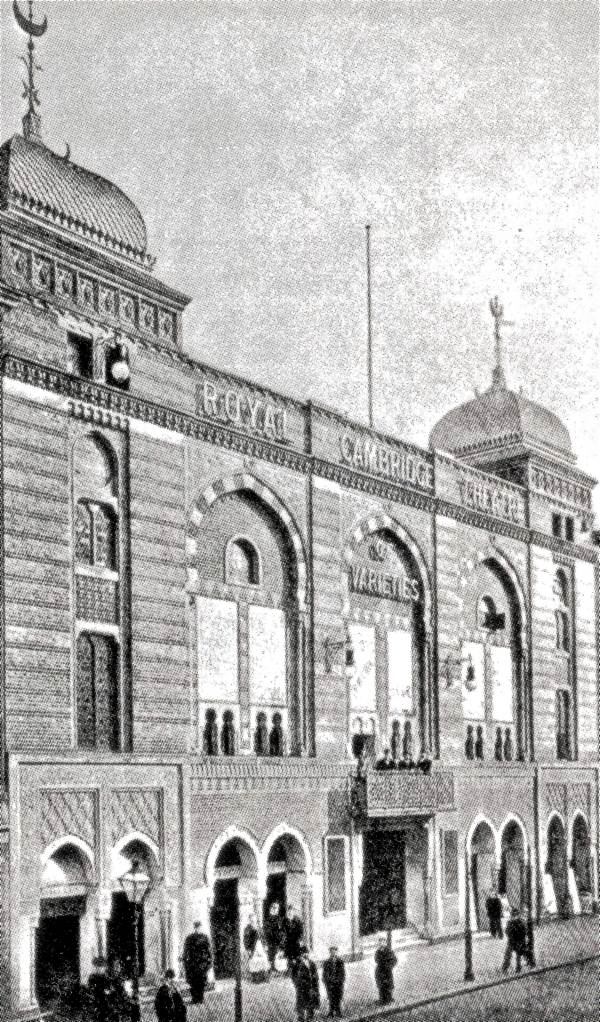
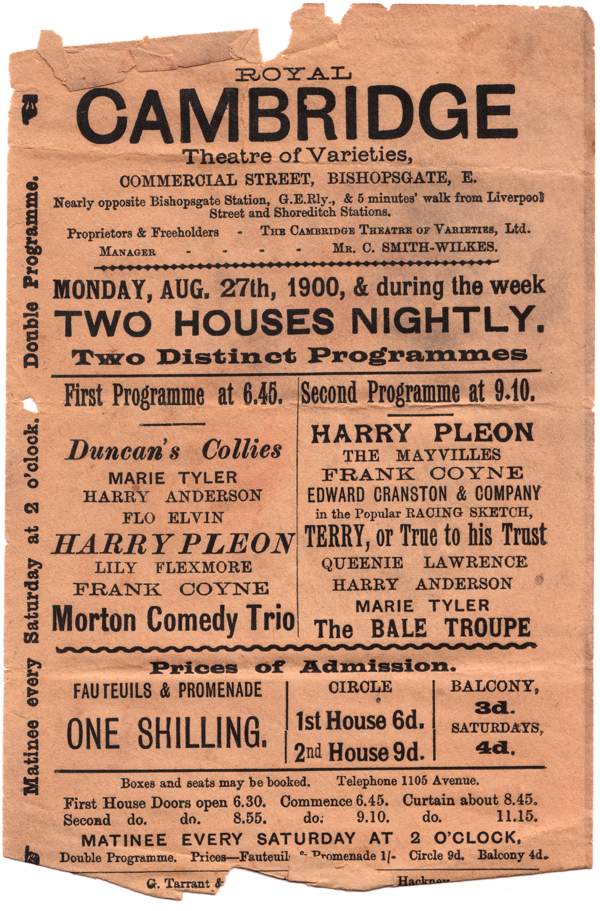
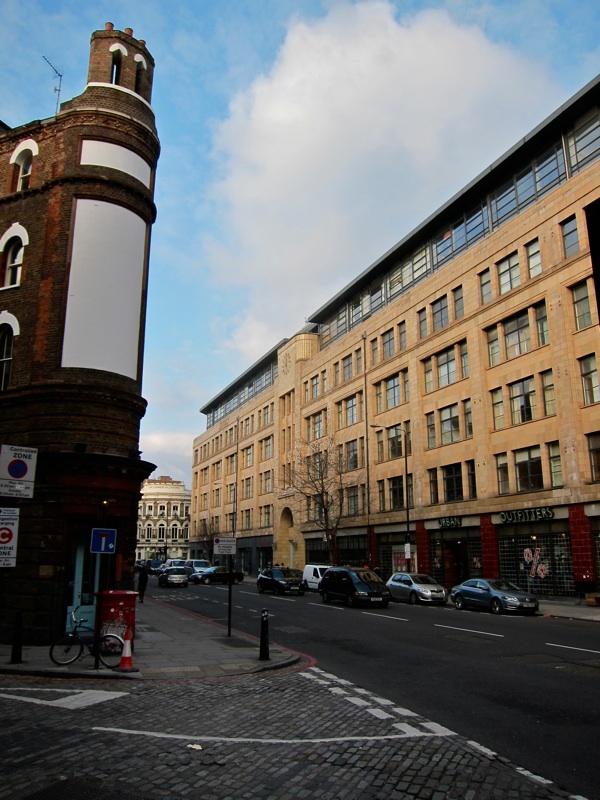
The extension of the Godfrey & Phillips cigarette factory replaced the demolished Royal Cambridge Theatre of Varieties in 1936.
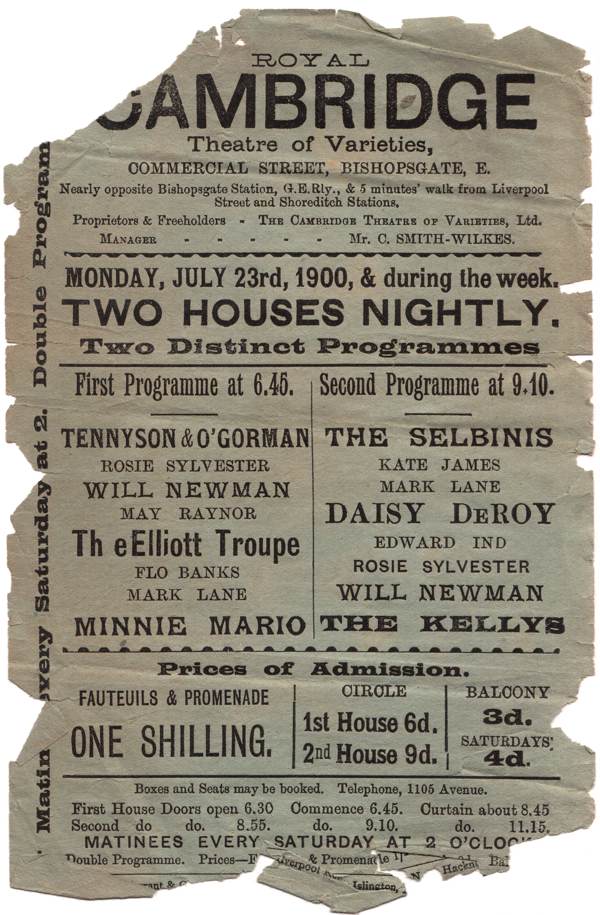
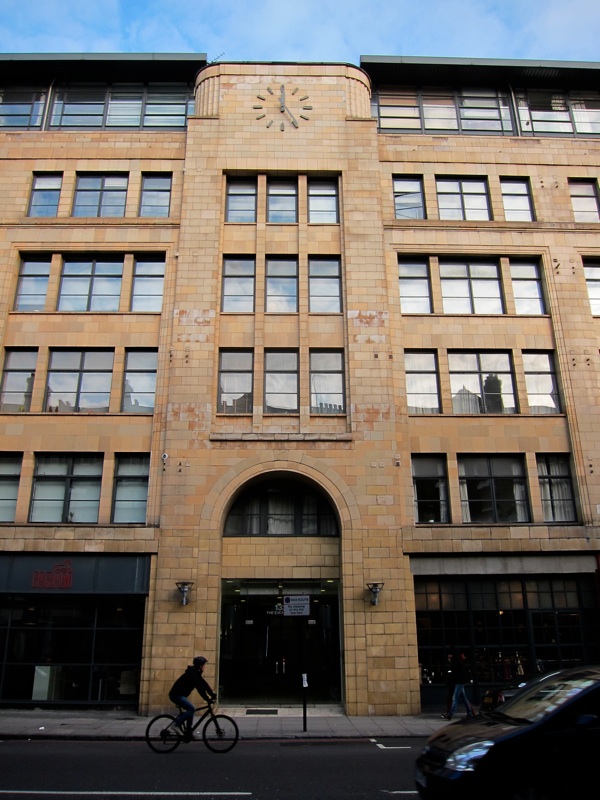
The entrance of the Godfrey & Phillips building echoes the entrance of the Royal Cambridge Theatre of Varieties.
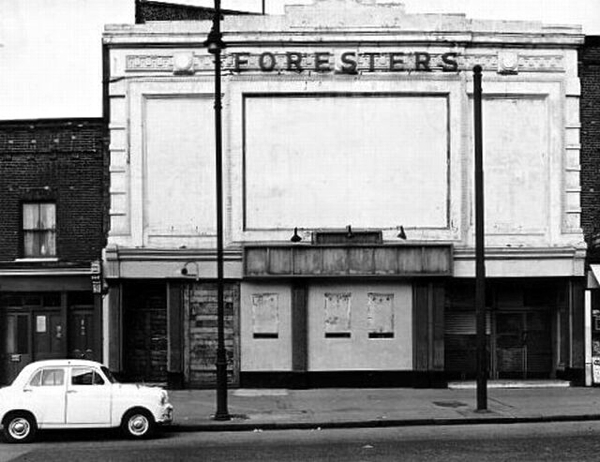
Foresters Music Hall, 95 Cambridge Heath Rd – where Charlie Chaplin gave his disastrous first solo comedy performance in 1907 – demolished in 1965.
My grateful thanks to David Robinson, Chaplin’s biographer, for his assistance with this article.
You may also like to read about