
From Limehouse To Shoreditch
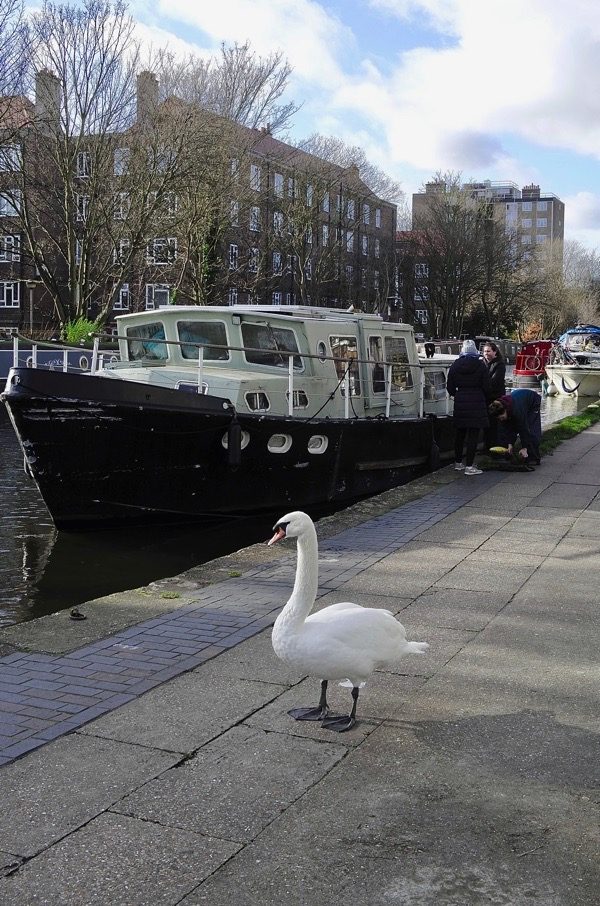
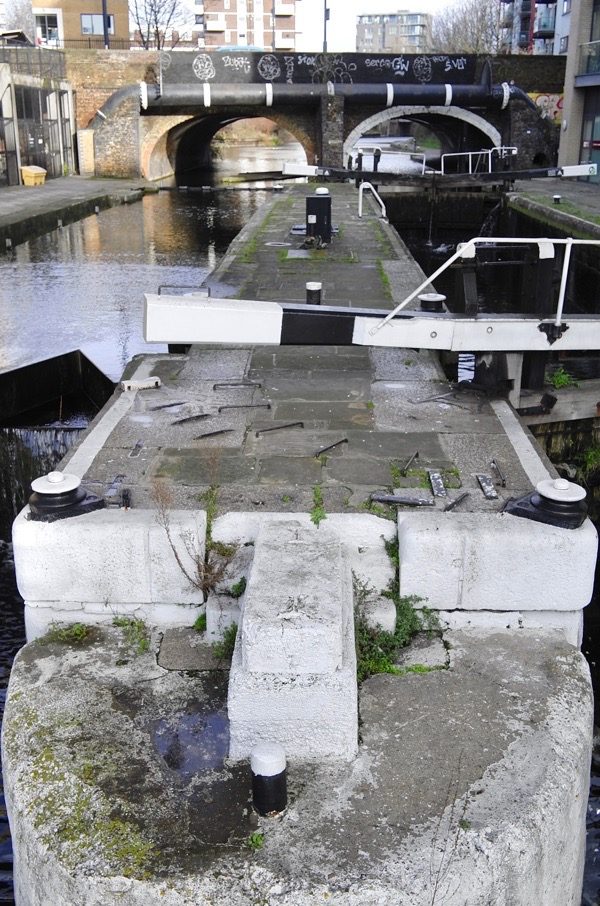
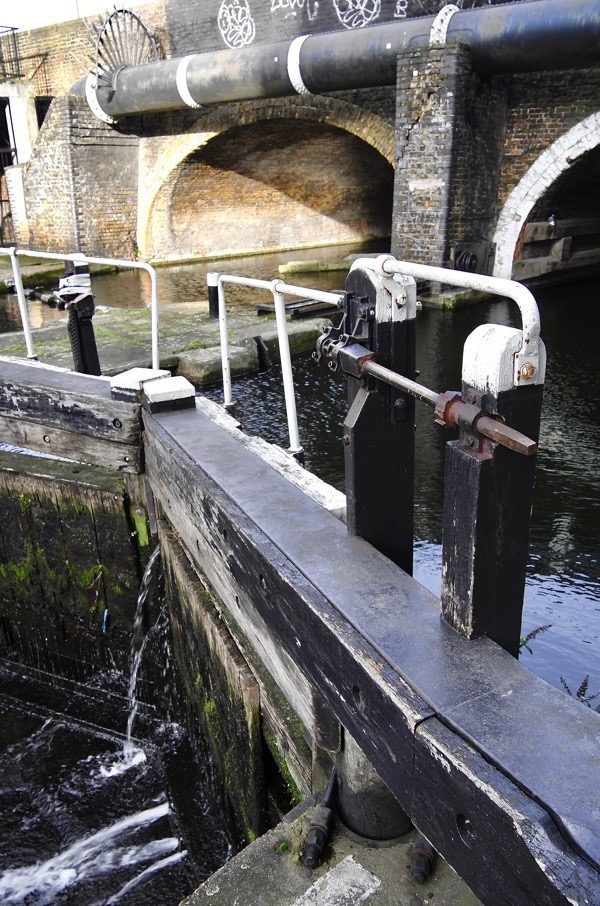
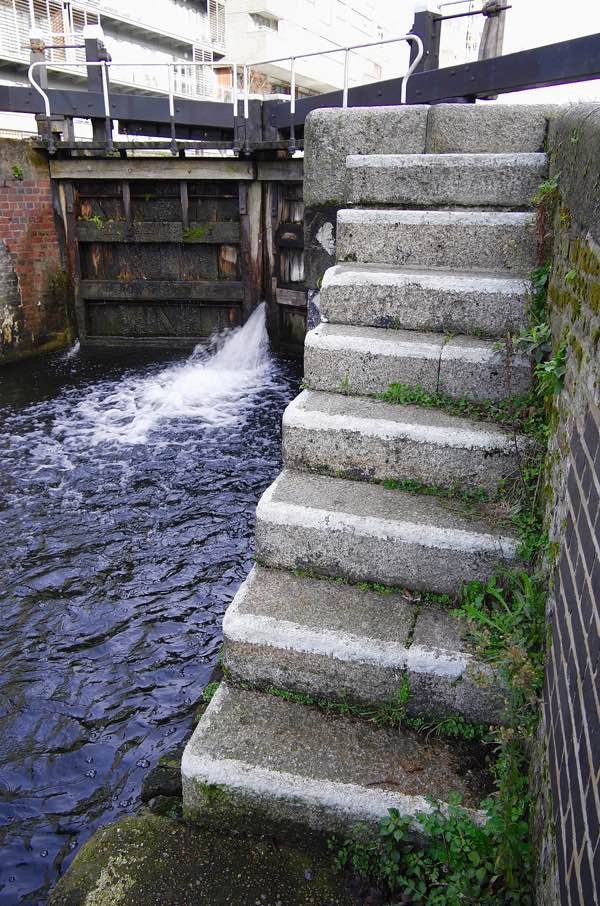
I took advantage of yesterday’s January sunshine to enjoy a ramble along the Regent’s Canal with my camera, tracing its arc which bounds the northern extent of the East End. At first, there was just me, some moorhens, a lonely swan, and a cormorant, but as the morning wore on cyclists and joggers appeared. Starting at Limehouse Basin, I walked west along the canal until I reached the Kingsland Rd. By then clouds had gathered and my hands had turned blue, so I returned home to Spitalfields hoping for another bright day soon when I can resume my journey onward to Paddington Basin.
At Limehouse Basin
Commercial Rd Bridge
Johnson’s Lock
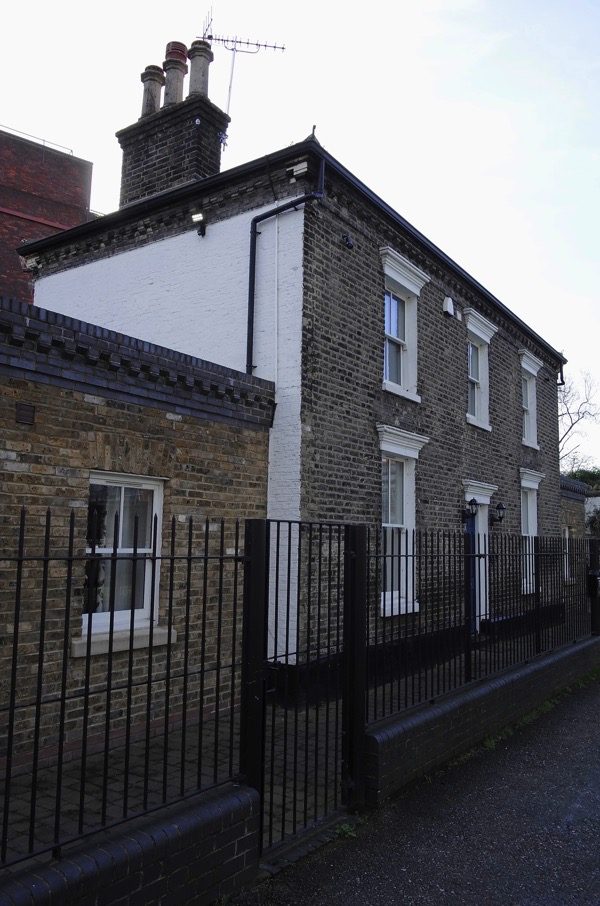
Lock keeper’s cottage at Johnson’s Lock
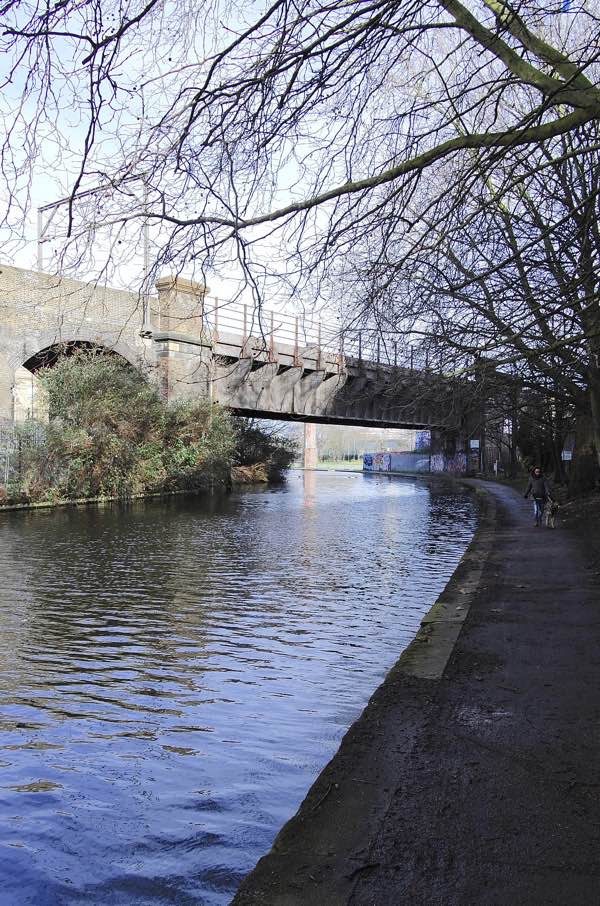
Great Eastern Railway bridge
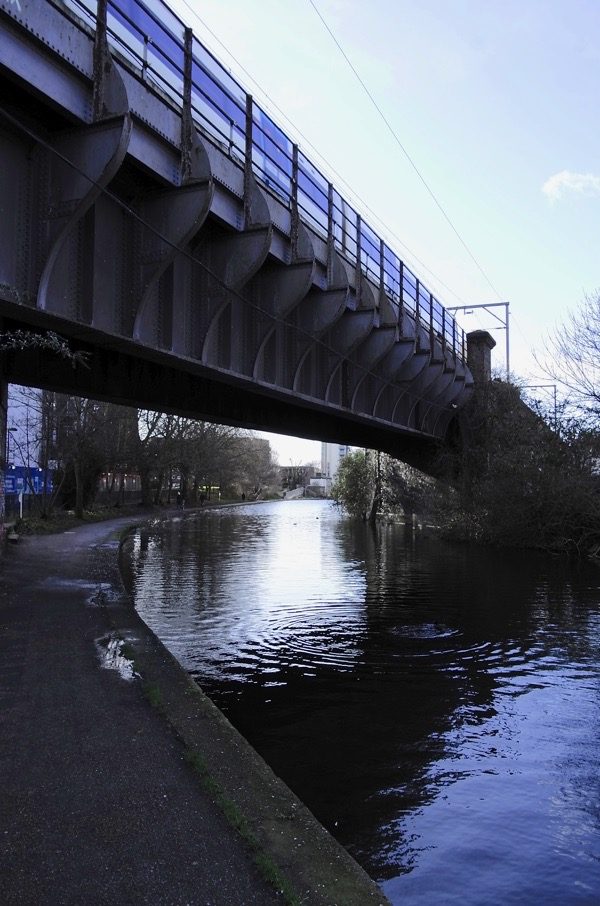
Great Eastern Railway bridge
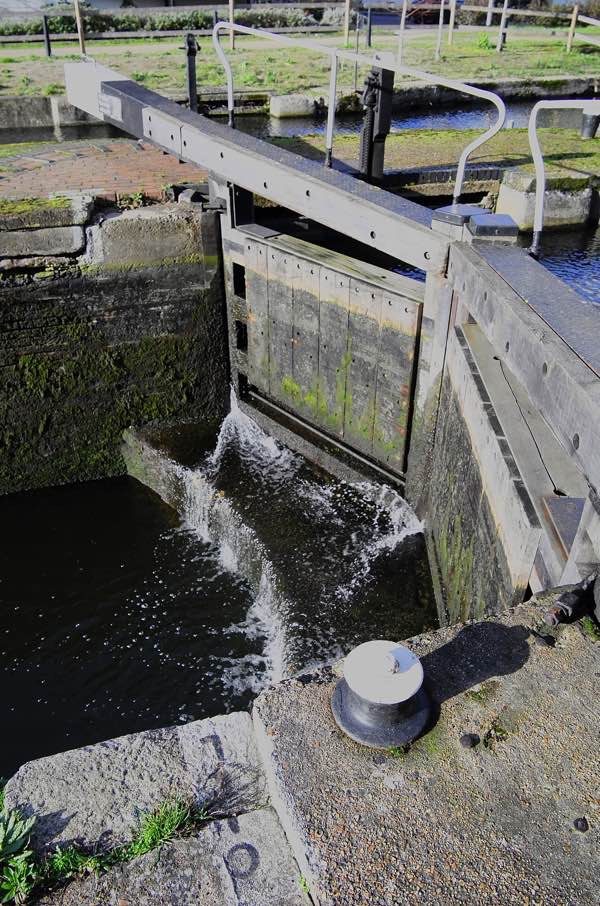
Salmon Lane Lock
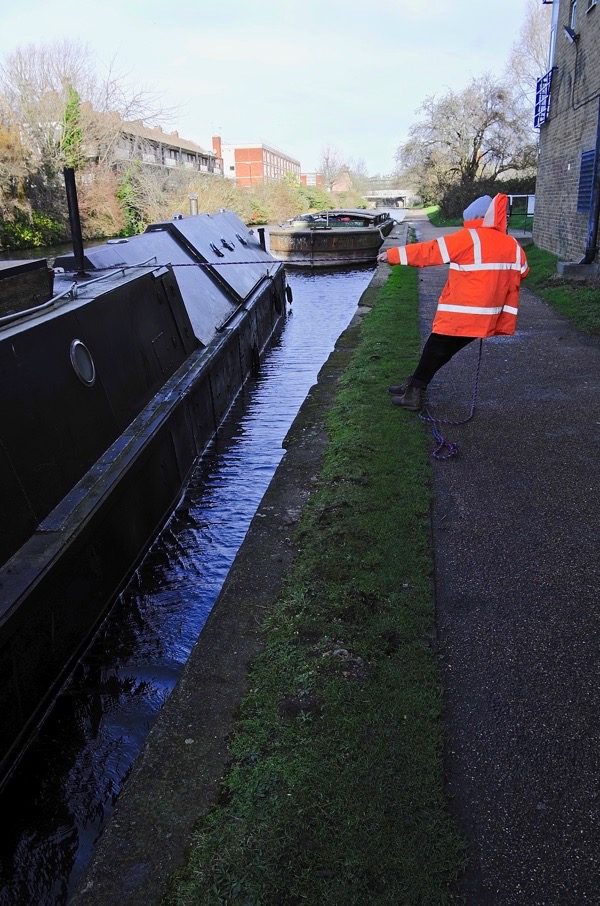
Barge dweller mooring his craft
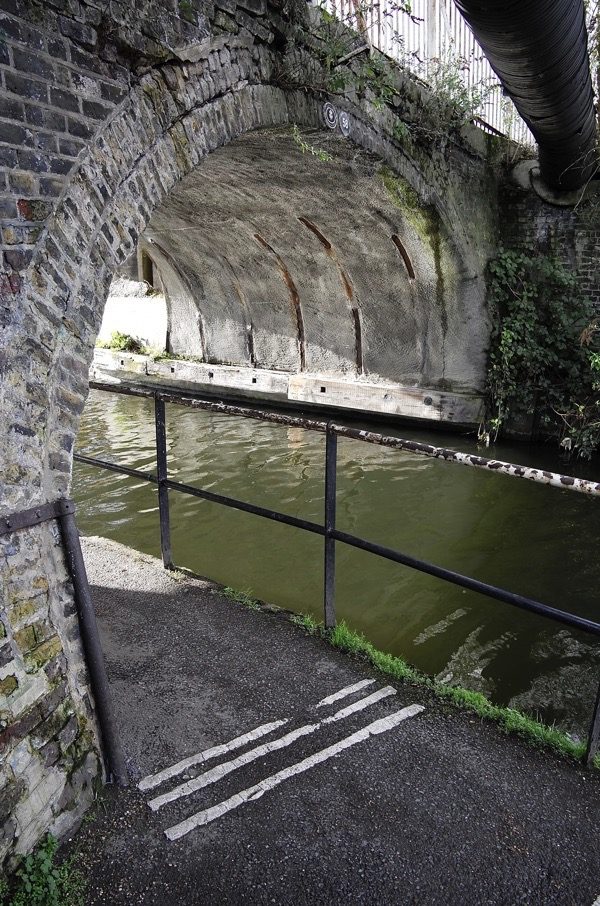
Solebay St Bridge
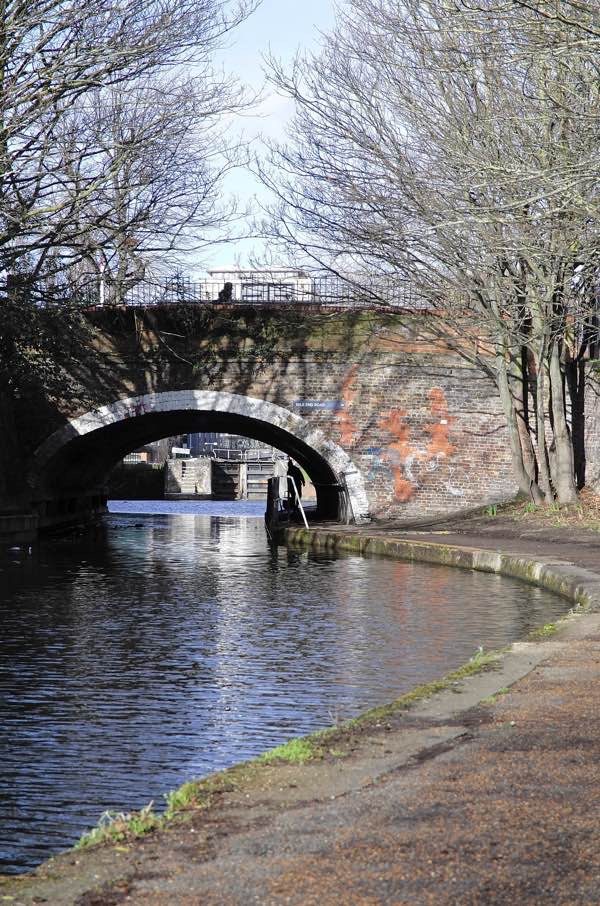
Mile End Rd bridge
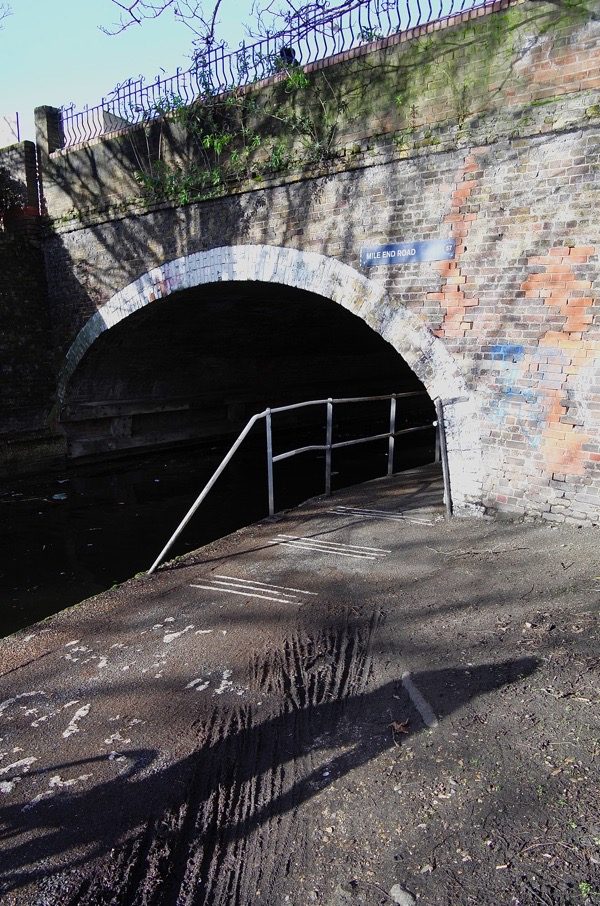
Cyclist at Mile End Rd bridge
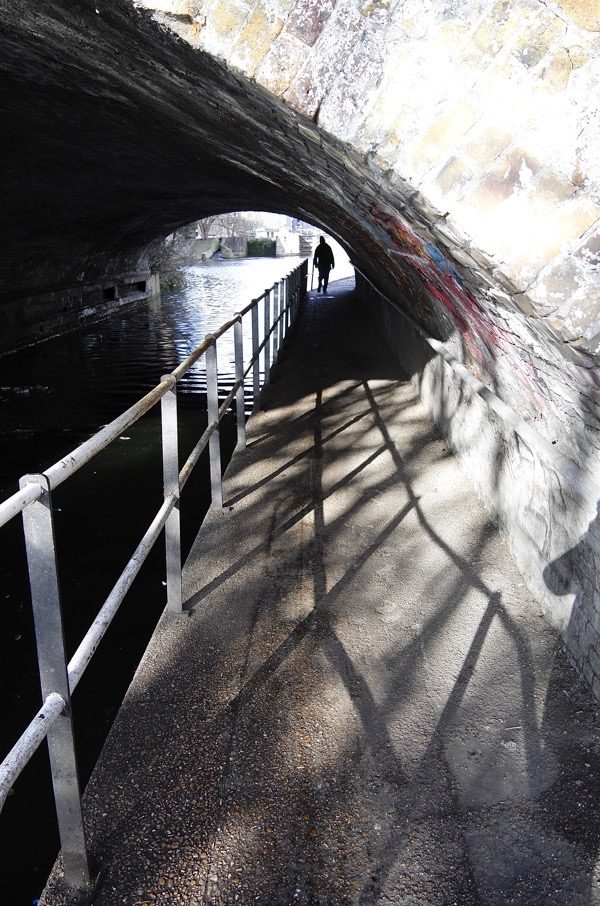
Looking through Mile End Rd bridge
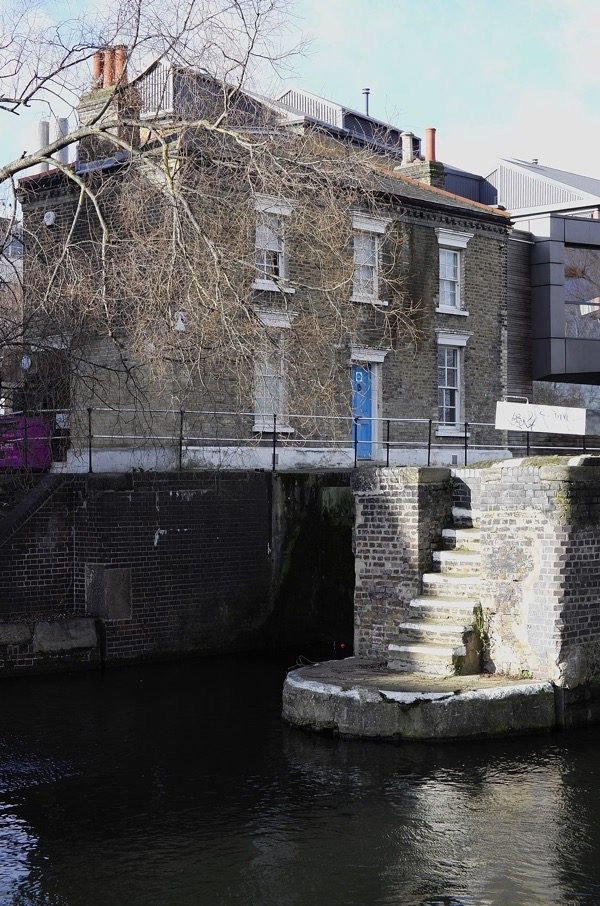
Mile End Lock keeper’s cottage
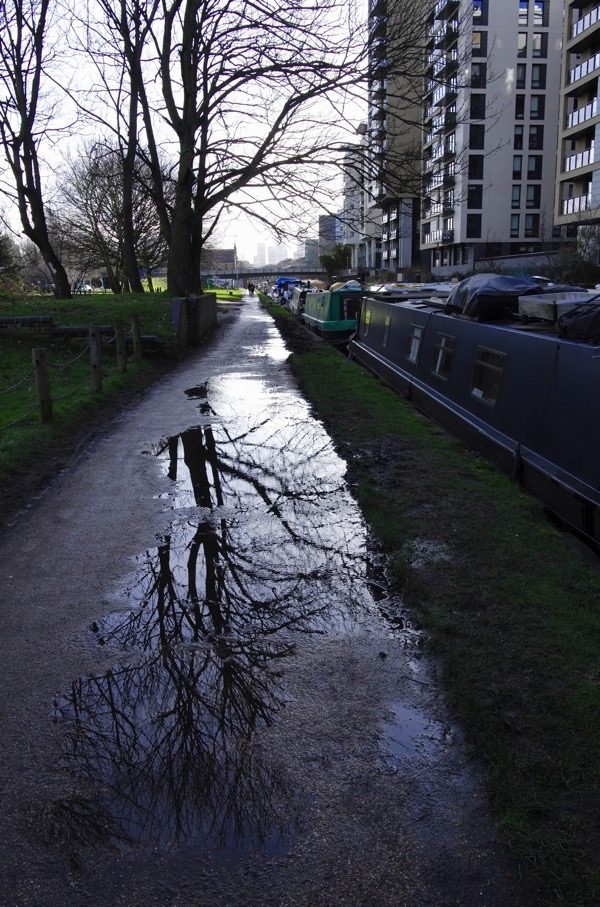
Looking back towards the towers of Canary Wharf
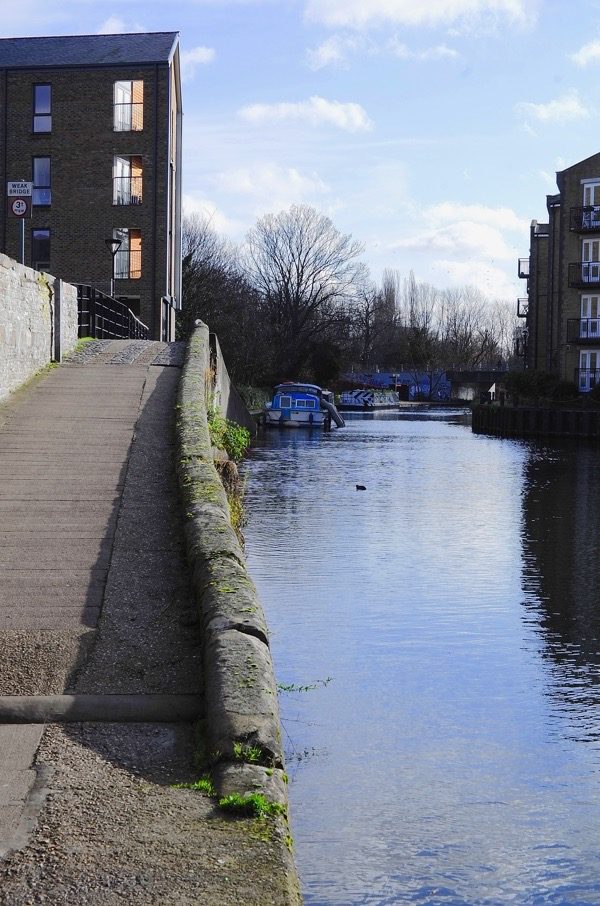
At the junction with Hertford Union Canal
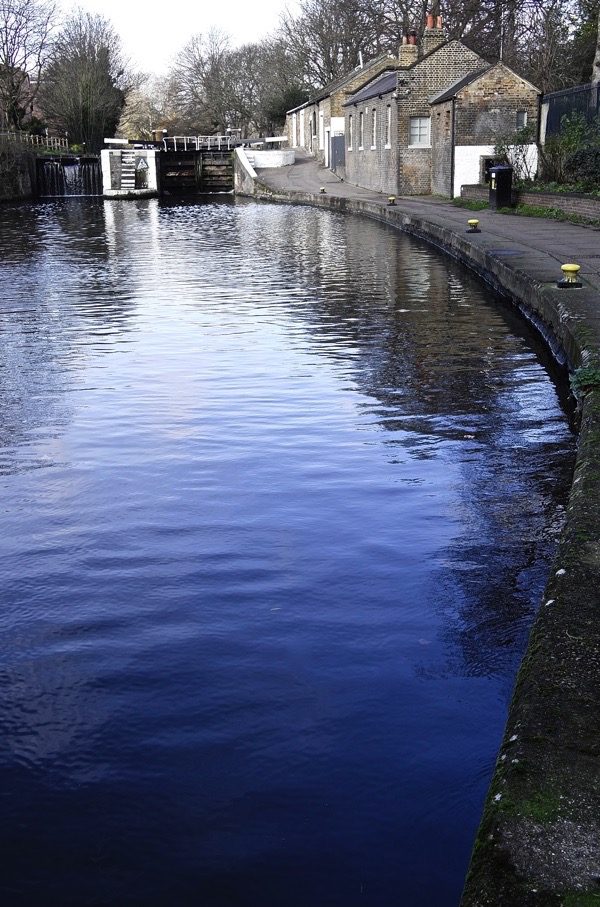
Old Ford Lock
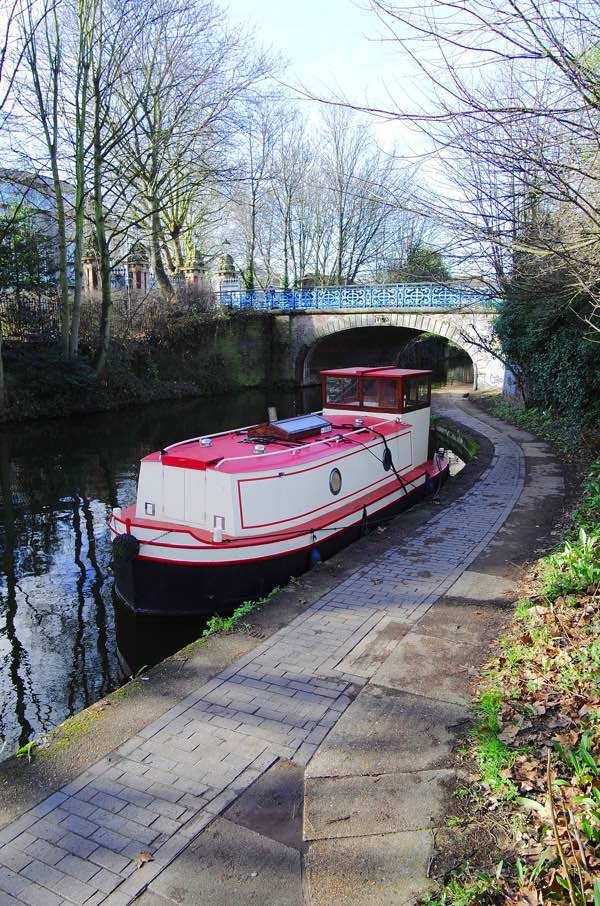
Victoria Park Bridge
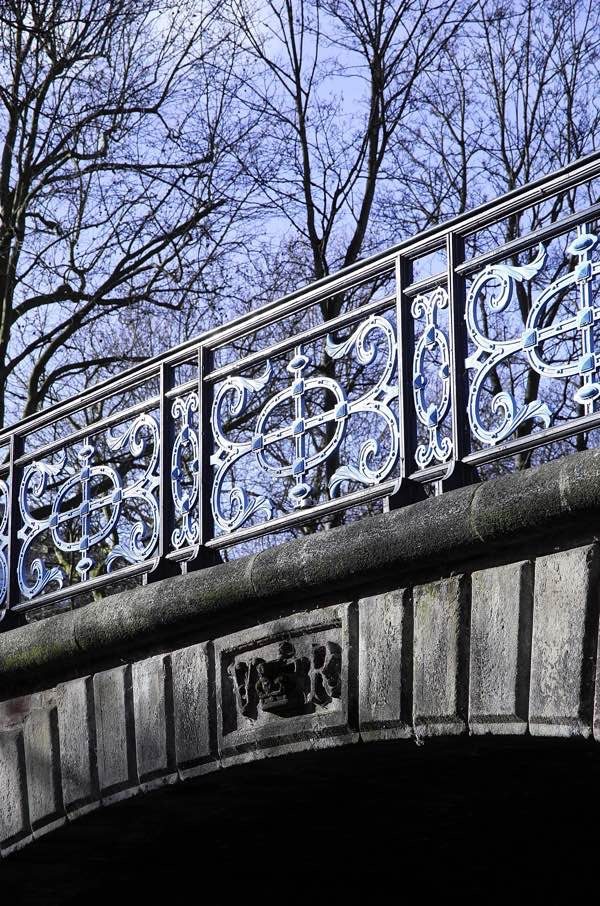
Victoria Park Bridge
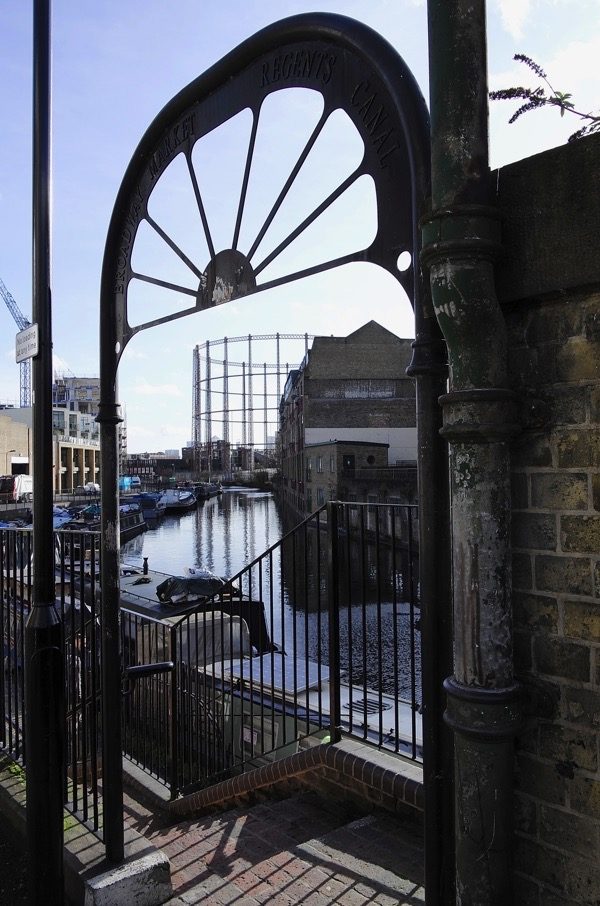
Looking back from Cat & Mutton Bridge
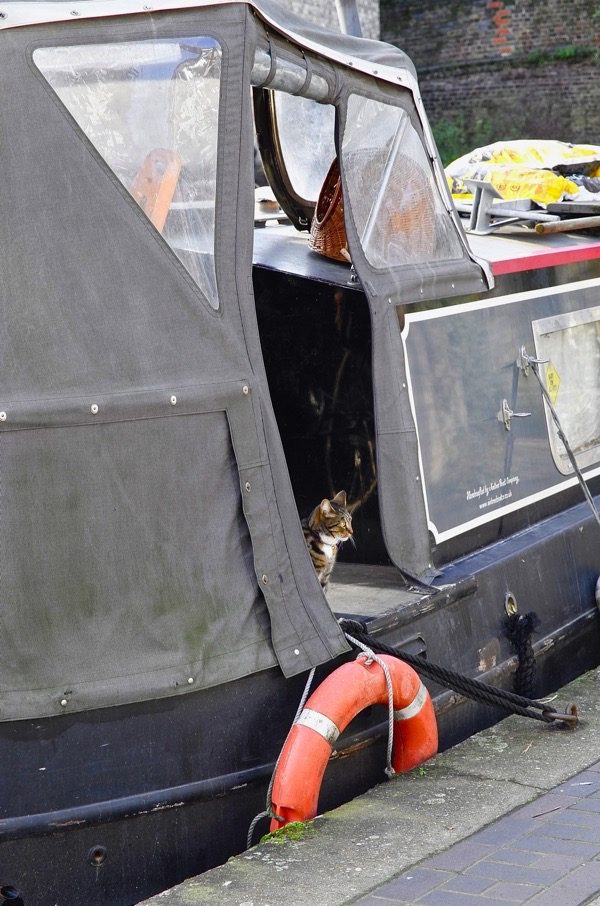
Barge dwelling cat
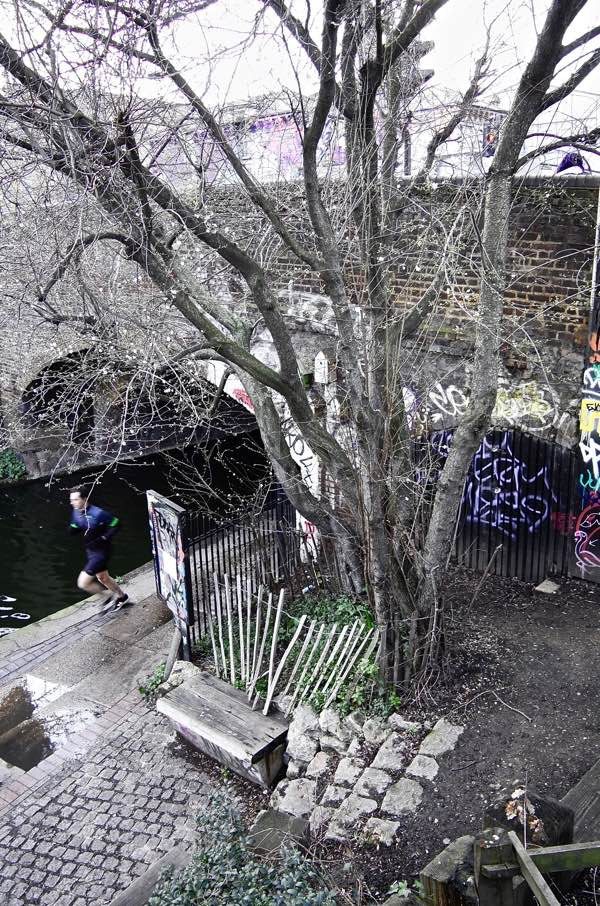
At Kingsland Rd Bridge
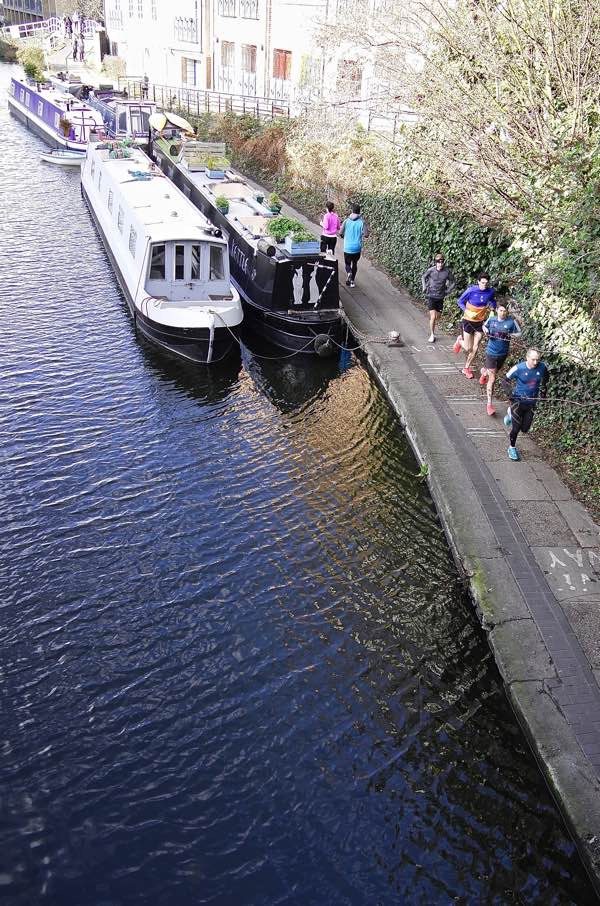
Looking west from Kingsland Rd Bridge
You may also like to take a look at
The East London Group & Photography
With the retrospective at the Beecroft Gallery in Southend until 3rd April, David Buckman – whose book From Bow to Biennale recovered the lost history of The East London Group – considers the use of photography by members of the Group.
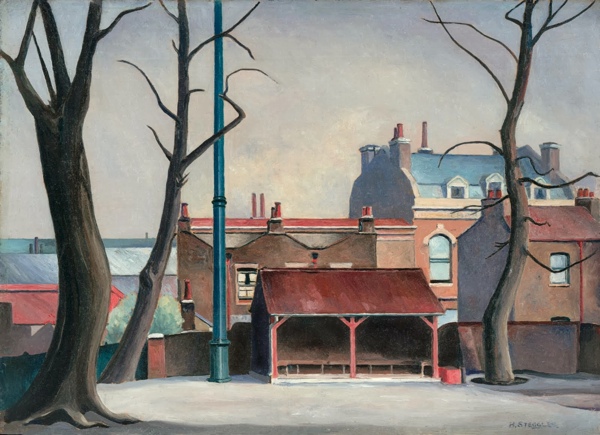
Pavilion in Grove Hall Park, Bow, by Harold Steggles
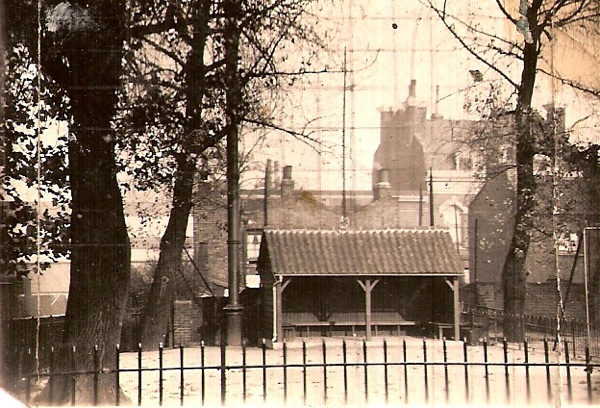
Working photograph by Harold Steggles
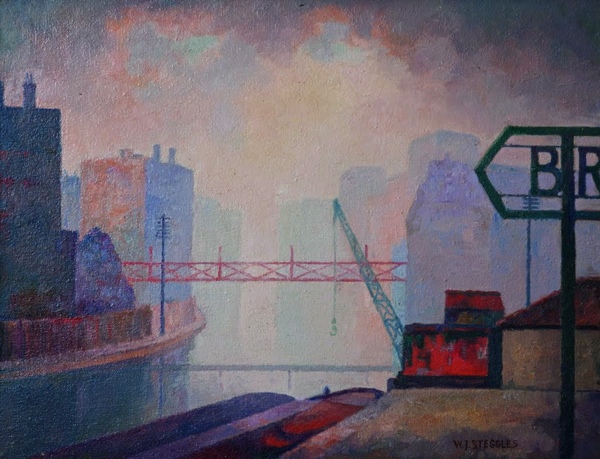
Brymay Wharf by Walter Steggles
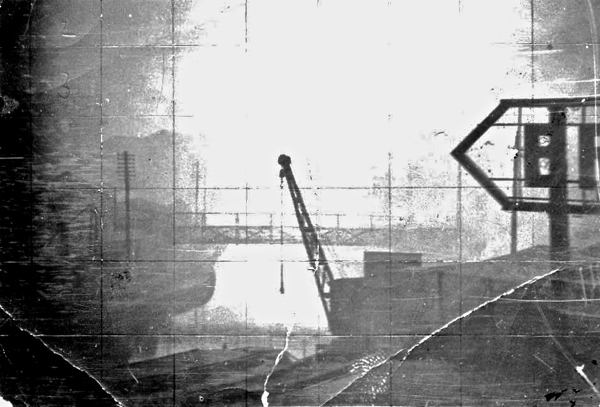
Working photograph by Walter Steggles
I am often asked about the role of photography in the work of the East London Group, particularly in the paintings of Elwin Hawthorne and Harold and Walter Steggles. They were core members of the band of working class men and women that John Cooper taught at evening classes in Bow in the twenties and thirties who came together to form the Group.
Walter Steggles assured me that sketching was “better than a camera. I only did one picture from a photograph and that was dead” and his sister Muriel – who late in life drove him around looking for subjects – insisted that when her brother asked her to stop the car to sketch a cloud formation, he was “better than a camera.”
Nevertheless, Walter and Harold Steggles were both keen photographers, taking it up shortly before their joint show at Lefevre Gallery in 1938. In the thirties, they also took up motoring – as their family photographs confirm – and they travelled around Britain and to the south of France on painting trips with Harold behind the wheel.
When the house where Walter lived was cleared, ten different cameras were found. According to Alan Waltham, who married Walter’s niece Janeta, there were two or three Praktica cameras, a couple by Kodak and Olympus, and several others.
“Most, if not all, were 35mm, but at some point Wally must have owned cameras that took 120-format film, judging some of the contact prints we have,” Alan explained to me. “Most of the early pictures are in black and white but he switched to colour film early on after the war. We found endless copies of potential landscapes that he must have photographed in later life but, sadly, many of the early photos have little or no annotation.”
The role of photography in picture-making is clearly evident in the work of Elwin Hawthorne, the artist who – along with Walter Steggles – achieved star status when they had paintings in the British Pavilion at the 1936 Venice Biennale. Elwin’s son said, having studied a number of squared-up photographs he holds, “my father did use photography as an aid to his work quite regularly…. My mother had disposed of my father’s camera before I developed an interest in photography at the age of thirteen. It was more than an amateur box camera – I remember it had a Dallmeyer lens, but it was not really a high-quality professional camera.”
The absence of people is a common feature of Hawthorne’s paintings, sometimes infused with melancholic even surreal qualities. Elwin junior feels that his father “might have gone out early in the morning, when conditions were misty, as a way of removing fine detail from the scenes he photographed, though I cannot confirm this.” Lilian, Hawthorne’s widow, who also showed with the Cooper group as Lilian Leahy, told me that Elwin “always carried a camera. Once he almost left it behind in a restaurant at Rottingdean, until I reminded him.”
Walter Sickert lectured Cooper’s Bow students, where Hawthorne heard him speak, and the squaring-up of drawings for transfer to canvas was a common practice, one that Hawthorne would have been accustomed to while working as studio assistant to Sickert from 1928-31. Sickert studied for a time at the Slade School of Fine Art, notable for its tradition of fine draughtsmanship, which John Cooper also attended – taught by that master-draughtsman Henry Tonks – and he believed that drawing was the basis of every picture, urging students to carry a notebook wherever they went.
However, from around 1923, according to Sickert’s biographer Robert Emmons, the ageing artist gradually abandoned drawing and “came to rely more and more for his data on old prints and photographs.” Sickert acquired a huge collection of illustrations, some of which formed the basis of his English Echoes exhibition at the Leicester Galleries in 1931. The twenty-two exhibits dismayed some of his admirers, familiar with his earlier, more conventionally conceived works. In a letter to The Times in 1929, in justification of his new practice, Sickert pointed out that Canaletto had based his work on tracings made with the camera lucida, Turner’s studio had been “crammed with negatives,” Millet had used photographs and Degas had taken them. While writing that photographs should be used with caution, he also noted that they could serve as valuable documents of record. Emmons comments “Sickert knew well enough what he wanted and was not likely to be squeamish as to how he got it.”
The invention of photography in the nineteenth century posed a problem for some artists and their patrons. If the artist’s role had been to depict reality, how could this be better accomplished with pencil, pen or brush than with the camera? Yet this concern ignored such the possibility of individual inspiration and interpretation, and subsequent numerous art movements, such as Cubism, Pointillism and Surrealism, bear witness to this.
John Cooper and his students might appear to have been unaffected by continental developments in their own pictures, yet they were aware of them. This is evident from the Cubist-influenced mosaic that he and students completed at the Wharrie Cabmen’s Shelter, on Rosslyn Hill, Hampstead, in April 1935, where you can still admire it today while you drink your tea.
The accompanying pairs of photographs and pictures indicate how East London Group members employed the camera, astutely reorganising and simplifying untidy photographic reality into unforgettable images that become theirs and theirs alone.
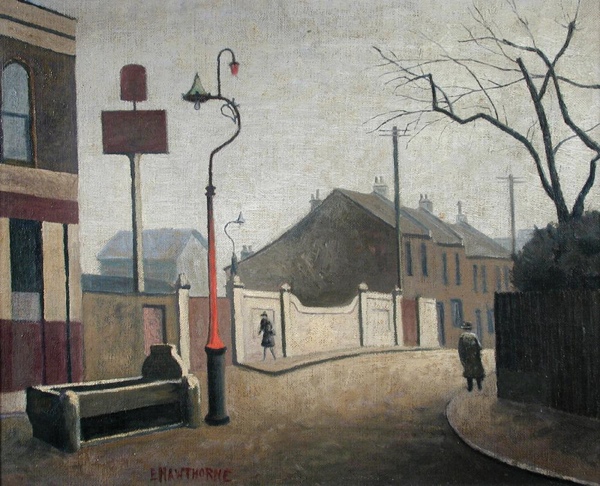
The Mitford Castle, 1931 by Elwin Hawthorne
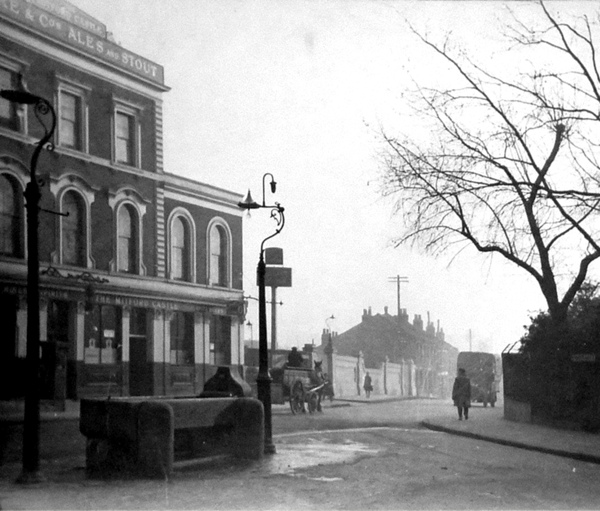
Working photograph by Elwin Hawthorne
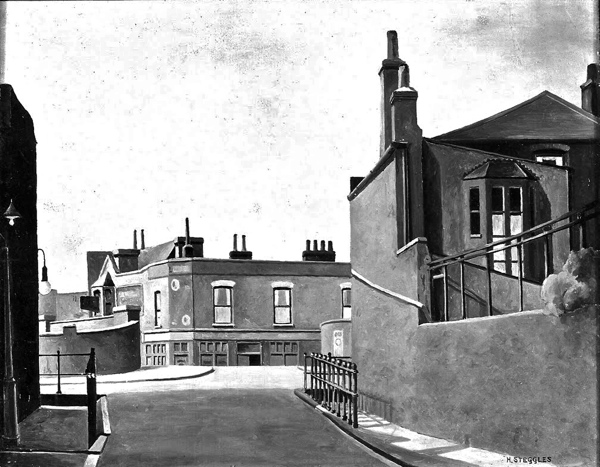
Black & white photograph of a colour painting of The Bridge House, Tredegar Rd by Harold Steggles
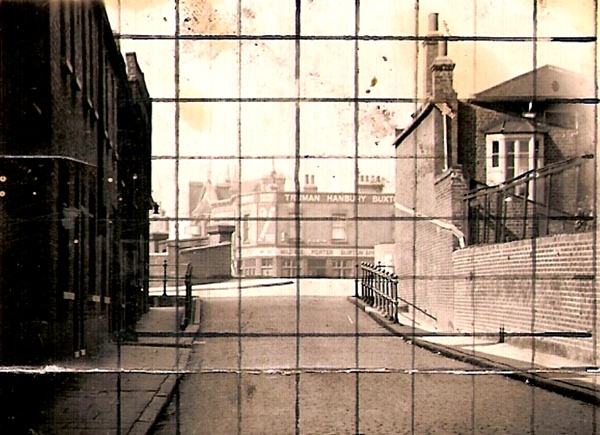
Working photograph by Harold Steggles
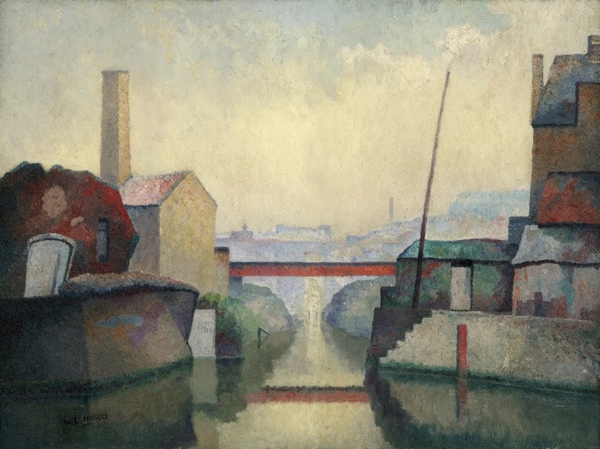
Bow Backwater by Walter Steggles
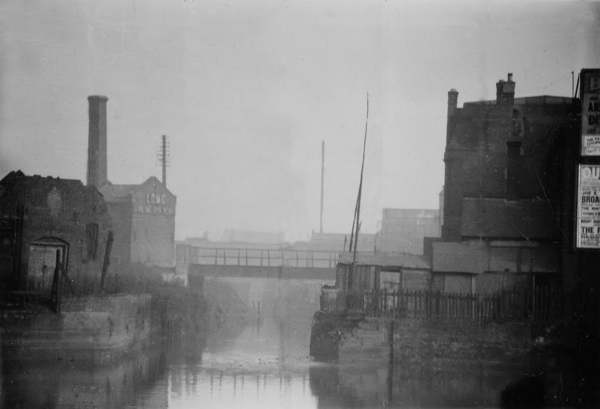
Working photography by Walter Steggles
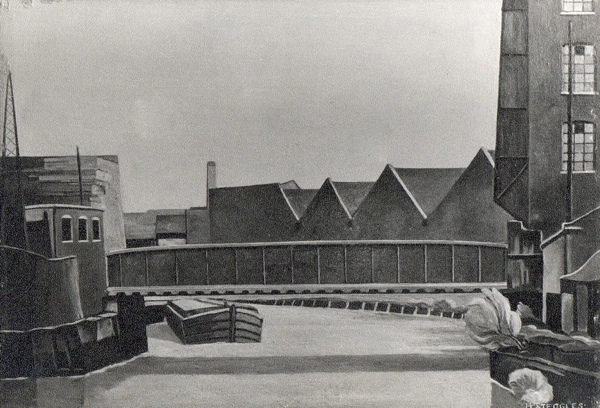
Black and white photograph of a coloured painting of ‘Bridge in Bow’ by Harold Steggles
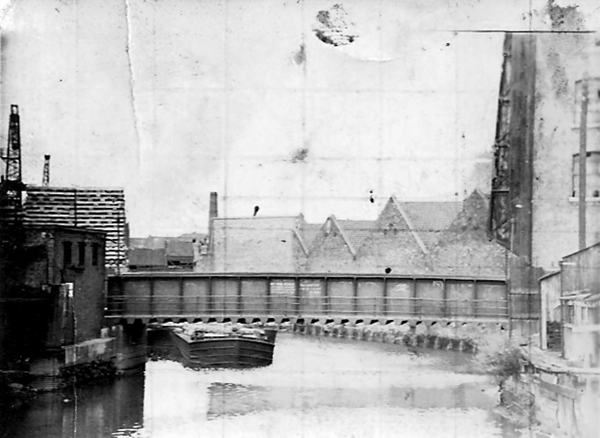
Working photograph by Harold Steggles
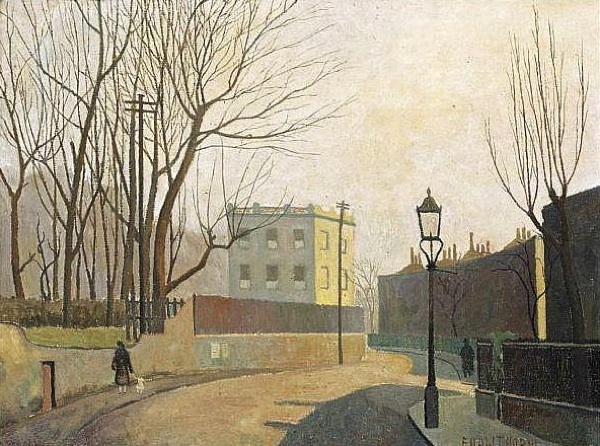
Canonbury Grove by Elwin Hawthorne
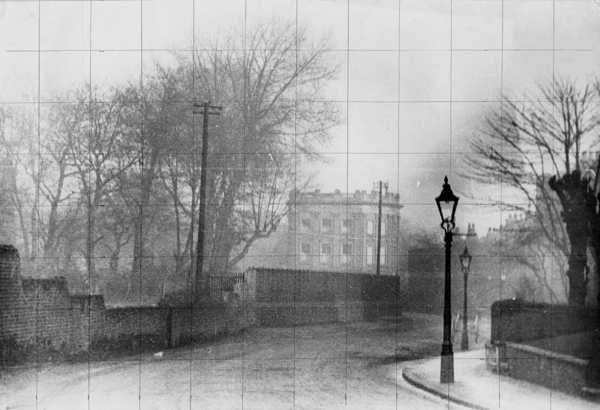
Working photograph by Elwin Hawthorne
You can read more about the East London Group
Save The George Tavern
For twenty years now, Pauline Forster has worked to restore the magnificent George Tavern in Commercial Rd and fought tenaciously to protect it from developers. Now it is under threat again.
Click here for details of how you can help save the George Tavern
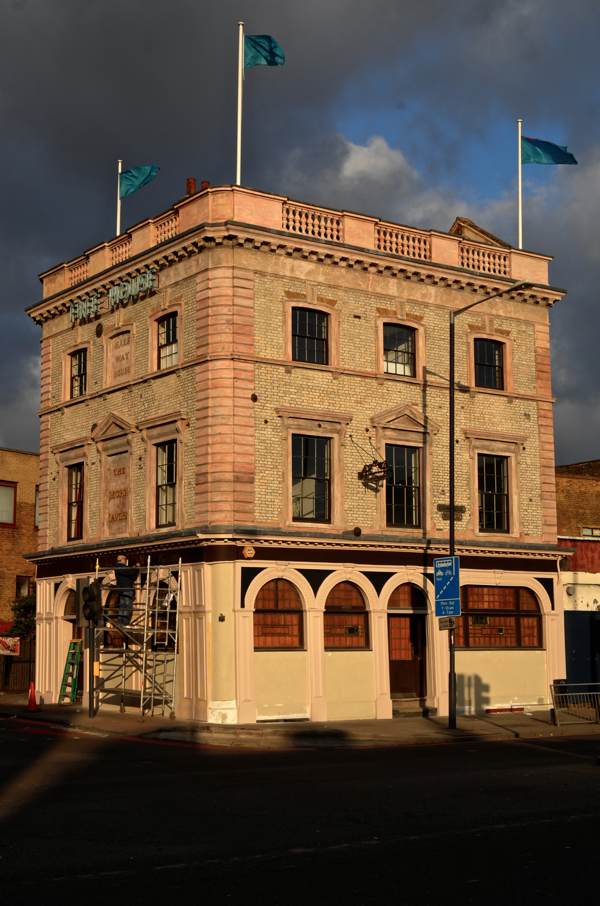
Let me admit, The George in Commercial Rd is one of my favourite pubs in the East End. From the first moment I walked through the door, I knew I had discovered somewhere special.
In the magnificently shabby bar room, with gleaming tiles and appealingly mismatched furniture all glowing in the afternoon light filtering through coloured glass windows, there was not a scrap of the tidying up and modernisation that blights the atmosphere of too many old pubs. There was no music and no advertising – it was peaceful, and I was smitten by the unique charisma of The George.
Curious to learn more, I paid a visit upon the owner, who has been described to me as one of the last great publicans of the East End, and I was far from disappointed to explore behind the scenes at this legendary institution because what I found was beyond what I ever imagined.
Pauline Forster, artist and publican of The George, brought up her five sons in a remote valley in Gloucestershire. It was twenty years ago when she bought The George, and her sons came up to London with her, then in the following decade they all met partners in the bar and moved out. Yet such a satisfactory outcome of events was not the result of any master-plan on Pauline’s part, merely the consequence of a fortuitous accident in which she stumbled upon The George when it was lying neglected and fell in love with it, buying it on impulse a week later, even though it had never been her intention to become a publican.
“It’s a beauty, this building!” she declared to me as I followed her along the dark passage from the barroom, up a winding stair and through innumerable doors to enter her kitchen upon the first floor. “When I came to view it, there were twenty others after it but they only wanted to know how many flats they could fit in, none of them were interested in it as a pub.” she informed me in response to my gasps of wonder as she led me through the vast stairwell with its wide staircase and a sequence of high-ceilinged rooms with old fireplaces, before we arrived at her office lined with crowded bookcases reaching towards the ceiling. “The interior was all very seventies but I was hooked, I could see the potential.” she confided, “I gravitated to the bar and I started possessing it. I sat and waited until everyone else had gone and then I told the agent I would buy it for cash if he called off the auction.”
With characteristic audacity, Pauline made this offer even though she did not have the cash but somehow she wrangled a means to borrow the money at short notice, boldly taking possession, exchanging contracts and moving in three days later, before finding a mortgage. It was due to her personal strength of purpose that The George survived as a pub, and thanks to her intelligence and flair that it has prospered in recent years.“I thought, ‘I’ve got to open the bar, it would be a sin not to,'” she assured me, widening her sharp grey eyes to emphasise such a self evident truth, “I decided to open it and that’s what I did.”
A decade of renovations later, the false ceilings and recently installed modern wall coverings have been stripped away to reveal the structure of the building, and the early nineteenth stucco facade is now revealed in all its glory to the Commercial Rd. “I’m used to taking on challenges and I’m a hardworking person,” Pauline admitted, “I don’t mind doing quite a bit of work myself, you’ll see me up scaffolding chipping cement off and painting windows.”
Yet in parallel with the uncovering of the fabric of this magnificent old building – still harbouring the atmosphere of another age – has been the remarkable discovery of the long history of the pub which once stood here in the fields beside the Queen’s Highway to Essex before there were any other buildings nearby, more than seven hundred years ago. When Commercial Rd was cut through by the East India Company in the early nineteenth century, the orientation of the building changed and a new stuccoed frontage was added declaring a new name, The George. Before this it was known as The Halfway House, referenced by Geoffrey Chaucer in The Reeve’s Tale written in the thirteen-eighties when he lived above the gate at Aldgate and by Samuel Pepys who recorded numerous visits during the sixteen-sixties.
A narrow yard labelled Aylward St behind the pub, now used as a garden, is all that remains today of the old road which once brought all the trade to The Halfway House. In the eighteenth century, the inn became famous for its adjoining botanic garden where exotic plants imported from every corner of the globe through the London Docks were cultivated. John Roque’s map of 1742 shows the garden extending as far as the Ratcliffe Highway. At this time, William Bennett – cornfactor and biscuit baker of Whitechapel Fields – is recorded as gardener, cultivating as many as three hundred and fifty pineapples in lush gardens that served as a popular destination for Londoners seeking an excursion beyond the city. As further evidence of the drawing power of the The Halfway House, the celebrated maritime painter Robert Dodd was commissioned to paint a canvas of “The Glorious Battle of the Fifth of June” for the dining room, a picture that now resides in the Maritime Museum in Greenwich.
When you have ascended through all the diverse spaces of The George to reach the attic, you almost expect to look from the dormer windows and see green fields with masts of ships on the river beyond, as you once could. I was filled with wonder to learn just a few of the secrets of this ancient coaching inn that predates the East End, yet thanks to Pauline Forster has survived to adorn the East End today, and I know I shall return because there are so many more stories to be uncovered here. I left Pauline mixing pure pigments with lime wash to arrive at the ideal tint for the facade. “I don’t get time to do my own paintings anymore,” she confessed, “This is my work of art now.”
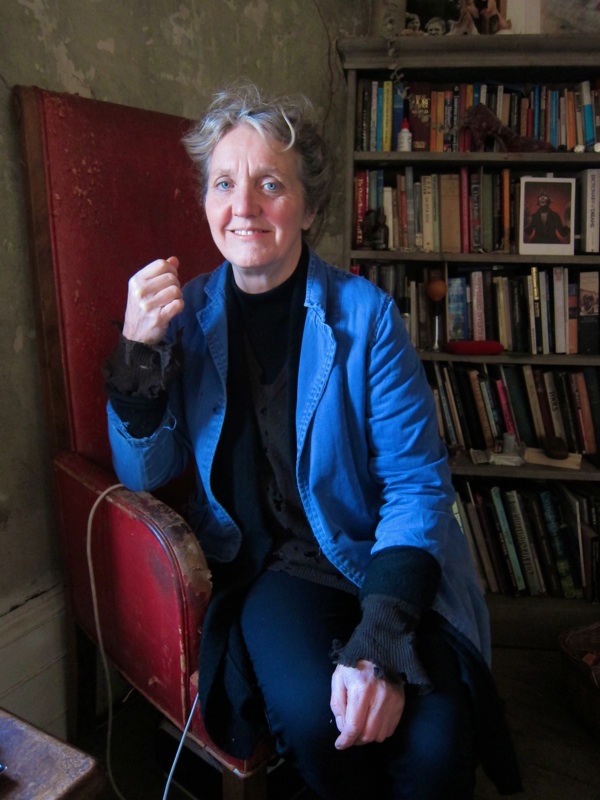
Pauline Forster, Artist & Publican.
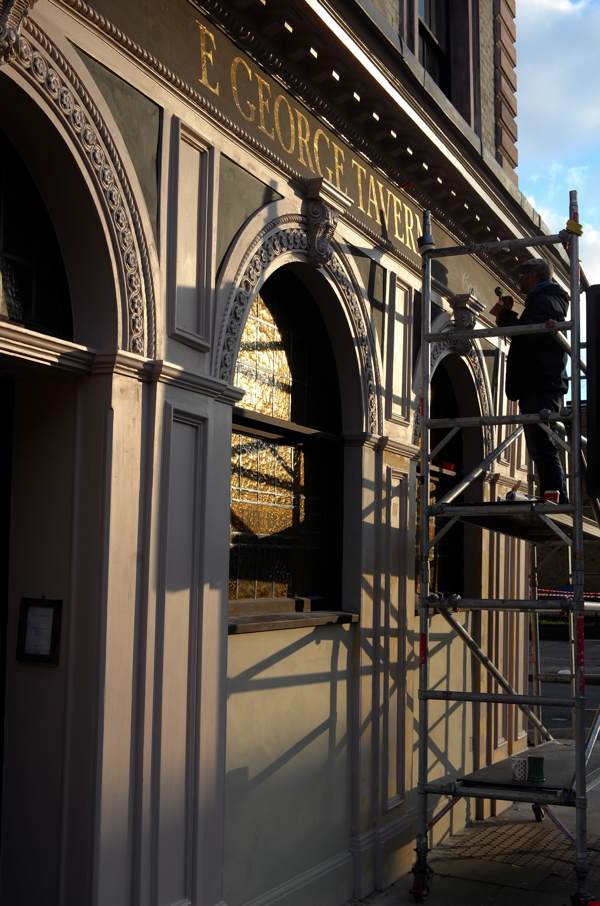

Nineteenth century tiling in the bar.
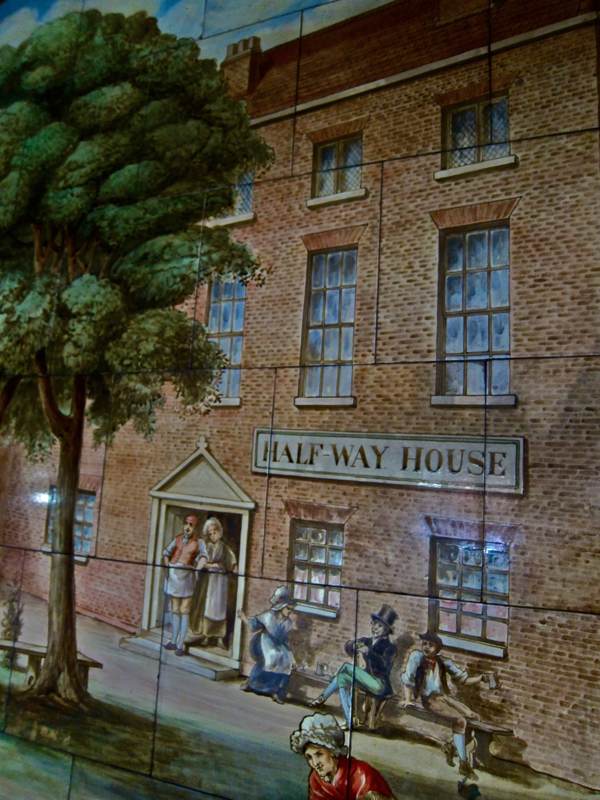
A ceramic mural illustrates The George in its earlier incarnation as The Halfway House.
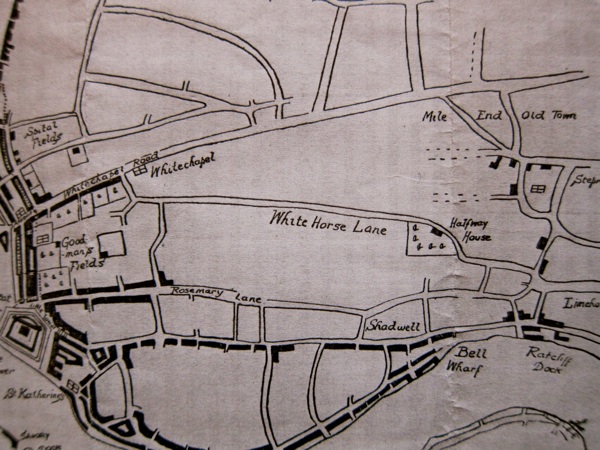
Stepney in 1600 showing The Halfway House and botanic garden on White Horse Lane, long before Commercial Rd was cut through by the East India Company in the early nineteenth century.

The Halfway House in the seventeenth century.
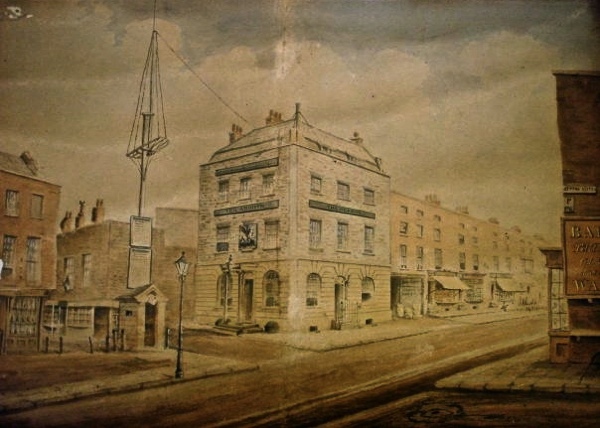
The Halfway House became The George and the orientation of the building was changed in the nineteenth century when Commercial Rd was cut through. Note the toll booth and early telegraph mast.
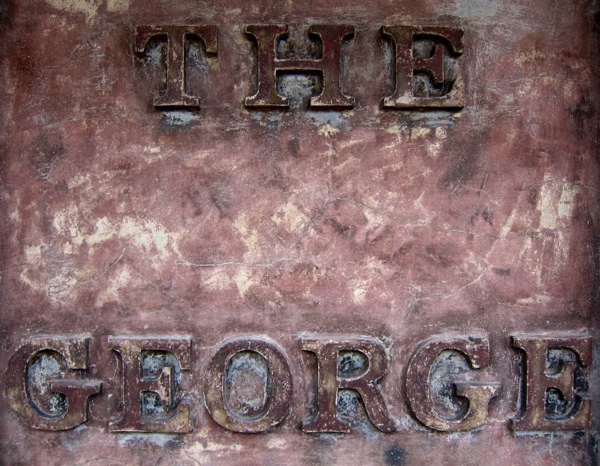
Detail of the stucco facade before restoration.
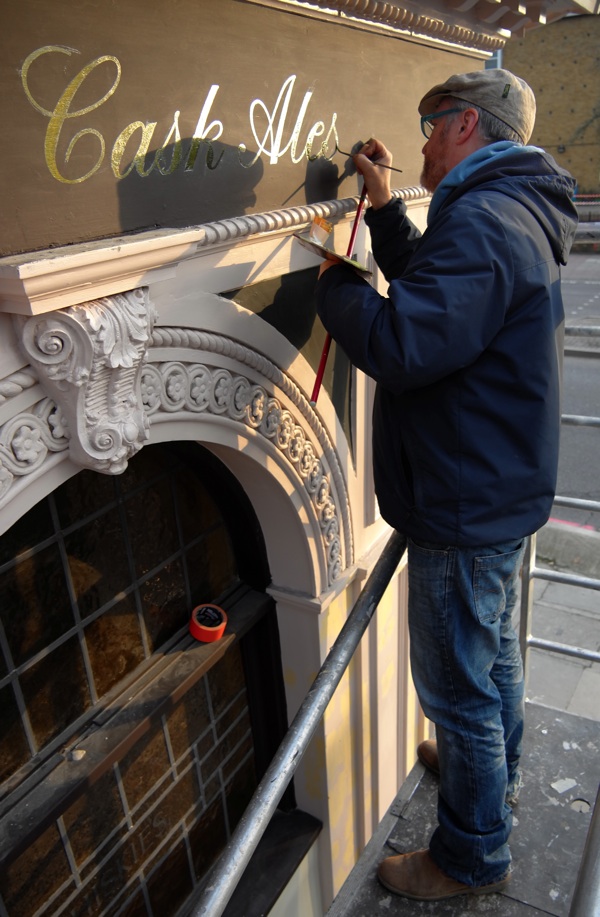
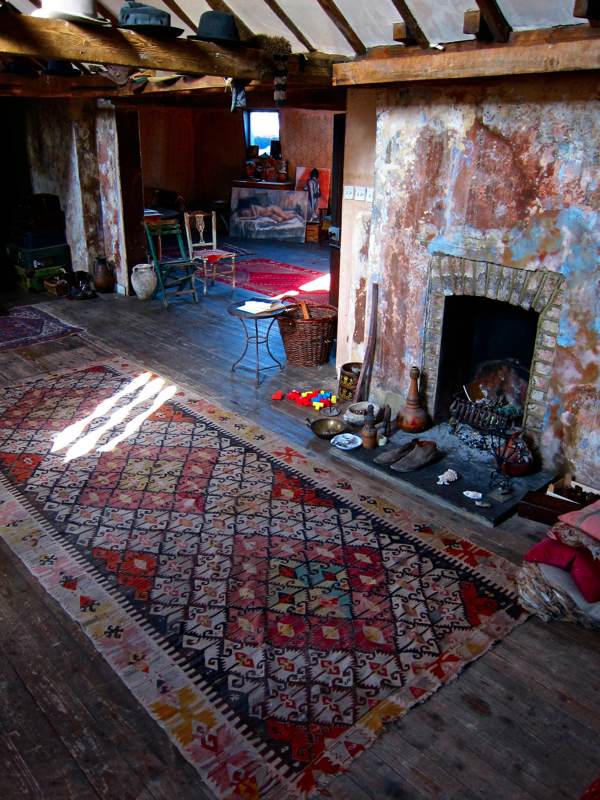
In the attic, where Pauline lived when she first moved in

Pauline’s collection includes the dried-out carcass of a rat from Brick Lane.
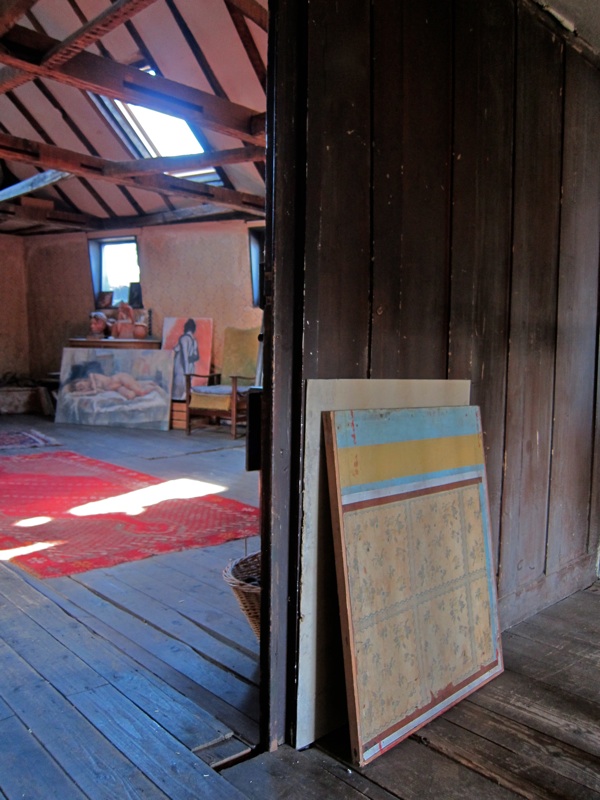
Entrance to the attic
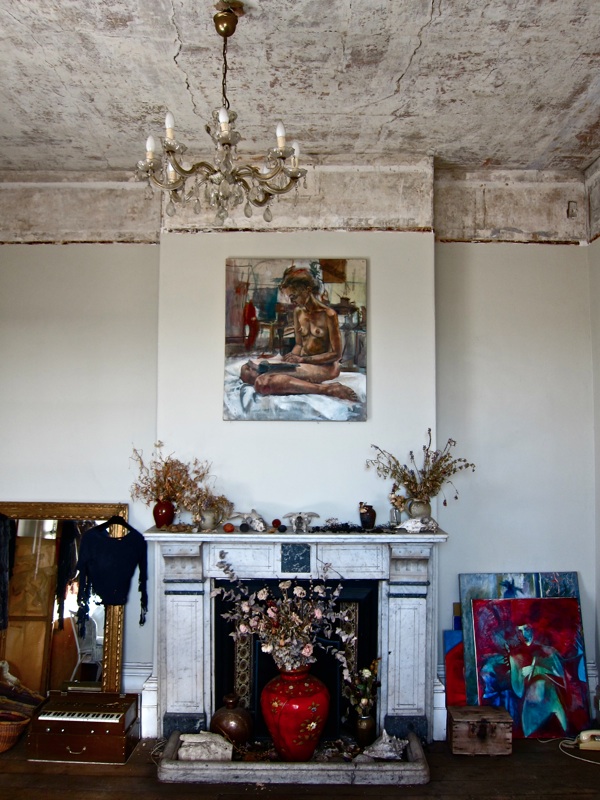
Living room

Living room with view down Commercial Rd
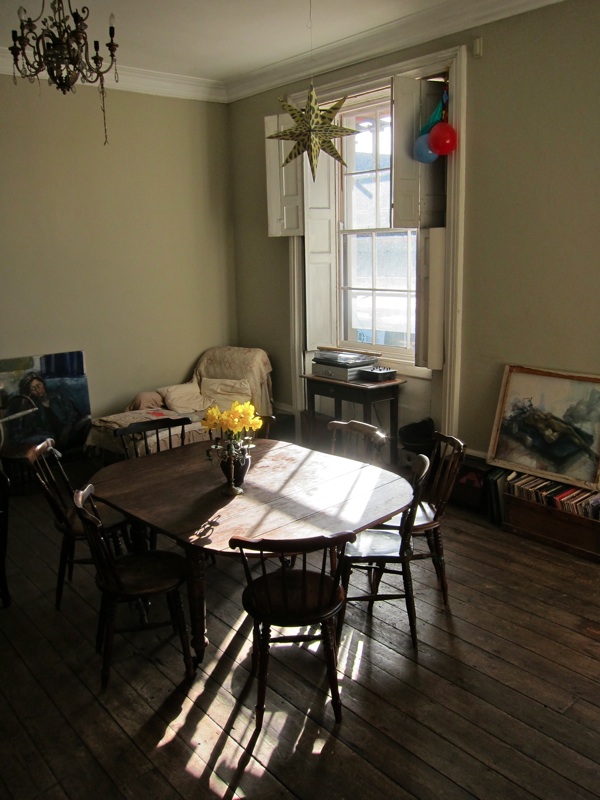
Dining Room
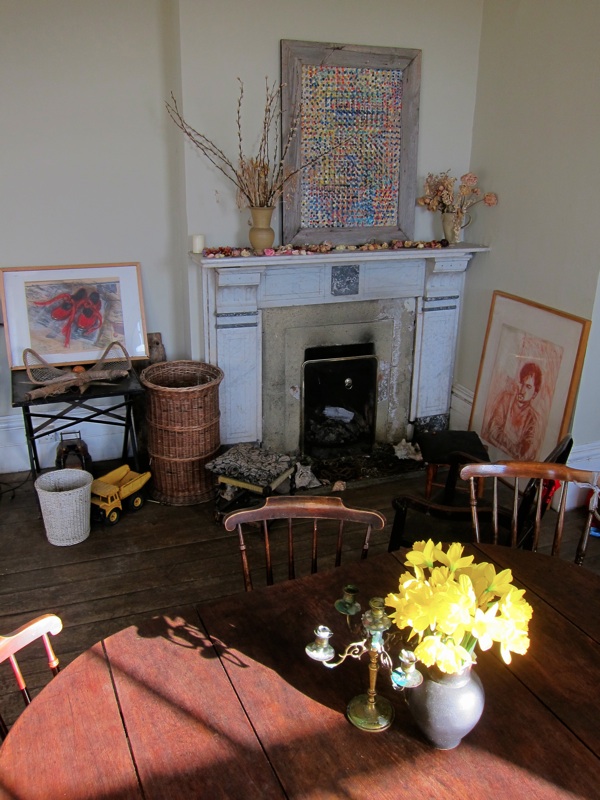
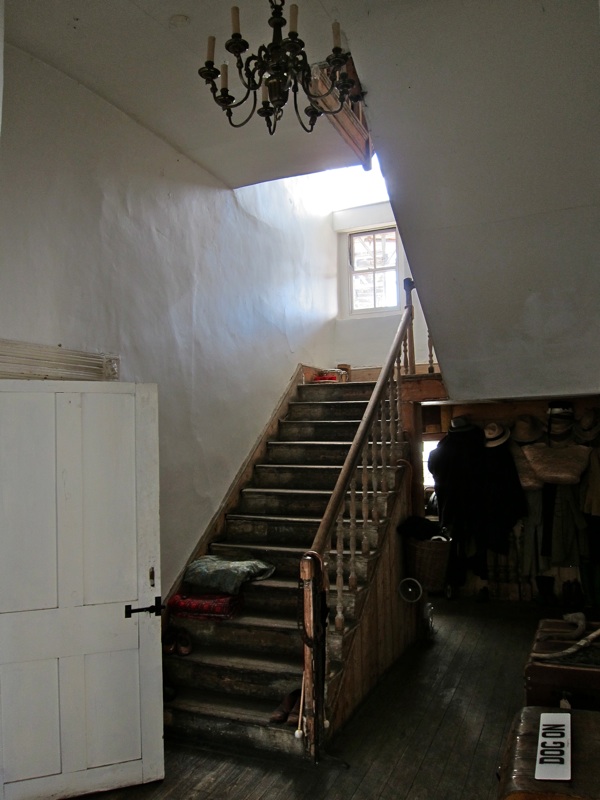
Wide eighteenth century staircase.
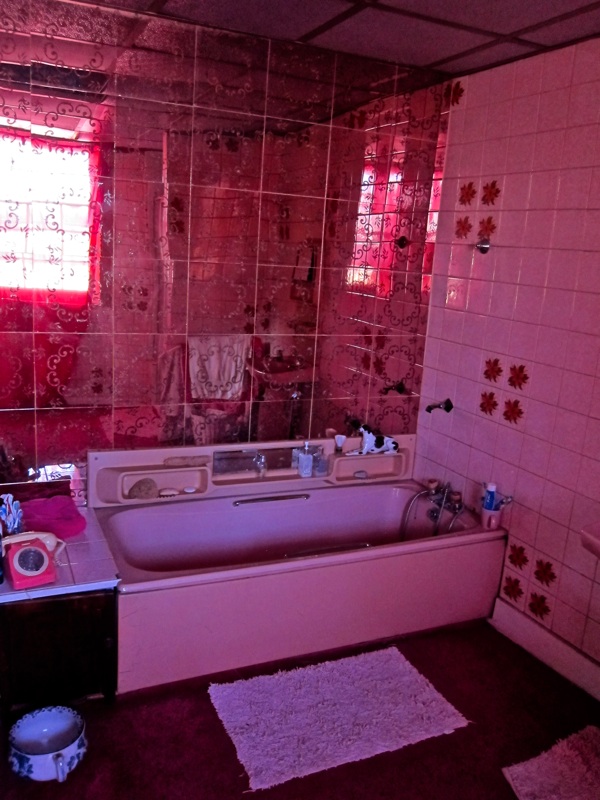
Pauline’s bathroom with matching telephone, the last fragment of the nineteen seventies interior that once extended throughout the building.
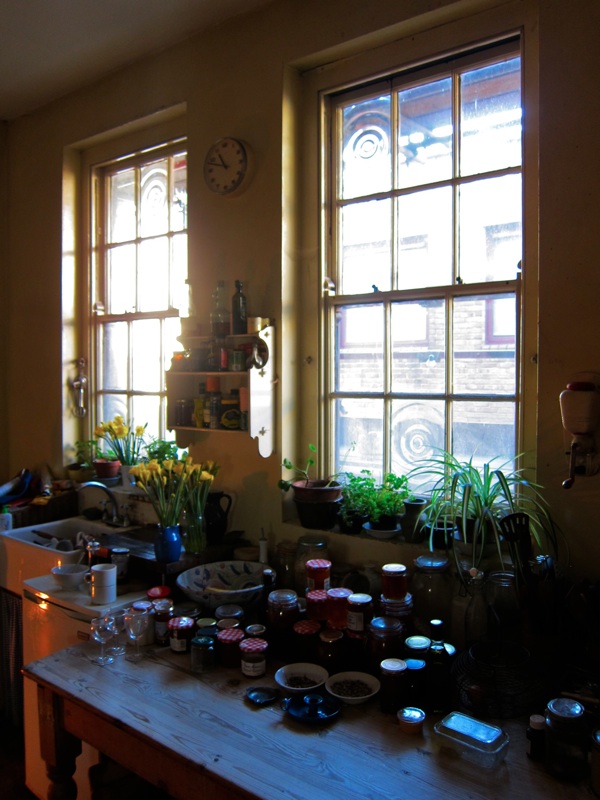
Kitchen looking out onto the former Queen’s Highway, now the pub garden
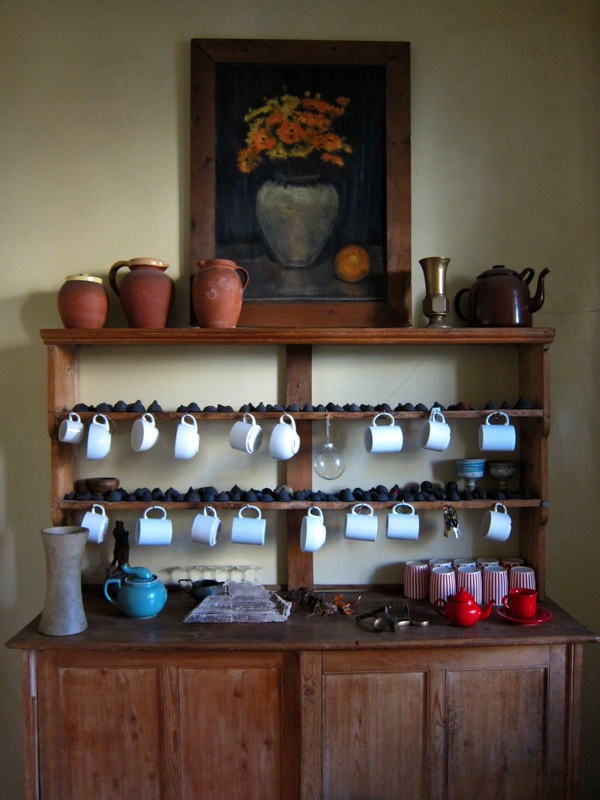
Pauline’s dresser
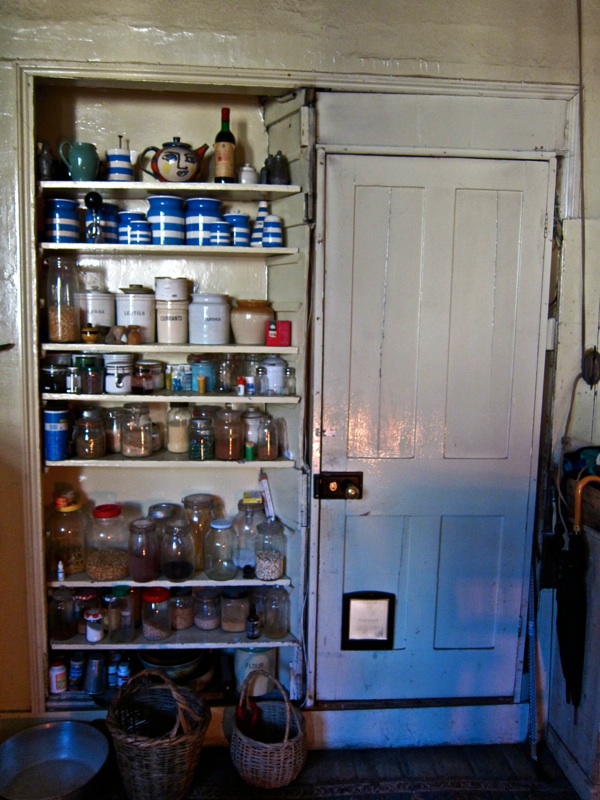


Pauline hits the light-up dancefloor at “Stepney’s” nightclub next door.
The George Tavern, 373 Commercial Rd, E1 0LA (corner of Jubilee St).
You may also like to read about
Tony Bock On The Railway

A mischievous trainspotter changes the departure time at Liverpool St Station
“I have always liked railway stations, a focal point of the community – the start and finish of a journey,” Photographer Tony Bock admitted to me, introducing these elegant pictures. “Often the journey was a daily chore, but sometimes it was an occasion,” he added, in appreciation of the innate drama of rail travel.
Tony’s railway photographs date from the years between 1973 and 1978, when he was living in the East End and worked on the East London Advertiser, before he left to take took a job on the Toronto Star, pursuing a career as a photojournalist there through four decades.
“Although plenty has been written about the architecture of railways and the industrial ‘cathedrals’ – from the perspective of the twenty-first century, it is easy to forget the great change the railway brought when it first arrived in the mid-nineteeth century. Liverpool St Station was opened in 1874 and survived largely unchanged into the nineteen seventies.
So, in 1977, when proposals to redevelop the station were suggested, I decided to spend some time there, documenting the life of the station with its astonishing brick and iron architecture. I loved the cleaners, taking a break, and the young lad taking it upon himself to reschedule the next train – ‘Not This Train’! Meanwhile, the evening commuters heading home looked as if they were being drawn by a mysterious force.
Next door to Liverpool St was Broad St Station, only used for commuter trains from North London then and already it was looking very neglected. Only a few years later, it closed when Liverpool St was redeveloped.
Over in Stratford, the rail sheds dated back to the days when the Great Eastern Railway serviced locomotives there. Surprisingly, British Rail were still using some of the sheds in 1977, maintaining locomotives amongst the rubble that eventually became the site of the Olympic Park.
Finally, from the very earliest days of railways, I found three posters on the wall in the London Dock, Wapping. The one in the centre is from the Great Northern Railway, dated 1849, the other two from the North Union Railway Company, dated 1836, and it is still possible to read that one hundred and twelve pounds or ten cubic feet would be carried for three shillings according to the Rates, Tolls and Duties. The North Union operated in Lancashire and only lasted until 1846. How did these posters survive, they were likely one hundred and thirty years old. I wonder if anyone was able to salvage them?
I suppose there is an irony that I am writing this today in my home which is a village railway station built by the Canadian Pacific Railway in 1904. The building now sits in woods, since the local branchline is long gone. Yet any station – grand or modest – will always carry a significance for the community they are part of.”


Farewells at LIverpool St


Ticket collecting at Liverpool St

Cleaners, taking a break, at Liverpool St.


Commuters at Broad St Station.

Waiting for a train at Victoria Station

Wartime sign in the cellar of Broad St Station, demolished in 1986.
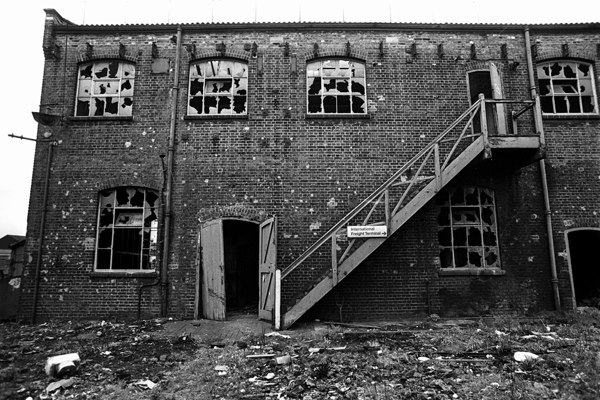
Stratford Railway works, now engulfed beneath the Olympic site

Repair sheds at Stratford

Engine sheds at Stratford

Railway posters dating from 1836 in London Dock, Wapping
Photographs copyright © Tony Bock
You may like to see these other photographs by Tony Bock
Stephen Watts, Poet
An exhibition inspired by Stephen Watts’ work, EXPLOSION OF WORDS, created by Hannes Schüpbach, opens at the Nunnery Gallery, Bow Arts, this Friday 28th January and runs until Saturday April 17th

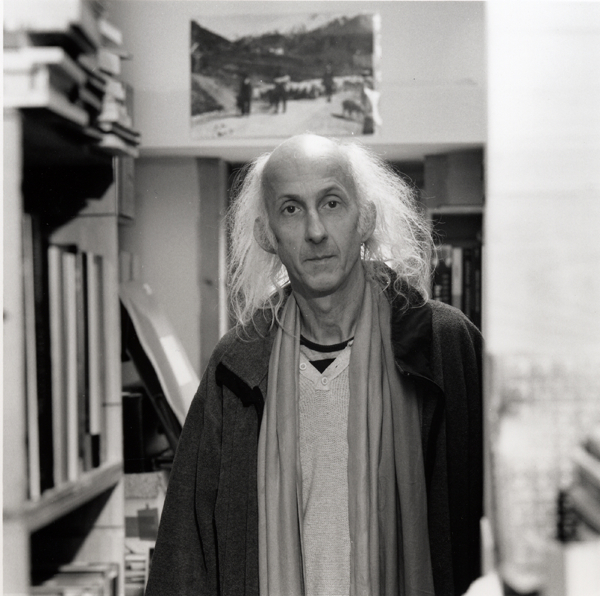
“I remember coming out of the tube in Whitechapel in 1974 and being overwhelmed,” recalled Stephen Watts affectionately, his deep brown eyes glowing with inner fire to describe the spiritual epiphany of his arrival in the East End, when coming to London after three years on North Uist in the Outer Hebrides. Today Stephen lives in Shadwell and has a tiny writing office in the Toynbee Hall in Commercial St where I paid him a call upon him.
“Migration is in my awareness and in my blood,” he admitted, referring to his family who were mountain people dwelling in the Swiss Alps on the Italian border – living twelve hundred feet above sea level – and his grandfather who came to London before the First World War, worked in a cafe in Soho and then bought his own cafe. “I realised this was an area of migration since the seventeenth century when the farm workers of Cambridgeshire, Kent and Suffolk began to arrive here, and I immediately felt an affinity for the place,” Stephen continued, casting his thoughts back far beyond his own arrival in Whitechapel, yet wary to qualify the vision too, lest I should think it self-dramatising.
“It is very easy to be romantic about it, but I think migration has been the objective reality for many people in the twentieth and twenty-first century. So it seemed to be something very natural, when I came to live in Whitechapel.” he revealed with an amiable smile. Yet although he allowed himself a moment to savour this thought, Stephen possesses a restless energy and a mind in constant motion, suggesting that he might be gone at any moment, and entirely precluding any sense of being at home and here to stay. Even if he has lived in his council house in Shadwell for forty years, I would not be surprised if the wind blew Stephen away.
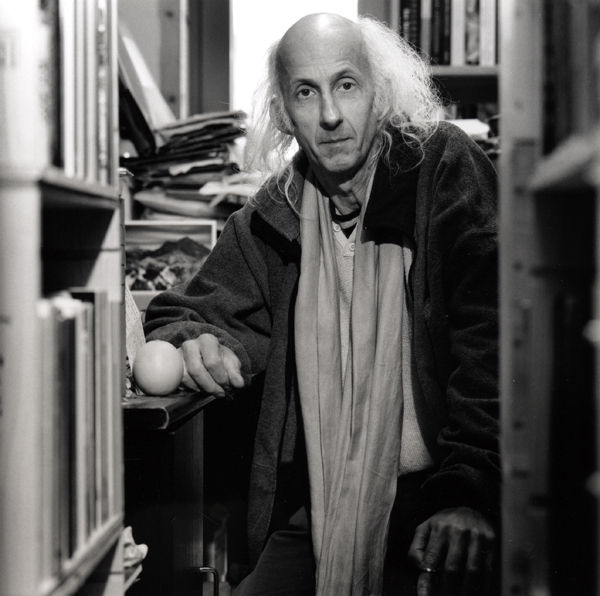
A tall skinny man with his loose clothes hanging off him and his long white locks drifting around, Stephen does present a superficial air of insubstantiality, even other-wordliness. Yet when you are in conversation with Stephen you quickly encounter the substance of his quicksilver mind, moving swiftly and using words with delicate precision, making unexpected connections. “In the Outer Hebrides the unemployment rate was twenty-five per cent and it was the same in Tower Hamlets when I arrived,” he said, informing me of the parallels with precise logic, “also Tower Hamlets had large areas of empty water then, just like the North Uist.” drawing comparison between the abandoned dockland and the Hebridean sea lochs, in regions of Britain that could not be more different in ever other respect.
We took the advantage of the frosty sunlight to make a half hour’s circuit of the streets attending Brick Lane and these familiar paths took on another quality in Stephen’s company, because while I tend to be always going somewhere, Stephen has the sense to halt and look around – indicative of certain open-ness of temperament that has led him befriend all kinds of people in pubs and on the street in Whitechapel over the years. I took this moment to ask Stephen if he chose to be a poet. “I made a choice when I quit university after a year and went to live in North Uist,” he said as we resumed our pace, “and then I made a choice to be a poet. But as a choice it was unavoidable, because I realised that it was so much part of me that not to have done it would be a denial of my humanity.”
Returning to the Toynbee Hall, Stephen allowed me the privilege of a peek into his tiny room on an upper floor, not much larger than a broom cupboard. The walls were lined with thin poetry books in magnificent order, arrayed in wine boxes stacked floor to ceiling and standing proud of the walls to create bays, leaving space only for one as slim as Stephen to squeeze through. It was a sacred space, the lair of the mountain man or a hermit’s retreat. It felt organic, like a cave, or maybe – it occurred to me – a shepherd’s hut carved out of the rock. And there, up above Stephen’s head was an old black and white photo of shepherds on a mountain road, taken in the Swiss Alps whence Stephen’s family originate and where even now he still returns to visit his relatives.
Stephen’s room is a haven of peace in the midst of Whitechapel, yet he delights to complement his life in here by working alongside Bengali and Somali poets in all kinds of projects in schools around Tower Hamlets, and pursues translation alongside his own poetry too, as means to “invite difference” into his work. Possessing a natural warmth of personality and brightness of temperament which make you want to listen and hang off his words, Stephen has a genuine self-effacing charm.“I don’t believe in being a professional poet in the sense of promoting myself, being a poet is about becoming embedded in humanity.” he proposed modestly, presuming to speak for no-one than himself, “And that’s why I lived in the East End and that’s why I still find it inspiring – because of the tremendous range of human presence in Whitechapel.”
BRICK LANE
(after the death of Altab Ali, and for Bill Fishman)
Whoever has walked slowly down Brick Lane in the darkening air and a stiff little rain,
past the curry house with lascivious frescoes,
past the casual Sylheti sweet-shops and cafés
and the Huguenot silk attics of Fournier Street,
and the mosque that before was a synagogue and before that a chapel,
whoever has walked down that darkening tunnel of rich history
from Bethnal Green to Osborne Street at Aldgate,
past the sweat-shops at night and imams with hennaed hair,
and recalls the beigel-sellers on the pavements, windows candled to Friday night,
would know this street is a seamless cloth, this city, these people,
and would not suffocate ever from formlessness or abrupted memory,
would know rich history is the present before us,
laid out like a cloth – a cloth for the wearing – with bits of mirror and coloured stuff,
and can walk slowly down Brick Lane from end to seamless end,
looped in the air and the light of it, in the human lattice of it,
the blood and exhausted flesh of it, and the words grown bright with the body’s belief,
and life to be fought for and never to be taken away.
Song for Mickie the Brickie
Mickie I met down Watney Street and he whistled me across.
“How are you” he said
—and of course really meant “have you a little to spare for some drink”—
but could not bear to ask.
We walked through the decayed market,
a yellow-black sun gazed down over Sainsbury’s as I went to look for change.
Ten pound was hardly enough to get him through the dregs of that bitter day.
We stood on the corner where for centuries people have stood.
Many worlds passed us by.
When he had been in hospital he’d taken his pills and been looked after and had not got worse.
Now he’s barely getting by.
He walks out of the rooming house in Bethnal Green when it gets too loud inside.
His scalp’s flaking and he needs a reliable level and a small brickie’s trowel.
That woman’s son’s inside for good.
That one’s man is a chronic alcoholic.
This one’s on her own and better for it.
But how can you know anyone’s story when every day you walk by without stopping.
Charlie Malone was a good friend. So was John Long.
Now they’re resting in Tadman’s Parlour
—and first thing in the morning Mickie’ll go and say to them words that cannot be answered.
Those are the best words, but they’re hardest to bear.
To me he says : “Always—always—stop me—always—come across.”
And what is the point of centuries of conversation if no-one’s ever there to hear.
FRAGMENT
… And so I long for snow to
sweep across the low heights of London
from the lonely railyards and trackhuts
– London a lichen mapped on mild clays
and its rough circle without purpose –
because I remember the gap for clarity
that comes before snow in the north and
I remember the lucid air’s changing sky
and I remember the grey-black wall with
every colour imminent in a coming white
the moon rising only to be displaced and
the measured volatile calmness of after
and I remember the blue snow hummocks
the mountains of miles off in snow-light
frozen lakes – a frozen moss to stand on
where once a swarmed drifting stopped.
And I think – we need such a change,
my city and I, that may be conjured in
us that dream birth of compassion with
reason & energy merged in slow dance.
Photographs copyright © Lucinda Douglas-Menzies
You may also like to take a look at
The Romance Of Old Bishopsgate
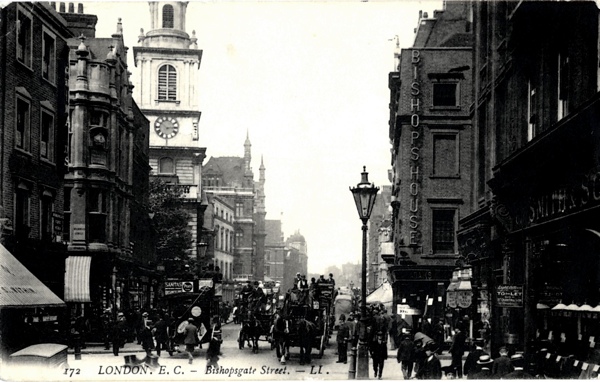
Thomas Hugo, the nineteenth century historian of Bishopsgate, wrote a history of this thoroughfare prefaced with a quote from his predecessor, John Strype in 1754 –“The fire of London not coming unto these parts, the houses are old timber buildings where nothing is uniform.”
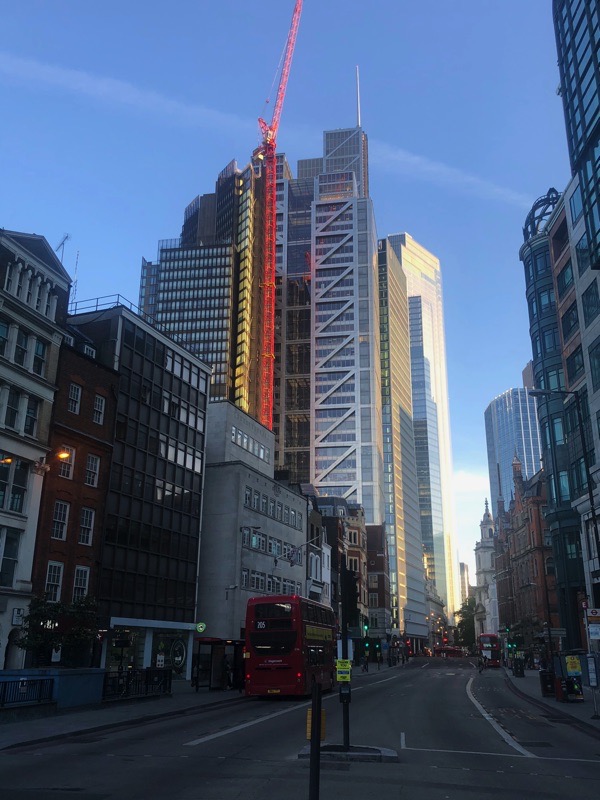
While the rest of London had been rebuilt after 1666, Bishopsgate alone retained the character of the city before the fire and in 1857 Thomas Hugo was passionate that this quality not be destroyed – as he wrote in the strangely prescient introduction to his “Walks in the City: No 1. Bishopsgate Ward.”
“This quarter, so hallowed and glorified by olden memories, is unquestionably deserving of a foremost place in our affectionate regard. Our history, our literature and our art are associated with the charmed ground in closest and most indissoluble union. You can scarcely open a single volume illustrative of our national history which does not carry you in imagination to that still picturesque assemblage of edifices where, amid its overhanging Elizabethan gables and stately Caroline facades, its varied masses of pleasantly mingled light and shade, its frequent churches and sonorous bells, the greatest and best of Englishmen have successfully figured among their fellows, and to whose adorning and embellishment the noblest powers have in all ages been devoted.
And yet, unhappily, this is the spot where alterations are most commonly made, and with perhaps least regard to the irreparable loss which they necessarily involve. Here, where, for all who are versed in our country’s literature, every stone can speak of its greatness, where the name of every street and lane is classical, where around multitudes of houses fair thoughts and pleasant memories congregate as their natural home and common ground, the demon of transformation rules almost unquestioned, lays its merciless finger on our valued treasures, and leaves them metamorphosed beyond recognition only to work a similar atrocity upon some other precious object.
Special attention, therefore, on every account, as well as for beauty, the value, and the excellence of that which still remains, as for the insecurity and uncertainty of its tenure, is most urgently and imperatively demanded.”
John Keats was baptised in St Botolph’s Church, Bishopsgate.

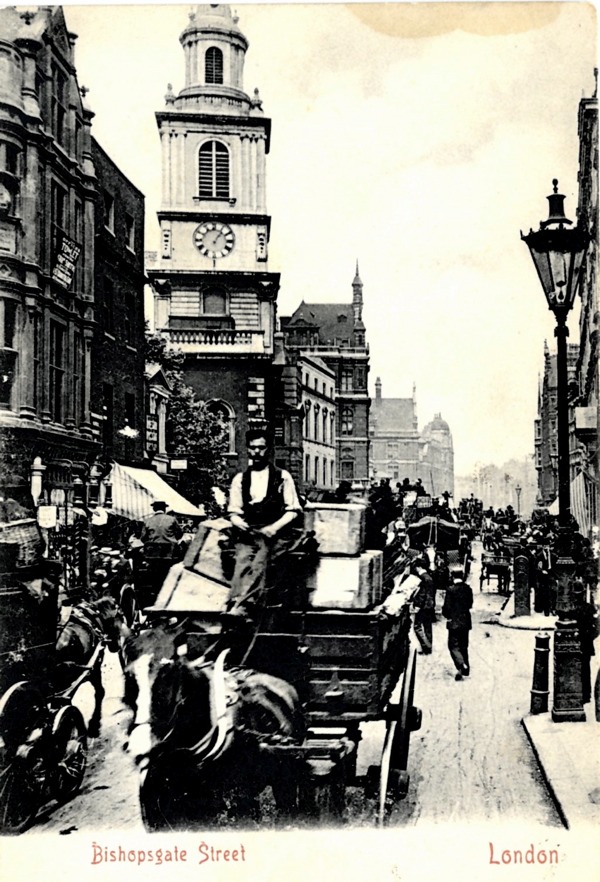
The Bishop’s Gate was on the site of one of the gates to the Roman city of Londinium, from which led Ermine St, the main road North. First mentioned in 1210, Bishop’s Gate was rebuilt in 1479 and 1735, before it was removed in 1775. In 1600, Will Kemp undertook his jig from here to Norwich in nine days.
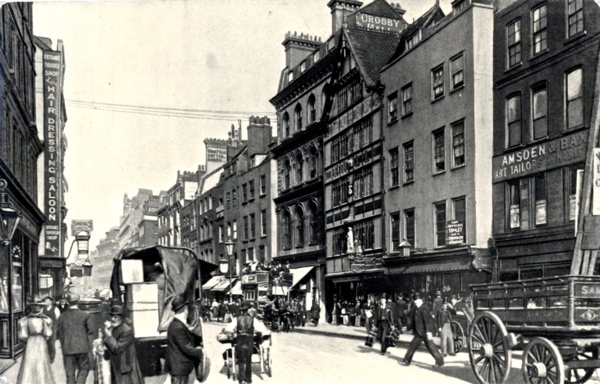
Crosby Hall, the half-timbered building at the centre of this picture was once Richard III’s palace. Other residents here included Thomas More, Walter Raleigh and Mary Sidney, the poet. Built by wool merchant John Crosby in 1466, it was removed to Cheyne Walk, Chelsea in 1910.


Elizabethan houses in Bishopsgate, 1857.
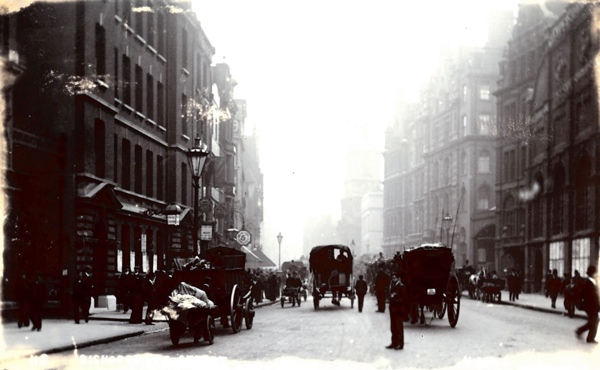
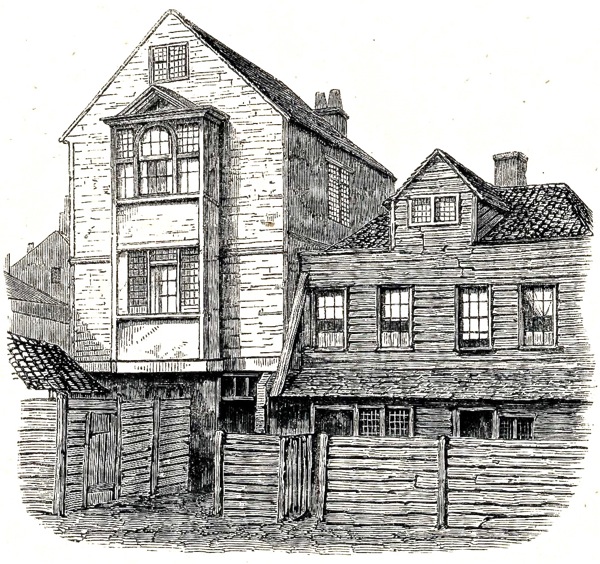
The Lodge, Half Moon St, Bishopsgate Without, 1857.
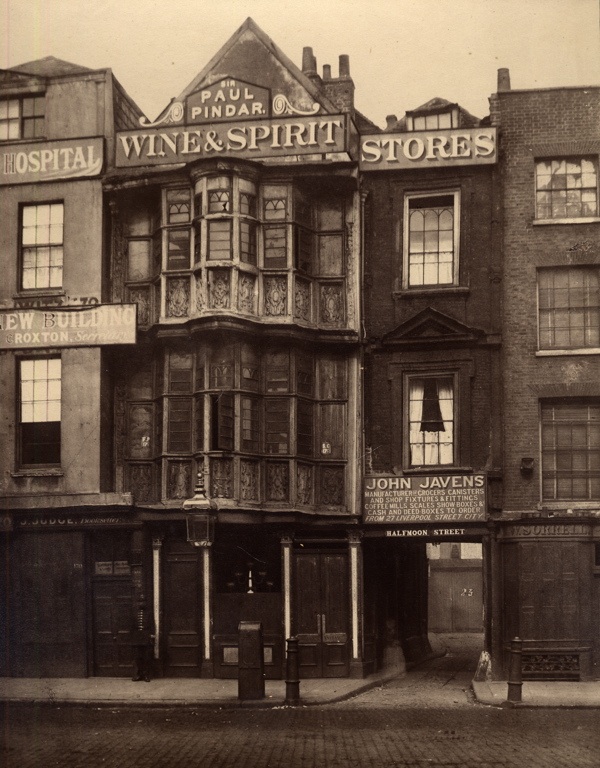
Paul Pindar’s House, Bishopsgate photographed by Henry Dixon for the Society for Photographing the Relics of Old London in the eighteen eighties. Paul Pindar was James I’s envoy to Turkey and his house was moved to the Victoria & Albert Museum in 1890.
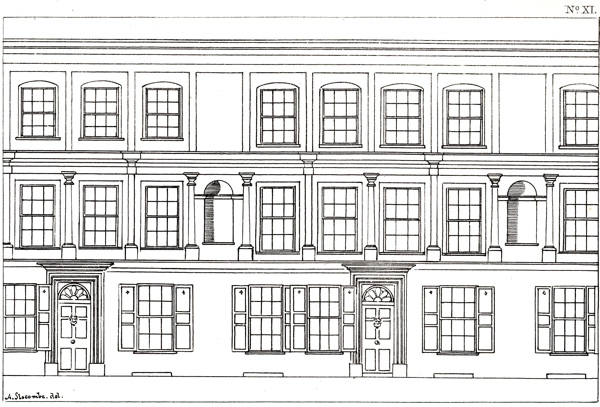
Houses designed by Inigo Jones built in White Hart Court, Bishopsgate in 1610.
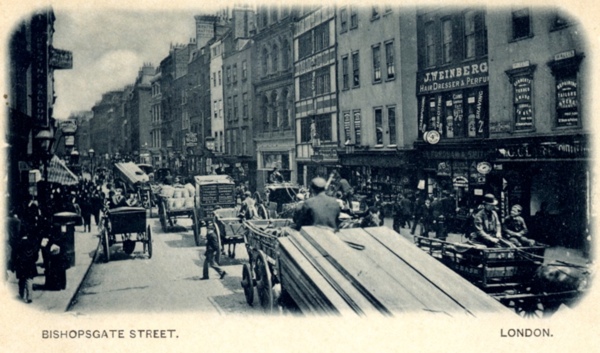
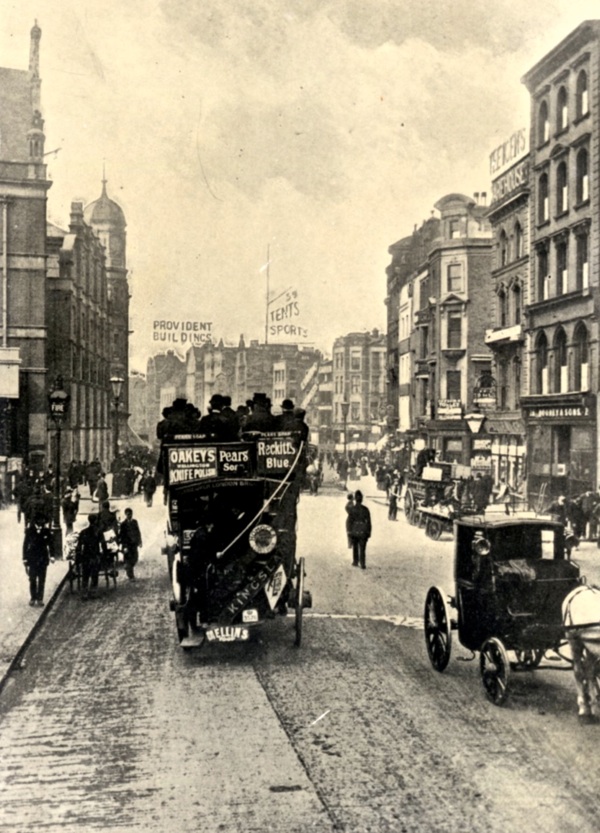
Archive images courtesy Bishopsgate Institute
You may also like to read about
At Hungry Tummy
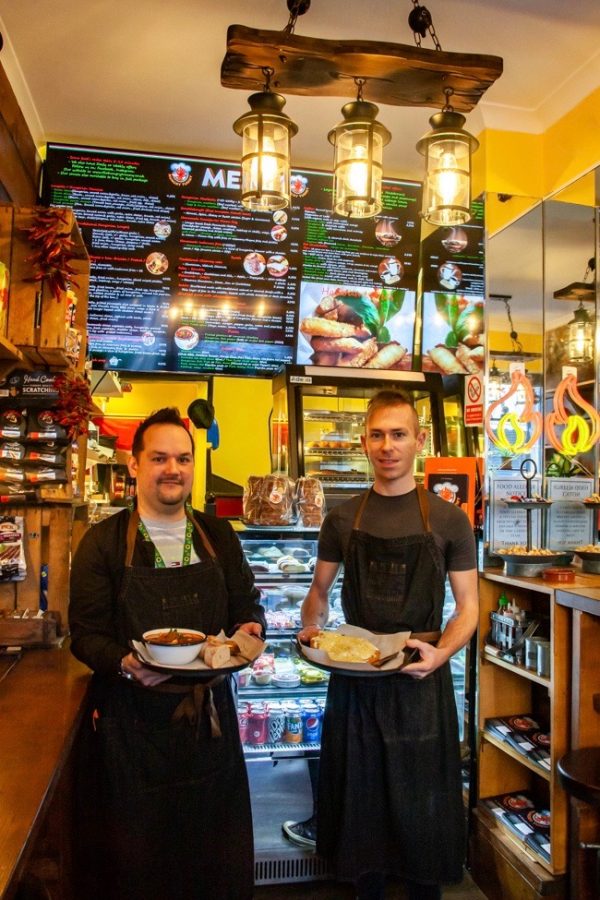
Zoltan & Ferenc at Hungry Tummy
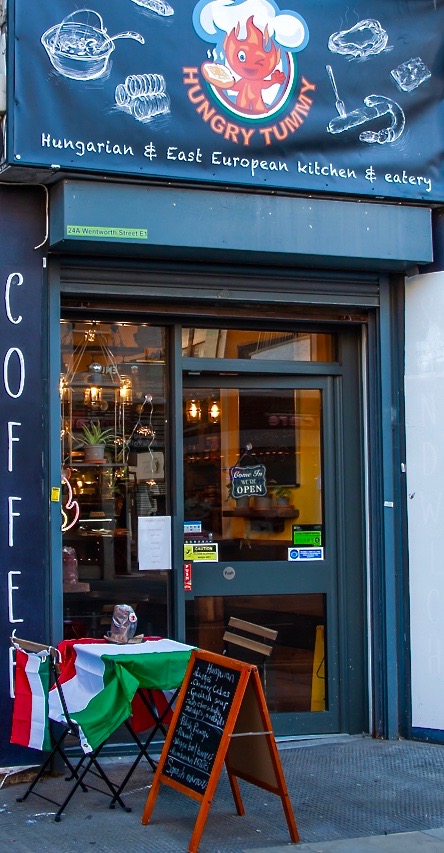
When the temperature plummets and the arctic blast roars up Commercial St, make hasty steps to Hungry Tummy in Wentworth St where you can enjoy a pot of steaming goulash as a remedy against the chill for less than five pounds.
On this particular day I had no breakfast, so I was more than delighted to rendezvous with Contributing Photographer Lucinda Douglas Menzies at this cosy kitchen to savour their freshly-cooked hot delights from Hungary.
We found proprietors Zoltan Pasztor & Ferenc Igor Kozula hard at work preparing all the dishes for lunch, so I settled down with a large enamel dish brimming with goulash while Lucinda took photographs.
I was gratified to discover that the meat and vegetables were not overcooked, retaining their texture in a goulash sauce that was pleasantly spicy without overwhelming the flavours of the ingredients. This would have been an adequate lunch in itself, but I followed it with Langos, a kind of fried pancake laden with deliciously sharp sour cream and tangy grated cheese. Next came walnut dumplings in vanilla sauce, a tasty European relative of our English sponge pudding with custard.
Finally, Ferenc demonstrated his expertise in bakery by rolling up Körtőskalács or ‘chimney cake’ onto a wooden pole and baking it on a rotating grill before my eyes. Once it slid off the pole, the cylindrical cake stood unaided with steam rising from the top of the chimney. This is Ferenc’s tour-de-force. Crispy on the outside and soft and feathery on the inside, it has an aromatic, perfumed quality that hints at origins further east than Hungary.
By now, I realised that the tempting array of freshly-baked strudels, biscuits, cakes and patisserie would have to wait for another day, but I was more than happy to sit quietly and enjoy a cup of Rooibosh tea while Zoltan explained to me how it all came about.
‘We have always loved cooking. We both learnt to cook a home, taught by our families, our mothers and grandmothers. In Hungary, most people can cook and everyone eats at home because they cannot afford to eat out every day.
We met fifteen years ago in Budapest. In those days we were both working in shops, like Aldi, we had no opportunity to cook. After that we worked in bakeries and we realised we had the possibility to do something for ourselves. I specialise in meat dishes and Ferenc is a baker. We grew up in Hungary, so we know how to make all the traditional recipes properly.
I have lived in London for almost three years now and Ferenc for two. At the time of the first lockdown, I went back to Hungary but then we came back together. We believed we could open a place here in Wentworth St because the neighbourhood has nothing like it, Hungarian or Eastern European.
We rented a flat above and it was luck to find these premises on our doorstep. We opened on the 14th December and, although the street is empty because hardly anyone is going in to work, our business is growing. Most of our customers return to try something different after their first visit.
If you love to do something, it is not hard work and it is a lot better than working in a shop.’
Zoltan & Ferenc have already drawn an enthusiastic local following for their keenly-priced authentic dishes, all honestly prepared every day. As chefs and co-owners, living up over the shop and putting heart and soul into their first restaurant, they deserve to succeed. So please walk over to Wentworth St to savour their heartening cuisine which is guaranteed to lift your spirits in these frosty days.
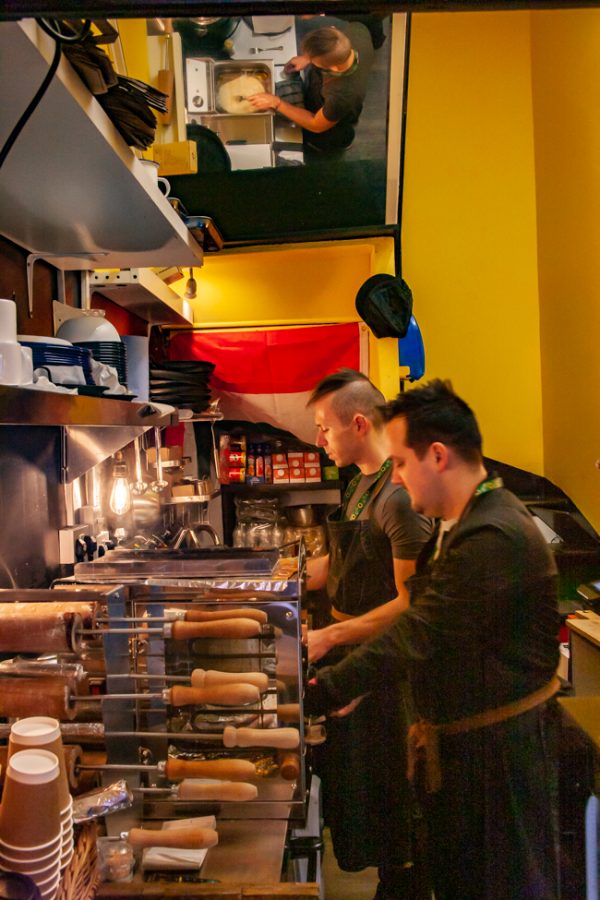
Zoltan & Ferenc at work
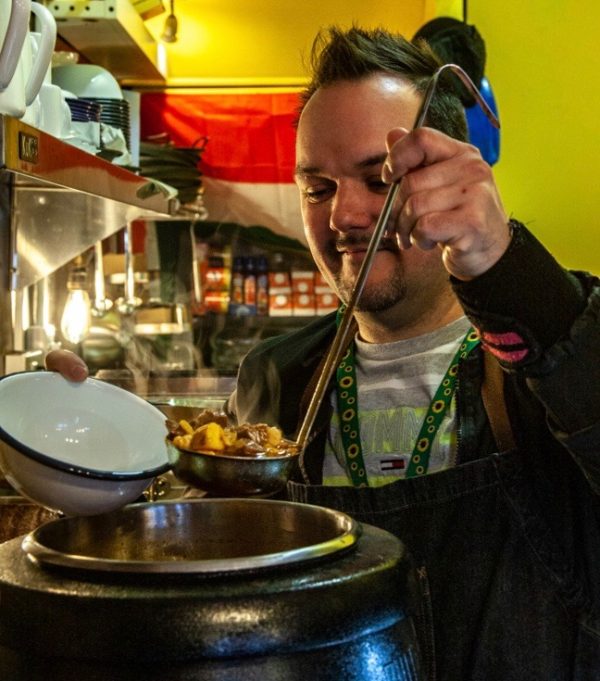
Zoltan ladles out the goulash
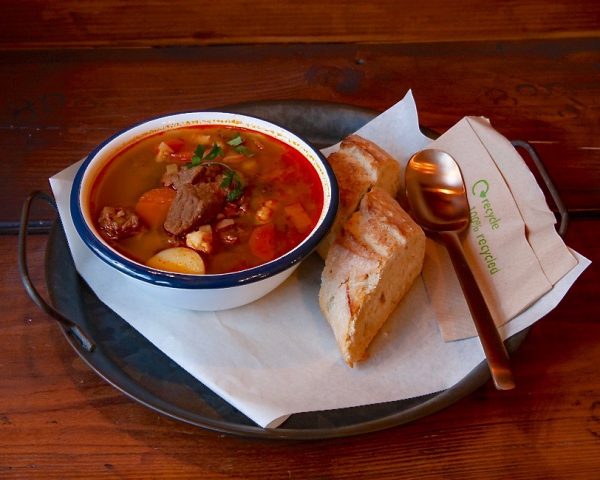
Freshly-made goulash, the antidote to chills
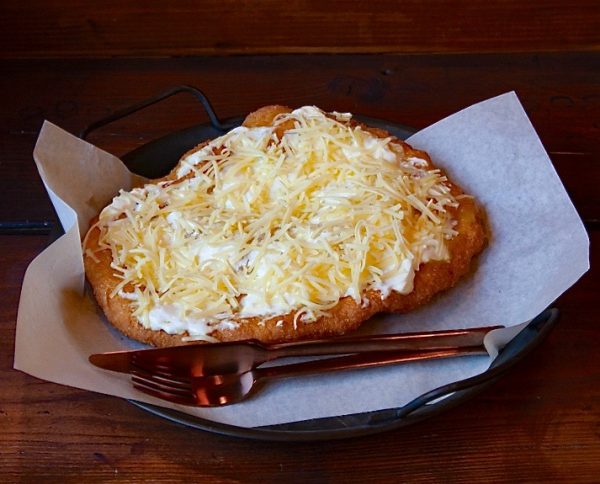
Langos, crispy pancake with sour cream, garlic and cheese
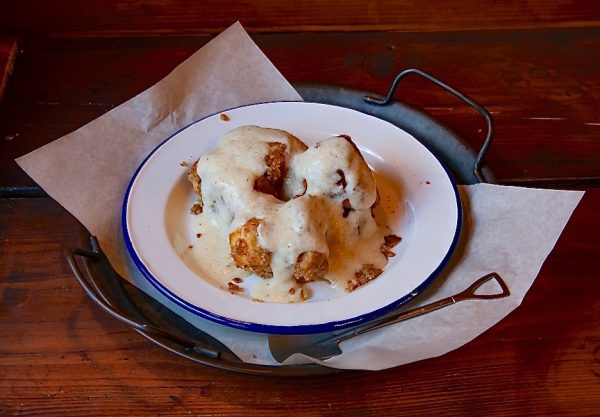
Hot walnut dumplings with vanilla sauce
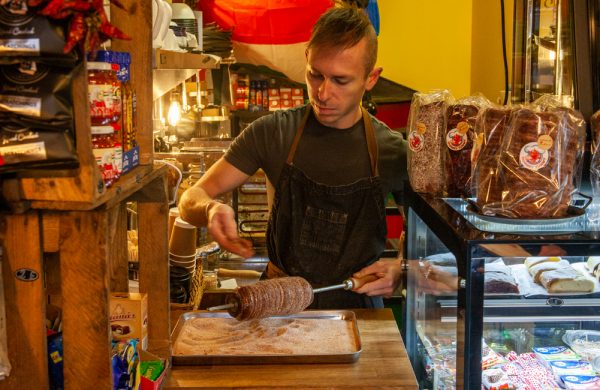
Ferenc makes a chimney cake
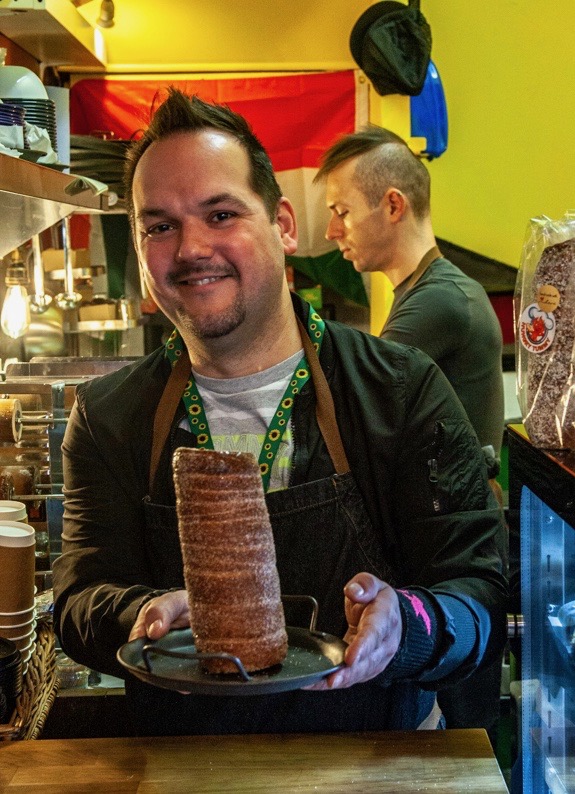
Zoltan serves the chimney cake, still steaming
Photographs copyright © Lucinda Douglas Menzies












