
Spring Book Sale
To celebrate the arrival of spring, this weekend all our books are on sale at HALF PRICE until Sunday at midnight and we are including a free copy of THE MAP OF THE GENTLE AUTHOR’S TOUR OF SPITALFIELDS with every order.
CLICK HERE TO VISIT THE SPITALFIELDS LIFE BOOKSHOP
Simply add the code SPRINGSALE at checkout to get 50% discount
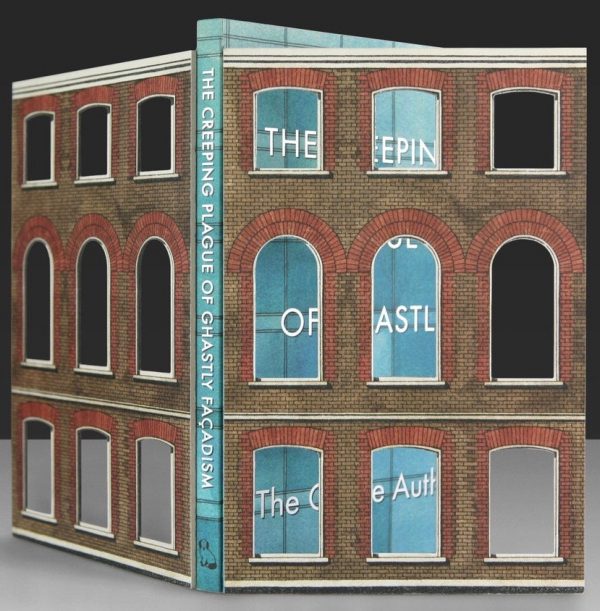
“As if I were being poked repeatedly in the eye with a blunt stick, I cannot avoid becoming increasingly aware of a painfully cynical trend in London architecture which threatens to turn the city into the backlot of an abandoned movie studio.”
The Gentle Author presents a humorous analysis of facadism – the unfortunate practice of destroying an old building apart from the front wall and constructing a new building behind it – revealing why it is happening and what it means.
As this bizarre architectural fad has spread across the capital, The Gentle Author has photographed the most notorious examples, collecting an astonishing gallery of images guaranteed to inspire both laughter and horror in equal measure.
CLICK HERE TO ORDER A COPY OF THE CREEPING PLAGUE OF GHASTLY FACADISM

Culminating a distinguished career spanning more than sixty years, historian Gillian Tindall has written a novel as her final statement. In an astonishing feat of literary imagination, she projects herself back onto one of her forebears to conjure a compelling vision of 17th century England.
The protagonist is a Huguenot metal founder, an occupation that leads him from the Sussex Weald to the Whitechapel Bell Foundry, and beyond to the North Country. While in London, he lives above a coffee house in Brick Lane and the book conjures a vivid evocation of Spitalfields at the time of the Huguenots.
This is a hymn to those who pass through life not leaving a trace, except in the hearts of those into whose lives they have been cast.
‘Gillian Tindall’s JOURNAL OF A MAN UNKNOWN is a novel of rare distinction. Tindall’s voice is richly her own: tender but unsentimental and lit by intimate knowledge of her chosen world.’ Colin Thubron
CLICK HERE TO ORDER A COPY OF JOURNAL OF A MAN UNKNOWN
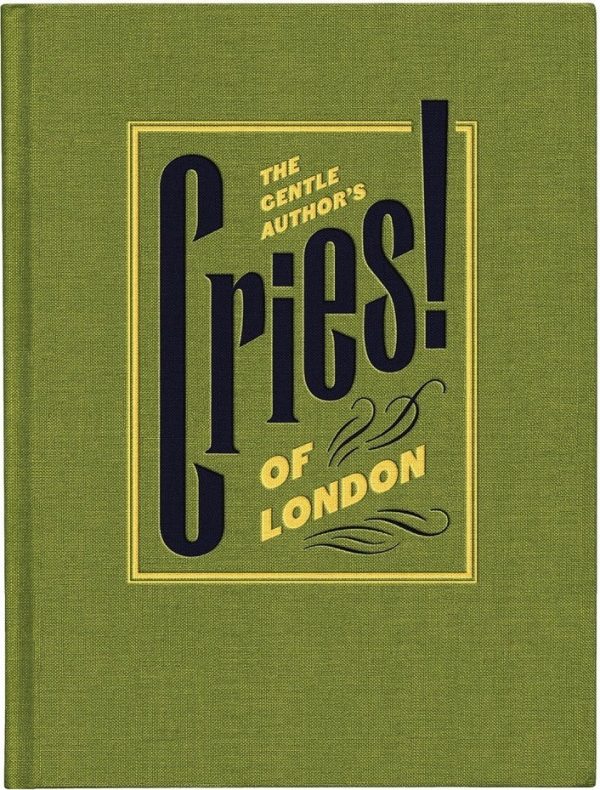
The Gentle Author assembles a choice selection of CRIES OF LONDON, telling the stories of the artists and celebrated traders, and revealing the unexpected social realities contained within these cheap colourful prints produced for the mass market.
For centuries, these lively images of familiar hawkers and pedlars have been treasured by Londoners. In the capital, those who had no other means of income could always sell wares in the street and, by turning their presence into performance through song, they won the hearts of generations and came to embody the spirit of London itself.
CLICK HERE TO ORDER A COPY OF THE CRIES OF LONDON
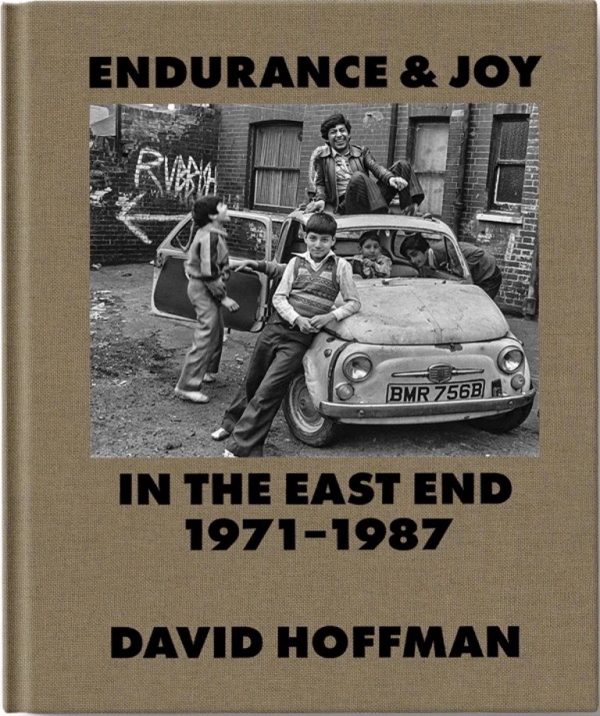
David Hoffman’s bold, humane photography records a lost era, speaking vividly to our own times.
When David Hoffman was a young photographer, he came to live in a squat in Fieldgate Mansions in Whitechapel and it changed his life.
Over the following years, he documented homelessness, racism and the rise of protest in startlingly intimate and compassionate pictures to compose a vital photographic testimony of resilience.
A hefty cloth-bound hardback of 240 pages containing over 200 duotone photographic prints on good quality paper.
With an introduction by David Hoffman and commentary throughout.
CLICK HERE TO ORDER A COPY OF ENDURANCE & JOY IN THE EAST END
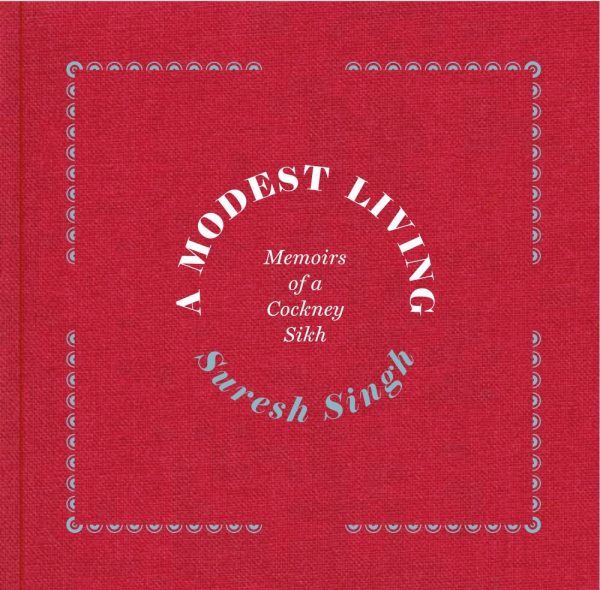
‘a timely reminder of all that modern Britishness encompasses’ The Observer
In this first London Sikh biography, Suresh Singh tells the candid and sometimes surprising story of his father Joginder Singh who came to Spitalfields in 1949.
Joginder sacrificed a life in the Punjab to work in Britain and send money home, yet he found himself in his element living among the mishmash of people who inhabited the streets around Brick Lane.
Born and bred in London, his son Suresh became the first Punjabi punk, playing drums for Spizzenergi and touring with Siouxsie & the Banshees.
In the book, chapters of biography are alternated with Sikh recipes by Jagir Kaur.
CLICK HERE TO ORDER A COPY OF A MODEST LIVING
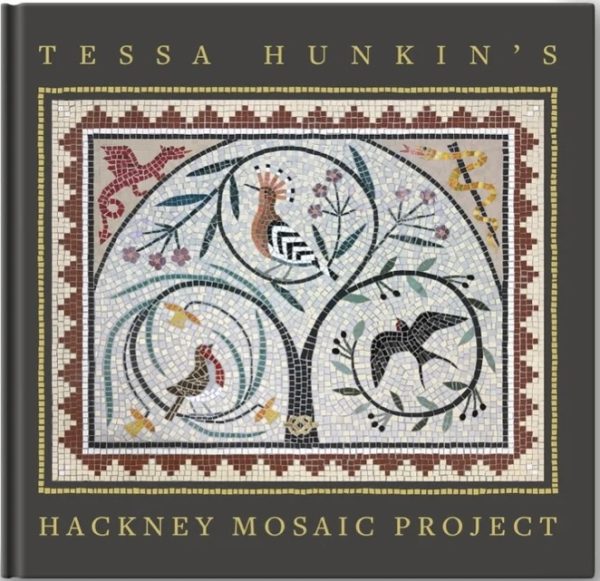
Tessa Hunkin’s Hackney Mosaic Project has been responsible for some of the most witty and imaginative mosaics of recent years.
In a bold reinvention of the classical tradition, Tessa has assembled a passionate and diverse team of makers, creating beautiful mosaics that have become cherished landmarks, celebrating community and elevating the streets of East London.
This inspirational collection reveals the scope of Hackney Mosaic Project’s achievement for the first time, ranging from modest pieces in private gardens to expansive murals and pavements in public parks.
Includes an interview with Tessa Hunkin by The Gentle Author, commentary by Wendy Forrest, a map with locations of the mosaic and a description of the working process.
CLICK HERE TO ORDER A COPY OF HACKNEY MOSAIC PROJECT

‘This small, beautiful book is an elegy to companionship. Encompassing both the everyday and the profound, it should be judged no less valid for the fact that the friend in question is a cat.’ Times Literary Supplement
Anyone that has a cat will recognise the truth of this tender account by The Gentle Author.
“I was always disparaging of those who doted over their pets, as if this apparent sentimentality were an indicator of some character flaw. That changed when I bought a cat, just a couple of weeks after the death of my father. ”
Filled with sentiment yet never sentimental, THE LIFE & TIMES OF MR PUSSY is a literary hymn to the intimate relationship between humans and animals.
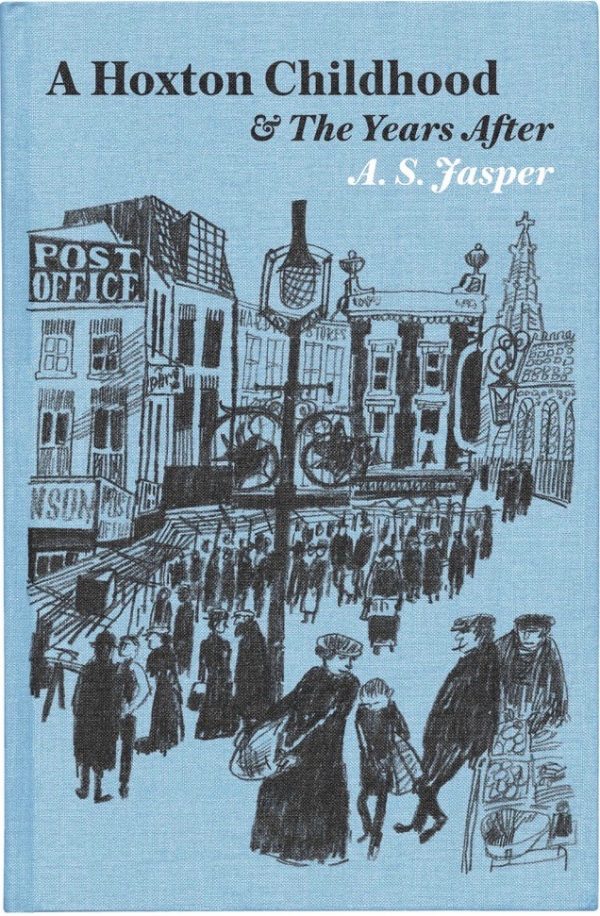
AS Jasper’s tender memoir of growing up in the East End of London at the beginning of the twentieth century was immediately acclaimed as a classic when it was described by the Observer as ‘Zola without the trimmings.’
In this definitive new edition, A Hoxton Childhood is accompanied by the first publication of the sequel detailing the author’s struggles and eventual triumph in the cabinet-making trade,The Years After.
Illustrated with line drawings by James Boswell and Joe McLaren
CLICK HERE TO ORDER A COPY OF A HOXTON CHILDHOOD

The Citrus Trees Of Spitalfields

Meet me on Easter Monday on the steps of St Paul’s for a tour of sightseeing and storytelling, rambling through the alleys and byways of the Square Mile in search of the wonders and the wickedness of the City of London.
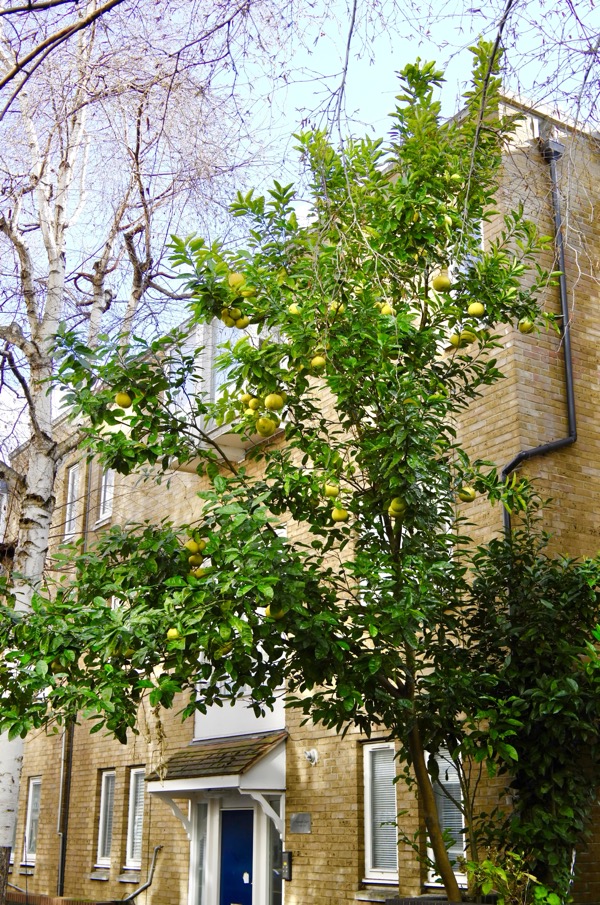
Princelet St
In these last long months at end of winter my spirits have been consistently lifted by the sight of citrus trees flourishing, heavy with fruit in the back streets and yards to the east of Brick Lane. On cold days when the clouds hung low over the city, the sight of these evergreen specimens gave me hope.
Spitalfields has always been renowned for fruit trees. In the seventeenth century, Leonard Gurle ran a tree nursery – including 11,600 plum, cherry and pear trees, as well as nectarines – that extended from Brick Lane to Whitechapel and supplied soft fruit trees to Charles II, while Thomas Fairchild in The City Gardener, 1722, notes that the area around Bishopsgate lends itself to the cultivation of pears and plums. A piece of horticultural history which still echoes in the name of Blossom St in Norton Folgate today.
Yet centuries of the social change and recent global warming have brought citrus trees to Spitalfields today. Just as the Huguenots are believed to have brought auriculas in the eighteenth century, three hundred years later Bengali people have cultivated shatkora, a Sylheti fruit similar to grapefruit but with very thick skin used in savoury dishes. Additionally, I have found tangerines in Flower & Dean Walk and oranges and lemons in Chicksand St.
Take a pilgrimage for yourself to visit the citrus trees of Spitalfields. Remarkably, none are growing in full sunlight although most are in sheltered spots. Be inspired by the abundant life and resilience of nature, even here in the heart of the city.
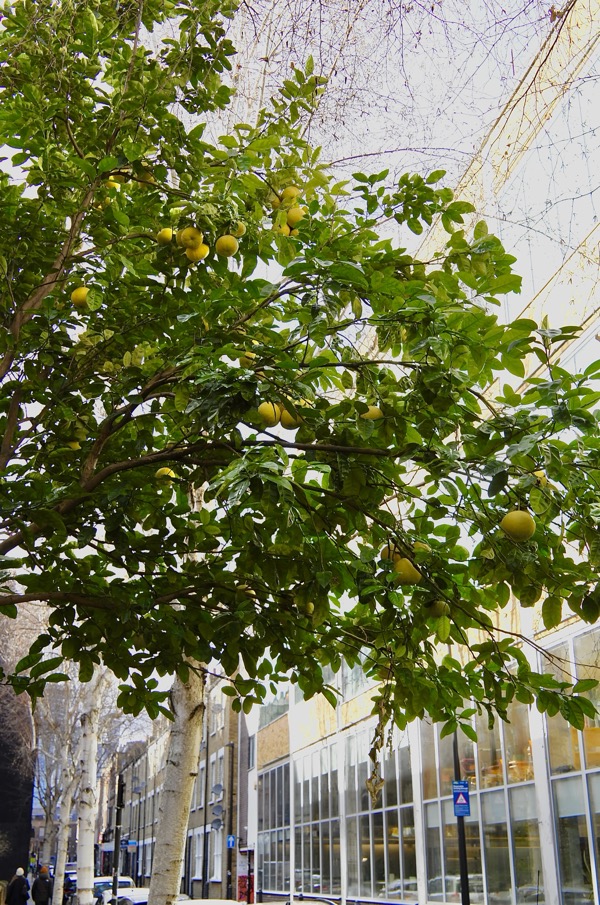
Princelet St
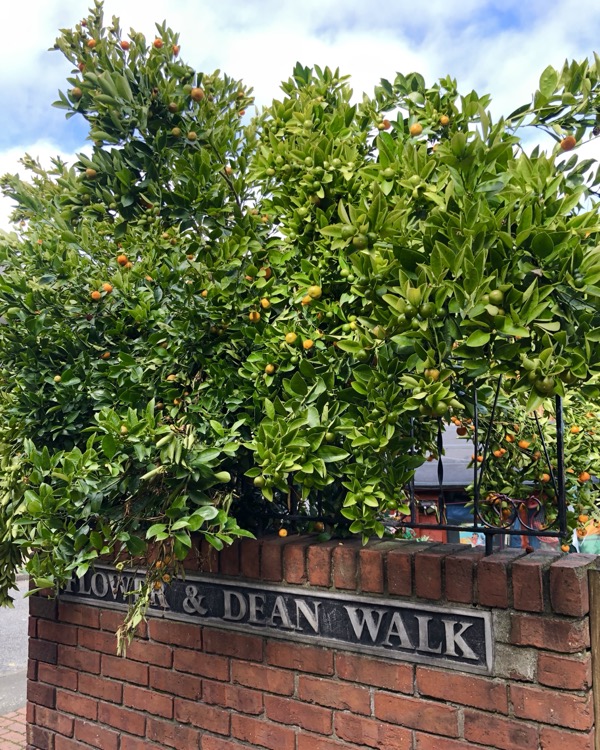
Tangerines in Flower & Dean Walk
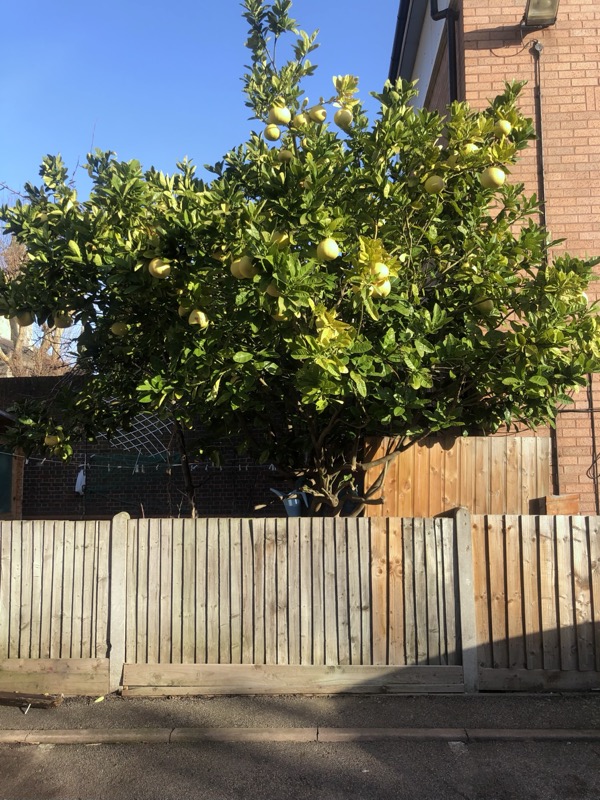
Deal St
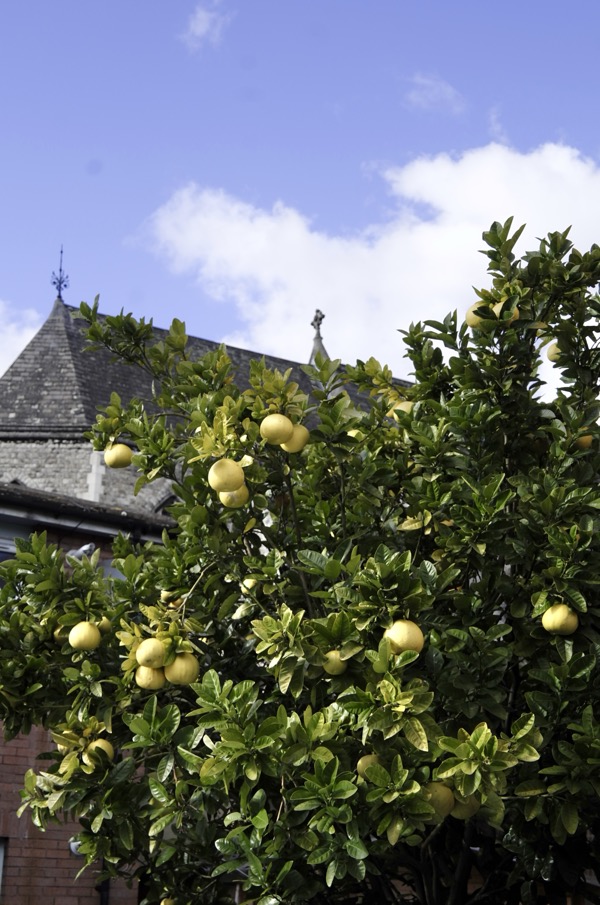
Deal St
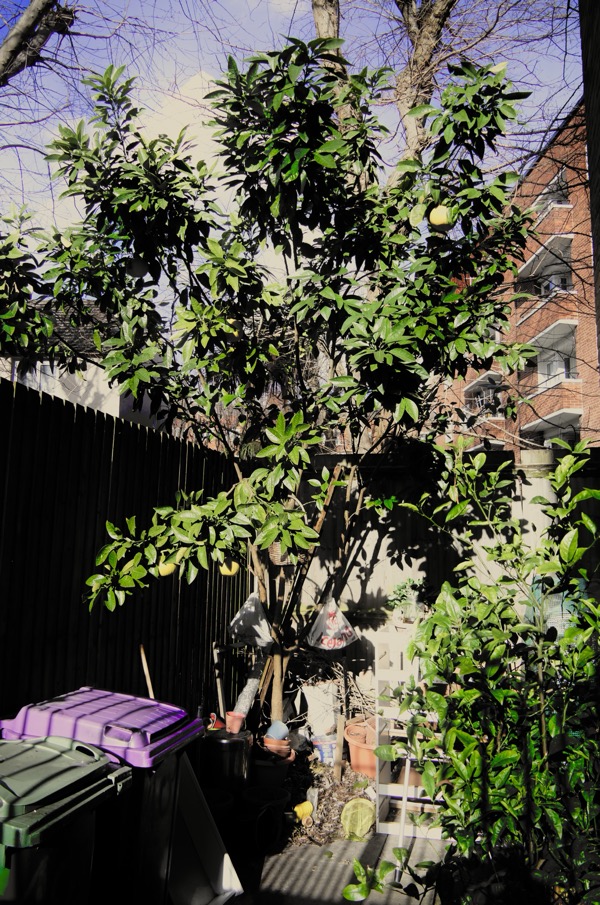
Hanbury St
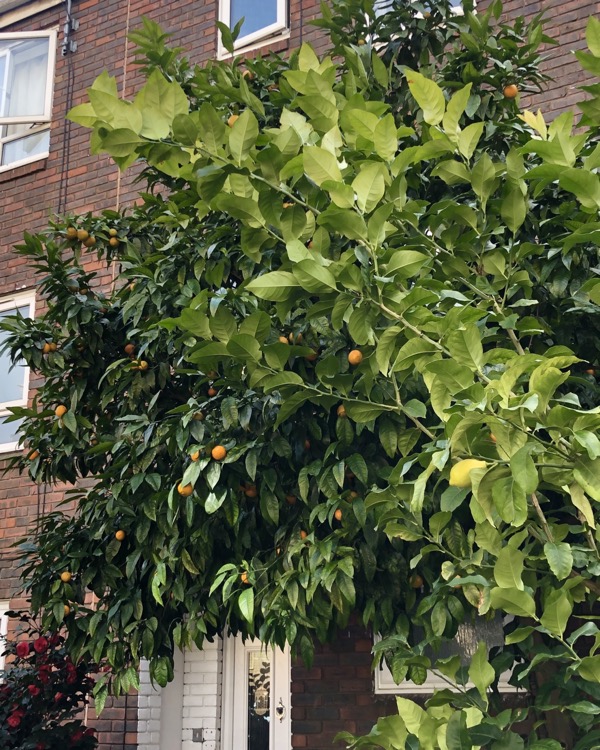
Oranges and lemons in Chicksand St
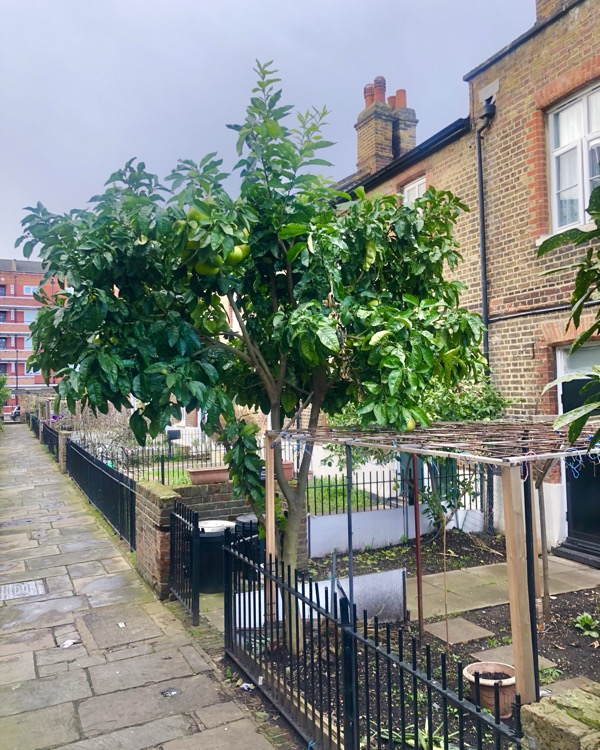
Albert Cottages
Barnett Freedman’s Street Scene

Street Scene by Barnett Freedman (Click this image to enlarge)
When I first saw Street Scene by Barnett Freedman (Reproduced courtesy of the Tate Gallery), I thought I half-recognised the location as either Whitechapel or Bethnal Green and I delighted in the painting as an evocation of the streetlife of the Jewish East End in the early twentieth century.
Surely that is The George in Bethnal Green Road in the background? In particular, the two ostentatiously dressed woman in their contrasting outfits recalled for me the custom of people to promenade along Aldgate to Whitechapel at weekends in their finery, window shopping and greeting friends, enjoying their social life in public. Indeed, Pearl Binder included a similar pair of young women togged up to the nines in one of her lithographs of Aldgate in the twenties. I also wondered if the shabby old street musician with his violin was a Russian immigrant who had arrived like Barnett Freedman’s parents at the end of the nineteenth century.
Barnett Freedman was born in Lower Chapman St, Stepney Green in 1901. A sickly child who endured extended hospital stays, he was confined to bed between the ages of nine and thirteen, yet managed to educate himself, learning to read, write, play music and draw and paint while sequestered in a hospital ward.
By the age of sixteen, Barnett was earning his living as a draughtsman to a monumental mason for a few shillings a week, while for the next five years he spent his evenings undertaking classes at St Martin’s School of Art. Before long, he moved to an architect’s office, creating attractive drawings from his employer’s rough sketches and, taking the opportunity offered by a surge in demand for the war memorials to hone his skill as a letteringh artist.
With remarkable tenacity and self-belief, Barnett applied over three successive years for a London County Council Scholarship that would enable him to study at the Royal College of Art under the direction of Sir William Rothenstein. Experiencing rejection on each occasion, Barnett summoned the courage to present his portfolio in person to Rothenstein who recognised his talent and applied to the London County Council Chief Inspector himself on behalf of the young artist. As a consequence, a stipend of £120 a year was granted, enabling Barnett to begin his studies full time in 1922.
At the Royal College of Art, Barnett’s talent flourished among fellow students including Edward Bawden, Raymond Coxon, Henry Moore, Vivian Pitchforth and John Tunnard. Yet even after graduating in 1925, he continued to struggle to support himself and in 1929, ill-health prevented him working for a year. This situation as resolved when William Rothenstein took Barnett onto the staff of the Royal College in 1930. In the same year, he married fellow illustrator, Claudia Guercio, and, during the thirties, enjoyed an increasingly successful career as an illustrator and commercial artist.
Barnett’s lithographs for Siegfried Sassoon’s Memoirs of an Infantry Officer, published in 1931, were one of many highlights during his long association with Faber and Faber, for whom he also illustrated works by the Brontës, Walter de la Mare, Charles Dickens, Edith Sitwell, William Shakespeare and Leo Tolstoy. As a commercial artist, he undertook prestigious commissions for Ealing Films, the General Post Office, Curwen Press, Shell-Mex, British Petroleum, Josiah Wedgwood and London Transport, earning popular success.
Appointed as an official War Artist, along with Edward Ardizzone and Edward Bawden, Barnett accompanied the expeditionary force in the spring of 1940 before the retreat at Dunkirk, and was awarded a CBE for this work in 1946. Yet Barnett always retained his East End accent and once, when he hailed a taxi to the Athenaeum Club, the incredulous cabbie famously retorted, “What, you?”
Street Scene was painted between 1933 and 1939, and subsequently he reworked the image as a lithograph for Lyons Corner House. Barnett’s son Vince, who was born in 1934, recalled his father working on the picture in the first floor studio of the family home in a back street of Gloucester Rd, West London. Vince revealed to me that the building on the right of the painting was based their house, 11 Canning Place. “The fiddler was to be found at the Gloucester Road end of Canning Place just about every day, and was a figure of some threat to me at the age of four!” he recalled, “The small person on the right, with his nanny Miss Wiggle, is a reference to me!”
No wonder that I was unable to place the location of this painting precisely in the East End because it is not a literal scene at all but a composite of Bethnal Green and Gloucester Road. I often wonder if the East End itself is actually a place or a culture, and this painting proposes an answer to my quandary. Barnett Freedman employed diverse topographic elements create a portrait of a society he knew intimately, constructing an entirely subjective portrayal of his environment and personal heritage. Look in the left top corner of the painting and you will see the artist raising his hat to you, ambling happily along the pavement and eternally at home in his own East End universe. Vincent Freedman summed up his father’s achievement in these words, “A huge optimism and compassion shows itself to me in all his work and life. Humanity was his central driving force.”
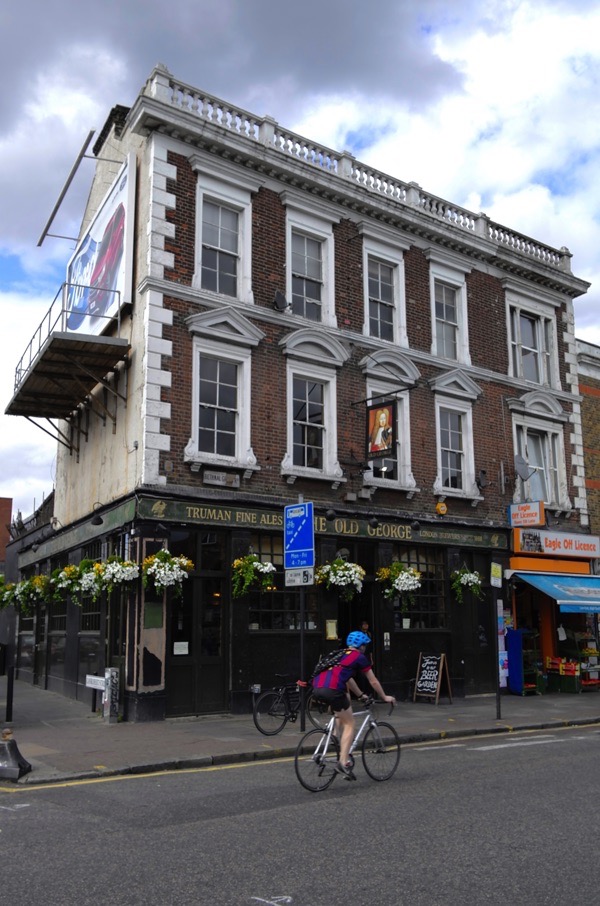
The Old George in Bethnal Green
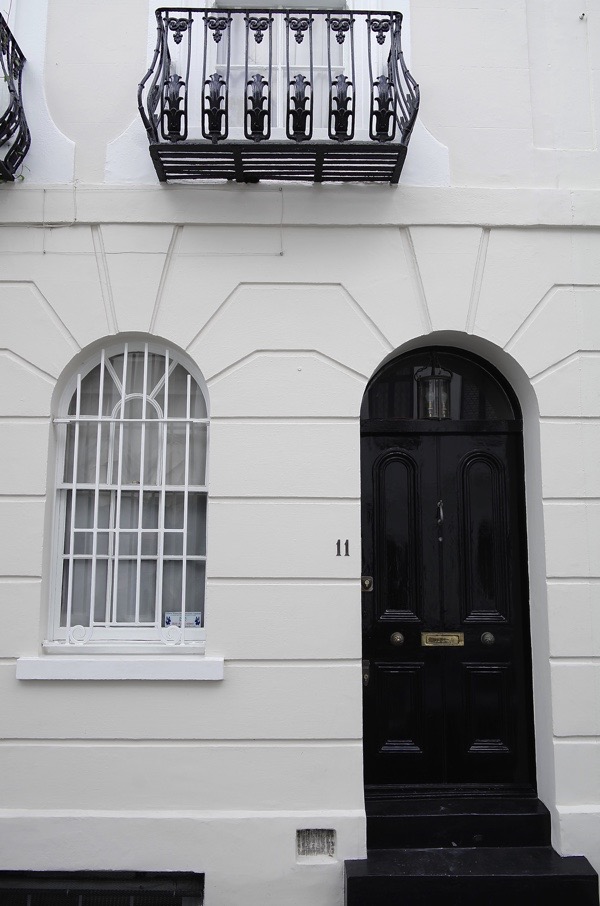
Barnett Freedman’s house at 11 Canning Place, Gloucester Rd
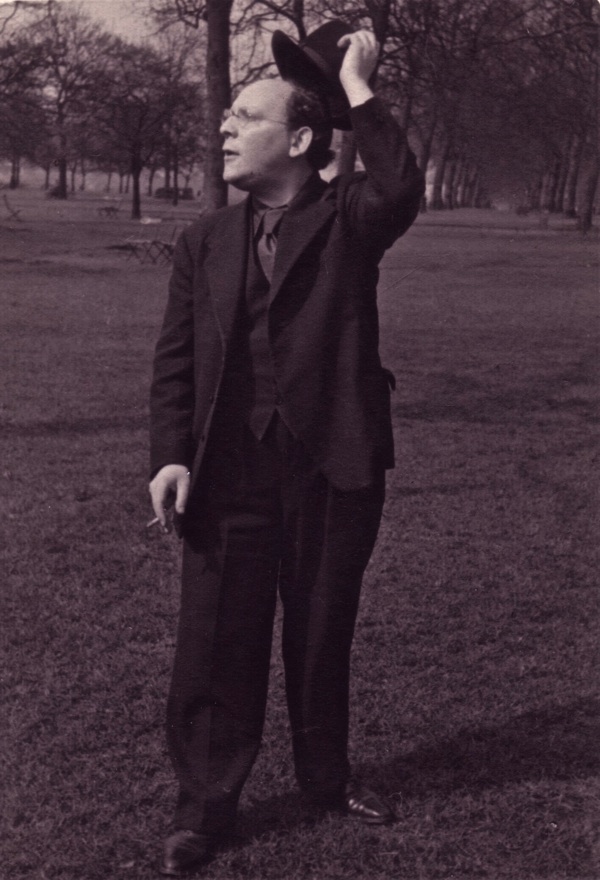
Barnett Freedman in Hyde Park
In Chinese Limehouse

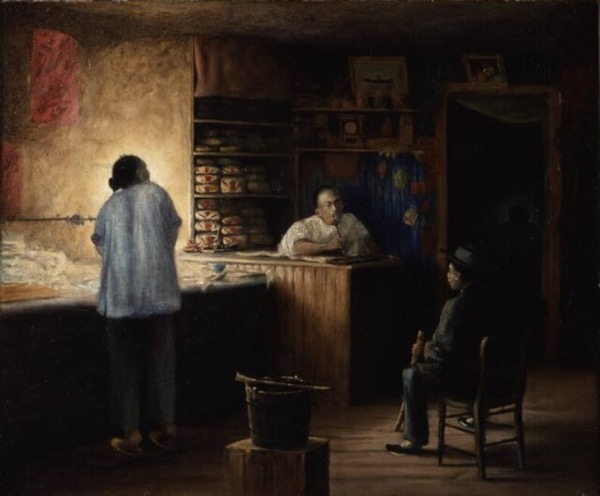
Tong Yin Shung Gun laundry by Stafford Northcote, 1946
Almost nothing remains of London’s first Chinatown in Pennyfields, Limehouse, and even documentary evidence is scarce for this once-thriving community which makes this exhibition The Original Chinatown in Limehouse, Myths & Realities at St Anne’s Limehouse, Three Colt St, E14 8HH, especially important. It opens this Friday March 20th and runs each Thursday to Saturday 10-4pm until July, admission free.
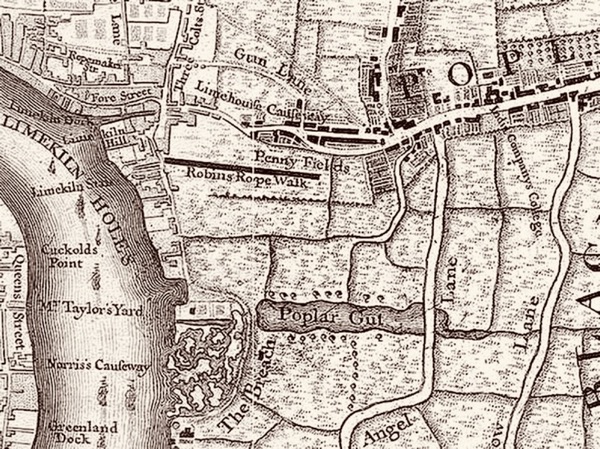
This map from 1745 shows the locations of Limehouse Causeway and Pennyfields that became the epicentre of the original Chinatown in London
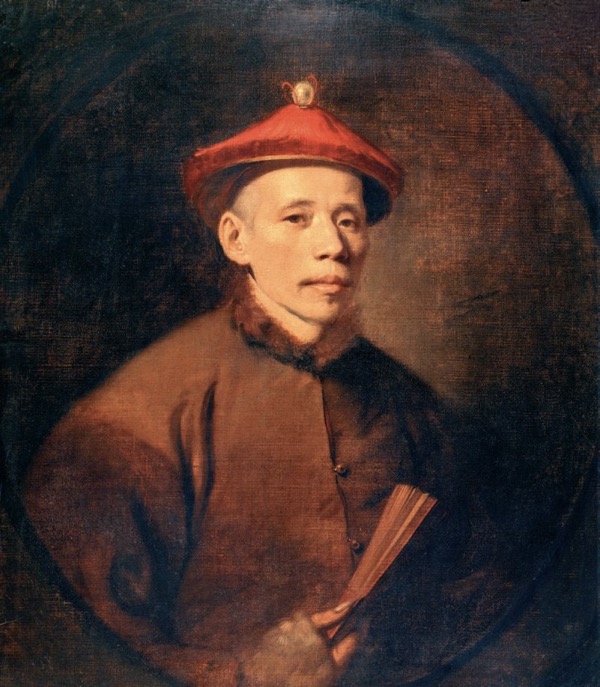
Portrait of Tan Che Qua, artist, the second-recorded Chinese person to visit England, 1769 -1772. His artwork was exhibited at the Royal Academy in 1770
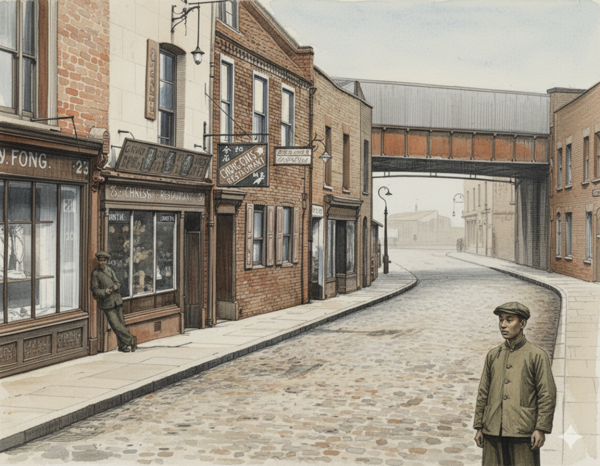
Early twentieth century painting of Limehouse Causeway by an unknown artist
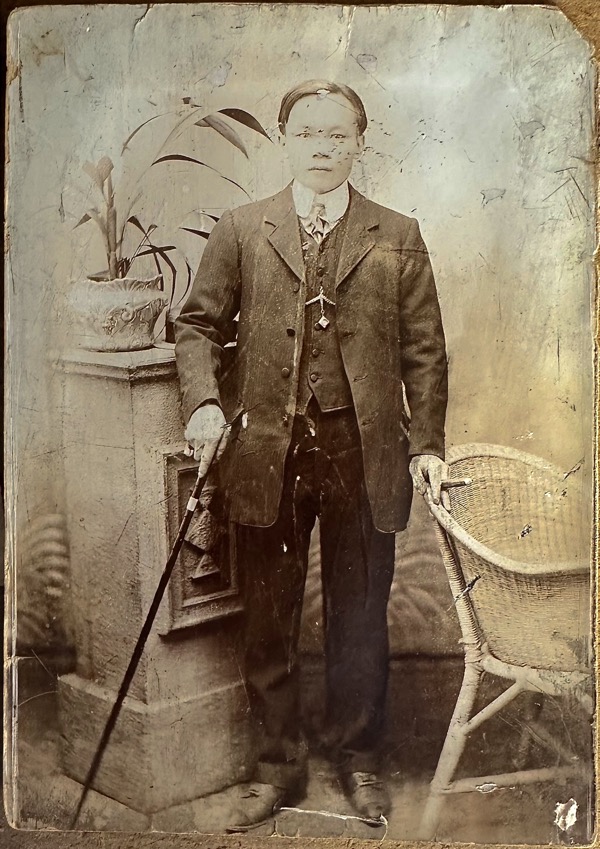
Tsang Sing, born in Hong Kong in 1878, originally a sailor, he became a pastry chef in Chinatown where he met and married his English wife Lilian
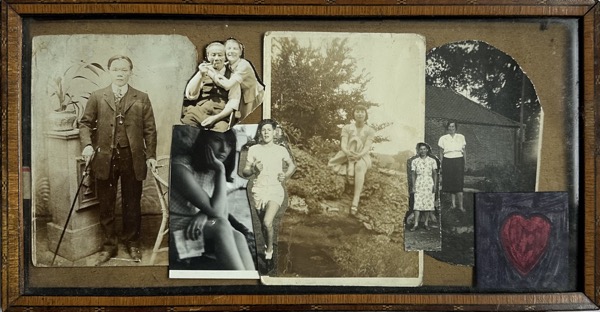
Montage of Alison Gill’s Anglo-Chinese family with great-grandfather Tsang Sing’s photo on the left and various relatives – mother, and siblings.
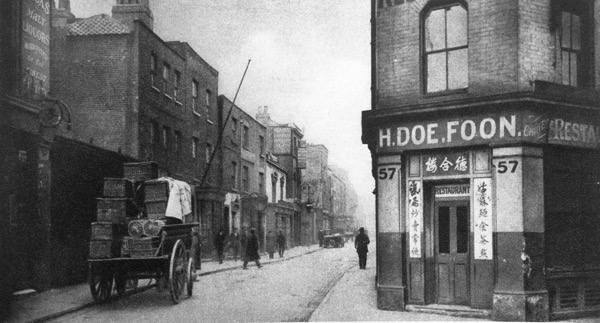
Corner of Pennyfields and West India Dock Road with the H.Doe.Foon. restaurant
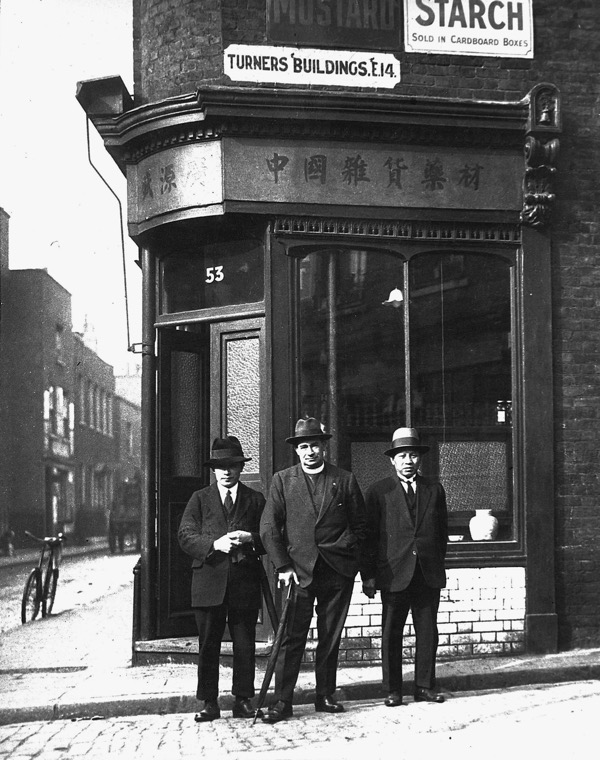
A local vicar with two Chinese gentlemen at Turners Buildings, a turning off Pennyfields now covered over by Pennyfields Park
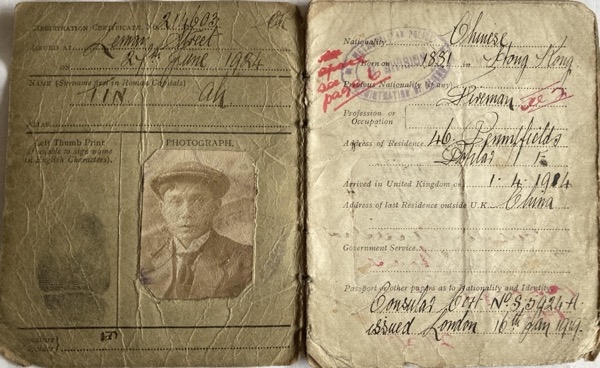
Registration document for Ah Tin, merchant seaman from Canton who came to London in 1904 and settled at 46 Pennyfields in 1924
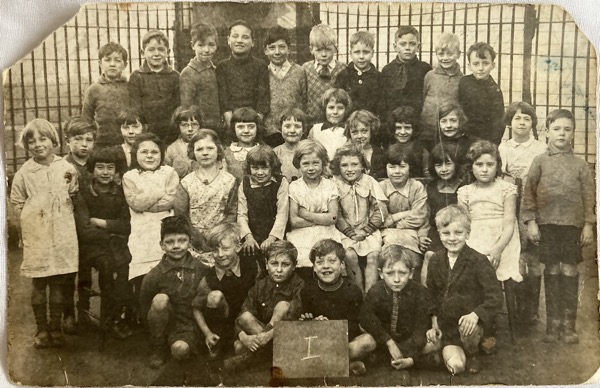
Ah Tin’s daughter Doris Tin pictured at the Dingle Street school in Poplar. Doris is the girl with dark hair in the second row, second from the left.
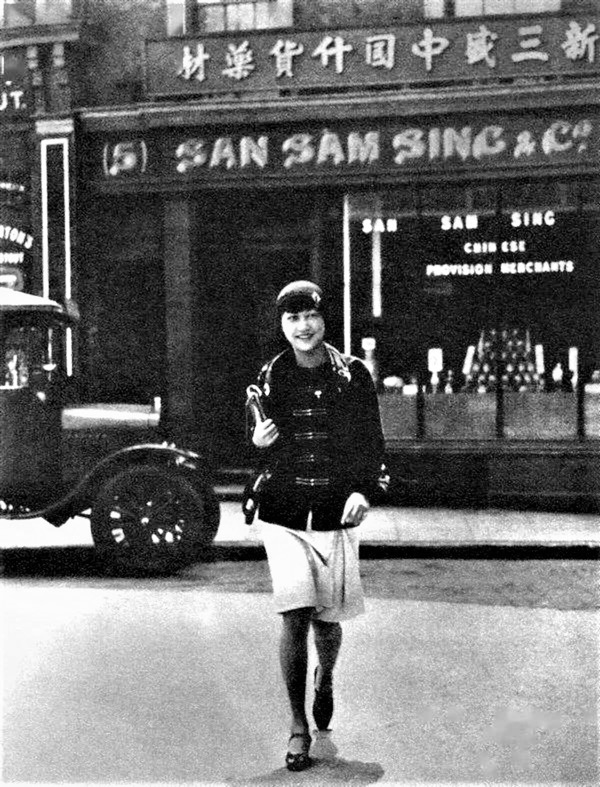
Film star Anna May Wong visits Chinatown in 1928
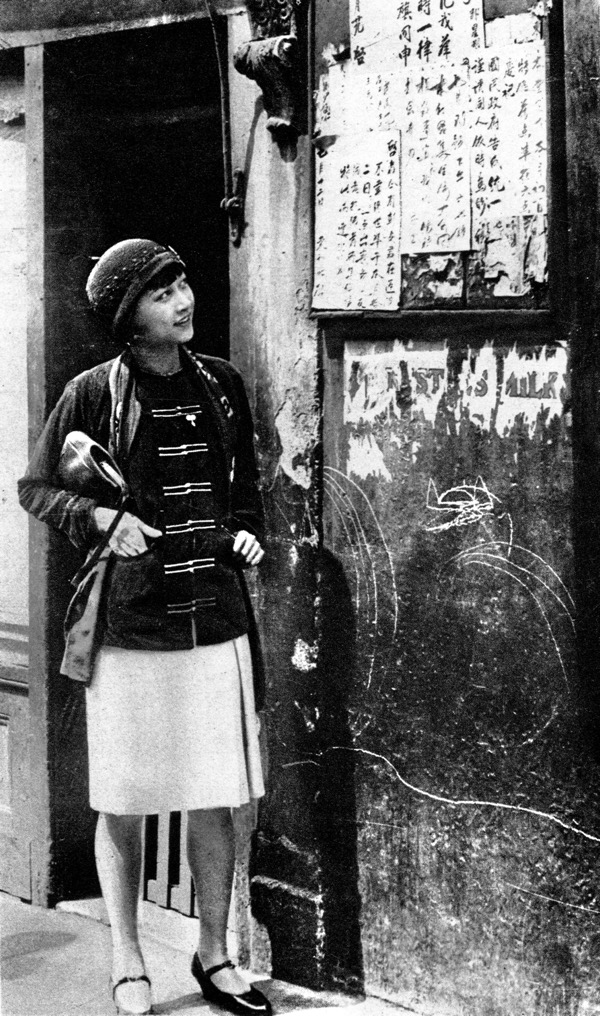 Anna May Wong visits in 1928
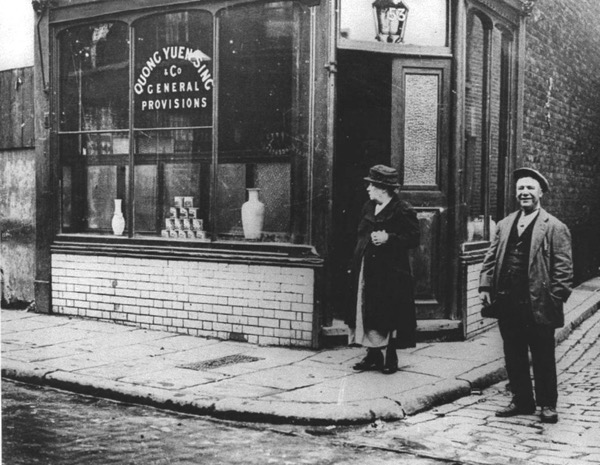
One of the many Chinese grocers, this is the Quong Yuen Sing shop at 53 Pennyfields
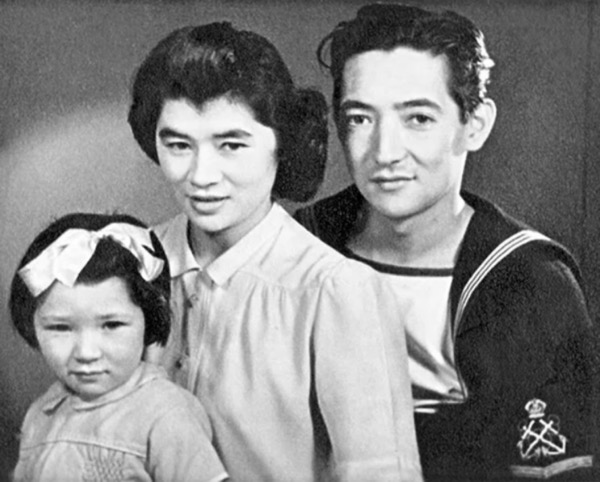
The Chow Family – Connie and Leslie were both from Chinese/English parents – with daughter Christina. They lived at 48 Pennyfields which was destroyed in one of the first air raids of the Blitz.
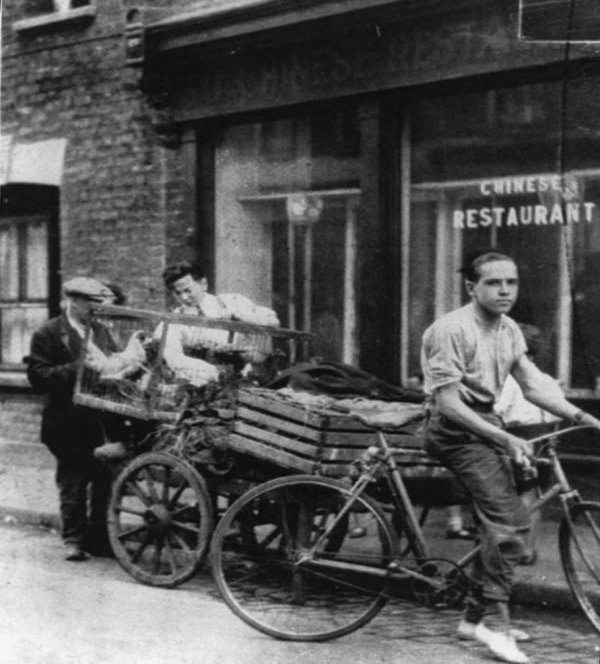
Live chicken sold from a barrow outside the Chinese restaurant at 60 Pennyfields
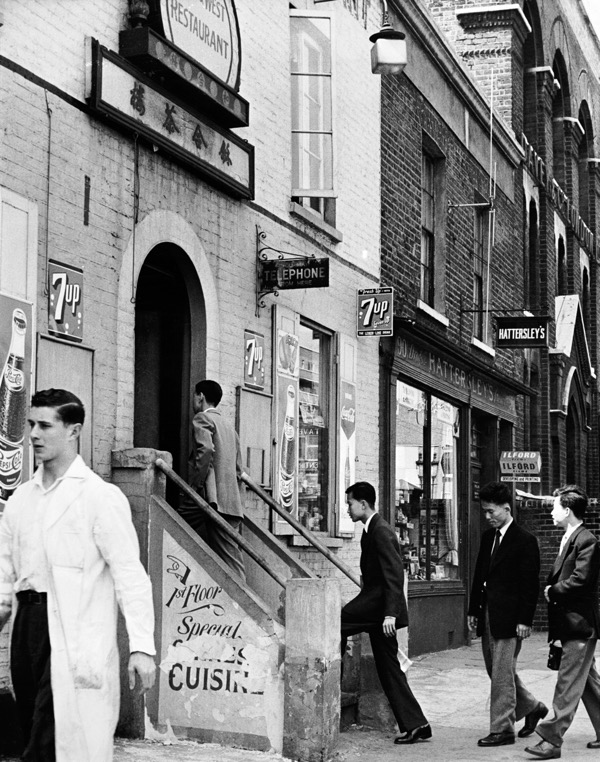
One of the many restaurants in Chinese Limehouse- this is the” East West” in West India Dock Rd – popularly known as the “Up the Steps”
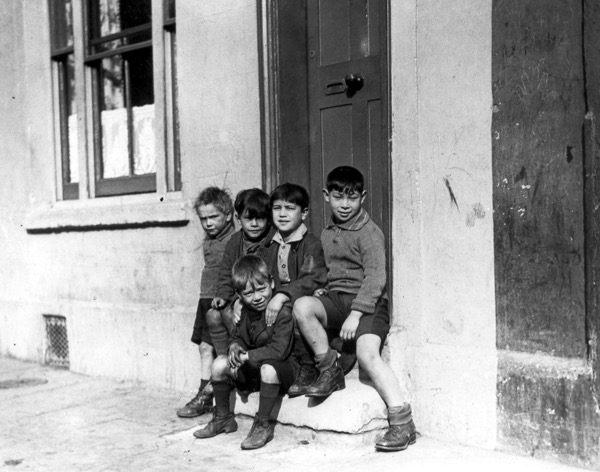
Anglo-Chinese boys play on the street
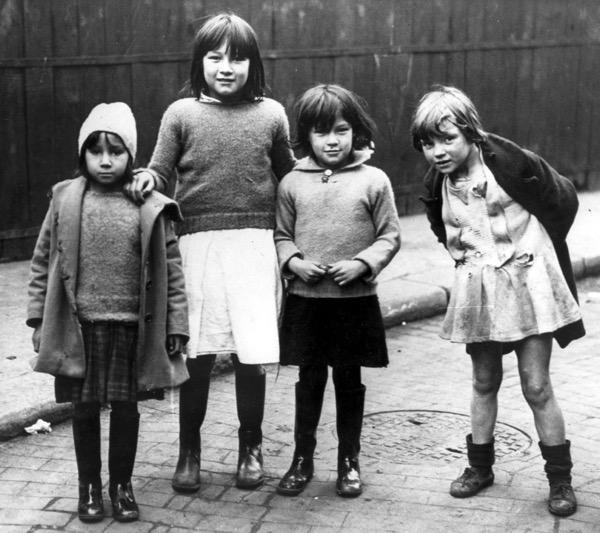
Anglo-Chinese girls play on the street
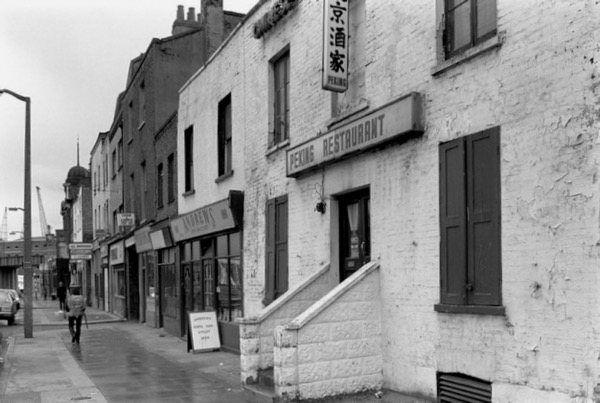
The Peking restaurant in West India Dock Road was famed for its fish tanks from which diners could select their supper
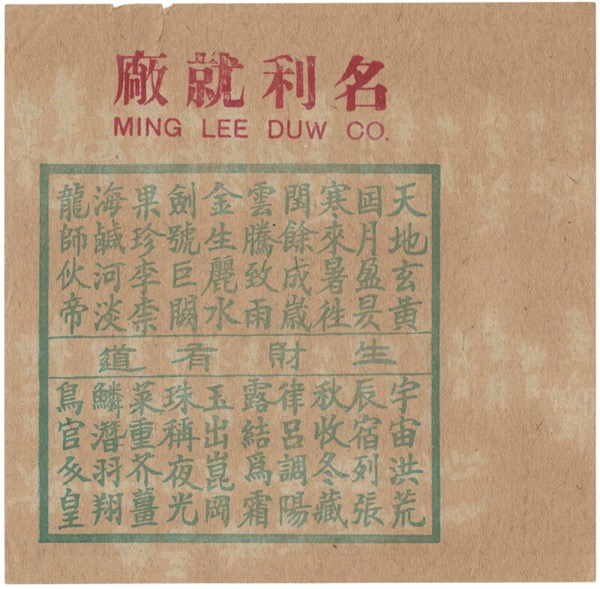
A Puka Pu betting slip, a form of bingo popular in Chinese Limehouse
John Olney, Donovan Brothers
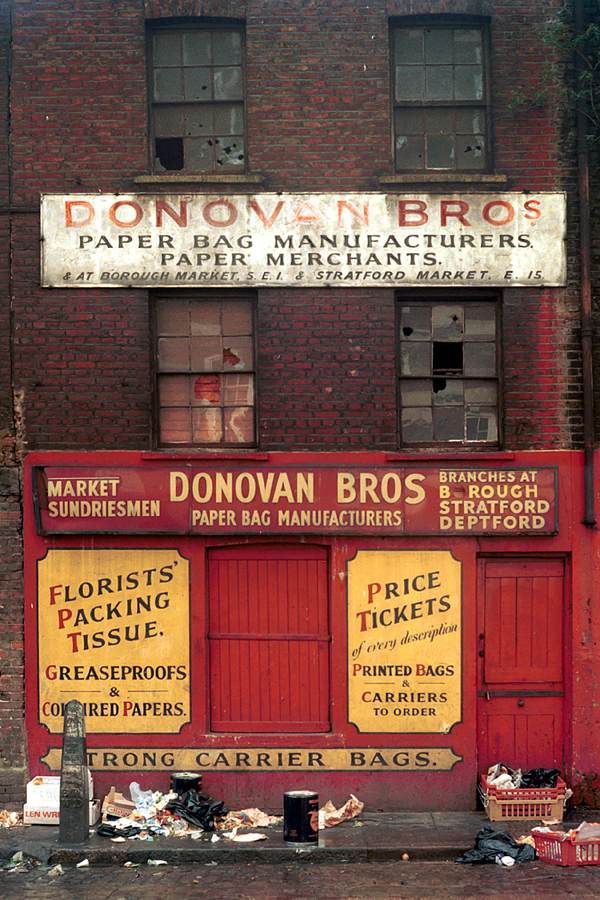
Philip Marriage’s photograph of Donovan’s Bags, Crispin St, in 1985
John Olney told me it all began with two brothers, Jeremiah & Dennis O’Donovan, who came to Liverpool from Dublin in the eighteen thirties at the time of the potato famine in Ireland. Dennis took a passage from Liverpool across the Atlantic to seek his fortune with the Hudson Bay Trading Company, while Jeremiah came to the East End and settled in Fireball Court, Aldgate.
It sounds like an adventure story of long ago, yet John imbues it with a vivid present tense quality because Jeremiah was his great-great-grandfather and, to a degree, the nature of John’s own life has been the outcome of these events. The brothers’ tale explains both how he came to be here and why Donovan Brothers continues today in the way it does as a family business.
I was touched by John’s story because it was the first I have heard of the Irish in Spitalfields recounted to me by a descendant. Of the different waves of immigration that have passed through, the Irish are the least acknowledged and the people who have left the least evidence visible today. Yet anyone who walks through Spitalfields knows the building in Crispin St with the fine old signwriting that says “Donovan Brothers – The noted house for paper bags,” this was where the business began that still runs today at the New Spitalfields Market in Leyton.
John and I sat talking in the office of the Market Tenants’ Association in the grey light of early morning, watching as the wholesale fruit & vegetable market wound up for the night and the car park emptied out. There is an innate modesty to this gracious man with a strong physical presence and a discreet, withheld quality that colours the plain telling of his stories. You can tell from his glinting eyes that John’s family possesses an intensity of meaning for him, yet he adopts a quiet unemotional tone while speaking of it which serves to communicate a greater depth of feeling than any overt emotion.
“So you’ve come to hear about the fields…” he said, thinking out loud. By “the fields” John meant Spitalfields, using a term of reference I had not heard before. In its archaic colloquial tone, it spoke eloquently of his relationship to the place where his family dwelled continuously from the eighteen thirties and where he began his lifelong involvement with markets.
“My mother was a Donovan” declared John, outlining his precise connection to the line of descent, “She was one of eight, five boys and three daughters. We were a very close knit family, and it was so exciting for a boy of seven or eight, when I first entered the Spitalfields shop and sat on the counter. My uncle would sit outside with the chicken seller at the corner of Leyden St and reminisce about old times. It was history that was being spoken, you didn’t have to read it in books. My uncle used to end up at the bottom of Whites Row where there used to be a barbers and I would sit outside on the curb with my sweets – and that’s how it was in the old days.
My grandfather Patrick Donovan was one of nine children, he started the business and then the brothers came in and that’s how Donovan Brothers came about. I always knew I had a job to go to in the family business. You did everything. If there was a job there, from sweeping up to serving, you did it. It was second nature. Our motto was politeness cost nothing, I would always say, ‘Good Morning, Mr So & So,’ and my uncle would say to the customer, ‘The boy will take it out for you.’
We ran it as a family business and if there was a problem we dealt with it at once between us. The eldest was my grandfather, the governor, and when he died my uncles took over. The governor tells you what to do but everyone else asks. To everyone that works for me today, I am the governor, but in the family my elderly uncles are still the governors. Like in all family businesses, you could count upon one another. There’s no one person shouldering all the problems at any one time.
Every one of my uncles ran a different market. We were involved in Covent Garden, Borough and Stratford Market as well as Spitalfields. I would go out and make the deliveries. Whichever market I was in, it was always the same, whenever I walked through, traders would come up to me with orders and say ‘Tell your father.’ No-one knew who I was. I was ‘the boy’ and I still am to my uncles, and this makes a family. Because although we do retire as such, there’s no retirement from the family business. You are born on the job. You die on the job.”
John’s two sons and daughter work for Donovan Brothers now, ensuring the family business goes on for another generation. I think we may permit him to enjoy a certain swagger, coming in to work before dawn in all weathers and continuing his pattern of napping twice a day, at the end of the afternoon and in the late evening, thereby sustaining himself with superlative resilience through the extended antisocial hours that market life entails. The market is a world to itself and it is John Olney’s world.

Portrait of John Olney by Mark Jackson
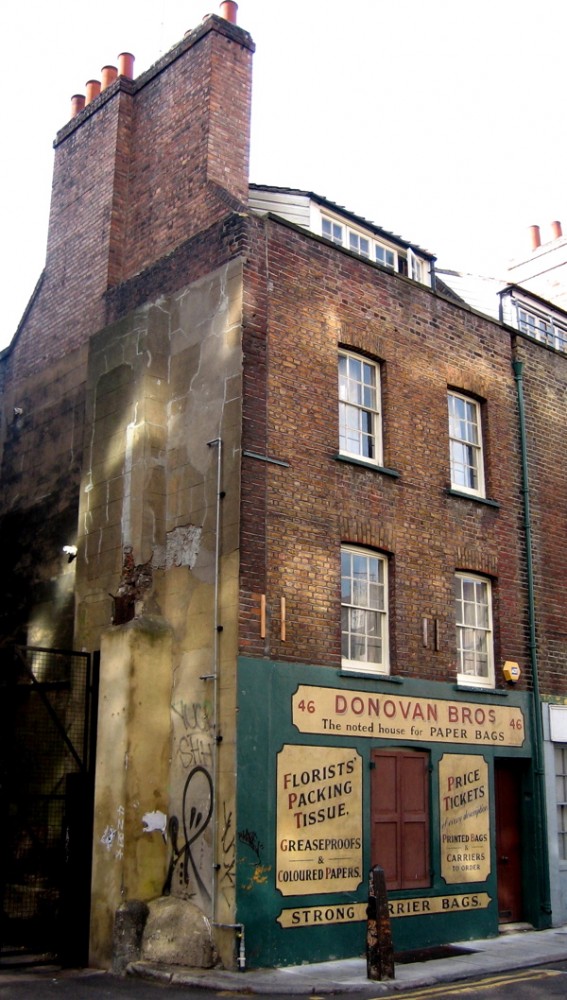
The building in Crispin St retains its signwriting today

In Commercial St, nineteen sixties

John’s shop in the Spitalfields Market, nineteen eighties

John Olney outside his shop in the New Spitalfields Market, Leyton
Portraits of John Olney © Mark Jackson
You may also like to read about
Jimmy Huddart, Spitalfields Market Porter
Peter Thomas, Fruit & Vegetable Supplier
Ivor Robins, Fruit & Vegetable Purveyor
John Olney, Donovan Brothers Ltd
Jim Heppel, New Spitalfields Market
Jeffrey Johnson’s Forgotten Corners
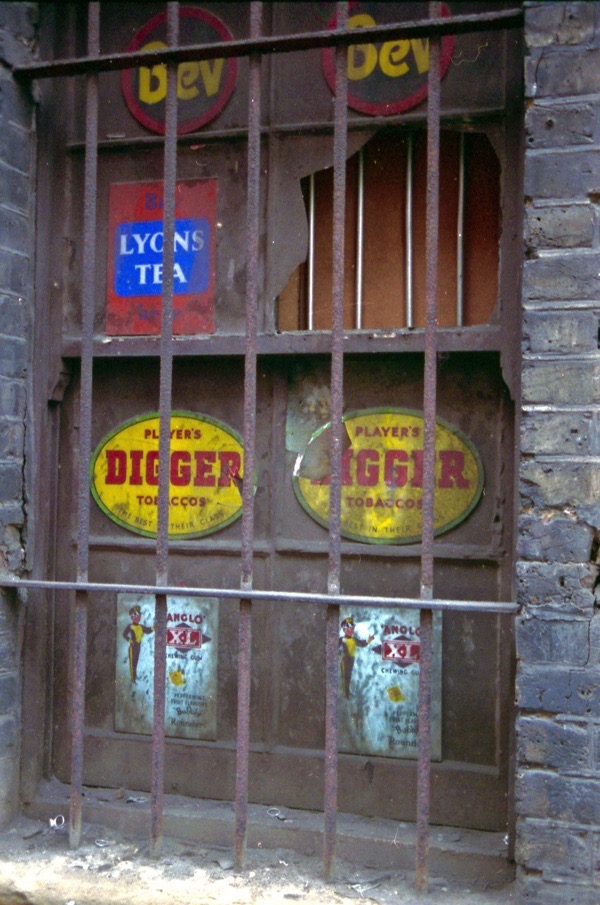
Enigmatic Photographer Jeffrey Johnson deposited a stack of his appealing pictures from the seventies and eighties with Archivist Stefan Dickers at the Bishopsgate Institute , including these photos of forgotten corners in London. I cannot resist the feeling that Jeffrey is one after my own heart when I examine these characterful pictures – a few are familiar places but I am reliant upon my readers to identify the rest.
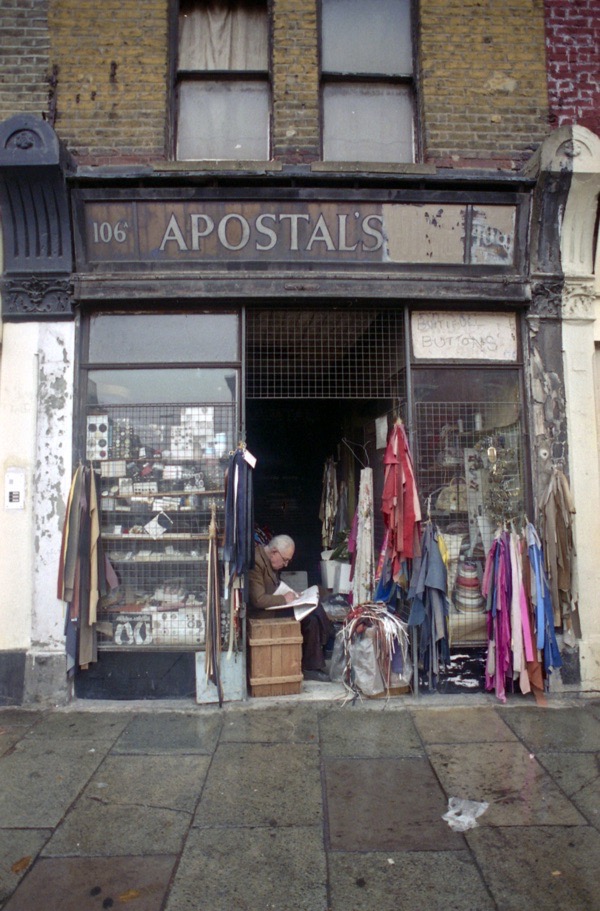
Apostal’s
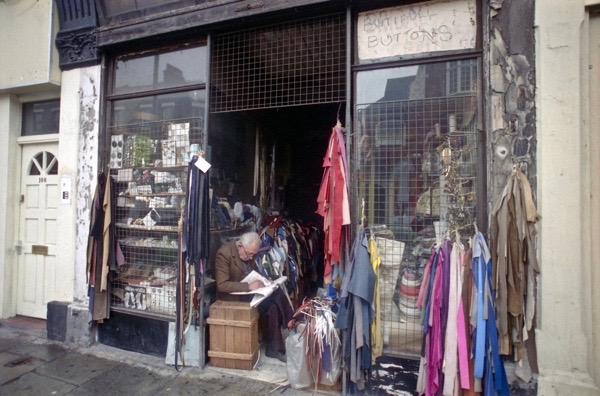
Buitifull Buttons
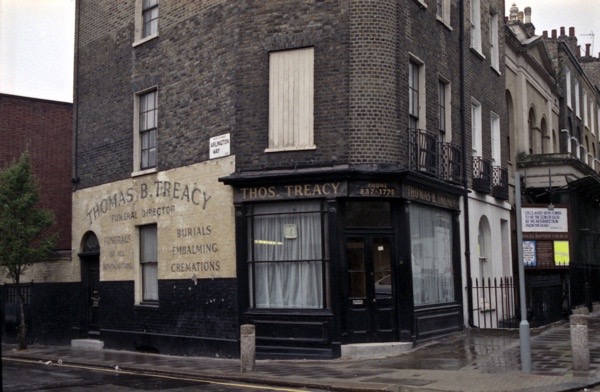
Arlington Way, N1
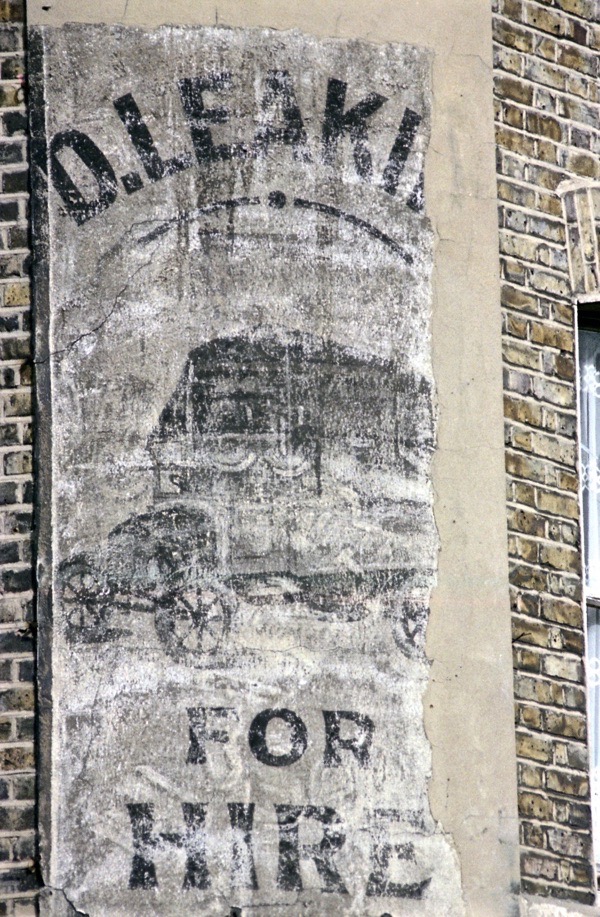
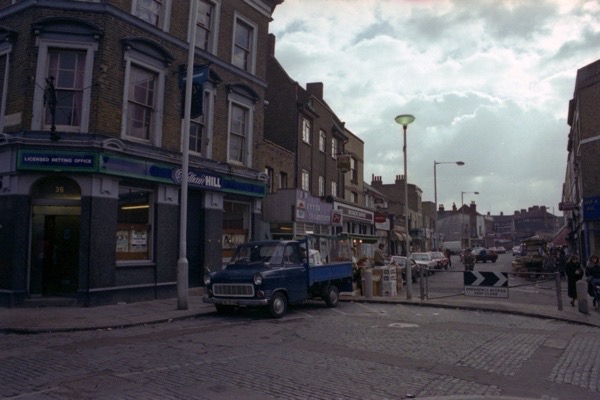
Broadway Market
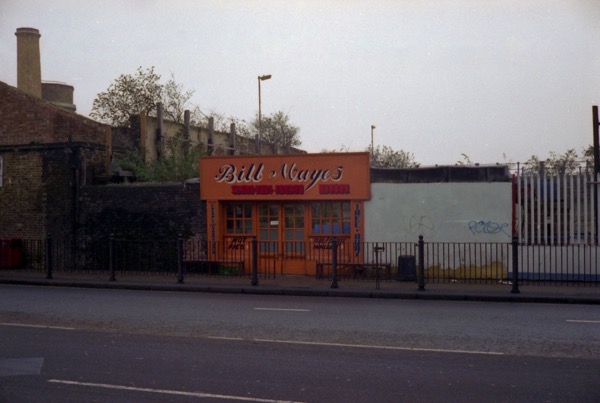
Commercial Rd
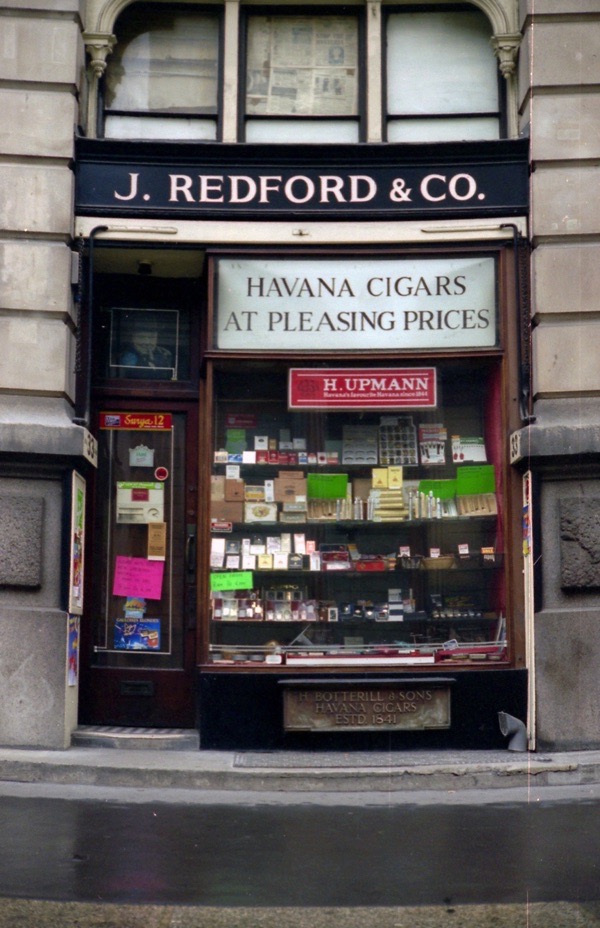
Royal Exchange, City of London
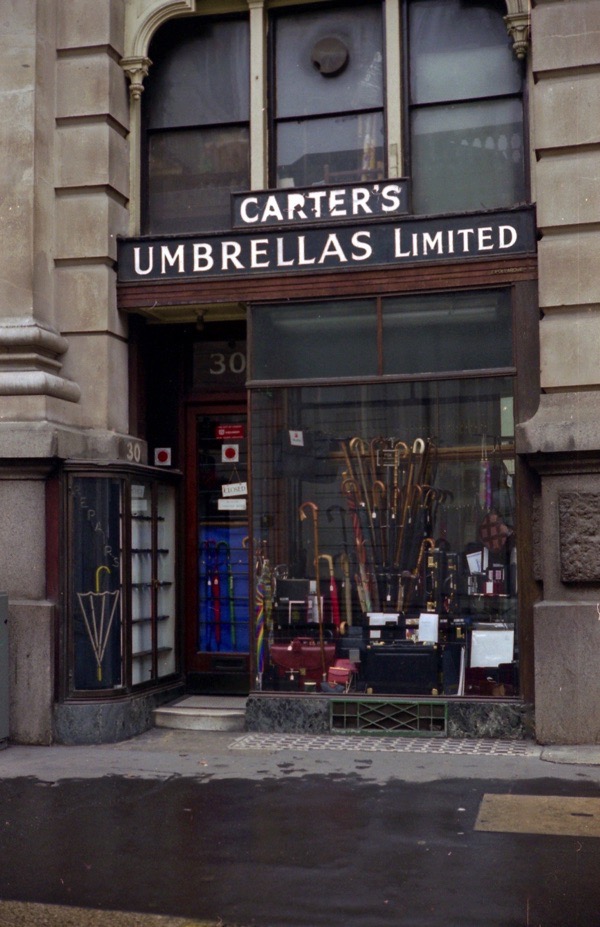
Royal Exchange, City of London
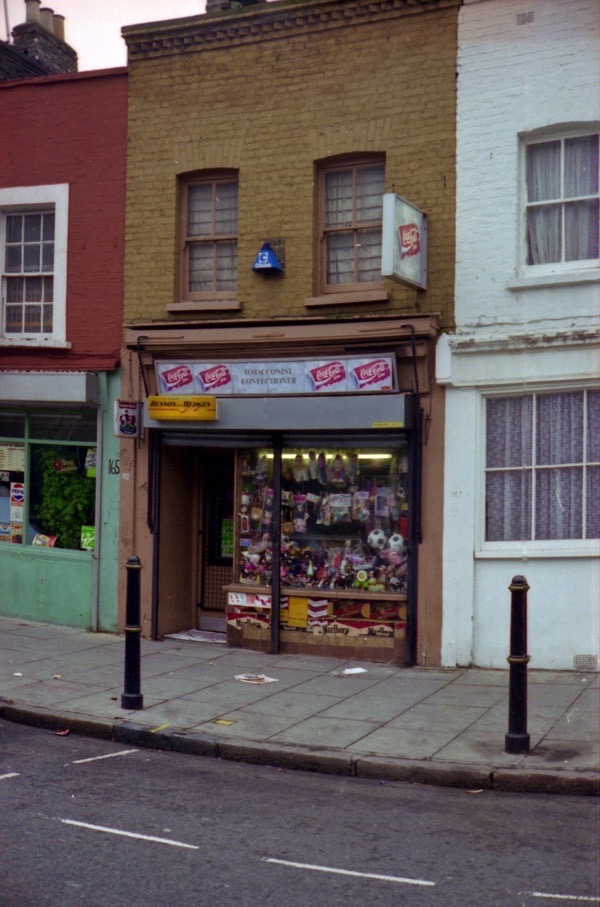
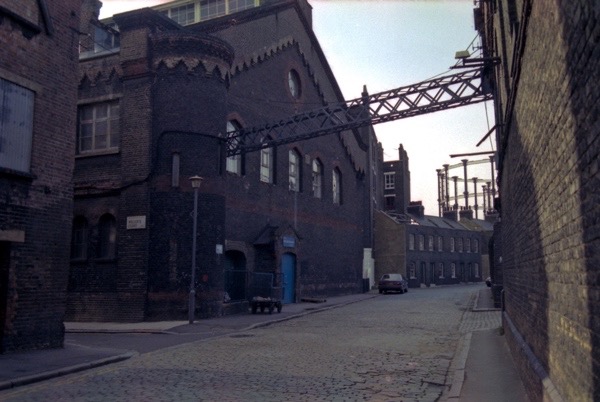
King’s Cross
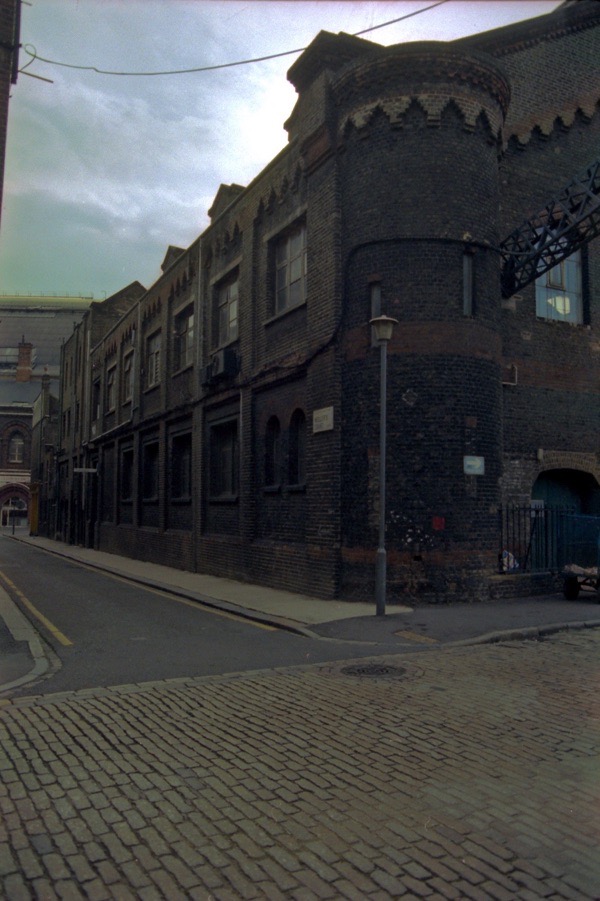
King’s Cross
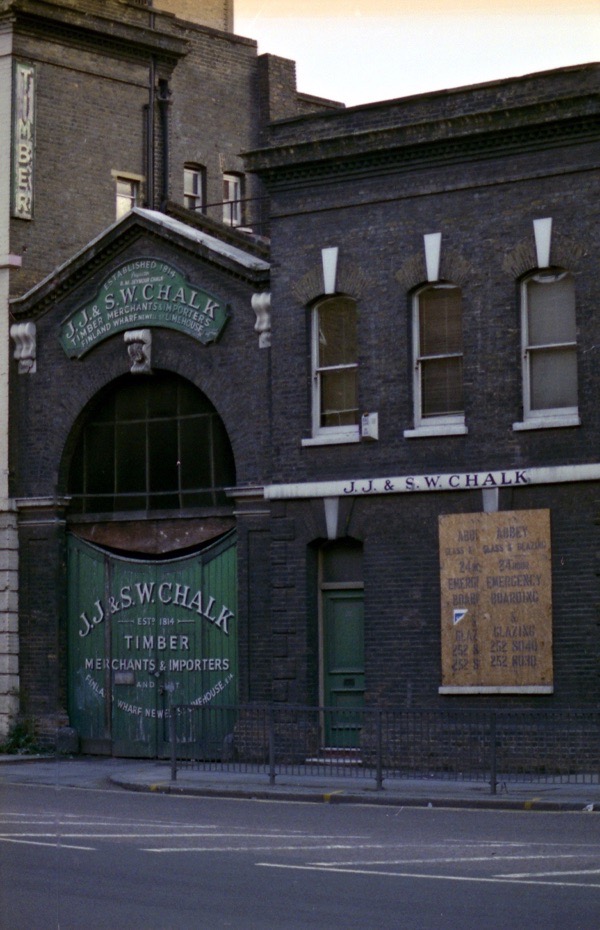
King’s Cross
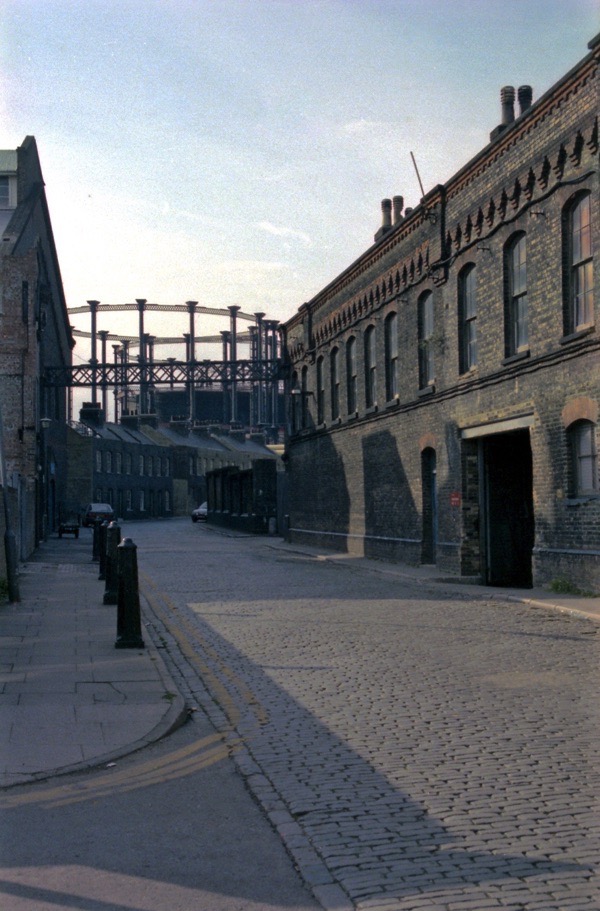
King’s Cross
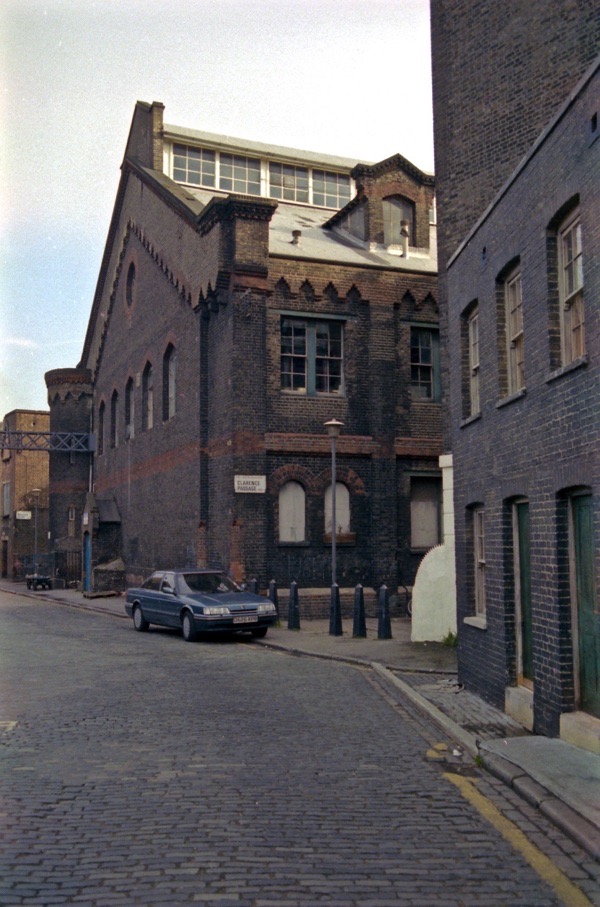
King’s Cross
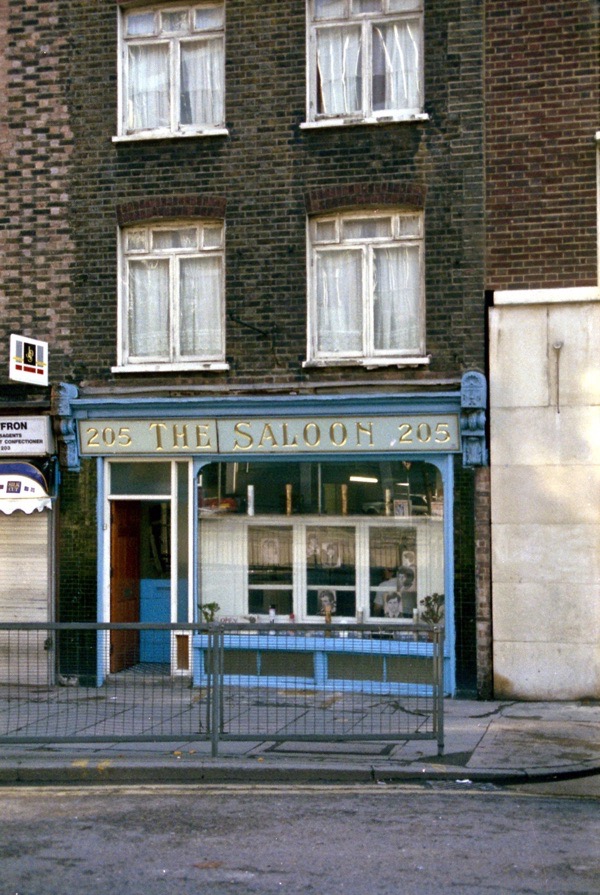
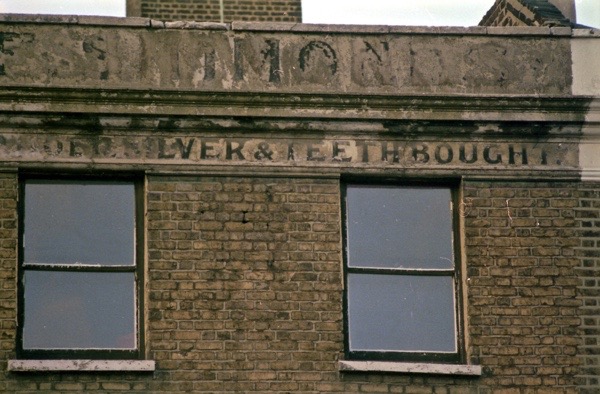
Teeth bought
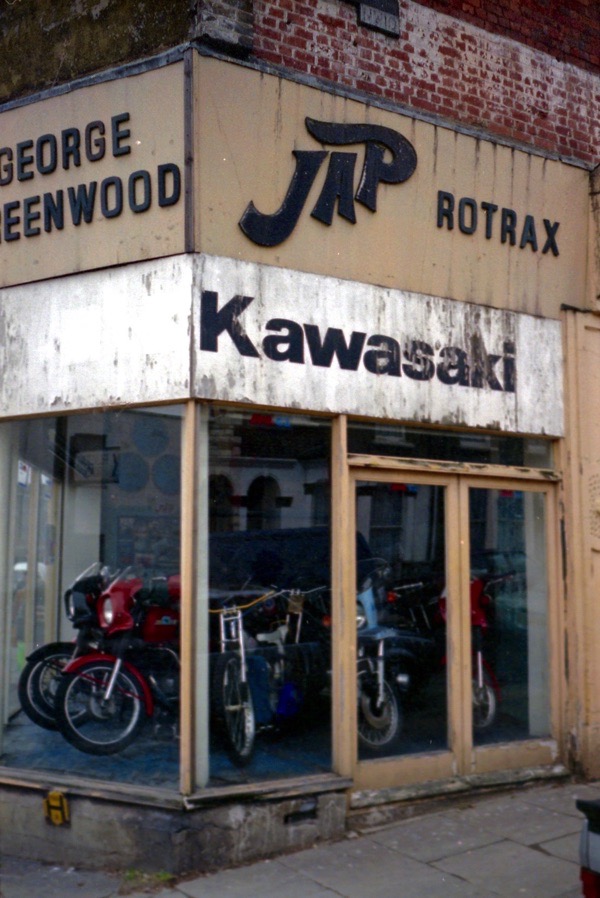
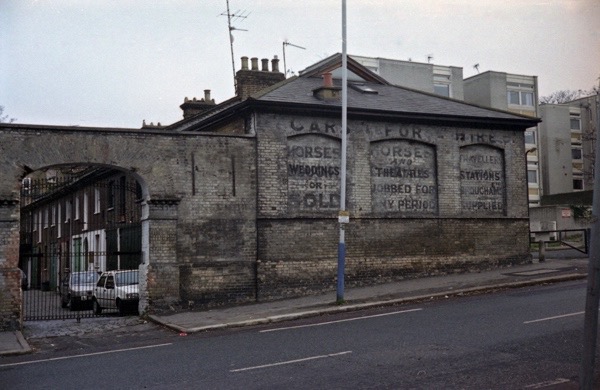
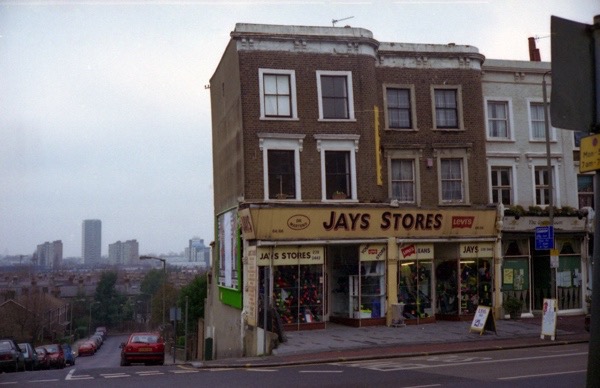
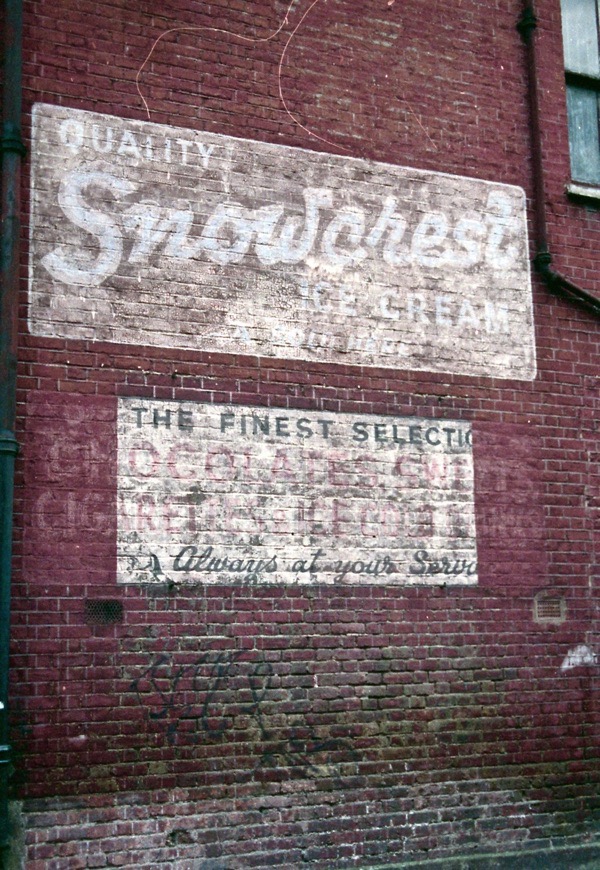
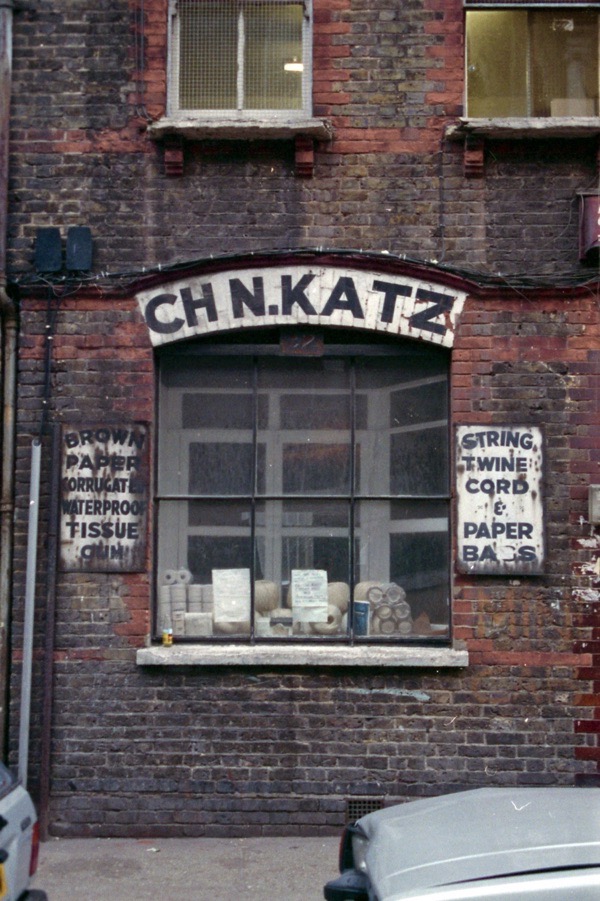
Brick Lane
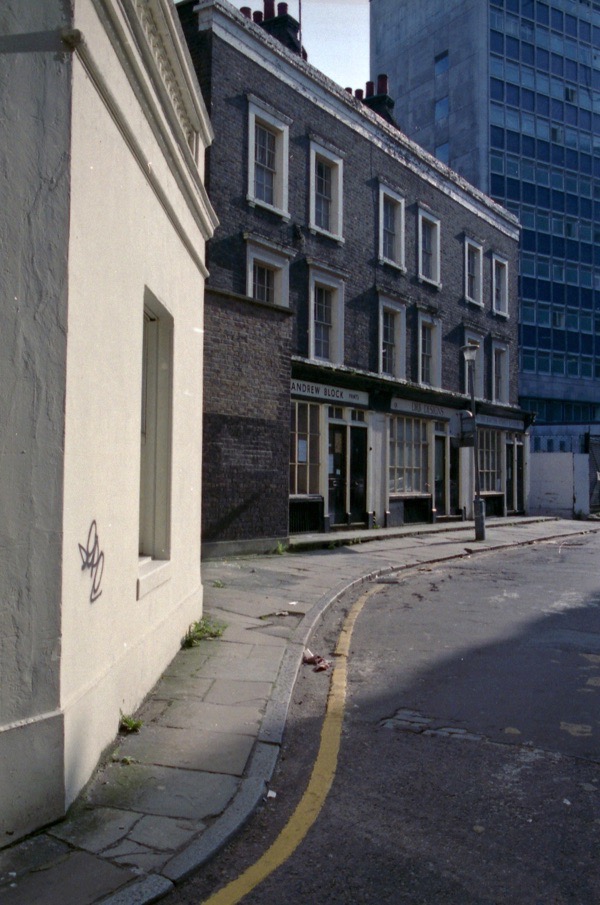
Barter St, Holborn
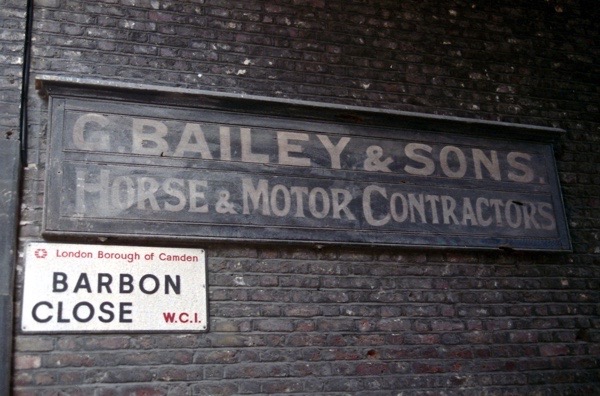
Great Ormond St, Bloomsbury
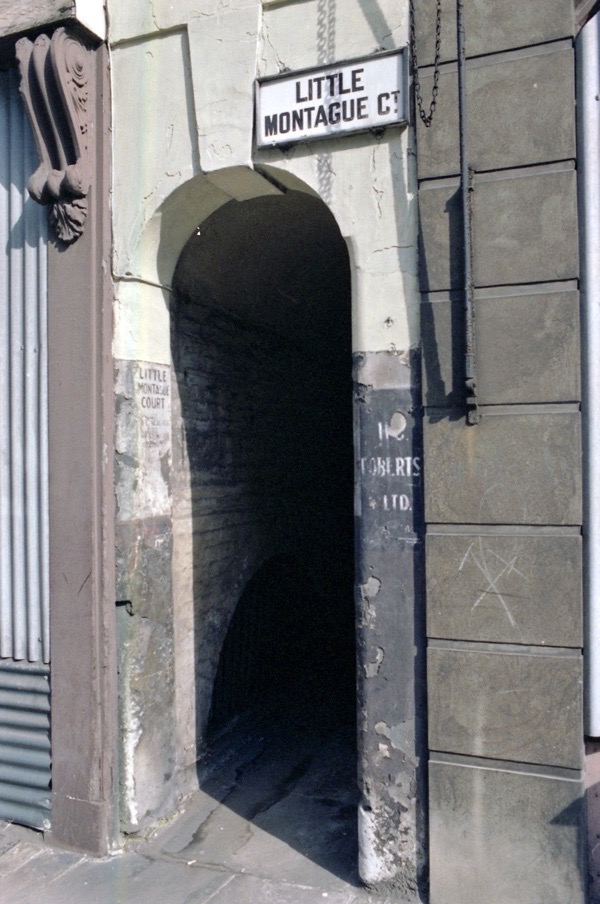
Little Montague Court, City of London
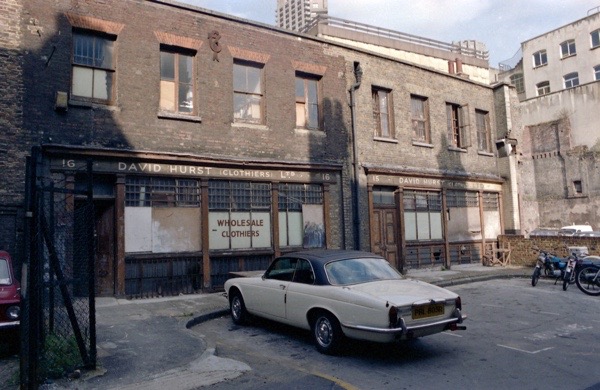
St Bartholomew’s Close, Smithfield
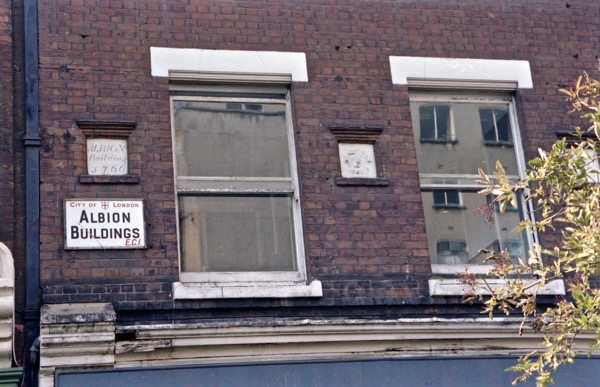
Albion Buildings
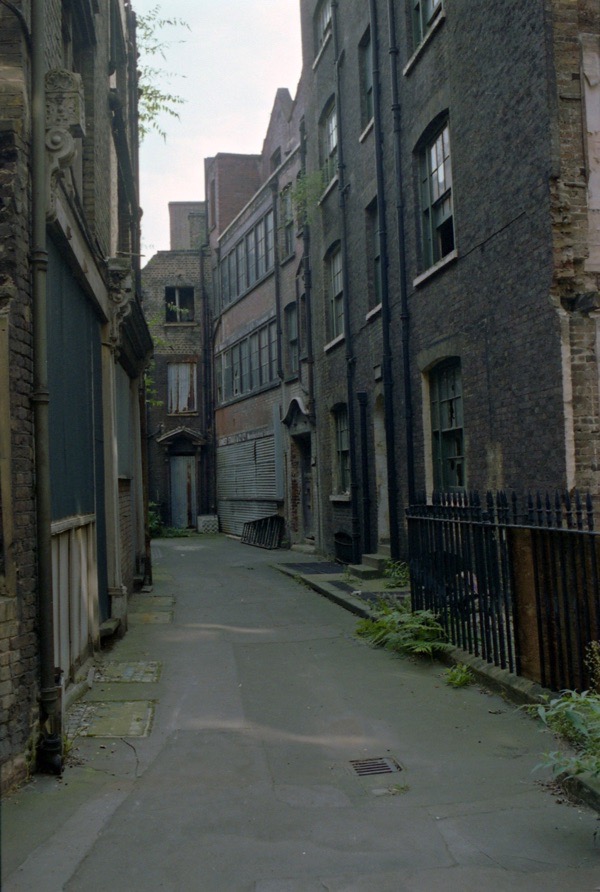
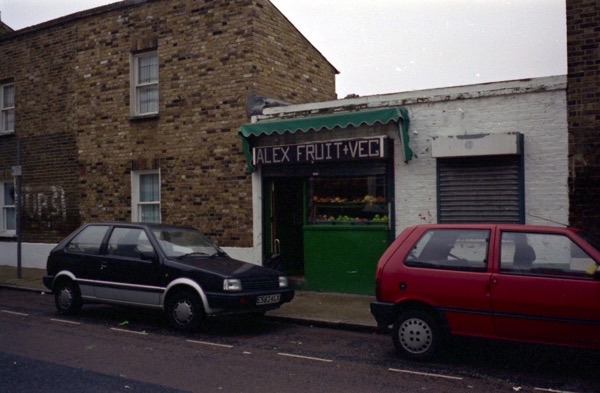
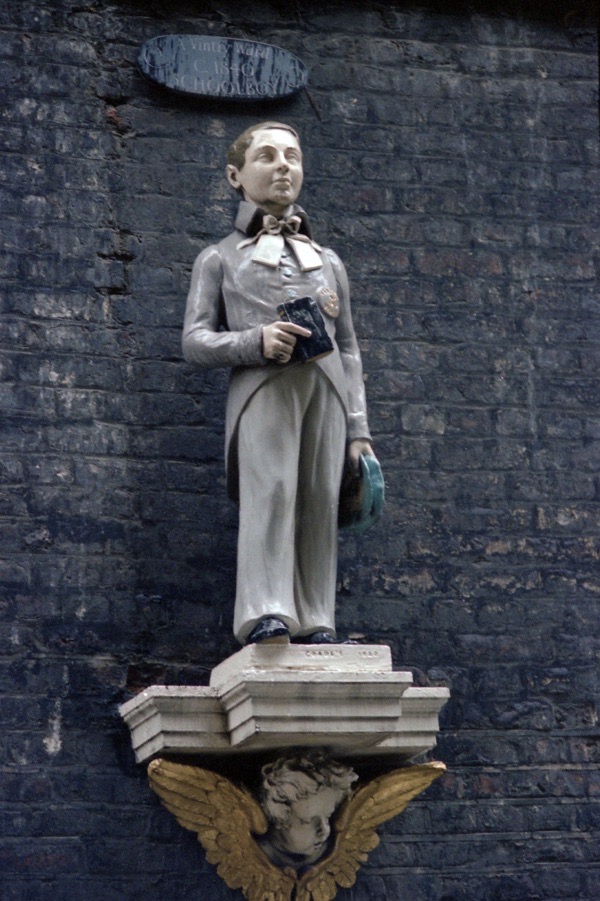
Photographs copyright © Jeffrey Johnson
You may also like to take a look at
The Forgotten Corners of Old London
Mystery Pictures of Brick Lane
On Mothering Sunday

Valerie, my mother
What are you to do on Mothering Sunday if you have no mother? My mother died in 2005 and each year I confront this troubling question when the annual celebration comes around.
If I was religious I might light a candle or lay flowers on a grave, yet neither of these is an acceptable option for me. Contemplating advertisements for Mothering Sunday gifts, I deliberate privately over the tender question as my sense of loss deepens in the approach to this particular day, only for it to dissipate afterwards. This uneasy resolution brings no peace, serving to remind me how much I miss her. It is a feeling which grows with each Mothering Sunday that passes, as the distance in time that separates us increases and the memories fade. I do not expect or wish to ‘get over it,’ I seek to live in peace with my sadness.
I wish she could see where I live now and I could share the joys of my life with her. I have a frustrated instinct to communicate delights, still identifying sights and experiences that I know she would enjoy.
My picture of her has changed. The painful experience of her final years when she was reduced to helpless paralysis by the onset of dementia has been supplanted by a string of fragmentary images from my childhood – especially of returning from school on summer afternoons and discovering her at work in her garden.
I think of how she raised her head when she smiled, tossing her hair in assertion of a frail optimism. ‘Not too bad, thank you!’ she is admitting, lifting her head to the light and assuming a confident smile with a flash of her eyes. This was her default answer to any enquiry into her wellbeing – whether it was a routine or genuine question – and she maintained it through the years, irrespective of actual circumstances. When life was smooth, it was a modest understatement and when troubles beset her, it was a discreet expression of personal resilience. For her, it was a phrase capable of infinite nuance and I do not believe she ever said it in the same way. Yet although I could always appreciate the emotional reality that lay behind her words, I think for everyone but me and my father it was an opaque statement which efficiently closed the line of enquiry, shielding her private self from any probing conversation. From her I learnt the value of maintaining equanimity and keeping a sense of proportion, whatever life brings.
I realise that I was lucky to have a mother who taught me to read before I started school at four years old. Denied the possibility of a university education herself, she encouraged me to fulfil her own thwarted ambitions and – perhaps more than I appreciate – I owe my life as a writer to her. Yet there is so much I could say about my mother that it is almost impossible to write anything. I recognise that the truth of what she means to me is in a region of emotion that is beyond language, but I do know that what she was is part of who I am today.
Increasingly, I am aware that many of those around me also share this situation of no longer having mothers. Perhaps I should buy them all flowers this Mothering Sunday? Certainly if anyone enquires, I shall reply ‘Not too bad, thank you!’ with a smile and raise my head. In that moment, I shall conjure her robust spirit from deep inside me and she will be present, in my demeanour and in my words, this Mothering Sunday.
You may also like to read about












