
Fran May’s Brick Lane
Click here to book for my next City of London walk on 4th June
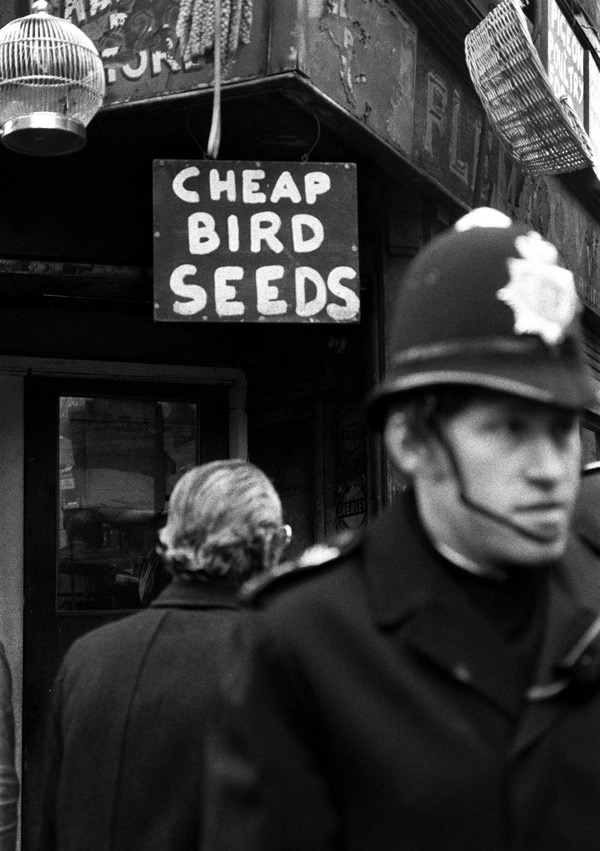
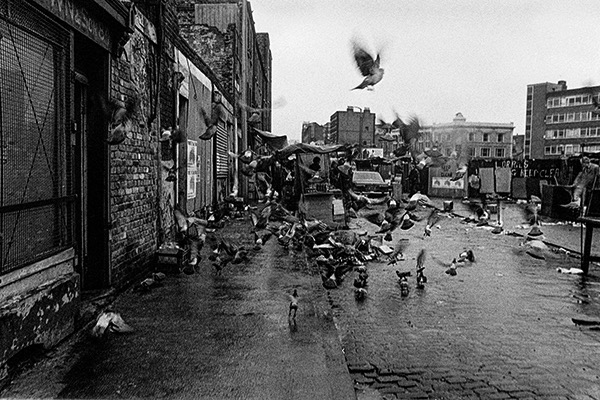
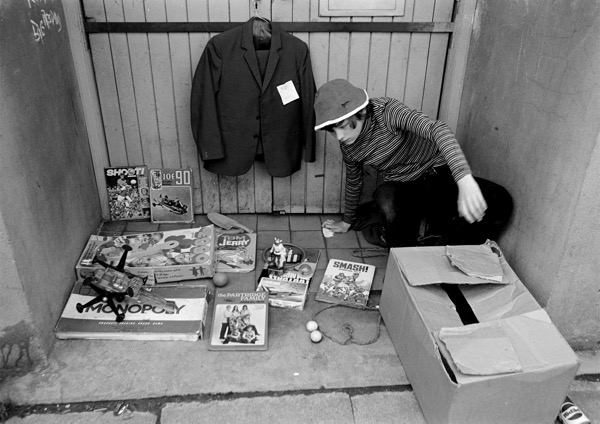
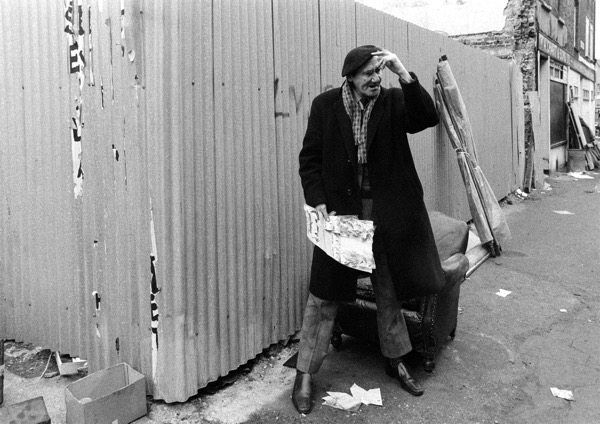
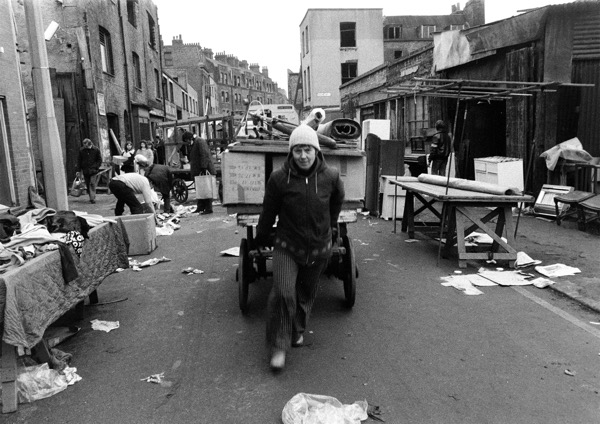
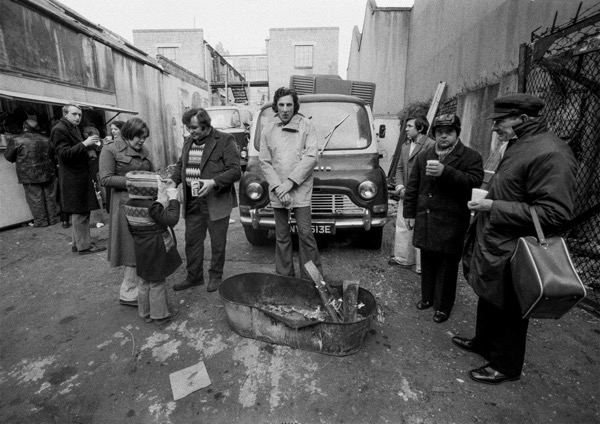
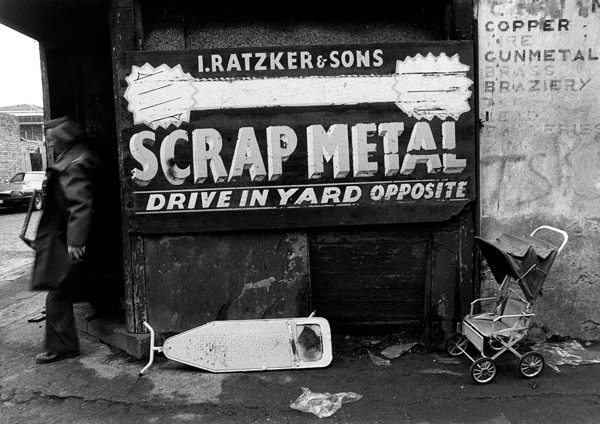
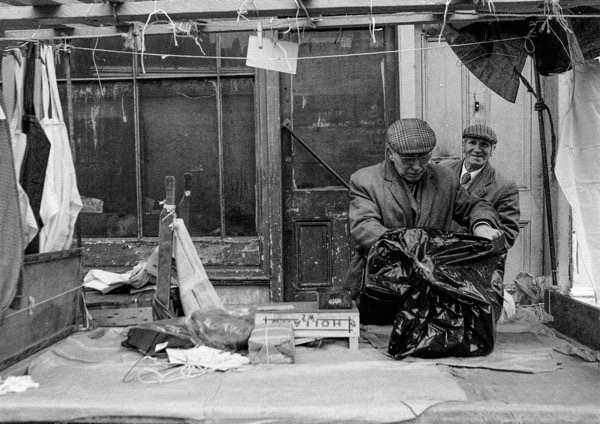
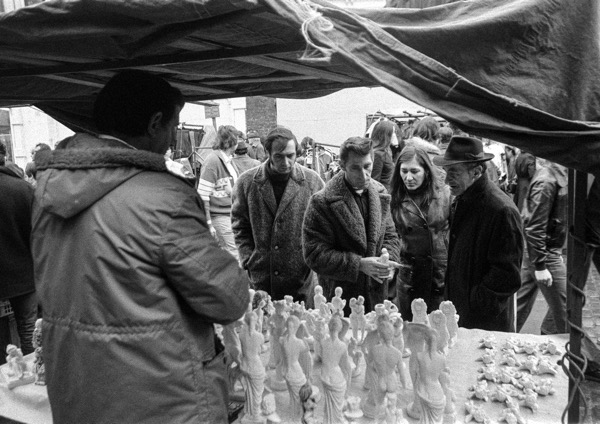
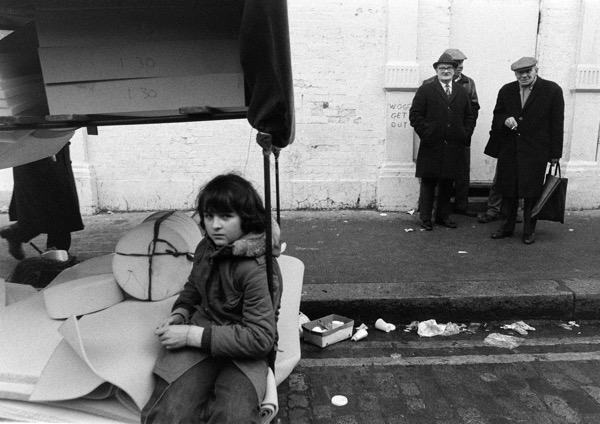
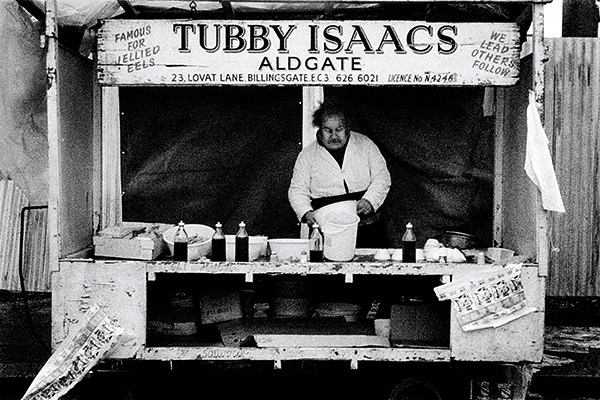
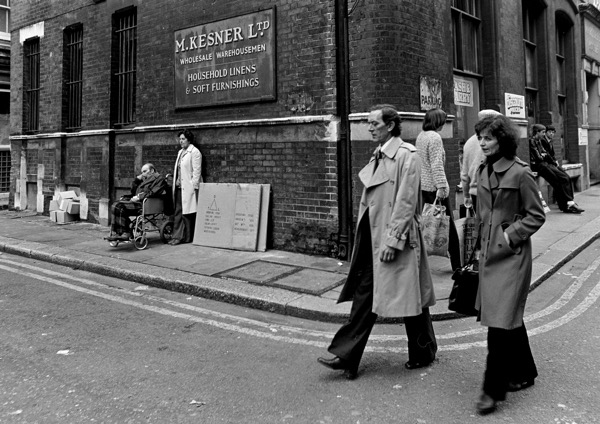
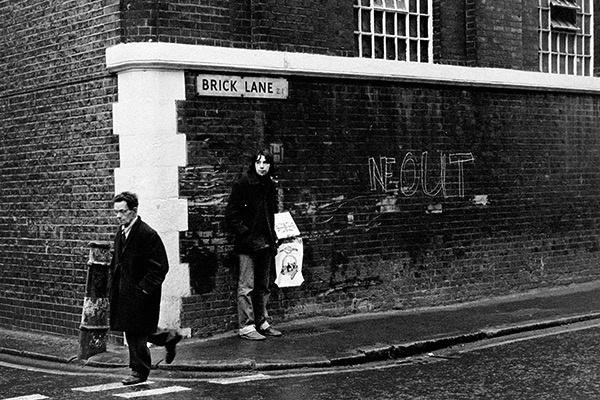
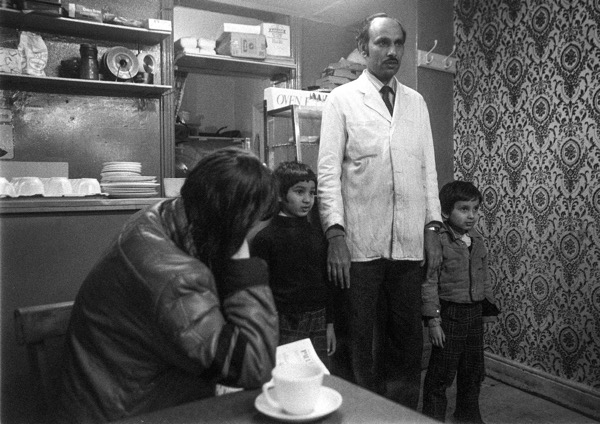
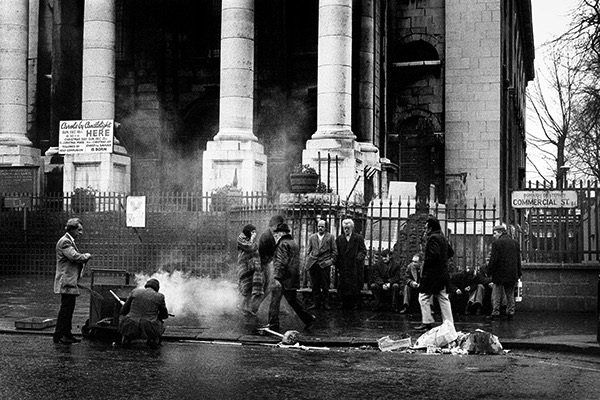
In 1976, Fran May arrived in London at the age of twenty-one to study photography at the Royal College of Art and some of the first pictures she took were of Brick Lane.
“At first, exploring London was daunting, too big and exhausting. Someone suggested I visited Brick Lane, but I would have to get there at dawn for the best of it. An early bird by nature, this was not too difficult. And what a reward. I wore my hair long and had a duffle coat—the perfect disguise. My dominant eye is my left eye, so the camera is always in front of my face. It is like the child of two who covers their eyes and thinks you cannot see them. I had become invisible too. I went time and time again. It was like stepping into a different world, a different universe, a film set. Characters, faces, businesses, from another time, caught in a time warp.
Head of Photography, John Hedgecoe, came to me one day and said I had been selected to be taught by Bill Brandt. The first time I went to his house near Kensington Church St, I took my landscape photographs. I confess I did not know all of Bill Brandt’s work, but I knew of the nudes on the beach. I rang his bell, acknowledged by a woman’s voice, the door clicked open. Once through the open front door, a voice called from beyond. “Come in. Come in.”
Bill sat before a fire in the grate, the light from the flames flickering on his face. “What have you brought me?” he asked in his gentle voice. I placed my portfolio on the floor and lifted the pictures to him one by one. He was silent until he looked at me and said, “I don’t think I can teach you anything, do you?” I did not know how to take this. I packed everything away, thanked him and left.
A couple of days later, I bumped into John Hedgecoe again in the corridor. “How did you get on with Bill Brandt?” he asked. I told him I didn’t think I should go again because Bill had said he couldn’t teach me anything. “No, you must go see him again. You must make the most of your opportunities”. So off I went, this time taking some of the images I had taken while at Sheffield and the more recent ones shot in Brick Lane.
This was a different experience. Bill studied each one for a long time. Seated on the footstool at his feet, Bill moved his reading light nearer and re-settled himself in his chair. I studied the firelight flickering on his face. Then he put the pile of photographs flat on his lap, breaking the silence and said, “Ah, Fran. Let me tell you something. Never loose these images, don’t think of them just as student work, for they will have social significance one day”. His eyes twinkled as he smiled at me.
I returned one more time to visit Bill Brandt. He told me he had not really known what he had achieved until later. The photographs he had taken were commissioned jobs. When they were put together in a particular order, they meant something new and that the passage of time mattered. Well, I did keep these images.”
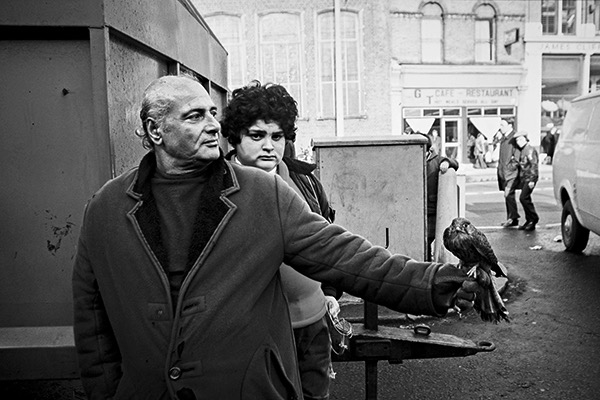
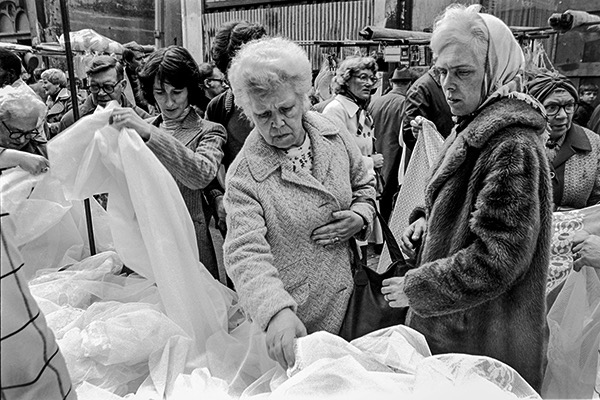
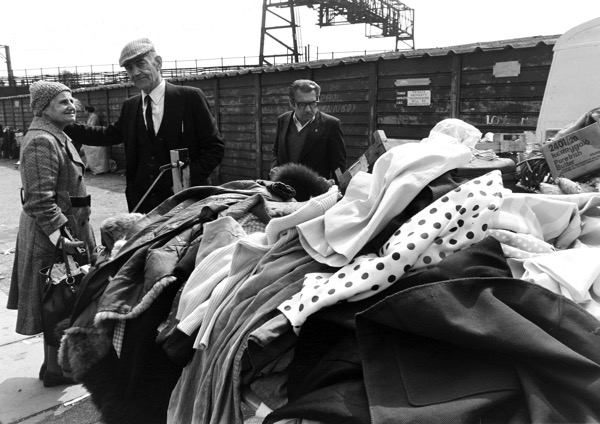
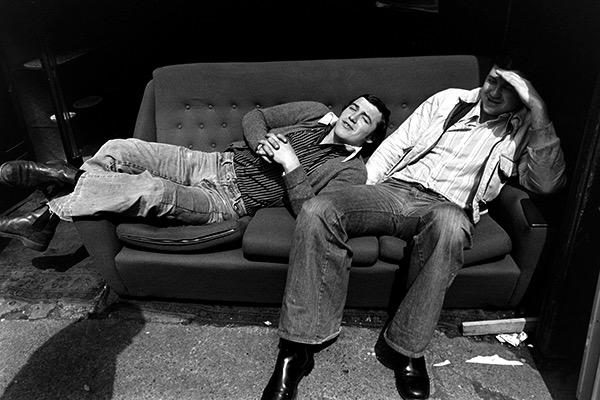
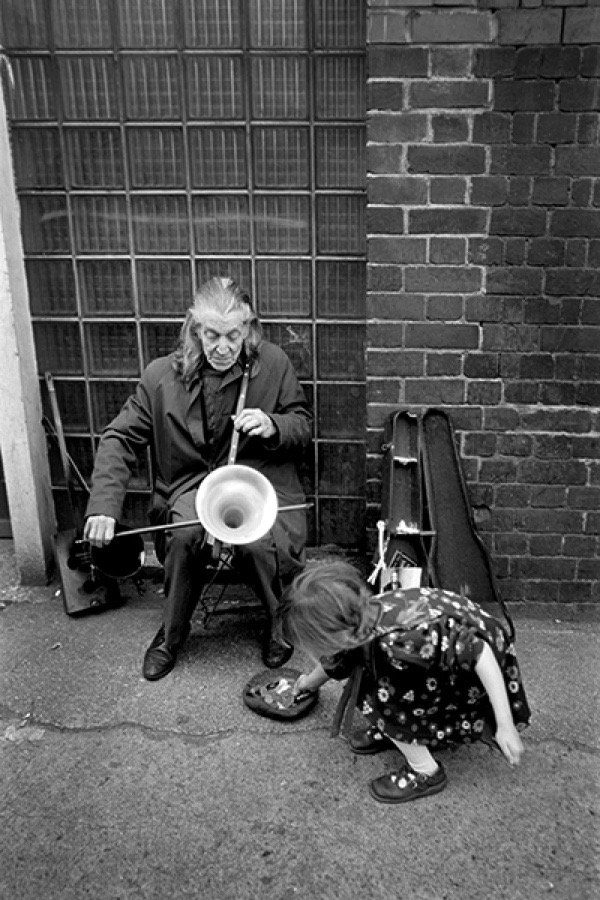
Photographs © Fran May
You may also like to take a look at
Raju Vaidyanathan’s Brick Lane
In Old Spitalfields
Click here to book for my Spitalfields walk next Saturday and beyond
Click here to book for my next City of London walk on 4th June
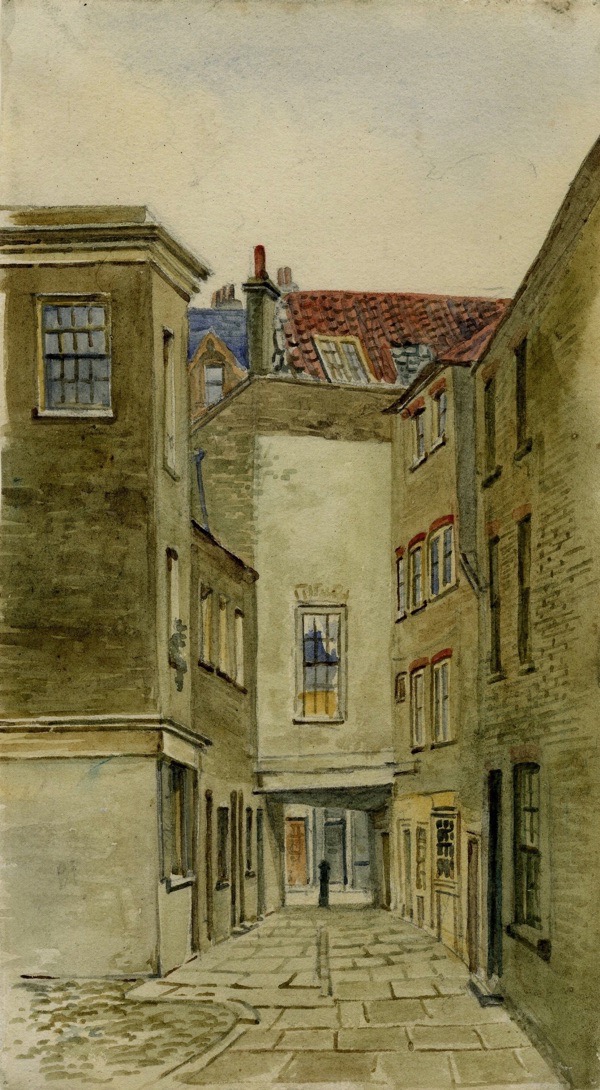
Catherine Wheel Alley
The Bishopsgate Institute has a magnificent collection of nineteenth century watercolours collected by the first archivist Charles Goss, which offer tantalising glimpses of the last surviving tumbledown pantiled tenements and terraces, crooked alleys and hidden yards that once comprised the urban landscape of Spitalfields.
When we think of old Spitalfields, we usually consider the eighteenth and nineteenth century fragments remaining today, yet there was another Spitalfields before this. Before the roads were made up, before Commercial St was cut through, before the Market was enclosed, before Liverpool St Station was built, Spitalfields was another place entirely. Lined with coaching inns, peppered by renaissance mansions and celebrated for its production of extravagant silks and satins, it was also notorious for violent riots and rebellion, where impoverished families might starve or freeze to death.
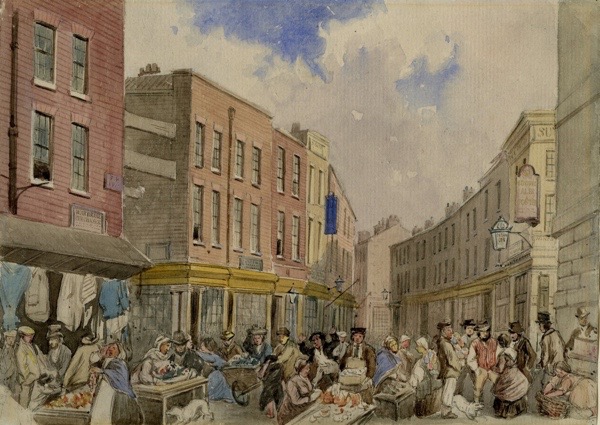
Sunday Morning in Petticoat Lane, 1838
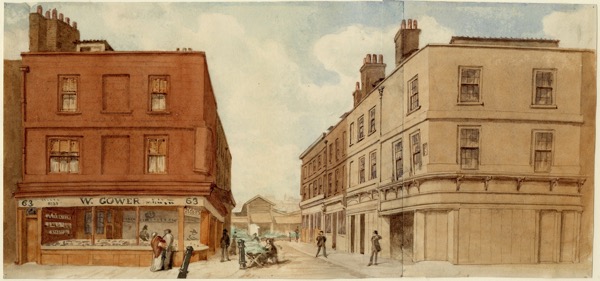
Old Red House, Corner of Brushfield St by J.P.Emslie, 1879
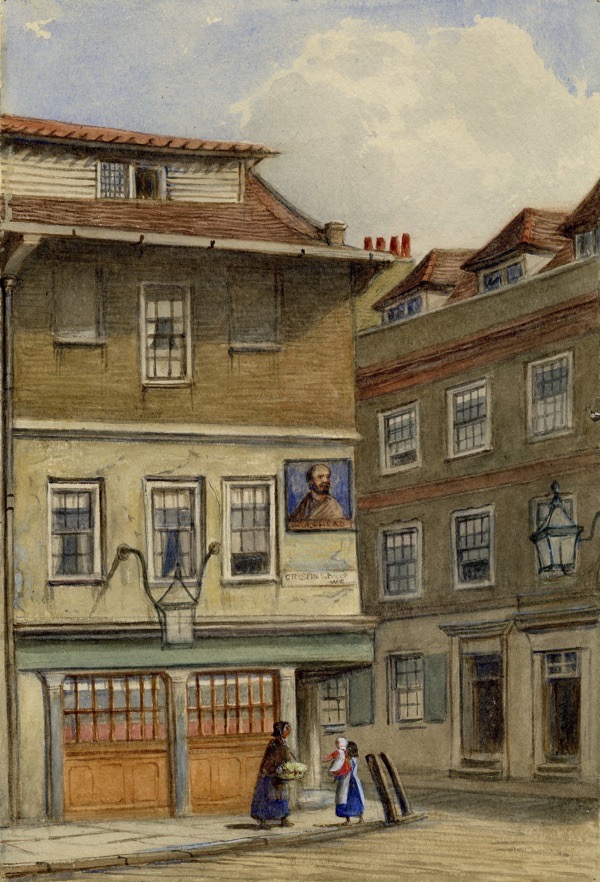
Paul’s Head, Crispin St by J.T. Wilson, 1870
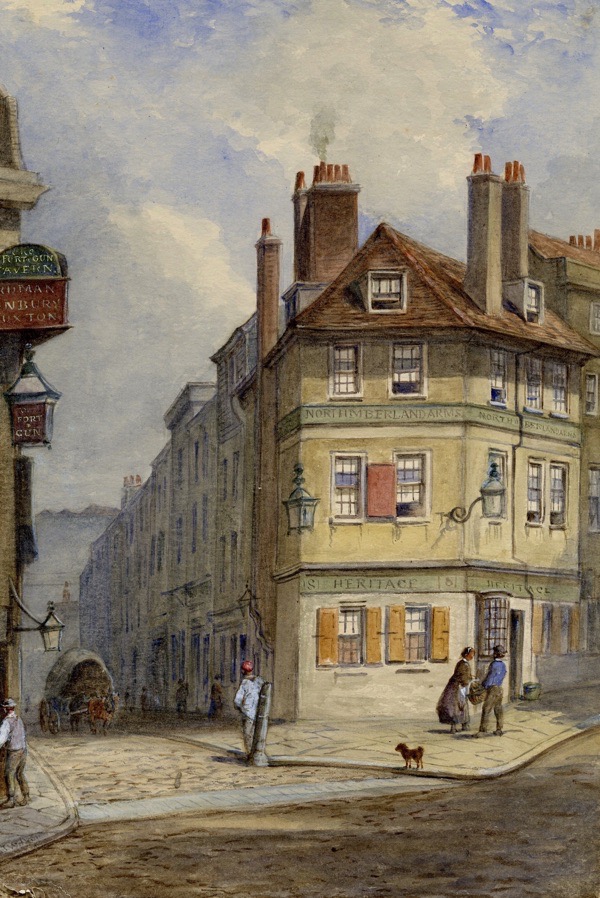
The Fort & Gun Tavern and Northumberland Arms, corner of Fashion St by J.T.Wilson

Dunning’s Alley showing Lucky Bob’s formerly Duke of Wellington, Bishopsgate by J.T.Wilson, 1868
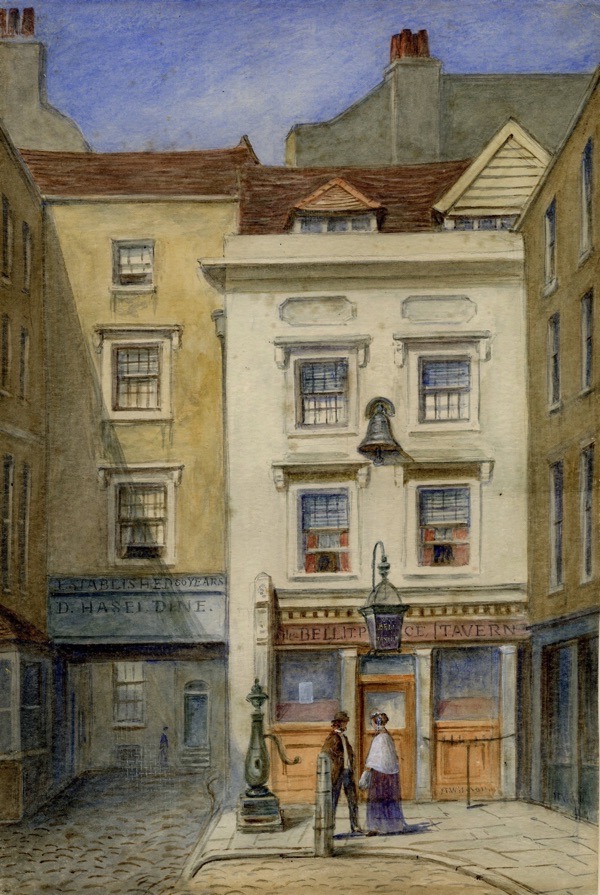
Bell Tavern, Bell Yard, Gracechurch St by J.T.Wilson, 1869
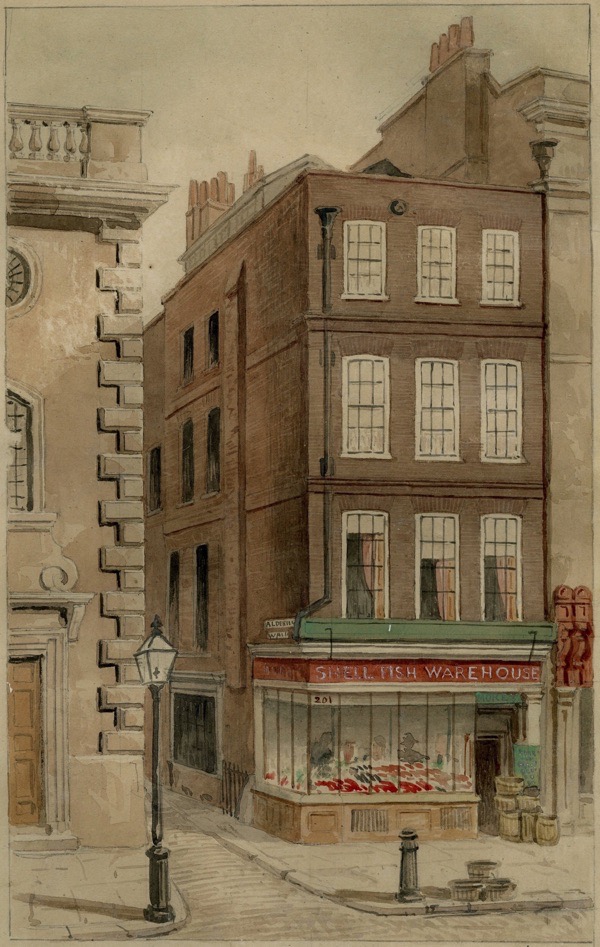
Bishopsgate at the Corner of Alderman’s Walk beside St Botolph’s church by C.J.Richardson, 1871
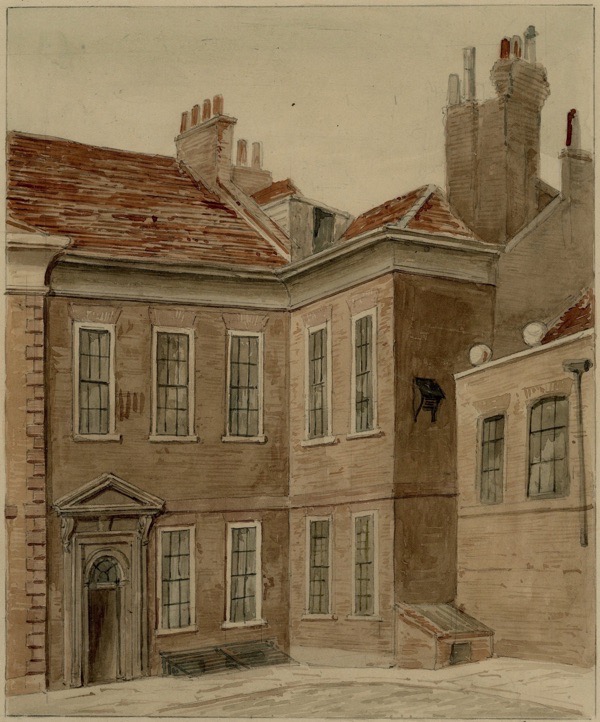
House of Sir Francis Dashwood, Alderman’s Walk, by C.J.Richardson, 1820
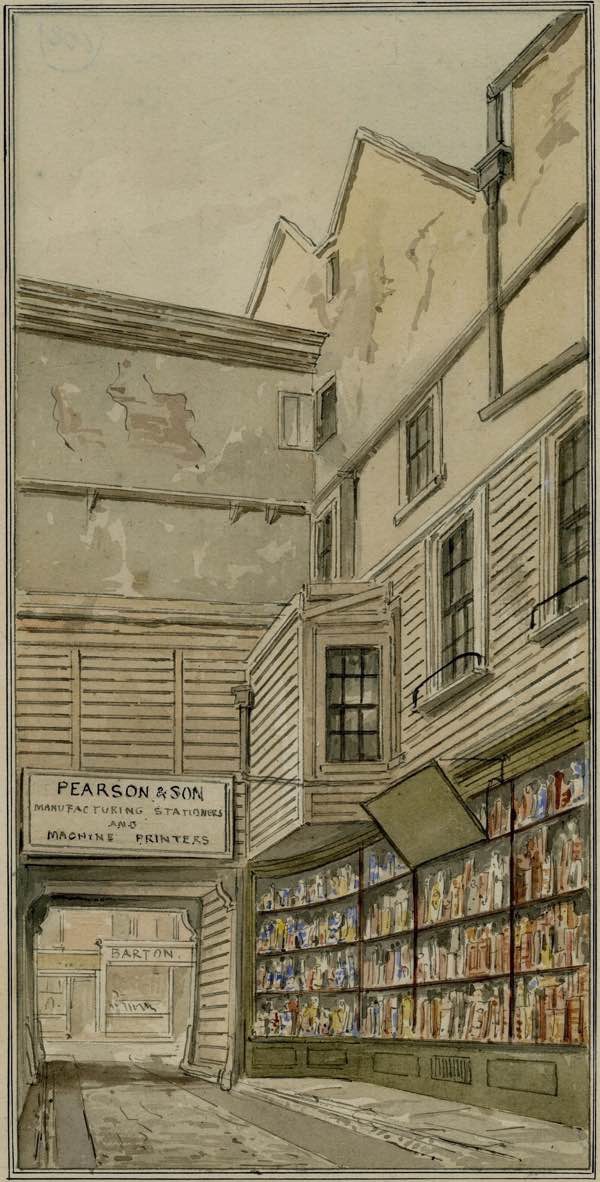
Entrance from Bishopsgate to Great St Helen’s by C.J.Richardson, 1871
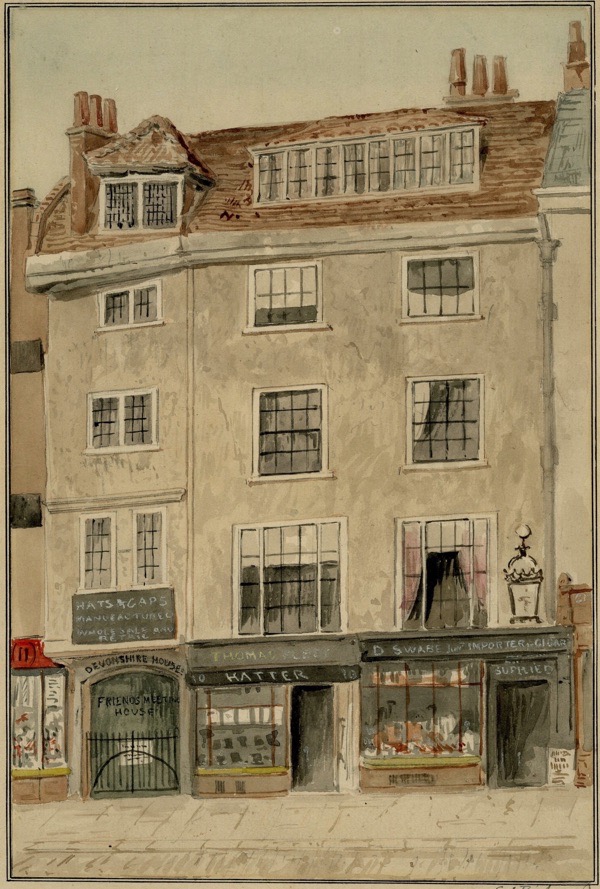
Devonshire House, Bishopsgate by C.J.Richardson, 1871
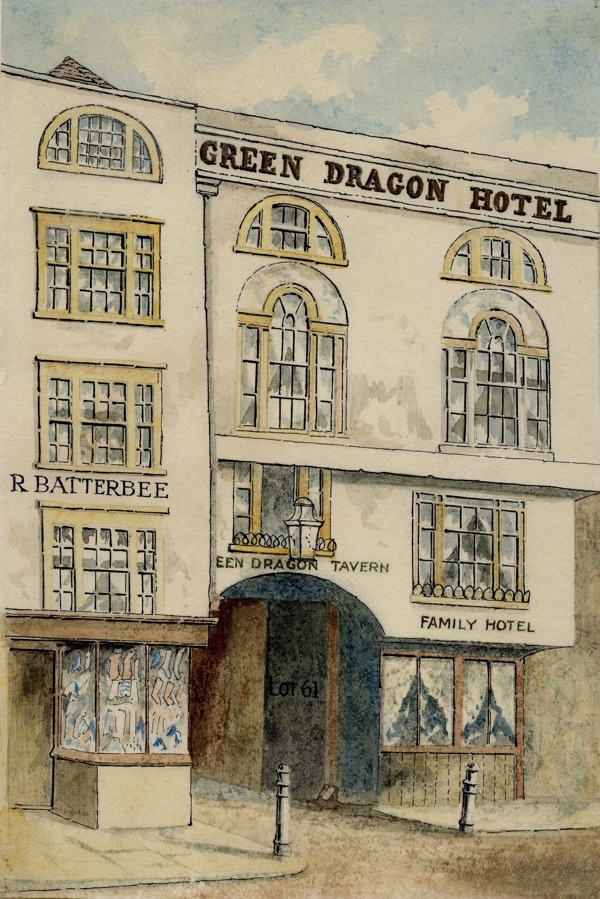
The Green Dragon, Bishopsgate, coloured by S.Lowell
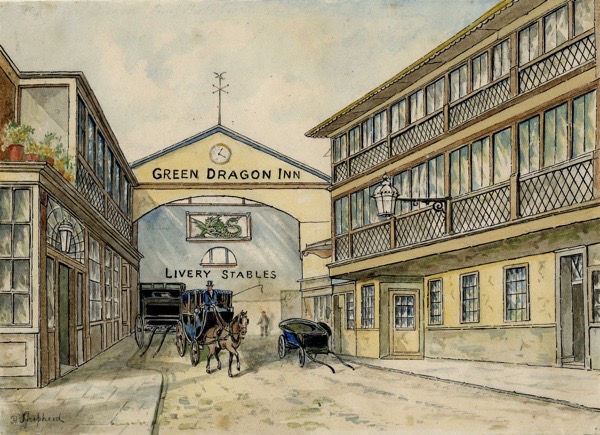
The Green Dragon, Bishopsgate by T. Hosmer Shepherd, coloured by S.Lowell, 1856
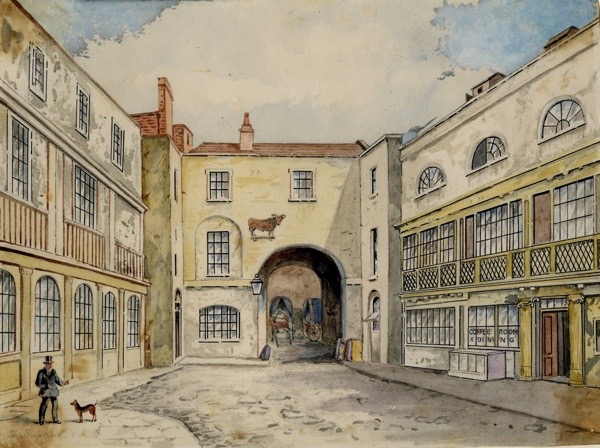
The Bull Inn by T.Hosmer Shepherd, 1856

The Spread Eagle in Gracechurch St by R.B.Schnebblie, 1814
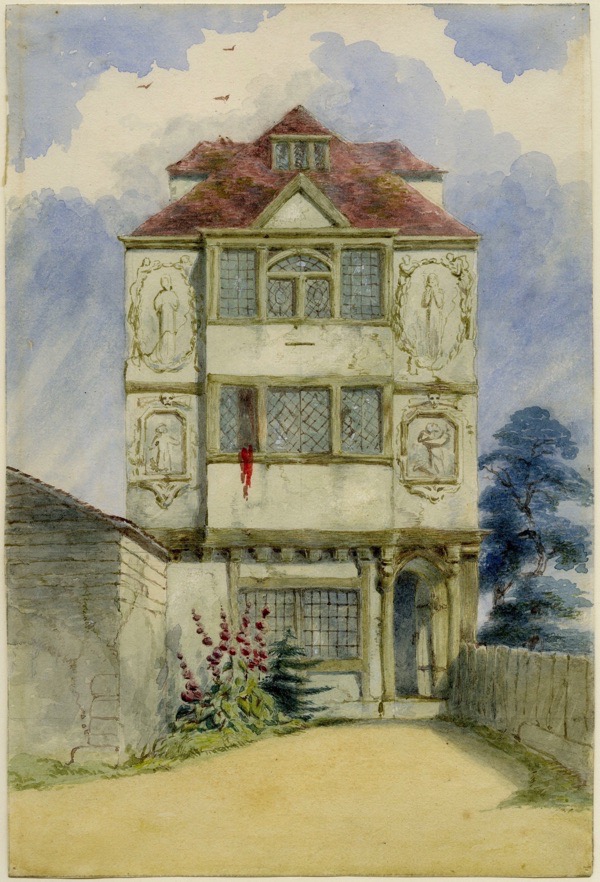
Sir Paul Pindar’s Lodge, Bishopsgate c. 1760
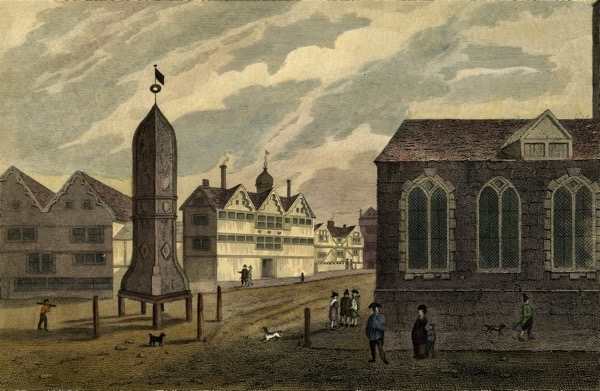
North East View of Bishopsgate Street, 1814
Images courtesy Bishopsgate Insititute
You may also like to take a look at
The Signs Of Old London
Click here to book for my Spitalfields walk next Saturday and beyond
Click here to book for my next City of London walk on 4th June

The little wooden midshipman outside Solomon Gillis’ chandlery, 157 Leadenhall St
Even though most of the signs of old London were destroyed in the Great Fire of 1666, a few created just after that date survive today in the City – anachronisms affixed to modern buildings, as if they were Penny Blacks stuck onto Jiffy padded envelopes. Yet in the Bishopsgate Institute archive, I found plenty of atmospheric pictures of curious stone plaques which lasted into the era of photography, only to be destroyed by the blitz and subsequent redevelopment.
It was Charles I who gave people the right to hang out signs as they pleased, when once they were restricted to innkeepers – “for the better finding out such citizens’ dwellings, shops, pubs or occupations, without impediment, molestation, or interruption to their heirs or successors.” An elaborate language of symbols quickly grew in the common understanding, such as a dragon for an apothecary, a sugar loaf for a grocer, a wheatsheaf for a baker, a frying pan for a confectioner, and – as still seen in Spitalfields today – a spool for a silk weaver.
As time went by, the meanings of the signs became more complex and arcane as shops changed ownership but retained the signs as identifiers of the buildings. James Maddox, the coffin maker at St Olaves had the symbol of three coffins and a sugarloaf, the sugarloaf because it was a former grocers and three coffins as his personal device. Opposite St Dunstan’s in Fleet St, a sign of three squirrels first put up by Henry Pinkley the goldsmith in 1649, was appropriated by the bankers who moved in afterwards, and this symbol of the three squirrels continued to be used by the National Westminster Bank until the mid-twentieth century.
Lombard St was once famed for its array of magnificent signs, and eighteenth century prints show quaint symbols hung upon elaborate wrought iron brackets outside every single premises in Cornhill and Cheapside. Anticipating our modern concern with brands and logos, these devices suited the city before streets were numbered and when many of the populace did not read. But during heavy weather and in strong wind, these monstrous signs creaked and groaned – and, in 1718, a huge sign in Bride St collapsed killing four people and taking part of the shop front with it. Such was the severity of the problem of the forest of hanging signs crowding the streets of London, that a commission was appointed in 1762 to take them all down and fix them onto the shopfronts – thereby creating the modern notion of the fascia sign declaring the identity of the premises.
“The Commissioners are empowered to take down and remove all signs and emblems, used to denote the trade, occupation or calling – any sign posts, sign boards, sign irons, balconies, penthouses, show boards, spouts and gutters projecting into the streets etc, and all other encroachments and projections whatsoever in the said cities and liberties – and cause the same, or such parts thereof as they think fit to be affixed or placed on the front of the houses, shops, alehouses or buildings to which they belong.”
Street numbers were only in partial use at the beginning of the eighteenth century, becoming widespread by the end of the century as a standardised system to identify properties. Although many were reluctant to give up the language of signs and symbols, by the middle of the nineteenth century, the signs were commonly replaced by the familiar pattern of a board with signwriting above the shopwindow. Most of the decorative signs to found in the City of London today are pastiches created a hundred years ago as nostalgic tributes to a bygone age, though two favourites of mine are the golden owl on the House of Fraser, facing South over London Bridge, and the figure of Atlas holding up the globe on the exterior of Barclays in Cheapside.
Just three signs remain in common usage, the barbers’ pole (with its bloody red and white stripe recalling when barbers were also surgeons), the chemists’ pestle and mortar, and the pawnbrokers’ three balls – originally blue, they turned gold in the early nineteenth century and are said to be based upon the crest of the Dukes of Medici, itself derived from coins taken by Crusaders from Byzantium.

At the sign of the Fox in Lombard St.
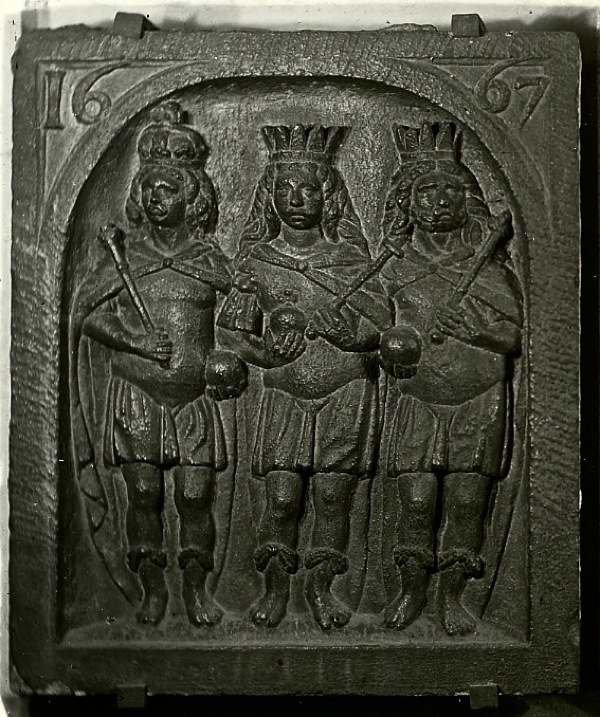
At the sign of the Three Kings in Lombard St.

At the sign of the Half Moon in Holywell St, off the Strand.
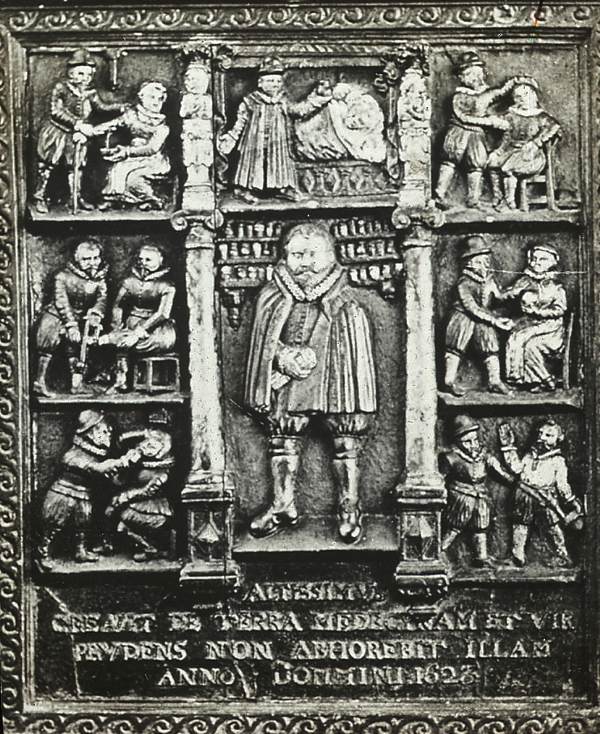
A physician.
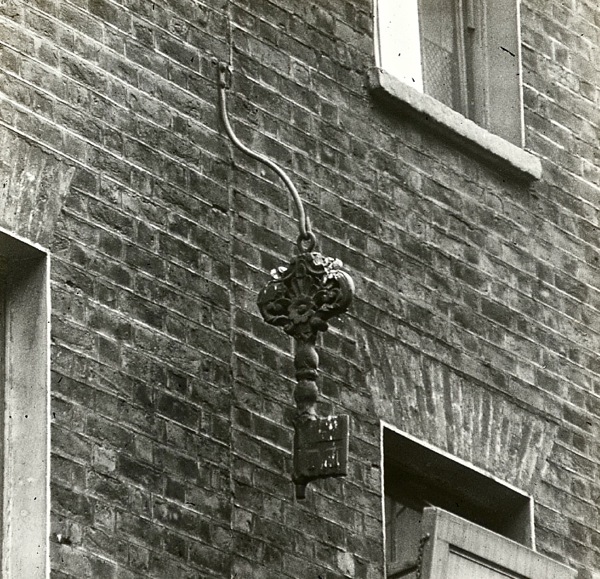
A locksmith.

At the sign of the Lamb & Flag

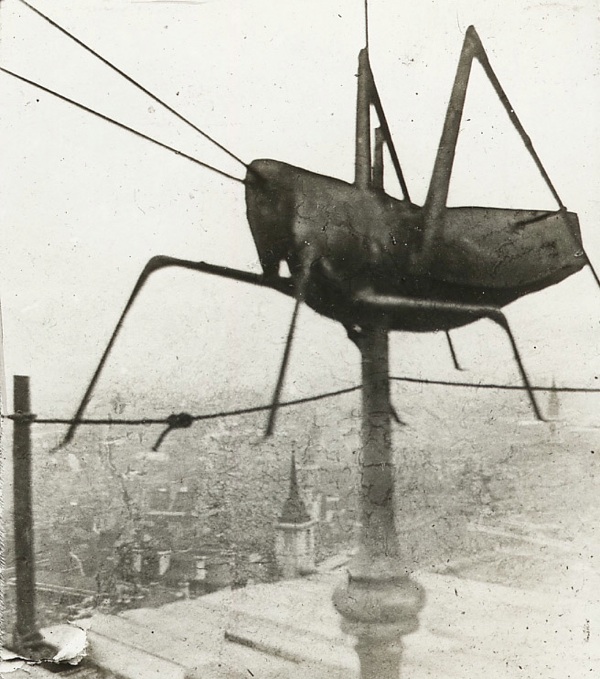
The grasshopper, symbol of industry and personal emblem of Sir Thomas Gresham who founded the Royal Exchange, is to be found all over the City of London even today.

At the sign of Three Squirrels in Fleet St.


At the sign of the Bull & Mouth in Aldgate.


This was the symbol of the Cutlers.
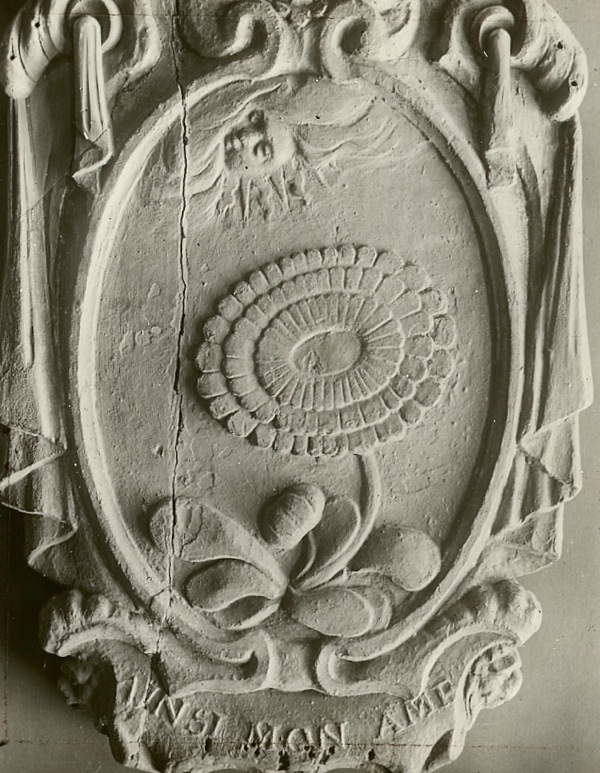
Child’s bank at the sign of the Marigold in Temple Bar.


In Ely Place, off Hatton Garden – this mitre came from an episcopal palace and was set into the wall of a public house.


The maid of the Mercer’s company is still to be seen in Corbet Court off Gracechurch St.

An old sign that remains in situ outside St Paul’s tube station.“When ye have sought the Citty round, yet still this is the highest ground. August 27th 1698”

“- an old sign affixed to a modern building, like a Penny Black stuck onto a Jiffy padded envelope.”
Photographs courtesy Bishopsgate Institute
Making History At Dennis Severs’ House
Click here to book for my Spitalfields walk next Saturday and beyond
Rupert Thomas former editor of The World of Interiors and now curator of MAKING HISTORY: THE CERAMIC WORK OF SIMON PETTET introduces the exhibition which runs until 4th June at Dennis Severs’ House
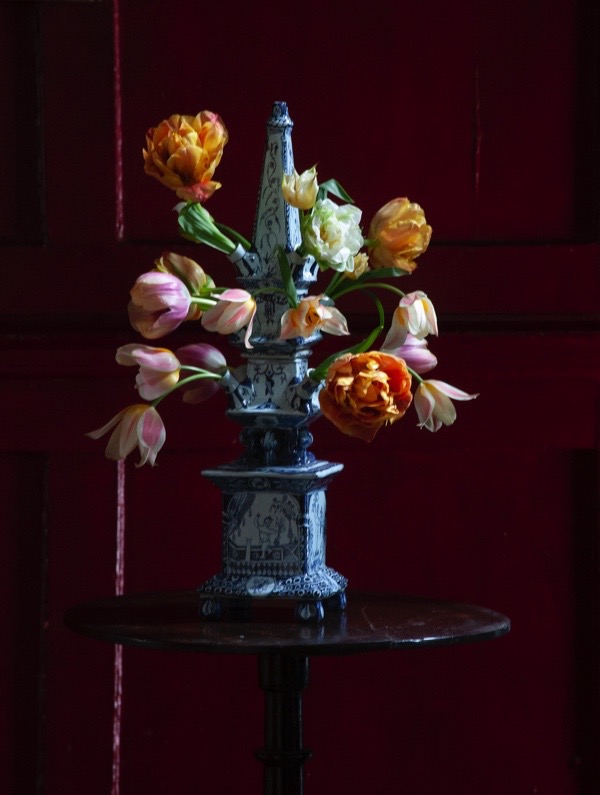
Tulipière by Simon Pettet
18 Folgate Street is an amazing survival – and a unique fantasy. It was built in 1724 but the powerful atmosphere of its interior was created by Dennis Severs, a charismatic Californian who rescued it from almost certain destruction in 1979.
Dennis restored the house with characteristic theatricality, employing unlikely materials to finish the job as quickly as possible. So not everything here is what it seems. He also devised a family of Huguenot weavers – the Jervises – who had built the property and who continued to “live” alongside him in rooms lit by candles and heated by real fires.
Paying guests would hear, though never see, this family on the guided house tours he offered. Atmosphere mattered far more to Dennis than slavish accuracy and his tours were choreographed to leave visitors feeling palpably as if they had stepped back 250 years. Every possible effect was employed in the immersive drama, including accurate contents in the chamber pots. “You either see it or you don’t,” he told visitors before they were admitted.
When Simon Pettet walked through the door one night in 1983 he saw “it” immediately and was smitten. They had met at the gay nightclub Heaven: Simon was eighteen and starting a ceramics degree at Camberwell School of Art & Design, Dennis was in his thirties and tirelessly working on the home they would share for almost a decade. The encounter changed their lives forever. If the house is Dennis’ vision, the role Simon played in making that vision a reality cannot be underestimated.
Simon was born in 1965 and grew up in Orpington with his parents Ken and Marion, and his older brother Stewart. If school was a chore, he excelled at Camberwell and graduated with a First. But it was Dennis, the house and life in Spitalfields that allowed his work to take flight. Inspired by 18th-century blue-and-white tin-glaze pottery, or delftware, he began to make objects that would have been used in grand dwellings such as 18 Folgate Street when they were new. He was instinctively able to capture the spirit of authentic Delft pottery and with a flick of his brush conjure works that are rooted in the past but feel entirely of their own time. To give credence to Dennis’ fictional family, he inscribed some pieces with the name Jervis.
Remarkably, all the works in the exhibition were produced in less than ten years. Simon was diagnosed HIV positive in 1984, at a point when the condition’s outcome was inevitable. He was nineteen. His was one of the earliest cases in the UK (the first was identified in December 1981). Yet despite the prejudice and injustice then surrounding Aids, Simon remained optimistically steadfast and never stopped working or trying out new forms and glazes. It is as if his status acted as an incentive. To the end, he wanted to be known as a Potter as opposed to an Artist, a choice that reflects his modesty but in no way diminishes the brilliant originality of what he achieved. He died on 26th December 1993, less than a month before his twenty-ninth birthday. His service took place at Christ Church Spitalfields, Nicholas Hawksmoor’s imposing masterpiece.
Generously, the Jervis family has gone on holiday for the duration of the exhibition so their rooms can be given over to the things Simon made. This is his first retrospective and it includes objects kindly loaned by private individuals alongside pieces he made specifically for Dennis that remain in the house. But the Jervises are still here in spirit, as is Dennis – you might even hear his voice, as the intermittent audio of horses’ hooves and a tolling bell was made by him and used on his own tours. We have interwoven it with some of Simon’s favourite songs from the period. And of course Simon is here too: you’ll see the room in which he lived, the kitchen where he and Dennis made toast on the range, and his exceptional work. The ceramics he created remain as witty, elegant and joyously individual as the day they emerged from the kiln.
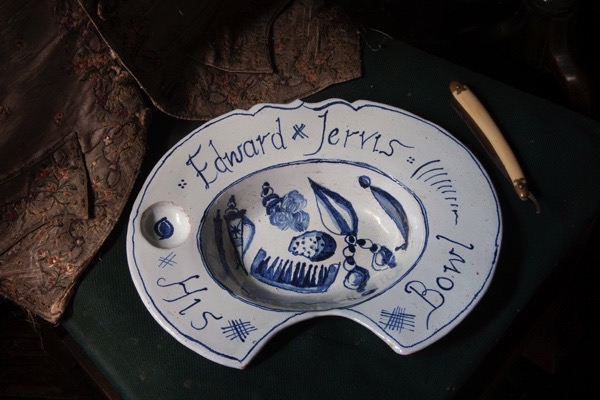
Shaving bowl in the Smoking Room
Mr Jervis’s barber’s bowl, made by Simon in 1990. In the eighteenth century, customers would hold these bowls, with indent to their neck, as the barber mixed water and soap into a lather. Soap balls were not produced in England until after 1685, when Huguenot refugee soap-boilers arrived from Paris. Bowls were often decorated with representations of relevant equipment – in this case scissors, comb, sponge etc – but lancets could also appear, as barbers also operated as surgeons.

Delft shoes
Delft shoes were popular in France, Holland and Germany, as well as England. A large number have initials and are dated, suggesting they were made for betrothals and marriages, or at least as objects of affection. Simon’s (dated 1988) are taken from models of the late seventeenth to early eighteenth centuries. Charles Perrault’s version of the classic Cinderella story was published in 1697 and introduced the elements of the pumpkin, fairy godmother and the “glass” slipper.
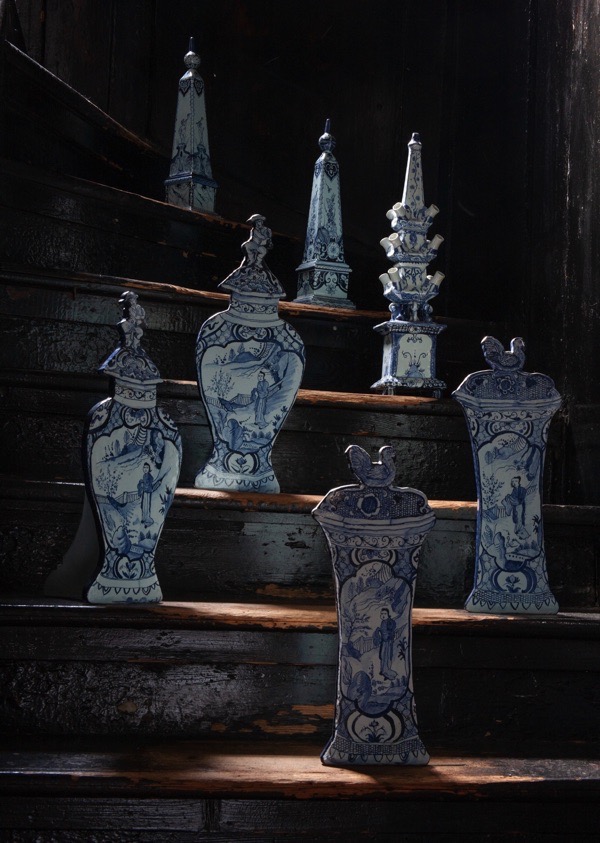
Profile pots, obelisks and a tulipière
Profile pots, obelisks and a tulipière snake their way up the black-painted stairs from the ground floor at Dennis Severs House. The flat-fronted profile pots have shaped supports at the back which enable them to stand upright. Placed on top of a bookcase or cupboard as part of a garniture, they would take up far less space than if they were fully three-dimensional.
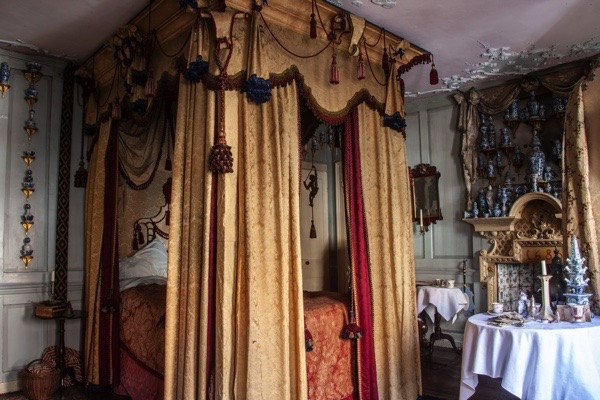
The Master Bedroom at Dennis Severs House with Delft tiled fireplace and tulipière by Simon Pettet
“As an artist my canvas is your imagination,” wrote Dennis Severs in The Tale of a House in Spitalfields, “and left on your own – unimpressed and fearless of social embarrassment – would you ever play along with me tonight?” The Master Bedroom was particularly beguiling, with “soft celestial colours” and “the grandest upholstered baroque four-poster bed imaginable” (though he was happy to admit it was made using pallets and glue-soaked lavatory rolls).
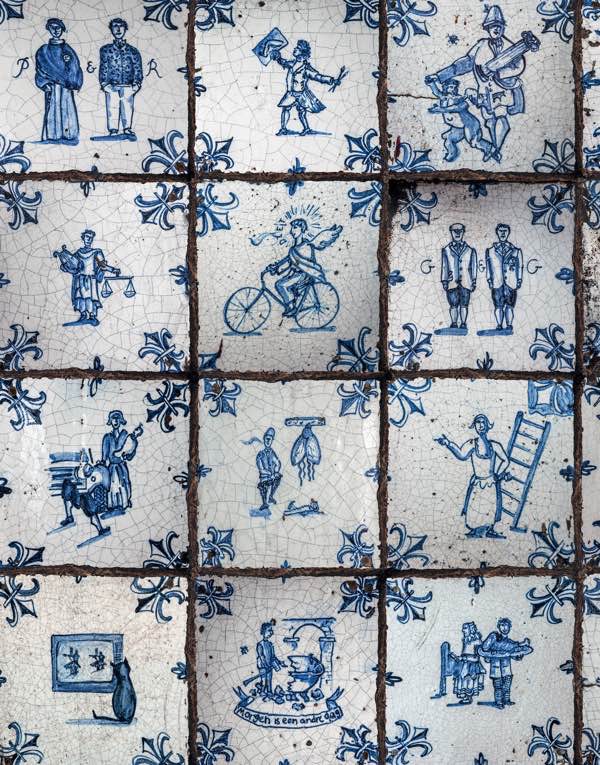
The Delft fireplace in the Master Bedroom at 18 Folgate Street was Simon Pettet’s subtle masterpiece, entitled ‘The Gentrification Piece’, each tile was a sly portrait of a Spitalfields resident of the day in 1985.
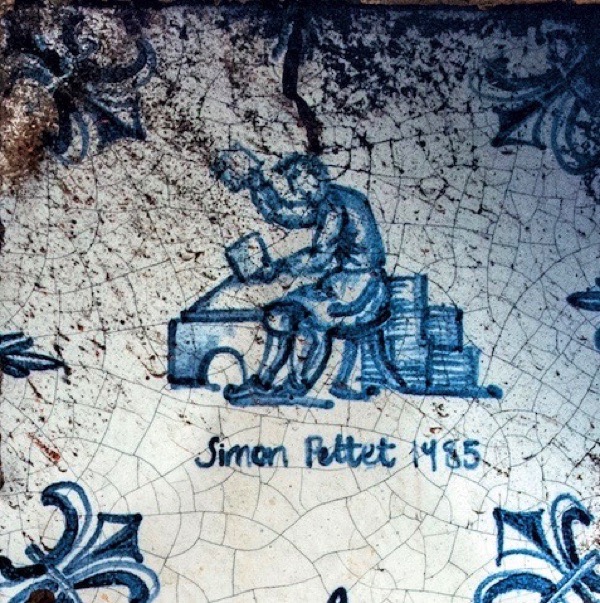
Placed inside at the top right-hand corner of the fireplace, entirely hidden from view by the wooden surround on the front, Simon’s self portrait is the most-discreetly placed tile so that only someone who climbed into the fireplace would ever find it.
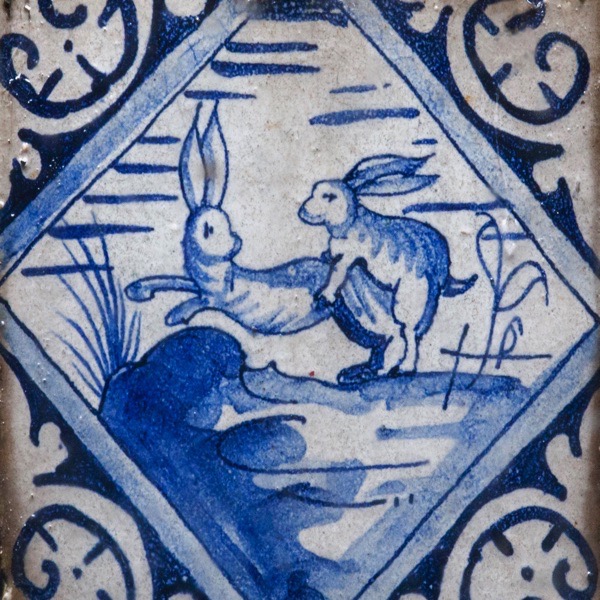
Simon’s tile of mating rabbits – the one with raised ears looking distinctly surprised – is taken from a late seventeenth-century Dutch design.
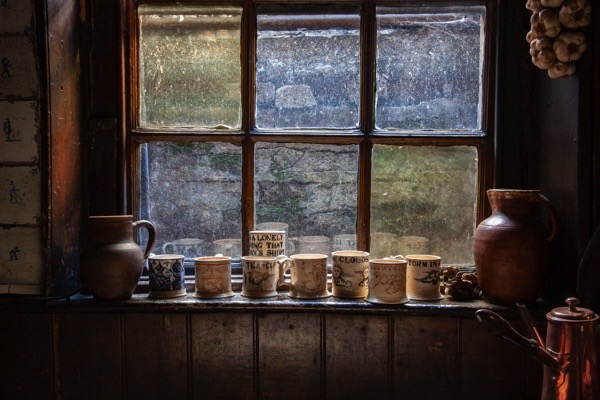
The mugs Simon made at the end of his life were thrown on the wheel and made of porcelain, making them different to most of his earlier works, which are hand-built in clay. Based on late eighteenth- and early nineteenth-century industrial wares, they have either straight or splayed bases and crisp, moulded handles. They are seen here on the window ledge in the basement kitchen at Dennis Severs’ House.
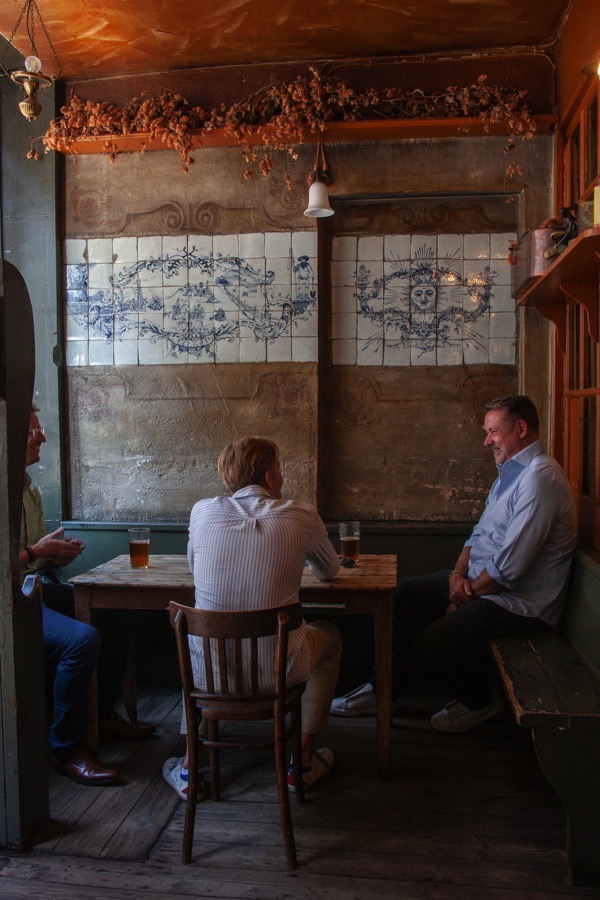
Simon Pettet’s panels of the seasons were installed posthumously in Clerkenwell in 1995 where they can viewed to this day at The Holy Tavern in Britton Street.
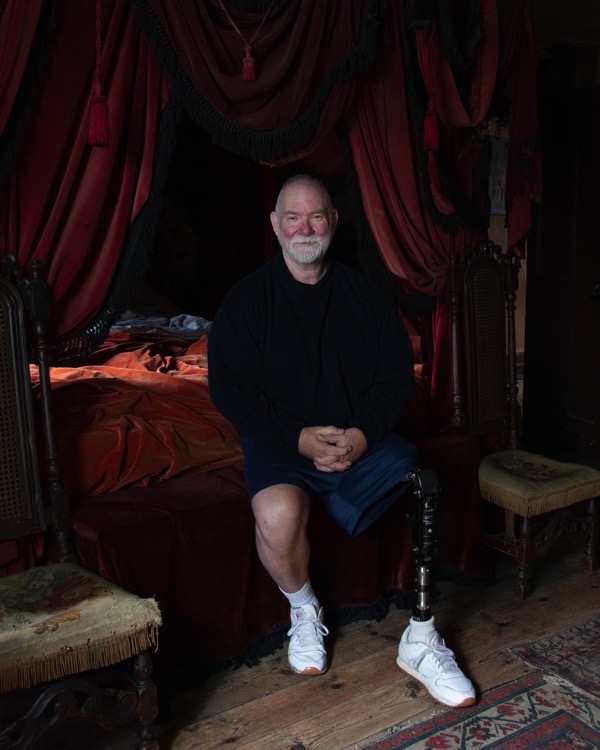
Portrait of Patrick Handscombe taken at Dennis Severs’ House May 2022
“Simon regarded his work as work, he never liked to be called an artist. He said ‘I’m not an artist, I’m a master craftsman,’ but his craft was everything to him. He wanted to be a great potter.’ recalls Patrick Handscombe, Simon Pettet’s intimate friend and final partner who cared for Simon in his last years.
Complementing the exhibition is a piece of immersive theatre devised by The Gentle Author, based on interviews and using the words of Patrick Handscombe who lived in Dennis Severs’ House at that time.
SIMON’S STORY tells the intimate story of Simon and his relationship with Dennis Severs, offering an opportunity to understand more of the private and public lives of those who created Dennis Severs’ House in the eighties and nineties.
Photographs copyright © Lucinda Douglas Menzies
At Westminster Abbey
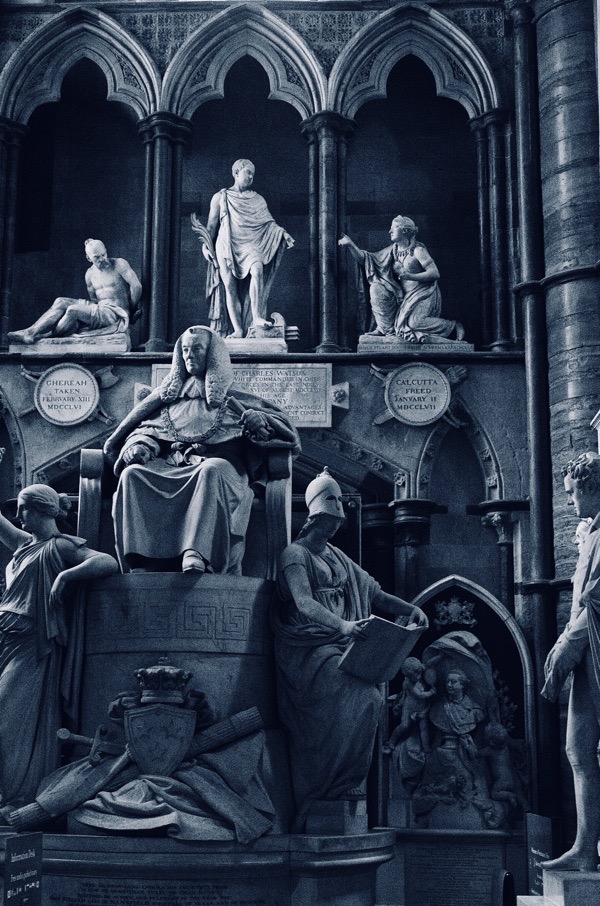
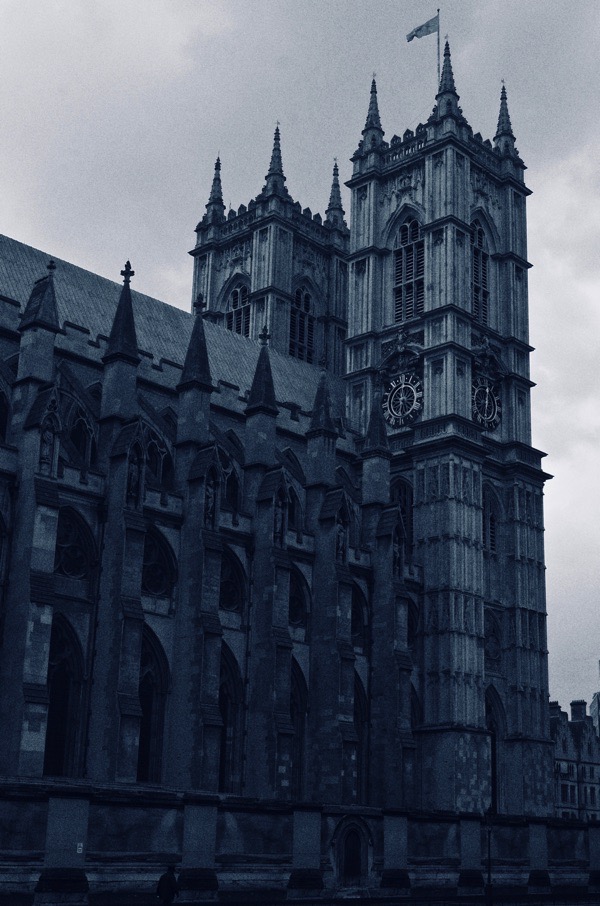
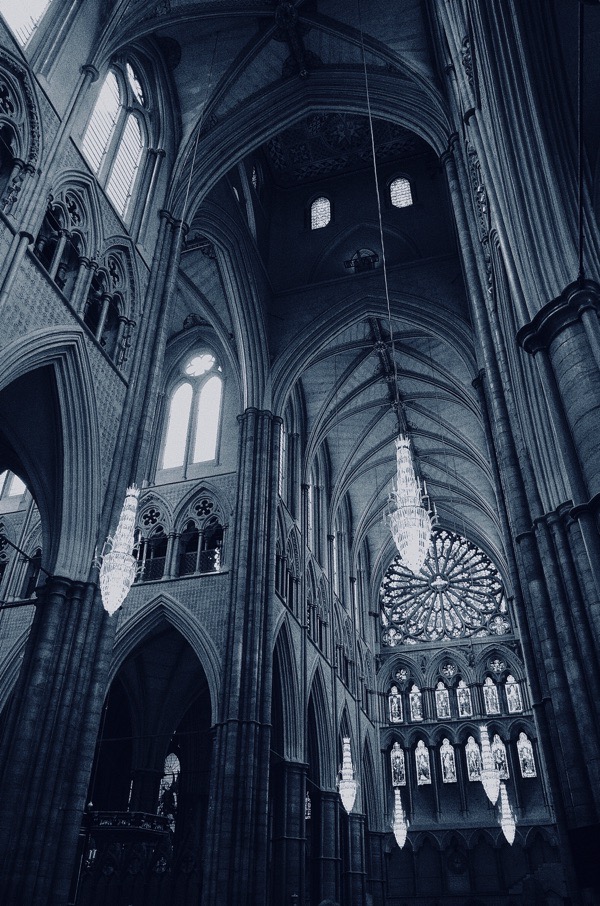
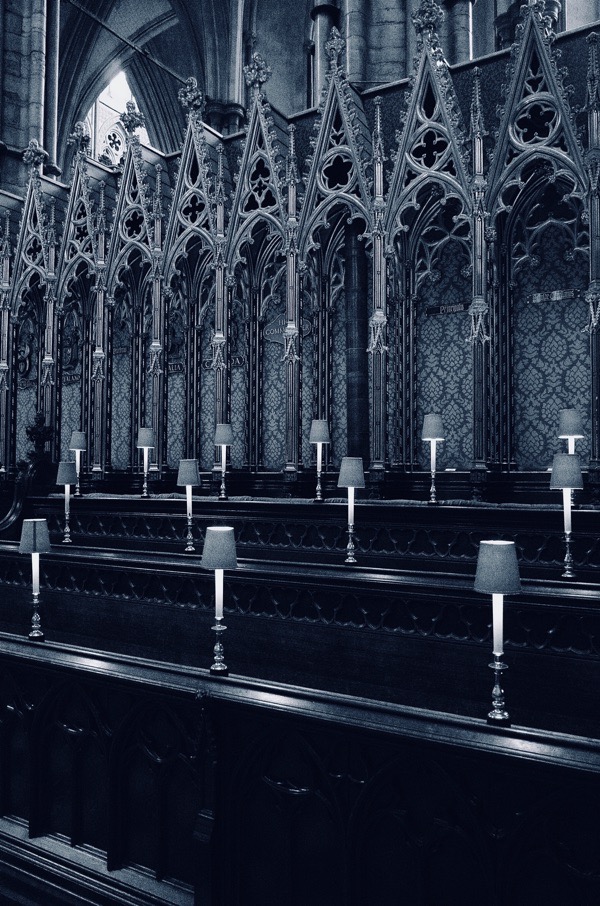
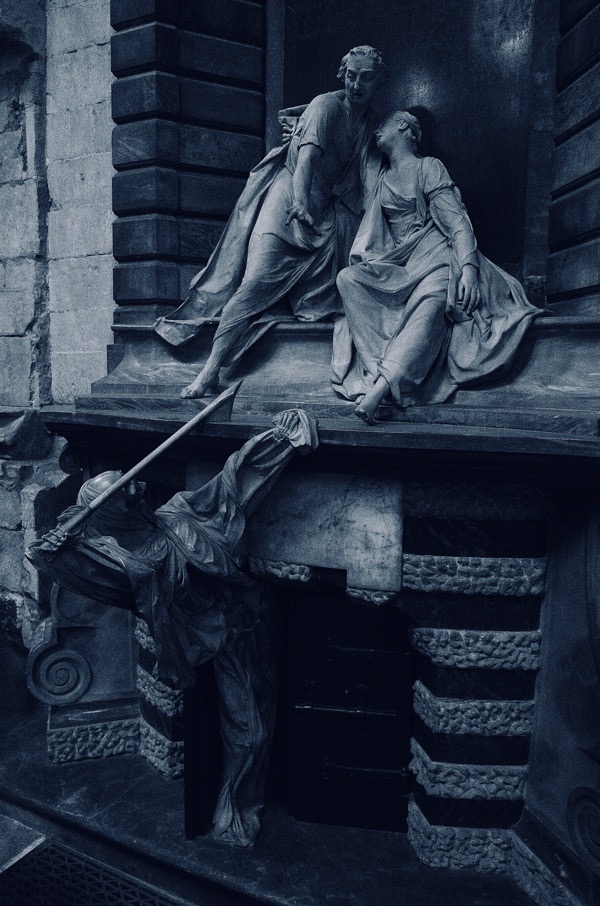
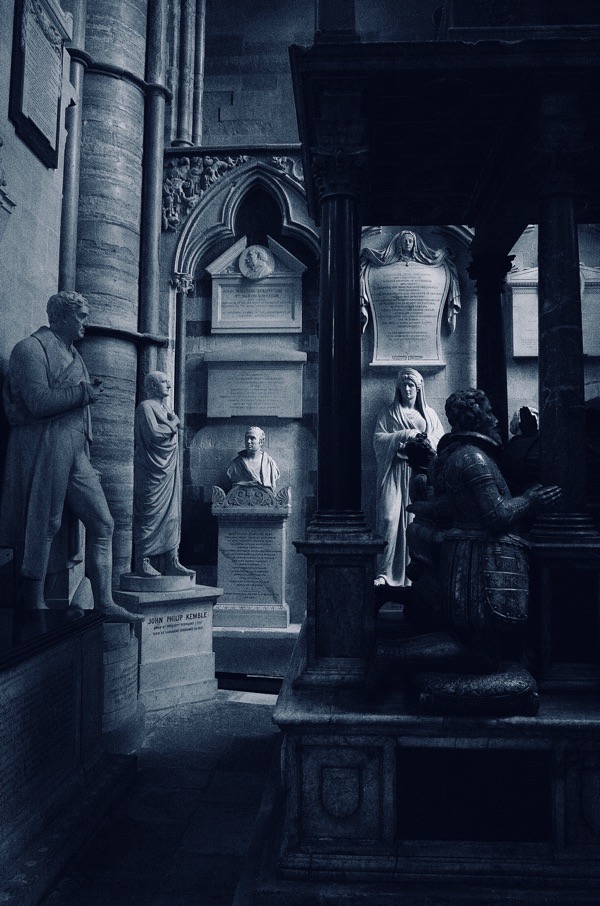
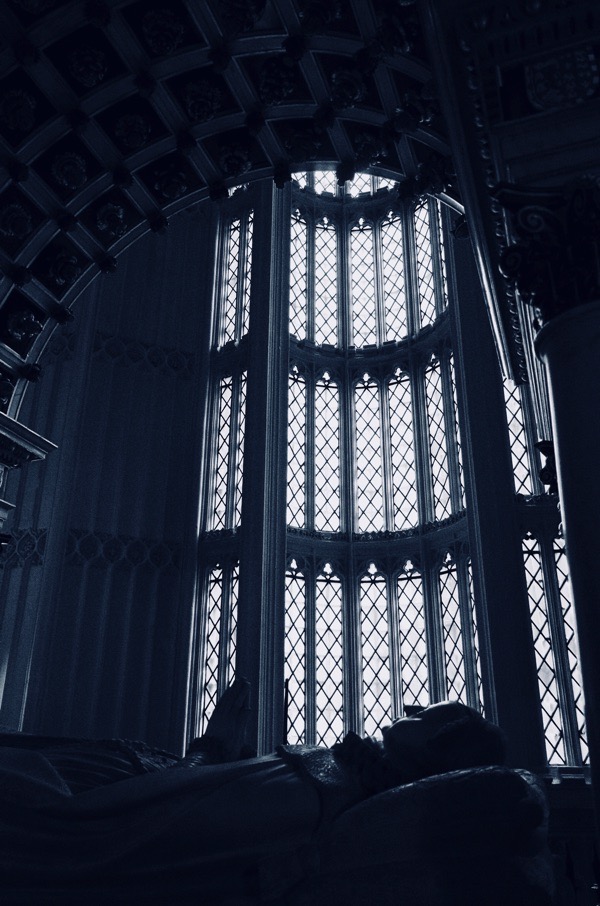
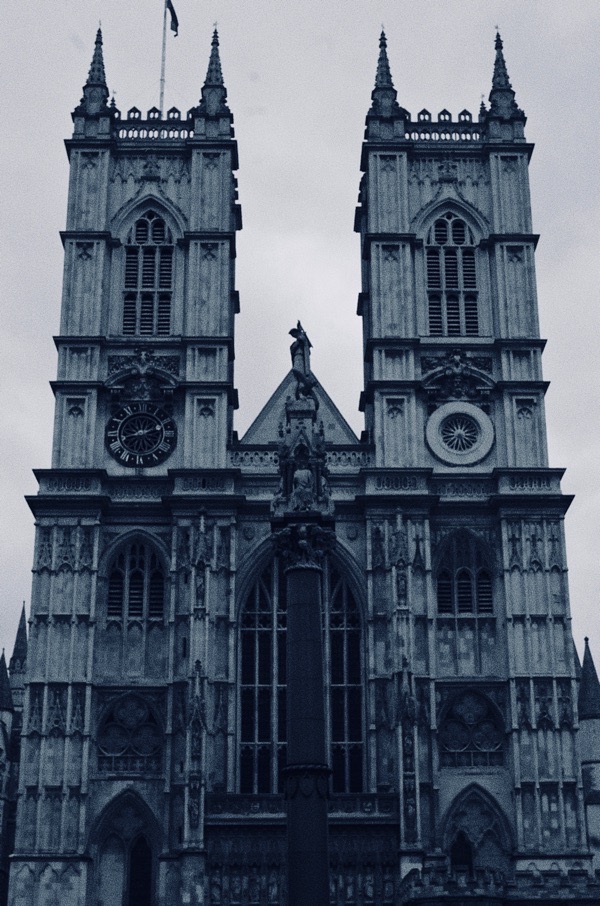
The past is a cluttered and shadowy place, filled with wonders we do not know and things that we choose to forget. These were my thoughts on visiting Westminster Abbey for the first time in many years.
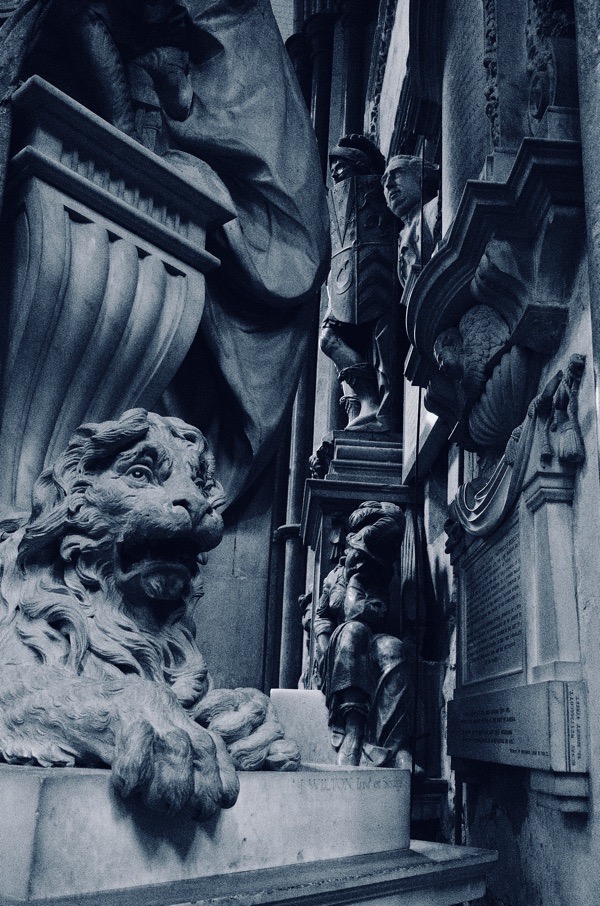
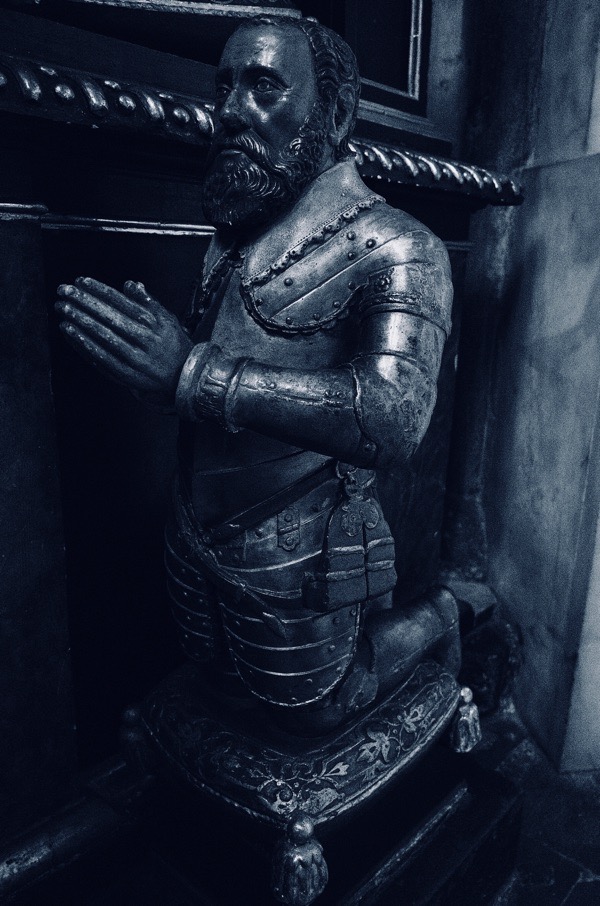
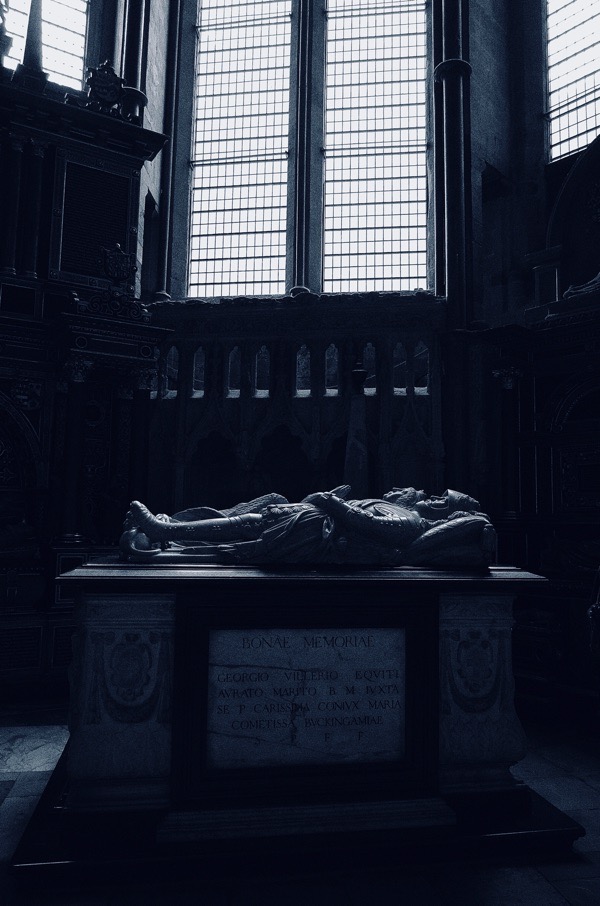
On the day of my arrival, the living were outnumbered by the 3300 dead interred here yet, more than this, the over 300 statuary easily outnumbered the animated souls in the Abbey too. It is hard not to get overwhelmed by the weight of history in a place of such dense and heavy significance as this. Greater than the sense of a vast contained space is the feeling of how narrow and gloomy it is, and how crowded with tombs and memorials, like a great skull crowded with too many memories and not all of them good ones.
It is the nature of the place and of our history that this is literally a shrine to imperialism. Confronted with bombastic statues of those who subjugated the world, it was my great relief to discover Thomas Fowell Buxton, brewer and abolitionist, sitting quietly on a chair for eternity as if he were waiting to greet me. And just a few feet away sat William Wilberforce, also approachable in an armchair, by contrast with those colonial ‘heroes’ asserting their bellicose virility upright on plinths.
The myth of the abbey’s origin is that fisherman had a vision of St Peter while fishing near Thorn Island on the Thames in the seventh century and founded a church on the site. But the recorded origins of the abbey lie with our own St Dunstan of Stepney who installed a community of Benedictine monks here around 970.
Of particular fascination for me is the Cosmati Pavement laid down by Islamic craftsmen in 1268 for Henry III at the centre of the abbey. This intricate mystical design of interwoven circles composed of coloured mineral stones is believed to be a symbolic map of the cosmos – the primum mobile – and it is at the centre of this pavement that every monarch has been crowned since 1066.
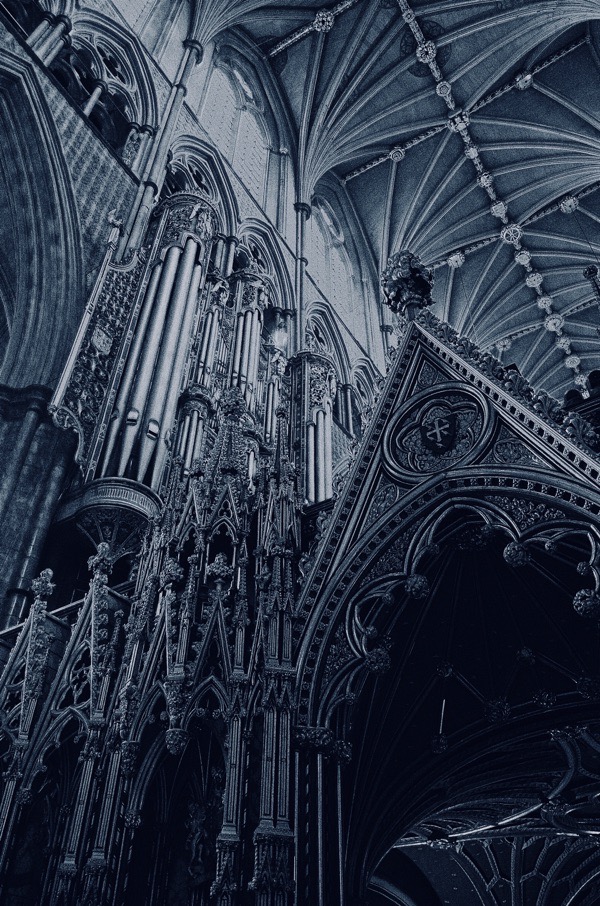
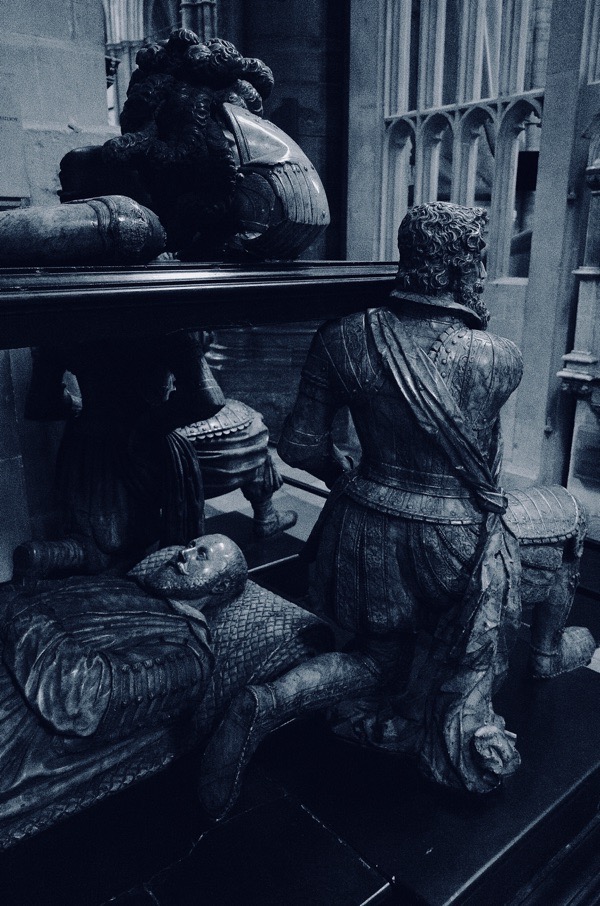
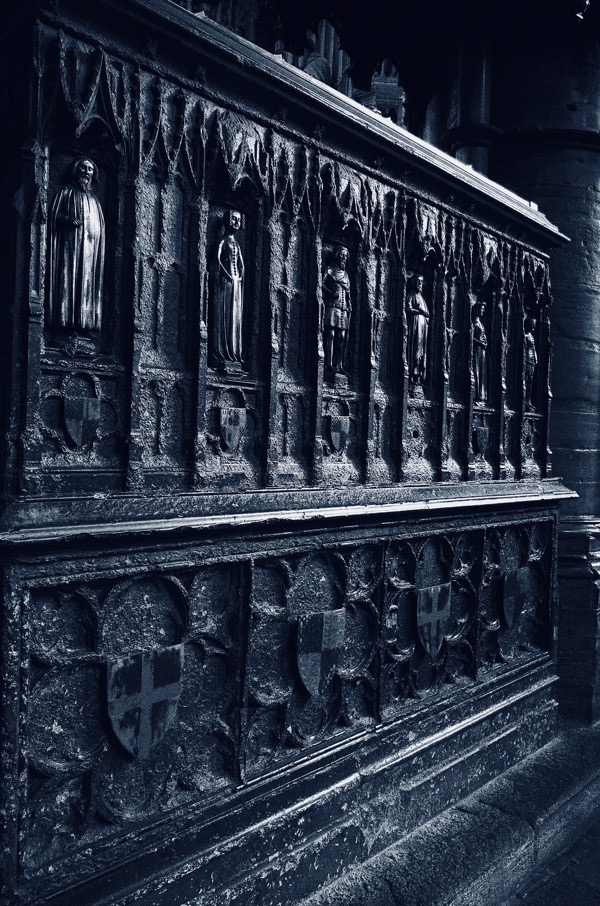
Perhaps the most magical part of the abbey are the ancient battered tombs of the early English kings, such as Henry V and Richard II, personalities whom we feel we know thanks to William Shakespeare. Once you reach the east end of the old abbey, steps ascend to Henry VII’s Lady Chapel. You enter the light of a renaissance chapel from the gloom of the medieval abbey and the astonishing geometric detail of the fan vaulting high overhead takes your breath away.
Even as they were rivals in life, it is surprising to discover that Elizabeth I and Mary are both memorialised here in shrines of apparent equal status, each in a separate side chapel set apart diplomatically at distance on either side of the main space.
It is impossible not to be moved by the worn stones under your feet, smoothed by the tread of our innumerable forebears through centuries and the poignant multiplicity of tombs and effigies, striving so hard to win eternal remembrance for those who are now entirely forgotten.
I must confess to unease about the selection of writers honoured in Poets’ Corner which to my eyes appears as remarkable for the omissions as much as for those who are included. I have not been here since I attended the inauguration of a plaque for John Clare in 1993. On this recent visit, it delighted me more to visit the tomb of a favourite writer, Aphra Behn, the first woman to earn her living by the pen, in the cloister. Even if the inscription ‘Here lies a proof that wit can never be / proof enough against immortality’ is less than generous and, thankfully, is now proven incorrect.
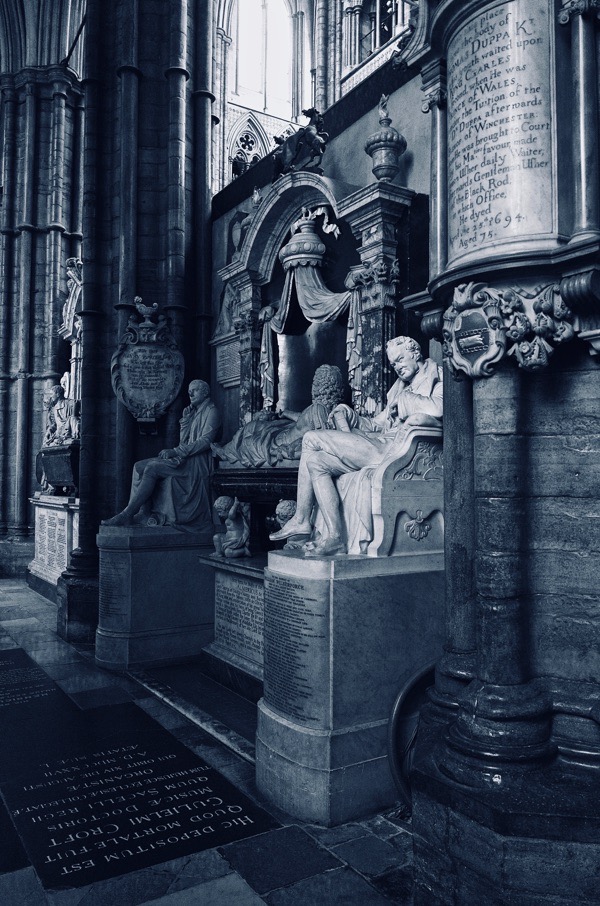
William Wilberforce
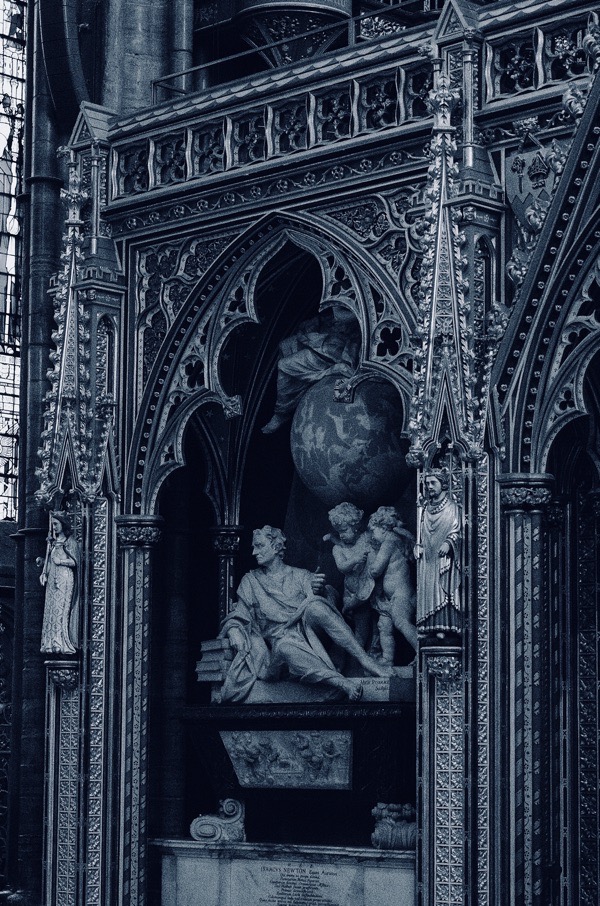
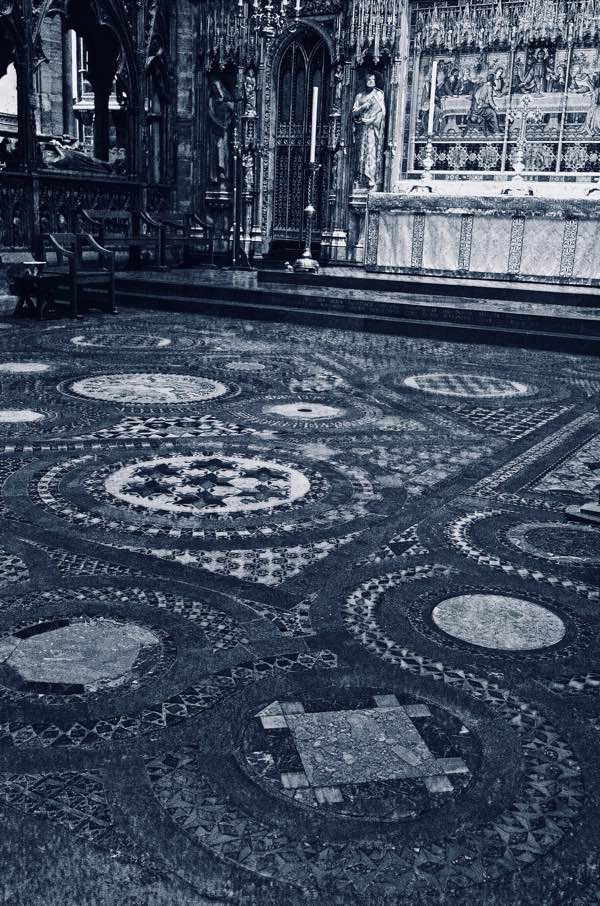
Cosmological Pavement
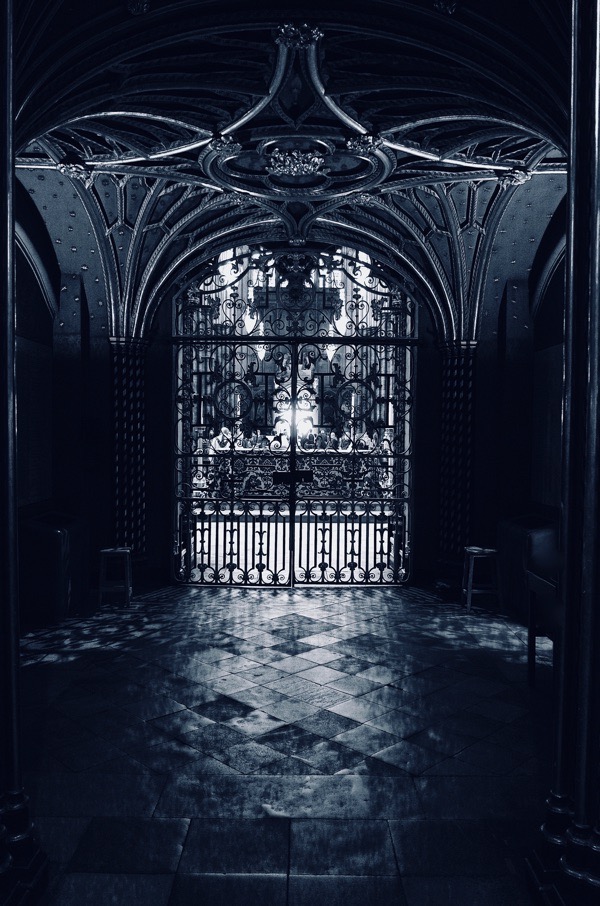
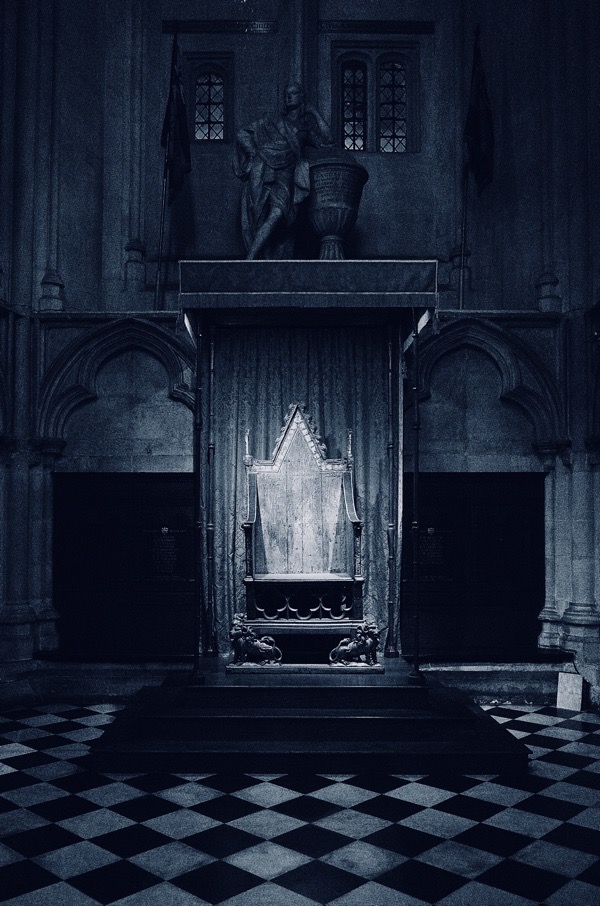
The Coronation Chair
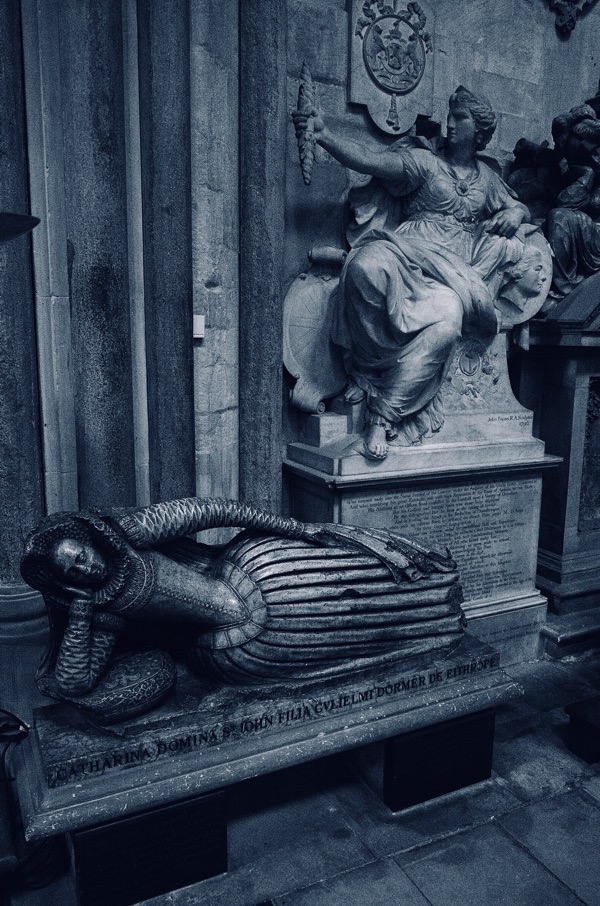
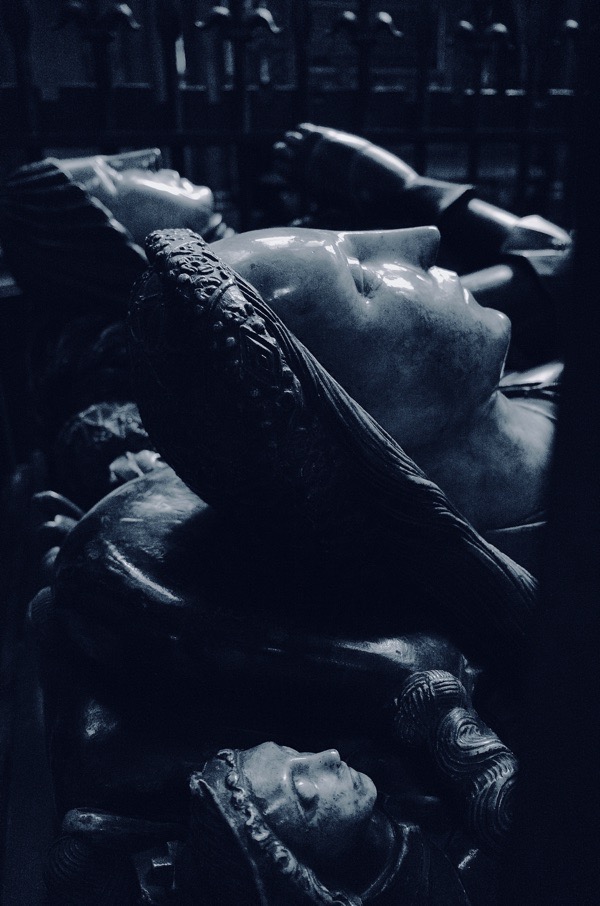
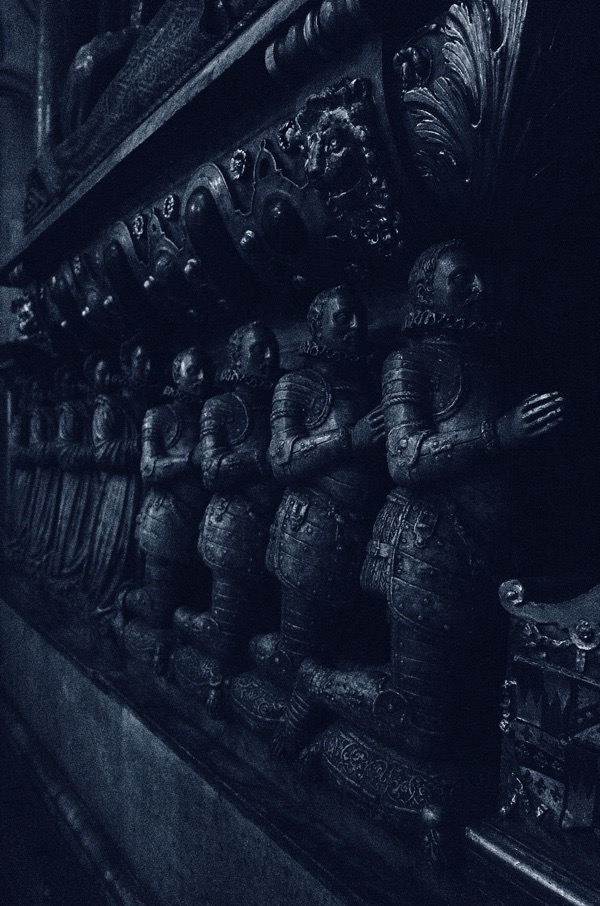
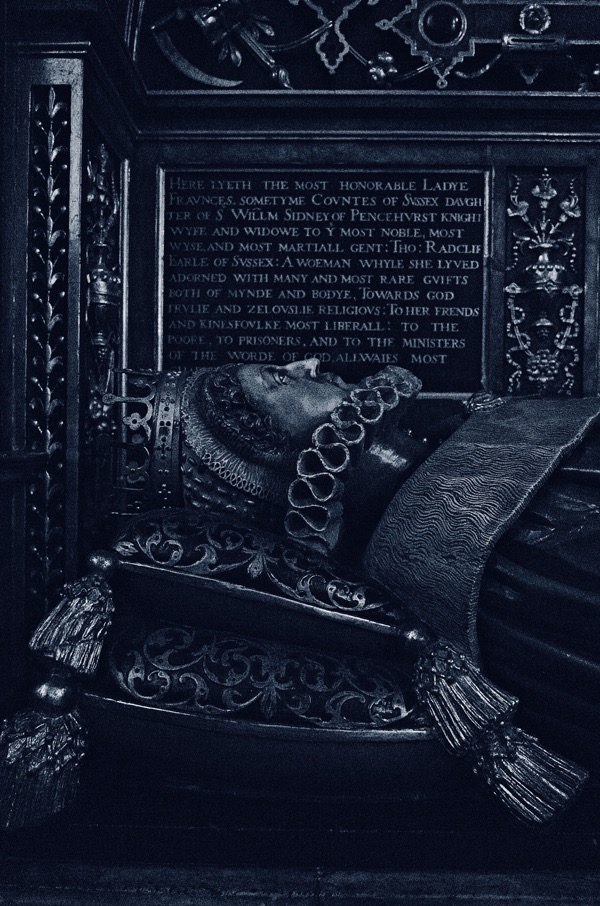
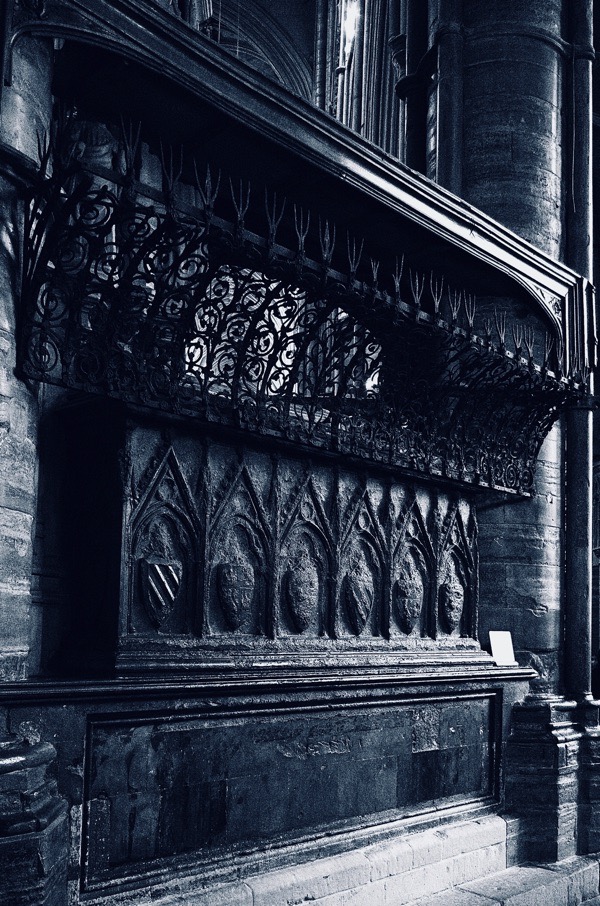
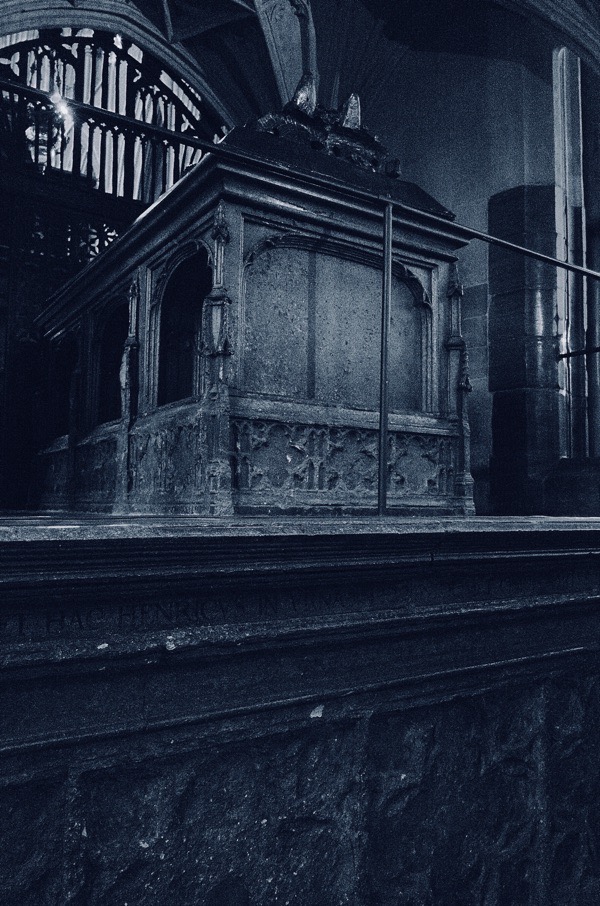
Tomb of Henry V
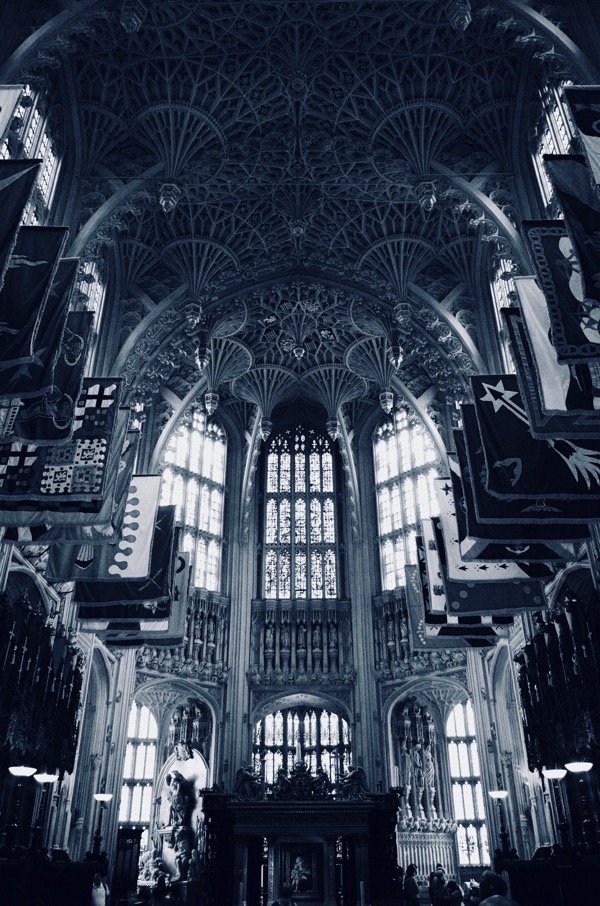
Henry VII’s Lady Chapel
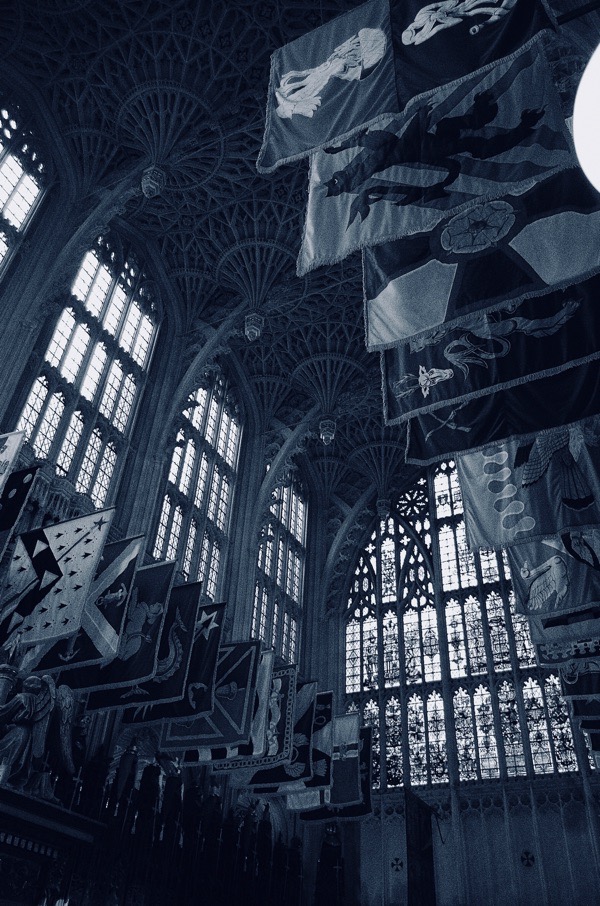
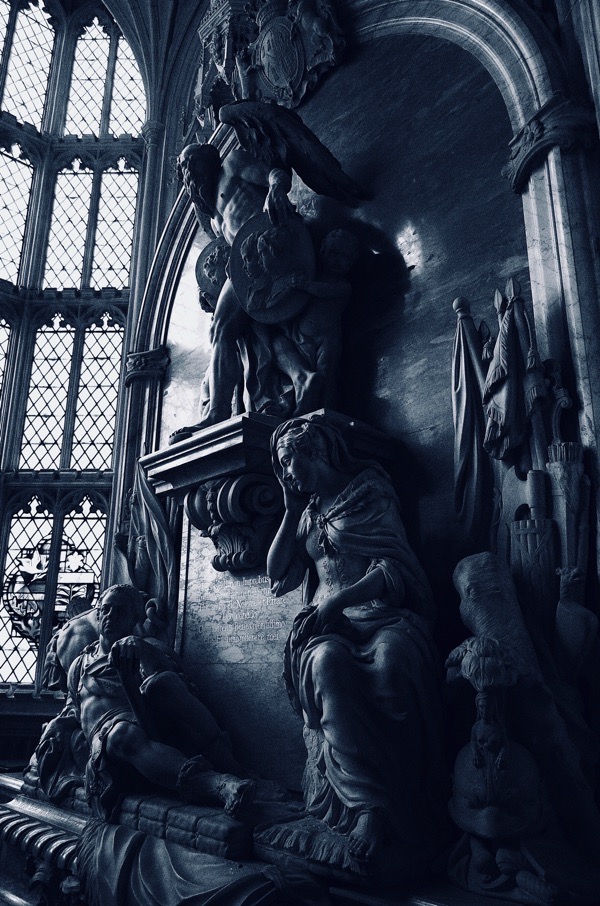
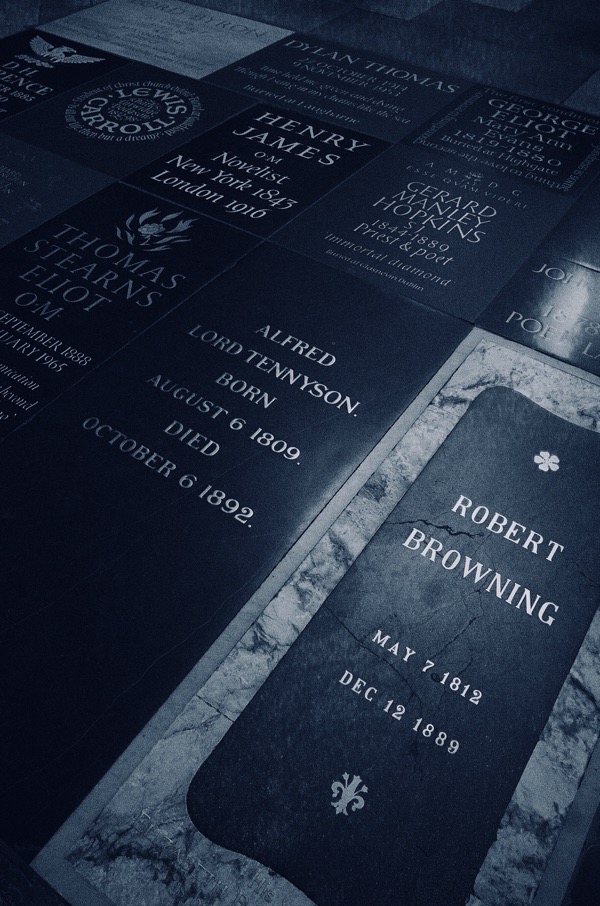
Poets’ Corner
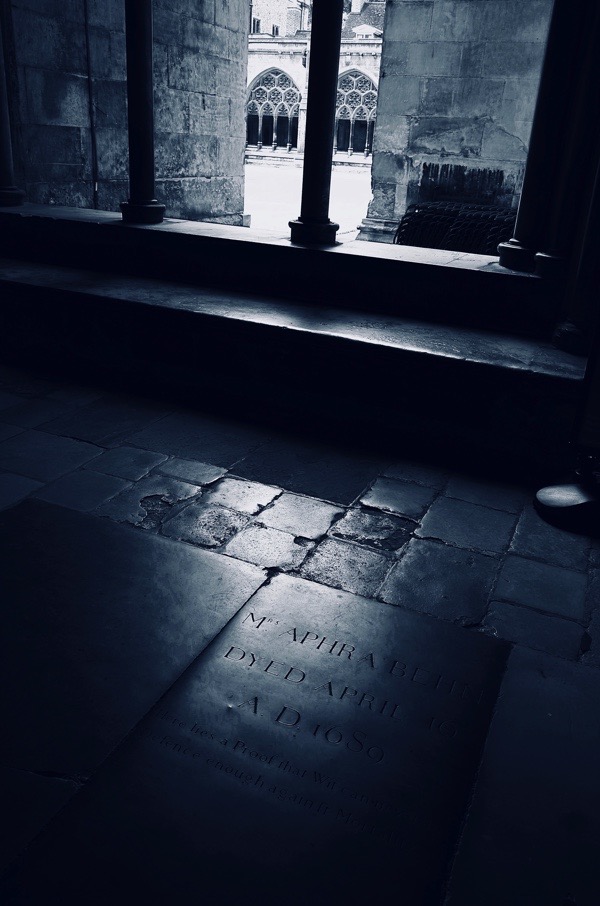
Tomb of Aphra Behn in the cloister
You may also like to read about
Stan Jones & The Coronation
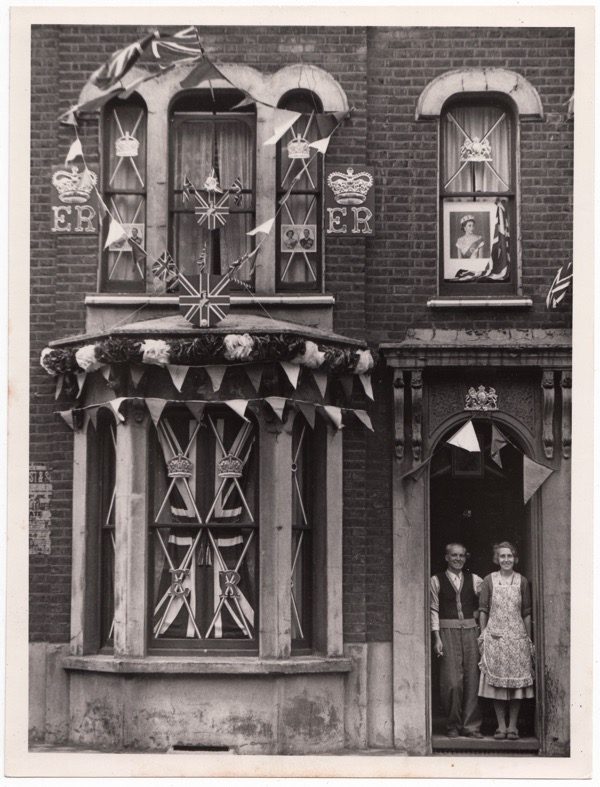
Stan’s photograph of his Coronation decorations in 1953 that was published in The Times
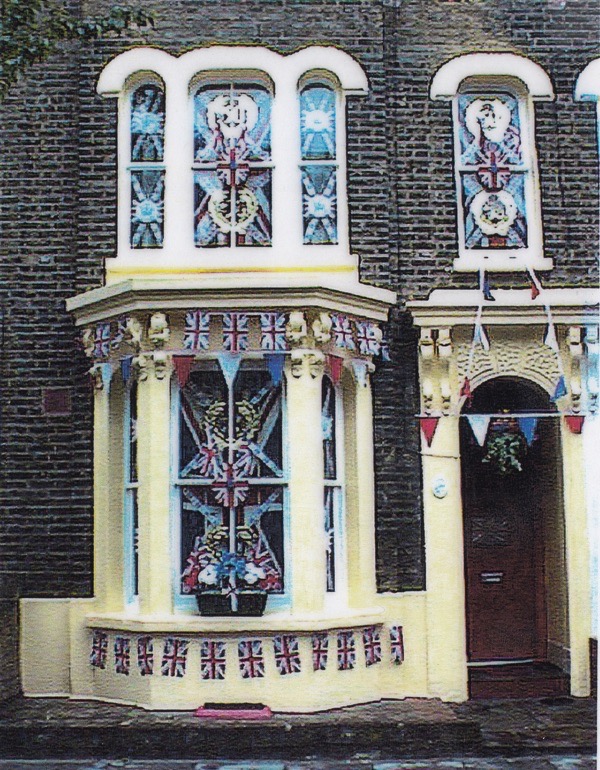
Stan’s photograph of his Diamond Jubilee decorations in 2012
Such has been the movement of people and the destruction and reconstruction of neighbourhoods in the last century that I often wonder if anyone at all is left here from the old East End. So you can imagine my delight when I met Stan Jones (1929-2021) of Mile End who lived in his house for more than eighty years, moving there at the age of ten from a nearby street.
Contributing Photographer Sarah Ainslie & I were enchanted to be welcomed by Stan to his extraordinary home where nothing had ever been thrown away. Every inch of the house and garden had found its ideal use in the last eight decades and Stan was a happy man living in his beloved home that was also the repository of his family history.
Fortunately for us Stan had been taking photographs all this time, starting out in the days of glass plate negatives, and below you can see a few examples of his handiwork. Famously, Stan photographed the exterior of his house from the Coronation in 1953 and his picture was published in The Times, which led to return visits by the daily newspapers on subsequent occasions of national celebration to record Stan’s unchanging decorations on the front of his unaltered house.
Most inspiring to me was Stan’s sense of modest satisfaction with his existence in his small house backing onto the railway line. Mercifully untroubled by personal ambition, Stan immersed himself in domesticity and creative pastimes, and enjoyed fulfilment at the centre of his intimate community over all this time. Such was his contentment that not even a World War with bombs dropping from the sky could drive Stan out of his home. Stan never had any desire to go anywhere else because he found that all which life has to offer could be discovered in a back street in Mile End.
“I was born nearby in Coutts Rd in 1929 and I came here with my mother and father in March 1939, so I have lived in this house for eighty years. I have no brothers or sisters and I never married. I did have one cousin until last December, but he has gone now and my closest relative is his daughter who lives in Hornchurch.
My mother was Ethel and father was Arthur, they were both from Stepney. My grandparents all lived in Stepney, just across the other side of Mile End Road. My mother was one week older than my father but they both passed away within nine weeks of each other in 1978, when they were seventy-five.
My father was an engineer, repairing steam lorries, until he got a job with the council as mace bearer to the Mayor. Also he was personal messenger to the Town Clerk of Stepney, all through the war he carried messages around on a bike.
My mother was a machinist until the day she got married, then she never went out to work any more. Before fridges and freezers, women had to go out shopping every day to buy food and look after the children. He had to work to feed her, keep her in clothes and pay the rent, which was about a pound a week. That was their life.
I had a happy childhood but it was very lonely, I never had friends, I always had hobbies indoors. I hardly got any education. I only went to Malmesbury Rd School for a few months before the war started and the schools shut down. Most children were evacuated but I never went away, I did not want to. I was here right through the war. I went back to school for about six months after the war and that was my education because you left school at fourteen in those days. I must have educated myself because I did not have much schooling.
On the first night of the air raids, a row of houses down this road got a direct hit. Most nights, I was in the Anderson shelter with my mother. We were down there when the bomb fell just along the road and when a flying bomb hit the railway bridge and ripped it in half and the two halves were lying in the road. I must have been frightened but I cannot remember.
My father did not go into the army because the Town Clerk was a barrister and made him exempt. Instead, he was in the Home Guard out on duty at the Blackwall Tunnel or wherever.
My mother was not well after the war and she was not keen to push me in to work, so I was about fifteen before I started work at a shopfitters in Commercial St. I was with them for forty-eight years, that was my working life. I started in packing, then became a despatch manager and finally warehouse manager, keeping check of stock.
I had a Brownie box camera, and I took pictures if we went out for a day at the seaside and at local celebrations. My photograph of this house decorated for the Coronation in 1953 was published in The Times. But I did not go out a lot as I say, because a lot of my photography was not actually taking pictures. I did a lot of black and white processing for other people. I had a dark room upstairs and, in summer, when people were taking photos I was the one upstairs developing their films. This was all for neighbours, people at work, you know. If they took them to the chemist, they would have to wait a week to get them back, but they got them back next morning from me!
Never being married, I was not pushed into a better paid job. In 1946 my first week’s wages were £2.50 and a rise was twelve and a half pence. It improved as the years went on, although not top wages. I never had a pension scheme but, for my loyalty, they gave me a monthly allowance.
I am very happy here in this house. Most of the others have been extended, but this one is as it was built.”
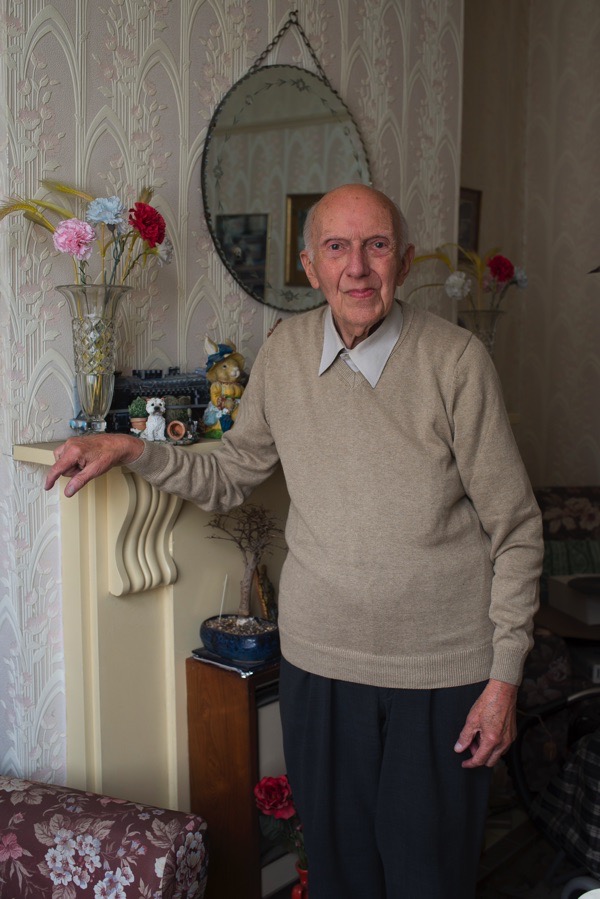
Stan Jones

Stan at home
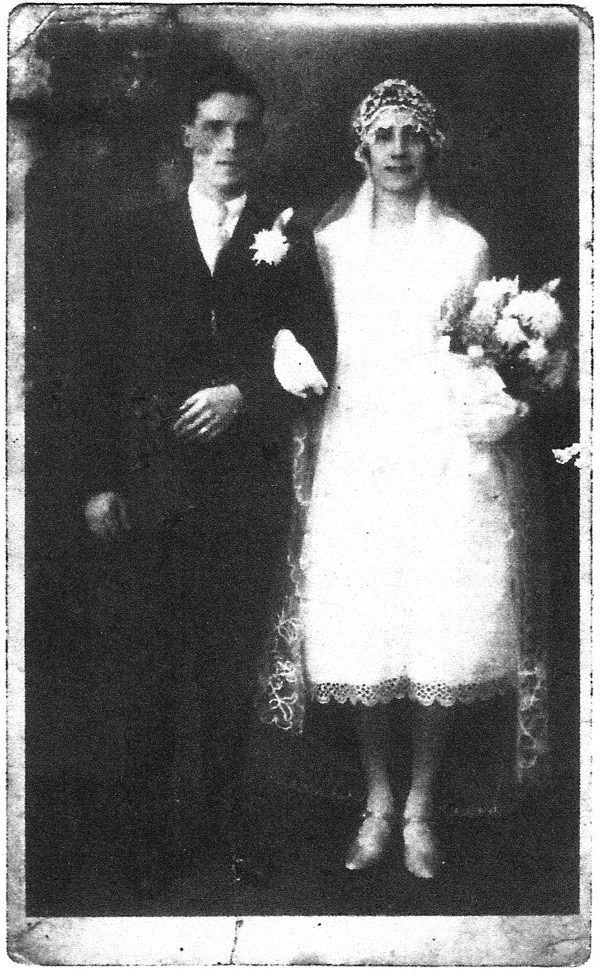
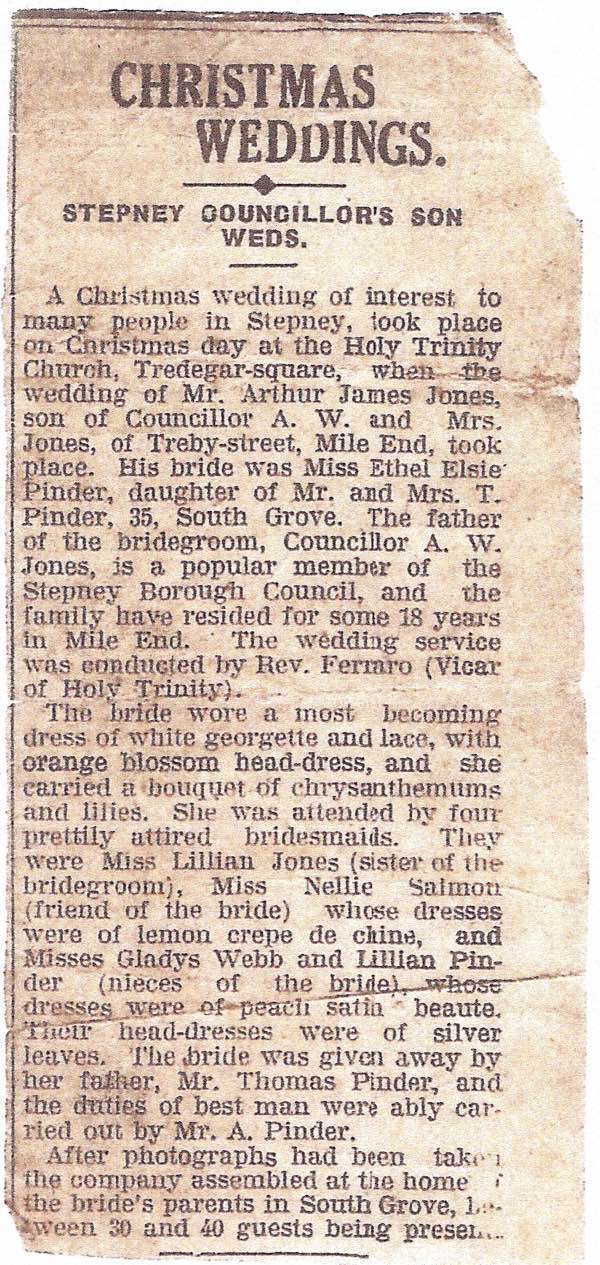
Arthur & Ethel Jones at their wedding on Christmas Day in 1928
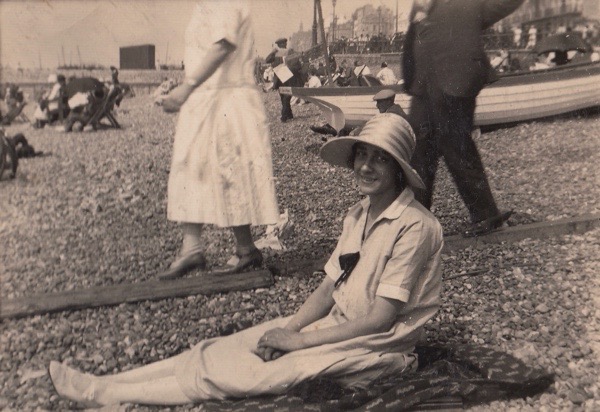
Ethel at Brighton in the thirties
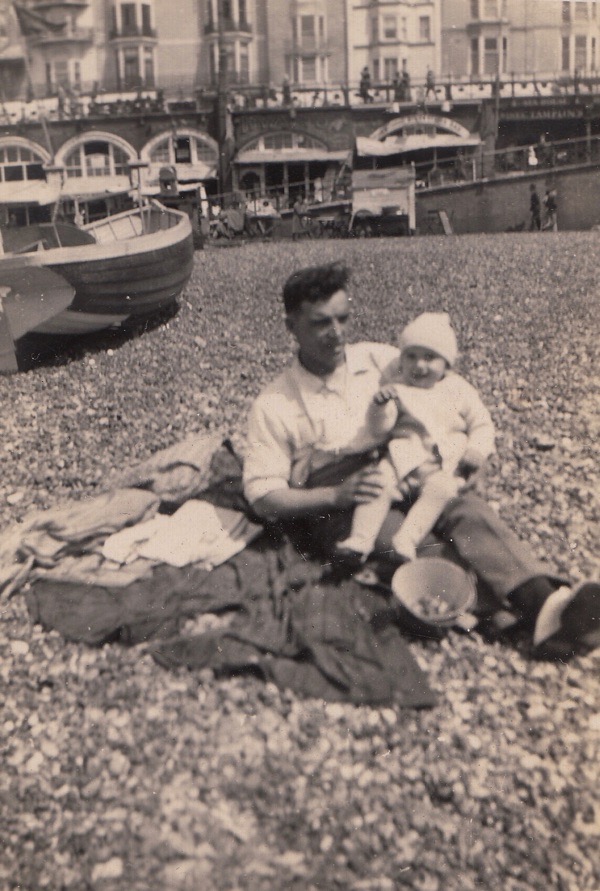
Arthur with Stan at Brighton in the thirties
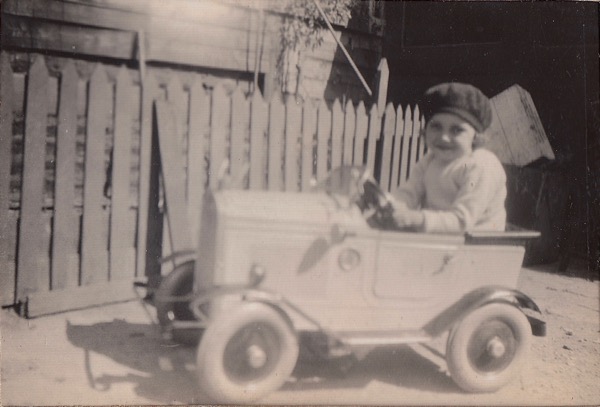
Stan in his pedal car in the thirties
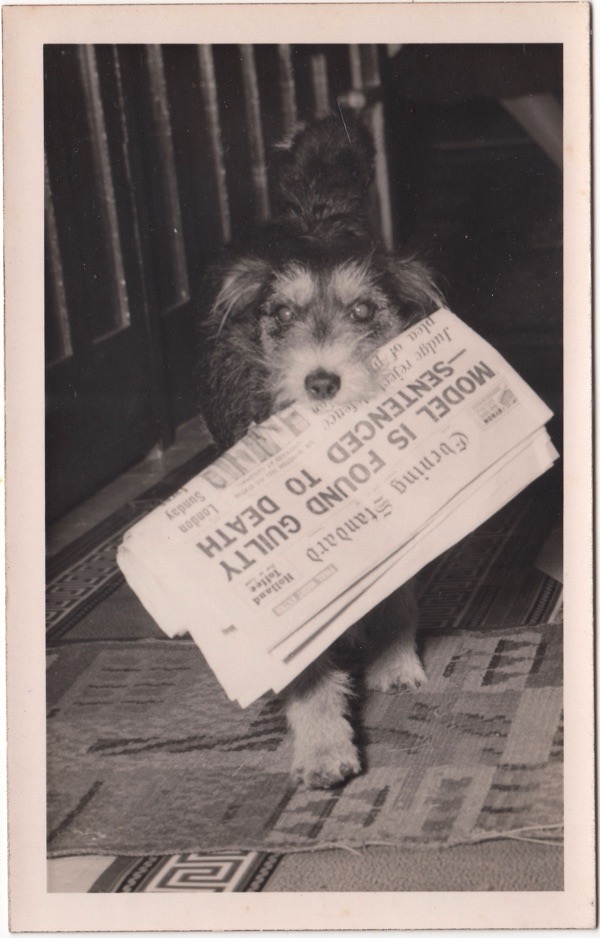
Stan’s photograph of his childhood dog
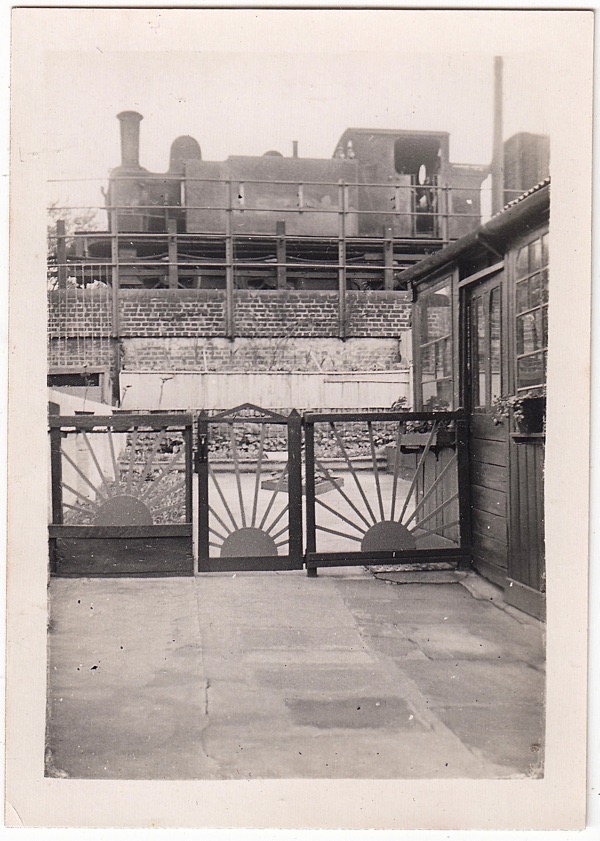
Stan’s photograph of a train at the end of his garden – ‘Sometimes our cats strayed onto the railway tracks and never came back, one returned without a tail!’
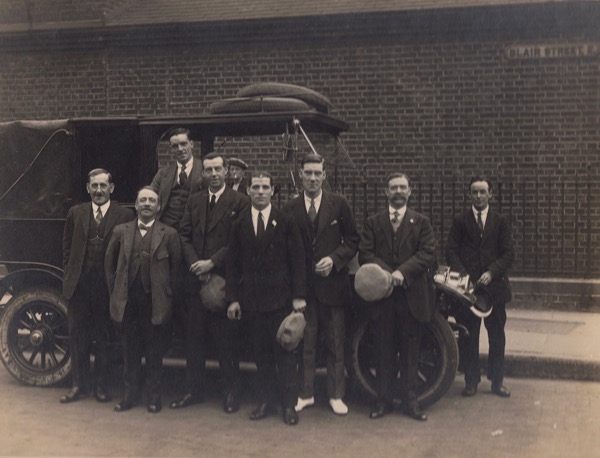
Arthur Jones stands at the centre of this group of steam lorry drivers in the thirties
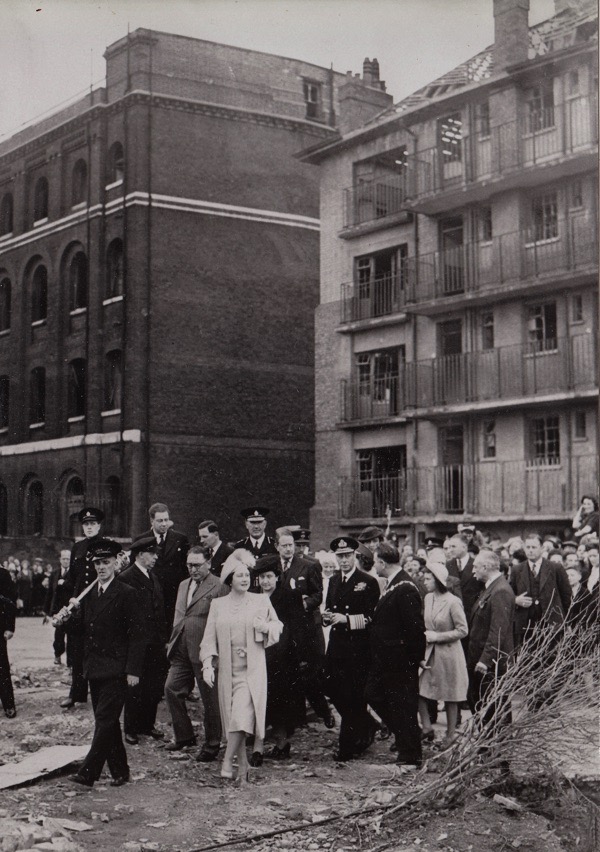
Arthur Jones escorts the Mayor of Stepney and King George the Sixth with the Queen Mother to visit the bombing of Hughes Mansions in Vallance Rd
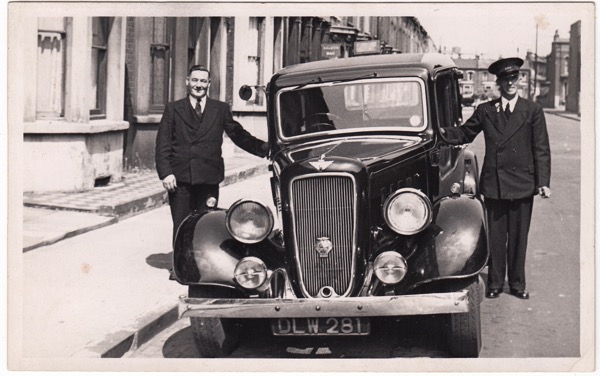
The Mayor’s chauffeur comes to pick up Arthur for his mace-bearing duties
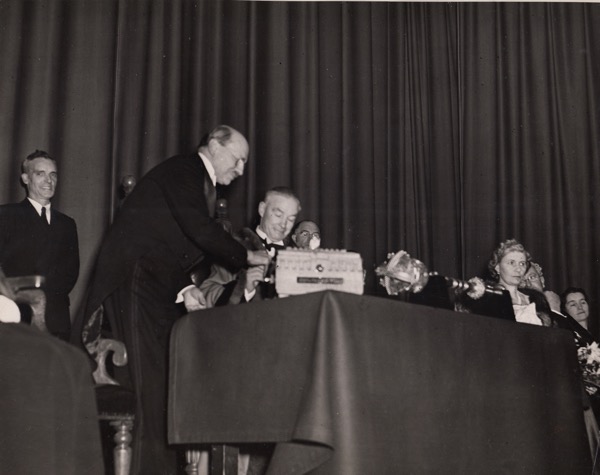
Arthur stand on the left as Clement Attlee speaks
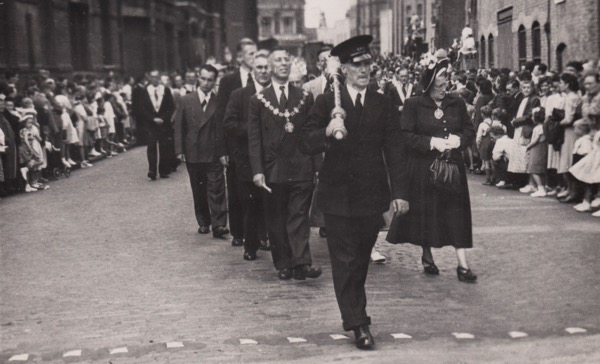
Arthur Jones leads the procession through Stepney to St Mary & St Michaels Church
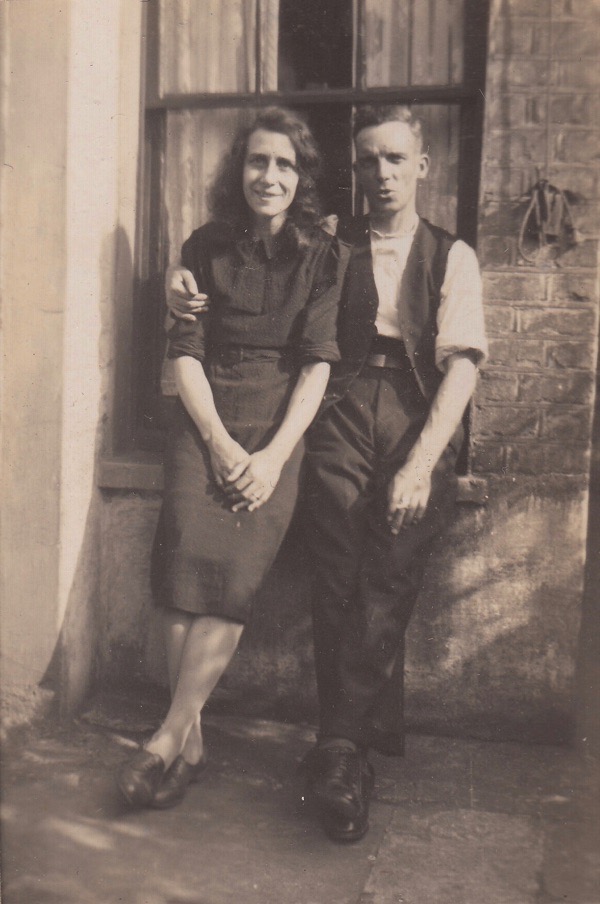
Ethel & Arthur Jones in the back garden
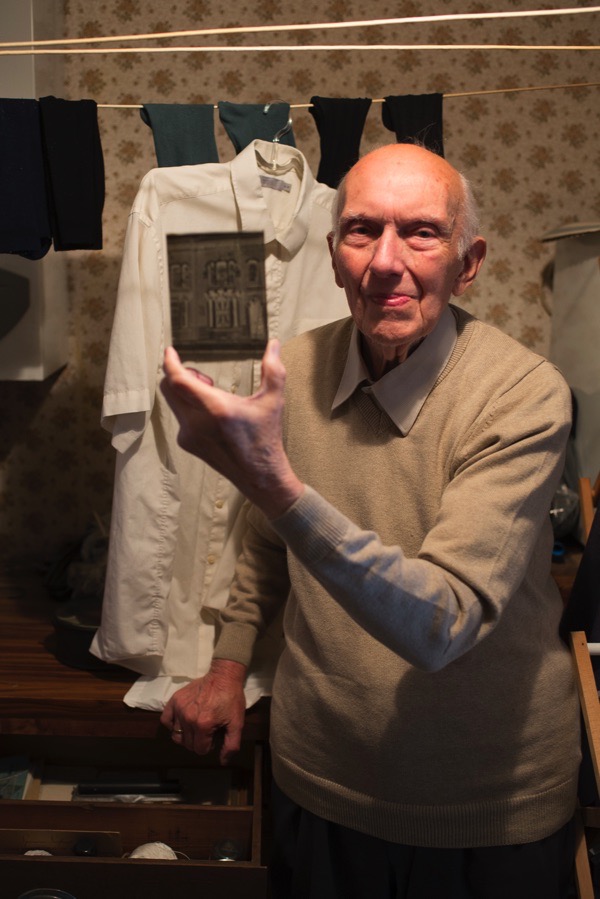
Stan shows the glass plate of his famous photograph
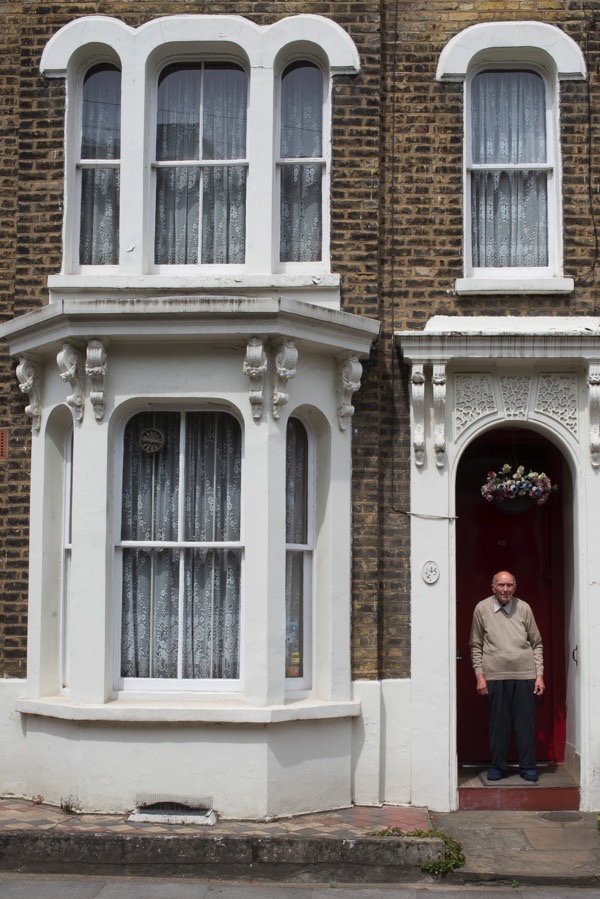
Stan Jones outside his house
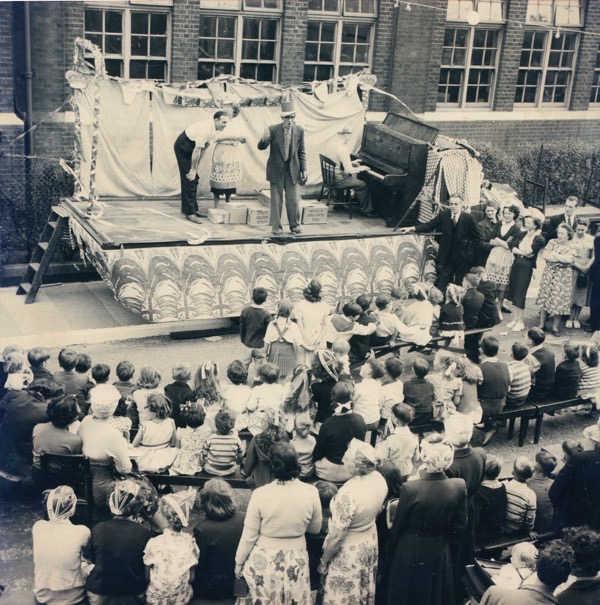
Stan’s photograph of entertainment for the Coronation Party in Mile End, 1953
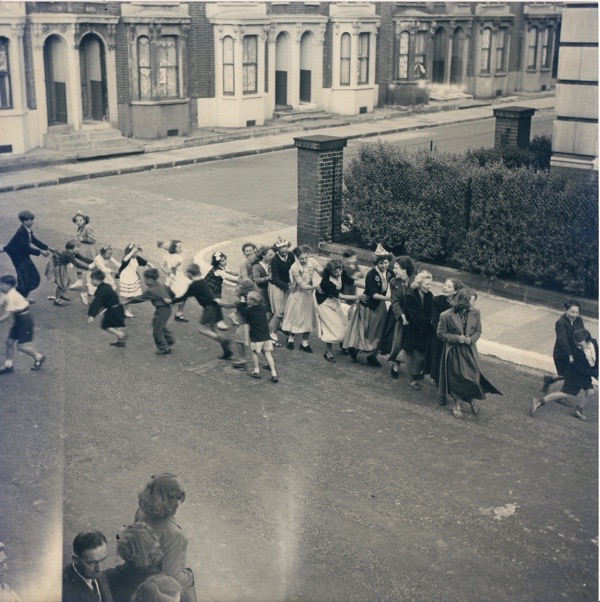
Stan’s photograph of the conga at the Coronation Party in Mile End, 1953
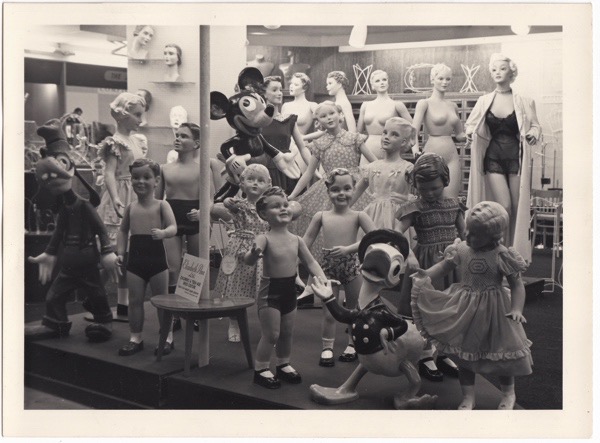
Stan’s photograph of a display at the shopfitters where he worked
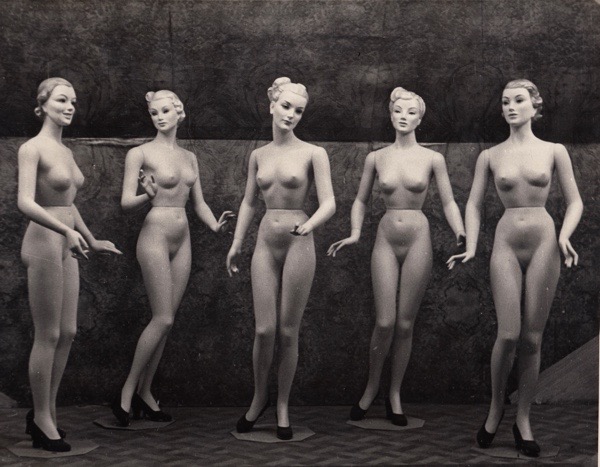
Stan’s photograph of mannequins
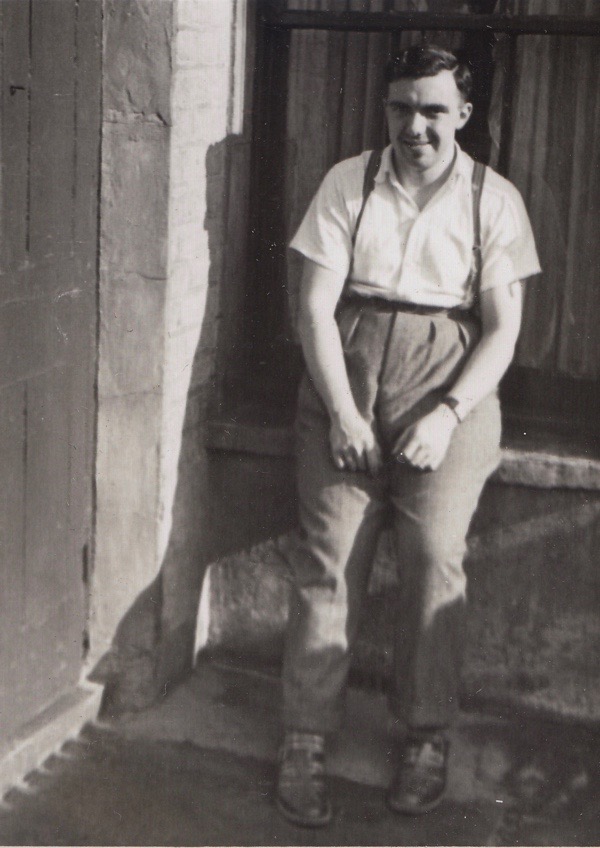
Stan as a youth
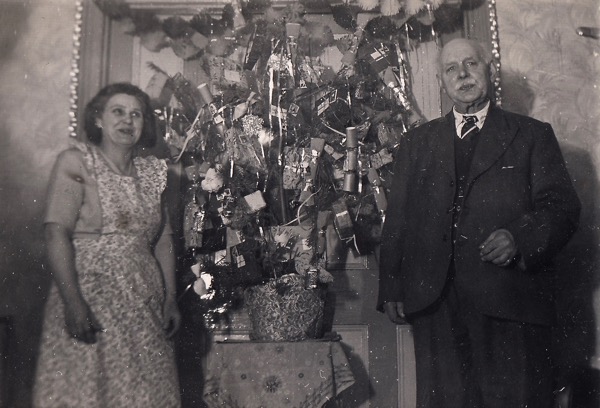
Ethel & Arthur Jones in later years
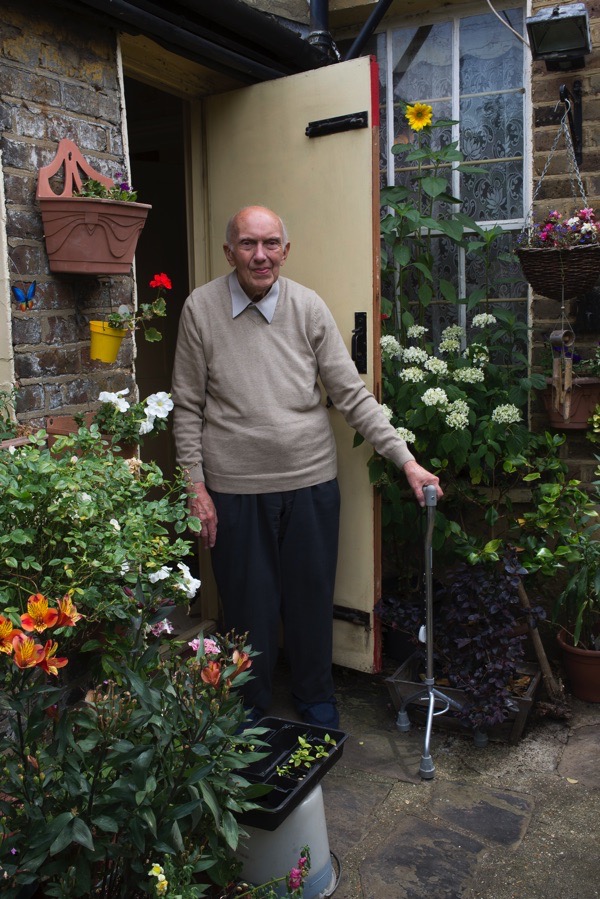
Stan Jones in his garden
Portraits copyright © Sarah Ainslie
You may also like to read about
Brian Barrett, Foundry Foreman
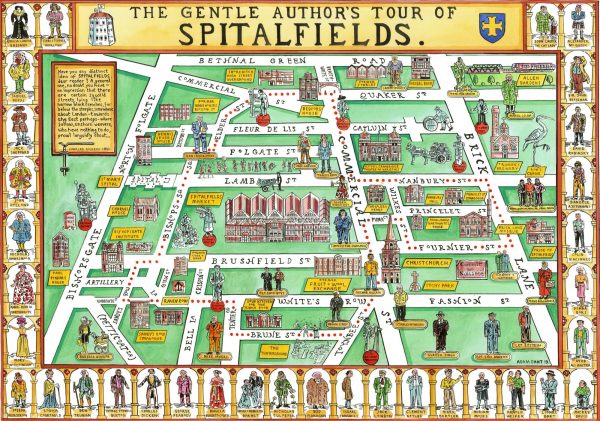
CLICK HERE TO BOOK FOR MY SPITALFIELDS WALKS FROM 13TH MAY
CLICK HERE TO BOOK FOR MY CITY OF LONDON WALKS FROM 4TH JUNE
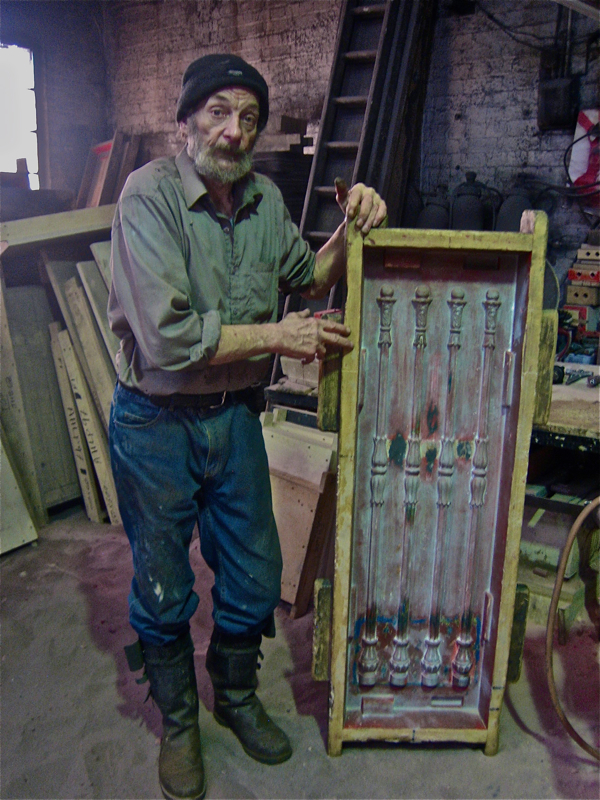
Brian Barrett was packing up alone in the foundry on Friday, when I dropped by to pay a visit at J.Hoyle & Son – although he seemed in no hurry to leave. “Looking forward to the weekend?” I queried, to permit him an exit line if he chose to take it. “I hate Fridays,” was Brian’s unexpectedly ambiguous response, “one day nearer to Monday, isn’t it?”
So there we were together, standing in the stillness of a shaft of sunlight upon the sandy floor of the old foundry, enjoying this brief moment of peace when the work was done and contemplating the achievement of the past week, manifest in the castings of iron stair rods laid out in front of us. Already my suspicion was that Brian was a little unconvincing in his reluctance to anticipate next week but as I did not wish cloud his satisfaction, I simply asked if he was finished for this week. “I shall come in on Saturday for a few hours,” he confirmed with a placid smile through his straggly beard, just to reassure me that his job was no ordeal.
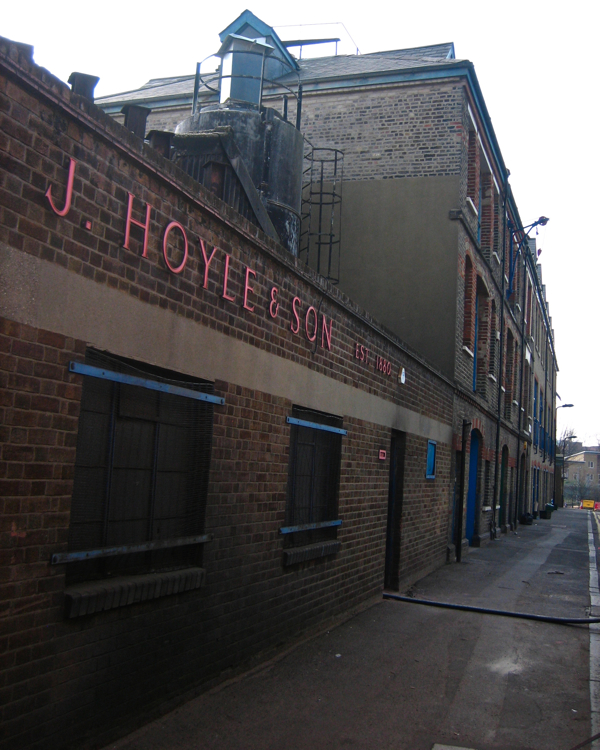
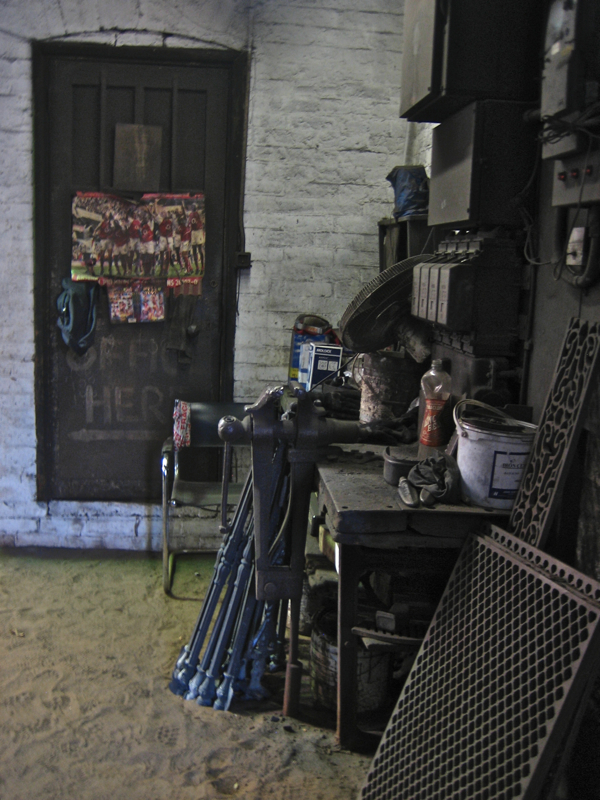
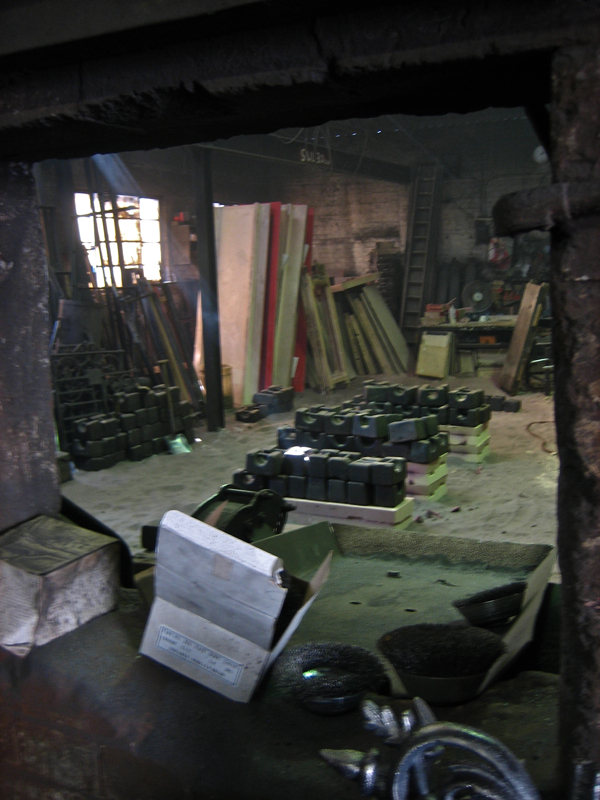
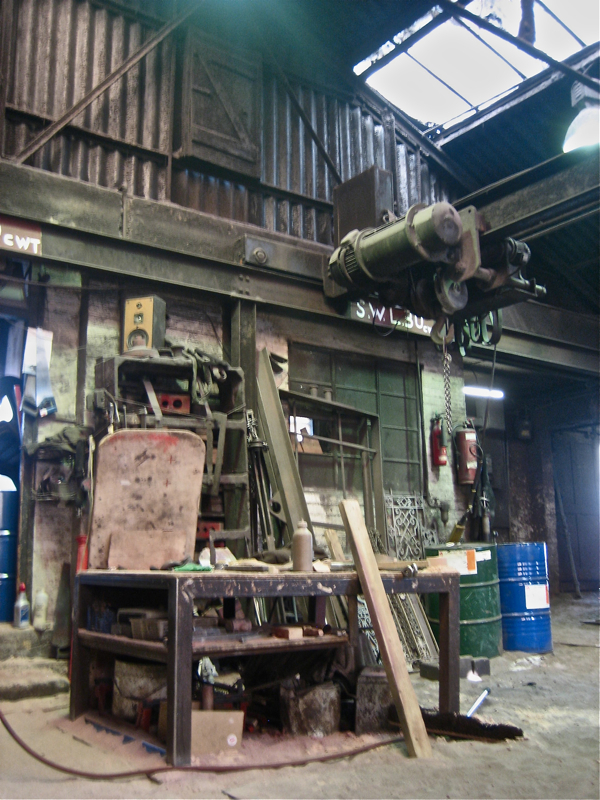
In this venerable brick building beside the canal glimmers the spirit of the Industrial Revolution and even earlier – because iron casting is one of the oldest technologies known to man – and at J.Hoyle & Son the essentials have not altered since they set up in 1880, as one of the many small foundries that operated in the East End at that time. Ironwork cast here at J.Hoyle & Son (the Beehive Foundry) can be seen upon the National Portrait Gallery, the British Museum, the Houses of Parliament, 10 Downing Street, the Bank of England, the Natural History Museum, and SmithfieldMarket – as well as the lamp posts along the Chelsea Embankment.
On every occasion I have passed, I have caught a fleeting glimpse from the street into the hazy dim interior of this foundry, a place of dusty old equipment and raw creation, containing both the dark furnace of William Blake’s Jerusalem and the chiaroscuro familiar from the paintings of Joseph Wright of Derby. My father was apprenticed at a foundry at the age of twelve, yet I had never been inside a foundry and all this time I have carried a burning curiosity to get into one of these places. So it was a vivid and emotional moment for me when I stepped through the threshold in the twentieth century facade of J.Hoyle & Son into the vast darkness of the nineteenth century foundry beyond.
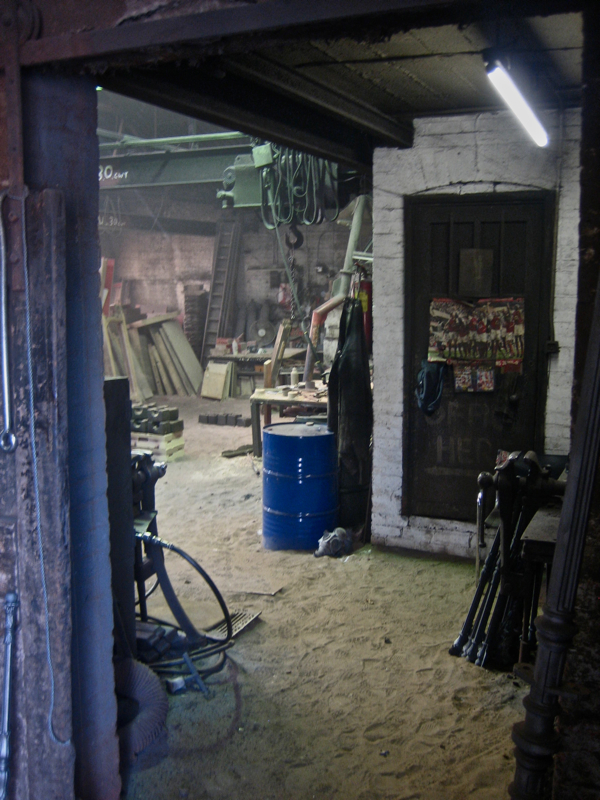
Everything was encrusted with black sand, settled like ash, as if I was in the proximity of a volcano, and there was an intense metallic smell – which I learnt was formaldehyde used to set the moulds – that filled the lungs. And after a lifetime of expectation, it was a privilege to be welcomed by Brian, the limber and sinewy custodian in his proud lair, to this environment that is so alien to the city street outside yet strangely reassuring to me.
Brian was born nearby on King Edward’s Rd, Hackney, in 1944, and he now lives in Well St just over the road from the foundry. “I’ve been at Hoyle & Son for sixteen years.” he revealed,“I started off as a labourer in another foundry at seventeen and progressed from there. I just fell into it – and I never considered doing anything else.” And then he qualified this expectation, in case it should appear too casual, adding, “You’ve got to be good though, you’ve either got the fingers for it or you haven’t.”
Today, Alan Hoyle runs the business founded by his grandfather John Hoyle and now Brian his foreman is training Ben Hoyle, the fourth generation, as a general apprentice in all areas of foundry practice. Hoyle & Son own an enormous pattern book that allows them to match almost any historic railing or piece of ironwork to replace it, receiving business from restoration projects nationwide and giving Brian with a continuous stream of intriguing project, both casting and repairs, to fill his days.
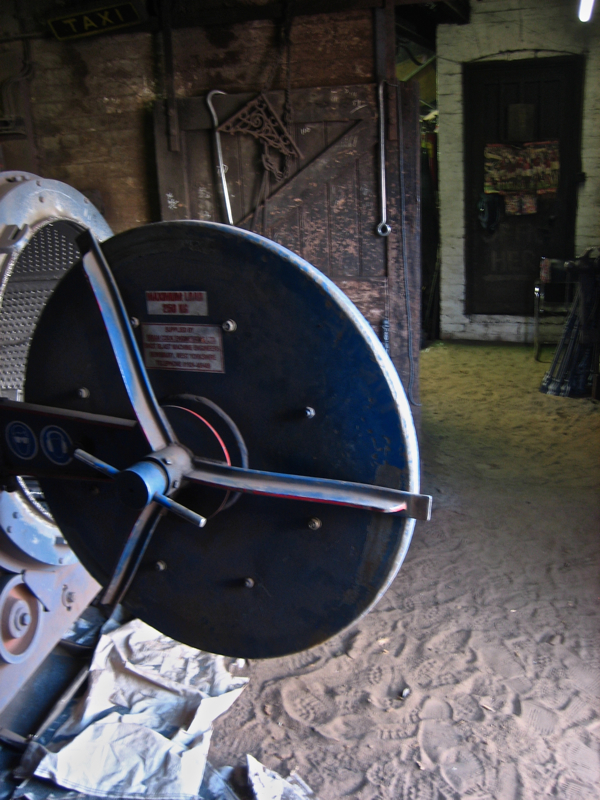
As the foreman with a team of seven, Brian runs holds the responsibility of running the furnace, taking the pig iron that you see piled up by the door and heating it to thirteen hundred degrees ready for pouring. “You make a lot of friends if you’re working the furnace in the Winter.” he quipped sagely, referring to the ever-open foundry doors that bring in the Spring breezes now but render the workplace less sympathetic in January. “Estuary Iron” is often used these days which contains graphite and is tougher and less brittle than conventional cast iron. Another modern intervention is the vast computerised sand pump, towering over the foundry, that can pump eight tonnes of sand an hour, mixed with resin to make the moulds for casting. “We used to work with damp black sand, but this combination allows us to get better detail,” explained Brian. Once the casts are cracked out of the moulds, they are put into the shop blaster – a bizarre variant upon a tumble dryer, that fires steel shot at the rotating pieces of iron to remove scraps and clean up the shape.
I was inspired to see this foundry work continuing in time-honoured fashion and know that no piece of railing or fence need ever be irreparable, thanks to the talents of Brian and the team at J.Hoyle & Son. “No-one likes getting their hands dirty, do they?” asked Brian rhetorically, displaying his grimy paws to me when I offered my hand to shake his. Yet although for generations white collar jobs have been widely perceived as superior to blue collar employment, and my father spoke of his apprenticeship in vaguely apologetic terms, it is obvious that there can be dignity and fulfilment in manual work – such as here at this foundry – requiring real skill and accomplishment.
Brian’s hands looked like my father’s hands, lined with ingrained dirt, which I remember from my childhood and that magically renewed after his retirement, as if he had worked at a desk his whole life. I am proud and a little envious that my father undertook an apprenticeship in a foundry, and I hope future generations will see the magic of these essential industries – appreciating the primal delight in getting your hands dirty.
Brian Barrett and I shook hands on it.
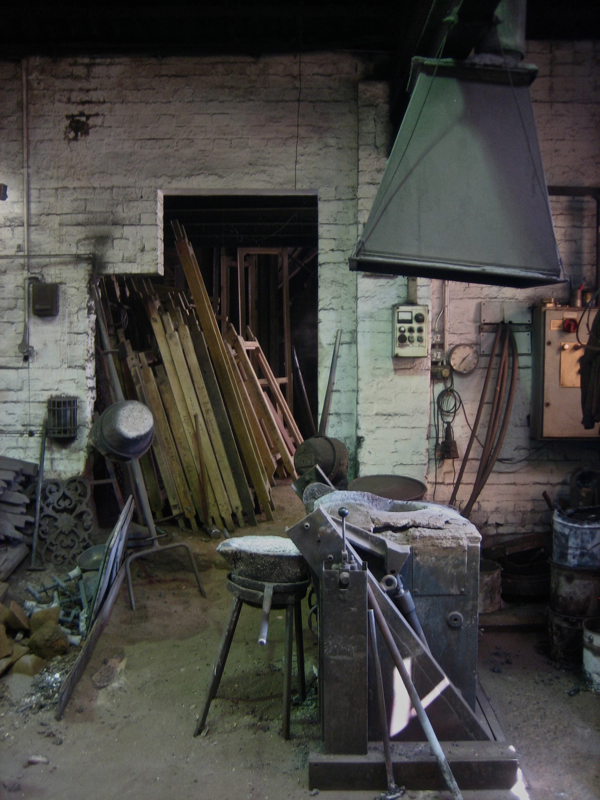
Brian’s furnace with the crucible for molten iron at the ready.
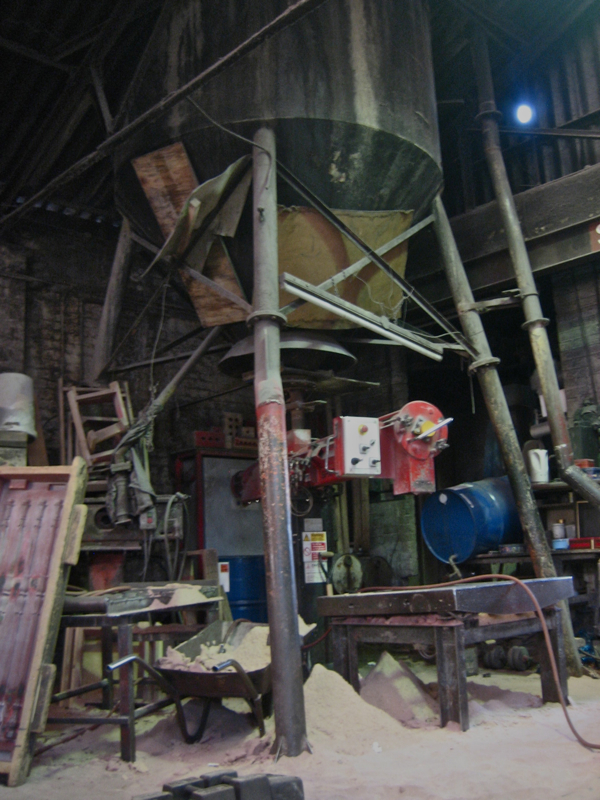
The computerised sand pump mixes beach sand with hardeners and resin to make moulds.
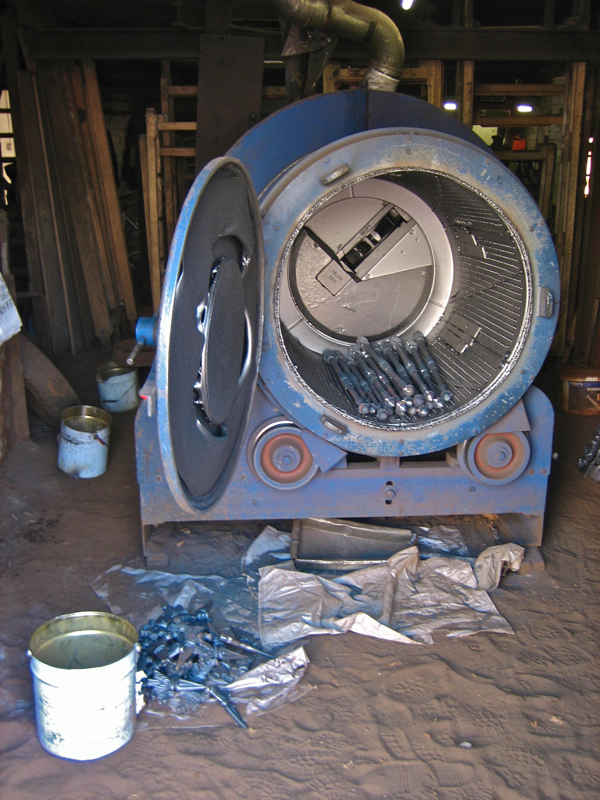
The shop blaster where new castings are tumbled amongst steel shot.
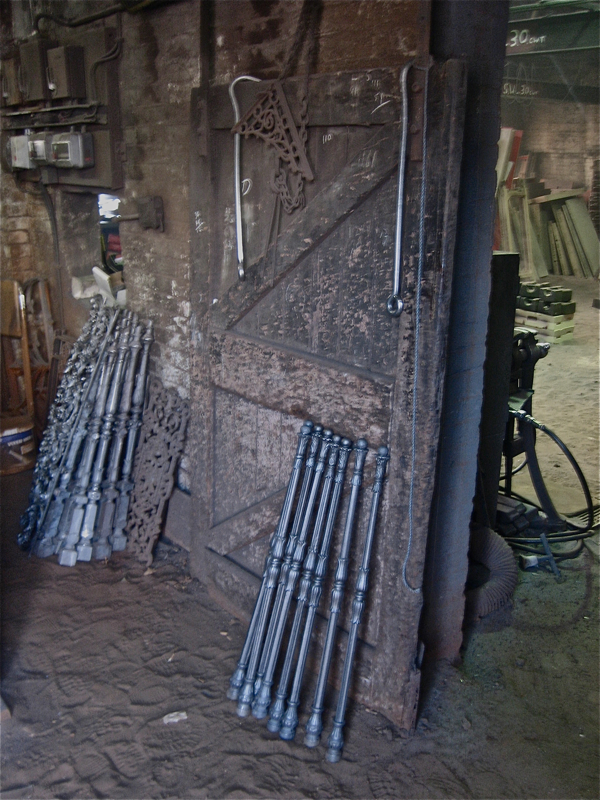
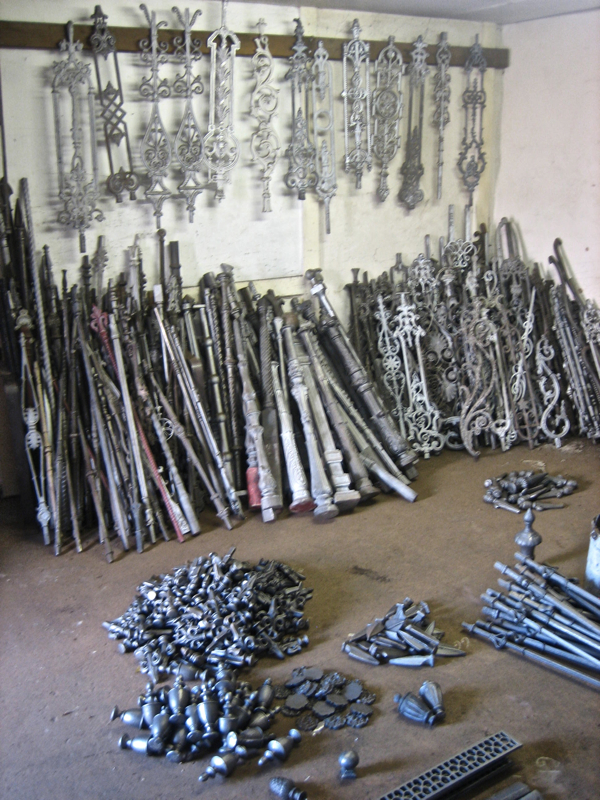
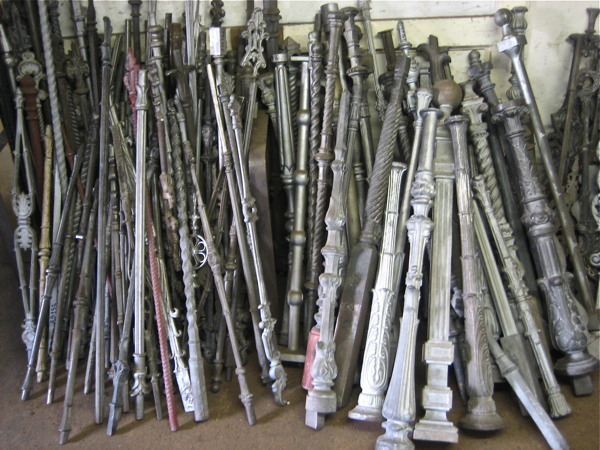
Options for spindles.
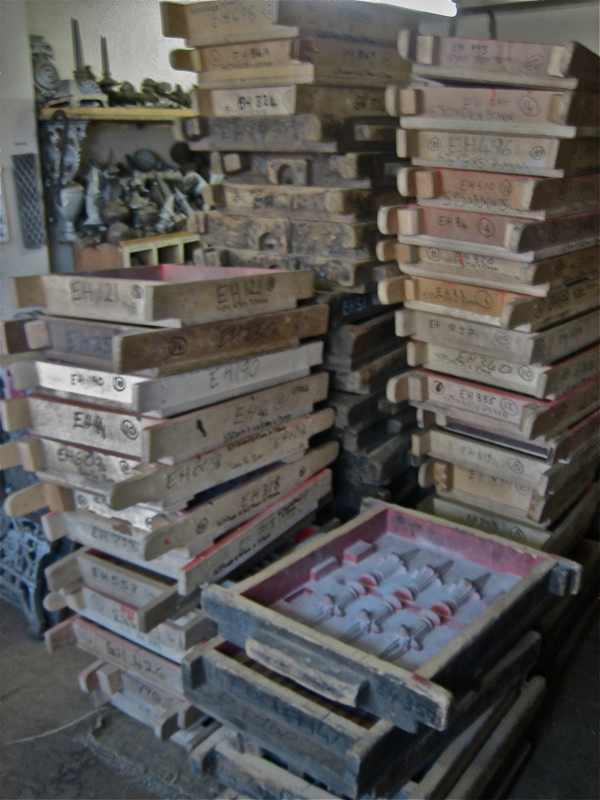
A fraction of the patterns in stock.
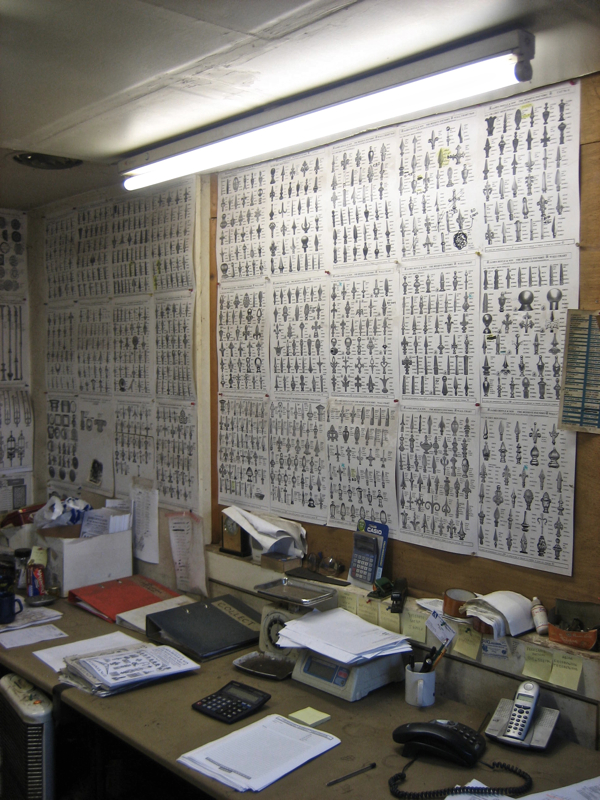
Pages of the pattern book adorn the office walls.
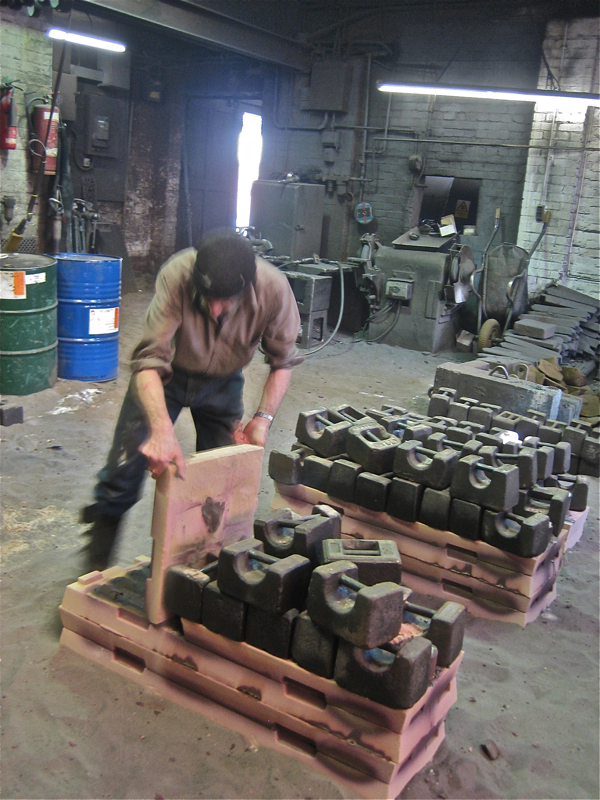
Brian opens a mould to take a look.
You may like to read about
The Roundels of Spitalfields cast at James Hoyle & Son












