
Samuel Pepys In Spitalfields
Click here to book for my Spitalfields walk next Saturday and beyond
Click here to book for my next City of London walk on 4th June
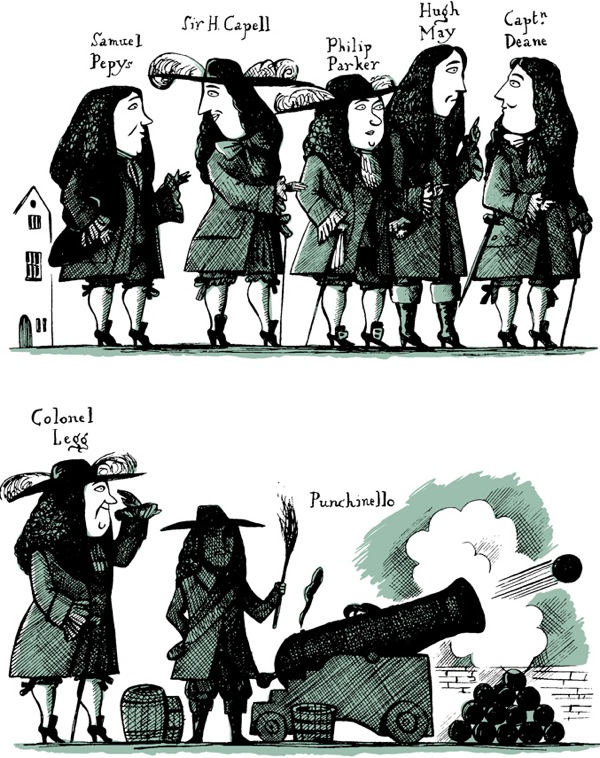
Artist Paul Bommer sent me his sly drawing, envisaging the celebrated diarist’s visit to Spitalfields, three hundred and fifty four years ago this week. At that time, much of Spitalfields was in use as an artillery ground, still commemorated today in the residual names of Artillery Lane, Gun St and the Gun pub.
Tuesday 20th April 1669
“Up and to the Office, and my wife abroad with Mary Batelier, with our own coach, but borrowed Sir J Minnes’s coachman, that so our own might stay at home, to attend at dinner – our family being mightily disordered by our little boy’s falling sick the last night, and we fear it will prove the small-pox.
At noon comes my guest, Mr Hugh May, and with him Sir Henry Capell, my old Lord Capel’s son, and Mr. Parker, and I had a pretty dinner for them, and both before and after dinner had excellent discourse, and shewed them my closet and my Office, and the method of it to their great content, and more extraordinary, manly discourse and opportunity of shewing myself, and learning from others, I have not, in ordinary discourse, had in my life, they being all persons of worth, but especially Sir H. Capell, whose being a Parliament-man, and hearing my discourse in the Parliament-house, hath, as May tells me, given him along desire to know and discourse with me.
In the afternoon, we walked to the Old Artillery-Ground near the Spitalfields, where I never was before, but now, by Captain Deane’s invitation, did go to see his new gun tryed, this being the place where the Officers of the Ordnance do try all their great guns, and when we come, did find that the trial had been made – and they going away with extraordinary report of the proof of his gun, which, from the shortness and bigness, they do call Punchinello. But I desired Colonel Legg to stay and give us a sight of her performance, which he did, and there, in short, against a gun more than twice as long and as heavy again, and charged with as much powder again, she carried the same bullet as strong to the mark, and nearer and above the mark at a point blank than theirs, and is more easily managed, and recoyles no more than that, which is a thing so extraordinary as to be admired for the happiness of his invention, and to the great regret of the old Gunners and Officers of the Ordnance that were there, only Colonel Legg did do her much right in his report of her.
And so, having seen this great and first experiment, we all parted, I seeing my guests into a hackney coach, and myself, with Captain Deane, taking a hackney coach, did go out towards Bow, and went as far as Stratford, and all the way talking of this invention, and he offering me a third of the profit of the invention, which, for aught I know, or do at present think, may prove matter considerable to us – for either the King will give him a reward for it, if he keeps it to himself, or he will give us a patent to make our profit of it – and no doubt but it will be of profit to merchantmen and others, to have guns of the same force at half the charge.
This was our talk – and then to talk of other things, of the Navy in general and, among other things, he did tell me that he do hear how the Duke of Buckingham hath a spite at me, which I knew before, but value it not: and he tells me that Sir T. Allen is not my friend, but for all this I am not much troubled, for I know myself so usefull that, as I believe, they will not part with me; so I thank God my condition is such that I can retire, and be able to live with comfort, though not with abundance.
Thus we spent the evening with extraordinary good discourse, to my great content, and so home to the Office, and there did some business, and then home, where my wife do come home, and I vexed at her staying out so late, but she tells me that she hath been at home with M. Batelier a good while, so I made nothing of it, but to supper and to bed.”

Samuel Pepys (1633-1703)
New illustration copyright © Paul Bommer
You may also like to take a look at
Thomson’s Street Life In London
Click here to book for my Spitalfields walk next Saturday and beyond
Click here to book for my next City of London walk on 4th June

In Brick Lane, almost everyone carries a camera to capture the street life, whether traders, buskers, street art or hipsters parading fancy outfits. At every corner in Spitalfields, people are snapping. Casual shutterbugs and professional photoshoots abound in a phantasmagoric frenzy of photographic activity.
It all began with photographer John Thomson in 1876 with his monthly magazine Street Life in London, publishing his pictures accompanied by pen portraits by Adolphe Smith as an early attempt to use photojournalism to record the lives of common people. I contemplate the set of Thomson’s lucid pictures preserved at the Bishopsgate Institute, both as an antidote to the surfeit of contemporary imagery and to grant me a perspective on how the street life of London and its photographic manifestation has changed in the intervening years.
For centuries, this subject had been the preserve of popular prints of the Cries of London and, in his photography, Thomson adopted compositions and content that had become familiar archetypes in this tradition – like the chairmender, the sweep and the strawberry seller. Yet although Thomson composed his photographs to create picturesque images, in many cases the subjects themselves take possession of the pictures through the quality of their human presence, aided by Adolphe Smith’s astute texts underlining the harsh social reality of their existence.
When I look at these vivid pictures, I am always startled by the power of the gaze of those who look straight at the lens and connect with us directly, while there is a plangent sadness to those with eyes cast down in subservience, holding an internal focus and lost in time. The instant can be one of frozen enactment, like the billboard men above, demonstrating what they do for the camera, but more interesting to me are the equivocal moments, like the dealer in fancy ware, the porters at Covent Garden and the strawberry seller, where there is human exposure. There is an unresolved tension in these pictures and, even as the camera records a moment of hiatus, we know it is an interruption before a drama resumes – the lost life of more than one hundred and thirty years ago.
The paradoxical achievement of these early street photographs is that they convey a sense the city eludes the camera, because either we are witnessing a tableau which has been composed or there is simply too much activity to be crammed into the frame. As a consequence it is sometimes the “wild” elements beyond the control of the photographer which render these pictures so fascinating – the restless children and disinterested bystanders, among others.
I long to go beyond the bounds of these photographs, both in time and space. And reading Adolphe Smith’s pen portraits, I want to know all these people, because in their photographs they appear monumental in their dignified stillness – as if their phlegmatic attitudes manifest a strength of character and stoicism in the face of a life of hard work.
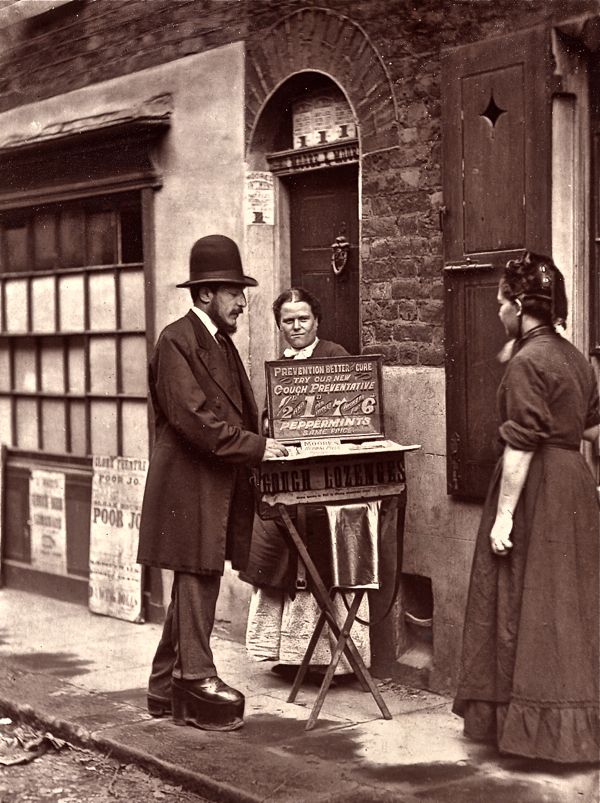
Street Doctor – “vendors of pills, potions and quack nostrums are not quite so numerous as they were in former days. The increasing number of free hospitals where the poor may consult qualified physicians have tended to sweep this class of street-folks from the thoroughfares of London.”
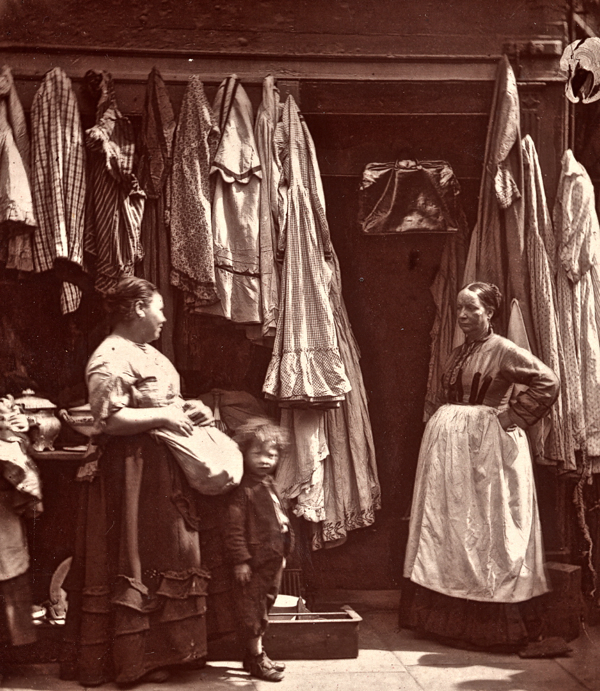
An Old Clothes Shop, St Giles – “As a rule, secondhand clothes shops are far from distinguished in their cleanliness, and are often the fruitful medium for the propagation of fever, smallpox &c.”
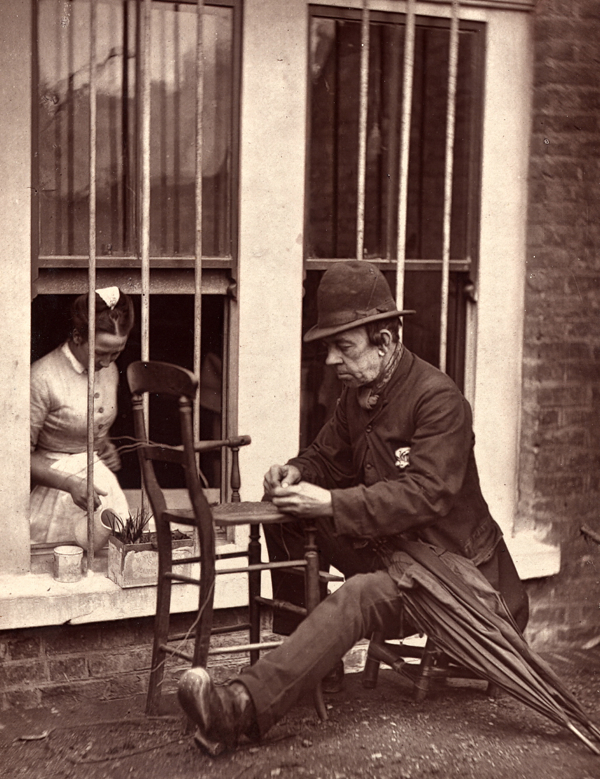
Caney the Clown – “thousands remember how he delighted them with his string of sausages at the yearly pantomime, but Caney has cut his last caper since his exertions to please at Stepney Fair caused the bursting of a varicose vein in his leg and, although his careworn face fails to reflect his natural joviality, the mending of chairs brings him constant employment.”
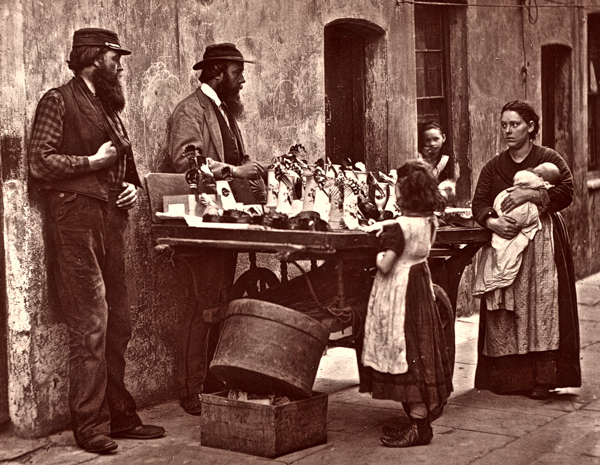
Dealer in Fancy Ware (termed swag selling) – “it’s not so much the imitation jewels the women are after, it’s the class of jewels that make the imitation lady.”
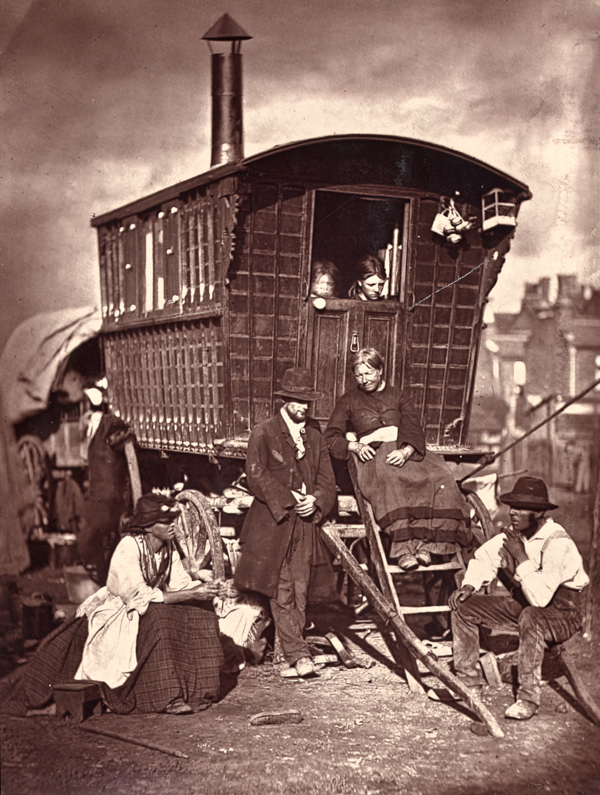
William Hampton of the London Nomades – “Why what do I want with education? Any chaps of my acquaintance that knows how to write and count proper ain’t much to be trusted into the bargain.”
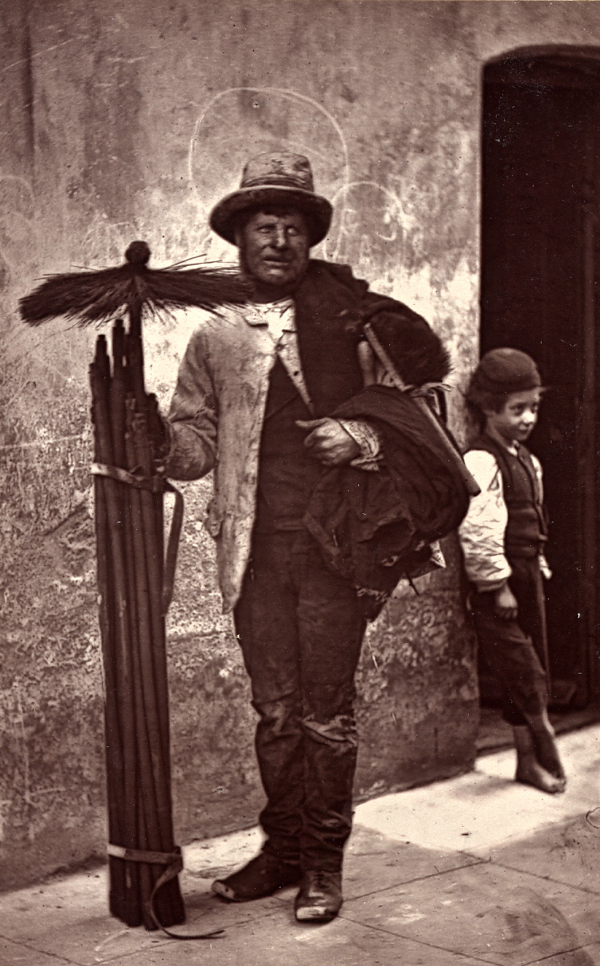
The Temperance Sweep – “to his newly acquired sobriety, monetary prosperity soon ensued and he is well known throughout the neighbourhood, where he advocates the cause of total abstinence..”
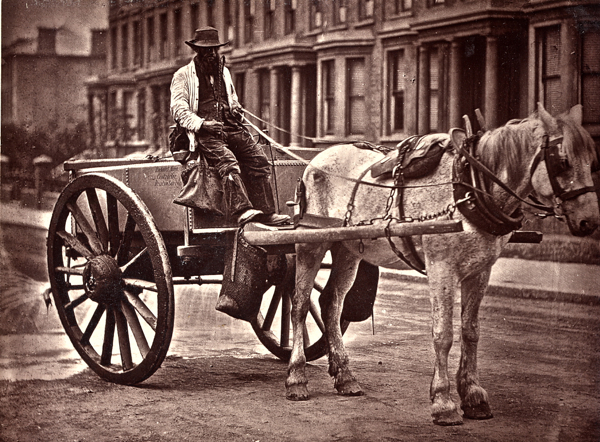
The Water Cart – “my mate, in the same employ, and me, pay a half-a-crown each for one room, washing and cooking. It costs me about twelve shillings a week for my living and the rest I must save, I have laid aside eight pounds this past twelve months.”
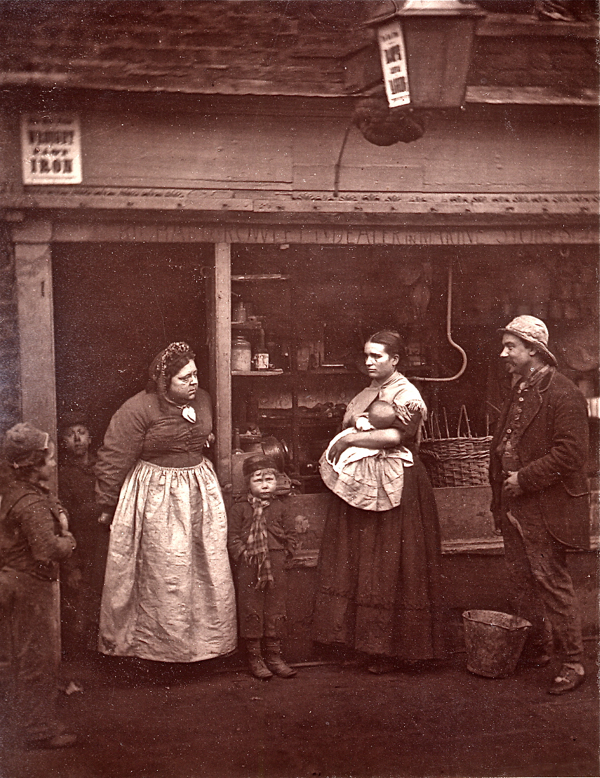
Survivors of Street Floods in Lambeth – “As for myself, I have never felt right since that awful night when, with my little girl, I sat above the water on my bed until the tide went down.”
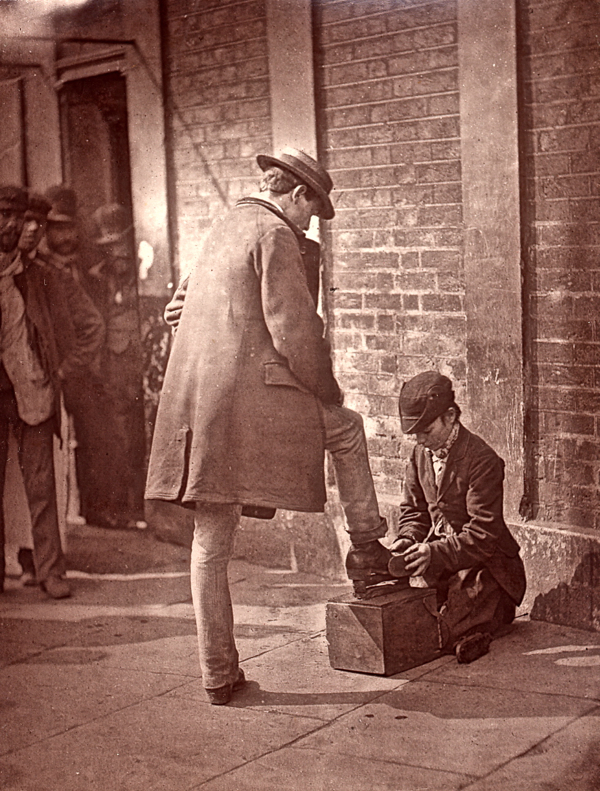
The Independent Bootblack – “the independent bootblack must always carry his box on his shoulders and only put it down when he has secured a customer.”
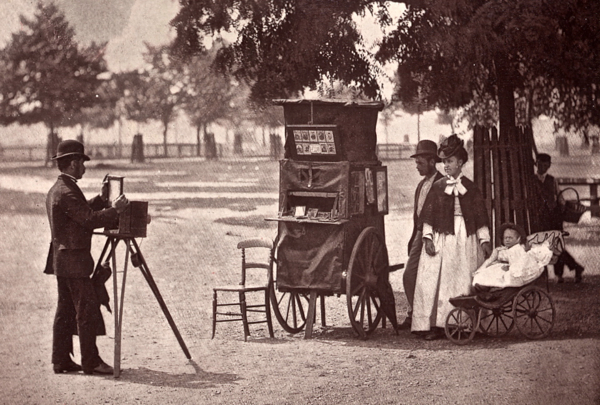
Itinerant Photographer on Clapham Common – “Many have been tradesmen or owned studios in town but after misfortunes in business or reckless dissipations are reduced to their present more humble avocation.”
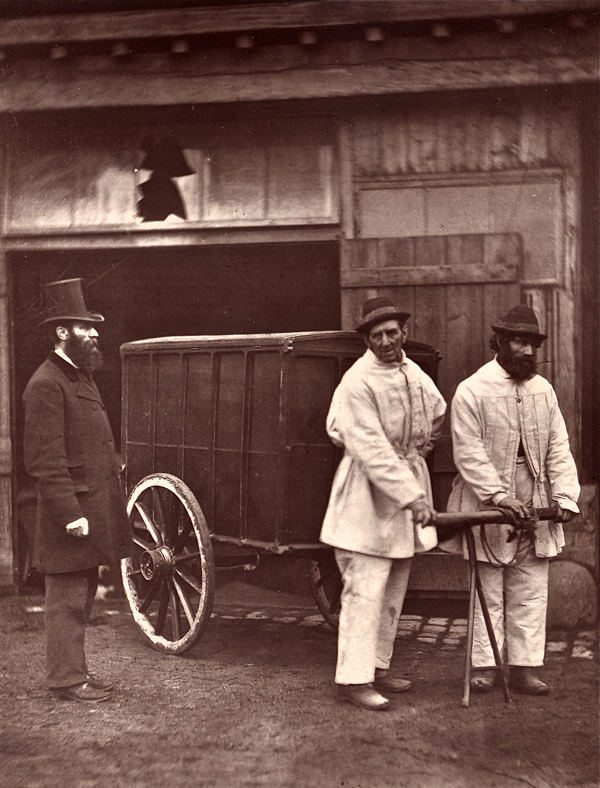
Public Disinfectors – “They receive sixpence an hour for disinfecting houses and removing contaminated clothing and furniture, and these are such busy times that they often work twelve hours a day.”

Flying Dustmen – “they obtained their cognomen from their habit of flying from from one district to another. When in danger of collison with an inspector of nuisances, they adroitly change the scene of their labours.”

Cheap Fish of St Giles – ” Little Mic-Mac Gosling, as the boy with the pitcher is familiarly called by all his extended circle of friends and acquaintances, is seventeen years old, though he only reaches to the height of three feet ten inches. His bare feet are not necessarily symptoms of poverty, for as a sailor during a long voyage to South Africa he learnt to dispense with boots while on deck.”

Strawberries, All Ripe! All Ripe! – “Strawberries ain’t like marbles that stand chuckin’ about. They won’t hardly bear to be looked at. When I’ve got to my last dozen baskets, they must be worked off for wot they will fetch. They gets soft and only wants mixin’ with sugar to make jam.”

The Wall-Workers (A system of cheap advertising whereby a wall is covered with an array of placards that are hung up in the morning and taken in at night) – Business, sir! Don’t talk to us of business! It’s going clean away from us.”

Cast-Iron Billy – “forty-three years on the road and more, and but for my rheumatics, I feel almost as hale and hearty as any man could wish .”

Labourers at Covent Garden Market – “it is in the early morning that they congregate in this spot, and they are soon scattered to all parts of the metropolis, laden with plants of every description.”

The London Boardmen – “If they walk on the pavement, the police indignantly throw them off into the gutter, where they become entangled in the wheels of carriages, and where cabs and omnibuses are ruthlessly driven against them.”

Workers on the Silent Highway – “their former prestige has disappeared, the silent highway they navigate is no longer the main thoroughfare of London life and commerce, the smooth pavements of the streets have successfully competed with the placid current of the Thames.”

Old Furniture Seller in Holborn – “As a rule, second-hand furniture men take a hard and uncharitable view of humanity. They are accustomed to the scenes of misery, and the drunkenness and vice, that has led up to the seizure of the furniture that becomes their stock.”

Mush-Fakers and Ginger-Beer Makers. – “the real mush-fakers are men who not only sell but mend umbrellas. By taking the good bits from one old “mushroom” and adding it to another, he is able to make, out of two broken and torn umbrellas, a tolerably stout and serviceable gingham.”

Italian Street Musicans -“there is an element of romance about the swarthy Italian youth to which the English poor cannot aspire.”

A Convicts’ Home – “it is to be regretted that the accompanying photograph does not include one of the released prisoners, but the publication of their portraits might have interfered with their chances of getting employment.”

The Street Locksmith – “there are several devoted to this business along the Whitechapel Rd, and each possesses a sufficient number of keys to open almost every lock in London.”

The Seller of Shellfish – “me and my missus are here at this corner with the barrow in all weathers, ‘specially the missus, as I takes odd jobs beating carpets, cleaning windows, and working round the public houses with my goods. So the old gal has most of the weather to herself.”

The “Crawlers” – “old women reduced by vice and poverty to that degree of wretchedness which destroys even the energy to beg.”
Images courtesy Bishopsgate Institute
Read the story of Hookey Alf of Whitechapel from Thomson’s Street Life in London
The Manifold Charms of Delftware
Click here to book for my Spitalfields walk next Saturday and beyond
Click here to book for my next City of London walk on 4th June
Today ceramicist Matilda Moreton reveals her passion for delftware

Delftware fragments from the Thames foreshore
The charms of delftware pottery are manifold. The silky smooth white surface, the rich cobalt and mushroom-purple manganese, warm ochre and brilliant green, the sweeping spontaneity of the brushwork – all this is instantly obvious to the eye. Yet behind these immediate charms lies an intriguing history that takes in waves of international trade, economic boom and bust, conflict, emigration, piracy and most importantly, an explosion that destroyed quarter of the city of Delft.
The term “delftware” is often used as a generic term to describe tin-glazed ceramics predominantly decorated with cobalt, much of which was in fact made in Antwerp or London before the business got going in Delft. The primary purpose of the tin glaze was to imitate the shiny white beauty of coveted Chinese porcelain, concealing a darker, cheaper clay.
Tin-glazed pottery originated in the Middle East over a thousand years ago. It was gradually spread by Moorish potters into Spain, then through Italy into Northern Europe. As it travelled, it mutated and was known by different names. In Italy it was known as “maiolica”, because it came through Majorca. Wares imported from Faenza into France and Germany were known respectively as “faience” and “fayence”. These terms are still in use today.
Subsequently, in England and the Netherlands, tin-glazed pottery became knows as “galleyware,” after the Venetian galleys that transported it. In 1513, maiolica or galleyware came from Italy to Antwerp with an Italian potter named Guido Andries and from there over to England, with his son or grandson, Jasper, who started up a pottery in Aldgate in 1570. Other Flemish potters soon came across the Channel to make “gallipots” too and what became known as ‘delftware’ potteries multiplied and flourished along the Thames. Archaeologists have found evidence of twenty-nine sites of delftware manufacture in London.
During the first half of the seventeenth century, the Dutch East India Company imported porcelain from China in vast quantities. After the fall of the Ming dynasty in 1644, there was a sudden break in the supply, leading to a huge increase in demand for delftware with Chinese designs. The Dutch potters used an extra coating of clear glaze over the decorated tin glaze, creating a close imitation of porcelain’s high-fired glassy surface.
In 1654 – a pivotal moment in our story – an accidental explosion of dynamite in a warehouse destroyed a quarter of the city of Delft and killed many of its citizens. The city lost many of its breweries in the blast and those remaining suffered a fall in demand as working-class tastes switched from beer to gin. Vacant breweries provided the ideal new premises for potteries. Flemish potters, who had sought refuge in Holland from the Spanish Wars, now flocked to Delft to set up shop and soon a quarter of the city’s labour force was involved in the ceramics trade. More than forty potteries were operating in Delft, exporting their wares all over Europe.
The Delft potteries were particularly well-known for their tiles – functional art, perfect for protecting kitchen walls, preventing Dutch canal water from seeping in, and shielding the rear of fireplaces from soot. Huge quantities were exported, mainly to France, Germany, and Britain. Samuel Pepys had a number of his fireplaces “done with Dutch tiles” in 1662, later a popular decorating decision in well-to-do in Georgian England. Elsewhere in Europe, tile panels were commissioned for palaces and large houses, entire rooms were lined with them. An estimated eight hundred million tiles were made over two hundred years.
Alongside tiles, Delft potters manufactured luxurious “tulipières”, status symbols for the seventeenth century super-rich in a tulip-mad era. These were tall pyramidal display vases, made with spouts to display not just the stems but also the extortionately expensive bulbs of tulips, crocus and hyacinths. The skill of Delft potters has reached its height.
As Delft pottery became more and more popular, a particular version of delftware developed in England, more informal than the Dutch and somewhat naive in style. Expressive portraits were painted on “blue dash chargers”, for display on a wall or shelf, depicting Kings and Queens, Adam and Eve, and of course tulips. The imagery here is spontaneous and playful and the royal portraits have a quizzical look, with one eye higher than the other, under a raised eyebrow. This sums up the essential wry character of English Delft.
While the Dutchness of the Dutch was reflected in tiles and tulipières, the Englishness of English delftware – and the affluence of the Georgians – can be seen in these blue dash chargers, and in the pot-bellied wine bottles, mugs, goblets, posset bowls and porringers.
By the late eighteenth century, the price of porcelain had dropped and English creamware, which was stronger and cheaper than tin-glazed wares, developed in the Staffordshire potteries. Moreover, decoration could now be applied with the use of printed transfers. The beginning of the nineteenth century saw the virtual disappearance of the delftware industry, except for tourist souvenirs and in the form of art pottery, in both England and Holland.
Above all, Delftware is appealing for the exciting qualities that spring from the requirements of its technique of production. In order to paint onto an absorbent, unfired glaze with a watery solution of oxide, the brush work must be fast and fluent. If the brush hesitates and moves too slowly, the powdery glazed surface sucks up the liquid like blotting paper and the brush stroke is interrupted. Once the glaze has absorbed the oxide, mistakes cannot be corrected. To succeed, painting must be carried out with a dash and this requisite spontaneity is what makes delftware so special.
Tin-glazed earthenware is popular today among potters who love to draw and paint. Some of them use traditional motifs and styles while others employ a modern twist. An artist who did both was Simon Pettet, whose twentieth century delftware, complete with tiles, tulipières and much more, is on show at Dennis Severs’ House until June 4th.
Join one of Matilda Moreton’s half-day workshops next weekend, Saturday 20th and Sunday 21st May, and learn how to paint your own botanical design on a tin-glazed plate or tile at Townhouse, Spitalfields. Click here to book your place
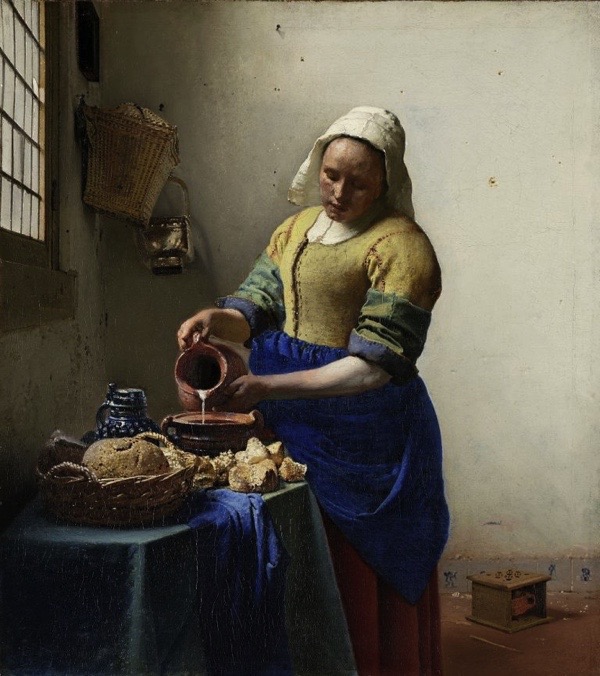
Vermeer’s The Milkmaid, showing delft tiles along the foot of the wall
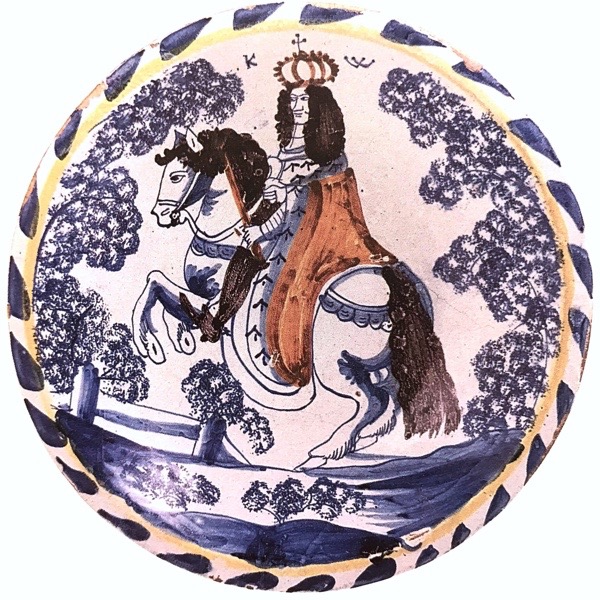
>William III, London, 1689-1705 (courtesy of V&A)
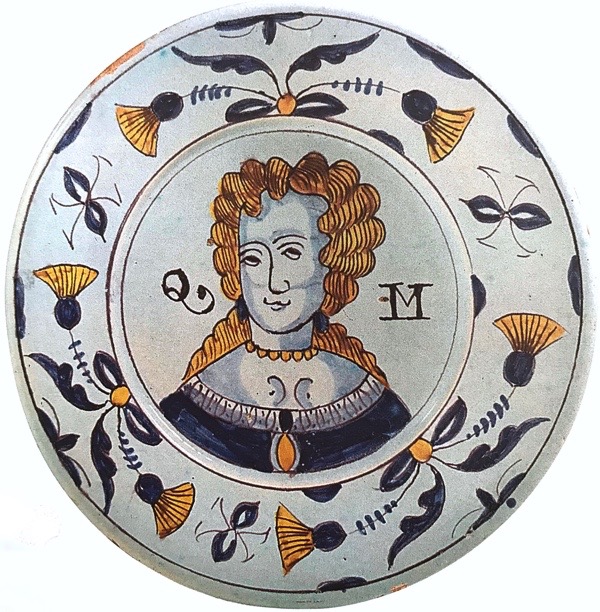
Queen Mary, Bristol, 1685-89 (courtesy of V&A)
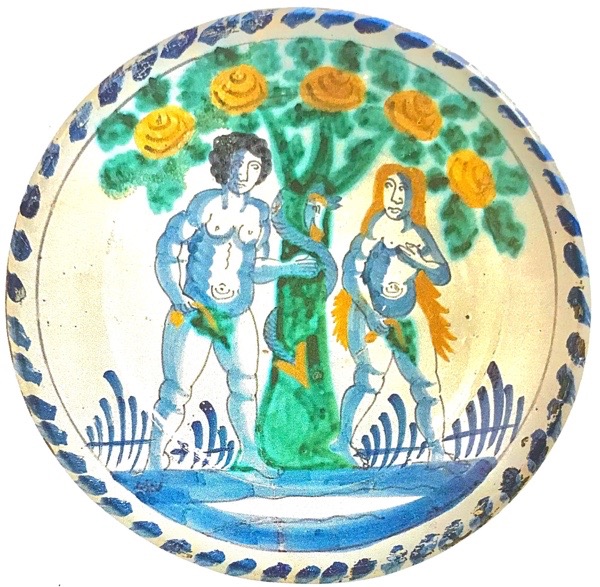
The Temptation, Brislington, c. 1690-1700
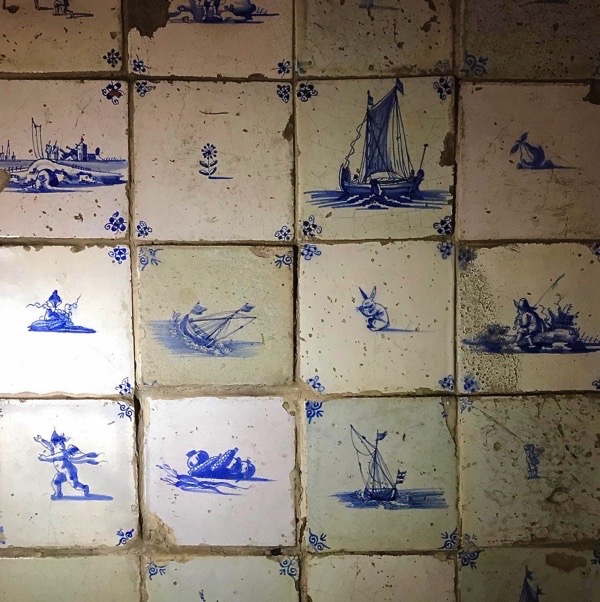
Delft tiles in the kitchen at Dennis Severs House
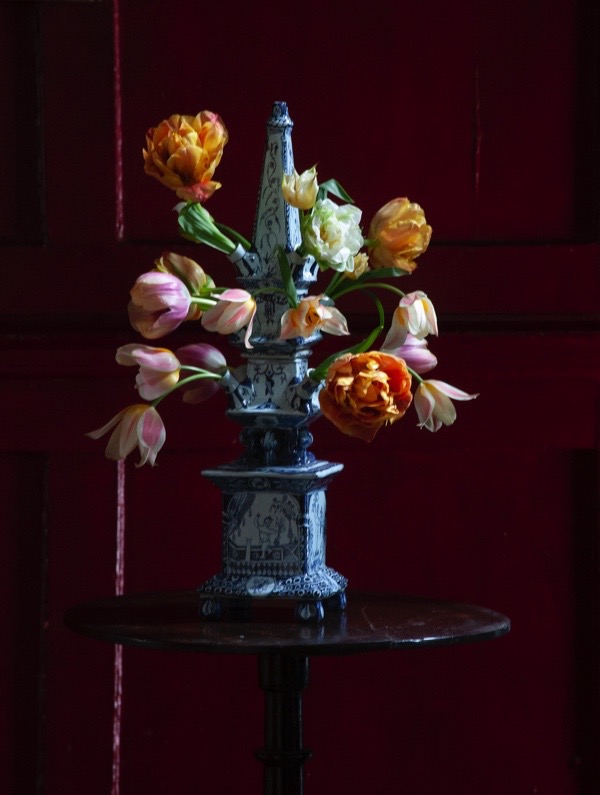
Tulipière by Simon Pettet (photograph by Lucinda Douglas Menzies)
How Paddy Handscombe Met Dennis Severs
Click here to book for my Spitalfields walk next Saturday and beyond
Click here to book for my next City of London walk on 4th June
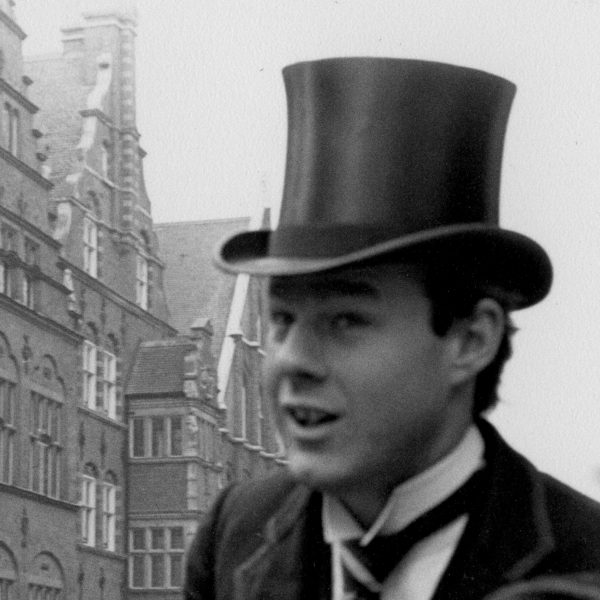
Dennis Severs dressed as a coachman in the seventies
During these last months at the end of winter, I have been travelling back and forth from Liverpool St Station to Wivenhoe to interview Paddy Handscombe who lived at Dennis Severs’ House for a spell in the eighties. These interviews were the basis for a new scripted tour that opened last week at the house, SIMON’S STORY that I devised and directed and which is performed by actor Joel Saxon who plays the role of Paddy.
My tour complements the current exhibition MAKING HISTORY: THE CERAMIC WORK OF SIMON PETTET.
Performed from Wednesday to Sunday at 8pm nightly by candlelight until 4th June for an audience of just eight people, this tour offers the opportunity to learn more of the personal lives of those who created Dennis Severs’ House in the last century.
Here is an excerpt to give you a flavour.
“When I first met Dennis in the seventies, he was this blonde Californian surfer boy who was sharing a flat in Kensington with some friends of mine from Bristol University.
Dennis was a free spirit. Of course he was not poor, not like us students and ex-students. When we first got jobs in London, we were just making our way, whereas Dennis was fairly comfortable. That’s how he was able to set up his tour with the carriage. He was studying for the bar and I don’t know how long that lasted, a year or maybe two, but he decided suddenly he would give it all up and take this carriage which he’d seen at the Royal Mews.
Of course Dennis rode because he was a Californian and, through a connection to Lord Denning, he got an introduction and was able to ride a horse from the Mews. That was how he saw this Victorian coach, so Dennis got permission to refurbish it and take it out.
I don’t think he needed the income, I think the whole thing was to do with Dennis being an actor. He had this side of him which was all about performing an act. I don’t mean an illicit act, I mean it was ‘a front’ – it was a thing that he did. Dennis was a showman and he loved doing his tours. According to him, his elder brother and sister were much older and more conventional, whereas he was the spoilt youngest child.
It was a big performance, when Dennis dressed up as a coachman, showing people London from an open landau. Starting at the Royal Mews, he used to pick tourists up in Victoria or Kensington and then come all the way along the Strand with his horse and carriage as far as the City. And I suppose he went up Bishopsgate into Middlesex Street and round Folgate Street, so he got to know Spitalfields and loved it.
Then I didn’t meet him for a long time, a number of years, and in that time he managed to pull off the trick of transforming himself into a gentleman dwelling in an old house in Spitalfields. It was a wonderful act, just like the carriage tours and everything else – all a performance really.
He was very clever Dennis, very perceptive. He got to know people here so when this house came up in 1979, he bought it from The Spitalfields Trust. It had a sitting tenant and he bought it for I think £18,000. Coincidentally, the day he signed the lease the old tenant died which meant he got the whole house.
He used to tell me how he slept in every room as soon as the old chap was carted away. And he imagined different periods in each of the rooms, so that’s what he decided to do, decorate each room in the style of a different period.
I had studied History of Art and, at that time, I ran James Bourlet, the oldest picture frame makers in London, founded in 1828, which was part of Sotheby’s then. So Dennis gave me a personal tour of his house and he was delighted that I ‘got it.’”
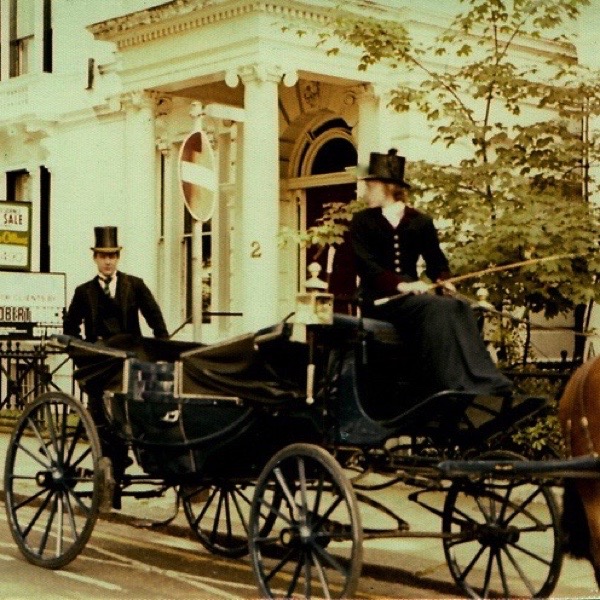
Dennis Severs giving a coach tour of London in 1977
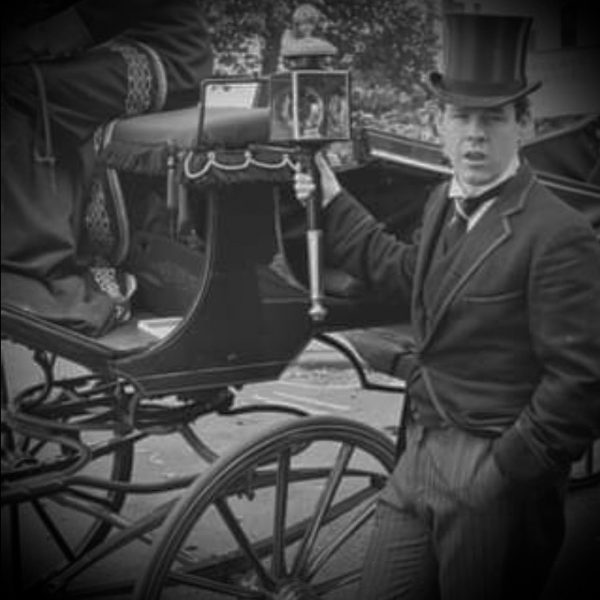
Dennis the coachman
You may also like to read about
Making History at Dennis Severs’ House
The Seasons Of The Year
Click here to book for my next City of London walk on 4th June
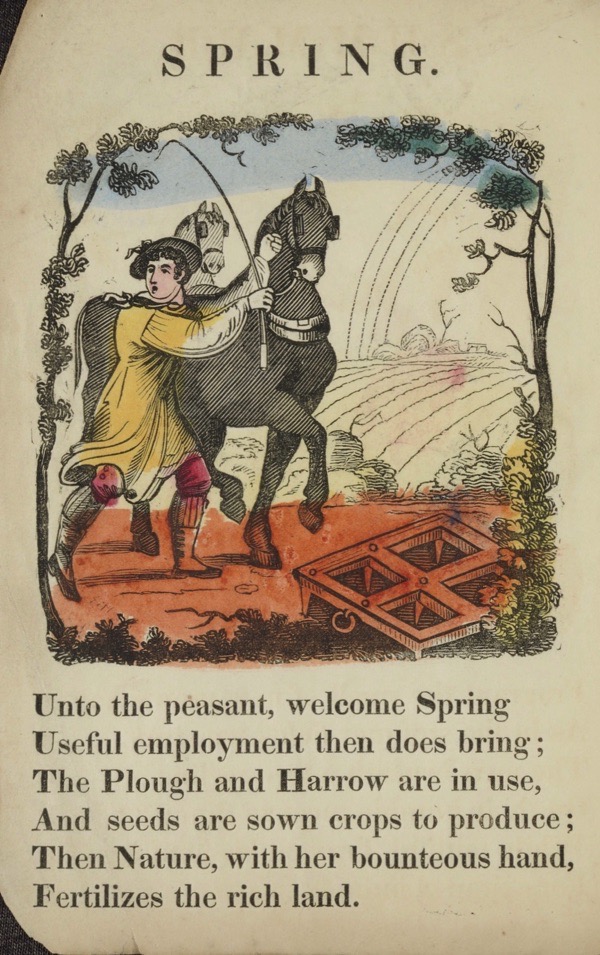
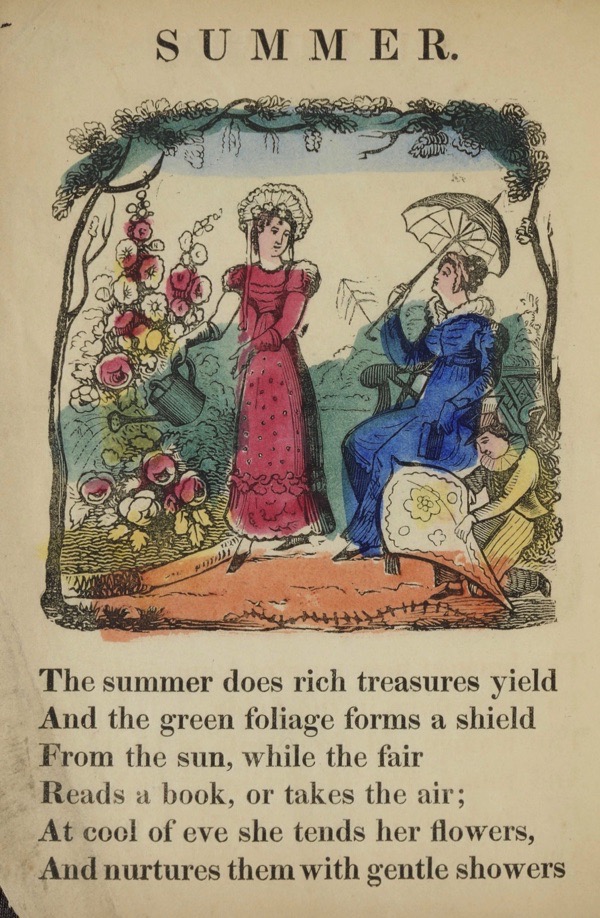
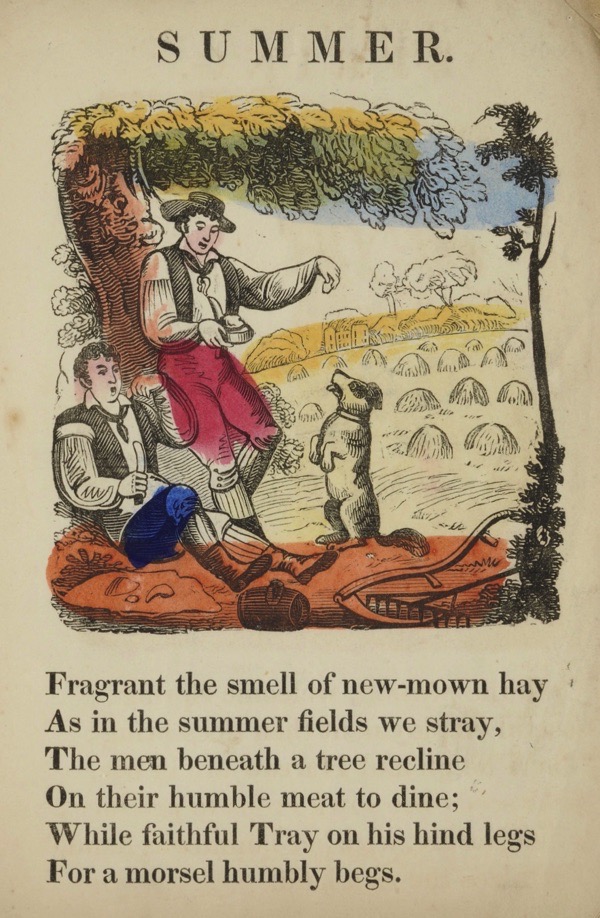
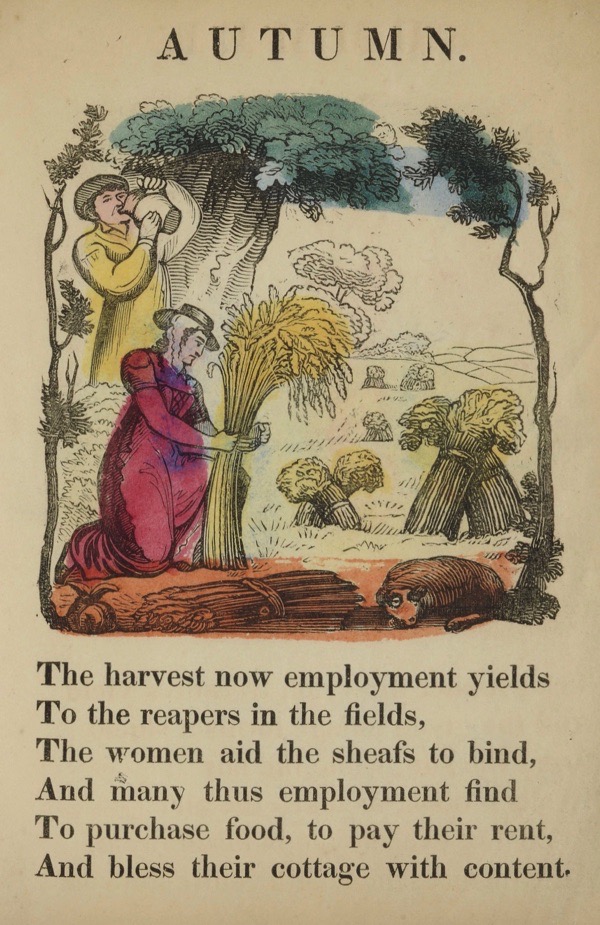
These weeks in May when all the leaves are coming out green and fresh comprise my favourite time of year, and for me it is the true beginning of the year – which makes it the ideal moment to present this chapbook of The Seasons by W S Johnson from 1846 which was brought to my attention by Sian Rees.
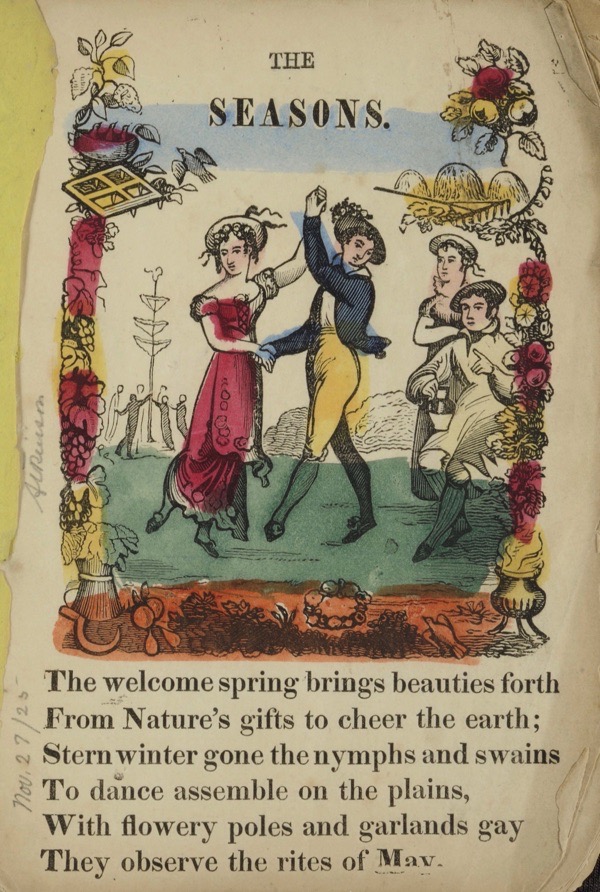
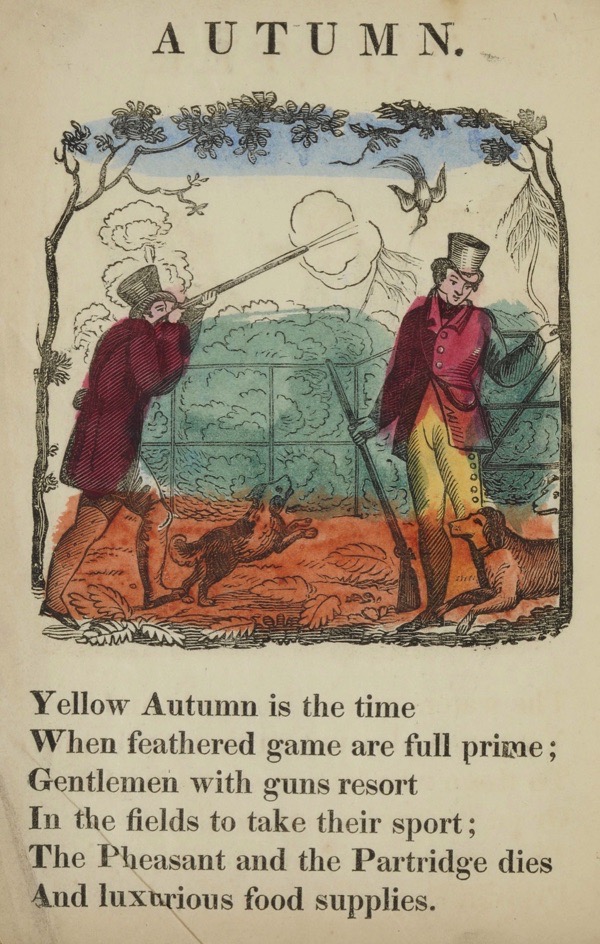
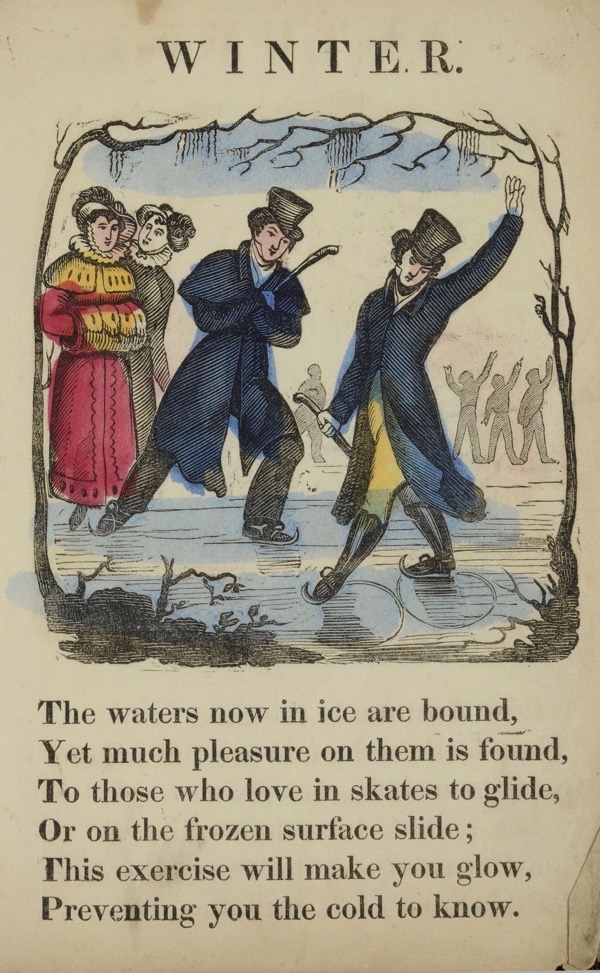
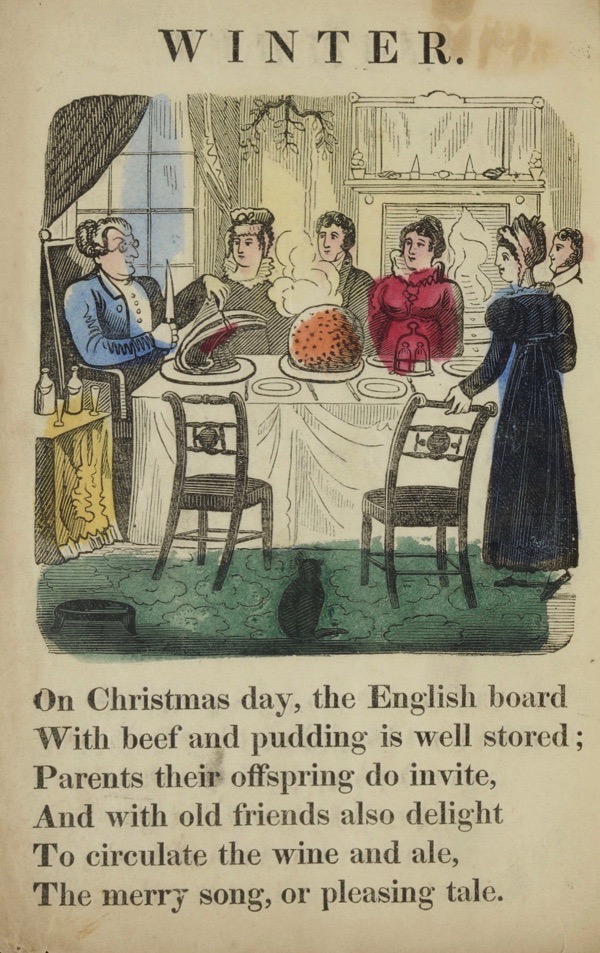
Courtesy of McGill Library
You may also like to take a look at
Griff Rhys Jones On Liverpool St Station
Click here to book for The Gentle Author’s next City of London walk on 4th June
Today Griff Rhys Jones outlines the fight to Save Liverpool St Station from bad redevelopment
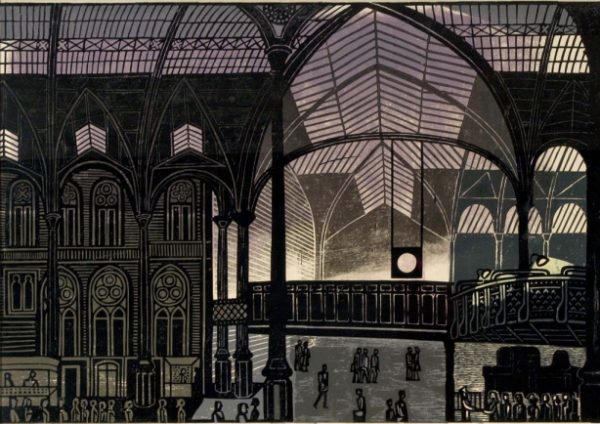
Liverpool St Station by Edward Bawden
It is my station. I am an Essex boy. I only ever moved just across the river Stour into Suffolk so I could look up towards my home county. (Well, down on it, if I am truthful). But Liverpool St is my own personal cherished gateway to proper London town.
Coming in to Londinium once – with the poor sods who commute daily – just as we entered that crazy, dirty brick-built hinterland of the station approach, (where you ponder those strange tubes on the walls), I spotted a fox. This Fantastic Mr Urban Fleabag was staring at me from an archway. “Look at him,” I blurted loudly, now on my feet, momentarily forgetting that I did not have my infant children alongside me in need of diversion. Not requiring any particular educational instruction, the rest of the carriage stared aghast and glanced at the communication cord. Someone had spoken on the train! And in the middle of the dusty, dark bit.
But, God, that station has grit and purposefulness. Have you seen this dramatic linocut by Edward Bawden? A stark, looming, lovesome place. One of the things that really bothers me about the proposed developer-assault on this storied, workmanlike exemplar of Victorian good sense is the unmitigated tosh Sellars and Network Rail have spewed out to veil their repellent greed.
They claim the station is “creaky”. The station is “not fit for purpose”. They will blend it “seamlessly” into the surrounding streets. On my way to take a butchers at their “consultation”, which was set up only two weeks before their final planning application splatted on to the Corporation’s desk (some consultation), I noticed – in the middle of an evening rush hour – that the only queues for escalators were leading up from the Elizabeth Line, a brand new bit of construction. I do not suppose they are planning to rip that out. Their new street level shopping centre – sorry “concourse” – will be as nicely deserted as the current one leading out towards Broadgate, I am sure. I bought a book that afternoon but – let us face it – nobody will be hurrying to get a Fendi bag before heading back to Billericay for tea.
Liverpool St is simply not the sort of gateway hub they trumpet. Of course, it is busy. The sheds (train not engine) that used to welcome so many from Harwich and were, once upon a time, the immediate destination of Kindertransport, and the continent, now only serve the international glamour of Stansted. That Essex misnomer, “The Stanstead Express”, stops at Harlow, Bishop’s Stortford and all halts in between. If Network Rail are so keen on creating a gateway experience for the international visitor, why do they not improve that service first. I can assure them that any discerning jet-setter flying in on Ryan Air, would prefer to see a careful conservation of the existing Victorian station than any space-age, by-pass-worthy, shopping experience “world class gateway” stuck in its place. Visitors come to see our mythical great Victorian metropolis – of Sherlock Holmes and Charles Dickens – not some polished concrete Westfield.
A recent report from Arup and the LSE has pointed out that the City might never return to its pre-Covid massed-ranks office structure. It is estimated that the numbers will not be back to pre-Covid levels until 2030, even by the most rabid corporate prophets. There is no need for new office space. Any new offices will have to attract new, upmarket executives who – we are told – will value what is available on the ground. That means preserving whatever historic fabric remains, like great Victorian stations.
Network Rail claim they need disabled lifts and new escalators. If they do, there is room to fit them in the airy existing, light filled space. If they need them urgently, then they should do their duty and just put them in, not hide behind false pretences.
Because missing from the entire developer presentation – in their over-manned little hut opposite a deserted Boots – was the elephant in the room. The giant white elephant that they really want to foist on Bishopsgate. I could see no sensible visualisations of what this devil’s bargain really constitutes. To gain this “free upgrade” to the concourse and some fanciful open air swimming pool in the sky, Network Rail are selling the “airspace” above a grade-II-star listed building. The original Great Eastern Hotel, the historic first major hotel in the City, will simply be subsumed.
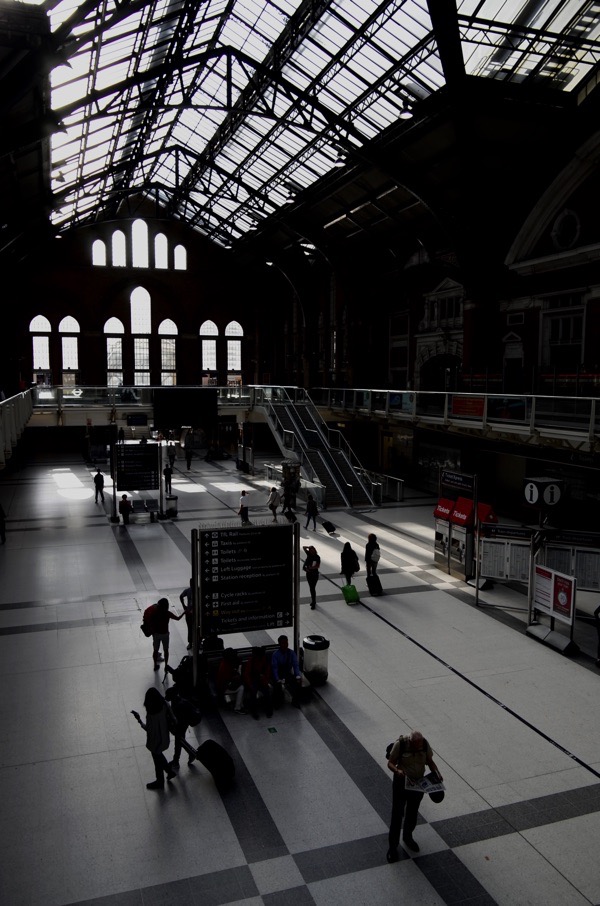
The worst lie of all is that they intend to do no harm to heritage buildings when they are building directly on top of a grade-II-star listed historical landmark with 800,000 square metres of office space and sixteen storeys of hotel. They are demolishing the sensitive twentieth century additions which many feel should be listed itself. They are plunging the light-filled station concourse into darkness. The station as it exists would simply become unrecognisable. Lost.
Why stop there? Let us sell the “airspace” over Leadenhall, or St Paul’s, or the Houses of Parliament while we are at it. It is a rotten, unnecessary, deplorable precedent. A grovelling puff in the Times Business pages recently reported that “some campaigners” were “worried” but the developers say “no harm” would come to the sheds. Bollocks. All heritage bodies are very worried. I have never seen such a meeting of the families. The Twentieth Century Society. The Georgian Group, The Victorian Society, Historic Buildings and Places, The Spitalfields Trust, The Betjeman Society, Historic England and a huge list of others have conjoined in appalled horror at this proposed opportunistic excrescence. There is a unity of outrage.
I hope we can gather and flash-mob the existing station before we march to make our feelings known. I hope we can get Michael Gove to call this one in. Nothing is inevitable here. They were stopped from doing the same to Waverley Station in Edinburgh and they must be stopped here. The ancient City of London and its number one historic railway station deserve a lot better.
Click here to sign the petition to SAVE LIVERPOOL ST STATION
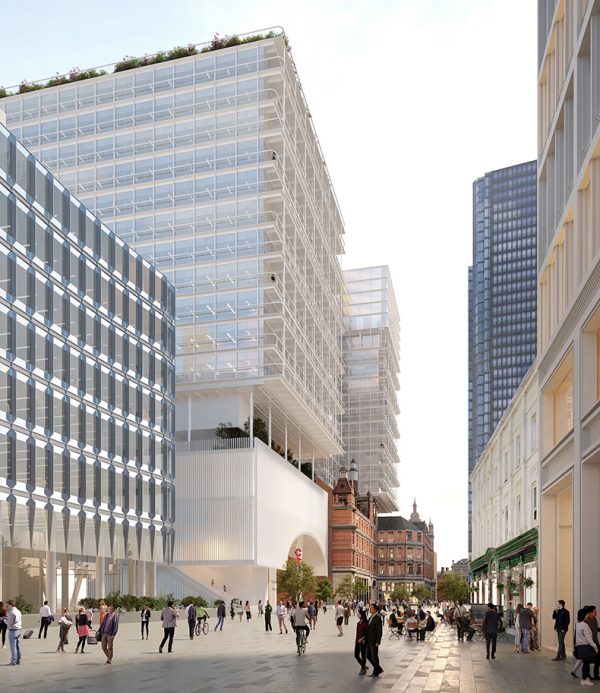
The developers’ visualisation of their proposed redevelopment of Liverpool St Station with a sixteen storey tower plonked on top of the grade II star listed Great Eastern Hotel
Eleanor Crow’s East End Bakers
Click here to book for my next City of London walk on 4th June

Beigel Shop, Brick Lane
Eleanor’s richly-hued watercolour paintings of favourite East End Bakers set my stomach rumbling just to look at them . “I live in a bakery-free part of the East End and popping out for decent bread usually involves a cycle ride,” she admitted to me, “So I’m always on the lookout for good bakers and I wish we still had a proper bakery in every neighbourhood like they do in the rest of Europe.”
In common with Eleanor, I also plan my routes around the East End using the bakers’ shops as landmarks – so that I can take consolation in knowing the proximity of the nearest one, just in case the desire for something tasty from the bakery overtakes me.
“One of my regular bus routes has The Baker’s Arms as its final destination and close by is a beautiful set of almshouses, built by the London Master Bakers’ Benevolent Institution in the nineteenth century,” Eleanor informed me, elucidating bakers’ lore, as she took the first bite of a freshly baked Hot Cross Bun still warm from the oven.“Luckily people always want bread, so the traditional bakeries can still thrive alongside new businesses – but I do recommend sampling the goods a few times in each one, just to be sure which is the best…”

Robertsons, Lea Bridge Rd

Novelty Bakery, East Ham
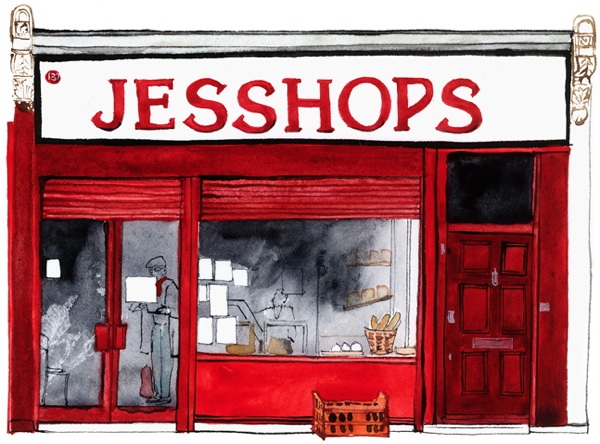
Jesshops, Newington Green

Rinkoff’s, Vallance Rd

Goswell Bakeries, Canning Town

Akdeniz Bakery, Stoke Newington

Star Bakery, Dalston Lane

Fabrique Bakery, Hoxton

Raab the Bakers, Essex Rd

Percy Ingle, Lea Bridge Rd

Anderson’s, Hoxton St

Daren Bread, Stepney Green
Illustrations copyright © Eleanor Crow












