
Sebastian Harding At Paul Pindar’s House
Click here to book for my tour of Spitalfields this Saturday and beyond
Click here to book for my next City of London walk on 4th June
Today, writer and model maker Sebastian Harding begins an occasional series exploring the forgotten histories of lost buildings
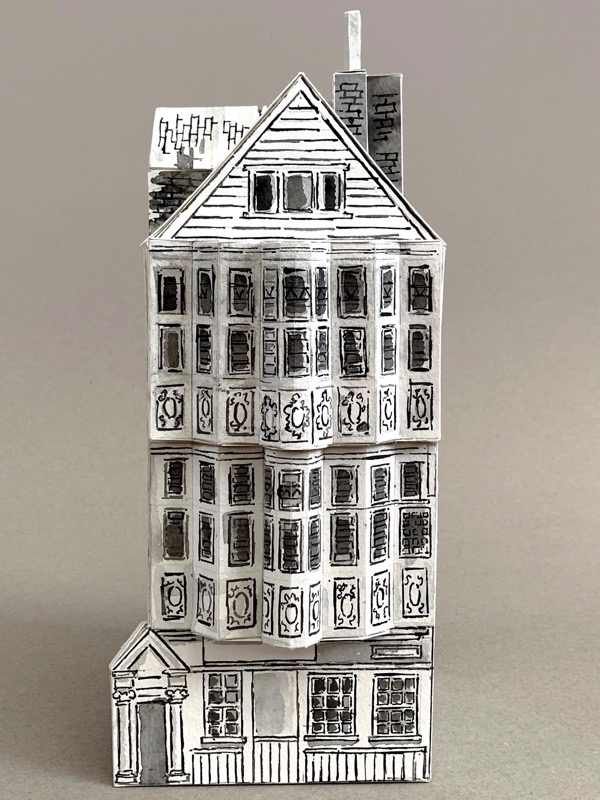
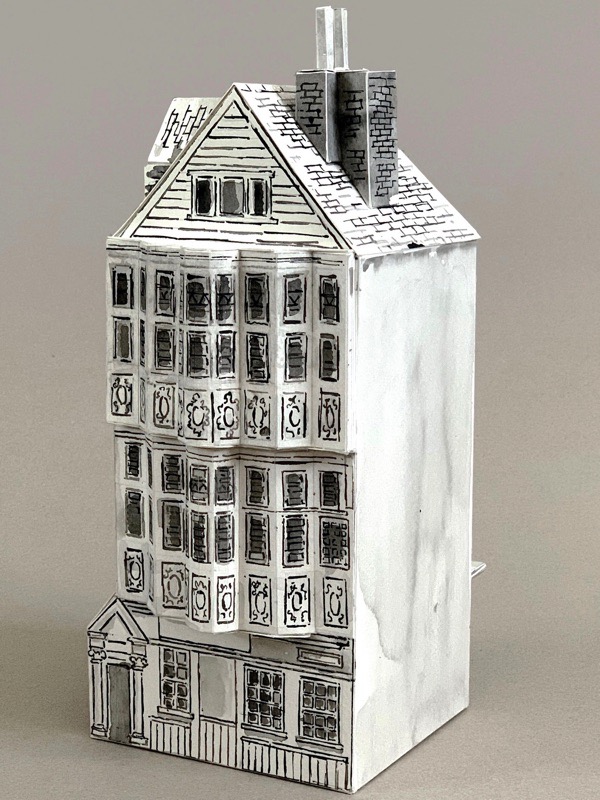
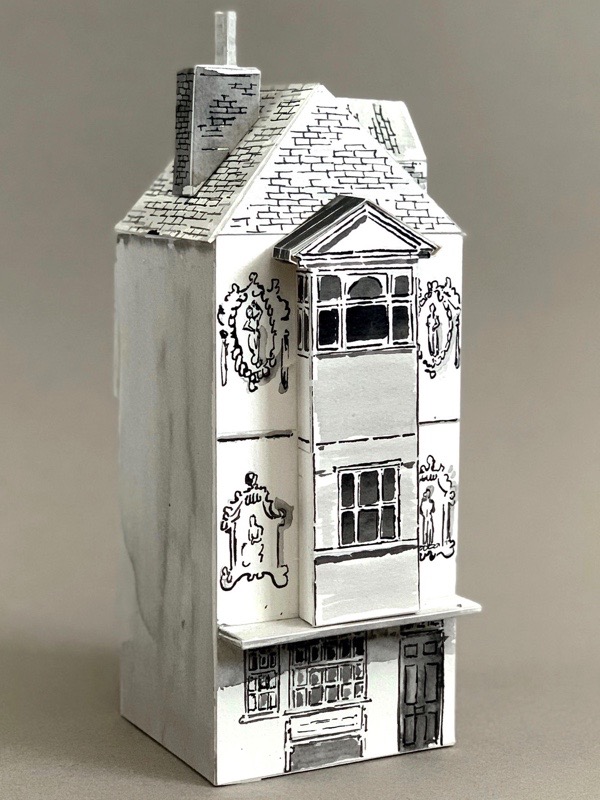
Model by Sebastian Harding
Which singular building links James I, the twilight days of the Ottoman Empire and the Great Eastern Railway? The answer is – or was – Sir Paul Pindar’s house.
At the time of writing, a fierce debate rages over the future of Liverpool Street Station. The station is a monument to the wealth and power of the Great Eastern Railway and it is not the first time that preservationists have fought to conserve this corner of the ancient ward of Bishopsgate, upon which it stands.
In the eighteen-nineties, remarkably similar arguments were undertaken over the fate of the magnificent sixteenth century townhouse that once stood on this site. At that time, the façade of Paul Pindar’s home had been witness to the traffic of Norton Folgate flowing along this great arterial road for almost three centuries. This was not just any old merchants’ house, Sir Paul Pindar’s remarkably fine house was in a league of its own and as fascinating as the man himself.
First let us pause to consider the building. The slender facade was not vast but what it lacked in size it made up in style. Each element of the façade was designed to convey the wealth and social stature of its owner.
Let us begin with the windows. Created at a time when glass was still a luxury, the double-height casements spanning the full width of the façade must have stopped rich and poor alike in their tracks. These tall windows were set within a complex piece of joinery, featuring a rounded central bay and with each jettied storey projecting a little further out. It meant that the building, and specifically the expanse of glass in the windows, would have been visible from a hundred feet in either direction. What a sight it must have been to see all that glass shimmering in the sunlight. Not dissimilar to the effect of witnessing the Gherkin at sunset in the City today.
The ostentation did not stop there. Decoration extended from the carved wooden window panels complete with a unicorn, James I’s own symbol, to the sculpted posts of mythic beasts supporting the upper storeys.
So who was Paul Pindar and how did he amass the fortune to build this highly embellished, well-located home? Perhaps this is where my own affinity for this enigmatic figure begins. Like me, Pindar was a Midlands boy who left his birthplace in his teens to seek opportunity in the capital.
Hailing from the small Northamptonshire village of Wellingborough, he was thrust into the melting pot of Elizabethan London. Pindar arrived in the mid-fifteen-eighties and he soon found employment as apprentice to John Powish, a merchant with Italian connections. Over the proceeding fifteen years, Pindar succeeded in gathering wealth and connections through trade in Italy and southern Europe.
By the age of thirty-four he was prosperous enough to build the house that would bear his name but his success did not stop there. Twelve years later, Pindar’s skill as a merchant and his political wit rewarded him with a position as James I’s ambassador to the Sultan of Turkey in Constantinople.
Since the late fifteen hundreds, Britain and the Ottoman Empire had been equally concerned about the strength of Spain. By joining forces, they hoped to be able to defend their interests against Spanish aggression.
Here we spy another tantalising glimpse of the personality of our Midlands-born merchant ambassador. As ambassador, Pindar became a great favourite of Mehmed III’s mother, the Safiye Sultan. It was even recorded that “the sultana did take a great liking to Mr. Pindar, and afterward, she sent for him to have his private company” By this point Safiye was sixty-one, so we may speculate the connection was platonic. Yet, whatever the basis of their kinship, this Northampton lad had certainly come a long way.
After his time in the east, Pindar returned home and appears to have passed the remainder of his days in peace and comfort, living to his eighty-fifth year. A significant lifespan when the average life expectancy was just thirty-five years.
After his death, the house became synonymous with his name, clinging on to its faded grandeur even as the city expanded eastwards – Pindar had built the house on fields – and the building changed use. By the eighteenth century, it was known as a popular tavern with a prime location at the foot of the Old North Road that made it the perfect watering hole for travellers from Essex and Cambridge.
A century later, the pub was the subject of a dystopian scene by Gustav Doré, who depicted the bustling thronged masses of the East End swarming around the building. In Doré’s engraving, a sign gives the name of the establishment as “SIR PAUL PINDAR STOUT HOUSE’. A woman sells food from a basket in the doorway. Weary figures push wheelbarrows piled with vegetables whilst lithe and ill-kempt men huddle together. A more miserable vision could not be depicted and anyone might think twice about visiting the scene. Given this context, perhaps it was no surprise that the Great Eastern Railway sought to sweep it away with their new railway station.
The house withstood the first phase of the Liverpool Street Station development in the eighteen-seventies but, with the expansion of the platforms, it was only a matter of time before it was demolished. Thankfully the house survived long enough to be documented in etchings, paintings and photographs.
Today you will look in vain for any trace of Paul Pindar’s house in Bishopsgate, though if you travel to Kensington one fragment of the structure survives. The Great Eastern Railway donated the wooden façade of the building to the Victoria & Albert Museum where it is displayed to this day. It stands as a tantalising reminder of what once was and a solemn reminder of the importance of preserving our built heritage.
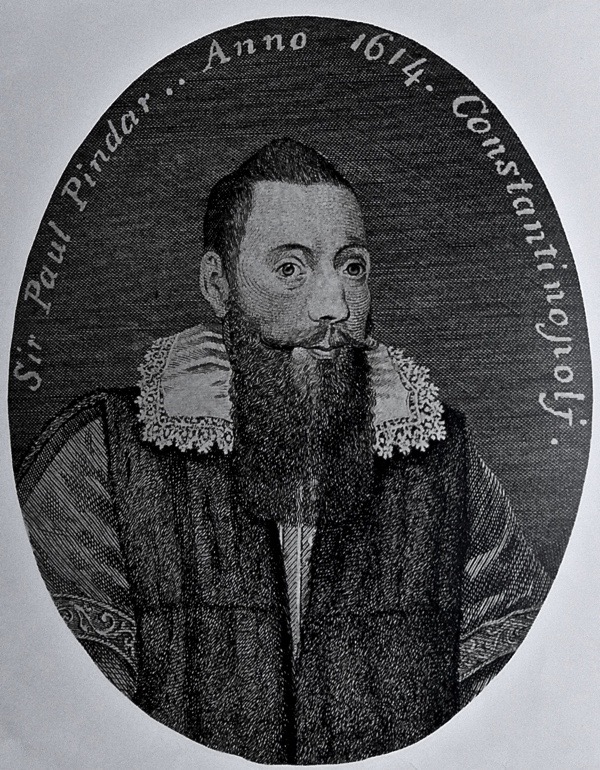
Sir Paul Pindar (1565–1650)
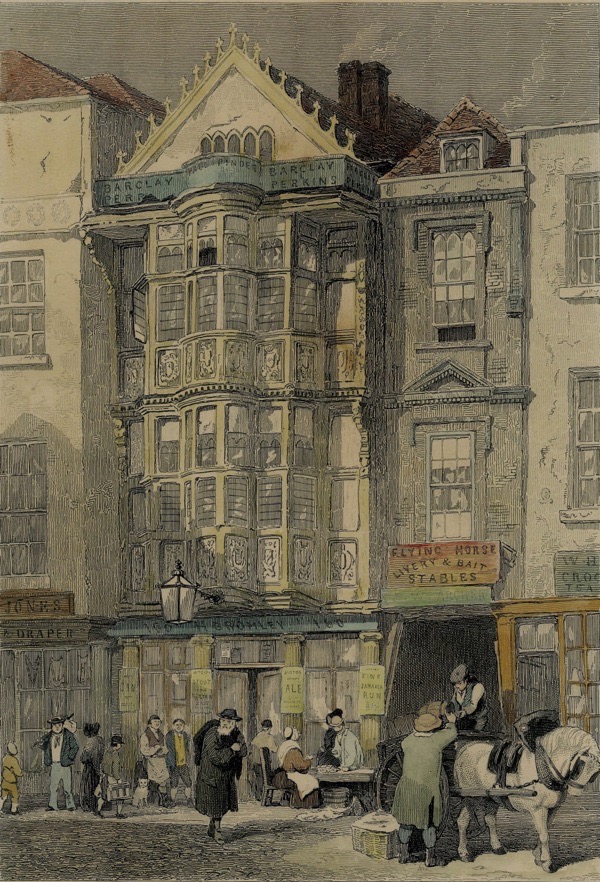
House of Sir Paul Pindar by J.W. Amber
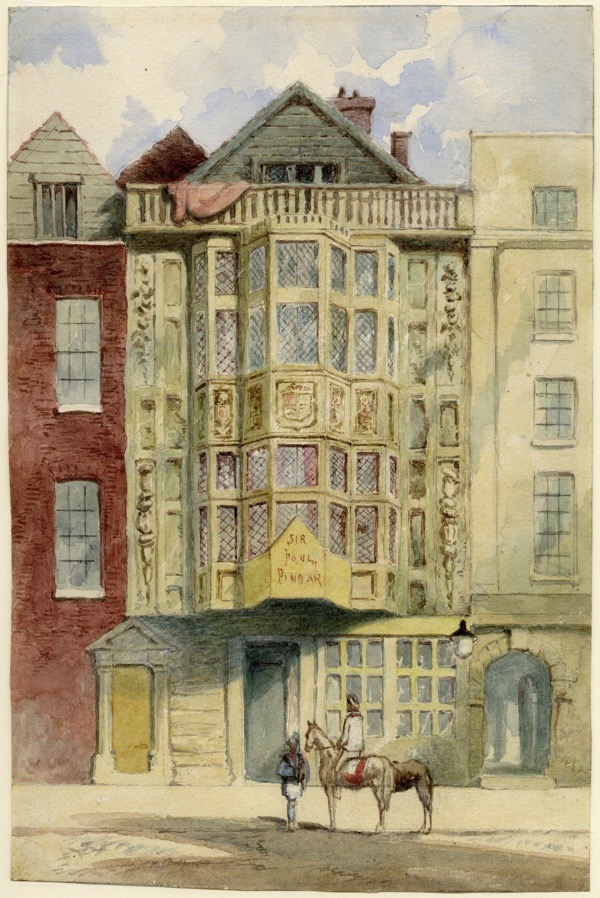
Paul Pindar’s House by F.Shepherd
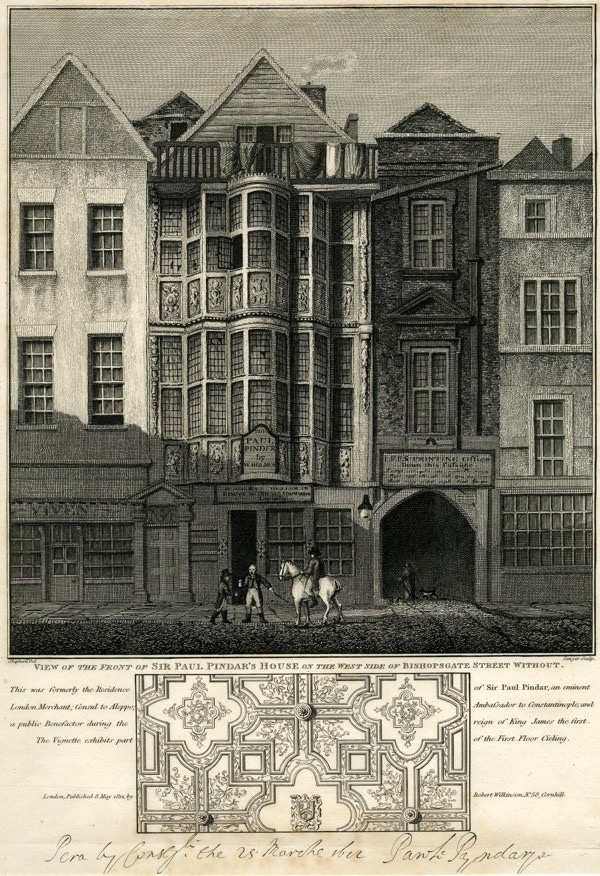
View of Paul Pindar’s House, 1812
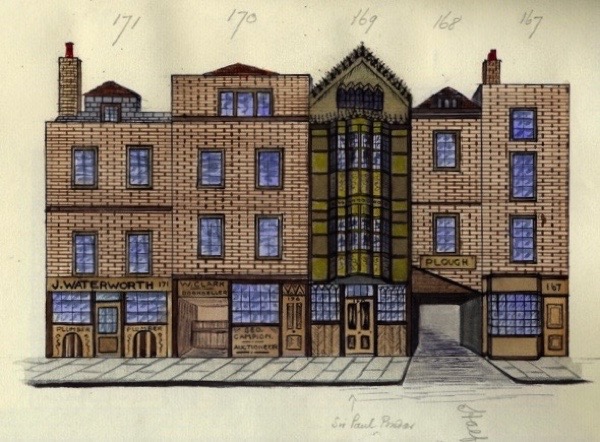
Street view, 1838
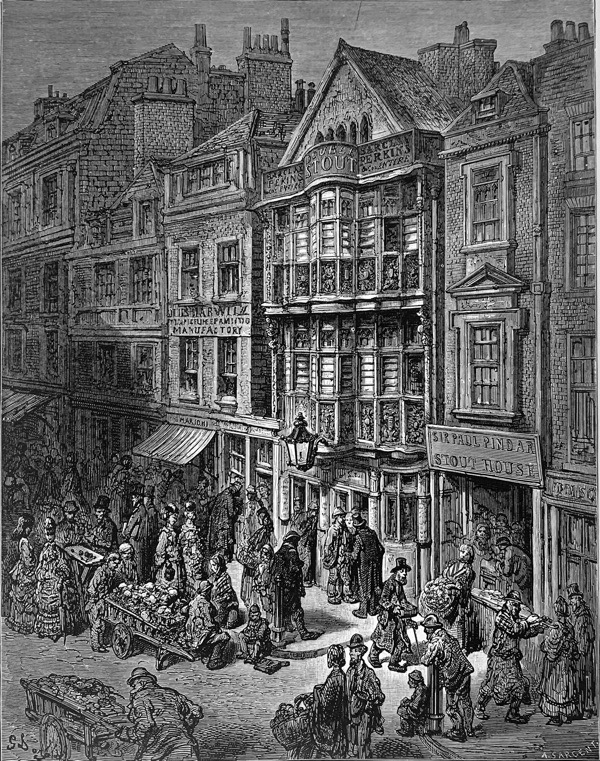
Paul Pindar’s House by Gustave Doré, 1872
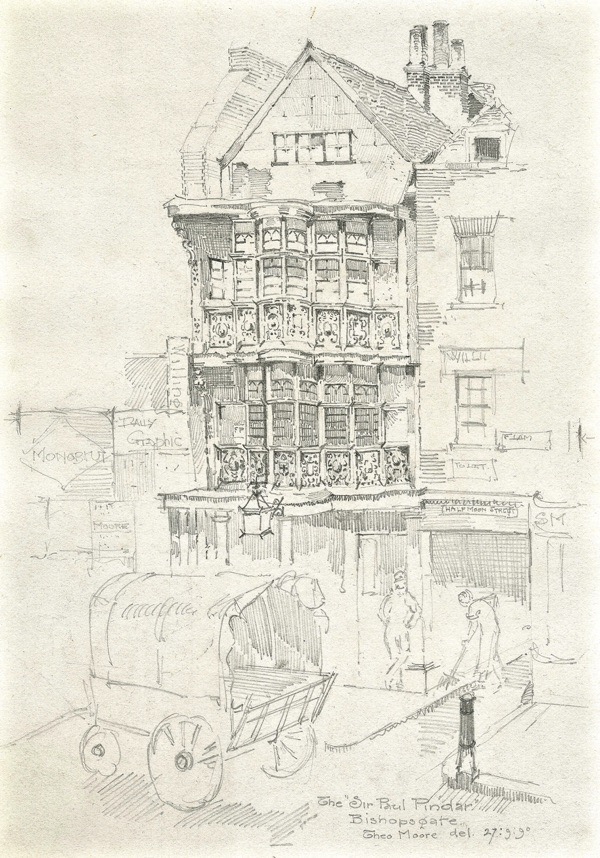
The Sir Paul Pindar by Theo Moore, 1890
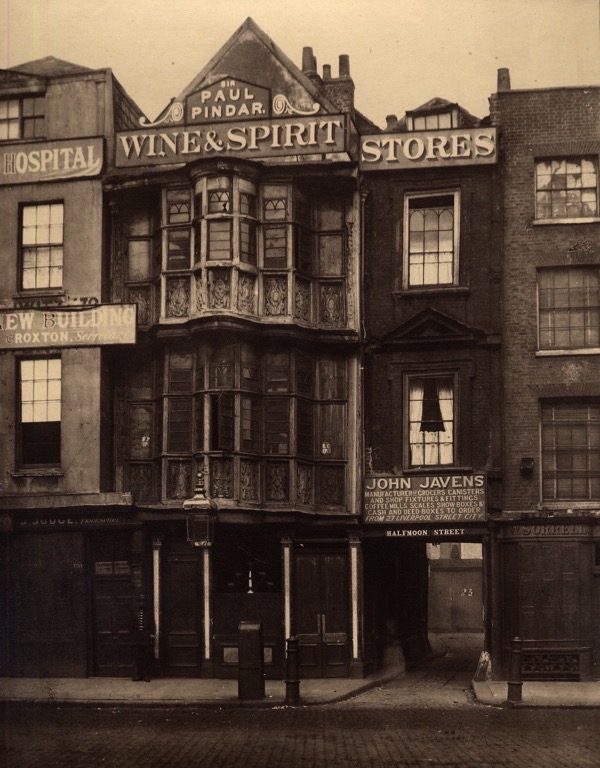
The Sir Paul Pindar photographed by Henry Dixon, 1890
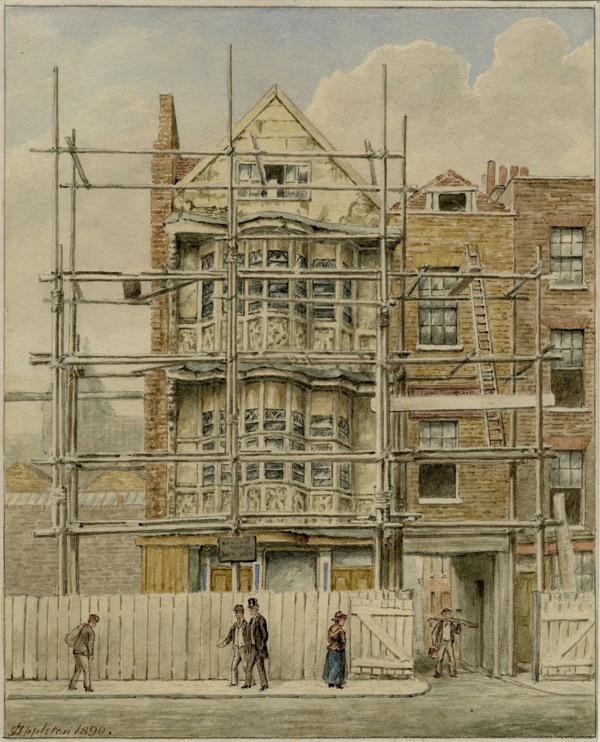
Paul Pindar’s House as it appeared before demolition by J.Appleton, 1890

Facade of Paul Pindar’s House at the Victoria & Albert Museum
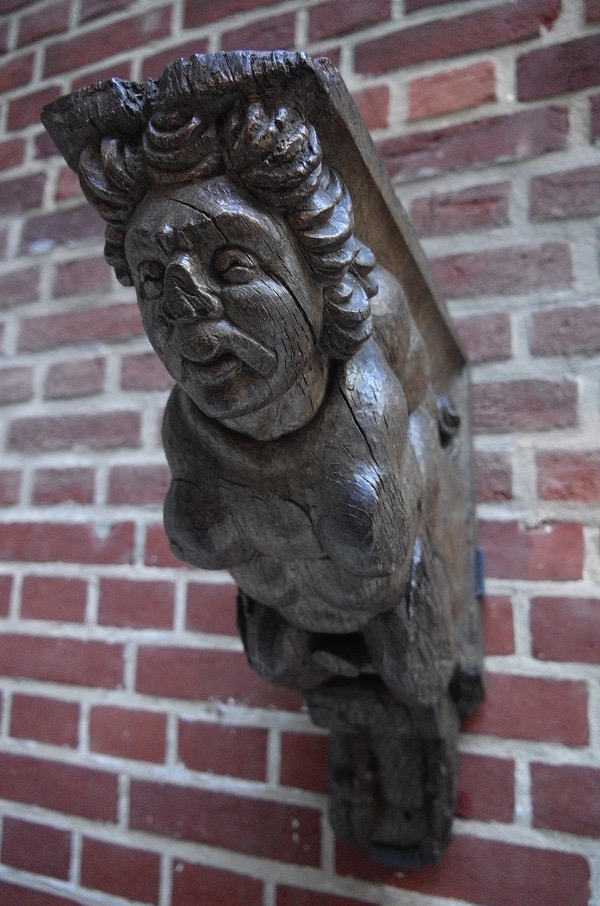
Bracket from Paul Pindar’s House at the Victoria & Albert Museum

Paul Pindar’s Summer House, Half Moon Alley, drawn by John Thomas Smith, c. 1800
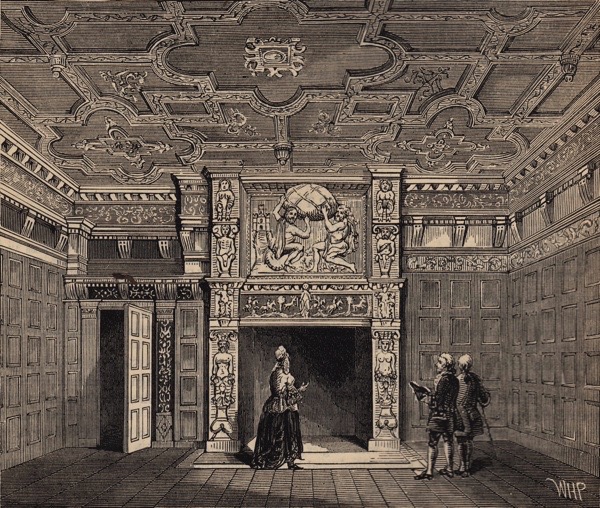
Panelled room in Paul Pindar’s House
Archive images courtesy Bishopsgate Institute
You may also like to take a look at
Anthony Eyton, Centenarian Artist
Click here to book for my tour of Spitalfields this Saturday and beyond
Click here to book for my next City of London walk on 4th June
Today we are celebrating artist Anthony Eyton who reached his centenary last week on 17th May
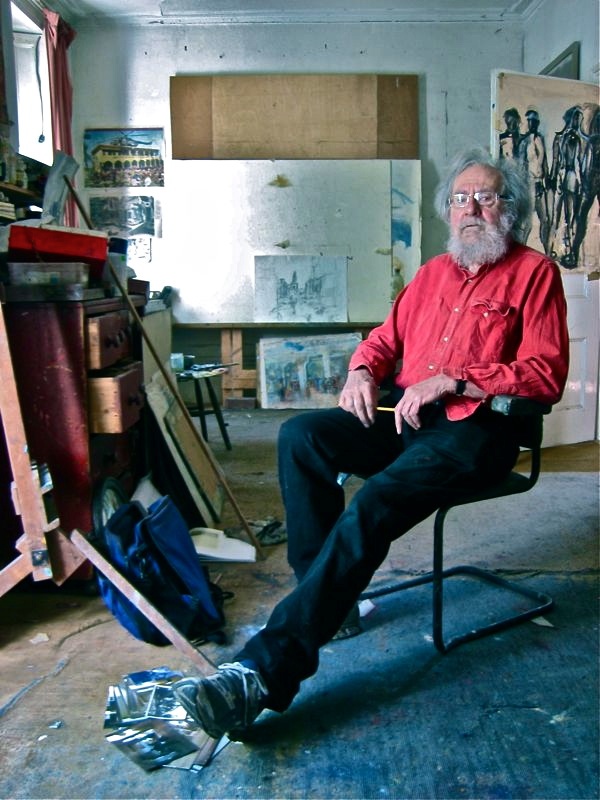
I took the 133 bus from Liverpool St Station, travelling down south of the river to visit painter Anthony Eyton at the elegant terrace in the Brixton Rd where has lived since 1960 – apart from a creative sojourn in Spitalfields, where he kept a studio from 1968 until 1982.
It was the 133 bus that stops outside his house which brought Anthony to Spitalfields, and at first he took it every day to get to his studio. But then later, he forsook home comforts to live a bohemian existence in his garret in Hanbury St and the result was an inspired collection of paintings which exist today as testament to the particular vision Anthony found in Spitalfields.
A tall man with of mane of wiry white hair and gentle curious eyes, possessing a benign manner and natural lightness of tone, Anthony still carries a buoyant energy and enthusiasm for painting. I found him working to finish a new picture for submission to the Royal Academy before five o’clock that afternoon. Yet once I arrived off the 133, he took little persuasion to lay aside his preoccupation of the moment and talk to me about that significant destination at the other end of the bus route.
“That biggest strangest world, that whirlpool at Spitalfields, and all the several colours of the sweatshops, and the other colours of the degradation and of the beautiful antique houses derelict – I think the quality of colour was what struck me most,” replied Anthony almost in a whisper, when I asked him what drew him to Spitalfields, before he launched into a spontaneous flowing monologue evoking the imaginative universe that he found so magnetically appealing.
“From Brick Lane to Wilkes St and in between was special because it’s a kind of sanctuary,” he continued, “and looking down Wilkes St, Piero della Francesca would have liked it because it has a kind of perfection. The people going about their business are perfectly in size to the buildings. You see people carrying ladders and City girls and Jack the Ripper tours, and actors in costume outside that house in Princelet St where they make those period films, and they are all in proportion. And the market was still in use then which gave it a rough quality before the City came spilling over and building its new buildings. Always a Mecca on a Sunday. I used to think they were all coming for a religious ceremony, but it’s pure commerce, and it’s still there and it’s so large. It’s very strange to me that people give up Sunday to do that… – It’s a very vibrant area , and when Christ Church opens up for singing, the theatre of it is wonderful.”
Many years before he took a studio in Spitalfields, Anthony came to the Whitechapel Gallery to visit the memorial exhibition for Mark Gertler in 1949, another artist who also once had a studio in an old house in one of the streets leading off the market place. “Synagogues, warehouses, and Hawksmoor’s huge Christ Church, locked but standing out mightily in Commercial St, tramps eating by the gravestones in the damp church yard. “Touch” was the word that recurred,” wrote Anthony in his diary at that time, revealing the early fascination that was eventually to lead him back, to rent a loft in an eighteenth century house in Wilkes St and then subsequently to a weavers’ attic round the corner in Hanbury St where the paintings you see below were painted.
Each of these modest spaces were built as workplaces with lines of casements on either side to permit maximum light, required for weaving. Affording vertiginous views down into the quiet haven of yards between the streets where daylight bounces and reflects among high walls, these unique circumstances create the unmistakable quality of light that both infuses and characterises Anthony Eyton’s pictures which he painted in his years there. But while the light articulates the visual vocabulary of these paintings, in their subtle tones drawn from the buildings, they record elusive moments of change within a mutable space, whether the instant when a model warms herself at the fire or workmen swarm onto the roof, or simply the pregnant moment incarnated by so many open windows beneath an English sky.
Anthony’s youngest daughter, Sarah, remembers coming to visit her father as a child. “It was a bit like camping, visiting daddy’s studio,” she recalled fondly, “There were no amenities and you had to go all the way downstairs, past the door of the man below who always left a rotten fish outside, to visit the privy in the yard that was full of spiders which were so large they had faces. But it was exciting, an adventure, and I used to love drawing and doing sketches on scraps of paper that I found in his studio.”
For a few years in the midst of his long career, Spitalfields gave Anthony Eyton a refuge where he could find peace and a place packed with visual stimuli – and then a quarter of a century after he left, Anthony returned. Frances Milat who was born and lived in the house in Hanbury St came back from Australia to stage a reunion of all the tenants from long ago. It was the catalyst for a set of circumstances which prompted Anthony to revisit and do new drawings in these narrow streets which, over all this time, have become inextricable with his identity as an artist.
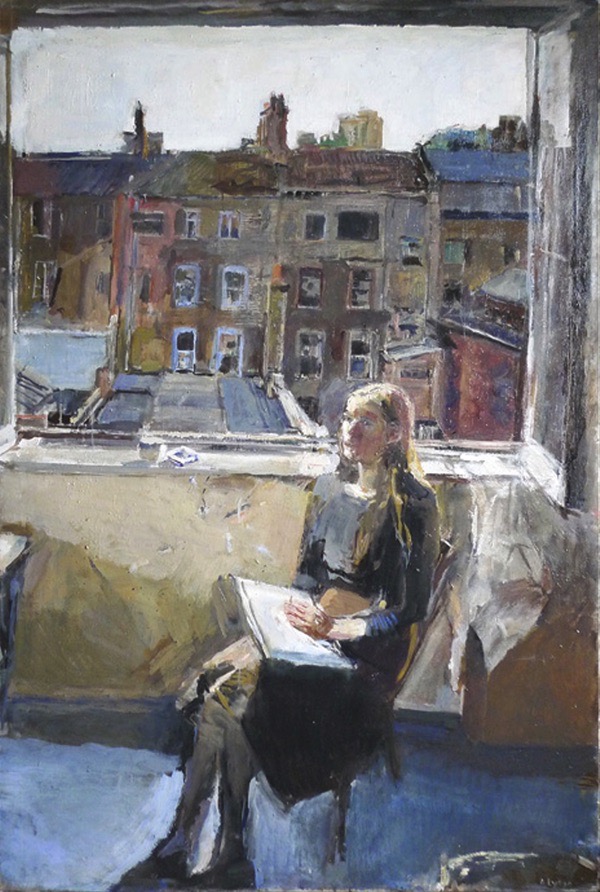
Christine, 1976/8 – “She was very keen that the cigarette smoke and grotty ashtray should be in the picture to bring me down to earth.”
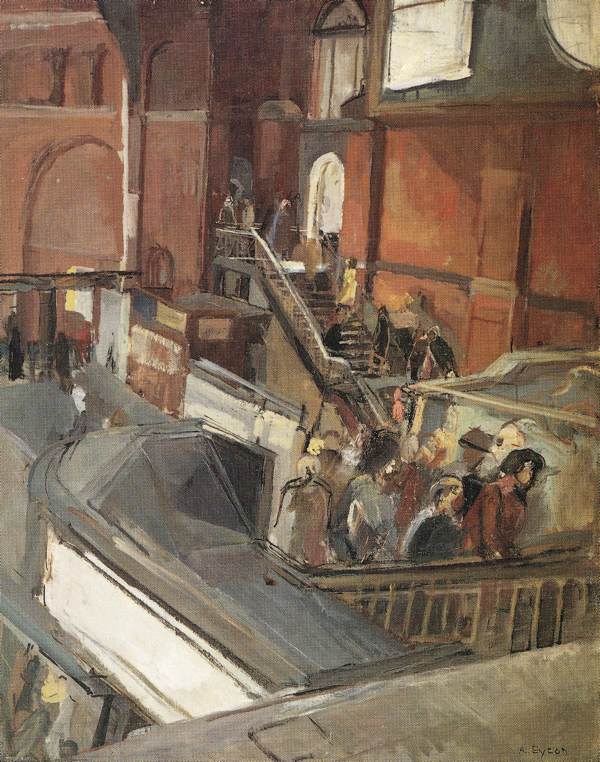
Liverpool St Station, mid-seventies
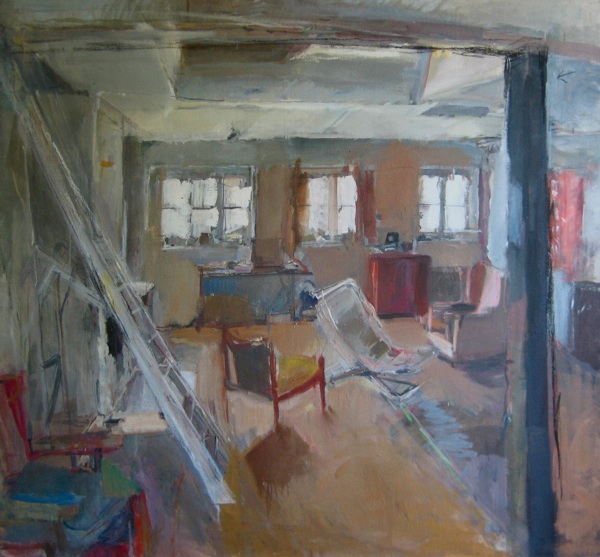
Studio interior, 1977
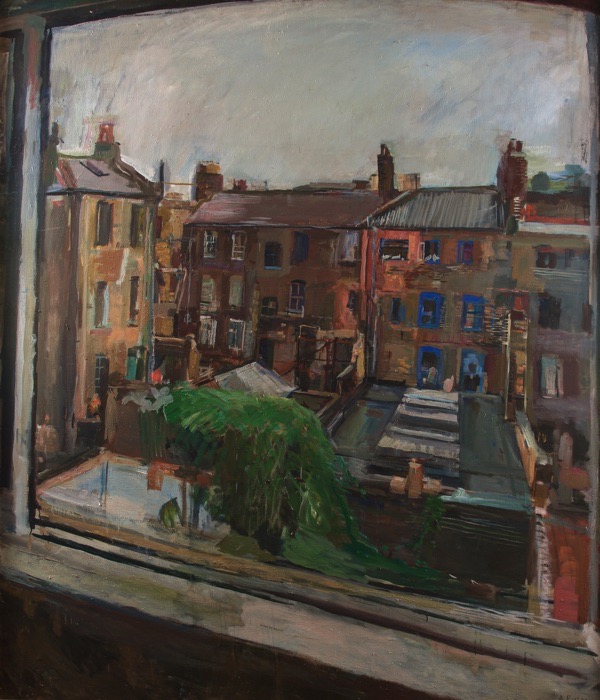
Back of Princelet St, 1980

Girl by the fire, 1978
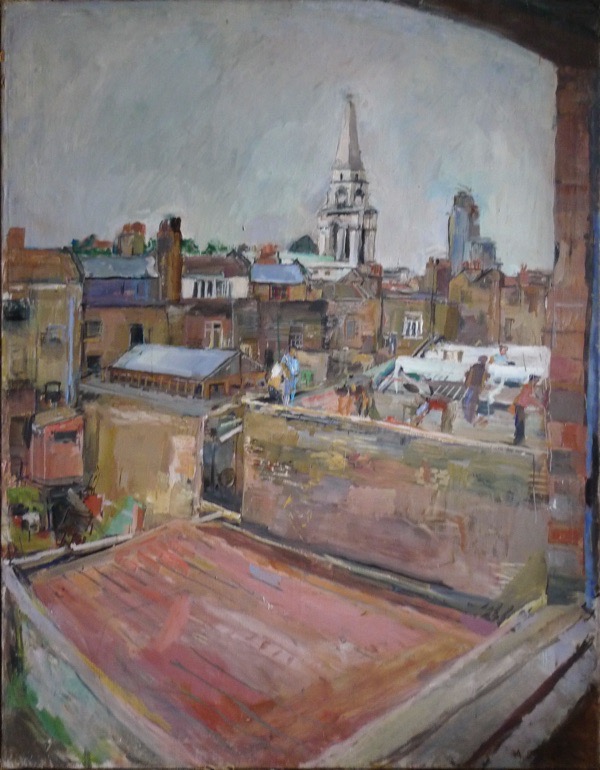
Workers on the roof, 1980
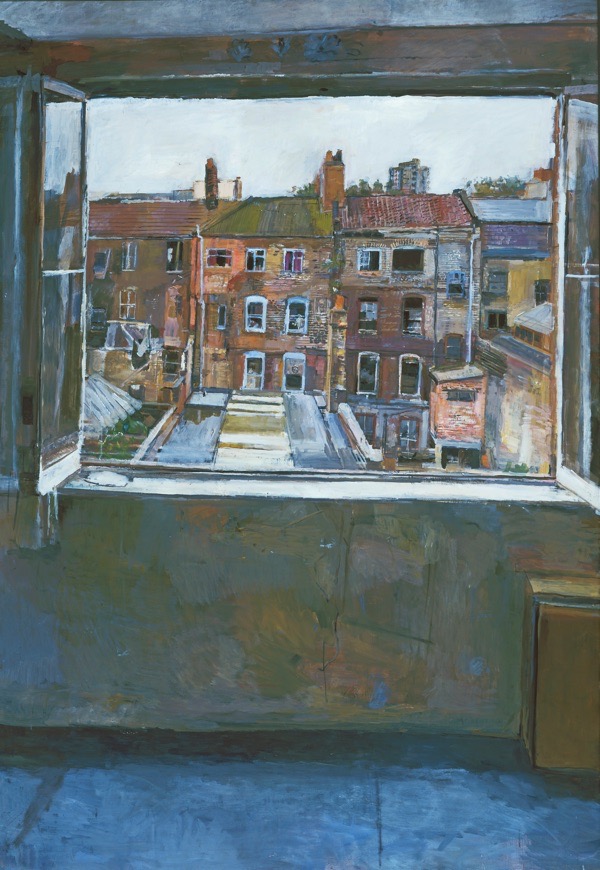
Open window, Spitalfields, 1976-81 (Courtesy of Tate Gallery)
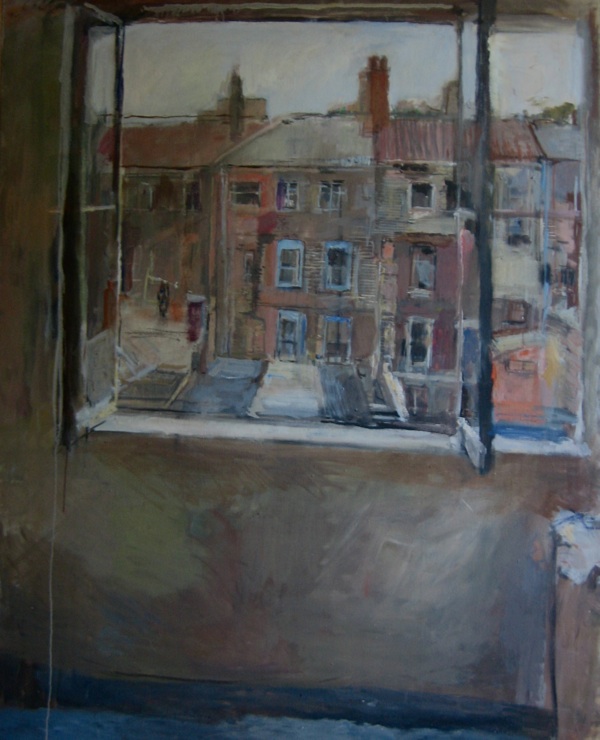
Open window, Spitalfields, 1976
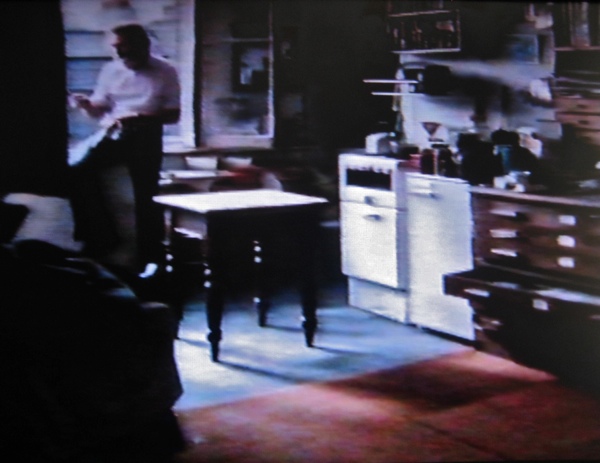
Anthony Eyton working in his Hanbury St studio, a still from a television documentary of 1980
Pictures copyright © Anthony Eyton
You may also like to read about
At The Bulmer Brick & Tile Company
Click here to book for my next City of London walk on 4th June
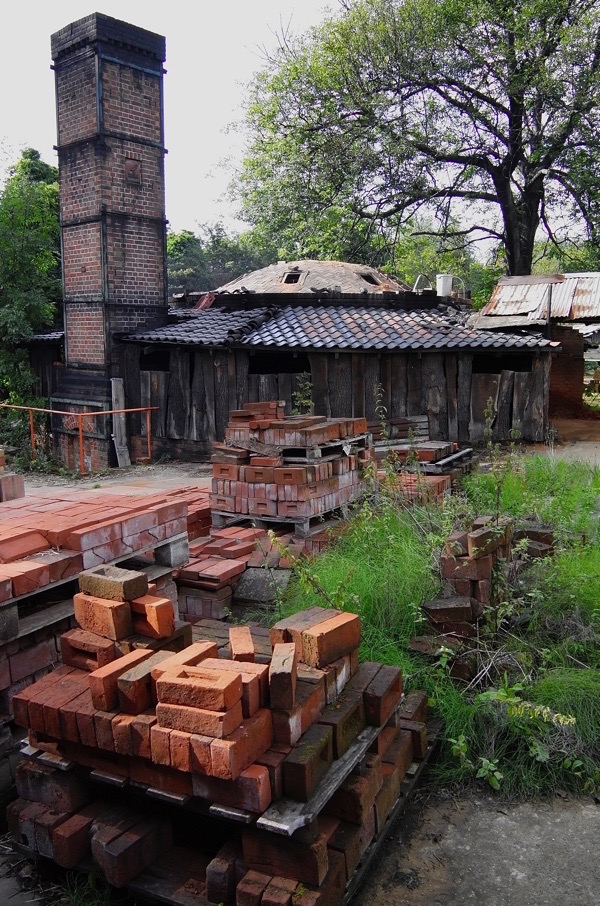
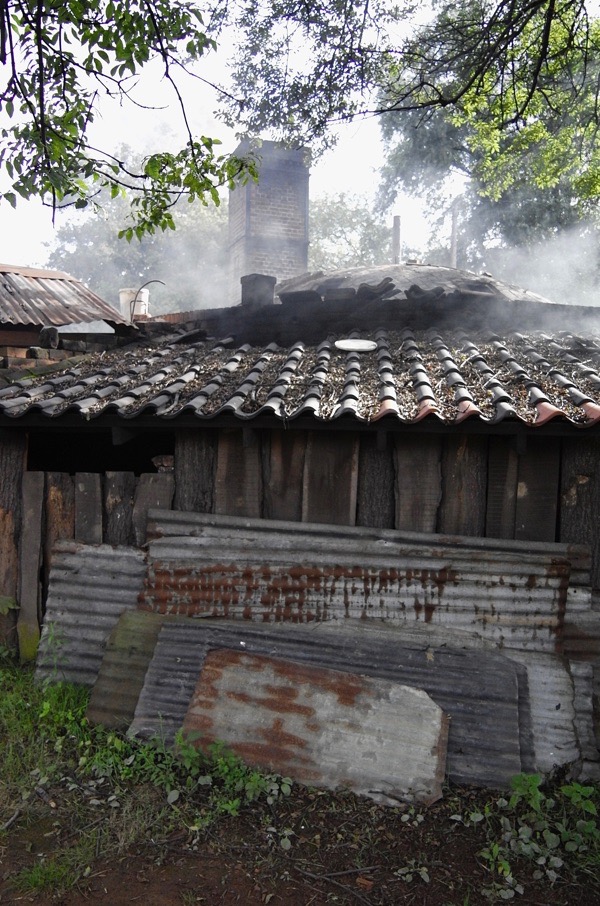
The kiln
Brick Lane takes its name from the brick works that once filled Spitalfields and I always wondered how it was in those former times. So you can imagine my delight to visit Bulmer Brick & Tile Company in Suffolk, where bricks have been made since 1450, and be granted a glimpse of that lost world.
My guide on this journey through time was Peter Minter who has been making bricks in the traditional way for over seventy years. He began by taking me to the hole in the ground where they dig out the mud and pointing out the strata differentiated in tones of brown and grey. ‘You are looking at the Thames Estuary thirty-six million years,’ he declared with a mild grin of philosophical recognition.
At the lowest level is London clay, deposited in primordial times when the Thames flowed through Suffolk, used to make familiar stock bricks of which most of the capital was constructed in previous centuries. ‘Each of the strata here offer different qualities of clay for different purposes,’ Peter explained as he pointed out dark lines formed of volcanic ash that fell upon the estuary a mere twenty-five million years ago. ‘We have another fifty years of clay at this site,’ he admitted to me in the relaxed tone that is particular to a ninety-year-old brick maker.
“My father, Lawrence Minter, took over this brick works in 1936 when he was thirty-five. It had been here for hundreds of years, with the earliest evidence dating from 1450, and it was a typical local brick works. His uncle, FG Minter, was a builder in London and my father was brought up by him as a surveyor.
Before my father could get established, the war came along and shut the place down. There were thirty-five or thirty-six people working here but a lot got called up and we went down to about six or seven men. We made land drain pipes for the Ministry of Supplies and that was what kept us going. Those men were old or infirm but they kept the skills alive.
I was taught by those skilled men who had been born in the nineteenth century and brought up as brick makers. Without realising, I learnt all the old secrets of brick making but it was only when I knew that this was the direction of my life that I decided I had to save it, and started using the old techniques that had been forgotten rather than the new. This is what makes us unique. I have spent my whole life working here and I probably know more about making bricks than anyone alive. The business has changed and yet it has not changed, because the essence is the same.
When my father reopened after the war, everything was already beginning to change. There was so little trade in brick making that he got into the restoration business. When conservation started to develop, I was the only person in the country who knew how to manufacture bricks in the traditional way. Other people have theories but I am the only one who knows how to do it. There is no-one with our philosophy and the way we go about it.
We start backwards. We look at an old house and its history. We do not think simply of the profit we can make from selling you a brick. We work out why the bricks were made the way they were and how they were made, what techniques were used at that time. When I look at a building, I can tell you everything about its history this way.
In London, they were manufacturing what they called the ‘London Stock,’ the cheapest brick they could produce and they used all sorts of waste material in it as well as clay. They did not think about it lasting but it turned out to be one of the finest bricks of all time. That is what they would have been making in Brick Lane in the seventeenth century.
The clay is the secret because whatever have got beneath your feet is what you have to use, its characteristics dictate what you can make. We are digging out the clay for the next summer, we always do it at the end of September and try to catch the end of the good weather, which we have just done. We want it dry and crumbly, we do not want it compressed into mud. It needs to weather, so the salts and minerals in it liberate into the atmosphere, and you avoid getting salt crystallising upon the finished bricks.
When father was running the brick works, he simply dug the clay out but gradually we have become more precise so now we select layers of clay for different jobs. In his day, you bought a brick from Bulmer – father only did ‘Tudor’ – but now we make bricks specially for each particular job. More and more of our work involves some kind of experimentation. We no longer make generic bricks, everything is specialised now. We make over one hundred and fifty different kinds of bricks in a year. We look at our clay for its degree of plasticity, the grey clay is more plastic whereas yellow clay is more sandy, so we blend the clay as necessary for each order of bricks.
We are currently making around 30,000 bricks for Kensington Palace and another 30,000 for the Tower of London. We have been making bricks for Hampton Court since 1957. For thirty years, we supplied the clay for the moulds at the Whitechapel Bell Foundry and the ‘bell bricks’ which were the radius bricks upon which they placed the mould.
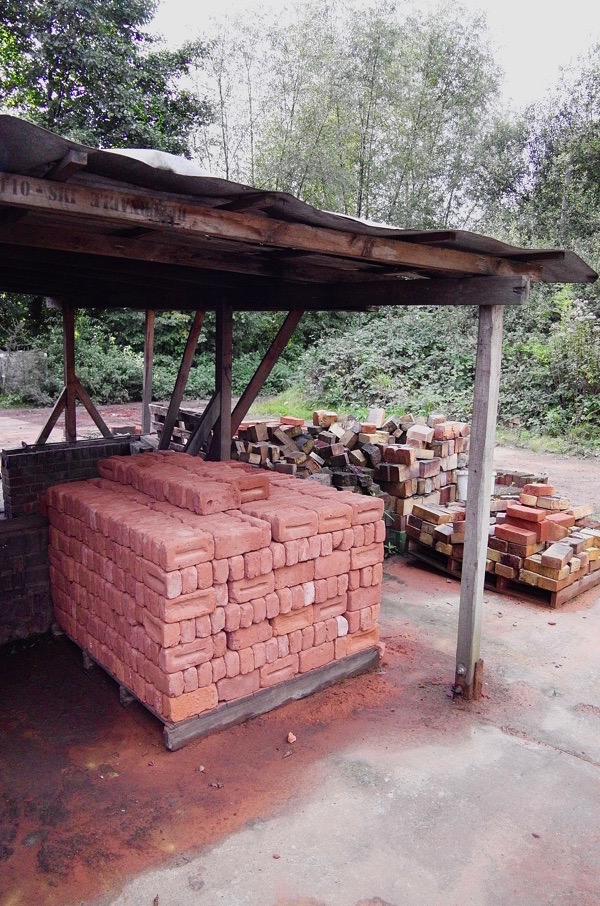
Our bricks are laid out to air dry before firing in what are called ‘hack rows’ on the ‘hack ground’ or ‘hack stead.’ These are Saxon words. Once the bricks are dry enough, we set them up in ordered lines which is called ‘skinking.’ We have covers to ensure even drying, by keeping off the sun and the rain. If they get wet, they just turn back to mud.
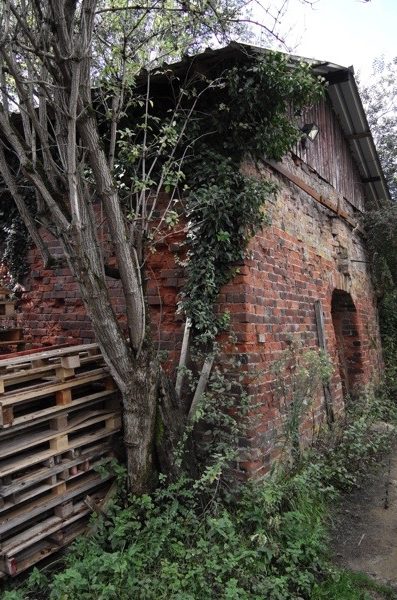
Once a fortnight, we fire the kiln for three days. Someone has to stay to stoke the fires continuously. I rebuilt one of the kilns myself a few years ago. I have been responsible for the construction of four of these domed-roof kilns. I could not find an expert to tell me how to do it, so I worked out how to do it myself. I did not use a wooden frame for the dome, I built it in concentric circles of bricks so it was self supporting. As a child in 1936, I remembered the original kiln being built and the man looking down through the hole in the roof without any former supporting the dome, so I knew it was possible. He was obviously very proud of what he had built, he took me outside and drew a diagram in the dust with a stick to show me how he had built it. He said, ‘When you want to rebuild it, this is what you do.’
It is a down-draught brick kiln with seven fires around the outside to heat it, the heat is drawn up to the domed roof and down through the bricks to escape through the floor. It reaches about 1200 degrees centigrade and some of the brick lining has turned to glass.
Each aspect of brick making requires different skills and we are continually honing those skills and training new people. It takes five years to train a brick maker. I have two sons in the business here and one of them has two sons, so in time they will be taking over.”
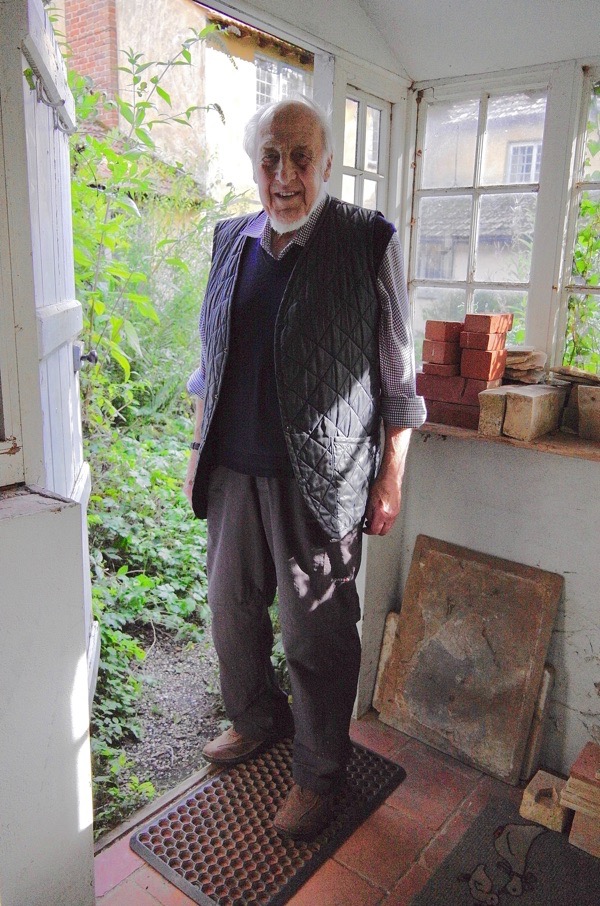
Peter Minter, seventy years a brick maker
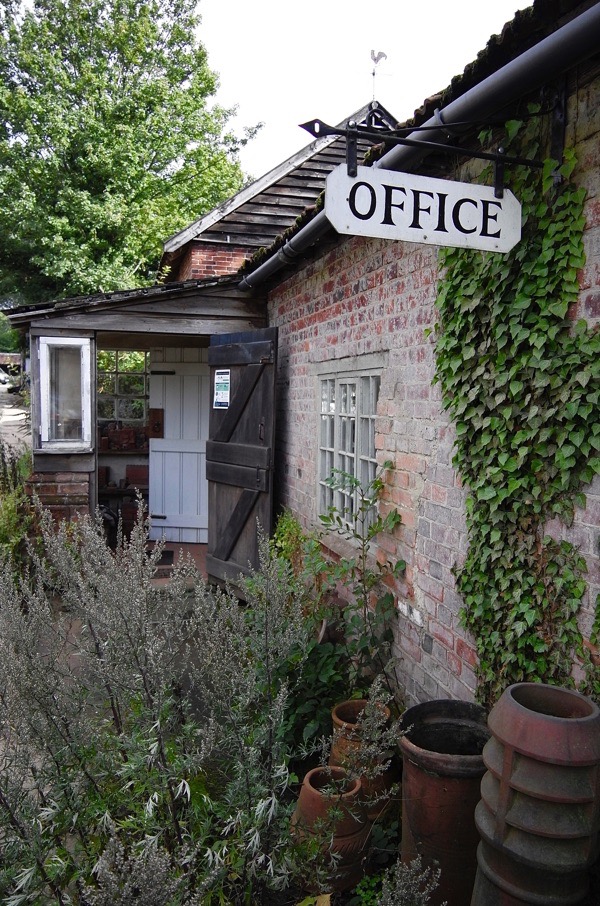
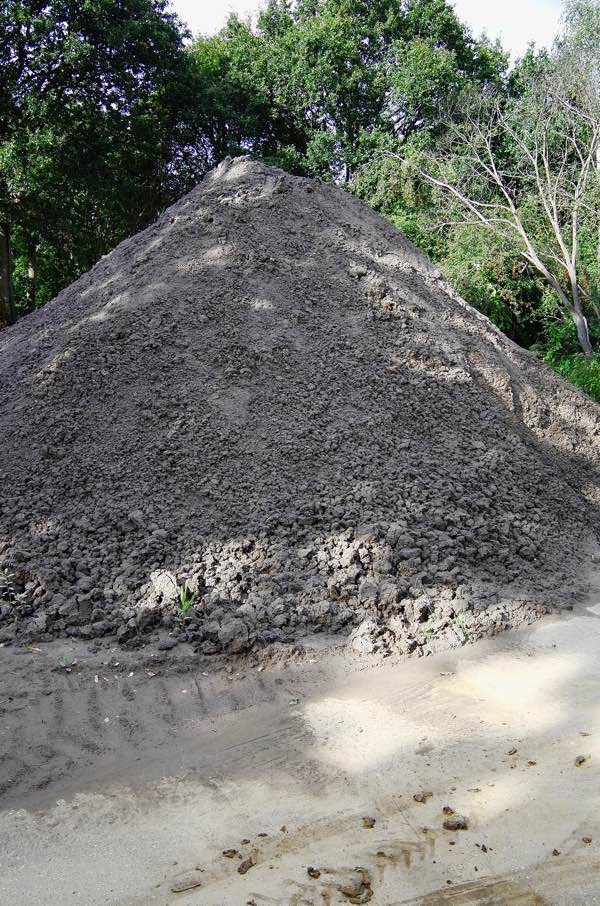
Thames mud used for London stock bricks
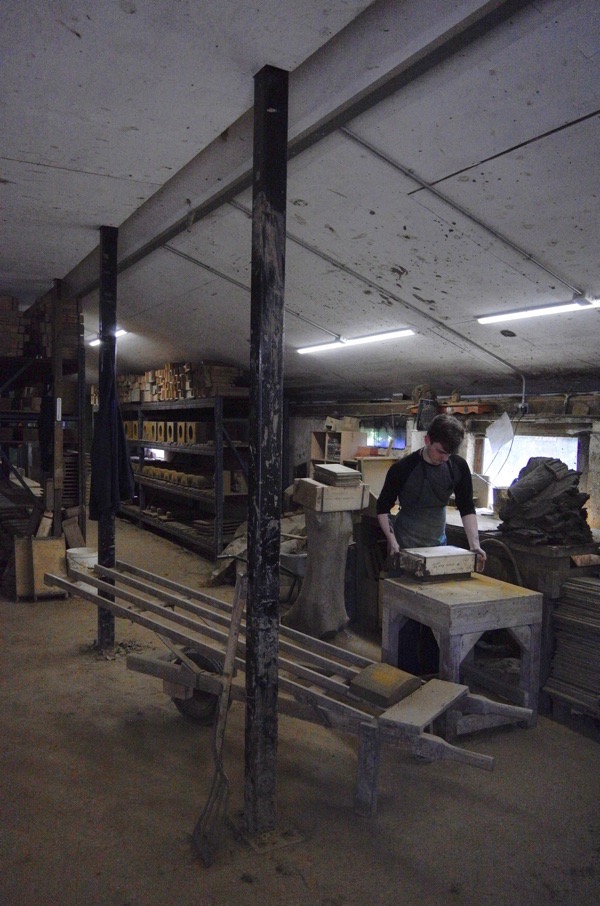
Making a shaped brick in a wooden mould
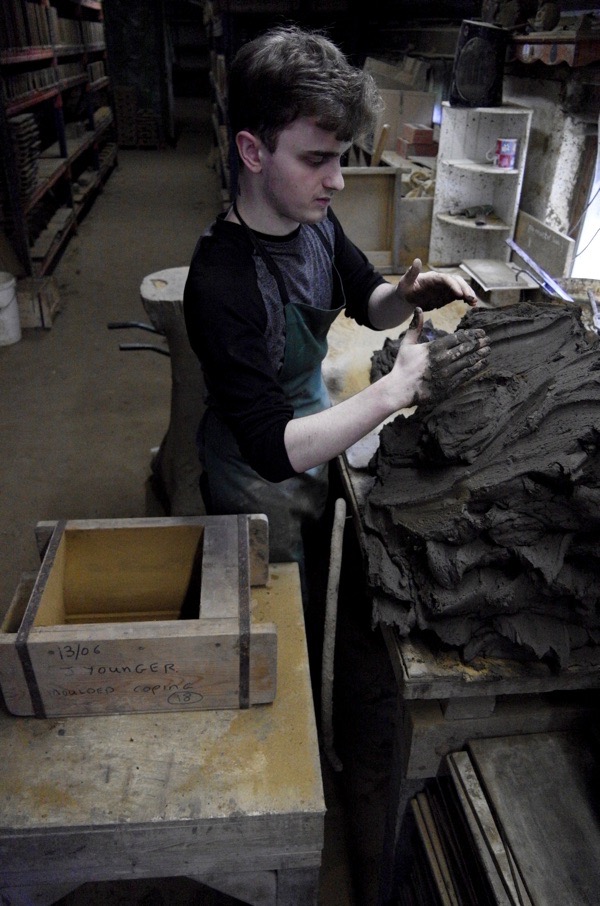
Jack has been a brick maker for two years
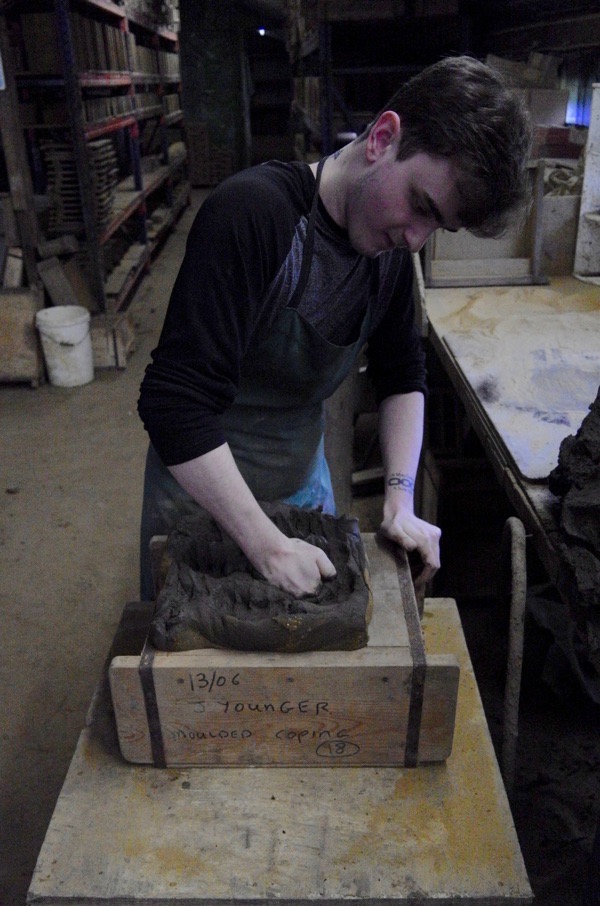
“He’s coming into quite a good brick maker’
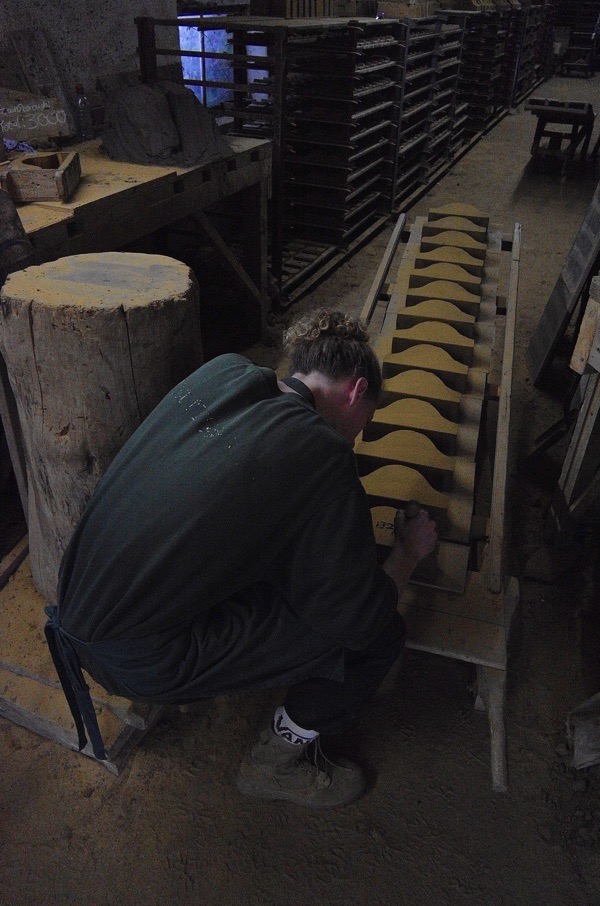
Marking a batch of shaped bricks
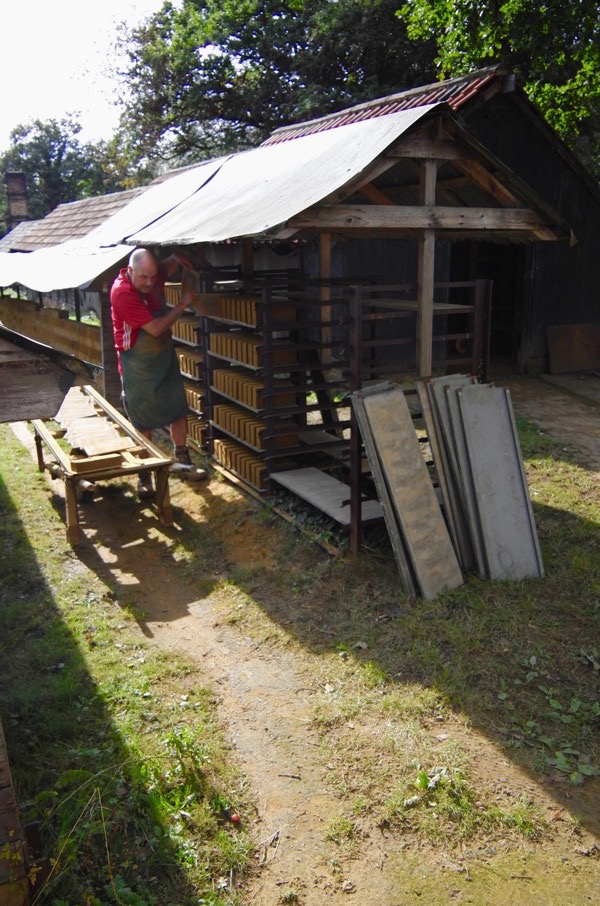
Setting the bricks out to dry on the hack ground
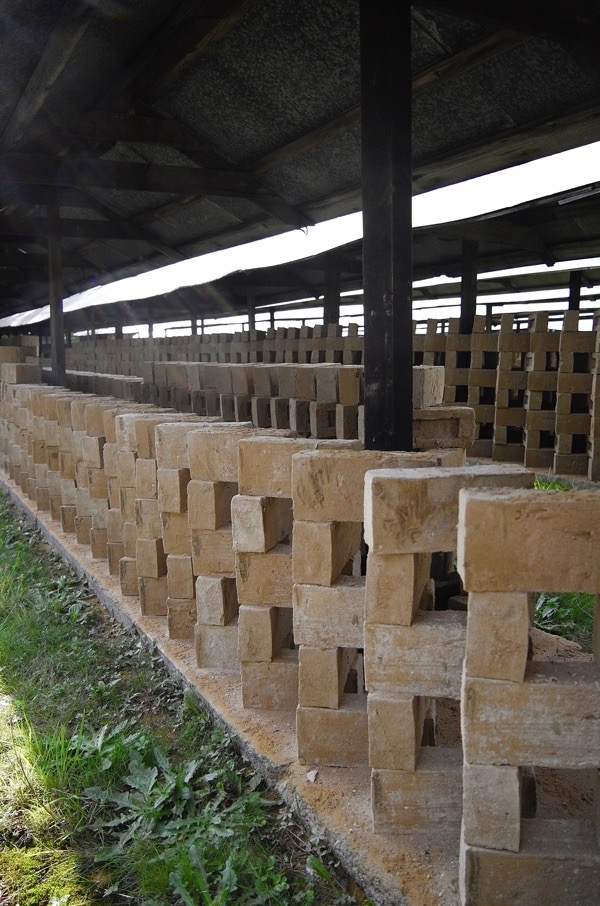
Stacking bricks in this way is called ‘skinking’
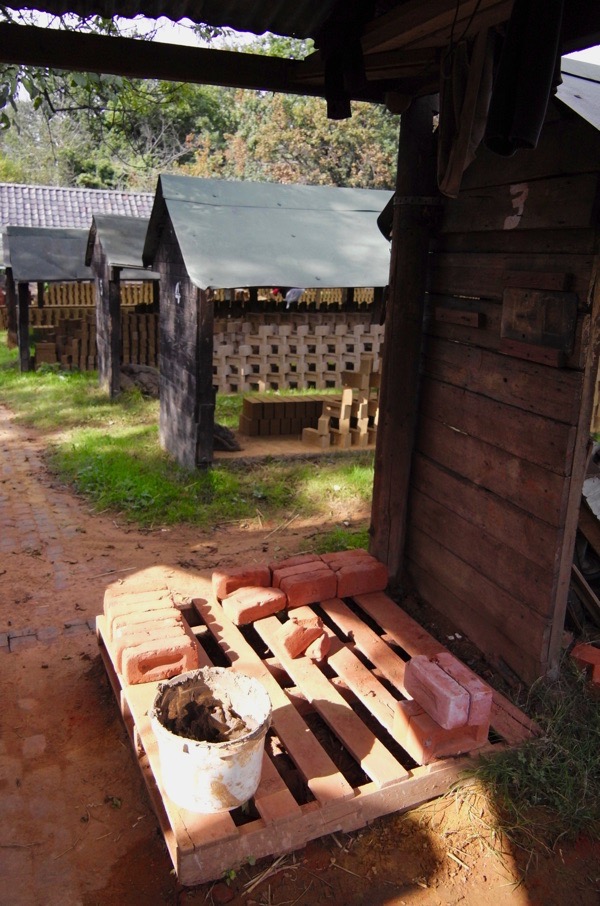
The hack ground
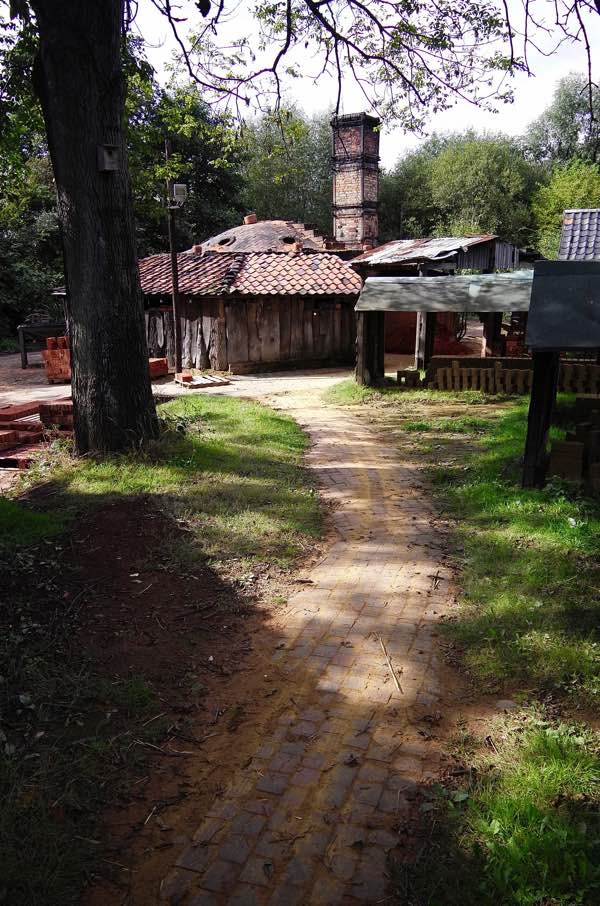
The rough cut pieces of timber around the kiln that allow smoke to escape are known as ‘skantlings.’
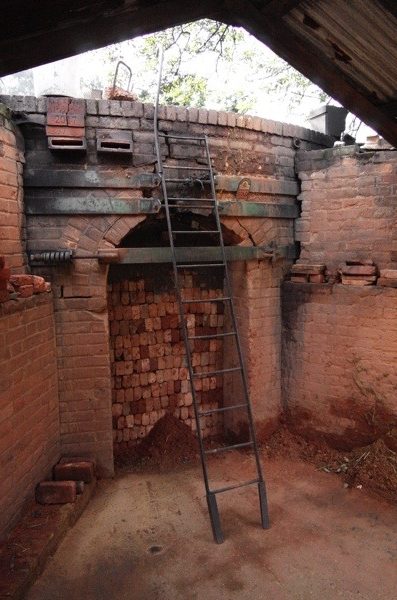
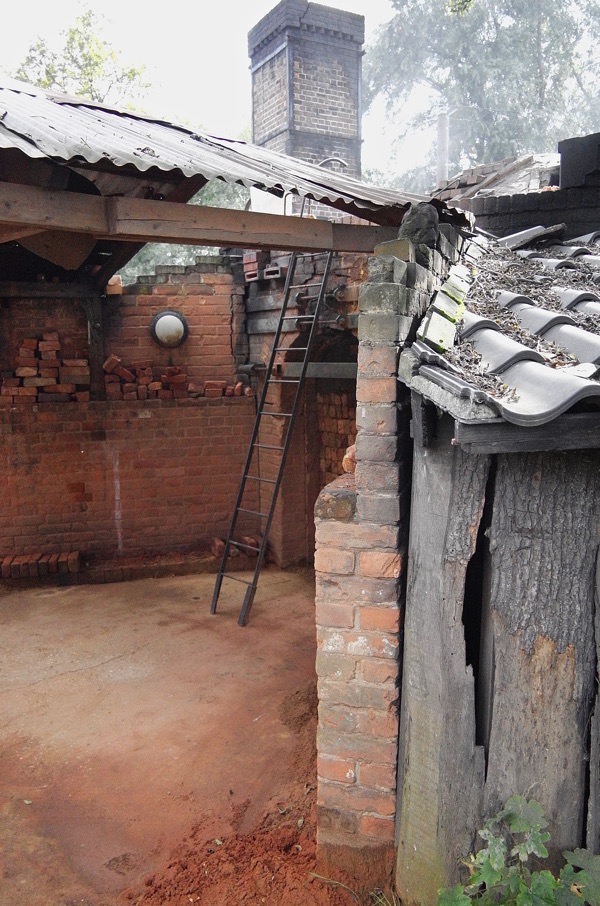
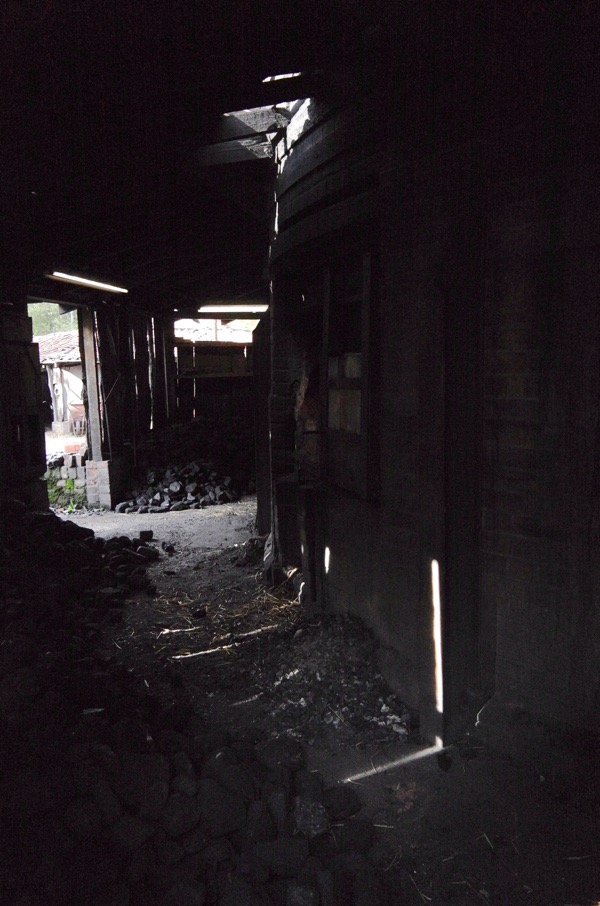
Seven fires heat the kiln
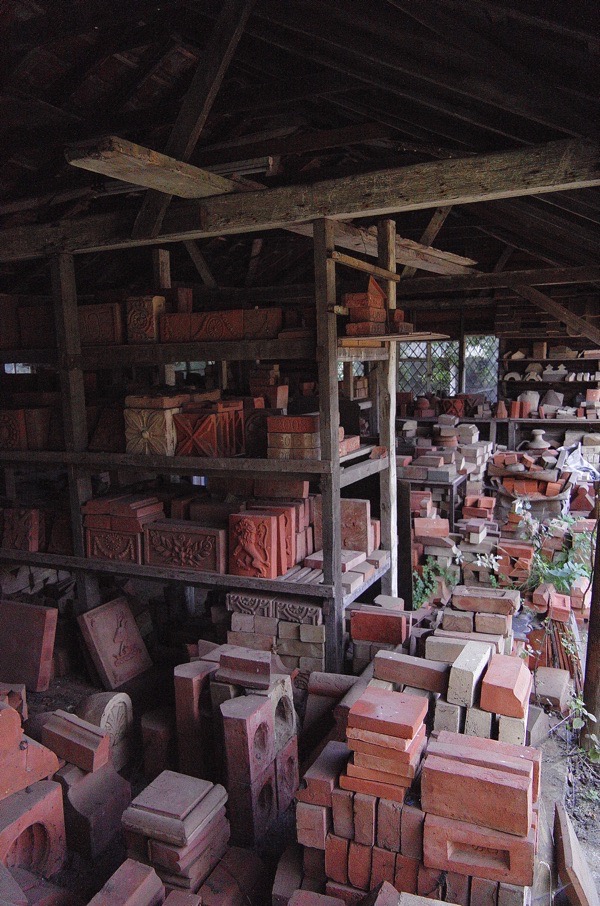
Store for brick moulds
The Bulmer Brick & Tile Company, The Brickfields, Bulmer, Suffolk CO10 7EF
The Secret Gardens Of Spitalfields
Click here to book for my next City of London walk on 4th June
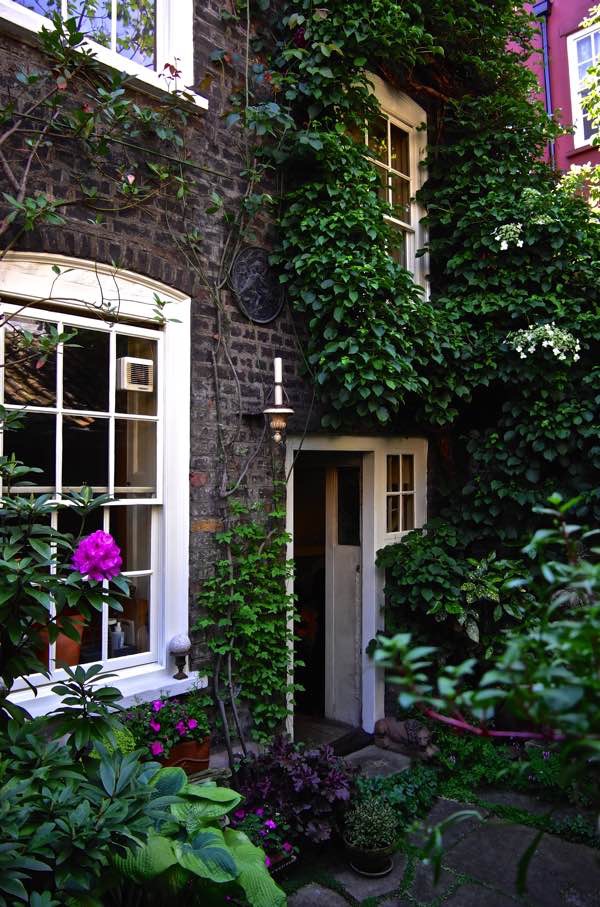
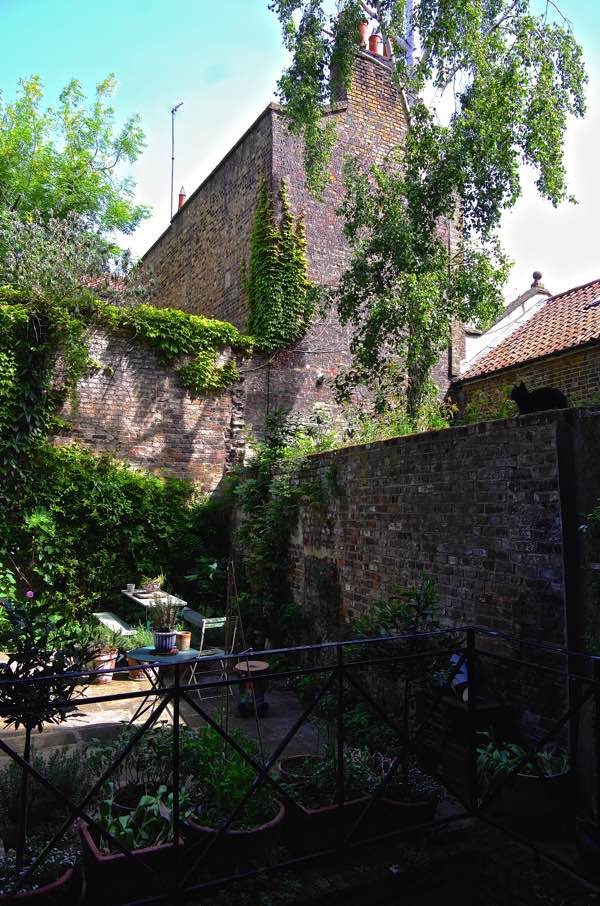
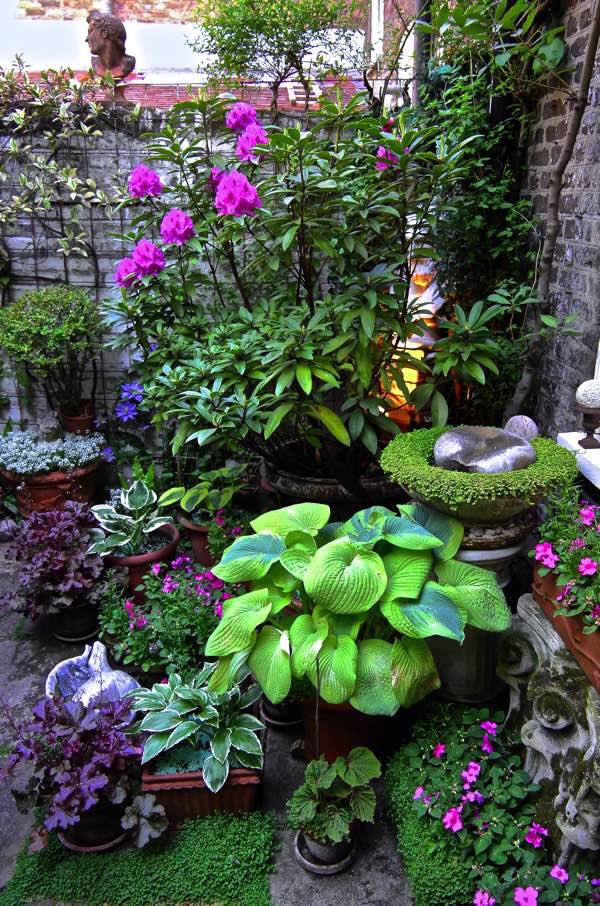
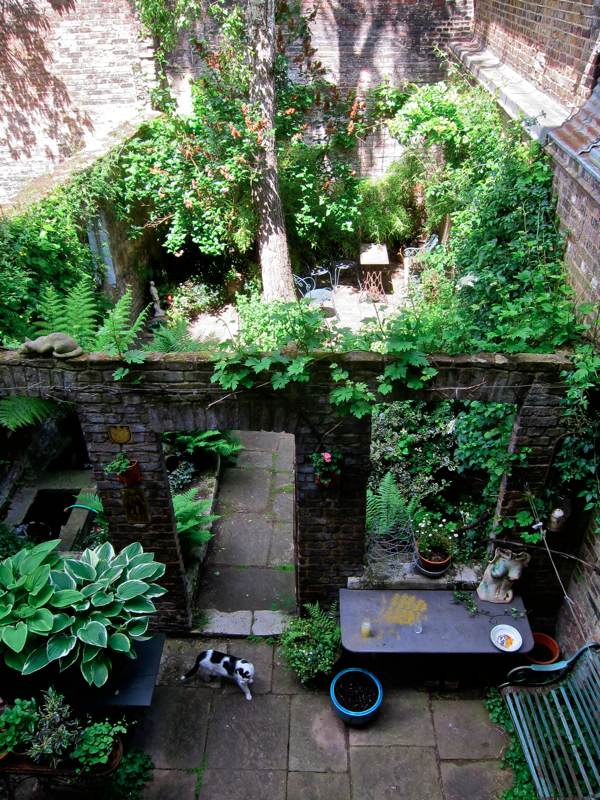
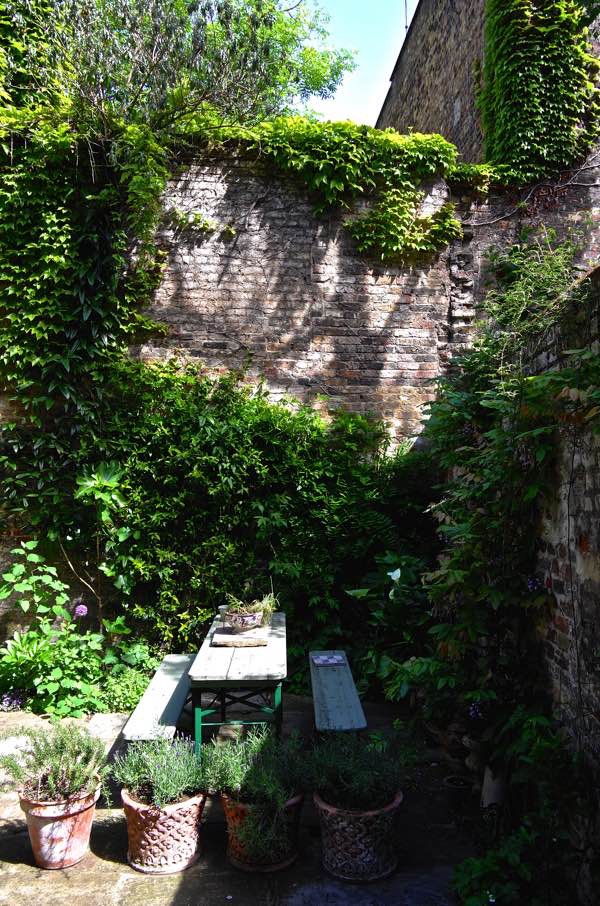
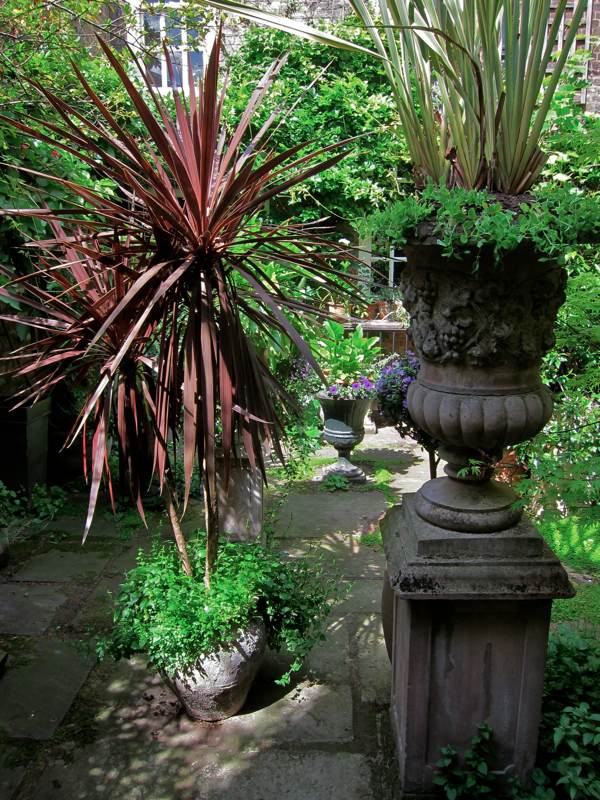
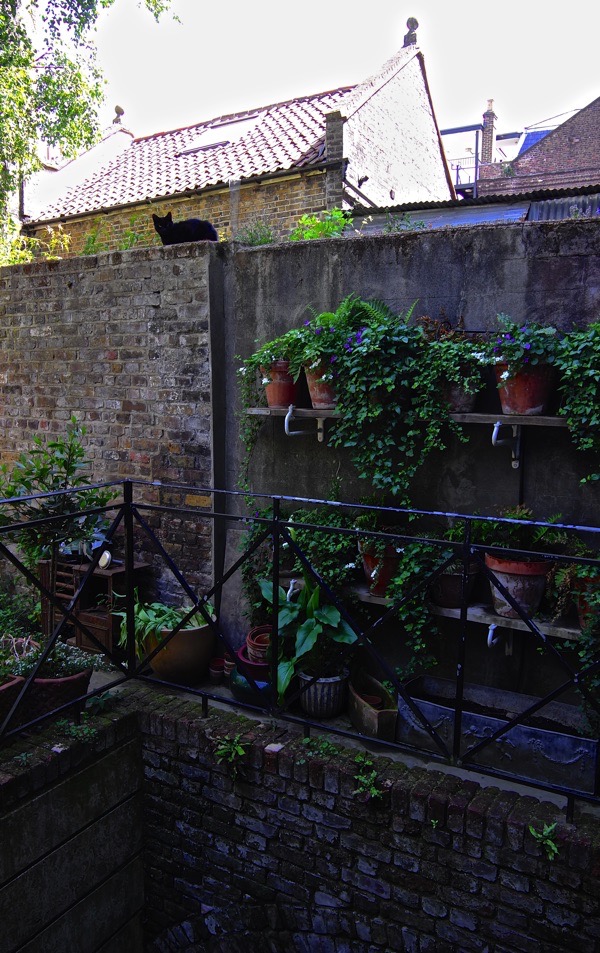
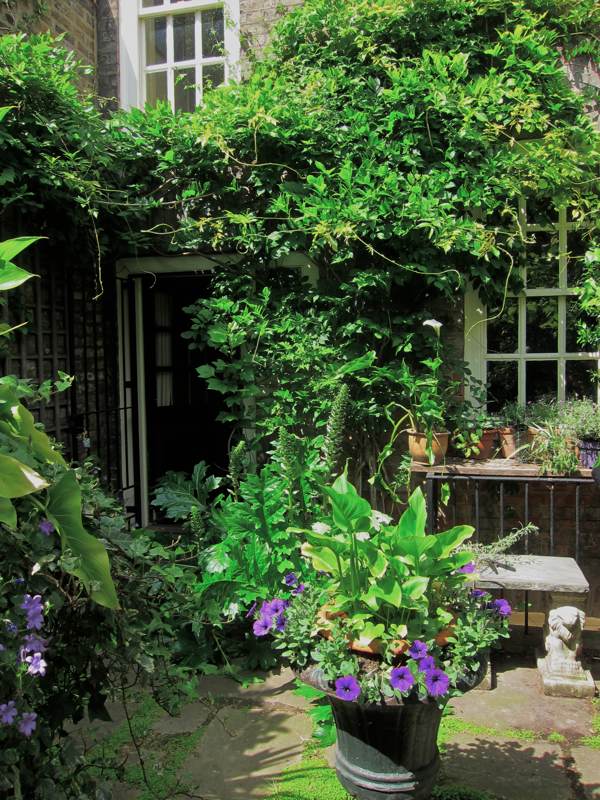
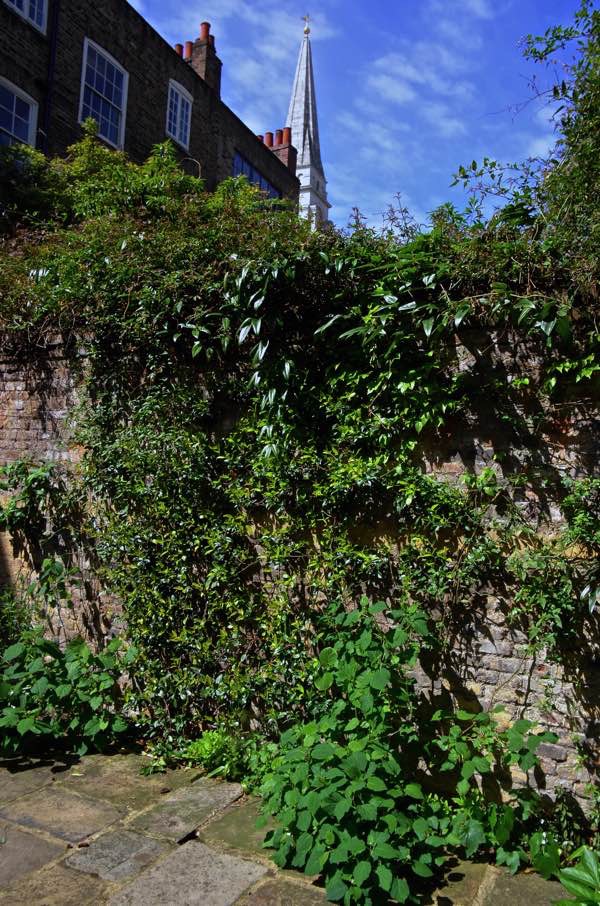
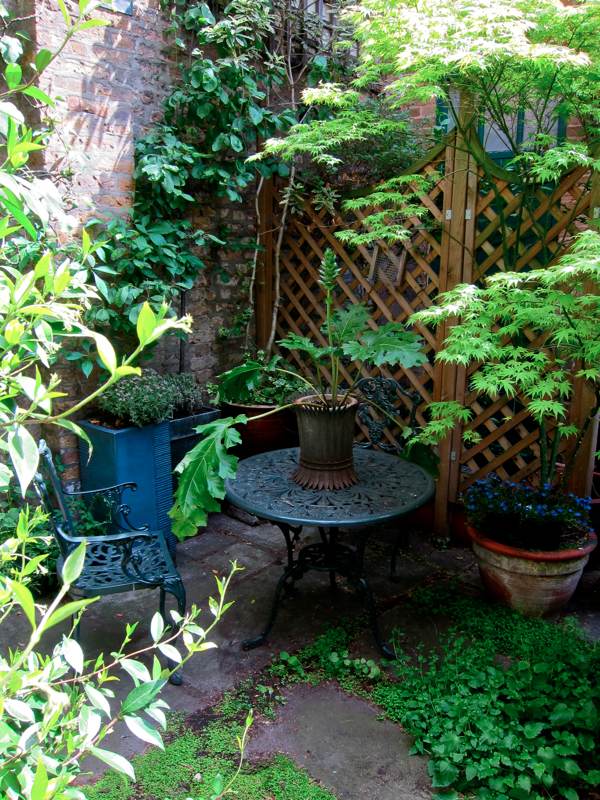
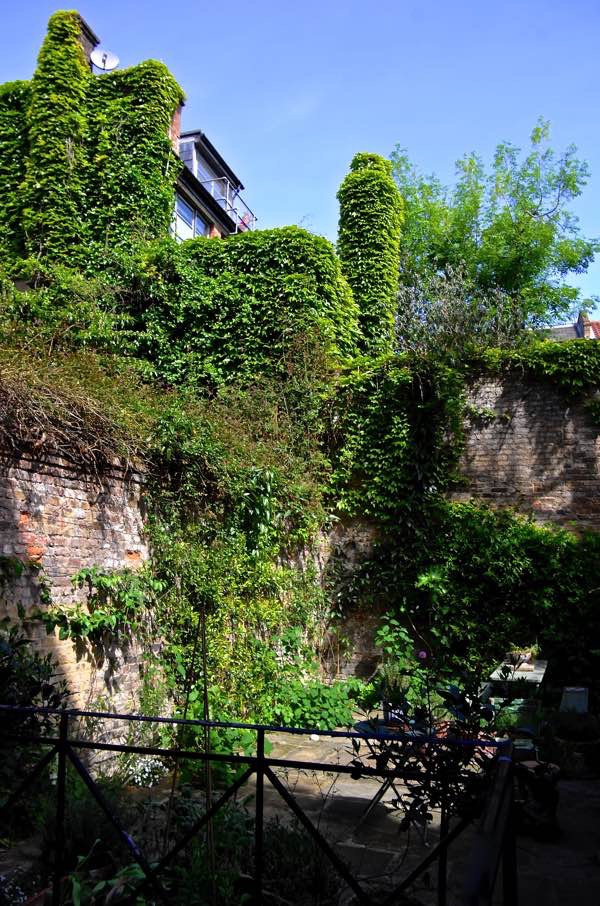
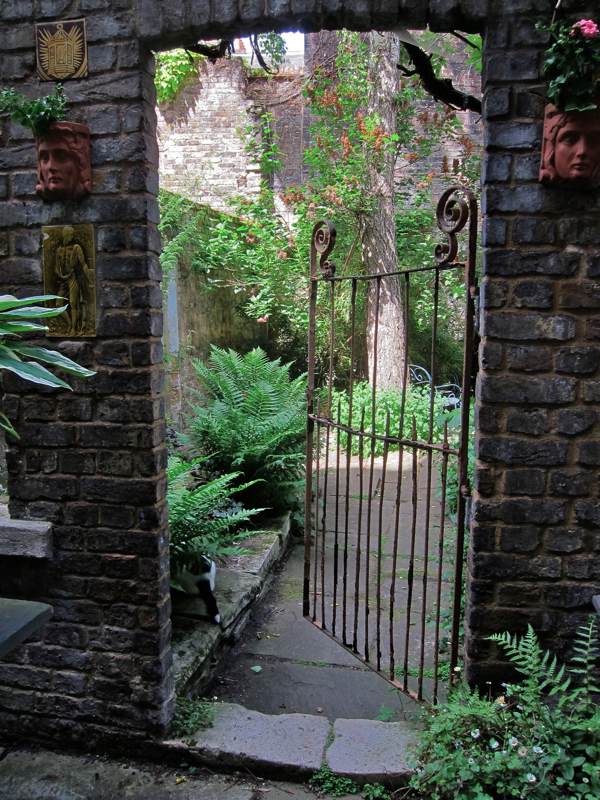
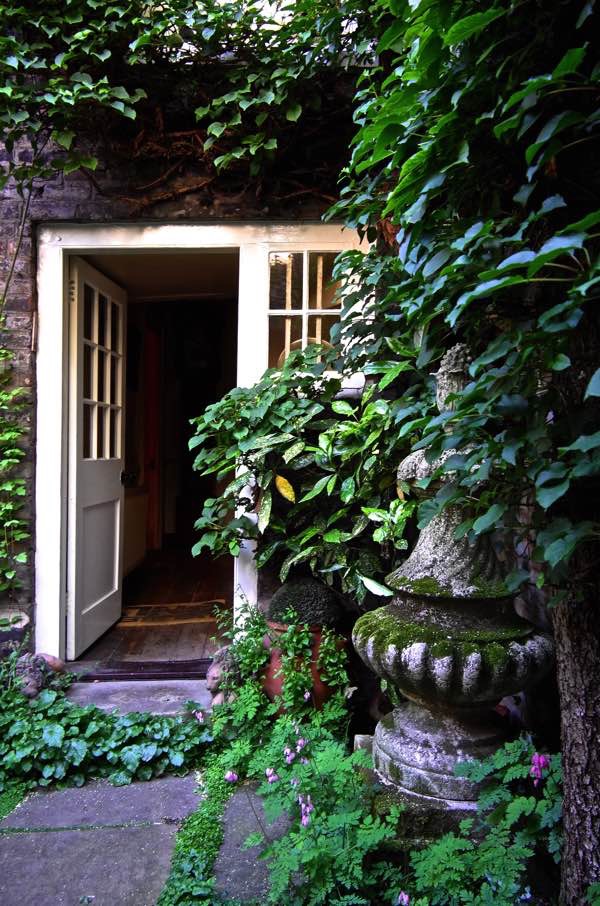
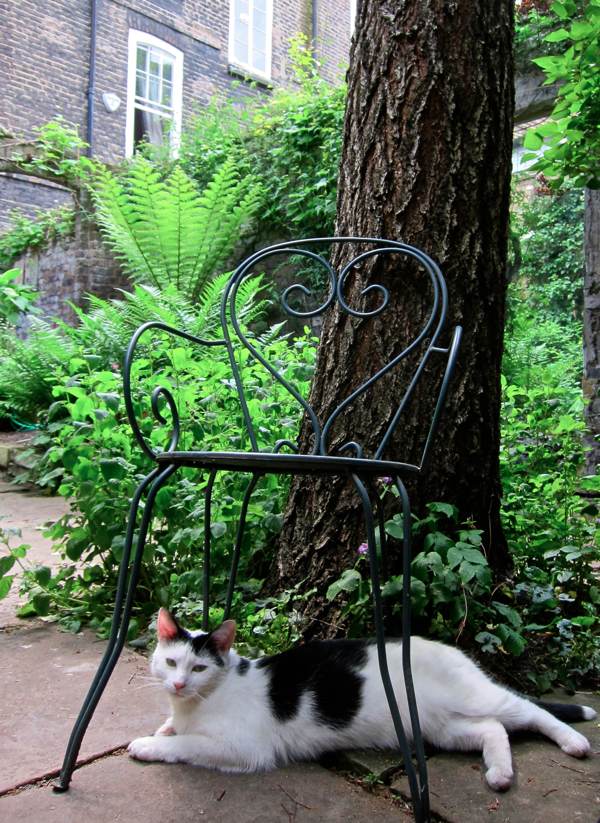
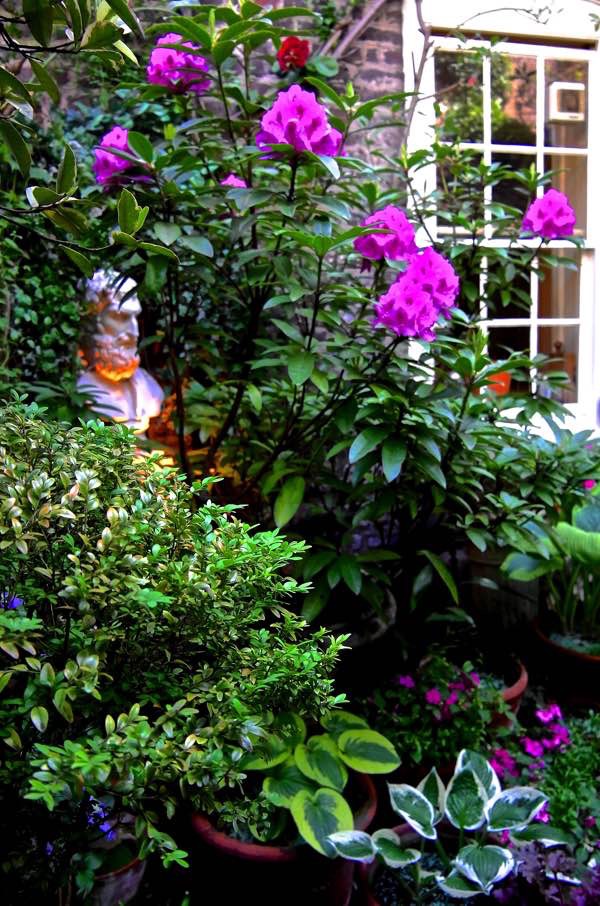
Gardens in Spitalfields are open for visitors this year on Saturday 10th June from 10am – 4pm. Find details at the website of the National Gardens Scheme. If you are clever you can even fit in my tour of Spitalfields on the same day.
These hidden enclaves of green are entirely concealed from the street by the houses in front and the tall walls that enclose them. If you did not know of the existence of these gardens, you might think Spitalfields was an entirely urban place with barely a leaf in sight, but in fact every terrace conceals a string of verdant little gardens and yards filled with plants and trees that defy the dusty streets beyond.
You may also like to read about
Eva Frankfurther’s Drawings
Click here to book for my next City of London walk on 4th June

There is an unmistakeable melancholic beauty which characterises Eva Frankfurther‘s East End drawings made during her brief working career in the nineteen-fifties. Born into a cultured Jewish family in Berlin in 1930, she escaped to London with her parents in 1939 and studied at St Martin’s School of Art between 1946 and 1952, where she was a contemporary of Leon Kossoff and Frank Auerbach.
Yet Eva turned her back on the art school scene and moved to Whitechapel, taking menial jobs at Lyons Corner House and then at a sugar refinery, immersing herself in the community she found there. Taking inspiration from Rembrandt, Käthe Kollwitz and Picasso, Eva set out to portray the lives of working people with compassion and dignity.
In 1958, afflicted with depression, Eva took her own life aged just twenty-eight, but despite the brevity of her career she revealed a significant talent and a perceptive eye for the soulful quality of her fellow East Enders.


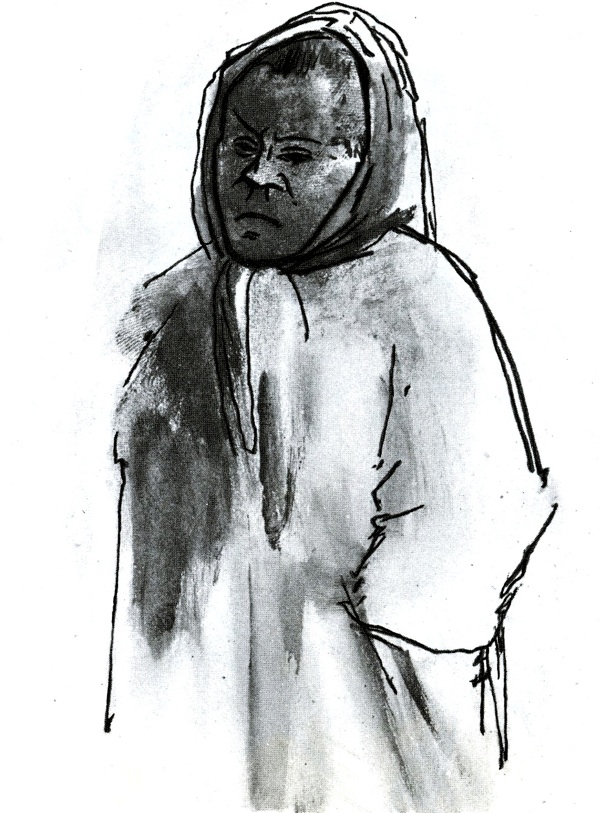


“West Indian, Irish, Cypriot and Pakistani immigrants, English whom the Welfare State had passed by, these were the people amongst whom I lived and made some of my best friends. My colleagues and teachers were painters concerned with form and colour, while to me these were only means to an end – the understanding of and commenting on people.” – Eva Frankfurther
Images courtesy Bishopsgate Institute
You may also wish to take a look at
The Fate Of The White Hart
Click here to book for my next City of London walk on 4th June
Click here to book for my Spitalfields walk tomorrow and beyond
If you are concerned about the proposed redevelopment of Liverpool St Station – which includes plonking a tower block on top of the grade II listed Great Eastern Hotel – take heed from the pitiful fate of the historic White Hart tavern just across the road. Click here to sign the petition to Save Liverpool St Station
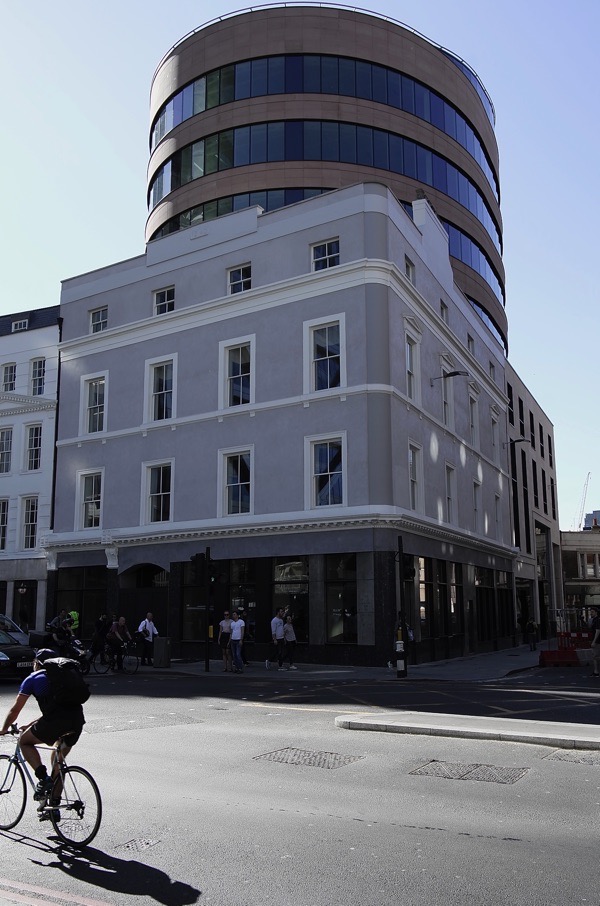
The White Hart (1246-2015)
Charles Goss, one of the first archivists at the Bishopsgate Institute, was in thrall to the romance of old Bishopsgate and in 1930 he wrote a lyrical history of The White Hart, which he believed to be its most ancient tavern – originating as early as 1246. “Its history as an inn can be of little less antiquity than that of the Tabard, the lodging house of the feast-loving Chaucer and the Canterbury pilgrims, or the Boar’s Head in Eastcheap, the rendezvous of Prince Henry and his lewd companions.” – Charles Goss
In Goss’ time, Bishopsgate still contained medieval shambles that were spared by the Fire of London and he recalled the era before the coming of the railway, when the street was lined with old coaching inns, serving as points of departure and arrival for travellers to and from the metropolis. “During the seventeenth and eighteenth centuries, The White Hart tavern was at the height of its prosperity.” he wrote fondly, “It was a general meeting place of literary men of the neighbourhood and the rendezvous of politicians and traders, and even noblemen visited it.”
The White Hart’s history is interwoven with the founding of the Hospital of St Mary Bethlehem in 1246 by Simon Fitz Mary, whose house once stood upon the site of the tavern. He endowed his land in Bishopsgate, extending beneath the current Liverpool St Station, to the monastery and Goss believed the Brothers stayed in Fitz Mary’s mansion once they first arrived from Palestine, until the hospital was constructed in 1257 with the gatehouse situated where Liverpool St meets Bishopsgate today. This dwelling may have subsequently became a boarding house for pilgrims outside the City gate and when the first licences to sell sweet wines were issued to three taverns in Bishopsgate in August 1365, this is likely to have been the origin of the White Hart’s status as a tavern.
Yet, ten years later in 1375, Edward III took possession of the monastery as an ‘alien priory’ and turned it over to become a hospital for the insane. The gateway was replaced in the reign of Richard II and the date ‘1480’ that adorned the front of the inn until the nineteenth century suggests it was rebuilt with a galleried yard at the same time and renamed The White Hart, acquiring Richard’s badge as its own symbol. The galleried yard offered the opportunity for theatrical performances, while increased traffic in Bishopsgate and the reputation of Shoreditch as a place of entertainments drew the audience.
“Vast numbers of stage coaches, wagons, chaises and carriages passed through Bishopsgate St at this time,” wrote Goss excitedly, “Travellers and carriers arriving near the City after the gates had been closed or those who for other reasons desired to remain outside the City wall until the morning, would naturally put up at one of the galleried inns, or taverns near the City gate and The White Hart was esteemed to be one of the most important taverns at that time. Here they would find small private rooms, where the visitors not only took their meals but transacted all manner of business and, if the food dispensed was good enough, the wine strong, the feather beds deep and heavily curtained, the bedrooms were certainly cold and draughty, for the doors opened onto unprotected galleries – but apparently they were comfortable enough for travellers in former days.”
The occasion of Charles Goss’ history of The White Hart was the centenary of its rebuilding upon its original foundations in 1829, yet although the medieval structure above ground was replaced, Goss was keen to emphasise that, “When the tavern was taken down it was found to be built upon cellars constructed in earlier centuries. Those were not destroyed, but were again used in the construction of the present house.” This rebuilding coincided with Bedlam Gate being removed and the road widened and renamed Liverpool St, after the Hospital of St Mary Bethlehem had transferred to Lambeth in 1815. At this time, the date ‘1246 ‘- referring to the founding of the monastery – was placed upon the pediment on The White Hart where it may be seen to this day.
“This tavern which claims to be endowed with the oldest licence in London, is still popular, for its various compartments appear always to be well patronised during the legal hours they are open for refreshment and there can be none of London’s present-day inns which can trace its history as far back as The White Hart, Bishopsgate,” concluded Goss in satisfaction in 1930.
In 2011, permission was granted by the City of London to demolish all but the facade of The White Hart and in 2015 the pub shut for the last time to permit the construction of a nine storey cylindrical office block of questionable design, developed by Sir Alan Sugar’s company Amsprop. Thus passed The White Hart after more than seven centuries in Bishopsgate, and I am glad Charles Goss was not here to see it.

The White Hart by John Thomas Smith c. 1800

The White Hart from a drawing by George Shepherd, 1810

White Hart Court, where the coaches once drove through to the galleried yard of the White Hart
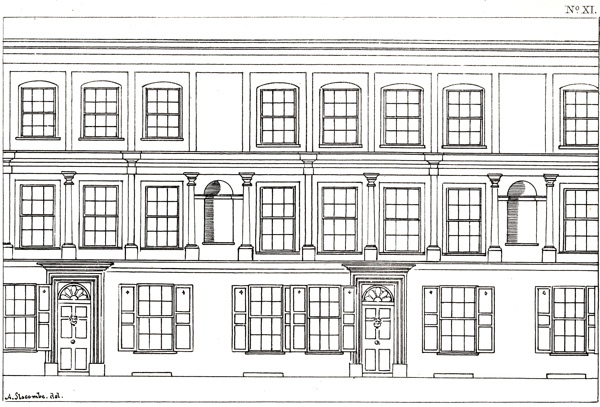
Design by Inigo Jones for buildings constructed in White Hart Court in 1610

Seventeenth century tavern token, “At The White Hart”

Reverse of the Tavern Token ” At Bedlam Gate 1637″

The White Hart as it appeared in 1787

The White Hart, prior to the rebuilding of 1829
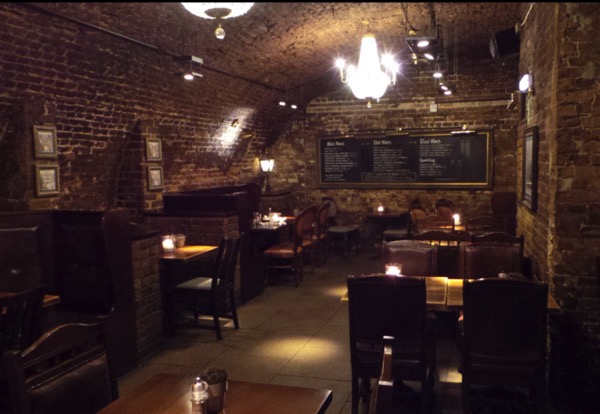
“When the tavern was taken down it was found to be built upon cellars constructed in earlier centuries. Those were not destroyed, but were again used in the construction of the present house.” Charles Goss describing the rebuilding of 1829. These ancient vaults were destroyed in the current redevelopment.

The White Hart in 2015
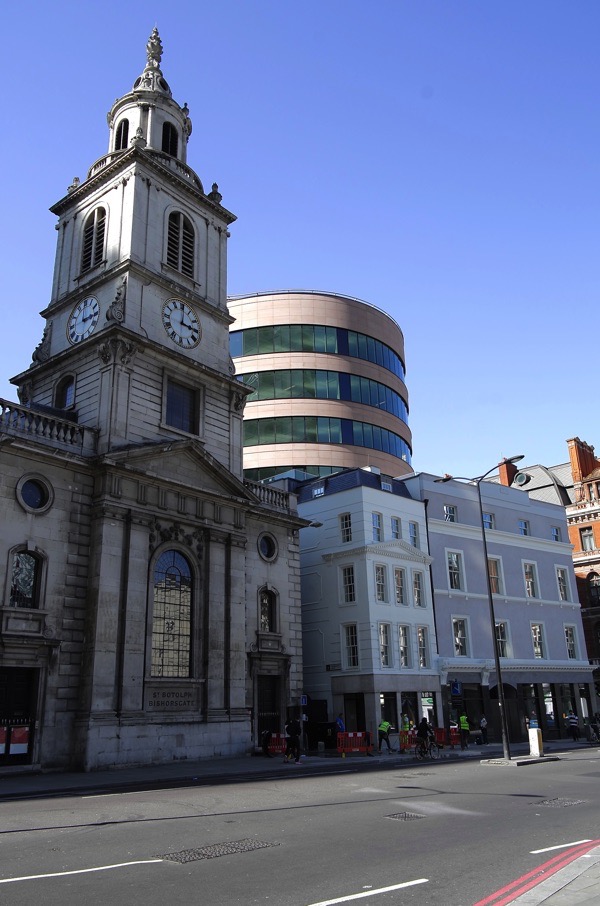
The White Hart today
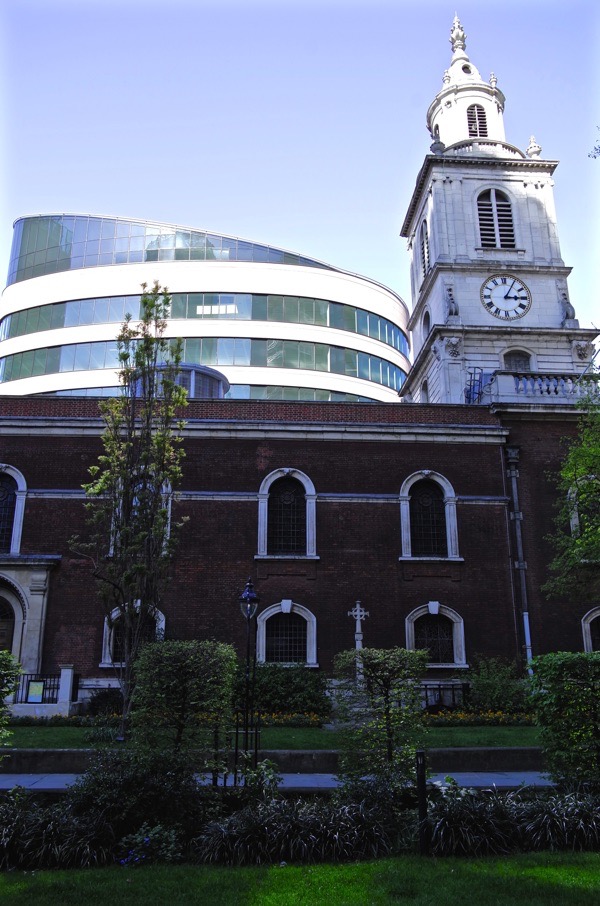
Seen from the churchyard of St Botolph’s Bishopsgate by James Gold, 1728
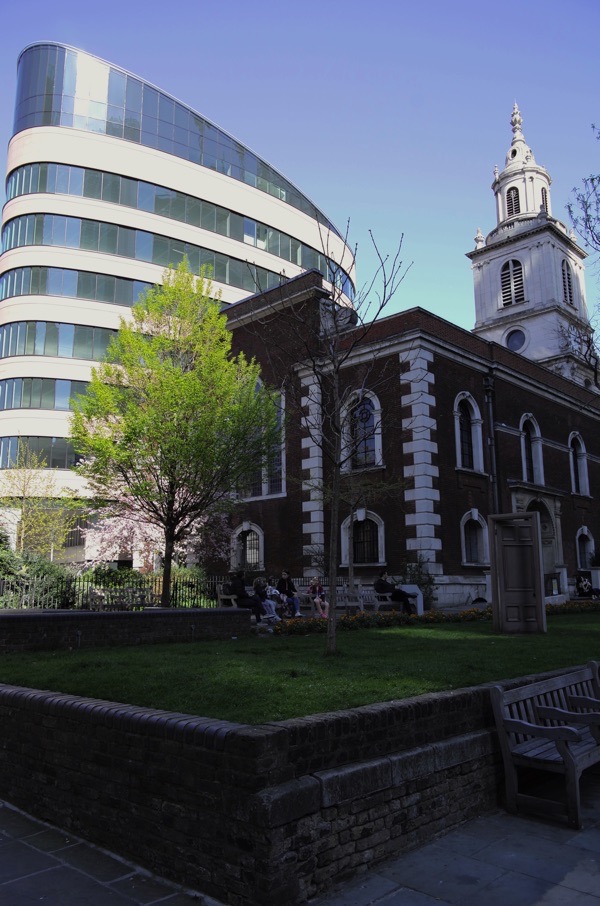
Seen from the south west
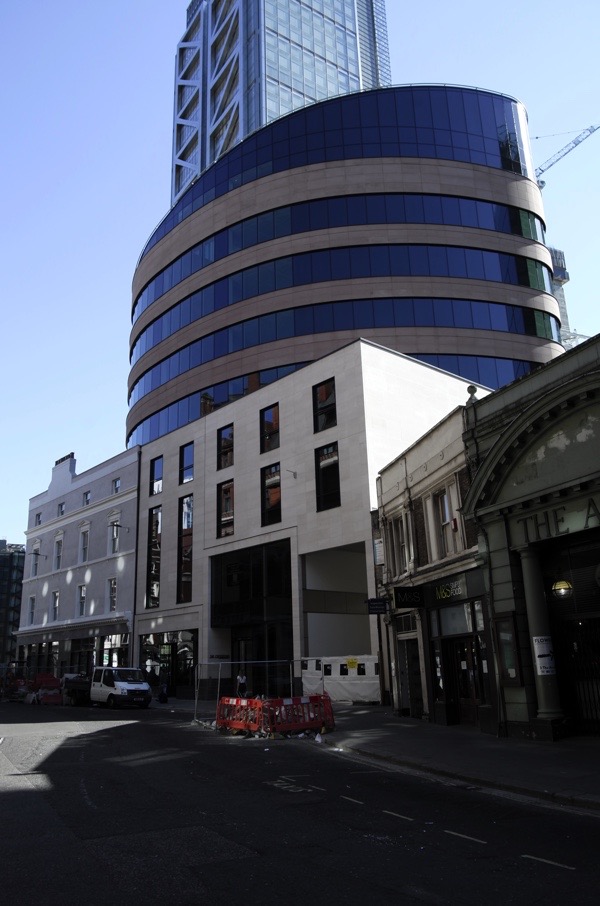
Seen from Liverpool St
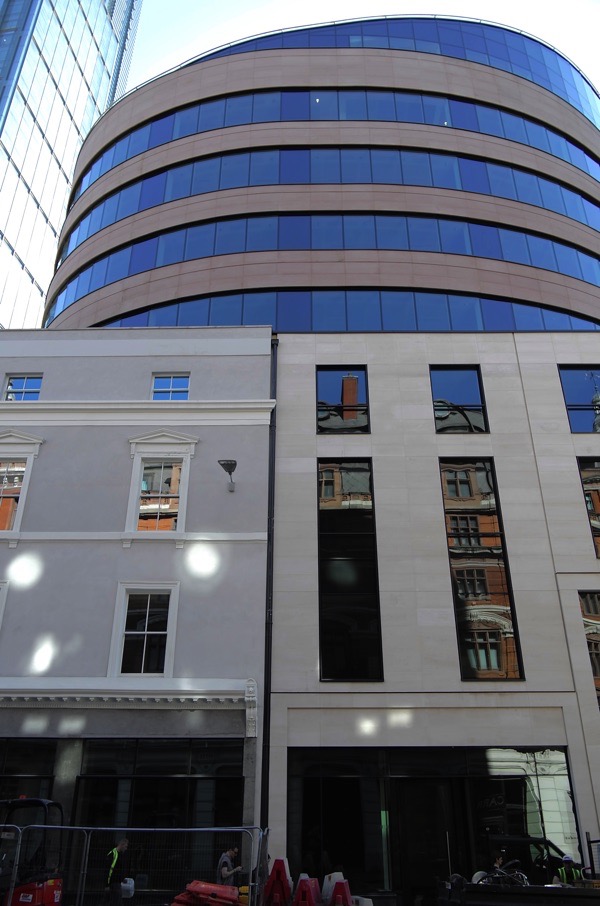
The meeting of the old and new in Liverpool St
Archive images courtesy Bishopsgate Institute
You may also like to read about
Griff Rhys Jones on Liverpool St Station
Towering Folly at Liverpool St Station
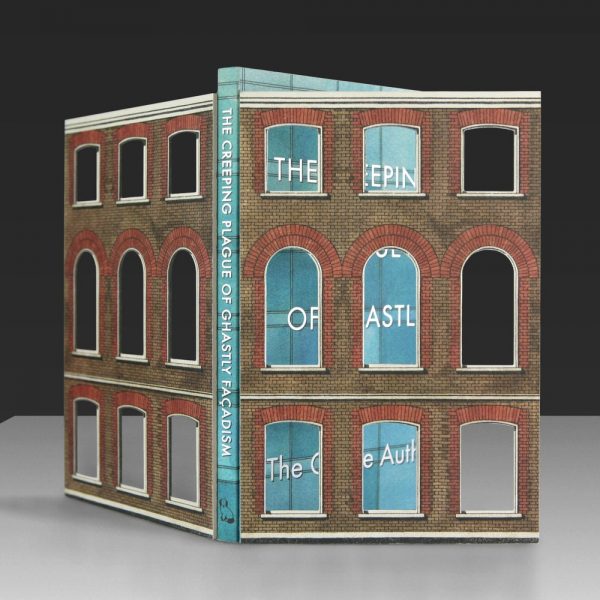
CLICK HERE TO ORDER A COPY OF THE CREEPING PLAGUE OF GHASTLY FACADISM
Stephen Hicks, The Boxer Poet
Click here to book for my Spitalfields walk next Saturday and beyond
Click here to book for my next City of London walk on 4th June
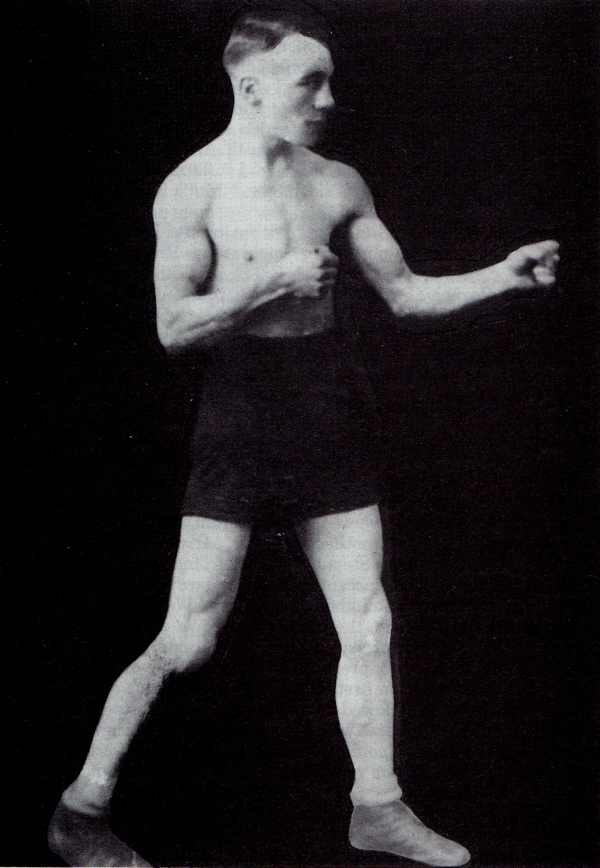
It is my pleasure to publish this account of of the life of Stephen “Johnny” Hicks, the East End boxer-poet, as told in his own words.
“When I turned professional, it was the greatest moment of my life and I meant to make the most of it. On my nineteenth birthday I signed a contract with Harry Abrahams for half-a-dozen ten round bouts at two pounds ten shillings each bout. I lost the first one in seven rounds against Wally Gilbert of Fulham who was a much more experienced boxer, but I won the second with a knock-out over Frankie White of Clerkenwell in the second round.
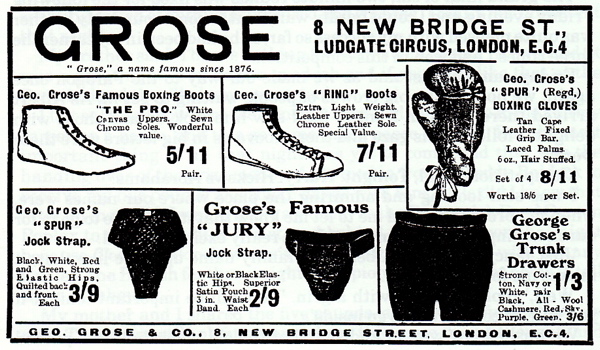
There have been many famous boxing venues in London’s East End but the most noted of all was the Premierland in Back Church Lane. It was a converted warehouse that held about five thousand spectators and almost every paid boxer of note must have fought there during its nineteen years reign from 1911 to 1930. My own luck at this time seemed to be in. Joe Goodwin of Premierland had billed me up for ten rounds with Alf Sheaf of Customs House. In 1927 I had turned twenty-one and I was in my boxing prime. I had a hard fight with Alf Sheaf and just managed to win on points. It was such a good contest that we had a further two meetings at the same venue, and what’s more I got three pounds for each bout. But all my hopes were shattered in my next bout at Premierland when I met an unknown boxer called Tommy Mason who knocked me out in the first round. I’m glad my brother Albert was not there that night. He would have done his nut I think.
I had a rest from boxing by visiting the hop country in Kent with Albert. We picked hops for a month and got quite bronzed and suntanned. We also kept ourselves fit and well by taking long walks through the countryside. Home again, I found that Joe Goodwin of Premierland had billed me for another ten rounds with former Navy champion “Stoker” Cockerel. He wore black tights and was very unorthodox, but it was great fight which ended in a draw after both of us had taken a count. So I regained my place at Premierland. I had learned one thing about a boxer’s life that if you give the fans their money’s worth you will never be out of a job.
On my next fight at Premierland, I got my first taste of a cauliflower ear. Although it was very painful, I got a piece of boracic lint soaked in surgical spirits and layed it on my ear. I had a stiffener of cardboard handy and bandaged it with the lint to the ear. When going to bed, I had to lay on my ear which was the left one. It was very painful of course, but by the next morning it was back to its normal size, although it was still very tender to the touch and it had to be bathed again in boiling water and in surgical spirits.
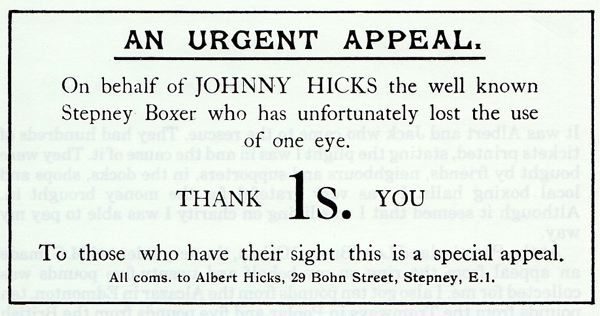
Then on Whit Monday in June 1930, when I entered the annual open air featherweight at the Crystal Palace, I received an unlucky blow in my right eye from Harry Brown of Northampton which finished me as a professional boxer. I did not realise how serious it was until the next morning when I paid a visit to the Royal Westminster Ophthalmic Hospital and was treated for a haemorrhage and laid on my back for almost six weeks with both eyes bandaged. They could nothing for me and the sight of my right eye was lost forever. I had a job to keep steady on my feet but my brothers Albert and Jack were with me. I thought, “in boxing I was taught to keep a cool head at all times, so I must try to do this now to fight for my existence.”
Albert and Jack came to my rescue. They had hundreds of tickets printed stating the plight I was in and the cause of it. They were bought by friends, neighbours and supporters, in the docks, shops and local boxing halls. I was very grateful for the money that was brought in, although it seemed I was living on charity I was able to pay my way. As soon as I was fit in mind and body for any kind of labour I turned to the docks, but there were hundreds of other unemployed labourers and so every morning it was a fight to the finish in the scramble to get a day’s work. I actually saw the mounted police with batons raised, disperse the hungry mob whose only criminal offence was a willingness to work.
It was 1936 and I was thirty years of age, when I joined Albert in the blacksmith’s shop. We both had experience beforehand of using a fourteen pound hammer as we once did six weeks work digging roads for the Stepney Borough. It certainly came in handy now as we were using the big hammer eight hours a day. In the summer evenings after work, I used to sit in our backyard at home, where we had grown a garden of mixed flowers, and relax in the thick grass that grew abundantly. Among the animals we had as pets were two cats, two rabbits and a tortoise, I used to get much amusement watching them greet each other by almost touching noses. It seemed so peaceful there and so quiet that I often fell asleep.
I was happy and contented, I could not see the war clouds hovering ever near. My home in Bohn St was bombed but luckily I was not in it at the time. I was thirty-four years of age when, because of my eye, I failed my medical test for military service. I was now living in one small room in John Islip St in Westminster. There were plenty of jobs for everyone, and it was while working on a steel cutting machine in my employer’s yard that I composed my first poem.
I always had the idea I could write poetry, as I had written a few on scraps of paper just for the fun of it. The first poem came to me on the Bridge Wharf in Westminster, when in the corner of the yard I noticed a small white flower growing bravely against a host of weeds and brambles and I thought how wonderful it looked in its struggle for survival. I thought that it must surely win through with such daunting courage, and so the first poem was born.
It was during March 1963 that I bought a ticket for a poetry reading at the Toynbee Hall in Aldgate featuring Dame Sybil Thorndike. I showed her a few of my poems and she said, “They are charming, can I keep them?” It was a week later that I received a letter from the famous actress from her home in Chelsea. “Dear Steve Hicks, Your poems are charming, I read them with great pleasure, thank you so much for giving them to me, all good wishes. Yours sincerely Sybil Thorndike.” One day I entered a poetry competition without success, but then I received a letter from the organiser, who reported that John Betjeman who judged the competition said that, “he hopes I continue to write.” Well of course I did. A defeat to me is nothing, I have had too many of them in the past.”
Copies of Stephen Hicks’ autobiography “Sparring for Luck,”also containing many of his poems, are available from Brick Lane Bookshop.
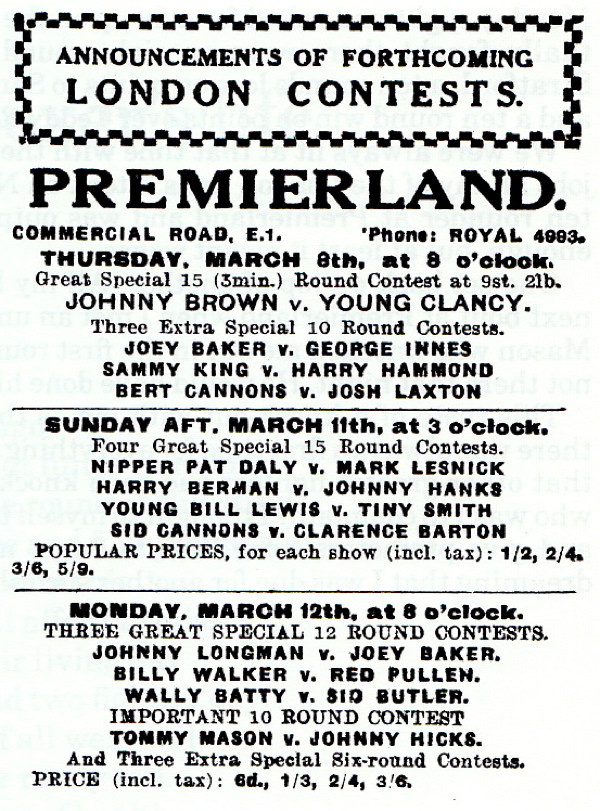
 The Boxer Speaks
I took up boxing just for sport,
and though not very clever
I’m really glad that I was taught
the art of slinging leather.
I was always at my worst
with too many back pedals
And so I started out at first
for cutlery and medals.
So when I learnt to stand my ground
I then began to figure
That I could punch out every round
with all the utmost vigor.
And thus I carried on that way
with very small expense
‘Til I was brimful, one might say,
of much experience.
The big moment was now at hand
and I was mad to go
To get fixed up at Premierland
as an amateur turned pro.
Needless to say, my luck held out,
for there and other shows,
With hard earned cash from every bout
for punches on the nose.
I’ve had black eyes and swelled up ears
and K.O. once or twice
But I enjoyed it through the years
a fighter at cut price.
And through it all I say with pride
most boxers are great pals
Because they will stand by your side
if everyone else fails.
The Boxer Speaks
I took up boxing just for sport,
and though not very clever
I’m really glad that I was taught
the art of slinging leather.
I was always at my worst
with too many back pedals
And so I started out at first
for cutlery and medals.
So when I learnt to stand my ground
I then began to figure
That I could punch out every round
with all the utmost vigor.
And thus I carried on that way
with very small expense
‘Til I was brimful, one might say,
of much experience.
The big moment was now at hand
and I was mad to go
To get fixed up at Premierland
as an amateur turned pro.
Needless to say, my luck held out,
for there and other shows,
With hard earned cash from every bout
for punches on the nose.
I’ve had black eyes and swelled up ears
and K.O. once or twice
But I enjoyed it through the years
a fighter at cut price.
And through it all I say with pride
most boxers are great pals
Because they will stand by your side
if everyone else fails.
 Some People
Some people eat and some do not.
It depends on how much cash they’ve got.
So if you’re hungry now I guess
Well, next week you may be getting less.
Some People
Some people eat and some do not.
It depends on how much cash they’ve got.
So if you’re hungry now I guess
Well, next week you may be getting less.
We don’t have much left over After everything is bought, Many are in clover But some don’t get what they ought.
Things that we need throughout the day Are so fantastically dear. It’s all right for them down Pall Mall way But we don’t get much round here.
The toffs of Knightsbridge and Mayfair Are blessed with all good things They’re never short of anything That’s what the good life brings.
I’ve often wondered to myself ‘Why does this have to be?’ For they’ve got nearly all the wealth And there’s nothing for you or me.”
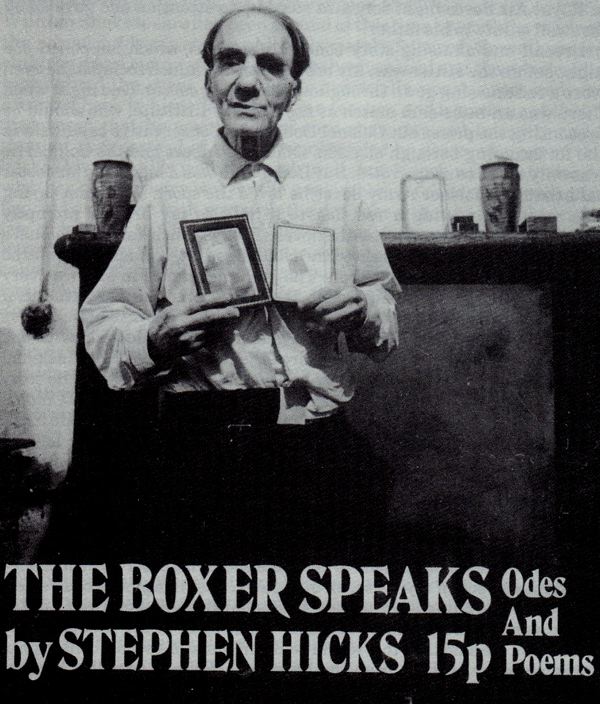 Stephen Hicks (1906-1979) on the cover of his book of poems published in 1974












