
Ivor Robins, Fruit & Vegetable Purveyor
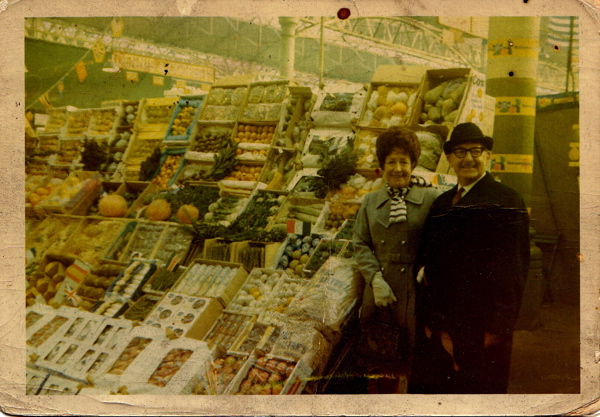
Here you see Ivor Robins’ father Maurice and mother Ethel at the Spitalfields Market around 1965, a respectable couple looking very nicely turned out in their Winter clothes, with a magnificent display of the fruit and vegetables that comprise the substance of the family business as their proud backdrop. I found this evocative photograph in Ivor’s office at the New Spitalfields Market in Leyton recently when I went over to pay him a call.
Always dapper in a velvet-collared overcoat, with a fresh carnation in his buttonhole every day for the last fifty years – of the subtle shade of red that is known as ‘clove’ – Ivor Robins is renowned in the market as the gentleman purveyor of fruit and vegetables. “Mr Carnation,” they once called him. A born sportsman who became an heroically ambitious fruit and vegetable seller, his ascendancy has been the culmination of the modest enterprise begun by his grandfather in the Spitalfields Market in 1899, reaching its zenith in 2007 when Ivor became Master of the Worshipful Company of Fruiterers in the City of London.
“My father joined my grandfather Michael in Spitalfields when he was just fourteen years old – even when he was still at school he helped out at weekends – but then my grandfather got cancer and my father had to take over suddenly in 1920. Around 1950, I was at school possibly going on to university, but after three or four years intensive study, I got a thing in my head that I didn’t want to continue with my studies. I preferred the life at the market because I was very sport-oriented at the time, and the beauty of this business was that it started at five in the morning and finished at twelve, which meant I could then go and play cricket and football all day to my heart’s content.
I did enjoy the business. It was totally different then because fifty per cent of produce was sold under auction at the London Fruit Exchange in Brushfield St, only English produce was sent up from the farm for direct sale. You really had to know what you were doing to buy at auction, you needed a developed sense of taste and smell so that you could buy ahead, recognising when things were going to run out. I remember in 1960, all of a sudden South Africa said they didn’t want to sell their fruit under auction, they found an agent and distributed it themselves in the market. Then other countries stopped too and selling fruit at auction ceased.
We were just wholesale in 1950, and for about ten years I dabbled in retail, opening up five shops in North London but I sold that up in 1962 when I opened up ‘Hotel Purveyors,’ We went from strength to strength, supplying to gentlemen’s clubs, the Carlton, Athenaeum, Oxford & Cambridge, National Liberal, a number of leading restaurants and we specialised in private dining rooms in the City for banking firms. In the late sixties, there was a trend towards exotic produce and although there were half a dozen dealers in Covent Garden, there wasn’t anybody selling it in Spitalfields, so I had a lorry at Covent Garden and was the first to bring it over here and it gave us a spectacular advantage. That was how I blossomed out into the catering business, there was such a call for Aubergines, Avocados, Peppers, Lychees, Paw Paws and fresh Mint, Rosemary and Bayleaves.
I have a secretary who has worked for me for forty years and I still pick her up in my car at six o’ clock each morning and we go through the tickets and check them against the stock and she enters them in the ledger. All the orders come in through the night, the staff are on at midnight and deliveries go out between two thirty and six thirty. At seven, I go into the warehouse and cold store and check the stock and then I know what we need to carry, so between seven and eight-thirty I buy the best part of what we will require for the following day.”
Today, Ivor maintains the same modest routine as a fruit and vegetable wholesaler that his grandfather and father would recognise, turning at up work at dawn five days a week, buying stock in person and supervising the paperwork in a tiny office in a corner of the warehouse. Blessed with rare courtesy and possessing a dignified respect for everyone he encounters, he remains a popular figure in the market.
Ivor confessed to me the only significant disagreement he ever had with his father, which he remembers vividly to this day. As a young man, Ivor had sold some boxes of apples, when his father returned from the auction with the news that the price had gone up – since the apples had not yet left the market, Ivor suggested he tell the customer that they had increased. Ivor’s father was outraged and Ivor learnt the imperative of being a man of your word, crucial if you are to maintain a reputation for fair dealing that will last your tenure in the market. And Ivor’s tenure has been distinguished, as he confided to me, his eyes gleaming with undemonstrative pride.
“Over the last twenty-five years, I have been very fortunate to meet and befriend, and be befriended by top chefs. For my installation as Master of the Worshipful Company of Fruiterers, Brian Turner, Gary Rhodes and Albert Roux cooked the dinner for me and two hundred and seventy guests at the Mansion House . Never had so many people been catered for dinner at the Mansion House before, even the Lord Mayor was impressed! It was a wonderful year, I think I did one hundred and thirty five functions. I was very privileged and very lucky that my friend John Stoddart was Lord Mayor that year, and together we attended functions with the Queen Mother, the Queen (three times), the Prince of Wales (twice) and Princess Anne (twice). It was like a fairytale, quite magical.
Most fathers want something better for their son. I went to Grammar School and I was determined my son would go to Public School and University. It puts a certain polish on them. He didn’t appreciate the value of it at the time, but over the last twenty years he has said, ‘How lucky I was to go there.’ He’s a stockbroker now, and he has no intention of going into the business and I don’t blame him.”
I could not ignore the poignancy in Ivor’s story – he has exceeded the aspirations of his father and grandfather to the paradoxical degree that, after more than a century of market trading, he is proud to admit the story ends with him. In fact, Ivor Robins sold off the wholesale side of the business five years ago and now just serves his long-term catering customers. Sporting his Worshipful Company of Fruiterers’ tie with its discreet image of Adam & Eve with the apple under the tree, as a symbol of his achievement, he is a satisfied man who has fulfilled his ambitions in life and yet continues to do the work he enjoys. “Mr Carnation” is in his element.

The Spitalfields Market Golfing Society with Ivor (centre) as Secretary, 1965.
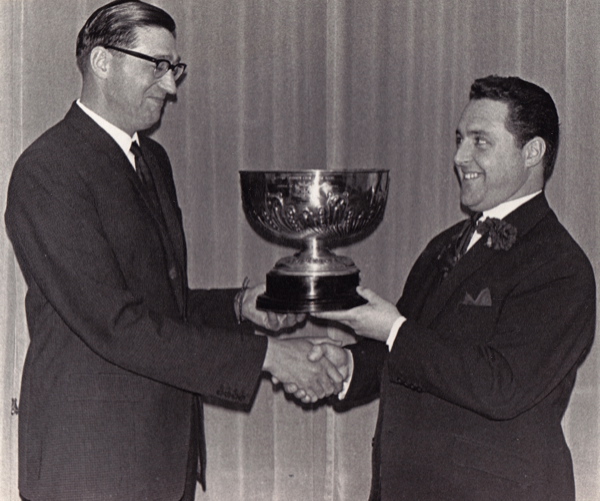
Ivor receives the cup from Desmond Auchin on behalf of the Market Golfing Society in 1965.

The Evening News and Star, Wednesday, December 2nd, 1964

At a trade fair, Ivor proudly points out some of the very first air-freighted strawberries and asparagus that he imported from the USA in 1972.

Ivor shows the asparagus he imported from the USA to American Ambassador Walter Annenberg in 1972

The Chilean Ambassador samples fruit from his own country imported by Ivor in 1973.
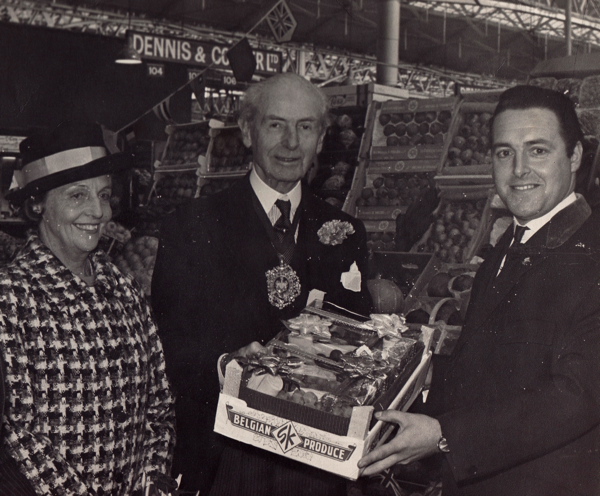
Ivor presents Belgian hothouse grapes to the Lord Mayor of London in the Spitalfields Market, 1975.

Ivor Robins, purveyor of fruit and vegetables.
The Cobblers of Spitalfields
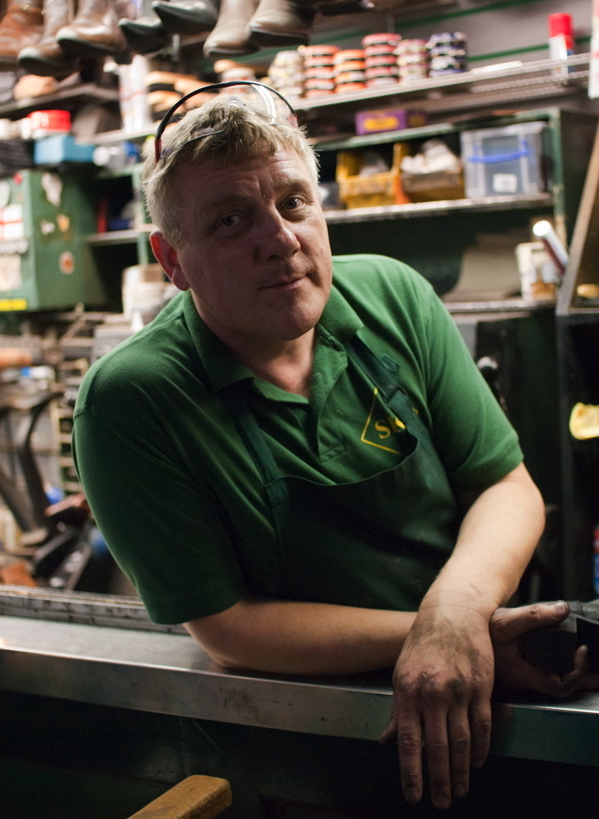
“When I left school at sixteen, I told the careers officer I didn’t want an office job, I wanted to do something creative, so he set up appointments for me with a shoe repairer and a watch repairer,” Gary Parsons, the proprietor of Shoe Key in the Liverpool St Arcade, told me last week.“The interview with the shoe repairer was on a Friday and I started work on the Monday, so I never went to the other interview,” he explained with the alacrity of one who now describes himself not as a shoe repairer but “the shoe repairer.”
Shoe repairmen have long been my heroes, the last craftsmen on the high street – where you can still walk into a workshop, inhale the intoxicating fragrance of glue and watch them work their magic on your worn out shoes. Even better than new shoes, there is something endearing about old shoes beautifully repaired. And so, in the heartfelt belief that – although it is commonplace – the modest art of shoe repair should not be underestimated, I persuaded Contributing Photographer Sarah Ainslie to accompany me on a sentimental pilgrimage to pay homage to some of my favourite East End cobblers.
When the crash happened in the City, news crews descended upon Gary at Shoe Key in Liverpool St to learn the true state of affairs from the authority. They wanted to know if city gents were getting more repairs rather than buying new shoes, or if the crisis was so deep that they could not even afford to mend the holes in their soles. Yet Gary dismissed such scaremongering, taking the global banking crisis in his stride. “There was a slump in the winter of 2008, but since July 2009 business has been steady,” he informed me with a phlegmatic understatement that his City clients would appreciate.
Seventeen years ago, Gary built this narrow bar at the entrance to the Liverpool St Arcade where he and his colleague Mike Holding work fifty-four hours a week, mending shoes with all the flamboyant theatrics of cocktail waiters. They felt the blast of the Aldgate bomb here in 2005 and each winter they suffer the snow landing upon their backs, so three weeks ago they hung up a new tarpaulin to afford themselves some shelter from the future whims of fortune.
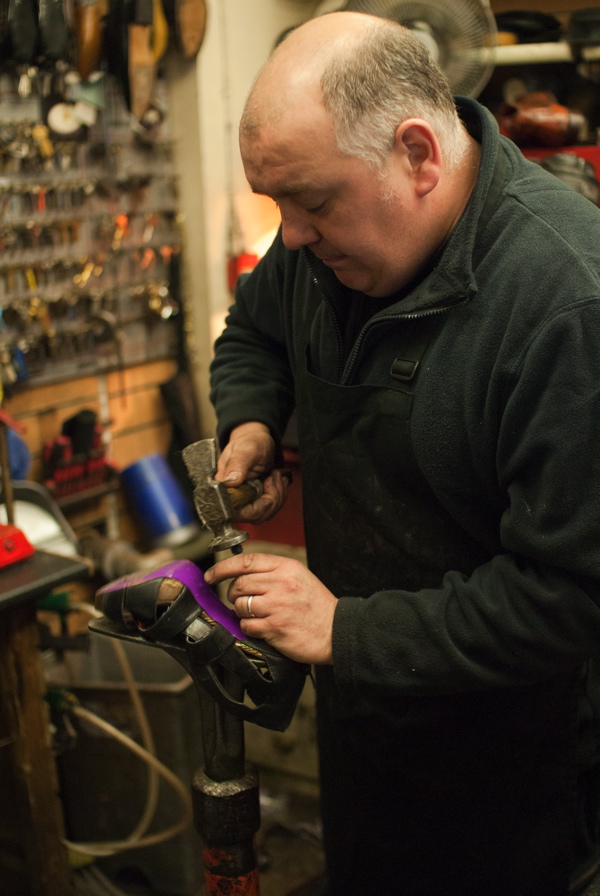
Round the corner from Shoe Key, I visited Dave Williams, a gentleman with time for everyone, comfortable in his enclosed booth in Liverpool St directly opposite the station. Dave told me he was the third generation in his trade,“My grandfather Henry Alexander and my father Norman were both saddlers and harness makers, my father he’s a Freeman of the City of London now. They were from an Irish immigrant family in Stepney. In those days, if people had trouble with their boots they took them along to the harness maker and gradually the trade in repairs took over. My training was at my father’s knee. I left school at sixteen and I have been doing this twenty-seven years. I think this trade is pretty much recession proof. It’s always been a good trade and I do very well thankyou.” In contrast to Gary at Shoe Key, Dave was full of self-deprecatory humour. Passing bags of shoes over to a couple of girls, “That’s two satisfied customers this year!” he declared to me with a cheeky smirk, the ceaseless repartee of a man who is sole trader and star turn in his own personal shoe repair theatre.
Over in Camomile St, at the base of the tall Heron Tower, Kiri and George, the energetic double act at Michael’s Shoe Care, enjoy the privilege of having a door on their neat little shop, where everything is arranged with exquisite precision. The additional service at Michael’s Shoe Care is the engraving of trophies, cups, plaques and statuettes which – as George explained to me enthusiastically – are in big demand now that corporate life has become increasingly about hitting targets and setting employees in competition against each other. George, who has been here twenty years, leaned across with eyes gleaming in anticipation and confided his hopes to me, “A lot of places closed down round here recently and thousands of people were moved out, but the new build opposite will be complete next year with a lot of new office space to rent. It’s just a question of waiting and more people will come to us.” I glanced up at the gleaming tower above, and thought of all the engraved trophies that are going to be required to reward all the corporate striving upon its forty-seven floors. Yet in spite of the pathos of this bizarre appropriation of sports day trophies, I was happy in the knowledge that Kiri & George will be secure in their jobs for years to come.
Up at Well Heeled in Bethnal Green, Ken Hines – a veteran of forty-seven years of shoe repair – had a different angle which he delighted to outline.“I was going to be a blacksmith but there was no work in it, so I did shoe repair instead. I like doing it, I’ve always enjoyed doing it. My father was a docker and my family were all butchers in Wapping, my brother still has the butchers down the street. When I started here twenty-seven years ago, there were four shoe repairs in Bethnal Green now I am the only one. We don’t want to modernise. We don’t want to go modern, we’re not a heel bar. We’re going back to the beginning of the nineteenth century. There’s a lot of people bringing vintage shoes and we can take them apart and put them back together again. There’s nothing we can’t do to a pair of shoes here.”
Ken invited me into his workshop, crowded with magnificent well-oiled old machines, prized hand tools and shelves piled with dusty bags of shoes that no-one ever collected.“This stitching machine is over a hundred years old, we use it more than ever.” he said placing a hand affectionately on the trusty device. “Soles should always be stitched on. You buy a pair of shoes and the soles aren’t stitched on, they’re no good.” he declared, pulling huge sheets of leather from a shelf to demonstrate that every sole is cut by hand here. While Ken stands sentinel over the traditions of the trade, training up an apprentice at the old shop in Bethnal Green, his enterprising son Paul has opened four more branches of Well Heeled in shopping centres. But such ambition is of little interest to Ken,“There’s a lot of knowledge you pick up, being around older men,” he informed me, getting lost in tender reminiscence as he lifted his cherished shoe repair hammer,“This was given to me by an old boy thirty five years ago. It was over eighty years old then and I still use it every day.”
Our final destination was Shoe Care at the top of Mare St in Hackney where John Veitch, a magnanimous Scotsman, welcomed us. “I done it since I left school.” he revealed proudly, speaking as he worked, hammering resolutely upon a sole,“I saw one of the boys doing it and I thought,’That’s the thing for me!’ and I’m still happy in it twenty-four years later. It’s the challenge I like, it’s something different every day. Stiletto heels are our bread and butter, the cracks in the pavements have been good for us. And the recession has been helping too, we get a lot more quality shoes in for repair when in the past people would just throw them away.”
At the end of our pilgrimage we had worn out plenty of shoe leather, yet it had been more than worth it to encounter all these celebrated cobblers, and be party to some of the unique insights into human life and society which shoe repair brings. It is a profession that affords opportunity for contemplation as well as the engaged observation of humanity, which may explain why each cobbler I met was both a poet and a showman to a different degree. I admired them all for their independence of spirit and ingenious talent, devoted to the mundane yet essential task of putting us back on our feet when we come unstuck and our soles wear thin.
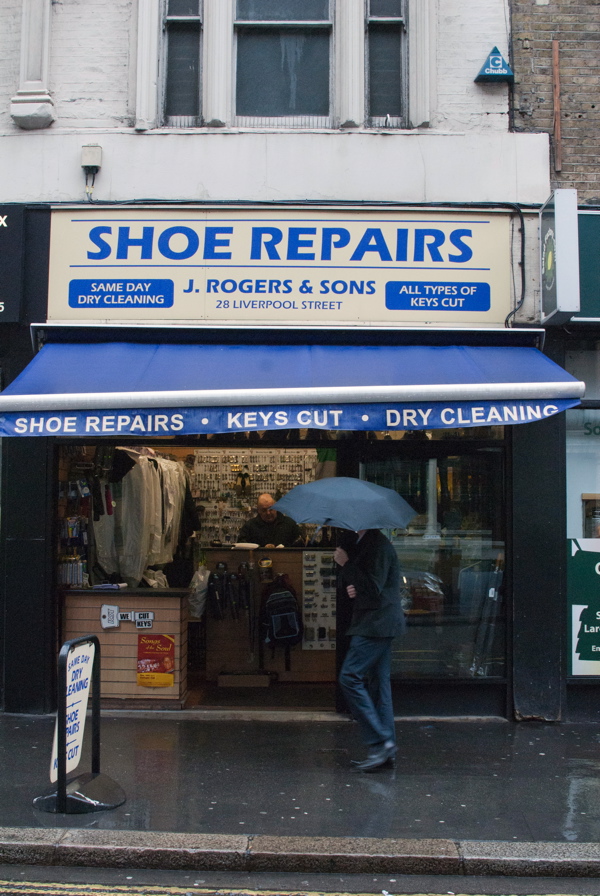
Opposite Liverpool St Station
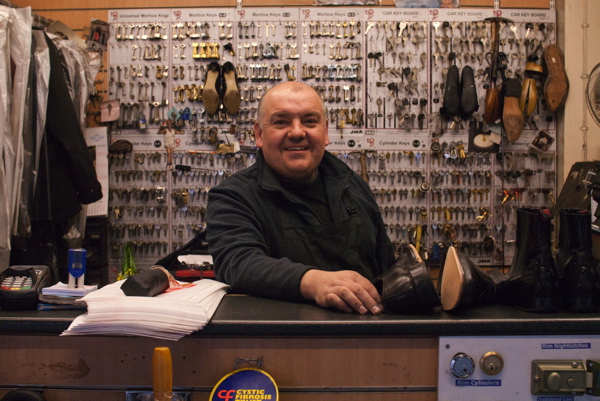
David Williams at Liverpool St Shoe Repair, third generation from a family of saddlers.
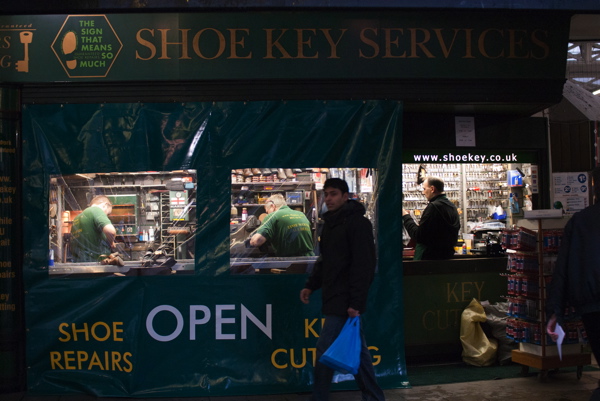
In the Arcade, Liverpool St Station, with the new tarpaulin fitted ready for the Winter.
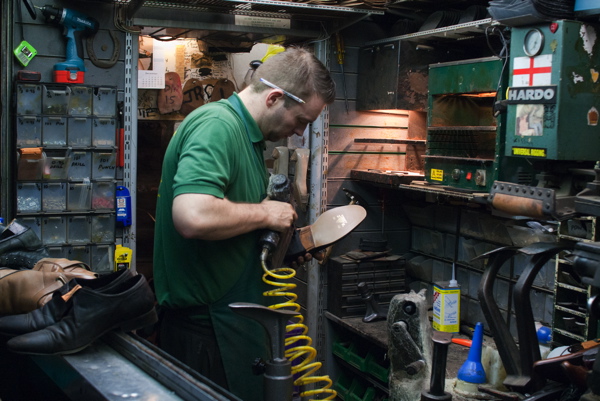
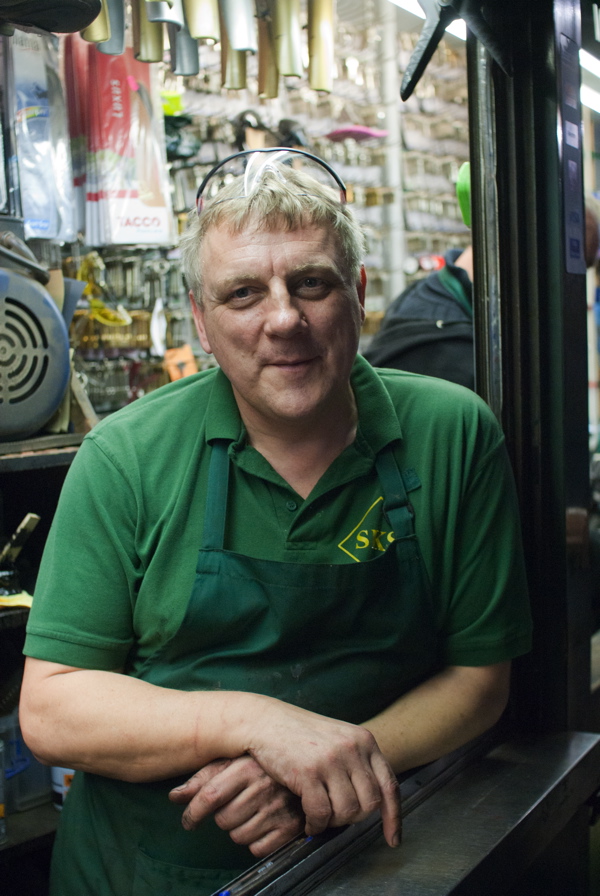
Gary at Shoe Key, “Time wounds all heels.”
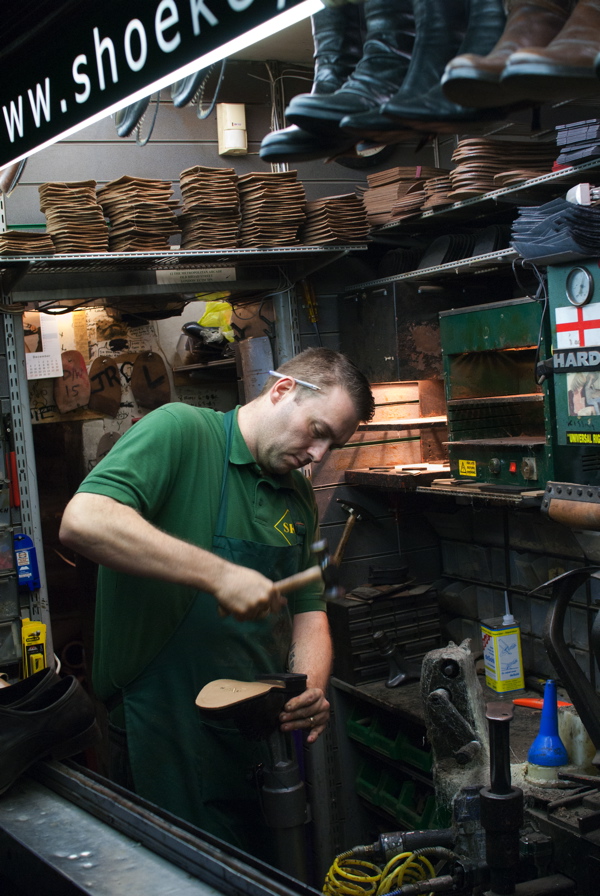
Mike Harding at Shoe Key.
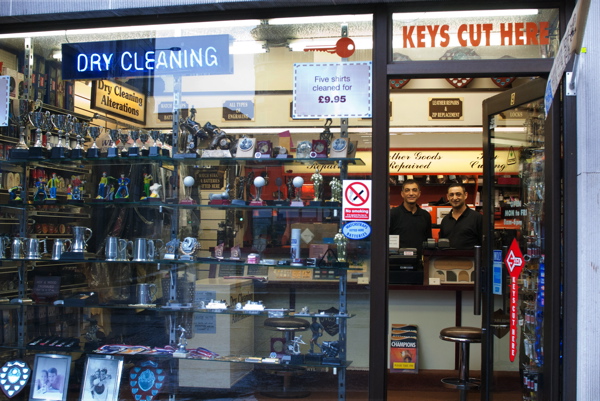
Michael’s Shoe Care in Camomile St sells trophies given as rewards for hitting corporate targets.
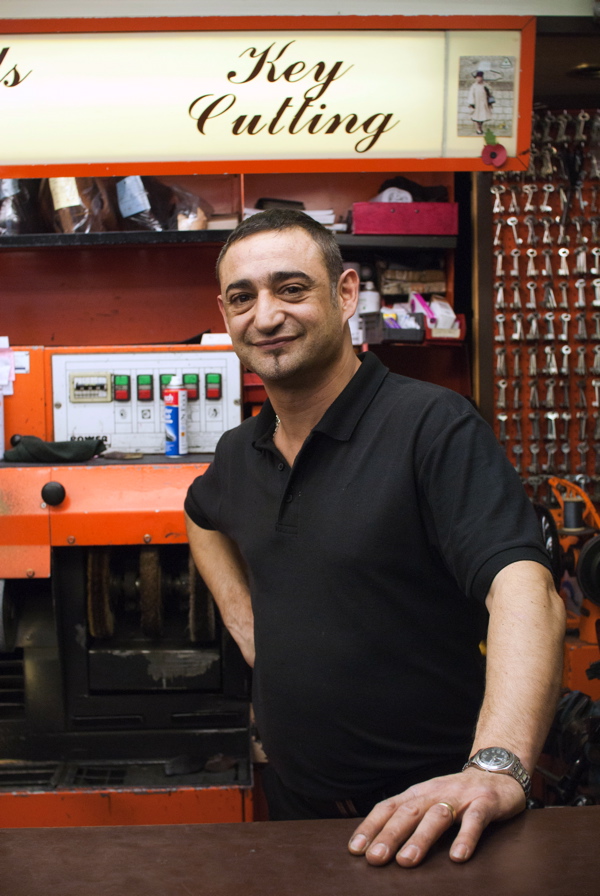
George at Michael’s Shoe Care, Camomile St
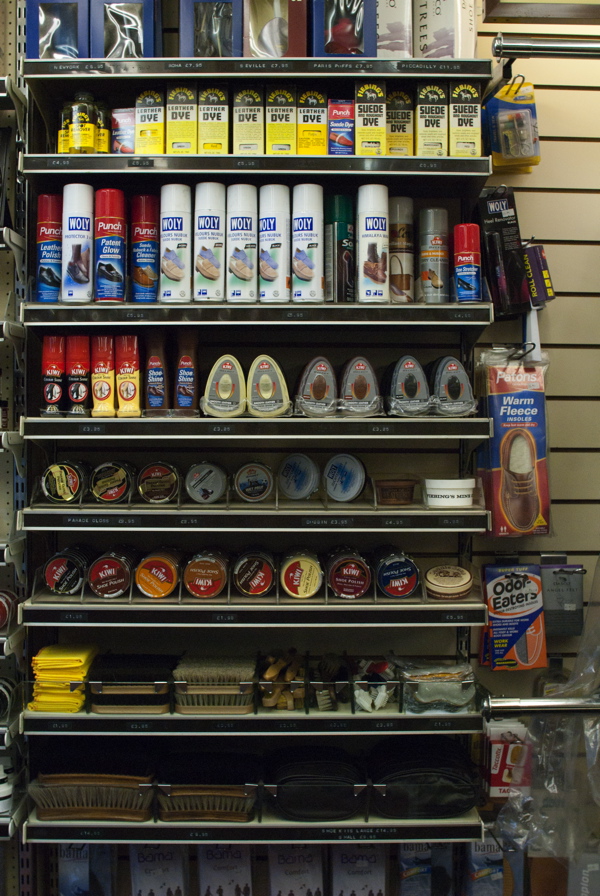
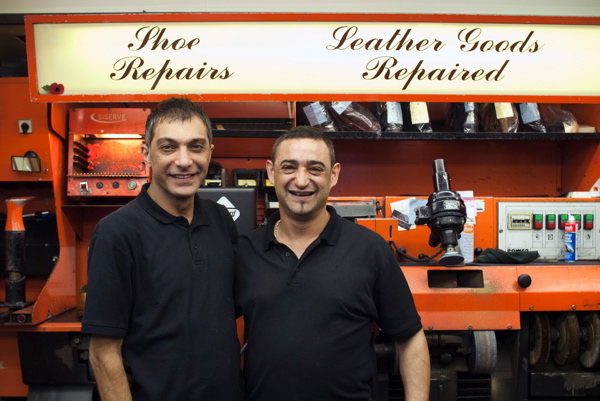
Kiri & George are a mean shoe repair team. “It’s total football,“ says Kiri.
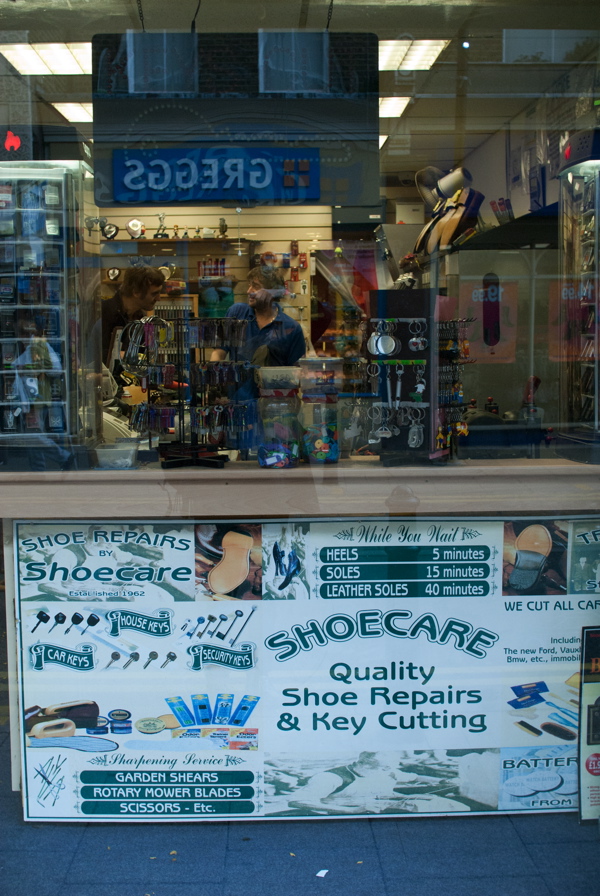
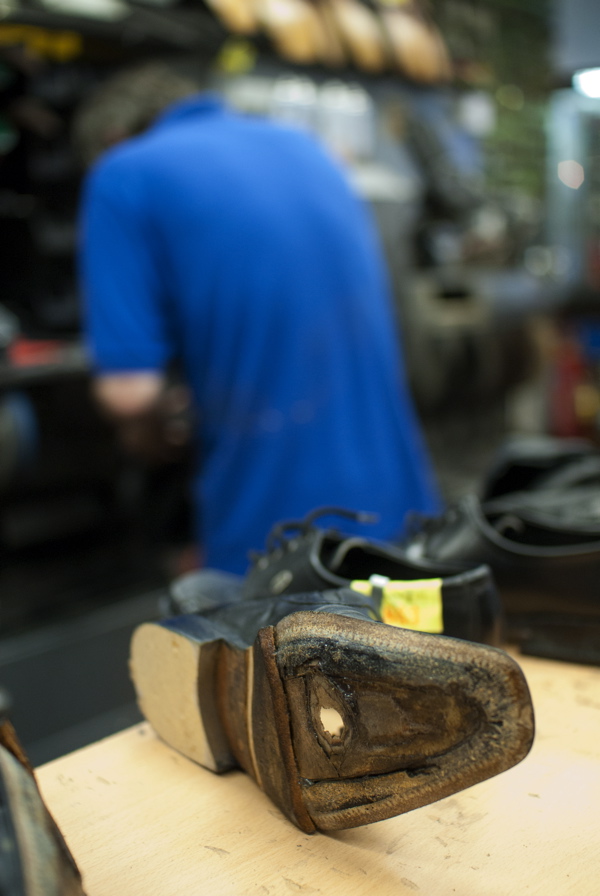
At Shoe Care in Hackney, “We got a lot more quality shoes in for repair these days.”

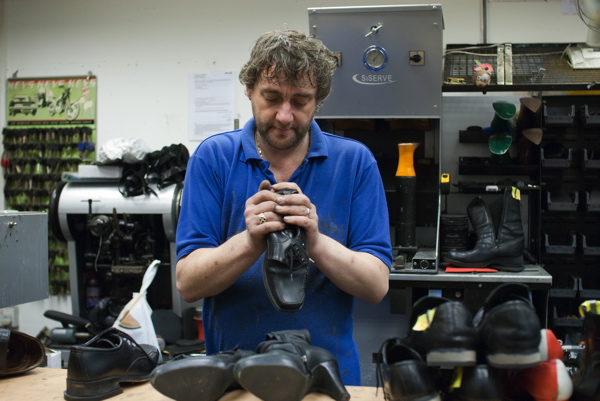
John Veitch of Shoe Care
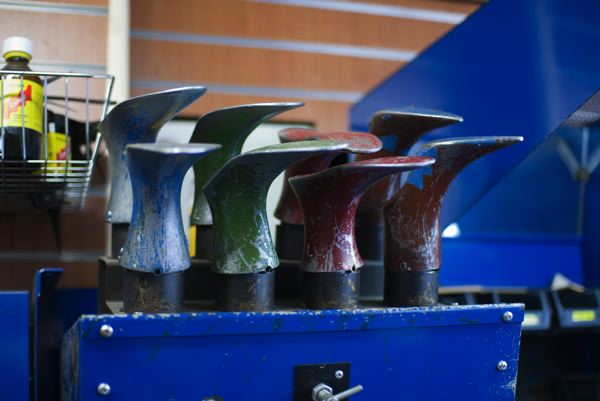
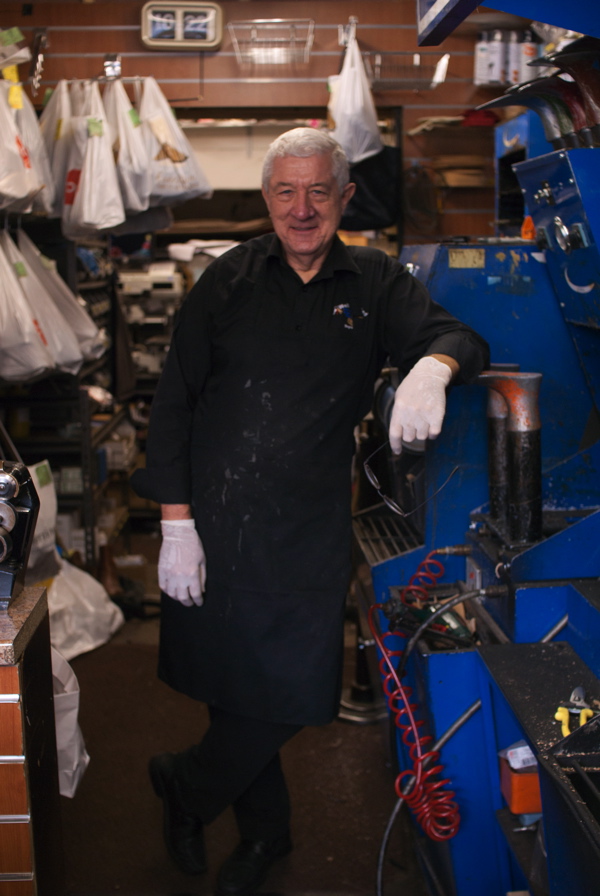
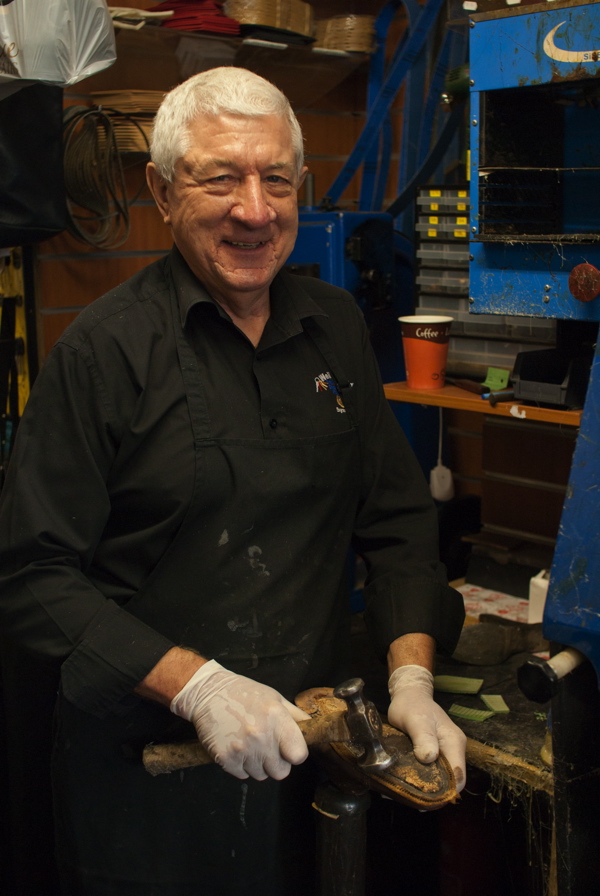
Ken Hines at Well Heeled in Bethnal Green
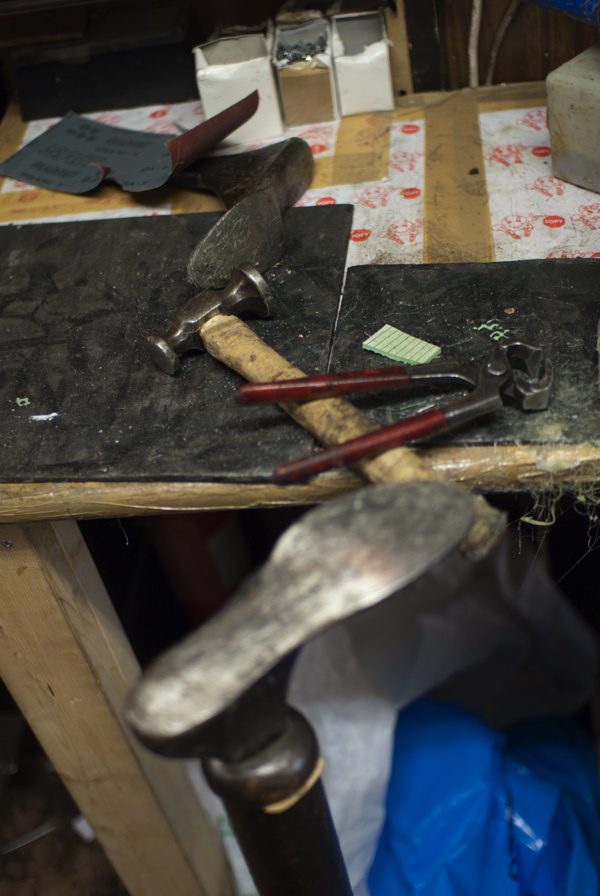
Old Charlie’s hammer, “It was eighty years old when he gave it to me thirty five years ago.” said Ken.
Photographs copyright © Sarah Ainslie
Columbia Road Market 58

It was the first cold morning of the season, and Kenny Cramer was in hasty conversation with some of his fellow stallholders when I arrived at the market. Once they had concluded their chat, I took the opportunity to speak with Kenny and in the course of my interview discovered that the chilly atmosphere in the market today was for reasons other than meteorological. But first Kenny outlined his family’s involvement in the market over the the last three generations.
“This business is family run, my grandad Bill before me and my dad Ron and then onto myself today. We’ve been here since the market began, over sixty years. I first came when I was six, it wasn’t what it is now, there were only about twelve stalls then. After finishing school at seventeen, I came down here to work with my dad. We run a flower shop during the week in Lodge Avenue, Dagenham and the only day I get off is Tuesday, depending on how busy we are with weddings and funerals.”
Usually stallholders speak with pride when they describe how their family history is interwoven with that of the market, yet I discovered a reticence with Kenny which I had not encountered before, so I asked about the next generation. “I’ve got one boy, he’s at college studying IT and computers,” Kenny explained,“But I wouldn’t want him to go into the market. Things are not going to last here.” And he revealed that all the traders had been to a meeting with the council on Tuesday where they were told that within weeks big changes are coming to Columbia Rd Market over which they have no control.
“Nobody’s happy. Nobody wants it. None of us has got no say. All of us went to the meeting, but everything has already been decided. It will be the end of the flower market,” he confided to me, his eyes blazing with withheld emotion. We stood for a moment without speaking in the midst of the market and then I walked round to the front of the stall to talk with Kenny’s father Ron to learn his opinion on this unexpected development. I found the senior Mr Cramer hard at work organising the flowers before the customers arrived, yet although he turned away from his task to greet me when I approached, I discovered the emotion of the situation was such that he could find no words to express his feelings adequately. He stood in dignified silence and looked me in the eye with regret, before returning to the consolation of his work.
Alarmed at what I had discovered and realising why the traders were in conference when I arrived, I crossed the road to speak with Carl Grover who was busy wrapping up bunches of Amaryllis for sale later in the morning. He confirmed what I had been told, adding that the market is going to be extended to each end of the street, trolleys will no longer be permitted on the pavements and there is the possibility of other traders being introduced selling different commodities. Most frustratingly, the flowersellers are not being informed yet of the specific nature of the changes thus preventing their objection. “There’s a question mark hanging over the future of the market.” Carl announced with a weary grimace, and a glance over my shoulder to check that his parents Mick & Sylvia Grover the herbsellers were not within earshot. “Show me a long-established market like this where they have made changes for the better. The age of traditional markets is coming to an end.” he added with a shrug.
It was apparent from everyone I spoke to this morning that this week’s “consultation” meeting had been used to announce changes which are being decided without the participation of the traders. Over recent weeks, I have been learning of the beauty of the human culture manifest in Columbia Rd Market and the families who have built it up over generations of hard work, turning up in all seasons to provide flowers to the people of the East End, and making a modest living but never a fortune. Unquestionably, these people have earned the moral right to decide the destiny of their flower market and the fate of their respective pitches that sometimes, like Albert Dean, have been in their families for as many as four generations. “Hopefully they will listen to us,” said Carl Grover with a bright grin of fragile optimism.
Photograph copyright © Jeremy Freedman
Adam Dant’s Map of Shoreditch as the Globe

As we all know, for some people Shoreditch is the world. They do not need to go beyond this especially vibrant corner of the East End to find everything they require in life. If you would like to experience the total Shoreditch-centric view of the world for yourself, simply double click on the image above and this map will expand at once to fill your entire field of vision – providing a elegant visual parallel to the mysterious phenomenon that many discover when then come to Shoreditch and find everywhere else quickly retreats to the outer margins of their consciousness.
Adam Dant drew it ten years ago as a commission for the Shoreditch Map Company who produced a regular broadsheet listing all the bars and happening places that aspiring hipsters might seek out as a means to immerse themselves in the life of the neighbourhood. “There is a certain cliche you always hear, that London is a collection of villages,” he explained to me, “so I took that idea literally – as if Shoreditch was someone’s world.”
Adam found his inspiration in the fourteenth century Mappa Mundi that described the medieval world view with Jerusalem and the Holy Land at the centre, and he transposed its guiding principles to Shoreditch which is focused upon the dynamic nexus of Curtain Rd, Rivington St and Shoreditch High St. Just as the Mappa Mundi ended at the edge of the known world, Adam’s map is circumscribed by Spitalfields to the South and Hackney to the North, while Arnold Circus and Old St Tube Station are the landmarks which define the Eastern and Western extremities of Shoreditchland, beyond which only the most adventurous hipsters stray.
There has always been a vigorous broadsheet and pamphleteering tradition existing here at the margins of the City, and Adam chose to draw upon the colourful iconography of these publications in peopling his map of Shoreditchland, as a means to evoke the exuberant life that these streets have witnessed over the past five hundred years. He has created a map to be relished by cartographic connoisseurs, full of myriad signs and wonders, from the Eskimo in the frozen North of Hackney to Neptune in his chariot proceeding along Norton Folgate and further South in Bishopsgate, you see the winged figure of Mammon rising triumphant over the City. The pretence of scientific objectivity that more conventional maps peddle is rejected here, in favour of Adam’s preference for plotting an imaginative landscape where the mythical, the temporal and the plain nonsensical co-exist side by side.
I can only wonder what those people thought who picked up Adam’s map in a bar as a guide for a night out, only to discover Shoreditch was an archipelago inhabited by freaks. Yet since Shoreditch is renowned for its exuberant fashion pioneers and stylistas, it is possible they were not in the least surprised, because equally extravagant sights are commonplace every day in Shoreditch High St, the major thoughfare through the mythical kingdom of Shoreditchland.
Adam Dant has more maps that we plan to show you over coming weeks, next time Shoreditch as Manhattan. His current exhibition Bibliotheques & Brothels runs at the Adam Baumgold Gallery, East 66th St, New York City until November 27th.

A satire upon the trial of Titus Oates from 1685, you will find Dr Degraded on Adam Dant’s map at the top just above Shoreditch Church.

The fight over the breeches from 1690, you will find this couple outside Shoreditch Town Hall.

The whale beached at Blackwall Dock from 1690, you will find this creature in Great Eastern St.

Isaac Ragg used this broadsheet to solicit New Year’s gifts in 1684, find him beside Brushfield St, Bell Lane, Spitalfields.

Hereford Mappa Mundi, c.1300
You might also like to take a look at Adam Dant’s Map of the History of Shoreditch produced to celebrate the centenary of the Arnold Circus bandstand this Summer.
A Room to Let in Old Aldgate

I would dearly love to rent the room that is to let in this old building in Aldgate, photographed by Henry Dixon for the Society for Photographing Relics of Old London. Too bad it was demolished in 1882. Instead I must satisfy myself with an imaginary stroll through the streets of that long lost city, with these tantalising glimpses of vanished buildings commissioned by the Society as my points of reference. Founded by a group of friends who wanted to save the Oxford Arms, threatened with demolition in 1875, the Society for Photographing Relics of Old London touched a popular chord with the pictures they published of age-old buildings that seem to incarnate the very soul of the ancient city. London never looked so old as in these atmospheric images of buildings forgotten generations ago.
Yet the melancholy romance of these ramshackle shabby edifices is irresistible to me. I need to linger in the shadows of their labyrinthine rooms, I want to scrutinize their shop windows, I long to idle in these gloomy streets – because the truth is these photographs illustrate an imaginary old London that I should like to inhabit, at least in my dreams. Even to a nineteenth century eye, these curious photographs would have proposed a heightened reality, because the people are absent. Although the long exposures sometimes captured the few that stood still, working people are mostly present only as shadows or fleeting transparent figures. The transient nature of the human element in these pictures emphasises the solidity of the buildings which, ironically, were portrayed because they were about to disappear too. Thus Henry Dixon’s photographs preserved in the Bishopsgate Insitute are veritable sonnets upon the nature of ephemerality – the people are disappearing from the pictures and the buildings are vanishing from the world, only the photographs themselves printed in the permanent carbon process survive to evidence these poignant visions now.
The absence of people in this lost city allows us to enter these pictures by proxy, and the sharp detail draws us closer to these streets of extravagant tottering old piles with cavernous dour interiors. We know our way around, not simply because the geography remains constant but because Charles Dickens is our guide. This is the London that he knew and which he romanced in his novels, populated by his own versions of the people that he met in its streets. The very buildings in these photographs appear to have personality, presenting dirty faces smirched with soot, pierced with dark eyes and gawping at the street.
How much I should delight to lock the creaky old door, leaving my rented room in Aldgate, so conveniently placed above the business premises of John Robbins, the practical optician, and take a stroll across this magical city, where the dusk gathers eternally. Let us go together now, on this cloudy November day, through the streets of old London. We shall set out from my room in Aldgate over to Smithfield and Clerkenwell, then walk down to cross the Thames, explore the inns of Southwark and discover where our footsteps lead …

This row of shambles was destroyed for the extension of the Metropolitan Railway from Aldgate to Tower Hill, 1883.

Sir Paul Pindar’s House in Bishopsgate was moved to the Victoria & Albert Museum in 1890.
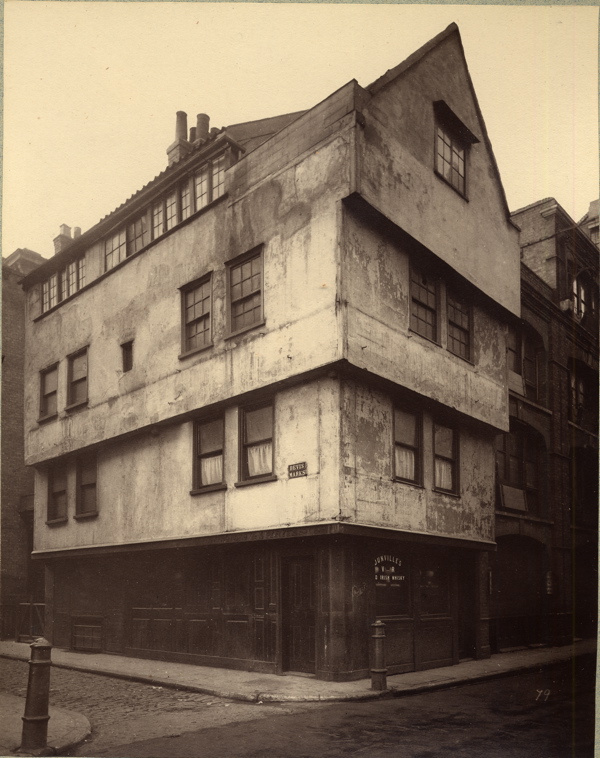
At the corner of St Mary Axe and Bevis Marks, this overhanging gabled house was destroyed in 1882.
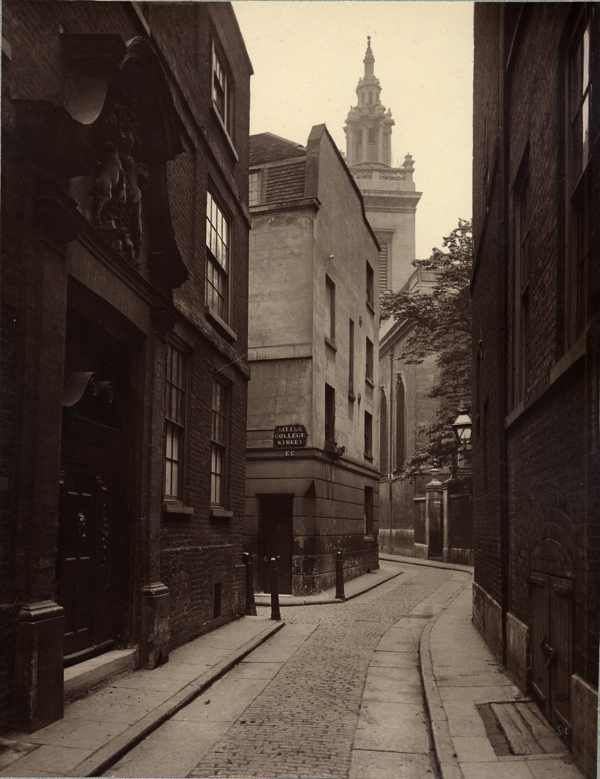
In College Hill.

St Giles Cripplegate, which now stands at the centre of Barbican complex.

Old buildings in Aldersgate St.

Shaftesbury House by Inigo Jones in Aldersgate St, demolished after this photo was taken in 1882.

Chimneypiece in the Sessions House, Clerkenwell Green, where Dickens was once a cub reporter.

In Cloth Fair, next to Smithfield Market.
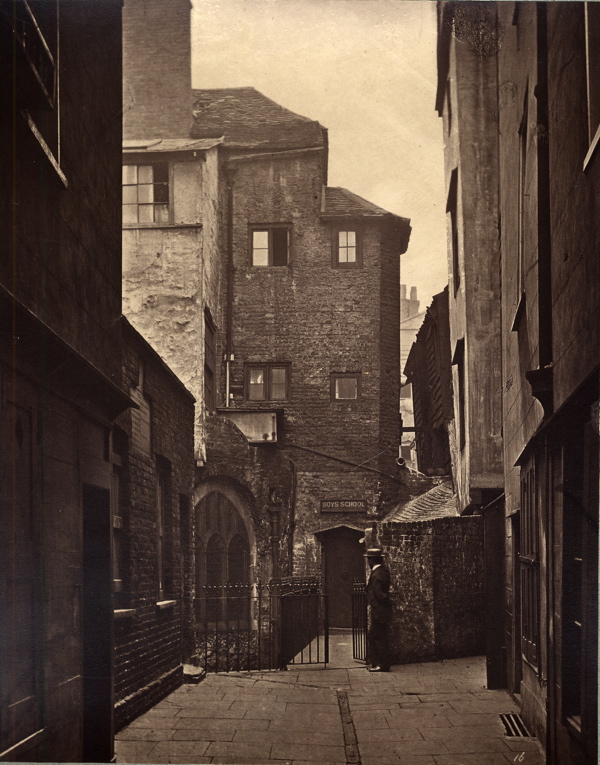
At the rear of St Bartholomew’s Church.
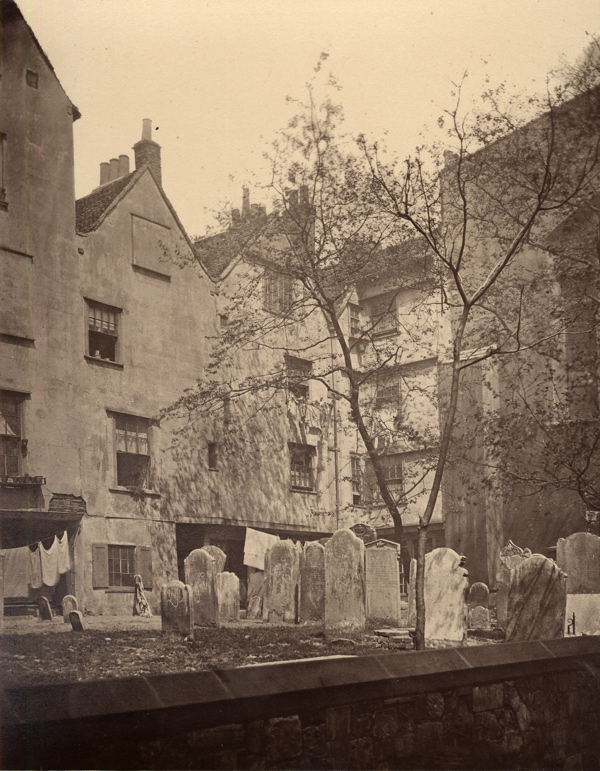
In the graveyard of St Bartholomew the Great.

In Charterhouse, Wash House Court.

The cloisters at Charterhouse.

St Mary Overy’s Dock

Queen’s Head Inn Yard.

White Hart Inn Yard.

King’s Head Inn Yard.
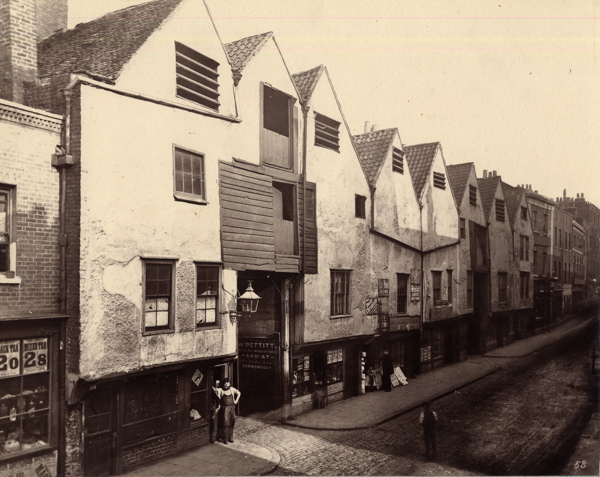
In Bermondsey St.
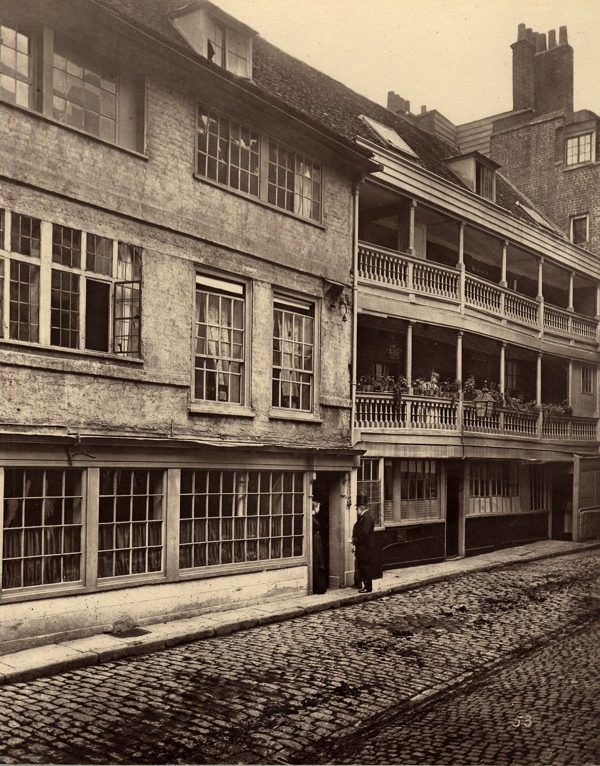
At the George, Borough High St.
You can see more pictures from the Society for Photographing Relics of Old London in The Ghosts of Old London and In Search of Relics of Old London.
Images copyright © Bishopsgate Institute
Abdul Mukthadir, Waiter
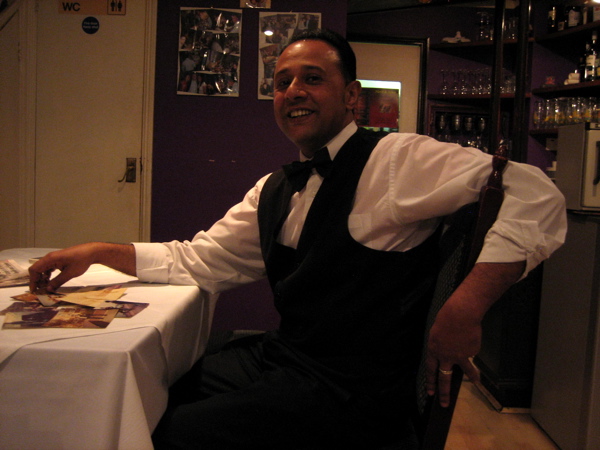
The charismatic Abdul Mukthadir – widely known as Muktha – is a born storyteller, blessed with a natural eloquence. As I quickly discovered when I sat down with him yesterday in the brief stillness of the afternoon, while the last diners emptied out of Herb & Spice Indian Restaurant in Whites Row. The businessmen were still finishing off their curry in the other half of the restaurant, whilst in a quiet corner Muktha produced a handful of old photographs and discreetly spread them out on the table to begin. Our only interruption was a request for the bill and once it had been settled, in the silence of the empty restaurant, Muktha’s story took flight.
“I came to Spitalfields in 1975 when I was ten years old. My father got married one day when he went back home to Bangladesh, it was an arranged marriage. At the time I was born, he was working in this country. He didn’t see me until two years later when he came back again and stayed for three months. I have another two sisters, and a brother born here.
My father missed his family, so once he got his British citizenship and he had the right to stay in this country, he made a declaration to bring us over and my mother had a big interview at the British consul in Dhaka. When we came we had nowhere to stay, my father shared a room with three others in Wentworth St. The other gentlemen moved into the sitting room and gave one room for us all to live there. After three weeks my father went to the GLC office in Whitechapel (where we used to go to pay the rent), and they gave us a one bedroom flat in the same street without a bathroom, and a loo in the passageway shared by two households, for £1.50 a week. My father earned £55 as a presser in the tailoring industry, and supporting a family on it was really difficult. On Saturday, he gave us each 10p and we used to go to the Goulston St Public Baths. They gave you a towel, a bar of soap and a bottle of moisturiser, and you could change the bath water was often as you liked. Six hundred people used to line up. It was very embarrassing for the Asian ladies, so one day my mother called all the ladies in the building into our flat. She said, “We can buy a tin tub so we can bath ourselves at home.” Everyone contributed, and they bought a long tin bath and took it in turns. But there was no hot water, so they worked out a rota, eight ladies put their kettles on at the same time. They put the bath up on the flat roof, and sent the smallest boys round to collect all the kettles and fill the bath. Only the women could do this.
We were not allowed to play outside alone, because of the racist movement. The skinheads used to prowl around the area. We could not go out to play football in the Goulston St playground until after the English boys had gone home, but even then we had to watch out for their return – because anyone might come and snatch our ball or beat us up. One day, my mum came out swearing at them in Bengali, “Leave my boy alone! Let them play!” We had that sort of problem every week, and for us that was the only playground we had. Although we were not allowed out after dark, we used to go to Evening Classes in Bengali on Saturday and Arabic on Sunday. At that time, there was a man who went round with a sack and if he found anyone, he would capture them and ask for a ransom. There were one or two incidents. One day he pounced upon our neighbour’s daughter as she was coming from Arabic. He caught her and tried to put her in the sack and carry her away. She was screaming and we were all at home, everyone came outside and I saw. We saw this three or four times. Between the English kids and the man following us to rape or take us, fourteen was very tough. My people were scared in those days. At that time you couldn’t even go out, it wasn’t safe.
We had to move because they were expanding the Petticoat Lane Market, it was really famous then. So the GLC offered my dad a flat in Limehouse but my father thought it wasn’t safe because there were no other Bangladeshis. Then he refused Mile End, even worse for a Bangladeshi family. Finally, he was offered a flat in Christian St off Commercial Rd. It had four bedrooms and a bathroom, and he fell in love with it. This was in 1979, after the six of us had lived in a one bedroom flat for four years. He was over the moon. I can remember the day we moved. He moved all the furniture in an estate car in five or six trips.
That was how we lived in England in those days. It was tough but it was fun and everyone was more sincere, people spoke to each other. No-one worked on Saturday and everyone used to invite each other round, saying “Come to my home next Saturday, my wife will cook!”
I have hundreds of stories because this is my playground. I belong here, I have so many memories, where I played and where I practised football. If I see a mess in this street, I clear it up because it matters to me. I am a poor man, if I was a millionaire I would do something here – but I am just a waiter, working to pay my mortgage.”
The first of Muktha’s family came to Britain in the nineteen forties to work in the Yorkshire cotton mills and he married an English woman, a sailor lured by tales of Tower Bridge, the miraculous bridge that rose up to let the ships pass through. And when he returned to East Pakistan, crowds followed him shouting, “He comes from England. Wow!” They nicknamed him “Ekush Pound” because he earned £21 a week as a foreman at a cotton mill in Keighley, and at the request of the mill owner he sponsored eight men to return with him. Thus Muktha’s father and uncle came to Britain, setting in train the sequence of events that led to Muktha working for today in Herb & Spice Indian Restaurant in Spitalfields serving curry to City businessmen.
A waiter since the age of fifteen, Muktha is distinguished by a brightness of spirit that makes him a popular figure among regular customers, who all hope that he may join their table at the end of service and regale them with his open-hearted stories. He becomes enraptured to speak of Spitalfields, because the emotional intensity of his childhood experiences here have bound him to this place forever, it is his spiritual home.
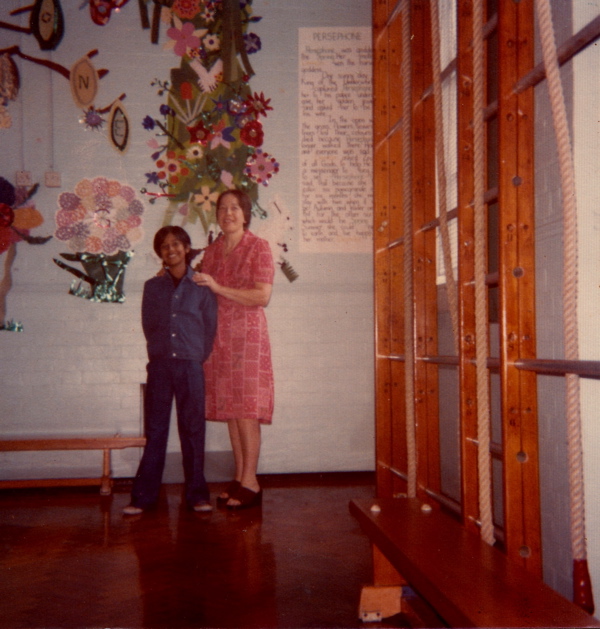
Muktha with his beloved teacher Miss Dixon, “She was like a mother to me.”
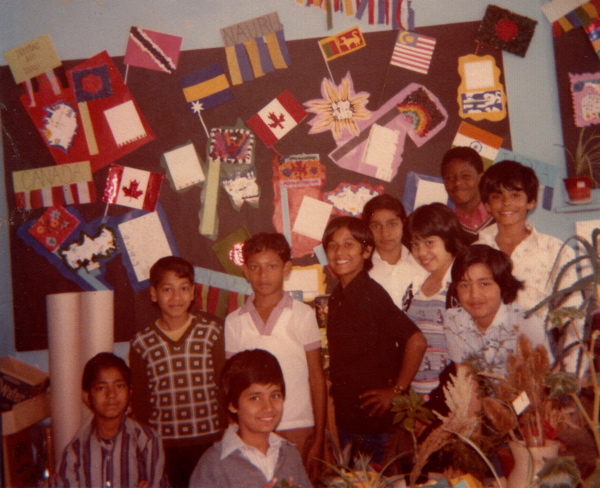
Muktha (centre) with his class at the Canon Barnett School in Commercial Road, 1976.
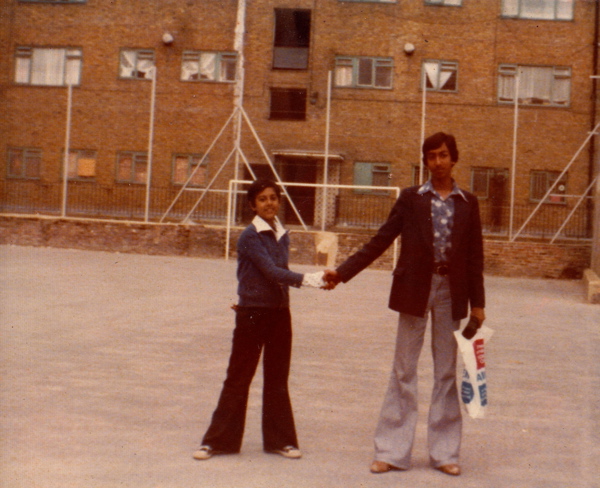
Muktha at the Goulston St playground, with his friend Sukure who became a pop singer and is currently one of the judges of the Bangladeshi X Factor.
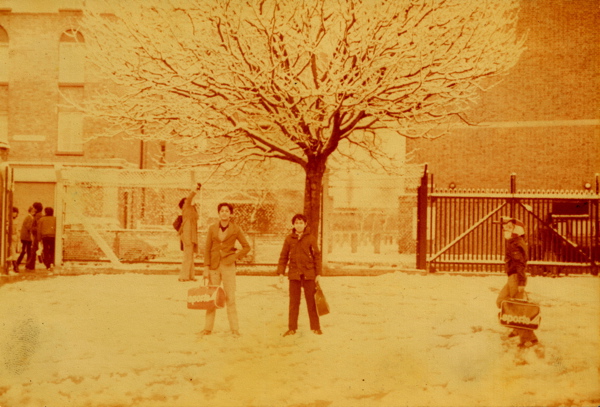
Muktha recalls that the winter of 1979 brought thirteen weeks of snow. (He stands to the left of the tree.)
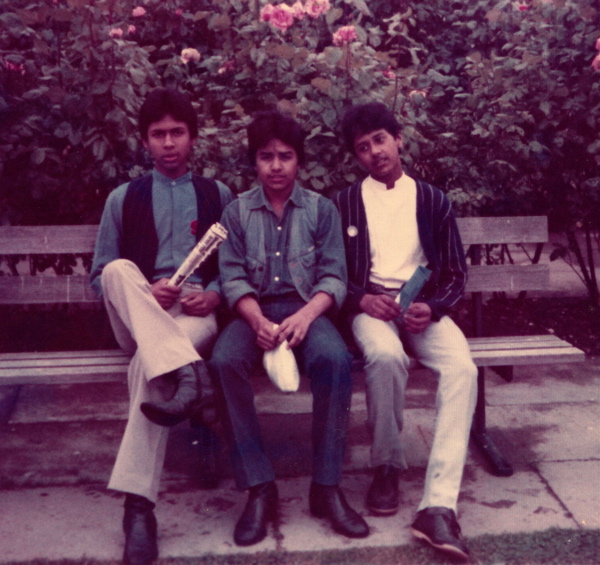
Three friends sitting in the rose garden in Christian St – from left Akthar, Hussein and Mukthar.
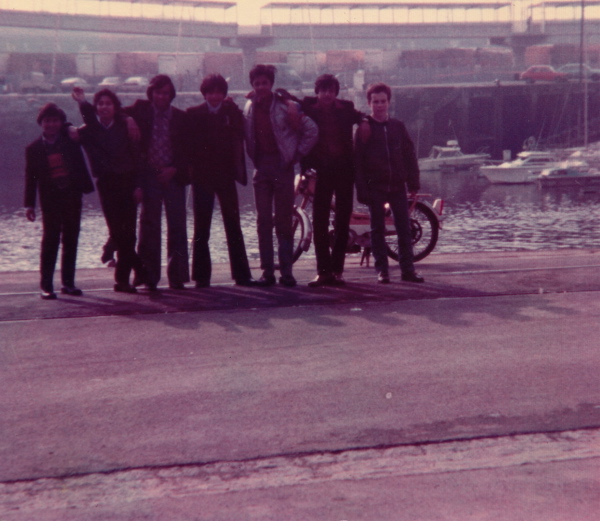
On a day trip to France from the Montifiore School, Vallance Rd in 1980. (Mukthar is in the pale jacket)
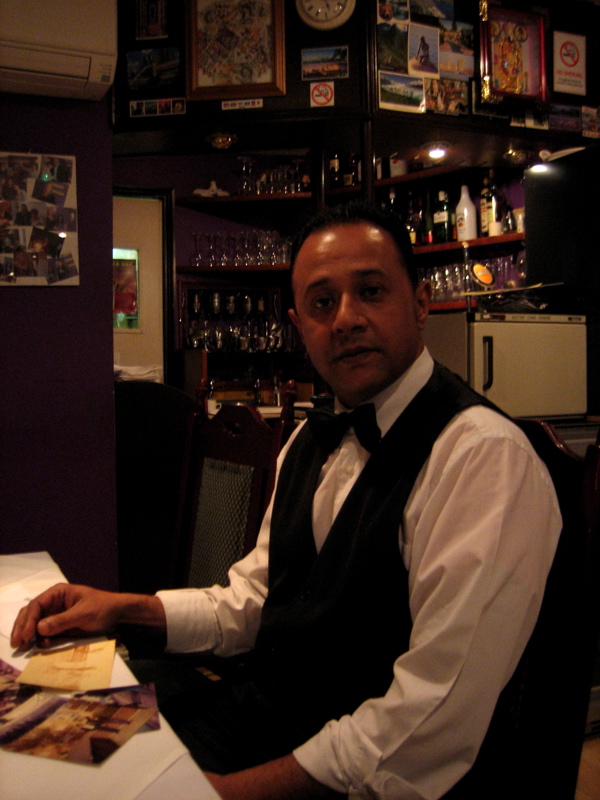
Abdul Mukthadir
Molly the Swagman
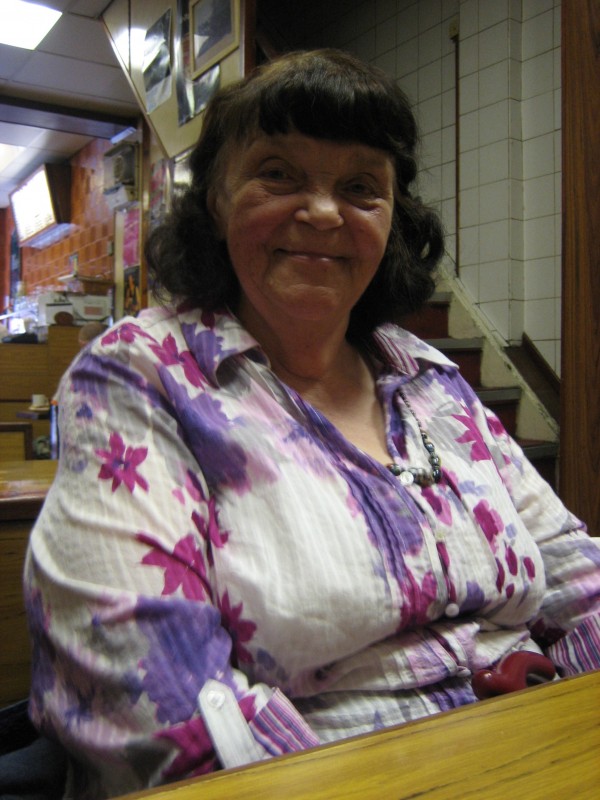
Make no mistake, Molly is a swagman. It is a title that carries its own raffish assertion of independence, there are no swagwomen, only swagmen and Molly is a proud swagman. She told me it all began with her great-grandfather who was a swagman on Petticoat Lane and he lived to be ninety-nine. And now I shall expect no less from Molly herself – because there is no doubt that, as a fourth generation swagman, she is the shrewd inheritor of the good humoured perseverance which is required to achieve longevity in market life.
Although I always knew the word “swag” from comic books where masked burglars have it written on their sacks, it was Molly herself who first explained to me that, “Swag is when you are selling a variety of goods, from clothes to jewellery – anything you can find.” And she gave me a significant glance of complicity, which led me to assume there might be a shady history, before returning to her plate of bacon and egg accompanied by a pile of toast, that formed the primary focus of her attention at that moment. We were enjoying a hearty breakfast in Dino’s Cafe in Commercial St, huddled together round a small table at the back with Molly’s old friend Jimmy Cuba and Ellen, her loyal associate from the market, completing the party.
“My first market was down the lane,” Molly confided in tender reminiscence, pushing the empty plate to one side and lifting her mug of tea,“I was about three, toddling around on my first day in Petticoat Lane where we lived. The house where I was born, it was in Leyden St, number six. My great-grandfather had the pitch and it went down through the family, that’s how it was in those days. Anything you could sell, he would sell it. He was a dodgy dealer, he used to do deals. My grandfather, my father and uncle were all in it too. They used to hire a cab for the day and go to the races together sometimes. Uncle Bob and grandad used to front the stall, while my father was the money behind the scenes. My father had the advantage of going to school, my grandmother was in films so she sent her two sons to boarding schools. He was a very snappy dresser, when he had some money he used to go and get two new suits made. He had the whole look, the cufflinks and the polished shoes. ‘You have to dress up to do business,’ he said. Grandad sold linens off the back of the van and Uncle Bob was the one with china, he threw it up in the air. And I used to take the money, it’s where I learnt to add up.”
Molly’s pedigree as a swagman imparts a certain singularity of attitude which baulks no condescension, and graces her with a sharp line in back chat to accompany it. “If they say, ‘You’ve got to give me a discount.'” recounted Molly, raising her eyebrows in delight and assuming a hoity-toity voice, “I say ‘Why? Do I know you?” Then she chuckled to herself, recalling another recurring dialogue. “Those yuppies, they ask ‘If I buy this, can I get this free?’ So then I put on my best Cockney voice…” she continued, placing a hand on my forearm and assuming an archly demure manner, “and I say, ‘Here love, come back next week, when you’ve got a bit more money.'” Chuckling, again and launching into a raucous self parody, “They’ve got to be hedge-ucated!” she declared with a triumphant grimace, pressing the ball of her hand on the table in response to the general mirth of those of us who comprised her audience.
I learned that Molly’s experience is not restricted to market life, because for five years, she worked as girl-Friday to Peter Grant, the manager of Led Zeppelin and, as we sipped tea and digested our breakfasts, she regaled Jimmy, Ellen and me with her tales of the rock and roll years. “The boys used to call me ‘ma’.” she revealed shyly, “I knew them all, Mickie Most, Adam Faith and the rest. They all came down to the country where I used to cook breakfast for the guests, walk them round the house and make up these fantastic ghost stories. When I was down there, I treated them just like anybody else. One day this tall blond guy came down with his laundry, so I showed him how to work the machine – that was Robert Plant.” At this point, Jimmy Cuba contained himself no longer, interposing, “This was when Led Zeppelin were the biggest band on the planet!” and Molly smiled bashfully, blushing a little to recall her days as a rock chick now.
Each Wednesday, Thursday and Friday, you will see Molly stalling out in the Spitalfields Market with Ellen at her side, the lone swagman with her modest swag spread out before her on the table. Even after all these years Molly cannot predict each day’s trading, market life is akin to gambling in that way. The two self-effacing women preside like sentinels, whispering together about the ceaseless spectacle passing before them. For Molly, it is a fleeting show, because she is the living representative of the three that came before her and it gives her a unique sense of perspective. Market life has made her circumspect and she would not tell me her full name or even reveal the name of her great-grandfather who lived to be ninety-nine. Yet I was honoured to speak with her because Molly is an extraordinary woman, dignified, witty and with great strength of character, and she is the last of the Spitalfields swagmen.
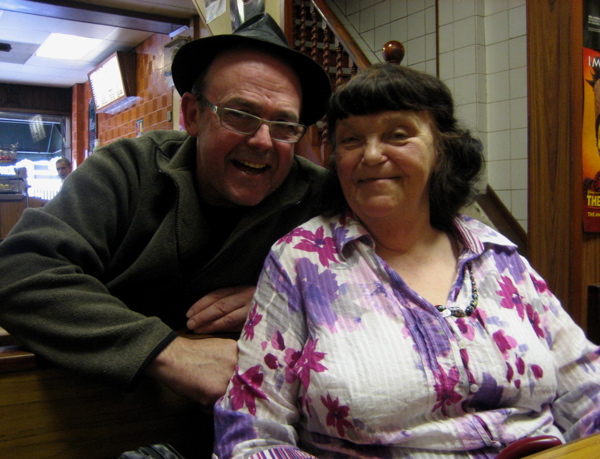
Jimmy Cuba & Molly
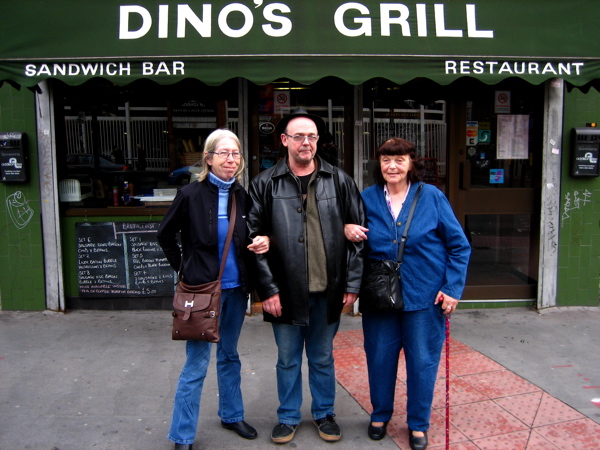
Ellen, Jimmy & Molly outside Dino’s in Commercial St.












