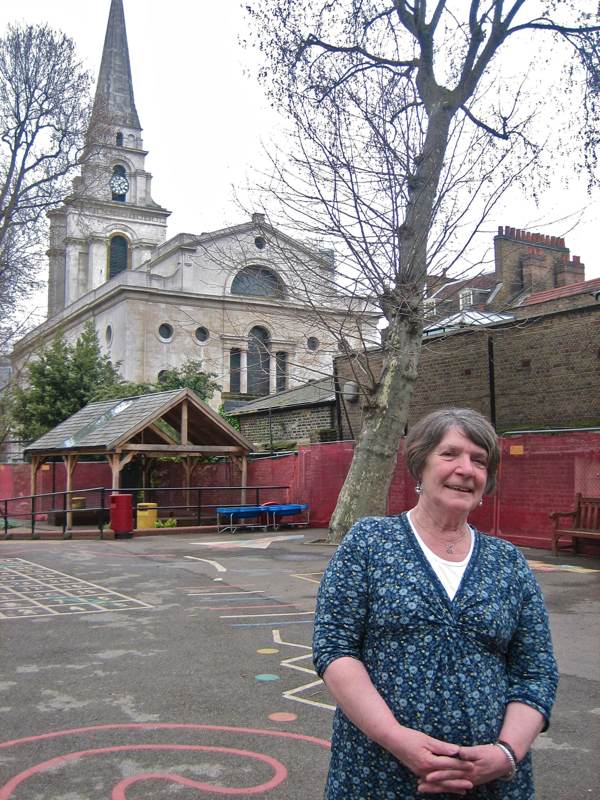
Marge Hewson, Nursery Nurse
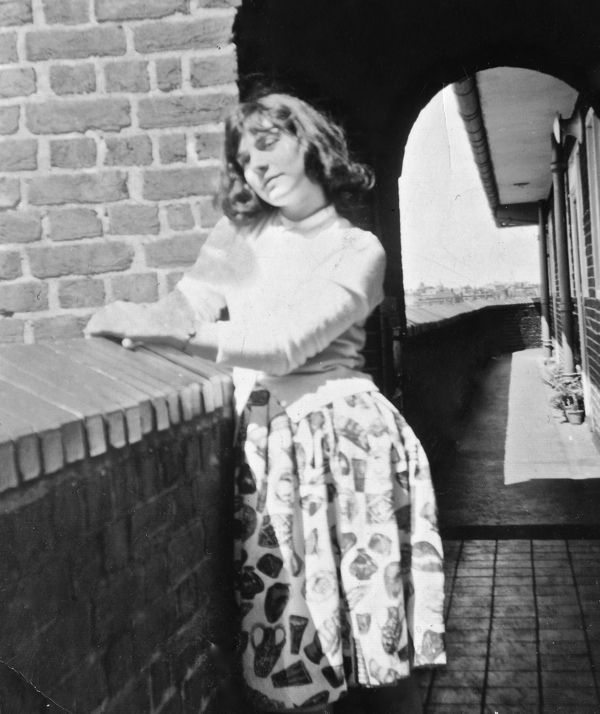
Marge Hewson, Chicksand House, Spitalfields, 1959
On any school morning in Spitalfields, you may always rely upon spotting Marge Hewson between eight thirty and nine o’clock – traversing the streets from Greatorex St to the Chicksand Estate – trudging around in all weathers, ringing doorbells and collecting up her beloved charges until she has acquired a crocodile of as many as twenty small children, that she ushers safely to Christ Church School in Brick Lane where she has been Nursery Nurse for forty years.
And as a consequence, she is one of the most popular people you could ever meet, cherished by generations of local people for whom Marge’s benign presence is an integral part of their childhood landscape. “As big as they are, they’ll still stop me and ask for a hug in the street, even teenagers.” she revealed with a proud blush, as a significant indicator of the outcome of a life lived at the very centre of her community.
“I must admit I have never got away from here, but I am not unhappy with it,” confided Marge upon quiet consideration, when I dropped by to visit her at the school yesterday after four o’ clock, once it had emptied out of pupils and peace reigned. “You can’t really put into words what it was like,” said Marge to me, with characteristically shrewd reserve and a self-effacing smile, before proceeding to evoke her Brick Lane childhood with lyrical ease.
“I was brought up in Flower & Dean St just off Brick Lane – the “Flowerie” we called it. Just a few small shops and tenements, all pulled down now. You knew everybody and everybody knew you, and nobody had any money. You learnt to stand on your own two feet, I think I had a very happy childhood.
Children don’t have freedom now. When I was ten, me and my friend would take a picnic and go to Victoria Park and spend the whole day there. We were often out on the street until ten o’clock at night. There was a policeman on the beat and we used to stand around the lamppost until he came at nine thirty, and he’d say “It’s time you went home.” So we’d stay until he came back on his round again later and then we’d all run home to bed.
We weren’t allowed to go up Brick Lane beyond Princelet St because of the Maltese cafes with prostitutes standing outside. We used to try to bunk into the Mayfair cinema across the road if we could get in the back door. At the bottom of Osborn St was a bomb site called the Chimney Debris where we played, and we went to Woolworths to buy bamboos, and make bows and arrows, and played Robin Hood there. There was no TV, so I went to the library every day. I used to go swimming every day too, at the Goulston St Baths and I balanced my little brother with his bottle where I could see him in the changing rooms, so I could keep an eye on him while I swam lengths. Then we’d buy stale cakes from the bakery on the corner afterwards.
Every Saturday we played Bagatelle, or Newmarket with the four kings, and we had a jar of pennies and my mother would turn them out, and as a family we’d all sit down together. I’d see all the boys come on leave from National Service on Saturday night to visit their girls. They’d all go up Whitechapel Waste to Paul’s Record Shop, where I was too young to go – the boys in their suits and the girls all dressed up. And on Sunday mornings, there was always an escapologist in chains who escaped from a sack on the corner of Wentworth St, it was lovely to go and watch him.”
Christ Church School is a hundred yards from Flower & Dean St where Marge grew up and – while her contemporaries have moved out of the neighbourhood – apart from a foray to the Isle of Dogs, Marge has chosen to live within walking distance of her old territory and she finds it suits her very well. In her time, the East End has transformed through slum clearance and rebuilding, and the movement of peoples in and out of the neighbourhood. And although she would never claim it, Marge through her emotional presence at the school over four decades has become part of the consistent identity of this place as a magnanimous harbour to newcomers, carrying forward the best of the old into the new East End.
“I began here at the school in 1979 before East Pakistan became Bangladesh, there wasn’t too many Bengali children here then but as others left and more arrived it became 100% Bengali. Now I see another change, we have more children of different races, including Colombians and Eastern Europeans which makes it a truly multicultural school. When the Bangladeshis first came there wasn’t much English spoken, they used to turn up at all times of the day and with layers and layers of clothing against the cold.
At first we had only one big classroom and fifty children with just me and one teacher. A lot didn’t speak English and sometimes I would take a child home but the mother wouldn’t answer the door because she didn’t understand the language, so then I’d have to grab a passerby to translate. Conditions were hard for Bengalis, with families living in one room in tenements, and we worked as a team to help with their problems, taking them to hospital or the doctor if they didn’t speak English.”
I realised Marge Hewson was reluctant to talk about all the work she did, because she chooses discretion when speaking of the past disadvantage of those who are her community today. Instead she wanted to confess how much it means to have this role at the school which has given her such profound emotional reward and sense of belonging.
“I came here for six months and I stayed forty years, and there are children here now – I knew their parents when they were little. I like this school, I know all the people and I know this area back to front. I’ve got a lot of affection for the families round here. If I lost my purse, or I needed anything, I could knock on any door and they would help me, I know. I love my life in Brick Lane.”
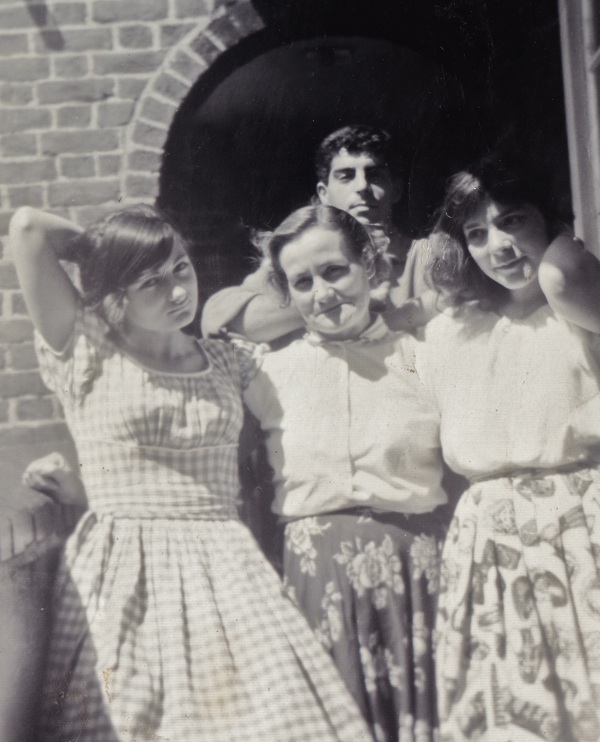
Chicksand House 1959 – Marge on the right, with Sandra her sister-in-law and Mary her mother-in-law.
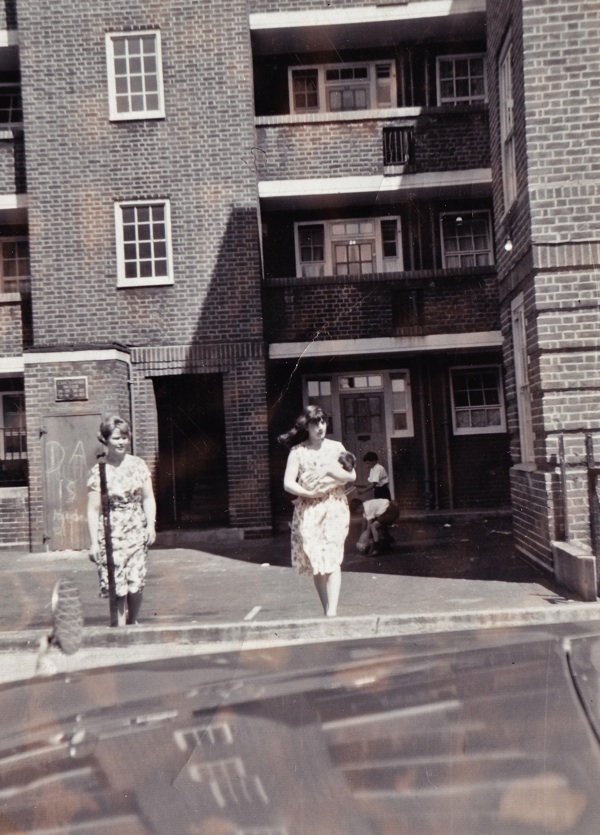
Marge at Chicksand House with her first child, 1961.
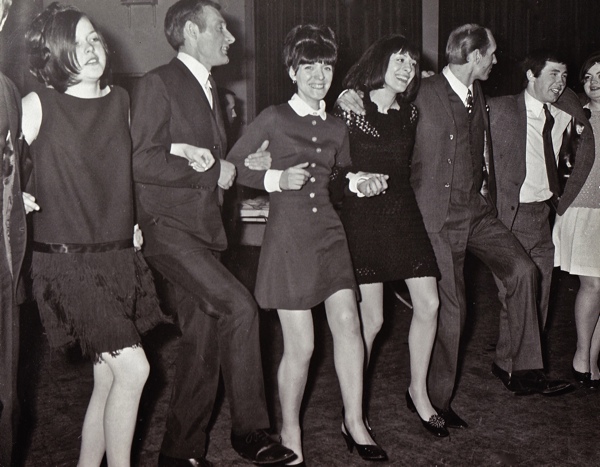
Marge enjoys a knees up at a wedding in the sixties.
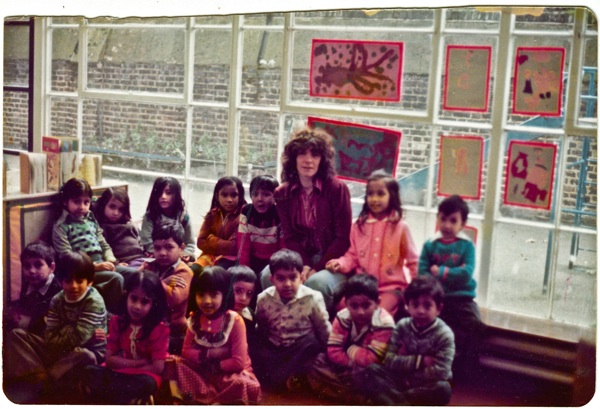
With a class at Christ Church School, 1977.
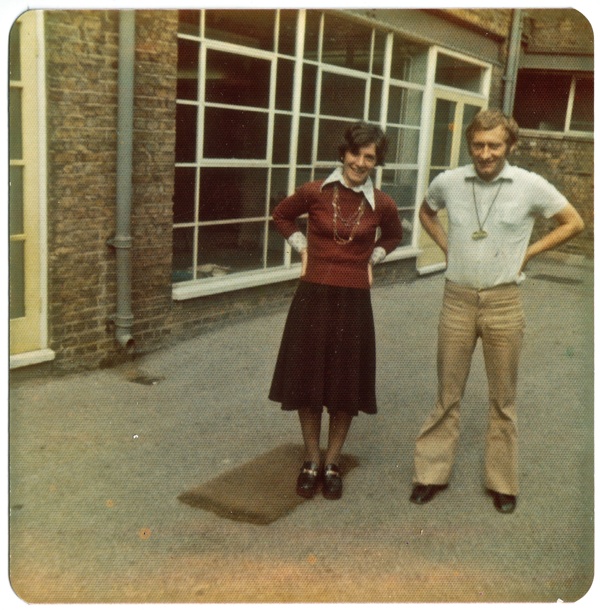
In the school playground with her husband Philip, a cab driver, in the nineteen seventies.
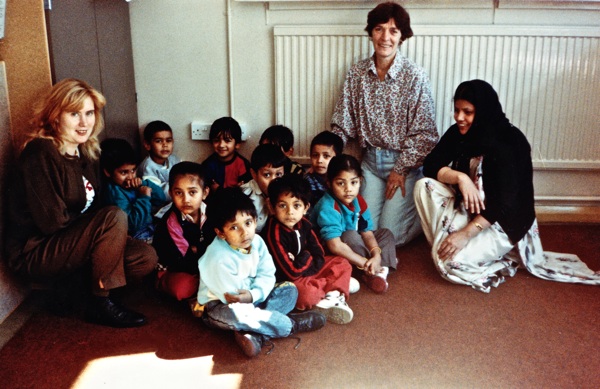
Marge Hewson
Robson Cezar, King of the Bottletops

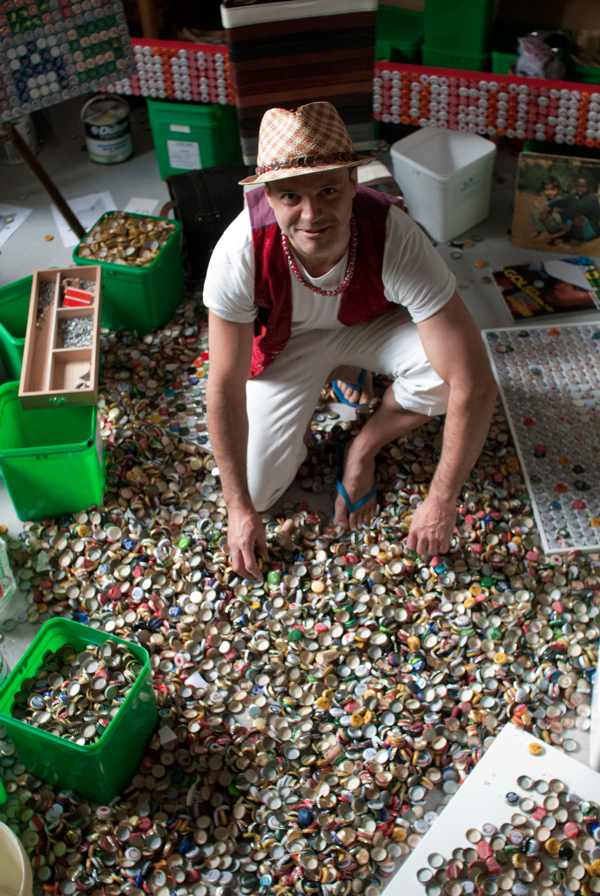
If you are a regular in the pubs around Spitalfields, you may have noticed a man come in to collect bottletops from behind the bar and then leave again with a broad smile, clutching a fat plastic bag of them with as much delight as if he were carrying off a fortune in gold coins. This enigmatic individual with the passion for hoarding bottletops is Brazilian artist and Spitalfields resident Robson Cezar, and he needs to collect thousands because he makes breathtakingly intricate pictures with them.
Each day, Robson cycles from Spitalfields down to his studio at Tower Bridge where he delights to store his vast trove – the king of bottletops in his counting house – spending endless hours sorting them lovingly into colours and designs to organise his finds as the raw material for his very particular art. An art which transforms these ill-considered objects into works of delicacy and finesse, contrived with sly humour, and playing upon their subtle abstract qualities of colour and contrast.
It all started a couple of years ago, when he asked Sandra Esqulant at The Golden Heart in Commercial St to collect her bottletops for him. For months she gathered them conscientiously and it gave Robson the perfect excuse to drop in regularly. And last year, I showed you some smaller pictures he made, but over this last Winter Robson has begun creating larger, more elaborate bottletop works. As a consequence, Robson often sets out now to visit several bars each night to collect the harvest of bottletops which he needs, that is obligingly – if incidentally – created by the thirsty boozers of our neighbourhood.
And in return for the patronage of getting their bottletops, Robson makes pictures for the pubs. At first he made a golden heart in bottletops as a personal gift for Sandra, but when The Bell in Middlesex St offered him the opportunity to cover the exterior of the pub with bottletops, he seized the opportunity to do something more ambitious. Using over six thousand bottletops, and subtly referencing the colours of the red brick and the green ceramic tiles, Robson has contrived a means to unify the exterior of the building and render it afresh as a landmark with his witty texts. And since they were installed last year, people smile and stop in Middlesex St to take photographs when they catch sight of Robson’s bottletop panels on The Bell. With such eye-catching street appeal, Robson’s work is a natural complement to Ben Eine’s alphabet that he painted on all the shutters along this street last year.
A week ago, Robson’s latest picture was installed at the Carpenters Arms in Cheshire St where landlords Eric & Nigel have been obligingly collecting bottletops for over a year. Hung up on the roof beam in the bar, this is in a different vein from Robson’s works at The Golden Heart and The Bell – creating a stir among the regulars, who are puzzling over the choice of phrase SCREAM PARTNERS for the CARPENTERS ARMS. Go round to take a look yourself and if cannot work it out at once, then a couple of drinks will increase your powers of lateral thinking.
Robson Cezar came to Spitalfields in the footsteps of fellow Brazilian artist Helio Oiticica, who along with Caetano Veloso was one of the many Brazilian cultural exiles in London in the nineteen sixties. Oiticia staged an exhibition at the Whitechapel Gallery in 1967, introducing the new cultural movement of Tropicalia to Europe by recreating a favela in the gallery. And now Robson is creating his own Tropicalia here in the twenty-first century, reinventing this poverty aesthetic with a pop exuberance that reflects the cosmopolitanism of his own life experience – which began in a favela in Brazil and took him on a journey from South to North America and eventually to Europe, where he found his home in the East End of London.
Combining the sensibility of a fine artist with the painstaking technique of a folk artist, Robson’s bottletop pictures are egalitarian in nature yet sophisticated in intent. They look like signs but they are not signs, or rather they are pictures pretending to be signs. Their exquisite technique and colouration is a crazy joke in contrast to the misrule engendered by the volume of alcohol imbibed to produce this number of bottletops. Yet the lush shimmering beauty of Robson Cezar’s work enchants us with all the bottletops that litter our streets disregarded, and reminds us of all the other pitiful wonders of human ingenuity that we forget to notice.


At the Bell in Middlesex St.


At the Carpenters Arms, Cheshire St.

Why SCREAM PARTNERS at the CARPENTERS ARMS?

Portraits of Robson Cezar in his studio copyright © Sarah Ainslie
Artworks copyright © Robson Cezar
White Collar Boxing at the York Hall

Last week, I took a ringside seat beneath the vast barrelled roof at the York Hall in Bethnal Green to attend a night of White Collar Boxing – the sport which gives City workers with no pugilistic experience the chance to slug it out in the ring and channel their excess pugnacity into three short volatile rounds, cheered on by an audience of their contemporaries. And Spitalfields Life contributing photographer Jeremy Freedman was there to capture the event, as this latest phenomenon took over the spiritual home of British boxing for a night.
My heart leapt at the first round as the two opponents set upon each other in their curious Mickey Mouse primary-coloured outfits of big gloves and baggy shorts, imparting a bizarre histrionic cartoon quality to the violence. It was apparent at once that this event which is in theory about power is actually about vulnerability. Without experience – or the peak of fitness, or practised technique – what is revealed is raw will and human spirit. And over a thousand passionate boxing fans, including a high contingent from the City, were there to savour the visceral appeal of this emotive contest.
Each boxer emerged from the dressing room to parade in ostentatious confidence through the crowd to a booming soundtrack that promised glory, cheered on by their co-workers and loved ones – having their laces checked, being fed liquid from a bottle, and cossetted like babies, with pats and strokes and cuddles of encouragement – as they approached the moment of exposure.
When the rounds are only two minutes there is little room for mistakes, yet mistakes abound, and in each case I found that what I – and the crowd – were searching for was the signal expression of dominant willpower which would decide the bout. Though even as winners became apparent, it was often those who held up in defeat that won the emotional victory, for the sake of their courage in exposing personal vulnerability. And many opponents embraced passionately at the end, drawn together by the strength of emotion they had shared, dripping with perspiration and drained of energy, yet exhilarated to have tasted an overpowering experience that they could not get at the office.
This is high theatre, enacted beneath a golden glow of light within the cathedral gloom of the great hall, marshaled by a compere in a dinner jacket, and with busty wenches, in high heels and hot pants, parading the ring carrying placards between rounds – as if to offer an equal counterpoint to the extreme notion of masculinity as pure violence enacted there.
These contenders are brokers and bankers, businessmen and women, who have a fighter inside and they want to let it out loose in the pursuit of primal gratification – you might say that White Collar Boxing is the overflowing of the fierce aggressive emotional life of the City made manifest in physical terms.
Broad St Boxing Club, where they train in their lunch breaks, is an old-school East End boxing club run by Johnny Gleed who has been coaching boys there for forty-three years since he gave up his own distinguished career that once saw him boxing here at the York Hall and at the Albert Hall. Johnny was enraptured to be back at the York Hall and enjoying the infectious enthusiasm of the night. “We run the gym to keep the kids off the streets,” he told me, “but an event like is a tremendous injection of energy for us.”
“I was a boxer who retired,” he explained, “and I went along to a show to help put the gloves on the boys and one asked if I could train him. Then you get into the habit and you don’t want to let the boys down. Everyone that helps out at the gym is an ex-boxer. We’ve won everything going.”
As the evening passed, the bouts intensified in pitch, the crowd had more beers, and a roar grew. A succession of young striplings and old bruisers took the ring, taunting, grappling and pummelling relentlessly, retreating to their corners to be re-hydrated and have their bloody noses wiped before seeking more pain. This was York Hall, the centre of the boxing world and the place was alive with collective hysteria.


Johnny Gleed, ex-boxer, and trainer at Broad St Boxing Club for forty-three years.


Chrissy Morton of Bad Boy Promotions, who staged the event to support Broad St Boxing Club.

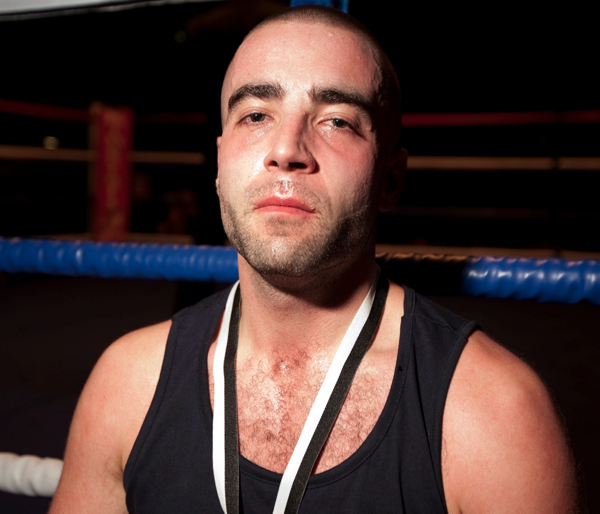
Aaron O’Neill after his first fight, a draw. Aaron had just been training since a couple of months before Christmas. “I’m going to win aren’t I?” he told me earlier, “I’m doing it to get a buzz.”
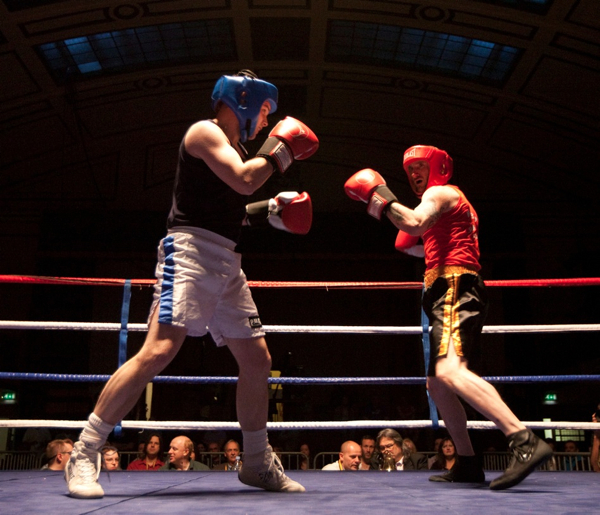
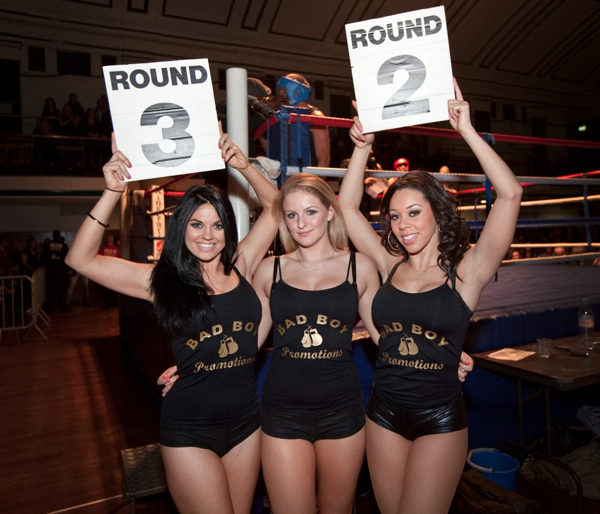
Monica Harris, Keeley Lane and Kirsty Jones.



Louise Berridge & Annika Sintim, the only women contenders, before their first fight….

…and after, Louise won – yet still friends.
Photographs copyright © Jeremy Freedman
Brick Lane Market 5
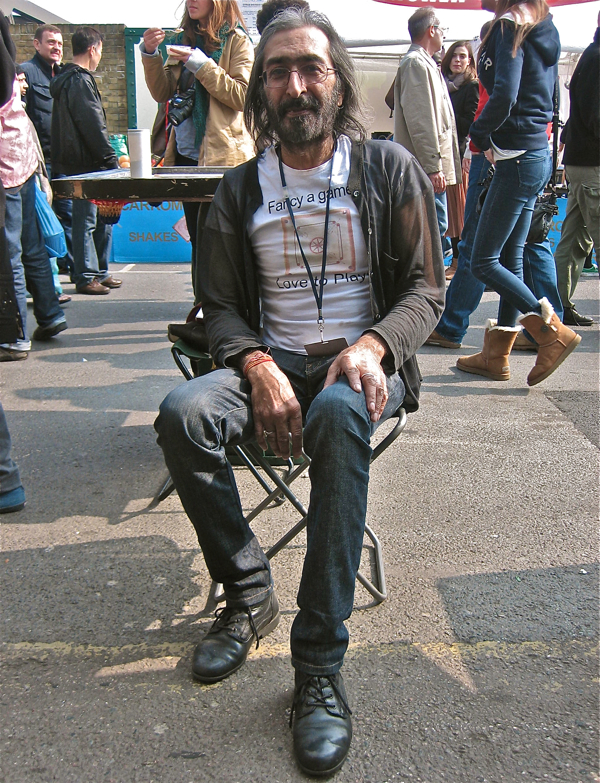
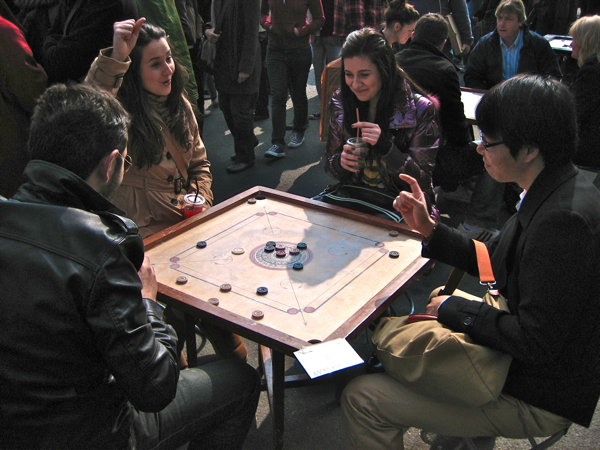
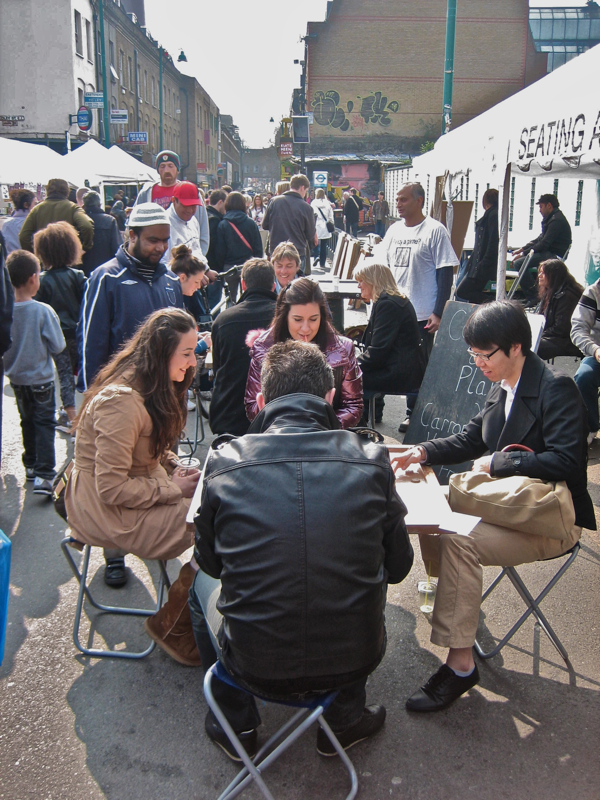
On any Sunday, at the heart of Brick Lane, where all the food stalls cluster upon the railway bridge, you will find eager gamers around Carrom boards, absorbed in their games, and you can guarantee there will be a crowd of spectators too, mesmerised by this fascinating sport from India that is a curious blend of Billiards and Drafts. Played with discs upon square wooden boards coated in french chalk, the objective is to knock you opponents counters into the pockets at each corner.
If you look closely among the throng you will spot the cunning genius responsible for this spontaneous flowering of a vibrant game culture that has complete strangers of diverse backgrounds playing together across the table every week. Slight of build, with spidery limbs and lanky hair – a man who greets everyone as a friend – this understated presence is Carrom Paul, President of the Carrom Association of the United Kingdom.
“One day fifteen years ago, I went to Ealing and I saw these game boards that I’d seen in India, so I bought four and brought them back to the Spitalfields Market and set them up for people to play, but it got so big I had hassle from the other stallholders. I was selling religious artifacts then, and once I sold the Carrom boards, I thought I wouldn’t get any more. But this old Indian man came along and explained that the pockets at each corner are the four great religions of the world, Islam, Hinduism, Christianity and Judaism, and when all the religions meet in the centre there will be peace and the moon will turn red, represented by the red counter at the centre.
So then I decided to buy lots! I moved to the Upmarket and they gave me the dead stall out the back where no-one goes, but I opened the fire exit and played my music and everyone came in from Brick Lane and the place was full of people playing Carrom. Eventually they put my rent up from thirty to one hundred and ninety pounds a week, and squeezed me out of there in 2009. Then the food stalls on Brick Lane invited me to join them and set up my Carrom boards and play my music, and I’ve been here ever since. And now, this is my life! It’s become my life because I love the game so much. The beauty of it is there is no luck, no chance, only tactics and play. You get lovely people come to play, no blaggards, drunks or druggies – they can’t be bothered. It’s a magnet. It’s chilled out and it’s relaxed.”
Gentle Paul comes up to Brick Lane from Tunbridge Wells every weekend. He takes the day off on Monday, does his website orders for Carrom boards on Tuesday, delivers them on Wednesday, and spends Friday and Saturday preparing for Sunday. Now he has a mission to get Carrom declared an Olympic sport, and since Billiards, which is a derivative of Carrom, has already been listed, he has high hopes of success.
It certainly is a beautiful spectacle Carrom Paul has conjured on Brick Lane, an unlikely haven where anyone can sit down and play for free. He paired me with Robbie, a passing white-haired gentleman to try a friendly game, just to learn the ropes and develop our technique for flicking the counters, and by the end of the game – which I found unexpectedly relaxing – we had become friends. It is a perfect Sunday pass time, civilised and egalitarian, with subtle religious overtones.
You can visit Paul’s shop www.carromshop.co.uk
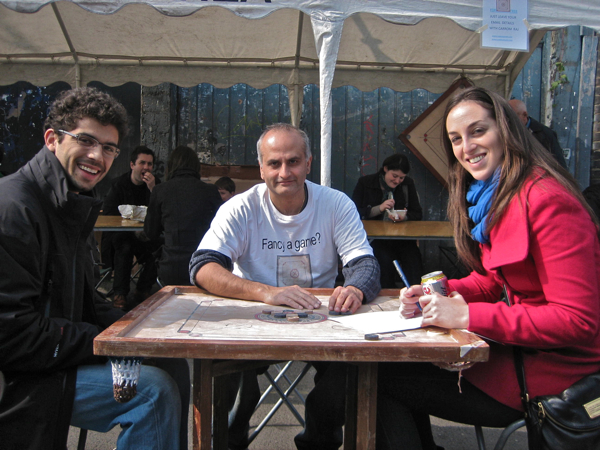
Carrom Raj, the Carrom Master in Brick Lane– “to my mind, he is the best Carrom player in the UK.”
Spitalfields Nippers

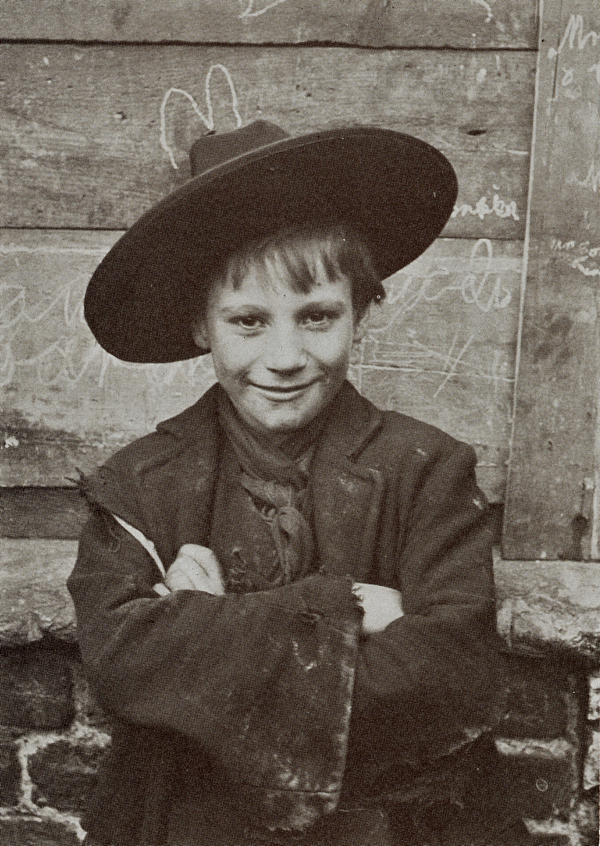
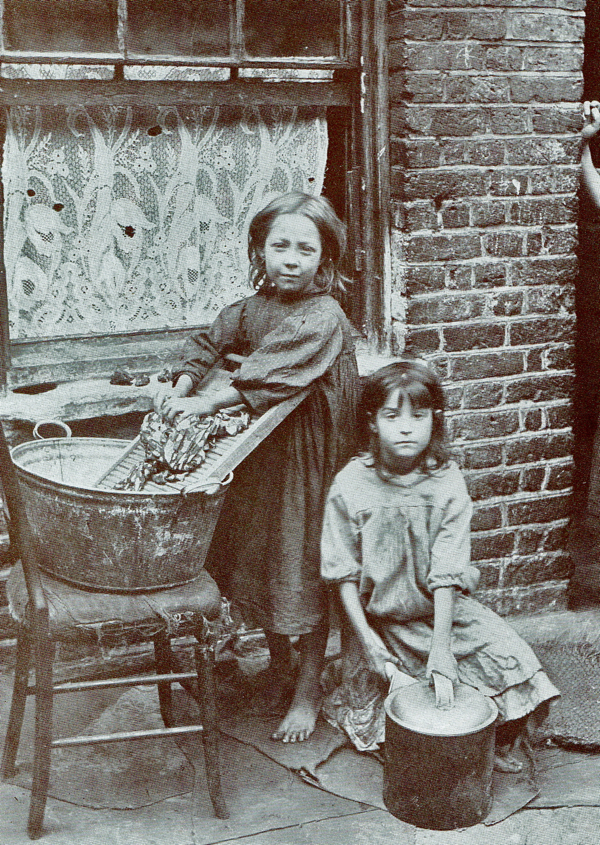
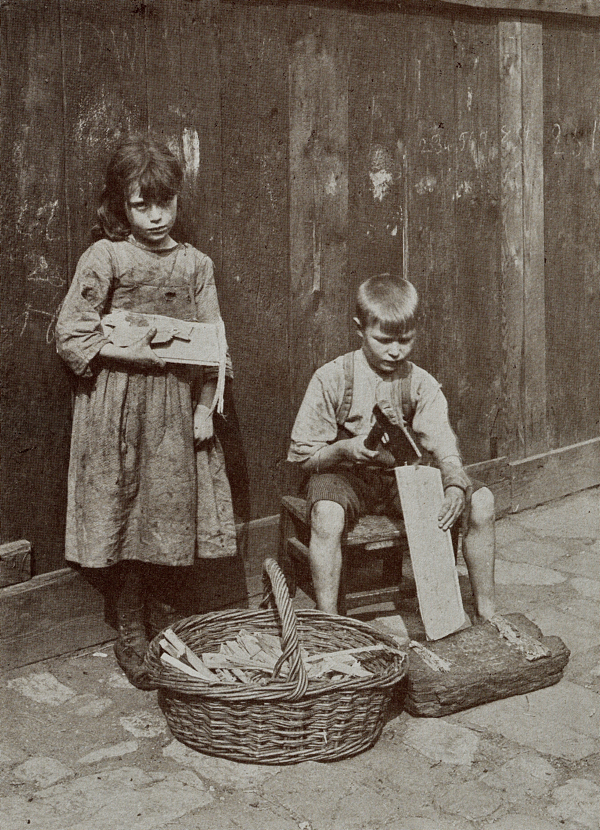
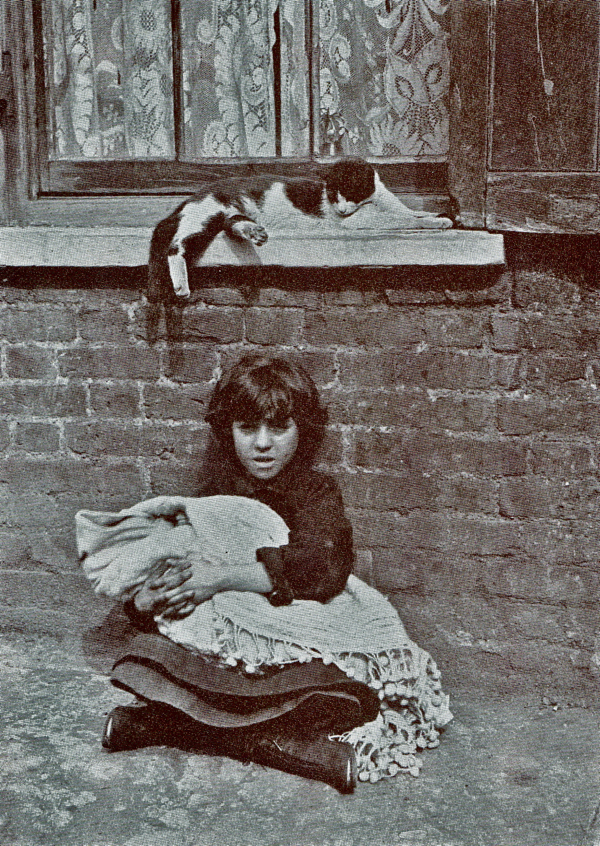
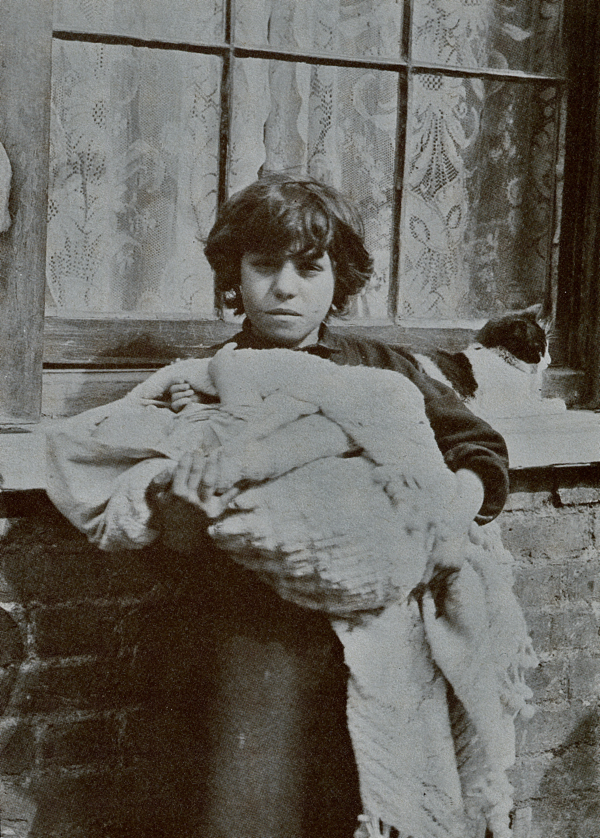
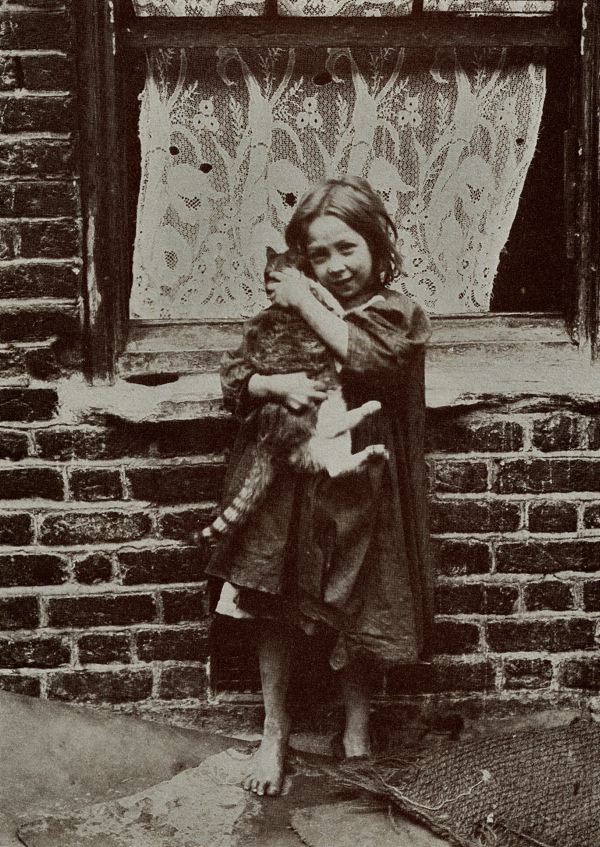
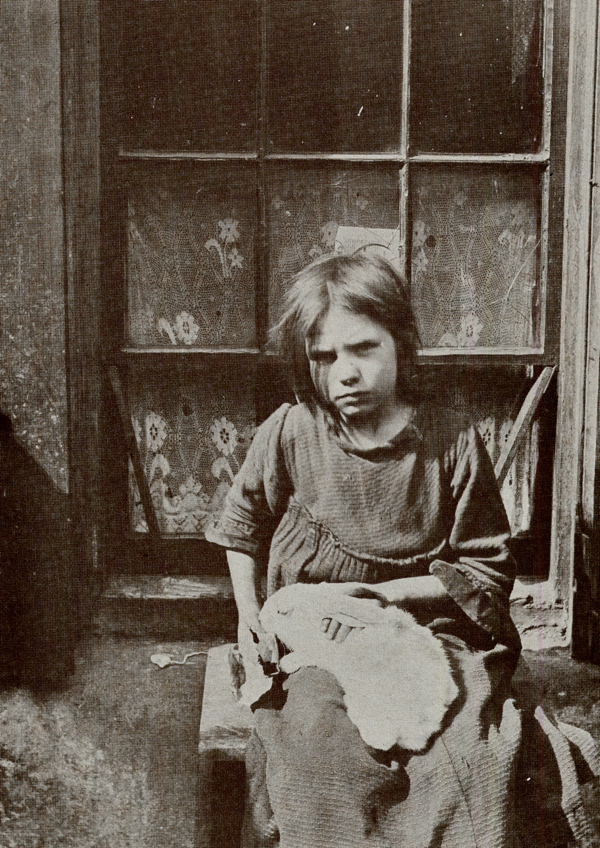
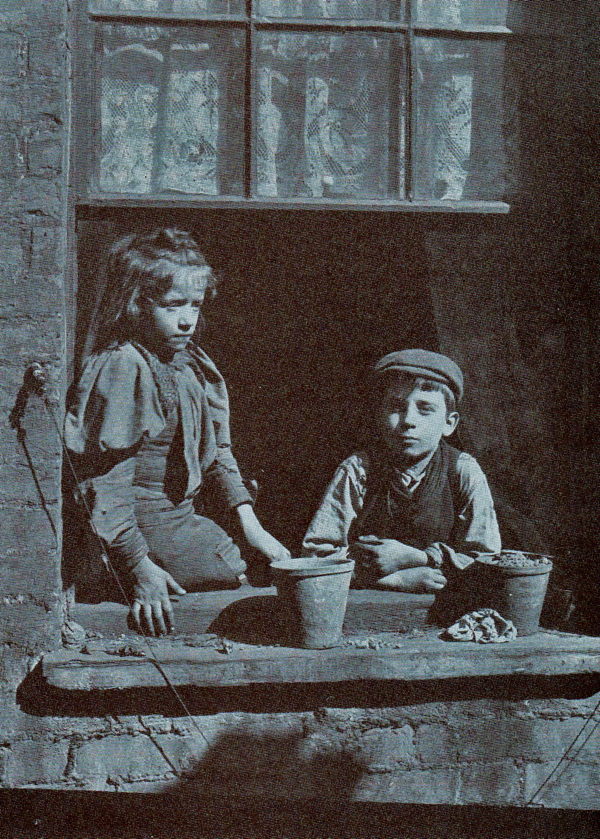
Let me introduce you to the Spitalfields Nippers of 1912 as photographed by Horace Warner. Although the origin of these pictures is an enigma, these frisky nippers of a century ago require no introduction or explanation, because they assert themselves as the mettlesome inhabitants of their territory.
Geographically, they are creatures of the secret byways, alleys and yards that lace the neighbourhood. Imaginatively, theirs is a discrete society independent of adults, in which they are resourceful and sufficient, doing their own washing, chopping wood, nursing babies and even making money by cleaning windows and running errands.
A few nippers may be swaggering for the camera, but most are preoccupied with their own all-consuming world, and look askance at us without assuming the playful, clownish faces that adults expect today. These nippers have not been trained to fawn by innumerable snaps as contemporary children are, and consequently they have a presence and authority beyond our expectation of their years.
Little is known of Horace Warner and nothing is known of his relationship to the nippers. Only thirty of these pictures survive, out of two hundred and forty that he took, tantalising the viewer today as rare visions of the lost tribe of Spitalfields Nippers. They may look like paupers, and the original usage of them to accompany the annual reports of the charitable Bedford Institute, Quaker St, Spitalfields, may have been as illustrations of poverty – but that is not the sum total of these beguiling photographs, because they exist as spirited images of something much more subtle and compelling, the elusive drama of childhood itself.
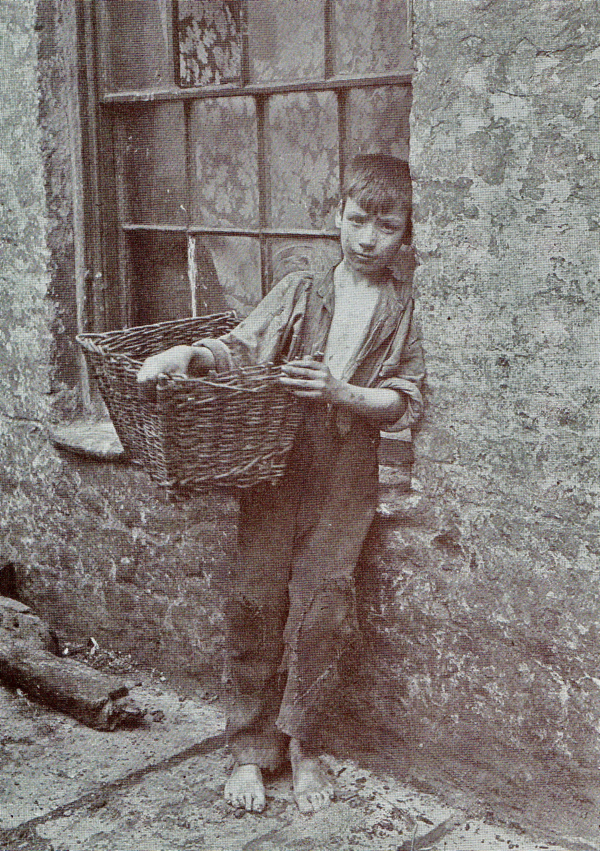

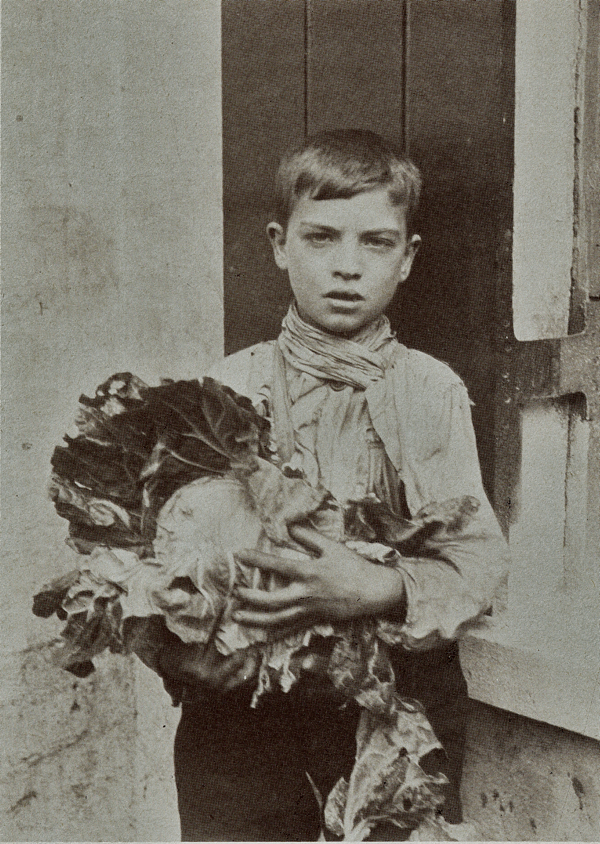
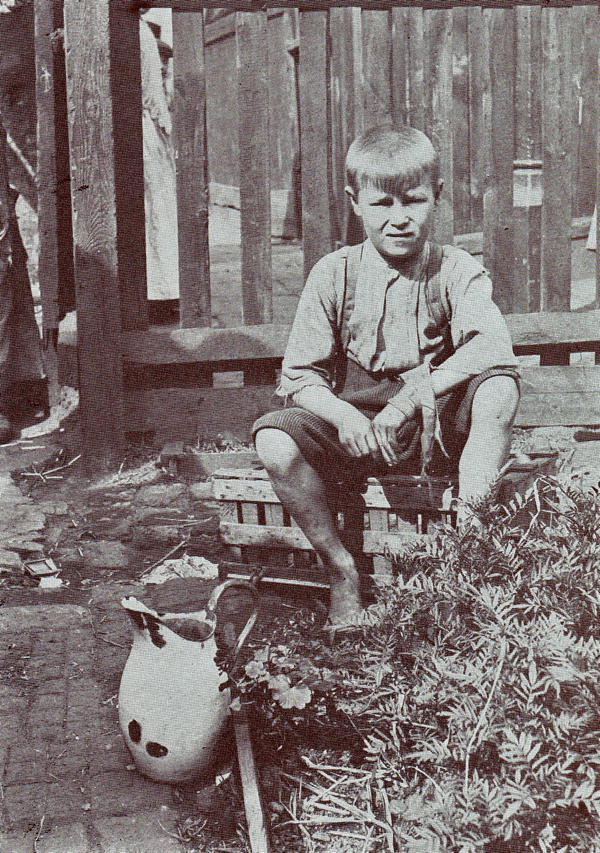

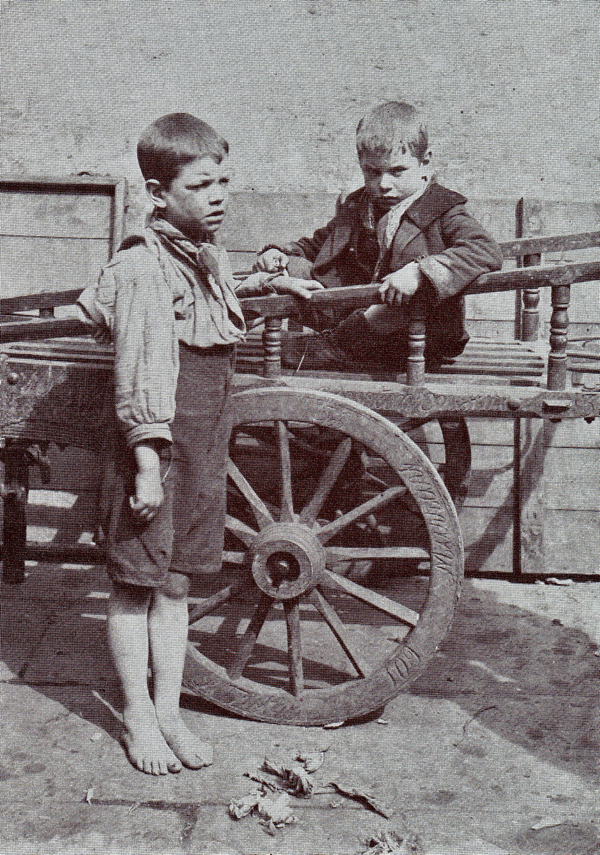

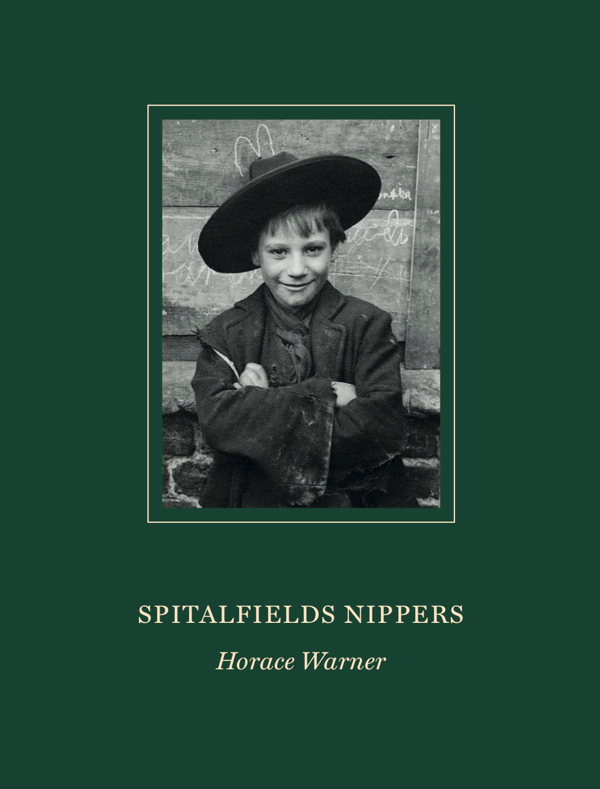
Click here to order a copy of SPITALFIELDS NIPPERS by Horace Warner
Tom’s Van
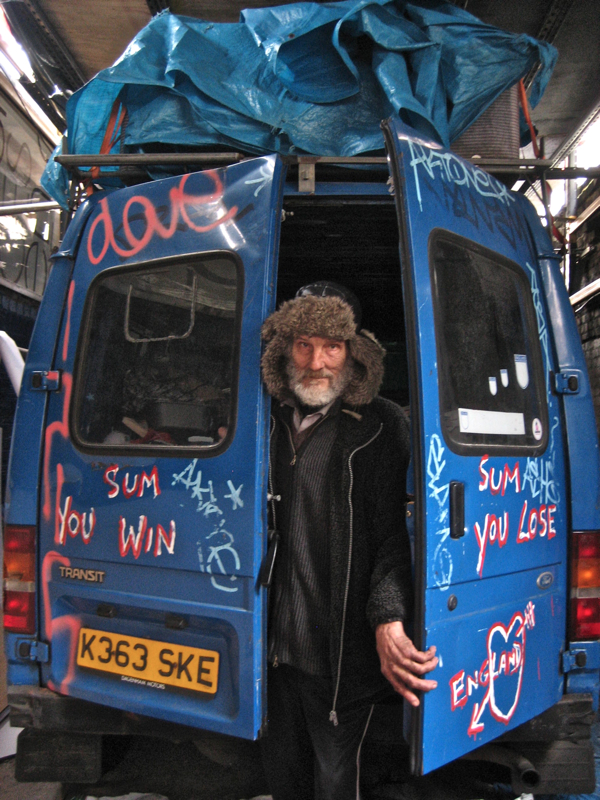
Tom took me to see his van yesterday. “It’s packed up,” he explained. Adding with philosophical levity, “Nothing lasts forever,” as he led me through the busy streets with his dog Matty tugging eagerly at the leash all the way – and stopping occasionally to check bins for interesting stuff – until we arrived back in the safety of the tiny yard behind black corrugated iron gates, where he parks his van and sleeps in the shack at the rear. “He’s at home,” Tom declared, as he released Matty from his lead, once we were standing together in the quiet to survey the van overflowing with all the gear that Tom sells on Brick Lane each day.
“I got this van for next to nothing, three hundred quid – it’s worth four hundred quid for scrap – and it’s been a hell of a good van,” admitted Tom, praising the old blue van covered with slogans that is a familiar sight in Spitalfields – as if it were a thoroughbred he was reluctantly putting out to grass.“I’m clearing it out now.” he confided, raising a smile of anticipation, “It’s full of what I’ve picked up, stuff that’s been thrown away – it’s all worth money, especially if you’re a vendor. I’m finding things I didn’t know I had, old mobile phones in their boxes complete with their chargers – big ugly old ones.”
This is how Tom has created a sufficient life for himself and Matty, rescuing what others discard and selling it on Brick Lane to keep himself, and sleeping on an old couch in a windowless shed. While Matty climbed into the cabin of the van and curled up where he delights to snooze, Tom swung back a door to show me his own dwelling by the glimmering light of a bicycle lamp. A cell less that ten feet square of bare brick and concrete, piled with books and blackened pans, and with an old sofa partly concealed in an alcove. “How can you live like this?” I asked at once, unable to believe how anyone could exist in such frugal conditions through this last harsh Winter,”What about the cold?”
“It’s what I am used to.” announced Tom defiantly, eager to dispel my concern, “I enjoy the way I am, I don’t want to live like other people – it’s called survival. I got gas for cooking in bottles. I could have water and electricity, but I don’t need it.” Seeing that I was not convinced, Tom expanded his explanation to emphasise that this was his choice, “I’ve got my light, it only costs me batteries and I can bring in water. If you’ve got water, you’ve got rates. If you’ve got electricity you’ve got bills. But if you’ve got a torch, you buy batteries and if you run out of them, then you go without…” Seeing I was at a loss for words, Tom assumed a friendly smile and asserted his personal notion of liberty. “People get thrown out of their homes, and they’re making it so hard you haven’t got a chance – so the best chance you can have is to have nothing.” he said. When I thought of the anxious stream of brown envelopes that come through my letterbox, I could not deny that Tom had a point, but equally I do not know if I have the courage to cut loose as he has done.
So, amazed by Tom’s stamina and resilience, both physically and emotionally, I turned our conversation back to his van and the question of how he could replace it. “I’ve got cash.” he said, “It’s a recession – so they say – there should be lots of vans going cheap because of the parking fines. A friend of mine has a Jaguar and he parked it in a loading bay and they want to charge him thousands in fines or take it from him. There’s something wrong when you can take a man’s Jaguar from him.” And he shook his head in bemused disappointment.
Then, as he padlocked the yard to leave, unable to resist the magnetic pull drawing him back to Brick Lane where he spends all his waking hours, Tom added, “The owner was here, he said, ‘You’re alright, mate. Keep an eye on the place for me.'” With subtle grace, Tom had absolved me of any responsibility for him, but more than this I was impressed by the strength of his character and the austerity of his vision of life, which has come to define the nature of his existence, granting him the particular freedom that suits his temperament.
“Be lucky, adieu!” he wished me, as we shook hands outside the beigel shop, arriving back in Brick Lane at the centre of the world.
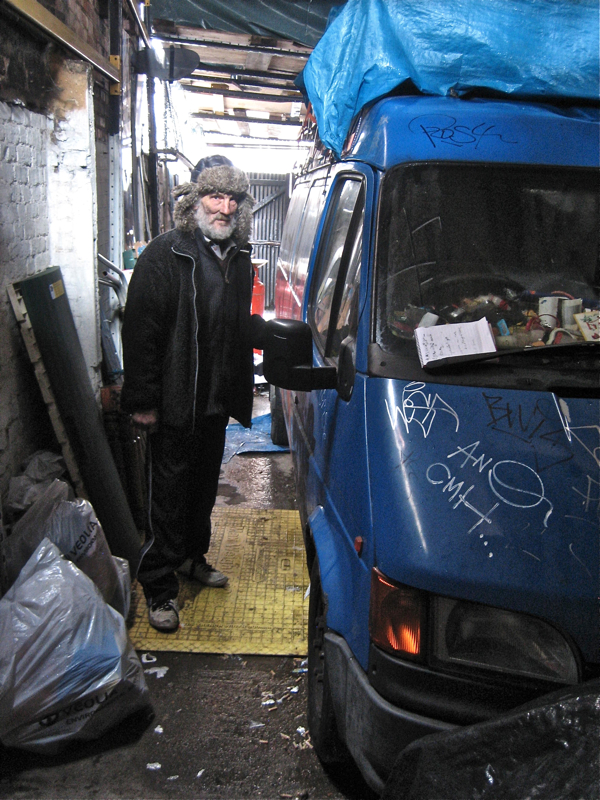
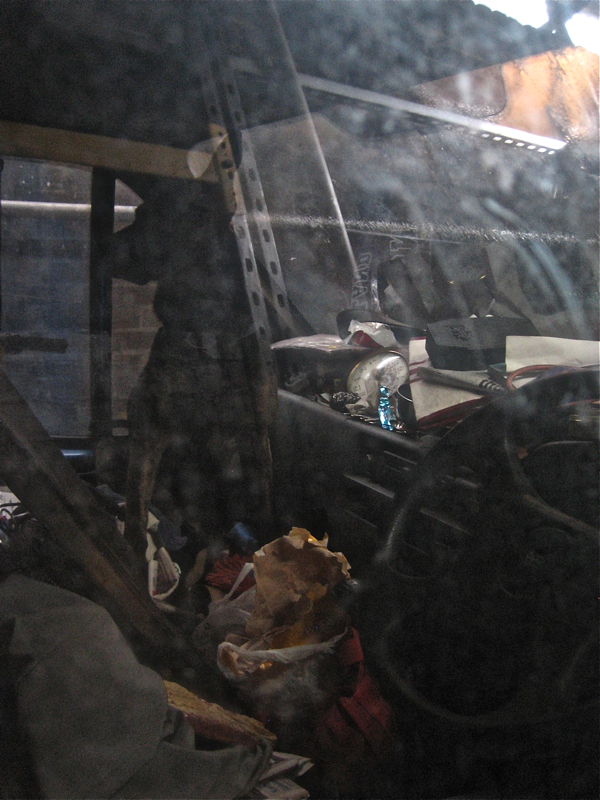
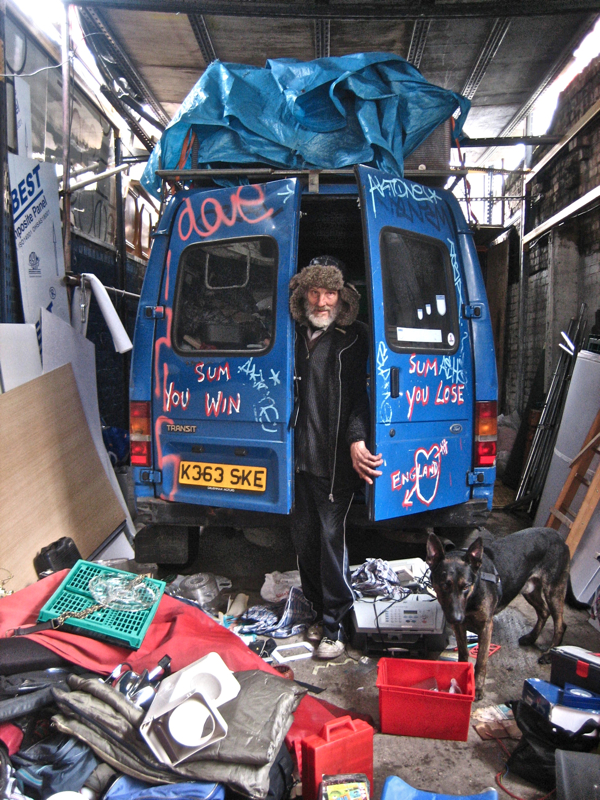
“The best chance you can have is to have nothing.”
Read my first interview with Tom
Favourite Pie & Mash Shops (Part One)

I have grown so skinny these past months at the end of Winter – chasing stories around Spitalfields – that I decided to undertake a tour of my favourite Pie & Mash Shops in the company of Spitalfields Life contributing photographer Sarah Ainslie, in order to explore all the delights on offer and put some meat on my bones into the bargain.
Pie & Mash Shops have a special place in my affections because they are unique to East London and inextricably bound up with the cultural and historical identity of this place – becoming destinations where people enjoy pilgrimages to seek sustenance for body and soul, by paying homage to the spirit of the old East End incarnated in these tiled, steamy temples dedicated to the worship of hot pies. Let me admit, it is a creed I can subscribe to wholeheartedly.
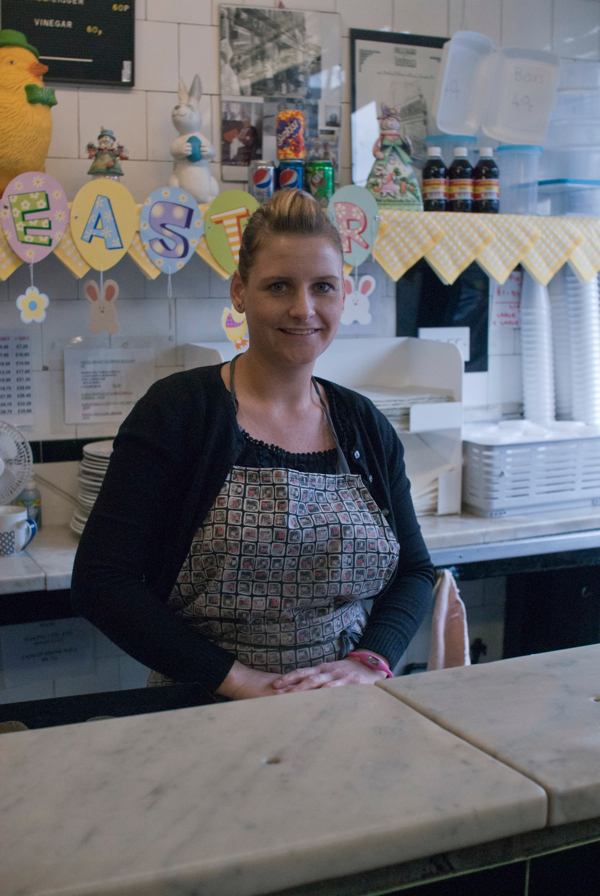
Taking our cue from that golden orb in the sky, Sarah & I decided to commence in the East and work our way West across the territory, beginning with G. Kelly, established since 1937 at 526 Roman Rd. Here we had the privilege to be welcomed by the lovely Sue Venning – resplendent in her white uniform – the proprietor who greets everyone universally with a brisk yet cheery “Yes, Love?” – commonly reciprocated by “Hello, Gorgeous.” It was a delight to walk into this sympathetic, clean and bright interior, adorned with daffodils and lined with marble and tiles, gleaming under the globe lamps.
“My Aunt Theresa on my father’s side married George Kelly who opened this in 1937,” explained Sue, introducing the intricate web of relations that connect this establishment to the two other Pie & Mash Shops by the name of Kelly, all independently run today by increasingly distant relatives as the generations pass by. “Samuel Robert Kelly opened up originally in Bethnal Green in 1915 – he had three sons, Samuel who took over in Bethnal Green, Joe who opened in Bonner St and George who came here to the Roman Rd. My father Bill (George Kelly’s brother-in-law) ran this with my mother Bea, until he died in 1969, and then I took over from her in 1990.” she outlined with a relaxed smile and a practised efficiency that left me reeling.
Arriving with the first customers of the day, I was fascinated to discover that my fellow diners were from Suffolk and Kent, and had gone out of their way to be there. In particular, the couple from East Anglia were up to visit their nan who lived nearby, and Sue confirmed that many of her customers were those who had once moved out of the East End, for whom a return visit to her Pie & Mash Shop was an opportunity to revisit a taste of home. Yet Sue retains a solid constituency in the Roman Rd. “People know each other here,” she confirmed fondly, “You know their orders when they come in, they don’t need to ask.”
We hit the rush at G. Kelly, 414 Bethnal Green Rd, (connected only genealogically to G. Kelly, Roman Rd) where Matt Kelly, proprietor for the last fifteen years, baker and third generation pie man, had his work cut out in the kitchen to meet the lunchtime demand for pie and mash and liquor at £2.65. Diners here eat off elegant cast iron tables beneath framed portraits of local boxing heroes of yesteryear and everyone is at home in one of this neighbourhood’s cosiest destinations.
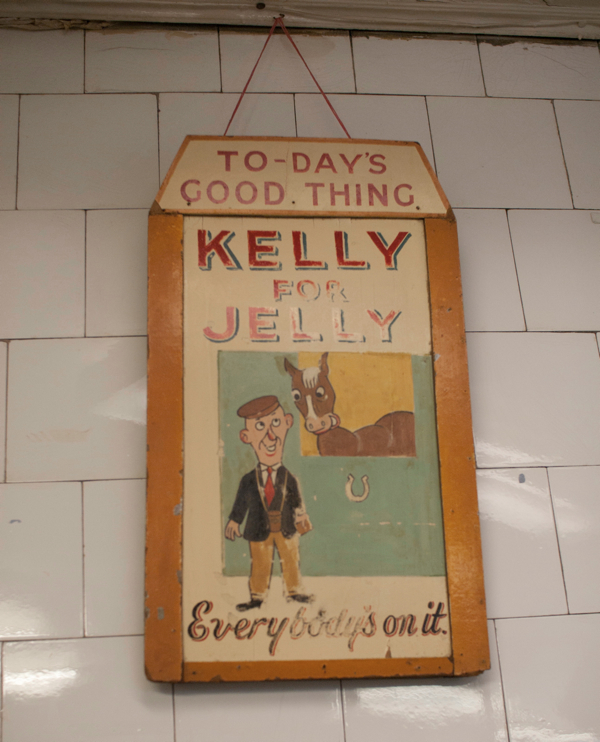
At the head of the lunch queue was Mrs Julia Richards. “I’m going to be ninety-eight,” she bragged with a winsome grin, the picture of exuberance and vitality as she carried off her plate of pie and mash hungrily to her favourite corner table, pursued by her sprightly seventy-year-old daughter Patricia – both superlative living exemplars for the sustaining qualities of traditional East End meat pies. “I’ve been coming here over fifty years,” revealed Patricia proudly. “I’ve been coming here since before it opened!” teased Julia, her eyes shining with excitement as she cut into her steaming meat pie.“They used to have live eels outside in a bucket,” she continued, enraptured by memory, “And you could pick which one you wanted to eat.” We left them absorbed in their pies, the very epitome of human contentment, beneath a hand-lettered advertising placard, proclaiming “Kelly for Jelly.”
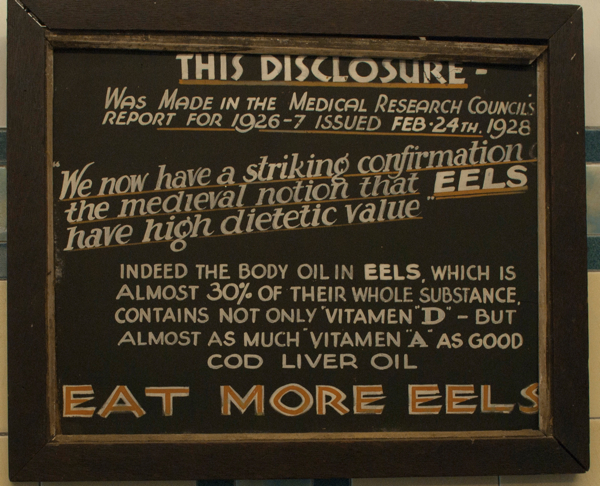
Up at F.Cooke in Broadway Market, once we had emptied our plates of some outstandingly delicious pies, Sarah & I enjoyed a quiet after-lunch cup of tea with the genial Robert Cooke – “Cooke by name cook by nature” – whose great-grandfather Robert Cooke opened a Pie & Mash Shop at the corner of Brick Lane and Sclater St in 1862. “My father taught me how to make pies and his father taught him. We haven’t changed the ingredients and they are made fresh every day,” explained Robert plainly, a fourth generation born-piemaker sitting proudly in his immaculately preserved cafe, that offers the rare chance to savour the food of more than century ago.
“My grandfather Robert opened this shop in 1900, then he left to open another in the Kingsland Rd, Dalston in 1910 and Aunty May ran this one until 1940, when they shut it after a doodlebug hit the canal bridge.” he recounted. “My mother Mary came over from Ireland in 1934 and worked with my grandfather in Dalston, alongside my father Robert and Uncle Fred. And after they got married in 1947, my grandfather said to my parents, ‘Here’s the keys, open it up,’ and they returned here to Broadway Market, where I was born in 1948.”
It was a tale as satisfying in its completeness as eating a pie, emphasising how this particular cuisine and these glorious shops are interwoven with the family histories of those who have run them and eaten at them for generations. Yet beyond the rich poetry of its cultural origin, this is good-value wholesome food for everyone, freshly cooked without additives, and meat pies, vegetable pies, fruit pies and jellied eels comprise a menu to suit all tastes. Reluctantly, after three Pie & Mash Shops in one day, Sarah & I were finished – but even as we succumbed to the somnolence induced by our intake of pies, we took consolation in dreamy thoughts of all those pleasures that await us in the other Pie & Mash Shops of the East End, yet to come.
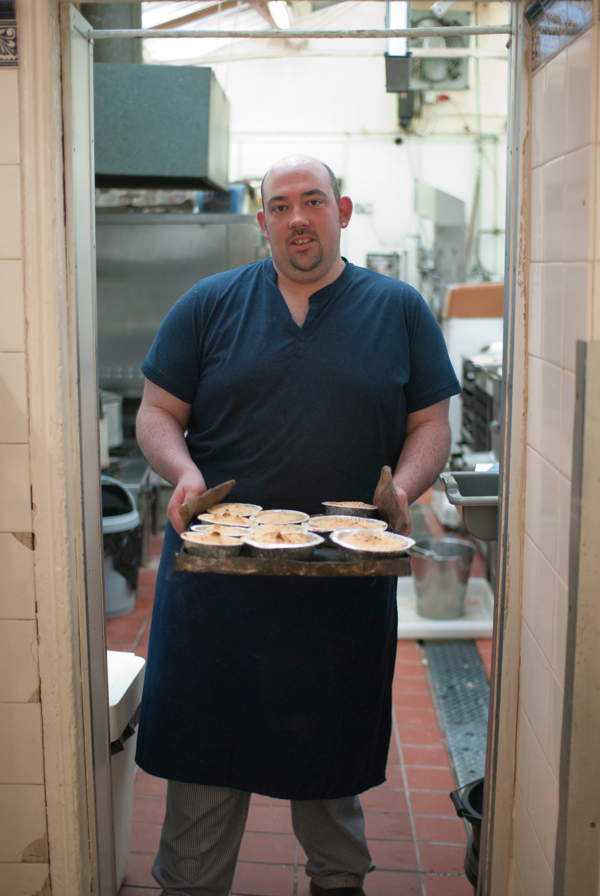
This is Dean Cecil who bakes the pies at G.Kelly in the Roman Rd.
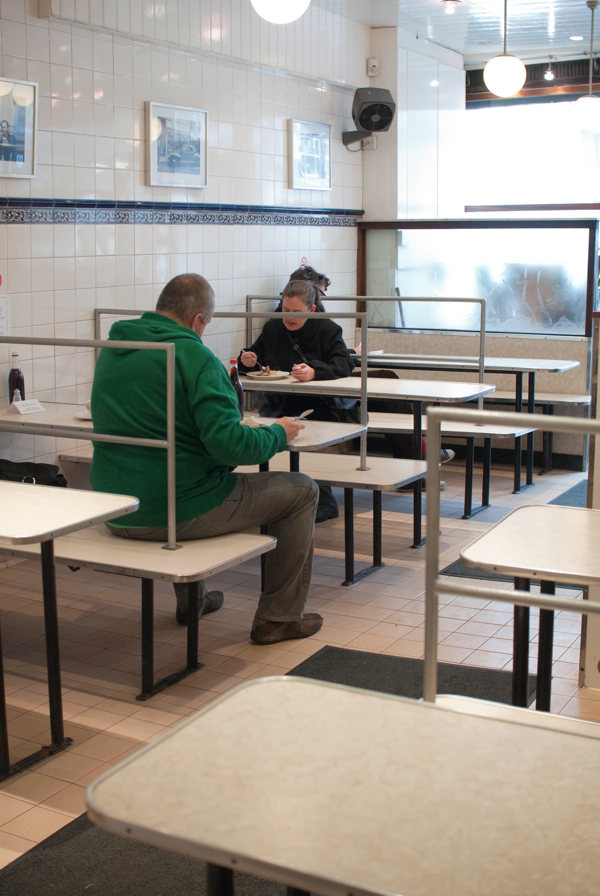
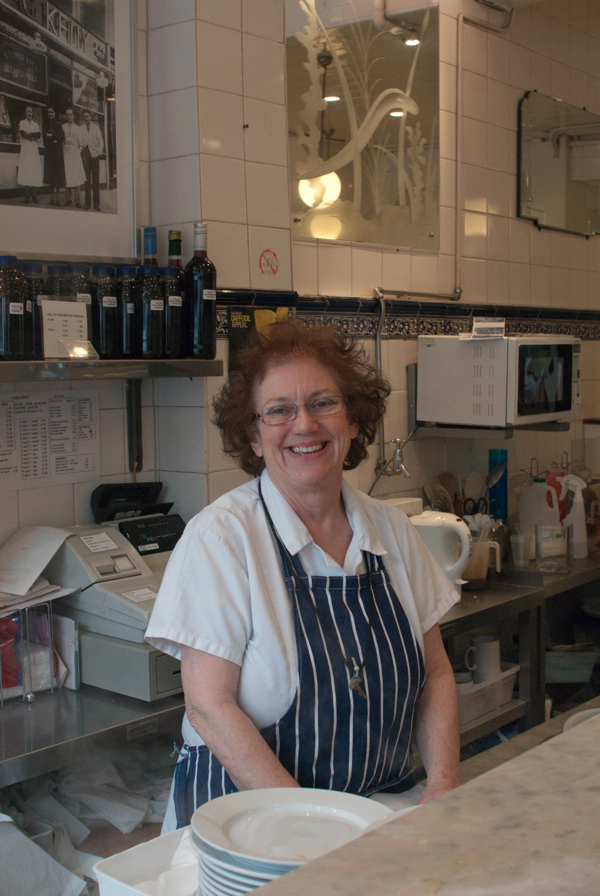
Sue Venning at G.Kelly, Roman Rd – her Aunt Theresa, who married George Kelly, is the woman in the dark coat, pictured in the black and white photo, standing outside the shop in 1937.
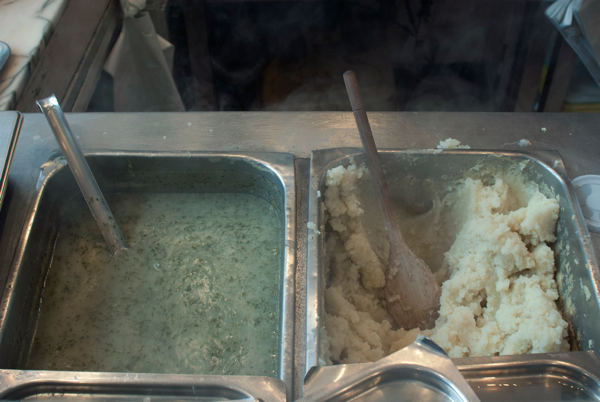
Liquor (Parsley sauce) and mash at G.Kelly
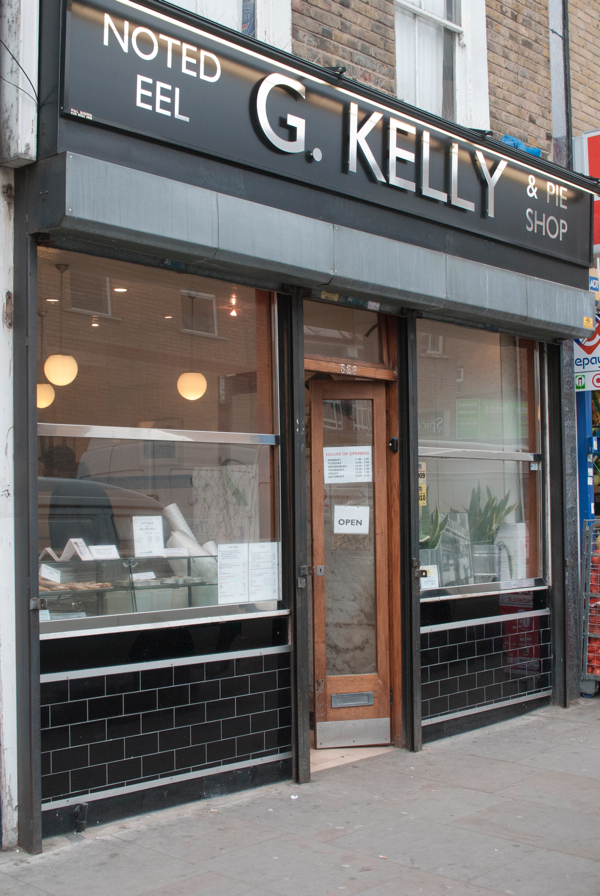
G.Kelly, 526 Roman Rd.
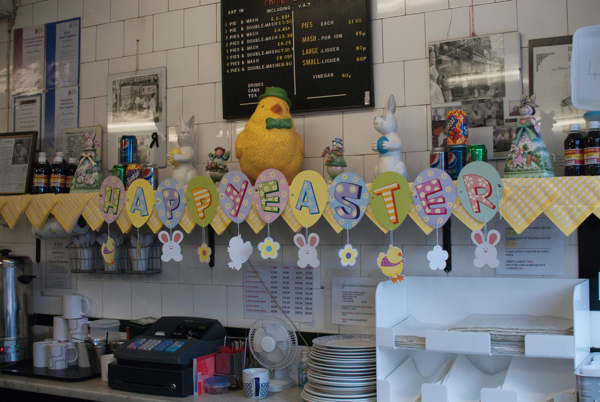
At G.Kelly, Bethnal Green


The prizefighters of yesteryear fondly remembered in the Pie & Mash Shop in Bethnal Green.

Julia Richards, nearly ninety-eight – “They used to have live eels outside and you could pick your own.”
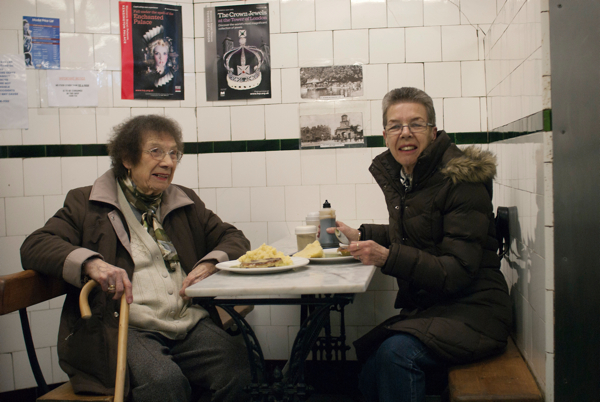
Regulars, Julia Richards and her sprightly daughter Patricia Wootton aged seventy, at the favoured corner table at G.Kelly, Bethnal Green.

G.Kelly, 414 Bethnal Green Rd

Jellied Eels at F.Cooke
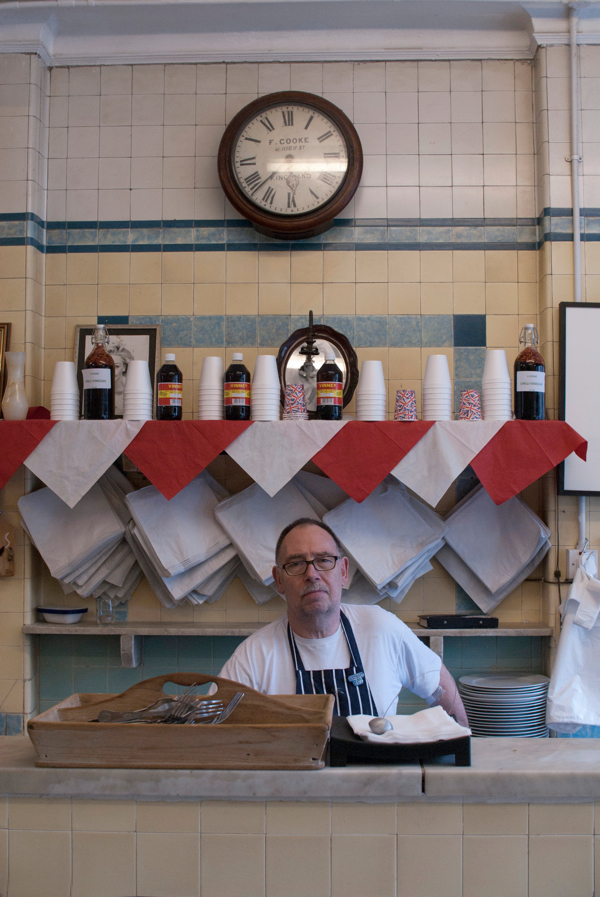
Robert Cooke under the clock commissioned by his grandfather Robert Cooke from a clockmaker in Hackney in 1911.
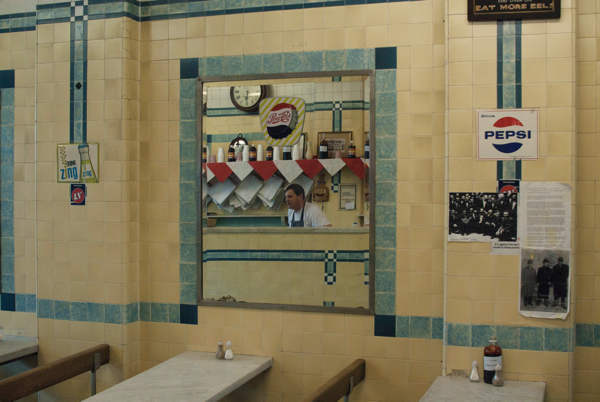
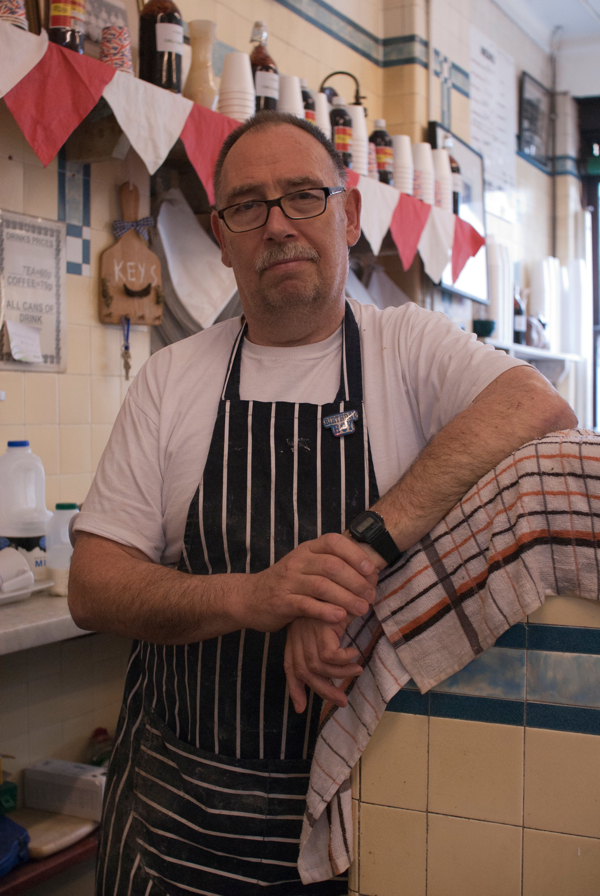
Robert Cooke, fourth generation pie-maker -“Cooke by name, cook by nature.”

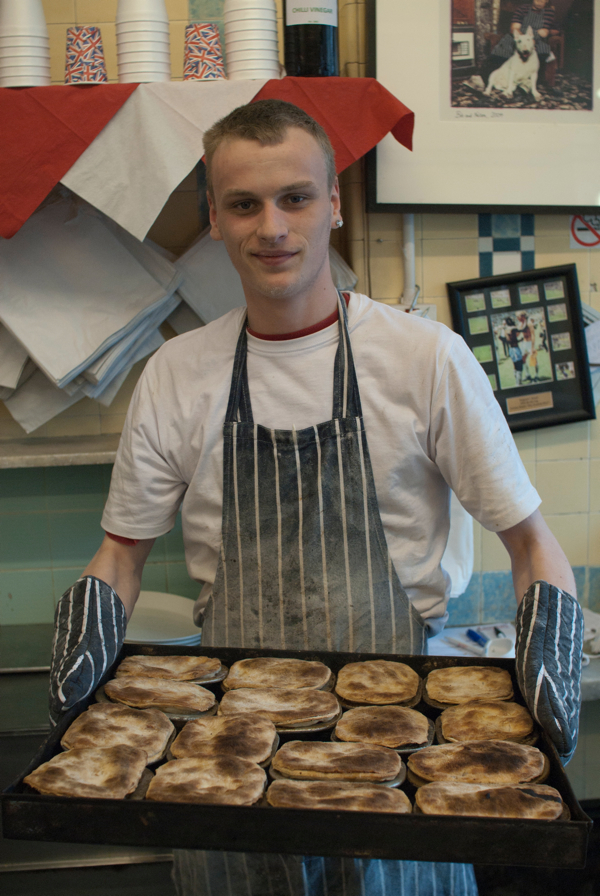
Pat with a tray of pies at Broadway Market
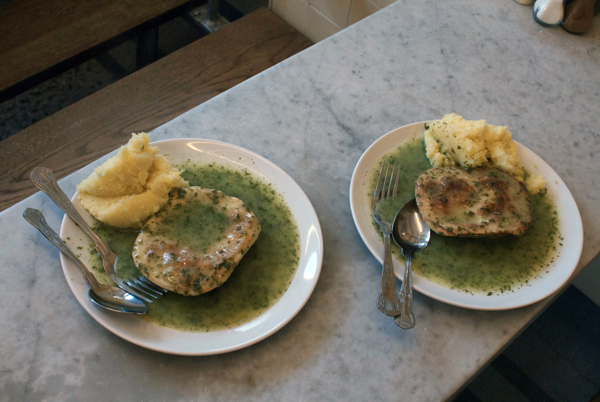
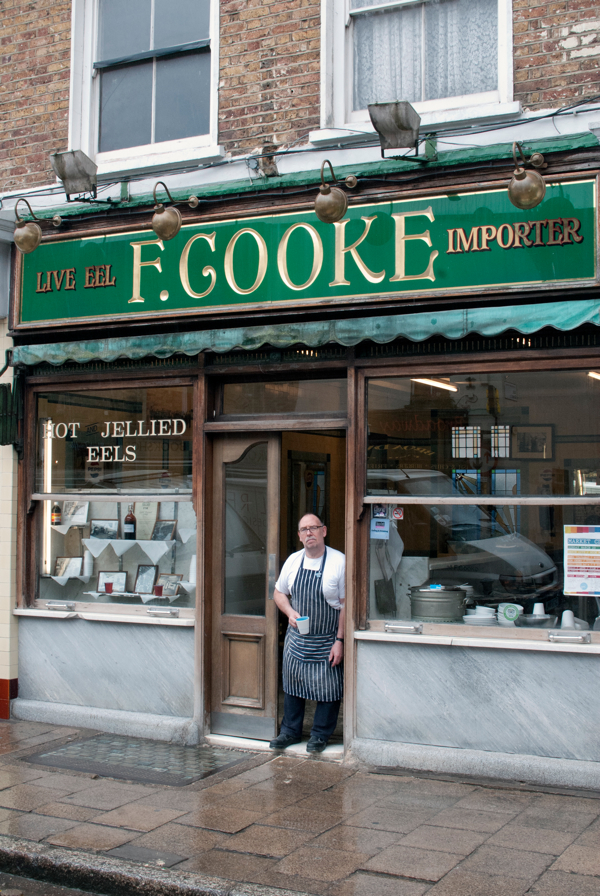
F.Cooke, 9 Broadway Market, since 1900.
Photographs copyright © Sarah Ainslie