
Leila’s Shop Report 2
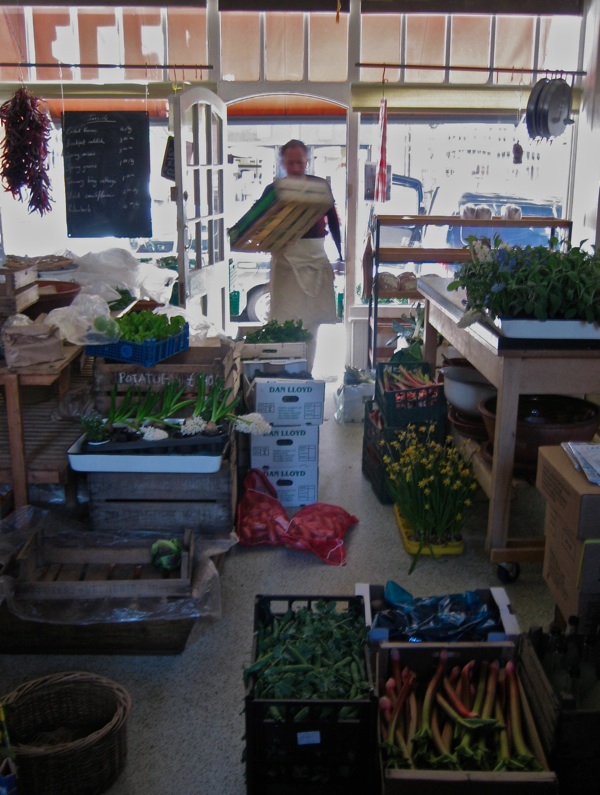
Leila’s Shop
In spite of these warm bright days of April sunshine, in the early hours of Monday night Leila and I were shivering at the Covent Garden Market – where I had accompanied her on the weekly trip to buy fresh produce for her shop. Yet the passage of just a month since my last report and the advance in the weather has delivered such a wealth of seasonal fruit and vegetables into the market that it warmed our spirits to discover some magnificent new arrivals, still fresh from the fields.
But it was no straightforward matter to seek out these prizes because the market is a labyrinth without signs. You arrive in a dark car park, as if you were on the periphery of a large airport or an industrial estate. Then you enter through any of the myriad doors to find yourself inside a warren of interconnected premises belonging to the different wholesalers, all stacked with produce. And each one of these backs onto the car park and also faces in the other direction onto the narrow market aisles, where the traders display their wares beneath harsh halogens.
Several times, I asked Leila, “Were we here before?” as she lead me on an elaborate journey, weaving and criss-crossing through the market she has come to know intimately over twelve years buying at Covent Garden. In and out of gloomy warehouses where vast towers of vegetables loomed over us in the half-light, into chilled white rooms where small batches of choice crops awaited, and out to the car park again to probe newly arrived pallets, Leila followed her instinct, gently checking the consistency of the vegetables, expertly shelling peas in one hand and swallowing them, absent-mindedly chewing scraps of asparagus, tasting tarragon, and all done with the preoccupied expression of one on a quest.
Amongst the profusion of bland industrially farmed fruit and vegetables dominating the market, grown to achieve consistency of size, shape, colour and flavour, and be available all year round, Leila is seeking produce from traditional or small growers that may come in limited quantities for just a few weeks when the crop is in season –“I am looking for things that come from somewhere and taste of something,” as she puts it, with succinct and delicate irony.
Leila’s van was the lone small vehicle in a line of large white trucks in the car park, and Leila was the only female customer in a market that is staffed by men, yet Leila herself is not intimidated by this enclave of querulous masculinity. “They don’t make any allowances,” she granted with a weary smile, “but they know their stuff and they work really hard. And though I am an insignificant customer in terms of quantity, they do respect that I come down myself each week and pick what’s good.”
“I bought some lovely radishes here last week and they were joking because they were muddy and they said, ‘We knew you’d buy these.'” Leila revealed to me with a cheeky grin as we approached a counter, before turning to the trader and asking with a complete lack of self-consciousness, “Got any dirty potatoes?”
Muddy vegetables are at a scarcity because clean ones sell better, when the truth is that mud keeps vegetables fresher longer by protecting them from sunlight and drying out – especially true of root vegetables that are less likely to turn green and sprout if they are covered in mud. Yet mud is the enemy of the clean refrigerators where many shops store their vegetables, and the benign dark earth which is the source of these plants is commonly perceived as mere dirt. “Washed vegetables need more refrigeration but we don’t have that,” explained Leila, “we rely upon the natural cooling of the shop due to the brilliance of the Victorian design and its venting system.”And she was lucky that night, because we carried away a sack of beautiful muddy Maris Piper potatoes, grown in England, in triumph.
There are half a dozen wholesalers where Leila gets the majority of her stock but she always takes an eagle-eyed sweep around the market too. “After years and years, I have come to recognise the growers – “the mark” as they call it at the market. And I write to them if I like what they grow.” she admitted, “I am always on the lookout for interesting new producers whose crop I can buy through the market.”
Early on Tuesday, Leila drives her new stock back along the river and up to Arnold Circus, where, first thing, you will see the weekly spectacle of the vegetable boxes being made up upon the pavement in Calvert Avenue, ready for distribution with some of the freshest vegetables in London, while the handsome displays which characterise Leila’s Shop are renewed with the latest arrivals from the market. Any other shop with Leila’s small turnover would purchase their stock indirectly, through a distributor, but Leila McAlister chooses to give up one night every week and search the market personally, applying her experience and critical faculties to get the fruit and vegetables herself, because it is her pleasure and her passion.
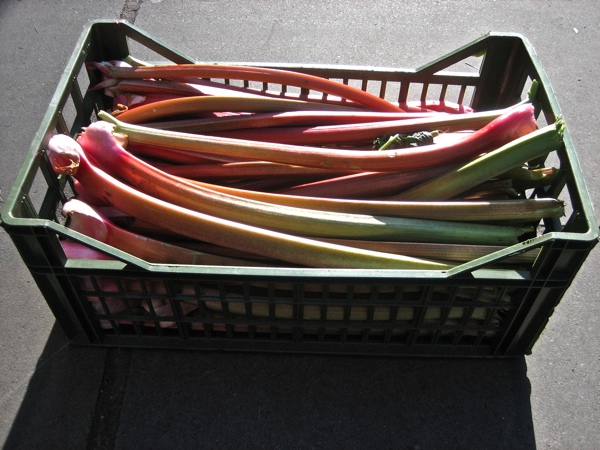
Superceding the forced rhubarb of March, the first outdoor-grown English rhubarb is now ready.

“Among the early carrots, these bushed Italian carrots are good and fresh and tasty.”
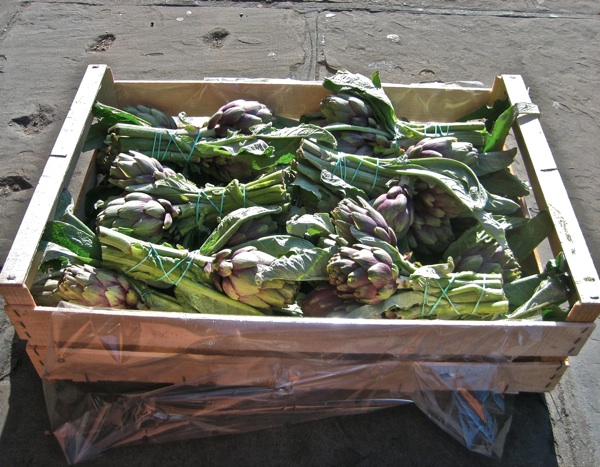
“Of the many varieties of artichokes in season now, this French variety is good for braising.”
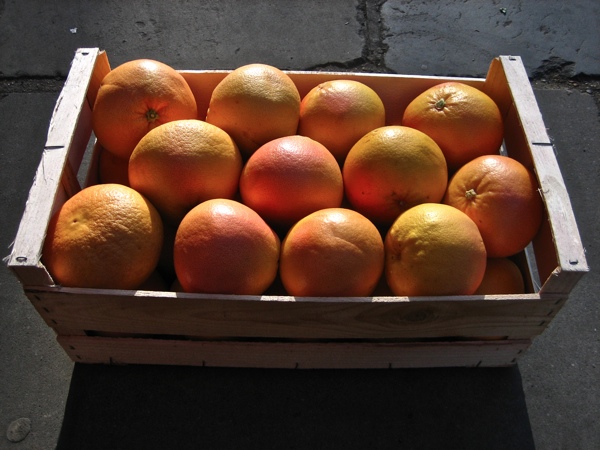
“Delicious Corsican blushed grapefruit.”

The first broad beans from Italy – “so sweet you can eat them raw with a shaving of Pecorino cheese.”

Lovely red Spring onions for salad.

Organic Italian new potatoes – “I had them last week and they were so delicious, I couldn’t resist getting them again.”

The first Italian peas – “tiny and sweet, and definitely to be eaten from the pod.”

Large red Spring onions – “sweet and good for cooking or slicing into salads.”
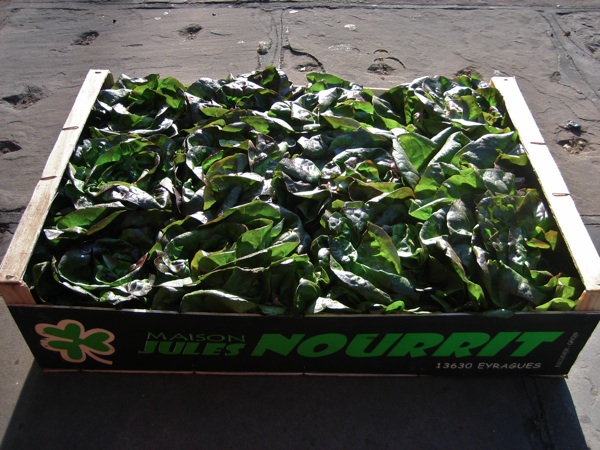
Rougette lettuces – “lovely French lettuces, crisp and tasty and also very pretty.”

Fresh bunched beetroots -“the leaves are delicious blanched in boiling salt water for a minute, and then tossed in olive oil with salt and pepper.”
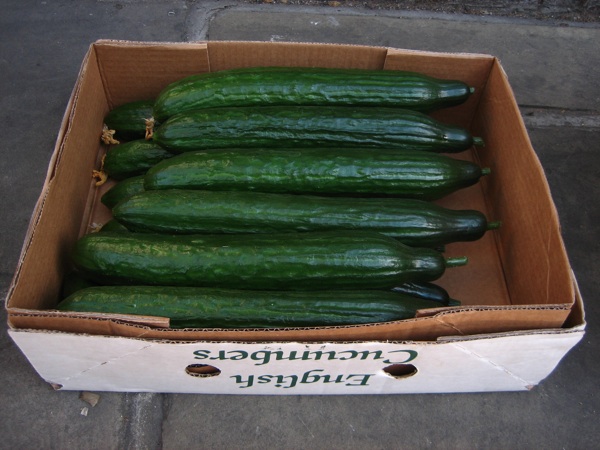
The first English cucumbers, grown under glass in Worcestershire.
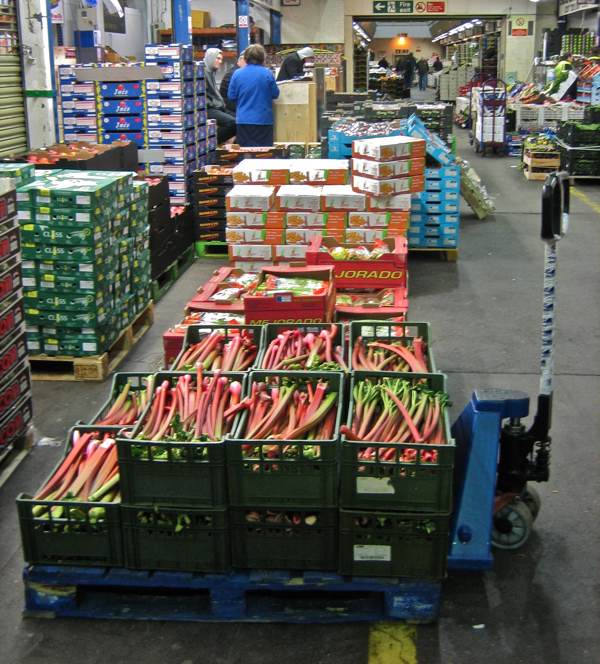
2:00 am, buying rhubarb…
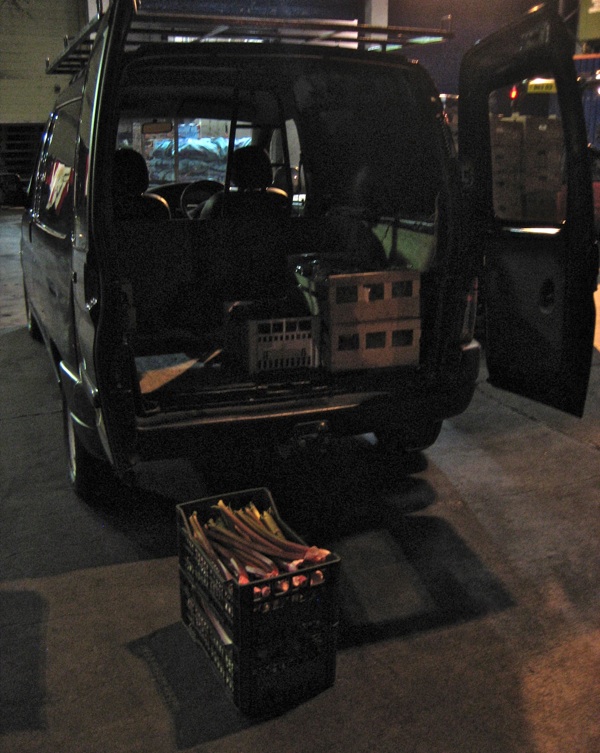
3:00 am packing the van…
You may also like to read
Harry Landis, Actor

“I was born and brought up in the East End, then I went away for fifty years and came back eight years ago – but I returned to a very different East End from the one I left,” admitted Harry Landis, as we stood together outside the former Jewish Soup Kitchen in Brune St.
“When I was four years old, I came here with my mother holding me in one hand and a saucepan in the other, to get a dollop of soup and a loaf of bread.” Harry confided to me, “When I returned, the soup kitchen had been converted into flats, and I thought it would be great to buy a flat as a reminder – but the one for sale was on the top floor with too many stairs, so I didn’t buy it. Yet I’d have loved that, living in the soup kitchen where I went as a child.”
“I don’t feel any sense of loss about poverty and the bad old days and people suffering.” Harry declared with a caustic grin, as we ambled onward down Brune St. And when Harry revealed that growing up in Stepney in the nineteen thirties, he remembers taking refuge in his mother’s lap at the age of ten when a brick came smashing through their window – thrown by fascists chanting, “Get rid of the Yids! Get rid of the Yids!” – I could understand why he might be unsentimental about the past.
We walked round into Middlesex St to the building which is now the Shooting Star, that was once the Jewish Board of Guardians where Harry’s mother came to plead her case to get a chit for soup at the kitchen. “I hate those fucking jumped up Jews from Hendon who blame poor Jews for letting down the race,” Harry exclaimed to me, in a sudden flash of emotion as we crossed the road, where he accompanied his mother at four years old to face the Board of Guardians sitting behind a long table dressed in bow ties and dinner jackets.
When she told the Board she had two children – even though she only had Harry – in hope of getting more of the meagre rations, the Guardians unexpectedly challenged Harry, requiring evidence of his mother’s claim. With remarkable presence of mind for a four year old, he nodded in confirmation when asked if he had a sister. But then the Guardians enquired his sister’s name, and – in an extraordinary moment of improvisation – Harry answered, “Rosie,” and the Board was persuaded. “She used to break her loaf of bread and give half to the poor Christians waiting outside the soup kitchen,” he told me later, in affectionate recognition of his mother’s magnanimous spirit, even in her own state of poverty.
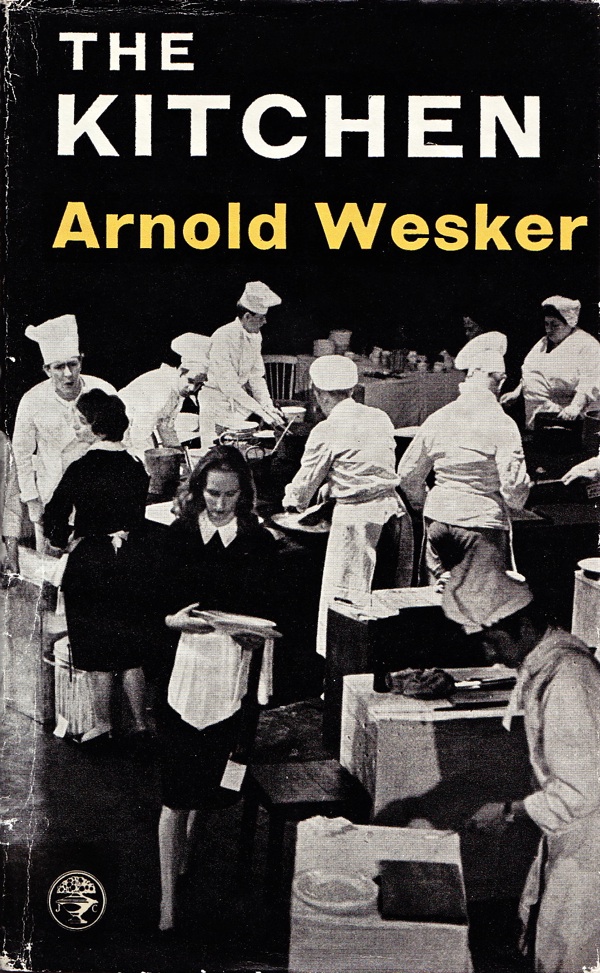
Yet the significance of Harry’s action reverberated far beyond that moment, because it revealed he had a natural talent for acting. It was a gift that took him on a journey out of the East End, gave him a successful career as an actor and director, and delivered him to the Royal Court Theatre where he originated the leading role in one of the most important post-war British plays, Arnold Wesker’s masterpiece “The Kitchen.” Although, ironically, at Stepney Jewish School where Harry was educated, the enlightened headmistress, Miss Rose, made the girls do woodwork and the boys learn cooking – and when Harry left at fourteen he wanted to become a chef in a kitchen, but discovered apprenticeships were only available to those of sixteen.
“They sent me to work in a cafe pouring tea but I didn’t last very long there, I did several jobs, window cleaner and milkman. And I used to go to the Hackney Empire every week, first house on a Monday because that was the cheapest – the company had just arrived, rehearsed with the band once and they were on at six, but the band weren’t sure what they were doing, so I enjoyed watching it all go wrong.
Being a cheeky little sod, I used to perform the show I’d seen on the Monday night next day at the factory where I worked – Max Miller’s jokes, the impersonators and Syd Walker who did a Rag & Bone act. 95% of them nobody knows now. The shop steward, who was my mentor said, “You ought to be on the stage.” I’d never seen a play. I said, “Where do I go to see a play?” He said, “If you go the West End, the play will be about the tribulations of the upper classes, the problems of posh people. But there is one theatre in Kings Cross called the Unity Theatre, the theatre of the Labour & Trade Union Movement that does plays about ordinary people. I’m going there next Sunday night with my wife, if you’d like to come.” And I went. And at the Unity Theatre, that’s where my life changed.
It knocked me out because the people on the stage could have been living in my street and the language they spoke was the language we all spoke down the East End. The shop steward said, “You should be here, I’ll get you an audition.” I did my audition and I showed them my acting of bits I’d seen at the Hackney Empire, and they put me in the variety group. We performed shows in air raid shelters and parks. But then they transferred me to the straight acting section because I was fifteen and there was a shortage of men since they were all away at war. I was playing above my years but learning to act.
After two or three years of this and doing my military service, I returned to the Unity Theatre and the headmaster of a South London school saw me and said, “You should be professional, why don’t you apply for a grant from the London County Council to go to drama school?” I was twenty. He got me the form and we filled it out, and I was given a grant and money to live on. How times have changed! I did three years at Central School of Speech & Drama. You learnt RP (Received Pronunciation) but you never lost your own speech. I was considered a working class actor.
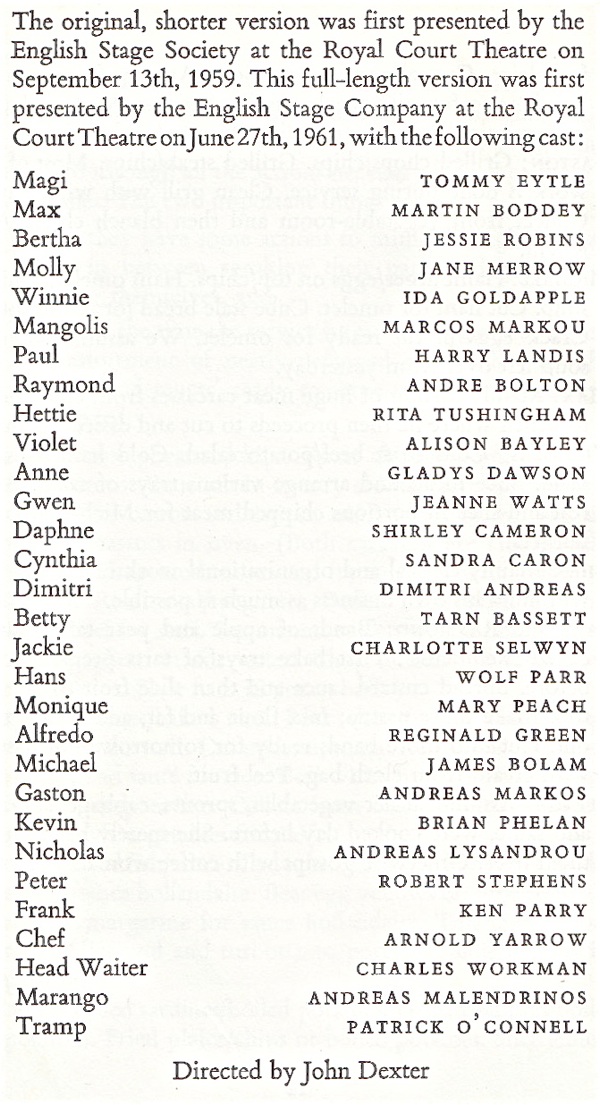
I got cast in a wonderful play at the Royal Court Theatre, run by George Devine where they did the plays of John Osborne. It was “The Kitchen” by Arnold Wesker, and I played the part of Paul, the pastry cook – which is the Arnold Wesker character – that’s what he did when he worked in a kitchen. It was about himself. Arnold wrote without any knowledge of theatre, which is to say a play with twenty-five actors in it which only lasts seventy-five minutes. People said they could see the food we were cooking but it was all mimed…”
So Harry fulfilled his childhood ambition to become a chef – on stage – through his work as an actor in the theatre. To this day, he gratefully acknowledges his debt to the Unity Theatre and those two individuals who saw his potential – “I was going to be an amateur but I was pushed to the next stage,” he accepts. Harry enjoyed success as one of a whole generation of talented working class actors that came to prominence in the post-war years bringing a new energy and authenticity to British drama. Now Harry Landis has returned to his childhood streets and laid the ghosts of his own past, he is happy to embrace the changes here today, although he does not choose to forget the East End he once knew.
“It’s a different East End. The bombs got rid of a lot and it’s all been rebuilt. The Spitalfields Market is full of chains and it’s been gentrified, and you’ve got your Gilbert & Georges and your Tracey Emins, and the place is full of art studios and it’s become the centre of the world. It’s the new Chelsea. I sold my house in Hammersmith where I lived for forty years (that I bought for £2,000 with 100% mortgage from the LCC) and I came back and bought a flat here in Spitalfields with the proceeds. And the rest I put in the bank for when I am that constant thing – an out of work actor!”
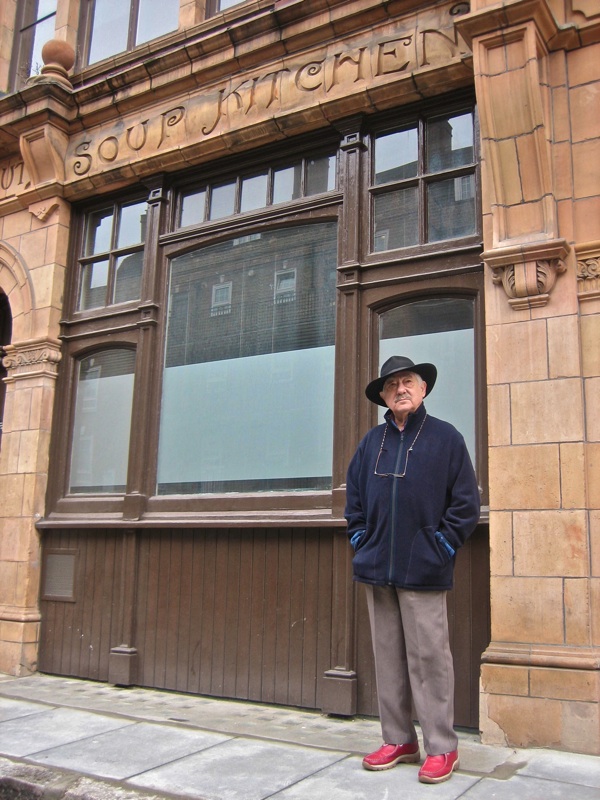
Outside the soup kitchen in Brune St where Harry came with his mother at the age of four.
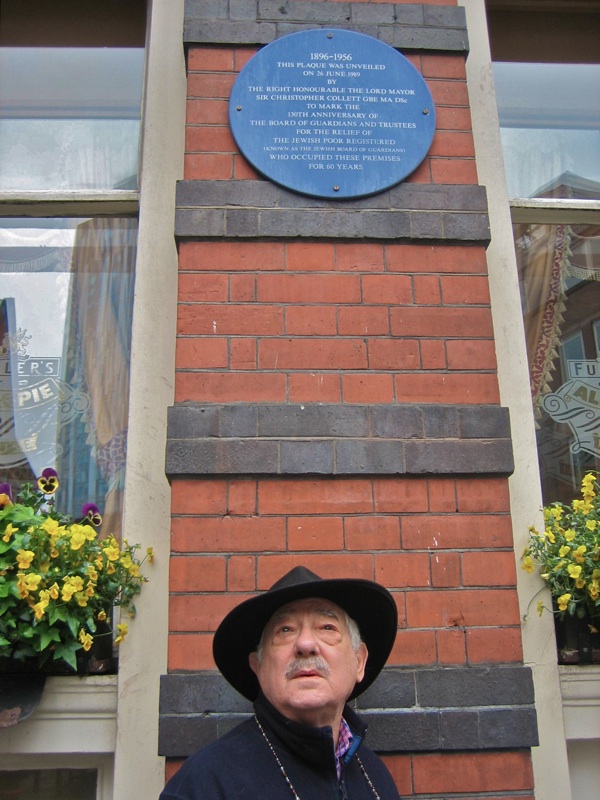
At the former Jewish Board of Guardians in Middlesex St.

Harry as Private Rabin in “A Hill in Korea,” 1956.

Harry Landis
At the Tweed Cycle Run
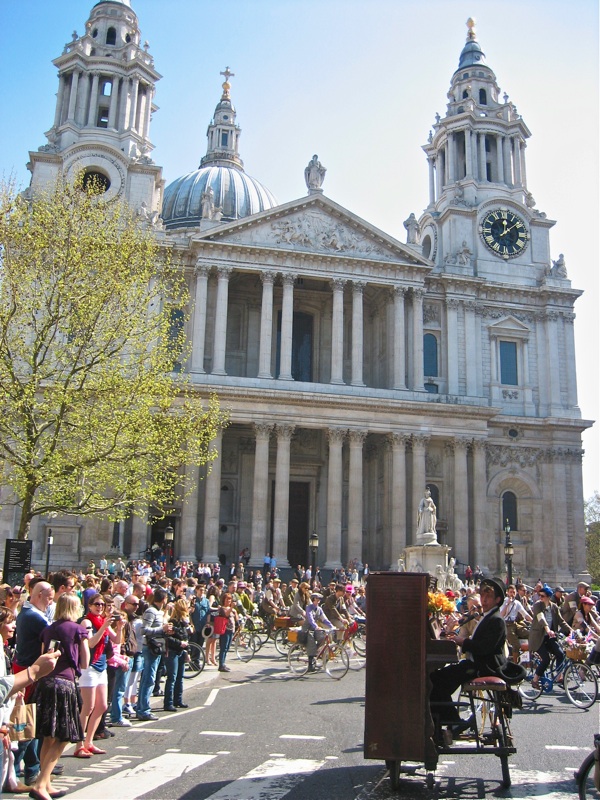
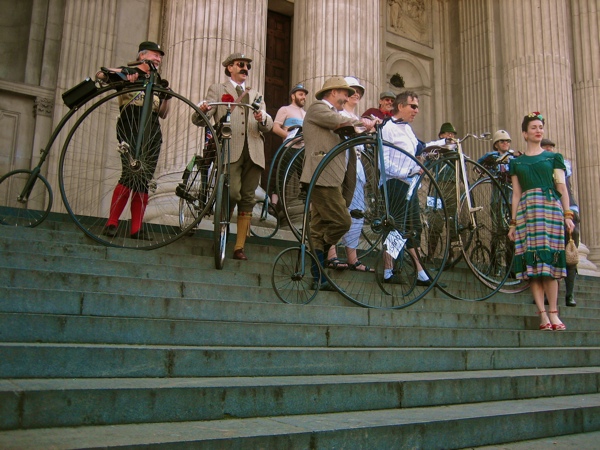
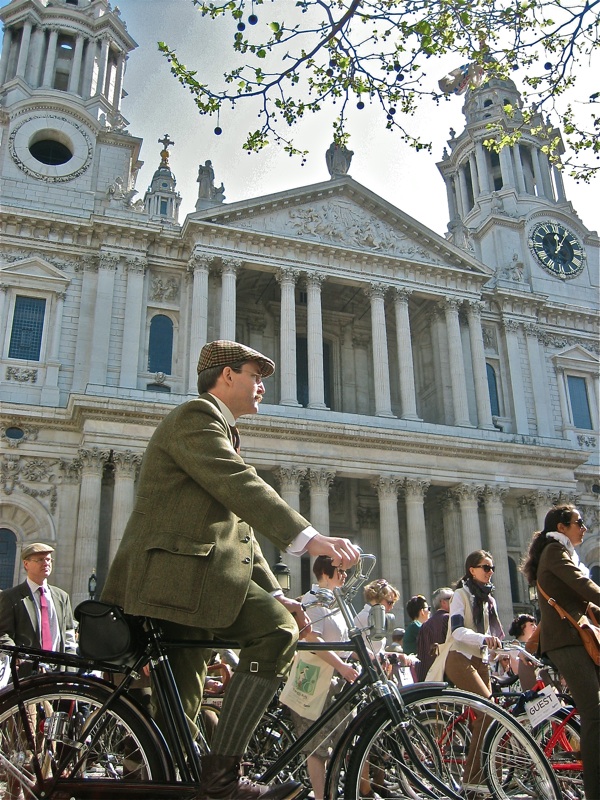
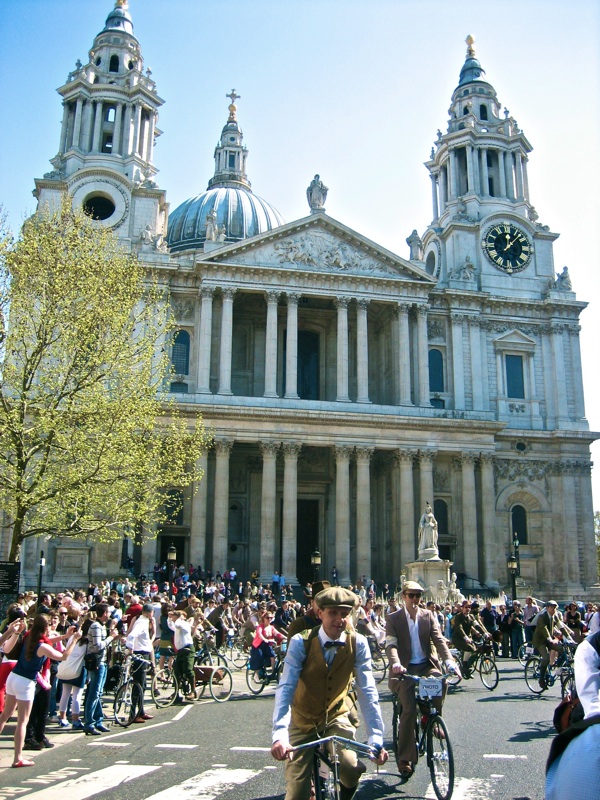
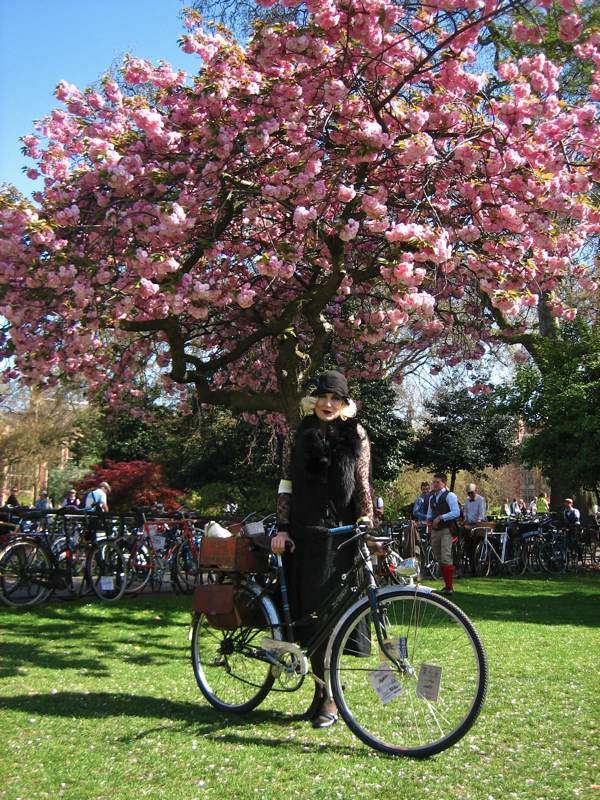
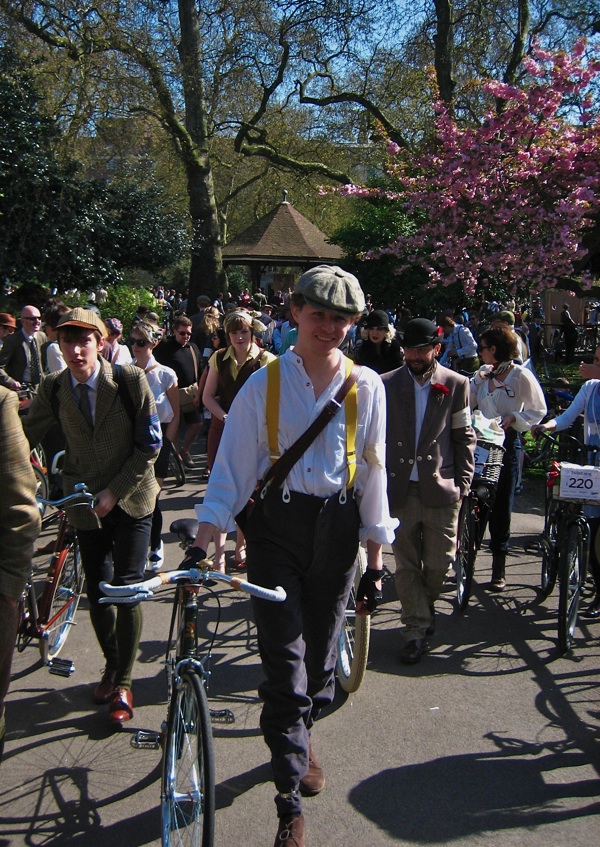
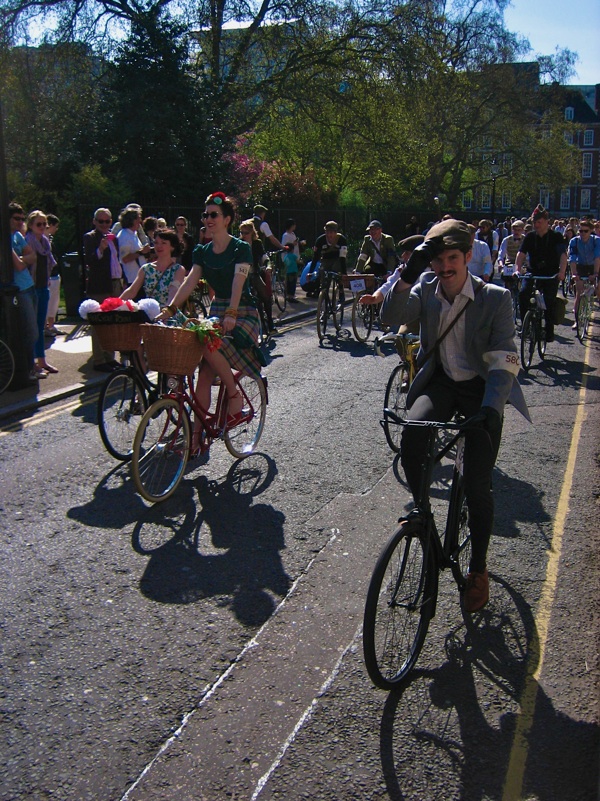
On a day when the light was as you thought only existed in landscapes by Gainsborough, five hundred dapper gallants on bicycles, dressed up to the nines in tweeds and other fancy gear, set out from St Paul’s Cathedral at midday to flaunt their finery in the face of the metropolis’ populace. And to see this vast current of stylish cyclists go forth from the great cathedral – launching themselves with a cheer down Ludgate Hill on flawless Spring day – was a joyous spectacle, guaranteed to melt the heart of any foolish misanthropist in a flash.
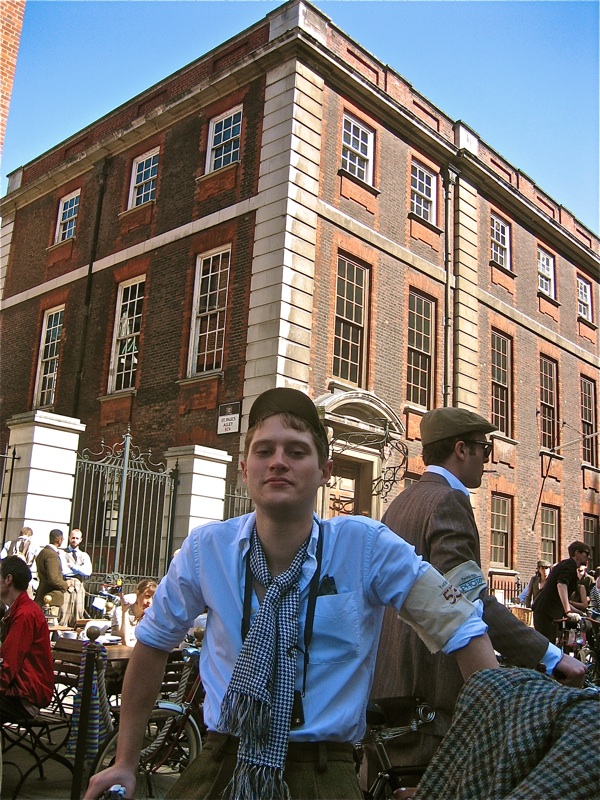
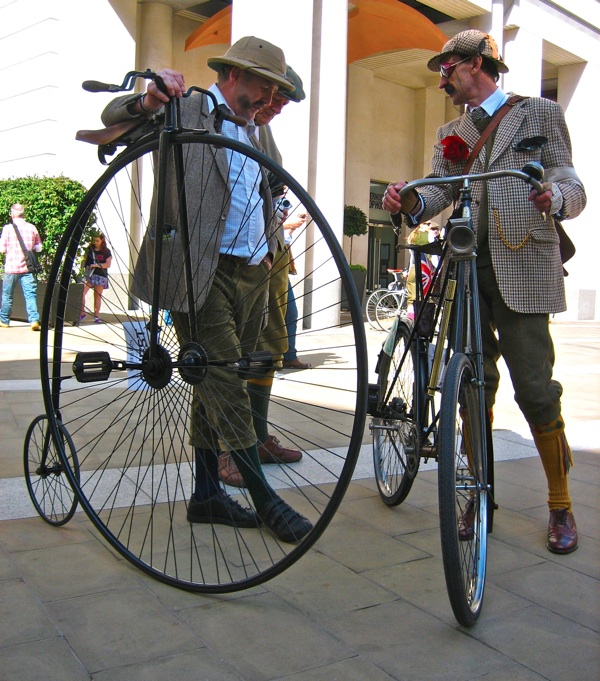
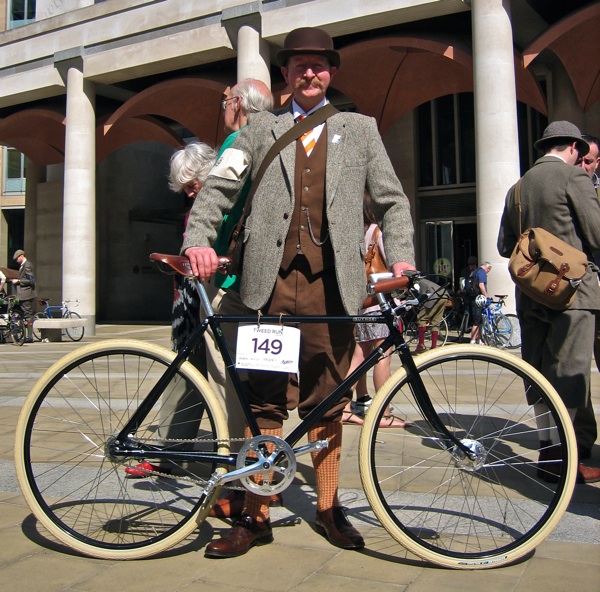
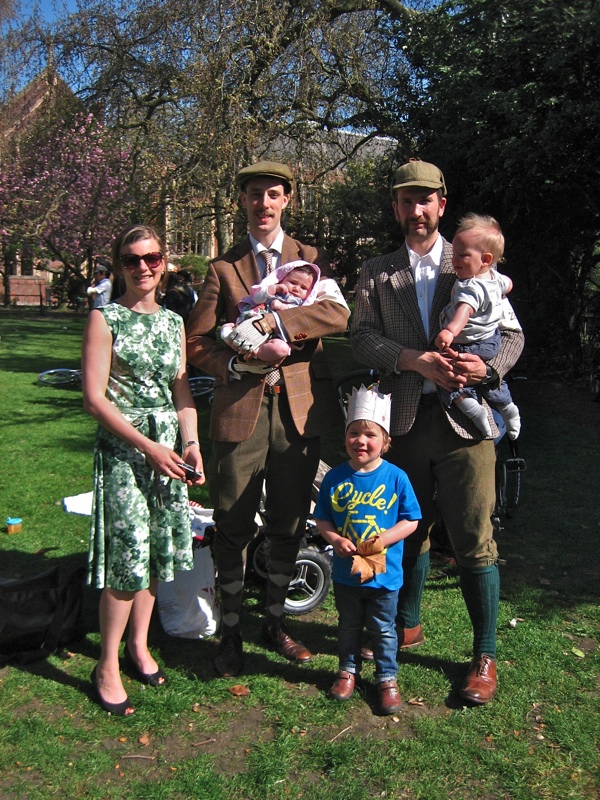
I never saw so much tweed gathered together in one place, as I saw that morning beneath the gleaming dome towering overhead. There were so many plus-fours and suits and jackets and trews and caps and waistcoats and ties, that I thought my vision was going awry for all the herring-bone pattern crossing my retina. Yet everyone wore tweed differently and everyone had dressed to look their very best, expressive of their relish at being among the first five hundred who managed to snaffle up one of the coveted tickets. The gentlemen had waxed their moustaches and the ladies had primped their perms. Groomed and shining, all were raring to leap astride their mounts and take the city by storm, riding vintage bicycles, penny-farthings and tricycles and tandems and boneshakers. There was even a piano-bicycle with a pianist who kept on pedalling even as he played the keys.
Just in its third year, no wonder the magnificent Tweed Run is already a global sensation. Beginning with one hundred and sixty cyclists arrayed in tweed for a turn around London in January 2009, it has now inspired copycat events in sixteen other cities across the world including New York, Paris, Sydney and Tokyo. Elegant in its simplicity, the notion of enthusiasts for traditional cycling attire banding together for a beano, enjoying a high old time, lifting the spirits of a city and raising money for bikes for Africa, the Tweed Run is one of the things we can be proud of giving to the world.
The traffic ground to a halt – horns honked and five hundred cycle bells tinkled – and drivers leaned from their windows to gawp in awestruck delight as, like salmon coursing through a great river, the playful cyclists of the Tweed Run teemed through the city streets spreading innocent amazement, causing pedestrians to stop in wonder and break into laughter at the bizarre poetry of this unique event.
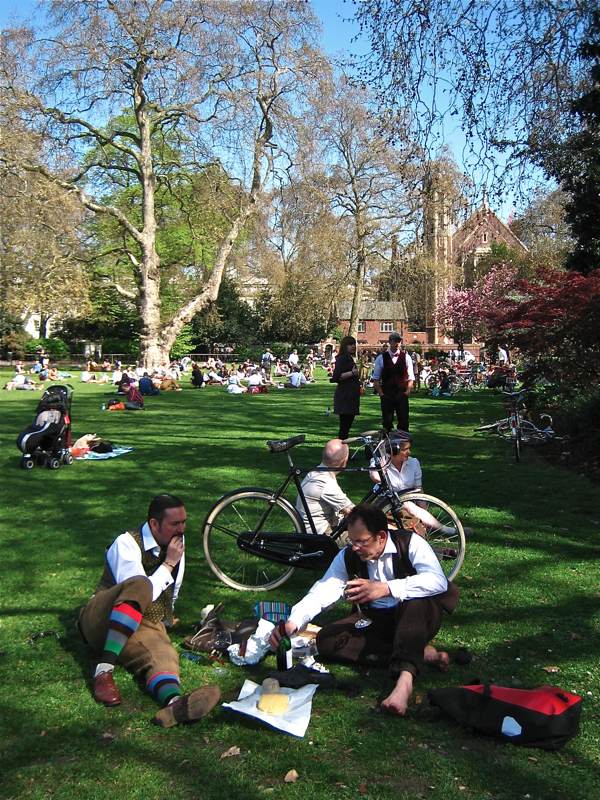
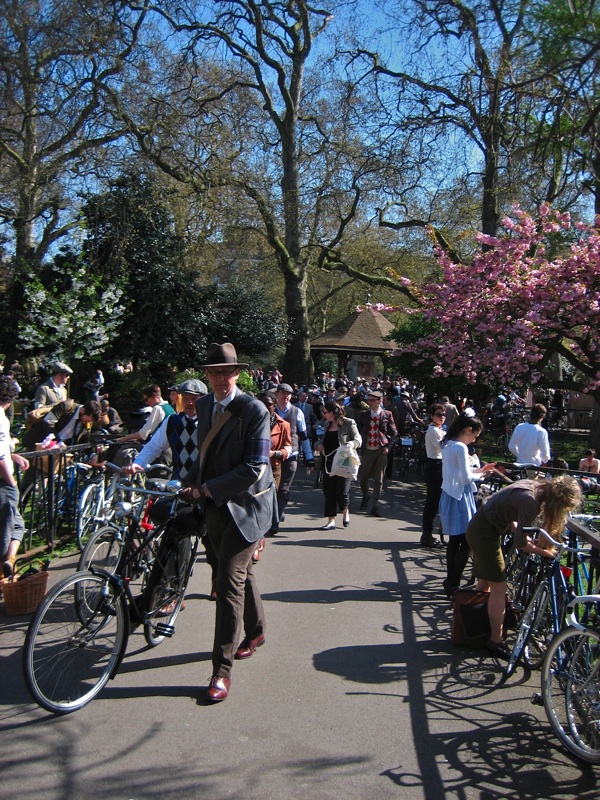
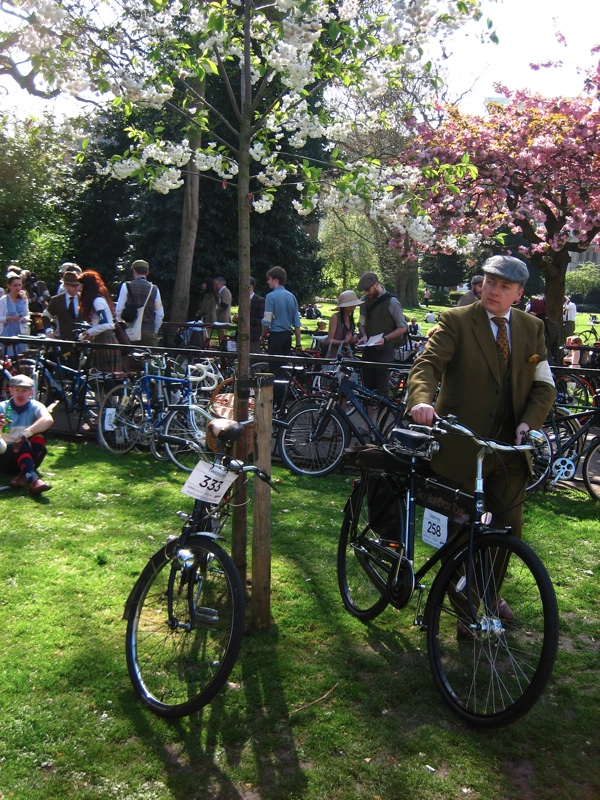
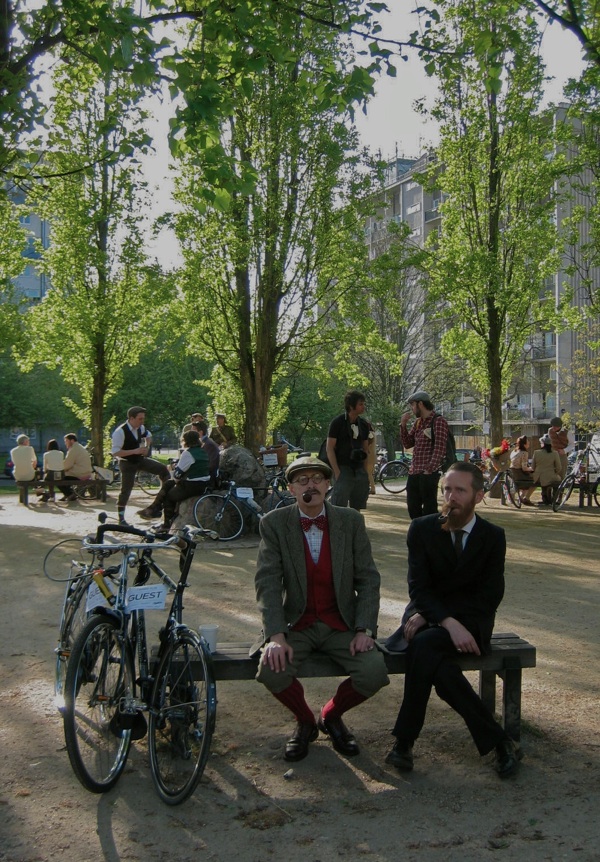
Across Westminster Bridge they pedalled, over to the Palace then down the Mall, around Trafalgar Square and up Regent St – where Saturday shoppers broke into cheers and applause – before veering East to arrive at Lincoln’s Inn Fields at two for tea. Remarkably for such an unseasonably warm day and the ubiquity of tweed, there were few who displayed visible perspiration or reddening of the face, although the queue for a cuppa stretched halfway to the Old Cheshire Cheese and the lawn was littered with those grateful to recline upon the soft green grass in the shade of the heavy blossom and freshly unfurled leaves overhead. Music from the bandstand drifted gently among the trees as photographers took advantage of this colourful fête champêtre, while the tweedy cyclists, having become a tribe now, turned enthusiastically gregarious, and since they no longer required any introduction to one to another, a spontaneous sense of communal goodwill and excitement arose which overflowed the park.
From here, as the afternoon shadows lengthened, it was a straight home run Eastward down the Clerkenwell Rd to arrive at the Bethnal Green Working Men’s Social Club, completing the day’s modest ten mile jaunt. There was singing and tap dancing, and a lively trade in pints at the bar as parched cyclists quenched their thirsts, and the party soon spilled out onto the green where new friends were swapping contacts as the time for farewells drew near. Lingering late and reluctantly leaving, it was a day of beautiful hullaballoo, already containing the anticipation of fond memories to come.
Later, I realised how rare it was to see so many people relaxed and happy in public, and inhabiting the city streets as if they owned them – which we all do. The day was a celebration of our great city which offers an unsurpassed backdrop to life, and the day was a celebration of British idiosyncrasy and our culture that delights in imaginative individuality of all kinds, and the day was a celebration of dressing up and having fun, and the day was a celebration of moustaches, and the day was a celebration of cycling, and, naturally, the day was a celebration of tweed – because, in case you did not know it, tweed is sexy again.


Brick Lane Market 6
When I asked Spitalfields Life contributing photographer Jeremy Freedman to photograph Keith in Sclater St, he came back with a picture of someone I did not recognise as Keith. “This is Keith,” he said. And when he returned next Sunday to seek the particular Keith I had in mind, he came back again from Sclater St with a picture of another man called Keith that I did not recognise. Happily, on the third week, he found the Keith I was seeking and, as a consequence, it is now my great pleasure to introduce you to each of the three Keiths of Sclater St Market.
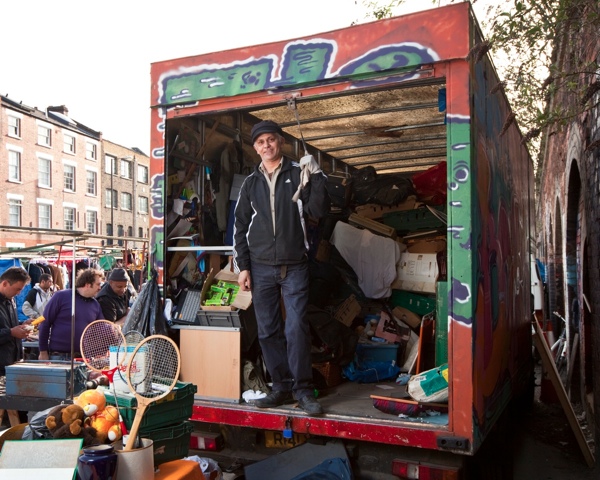
“This is the best site,” said Keith proudly, speaking of the corner of the yard in Sclater St where he has been trading for twelve years, “but this land was sold years ago and they’ve got planning permission for shops and flats. Soon, Brick Lane will have no space for people like me, we’re going to become dinosaurs. The City is moving right in and the gap between here and there is quite short. It’s squeezing out all the local people and their families who have made a living here.”
Even as we spoke, a tall white block of flats was being constructed across the road, while lively business went on as usual below among the stalls upon the two remaining pieces of undeveloped land, and Keith winced to peer up into the sunlight at this visible symbol of the changes that threaten his beloved market.
“My dad brought me here when I was three or four years old. It used to be a lovely atmosphere,” he mused, contemplating the half-dozen trestle tables that comprise his pitch in this corner of the yard, piled with books, records, clothes, china ornaments and attended by a eclectic display of pictures hung upon the brick wall.
In the Winter months, Keith sometimes has a fire in a brazier in his corner and I always come over to examine his ever-changing stock as I work my way through this market each week. Blessed with a placid nature, Keith maintains a dignified presence in his black peaked cap, and his corner is a recognised meeting place where other traders and friends gather in conversation. As long as the recession continues, and the development of Sclater St Market remains suspended, you will find Keith presiding here, with the generous civility and modest charisma of one who has emotional if not legal ownership of his territory.
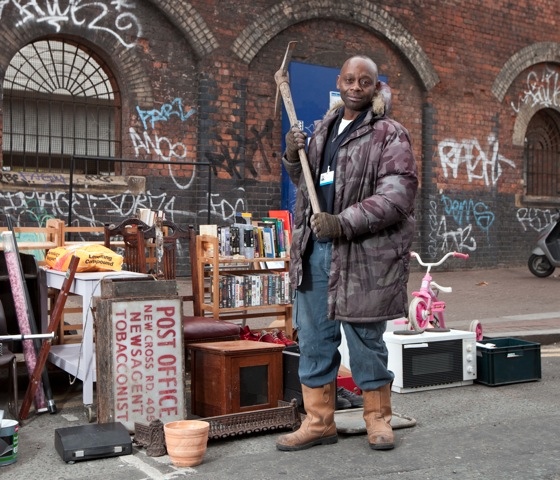
Keith has been here at the Western end of Sclater St for just six weeks and is doing a roaring trade in old clothes, shoes, used computer parts and other junk. In spite of the empty street in this photograph, he could barely stand still for the constant assault of eager customers, swarming all over his gear and making demands from all directions, as we attempted a conversation.
“They think you get it for free,” he exclaimed, rolling his eyes in humorous exasperation as an over-zealous bargain hunter attempted to press a pound coin into his hand as payment for an item priced at five pounds. “Do I look like I need a pound?” declared Keith in self-parodic affront, placing his hands up in surrender, while shaking his head in disbelief and breaking into a smile at the audacity of it.
“I used to do Western Rd, and I was in Brick Lane a long time ago.” continued Keith, a man in his element, “I also had a shop but it closed down. Years ago, this was my way of life, yet although I have got a lot of stuff to sell, it’s not worth it full time. Now I refurbish homes and doing this on Sunday suits my job.”
With his lively animated nature and ease of banter, Keith delights in his weekly stalling out in Sclater St – as he confirmed for me, “I enjoy coming. I look forward to it because you meet all these different people. I’m just down here for the stories, they tell you more stories than you have ever heard.”

Keith told me he has been selling bicycles in this corner of the Sclater St yard “forever,” which means every Sunday for the last thirty years.
Each week, he fills his van with as many bicycles as he can, around forty – specialising in good quality used and single speed bikes – and such is his widespread reputation and keen pricing that mostly he returns again to Essex at the end of the day with an empty hold. “I don’t mind it here,” he admitted,with understated affection for this familiar piece of empty land, casting his eyes thoughtfully around the territory, “It’s become a second home, I’ve been here that long.”
“I used to have a couple of shops in Essex, but now I trade at Portobello on Saturdays and here on Sunday instead – you just pay the rent for your stall and walk away.” Keith revealed with a smile, spreading his arms in a spontaneous gesture that simultaneously indicated liberation from responsibility, as well suggesting a philosophical acceptance of circumstances beyond his control, “In Essex, bikes are seasonal, they’ll only buy from you in the Summer and at Christmas – whereas here you can sell them all year round.”
Photographs copyright © Jeremy Freedman
Jack Sheppard, Thief, Highwayman & Escapologist

On the morning of 4th September 1724, an inconsequential thief named Jack Sheppard was to be hung at Tyburn for stealing three rolls of cloth, two silver spoons and a silk handkerchief. But instead of the routine execution of another worthless felon, London awoke to the astonishing news that he had escaped from the death cell at Newgate.
With the revelation that this was the third prison break in months by the handsome boyish twenty-two year old Jack Sheppard, he flamed like a comet into the stratosphere of criminality – embodying the role of the charismatic desperado to such superlative effect that his colourful reputation for youthful defiance gleams in the popular imagination two centuries later.
In the Spring, he broke out through the roof of St Giles Roundhouse, tossing tiles at his guards. In the Summer, with his attractive companion Elizabeth Lyon, he climbed through a barred window twenty-five feet above the ground to escape from New Bridewell Prison, Clerkenwell. And now he had absconded from Newgate too, using a metal file smuggled in by Elizabeth and fleeing in one of her dresses as disguise. Sheppard was a popular sensation, and everyone was fascinated by the inexplicable mystery of his unique talent for escapology.
Spitalfields’ most notorious son, Jack Sheppard, was born in Whites Row on 4th March 1702 and christened the very next day at St Dunstan’s in Stepney, just in case his infant soul fled this earth as quickly as it arrived. Unexceptionally for his circumstances and his time, death surrounded him – named for an elder brother that died before his birth, he lost his father and his sister in infancy. When his mother could not feed him, she gave him to the workhouse in Bishopsgate at the age of six, from where he was indentured to a cane chair maker, until he died too. Eventually at fifteen years old, he was apprenticed to a carpenter in Covent Garden, following his father’s trade, but at age twenty he met Elizabeth Lyon, his partner in crime, at the Black Lion in Drury Lane, a public house frequented by criminals and the infamous Jonathan Wild, known as the “Thief-taker General.”
On 10th September 1724, Sheppard was rearrested after his break-out from Newgate and returned there to a high security cell in the Stone Castle, where he was handcuffed and fettered, then padlocked in shackles and chained down in a chamber that was barred and locked. Yet with apparent superhuman ability – inspiring the notion that the devil himself came to Sheppard’s assistance – he escaped again a month later and enjoyed a very public fortnight of liberty In London, eluding the authorities in disguise as a dandy and carousing flamboyantly with Elizabeth Lyon, until arrested by Jonathan Wild, buying everyone drinks at midnight at a tavern in Clare Market, Lincoln’s Inn Fields. Back in Newgate – now the most celebrated criminal in history – hundreds daily paid four shillings to visit Sheppard in his cell, where he enjoyed a drinking match with Figg the prizefighter and Sir Henry Thornhill painted his execution portrait.
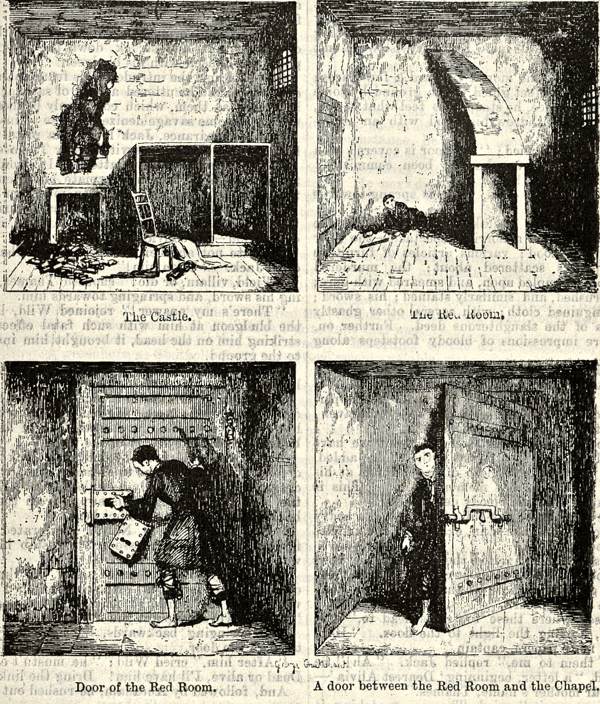
Two hundred thousand people turned out for Jack Sheppard’s hanging on 16th November, just two months since he came to prominence, and copies of his autobiography ghostwritten by Daniel Defoe were sold. Four years later, John Gay’s “The Beggar’s Opera,” with the character of Macheath modelled upon Sheppard and Peachum based upon his nemesis Jonathan Wild, premiered with spectacular success. Biographical pamphlets and dramas proliferated, with Henry Ainsworth’s bestseller of 1839 “Jack Sheppard” – for which George Cruikshank drew these pictures – outselling “Oliver Twist.” Taking my cue from William Makepeace Thackeray, who wrote that, “George Cruikshank really created the tale and Mr Ainsworth, as it were, merely put words to it,” I have published these masterly illustrations here as the quintessential visual account of the life of Spitalfields’ greatest rogue.
And what was the secret of his multiple prison breaks?
There was no supernatural intervention. Sheppard had outstanding talent as a carpenter and builder, inherited from his father and grandfather who were both carpenters before him and developed during the six years of his apprenticeship. With great physical strength and a natural mastery of building materials, he possessed an intimate understanding of the means of construction of every type of lock, bar, window, floor, ceiling and wall – and, in addition to this, twenty-two year old Jack Sheppard had a burning appetite to wrestle whatever joy he could from his time of splendour in the Summer of 1724.

Mrs Sheppard refuses the adoption of her little son Jack

Jack Sheppard exhibits a vindinctive character.
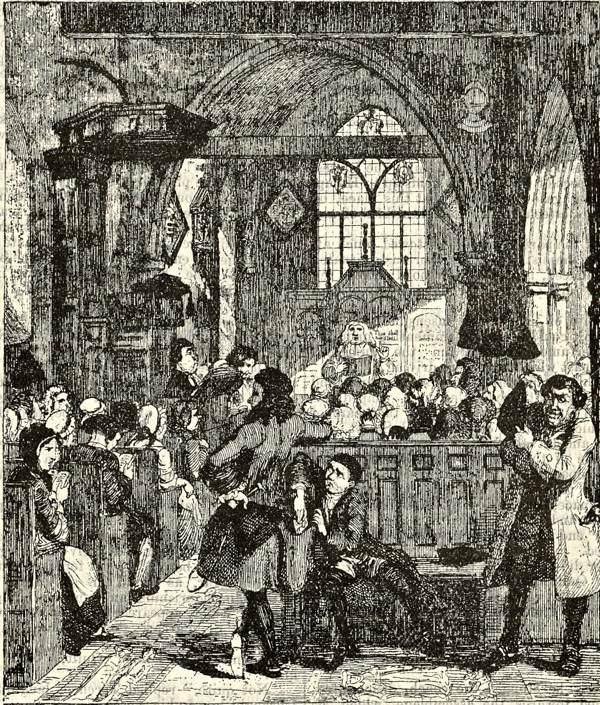
Jack Sheppard committing the robbery in Willesden church.
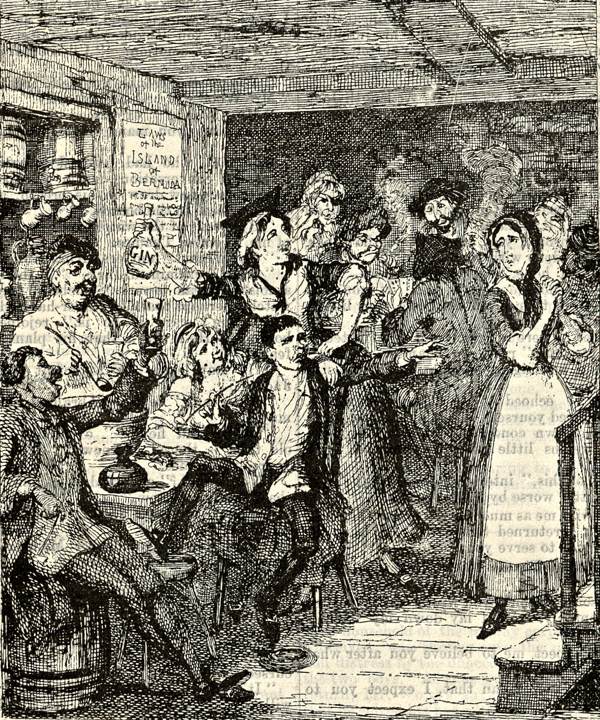
Jack Sheppard gets drunk and orders his mother off.
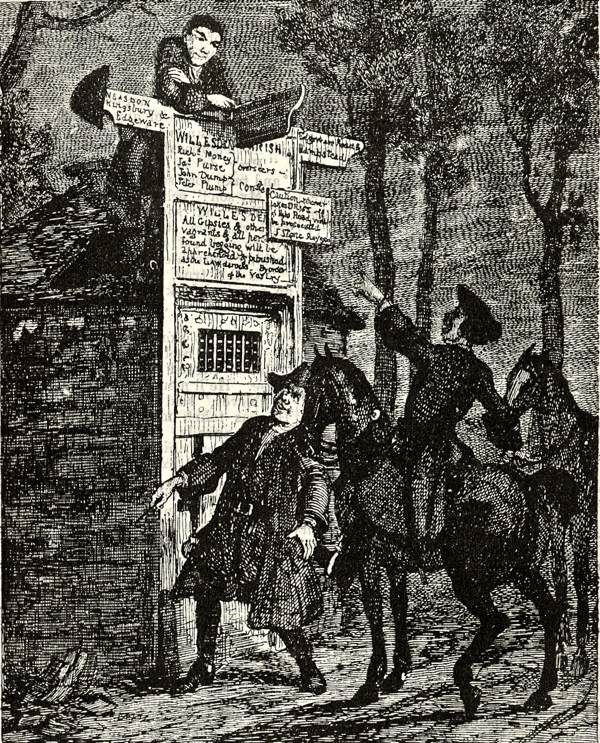
Jack Sheppard’s escape from the cage at Willesden.

Mrs Sheppard expostulates with her son.
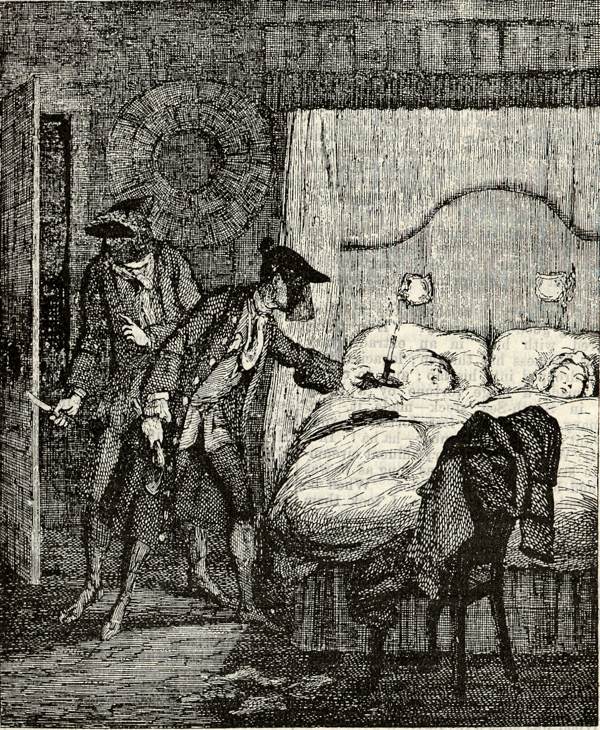
Jack Sheppard and Blueskin in Mr Wood’s bedroom.
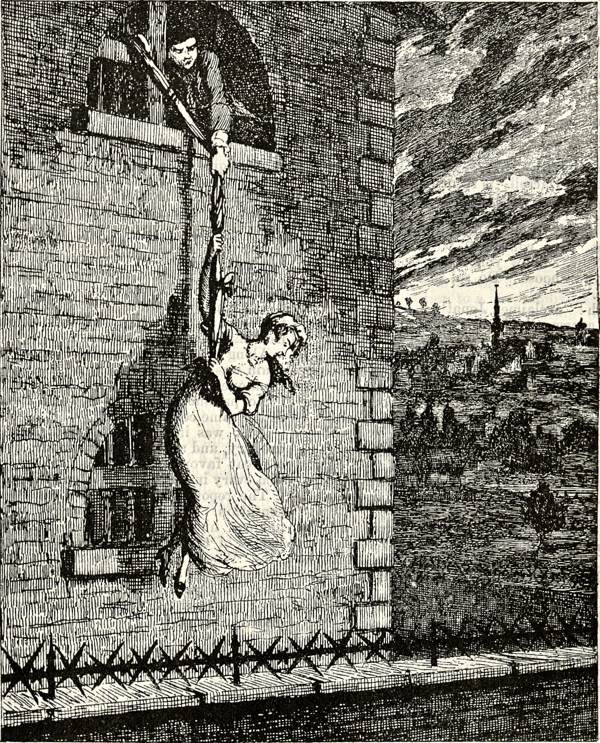
Jack Sheppard in company with Elizabeth Lyon escapes from Clerkenwell Prison.
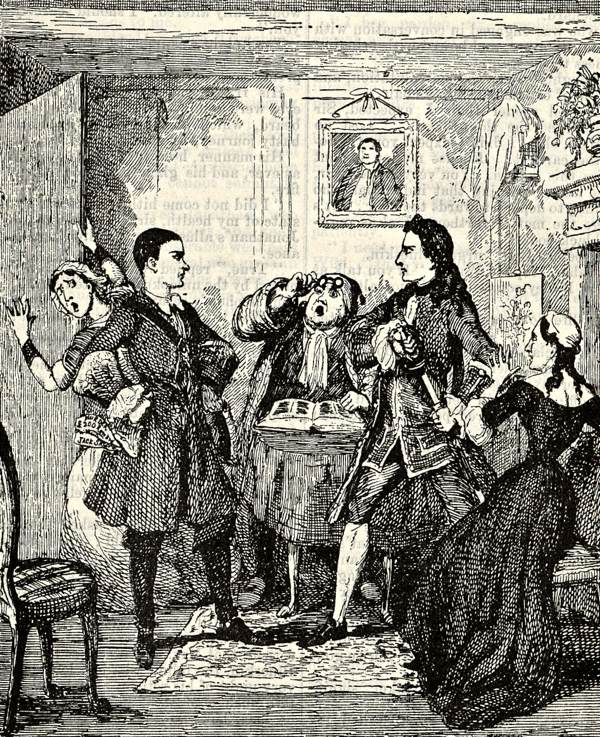
The audacity of Jack Sheppard.

Jack Sheppard visits his mother in Bedlam.
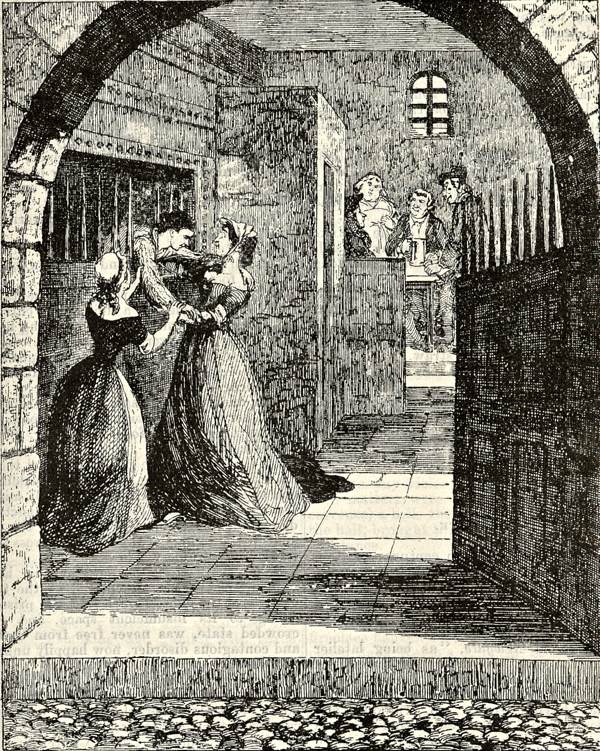
Jack Sheppard escaping from the condemned cell in Newgate.
The first escape.
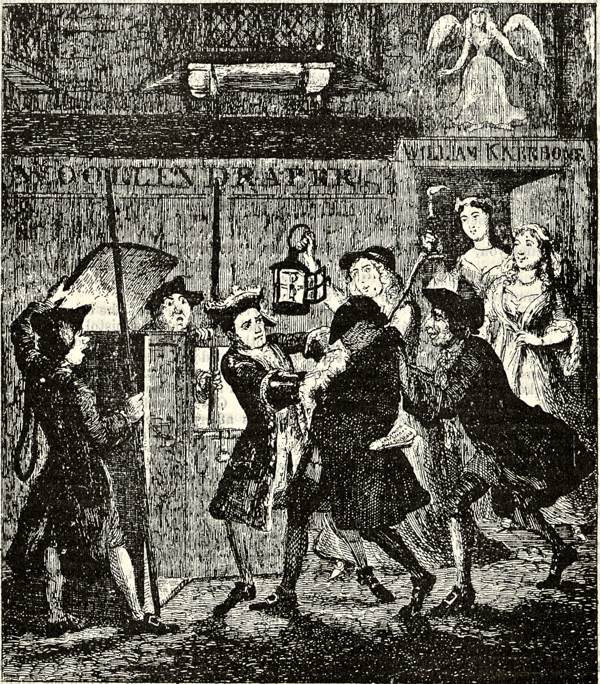
Jack Sheppard tricking Shortbolt, the gaoler.
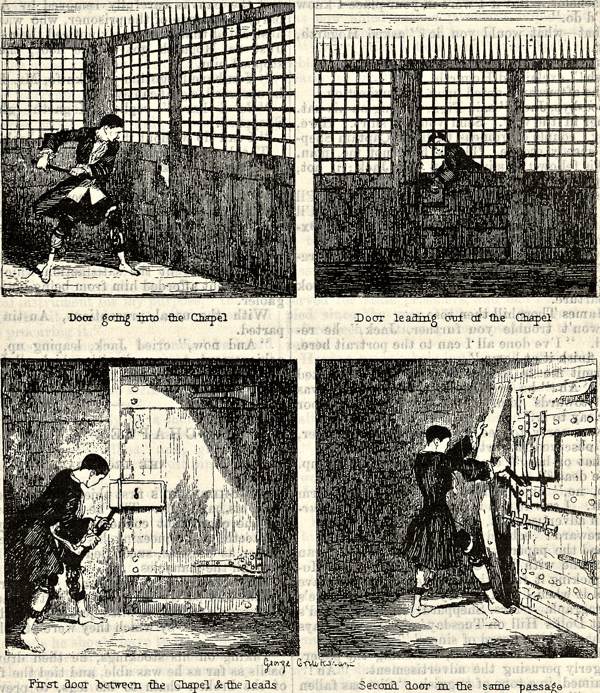
The second escape.
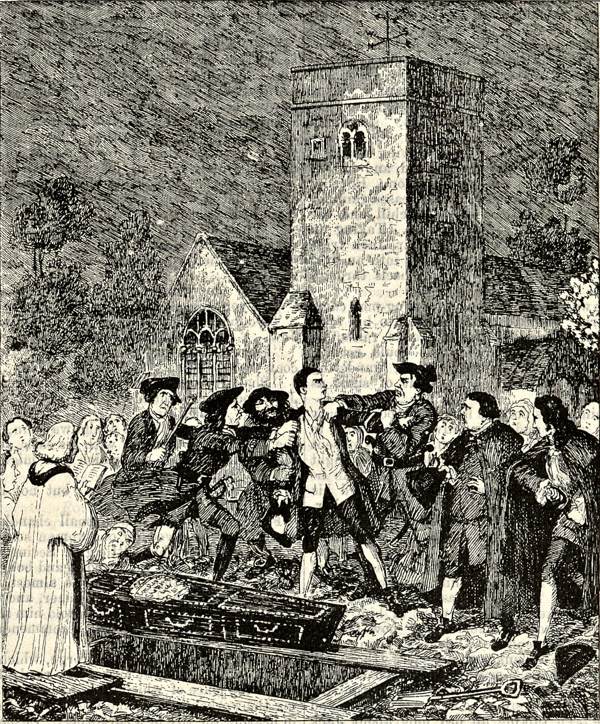
Jonathan Wild seizing Jack Sheppard at his mother’s grave in Willesden.

Jack Sheppard sits for his execution portrait in oils by Sir James Thornhill – accompanied by Figg the prizefighter (to Jack’s right), John Gay, the playwright (to Jacks’s left), while William Hogarth sketches him on the right.

Jack Sheppard’s irons knocked off in the stone hall in Newgate.


Jack Sheppard of Spitalfields (Mezzotint after the Newgate portrait by Sir James Thornhill, 1724) – “Yes sir, I am The Sheppard, and all the gaolers in the town are my flocks, and I cannot stir into the country but they are at my heels baaing after me…”
You may also like to read about
At Stephen Walters & Sons Ltd, Silkweavers

Joseph Walters of Spitalfields by Thomas Gainsborough
When Julius Walters of Stephen Walters & Sons says, “I am just a weaver,” it is an unselfconscious masterpiece of understatement, because he is a ninth generation weaver – the custodian of the venerable family business founded by his ancestor Joseph Walters in Spitalfields in 1720 and moved to Suffolk by his great-great-great-great-grandfather Stephen Walters in the nineteenth century, where today they continue to weave exemplary silk for the most discerning clients internationally, building upon the expertise and knowledge that has been accumulated over all this time. This is the company that wove the silk for the Queen’s coronation robes and for Princess Diana’s wedding dress.
Michael Hill of Drakes Ties in Clerkenwell, takes the train from Liverpool St several times a year to visit the mill and place his orders for silks that are woven there exclusively for Drakes each season, so I leapt at the opportunity to travel up with him and see for myself what has become of one of Spitalfields’ eighteenth century silk weavers.
Thomas Gainsborough’s portrait of Joseph Walters was there to greet us when we arrived at the long finely-proportioned brick silk mill overlooking the green water meadows at the edge of Sudbury, where his ninth generation descendant Julius came down the stairs to shake my hand. Blushing to deny any awareness of the family resemblance, that his proud secretary was at pains to emphasise, he chose instead to point out to me the willows that had been felled recently – as a couple are each year – for the manufacture of cricket bats.
We convened around a long wooden counter in a first floor room where the luxuriously coloured strike offs – as the samples are called – were laid out for Michael Hill to see, glowing in the soft East Anglian light. Already decisions for Drakes Spring/Summer 2012 collection had been made, the choice of fibre, its weave and pattern, and now Michael was here to make his final choice from the different options upon the table. There is such exquisite intricacy in these cloths that have tiny delicate patterns woven into their very construction, drawing the daylight and delighting the eye with their sensuous tones. Yet lifting my gaze, I could not resist my attention straying to the pigeon holes that lined the room, each one stacked with patterned silks of every hue and design. A curious silence resided here, yet somewhere close by there was a centre of loud industry.
“I’m more like an editor and a colourist than a designer,” suggested Michael by means of explanation, while excitedly caressing the silks between his fingers as he deliberated over the samples. “It comes from everything,” he replied with a bemused smile, when I asked him how he informed his choices, “It comes from when I used to drive around with my father who was a tiemaker, memories of what his generation were wearing, and generally only from other designers in terms of doing something different. ”
“Everything we do comes from somewhere…” interposed Julius Walters enigmatically, as he swung open a door and that unmistakeably appealing smell of old leather bindings met my nostrils. There were hundreds of volumes of silk samples from the last two centuries stacked up in there, comprising thousands upon thousands of unique jewel-like swatches still fresh and bright as the day they were made. Some of these books, often painstakingly annotated with technical details in italic script, comprised the life’s work of a weaver and all now bear panoramic witness to the true colours of our predecessors’ clothing. A vast memory bank woven in cloth, all available to be reworked for the present day and brought back to new life.
Spellbound by this perspective in time, I awoke to the clamour of the mill as we descended a staircase, passing through two glass doors and collecting ear plugs, before entering the huge workshop filled with looms clattering where new silk cloths were flying into existence. Here I stood watching the lush flourishes of acanthus brocades and tiny complex patterns for ties appear in magical perfection as if they had always existed, yet created by the simple principle of selecting how the weft crosses each thread of the warp, whether above or below. Although looms are mechanised now, each still retains its Jacquard above, the card that designates the path of every thread – named after Joseph Marie Jacquard who invented this device in 1804, which became so ubiquitous that his name has now also become both the term for the loom and for any silk cloth that has a pattern integrated into the weave.
With the bravura of a showman and the relish of an enthusiast, Julius led us on through more and more chambers and passages, into a silk store with countless coloured spools immaculately sorted and named – crocus and rose and mud – , into a vaporous dye plant where bobbins of white thread came out strawberry after immersion in bubbling vats of colour, into a steaming plant where rollers soften the cloth to any consistency, into the checking office where every inch is checked by eye and finally into the despatch office where the precious silken goods are wrapped in brown paper and weighed upon a fine red scales.
There are so many variables in silk weaving, so many different skills and so much that could go wrong, yet all have become managed into a harmonious process by Stephen Walters & Sons over nine generations. In his time, Julius has introduced computers to track every specification of ten of thousands of orders a year – one every five minutes – created by so may short runs, and new technology has provided a purifier which uses diamonds to cleanse dye from the water that eventually returns to the water meadow, renewing the water course that brought his ancestors from Spitalfields to Suffolk one hundred and fifty years ago.
“All my school holidays and spare time were spent at the mill – but then I went away, and came back again.” confided Julius quietly as we made our farewells, “With eight generations behind you, it changes the way you approach your life. It’s not about this year, it’s about managing the company from one generation to the next, so you deal with your employees and your customers differently.”
Now you know what it means when Julius Walters says, “I am just a weaver.”


Dobby Weaving, 1900.
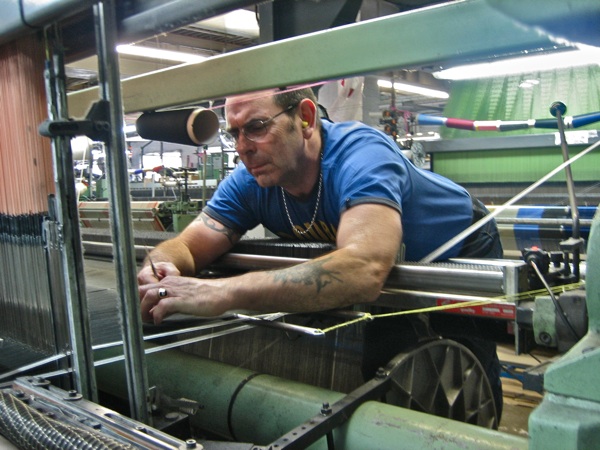
Aaron Offord, Machine Operator.
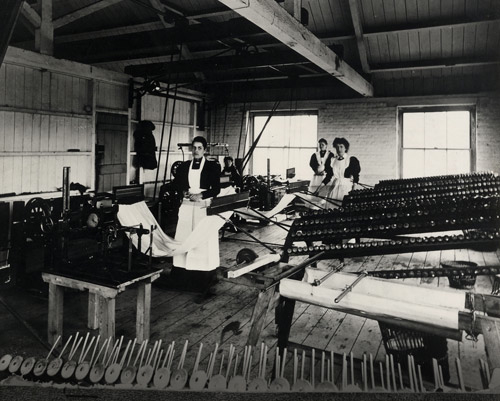
Warping in the early twentieth century.

Vikki Meuser, Warping in the early twenty-first century.

Employees in 1966.

Mally Felton at her loom.

Weaving umbrella silk in the nineteen fifties.

Gerald Prentice at his loom.

Preparing skeins of silk for weaving the coronation robes, 1952.

Naomi Wright at her loom.
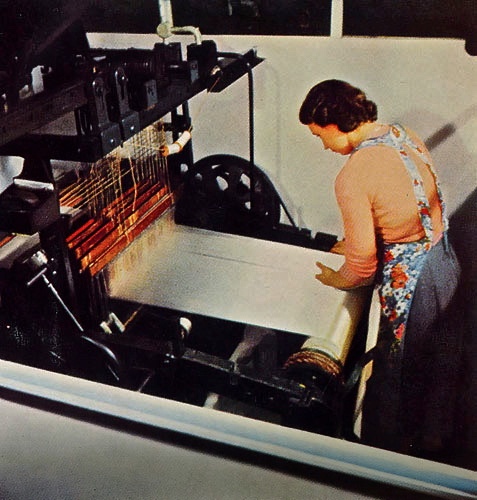
Weaving the silk for the coronation robes of Elizabeth II, 1952.
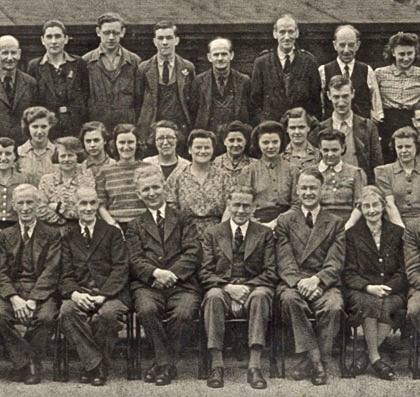
Staff photograph 1949, Bernard Walters (grandfather of Julius Walters) sits second from right in front row, with his sister Winnie on his left and Mill Manager Bill Parsons on his right.
You may also enjoy these other stories of silk
Charles Dickens in Spitalfields
Charles Dickens’ visit to a silk warehouse
Prince of England, Underground Dancer

As skinny as a coat hanger and as lithe as an eel, this is underground dancer who is widely known among the cognoscenti by his sobriquet Prince of England. He kindly introduced me and Spitalfields Life contributing photographer Patricia Niven to his eclectic and glitzy circle of friends on Saturday, for a thrilling night out at “On the Rocks” in Shoreditch where he is one of the shining stars of the current renaissance in Vogueing. “You’ll see craziness!” he promised.
Arriving at one in the morning, it was as if we had walked into a magical dream. We drifted in elated disorientation in half-light through the billowing coloured smoke and lasers, encountering all manner of ethereal creatures, until we discovered the catwalk where colourful spirits strutted and tottered with endearing whimsical idiosyncrasy as they assumed the fashion model poses that are the constituents of Vogueing. Yet the atmosphere cleared in an instant when Prince appeared in disco pants and a hoodie, demonstrating the hair-raising ability of a young John Travolta to draw attention on the dance floor. With a spring coiled up inside him, the core of his being was manifest and everyone watched rapt as he uncurled his spindly limbs with heart-stopping control.
“I am an Old Way Voguer. It’s all about exteriors and it’s fierce. It’s a mixture of military and martial arts and hieroglyphics. It’s all about lines…” he declared to me with a thin crooked smile of jollity afterwards, still coming down from his performance yet raising his narrow eyebrows as his eyes shone in eagerness to proclaim the credentials which connect him to the origin of his chosen form of expression.
“My mentor is Archie Burnett of the Legendary House of Ninja, who was taught by Willi Ninja – known as the godfather of Vogueing. They have a community in New York, like a faith house, where Black and Hispanic kids who are thrown out of their homes can go to stay and learn dance. But since I am in the UK, I skype them twice a week…” he revealed. Inspired by this direct connection to the House of Ninja and so thin he looks like a drawing of himself, Prince has constructed a life devoted to heroic excellence in Vogueing.
Undoubtedly, Vogueing has unlocked something extraordinary in Prince, and I was delighted to be welcomed by his affectionate community of cartoon princesses of indeterminate gender and pop urchins in outsize singlets – who meet to party together in the early hours, and enjoy being playful in the free expression of their imaginative selves. They are the admiring courtiers and he is their Prince, with the redoubtable Scottee as the court jester in a lacy body suit, in this glamorous secret night kingdom in the Kingsland Rd. “You’ve got to be given your name, you can’t choose it.” Prince explained to me cheerfully, “My friend, Supple, the Dance Scientist, said to me, “You should be Prince of England because there is no-one more English than you in the underground scene,” and now everyone knows me as Prince. It’s cool because I never pitched it and I quite like it.”
Then, with an excited gleam of absurd humour, Prince, the Evangelist of Vogue, regaled me with the legend that Vogueing began when the New York Prisons banned pornographic magazines and inmates had to make do with copies of Vogue instead. Frustrated by this, they began re-enacting the models’ poses and staging pose-off contests which became dance battles. Refined by drag queens in the ballrooms of Harlem, the style eventually reached mainstream exposure in the nineteen eighties, though –“Madonna’s song is not even a Vogue song, you can’t easily Vogue to it!” Nikolas qualified authoritatively.
Even at twenty-two, Prince is already a seasoned professional who was in Les Miserables for ten months in the West End when he was twelve, and spent his tender years as a working child performer, before emerging as a major talent on the underground dance scene. And with plenty of willing students, Prince teaches Vogueing and its counterpart Waacking – a style that draws its vocabulary of movement from silent films. “Most people lack self-confidence and everybody likes to walk like a model, so Vogueing can help increase confidence.” he informed me persuasively, preaching the Gospel of Vogue, “Although Vogueing came out of the drag scene in the first place, the culture of Vogue became so bitchy in the nineties that it put women off, but I am trying to encourage them back – because the idea is to feel good about yourself, not to put others down.”
Fascinated by the possibility that dance can liberate people, I was touched by the delight I saw around me that night among those who take such joy in exploring ambiguous identity. Yet equally, I was aware that there was also an element of masquerading in which gestures can be assumed. “I’m a straight guy who does it” admitted Prince shyly, without wishing to sound apologetic,“Although many people would probably assume that I am gay – but I do it because I like the power of it. My mentor Archie was the first straight person to join a Vogueing House. He has a good phrase, he says, “You don’t have to be Chinese to enjoy Chinese food!”


Photographs © copyright Patricia Niven
You may also like to read about












