At Walton on the Naze
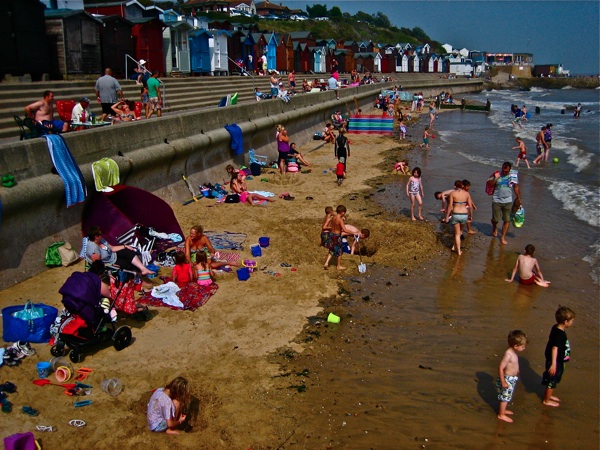
All this time, Walton on the Naze has been awaiting me, nestling like a forgotten jewel cast up on the Essex coast, and less than an hour and a half from Liverpool St Station.
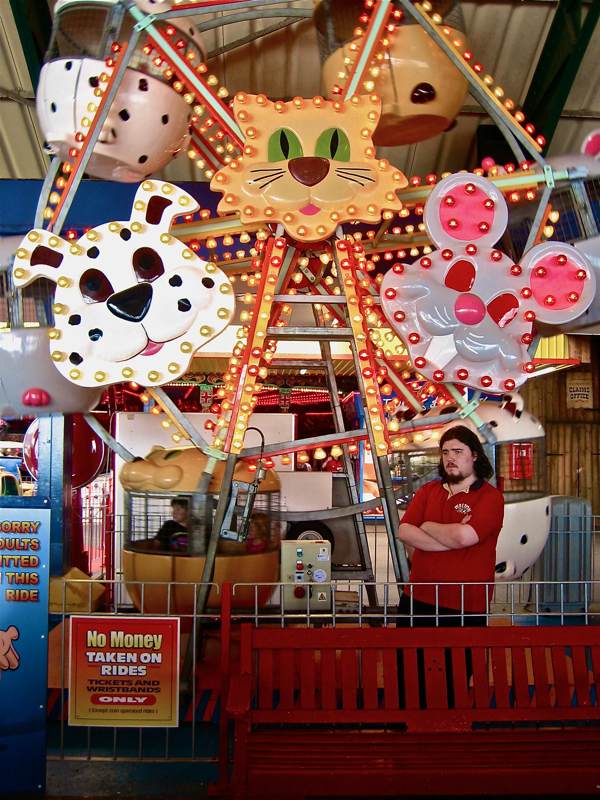
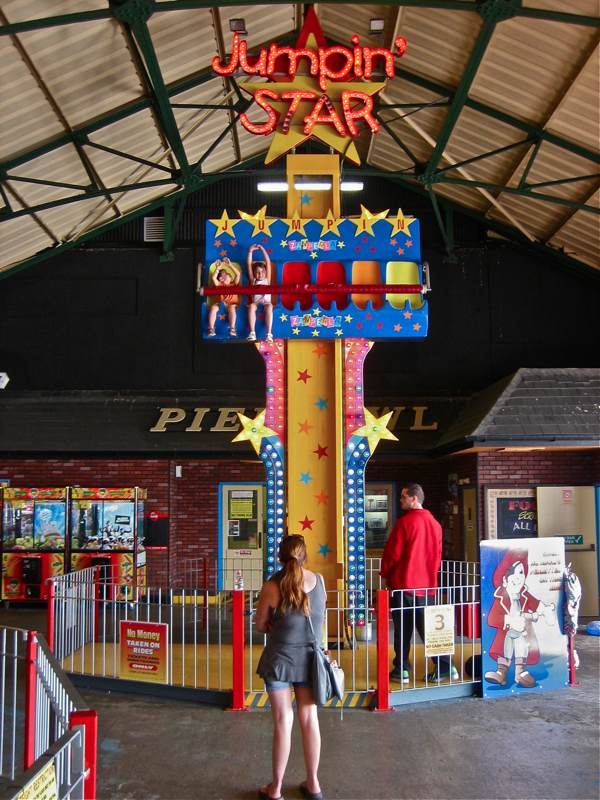
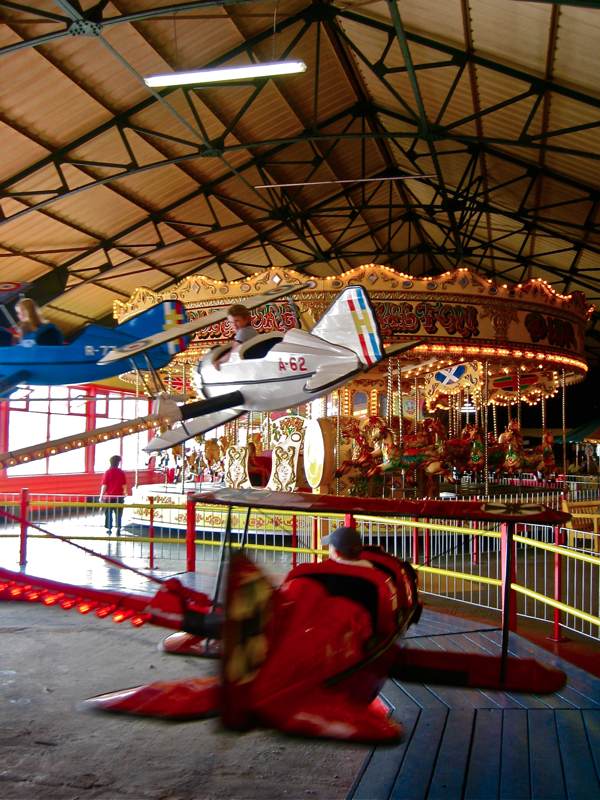
Families with buckets and spades joined the train at every stop, as we made our way eastwards to the point where Essex crumbles into the North Sea at the rate of two metres a year. Yet all this erosion, while reminding us of the force of the mighty elements, also delivers a perfect sandy beach – the colour of Cheddar cheese – that is ideal for sand castles and digging. Stepping from the small train amongst the flurry of pushchairs and picnic bags, at once the sea air transports you and the hazy resort atmosphere enfolds you. Unable to contain yourself, you hurry through the sparse streets of peeling nineteenth century villas and shabby weather-boarded cottages to arrive at a rise overlooking Britain’s third longest pier, begun in 1830.
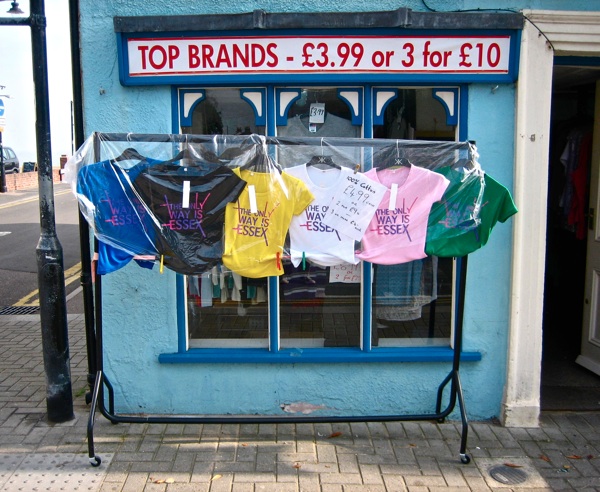
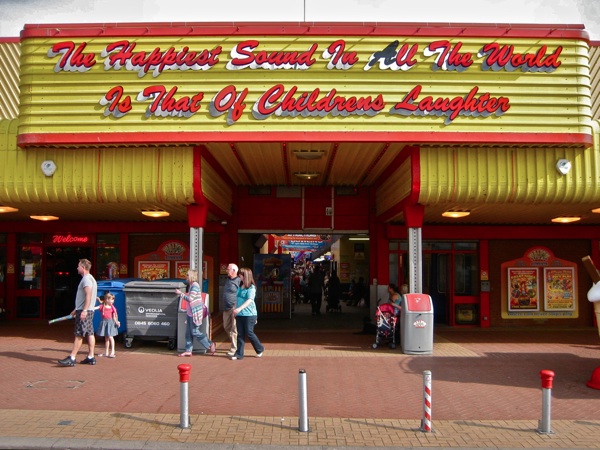
In spite of the majestic pier, this is a seaside resort on a domestic scale. You will not find any foreign tourists here because Walton on the Naze is a closely guarded secret, it is kept by the good people of Essex for their sole use. At Walton on the Naze everyone is local. You see Essex families running around as if they owned the place, playing upon the beach in flagrant carefree abandon, as if it were their own back yard – which, in a sense, it is.
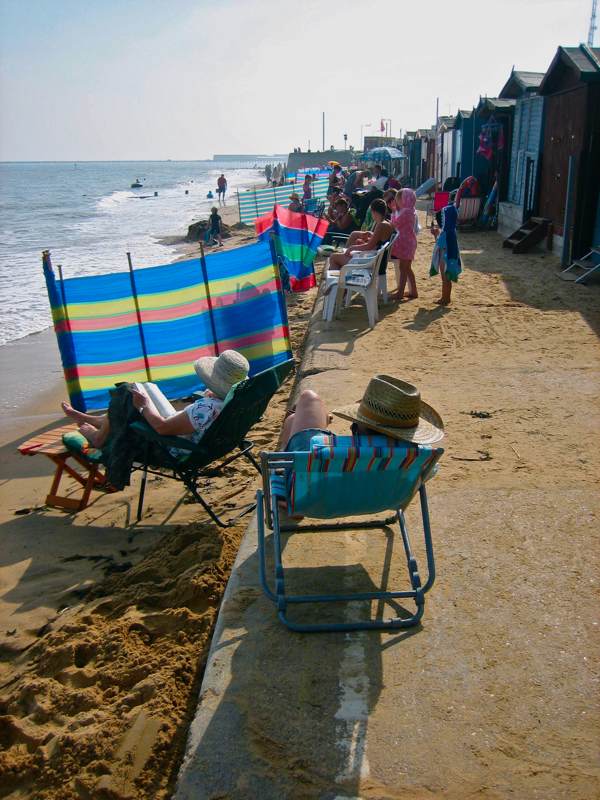
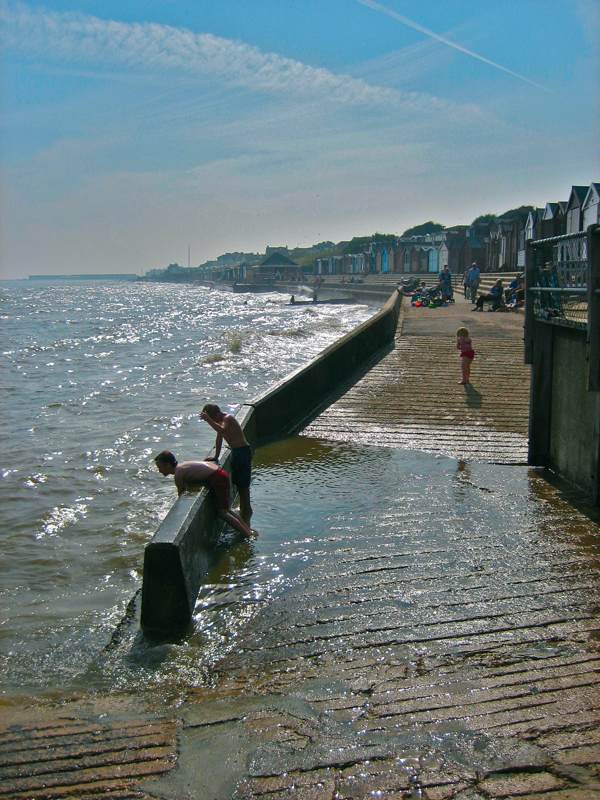
This sense of ownership is manifest in the culture of the beach huts that line the seafront, layers deep, in higgledy-piggledy terraces receding from the shore. These little wooden sheds are ideal for everyone to indulge their play house and dolls’ house fantasies – painting them in fanciful colours, giving them names like “Ava Rest,” and furnishing the interiors with gas cookers and garish curtains. At the seaside, all are licenced to pursue the fulfilment of residual childhood yearning in harmless whimsy. The seaside offers a place charged with potent emotional memory that we can return to each Summer. It is not simply that people get nostalgic for seaside resorts, but that these seasonal towns become the location of nostalgia itself – because the sea never changes and we revisit our former selves when we come back to the beach.
Walton Pier curls to one side like a great tongue taking a greedy lick from an ocean of ice cream, and the beach curves away in a crooked smile that leads your eye to the “Naze,” or “nose” to give its modern spelling. This vast bulbous proboscis extends from the profile of Essex as if from a patient in need of plastic surgery, provided in the form of relentless abrasion from the sea.
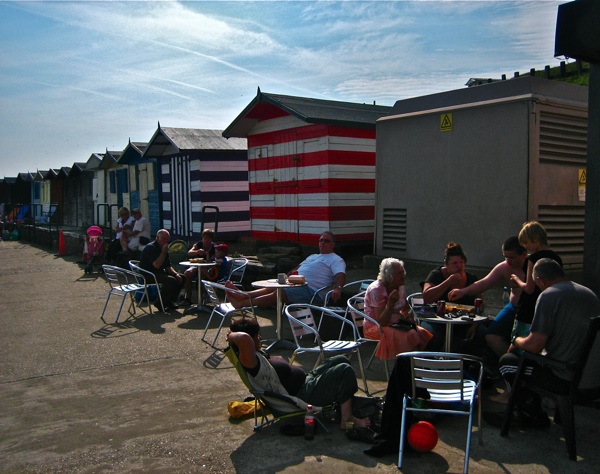
With so many attractions, the first thing to do is to sit down at the tables upon the beach outside Sunray’s Kiosk which serves the best fish & chips in Walton on the Naze. Every single order is battered and cooked separately in this tiny establishment, that also sells paper flags for sandcastles and shrimping nets and all essential beach paraphernalia. From here a path leads past a long parade of beach huts permitting you the opportunity to spy upon these domestic theatres, each with their proud owners lounging outside while their children run back and forth, vacillating between their haven of security and the irresistible wonder of the waves crashing at the shoreline.
Here I joined some girls, excitedly fishing for crabs with hooks and lines off a small jetty. They all screamed when one pulled out a much larger specimen than the tiddlers they had in their buckets, only to be reassured by the woman who was overseeing their endeavour. “Don’t be frightened – it’s just the Mummy!” she declared with a wicked smile, as she held up the struggling creature by a claw. From this jetty, I could see the eighty foot tower built upon the Naze in 1720 as a marker for ships entering the port of Harwich and after a gentle climb up a cliff path, and a strenuous ascent up a spiral staircase, I reached the top. Like a fly perched upon the nose of Essex, I could look North across the estuary of the Orwell towards Suffolk on the far shore and South to the Thames estuary with Kent beyond – while inland I could see the maze of inlets, appealingly known as the Twizzle.
In the week that Summer broke up, I was blessed with one clear day of sunshine for my holiday. And I returned to the narrow streets of Spitalfields for another year with my skin flushed and buffeted by the elements – grateful to have experienced again the thrall of the shoreline, where the land runs out and the great ocean begins.
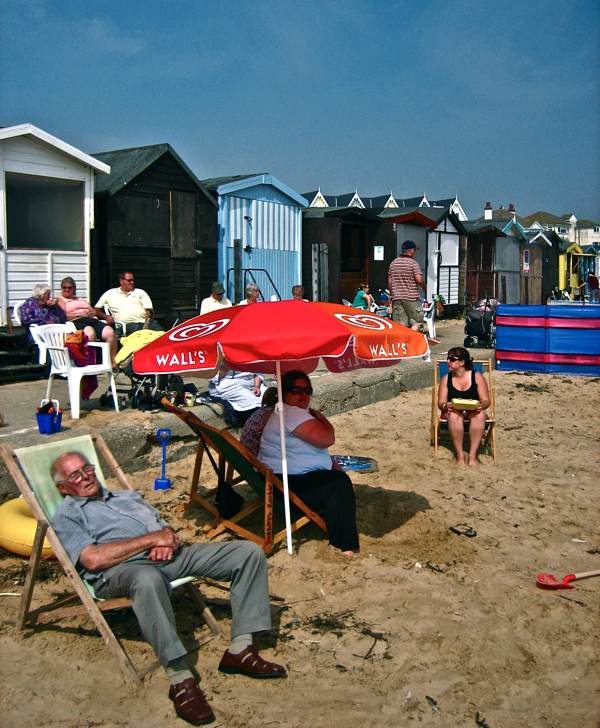
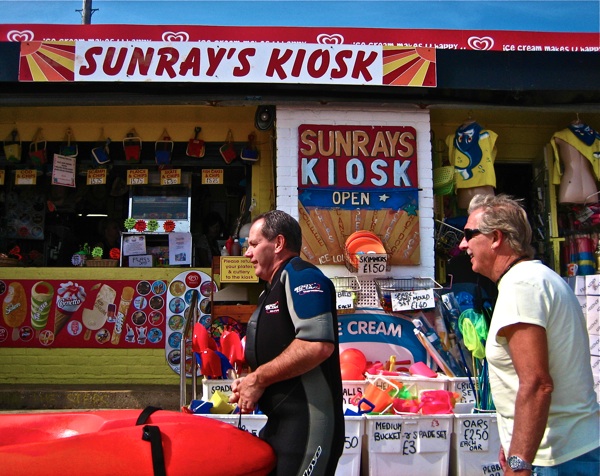
Sunray’s Kiosk on the beach, for the best fish & chips in Walton on the Naze.
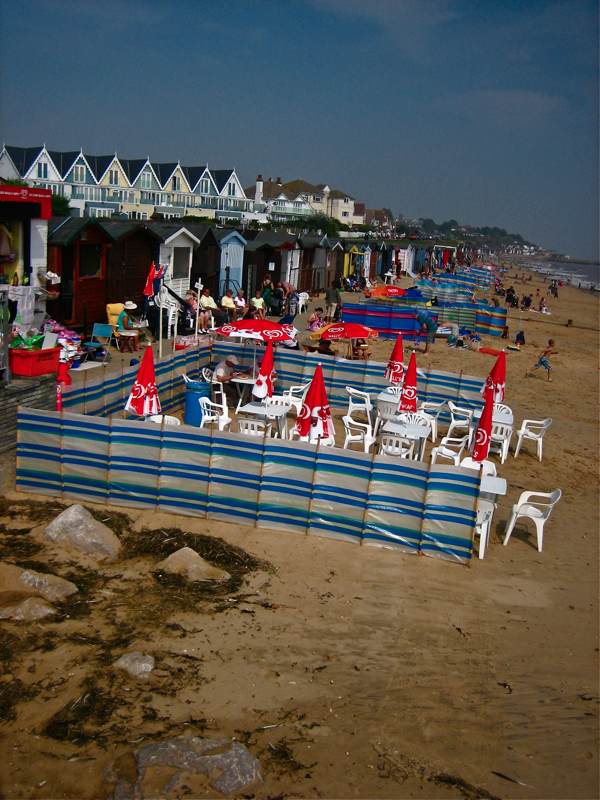
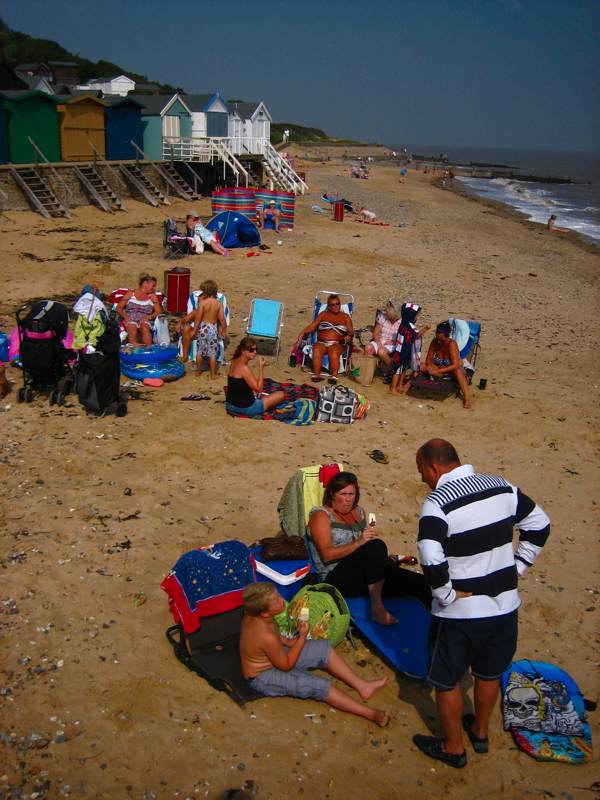
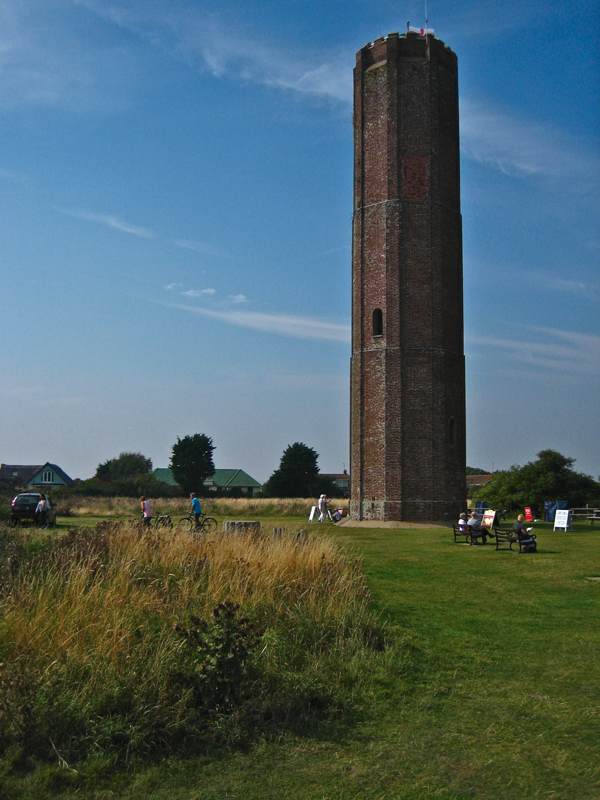
“On this promontory is a new sea mark, erected by the Trinity-House men, and at the publick expence, being a round brick tower, near eighty foot high. The sea gains so much upon the land here, by the continual winds at S.W. that within the memory of some of the inhabitants there, they have lost above thirty acres of land in one place.” Daniel Defoe, 1722
You may like to read about the Gentle Author’s previous holidays
The Gentle Author Opens Tower Bridge

What better way could there possibly be to commence the third year of daily stories than to open Tower Bridge? Yet I could barely believe it was going to happen as I walked down through the City and up onto the bridge approach where tourists milled on the pavement.
None knew the secret I was carrying as, emboldened by privileged information, I waved to the men inside the control cabin and they ushered me swiftly inside. At once, I shook hands with Bridgemaster Eric Sutherns – tall and dignified in a peaked cap, he looked for all the world like the captain of a ship, and here, suspended above the water with the controls before us, it was as if were upon the bridge of a liner. The outlook was breathtaking, but there was no time to contemplate it as the Bridgemaster introduced me to Bridgedriver David Duffy who, in the few brief minutes remaining, was eager to induct me into my task.
In moments, the controls of the most famous bridge in the world were to be given into my hands. A single black knob, resembling a gearstick, drives the raising and the lifting of the bascules – as the halves of the bridge are known. Eyeballing me with his intense blue pupils, David explained quickly that I needed raise the bascules to between seventy-six and seventy-eight degrees, but once the bridge reached fifty degrees, I must press the button that changed the light on the bridge from red to green, indicating to the vessel that it was safe to proceed. Already, David had initiated the sequence of events that culminated in raising the bridge. Sirens were sounding, traffic lights were flashing, gates were descending upon the roadway as cars and vans drew to a halt, and wardens in fluorescent jackets were shepherding pedestrians back behind the barriers.
Keen to give a semblance that I was capable to undertake the task, I nodded confidently as the vital instructions passed through one ear and out the other. Somehow I had put myself at the centre of a train of events that were entirely alien to me, but as the challenge drew close, it was essential that I maintain the sham of competence. Yet the staff at Tower Bridge were one step ahead of me. “Check that the vessel is in sight,” instructed Bridgedriver David Duffy, preoccupied with the multiple television monitors showing activity on the bridge as the last tourists scurried out of sight. Sublimated entirely by the expertise of the master, I turned and peered down the river, expecting to see an unremarkable craft.
In an instant, the intensity of the event was amplified a thousand fold as I saw a tall ship, with three masts and lines of sailors standing upon the rigging, coming straight towards me. No longer was I living in my familiar world but inhabiting a vision. Inescapably, it was time to open the bridge. I turned back to David Duffy and Eric Sutherns, only to discover they were excited too, because even to these experienced bridgemen, this was a rare spectacle. In unison, they directed their gaze to the control lever and David placed my hand upon it, with a nod that only meant one thing. I looked up to the computer monitor, which showed that the linking bolts, that hold the bridge rigid when it is closed, had retracted, and then I pulled the lever slowly towards me. There are two speeds – creep and full speed. With the audacity of a beginner, I chose full speed, and two and a half thousand tons of steel moved into life.
I held on, as if it were to life itself, alternating my gaze between the rising bridge outside the cabin, the monitor where the counter clocked up the angle of incidence, and the tall ship bearing down upon me. At fifty degrees, I hit the button that gave the Captain clearance to enter the bridge and he reciprocated by a blast upon the hooter. Then the bridge was at seventy-seven degrees and it was time to halt and hold on. Now the ship was upon us, so close that I could no longer see its entirety but only the section passing by. Unexpectedly, from behind me came the sound of cheering and out of the corner of my eye I could glimpse flags waving, because this was ARC Gloria, the training ship of the Colombian Navy, and the bridge was full with excited Colombians come to show their national pride.
Even in the face of a morbid fantasy that I might release the bascules to crash down, sinking the vessel, causing massive casualties and triggering an international incident, I could not resist my awe at the wonder of the spectacle passing before my eyes. So tall that it only cleared the walkway above by a few metres – eighty-one cadets dressed in the red, yellow and blue of the Colombian flag were standing in formation upon the rigging of ARC Gloria, singing their anthem and waving for joy at this glorious moment of passing through Tower Bridge.
Once the ship passed, it was time to switch the light on the bridge back to red and close it again. But then, as soon as I had recovered my breath, it was already time to open the bridge for the return of Arc Gloria to complete its ceremonial passage before leaving to cross the Alantic Ocean. Consequently, I was able to open the bridge a second time and enjoy it without being in the grip of the terror that overwhelmed my debut. The bridge went up, the ship went through and then it was all over. David closed the blinds in the cabin and presented me with an intricate certificate as evidence of my achievement.
I followed him down a staircase within the bridge structure and into the engine room where oil hydraulic pumps have replaced the steam engines which ran here until 1976. We stepped through a door leading to a gantry in a vast dark cavern of diabolic industrial gloom, extending below water level, constructed within the base of the bridge. Here I understood that each half of the bridge is a seesaw with the counterbalance hidden from view inside the towers. “It’s a unique job,” admitted David, with proud reticence, as we paused here beside this mammoth iron construction weighted with four hundred tons of lead.
Visiting one of the four control cabins which is still fitted out with its original equipment, David explained that four were necessary in the days of the London fogs, before telephone and radio, when often the bridge drivers could often not even see across to the other side of the bridge. Today, ships book their openings a day in advance and Tower Bridge opens between eight hundred and a thousand times a year, but when it originally came into service in 1894, the bridge opened six thousand times a year, responding to signals from ships entering and leaving the busy Pool of London at any time of the day or night.
There is a superlatively idiosyncratic logic to this marvel of nineteenth century engineering, which apart from switching from steam power to oil hydraulics still runs exactly as it was built. David told me that the bearings which the bridge turns upon are original. David told me that the architect Sir Horace Jones intended Tower Bridge to look industrial, faced in red brick, but he died before completion and they altered his design to face it in stone, making it more Gothic to harmonise with the Tower of London. David told me that Hitler instructed the bomber pilots to avoid Tower Bridge, so that it could be retained as a landmark. David told me that elevators were installed so pedestrians could cross by the walkways above when the bridge was open, but they were closed in 1910 because of the prostitutes that solicited there. David told that the Bridgemasters used to live in the houses built over the suspension bridges and as we spoke a wedding was taking place in the Bridgemaster’s dining room.
We shook hands upon the bridge. “I bet you didn’t realise it was so easy to move two and a half thousand tons of steel?” David queried with a kindly smile, as we made our farewells before we went our separate ways through the crowds. It had been an emotional visit and I was staggered by this mighty masterpiece, but I returned home secure in the knowledge that now I have moved two and a half thousand tons of steel with the hand that writes these words, it should be a simple matter to craft a new story for you every day.

David Duffy, Bridgedriver, at the control panel of Tower Bridge.


The vast cavity down inside a pier of the bridge.

“It’s a unique job”

This control cabin retains its original equipment.

In the nineteenth century, unable to leave their posts, Bridgedrivers required the use of portable toilets.

In this diagram you can see the toothed quadrants used to move the bascules. A miscalculation in the size of these quadrants means that they stick out of the walls on the inner side of the towers and metal boxes were constructed upon the exterior to cover where the ends protrude.

ARC Gloria of the Colombian Navy, with eighty-one cadets on the rigging singing their anthem.
With grateful thanks to Eric Sutherns, Bridgemaster, and all the staff of Tower Bridge.
Max Levitas, Anti-Fascist Campaigner

Max Levitas became an East End hero when he was arrested in 1934, at the age of nineteen years old, for writing anti-Fascist slogans on Nelson’s Column in Trafalgar Square. “There were two of us, we did it at midnight and we wrote ‘All out on September 9th to fight Fascism,’ ‘Down with Fascism’ and ‘Fight Fascism,’ on Nelson’s Column in whitewash,” he told me, his eyes shining with pleasure, still fired up with ebullience at ninety-seven years of age, “And afterwards we went to Lyons Corner House to have something to eat and wash our hands, but when we had finished our tea we decided to go back to see how good it looked, and we got arrested – the police saw the paint on our shoes.”
On September 9th, Oswald Mosley, the leader of the British Union of Fascists, was due to speak at a rally in Hyde Park but – as Max is happy to remind you today – he was drowned out by the people of London who converged to express their contempt. It was both fortuitous and timely that the Times reprinted Max’s slogans on September 7th, two days before the rally, in the account of his appearance at Bow St Magistrates Court, thereby spreading the message.
Yet this event was merely the precursor to the confrontation with the Fascists that took place in the East End, two years later in October 1936, that became known as the Battle of Cable St, and in which Max is proud to have played a part – a story he tells today as an inspirational example of social solidarity in the face of prejudice and hatred. And, as we sat in a quiet corner of the Whitechapel Library last week, watching the rain fall upon the street market outside, it was a story that I was eager to hear in Max’s first hand account, especially now that he is one of last left of those who were there.
Politics have always been personal for Max Levitas, based upon family experience of some of the ugliest events of the twentieth century. His father Harry fled from Lithuania and his mother Leah from Latvia in 1913, both escaping the anti-semitic pogroms of Tsarist Russia. They met in Dublin and married but, on the other side of Europe, Harry’s sister Sara was burnt to death along with fellow-villagers in the synagogue of Akmeyan, and Leah’s sister Rachel was killed with her family by the Nazis in Riga.
“My father was a tailor and a trade unionist,” Max explained in the lively Dublin brogue that still colours his speech today, even after eighty years in the East End. “He formed an Irish/Jewish trade union and then employers blacklisted him, making sure he could never get a job,” Max continued with a philosophical grin, “The only option was to leave Dublin and we lived in Glasgow from 1927 until 1930, but my father had two sisters in London, so we came here to Durward St in Whitechapel in 1931 and stayed ever since.”
With this background, you can appreciate the passionate concern of Max – when he was nineteen and secretary of the Mile End Young Communist League – at a time when the British Government was supporting the Fascist General Franco in the Spanish Civil War. “Even after Hitler was appointed Chancellor in 1931, the British Government was developing arms with Germany,” Max informed me, widening his eyes in condemnation and bringing events into vivid reality that I had viewed only as history until he filled them with personal emotion.
“I was working as a tailor’s presser in a small workshop in Commercial St at the time. Mosley wanted to march through Whitechapel because it was where a large number of Jewish people lived and worked, and I knew the only way to stop him was to have unity of the people. I approached a number of unions, Jewish organisations and the Communist League to band together against the Fascists but although they agreed what I was doing was right, they wouldn’t support me.
But I give credit to the huge number of members of the Jewish and Irish communities and others who turned out that day, October the fourth, 1936. There were thousands that came together in Aldgate, and when we heard that Mosley’s intention was to march along Cable St from Tower Hill into Whitechapel, large numbers of people went to Cable St and barricades were set up. The police attempted to clear Cable St with horses, so that the march could go ahead, but the people of Cable St fought back and the police had to give in.
At three o’clock, we heard that police had decided that the march would not take place, because if it did a number of people would be killed. The Fascists were defeated by the ordinary people of Stepney, people who emptied buckets of water and chamber pots out of their houses, and marbles into the street. This was how they stopped Mosley marching through the East End of London. If he had been able to do so, more people would have joined him and he would have become stronger.”
Max Levitas spoke of being at the centre of a definitive moment in the history of the East End, seventy-five years ago, when three hundred thousand people came together to form a human chain – in the face of three thousand fascists with an escort of ten thousand police – to assert the nature of the territory as a place where Fascism and racism are unacceptable. It was a watershed in resistance to Fascism in Europe and the slogan that echoed around Stepney and Whitechapel that day was, “No paseran” – from the Spanish Civil War, “They shall not pass.”
After the war, Max became a highly respected Communist councillor in Stepney for fifteen years and, a natural orator, he remains eloquent about the nature of his politics.“It was never an issue to forge a Communist state like in the Soviet Union,” he informed me, just in case I got the wrong idea,“We wanted to ensure that the ordinary working people of England could lead decent lives – not to be unemployed, that people weren’t thrown out of their homes when they couldn’t pay their rent, that people weren’t homeless, as so many are today, living with their parents and crowded together in rooms.”
Max’s lifelong political drive is the manifestation of a tenacious spirit. When Max arrived in Whitechapel Library, I did not recognise him at first because he could pass for a man thirty years younger. And later, when I returned his photos to his flat nearby, I discovered Max lived up five flights of stairs and it became obvious that he walks everywhere in the neighbourhood, living independently even at his astounding age. “I used to smoke,” Max admitted to me shyly, when I complimented him on his energy.” I stopped at eighty-four, when my wife died – until then I used to smoke about twenty cigarettes a day, plus a pipe and cigars.” Max confessed, permitting himself a reckless grin of nostalgia.
“My mother and father both died at sixty-five,” Max revealed, turning contemplative,“I put that down to the way they suffered and poverty. My father worked around the clock to keep the family going. He died two years after my mother. At that time there was no National Health Service, and I phoned the doctor when she was sick, asking him to come, and he said, ‘You owe me some money. Unless you pay me, I won’t come.’ I said, ‘You come and see my mother.’ He said, ‘You will have to pay me extra for coming plus what you owe.’ But she died before he came and I had to get an ambulance.”
It was a story that revealed something more of the personal motivation for Max’s determination to fight for better conditions for the people of the East End – yet remarkably, in spite of the struggle of those around him and that he himself has known, Max is a happy man. “I’m always happy, because I can say that my life was worth living, ” he declared to me without qualification.
Max Levitas wants to live as long as possible to remind us of all the things he has seen. “I believe if racists marched through the East End today, people would stop them in the same way,” he assured me with the unique confidence granted only to those who have known ninety-seven years of life.


Max in 1945.

Max campaigning in Stepney in the nineteen sixties.


Max with his wife on a trip to Israel in the nineteen seventies.
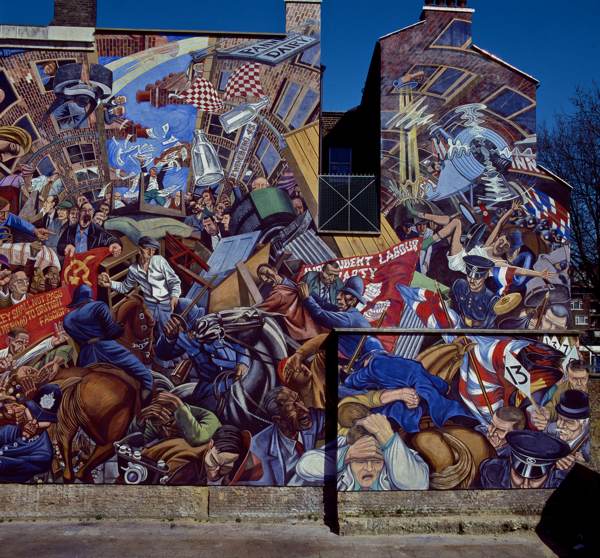
The Cable St mural
Portrait of Max Levitas copyright © Phil Maxwell
You can hear Max Levitas talking about the Battle of Cable St by clicking here
Watch original footage of the Battle of Cable St here
And learn more about Phil Maxwell & Hazuan Hashim’s film From Cable Street to Brick Lane featuring Max Levitas.
The Trannies of Bethnal Green

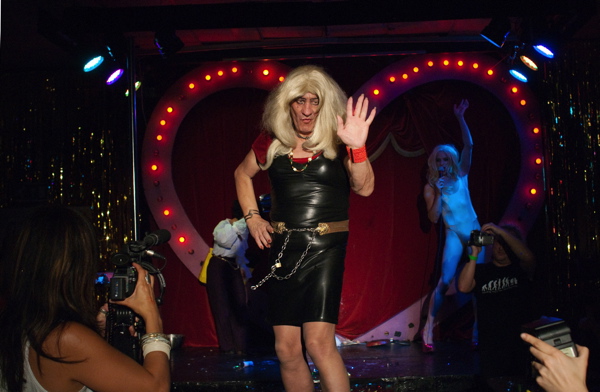
Hessel St is named in remembrance of Phoebe Hessel (born 1713), known as the “Amazon of Stepney” who dressed as a man to enlist in the army to be with her lover – an honourable example which demonstrates that trannies are an integral part of the culture and history of the East End. And I am proud to report that this venerable tradition still flourishes today, reaching its exuberant zenith each year at “London’s Next Top Tranny Contest” held at the Bethnal Green Working Men’s Social Club.
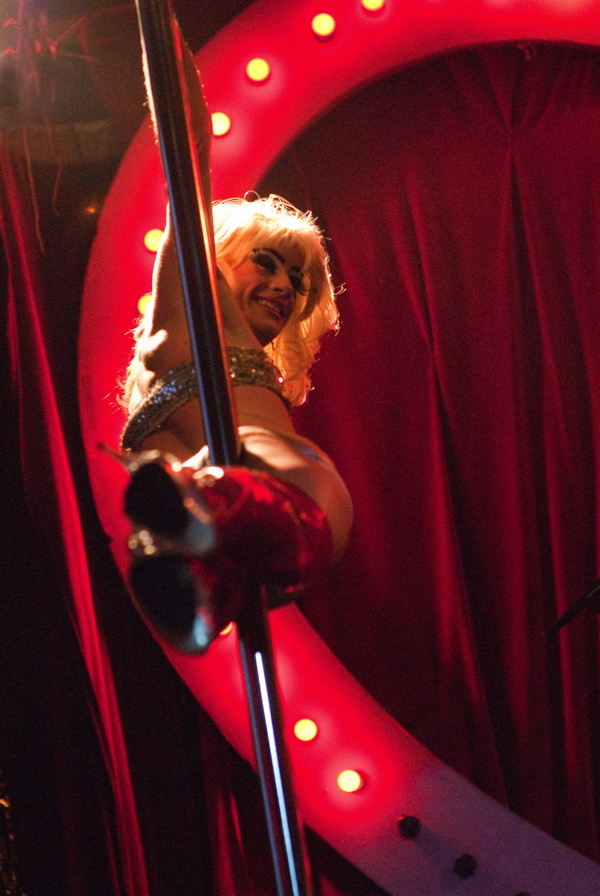
It was my privilege to sit at the head of the catwalk, surrounded by a raucous and appreciative crown, to witness these glamorous extravagant flowers at close quarters as they competed furiously in last week’s nail-biting contest finale. Yet before proceedings commenced, Russella – our long-legged pole dancing hostess in pink glitter – confessed her motives with a refreshing lack of false modesty, redefining the terms of the contest unambiguously.
“Why would I want to give the title of London’s Top Tranny to someone less talented and less good looking than myself? That’s why I am the host tonight, because the winner will be London’s Next Top Tranny – after me. They will be London’s Next Top Tranny when I die. In other words, over my dead body…” she declared, fluttering her spidery eyelashes as she twisted her sparkly lips into an insouciant smile and tossed her blonde locks with self conscious grace.
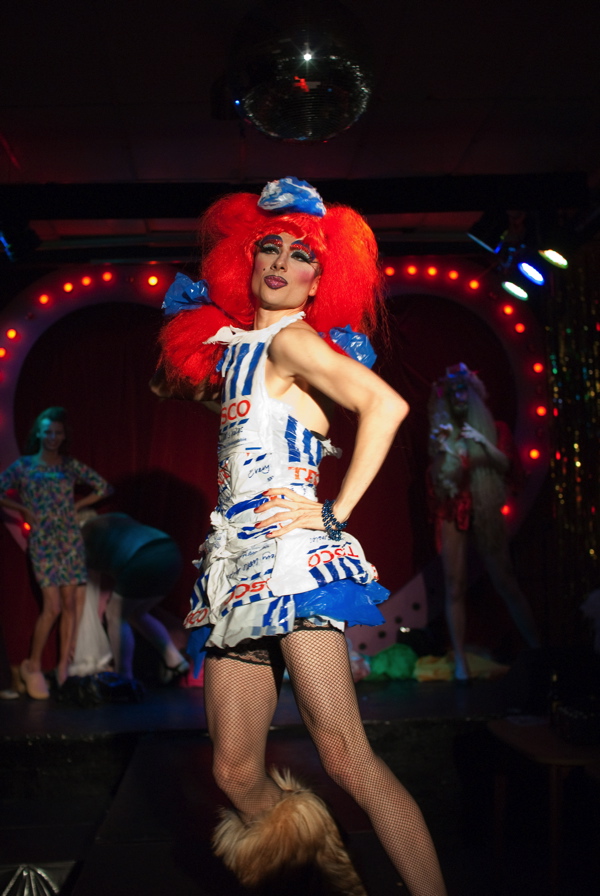
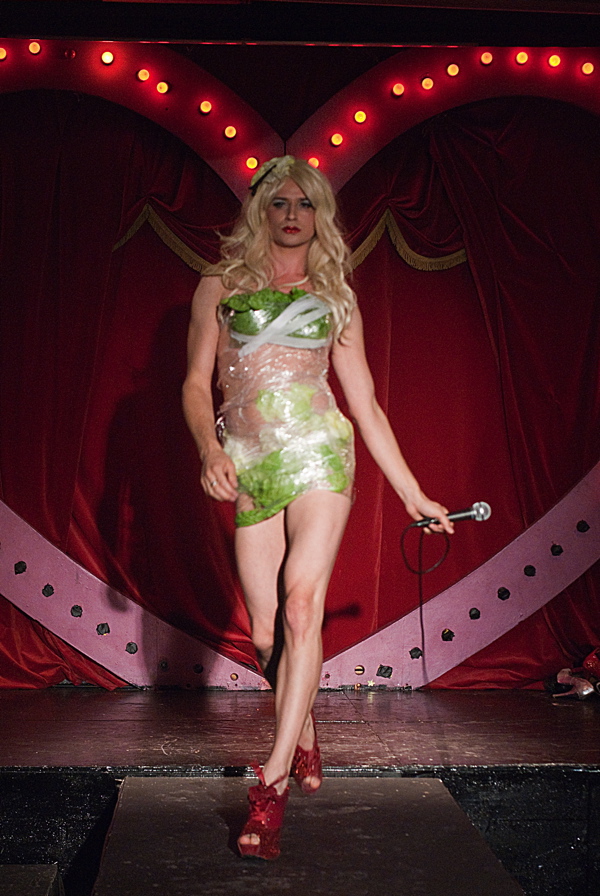
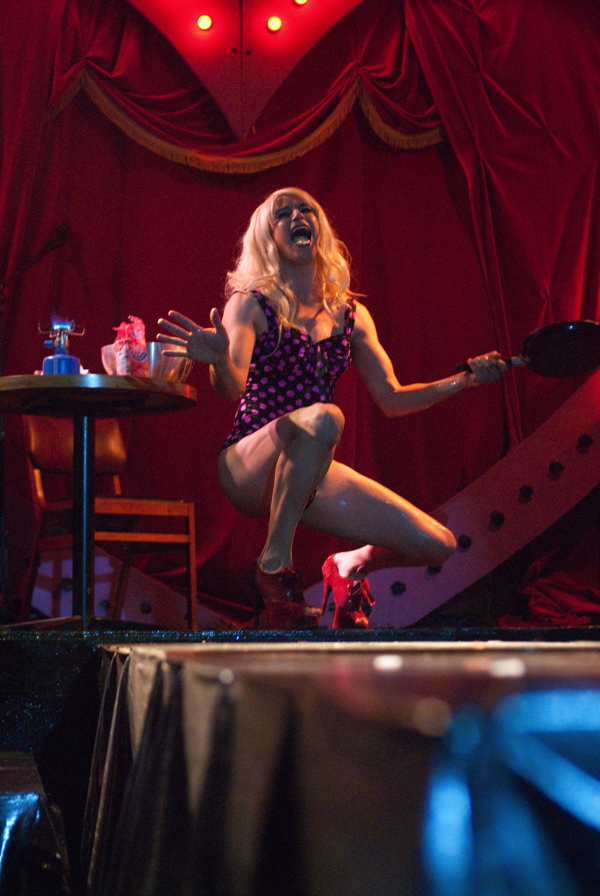
Once the unassailable Russella had asserted her alpha-tranny status, it was time to bring on the contestants, Miss Cairo, Fancy Chance, Stephanie, Polly Sexual, Jean Benett and Strawberry Pickles, and what a gorgeous display of unapologetically ambiguous gender they presented – to delight the most jaded eye and uplift the weariest spirit. Six brave souls who had cast aside conventional notions of dignity in the quest for greatness. Lacking breasts, possessing male body hair (and in one case having a beard), none of these contestants aspired literally to be taken for women, instead they had adopted female trappings to aid them in exaggerated variations upon the performance of femininity. And, as if to emphasise the point, Russella even staged an uproarious cookery demonstration making pancakes on stage.
Running through the evening was a compelling dramatic tension between the trannies’ performances that invite our suspension of disbelief and their clunky pantomime outfits which simultaneously remind us of their wearers’ inauthentic gender. These fearless trannies incarnate a persuasive poetry. It is a question of how far are you prepared to go to humiliate yourself for the sake of becoming fabulous.
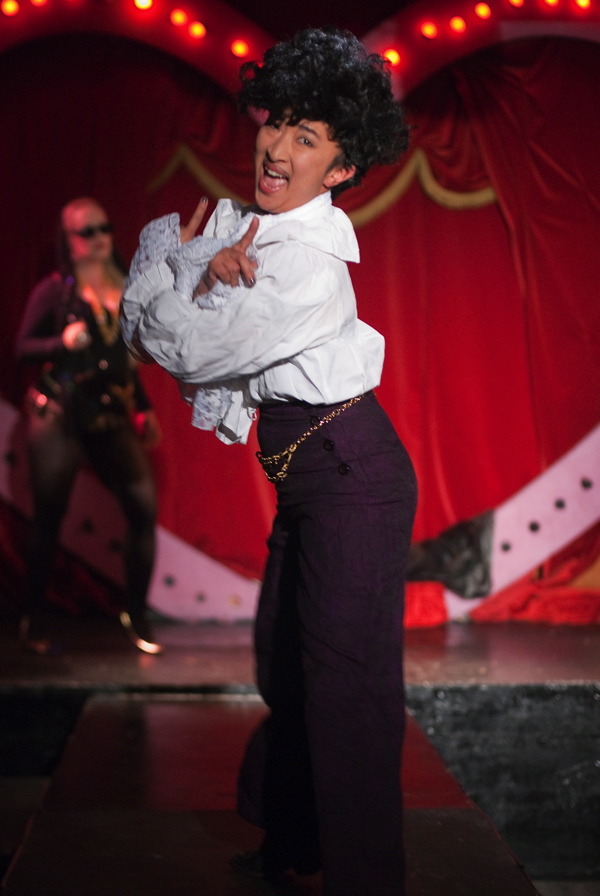
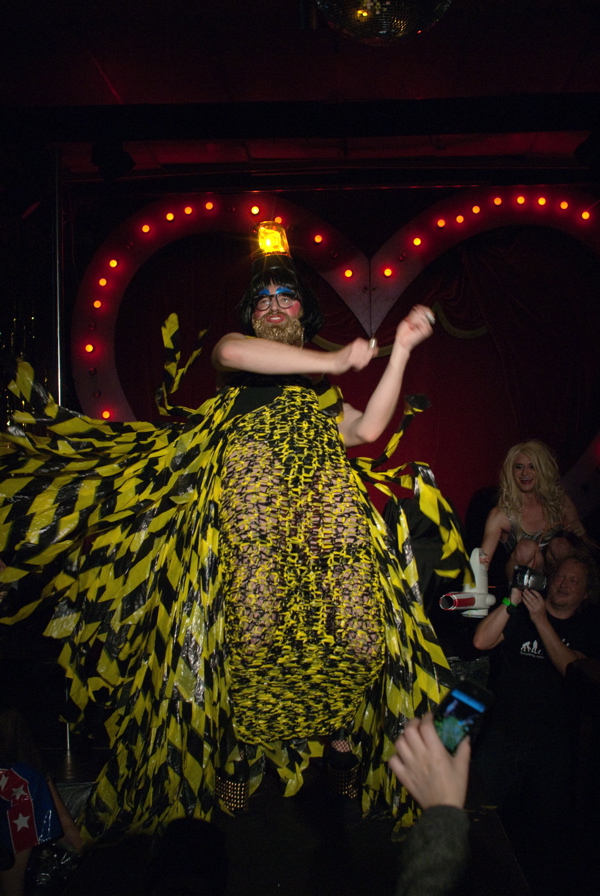
And these trannies held nothing back, embracing challenges to retain dignity while walking in wildly mis-matched ill-fitting shoes, displaying extreme emotions while blasted by a wind machine, drinking copious amounts of of cider, and eating live worms, raw meat and dog food. Stephanie, a shy senior tranny in a bridal gown, won affection early on for tottering in ill-matched heels displaying swollen ankles and varicose veins, and then, as if to dispel the audience’s pity, won a round of applause for eating a whole can of dog food. Other memorable highlights included Miss Cairo’s supermodel walk sustained while wearing a wooden clog and a five inch heel, Polly Sexual’s glorious dress woven from yellow and black hazard tape, Strawberry Pickles’ soulful appeal for drag queen asylum to prevent her being sent back to Sarah Palin’s America, Jean Benett’s curiously Gwyneth Paltrow-like enactment of constipation, and Fancy Chance’s performance as the artist formerly known as Prince, which made such ingenious use of an aerosol of cream and drew deafening shrieks of joy from the crowd.
It all came down to two contenders. Strawberry Pickles, distinguished by her relentless cheerfulness and Fancy Chance who accomplished that rare stage feat of being mean and charming at the same time. She was the dark horse of the contest, wearing trousers and exuding masculinity, I wrongly assumed Fancy was a man performing as a manly woman. Only part-way through the contest did I realise that Fancy Chance was the only entrant going in the opposite direction to the others, from woman to man. She had taken me in from the start. So it was only just that she won, though friends were surprised next day when I said I had been to a tranny contest and a woman won – though I have no doubt Phoebe Hessel would have approved of the result.
There is a strange nobility in the trannies’ condition, emerging from the shadowlands of gender into the limelight, so proud and flamboyant, craving attention like children, and seeking affection and respect for their fabulousness. We love them for their excess, their devotion to sentimental songs and inability to lipsynch, their make-up that smears, their wigs that come off and their trashy costumes that come apart. We cherish their magnificent failures. We love them for their audacity. They are delicate creatures of the nighttime and we do not want to know where they go in the daytime, because there is an elusive magic to these vibrant personalities unlocked by cross-dressing.
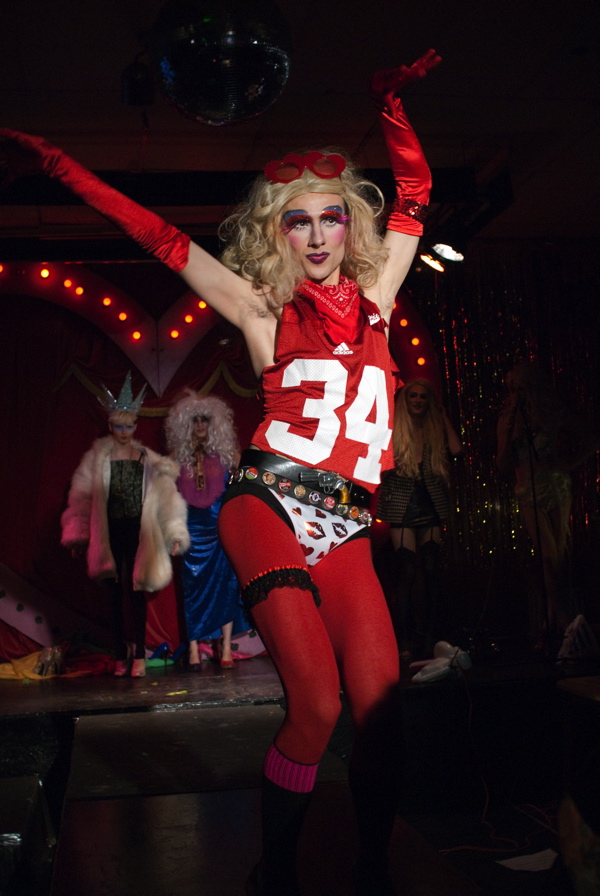
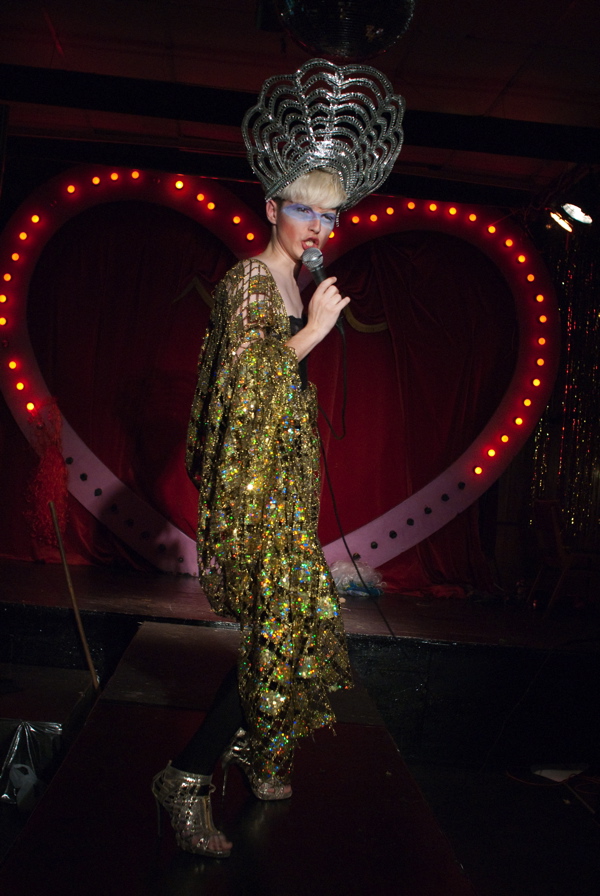
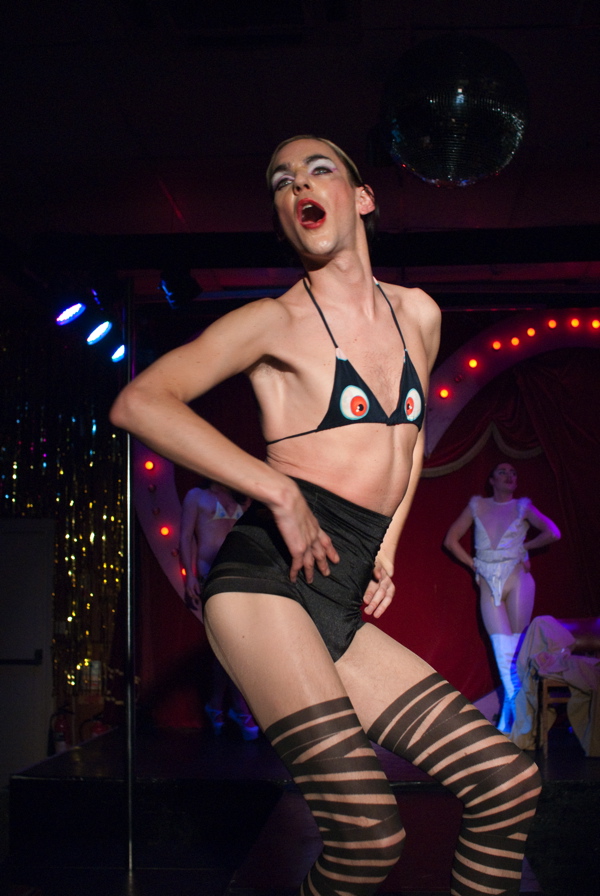
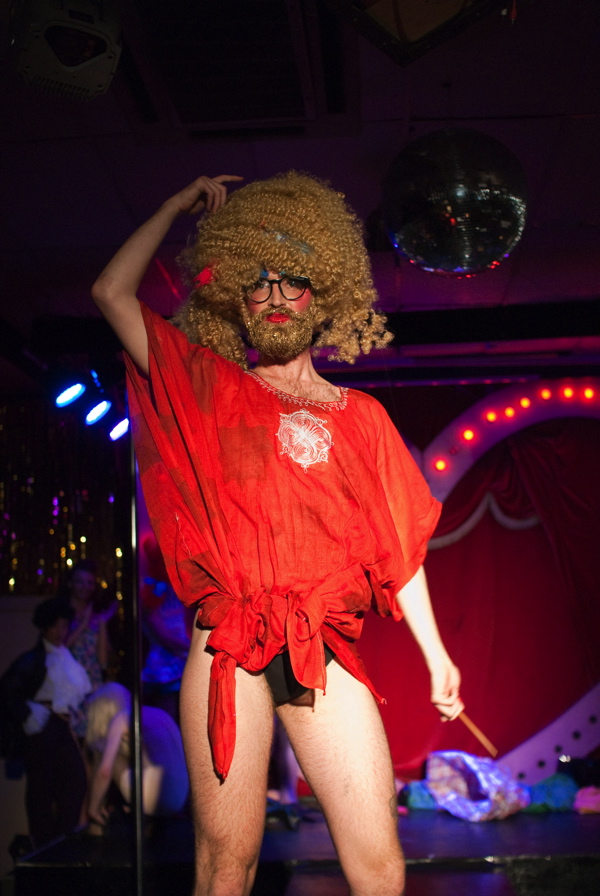
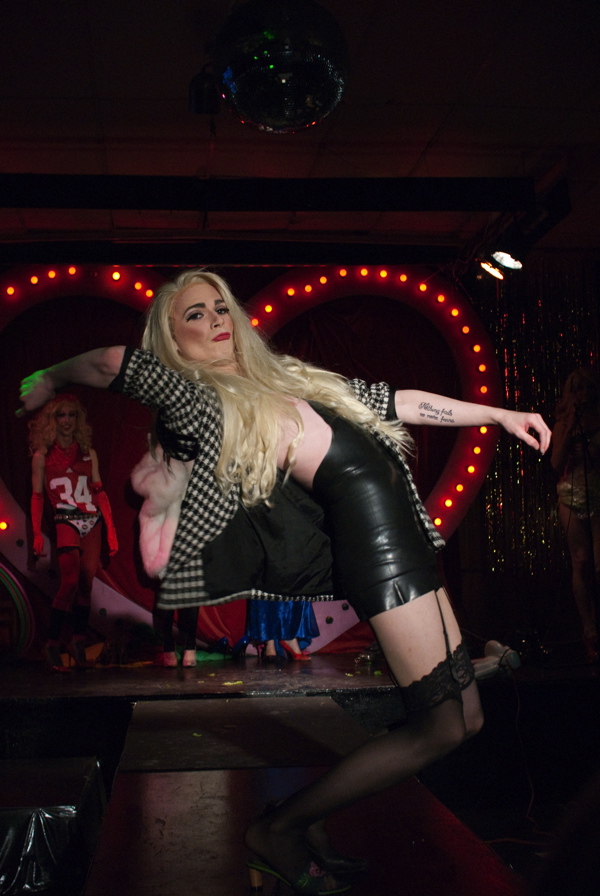
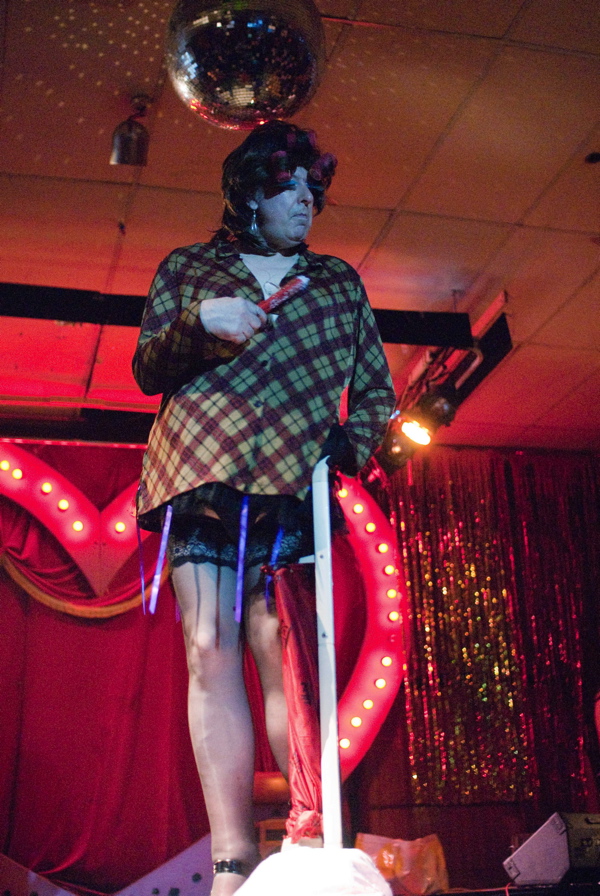
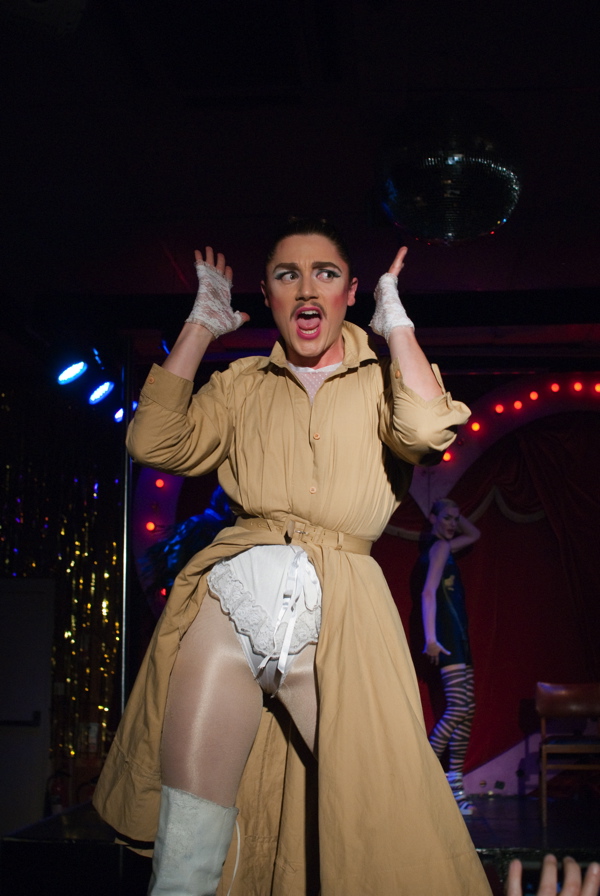




Photographs copyright © Sarah Ainslie
Read more about the fabulous life of Russella, London’s Top Tranny and find out about the Bethnal Green Working Men’s Social Club at www.workersplaytime.net
Fergus Henderson, Bookworm
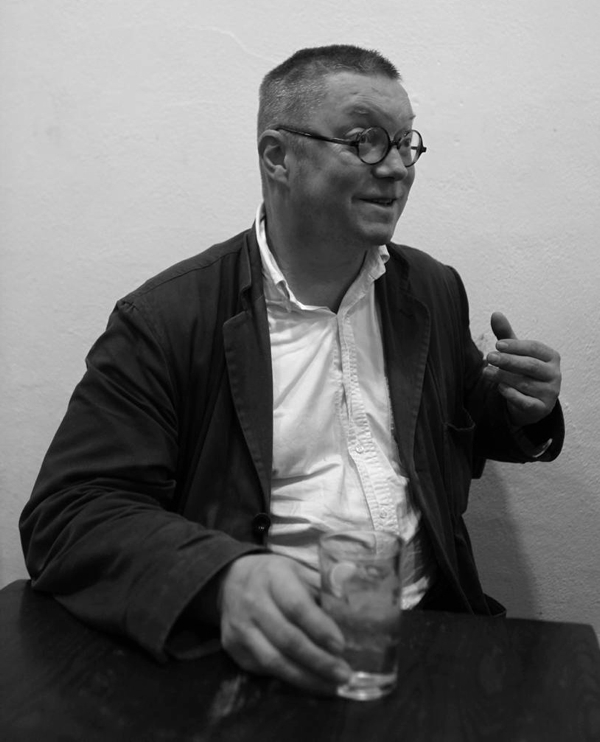
Although Fergus Henderson is widely celebrated as the presiding spirit and co-founder of St John, his literary tendencies are less commonly known. And so, desirous of learning more, I dropped by St John in Smithfield one bright morning, with my City Of London library card in hand, to enjoy a steadying glass of Fernet Branca with Fergus and discover how it is that certain books have become the means by which he communicates the undefinable ethos of this unique culinary enterprise with his staff. Still windswept and tanned from a recent holiday on the Isle of Tiree, Fergus arrived glowing with all the enthusiasm and energy of a schoolboy returning from Summer Camp. “Sometimes I feel that I am not the most clear of chaps,” he confessed to me with a tender grimace – as we each knocked back the bitter liqueur laced with rhubarb and saffron yet possessing a compelling aroma of frankincense and myrrh – adding plainly, “so I amassed this collection of books to explain.”
“It was when I first handed the reins to another chef, Ed Lewis, that I needed some means to convey the essence,” continued Fergus mysteriously.“I chose ‘Master & Commander’ by Patrick O’Brian because I think of the kitchen as very much like an eighteenth century Man o’ War – a confined space. As chef you have to be everybody’s friend, but you must be in charge, so you need to keep yourself at a distance too. My march up and down between the fridges in the kitchen, there’s some similarity there with the Captain’s march up and down the deck, I think.” he said, adopting an unconvincing comic frown of fierce authority as his attempt at a Captain of an eighteenth century Man o’ War. “I have given this book to every head chef and sous-chef.” he explained, before raising his eyebrows with a self deprecatory smile, changing tone as a thought occurred to him, “Maybe I should ask if they read it?”
His second choice appeared more esoteric, though I quickly became aware of a theme emergent. Fergus chose L.T.C. Rolt’s 1957 biography of Isambard Kingdom Brunel, a subjective portrait of the engineer, tracing his triumphs and tribulations to create a narrative that reads like a novel. “Unlike recent biographies that have been critical, Rolt just loves Brunel and so I love him too. What’s so brilliant about Brunel is that he builds the Great Western Railway which is a feat in its own right, gets to Bristol, notices the Atlantic and says we’ll built the SS Great Britain and go across it – What a guy!”said Fergus with an admiring grin, making a lateral connection to St John’s next step, the hotel in Leciester Sq. “With the hotel, we thought,’We’ve fed them, now we’ll bed them.’ Not quite as ambitious as spanning the Atlantic but in his spirit.” he outlined with a deferential shrug. I knew that Fergus himself trained as an architect, so it seemed the appropriate moment to ask if he designed his restaurants, “I am to blame for most of it,” he admitted, drawing a long face of self-parody and casting his eyes around the cavernous white interior.
As we arrived at Fergus’ third title, Thomas Blythe the general manager walked in, adopting a good-humoured smirk when he overheard the subject of our conversation – because he is himself a recipient of these books, and he knew what was coming next, Ian Fleming’s “The Man With the Golden Gun.” “I chose it because I thought Bond and Scaramanga ate whole crabs together and drank pink champagne.” revealed Fergus wistfully before Thomas confirmed, “I read the book and it doesn’t exist, it wasn’t there at all.” and they both exchanged a glance of crazy humour. “That’s why we always serve whole crabs on the menu here…” continued Fergus with supreme logic,”It’s a sad story, but Thomas enjoyed the book – who wouldn’t enjoy it?” Then they both looked at me and smiled in solidarity, like brothers.
This obscure paradox was the ideal introduction to Fergus’ fourth title, John Berger’s “Ways of Seeing.”“What I took from this book was the importance of genus locii, the sense of place.” admitted Fergus, “Restaurants are places rich in genus locii. There is this chaos that happens twice a day, extraordinarily different people coming together. Also, Berger discusses Leonardo’s cartoon that no-one was interested to look at until an American offers to buy it for a million dollars and then a line forms. Restaurants can be a good example of this phenomenon too.”
I took this as a cue to probe Fergus about the origin of St John which has led the renaissance in British cooking in recent years, and is now integral to the identity of both Smithfield and Spitalfields. Explaining that Dickens was appalled by the variety of offal eaten in Spitalfields when he visited in 1851 and that Joan Rose remembers poor people eating a pig’s head when they could not afford a Sunday roast in the nineteen thirties, I asked him about his relationship to the food of the past. “Dickens was narrow-minded and pig’s head is delicious!” he retorted with unexpected fervour, eyes sparkling through his horn-rimmed spectacles as he declared his personal manifesto, “Food is permanent while fashion just changes, but what was good then is good now. I’m not interested in historical recreations. I am a modernist through and through, yet a pickled walnut is something that has been around forever and is still a thing of joy. I think of our food as permanent British. Nose-to-tail-eating is because it’s polite. It is not because of thrift, it’s simply because it is delicious.”
So now I hope I understood something. Many of the elements I recognise at St John are present in these books, the acute drama of collective enterprise, the particularly British glamour of dining incarnated by Bond and the unadorned presentation of good food that resists fashionable categorisation. There is a sensibility that is a synthesis of these literary works, serious yet with levity, and it adds up to the unique quality of tone that characterises St John – which all makes complete sense for a distinctively British restaurant because we are a nation of writers.
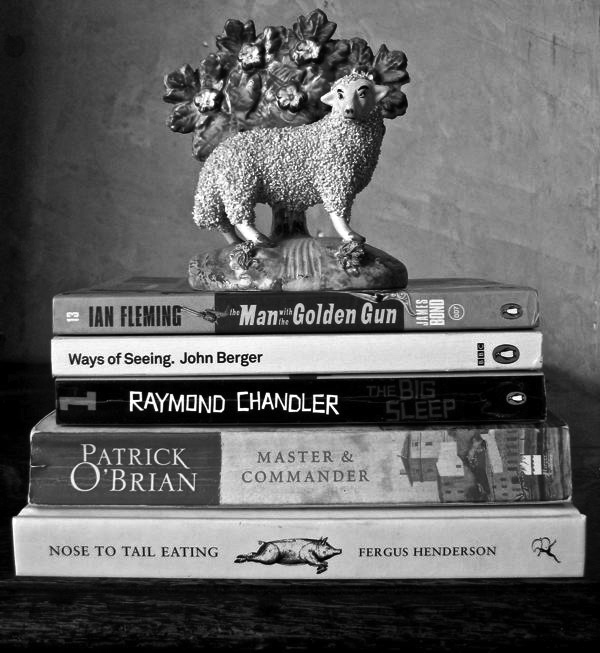
Portrait of Fergus Henderson copyright © Patricia Niven
You may like to read these other stories about St John
A Lesson in Tripe from Fergus Henderson
A Night in the Bakery at St John
James Lowe, St John Bread & Wine
The Tart with the Heart of Custard
The First Mince Pies of the Season
Justin Piers Gellatly, Baker & Pastry Chef
A Dead Man In Clerkenwell

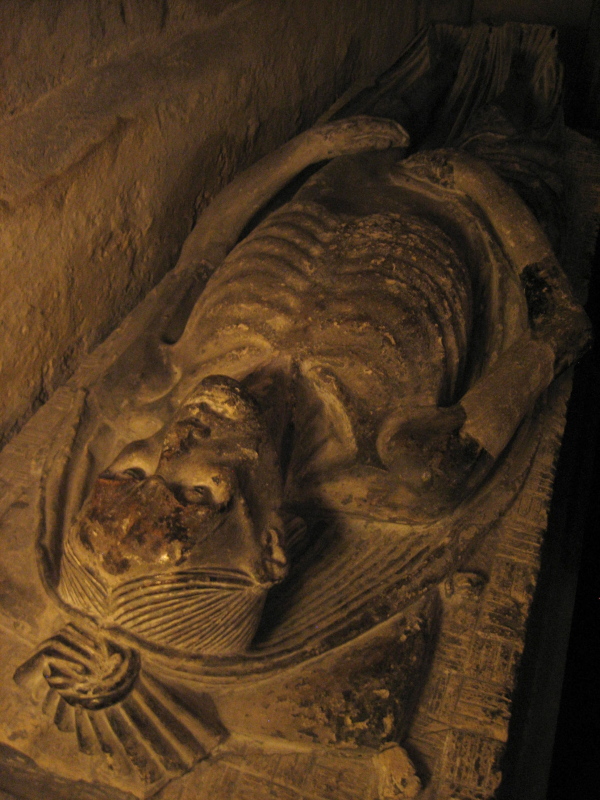
This is the face of the dead man in Clerkenwell. He does not look perturbed by the change in the weather. Once Winters wore him out, but now he rests beneath the streets of the modern city he will never see, oblivious both to the weather and the wonders of our age, entirely oblivious to everything in fact.
Let me admit, although some might consider it poor company, I consider death to be my friend – because without mortality our time upon this earth would be worthless. So I do not fear death, but rather I hope I shall have enough life first. My fear is that death might come too soon or unexpectedly in some pernicious form. In this respect, I envy my father who always took a nap on the sofa each Sunday after gardening and one day at the age of seventy nine – when he had completed trimming the privet hedge – he never woke up again.
It was many years ago that I first made the acquaintance of the dead man in Clerkenwell, when I had an office in the Close where I used to go each day and write. I was fascinated to discover a twelfth century crypt in the heart of London, the oldest remnant of the medieval priory of the Knights of St John that once stood in Clerkenwell until it was destroyed by Henry VIII, and it was this memento mori, a sixteenth century stone figure of an emaciated corpse, which embodied the spirit of the place for me.
Last week, thanks to Pamela Willis, curator at the Museum of the Order of St John, I went back to look up my old friend after all these years. She lent me her key and, leaving the bright November sunshine behind me, I let myself into the crypt, switching on the lights and walking to the furthest underground recess of the building where the dead man was waiting. I walked up to the tomb where he lay and cast my eyes upon him, recumbent with his shroud gathered across his groin to protect a modesty that was no longer required. He did not remonstrate with me for letting twenty years go by. He did not even look surprised. He did not appear to recognise me at all. Yet he looked different than before, because I had changed, and it was the transformative events of the intervening years that had awakened my curiosity to return.
There is a veracity in this sculpture which I could not recognise upon my previous visit, when – in my innocence – I had never seen a dead person. Standing over the figure this time, as if at a bedside, I observed the distended limbs, the sunken eyes and the tilt of the head that are distinctive to the dead. When my mother lost her mental and then her physical faculties too, I continued to feed her until she could no longer even swallow liquid, becoming as emaciated as the stone figure before me. It was at dusk on the 31st December that I came into her room and discovered her inanimate, recognising that through some inexplicable prescience the life had gone from her at the ending of the year. I understood the literal meaning of “remains,” because everything distinctive of the living person had departed to leave mere skin and bone. And I know now that the sculptor who made this effigy had seen that too, because his observation of the dead is apparent in his work, even if the bizarre number of ribs in his figure bears no relation to human anatomy.
There is a polished area on the brow, upon which I instinctively placed my hand, where my predecessors over the past five centuries had worn it smooth. This gesture, which you make as if to check his temperature, is an unconscious blessing in recognition of the commonality we share with the dead who have gone before us and whose ranks we shall all join eventually. The paradox of this sculpture is that because it is a man-made artifact it has emotional presence, whereas the actual dead have only absence. It is the tender details – the hair carefully pulled back behind the ears, and the protective arms with their workmanlike repairs – that endear me to this soulful relic.
Time has not been kind to this figure, which originally lay upon the elaborate tomb of Sir William Weston inside the old church of St James Clerkenwell, until the edifice was demolished and the current church was built in the eighteenth century, when the effigy was resigned to this crypt like an old pram slung in the cellar. Today a modern facade reveals no hint of what lies below ground. Sir William Weston, the last Prior, died in April 1540 on the day that Henry VIII issued the instruction to dissolve the Order, and the nature of his death was unrecorded. Thus, my friend the dead man is loss incarnate – the damaged relic of the tomb of the last Prior of the monastery destroyed five hundred years ago – yet he still has his human dignity and he speaks to me.
Walking back from Clerkenwell, through the teeming city to Spitalfields on this bright afternoon in late November, I recognised a similar instinct as I did after my mother’s death. I cooked myself a meal because I craved the familiar task and the event of the day renewed my desire to live more life.
(Originally published November 2010)




Robson Cezar, King of the Bottletops

If you are a regular in the pubs around Spitalfields, you may have noticed a man come in to collect bottletops from behind the bar and then leave again with a broad smile, clutching a fat plastic bag of them with as much delight as if he were carrying off a fortune in gold coins. This enigmatic individual with the passion for hoarding bottletops is Brazilian artist and Spitalfields resident Robson Cezar, and he needs to collect thousands because he makes breathtakingly intricate pictures with them.
Each day, Robson cycles from Spitalfields down to his studio at Tower Bridge where he delights to store his vast trove – the king of bottletops in his counting house – spending endless hours sorting them lovingly into colours and designs to organise his finds as the raw material for his very particular art. An art which transforms these ill-considered objects into works of delicacy and finesse, contrived with sly humour, and playing upon their subtle abstract qualities of colour and contrast.
It all started a couple of years ago, when he asked Sandra Esqulant at The Golden Heart in Commercial St to collect her bottletops for him. For months she gathered them conscientiously and it gave Robson the perfect excuse to drop in regularly. And last year, I showed you some smaller pictures he made, but over this last Winter Robson has begun creating larger, more elaborate bottletop works. As a consequence, Robson often sets out now to visit several bars each night to collect the harvest of bottletops which he needs, that is obligingly – if incidentally – created by the thirsty boozers of our neighbourhood.
And in return for the patronage of getting their bottletops, Robson makes pictures for the pubs. At first he made a golden heart in bottletops as a personal gift for Sandra, but when The Bell in Middlesex St offered him the opportunity to cover the exterior of the pub with bottletops, he seized the opportunity to do something more ambitious. Using over six thousand bottletops, and subtly referencing the colours of the red brick and the green ceramic tiles, Robson has contrived a means to unify the exterior of the building and render it afresh as a landmark with his witty texts. And since they were installed last year, people smile and stop in Middlesex St to take photographs when they catch sight of Robson’s bottletop panels on The Bell. With such eye-catching street appeal, Robson’s work is a natural complement to Ben Eine’s alphabet that he painted on all the shutters along this street last year.
A week ago, Robson’s latest picture was installed at the Carpenters Arms in Cheshire St where landlords Eric & Nigel have been obligingly collecting bottletops for over a year. Hung up on the roof beam in the bar, this is in a different vein from Robson’s works at The Golden Heart and The Bell – creating a stir among the regulars, who are puzzling over the choice of phrase SCREAM PARTNERS for the CARPENTERS ARMS. Go round to take a look yourself and if cannot work it out at once, then a couple of drinks will increase your powers of lateral thinking.
Robson Cezar came to Spitalfields in the footsteps of fellow Brazilian artist Helio Oiticica, who along with Caetano Veloso was one of the many Brazilian cultural exiles in London in the nineteen sixties. Oiticia staged an exhibition at the Whitechapel Gallery in 1967, introducing the new cultural movement of Tropicalia to Europe by recreating a favela in the gallery. And now Robson is creating his own Tropicalia here in the twenty-first century, reinventing this poverty aesthetic with a pop exuberance that reflects the cosmopolitanism of his own life experience – which began in a favela in Brazil and took him on a journey from South to North America and eventually to Europe, where he found his home in the East End of London.
Combining the sensibility of a fine artist with the painstaking technique of a folk artist, Robson’s bottletop pictures are egalitarian in nature yet sophisticated in intent. They look like signs but they are not signs, or rather they are pictures pretending to be signs. Their exquisite technique and colouration is a crazy joke in contrast to the misrule engendered by the volume of alcohol imbibed to produce this number of bottletops. Yet the lush shimmering beauty of Robson Cezar’s work enchants us with all the bottletops that litter our streets disregarded, and reminds us of all the other pitiful wonders of human ingenuity that we forget to notice.
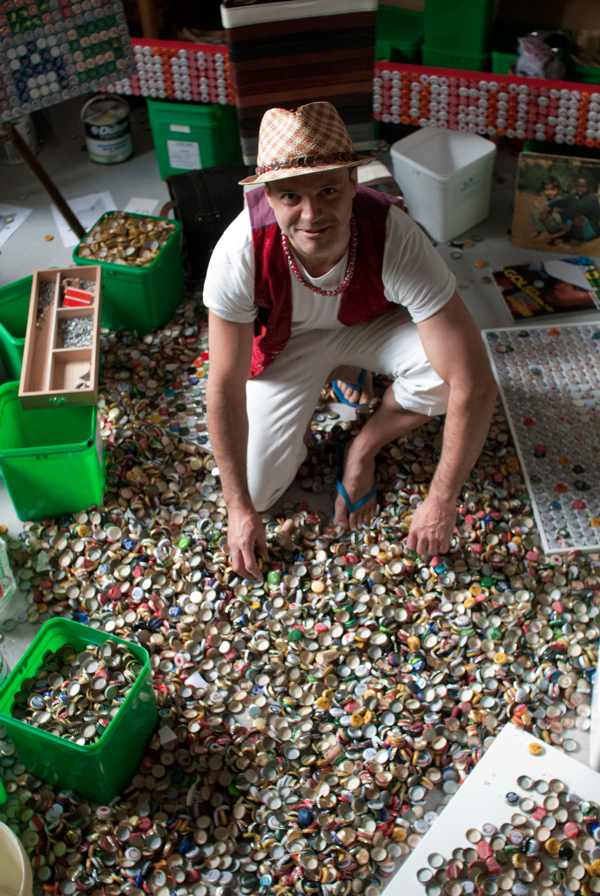


At the Bell, Middlesex St.


At the Carpenters Arms, Cheshire St.

Why SCREAM PARTNERS at the CARPENTERS ARMS?

Portraits of Robson Cezar in his studio copyright © Sarah Ainslie
Artworks copyright © Robson Cezar
Robson Cezar’s work can be seen in two forthcoming exhibitions – at The Civic, Barnsley as part of (+55) Brazil opening on 15th September and running until 20th November, and at Islington Mill , Manchester as part of Eat, Use, Destroy opening on September 30th and running until 6th October.