
Clive & Steven Phythian, Master Cutter & Apprentice

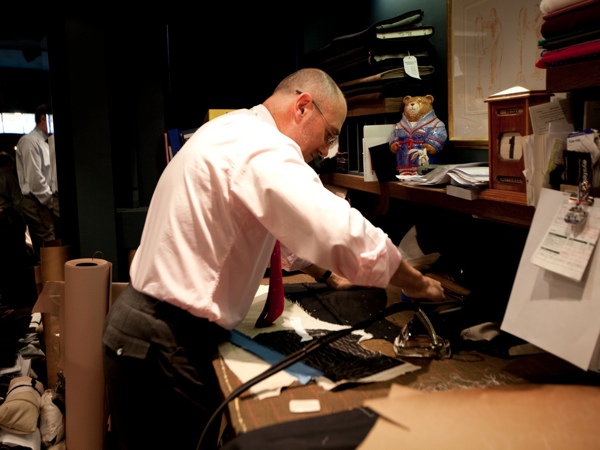
“When I was twelve my father said, ‘What are you going to do in life? You need to learn something.'” recalled Clive Phythian, Head Cutter at Alexander Boyd when I dropped by to see what he had in hand last week. He spoke as he worked at the cutting table in the small tailoring workshop that he shares with his son Steven at the rear of the shop in Artillery Passage. “
I learnt a little but I couldn’t say I learnt a lot” confessed Clive with laconic reserve, considering those Saturdays spent in his grandfather’s tailoring shop in Walthamstow which were the outcome of that conversation with his father. “At twelve you’d rather be outside running about,” he acknowledged with a sympathetic smile, “but it gave me the discipline and I saw how hard he had to work.”
Every Saturday, I worked with him and, as I grew older, I had clothes made for me which was absolutely fantastic – I was the envy of my friends. At the time, my father was Head Cutter at Blades in Savile Row. When I was fourteen, I used to go up there with him and I started making the baists (first fittings) of jackets and waistcoats. I had my eyes opened to what goes on there, and my father said, “I’m going to try and get you a place at the London College of Fashion on a three year City & Guilds tailoring course.” I must admit, I thoroughly enjoyed it, and I won cups for my work too.
Prior to leaving, I had two interviews, one with Davis & Sons, traditional bespoke West End tailors, and the other was with Gieves & Hawkes in Savile Row. I went to Gieves & Hawkes! When you are a young person, you see a bigger company and you think you are going to go places, and I worked there nine years – a fantastic experience. There were nine cutters and I managed to learn so much from them, they were a fount of knowledge. In some respects, I have forgotten some of the things I learnt at Gieves & Hawkes, but I expect they are still slotted away somewhere in the back of my mind. From there, I went to work for my uncle who had a very successful business in the City, Aspers in Cullum St, by Lloyds of London. You could say he poached me from Gieves & Hawkes because he offered more money. The West End is the more elegant side and you have more time, whereas in the City people always want it yesterday.
Then my father moved from the West End and set up his own business in the City too. I knew I would always work for my father, so there came a time when I said to my uncle, “I’m going to work with my dad,” and it put his nose out of joint – but you can choose your friends, not your family.The company my father bought was J.G.Chappels near Fenchurch St Station. I enjoyed working alongside him, and my brother joined the company as well. But then my father father died, and although my brother and I ran the business for another three years, we got tired of it. So we decided to take a gap year and I went to do tarmacking. When I was a young kid, my uncle used to work in tarmacking and I helped him out, so I had the knowledge. It was much to my wife’s disgust, but we needed a year out to get our heads back together.
One of my friends, Stuart Lemprell, was Head Cutter at Timothy Everest and he gave me a call and said, “Do you want to come back in?” So I said, “Yes.” I enjoyed working there for four years, until new people arrived who wanted to computerise things, so I said, “I’m off.” I’ve got morals. I don’t want a computer to do what I do. I don’t need a computer, my knowledge is in the tape, the square and the yardstick.
I came and spoke with Boyd, and I’ve been here as Master Cutter at Alexander Boyd ever since, more than five years now. The role of the Master Cutter is very important, without the knowledge of someone who knows how a garment is put together and how it should be cut, you’re not going to get a good product. You have to measure, but if your eye tells you it’s not right, even if the measurement is correct you know it’s wrong.
I get immense satisfaction from seeing a client put on a garment I have made and walk out of the shop with a big smile on his face. I love cutting. I’ve been doing it thirty-six years and I’m still learning. Cutting is my passion. You have to have that… something. Steven has it. He’s inherited it from my grandfather who was a tailor, and my father, and my uncles, Roy, Terry and Paul, they were all tailors, and my aunty Pam, she was a tailor too. So I suppose you could say it’s in the genes.”
“Dad’s always said, ‘Do what you want to do,’ there’s been no pressure to become a tailor,” Steven Phythian confided to me with unaffected honesty, when I joined him at the counter where he was cutting patterns for trousers. It was quite a different story from his father, yet the result was the same – though Steven revealed he had worked in Argos, as a car valet and as pizza delivery man, as well qualifying as a locksmith, even applying to the police force, in the ten years after college before he chose to follow in his father’s footsteps and become the fourth generation to work in tailoring.
“It will be quite a long process,” he admitted with calm acceptance, just six months into his apprenticeship, “Five years before I can fully understand all aspects of cutting. But as my father says – even after more than thirty years – he’s still learning.”
So I left them there, both absorbed in their work in the quiet of the tailoring shop, the atmosphere broken occasionally by customers coming and going. Whenever I walk through Artillery Passage in future, I shall always cast a glance in their window to catch a glimpse of Clive & Steven at work. Almost the last tailors in Spitalfields – a place that once the centre of tailoring – yet I think we may be assured these two will be here for many years to come.




Clive Phythian in Men’s Wear, February, 1977

Steven Phythian, September 2011

Clive Phythian’s three piece co-ordinate in Walnut dogtooth check that won first prize in the IMBEX Student Fashion Competition, 1977.

Clive Phythian, Master Cutter at Alexander Boyd, September 2011.


Clive & Steven Phythian
Photographs copyright © Jeremy Freedman
London Melodies

I saw a raggedy man with crazy eyes disappear down Catherine Wheel Alley, so I followed to see what he was up to. When I entered the putrid alley, he disappeared around the corner, yet I heard him cry, “Rabbit, Rabbit. Nice Fat Rabbit!” So I hurried to catch up, and found myself lost in the maze of passages and back streets that fill the space between Bishopsgate and Middlesex St. Arriving at a cross-ways where several paths met, I could not see him anywhere. Uncertain which way to turn, I spotted a large woman swathed in layers of old clothes and wielding a heavy basket, trudging off down another alley with evident fatigue. Once she turned the corner, I followed her at a discreet distance and I could hear her shrill cry, “Lilies of the Valley, Sweet Lilies of the Valley,” echoing between the high walls. But again, when I turned the corner, she had vanished. Then, I heard another behind me, crying, “Hot Mutton Dumplings – Nice Dumplings, All Hot!” and so I retraced my steps.
Let me explain, I had just spent the morning in the Bishopsgate Institute poring over a small book of prints entitled, “London Melodies; or Cries of the Seasons.” Published anonymously and bound in non-descript brown boards, and printed on cheap paper with several torn pages – even so, the appreciative owner had inscribed it with his name and the date 1823 in a careful italic script.
This book entranced me with the vivid quality of its beautiful wood engravings of street hawkers. Commonly in the popular prints illustrating Cries of London, the peddlers are sentimentalised, portrayed with cheerful faces and rosy cheeks, ever jaunty as they ply their honest trades. These lively wood engravings could not be more different. These people look filthy, with bad skin and teeth, dressed in ragged clothes, either skinny as cadavers or fat as thieves, and with hands as scrawny as rats’ claws. You can almost smell their bad breath and sweaty unwashed bodies, pushing themselves up against you in the crowd to make a hard sell. These Cries of London are never going to be illustrated on a tea caddy or tin of Yardley Talcum Powder and they don’t give a toss. They are a rough bunch with ready fists, that you would not wish to encounter in a narrow byway on a dark night, yet they are survivors who know the lore of the streets and how to turn a shilling as easily as a groat. With unrivalled spirit, savage humour, profane vocabulary and a rapacious appetite, they are the most human of all the Cries of London I have come across. And they call to me across the centuries, crying, “Sweet and Pretty Beau-Pots – One a-Penny” and “Buy my Live Scate.”
I do not know who was responsible for these superlative wood engravings, which capture the vigorous life of these loud characters with such art. From a contemporary perspective these are portraits that sit naturally alongside the work of Ronald Searle, Ralph Steadman, Ian Pollock, Quentin Blake and Martin Honeysett. This artist glories in the grotesque features and unrestrained personalities of street people, while also permitting them a humanity which we can recognise and respect. How I wish I could catch up with them all and record their stories for you.

Rabbit, Rabbit – Nice fat Rabbit
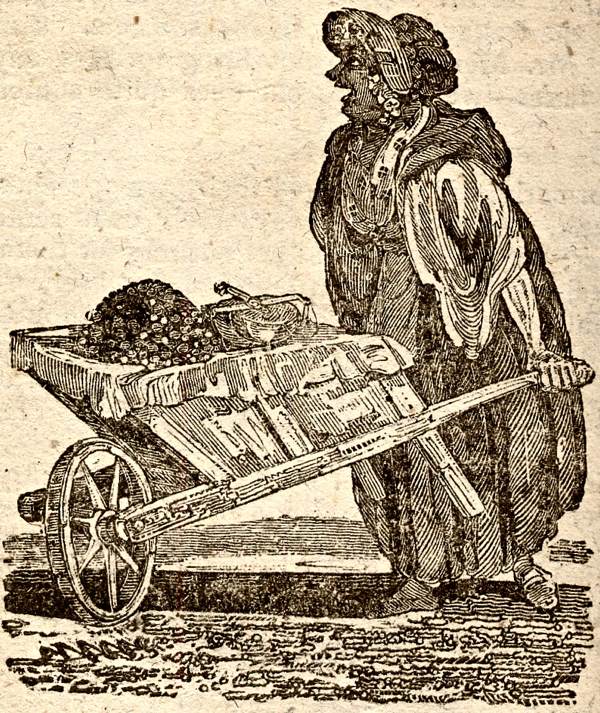
All Round & Sound, Full Weight, Threepence a Pound, my Ripe Kentish Cherries.

Buy my Fresh Herrings, Fresh Herrings, O! Three a Groat, Herrings, O!

Buy a Nice Wax Doll – Rosy and Fresh.

The King’s Speech, The King’s Speech to both Houses of Parliament.

Here’s all a Blowing, Alive and Growing – Choice Shrubs and Plants, Alive and Growing.

Hot Spice Gingerbread, Hot – Come buy my Spice Gingerbread, Smoaking Hot – Hot Spice Gingerbread, All Hot.

Any Earthen Ware, Plates, Dishes, or Jugs, today – any Clothes to Exchange, Madam?

Hot Mutton Dumplings – Nice Dumplings, All Hot.

Buy a Hat Box, Cap Box, or Bonnet Box.

Buy my Baskets, a Work, Fruit, or a Bread Basket.

Chickens, a Nice Fat Chicken – Chicken, or a Young Fowl.

Sweet and Pretty Beau-Pots, One a-Penny – Chickweed and Groundsel for your Birds.

Buy my Wooden Ware – a Bowl, Dish, Spoon or Platter.

Six Bunches a-Penny, Sweet Lavender – Six Bunches a-Penny, Sweet Blooming Lavender.

Here’s One a-Penny – Here’s Two a-Penny, Hot Cross Buns.

Lilies of the Valley, Sweet Lilies of the Valley.
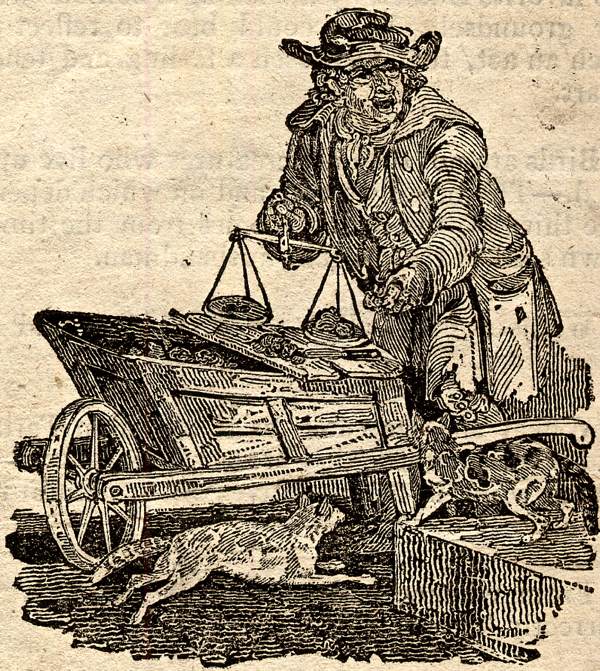
Cats Meat, Dogs Meat – Any Cat’s or Dog’s Meat Today?

Buy my Live Scate, Live Scate – Buy my Dainty Fresh Salmon.

Mackerel, O! Four for shilling, Mackerel, O!

Hastings Green and Young Hastings. Here’s Young Peas, Tenpence a Peck, Marrow-fat Peas.
Images copyright © Bishopsgate Institute
You may like to take a look at
H.W.Petherick’s London Characters
John Thomson’s Street Life in London
Aunt Busy Bee’s New London Cries
Marcellus Laroon’s Cries of London
More John Player’s Cries of London
William Nicholson’s London Types
Francis Wheatley’s Cries of London
John Thomas Smith’s Vagabondiana of 1817
Thomas Rowlandson’s Lower Orders
A Long Way From Spitalfields
Ten years ago this morning, I woke in an apartment in New York City. It was around eight thirty when my friend called from outside the bank in Midtown, where he had gone to deposit cheques. He had left early to be there at opening time and, as he was standing in line waiting for a teller, he saw on the television that there was a fire in one of the towers at the World Trade Centre.
I got out of bed and climbed up onto the flat roof of the apartment. It was a beautiful day, clear and bright with a blue sky after days of rain and cloud, and the humidity which overwhelms Manhattan in July and August had cleared. Although most people try to avoid New York in the Summer, and residents who have the option seek refuge in beach houses, it is my favourite time of year in the city. The one time when the pace slows, languor prevails, and there is peace in the shadowy air-conditioned buildings where people linger to avoid the baking temperature and blinding light outside in the streets.
Summer was drawing to an end and there would be no more of the trips to Long Island that had punctuated my time in the City. Just a week earlier, on Labor Day, which marks the change in the season, the beaches had closed for the year.
I stood on this same roof on July 4th and watched the fleet line up in the East River, admiring the firework display as I ate dinner with friends. Looking across Manhattan that morning, I could see the distant plume of smoke from the westerly of the towers. It did not mean anything to me then, but I was puzzled how it could have happened, so I went downstairs and switched on the television. The television was reporting a plane had crashed into the tower. It was an extraordinary event for which the news anchor had no explanation, and so I went back to bed and dozed again.
I was awoken by the return of my friend who had cycled back from his errand at the bank. People were getting really excited about this fire, he told me, and he switched on the television again. For the first time, I sensed the panic and helplessness which was to envelop the city that day, as the presenters struggled to find words and keep their cool in the face of inexplicable and unprecedented events.
Then came the strangest moment of television I ever saw. Upon the screen, a plane jetted out of nowhere and disappeared into one the towers. “That’s a re-run, you’re seeing here, of the plane hitting the tower that we reported earlier,” commented the news-anchor, only to swallow her words – almost choking – as she exclaimed, “Oh no! That’s not a re-run, that’s another plane.”
Exactly a week earlier, at eight thirty in the morning, I visited the World Trade Centre accompanying my friend who was applying to an office there for a street traders’ licence. We came through the subway which opened up into a shopping mall and emerged onto the plaza directly beneath the towers. I recalled the first time I came to New York and stood at the top. Stretching my arms between those external struts and gazing down upon Manhattan from such a height, it was as if looking from the window of an aeroplane. My birthday was in a few days and we vowed to return to the top for a celebration, but we did not go back.
Once the second plane hit the towers, the tenor of events changed. Very quickly, reports came in of hijackings and other planes unaccounted for. I went back up onto the roof of the apartment and looked again to confirm the reality of the television news with my own eyes. Now there were two plumes of smoke in the sky, and sirens erupted through the streets as fire crews and police hurtled down the avenues of Manhattan. I returned to the television and stayed there, compelled. I had a pocket email machine and I was able to write messages to everyone in London to let them know I was alright, before the lines went dead.
A campaign was underway, something I could only comprehend through reference to science fiction such as “The War of the Worlds.” An attack had commenced that morning without indication how long it would last. As I sat there in shock at the accumulating reports of the plane hitting the Pentagon and the crash of United 93, a dread grew inside me. There was no reason to assume that this would not continue all day and it was impossible to know where and when it would end. It felt like the end of the world – there was no way to grasp the nature of what was happening. When I returned to the roof and looked again, the World Trade Centre had gone completely, replaced by a vast black tower of smoke billowing into the blue.
Twenty-one months earlier, I had been in Los Angeles at the time of the Millennium. Somehow, everybody expected a transformation and a new era to begin then. Nobody wanted to admit it was a non-event. But that morning, I realised that I was witnessing the actual moment when one century ended and a different world was born.
For a couple of years, I had been working with producers in Times Sq who were to present a play of mine on Broadway, opening on September 15th 2001. I loved being in New York in those days, it was a true metropolis of glamour and affluence – a world incarnated in the now over-familiar fiction of “Sex & the City.” Many times I enjoyed Cosmopolitans at the Bowery Bar, the location where Candice Bushnell’s novel, which was the origin of that series, began.
Walking out onto the street on that September day, several miles from the unfolding catastrophe at the World Trade Centre, the scene was not dissimilar from usual, except – as people went about their business – I knew what everyone was thinking. We were all looking at each other in fear and knowing that we could only enact the semblance of routine. I went to the grocery story and bought food for the next few days. On my way back to the apartment, I saw a postcard of the World Trade Centre on a rack and, without thinking, I took the entire stack in hand, went into the store and paid for them.
Back at the apartment, I addressed postcards to everybody in my address book in England and then I went to the Post Office and mailed them all. I still do not understand why I did this, because I never wrote any messages on the cards, yet I knew everyone would realise who sent them and why. In fact, half arrived within ten days and half arrived four months later, intercepted perhaps as suspicious material in the collective paranoia that ensued.
On the first day J.F.Kennedy Airport reopened, I flew back to London, peering from the window of the jet at the smoke still rising from the foot of Manhattan. At once, I went to see my parents in Devon and found them well, but within a week my father died unexpectedly. My mother had dementia and could no longer live alone, so I chose to move back into the family house to care for her. My play never opened on Broadway and I did not have the American career that I so longed for at that time, but after the events I had witnessed it no longer mattered to me.
At KTS The Corner
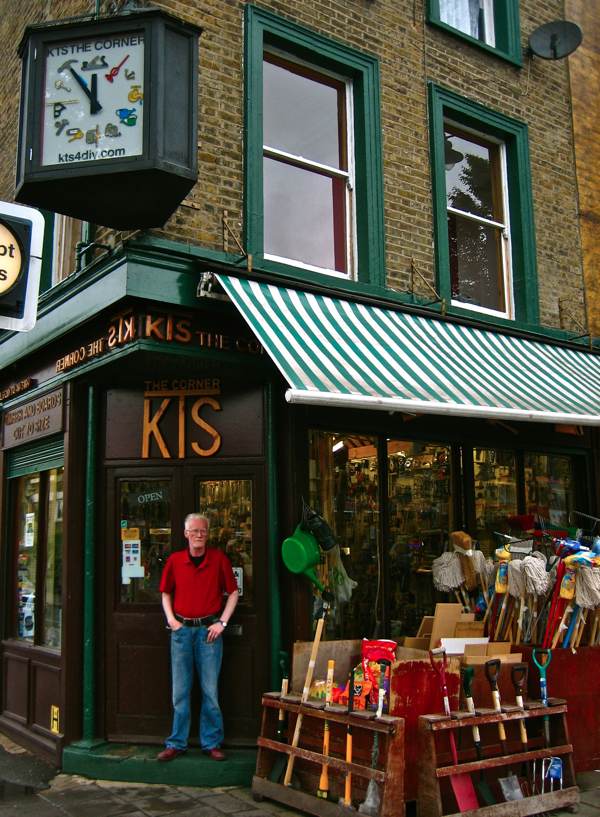
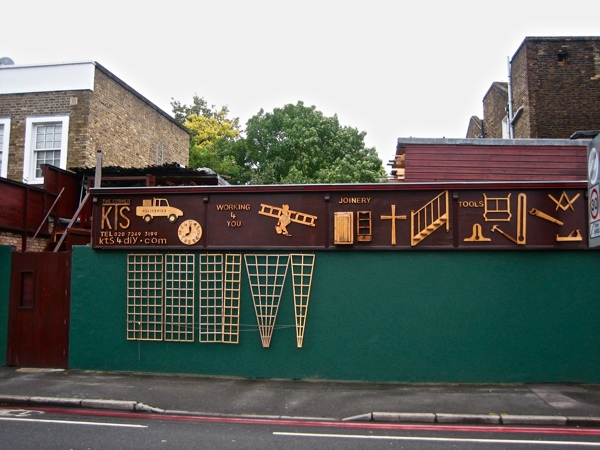
Everyone in East London knows KTS The Corner, Tony O’Kane’s timber and DIY shop. With Tony’s ingenious wooden designs upon the fascia and the three-sided clock he designed over the door, this singular family business never fails catch the eye of anyone passing the corner of the Kingsland Rd and Englefield Rd in Dalston. In fact, KTS The Corner is such an established landmark that it is “a point of knowledge” for taxi drivers.
Yet, in spite of its fame, there is an enigma about KTS which can now be revealed for the first time. “People think it stands for Kingsland Timber Service,” said Tony with a glint in his eye, “Even my accountant thinks it does, but it doesn’t – it stands for three of my children, Katie, Toni and Sean.” And then he crossed his arms and tapped his foot upon the ground, chuckling to himself at this ingenious ruse. It was entirely characteristic of Tony’s irrepressible creative spirit which finds its expression in every aspect of this modest family concern, now among the last of the independent one-stop shops for small builders and people doing up their homes.
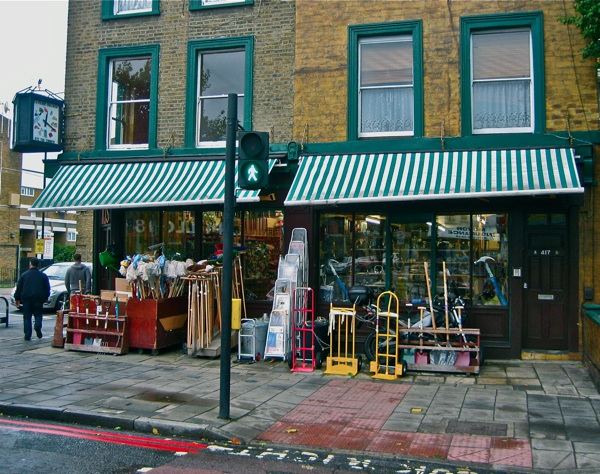
On the Kingsland Rd, Tony’s magnificent pavement display of brushes, mops and shovels, arrayed like soldiers on parade, guard the wonders that lie within. To enter, you walk underneath Tony’s unique three-sided clock – constructed to be seen from East, South and North – with his own illustrations of building materials replacing the numerals. Inside, there are two counters, one on either side, where Tony’s sons and daughters lean over to greet you, offering key cutting on your left and a phantasmagoric array of fixtures to your right. Step further, and the temporal theme becomes apparent, as I discovered when Tony took me on the tour. Each department has a different home made clock with items of stock replacing the numerals, whether nails and screws, electrical fittings, locks and keys, copper piping joints, or even paints upon a palette-shaped clock face. Whenever I expressed my approval, Tony grimaced shyly and gave a shrug, indicating that he was just amusing himself.
Rashly, Tony left his sons in charge while we retired to his cubicle office stacked with invoices and receipts where, over a cup of tea, he explained how he came to be there.
I’m from from Hoxton, I went to St Monica’s School in Hoxton Sq. To get me to concentrate on anything they had to tie me down, but, if anything physical needed doing, like moving tables and chairs, I’d be there doing it. My dad did his own decorating and my mother wanted everything completely changed every year or eighteen months, so he taught me how to hang wallpaper and to do lots of little jobs. After Cardinal Pole’s Secondary School, I did an apprenticeship in carpentry and got a City & Guilds distinction. Starting at fifteen, I did four years apprenticeship at Yeomans & Partners. Back then, when you came out of your apprenticeship, they made you redundant. You got the notice in your pay packet on the Thursday but on Saturday you’d get a letter advertising that they needed carpenters at the same company. They wanted you to work for them but without benefits and you had to pay a weekly holiday stamp.
I went self-employed from that moment. At the age of nineteen, I started my own company. I covered all the trades because I learnt that the first person to arrive on a building site is a carpenter and the last person to leave the site upon completion is a carpenter. Nine out of ten foremen are ex-carpenters and joiners, since the carpenter gets involved with every single other trade. So, over the years, I picked up plumbing, heating, electrics. When I started my company, I wouldn’t employ anyone if I couldn’t do their job – so I knew how much to pay ’em and whether they was doing it right or wrong.
This was in 1973, and Hackney Council offered me a grant to do up a building in Broadway Market. I just wanted an office, a workshop and a warehouse but they said you have to open a shop. So, as I was a building company, I opened a builders’ merchants and then, twenty years ago, I bought this place. When I bought it, it was just the corner, there was no shopfront. I designed the shopfront and found the old doors. I used to come here with my dad when we were doing the decorating for my mum, because they made pelmets to order here but, as a child, I never thought I’d own this place.
Tony is proud to assure you that he stocks more lines than those ubiquitous warehouse chains selling DIY materials, and he took me down into the vast cellar where entire aisles of neatly filed varieties of hammers and hundreds of near-identical light fixtures illustrated the innumerable byways of unlikely creativity. At the rear of the shop, through a narrow door, I discovered the carpentry workshop where resident carpenter Mike presides upon some handsome old mechanical saws in a lean-to shed stacked with timber. He will cut wood to any shape or dimension you require upon the old workbench here.
Tony’s witty designs upon the Englewood Rd side of the building are the most visible display of his creative abilities, in pictograms conveying Plumbing & Electrical, Joinery, Keys Cut, Gardening and Timber Cut-to-Size. When Tony took these down to overhaul them recently, it caused a stir in the national press. Thousands required reassurance that Tony’s designs would be reinstated exactly as before. It was an unexpected recognition of Tony’s talent and a powerful reminder of the secret romance we all harbour for traditional hardware shops.
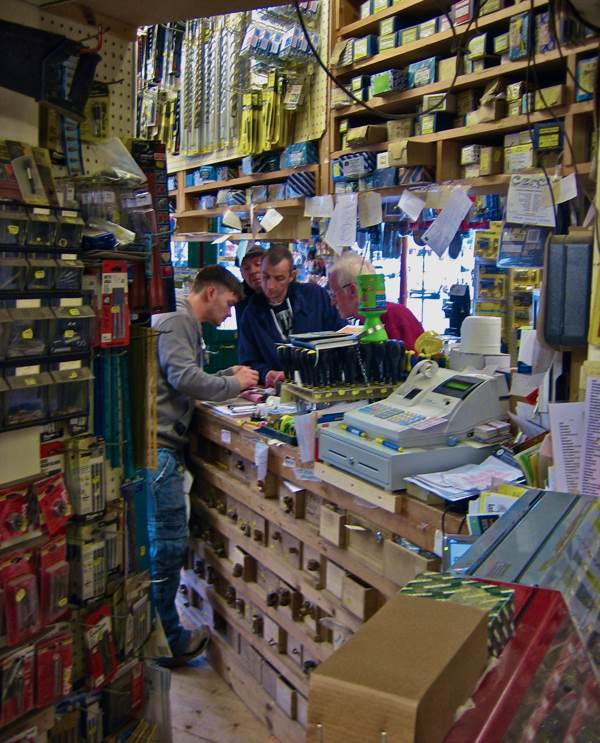
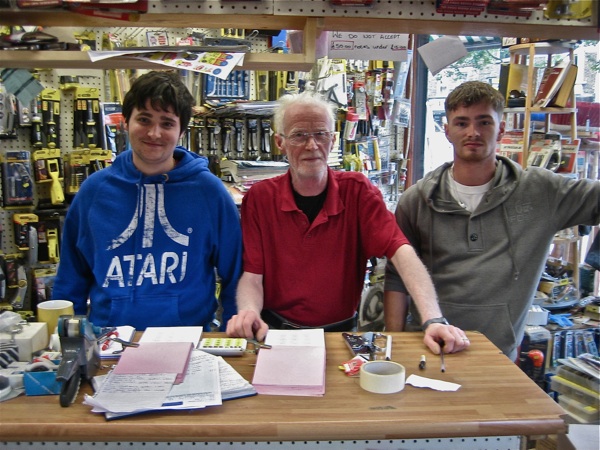
Tony with his sons Jack and Sean.
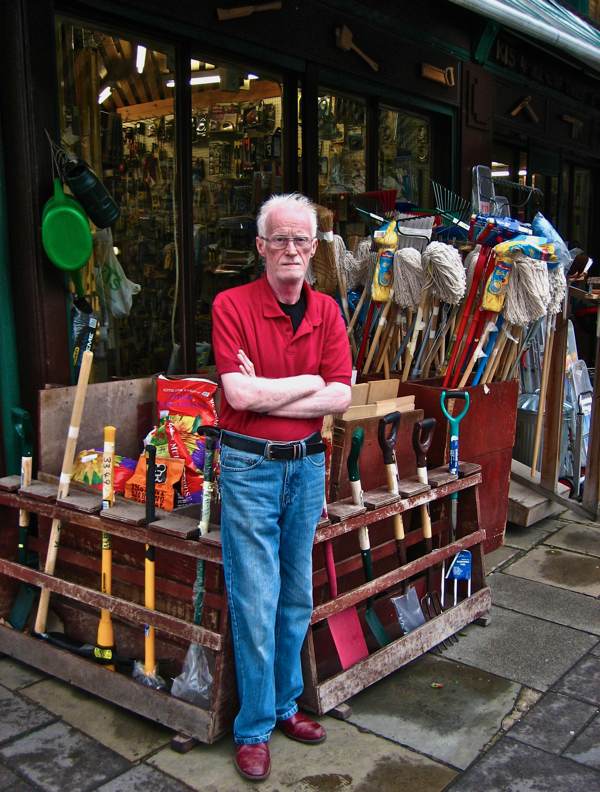
A magnificent pavement display of brushes, mops and shovels.
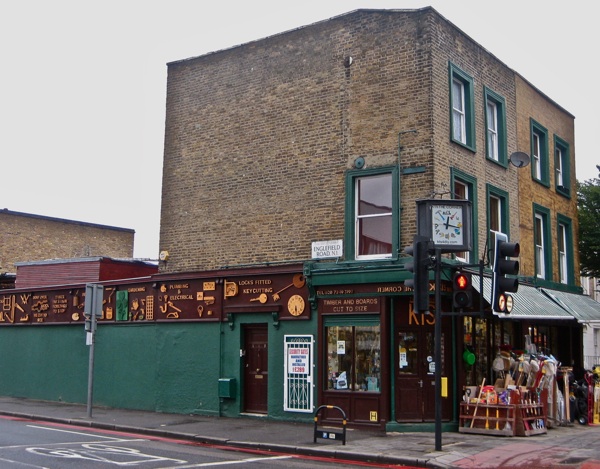
The temporary removal of Tony’s wooden pictograms triggered a public outcry in the national press.
In the Kingsland Rd, you may also like to read about
The Map of Spitalfields Life
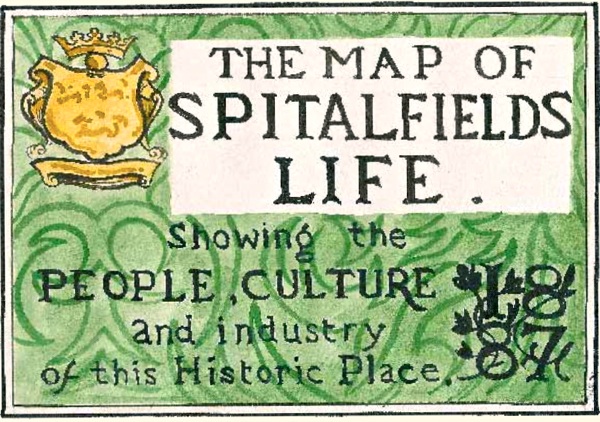
It is my pleasure to present the third exhibition from Spitalfields Life – Adam Dant, Unusual Cartography of East London at Town House, 5 Fournier St, Spitalfields, opening next Thursday 15th September and running until Sunday 2nd October.
At the rear of an eighteenth century weavers’ house is a beautifully proportioned doctor’s surgery of the eighteen twenties, where you are invited to come and scrutinise the jewel-like originals of Adam Dant’s wonderful and strange maps that it has been my privilege to publish over the past year – maps which have established Adam Dant as London’s pre-eminent mapmaker extraordinaire.
Most excitingly, the centrepiece of the exhibition is The Map of Spitalfields Life drawn by Adam Dant with stories by yours truly, showing fifty people who make Spitalfields distinctive. Please join us next Thursday for drinks from 7:30pm to view the map on the night of its unveiling to the people of Spitalfields by Sandra Esqulant, landlady of the Golden Heart in Commercial St. Many of the characters you have read about in these pages will be present to discover how Adam Dant has represented them on the map – so this is your chance to come and meet them.
The Map of Spitalfields Life will be published by Herb Lester and – once it has been unveiled – full-colour copies will be on sale at £4. On the reverse, you will find the stories of all the people portrayed on the front, plus a guide to Spitalfields landmarks and destinations. Adam Dant is also producing a hand-tinted limited edition for collectors and Spitalfields aficionados. Overseas and out-of-London readers will be relieved to know that, from 16th September, you will be able to buy these different versions of the map online at www.spitalfieldslife.com and have them delivered to your door.
Adam Dant and I have been burning the midnight oil to contrive The Map of Spitalfields Life for your delight and we can barely contain our excitement to show it to the world next week. The map has been produced under conditions of the strictest secrecy and, at this moment, Adam Dant and I alone know who is on the map. Today, I have been running around Spitalfields like the White Rabbit, delivering invitations to the unveiling. Yet although those who get an invitation are confirmed of their place on the map, they will not discover who else is on it until Sandra Esqulant unveils it. Already rumour, gossip and speculation about the map are spreading like wildfire through the narrow streets of Spitalfields, and we anticipate this conflagration to reach white heat by next Thursday. I do hope you will come to join the party.
Adam Dant says, “We hope this exhibition may assist the cartographic aesthetic to leap forward beyond the homogeneity of computerised rendering and the turgid angst of psycho- geography.”
The exhibition at the Town House, 5 Fournier St, London E1 6QE is open every day except Monday from 11:30am until 5:30pm, and at other times by contacting Town House.
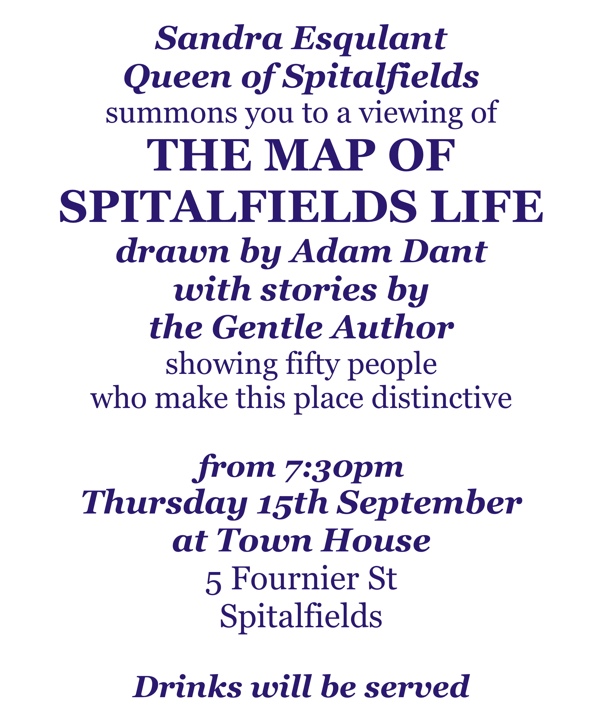
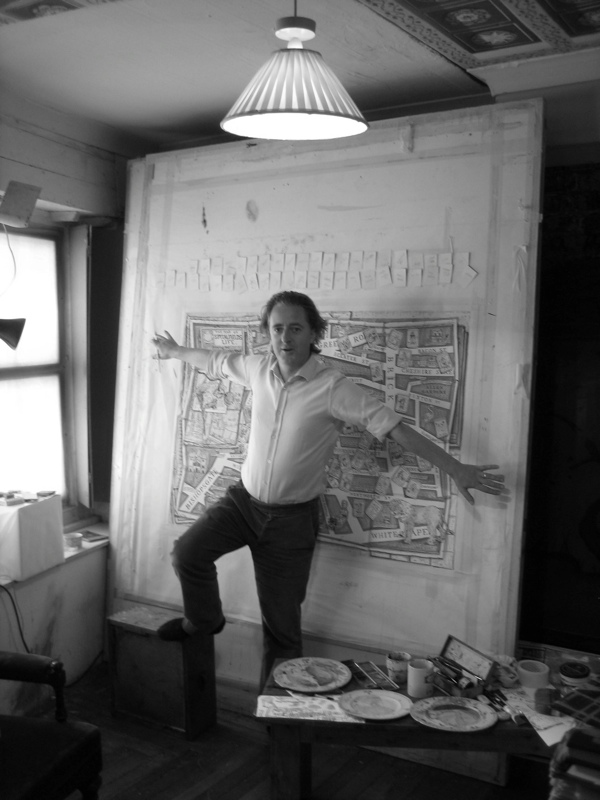
Adam Dant tries vainly to hide The Map of Spitalfields Life from prying eyes.


Map of the Stories of Shoreditch, Old & New.
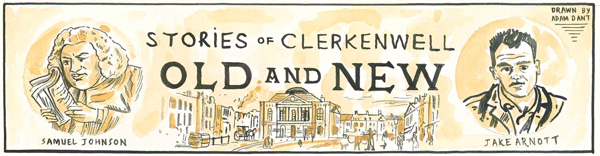

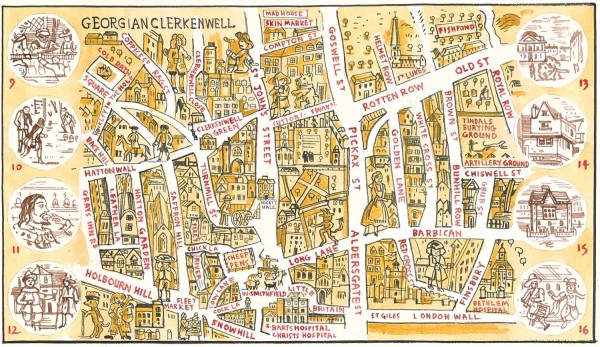
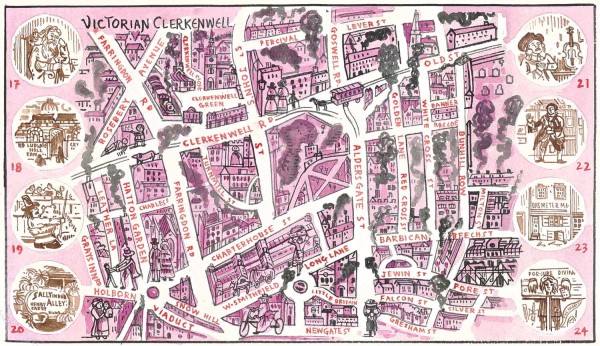
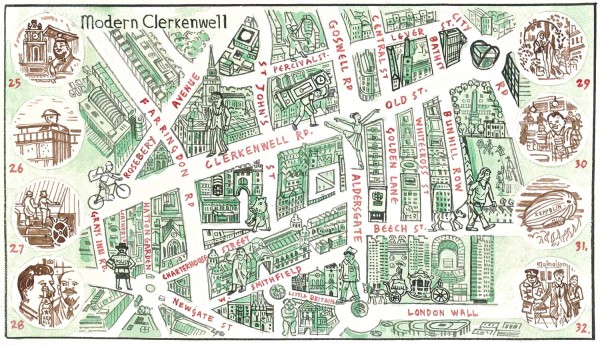
Map of the Stories of Clerkenwell, Old & New.

The Map of Hoxton Square.
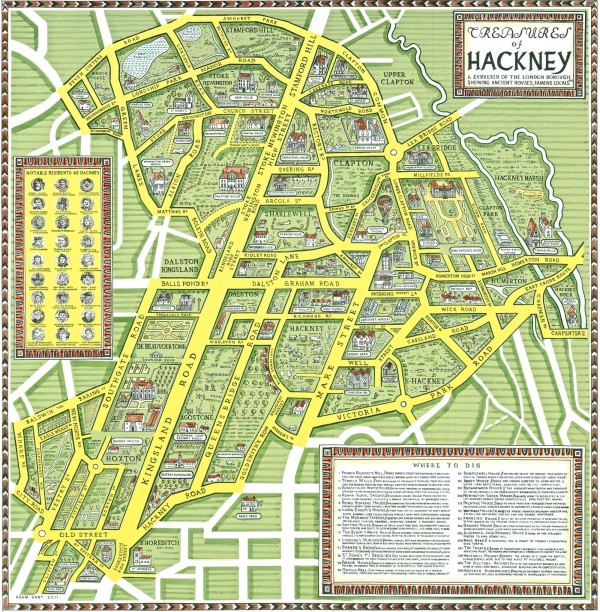
The Map of the Treasures of Hackney.

Donald Parsnips’ Plan of Shoreditch in Dream Format.

The Map of Shoreditch in the Year 3000.

The Map of Shoreditch as the Globe
Maps copyright © Adam Dant
You may like to take this moment to look back at some of Adam Dant’s Maps featured in the exhibition
Map of the History of Shoreditch
Map of Shoreditch in the Year 3000
Spitalfields Antiques Market 26
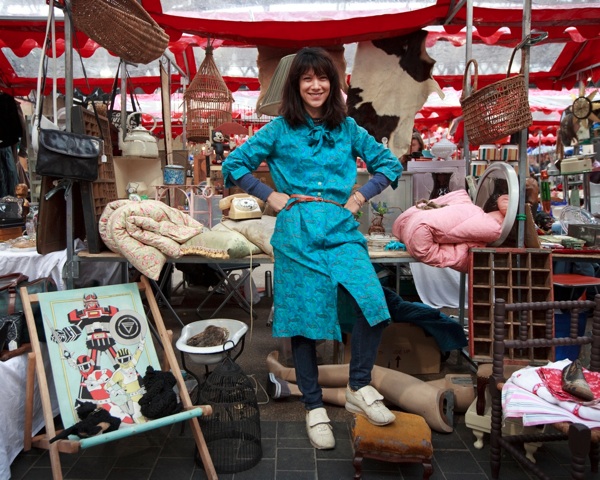
This sassy lady is Charlotte Sellers who grew up above a shop called “Junktique” that was run by her mother. “The shop was so small, rammed with chandeliers, glass and furniture etc that I was parked in my pram on the pavement outside.” she explained in fond reminiscence, “People would stop and ask inside the shop for the best price on the baby.” Charlotte’s father traded in military watches and important automobiles while her aunt traded in jewellery and coins. “It’s been in the family a long time, this second hand furniture business,” she informed me proudly, “I’m currently upholstering a bunch of chairs from the Battle of Waterloo.” But, whether Charlotte was referring to their origin in a pub of that name, or from the actual battleground, or merely the period of the seating in question, I never discovered.

This cheery fellow is Chris Williams. “I’ve only been back four months and I love every second of it,” he declared with aplomb, assuming a philosophical detachment from his own caprice, “I actually started in the market when I left school at sixteen in 1976, but I gave it up in 1986 thinking I could find better things in life to do.” After a career in transport, Chris is now like a lion let out of a cage. “I ran a courier company that I started in my bedroom and it went to twenty-five vans – then I sold it,” he confessed with a happy flourish. “I love looking for a bargain. I love selling things and meeting lots of different people, and in Spitalfields Market you meet lots of different people!”
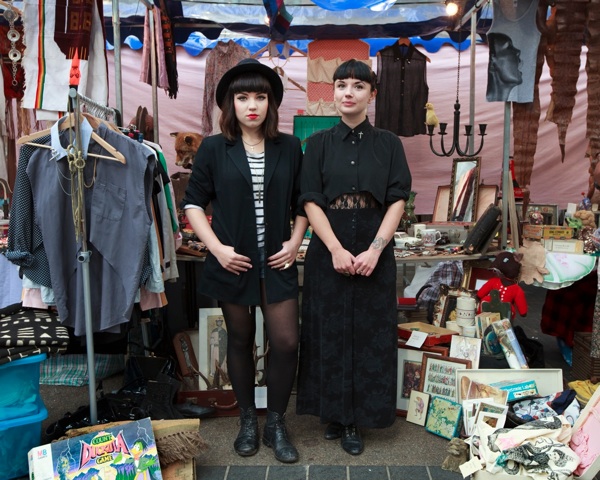
These enigmatic women in black are Marcellina Amelia & Rebecca Dewinter who met while studying illustration at Westminster University and live in a big old warehouse in Bow, full of things they have collected. “This is how we make our money,” revealed Marcellina, with stark candour, gesturing to their stall, “because we are both artists.” Yet as well as their own personal artistic endeavours, Marcellina & Rebecca also contrive exotic jewellery and cleverly rework old clothes which you can see at Ivory Jar. “Sometimes we give stuff away too cheap because people beg us for things,” Marcellina whispered with a helpless grin, placing a hand protectively over a suitcase full of ducklings rendered in lifelike taxidermy,“We regret selling stuff we really like.”
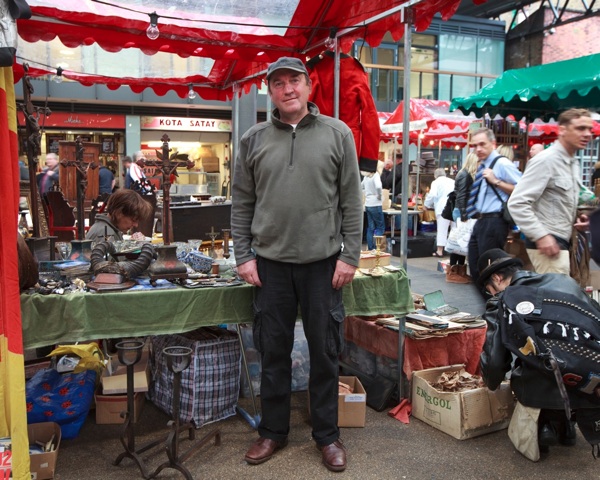
This dignified figure is Roy Price who can be forgiven for looking a little fatigued because he just returned from Dorset, leaving at nine the previous evening to arrive back in London at one and then get up at six to come to the market. But Roy had no regrets. “I’ve done really well today,” he confided to me with a weary yet satisfied smile, “I’m so glad I came back.” Roy specialises in eighteenth century antiques. “I’ve traded from when I was eighteen because my dad did it and he used to sell this kind of stuff.” Roy said – assuring me even as his eyelids were drooping, “I do know what I’m doing and I’m knowledgeable.” Given Roy’s evident conscientious nature, I think we may conclude such warrants are unnecessary.
Photographs copyright © Jeremy Freedman
Remembering Jean Rondeau the Huguenot
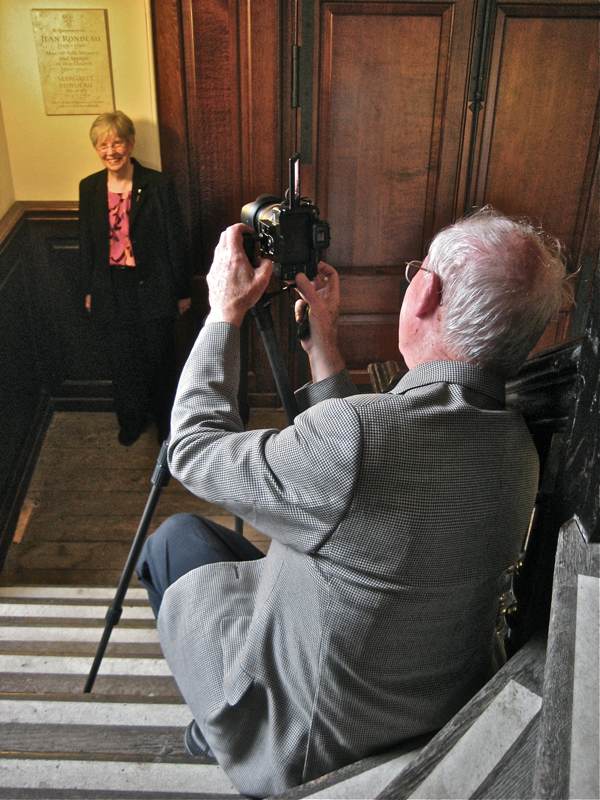
Marney & Ian MacDonald
This weekend the Huguenots returned to Spitalfields – three hundred years after they originally came from France and Belgium fleeing religious persecution and bringing flair and sophistication to the textile industry that was to occupy this corner of London for subsequent centuries. The occasion of this recent gathering was the dedication of a plaque to Jean Rondeau, Master Silk Weaver and Sexton of Christ Church from 1761-1790, honouring all those Huguenot families who passed through Spitalfields so long ago.
Here you see Marney MacDonald from Montreal being photographed in Christ Church by her husband Ian in front of the new plaque to her great-great-great-great-great-great-grandfather Jean Rondeau – or, as he is known in the family, John the Sexton, to distinguish him from his father Jean Rondeau who came here from Paris in 1685. Naturally, it was necessary have a record of the proud event, because it was the culmination of a long journey from the day Marney picked up on her father’s research into her great grandmother Phoebe Rondeau (Jean’s granddaughter), begun more than forty years ago.
Through a chance meeting in Christ Church when she visited as a tourist in 1999, Marney learnt of the study being undertaken of the human remains exhumed from the crypt and she met Stanley Rondeau, a voluntary tour guide who is a fellow descendant of Jean Rondeau. They pooled researches into their forbears, even going to the Natural History Museum where John the Sexton’s bones are now preserved to examine the remains of their common ancestor. And together they have been responsible for initiating this new memorial.
On Sunday, around thirty guests gathered on the North staircase in a location that would have been familiar to John the Sexton, while Andy Rider, Rector of Christ Church, undertook the dedication of the plaque and, although for the most part these people did not know each other, there was the affectionate intimate atmosphere of a family gathering in which no-one was a stranger to another. And in spite of the tenuous nature of the threads stretching across long periods of time which connect these people, there were visible shared qualities of visage, physique and colouration. “Being involved in finding ones antecedents is a fascinating process,” Marney confided to me in a quiet moment, speaking of a project that has occupied her for decades, “Something old in Canada might be two hundred years old but things here go back much further.”
Yet even though we were in the building that John the Sexton knew, he did seem very far away – until I joined the guests for a cup of tea afterwards and was introduced to so many of his relatives, especially seven week old Cassandra Stanley, his great-great-great-great-great-great-great-granddaughter. Peacefully sleeping through the event, she was summoning her energies for a whole life ahead. Among the speeches and announcements, including a letter of greetings from the Queen, was an apology for absence from ninety-two year old Lynn Rondeau who wished it to be known that she was “proud to be a Rondeau.”
Marney showed me the album she has collected with copies of the documents relating to John the Sexton, an extraordinary paper trail which constitutes the evidence of her ancestor’s life – his name on the petition to parliament for Christ Church to be built, silk designs made for him by Anna Maria Garthwaite, his will and even the collection to raise a fund for his widow Margaret. The book is the result of detective work on Marney’s part. “How I wish I had the forethought to ask certain questions of my grandfather, that it has taken me a lifetime to answer.” she admitted in good humoured resignation as she closed the book.
Jean Rondeau was one of between twenty and twenty-five thousand Huguenots who came to Spitalfields, around half of the total of all those who came to make new lives in Britain. Although his story is documented and his descendants have traced the lineage, establishing the Rondeaus as one of Spitalfields’ oldest families, equally there exists all those other families that will never be traced and whose stories have faded forever into the ether. Yet the story of Jean Rondeau reminds us of the direct connection we share to forebears known and unknown, and of the common bonds of humanity that unite us all.

The Rondeaus gather in Christ Church where their ancestor was Sexton two hundred and fifty years ago.
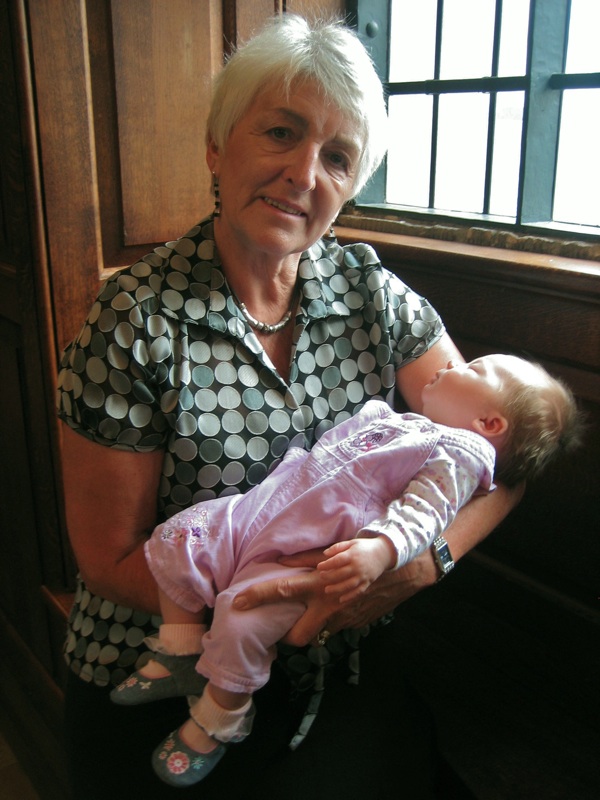
Just seven weeks old, Cassandra Stanley (held by her great aunt Beryl Happe) is the youngest descendant of Jean Rondeau the Huguenot, her great-great-great-great-great-great-great-grandfather who came to Spitalfields in 1685.
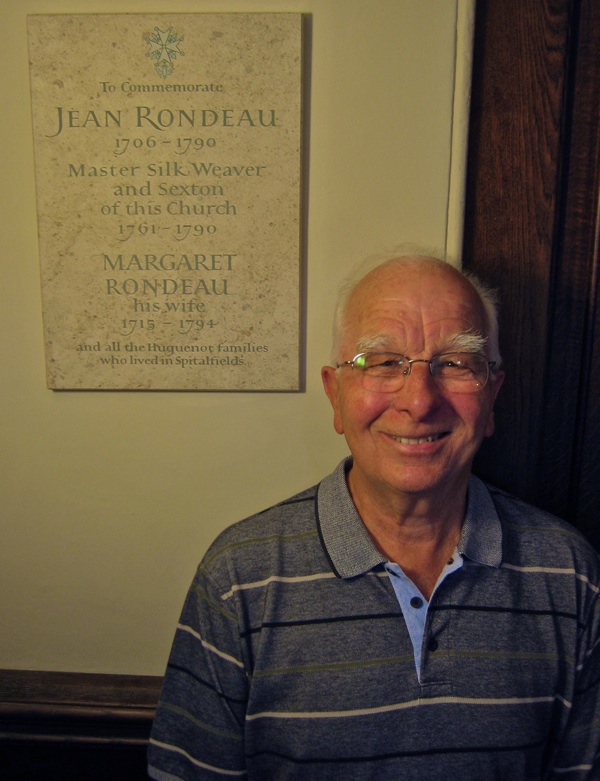
Stanley Rondeau
If you visit Christ Church on a Tuesday, when Stanley works there as a guide, he will show you the album collected by Marney MacDonald with all the documents and information about their common ancestor.
You may like to read my other stories about Stanley Rondeau












