
4th December, the Boar’s Head

Long before the turkey, and even before the goose, the traditional centre-piece of any Tudor or Medieval Yule-tide feast worth its salt (if, indeed a “centre” could be found amongst all the pies, roasts, marchpanes and sweetmeats!) was the roasted head of a wild boar, replete with apple or citron in its mouth.
According to folklorists, the boar’s head tradition was “initiated in all probability on the Isle of Britain by the Anglo-Saxons, although our knowledge of it comes substantially from Medieval times…. [In ancient Norse tradition] sacrifice carried the intent of imploring Freyr to show favor to the New Year. The boar’s head with apple in mouth was carried into the banquet hall on a gold or silver dish to the sounds of trumpets and the songs of minstrels.”
In Scandinavia and England, St. Stephen may have inherited some of Freyr’s legacy. His feast day is December 26th, Boxing Day, and thus he came to play a part in the Yuletide celebrations which were previously associated with Freyr (or Ingwi to the Anglo-Saxons). In old Swedish art, Stephen is shown tending to horses and bringing a boar’s head to a Yuletide banquet. Both elements are extra-canonical and may be Pagan survivals. Christmas Ham is an old tradition in Sweden and England, and may have originated as a winter solstice boar sacrifice to Freyr.
The Boar ( or just its head) was adopted by Richard III ( “A Horse! A Horse! My Kingdom for a Horse!”) as an heraldic badge, a fact still commerorated today by a smattering of taverns across the land named the Boar’s Head.
Illustration copyright © Paul Bommer
Gary Aspey, Wheel Truer

Gary shows off his £45 spanner
Last Sunday at Gina’s Restaurant, while I was getting a cup of tea after my weekly visit to the fly-pitchers in the Bethnal Green Rd, Gary Aspey sidled up to Spitalfields Life Contributing Photographer Colin O’Brien who was with me and asked to have his picture taken. Naturally, Colin was delighted to oblige and while he was snapping, Gary told me his life story, revealing a fiercely independent spirit. A skinny guy, streamlined for speed in his close-fitting clothes – experience has taught Gary to be circumspect yet he has learnt the art of survival, earning his living by repairing bikes and today he freewheels through existence on the Raleigh Carlton he restored himself.
“It’s a skill within a skill,” Gary explained with authorative intent, when I asked about being a wheel truer, and he showed me the cherished set of keys he carries around slung on his little finger, which allow him to adjust the tension of individual spokes with rare skill, thereby restoring the true form to a damaged or twisted wheel. And it was impossible not to appreciate Gary’s chosen identity as integral to his straight-talking manner and open-hearted nature. Being a qualified bicycle repair technician and frame builder, there is little Gary does not know about bikes, and I discovered there is a lot more to it than you might imagine.
“I’ve seen everything in life in this market. One Sunday, a woman got stabbed in front of me and I saved her life by holding her stomach together. They were stealing a bike and she got in the way, they cut her right across. There used to be so many stolen bikes down here, one time. I’ve seen people going round with boltcutters cutting through bike locks in broad daylight. I’ve been stabbed a few times. I’ve been robbed, gangs of three and four come up to you from behind and if you don’t give your money they knife you. I walked through Old St this morning and they were all coming out of the clubs and throwing bottles at each other. It affronts everyone in this country.
I was born in Bermondsey, but we can get by. My mother hit me, my dad hit me, it was the drugs and alcohol. I didn’t get on. When I was seven, I got hit and I thought, “I want a better life,” so I left. I lived with an old lady, Nelly – her husband was a cabbie. I was running through the back of Bermondsey one day, my cheek was swollen with a bruise out to here and I had a black eye. She said, ‘I’ve seen you, I know your dad. Did he do that to you?’ She took me in.
Back in the seventies when I was a child, I cycled up here to the street that was all bicycle dealers. I worked for George in the market and then at his shop, Angel Cycles. My dad used to do bikes, but he was out of it before I met George. His dad had two stalls here before him, one selling bicycle parts and another selling army surplus, that’s how George made his money, and in 1950 he took the shop in St John St. That man taught me everything I know, he showed me how to straighten a wheel using a true key and wheel jib, – and I never looked back. With my true key, I straightened out the buckled front wheel of a bike for a woman and she gave me twelve pounds.
Nowadays I do the repairs for Camden Cycles in the Grays Inn Rd and in the evenings I build frames in my house. You’ve got to be interested in the culture and technicalities of bikes to be a frame restorer. I will strip them down by hand, it takes five to seven hours to remove the paint. Then I build up the layers again and bake it in a special oven. I’m qualified and I do it legally and responsibly, that’s the only way to do it. I’m always so busy. I never stop. When I first worked in the market I never had fourpence, but I didn’t rob anybody, I used my hands and my skills. If you want to get on in this world you’ve got to believe in yourself.
If you look at me very closely, I’m a dabbling boy. I do what’s around. At quarter past five we put the stall out. For me, it’s like a walk in the park. I’ve been married, I’ve been a carer and I’ve adopted a girl of ten. I’m strong at being strong.”
Once Gary had told his story, he was eager to get on his bike, so Colin and I went round the corner to meet George and his assistant, a senior gentleman by the name of “Young George” who goes to buy the tea and sandwiches. George turned out to be a placid gentleman in his seventies who has been coming to the market for over sixty years. With a helpless smile, he confided to me that he had to close his repair shop because he was unable to overcome his habit of undercharging. Recalling how his father put him on the corner of Brick Lane at thirteen years old to sell three tins of boot polish for a tanner, George was amused to admit that this paternal attempt to encourage a commercial instinct failed miserably. Even today, driving up from Kent to sell a few spare parts is primarily a social exercise. A chance for him and Young George to have a day out and catch up with their regular customers that are now old friends.
To a lonely child cycling the city, like Gary, the culture of street cycle repair offered companionship and a means of earning a living too. Over forty years, the velocipede has now come to incarnate a state of being for Gary Aspey. As he put it to me succinctly – “On a bicycle, people have freedom of movement and freedom of mind.”

“It’s a skill within a skill.”

“I was born in Bermondsey, but we can get by”


Gary and his Raleigh Carlton – “On a bicycle, people have freedom of movement and freedom of mind.”

“That man taught me everything I know”

George has been dealing in bicycle spares in the market for sixty years.

George’s assistant, “Young George.”
Photographs copyright © Colin O’Brien
You may also like to read about
3rd December, Jack Frost

“Chestnuts roasting on an open fire, Jack Frost nipping on your nose, Yuletide carols being sung by a choir, and folks dressed up like Eskimos.”
In English folklore, Jack Frost appears as an elfin creature who personifies crisp, cold, winter weather but his origins stem from Scandinavian legend where he was named Jokul Frosti, meaning Icicle Frost, by the Norse Vikings. He is renowned for his artistic talents, while sneaking through towns late at night, painting beautiful frost designs on windows and over the winter leaves and grass – as well as nipping noses, fingers and toes wherever he can!
The verse above is, of course, from the “Christmas Song”, written and composed by Torme and Wells in 1946 and most famously sung by Nat “King” Cole.
Wrap up warm!
Illustration copyright © Paul Bommer
The Return of Shelf

The lights were burning late last night at the former Ship & Blue Ball in Boundary St, one of the East End’s most notorious criminal landmarks. Here in 1963, the Great Train Robbery was plotted in the room above the pub. Today the building houses the Bold Creative agency, yet long after all the employees left yesterday, shadowy figures were still to be glimpsed inside by those hurrying through Boundary Passage in the gloom. Assuming the role of investigative reporter, I went round after dark to question the two women at the centre of this new conspiracy of an entirely innocent nature. They are Katy Hackney and Jane Petrie, and they were busy organising their swag in preparation for the return of Shelf.
Ten years ago, Shelf opened in Cheshire St and became an essential Christmas destination, never disappointing as a source of new trinkets and old tricks and artful wooden decorations from the Black Forest. When Katy & Jane closed the shop and took it online this year, I thought it was the end of my annual visit there to seek wonders, so I am delighted to welcome their return, taking over the Ship & Blue Ball each weekend between now and Christmas.
The blinds were down when I arrived and Katy hustled me inside where she and Jane were laying out their haul of new discoveries and old favourites upon a huge table. Now there is a nip in the air, Jane helpfully suggested I needed a pair of traditional Swedish mittens handknitted by their friend Bodil who lives in a tin hut by a lake in Mellurüd. Strung up like kippers, these are available in adult and children’s sizes and there are only as many pairs as Bodil has managed to craft.
If you are looking for Russian dolls, wind-up birds that sing, characterful felt glove puppets, cuddly lions from Sri Lanka, happy chopping boards, kaleidoscopes, wooden molecule building sets, and unusual games and prints and children’s books, this is the place to come. In the last ten years, Katy & Jane have been all over Europe, Japan, East & West Coast America, and Dundee, collecting zany old stationery – jotters and labels and ribbons and printed tags and bags and tin badges and scraps and all manner of ephemera including hundred-year-old-butter-papers and fifty-year-old Italian lemonade labels and vintage orange wrappers and ladybird books and interesting packets of seeds. Previously, they hoarded their favourites in the basement of the shop for their own pleasure, but now they have decided to part with it all in medley packs.
While I examined all the swag minutely, Katy & Jane enthused about the novelty of weekends with their children, since since the Cheshire St shop closed. Yet the old delight was rekindled, to see all the strange and marvellous things at Shelf that you cannot find anywhere else. “Our elaborate hobby,” they call it.
Vist the Shelf blog The Other Side of the Shelf and Jane Petrie’s Costume Detail blog.


A wind-up bird that sings

Gift bags of stocking fillers.

Kellner figures, made by the same family in Leipzig since 1919.

Screenprint by Beyond Thrilled.

Paper mache stag by Rachel Warren.

Birds crossing Victoria Park by John Dilnot.


The essential map, drawn by Adam Dant with stories by yours truly.
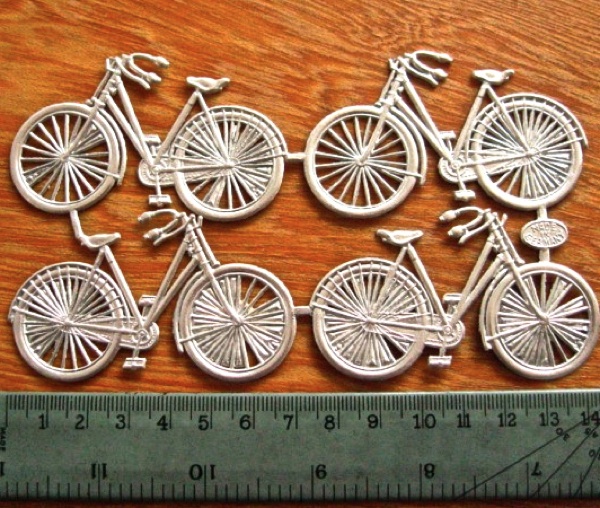

Designs by Frerk Muller, an eighty-one year old beatnik from Berlin.


Kay Hackney & Jane Petrie with their swag – an innocent conspiracy.

Plaster letters dug up in the Californan desert, originally designed for titling silent films.
Photograph of Katy Hackney & Jane Petrie © copyright Jeremy Freedman
Shelf will be open at 13a Boundary St for the next three weekends, 3rd & 4th, 10th & 11th, 17th & 18th plus Thursday 22nd & Friday 23rd December, daily from 11am to 7pm. Artist Paul Bommer will be the guest exhibitor on the first weekend, knitwear designer Jo Gordon on the second and printmaker Beyond Thrilled on the third.
2nd December, Smoking Bishop

Nowadays, we may celebrate Christmas with a glass or four of mulled wine. But our Victorian and Georgian forebears had a vast panoply of punches, cups, caudles, noyeaux, neguses, shrubs, flips and possets at their disposal to mark the season. This included a range of “clerical” punches, spiced and served piping-hot with the addition of roasted (and clove-studded) lemons and seville oranges. If the drink was burgundy based it was termed a “pope,” if claret-based it was deemed an “archbishop” and if port was the main constituent the punch was called a “bishop,” and so on.
At the very end of Dickens’ “A Christmas Carol,” a reformed Ebeneezer Scrooge tells Bob Cratchett “… we will discuss your affairs this very afternoon over a bowl of Smoking Bishop, Bob!” Now you know what that is.
This particular smoking bishop is Monsignor Cathal Septimus O’Herlihy, Bishop of Ballygramore, enjoying a glass of this edifying brew after a hard day. Note his mitre, crozier, cincture and zucchetto!
Illustration copyright © Paul Bommer
Charlie Caisey, Fishmonger

Eighty-one year old fishmonger Charlie Caisey retired twenty years ago yet he cannot keep away from the fish market for long, so I was delighted to give him an excuse for a nocturnal visit – showing me around and introducing me to his pals. These days, Charlie maintains his relationship with the fish business through involvement with the school at Billingsgate, where he teaches young people training as fishmongers and welcomes school parties visiting to learn about fish.
Universally respected for his personal integrity and generosity of spirit, Charlie turned out to be the ideal guide to the fish market. Thanks to him, I had the opportunity to shake the hand and take the portraits of many of Billingsgate’s most celebrated characters, and now that he can look back with impunity upon his sixty years of experience in the business, Charlie told me his story candidly. He did not always enjoy the high regard that he enjoys today, Charlie forged his reputation in an arena fraught with moral challenges.
“In 1950, when I joined Macfisheries and started in a shop at Ilford, I was told, “You’ll never make a fishmonger,” and they moved me to another shop in Leytonstone. I was honest and in those days fishmongers always added coppers to the scale but I wouldn’t do that. Later, when I ran my shop, it was always sixteen ounces to the pound.
In Leytonstone, it was an open-fronted shop with sawdust on the floor. You had a blocksman who did the fishmongering, a frontsman who served the customers and a boy who ran around. At twenty-one, I was a boy fishmonger and then the frontsman decided to leave, so I moved up when he left. And I found I had an uncanny ability at arranging fish in shows! I made quite a little progress there, even though I was never taught – just three weeks at Macfisheries’ school.
I got my first management of a fish shop within three years, I was sent out to a poor LCC estate at Hainault. It was a fabulous shop but it was losing money, this was where I learnt to run a business and I worked up a bit of a storm there, working eighty hours a week and accounting the stock to a farthing. As a consequence, I was offered a first hand job in a shop behind Selfridges where all the customers were lords and ladies, but I refused because, if I was manager in my own shop, it would have been a step down. So then they sent me to run a shop in Bayswater. It was a lovely shop, when I arrived I had never seen many of the fish that were on display there, and I became wrapped up in it. We had a great cosmopolitan public including ladies of the oldest profession in the world.
Within a couple of years, Macfisheries moved me to Notting Hill Gate at the top of Holland Park Avenue – absolutely fabulous. I served most of the embassies and the early stars of television. The likes of Max Wall, Dickie Henderson and the scriptwriter of The Good Life were customers of mine. I built up quite a reputation and I was the first London manager to earn £1000 a year. From there I went to Knightsbridge running the largest fish shop in London, opposite Harrods. In 1965, I had thirty-five staff working under me and I worked fourteen hours a day.
My dream was to go into business on my own but I had no money. When I started my own shop, the sad part was how poor it was. It had holes in the floor, no proper drainage and no refrigeration. I’d never been to Billingsgate Market in my thirteen years at Macfisheries and when I went with my small orders, it was a different ball game. The dealers treated me like an idiot, the odd shilling was going on the prices and I was given short measures. Yet I never took it personally and I started to earn their respect because I always paid my bills every week. And, in twenty years, my turnover went from twelve thousand pounds to over half a million a year.
Most of my experience and knowledge has come from the customers. My experience of life came from the other side of the counter. They showed me that if you go out and look, there is a better life. When I think of Stratford while I was growing up, it was a stinky place because of the smell from the soap factories. My family were all railway people, my father was an uneducated labourer and what that man used to do for such a small amount of money and bad working conditions. We were poor because my marvellous parents were underpaid for their labours. I didn’t leave London during the war and I witnessed all the horrors. I missed lots of school because I was in the East End all through the bombing, so I’ve always been conscious of my poor education. Basically, I’m a shy man and I’m always amazed that I can stand up in front of people and speak, but I can do it because it comes from the heart.
Don’t ever do what I did. I went eighteen years without a holiday. It was a little crazy, I was forty before I had time to learn to drive.”
Dawn came up as Charlie told me his story and we walked out to the back of the fish market where the porters throw fish to the seals from the wharf. Through his tenacity, Charlie proved his virtue as a human being and won respect as a fishmonger too. Yet although he may regret the inordinate struggle and hard work that kept him away from his family growing up, Charlie is still in thrall to his lifelong passion for this age-old endeavour of distributing and selling the strange harvest of the deep.

Clearing away after a night’s trading at Billingsgate, 7:40am.

Roger Barton, fifty-one years at Billingsgate – a porter who became a dealer twenty-six years ago.

Tom Burchell, forty-five years in the fish business.

Alan Cook, lobster specialist for forty-eight years.

Simon Chilcott, twenty years at Bard Shellfish.

Leonard Hannibal, porter for fifty years – “I never had a day off, never had backache or flu.”

Mick Jenn, fifty years in eels – “Me dad was an empty boy and I started off in an eel factory.”

Terry Howard, fifty-nine years in shellfish – “I played football in the 1960 Olympics.”

Anwar Kureeman, eight years at Billingsgate – “I am a newcomer.”

Paul Webber, thirteen years at J.Bennett, Billingsgate’s largest salmon dealers.

Andres Slips came from Lithuania seven years ago – “I couldn’t speak English when I arrived, now my mother would blush to hear my language.”

Edwin Singers, fifty-two years a porter – “known as the richest porter in Billingsgate.”

Geoff Steadman, fourth generation fish dealer, thirty-three years at Chamberlain & Thelwell.

Colin Walker, porter of forty-six years, adds up his bobbin money in Shimmy’s Cafe.

Charlie in his first suit at fifteen –“From Willoughbys, I paid for it myself at half a crown a week.”

Charlie at the Macfisheries School of Fishmongery (He is third from right in back row).


Charlie in his fish shop in the seventies.

Charlie Caisey – the little fish that became a big fish.
You may recall I met Charlie Caisey at The Fish Harvest Festival
You may also like to take a look at
Boiling the Eels at Barney’s Seafood
Paul Bommer’s Advent Calendar


