
John Thomas Smith’s Antient Topography

Bethelem Hospital with London Wall in Foreground – Drawn June 1812
Two centuries ago, John Thomas Smith set out to record the last vestiges of ancient London that survived from before the Great Fire of 1666 but which were vanishing in his lifetime. You can click on any of these images to enlarge them and study the tender human detail that Smith recorded in these splendid etchings he made from his own drawings. My passion for John Thomas Smith’s work was first ignited by his portraits of raffish street sellers published as Vagabondiana and I was delighted to spot several of those familiar characters included here in these vivid street scenes of London long ago.
Click on any of these images to enlarge

Bethel Hospital seen from London Wall – Drawn August 1844

Old House in Sweedon’s Passage, Grub St – Drawn July 1791, Taken Down March 1805

Old House in Sweedon’s Passage, Grub St – Drawn July 1791, Taken Down March 1805

London Wall in Churchyard of St Giles’ Cripplegate – Drawn 1793, Taken Down 1803

Houses on the Corner of Chancery Lane & Fleet St – Drawn August 1789, Taken Down May 1799

Houses in Leadenhall St – Drawn July 1796

Duke St, West Smithfield – Drawn July 1807, Taken Down October 1809

Corner of Hosier Lane, West Smithfield – Drawn April 1795

Houses on the South Side of London Wall – Drawn March 1808

Houses on West Side of Little Moorfields – Drawn May 1810

Magnificent Mansion in Hart St, Crutched Friars – Drawn May 1792, Taken Down 1801

Walls of the Convent of St Clare, Minories – Drawn April 1797

Watch Tower Discovered Near Ludgate Hill – Drawn June 1792

An Arch of London Bridge in the Great Frost – Drawn February 5th 1814
Images courtesy Bishopsgate Institute
You may also like to take a look at
John Thomas Smith’s Vagabondiana
Orange Wrappers
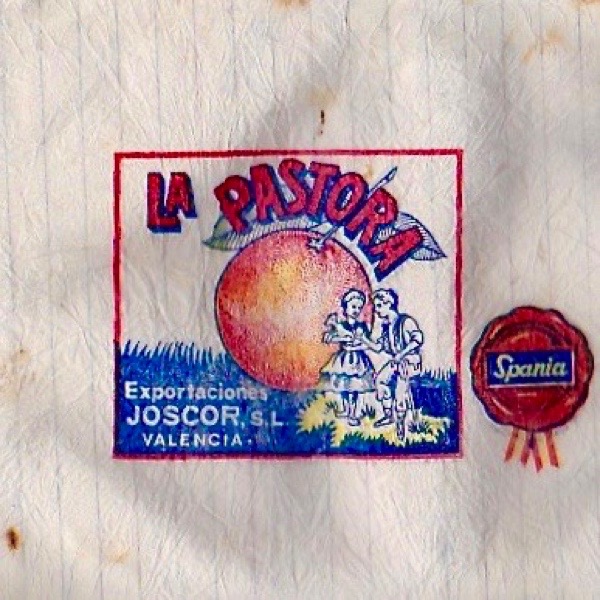
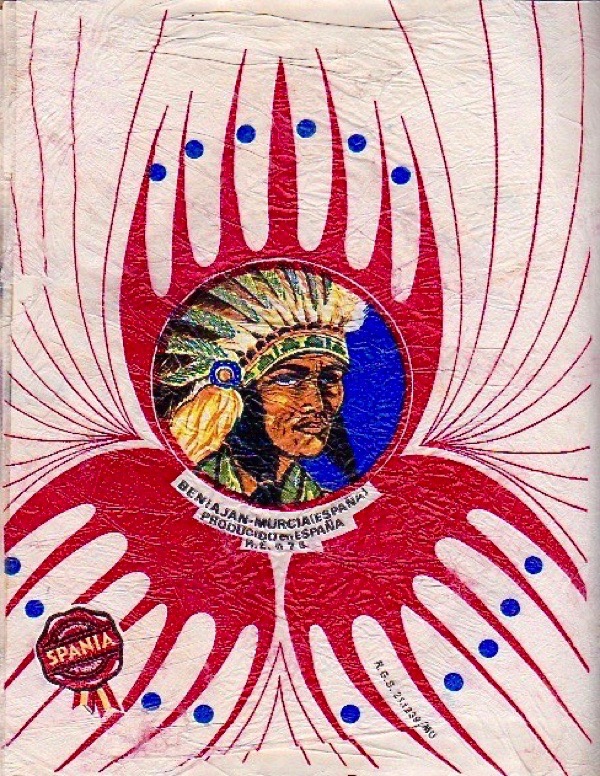
This is the season for oranges and lemons, when every morning I begin the day by consuming a juicy blood orange. So I was more than delighted when Keren McConnell kindly sent me her glorious fruit wrapper collection from the seventies to share with you.
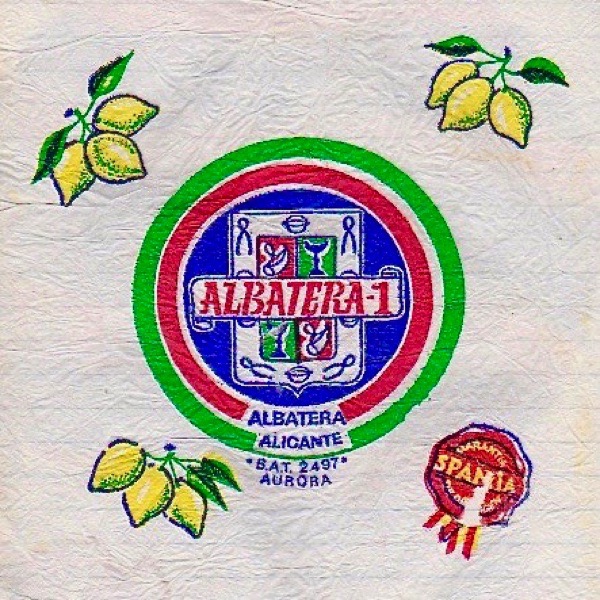
“I started collecting fruit papers when I was six years old, possibly inspired by a holiday in Spain in 1971. Most of the papers stuck in my small scrapbook were picked up while shopping for groceries with my mother at the local greengrocers in Blackheath. I think they reminded me of that holiday with their bright and graphic imagery.
I was drawn to the designs and texture and feel of the crinkly tissue paper. I also collected carrier bags and paper bags for their graphics, but this collection did not survive all our house moves.
Who knows? This book of fruit papers may have even informed my career. I became a print and graphics designer for fashion brands and retailers, sometimes using this scrapbook as reference material to inspire a T-shirt design.
As a child, particular favourites were the designs depicting animals, beautiful ladies and the smiling face on the Sicilian lemon is particularly appealing. I have no idea why the Tower of London was on a fruit paper from Spain. Perhaps the designer thought London was an exotic place, just as I had found Spain so exotic? Some of the designs seem to have been inspired by sport, such as horse racing and Formula One.
Are children today inclined to make collections like this? Mine was born out of boredom, particularly on wet Sundays when the days felt so long.”
Keren McConnell






You may also like to take a look at
T. Venables & Sons’ Almanack
In case you do not have an almanack yet for the new year, I am publishing this from T. Venables & Sons, Whitechapel, courtesy of Philip Mernick. This is an especially useful one because it includes a catalogue of drapery, carpets and furniture, as well as cab fares from Whitechapel, a chronicle of events of 1867/8 and a list of the powers of Europe, the Royal Family, Officers of State and Her Majesty’s Household.


Gertrude Gorham

‘Arabian’ bedsteads

Cots and bedsteads

Drawers and wardrobes

Drawing Room furniture

Tables and washstands

Toilet glasses and chairs

Silks and velvets

Uncle was laid up ill in bed in January 1882 quite helpless (gout)

Gertrude Gorham was examined at Westbourne Schools/82 (passed)

Aunt’s little bird died Saturday 1882

Mrs Pike fell downstairs and cracked her collarbone

Cab fares

Chronicle of events 1867-68: Explosion of nitro-glycerine in Newcastle. Bread and meat riots at Exeter. Hurricane at St Thomas.

Chief Powers of Europe and the Royal Family

T. Venables & Sons, 103, 104 & 105, Whitechapel and 2, 4, 6 & 8 Commercial St
You may also like to take a look at
Thomas Barnes, Photographer
The most prolific nineteenth century East End photographer was Thomas Barnes, responsible for producing over one hundred thousand portraits taken between 1858 and 1885 at his studio at 422 Mile End Rd in Bow.
Although these cartes de visite are nameless, Barnes numbered most of his pictures – enabling us to create a sequence and establish an indication of their dates, as demonstrated by these fine examples selected from Philip Mernick‘s collection gathered over the past twenty years.
Remembered today primarily for his widely-discredited before-and-after photos commissioned by Dr Barnardo, nevertheless Thomas Barnes’ studio portraits reveal a photographer of abundant talent and accomplishment. It is a poignant gallery of withheld emotion, bringing us face to face with anonymous long-dead East Enders who are now inhabitants of Tower Hamlets Cemetery Park.

Number 4178 – taken between 1858 & 1864

Unnumbered

Number 21236 – 1867

Number 33999 – taken around 1870

Number 34101 – taken around 1870

Number 37432 – taken after 1873

Unnumbered

Number 38774 – taken after 1873

Number 41536 – taken mid-1870s

Unnumbered

Number 43979 – taken mid-1870s

Number 44425 – taken prior to 1877

Number 47385 – taken prior to 1877

Number 53458 – 1877
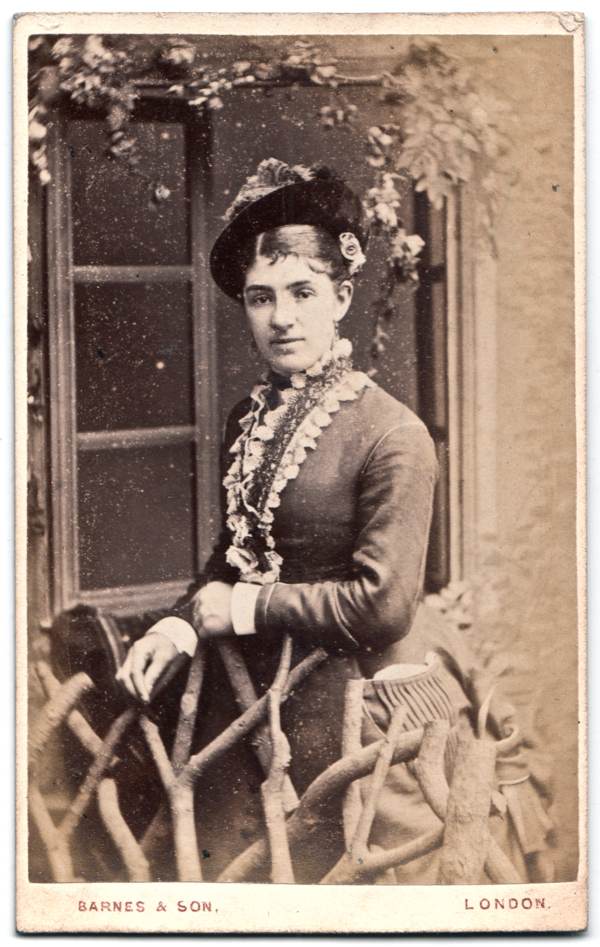
Number 56157 – 1877

Unnumbered

Number 57248 – 1877

Number 65460 – taken between 1877 and 1880

Number 75384 – taken after 1880

Photographs reproduced courtesy of Philip Mernick
Biographical details of Thomas Barnes supplied by David Webb
You may also like to take a look at
Flowers Of 2024
Each Sunday, if I can afford it and have the time, I visit Columbia Rd Market to buy a bunch of flowers, seeking what is in season and avoiding repeats where possible. Here is the story of last year told in flowers. Looking back, I am reminded how much joy they brought me. Which are your favourites?

7th January, bulbs

14th January, paper whites

27th January, cherry blossom

28th January, hyacinths

5th February, snake’s head lilies

11th February, quince blosssom

25th February, tulips and anemones

17th March, tulips and hellebores

7th April, anemones and lilies of the valley

14th April, anemones and verbena

5th May, sweetpeas

12th May, Essex pinks

19th May, delphiniums

23rd June, peonies, astrantias and antirrhinums

7th July, spurge, camomile, antirrhinums and delphiniums

14th July, lilies, delphiniums, spurge and camomile

21st July, sunflowers

28th July, ranunculus

11th August, dahlias

18th August, camomile and michaelmas daisies

8th September, roses

22nd September, artichokes and chrysanthemums

6th October
You may also like to look at
In Search Of Daniel Defoe

I am proud to publish this edited extract from GRAVE STORIES by a graduate of my writing course. ‘The Gravedigger’ invites you to come into the graveyard, where all of human life is to be discovered.
Follow GRAVE STORIES
I am taking bookings for the next writing course, HOW TO WRITE A BLOG THAT PEOPLE WILL WANT TO READ on February 1st & 2nd.
Come to Spitalfields and spend a winter weekend with me in an eighteenth century weaver’s house in Fournier St, enjoy delicious lunches and eat cakes baked to historic recipes, and learn how to write your own blog.

Defoe’s obelisk at Bunhill Fields
A year after Lockdown I turned to Daniel Defoe’s Journal of the Plague Year to compare notes. His experience was much like ours in many ways: the first signs in Holland, followed by rumours regarding possible origins in Italy or the Levant, mirrored our own experiences watching Italy and Wuhan. The gradual spread from St Giles and the West End to Cripplegate, Clerkenwell and the City reflected our monitoring of Covid hotspots.
The flight of the court and the well-heeled to their second homes was familiar. Likewise the first deaths and the sudden desolation in the streets with shops closed, Inns of Court shut up, theatres, alehouses, and taverns all dark. Attempts to control wandering beggars resembled our own government’s sudden concern to house the homeless. The sick were either sequestered and died apart from their families or whole households were shut up in their homes, as happened in our hospitals and care homes.
When Defoe bemoaned the lack of enough ‘pest houses,’ he might have been speaking of our own shortage of Covid wards leading to the construction of the Nightingale hospitals. Quack medicines appeared, just as hydroxychloroquine and the possibility of injecting bleach found favour in certain quarters in the twenty-first century.
Defoe recorded people moving onto boats in the Thames or to camp in Epping Forest and similarly, at the height of Covid, caravans and camper vans occupied green sites. Daily and weekly recording of illness and death rates confirmed that then as now, the poor, living in overcrowded conditions with inadequate ventilation and unable to avoid the breath of others, sickened more than the wealthy.
As the plague intensified, people rushed to stockpile provisions and there were shortages. Without contactless cards to replace cash, they soaked their money in vinegar. The poorest found themselves out of work, unable to purchase food or pay for their lodgings. Charity, like our food banks, supplemented Parish Relief which like our Universal Credit proved inadequate.
Servants were redeployed as nurses, sextons, gravediggers. In Defoe’s London, burials took place before sunrise and after sunset, and neighbours and friends could not attend church funerals. When people died in the streets, their bodies were removed to mass graves. In 2020, as morgues and mortuaries became overwhelmed, contract workers in hazmat suits dug mass graves in New York. When the death rate began to decline, doctors issued certificates of health to permit travel anticipating our own vaccine passports, but as people became careless the rate rose again..
There were also great differences, not least in the presence of religion in Defoe’s Britain: sects, fortune tellers, and astrologers flourished. Solomon Eagle stalked the streets, naked with a pan of burning charcoal on his head, calling on the populace to repent. Though some clergy fled, others kept their churches open and, when the plague ended, Defoe gave credit for the recovery to God. Conversely, there was less respect for the medical profession and, far from clapping for carers, Defoe wrote of nurses finishing their patients off and stealing their goods. While pet ownership increased during lockdown, Defoe’s London witnessed the wholesale killing of cats and dogs.
Defoe was only five years old in 1665 and his vivid ‘eyewitness account’ originated from his uncle Henry Foe, supplemented by Defoe’s own research. A man of many talents – merchant, spy, novelist, poet, political pamphleteer, and activist – Defoe’s life was a rollercoaster of excitement, achievements, and disasters.
In 1685, he participated in the Monmouth rebellion against James II but escaped retribution in the Bloody Assizes and, when William III came to power, he became a secret agent of the crown. His poem The True Born Englishman defended William against racial prejudice, reminding xenophobic readers that they were all descended from immigrants.
The succession of Queen Anne led to the persecution of nonconformists and Defoe’s arrest in 1703 for pamphleteering, political activity and satires directed against high-church Tories. Prior to his removal to Newgate, he was placed in the pillory for three days but his poem Hymn to the Pillory resulted in him being garlanded with flowers rather than pelted with rubbish.
Over five hundred works have been attributed to Defoe including Robinson Crusoe, Moll Flanders, A Tour through the Whole Island of Great Britain and of course A Journal of the Plague Year. No stranger to the debtors’ prison during his life, he died – as he had often lived – in debt.
Defoe was buried in the non-conformist cemetery at Bunhill but his headstone was struck by lightning and broken in 1857. The editor of Christian World, a children’s newspaper, encouraged readers to donate 6d each for a new memorial, setting up two rival subscription lists, one for girls and one for boys.
Samuel Horner, a stonemason from Bournemouth who erected the obelisk, took the gravestone home with him, selling it as part of a general lot from his yard. Then it became part of the kitchen floor at Bishopstoke Manor Farm until the manager moved to 56 Portswood Road in 1883 where it remained in his front garden for over sixty years. Charles Davey acquired it in 1945 and gave it to Stoke Newington library. An appropriate resting place since Defoe lived in Stoke Newington from the age of fourteen, but by the time I arrived it had been moved to Hackney Museum where it I found it sitting beside a bust of Defoe, backed by an image of the famous pillory.

Inscription on Daniel Defoe’s obelisk

Daniel Defoe’s headstone is now in Hackney Museum
You may also like to read about
David Power In Spitalfields
Continuing my tribute to David Power who died on 15th December aged ninety, here is my account of a return visit he made to Spitalfields where he grew up.
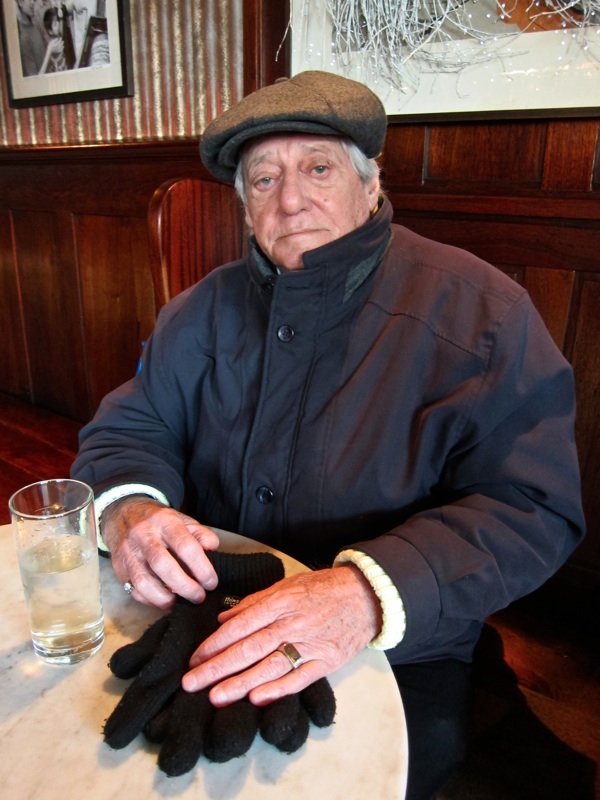
David Power at The Golden Heart where he played the piano in 1946
One frost morning, David met me for a celebratory drink by the fireside at The Golden Heart after he had paid a visit upon Wilton’s Music Hall to arrange a date for an evening of Music Hall for which he was to be impresario and compere. “I was spellbound,” admitted David, in wonder at seeing Wilton’s for the first time, “I closed my eyes and expected to hear Burlington Bertie…”
David’s appearance at Wilton’s Music Hall marked his return to the East End as an entertainer for the first time since he performed in Spitalfields as a youth. “I played the piano in here when I was fourteen years old, in the nineteen forties just after the war,” he recalled, casting his soulful eyes around the empty barroom. “I had to wear a hat and a false moustache because I wasn’t old enough to go in a pub. I played Friday, Saturday and two sessions on Sunday, and I got a pound.”
“They mostly sold stout in them days and there were very few women in here. Instead, the men took their wives and mothers home a bottle of stout just to keep them quiet. The piano player had fallen ill and they heard me playing the piano from the window of my Aunt Sarah’s at 98 Commercial St. Now I loved my Aunt Sarah, but every word out of her mouth was swearing, while my Uncle Jimmy, he was the gentlest, mildest man you could imagine and my cousins were the same. Yet Aunt Sarah made up for the lot of them, she had more front than Tower Bridge.”
We braved the cold to revisit the doorstep of the notorious Aunt Sarah at 98 Commercial St and found her long gone. “It’s very difficult for me to explain to you, because it was a very tough life round here,” David confided to me with a grimace. “‘You’ve been with the kurwas?’ they used to ask,” he said, raising a significant smile as we entered the park next to Christ Church, known to David as Itchycoo Park, “That means you’ve been in here having sex on a gravestone with a prostitute.”
Crossing Commercial St, we entered Toynbee St passing the Duke of Wellington. “That’s where Stafford murdered his son, he got involved in slot machines,” David declared dryly, in passing, as we approached the former premises of Hymie the Barber. “All the stars used to come here for a shave and a haircut for a half crown,” he announced, “all the market boys.” Turning down Brune St, we crossed into the old market building where David started work at fifteen. He stood and scratched his head, surveying the chain restaurants and office workers doing their Christmas shopping, on the site where he was once employed in the fruit & vegetable market. “This place, years and years ago, it was alive,” he assured me, “People came from miles and miles around. At three o’clock in the morning it was buzzing, like a great theatre, and the cafes were open twenty-four hours a day. Most of those men were strong as lions.”
“I’m going back seventy years, I’ve never been back before,” David protested, in trepidation, as we walked down Commercial St, turning into Thrawl St in search of Faulkner St where he grew up. We found the buildings were gone and the street renamed Nathaniel Close. Similarly, in Old Montague St, where David’s grandparents lived there was no trace of the two-up-two-down cottages that he remembered. We stood amidst the chaos of the building works at the rear of the London Metropolitan University. “My grandfather, David Solomon, was the British Lightweight Bare-Fisted Boxing Champion,” David asserted, as if to conjure him into existence to spite the erasure of his world.
Seeking refuge from the chill, we entered a cafe in Middlesex St for hot mugs of tea, and within five minutes a woman came in and asked David, “How’s your cousin? Thereby confirming the unexpected truth that even after all this time, the movements of people and the rebuilding of neighbourhoods, ties of kinship among East Enders do survive. David was heartened enough to order a sausage and tomato. “Whether it was good or bad, we didn’t know any different,” he ruminated, as he cut his sausage.”But I think you would have liked it, living in my time, in the nineteen fifties,” he conceded tenderly.
As we tucked in to our lunch, I realised we had been on an emotional journey together and I understood how it important it was for David to perform again after all these years. “There’s going to be a lot of top professionals. I’ll get the TV down, they have nothing on for over forty-fives. All you see is murder and killing and X Factor, but there’s so much more talent out there.” he bragged, “We’ll have an opera singer and a Russian musical prodigy and a magician, and I’m going to get Roy Hudd.”

Outside 98 Commercial St where David’s Aunt Sarah lived in the thirties and forties – “She had more front than Tower Bridge.”

In Itchycoo Park, “‘You’ve been with the kurwas?’ they used to ask…”

At the former premises of Hymie the Barber in Toynbee St -“All the stars came here, all the boys in the market.”

“My cousin Sammy Lissner stood here for seventy years on the corner of Wentworth St selling fruit & vegetables.”
Read my original profile


