Viscountess Boudica’s Domestic Appliances
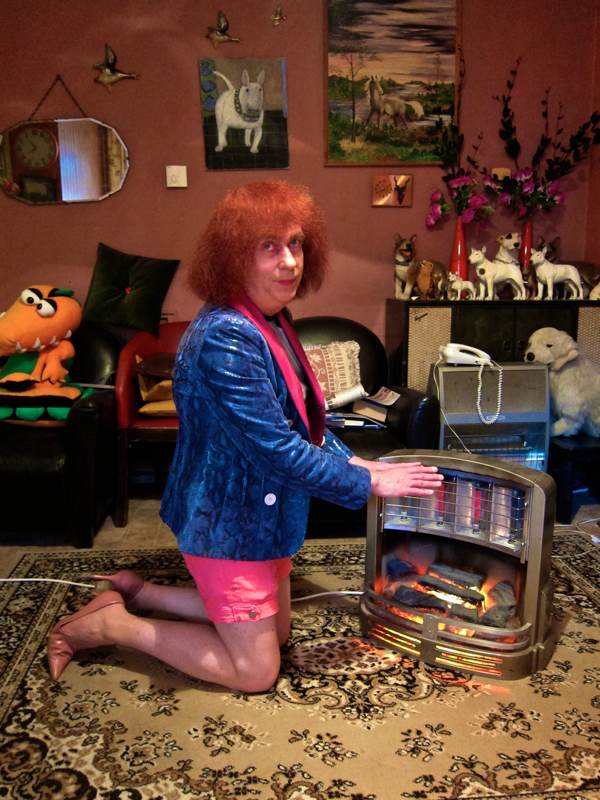
Viscountess Boudica and her Berry Magnetic heater from 1940
When Viscountess Boudica invited me over to Bethnal Green to admire her domestic appliances, I was not quite sure what I might discover. Yet my expectations were surpassed by her magnificent array of vintage gadgets, gleaming in the half-light of her tiny ground floor flat, overshadowed by tall trees and sequestered behind discreet net curtains.
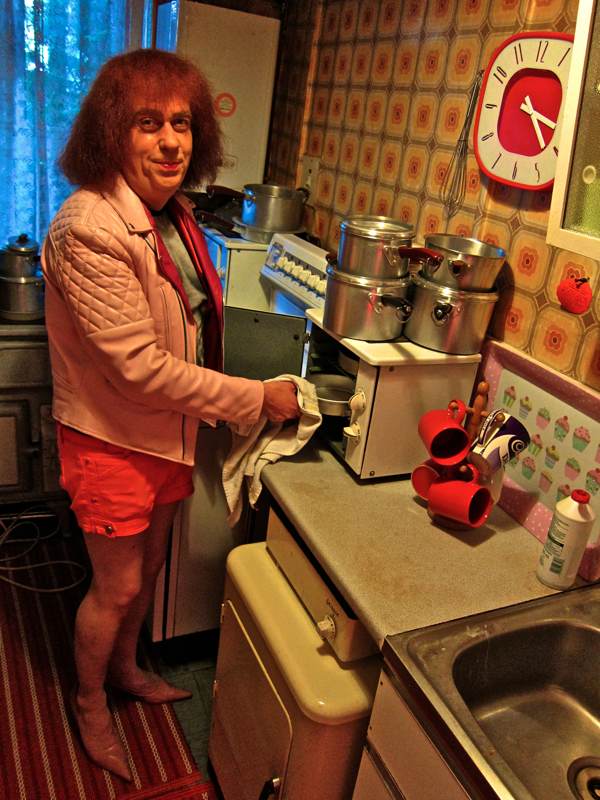
Like a high-priestess at a shrine, Viscountess Boudica presides over her treasured relics with gracious authority. These are the devices that freed women from the drudgery of housework in the twentieth century and Boudica tends her sacred collection, keeping each one sparkling clean and using them regularly, for cooking, washing and in all her daily chores – turning even the most ordinary domestic task into a ritual of religious intensity. Within the sepulchral gloom, Boudica’s colourful appliances line her kitchen with the irresistible glowing allure of pinball machines in a lost gaming arcade.
There is an intriguing mystery here, for Boudica is no literal-minded collector, ticking off her finds on a list. Instead, Boudica is on a spiritual quest, and each of her domestic appliances is a trophy leading her towards her ultimate goal – the Tricity 643 Cooker. This is the magic appliance that could transport her back to her own childhood and cure her fear of frying, as Boudica explained when she revealed to me the strange story of how it all began.
“It started with my search for the Tricity 643 Cooker. My mother had one. After she disappeared, my aunt was supposed to take me to school but when she came round one morning to the bungalow to collect me, Suzie her niece – that spoilt brat – she played up and my aunt had to take her out. “Here’s your eggs for breakfast,” my aunt said and she put them on the stove in a pan to cook, “All you’ve got to do is take the eggs from the pan and eat them.” I was only four and a half years old, and the eggs were spitting in the pan, so I had to stand on the blue library chair because the knobs were up high. They were push and turn. I managed to switch them off and move the pan onto the cold ring, but then my chair slipped and I fell onto the cardinal red floor. I had an ache for days. And of course, I always remembered that day and it gave me a fear of frying. So when I was older I thought, “I’ll see if I can buy one and go back to that day.”
I remember going out from the bungalow and walking down the lane to get the bus to the little villagey school a couple of miles away. When I saw my aunt later, little Suzie had a new outfit. My aunt said, “It’s your own fault, but now you’ve learned to switch it off you can make all the cakes up at the farm.” I was not even five years old, yet she said, “If you want to eat you’ll have to learn to cook, or you’ll starve, otherwise have a fag” – and that’s how I began to smoke. After that I started cooking, and my mother had a new man and I got pushed around to another of her boyfriends’ mothers. I used to cry and ask, “Where’s my mummy?” That’s how my life was, being moved from one to another, and I often ran away from home as well. They made me sleep with Greville, the lodger, and one night, when there was a terrible thunderstorm, I went up to my aunt’s side of the house and stood outside her bedroom door, where I heard her say to my mother that no man would want a woman that was a single mum.
For years, I tried to buy a Tricity 643, so I could go back in time to that moment and release myself, but I haven’t been able to because I can’t get the cooker. The dealers always sold me other appliances, they told me, “Buy this and we’ll get you a Tricity 643 next month.” I spent thousands of pounds on appliances without getting what I want, so I thought, “Oh well, I’ll collect them.” I’ve learnt to repair them all as well and, when I was at school, I even made my own working cooker with two rings. I sent away to Tricity to get the knobs.
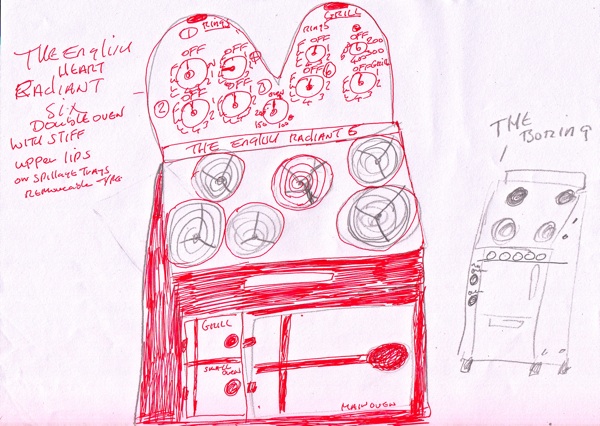
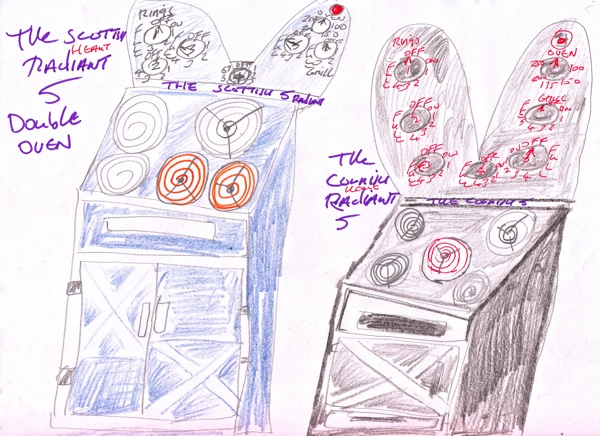
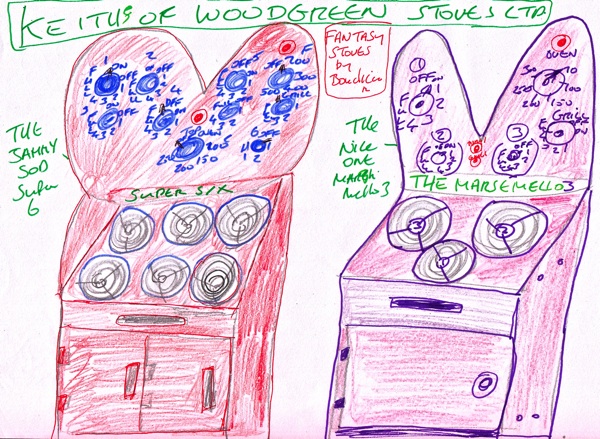
Modern domestic appliances are rubbish. We are bombarded with foreign appliances when we used to manufacture these things ourselves here in Britain. They were made to last but instead we get these non-environmentally friendly appliances with a disposable life. I have begun to draw my own fantasy appliances now, because I thought it would be nice to have individual cookers instead of the boring mass-produced ones.”
Viscountess Boudica has rewired all her domestic appliances herself. She taught herself to do it, seeking spare parts from specialist suppliers and restoring broken old machines to perfect working order. Her fridge is more than sixty years old and she has cookers that are over eighty years old. When Boudica wants to cook her dinner she is spoilt for choices to suit her mood. All are as good as new and every one has a story to tell.
Proving to be an unlikely source of pleasure, knowledge and inspiration, Boudica’s beloved appliances have transcended the mundane. Today, Viscountess Boudica is proud to keep her secret temple in Bethnal Green to the lost glories of domestic appliances and, even after all this time, she has not given up hope of discovering a Tricity 643.
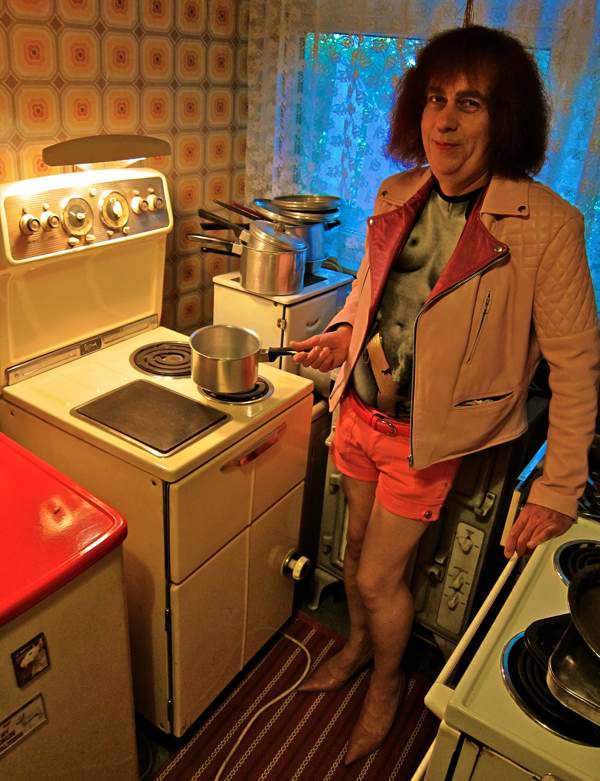
1960s Belling Classic Cooker
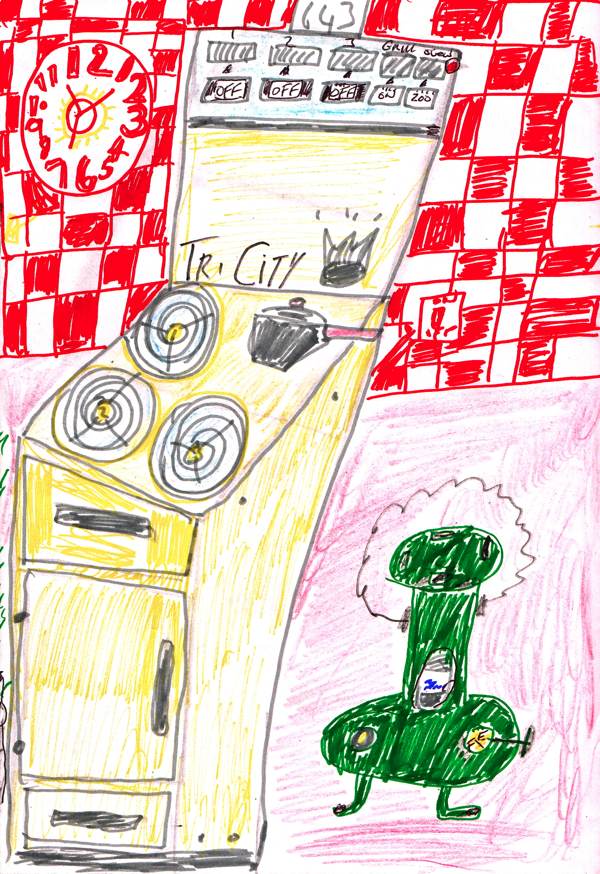
The fabled Tricity 643, drawn from memory – note the control knobs placed out of reach of a child.
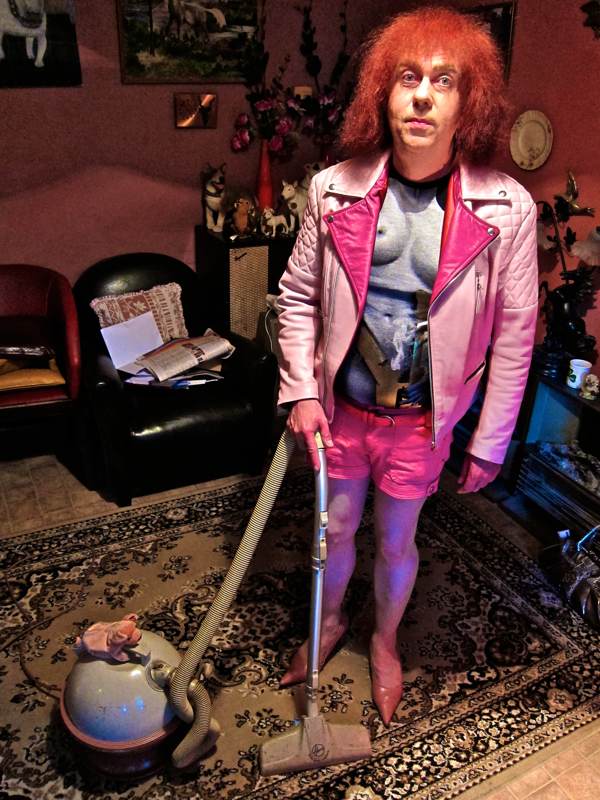
1973 Hoover Constellation Vacuum Cleaner in pink
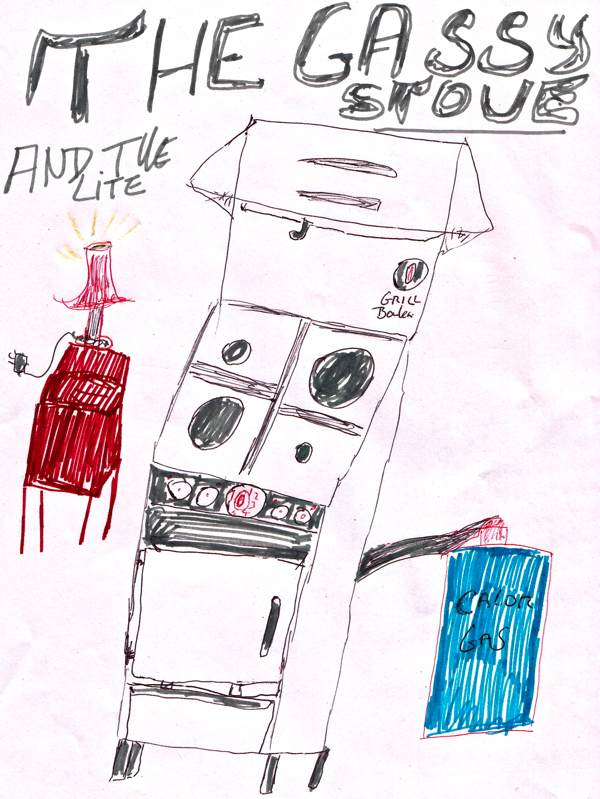
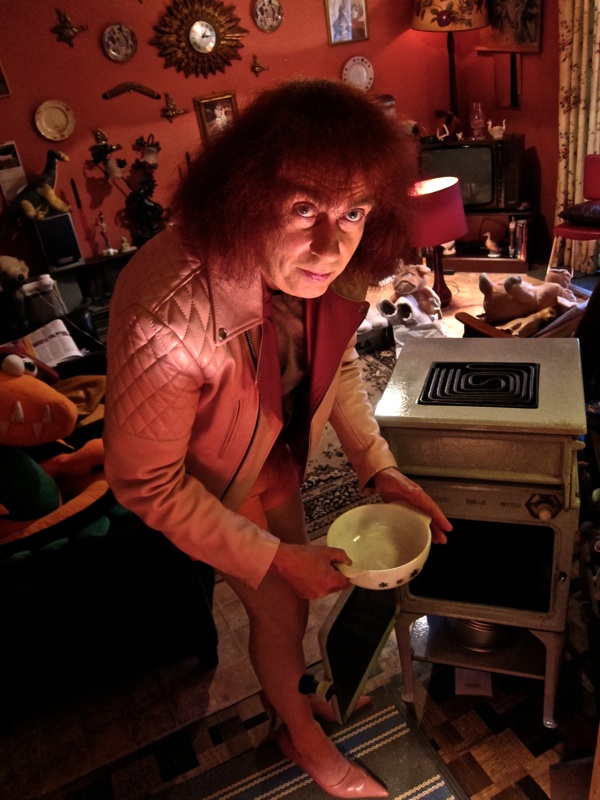
1930s Electric Cooker by E.E.Bond
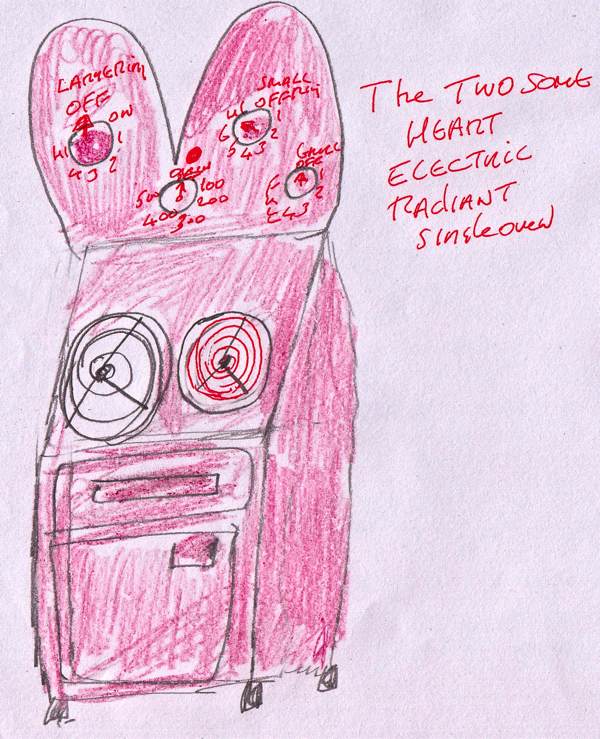
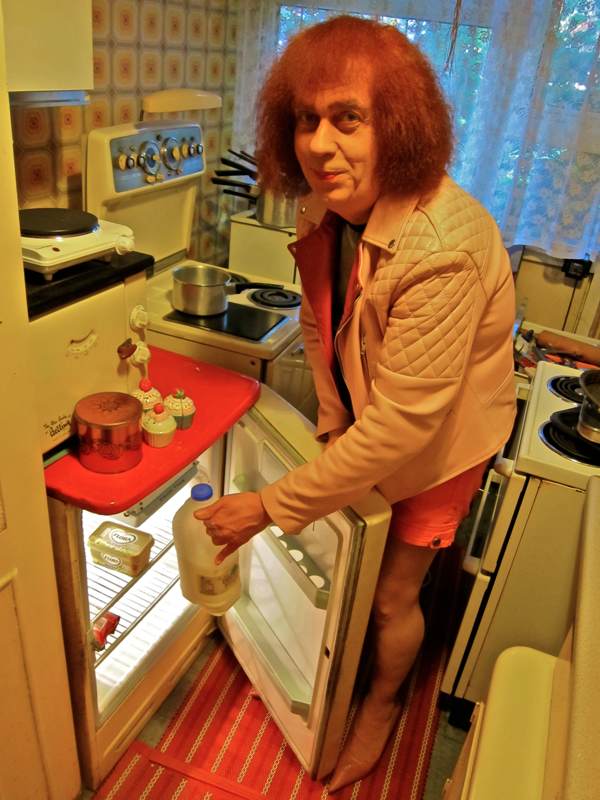
Prescott Refrigerator, manufactured in Cowley, Oxford, late 1940s
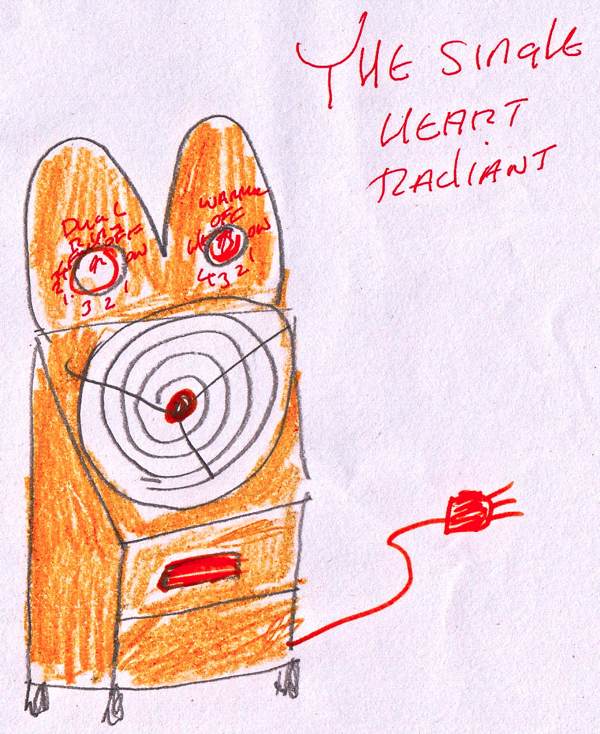
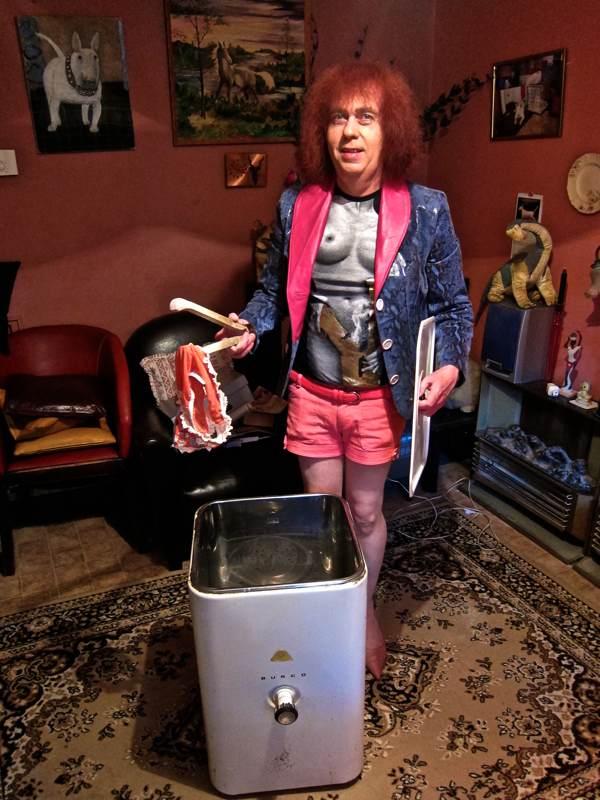
1950s Baby Burco Washer-Boiler
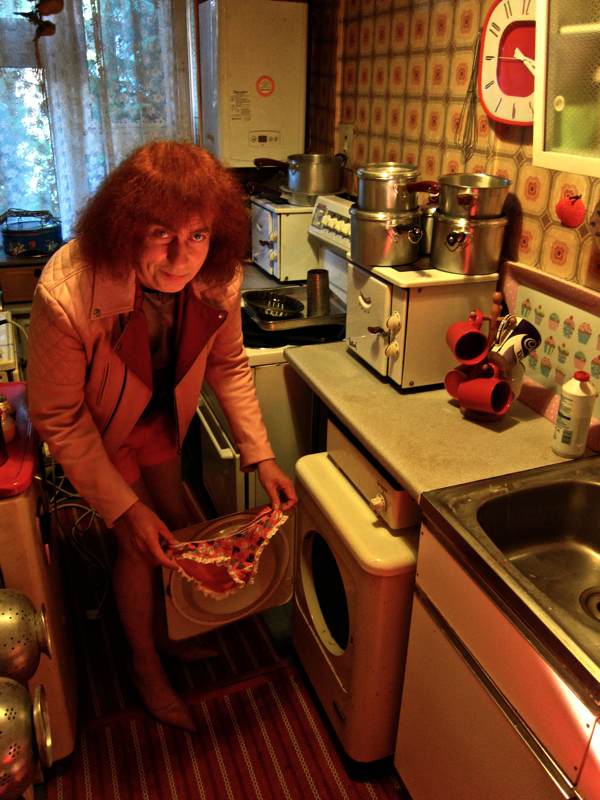
1950s Parnell Tumble Drier
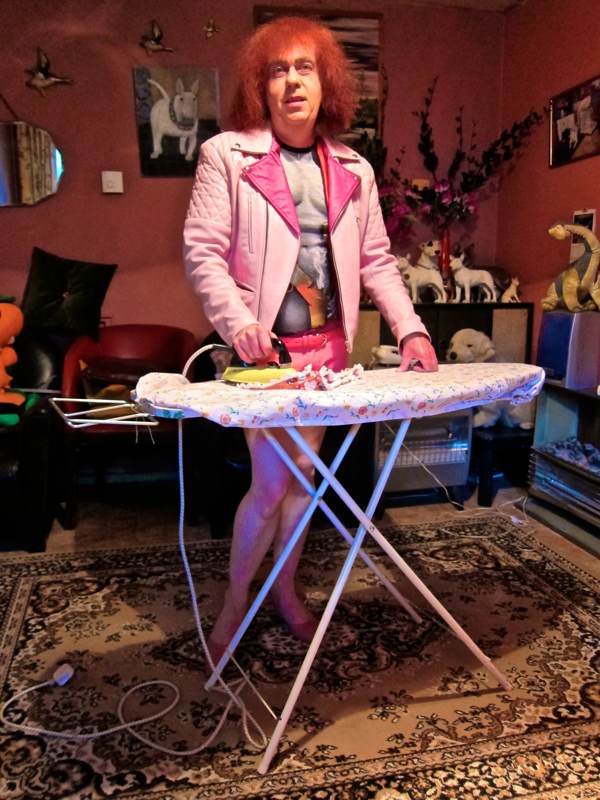
1950s Morphy Richards Iron
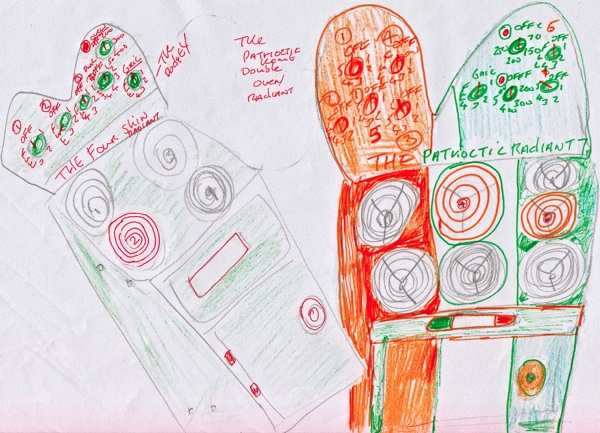
Wee Baby Belling Oven, Number 51
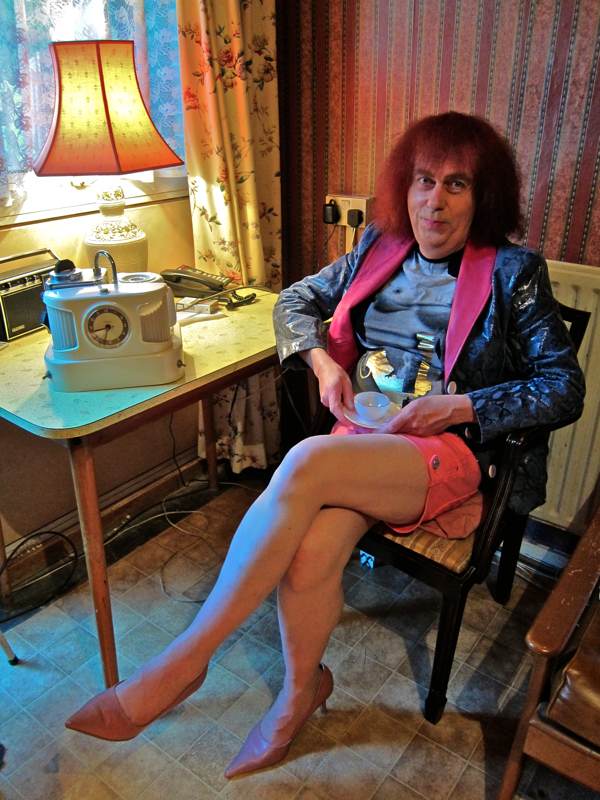
Goblin Teasmade 1940
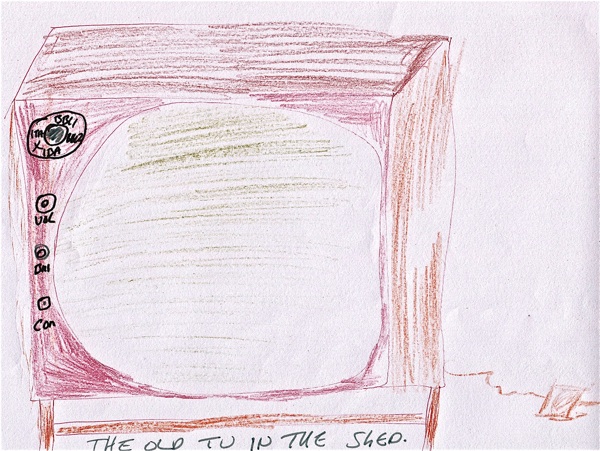
1970s Black & White Valve Television by Ferguson

GEC Magnet Cooker 1930s
Drawings copyright © Viscountess Boudica
Be sure to follow Viscountess Boudica’s blog There’s More To Life Than Heaven & Earth
Read my original profile of Mark Petty, Trendsetter
and take a look at Mark Petty’s Multicoloured Coats,
In Another World With John Claridge
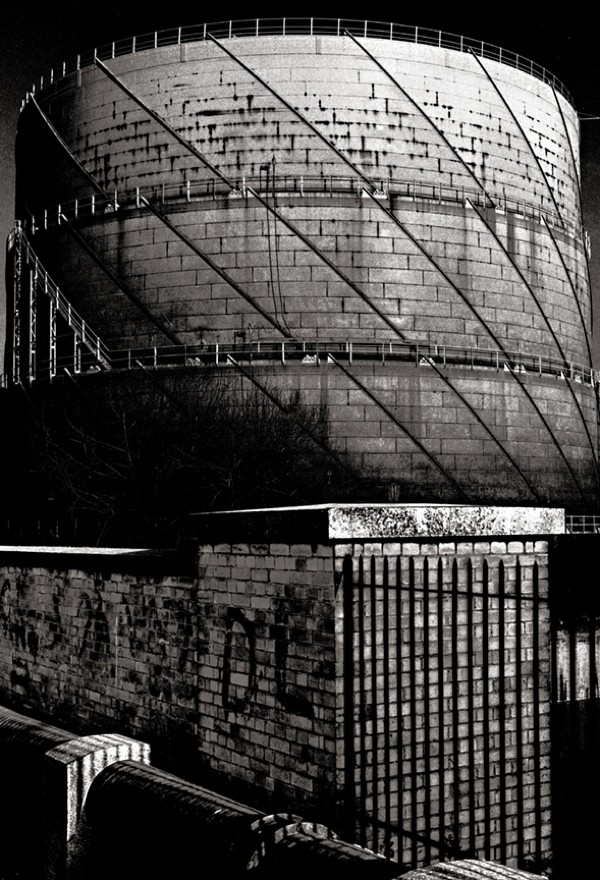
INTO THE NIGHT, E3 1987
“Sometimes, I speak with my mates and they say, ‘We’ve come from another world,'” John Claridge admitted to me in astonishment, recalling his origins in the post-war East End and introducing this latest set of pictures, published here for the first time. To create the series, John has been revisiting his old negatives, printing photographs that he took decades ago and surprising himself by the renewed acquaintance with lost visions of that other world, unseen since the moment the shutter fell. Yet even in his youth, John was drawn to the otherness that existed in his familiar landscape, transformed through his lens into a strange environment of dark brooding beauty – inflected by his passion for surrealism, the writing of Franz Kafka and film noir.
“It’s difficult for me to explain why I am attracted to things.” John confessed, “I was off doing other work, producing commercial photography and making films, but I never stopped taking pictures of the East End. Some of these images have never been printed before, and it’s strange when I see the prints now because I have a good memory of taking them, even though I had forgotten how much I had done.”
Always alert to the dramatic potential of the cityscape, John recognised that the magnificence of a gasometer could be best appreciated when photographed by moonlight – in John’s mind’s eye, every location proposed a scenario of imaginative possibility. The images you see here are those that burned themselves onto his consciousness, stills from his photographic dreaming, and when we look at them we can share his reverie and construct our own fictions. His titles read like the titles of grand narratives, firing the poetic imagination to enter another, dystopian, world where industrial buildings become prisons and monumental landscapes are ravaged by unexplained derelection.
John knew the East End when it was still scarred from the bombing of World War II and then he witnessed the slum clearances, the closure of the docks, the end of manufacturing and the tide of redevelopment that overtook it all. His soulful urban landscapes record decisive moments within decades of epic transformation that altered the appearance of the territory forever. “Some things needed changing, though not all the demolition that happened was necessary,” John informed me. Then, regretful of the loss of that other world yet mindful of the resilience of the psyche, he continued his thought, adding – “but people have a spirit and you can’t break that.”
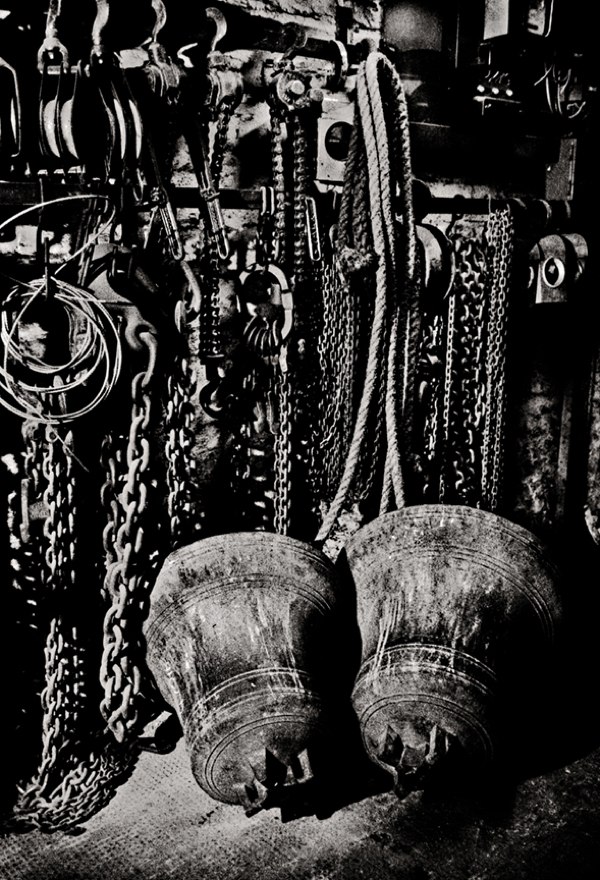
IT TOLLS FOR THEE, Whitechapel Bell Foundry 1982.

SILVER TOWERS, E16 1982.

DE CHIRICO ARCHES, E16 1982.
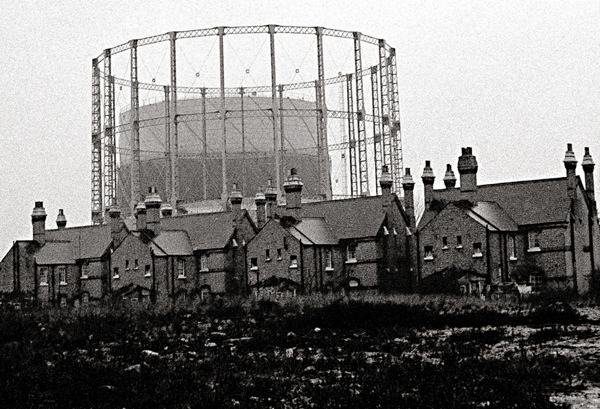
IN THE SHADOW, E3 1961.
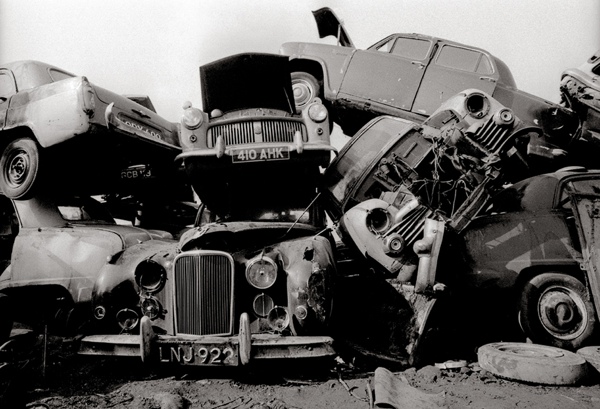
GRAVEYARD, E16 1975.
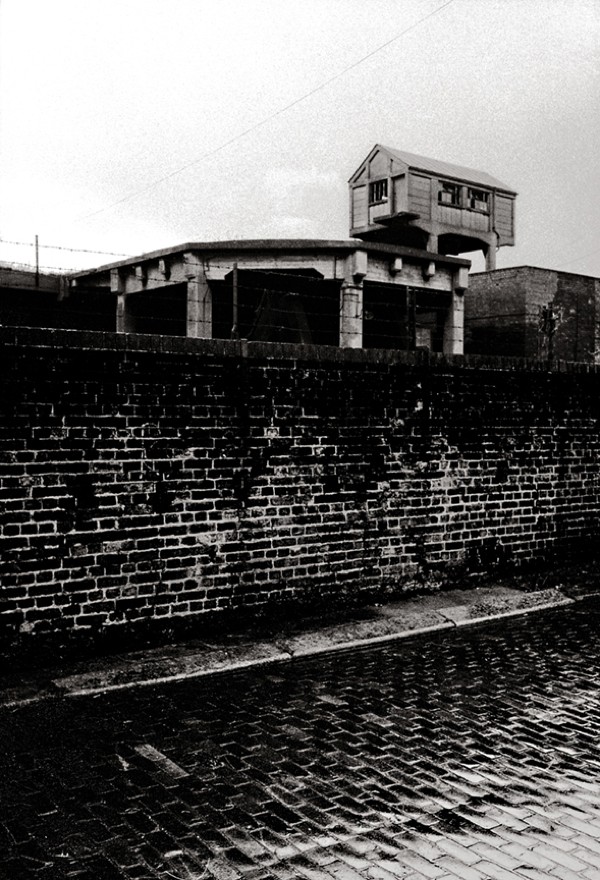
WATCHTOWER, Spitalfields 1982. “If you look at from where I was standing, you might expect to see someone trying to escape and a guard firing a machine gun from the watchtower.”
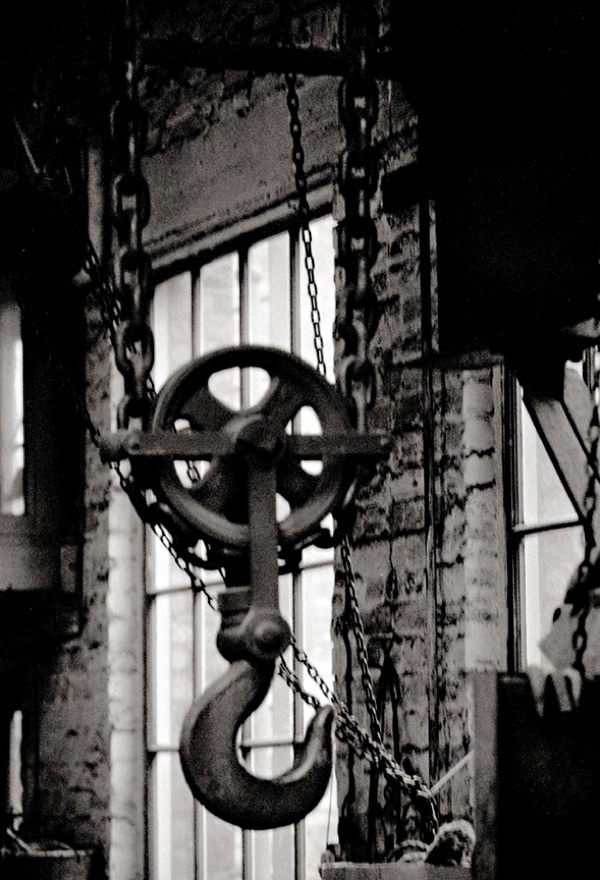
THE HOOK, Whitechapel Bell Foundry 1982.
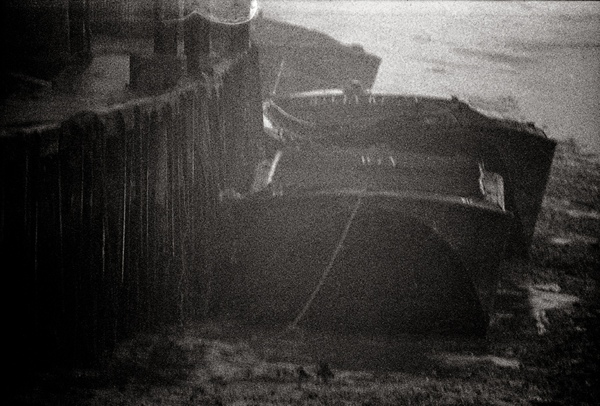
UNLOADED, E16 1962.
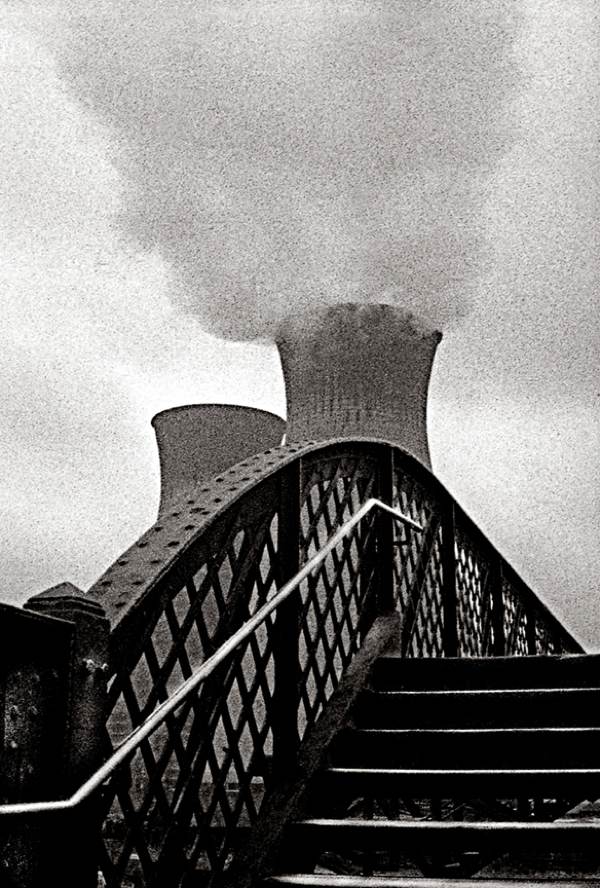
DETOUR, E16 1964.
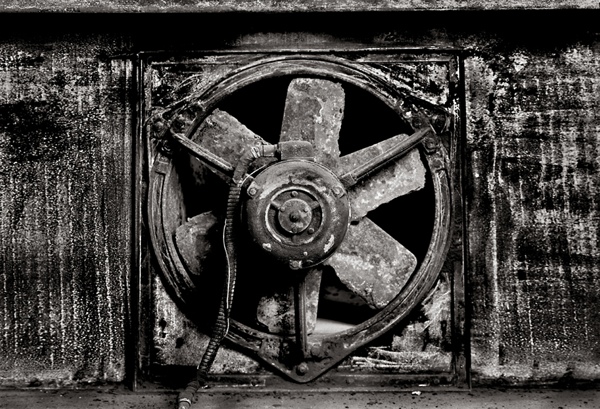 LABYRINTH, E16 1982.
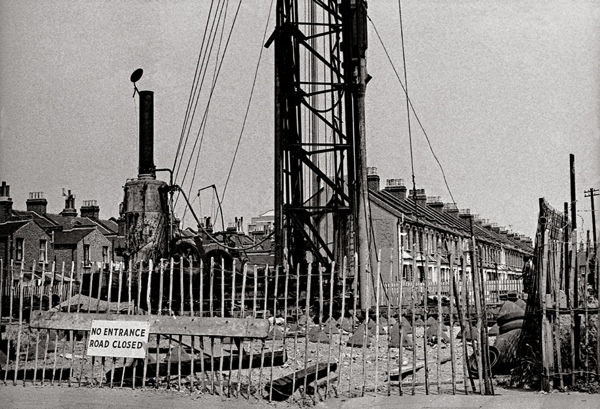
NO ENTRANCE, E13 1962.
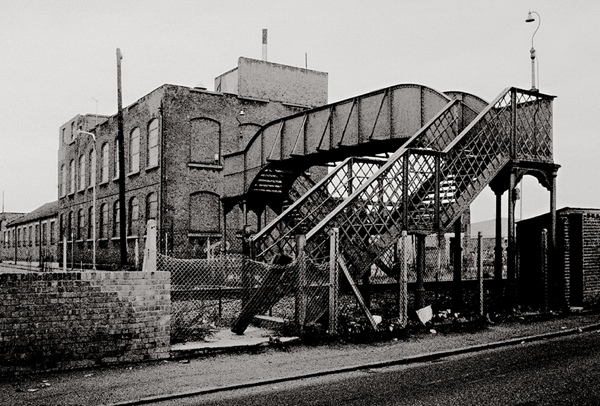
BEYOND THE BRIDGE, E16 1978.
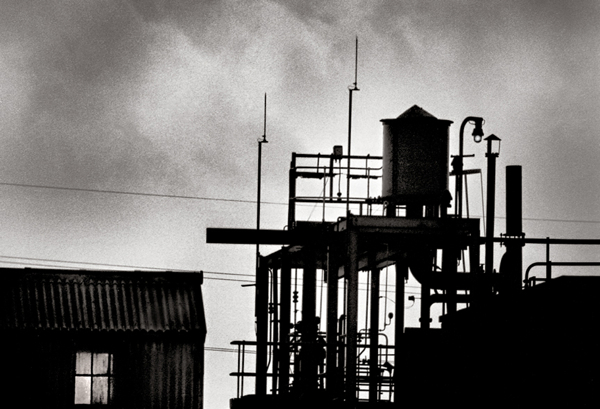
THE WINDOW, E16 1982.
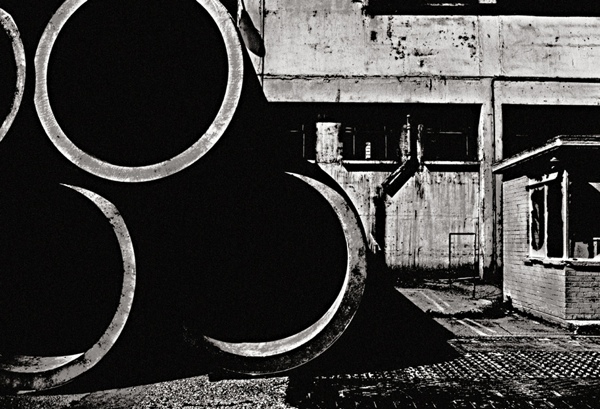
DARK CORNER, E16 1987.
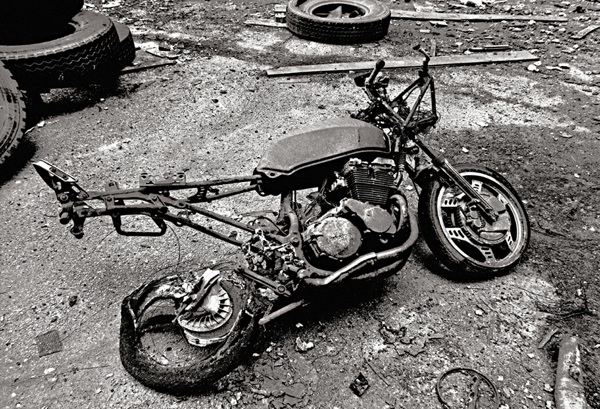
BLIND SPOT, E16 1987.
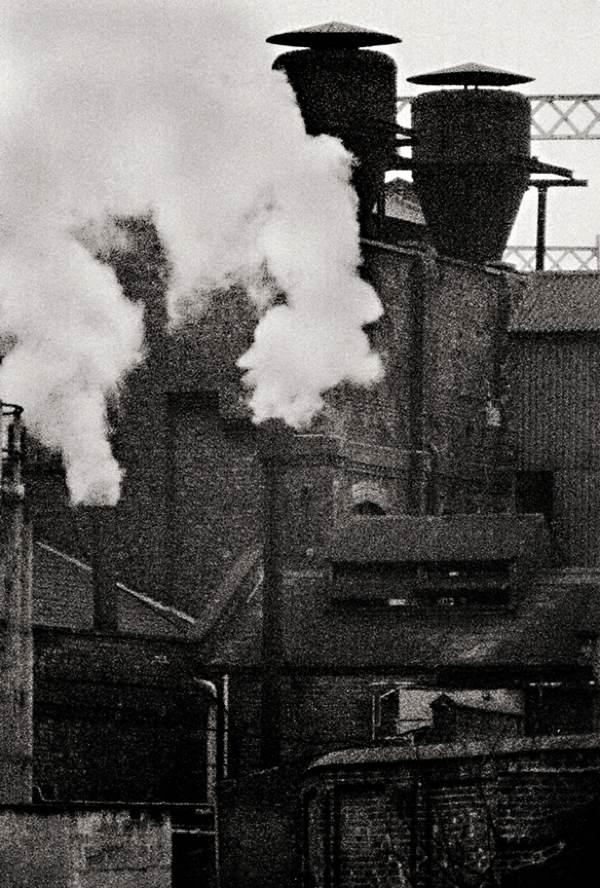
CAPTIVE CITY, E3 1959.
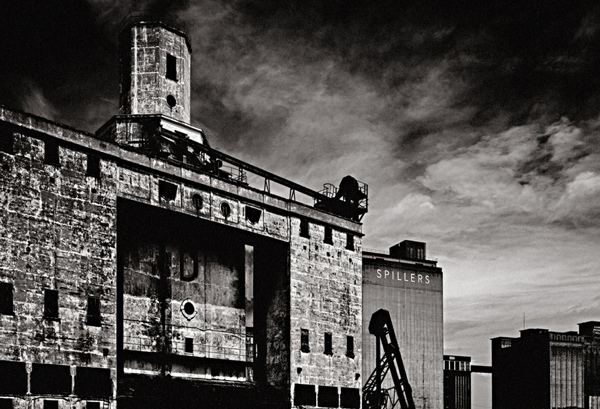
PIER D, E16 1982.
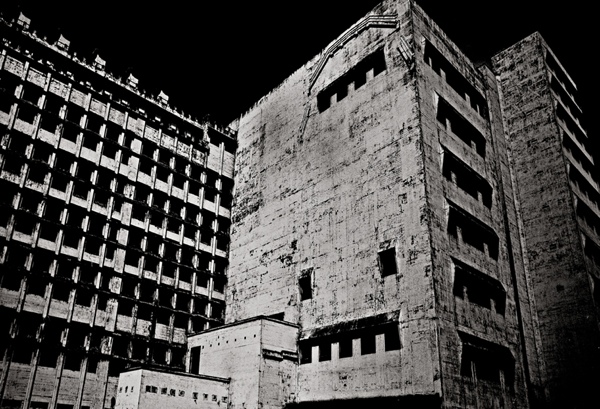
THE CASTLE, E16 1987 – “It has a mocking face!”
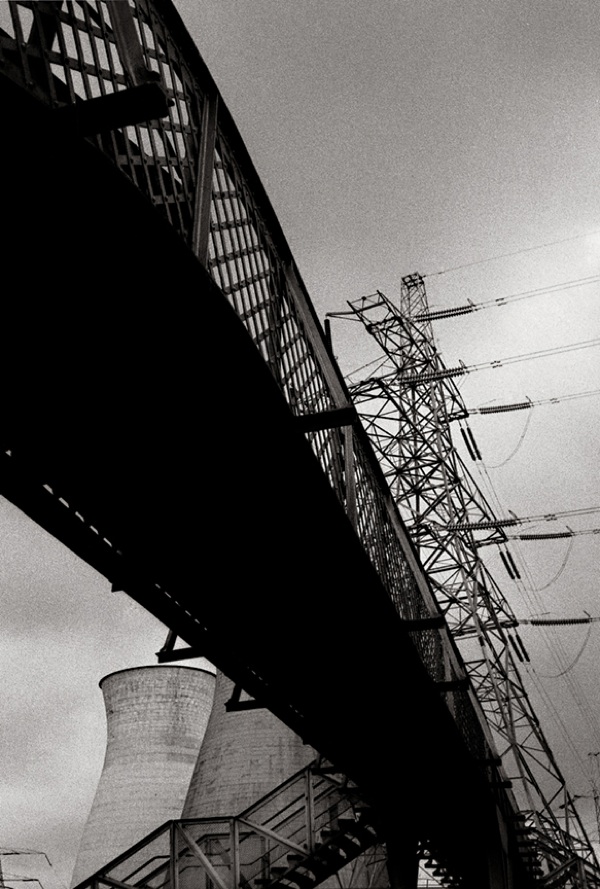
THE LONG WALK, E16 1982.
Photographs copyright © John Claridge
You may also like to take a look at
Along the Thames with John Claridge
At the Salvation Army with John Claridge
A Few Diversions by John Claridge
Signs, Posters, Typography & Graphics
Graduation Day At The Circus School

Tim Roberts, Higher Education Courses Director at Circus Space
Most graduates expect to jump through metaphorical hoops when leaving education and seeking employment in the greater world, but at Circus Space in Hoxton those graduating from the three year course in circus arts have to leap between actual pillars of fire. They call it “the passage through into real life” and it is the climax of the annual leavers’ ceremony overseen by Courses Director Tim Roberts, wearing a black academic gown with an outsize pair of clown shoes, sporting a pointy hat with a red curly wig, and brandishing a flaming wand.
Some might question the wisdom of studying circus arts in preference to a more conventional career option, yet when so many of those in top jobs regularly make clowns of themselves while trying to be taken seriously, learning how to be a professional fool becomes a less unorthodox choice. One would hope that making people laugh should become a growth industry in the recession, and certainly Spitalfields Life Contributing Photographer Martin Usborne and I were eager to cheer on the latest recruits to this essential work, when we joined the audience of family and friends on graduation day.
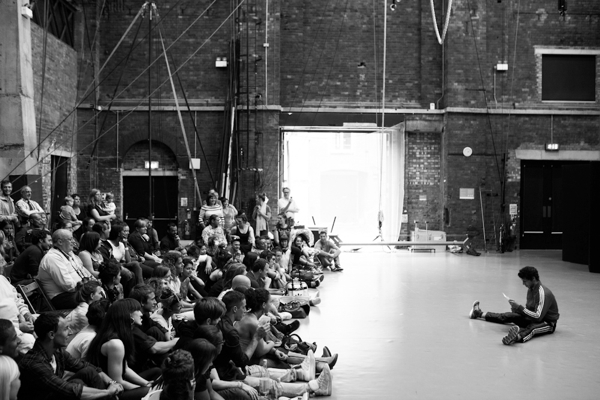
The gathering took place in the former combustion chamber of the cavernous red brick building that was originally constructed as the Shoreditch Electric Light Station in 1896 but is now Britain’s largest circus school. First and second year students opened the proceedings with performances, making fun of their seniors, offering some exuberant stunts and demonstrating the distinctive nature of circus art which exists somewhere between comedy, dance and gymnastics. Juggling hats, spinning hoops, and assuming a diverse variety of outrageous personas, the self-satirising students disarmed us by their apparent incompetence before delighting us with their breathtaking skills. And, throughout this performance, I sensed a collective elation that escalated to fill the room with high spirits.
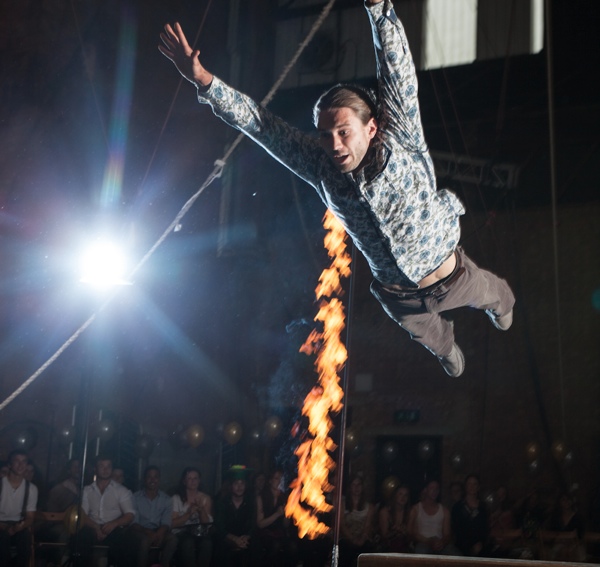
Then, as is customary at a graduation ceremony, the final year students paraded in wearing mortar-boards – but here at the circus school the students had made their own comic hats, drawing woops and cheers from the crowd. Once the soon-to-be-graduates were seated, the audience grew hushed as Tim Roberts lit his wand, only to emit a chorus of “whoo” when he ignited the pillars of fire on either side of the hurdle that the graduates would leap between to land upon the mats placed on the other side, cushioning their landing in the real world.
Some took it at a run, some were measured, some went head-first, some went feet-first, some did nose-dives, some did somersaults, some landed on their faces, some landed on their feet. No two were alike, everyone found their own way to enact the rite of passage. Yet as each arrived on the other side and collected their diplomas, all were surprised to discover they were in another place, somewhere as yet unspecified. The magic of the ritual was that the metaphor of the pillars of flame became real. Exultant now, it was time for the students to share congratulations and take souvenir photographs. It was time for communal celebrations at the completion of three years training, counterbalancing the sadness of farewells prior to separation and the dawning of the future.
You might expect that students facing the current world and burdened with debt from their studies might lack confidence or show trepidation, but I saw none. Several Circus Space students even carried off awards from banks for their personal business plans. I found the graduates of 2012 were as excited and filled with brave anticipation as anyone could be. Leaping through flames had only tempered their resolve.
Augustus Dakeris

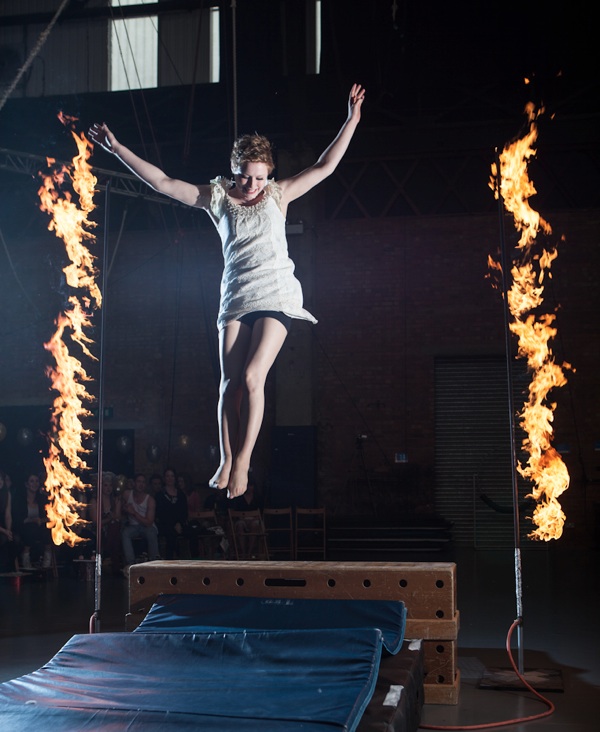
Lydia Harper

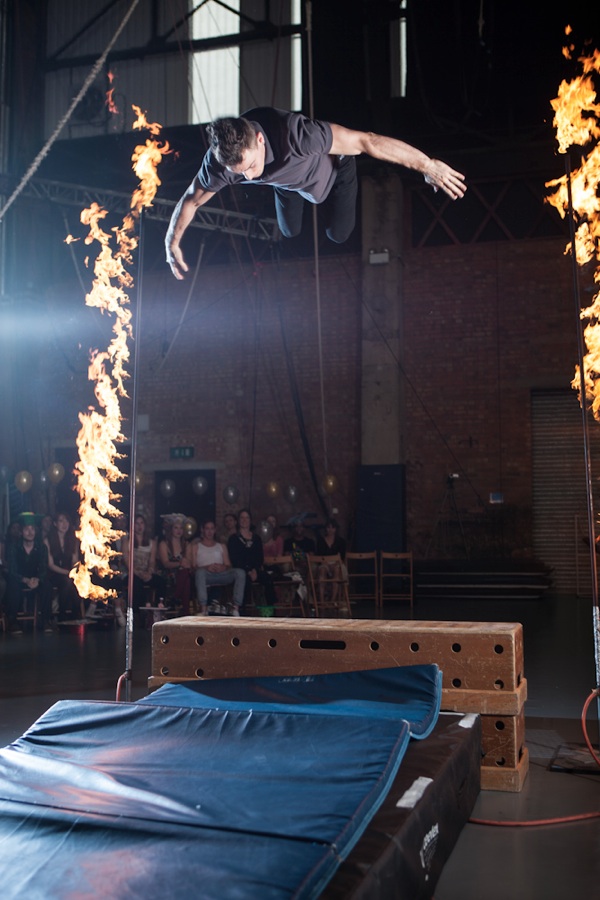
Beren D’Amico
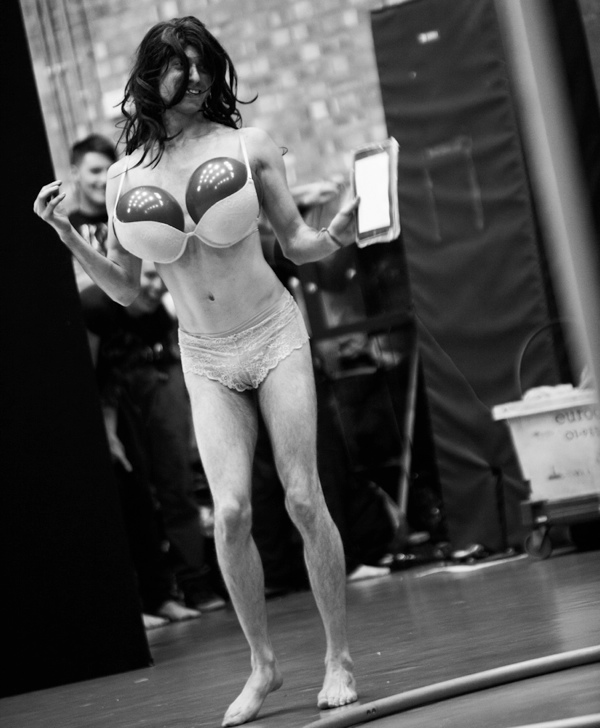
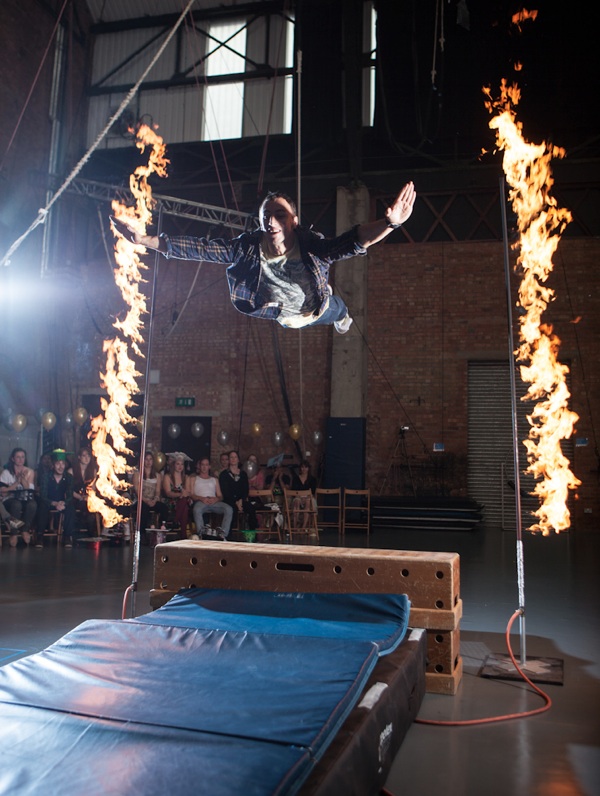
Jean Danel Brousse
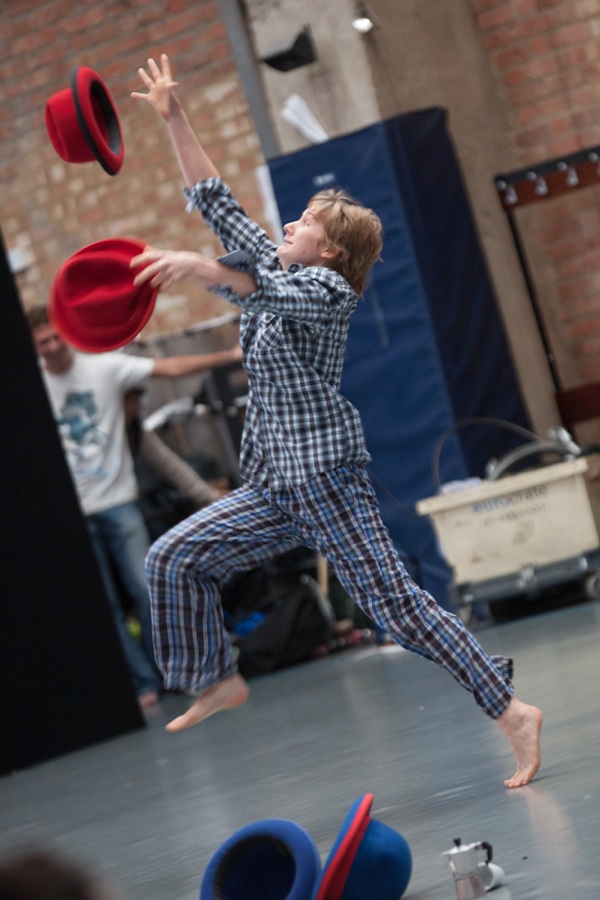
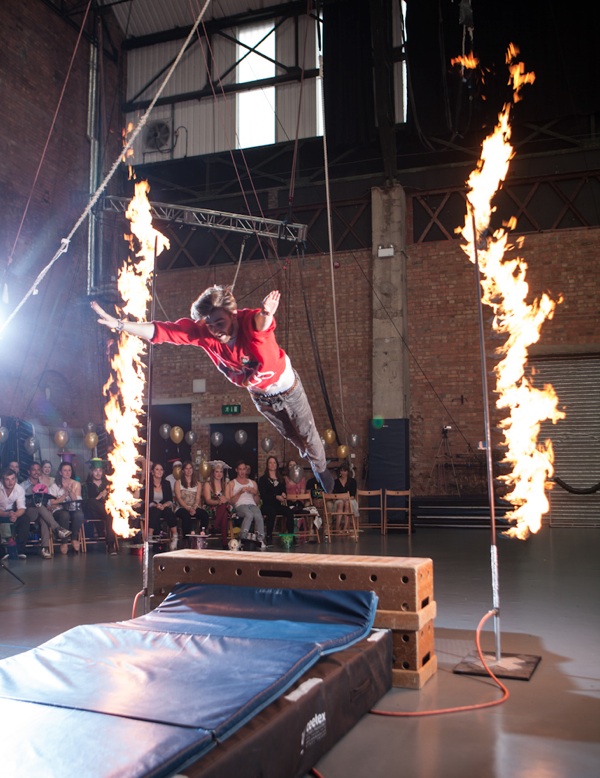
Tom Ball
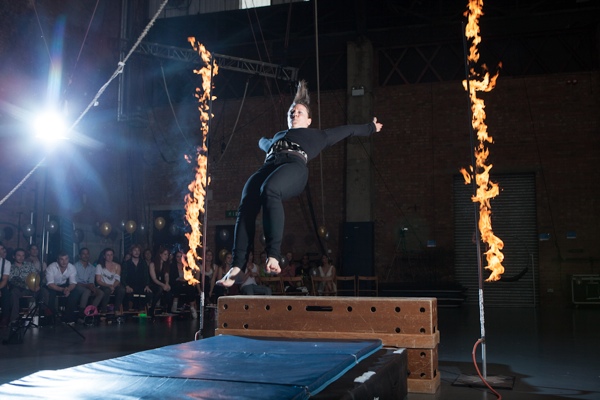
Kate Parry
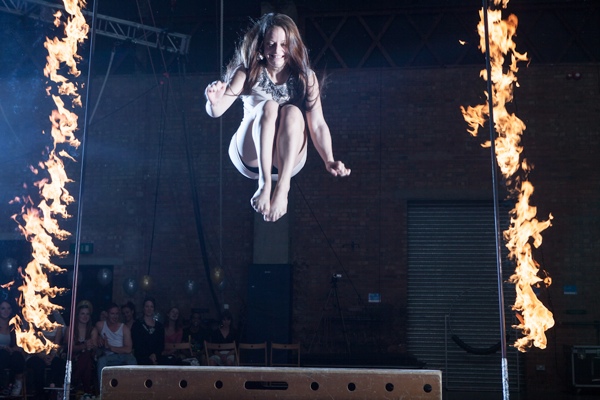
Paula Quintos

Louis Gift
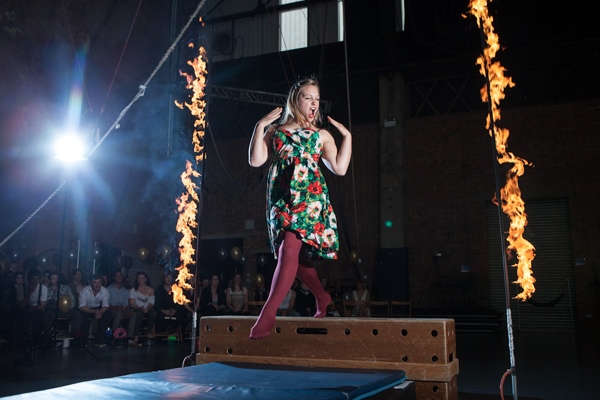
Gemma Creasey
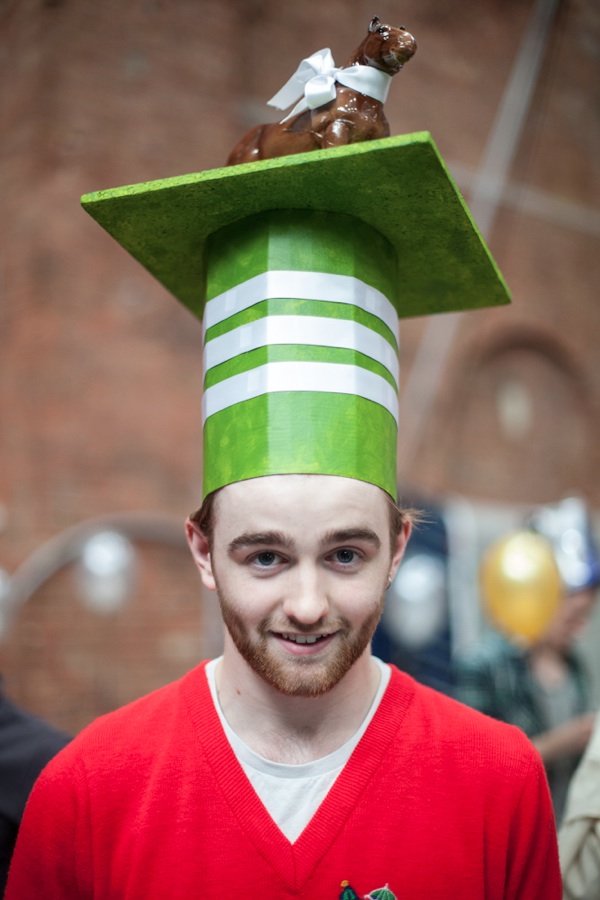
Tom Ball
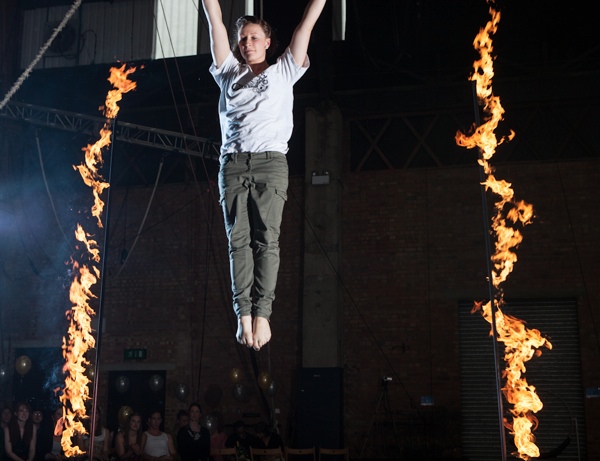
Holly Johnstone

Beren D’Amico
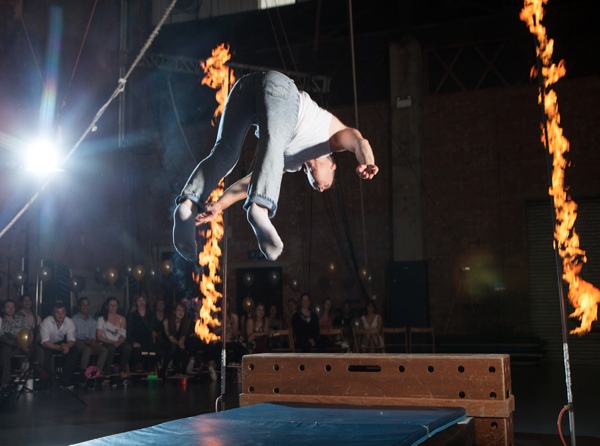
Jonathan Finch
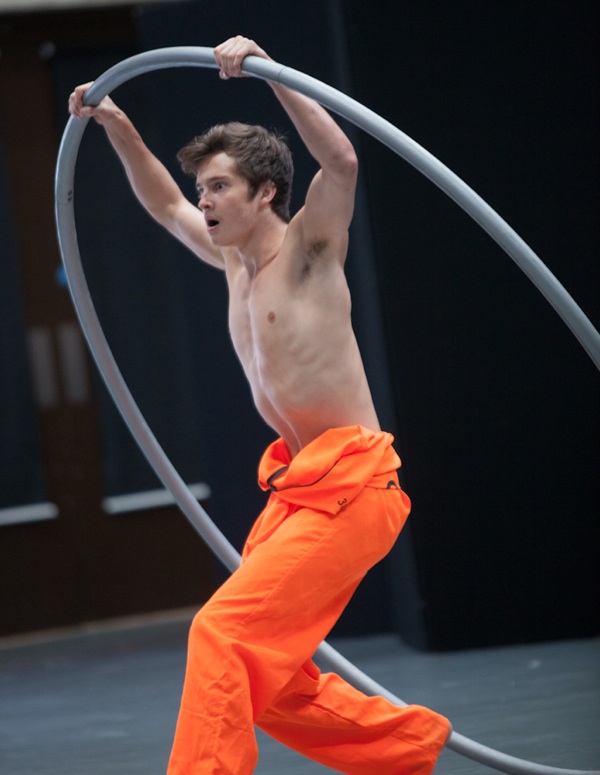

Heidi Hickling-Moore
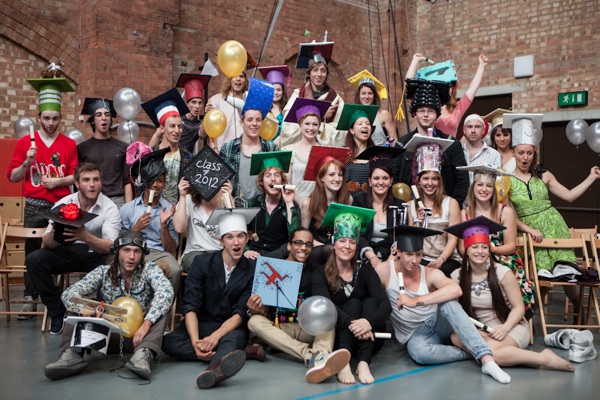

Korri Singh
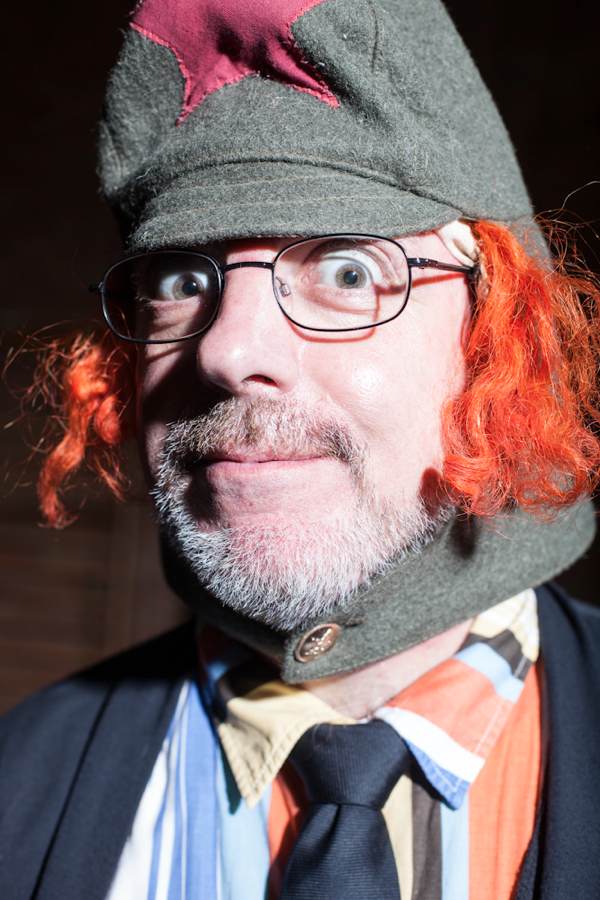
Tim Roberts
Photographs copyright © Martin Usborne
You may like to take a look at Martin Usborne’s new blog A Year To Help
or read these other circus stories
At the 65th Annual Grimaldi Service
Gary Aspey, Wheel Truer
These pictures are by Spitalfields Life Contributing Photographer Colin O’Brien who will be talking about his work today the crypt of Christ Church Spitalfields at 2pm. Commonplace, his exhibition of photographs runs there until 26th August. Throughout this past week, I have been revisiting stories I have done in collaboration with Colin, accompanied by his photos that span an extraordinary career extending from 1948 until the present day.
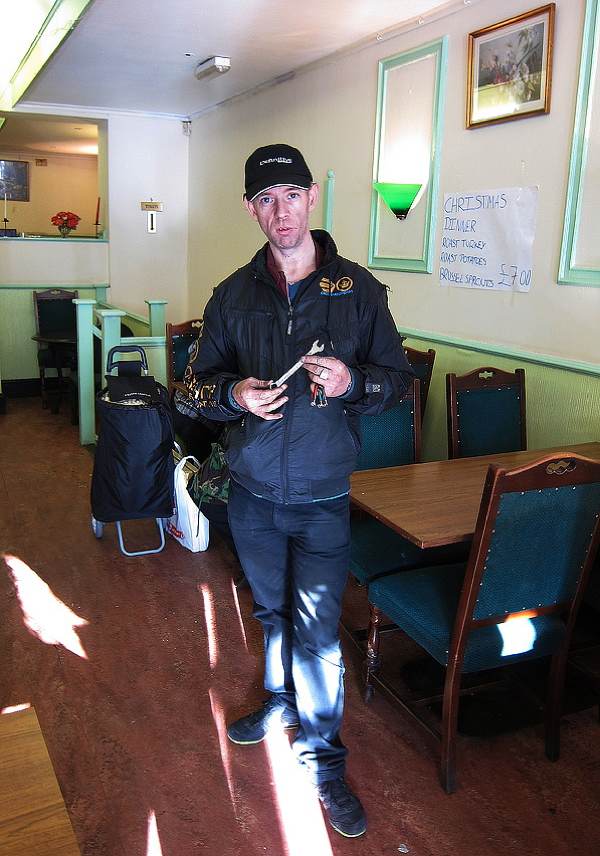
Gary shows off his £45 spanner
One Sunday at Gina’s Restaurant, while I was getting a cup of tea after my weekly visit to the fly-pitchers in the Bethnal Green Rd, Gary Aspey sidled up to Colin O’Brien who was with me and asked to have his picture taken. Naturally, Colin was delighted to oblige and while he was snapping, Gary told me his life story, revealing a fiercely independent spirit. A skinny guy, streamlined for speed in his close-fitting clothes – experience has taught Gary to be circumspect yet he has learnt the art of survival, earning his living by repairing bikes and today he freewheels through existence on the Raleigh Carlton he restored himself.
“It’s a skill within a skill,” Gary explained with authorative intent, when I asked about being a wheel truer, and he showed me the cherished set of keys he carries around slung on his little finger, which allow him to adjust the tension of individual spokes with rare skill, thereby restoring the true form to a damaged or twisted wheel. And it was impossible not to appreciate Gary’s chosen identity as integral to his straight-talking manner and open-hearted nature. Being a qualified bicycle repair technician and frame builder, there is little Gary does not know about bikes, and I discovered there is a lot more to it than you might imagine.
“I’ve seen everything in life in this market. One Sunday, a woman got stabbed in front of me and I saved her life by holding her stomach together. They were stealing a bike and she got in the way, they cut her right across. There used to be so many stolen bikes down here, one time. I’ve seen people going round with boltcutters cutting through bike locks in broad daylight. I’ve been stabbed a few times. I’ve been robbed, gangs of three and four come up to you from behind and if you don’t give your money they knife you. I walked through Old St this morning and they were all coming out of the clubs and throwing bottles at each other. It affronts everyone in this country.
I was born in Bermondsey, but we can get by. My mother hit me, my dad hit me, it was the drugs and alcohol. I didn’t get on. When I was seven, I got hit and I thought, “I want a better life,” so I left. I lived with an old lady, Nelly – her husband was a cabbie. I was running through the back of Bermondsey one day, my cheek was swollen with a bruise out to here and I had a black eye. She said, ‘I’ve seen you, I know your dad. Did he do that to you?’ She took me in.
Back in the seventies when I was a child, I cycled up here to the street that was all bicycle dealers. I worked for George in the market and then at his shop, Angel Cycles. My dad used to do bikes, but he was out of it before I met George. His dad had two stalls here before him, one selling bicycle parts and another selling army surplus, that’s how George made his money, and in 1950 he took the shop in St John St. That man taught me everything I know, he showed me how to straighten a wheel using a true key and wheel jib, – and I never looked back. With my true key, I straightened out the buckled front wheel of a bike for a woman and she gave me twelve pounds.
Nowadays I do the repairs for Camden Cycles in the Grays Inn Rd and in the evenings I build frames in my house. You’ve got to be interested in the culture and technicalities of bikes to be a frame restorer. I will strip them down by hand, it takes five to seven hours to remove the paint. Then I build up the layers again and bake it in a special oven. I’m qualified and I do it legally and responsibly, that’s the only way to do it. I’m always so busy. I never stop. When I first worked in the market I never had fourpence, but I didn’t rob anybody, I used my hands and my skills. If you want to get on in this world you’ve got to believe in yourself.
If you look at me very closely, I’m a dabbling boy. I do what’s around. At quarter past five we put the stall out. For me, it’s like a walk in the park. I’ve been married, I’ve been a carer and I’ve adopted a girl of ten.I’m strong at being strong.”
Once Gary had told his story, he was eager to get on his bike, so Colin and I went round the corner to meet George and his assistant, a senior gentleman by the name of “Young George” who goes to buy the tea and sandwiches. George turned out to be a placid gentleman in his seventies who has been coming to the market for over sixty years. With a helpless smile, he confided to me that he had to close his repair shop because he was unable to overcome his habit of undercharging. Recalling how his father put him on the corner of Brick Lane at thirteen years old to sell three tins of boot polish for a tanner, George was amused to admit that this paternal attempt to encourage a commercial instinct failed miserably. Even today, driving up from Kent to sell a few spare parts is primarily a social exercise. A chance for him and Young George to have a day out and catch up with their regular customers that are now old friends.
To a lonely child cycling the city, like Gary, the culture of street cycle repair offered companionship and a means of earning a living too. Over forty years, the velocipede has now come to incarnate a state of being for Gary Aspey. As he put it to me succinctly – “On a bicycle, people have freedom of movement and freedom of mind.”
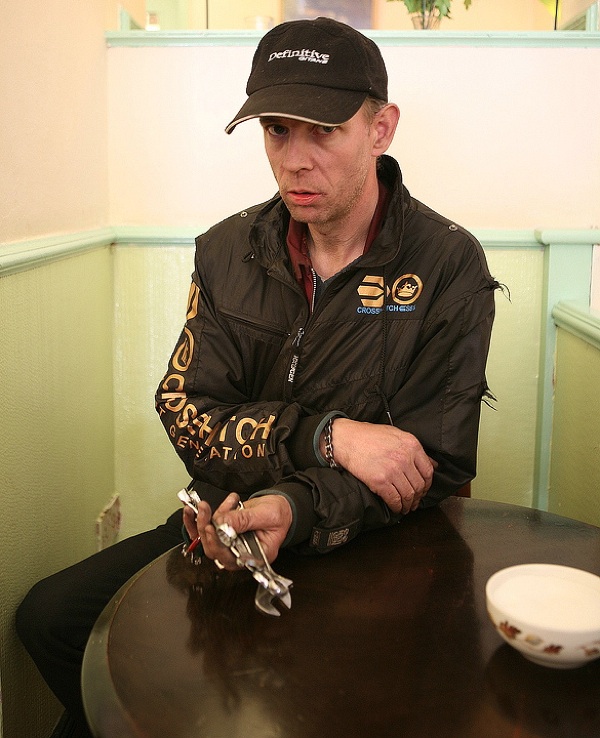
“It’s a skill within a skill.”
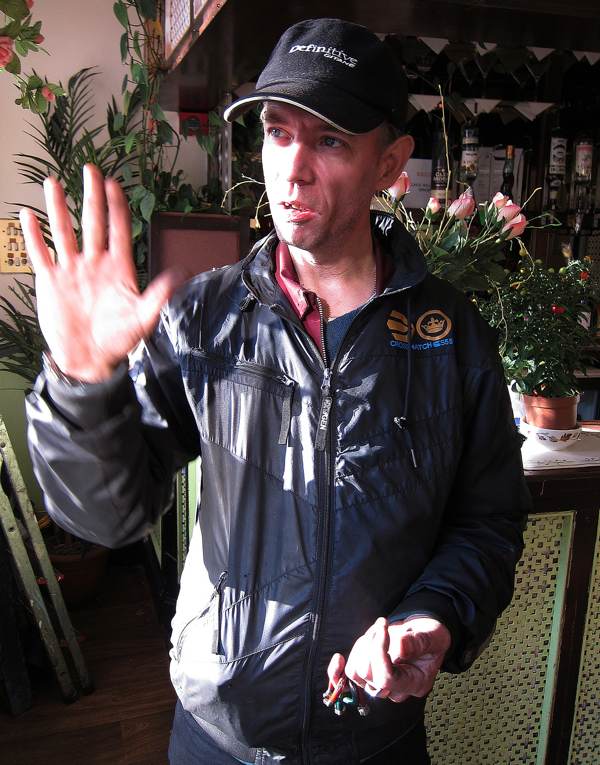
“I was born in Bermondsey, but we can get by”
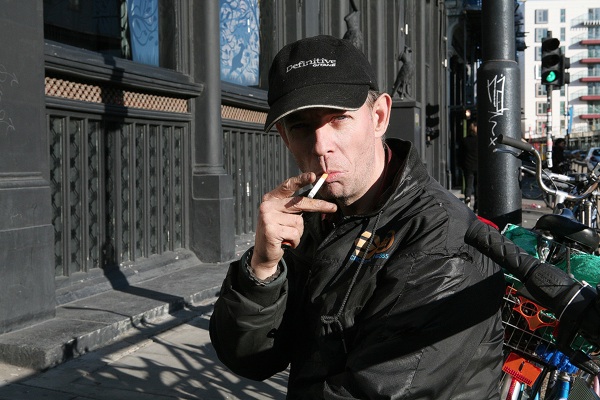
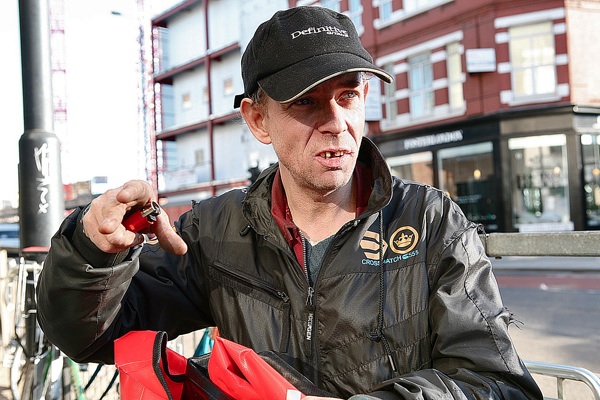
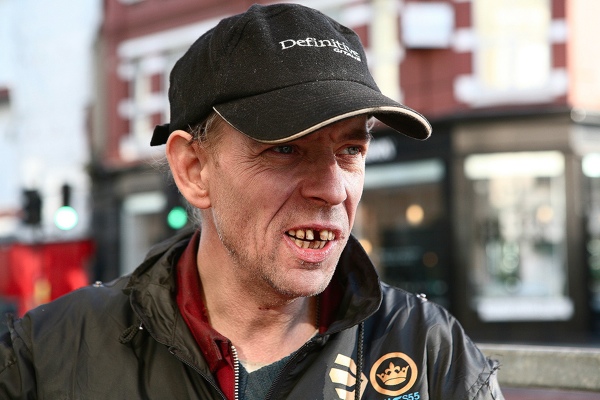
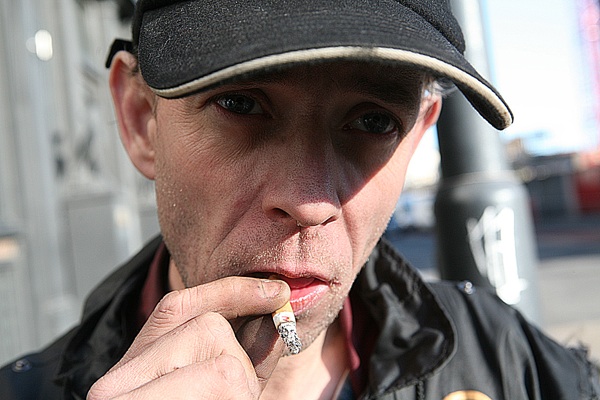
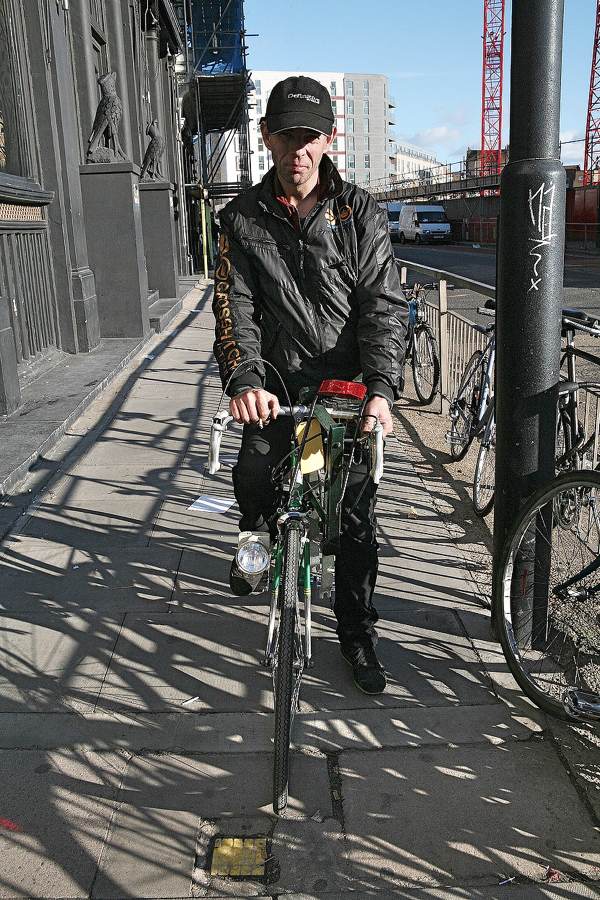
Gary and his Raleigh Carlton – “On a bicycle, people have freedom of movement and freedom of mind.”
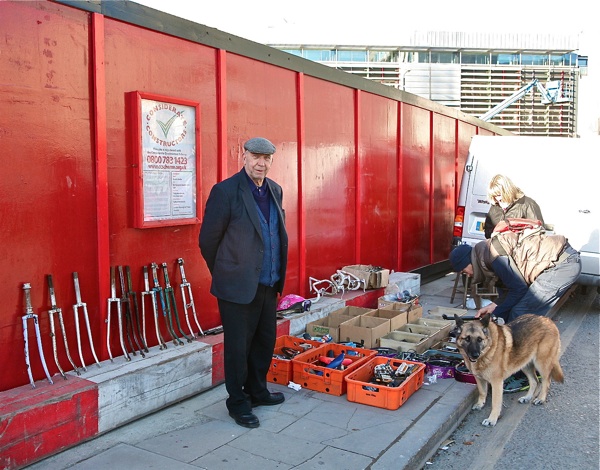
“That man taught me everything I know”
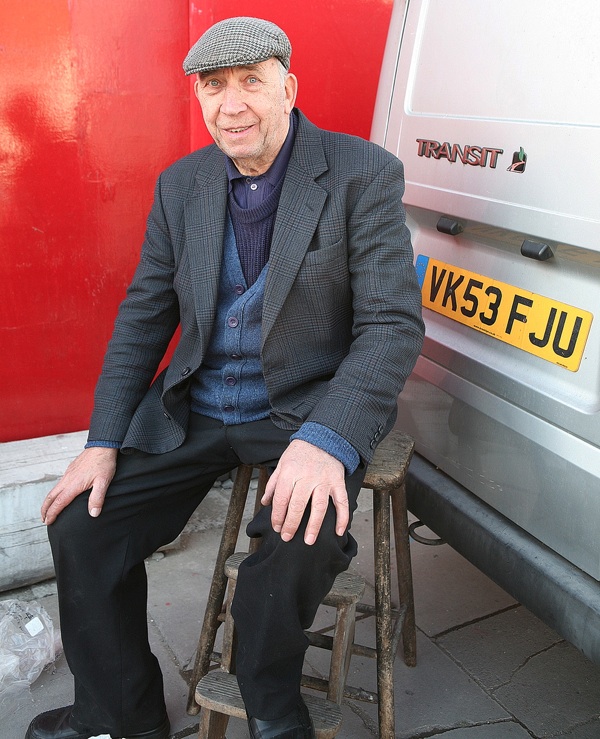
George has been dealing in bicycle spares in the market for sixty years.
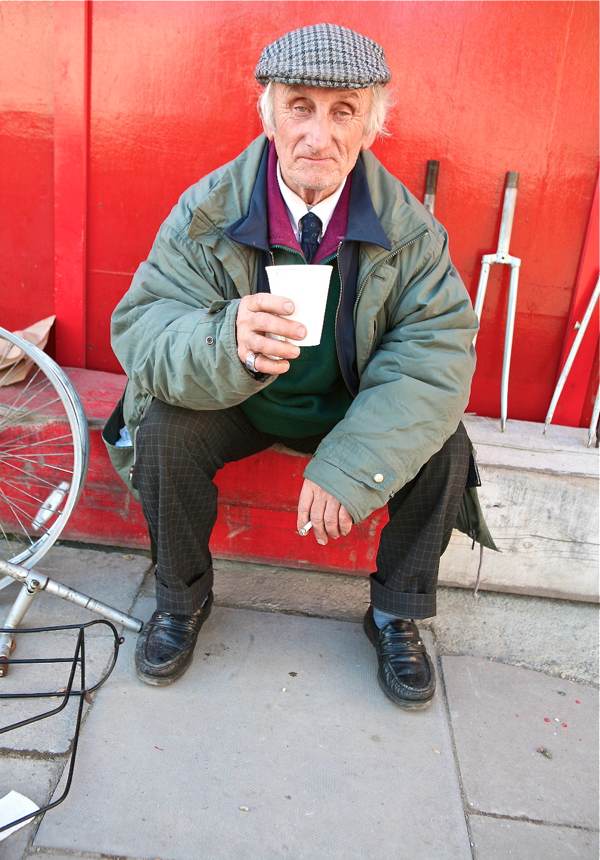
George’s assistant, “Young George.”
Photographs © Colin O’Brien
Commonplace, Photographs by Colin O’Brien 1948-2012, runs at the Crypt of Christ Church, Spitalfields from today, 28th July until 26th August. Open Tuesdays, Saturdays & Sundays 1-6pm. Colin O’Brien will be talking about his work today, Sunday 29th July, at 2pm.
The Newspaper Distributors of Old London
Commonplace, an exhibition of photography by Spitalfields Life Contributing Photographer Colin O’Brien opens today the crypt of Christ Church Spitalfields and runs until 26th August. Colin will be talking about his work tomorrow, Sunday 29th July 2pm. Throughout this past week, I have been revisiting stories I have done in collaboration with Colin, accompanied by his photographs that span an extraordinary career extending from 1948 until the present day.
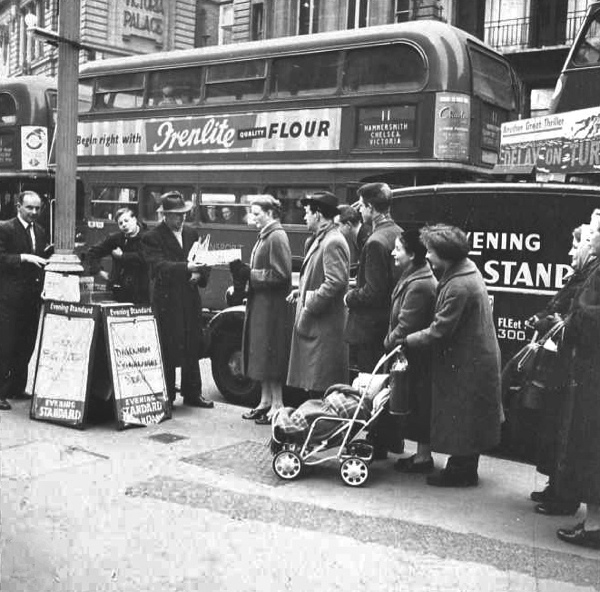
When Colin O’Brien was growing up in a slum tenement in Clerkenwell in the nineteen forties, his mother used to give him a penny and send him out to buy a copy of the Evening Standard.
Since 1827, the streets of London echoed to the cry of “Standodd! Midday Special! Standodd! Evening Special!” and, at its peak, there were over seven hundred distributors sending the paper as far afield as Liverpool and Brighton. Yet by the time the Evening Standard became a free paper two years ago, there were just one hundred and sixty distributors and today there are only sixty left. So when a handful of heroic distributors from the glory days of the Evening Standard gathered at the Bishopsgate Institute, one Saturday in January, for old times’ sake, I asked Colin to be there to take their portraits.
“I used to be a paper boy when I was at school in Catford in 1962.” recalled John Cato who worked for the Standard until 2008, “And when I left school at fifteen in 1965, the guy who delivered the Evening Standard asked me if I’d like to be his van boy. I had to be at the station to collect the papers at ten and I’d go off with him in the van to deliver and collect the money from the sellers. Then I’d go home for lunch and at two o’clock there’d be another driver I worked with to deliver the later editions. We got paid weekly, so on Friday I’d go back to Shoe Lane with the driver to collect my wages and I used to mix with the other van boys and we all made friends. Sometimes we used to socialise with the van boys from the Evening News, even though they were our competitors.”
It was a furious business, bundling up the papers and tying them up with string as they came off the printing presses in Shoe Lane, then sending them off continuously in the fleet of vans as the editions updated through the day. Years now after they retired, most of these men still have the ink-stained hands and backache that are marks of a lifetime in newspaper distribution.
Frank Webster started as a rounds boy, delivering papers to newsagents by bicycle four times a day.“I was thirty years old before I graduated to a driver,” he told me with shrug, “they said it was the longest apprenticeship – in fact, it was a bit of a closed shop, the families knew each other for generations. You needed a relative in the business to get a job and it was based on seniority, it was dead man’s shoes. Yet I always enjoyed going to work, being outdoors and meeting all the vendors, they were such characters.”
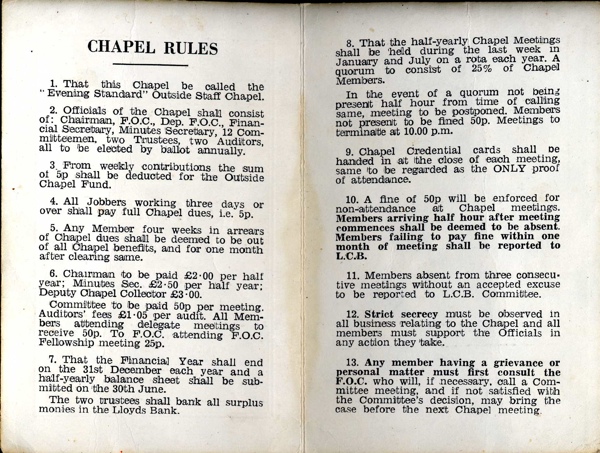
“Most of us took early retirement between 2007-2009 when they were trying to cut costs, before they sold the paper to Alexander Lebedev for £1 and it went free,” explained Rob Dickers with a philosophical grin. He started at fifteen and his father worked for thirty years as a compositor at the Standard since before World War II. “From the late sixties, there was a great sense of camaraderie but when the printing moved out from Shoe Lane to Rotherhithe and we were deunionised, the money dropped.” Rob and his pal John Cato were very active in the Chapel, as the branch of the union was termed. “I became Father of the Chapel, the shop steward,” revealed John, “The management de-recognised the union but I built it up again from three to eighty. That’s my claim to fame really.” John’s efforts ensured his members received better pensions and redundancy deals, crucial for the employees as the industry itself began to flag.
The retrospective irony is that while the newspaper managements enacted aggressive policies upon their workforce to drive costs down during the last decades of the twentieth century, in this century the entire newsprint industry finds itself eclipsed by electronic media. Yet these proud men are the last of a hardy breed who devoted their lives to keep the papers rolling and then fought fiercely against tyrannical employers to protect their livelihood as the world changed around them.
On the day after Colin O’Brien took these portraits, the printing of the Evening Standard moved from Rotherhithe to Broxbourne and the first issue of the London Evening Standard not printed in London hit the streets. A new chapter opened for the capital’s most famous paper and the implications of this new development were yet to be discovered. No longer is the cry of “Standodd! Midday Special! Standodd! Evening Special!” to be heard upon the streets of London and the soul of the city is the lesser for it.
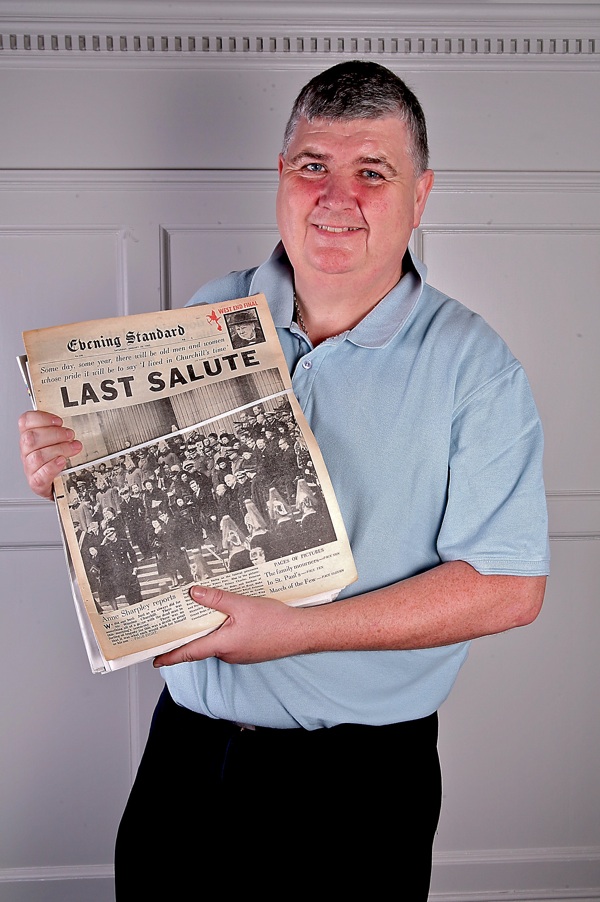
Victor Wilson, Distributor at the Evening Standard, 1972 – 2007.
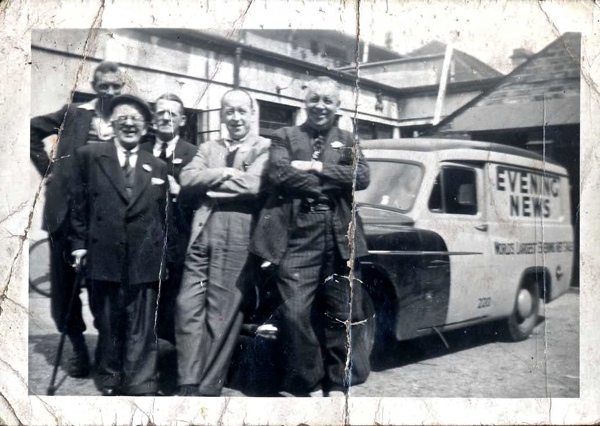
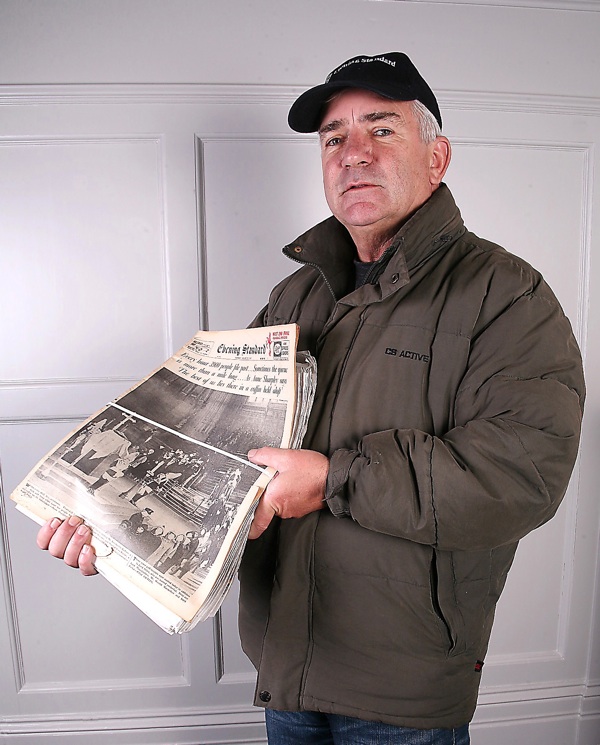
Frank Webster, Distributor at the Evening Standard, 15th August 1966 – 30th September 2007.
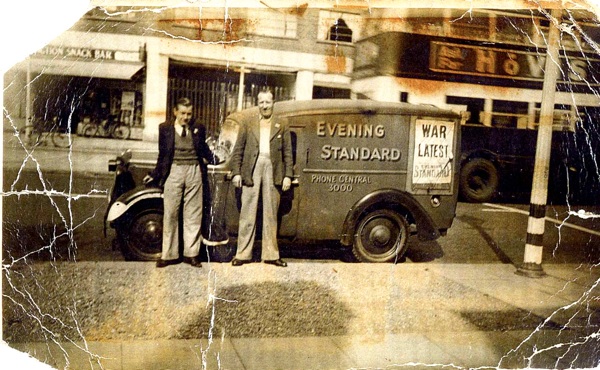
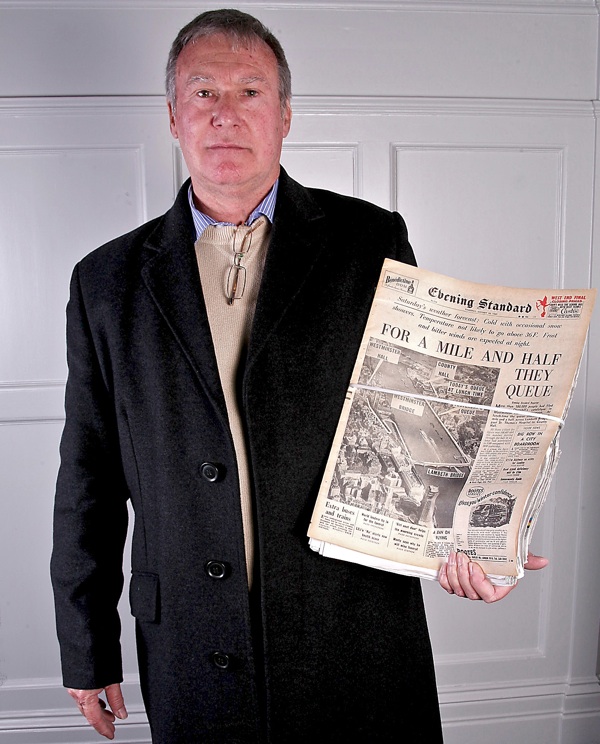
Ron Chadwick, Distributor at the Evening Standard, 1963 – 2006.

Former Evening Standard headquarters at Shoe Lane.
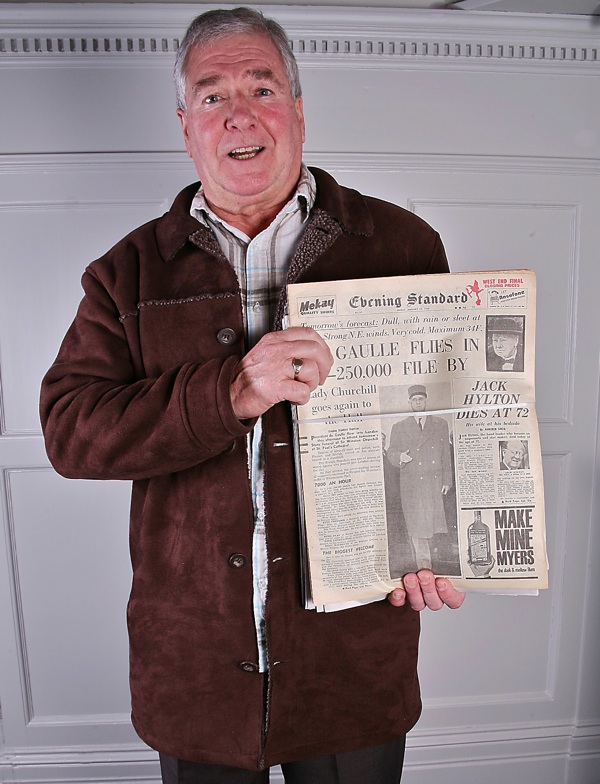
David Patten, Distributor at the Evening Standard, 1966 – 2009.
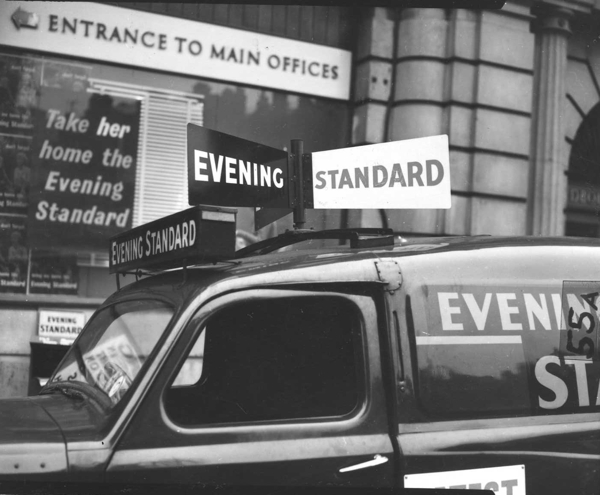
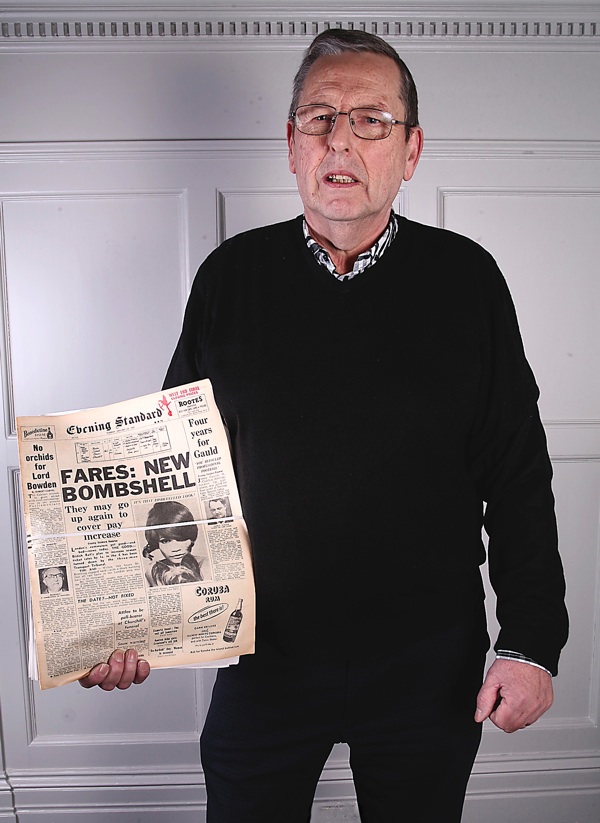
John Cato, Distributor at the Evening Standard, 1965 -2008.
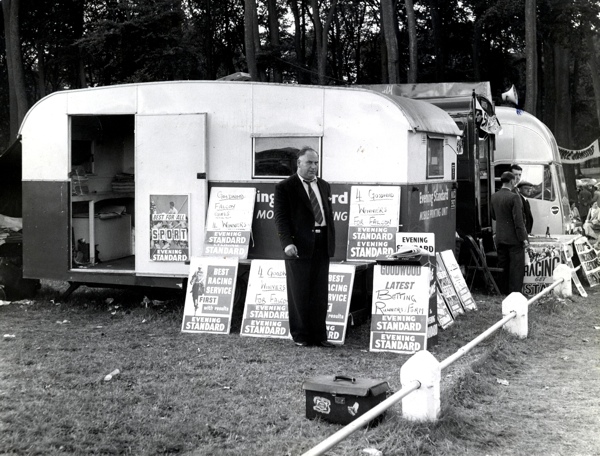
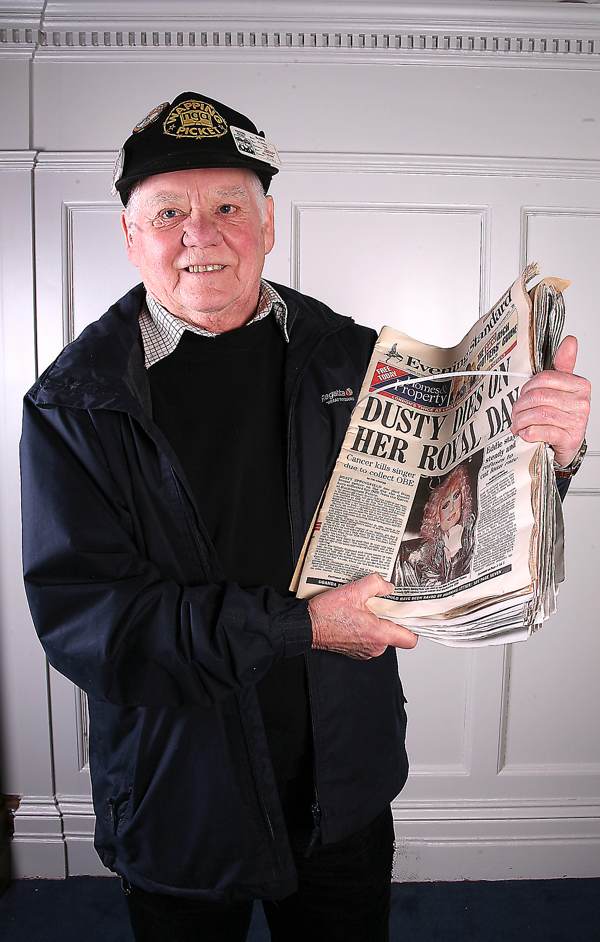
Peter Steward, Distributor at the Evening Standard from 1964.
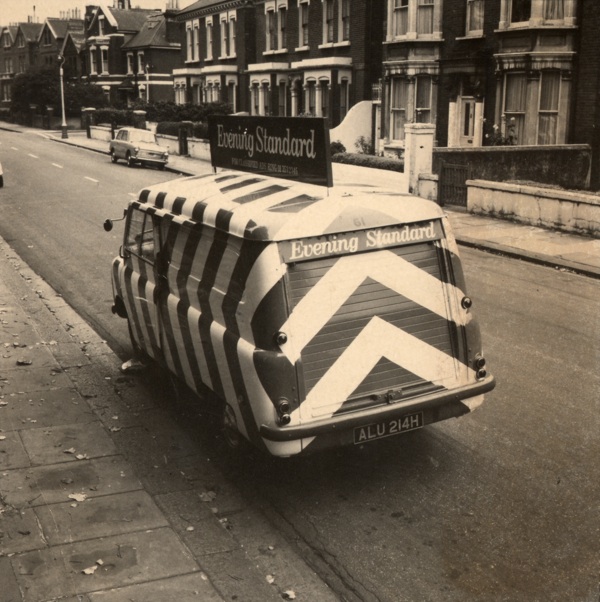
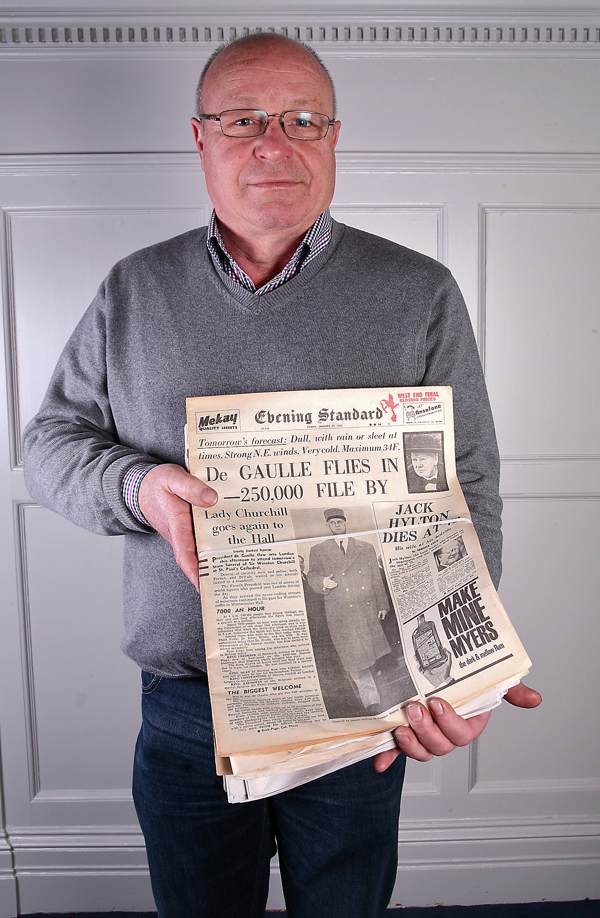
Brian Eller, Distributor at the Evening Standard from 1970 -2008.
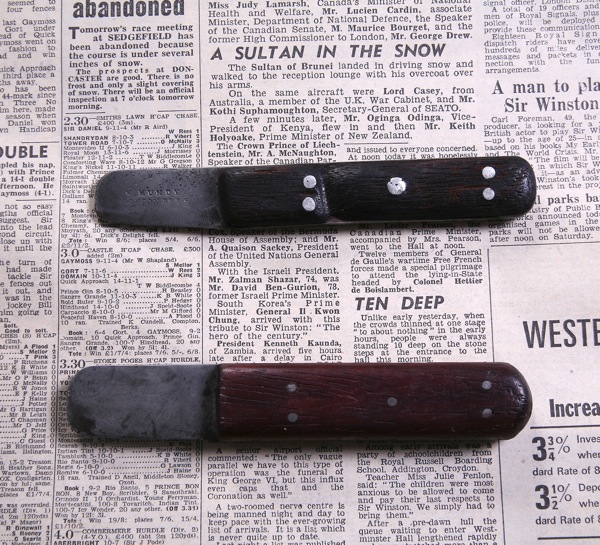
Rob Dickers’ Newspaper Distributor’s knife. The notch on the top knife was worn by winding string around the handle to tie the bundle. “They wouldn’t let you go to work without one of these and a union card,” said Rob.
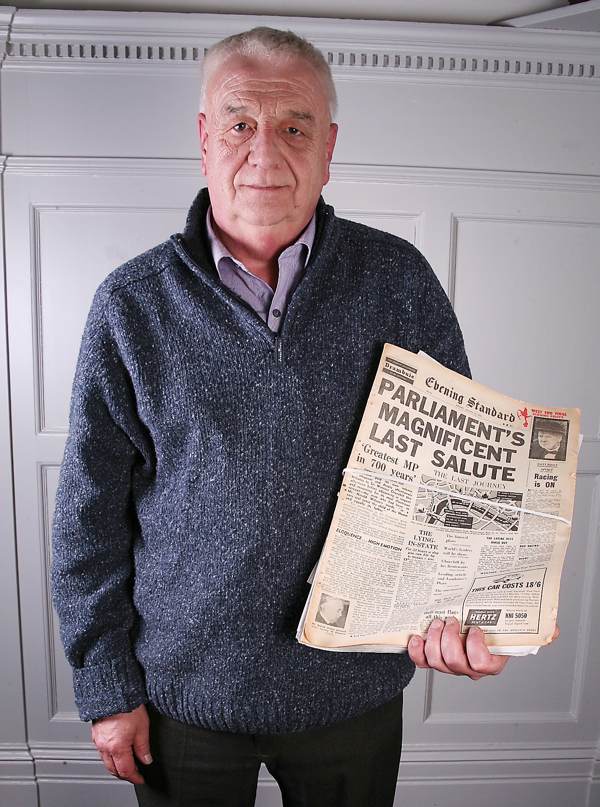
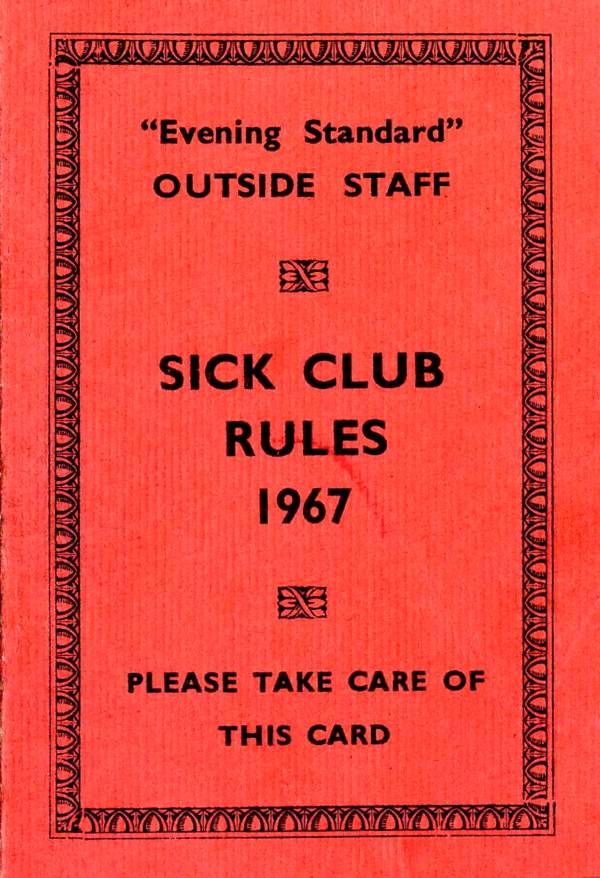
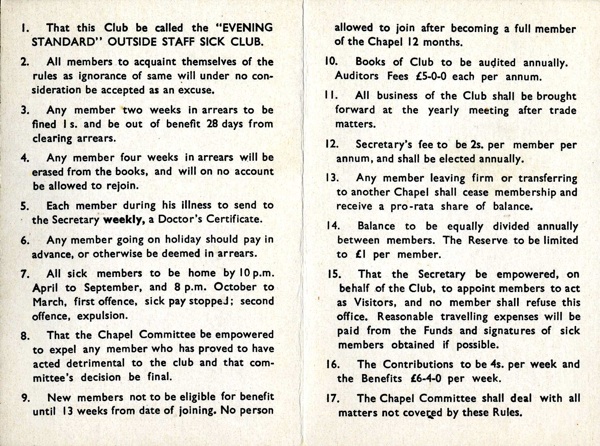

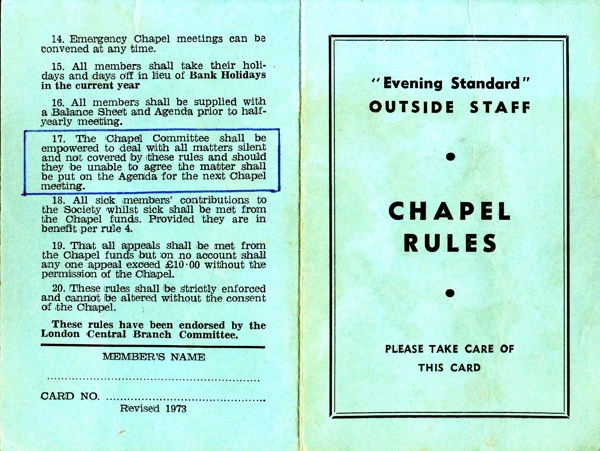
Barry Pach worked in the Bill Room at the Evening Standard from 1960 – 1989, writing the bills for the newspaper hoardings by hand.
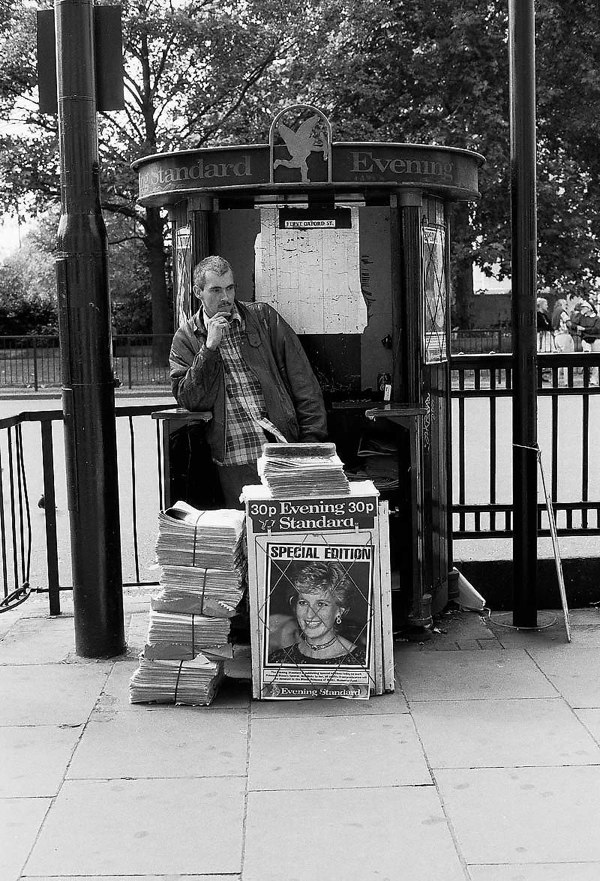
Portraits and final photograph © Colin O’Brien
Archive images courtesy of Bishopsgate Institute
Commonplace, Photographs by Colin O’Brien 1948-2012, runs at the Crypt of Christ Church, Spitalfields from today, 28th July until 26th August. Open Tuesdays, Saturdays & Sundays 1-6pm. Colin O’Brien will be talking about his work on Sunday 29th July 2pm.
Colin O’Brien Goes Back To School
Commonplace, an exhibition of photography by Spitalfields Life Contributing Photographer Colin O’Brien runs at the crypt of Christ Church Spitalfields from tomorrow, Saturday 28th July until 26th August. Colin O’Brien will be talking about his work this Sunday at 2pm. During this week, I am revisiting stories I have done in collaboration with Colin, accompanied by his photographs that span an extraordinary career extending from 1948 until the present day.
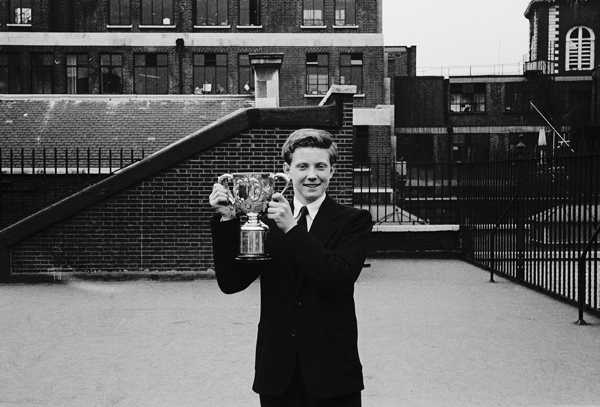
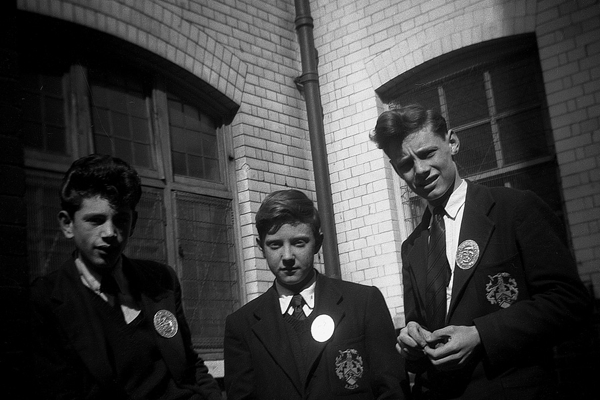
This is Colin O’Brien, head boy at Sir John Cass School in Aldgate, on the day he left the school in 1955, proudly holding aloft the Lord Broughshane Cup and making a fine show of facing the future with confidence. Standing up straight, with his hair neatly brushed, he is the incarnation of youthful optimism.
So, as you can imagine, Colin was a little tentative when he returned to his old school last year, more than half a century later – for the first time since that day – to attend the leavers’ evening and meet the class of 2011.
“I think I was eager to please, and I was very happy,” was Colin’s self-effacing explanation when I asked how he became head boy, as we walked up Aldgate to Sir John Cass School, “I was always top of the class, even though I am not academic and I left with no qualifications.”
While still at school, Colin had shown flair in photography, recording the life around him in Clerkenwell where he grew up and even the car crashes that he witnesses from his window, so it was perfectly natural for him to take a set of pictures of his classmates to record the moment when they knew each other best – before they went their separate ways for ever.
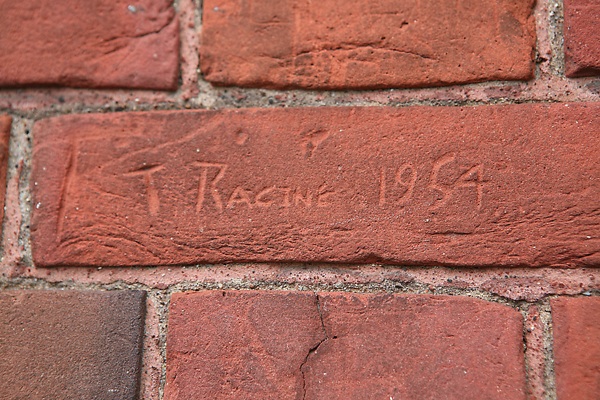
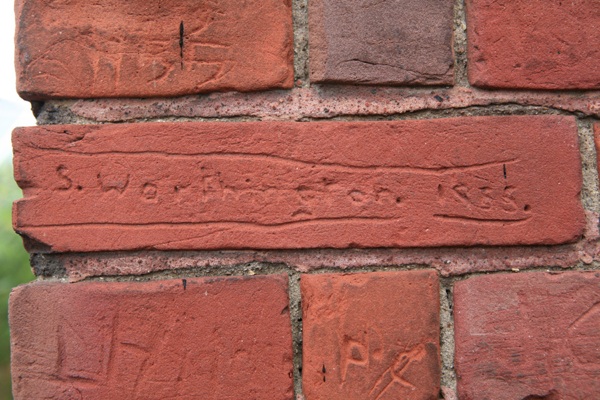
I joined Colin on a sentimental quest to discover his youthful self of this photograph taken in July 1955 at the Sir John Cass School. We looked first in the school trophies cabinet for the Lord Broughshane Cup but it was no longer to be found and, to Colin’s surprise, when he climbed up to the rooftop playground where the picture was taken, he discovered that a garden had grown there, with beehives in a row, and flowers and vegetables sprouting where once he used to play. Yet, unexpectedly, evidence of his youthful presence remained in the form of indentations in the bricks, where Colin and his pals used to polish pennies by rubbing them into the wall, creating round notches that remain half a century later. And, to Colin’s delight, there were names graven into the brick too, among them “S.Worthington 1955″ and“Tony Racine 1954.” – names that he remembered as those of his classmates.
Once these unforseen discoveries confirmed that Colin’s memory was not a dream, his photographs not mirages and his youthful self not a spectre, we were emboldened to enter the assembly hall where, beneath the gaze of eighteenth century worthies that lined the walls, the current pupils of Sir John Cass School were gathered with their parents to say farewell to the leavers. Unlike Colin, who left at fifteen to face the world, these pupils were only completing their Primary education at ten or eleven and going on to Secondary education in the Autumn. Yet they were each required to stand up and complete a sentence that began, “When I leave university, I want to be…” and they did so with admirable resolve and ambition, even the ten-year-old realist who rewrote the sentence declaring, “I don’t know yet what I want to do when I leave university.”
Colin was there to give out the prizes to his youthful counterparts at the culmination of the evening, after performances by members of the school string orchestra and drama presentations. He shook hands with each of the leavers as they were given their bible, dictionary and thesaurus – revealing to me later that he still had his own leavers’ bible at home. And then, as the event drew to its close and all the achievements both individual and collective had been celebrated, the equivocal emotional nature of the event became apparent, as in the melee a few gave way to quiet tears. Meanwhile, there were a host of others running around with digital cameras to collect pictures of classmates as keepsakes, just had Colin had done all those years earlier.
As we descended a staircase afterwards, Colin pointed out the spot where he was first told about sex, admitting that he did not believe it at the time. In the playground, he confessed that this was where he felt the tingling sensation inspired by the object of his nascent affection Olive Barker, the daughter of the caretaker of the Bishopsgate Institute. “She never even looked at me,” recalled Colin fondly, “It was my first experience of love.”
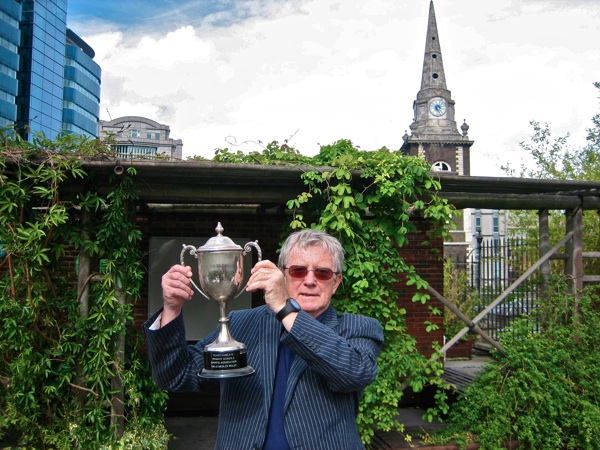
Colin O’Brien, 18th July, 2011
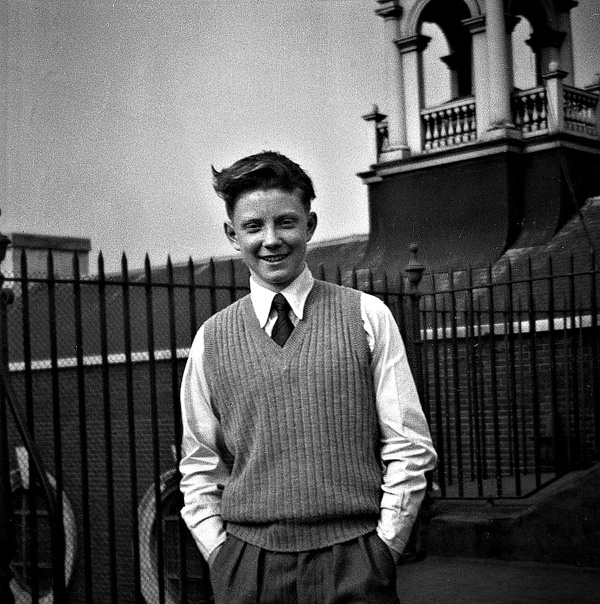
Colin O’Brien, July 1955
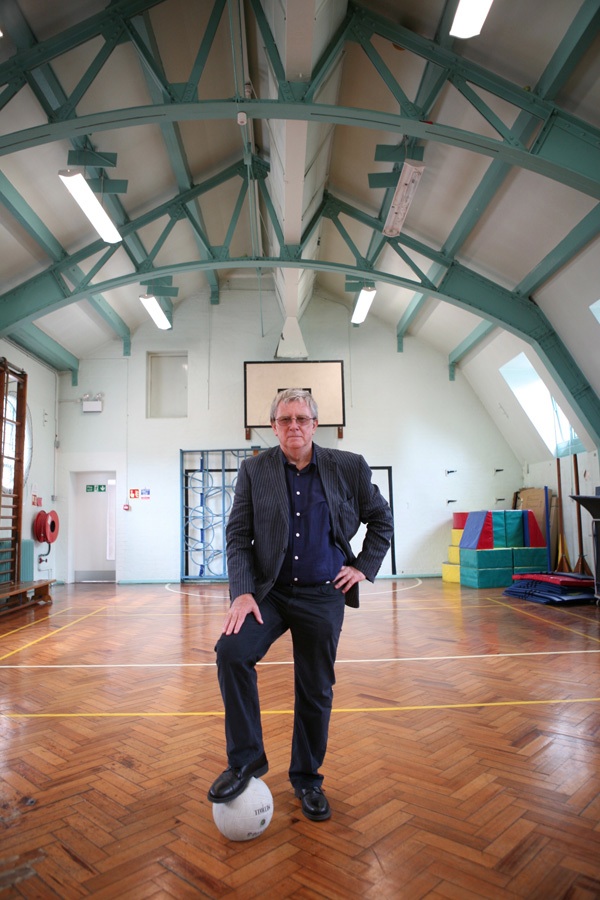
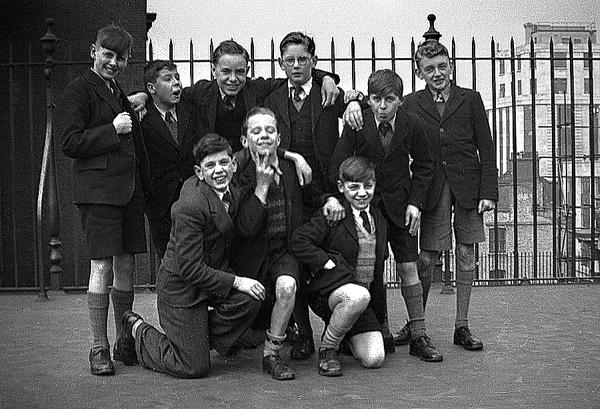
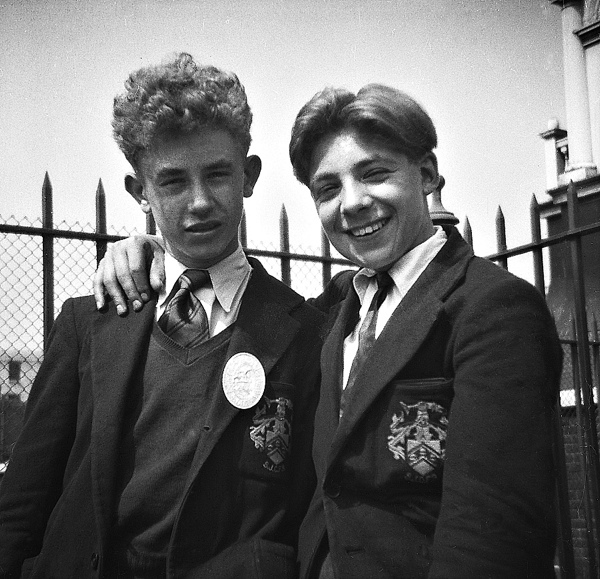
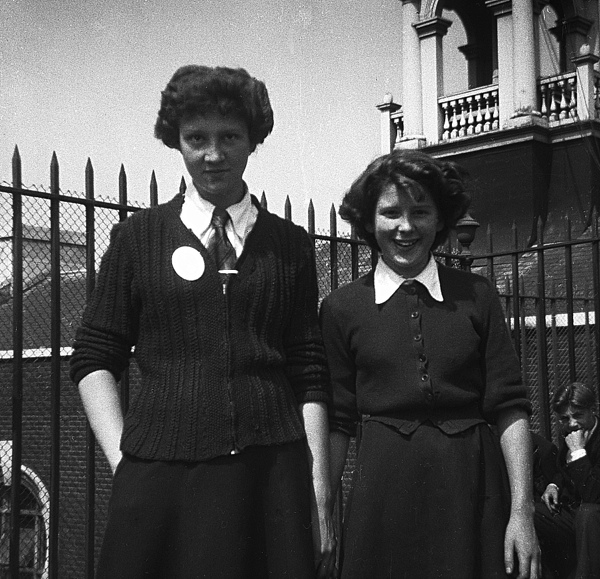
Olive Barker, the object of Colin’s unrequited youthful affection is on the right.
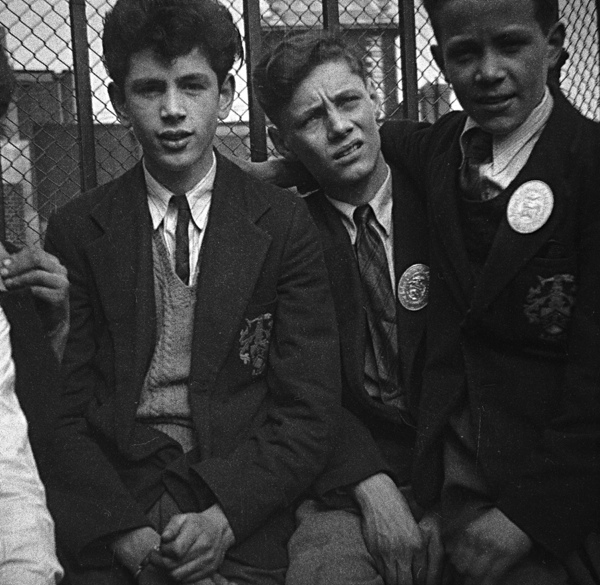
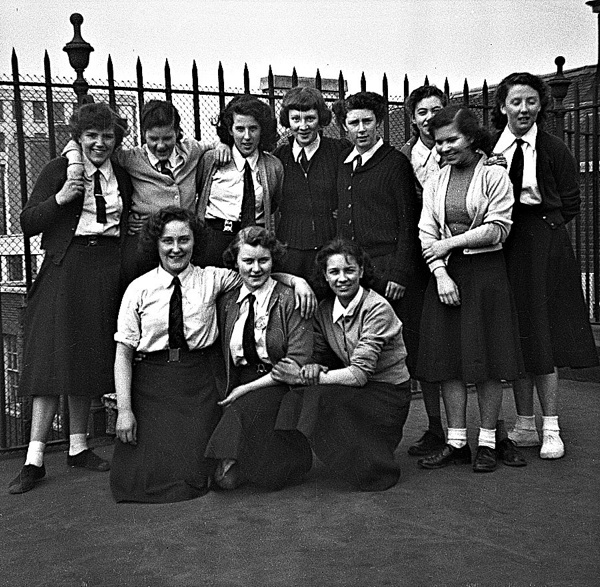
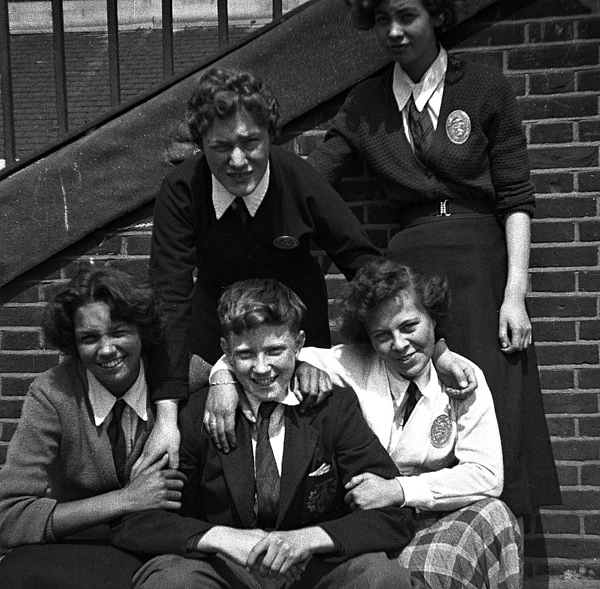
Colin & the girls
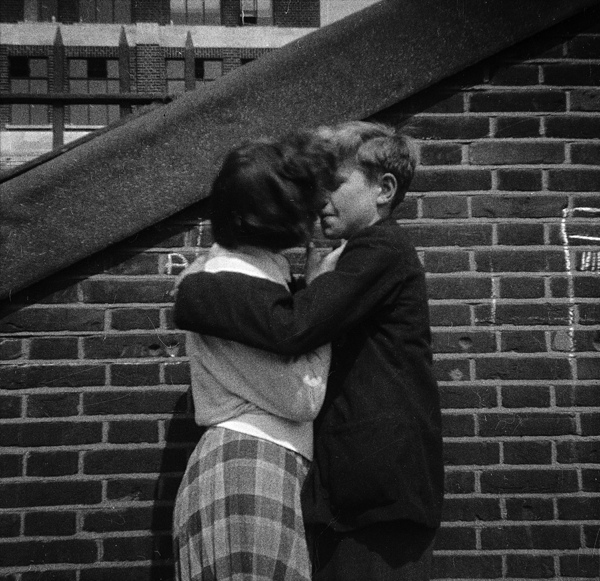
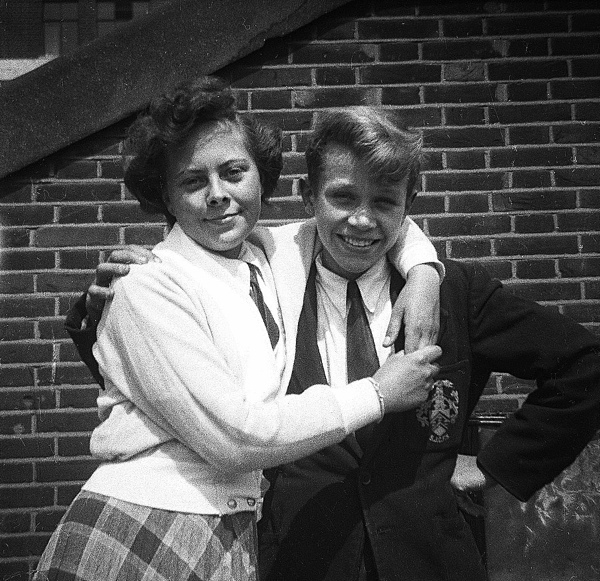
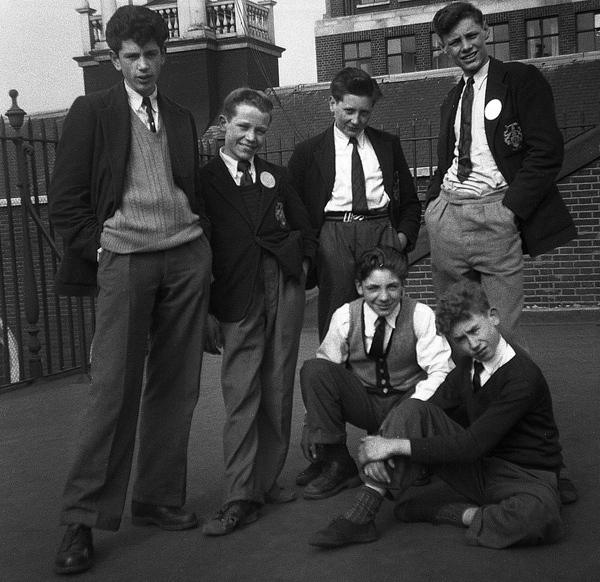
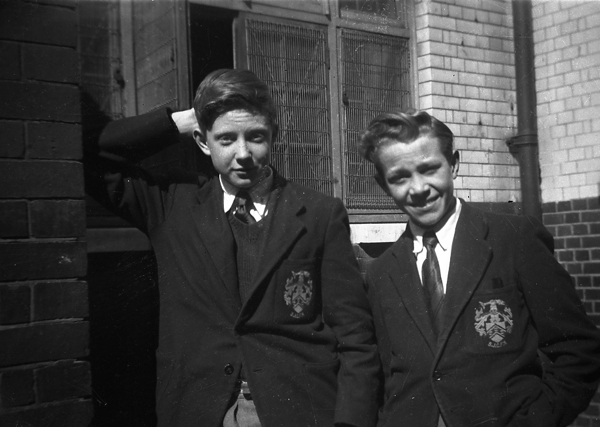
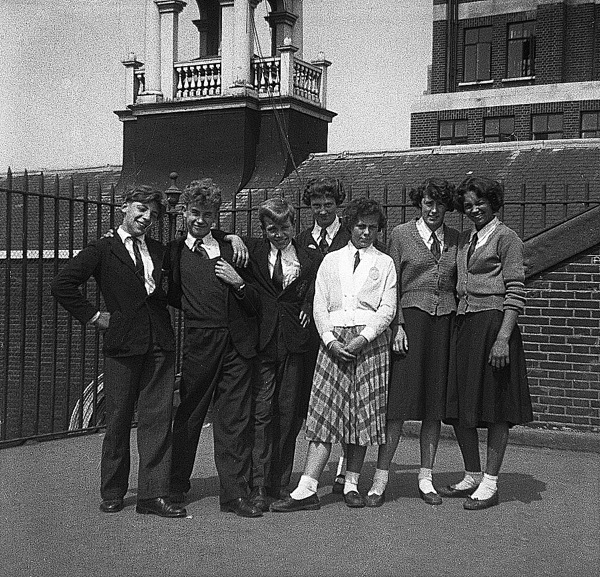
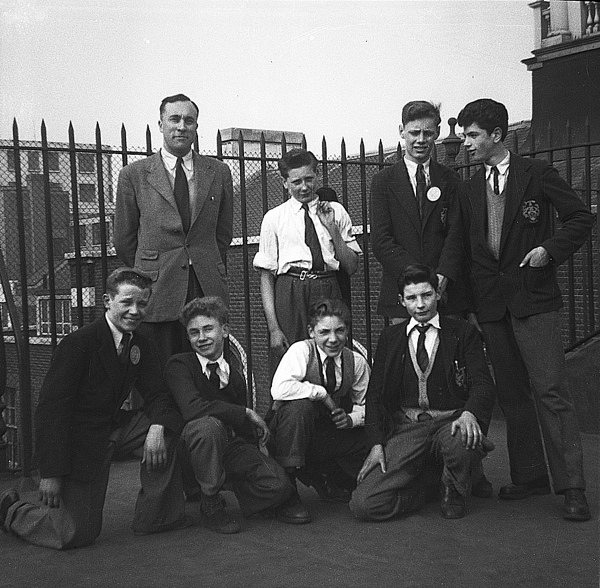
Mr Hunt with members of his class.
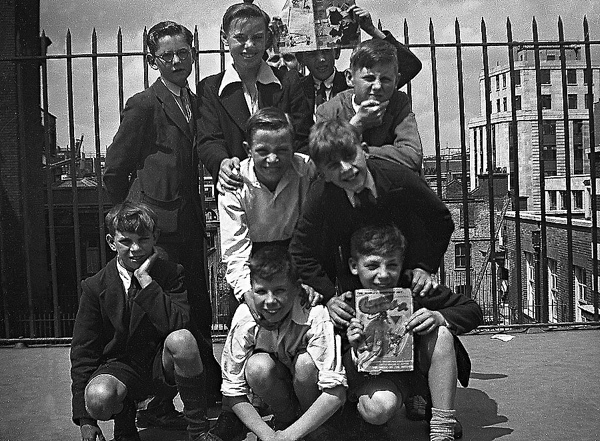
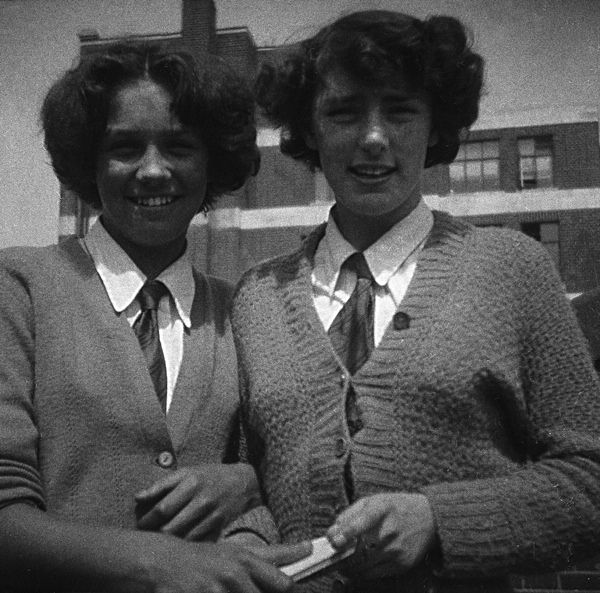
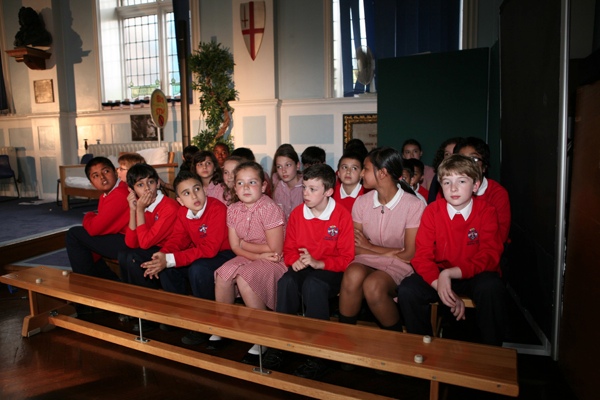
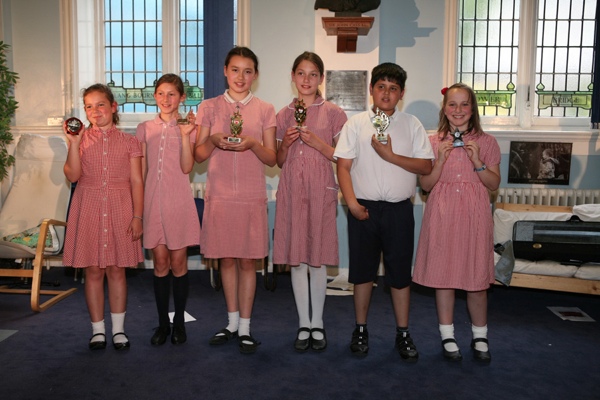
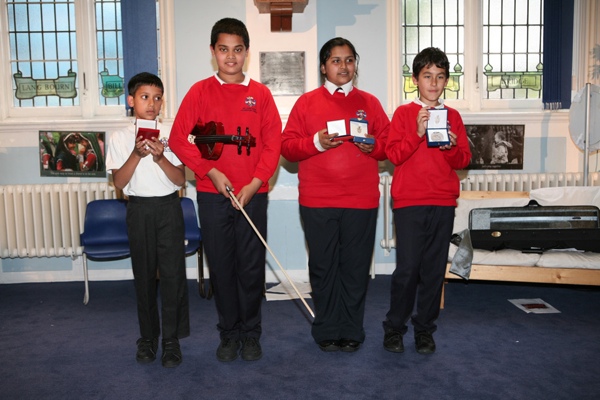

Sir John Cass School leavers, 2011.

The notches in the wall where the class of 1955 once polished pennies.
Photographs copyright © Colin O’Brien
Commonplace, Photographs by Colin O’Brien 1948-2012, runs at the Crypt of Christ Church, Spitalfields. Open Tuesdays, Saturdays & Sundays 1-6pm.
The Fly-Pitchers Of Spitalfields
Please join me tonight at the opening of Commonplace, an exhibition of photography by Spitalfields Life Contributing Photographer Colin O’Brien at the crypt of Christ Church Spitalfields from 7 – 9pm. Throughout this week, I am publishing stories I have done in collaboration with Colin, accompanied by his photographs that span an extraordinary career extending from 1948 until the present day.
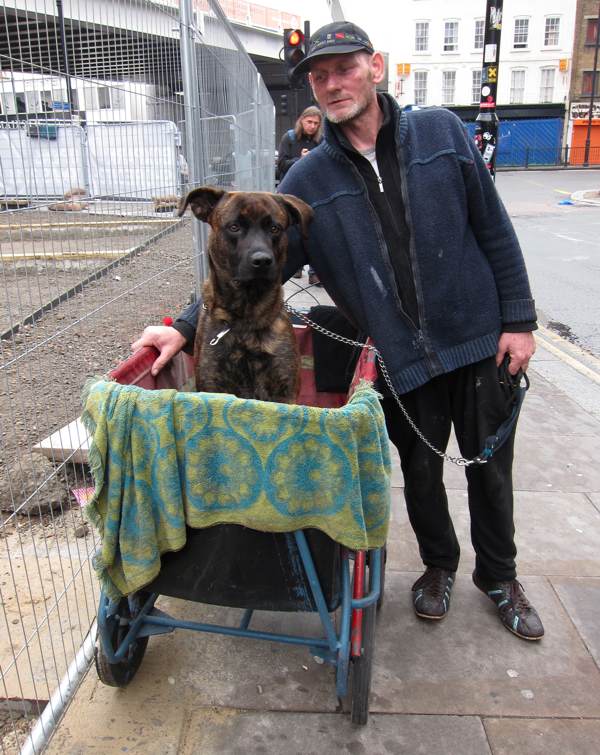
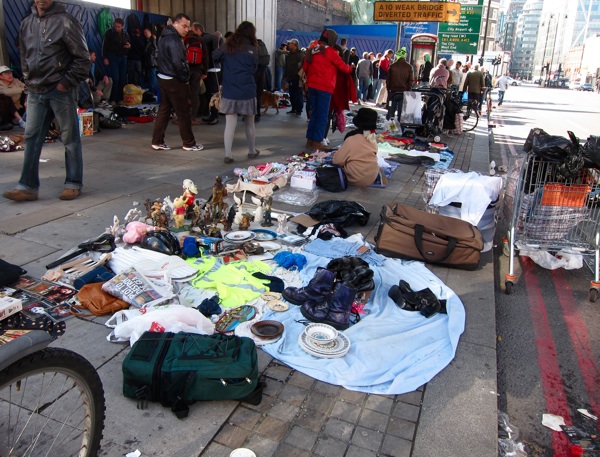
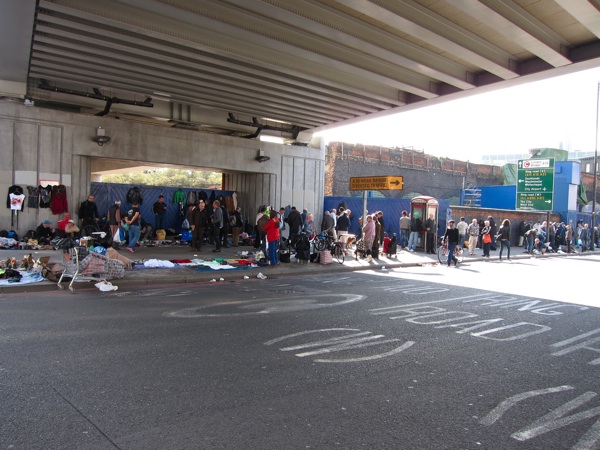
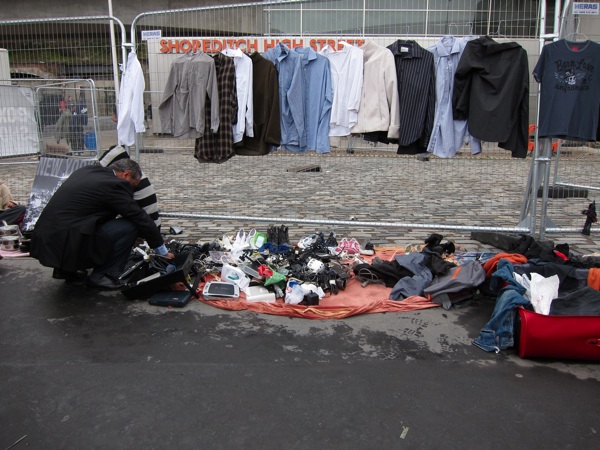
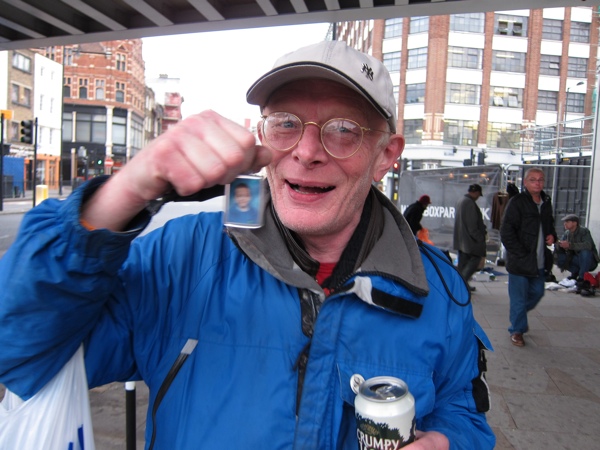
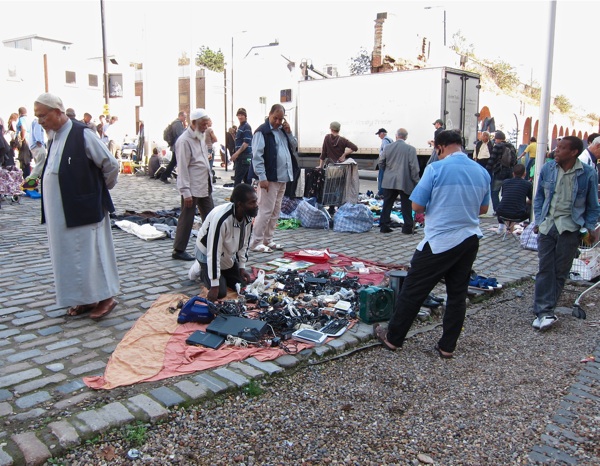
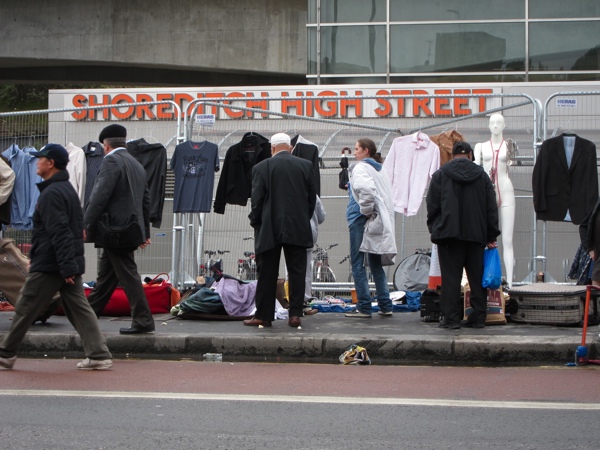
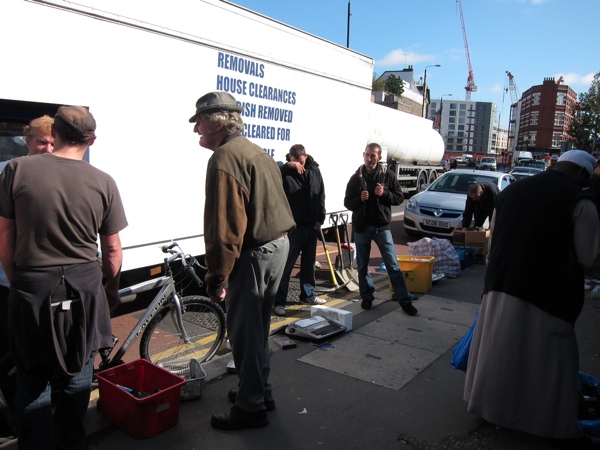
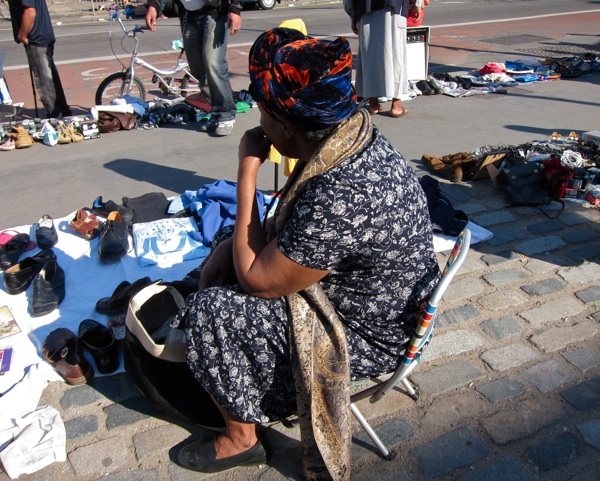
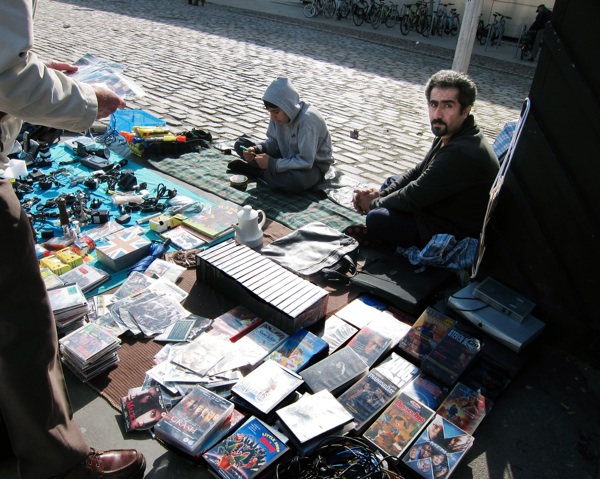
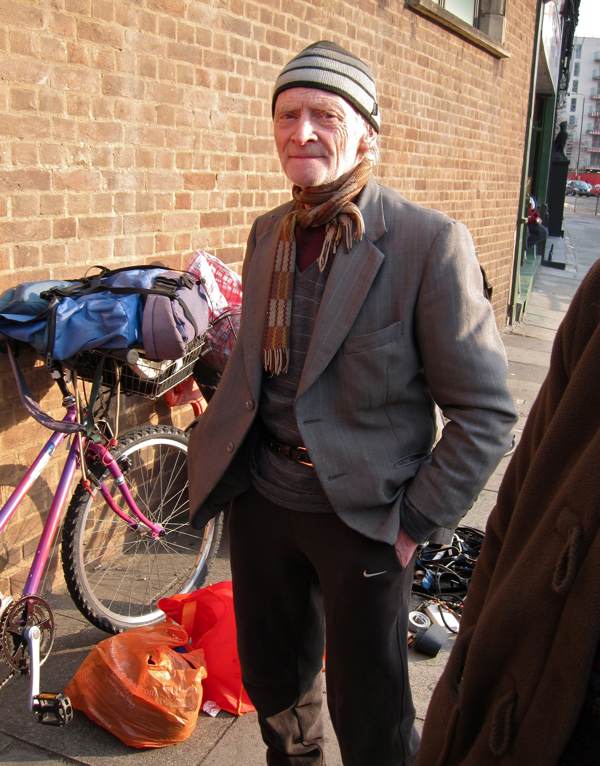
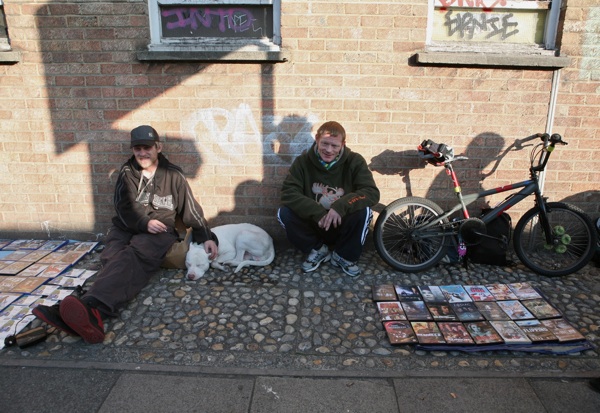
When I first came to Spitalfields, at dawn one Sunday morning in Winter long ago, I was amazed to find Brick Lane full of fly-pitchers – people selling a few items directly off the pavement. Yet as the years have gone by, these pavement traders have been pushed further and further out until they find themselves at the very edge of the territory, crowded together upon a narrow strip of pavement along the Bethnal Green Rd. Literally at the margins, these people suffer at the heavy hands of market inspectors harassing and threatening them, causing them to pick up their things and flee – only to return later and do a little more trading before the next purge happens, in a tragic ongoing game of cat and mouse.
Commencing in the early hours and sometimes gone by first light, the existence of these traders is unknown to many visitors who come to Brick Lane on Sunday. So, last winter, Colin O’Brien spent a month down among the fly-pitchers and the result was this remarkable set of pictures that acknowledge the dignity of these people who are subject to such unnecessary humiliation for sake of wanting to sell a little bric-a-brac.
“My name is Jason John, I’m writing you a damn good song” – these were the first words I heard when I came round the corner of the Bethnal Green Rd into Norton Folgate to meet Colin, one Sunday morning, just as a street musician with curly dark locks appeared with theatrical aplomb from behind a telephone box, wielding his guitar and offering a tuneful accompaniment to the lively scene of pavement trading, sheltered by the vast railway bridge arching over us. It can be a pitiful spectacle to witness the modest possessions that people sell in the Bethnal Green Rd, asking prices as little as 10p, and yet this market is also remarkable for its vibrant life and sense of camaraderie which, ironically, became strengthened by the threat to destroy it.
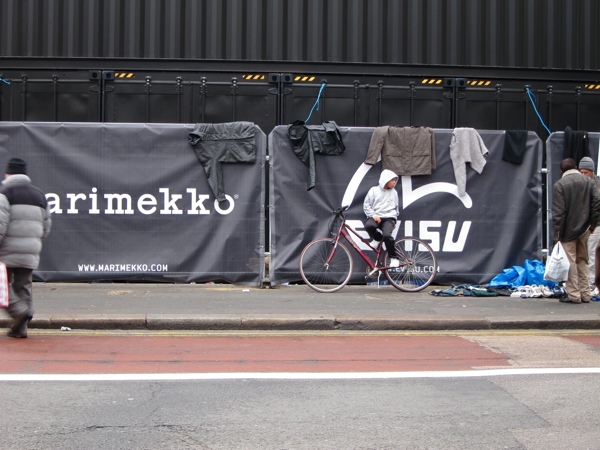
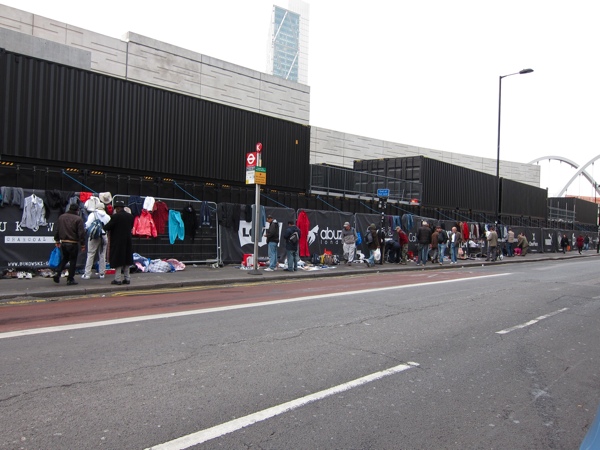
Over the month that Colin took his pictures, a stack of black sea-containers were put in place and the hoarding behind the fly-pitchers came down to reveal a pop-up shopping mall which opened soon afterwards. For a couple of weeks, a fence with the logos of the international brands that would be selling their wares there in future served as a backdrop to the fly-pitchers and the contrast between the two could not be have been more extreme. The developers who own the site created the temporary shopping mall to capitalise upon their investment until they raised the finance to construct a tower block for corporate clients and – for the sake of this – a few pensioners, the handicapped, those struggling on benefits and the dispossessed were being criminalised for trying to sell a few of their belongings to raise a little extra cash on a Sunday morning.
I spoke to a Jewish gentleman in his seventies as he arrived to place six worn shirts on the pavement for sale, casting glances nervously to either side. I bought one of his shirts for 50p in order to strike up a conversation with him, yet within minutes he was harshly moved on and my 50p proved to be his sole income for his effort that morning.“They’re trying to get rid of the poor people!” exclaimed one woman in grief, too scared to consent to being photographed by Colin.
The argument is commonly used that the fly-pitchers are unlicensed and they block the pavement. Yet the truth is that some have been coming to Brick Lane to trade for their entire lives, participating in the culture of unregulated pavement trading which has been in continuous existence in this corner of the East End on Sundays for centuries. And, if they are blocking the pavement today, it is because they have been herded into this narrow space away from Brick Lane against their will.
Gina of Gina’s Restaurant in the Bethnal Green Rd, who started her first cafe in Brick Lane with her husband Philip Christou in 1961, opens each Sunday to serve the same people who have been coming all these years. When they are ‘purged’ by the inspectors, they take refuge in her establishment and if the old people fail to make enough money to pay for a Sunday lunch – which was their sole intent in getting up before dawn and coming down here – then Gina simply gives them a meal. It was a sombre experience to sit in Gina’s Restaurant among those who had taken flight and recognise that these spirited characters were the people who had been in the market longer than anyone.
When the shopping mall opened, the demographic of the passersby on the pavement changed at once, as if decades had passed overnight, with affluent shoppers replacing the market people. Yet, six months later, the new shops are struggling find customers. Meanwhile, demonstrating stubborn resilience, the fly-pitchers continue to trade on the Bethnal Green Rd upon an even smaller strip of pavement opposite the stack of sea containers and they are still under threat of harassment. I was told that, on average, these traders can expect to make no more than £12 on a Sunday morning,
Colin O’Brien’s pictures witness a shameful episode which remains unresolved. The soul of this place resides with the fly-pitchers, whose moral rights should be respected – through the provision of a space where they can trade peacefully – rather than constantly subjecting them to this inhuman treatment which degrades us all.
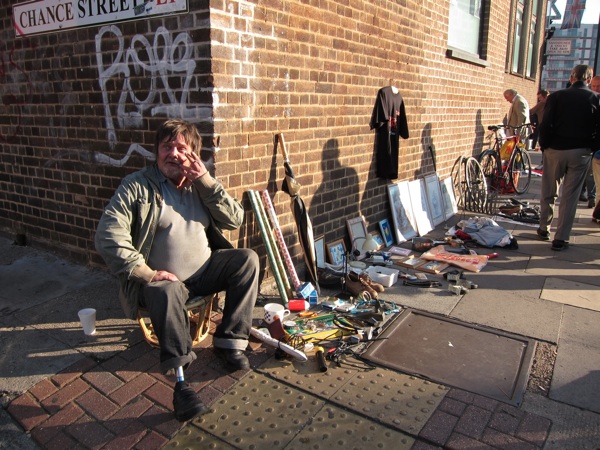
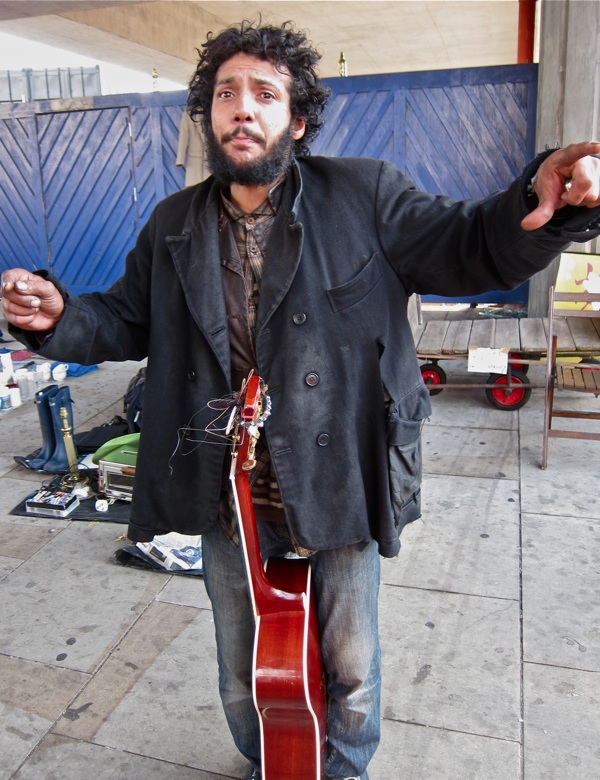
Jason John, Street Musician
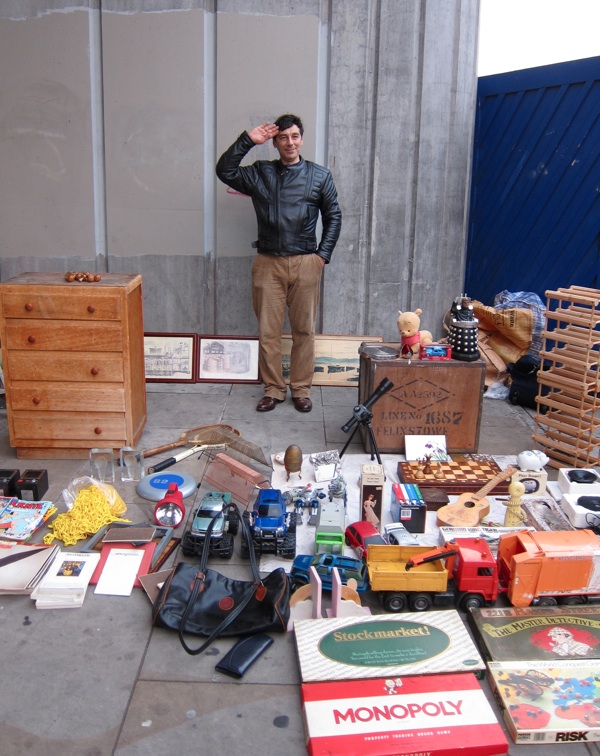

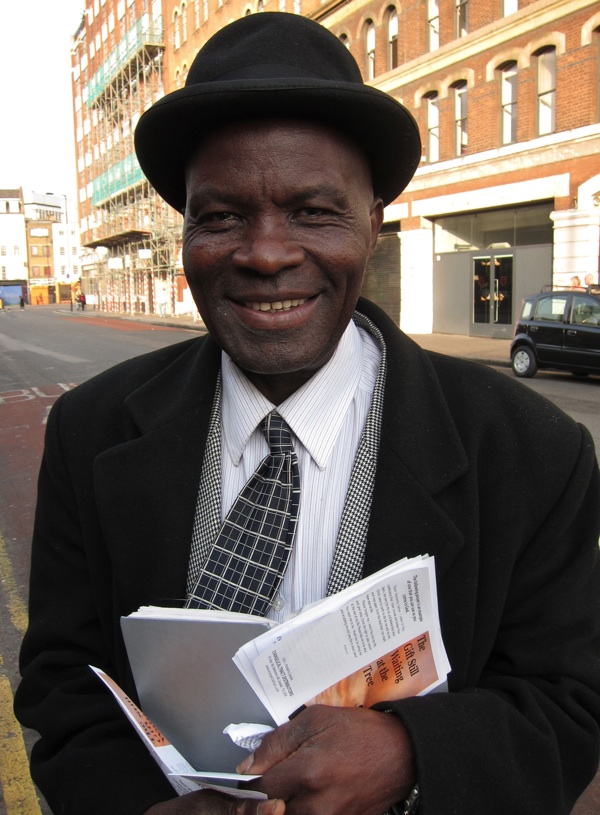
Mr Gil, Street Preacher
Photographs copyright © Colin O’Brien
Commonplace, Photographs by Colin O’Brien 1948-2012, runs at the Crypt of Christ Church, Spitalfields, 28th July – 26th August. Open Tuesdays, Saturdays & Sundays 1-6pm. Colin O’Brien will be talking about his work on Sunday 29th July 2pm.