
At the Salvation Army in the Eighties
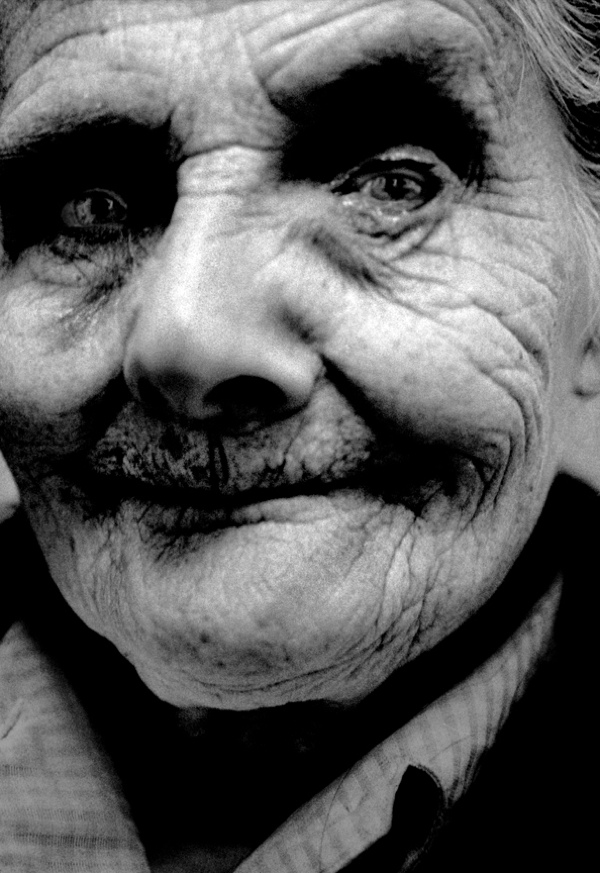
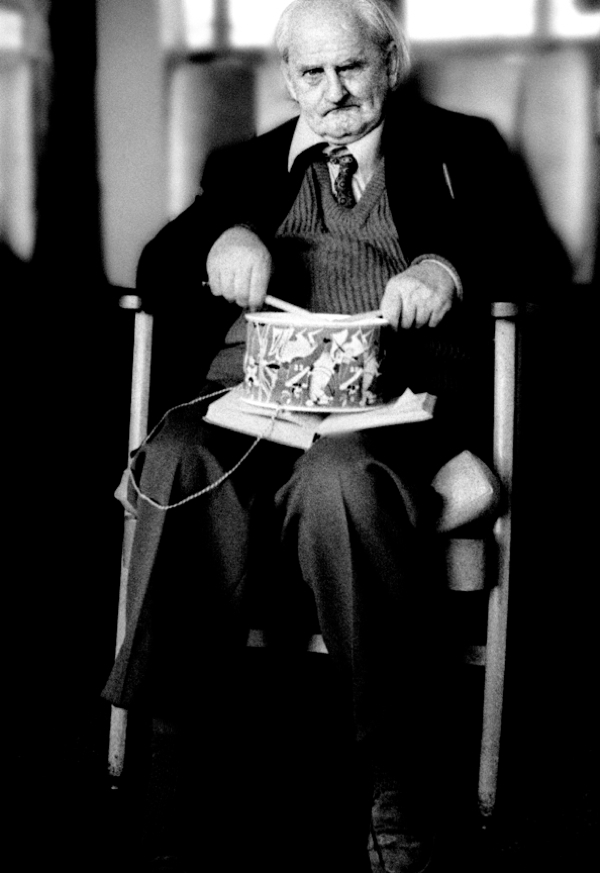
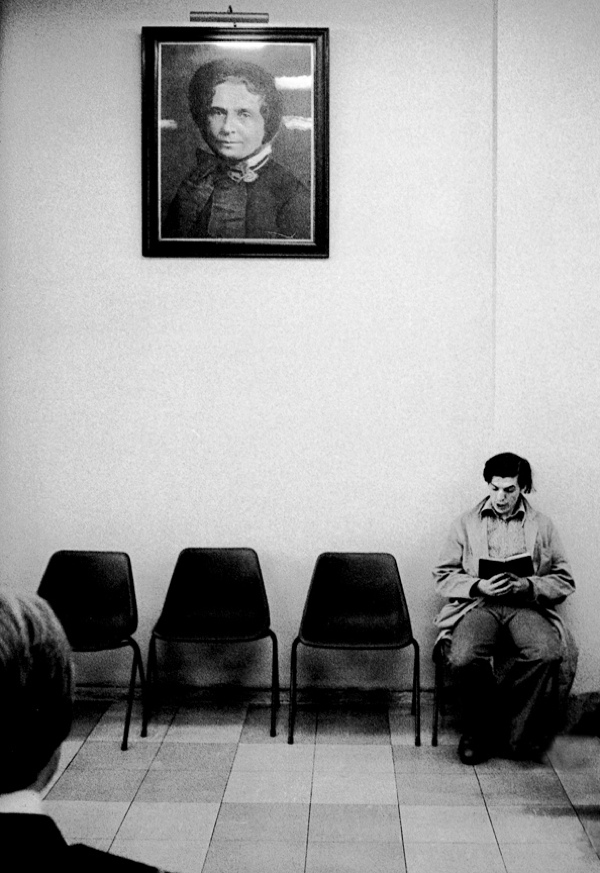
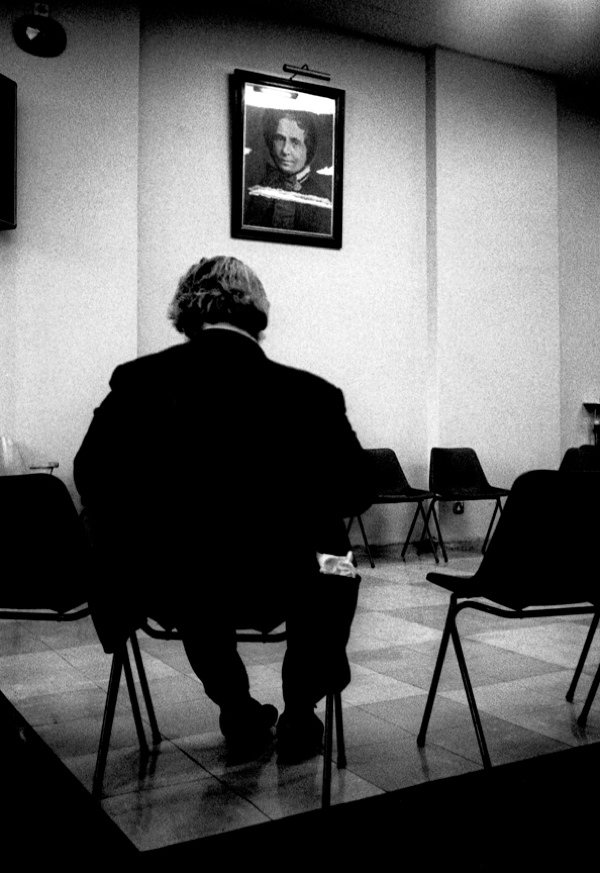
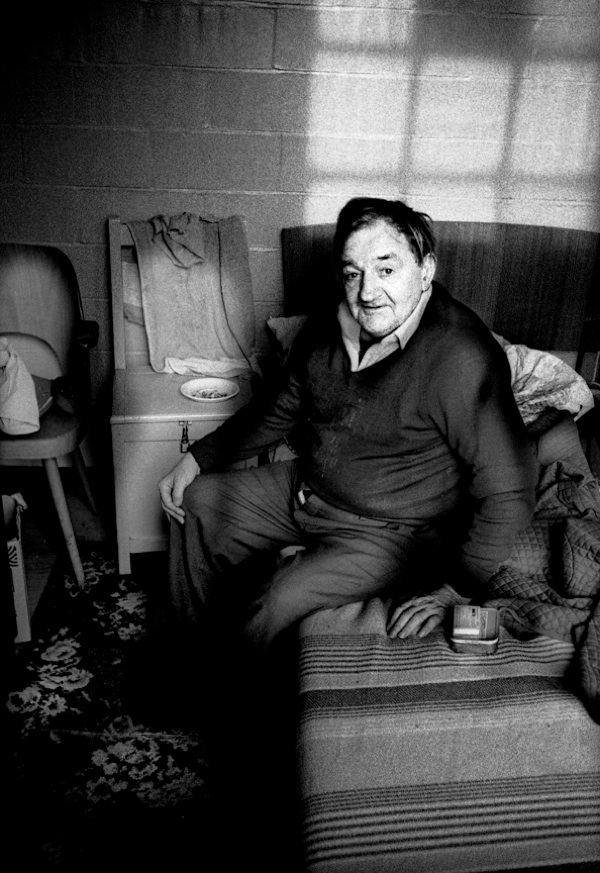
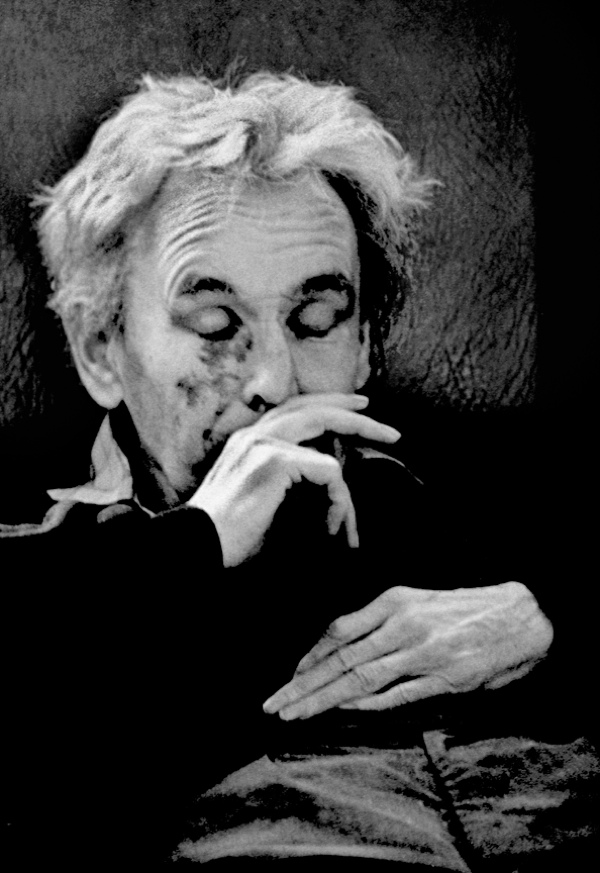
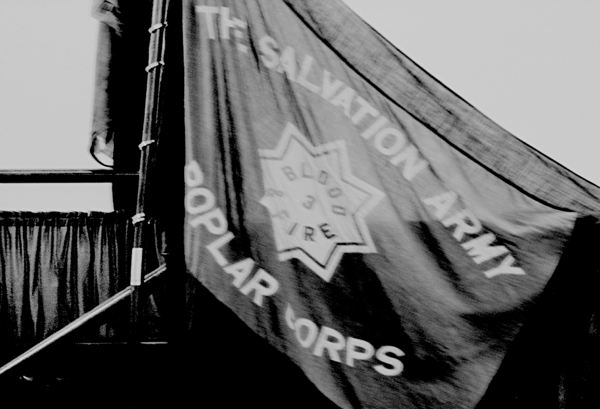
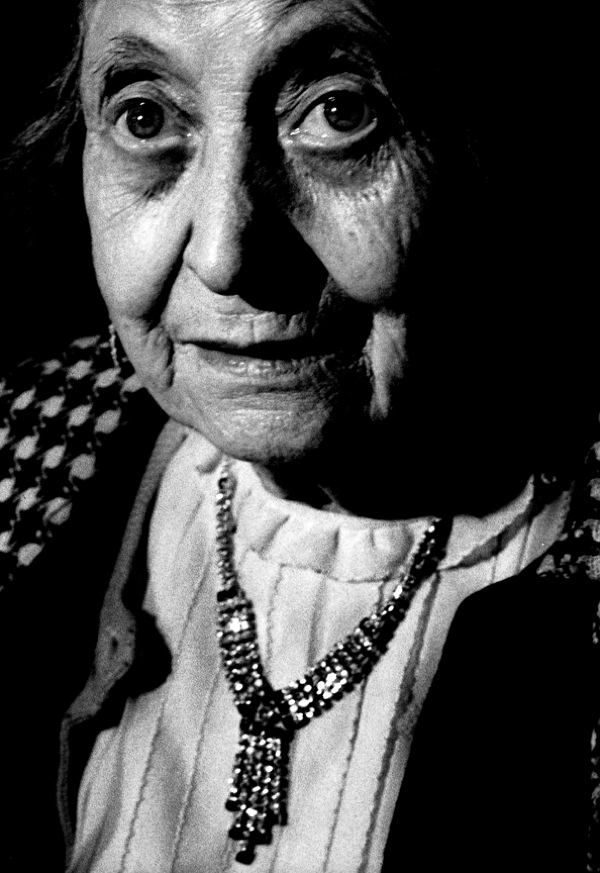
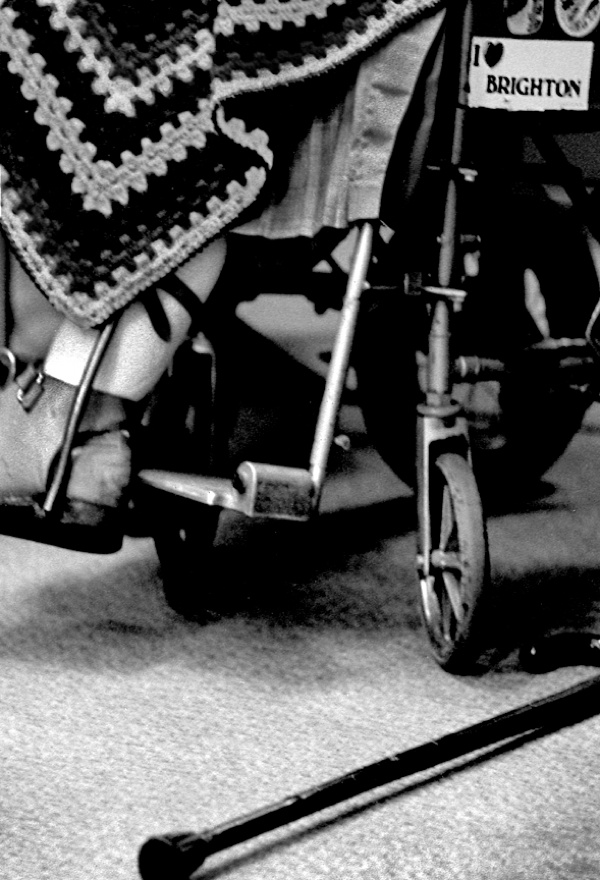
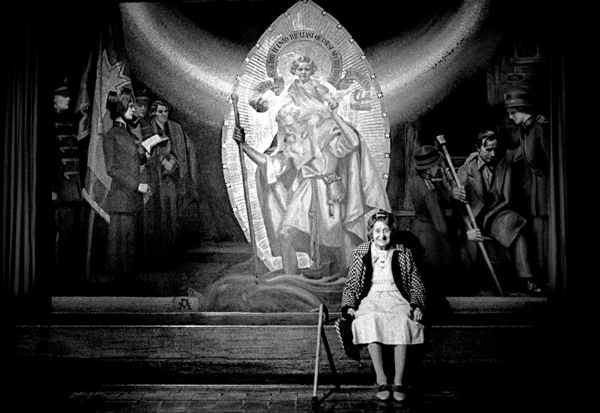
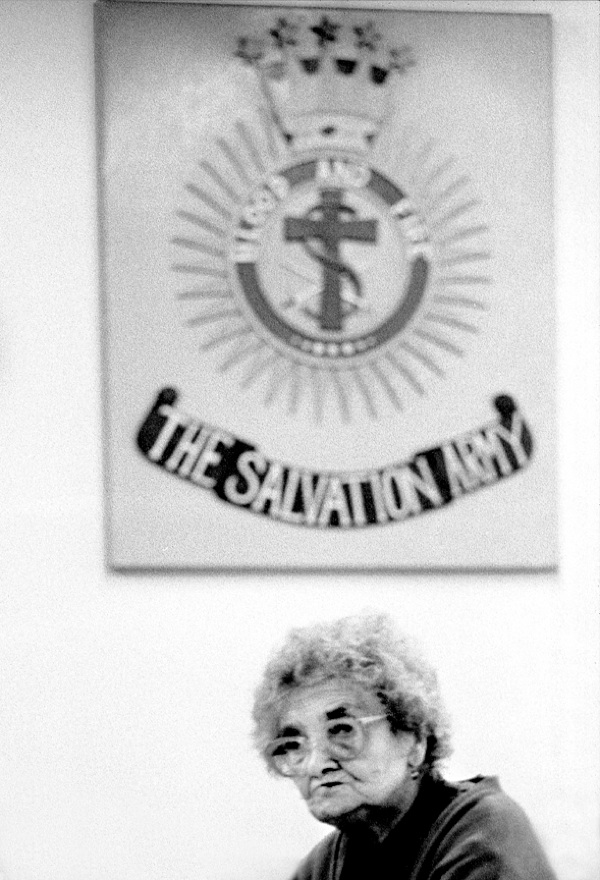
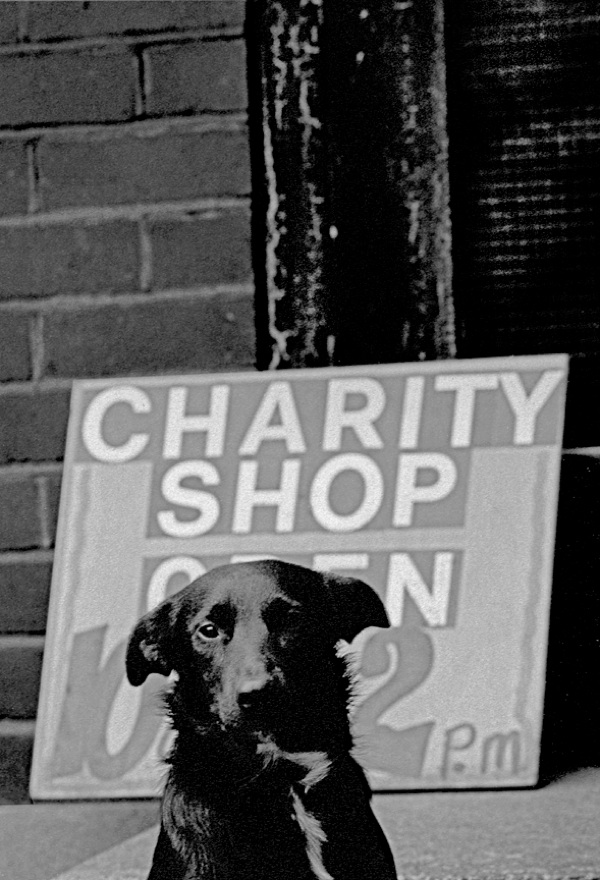
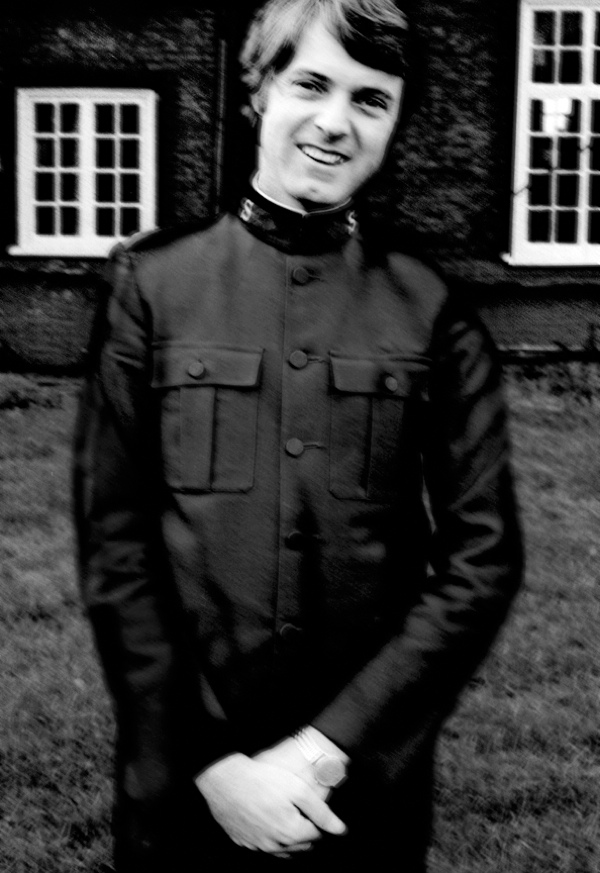
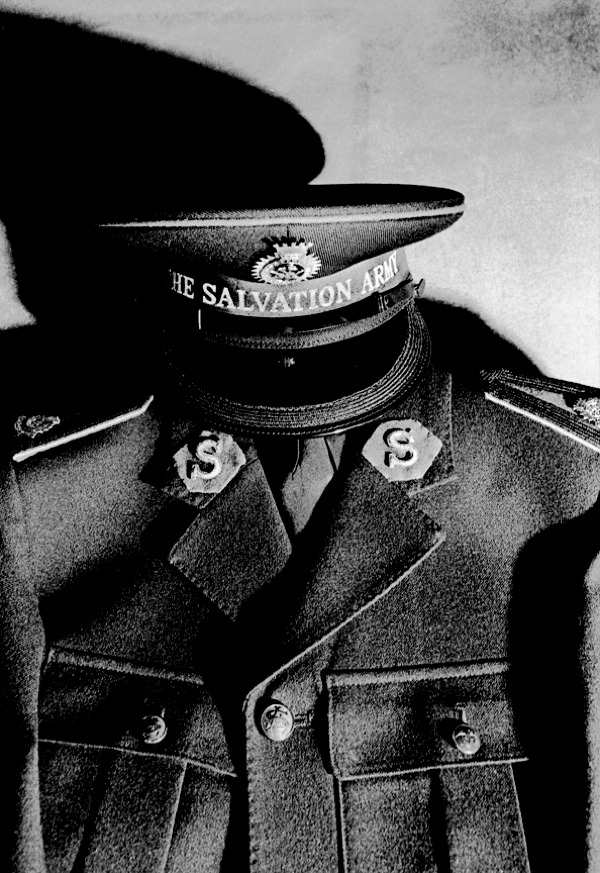
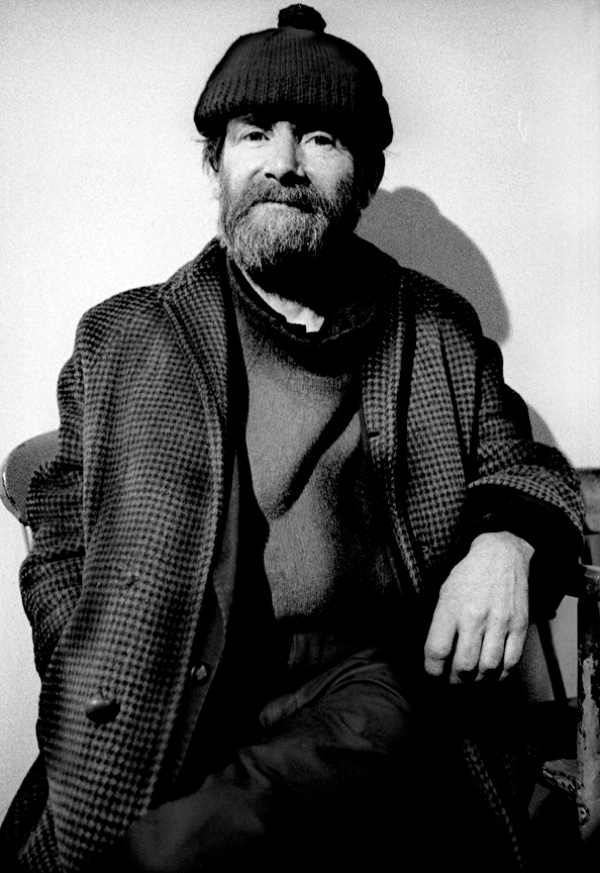
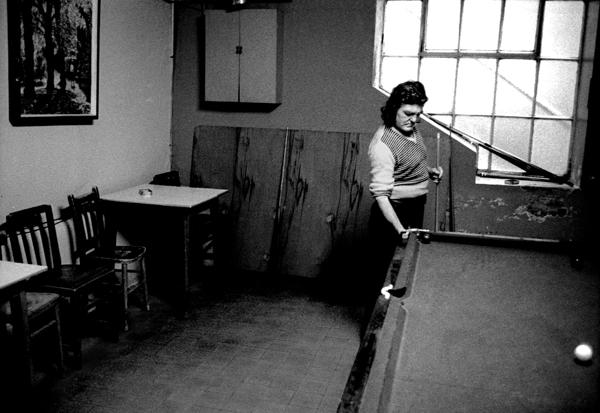
This candid set of pictures by photographer John Claridge, published here for the first time, were taken in the Salvation Army hostels in Whitechapel, Spitalfields and Hoxton during the eighties, but they are just a selection of those he has taken over the decades for this most famous of East End institutions. “I’m not a religious person but I think the Salvation Army do a fantastic job.” John admitted to me, “So I said, ‘yes,’ when I was asked to do some charity work for them and the relationship lasted over forty years.”
Observing this compassionate endeavour through changing times, John recognises an equilibrium in the nature of the care. “The Salvation Army is a constant world – though some of the causes may be different, nowadays more drugs than alcohol – the people are the same, there’s still the same need.” he told me, as we contemplated these pictures together.
John was determined to maintain the dignity of those he was photographing, despite their circumstances. “It’s not right to intrude on a person’s life but you have to be able say, ‘This is the world we live in,'” he assured me,“And there is a responsibility to try to do that right. Just because somebody has got into this situation, it doesn’t make them a bad person.”
“There’s some sad things here, but there is also a kind of survival and a little bit of humour.” he added, eager to emphasise the resilience of his subjects and create a tender intimacy with the viewer, “If you’re doing something for a charity, you don’t want to set things up. It’s documentary photography but you need people to feel it too. You need to people to think – you might end up here.”

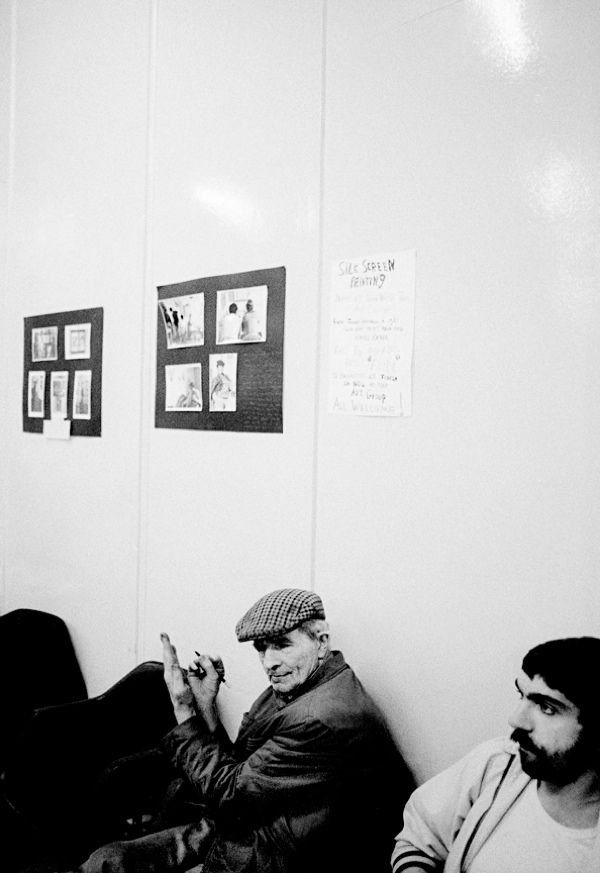
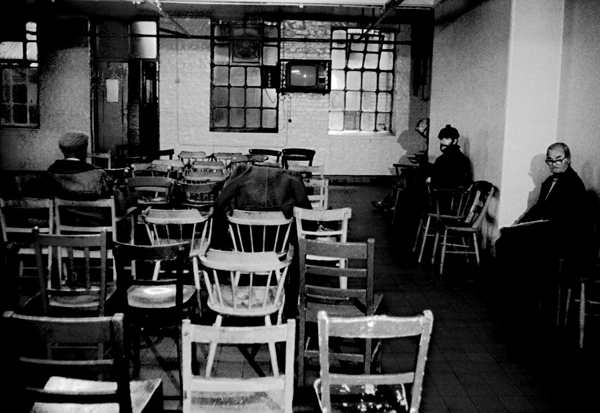
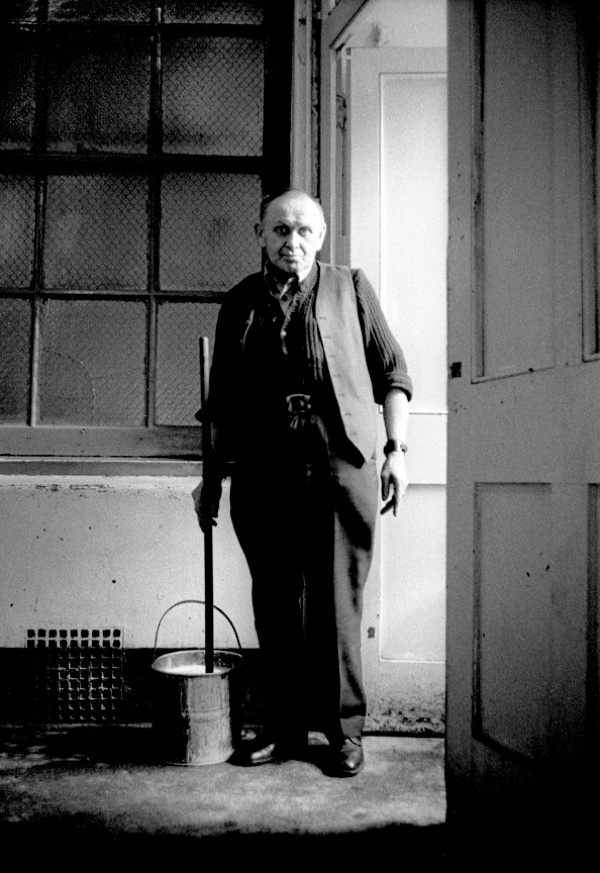
Photographs copyright © John Claridge
You may also like to take a look at
Along the Thames with John Claridge
At the Salvation Army with John Claridge
A Few Diversions by John Claridge
Signs, Posters, Typography & Graphics
Views from a Dinghy by John Claridge
In Another World with John Claridge
A Few Pints with John Claridge
Some East End Portraits by John Claridge
A Walk With King Sour

King Sour DA MC also known as Yasin Ahmed
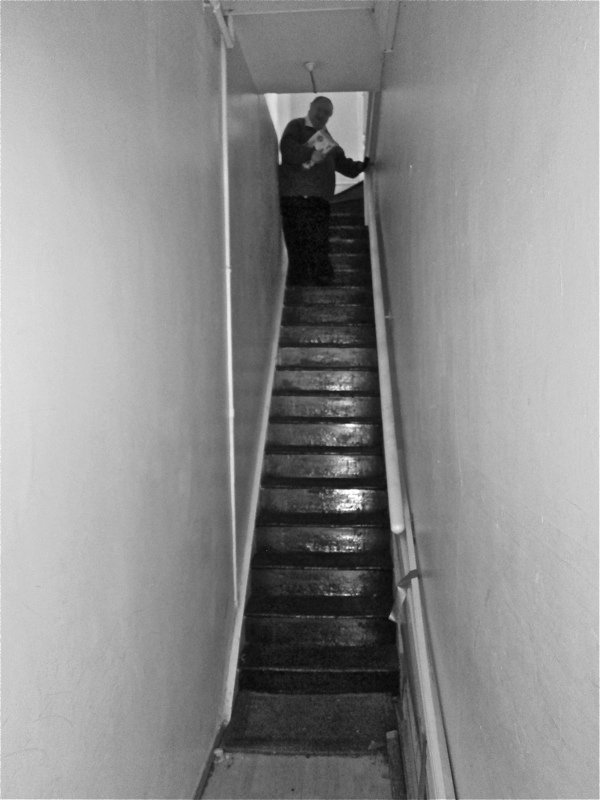
Descending the stairs from Clive Murphy’s flat above the Aladin Curry House, I passed through the street door and crossed the road to shake hands King Sour, the poet and singer, in his customary position on the corner of Brick Lane and Hanbury St. Yasin had just come from Friday prayers and, in the time before he started work at his uncle’s restaurant that evening, he offered to take me for walk around some of the places that are important to him in Spitalfields.
Even before we set out, the rain came down and so Yasin escorted me along Hanbury St and down a flight of stairs into kitchen of the Reema Balti House. In the warmth of the kitchen, away from the chill of the street, we found Yasin’s uncle, Shawkoth Ali, assiduously chopping spices while Mahfuz, the tandoori chef, rolled out chapatis expertly. For the past four months, Yasin has been working here as a waiter and doing pavement promotion.“There’s forty-seven restaurants here, so it’s very competitive,” he explained, “but I think it makes for a friendly atmosphere to offer people deals on the street.”
This summer, Yasin finished college where he has been studying customer services and then worked at restaurants belonging to cousins in Plymouth and Bournemouth before coming back to London. Recently, Yasin turned eighteen and besides playing the lead in a film for the Whitechapel Gallery – Give to me the life I love – he is going for jobs in hospital administration. “As well as my artistic life, I want a nine to five job,” he informed me shrewdly.
Once we had warmed up, it was time to brave the rain again, so we walked back down Hanbury St towards the Spitalfields Market – this is the direction that Yasin heads when he needs a little time to think, away from the chaos of Brick Lane. To the right, in Lamb St, is a small square with four park benches where Yasin takes refuge when he needs to regain his sense of proportion. “This is where I come when I am upset and need time to consider my problems.” he explained indicating his preferred place to sit, “I can look right into the market and watch the people walk by, and remind myself they all have problems too.”
On the far side of the market, we descended a flight of steps to view the medieval charnel house of St Mary Spital. A huge pane of glass permits you to look through into the ruins beneath the corporate offices looming overhead, and the glass is highly reflective, offering an image of yourself set against the ancient stonework – an effect that especially appeals to Yasin. “This is where I come to write poetry, because it is so different from the other side of Brick Lane, where the streets are full of devils.” he confided to me, widening his eyes, “Where I am from, you see devils all over the place, or should I say misunderstood angels?” We were right at the heart of the financial offices but there was no-one around in the mid-afternoon with the rain falling. Yasin discovered this extraordinary space, silent yet alive with poetic resonance, and he has made it his sanctuary. At ground level, we paused by the fountain and lily pond which the office workers pass by with disinterest, while Yasin stood in wonder, fascinated by the beauty of it.
In the rainy haze of dusk, we left Bishop’s Sq and walked around to White’s Row ascending in the lift to the top of the multi-storey car park. Situated on the wrong side of the congestion charge boundary, this empty car park offers a roof space that is visited by few. It is the ideal destination for Yasin to seek solitude. “I used to smoke up here on a hot day and reflect on life, ” he admitted fondly, as we stood peering down Commercial St and up to the vast spire of Christ Church overhead.
We discovered a startling contrast, crossing Commercial St and finding ourselves back in the narrow streets among the Curry Houses again. “The corner of Brick Lane and Hanbury St is my second home,” Yasin confessed to me, recognising that this is the centre of gravity in his personal landscape, “Brick Lane is a very comfortable place because there is a community where everyone welcomes each other. I’m staying here at least until I am twenty-five, but then I want to move out and give my parents a bit of peace!”
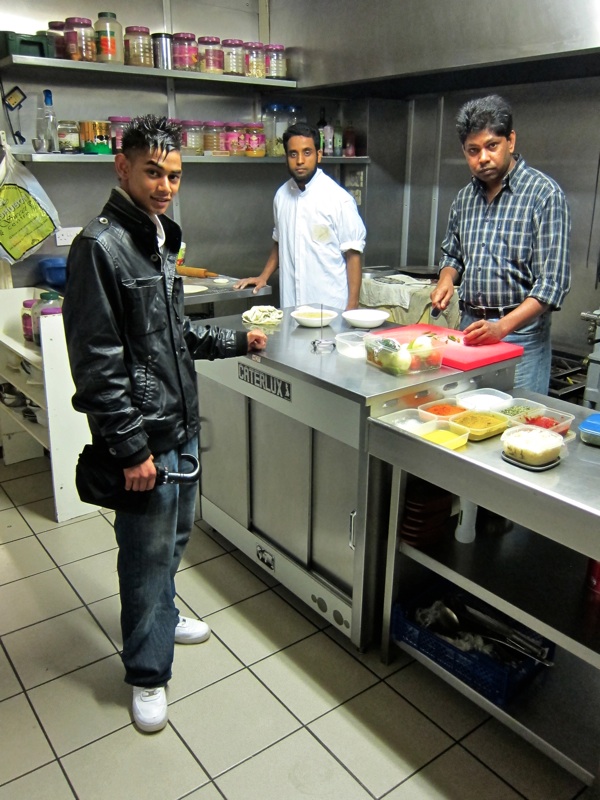
King Sour with his uncle Shawkoth Ali chopping spices and Mahfuz, the Tandoori chef, in the kitchen of the Reema Balti House.

In Lamb St
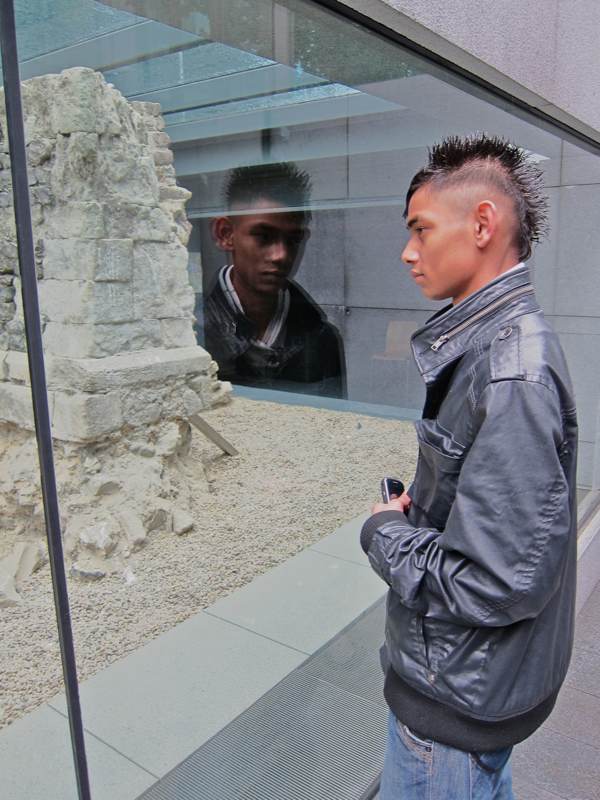
Yasin contemplates his reflection set against the ruins of the medieval charnel house.

At Bishop’s Sq.

Looking down Commercial St from the top of White’s Row car park.
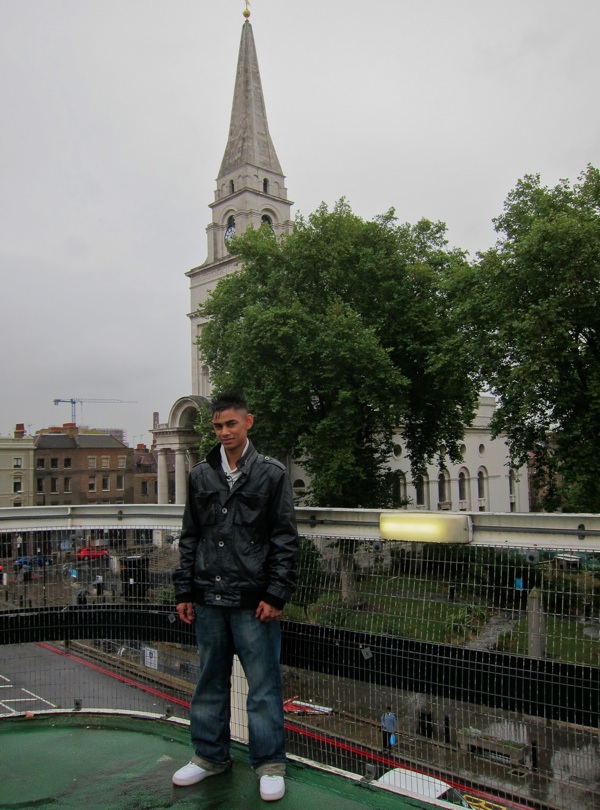
King Sour DA MC, also known as Yasin Ahmed
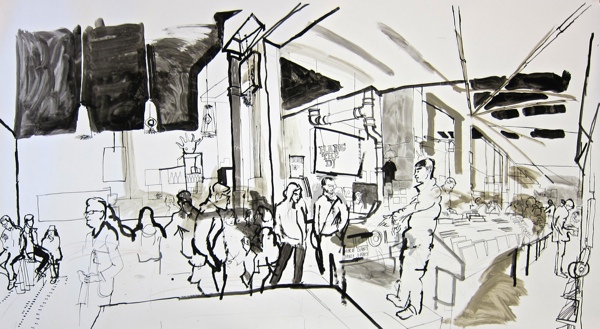
Lucinda Rogers‘ drawing of King Sour performing at Rough Trade in the Truman Brewery
[youtube 0sPF9EHxLzo nolink]
You may also like to read my original profile of
At Clive Murphy’s Flat
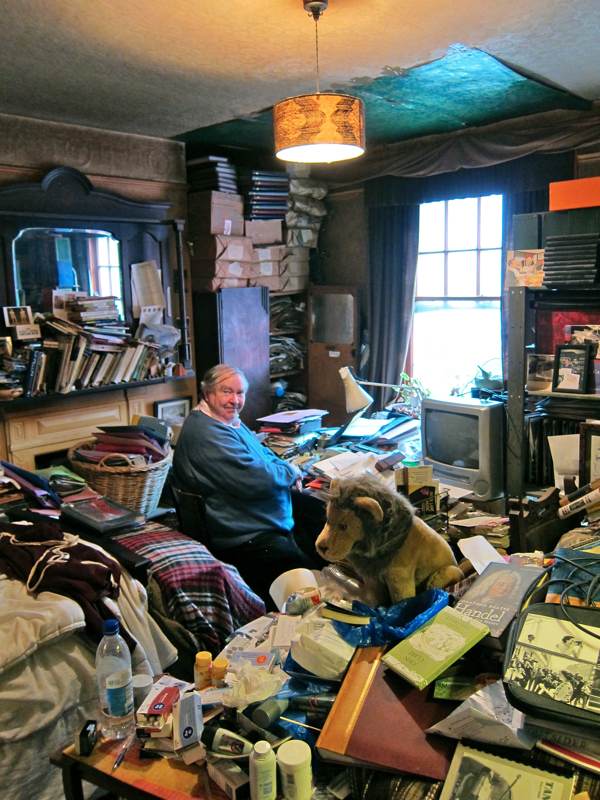
Clive Murphy at his desk
Writer Clive Murphy has lived in his two room flat above the Aladin Curry House on Brick Lane since 1974 and filled it with an ever-growing collection of books, papers and memorabilia. But this weekend he is going to tidy up, and so I realised I must record Clive’s glorious disarray lest his environment lose any of its charisma in the process of getting organised.
When Clive saw the card in the window and rented this flat, it was above a draper’s, but that went long ago as the Bengali shops and curry houses filled the street. Then, in more recent years, the nightlife arrived, with clubbers and party animals coming to throng Brick Lane at all hours. Yet, throughout this time, Clive has lived quietly on the first floor, looking down upon the seething hordes of visitors and inhabiting a private world that is largely unchanged, save the accumulation of books and leaks in the ceiling.
Walking up the narrow staircase from the street, you come first to Clive’s kitchen looking back towards Hanbury St and Roa’s crane. At the front is a larger room looking onto Brick Lane which serves as Clive’s bedroom and study, lined with fine furniture barely visible under the tide of paper, and sitting beneath a water-stained ceiling that resembles a map of the world.
“I’ve had so may leaks and serious floods,” Clive recalled philosophically, “I have been sitting in the kitchen and water has come from the ceiling like from a tap. The landlord wanted to get me out because he could get seven times the rent, but when when the inspectors came round to assess the rent, I said, ‘Do you want to see my bathroom, it’s above the wardrobe?’ That brought my rent down.” And Clive raised his eyes to the tin bath on top of the wardrobe, chuckling in triumph.
Before he came to Spitalfields, Clive had already gained a reputation as a writer, with two novels and two volumes of oral history published. “When I first started writing, I’d write a short story and it’d be accepted, but then the pace slows down …” he confessed to me, casting his eyes over to the shelf dedicated to the volumes that comprise his life’s work and then gazing around at the piles of notebooks, files and packets of his books, mixed up with the contents of his library scattered higgedly-piggedly around the room.
“You see that suitcase,” he indicated, casually gesturing back to the tin bath which I now realised contained a battered case with a tag, “it has a novel in it.” I enquired about a stack of thirty old exercise books which caught my eye. “They are for the continuation of one of my novels, eventually I might read the whole lot and write a book” Clive assured me, turning to point out a selection of bibles on the shelf next to his bed. “My mother became a bit holy in old age, but that was because her friend seduced her into religion,” he informed me wearily, just in case I might assume they were his, “I think if people convert to Christianity in later life it’s a symptom they have lost their minds or need an emotional crutch to lean on.”
On the floor next to the bed was a wallpaper pattern book with newspaper cuttings pasted in it, the most recent of twenty-seven volumes that Clive has filled. “I collect all the things and people that interest me, either because they attract me or because I dislike them,” he explained, “I also keep all correspondence and note all phone calls.”
Visiting Clive’s flat is like entering his crowded mind, containing all the books he has read, all his own work and all the minutiae of life he has sought to preserve. It is the outcome of Clive’s infinite curiosity about life. “I used to walk all night and have lots of promiscuous encounters.” he confided to me, “I was an immigrant and I had to make friends. They say, ‘Don’t talk to strangers,’ but I think that’s very stupid advice because if I didn’t talk to strangers I’d have known nobody. I’m a very gregarious person, hence by talking to people at great length I got to know them.”
It was Friday afternoon and Clive was bracing himself for the approaching weekend and the ceaseless nocturnal crowds beneath his window.“It does keep you alert and alive and interested.” he admitted to me with characteristic good grace, “I don’t know anywhere else now and I have grown to love my little world. I like being in the hub of things.”
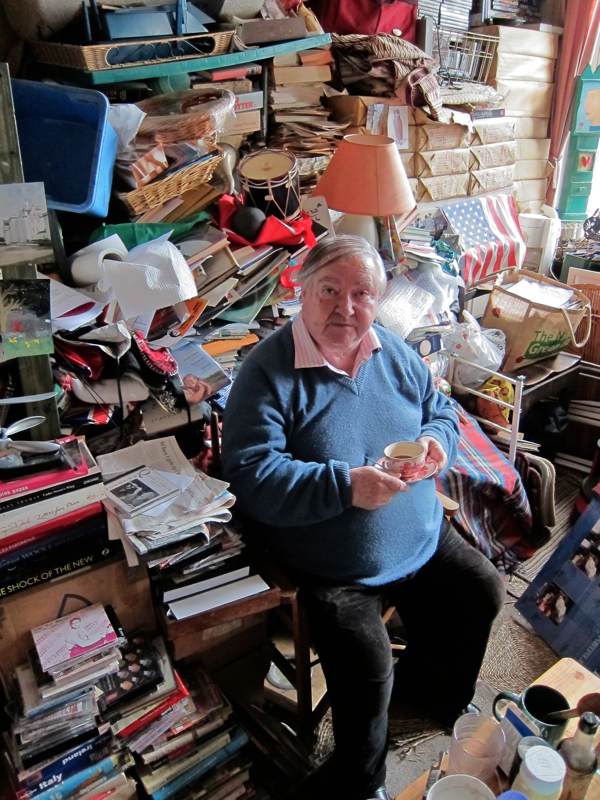
In Clive’s kitchen.
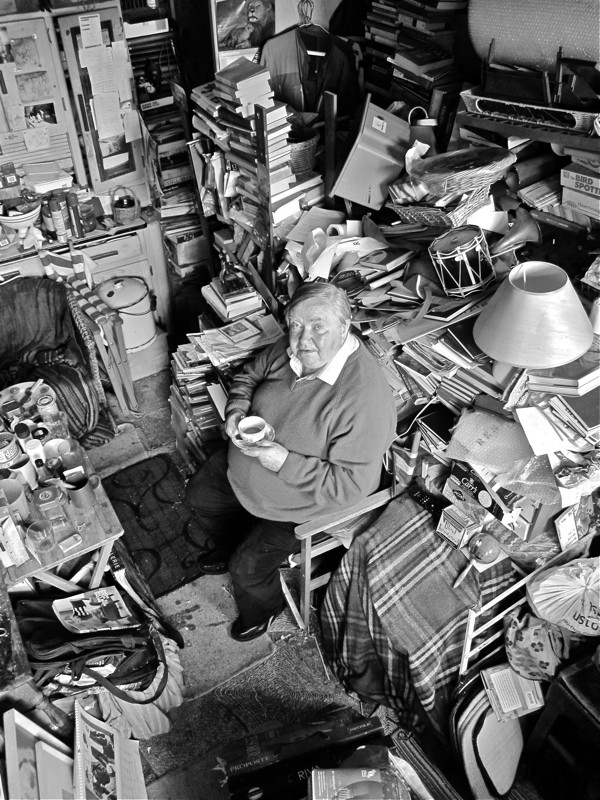
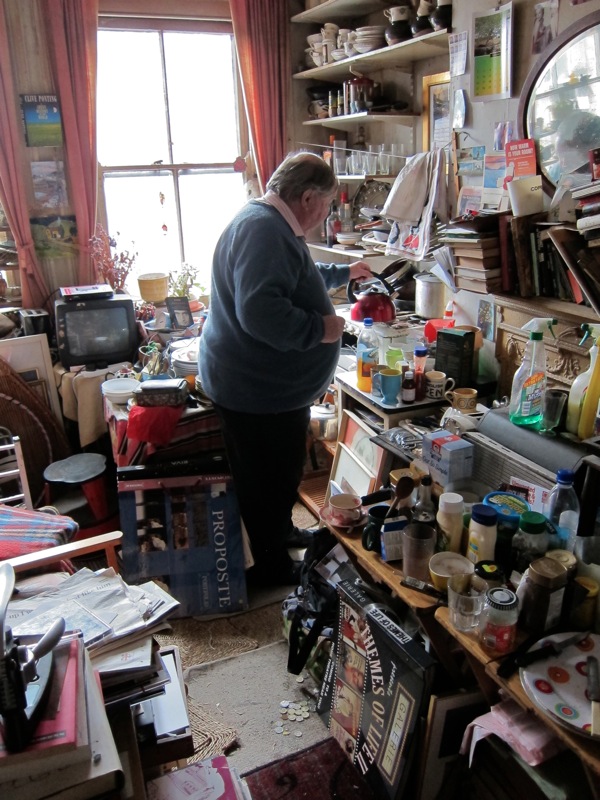
Note the wallpaper pattern books which Clive uses as scrap books for his press cuttings.
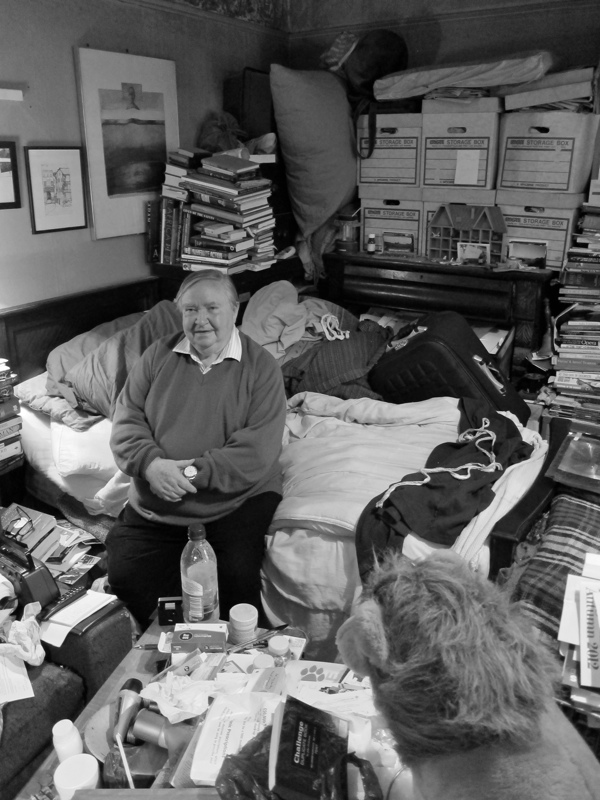
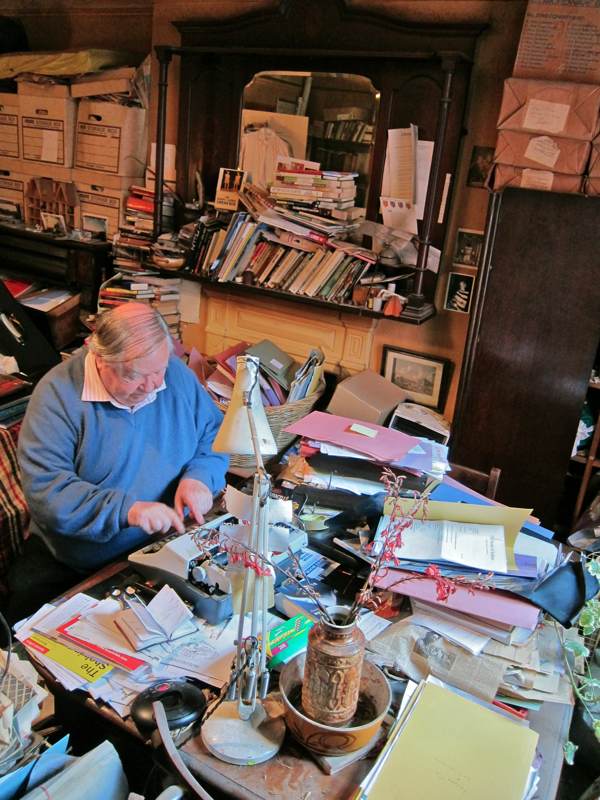
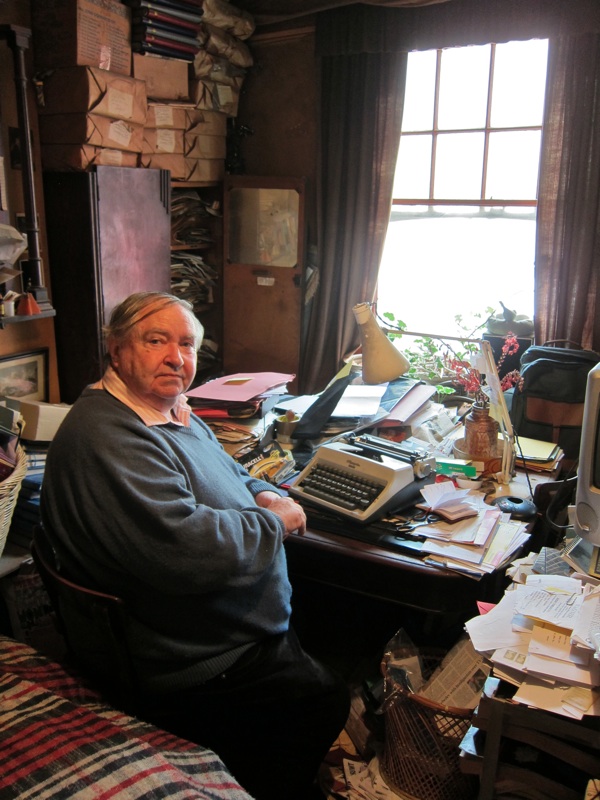
Clive at his desk overlooking Brick Lane.
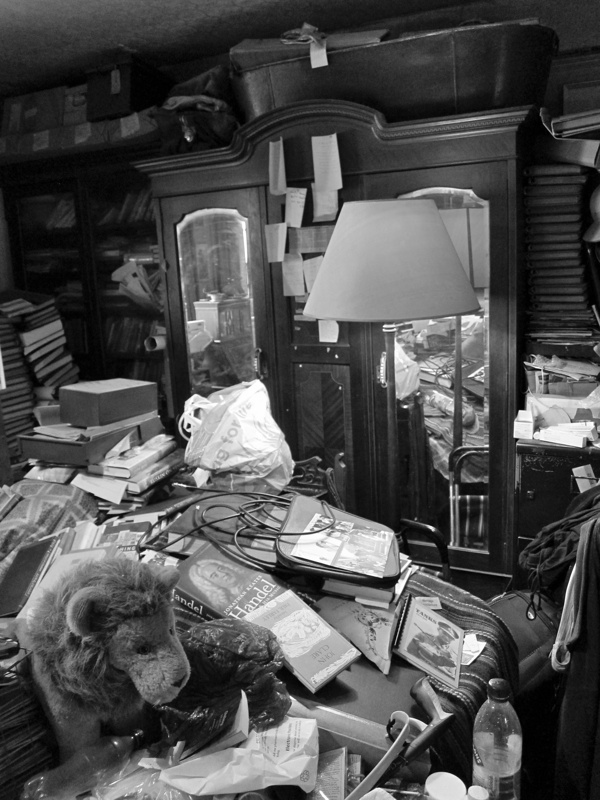
“When the inspectors came round to assess the rent, I said, ‘Do you want to see my bathroom, it’s above the wardrobe?’ That brought my rent down.”
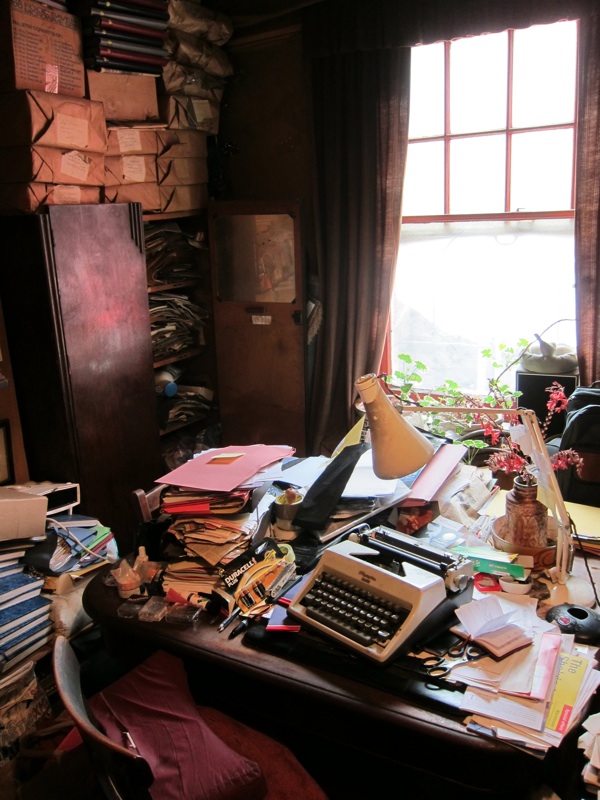
You may also like to read my original profile of Clive Murphy
Clive Murphy’s oral histories are available from Labour and Wait
and his ribald rhymes are available from Rough Trade
The Markets Of Old London
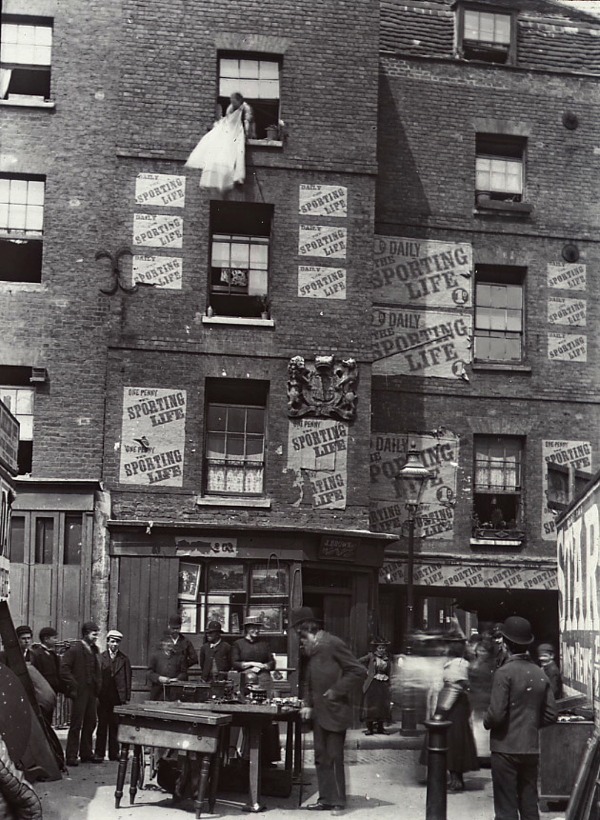
Clare Market c.1900
I never knew there was a picture of the legendary and long-vanished Clare Market – where Joseph Grimaldi was born – until I came upon this old glass slide among many thousands in the collection of the London & Middlesex Archaeological Society, housed at the Bishopsgate Institute. Scrutinising this picture, the market does not feel remote at all, as if I could take a stroll over there to Holborn in person as easily as I can browse the details of the photograph. Yet the Clare Market slum, as it became known, was swept away in 1905 to create the grand civic gestures of Kingsway and Aldwych.
Searching through this curious collection of glass slides, left-overs from the days of educational magic lantern shows – comprising many multiple shots of famous landmarks and grim old church interiors – I was able to piece together this set of evocative photographs portraying the markets of old London. Of those included here only Smithfield, London’s oldest wholesale market, continues trading from the same building, though Leather Lane, Hoxton Market and East St Market still operate as street markets, but Clare Market, Whitechapel Hay Market and the Caledonian Rd Market have gone forever. Meanwhile, Billingsgate, Covent Garden and Spitalfields Fruit & Vegetable Market have moved to new premises, and Leadenhall retains just one butcher selling fowl, once the stock-in-trade of all the shops in this former cathedral of poultry.
Markets fascinate me as theatres of commercial and cultural endeavour in which a myriad strands of human activity meet. If you are seeking life, there is no better place to look than in a market. Wherever I travelled, I always visited the markets, the black-markets of Moscow in 1991, the junk markets of Beijing in 1999, the Chelsea Market in Manhattan, the central market in Havana, the street markets of Rio, the farmers’ markets of Transylvania and the flea market in Tblisi – where, memorably, I bought a sixteenth century silver Dutch sixpence and then absent-mindedly gave it away to a beggar by mistake ten minutes later. I often wonder if he cast the rare coin away in disgust or not.
Similarly in London, I cannot resist markets as places where society becomes public performance, each one with its own social code, language, and collective personality – depending upon the nature of the merchandise, the location, the time of day and the amount of money changing hands. Living in Spitalfields, the presence of the markets defines the quickening atmosphere through the week, from the Thursday antiques market to the Brick Lane traders, fly-pitchers and flower market in Bethnal Green every Sunday. I am always seduced by the sense of infinite possibility when I enter a market, which makes it a great delight to live surrounded by markets.
These old glass slides, many of a hundred years ago, capture the mass spectacle of purposeful activity that markets offer and the sense of self-respect of those – especially porters – for whom the market was their life, winning status within an elaborate hierarchy that had evolved over centuries. Nowadays, the term “marketplace” is sometimes reduced to mean mere economic transaction, but these photographs reveal that in London it has always meant so much more.
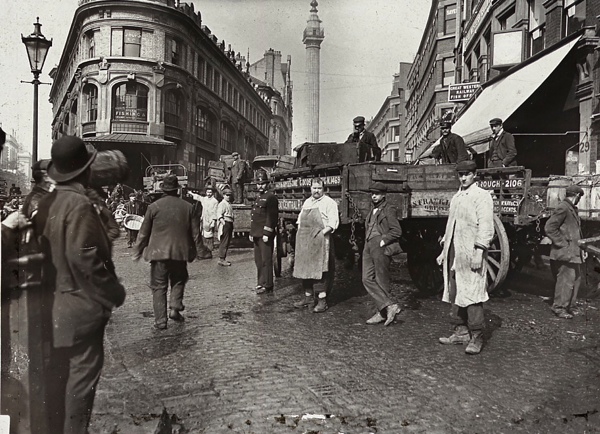
Billingsgate Market, c.1910
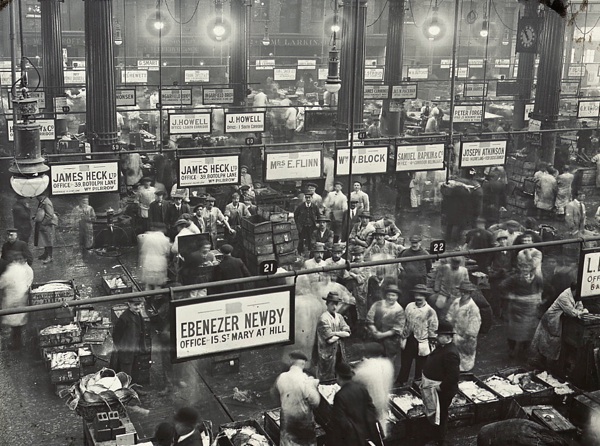
Billingsgate Market, c.1910
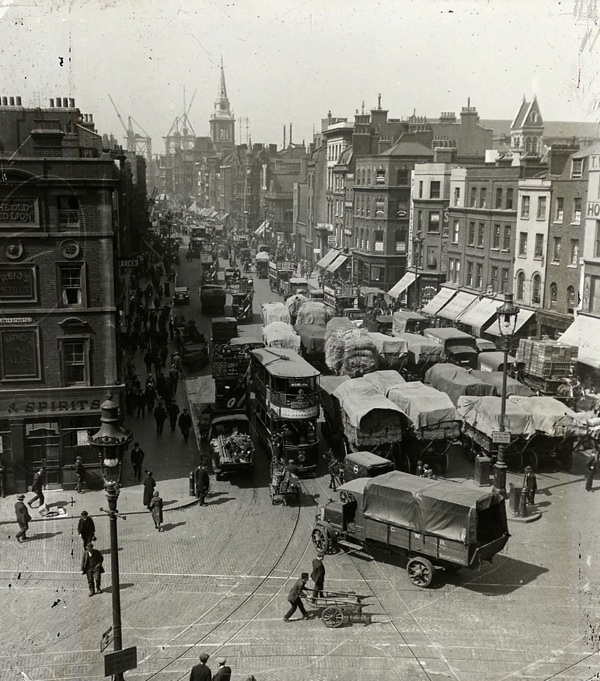
Whitechapel Hay Market c.1920 (looking towards Aldgate)

Whitechapel Hay Market, c.1920 (looking east towards Whitechapel)
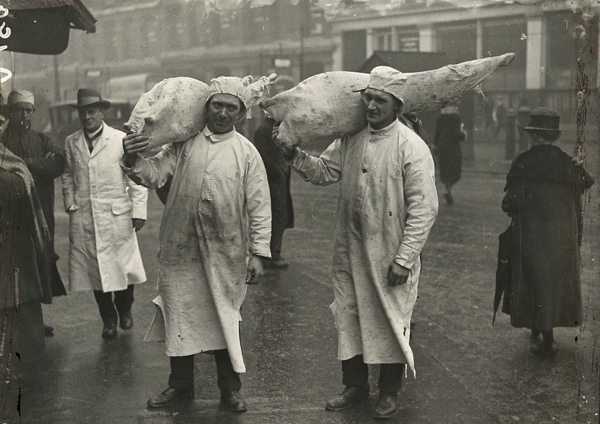
Porters at Smithfield Market, c.1910

Caledonian Rd Market, c.1910
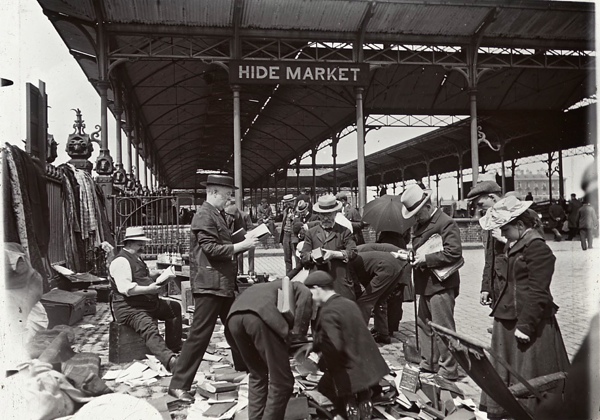
Book sale at Caledonian Rd Market, c.1910
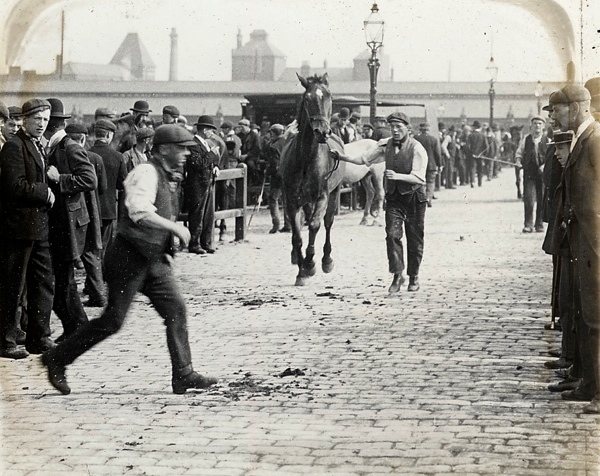
Caledonian Rd Market, c.1910
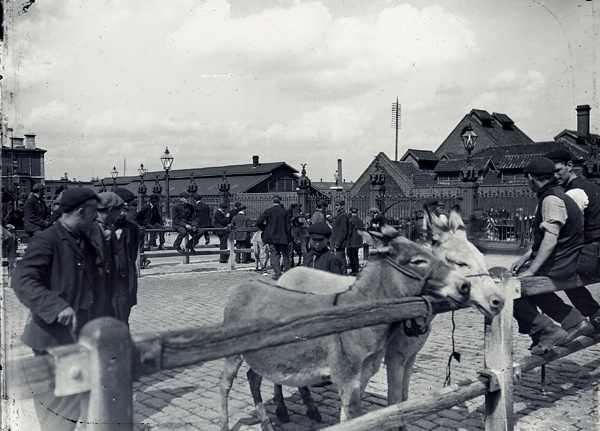
Caledonian Rd Market, c.1910

Covent Garden Market, c.1920
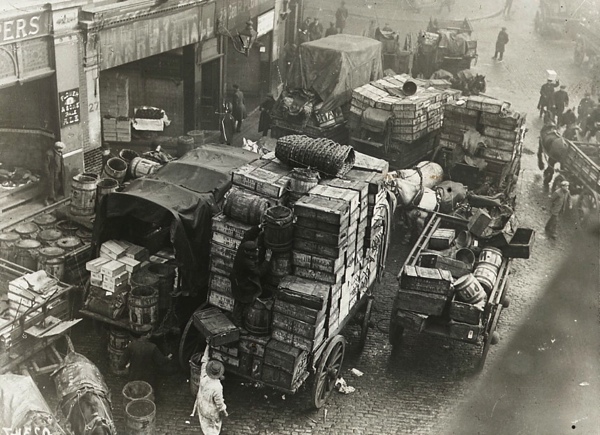
Covent Garden Market, c.1910
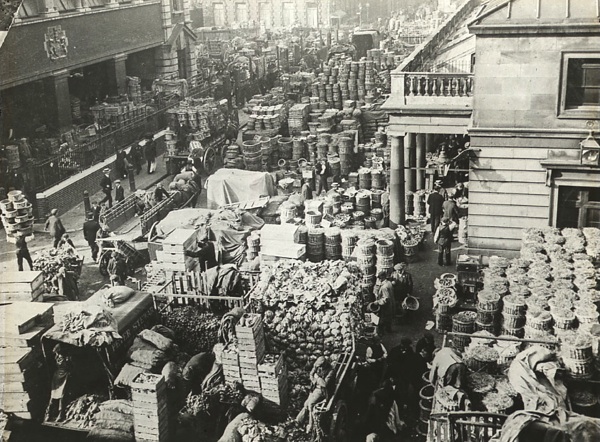
Covent Garden, c.1910
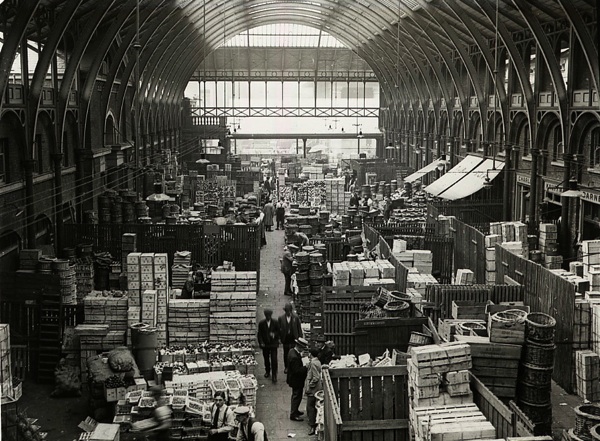
Covent Garden Market, 1925

Covent Garden Market, Floral Hall, c.1910
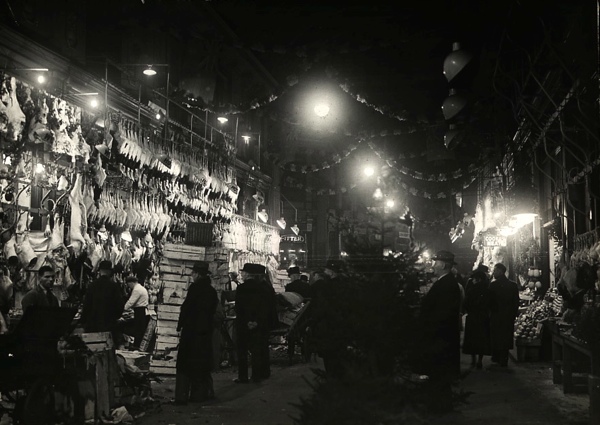
Leadenhall Market, Christmas 1935
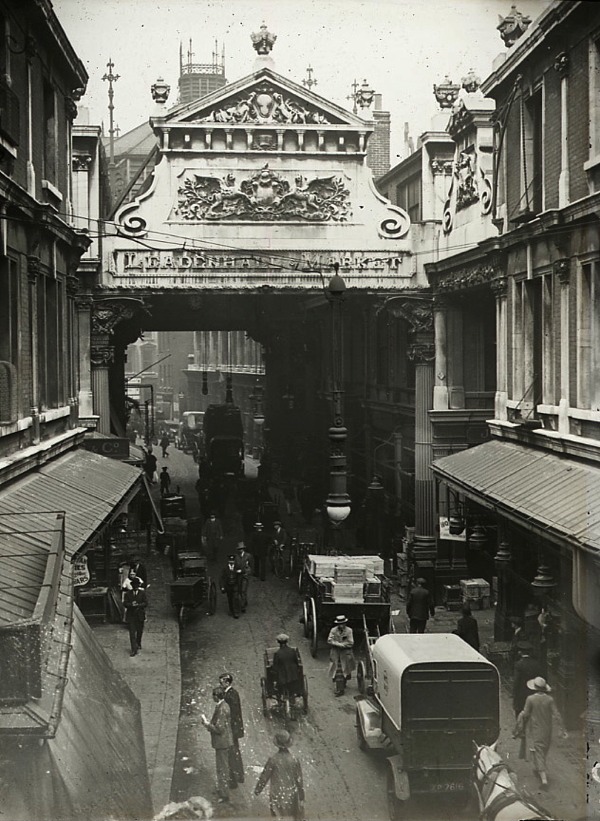
Leadenhall Market, c.1910
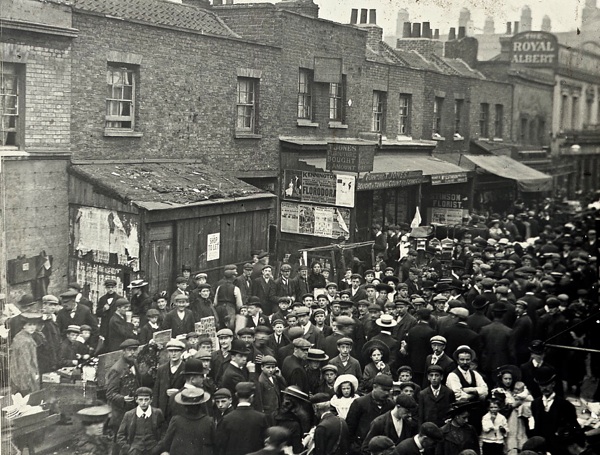
East St Market, c.1910
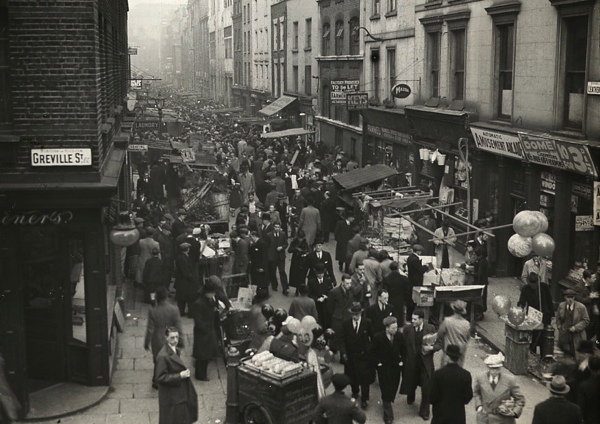
Leather Lane Market, 1936
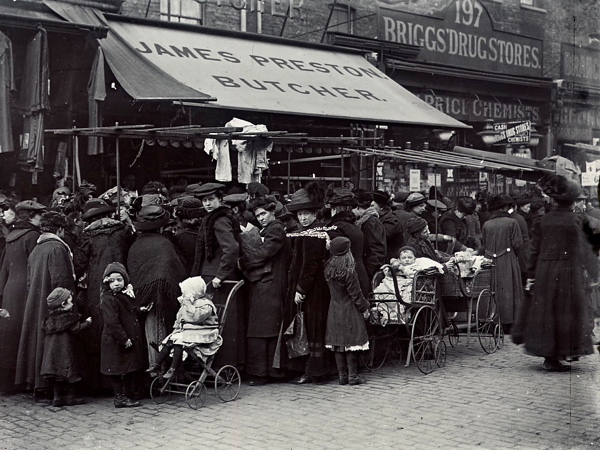 Hoxton Market, Shoreditch, 1910

Spitalfields Market, c.1930
Images courtesy Bishopsgate Institute
You may like to look at these old photographs of the Spitalfields Market by Mark Jackson & Huw Davies
Night at the Spitalfields Market
Other stories of Old London
David Mason, Wilton’s Music Hall

When I arrived to meet David Mason yesterday afternoon in the bar at Wilton’s Music Hall, the only person sitting there was a man who looked so at home I imagined he must be the caretaker, not David. In fact, this was David, who grew up in the flat above Wilton’s when his father was caretaker in the nineteen fifties and – more than half a century after he moved out – he still feels comfortable in the old place.
Although it was known as the Old Mahogany Bar when David’s family moved into four rooms up above in 1951, the building was not a music hall then but a Methodist chapel. “My father knew it had been a music hall,” David explained to me, “The story we were told was that Wilton’s was thought to be a place of debauchery, and one day three Methodists walking past were so shocked they bought tickets and kneeled down in front of the stage and prayed that it would one day be a place of worship – and, lo and behold, eighty years later the Methodists got it!”
Even in this incarnation, the old music hall was a place of wonder for a small child, granted free run of the building. “When I was eight, my father had to spend ten nights away in hospital. He said, ‘You’re the man of the house.’ and I had to go round with a torch in the dark checking all the locks at night. It was scary, I thought every single noise was someone creeping up on me,” David recalled affectionately, as we walked through the atmospheric empty theatre yesterday.
In 1951 when David was three, his younger brother and sister, John and Jean, were born unexpectedly as twins and the family could no longer live in two rooms in the Peabody Buildings in John Fisher St. His father, Harry, was offered number three Grace’s Alley by Mr Willis the minister in return for care-taking duties, stoking and lighting the boiler, laying out tables and chairs for prayer meeting and some occasional do it yourself, which included knocking up the little wooden cross for the altar. “My parents were married here in the Old Mahogany Bar,” David told me, gesturing around the empty bar where we sat, “He worked for the Port of London Authority as a docker in St Katherine’s Dock and his nan’s family were sugar bakers, they came from Ship Alley in Wellclose Sq – and my mother’s family came from Backchurch Lane.”
David went to St Paul’s opposite the music hall, a Church of England school presided over by Father Joe Williamson known as ‘Holy Joe.’ “He could walk into a fight in Cable St and kneel down and pray and they would stop brawling,” David assured me. The difference between the Methodism at the chapel and the Church of England practices at school was a source of bewilderment to David at an early age. “I was deeply confused, they covered their cross sometimes but we never did, and ours didn’t have a Jesus on it while theirs did. I asked one of the Methodist sisters why our cross did not have Jesus and she said, ‘We believe Jesus rose from the cross,’ but I think the real reason was that my dad made the cross and he couldn’t carve.”
In those days, the London Docks were still active and Wapping was scattered with bombsites where, as a child, David was free to wander. He remembers ships chandlers and mapmakers in the surrounding streets that were inhabited by a closely-knit community including significant numbers of Greek, Maltese and Turkish people. Before the slum clearance programme, Wellclose Sq and Swedenborg Sq stood lined with shambolic old houses and connected by a warren of alleys, in which was Roy’s sweet shop that David remembers as the last place he spent a farthing.
“My dad said that before the war they used to have a book appreciation club and I remember going with him to a Jewish-owned record shop in Aldgate where he reminisced about the record appreciation society. They had a Boys’ Brigade, Scouts, Magic Lantern Shows and there were Methodist Union meetings where ministers from other religions came to explain their beliefs. When we moved in, there was a still a youth club and there were always old ladies sitting knitting and chatting, but during the fifties they had fewer and fewer prayer meetings and my dad had to open up less and less, until it died.”
“In 1959, we were given fourteen days notice to leave by the Methodists and nobody was willing to help.” David confessed to me, “My dad wasn’t a bible bashing type, he wasn’t overtly religious even, but he went to church all his life and he carried the soldier’s prayer in the pocket of his battledress jacket. So I think it hurt him after all this time to feel we were being thrown out. The upshoot was we ended up in three rooms belonging to the Port of London Authority near the Woolwich Ferry and that was the end of our contact with this place.”
At fourteen years old, David came back to get his eyes tested at the Royal London Hospital in Whitechapel and took a stroll alone down to Wapping to see what was going on at his former home, now owned by the GLC. “I rang the bell that said ‘Ring for caretaker’ but no-one answered so I turned to walk away and a gruff voice called, ‘Who are you? What do you want?’ I explained that I used to live there and I knew how many steps there were up to the flat, and he let me in, saying, ‘You really did live here, didn’t you?'” Since David left, the building had become a warehouse for rags, guarded by fierce dogs that were described to him by a friend as “all-stations.”
Returning in recent years to witness the re-opening of Wilton’s Music Hall and visit the space he once knew intimately has been an equivocal experience for David, as he confided to me, “The first time I came back there was a lot of strings being pulled in my heart. I never thought I’d stand in the Old Mahogany Bar in the Methodist chapel and have a glass of wine to drink!” These days, David teaches Painting and Decorating at Barking and Dagenham College and now hopes to bring his students along to Wilton’s to repaint the old place one day, once the structural work is complete.
“I have only got happy memories here, we laughed all the time – but when I lived here there didn’t seem to be as much love for the place as there is now, even though it is in such a state” he concluded, “When I come back now it isn’t like the place I grew up in, it’s a foreign country. It wasn’t the best of places then, yet it did have something – you could call it soul.”

Wilton’s Music Hall was known as the Old Mahogany Bar when David grew up here in the fifties.

Davis’s parents, Anne & Harry Mason, were married in the Old Mahogany Bar at Wilton’s.

St Paul’s School Wellclose Sq where David went to school.

St Paul’s School viewed from the living room window at Wilton’s.

The infants class at St Paul’s photographed on the lawn outside Wilton’s – Miss Webb and Father Joe Williamson (known as Holy Joe) officiate. David sits in the front row directly to the right of the sign.

David’s mother and younger brother John on the roof of Wilton’s where they grew tomatoes and flowers.

David stands in the space once occupied by the flat where he grew up.

David with his mother and the twins in the living room at Wilton’s.

David sits by the fireplace of his former childhood flat. “We used to light this fire at Christmas and have fourteen relatives round – nan, uncles, aunts and cousins..”

David with his nan and the twins. “Her name was Elizer Wiegle and she was of German extraction, and used to attend the Lutheran Church in Alie St.”

David sits on the big staircase at Wilton’s.


Methodist activities at Wilton’s in the fifties.

David recalls reading the theatre’s foundation stone by torchlight with his father as a child.


John Claridge’s portrait of the caretaker at Wilton’s, 1964, after the theatre became a rag store.
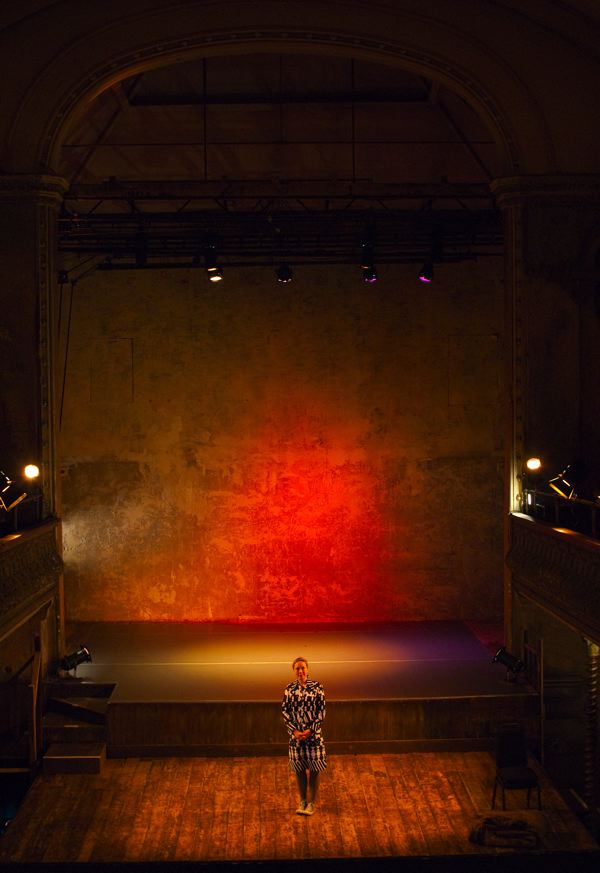
Sarah Ainslie’s portrait of Frances Mayhew, current director at Wilton’s Music Hall.
Caretaker portrait copyright © John Claridge
Frances Mayhew portrait copyright © Sarah Ainslie
You may like to read my original story
The New Cries Of London, 1803
This battered little chapbook of 1803 with its intricate hand-tinted engravings of street-sellers – that I found in the Bishopsgate Library – is the latest wonder to be uncovered in my investigation into popular prints of The Cries of London down through the ages. Even within the convention of these images, each artist brought something different and these plates are distinguished by their finely drawn figures – including some unexpected grotesques that appear to have stepped from the pages of a fairy tale, imparting an air of mystery to these everyday scenes of street trading.
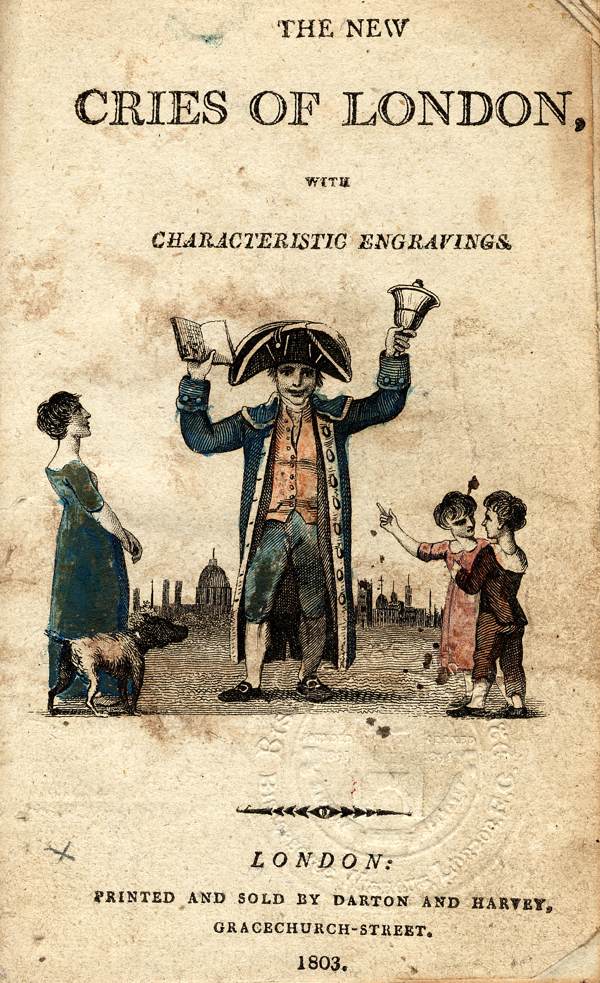

Milk below!
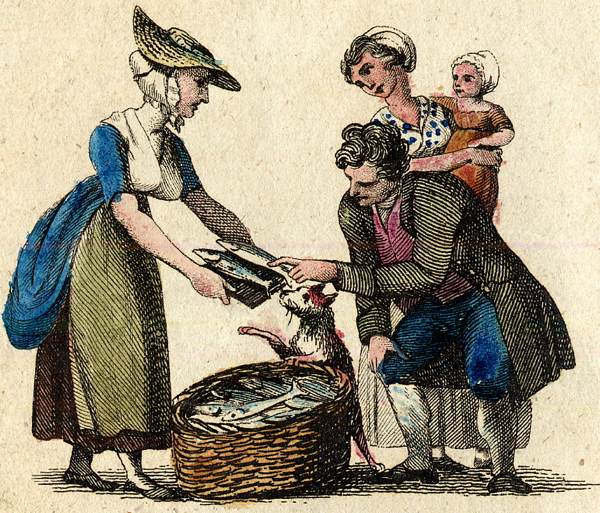
New Mackerel!
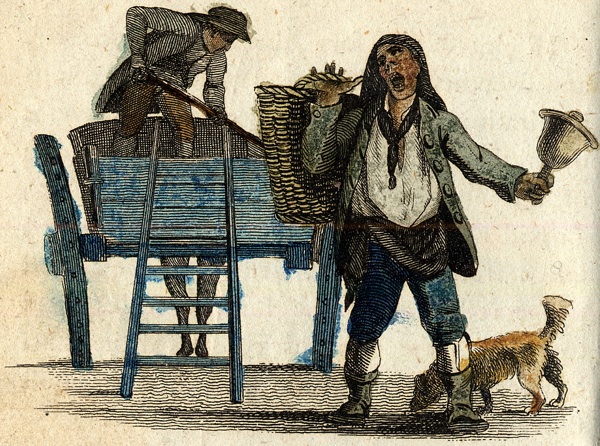
Dust Ho!

Chairs to mend!
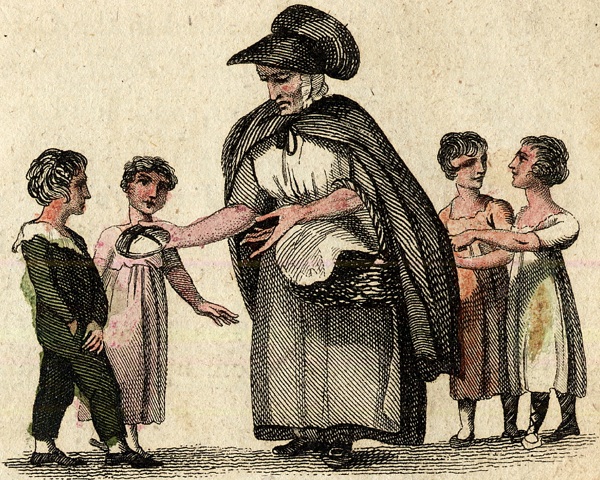
Hot cross buns!
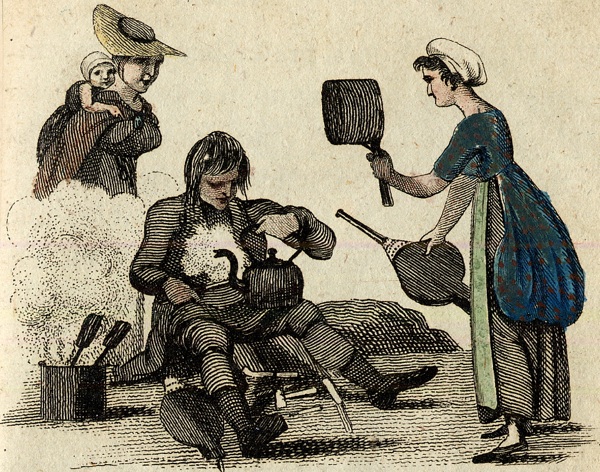
Any work for the tinker?
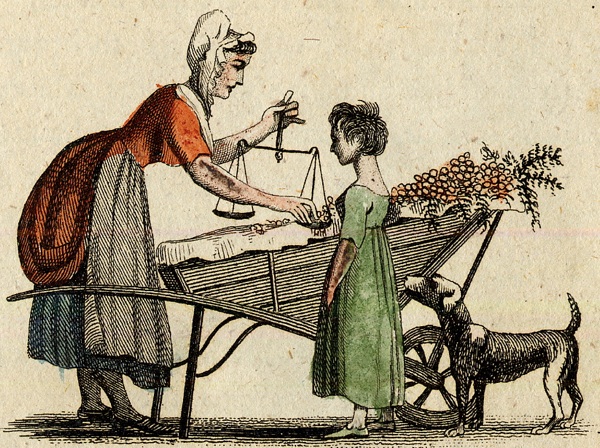
Cherries, threepence a pound!
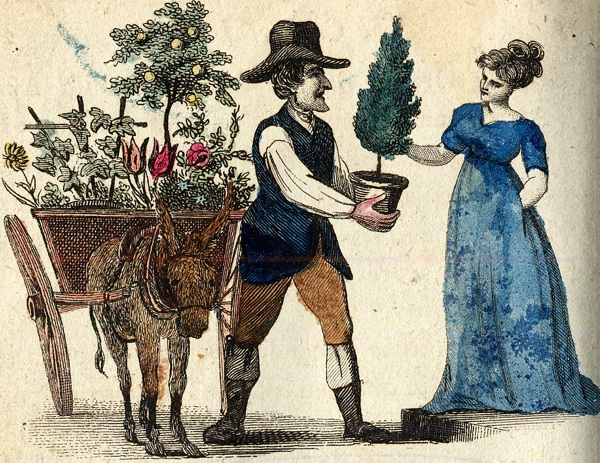
Flowers for your garden!
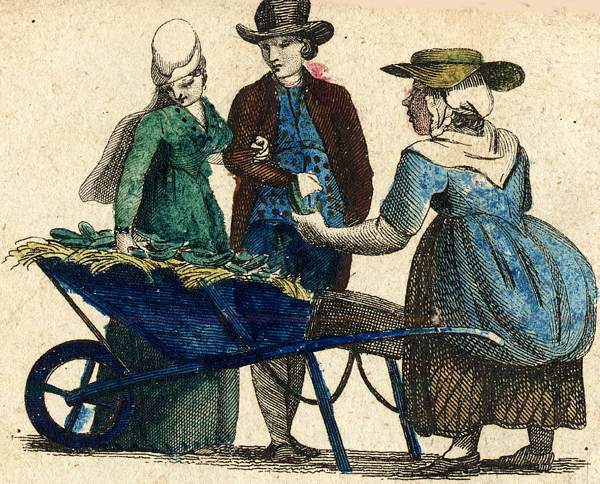
Green cucumber!
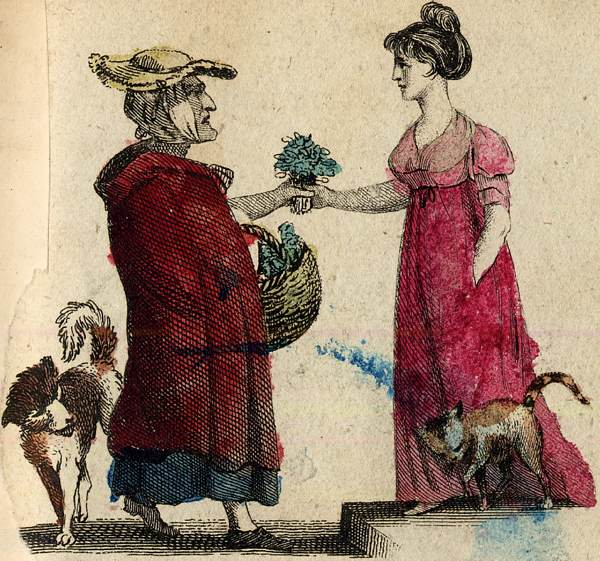
Buy my watercress!

Sweep! Sweep!
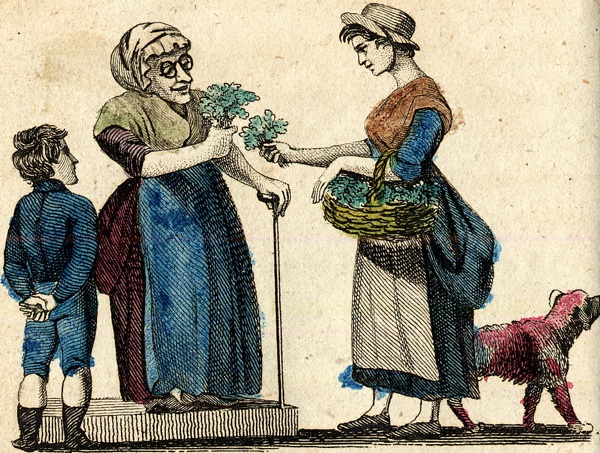
Ground Ivy!
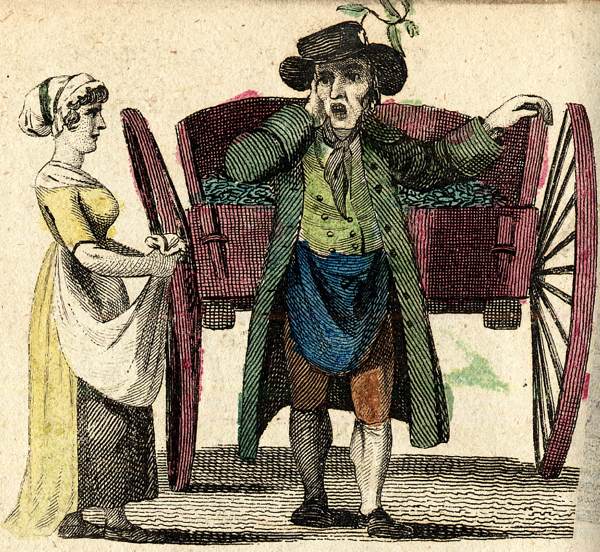
Green hastings!
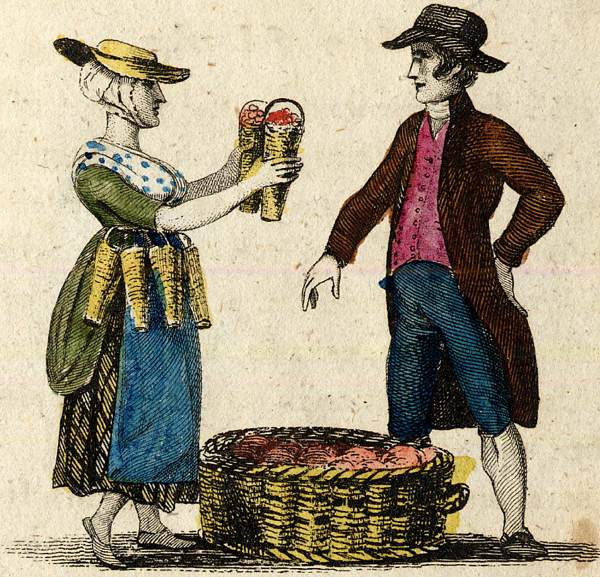
Scarlet strawberries!
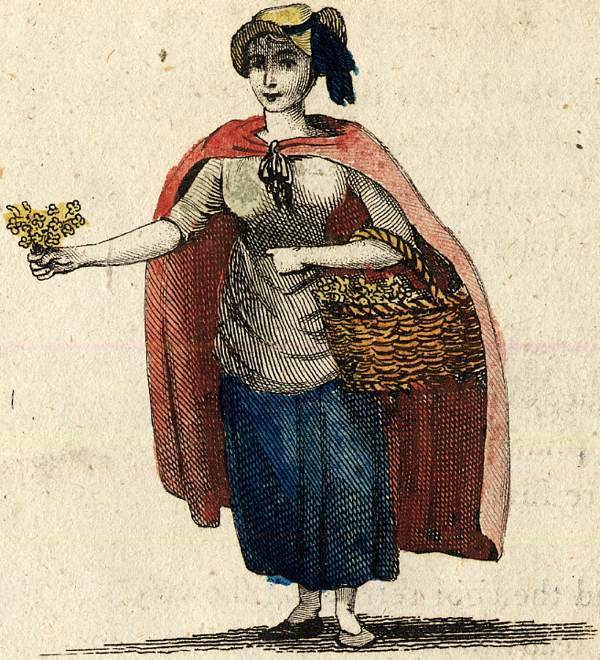
Primroses!
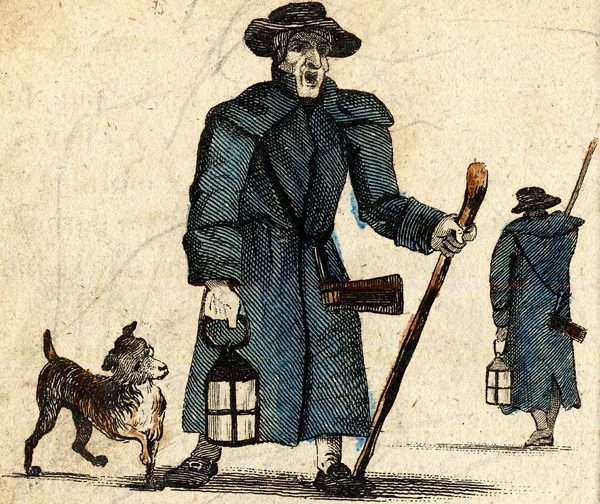
Past ten o’clock!
Images courtesy Bishopsgate Institute
You may also like to take a look at these other sets of the Cries of London
Geoffrey Fletcher’s Pavement Pounders
William Craig Marshall’s Itinerant Traders
H.W.Petherick’s London Characters
John Thomson’s Street Life in London
Aunt Busy Bee’s New London Cries
Marcellus Laroon’s Cries of London
More John Player’s Cries of London
William Nicholson’s London Types
Francis Wheatley’s Cries of London
John Thomas Smith’s Vagabondiana of 1817
John Thomas Smith’s Vagabondiana II
John Thomas Smith’s Vagabondiana III
Thomas Rowlandson’s Lower Orders
More of Thomas Rowlandson’s Lower Orders
Taking Cover
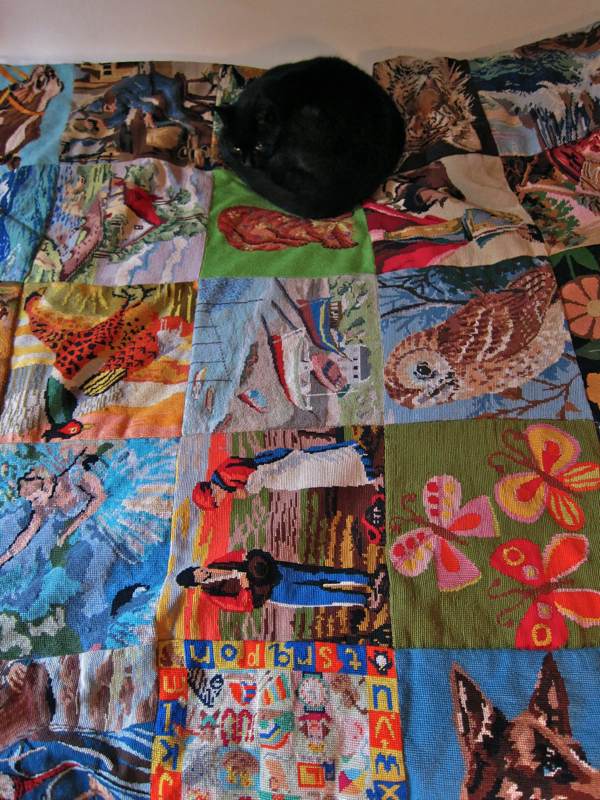
Why does the rain make me want to sleep? When I hear the drumming of raindrops on my roof, it inspires an urge within me to climb under the covers and sleep, as if I were some hibernatory creature. Even as a child, the rain induced this effect and my parents would sometimes find me peacefully asleep on the sofa in the late afternoon, after returning from school in the drizzle.
On Saturday last, the clear sky presented a credible impression of a summer’s day, but the rain which came down that evening combined with the chill of the night to signal that another season had arrived. In the Sunday market, traders sheltered under canopies and peered out in disappointment at the few customers in the wet streets. Returning from Columbia Rd, cold and damp, I knew I had reached the moment in the year to take out my quilt and put it on the bed in preparation for the coming winter.
After a few judicious repairs, the quilt was ready to serve me for another year, with its glowing woollen colours and satisfying weight, lying on top of the covers to provide emotional and thermal insulation when I lie in the dark listening to the rain. I have written before of how I made this quilt by sewing old tapestries together, in commemoration of my mother in the months after her death – but now it has an age of its own and this receptacle for memory has acquired its own memories too.
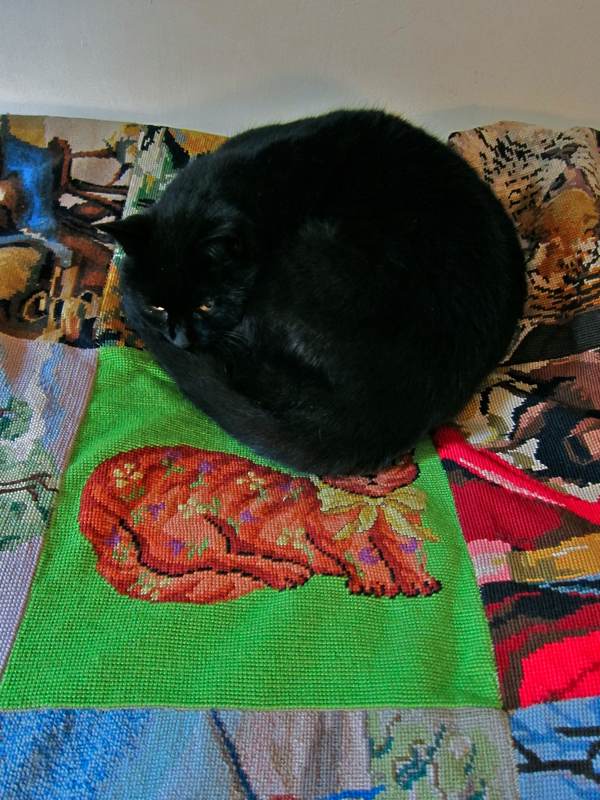
There is a sleight of hand – substituting one emotion for another – with my quilt whereby, when my eye falls upon it, I am delighted by its beauty just I am reminded of the one I miss. Similarly, my cat dates from the time when my father died and my pleasure in the antics of this innocent creature colours my sense of loss. Thus, both my quilt and the cat that sleeps upon it serve as antidotes to the sense of enveloping darkness that grief can bring.
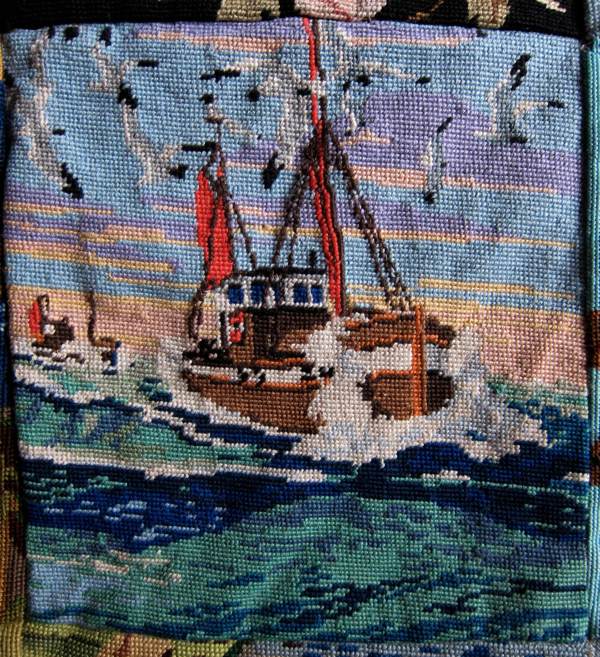
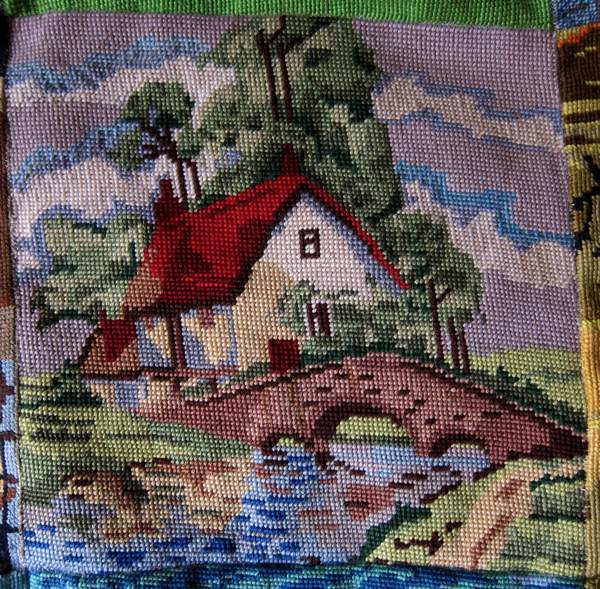
As soon as I had spread out the quilt this week, my old cat climbed onto it and curled up to sleep in exactly the same place as he has done each year, prescient of his own position in the order of creation, between the fearsome lion and the docile domestic feline. The pictures upon the quilt have grown familiar to me in recent years, as the last images I see before I sleep and the first I spy upon waking. And so I thought I would photograph some favourites to introduce you to the cast of beloved characters which appear each winter like the cast of a pantomime – the fisherman, the owl, the horse, the bullfighter, the falconer, the dairymaid, and the rest. They have returned to watch over me when the rain induces an irresistible urge to sleep.
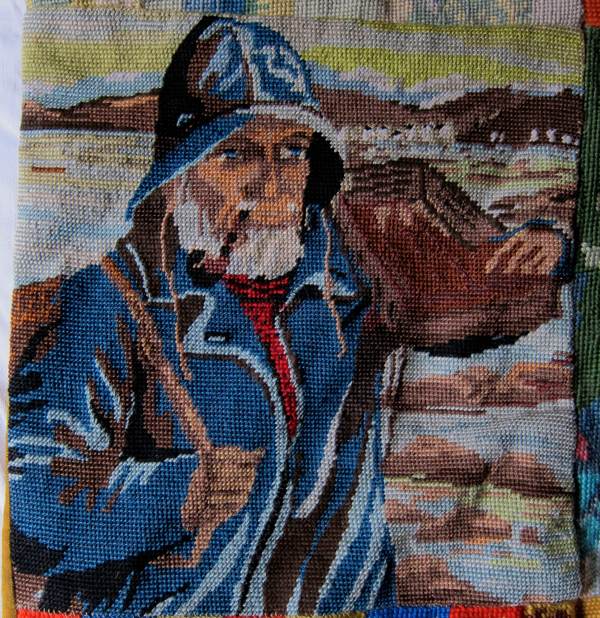
This old fisherman was the first tapestry I found.
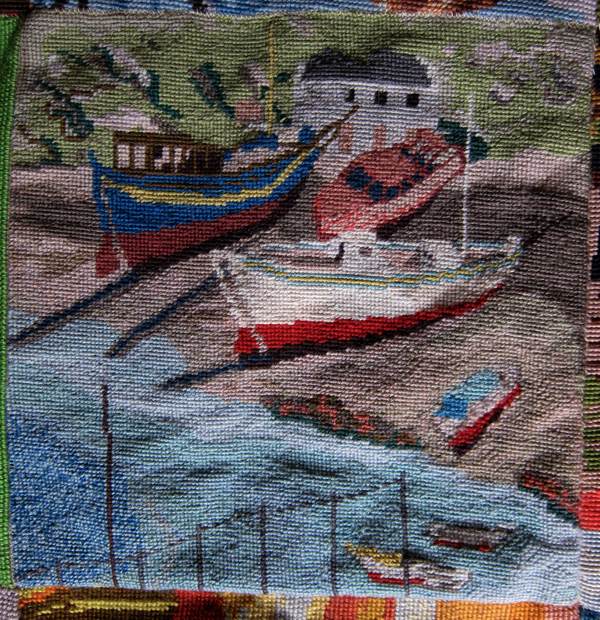
This is a unique tapestry, not from a kit like the others but copied from an original painting.

This cat dates from the nineteen thirties.
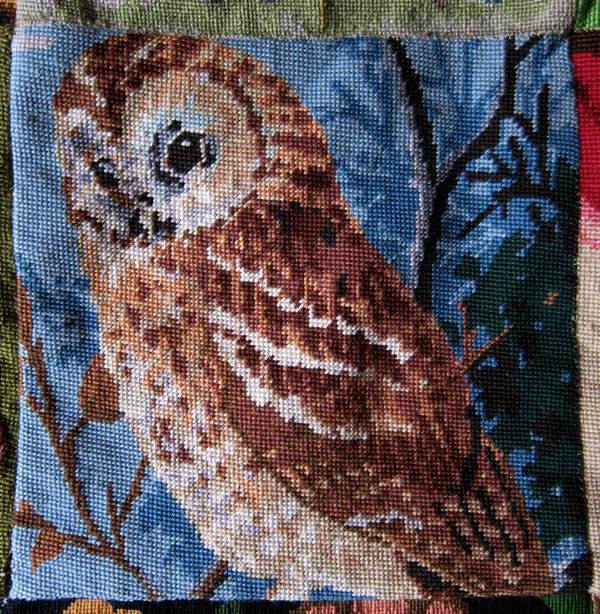
This owl is a favourite.

Notice the detailed stitching on the lion’s face.

These butterflies came from Florida.

This tapestry came from Sri Lanka.


A church in the mountains.

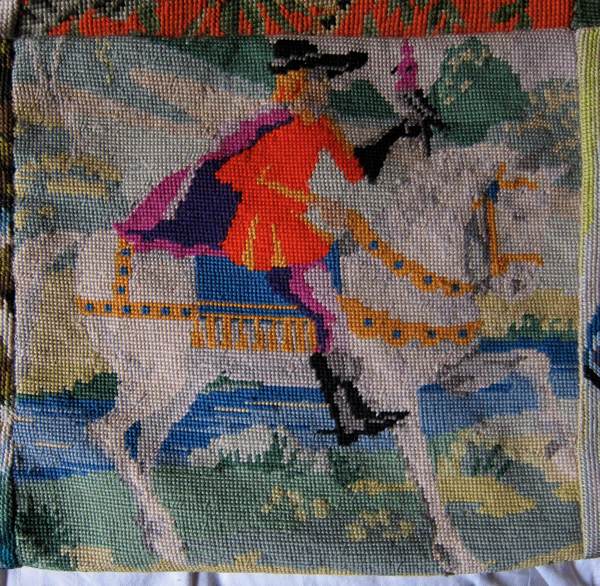
The falconer.
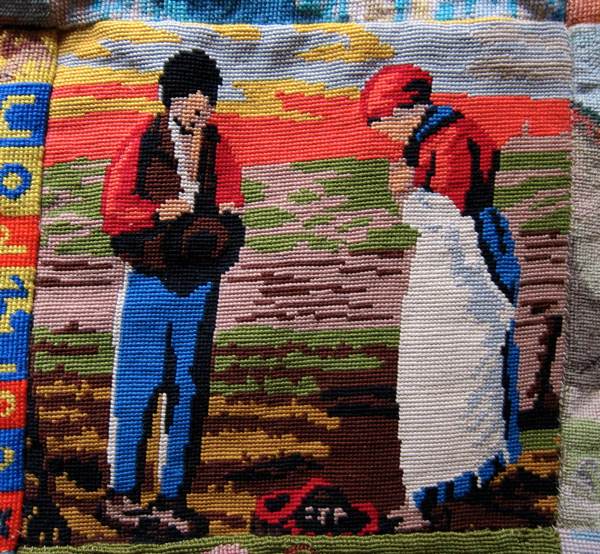
The Angelus from the painting by Millet.
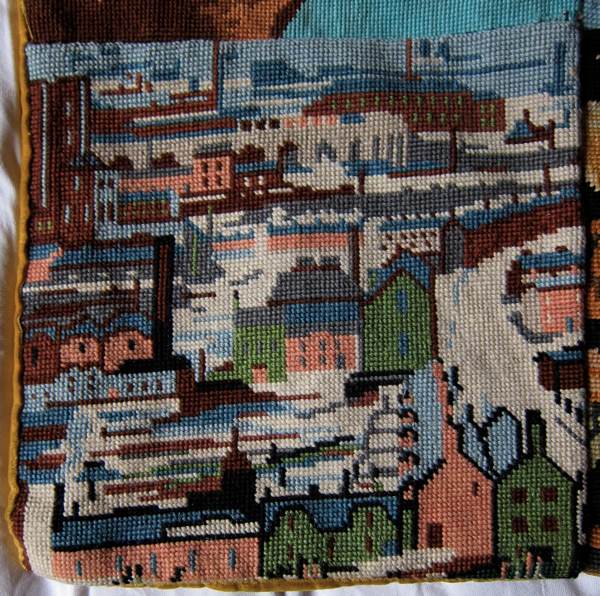
Lowry rendered as a tapestry.


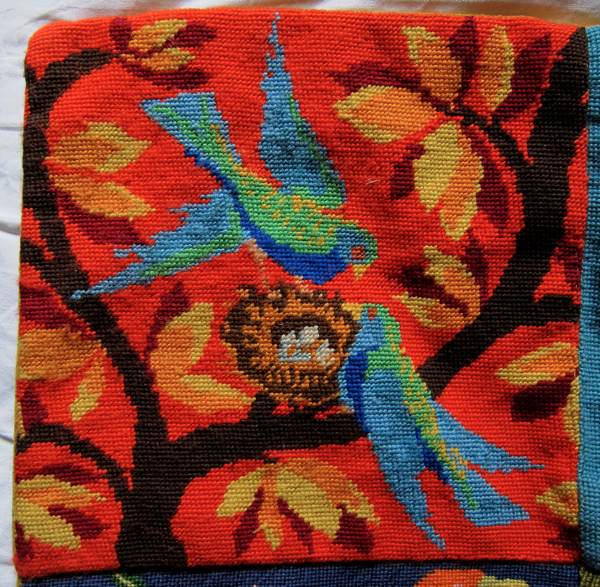
Birds from the Czech Republic.
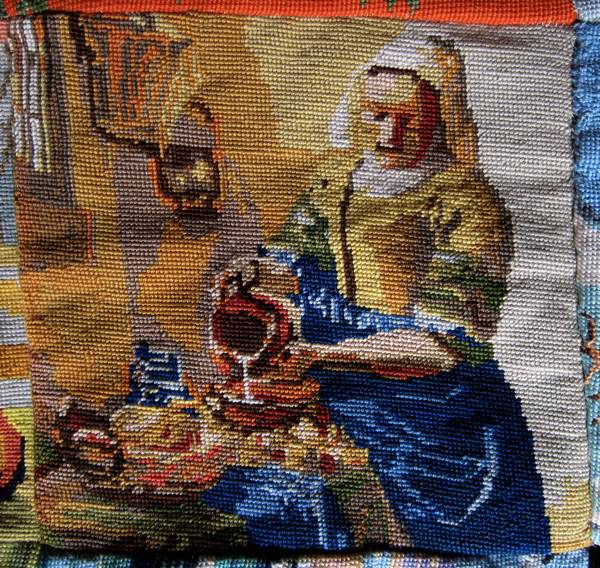
Vermeer rendered as a tapestry.
You may like to read the original story of












