William Blake’s Songs of Experience
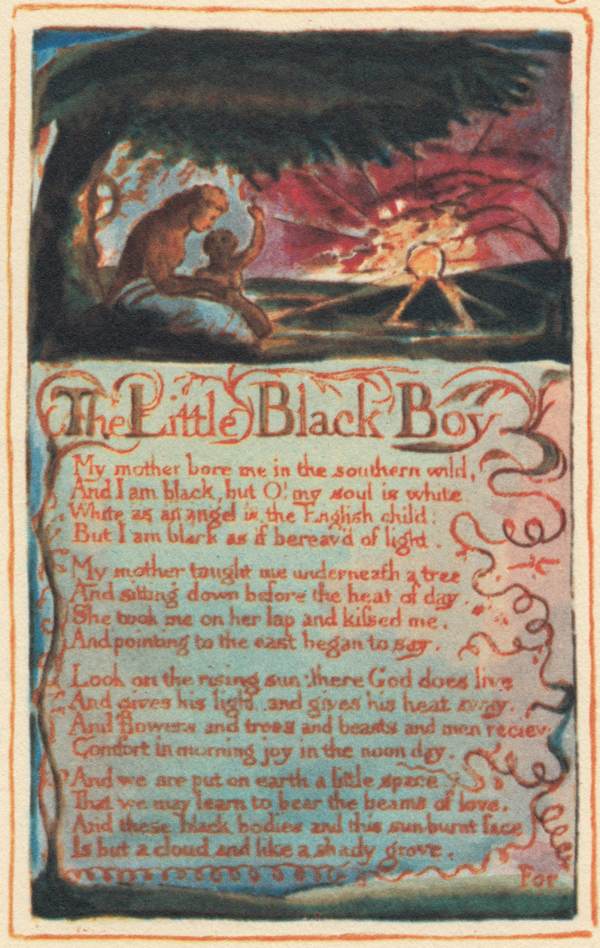
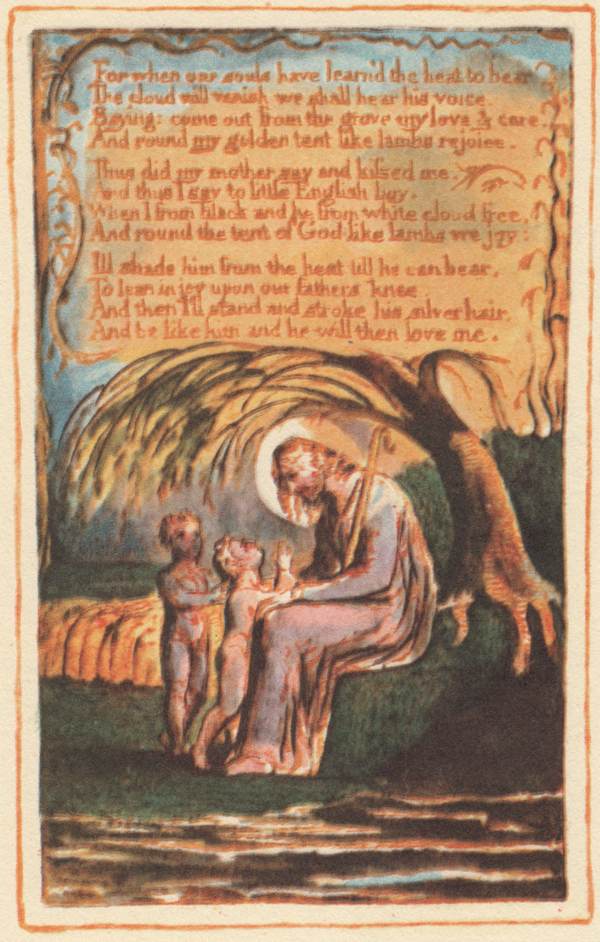
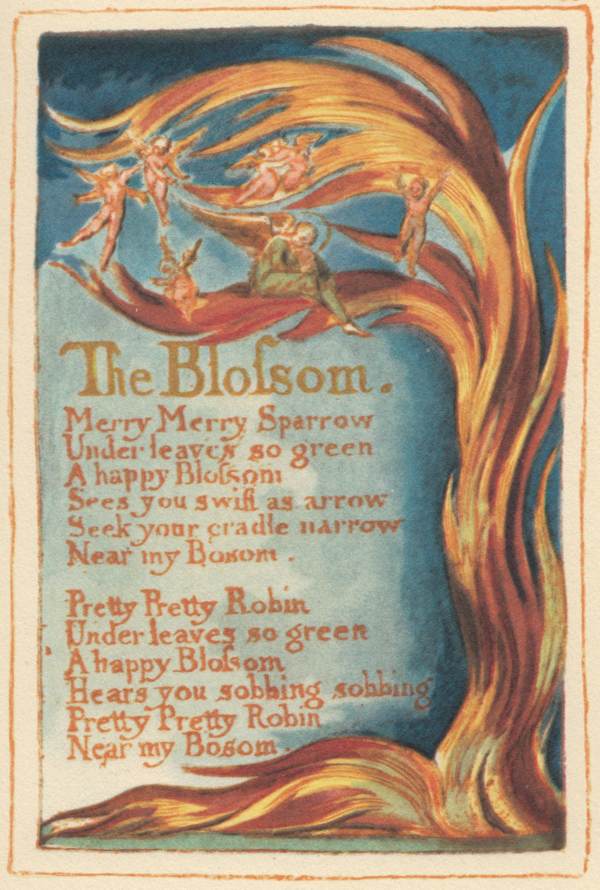
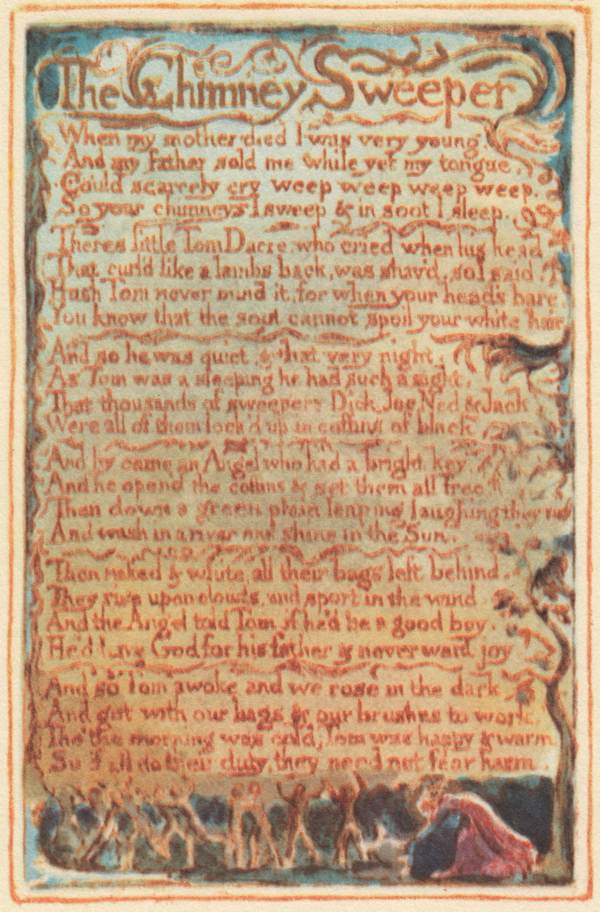
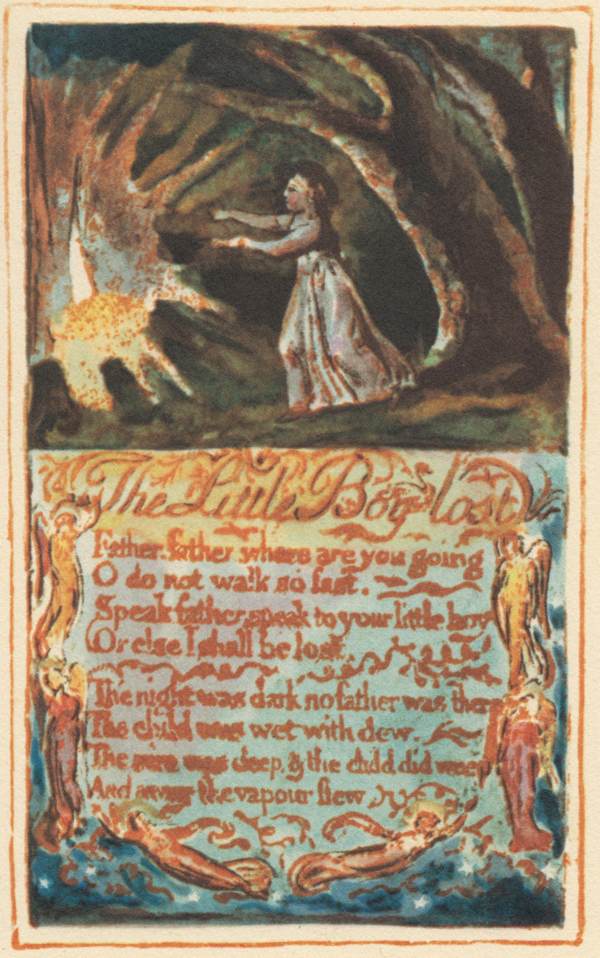
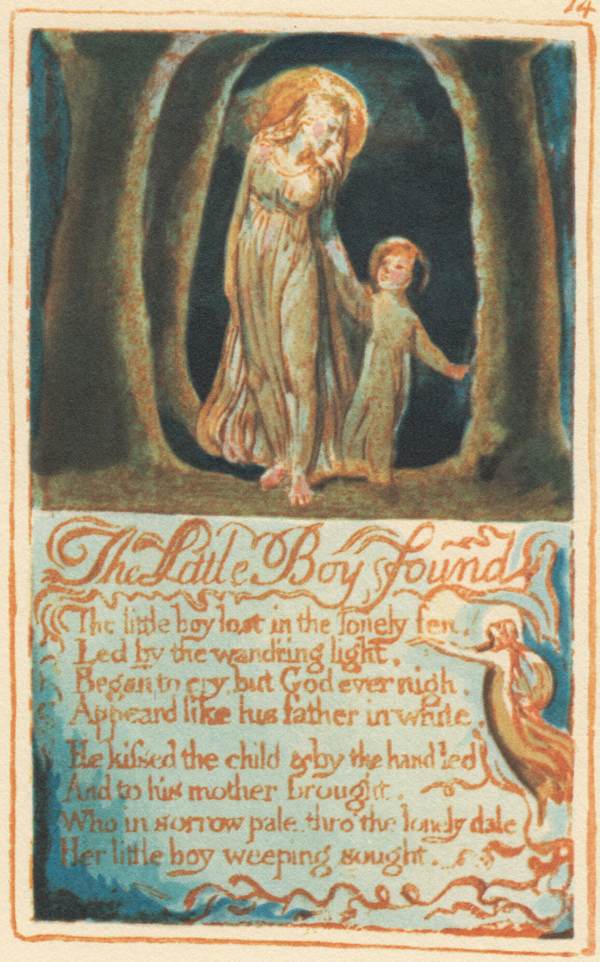
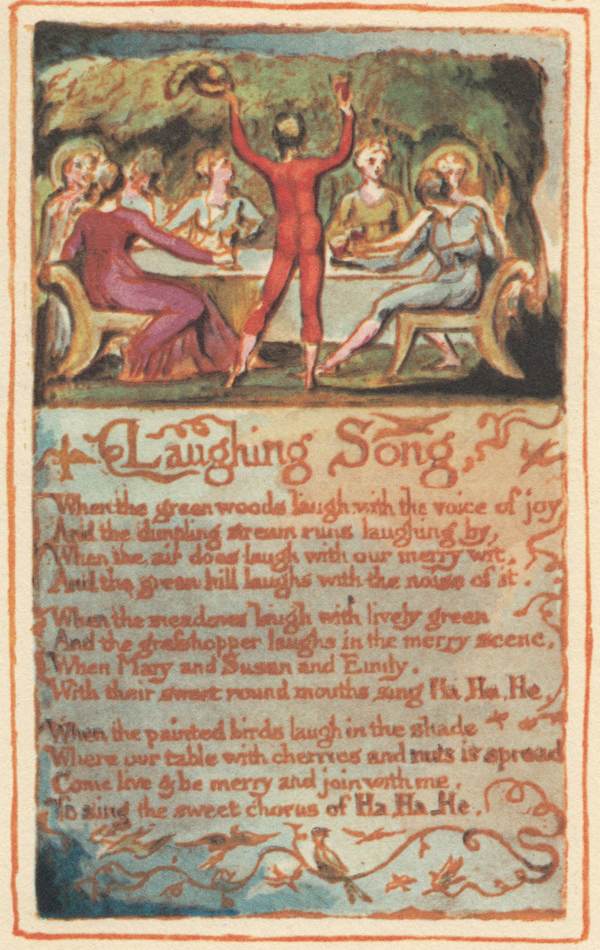
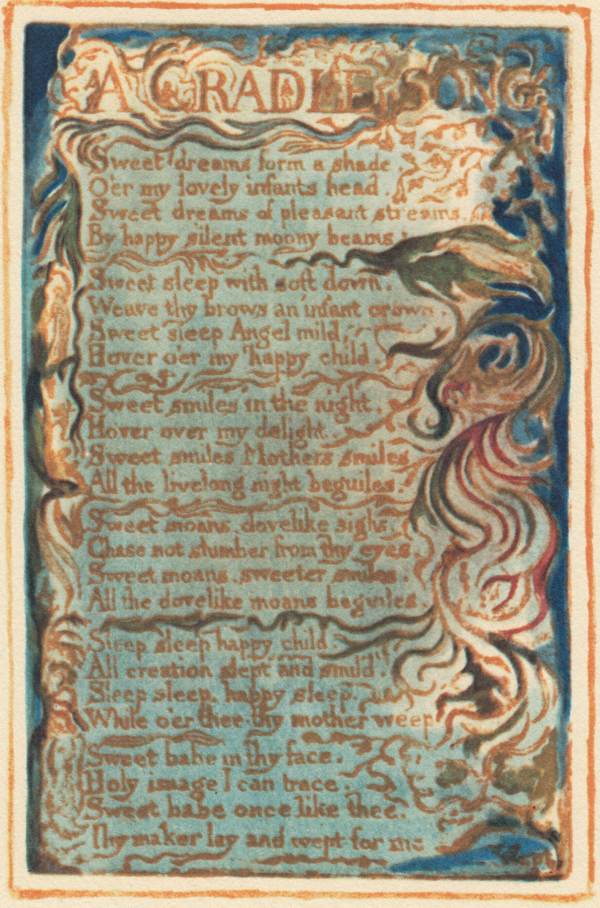
In celebration of William Blake’s birthday today, it is my pleasure to publish his Songs of Experience from 1794, complementing his Songs of Innocence in “Shewing the Two Contrary States of the Human Soul.”


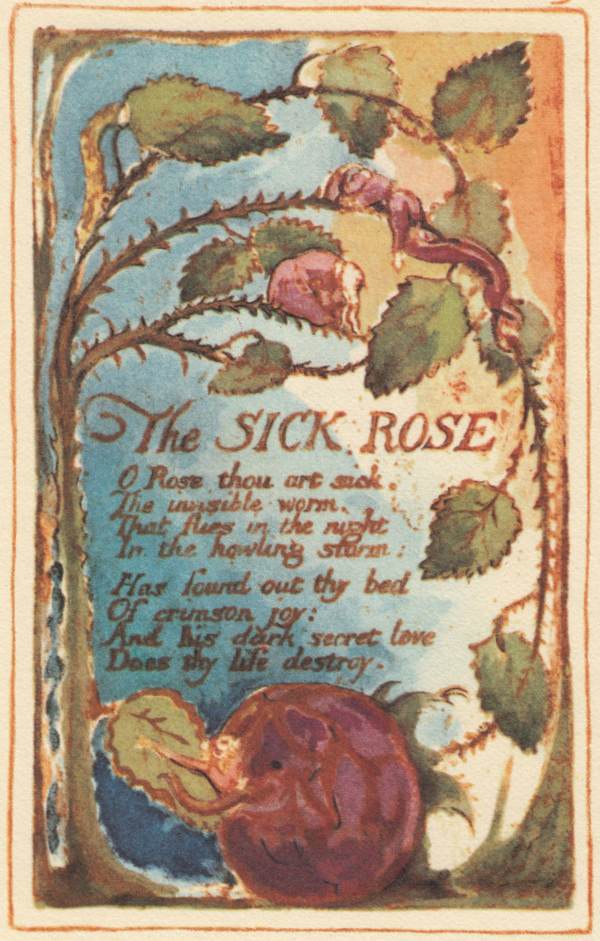


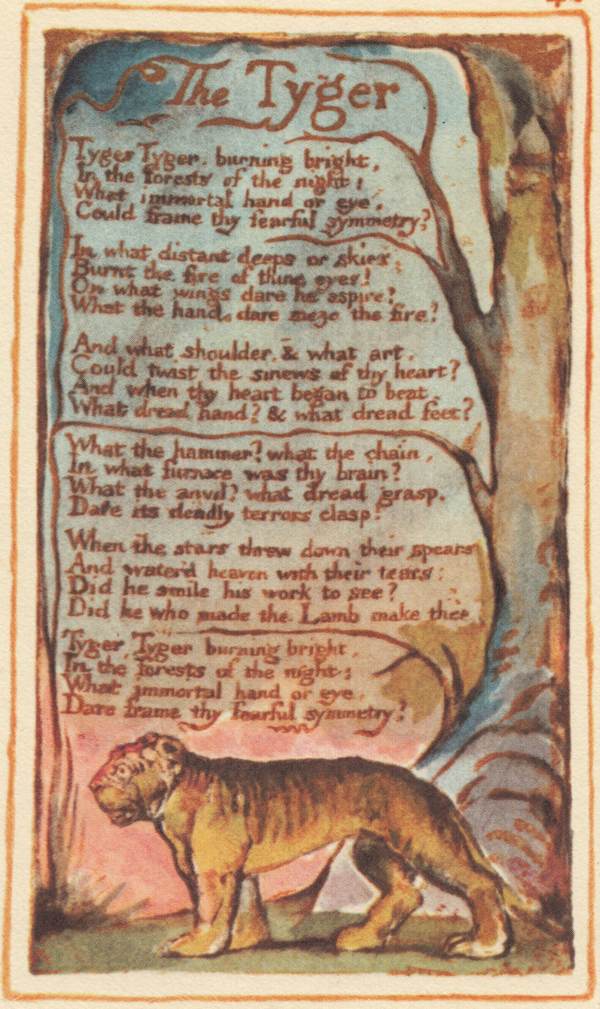


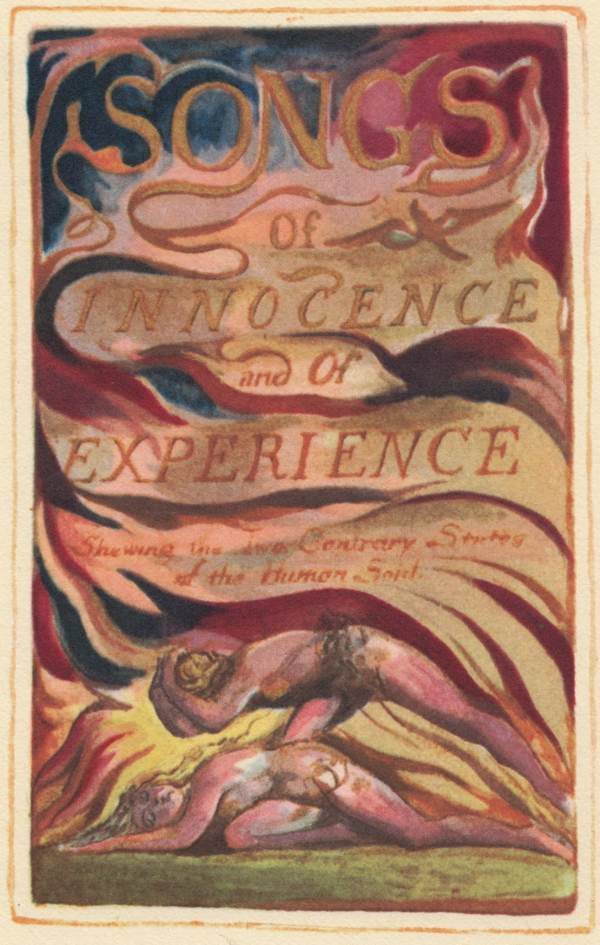
The only prize I ever won was a copy of William Blake’s “Songs of Innocence & Experience” awarded to me for English composition at the age of seventeen, yet it was one of the greatest gifts I ever received and I have carried this treasured book with me through life as an enduring source of inspiration. Years ago, when I found myself living in a council flat in Bunhill Row next to the City of London, I was heartened on waking each morning to see the memorial to Blake in Bunhill Fields, the Dissenters’ graveyard, from my window.
Blake came there in the summer of 1784 when his father was buried in a mass grave and again in 1792 for the interment of his mother. Wishing to be close to them, he was buried there in the summer of 1827, nine feet under, in an elm coffin with three other bodies beneath him and another four above.
Today, whenever I walk from Spitalfields to Covent Garden, I always make the detour through Bunhill Fields to pay my respects to William Blake and his literary neighbours in eternity, Daniel Defoe and John Bunyan. Passing along the narrow path between the crowded graves – paved with large tombstone slabs from which the lettering has worn away, overhung by tall trees and girded by green railings – it never fails to dispel my trivial concerns and replace them with metaphysical reflection.
In Blake’s time, it was possible to walk from the London out into the fields and, although his life was mostly occupied within the maze of narrow streets between Holborn, the Strand and Oxford St, we know that he regularly wandered far into the countryside and so it is not hard to imagine him, as a young man enraptured by visions, strolling through Spitalfields.

Memorials to Daniel Defoe and William Blake in Bunhill Fields, the Dissenters’ graveyard outside the wall of the City of London. Blake’s mortal remains lie nearby in an unmarked mass grave for paupers.
You may also like to take a look at
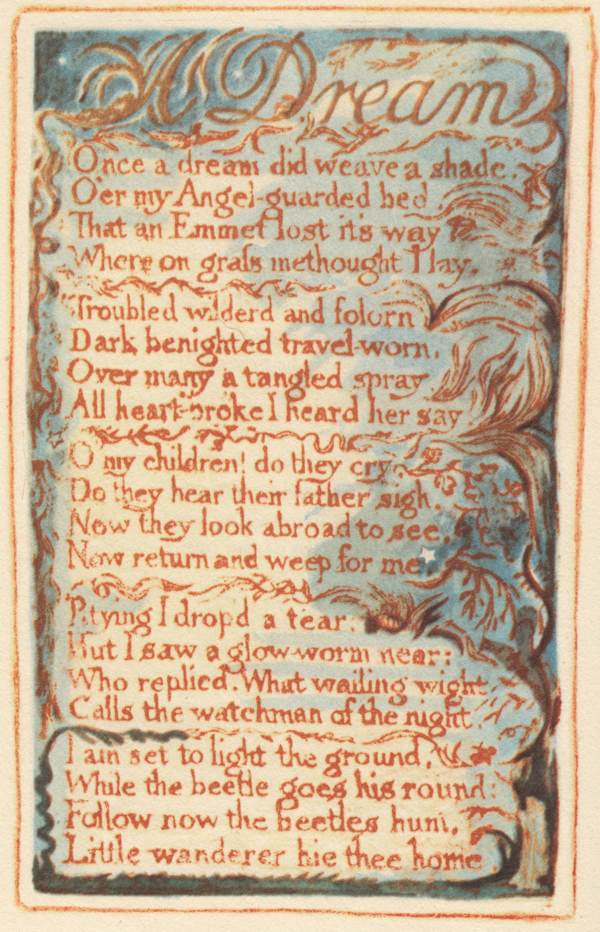
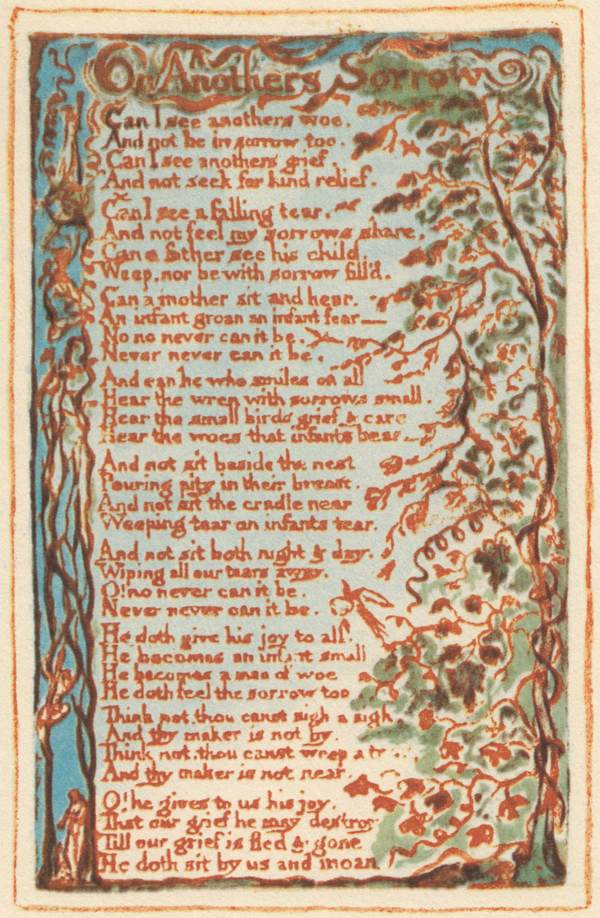
William Blake’s Songs of Innocence
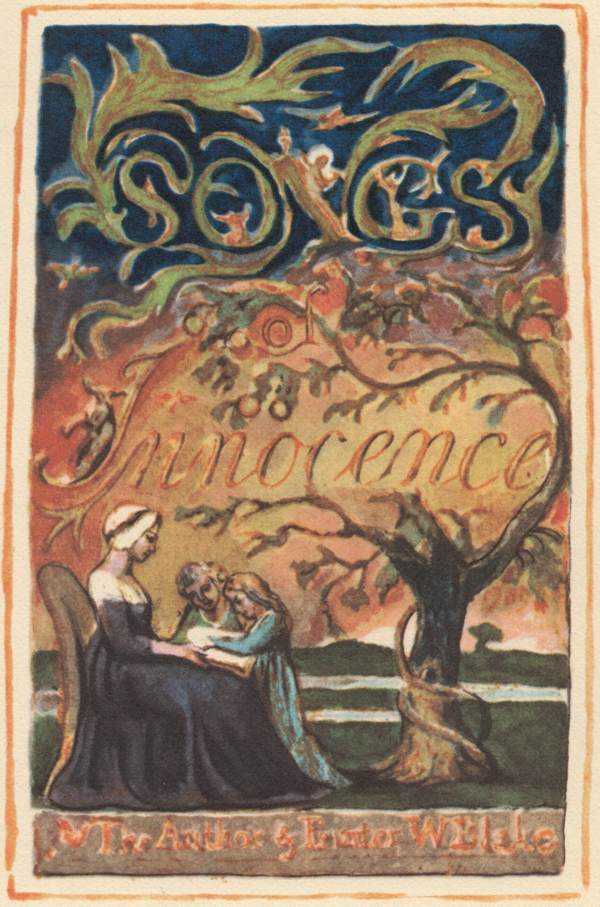
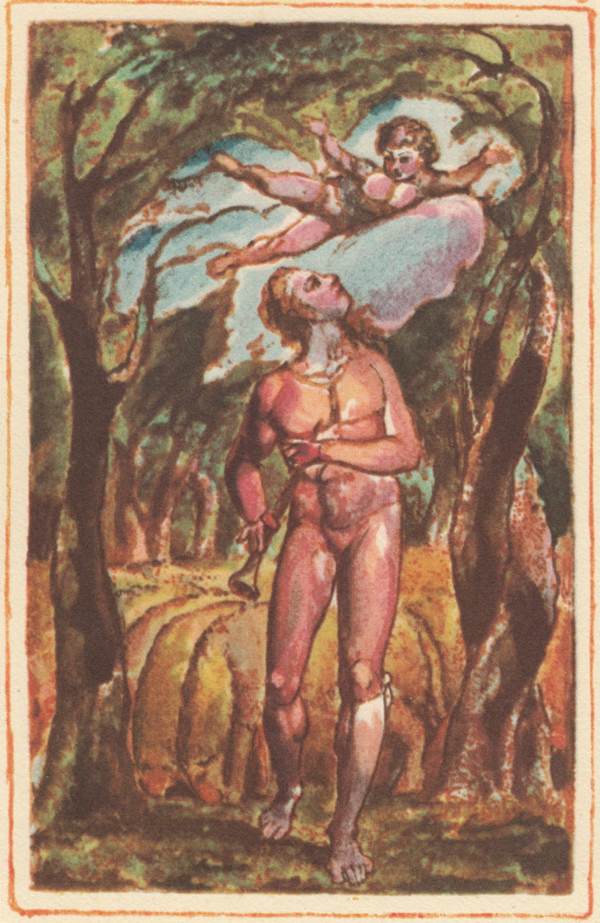
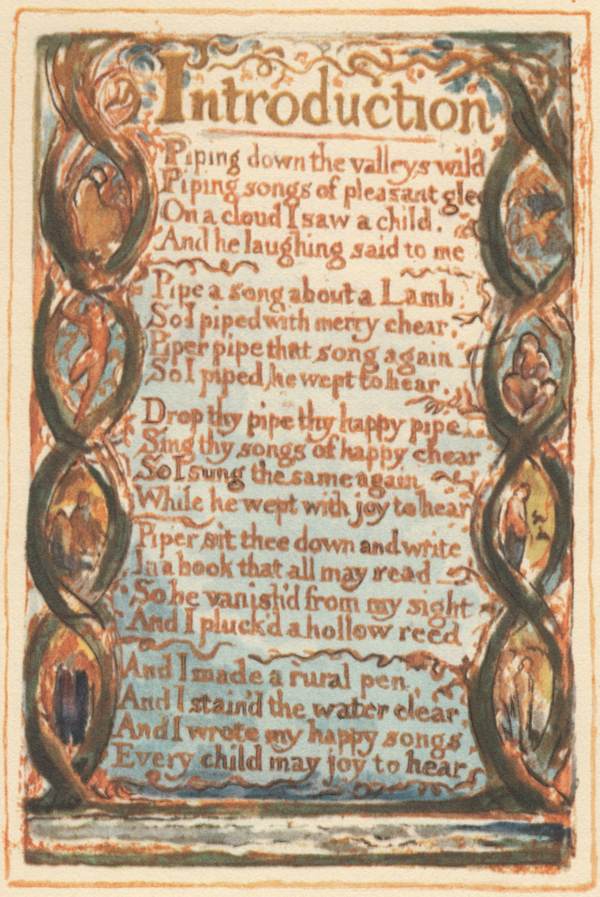
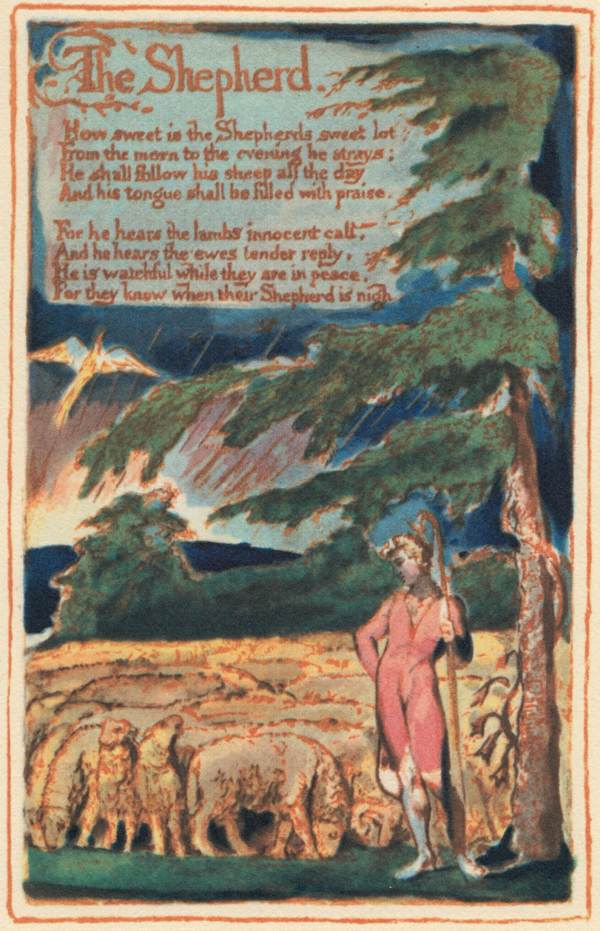
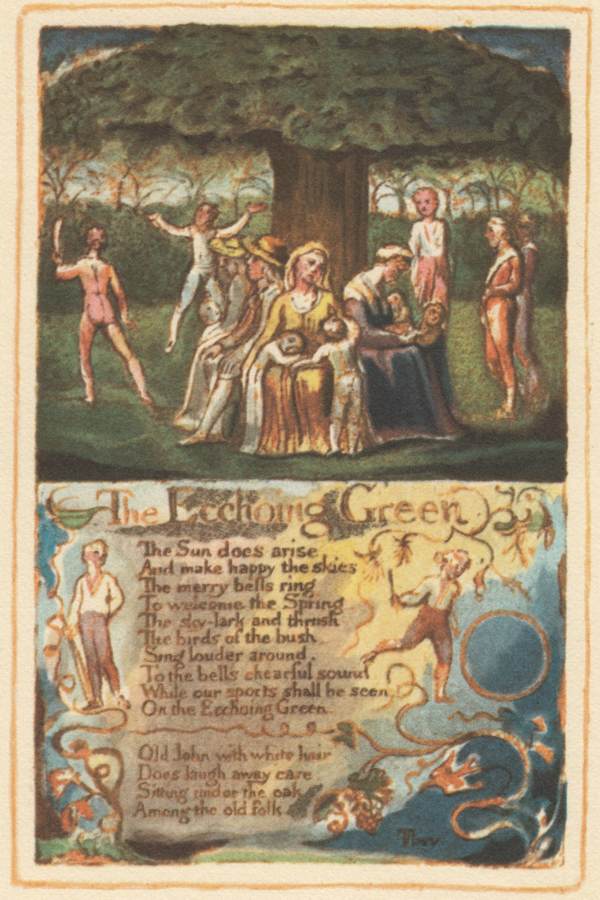
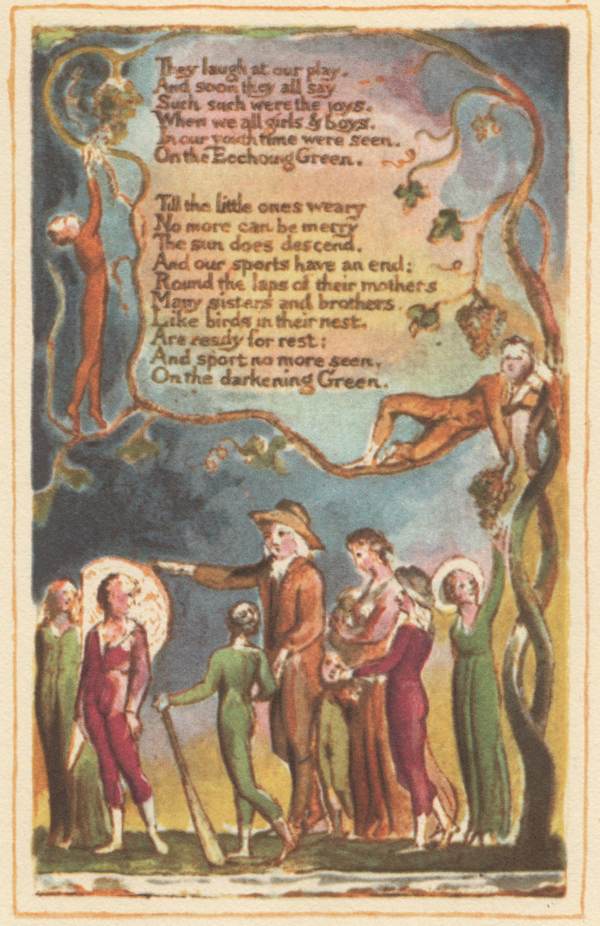
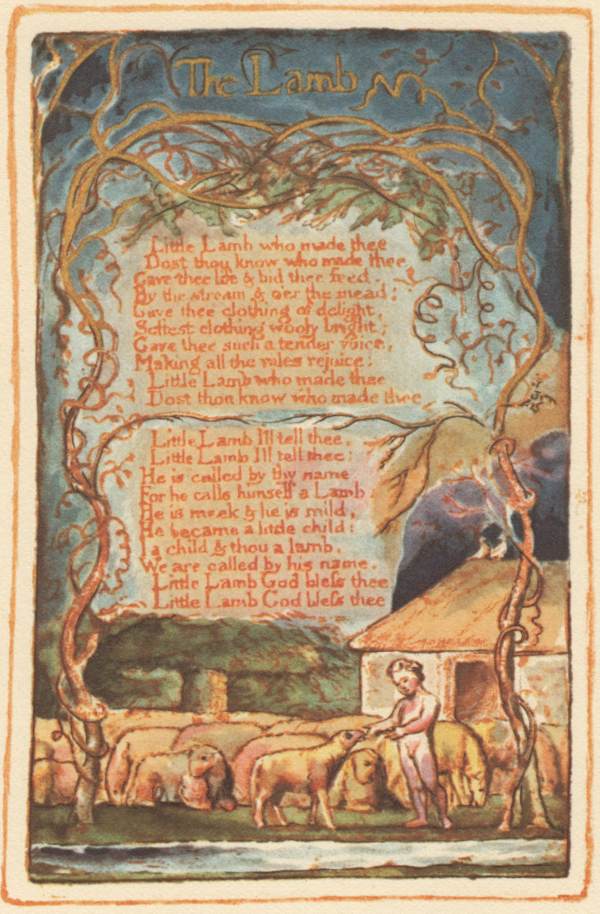
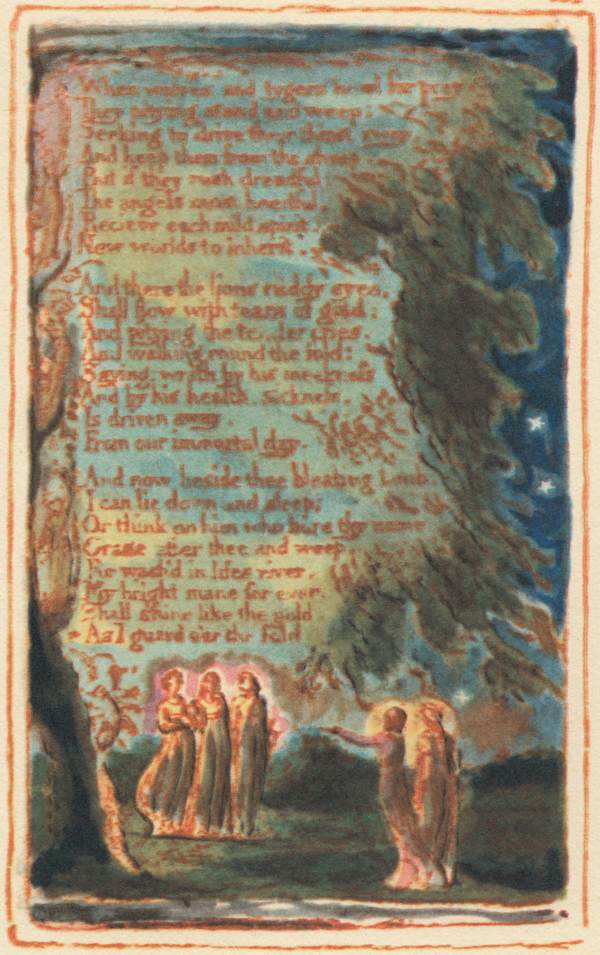
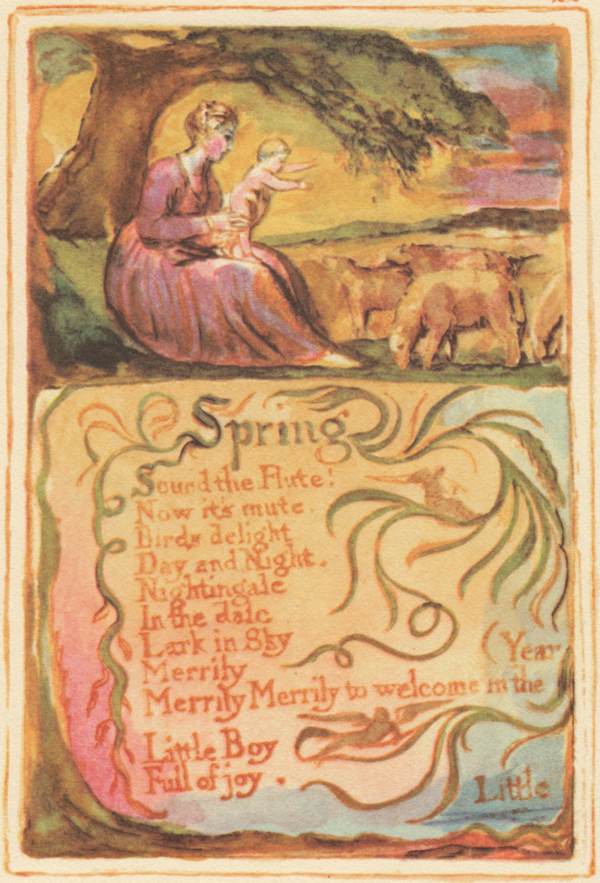
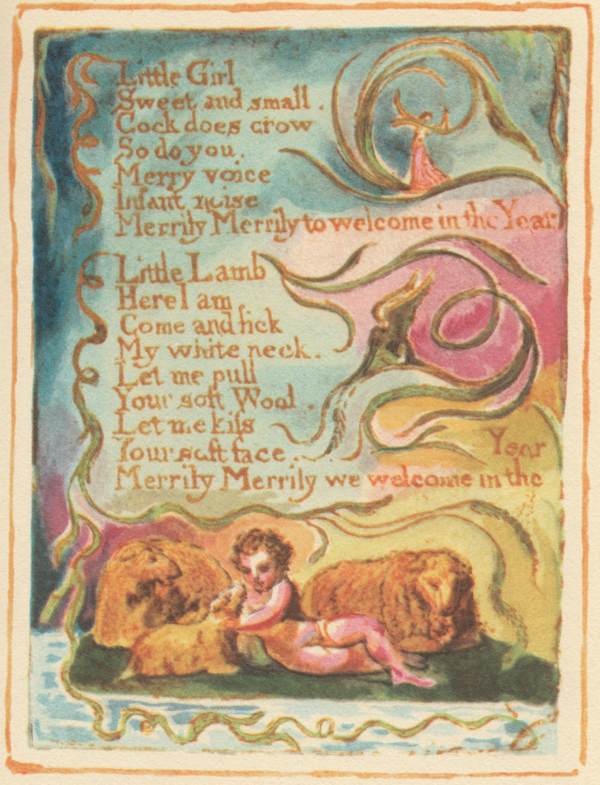
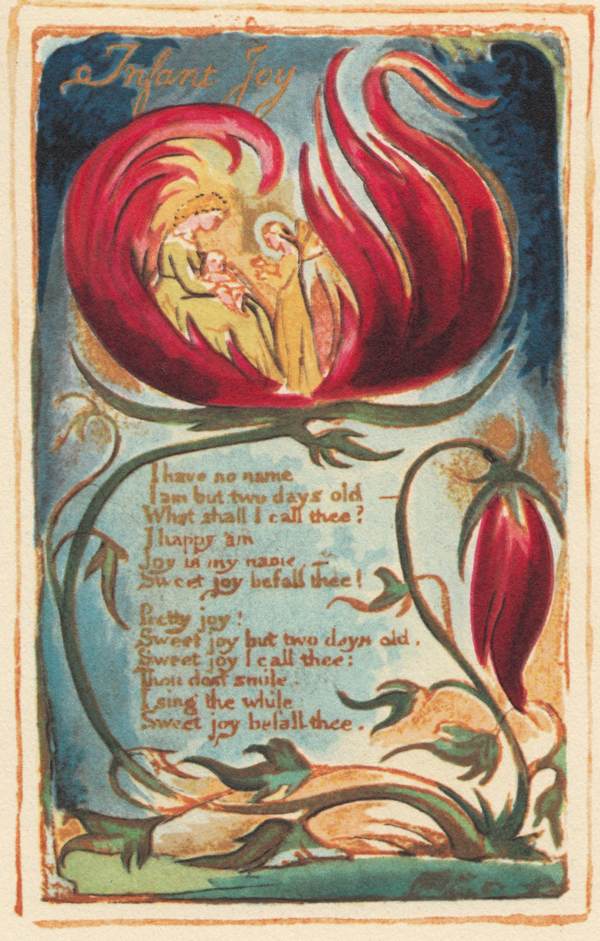
In anticipation of the birthday tomorrow of the beloved William Blake – the greatest poet of London – it is my delight to publish his Songs of Innocence of 1789 today. When Blake was developing his copper plate printing technique that would enable him to become his own publisher and be free of the restrictions of others, he wrote, “I must Create a System, or be enslav’d by another Man’s.” So I think we may assume that if Blake were writing now he would embrace the opportunity of publishing his work freely upon the internet.
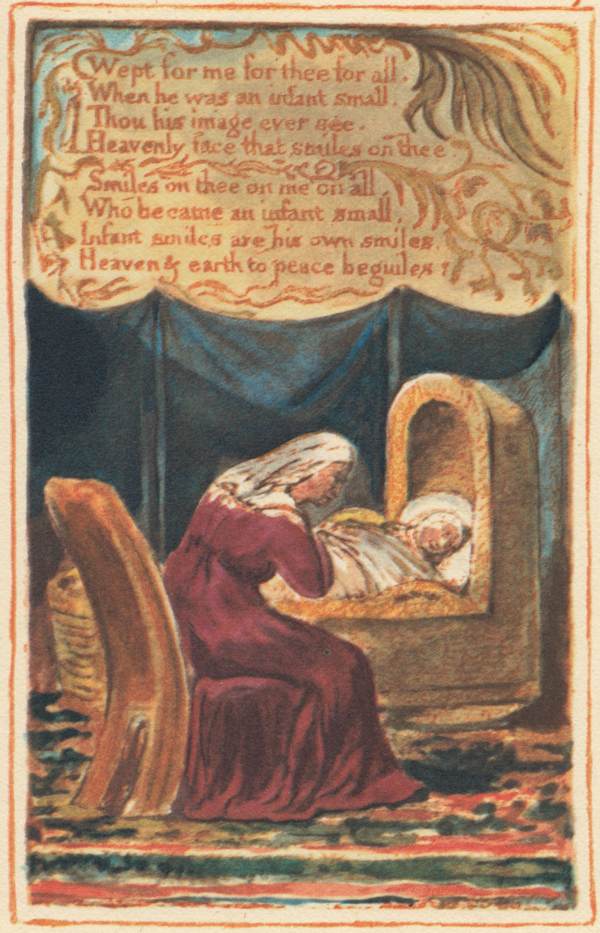
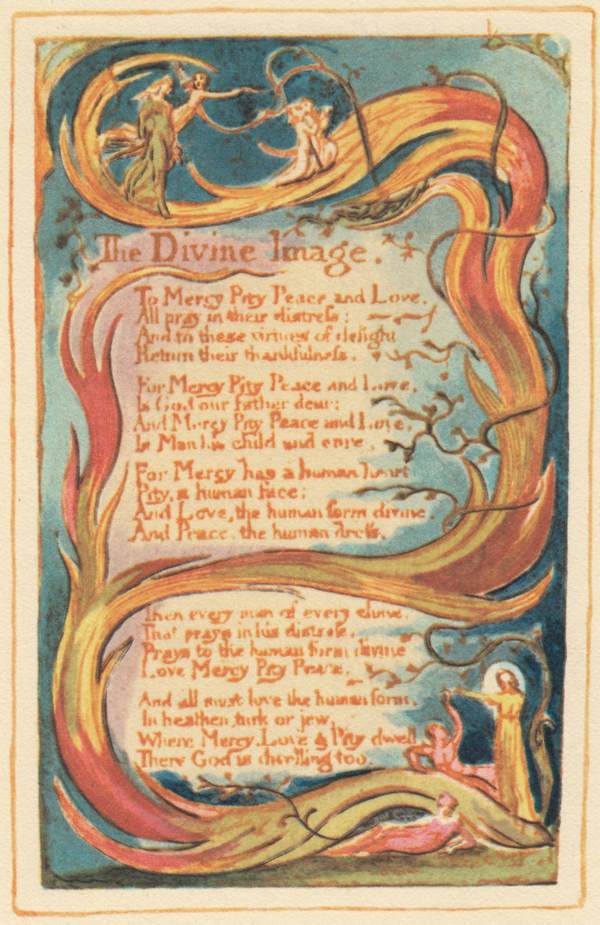
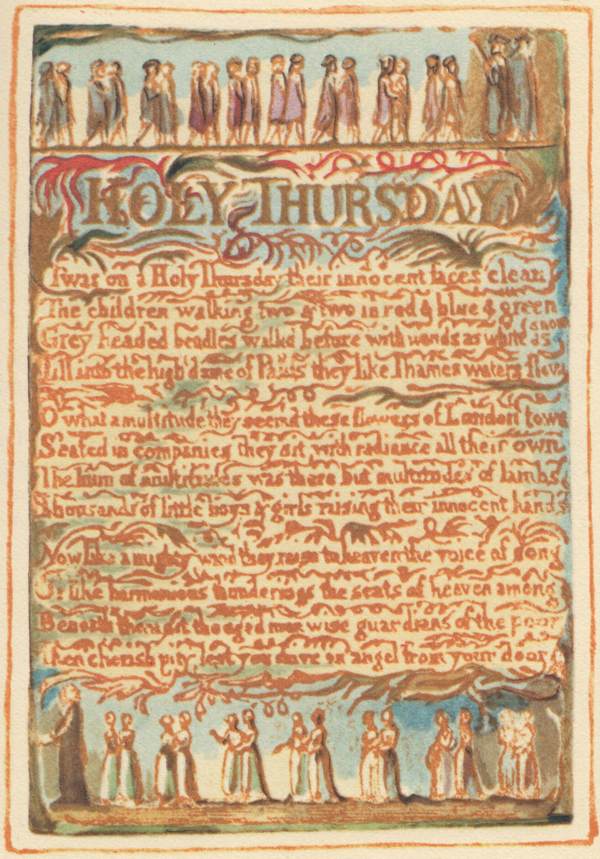
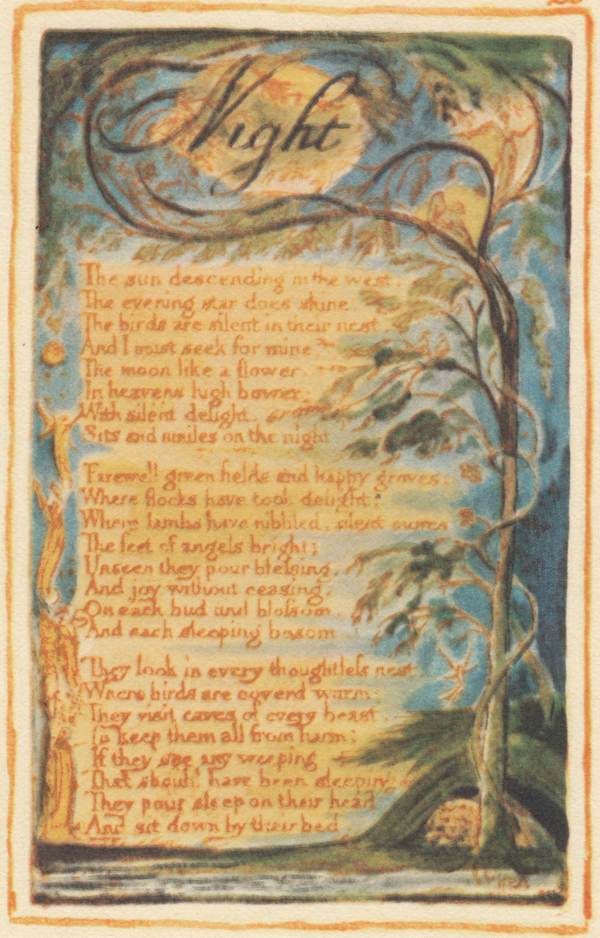

You may also like to read about
Jock McFadyen, Landscape Painter
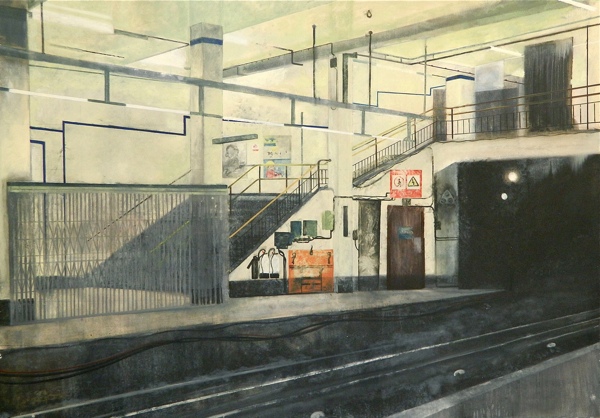
Aldgate East by Jock McFadyen
Hidden behind an old terrace facing London Fields is a back street with a scrapyard and a car repair garage, and a row of anonymous industrial units where painter Jock McFadyen has his studio. You enter through a narrow alley round the back to discover Jock in his lair, a scrawny Scotsman with freckles, tufts of ginger hair, and beady eyes that look right through you. Yet such is the modesty of his demeanour, he acted more like the caretaker than the owner – concentrating on the coffee and biscuits, and leaving me to gasp at his vast canvasses of landscapes on a scale uncommon in our age.
With plain titles such as “Dagenham,” “Looking West,” “Pink Flats,” and “Popular Enclosure,” Jock McFadyen evokes the terrain where East London unravels into Essex beneath apocalyptic northern skies, encompassed by an horizon that extends beyond your field of vision when you stand in front of these pictures. The works of man appear insubstantial, either dwarfed by the scale of the landscape or partly obscured by meteorological effects.
Originating from Paisley, Jock has lived and worked in the East End since 1978, with studios in Butler’s Wharf, Bow and the Truman Brewery before arriving in London Fields fifteen years ago. Although he has painted a whole series of epic landscapes of the East End, Jock remains ambivalent about its impact upon his work. “It’s difficult to say how much a place affects you because my real influences are other painters like Lowry and Sickert,” he admitted to me with a shrug, “You’re never just painting what’s in front of your nose, you’re aware of the history of painting.”
“When I was a student at Chelsea in the seventies, the previous generation were the pop artists and my work was quite stark and self-referential.” he confessed with a chuckle, breaking into a shy grin, “But when I became Artist in Residence at the National Gallery in 1981, I realised I couldn’t spend my life just making art about art, so I started painting what I saw in the street – What could be less fashionable?”
“Then in 1991, I got commissioned to design a set for the Royal Ballet. They thought, ‘It’s urban despair, let’s get Jock McFadyen!'” he continued, sipping his coffee with relish, “There were no figures in my design, because the dancers were the figures. And that’s when I realised I had been a landscape painter all along – I’d been painting people in places.”
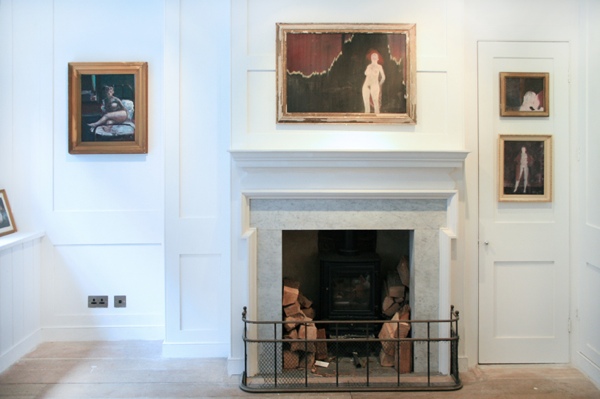
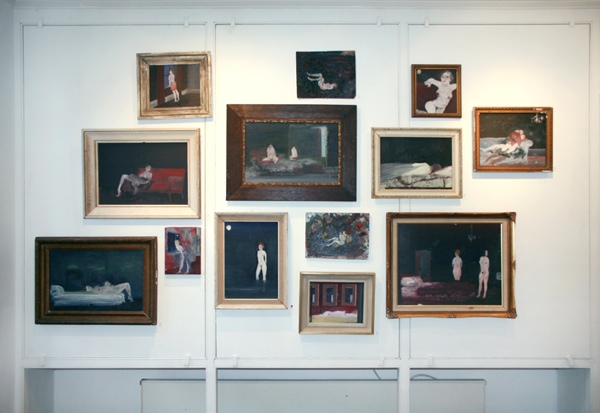
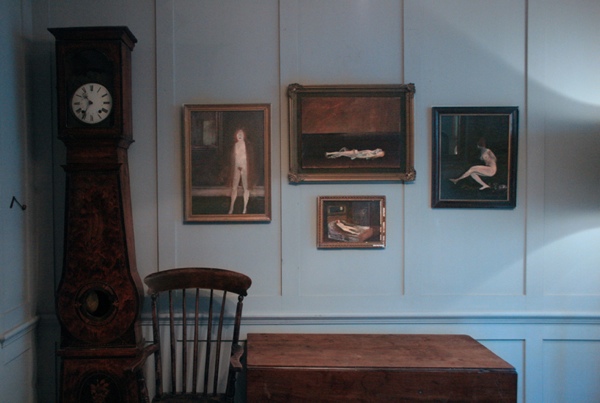
Once we had reached this point and he had told the story of his self-liberation as an artist, Jock leaned back on his couch and cast his eyes in pleasurable appreciation up to a rusty bicycle frame hanging from the roof. He wanted to talk about his love for Lowry and Sickert. “Lowry was the most committed painter because he had nothing else in his life. I think he spent every day outdoors in his raincoat, knocking out paintings. You believe him, it’s authentic.” Jock assured me fondly. Yet it was Sickert who has provided the inspiration for the current exhibition entitled “After Walter” at Eleven Spitalfields in which, after two decades of landscapes, Jock returns to painting figures. “They’re the first full-blown figures I’ve done,” he declared with a significant nod, “They’re not actual people though, they’re dirty old man fantasies.”
So there we left our conversation, as I set off to the gallery in Princelet St to discover the substance of Jock’s libidinous imagination. But before I departed his studio, I paused to admire a huge canvas of magnificent old rotting warehouses on the River Lea. It occurred to me that Jock came from Glasgow – a decayed port city with a vibrant working class culture – and felt at home in the East End, a location with a similar identity. I saw Jock looking at me and I realised he knew what I was thinking. “If you are a landscape painter you can only paint one place at a time,” he said, anticipating my words “So the question is ‘Are you an East End painter or are you just a landscape painter that happens to live here?'”

Jock McFadyen in London Fields
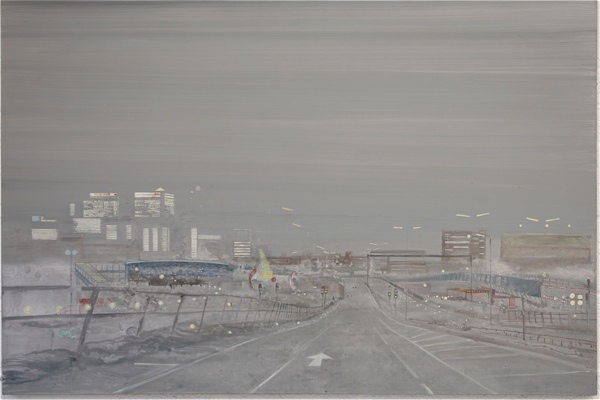
Looking West

Bud

From Beckton Alp

Goodfellas

Showcase Cinemas

Tate Moss

Pink Flats

Jock & Horseshoe Jake in front of Popular Enclosure

Dagenham
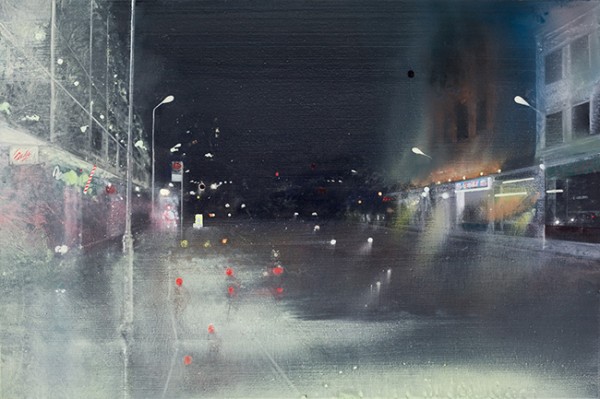
Roman Rd
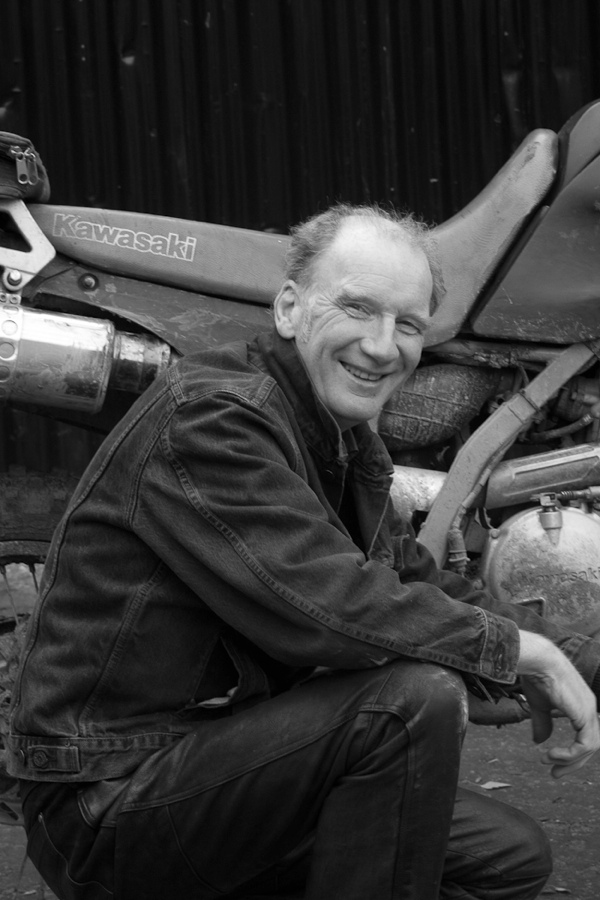
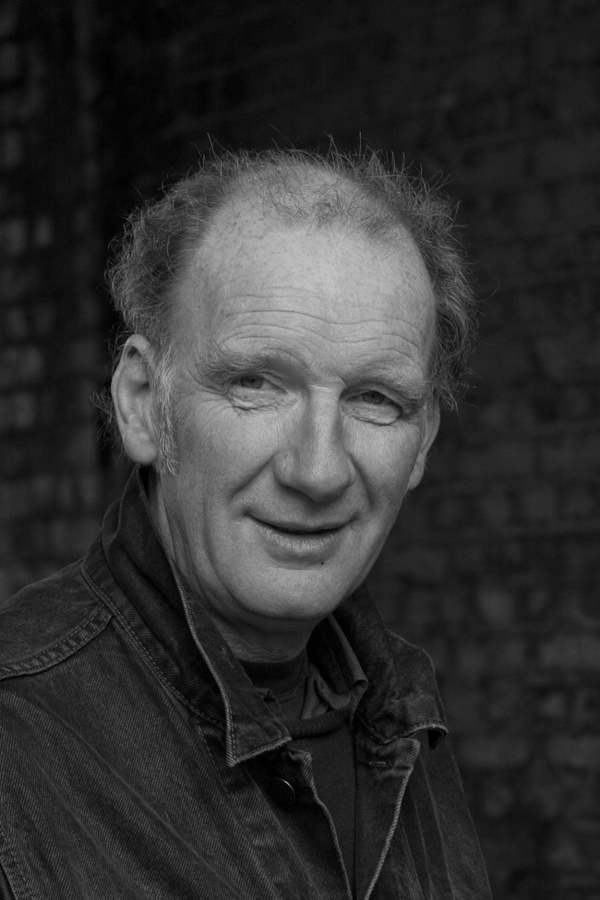
Jock McFadyen
Black & white portraits copyright © Lucinda Douglas Menzies
Jock McFadyen’s exhibition AFTER WALTER runs at Eleven Spitalfields in Princelet St until 23rd December.
John Claridge’s Boxers (Round Six)
Photographer and Ex-Boxer John Claridge has been making regular trips to the East End to take on members of London Ex-Boxers Association. John distinguished himself with some fine shots in Round One, proved a class act with a bravura display of his singular talent in Round Two, commanded the ring in Round Three, showed himself as a potential champion in Round Four, continued his astonishing performance in Round Five and now excels himself in Round Six.
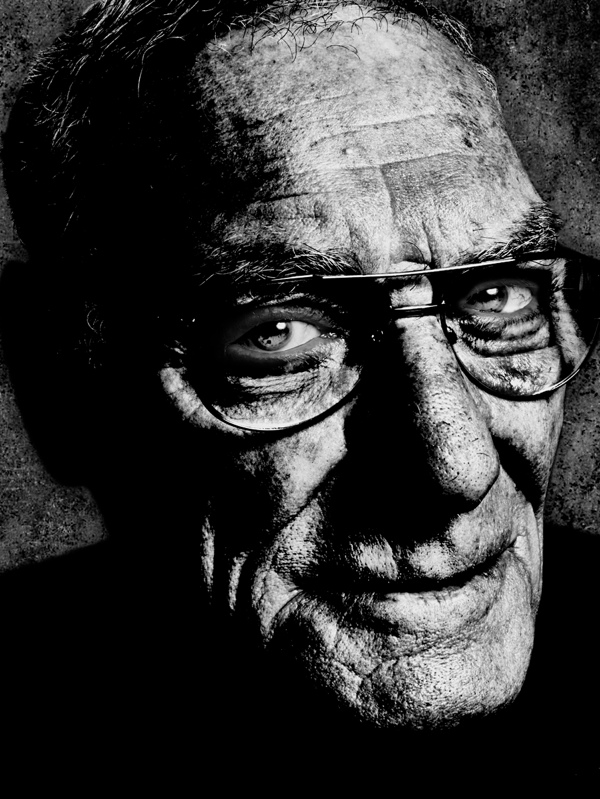
Eddie Lazar (Boxed in the fifties, his name was shortened from Lazarus because at his first fight there was not enough space on the poster.)
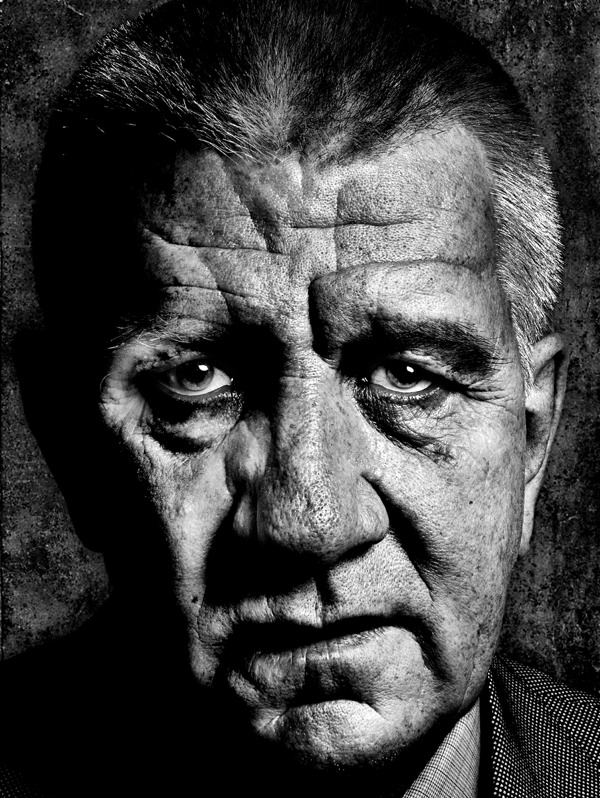
John Powell (First fight 1964 – First fight 1969)
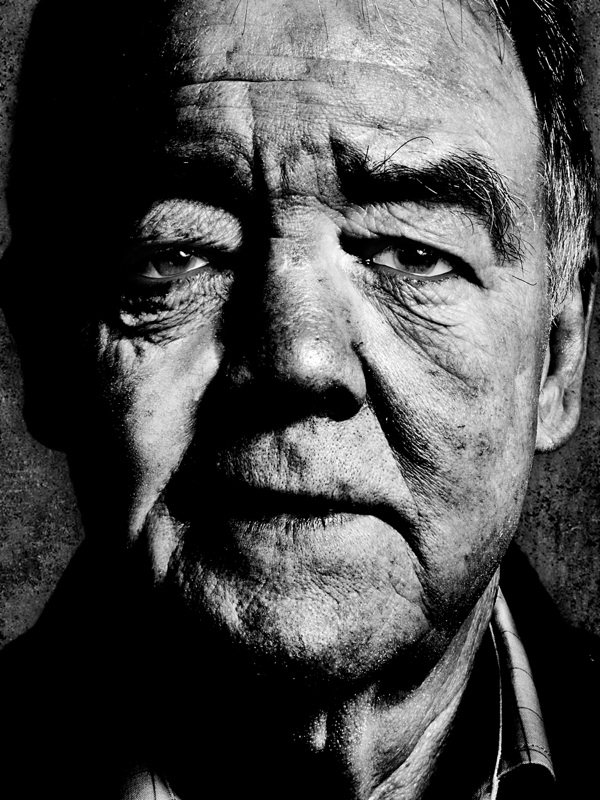
Colin Lake (First fight 1961 – Last fight 1970)

Mick Pye (First fight 1956 – Last fight 1966)
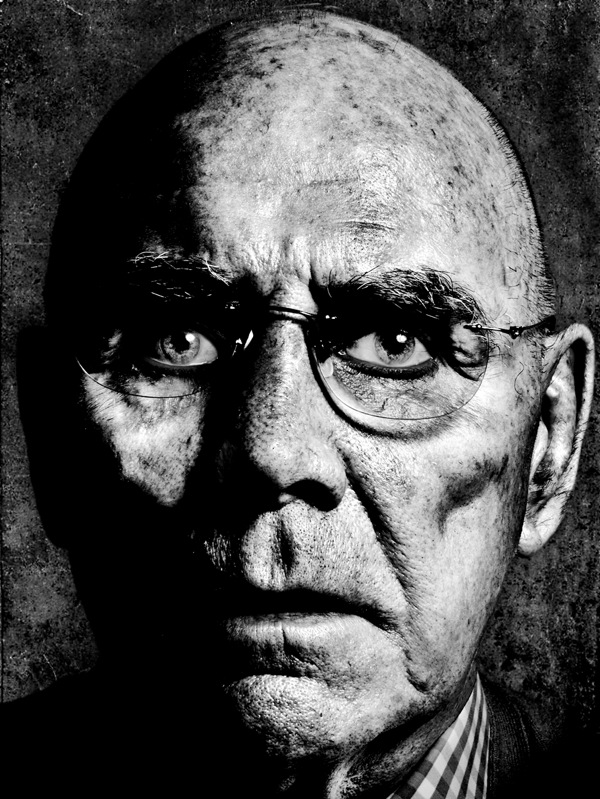
Vic Moore (First fight 1965 – Last fight 1969)

Ted Cheeseman (First fight 2007 and still boxing)

Mark Lazarus (Brother of Eddie Lazar, Amateur Boxer & Professional Footballer who scored final goal in 1967 Cup Final))

Johnny Shannon (First fight 1946 – Last fight 1955)

Chas Taylor, LEBA Welfare Officer (First fight 1956 – Last fight 1958)
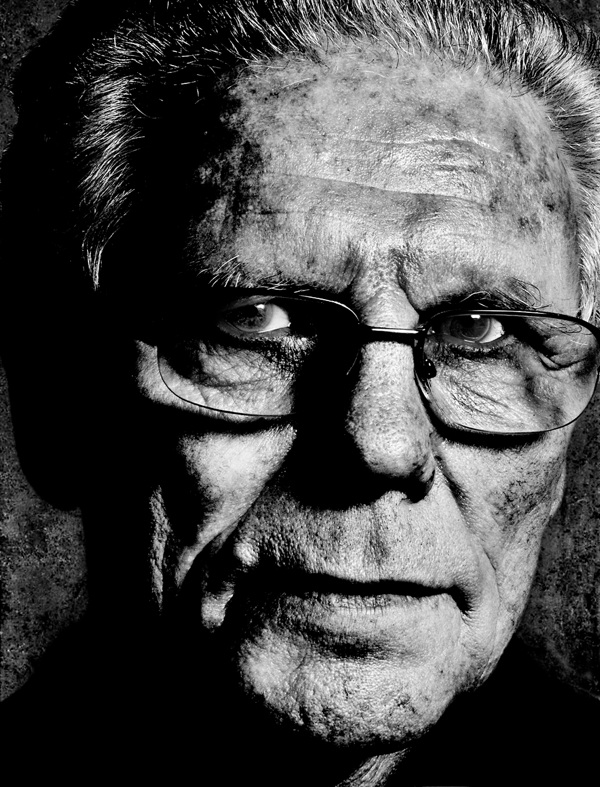
Dennis Hinson (First fight 1948 – Last fight 1960)

John Docker (First fight 1946 – Last fight 1962)
Photographs copyright © John Claridge
Take a look at
John Claridge’s Boxers (Round One)
John Claridge’s Boxers (Round Two)
John Claridge’s Boxers (Round Three)
John Claridge’s Boxers (Round Four)
John Claridge’s Boxers (Round Five)
and these other pictures by John Claridge
Along the Thames with John Claridge
At the Salvation Army with John Claridge
A Few Diversions by John Claridge
Signs, Posters, Typography & Graphics
Views from a Dinghy by John Claridge
In Another World with John Claridge
A Few Pints with John Claridge
Some East End Portraits by John Claridge
Sunday Morning Stroll with John Claridge
Tony Hawkins, Retired Pedlar
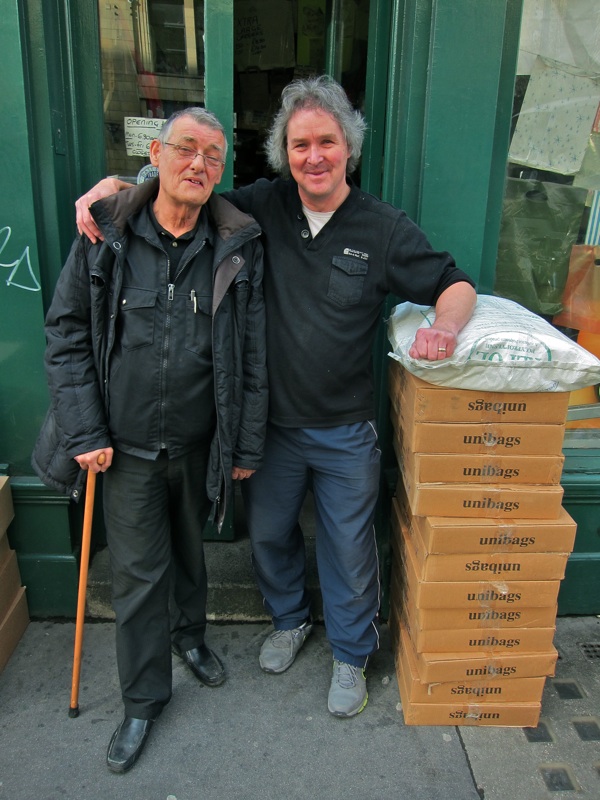
Tony Hawkins & Paul Gardner
Tony Hawkins was a pedlar selling peanuts and roasted chestnuts in the West End streets for ten years, but after getting arrested and roughed up by the police eighty-seven times his health failed and he retired.
Whereas Tony used to visit Gardners’ Market Sundriesmen in Commercial St regularly to buy thousands of bags for his thriving business, now he just comes to pass the time of day with his old friend Paul Gardner. And it was Paul who effected my introduction to Tony – a man with a defiant strength of character – frail physically yet energised by moral courage and brandishing the dog-eared stack of paperwork from his eighty-seven court cases, immensely proud that he won every one and it was proven he never broke the law once.
Over the centuries, street vendors have always been regarded with suspicion by the authorities while Londoners have cherished these characters for their resilience and wit, celebrating them in popular prints of the Cries of London. Remarkably, Tony’s pitiful catalogue of his wrangles with Westminster Council – who went to extreme lengths just to prevent him peddling nuts in Piccadilly – shows that this age-old ambivalence and prejudice against those who seek to make a modest living by trading in the street persists to the present day.
“I was unemployed as a labourer in Manchester, so I started off as a pedlar. I sold socks, balloons – anything really. A pedlar trades as he travels, and the will to support myself and the bright lights brought me to London. I was peddling around the West End selling peanuts mostly but also chestnuts. I sold flags at football matches too, Chelsea and Arsenal.
In the nineteen eighties, a sergeant took me to Bow St Magistrates Court for selling peanuts in Piccadilly. So I went along, it was no big deal. I admitted I was trading and I was a licenced pedlar. In court, they were amazed because thay hadn’t seen many pedlars, there were only half a dozen in the West End. I won the case and I went to shake the sergeant’s hand afterwards, but he pushed me away and said it wasn’t the end of it. He told me he’d do everything in his power to make sure I never worked again and he hounded me after that. He said, “If you’re going to do it again, we will arrest you again,” and I’ve been arrested more than eighty times and spent nights in cells. I’ve been roughed up so many times by policemen and council enforcement officers that I had to get a hidden camera because I feared for my safety.
They confiscated the equipment from me every time I was charged with the offence of street trading without a licence, when I had a pedlar’s licence issued in accordance with the Pedlar’s Act of 1871. The original Act was passed in the eighteenth century so that veteran soldiers could trade in fish, fruit, vegetables and victuals, and be distinguished from vagabonds. Anyone over the age of seventeen can get a pedlar’s licence as long as you have no criminal record. According to the Bill of Rights and the Magna Carta, every person in this country has the right to trade.
I went to the High Court once when they found against me and the judge overturned it in my favour. But then in 2000 they brought in the Westminster Act because of people like myself. Westminster Council juggled the words so that it states that pedlars are only allowed to go door to door. Prior to that Act, we were allowed to pedle lawfully anywhere in the United Kingdom but now the Act is also being used to stop pedlars in Newcastle, Liverpool, Manchester, Warrington and Balham. Yet Acts and Statutes are not laws, they are rules for the governance, accepted only by consent of the populace.
Once I went to get my stuff back from Westminster Council and I met the Manager of Licencing & Street Enforcement. I asked him, “Why do you continue to waste the money of the council tax payers with so many cases against me when you haven’t won a single one?”
“Your lawyer, Mr Barca, I’m sick of him,” he said, “He only represents the lower end of the market like you, and pimps and prostitutes.” Later, he denied it and said he had a witness too, but I had recorded him and he had to pay four thousand pounds in damages to Mr Barca.
After being hounded by the council and the police so many times, I’ve become narked and with good reason. Over the years, it has cost me fortunes to pay the legal costs. I had to work to earn all the money to pay for it. I regard myself as downtrodden because I was never allowed to benefit from my hard work, but if I had been allowed to continue trading, I could have owned a house by now and have some money in the bank.
People say to me,“Why have you done it?” I have done it because I believe in the right to trade freely as a human right.”
Although Tony is now retired, living comfortably in sheltered housing, he has become a self-taught yet highly articulate expert in the law regarding pedlars and street trading, and is involved with the Pedlars Information & Resource Centre. Despite losing his health and his livelihood, Tony has acquired moral stature as a human being, passionate to support others suffering similar harassment simply because they choose to exercise their right to sell in the street. With exceptional perseverance, acting out of a love of liberty and a refusal to be intimidated by authority, Tony Hawkins is an unacknowledged hero of the London streets.
Any pedlar that wishes to contact Tony can do so at TonyTHawkins@aol.com
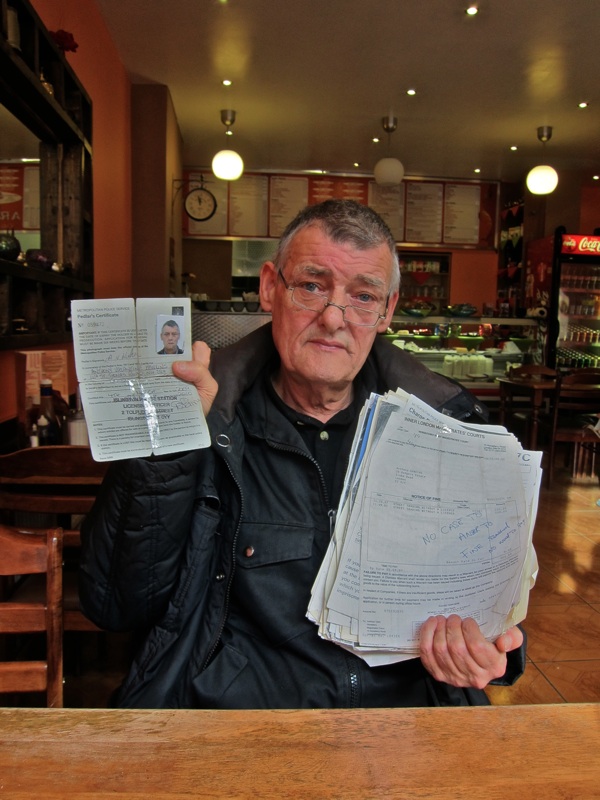
Tony shows his pedlar’s licence and the paperwork from his eighty-seven court cases.
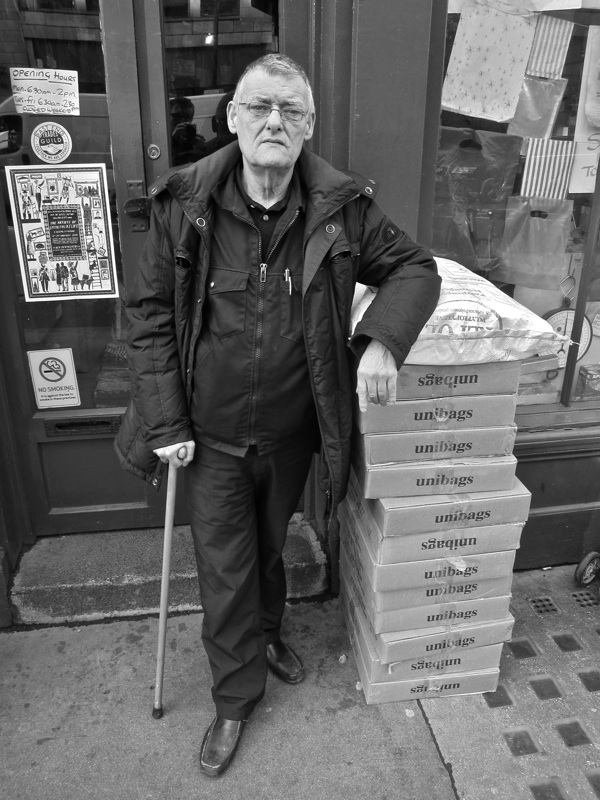
Tony Hawkins at Gardners Market Sundriesmen.

Tony Hawkins, unacknowledged hero of the London streets.
You may also like to read about
The Streets of Old London
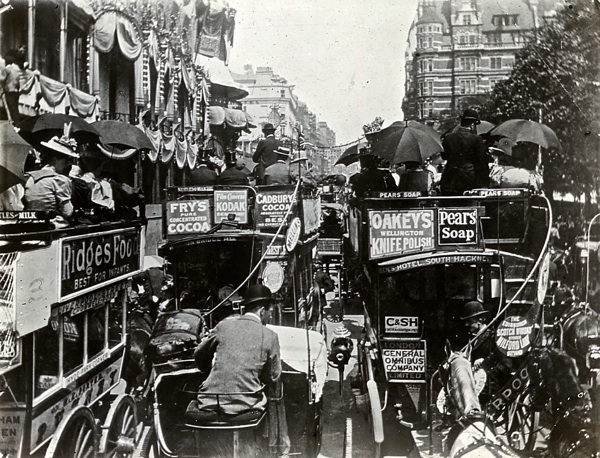
Piccadilly, c. 1900
In my mind, I live in old London as much as I live in the contemporary London of here and now. Maybe I have spent too much time looking at photographs of old London – such as these glass slides once used for magic lantern shows by the London & Middlesex Archaeological Society at the Bishopsgate Institute?
Old London exists to me through photography almost as vividly as if I had actual memory of a century ago. Consequently, when I walk through the streets of London today, I am especially aware of the locations that have changed little over this time. And, in my mind’s eye, these streets of old London are peopled by the inhabitants of the photographs.
Yet I am not haunted by the past, rather it is as if we Londoners in the insubstantial present are the fleeting spirits while – thanks to photography – those people of a century ago occupy these streets of old London eternally. The pictures have frozen their world forever and, walking in these same streets today, my experience can sometimes be akin to that of a visitor exploring the backlot of a film studio long after the actors have gone.
I recall my terror at the incomprehensible nature of London when I first visited the great metropolis from my small city in the provinces. But now I have lived here long enough to have lost that diabolic London I first encountered in which many of the great buildings were black, still coated with soot from the days of coal fires.
Reaching beyond my limited period of residence in the capital, these photographs of the streets of old London reveal a deeper perspective in time, setting my own experience in proportion and allowing me to feel part of the continuum of the ever-changing city.
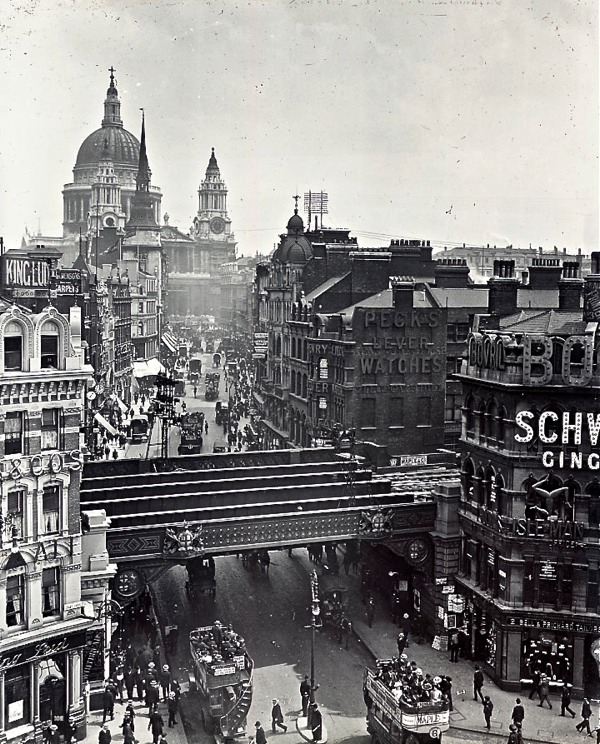
Ludgate Hill, c. 1920

Holborn Viaduct, c. 1910

Woman selling fish from a barrel, c. 1910

Trinity Almshouses, Mile End Rd, c. 1920

Throgmorton St, c. 1920

Highgate Forge, Highgate High St, 1900

Bangor St, Kensington, c. 1900

Ludgate Hill, c. 1910

Walls Ice Cream Vendor, c. 1920
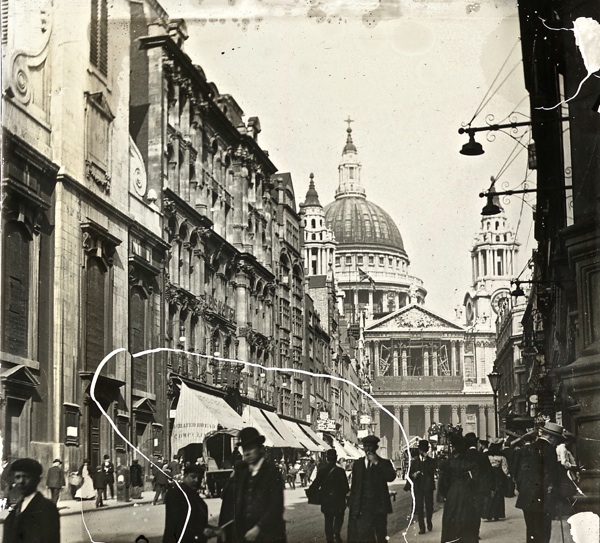
Ludgate Hill, c. 1910
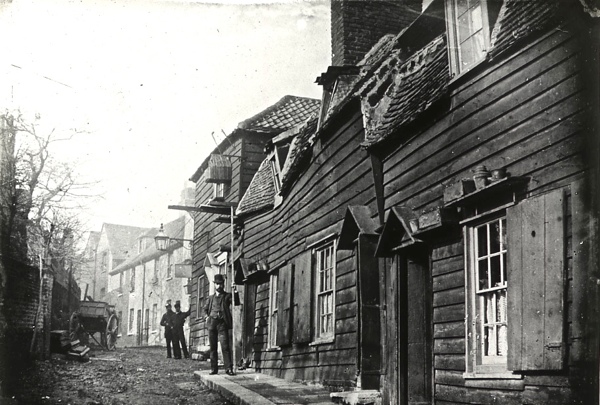
Strand Yard, Highgate, 1900
 Eyre St Hill, Little Italy, c. 1890

Muffin man, c. 1910

Seven Dials, c. 19o0

Fetter Lane, c. 1910

Piccadilly Circus, c. 1900

St Clement Danes, c. 1910

Hoardings in Knightsbridge, c. 1935

Wych St, c.1890

Dustcart, c. 1910

At the foot of the Monument, c. 1900
 Pageantmaster Court, Ludgate Hill, c. 1930

Holborn Circus, 1910

Cheapside, 1890
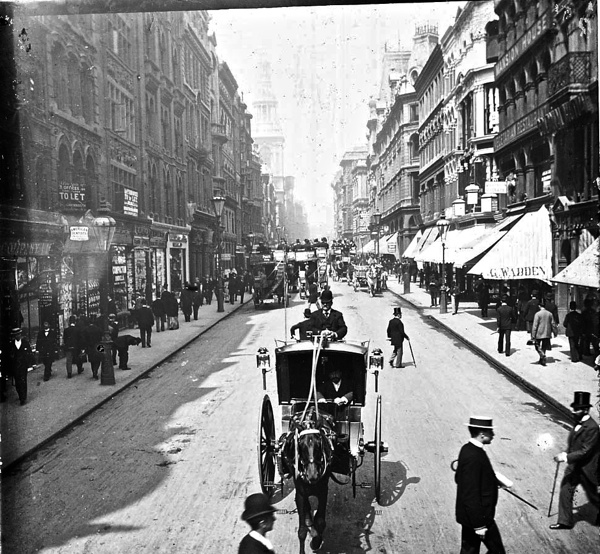
Cheapside ,1892

Cheapside with St Mary Le Bow, 1910

Regent St, 1900
Glass slides copyright © Bishopsgate Institute
You may also like to take a look at