
At The Lahore One Kebab Restaurant
‘To the jaded eye, the Commercial Road in East London is little more than a conveyor belt for courier bikes and lorries to the east coast; an ancient thoroughfare for the flow of trade now flanked with glassily optimistic city flats, dusty baby-clothes suppliers, the odd haberdashery warehouse, wholesale fashion outlets and a permanently shut Lloyds Bank with only a sprouting of ragwort at its entrance to commemorate the death of business. But Harris noticed none of it as he sought out a suitable place to take the lady Shakespeare scholar on his arm for dinner. What he saw was a road studded with a string of brightly lit curry and kebab houses, each one almost a replica of the last, yet quietly boasting a subtle difference in sauce or cooking method or regional bias, visible only to the naked eye of a true native. The eateries were all Lahori, though they served what they termed Indian food.” – extract from Rosie Dastgir’s novel, “A Small Fortune.”

When I first lived in Whitechapel in the mid nineteen-nineties, the Lahore restaurants were some of the best eateries in the vicinity. I remember around that time that my father stopped off at the Lahore One Kebab Restaurant on a road trip to Mecca with a group of fellow pilgrims. Years later, when he was dying, I took him there again. He could never get rid of the memory of those kebabs, and he enjoyed one of his last meals at that restaurant on Commercial Rd.
Revisiting it, I find that little has changed – on the outside, at least. The dazzling neon sign sits above a modest frontage, displaying a couple of favourable press reviews and the menu. When I step inside, I see that the interior has been transformed. The Formica tables have gone, replaced with modern ply and steel ones, and matching chairs. The halogen lighting is bright, the plywood clad walls homely, yet sleek. No flock wallpaper in this establishment. Fragrant smells curl out from the kitchen. Ali, one of the waiters, from Sialkot, Pakistan, is getting ready for the lunchtime rush. He was not always a waiter, he confides, but a former newspaper man at the Jhang newspaper in Pakistan before coming to England. Clearly he is a seasoned multi-tasker, setting tables, attending to customers as they arrive, while stopping now and then to discuss the troubling situation in his home country, citing the resurgent Taliban and the lack of decent education for its burgeoning young population.
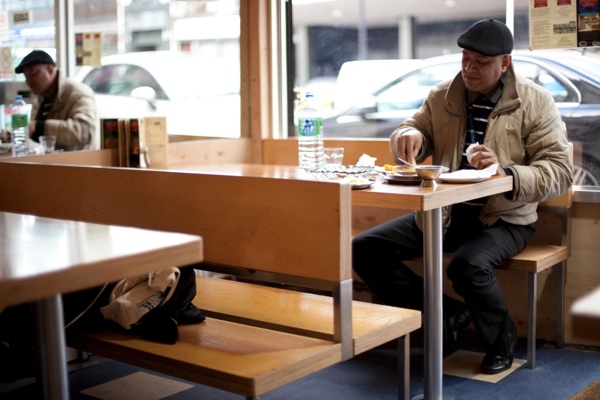
The lunchtime crowd are gathering. Nestled around a cosy booth sit four guys; two younger, two elder. They pore over the menu, joking and chatting. I ask them where they are from – meaning which neighbourhood of London.
Rahul, casually hip in baseball cap, bomber jacket, designer specs, pipes up, “He’s from Bangladesh, and I’m Indian.”
“You’re not from India, you’re from Essex,” says Andy White Patel, the elder man beside sitting him. Much laughter.
“Essex is my religion,” Rahul admits. “Nothing Indian about me.”
Rahul is lunching with his father, Rajesh, a newsagent in Watney Market. Rahul’s mate, Quyum, works in the rag trade. They are regulars here.
Andy White Patel tucks into chicken biryani. Normally they get kebabs, they tell me, or the famous chicken tikka roll, but today they have a bit more time. Hence the fancier choice.
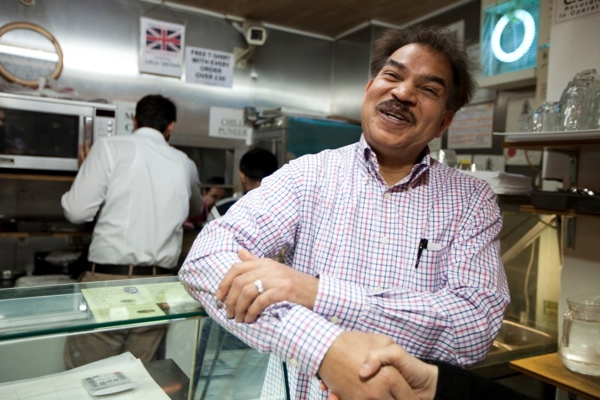
The restaurant was established in 1984 by Mohammed Anjum. Smartly dressed in open necked checked shirt, Mr Anjum emanates confidence and authority as he oversees his highly successful business. He was born and educated in Lahore, Pakistan, and arrived in London in 1981 as an electrical engineer, with the intention of pursuing further study. But he ploughed another course instead; the food business.
“When I came to this country, I noticed that people are dying for this kind of food, and I thought to myself why don’t you something like this, and do it properly?”
Proper Lahore cooking, he explained, should be like home cooking. Cities like Lahore, Lucknow, Benares, Hyderabad, are all synonymous with great cooking, and that was what he saw he must tap into. This was the task and the challenge he set himself, helped by what he learnt from his mother-in-law who taught him the art of creating home cooking rather than traditional ‘Indian restaurant’ food popular with Brits: Madras and Vindaloo curries, chicken masala in bright orangey sauce.
“Lots of Asians come to my restaurants,” he explains. “About 90%. And the second generation, the younger crowd, still love coming back to the place they visited with their parents.”
Mr Anjum muses that many Asian people have moved out to Ilford, Chigwell and beyond. But he has stayed locally, living close to the Royal London Hospital. He implies that this is a more modest choice, he has chosen to spend his money on educating his children, a choice that sets him apart from some of his peers running similar eateries in the area.
“They prefer to open more and more branches,” he says, “and want their kids to go into the business.” Mr Anjum had other plans for his four children. His two sons were educated at City of London School for Boys, and St Pauls. His eldest daughter is at UCL, though considered Cambridge University, plumping to stay in London. Raj, one of his sons, is studying and working part time at the Lahore One.
“It isn’t easy to teach anyone,” he tells me, “specially when you’re handling a knife, and chopping an onion, Doing it at home is fine, but on a commercial basis – it’s something else. You have to learn the technique; I try to teach Ameer, my son. He’s only a twenty-one year old boy – young, good at learning, a very good learner, but my feeling is, you can’t learn it over night.”
Mr Anjum is clearly a dedicated and very hard worker himself. The restaurant is testimony to that. This autumn he took his youngest son up to Oxford, where he is now studying geography.
“I drove him up there, took him to his room,” he recalls, eyes shining,“My hard work has paid off, I can send you here.”
Mr Anjum was the son of a graduate stenographer, who worked at Grindlays Bank, during the days of British rule in India. He quickly realized, in that environment, that an education is all important. As did his son, years later, bringing up his children and running a business in the modern East End of London.
I wonder what he thinks about how the East End has changed. “The East End had a bad reputation back in nineteen-eighties,” he says. But he dwells on something positive he remembers: the mixed Jewish and Asian community. “I remember Jewish community helped our business at that time, as halal and kosher is similar and they ate our food. And that was good.”
I want to hear about the legendary menu. What is so special about it and how it is distinguished from traditional Brit Indian restaurant food?
“It is curry, fried chicken. Chicken Karahi is Pakistani. It is boneless, so you can eat it with a knife and fork, rather than holding a piece of bone in your hand, sitting opposite someone …” he says, implying as he does with a shake of the head that it is a little uncouth. “These days, that fashion for eating with the hands is almost over.”
The restaurant uses boneless chicken not minced up in a machine for ease of production, like so many restaurants in places like Manchester and Birmingham.
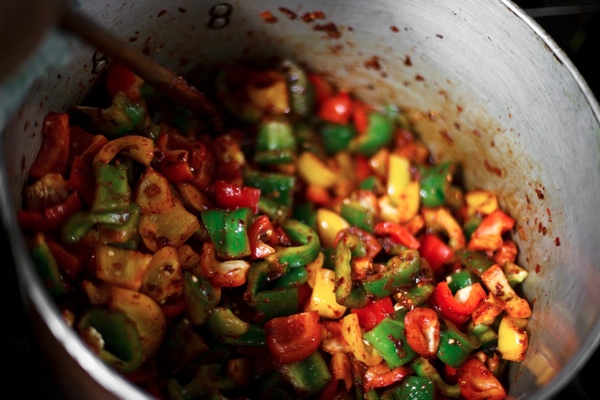
“The basic thing is always fresh ingredients, fresh meat and vegetables, nothing is frozen. And we don’t compromise on the spices, or on the quality, where we buy it. That is the main key to the success of the menu. You can get things on the cheap, but we’ve not done that. For the last twenty years, we’ve maintained the standard of the food we serve.”
Mr Anjum describes his food with passion and affection. He remembers how he catered a wedding party in Brighton, serving his signature Lahore chicken, which was recognized by one of the guests who used to frequent the Lahore One when he was younger with his father.
“He was shocked. I was flattered. It was a good compliment.”
The food is a creation rather than something precooked and reheated. “I don’t do take away. We don’t do home delivery. You want people to come to the restaurant – not serve fast food. Sometimes people call cabs and we send the food to them, but we don’t do the home delivery thing.”
I do not blame him. A great place for dinner or, if you are Harris, a first date.



Mohammed Anjum founded the Lahore One Kebab Restaurant in 1984.


Photographs copyright © Jeremy Freedman
You may also like to read
At the Barkantine Birth Centre

In 1998, when I was pregnant with my first child, I took a look around the Royal London Hospital Maternity Ward and decided promptly on a home birth. I lived close-by and so that was my backup plan: a short walk over to the maternity unit, in case there was an emergency. As it turned out, I did not have to go into the hospital until after giving birth. A short trip by ambulance, not on foot. The ward was grim: overcrowded, unpleasant nursing staff, blood spattered in the bathrooms, filthy toilets, uncontrolled visiting hours, dreadful food. I turned down a blood transfusion, and my consultant said he did not blame me.
Fourteen years on, I am living in Whitechapel once more and the Royal London Hospital has been rebuilt. Does a new building portend a new culture? The new bright blue and silver building squats hugely in the middle of Whitechapel, resembling a Legoland fantasy plonked down by a giant toddler. Its neglected elderly relative, the poor old London Hospital, crouches in its shadow, windows boarded up; the fate of its Georgian facade undetermined. At the back of the building, the old wards are peeled open, innards blitzed and bared to the elements. Huddles of patients brave the wind tunnel effect outside the Stepney Way entrance to have a fag or a natter. What is it like to give birth there these days, I wondered. If you are inclined to natural home-style birth, you will be directed to the Barkantine Centre, an outpost of the maternity services at the Royal London Hospital which opened four years ago in a modern, purpose-built block on the Isle of Dogs.
It is a short Docklands Light Railway ride from Whitechapel and a world apart from the Royal London Maternity Unit I remember. Sarah Piller, acting Birth Centre manager and a practicing midwife, is keen to dispel my bad memories of giving birth in Tower Hamlets. She’s warm, down to earth and enthusiastic about her work, and I almost wish I were having another baby – with her on duty. She is a passionate advocate for natural and home birth, and clearly loves her career.
“It’s all very different now,” she tells me. Sarah has a bad cold on the day we meet her, but she does not grumble at all – in fact, she is apologetic. “We are part of Barts and the Royal London hospital,” she explains. It is a sizable trust, known as Barts Health, that has recently merged with Whipps Cross and Newham.
That morning, the centre is peaceful and quiet, as Sarah shows me around. Each birthing room comes with its own birth pool, soft bean bag seating, double bed for partners wishing to stay, and an en suite bathroom. The space is cocooning, yet not claustrophobic. A young mother, Jamiyla, has just given birth. She rests in a room, cocooned with her new baby, and her partner, ecstatic but exhausted.
There is a good view of the Isle of Dogs, its mix of sixties high rise flats, sleek modern buildings, divided by jigsaw shapes of water. Arcs of washing are strung between the windows of a tower block opposite, hopeful in the face of dull, still weather. Looming just beyond in the mist are those other tower blocks that dominate the skyline: Canary Wharf, CitiGroup, Morgan Stanley, HSBC.
Sarah tells me that she trained as a nurse originally, but had always wanted to be a midwife. She worked on the maternity wards at the Royal London Hospital, including the Talbot Ward – the one were I was admitted– and the Mary Northcliff; both these are post natal. “They’re very different now,” she reassures me, seeing the look on my face. “Still very busy.”
After a year, Sarah moved into community midwifery, working in Tower Hamlets and Poplar. She has been at the Barkantine Center for three and a half years, and is now a senior mid wife and acting manager. The centre’s inception was spearheaded by Alison Heron at the Trust, with a lot of input from the local women’s community.
“It’s a home from home unit,” Sarah explains, “designed for women who want an experience of giving birth at home, but want to leave their actual homes. Mums-to- be always tend to say they don’t want to give birth at home – they want to get away from all that mess of giving birth; but there isn’t much! I tell them that staying at home to have your baby is just so amazing.”
I agree with her, having gone that route myself, though I can see why you might choose a place like this, clean and calm, with the security of medical personnel on call, should you need it. “We desperately try to get the home birth rate up in London – it’s higher in rural areas,” Sarah says.
The set up here allows partners to stay, something that simply was not possible at the old Royal London, where beds were squeezed and space sorely limited. “It’s much stricter with the visiting hours there now,” she tells me, “no children allowed to visit, and only one or two visitors at a time.”
Prospective mothers come to the Barkantine Centre at around thirty-six weeks, for a risk assessment. About half of the women booked in to give birth here will subsequently be removed from the list – given their high risk factor. There is a high proportion of Bangladeshi women in the community, a sizable number of whom make use of the centre to give birth. “We get a lot of second and third time mothers,” Sarah goes on. “First time mothers are sometimes a bit skeptical, because there are no doctors on site.” So at first, the take up rate was low, but after a determined effort to promote the centre’s work, by word of mouth, and publicity at mosques and community centres, that has changed. It is really popular.
After seven years of living in New York, where birth is a much more medicalised business, I find the prospect of no medical expertise on site is slightly alarming. I was much more gung ho about deciding on a home birth for my first child.
Sarah laughs when I say this to her, pointing out that the mothers who eventually give birth here fall into the low risk category. The transfer rates to hospital are around 19/20% – lower than the national average of around 30%.
I want to know what is actually distinctive about giving birth naturally, beyond the obvious upside of being in a peaceful, calm blue painted space like this.
Sarah pauses to reflect for a moment. “It’s so amazing, after having gone through the hospital experience, working in a place like this,” she says, with feeling. “you can actually work closely with the women giving birth, guiding them with advice on what position to take, what to eat, how to move.”
It sounds almost blissful. Sometimes they use aromatherapy, listen to any music you fancy and lately, hypnotherapy birthing has been gaining popularity. I had never heard of the latter as a method, which involves a form of hypnosis to bring the birth along. Apparently, a baby can arrive a mere hour or two afterwards, which definitely sounds appealing.
Given the diversity of the East End community – women from Bangladesh, Russia, Eastern Europe, to name just a few locations – I wonder how the language barrier is tackled. The idea of giving birth in a foreign language seems daunting to me, but Sarah is quick to point out that most of the Bangladeshi women speak English, and limited English is fine for those who are less fluent. There are also many health professionals who speak other languages and can help with translation.
Every room has a birthing pool. Making use of one in labour speeds up the birth, and reduces the likelihood of transfer to hospital. Is it popular? Is it really safe? I gave birth at home in a water pool, and the first midwife that came along seemed out of her depth with what was happening. Sarah points out that the midwives in the Barkantine Centre are all water birth trained – it is compulsory.
“It’s just about birth awareness, the training,” Sarah explains, “keeping the pool warm and clean, knowing what to look out for, signs of labour not progressing, baby defecating in the water, needing to know if the mother needs to get out of the pool for any reason.”
The mothers are told to bring their own mirror with them, so that the midwives can observe the baby. The pools are deep and the women are on their knees usually, making it hard to see anything.
Something I did not know at the time I gave birth in water: water birth must be hands off, as the baby can start breathing if there is human contact from the outside world. The procedure is straightforward, in theory: the mother pushes the baby into the water, at which point, the midwife will lift the baby out.
That simple? I remember my body was covered in bruises – a result of grabbing onto my own arms and thighs, when I was standing up. I used gas and air, AKA Nitrous Oxide, which Sarah says they offer at the centre, or Pethidine, if that is preferred. No epidurals, though; they do not have the medical set up for that.
“It isn’t rocket science,” says Sarah cheerily, “doing water births, but there’s a lot to consider and some people get quite panicky. It’s a great way for a woman to give birth.”
I agree. If only this place had existed when I gave birth in water to my two daughters.

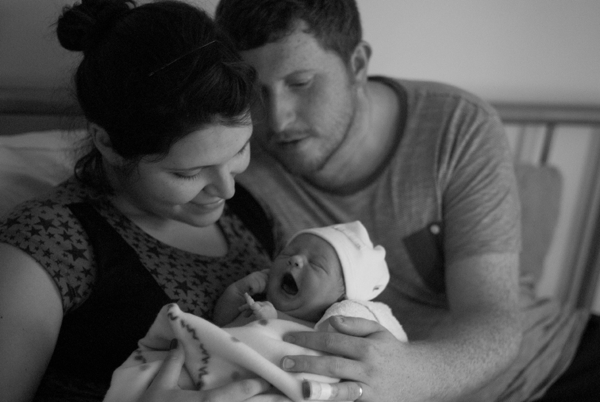
Jamiyla and Damian with baby Tennessee


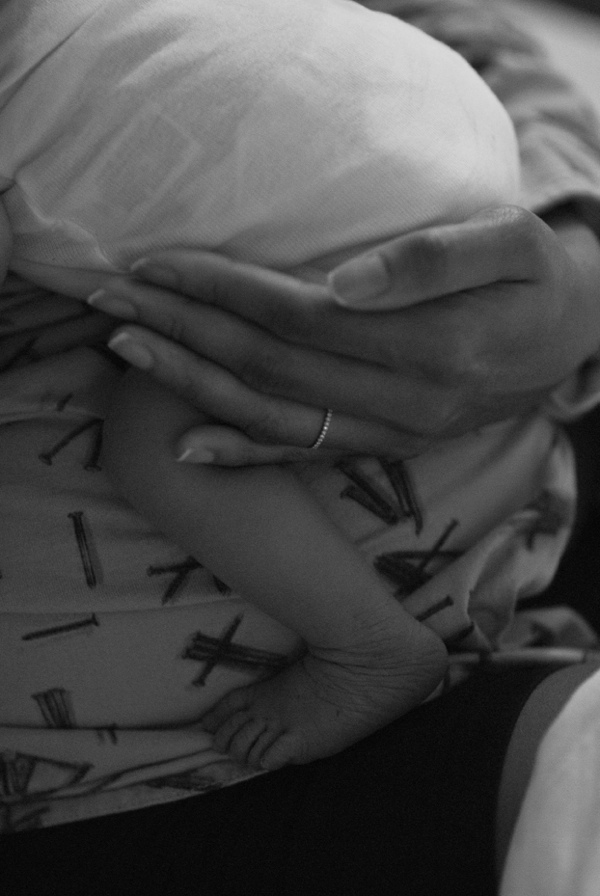
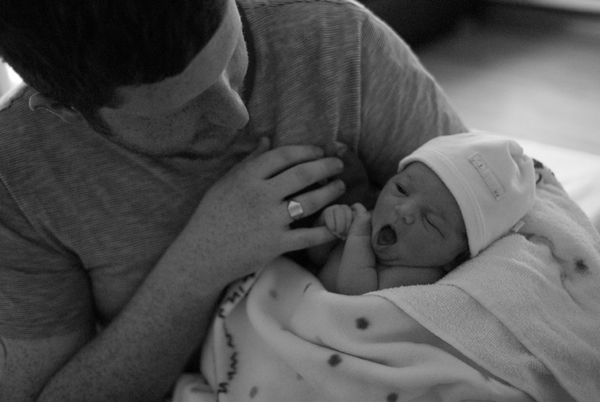
Isabel and Kenneth with their baby son



Shamina with baby Areeba and brother Akif
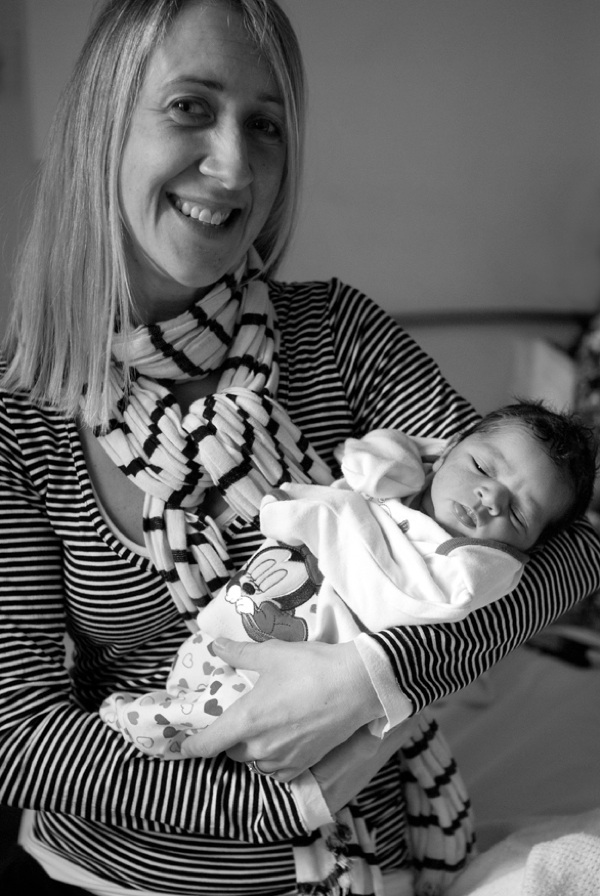
Midwife Sarah Piller
Photographs copyright © Sarah Ainslie
Gulam Taslim, Funeral Director
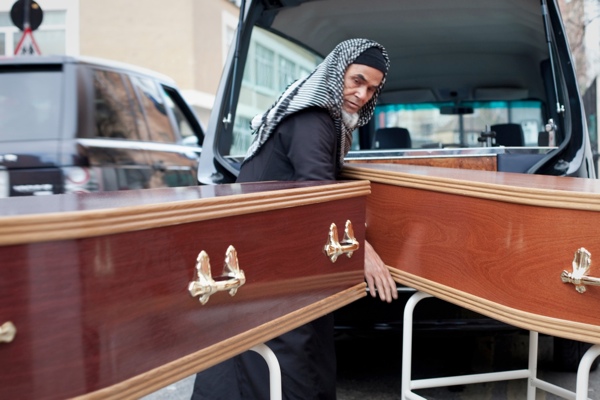
“We’re all human beings, we all live and die, whether we’re Jewish, Muslim or Christian.”
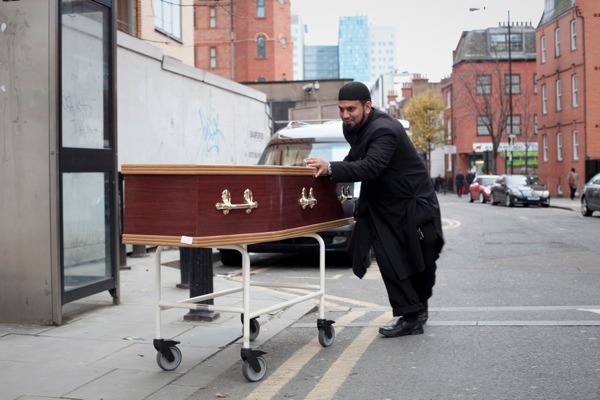
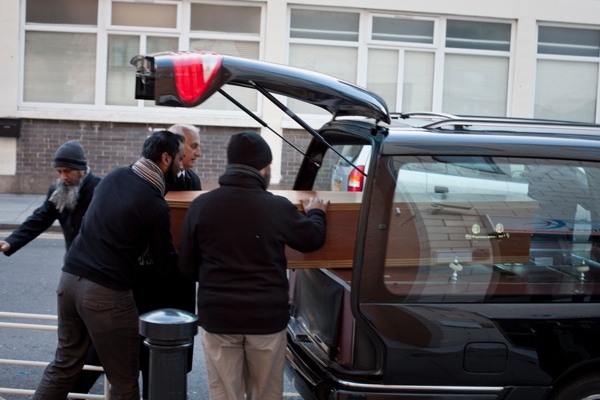
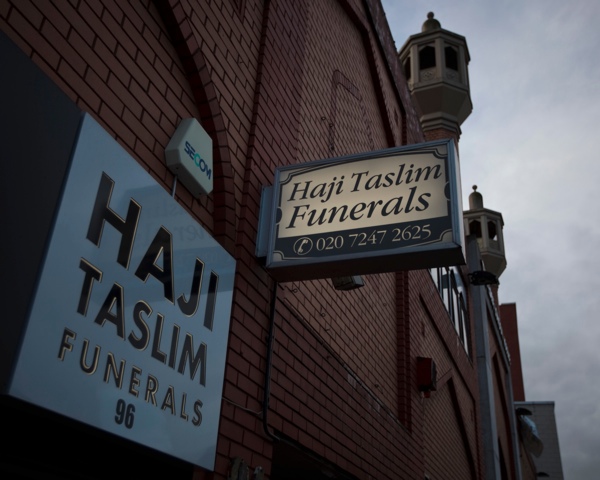
Gulam Taslim, the funeral director of Haji Taslim Funerals is in a rush. Dashing into the office, he explains he is on his way back from a funeral – the family called him last night in the small hours, wanting a burial this morning.
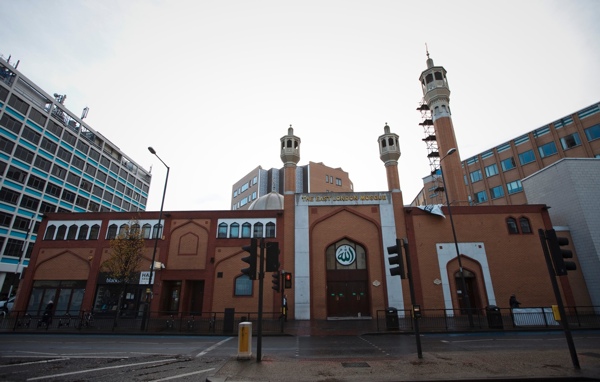
It is a 24/7 business. Founded in 1950 by Gulam’s late father, Syed Haji Taslim Ali, it is open 365 days a year, including Eid and Christmas Day. These days, Gulam Taslim is semi-retired but he still works three or four days a week, helping out his daughter, Moona, a partner and manager in the business, which is next to the East London Mosque in Whitechapel.
Born in Calcutta and brought up in Cardiff, Spitalfields and Whitechapel, Gulam now lives out of Central London in Newbury Park. Dressed in white shirt and tie, and a loose fitting dark waistcoat, he has silver hair, bright sparkling eyes, and a kindly, open face. He cheerily wisecracks, as he checks on paperwork and updates on clients; seemingly so agile and energetic that it is hard to accept he is semi-retired.
“I’m just back from a five thousand mile road trip around the USA, by car and motorbike, with my wife,” he says, reeling off a list of destinations: New York, Niagara Falls, Chicago, St Louis, Indianapolis, and Charlotte, where they picked up the motorbike. “A Goldwing,” he says with relish. “I’m into motorbikes.”
It is not his first intercontinental jaunt: back in 2005, he went to Bangladesh by motorbike, raising over £4,000 for charity. The route took him through Afghanistan.
Was that hair raising?
“I got a little bit of aggro,” he recalls affectionately, “But I used the religious card, and got through it.’
Is there such a thing as a card carrying Muslim, I wonder?
“I hate this tendency we have in the free world today: labeling people as Jewish, Muslim, Protestant, Catholic. You’re human, above all. Your belief is personal: it’s nothing to do with me or anyone else.”
This philosophy seems to be at the core of his approach to his life and work.
“We’re all human beings,“ he says, “we all live and die, whether we’re Jewish, Muslim or Christian – we are all from Adam.”
He identifies a shared cultural and religious history rooted in the Old Testament, the Talmud, the Koran, our common links to Adam, David, Abraham, Moses.
“God is forgiving and loving,” he says.
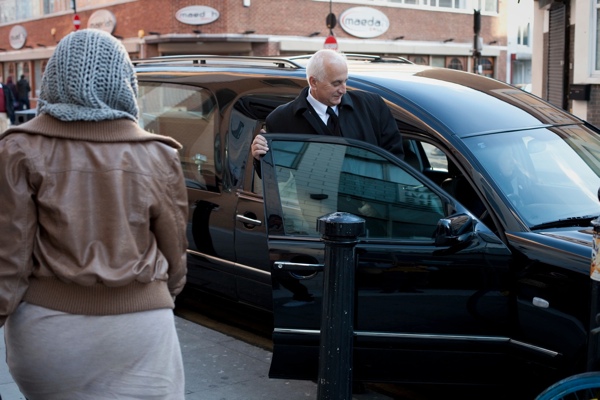
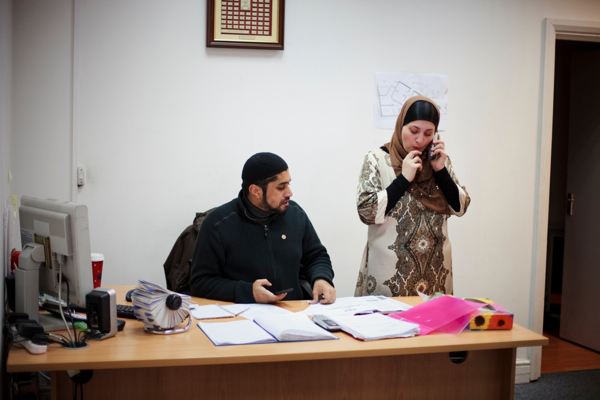
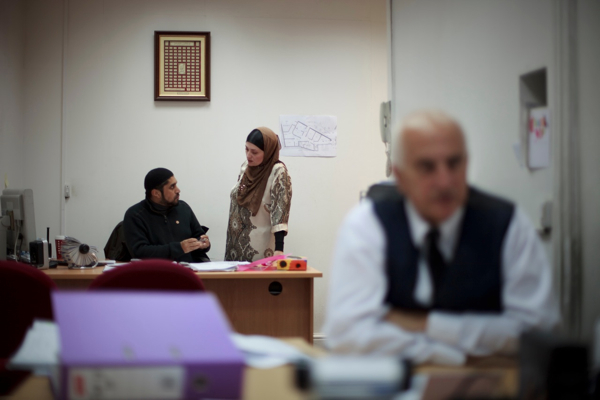
It is clearly a deeply held conviction and one shared by Moona, who sits at the front desk fielding calls. She arrived at the office fourteen years ago, an economics and business studies graduate, at her father’s request to help out with the accounts. She never left. Another sister, sundry cousins, and Jim, a local East Ender who drives the hearse, all work alongside her.
Moona is a live wire, fending off criticism from some of the more conservative clients, who pass through the office or the mosque, that she should not be working alongside men – “They’re relatives!” she protests, jerking her head over at Abu, her cousin. And she has no patience with the brothers who come in and shun her because her arms are not more fully covered. Her face, framed by her hijab, is animated and expressive, and she cannot but help exude life force; no matter that her work is all about burying the Muslim dead.
“When I was a child, we were in the car park, and my grand-dad ran it in a garden shed, and the mortuary was a Portacabin!” she says fondly. After many years, they moved into the premises at the back of the East London Mosque, living in the imam’s flat. They are currently waiting for the new mortuary to be finished: it has taken three years. “And it’s going to be lovely!” she declares.
The business has changed substantially since her grandfather founded it. “It wasn’t tailor-made back then, and people weren’t as worried about seeing to the cultural and religious needs in those days as much as they are now.”
Like what?
“Well , everything shut on Friday for the weekend, and so if someone died on a Friday, there was nothing grand-dad could do – which allowed him two days off. In those days, you couldn’t fulfill the required paperwork, register a death, or conduct a burial over a weekend. That’s all changed now we’re open 365 days a year – on Eid, at Christmas, any time, any day! And our service is really tailored to people’s needs.”
In her grandfather’s day, things were simpler, she says, with mainly first generation Muslims burying their dead. They had a memory of how things were done back in their home countries and so they could simply replicate that. Nowadays, the only frame of reference for some second, third or fourth generation Muslims might be gleaned from episodes of East Enders. So they might ask for a horse and carriage or insist on wreaths to adorn the coffin. One family even had a procession of ice cream vans behind the hearse to honour a dead ice cream seller. Moona and her father do their best to oblige these wishes, whilst providing a proper Islamic funeral service. It is not always easy. Frequently, they have to fend off accusations that what they are allowing is “haram” (something that is forbidden by Islamic law). “But where does it say in the Koran that you can’t have a horse and carriage?” Moona exclaims. They’re not necessary, she concedes, but certainly not haram.
It is all about good intentions. The need to help someone bury their loved one within the religious tradition of Islam and the concomitant need to make sure that those left behind, the grieving relatives, feel happy and satisfied that they have said goodbye properly. The question of intention is a theme to which Moona keeps returning. One of the most challenging things, she tells me, is contending with a vast variety of different cultural needs.
“Islam is very simple,” Moona declares, “but people’s varying cultural needs are where it gets very complicated. You have these different cultures: Bengali, Pakistani, Somali, Turkish, Turkish Cypriot, Algerian. They’re very different, and some of them – through ignorance – will confuse culture with religion.”
Whitechapel has changed enormously since Moona was a child. There were precious few places to eat halal food and people looked askance when she wore traditional dress or a headscarf.
“The only place we’d go to eat apart from Tayyab’s, was Pizza Hut – it was the only place you could go and not feel like a vegetarian! My mum doesn’t like eating vegetarian food…” she says.
That has all changed. Gone are the dark days of having to resort to an egg or cheese sandwich. Nowadays, she tells her children, you can go anywhere and get halal fried chicken in the East End. The demographic has shifted, and she observes that if a Muslim woman is not dressed conservatively, members of the Islamic community will often be disapproving. She is less comfortable unless she dresses in a modest fashion, in contrast to her experience growing up when the opposite was true.
Her father has mixed views about the myriad changes and shifts in East End life. As a man who once stood next to the Krays in a fish and chip shop, and who grew up amongst the mixed community of Jews and Muslims in Spitalfields, he seems to miss that world.
“I came to Spitalfields in 1960-ish and my father had a shop at number 11 Old Montague St, he was the first Asian to open a grocery shop in the Brick Lane area. He also had a little mosque in the basement, so that on Friday people could pray… I was very much involved with the youth in the area, mainly Jewish. We had an old slaughter house in Old Montague St, and we slaughtered chicken and supplied kosher meat for the Hasidic Jewish people. It was very derelict round there in those days. There were maybe only two other Asian families back then, hardly any Asian shops in Brick Lane. There were boarding houses on Hanbury St with Bengalis – mostly bachelors, living at least three to a room, working in the rag trade.”
It was in the early sixties when his father was asked if he’d come and be the superintendent of the East London Mosque, which was then based on Commercial Rd in Whitechapel.
“A lot of people liked and trusted my dad, and he was a recognized leader of the community and he agreed. He sold the shop to an East Pakistani, and he and my mum moved to the East London Mosque where they had a flat.“
Does he think that things have changed for the better around these parts? He mentioned the spate of “Paki-bashing,” as it became known. Round Brick Lane, gangs of white youth would descend upon the mainly middle aged Bengali bachelors, beating and robbing them of their earnings stashed in their back pockets. The police turned a blind eye. Gulam’s father was beaten up once, and even though he handed over the culprit, the police ignored him.
Don’t these sorts of events tarnish happy memories of that time? Clearly, it is complicated – what has been lost, what gained, what is better or worse between that time and now.
His eyes light up. “I remember the buzz!” he cries, “And that buzz isn’t here any more. It’s safer and more affluent but I wouldn’t say better. Maybe I’m reminiscing too much, the world keeps on changing, not always for the better.”
He bemoans the state of Asian youth culture, its slouching drift into crime. “They’ve learnt that there is easy money to be made from drugs,” he says, “and they carry knives, all these Bengali gangs from Plaistow and East Ham. There isn’t that culture in Bangladesh – they’ve learnt it here.”
Yet he does not condone the enthusiasm amongst some parents in the area for sending their children to madrassas to separate them from non-Muslims. As a boy growing up in Cardiff and later Spitalfields, he went to local schools alongside East Enders – white, Jewish, whatever – and is the product of a mixed marriage between a Bengali father and Welsh mother. The only Taffy Bengali Brit mix in the UK, Moona likes to joke.
Gulam goes on, “I’m really worried about what’s happening with young girls round here being sent up to madrassas in the north of England. They’re chaperoned, kept within their own community, like Hasidic Jews. Their parents don’t want to send them to places like Mulberry School in case they’ll be influenced and somehow diluted.”
Growing up in East London, Gulam was a member of a popular Jewish youth group, the Oxford and St George. He used to go to haida on Christian St with a bunch of his Jewish friends until the rabbi noticed he was not Jewish. He and his old friends from those days still have the odd reunion. Both he and Moona mention the Fieldgate Synagogue, nestled in between the increasingly expansive East London Mosque buildings, and are clearly saddened that its future in the East End is uncertain. The mosque tried to buy up the synagogue, but they refused to sell.
“The rabbi always comes out and says salaam to me,” Moona says, “and I always say shalom to him.” She sometimes helps him out, switching off the lights in the synagogue, or carrying up matzos when he is not meant to be working.
“Then I found out years later that he and my mum were neighbours in India. He took me out for lunch after I had my first child. They were both off Kanak St in Calcutta! I went ‘shut up!’ to him. They lived in 1A and 1B Victoria Terrace – neighbours in Calcutta and in Whitechapel. It’s such a small world, isn’t it?”
Small, and yet infinite.
Gulam grows restless. There is work to be done, funerals to arrange, people to meet and families to comfort. I ask him what made him do the motorbike road trip just now – did it mark some special occasion?
“I’m living my life out,” he says, “It’s slowly ending, and I want to do it all before I’m too old or I die. I want to do it all.”
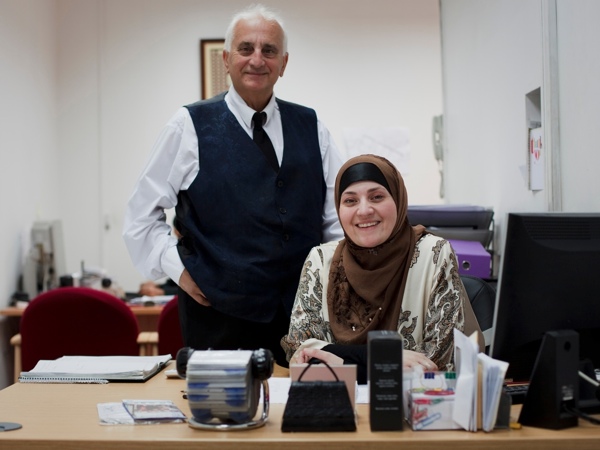
Gulam and Moona Taslim
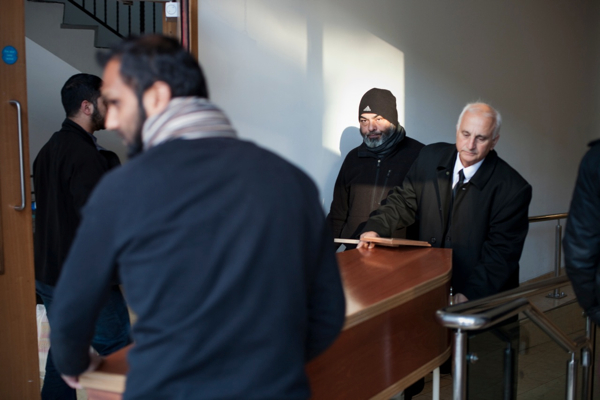
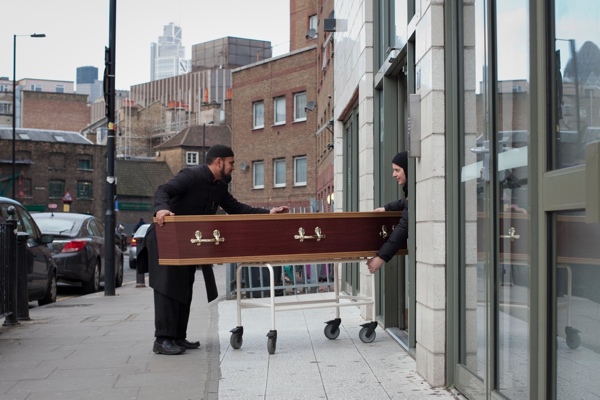
Moona and her cousin Abu
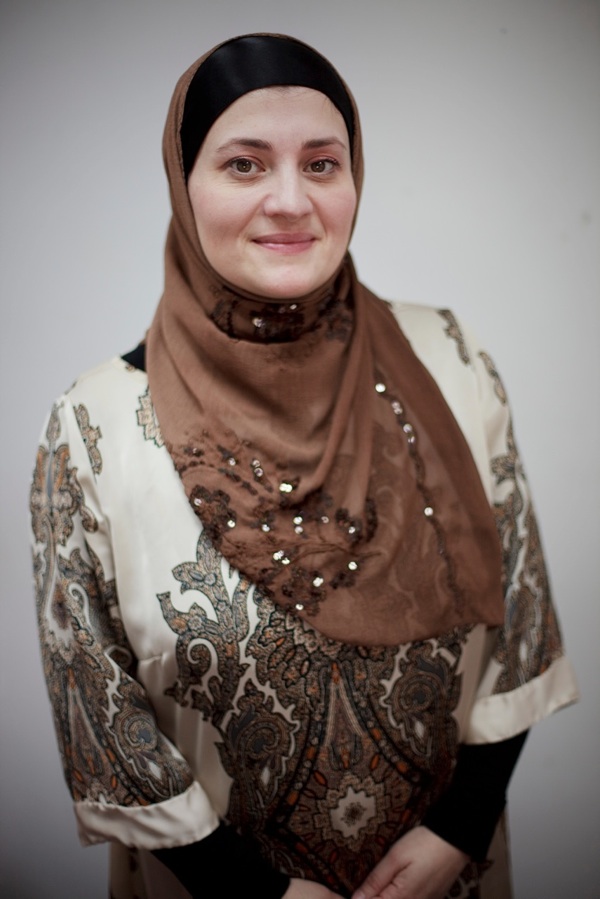
Moona Taslim
Photographs copyright © Jeremy Freedman
Return to Whitechapel
It is my great delight to welcome Rosie Dastgir as guest writer for the next seven days, celebrating the paperback edition of her wonderful novel A Small Fortune by Quercus. Rosie is a resident of Whitechapel who has recently returned after a seven year sojourn in Brooklyn where she wrote her book and has embraced this opportunity to take a fresh look at her familiar territory. I leave you in her safe hands and I hope readers will enjoy the change of scene delivered by a shift in focus to Spitalfields’ easterly neighbour for the first week of 2013 until I return on 14th January.
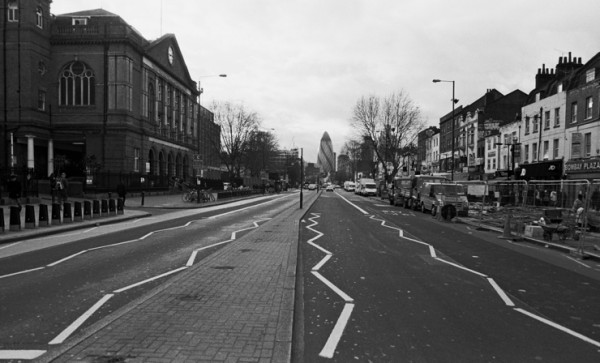
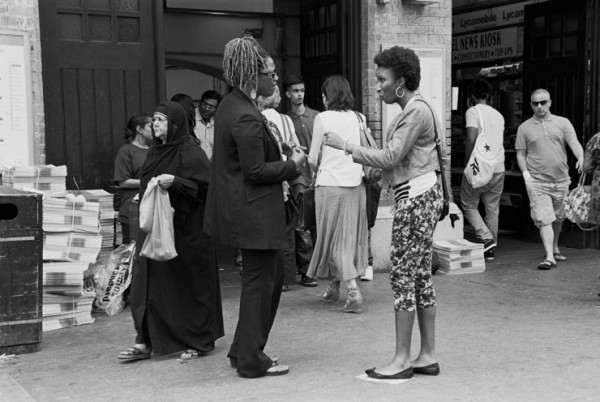
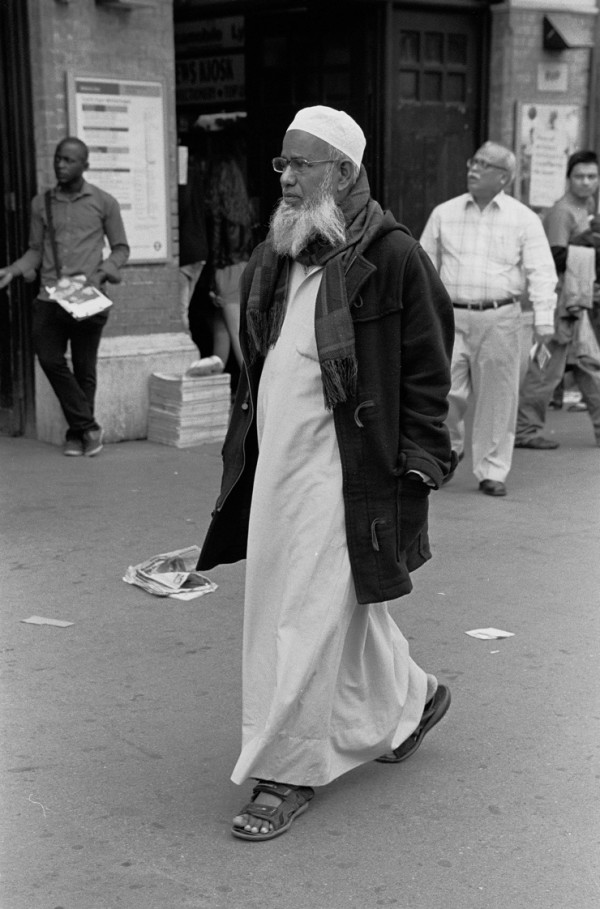
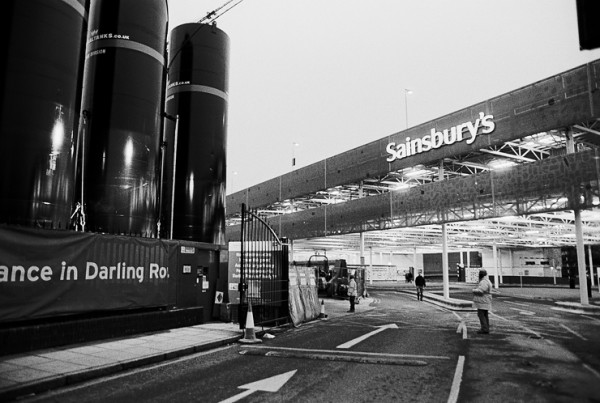
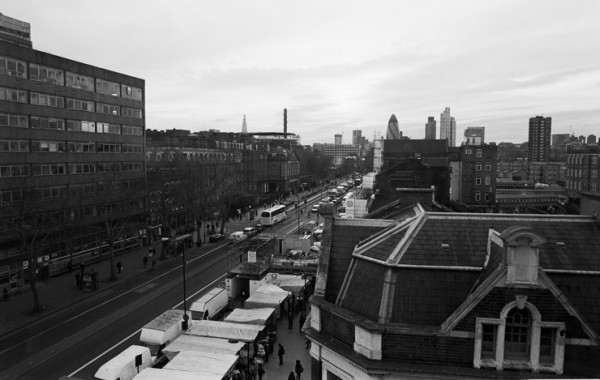
Take the tube to Whitechapel and cross over the bridge into the station, and you join a flowing crowd from all corners of London and beyond. There is a magnetic force to the area that draws all manner of people towards it: the teeming street market, the East London Mosque, the supersized new Sainsburys, the Royal London Hospital. Crossrail is coming. Excavation and construction proceed apace, and in a few years, vast numbers will be able to zip from east to west in a matter of minutes. In the Whitechapel Idea Store, Crossrail have set up an exhibition of photographs and exquisite scale models designed to inform us what it is all about. Transformation is certain and yet nobody can say for sure what that might bode for the area, especially for the people who live and work here. What will sink and what will survive?
I lived in Whitechapel for a decade, before moving to Brooklyn, New York, for seven years where I wrote a novel set partly in the East End of London. So it was with a mix of excitement, apprehension and nostalgia that I returned to live here once again last summer. Once the second cheapest property card on the Monopoly board, a deep brown shade with a measly two figure price tag, Whitechapel seems to have morphed and boomed almost beyond recognition. Is it on the cusp of forging a new identity or is it becoming entrenched in its old one?
Whitechapel has come to embody a neighbourhood of two manors: the East London Mosque, which attracts thousands of worshippers, and the newly built Royal London Hospital, a blue and silver edifice with a helipad on top. Both struggle for dominance in the narrow streets that run up and down behind the Whitechapel Road. Both are hubs for huge numbers of people who pour through their doors every day. The mosque’s presence has solidified unabashedly in the last decade, opening up its doors to the public, standing firm in the wake of the terrorist attacks of 7/7. It has withstood media scrutiny while simultaneously growing and nurturing the business of spirituality; a business which seems to be booming in Whitechapel. No longer simply a place of worship, the mosque provides space for a range of amenities – academic study, women’s services, cafes, lectures, housing, playgroups and keep fit classes. It constitutes a way of life.
The Royal London Hospital continues to expand its reach, consolidating its territory. Eight or so years ago, the projected building plans for the hospital were fiercely opposed by many of our old neighbours in Whitechapel, whose homes crouched beneath its projected shadow. Their protests went largely ignored. Now the building is a part of the landscape. Viewed from the Commercial Rd, it looms flatly behind nursing school buildings and council flats, as if it has been photoshopped onto the backdrop. Yet it is real, up and running, fully functional; layers of unending corridors, stacking up into the sky. Its presence on the ground is felt in the plethora of patients who pour into A & E everyday; the thousands of employees who work there day and night; the students who come here from all over Britain and the world to enter the medical profession – they are everywhere, dashing between entrances, smoking fags and chatting between lectures, downing pints at the Good Samaritan pub. Student accommodation has mushroomed opposite the East London Mosque. Blank flats in regulation grey brick sit atop the latest Tesco Metro to colonise a corner of the area where another business has sunk.
The new Royal London Hospital building hums, says the artist, Giorgio Sadotti who lives nearby. It is not alone. Opposite the house where I live on Walden St, there are reports from my neighbours of mysterious nocturnal noises leaking out from the Blizard building, which is part of the Queen Mary Institute of Cell and Molecular Science. Designed by Will Allsop for the Queen Mary School of Medicine and Dentistry, it was named after William Blizard, one of the first teaching surgeons, who founded the London Hospital Medical college in 1785. Inside the glass sructure are four huge pods, known as Mushroom, Cloud, Centre of the Cell and Spikey. Their jaunty names belie serious purpose: they are functioning conference and meeting spaces, and one is used as a classroom for visiting school children to learn about the science of medicine. A translucent pink and red walkway stretches between two buildings, so that you can cross from one to the other without going through the subterranean laboratory beneath; in the annals of the building, up to four hundred scientists have space to work, illuminated in part by natural light that is refracted through glass lenses set in the concourse above. It is a stunning visual statement upon the landscape of Whitechapel, sandwiched between streets of Georgian buildings, a cheery pop of light and glass and colour that rears out of the grey.
One night in autumn, I awoke to hear a searing mechanical scream emanating from inside, and rose to investigate. Peering out of my window into the building, I could see nothing beyond the pods looming in penumbral splendour within. I listened and watched for a while, unable to connect the unworldly sounds with any discernible activity. Retreating to my bed once more, I lay awake in the small hours, fretting that this might be a regular feature of my new life in Whitechapel; a nightly experiment designed to disturb sleep. Months later, I have grown used to the sounds of the street at night; the occasional hums and whines from the Blizard, the grinding noise of the rubbish trucks, loud conversations of unknown provenance.
Occasionally, there is even complete silence.
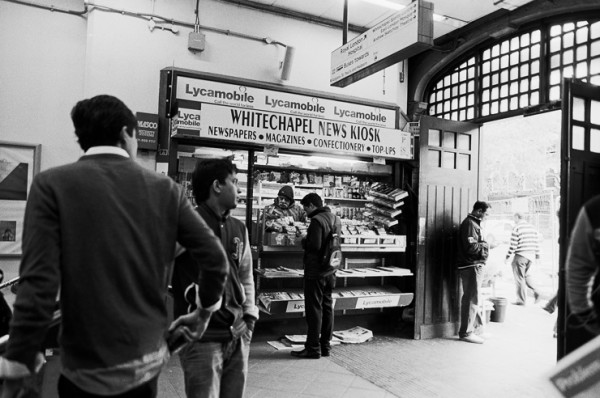
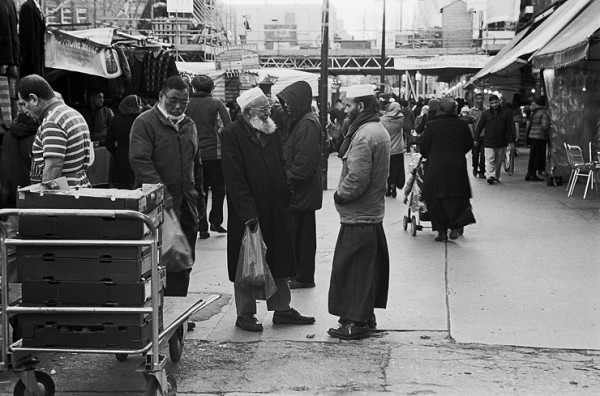
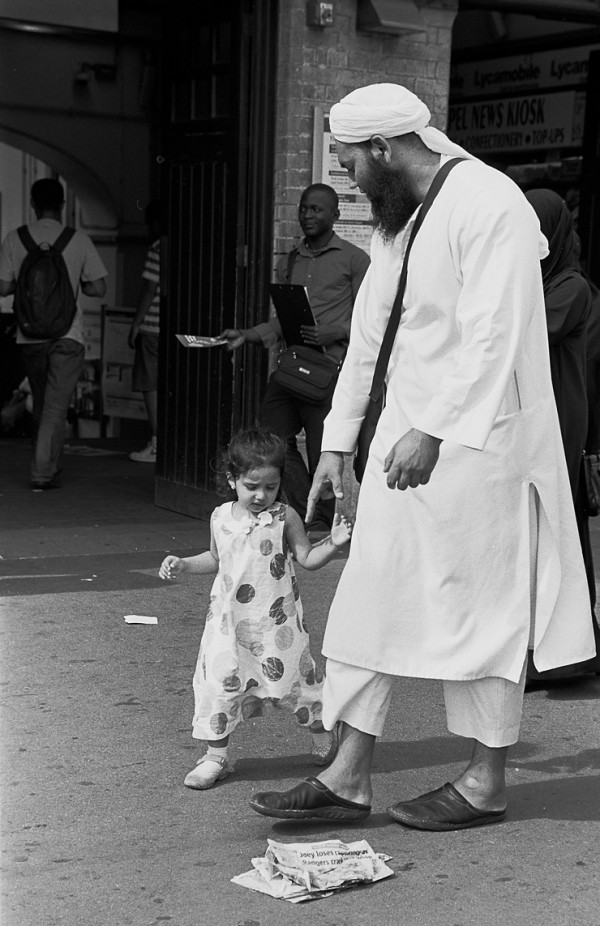
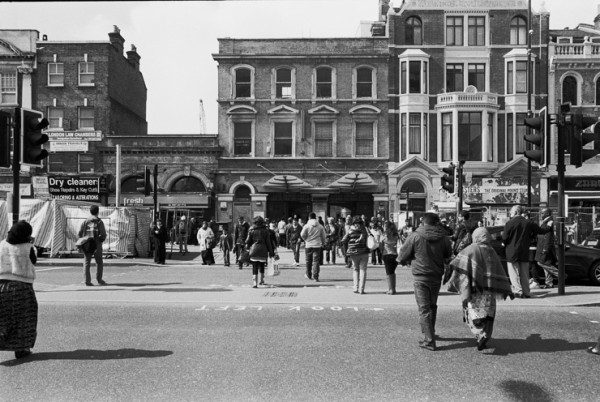
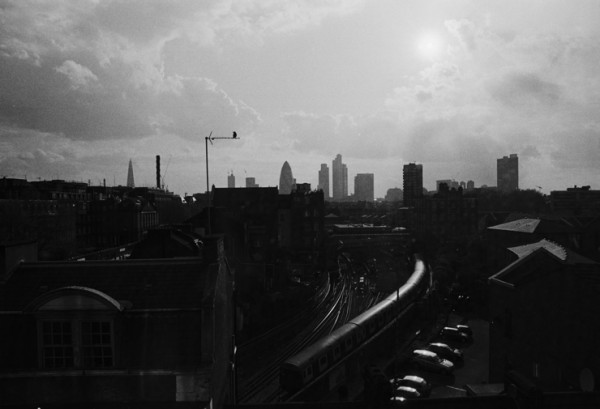
Whitechapel photographs copyright © Colin O’Brien

Please come to hear Rosie Dastgir read from her novel A SMALL FORTUNE at Brick Lane Bookshop on Friday 11th January 7pm.
Admission is free but reservation is essential. Call 0207 247 0216 or email info@bricklanebookshop.co.uk
Happy Families
On Twelfth Night, when we celebrate the Feast of Misrule on the last day of Christmas and all the decorations come down, I dug out these gleefully grotesque picture cards from an old parlour game to amuse you – and to celebrate the old trades and small family businesses which were once part of the East End. Happy Families – A Most Diverting Game for Juveniles, Beautifully Coloured & Made at the Spear Works, Enfield, England.


You may also like to take a look at
The Bridges of Old London

Traffic from Covent Garden Market crosses Waterloo Bridge, c. 1924
London owes its very existence to bridges, since the location of the capital upon the banks of the Thames was defined by the lowest crossing point of the river. No wonder that the London & Middlesex Archaeological Society collected this edifying series of pictures of bridges on glass plates to use in their magic lantern shows at the Bishopsgate Institute.
Yet until the eighteenth century, the story of London’s bridges was solely that of London Bridge. The Romans created the first wooden crossing of Thames close to the current site of London Bridge and the settlement upon the northern shore grew to become the City of London. When the Saxons tried to regain the City from the Danes in the eleventh century, they attached ropes to London Bridge and used their boats to dislodge the piers, thus originating the myth celebrated in the nursery rhyme “London Bridge is Falling Down.”
The first stone London Bridge was built by Peter de Colechurch in 1209 and lasted over six hundred years, surviving the Great Fire and numerous rebuildings of the houses and shops that clustered upon its structure. When traffic upon grew too crowded in 1722, a “keep left” rule was instated that later became the pattern for all roads in this country and, by 1763, all the houses were removed to provide extra clearance. Then, in 1831, John Rennie’s famous bridge of Dartmoor granite replaced old London Bridge until it was shipped off to Arizona in the nineteen-sixties to make way for the current concrete bridge, with its centrally heated pavements and hollow structure that permits essential pipes and cables to cross the Thames easily.
After London Bridge, next came Putney Bridge in 1726 and then Westminster Bridge in 1738 – until today we have a line of bridges, holding the north and south banks of London together tightly like laces on a boot. The hero of London’s bridges was unquestionably John Rennie (1761-1821) who pioneered the combination or iron and stone in bridge building and designed London Bridge, Waterloo Bridge, Southwark Bridge and Vauxhall Bridge, although only the Serpentine Bridge remains today as his memorial.
Even to the seasoned Londoner, there is something unfailingly exhilarating about sitting on top of a bus, erupting from the narrow city streets onto one of the bridges and discovering yourself suspended high above the vast River Thames, it is one of the definitive experiences of our city.

Tower Bridge took eight year to construct, 1886 -1894

Tower Bridge with barges, c. 1910
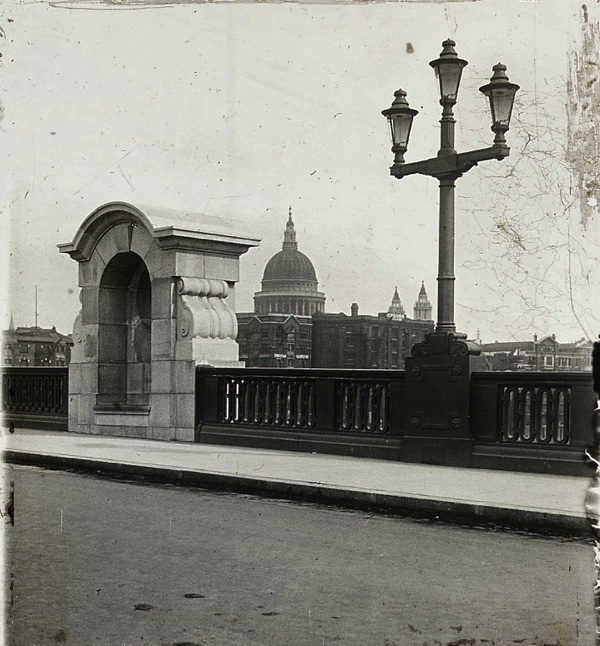
St. Paul’s Cathedral from Southwark Bridge, c. 1925
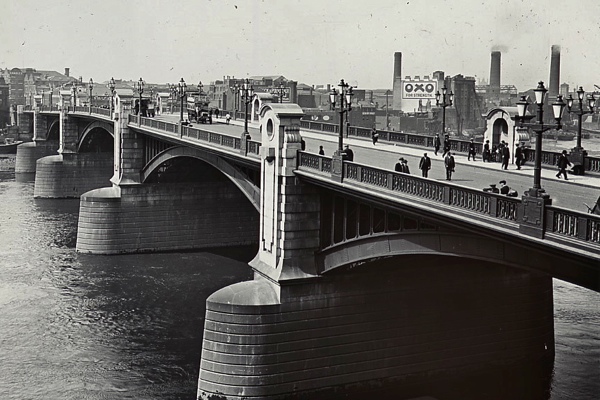
Southwark Bridge, c. 1925
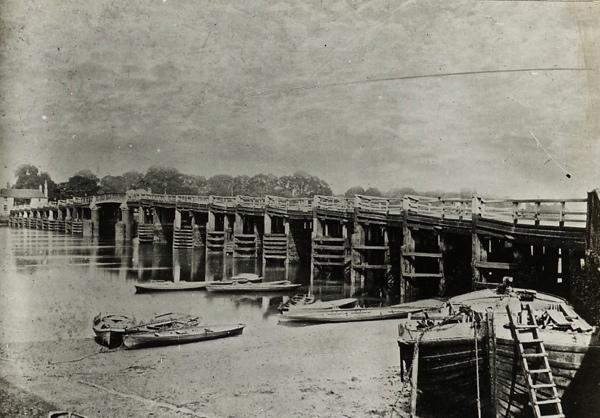
Old wooden bridge at Putney, 1880. The second bridge to be built after London Bridge, constructed in 1726 and replaced by the current stone structure in 1886.
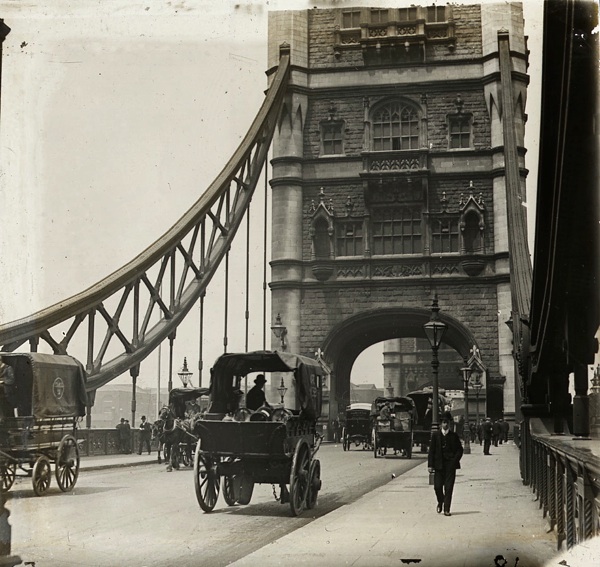
On Tower Bridge, 1905.

Tower Bridge, c. 1910

John Rennie’s London Bridge of 1831 viewed from the waterside, c. 1910

London Bridge, c. 1930. Sold to Robert Mc Culloch in 1968 and re-assembled in Arizona in 1971.

The former bridgekeeper’s house on Tower Bridge, c. 1900

Wandsworth Bridge by Julian Tolme, c. 1910 (demolished in 1937)

Waterloo Bridge, c. 1910. The increased river flow created by the demolition of old London Bridge required temporary reinforcements to Waterloo Bridge from 1884.

Waterloo Bridge, c. 1910

Under an arch of Waterloo Bridge, c. 1910

View under Waterloo Bridge towards Hungerford Bridge, Westminster Bridge, & Palace of Westminster, c. 1910

Westminster Bridge, c. 1910. The third bridge, built over the Thames after London and Putney Bridges, in 1739-1750. The current bridge by Thomas Page of 1862 is painted green to match the leather seats in the House of Commons.
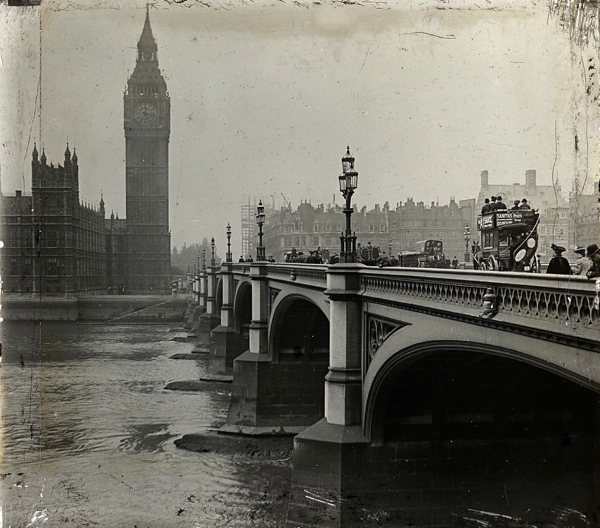
Westminster Bridge, c. 1910

Westminster Bridge, c. 1910

Hammersmith Bridge with Oxford & Cambridge Boat Race, 1928. Dixon, Appleby & Thorne’s bridge was built in 1887.
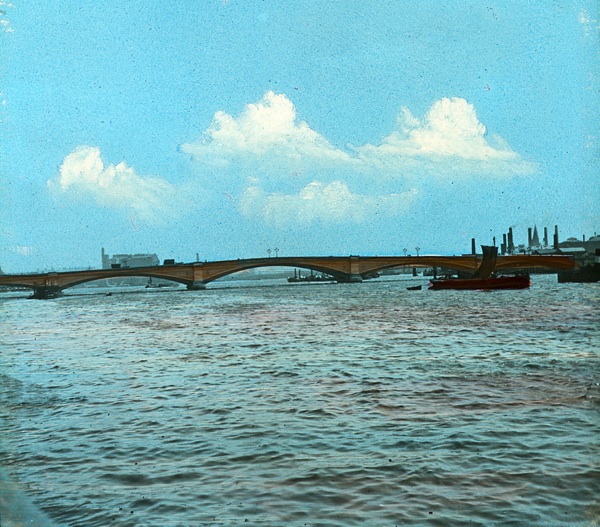
Battersea Bridge, c. 1910 Sir Joseph Bazalgette’s bridge was built in 1879.

Battersea Bridge from waterside, c. 1910
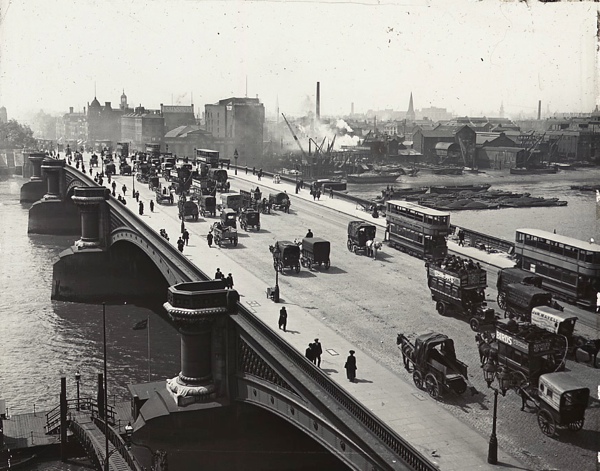
Blackfriars Bridge, c. 1910

Cannon St Railway Bridge, c. 1910. Designed by John Hawkshaw and John Wolfe-Barry for the South Eastern Railway in 1866.

Serpentine Bridge, 1910. Designed by John Rennie in the eighteen-twenties.
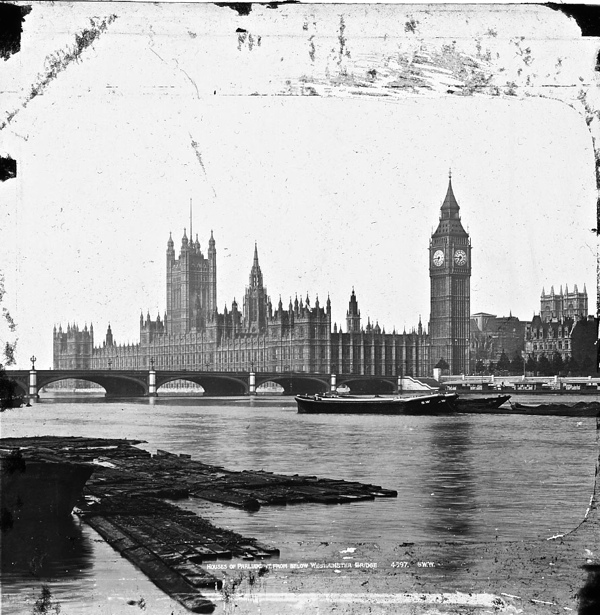
Westminster Bridge, c. 1910

On Hammersmith Bridge, c. 1910

Victoria Embankment, c. 1910

London Bridge, c. 1910
Glass slides copyright © Bishopsgate Institute
You may also like to take a look at
The High Days & Holidays of Old London
An Acquisition At Midwinter
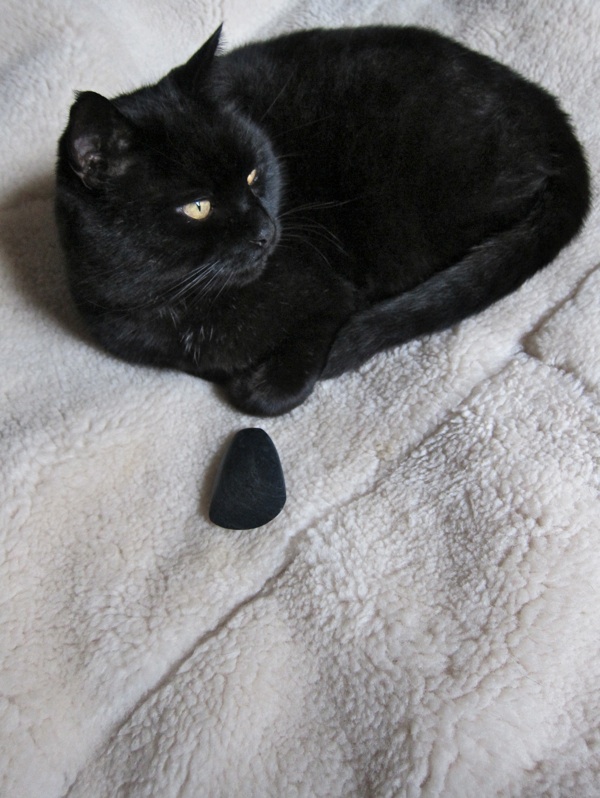
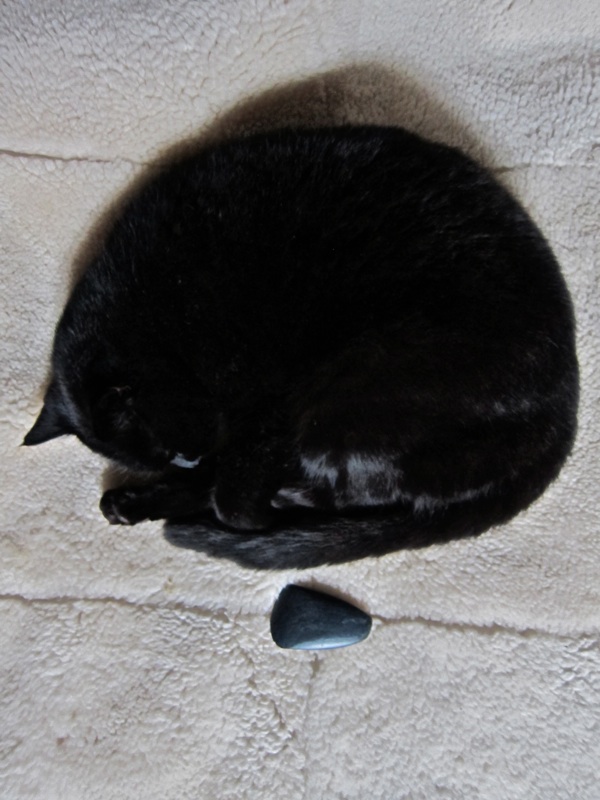
Over all the years I have frequented the Spitalfields Antiques Market every Thursday, I have succeeded in buying almost nothing, tempering my acquisitive tendencies by writing the stories of more than two hundred stallholders instead. Yet I made the grievous error of walking through the market in the late afternoon of the last trading day before Christmas, calling in to exchange greetings with some of the traders, including my pal Bill. While I was passing the time in idle chatter, I picked a up a smooth prehistoric stone axe head from Bill’s stall, cradling it in my palm absent-mindedly. How well it sat there in my hand.
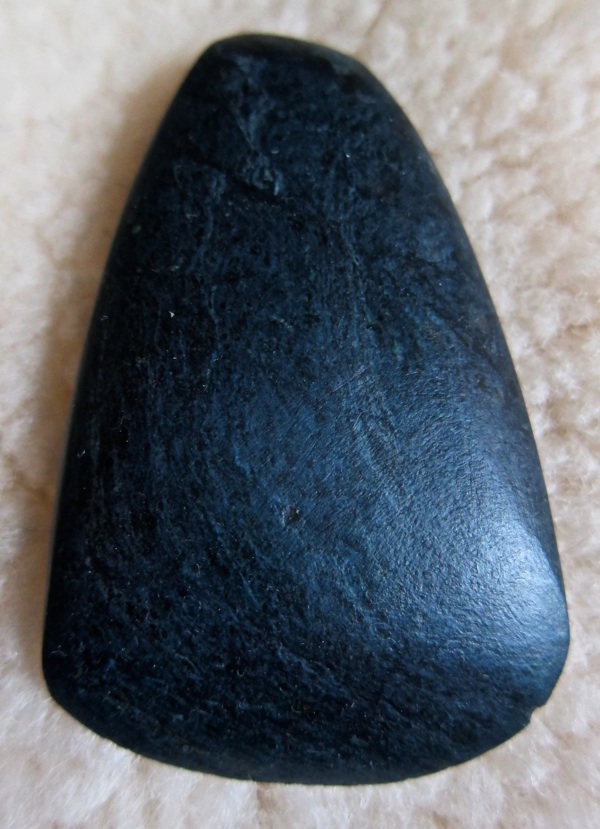
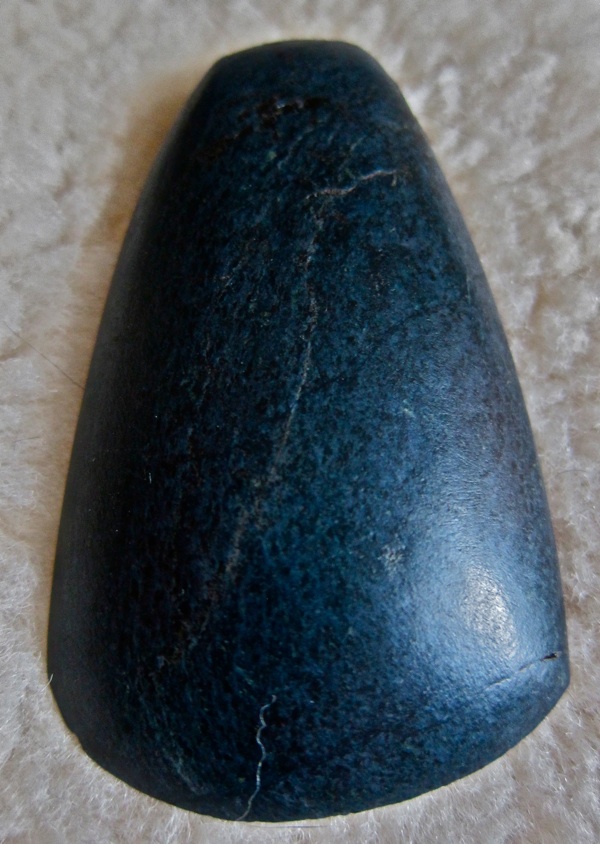
The axe head was of British origin and approximately five thousand years old, Bill informed me. It certainly was a handsome piece of granite that I held, deep slate-blue, finely worked and veined with subtle lines. Immediately, by running your finger along the sharp edge and by clutching the smooth curves, you were in contact with all those numberless others who held it and appreciated it, going right back to the one who made it. This was not an axe designed for use but to demonstrate the painstaking skill of the maker, and of value as a gift or token of high status. This axe had always been prized and I could not resist prizing it myself, as I found my fingers closed naturally over it. I always wanted one.
Fortunately, I never carry any significant amount of cash, just to avoid finding myself in such a situation, and when Bill quoted the price, I found it quite easy to put the axe back on the stall. In every direction, the traders were packing up and heading through the dark market for Christmas. “What would be you best price?” I heard myself asking, surprised at my own audacity yet relieved when this sum was also beyond reach. The business was settled and I would leave the axe, yet Bill could see my disappointment.
“You’ve done a lot for this market,” he admitted to me, thinking out loud.“I am very proud to have put you in the book of Spitalfields Life, Bill,” I countered, “You always have the best things. Your stall is the heart of the market.” In my innocence, I wanted to compensate Bill for not buying the axe but I did not consider what the outcome might be. “I’m sure you’ve brought me more business,” he declared in agreement, holding out the axe in my direction, “You can have it for forty quid, if you like.”
I had got caught up in something that I had not intended but I did not think too much, I said, “Yes.” And thus it was that the five thousand year axe head became mine to cherish for always.
Through the days of Christmas, I have carried it in my pocket as a talisman to protect me against the wintry darkness. There is a paradoxical intimacy that I feel with whoever made my axe, since I can share their delight in pure sculptural form without ever knowing anything else. Whoever made this axe is lost in the all-enveloping darkness of history, in a time thousands of year before Christmas – yet I am sure they enjoyed a winter celebration too. Like us, they recognising the moment in the year when the length of days changes and, in spite of some grim months to come, we are moving forward irreversibly towards summer again.

Bill who sold me the Prehistoric Axe in the Spitalfields Antiques Market
This is my pal Bill, a dignified market stalwart who deals in coins, whistles, gramophone needles, souvenir thimbles, magic lantern slides, trading tokens, small classical antiquities and prehistoric artifacts. “I sell quite a few things, but on a low margin because it’s more interesting to have a quick turnover.” he admitted to me, speaking frankly, “I’m here more for enjoyment really – quite a few friends I’ve made over the years. I was a shy person before, but it’s made me confident having a stall. I’ve become an optimistic person.” Bill comes to Spitalfields each week with all his stock in a backpack and large suitcase – practical, economic and an incentive to sell as much as possible.
(Pen portrait originally published July 22nd, 2010)
Photograph of Bill copyright © Jeremy Freedman
You may also like to read about












