
The Pub That Was Saved By Irony
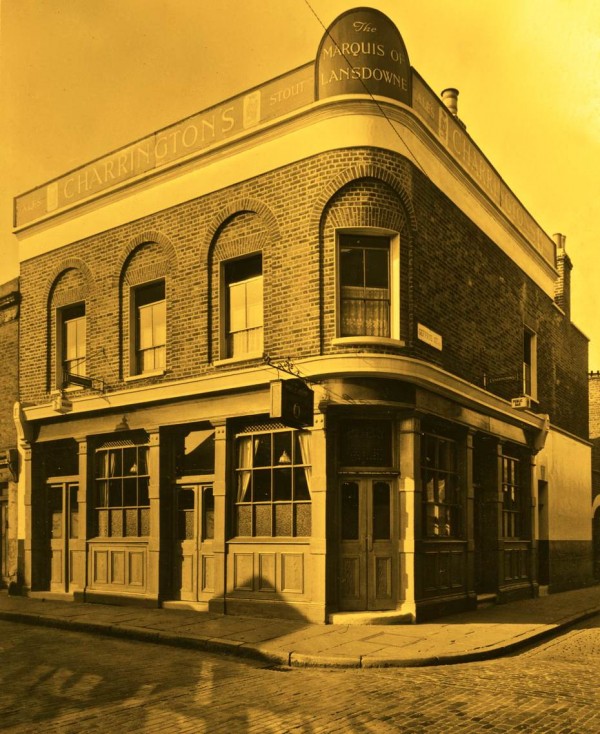
A new dawn for The Marquis of Lansdowne
Thanks in no small part to the passionate campaign waged by you, my esteemed readers of Spitalfields Life, The Marquis of Lansdowne is saved.
Yesterday, I asked “How can it be that a museum which exists to protect our heritage wants to use public funds to destroy an historic building?” The jaw-dropping irony of this situation was not lost upon the members of Hackney Council Planning Committee who were unconvinced by the Geffrye Museum’s scheme involving the demolition of The Marquis of Lansdowne, rejecting it outright by six votes to two.
Consequently, the Geffrye has lost its Heritage Lottery funding for the development and has no choice but to go back to the drawing board, recognising that any future proposal needs to include the restoration of The Marquis of Lansdowne. “I am aware that there is a prejudice against concrete,” exclaimed architect Sir David Chipperfield, in bewildered disbelief at the tide of events.
Celebrating this glorious May Day success which grants a future to The Marquis of Lansdowne, I am republishing the story of George Barker who was born there in 1931 and whose family ran the pub from before 1915 until after World War II.

George Barker in the yard at The Marquis of Lansdowne aged six in 1937
The Marquis of Lansdowne is the only old building left on Cremer St, yet it contains the history of the people who have been there for the last two centuries, their culture, their society and their industry. For George Barker, born in the upper room of the pub in 1931, it was his family home, spanning three generations of Barkers – his grandfather William who came from a village in East Anglia at the end of the nineteenth century, his mother Lilian who ran the pub alone through the war and opened up every day during the Blitz, and lastly himself, the one who got a grammar school education and a Masters degree in Maths and has lived for the last fifty years in a beautiful house in Chorleywood.
No infamous killer took his victim to The Marquis of Lansdowne for her last drink. Charles Dickens did not visit The Marquis of Lansdowne and base a character in one of his novels upon a local eccentric discovered propping up the bar. In fact, the story of The Marquis of Lansdowne is a more important one that either of these, it is that of the working people who lived in the surrounding streets, for whom it was the centre of their community and meeting place for their extended families. In this sense, it is a quintessential East End pub and the history of this place cannot be told without reference to these people.
Haggerston has changed almost beyond recognition in recent decades and, all this time, The Marquis of Lansdowne has remained as the lone sentinel of a lost world. Yet when I met George Barker and he told me the story of his family and the life they led there, he brought that world alive.
“My earliest memory is of being a kid playing on the street, everybody played on the street in those days. A couple of times, I went into the Geffrye Museum and we collected caterpillars in the gardens. They used to have a playground with swings and a place to play football at the back of the museum.
I was born at The Marquis of Lansdowne in February 1931, but my family’s involvement with the pub goes back to the beginning of the century. My grandfather William George Barker told me that the Barker family came from a group of villages near Ipswich, moving to Hoxton at the end of the nineteenth century. He came to London in 1899 and worked as a barman for year in the East End before becoming a policeman for twenty years.
Frederick Daniel Barker, my grandfather’s brother, was licensee of The Marquis of Lansdowne until he died of TB in 1919, when my grandfather took it over from Frederick’s wife Mary Ann. Then, when my grandfather died in the thirties, my father George Stanley Barker took it over until he died in 1937 when my mother Lily ran it. She remarried in 1939 and, as Lilian Edith Trendall, she held the license until 1954 when her husband Frederick Trendall took over after her death. I think they all made a living but it wasn’t a terribly easy life.
We had a side bar and then another one on the corner we called the darts bar, as well as the front bar and the saloon bar. Even then, there were redundant doors which meant that at one time the pub was divided up into more bars. The saloon bar had upholstered bench seats and bar stools, but the other bars just had wooden benches with Victorian marble-topped tables. The curved bar itself was in the centre, spanning all the divisions with a tall central construction for display of spirits and optics, and the beer pumps were in the front bar. I remember, as you came in the side door from Geffrye St, the wall had a large decorative painted panel advertising Charrington’s Beer and there were mirrors at the rear. The pub windows were of etched and cut glass, and above the main door was an illuminated panel with the words ‘Toby Beer.’ It was a Charrington pub and a wagon came with dray horses to deliver once a week from the brewery in Mile End. Further down Cremer St was the Flying Scud, a Truman’s pub, and the Star & Pack, a Whitbread pub.
On the Geffrye St side of the building was a kitchen which was – in effect – where we all lived, and an office. Above the kitchen was my bedroom, with a window looking onto Geffrye St and the railway arches. On the first floor at the corner was the front room where we didn’t go very often, and the main bedroom – where I was born – was on Cremer St, divided from the front room by a construction of wooden panels, as if it once had been one big room. All the arches were coal depots in those days. It was brought by railway every morning at six thirty and all the coal men would be filling sacks, and bringing their horses and wagons to carry it away. But it never woke me up though, because I got used to it.
In those days, on one side of the pub was a terrace of houses and on the other there were three shops. I remember Mrs Lane who ran the sweet shop next door and Mrs Stanley who had a cats’ meat shop where they sold horsemeat. In the thirties, there was a couple of fellows making springs for prams in the building across the road which became a garage in the nineteen forties. I recall there was a baker’s on the other side of the street too and H.Lee, a big furniture manufacturer, on the corner of the Kingsland Rd.
My mother, Lily, ran The Marquis of Lansdowne singled-handed through World War II. It was heavily bombed in the surrounding streets and, when there were raids, she took shelter in the spirit cellar which had been reinforced with stanchions. She had grown up in the area, and most people knew her and she knew them, and they had been to school together. She was quite an outgoing woman who enjoyed a bit of banter and a lot of chat with the customers. She was the daughter of James Wilson who ran the scrap iron yard opposite across Cremer St under a couple of arches. He started the business there and he had a place in Tottenham, so he left his three sons to run it.
There was a friendly community on our doorstep, she ran the pub and her three brothers ran the scrap iron business across the road, and there was another uncle called Harmsworth who had another two arches where he ran a furniture business – one of my aunts married him. All my uncles and aunts lived within about one hundred yards of each other. They were the Barkers, the Wilsons and the Cheeks. A Barker married a Wilson and then a Wilson married a Cheek and then a Cheek married a Barker. My mother had another three children with my stepfather in the forties, and we all lived together in the Marquis of Lansdowne. There was me and my sister Eileen, plus the twins Maureen and Christine, and their younger brother Freddie.
At the age of eight, I was evacuated during the Blitz, but when I came back it was still quite dangerous so I went to stay with an aunt in Kensal Green. I never lost contact because I cycled over at weekends and moved back at the end of the war when I was thirteen.
In the fifties, the business started to drift away. People didn’t have much money and television came along, so it could be quiet on week nights but it was always busy at weekends, and for celebrations like VE Day and the Coronation we got a special licence and opened from midday until midnight. Even if people had moved away, they came back for Saturday evenings to meet with their relatives and friends. I would be serving behind the bar – probably a little younger than I should have been – and by the age of eighteen I was regularly working there. I always looked after the place when they went in holiday.
My mother died in 1954 and my stepfather took over the pub. I studied for a Masters Degree in Maths at Woolwich Polytechnic and I was away from 1954-56 doing National Service. In 1957, I left The Marquis of Lansdowne forever – I was working for Hawker Aircraft in Langley by then. I only went back occasionally after that, not too often. As people moved out, it started dwindling away and I think my stepfather sold it to a family called Freeland who had been coalmen under the arches and then he moved away too.
If it had been up to me, I probably would have become a publican but I wasn’t going to wait for everyone else to die off first and, because of the war, I went to grammar school and then to university. I haven’t been back to Haggerston since the nineteen sixties.”
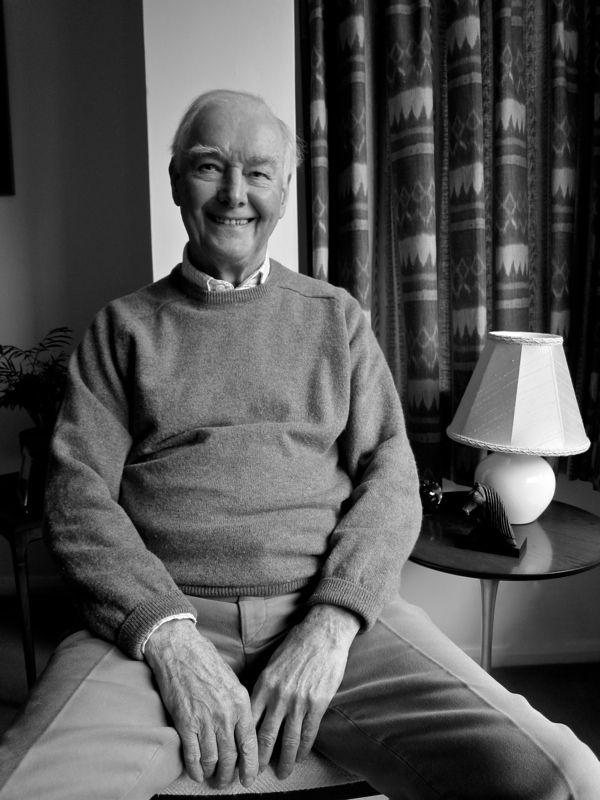
George Barker today.
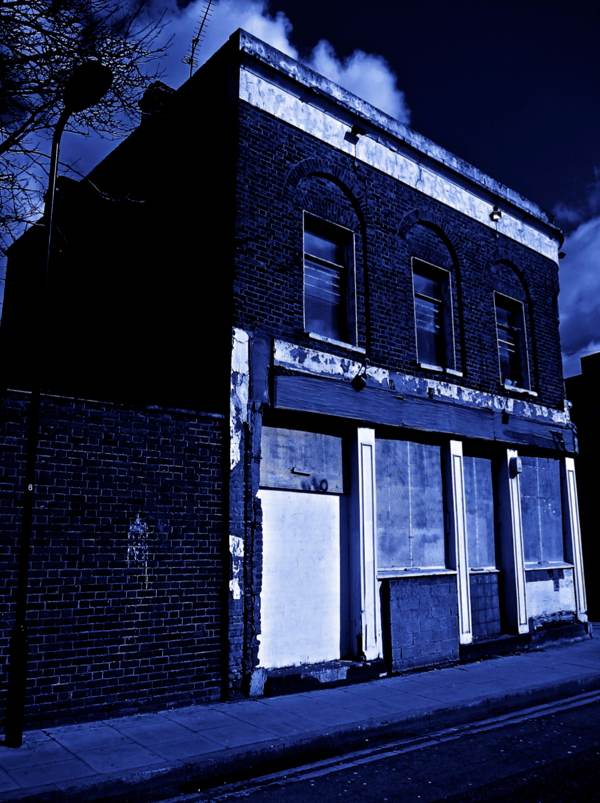
George Barker was born in the bedroom facing onto Cremer St, indicated by the window on the left.
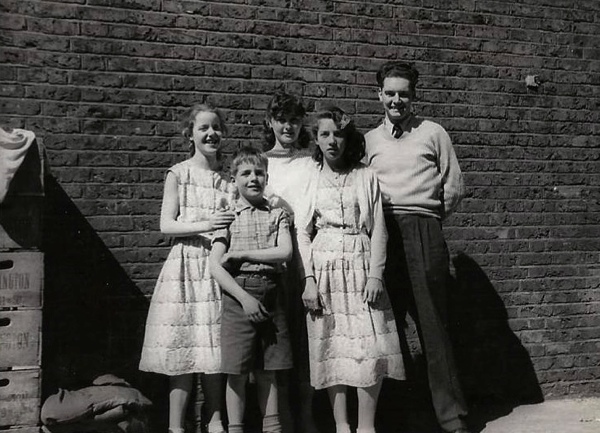
At The Marquis of Lansdowne, 1957. George Barker on right, aged twenty-five, with sister Eileen, centre back. The other three are his half-brothers and sisters from his mother Lilian’s second marriage to Frederick Trendall. The twin girls are Maureen on the left and Christine on right, with their brother Freddie between them.
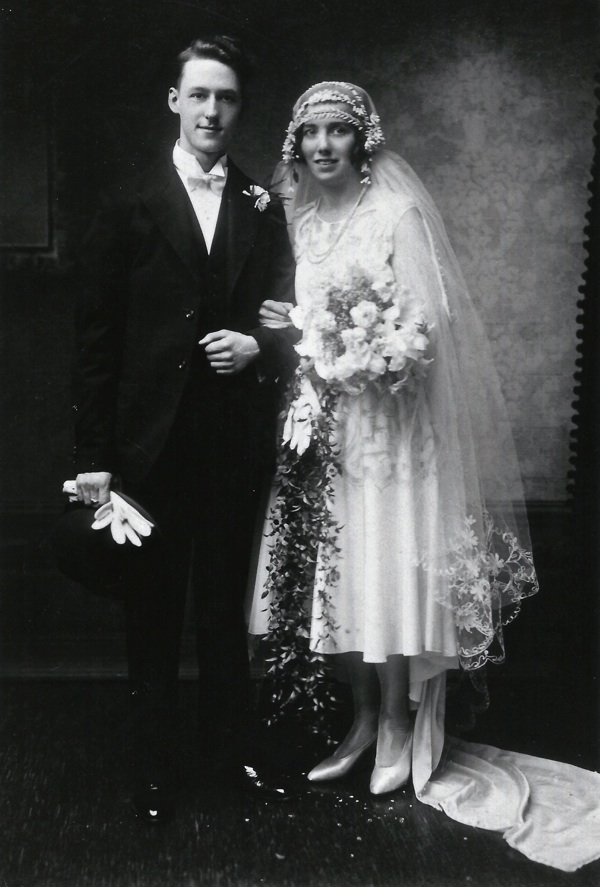
George Stanley Barker & Lilian Edith Wilson, married at St Leonards, Shoreditch on 7th September 1929. Lilian ran the pub after the death of her husband in 1937 until she died in 1954.
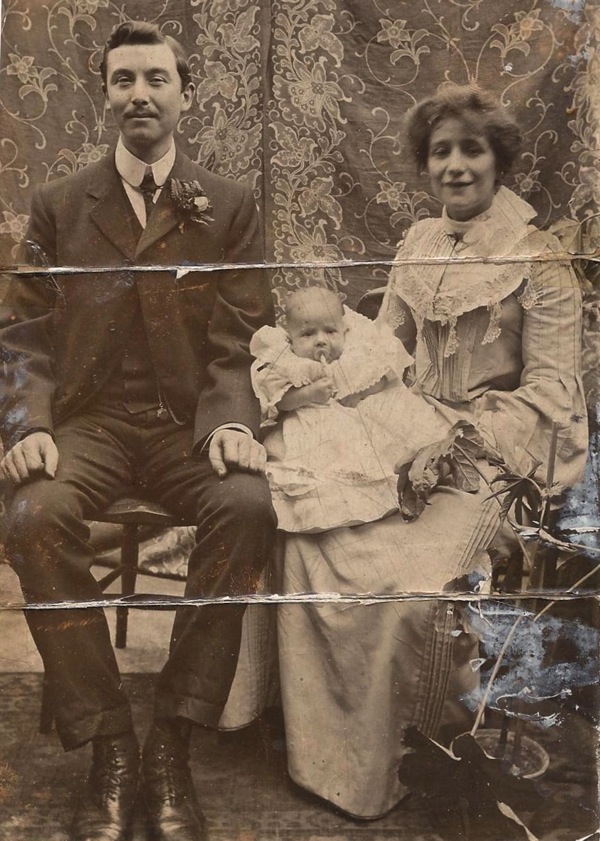
Ex-policeman William George Barker who ran The Marquis of Lansdowne from 1919 – photographed in 191o, with his wife Annie Susannah Oakenfold and son George Stanley Barker, who took over from his father and ran the pub until 1937.
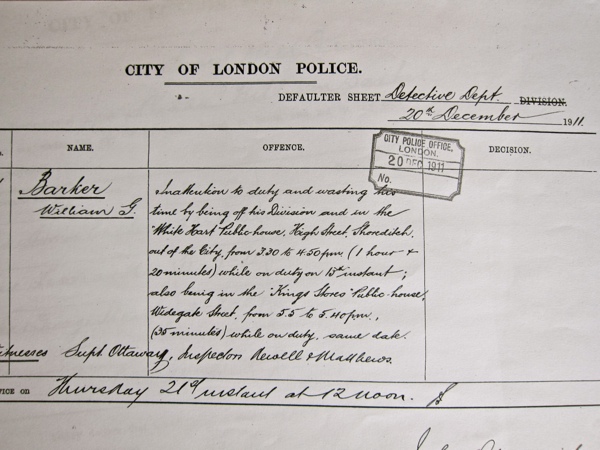
20th December 1911, William George Barker is reprimanded for bring caught in pubs in Shoreditch and Spitalfields while on duty as a policeman – eight years later he became landlord of The Marquis of Lansdowne and spent the rest of his life in a pub. – “Inattention to duty and wasting his time by being off his Division and being in the White Hart Public House, High St, Shoreditch, out of the City from 3:30 to 4:50pm (1 hour & 2o minutes) while on duty on 13th instant. Also, being in the King’s Stores Public House, Widegate St, from 5:05 to 5:40pm (35 minutes) while on duty, same date.”
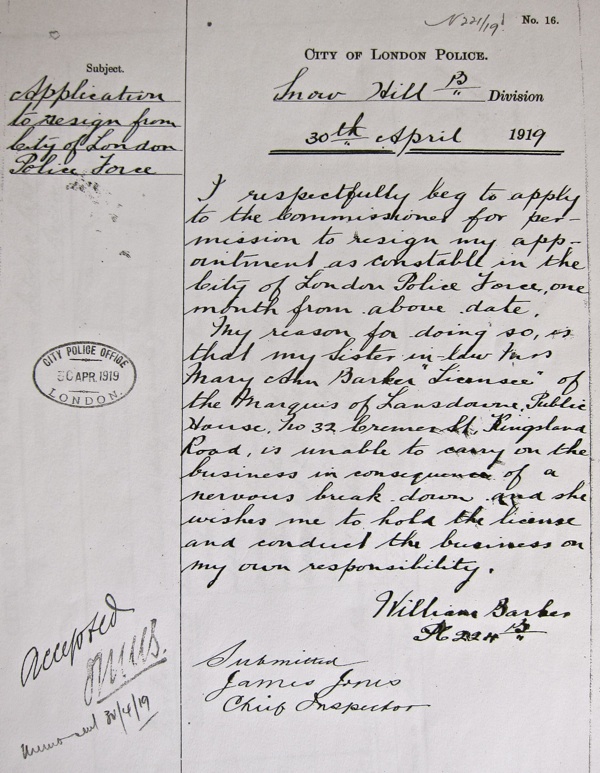
February 22nd 1919, William George Barker applies to leave the police to take over the running of The Marquis of Lansdowne from his sister-in-law after the death of his brother Frederick Daniel Barker. “I respectfully beg to apply to the Commissioner for permission to resign my appointment as Constable in the City of London Police Force, one month from the above date. My reason for doing so is that my sister-in-law Mrs Mary Ann Barker Licensee of The Marquis of Lansdowne Public House, No 32 Cremer St, Kingsland Rd, is unable to carry on the business in consequence of a nervous breakdown and she wishes me to hold the license and conduct the business on my own responsibility.”
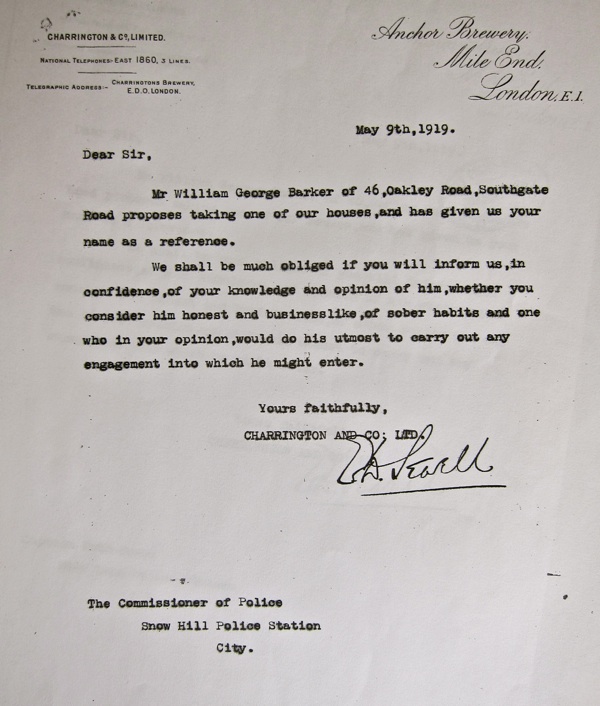
May 9th 1919, Charrington’s, Anchor Brewery, Mile End, seeks a reference for William George Barker from the Commissioner of Police at Snow Hill. Presumably, the incidents of Christmas 1911 were discreetly forgotten.
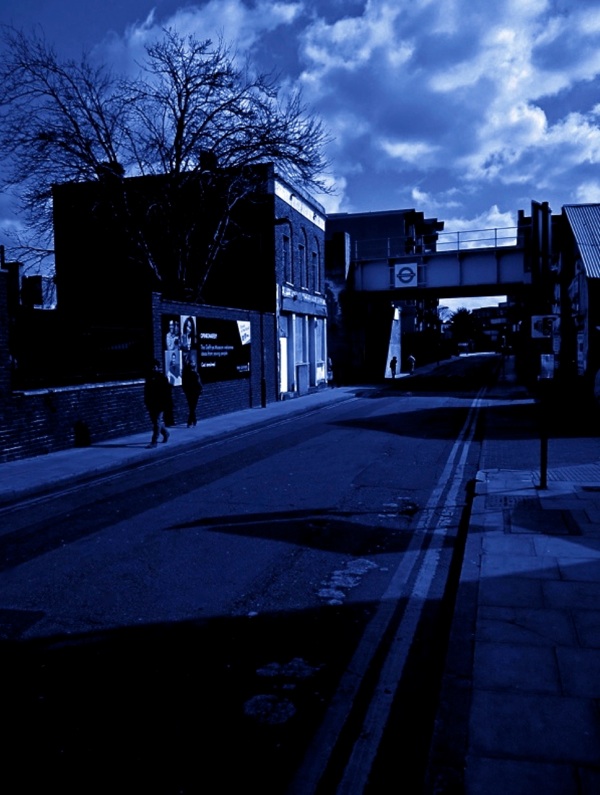
Dating from the Regency era, The Marquis of Lansdowne is the only old building left on Cremer St.
You may also like to read about
D-Day For The Marquis of Lansdowne
In response to the notorious comments by Geffrye Museum Director David Dewing at the recent public meeting to discuss his controversial development plans that include demolishing The Marquis of Lansdowne, Adam Dant has produced this tea-towel “In Celebration of the Culture of the Labouring Classes.” He describes it as “A satire fashioned in the National Trust style, upon our national obsession with class stereotypes, and printed to the highest standards on linen by craftsmen in Bethnal Green.”
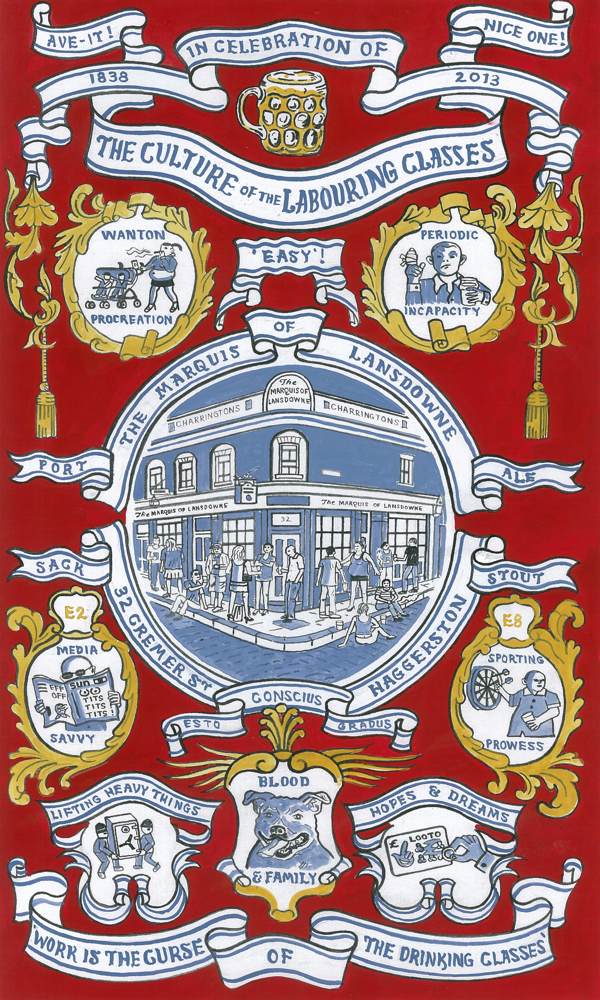
Click to buy Adam Dant’s Marquis of Lansdowne tea-towel for £10!
Today at 6:30pm, Hackney Council Planning Committee meet to decide the fate of The Marquis of Lansdowne, the Regency era public house which has stood on the corner of Geffrye St since 1838. Despite overwhelming public opposition, including a petition of well over two thousand names, the Geffrye Museum has persisted in its plan financed by the Heritage Lottery Fund to demolish the pub and replace it with a concrete cube. How can it be that a museum which exists to protect our heritage wants to use public funds to destroy an historic building?
Already more than half a million pounds of our money has been spent to arrive at this perverse decision. Museum Director David Dewing is adamant that a modernist concrete box, which will serve as a winter garden extension to his new designer restaurant, is more valuable to the museum than renovating The Marquis of Lansdowne. He has revealed that there was an earlier design, also developed with Heritage Lottery Funding, incorporating the pub – but this was dismissed before the general public were permitted to see it. Once a coherent neighbourhood, Haggerston suffered devastating slum clearance programmes in the post-war era and now, with equal high-handedness, the Geffrye Museum wants to finish the job by demolishing the last old building in Cremer St.
It is obvious to all that The Marquis of Lansdowne presents a wonderful opportunity to include a traditional East End pub within the museum complex and David Chipperfield, the architect under commission, has a distinguished record when it comes to incorporating existing structures into his designs. So why is the Geffrye Museum so stubbornly resistant to this notion?
The answer lies in the first sentence of the museum’s policy as outlined on their website “The Geffrye focuses on the urban living rooms and gardens of the English middle classes.” Established a century ago as a museum of the furniture trade, at the a time when this industry filled the surrounding streets, the Geffrye Museum has evolved in the current policy direction based upon an interpretation of the nature of the collection, which is primarily furniture produced for the middle class market. Yet the assumption that it is appropriate to become a museum of middle class culture is a false one, since a full understanding of the furniture must also take into account those who made it. I would hope that such partial thinking might have had its day and, if you visit a stately home now, you will commonly discover as much emphasis placed on those who worked below stairs as upon the aristocrats who owned the property.
Thus, although deeply disappointing, it comes as no surprise that, as a museum emphatically focused upon the middle classes, the Geffrye finds The Marquis of Lansdowne to be of low historical significance and seeks to demolish it. Their actions and words are of a piece. Yet, in their blinkered vision, they are excluding the story of those who manufactured the furniture in their collection and denying any relationship with the social history of Haggerston. It raises the question whether the current social focus of the museum upon the middle class is acceptable in the East End, the heartland of working class culture.
David Dewing’s avowed concern is to furnish a fancy concrete box as a terrace where visitors to his new restaurant can sip a glass of chardonnay, he shudders at the very thought of restoring an East End pub and serving pints. Yet within a mile of the Geffrye, two old pubs that had almost been given up – The Crown & Shuttle in Shoreditch High St and The Well & Bucket in the Bethnal Green Rd – have reopened within the last month and both met with immediate commercial success. If restored, The Marquis of Lansdowne could provide both an enhancement to the Geffrye Museum and a valuable source of revenue.
To anyone that underestimates the cultural significance of The Marquis of Lansdowne, I refer them to the choice of name – honouring the crucial role that Henry Petty-Fitzmaurice the Third Marquis of Lansdowne played in passing the Reform Act of 1832, an important step towards universal suffrage, and his passionate support for the abolition of slavery. No wonder he was a popular figure to celebrate in the naming of a public house.
So today, on May Day, it is up to the people of the East End, as represented by their elected councillors in Hackney, to make a stand against those who think they know what is best for us. We do not want to see any more old buildings destroyed. We want to preserve the culture of the East End. We want to remember where we came from and respect those who came before us.
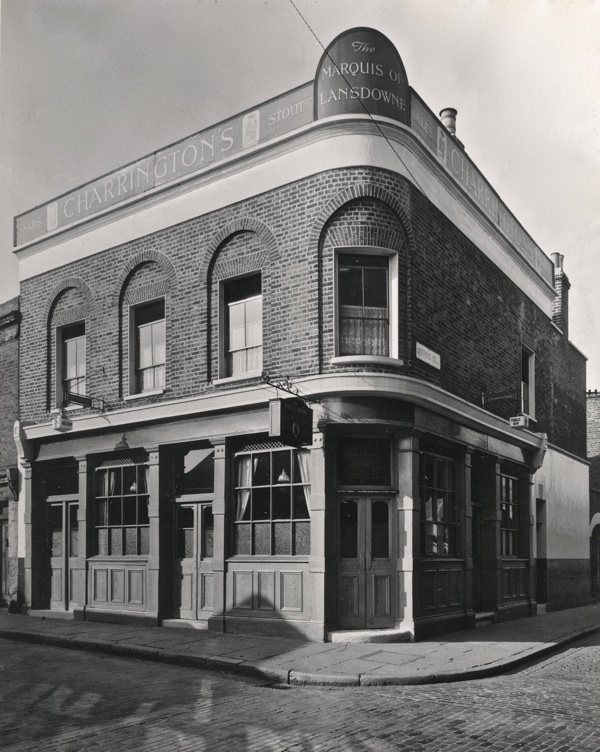
The Marquis of Lansdowne in its magnificence.
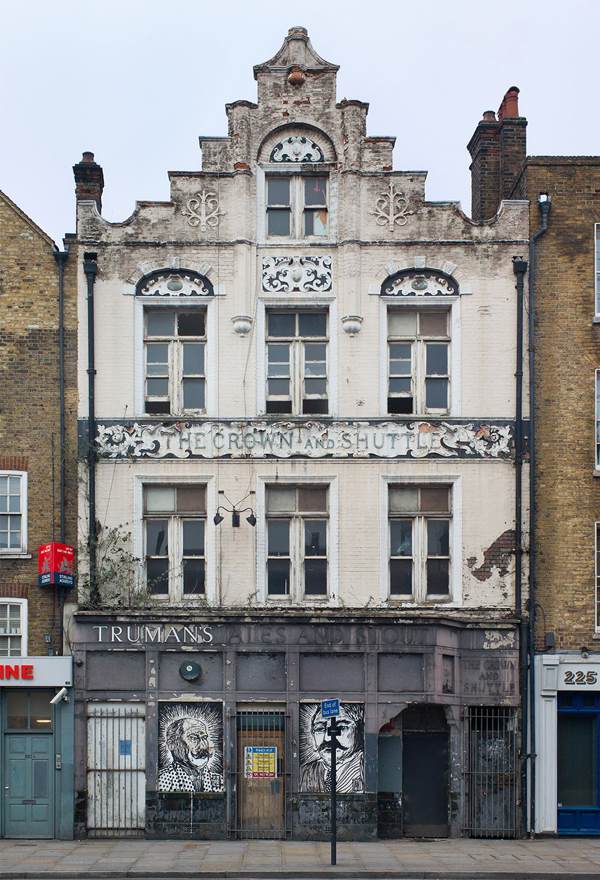
The Crown & Shuttle in Shoreditch High St has just reopened as a pub after being derelict for years.
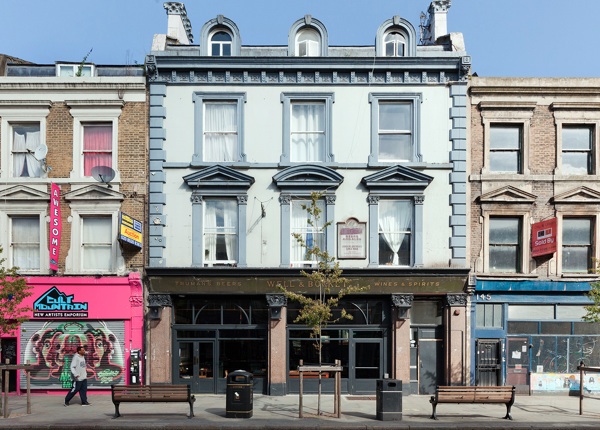
The Well & Bucket in Bethnal Green Rd has just reopened as a pub after being used as shops for years.
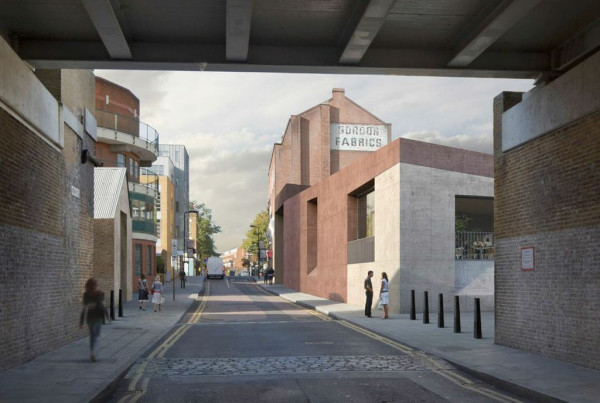
The Geffrye Museum’s proposal to replace The Marquis of Lansdowne with a concrete cube.
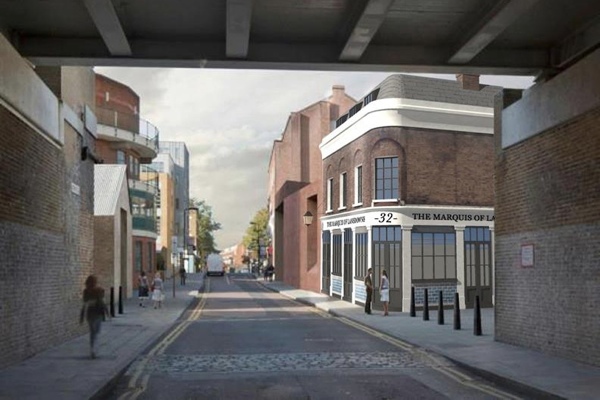
The same view with The Marquis of Lansdowne restored.
The Crown & Shuttle and The Well & Bucket photographs copyright © Alex Pink
Show your support by attending the planning meeting at Hackney Town Hall tonight at 6:30pm
You may also like to read about
George Barker & The Marquis of Lansdowne
The Thames Of Old London

There is a dark and glistening river that flows through my dreams – it is the Thames of old London, carrying away the filth and debris of the city and, in return, delivering the riches of the world upon the flood tide rising. How much I should like to have known London as it is recorded in these photographs – with a strong current of maritime life at its heart.
The broad expanse of water in Central London is curiously empty today, yet a century ago when many of these magic lantern slides from the Bishopsgate Institute were taken for the London & Middlesex Archaeological Society, it was a teeming thoroughfare with wharves and jetties lining the banks. In the (reversed) glass slide above, you see barges unloading their cargo next to the Houses of Parliament and you might deduce that this method of transport could provide an answer to the congestion problems of our own era, if it were not for the fact that all the wharves have gone long ago.
Each day the tide goes up and down by twenty feet. For half the day, the water flows in one direction and for the other half in the other direction, with a strange moment of stillness in between while the tide turns. Such is the surge engendered that the force of the current at the centre presents a formidable challenge to a lone rower and would defeat any swimmer. In spite of our attempt to tame it with the flood barrier, the Thames manifests a force of nature that deserves our respect, especially as the water level rises year by year.
You might think that the river has become merely a conduit for drainage and an itinerary for tourist trips these days, yet do not forget that this mighty river is the very reason for the location of London, here on the banks of the Thames.

Shipping near Tower Bridge, c. 1910

St Paul’s Cathedral from the river, c. 1920

Tower of London from the river, c. 1910

Wandsworth Creek, c, 1920

Off Woolwich, c.1920
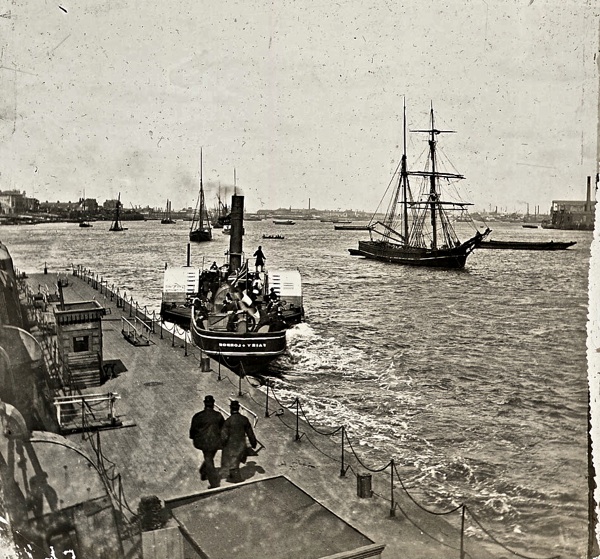
Greenwich pier, c. 1920

Steamboat pier at Chelsea, c. 1870

St Paul’s Cathedral from Bankside, c. 1920

Billingsgate Market, c. 1910

Houses of Parliament from South Bank, c. 1910

Tower of London from the Thames, c.1910

Ice floes on the Thames, c. 1920

St Paul’s Cathedral from Bankside, c. 1910

Victoria Embankment, c. 1920

Oxford & Cambridge Boat Race at Putney Bridge, c. 1910

St Paul’s Cathedral from Waterloo Bridge, c. 1920

London Docks, c. 1920

Customs House, c. 1910

Lots Rd and Battersea Bridge, c. 1910

Somerset House was on the riverfront until the Victoria Embankment was constructed in 1870.
Images copyright © Bishopsgate Institute
You may also like to take a look at
The High Days & Holidays of Old London
Betty Levy of Petticoat Lane

Betty
If you walked through the Petticoat Lane Market in the nineteen-twenties, you would frequently have seen Betty Levy with all her sisters playing hopscotch or skipping games in the street. You could easily have distinguished Betty because she was the baby with the mop of curls, and everyone knew Betty’s mother Hannah – famous as the best fish fryer in the Lane.
But maybe you do not remember, because maybe it is just too long ago for you? Yet that is certainly not the case for Betty herself. At ninety-two years of age, she remembers her childhood as if it were yesterday and given any opportunity she delights to break into the same songs she sang then, accompanied by the ingenious lyrics she composed herself.
Betty left Petticoat Lane in 1954 but occasionally when speaking of the Lane, she says “And I’m still here,” and you realise it is a statement which transcends immediate reality, because while Petticoat Lane has changed almost beyond recognition, Betty still carries a world and a society and an ethos that incarnate the Petticoat Lane she knew, the place she will always count as home.
“I was born here, in Rosetta Place off Frying Pan Alley and my mother Hannah before me. My grandparents, Mark and Phoebe Harris, lived in Rosetta Place too and if we went in their flat, they always gave us something to eat.
My family have been here for generations, I always understood they were of Dutch descent. My father, Isaac, worked in Smithfield Market, he sold sweets to the porters and we never starved, so he must have made a living. They called him ‘Kosher’ and he sold the sweets from a basket round his neck. He got them from a small warehouse in Commercial St run by Mr Sam. If we were well behaved, he gave us one.
I went to the Jews Free School in Frying Pan Alley, it was a good school with good teachers and they treated us well. My grandmother sometimes gave me a plate of roast potatoes and told me to go and give them to the children in the park, and she left fried fish on the window sill for people to take. Nobody starved in the East End.
When I left school at fourteen, I went to work making dresses in Middlesex St, we were taught how to do it at school and I moved from one factory to another to better myself. I made all my family’s clothes, my children and grandchildren, and their bride’s dresses. If you spend your life doing something, you get a talent for it – I got to be as good as anyone at it. And I miss it now, I wouldn’t mind doing it again, part-time.
I was only seven years married when my husband Danny died aged thirty-nine, I think he had a heart attack. I met him at a dance at the Hammersmith Palais. We met dancing, we were both good dancers, not fabulous but pretty good. We were married at the Beaumont St Synagogue and we lived with my family at first. Then we found a house in Milward St, Whitechapel, round the back of the London Hospital. Although I was one of a large family, I only had two children – a boy and a girl, Irene and Stephen. After Danny died, my family offered to support me, but I wanted to be independent. If you’ve got to do it, you do it. I worked making dresses and I kept us, because I didn’t want anyone else to bring up my children.
I love the East End, there’s something in the East End that’s nowhere else. It is my home.”
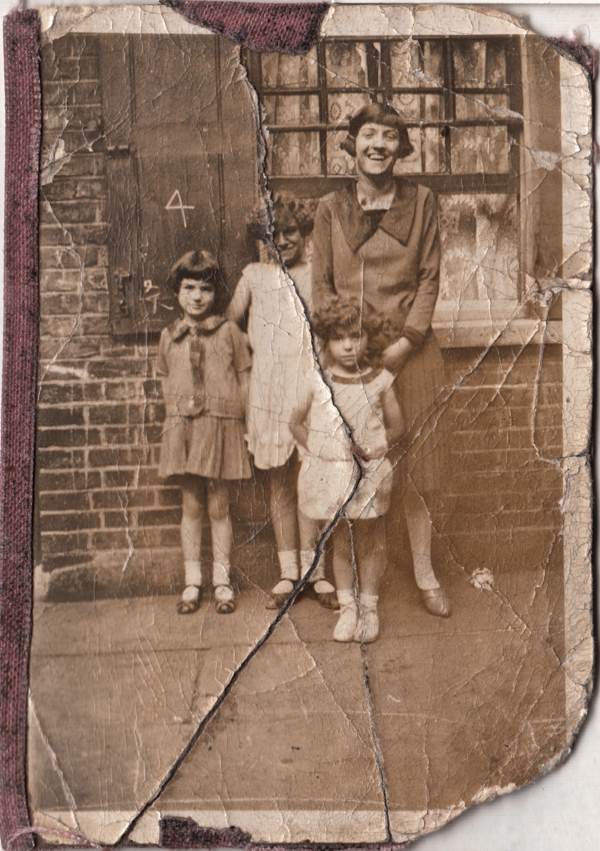
Four of Betty’s sisters in Rosetta Place c. 1925
“We played among the doorsteps, for hours and hours
We never had gardens, so we couldn’t grow flowers.
Some kids they never had shoes, ’cause their dads were on the booze
But, we all lived together the Christians, the Jews
And the Jewish Free School was in dear old Frying Pan Alley.
Now there is not any doorsteps, they’ve knocked them all down,
They built a tower block where we played around.
The kids don’t play now like we used to,
On everybody’s doorsteps, in the East End of town.”
Betty’s new lyrics to the melody of ‘On Mother Kelly’s Doorstep’
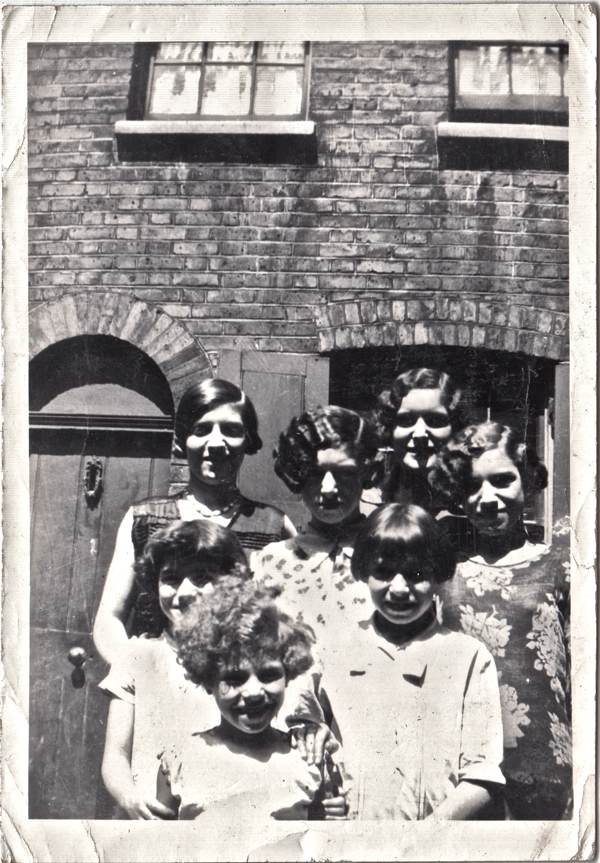
The Levy Sisters. Sally, Phoebe, Lily, Carrie, Jennie, Becky and Betty (in front).
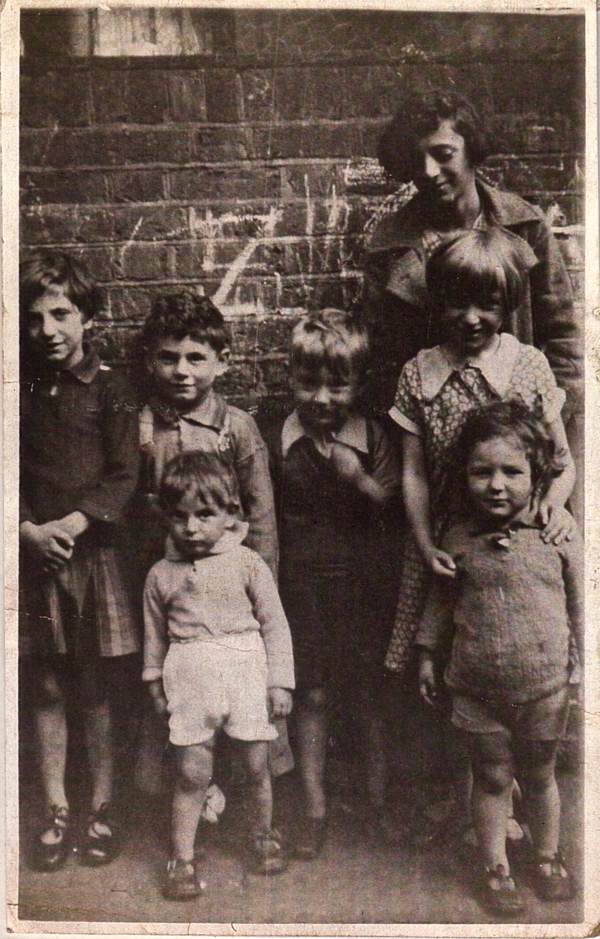
The Mitchell Family, neighbours in Rosetta Place. Betty Mitchell standing with Betty Clasper and little RayRay in front and Anita Mitchell, Barnie Mitchell, Siddy Segal and little Jo in line along the wall.
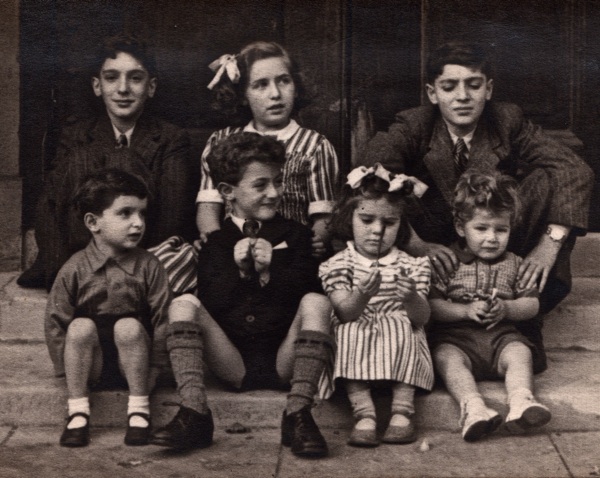
Some of the Levy grandchildren on the steps of St. Botolph’s Church Bishopsgate c. 1945. Alan, Diana, Bobby, Roy, Richard, Sallyann and little David.
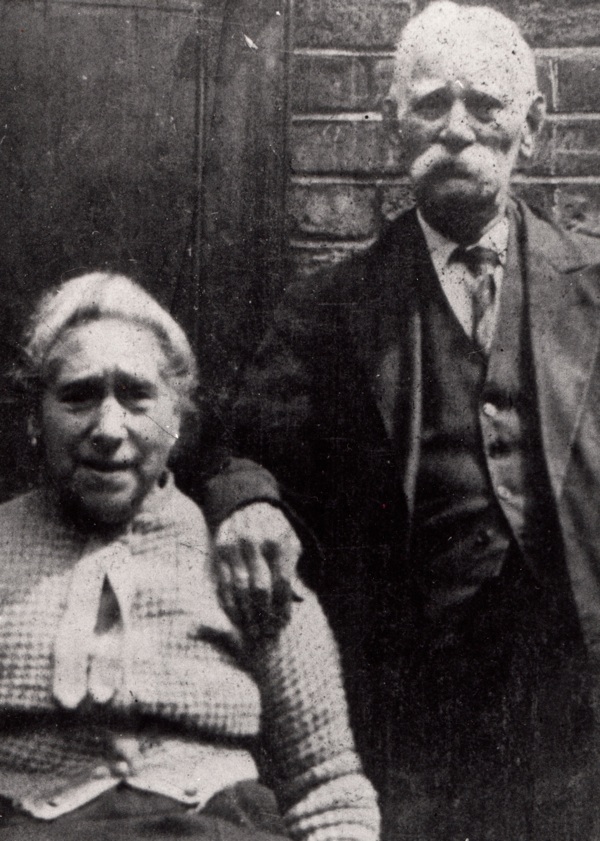
Betty’s grandparents, Mark & Phoebe Harris, Spitalfields, c. 1920
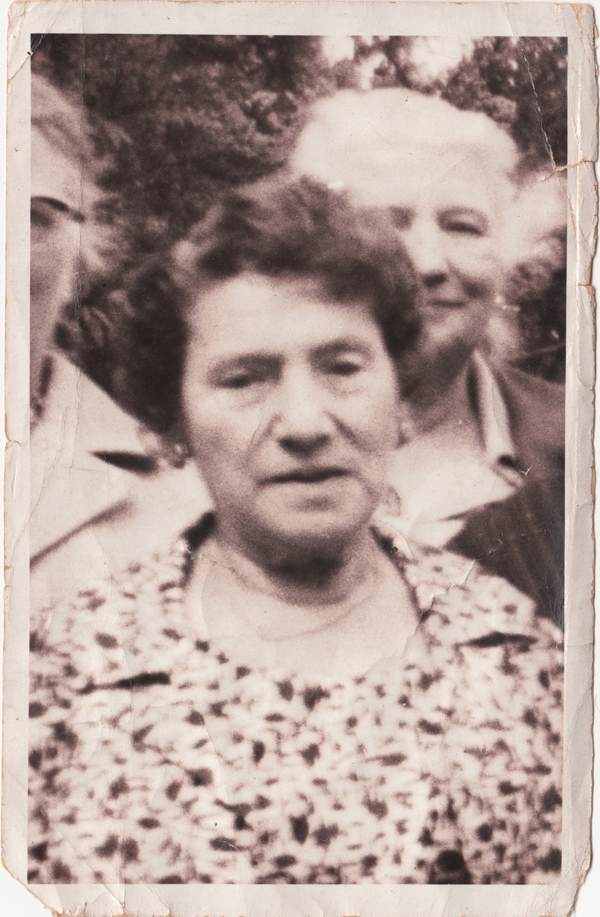
Betty’s mother, Hannah Levy, daughter of Mark & Phoebe Harris, and famous as the best fish fryer in Petticoat Lane.
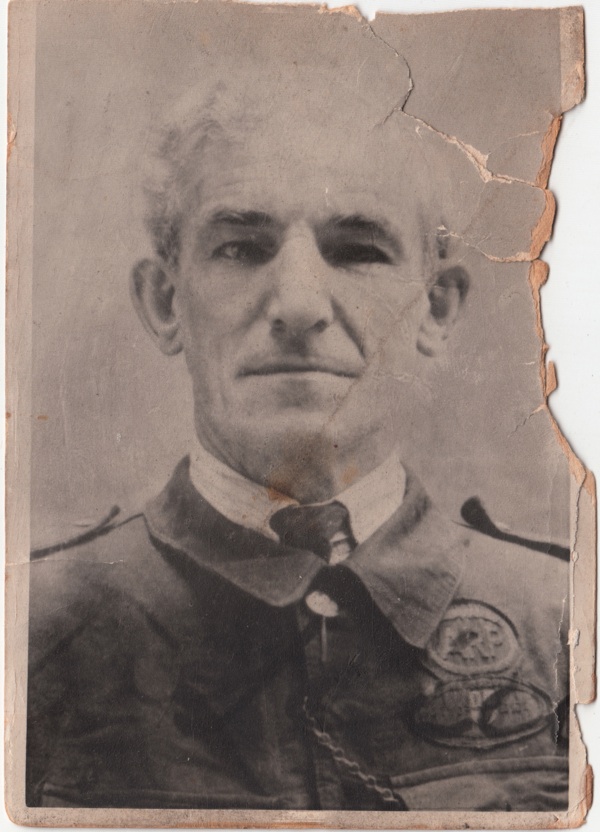
Betty’s father, Isaac in his ARP uniform.
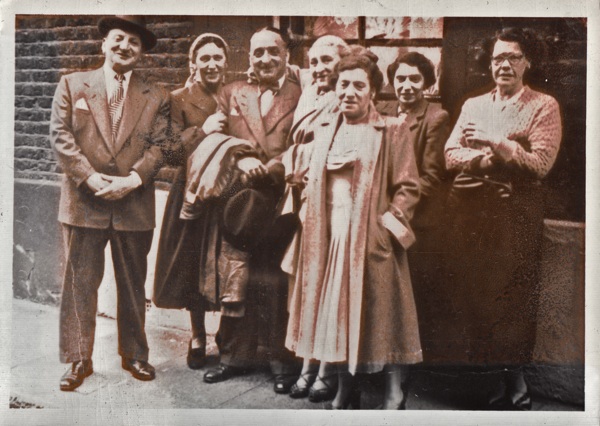
Hannah Levy and friends in Frying Pan Alley around 1940.
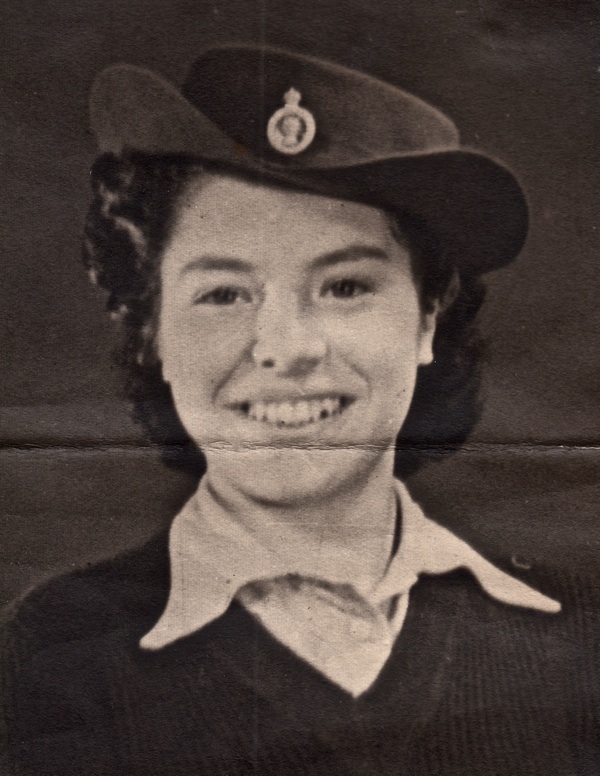
Betty as a Land Army Girl in WWII, based at Sawbridgeworth in Hertfordshire.
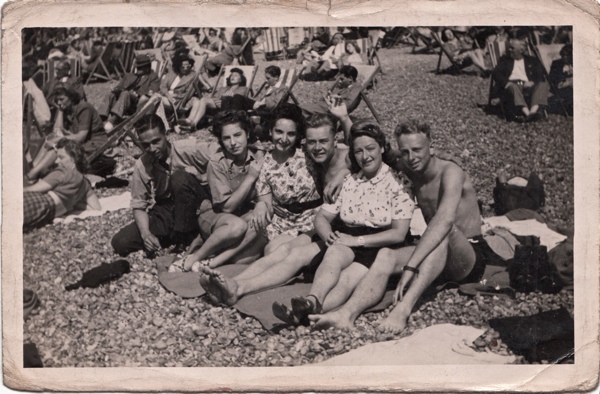
Three Bettys (Levy, Cohen and Hyams) and three American airman at Westcliff-on-Sea c. 1945
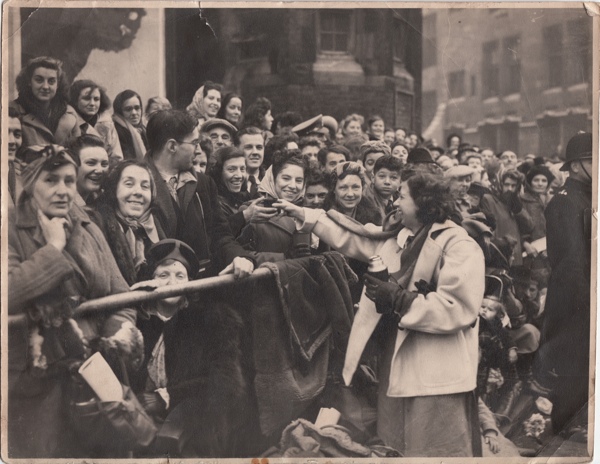
At the centre (in a headscarf) is Betty with family and friends at the Coronation 0f Queen Elizabeth II. They slept out in Picadilly to be sure of getting a prime position.
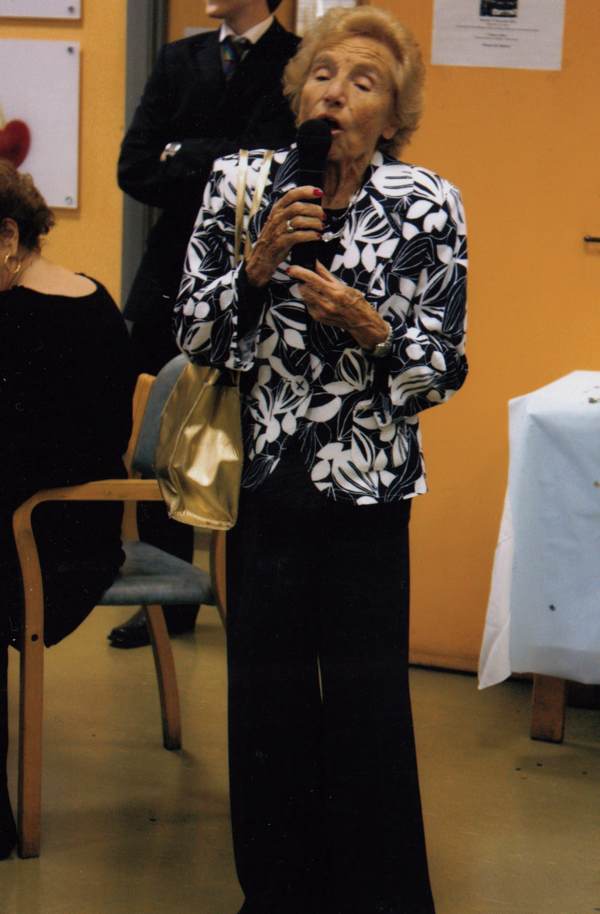
Betty sings at her ninetieth birthday party, October 2010 at Beaumont St Synagogue.
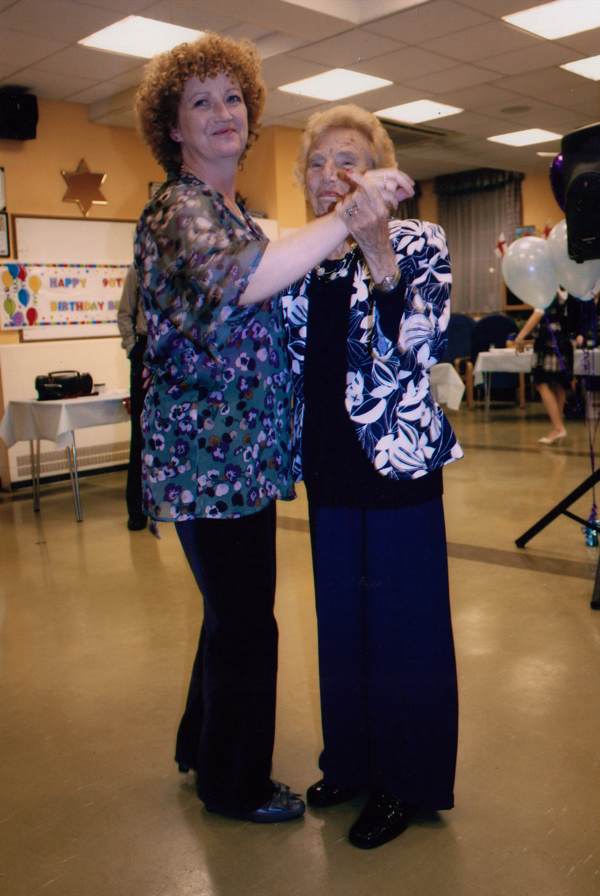
Betty dances with her daughter Irene at the party.
[youtube Folj5vI_zhY nolink]
You may also like to read these other stories of Petticoat Lane
The Wax Sellers of Wentworth St
Pamela Freedmam, The Princess Alice
The Dioramas of Petticoat Lane
At Plough Yard
Plough Yard
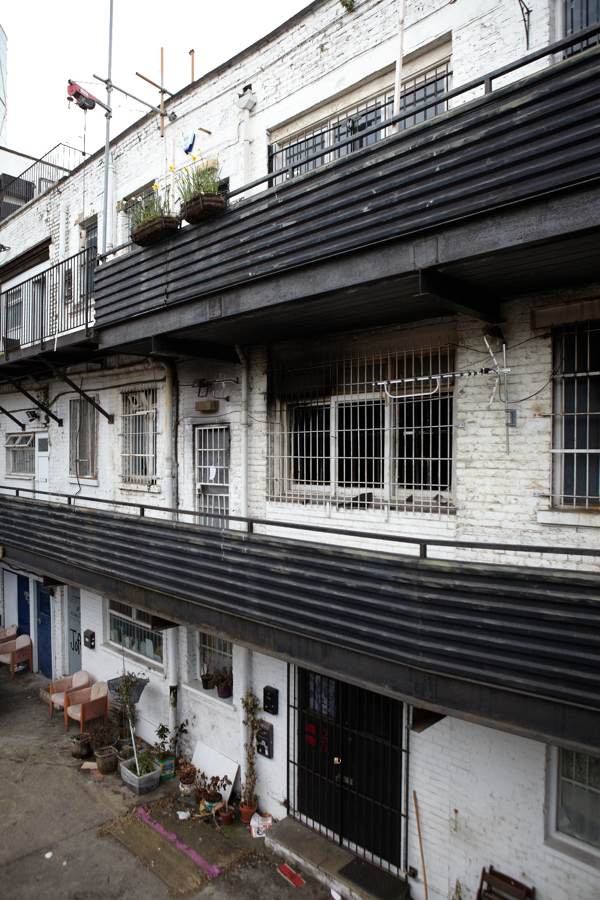
If you walk up Norton Folgate, past the Crown & Shuttle, then turn left down a narrow side-street and go under the disused bridge of the former London & North Eastern Railway, you will discover Plough Yard.
Resembling the galleried courtyard of a coaching inn – of the kind that once lined Bishopsgate when it was the point of arrival and departure for those travelling the Roman road north from the City of London – this unexpected enclave of tranquillity, concealed amidst the clamor where major thoroughfares collide, has always fascinated me. And, in recent years, the excavation of the Curtain Theatre where ‘Romeo & Juliet’ and ‘Henry V’ were first performed on a site adjoining Plough Yard, has served to increase my curiosity for this hidden corner still further.
So last week, Contributing Photographer Patricia Niven & I went along to explore. We received a generous welcome from the occupants of Plough Yard and encountered a thriving community of small businesses, run by people working and living side-by-side in a wide variety of different spaces, within this appealingly ramshackle collection of buildings of indeterminate age.
Ancient battered floorboards and remnants of nineteenth century machinery attest to the immediate industrial past of Plough Yard as a steelworks, but the presence of vast wooden beams and some earlier rough stonework suggest that this charismatic amalgam of structures has evolved on this site over many centuries. Such a palimpsest of yards and interconnected buildings has long been the architectural pattern here at the boundary of the City of London as small trades and artisans have gathered to take business advantage of their wealthy neighbours.
Just south of Plough Yard is the monolithic Broadgate Tower and the space between is presently to be filled by Pinnacle Place, another high rise development of monstrous ambition in harsh contrast to the human scale of the Shoreditch streets beyond. Next, Plough Yard will be erased by the forty-storey Bard Tower constructed on top of the site of Shakespeare’s theatre. It is astonishing to me that the discovery of a location of global cultural significance such as the Curtain Theatre is viewed as a development opportunity to put up another tower block with a shopping mall underneath and I cannot resist the notion that this cheap opportunism will be judged retrospectively as a condemnation of our age.
But, in the meantime, it is my pleasure to introduce you to some of the residents of Plough Yard. “Our community means so much to those who live here,” resident Zak Coogan admitted to me, “but it is worthless to the developers.”
These are the most recent in a long continuum of the proprietor owned-and-run businesses which have always characterised this corner of the East End, with families living in the workplace and small inter-related companies supporting each other.
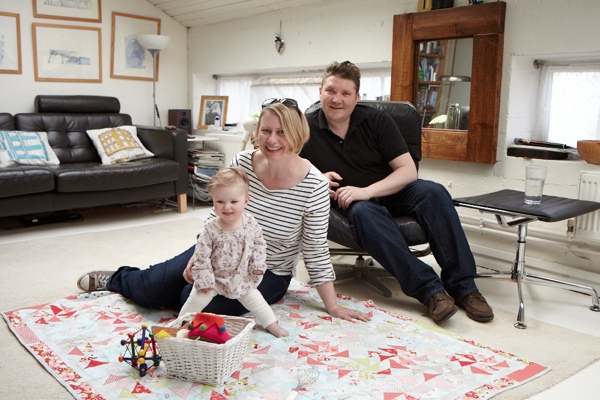
Zak Coogan, proprietor of Smartinfo Ltd, and his wife Rachel live and work in Plough Yard with their baby daughter, Freya
“I run a telecommunications business from home and many of my customers are in the City of London so I need to be close to them. Eight years ago, we moved to Plough Yard from Old St to escape the noise. We’ve had the happiest years of our lives here – we got married in Plough Yard and our lives are intertwined with this building. Like the other tenants, we’re on an annual lease but the developers will only say we have ‘about two years’ – we know we’re definitely here until February.”
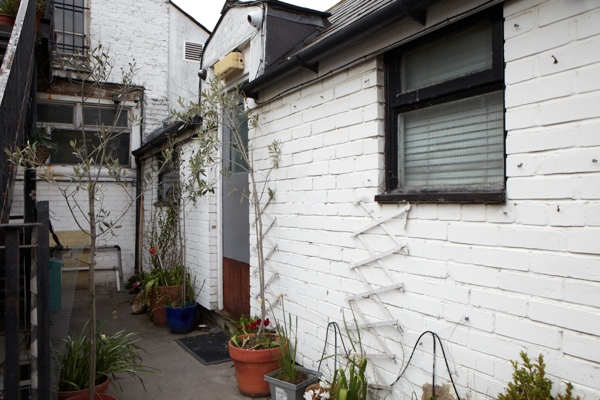
The first floor “cottage” where Zac, Rachel and Freya live.
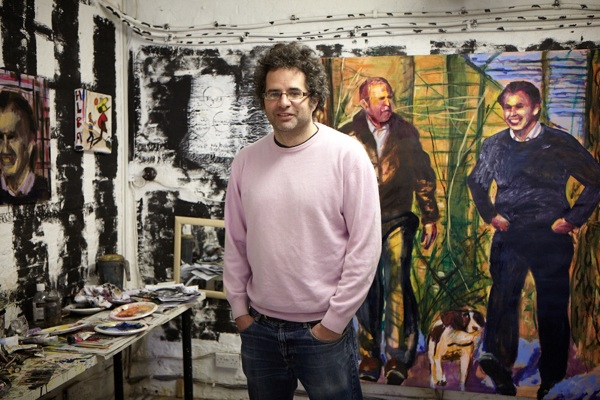
Painter, Jasper Joffe lives and works in a studio on the ground floor with his eight-year-old daughter
“This is one of the few places I’ve lived where I’ve become friends with the neighbours. It’s incredible for sleeping because it is so quiet and neither too hot in summer or too cold in winter – the thick old walls hold a stable temperature. My daughter’s become a bit fashionable and arranges her toys to decorate the place. She says, ‘We really live at the centre of things, don’t we?’ Since I moved in, I have felt at home. “
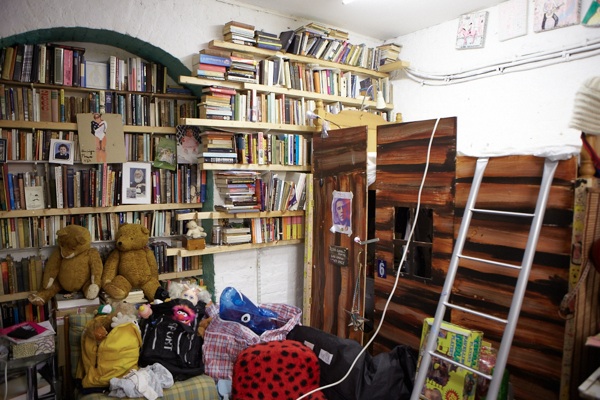
Jasper Joffe’s daughter’s cabin
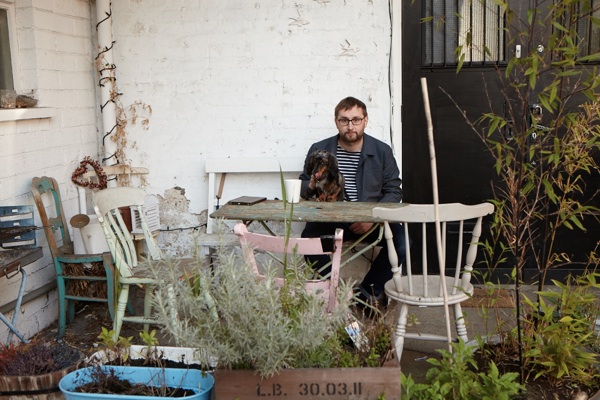
Film Editor, Ben Hilton, lives and works on the ground floor with his wife and their dog, Jarvis Cocker
“The reason I live here is the history. I find it a constant source of inspiration to be living not only in a historic building but amongst streets and upon land in which the past is so compelling – from the Shakespearean theatre literally beneath my feet while I work, to the age-old pattern of streets surrounding me and the legacy of the people that walked them, and what they achieved through the centuries. The thought of all this makes living here feel like a privilege. I feel honoured to have my small patch of working London.”
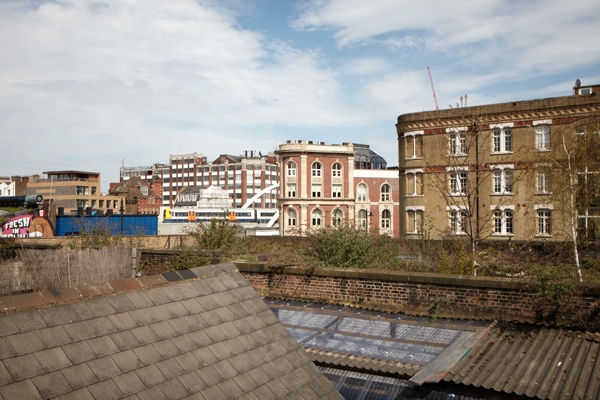
The view towards Bethnal Green.
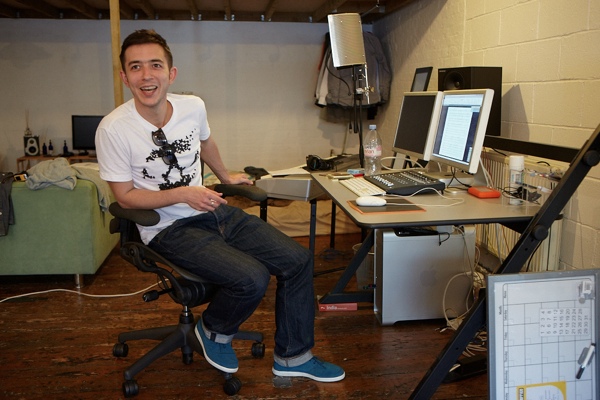
Film composer, Amory Leader, moved in on the first floor six weeks ago.
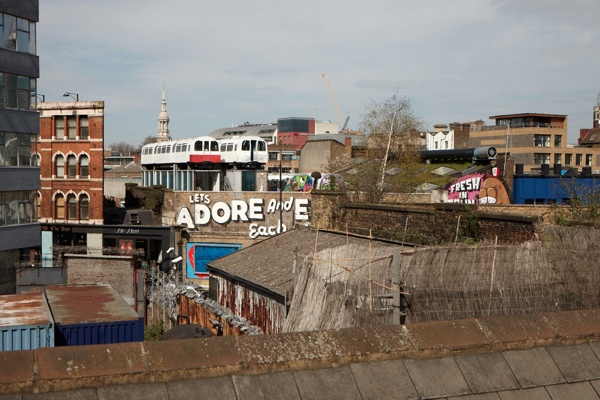
The view towards Shoreditch.
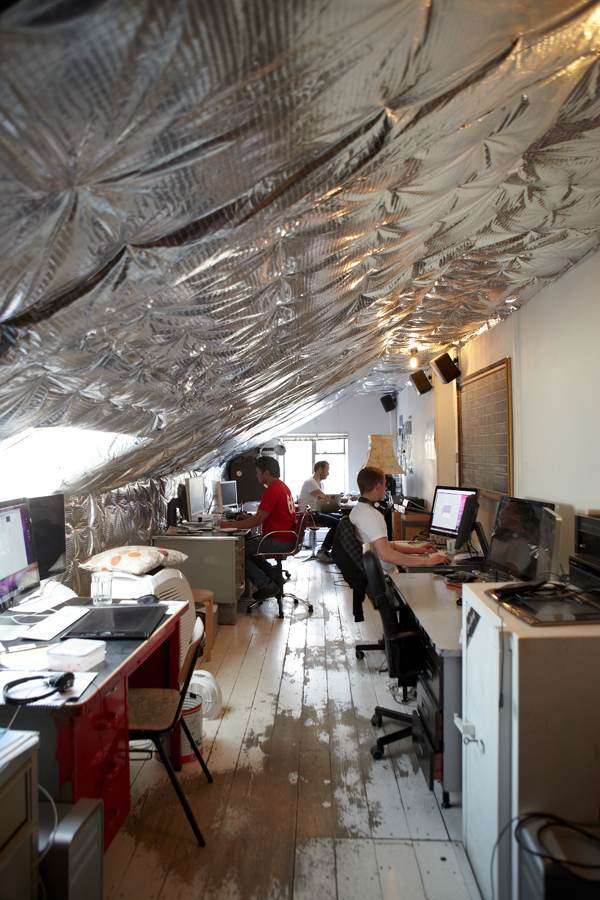
Video production in an attic space at Plough Yard.
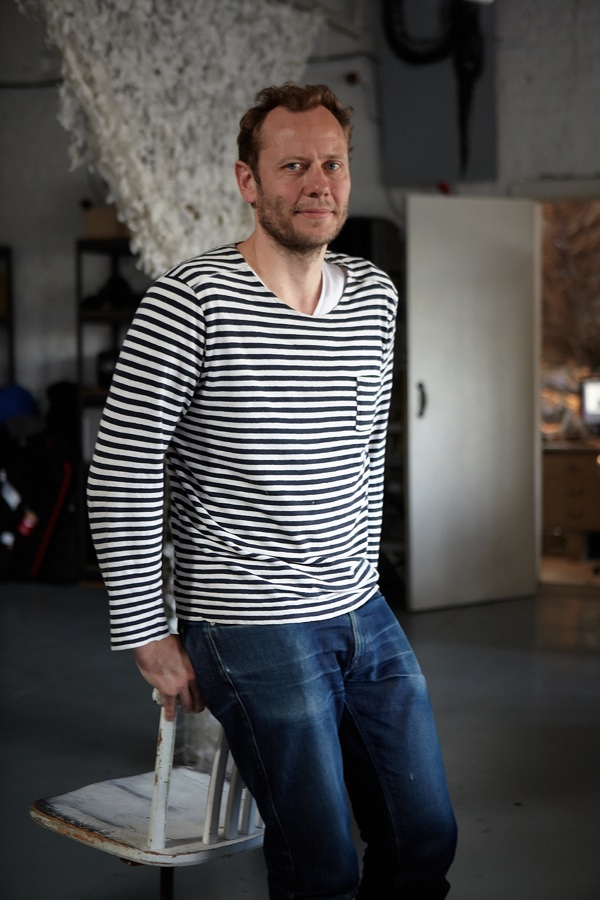
Film-maker, Chris Richmond of Atticus Finch has been based at Plough Yard for eleven years.
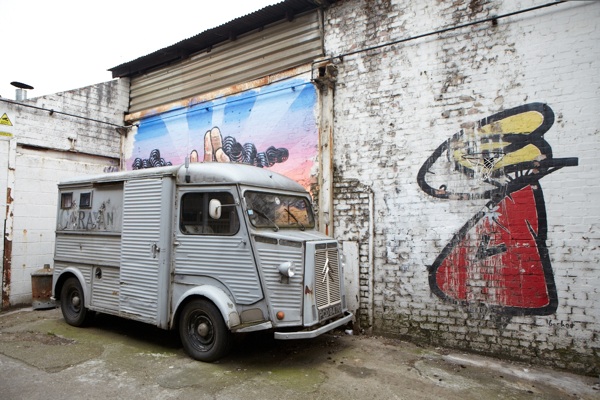
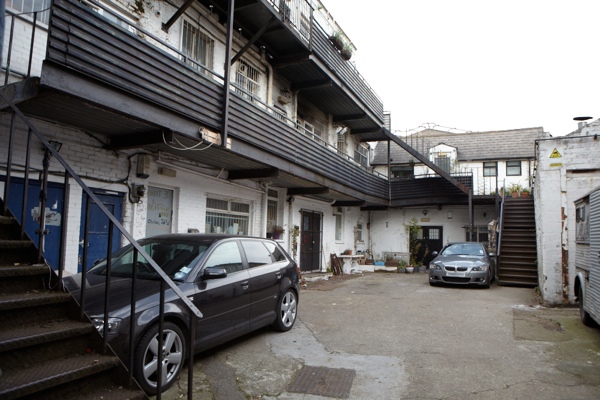
Plough Yard
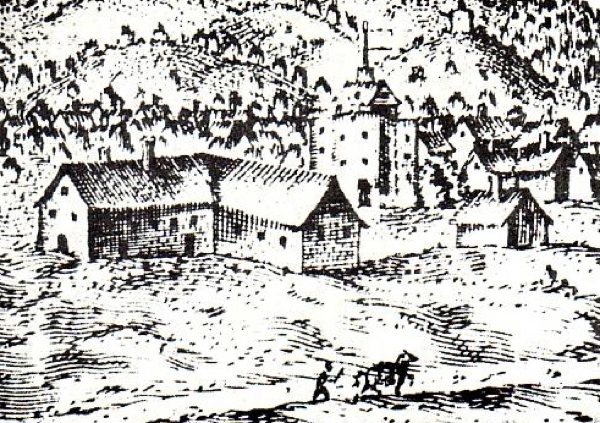
The Curtain Theatre with Plough Yard in front and Ermine St, the Roman road north, in the foreground – as pictured in “A View of the Cittye of London” c. 1600
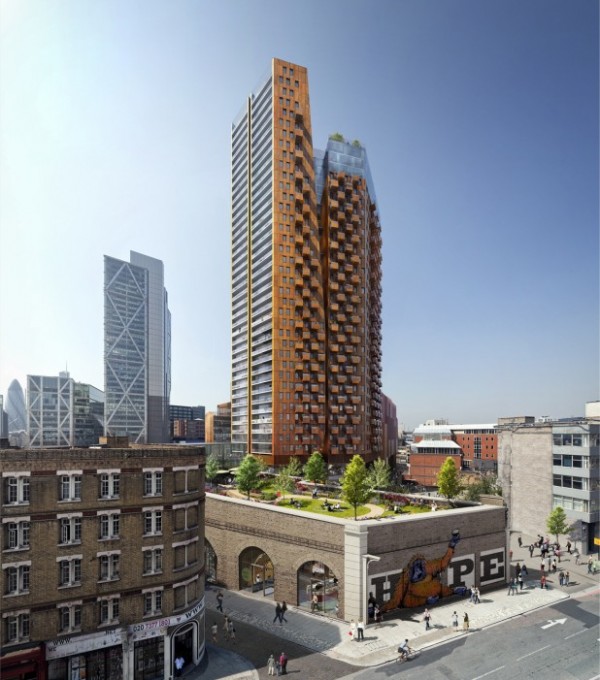
Built upon the site of the Curtain Theatre, the Bard Tower will replace Plough Yard.
Photographs copyright © Patricia Niven
Nicholas Sack, Lost In The City

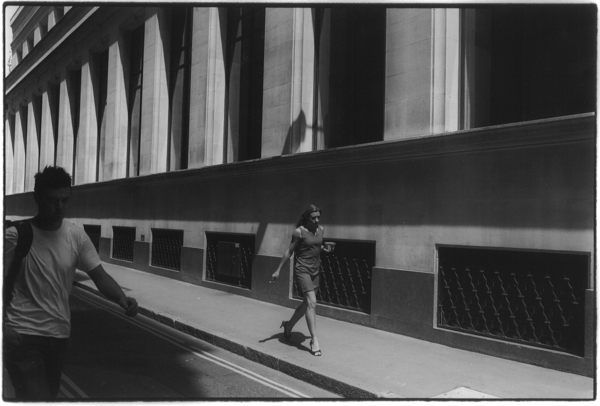
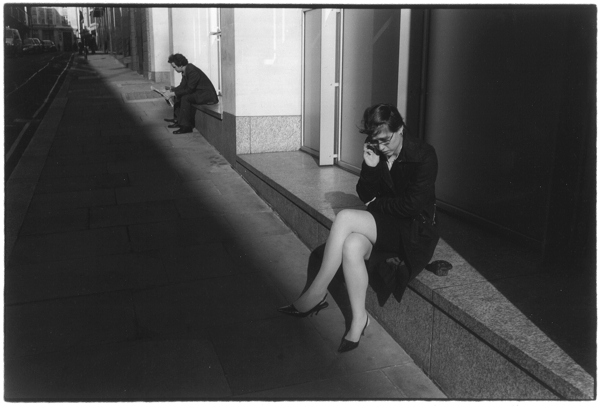
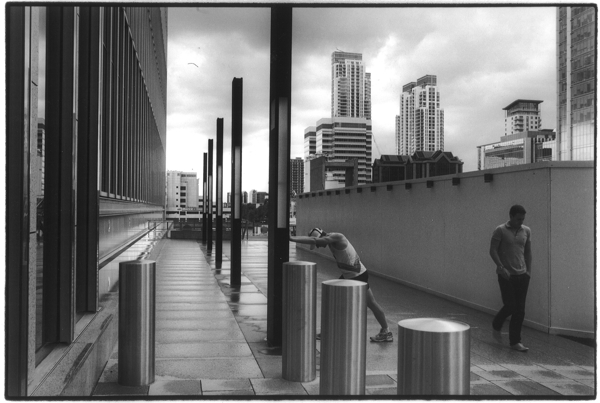
Aside from the four thousand that dwell within the Barbican, almost no-one lives in the City of London anymore – it is a place designed entirely for the purpose of work. The other week, in my first selection from the photography of Nicholas Sack, I showed you his pictures of the men in suits who go there to work. Today, I publish a selection from his pictures of everybody else – those of us who are perforce outsiders in this curious environment.
For tourists who wander the dense web of narrow streets, the City exists merely as theme park for their amusement. Like a world designed by Charles Dickens’ character Mr Gradgrind, everything is for utility and weary clerks struggle vainly to find places of rest, perching on ledges and architectural outcrops designed not for repose but to encourage them to return to work.
With irony and sly humour, these astute photographs expose the contradictions of the human presence within this locus of power – where children and families have no place, where displays of affection are anachronistic and where women are automatically at odds with the environment simply through the fact of their gender. Nicholas Sack’s vision recalls William Shakespeare’s lines as appropriated by Aldous Huxley, we see the City of London through his eyes and wonder –“Oh brave new world, that has such people in’t.”






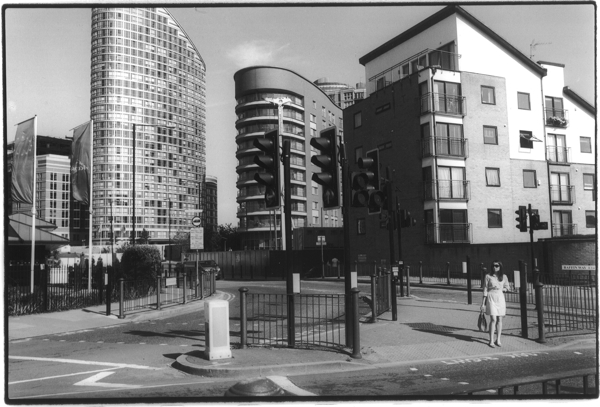


Photographs copyright © Nicholas Sack
“Uncommon Ground,” Nicholas Sack’s new book of photography is available here
You may also like to look at
At Embassy Electrical Supplies

Mehmet Murat
It comes as no surprise to learn that at Embassy Electrical Supplies in Clerkenwell, you can buy lightbulbs, fuses and cables, but rather more unexpected to discover that, while you are picking up your electrical hardware, you can also purchase olive oil, strings of chili peppers and pomegranate molasses courtesy of the Murat family groves in Cyprus and Turkey.
At certain fashionable restaurants nearby, “Electrical Shop Olives” are a popular feature on the menu, sending customers scurrying along to the Murats’ premises next morning to purchase their own personal supply of these fabled delicacies that have won acclaim in the global media and acquired a legendary allure among culinary enthusiasts.
How did such a thing come about, that a Clerkenwell electrical shop should be celebrated for olive oil? Mehmet Murat is the qualified electrician and gastronomic mastermind behind this singular endeavour. I found him sitting behind his desk at the rear of the shop, serving customers from his desk and fulfilling their demands whether electrical or culinary, or both, with equal largesse.
“I am an electrician by trade,” he assured me, just in case the fragrance of wild sage or seductive mixed aromas of his Mediterranean produce stacked upon the shelves might encourage me to think otherwise.
“I arrived in this country from Cyprus in 1955. My father came a few years earlier, and he got a job and a flat before he sent for us. In Cyprus, he was a barber and, according to our custom, that meant he was also a dentist. But he got a job as an agent travelling around Cyprus buying donkeys for Dr Kucuk, the leader of the Turkish Cypriots at that time – the donkeys were exported and sold to the British Army in Egypt. What he did with the money he earned was to buy plots of land around the village of Louroujina, where I was born, and plant olive saplings. He and my mother took care of them for the first year and after that they took care of themselves. Once they came to the UK, they asked relatives to watch over the groves. They used to send us a couple of containers of olive oil for our own use each year and sold the rest to the co-operative who sold it to Italians who repackaged it and sold it as Italian oil.
I trained as an electrician when I left school and I started off working for C.J. Bartley & Co in Old St. I left there and became self-employed, wiring Wimpy Bars, Golden Egg Restaurants and Mecca Bingo Halls. I was on call twenty-four hours and did electrical work for Faye Dunaway, the King of Jordan’s sister and Bill Oddie, among others. Then I bought this shop in 1979 and opened up in 1982 selling electrical supplies.
In 2002, when my father died, I decided I was going to bring all the olive oil over from Louroujina and bottle it all myself, which I still do. But when we started getting write-ups and it was chosen as the best olive oil by New York Magazine, I realised we had good olive oil. We produce it as we would for our own table. There is no other secret, except I bottle it myself – bottling plants will reheat and dilute it.
If you were to come to the village where I was born. you could ask any shopkeeper to put aside oil for your family use from his crop. I don’t see any difference, selling it here in my electrical shop in Clerkenwell. It makes sense because if I were to open up a shop selling just oil, I’d be losing money. The electrical business is still my bread and butter income, but many of the workshops that were my customers have moved out and the Congestion Charge took away more than half my business.
Now I have bought a forty-five acre farm in Turkey. It produces a thousand tons of lemons in a good year, plus pomegranate molasses, sweet paprika, candied walnuts and chili flakes. We go out and forage wild sage, wild oregano, wild St John’s wort and wild caper shoots. My wife is there at the moment with her brother who looks after the farm, and her other brother looks after the groves in Cyprus.”
Then Mehmet poured a little of his precious pale golden olive oil from a green glass bottle into a beaker and handed it to me, with instructions. The name of his farm, Murat Du Carta, was on the label beneath a picture of his mother and father. He explained I was to sip the oil, and then hold it in my mouth as it warmed to experience the full flavour, before swallowing it. The deliciously pure oil was light and flowery, yet left no aftertaste on the palate. I picked up a handful of the wild sage to inhale the evocative scent of a Mediterranean meadow, and Mehmet made me up a bag containing two bottles of olive oil, truffle-infused oil, marinated olives, cured olives, chili flakes and frankincense to carry home to Spitalfields.
We left the darkness of the tiny shop, with its electrical supplies neatly arranged upon the left and its food supplies tidily stacked upon the right. A passing cyclist came in to borrow a wrench and the atmosphere was that of a friendly village store. Outside on the pavement, in the sunshine, we joined Mark Page who forages truffles for Mehmet, and Mehmet’s son Murat (known as Mo). “I do the markets and I run the shop, and I like to eat,” he confessed to me with a wink.
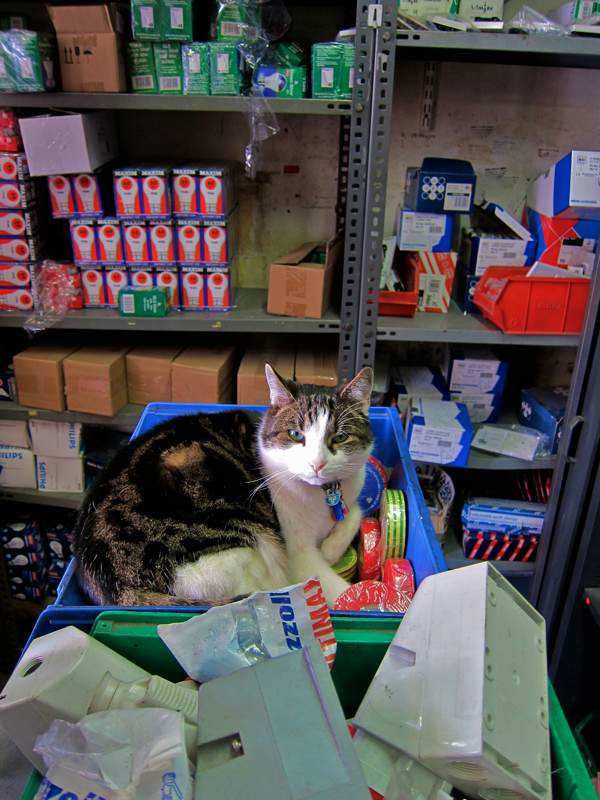
Carter, the electrical shop cat

From left to right, Mark Page (who forages truffles), Murat Murat (known as Mo) and Mehmet Murat.
Embassy Electical Supplies, 76 Compton St, Clerkenwell, EC1V 0BN












