At St Bartholomew The Great
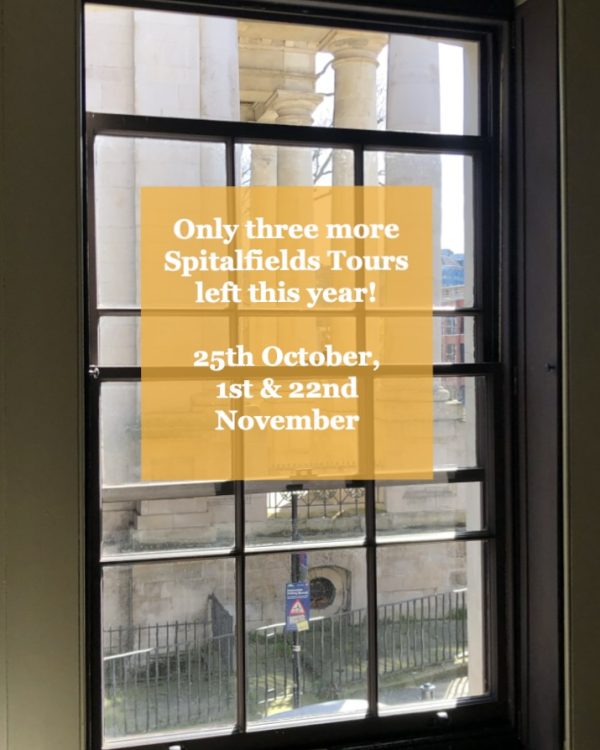
Billy Reading introduces St Bartholomew the Great in Smithfield, one of my favourite City Churches, in this excerpt from his new book Faith Buildings in the City of London published by Historic England and Liverpool University Press.
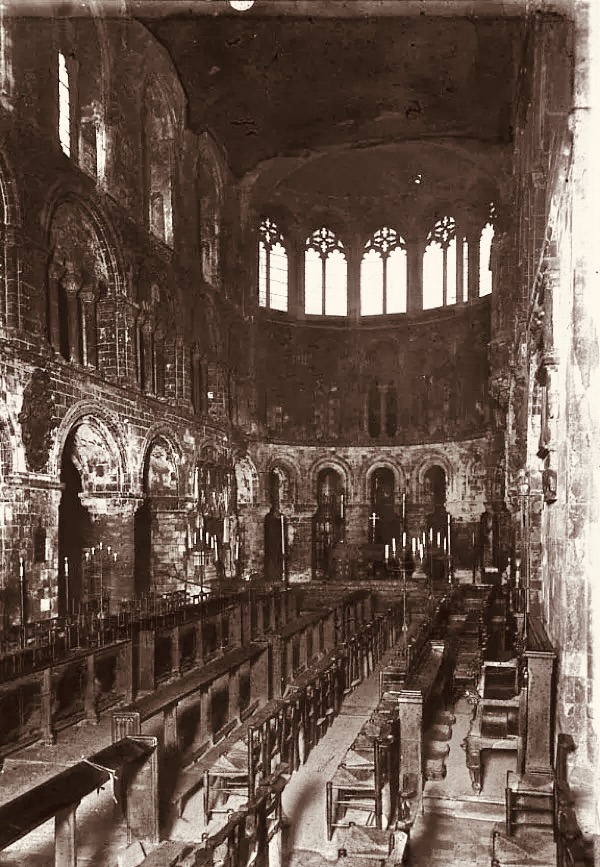
The Norman arcade
You do not soak up the atmosphere at St Bartholomew the Great. Rather, it threatens to soak you up. The gloom is so pervasive it seems it might just blot you out altogether. It is palpably exciting, a feeling you only get with a nine-hundred-year pedigree.
The building began in 1123 with Rahere, a jester-monk in the court of Henry I. He had a Damascene fever-dream while travelling from Rome, and in gratitude for surviving he obeyed the vision, came to Smithfield (‘foul and like a marsh’) and founded a priory. From this origin we can trace a parish, two churches and the venerable hospital next door.
The present built form started to find shape after the Dissolution of the Monasteries. In 1539, King Henry VIII sold off the priory to Sir Richard Rich and refounded the hospital, a moment recorded by the only public statue to him in London, on the hospital gate.
Rich redeveloped the priory site, selling off slivers of land for building. He pulled down the redundant church’s enormous nave to build around its perimeter while opening up the central space as a churchyard. The retained chancel became the parish church. The line of today’s West Smithfield marks where once the west end of the nave reached. The archway under the little Elizabethan house that leads to the sequestered graveyard beyond is in fact thirteenth-century fabric of the former doorway into the south aisle.
Step through and you are standing in what once was the soaring nave, with the cloister to your right and the chancel away ahead – now screened off by a flint west wall and little brick tower from 1628. Sweet, but not indicative of what lies beyond.
You tumble into something incredible: the choir and ambulatory Rahere built, supplanted by the transepts, crossing and one bay of the nave added between 1230 and 1240. You would not immediately notice that the mighty nave, once ten bays long, is missing, since the surviving space is so atmospheric. Where the nave once began at the west end now a vast organ and organ screen loom away into the shadows of the central tower arches. Stretching east from the crossing are five bays of massive Norman columns with their scalloped and cushioned capitals and billet mouldings, an arcaded triforium above and a perpendicular clerestory over that, which admits crystalline light, alleviating the darkness of antiquity. The arcade sweeps towards the apsidal east, with a groin-vaulted ambulatory running behind and beyond. Although subsequent architectural styles are present, it is the solid, undeniable, dignified and venerable Norman work setting the mood. Once three medieval chapels radiated out beyond the apse, replaced in the fourteenth century with the current Lady Chapel. The apsidal arcade was demolished at this time and made straight, its restoration came much later.
The spaces around the retained parish church were haphazardly consumed by the life of the City: an inn stabling horses in the cloister, a hop store in the sacristy, a forge set up in the north transept, a school, cramped itself, limpet like, along the exterior to Cloth Fair. (The structures are still there, you can see them on the outside.) A lay physician from the hospital rented a chamber and latrine in the south triforium arcade, the Lady Chapel was sold off and became a lace fringe factory. By the eighteenth century, the area was increasingly impoverished, and it wasn’t until the later nineteenth century that antiquarian interest in the battered old bones of the place began to slowly turn around the fortunes of St Bartholomew’s.
Sir Aston Webb, famous architect, had long-standing family ties to the parish and seems to have had a love for it, too. He worked extensively here to celebrate and reunite the surviving parts, to stitch them back together. The transepts were recovered and remade, albeit foreshortened. The Lady Chapel of 1335 was reunited. The missing central section of the apse arcade was reinstated, following its original curve. While so many Victorian restorations were disastrous, this one can only be credited. Webb’s patience and persistence, his approach to preservation and repair stimulated by understanding and sympathy, has allowed the full drama of the interior to soar and sing. Because of this, today’s church, grand amputated suffering that it is, ranks among the most important Norman survivors in the south of England.
The scars of these histories and processes remain readily legible, not just in the stones, but also in the deliciously inky shadows.
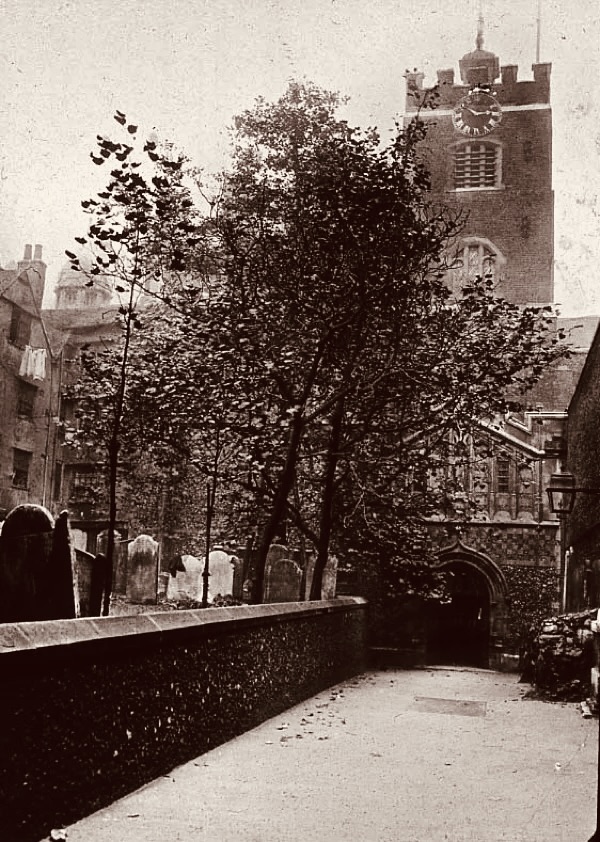
The entrance (Photograph by London & Middlesex Archaeological Society)
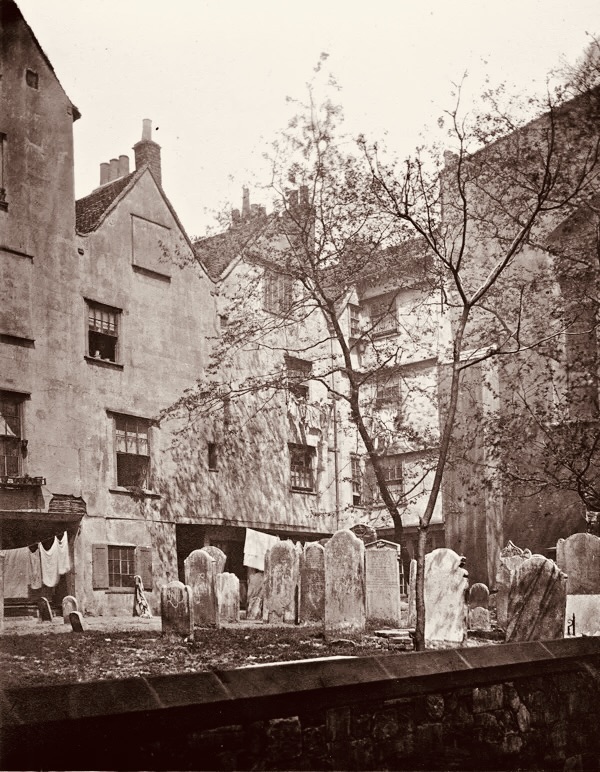
The churchyard (Photograph by London & Middlesex Archaeological Society)
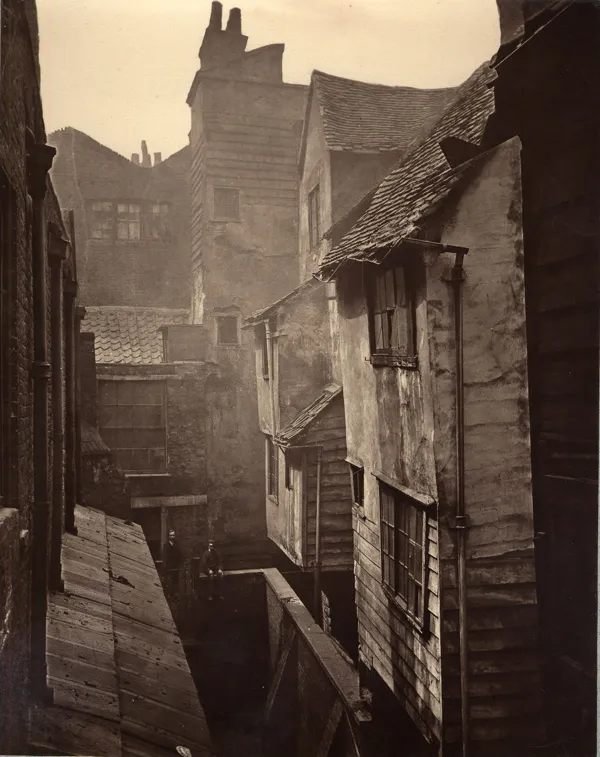
In Bartholomew Close (Photograph by Society for Photographing the Relics of Old London)
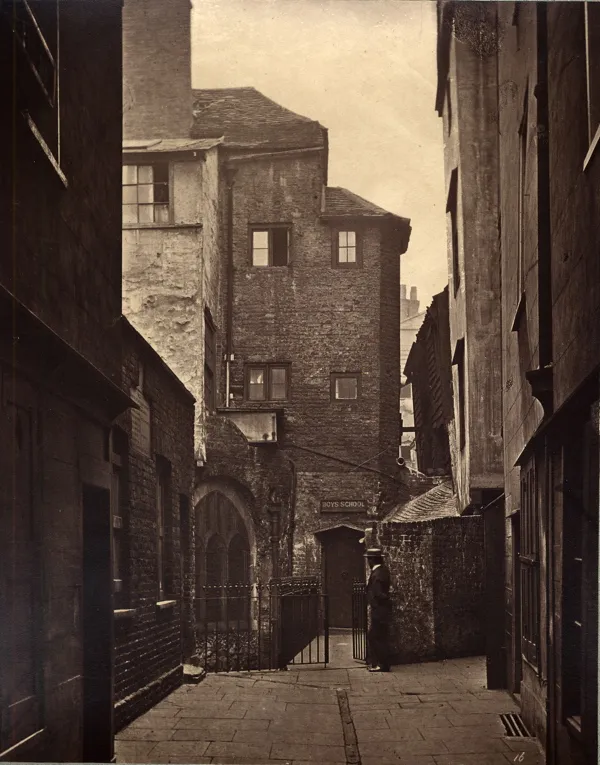
At the rear of St Bartholomew’s (Photograph by Society for Photographing the Relics of Old London)
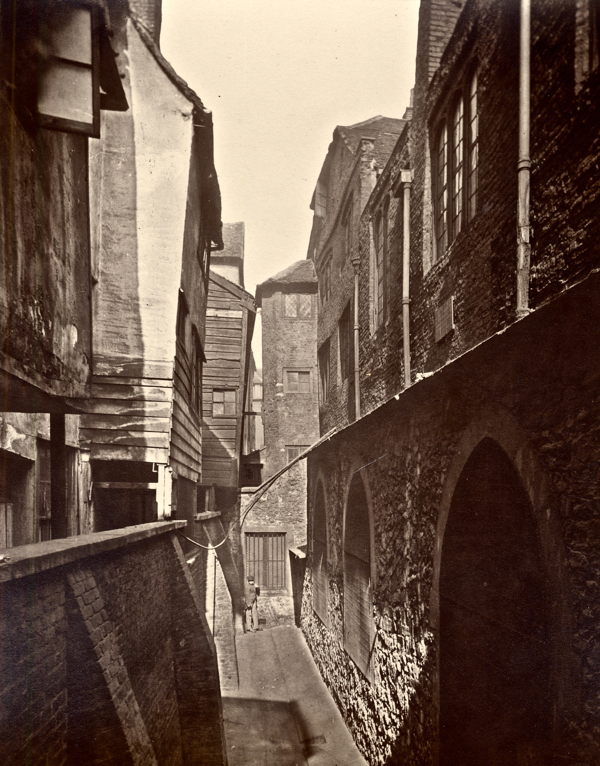
In Bartholomew Close (Photograph by Society for Photographing the Relics of Old London)
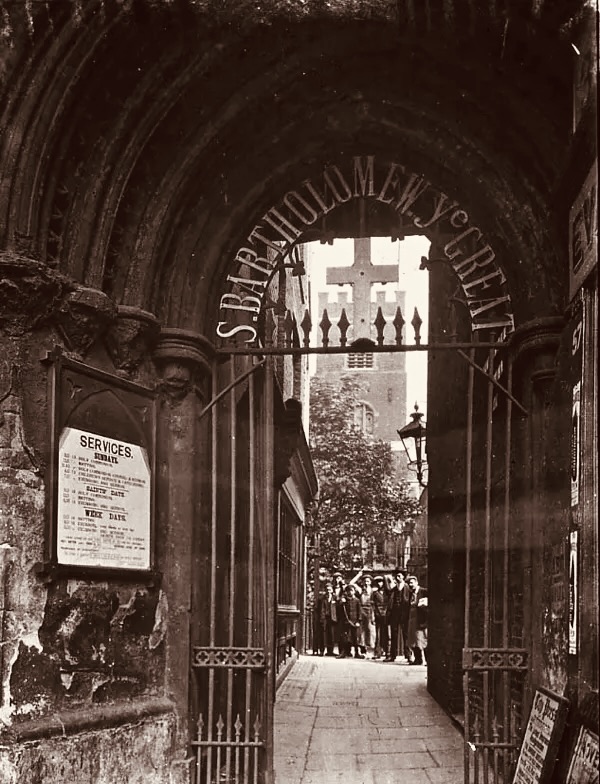
Looking through from Smithfield (Photograph by London & Middlesex Archaeological Society)
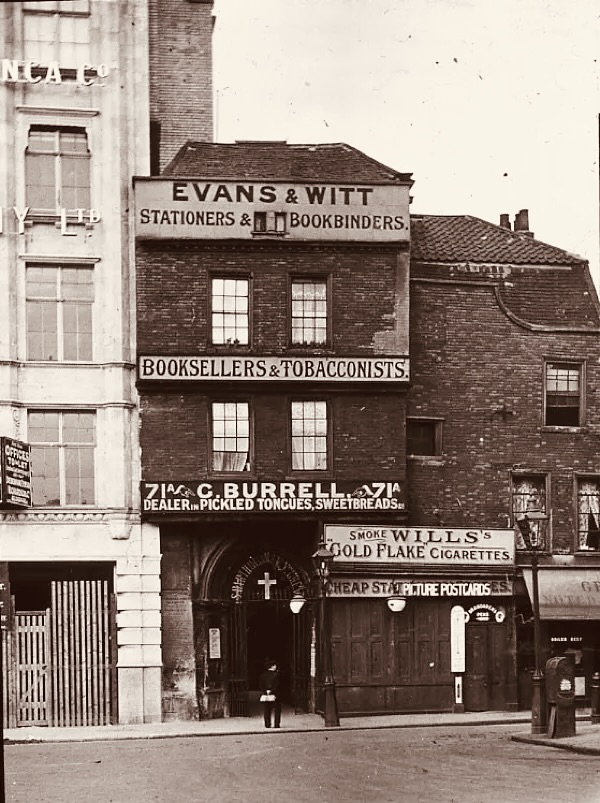
The gatehouse in Smithfield (Photograph by London & Middlesex Archaeological Society)
Photographs from SPROL and LAMAS reproduced courtesy of Bishopsgate Institute
Jagmohan Bhakar, Rotarian
Click here to order a signed copy and get ‘A Hoxton Childhood’ for free
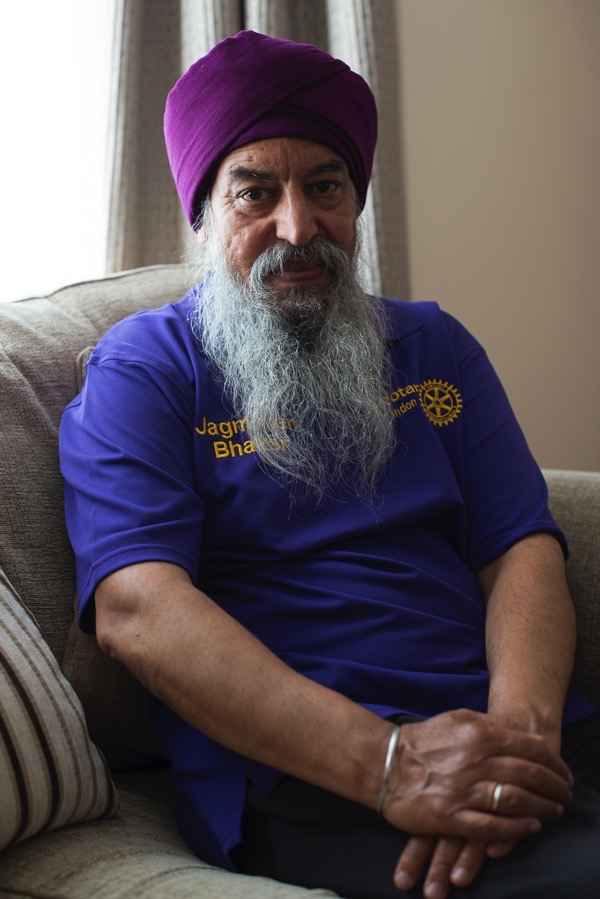
‘Sharing of food is very important in our culture’
When Contributing Photographer Sarah Ainslie & I visited Bow Food Bank last year, we were delighted to make the acquaintance of Jagmohan Bhakar who organises the supply of fresh fruit and vegetables donated each week by the Gurdwara in Campbell Rd. Jagmohan gets up before dawn each Monday to go the New Spitalfields Market in Leyton so that the food bank can offer the freshest produce.
Just a couple of weeks later, we encountered Jagmohan again. This time he was planting trees in Mile End Park on behalf of Tower Hamlets Rotary Club of which he is a keen member. So I asked Jagmohan if we might interview him and he kindly invited us both around for masala tea and prashad at his house in Bow.
When Jagmohan was late because he had been distributing complimentary bottles of water to runners in the City of London marathon, we realised that a certain pattern of behaviour was emerging. In becoming a Rotarian, Jagmohan has found the ideal vehicle to permit him the expression of his sense of generosity and service to others which is central to his Sikhism.
“I was born in Ambala in India and came here in 1967, when my father Dehal Singh Bhakar called my mother and me, my brother and two sisters to join him here. Since then I have lived in London. It was exciting to move to another world and be reunited with your family. My dad came in 1948 and it was quite some time since we had seen him. I was twelve years old and pleased to be with my family, I struggled to learn English. It was a new life of new experiences.
When my father came, he and some others worked as pedlars around Euston. They purchased textile goods near Liverpool St Station where there were Asian suppliers and sold them in different areas to make a living. At first he lived around Aldgate and Brick Lane, but by the time we arrived he was were living in 10 Piggott St in Limehouse. It was a big family home and a centre for many of our relatives, when they came to London it was their first stop. We all used to get together, and everybody loved seeing each other and going to each others’ houses.
School was difficult at that time in the sixties. I had a little bit of a language problem and also a difficulty in making any friends who were other peoples. It was a new experience. It was challenging, especially in the seventies after Enoch Powell made his speech. He was a bloody one. It was a sad time. People were very concerned. We were thinking of going back home. Some people left and came back later. Times were tough. At that time, many people from our community lived in Tower Hamlets in East London but because of the issues they started moving further out to Forest Gate and Manor Park. That was the reason they moved from Tower Hamlets to Newham.
I went to Langdon Park School in Poplar, there were only a few other pupils who were Sikhs. It was not bad. I am quiet by nature so I do not have many friends anyway. I had good days and bad days. We had no alternative because we had decided to make this our homeland, so we could not have second thoughts. Sometimes I had problems, walking down the road, there might be some abuse. I was beaten up a few times.
Over the years, things have changed. When I was seventeen years old, I left school and went to college. I studied Engineering but after that I could not find a job. Perhaps the course I had taken was too theoretical? I wanted a job in industry but they asked if I had any practical experience, which I did not. Times were hard. There were not many apprenticeships. I did some odd jobs.
My father was doing a little bit of business to keep himself, so I joined him after that, working in property lettings. Even the lettings were not that good at that time but we survived. I used to do the running around while he took the more relaxed role. It was not big business, just looking after the family really. But slowly things improved and it made life a little more comfortable. Today, me and my brother manage lettings for a few properties that my father left. We are doing much the same thing he did.
We are a very big family because my father had seven brothers and one sister. He was the youngest of his brothers. Obviously, they could not all stay in that house in Limehouse where my father lived with two of my uncles. Members of the family only stayed there until they could organise something for themselves. A year after we arrived in London, my father moved us here to Lyal Rd off Roman Rd where I still live today. I remember my brother buying toys from Gary Arber’s shop.
For the past seven years, I have been a member of the Rotary Club. I saw an advert in the Sunday Times and I have been with them from that time onwards. Sharing of food is very important in our culture. You always offer food when you greet anyone and we offer food to everyone at our gurdwaras. This custom of ‘lungar’ started with our first guru in the mid-fifteenth century. The idea was to eradicate the caste system, so everyone could sit and eat together on the same platform without hierarchy. Most people were desperate to be fed. It was sharing food and praying together under one roof so everybody felt in common with each other. ‘Love they neighbour and think of others as you are’ – anyone that follows these principles is a Sikh.”
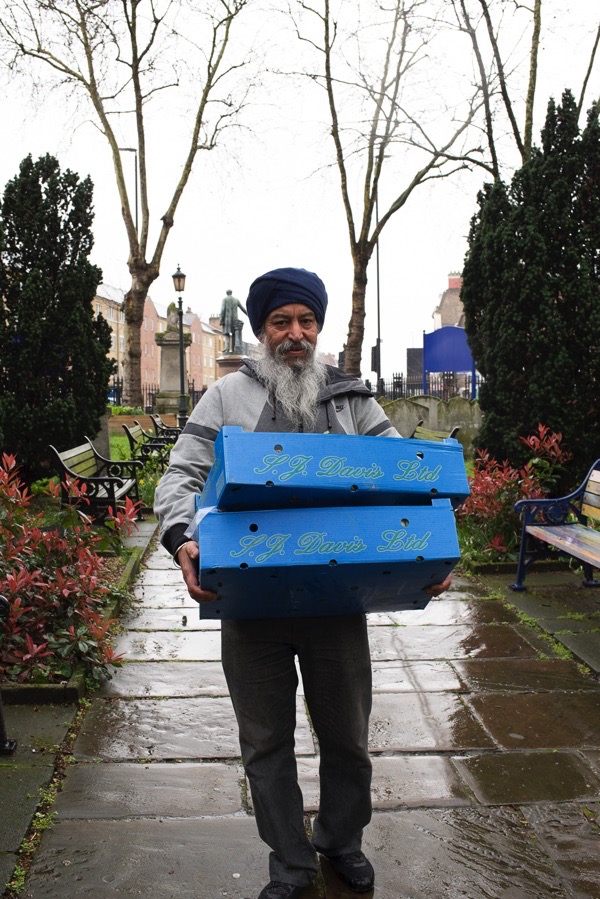
Jagmohan delivers fresh vegetables weekly to Bow Food Bank on behalf of the Gurdwara in Campbell Rd

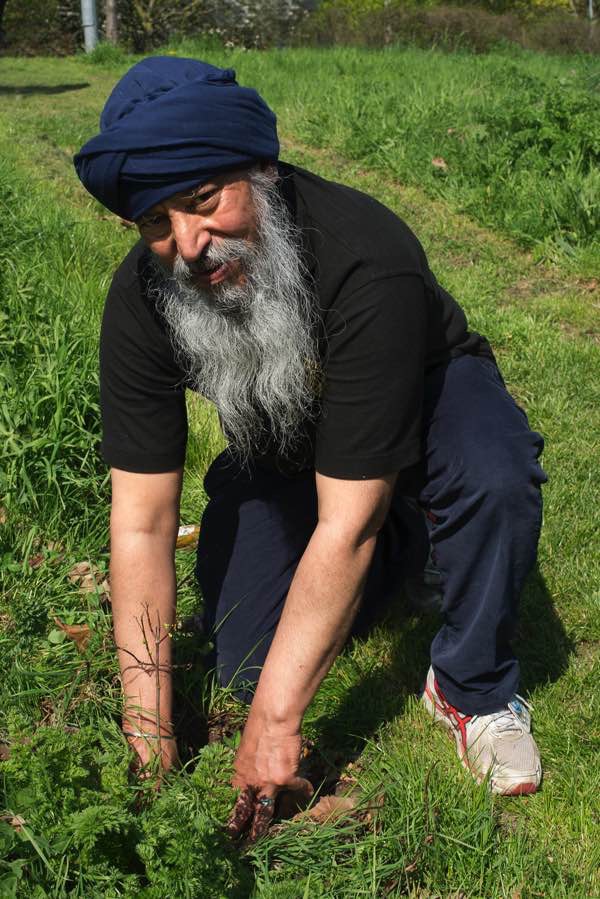
Jagmohan planting trees in Mile End Park on behalf of the Tower Hamlets Rotary Club
Photographs copyright © Sarah Ainslie
You may also like to read about
A Lost Corner Of Whitechapel
Click here to order a signed copy and get ‘A Hoxton Childhood’ for free
At the rear of Whitechapel Station is a sports centre and an empty square, but photographer Philip Cunningham recorded the vanished streets and yards that former occupied this lost corner
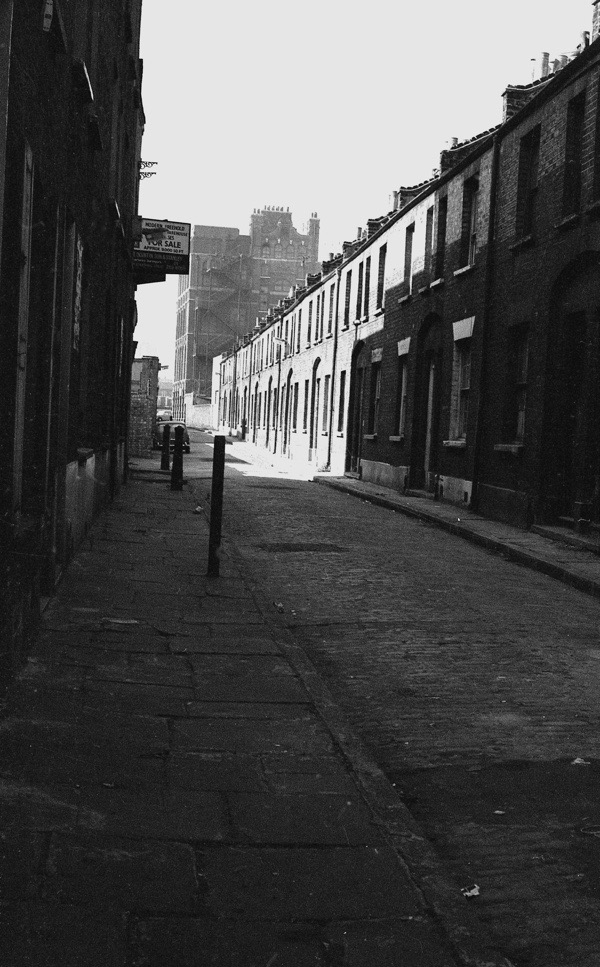
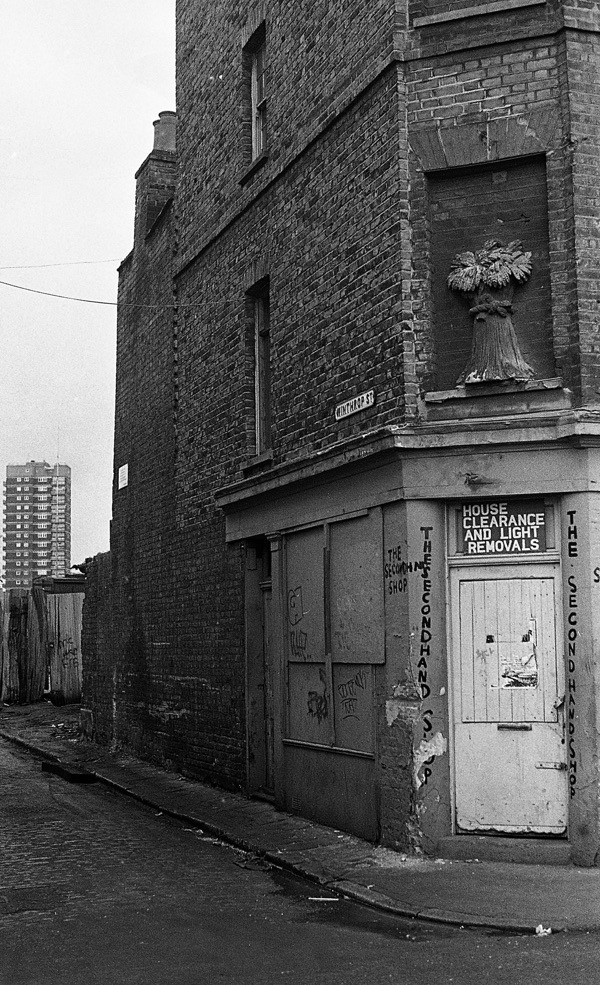
Winthrop St
“I first started taking photographs of Winthrop St and Woods Buildings in Whitechapel in the mid-seventies. I remember the first time I went to Winthrop St on a cold frosty morning with a bright blue sky. A woman came out of one of the houses and asked what I was doing. ‘Photographing the streets,’ I said. ‘You’d better hurry up they’re coming down!’ she replied. She was right, within a few months they were gone.
‘Comprehensive Development’ was the only philosophy pursued by the London County Council and Greater London Council for rebuilding London after the war. Their planners complained that too much pre-war building was left, making comprehensive planning really difficult. Yet it would not have taken much imagination to have incorporated streets like these within any new development, creating a richer and more diverse urban landscape.
Even Mile End Place, where I lived in my grandfather’s house, was designated for demolition in 1968 to become a car park for Queen Mary College. Fortunately, the council did not have enough money to build flats for us to be decanted into so our street was saved.”
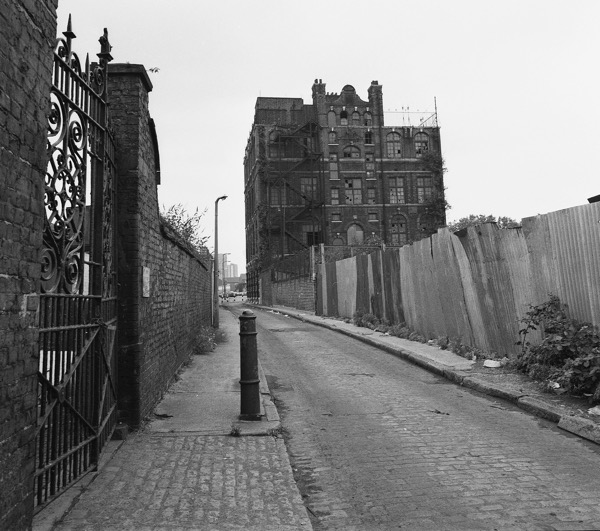
Winthrop St
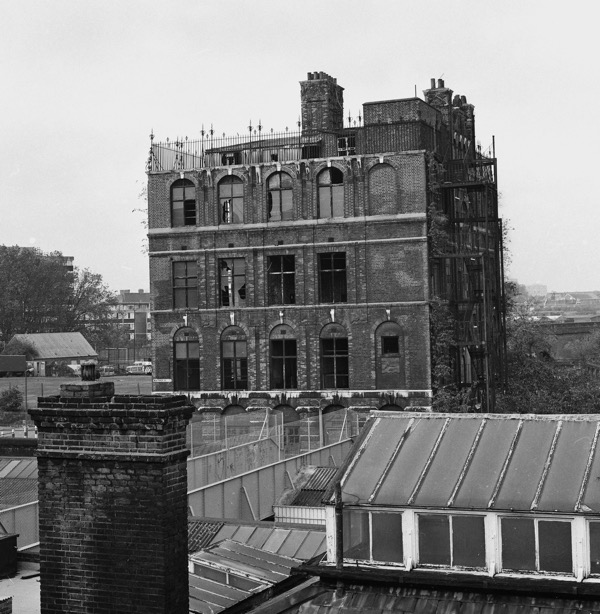
Durward St School was built in 1876 and eventually restored by the Spitalfields Trust in 1990
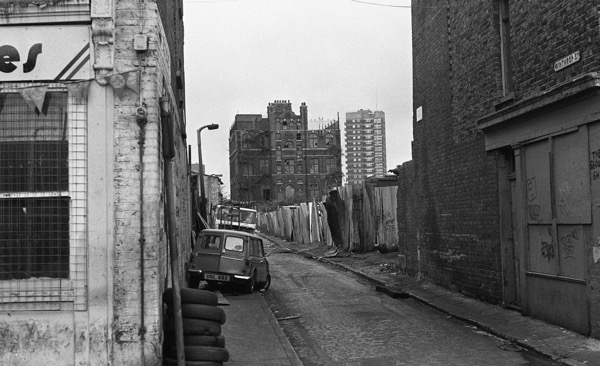
Winthrop St
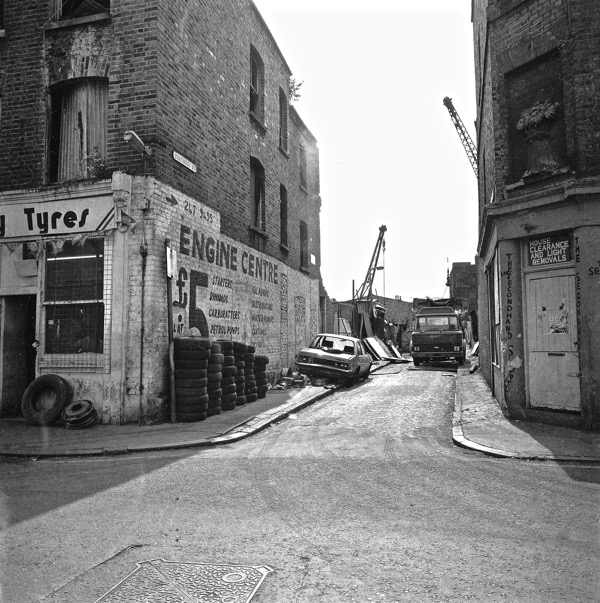
Winthrop St
Winthrop St
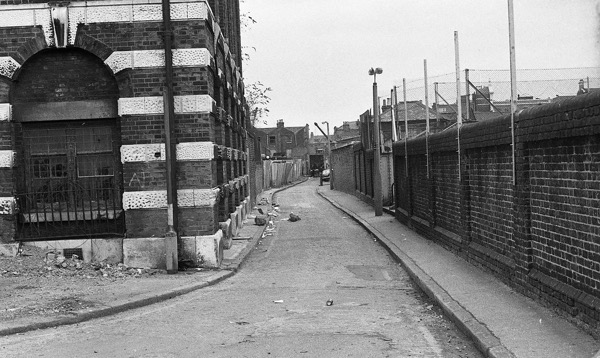
Winthrop St
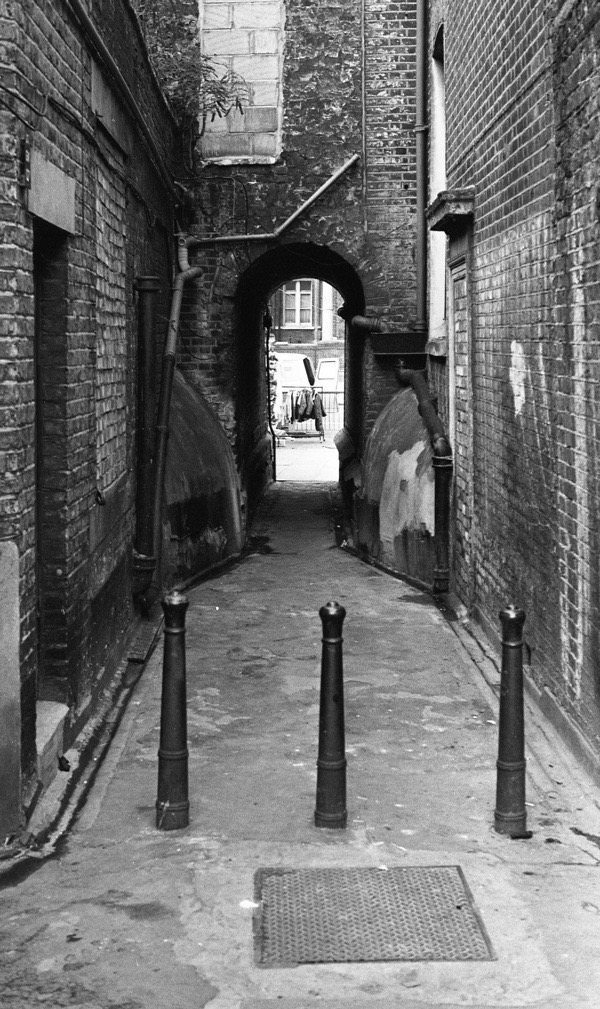
Woods Buildings looking towards Whitechapel Market
“Woods Buildings was a subject I photographed over and over, it always held that feeling for me of Dickens’ London. To the left, as you approached the arch under the buildings, was a urinal and when I climbed the wall to take a look, it appeared to be for public use but had been bricked up. It must have been quite intimidating to pass through that passage at night.”
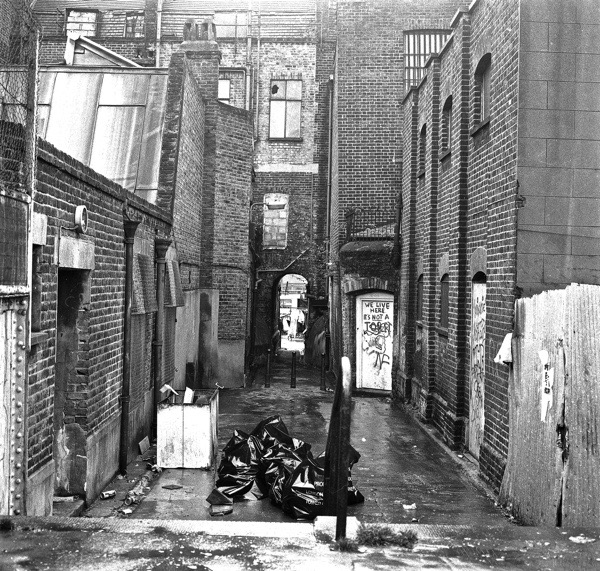
‘We live here, it’s not a toilet’
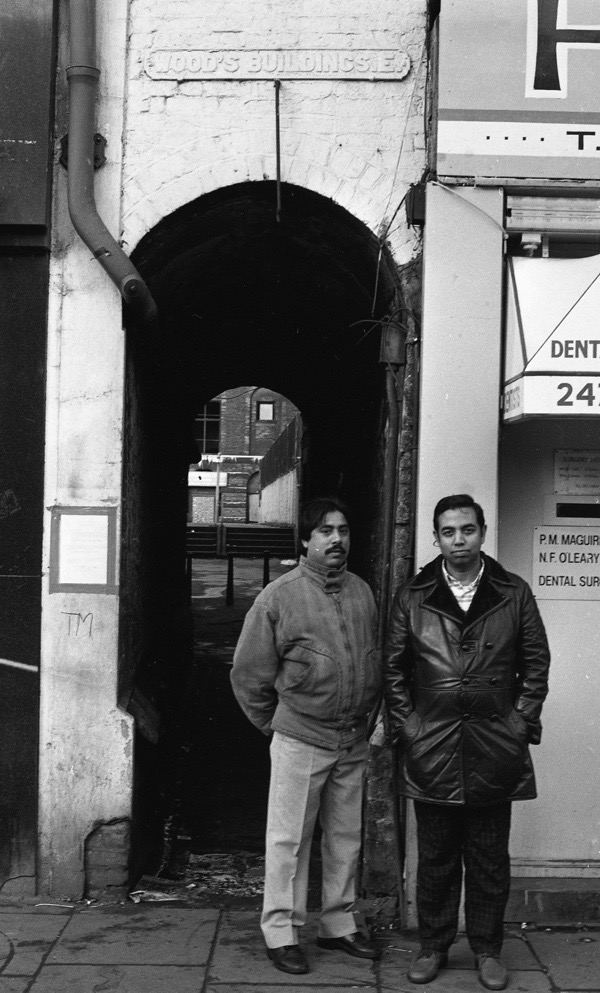
Entrance to Woods Buildings in Whitechapel Market
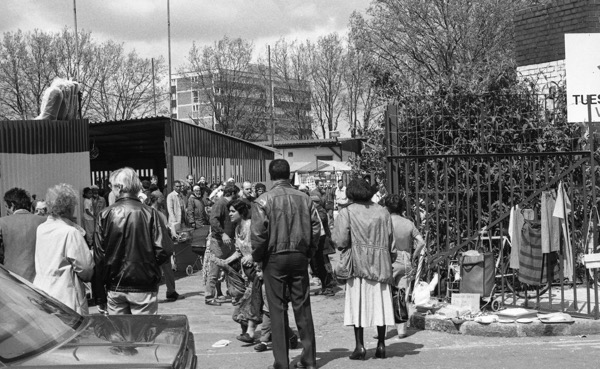
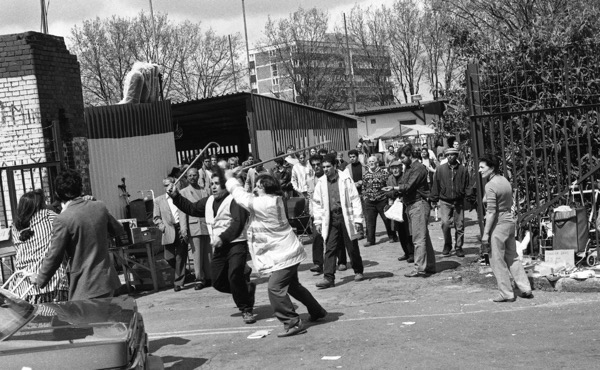
“By 1984, the land opposite Woods Buildings on the north side comprised a combination of wasteland and sheds where a boot fair would be held every Sunday. It was licensed by the Council and very popular. One Sunday, I observed a group of Romanians selling secondhand clothes just outside the compound which did not go down well with the gatekeepers as they had not paid a fee. There followed a quite violent fracas, although fortunately no one was seriously hurt and only a little blood spilt. I felt sorry for the children, it must have been frightening for them. Those were desperate days!”

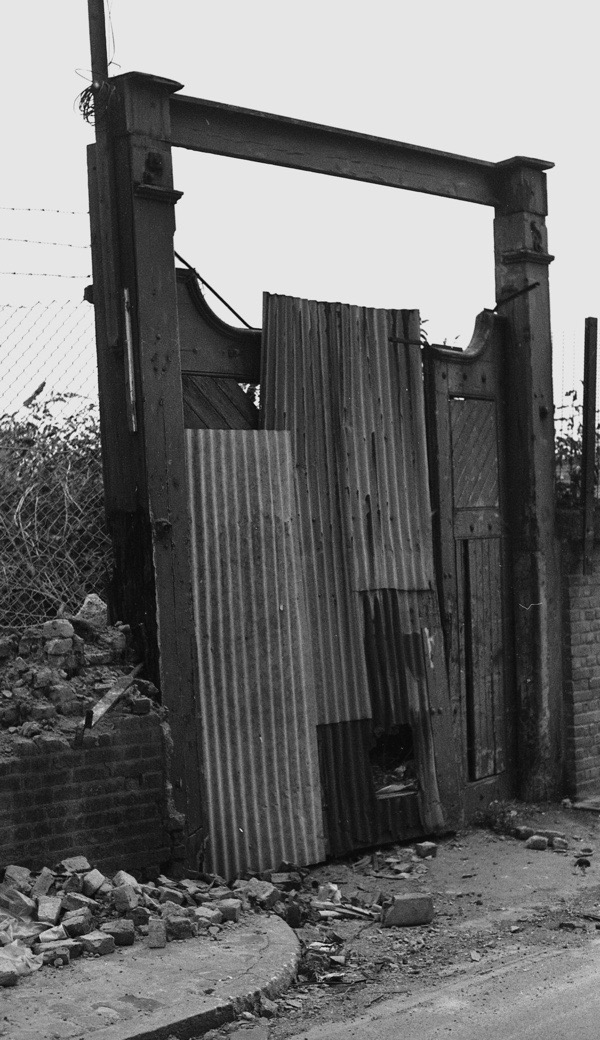
Durward St
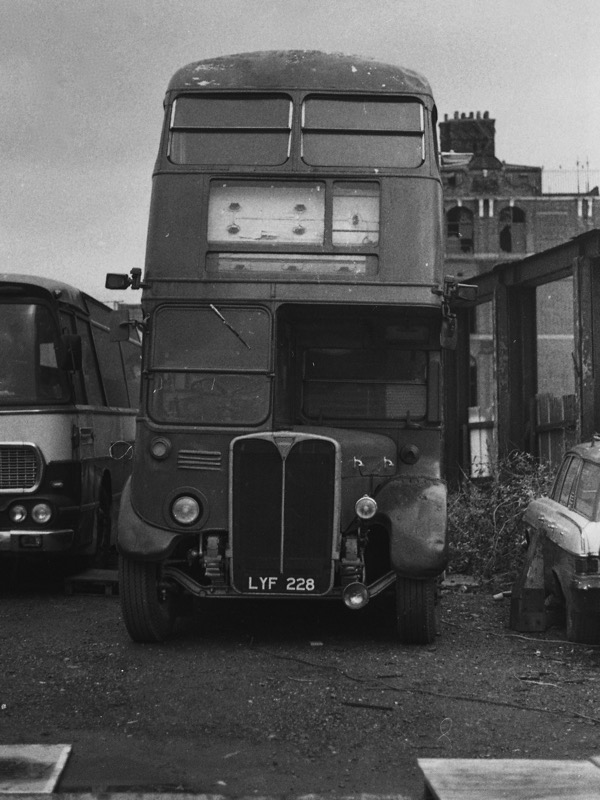
Photographs copyright © Philip Cunningham
You may also like to take a look at
Philip Cunningham’s East End Portraits
The Tragical Death Of An Apple Pie
Click here to order a signed copy and get ‘A Hoxton Childhood’ for free
It has been an exceptionally good year for fruit and there are some lovely ripe Bramleys on sale now. Thus the time for apple pie has arrived again so I take this opportunity to present The Tragical Death of an Apple Pie, an alphabet rhyme first published in 1671, in a version produced by Jemmy Catnach in the eighteen-twenties.
Poet, compositor and publisher, Catnach moved to London from Newcastle in 1812 and set up Seven Dials Press in Monmouth Court, producing more than four thousand chapbooks and broadsides in the next quarter century. Anointed as the high priest of street literature and eager to feed a seemingly-endless appetite for cheap printed novelties in the capital, Catnach put forth a multifarious list of titles, from lurid crime and political satire to juvenile rhymes and comic ballads, priced famously at a ‘farden.’

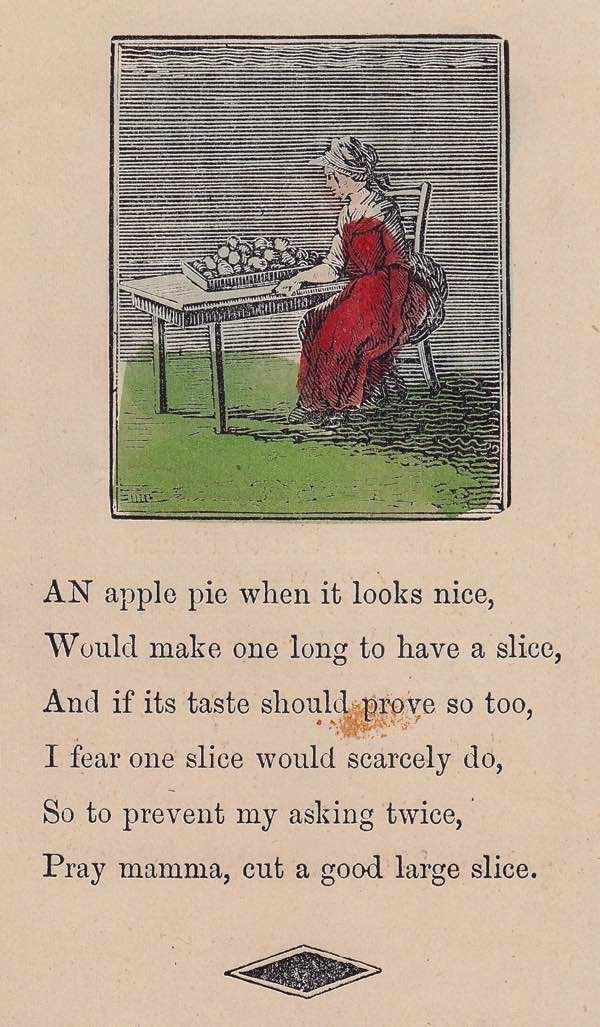
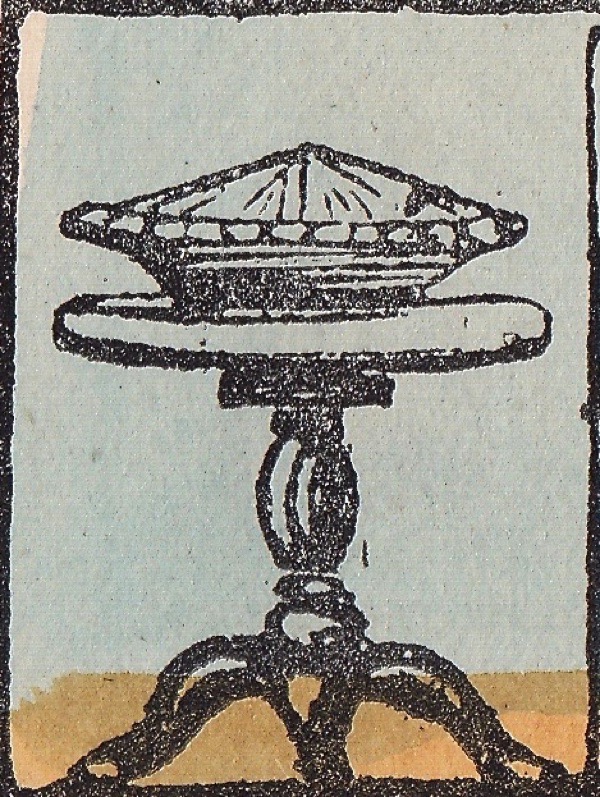
A An Apple Pie

B Bit it

C Cut it

D Dealt it
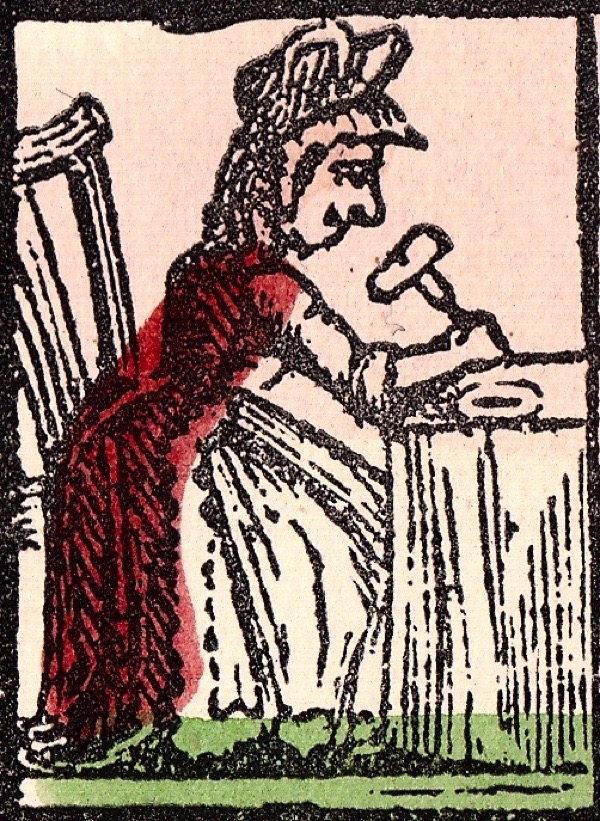
E Did eat it
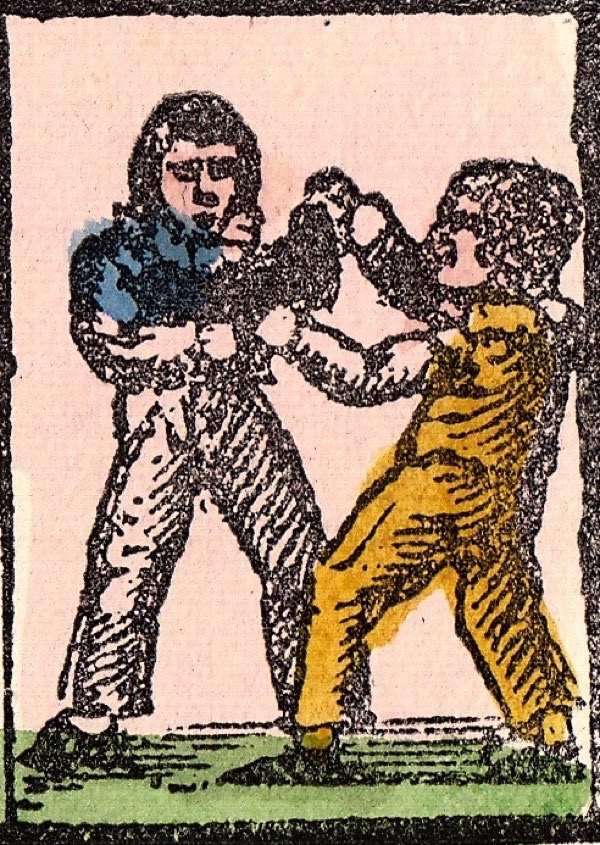
F Fought for it
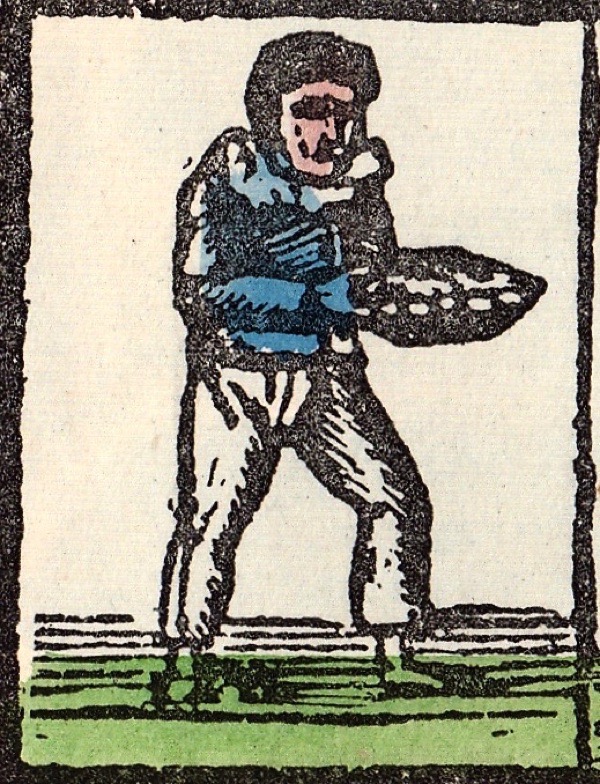
G Got it

H Had it

J Join’d for it

K Kept it
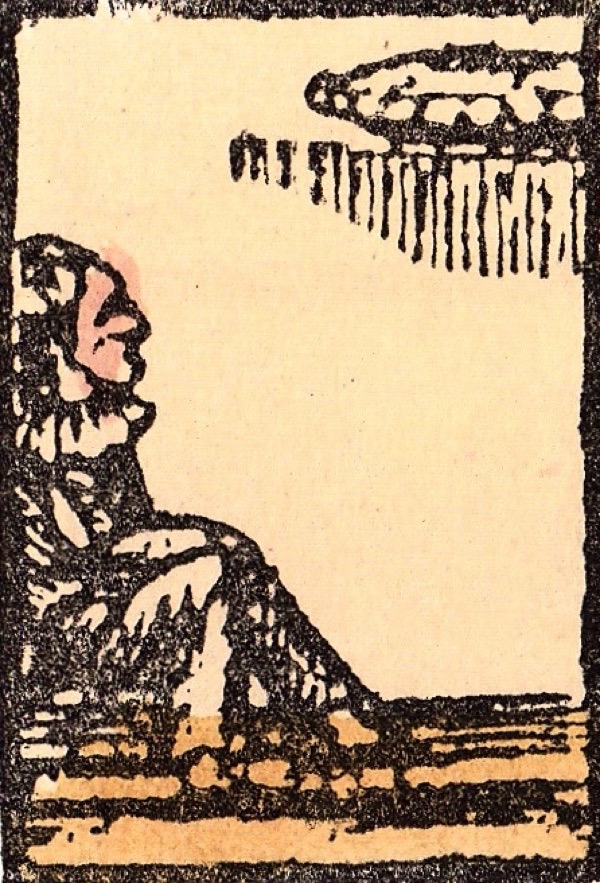
L Long’d for it
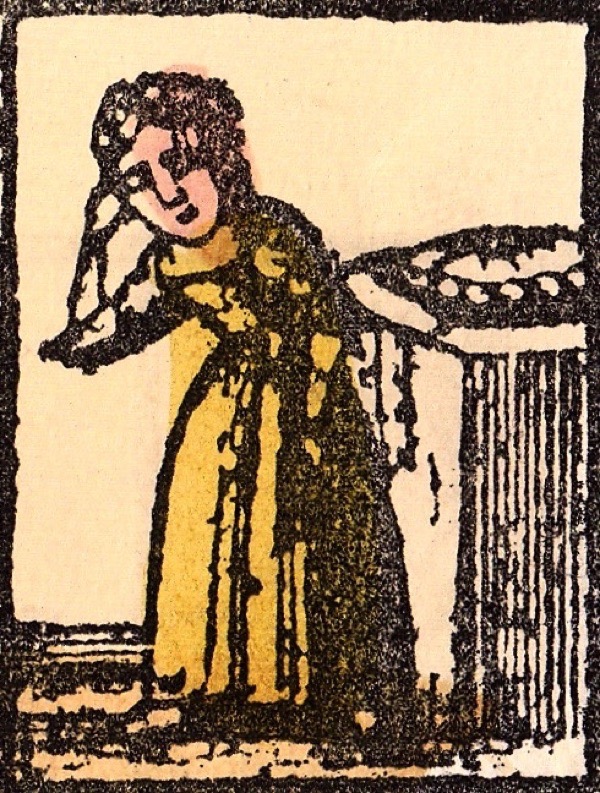
M Mourned for it
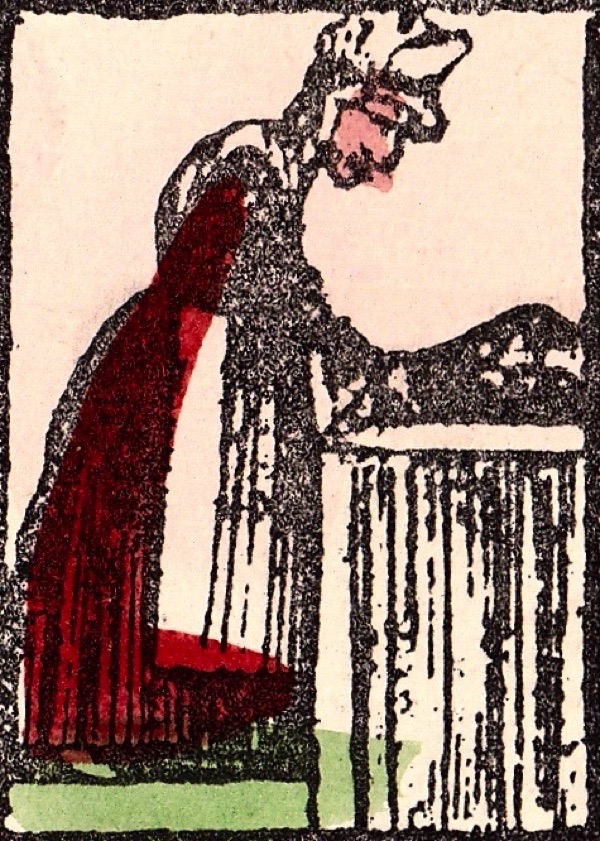
N Nodded at it
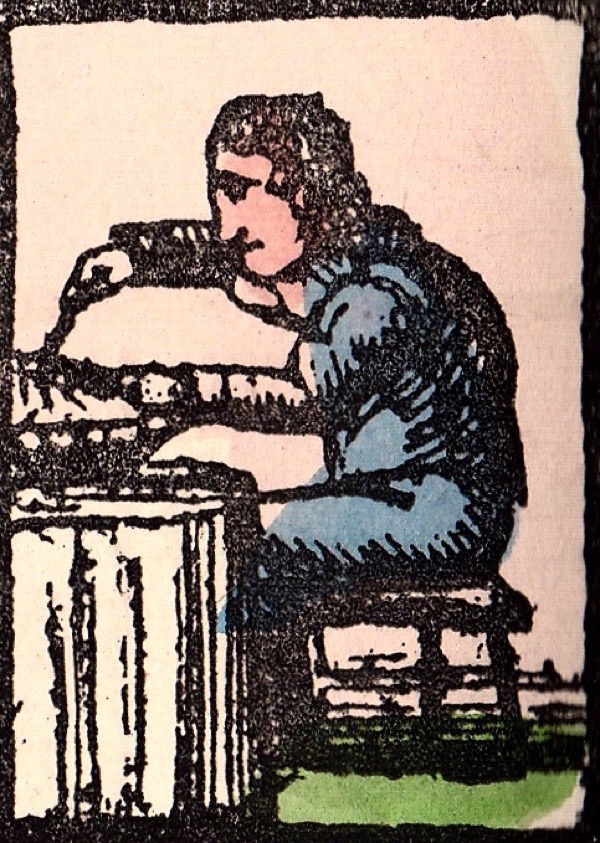
O Open’d it
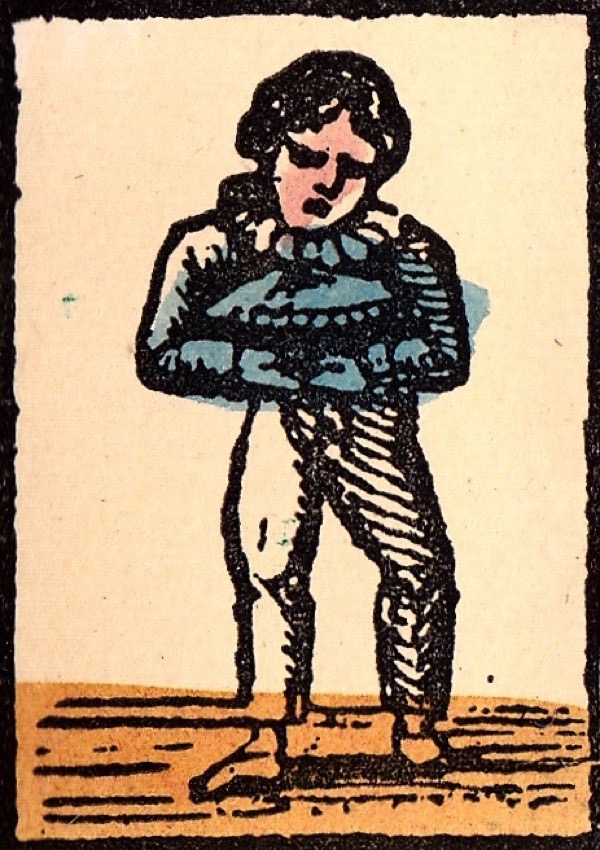
P Peeped into it
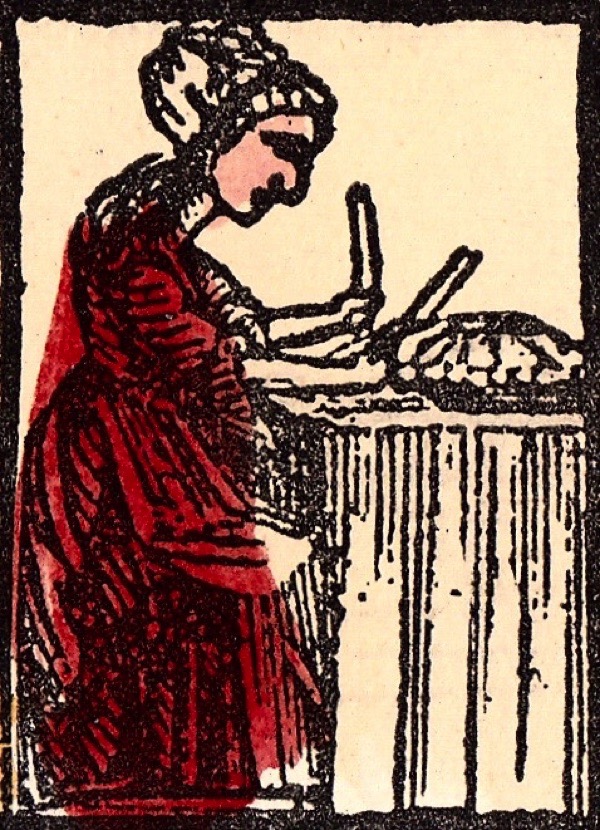
Q Quartered it
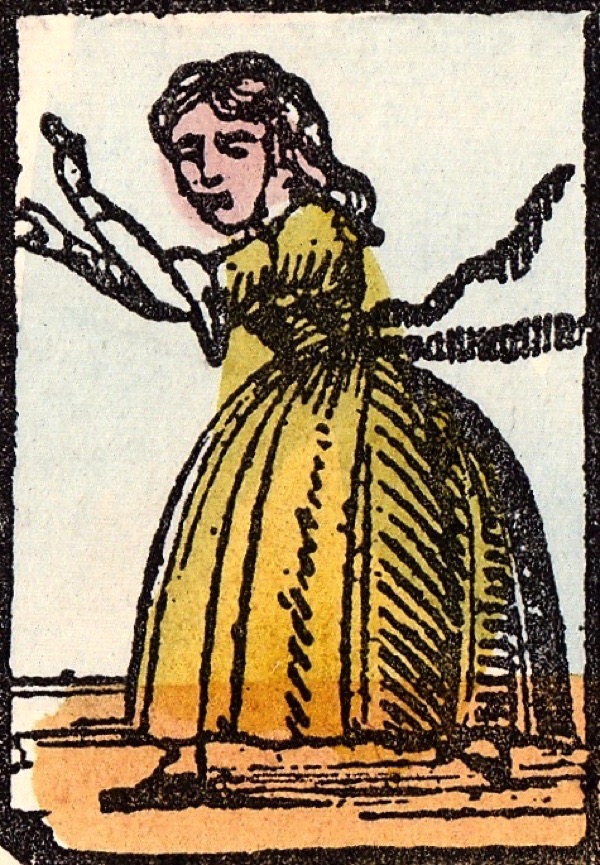
R Ran for it
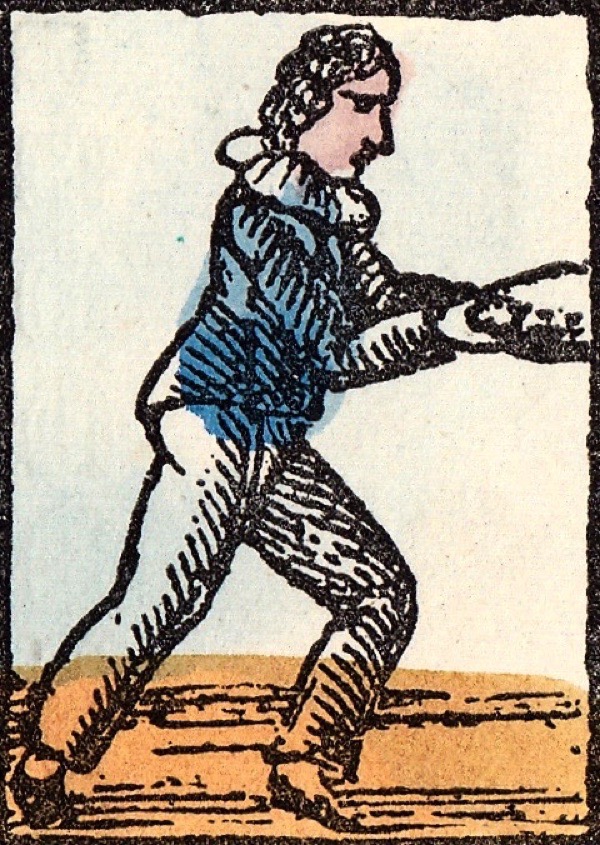
S Stole it
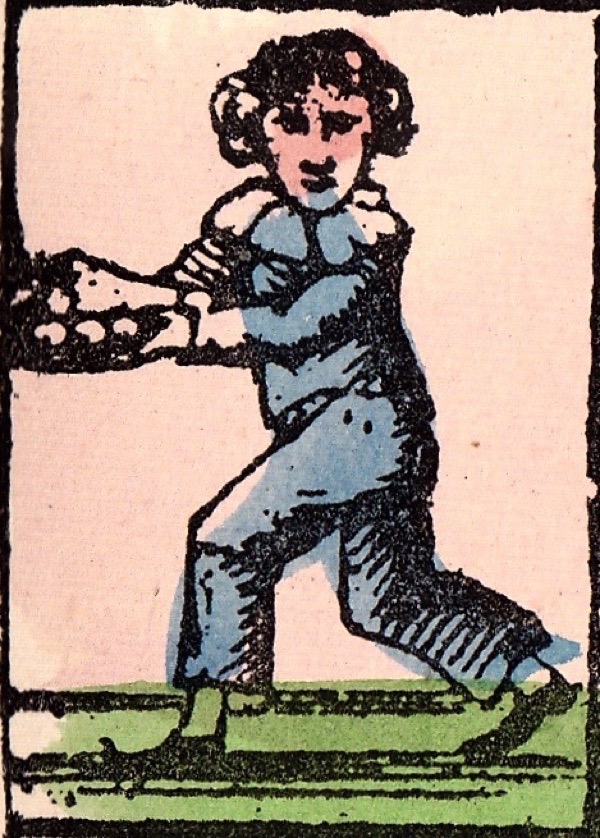
T Took it
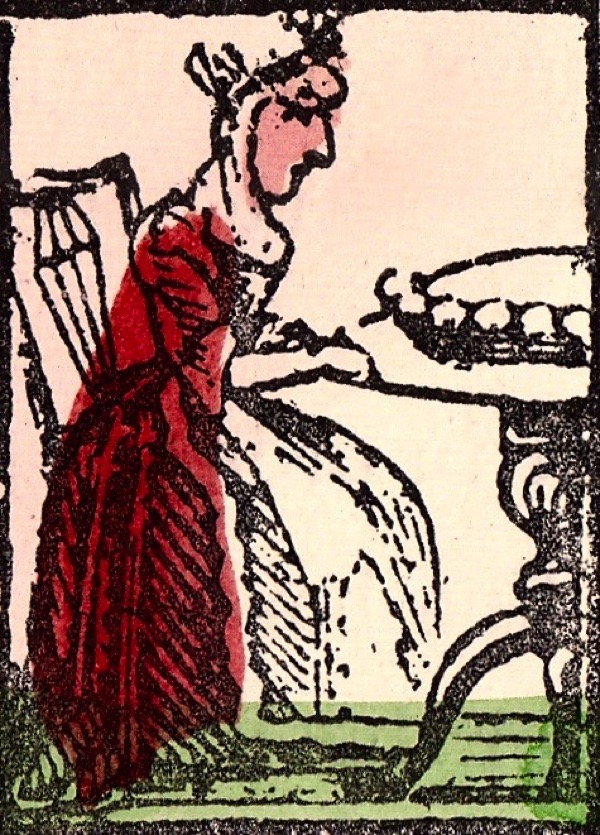
V View’d it
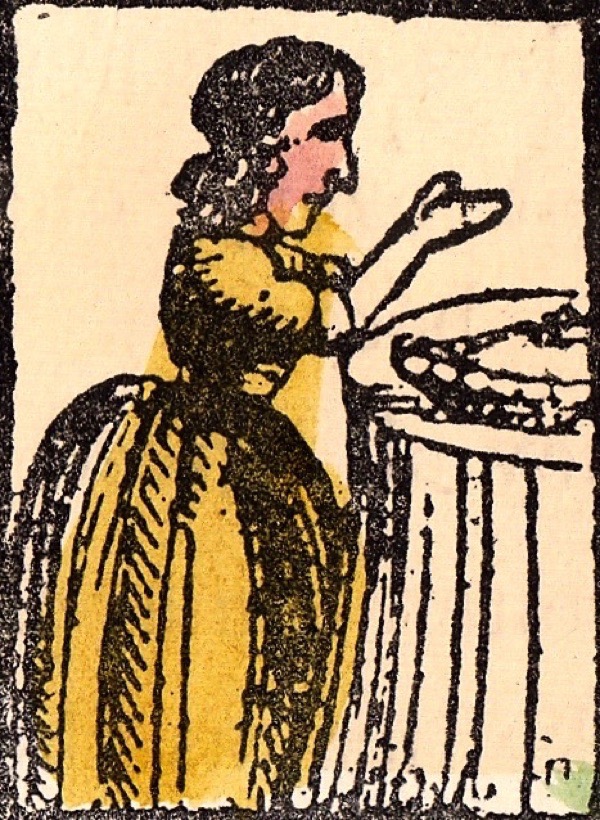
W Wanted it
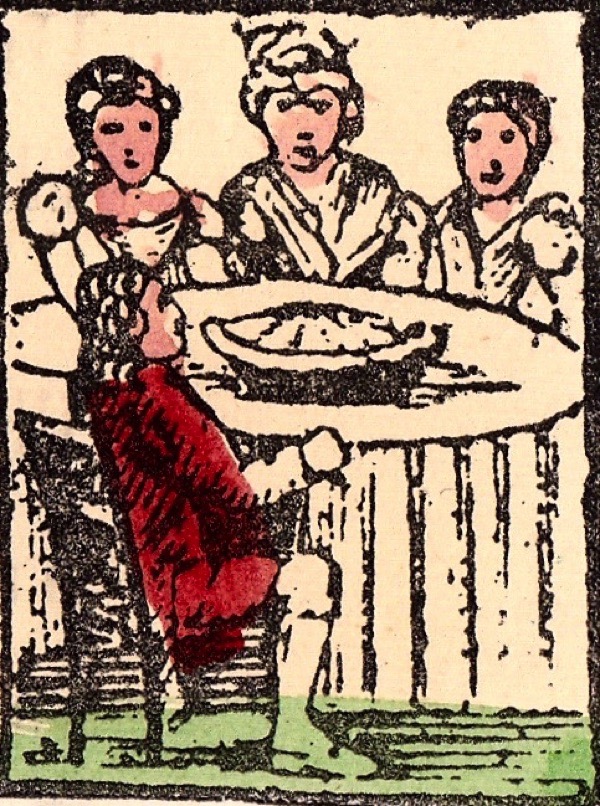
XYZ and & all wished for a piece in hand
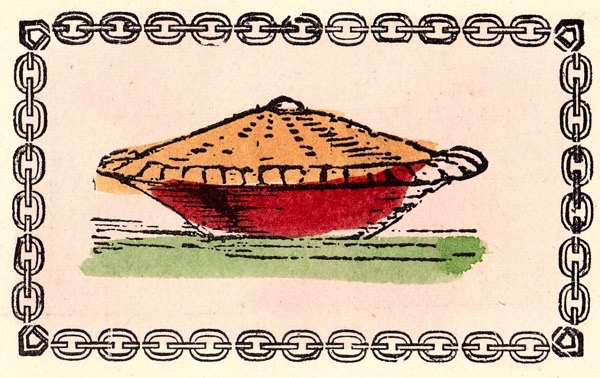
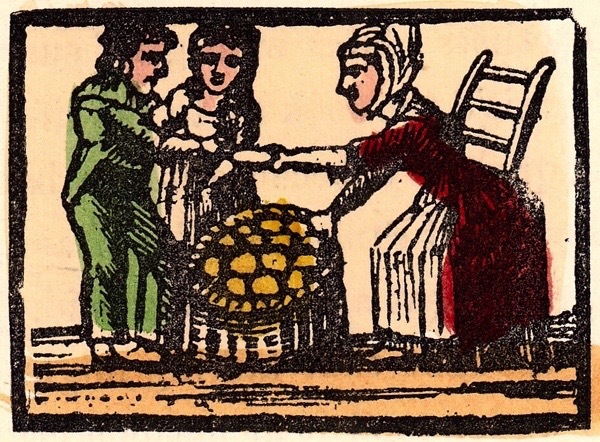
Dame Dumpling who made the Apple Pie
You may also like to take a look at
Libby Hall’s Dogs Of Old London
Please drop an email to spitalfieldslife@gmail.com to attend the launch
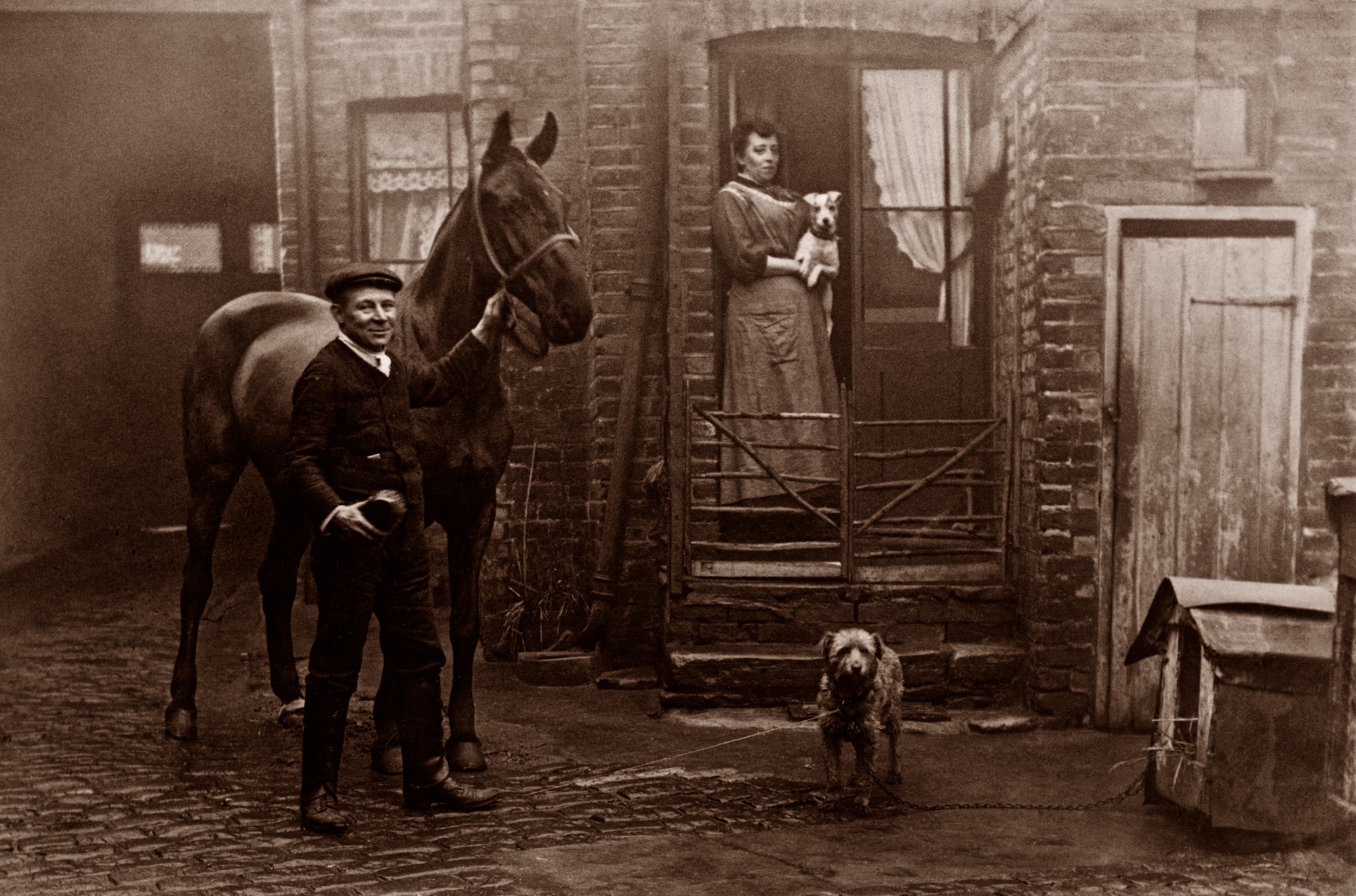
Click to enlarge
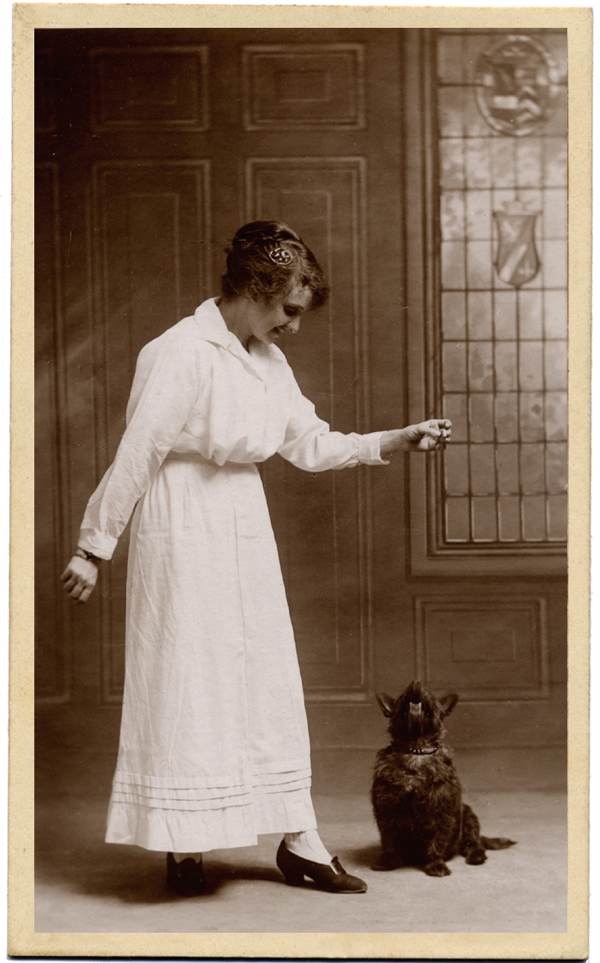
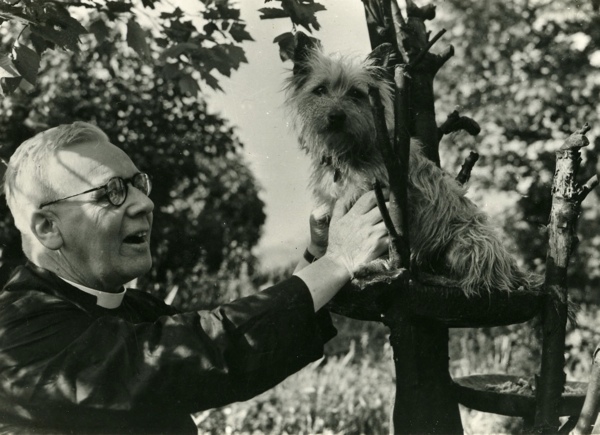
Sometimes in London, I think I hear a lone dog barking in the distance and I wonder if it is an echo from another street or a yard. Sometimes in London, I wake late in the night and hear a dog calling out to me on the wind, in the dark silent city of my dreaming. What is this yelp I believe I hear in London, dis-embodied and far away? Is it the sound of the dogs of old London – the guard dogs, the lap dogs, the stray dogs, the police dogs, the performing dogs, the dogs of the blind, the dogs of the ratcatchers, the dogs of the watermen, the cadaver dogs, the mutts, the mongrels, the curs, the hounds and the puppies?
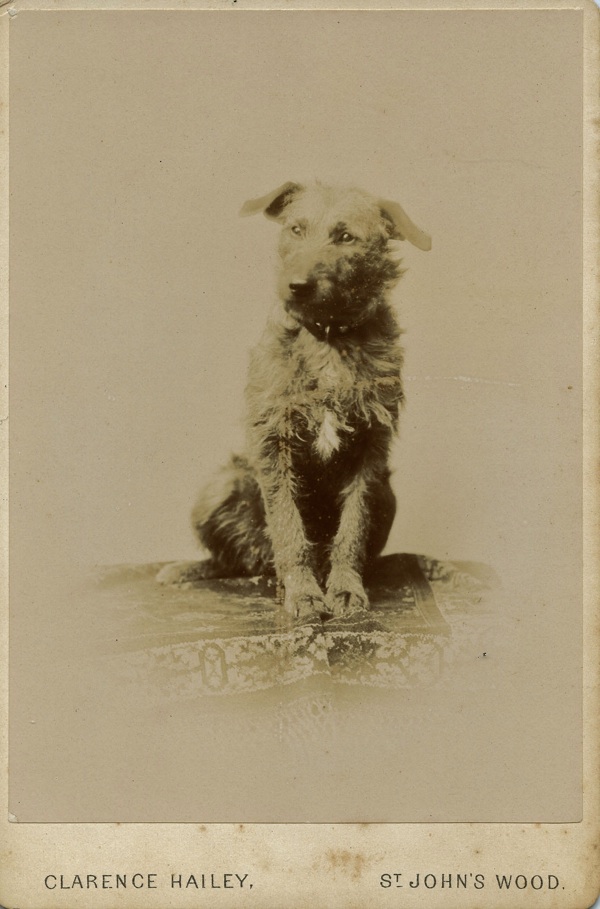
Libby Hall (1941-2023), who gathered possibly the largest collection of dog photography ever made by any single individual, helped me select the dogs of old London from her personal archive. We pulled out those from London photographic studios and those labelled as London. Then, Libby also picked out those that she believed are London. And here you see the photographs we chose. How eager and yet how soulful are these metropolitan dogs of yesteryear. They were not camera shy.
The complete social range is present in this selection, from the dogs of the workplace to the dogs of the boudoir, although inevitably the majority are those whose owners had the disposable income for studio portraits. These pictures reveal that while human fashions change according to the era and the class, dogs exist in an eternal present tense. Even if they are the dogs of old London and even if in our own age we pay more attention to breeds, any of these dogs could have been photographed yesterday. And the quality of emotion these creatures drew from their owners is such that the people in the pictures are brought closer to us. They might otherwise withhold their feelings or retreat behind studio poses but, because of their relationships with their dogs, we can can recognise our common humanity more readily.
These pictures were once cherished by the owners after their dogs had died but now all the owners have died too, long ago. For the most part, we do not know the names of the subjects, either canine or human. All we are left with are these poignant records of tender emotion, intimate lost moments in the history of our city.
The dogs of old London no longer cock their legs at the trees, lamps and street corners of our ancient capital, no longer pull their owners along the pavement, no longer stretch out in front of the fire, no longer keep the neighbours awake barking all night, no longer doze in the sun, no longer sit up and beg, no longer bury bones, no longer fetch sticks, no longer gobble their dinners, no longer piss in the clean laundry, no longer play dead or jump for a treats. The dogs of old London are silent now.
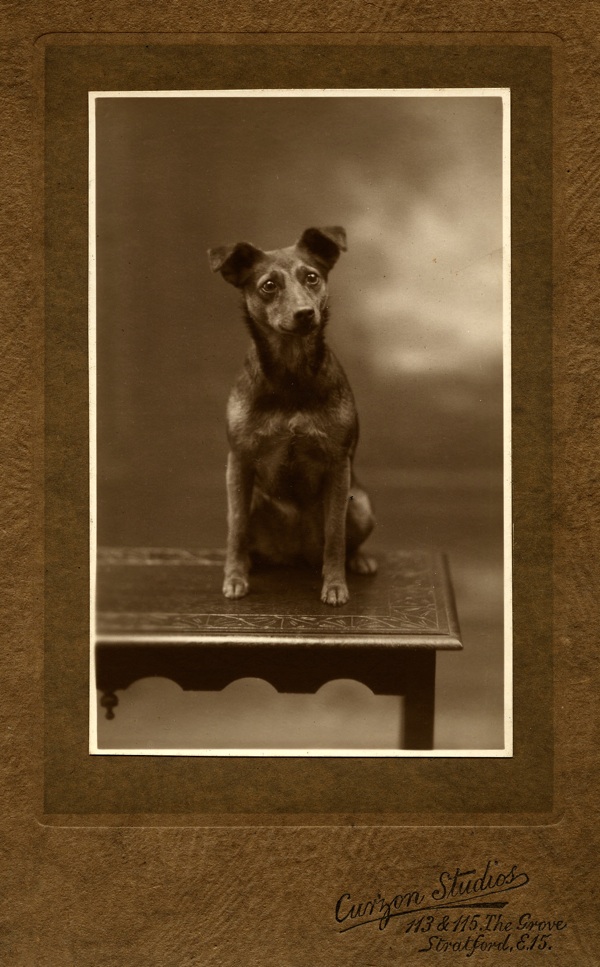


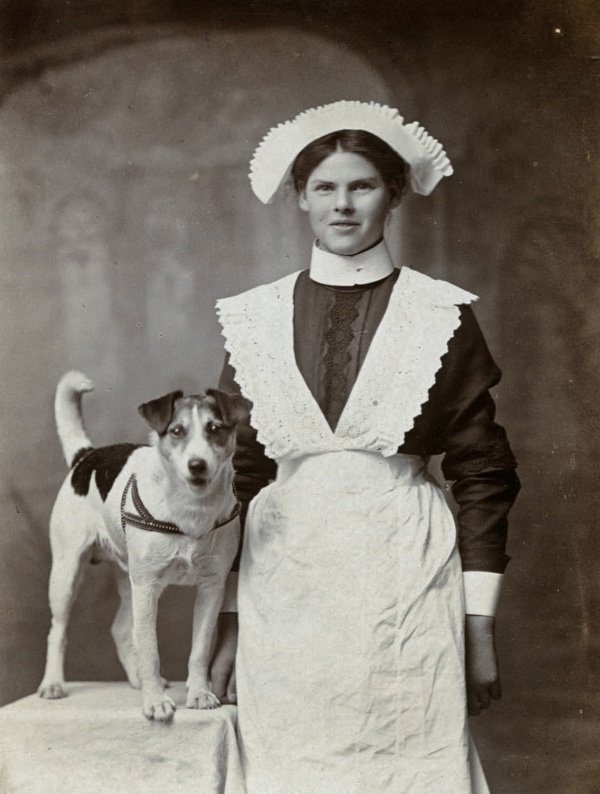
Arthur Lee, Muswell Hill, inscribed “To Ruby with love from Crystal.”
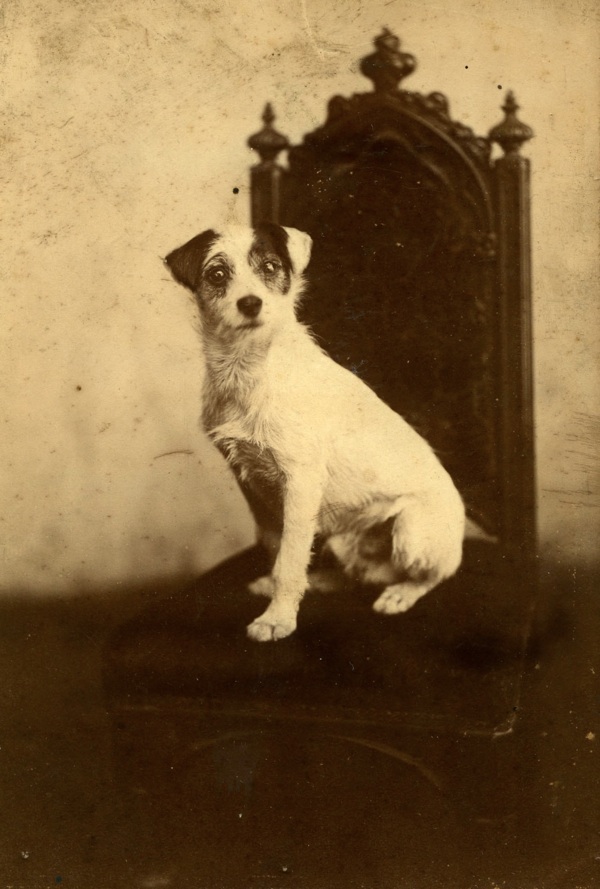
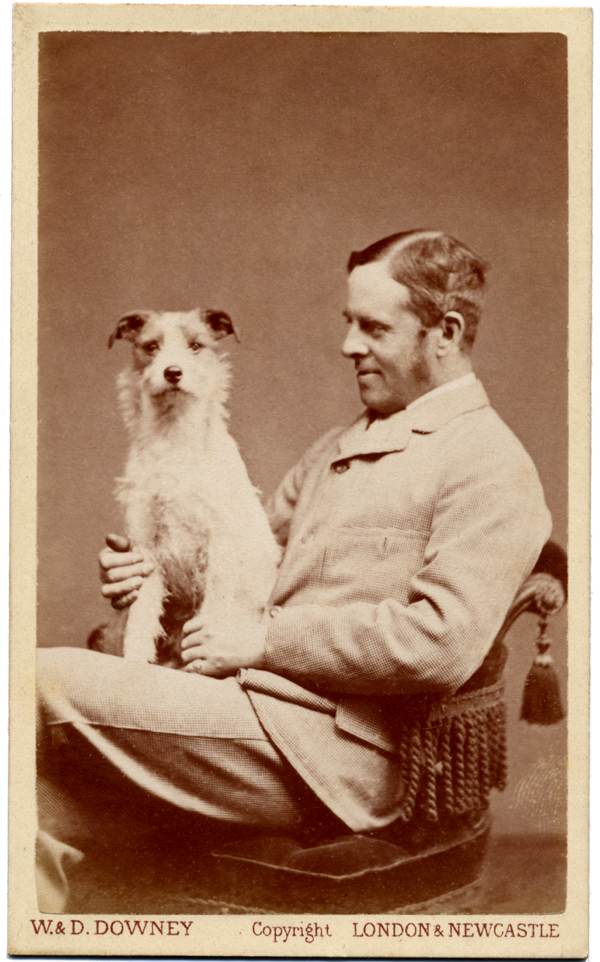

Ellen Terry was renowned for her love of dogs as much as for her acting.
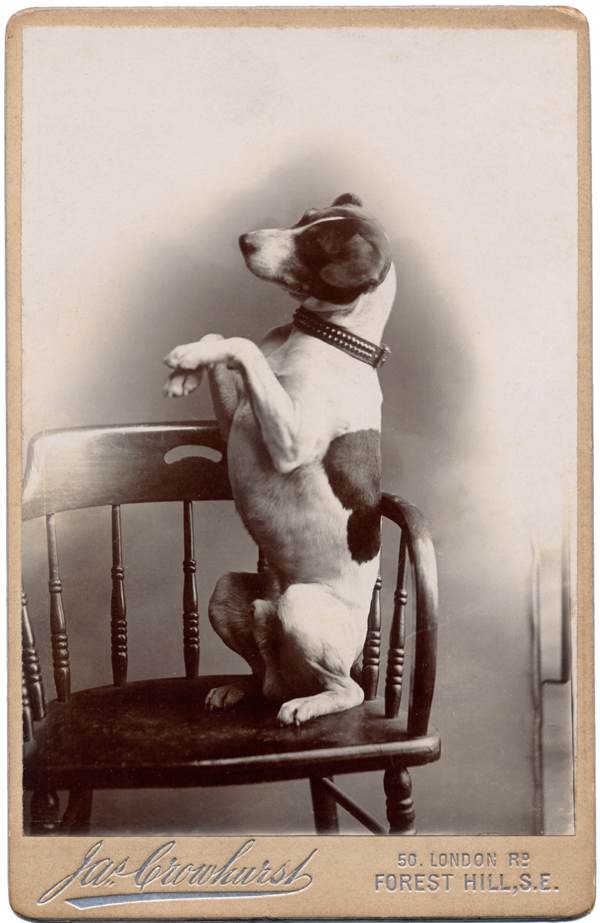


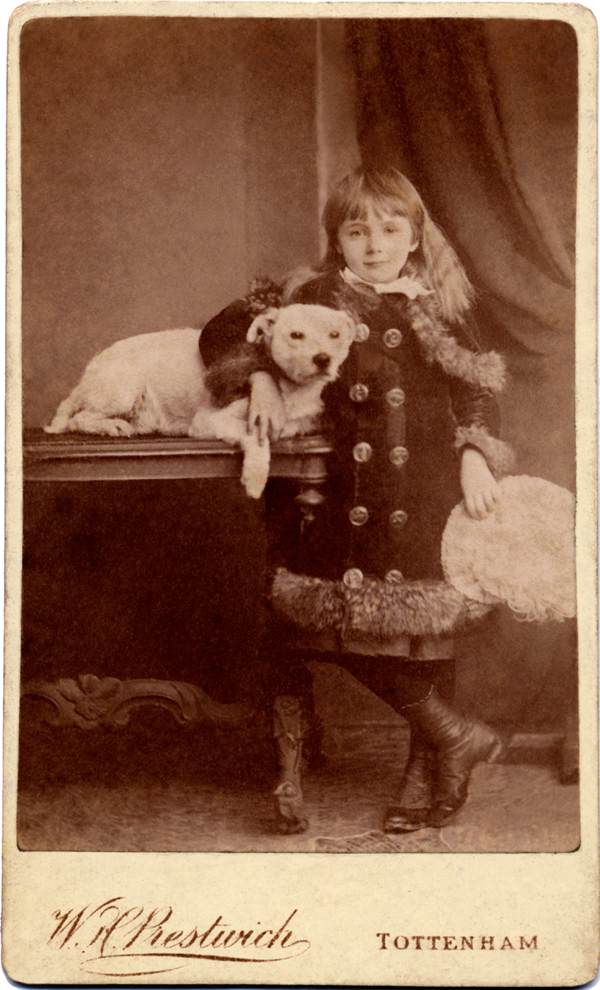

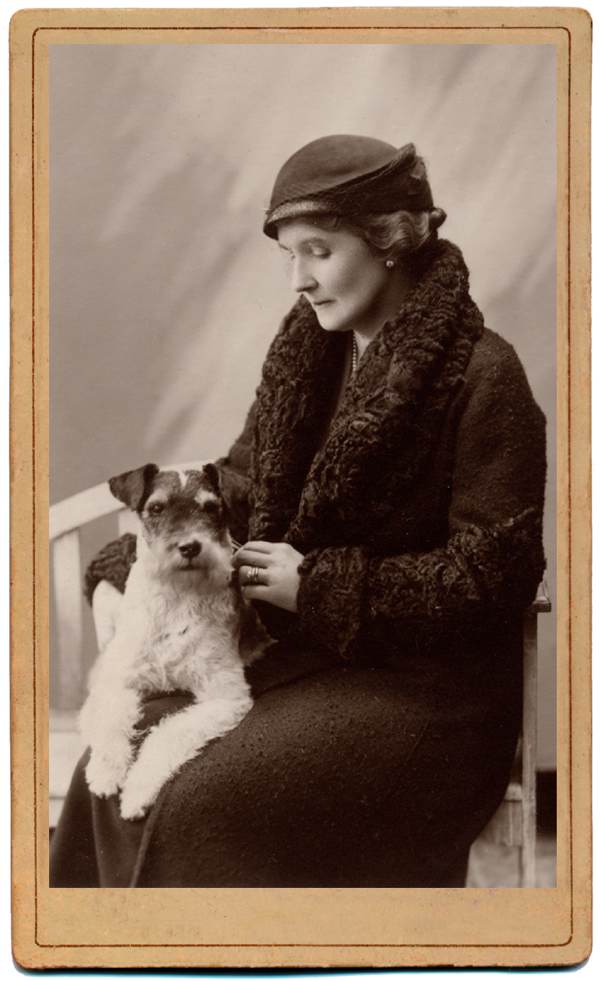

W.Pearce, 422 Lewisham High St.
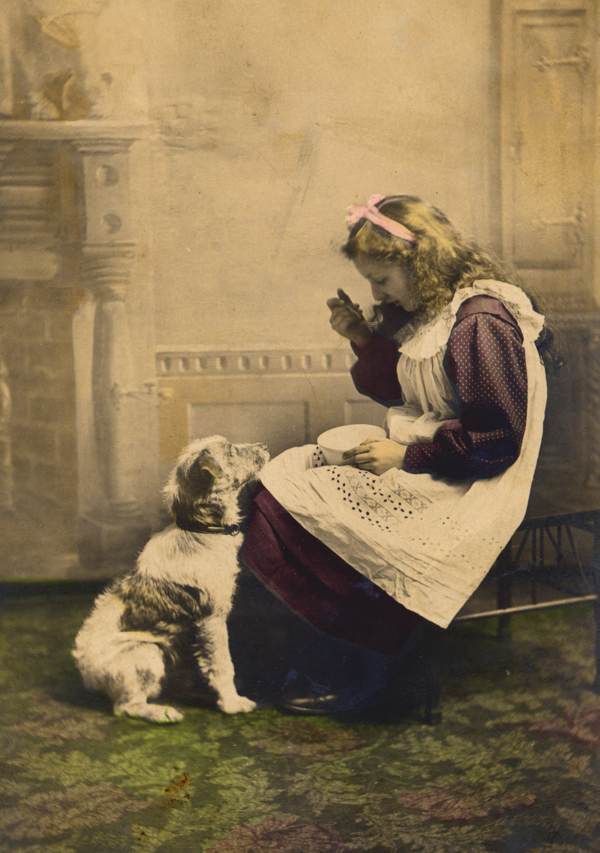
This girl and her dog were photographed many times for cards and are believed to be the photographer’s daughter and her pet.
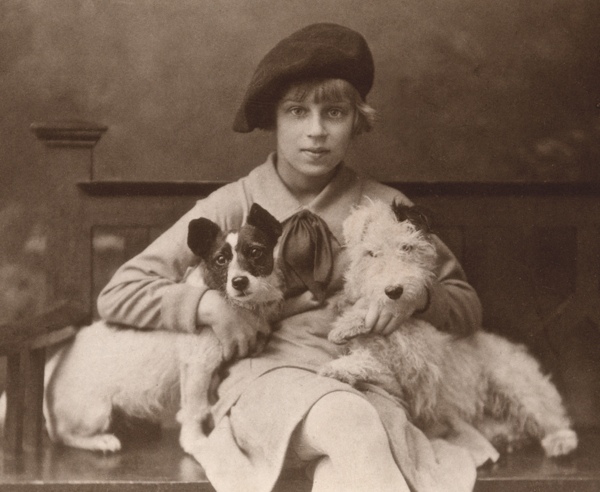
Emberson – Wimbledon, Surbiton & Tooting.


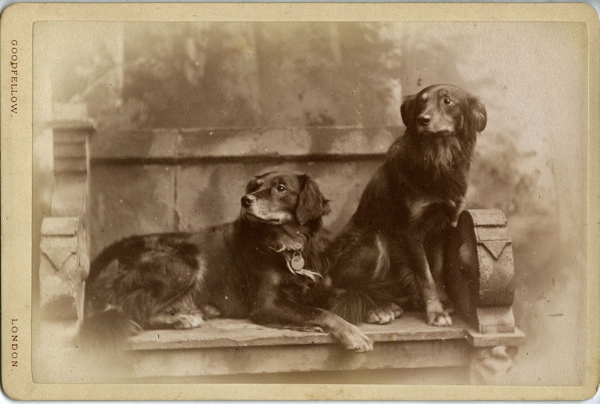

Edward VII’s dog Caesar that followed the funeral procession and became a national hero.
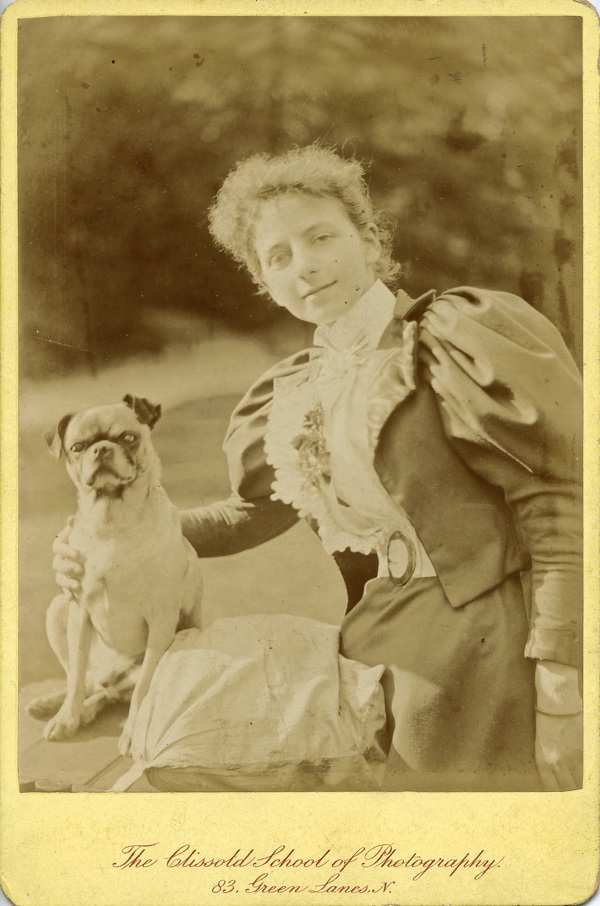



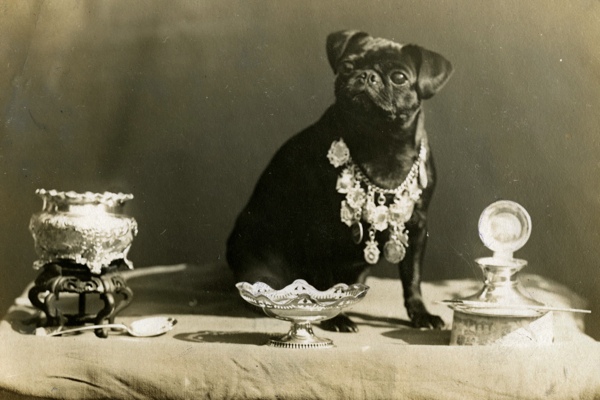
A prizewinner, surrounded by trophies and dripping with awards.

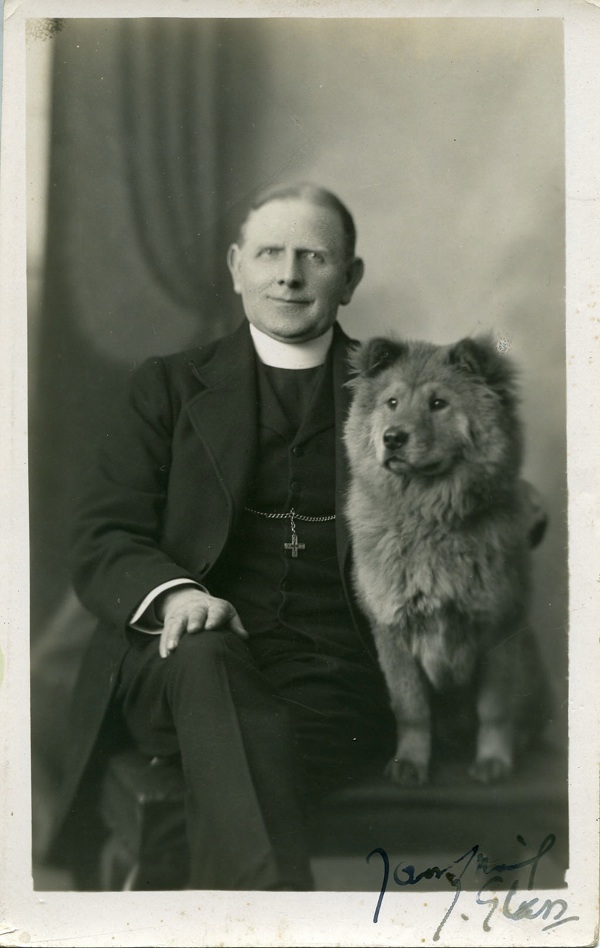
The Vicar of Leyton and his dog.


The first dog to be buried here was run over outside the gatekeeper’s lodge, setting a fashionable precedent, and within twenty-five years the gatekeeper’s garden was filled with over three hundred upper class pets.

Libby Hall, collector of dog photographs.
Photographs copyright © The Libby Hall Collection at the Bishopsgate Institute
You may like to read my profile
The Spitalfields Bowl
Please drop an email to spitalfieldslife@gmail.com to attend the launch

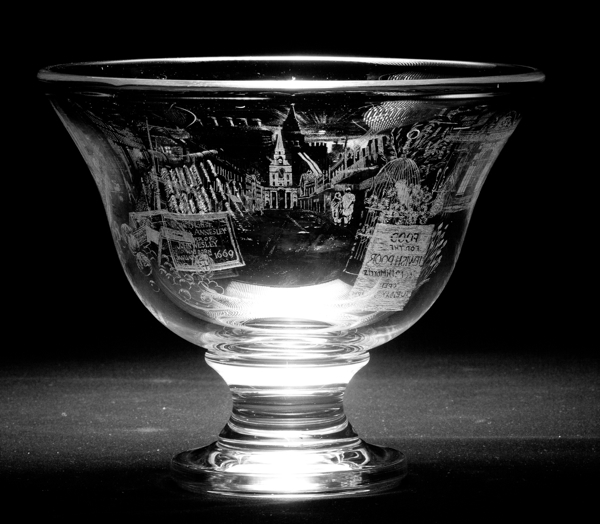
One of these streets’ most-esteemed long-term residents summoned me to view an artefact that few have seen, the fabled Spitalfields Bowl. Engraved by Nicholas Anderson, a pupil of Laurence Whistler, it incarnates a certain moment of transition in the volatile history of this place.
I arrived at the old house and was escorted by the owner to an upper floor, and through several doors, to arrive in the room where the precious bowl is kept upon its own circular table that revolves with a smooth mechanism, thus avoiding any necessity to touch the glass. Of substantial design, it is a wide vessel upon a pedestal engraved with scenes that merge and combine in curious ways. You have the option of looking down upon the painstakingly-etched vignettes and keeping them separate them in your vision, or you can peer through, seeing one design behind the other, morphing and mutating in ambiguous space as the bowl rotates – like overlaid impressions of memory or the fleeting images of a dream.
Ever conscientious, the owner brought out the correspondence that lay behind the commission and execution of the design from Nicholas Anderson in 1988. Consolidating a day in which the glass engraver had been given a tour of Spitalfields, one letter lists images that might be included – “1. The church and steeple of Christ Church, Spitalfields, and its domination of the surrounding areas. 2. The stacks, chimneys and weaving lofts. 3. The narrowness of the streets and the list and lean of the buildings with their different doorways and casement windows.”
There is a mesmerising quality to Nicholas Anderson’s intricate design that plays upon your perception, offering insubstantial apparitions glimpsed in moonlight, simultaneously ephemeral and eternal, haunting the mind. You realise an object as perilously fragile as an engraved glass bowl makes an ideal device to commemorate a transitory moment.
“It took him months and months,” admitted the proud owner,“and it represents the moment everything changed in Spitalfields, in which the first skyscraper had gone up and there were cranes as evidence of others to come. The Jewish people have left and the Asians are arriving, while at the same time, you see the last of the three-hundred-year-old flower, fruit and vegetable market with its history and characters, surrounded by the derelict houses and filthy streets.”
Sequestered in a locked room, away from the human eye, the Spitalfields Bowl is a spell-binding receptacle of time and memory.


The Jewish soup kitchen

To the left is the Worrall House, situated in a hidden courtyard between Princelet St & Fournier St


A moonlit view of Christ Church over the rooftops of Fournier St

The bird cage with the canary from Dennis Severs House


“He was a tinker who overwintered in Allen Gardens and used to glean every morning in the market…”

To the left is Elder St and the plaque commemorating the birth of John Wesley’s mother is in Spital Sq.

An Asian couple walk up Brushfield St, with the market the left and the Fruit & Wool Exchange and Verdes to the right
Photographs copyright © Lucinda Douglas-Menzies
Suresh Singh’s Tank Top
Please drop an email to spitalfieldslife@gmail.com to attend the launch
Now the mornings and evenings are chillier, it is time to reach for a tank top

Suresh Singh has been wearing this tank top since 1973
Perhaps everyone has a favourite piece of clothing they have worn for years? I always admired Suresh Singh’s jazzy tank top and I was astonished when he told me he has been wearing it for half a century.
Suresh’s father Joginder Singh came to London from the Punjab in 1949 and the Singh family have lived at 38 Princelet St longer than any other family in Spitalfields.
In our age of disposable fashion, the story of Suresh’s treasured tank top is an inspiring example of how a well made garment can be cherished for a lifetime.
“My mum made this tank top for me in 1973 when I was eleven. She had friends who all knitted and they had bits of wool left over – what you would call ‘cabbage’ – so mum collected all these balls of different coloured wool. Otherwise, they would have been chucked away. She kept them in her carrier bag with her needles that she bought at Woolworths in Aldgate East. They were number ten needles.
Mum said to me, ‘Suresh, I’m going to knit you a tank top.’ I never asked her because dad had taught me that I should always be patient, but I think mum saw the twinkle in my eyes and she knew I wanted one. I had asthma, so it was to keep my chest warm. She knitted it over the winter, from November to January. Mum never had the spare time to spend all day long knitting, she had to do it in bits as she went along and keep putting it away.
Mum did not follow a pattern, she just looked at me and sometimes took measurements. It started getting really huge, so I said, ‘Mum, it’s going to be too big.’ She had a sense of scale, she did not draw round me and cut a pattern. Mum never did that. She replied, ‘You’ll grow into it.’ The idea was you would slowly grow into new clothes.
When my tank top was finished, it hung down to my knees and the armholes were at my waist, but Mum was adamant I would grow into it. I loved it because it was all the rainbow colours. There was red, then yellow, then black, then pink and that really beautiful green. It was so outrageous. No other Punjabi kid had one like it. They all wore Marks & Spencer or John Collier grey nylon jumpers, but I had this piece of art. To me, it was a masterpiece. It was so beautifully made, it was mum’s pride and joy. When I wore it, people would exclaim, ‘That tank top, mate, it’s classic!’ I would say, ‘Yeah, my mum made it.’ Sometimes, because it was too big, I could pull it up and tie it in a knot at the front.
Mum made it with such love that I have always kept it. Eventually, my children wore it, but I am claiming it these days. It is a one-off. What made the tank top special for mum was that she was making it for her son. People often say it is a work of art but mum never went to art school. She picked up the tradition of making something for your child. She put so much love into it and I wear it today and it is still really nice. It gives me comfort and it keeps my chest warm.
It has got swag, you know what I mean?
It fits me now.”

Suresh and his mum at 38 Princelet St

Suresh Singh aged four
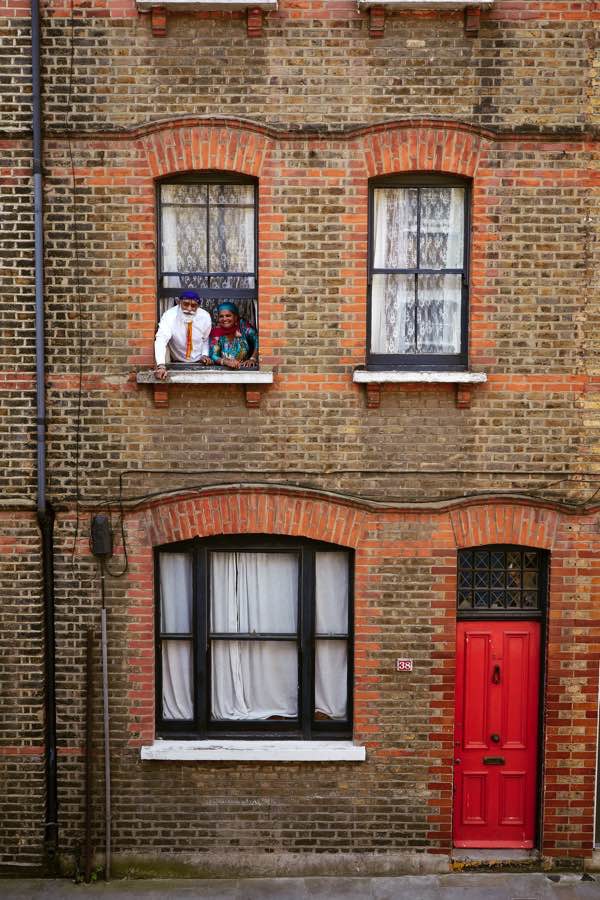
Suresh Singh & Jagir Kaur at 38 Princelet St (Photograph by Patricia Niven)
You may also like to read about
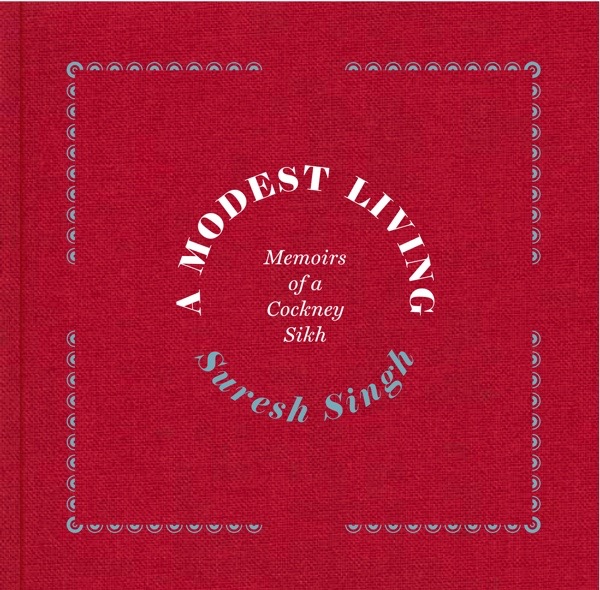
Click here to order copy of A MODEST LIVING for £20