
Hackney Mosaic Project At London Zoo

Tessa Hunkin works on her mosaic while lions prowl nearby
Recently, I accompanied Tessa Hunkin of Hackney Mosaic Project to the lions’ enclosure at London Zoo where she installed her latest masterpiece while big cats prowled around. Commissioned by the Zoological Society of London, the magnificent mosaic is the result of four months work involving around thirty people, with a core of fifteen experienced mosaicists, to create a centrepiece for the new ‘Land of the Lions’ attraction at the Zoo.
The six panels of the mosaic portray the forest of Gir in Gujarat which is the origin of the lions at London Zoo. In Tessa’s design, Langur monkeys harvest fruit in the tree tops while Chital deer follow them below, scavenging windfalls and leftovers dropped from above. Yet this relationship serves a dual purpose for the Chital, since the Langurs see lions coming from far away, thereby warning the Chital when to take flight.
All through the winter months, the team at Hackney Mosaic have been working in the pavilion on Hackney Downs, painstakingly glueing thousands of tiny tesserae to a large brown paper panel with Tessa’s design traced in reverse. Once this was complete, the panels were impressed onto a rendered wall at the zoo by Walter Bernardin, a mosaicist of lifelong experience, and the paper was removed to reveal the finished mosaic in all its glory, with the design the right way round.
It was a tense process, tearing away the backing paper without removing pieces of mosaic and then applying grouting. In fact, so all-consuming was this task that Tessa and Walter continued at their work without even noticing the lions prowling around in curiosity…
Hackney Mosaic is a community project led by Tessa Hunkin that relies upon commissions to continue. If you would like to commission a mosaic please email hackneymosaic@gmail.com

The team at Hackney Mosaic with the completed mosaic

Tessa’s final design

Photo composite of the work in progress, seen in reverse (click to enlarge)

The first panel installed at London Zoo


Mosaicist Walter Bernadin removes the backing paper and fixes the mosaic with grouting


The completed mosaic installed at London Zoo
You may also like to read about
The Mosaic Makers of Hackney Downs
So Long, Bedell Coram
Andrew Coram’s antique shop, Bedell Coram at 86a Commercial St, closes forever on 31st March

Andrew Coram
For several years now, the most interesting shop window in Spitalfields has been that of Bedell Coram, Andrew Coram’s antique shop at 86a Commercial St. Every single day, I walk past and always direct my gaze to discover what is new. I am rarely disappointed with lack of novelty, and sometimes I am astounded by Andrew’s latest finds and ingeniously surreal displays that are worthy of Peter Blake or Marcel Duchamp.
Over a year ago, I admired three yellowed newspaper hoardings in his window, Evening Standard: THE PRINCE: TOUCHING SCENE, Evening News Late Extra: MAN-HUNT IN LEICESTER SQUARE and Evening News 6:30: LONDON HIGHWAYMEN ON WHEELS. They were gone as quickly as they appeared. “Gilbert & George bought them,” Andrew told me discreetly, “They rang to say they saw them in the window and came round next morning to buy them. They don’t usually collect old ones, they just go to the newsagent across the road each day to get them new.” Clearly, Andrew has a well-deserved following, and as I have gone about my interviews, when occasionally I have admired a delft bowl or a corner cupboard in an old house, invariably the proud owner will say, “I got it from Andrew.”
Andrew is the youngest of eight children of an antique dealer from Plymouth who was born in 1900 and died in 1980, when Andrew was still a child. His father began in domestic service and started in the antique business after World War II when the country houses of Devon were being knocked down, creating a vibrant trade in china, furniture and paintings. “He knew how to speak to those people,” explained Andrew, vividly aware of the negotiation skills that are key to his profession. When Andrew was growing up, his father was trading from Carhampton, near Minehead in Somerset, and he remembers long Summer holidays hanging around the shop. “I think my poor brother spent all his time polishing my finger marks off the mahogany furniture,” he recalled fondly.
Andrew Coram is a popular figure in Spitalfields, with trenchant humour, and a fluent lyricism that he indulges when speaking of his treasured discoveries. He is a poet among antique dealers, with a melancholy streak that he resists, yet exposes when he speaks of his motives. Sitting in a chair wedged between boxes of stock, casting his eyes around at all the beautiful things that he has surrounded himself with in his shop, Andrew revealed almost apologetically, “It’s not about the money, it’s about the way that some antiques speak to you. There’s a sense of loss every time you sell something you like, which I didn’t have when I started. I think I may have lost focus. My father never lost focus because he had to support six people. It’s easy to let the things take over. You hope to do something that continually generates itself, and inspires you, so that, as you are discovering new things, you are learning more and you accumulate knowledge.”
Who cannot sympathise with this conflict? It is the quintessential dilemma that cuts to the heart of the passionate antique dealer. The modest trader spends his time searching, using his ingenuity to find wonderful things, and learns to appreciate and understand their histories, as Andrew has done. Then he collects his treasures together, and all for the purpose of disposing of them to others.
Even though his father was an antique dealer and Andrew incarnates his occupation so magnificently that I cannot think of him any other way, he did not set out to follow in his father’s footsteps. Impatient of waiting for a lucky break as an artist, Andrew started trading his personal collection in the Spitalfields Market years ago, in the days when it was free to have a stall, and he made £75 on the first day. “When you start out trading, you feel you have achieved something the first time you buy a Georgian chest of drawers or a long case clock on a hunch and it proves to be right.”, said Andrew, relating a milestone on the career path. He claims he learnt everything as he went along, that he has no conscious memories of the trade from his childhood, but I think Andrew’s upbringing accounts for the special quality of his personal sensibility that he brings to everything he does. Andrew’s unique sense of tone, his distinctive style of dress that is of no determinate period, his instinct for seeking out such charismatic artefacts and the artful displays he creates, all these attest to his special quality as an antique dealer, born and bred.
Still ambivalent about how much he chooses to keep, Andrew admitted recklessly, “There’s a part of me that would like to have nothing!” So I asked him what drew him to things that he liked and he thought for a moment, assuming his grimace of rumination. “Things that have rarity value – that you might not see again. As I said, things that speak to you. Things of which there’s a sort of … clarity about what they are … a quietness about them, even a stillness.” he replied, searching for words beyond grasp.
Then his eyes lit up, as he thought of an example to illustrate his point, and held it up, in mime,“I found this tooth, a boar’s tooth, mounted in silver with the inscription upon the base ‘Roasted upon ye Thames Jan 15th 1715/6’ – I’m not selling it!” Once we had considered this treasured momento from a frost fair together, in another mime for my delight, Andrew produced a copper pie dish with words “Lincoln’s Inn 1779” upon it, folding his fingers as if to grip the sides of the invisible dish. Then, returning to the material world, Andrew passed me a tiny delft tea bowl in pale porcelain with Chinese figures on the outside and the softest blackbird egg blue interior. It was a mid-eighteenth century English tea bowl and as I cradled it in my palm where it sat so comfortably, he told me in triumph it was worth a thousand pounds. “Holding a delicate thing like that in your hand puts you in touch the past. – it’s the story that connects us.” he said, intoxicated by the magic of the bowl, and breaking into a broad grin.
I spent much of my childhood being taken around the country antique shops of Devon and Somerset by my mother and father, and the romance of these places and my parents’ delight at their finds remain vividly with me today. I do not know if Andrew’s path and mine crossed back then, but I do know that Andrew Coram has soul and his antique shop is a proper one, of the old school, where authentic treasures are still to be found.


Read my other stories about Andrew Coram and his wonderful shop
John Claridge At Whitechapel Bell Foundry
John Claridge first visited the Whitechapel Bell Foundry in 1982 to photograph the life of Britain’s oldest manufacturing company, founded in 1570 – and he returned last week after-hours to take this second set of pictures published here today. Remarkably, little has changed in the intervening years.
‘When I got into the foundry all the work had finished, it was deserted,’ he told me, ‘it was like walking through a time portal or boarding the Mary Celeste. There was a very tactile feeling about the place, where craftsmanship held sway, and my pictures pay testament to that feeling.’
Below you can read my interview with Alan Hughes, fourth generation Master Bellfounder.


Photographs copyright © John Claridge
A CONVERSATION WITH ALAN HUGHES, MASTER BELLFOUNDER
If I confide that my favourite sound in all the world is that of bells pealing, you will understand why the Whitechapel Bell Foundry has become such a source of fascination over all these years. Every time I walk past the ancient foundry walls (the oldest manufacturing company in the land – founded in 1570), I wonder about the alchemical mystery of bellfounding taking place inside. One day as I passed, walking down from Spitalfields to the Thames, the steel doors at the rear were open and, peeking in from the harsh sunlight outside, I was afforded a tantalising glimpse of huge bells glinting in the gloom of the engineering shop.
So you can imagine my excitement when I received the invitation to meet the current master bellfounder in an unbroken line of master bellfounders that stretches back to 1420. Stepping inside, out of the rain in Whitechapel Rd, I found myself in the foundry reception lined with old photographs and compelling artifacts, like the wooden template (displayed over the entrance as if it were the jaws of a whale) that was used when Big Ben was manufactured here. Among all the black and white photos, my eye was drawn by some recent colour pictures of a royal visit, with Her Majesty in a vivid shade of plum and Prince Philip looking uncharacteristically animated. I was thinking that the bell foundry must work a powerful magic upon its visitors, when a figure emerged from the office and I turned to shake the hand of Alan Hughes, the master bellfounder. Alan’s great-grandfather Arthur Hughes bought the business in 1884, which makes Alan a fourth generation bellfounder.
A sense of awe filled me as I shook hands with this unassuming man in a natty blue suit but I composed myself as best I could, while he led me through a modest office where two people worked behind neat desks and one of those fake cats dozed eternally in front of the stove, to arrive in the boardroom where a long table with a red cloth upon it occupied the centre of a modest but elegantly proportioned Georgian dining room. We drew up chairs and commenced our conversation as the Whitechapel drizzle turned to dusk outside.
Alan’s fine manners and levity kept me guessing whether everything he said might actually be a proposal, as if he was simply trying out thoughts to see how I would react. I took this as an indication of courtly assurance. Alan wears his role with the greatest of ease, as only someone born into the fourth generation of an arcane profession could do, and I wondered if the royal visit might have been an occasion for mutual recognition between those born into long-standing family businesses.
Up above, I could hear music. It was Alan’s daughter and her friend, both music students, practising the piano and the trumpet. The prevailing atmosphere was that of a work place yet it was domestic too. When Alan’s predecessors set up the business on this site, before the industrial revolution, they attached the factory to the house so they could walk from the dining room into the foundry at their convenience. The feeling today is akin to that of the quiet living quarters of an old college or liturgical institution.
Alan has worked here over fifty years and, describing the changes he has seen, he glanced over my shoulder to the window several times, as if each time he glanced upon a different memory of the Whitechapel Road. The East End was a busy place in the nineteen fifties, as Alan first recalled it, not only because of the docks but because of all the factories and the manufacturing that happened here. “Whichever way it was blowing, you got this lovely smell of beer on the wind – from Trumans or Watneys or Charringtons or Courage or Whitbread…” Alan told me, explaining the locations of the breweries at each point of the compass. In the nineteen seventies and eighties, when the docks and factories closed, Alan found the place desolate, he peered from the window and there was no-one in the street. “And then things started getting trendy. Instead of closing they started opening – and now, suddenly, it’s ok to be in Whitechapel!” said Alan, clasping his hands thoughtfully on the table and looking around the room with a philosophical grin, “But this place hasn’t changed at all. I always find it vaguely amusing.”
Tentatively, I asked Alan what it meant to him, being part of this long line of bellfounders. Alan searched his mind and then said, “I don’t think about it very often. I would like to meet some of those people, Thomas Mears (master bellfounder from 1787) who would know the place today and Thomas Lester (master bellfounder from 1738) who had this part built. It would be nice to have a conversation with him. He would recognise most of it.” Then the gentle reverie was gone and Alan returned to the present moment, adding, “It’s a business,” in phlegmatic summation.
“Our business runs counter to the national economy,” he continued, “If the economy goes down and unemployment rises, we start to get busy. Last year was our busiest in thirty years, an increase of 27% on the previous year. Similarly, the nineteen twenties were very busy.” I was mystified by this equation, but Alan has a plausible theory.
“Bell projects take a long time, so churches commit to new bells when the economy is strong and then there is no turning back. We are just commencing work on a new peal of bells for St Albans after forty-three years of negotiation. That’s an example of the time scale we are working on – at least ten years between order and delivery is normal. My great-grandfather visited the church in Langley in the eighteen nineties and told them the bells needed rehanging in a new frame. They patched them. My grandfather said the same thing in the nineteen twenties. They patched them. My father told them again in the nineteen fifties and I quoted for the job in the nineteen seventies. We completed the order in 1998.”
Alan broke into a huge smile of wonderment at the nature of his world and it made me realise how important the continuity between the generations must be, so I asked him if there was pressure exerted between father and son to keep the foundry going.
“My great-grandfather never expected the business would outlive him. He had three sons and the sale of the business was arranged, but my grandfather refused to sign the contract, so the other brothers left and he took over. My grandfather ensured his sons had good jobs and even my father wasn’t convinced the business could succeed, so he studied foundry technology for four years at every foundry in the south – thinking he could work for them – but every single one of those has now closed.” Then Alan looked out the window again, gazing forward into time. “As a master bellfounder, you never retire. We go on until we die. My grandfather, my father and my uncle all died of a heart attack at eighty.”
The implications of Alan’s conclusion are startling for him personally, even though he has many years to go before eighty. “You’re a very eloquent man,” I said in sober recognition, “No, I’m not!” he retorted cheekily. “You have such interesting things to say,” I replied lamely, “No, I don’t!” he persisted gamely, obstinately raising his eyebrows. Nevertheless, Alan’s life as a bellfounder is remarkable to me and maybe to you too. Seeing his life in comparison to his predecessors, Alan embraces the patterns that prescribe his existence, for better or worse, and his personal mindset is the result of particular circumstances, the outcome of four generations of bellfounding. Alan has my greatest respect for his immodest devotion to bells.

Click here to order your copy of John Claridge’s EAST END for £25, published June 2nd
You may also like to read about
Trashy’s London Statuary

Ayjay Trashy at the statue of Rowland Hill
If you are observant of London’s statuary, you may have spotted a tall young man in black with sharp eyes, hanging around making intricate miniature paintings on discarded sugar wrappers of these strange effigies of the great and good which punctuate the streets of our capital. This is Ayjay Trashy.
I arranged to meet Ayjay in King Edward St, round the back of St Paul’s, where he was painting Rowland Hill, inventor of the postage stamp outside the former General Post Office. It was a bitter day in early spring and Ayjay had completed his picture after two days work on the pavement in the cold, so we took refuge in the warmth of the crypt of St Paul’s and warmed our hands with cups of hot tea.
Of imposing stature but sympathetic demeanour, Ayjay is quietly spoken and modest almost to the point of apology when he speaks of his distinctive art. He laid a large red plastic case on the table which I guessed had a previous life as a record case.
It was apparent, by the manner in which Ayjay placed it before me and opened the cover, that this case contained his most-prized possessions. Inside, he carries all his painting equipment and several small black sketchbooks within which are mounted his finely-wrought miniature paintings of statues.
Ayjay turned the pages to show me his cherished works and, as he did so, he explained something of the story behind them. And I could not resist being touched by his vision, discovering wonder and fascination in disregarded subject matter, rendered meticulously with infinite care upon discarded materials.
“I started painting on napkins with coffee, but then I discovered I had an allergy to it – so then I started drinking more tea and began using sugar wrappers because I didn’t need napkins any more once I didn’t drink cappuccinos.
Many years ago, I did a degree in Fine Art at Hornsey but it has only been in the last five years that I have got back to it after being in limbo for a long time. Inside of me, I just needed to do it. It was like an instinct and I felt if I didn’t do it I would go mad. I discovered that I had to get back to what I knew and what I understood. I had been painting since I was three years old – my aunt used to take me out on trips and we would do drawings.
I was in limbo for fifteen years because I needed to discover who I was and I needed to go through different situations to discover that. As well as doing my art, I take care of my grandma. I am her carer and I give her the injections she needs because she is diabetic. In the afternoons, I go out and do my paintings and, in the evenings, I go back and do her injections again. She’s been good for the last few days. She went through a downward spiral when she had an infection but she has improved a lot and she’s moving a lot better, I’ve got her walking.
I live in Barnet but my family comes from Camden Town and I grew up in Tufnell Park. My grandma used to wheel me around Camden, she took me here, there and everywhere with her, and down to my aunt’s in Kentish Town. My great-grandma, she used to run most of the pubs in Camden years ago and my great-grandad worked in Stables Market delivering vegetables by horse and cart up to Barnet Market and also down to Covent Garden. My grandpa worked in the East End rag trade, he was the first person to show me round London and we always went to Trafalgar Sq at Christmas.
I’ve painted about fifty-odd statues now. I was brought up in the Roman Catholic Church and you are surrounded by statues. I like the fact that statues are both larger than life and also true to life. The more you hang around statues, the more you realise they have their own personalities – even though the person they represent may have been dead for two hundred years. It’s about conveying that personality. Although they are made of stone, they have something magical about them. I choose them according to how I feel and what I find, because sometimes you can have so many in front of you and you just walk past but, at other times, you just bump into them and you feel inspired.
My paintings have got smaller and smaller, and I use sugar wrappers because like using things that are branded and I like to play around with that. I also like the miniature landscape of wrappers, I don’t like painting on things which are blank. When I paint a statue on a sugar wrapper, it is like one icon fighting another icon – there’s a battle going on, but I am always going to win because when I put my image on the wrapper it becomes something else. Sometimes people don’t notice at first that have painted on the wrapper and I try to camouflage the painting so it’s not obvious.
I guess Starbucks are demonic but I just like painting on their wrappers, I can’t help it!”

From left: Rowland Hill, King Edward St, Oliver Cromwell at House of Commons & Eros in Piccadilly Circus

From left: Samuel Johnson in the Strand, Queen Anne at St Paul’s & Shakespeare in Leicester Sq

From left: Duke of Wellington at the Royal Exchange, Charlie Chaplin in Leicester Sq & Amy Winehouse at Stables Market, Camden

Ayjay Trashy and Major General William Ponsonby in the Crypt of St Paul’s
Ayjay Trashy’s paintings are currently on display at bookartbookshop in Pitfield St, Hoxton, where copies of TRASHY’S LONDON STATUARY may be purchased
You may also like to read about
Terry Barns, Knot Tyer

‘There isn’t really a word for it in English,’ admitted Terry Barns, ‘in French, they call it ‘matelotage’ meaning ‘sailors’ knot-making.’
Terry did not become a serious knot tyer until his fifties, yet it was a tendency that revealed itself in childhood. Celebrating the Queen’s Coronation in 1952, when Terry was just nine years old, his mother made him a guardsman’s outfit from red and black crepe paper with a busby fashioned from the shoulders cut out of an old fur coat. Terry’s contribution was to make the chin strap. ‘We got some gold string and I tied reef knots over a core, making what I now know is known as a ‘Pilgrim’s Sennet’ or a ‘Soloman’s Bar,’ he explained to me in wonder at his former precocious self, ‘but I never thought anything about it at the time.’
This is how Terry tells the story of the intervening years –
‘My early life was in the Queensbridge Rd but I was born in Hertfordshire because Hitler was trying to blow up the East End in 1944. My mum was a dress machinist and my dad was a wood machinist, he used to drill the holes in bagatelles and I still have one he made at home. In 1950, when I was six, we got a Council House in Clapton with a bathroom and an inside toilet – it was wonderful.
Somehow, I passed the 11-plus and ended up at Grocers’ Company School in Hackney Downs. When I left school at fourteen, being a prudent person, I joined the General Post Office as a telephone engineer, running around Mare St and Dalston. Nobody told me I could have stayed on at school and I soon realised that if I didn’t leave the GPO, I’d never know anything else. So I became a ‘Ten Pound Pom’ and went off to Australia in 1966.
I met my wife Carol in Pedro St in Hackney at that time and she followed me to Australia shortly after. I was a very quick learner and I had a very good job in Sydney working for a Japanese telephone company, Hitachi, but we had no intention of staying and came back in 1968. Then we got married in 1969, had three children and bought a house, so that occupied me for the next twenty years! I went back to the GPO which became BT and, when I was fifty, they asked if I would like to take some money and not go back again. So I have been living on my BT pension for the past twenty years and that has been the story of my life.’
Yet, all this time that Terry had been working with telephone cables, his tendency with string and rope had been merely in abeyance. ‘In the seventies, my wife bought me a copy of The Ashley Book of Knots,’ he revealed, bringing out a pristine hardback copy of the knotter’s bible containing nearly four thousand configurations. At a stall outside the Maritime Museum in Greenwich, Terry came across the International Guild of Knot Tyers which led to a four day course with legendary knot tyer, Des Pawson in 1994. ‘He’s got a museum of rope work in his back garden,’ Terry confided in awe.
‘I’m an engineer, but Des – he’s artistic,’ Terry informed me, ‘he educated me how to see things, he showed me when things look right.’ For over ten years, Terry has been on the Council of the Guild of Tyers, accompanying Des as his bag man, demonstrating knot work at festivals of matelotage in France – ‘My kind of holiday,’ he describes it enthusiastically.
When a sculptor cast a rope in bronze to symbolise the identity of the East End, it was Terry who wound the strands – and you can see the result at the junction of Sclater St and Bethnal Green Rd today. The largest pieces of rope you ever saw are placed as features in Terry’s front garden in Woodford. Inside the house, walls are hung with nautical paintings and shelves are lined with volumes of maritime history. They tell the story of one man’s lifetime entanglement with cable, rope and string, and remind of us of how the East End was built upon the docks, of which the ancient and ingenious culture of rope work was a major thread, still kept alive by enthusiasts like Terry Barns.

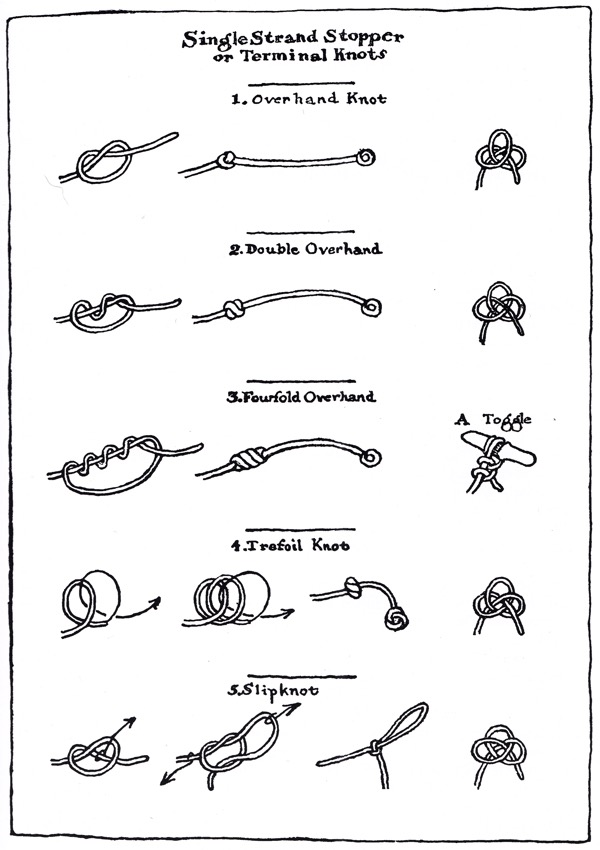


Terry with one he tied earlier
You might like to find out more at International Guild of Knot Tyers
You may also like to read about
Albert Stratton, Pigeon Racer

With the pigeon racing season commencing in April, I took the opportunity of an introduction to the sport kindly extended to me by Albert Stratton, Secretary & Clock setter of the Kingsland Racing Pigeon Club, which has been established for over a century. Ever since I read Dickens’ description of the pigeon lofts in Spitalfields in 1851, I have been curious to discover whether anyone keeps pigeons here today. So I was delighted to find Albert in the garden of his house beside Weavers Fields in Bethnal Green, where he has two sheds filled with pigeons, and learn that the venerable East End culture of keeping homing pigeons is alive, nurtured by a small group of fanciers.
Albert is a powerfully built man with a generous spirit, who becomes lyrical in his enthusiasm when talking about these familiar birds that are as mysterious as they are mundane. Commonly considered pests, pigeons are so ubiquitous as to be almost invisible, yet if they were rare maybe we would prize them for their fine plumage and astounding navigational abilities – just as Albert does.
“When I was fourteen, growing up in Shoreditch, I was walking through the flats one day and there was a pigeon on the floor, as skinny as you can get. He had a ring round his foot, so I took him home and my dad said, ‘It’s a racing pigeon, you’ve got to let it go because it belongs to someone.’ Then we found it couldn’t fly, so he said, ‘We’ll keep it on the balcony and build it up until it can fly.’ But when we did let it go, it flew up in the air and back into the box – and after that I became fascinated with pigeons and how they will stay with you.
We moved to the Delta Estate and had a flat on the top floor with a big balcony, and when I found four Tippler pigeons (which are fancy pigeons not racers) abandoned, I took them home and kept them on the balcony in crates with wire netting on the front. I used to let them go out and fly, and they’d come back. Then, when we bought the house in Bethnal Green, we decided to keep racing pigeons. We built two sheds and had six babies delivered by courier from the Maserella stud in Leicester.
In 1983, I joined the Kingsland Pigeon Racing Club and my first year’s racing with them was 1985 and I won fourth place in the club which gets you into the prize money. And you think to yourself, anyone can do this – but you find out later, it’s hard. You’ve got to keep your pigeons healthy and fit – spot on. Sick pigeons can’t race. You’ve got to train them to build up the muscle and the fitness. Pigeon racing is like horse racing – the money is in the breeding not the racing. You pay to breed from the winners, studs buy up the winning pigeons and then sell off their young ones.
We start the season on 10th April at Peterborough, from there to my house is seventy-one and half miles. After that first race, we carry on in stages of thirty miles between each race point, moving up the country. Newark at one hundred and twelve and a half miles is the second race point, and after fifteen weeks we end up in Thurso at five hundred and seven miles North of here.
Before the race, we all go round to the club headquarters in Mr Hamilton’s garden, where we mark each pigeon with a numbered rubber band. Then we synchronise our clocks. Once the pigeon arrives home, you take the number off the leg and put it in the clock which stops the timer. The timing runs from the moment when the pigeons are liberated.
Pigeons fly at fifty miles per hour with no wind. So, if they are liberating the pigeons at nine o ‘clock in Peterborough, you check the weather and, if the wind forecast is thirty-five miles per hour from the North, then you estimate it should take approximately two hours, which means the pigeons will arrive in Bethnal Green at eleven. Once you’ve worked out a time of arrival, you are waiting for them. I’ve stood at the back door looking to the North and everything that moves in the sky you go, “Come on, come on!” – if it’s yours or not. You look at your watch and then back at the sky.
There’s nothing better than seeing one of your birds come out of the sky, when it folds to make itself small to become as fast as possible, because it wants to get home. As soon as it arrives, you go in the garden with peanuts to get his attention, so you can get the rubber band off and put it in the clock.
Then you go round to the club, where the rubber bands are collected and all the clocks are struck off against the master timer to confirm they are all the same. We know the exact time they left and the exact time they arrived, so we divide the distance by the time to get velocity and the bird that has the greatest velocity wins. We record our first ten birds which means everyone gets their name published in The Racing Pigeon, which covers all the East End clubs.”
I followed Albert into the shed to take pictures while he cleaned out the shelves and tenderly checking on those birds hatching eggs or nursing chicks, even holding up a tiny blind newborn chick in his large hand to show me, replacing it gently under its mother’s breast before it got cold, and then chasing the other pigeons outside to get some exercise.
When Albert joined the Kingsland Club in 1983 there were thirty members but now there are eight, the others have died or moved East towards Clacton, Albert says, and Kingsland itself is the only proper club left in Hackney where there once four or five. Today, there is one in Stepney Green and another in Wood Green, that is distinguished by its multiracialism. “Polish people might be the only lifeblood to save pigeon racing in this country,” commented Albert absent-mindedly from within the shadows of the pigeon shed, “If people don’t mix there’ll be no peace in this world.”
It is truly remarkable how these modest birds can navigate over great distances, and I was touched to observe the passion they draw from Albert, whenever the miracle is repeated, each time they fly home to him. Through pigeons, Albert in his small garden in Bethnal Green is connected to the wide landscape that the pigeons traverse to fly home and through pigeons Albert also is connected to the intense social life of the Federation of Racing Clubs, as the average for every pigeon accumulates through the season to arrive at a prize bird that can deliver a substantial reward.
While we were talking in the living room, our conversation was interrupted when we saw a cat appear on the roof of the pigeon shed and Albert rolled his eyes, “Look at that creature! Where’s my rifle?” he growled.


The Last Spitalfields Market Cat

Here you see Blackie, the last Spitalfields market cat, taking a nap in the premises of Williams Watercress at 11 Gun St. Presiding over Blackie – as she sleeps peacefully among the watercress boxes before the electric fire with her dishes of food and water to hand – is Jim, the nightman who oversaw the premises from six each evening until two next morning, on behalf of Len Williams the proprietor.
This black and white photograph by Robert Davis, with a nineteenth century barrow wheel in the background and a nineteen fifties heater in the foreground, could have been taken almost any time in the second half of the twentieth century. Only the date on the “Car Girls’ Calendar” betrays it as 1990, the penultimate year of the Spitalfields Fruit & Vegetable Market, before it moved East to Stratford.
In spite of Jim the nightman’s fond expression, Blackie was no pet, she was a working animal who earned her keep killing rats. Underneath the market were vaults to store fresh produce, which had to be sold within three days – formalised as first, second and third day prices – with each day’s price struck at two in the morning. But the traders often forgot about the fruit and vegetables down in the basement and it hung around more than three days, and with the spillage on the road which local residents and the homeless came to scavenge, it caused the entire market to become a magnet for vermin, running through the streets and into the labyrinth beneath the buildings.
It must have been paradise for a cat that loved to hunt, like Blackie. With her jet black fur, so black she was like a dark hole in the world running round on legs, vanishing into the shadow and appearing from nowhere to pounce upon a rat and take its life with her needle-sharp claws, Blackie was a lethally efficient killer. Not a submissive creature that could be easily stroked and petted as domestic cats are, Blackie was a proud beast that walked on her own, learnt the secret of survival on the streets and won independent status, affection and respect through her achievements in vermin control.
“They were all very pleased with Blackie for her great skill in catching rats, she was the last great market cat.” confirmed Jim Howett, a furniture maker who first met Blackie when he moved into a workshop above the watercress seller in 1988. “The other traders would queue up for kittens from Blackie’s sister’s litters because they were so good at rat-catching. Blackie brought half-dead rats back to teach them how to do it. Such was Blackie’s expertise, it was said she could spot a poisoned rat at a hundred feet. The porters used to marvel that when they said, ‘Blackie, there’s a rat,’ Blackie would focus and if the rat showed any weakness, would wobble, or walk uncertainly, she would turn her back, and return to the fire – because the rat was ill, and most likely poisoned. And after all, Blackie was the last cat standing,” continued Jim, recounting tales of this noble creature that has become a legend in Spitalfields today. “The story was often told of the kitten trained by Blackie, taken by a restaurant and hotel in the country. One day it brought a half-dead rat into the middle of a Rotary Club Function, seeking approval as it had learnt in Spitalfields, and the guests ran screaming.”
The day the Fruit & Vegetable Market left in 1991, Blackie adjusted, no longer crossing the road to the empty market building instead she concentrated on maintaining the block of buildings on Brushfield St as her territory by patrolling the rooftops. By now she was an old cat and eventually could only control the three corner buildings, and one day Charles Gledhill a book binder who lived with his wife Marianna Kennedy at 42 Brushfield St, noticed a shadow fly past his window. It was Blackie that he saw, she had fallen from the gutter and broken a leg on the pavement below. “We all liked Blackie, and we took care of her after the market left,” explained Jim, with a regretful smile, “so we took her to the vet who was amazed, he said, ‘What are you doing with this old feral cat?’, because Blackie had a fierce temper, she was always hissing and growling.”
“But Blackie recovered, and on good days she would cross the road and sun herself on palettes, although on other days she did not move from the fire. She became very thin and we put her in the window of A.Gold to enjoy the sun. One day Blackie was stolen from there. We heard a woman had been seen carrying her towards Liverpool St in a box but we couldn’t find her, so we put up signs explaining that Blackie was so thin because she was a very old cat. Two weeks later, Blackie was returned in a fierce mood by the lady who taken her, she apologised and ran away. Blackie had a sojourn in Milton Keynes! We guessed the woman was horrified with this feral creature that growled and scratched and hissed and arched its back. After that, Blackie got stiffer and stiffer, and one day she stood in the centre of the floor and we knew she wasn’t going to move again. She died of a stroke that night. The market porters told me Blackie was twenty when she died, as old as any cat could be.”
Everyone knows the tale of Dick Whittington, the first Lord Mayor of London whose cat was instrumental to his success. This story reminds us that for centuries a feline presence was essential to all homes and premises in London. It was a serious business to keep the rats and mice at bay, killing vermin that ate supplies and brought plague. Over its three centuries of operation, there were innumerable generations of cats bred for their ratting abilities at the Spitalfields Market, but it all ended with Blackie. Like Tess of the D’Urbevilles or The Last of the Mohicans, the tale of Blackie, the Last Great Spitalfields Market Cat contains the story of all that came before. Cats were the first animals to be domesticated, long before dogs, and so our connection with felines is the oldest human relationship with an animal, based up the exchange of food and shelter in return for vermin control.
Even though Blackie – who came to incarnate the spirit of the ancient market itself – died in 1995, four years after the traders left, her progeny live on as domestic pets in the East End and there are plenty of similar black short-haired cats with golden eyes around Spitalfields today. I spotted one that lives in the aptly named Puma Court recently, and, of course, there is Madge who resides in Folgate St at Dennis Severs’ House and my old cat, Mr Pussy whose origins lie in Mile End but has shown extraordinary prowess as a hunter in Devon – catching rabbits and even moorhens – which surely makes him a worthy descendant of Blackie.

Blackie at 42 Brushfield St

Blackie in her final years, 1991/2

Mid-nineteenth century print of Dick Whittington & his cat


