
Bob Mazzer At The Ace Cafe
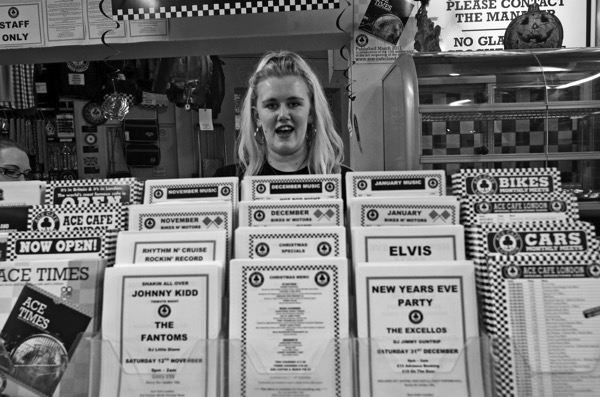
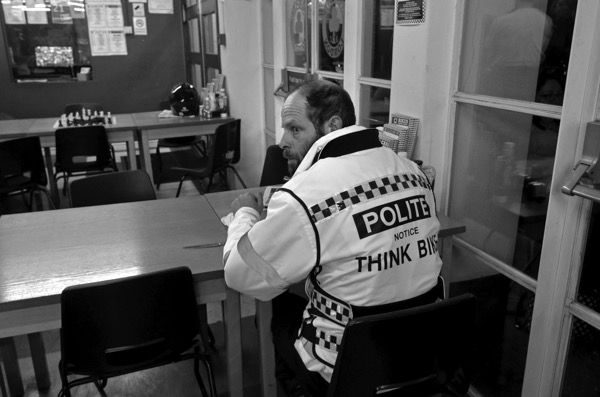
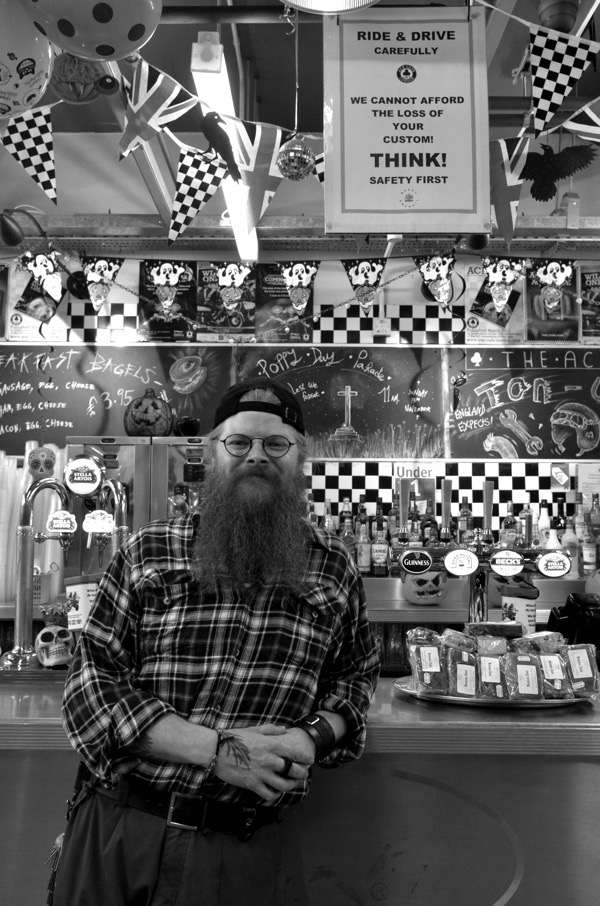
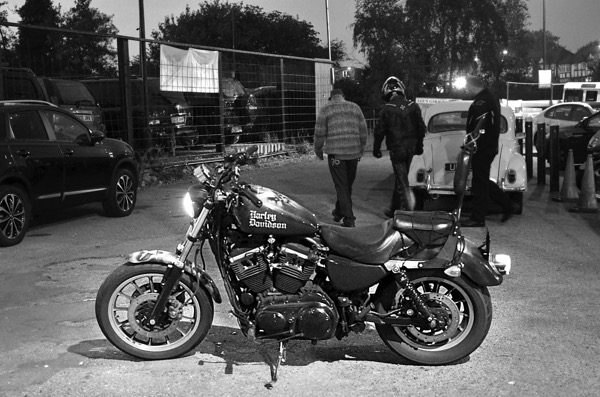
Contributing Photographer Bob Mazzer & I joined a Bike Couriers Reunion at the Ace Cafe on the North Circular recently. Despite their fearsome black leather outfits, we enjoyed a generous reception from the bikers. “They’re outsiders,” Bob explained to me, “So they welcomed us because they recognised we’re outsiders too.”
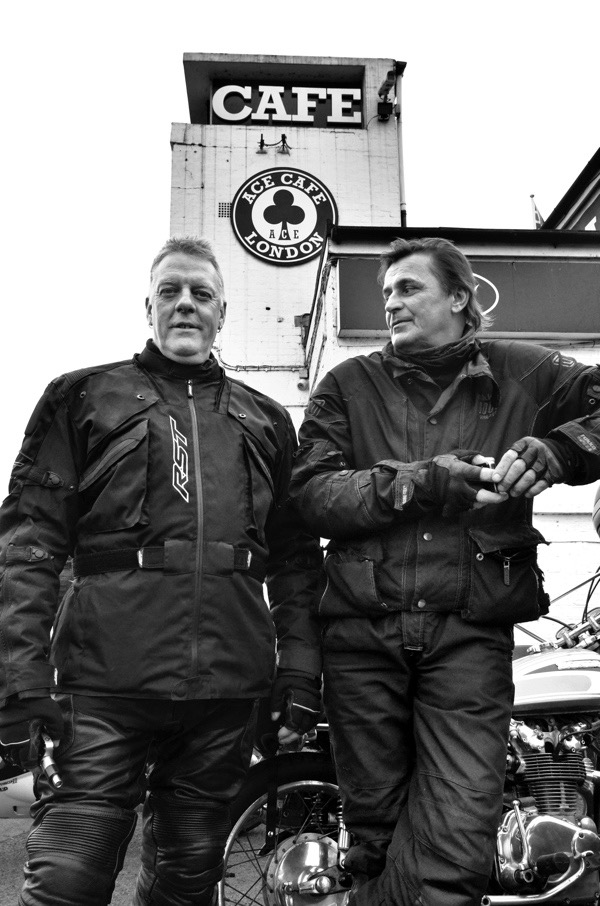

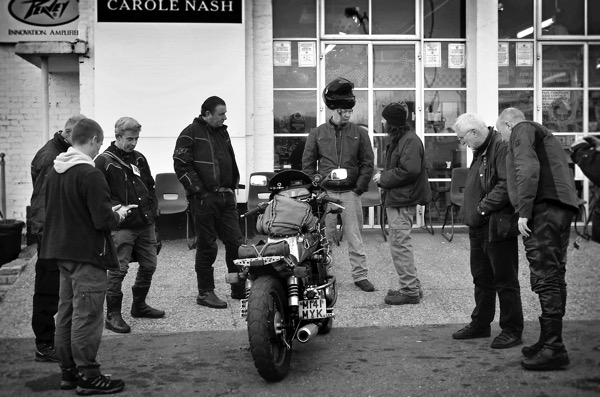
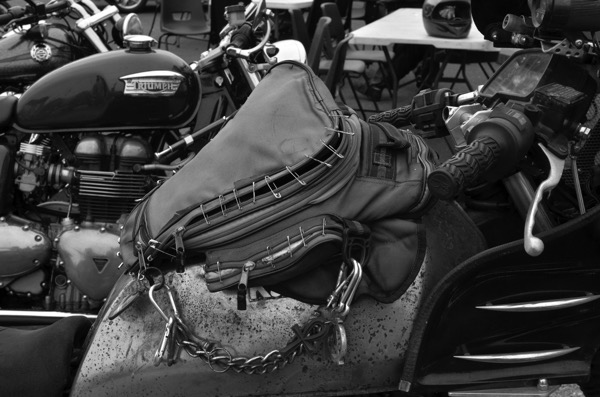
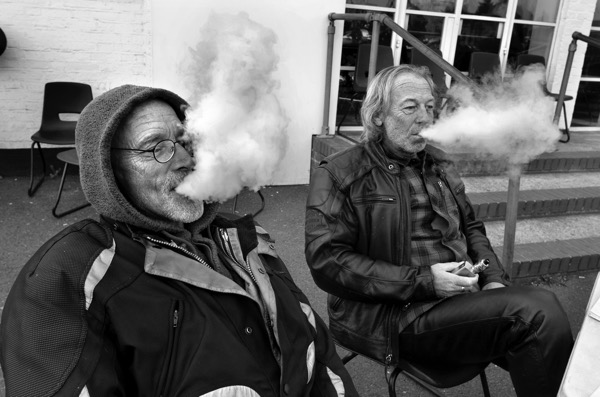






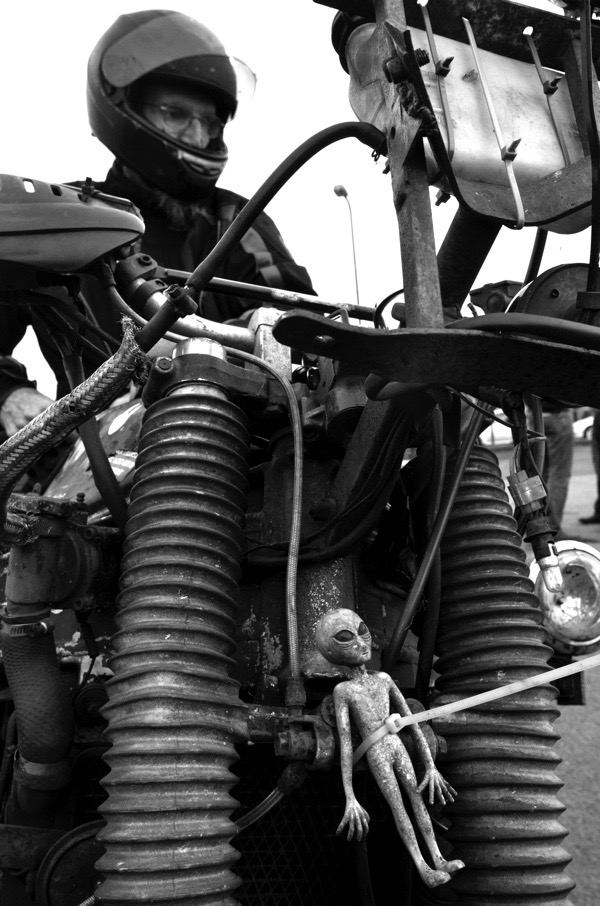


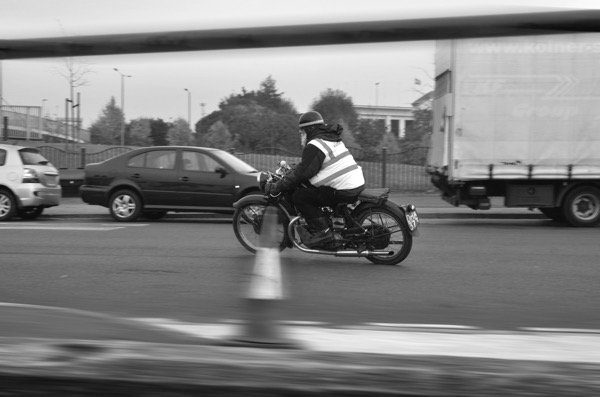
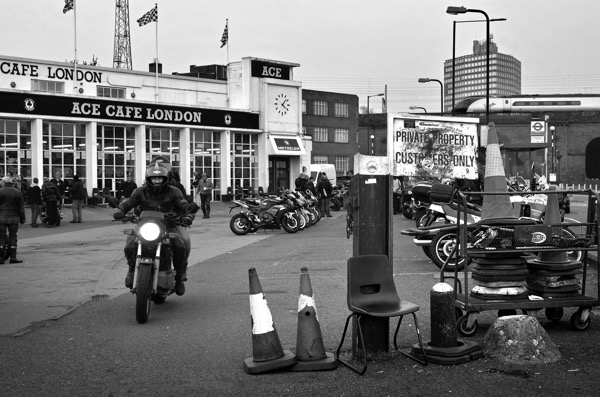
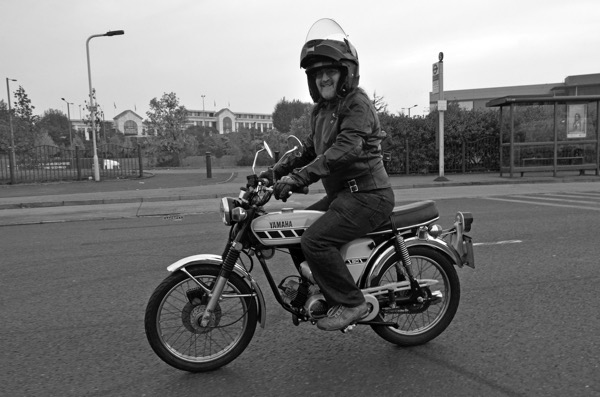
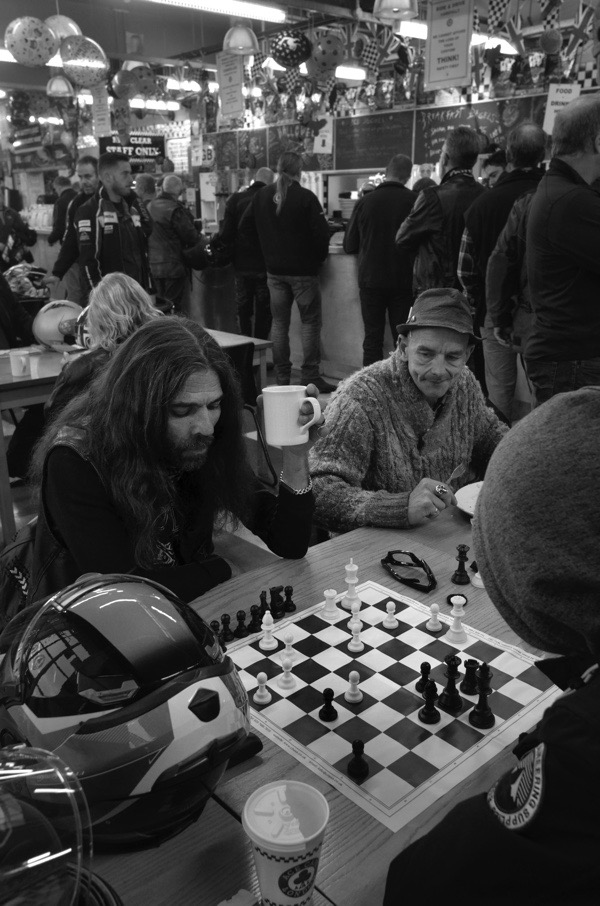
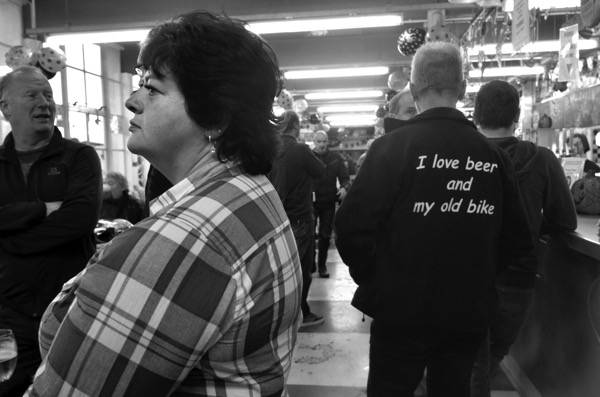

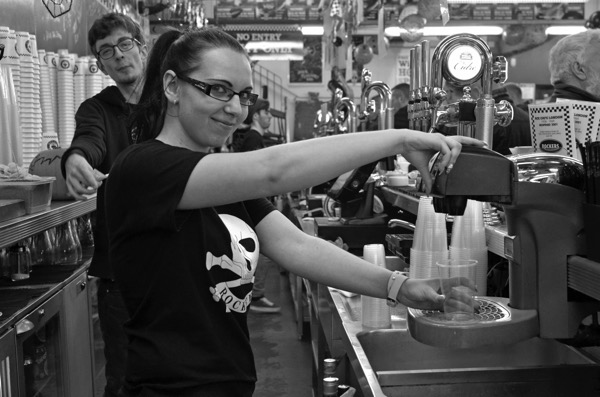
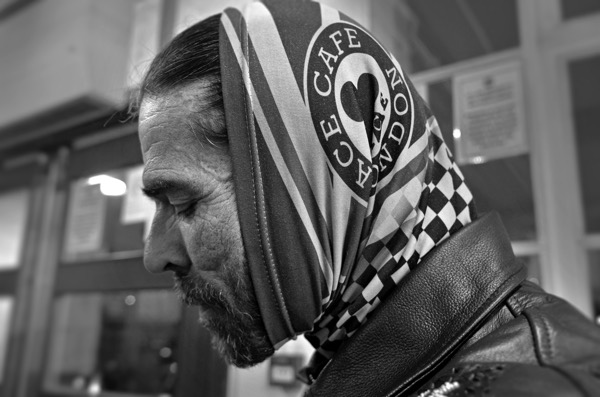

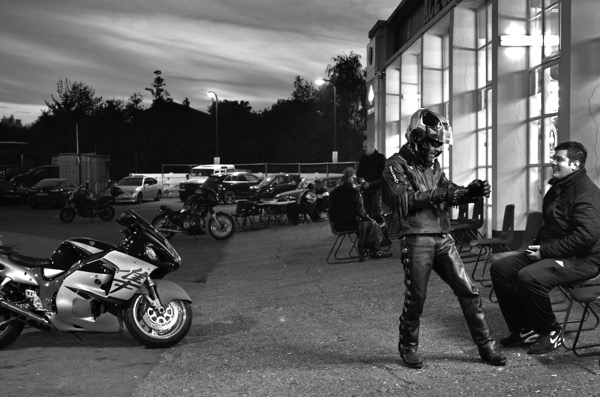
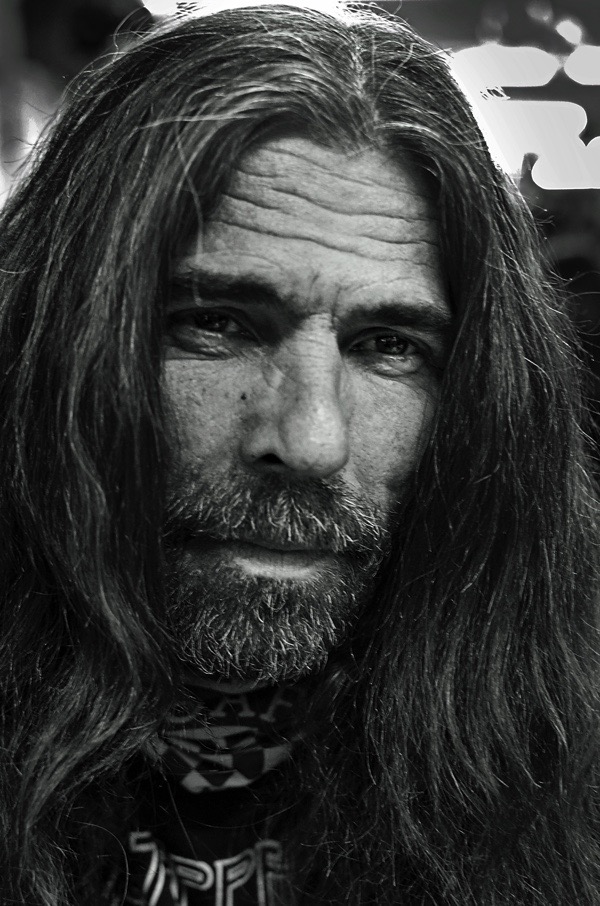
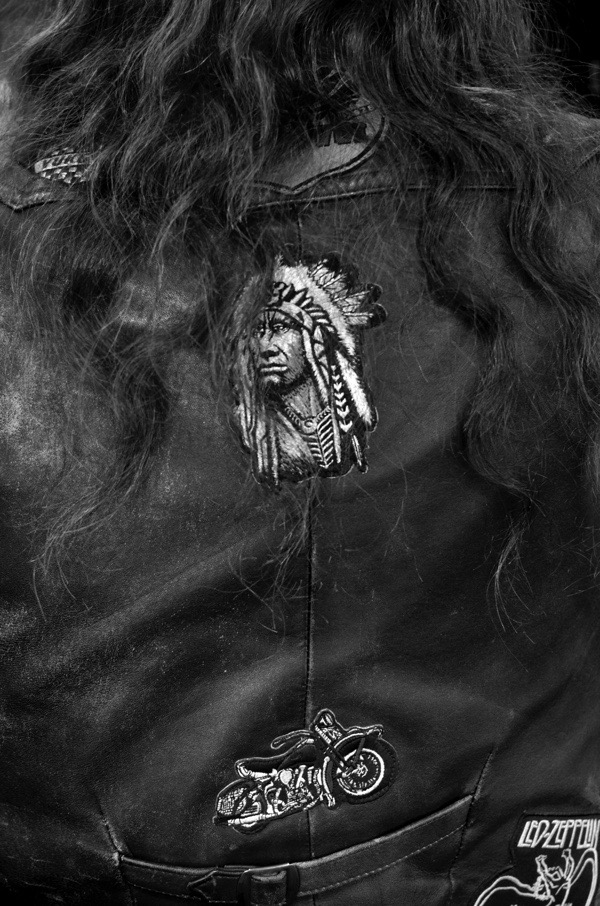


Photographs copyright © Bob Mazzer
Ace Cafe, North Circular Rd, London NW1
You may also like to take a look at these other photographs by Bob Mazzer
Bob Mazzer’s Street Photography
Richard Dighton’s City Characters, 1824
Fat cats in the City of London are nothing new as these elegant cartoons of Regency bankers by Richard Dighton that I discovered in the archive at the Bishopsgate Institute testify
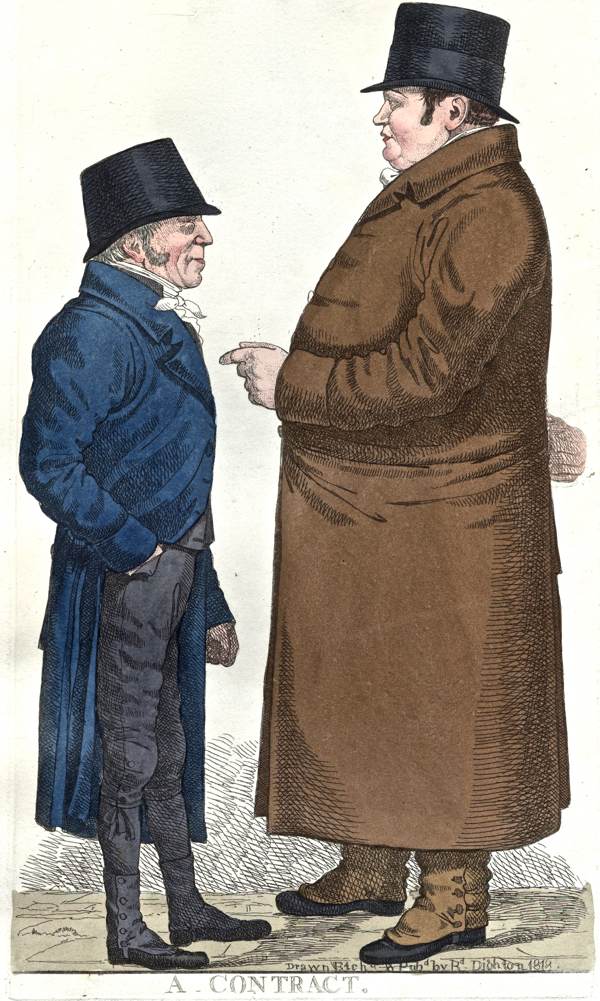
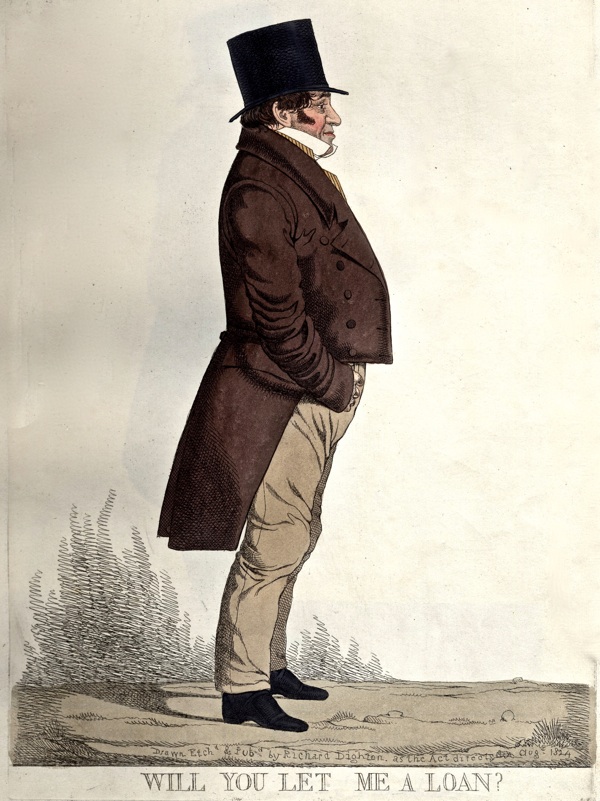
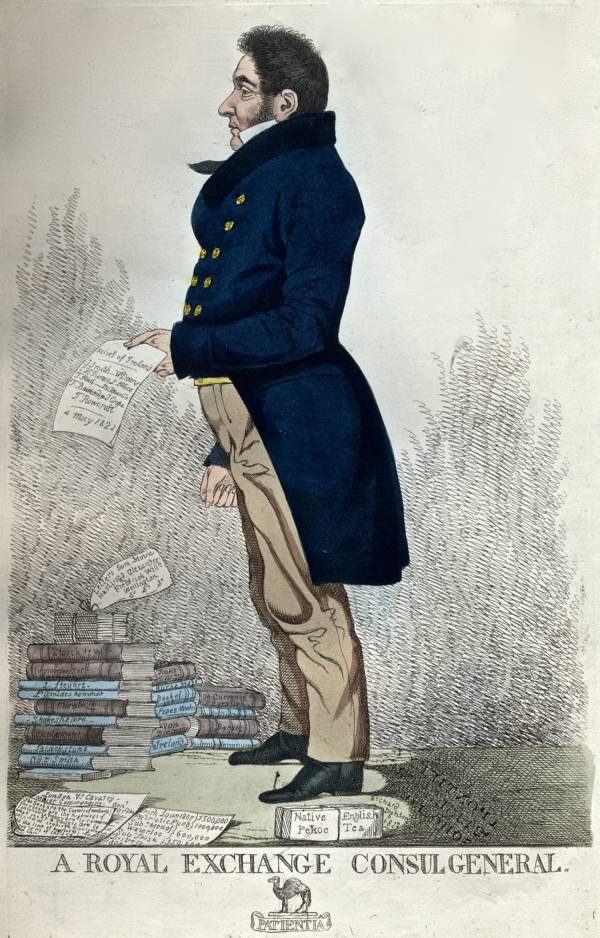
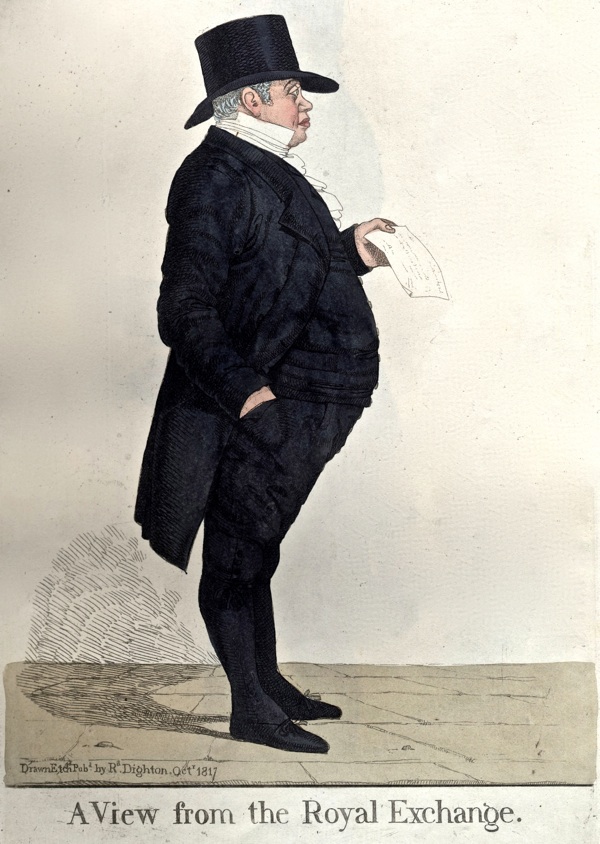
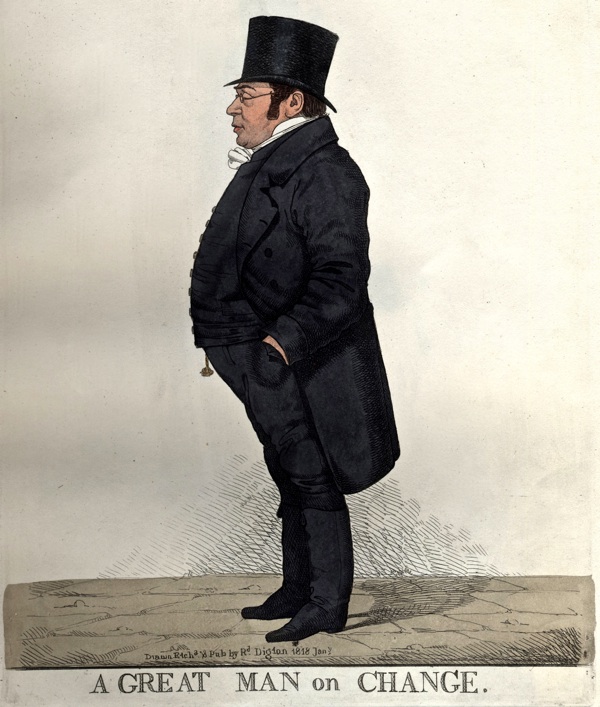

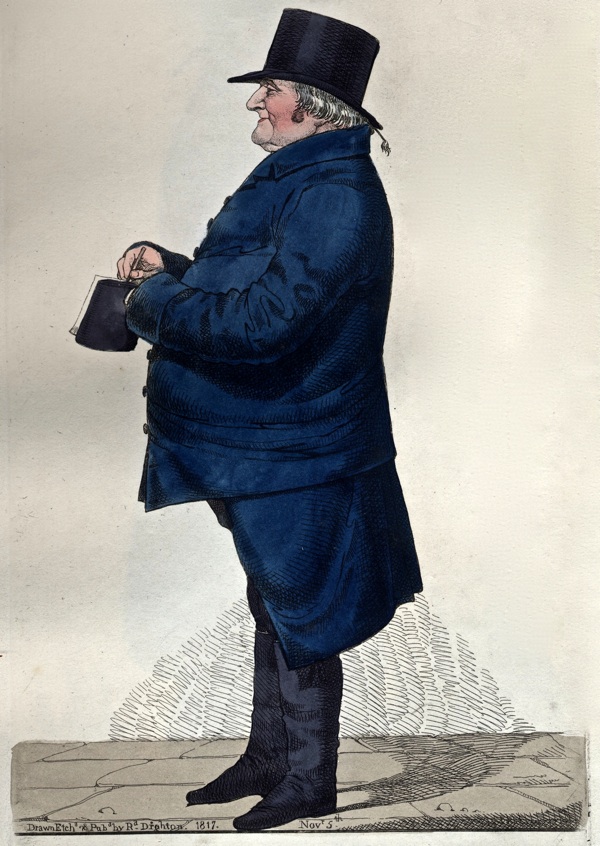
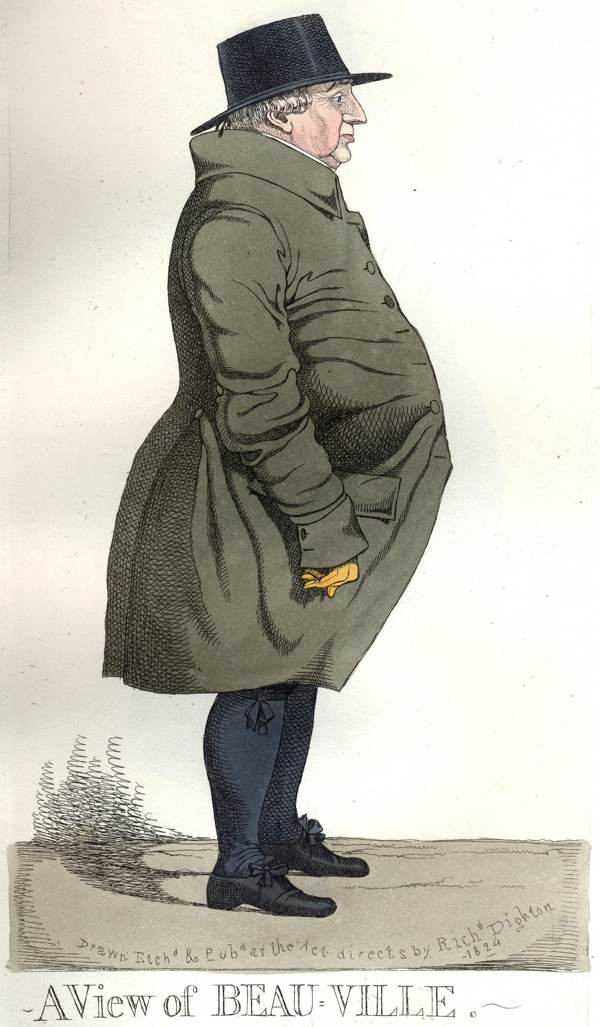

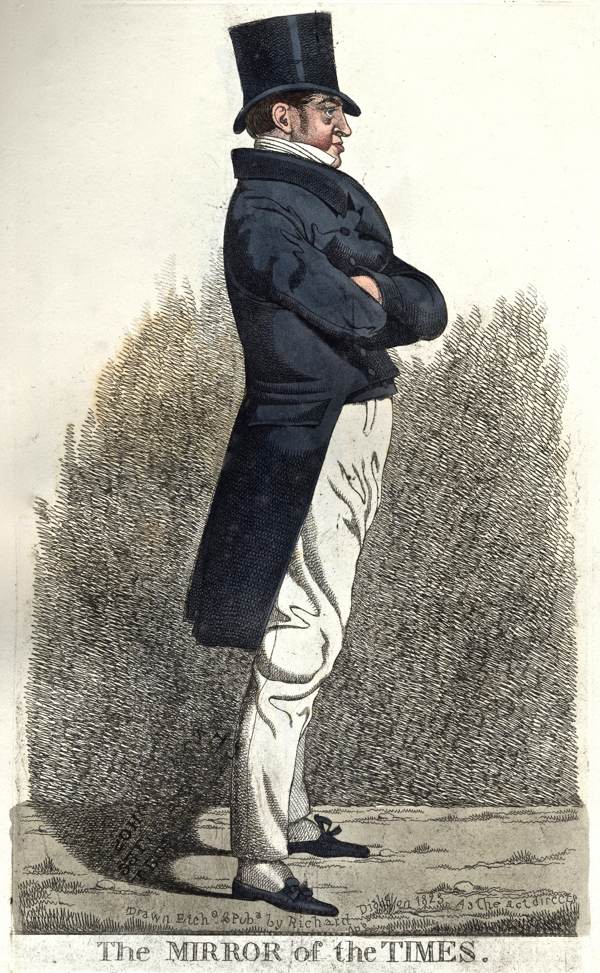
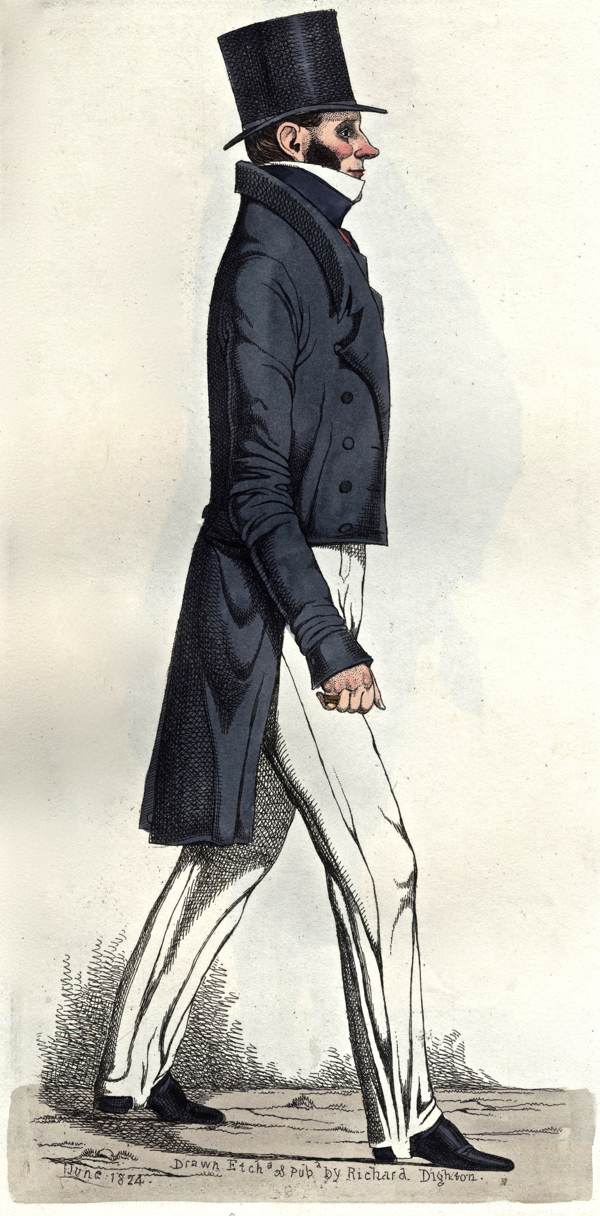
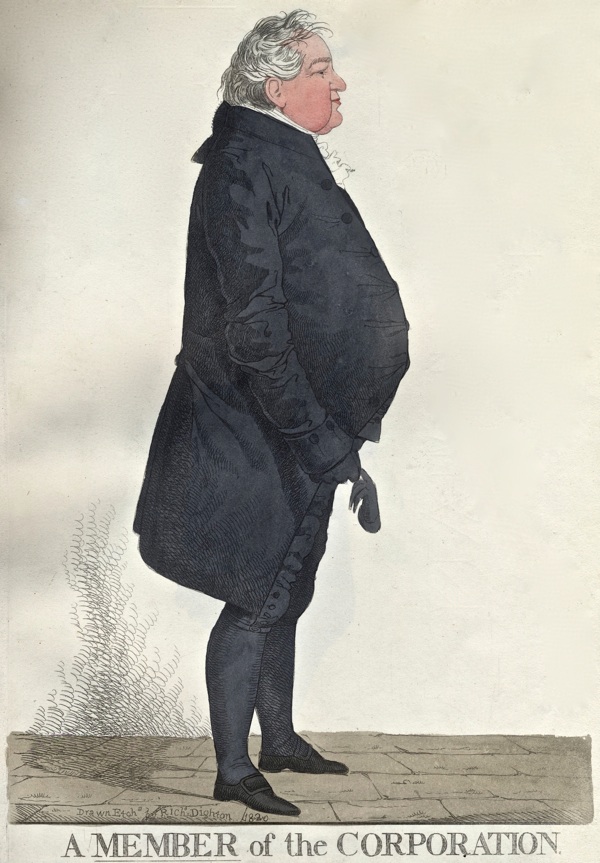
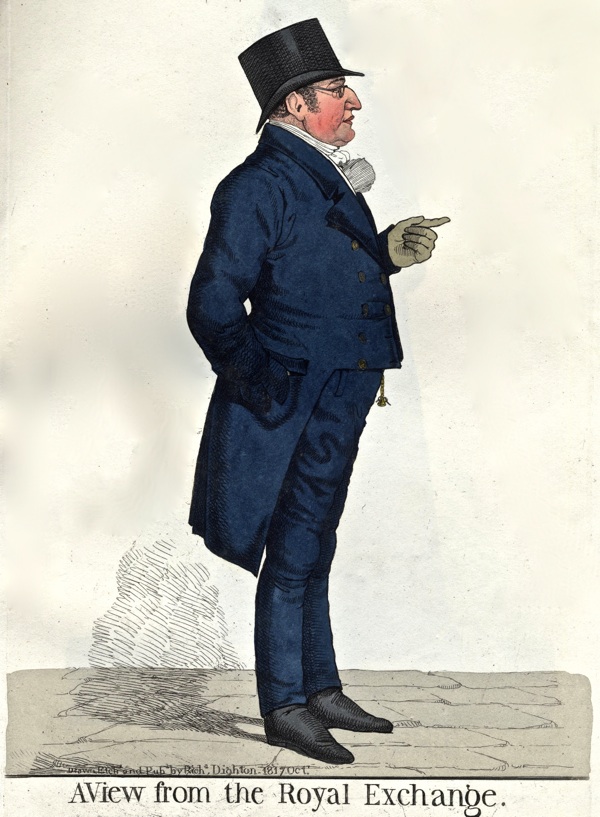
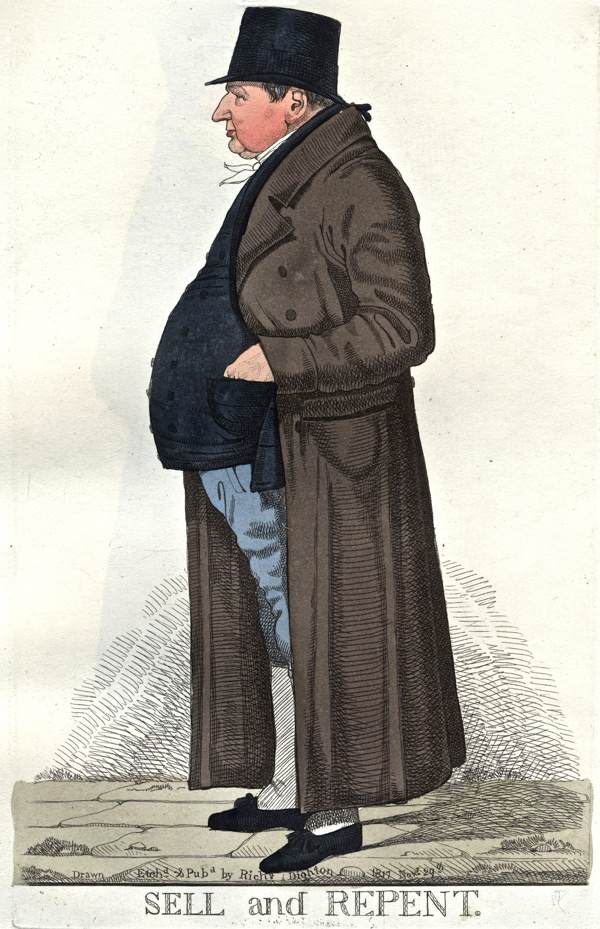
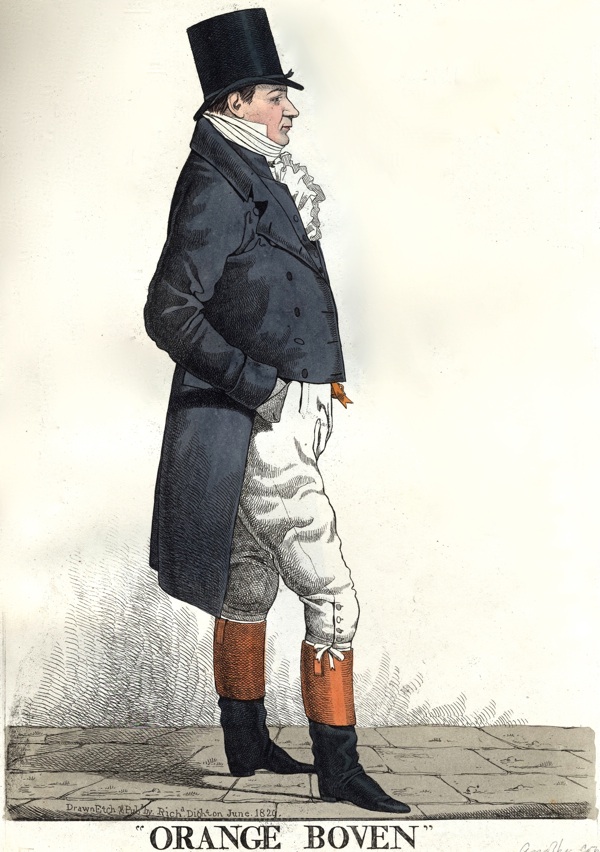
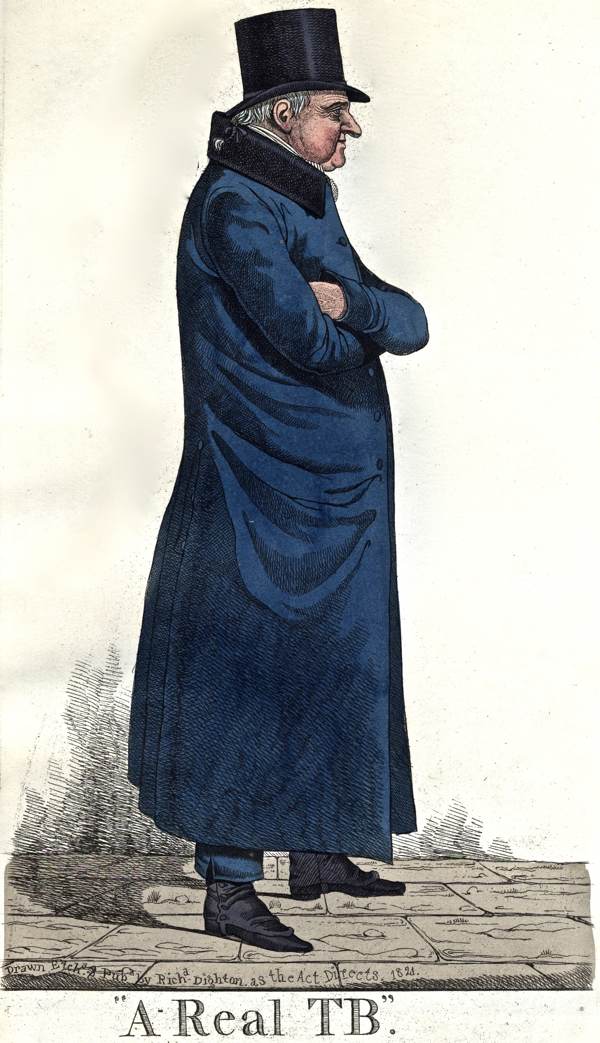
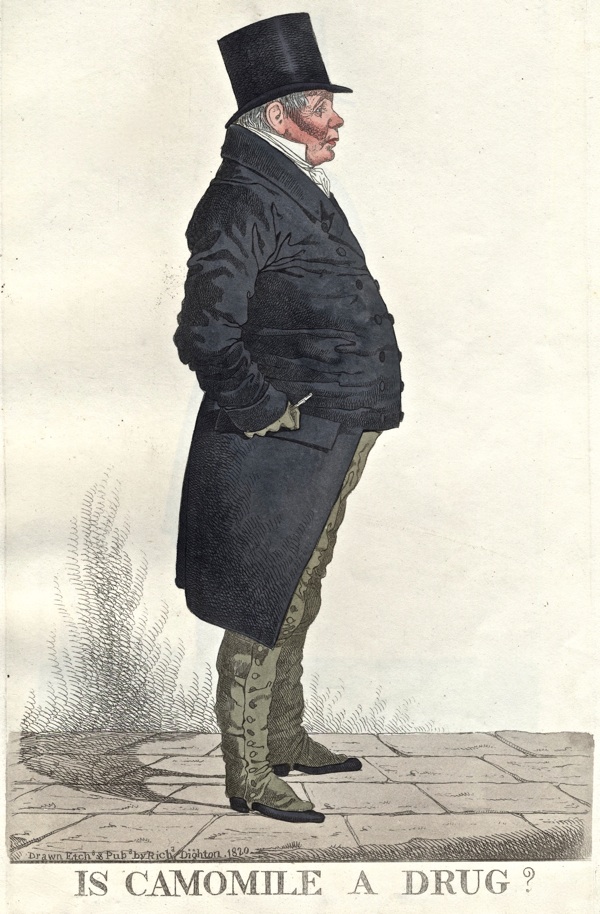

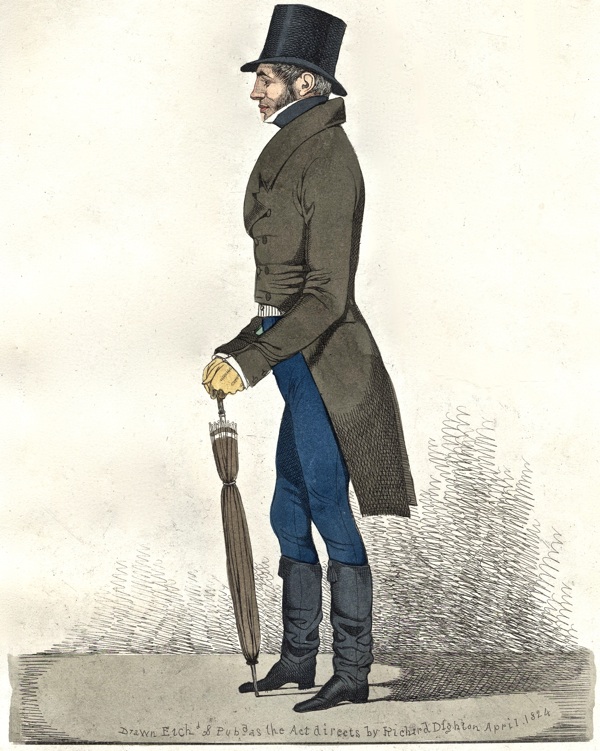
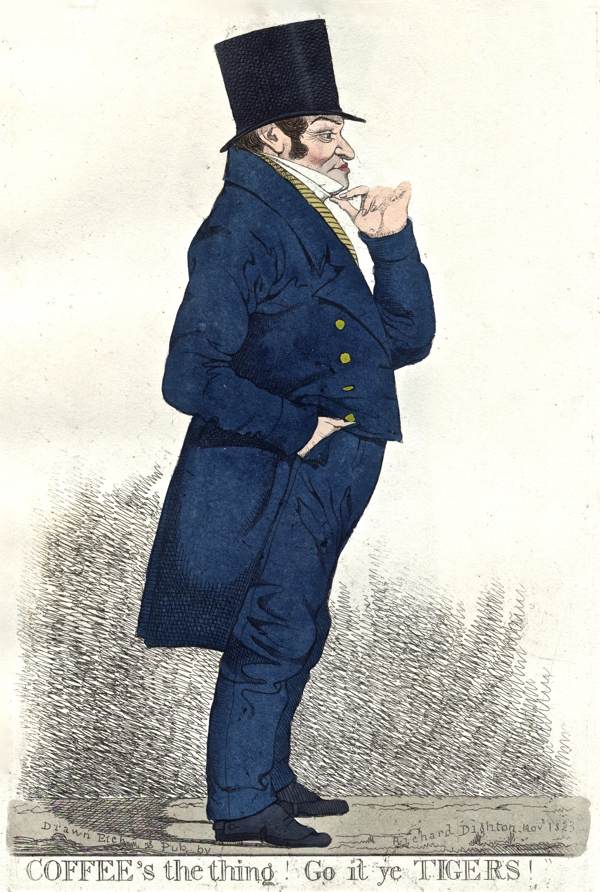
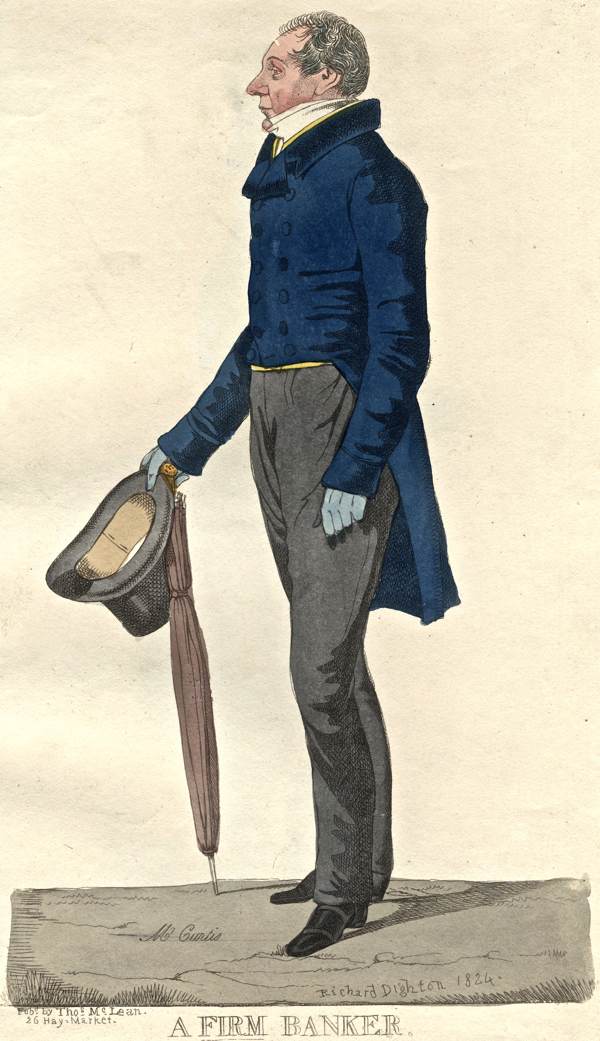
Images courtesy Bishopsgate Institute
You may also like to take a look at
Philip Cunningham’s Mile End Place
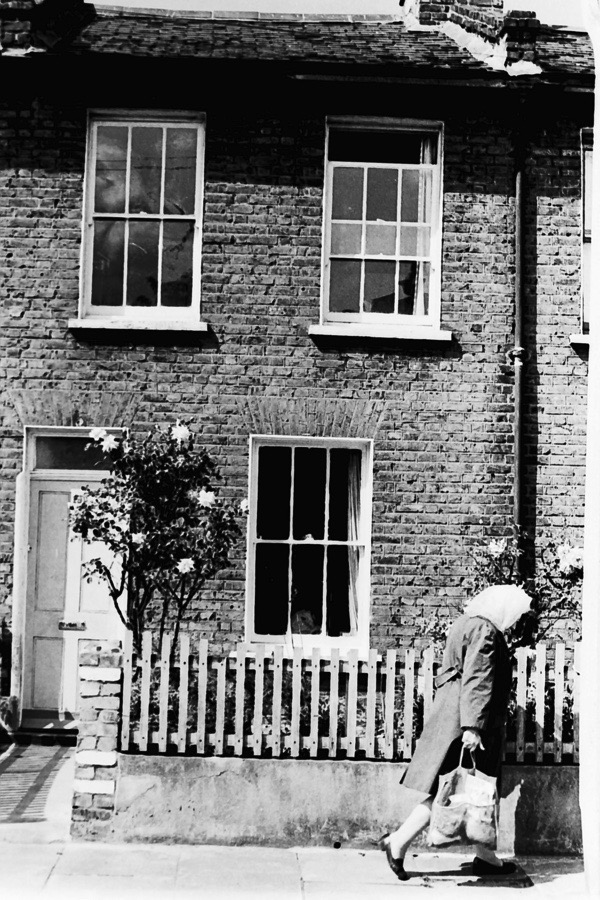
Mrs Johnson walks past 19 Mile End Place
Whenever I walk down the Mile End Rd, I always take a moment to step in through the archway and visit Mile End Place. This tiny enclave of early nineteenth century cottages sandwiched between the Velho and the Alderney Cemeteries harbours a quiet atmosphere that recalls an earlier, more rural East End and I have become intrigued to discover its history. So I was fascinated when Philip Cunningham sent me his pictures of Mile End Place from the seventies together with this poignant account of an unspoken grief from the First World War, still lingering more than fifty years later, which he encountered unexpectedly when he moved into his great-grandparents’ house.
“In 1971, my girlfriend – Sally – & I moved from East Dulwich to Mile End Place. It was number 19, the house where my maternal grandfather – Jack – had been born into a family of nine, and we purchased it from my grandfather’s nephew Denny Witt. The house was very cheap because it was on the slum clearance list but it was a lot better than the rooms we had been living in, even with an outside toilet and no bath.
There were just two small bedrooms upstairs and two small rooms downstairs. In my grandfather’s time, the front room was kept immaculate in case there might be a visitor and the sleeping was segregated, until Uncle Harry came back from the Boer War when he was not allowed to sleep with the other boys. For reasons left unexplained, he was banished to the front room and told he had better get married sharpish – which he did.
I first met my neighbour Mrs Johnson when gardening in the front of the house. I said ‘Morning,’ but there came no reply.‘What a nasty woman’ I thought, yet worse was to come. Mrs Johnson lived at the end of the street and two doors away lived a vague relative of hers who was married to an alcoholic. ‘She picked ‘im up in Jersey,’ I was told. He drank half bottles of whisky and rum, and threw the empties into the graveyard at the back of our houses – sometimes when they were half full.
I would often go to our outside toilet in socks and, on one occasion, nearly stepped upon pieces of broken glass that had been thrown into our backyard. At first, I assumed it was Paul – the graveyard keeper – and went straight round to his house in Alderney St. I nearly knocked his door down and was ready to flatten him, until he became very apologetic and explained that Mrs Johnson had told him we were students and always having parties. True in the first count, lies in the second. Mrs Johnson knew quite well who the culprit was, as did the everyone else in street. I was still angry, so I threw the glass back where it came from – which must have been a real chore to clear up on the other side
Sometime after all these events, Jane Plumtree – a barrister – moved into the street. She said ‘We must have street parties!’ and so we did. At the first of these, the longest established families in the street all had to sit together and – unfortunately – I was sat next to Mrs Johnson. She hissed and fumed, and turned her back on me as much as she could, until suddenly she turned to face me and said, ‘I knew your grandfather J-a–c—k, he came b-a–c—k!’ She spat the words out. I did not know what she was talking about so I just said, ‘Yes, he was a drayman.’
Later, I reported it over the phone to my Auntie Ethel. ‘Oh yes,’ she explained, ‘Mrs Johnson had three brothers and, when the First World War broke out, they thought it was going to be a splendid jolly. They signed up at once, even though two were under-age, and they were all dead in three months.’ Unlike my grandfather Jack, who came back.
Jack was married and living in Ewing St with his five children, but he was called up immediately war was declared because had been in the Territorial Army. He was present at almost every major piece of action throughout the First World War and, at some point, while driving an ammunition lorry, he got into the back and rolled a cigarette when there was no one around. He got caught and was sentenced to be shot, but – fortunately – someone piped up and declared they did not have enough drivers, so his punishment was reduced to six weeks loss of pay, which made my grandmother – to whom the money was due – furious!
When Jack and the other troops with him came under fire in a French village, he and an Irish soldier broke into a music shop for cover. On the wall was a silver trumpet which Jack grabbed at once, but his Irish companion grabbed the mouthpiece and would not let Jack have it unless he went into the street, amid the falling shells, to play. Reluctantly, Jack did this – playing extremely fast – and he brought the trumpet home with him to the East End.”
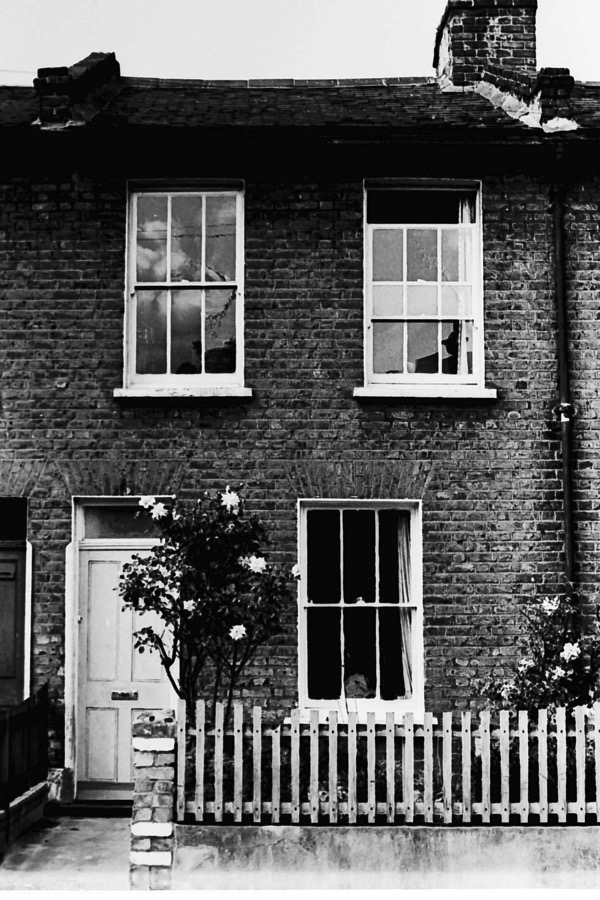 19 Mile End Place
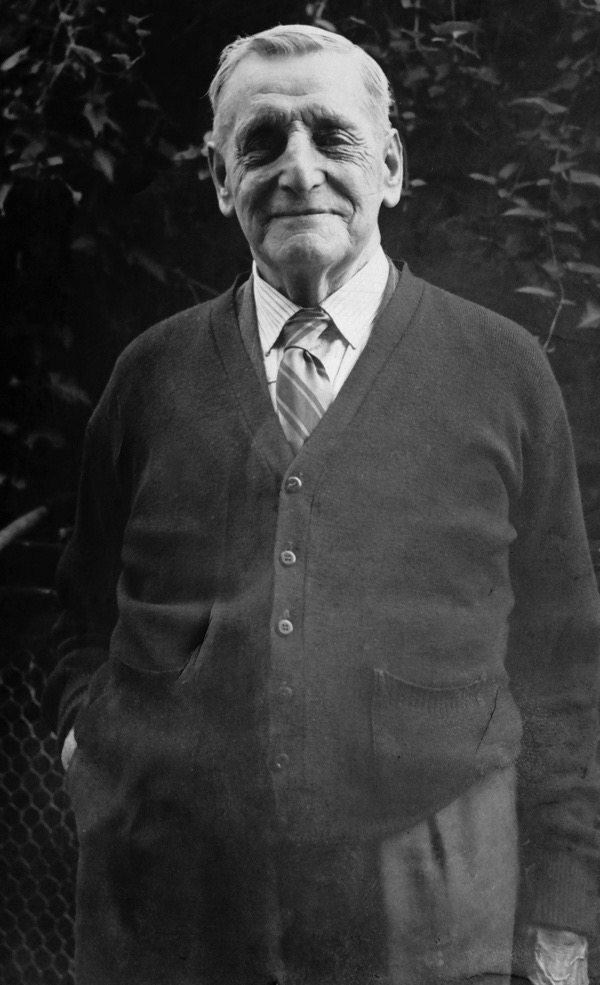
Philip’s grandfather Jack was born at 19 Mile End Place
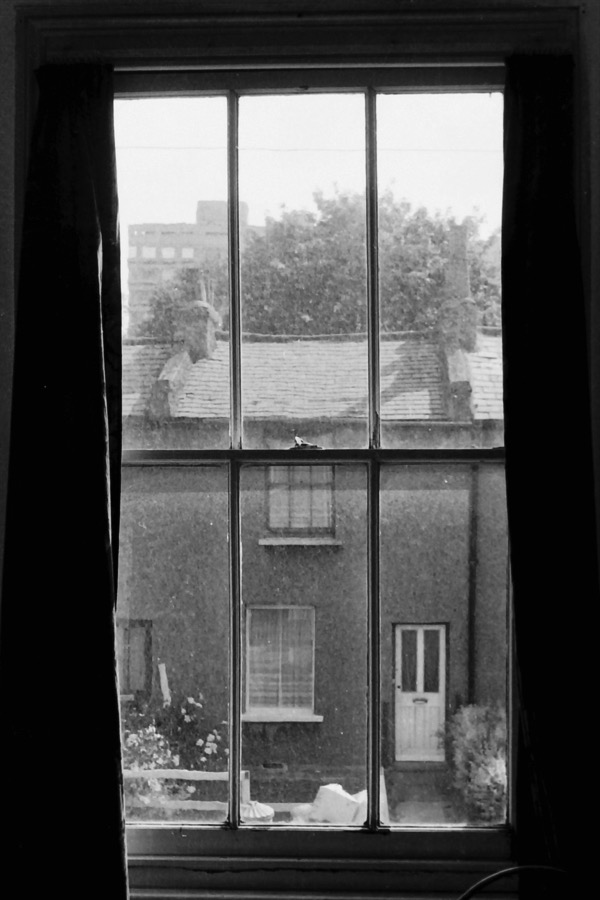
View from 19 Mile End Place
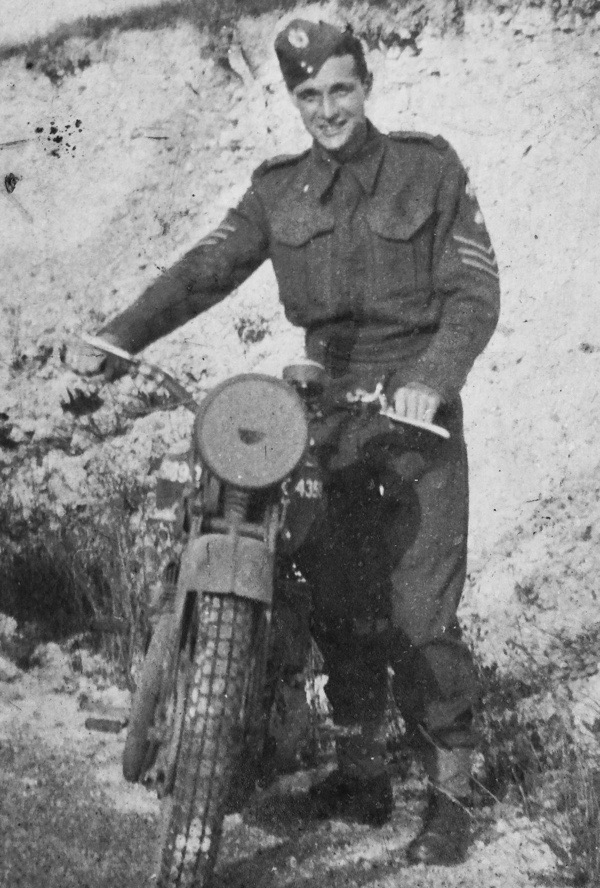
Philip purchased 19 Mile End Place from his cousin Danny Witt, photographed during World War II
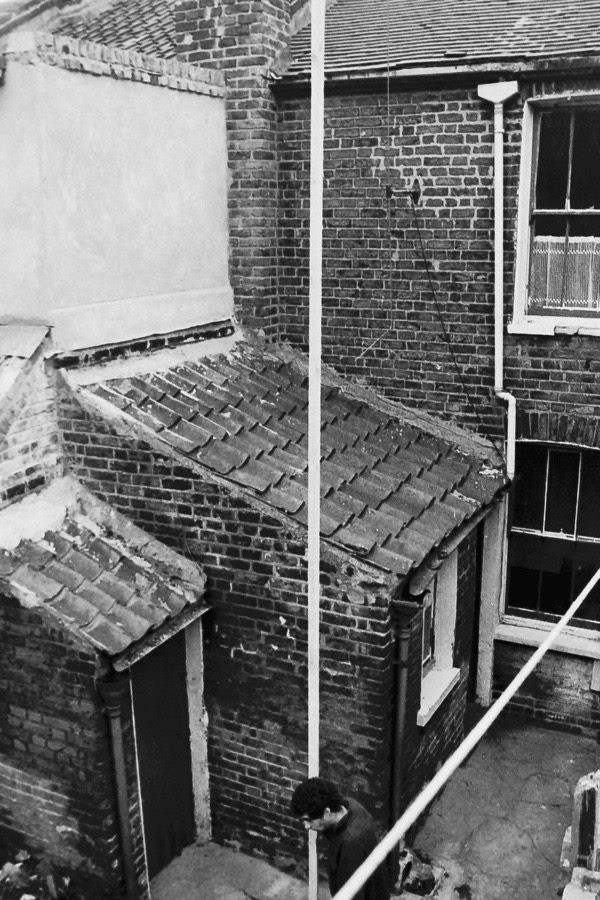
Outside toilet at 19 Mile End Place
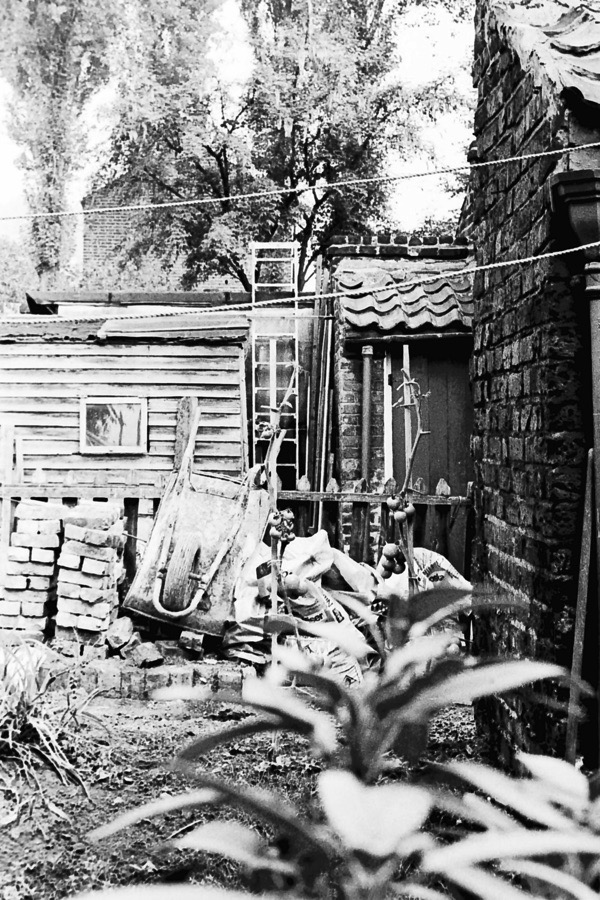
Backyard at 19 Mile End Place
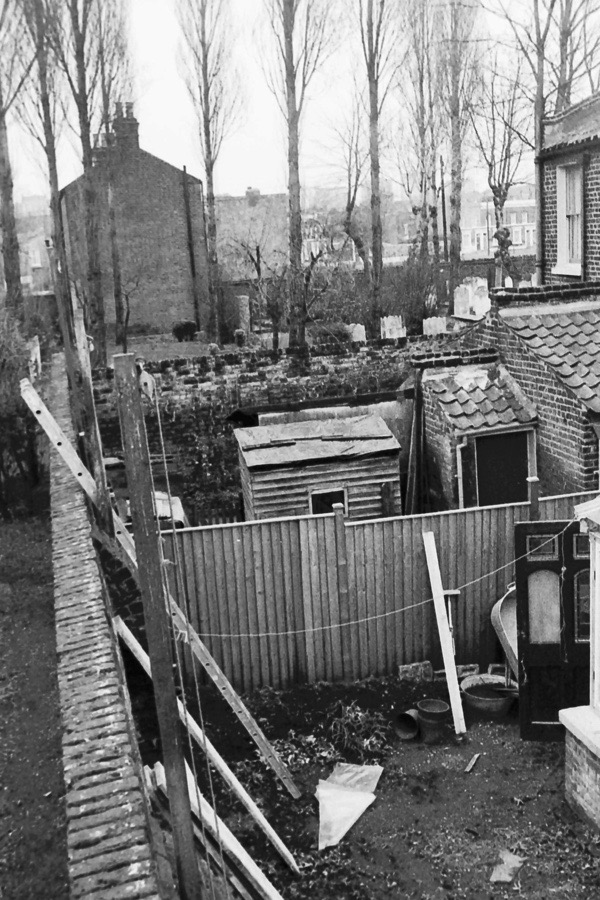
View towards the Alderney Cemetery with the keeper’s house in the distance
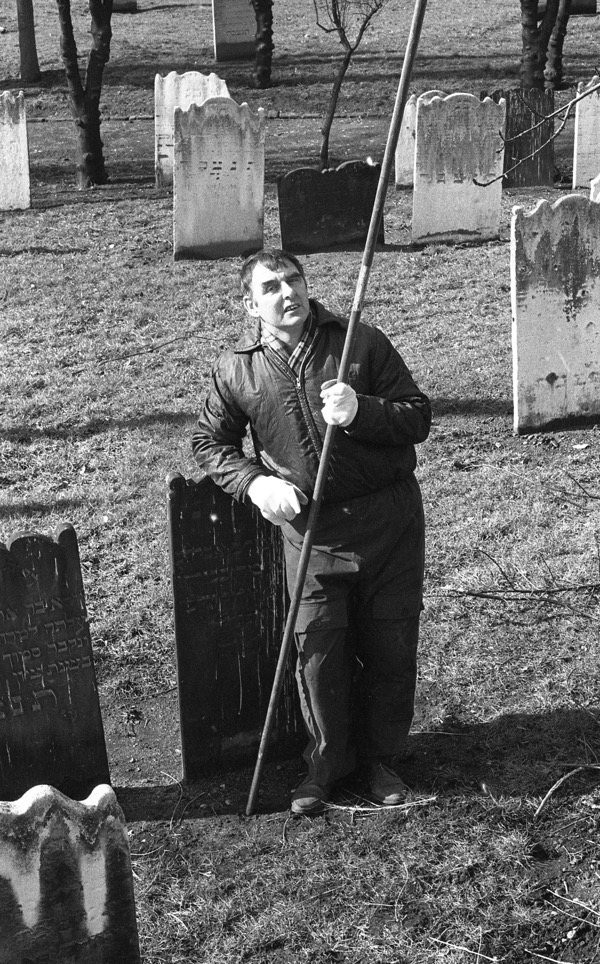
Paul Campkin, the Cemetery Keeper
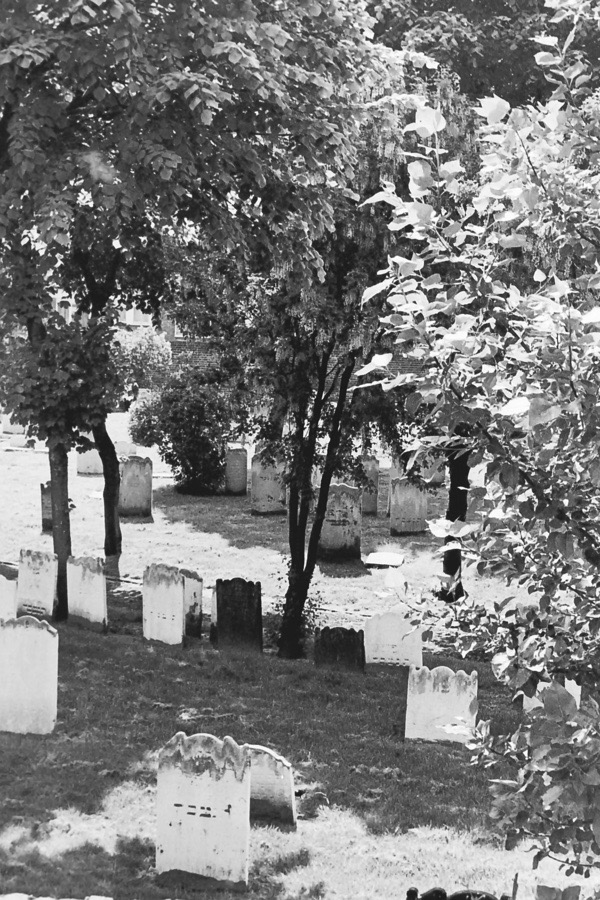
The Alderney Cemetery
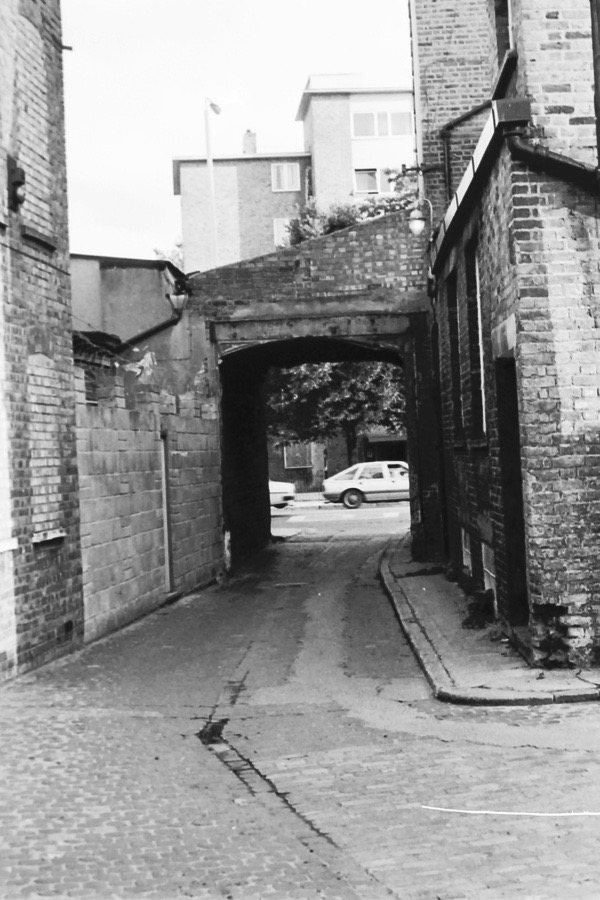
Looking out towards Mile End Rd
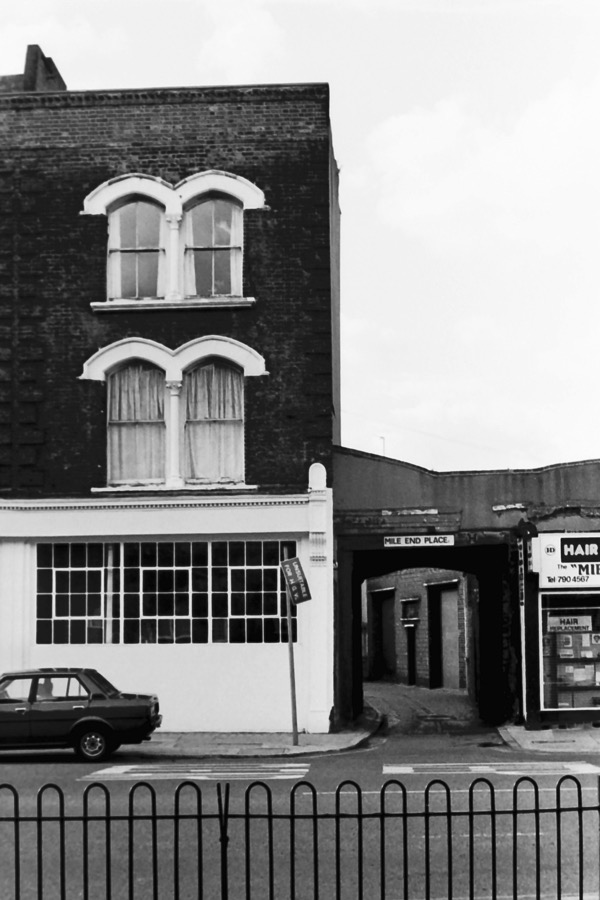
Entrance to Mile End Place from Mile End Rd
Photographs copyright © Philip Cunningham
You may also like to read about
So Long, Joan Naylor
Today we say farewell to Joan Naylor who died on 18th November, aged eighty-eight. She was the last of the residents of Bellevue Cottages in Stepney from the time when these were staff accommodation for the adjoining Charringtons Brewery and below you can read her story.

This is Joan Naylor, photographed in the garden of her house in Bellevue Place, the hidden terrace of nineteenth century cottages secluded at the rear of the former Wickhams’ department store in the Mile End Rd.
Joan moved into Bellevue Place with her husband Bill in 1956 when they were first married and they brought up their family there. “When we first moved in it was known as ‘Bunghole Alley’ and no-one wanted to live there,” she recalled with a shrug. Originally built as a crescent of cottages around a green which served in the Victorian era as tea gardens, Charringtons built a brewery on the site, lopping the terrace in half, constructing a wall round it and using the cottages for their key workers. Enclosed on all sides, there is a door in one wall that led directly into the brewery, which remains locked today, now the brewery is gone.
Joan’s husband, Bill, was a load clerk whose job it was to devise the most efficient delivery routes and loads for the draymen on the rounds of all the Charringtons pubs in the East End. When Joan arrived, the brewery workers started early, commencing each day with a few pints in the tap-room before beginning work, and Bill was able to pop home through the door in the wall at nine o’clock to enjoy breakfast with Joan.
“If you looked out of the bedroom window, you could see a pile of wooden barrels a hundred foot high, and the smell of stale beer permeated the air.” said Joan, recalling her first impressions.“Nothing had been changed in the house. The brewery brought in the decorators but we still had a tiny bathroom off the kitchen and an outside loo. It didn’t bother me. When you think we brought up six of us in that house – I remember the ice on the inside of the window! We used to cut up old barrels to light the fire and they’d burn really well because they had pitch in them.”
With pure joy, Joan remembered the days when there were around a dozen children, including her own, living in Bellevue Place. They all played together, chasing up and down the gardens, an ideal environment for games of hide and seek, and there were frequent parties when everyone celebrated together on birthdays, Christmas and Bonfire Night. “There was always a party coming up, always something to look forward to,” explained Joan, because it was not only the children who enjoyed a high old time in the secret enclave of Bellevue Place.
Although unassuming by nature, Joan became enraptured with delight as she explained that, since everyone knew each other on account of working together at the brewery, there was a constant round of parties for adults too. It was the arrival of Stan, the refrigeration engineer and famous practical joker, to live in the end cottage, that Joan ascribes as the catalyst for the Golden Age of parties in Bellevue Place. You can see Stan in the pith helmet in the photo below. When all the children were safely tucked up asleep (“We had children, we couldn’t go out“), the residents of Bellevue Place enjoyed lively fancy dress parties, in and out of the gardens, and each other’s houses too. “The word would go around from Stan and we would go round the charity shops to see what we could find, but no-one would tell anyone what their outfit was going to be. It was lovely. Everybody had fun and nobody carried on with each other’s wives.” Joan assured me.
Let us not discount the proximity of the brewery in our estimation of the party years at Bellevue Place because I doubt there was ever any shortage of drinks. Also, number one Bellevue Place, the large house at the beginning of the terrace, was empty and disused for many years, and the brewery even gave the residents a key, so it became the social venue and youth club for the terrace, with a snooker table, and a roof top that was ideal for firework parties. With all these elements at their disposal, the enterprising party animals of Bellevue Place became expert at making their own entertainment.
There is a bizarre twist to Joan’s account of the legendary parties at Bellevue Place, because she was born on the twenty-ninth of February, which means she only had a birthday every leap year. So, when she did have a birthday, Joan’s neighbours organised parties appropriate to the birthday in question. In the photo below you can see her reading a Yogi Bear annual as a present for her seventh birthday, when she was twenty-eight years old. I hope it is not indiscreet to reveal that Joan did reach her twenty-first birthday.
It is apparent that the mutual support Joan enjoyed amongst the women in her terrace, who became her close friends, and the camaraderie shared by the men, who worked together in the brewery – all surrounded by the host of children that played together – created an exceptionally warm and close-knit community in Bellevue Place, that became in effect an extended family. Even though they did not have much money and lived together in a house that many would consider small for six, Joan’s memories of her own family life were framed by this rare experience of the place and its people in this particular circumstance, and it is an experience that many would envy.
Eventually, Joan moved out of Bellevue Place for good, but she had become the resident who had lived there the longest and became the living repository of its history. I visited her in sheltered housing in Bethnal Green where she told me her beautiful stories of the vibrant social life of this modest brewery terrace, while her son John, who was a regular visitor, worked on his handheld computer in the corner of the room.
“We were very lucky to have lived down there to bring up the family,” said Joan, her eyes glistening with happiness, as she spread out her collection of affectionate and playful photographs, cherishing the events which incarnate the highlights of her existence in Bellevue Place. She may have first known it as “Bunghole Alley,” but for Joan Naylor “Bellevue Place” lived up to the promise of its name.

Joan, as flapper, with her neighbour Harry

Joan (holding the glass) and her neighbours as hippies
 Lil, Teddy and Tilly, Joan’s neighbours in Bellevue Place
 Joan with her husband Bill, and Mrs Boxall who had lived the longest in Bellevue Place at that time
 One of Joan’s birthday parties, with presents appropriate to her seventh birthday

Joan Naylor
You may like to take a look at these Charringtons pubs
On St Nicholas’ Eve
On St Nicholas Eve, Paul Bommer tells the tale of St Nicholas and Gimlet Bar are serving cocktails at Leila’s Shop tonight from 6-9pm if you fancy a seasonal celebration…

Illustration by Paul Bommer
St Nicholas was the greek Bishop of Myra (now Demre in Lycia, part of modern-day Turkey) in the early fourth Century AD. Many miracles are attributed to his intercession and, over the centuries, he became a hugely popular saint. He had a reputation for secret gift-giving, such as putting coins in the shoes of those who left them out for him, and thus became the model for Santa Claus, whose English name comes from the Dutch Sinterklaas (St Nick). In 1087 his relics were furtively transported to Bari in South-Eastern Italy, which is why is he sometimes referred to Saint Nicholas of Bari. His feastday is today, December 6th. Happy St Nick’s Day!
Saint Nicholas is the patron saint of sailors, merchants, archers, thieves, pawnbrokers, children, and students (amongst others) throughout Christendom. He is show here in classical episcopal attire, with a few of the symbols assigned to him on the right – the three golden balls, a ship and infants in a barrel.
The most famous story involves helping out a poor man with three daughters. The father couldn’t afford a dowry for his three girls – it would have meant they remained unmarried and possibly be forced into prostitution. St Nick interceded by secreting donating three purses of gold coins over three nights, one for each of the three daughters. In some stories he threw the purses in through a window to avoid being identified as the donor, in others he dropped the money down the chimney, where it landed – plop – into the stocking of one of the girls. Hence the pawnbroker’s balls, Christmas stockings and gift-giving associated with the saint.
Another legend tells how a famine struck the land and a malicious butcher lured three little children into his house, where he slaughtered and butchered them, placing their remains in a barrel to cure, planning to sell them off as ham. Saint Nicholas, visiting the region to care for the hungry, not only saw through the butcher’s horrific crime but also resurrected the three boys from the barrel by his prayers. Hence the symbol of kids in a barrell or vat (I have only shown two not three as I ran our of space!) and hence St Nick’s association with children.
However, it is likely that the legend grew up from a misinterpretation of ancient icons and images of the saint where he is shown baptising heathens in a font. To show reverence for the saint, the men being christened were shown small, and over time, misread as being nippers in brine.
Blackie, The Spitalfields Market Cat

Here you see Blackie, the last Spitalfields market cat, taking a nap in the premises of Williams Watercress at 11 Gun St. Presiding over Blackie – as she sleeps peacefully among the watercress boxes before the electric fire with her dishes of food and water to hand – is Jim, the nightman who oversaw the premises from six each evening until two next morning, on behalf of Len Williams the proprietor.
This black and white photograph by Robert Davis, with a nineteenth century barrow wheel in the background and a nineteen fifties heater in the foreground, could have been taken almost any time in the second half of the twentieth century. Only the date on the “Car Girls’ Calendar” betrays it as 1990, the penultimate year of the Spitalfields Fruit & Vegetable Market, before it moved East to Stratford.
In spite of Jim the nightman’s fond expression, Blackie was no pet, she was a working animal who earned her keep killing rats. Underneath the market were vaults to store fresh produce, which had to be sold within three days – formalised as first, second and third day prices – with each day’s price struck at two in the morning. But the traders often forgot about the fruit and vegetables down in the basement and it hung around more than three days, and with the spillage on the road which local residents and the homeless came to scavenge, it caused the entire market to become a magnet for vermin, running through the streets and into the labyrinth beneath the buildings.
It must have been paradise for a cat that loved to hunt, like Blackie. With her jet black fur, so black she was like a dark hole in the world running round on legs, vanishing into the shadow and appearing from nowhere to pounce upon a rat and take its life with her needle-sharp claws, Blackie was a lethally efficient killer. Not a submissive creature that could be easily stroked and petted as domestic cats are, Blackie was a proud beast that walked on her own, learnt the secret of survival on the streets and won independent status, affection and respect through her achievements in vermin control.
“They were all very pleased with Blackie for her great skill in catching rats, she was the last great market cat.” confirmed Jim Howett, a furniture maker who first met Blackie when he moved into a workshop above the watercress seller in 1988. “The other traders would queue up for kittens from Blackie’s sister’s litters because they were so good at rat-catching. Blackie brought half-dead rats back to teach them how to do it. Such was Blackie’s expertise, it was said she could spot a poisoned rat at a hundred feet. The porters used to marvel that when they said, ‘Blackie, there’s a rat,’ Blackie would focus and if the rat showed any weakness, would wobble, or walk uncertainly, she would turn her back, and return to the fire – because the rat was ill, and most likely poisoned. And after all, Blackie was the last cat standing,” continued Jim, recounting tales of this noble creature that has become a legend in Spitalfields today. “The story was often told of the kitten trained by Blackie, taken by a restaurant and hotel in the country. One day it brought a half-dead rat into the middle of a Rotary Club Function, seeking approval as it had learnt in Spitalfields, and the guests ran screaming.”
The day the Fruit & Vegetable Market left in 1991, Blackie adjusted, no longer crossing the road to the empty market building instead she concentrated on maintaining the block of buildings on Brushfield St as her territory by patrolling the rooftops. By now she was an old cat and eventually could only control the three corner buildings, and one day Charles Gledhill a book binder who lived with his wife Marianna Kennedy at 42 Brushfield St, noticed a shadow fly past his window. It was Blackie that he saw, she had fallen from the gutter and broken a leg on the pavement below. “We all liked Blackie, and we took care of her after the market left,” explained Jim, with a regretful smile, “so we took her to the vet who was amazed, he said, ‘What are you doing with this old feral cat?’, because Blackie had a fierce temper, she was always hissing and growling.”
“But Blackie recovered, and on good days she would cross the road and sun herself on palettes, although on other days she did not move from the fire. She became very thin and we put her in the window of A.Gold to enjoy the sun. One day Blackie was stolen from there. We heard a woman had been seen carrying her towards Liverpool St in a box but we couldn’t find her, so we put up signs explaining that Blackie was so thin because she was a very old cat. Two weeks later, Blackie was returned in a fierce mood by the lady who taken her, she apologised and ran away. Blackie had a sojourn in Milton Keynes! We guessed the woman was horrified with this feral creature that growled and scratched and hissed and arched its back. After that, Blackie got stiffer and stiffer, and one day she stood in the centre of the floor and we knew she wasn’t going to move again. She died of a stroke that night. The market porters told me Blackie was twenty when she died, as old as any cat could be.”
Everyone knows the tale of Dick Whittington, the first Lord Mayor of London whose cat was instrumental to his success. This story reminds us that for centuries a feline presence was essential to all homes and premises in London. It was a serious business to keep the rats and mice at bay, killing vermin that ate supplies and brought plague. Over its three centuries of operation, there were innumerable generations of cats bred for their ratting abilities at the Spitalfields Market, but it all ended with Blackie. Like Tess of the D’Urbevilles or The Last of the Mohicans, the tale of Blackie, the Last Great Spitalfields Market Cat contains the story of all that came before. Cats were the first animals to be domesticated, long before dogs, and so our connection with felines is the oldest human relationship with an animal, based up the exchange of food and shelter in return for vermin control.
Even though Blackie – who came to incarnate the spirit of the ancient market itself – died in 1995, four years after the traders left, her progeny live on as domestic pets in the East End and there are plenty of similar black short-haired cats with golden eyes around Spitalfields today. I spotted one that lives in the aptly named Puma Court recently, and, of course, there is Madge who resides in Folgate St at Dennis Severs’ House, and my own cat Mr Pussy whose origins lie in Mile End but who has shown extraordinary prowess as a hunter in Devon – catching rabbits and even moorhens – which surely makes him a worthy descendant of Blackie.

Blackie at 42 Brushfield St

Blackie in her final years, in 1991/2

Mid-nineteenth century print of Dick Whittington & his cat
You may also like to read about
John Leighton’s Cries Of London
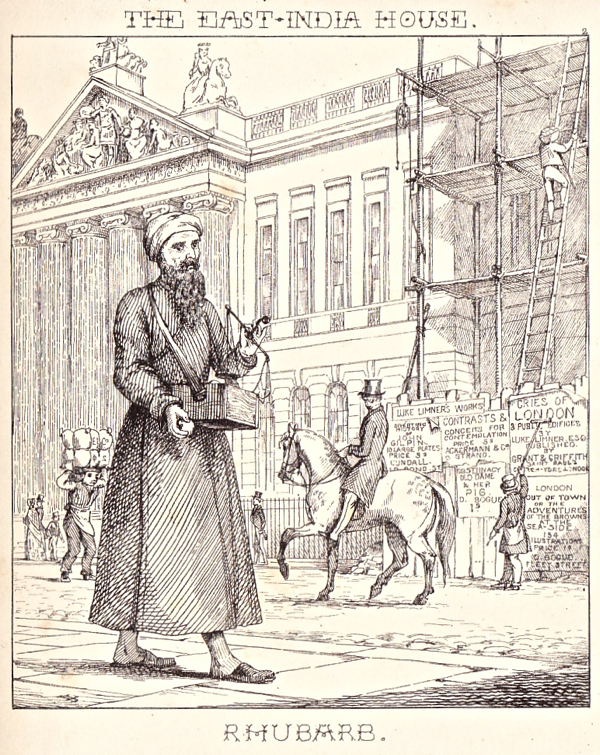
John Leighton’s ‘London Cries & Public Edifices’ were published in 1851 under his pseudonym of ‘Luke Limner.’ Today Leighton is remembered primarily for his designs for book bindings but his ingenious Cries of London evoke the long-lost street life of the capital with sympathy and sly humour.
This Turkish rhubarb seller in Leadenhall St fascinates me, especially as fresh rhubarb is sold by the Costard-Monger in another plate, yet since Leighton refers to rhubarb here as a drug and it is being sold in dried form, I conclude that this gentleman is selling rhubarb as a laxative. I leave you to imagine what cry might be appropriate, although I understand the phrase “Fine Turkey Rhubarb!” was sufficient to get the message across. In fact, John Leighton himself was not averse to a little hawking and if you study the hoardings closely, you will see they advertise his other self-published works.
The Cherry Seller, The Milk Maid and The Bay Seller are elegant young women presenting themselves with poise to catch the attention of the viewer, but in engraving of The Match Seller a different sensibility is at work. The nature of the viewer is specified through the shadow of the lady and gentleman approaching the Bank of England – and the anxious expression upon the seller’s face underlines the irony of the lowliest vendor standing in front of the symbol of the greatest wealth.
Each of Leighton’s characters have vivid life, as if they are paying rapt attention – like the Cats’ & Dogs’ Meat Seller in Smithfield, surrounded by dogs and cats, and just waiting for an animal lover to come along with cash to feed the hungry. Some of these engravings appear to be portraits, because who would invent the one-legged Chair Mender or the flamboyant Costard Monger or the crone Watercress Seller who appears to have walked out a fairy tale? The hunched posture of the Umbrella Mender tells you everything about his profession, while the Hot Potato Seller jumping to keep warm in the snow suggests direct observation from life.
It is remarkable how many of the landmarks of 1851 stand unchanged – in the City of London, where John Soane’s Bank of England, the Mansion House and the Royal Exchange face each other today just as they did then, and further west, Charing Cross Station and Trafalgar Square are as we know them. At first, I thought the sellers and the buildings looked as if they were from separate drawings that had been pasted together, until I realised that this disparity is the point – the edifices of wealth and the occupations of the poor.

The Tinker is swinging his fire-pot to make it burn, having placed his soldering iron in it, and is proceeding to some corner to repair the saucepan he carries.
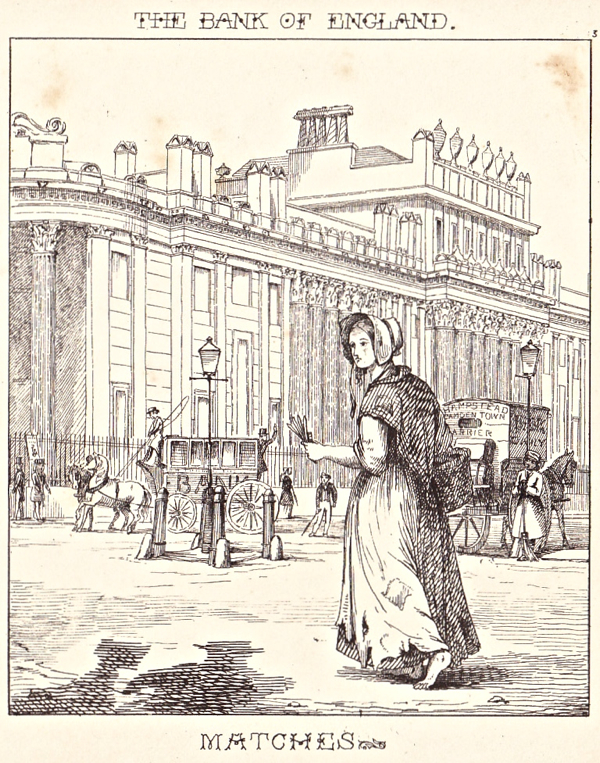
Of all the poor itinerants of London, the Matchsellers are the poorest and subsist as much as on donations as by the sale of their wares
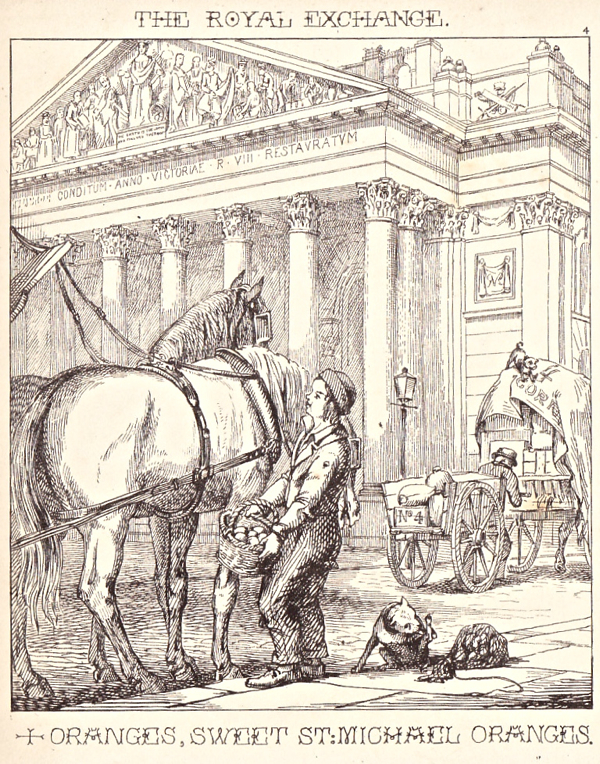
Here is a poor Irish boy endeavouring to dispose of his oranges to some passengers outside an omnibus

These little prisons are principally manufactured by foreigners who have them of all sizes to suit the nature and habits of little captive melodists

This artificer does not necessarily pay much rent for workshops, as he commences operations with his canes or rushes up the nearest court or gateway

As the vendor approaches, the cats and dogs bound out at the well-known cry
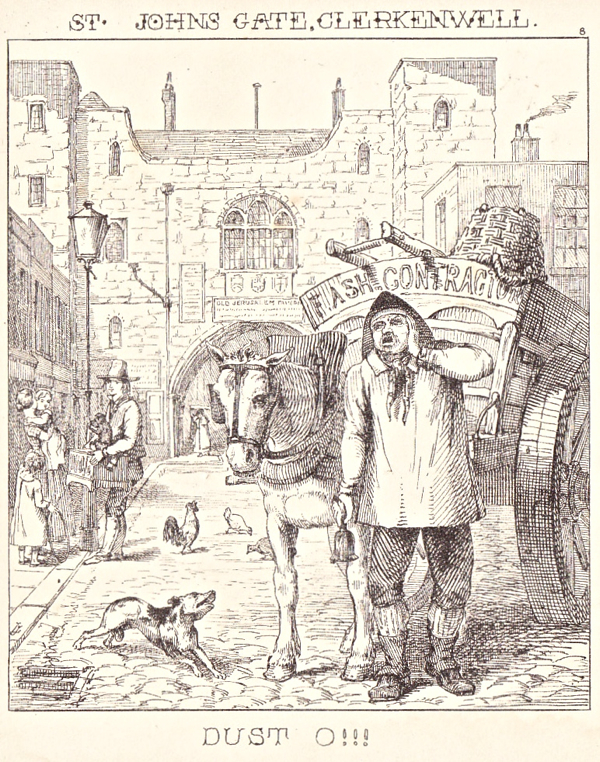
The costume of the Dustman bears a string resemblance to that of the Coalheaver, probably through their being connected with the same material, the one before it is burnt, the one after
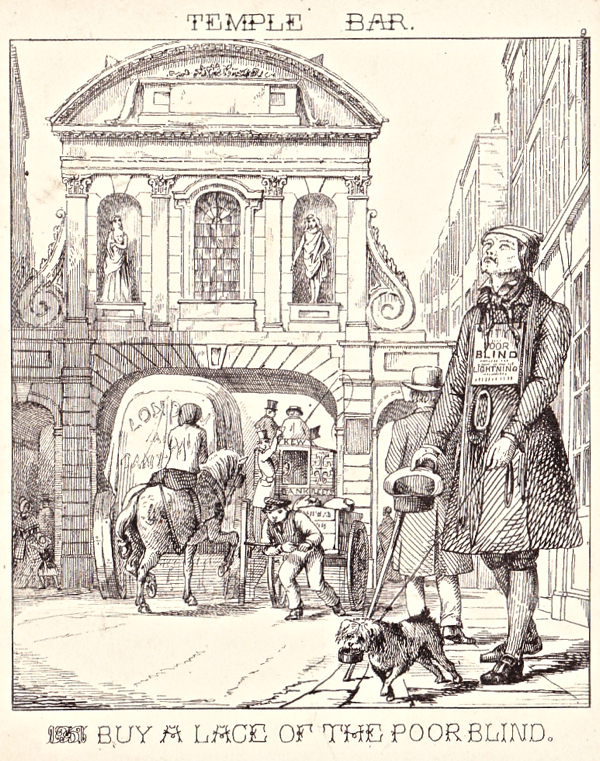
The blind must gain a livelihood as well as those who are blest with sight. He sells cabbage nets, kettle-holders, and laces, doubtless the work of his own hands in the evenings
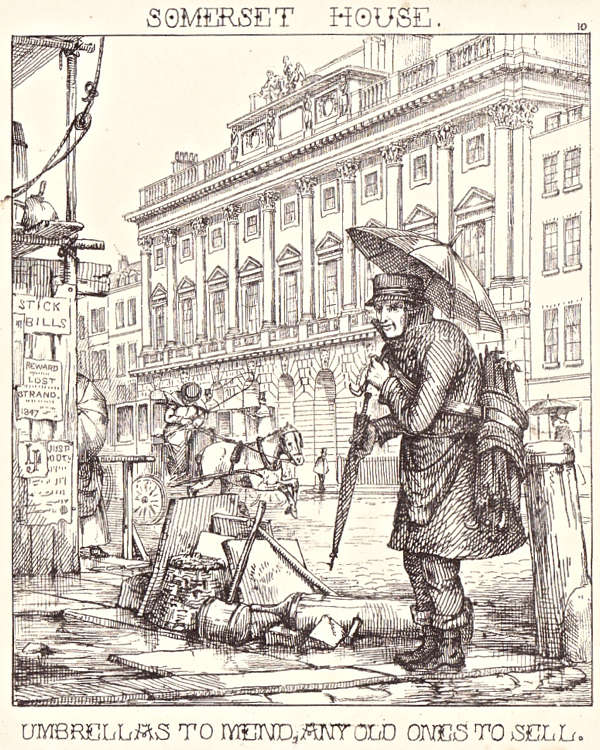
During the day, the Umbrella-mender goes his rounds, calling “Umbrellas to mend! Sixpence a piece for your broken umbrellas!” and then he returns home to patch and mend them, after which he hawks them for sale. Here he appears in his glory under the auspices of St Swithin.
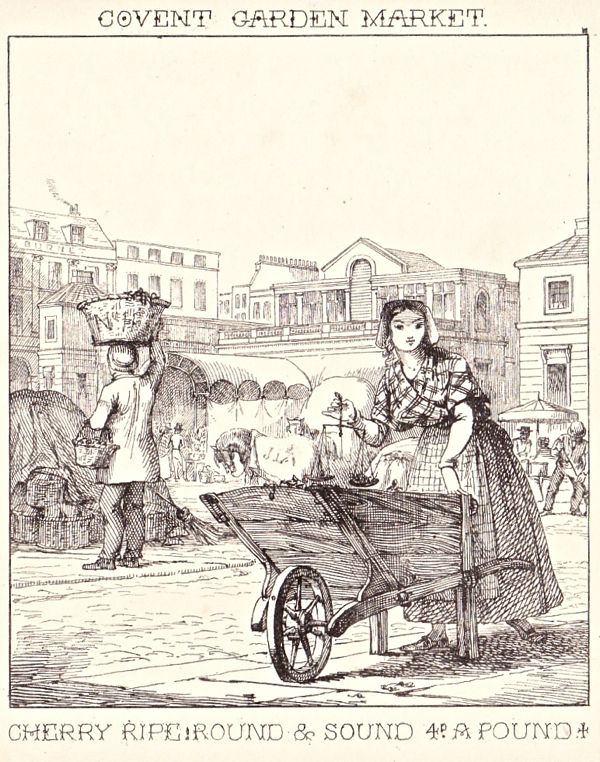
Of cherries, there are a great variety and most come from the county of Kent

The Costard Monger is an itinerant vendor of garden produce, in the background is a seller of hearthstones in conversation with a Punch & Judy man
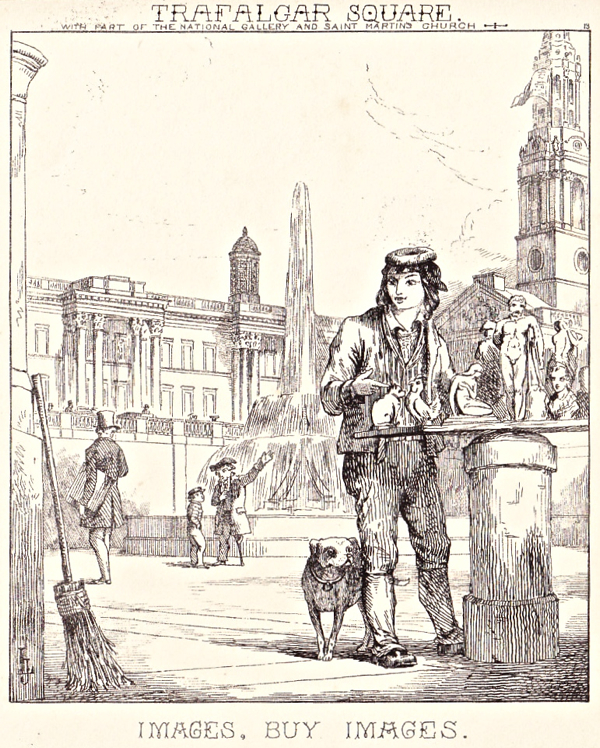
The dealers in these items are mostly Italians, our vendor has some high class items, the Farnese Hercules, Cupid & Psyche, and Chantrey’s bust of Sir Walter Scott.
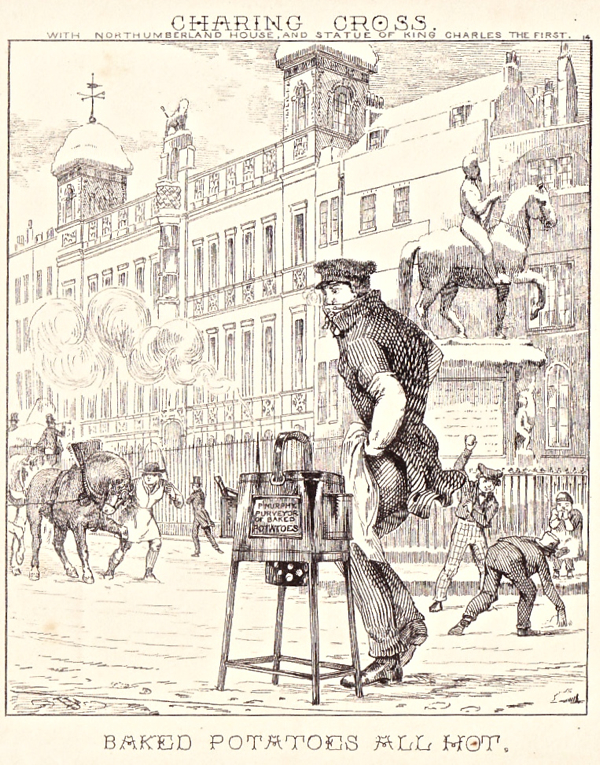
“How very cold it is!” The Potato-merchant jumps about to warm his feet
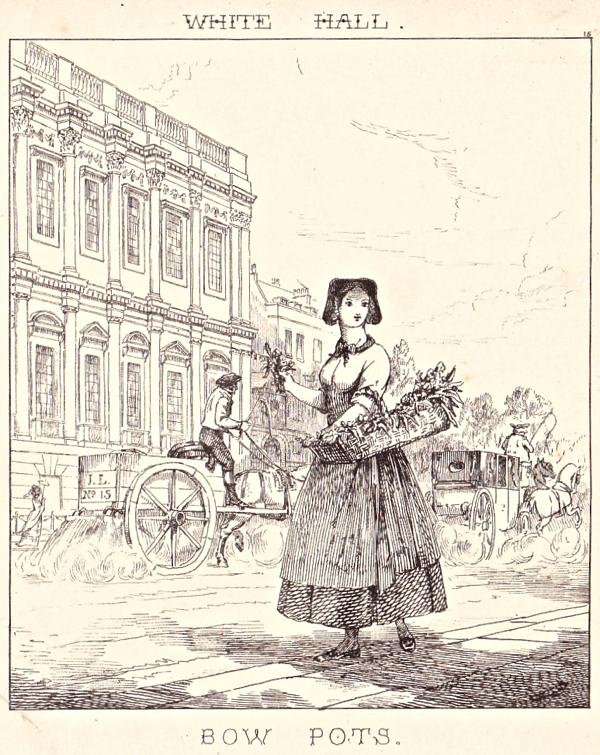
Bow Pots! (or Bay Pots!) two a penny!
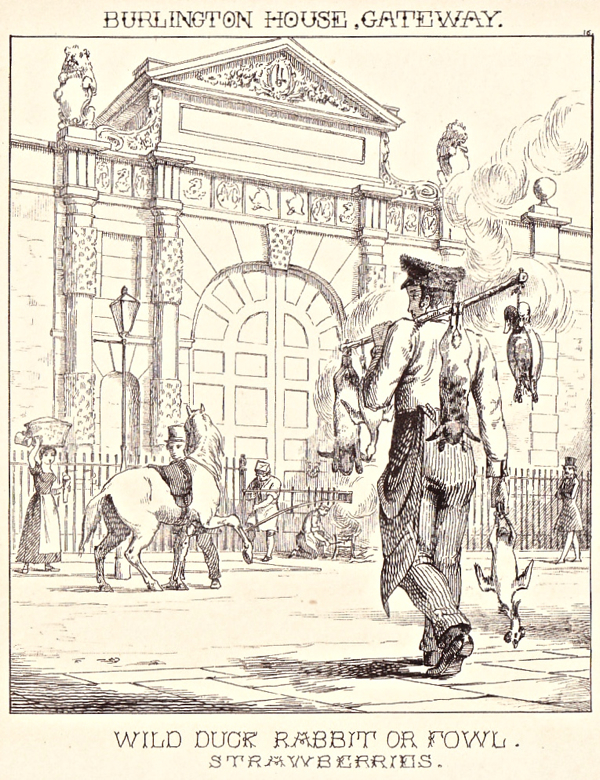
Wild ducks from the fens of Lincolnshire, Rabbits from Hampshire and Poultry from Norfolk
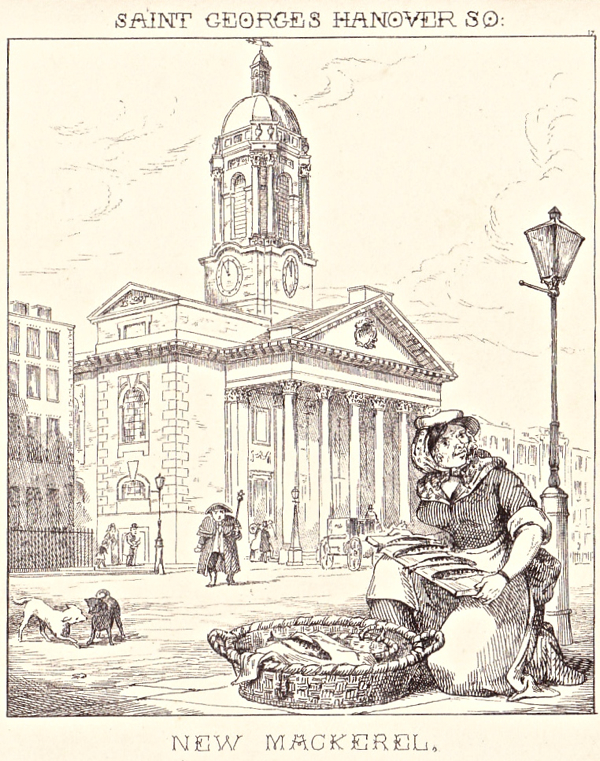
There is a law that permits of Mackerel being sold on Sundays, and here comes the beadle to warn off the Fish-woman

The old clothesman and bonnet-box seller go their rounds
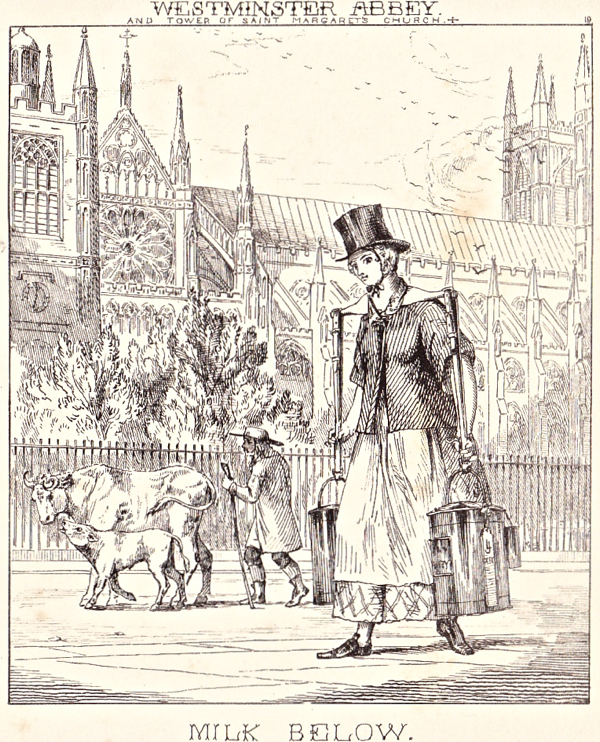
Of dealers in milk there are two classes – the one keeping cows, and the other purchasing it from dairymen in the outskirts and selling it on their own account
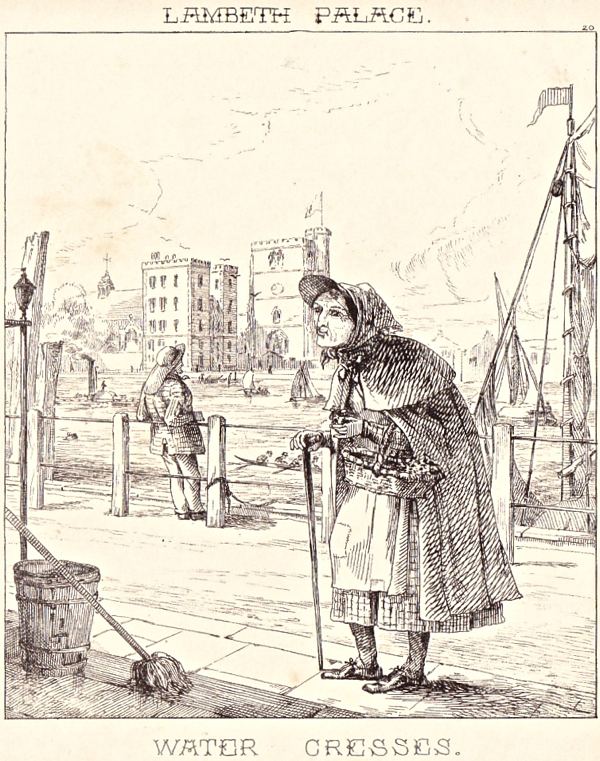
At half past eight, the step is mopped and Betty runs to get the penny for the poor old dame
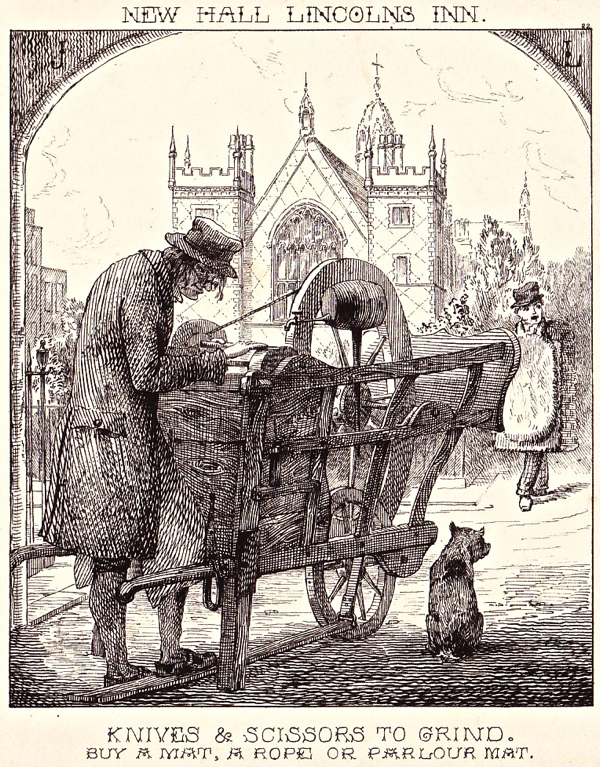
Knife Grinder at the entrance to Lincoln’s Inn Fields, with a seller of rush, rope and wool mats
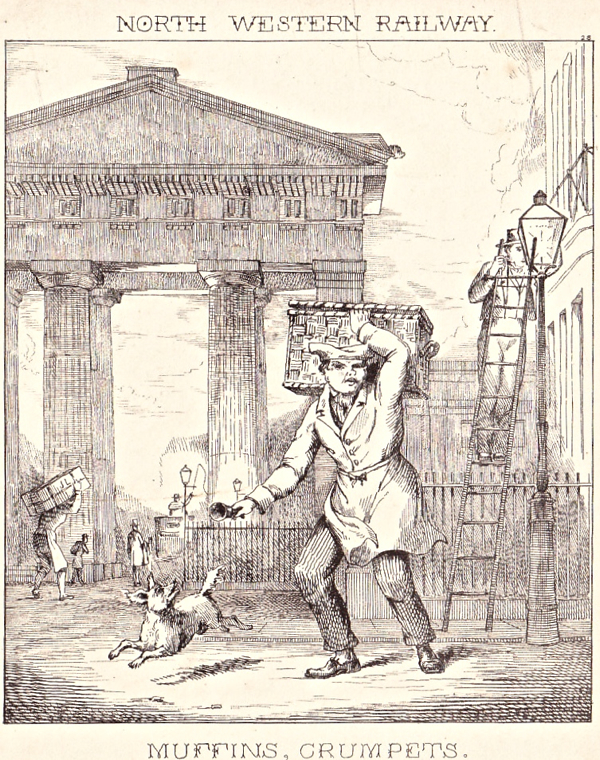
This is the evening cry in Winter
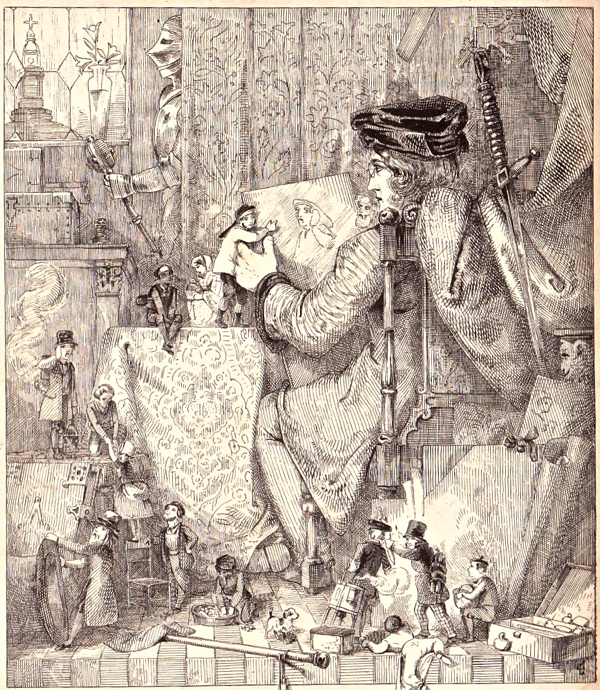
John Leighton and his Cries of London
Images courtesy Bishopsgate Institute
You may like to take a look at












