
Marion Elliot’s Halloween Alphabet
Favourite illustrator Marion Elliot has conjured this magnificent alphabet of folk, superstition and lore as part of FROM A-Z & BACK AGAIN, an exhibition of three risograph alphabets by John Bradley, Marion Elliot & Jonny Hannah, which opens at Townhouse, Fournier St, this Saturday 1st November and runs until Sunday 16th November.

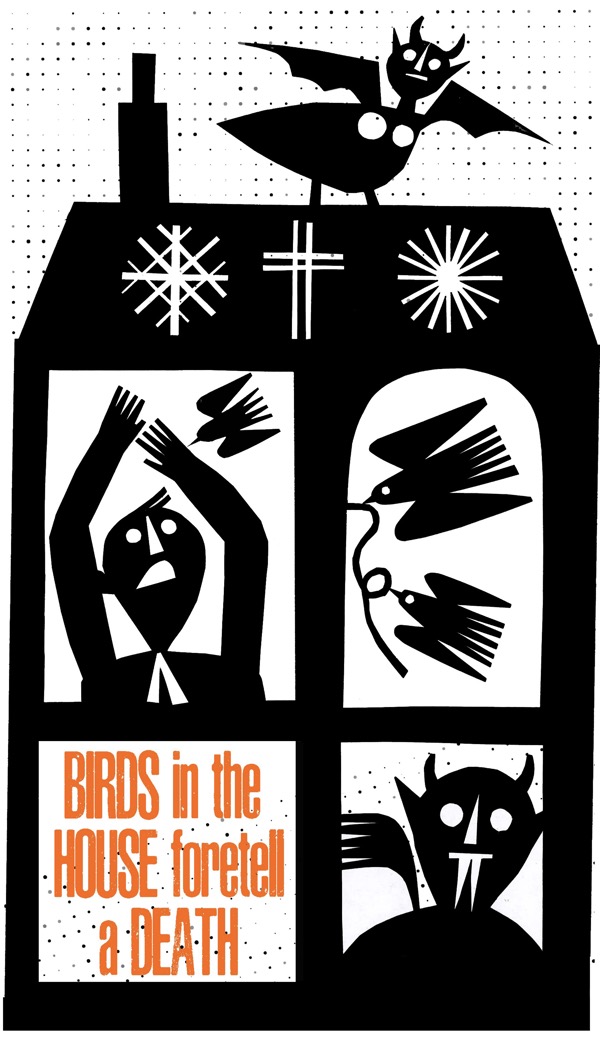


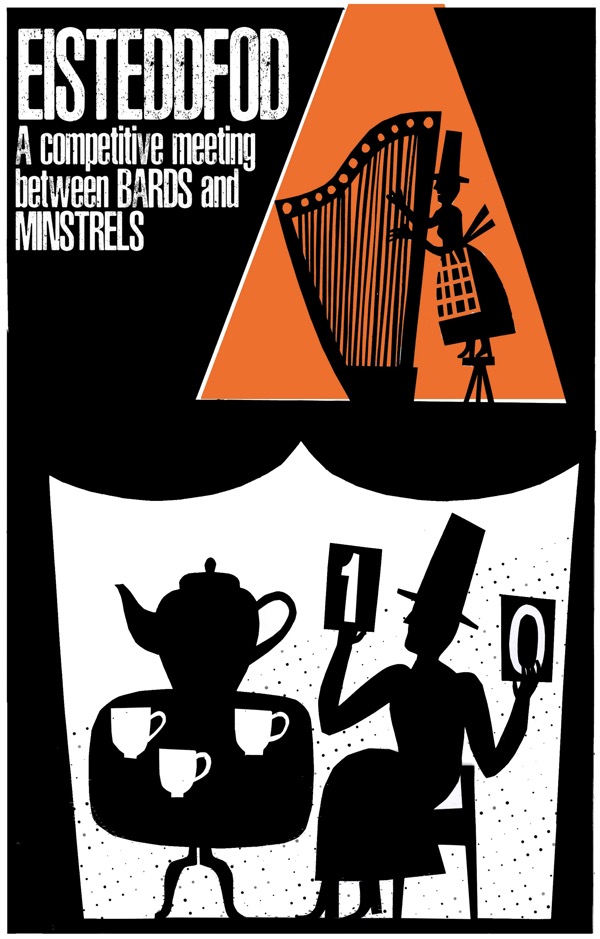




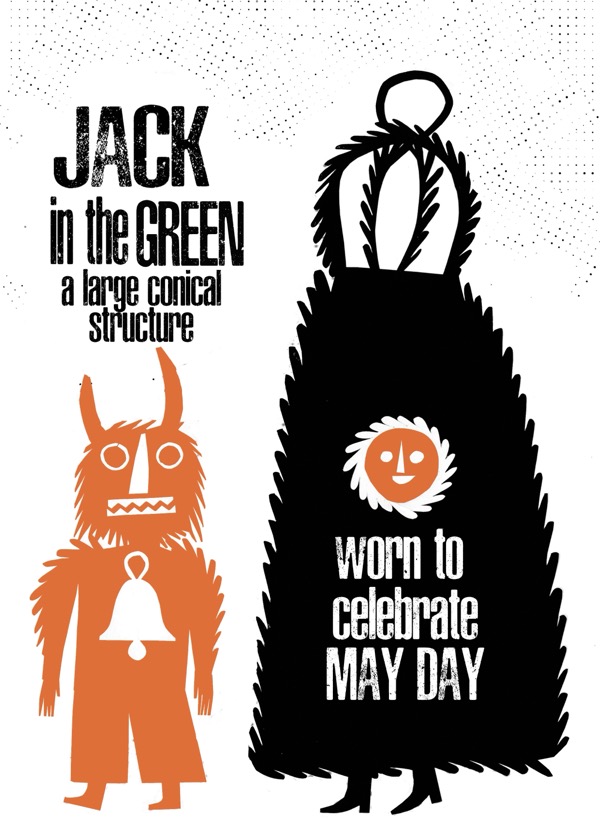






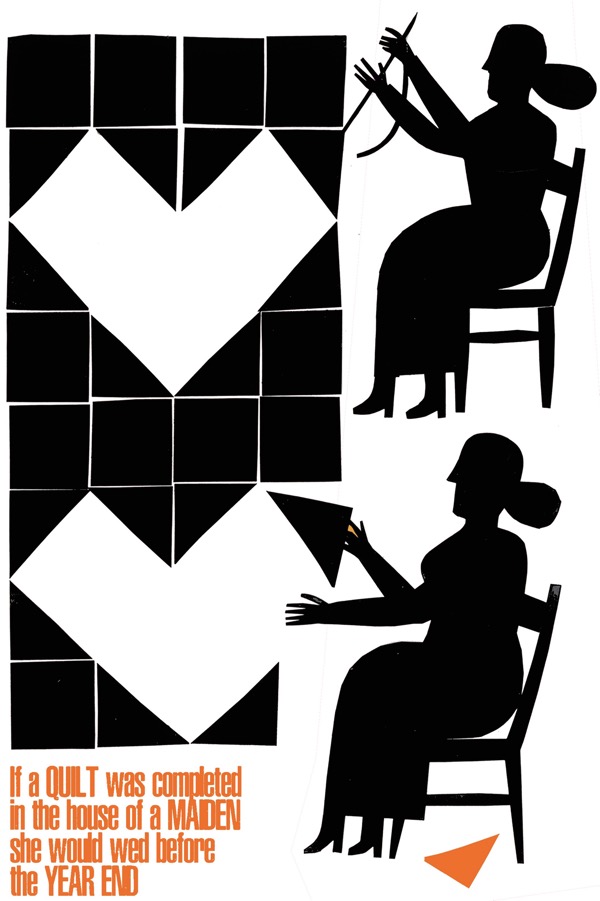









Images copyright © Marion Elliot
You may also like to take a look at
Marion Elliot, Printmaker & Illustrator
At The Archbishops’ Palace In Charing
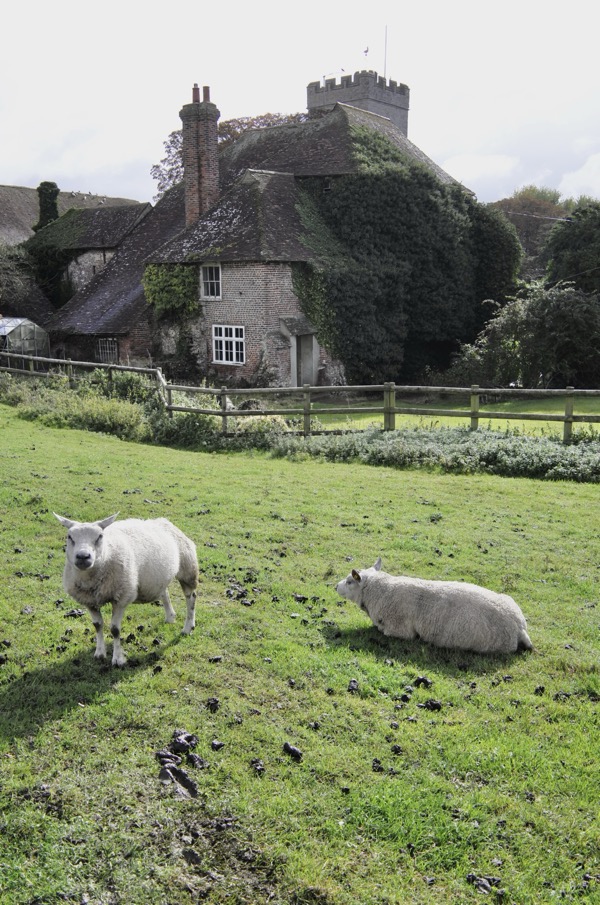
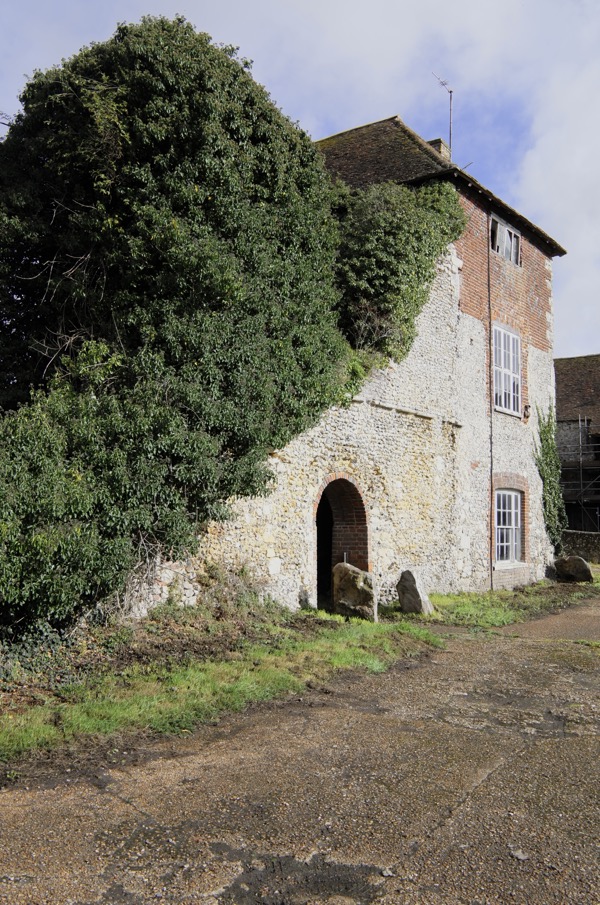
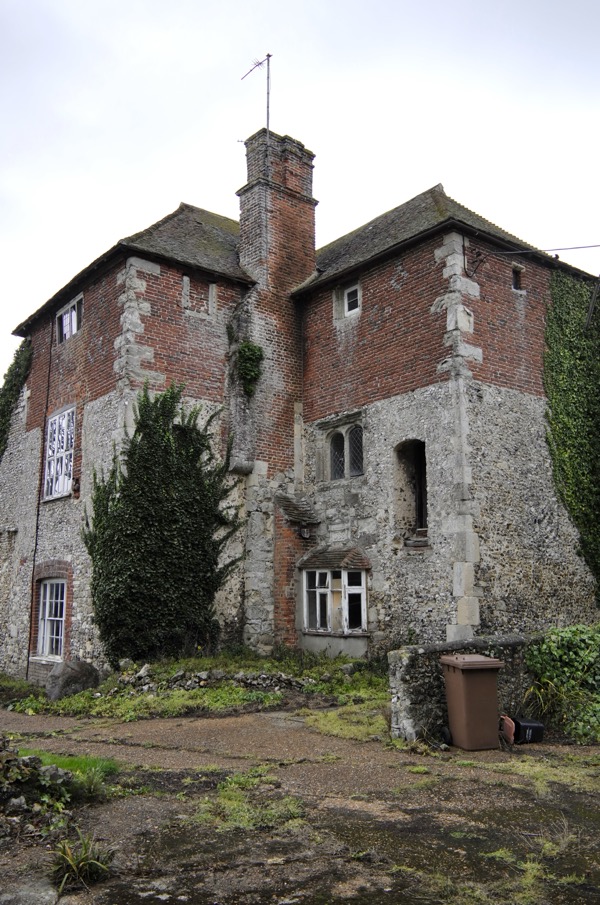
In the heart of the Kentish Weald, at the centre of the village of Charing, lies a collection of ancient flint buildings that comprise the remains of a majestic archbishops’ palace dating back to the eighth century. Within the precincts sit a gatehouse, an enormous barn with a soaring timber roof that was once the great hall (where Henry VIII and Catherine of Aragon dined in 1520 on their way to meet Francis I at the Field of the Cloth of Gold), a manor house and a stable block.
The romance of these weathered structures of glittering flint from the thirteenth and fifteenth centuries, riven with medieval stone work, and repaired and extended with Tudor bricks, is spellbinding. This is the particular humane medieval vernacular that inspired Philip Webb and Edwin Lutyens. At Charing, venerable walls enclose a sheltered yard granting the potential to create a garden with deep herbaceous borders and lavender-lined flag-stoned paths. Anyone who loves the gardens at Sissinghurst cannot resist harbouring the desire to create such a horticultural enclave of their own, enfolded by an array of charismatic old stone dwellings – and the opportunity is here and waiting.
For more than five centuries, this was the stopping-off point for archbishops travelling between Canterbury and Lambeth Palace in London, until the Reformation when it was seized by the crown and transferred to private ownership with the great hall reconfigured as a barn and the chapel converted to a manor house. Nestling in a fold of the North Downs, beside the parish church, in the midst of a village abounding in beautiful old houses, this is a place where history passed through and then left it behind, where the residual atmosphere is of peace and tranquillity, enhanced by the benign climate of Kent.
Standing in the loftily proportioned barn, empty today save for the fluttering of doves, and gazing up to the magnificently timbered roof, it is impossible not to succumb to the magic of this hallowed spot. In our troubled times, it grants a sense of proportion to reflect upon how life persists here despite despite the ceaseless turmoil of political history.
The Spitalfields Trust rescued these Grade I-listed buildings from decline, just as they have done with so many over the past half century. They repaired and sold the gatehouse and a cottage as dwellings, to serve as exemplars of what can be done, and now they seek a purchaser or partner to take on the rest.
The fine manor house is habitable, granting a comfortable home to a potential owner and custodian willing to embrace the soul of this favoured corner of Kent while undertaking gentle restoration to the rest of the site. This collection of buildings could provide accommodation for an extended family, just as at Sissinghurst Castle. Equally they offer the possibility for creative reinvention as a location for running a business, an artist’s studio, a micro-brewery, a stables or a smallholding (significant land is attached) – and all just an hour from London.
Click here to buy the Archishops’ Palace at Charing in Kent
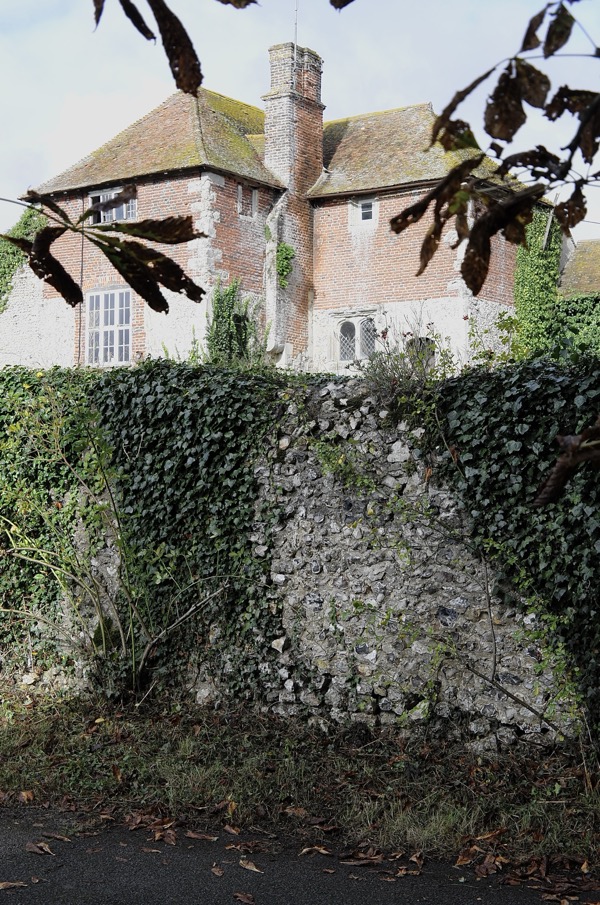
The manor house seen from over the churchyard wall
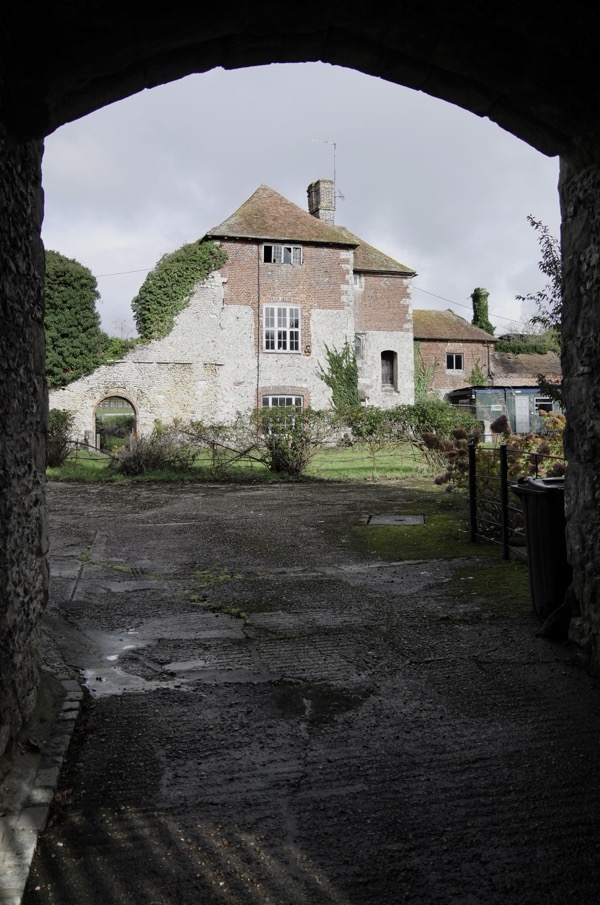
The manor house
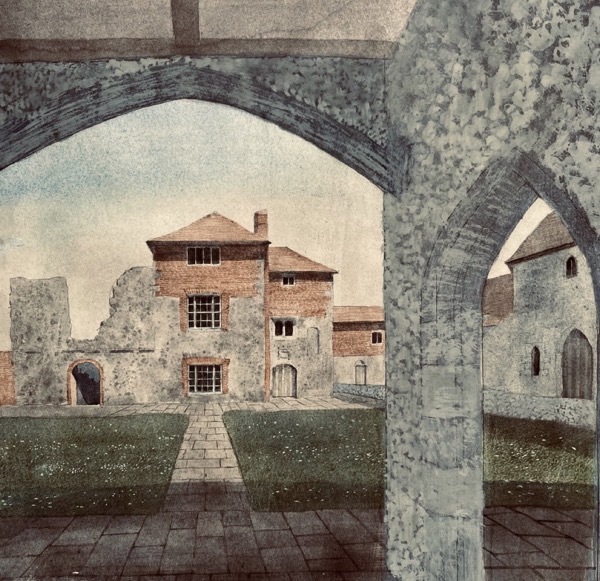
Visualisation of the manor house and yard restored, by Chris Williams
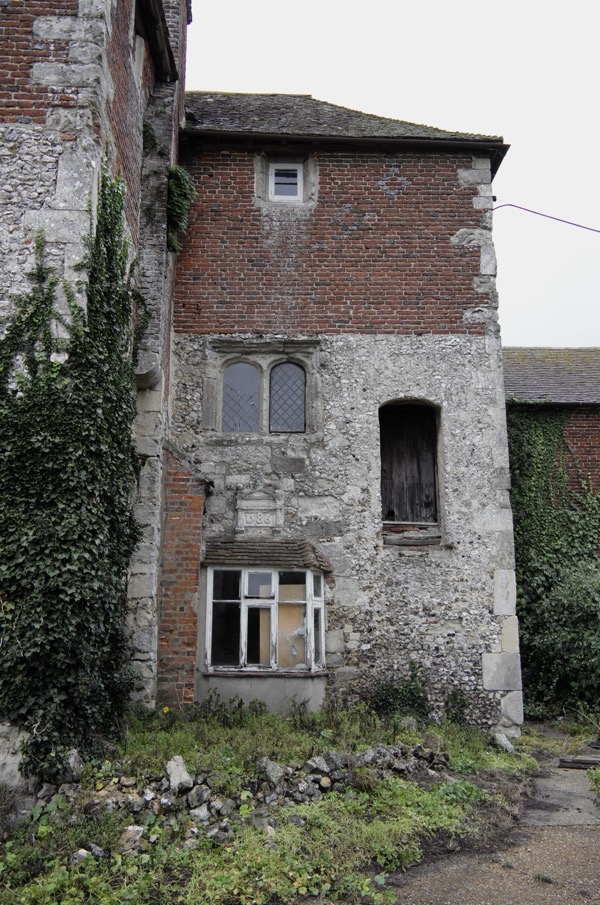
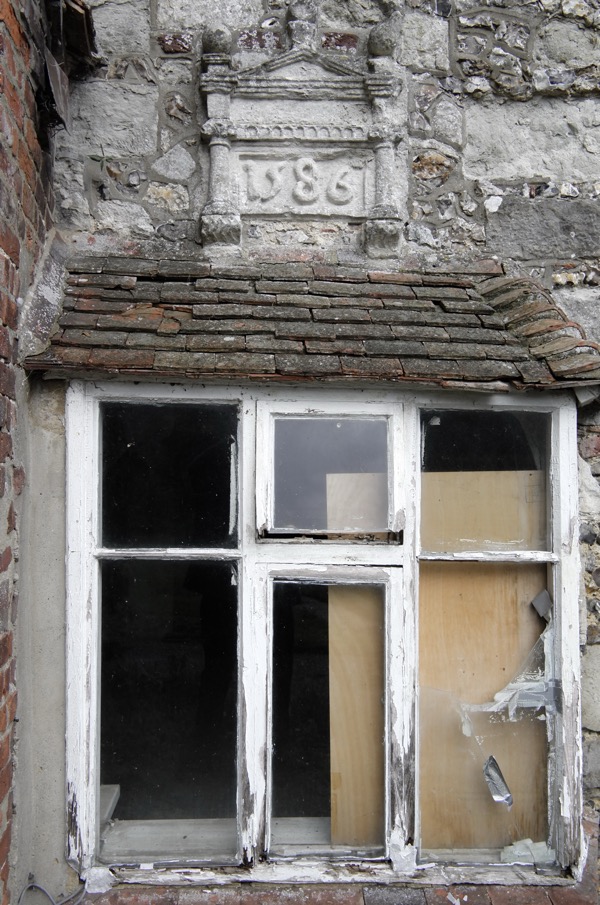
Plaque on the manor indicating conversion to a dwelling after the Reformation
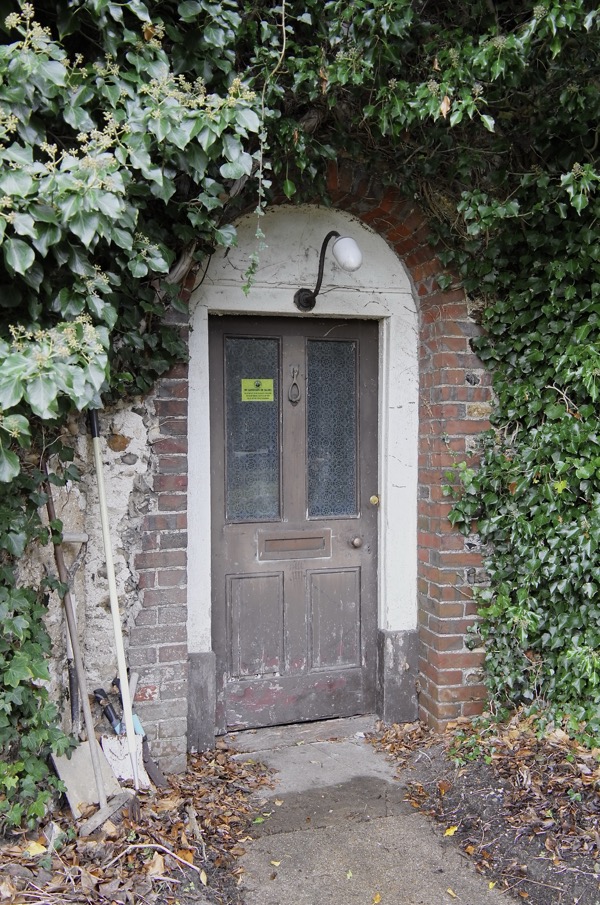
The manor house front door
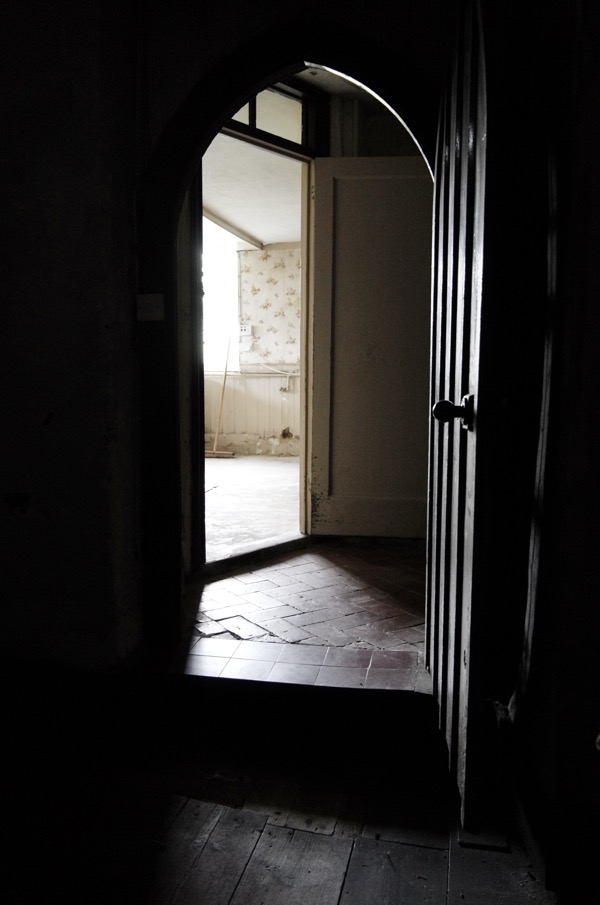
Inside the manor house
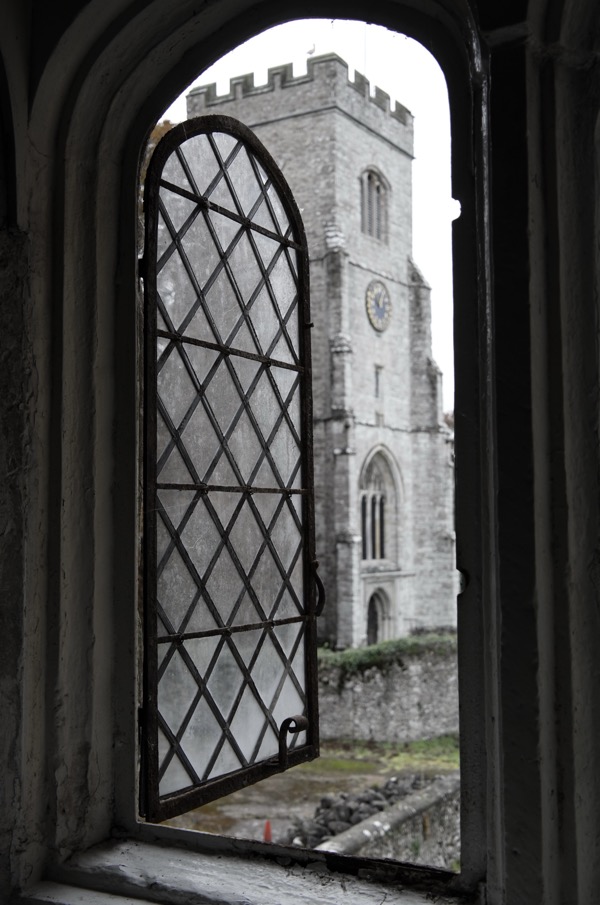
View towards the church from one of the manor house bedrooms
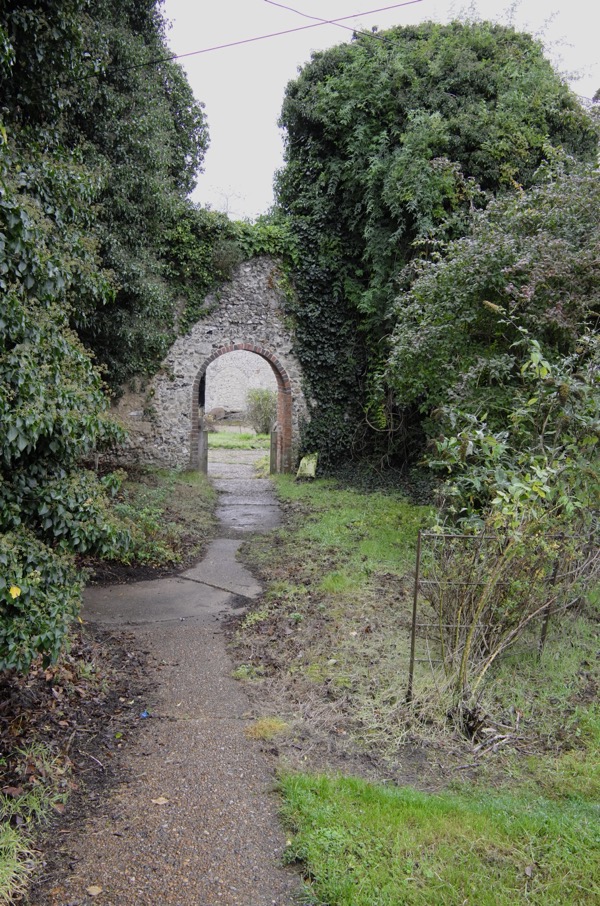
Looking back from the manor house towards the yard
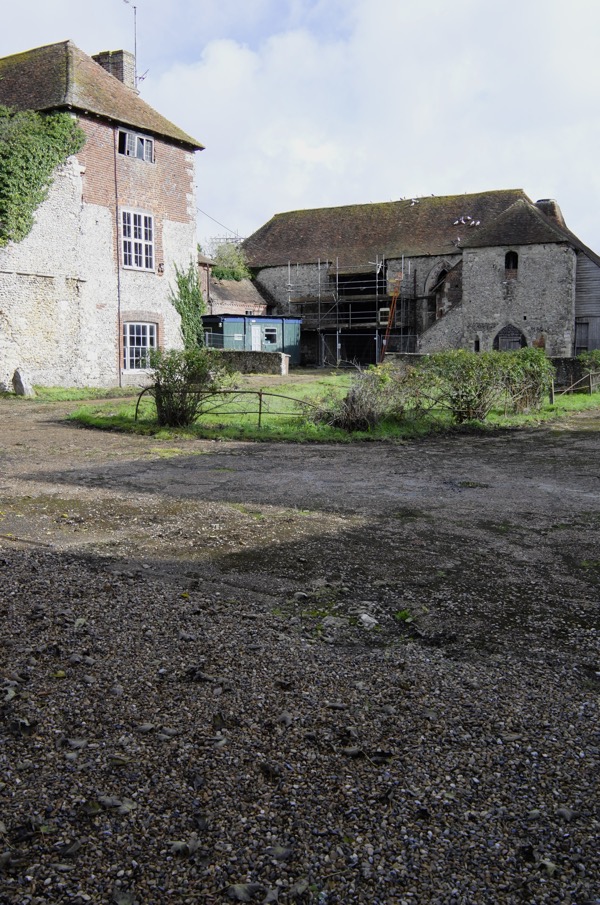
View across the yard towards the manor house and the barn, formerly the great hall
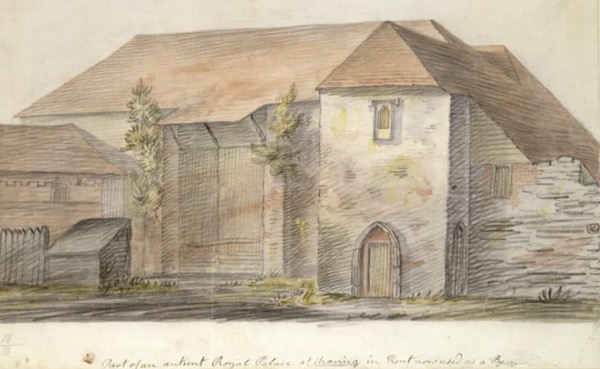
‘Part of an antient Royal Palace at Charing in Kent now used as a barn,’ nineteenth century watercolour (courtesy of British Museum)
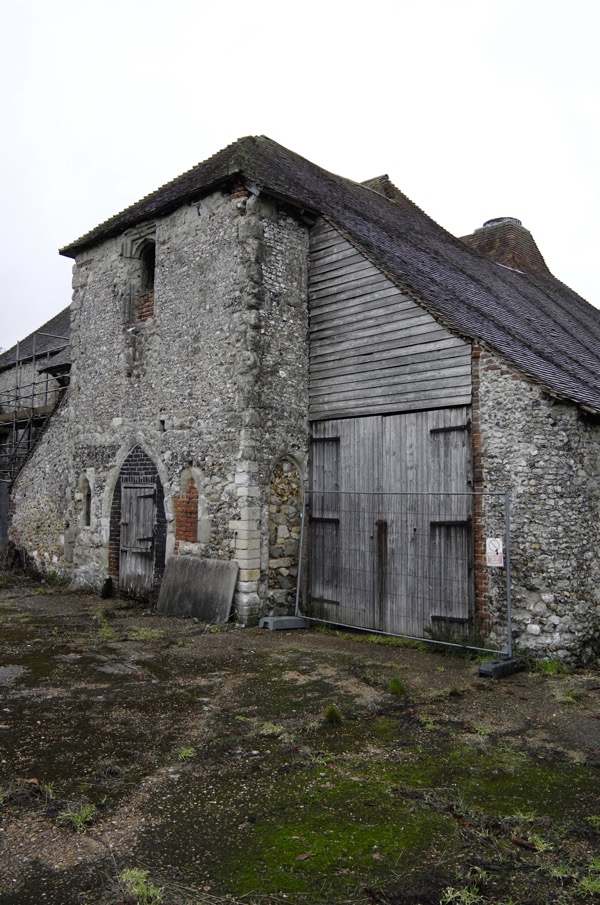
The barn
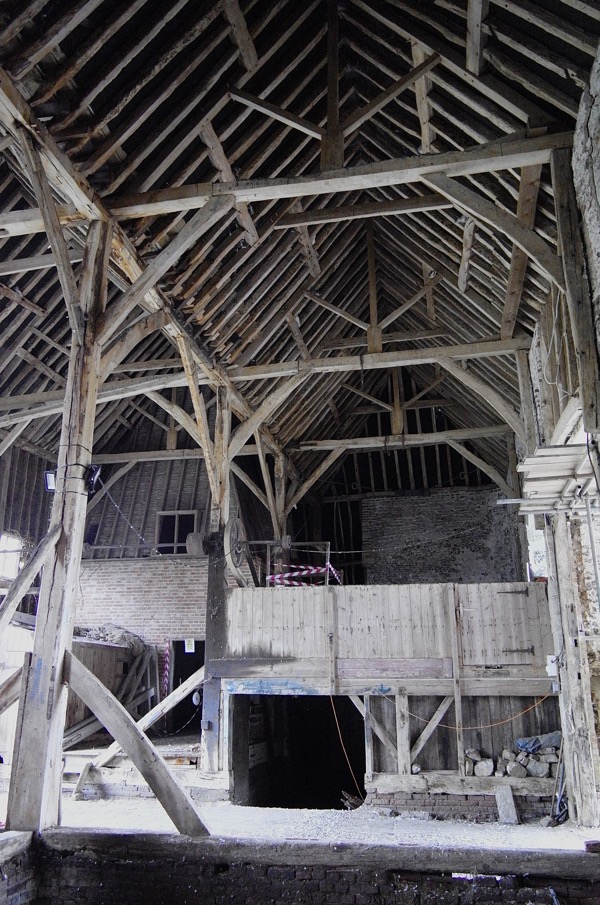
This was the great hall where Henry VIII and Catherine of Aragon dined
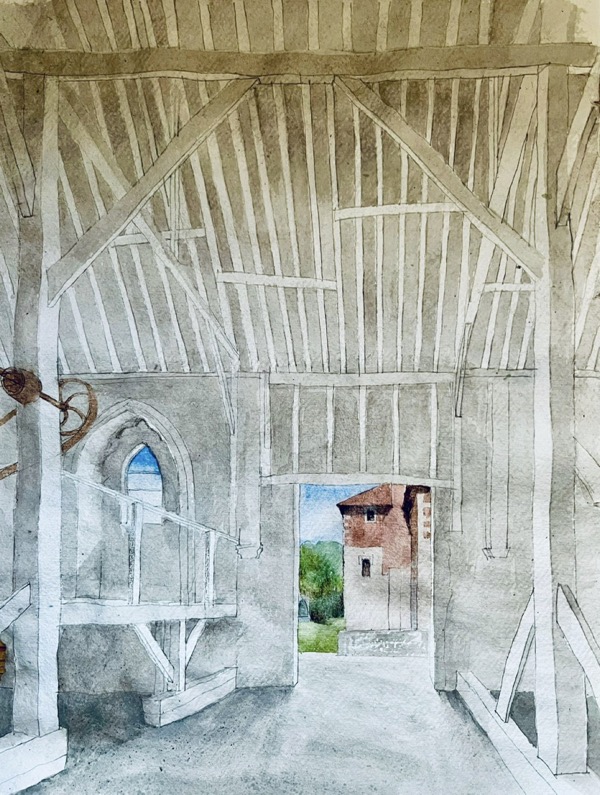
Visualisation of the barn repaired, looking to the manor house, by Chris Williams
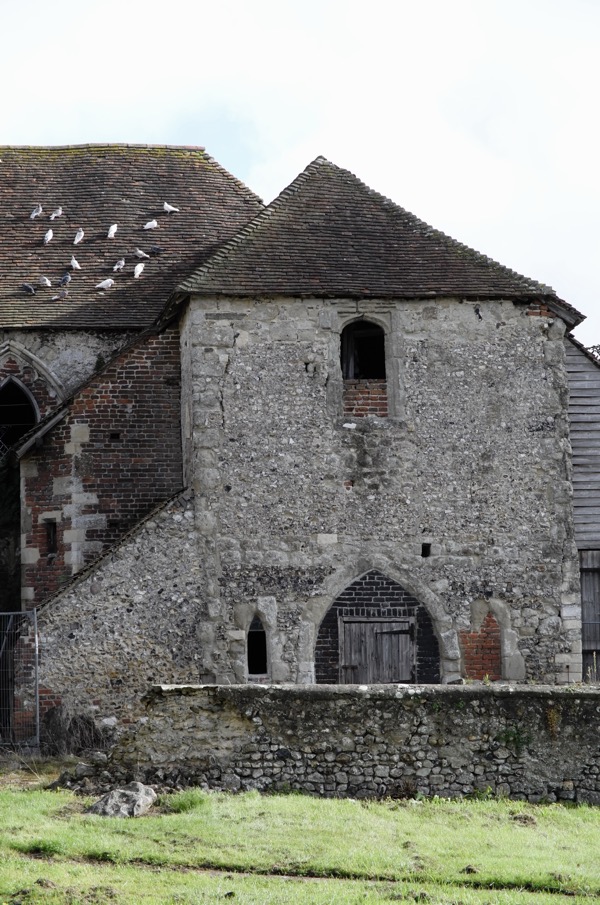
Doves roosting on the barn roof
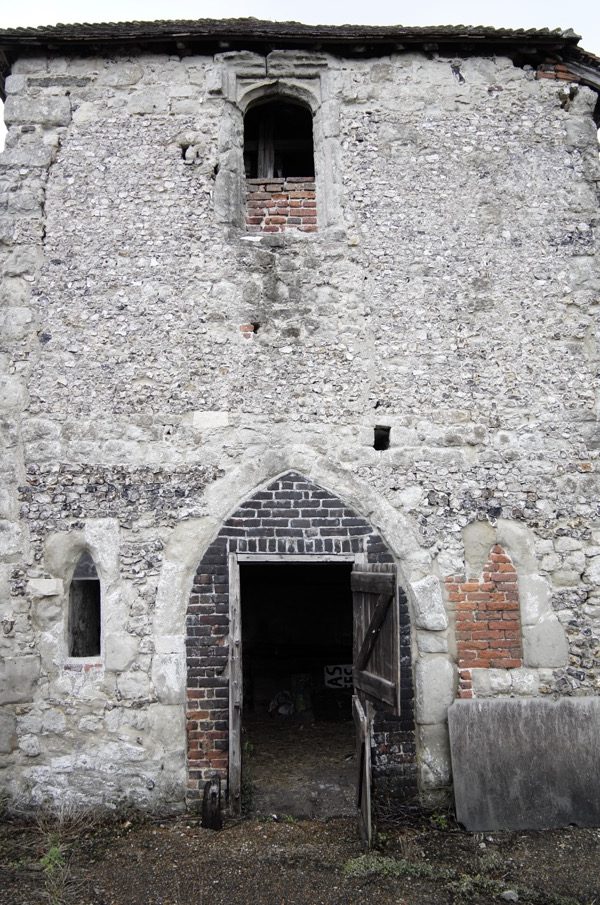
Medieval windows and door in the barn
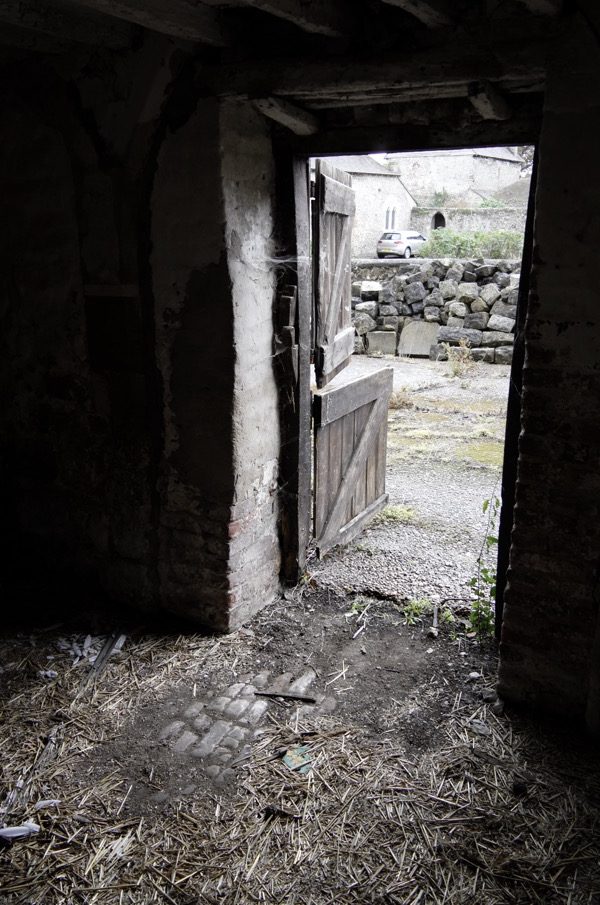
Old brick floor inside the outbuilding
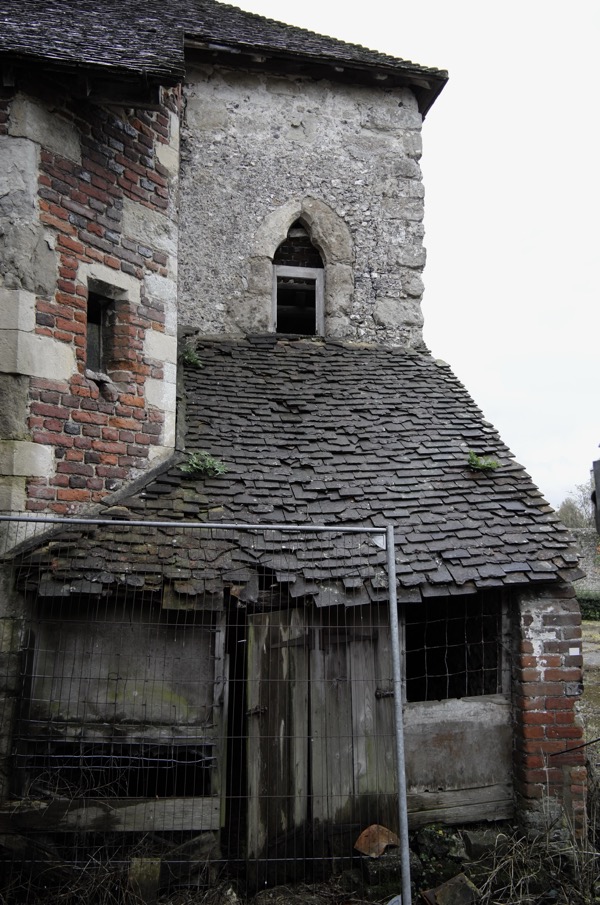
Architectural details of the barn
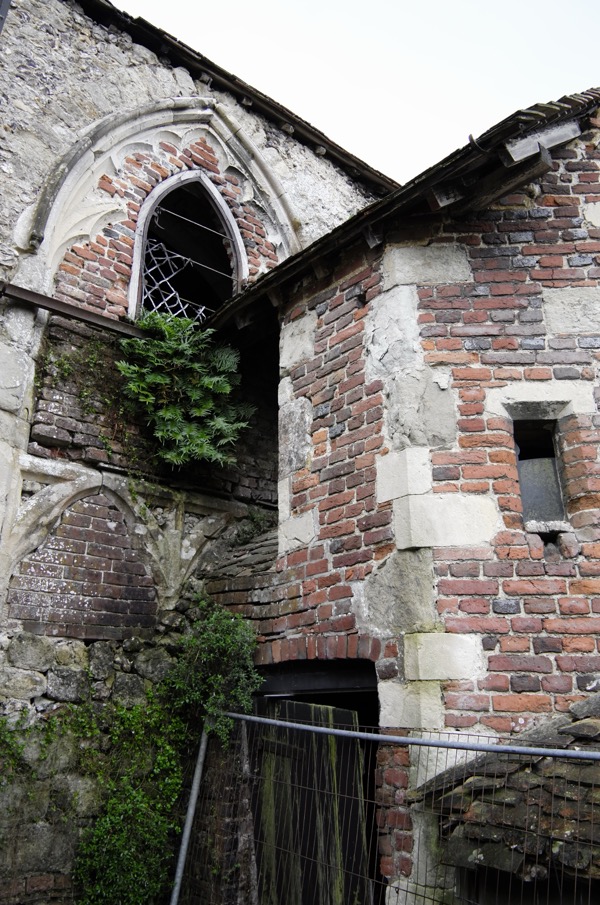
Medieval windows at the barn
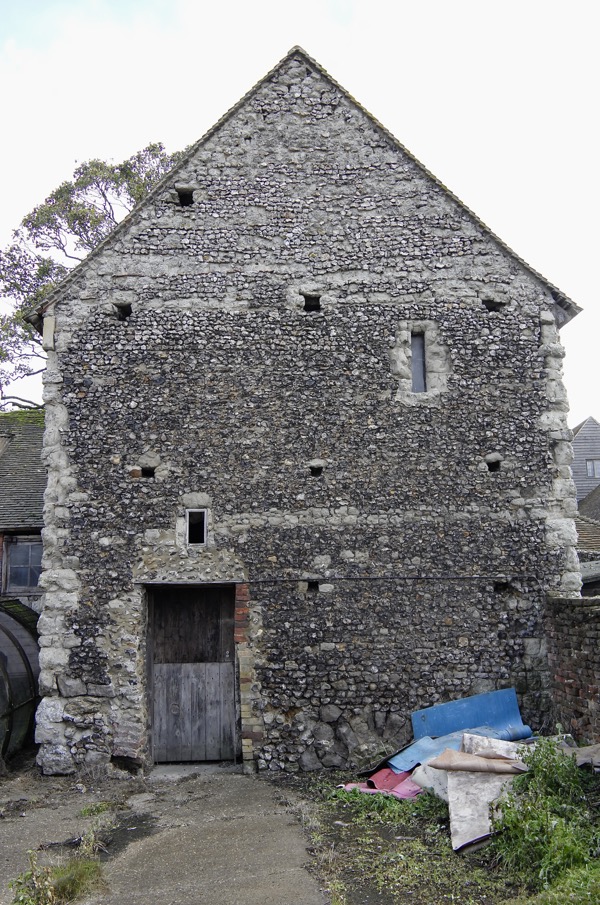
Stable block
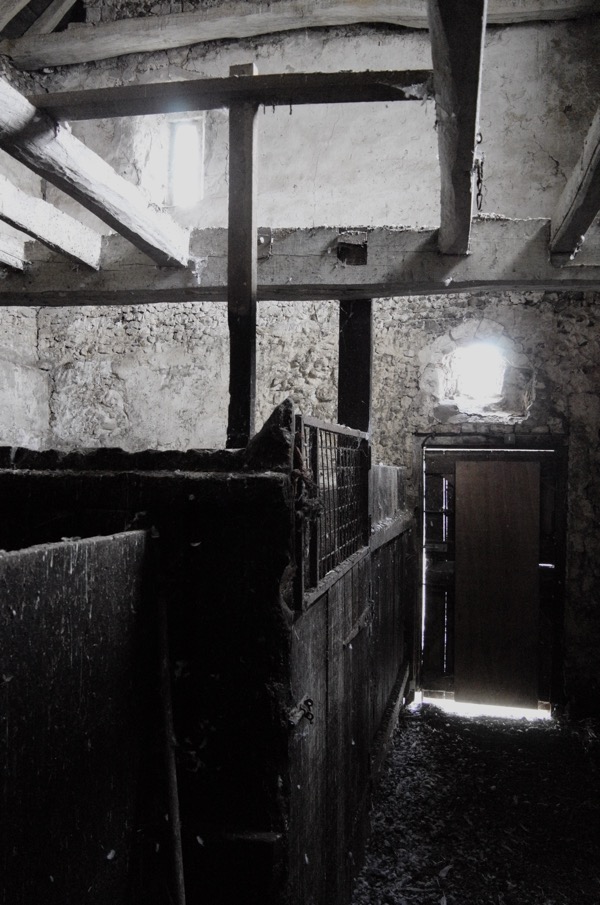
Inside the stable block
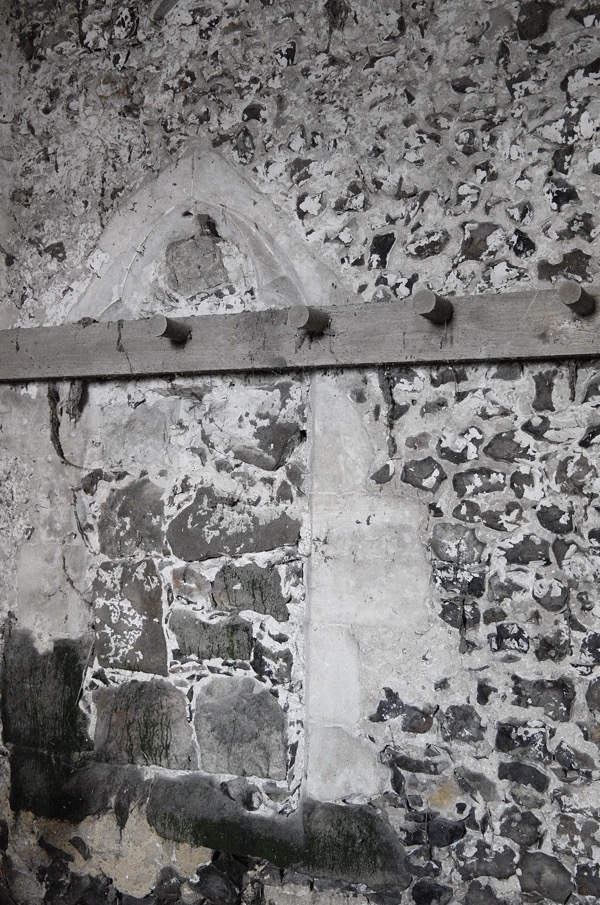
Blocked medieval lancet window in the stable block
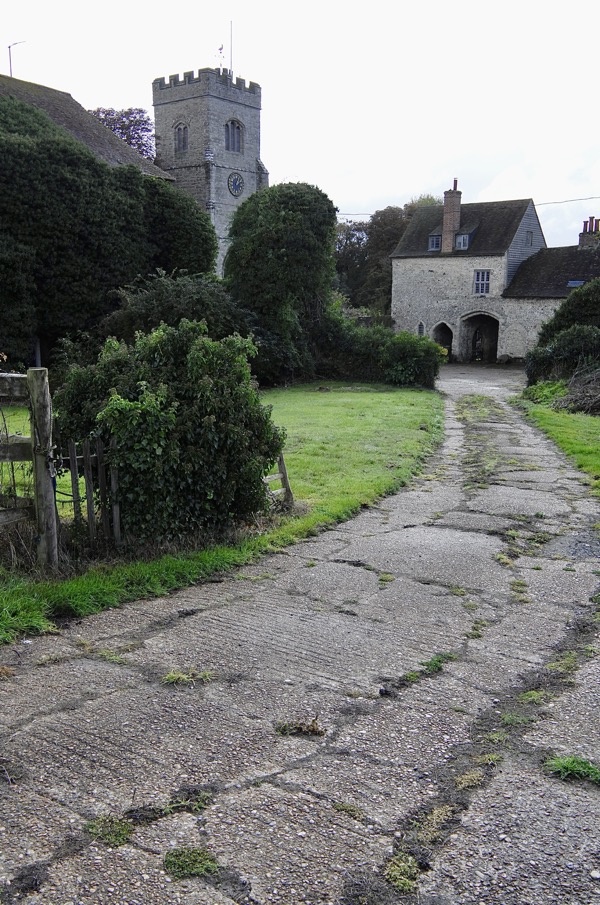
Looking downhill to the yard with parish church beyond
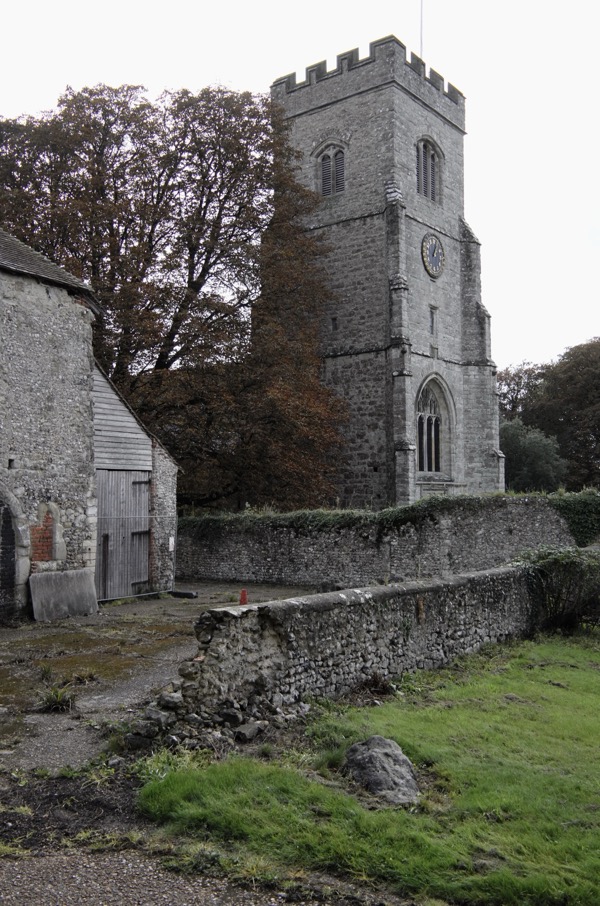
The parish church overlooks the yard
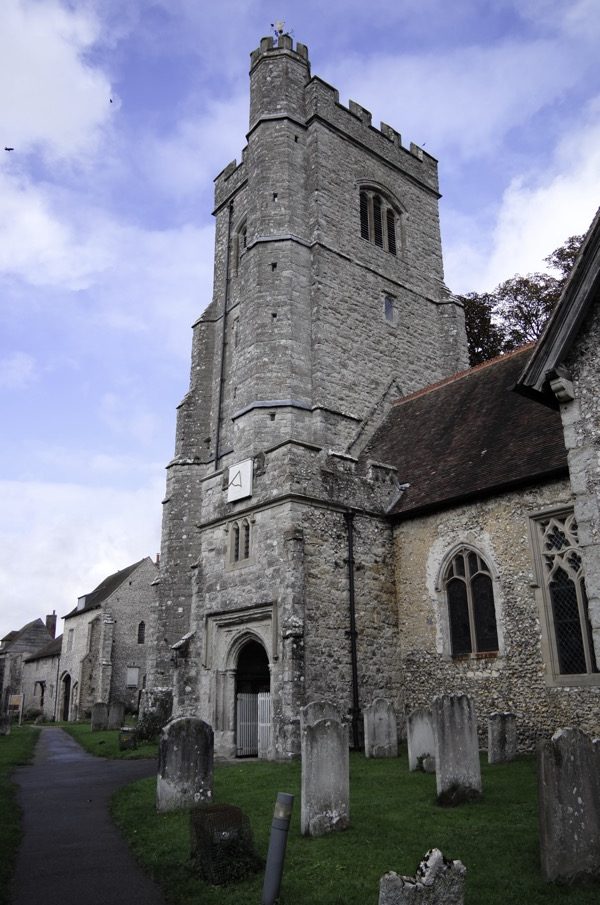
The parish church at Charing
Roy Gardner’s Sales Tickets
CLICK HERE TO BOOK YOUR TICKETS
One shilling by Roy Gardner
Paul Gardner, the current incumbent and fourth generation in Spitalfields oldest family business, Gardners’ Market Sundriesmen in Commercial St (now relocated to 78 Ruckolt Rd, E10 5NP), was just thirteen when his father Roy died in 1968. So Paul’s mother ran the shop for four years until 1972 when Paul left school and he took over next day – running the business until now without a day off.
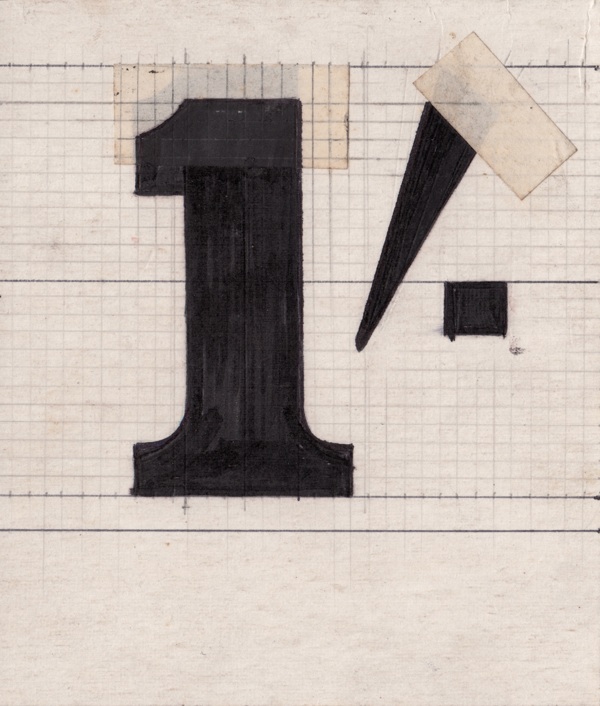
In the shop, Paul found these intricate designs of numbers and lettering that his father made for sales tickets and grocers’ signs which, in their accomplishment, express something of his father’s well-balanced and painstaking nature.
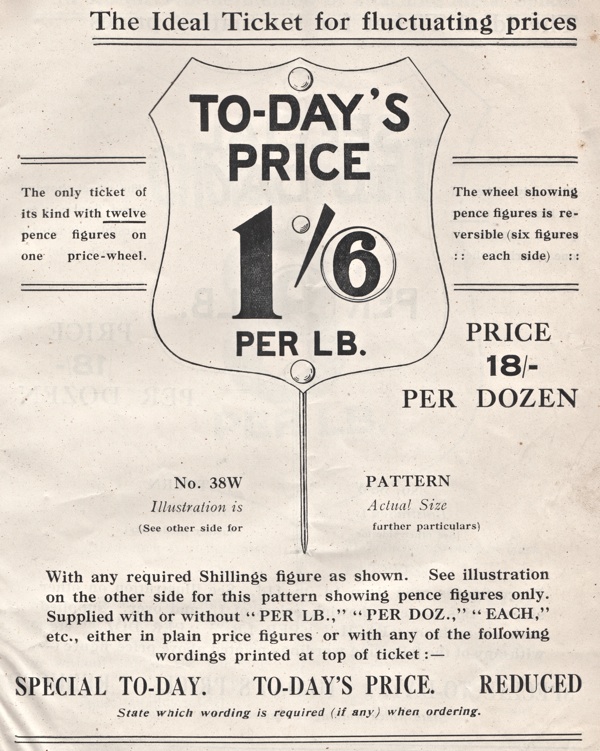
At one time, Roy bought small blackboard signs, that were used by greengrocers to price their stock in chalk, from Mr Patson in Artillery Lane. Mr Patson sliced the tickets out of hardboard, cut up motorcycle spokes to make the pins and then riveted the pins to the boards before painting them with blackboard paint.
In the same practical spirit of do-it-yourself, Roy bought a machine for silk-screen printing his own sales tickets from designs that he worked up in the shop in his spare time, while waiting for customers. Numbers were drawn freehand onto pencil grids and words were carefully stencilled onto card. From these original designs, Roy made screens and printed onto blank “Ivorine” plastic tickets from Norman Pendred Ltd who also supplied more elaborate styles of sales tickets if customers required.
Blessed with a strong sense of design, Roy was self-critical – cutting the over-statement of his one shilling and its flourish down to size to create the perfectly balanced numeral. The exuberant curves of his five and nine are particular favourites of mine. Elsewhere, Roy was inspired to more ambitious effects, such as the curved text for “Golden Glory Toffee Apples,” and to humour, savouring the innuendo of “Don’t squeeze me until I’m yours.” Today, Paul keeps these designs along with the incomplete invoice book for 1968 which is dated to when Roy died.
No doubt knocking up these sales tickets was all in day’s work to Roy Gardner – just one of the myriad skills required by a Market Sundriesman – yet a close examination of his elegant graphic designs reveals he was also a discriminating and creative typographer.
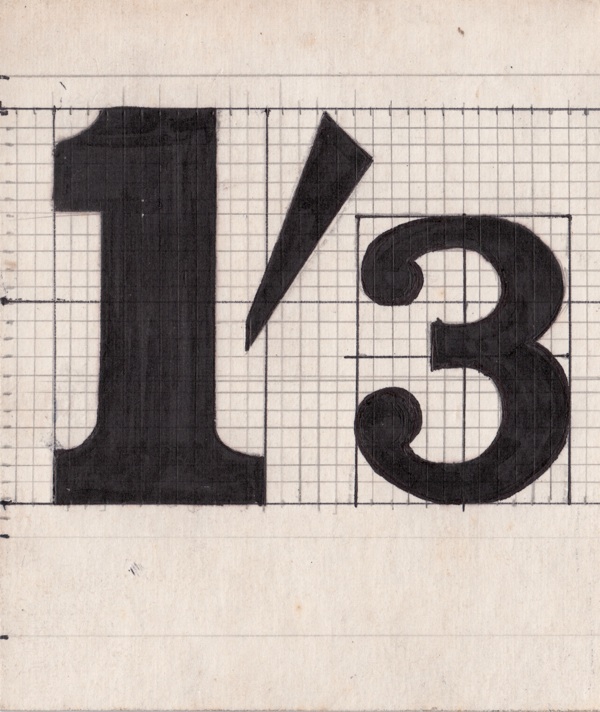


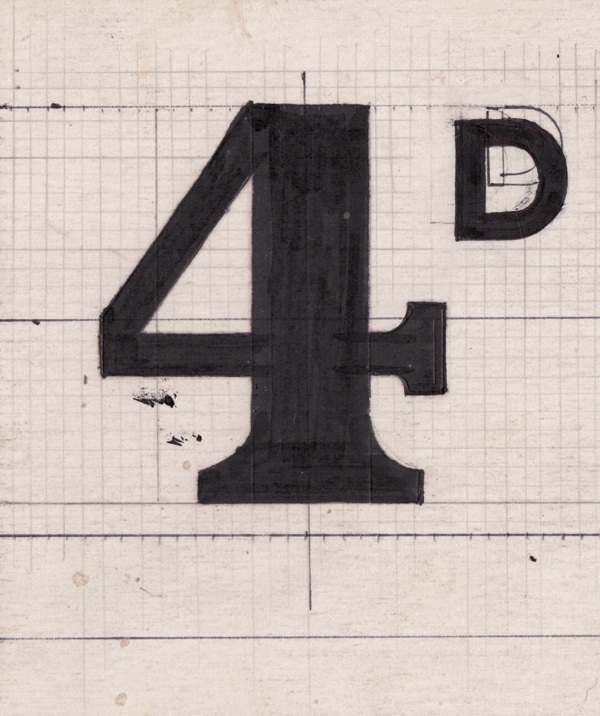



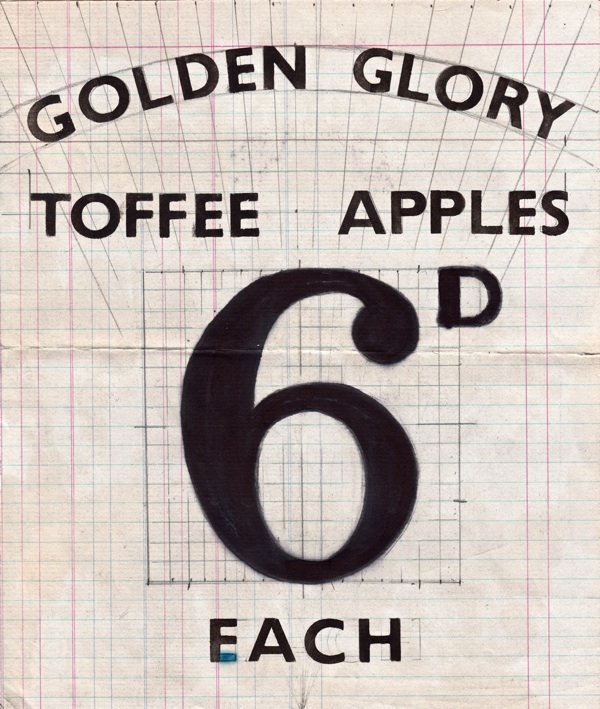


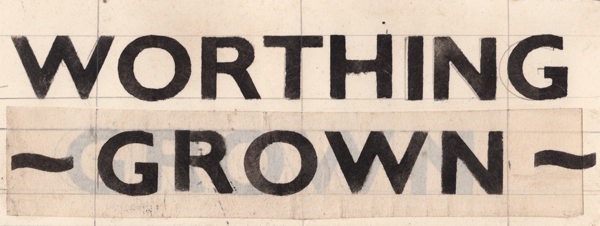



Designs for silk-screen by Roy Gardner

The finished silk-screened signs by Roy Gardner


Pages from the Ivorine products catalogue who could supply Roy’s customers with more complex designs of sales tickets than he was able to produce.



Roy Gardner stands outside Gardners’ Market Sundriesmen in the nineteen forties – note the sales tickets on display inside the shop.
Gardners’ Market Sundriesmen, 149 Commercial St, London E1 6BJ (6:30am – 2:30pm, Monday to Friday)
You may like to read these other stories about Gardners Market Sundriesmen
Paul Gardner, Paper Bag Seller
At Gardners’ Market Sundriesmen
Joan Rose at Gardners’ Market Sundriesmen
At Great Eastern Buildings
CLICK HERE TO BOOK YOUR TICKETS FOR TOMORROW
Steven Harris sent me this candid memoir of his childhood in Great Eastern Buildings off Brick Lane
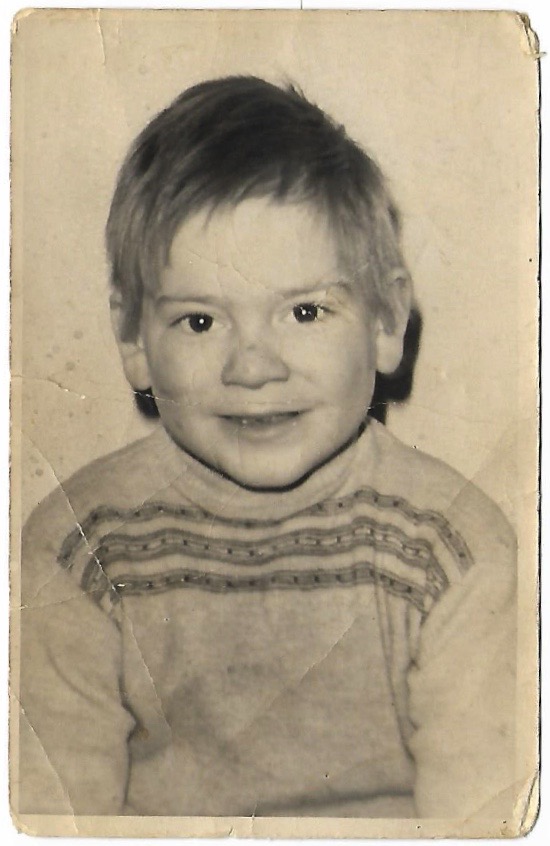 Steven Harris aged five, 1963
Great Eastern Buildings were a product of the Great Eastern Rail Company which ran services from East Anglia to Liverpool St Station and erecting the Buildings in the nineteenth century as cheap workers’ accommodation to support the development of the railway line. However, by the sixties, ‘great’ was the most unlikely epithet and no one had ever known them to be anything better than the lower end of the housing market.
The two tenements were subdivided into three sections with each section having a staircase running the height of the building. Each section had four flats on either side of the staircase, thereby providing a total of eight homes in each section. The first and third sections of the left hand block consisted of both one and two bedroom dwellings complete with inside toilet and bathroom, but those unfortunate enough to occupy the second section of the left hand block still had the pleasure of outside toilets and washrooms as per the original Victorian design.
The size of the dwellings – no flat had more than two bedrooms – often had little bearing on the number of people occupying them. Large families were not uncommon and I was one of four siblings. The usual rules applied, the parents had one room and the children had bunk beds in the other. Those on low incomes who could only afford low rents did not find themselves in a position to debate the complexities of the situation. It was how life was then and people did the best they could.
On the other hand, if you were fortunate enough to have an extra bedroom there was a chance to earn a few quid by renting it out. My grand parents did this. They occupied a two bedroom flat and, in the fifties, they rented their spare room to Davy. He was a short, stout man with a slightly crazy laugh, bald head and National Health Service spectacles – who always paid careful attention to his tie knot, his white starched shirt and his precision shaving on a Saturday night when he hoped to get lucky. I remember being strangely fascinated by Davy’s shaving and would frequently watch him as he exercised his careful linear strokes, followed by vigorous swirling of the razor in water to clean it. I believe Davy was a friend of my uncle Tom from their days of military service who simply needed a few weeks of lodging to sort himself out and find his own flat, yet by 1970 – when I moved out of the buildings – he was still there.
The construction of Great Eastern Buildings left much to be desired, both inside and our. The coal-grey brickwork, which had not been cleaned for decades, had not stood up well to weathering. Word had it that there was red brick incorporated in the Buildings but, apart from a line of red bricks traversing the length of the roof, it was hard to recall. Maybe this is reflective of a grey and dull existence?
Yet life in and around the buildings was punctuated by colour. ‘Barmy Park’ in Bethnal Green (named after the asylum that once stood there), Vallance Rd Park (known as Weavers’ Fields) and Victoria Park (the biggest and best known) were no more than a ten minute walk away, where we could see trees, ponds, birds and enjoy running around on the grass. In some ways these three parks marked the boundaries of our hinterland beyond which we rarely ventured. Within the immediate vicinity of the buildings there simply wasn’t anything of greenery that I recall.
There was the Truman Brewery just across the road which, in the fifties, still used horses to pull cartloads of beer. So it was that nature and beauty broke in to reveal itself to us, as my friend Sheila Butt remembers, “In the summer we used to go up on the roof and watch the Truman’s draymen go by on their carts, drawn by beautiful white horses, with large barrels of beer on the back and two men up front in white rubber aprons. And just to add to the sense of season, the waft of hops could often be detected on the light breezes passing through the buildings”
My Aunty Pat informed me that Great Eastern Buildings were owned in the fifties and the sixties by none other than the notorious racketeer and slum landlord Peter Rachman! His acolytes were always there when the rent was due but never when repairs were needed which, given the state of dilapidation, was very frequent. In fact, it was only in the early sixties when Rachman sold the buildings that any work was done, and indoor bathrooms and toilets were installed.
For many of the residents, avoiding paying the rent was a priority, hence weekly rent collection day – normally a Monday – was an interesting game of cat and mouse. The tendency to live it up at the weekend often left shortfalls and so the visit of the rent man was greeted with absence or no answer. It was not uncommon to be told ‘keep quiet and don’t make a sound,’ accompanied by threats of physical chastisement, should the rent man turn up when we were at home. On several occasions I was told by my ‘live-in stepmother’ Lotty not to make a sound when there was an unexpected knock on the door. In her case it could have been any amount of reasons, since she was implicated in many dubious activities, but the rent man was always unwelcome.
Rent was the biggest outgoing that anyone faced. In 1969, it stood at 25 shillings weekly for my Aunty Pat’s family with an income of £12 per week, but for those living on benefits it was a bigger imposition. I do not recall anyone ever discussing the concept of buying a home and, certainly, I never heard of the word ‘mortgage’ until my twenties. Nobody seemed to even dream about it, as if renting was the only way. And we performed this never-ending dance with the rent collector. I’m not sure what we hoped to achieve because the rent had to be paid whether we liked it or not, but I think that such avoidance won enough time to source other forms of income, thereby allowing the rent to be found.
Although Aunty Pat had sufficient control over her finances to pay the rent, many others – like my folks – did not. Yet even for the ‘good ones,’ it was always possible to discover a ‘cash flow difficulty’ by trusting payment of the rent to those it might be better not to. This was the fate of Aunty Pat when she trusted my stepmother, Lotty, to pay the rent on her behalf one week. Normally Pat would pay it herself, but her working hours had changed, so she could not be there to pay it. On this particular occasion, she was approached by the rent collector, asking ‘Pat, why haven’t you paid the rent?’ which drew the reply, ‘I have, Lotty paid it for me.’ At this point, Pat produced the rent book which had been signed by the rent man to indicate receipt of the rent, only to be informed ‘that’s not my signature.’ It was painfully obvious. When confronted, Lotty broke down, admitted the forgery and agreed to pay it off at two shillings a week. Fortunately, it never went any further, though Pat was more careful with whom she trusted her rent money afterwards.
Of my step-mother Lotty it must be said that she was an interesting character. I should know since I spent five years living with her. For better or worse, Lotty did help to raise myself and my sister, as well as her own son, Tony, and later my half-brother Edward. She was generally reasonable towards all of us, and kept us fed and clothed but she did periodically give me a good hiding. On one notable occasion, I managed to upset her mother and Lotty flew into the bedroom and laid into me. I never did know why but I do remember the pain, the stinging sensation, the confusion and sense of injustice. I suspect my sense of injustice was furthered by her not being my real mother – ‘Who the bloody hell did she think she was anyway?’
My father could deal out that sort of thing too. Somewhere around the age of eight or nine I managed to upset him, again how I did this I can’t recall – perhaps this lack of awareness is the hallmark of childhood? – but he charged into the front room, threw me onto the sofa and proceeded to punch me in the back. Though he could have hurt me much more than Lotty, I didn’t feel the same anger or need for retribution, perhaps because he was my natural father. Neither was I alone, physical chastisement being a way of life for children in the building, as was physical conflict for adults. Yet my father didn’t commonly behave like this towards me – being something of a laid back character, much more likely to crack a joke or puff an exotic cigarette than to be violent. I can only imagine that on this occasion, as with Lotty, I must have done or said something to really anger him.
Because of the physicality of life in the buildings, my father had to give an impression of being able to ‘handle’ himself and so his teddy-boy background proved helpful. Later, it became increasingly evident that my father preferring to interact with my cousins than me. I think this was due to the path that I took in life. After moving in with my uncle and aunt, and gaining entry to the local grammar school, I became increasingly academic and more middle class. Or at least was seen like that. It was a problem for my father who evinced disappointment during my teenage years, giving the impression of wanting a son who was more working class and manually inclined. There were always taunts about not being able to do anything practical – ‘Good at reading books but can’t fix a plug, can ya?’ Fixing a plug was a skill needed in the buildings, whereas reading Geoffrey Chaucer or William Blake was not going to improve the quality of life. In the tough environment of the buildings you would not find what might be described as a culture of praise. People did not compliment each other overtly. Today I understand the practice of sarcasm, which may have been a means for people to compliment each other without being seen to do so.
When I passed the 11+ for entry to the local grammar school in 1969, no one, as far – as I can recall – said ‘Well done’ or anything else for that matter. It was as if it hadn’t happened. I can now recall that sense of disappointment at not being recognised for achieving something no one else had done. It was the foreboding of a sense that grew stronger and stronger through my teenage years – of not belonging and of not being one of them.
I suppose my dad’s behaviour in giving me a walloping should not be surprising as he was a product of his environment. That existence, apart from rendering physical chastisement acceptable, looked on education in a contradictory way. Learning was to be admired yet also regarded with contempt since it didn’t produce any tangible reward. So it was that he liked having a ‘clever son’ – which conferred status on him – but couldn’t identify with me because I was never going to be productive in a way he understood. This reality was painful: with a mother who had abandoned me and a father who seemed disdainful to me, my internal emotional turmoil was immense.
My Dad didn’t always get things his own way. I recall an incident around 1965 when I had wandered out of the buildings and was heading down Quaker St towards Wheler House. About 50 yards along on the left hand side, facing Leon’s shop, was the Grey Eagle. Out of the pub hobbled my father, covered in blood, with torn clothing and clearly in distress. He sank to the ground against a wall. Later, it transpired he had broken his leg or had it broken for him. Then another man came out of the pub and started kicking him. Upon seeing me, my father called out ‘Alright Paddy, pack it in, my boy is watching.’ Paddy glanced in my direction, swore at my father, kicked him once more and then went back to the pub.
Lest I give a negative impression of my father, I have a wonderful memory that endures. One morning, around 3am, in the summer of 1969, my father came into the bedroom and woke me up. ‘Steven, Steven, you’ve got to come and see this,’ he said. I hadn’t a clue what he meant or what was happening, but I got up and followed him into the front room. He was staring at the TV, and he ushered me to sit down and do the same. In that slightly fed up and rather bored manner so beloved of children, I sat there and looked at our little black and white TV set.
There appeared to be little to see – just a piece of empty ground from what I could tell. After several minutes of looking at this nothingness, a small shiny cylindrical object hovered into view and appeared to settle on this piece of ground. A little time later, a man completely enclosed in a heavy suit emerged from the object. I didn’t appreciate that I was watching a piece of history – the first man on the moon – but from my fathers’ demeanour I knew it had to be of significance. Looking back on it, my dad clearly wanted me to be part of something special, something that was a landmark moment in human existence, and in this he succeeded.
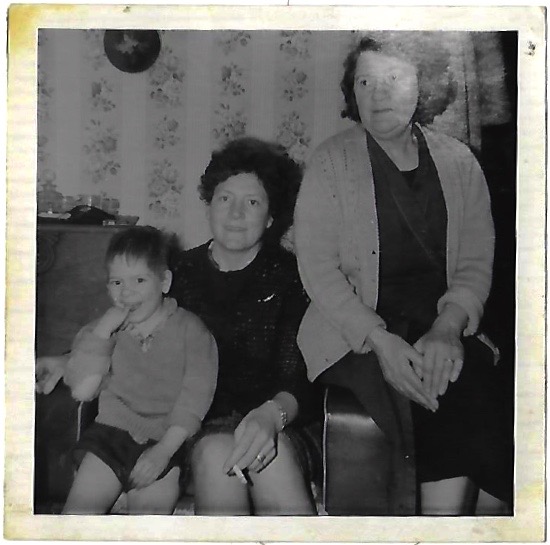
Steven with his Aunty Ena and his nan, c.1963
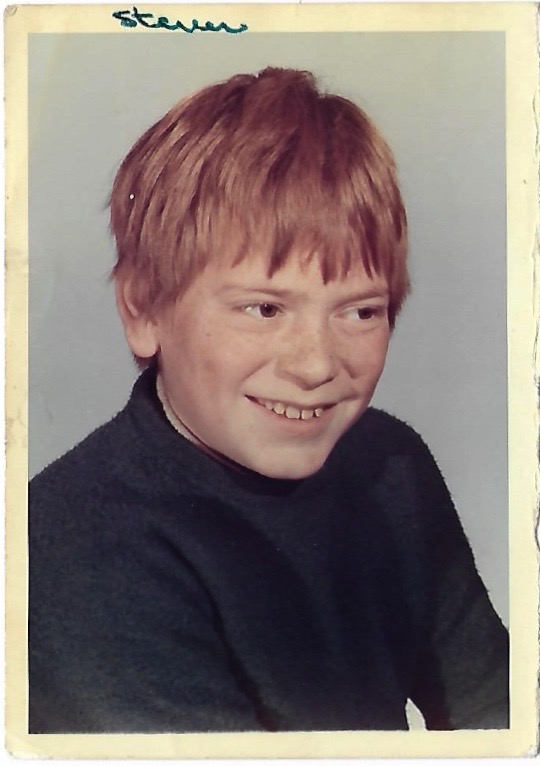
Steven aged twelve, 1970

Great Eastern Buildings photographed by Tony Hall in the sixties

Children at Great Eastern Buildings photographed by Homer Sykes in the seventies
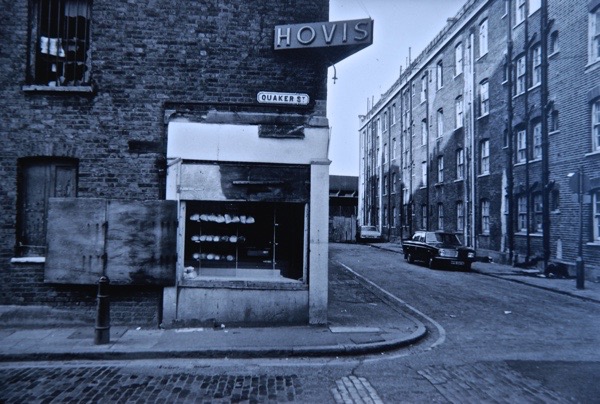
Great Eastern Buildings seen from Quaker St photographed by Dan Cruickshank in the seventies
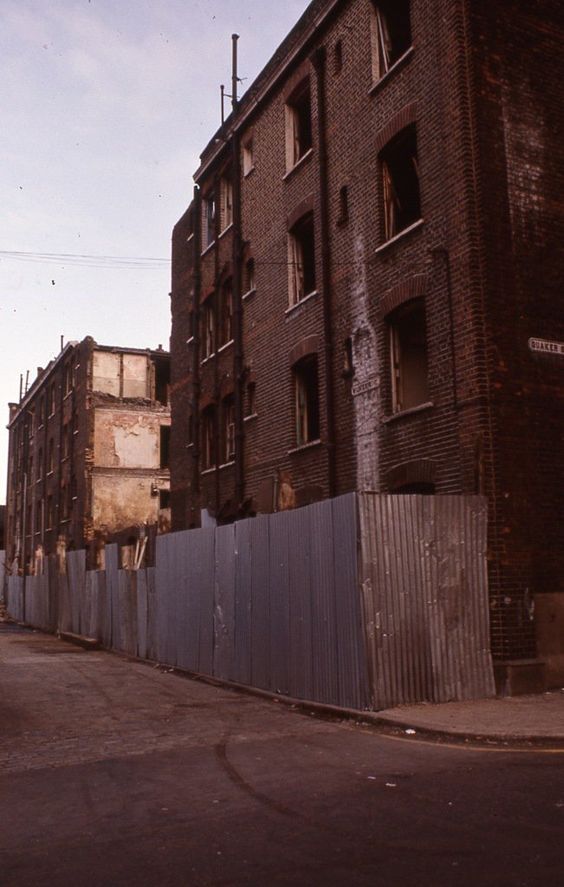
Demolition of Great Eastern Buildings, 1978
You may also like to read about
Jimmy Pollock, Fruit & Vegetable Wholesaler
CLICK HERE TO BOOK YOUR TICKETS FOR THIS SATURDAY
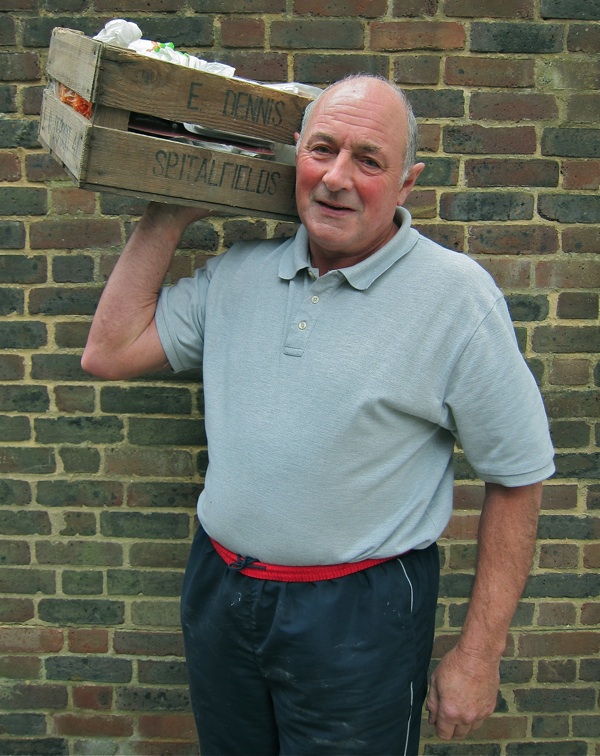
In the garden shed of his peaceful house beside Epping Forest, Jimmy Pollock keeps just wooden one box as a souvenir of his thirty-seven years in the Spitalfields Fruit & Vegetable Market. A native of Hemming St in Bethnal Green, Jimmy is a rare example of a porter who rose to become a trader and then a guvnor, owning his business. But ever-conscious of the formal hierarchy of the market, Jimmy has always retained an emotional loyalty with the porters rather than the traders, a lifelong allegiance confirmed now in his retirement by the presence at our interview of his friend and contemporary in the market, the porter Jimmy Huddart.
Jimmy Pollock is a man of stature – a former athlete – who demands respect on the basis of his physical presence alone, yet assumes a sweetness of manner when talks of the Spitalfields Market, recalling an array of savoury characters and incidents as if he were describing a former life upon a pirate ship. His emotional honesty and generosity of spirit are qualities that won him popularity and respect in the market where the long-term reputation of any individual is the most valuable commodity.
“I left school at fifteen and wanted to be an electrical engineer, but I while I was waiting to start my training there was a vacancy for an empty boy at Pash, Cornish & Smart at the Spitalfields Market in an old synagogue made into a warehouse. I remember as clear as anything the first day I started, the smell of the produce was just unbelievable – I thought it was going to be like that everyday, but I got used to it. I started at two pounds ten shillings a week. Outside the warehouse was where the greengrocers delivered their produce, and the cart marker who stood there, Mick Cotton, he told me which porters needed empties collecting. As an empty boy you were only allowed to touch empty boxes. I liked market life, I was sixteen. You worked by night but your days were your own, and there was football and cricket of a good standard. We competed against all the teams from the other markets.
At twenty-one, the union informed me that I could become an employee at the market and gave me a licence. Your badge had be on show at all times or you got pulled up by a superintendent. I started work at Lechsteins on the corner of Lamb St and Commercial St. I collected my barrow from Bobby Hatt in one of the arches Wheler St, he had the monopoly. It cost me five shillings a week in maintenance and hire, but every Monday, I had to take the wheels off and grease the axles myself. When I started I couldn’t take too heavy loads at first. You weren’t really a porter until you had shot your first load. You hit a bump and over you went. The plus was that everyone would stop and come help you pick it all up. Once you had got the cart running you just kept going. You pulled it behind you and it was all a question of balance. There were more than twenty cart stands around the market perimeter supervised by cart markers and I delivered the greengrocers’ orders to these locations where they collected them. Each one had a name, such as Top o’ the court (by Puma Court) or Crutchey Day (named after a famous one-legged porter) or The Dormitory (after the Sisters of Mercy Night Shelter) – and when they moved the market to the new building some of these cart stand names travelled too.
I remember, one year after Boxing Day, two homeless guys got killed in front of the car park gates. They had made a camp under cardboard boxes to keep warm. On the first morning back a forty ton trucks pulled out from the gates, they just thought it was a pile of waste boxes and crushed them.
After eighteen months at Lechsteins I was made unemployed and I had to stand under the clock in the centre of the market to get seasonal work. There might be twenty-five of us standing there. Next, I worked for Vellacot for three years. I was approached by Dick Barrett an elderly porter who had become a trader – it was something everybody wanted to do – he told me it was now too much for him and would I be interested in working with him part-time at E.Dennis owned by Bob Reynolds. So I spoke with my boss at Vellacots and he had no problem with it.
Then Dick Barrett said he’d had enough and asked if I could become full-time. Bob Reynolds, the guvnor was from North Stifford in Essex where he had farms and he used to come in to Spitalfields four days a week. I took the job and worked there for ten years selling produce for him. Familiarity taught me the trade, I already knew all the greengrocers. One day, Dick Barrett told me had cancer and he had another five years and his family were secure, and would I be interested in taking over the business. It was opposite The Gun on Brushfield St. He said he’d been offered ten thousand pounds for the business but as I’d served him well he would give it to me for three thousand. It was a good deal and we made a verbal agreement. He was dead within nine weeks and then I had to wait a year for probate before I could trade. I had seventeen years trading as E.Dennis, from 1976 until 1992. My first five years were unbelievable, from the first day it kicked off. I only stayed two years after they shifted to the new market, I took my old signboard with me and I was told I could not put it up for health and safety reasons. I sold the business to John Thomerson of JT Produce Ltd in 1994.
There was quite a few porters that became traders but few that became a guvnor. You live your life and no regrets.”
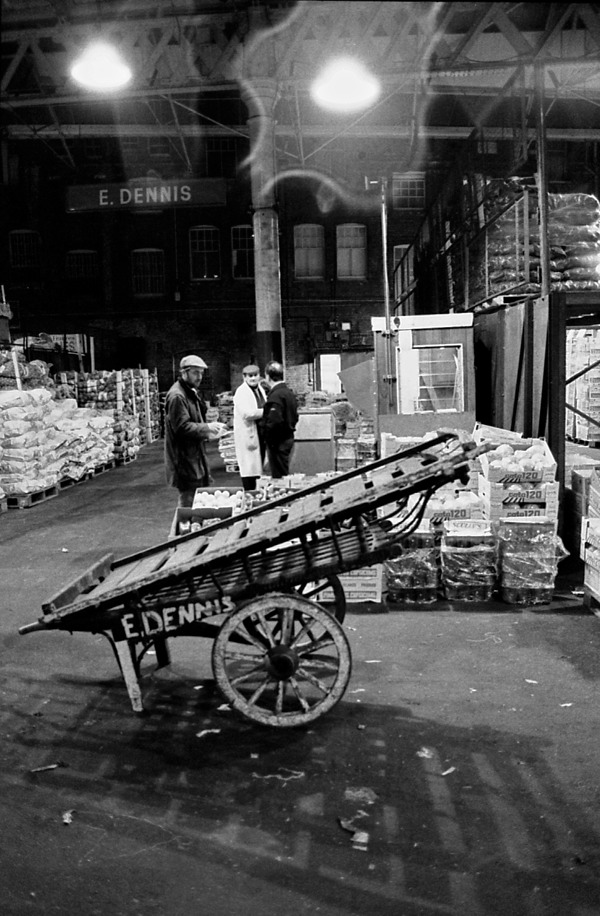

Jimmy Pollock at the Spitalfields Market, with the returned crates he once collected as empty boy.
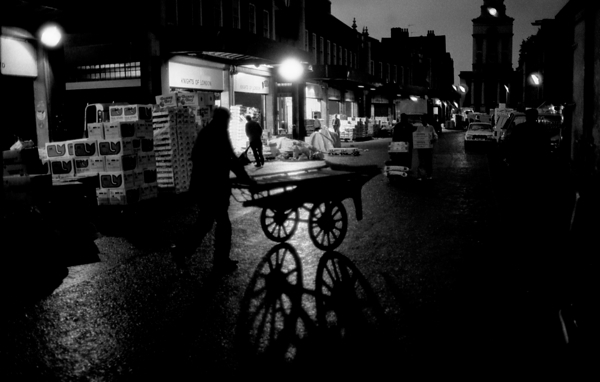

Jimmy with Lennie Jones -” He was more than a father to me, and recognised as one of the best judges of quality and pricing of produce to walk the market.”
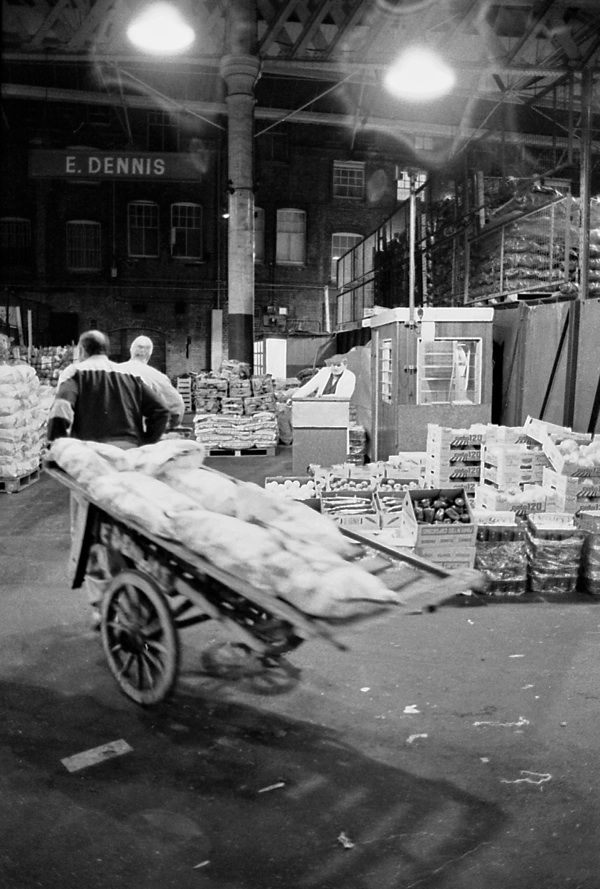

Old friends from the Spitalfields Market – Jimmy Huddart, Porter, and Jimmy Pollock, Porter turned Trader.
Pictures 2, 4 & 6 copyright © Mark Jackson & Huw Davies
You may also like to read about
Jimmy Huddart, Spitalfields Market Porter
David Kira Ltd, Banana Merchants
Peter Thomas, Fruit & Vegetable Supplier
Ivor Robins, Fruit & Vegetable Purveyor
John Olney, Donovan Brothers Ltd
Jim Heppel, New Spitalfields Market
Ron McCormick’s East End
CLICK HERE TO BOOK YOUR TICKETS FOR THIS SATURDAY
Ron McCormick photographed Whitechapel & Spitalfields in the early seventies and these pictures were exhibited at the Whitechapel Gallery in 1973. Many are featured in the new exhibition A World Apart: Photographing Change in London’s East End 1970-76 opening at Four Corners Gallery this Friday.
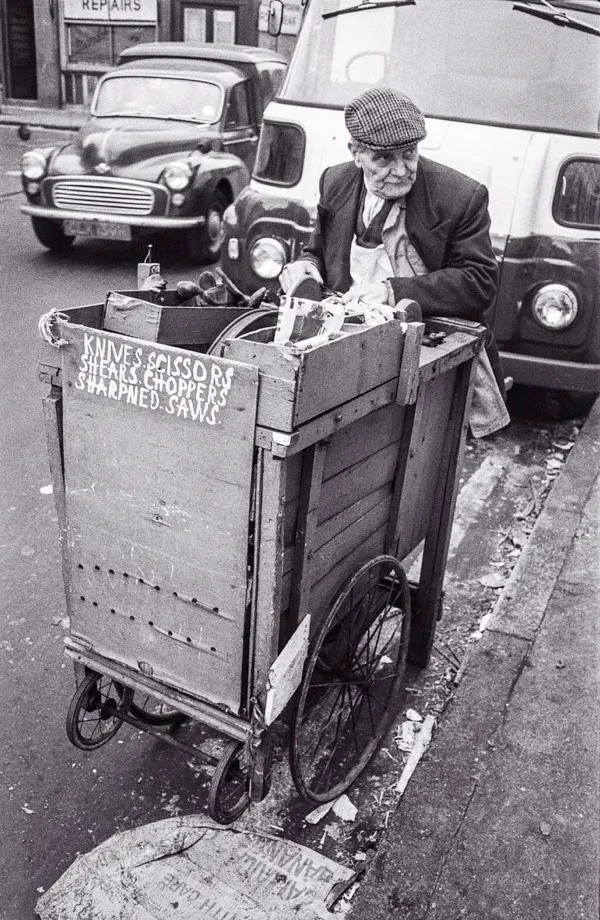
Knifegrinder, Spitalfields
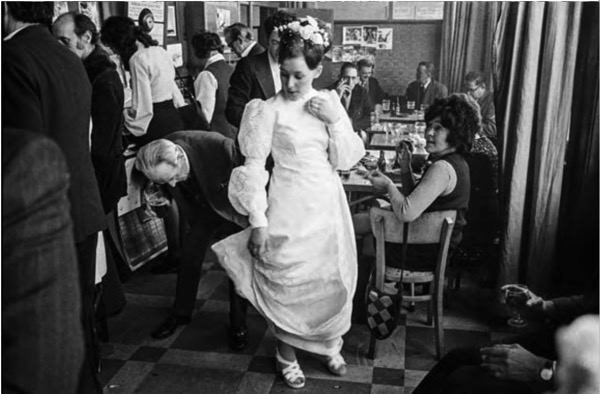
Royal Oak, Whitechapel Rd
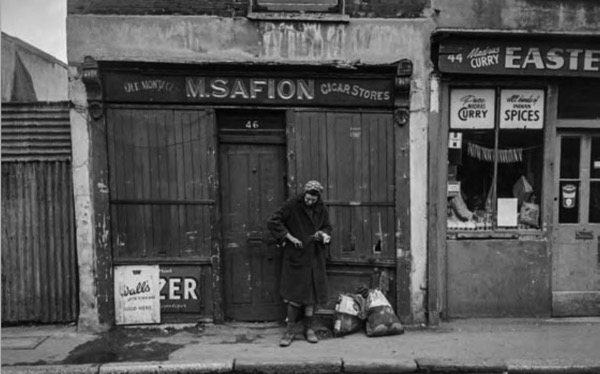
Old Montague St
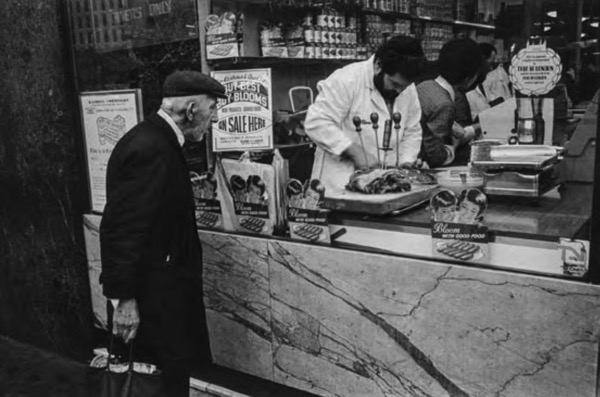
Blooms, Whitechapel High St
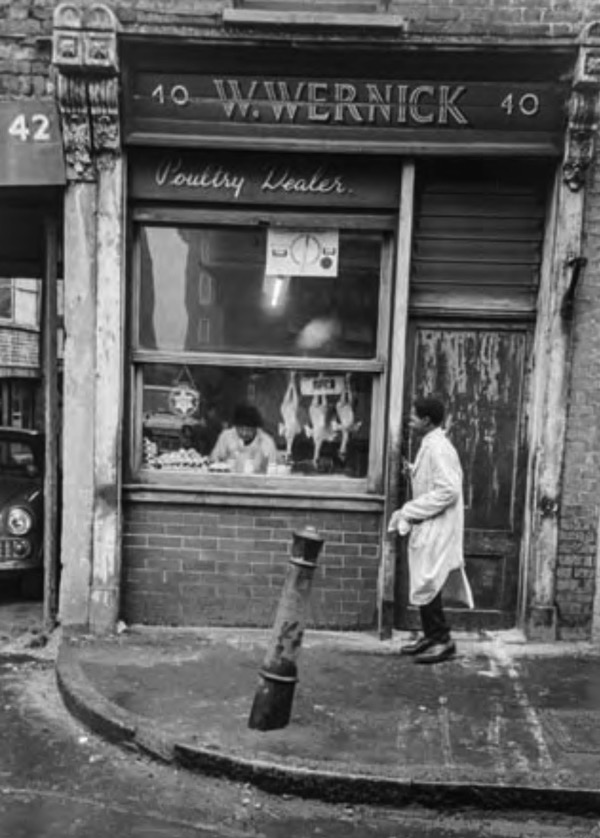
Old Montague St
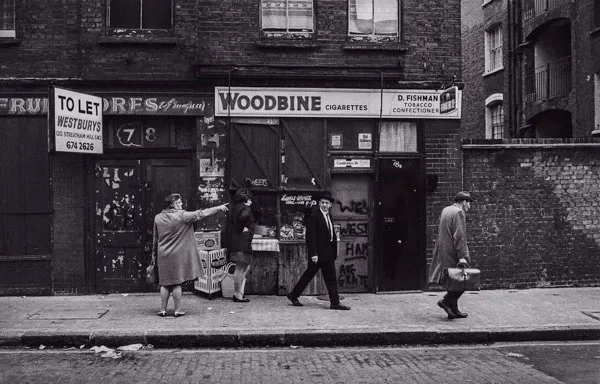
Fishman’s tobacconist & sweet shop, Flower & Dean St, Spitalfields
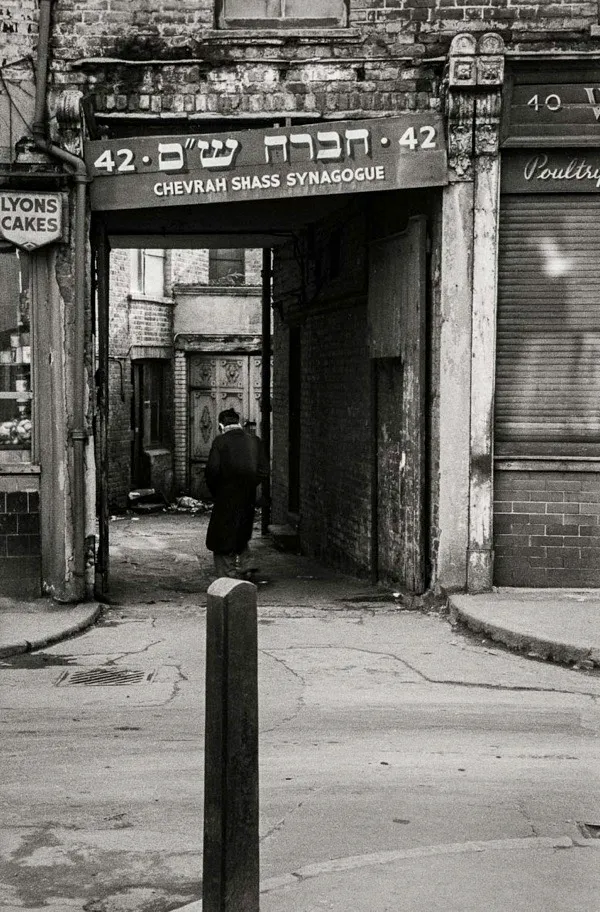
Entrance to Chevrah Shass Synagogue, Old Montague St
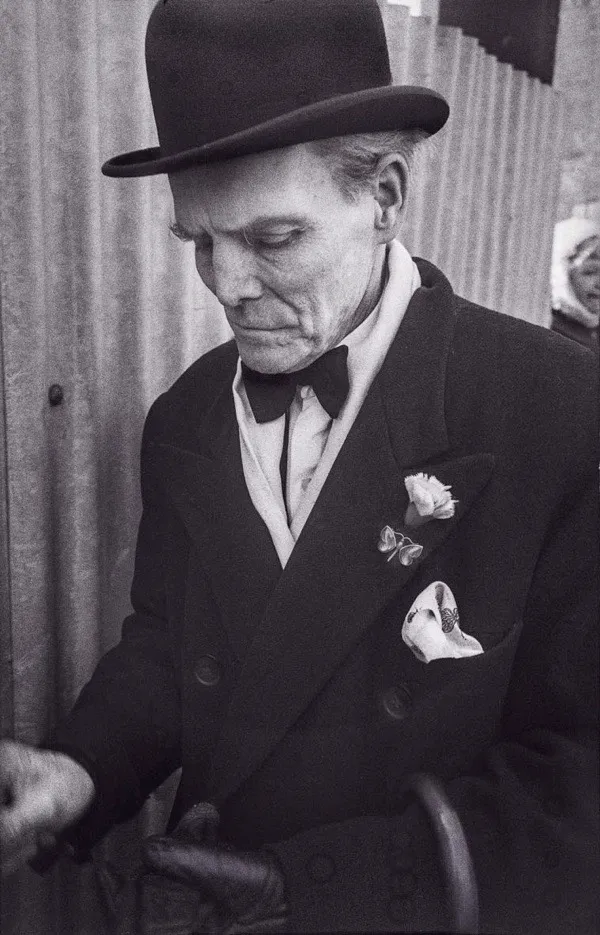
Dressed up for the Sunday market, Cheshire St

Fournier St
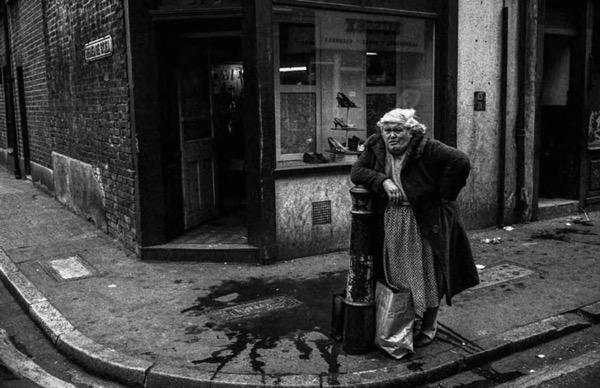
Brick Lane
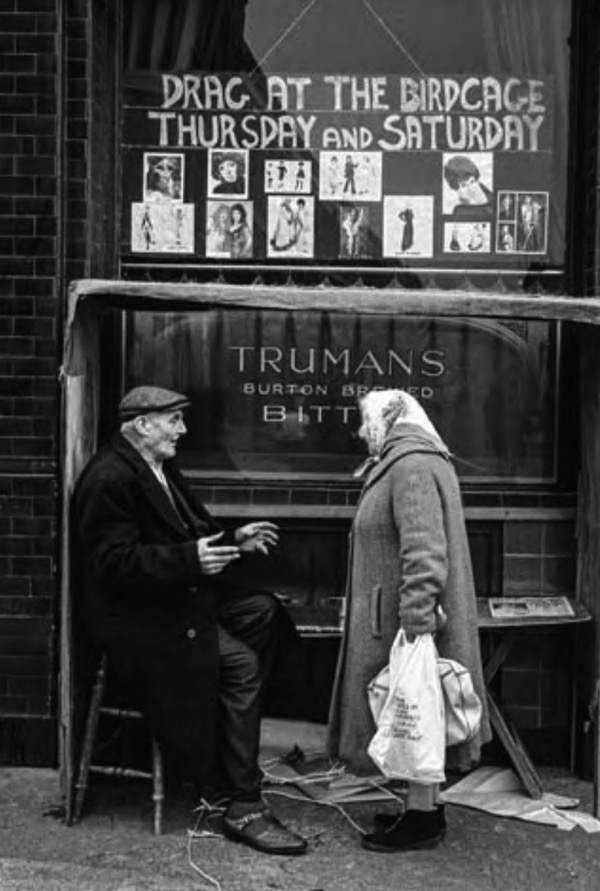
Club Row
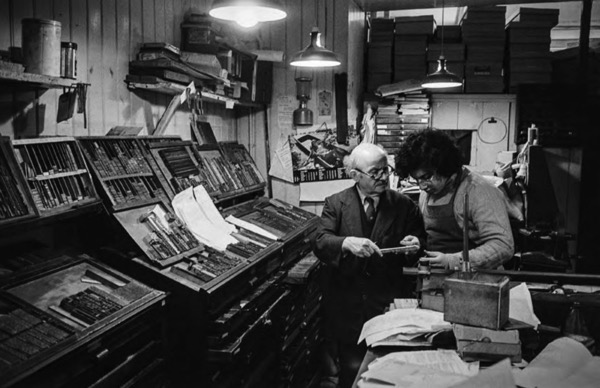
Brick Lane
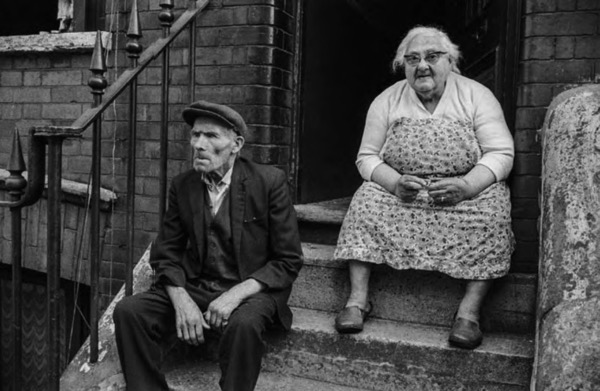
Settle St, Whitechapel
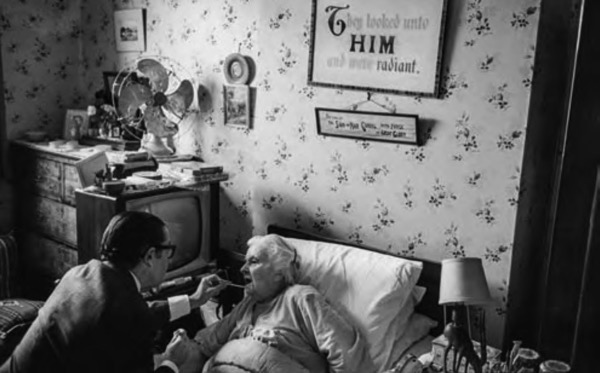
Great Eastern Buildings, Quaker St
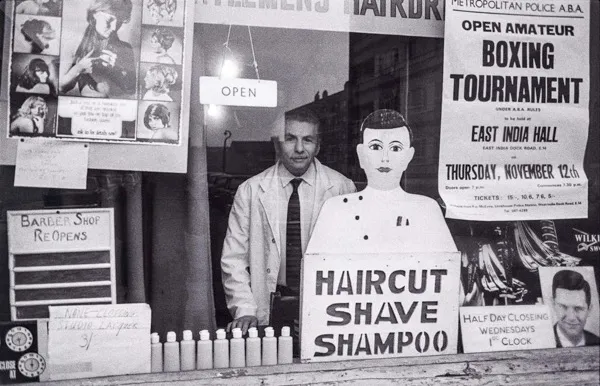
Maurice, Gents’ Hairdresser, Buxton St
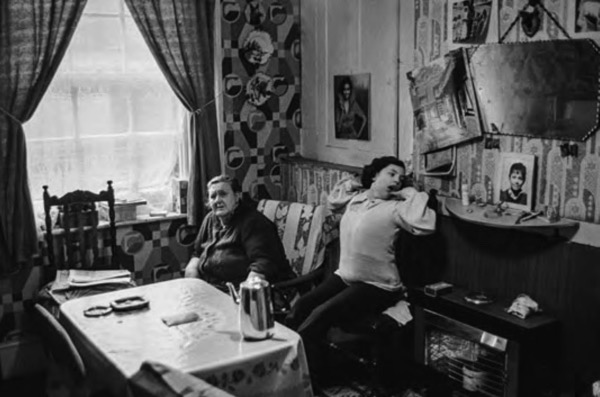
Great Eastern Buildings, Quaker St
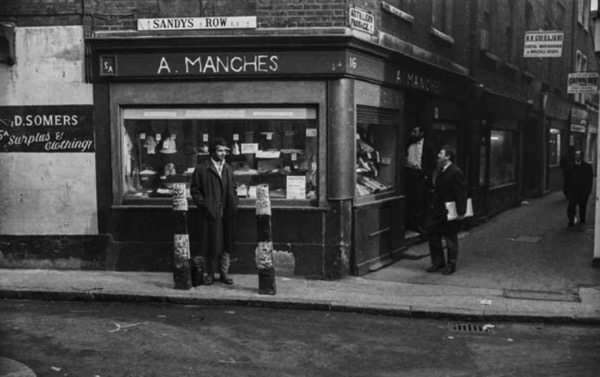
Sandys Row
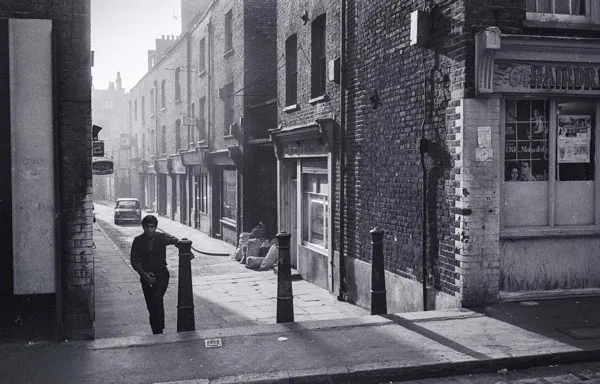
Steps down to Black Lion Yard, Old Montague St
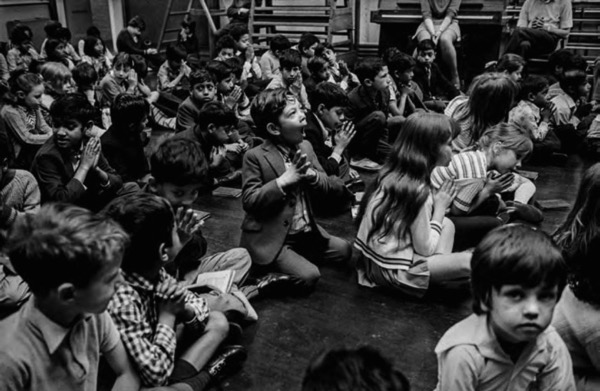
Christ Church School
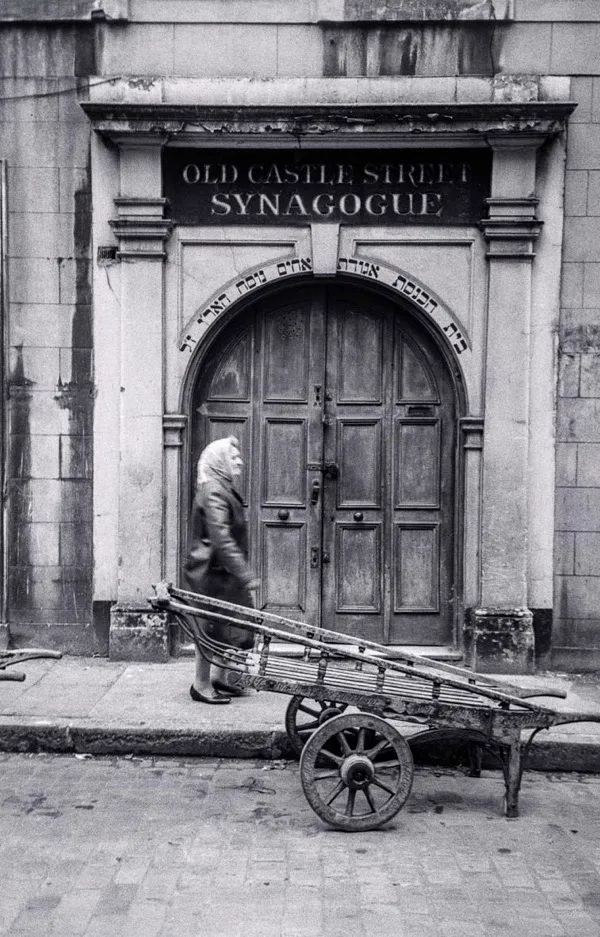
Old Castle St, Synagogue
Photographs copyright © Ron McCormick
You may also like to take a look at
Philip Marriage’s Spitalfields
The Bread, Cake & Biscuit Walk
CLICK HERE TO BOOK YOUR TICKETS FOR THIS SATURDAY

This biscuit was sent home in the mail during World War I
As regular readers will already know, I have a passion for all the good things that come from the bakery. So I decided to take advantage of a fine afternoon recently to take a walk through the City of London in search of some historic bakery products to feed my obsession, and thereby extend my appreciation of the poetry and significance of this sometimes undervalued area of human endeavour.
Leaving Spitalfields, I turned left and walked straight down Bishopsgate to the river, passing Pudding Lane where the Fire of London started at the King’s Bakery, reminding me that a bakery was instrumental in the very creation of the City we know today.
My destination was the noble church of St Magnus the Martyr, which boasts London’s stalest loaves of bread. Stored upon high shelves beyond the reach of vermin, beside the West door, these loaves were once placed here each Saturday for the sustenance of the poor and distributed after the service on Sunday morning. Although in the forgiving gloom of the porch it is not immediately apparent, these particular specimens have been there so many years they are now mere emblems of this bygone charitable endeavour. Surpassing any conceivable shelf life, these crusty bloomers are consumed by mould and covered with a thick layer of dust – indigestible in reality, they are metaphors of God’s bounty that would cause any shortsighted, light-fingered passing hobo to gag.
Close by in this appealingly shadowy incense-filled Wren church which was once upon the approach to London Bridge, are the tall black boards tabulating the donors who gave their legacies for bread throughout the centuries, commencing in 1674 with Owen Waller. If you are a connoisseur of the melancholy and the forgotten, this a good place to come on a mid-week afternoon to linger and admire the shrine of St Magnus with his fearsome horned helmet and fully rigged model sailing ship – once you have inspected the bread, of course.
I walked West along the river until I came to St Bride’s Church off Fleet St, as the next destination on my bakery products tour. Another Wren church, this possesses a tiered spire that became the inspiration for the universally familiar wedding cake design in the eighteenth century, after Fleet St baker William Rich created a three-tiered cake based upon the great architect’s design, for his daughter’s marriage. Dedicated today to printers and those who work in the former print trades, this is a church of manifold wonders including the pavement of Roman London in the crypt, an iron anti-resurrectionist coffin of 1820 – and most touching of all, an altar dedicated to journalists killed recently whilst pursuing their work in dangerous places around the globe.
From here, I walked up to St John’s Gate where a biscuit is preserved that was sent home from the trenches in World War I by Henry Charles Barefield. Surrounded by the priceless treasures of the Knights of St John magnificently displayed in the new museum, this old dry biscuit has become an object of universal fascination both for its longevity and its ability to survive the rigours of the mail. Even the Queen wanted to know why the owner had sent his biscuit home in the post, when she came to open the museum. But no-one knows for sure, and this enigma is the source of the power of this surreal biscuit.
Pamela Willis, curator of the collection, speculates it was a comment on the quality of the rations – “Our biscuits are so hard we can send them home in the mail!” Yet while I credit Pamela’s notion, I find the biscuit both humorous and defiant, and I have my own theory of a different nuance. In the midst of the carnage of the Somme, Henry Barefield was lost for words – so he sent a biscuit home in the mail to prove he was still alive and had not lost his sense of humour either.
We do not know if he sent it to his mother or his wife, but I think we can be assured that it was an emotional moment for Mrs Barefield when the biscuit came through her letterbox – to my mind, this an heroic biscuit, a triumphant symbol of the human spirit, that manifests the comfort of modest necessity in the face of the horror of war.
I had a memorable afternoon filled with thoughts of bread, cake and biscuits, and their potential meanings and histories which span all areas of human experience. And unsurprisingly, as I came back through Spitalfields, I found that my walk had left me more than a little hungry. After several hours contemplating baked goods, it was only natural that I should seek out a cake for my tea, and in St John Bread & Wine, to my delight, there was one fresh Eccles Cake left on the plate waiting for me to carry it away.
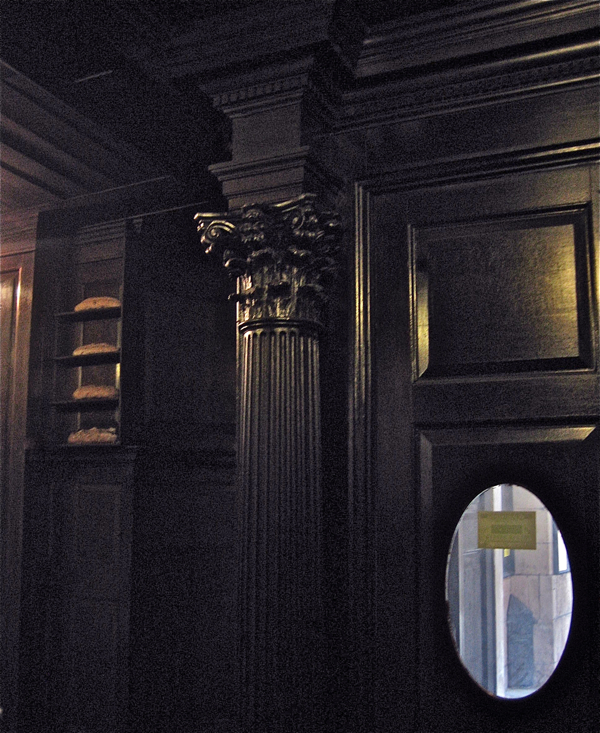
Loaves of bread at St Magnus the Martyr
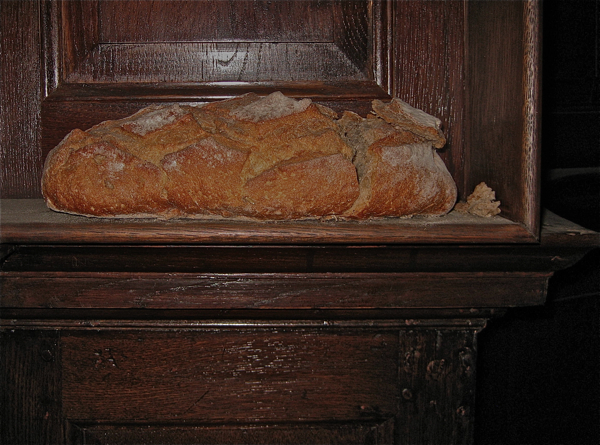
Is this London’s stalest loaf?
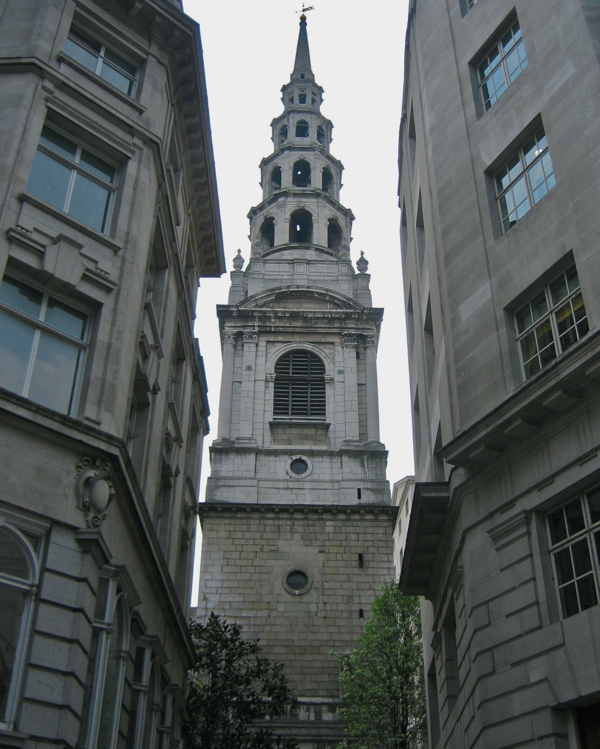
The spire of Wren’s church of St Bride’s which was the inspiration for the tiered design of the wedding cake first baked by Fleet St baker William Rich in the eighteenth century
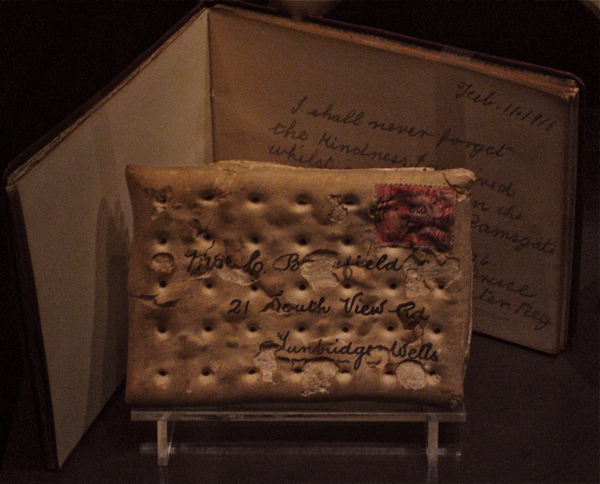
The biscuit in the museum in Clerkenwell
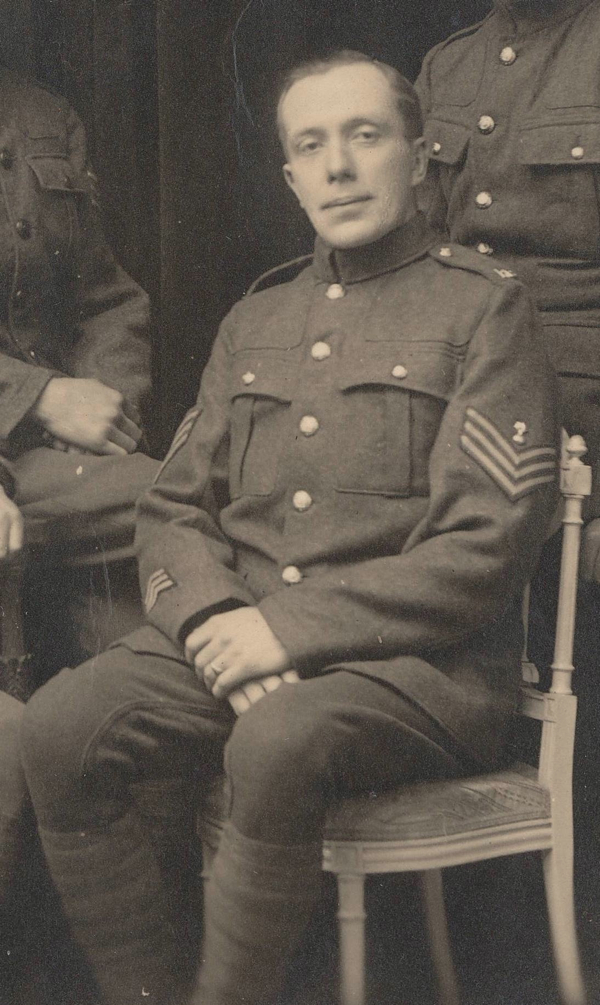
The inscrutable Henry Charles Barefield of Tunbridge Wells who sent his biscuit home in the mail during World War I

The freshly baked Eccles Cake that I ate for my tea
You may like to read these other bakery related stories












