Matchbox Models By Lesney & Co
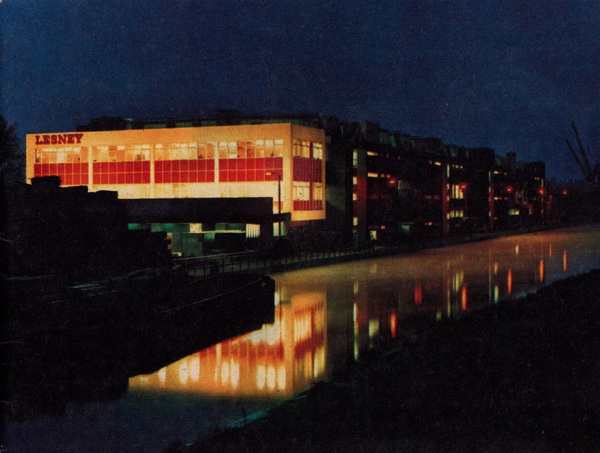
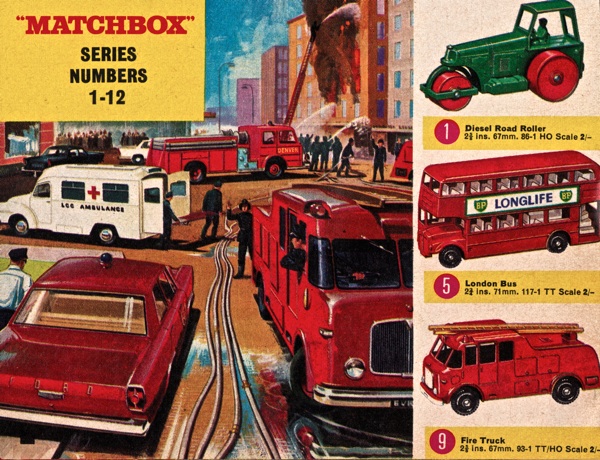
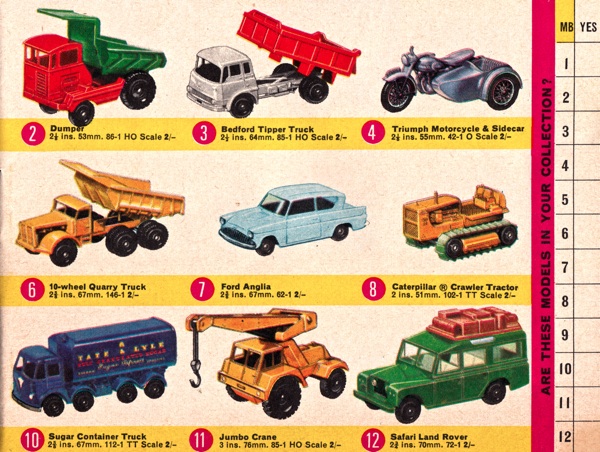
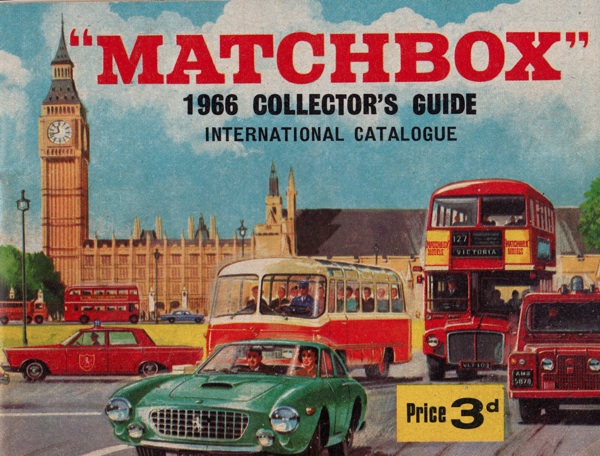
It is my pleasure to publish the Matchbox 1966 Collector’s Guide & International Catalogue by Lesney Products & Co Ltd of Hackney Wick (courtesy of Libby Hall). The company was founded by Leslie & Rodney Smith in 1947 , closed in 1982 and the Lesney factory was demolished in 2010.
It all began in 1953, with a miniature diecast model of the Coronation Coach with its team of eight horses. In Coronation year, over a million were sold and this tremendous success was followed by the introduction of the first miniature vehicle models packed in matchboxes. And so the famous Matchbox Series was born.


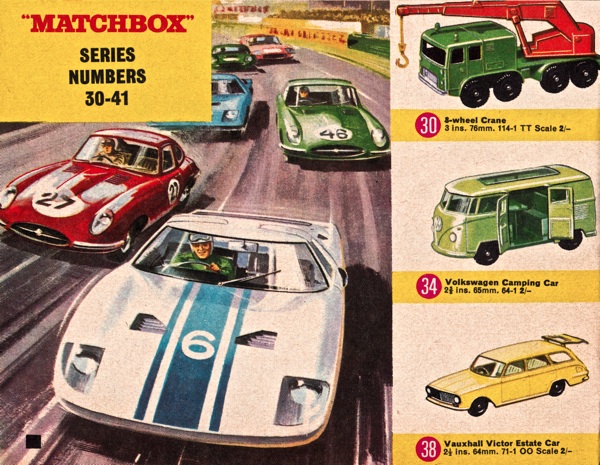

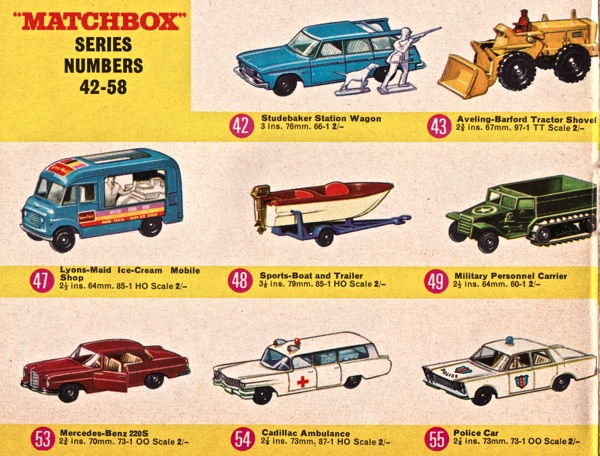
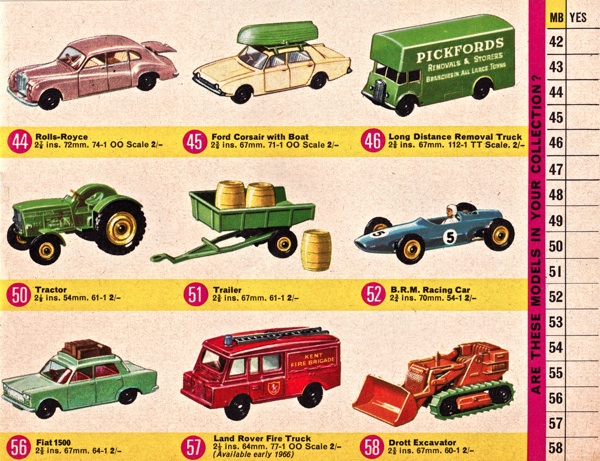
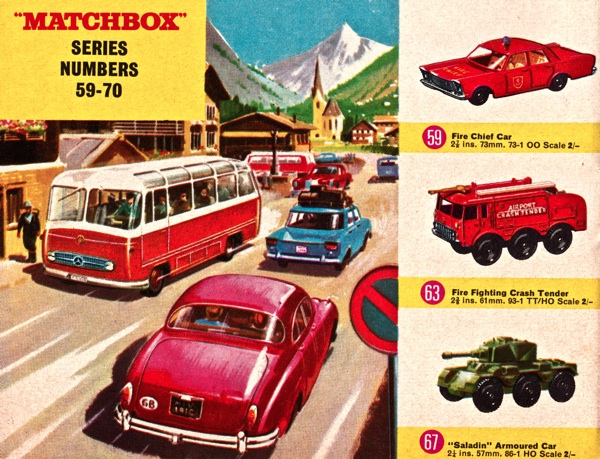
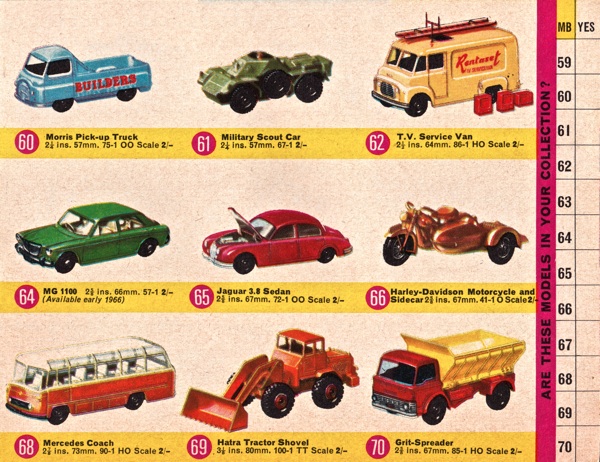
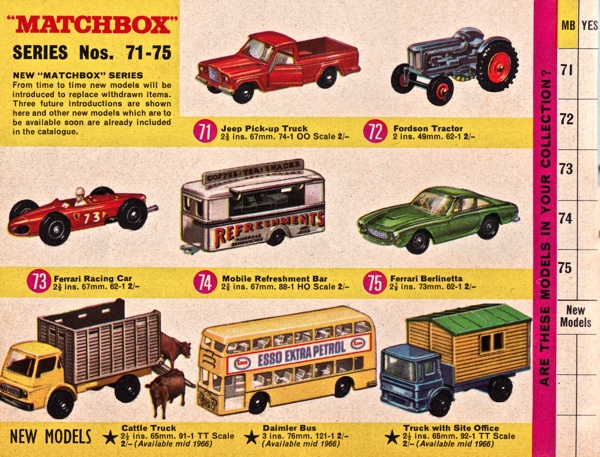
More than five hundred million Matchbox models have been made since the series was first introduced during 1953, and today over two million Matchbox models are made every week. The life of a new model begins at a design meeting attended by Lesney senior executives. The suitability of a particular vehicle as a Matchbox model is discussed and the manufacturer of the full-sized car is approached for photographs, drawings and other information. Enthusiastic support is received from manufacturers throughout the world and many top secret, exciting new cars are on the Matchbox drawings boards long before they are launched to the world markets.
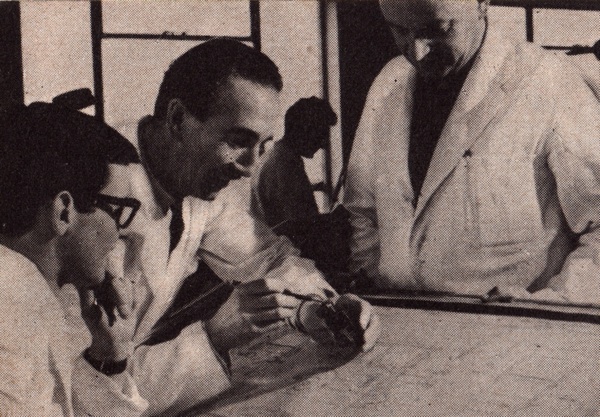
1. Once the details of the full-size vehicle have been obtained, many hours of careful work are required in the main drawing office in Hackney.
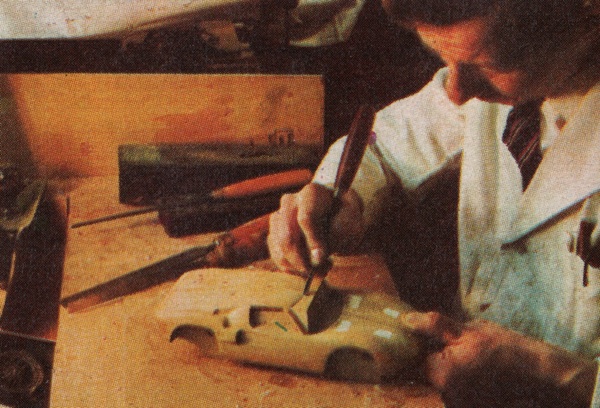
2. In the pattern shop, highly specialised craftsmen carve large wooden models which form the basic shape from which the miniature will eventually be diecast in millions.
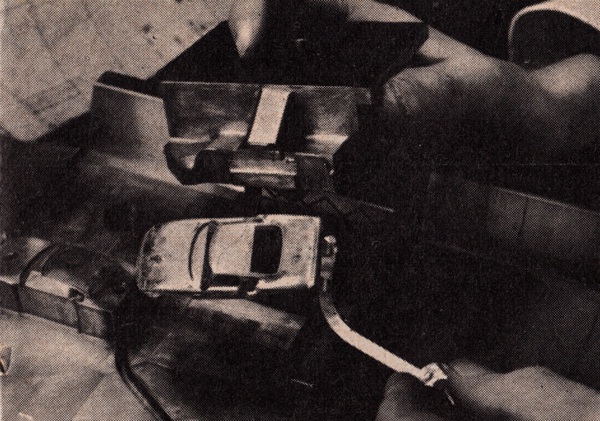
3. Over a hundred skilled toolmakers are employed making the moulds for Matchbox models from the finest grade of chrome-vinadium steel.
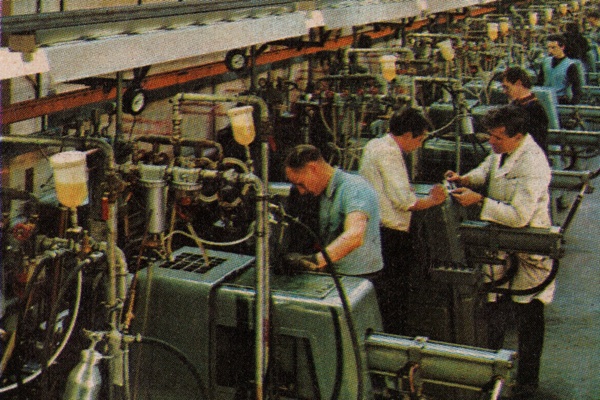
4. There are more than one hundred and fifty automatic diecasting machines at Hackney and all have been designed, built and installed by Lesney engineers.
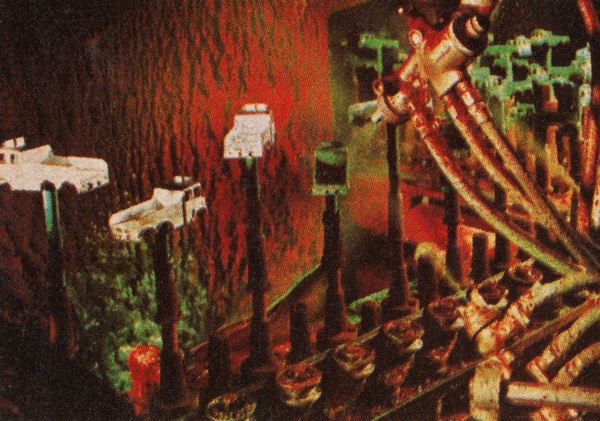
5. The spray shop uses nearly two thousand gallons of lead-free paint every week, and over two and a half million parts can be stove-enamelled every day.
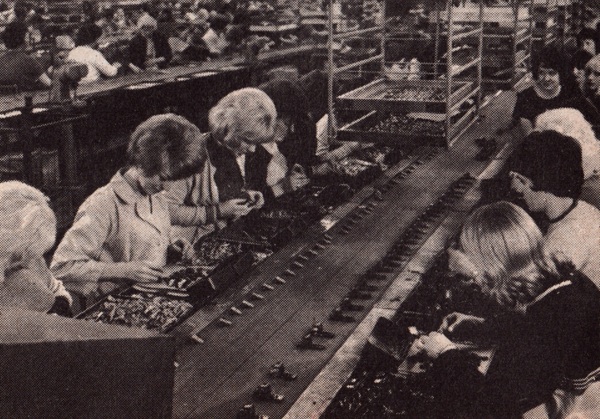
6. Final assembly takes place over twenty lines, and sometimes several different models and their components come down each line at the same time.
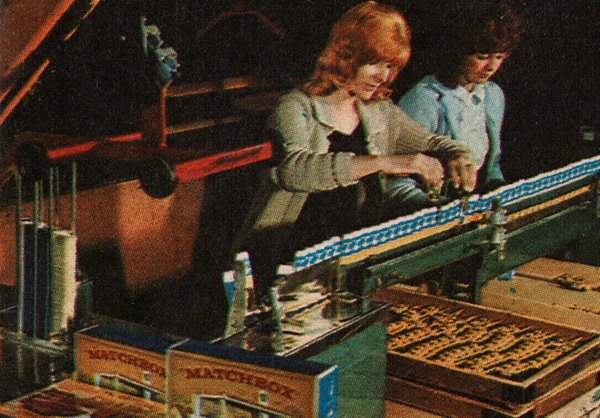
7. Ingenious packing machines pick up the flat boxes, shape them and seal the model at the rate of more than one hundred and twenty items per minute.
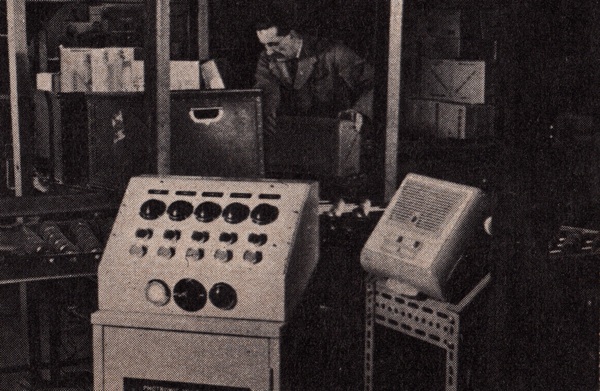
8. Ultra-modern, automatic handling and automatic conveyor systems speed the finished models to the transit stores where electronic selection equipment routes each package.
From the highly individual, skilled worker or the enthusiast who produces hand-made samples of new ideas, to the multi-million mass assembly of the finished models by hundreds of workers, this is the remarkable story of Matchbox models. Over three thousand six hundred people play their part in a great team with the highest score in the world – over a hundred million models made and sold per year. Enthusiasts of all ages throughout the world collect and enjoy Matchbox models today and it is a true but amazing fact that if all the models from a year’s work in the Lesney factories were placed nose to tail they would stretch from London to Mexico City – a distance of over six thousand miles!
You may also like to take a look at these other magnificent catalogues
An Old Whitechapel Bell
Today I present the first in a series of Whitechapel Bells, in which I tell the stories of celebrated specimens that originated here in the East End at the world’s oldest and most famous Bell Foundry

‘Robert Mot made me’
This is one of the oldest Whitechapel Bells still in use, cast by Robert Mott in 1588, the year of the Spanish Armada and also the year William Shakespeare arrived in London. Yet, even though Robert Mott is remembered as the founder of the Whitechapel Bell Foundry in 1570, he did not begin the industry of founding in this location since bells are recorded as having been cast in Whitechapel as early as 1420.
Adorned with the sparse text of ‘Robertus Mot me fecit,’ this bell declares its birth date of 1588 in delicate gothic numerals and indicates its origin through use of the symbol of three bells upon a disc – at the sign of the three bells – a maker’s mark which is still in use for bells made in Whitechapel to this day.
I climbed the tower of St Clement Danes in the Strand to photograph this bell for you this week and discovered it shares a common ancestry with its fellows in the belfry which were also cast at the Whitechapel Bell Foundry, but by Mears & Stainbank in 1958 – nearly four centuries later. Close examination reveals they also carry the symbol of the three bells.
With a diameter of two feet and a weight of just over two hundredweight, Robert Mott’s bell is relatively modest in scale yet a dignified specimen nonetheless with its broken canons (the hoops that used to be attached to all bells to attach them to a beam) emphasising the exotic vulnerability of its age – as if it were a rare metal flower plucked roughly from a mythological tree, long extinct.
Today, the old Whitechapel bell rings the Angelus and may be heard by passersby in the Strand at 7:55am, 11:55am and 17:55pm. Its earlier function as the clock bell may be the reason the old bell has survived, since the other bells were removed by Rector William Pennington-Bickford during World War II for safe keeping at the base of the tower.
St Clement Danes was established in 886 when Alfred the Great expelled the Danes from the City of London and they settled along the Strand. Escaping the Great Fire, the church was in a decayed state and considerably rebuilt by Christopher Wren in the sixteen-eighties, with a spire added by James Gibbs on top of the old bell tower in 1719. During the eighteenth century, St Clement’s acquired a literary congregation including local residents Samuel Johnson, Oliver Goldsmith and David Garrick but, by the nineteenth century, fashionable society had moved to the churches of the West End.
Septimus Pennington, Rector from 1889, set out to minister to the flower girls and street traders of Clare Market and Drury Lane, work continued by his successor and son-in-law, Rector William Pennington-Bickford in the early twentieth century. Unfortunately, Pennington-Bickford’s worst expectations were realised when St Clement’s was hit by more than twenty fire bombs on the night of 12th May 1941, reducing the church to a shell.
Fearful that looters might steal the fire-damaged bells and melt them down, Pennington-Bickford had them bricked up in the Rector’s parlour and died from grief three months later, only to be followed by his wife who threw herself from a window shortly after. Yet through all this, Robert Mot’s bell was safe, hanging up in the bell tower. Postwar, St Clement’s was rebuilt again to Wren’s designs and the damaged bells recovered from the Rector’s parlour, recast in Whitechapel and rehung in the tower in 1958. Today, it is the church of the Royal Air Force.
When I asked Alan Taylor, Bell Ringer at St Clement’s, his opinion of the sound of the old Whitechapel bell, he wrinkled up his nose in disapproval. ‘Bell founding was a bit hit-or-miss in those days,’ he informed me, shaking his head.
As the Sanctus Bell, Robert Mot’s bell was originally used to summon the congregation to prayer, but I imagine it could also have been rung at the time of the Spanish Armada. Ancient bells connect us to all those who heard them through the centuries and, given the date of 1588, this is one that William Shakespeare could have heard echoing down the street, when he walked the Strand as a newcomer to London, come to seek his destiny.
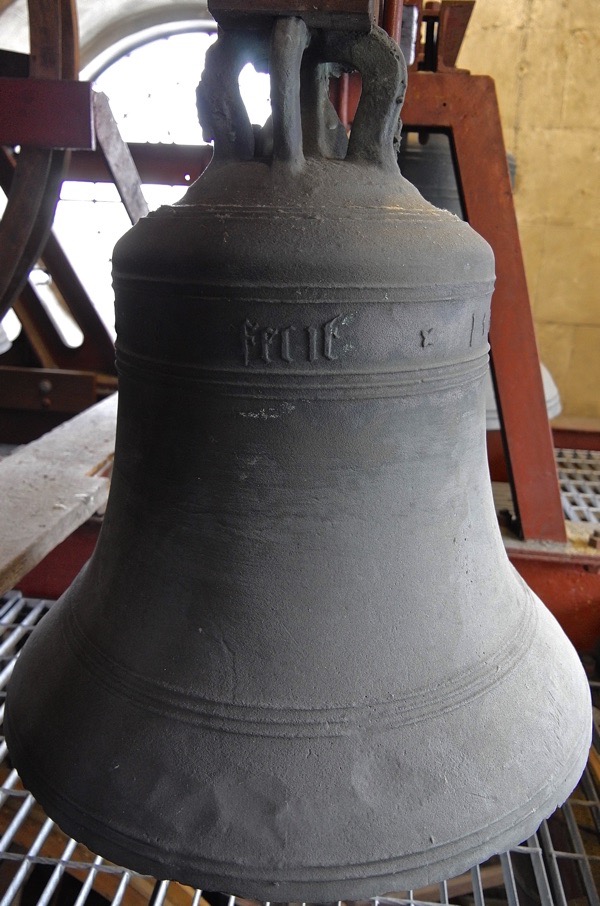
Cast in 1588 by Robert Mot, Founder of the Whitechapel Bell Foundry
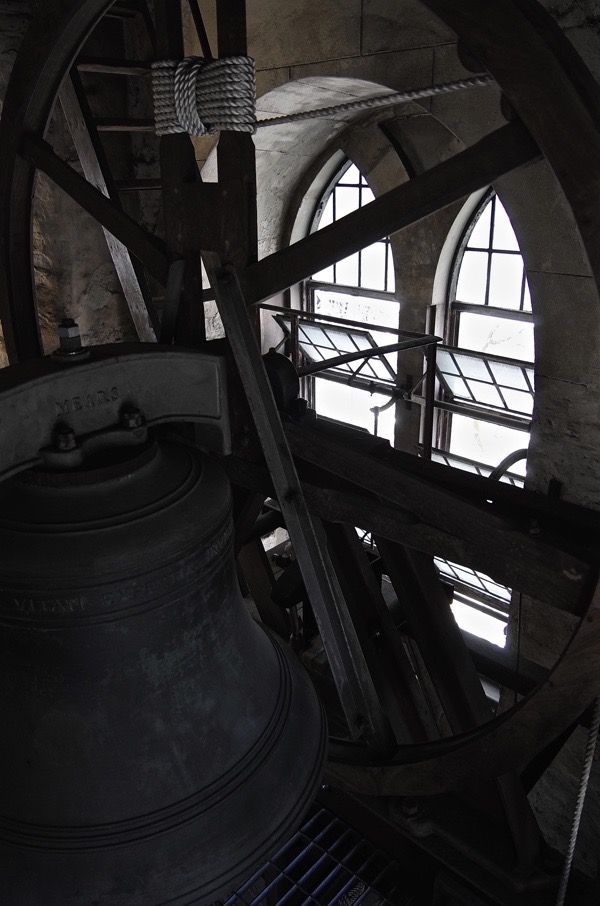
Whitechapel bell cast in 1958 by Mears & Stainbank
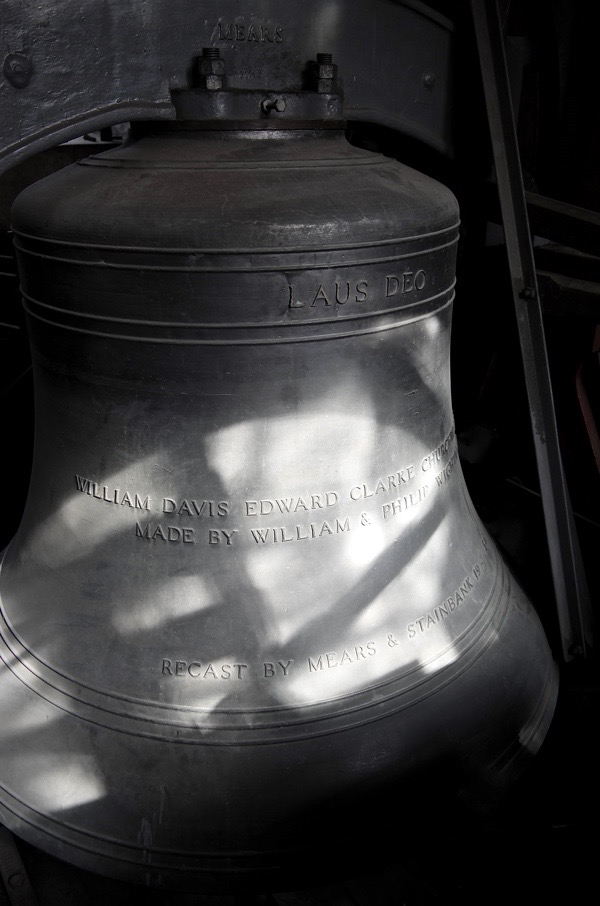
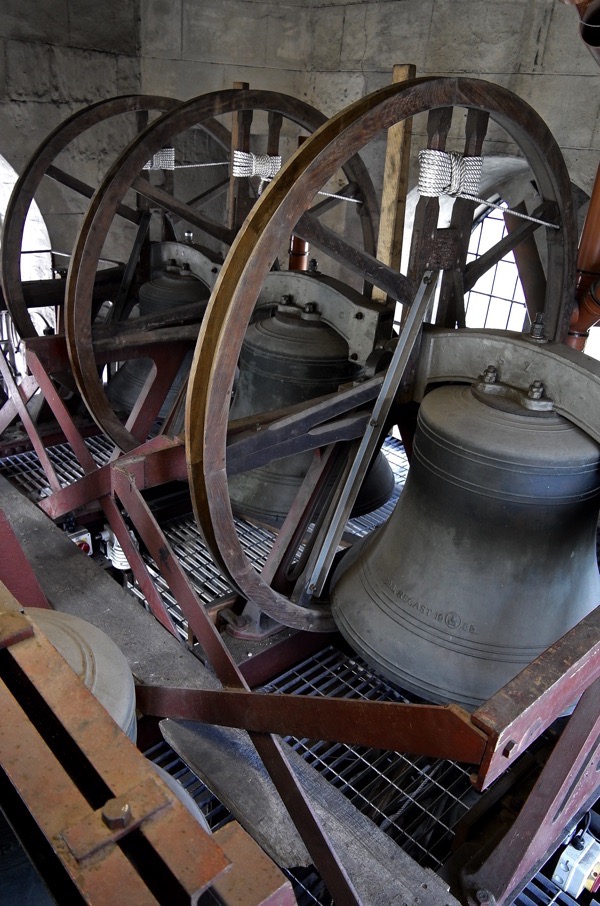
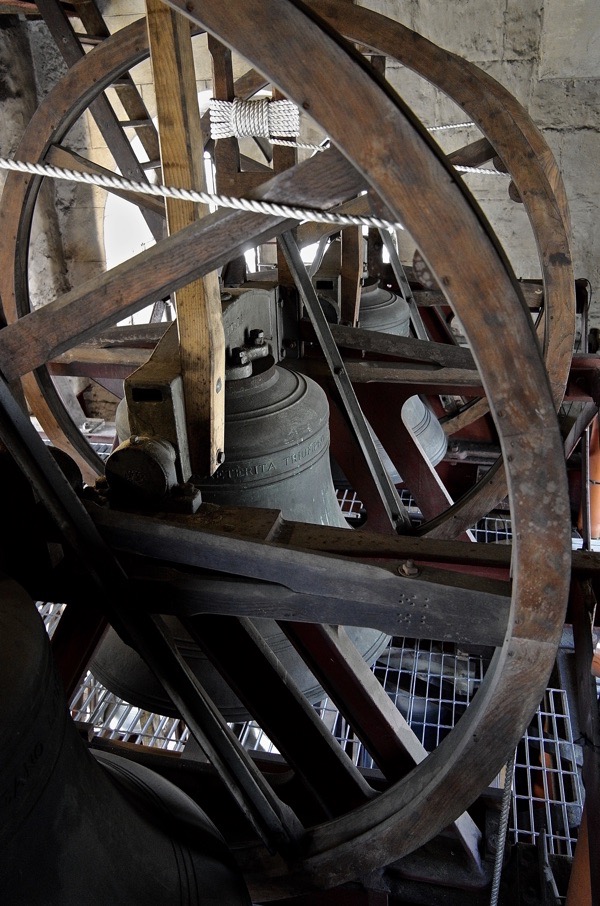
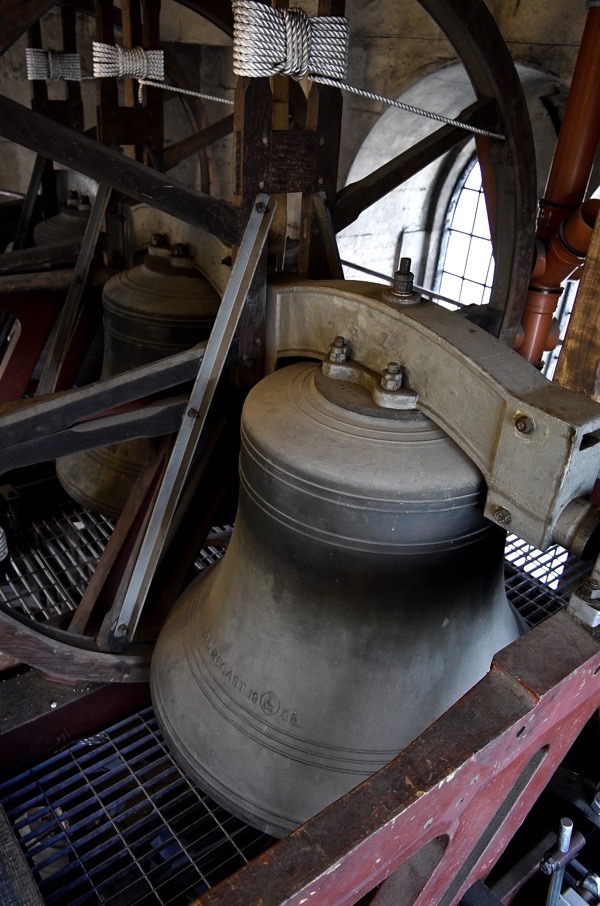
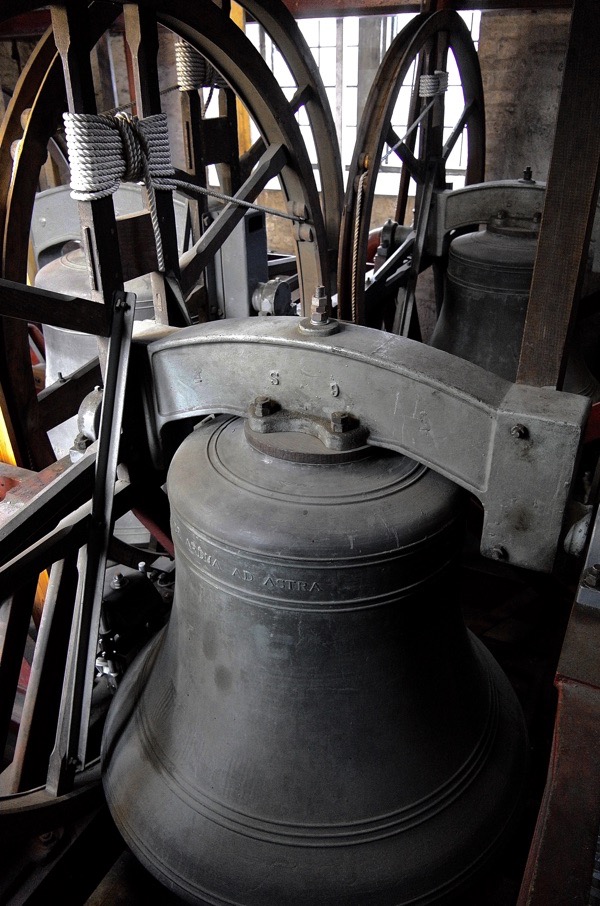
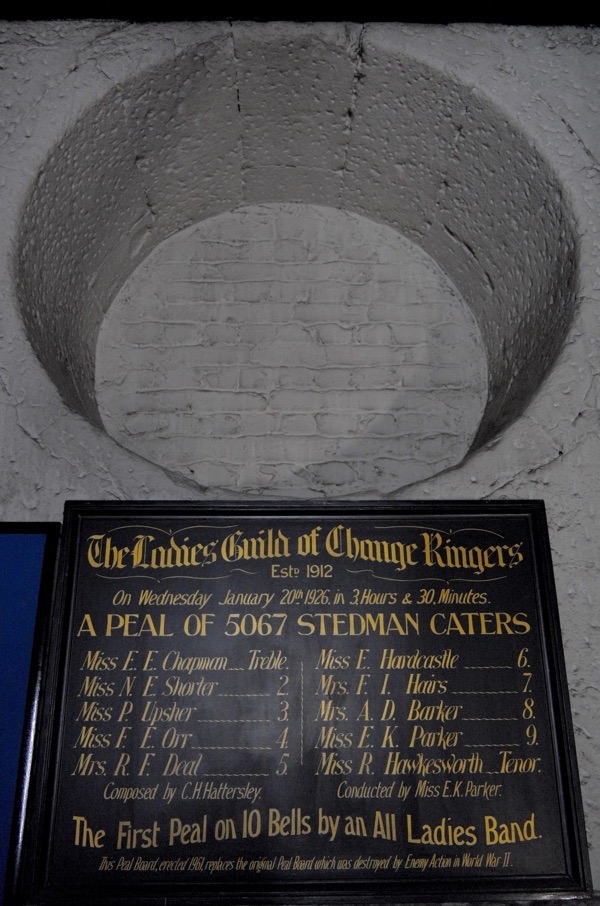
Panel in the bell ringing chamber
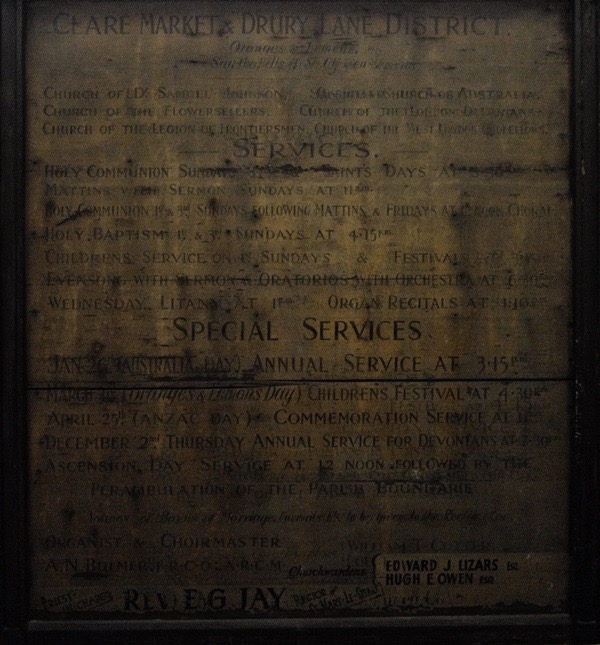
Old church board, now in the crypt, indicating this was once the church for Clare Market & Drury Lane
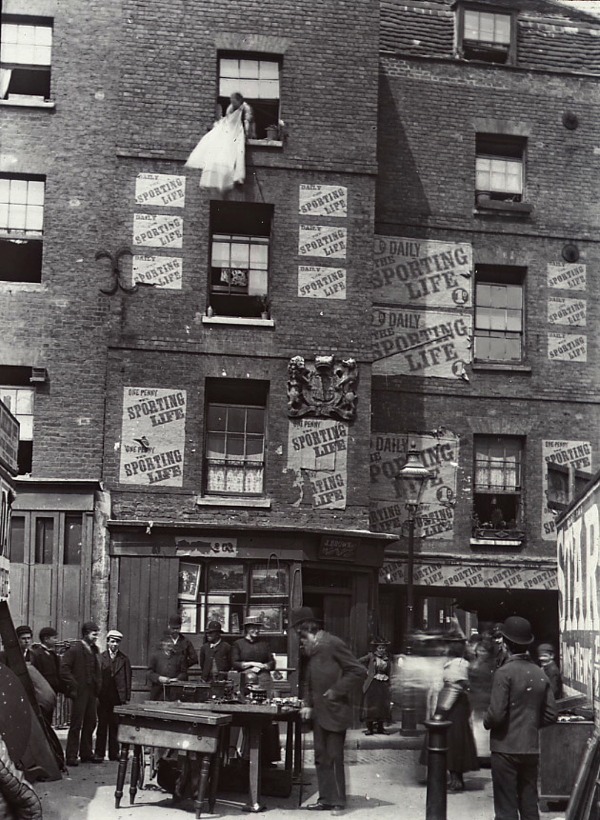
Nineteenth century photograph of Clare Market (Courtesy Bishopsgate Institute)

Nineteenth century photograph of Drury Lane (Courtesy Bishopsgate Institute)
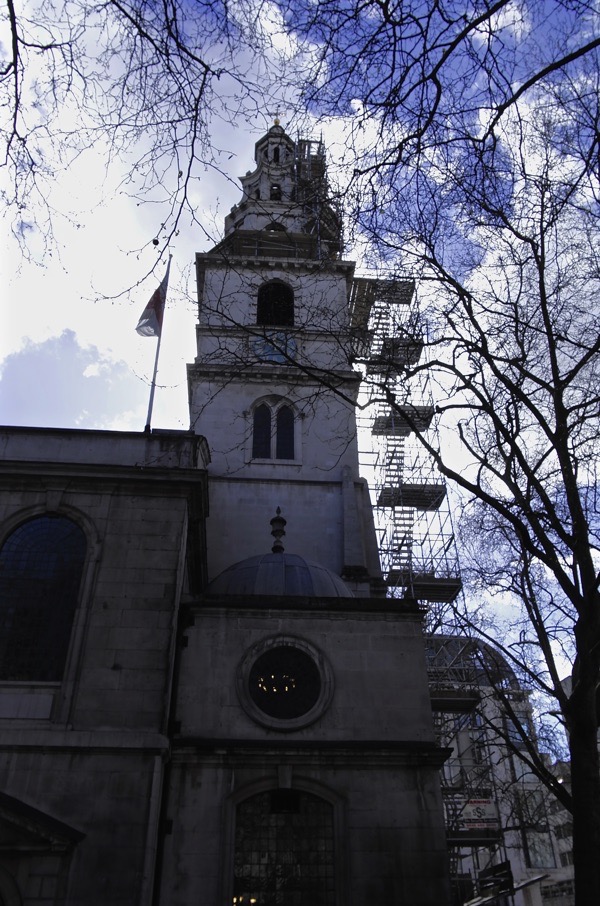
St Clement Danes – Robert Mott’s bell is in the belfry above the clock
You may also like to read about
A Petition to Save the Bell Foundry
Save the Whitechapel Bell Foundry
So Long, Whitechapel Bell Foundry

CLICK HERE TO SIGN THE PETITION
A Hoxton Childhood & The Years After
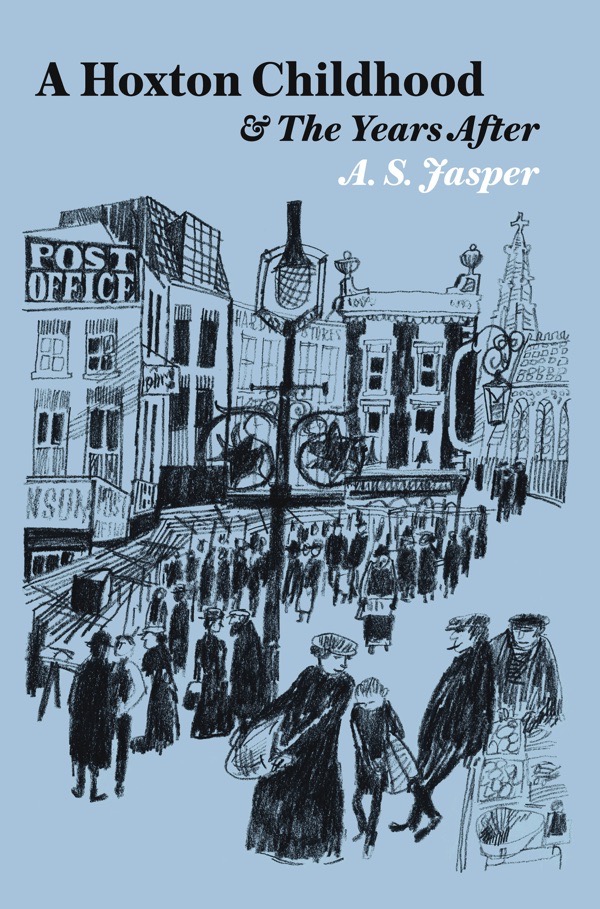
Click here to pre-order a copy for £20
It gives me great pleasure to announce that I shall be publishing A HOXTON CHILDHOOD & THE YEARS AFTER by A.S. Jasper (1905-1970) this spring and I am delighted to be collaborating with Labour & Wait to celebrate publication day on Tuesday 25th April.
A.S. Jasper’s tender memoir of growing up in the East End before the First World War was immediately acclaimed as a classic when it was described by the Observer in 1969 as ‘Zola without the trimmings.’ In this definitive new hardback edition, it is accompanied by the first publication of the sequel detailing the author’s struggles and eventual triumph in the Shoreditch cabinet-making trade, THE YEARS AFTER. Additionally, I have undertaken an extended interview with Terry Jasper, the author’s son, which is included as an Afterword, discussing his father’s life and writing.
The book is designed by David Pearson, and we have reproduced James Boswell‘s drawings for A HOXTON CHILDHOOD from the original artwork and commissioned new illustrations for THE YEARS AFTER from Joe McLaren.
I have always been fascinated by A. S. Jasper’s account of the life of old Hoxton, of which so little remains today, and the sequel traces the author’s path beyond the East End to a new home in the suburbs – a journey which so many undertook.
The party for publication day of A HOXTON CHILDHOOD & THE YEARS AFTER will be held on Tuesday 25th April 7pm at the Labour and Wait Workroom, 29-32 The Oval, Off Hackney Rd, E2 9DT in the shadow of the magnificent gasometers. There will be refreshments, live music and readings. Click here to book a ticket (Please note booking opens at 10am on 23rd March)
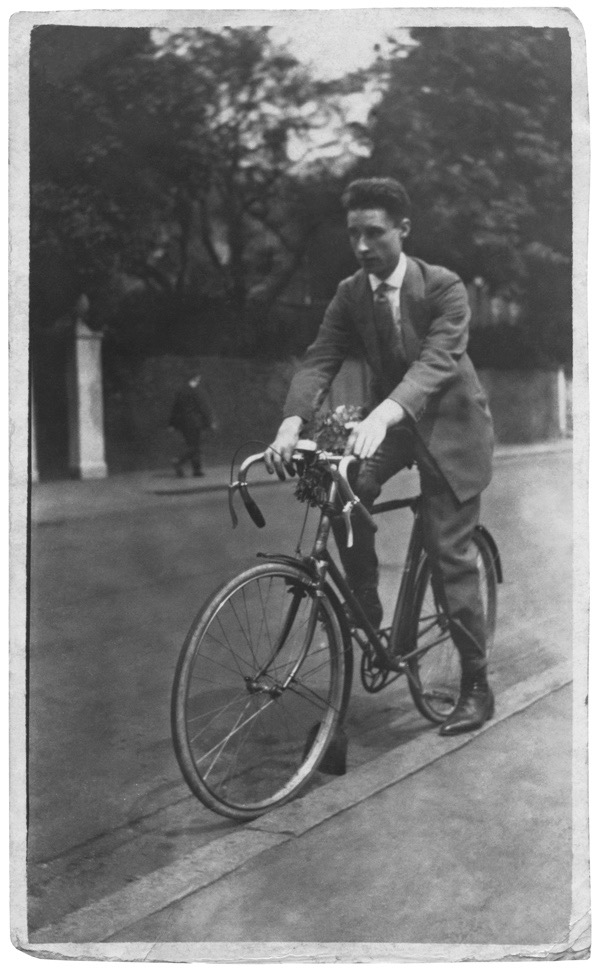
A.S. Jasper, 1930
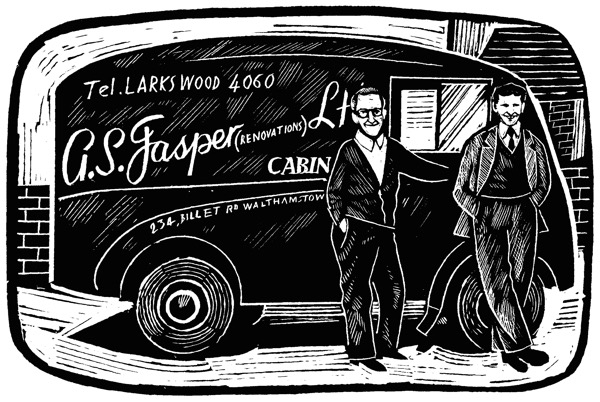
Illustration by Joe McLaren for THE YEARS AFTER


The Gentle Author is delighted to collaborate with Labour and Wait to present a SPITALFIELDS LIFE BOOKSHOP for ten days at the WORKROOM, 29-32 The Oval, Off Hackney Rd, Bethnal Green, E2 9DT, in the shadow of the magnificent gasometers. This will be a rare chance to take a look at all Spitalfields Life Books titles in one place and have a peek behind the scenes at Labour and Wait too.
(Wednesday 26th April – Saturday, May 6th, 11am-6pm. Closed Sunday 30th April)
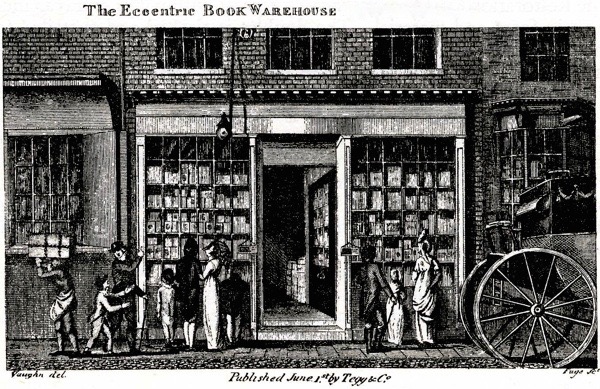
At Golden Lane Estate
Contributing Writer Sarah Winman (author of When God Was A Rabbit, A Year of Marvellous Ways and the forthcoming Tinman) sends this report with photographs by Patricia Niven about a proposed development at the much-loved Golden Lane Estate in the City of London
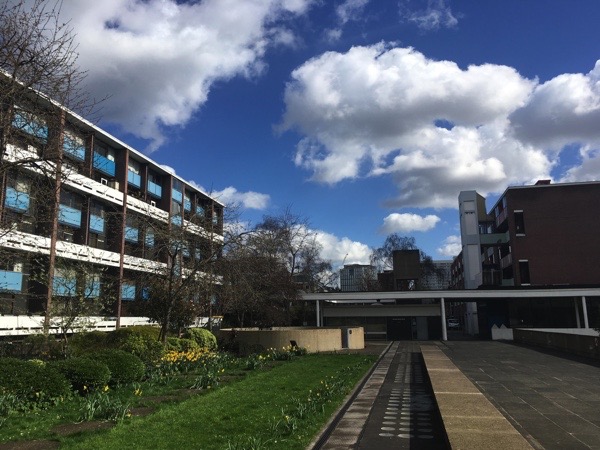
When I came to the Golden Lane Estate twenty-five years ago, I was more than a little grumpy and unimpressed. I’d been living just off Fleet St down by the Thames in a large Victorian building with a small community of musicians, actors and artists. It was exciting for a kid from Essex. It was romantic. We paid rent and were respectful, we looked after the building at night and were eventually given eviction notices. Even back then, homes were turned over for office space. My youth spoiled for a fight and, supported by a wonderful solicitor from Legal Aid, I chose to have my day in court. It never came, though, and I was relocated east to the Golden Lane Estate.
My first impression of the Estate was that it was all hard angles with garish-coloured housing blocks amidst concrete walkways. It seemed cold and unromantic. I was used to Victorian, I just did not get it and I vowed my stay would be temporary.
Yet the place crept up on me. And the more I came to understand and appreciate the brilliance of its design, its sensitive approach to social housing and the oasis of calm it provides, so the deeper my roots buried. I made committed friendships. My dear friend Maureen died last year at the age of ninety-six. I often draw breath when I look up to her flat and what remains of her garden, but mostly I see her absence.
Back in 1952, the architects Chamberlin, Powell & Bon aimed to create a successful way of living that would allow people in social housing to thrive: their emphasis was on the principles of light and space. Theirs was a clever and sensible vision, influenced by Le Corbusier, of course, but also Mies van der Rohe, Frank Lloyd Wright and Ludwig Hilberseimer. This was Modernist design with pedigree.
Work began in 1953 and steadily progressed to the tower of Great Arthur house, briefly one of Britain’s tallest residential blocks. The site culminated in Crescent House, the block that spans the curve of Goswell Rd and which allowed the architects to move seamlessly from Modernism to Brutalism, as they undertook the design for the Barbican Estate.
The interiors they created revolutionised rooms of smaller dimension. Their use of sliding screens allowed space to be opened up. Vaulted ceilings, dual aspects, open cantilevered stairwells and walls stopping shy of ceilings, ensured that light travelled uninterrupted front to back. And the colour I once thought garish, the opaque red and blue glass cladding, and yellow Muro glass for the tower – a beacon of brilliance at dawn and dusk – were signifiers of hope and optimism in a decade still reeling from loss and the aftermath of war. Nothing was random. And to me, it all worked. Made sense.
Theirs was a unique and holistic approach to social housing. They moved beyond the constraints of individual space to what they thought a community at large might need. So, a community centre was added, a public house, a swimming pool, badminton courts, a bowling green, a nursery, a playground, workshops, too. The spaces between the housing blocks and the relationship between them were equally important to the architects, and you feel this as you walk around. Landscaping of gardens and planting was thoughtful and fluid. Space for people to walk about safely. Space for people to create their own garden visions, an allotment maybe, attracting various wildlife. But most importantly, space that should remain space. Space to pause, to reflect, when beyond the boundaries, the intensity of a City rages. Chamberlin, Powell & Bon understood that space creates well-being, it allows individuals to flourish and create good community. And that is what we have here – a vibrant community that the residents are passionately committed to.
I knew it was only a matter of time before the cynical re-developments that are blighting the East End would encroach upon us here. And so, it comes to pass that a scheme to redevelop the site of the former Richard Cloudesley School, at the north-eastern corner of Golden Lane Estate, is being fast-tracked by the City of London and the London Borough of Islington. The City of London having paid Islington to take its quota of social housing after the nearby Bernard Morgan site, within the City boundary, was allocated for luxury apartments.
The current plans for the Richard Cloudesley site are ill-conceived, actively opposing everything Golden Lane stands for. The re-development is for a new primary school and social housing block, something we should all be celebrating. However, two highly contentious buildings dominate the plans. A two-storey school kitchen and sports hall – weirdly detached from the school itself – stands unnecessarily high at eight metres. (The height Sport England deems sufficient is three and a half metres). The current plan of the sports hall means the destruction of residents’ garages along an access road which will severely affect disabled blue badge holders, forcing one resident to consider moving. It will mean the certain demise of an award-winning allotment which brings so much pleasure and birdlife to a fertile corner. It will mean the destruction of mature trees and a huge reduction of light for residents of Basterfield House, since the outer wall of the proposed sports hall looms over their front doors.
It is the proposed fourteen-storey housing block that will dominate the site, bearing no relation in scale to either Basterfield or Stanley Cohen House, standing at six and four storeys respectively. Space around the buildings has been squeezed to a minimum with no quota even for parking – as one resident overheard at an earlier development meeting, ‘social housing tenants have no cars.’ But what about teachers? An incredible seventy-two housing units are proposed for this tower, three times more than the Mayor’s policy outlined in the London Plan. Cramming people into high density, poorly-built living space is not the answer to the social housing problem and it never will be, history has taught us that.
Everything about this proposed development in its present form shows a complete lack of understanding of the founding principles and respect afforded to social housing by Chamberlin, Powell & Bon at Golden Lane Estate. What is needed is housing with integrity. Lower the housing block to six storeys and build solid considerate homes with clever space. Move the sports hall away from the access road and residential front doors and connect it to the school. This is a chance to build sensibly. An example of how to do so stands right next door.
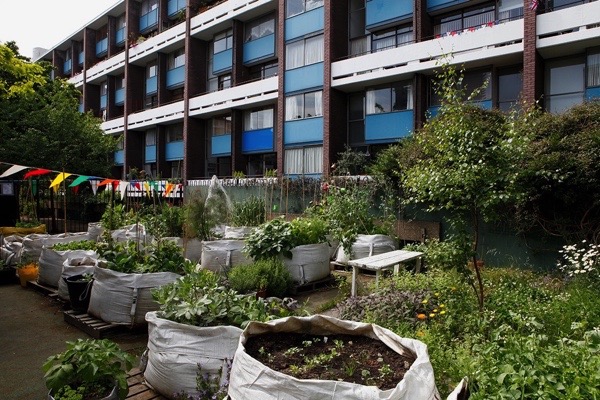
Estate allotment
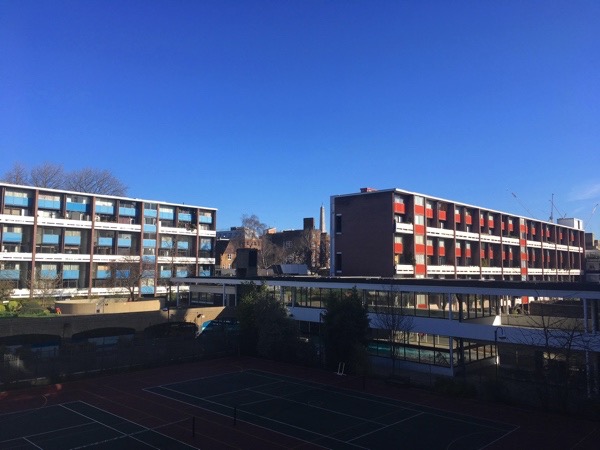
Sports pitches & pool
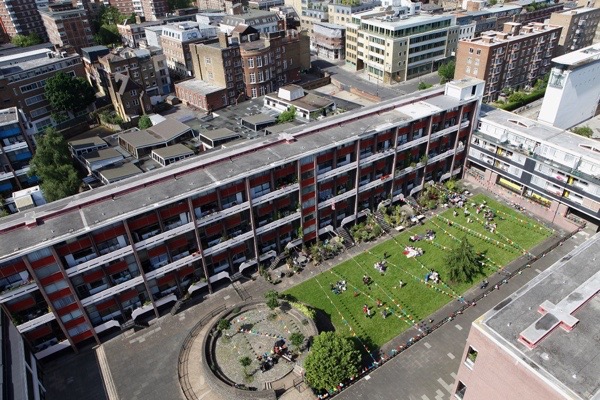
Diamond Jubilee celebrations
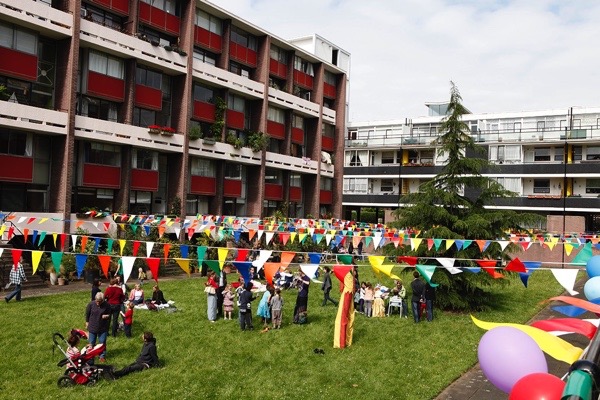
Estate Diamond Jubilee party

Current view north
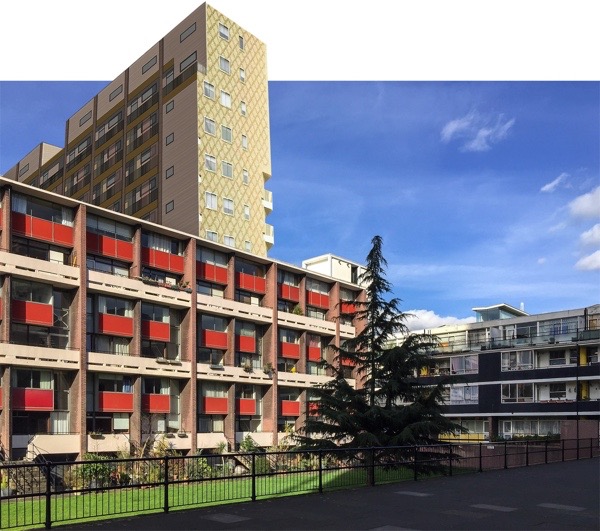
View with proposed development (Courtesy Golden Lane Estate Residents Association)
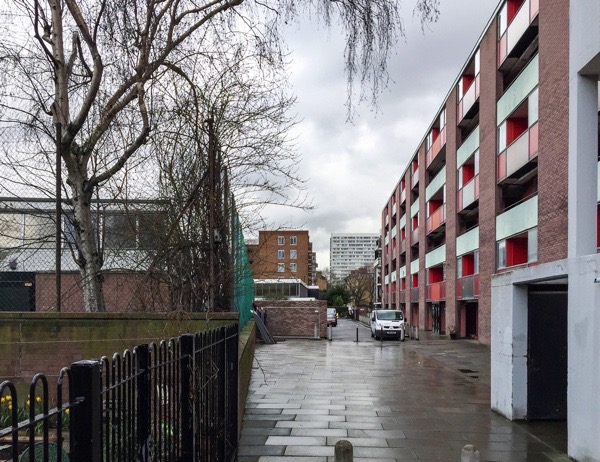
Current view east from the Estate allotments
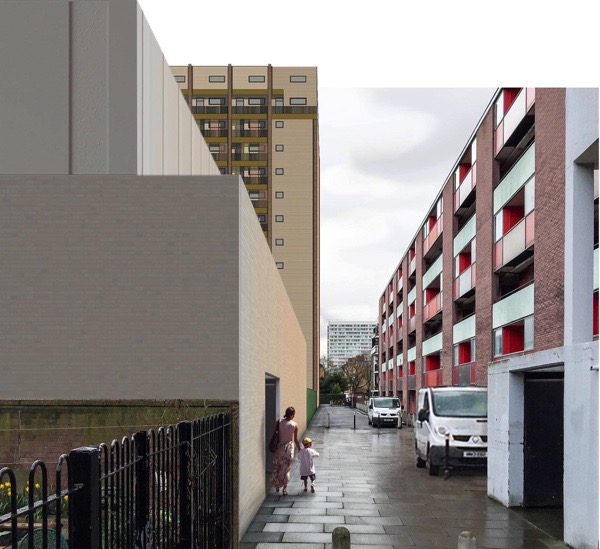
View east with proposed development (Courtesy Golden Lane Estate Residents Association)
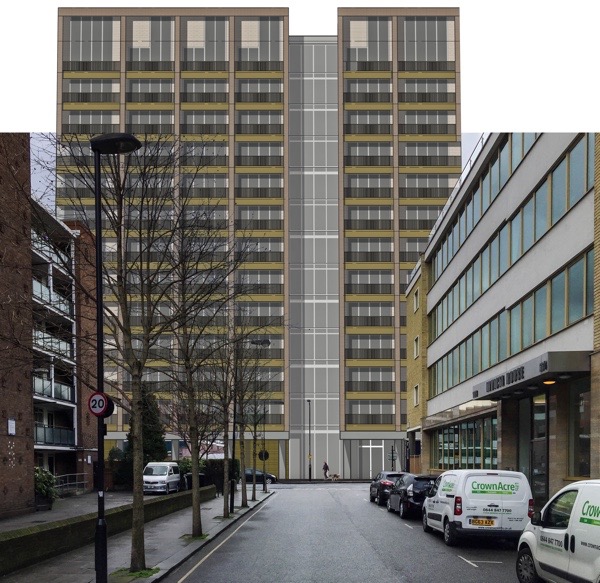
View west along Banner St with development (Courtesy Golden Lane Estate Residents Association)
You may also like to read these other stories about Golden Lane Estate
Philip Cunningham’s East End Shopfronts
It is my pleasure to publish more pictures from Photographer Philip Cunningham‘s astonishing archive of images from the seventies and eighties, seen publicly here for the first time
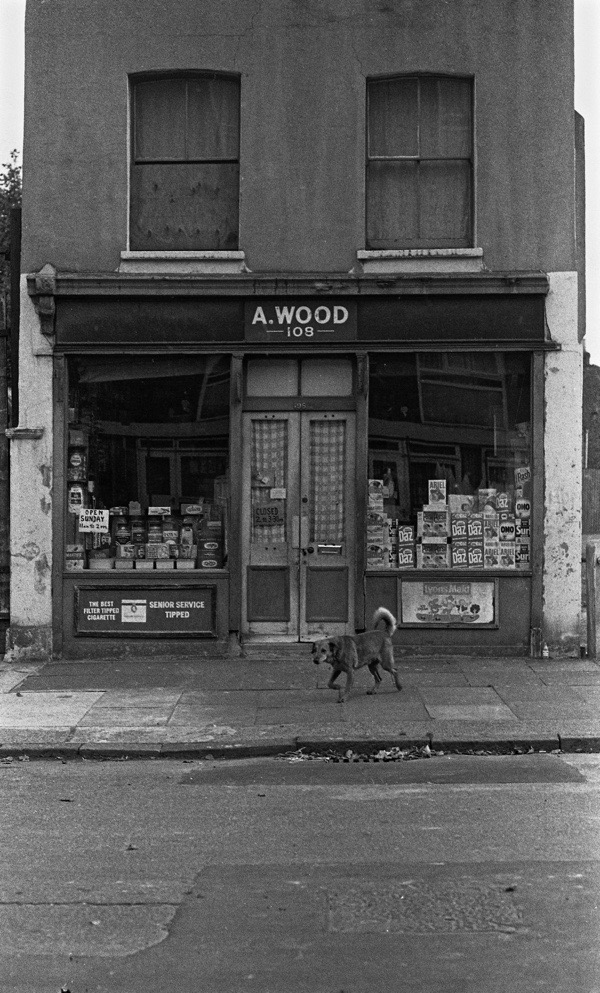
Shop in Bow, c.1972
“In 1970 my partner, Sally, was a student on the Foundation Course at Hornsey College of Art. They taught her how to use a camera and process film and, in turn, she taught me. When we moved to the East East in 1971, the Council and GLC were still emptying and demolishing streets. People were being moved into tower blocks, which mostly had poor insulation and were physically alienating. By this time, the mythology of ‘streets in the sky’ was already discredited yet they continued anyway. There was still a lot of bomb damage but the remnants of previous communities could be seen, and I was determined to try and document what was left. I was also interested in the buildings themselves which had their own character. Taking at least a film a month, I built up a large archive. We were customers of some of these shops but others were already derelict. They represented a different life.” – Philip Cunningham
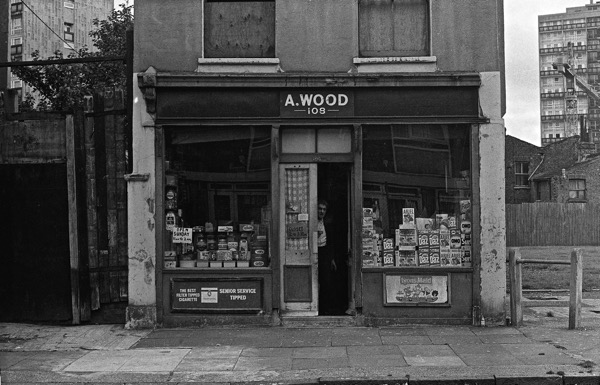
c.1972
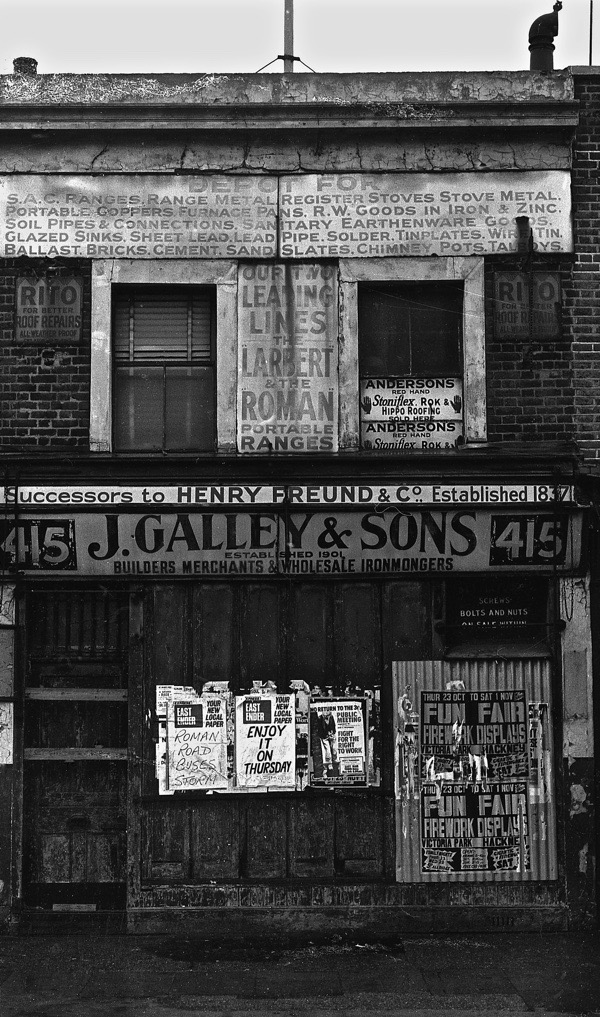
Roman Rd, c.1976
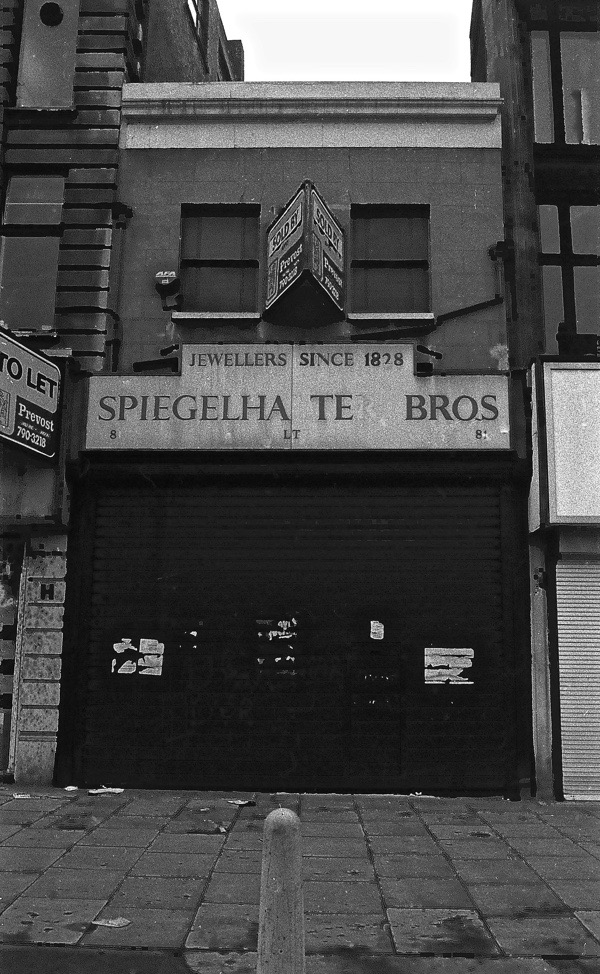
Mile End Rd
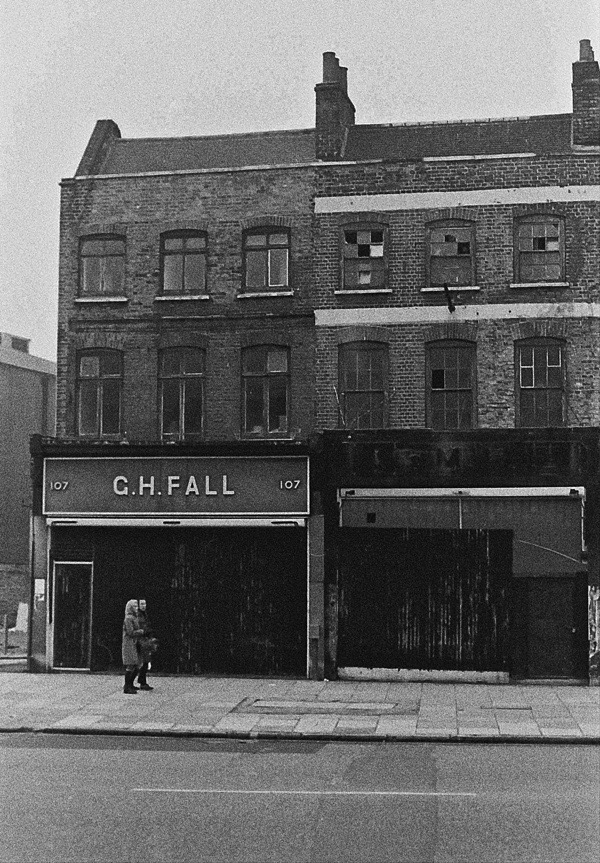
Mile End Rd, c.1979
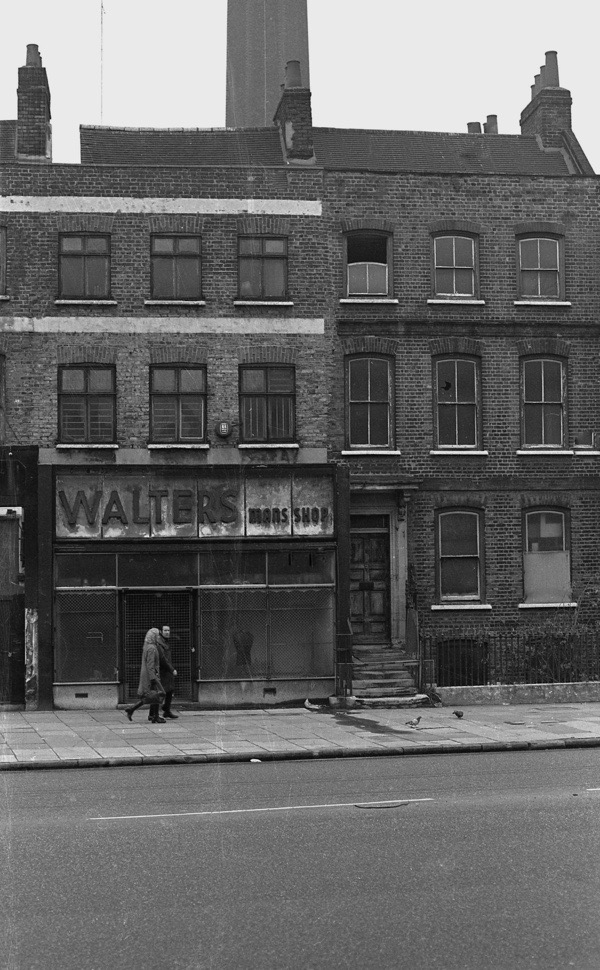
Mile End Rd, c.1979
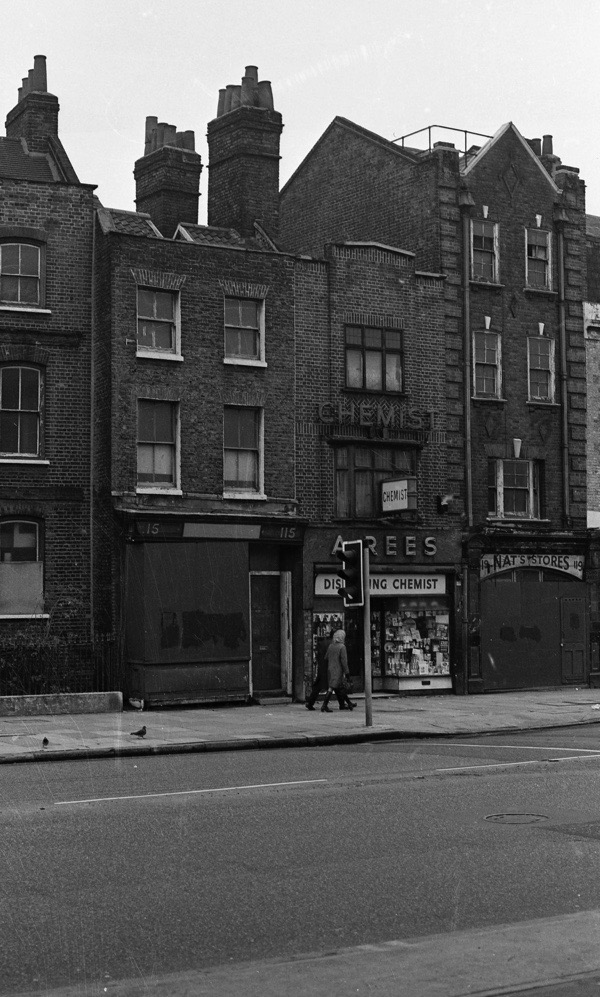
Mile End Rd, c.1979
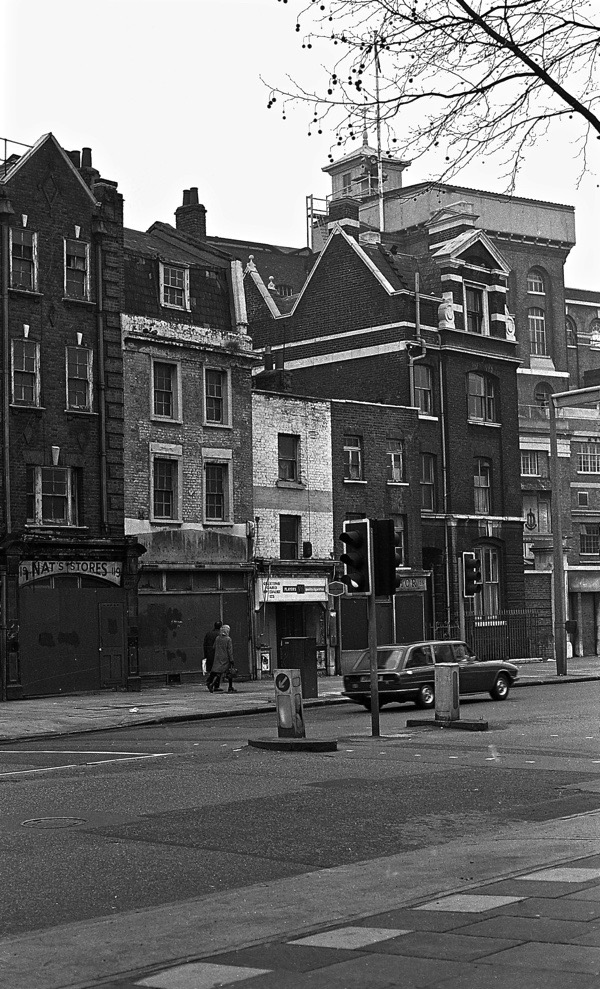
Mile End Rd, c.1979
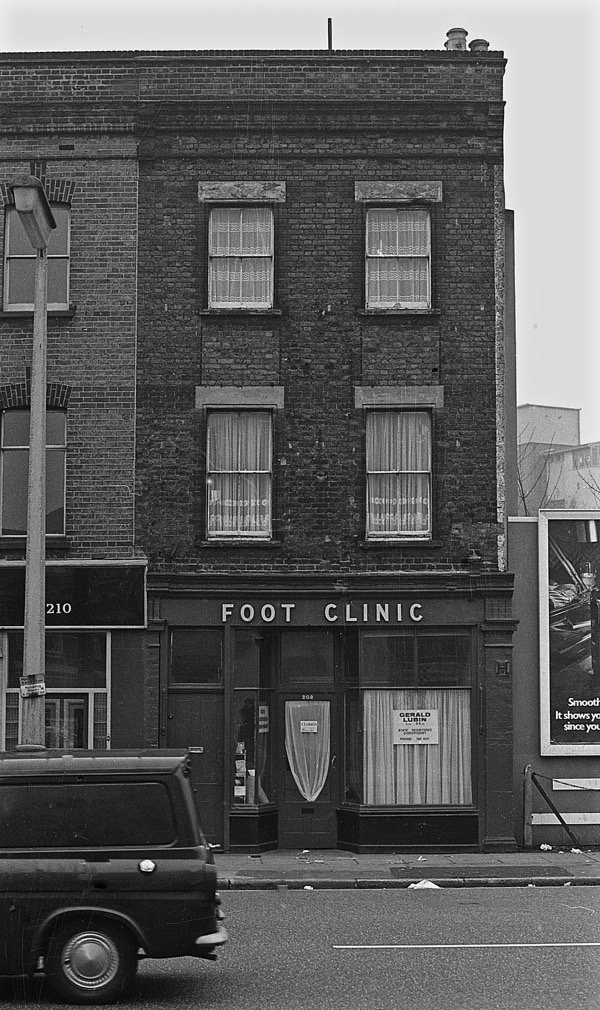
Mile End Rd, c.1979
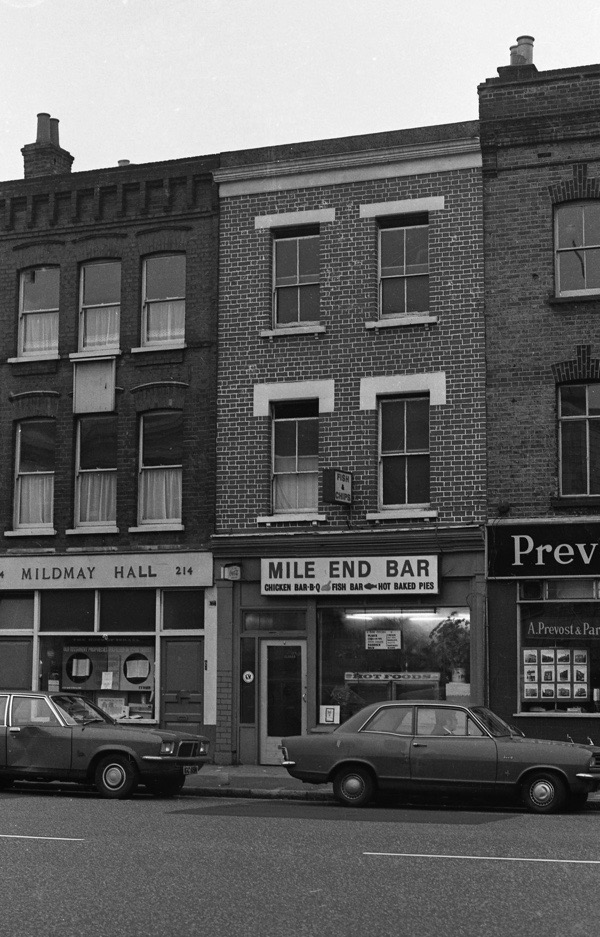
Mile End Rd, c.1978
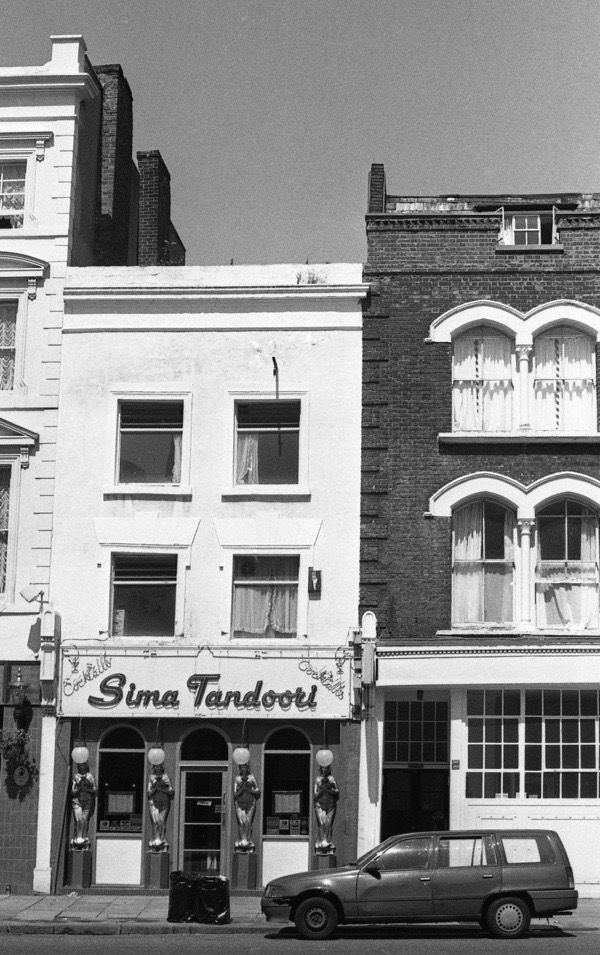
Mile End Rd
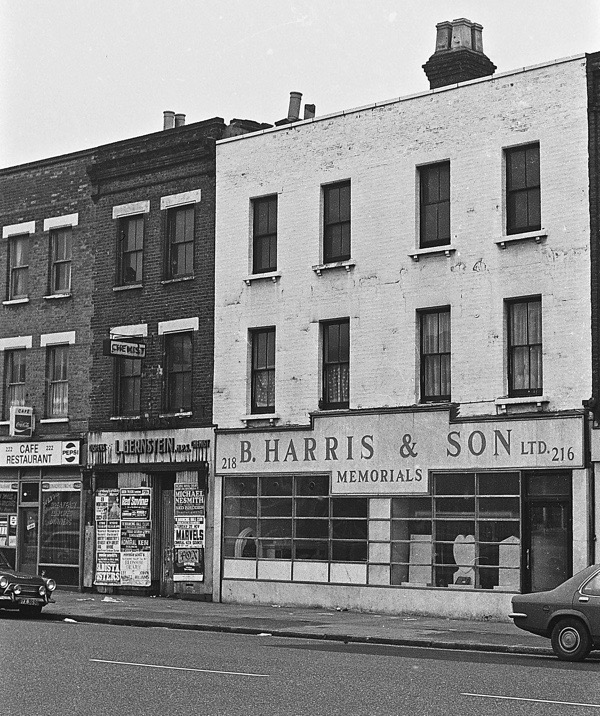
Mile End Rd, c.1981
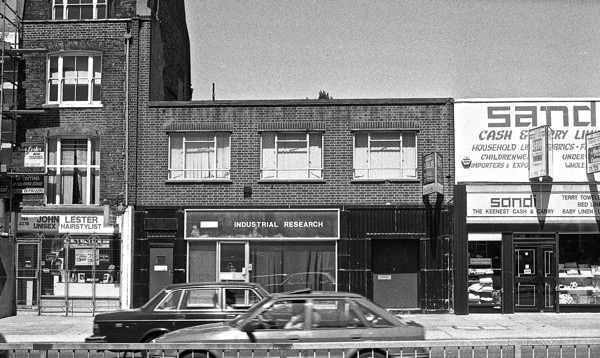
Mile End Rd, c.1985
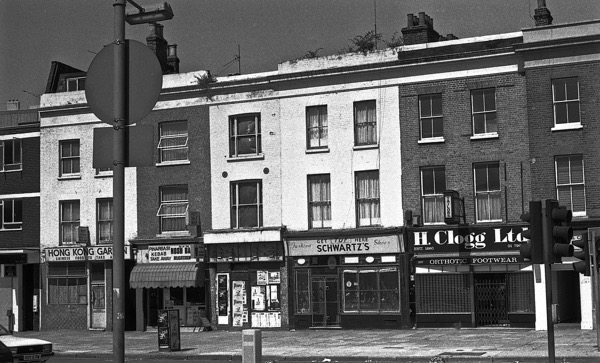
Mile End Rd, c.1985
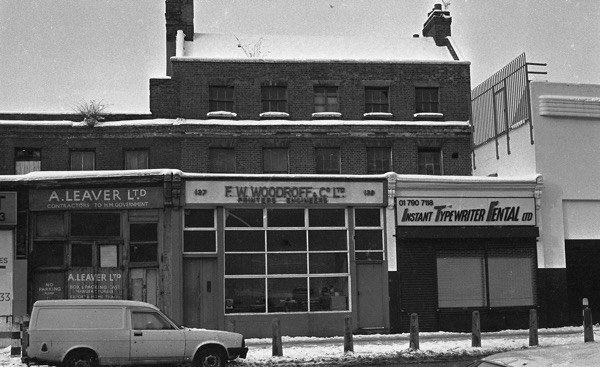
Malplaquet House, Mile End Rd, c.1976
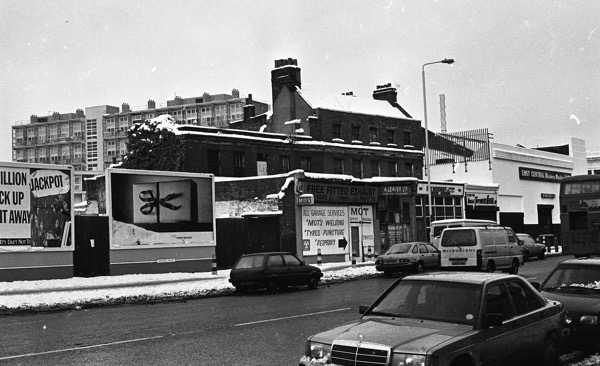
Mile End Rd, c.1976
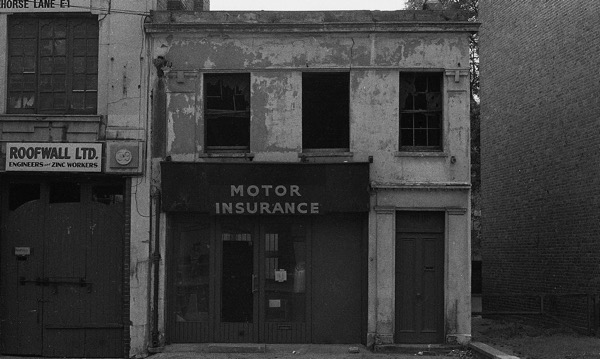
Mile End Rd, c.1979
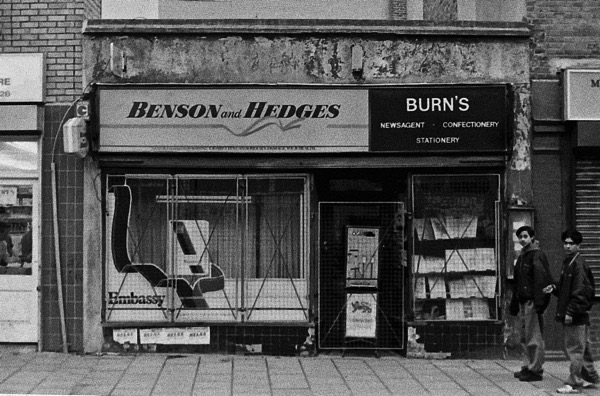
Mile End Rd, c.1982
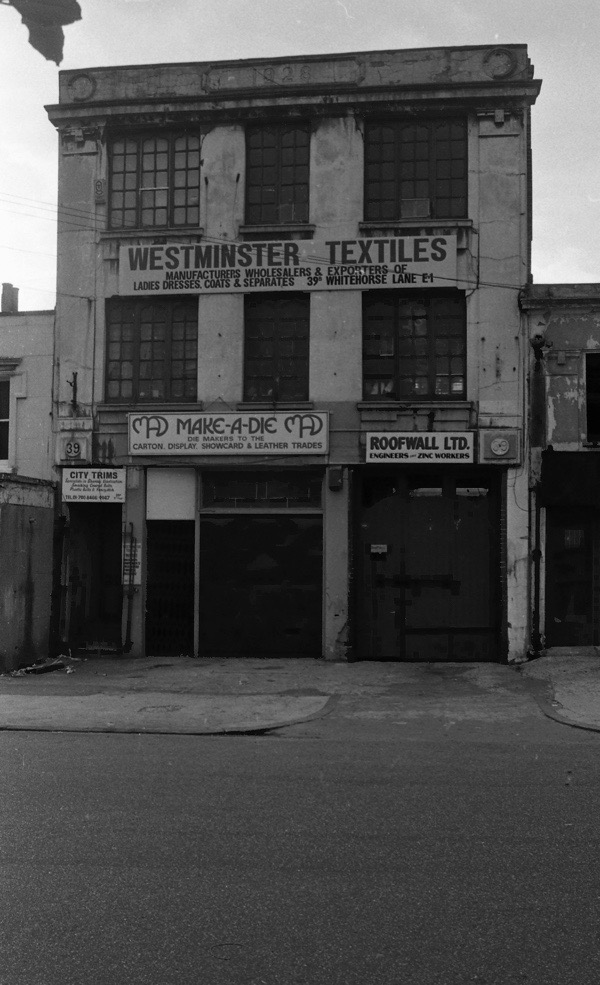
White Horse Lane, c.1979
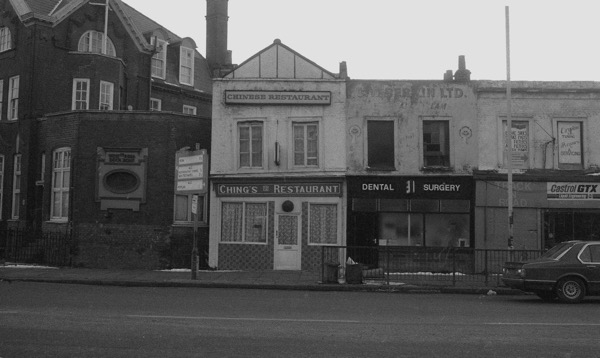
East End India Dock Rd, c.1978
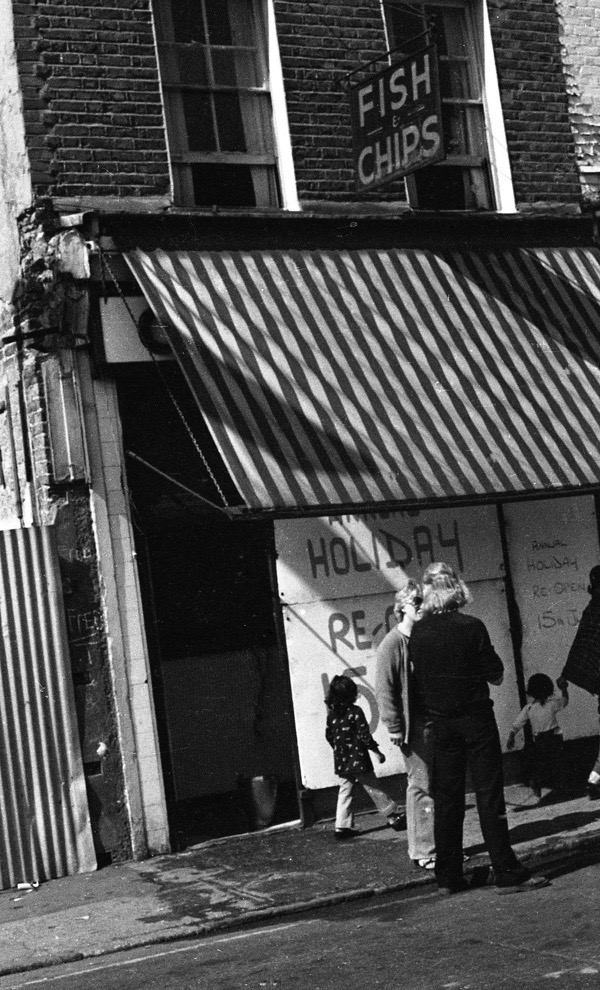
Roman Rd, c.1977
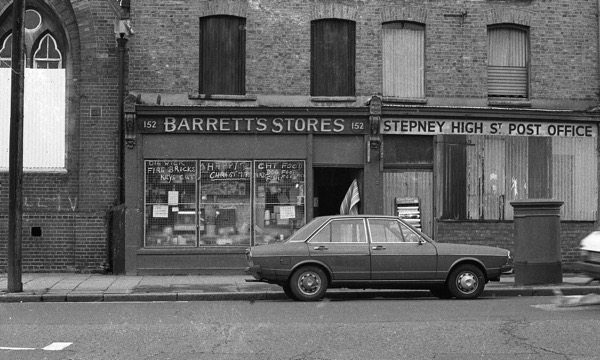
Stepney Way, c.1971
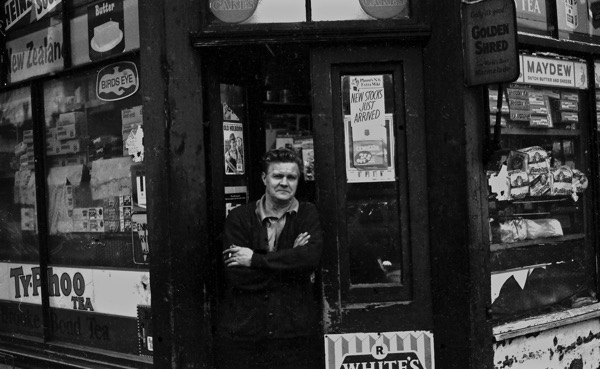
Antil Rd, c.1980
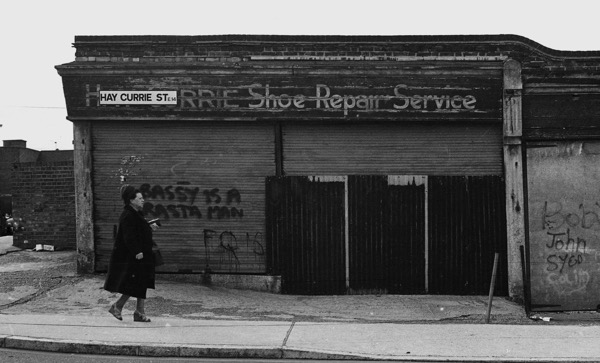
Hay Currie St, c.1978
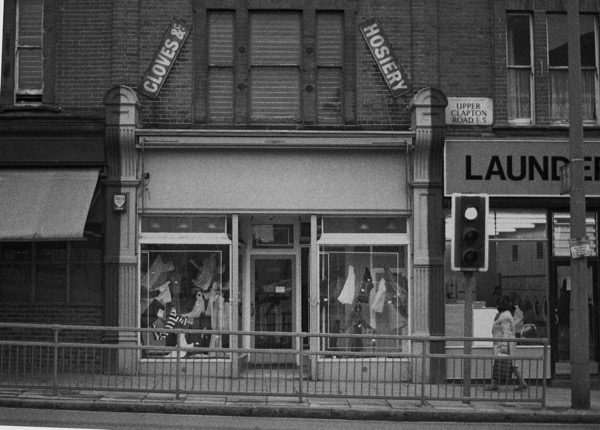
Upper Clapton Rd, c.1983
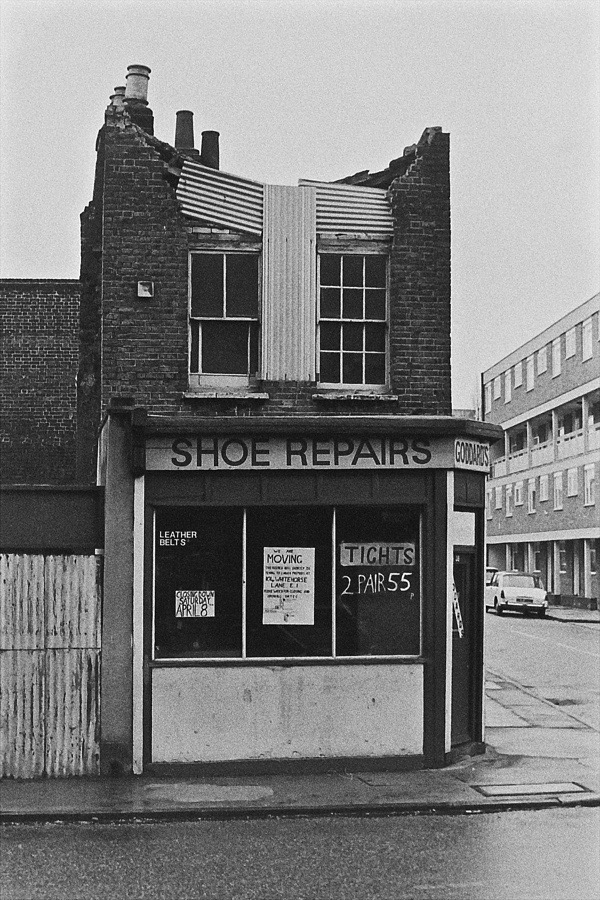
Globe Rd, c.1976
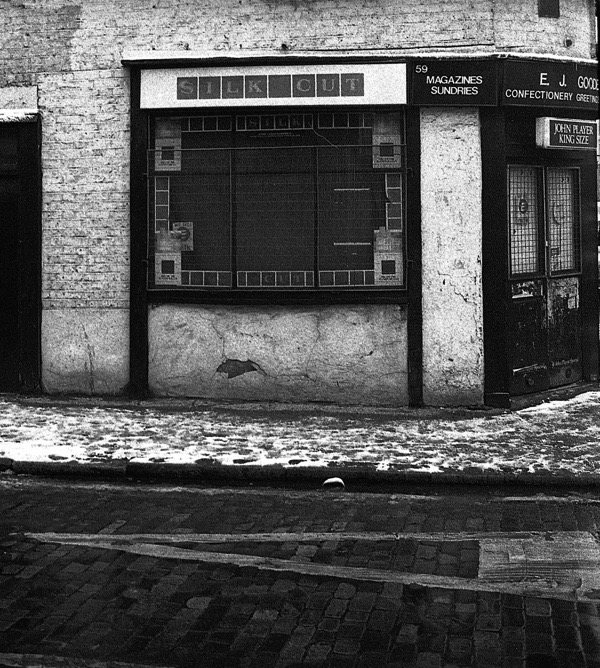
Unknown location, c.1976
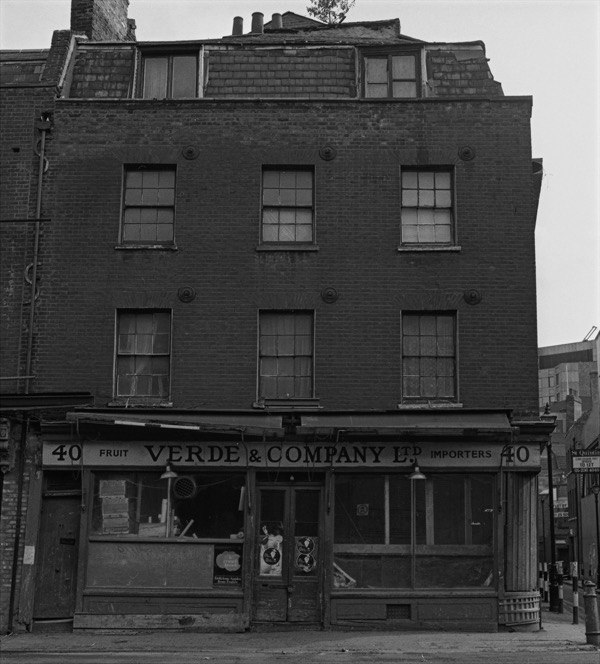
Brushfield St
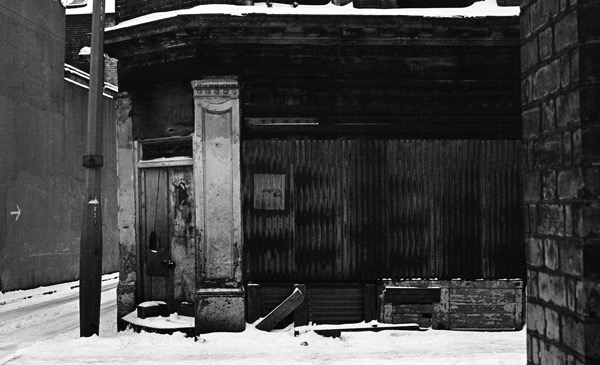
Off Brick Lane, c.1976
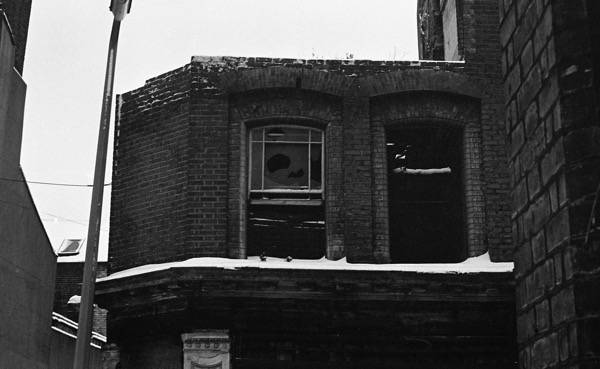
Off Brick Lane, c.1976
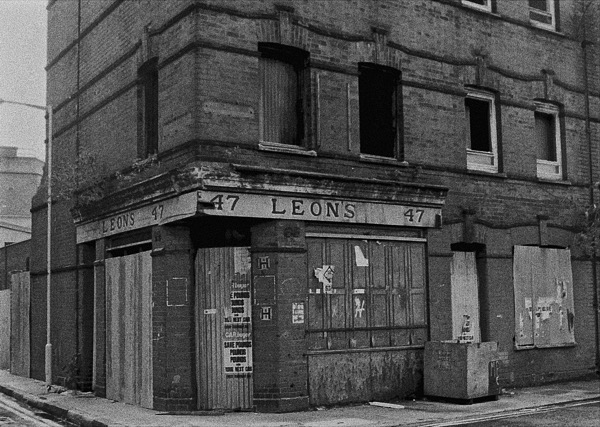
Quaker St, c.1976
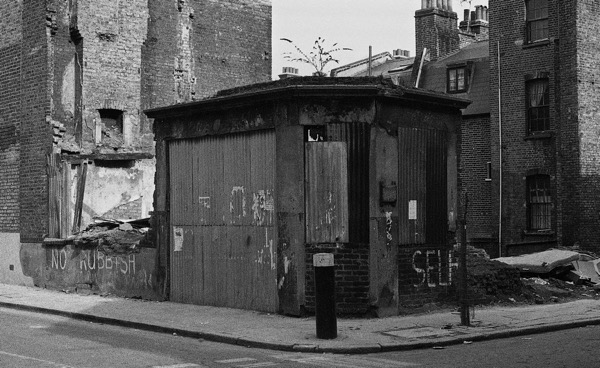
Off Cheshire St, c.1976
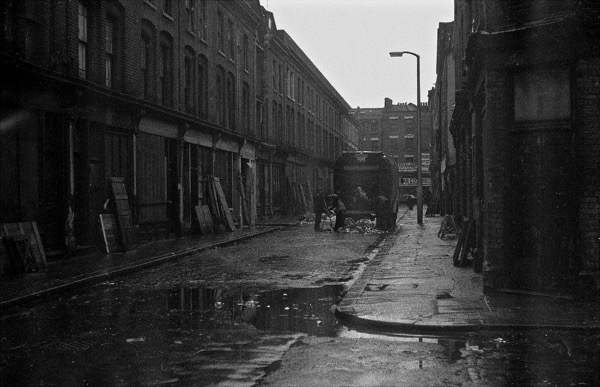
Cheshire St, c.1976
Photographs copyright © Philip Cunningham
You may also like to take a look at
Philip Cunningham’s East End Portraits
More of Philip Cunningham’s Portraits
Charles Spurgeon’s Street Traders
Charles Spurgeon the Younger, son of the Evangelist Charles Haddon Spurgeon, took over the South St Baptist Chapel in Greenwich in the eighteen-eighties and commissioned an unknown photographer to make lantern slides of the street traders of Greenwich that he could use in his preaching. We shall never know exactly how Spurgeon showed these pictures, taken between 1884 and 1887, but – perhaps inadvertently – he was responsible for the creation of one of the earliest series of documentary portraits of Londoners.

Champion Pie Man – W.Thompson, Pie Maker of fifty years, outside his shop in the alley behind Greenwich Church
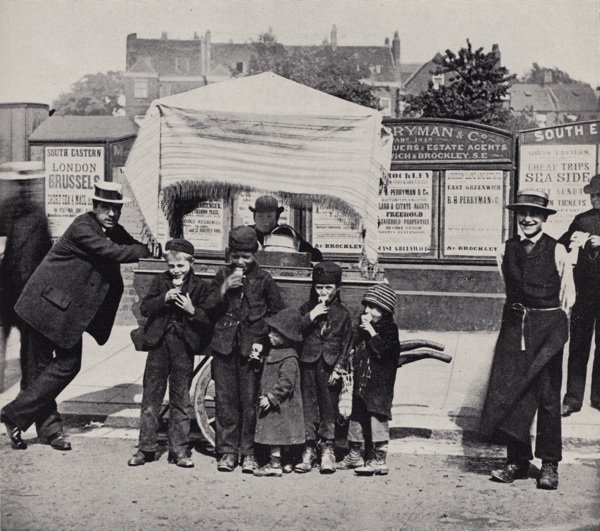
Hokey-Pokey Boy – August Bank Holiday, Stockwell St, Greenwich
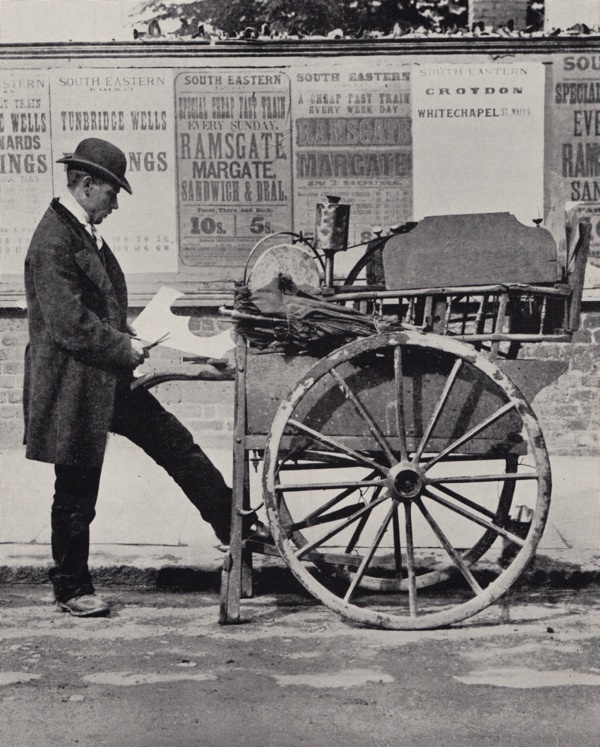
Knife Grinder – posed cutting out a kettle bottom from a tin sheet
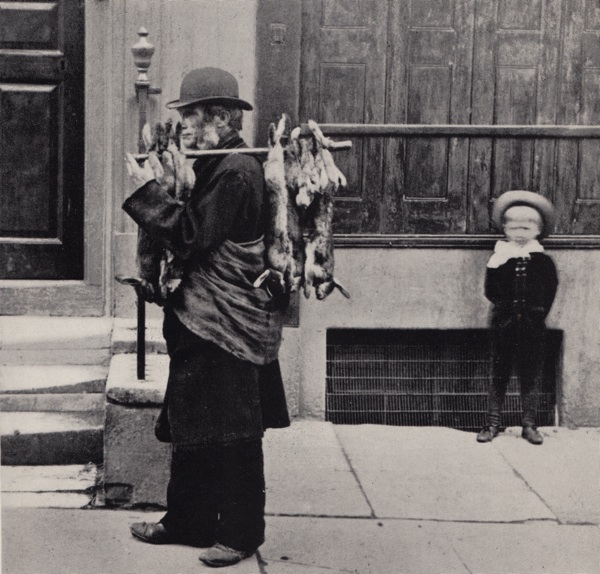
Rabbit Seller

Toy Seller – King William St outside Royal Naval College, Greenwich
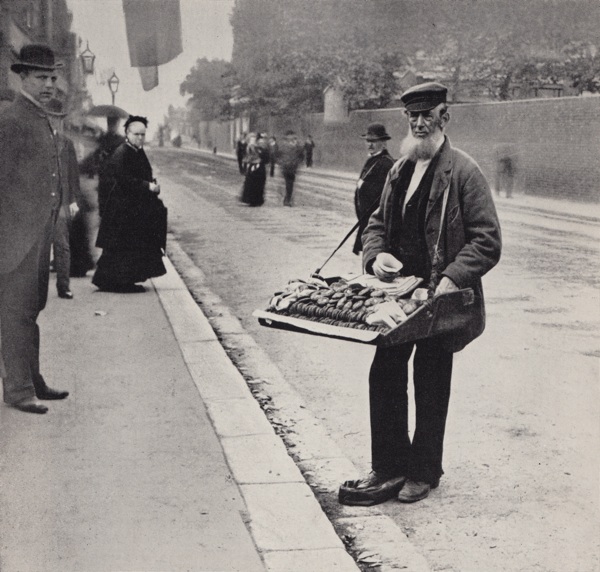
Ginger Cakes Seller – King St, near Greenwich Park
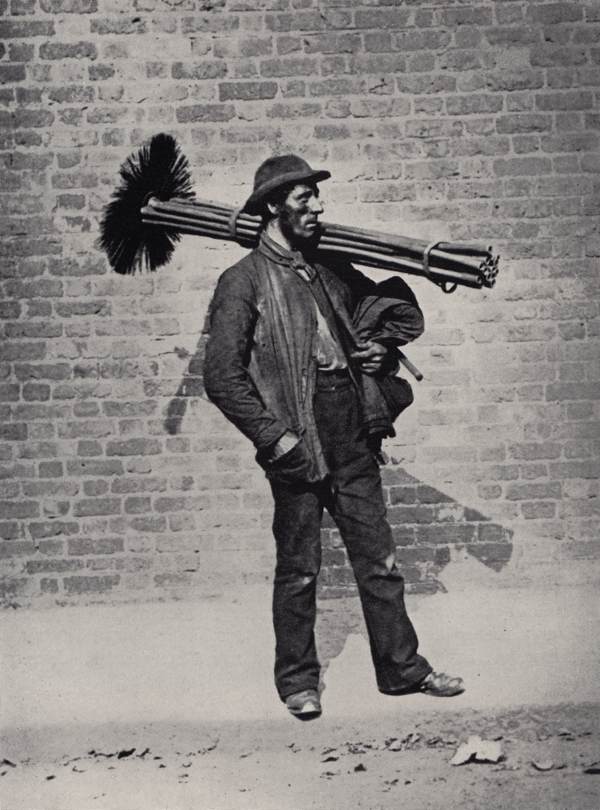
Sweep
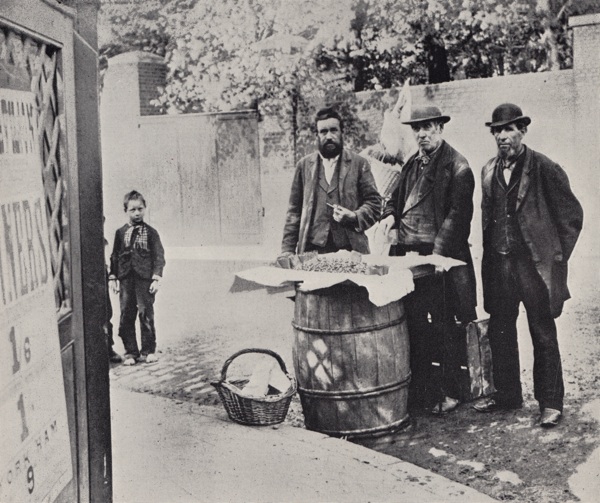
Shrimp Sellers – outside Greenwich Park
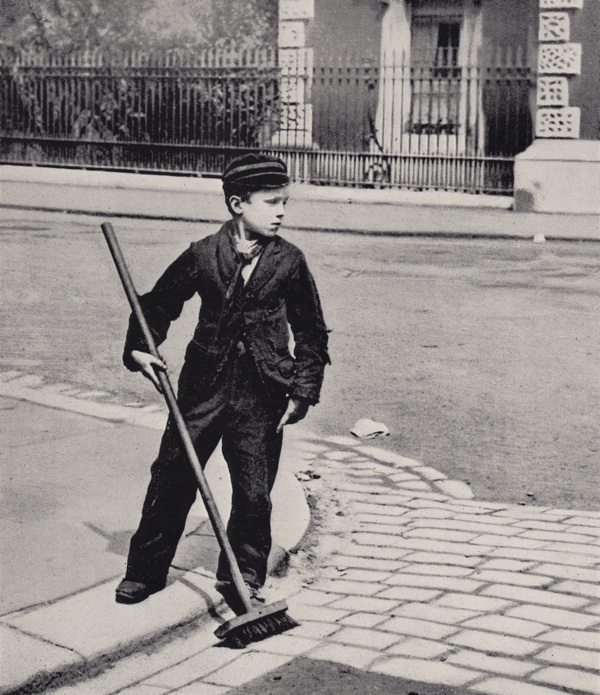
Crossing Sweeper (& News Boy) – Clarence St, Greenwich
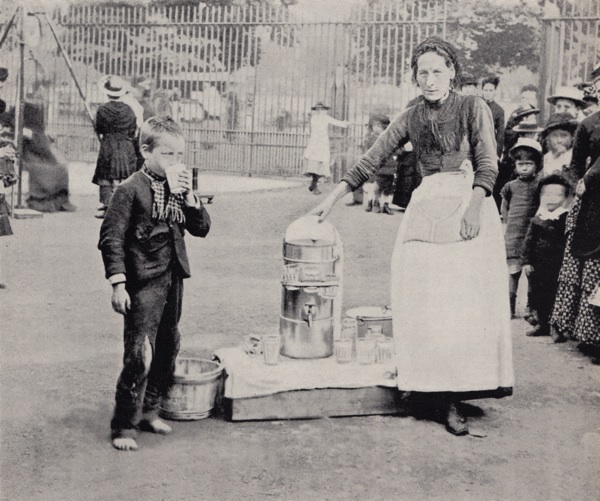
Sherbert Seller – outside Greenwich Park

Third Class Milkman – carrying two four-gallon cans on a yoke, King William’s Walk, Greenwich
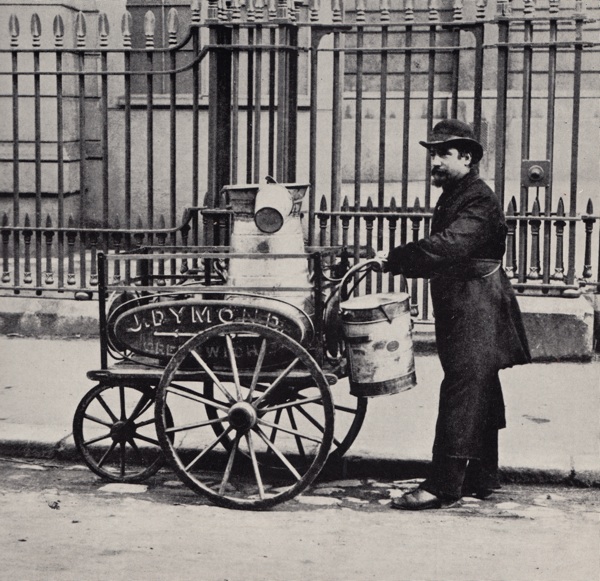
Second Class Milkman – with a hand cart and seventeen-gallon churn
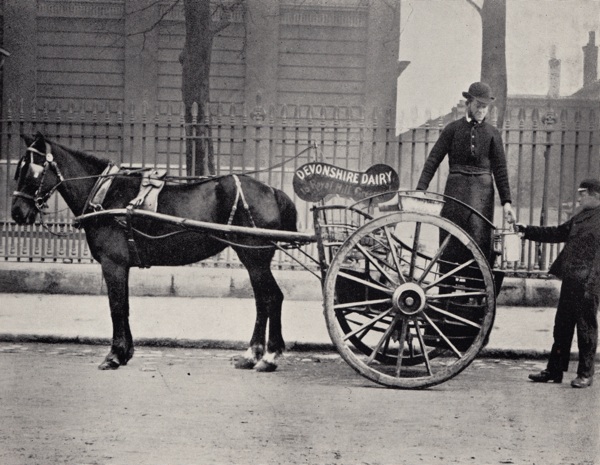
Master Milkman – in his uniform, outside Royal Naval College, Greenwich
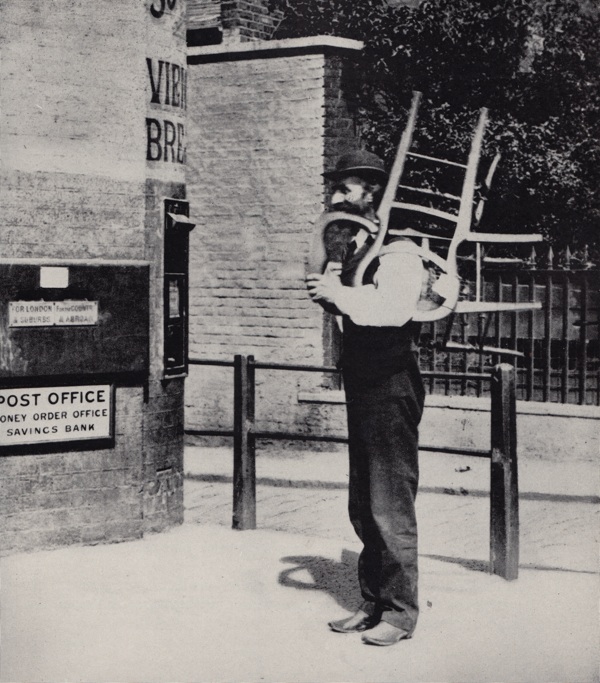
Chairmender – Corner of Prince Orange Lane, Greenwich
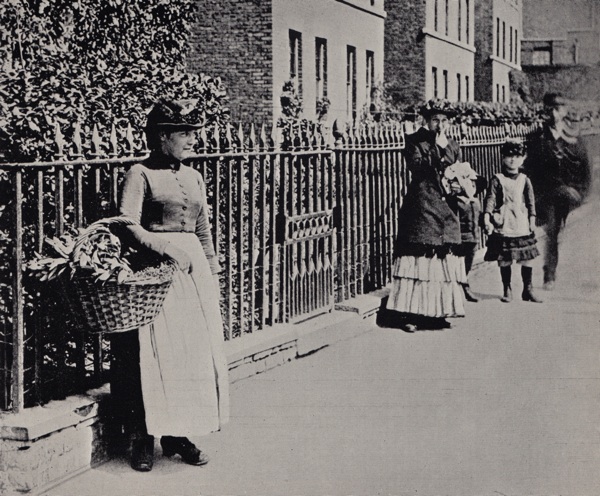
Kentish Herb Woman – Greenwich High Rd
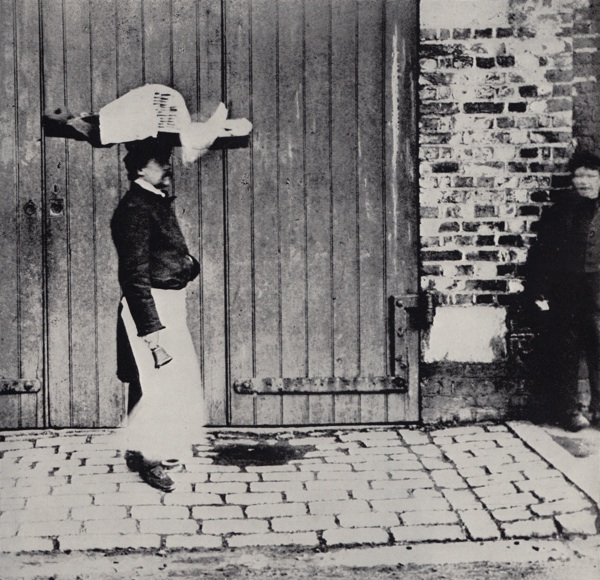
Muffin Man
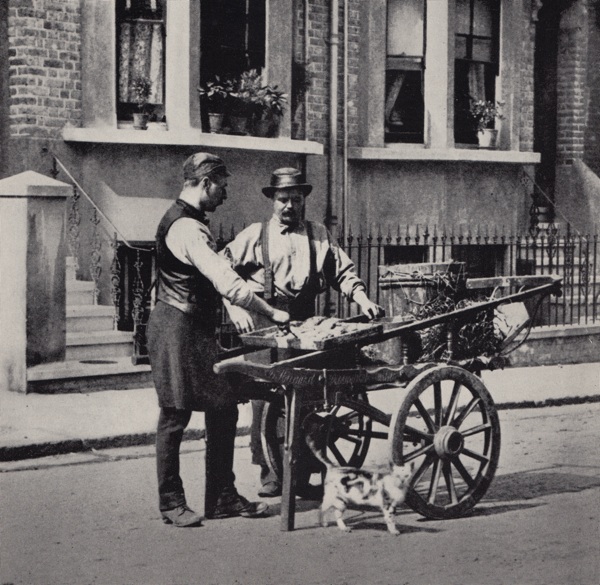
Fishmongers
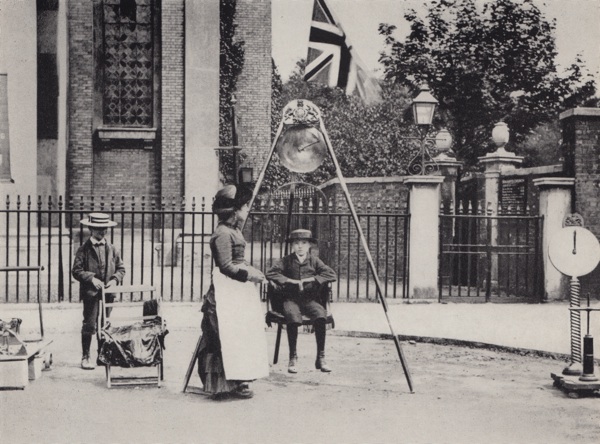
Try Your Weight – outside Greenwich Park
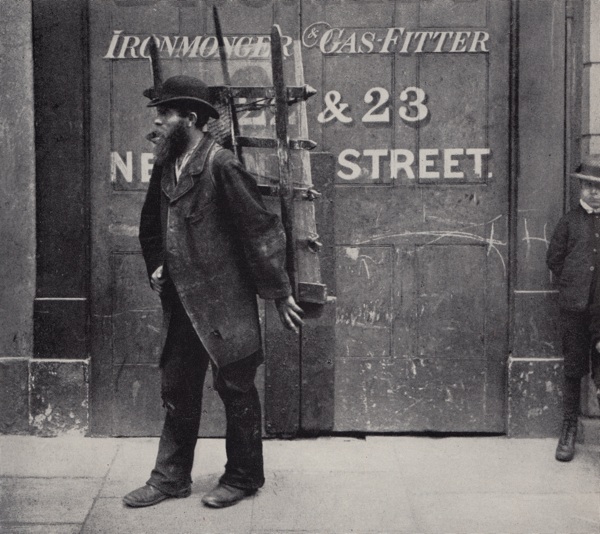
Glazier
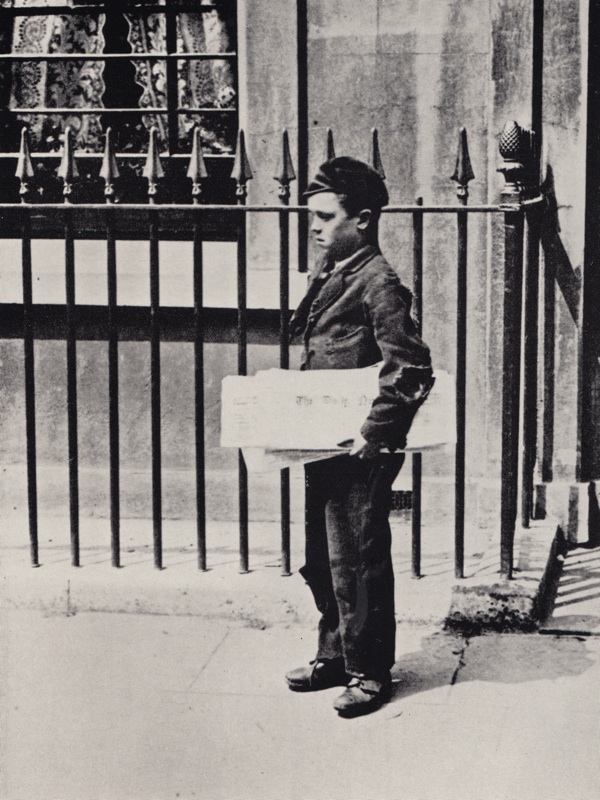
News Boy (& Crossing Sweeper) – delivering The Daily News at 7:30am near Greenwich Pier
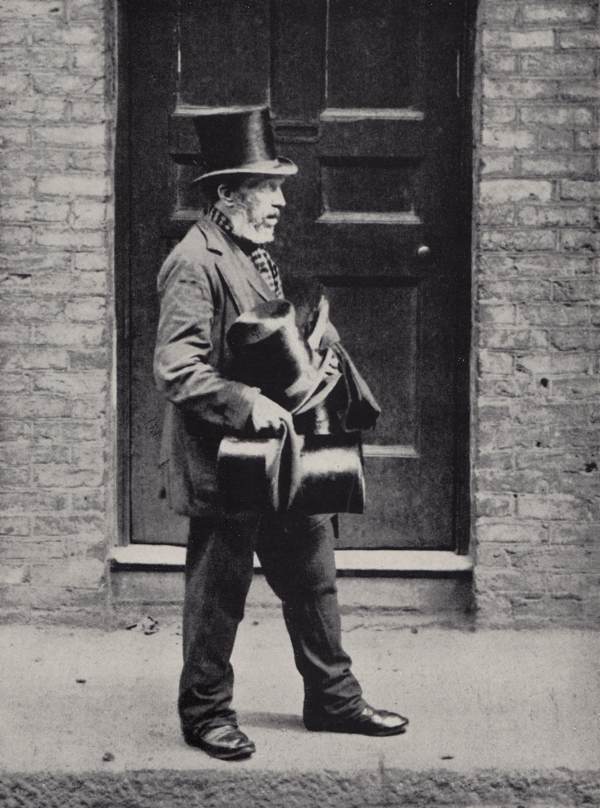
Old Clo’ Man – it was a crime to dispose of infected clothing during the Smallpox epidemics of the eighteen-eighties and the Old Clo’ Man plied a risky trade.
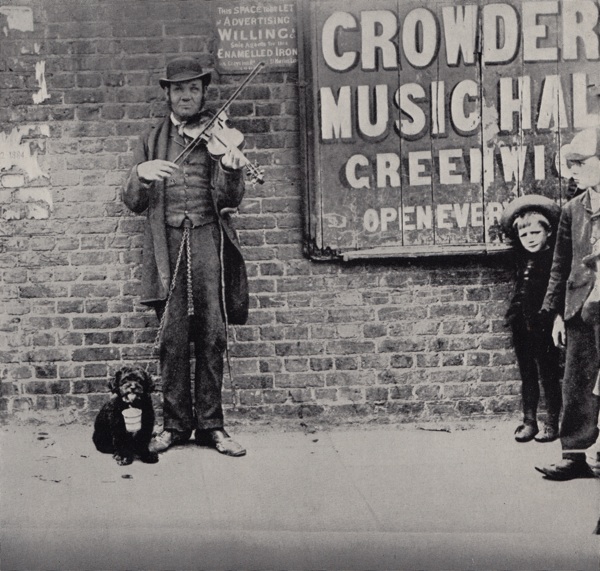
Blind Fiddler – outside Crowders’ Music Hall Greenwich
You may also like to take a look at
Adam Dant’s Map Of Shoreditch Old & New

It is my delight to publish Adam Dant‘s map illustrating the evolution of Shoreditch through the ages

1. Iron Age Man establishes a track along what is now “OLD STREET”.
2. Christian Roman Soldiers worship at the source of the river Walbrook, now St Leonards.
3. Sir John de Soerditch rides against the French Spears alongside The Black Prince.
4. Jane Shore, a goldsmith’s daughter & lover of Edward IV dies in “a ditch of loathsome scent.”
5. “Barlow” the archer is given the dubious title “Duke of Shoreditch” by Henry VIII.
6. Christopher Marlowe murders the son of a Hog Lane innkeeper, he escapes prosecution.
7. Plague burials take place at “Holywell Mound” by the Priory of St John the Baptist at Holywell.
8. Queen Elizabeth I on passing by medieval St Leonards is “Pleased by its Bells.”
9. The sweet water of “The Holywell” is spoilt by manure heaps of local nursery gardens,
10. James Burbage’s sons Cuthbert & Richard dismantle “The Theatre” in two to four days & transport it to the South bank of the Thames where it is rebuilt as “The Globe”.
11. William Shakespeare enjoys a “bumper” at an inn on the site of the present “White Horse.”

12. Local Huguenot weavers riot for three days protesting against & burning “multi-shuttle looms”.
13. Thomas Fairchild, a gardener, donated £25 to St Leonards for an annual Whitsunday sermon titled “Wonderful Works of God in creation” or “On the certainty of resurrection of the dead proved by certain changes of the animal and vegetable parts of creation.”
14. Militia are called from the Tower to quell four thousand Shoreditch locals rioting against cheap Irish labour being used to build the new George Dance tower of St Leonards.
15. Large lumps of masonry fall onto the congregation during a service at the collapsing old St Leonards.
16. The Huguenot speciality “fish & chips” appear at Britain’s first fish & chip shop on Club Row.
17. The many murders & muggings at Holywell Mount lead to it being levelled.
18. Local theatres such as The Curtain sink to become “no more than sparring rooms.”
19. Brick Lane takes its name from local brickfields, occasional location of furtive criminality.
20. Visitors to James Fryer’s land at Friar’s Mount wrongly assume a monastery stood there.

21. Joe Lee, the local horsewhisperer, coaxes improved productivity from working donkeys.
22. “Resurrection Men,” notorious body snatchers pinch recent interred corpses from St Leonards, some coffins in the crypt are found to contain bricks instead of bodies,
23. Four thousand people are dispossessed as Bishopsgate Goods Yard replaces streets around Swan Lane & Leg Alley.
24. Mary Kelly’s funeral procession leaves St Leonards amidst huge crowds. The poor victim of Jack the Ripper is given a second funeral at her own catholic cemetery.
25. Oliver Twist is said to have resided in Shoreditch. Many other unfortunate children arrive each morning at The White St Child Slave Market seeking work.
26. So many unruly pavement-side street vendors populate Shoreditch High St that a regular uniformed Street Keeper is employed.
27. Horse drawn trams add to the general commotion bustle and smell of the High Street.
28. Cats meat sellers, watercress hawkers & dog breeders all cram into the Old Nichol’s filthy tenements.
29. Sir Arthur Arnold, head of the LCC main drainage committee is commemorated at Arnold Circus.
30. For decades the chalk horse on Bishopsgate Goods Yard is redrawn by unknown local artist.
31. Enthusiastic Anarchists hoping to bring political awareness to the Old Nichol proletariat through their Boundary St printing operation find the task “like tickling an elephant with a straw.”
32. Artist, Lord Leighton calls the interior of Holy Trinity, Old Nichol St, “The most beautiful in England.”
33. Arthur Harding’s memories of his slum boyhood, “van dragging” etc are recalled in “East End Underworld.”
34. Arthur Morrison pens his slum tale “Child of the Jago” following Reverend Jay’s invitation to the Old Nichol.

35. The chapel dedicated to Shakespeare on Holywell Lane is destroyed by a WWII bomb.
36. Syd’s Coffee Stall, now Hillary Caterers, is saved from destruction during an air raid as two parked buses shelter it from a bomb blast. Thomas Austen’s medieval chancel window is less fortunate.
37. Novelist Arthur Machen identifies a “leyline” running through the mystic ancient earthwork Arnold Circus.
38. King Edward VIII officially inaugurates Boundary Estate from a platform on Navarre St.
39. The Red Arrows pass over the bandstand en-route once more to the Queen’s Birthday.
40. Protestors eventually force the closure of Club Row animal market, once home to dogs, parrots, pigeons and the occasional lion cub.
41. Navarre St is used as a playground by children who carve their names into the brickwork.
42. Artist, Ronald Searle visits Club Row animal market to illustrate Kaye Webb’s “Looking at London.”
43. The resident Bengali flute player of Arnold Circus is often heard across the Boundary Estate on warm Summer evenings.
44. The IRA bomb which explodes on Bishopsgate disturbs the rats in Shoreditch who emerge in large numbers from the drains,
45. The great train robbers plan their notorious crime upstairs in The Ship & Blue Ball, Boundary St.
46. Jeremiah Rotherham demolishes the Shoreditch Music Hall for another warehouse.
47. Joan Rose‘s father proudly displays his fruit & vegetables on Calvert Avenue whilst she is sent to buy more bags at Gardners Market Sundriesmen.
48. Every type of vacuum cleaner bag is sold by “Zammo from Grange Hill’s dad” at Shoreditch Domestics on Calvert Avenue.
49. The failed Suicide Bus Bomber is seen by security camera leaving the No 26 at Shoreditch.
50. Mono-recording virtuoso, Liam Watson strides past Shoreditch’s “Elvisly Yours” souvenir shop en-route to legendary Toe-rag recording studios in French Place.
Maps copyright © Adam Dant
You may like to take a look at Adam’s other maps of Shoreditch
Map of Shoreditch in the Year 3000
Map of Shoreditch as the Globe