
Alice Pattullo’s Household Lore
Illustrator Alice Pattullo sent me these screenprints she has been working on recently. “They were inspired by my ongoing fascination with superstitions, old wives tales and nonsensical rhymes,” Alice explained, “This series ‘household lore’ is a culmination of this collection of lore to take heed of at home.”
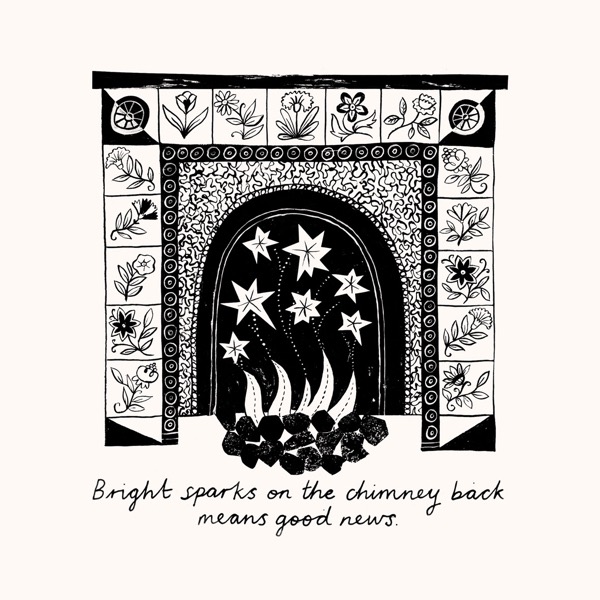
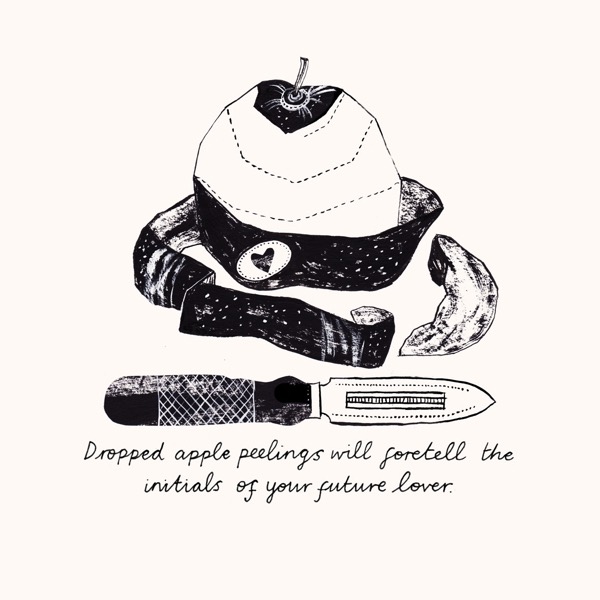
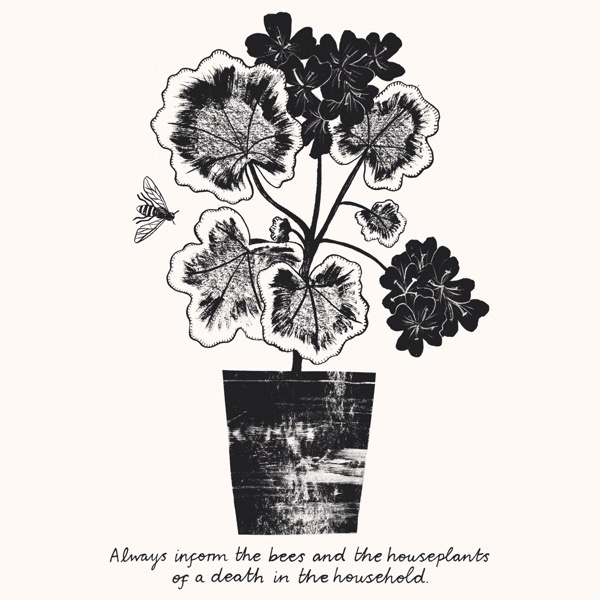
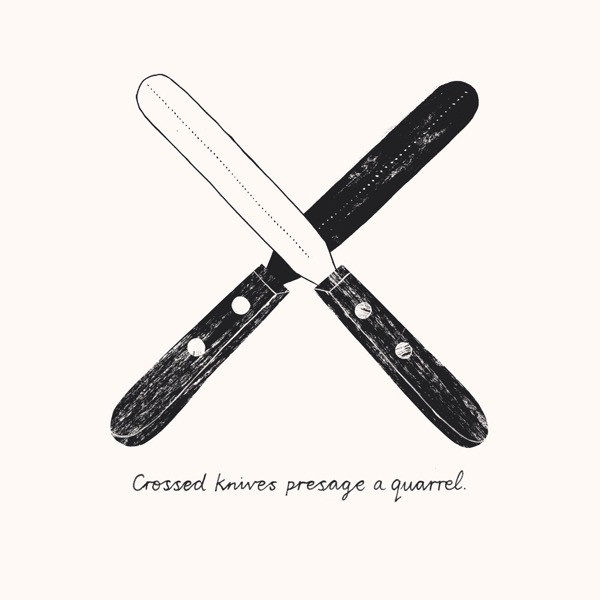
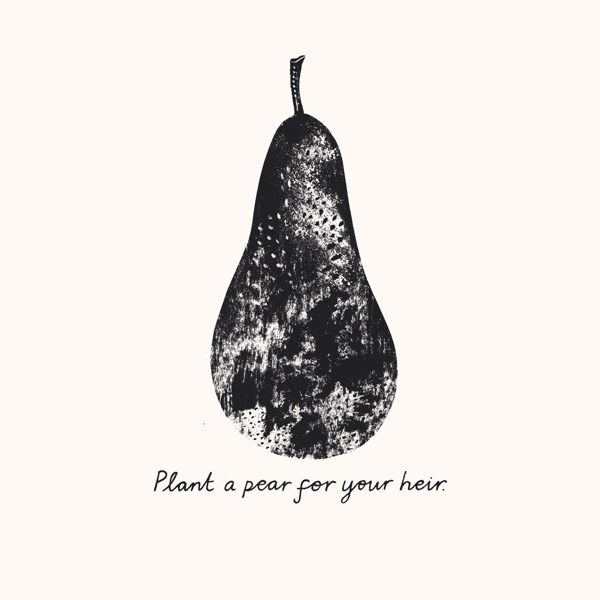
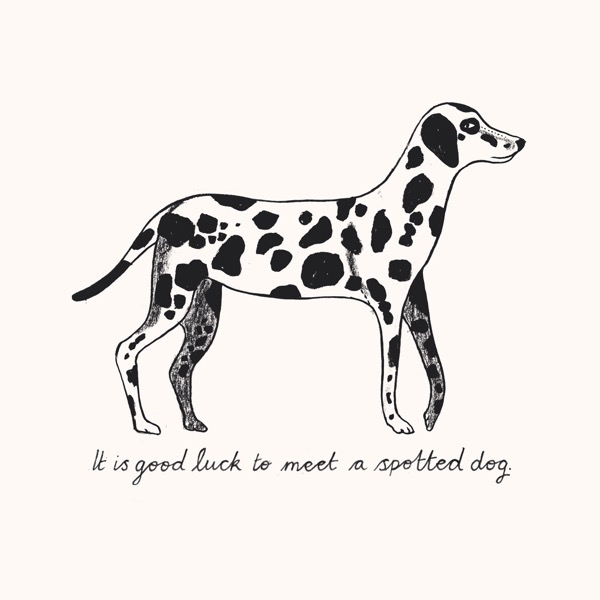
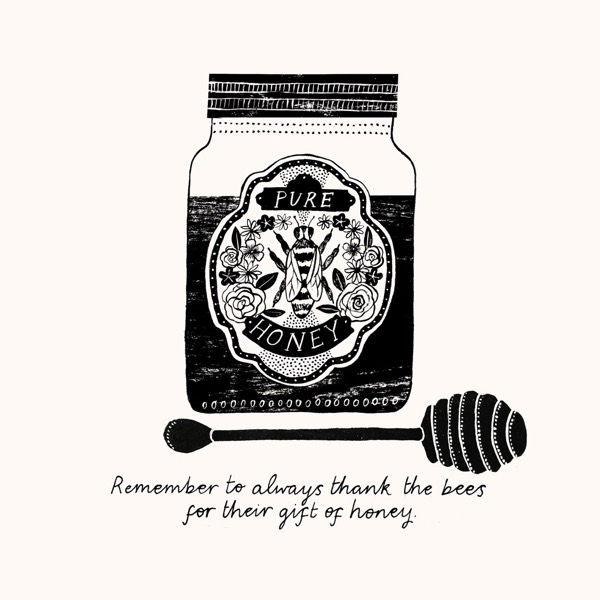
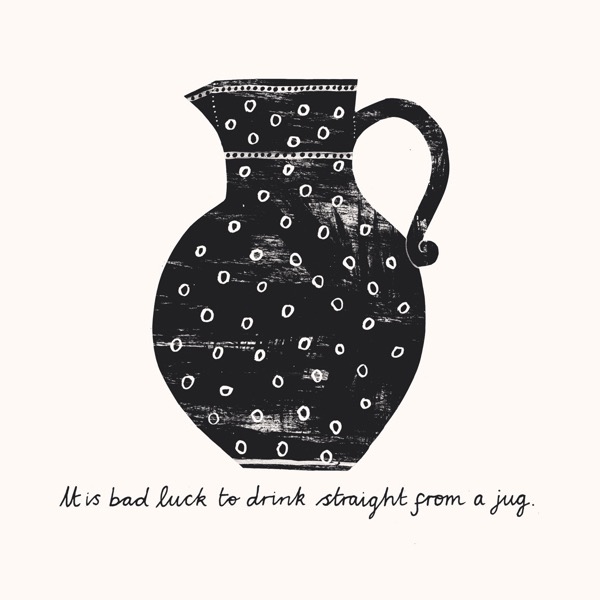

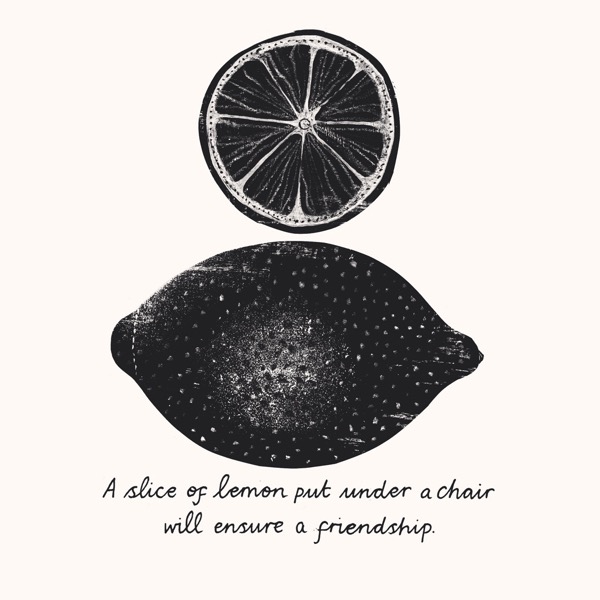

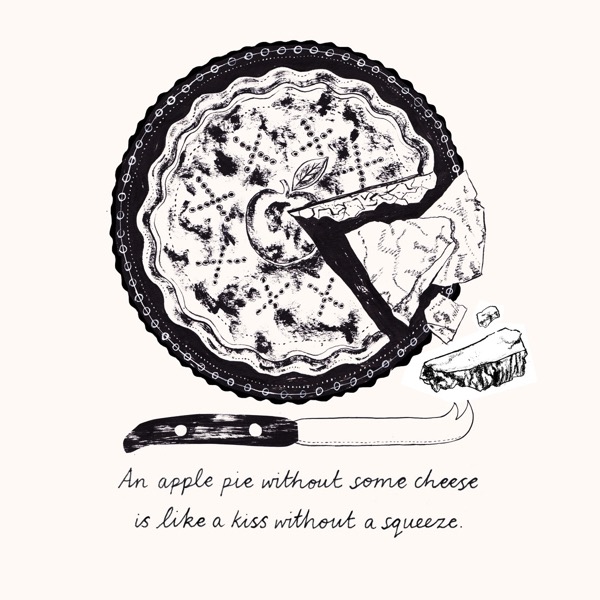
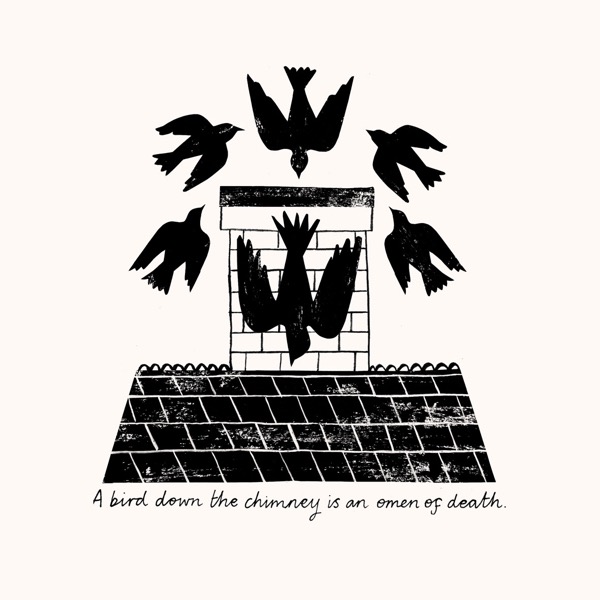
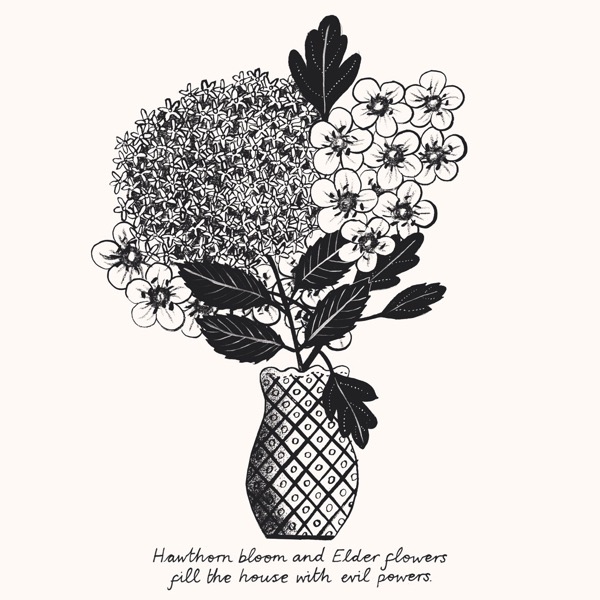
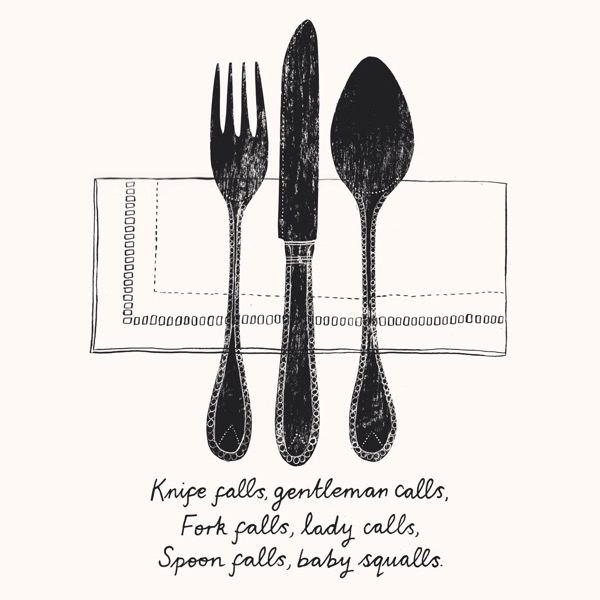

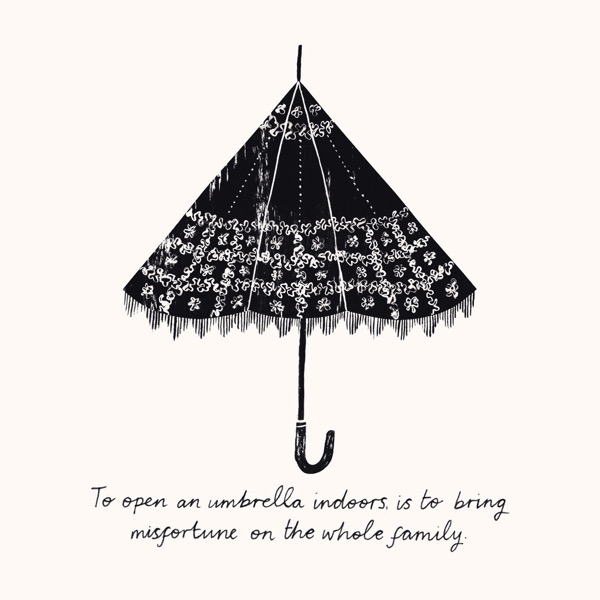



Images copyright © Alice Pattullo
Each of these prints has been produced in an edition of twenty at £25 each and they may be purchased until the end of September from Yorkshire Sculpture Park
You may also like to read about
A.S. Jasper At The Museum Of Childhood
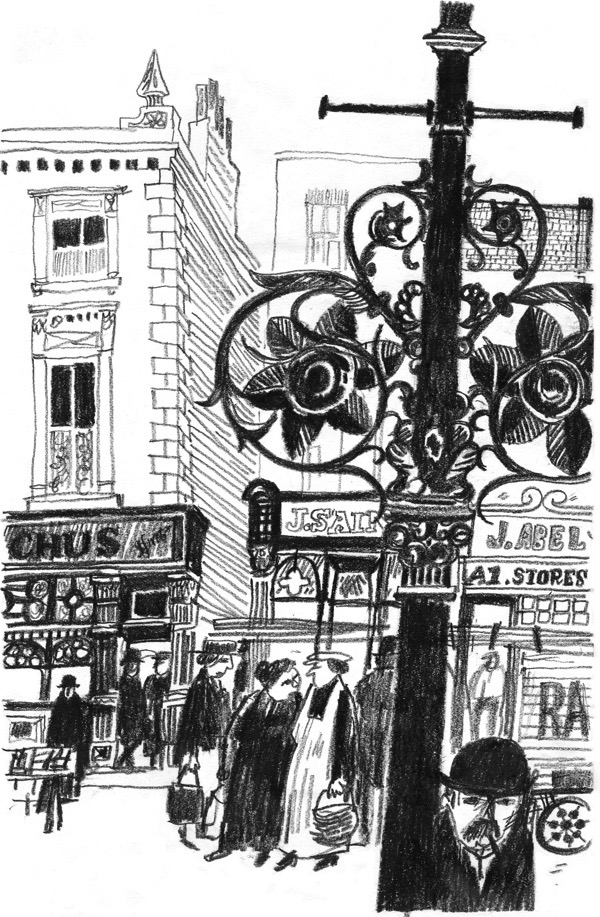
We are delighted to be collaborating with the V&A Museum of Childhood in Bethnal Green to stage a celebration on Thursday 14th September at 6:30pm of our publication of A HOXTON CHILDHOOD. In our handsome new edition of A.S. Jasper’s classic childhood memoir of growing up in the East End at the beginning of the twentieth century, A HOXTON CHILDHOOD is accompanied for the first time by the sequel THE YEARS AFTER which completes the story.
If anyone ever wonders why we need a National Health Service, proper Council Housing or laws to ensure decent working conditions, they should read A.S. Jasper’s candid and heart-breaking account of life in the world before these things came into existence.
Terry Jasper will speak about how his father became a writer, Henrietta Keeper will sing and Derrick Porter, the Poet of Hoxton, will read poems inspired by his childhood in Hoxton. Additionally, everyone is invited to bring a childhood photograph to show us. Click here to book tickets
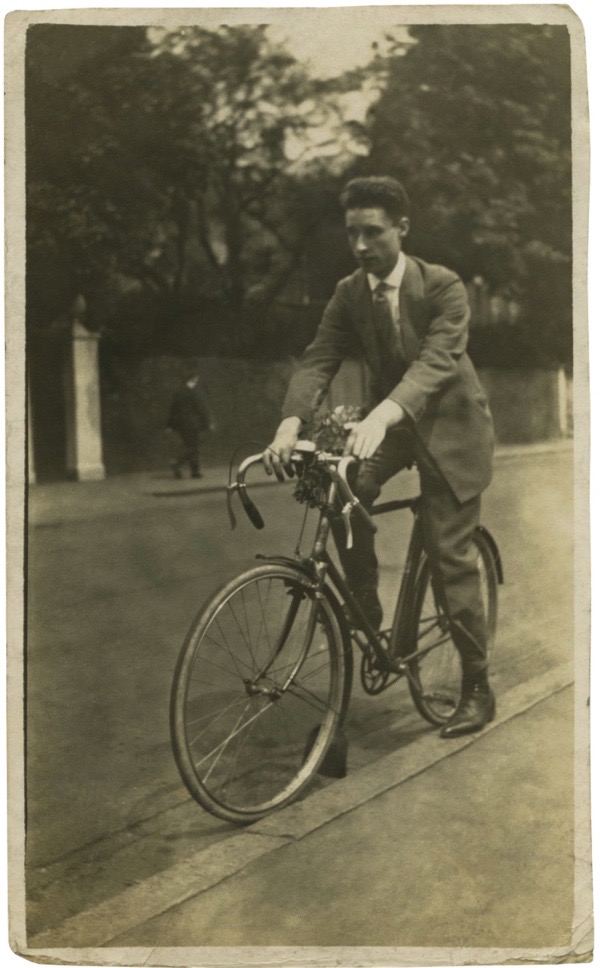
A. S. Jasper, Author & Cabinet Maker

Henrietta Keeper, Machinist & Singer
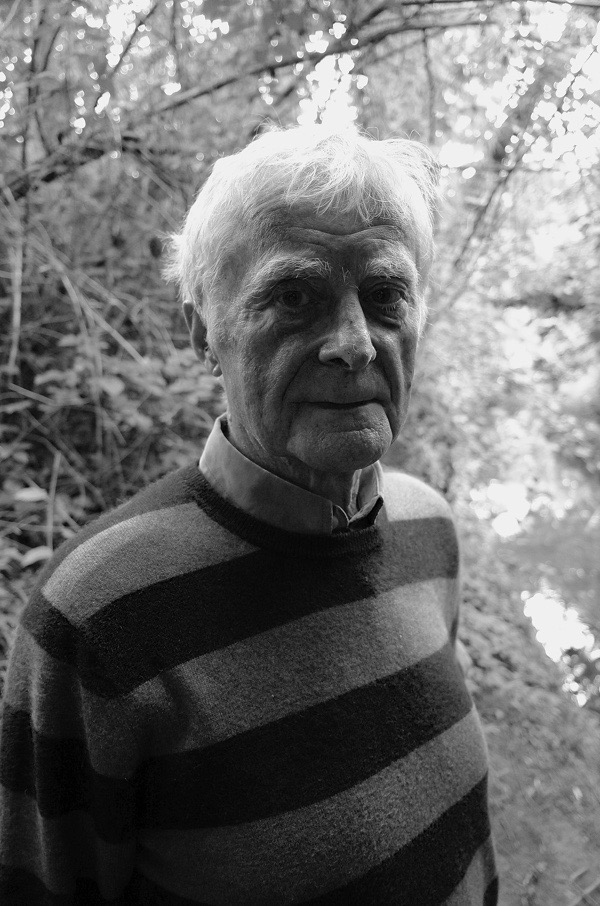
Derrick Porter, Printer & Poet
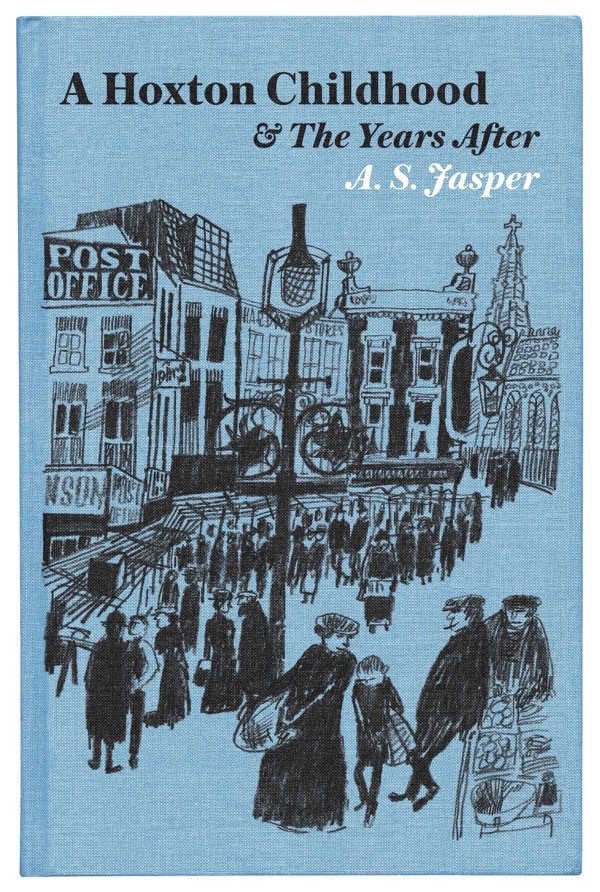
Click here to order a copy of A HOXTON CHILDHOOD & THE YEARS AFTER
A Walk Along The White Cliffs
At this season, The Gentle Author always enjoys an annual late summer holiday beyond Spitalfields in the form of a day trip to the sea and this year’s excursion was a walk from Deal to Dover
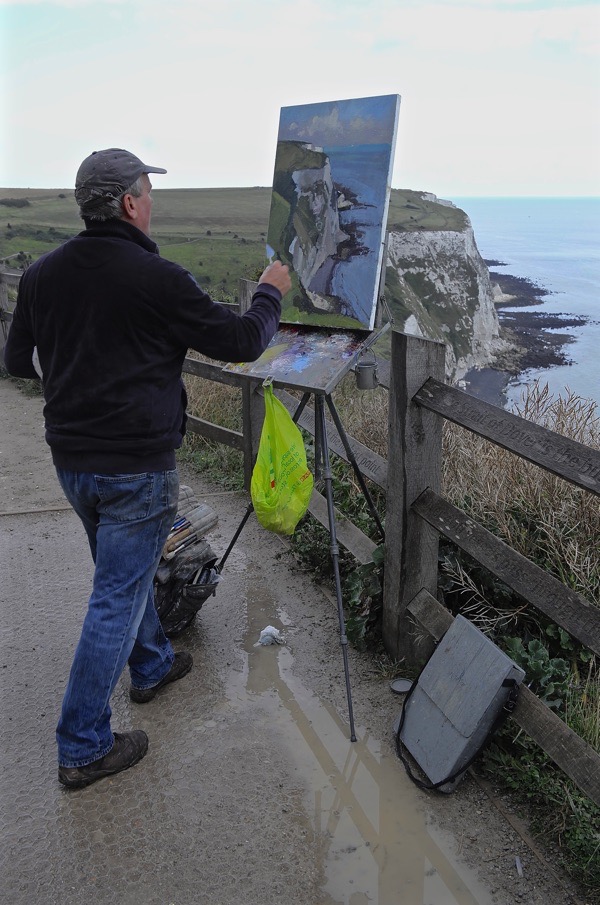
The White Cliffs are a popular source of inspiration for artists
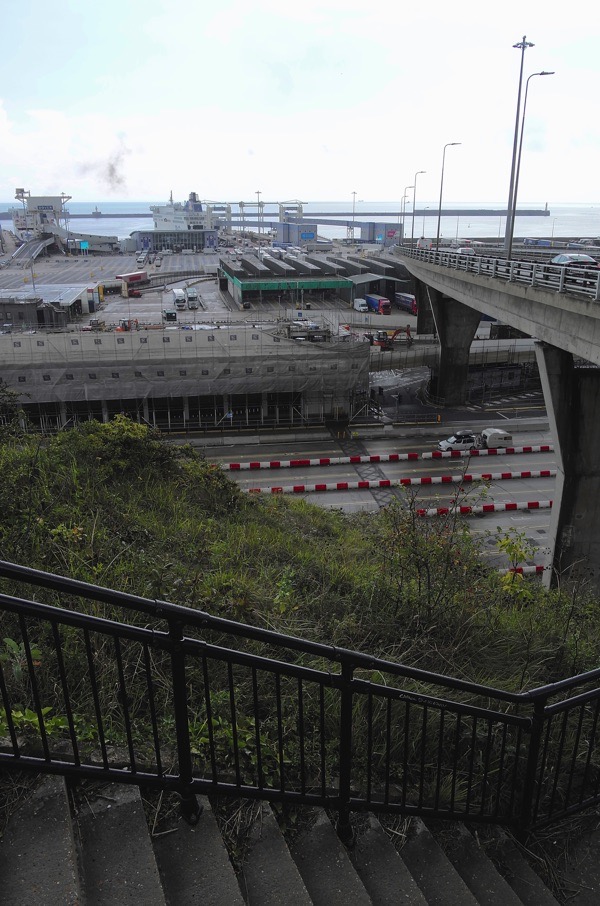
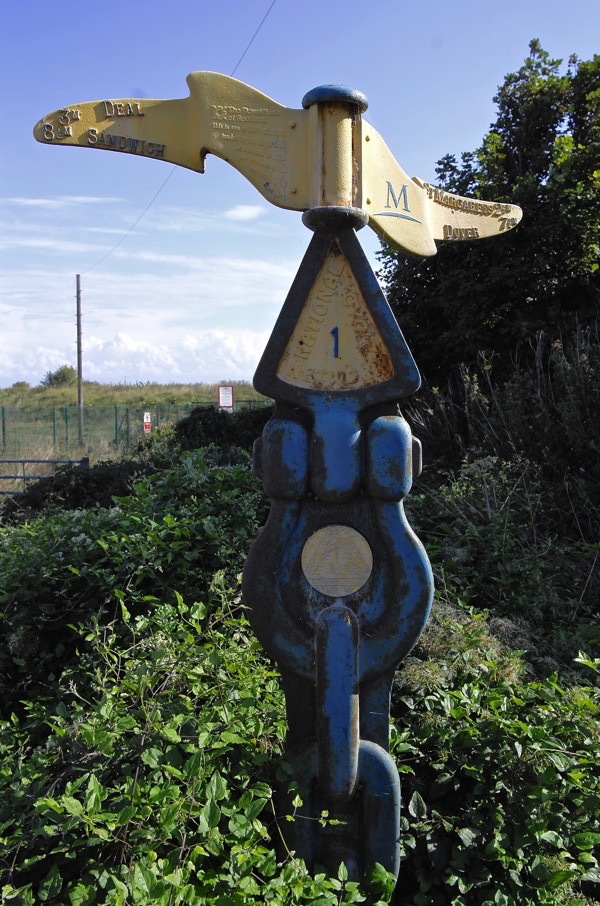
In common with thousands of other travellers, the point of departure for my journey was Dover yet, unlike everyone else, I turned left at the ferry terminal to follow the coastal path eastward towards Deal.
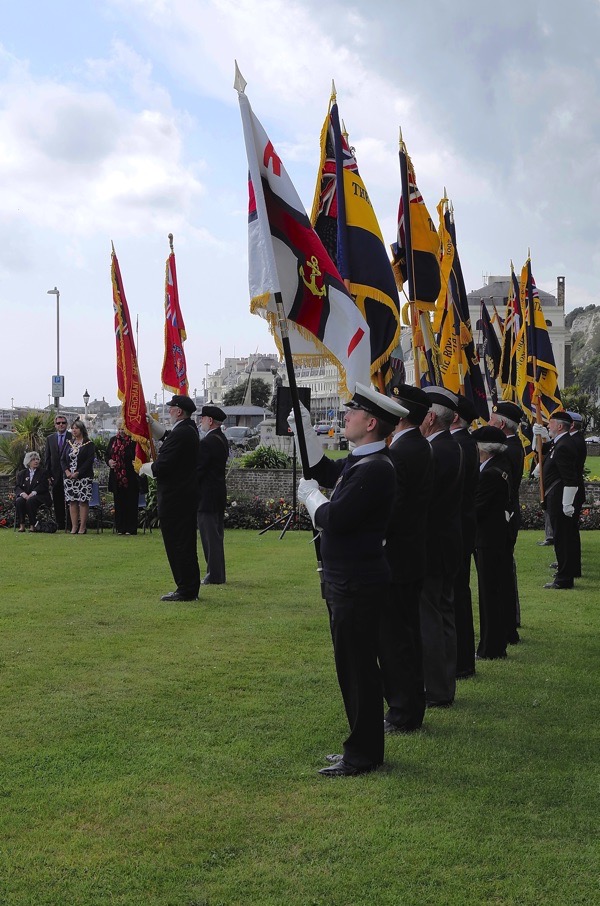
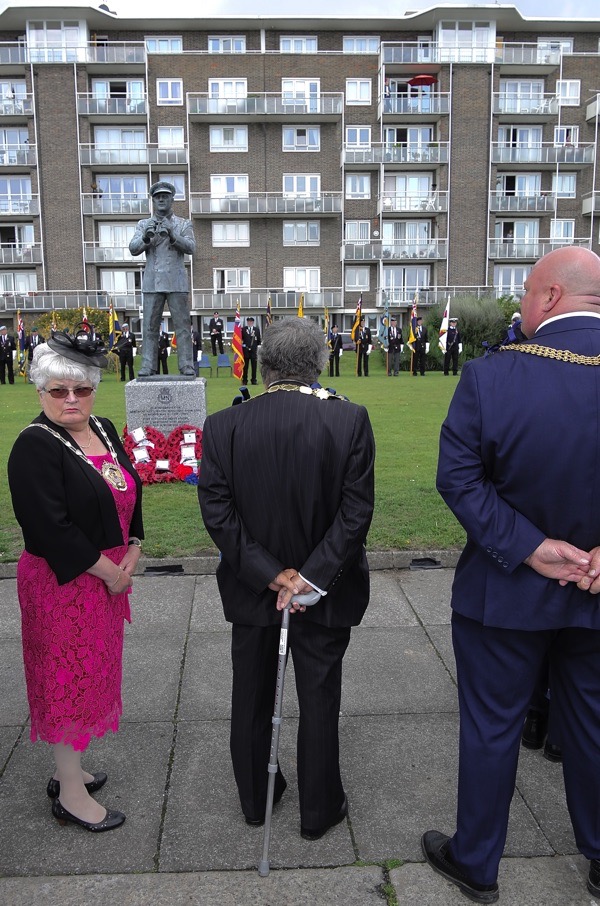
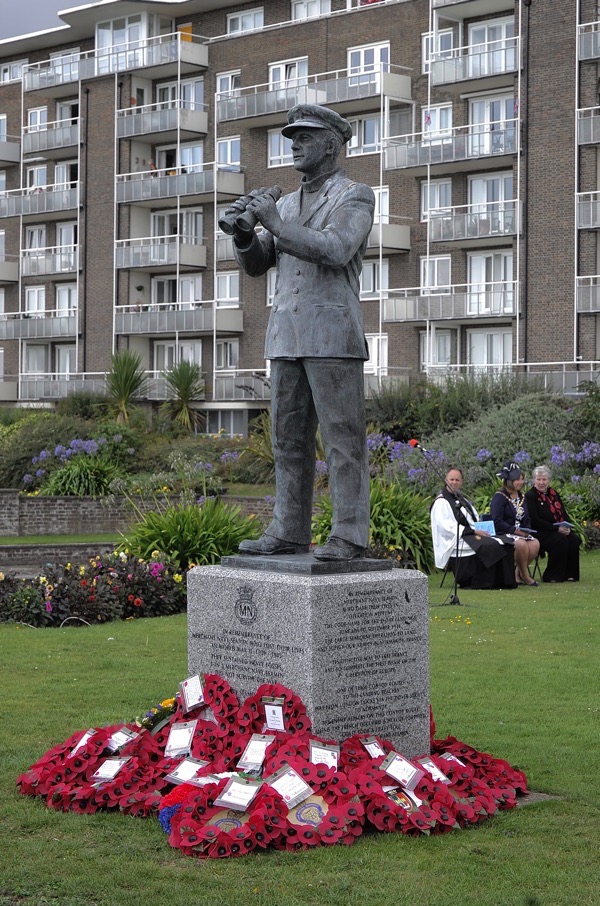
Before I even began the climb uphill to the cliffs, I was confronted with a poignant reminder of the strategic importance of this small town situated at the narrowest point of the English Channel. A statue was being unveiled commemorating the seamen of the Merchant Navy who lost their lives in the Second World War, a third of whom never returned. Just a few frail veterans with medals gathered in sadness, as sailors lined up with flags and local dignitaries made speeches, while a vintage airplane puttered overheard in gathering clouds.
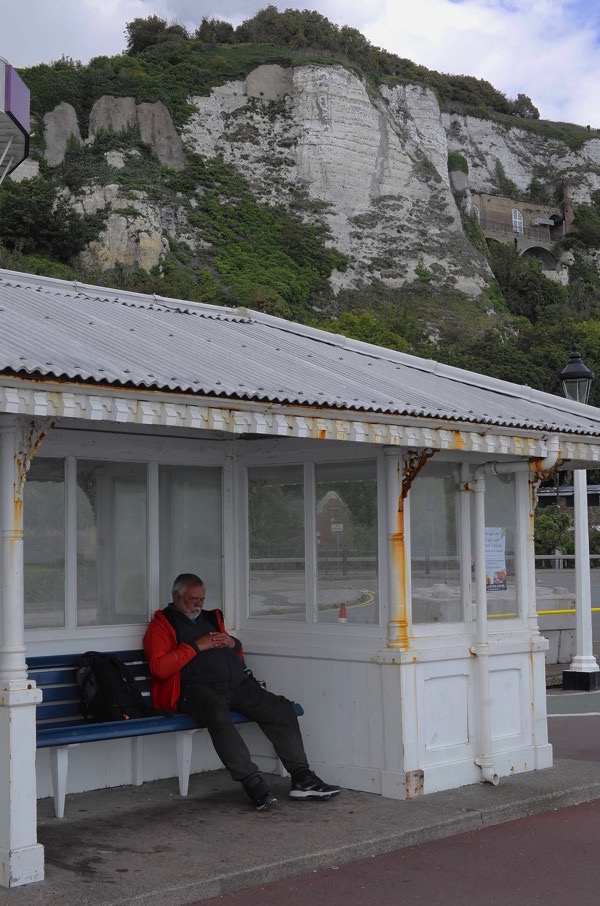
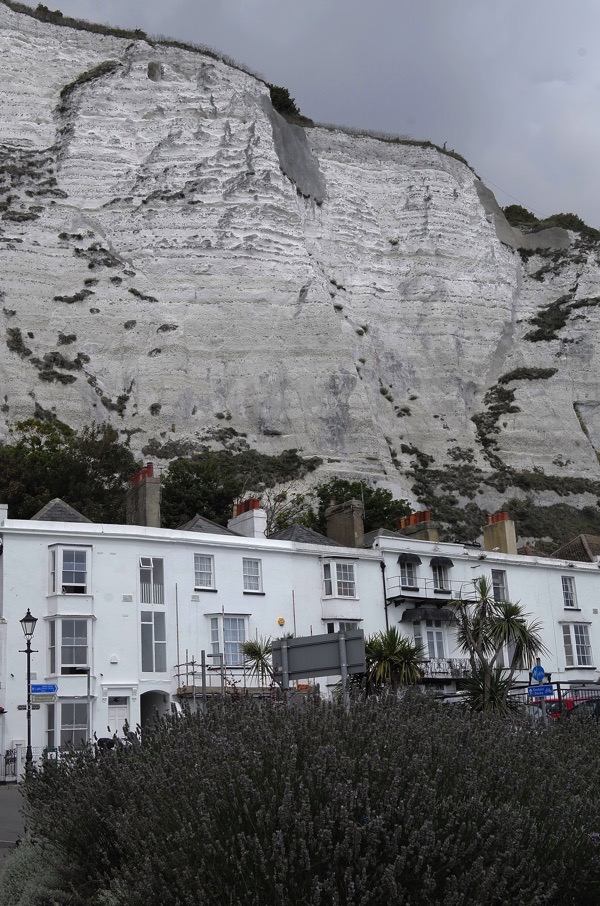
As the ceremony concluded and umbrellas unfurled, I walked on past narrow terraces tucked in at the foot of the tall cliffs towering aloft. The epic spectacle of the ferry port only becomes apparent as you ascend the narrow path crossing beneath the motorway suspended above, feeding the terminal with a ceaseless flow of traffic.
At this point, it seemed that my excursion might be over when a thunderstorm broke over my head, sending arrows of forked lightening into the sea. Impatient with standing under the concrete bridge waiting for the rain to stop, I set out again and was forced to take shelter again in a thicket, contemplating an abandoned shopping trolley and an old lawnmower. Once the storm relented, I struggled uphill to the cafeteria for visitors to the White Cliffs Experience, joining the melancholy throng eating all-day breakfasts and gazing jealously across the channel at the sunlit French coast.
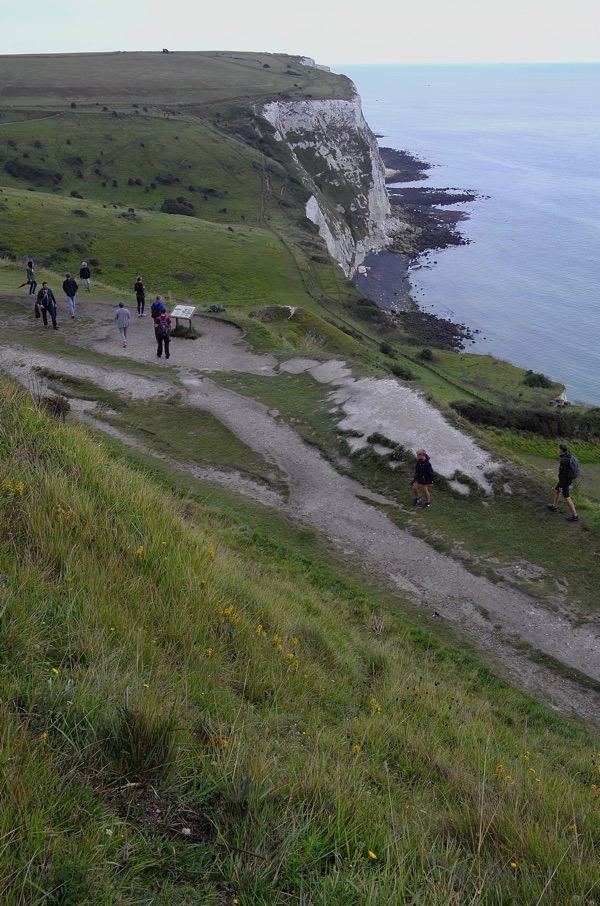
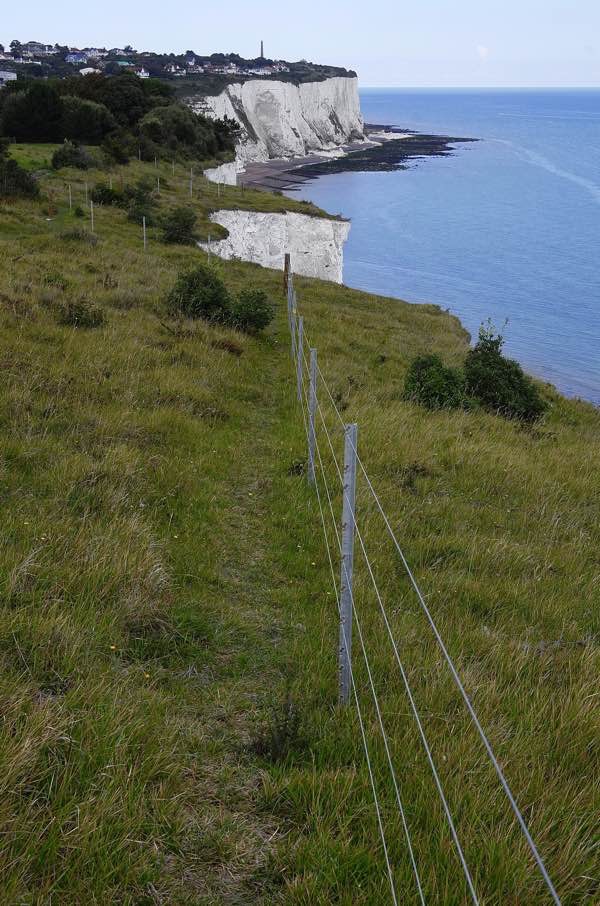
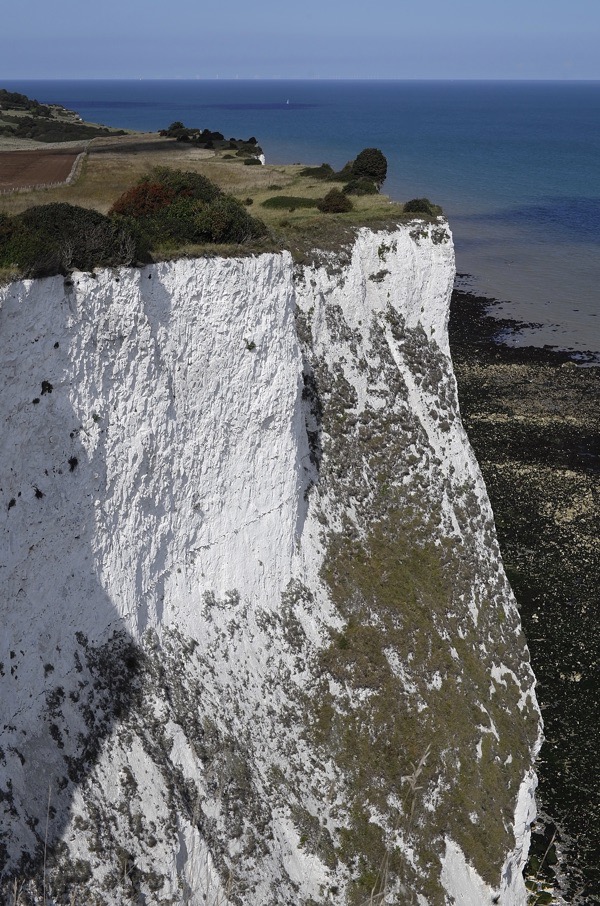
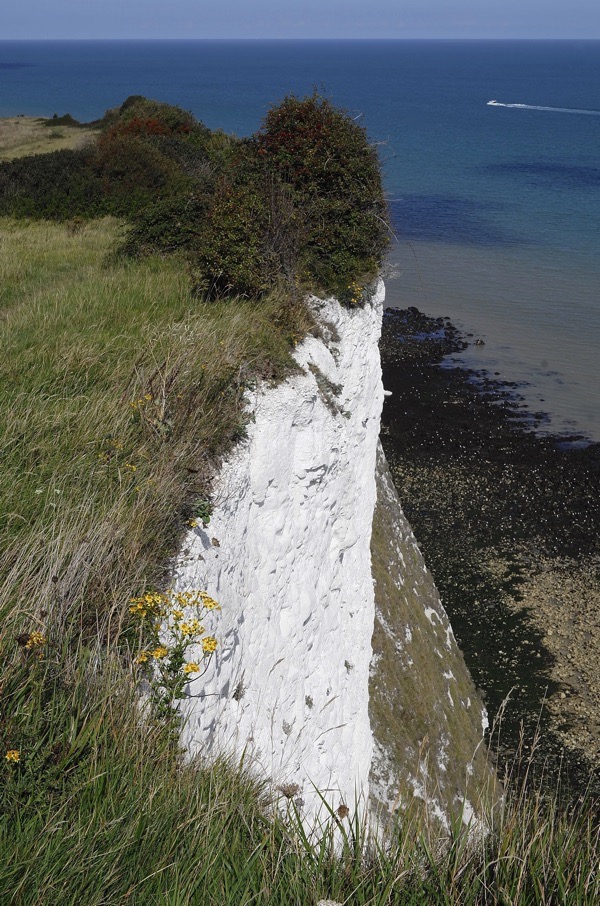
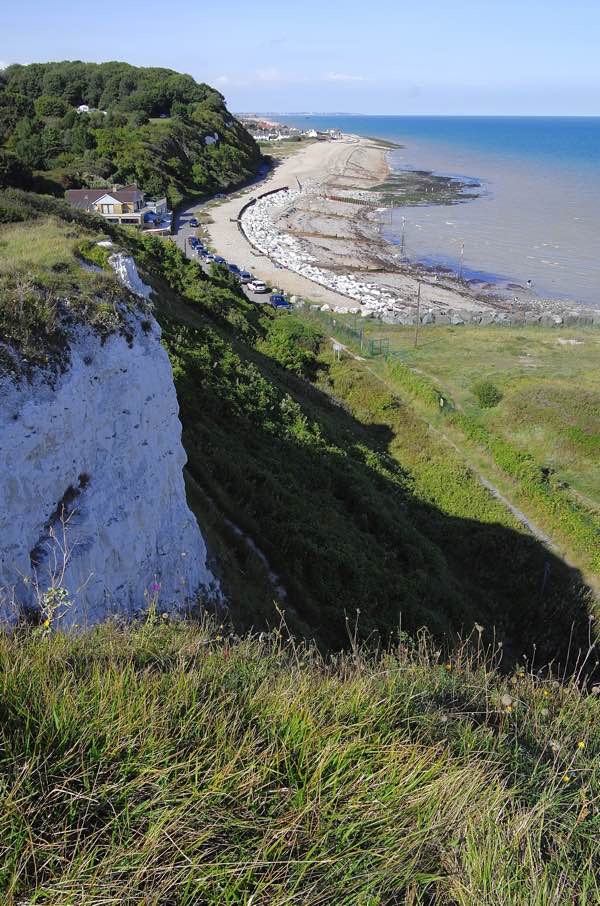
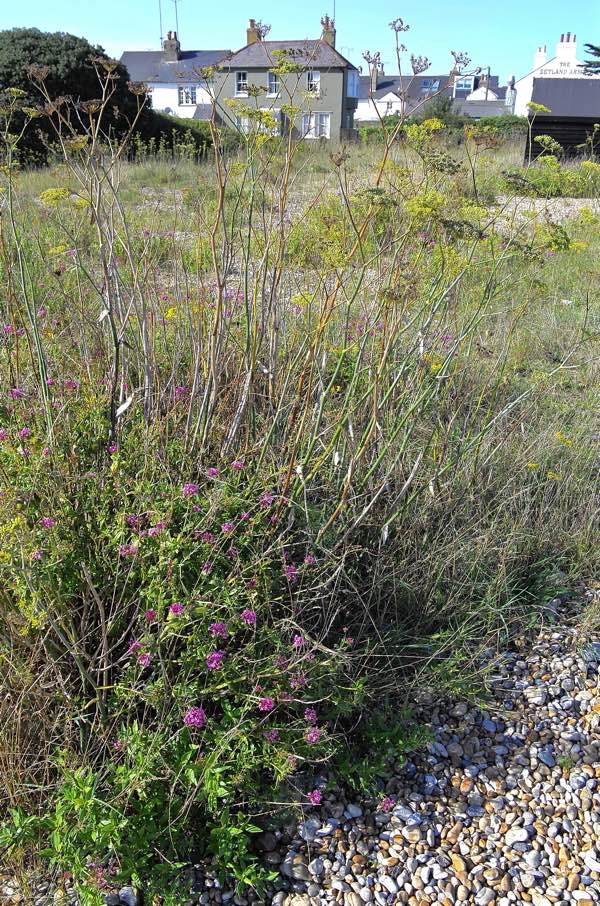
How grateful I was when the rain stopped and I set out in earnest through the puddles and muddy paths. After a mile or so, I left the visitors behind and the grassy footpath became less worn, bordered with wild thyme and fennel. The undulating nature of the cliff exposed impressive deep chasms faced with sheer walls of chalk descending hundred of feet to the water below, inducing a sense of giddy exhilaration tinged with vertigo. The dark clouds were behind me and a warm wind was in my face, and the French coast gleamed in the sunlight twenty-three miles across the sparkling sea. When I descended to the bay at St Margaret’s At Cliffe, barely a soul disturbed the peace underscored by the gentle rise and fall of the waves.
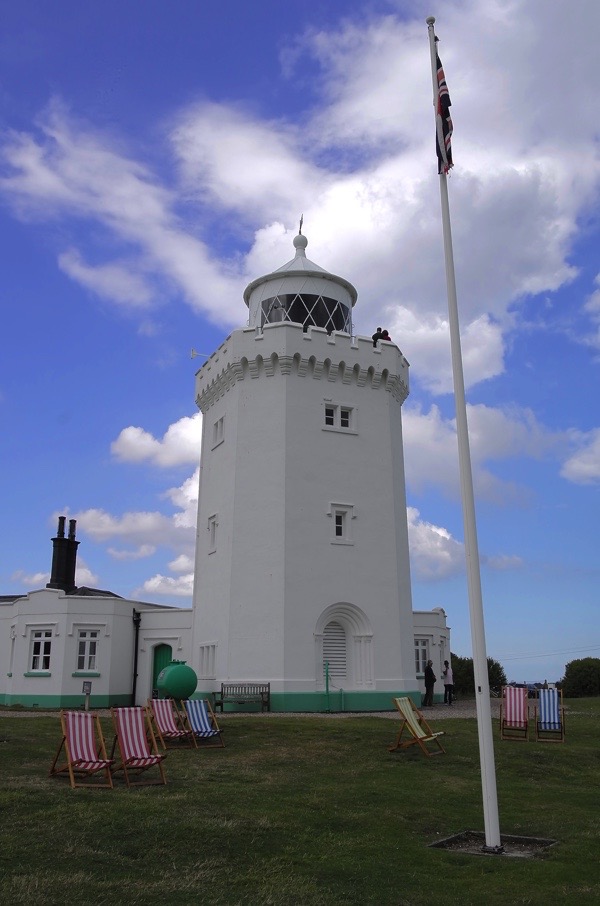
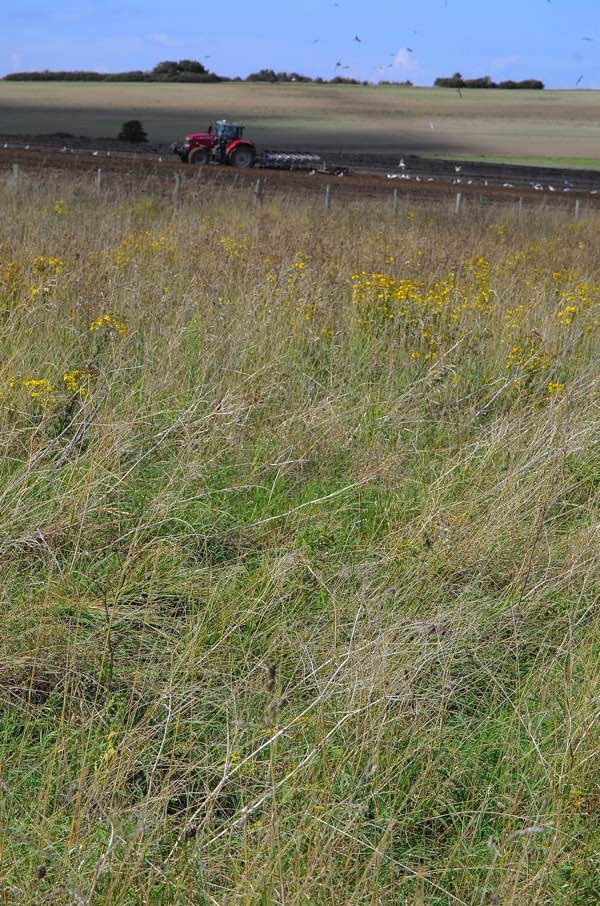
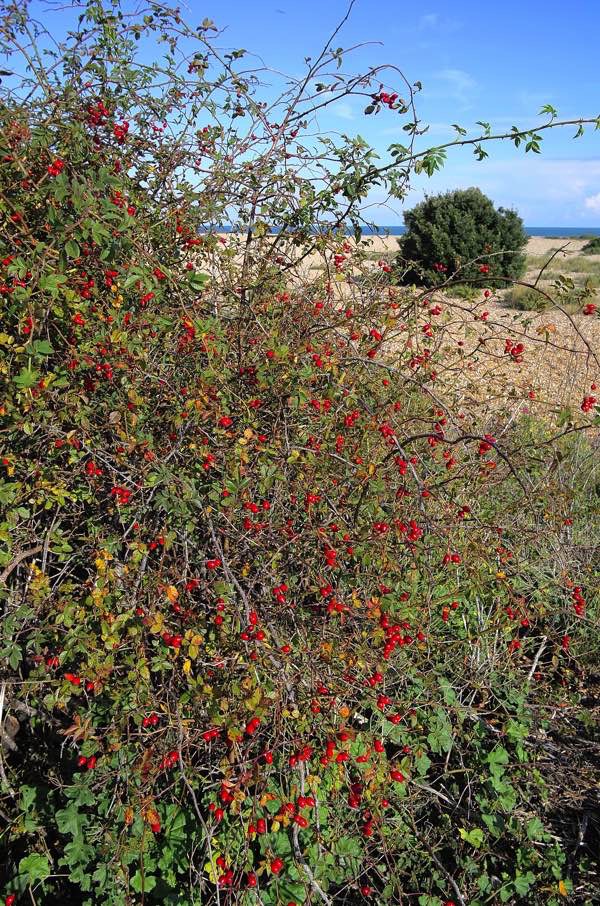
Autumn declared itself in the red hips, hawthorn and sloe berries along the path and in the sight of a tractor ploughing up the stubble, trailed by a flock of seagulls. Yet, after the opening the squall, the weather was benign, the walking was good and within a few hours the cliffs declined, delivering me to the long shingle beach at Kingsdown. On the last stretch, a hawk hovered overhead, drifting and swooping on the currents of warm air before folding his wings and dropping like a dart towards his prey.
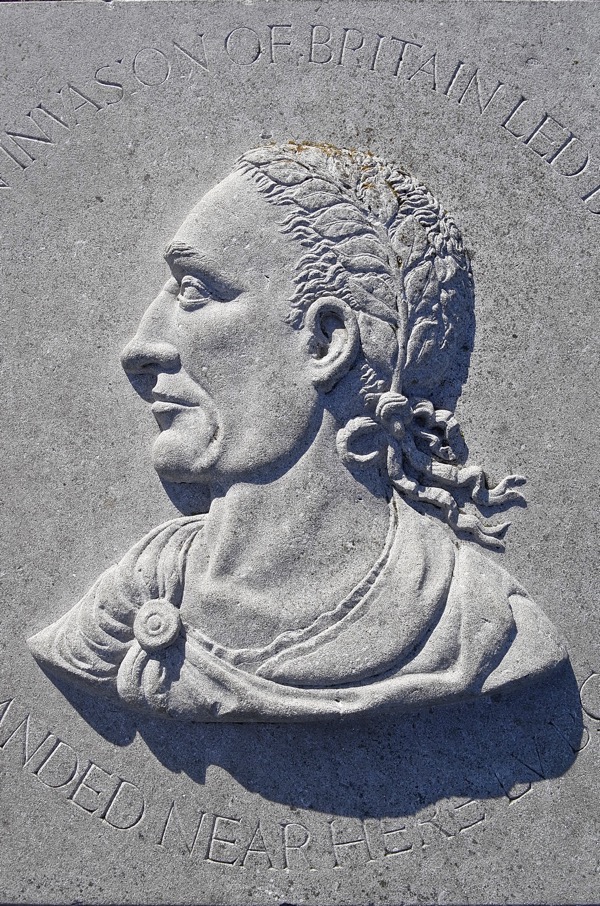
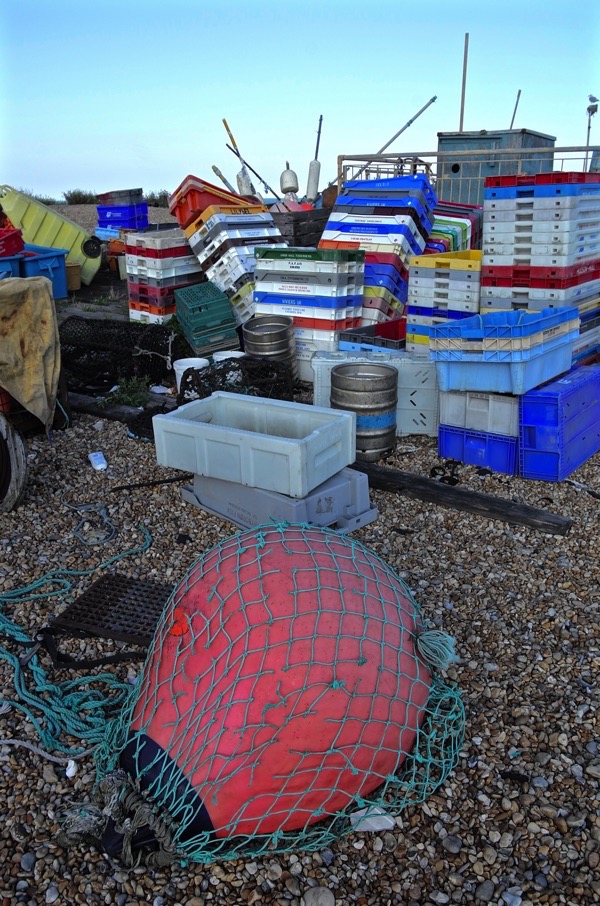
For places so close to London, both Kingsdown and Walmer were unexpectedly quiet and unspoilt seaside towns. A magnificent long line of Edwardian villas borders the beach, which has a sparse forest of dwarf evergreen oaks shielding the land from the sea. This was where Julius Caesar landed two thousand years ago and it is not difficult to imagine the Roman galleys pulled onto the beach here. Castles at Walmer and Deal, and eighteenth century barracks in Deal, serve as a reminder of the threat of invasion that persisted into the last century. At Walmer, a handsome stone gothic boathouse on the seafront reveals the importance of the lifeboat to these small communities that relied upon the sea for their livelihood. Today just a handful of fishing boats remain, surrounded by their paraphernalia of plastic fish trays, lobster pots and nets.
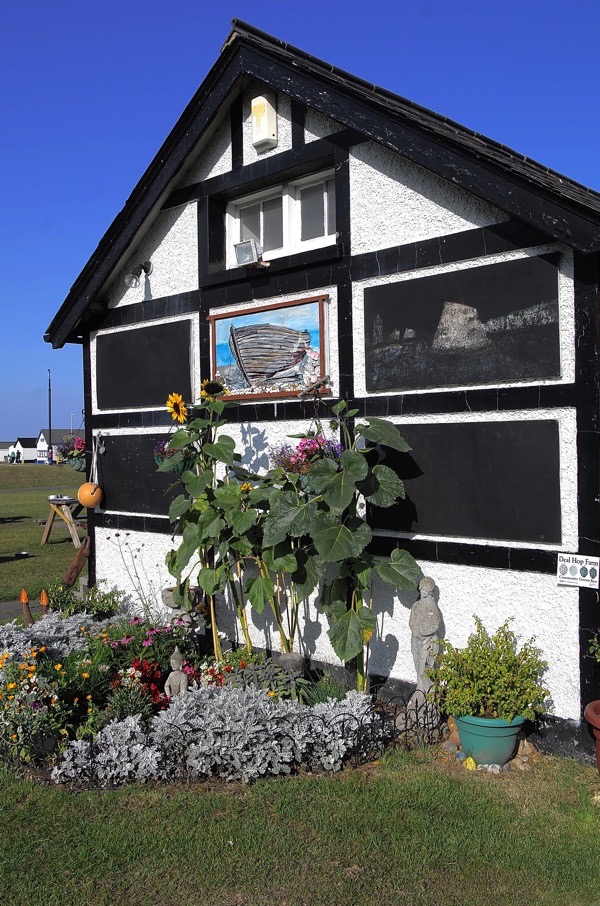
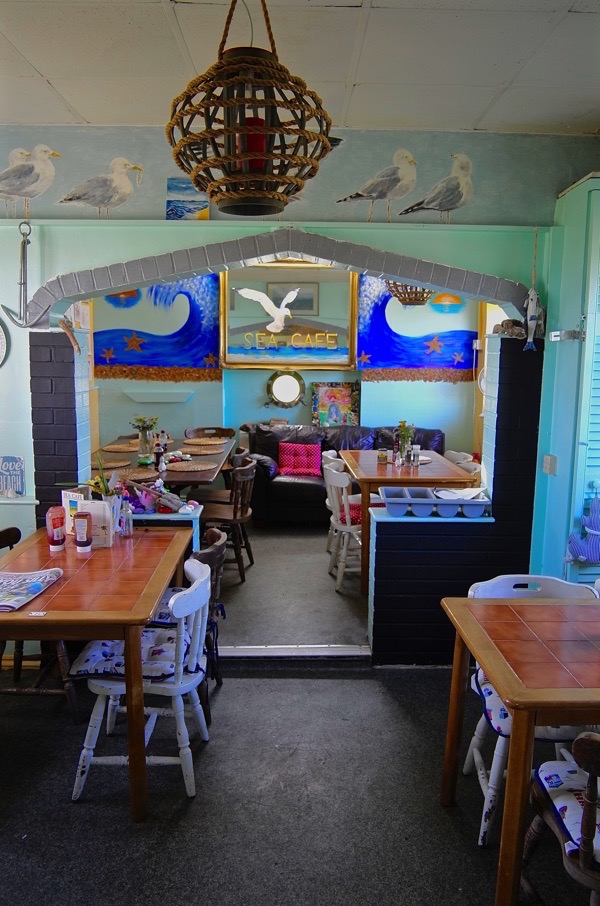
A portion of cod and chips provided necessary sustenance to make it along this seemingly-endless seafront to Deal, where a cup of tea outside the ramshackle shed known as the Sea Cafe offered welcome refreshment upon arrival. The last of the afternoon sun was fading and the shops had all shut, which meant that an exploration of the manifold delights of Deal would have to wait for another day.
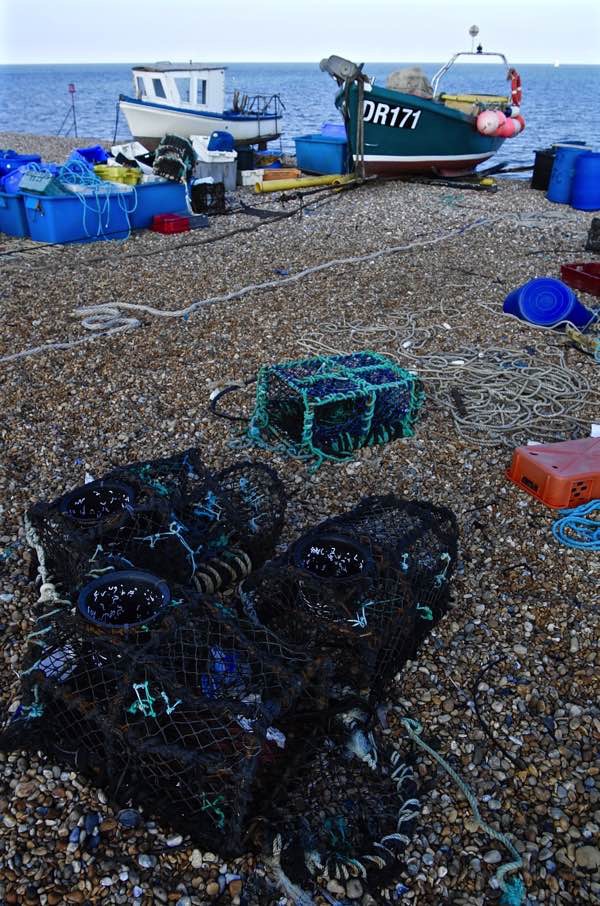
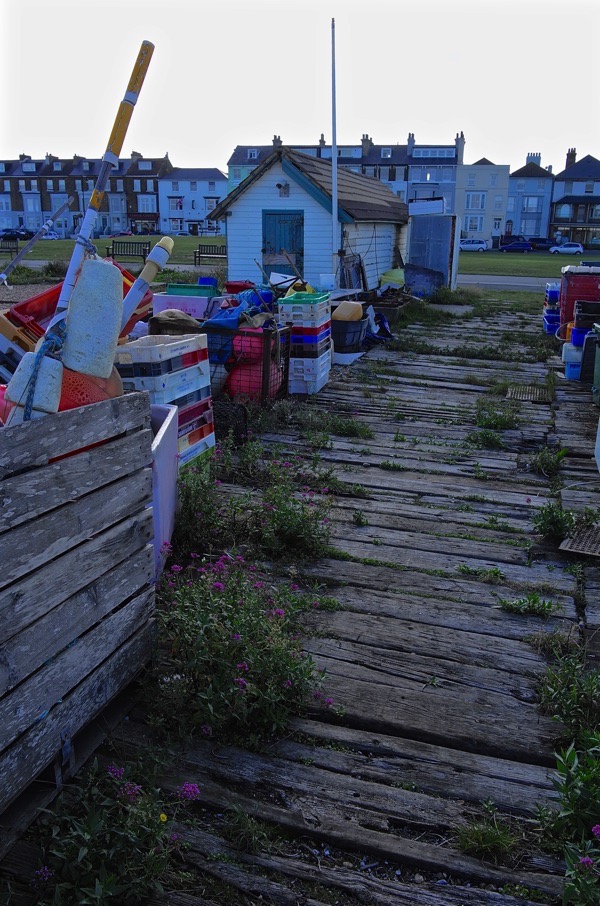
You may like to read about my previous trips beyond Spitalfields at this time of year
A Walk from Shoeburyness to Chalkwell, 2013
Doris Halsall, Civil Servant & Despatch Rider
Celebrating the eighth birthday of Spitalfields Life with a week of favourite posts from the past year
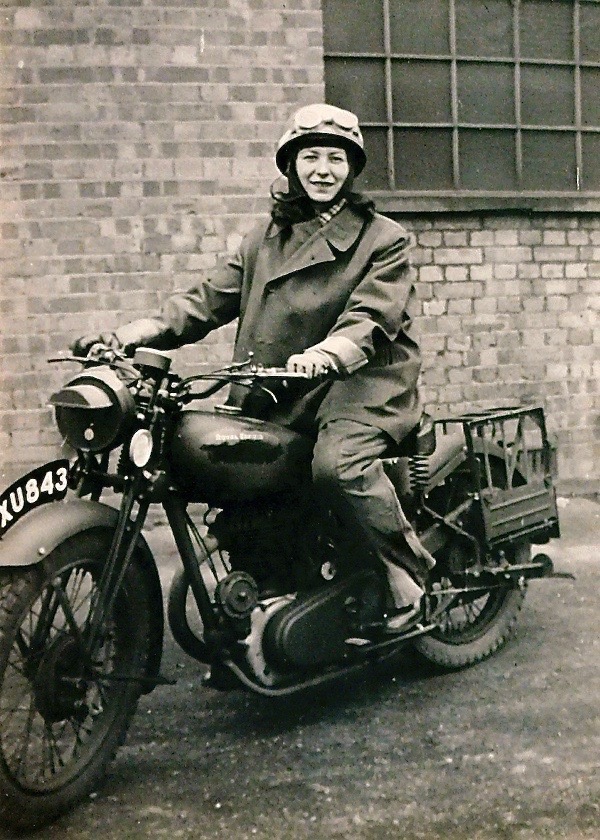
Doris Halsall, Despatch Rider, 1944
One Saturday afternoon recently, I took the train over to Chigwell to visit Doris Halsall – still vital and independent in her ninety-seventh year – who recounted for me the story of her circuitous journey through the twentieth century and away from the East End. Blessed with keen intelligence and an adventurous nature, Doris embraced the possibilities for advancement that came her way – especially riding a motor bicycle – with enthusiasm and fearless determination, boldly constructing a life for herself that transcended her modest beginnings.
“I was born in 3 Venner Rd in Bow in 1920. My mother, Rosina & father, Alfred White lived in the downstairs with my sister, Rose and I. But later, when my mother’s sister died leaving a little boy of ten days old, Jack, my father said ‘Let us adopt him,’ even though my mother had eight or nine sisters.
Mrs Blewdon, who owned the house, lived upstairs and she came down every morning with her bucket and jug to empty them in the outside toilet and fill them again in the scullery. She stayed the whole day in her room and, each evening, she left us a note on the stairs, ‘I’m in for the night, Mrs White, Good Night.’ I always laughed because I used to love that little note on the stairs.
My father was in the army in the 1914-18 War and I’ve got a certificate to say that in 1916 he was unfit for service. There was no reason given but my mother always insisted that he was gassed and he was ill because of it, although his death certificate said ‘tuberculosis.’ When he came out of the army he did all sorts of jobs. I remember one day he was hoping it would snow, so he could go and do some snow shovelling. Eventually he joined the GPO and he would always bring newspapers to show me the events of the day. He died when I was ten years old in 1930. We were all there at the very last when he was dying. We didn’t think it was terrible, we just accepted it. In the family, there were others that died of tuberculosis.
My mother worked at home and we all helped her. I could cover you an umbrella now! She used to go up to the City and came back with the cloth and the umbrella frames, and we would fit the covers, the three of us – my mother, my sister & I – preventing, tying-in and tipping. Then next day, my mother would take the bundle back on the tram. It was hard for her schlepping up to the City everyday. I still have one of her tram tickets which I use as a bookmark. Later on, she used to knit angora berets and I sewed them up. She was always afraid we’d go into the workhouse, Bromley by Bow Workhouse was nearby.
After my father died, we were no more or less poor than we were when he was alive. My mother had a ten shillings a week pension, five shillings for my sister and three shillings for me – nothing for my cousin. We never saw ourselves as poor. We just accepted life. I was quite a happy child but my sister wasn’t, she was always unhappy and I don’t know why – I think it’s the way you are born. So I was never unhappy, but our circumstances were dreadfully poor. The coalman came round to our road but we couldn’t afford to have a sack of coal, it was half a crown for a hundredweight.
In Burdett Rd nearby, there was a little row of shops including a sweet shop with these different kinds of sweets in sections. All I ever wanted was to buy a quarter of pear drops for tuppence and I thought, ‘When I grow up, I’ll buy them.’ There were fruit stalls with oranges that came in fine crates made of wood which the stallholders would just throw down and the council would come and collect them, but we could go along and pick up the wood and take it home and put it on the fire. So why did you need to buy a hundredweight of coal for half a crown?
My sister & I played all the time in the street with my brother-come-cousin sat in the pushchair outside the house. We had all our friends on the street, our neighbour Mrs Franklin had nine children, and there was always entertainment on the street. The barrel organ would come along with these men dressed as women. We didn’t know anything abut transvestites, but they sang and danced and someone turned the barrel organ. The milk cart came along with a big churn and we would take a jug out. We’d buy jam at the little corner shop. We took a cup along and they’d weigh the cup and then they’d fill it with two penny worth of jam from a big jar.
When I was about twelve, I remember walking up to a shop in the City next to the Aldgate Pump to buy a postcard of Leonardo Da Vinci that I had learnt about from a very good art teacher at my school. The question was, ‘How to get tuppence?’ so there was no question of taking the tram or bus, I walked there. I can’t remember if I ever went to the West End but my mother used to take us to Southend for the day by train. I remember looking over the bridge from Bromley by Bow station at the workhouse. All the women used to sit along the wall in their blue and white dresses and, on the other side, sat all the men in their blue and white shirts, separated.
I remember Mosley’s blackshirts when they came down as far as Canal Bridge and I remember going down to see them. I was sixteen and I didn’t think too much about it. They were marching and they’d strayed over as far as Canal Rd. They’d been pushed back after the Battle of Cable St and they were milling about trying to find a way home.f
Opposite Stepney Green station, there was a Methodist Mission and there was this couple, Mr & Mrs Mackie and they took a group of girls under their wing. They took us on holiday for a week and we paid them ten shillings. They were very good to us. They ran a competition for ‘Recitation’ but I called it ‘Elocution.’ I went to a school where they always impressed on us that, if you come from the East End, it doesn’t mean you have to speak like someone from the East End. My cousins made fun of me because I spoke differently, mimicking me, but I didn’t care. I won the District and then the All-London Competition and I got invited stay to tea. That was a real treat. I still have my medal. My recitation began ‘No strong drink for this champion..’ and I had to sign the Temperance pledge. Conveniently, my memory is clouded about when I broke that.
I went to a very good school and I won a Junior County Scholarship with a grant of twelve pounds a year and, when I was fourteen, another grant of twenty-one pounds a year. It was very sad really. Most of the parents wanted their children to leave school and go to work. You were brought up to go and work when you were fourteen. My sister had left at fourteen and was already working and my mother wanted me to leave, but when I did she had to give me money for fares to London and for lunches so she wasn’t much better off.
I wanted to go into the Civil Service which most of my friends were doing but you couldn’t take the exam until you were eighteen. I worked in an office and went to night school, after I left school at sixteen, and finished my education that way. This lady in the office, who seemed ever so much older than me, said ‘Don’t stay here.’ Fortunately, I passed the Civil Service exam and went to work at the Ministry of Agriculture office in Leonard St in Shoreditch and it was all very nice until the War came along.
I was evacuated up to Lytham St Anne’s. We were put into seaside boarding houses and every morning we could smell our rations going past our doors! It was all girls, eight or nine of us, and Mrs Brooks did us well. We had a great time. We borrowed each other’s clothes and went out to the Tower Ballrooms. It was lovely. I was promoted in the Ministry of Agriculture and sent to Bournemouth. We were importing agricultural machinery from America and my job was to look after the shipments as they came in.
My mother stayed in the East End of London all through the war, even though she had a bomb drop next door and had to move out for a while, but she went to work in munitions and became quite well off. She had the Anderson shelter in the garden and she wasn’t a worrier. Yet all the bomb debris in the East End was horrible and cousin of mine was killed in her house with her two little children.
During the war, I wanted to go into the forces but I was considered too useful so I wasn’t allowed to be released from my job. I tried to get into the airforce, in the Meteorological section. I was attracted to the challenge but I wasn’t allowed to do this. Then an offer came along to be a Despatch Rider for the Home Office. My friend Claire & I signed up for that right away, and we went to Hendon Police for week and learnt to ride a motorbike. It was great.
At that time, we were quite sure there was going to be an invasion. In preparation for this, we had to drive around to Police Stations and hand in ‘despatches’ but we never knew what they were – probably a blank sheet. It was just practice and quite soon we knew exactly how to get to the various police stations.
Claire & I often got caught up in the American convoys with all the GIs sitting out on the tailboards while we were on our bikes. They would shout ‘Gee, they’re dames!’ and they wouldn’t let us overtake them – so we had a high time, until they turned left. I had various boyfriends. All the girls in the office had boyfriends or fiances and ever so many of them were killed. I had some boyfriends that weren’t English who went off and I never knew what happened to them.
When the invasion was expected, I was brought back from Bournemouth to London and I went back to live with my mother and she made a great fuss of me. My mother had married again, to Jim Mason, a crane driver in Ilford and they had moved out to Seven Kings. He was a nice man and I liked him ever so much. My mother was glad to leave the East End.
I was married in 1947. I met my husband, Harold Halsall at holiday camp on the East Coast. I had a travelling job then for the Ministry of Agriculture and I visited regional offices examining the accounts. Leaving London by train, I remember once I realised I had left some papers at the office, so I left my case on the platform and went back to the office and, when I returned, it was still there.
After we married we bought a house and lived in Ilford and had two little girls, Pauline & Julia. Rationing continued after the war but there were ways and means of getting hold of what you needed. When I was travelling I visited all the farming towns, so I had eggs and bacon and cheese and milk – and I stayed in hotels, there was no rationing in hotels. It was lovely. I was very fortunate. I have had such a great time. I don’t miss the East End because I wanted to have something better. It was hard, a tough existence and this was a much nicer life.”
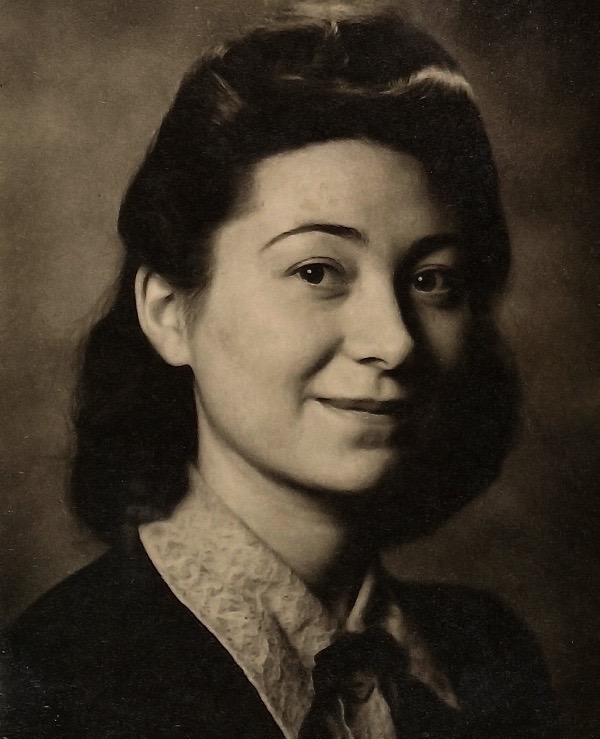
Doris in the forties
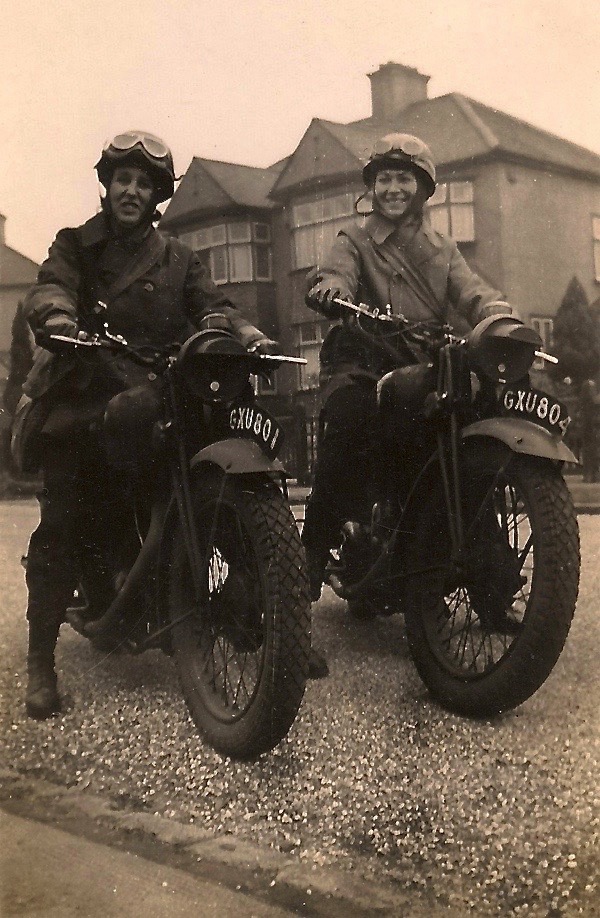
Doris & her friend Claire, Despatch Riders in 1944
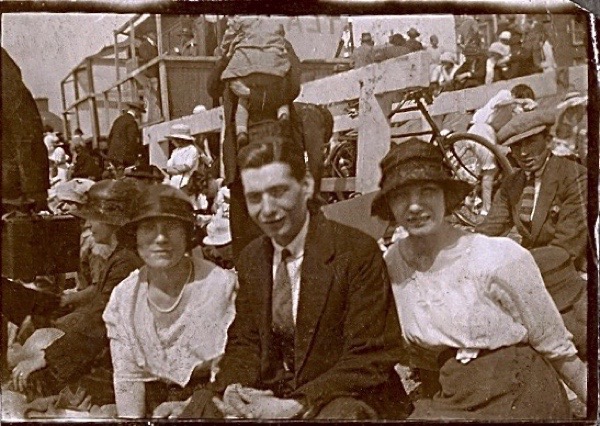
Doris’ mother Rosina and father Alfred, and his sister Emily, photographed at Southend in 1919
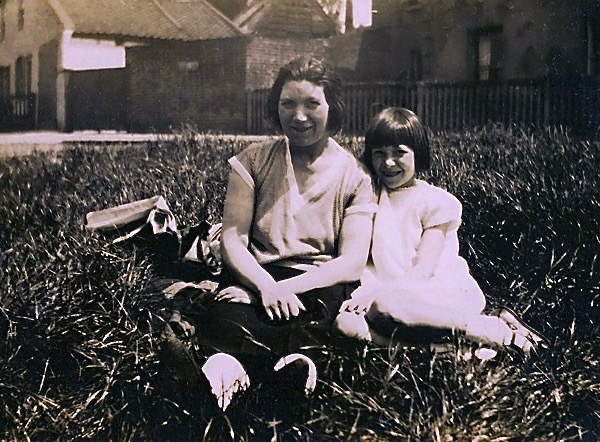
Doris with her mother, Rosina, in the twenties
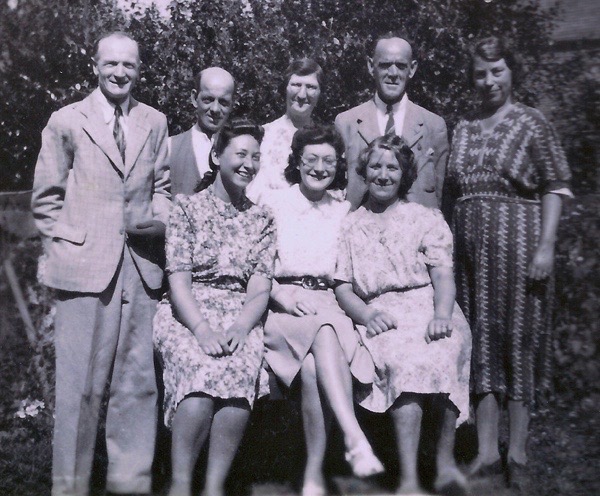
Doris’ family in 1940 – Doris, her sister Rose and their mother Rosina in front.
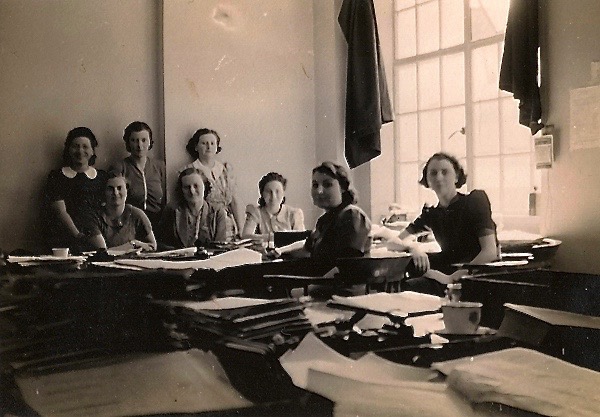
Doris at the Ministry of Agriculture, Baker St Office, 21st May 1940
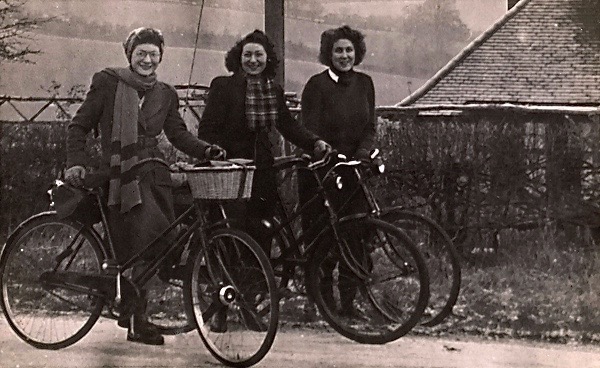
Youth Hostelling – Doris’ sister Rose, Doris, Doris’ friend Claire
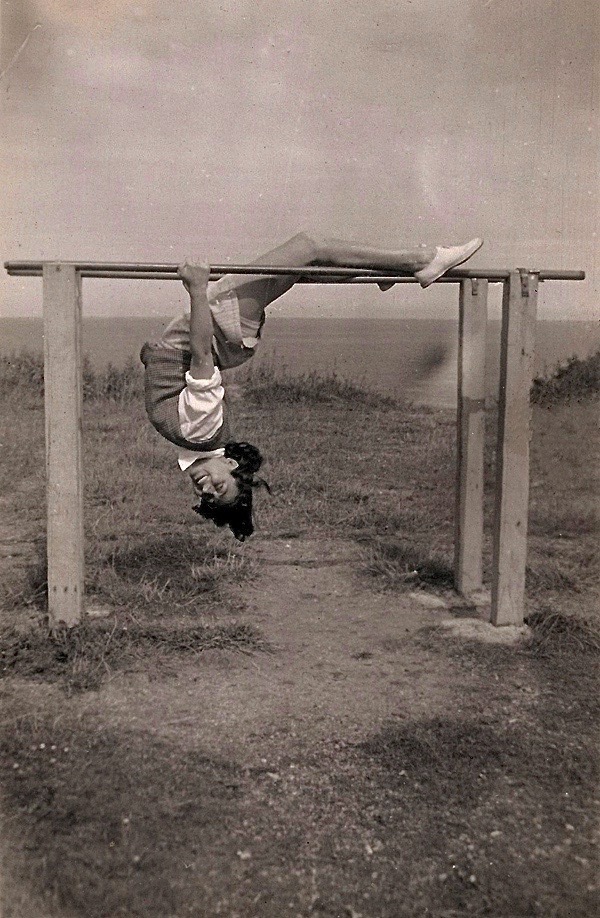
Acrobatics by ‘Daredevil Doris,’ Corton, 1948
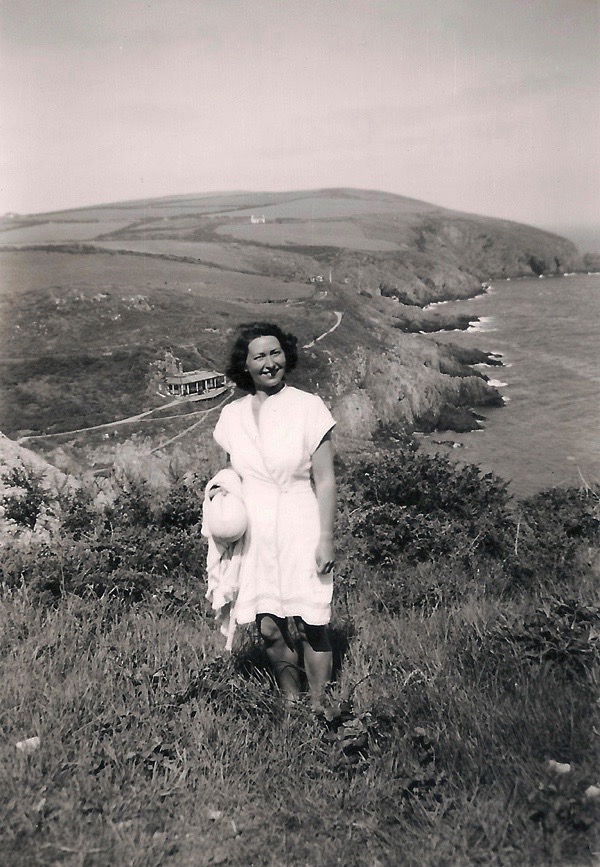
Doris in her new beach-robe, Howstrakes, June 1947
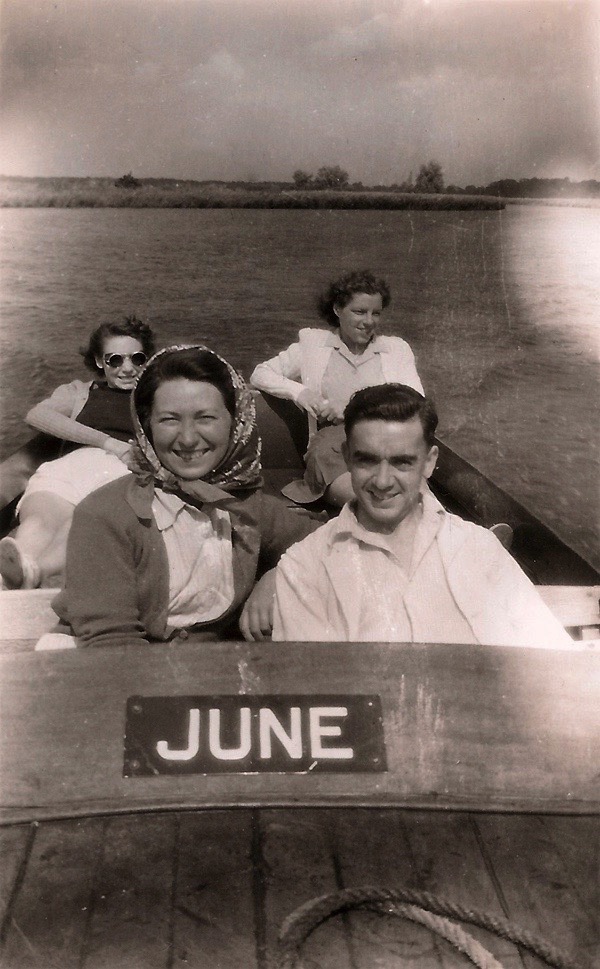
Doris with Harold Halsall on Oulton Broad, July 1947 – the year of their marriage
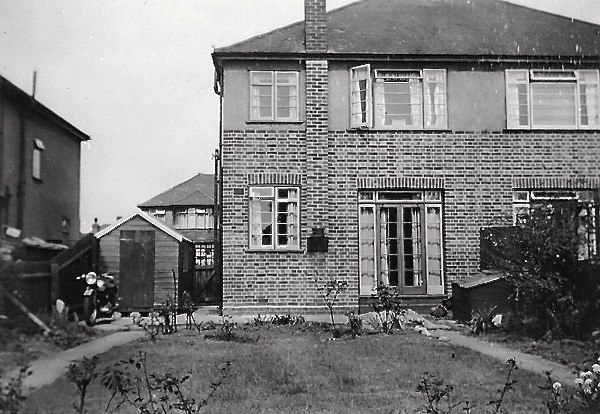
The first house which Doris and Harold bought on Kirkland Avenue in Ilford – note Doris’ motorbike
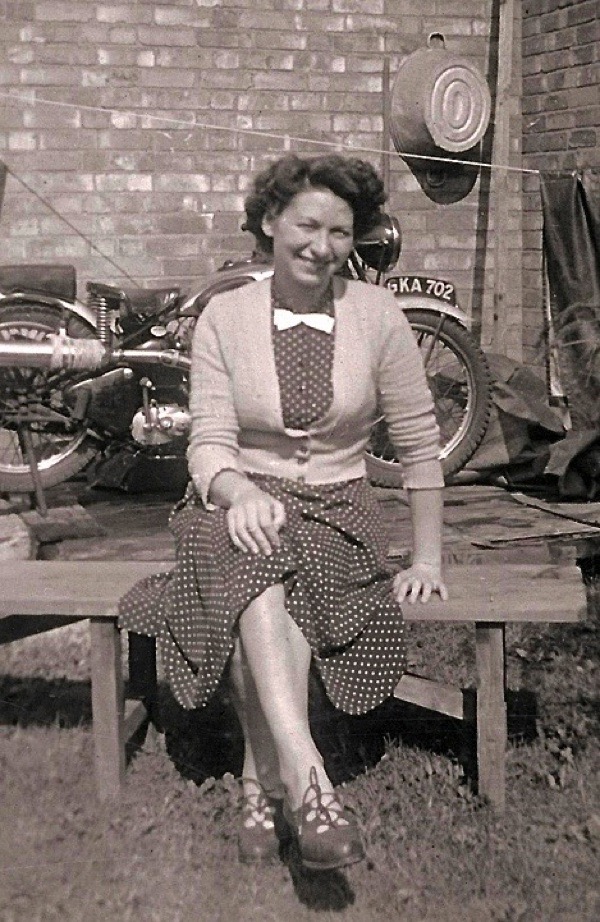
Doris, 1949
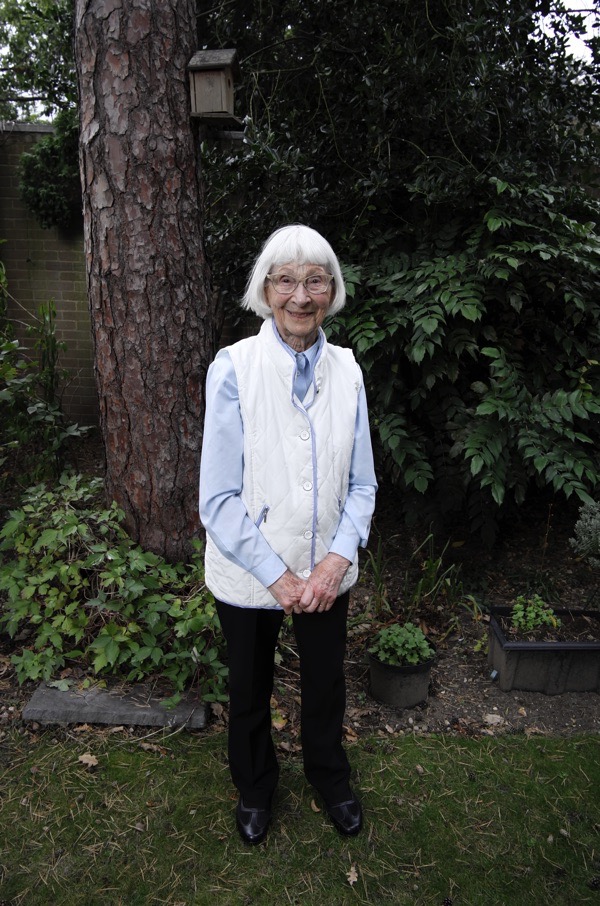
Doris Halsall, Chigwell 2016
You may also like to read about
Cockney Cats
Celebrating the eighth birthday of Spitalfields Life with a week of favourite posts from the past year
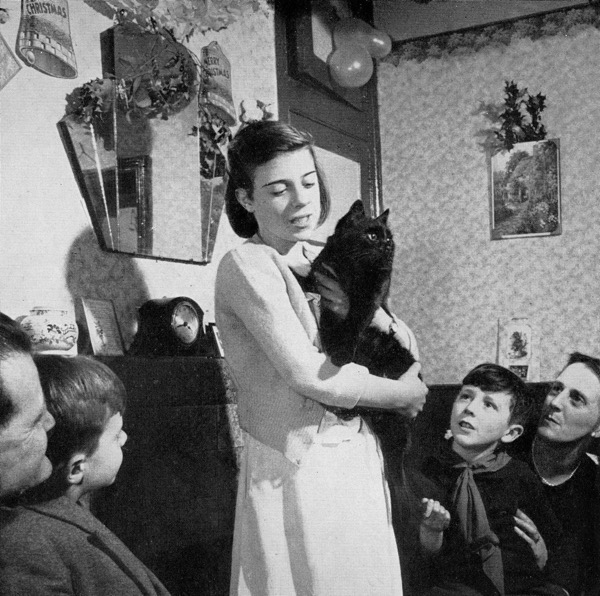
Micky is the centre of the Day family of Copley St in the parish of Stepney
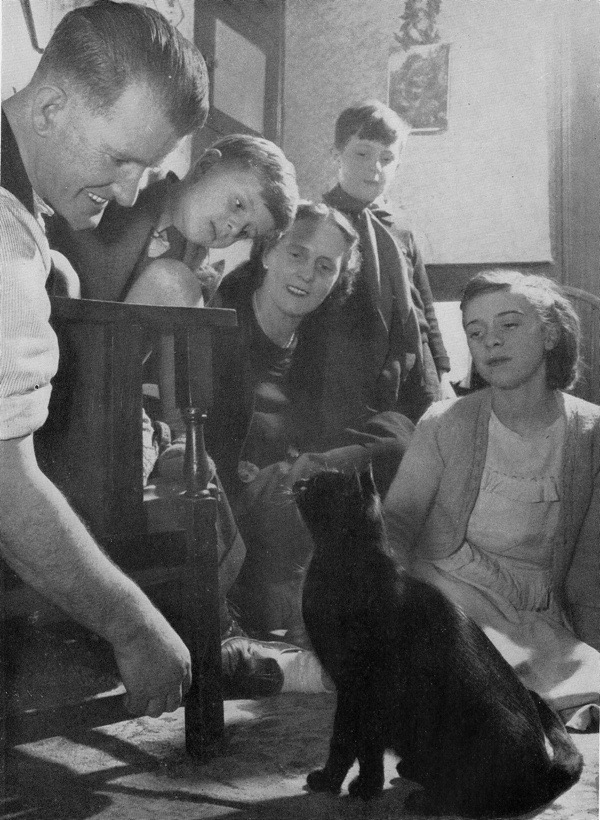
The whole family pamper him and have a wonderful time
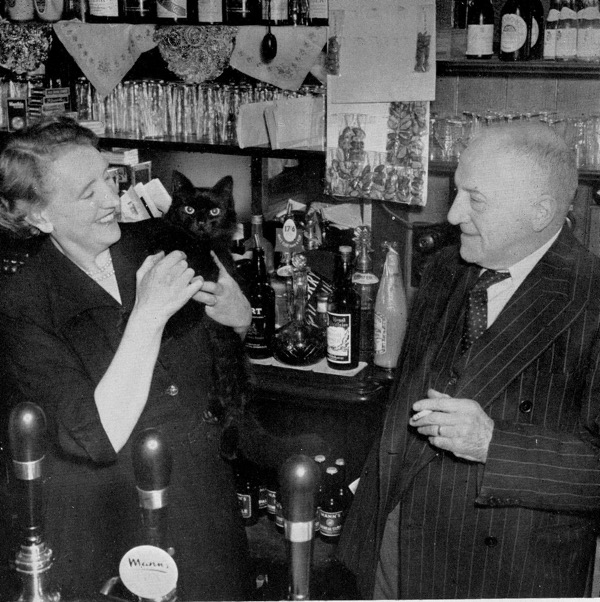
Bill on weekdays, William on Sundays, the cat at the Bricklayers Arms in Commercial Rd has a wonderful life since the Guv’nor Jim Meade was once a Dumb Animals’ Food Purveyor. At seventy-seven Jim looks back on a long and distinguished life in Stepney during his thirty-two years as Guv’nor.
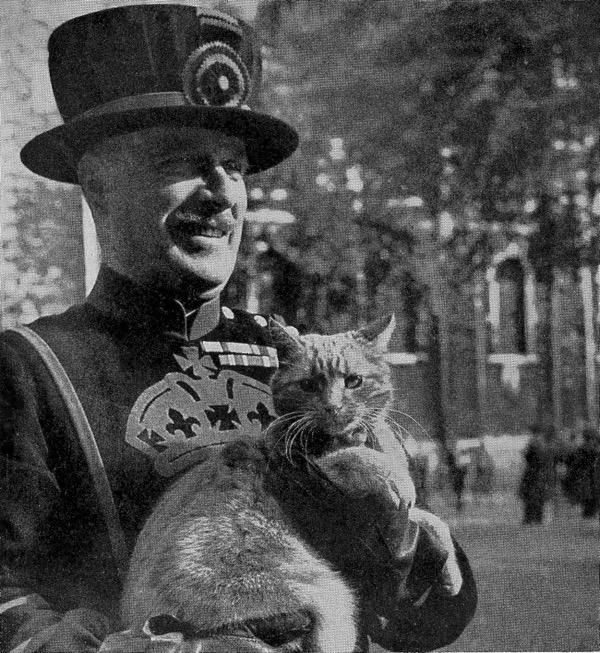
Yeoman Warder Clark & Pickles on Tower Green
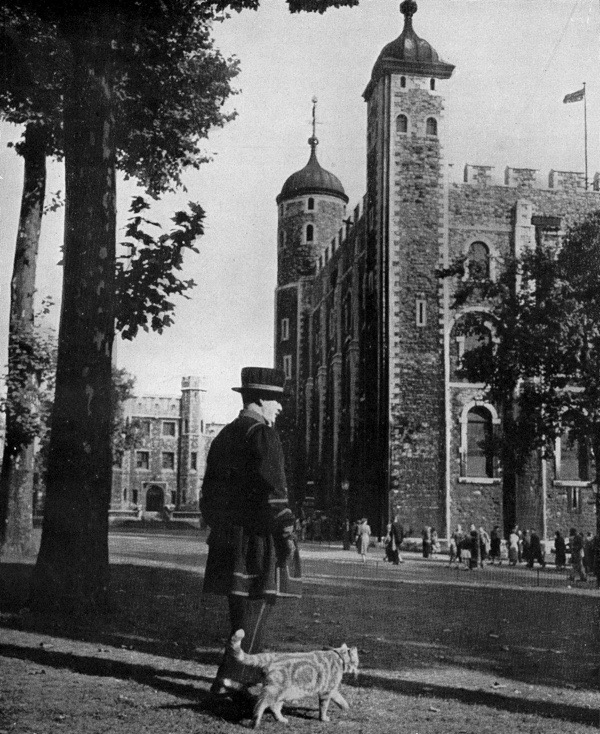
On duty at the Tower of London
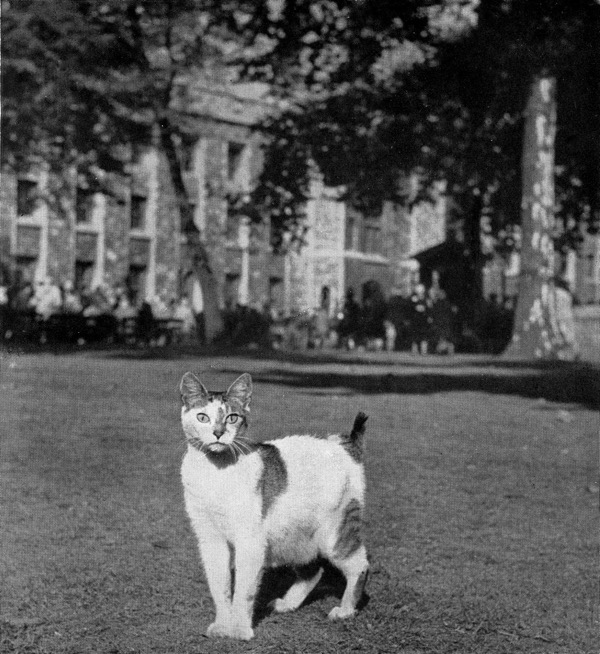
The tail-less cat of the guardroom who came out to watch Pickles being photographed
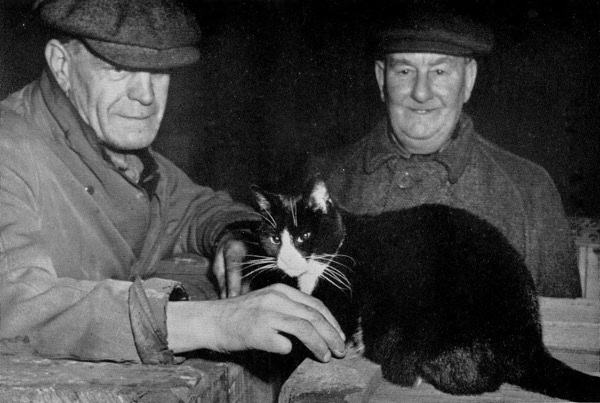
Min, Port of London Authority cat has many friends among the dockers and very good ratting at night
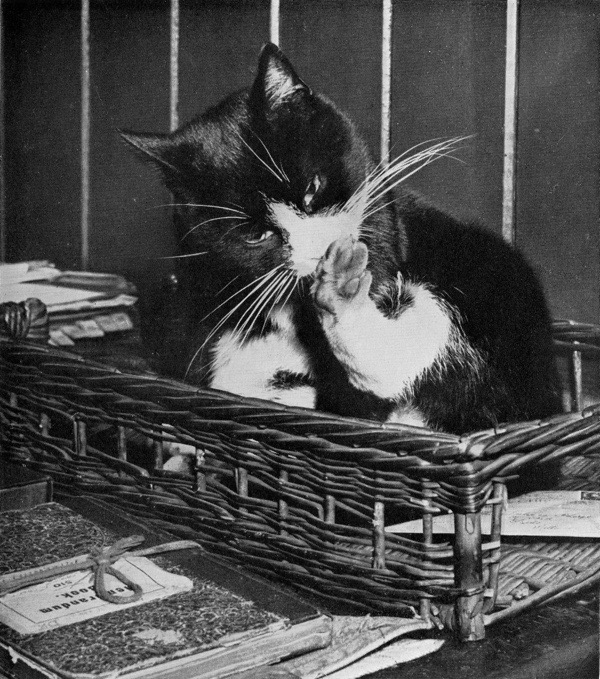
Min of the magnificent whiskers has made her home in the office of K Warehouse in the Milwall Docks
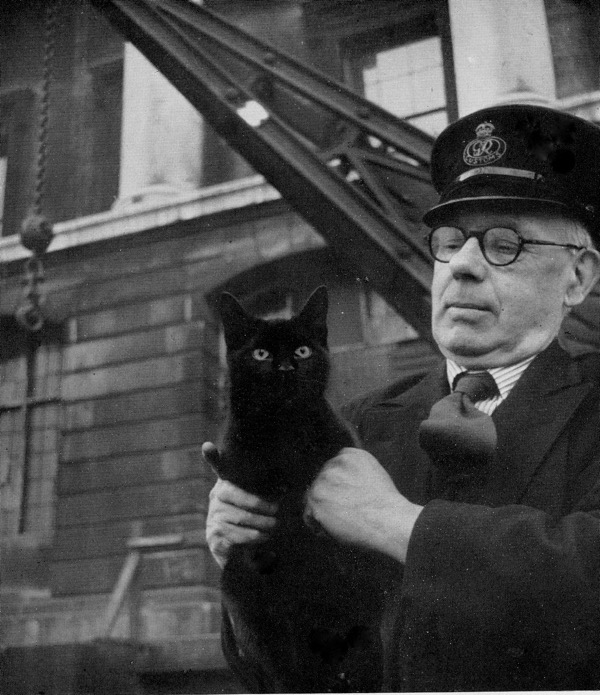
Customs & Excise cat guards the Queen’s Warehouse and is paid a Treasury Allowance of sixpence a day
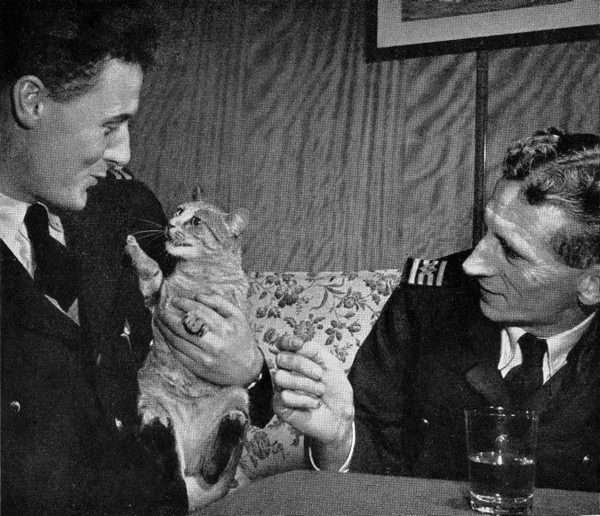
Mitzi has the run of her ship from the lifeboats to the Officers’ Mess
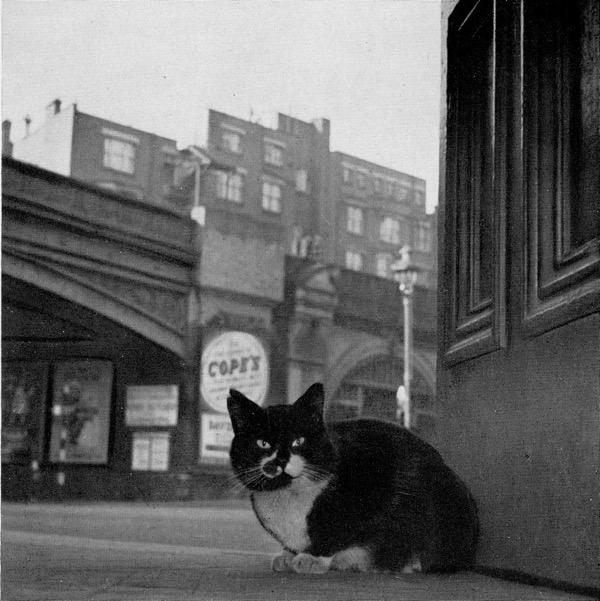
Old Bill the railway cat, his favourite position is the entrance to Blackfriars Station
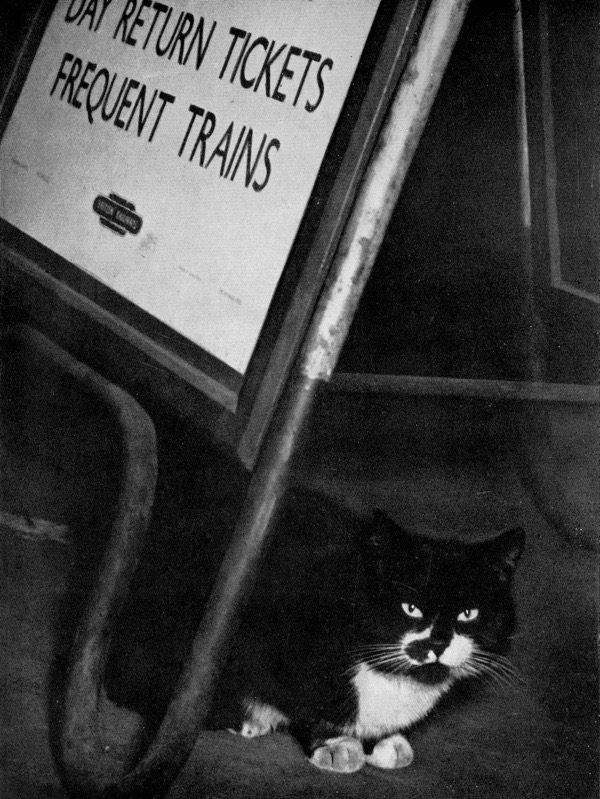
Old Bill takes cover when necessary in the rush hour
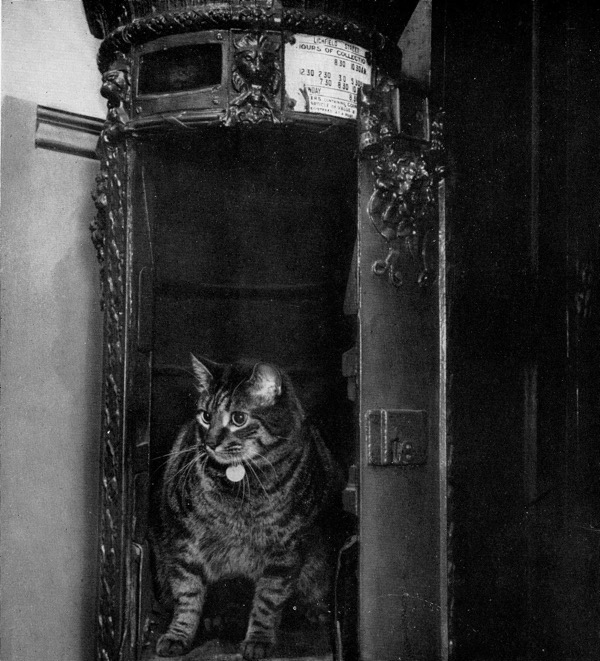
Tibs the Great (1950-64), the official Post Office cat at Headquarters, does not normally live in this 1856 pillarbox
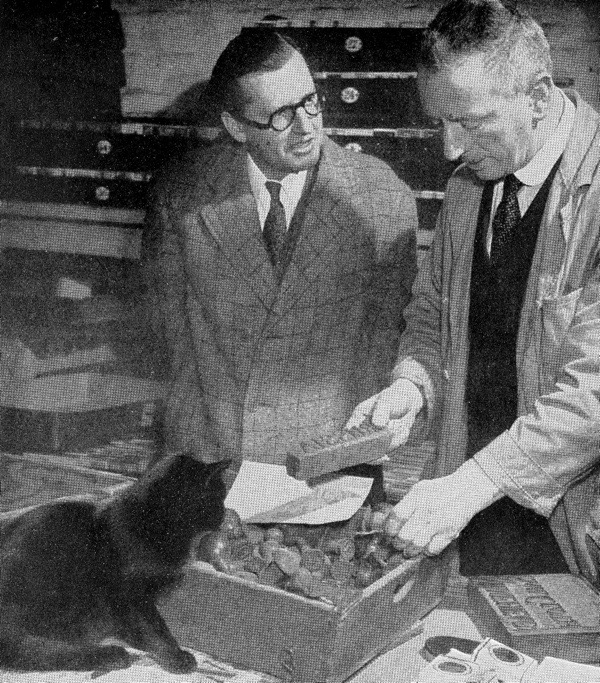
This cat’s curiosity unearthed a box of ancient stamps and seals, some dating back to Queen Anne
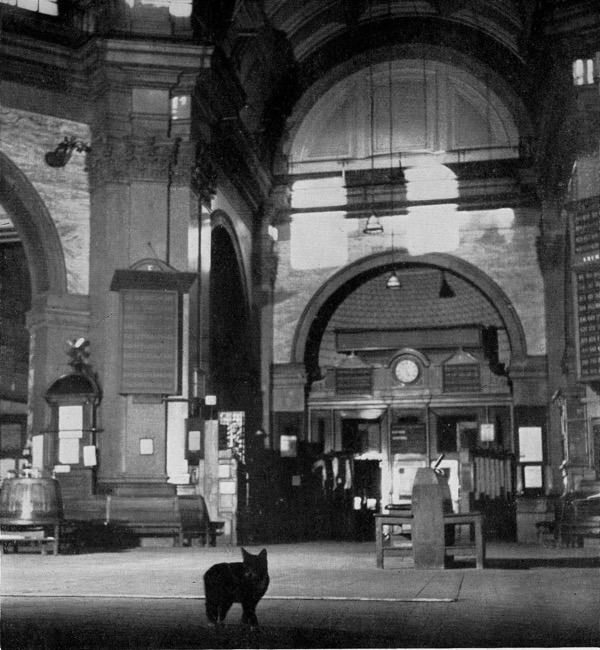
Minnie the Stock Exchange cat was a self-willed and determined kitten who adopted the dealing floor as her own preserve
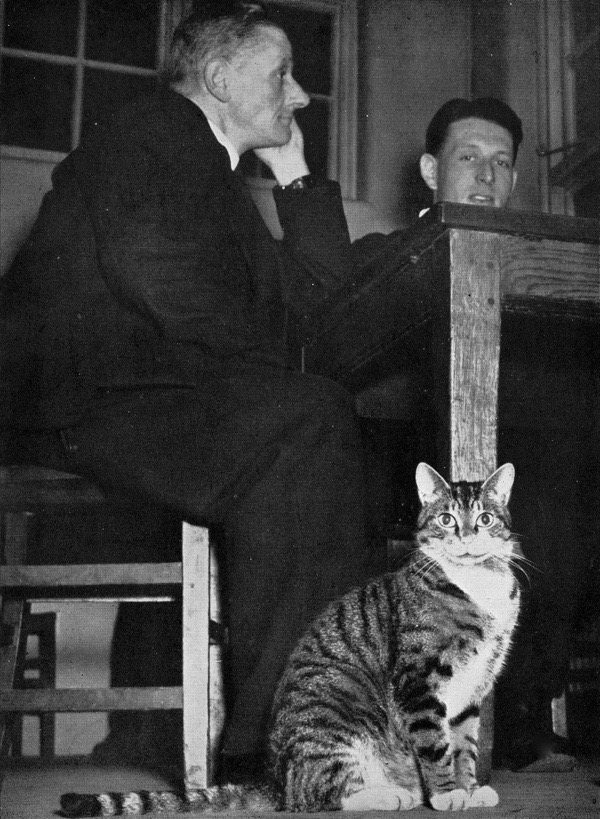
Minnie enjoys the banter in the tea room
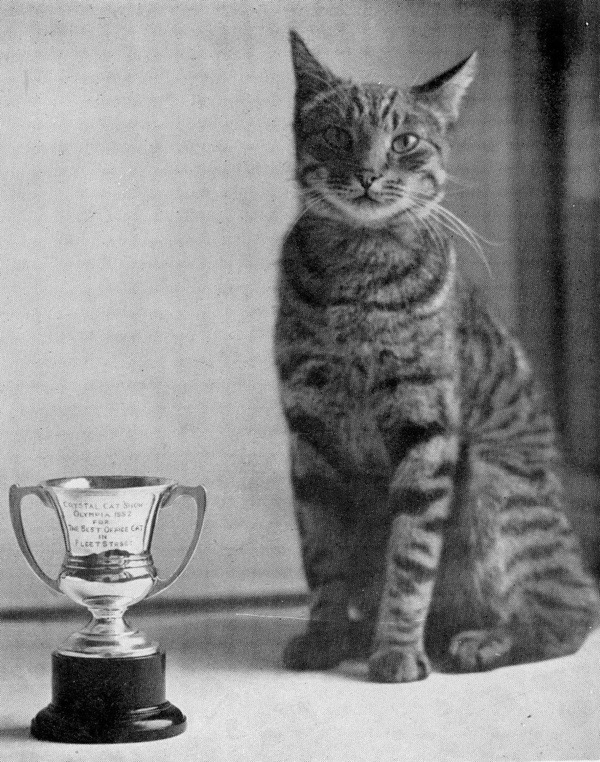
Tiger of The Times is the best office cat in Fleet St
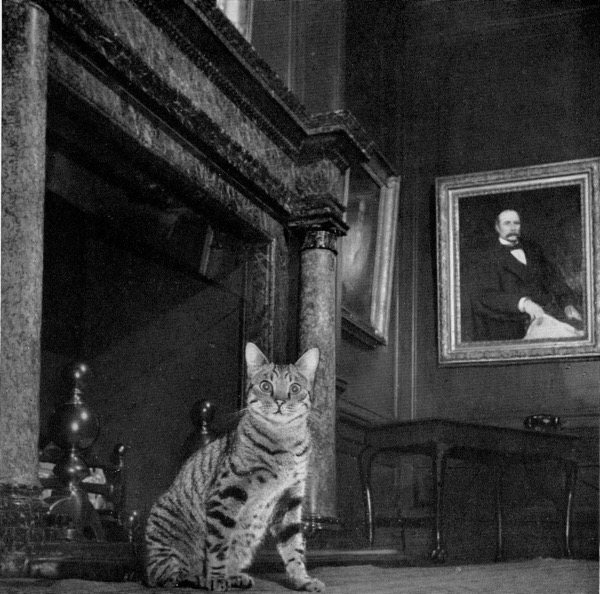
Tiger of The Times is equally at ease whether in the Board Room …
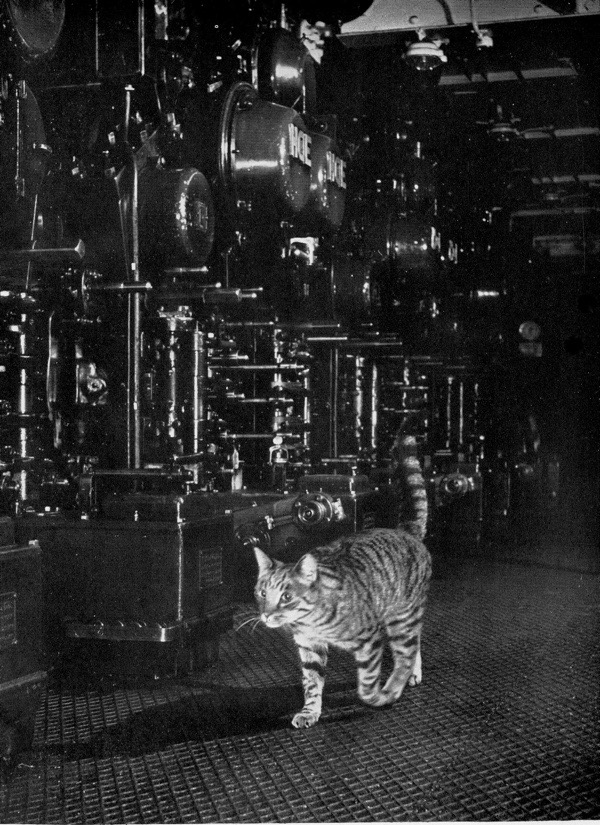
… or doing his rounds in the Print Room
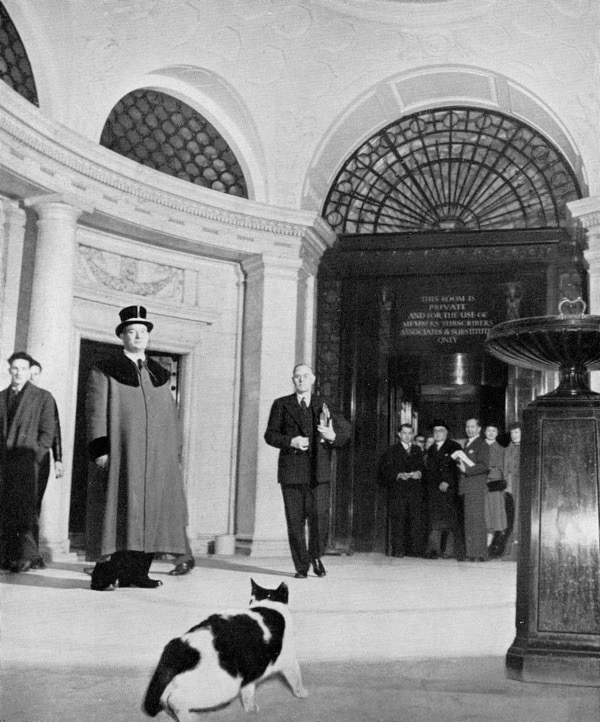
Sneaking back into Lloyds of London is difficult even for the resident cat
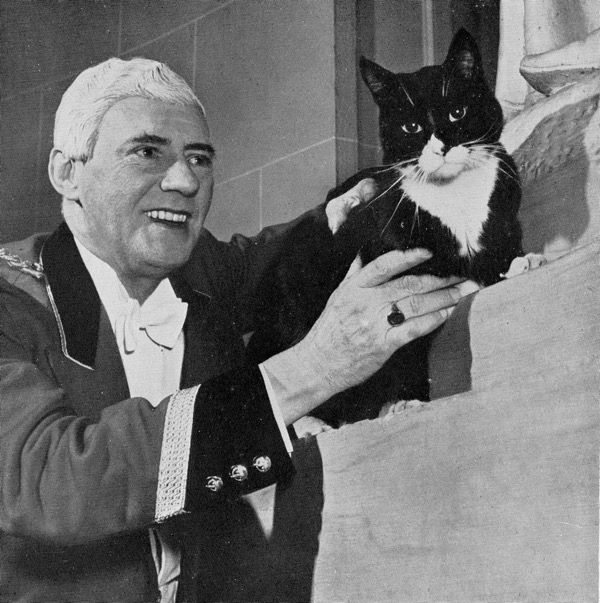
Cecil is the Front of House cat at the Theatre Royal Drury Lane
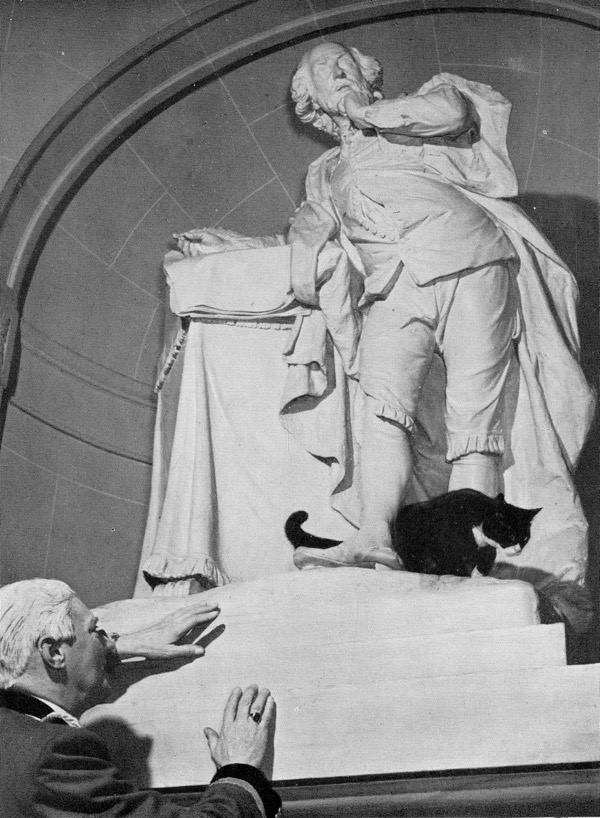
Cecil is very elusive in his many hiding places from which he has to be coaxed by the Royal Waiter before the performance can begin
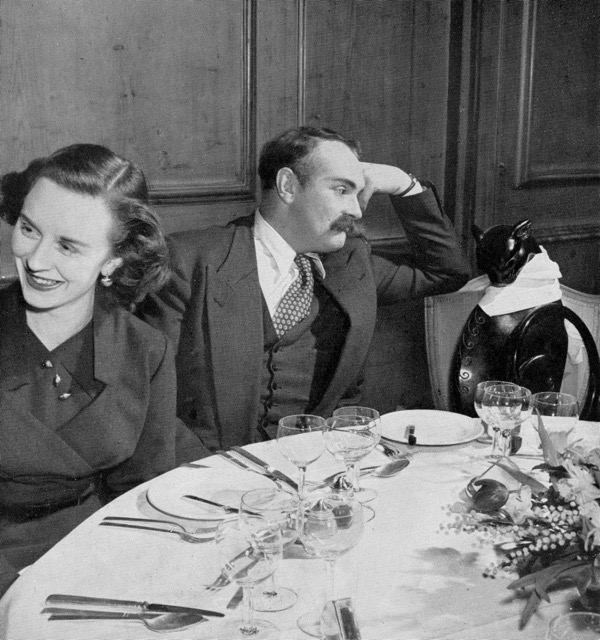
When thirteen people sit down to dine at the Savoy and the thirteenth guest is Jimmy Edwards, almost anything can happen. The famous black cat is invited to occupy the fourteenth place so that everyone can enjoy the sparkling conversation.

Bill at the Tower of London (1935-47)
Images courtesy Bishopsgate Institu
I mages from Cockney Cats by Warren Tute with photographs by Felix Fonteyn, 1953
You may also like to take a look at
Schroedinger, Shoreditch Church Cat
Doorkins Magnificat, Southwark Cathedral Cat
The Cats of Spitalfields (Part One)
The Cats of Spitalfields (Part Two)
Blackie, the Last Spitalfields Market Cat
The Departure Of Richard Lee
Celebrating the eighth birthday of Spitalfields Life with a week of favourite posts from the past year
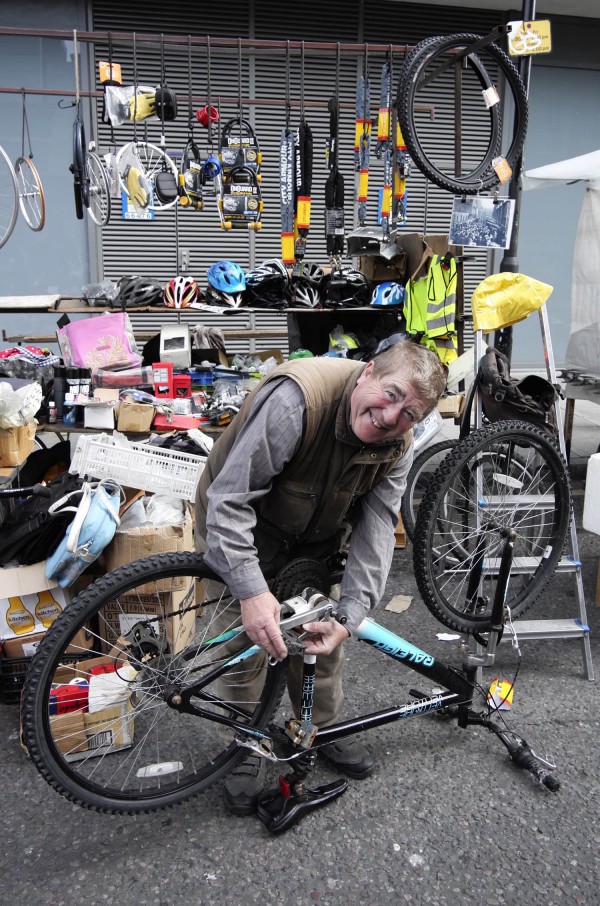
Richard Lee
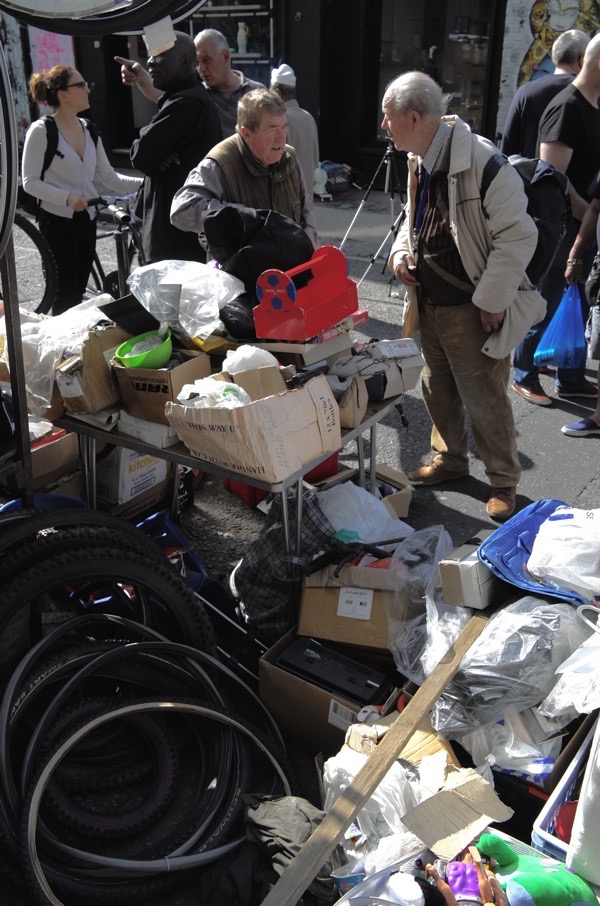
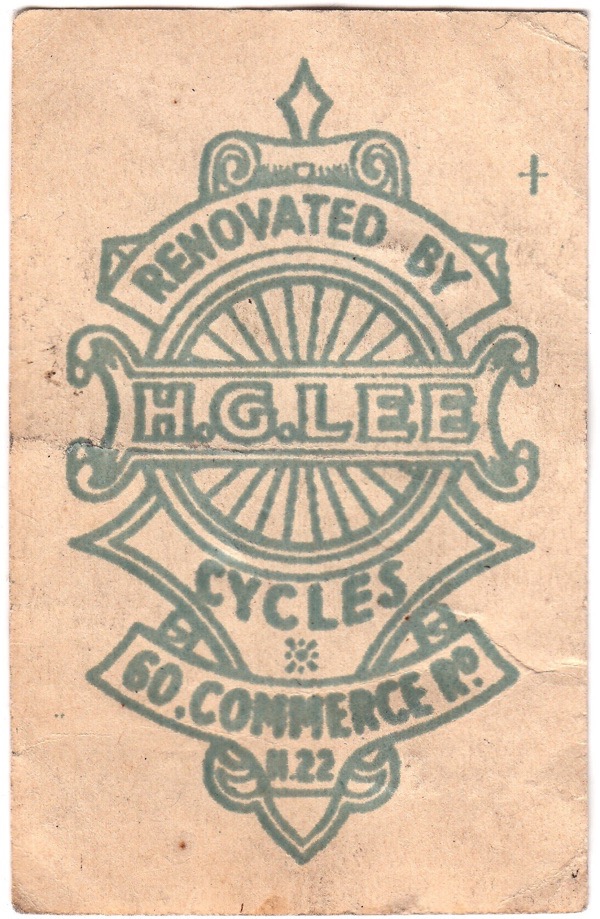
You need to be at Sclater St Market at dawn when the sunlight arrives horizontally from the east, and traders greet you and bid you good morning like one of their own. At six o’clock, I was awaiting the arrival of Richard Lee whose grandfather Henry William Lee started trading bicycles in this market in the eighteen-eighties, initiating a tradition continued through two world wars by his son Henry George Lee, and culminating in Richard Lee who has been here every Sunday for over sixty years. Yet now the time has come for Richard’s departure from Sclater St and I was there to record his final Sunday, after one hundred and thirty years of his family trading in bicycles and bicycle parts in the market.
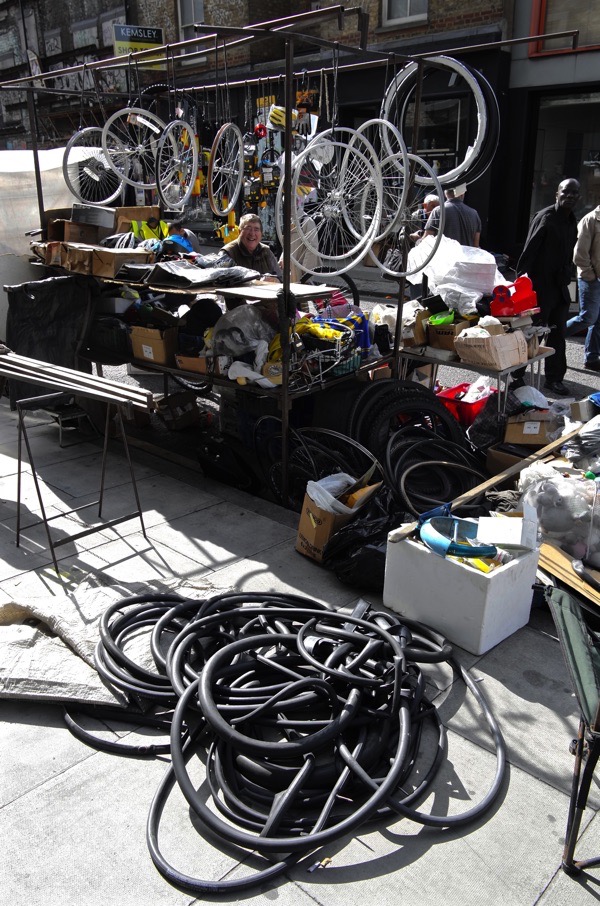
In this time, three generations of Lees have seen the street change beyond all recognition and Richard now parks his van at the foot of a tower block, built upon a former bomb site where nineteenth century terraces once stood. In fact, as he set to work with stoic good humour, unpacking his battered van and assembling the stall – in recognition of his responsibility as custodian of the history of the market – Richard passed me some black and white photographs, showing the heaving market crowds of yesteryear enfolded by rows of small shops and proud Victorian pubs. Most remarkably, Richard’s father and grandfather are visible to the left of one of the pictures beside a stall hung with tyres and inner tubes which looks just as it does today.
Richard has been down here each Sunday since he was five years old and began working in the stall at thirteen. Now over seventy and of robust stature, he can still assemble his stall by slotting metal poles together with limber ease, informing me with satisfaction that this particular incarnation was manufactured to his specification fifty years ago at the cost of fifty pounds. ‘We used to wheel a barrow from Islington and my father pushed a bicycle and carried another over his shoulder,’ he admitted, recalling the arduous labour of former times.
Once the stalls were in place yet before the stock was unpacked, Richard Green and Clive Brown, stallholders at the western end of the market, convened with Richard over a cup of tea made from water boiled on a primus stove and Richard broke the news that he had sold his house in Essex and cancelled the debit for his weekly market licence. Only if the exchange of contracts upon his house did not go ahead would he return for another week. ‘My kids have flown and I can’t afford to keep a four bedroom house,’ he confessed in sober realism, ‘You can’t live on a pension anymore.’ Richard’s solution is to return to the north of England – whence his grandfather came to London in the nineteenth century – and buy a small house, leaving him enough money to live out his days.
Yet, before this could happen, another day’s trading awaited. Richard’s assistant ‘Steady Eddie’ arrived to hang up the tyres and inner tubes that are the long-recognised symbol and sign of the Lees’ stall, thereby completing the four hour process of setting up. Through the passage of the day, Richard stood at the front while Eddie sat at the rear undertaking repairs and their dialogue consisted of ‘Eddie, got a left-handed pedal?’ and ‘Richard, got a new inner tube?’ Recycled inner tubes repaired by Richard were priced at only one-pound-fifty compared to five pounds for a new one, yet customers could not resist offering just a pound. And when Richard fitted that left-handed pedal, the customer offered him five pounds, refused the ten pound charge asked for both the replacement pedal and the service. ‘I’ll take it off again!’ threatened Richard rolling his eyes, ‘I can’t do it for £5,’ – before he let it go for five pounds. ‘You see why I’m leaving,’ he confided to me in a whisper, catching my eye in weary resignation. ‘I like it when they offer you more than you ask,’ he added with a grin, summoning his humour again, ‘that doesn’t happen very often.’
‘When I was a kid down the waste, there’d be a rag and bone man who left stuff behind and, when he’d gone, I used to sell it,’ Richard continued, warming at the tender reminiscence. He cast his eyes to the left of his stall where he had spread out boxes of his grown-up children’s unwanted toys, cleared out in anticipation of his house sale, yet drawing a lot of interest in the market. ‘It’s a lot of old junk,’ he confessed apologetically, ‘it’s all stuff I’d throw away, but there’s more money in it than the proper stuff.’
The weather was kind for Richard’s last day of trading and a spell of unbroken sunshine brought out large crowds onto Brick Lane and into Sclater St but, by three o’clock as he started to pack up, dark clouds were gathering over Spitalfields. I asked Eddie what he would do without Richard. ‘I’m not a lazy man, I’m going to volunteer at a charity shop,’ he explained, ‘It’s Monday to Friday and there’s no lifting. I came to this country in 1978 but after thirty-five years working for British Rail, my back is gone.’
Old friends and regular customers came to pay their respects to Richard as the descending sun reached the western end of Sclater St. All appeared as usual, everyone packing up as they do each week at that time, yet Richard was packing up for ever. Unknown to all but a few that afternoon, something remarkable was passing into history.
Robert Green helped Richard carry his boxes to the van and told me he would wait until he was ready to go. Leaving them to their task, I paid my respects to Richard, shook hands and handed him the bottle of champagne I had secreted in my bag. But as I turned to go, he called me back. Richard brought out a spanner which had belonged to his grandfather, was used by his father and served Richard too. In use in this place all this time. After more than a century, it had become bent into a subtle curve that fitted the hand. Richard held up his cherished talisman to show me, glowing with pride and delight.
To my mind, the meaning of Sclater St as a place will always be bound up with the human qualities of Richard Lee and his fellow market stalwarts. Whatever architectural changes arrive in this contested site, I shall never be able to walk through Sclater St without thinking of Richard and the hardworking endeavours of his colleagues and their forebears, week after week, in all weathers and through centuries.
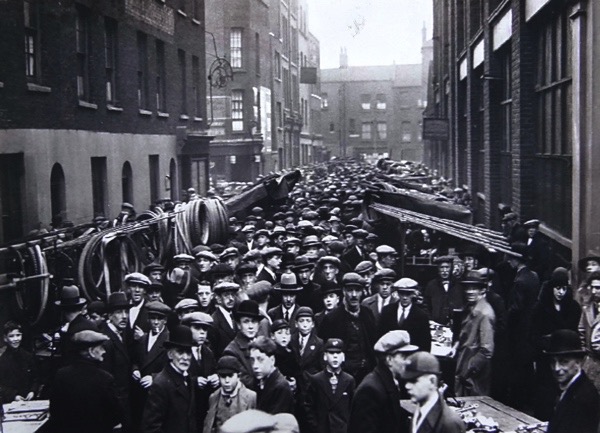
Henry George Lee (as a boy) is to be seen on the extreme left of this photo and his father Henry William (with hat and moustache) is the fifth from the left in this picture taken in the twenties
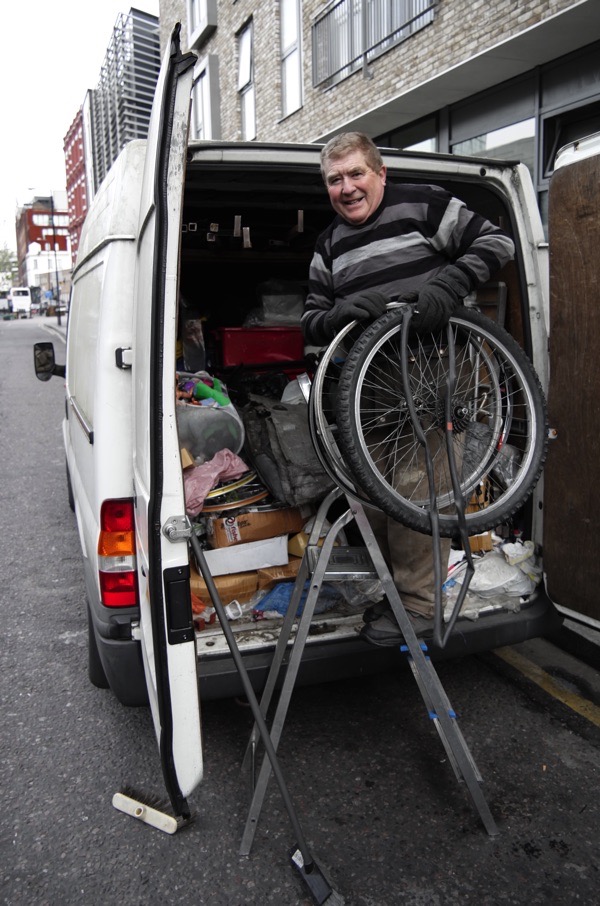
Unpacking the van at 6am
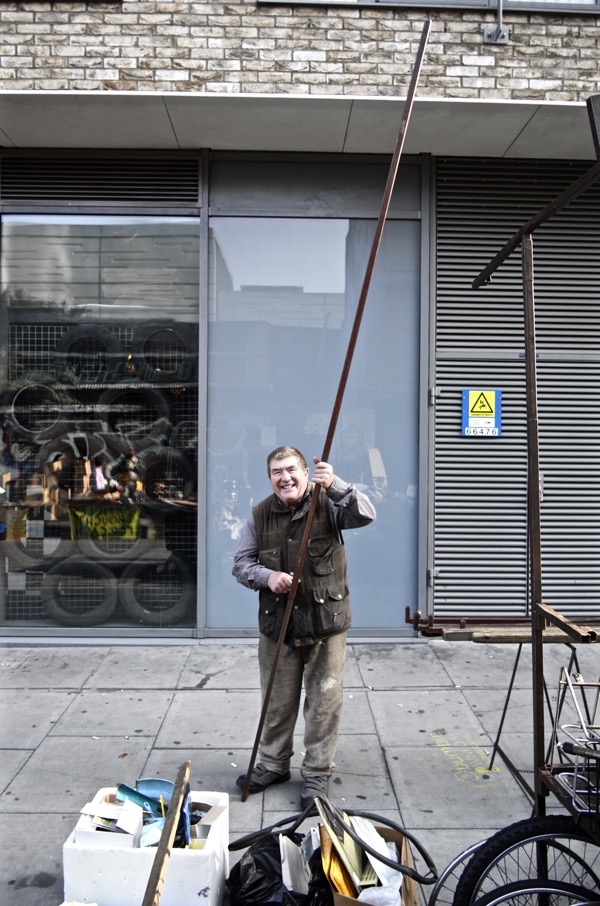
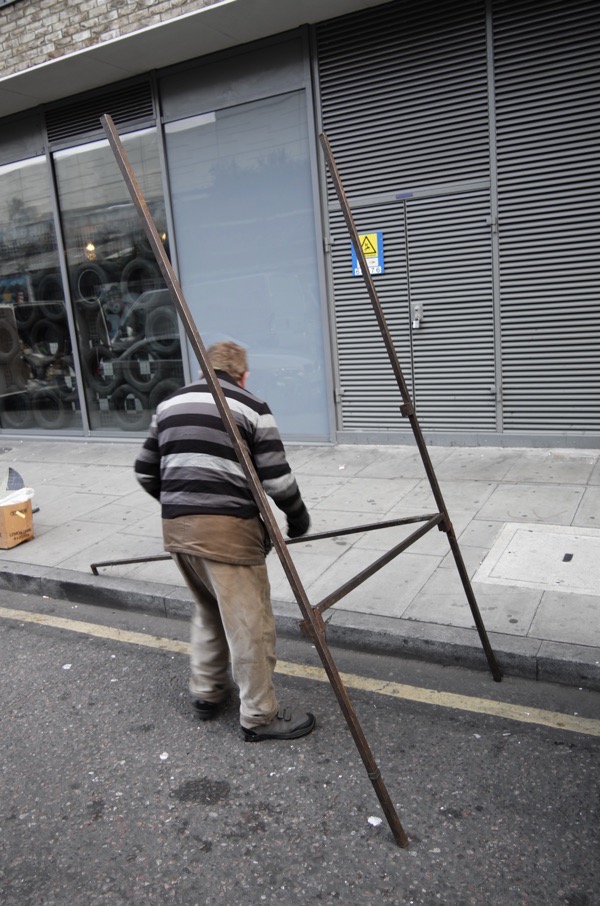
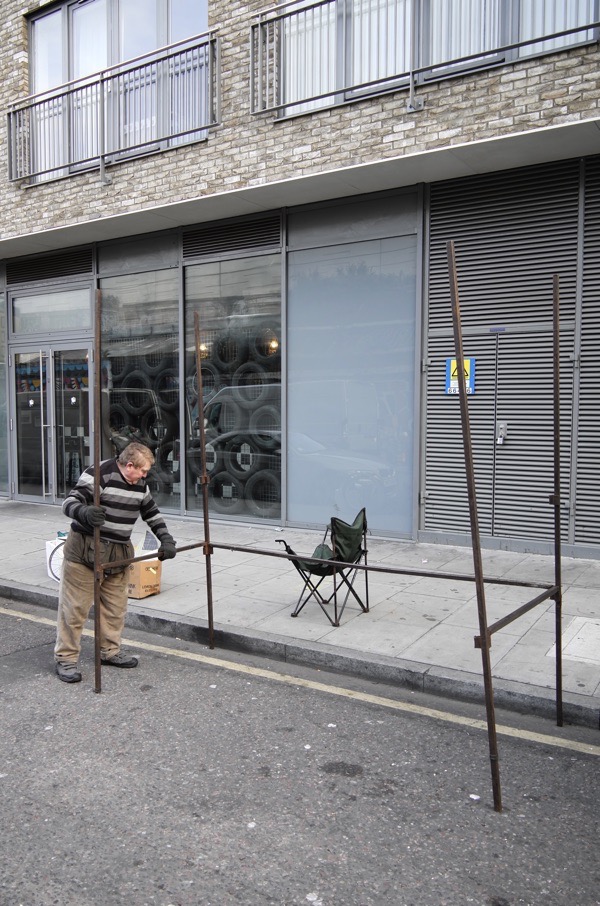
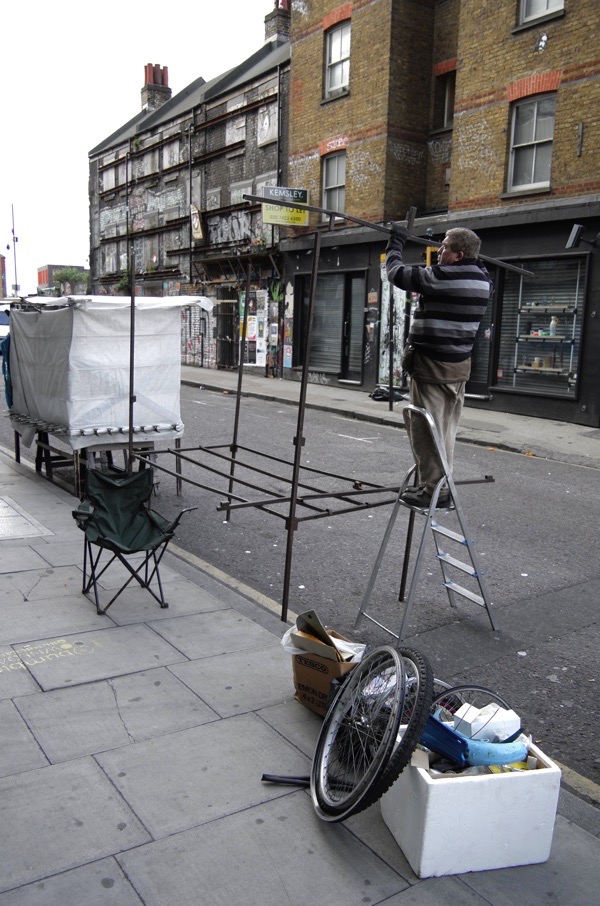
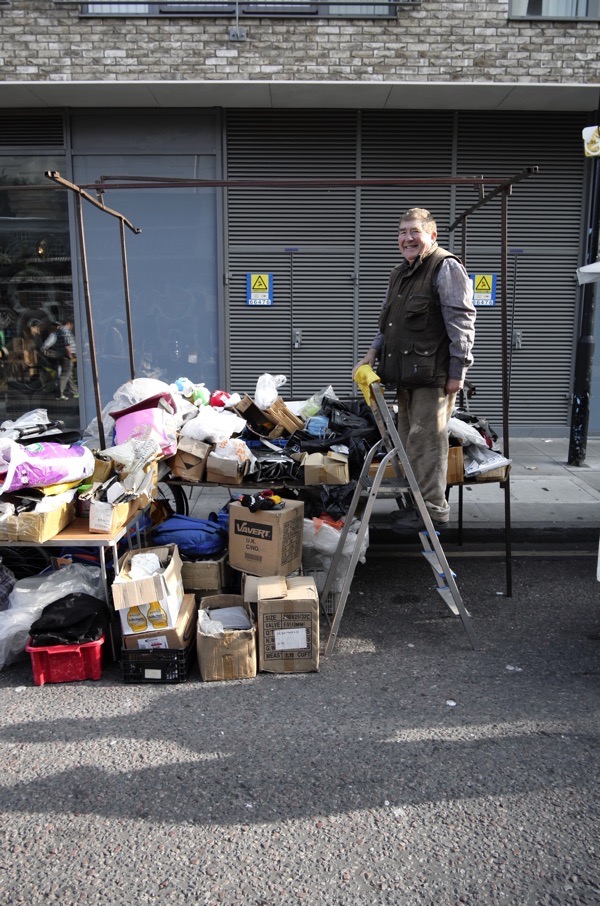
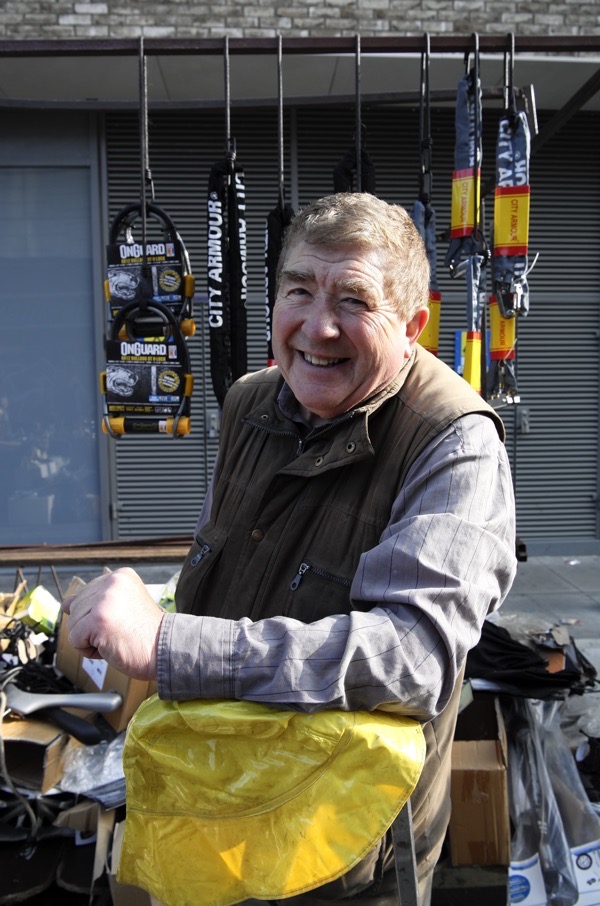
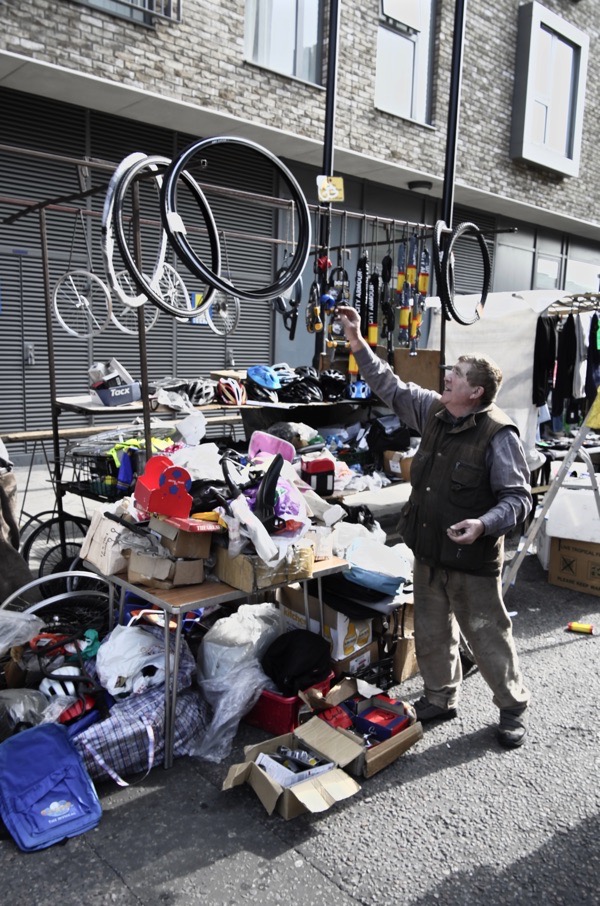
Tossing a tyre
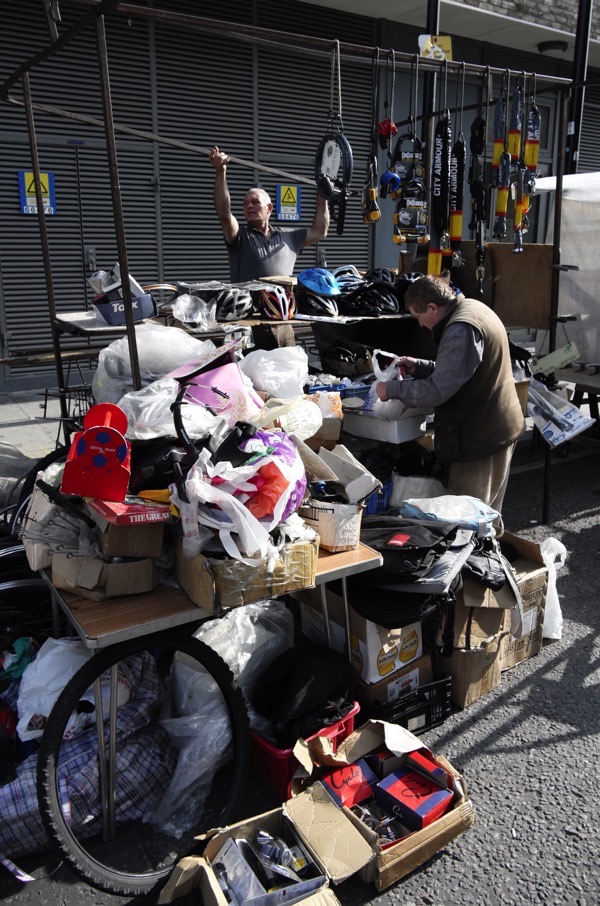
‘Steady Eddie’ arrives to lend a helping hand
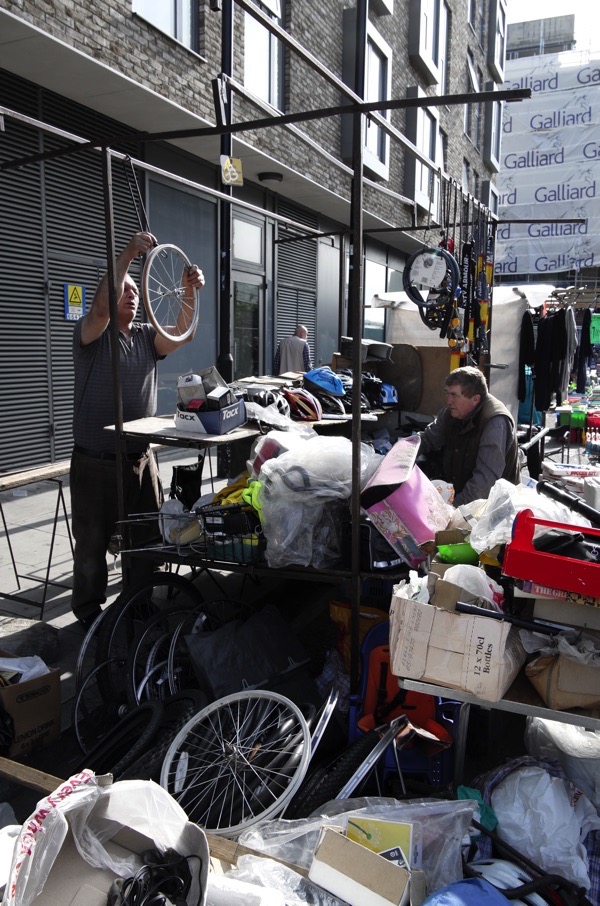
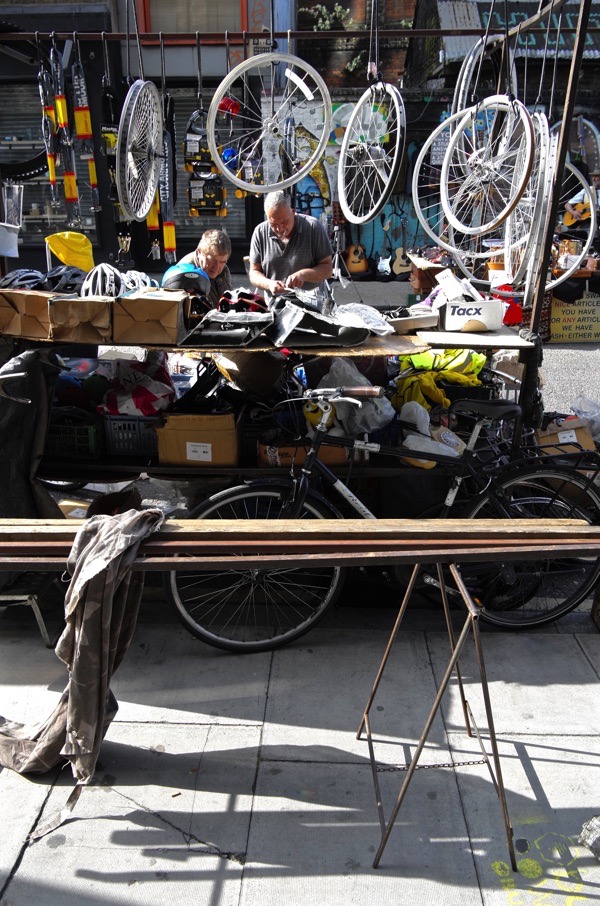
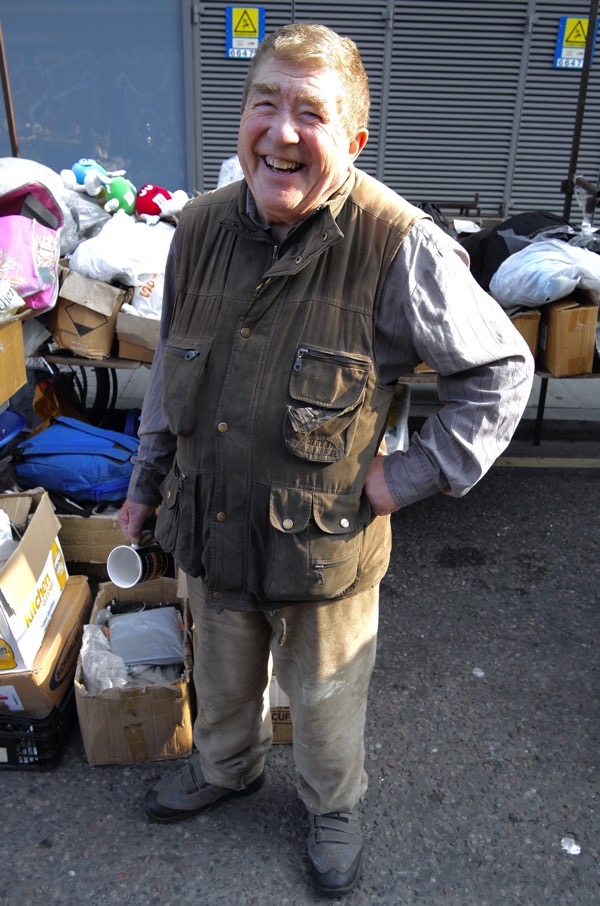
“I first came down here when I was five and I was thirteen when I started working on the stall.”
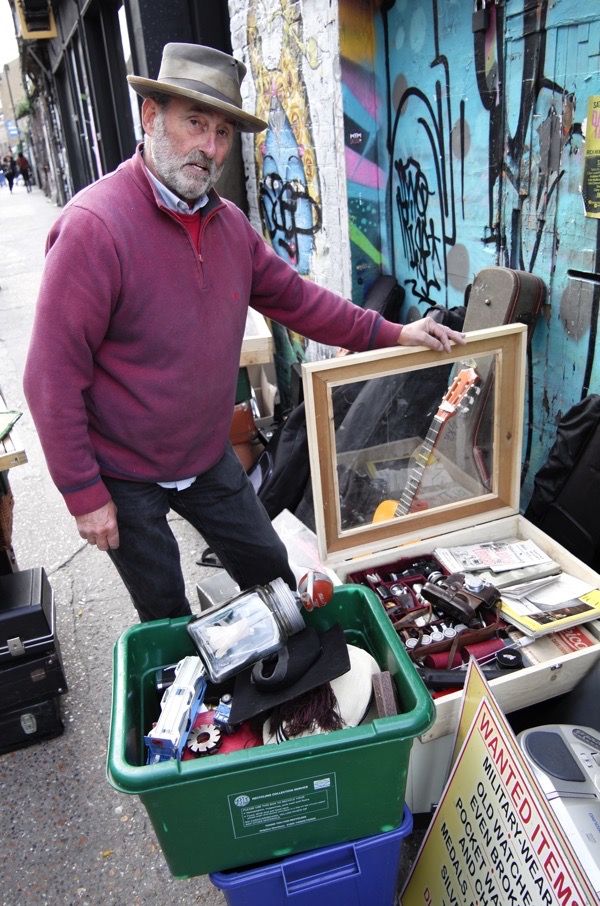
Clive Brown, stallholder opposite Richard Lee, shows off a case of vintage Leica cameras
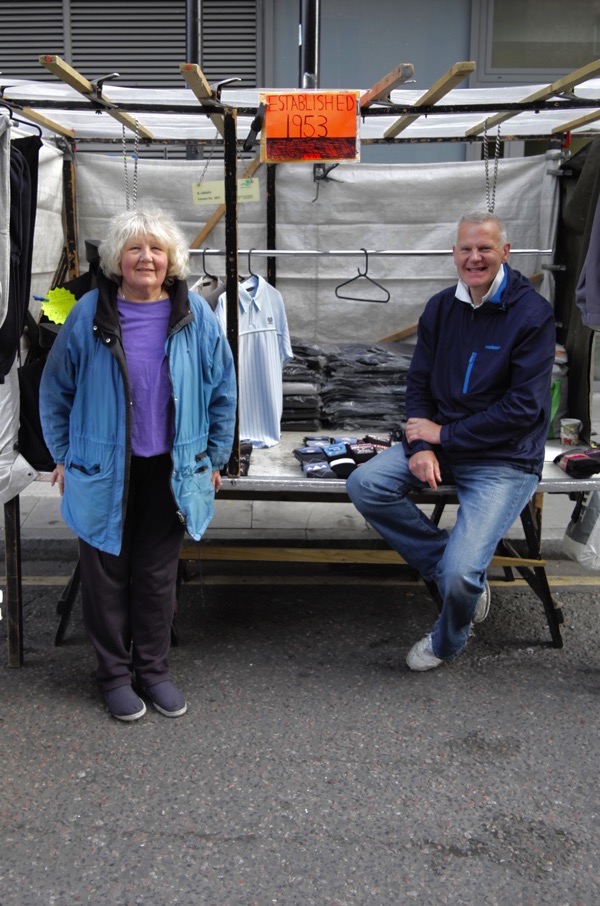
Patricia & Robert Green, stallholders next to Richard Lee
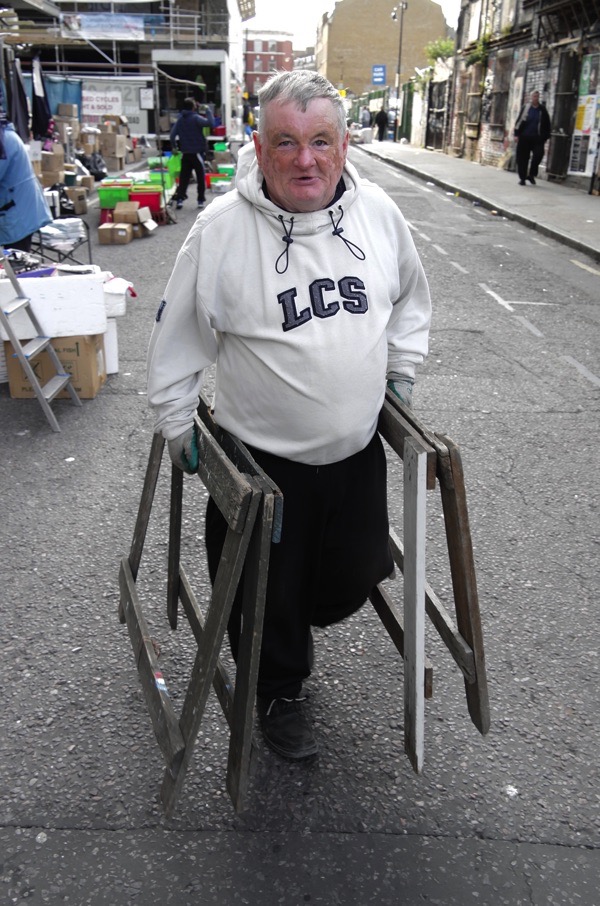
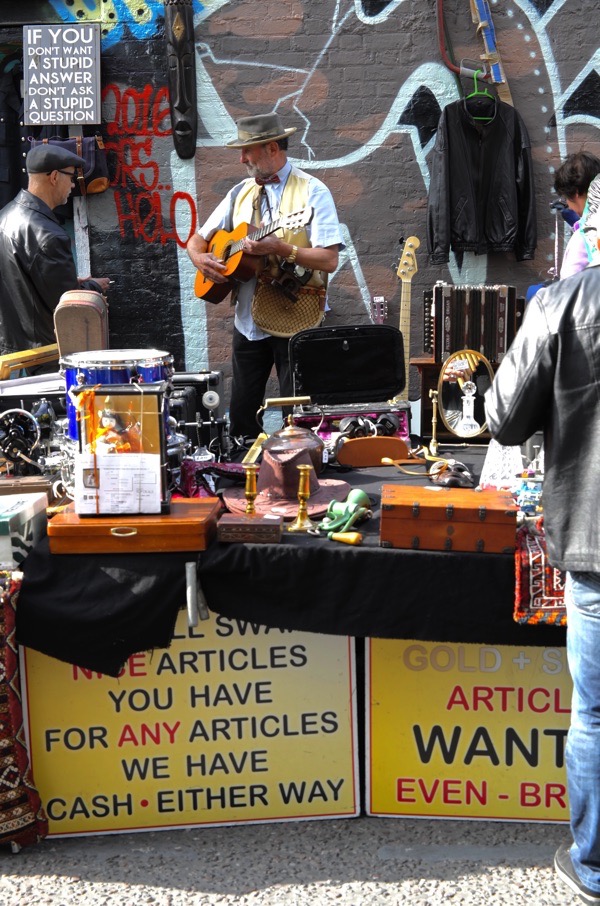
Clive serenades the market, mid-afternoon
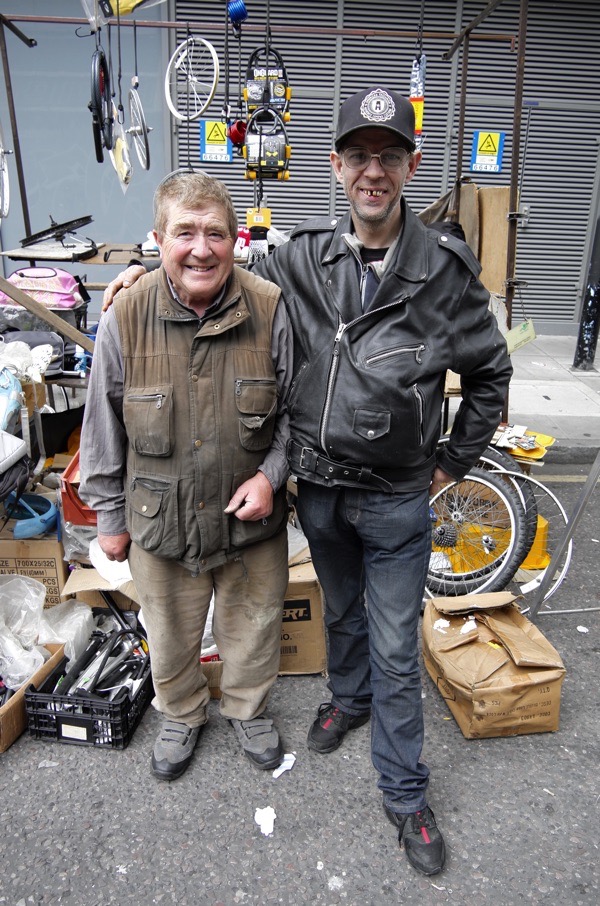
Richard with Gary Aspey, wheel truer
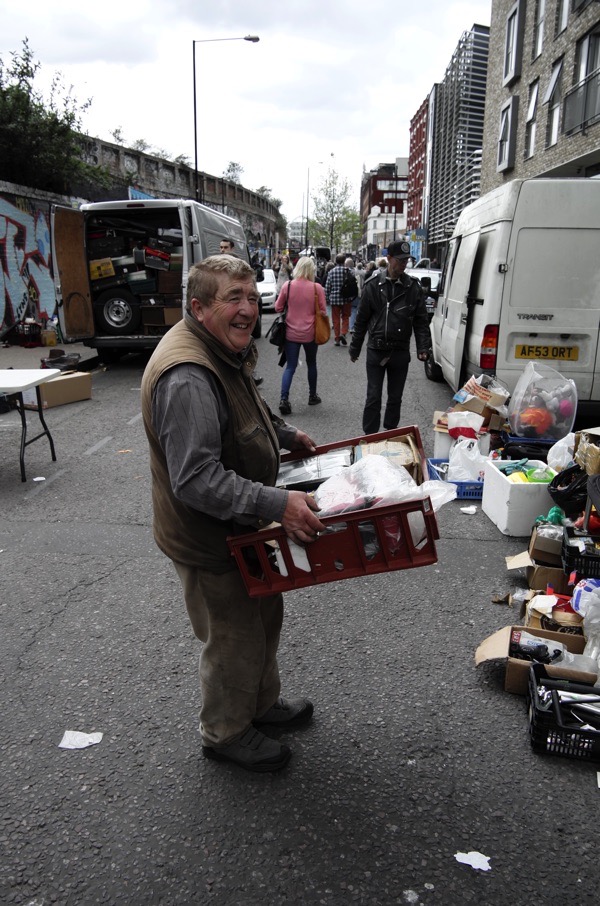
Packing up at 5pm
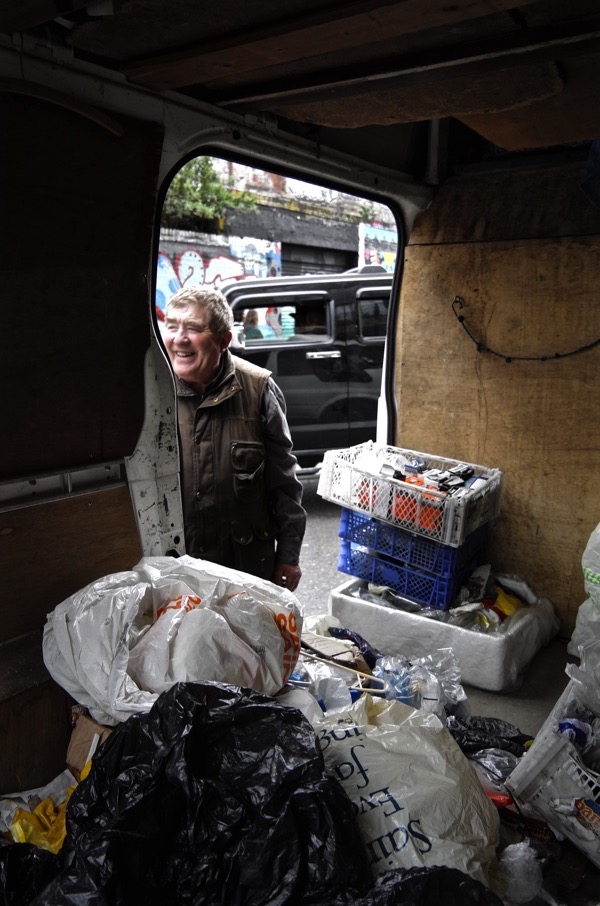
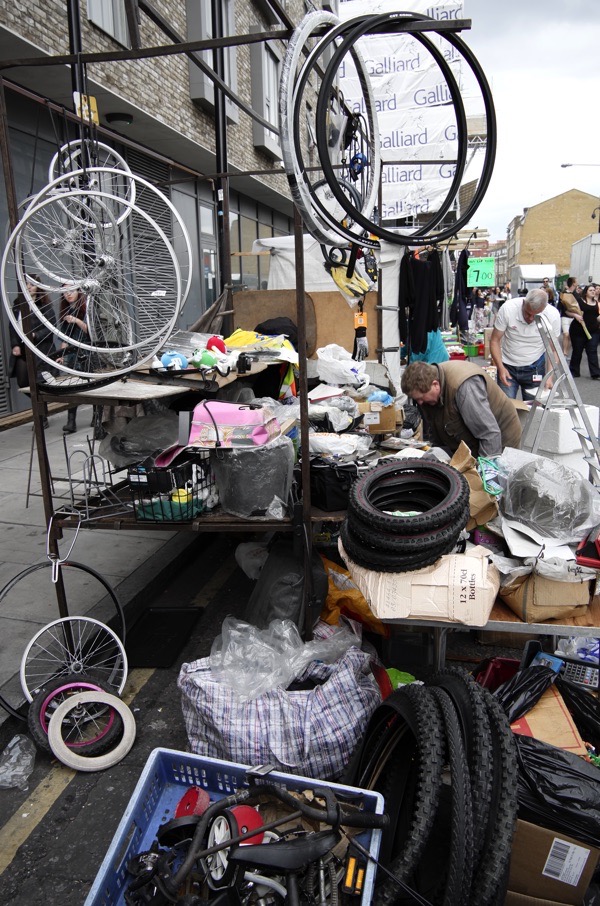
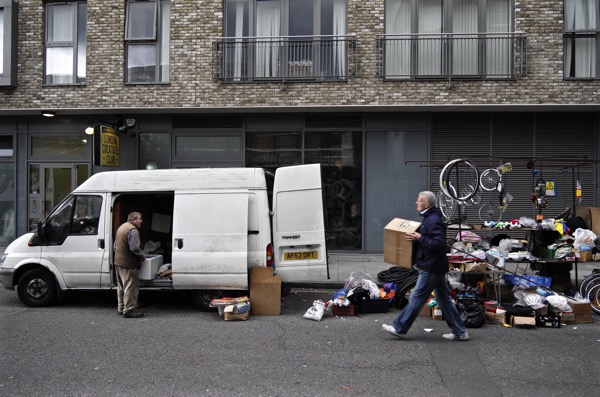
Packing the van at 6pm
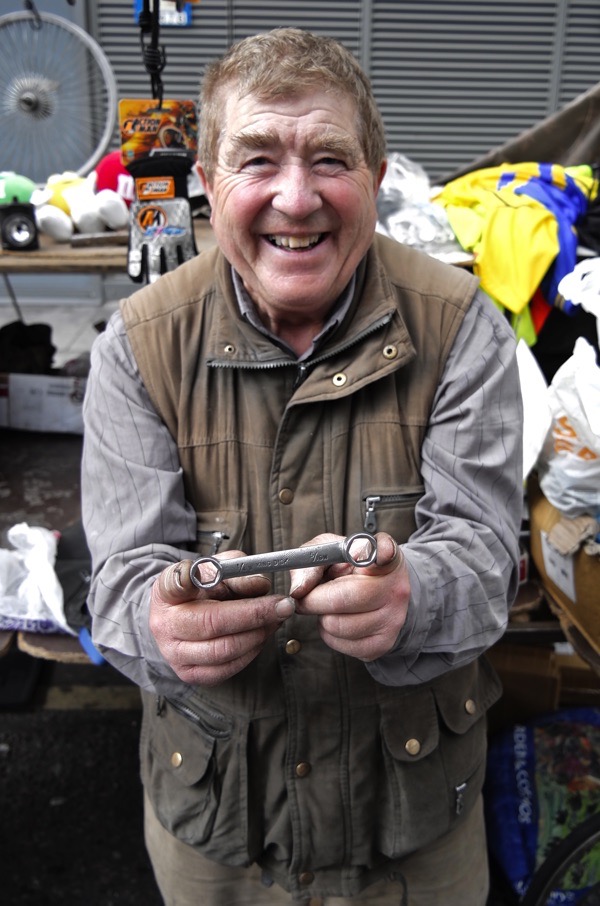
Richard shows off his grandfather’s spanner ‘King Dick’- in use in this market by three generations over more than a century
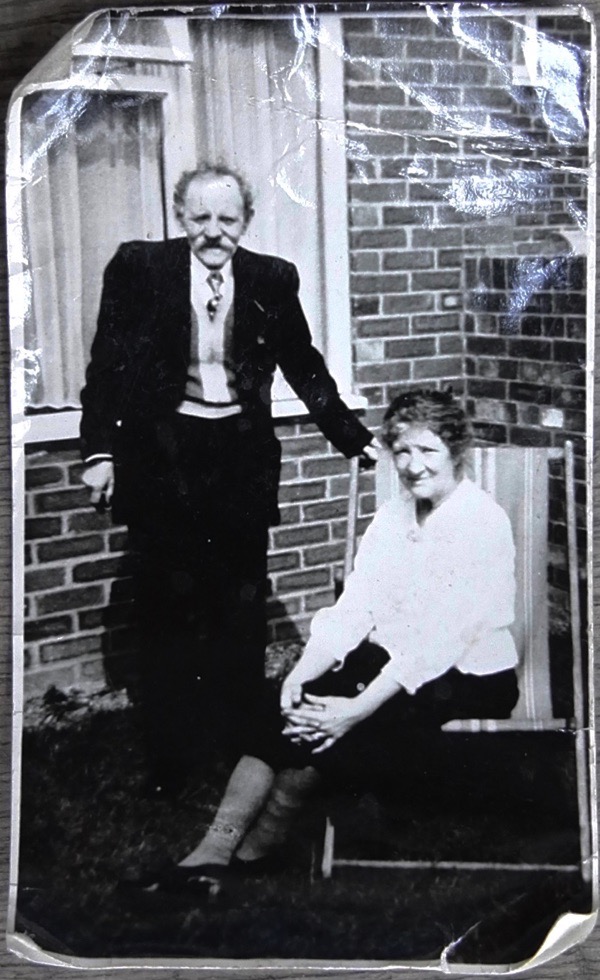
Henry Wiliam Lee started trading in the market in the eighteen-eighties
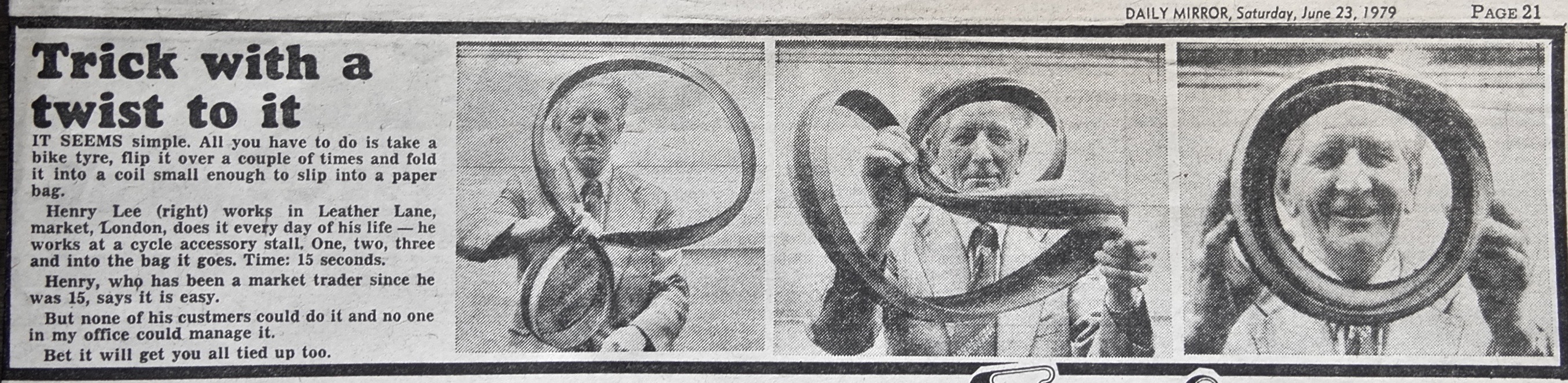
Henry George Lee shows the proper way to fold a bicycle tyre in the Daily Mirror, 1979 (Click image to enlarge)
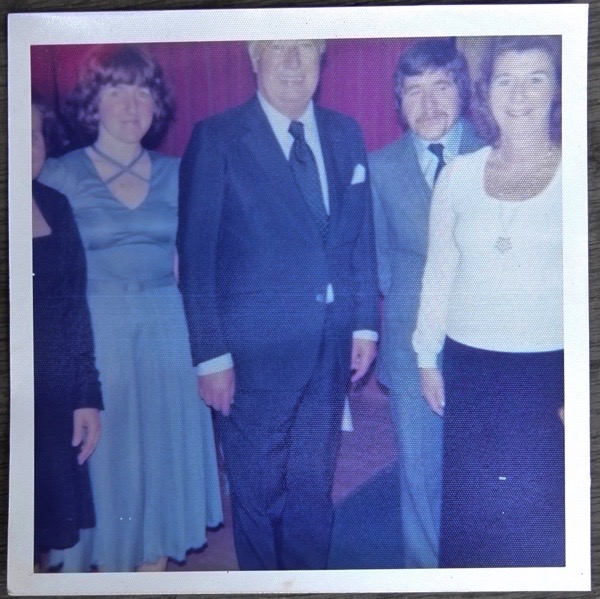
Richard Lee meets Edward Heath in the seventies
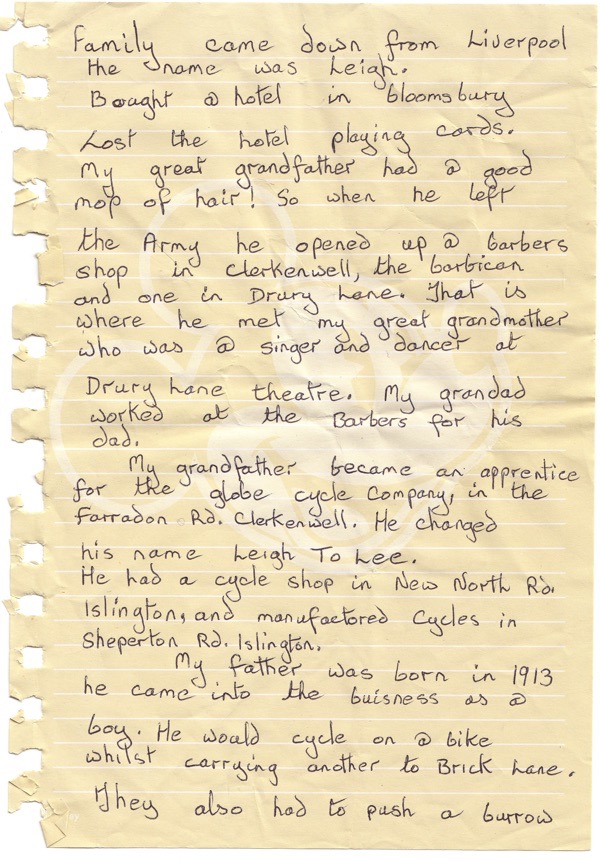
Richard Lee’s account of his family history
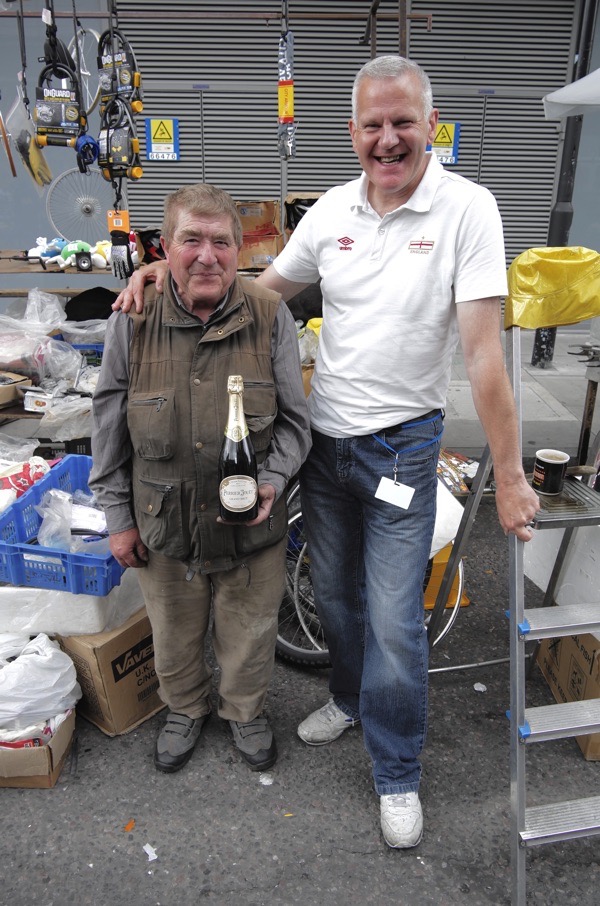
Richard Lee with Robert Green, old friend and long-term holder of the next pitch in Sclater St, celebrating the culmination of 130 years of the Lee family trading in the market
You might also like to read about
Lilo Blum, Equestrian
Celebrating the eighth birthday of Spitalfields Life witha week of favourite posts from the past year
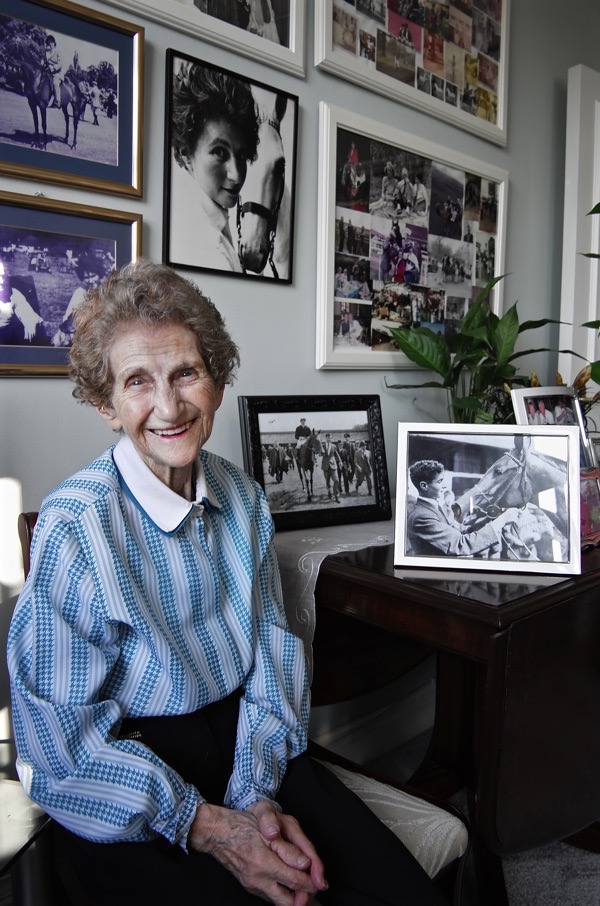
‘The first time I rode in Hyde Park was in 1937…’
Born in Germany in 1927, Lilo and her family came to London as refugees escaping the Nazis in 1937 when she was just ten years old, but within a couple of years she had set up her own livery stable next to Hyde Park. Lilo Blum’s Riding Stables flourished for forty-five years as a popular London institution, occupying Lilo’s entire working life and proving an irresistible magnet for any celebrity, jetsetter or socialite who enjoyed a canter in the Park.
My meeting with Lilo Blum came about when her nephew Edward recognised a photograph of his aunt’s stables in Grosvenor Park Crescent in 1952 by Israel Bidermanas published on Spitalfields Life recently and wrote to me. Naturally, I jumped at the opportunity to interview Lilo at her swish flat in Park Lane with a magnificent view over Hyde Park and hear her triumphant story in her own words.
“I was four or five when I learnt to ride. My brother was three years older than me and I remember he rode in a pony race, and I cried because I wanted to ride as well. So they got me a quiet pony and I rode round the course, quite a few miles behind the others, but at least it kept me quiet. Working with horses runs in our family and my father was a well-known veterinarian. He could tell at one glance if a horse was lame, because in those days they didn’t have x-rays and you had to be able to just say what was wrong.
I started my riding stables in 1943 when I was sixteen years old. I collected threepenny bits in an old whisky bottle and then I went with my father to the big sales at Newmarket where they sold racehorses. We bought one for fifty-five guineas and I called him ‘Pick-up.’ After I had bought him, I thought ‘What am I going to do with him?’ because he was baby racehorse and unbroken, so I couldn’t use him in a riding school. But I was lucky because I had some friends who worked at Knightsbridge barracks and they agreed to keep him in their stable for me.
The sergeant offered to ask his commanding officer if I would be allowed to take my horse riding from the barracks and, luckily for me, they allowed it during the war. The sergeant broke in my horse, and got him nice and quiet and civilised, so people could eventually ride him and I knew he wouldn’t throw anybody off. Then I sold ‘Pick-up’ to the Huntley & Palmers people and he raced for them and won some races, which was good for me. I can’t remember how much I got but it was enough to buy some ponies and that was how I started my riding stable.
The first time I rode in Hyde Park was in 1937. Before the war, you could see a thousand horses riding down Rotten Row. You had to dress up properly for riding then and the ladies they rode side-saddle – I tried it once, I didn’t like it. There were hundreds and hundreds of stables in the mews around Hyde Park then. I remember when all the mews were horses. It’ll never come back again. After the war, people didn’t dress up for riding any more. Society changed.
I had around twenty horses in my stable and lived for forty-two years in Knightsbridge in Old Barrack Yard, next to The Grenadier. I’ve spent many hours in their with some of our people and I’ve seen a few landlords come and go. If I had a penny for every time people asked me ‘Where’s The Grenadier?’ without question I’d be a millionaire. Most of my friends I met through horses.
I love horses but there were some anxious moments. It was always a gamble because you’d buy a horse in the country yet if it was no good in the traffic you might just as well get rid of it. My father taught me a lot and I had a great friend, an Irish racehorse trainer who was very good at picking out horses.
My favourite horse, we called it ‘Decision’ because we saw it at a sale and my father wasn’t quite sure about it but then the owner asked, ‘What’s your decision?’ He was very popular and he made me a lot of money. He lived to be old and he worked really hard and we thought ‘Well, he’s done well for us,’ so we turned him out in a field but he didn’t like it. He was so used to working and being in the traffic that he died soon after.
With horses, it’s seven days a week, twelve hours a day starting at 5:30am. Often, I would have just locked up and put all the horses away when a whole lot of people would come down, but I would never refuse them. I would unlock the door again, get the horses out and show them all around Hyde Park. It’s nice when people appreciate what you do for them.
Once I started my stable in Grosvenor Crescent Mews, I had loads and loads of famous people coming to ride. Zsa Zsa Gabor kept her horse with us for a little while, but she liked to go one better so she took him down to the Duke of Marlborough in Wiltshire where she galloped all across his lawn and he wasn’t too happy. So she brought her horse back again and rode him out in Hyde Park. Then she decided to go abroad and asked me to sell her horse, and he became the symbol of Lloyds Bank and starred in ‘Black Beauty’ with Vivien Leigh and ‘Knights of the Round Table’ with Robert Taylor and Ava Gardner. A very famous horse.
I remember one day we had our ponies out and the Household Cavalry were training and making an awful lot of noise, so I called Andrew Parker-Bowles, who was officer in charge, and said, ‘You’re upsetting my ponies!’ To be fair he was very nice about it, and he was always very nice to me after that. In fact, one of my horses had an injury and he took it into the barracks to have it treated, so it didn’t do any harm to tell him off.
Topol lived in the house on the corner and we had Jean Simmons & Stewart Grainger at the top of the mews with their daughter Tracy who used to come and mess about with the ponies. Paul Newman came, Raquel Welch was another regular, and Stirling Moss – he lived in our mews, I knew him when he was a kid.
Luciano Pavarotti was a heavy man and he used to sit at the front of the horse, so I said to him, ‘Hey mister, you give my horse a sore back! Sit further back in the saddle.’ Mohammad Ali rode one of our horses in the Park too, but after I shook hands with him I felt mine was going to drop off! Jacqueline Kennedy’s sister’s husband, the Polish Prince Radziwiłł kept his horses with us and that’s how I got to know the Kennedys. I taught the little children, Caroline & John Kennedy to ride but I always had to have a police escort when I took them out.
Sometimes we got these pushy mums. I’ll never forget one lady, she said to me, ‘When are you going to teach my little girl to trot?’ and I said, ‘Give her a bit of a chance, she’s only two years old.’ I told the little kid, ‘Your mummy wants me to teach you to trot,’ and she did it once it, but she couldn’t get the rhythm so she said, ‘Enough now!’ I’ll never forget that but, in time, she turned out good.
I ran my stables until 1988 and it was a great success. Eventually the Duke of Westminster built the Lanesborough Hotel at Hyde Park Corner and he didn’t want any more horses in the mews. It was very disappointing after forty-five years, but life goes on. Everything has changed so much hasn’t it?
It has been an interesting life I must say. You’ve got to make the best of it. I keep telling my friends, ‘It’s a rehearsal not the real thing,’ but they don’t take any notice. I made money and blew money like everybody else. I was lucky I always worked for myself which is a great thing. I’ve done alright. I can’t complain! If I see a horse I like out in the park from my window, I still think ‘That one’s nice, that would have done me nicely.'”

Lilo Blum’s Riding Stables, Grosvenor Park Crescent W1 – as photographed by Israel Bidermanas in 1952. Lilo’s dog Peggy sleeps in the foreground.

The Grenadier, Old Barrack Yard, Lilo Blum’s local for half a century
Archive photographs courtesy © Bishopsgate Institute
You may also like to read about












