
Cruikshank’s London Almanack, 1835

Click here to book tickets for my tour through spring and summer
In 1835, George Cruikshank drew these illustrations of the notable seasons and festivals of the year in London for The Comic Almanack published by Charles Tilt of Fleet St. Produced from 1835 – 53, distinguished literary contributors included William Makepeace Thackeray and Henry Mayhew, but I especially enjoy George Cruikshank’s drawings for their detailed observation of the teeming street life of the capital. (Click on any of these images to enlarge)

JANUARY – Everybody freezes

FEBRUARY – Valentine’s Day

MARCH – March winds

APRIL – April showers

MAY – Sweeps on May Day

JUNE – At the Royal Academy

JULY – At Vauxhall Gardens

AUGUST – Oyster day

SEPTEMBER – Bartholomew Fair

OCTOBER – Return to Town

NOVEMBER – Penny for the Guy

DECEMBER – Christmas
You may also enjoy
George Cruikshank’s Comic Alphabet
Roland Collins’ East End
Click here to book tickets for my tour through spring and summer
READ OUR ASTONISHINGLY GOOD REVIEWS
It is my pleasure to show this selection of Roland Collins‘ evocative photographs of the East End and the City. For a spell in the sixties, while he was working as a Commercial Artist for the Scientific Publicity Agency in Fleet St, Roland Collins had access to a darkroom which enabled him to develop his own photography, and he produced striking photoessays exploring aspects of London life.

Fairground on the Hackney Marshes.


Salvation Army prayer meeting in the Lea Bridge Rd.

In Petticoat Lane.

In the East India Dock Rd.

Porters at Billingsgate.

Spirits are high as a porter is hoist onto his own shellfish barrow by his sixteen stone son.
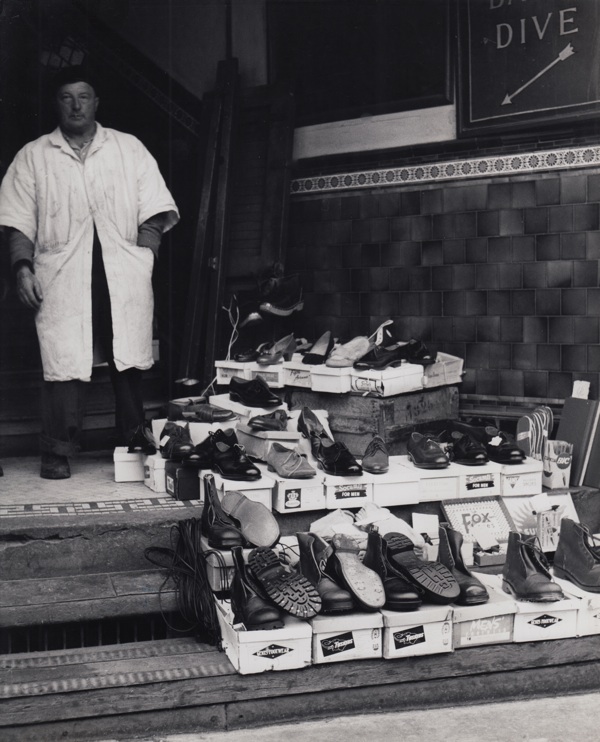
A porter makes a bit extra on the side, street trading in boots and shoes.

The Monument.

View from the top of the Monument.

Looking down Eastcheap from the Monument.

Fish shop by the Monument.

Visitors at the top of the Monument.

The shadow of the Monument cast upon King William St.

Relief upon the Danish Embassy at Wellclose Sq at the time of demolition – now removed to Belgravia.

In Albury Rd, Rotherhithe.

At Limehouse Basin.
Photographs copyright © Estate of Roland Collins
You may also like to take a look at
At Chiswick House
Click here to book tickets for my tour through spring and summer
READ OUR ASTONISHINGLY GOOD REVIEWS

I decided to take advantage of the sunshine by enjoying an excursion to Chiswick House. I have to confess that it is thirty years since I visited, in the footsteps of the writer Denton Welch who came here in the thirties with a picnic including a hardboiled egg and a piece of fruitcake. Yet it was a great consolation to encounter these gardens again, like a old friend that has not been changed by the years.
William Kent’s garden was inspired by the paintings of Claude Lorrain and Nicolas Poussin, and seeing it illuminated by the perfectly crystalline sunlight this week, I could not resist the feeling I was exploring an eternal landscape that was outside time. I half expected to turn a corner of a box hedge and discover Denton with his blanket spread out upon the grass, waiting for me with a picnic for two of hardboiled eggs and fruitcake.
I can think of no better place to lose an afternoon in London than these gardens, why did I take thirty years to go back?

The Doric Column with Venus on the top at the centre of the Rosary

Sculpture of a lioness by Pieter Scheemakers, 1733

The Ionic Temple and Obelisk, 1722

In the Excedra

Herm in the Excedra

A Sphinx beneath the Lebanon Cedar

Classical villa designed by Richard Boyle, third Earl of Burlington

Designed by Inigo Jones for Beaufort House in Chelsea in 1621, this gateway was acquired by Lord Burlington in 1738 from his friend Hans Sloan


Bust of Caesar Augustus


The Corinthian capitals on the portico were carved by John Boson

Andreas Palladio by by John Michael Rysbrack


Inigo Jones by John Michael Rysbrack


In the Italian Garden

The Conservatory was designed by Samuel Ware and completed in 1813

Geraniums overwintering

The Classic Bridge, attributed to James Wyatt, was built for the 5th Duke of Devonshire in 1774

The Ionic Temple

Bust of Napoleon in the Rustic House designed by Lord Burlington about 1719

The Eye Catcher installed in 1970

The Cascade by William Kent

You may also like to take a look at
In Old Bow

Mid-ninenteenth century Gothic Cottages in Wellington Way
Taking advantage of the spring sunshine, Antiquarian Philip Mernick led me on a stroll around the parishes of Bromley and Bow last week so that I might photograph just a few of the hidden wonders alongside the more obvious sights.
Edward II granted land to build the chapel in the middle of the road at Bow in 1320 but the nearby Priory of St Leonard’s in Bromley was founded three centuries earlier. These ecclesiastical institutions were the defining landmarks of the villages of Bromley and Bow until both were absorbed into the expanding East End, and the precise locations of these lost territories became a subject of unending debate for residents. More recently, this was the location of the Bryant & May factory where the Match Girls won landmark victories for workers’ rights in manufacturing industry and where many important Suffragette battles were literally fought on the streets, outside Bow Rd Police Station and in Tomlin’s Grove.
Yet none of this history is immediately apparent when you arrive at the handsome tiled Bow Rd Station and walk out to confront the traffic flying by. In the nineteenth century, Bow was laced with an elaborate web of railway lines which thread the streets to this day and wove the ancient villages of Bromley and Bow inextricably into the modern metropolis.

Bow Rd Station opened in 1902

Bow Rd Station with Wellington Buildings towering over

Wellington Buildings 1900, Wellington Way

Wellington Buildings

Suffragette Minnie Lansbury was imprisoned in Holloway and died at the age of thirty-two

Eighteen-twenties terrace in Bow Rd

Bow Rd

Bow Rd

Bow Rd Police Station 1902

Under the railway arches in Arnold Rd

The former Great Eastern Railway Station and Little Driver pub, both 1879

This house in Campbell Rd was built one room thick to fit between the railway and the road

Arnold Rd once extended beyond the railway line

Arnold Rd

Former Poplar Electricity Generating Station

Railway Bridge leading to the ‘Bow Triangle’

In the ‘Bow Triangle,’ an area surrounded on three sides by railway lines

Handsome nineteenth century villas for City workers in Mornington Grove

Former coach house in Mornington Grove

Bollard of Limehouse Poor Commission 1836 in Kitcat Terrace

Last fragment of Bow North London Railway Station in the Enterprise Rental car park

Edward II gave the land for this chapel of ease in 1320

In the former Bromley Town Hall, 1880

Former Bow Co-operative Society in Bow Rd, 1919

The site of St Leonard’s Priory founded in the eleventh century and believed to have been the origin of Chaucer’s Prioress in the ‘Canterbury Tales’ – now ‘St Leonard’s Adventurous Playground’

Kingsley Hall where Mahatma Ghandi stayed when he visited the East End in 1931

Arch by William Kent (c. 1750) removed from Northumberland House on the Embankment in 1900

Draper’s Almshouses built in 1706 to deliver twelve residences for the poor

The Crossways Estate
You may also like to take a look at
Spitalfields In Kodachrome
Click here to book tickets for my tour through spring and summer
READ OUR ASTONISHINGLY GOOD REVIEWS

Photographer Philip Marriage took these pictures on 11th July 1984

Crispin St

Widegate St

White’s Row

Artillery Passage

Brushfield St

Artillery Passage

Brushfield St

Fashion St

Widegate St

Artillery Passage

Gun St

Brushfield St

Gun St

Brushfield St

Parliament Court

Leyden St

Fort St

Commercial St

Brushfield St
Photographs copyright © Philip Marriage
You may also like to take a look at
Jimmy Huddart, Spitalfields Market Porter

A market porter of forty years standing, Jimmy Huddart is proud to display the clothing of his trade. He keeps this apron pristine for ceremonial occasions now, but it is of the traditional design made of the full width of strong canvas, with leather straps and reinforcement across the front where the boxes cause most wear. In use, an apron like this would quickly acquire a brown tinge yet provide its owner with at least two years of wear, with prudent repairs. In the pocket, Jimmy always kept his porter’s knife and string to sew up broken sacks. And the offcuts from these aprons were used to make “cotchel” bags, which held all the fruit and vegetables that the porter might acquire for his own use, gathering it in the lining of his coat as he went about his work. “Cotchelling up,” they called it – and today, although employees in the market now get a vegetable box to take home, it is still referred to as a “cotchel.”
The most significant item in the outfit is the porter’s licence, indicated by the enamel badge. Throughout Jimmy’s time in the market, you could only work as a porter if you had one of these and it was a badge of office, denoting its own rights and privileges which had to be earned. At first, young men entered the market as “empty boys,” collecting and sorting empty wooden boxes and claiming the deposits, until they had earned the right to become licenced porters. Before the introduction of fork-lift trucks, this was intense physical work, manhandling crates of fruit and sacks of vegetables, and manoeuvring the heavy wooden barrows piled high with produce which had a life of their own once you set them going.
“I grew up in Bethnal Green, Brady St, and, at the age of twelve, I used to go to the market to watch all the tussle and bustle, and all the porters with their barrows. At school, I was very much interested in carpentry but I couldn’t get an apprenticeship, although by then I had already been introduced to the market. I loved to go up the Spitalfields with my Uncle Bill, he worked for a haulage company and we used to go around the farms in Kent to collect the English plums and apples and deliver them to the market. There was something about it, the atmosphere and the characters – a love of it developed inside me – and I wanted to become a porter. If you worked in the market or the docks you earned better than the average salary.
When I was fifteen, my uncle got me a job with Percy Dalton at the corner of Crispin St and Brushfield St. He was a well-dressed Jewish man, softly spoken, who had started his business with a barrow selling roast peanuts and he took me under his wing. The first day I started working for Percy Dalton, he showed me how to sweep the shop. He was that sort of person, hands on. He had a fruit shop at the front and in the warehouse there’d be eight people roasting peanuts. The peanut factory backed onto the alley where the lorries came, he had these red vans with Percy Dalton on the side that you always saw outside dog meetings and football matches. He was a likeable man, very popular, and people often came to him for advice. If you were in trouble you could go and speak to him, he would lend you money if you needed it. He always said, get a corner shop and you get two premises for the price of one.
I used to go out with the drivers all around the London Docks to pick up the fruit and make deliveries. I looked forward to it among my duties – being a boy, they took care of me and bought me breakfast, and they taught me how to stack a lorry. But I wanted to be a porter, so I asked in the market if I could work as an empty boy until I came of age. A job come up as a banana boy for Ruby Mollison, helping him to ripen the bananas, hanging them up in the ripening room. I used to wear a leather glove when I had to put my hand under the banana stalk because I was frightened of the spiders. When you cut a bunch of bananas, you cut a “v” shape and they come away from the stalk, and that’s where your spider might be. They could be very dangerous, especially if they were pregnant, and if you were bitten you’d have to go to hospital because your arm could get paralysed by the poison.
Then a chance came up at Gibson Pardoe as an empty boy with the view of getting a licence, and I worked with them for a year until Alf Hayes of the porters’ union came to me and said, “There’s an opportunity to work in the flower market as a porter, would you be interested?” and I was issued a porter’s licence at twenty-one. But there was decline in the fruit trade in the nineteen seventies and they brought in fork-lift trucks. The job changed, it became less physical and where you once needed four porters now you only needed two. I can recall the first time I was given an electric truck. It was one of two milk floats all sprayed up without a scratch on them and they said to me, “treat it like it was new-born baby.” My first trip with it was to go over to Commercial St, and I was making a delivery there when a forty-ton truck came past and clipped it, taking half the fibre-glass roof with it. Luckily, I wasn’t seriously injured, only shaken up. I explained to governor what happened, that it was an accident and he said, “Did you get the number plate ?” He never asked if I was hurt or injured in any way. I suppose you could say, that’s the market sense of humour.
I became elected to the union. In life, I always believed in fairness and I recognise there has to be give and take. I had to build up trust from my members and in dealing with the traders too, yet most of the problems were solved over a cup of tea and a handshake. I was the porters’ representative for ten years but Alf Hayes, who was my inspiration, he had been porters’ representative for forty years before me. The porters’ union was founded in the depression of the twenties and thirties. Although they had to keep it a secret, they invented a form of recognition so they could discuss it – it was “union” backwards, “you’ve got none.” It was lost on those who weren’t in the know, and the union became fully recognised in the late nineteen thirties.
My sport was road running and thirty-five of us formed the Spitalfields Market Runners. Celebrating the tercentenary of the market in 1982, we were supported by the traders and greengrocers and porters in a relay from the Spitalfields Market to Southend Pier and back. We each ran ten miles and the whole of the market came together to do something for charity.“
Jimmy remembers when unemployed porters once waited for work under the clock at the centre of the Spitalfields Market and how the union acquired an office so that traders seeking a porter could telephone, thereby saving the humiliation of the porters. Yet now, in common with the other London markets, the porters are deregulated, losing their licences as the balance in the labour market has shifted again. However, after forty years as a porter, Jimmy chooses to remain positive – because experience has granted him a broad perspective upon the endlessly shifting culture and politics of communal endeavour in market life.

Jimmy’s Huddart’s porter’s licence.

The final year of the licenced porters.

Jimmy’s first year as a porter at twenty-one years old.

Jimmy (right) with his predecessor in the porter’s union Alf Hayes, photographed in the 1980s.

Jimmy Huddart, Honorary Fruit Porter to the Worshipful Society of Fruiterers
You may also like to read about
Peter Thomas, Fruit & Vegetable Supplier
Ivor Robins, Fruit & Vegetable Purveyor
John Olney, Donovan Brothers Ltd
Jim Heppel, New Spitalfields Market
Blackie, the Last Spitalfields Market Cat
and take a look at these galleries of pictures
Sylvester Mittee, Welterweight Boxer

Click here to book for tomorrow

Sylvester Mittee by Alexander Sturrock
I shall never forget my visit to Sylvester Mittee, unquestionably one of the most charismatic and generous of interviewees. We met in his multicoloured flat in Hackney where Sylvester keeps his collection of hats that he waterproofs by painting with excess gloss paint left over from decorating his walls. During the course of our interview I began to go blind due to a migraine, yet Sylvester cured me by pummelling my back as a form of massage. Thanks to Sylvester’s therapy, I was bruised for weeks afterwards but my migraine was dispelled, and I came away with this remarkable interview.
“666 is my birth number, and my mother got scared until a priest told her that 666 is God’s number. I was called “spirit” back then. My mother, she went to the marketplace a few months before I arrived. She told people she could already feel me kicking and they said, “I think it’s the devil you got in there!”
My father was born in 1906, he was a very sober man and he liked to give beatings. He especially liked to beat me and I learnt to take it. He came to Britain from St Lucia in 1961, he’s passed away now. My mother still lives in St Lucia, she was born in 1926, she’s a tough old girl.
1966, 1976 and 1986 were important years for me, and at school nobody got more sixes than I did. Six is the number of truth and love and enlightenment. The only time I believed six was unlucky was when I was ill and life wasn’t happening for me.
I’ve been fighting for my life since I stepped off that banana boat at Southampton in 1962. Does a banana boat sound primitive? Ours had air-conditioning and a swimming pool.
My dad worked his bollocks off, doing everything he could to keep us alive. At first, he had a place in Hackney, then he rented a little run-down one bedroom flat in Bethnal Green, with my parents in one room and eight kids in the other, two girls and six boys. We had to live very close in them days. I came from St Lucia with my mum and dad in 1962 and my four sisters came in 1964 and my remaining four brothers in 1966.
When I came to England racism was bare. The kids in the playground ganged up on me and outnumbered me and they attacked me. Nobody did anything about it, parents, teachers, nobody. There was etiquette in fighting back home, but there was none of that in England. I was taught that you let people get up and you don’t hit people when they are down. But, if somebody hits you, you hit them back – that’s how I was brought up. I had to learn to fight. And I had to be good at it to survive. I had no choice. I fought to live and boxing became my life.
Before I knew how to reason, boxing was a short cut. The demons that you have inside, they control you unless you can think in a philosophical way. Boxing becomes a microcosm of the world when you are exposed to the extreme highs and lows of this life.
The experiences that boxing gave me have allowed me to grow. I’m like a tree and the punches I throw are the leaves I drop, so boxing is like photosynthesis for me. I fulfill my immediate needs, but I can also recognise my greater needs, and it is a chance to grow stronger.
Boxing is an opportunity to profess your philosophy through your actions and discover who you truly are. We are born into a part in life and expected to play our part bravely, and I am playing my part as good as I can. Boxing taught me how to grasp life. But the achievement is not in the winning, the enterprise will only hurt you if you seek perfection. I was European Welterweight Champion, but I say boxing just helped me get my bearings in life.
The boys in the playground who beat me, they were the ones who bought tickets to see me fight and they were cheering me on, supporting me. It gave me heart. I like to think it changed them, made them better people. I am a youth worker now in Hackney, and I also go to old people’s homes to do fitness classes and mobility exercises. Those kids that fought me in the playground and beat me, they live around me still. Now they are grown up and I work with some of their kids, and they come to me and tell me their parents remember me from school.”

Sylvester Mittee, European Welterweight Champion 1985


Sylvester in his living room

Sylvester on the cover of Boxing New 1985
Photographs copyright © Alexander Sturrock
You may also like to read my interview with


