
At Stationers’ Hall
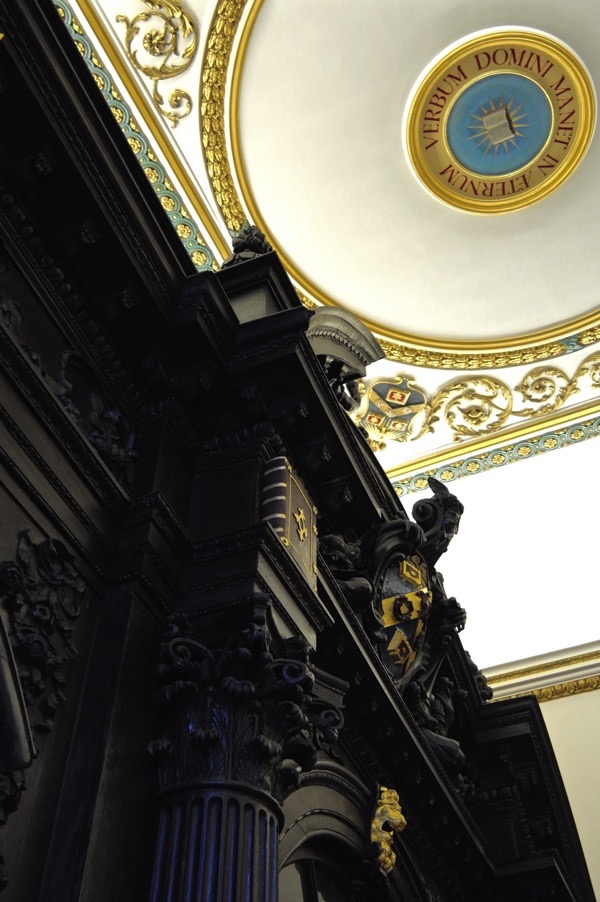
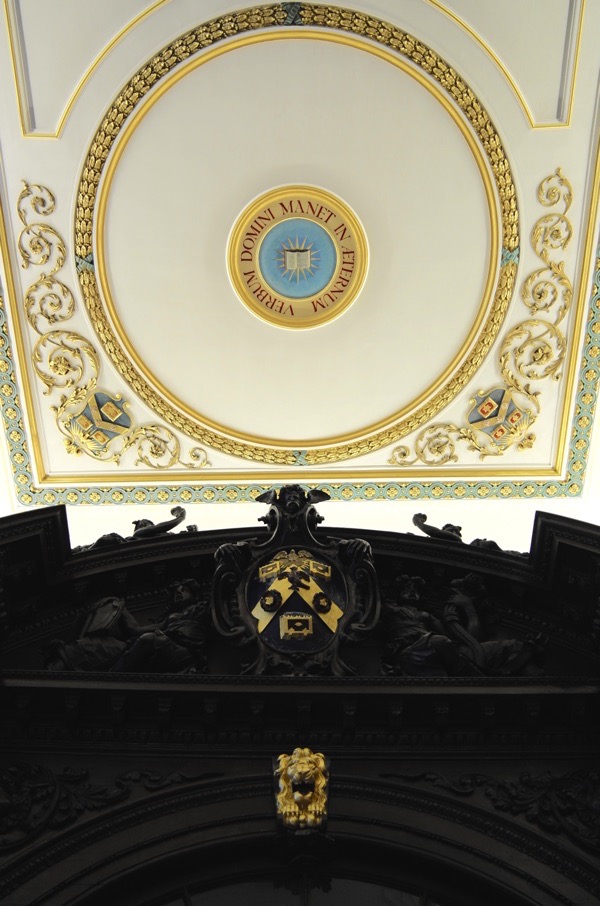
‘The Word of the Lord Endures Forever’
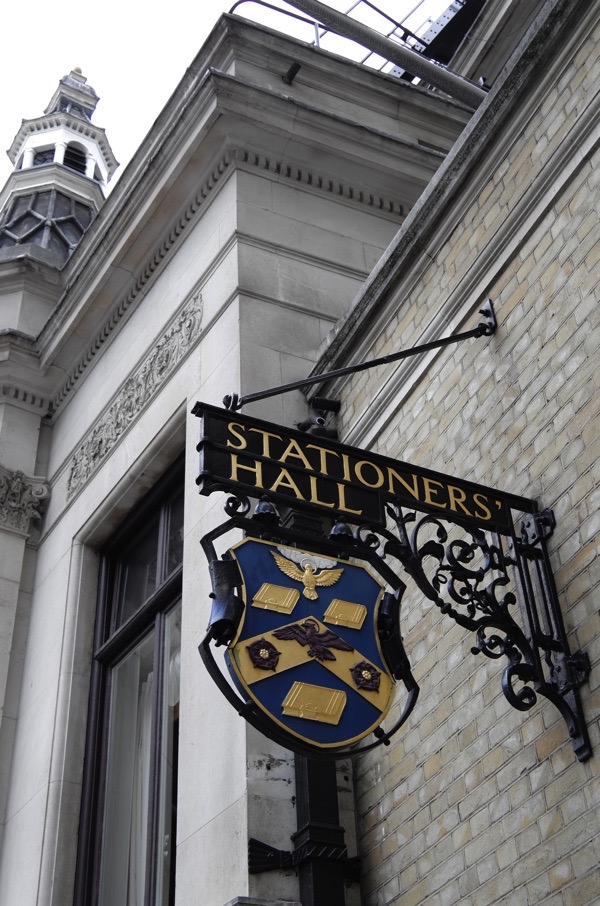
Next time you walk up Ludgate Hill towards St Paul’s, turn left down the narrow passage just beyond the church of St Martin Within Ludgate and you will find yourself in a quiet courtyard where Stationers’ Hall has stood since the sixteen-seventies.
For centuries, this whole district was the heart of the printing and publishing, with publishers lining Ludgate Hill, St Paul’s Churchyard and Paternoster Row, while newspapers operated from Fleet St. Today, only Stationers’ Hall and St Bride Printing Library, down behind Ludgate Circus, remain as evidence of this lost endeavour that once flourished here.
Yet the Stationers’ Company was founded in 1403, predating printing. At first it was a guild of scriveners, illuminators, bookbinders, booksellers and suppliers of parchment, ink and paper. Even the term ‘stationer’ originates here with the stalls in St Paul’s Churchyard where they traded, which were immovable – in other words, ‘stationary’ stalls selling ‘stationery.’
No-one whose life is bound up with writing and words can fail to be touched by a visit to Stationers’ Hall. From 1557, when Mary Tudor granted the Stationers their Charter and for the next three hundred years, members had the monopoly upon publishing and once one member had published a text no-one else could publish it, thus the phrase ‘Entered at Stationers’ Hall’ became a guarantee of copyright.
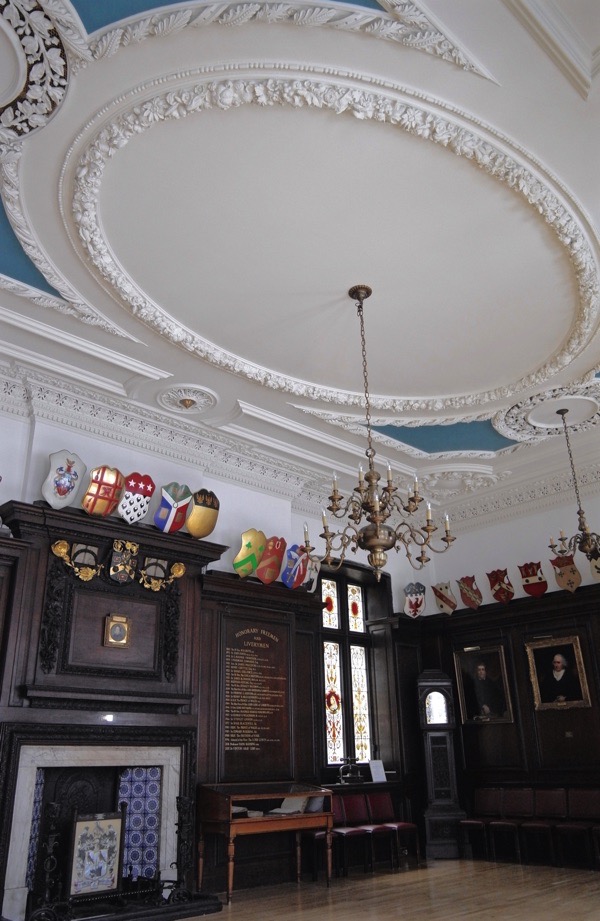
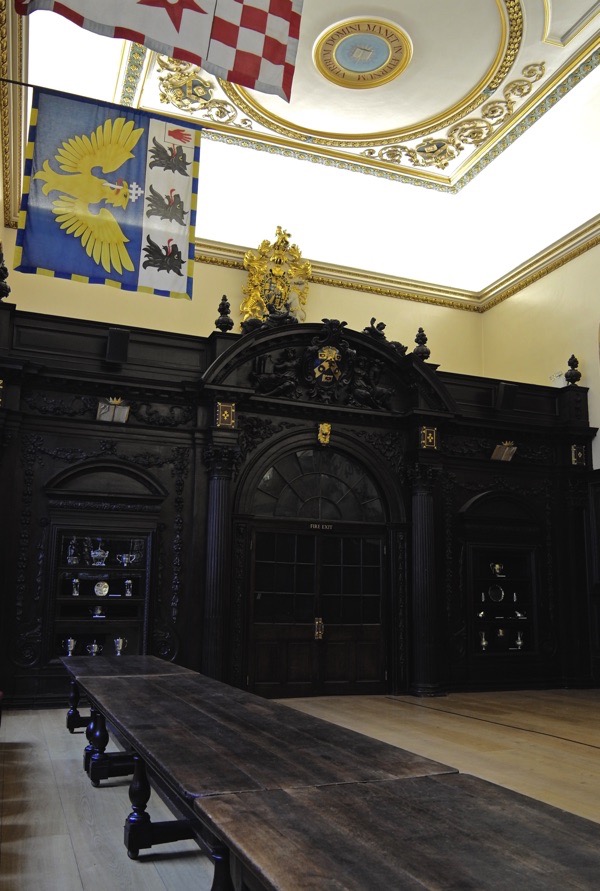
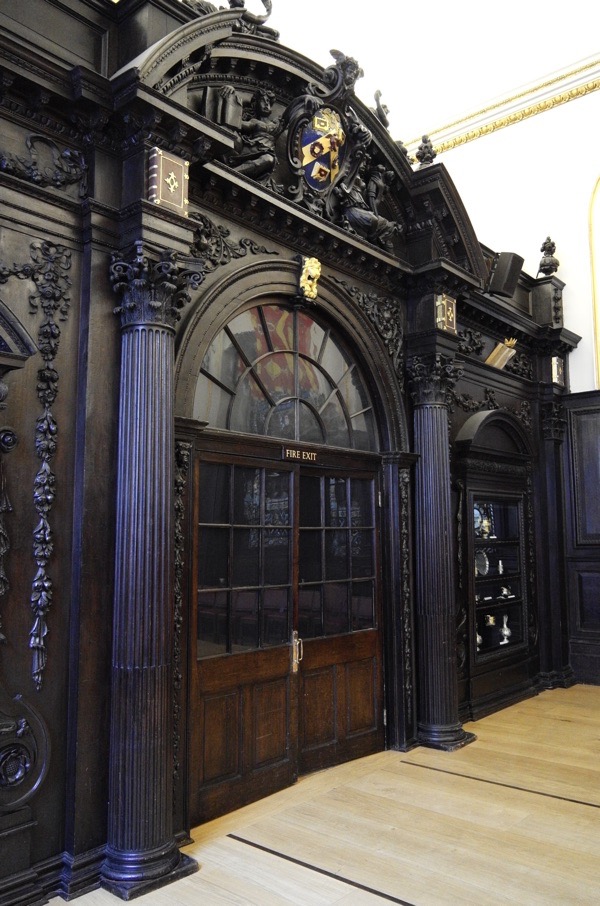
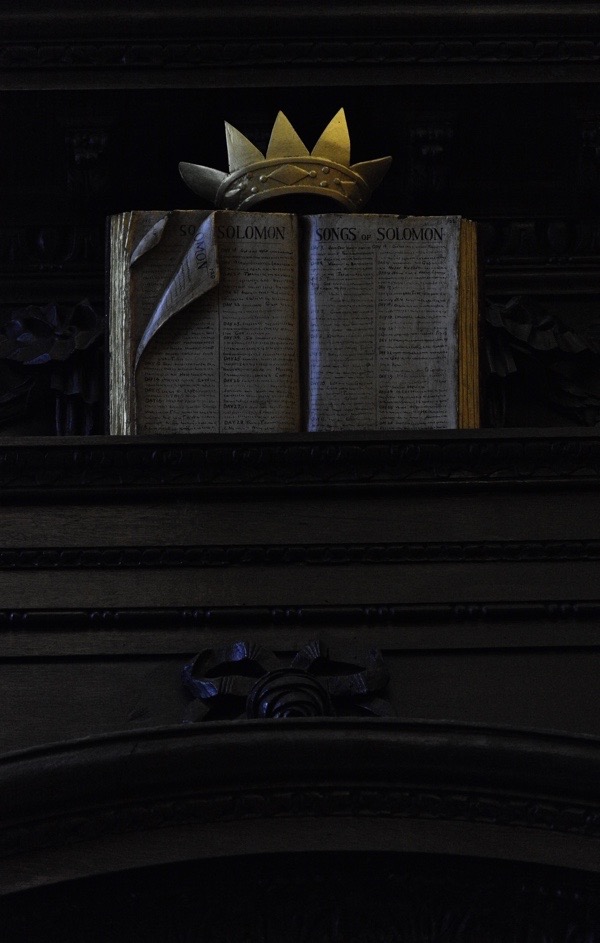
Built in the decade following the Fire of London, the Great Hall was panelled by Stephen College ‘the protestant joiner’ at price of £300 in 1674. In spite of damage in the London Blitz and extensive alterations to other buildings, this central space retains its integrity as an historic interior. At one end, an ornate Victorian window shows William Caxton presenting his printing to Edward IV while an intricate and darkly detailed wooden Restoration screen faces it from the other. Wooden cases display ancient plate, colourful banners hang overhead, ranks of serried crests line the walls, stained glass panels of Shakespeare and Tyndale filter daylight while – all around – books are to be spied, carved into the architectural design.
A hidden enclave cloistered from the hubbub of the modern City, where illustrious portraits of former gentlemen publishers – including Samuel Richardson – peer down silently at you from the walls, Stationers’ Hall quietly overwhelms you with the history and origins of print in London through six centuries.
The Stock Room
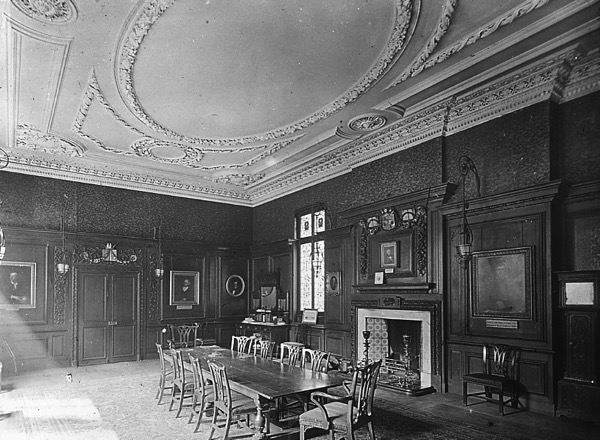
The Stock Room c. 1910
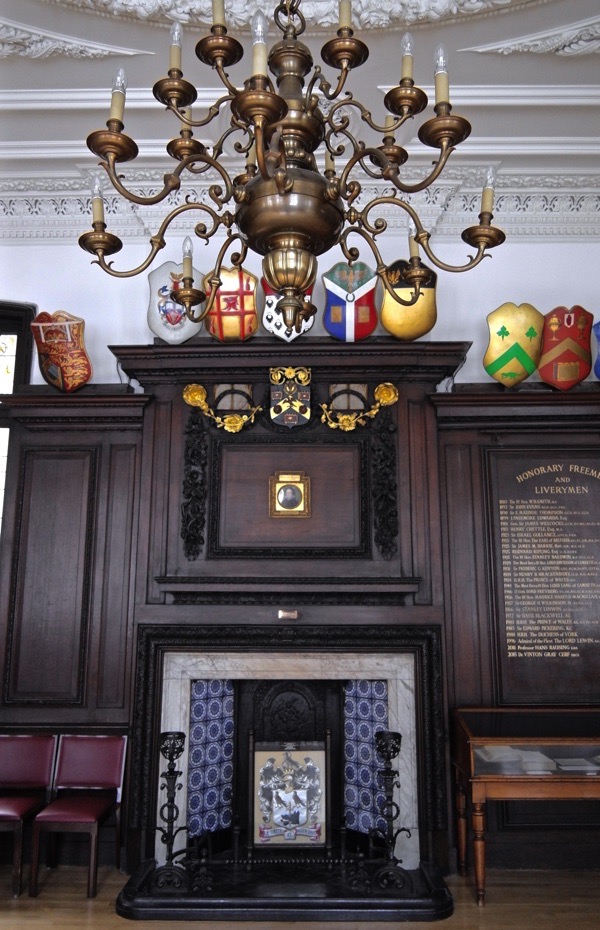
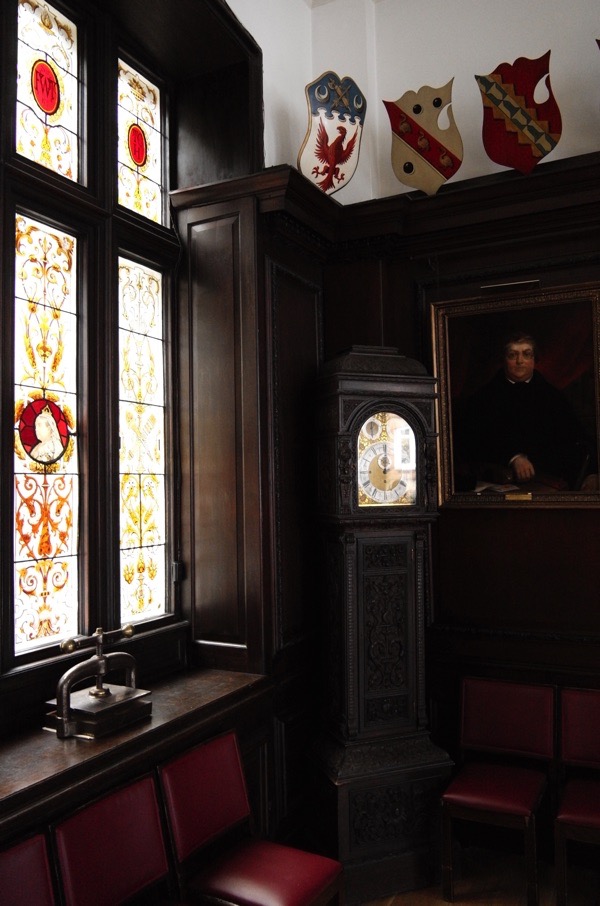
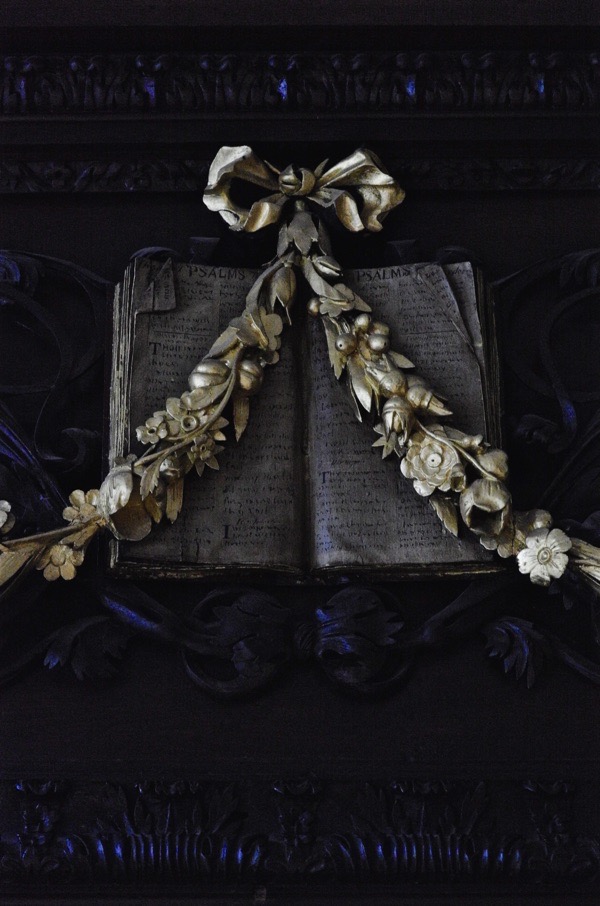
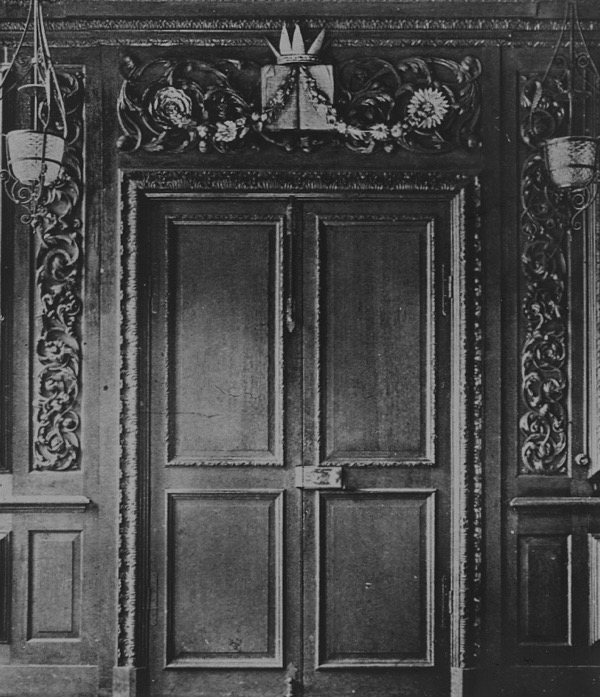
The Stock Room door, c.1910
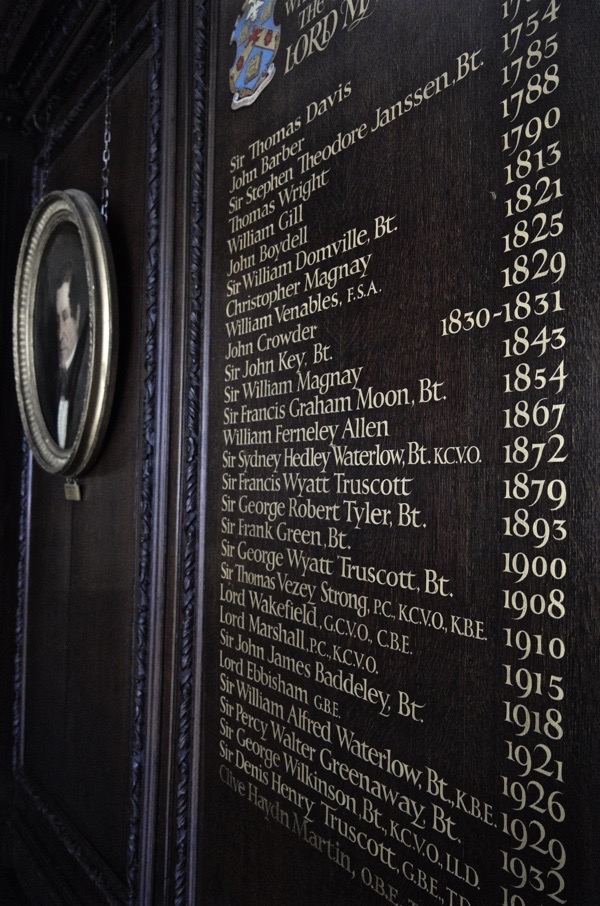
Panel of Stationers that became Lord Mayor includes JJ Baddeley, 1921
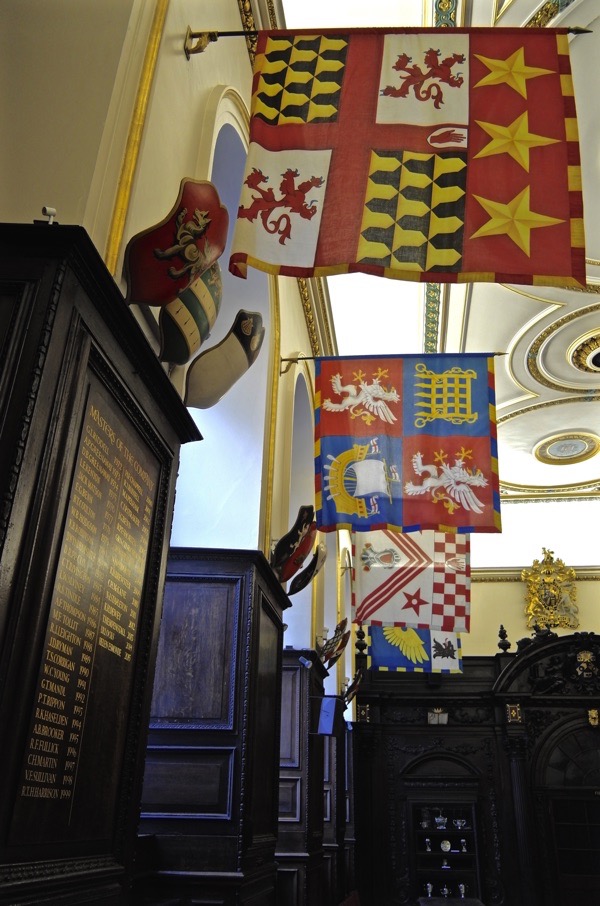
The Great Hall, where Purcell’s Hymn to St Cecilia was first performed in 1692
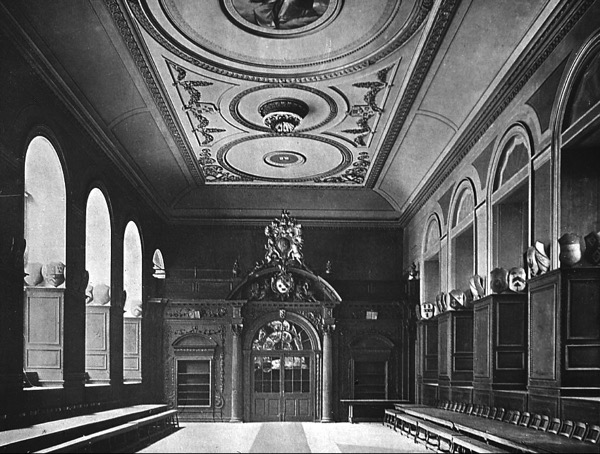
The Great Hall c. 1910
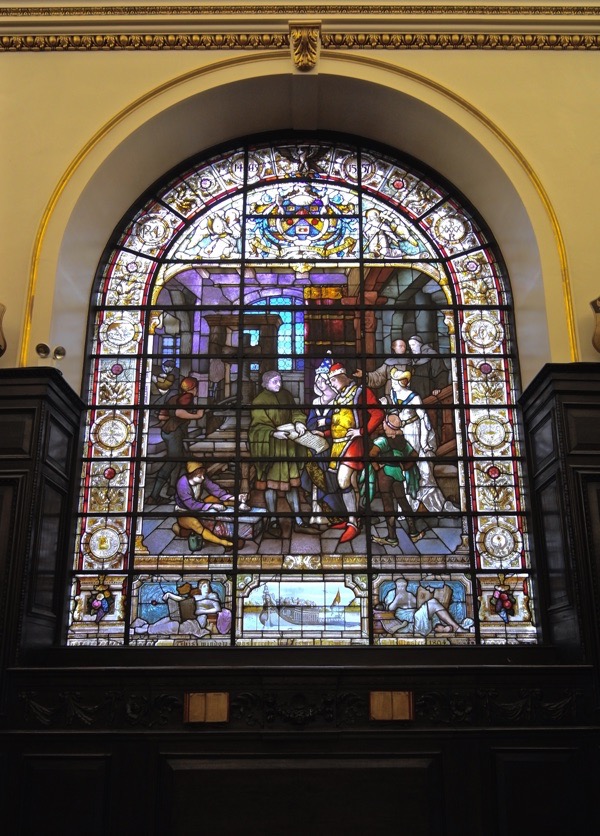
Stained glass window of 1888 showing Caxton presenting his printing to Edward IV
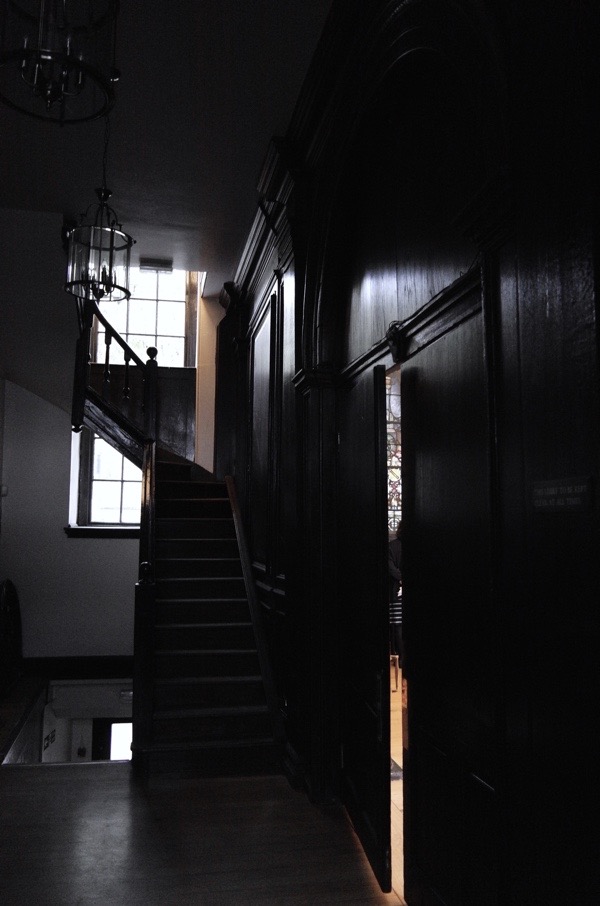
The vestibule to Great Hall
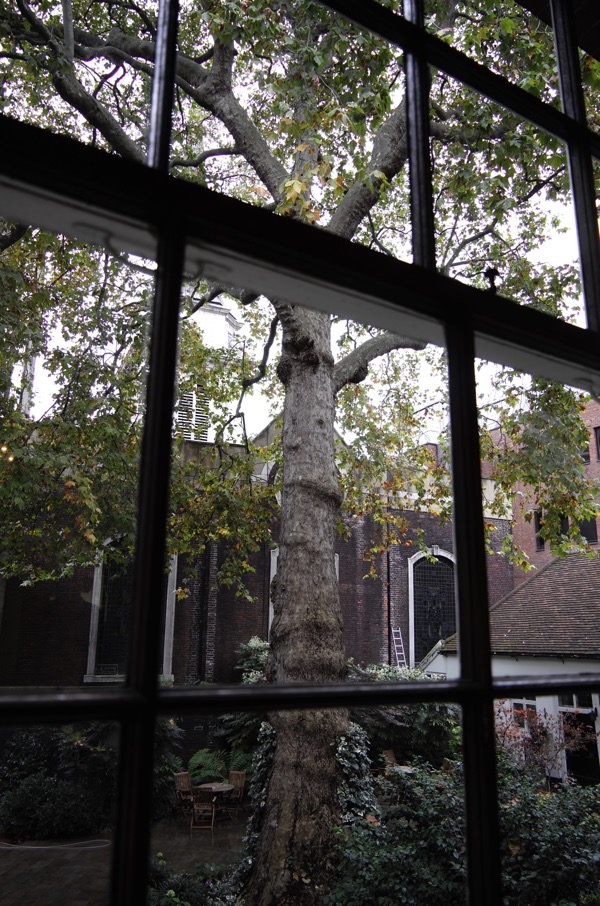
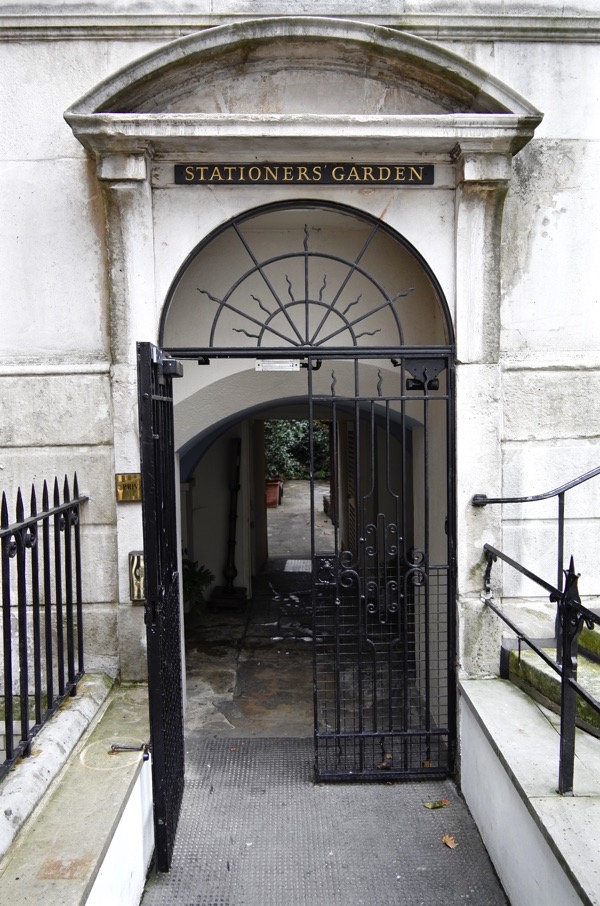
The Stationers’ Garden
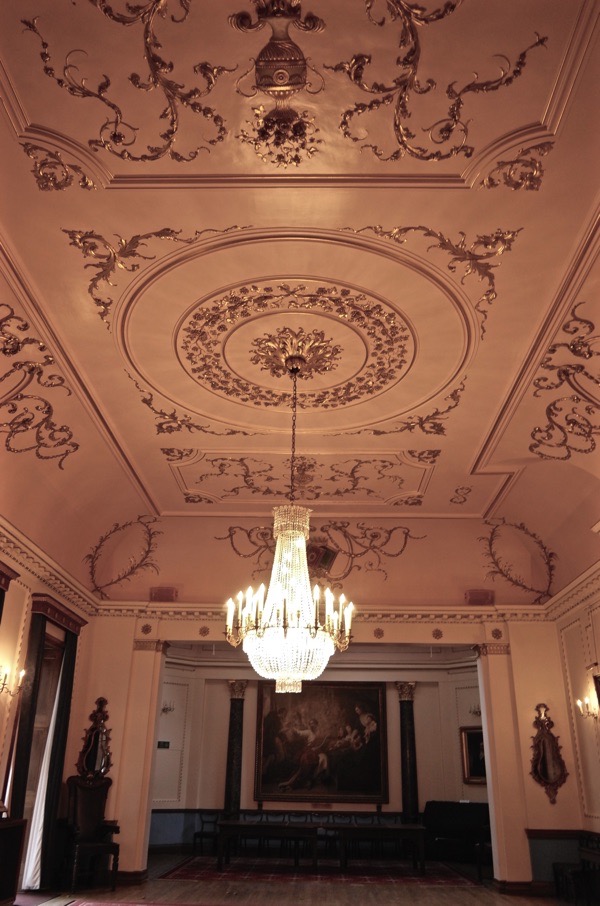
The Court Room with a painting by Benjamin West
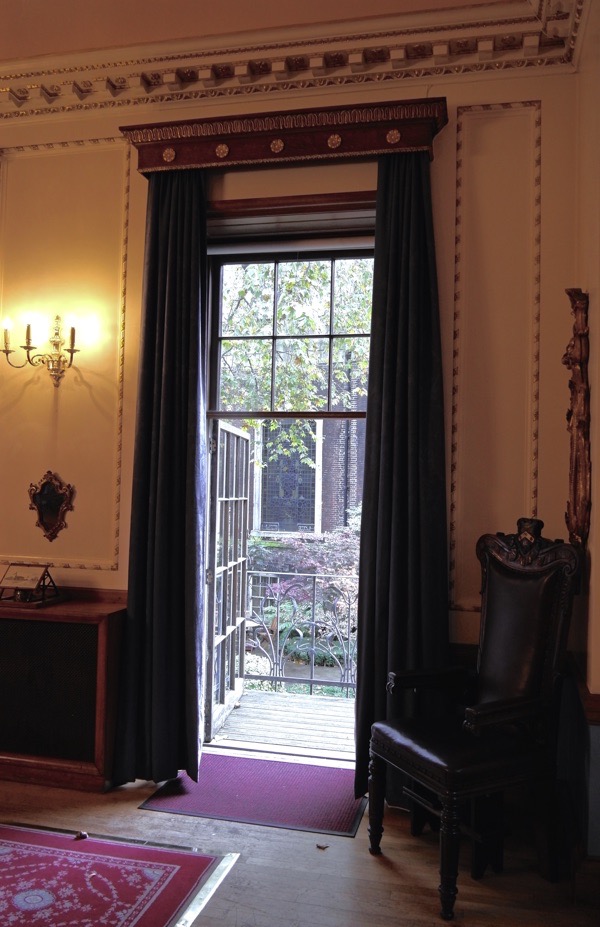
Looking out from the Court Room to the garden with the Master’s chair on the right
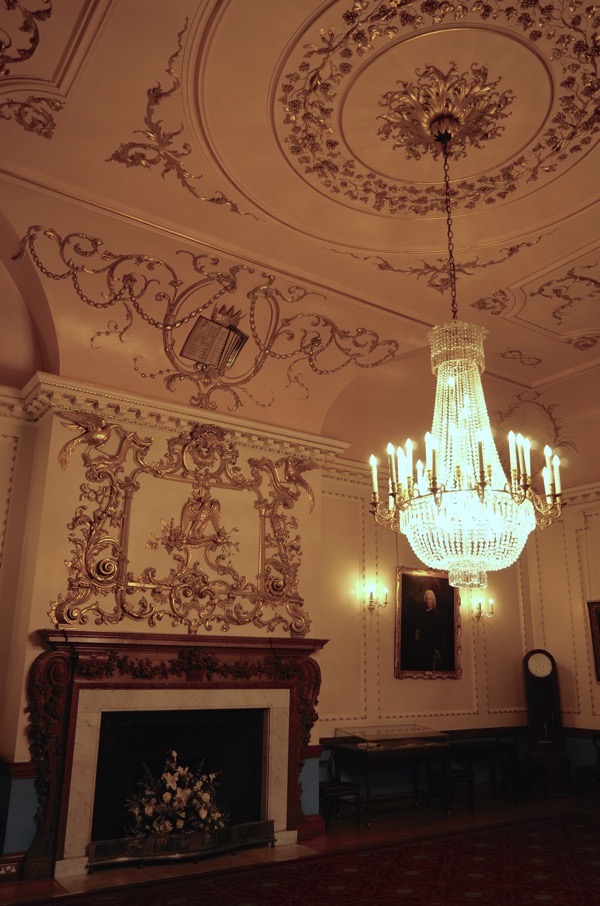
The Court Room
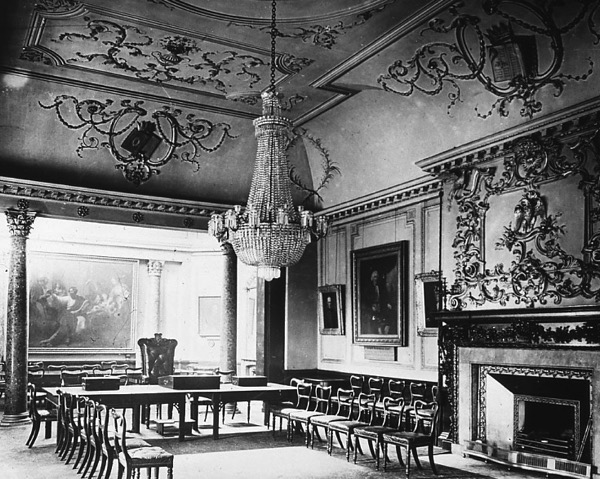
The Court Room, c 1910
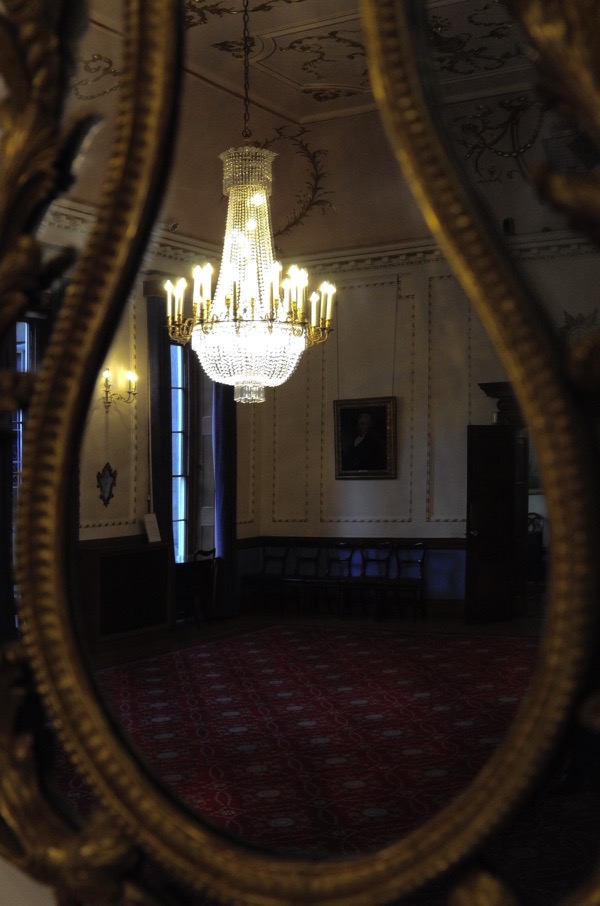
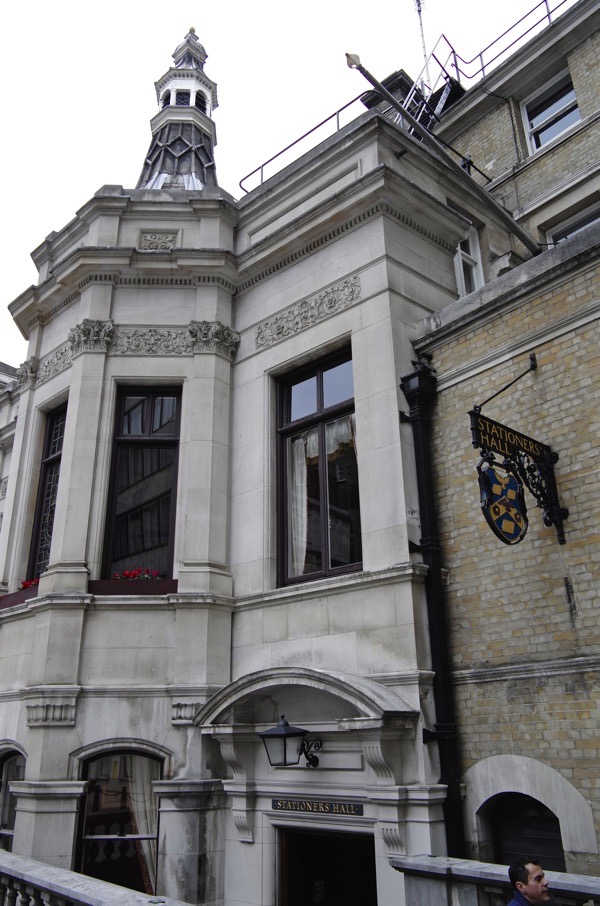
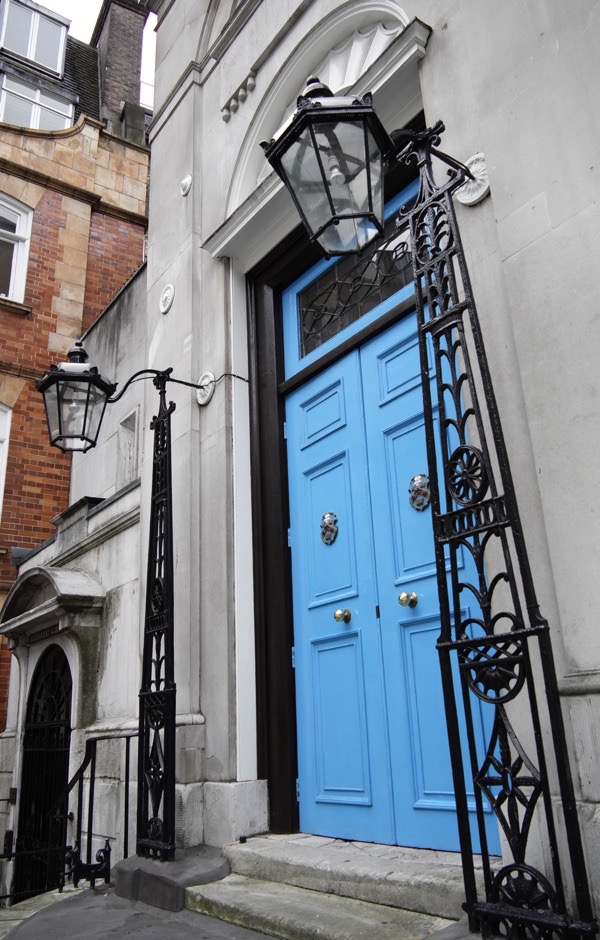
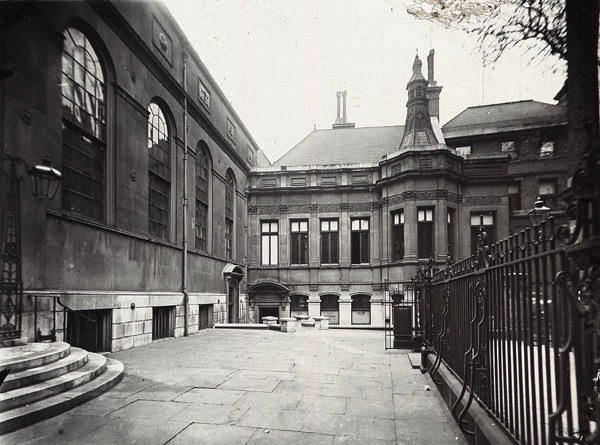
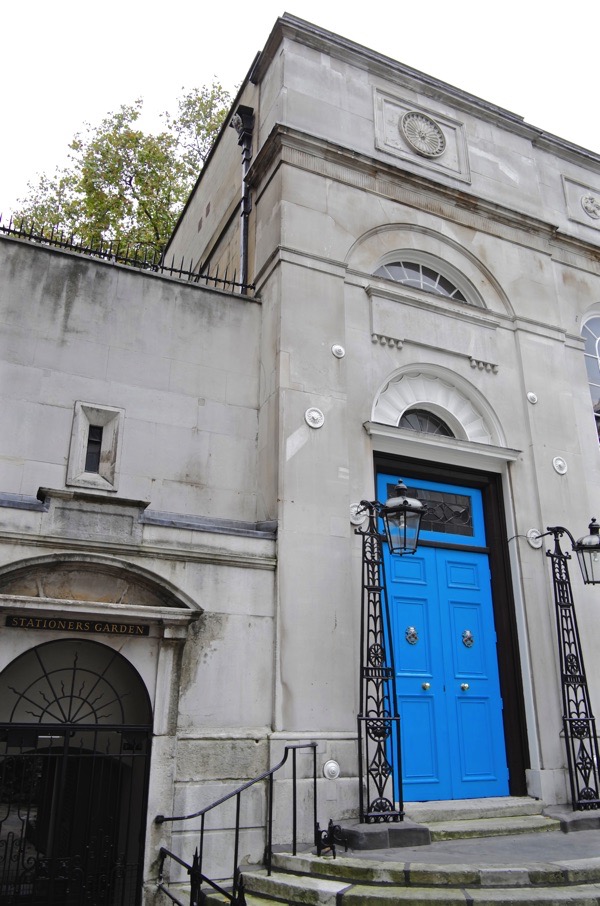
Exterior of Stationer’s Hall, c. 1910
Archive photographs courtesy Bishopsgate Institute
You may also like to take a look at
David Hoffman At Fieldgate Mansions
David Hoffman has a new exhibition of his photographs entitled A Sort of Home: 1970s Whitechapel at Gallery 46, 46 Ashfield St, Whitechapel, E1 2AJ, opening on 18th July and running until 15th August
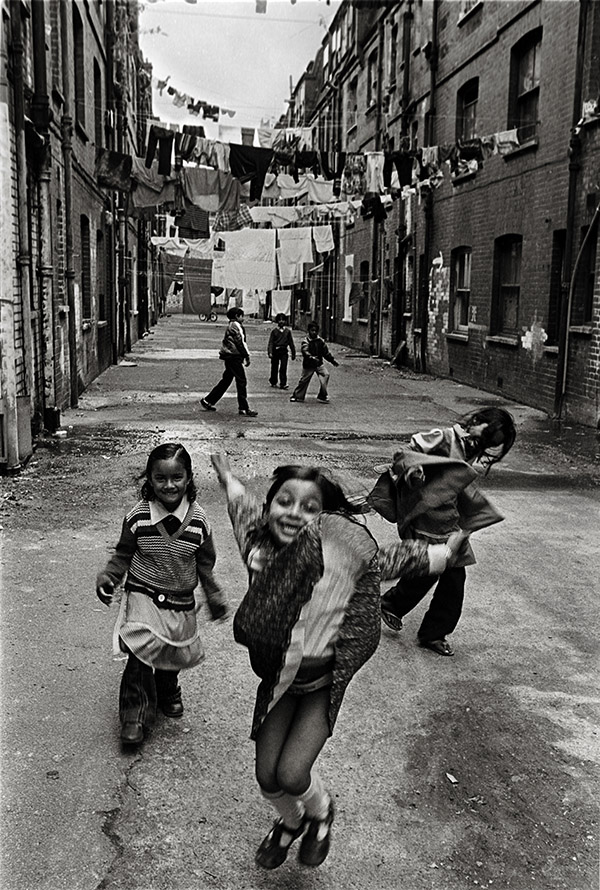
Children playing at Fieldgate Mansions, April 1981
This series of photographs by David Hoffman, taken while he was squatting in Fieldgate Mansions off Fieldgate St in Whitechapel from 1973 until 1984, record a vital community of artists, homeless people and Bengali families who inhabited these streets at the time they were scheduled for demolition. Thanks to the tenacity and courage of these people, the dignified buildings survive today, restored and still in use for housing.
David Hoffman’s photographs record the drama of the life of his fellow squatters, subject to violent harassment and the constant threat of eviction, yet these images are counterpointed by his tender and intimate observation of children at play. After dropping out of university, David Hoffman found a haven in Fieldgate Mansion where he could develop his photography, which became his life’s work.
Characterised by an unflinching political insight, this photography is equally distinguished by a generous human sympathy and both these qualities are present in his Fieldgate Mansions pictures, manifesting the emergence of one photographer’s vision – as David Hoffman explained to me.
“It was the need for a place to live that brought me here. I’d come down from university without a degree in 1970. I’d dossed in Black Lion Yard and rented a squalid slum room in Chicksand St, before a permanent room came up for very little money in Black Lion Yard in 1971 above Solly Granatt’s jewellery shop. But the whole street was due for demolition, and when he died we squatted in it until they knocked it down in November 1973.
Then I found a place in Fieldgate Mansions which was being squatted by half a dozen people from the London College of Furniture. Bengali families were having a hard time and we were opening up flats in the Mansions for them to live there. We were really active, taking over other empty buildings that were being kept vacant in Myrdle St and Parfett St, because the owners found it was cheaper to keep them empty. We also squatted many empty houses further east in Stepney preventing the council from demolishing them. We took over and got evicted, and came back the next day and, when they put them up for auction, we used to bid and our bid won but, of course, we had no money so we couldn’t pay – it was a delaying tactic. It was a war of attrition to keep the buildings for people rather than for profit.
The bailiffs and police came at four in the morning and got everyone out and boarded up the property and put dogs in. Then we got dog handlers who removed the dogs and took them to Leman St Police Station as strays, and then we moved back in again.
When I moved into Fieldgate Manions it was late November and there was no hot water and the council had poured concrete down the toilet and ripped out the wiring. There was no insulation in the roof, it was just open to the slates and the temperature inside was as freezing as it was outside. I found a gas water heater in a skip and got it working on New Year’s Eve, so I counted in the New Year 1974 with hot water as the horns of the boats sounded on the river.
I decided to do Communication Design at the North East London Polytechnic, because I’d been taking photographs since I was a child and I’d helped set up a darkroom at university. At Fieldgate Mansions, I had a two room flat, one was my bedroom and office and other I made into a darkroom and I did quite a bit of photography. When I left college in 1976, I took up photography full time and began to make a slim living at it and I have done so ever since. While I was a student, I had a grant but I didn’t have to pay rent and it was the first time in my life I had enough money to feed and clothe myself. I stayed in Fieldgate Mansions until 1984 when I moved into a derelict house in Bow which I bought with some money I’d saved and what my mother left me, and where I still live today.”

Waiting to resist eviction in front of the barricaded front door of a squat in Myrdle St, Whitechapel, in February 1973. Ann Pettitt and Anne Zell are standing, with Duncan, Tony Mahoney and Phineas sitting in front.
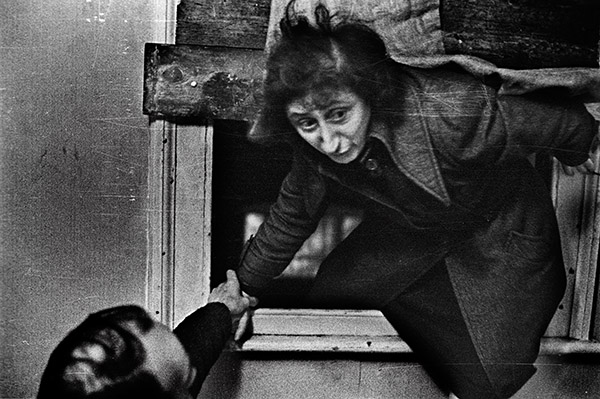
Doris Lerner, activist and squatter, climbs through a first floor window of a squat in Myrdle St
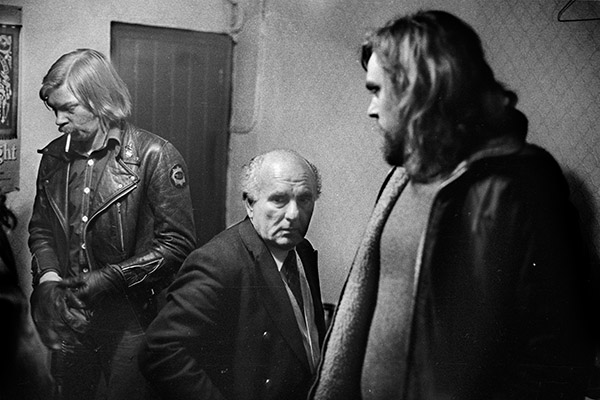
Max Levitas, Tower Hamlets Communist Councillor, tried unsuccessfully to convince the squatters that resistance to eviction should be taken over by the Communist Party
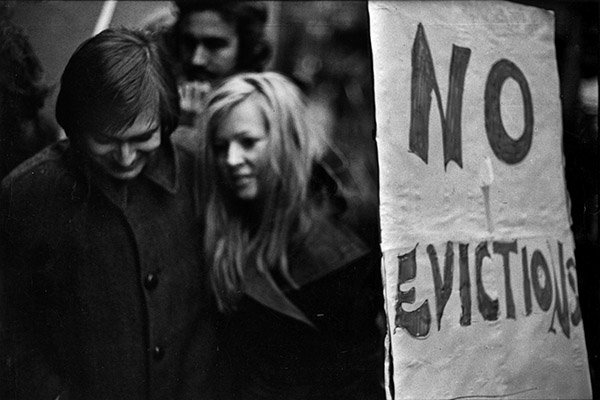
March on Tower Hamlets Council in protest against the eviction of squatters
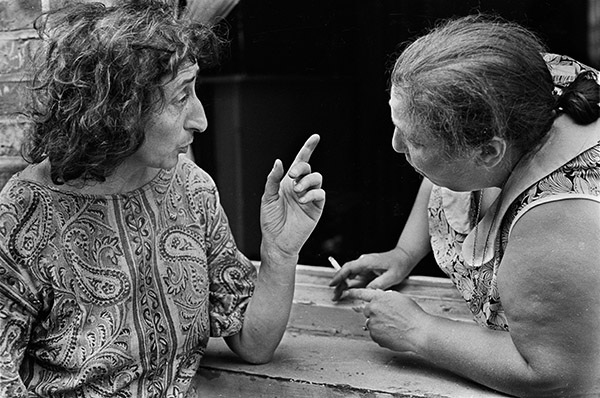
Doris Lerner in an argument with a neighbour during the evictions from Myrdle St and Parfett St
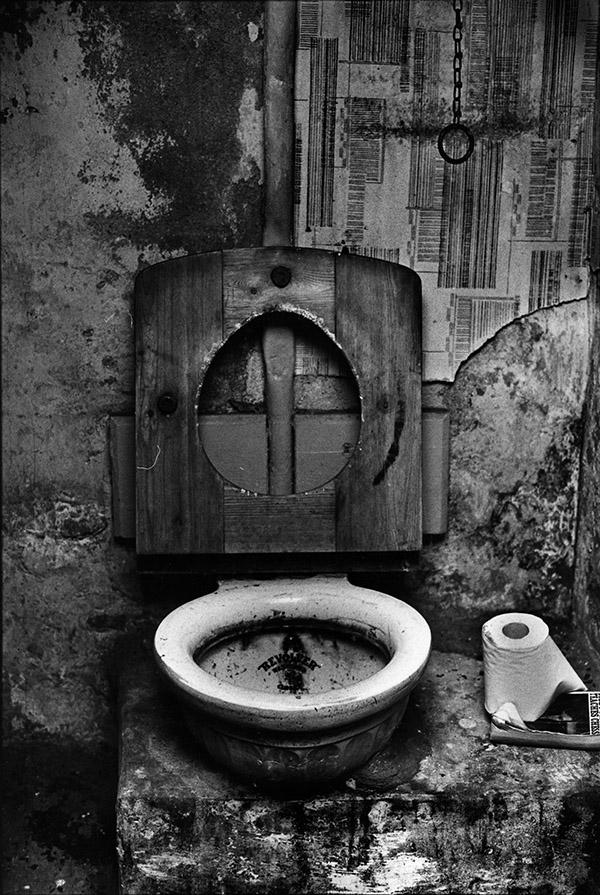
Lavatory in squatted house in Myrdle St, Whitechapel, 1973

Police arrive to evict squatters in Myrdle St
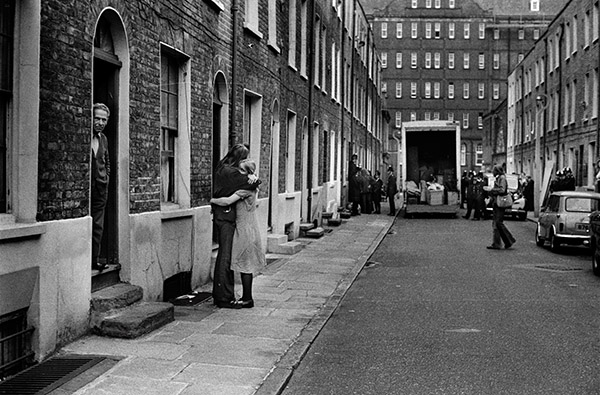
Eviction in progress
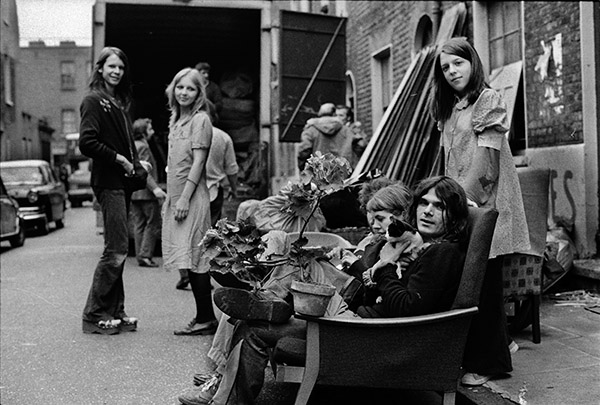
Out on the street
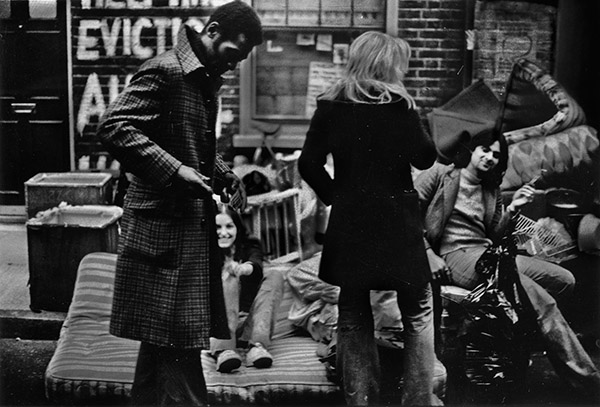
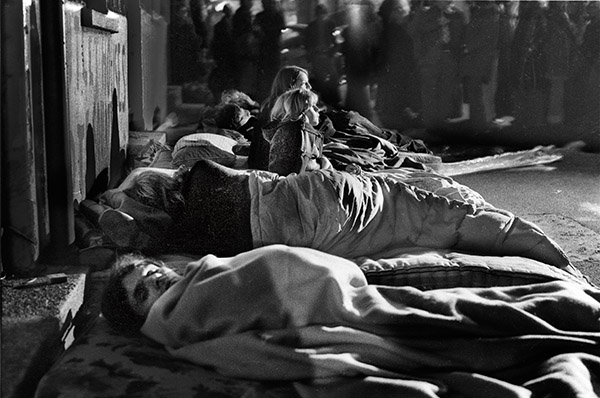
Sleeping on the street after eviction
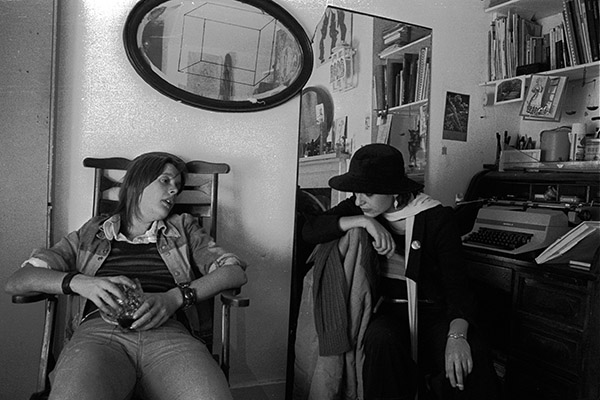
Liz and Sue in my flat in Fieldgate Mansions, September 1975
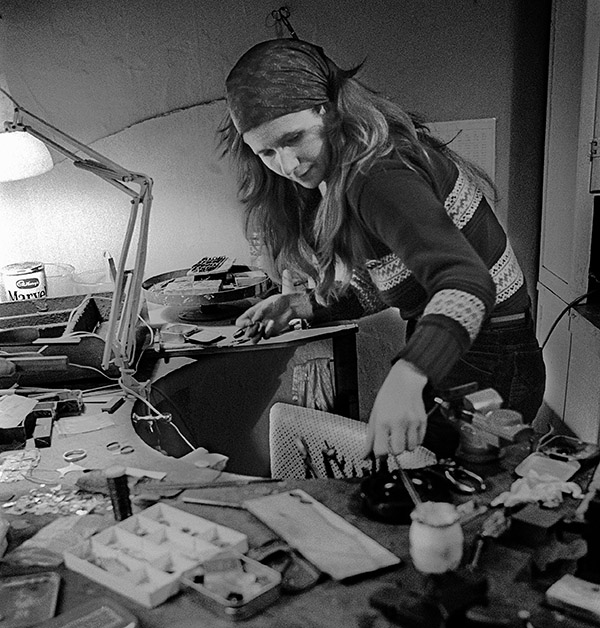
Coral Prior, silversmith, working in her studio at Fieldgate Mansions, 1977
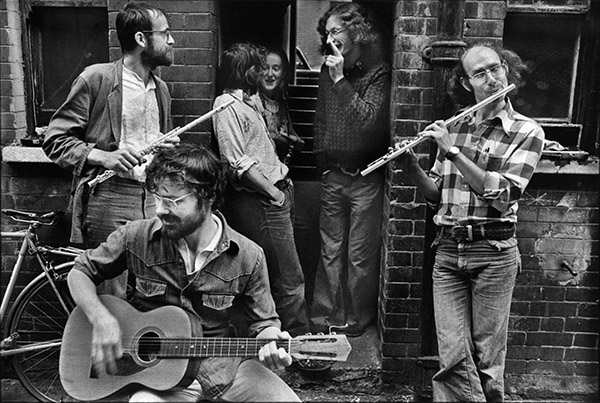
Fieldgate Scratch Band
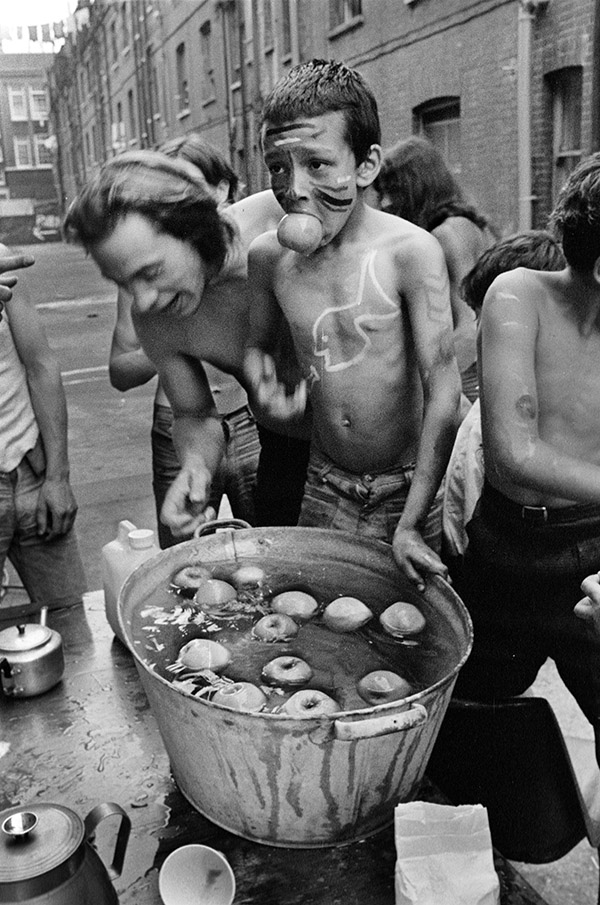
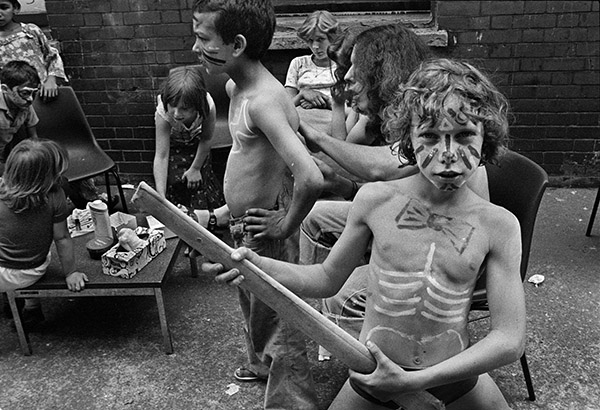
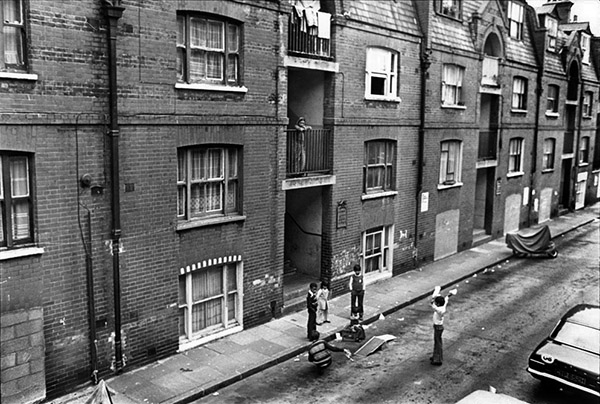
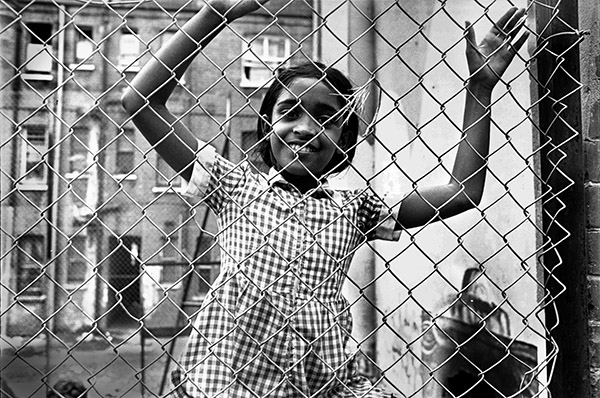
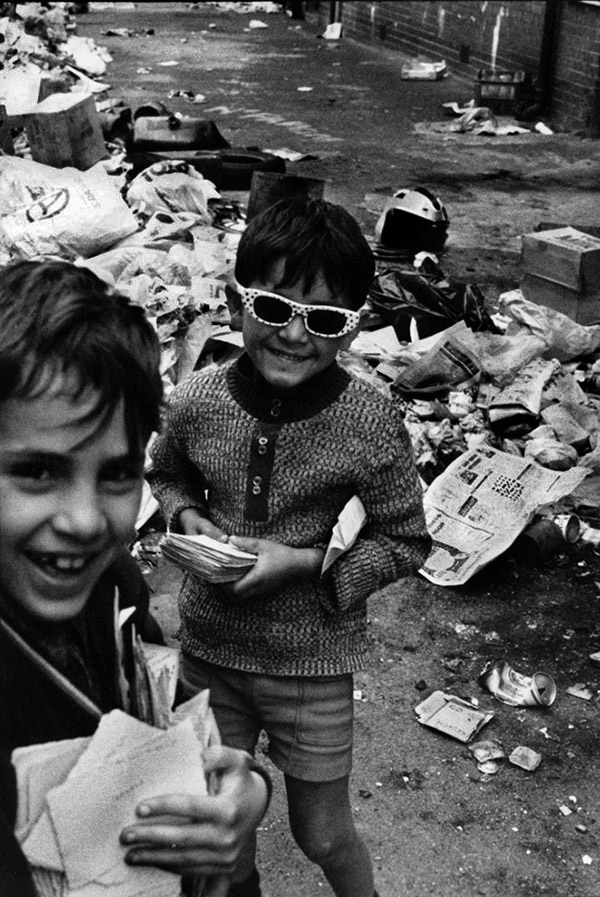
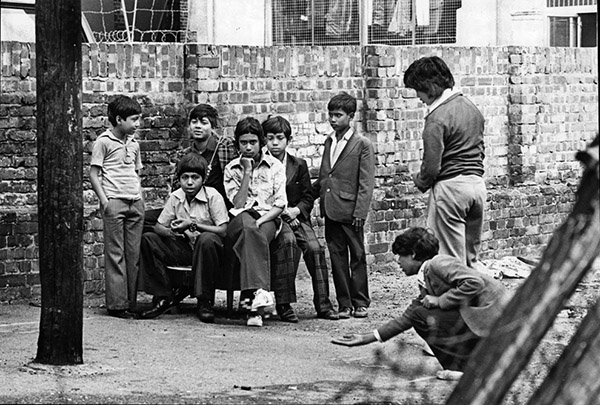
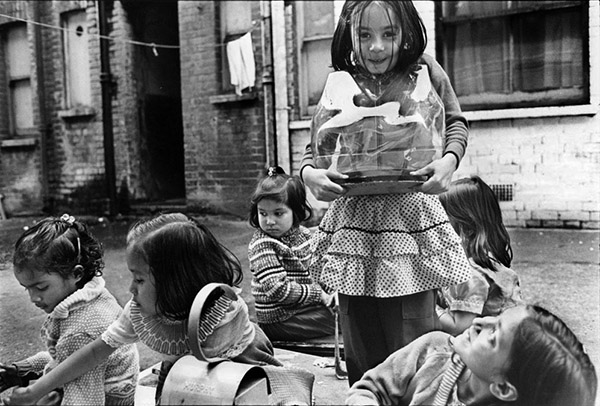
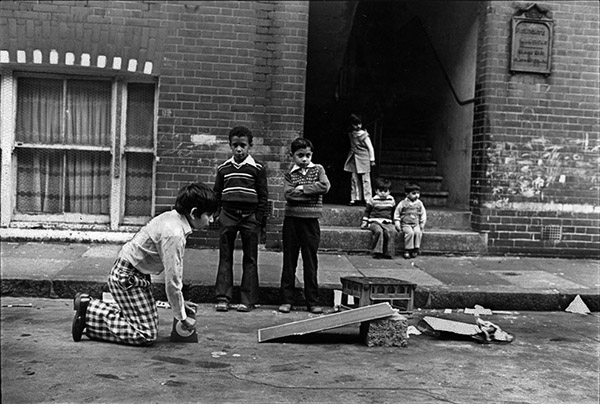
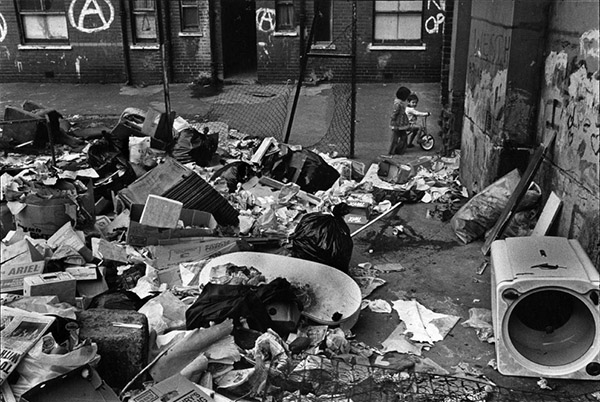
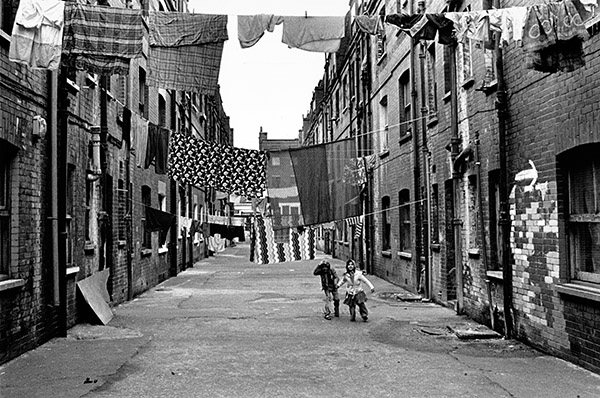
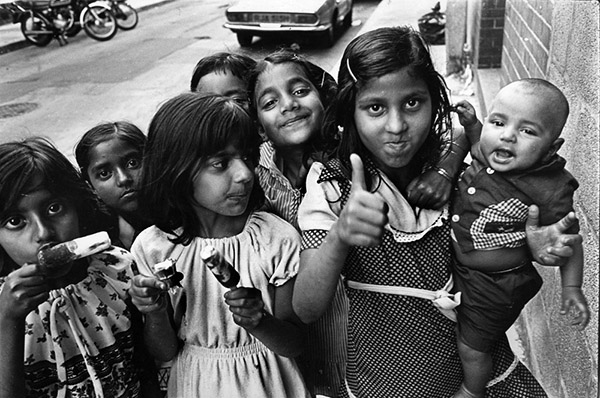
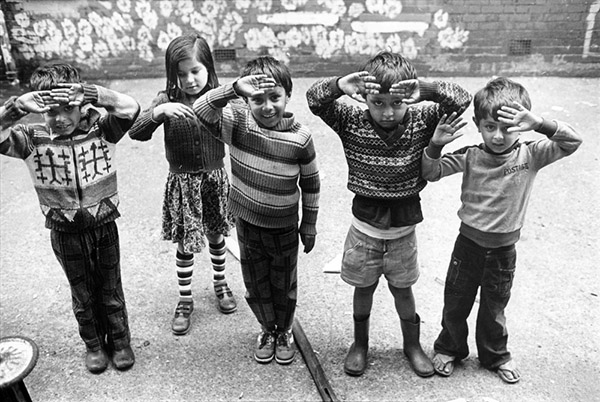
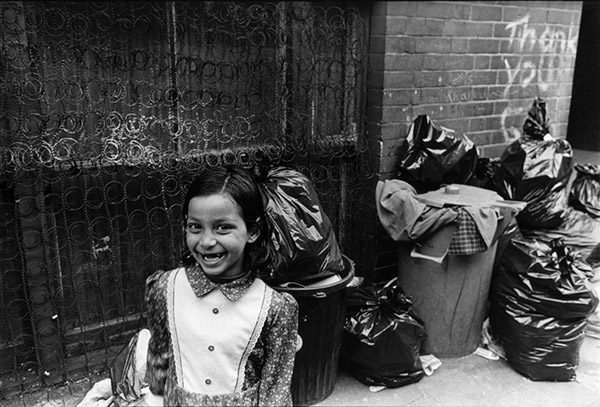
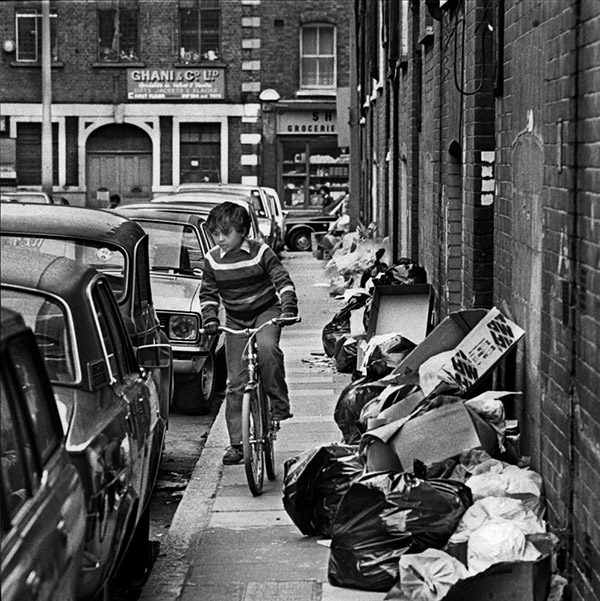

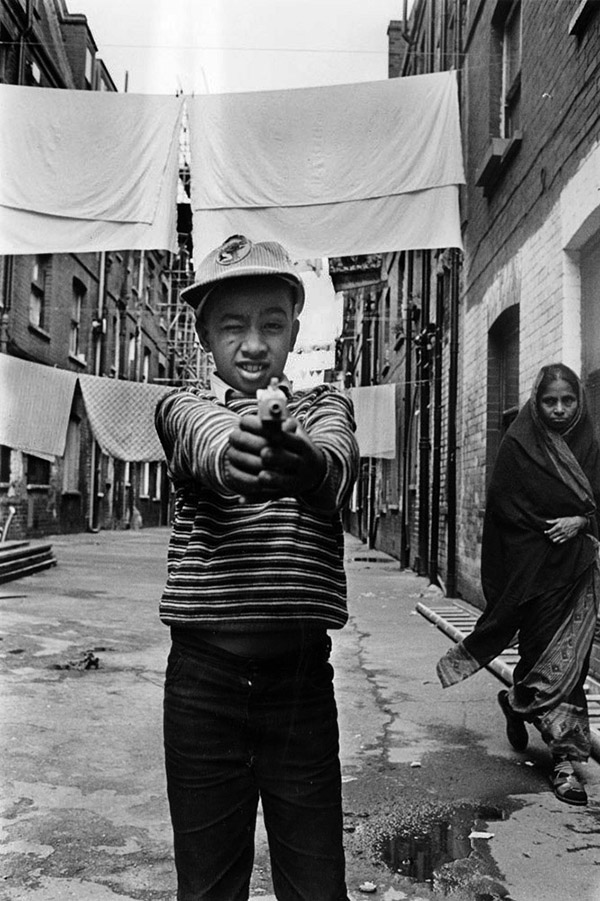


A boy dances in the courtyard of Fieldgate Mansions. Scheduled for demolition in 1972, it was squatted to prevent destruction until taken over by a community housing trust and modernised in the eighties.
Photographs copyright © David Hoffman
You may also like to take a look at
David Hoffman at Crisis At Christmas
David Hoffman at Smithfield Market
At The Latin Market
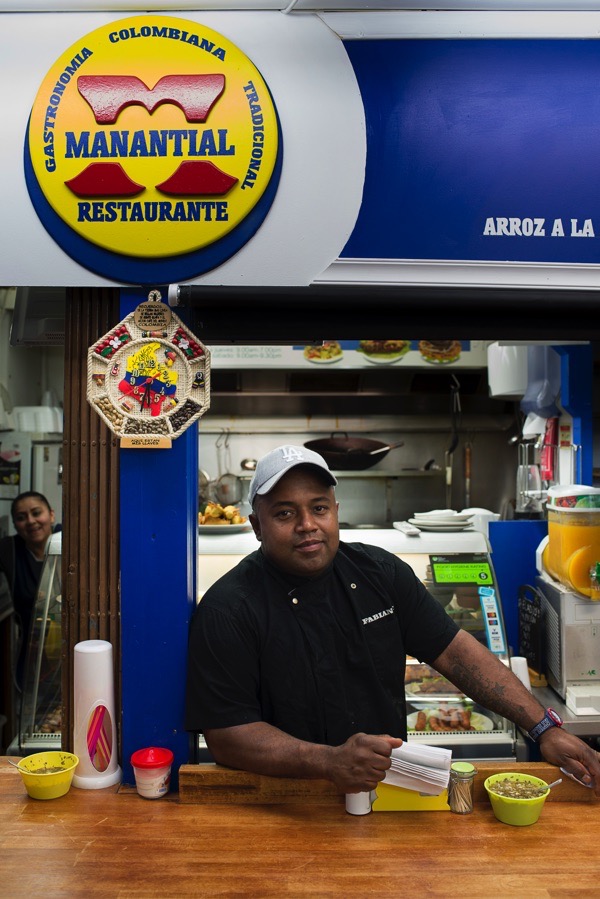
Fabian Alberto
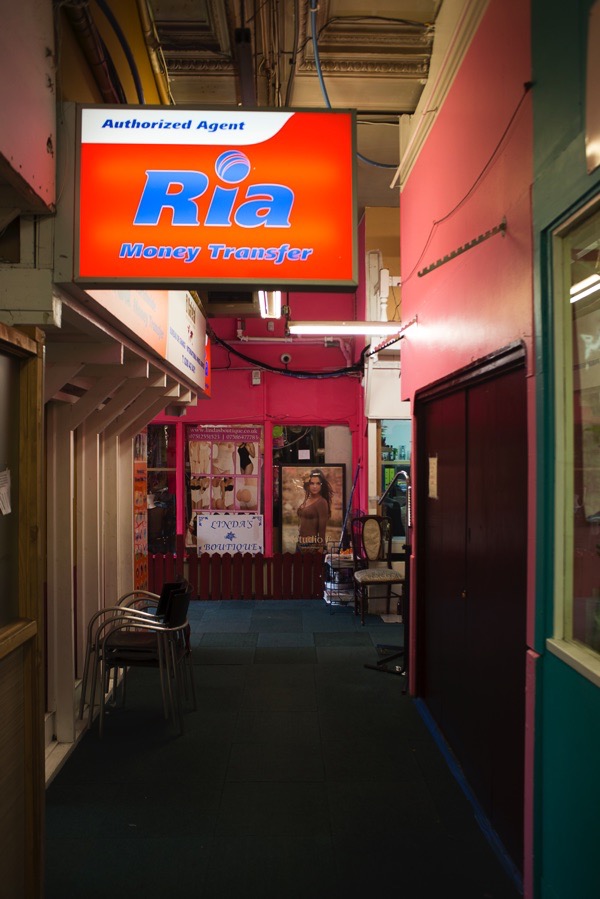
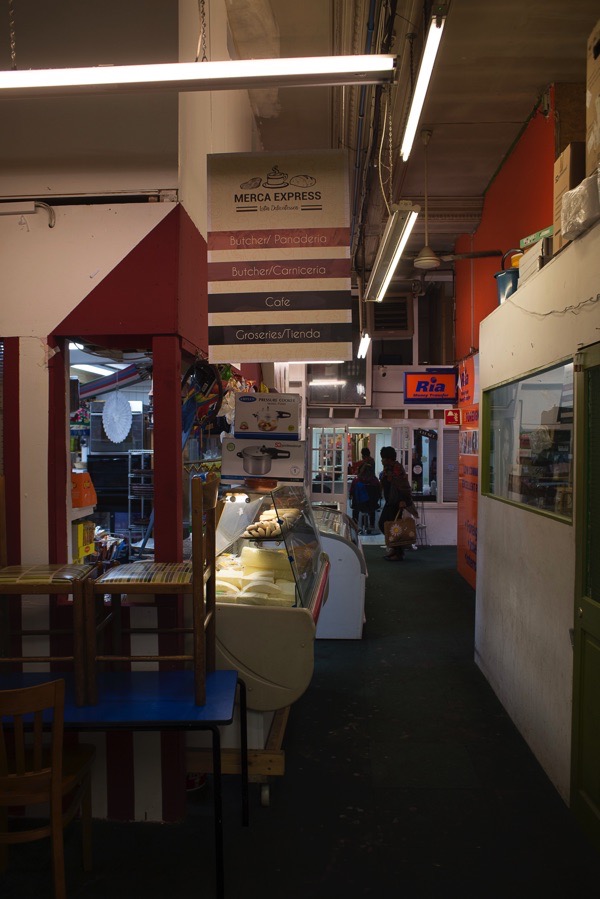
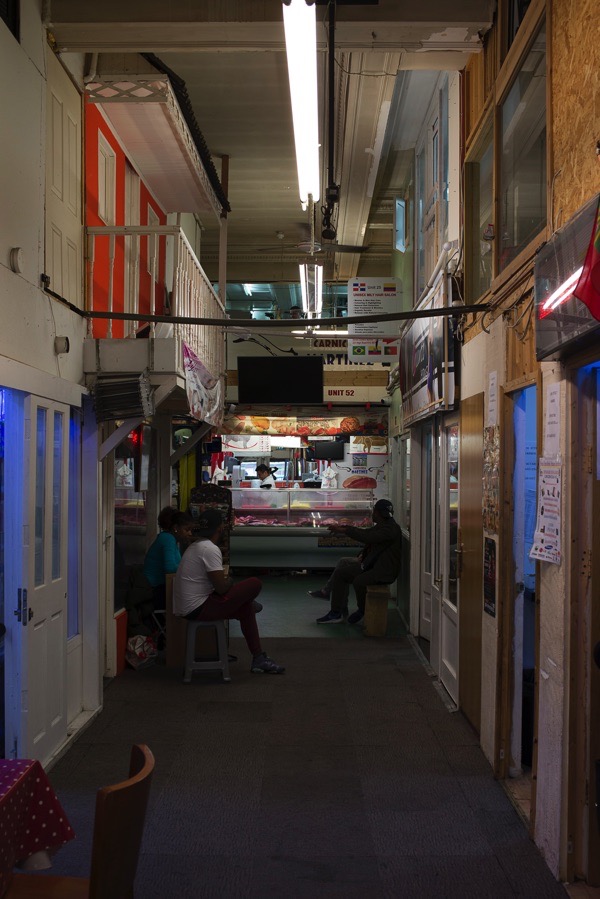
Saturday nights at the Latin Market above the station in Seven Sisters are legendary, celebrated for the exuberant crowds, the variety of delicious food, the salsa dancing and the live music. This astonishing labyrinth of shops and booths built into a former department store is almost hidden from the street, yet you only have to walk through the frontage to discover yourself in Latin America. Here you can get a meal or a haircut, find a flat or a job, change money, buy fresh food and get your nails done, all under one roof.
Originally set up by small traders of South American origin, it now includes, Africans, Iranians and many others. Here in N15 – London’s most racially diverse postcode – the market is sometimes referred to as the United States of Tottenham. It is open to all and despite the best efforts of developers to close it down over the last twelve years, a tenacious campaign to save it has ensured that the market still flourishes against the odds. Contributing Photographer Sarah Ainslie & I went on along on a quiet day to take portraits and listen to the traders stories.
Support the Campaign to Save the Latin Market
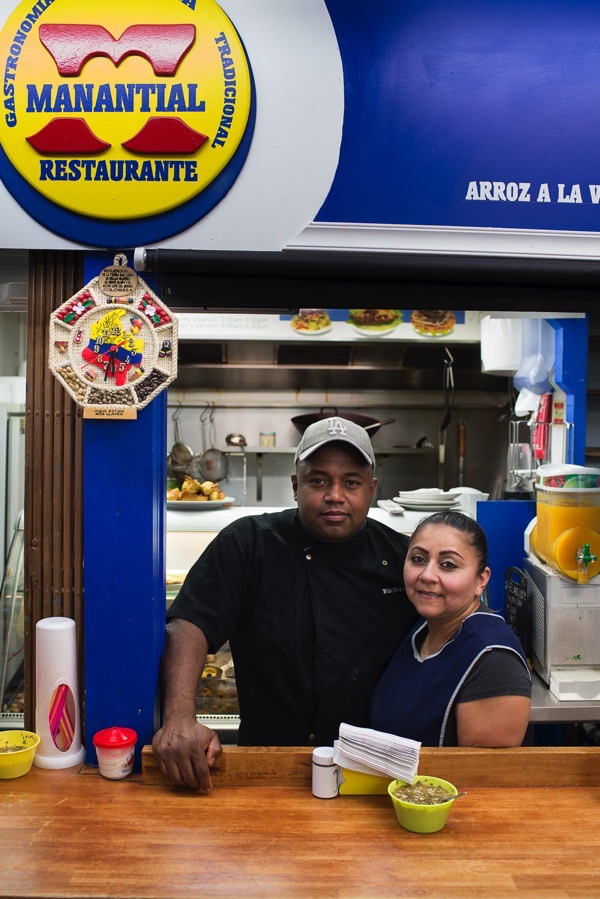
Fabian & Aleyda Alberto Catano Casavid, Restaurant Manantial
Fabian – “I was badly injured in the London bombings of 7/7. A year later I came to this market and met Don Alvaro who said to me, ‘I am selling half of my butcher’s shop, take it and do what you like with it – this will help you overcome your depression and stress.’ So I bought it with my compensation money from the bombing and I started to sell food because I always liked food and I had learnt to be a cook in Colombia. Now I have been here for thirteen years. I still get panic attacks every so often but this business has been a tonic for me. I have now had seven operations but working here distracts me from all that. It is my home! I arrive here at seven in the morning and leave at eight at night. This small restaurant is everything for me.
The new market administration have been trying to get rid of some the traders so they took away my licence claiming I did not pay my rent. I took them to court and it was established I had paid. Now they claim they took it away because I did not pay for electricity. I usually paid around £140 a month but then they increased it to £900 a month. I used to pay £70 a month for gas and then they increased that to £400. I have suffered a lot of discrimination from the management. This market is very important because a lot of vulnerable people can find a refuge here. People arrive here from South America without food or anywhere to live but we can solve their problems because we are all family.”
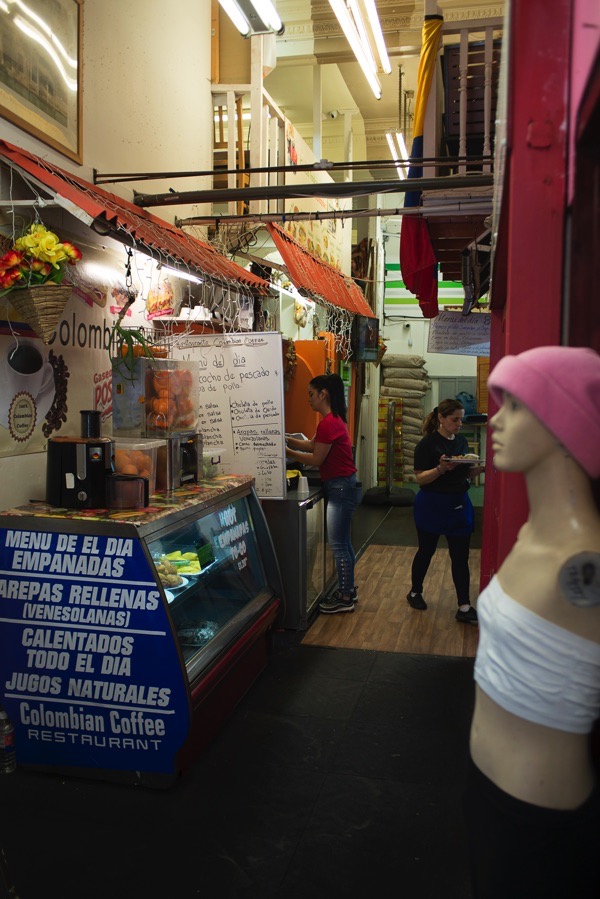
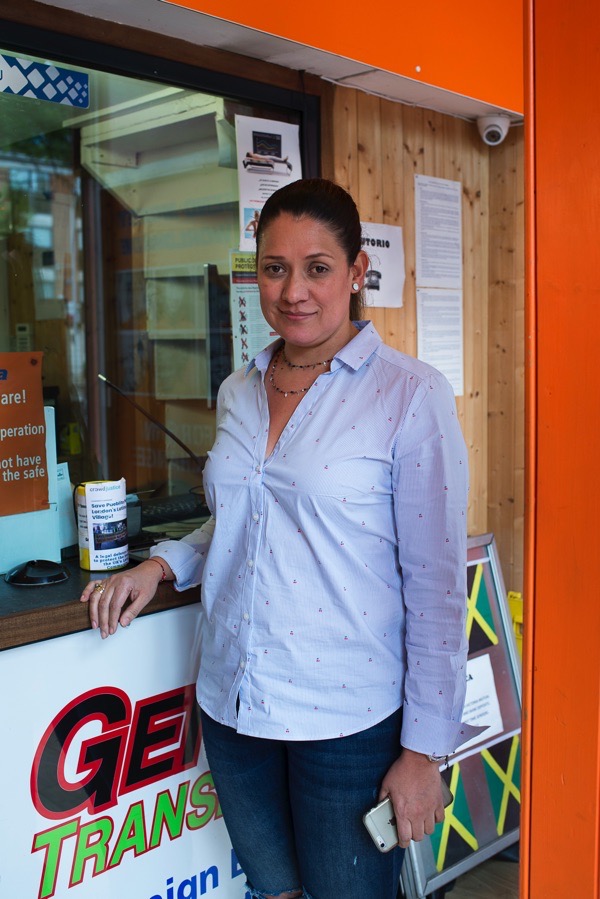
Paula Andrea Alvarez Martinez, Genesis Money Transfer
“I am from a village called Anserna Caldas in Colombia, where I grew up on the family farm that belonged to my father and his father before him. We kept cattle and grew coffee. But the story of my family is tragic because most of those on my father’s side have been assassinated, my uncles, my grandfather and my father. A feud arose with another family and the killings began. I witnessed this violence in my childhood and all these losses became too much for us but nobody wanted to leave. When things got really tough in 1992 my father came to London. He did unskilled labour, cleaning and washing dishes, before returning to Colombia after a year.
At that time, there were a lot of problems with armed guerrillas and they kidnapped my elderly grandmother, but my father confronted them and took my her back. He became a hero, featured in newspapers, but from that moment he became a target and the threats began. It was very difficult time for our family. My younger brother was in London and he sought asylum. The day my father was killed, I was away on a school excursion and my cousin’s boyfriend arrived at half past ten. I knew something had happened but I never imagined my father was dead. Our lives changed. We became separated. I was eighteen years old and I went to live with my aunt in Bogota. I worked and studied psychology. After sixteen years, I met my current husband who is British and four months ago I came to London.”
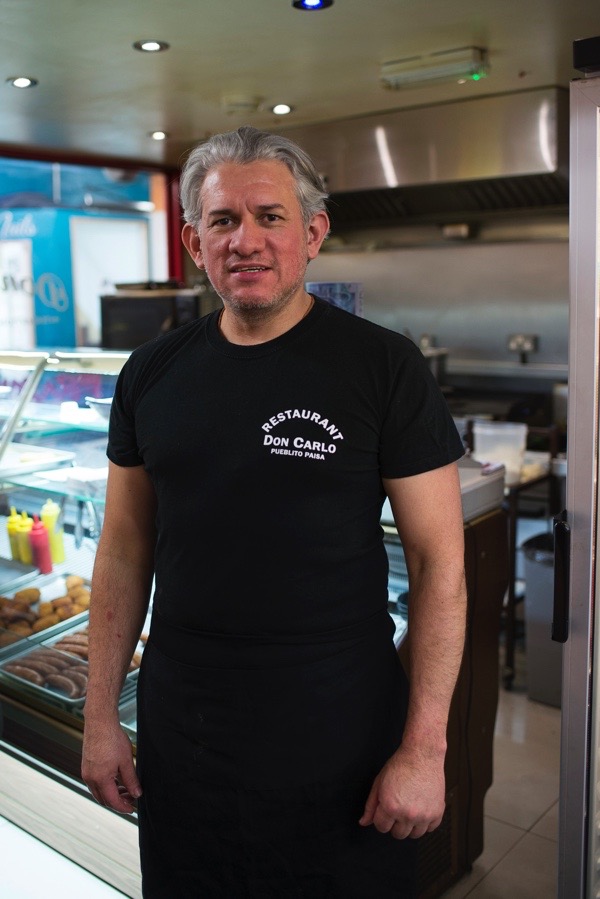
Juan Carlos Alvarez, Don Carlo Restaurant
“I was one of the first traders in this market fifteen years ago. We were looking for a place for the Colombian community. My first business here was the car wash outside, then I sold the car wash and opened a restaurant. Always I have been around this market and my children have grown up in it – both of them are at university now. I am working now to pay for their fees.
When I started it was crazy because some people were using the units for prostitution and drug dealing and nobody else dared enter, yet slowly it got better. I am disappointed now because it used to be cleaner and more secure but recently it has been run down by the management. They want to turn it into a dump so they can justify knocking it down. They want to emphasise the negative. Still, after three, a lot of parents come with their kids and all of us we look after them. Anyone that arrives from South America, they know this place and we can help them. I work with local schools who bring children to try South American food and they learn about another culture, without even leaving Tottenham.”
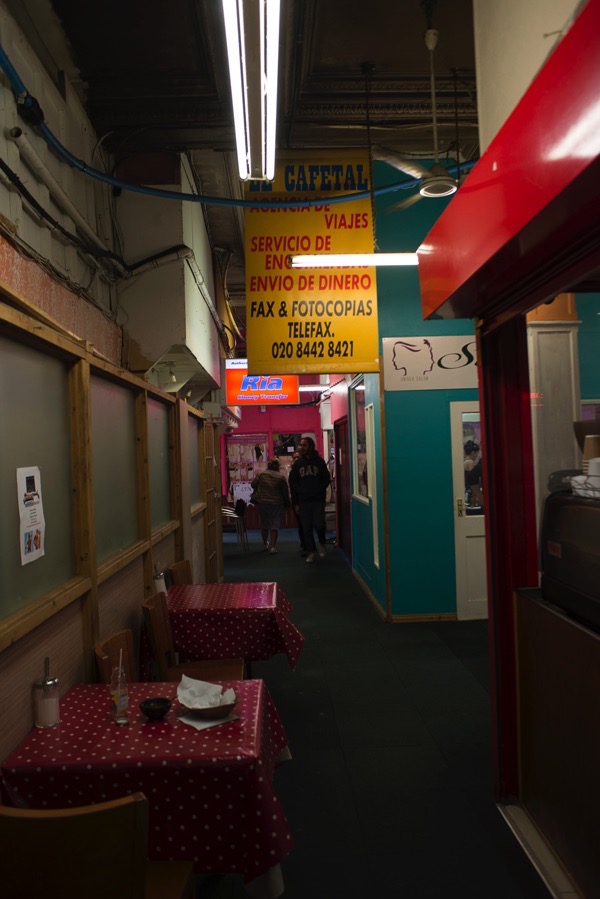
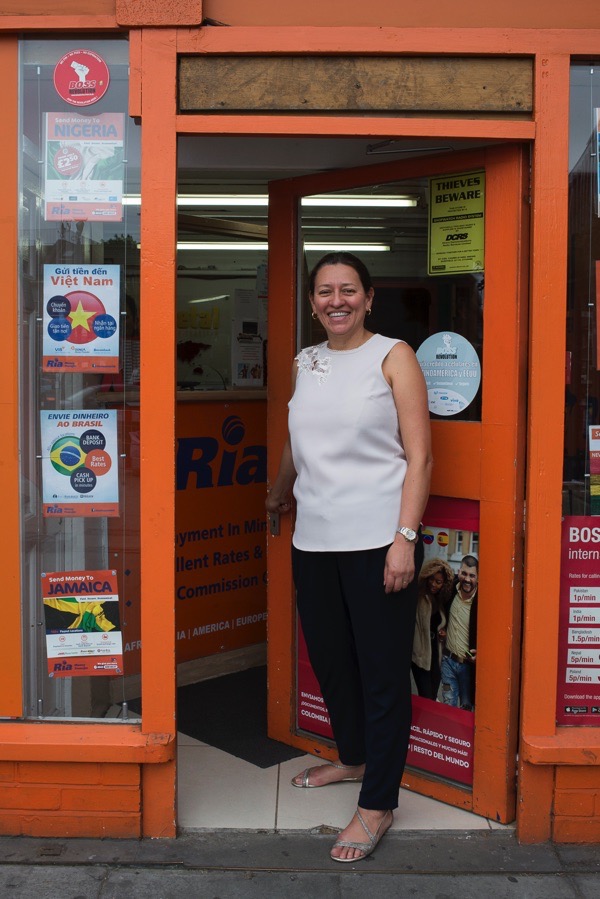
Vicky Alvarez Martinez, El Cafetal Services
“I started working here sixteen years ago. The reason was that I was a single mother with a daughter, divorced from my ex-husband. It was so difficult financially for me to work and earn enough to pay the bills. My friend told me that there was a unit to let in the Latin Market but I did not have any money so I went to the bank for a loan. I thought it would suit me because I could take care of my daughter at the same time as working and earning money. When my daughter finished school each day, she would came here and play around in the market.
At first, I brought merchandise from Colombia like silver and Colombian jeans for women. I was also working part-time somewhere else then, so when I finished I picked my daughter up from school and we came and opened up here. We were only three or four traders then but slowly the community started to come and the need of everybody else became our needs. That has been the real achievement – it is not what we sell, it is not what we do it, it is the community we have created. People come here with problems and we understand because we have been through the same struggles. In the beginning, it was the Colombian community and then people from all over Latin America and then people from all over the world. Now it is a market for everybody.”
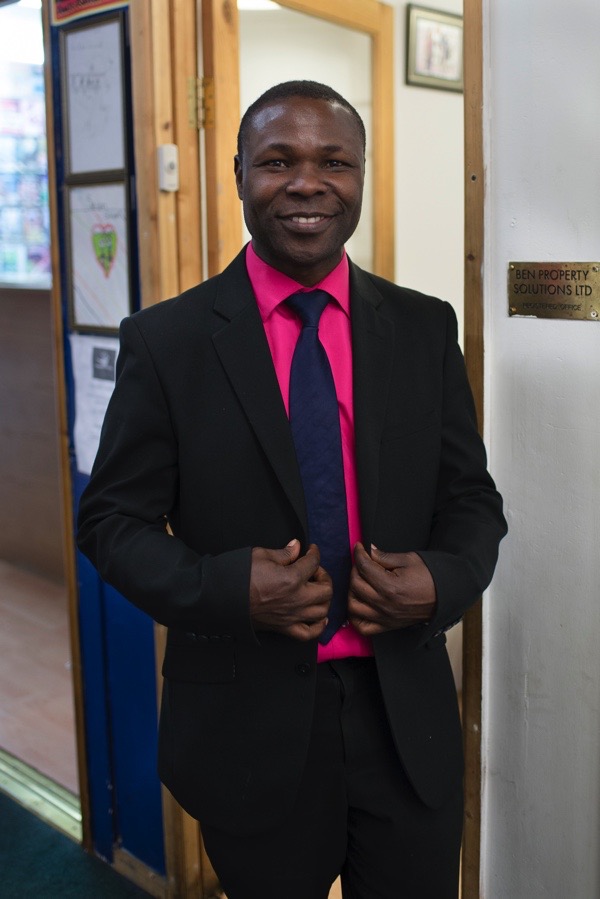
Ben Sanday Nyerende, Property Services
“I come from Uganda and I have been trading in this market since 2006. I came to Britain in 2002 because there were so many difficulties in my country and circumstances forced me to leave. This village is for everyone and there is a vibrant community here. Everyone is very helpful here and we found it easy to integrate and work with them. It feels a million miles from Africa but it makes a real difference for a person like me who comes from far away, to mix up with these good people. I started up as an estate agent in the market, we manage and rent properties, and I am one of the few that will work with vulnerable people living on benefits. People that other agencies reject, we take them. My customers all come through this market and they are from all parts of the community.
As traders, we used to have a sympathetic management in the market but in recent years many things have changed. The new management have driven away our customers and affected our livelihoods, by saying they are going to knock down the building in adverts all over Tottenham. They will not fix anything, they permit the property to be vandalised. This is their way to drive us out but this building brings everyone together, so many people from different cultural backgrounds. The whole building has free parking but the management give out parking tickets and drive customers away. They created their own company to make money out of this, pounding us with penalties. I received a parking ticket in the mail for a time when I was not parked here. There is nowhere to buy a ticket but they fine you for not having one. The whole system is scrambled! People are scared and living in a fearful manner, but I am not scared – they will have to take me out of here with a bulldozer.”
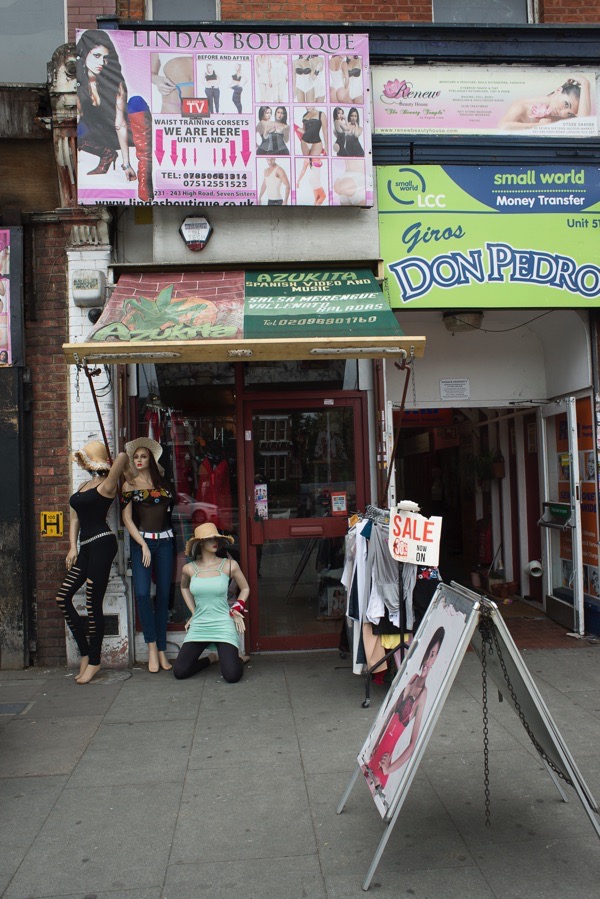
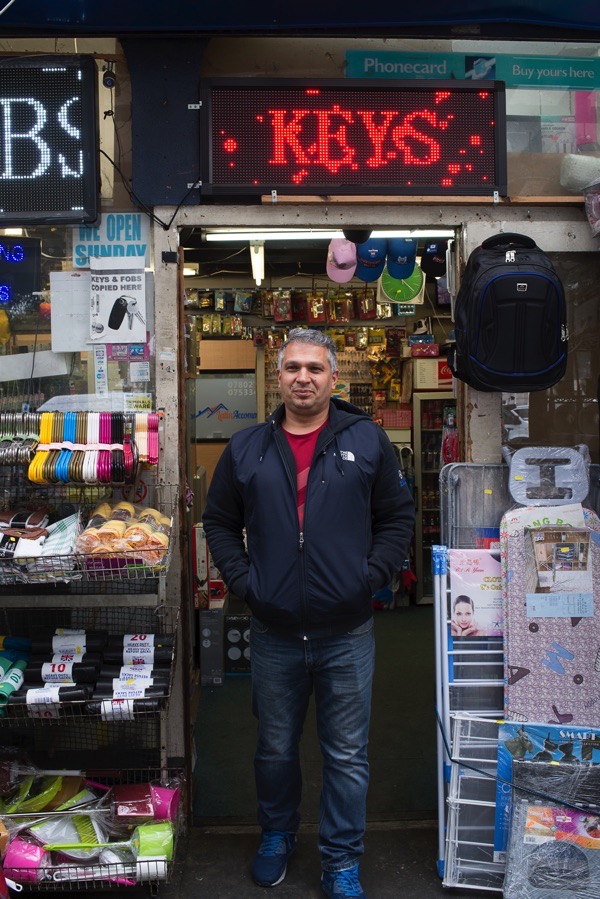
Farhad Zarei, City News
“I have been here in this market since 2002, running a general store selling housewares and doing key cutting. I bought the shop which had already been running for twenty-five years. Since then, the market has become busier and my business has grown, so I was able to expand into the next unit two years ago. The South American people have brought a lot of business. It is a very important place for me because I have been here nearly seventeen years and all my life is working in this market.”
Photographs copyright © Sarah Ainslie
You may also like to read about
So Long, Nathan’s Pies & Eels
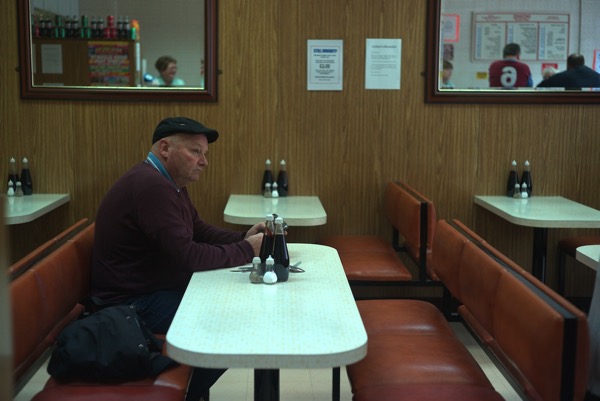
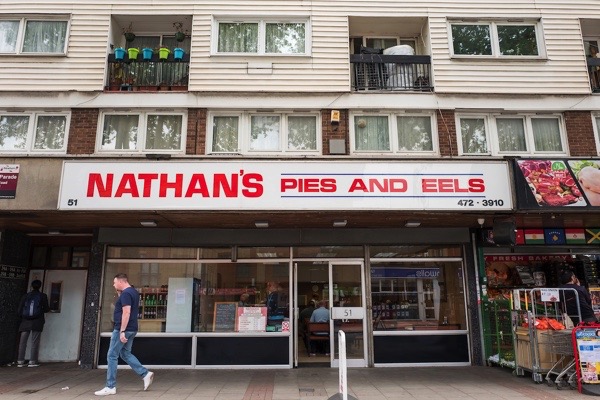
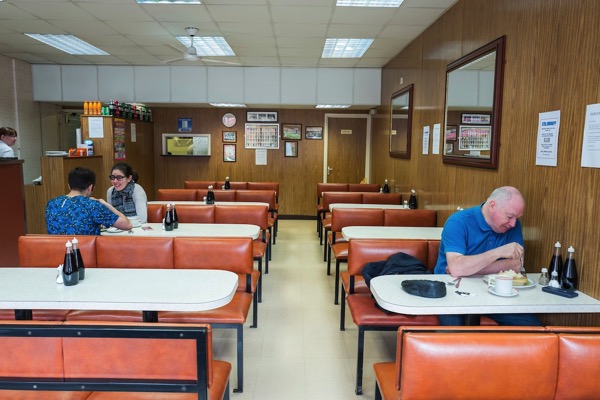
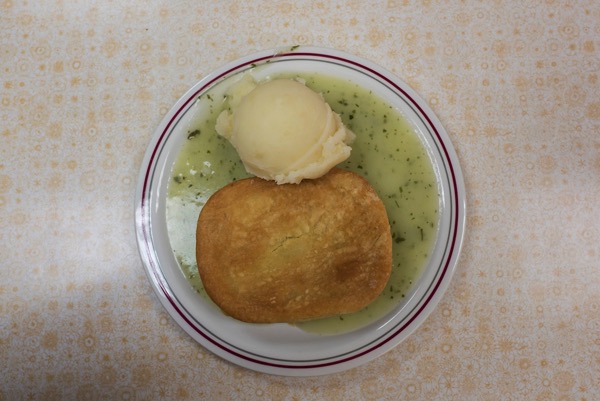
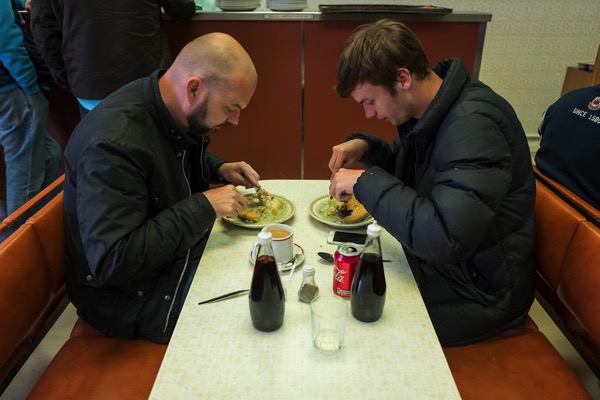
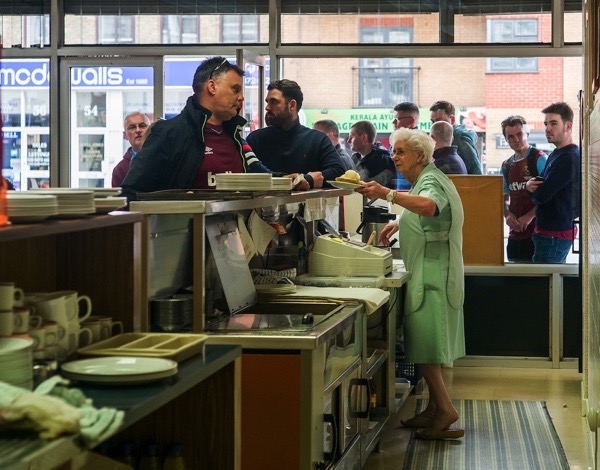
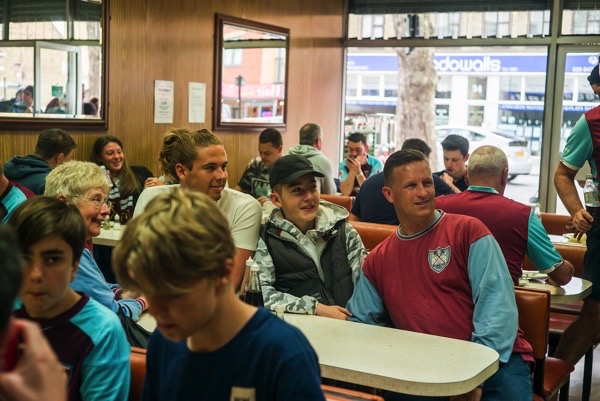
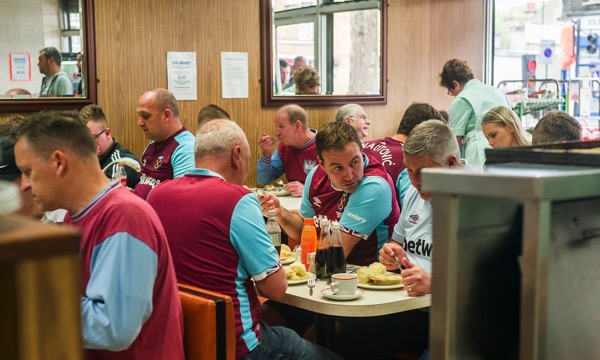
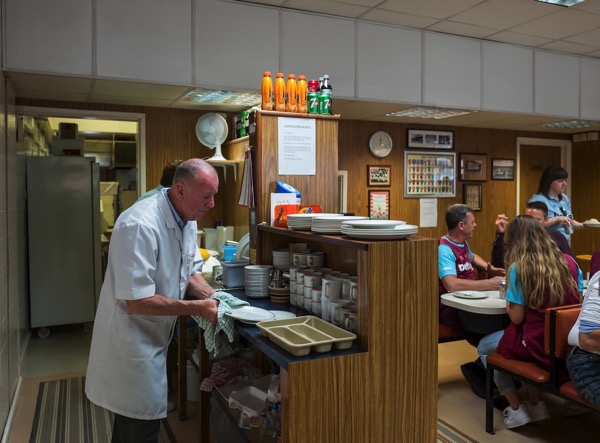
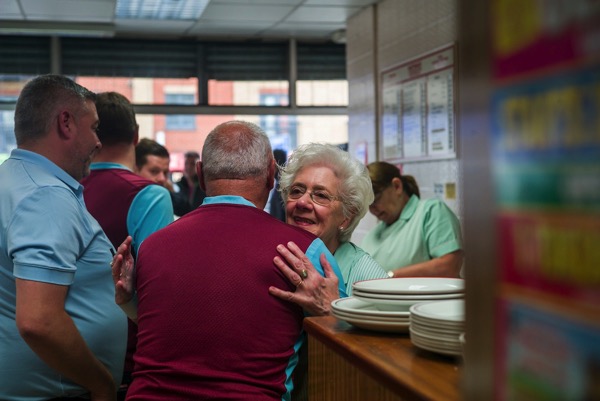
Contributing Photographer Andrew Baker visited Nathan’s Pies & Eels in Barking Rd to record the drama of West Ham’s last home game of the season, when – as they have done every Saturday for more than forty years – fans piled in for a hearty meal before the match. Yet this was a poignant occasion because Nathan’s closed for good yesterday, shut down by excessive rent increases that have rendered this thriving business untenable.
Nathan’s was an East End cultural landmark, a community centre and a culinary destination, cherished for its delicious pies cooked freshly each day to the same recipe by generations of the Nathan family. At this moment of the passing of an era, I sat down with Richard Nathan in his beautiful sparkling pie shop to record his family’s story and celebrate their incredible achievement and service to their beloved customers in Newham through the decades.
“We opened this shop in November 1974, my great-aunt Dorrie and her husband Roy. Although he was a Minchin, they put her maiden name ‘Nathan’ on the shop. My grandparents had been in the business of pies before that, it had always been in the family. My parents Christine & David took over in 1983 and they still help out in their late seventies. Finally, I am the fourth generation.
It has always been an Eel & Pie house and we have never changed the recipes. Even though we have been through thick and thin, we have retained a high level of quality. You get a full pie full of meat without any gristle. At other places, you might cut into pie and find it full of gravy but not here!
I am the owner-proprietor which means I do everything from unblocking the toilets to making the pies. I had a good teacher, my father. From the age of five, I would be in the bakehouse standing on a chair with an apron trailing down to my feet, cutting bits of dough off the pies. So I have always helped. I worked as a Saturday boy for a number of years and when I left school at sixteen I decided to come into the business. That was thirty years ago next month. Quite some time even though I am still young.
I work ten to twelve hours a day, five days a week. It has not made me rich but it has provided a comfortable living, through sheer hard work. Everybody that works here has made Nathan’s Pie & Mash shop what it is today.
We are closing now after more than eighty years of our family in the business. There are lots of factors that have led to shutting the shop – the closure of Upton Park football ground, the imposition of strict new parking regulations so our customers cannot park, the new business rates and a threatened 100% rent increase. Rent is a hard fought battle these days. It used to be like a gentlemen’s agreement that every five years it would increase by perhaps a thousand, but all of a sudden a new regime came in. The council is the landlord but they appointed a property management company. It took me four years of court battles to bring their proposed rent of £22,000 per annum down to reasonable £14, 500, from an original rent of £11,000. Meanwhile the business rates have increased and increased. The rent and rates here are over £25,000 a year but I cannot put the prices of my pies to match these increases.
When I look back, it has been fun running this shop. On a football day, it was part of a big social routine – buying your programme, coming in here and having pie and mash, enjoying a pint at the Boleyn Tavern or the Working Men’s Club and then going round the back to the stadium. Unfortunately, all that has now gone and the eight hundred and sixty-six dwellings in the new development that replace the stadium will not be affordable for local people.”
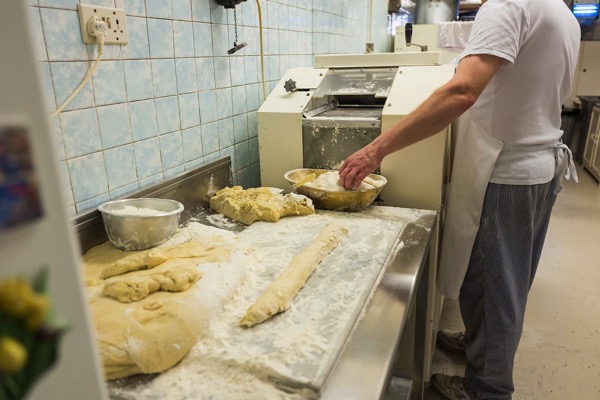
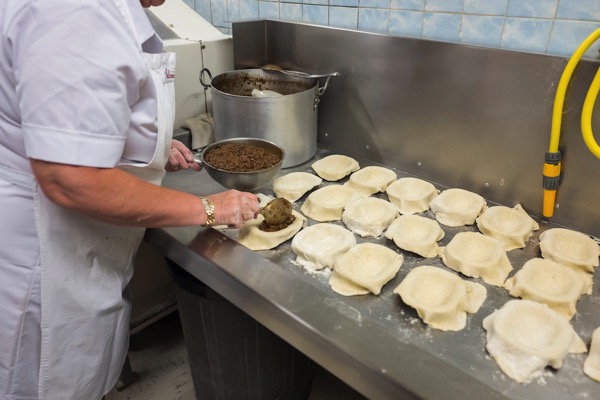
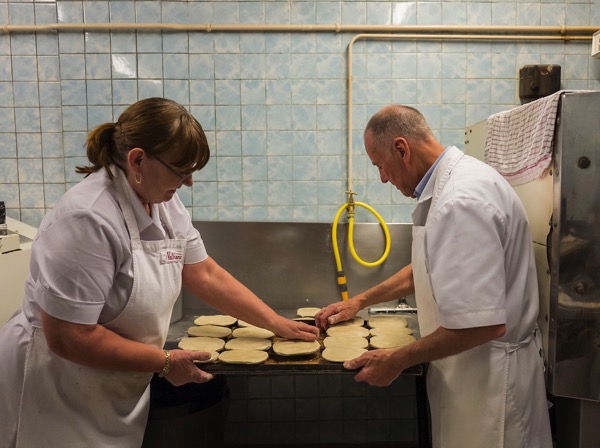
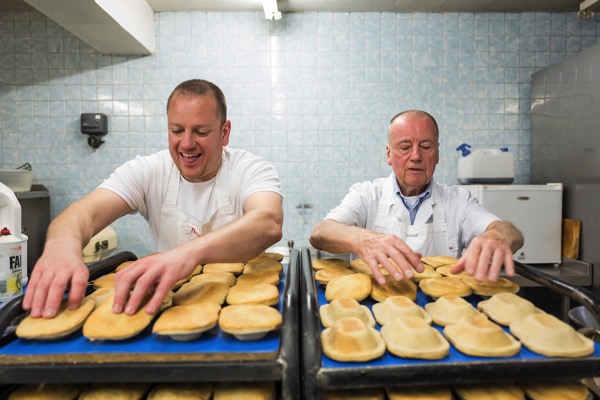
Richard & David Nathan, piemakers
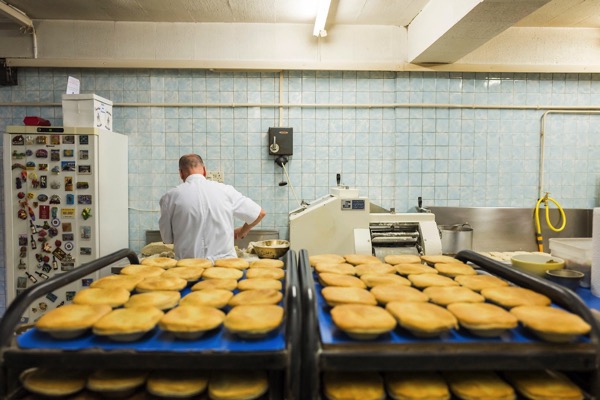
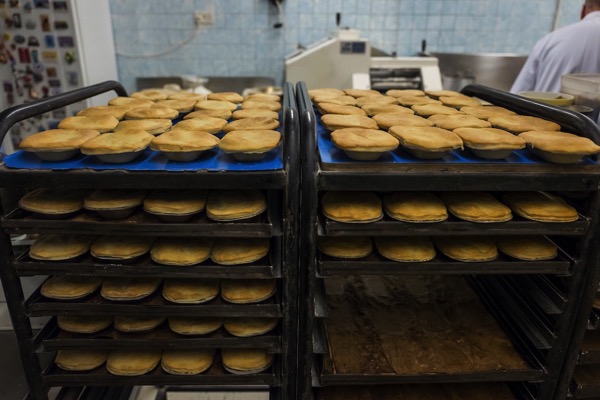
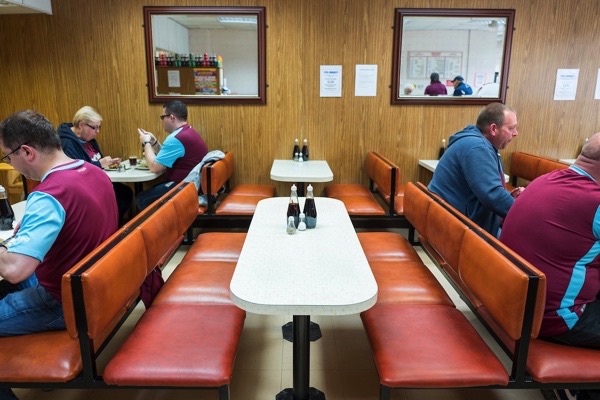
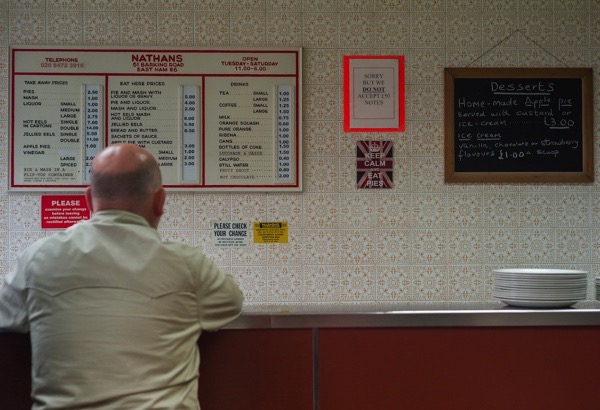
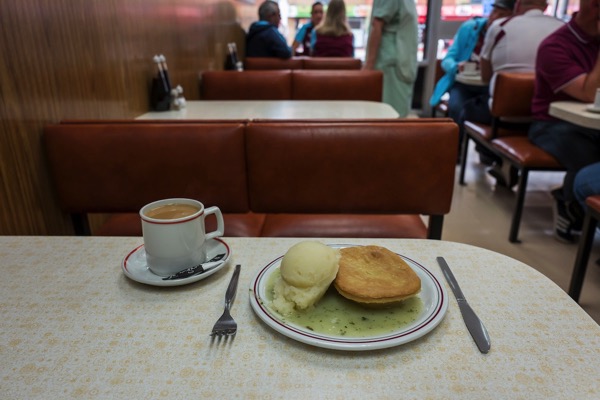
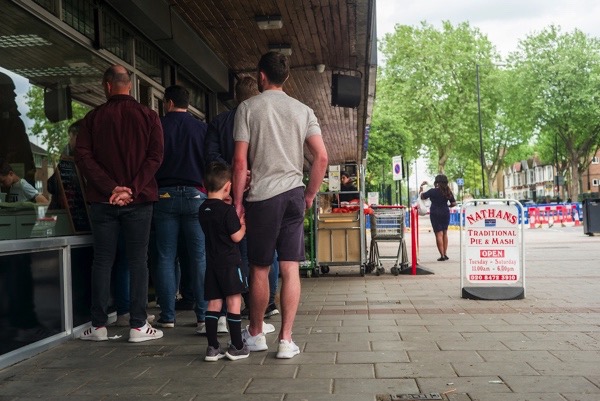
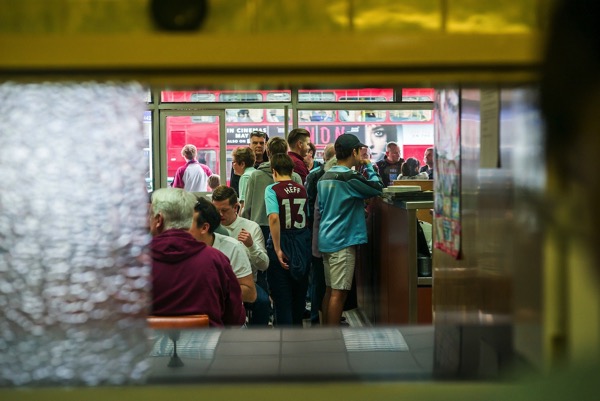
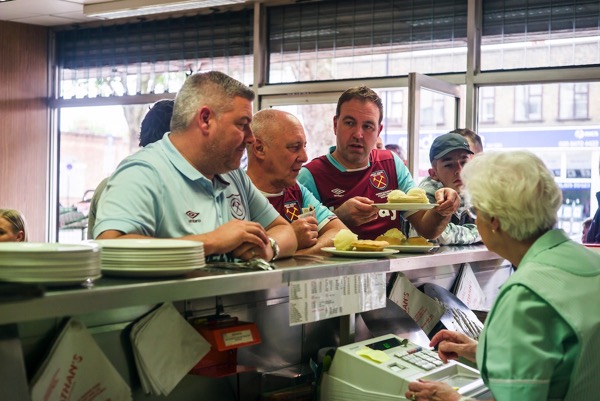
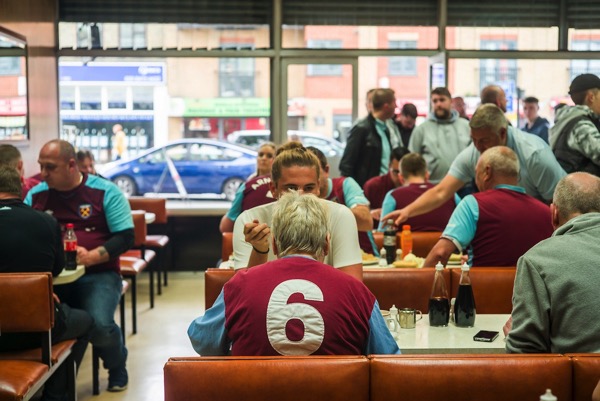
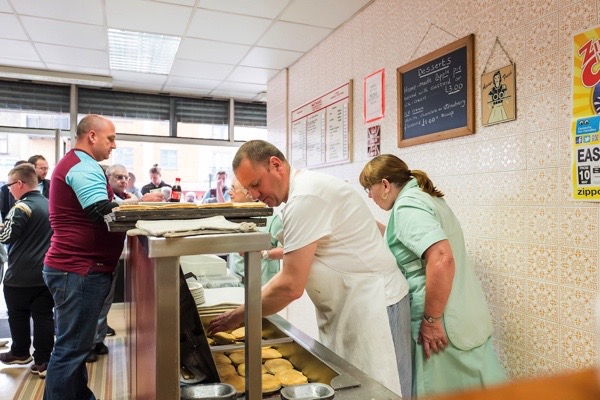
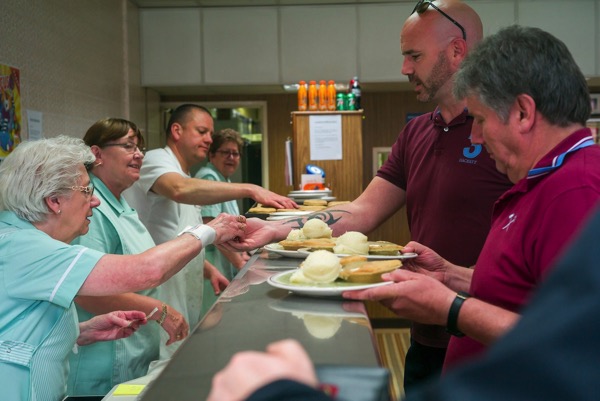
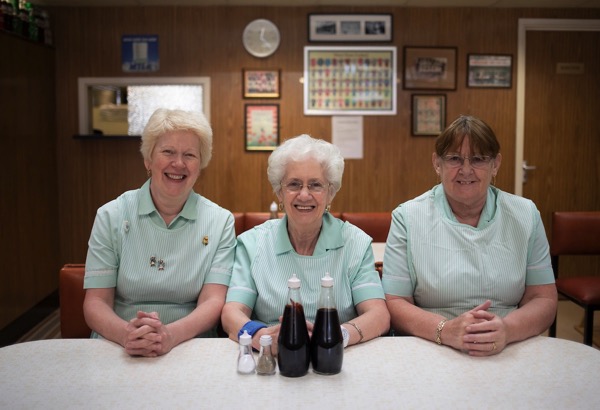
Pamela Balder, Brenda Rice and Shirley Frankland
Brenda Rice – “I started in 1976. I had just lost my daughter so I need to do something and I came to work here. I walked by one day and saw the advert. I said to my husband, ‘There’s a job going down the Boleyn,’ and he said ‘Would you like me to drive you down there in the car?’ and I have been here ever since. Some of our customers have been coming in for years and we all know each other, we are like family. Even if you wake up in the morning and don’t feel like coming in, by the time you come here and get talking to everyone you feel better.”
Shirley Frankland – “I came to work here in 1993. It is walking distance from my home and I enjoy the social life. We go out together and meet up at different places. We have already got three evenings booked ahead including the Brick Lane Music Hall. We cannot tell you what we get up to!”
Pamela Balder – “Like Shirley, I started in 1993. I had been married a little while and we bought a house when prices were sky-high so I needed to look for a job. At the time, my mum Pam worked here and she said, ‘There’s a vacancy.’ Before that, I was a Saturday girl from the age of fourteen.”
Photographs copyright © Andrew Baker
You may also like to read about
Boiling the Eels at Barney’s Seafood
Some Favourite Pie & Mash Shops
More Favourite Pie & Mash Shops
The London Riot Map
Each Saturday, we are featuring one of Adam Dant’s MAPS OF LONDON & BEYOND from the forthcoming book of his extraordinary cartography to be published by Spitalfields Life Books & Batsford on Thursday June 7th.
Please support this ambitious venture by pre-ordering a copy, which will be signed by Adam Dant with an individual drawing on the flyleaf and sent to you on publication. CLICK TO ORDER A SIGNED COPY OF MAPS OF LONDON & BEYOND BY ADAM DANT
Tickets are already on sale for Adam Dant’s illustrated lecture showing his maps at the Wanstead Tap on Thursday June 21st. Click here to book tickets
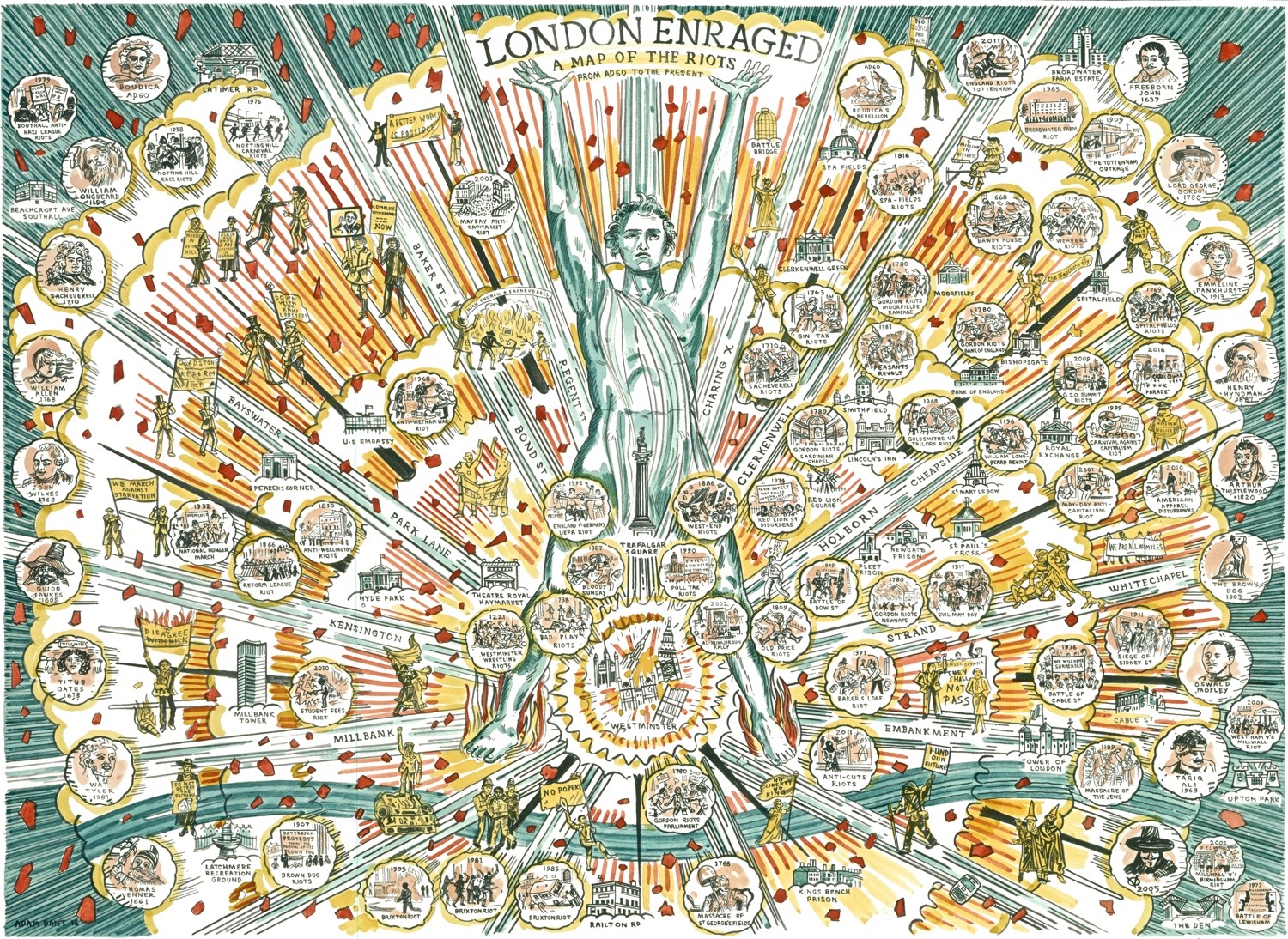
(Click on this image to enlarge it and study the history of urban turbulence)
Adam Dant maps the venerable London tradition of riots in his elegant cartography of public disturbances from AD60 until the present day, LONDON ENRAGED.
A LIST OF THE RIOTS
AD 60 Battle Bridge – alleged current site of King’s Cross station where Boudica’s Revolt resulted in her death
1189 Tower of London – Jews honouring Richard I at the king’s coronation were massacred
1196 St Mary le Bow, Cheapside – William Fitz Osbert AKA ‘William of the Long Beard’s’ sermon against ‘The Rich’ resulted in rioting and his being drawn apart by horses and hanged on a gibbet
1221 Westminster – Riots followed an annual London v Westminster wrestling match
1268 City of London – ‘ A dispute arose between certain members of the craft of the Goldsmiths and certain of the craft of the Tailors ‘
1391 Salisbury Place, Westminster – The Bakers’ Loaf Riots
1517 St Paul’s Cross – Evil Mayday Riots, A Xenophobic speech by Dr Bell prompted subjects of Henry Vlll to riot against foreigners
1668 Moorfields/Shoreditch – ‘The Bawdy House Riots/Messenger Riots ‘Dissenters prevented from private lay worship lay siege to illegal brothels in the East End in protest at the King’s tacit approval of such trade’
1710 Lincoln’s Inn – The Sacheverell Riots : The trial of preacher Henry Sacheverell resulted in riots, the destruction of Daniel Burgesse’s Presbyterian meeting house and the passing of the 1714 Riot Act
1719 Spitalfields Weavers’ Riots – weavers riot and attacked women for wearing Indian clothing
1743 Gin Riots – Rioting against the gin act is fuelled by the consumption of gin
1768 St George’s Field’s, Lambeth – Crowds gathered and rioted in protest against the imprisonment of John Wilkes for criticising the king
1769 The Spitalfields Riots – Weavers Riot over rates of piece-work pay
1780 The Gordon Riots – Lord George Gordon called for the repeal of the Catholic Relief Act of 1778 and a return to the repression of Catholics
1809 The Old Price Riots, New Theatre Covent Garden – Riots caused by rising theatre ticket prices
1816 Spa Fields Riots – Revolutionary Spenceans rioted after a mass meeting in Islington
1830 Hyde Park – Riots for electoral reform resulted in the Duke of Wellington’s carriage being attacked and his installation of iron shutters at Apsley House
1866 Hyde Park – Members of the Reform League riot after it’s suppression
1886 The West End Riots – Rioting followed a protest by the Social Democratic Foundation, Britain’s first socialist political party who agitated against free trade
1887 Trafalgar Sq, Bloody Sunday – Violence erupted between police and demonstrators protesting against unemployment and coercion in Ireland
1907 Battersea Park, The Brown Dog Riots – Rioting started after medical students attempted to destroy an anti-vivisection statue of a dog
1909 The Tottenham Outrage – Deaths and injuries resulted from the fall out of an attempted armed robbery by two Bolsheviks
1911 The Siege (or Battle) of Sidney Street – A violent stand-off occurred between police and the army and two Latvian revolutionaries
1919 The Battle of Bow St – Police clashed with Australian, American and Canadian servicemen after attempting to stop them playing dice outside the YMCA
1932 Hyde Park , National Hunger March Riot – Police confiscates a petition of a million names from The National Unemployed Workers Movement resulting in riots
1936 The Battle of Cable St – East enders rioted against the police who attempted to protect a march by the British Union of Fascists
1958 Notting Hill – Race riots between White British residents and West Indian Immigrants
1968 Grosvenor Sq – Demonstrations against the US war in Vietnam outside the American Embassy turned violent
1974 Red Lion Sq – Disorder followed demonstrations against the National Front by Anti-Fascists
1976 Notting Hill Carnival Riots – Riots occurred after heavy handed policing of pickpockets in the carnival crowd
1977 The Battle of Lewisham – A National Front march from New Cross to Lewisham resulted in riots after violent clashes with Anti-Fascist demonstrators
1979 Southall Riots – A demonstration against a National Front election meeting resulted in violence and the death of Anti-NF activist Blair Peach
1981 Brixton Riots – Riots on ‘Bloody Saturday‘ resulted from antagonism between the police and residents of an area with a high level of socio-economic problems
1985 Brixton Riots – Rioting and fires followed the wrongful shooting by police of Dorothy ‘cherry ‘ Grose
1985 Broadwater Farm Riots – Tensions between local black youth and largely white Metropolitan Police following the shooting of Dorothy Grose turned to rioting after the death of Cynthia Jarrett of a heart attack during a police search
1990 Poll Tax Riots – Rampaging and looting followed a protest against Margaret Thatcher’s Community Charge or ‘Poll Tax’
1995 Brixton Riots – Rioting occurred after a peaceful protest outside Brixton Police station became violent
1996 England v Germany UEFA cup riot, Trafalgar Sq
1999 Carnival Against Capitalism – A battle ensued between mounted police and protestors who had bricked up the LIFFE entrance and set off a nearby fire hydrant to release the lost Walbrook river
2000 Anti-Capitalism Mayday Riot
2001 Anti-Capitalism Mayday Riot
2002 Millwall FC New Den Stadium – Riot between fans of Millwall and fans of Birmingham FC
2009 G20 Summit Protest Riot – Police ‘kettled’ protestors outside the Bank of England which resulted in a riot and the death of innocent newspaper vendor Ian Tomlinson
2009 West Ham FC Upton Park – rioting between fans of Millwall FC and West Ham FC
2010 Millbank – Riots followed student protests against increase in tuition fees
2011 Oxford Circus – Protestors demonstrating against government public spending cuts were ‘kettled’ by the police
2011 Tottenham Riots – Riots followed the shooting by police of Mark Duggan and spread from Tottenham across the country
2010 Brick Lane – American Apparel Disturbances, riots followed after customers were prevented from shopping for cut-price clothes
2016 Brick Lane – The ‘Fuck Parade’ rioting followed a ‘Class War’ demonstration against ‘Cereal Killer’ Cafe

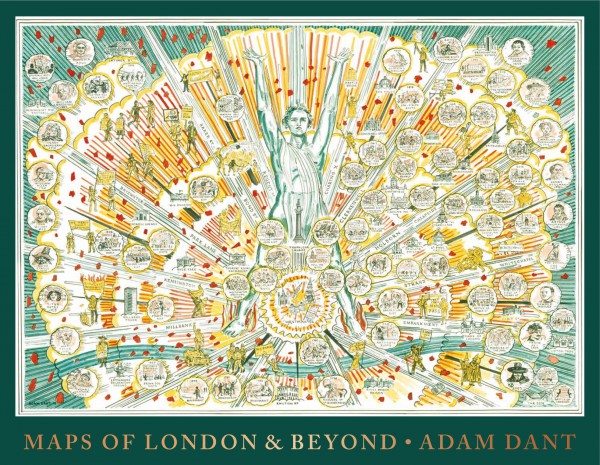
CLICK TO ORDER A SIGNED COPY OF MAPS OF LONDON & BEYOND BY ADAM DANT
Adam Dant’s MAPS OF LONDON & BEYOND is a mighty monograph collecting together all your favourite works by Spitalfields Life‘s cartographer extraordinaire in a beautiful big hardback book.
Including a map of London riots, the locations of early coffee houses and a colourful depiction of slang through the centuries, Adam Dant’s vision of city life and our prevailing obsessions with money, power and the pursuit of pleasure may genuinely be described as ‘Hogarthian.’
Unparalleled in his draughtsmanship and inventiveness, Adam Dant explores the byways of English cultural history in his ingenious drawings, annotated with erudite commentary and offering hours of fascination for the curious.
The book includes an extensive interview with Adam Dant by The Gentle Author.
Adam Dant’s limited edition prints are available to purchase through TAG Fine Arts
The Hackney Whipping Post
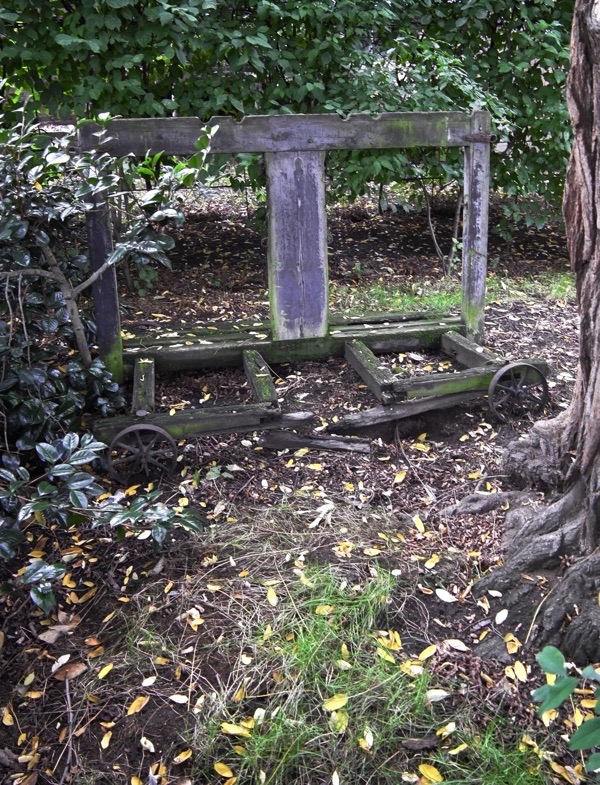
There is a certain tendency to talk about the past as if it were a better place, as if relics automatically speak of our ‘glorious history.’ Yet, occasionally, truth breaks through to remind us that, speaking of the past in this country, it was for many a place of suffering, of want and of violence – an inescapable but far less palatable historical reality.
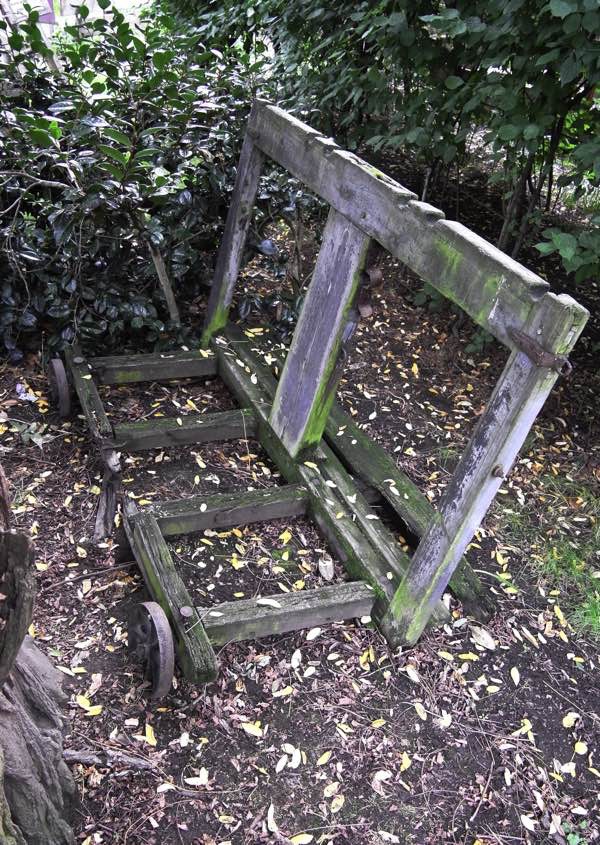
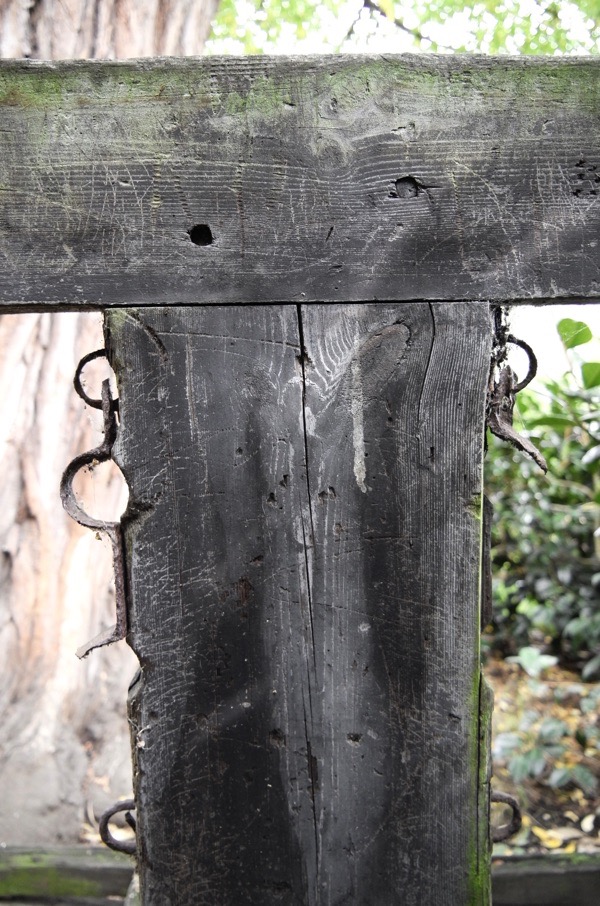
Thus the emphasis of retelling history can often tend towards the celebratory and so, when the churchyard of St John-at-Hackney was handsomely restored with Lottery funds in recent years, the seventeenth century whipping post was conveniently consigned to the nearby backyard of Groundwork, the organisation which supervised the renovations, where it has been rotting ever since.
Historian Sean Gubbins of Walk Hackney drew my attention to this neglected artefact and took me there to see it. He showed me a photograph of it standing in the churchyard in 1919 and confirmed that it had decayed significantly in the last couple of years. Apparently, Hackney Council owns the whipping post but Sean can find no-one who wants to take responsibility for it and many would prefer if it simply rotted away.
In former centuries, the stocks, the whipping post and the pillory were essential elements of social control, but today these fearsome objects are treated with indifference or merely as subjects of ghoulish humour. Since they became defunct, they have acquired a phoney innocence as comic sideshows at school fetes where pupils can toss wet sponges at popular teachers to raise money for a worthy cause.
Yet the reality is that these instruments of violence and public humiliation were used to subjugate those at the margins of society – to punish the poor for petty thefts that might be as small as a loaf of bread, or to discourage vagrants, or to chasten prostitutes, or to drive homeless people out of the parish, or to subdue the mentally ill, or to penalise homosexuals, or to demean religious dissenters, or to intimidate immigrants into subservience, or against anyone at all who was considered socially unacceptable according to the prejudices of the day.
We need to remember this grim history, which reminds us that the struggle towards greater social equality and tolerance of difference in this country was a hard one, only achieved by those who resisted the culture of obedience enforced by state-sanctioned violence and enacted through instruments such as this whipping post.

Extract from Benjamin Clarke’s ‘Glimpses of Ancient Hackney & Stoke Newington’ 1894

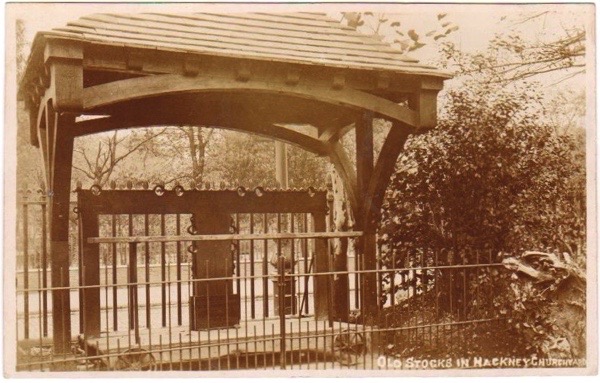
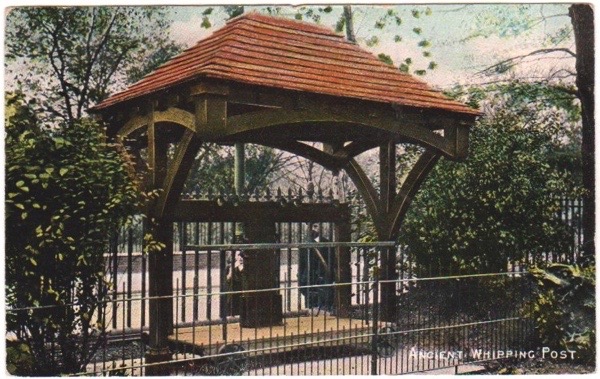
Postcards supplied by Melvyn Brooks
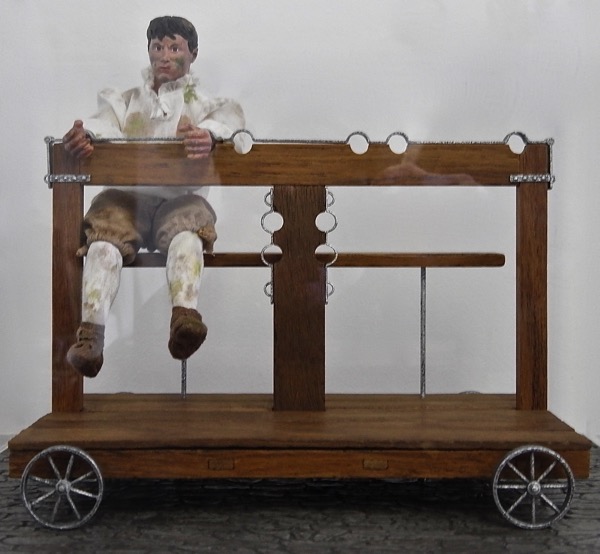
Model of the Hackney whipping post
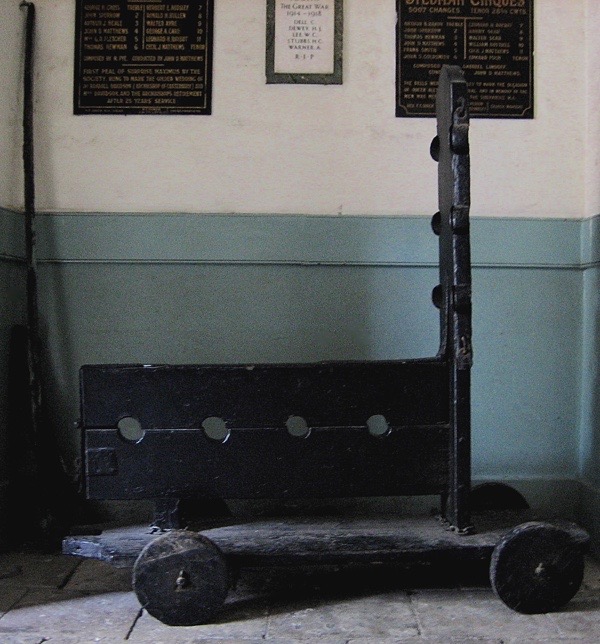
Tudor stocks and whipping post in the entrance to Shoreditch Church
You might also like to read about
Guardians Of The Arches
Our reports about the beleaguered traders under the railway arches in London Fields have become the catalyst for the formation of Guardians of the Arches, a nationwide pressure group campaigning for small businesses in railway arches – many thousands of whom are currently faced with exorbitant rent increases by Network Rail that threaten to put them out of business and destroy their livelihoods. Click here to sign their letter to the Secretary of State for Transport.

Bill Waldon, Westgate Motor Centre
‘I used to have five arches but I was priced out and ended up in this dark hole!’
Contributing Photographer Sarah Ainslie & I visited the occupants of the railway arches in London Fields where an atmosphere of crisis prevails currently. Thirty years ago, these crumbling old arches were empty and derelict but, over time, a diverse economy of small businesses has grown up here – chiefly car repairs, cabinet-making and secondhand furniture dealing, supplemented more recently by brewers, bakers and coffee roasters.
Yet now the owner Network Rail is demanding 200% and 300+% rent increases which threaten to destabilise this small community and drive out those have been longest established in this location offering invaluable services to local residents.
‘We feel we are the guardians of the arches,’ explained Nivinh Chu whose father started Chu’s Garage twenty-eight years ago, ’Yet we are being driven out by these increases, when small businesses are the heart and soul of Hackney.’ In common with some of their neighbours, Chu’s Garage faces a back-dated rent hike from £18,000 to £40,000 per annum while for others the increases are even higher.
‘Bricks were falling out of the roof for the first twenty years but Network Rail did nothing, so we had to built this temporary roof so nobody gets injured,’ Nivinh admitted to me with a grin at the absurdity of the situation.
In response to these adverse circumstances, the occupants of the railway arches are banding together to challenge Network Rail’s excessive rent increases and we support them in their fight to stay in business.
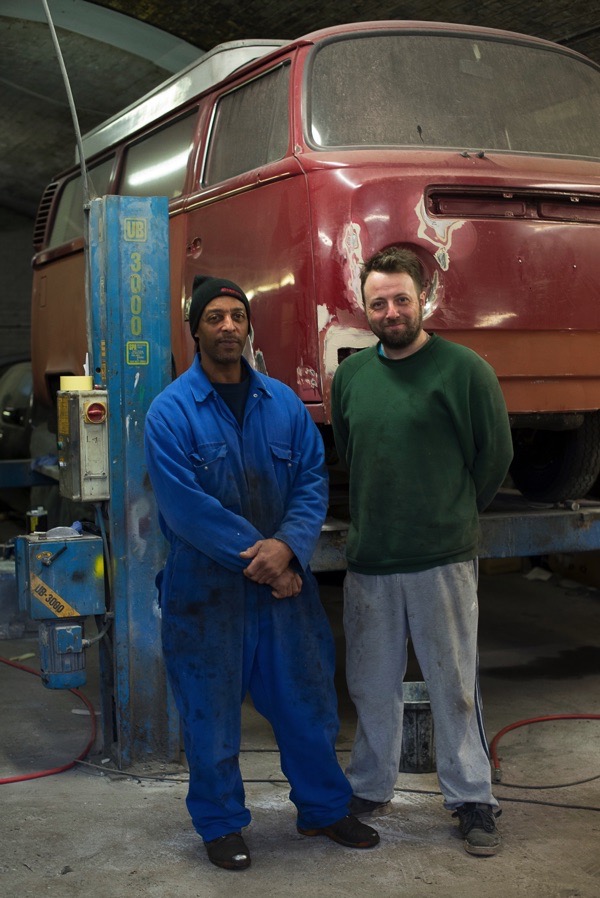
John Lucien and John ‘boy’ Griffin of Westgate Motor Centre, established twenty-four years under the arches – ‘We do general repairs and we try to look after everybody’
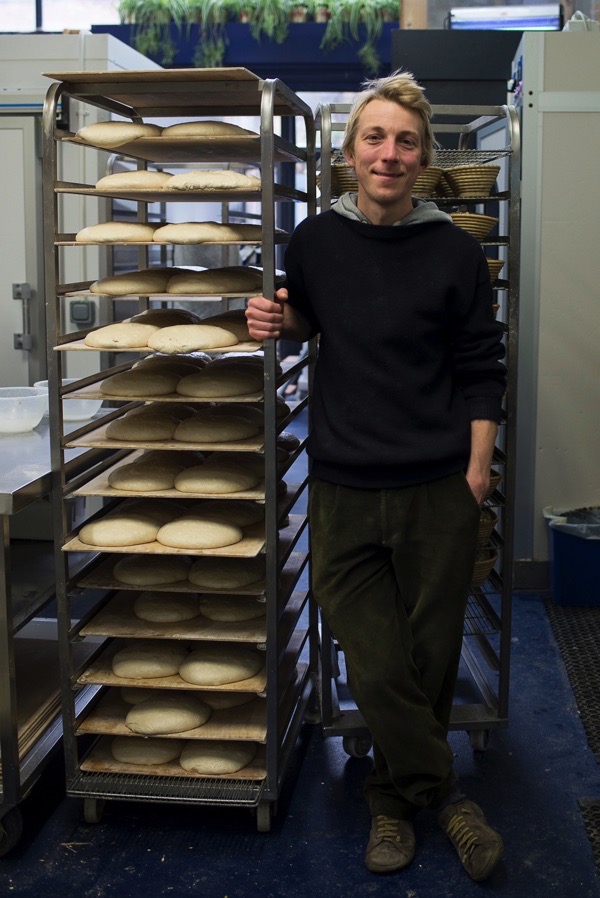
Ben Mackinnon, Founder of E5 Bakehouse
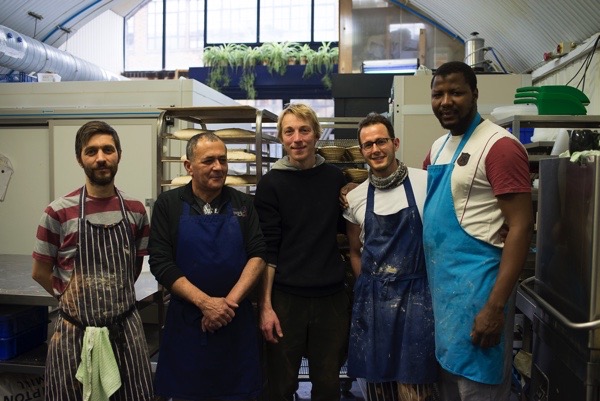
Ben Mackinnon and fellow bakers at E5 Bakehouse
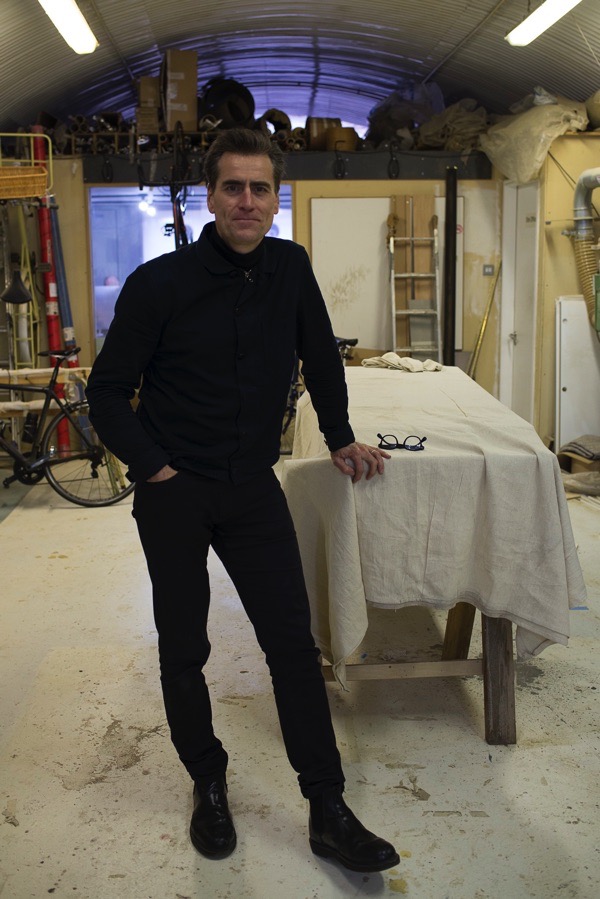
Stephen Maxwell of Maxwell Pinborough, bespoke furniture
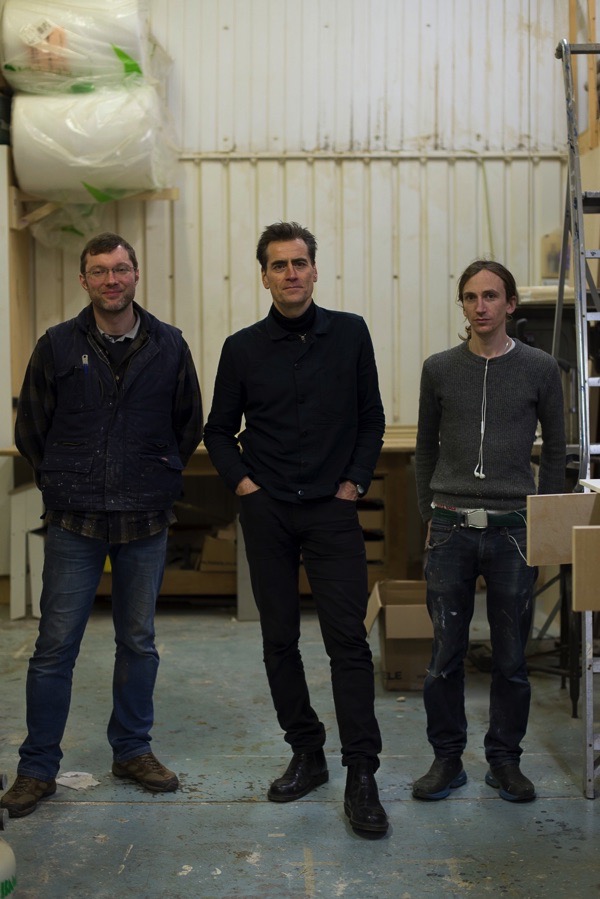
Stephen Maxwell and colleagues at Maxwell Pinborough

Vict Anhu Vu of USA Nails Beauty Supply – ‘For fifteen years, we have had three warehouses under the arches and a shop in Mare St’
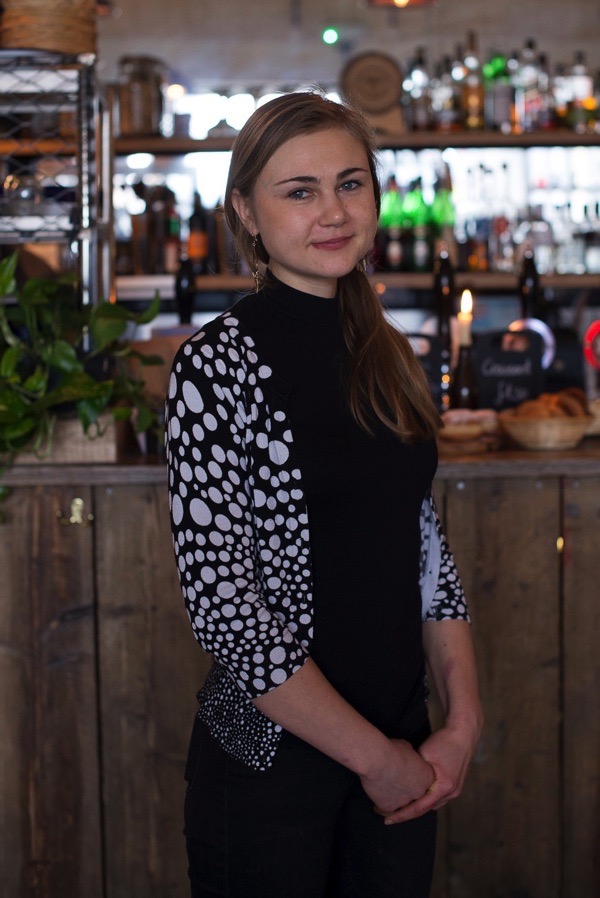
Noemi Dulischewski, founder of Brunch, a pop-up restaurant in the the London Fields Brewery Tap Room which has been running for two years
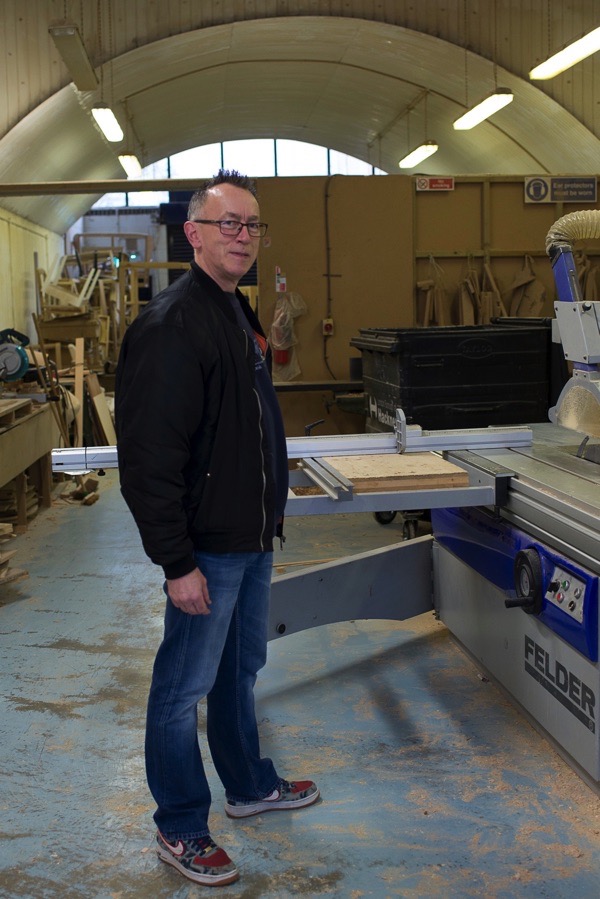
Charlie Fox, Proprietor of Poetstyle bespoke furniture and upholstery – ‘We moved in on Christmas eve thirty years ago and now we are facing 250% rent increase’
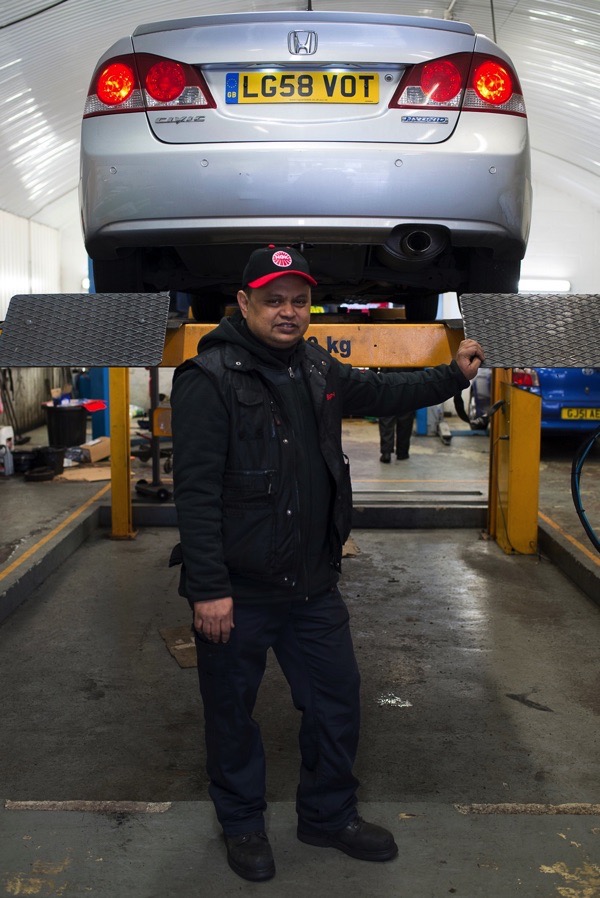
Ali Sharif of Sharif Auto Services has been operating under the London Fields arches for seven years. Currently he pays £30,000 but Network Rail want £100,000
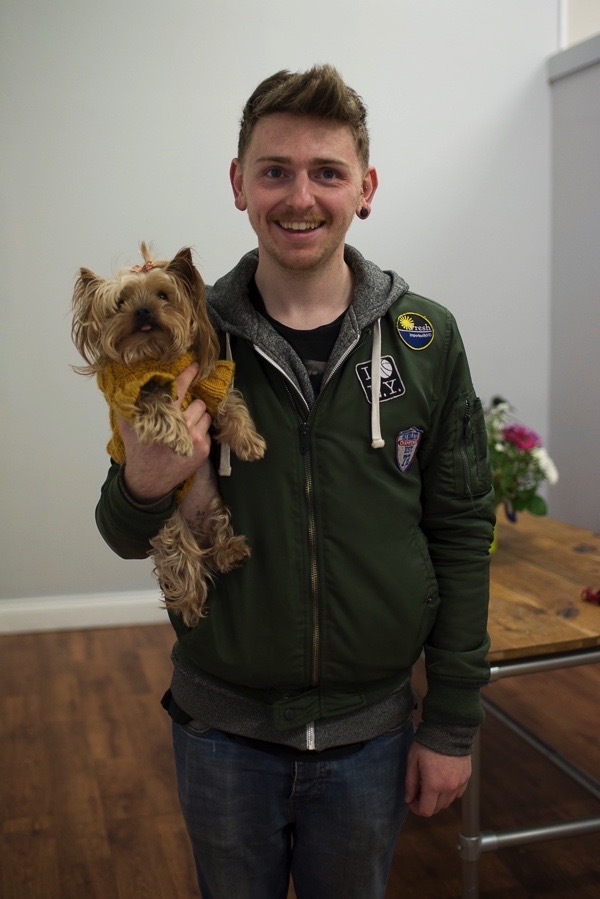
Charles Woodward and ‘Popsy’ of London Doggies, pet grooming business established six years
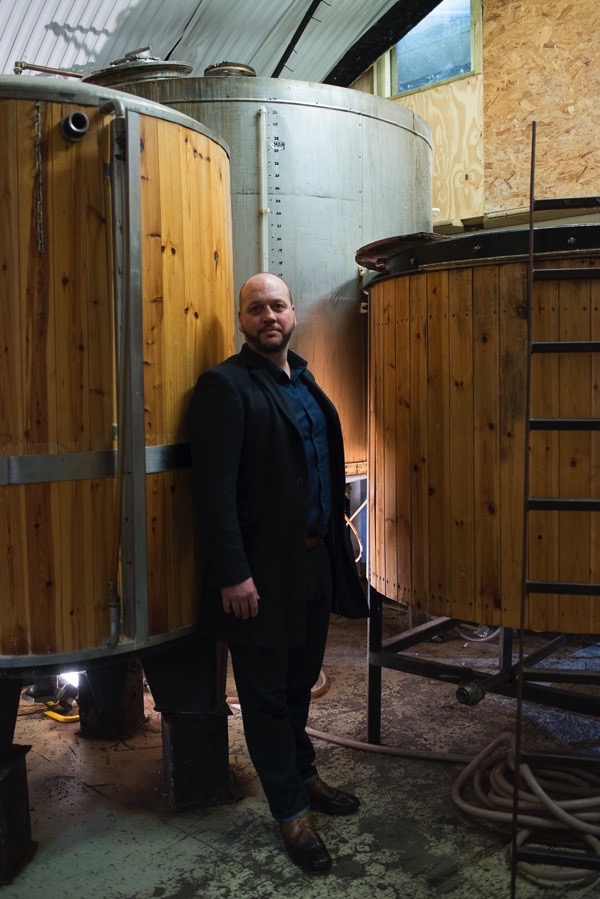
Ian Rutter, Company Manager of London Fields Brewery
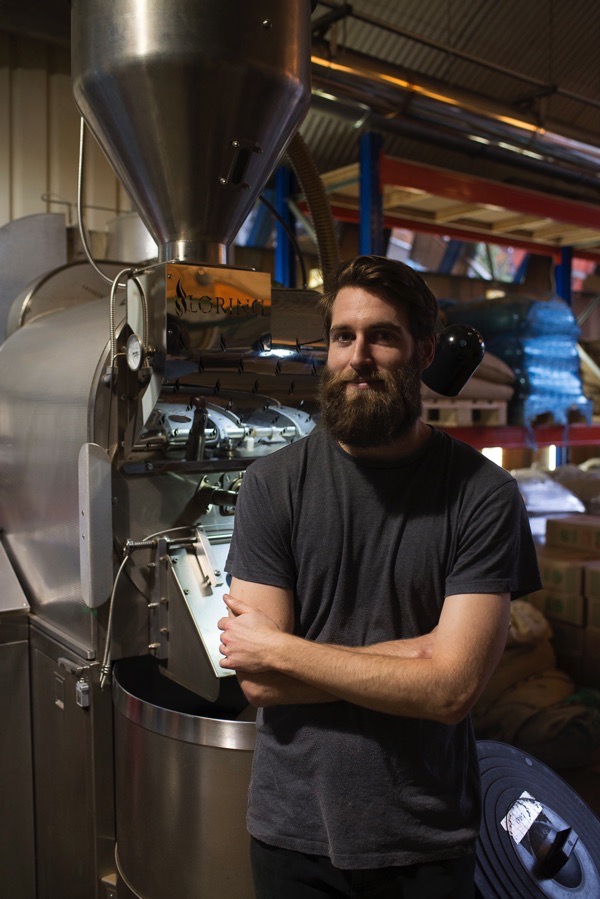
Simon Clark, Coffee Roaster at Climpson’s Coffee
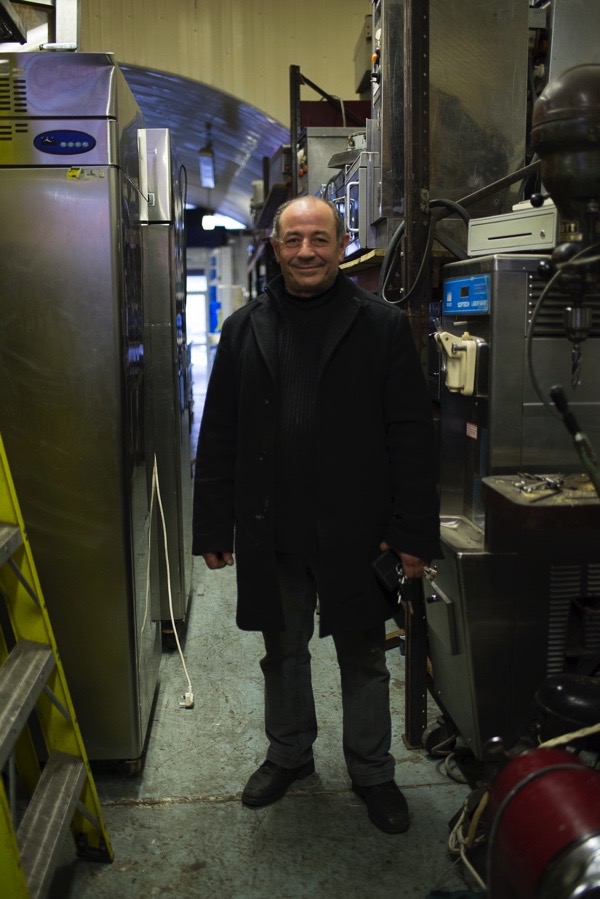
Ahmet Ozer has been dealing in secondhand catering equipment for seventeen years from his arch
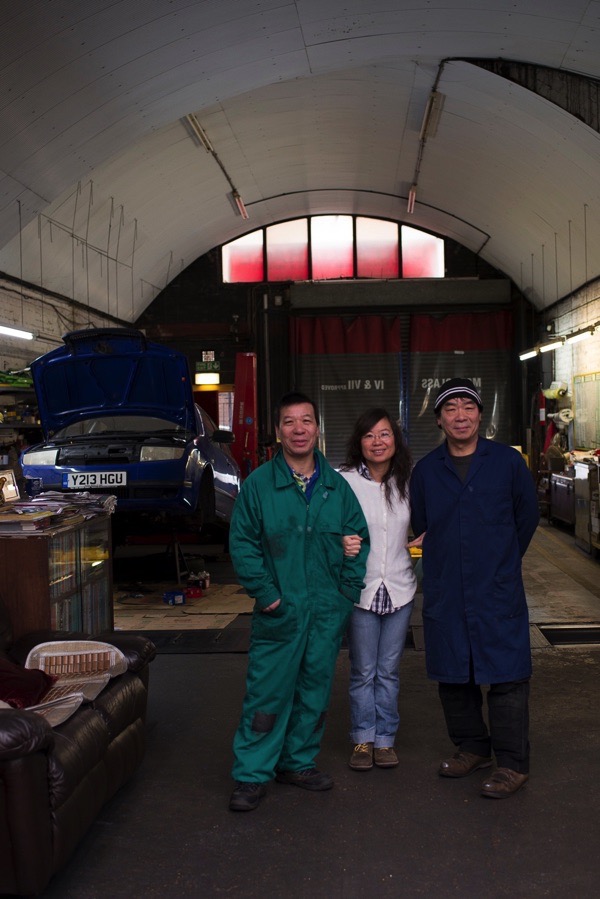
Quang Chu, Nivinh Chu and Jimmy Chu of Chu’s Garage
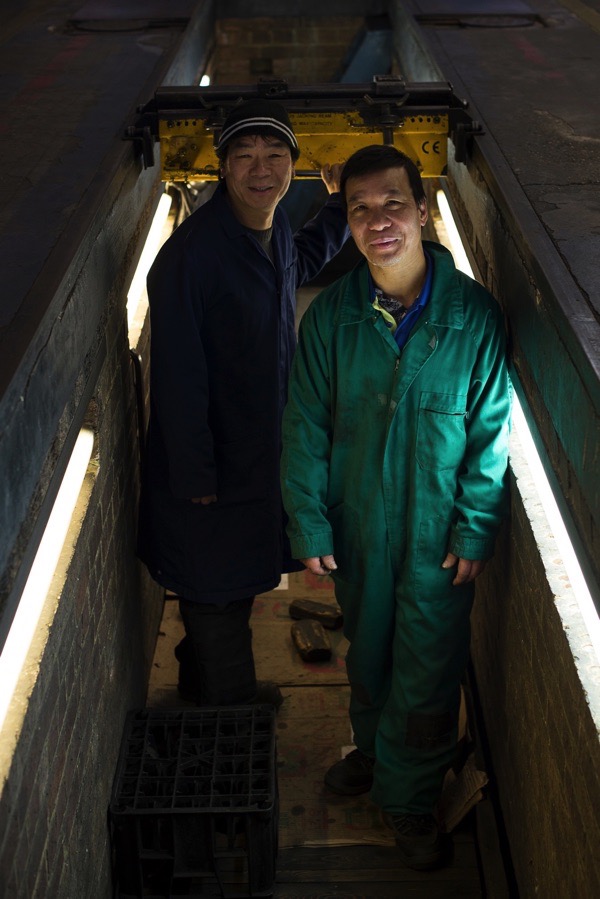
Quang Chu and Jimmy Chu of Chu’s Garage, opened by their father twenty-eight years ago
Photographs copyright © Sarah Ainslie
You may also like to read about












