
At John Keats’ House
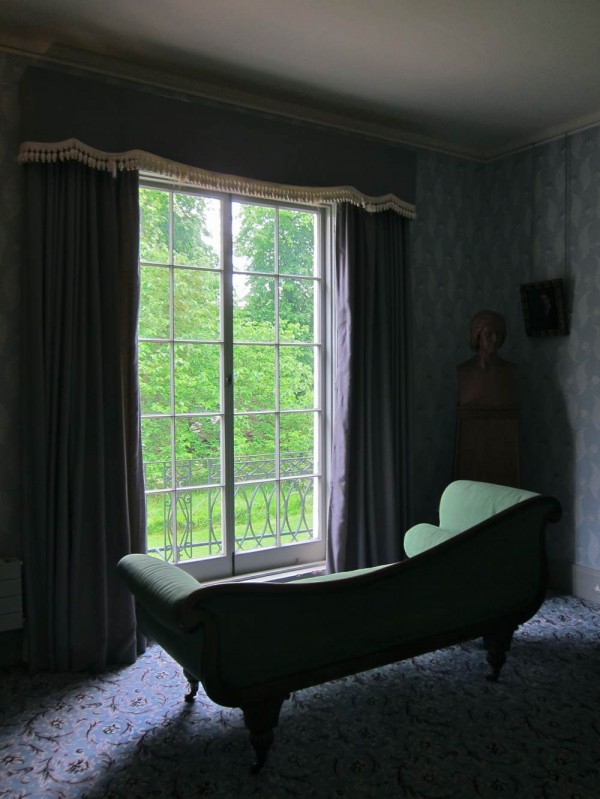
“Much more comfortable than a dull room upstairs, where one gets tired of the pattern of the bed curtains” – Keats was moved to this room on 8th February 1820 at the onset of tuberculosis
I set out with the intention to photograph the morning sunshine in John Keats’ study at his house in Hampstead. Upon my arrival, the sky turned occluded yet I realised this overcast day was perhaps better suited to the literary history that passed between these walls two centuries ago. The property was never Keats’ House in any real sense but, rather, where he had a couple of rooms for eighteen months as a sub-let in a shared dwelling.
Born in a tavern in Moorgate in 1795, where the Globe stands today, and baptised at St Botolph’s Bishopsgate, John Keats was ridiculed by John Gibson Lockhart in Blackwood’s magazine in 1817 for being of the ‘Cockney School,’ implying his rhymes suggested working class speech. Qualifying at first as an Apothecary and then studying to be a Surgeon, in 1816 John Keats sacrificed both these professions in favour of poetry. “It is a better and a wiser thing to be a starved Apothecary than a starved Poet, so back to the shop Mr John, back to plasters, pills, and ointment boxes,” wrote Lockhart condescendingly, but Keats was not dissuaded from his chosen path.
Early on the morning of 1st December 1818, after passing the night nursing his brother Tom through the terminal stage of tuberculosis at 1 Well Walk, Hampstead, John Keats walked down the hill to the semi-detached villas known as Wentworth Place to visit his friend Charles Armitage Brown. He invited Keats to move in with him, sharing his half of the house and contributing to the household expenses.
John Keats’ arrival at Wentworth Place was also the entry to a time when he found love with Fanny Brawne, who moved in with her mother to the other half of the villa, as well as his arrival at the period of his greatest creativity as a poet. It was a brief interlude that was brought to an end in early 1820 when Keats discovered he had tuberculosis like his brother, from whom he had almost certainly contracted the infection.
Within three weeks of moving in, Keats suffered from a severe sore throat and worried for his own health as he struggled to complete his epic ‘Hyperion,’ yet his spirits were raised by an invitation for Christmas from Mrs Brawne at Elm Cottage and the growing attachment to her daughter Fanny, whom he had previously described as “animated, lively and even witty.”
In April, the tenants vacated the other part of Wentworth Place and Mrs Brawne moved in with her daughters, which meant that John Keats met the eighteen-year-old Fanny Brawne continuously in the gardens that surround the house. At any moment, he might glance her from the window and thus their affection grew, leading to the understanding of an engagement for marriage between them. This romance coincided with a flowering of creativity on Keats’ part, including the composition of of his celebrated ‘Ode to a Nightingale,’ inspired by hearing the nightingale sing while on a walk across Hampstead Heath
Yet Keats spent the summer away from Hampstead, visiting the Isle of Wight, Winchester and Bath, while engaging in an emotionally-conflicted correspondence with Fanny and pursuing the flow of poetic composition that had begun in the spring. Although Keats wrote to Brown of his attraction to return to Fanny, admitting “I like and cannot help it,” perversely he took rooms in Great College St rather than moving back to Wentworth Place. But on Keats’ return to Hampstead to collect his possessions on 10th October, Fanny Brawne opened the door to him and he was smitten by her generosity and confidence, and his hesitation dissolved. He moved back to Wentworth Place almost at once and presented Fanny with a garnet ring, even though he could not afford to marry.
Living in such close proximity to the object of his affection led Keats to adopt a vegetarian diet in the hope of lessening his physical desire. During the long harsh winter that followed, Keats was often isolated at Wentworth Place by heavy snow and freezing fog, making only occasional trips down to London to visit literary friends. Catching a late coach back to Hampstead, Keats had left his new warm coat behind at Wentworth Place and sat on the top of the coach to save money. Descending in Pond St, Keats felt feverish but, by the time he reached Wentworth Place, he was coughing blood and realised he had suffered a lung haermorrhage. Yet he wrote that all he could think of was, “the love that has been my pleasure and torment.” He was twenty-four years old.
At first Mrs Brawne tried to keep Fanny and John Keats apart in the tiny house and he wrote her twenty-two letters in six weeks, but it proved impossible to sustain the separation and she permitted her daughter to visit him every day while he was recuperating. Keats could not see her without recognising that death would separate them and he wrote a poem entitled ‘To Fanny’ in recrimination against himself.
The tragedy of the situation was compounded when Brown, Keats’ landlord, decided to lease his part of Wentworth Place, forcing Keats to leave in the spring. At the beginning of May, he moved to cheaper lodgings in Kentish Town, still within a mile of Fanny Brawne. In July, ‘Hyperion’ was published but by then he realised was living in the shadow of death and told a friend he was suffering from a broken heart.
In August, Keats went to Wentworth Place in distress and laid himself upon the mercy of Mrs Brawne, who took him in and permitted him to live under the same roof as her daughter for a few weeks before he travelled to Italy for his health. On Wednesday 13th September 1820, John Keats walked with Fanny Brawne from Wentworth Place to the coach stop in Pond Place and they said their last farewells. Fanny went home and wrote “Mr Keats left Hampstead” in her copy of the Literary Pocket Book that he gave her for Christmas 1818. They did not meet again and Keats never returned to Wentworth Place, dying in Rome on 23rd February 1821.
Within decades, the railway came to Hampstead and then the tube train, and the village became a suburb. An actress bought Wentworth Place, redeveloping it by combining the two houses into one and adding a large dining room on the side. In 1920, the house was threatened with demolition to make way for a block of flats. However, funds were raised to restore the house as a memorial to Keats. Thus you may visit it today and enter the place John Keats and Fanny Brawne fell in love, and where he wrote some of the greatest poems in our language.
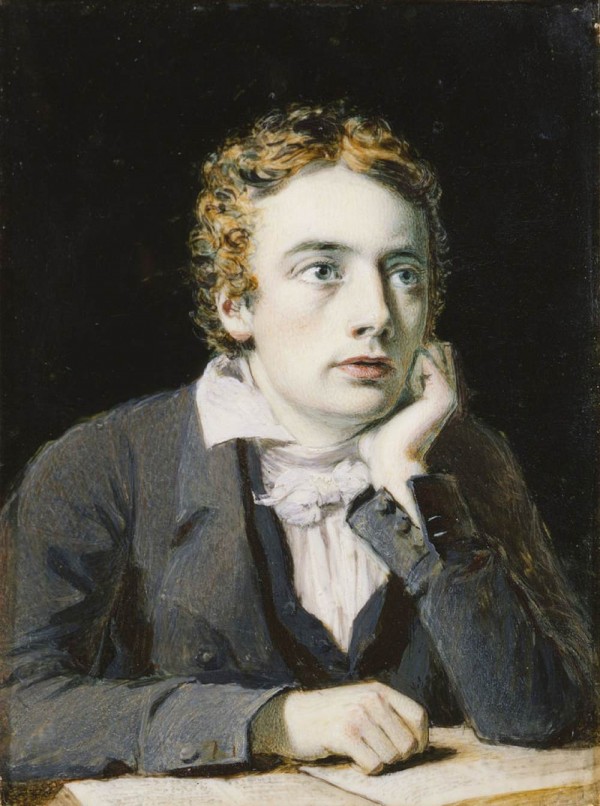
John Keats in 1819 when he lived at Wentworth Place
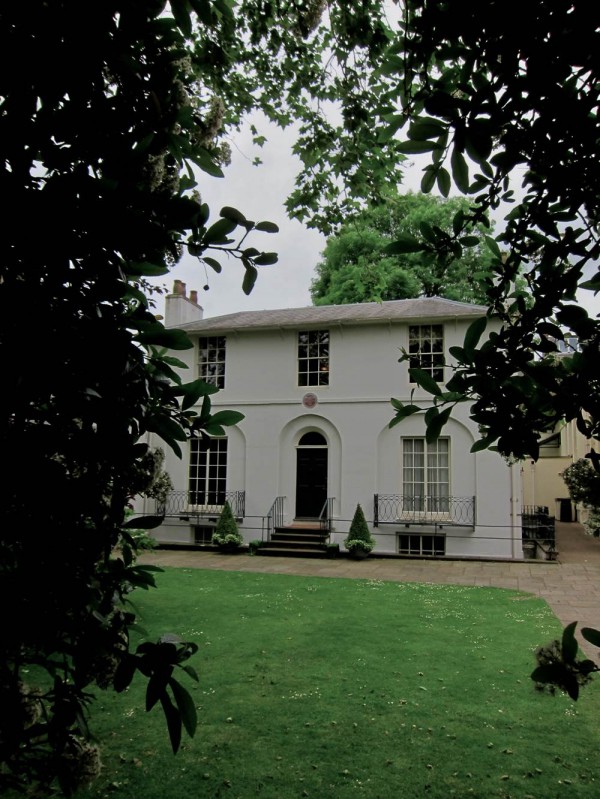
Wentworth Place, completed 1816 as one of the first houses to be built in Lower Hampstead Heath
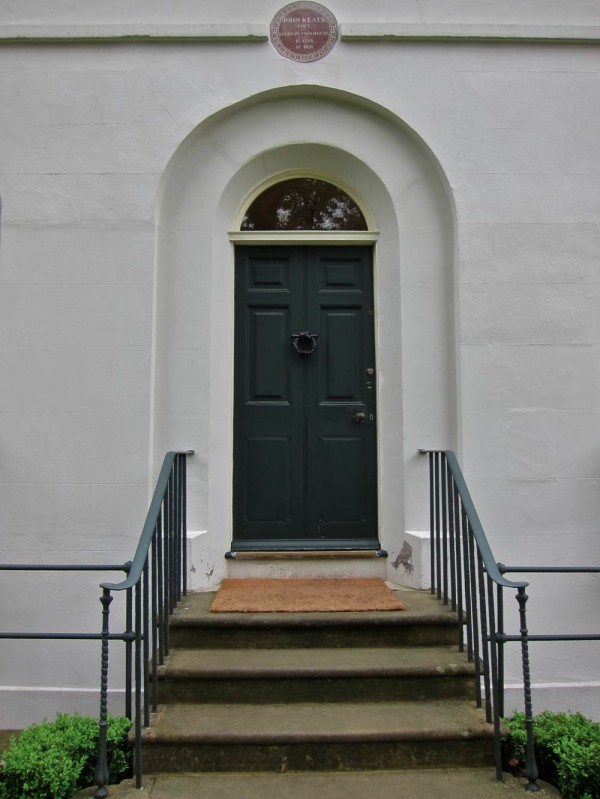
John Keats lived here
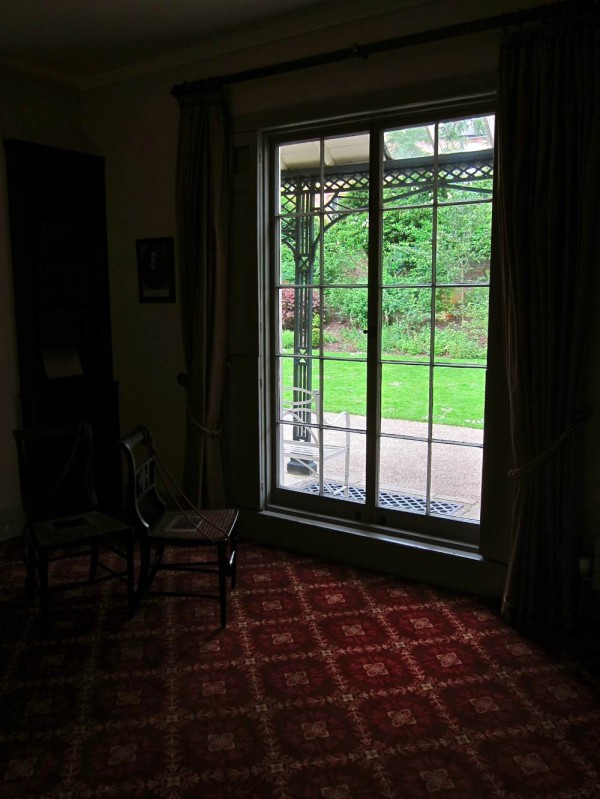
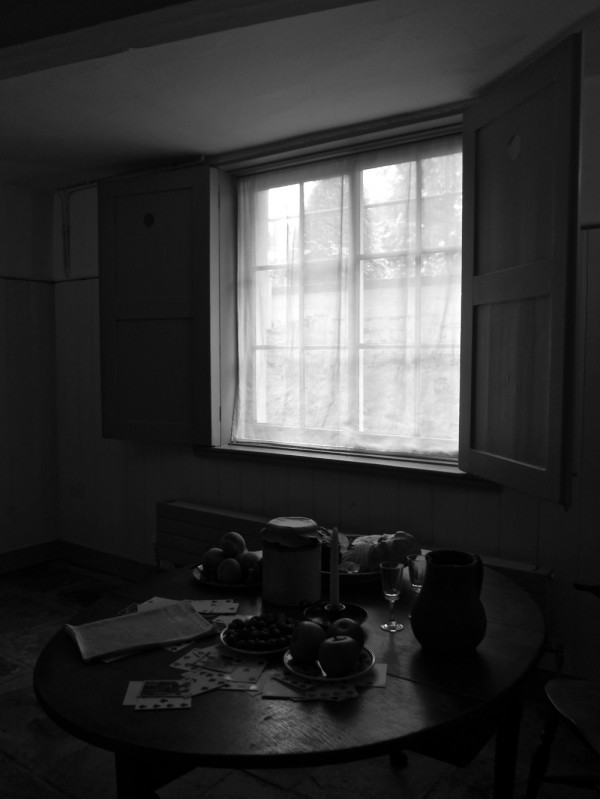
In John Keats’ study
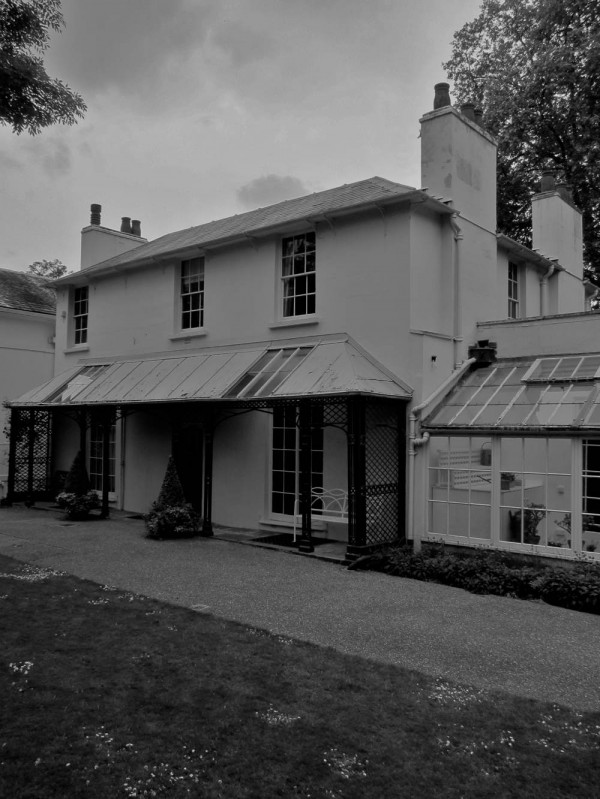
The right hand room on the ground floor was John Keats’ study and the room above was his bedroom
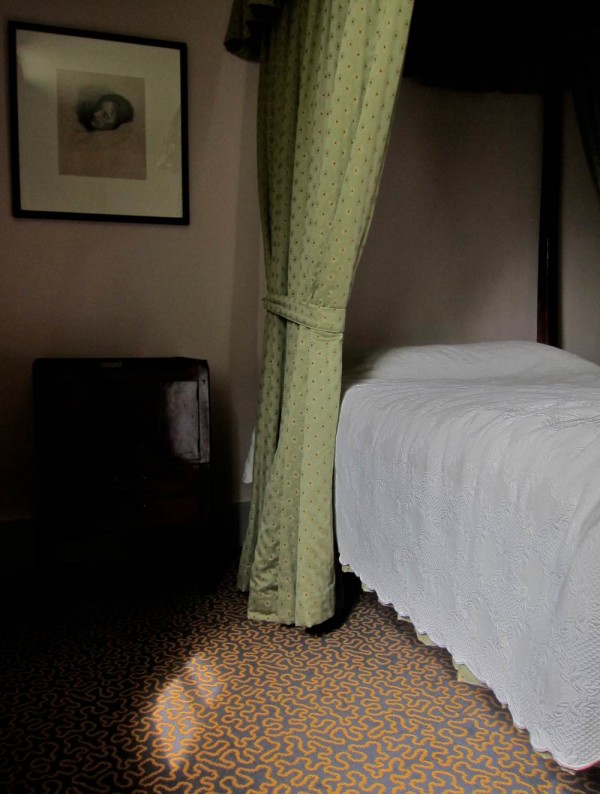
Keats’ room where he learnt he had tuberculosis which had killed his brother Tom a year earlier
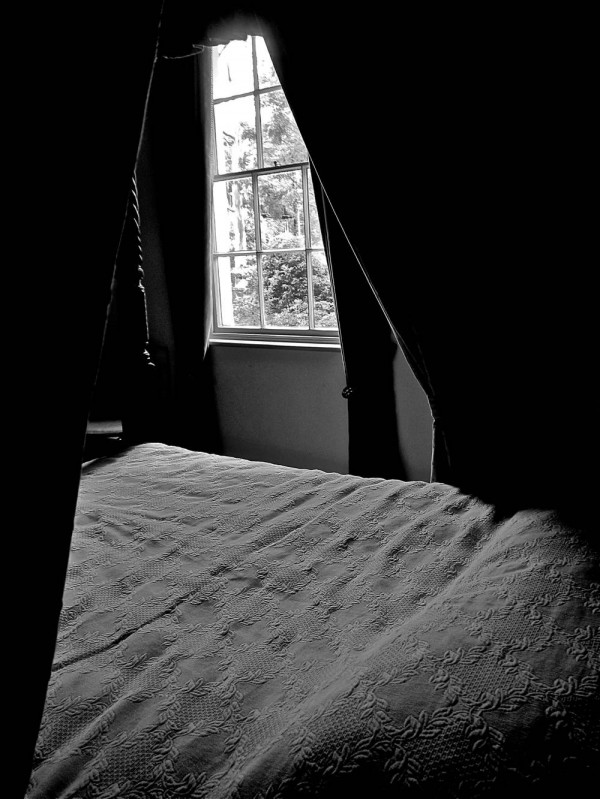
“Dearest Fanny … They say I must remain confined to this room for some time. The consciousness that you love me will make a pleasant prison of the house next to yours.” 4th February, 1820
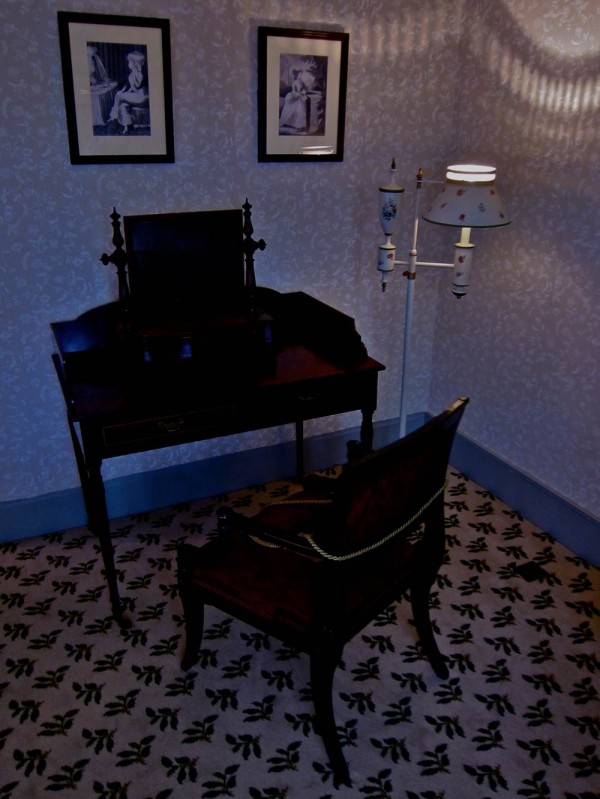
In Fanny Brawne’s room
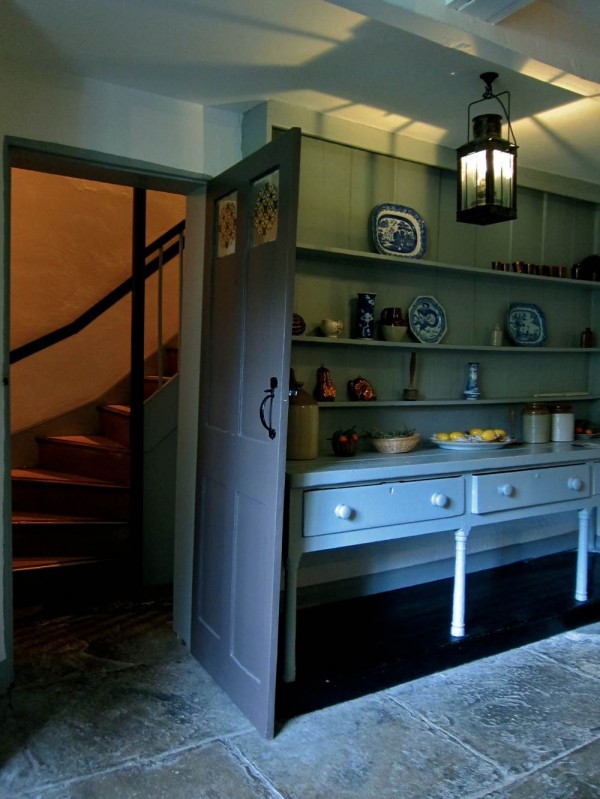
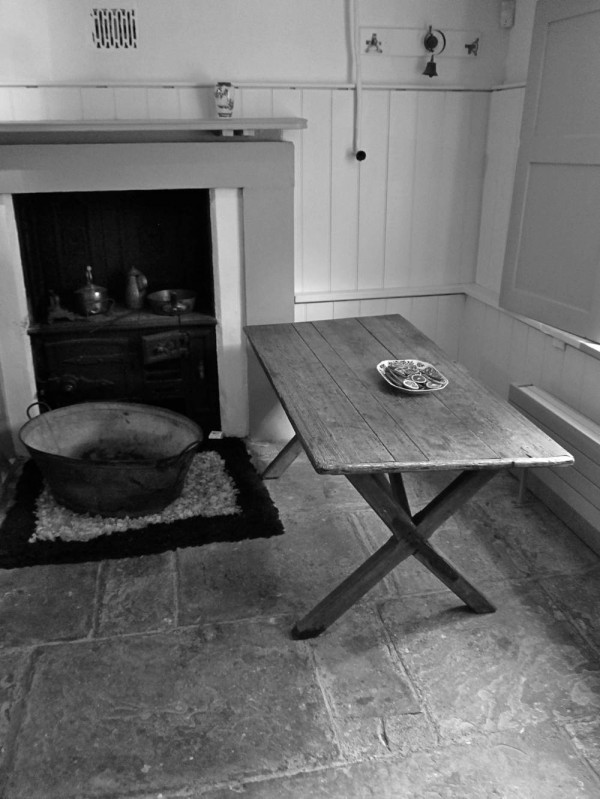
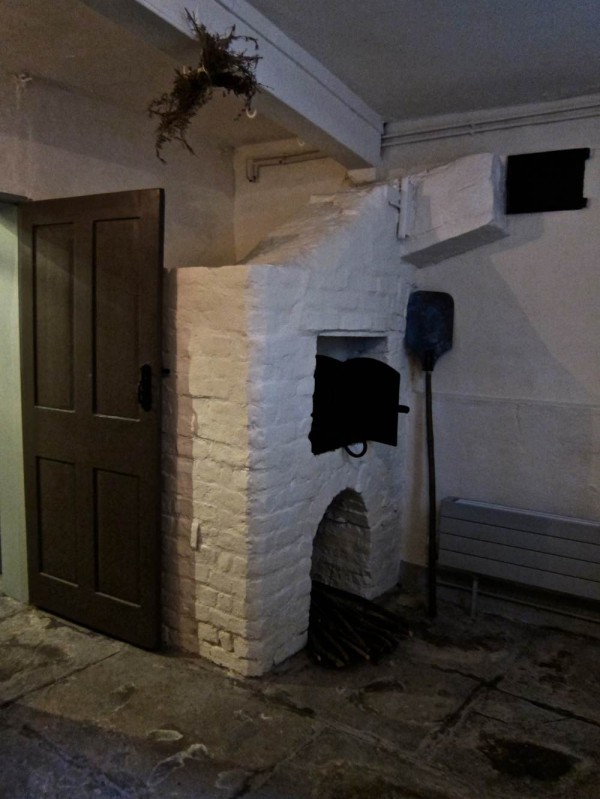
The boiler for hot water. The house had no running water which had to be brought from the pump.
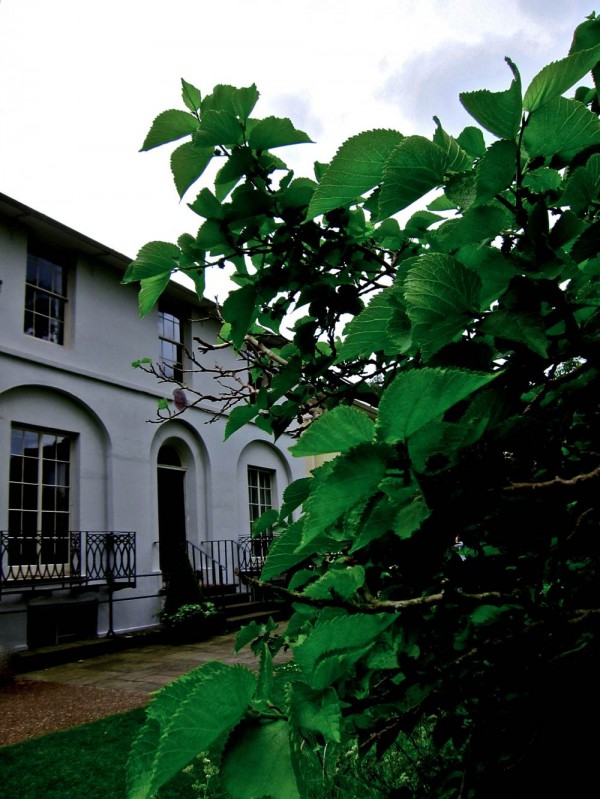
The Mulberry tree is believed to have been planted in the seventeenth century and predates the house.
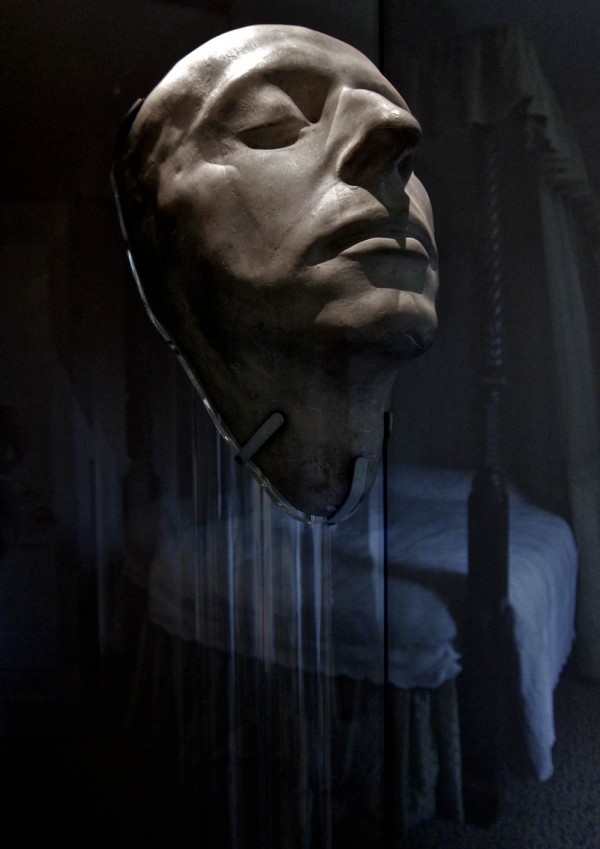
The death mask in John Keats’ bedroom at Wentworth Place
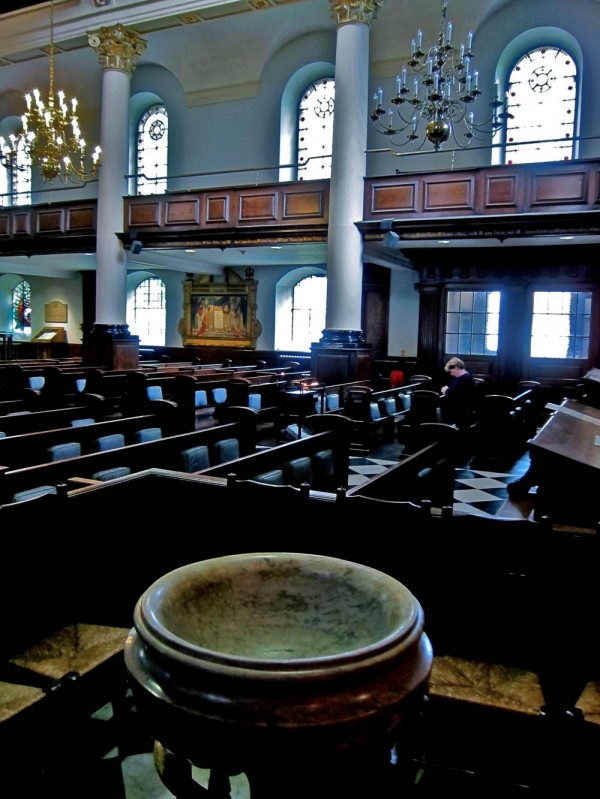
The font at St Botolph’s, Bishopsgate, where John Keats was baptised in 1795
Visit Keats House, Keats Grove, Hampstead, NW3 2RR
You may also like to read about
In Fleet St

Walking between Spitalfields and the West End, Fleet St has emerged as a favourite route in recent years, because the detail of this magnificent thoroughfare never ceases to fascinate me with new interest – and so I spent a morning wandering there with my camera to record some of these sights for you.

Alsal Watches

Royal Courts of Justice by George Edward Street, opened 1882
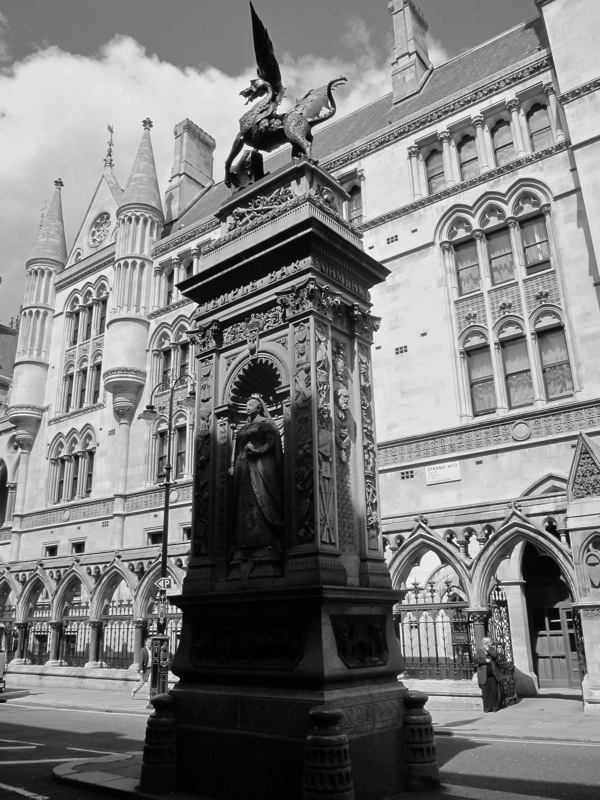
This marker at the entrance to the City of London was unveiled in 1880 and is the work of Horace Jones, architect of Tower Bridge and Smithfield, Billingsgate and Leadenhall Markets

Hoare’s Bank from Hen & Chicken Court

Hoare’s Bank founded in 1672
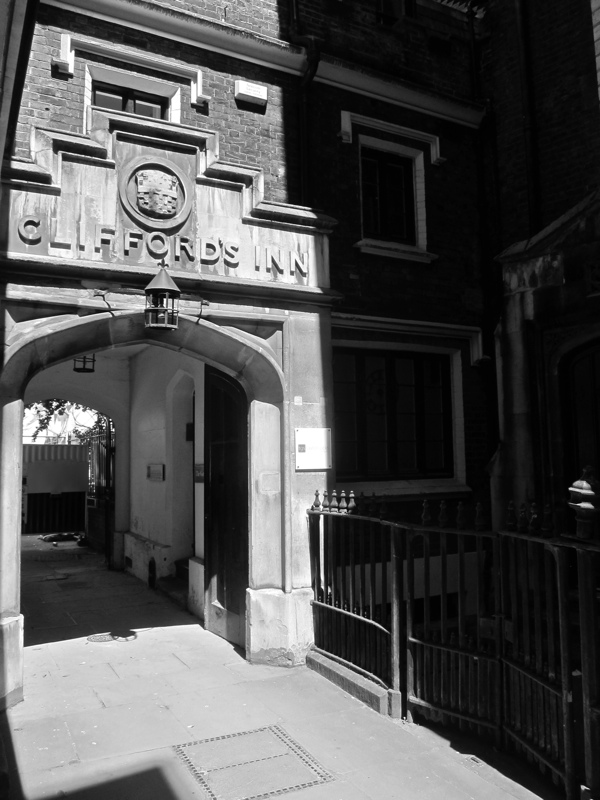
Clifford’s Inn founded in 1344


Entrance to Middle Temple, 1684


St Dunstan-in-the-West


Angels at the entrance to St Dunstan-in-the-West

Statue of Queen Elizabeth I that once stood upon the west side of Ludgate, demolished in 1760
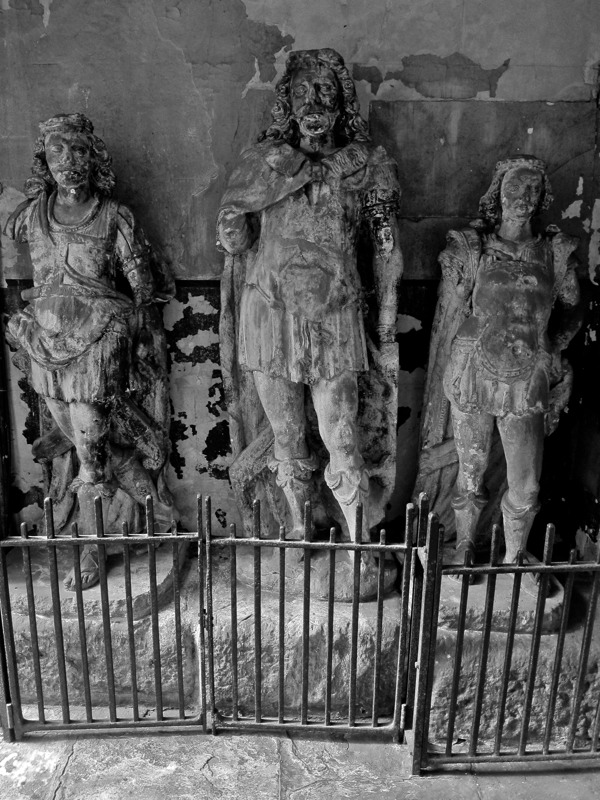
Sixteenth century statues of King Lud and his sons that originally stood upon the east side of Ludgate
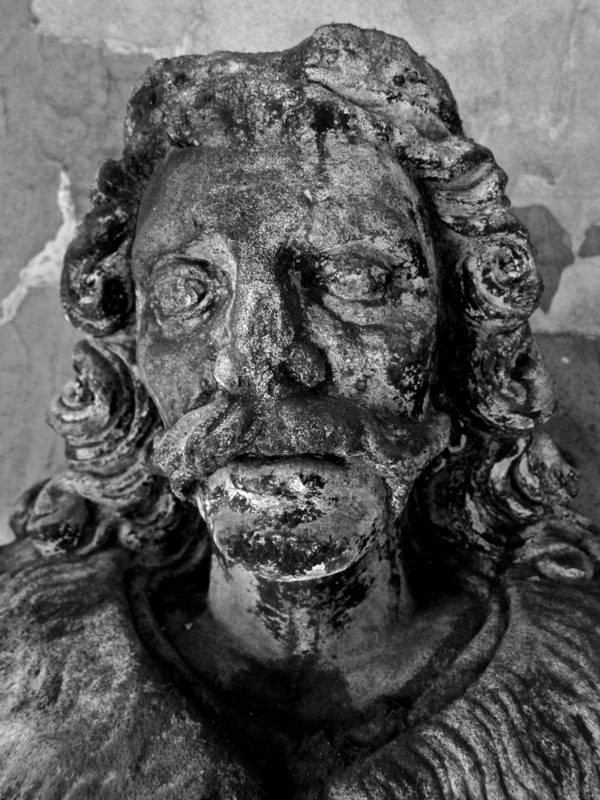
Old King Lud

Removed in 1878, Christopher Wren’s Temple Bar now stands at the entrance to Paternoster Sq
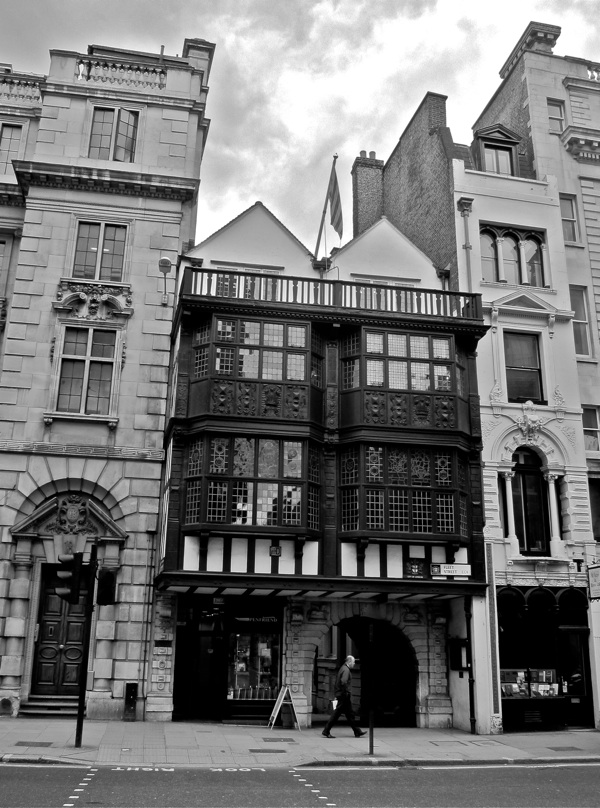
Prince Henry’s Room over entrance to Inner Temple, 1610

St Brides by Christopher Wren, 1672, reflected in the Daily Express building by Ellis & Clarke, 1932


St Bartholomew House by Herbert Huntly-Gordon, 1900

Carving upon The George

Pulpit in St Clement Danes by Grinling Gibbons

Eagles in St Clement Danes

Statue of Dr Samuel Johnson

Looking east down Fleet St
So Long, Eddie Johnson
It is with sadness that I report the passing of Eddie Johnson, legendary publican & celebrated former landlord of the Two Puddings in Stratford, who died last week aged eighty-six

Shirley & Eddie Johnson on their first day behind the bar in 1962
Through four decades, from 1962 until 2000, Eddie Johnson was landlord of the celebrated Two Puddings in Stratford, becoming London’s longest serving licensee in the process and witnessing a transformation in the East End. When Eddie took it on, the Two Puddings was the most notorious pub in the area, known locally as the Butcher’s Shop on account of the amount of blood spilt. Yet he established the Puddings as a prime destination, opening Britain’s first disco and presenting a distinguished roll call of musicians including The Who – though the pub never quite shook off its violent notoriety.
“I’ve had a lot of blows,” Eddie confided to me with a crooked grin, his eyes glinting enigmatically. Even at eighty-six, Eddie retained a powerful and charismatic demeanour – very tall, still limber and tanned with thick white hair. Of the old East End, yet confident to carry himself in any company, Eddie admitted to me he was the first from his side of town to make it into Peter Langan’s Brasserie in Stratton St, mixing with a very different clientele from that in Stratford Broadway. It was indicative of the possibility of class mobility at the time, and there were plenty from the West End who were persuaded to take the trip east and experience the vibrant culture on offer at the Puddings.
“I came from the Old Ford Rd and I suppose you’d refer to it as a slum by today’s standards, but I never thought that because I had a happy childhood, even if we had an outside toilet and went to the bath house each week. The public library was heaven to me, all polished wood and brass, and I got a great love of schoolboys’ adventure stories which made me wish I could go to public school though, of course, I’d have hated it if I did. After I got married and had a son and then another, I had a number of dead end jobs. When I came out of the army, I became involved with a rough crowd. I worked with my brother Kenny organising dances. I was a bit of a hooligan and I got stabbed in a dance hall. But then I found a job as a Tally-clerk in the docks and became involved with the Blue Union – the skilled workers and stevedores. I was the Tally-clerk on Jack Dash’s strike committee. I loved it down there and, though I didn’t make a lot of money, I didn’t care because I loved the freedom. We could more or less do what we wanted.
The licensee of the Two Puddings got in trouble with the police, so Kenny and I bought the lease because we were frightened of losing the dance hall. Since my brother couldn’t hold the licence owing to an earlier court case, I had to take it. Now I didn’t fancy managing a pub and I had been to the Old Bailey for GBH, so I had to be upfront with the police in Stratford but they were horrible. They said,‘We’ve seen you driving around in a flash car,’ and I said, ‘I’l tell you where you can stick your licence!’ But this butcher, Eddie Downes, a huge fat man with a completely bald head who looked like a cartoon butcher, he told me not to worry. He had a reputation as a grass and he was always boasting about his connections to the police. ‘You’ll still get your meat from me?’ he asked, and three months later we were granted a licence.
We moved into the Puddings and after the opening night, I said, ‘I can’t stand this,’ and then I stayed forty years. I used to come downstairs on a Friday night and look around hoping there weren’t going to be any fights and I’d get all tensed up, but after a few light ales I’d be happy as a sandboy. The place would be packed and we’d be serving beer in wet glasses – it was fairly clean and people didn’t mind. We sold four hundred dozen light ales in a week, nowadays a pub is lucky to sell two dozen. We worked six nights a week plus a fortnight holiday a year and, on Wednesdays, my wife and I used to go up to the West End for a night out – but after forty years, it was tough.
At the end of the sixties, they knocked down a lot of buildings and did a redevelopment in Stratford. We lost all our local trade and the immigrants that came to live there didn’t have a culture of drinking, but we still had our music crowd. It was ear-splitting music really and we were the first pub to have UV. We called the club the Devil’s Kitchen and got a licence till two in the morning, and it was ever so popular. People came from far and wide.”
At the end of the last century, changes in the law required breweries to sell off many of their pubs and the Two Puddings changed hands, resulting in a controversy over discounts offered to publicans and a court case that saw Eddie Johnson thrown out of his job. He retired to Suffolk and organised his stories of life at the Two Puddings into an eloquent memoir. It was the outcome of lifetime’s fascination with literature that began with a passion for schoolboy adventures and led Eddie to read the great novelists during his hours of employment in the London Docks. His first story was printed in The Tally-Clerk at that time, and in later years Eddie famously wrote frequent letters to The Independent. But eventually he realised his ambition to become a writer with the publication of “Tales from the Two Puddings” and I recommend it to you.

Eddie aged nine, 1941

Eddie when he worked in the docks


Early Saturday morning and preparing to open. Eddie behind the bar and George the potman to his right.

Old George the potman.


Shirley Johnson with Rose Doughty, the famous wise-cracking barmaid


Eddie’s sister Doreen (second left) and friends heading upstairs to the Devil’s Kitchen, above the Puddings (photograph by Alf Shead)

Eddie and his brother Kenny with their beloved Uncle John in the Puddings

Saturday night in the Puddings

Joe and Sue, Eddie’s father-in-law and mother-in-law, enjoying a Saturday night in the Puddings

Eddie Johnson (1932-2018)
You may also like to read about
At St Pancras Old Churchyard
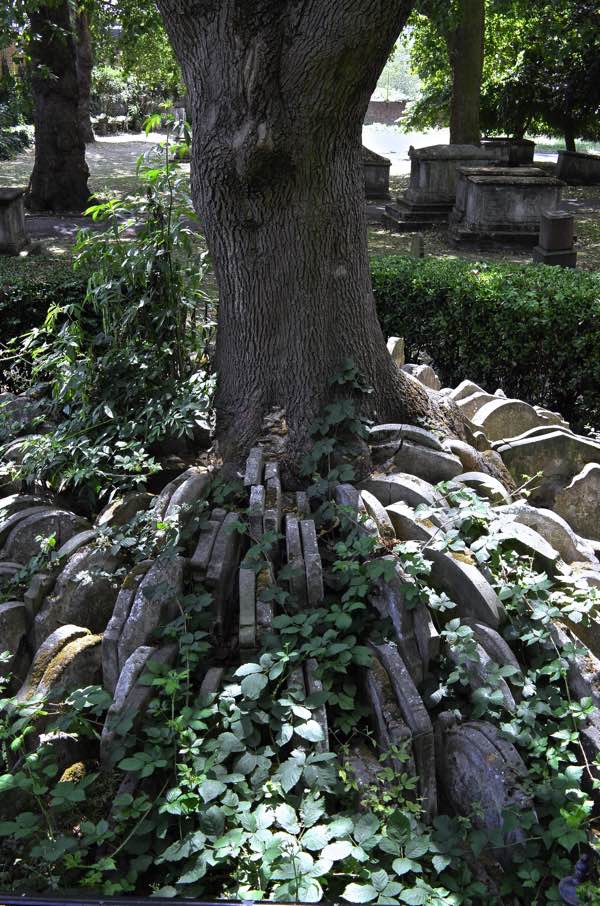
The Hardy Tree
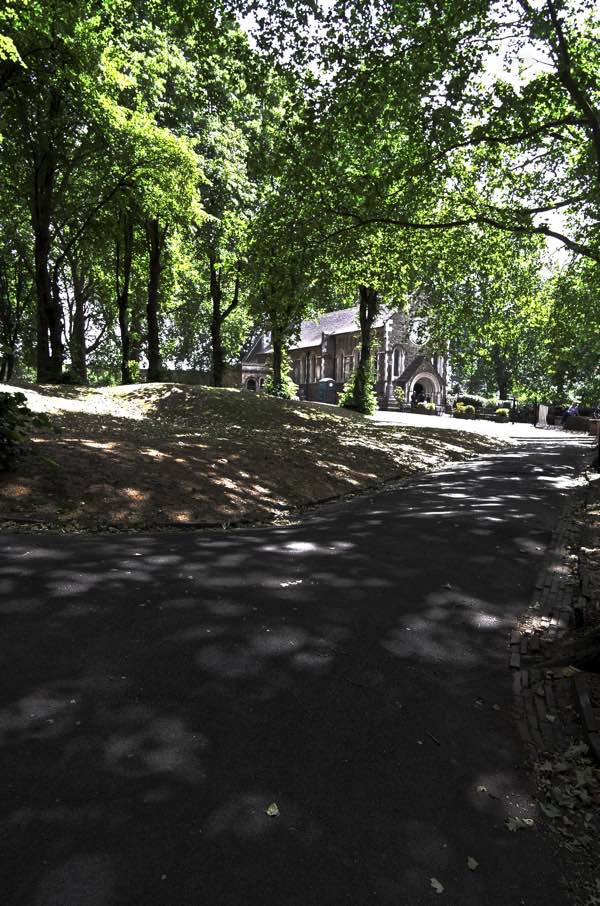
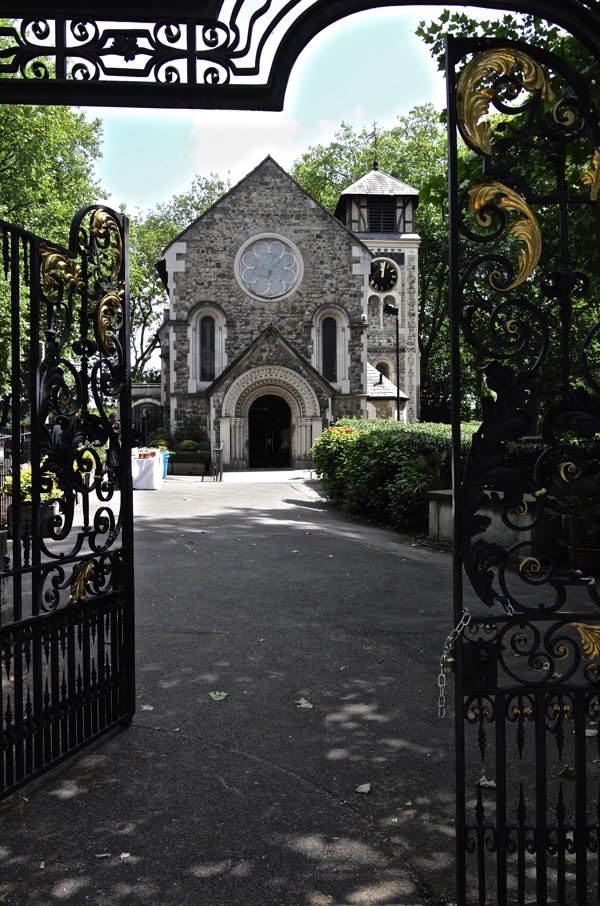
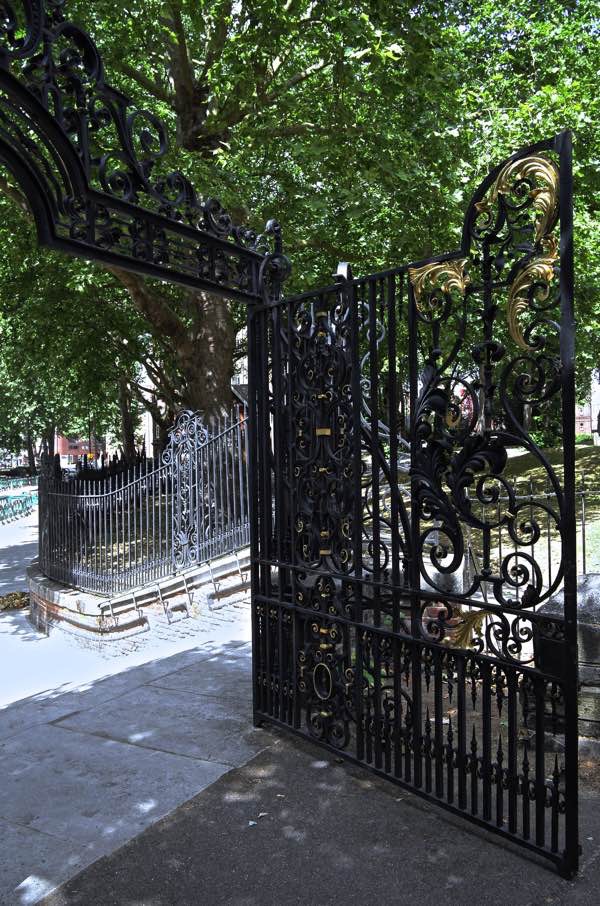
As I arrived at Old St Pancras Churchyard, the Verger was sweeping leaves from the steps and she informed me there was a wedding taking place inside the church. Yet I was more than happy to explore this most ancient of central London churchyards for an hour while the nuptials were in progress.
The churchyard itself is upon a raised mound that is the result of all the hundreds of thousands of burials upon this ground which is claimed to be one of the earliest sites of Christian worship in London, recorded by the Maximilian Mission as already established by the year 324. Such is the proximity of St Pancras Station, you can hear the announcements from the platforms even as you wander among the tombs, yet an age-old atmosphere of tranquillity prevails here that cannot be dispelled by the chaos and cacophony of contemporary King’s Cross and St Pancras.
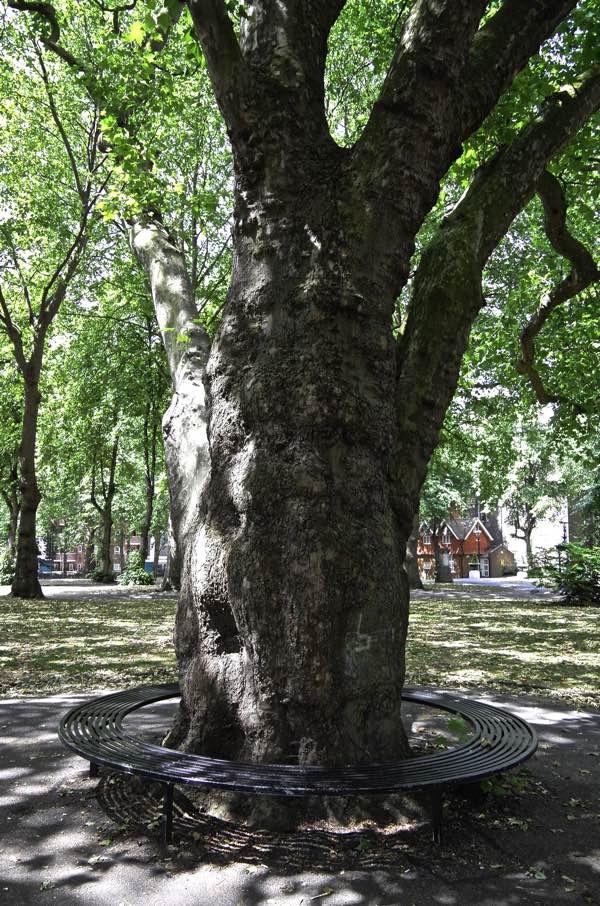
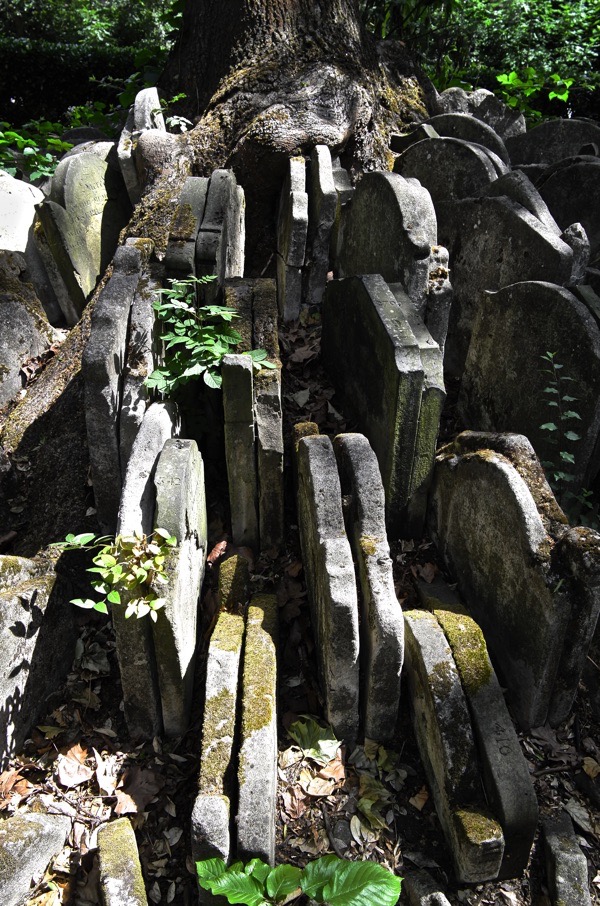
However, the railway has encroached upon the churchyard increasingly over the years and, in the eighteen-sixties, architect Arthur Blomfield, employed Thomas Hardy as his deputy, responsible for exhumations of the dead. Tombstones were arranged around an ash tree which has absorbed some of them into its trunk over time and acquired the name ‘The Hardy Tree,’ commemorating this unlikely employment for the young novelist whose subsequent literary works express such an inescapable morbidity.
Once the bride and groom emerged from the church door, the Verger ushered me in through the back and I was delighted by the intimate quality of the church interior, studded with some impressive old monuments. The Verger relished telling the tale of St Pancras, beheaded by the Emperor Diocletian in Rome in 304 at the age of fourteen for refusing to renounce his faith.
When the cloth had been removed from the altar after the ceremony, I was able to view the small sixth century altar stone, marked with five crosses of curious design, of which the only other examples are upon the tomb of Eithne, mother of St Columba, on the Hebridean island of Luing, dated to 567. A modest piece of Kentish rag stone, there is a legend this once served as an altar for St Augustine.
“We try to fall down every two hundred years,” explained the Verger breezily, drawing my attention to the alarming cracks in the wall and outlining the elaborate history of collapse and rebuilding that has produced the appealing architectural palimpsest you discover today.
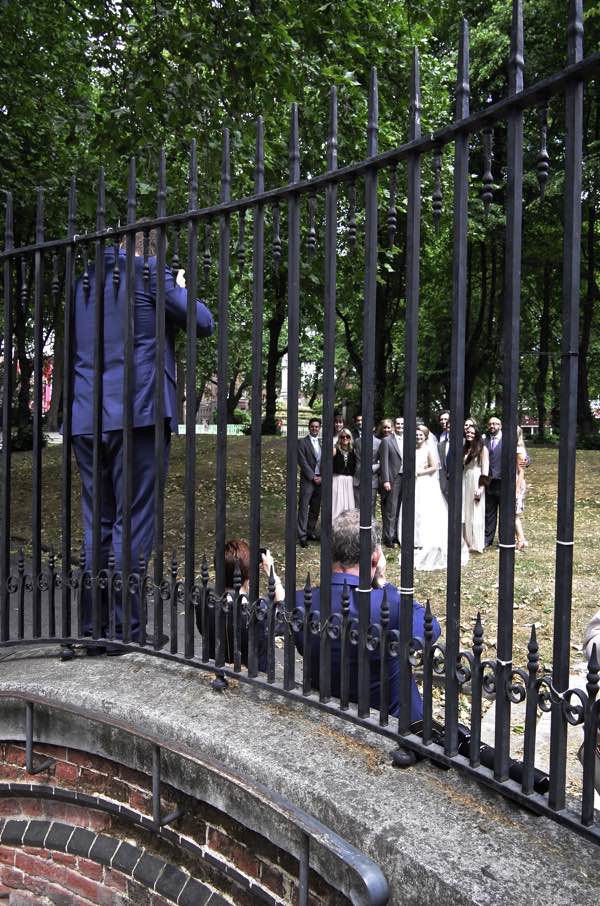
Outside in the June sunshine, the newly-married couple were getting their wedding photographs taken, while rough sleepers slumbered among the graves just as the long-gone rested beneath the grass. A text carved nearby the entrance of the church reads “And I am here in a place beyond desire and fear,” describing the quality of this mysterious enclave in the heart of London perfectly.
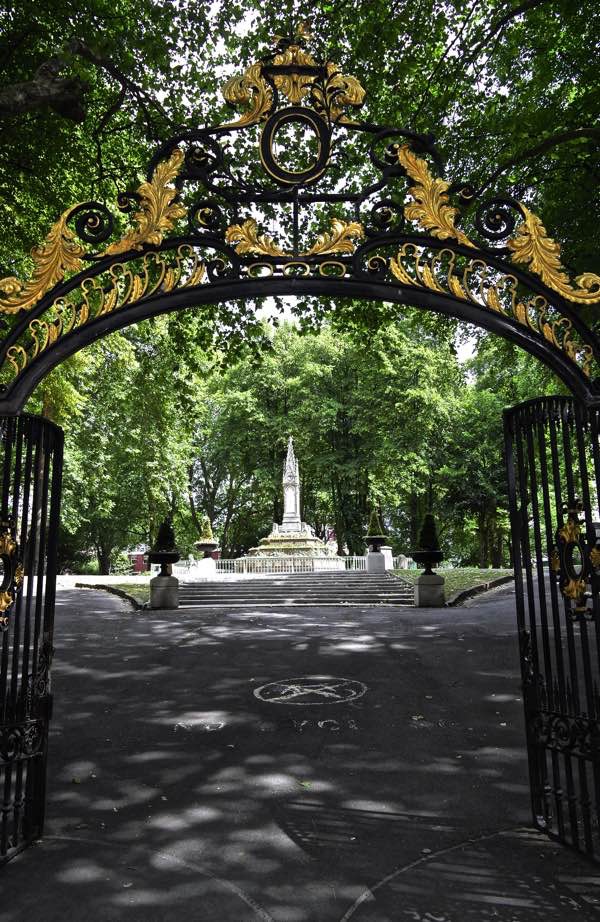

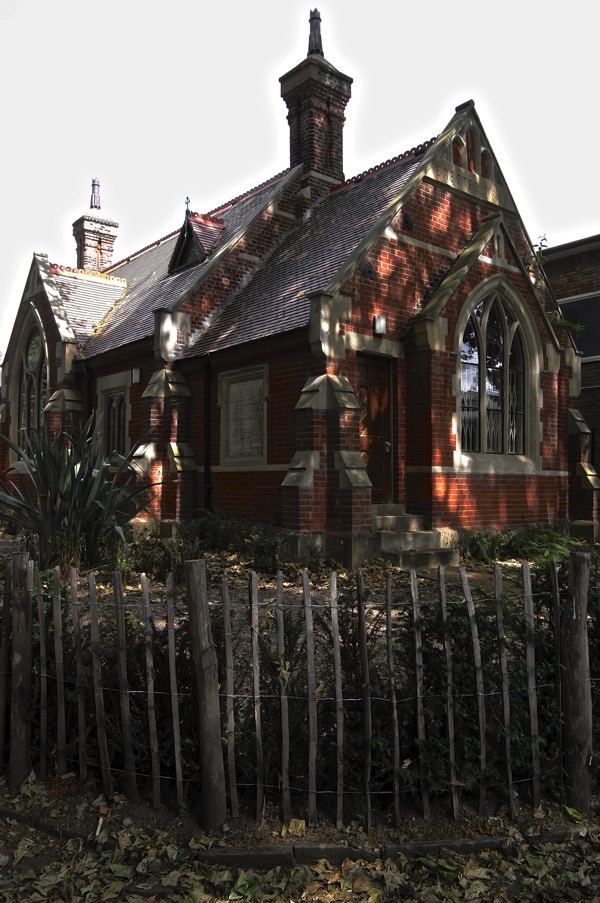
The Vestry
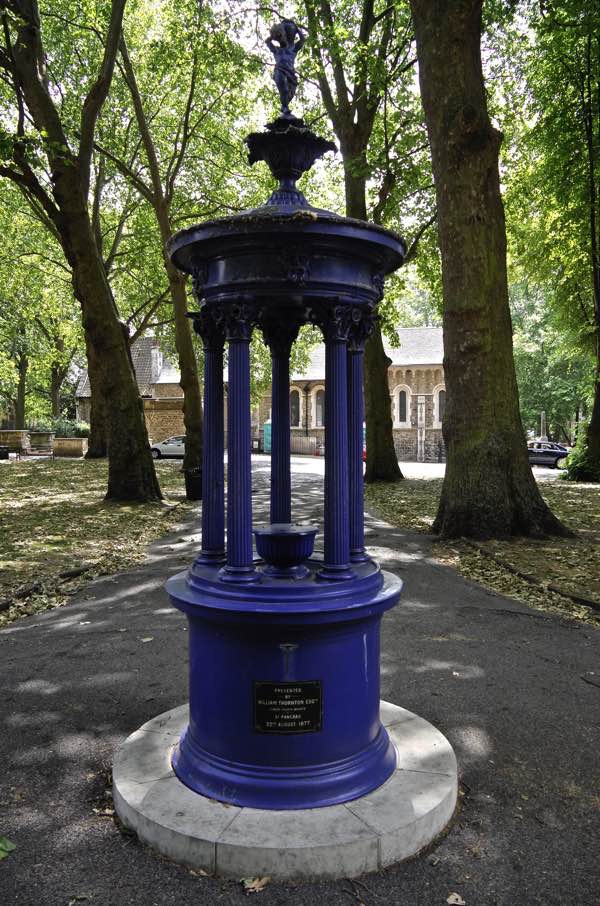
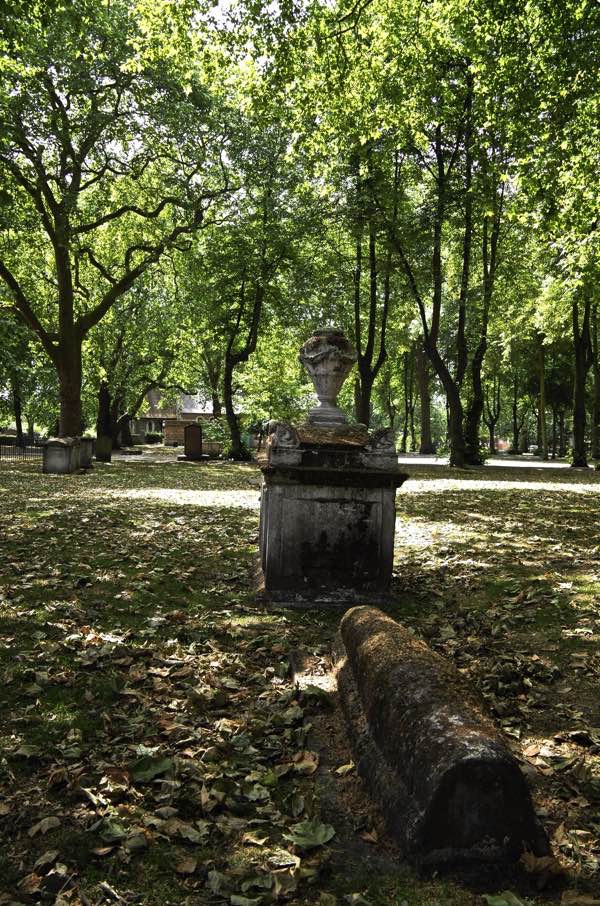
St Pancras Coroners
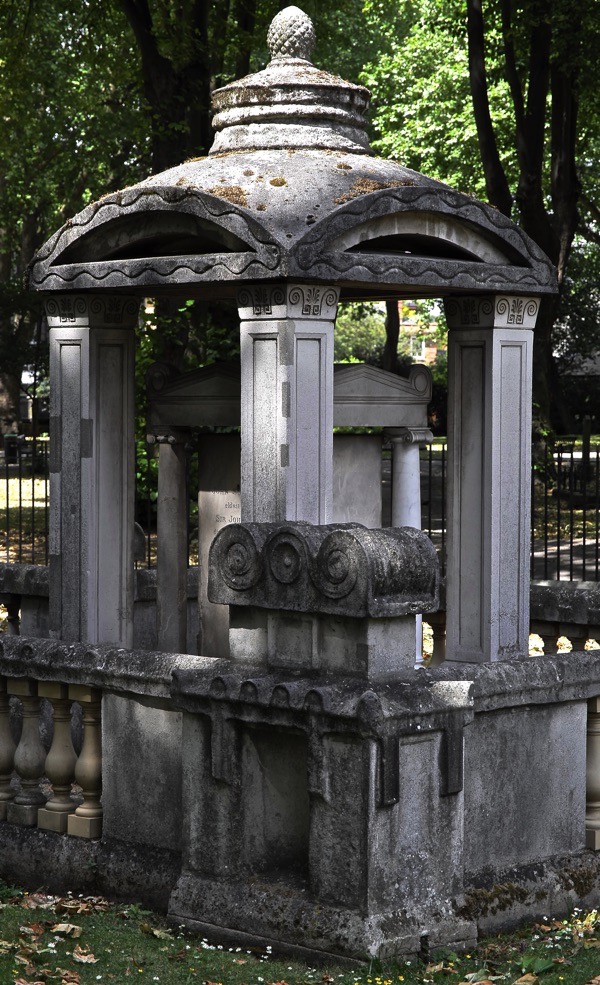
Sir John Soane’s tomb of 1837 inspired Giles Gilbert Scott’s design for the telephone box
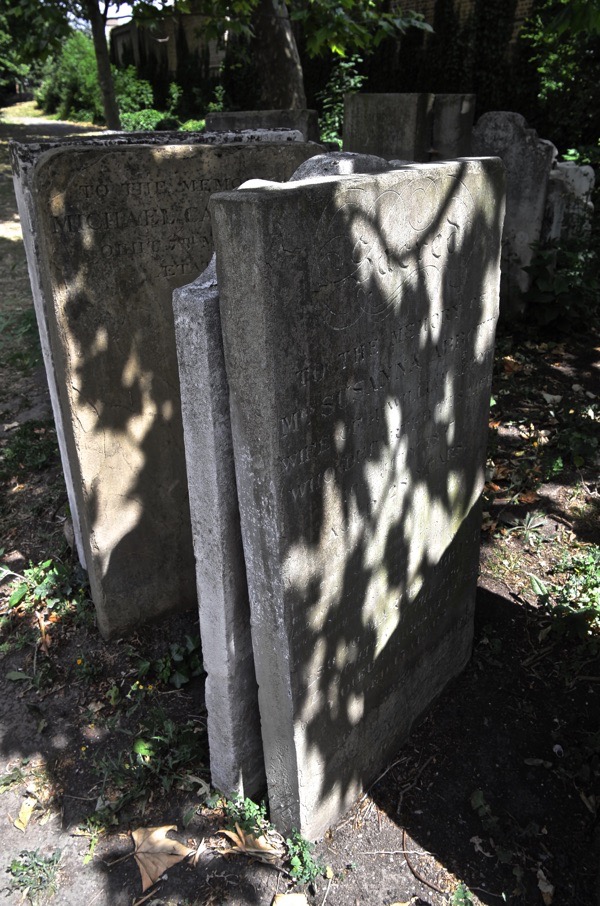
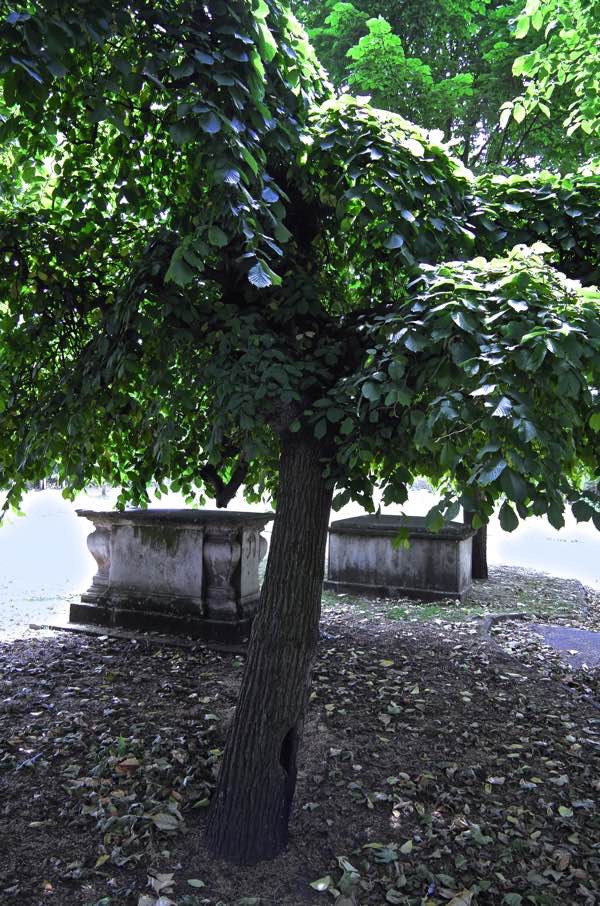
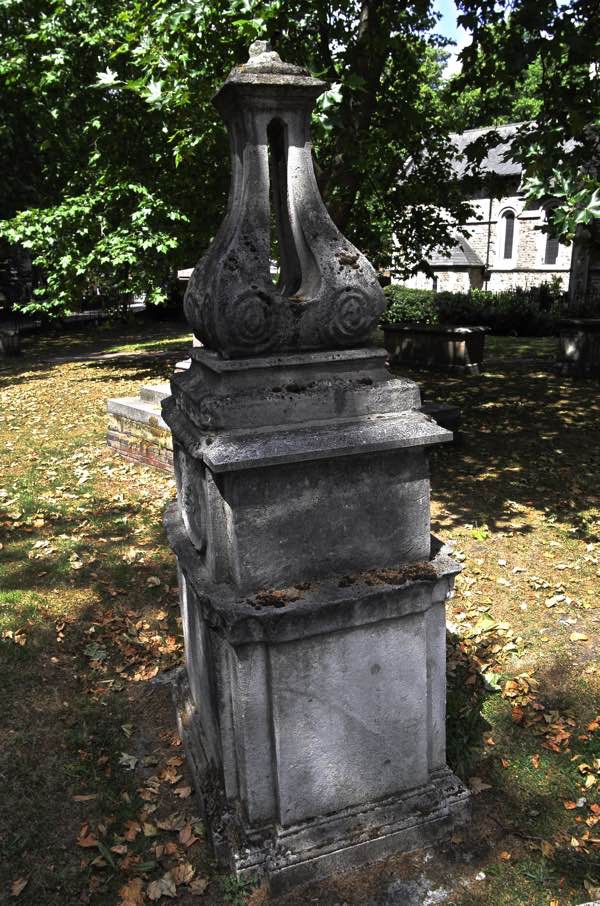
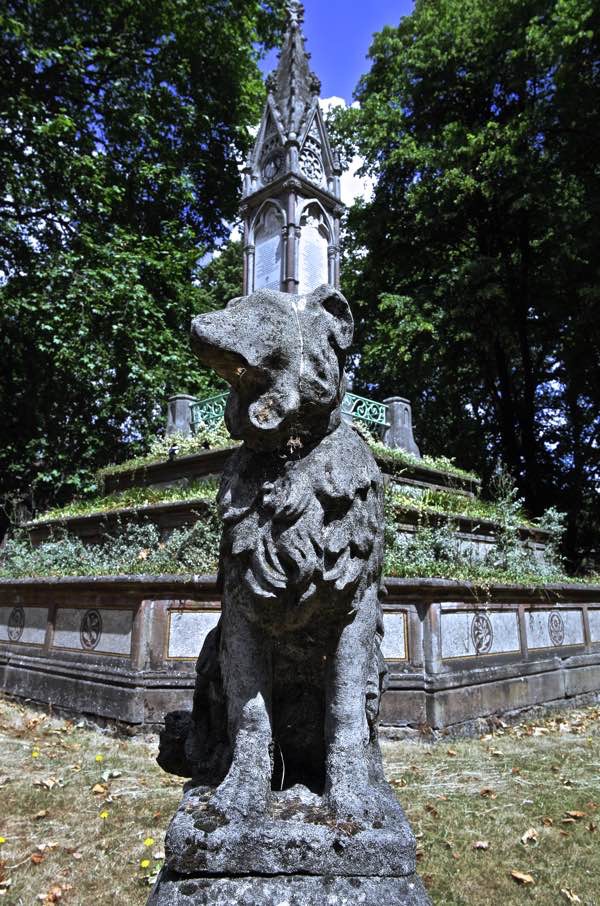
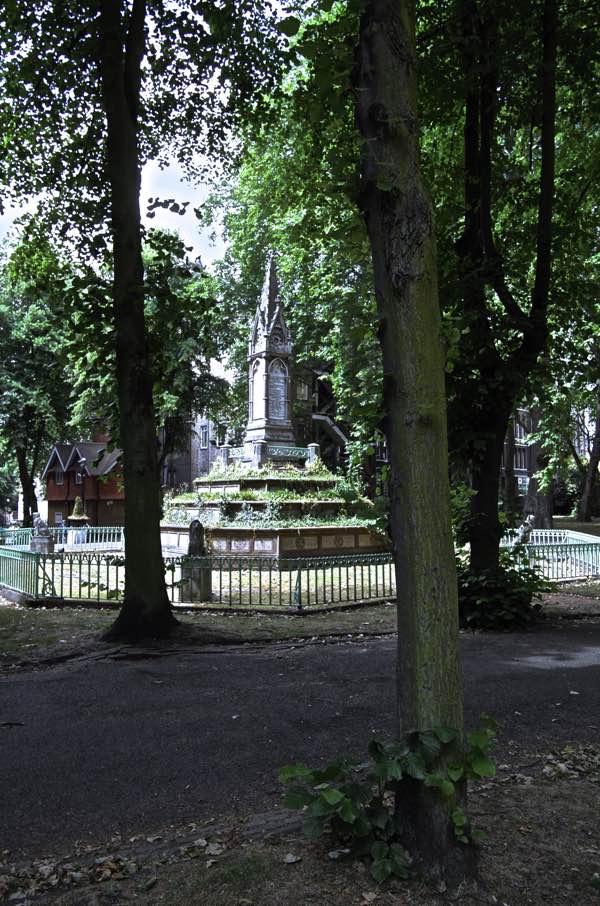
Baroness Burdett Coutts was responsible for the vast gothic memorial sundial
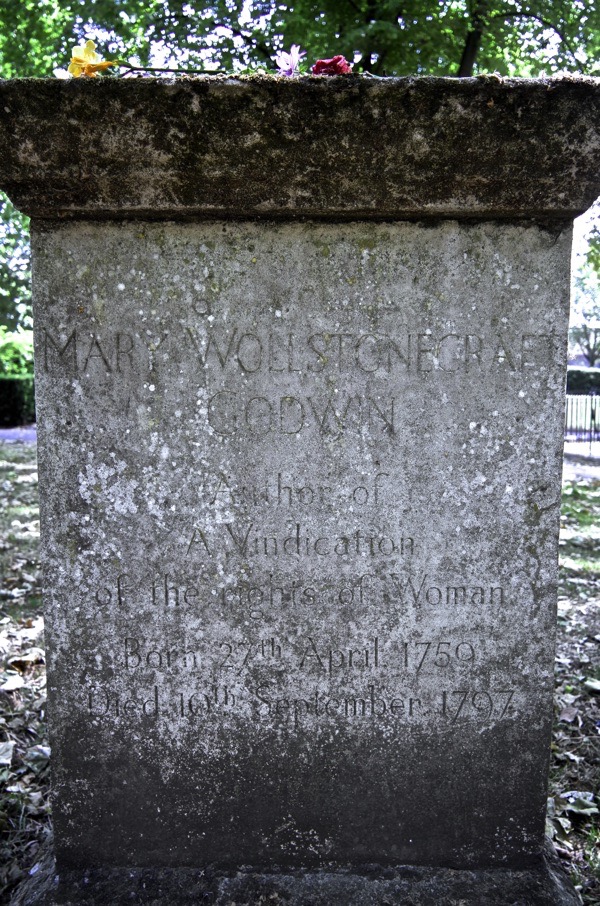
Mary Wollstonecraft, born in Spitalfields and buried in Bournemouth, but commemorated here with her husband William Godwin
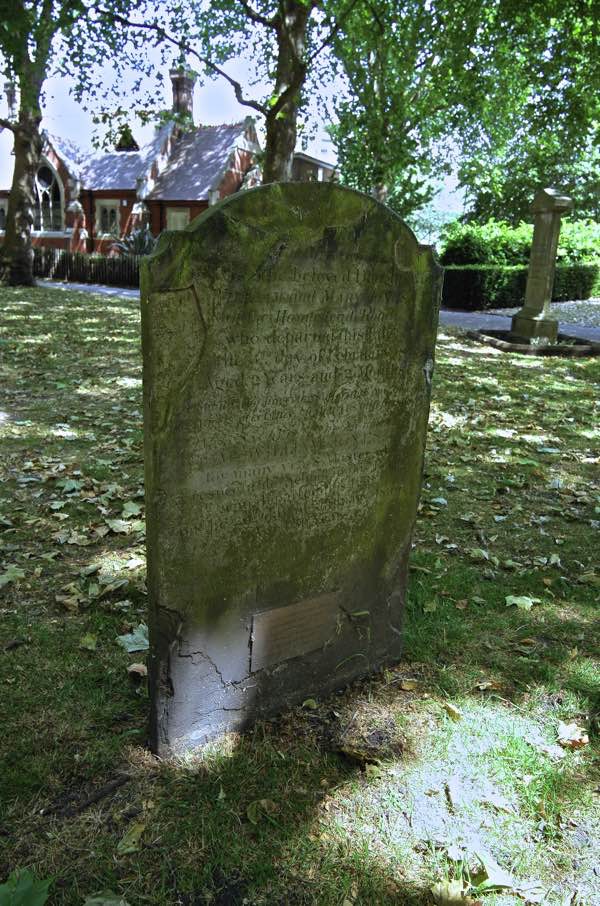
The grave of Charles Dickens’ school teacher, William Jones, believed to be the inspiration for the ferocious Mr Creakle in David Copperfield. “By far the most ignorant man I have ever had the pleasure to know … one of the worst tempered men perhaps that ever lived.”
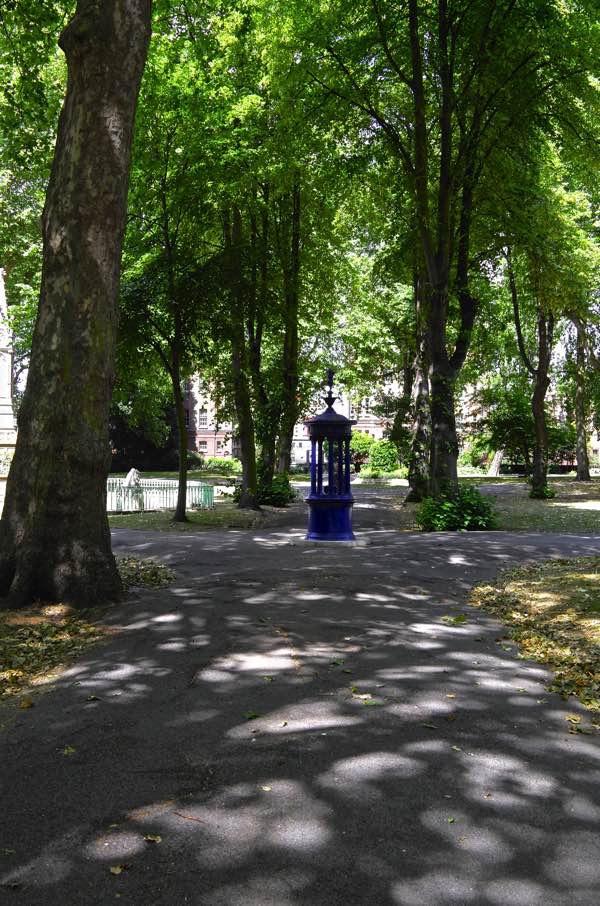
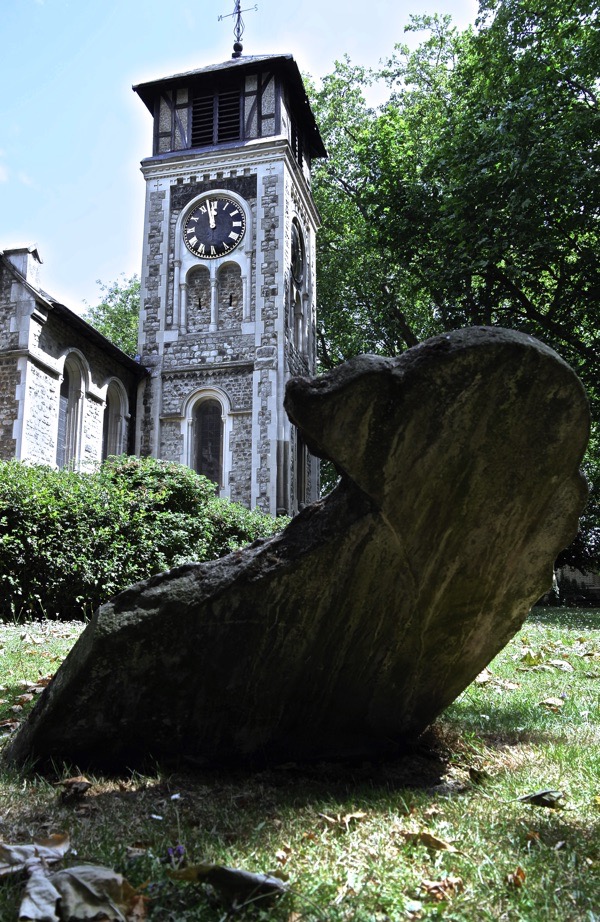
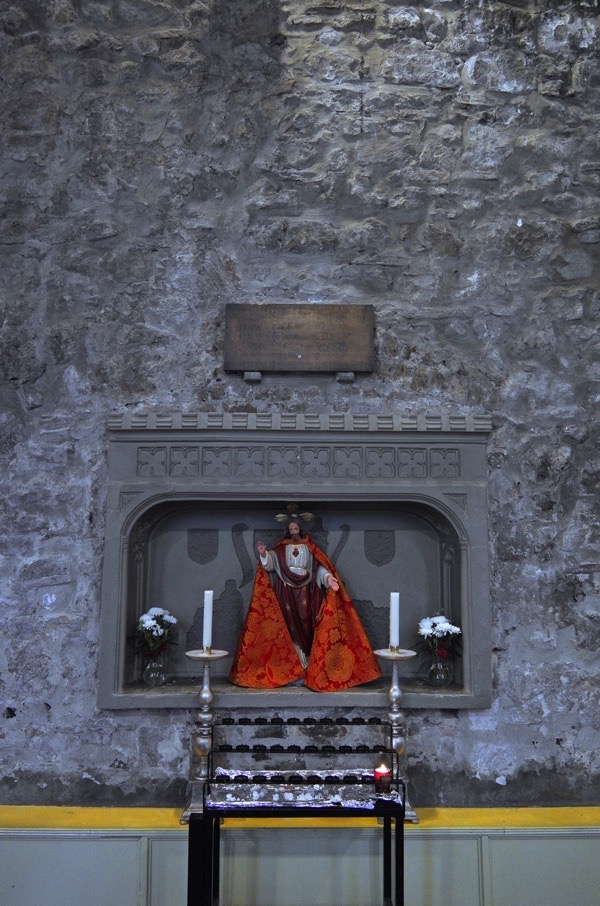
Norman stonework uncovered in the renovation of 1848
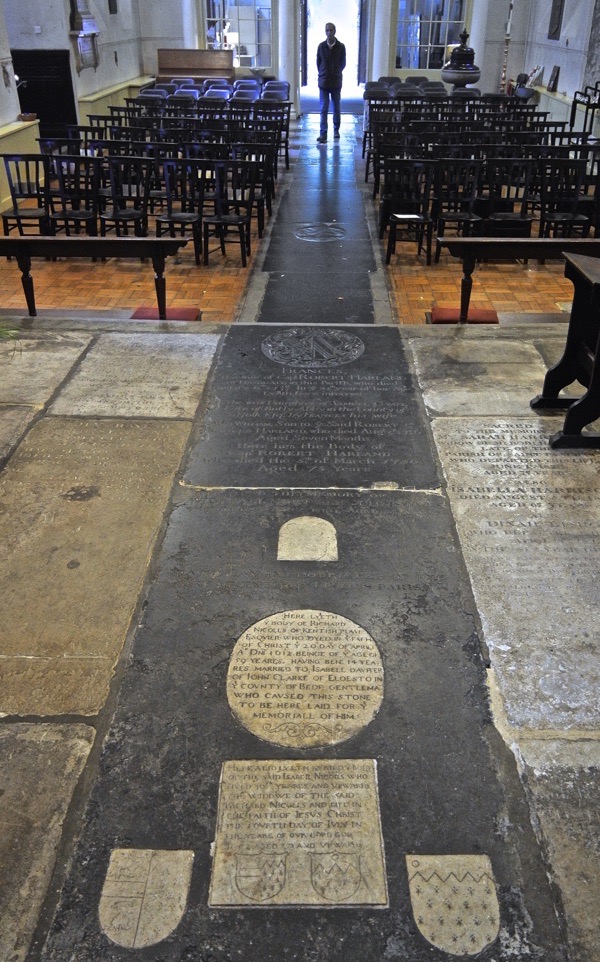
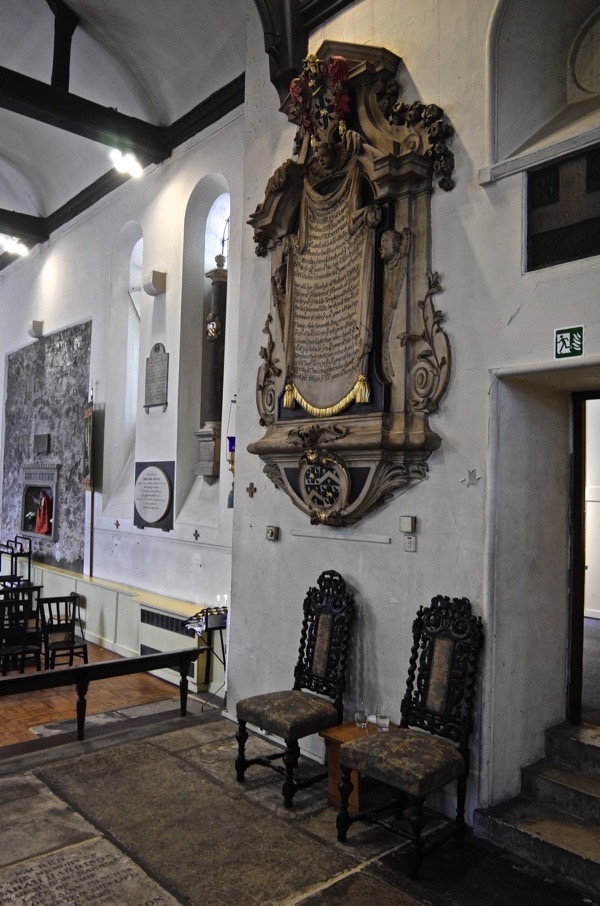
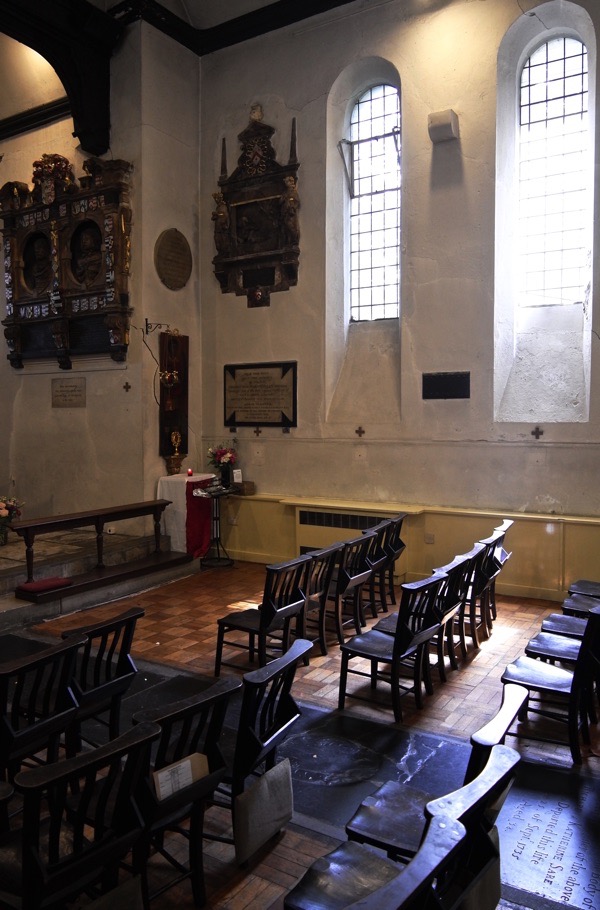
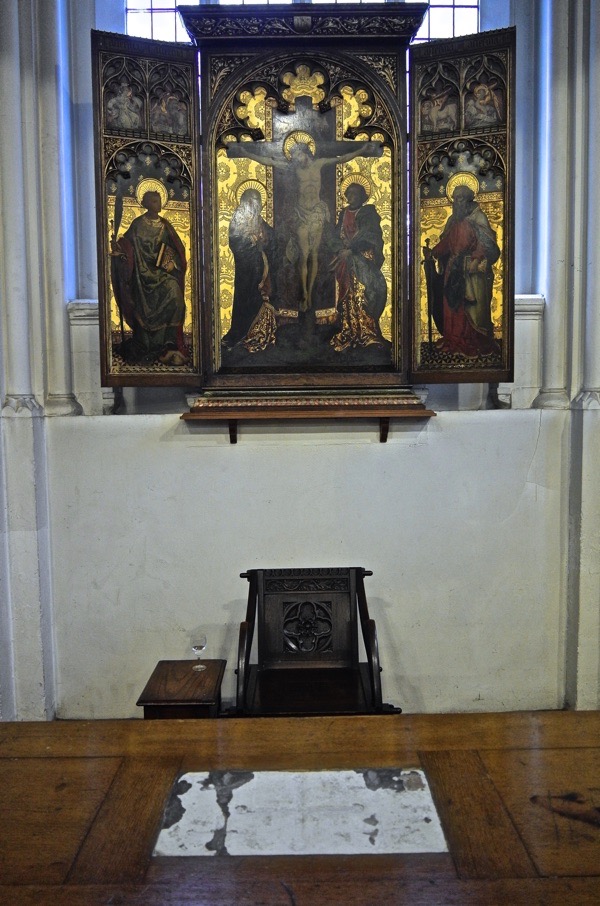
The seventh century altar stone is incised with crosses of Celtic design
“O passenger, pray list and catch
Our sighs and piteous groans,
Half stifled in this jumbled patch
Of wrenched memorial stones!”
“We late-lamented, resting here,
Are mixed to human jam,
And each to each exclaims in fear,
‘I know not which I am!’”
Thomas Hardy, The Levelled Churchyard (1882)
You may also like to read about
Thomas Bewick’s Cat
I discovered a copy of Thoms Bewick’s General History of Quadrupeds from 1824 in the Spitalfields Antiques Market and – of course – I turned first to his entry upon the domestic cat.
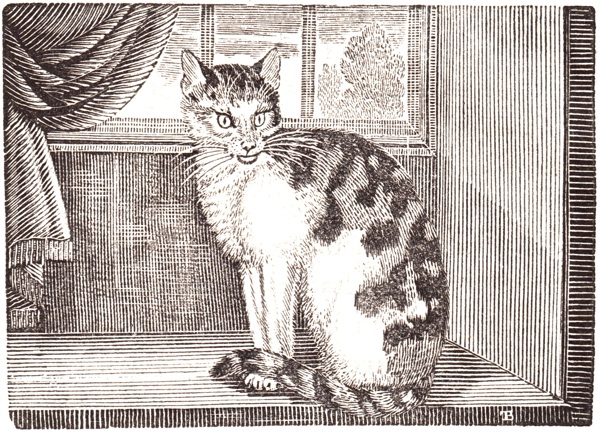
To describe an animal so well known might seem a superfluous task – we shall only, therefore, select some of its peculiarities as are least obvious and may have escaped the notice of inattentive observers.
It is generally remarked that Cats can see in the dark, but though this is not absolutely the case, yet it is certain that they can see with much less light than other animals, owing to the peculiar structure of their eyes – the pupils of which are capable of being contracted or dilated in proportion to the degree of light by which they are affected. The pupil of the Cat, during the day, is perpetually contracted and it is with difficulty that it can see in strong light, but in the twilight the pupil regains its natural roundness, the animal enjoys perfect vision and takes advantage of this superiority to discover and surprise its prey.

The cry of the Cat is loud, piercing and clamorous, and whether expressive of anger or of love is equally violent and hideous. Its call may be heard at a great distance and is so well known to the whole fraternity that, on some occasions, several hundred Cats have been brought together from different parts. Invited by the piercing cries of distress from a suffering fellow creature, they assemble in crowds and with loud squalls and yells express their horrid sympathies. They frequently tear the miserable object to pieces and, with the most blind and furious rage, fall upon each other, killing and wounding indiscriminately, till there is scarcely one left. These terrible conflicts happen only in the night.
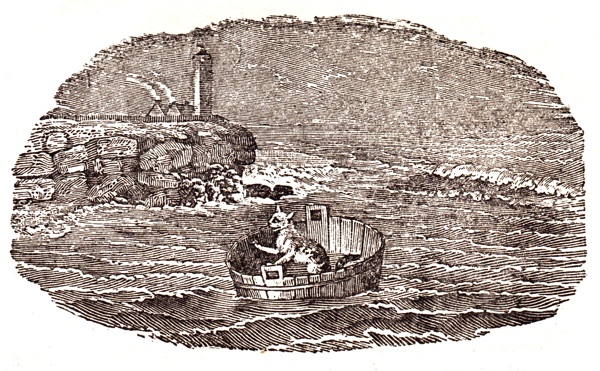
The Cat is particularly averse to water, cold and bad smells. It is fond of certain perfumes but is more particularly attracted by the smell of valerian and cat mint – it rubs itself against them and if not prevented will infallibly destroy them.
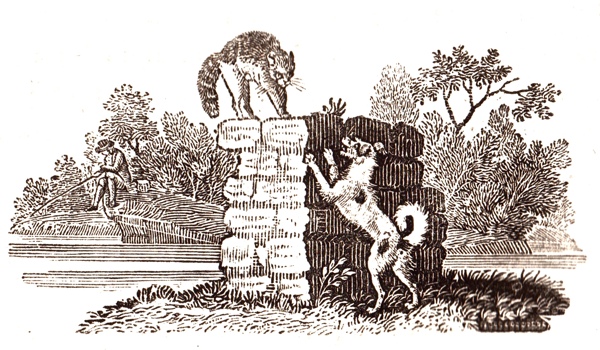
Though extremely useful in destroying the vermin that infest our houses, the Cat seems little attached to the persons of those who afford it protection. It appears to be under no subjection and acts only for itself.
All its views are confined to the place where it has been brought up. If carried elsewhere, it seems lost and bewildered, and frequently takes the first opportunity of escaping to its former haunts. Frequent instances are recollected of Cats having returned to the place from whence they have been carried, though at many miles distance, and even across rivers, where they could not possibly have any knowledge of the road or the situation that would apparently lead them to it.
In the time of Hoel the Good, King of Wales, who died in the year 948, laws were made to fix the different prices of animals, among which the Cat was included as being at that period of great importance on account if its scarceness and utility. The price of a kitten was fixed at one penny, till proof could be given of its having caught a mouse twopence, after which it was rated as fourpence which was a great sum in those days.
If anyone should steal or kill the Cat that guarded the Prince’s granary, he was either to forfeit a milk ewe, or her fleece and lamb, or as much wheat as when poured on the Cat suspended by its tail would form a heap high enough to cover the tip of the former.
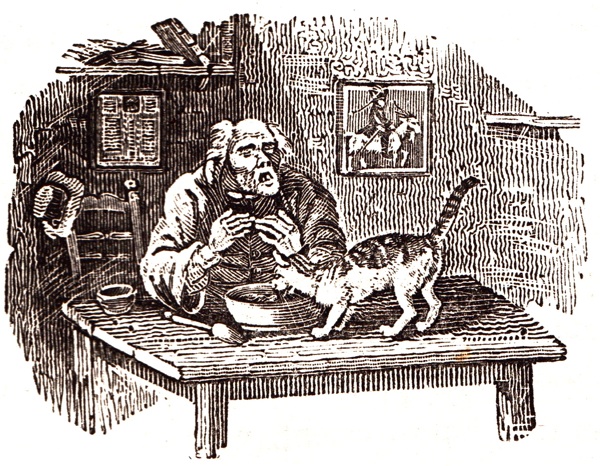
Hence we may conclude that Cats were not originally native of these islands, and from the great care taken to improve and preserve the breed of this prolific creature, we may suppose, were but little known in that period. Whatever credit we may allow to the circumstances of the well known story of Whittington and his Cat, it is another proof of the great value set upon this animal in former times.
You may also like to read about
Blackie, the Last Spitalfields Market Cat
Zareena Malik, Spitalfields Market Trader

Zareena Malik in Spitalfields Market
There have been changes in the Old Spitalfields Market recently, most notably the construction of permanent serving hatches at the centre of the market selling more expensive food. This development is part of the management’s plan to maximise income by introducing new upscale traders and increasing rents, yet the repercussions of this policy for some of the long-establised traders have been devastating.
Souvenir-seller Zareena Malik was ejected from the market recently at short notice and she told me that many as seven other traders were forced to leave the same time. The Spitalfields Market has been an important asset for people in the East End for centuries and markets have always been essential to London as arenas of opportunity and entrepreneurship, which makes Zareena’s story especially disappointing.
“In 2009, I was just looking for a place to have a stall and sell things, so I asked someone who told me I should go to Commercial Rd to buy stock and, while I was looking for the place, I came here to the Spitalfields Market by accident. So I asked for a stall and they said I could have one. At that time, it was just £10 rent for a stall for three days on Monday, Tuesday and Wednesday. So me and my son, Adnan, we started selling souvenirs of London – t-shirts, key-rings and magnets – and we were there six days a week. There was no market on Saturdays then and the rent for a stall on Sunday was £65.
It was very slow for us because we did not get many tourists at that time but slowly it improved. We were selling and buying but – to be honest – we never made any money. Sometimes we took £100 a day but once you have paid the rent and covered the costs of eating and travelling for two people, you can take half of that away.
Luckily, I have two sons and two daughters and my other son and my daughters had jobs. We all live together and we share all the bills and the rent and everything. Sometimes I made some money and other times I did not, but gradually my business began to work. I wake up each day at five and I used to leave to come to Spitalfields at seven by train.
I had storage in the market basement for my stock and I had to carry it up every day which was really hard work. I got a big trolley and pushed it into the lift and across the market. Originally, my stall was in the middle of the market but then they built the food serving hatches and moved me to the side with six or seven stalls in front of me and my turnover fell to a quarter. So I asked the management to give me another place because nobody came to the part of the market where I was and I could not sell anything.
Last year, I went back to my country for a visit and, when I came back last October, the lift which I used to transport my stock from the basement was not working, it was shut down for three weeks. They gave me somewhere to store my stock upstairs instead but then someone stole between £1700-£1800 of my things. There was no adequate security.
For many years, I have had a good relationship with the Old Spitalfields Market management, so I do not understand what has gone wrong. They never gave me any reason. The manager came to me on a Wednesday and said, ‘I have to tell you something – you can’t trade here anymore.’ I asked, ‘Please give me some time to clear my stock.’ At that time, I was only trading Monday to Wednesday at £20 rent a day, because having a stall at the weekends had become too expensive for me – £75 on Saturday and £85 on Sunday.
They spoke to me on a Wednesday and they gave me three days in the next week before I left. But then my daughter Natasha tweeted, criticising what they had done to me, and they told me not to come back. Essentially, they gave me no notice. I had already bought my summer stock. If I had been given a month, I could have reduced my stock and made plans to go elsewhere.
I am not that strong, but I believe it is wrong what they are doing because there are many needy people who want to sell their things and their livelihoods depend upon their stalls. They should have given me some time to clear my stock. I cannot understand why they asked me to leave or whether there is something wrong with me or my stock. They never told me that they did not like me selling souvenirs or asked me to bring something else. They could have told me that my stuff was not good enough for them and I was not allowed to sell it there. I asked if I could bring my own knitting to sell instead but still they said ‘no.’ I do not know what I am going to do with my stock now. Maybe I can find another covered market where I can set up my stall?”

Zareena Malik
Portraits copyright © Sarah Ainslie
You may also like to read about
On Publication Day For Adam Dant
Today is publication day for Adam Dant’s magnum opus MAPS OF LONDON & BEYOND published by Spitalfields Life Books & Batsford. As you read these words, Adam is sitting in his studio, signing and doing a drawing in every copy that was pre-ordered, which we will be mailing out in the next few days. Click here to order a signed copy
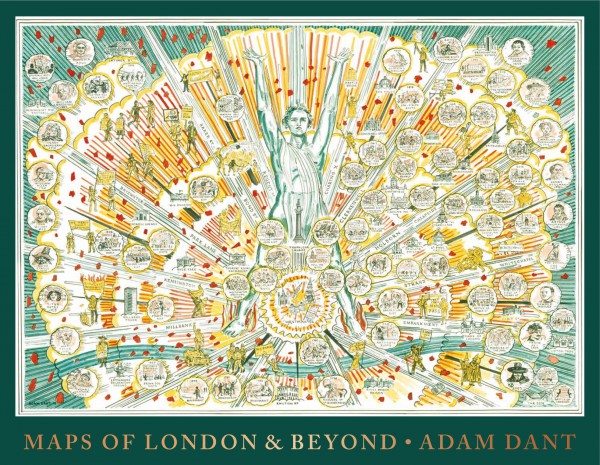
There are two forthcoming exhibitions of Adam’s maps in Knightsbridge and in Spitalfields, and Adam is giving illustrated lectures about his work at The Wanstead Tap in Forest Gate and Stanfords in Covent Garden. You are invited to join us in a celebration at both exhibition openings and details of how to book for the lectures are below.
THURSDAY 21st JUNE 7:30pm: Lecture at THE WANSTEAD TAP, 352 Winchelsea Rd, E7. Click here to book
TUESDAY 26th JUNE 6:30pm: Lecture at STANFORDS, 12-14 Long Acre, WC2. Click here to book
29th JUNE – 14th JULY: Exhibition of Maps of London at THE MAP HOUSE, 54 Beauchamp Place, SW3. Opening Thursday 28th June 6 – 8:30pm
5th – 22nd JULY: Exhibition of Maps of the East End at THE TOWN HOUSE, 5 Fournier St, E1. Opening Thursday 5th July 6 – 8.30pm
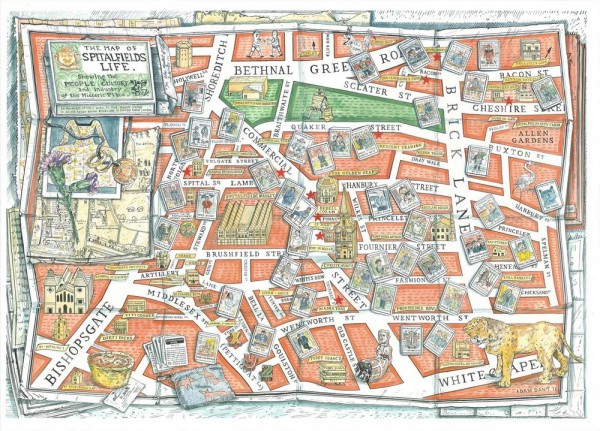
The Gentle Author visited Adam Dant in his studio in Club Row off Redchurch Street to learn of the origin of his fascination with drawing maps and the pursuit of creative cartography.
The Gentle Author – What brought you to the East End of London?
Adam Dant – I came here in 1993, directly from Rome where I spent a year as the Rome Scholar in Printmaking at the British School. I had often visited Brick Lane and Petticoat Lane markets in the past and, growing up in Cambridge, always entered London via Liverpool Street Station. The badly-lit, derelict streets surrounding Spitalfields Market where meths drinkers gathered around bonfires of orange boxes seemed very dark and dodgy – quite the antithesis of Cambridge with its culture of Reason, savoir faire and sandstone gothic pinnacles. On the evening I returned from Rome, the artists Tracey Emin and Sarah Lucas were hosting the closing party for their shop in the Bethnal Green Road and I bought bottles of brown ale from The Dolphin on what seemed to be a very gloomy Redchurch Street, unaware that I would be moving to this neighbourhood within a few weeks.
The Gentle Author – Tell me about your studio.
Adam Dant – Before I moved in, this building was a mini cab office but it was forced to close because the massive aerial on the roof was interfering with neighbours’ television signals. I used to take cabs from here, and I have a vague memory of walking past one evening and seeing it being attacked by a mob of angry scaffold-pole-wielding rival mini cab drivers. Inside it was a mess, a filthy grey carpet with haphazardly-trimmed edges and a couple of Space Invaders games in the corner. I lived here in my studio on Club Row for several years when I was a bachelor. When I moved in, I found I had the benefit of half a dozen phone lines and a stack of business cards with a blue car graphic and the words Tower Cars, Fully Insuranced. These ‘fully insuranced’ owners had sawn all the bannisters off the staircase which had a length of carpet nailed to it in a random fashion. Upstairs, an ancient water heater held together with dried-out masking tape was dripping in the corner and chicken wire covered the windows.
The Gentle Author – Did you find yourself part of a community?
Adam Dant – Yes, the community I entered and which coalesced around me was quite tight, due in part I think to the geography of the neighbourhood which felt like a walled enclave. It was called The Boundary. The Bengali people who lived on the Boundary Estate worshipped at two mosques on Redchurch Street and ran the butcher’s shops, grocers and garment factories, sometimes socialising at St Hilda’s, our local community centre – where I went to play badminton and run off pamphlets on the ancient Gestetner printing machine.
Here on Redchurch Street, my neighbours worked mostly in creative fields. There were furniture designers, a stained glass artist, a saxophonist, a gang of Italian lesbian anarchists who drove round in a fiat cinquecento painted in pink leopardskin, a playwright, a documentary filmmaker, a rubber garment maker and many more. They lived in the curious collection of abandoned warehouses, shops and offices, and were to be found every night in The Owl & Pussycat, an ex-dog-fighting pub, where the area’s history was a frequent subject of discussion. Everyone had read Arthur Morrison’s A Child of the Jago and knew the exact location of Shakespeare’s original Theatre. They spoke about the arcane origins of the street names, claimed that a ‘ley line’ ran directly through the nicest house and on towards the bandstand at Arnold Circus.
The Gentle Author – What attracts you to draw maps?
Adam Dant – I think my Map of Shoreditch in Dreams illustrates why cartography as a visual form appeals to me. The familiar, the quotidian and the eternal elements of a place can all be captured on a map, with the streets, the topography and the features providing the language to manifest a precise vision of a subjective reality, which might otherwise be overlooked in favour of a more mundane perspective.
In producing my maps, I seek to depart from the obvious and superficially useful qualities of cartography. Instead, by pursuing unexpected, unlikely or challenging methods of structuring or rendering the landscape of a place on paper, I hope the outcome is a work of art rather than just a means to get from A to B.
A map can be a puzzle or a game – a pictorial space where a viewer can travel through time and project themselves into history. Unlike a photograph or a topographic view, which records a location in a moment in time, a map is a representation of a place where we continue to extend the threads of physical history even if these are no longer visible due to being buried or trodden underfoot.
Even when the buildings remain, the sites of our daily engagements and our cherished urban nooks and crannies are constantly being refashioned and repurposed until they disappear. The layout of our streets are dug up, rationalised and reordered. Consequently, our cities get transformed beyond recognition. Yet even when they are razed to the ground, all the places where we walk are essentially constant. In the widest and most profound sense, they part of a cosmic cartography that is eternal, infinite and immutable. As long as we live, they live in whatever form we care to imagine them .
The Gentle Author – How is it possible to draw more than one map of the same place?
Adam Dant – Many of my maps depict the immediate locale of my home and studio. Although my original intention in making a different map of Shoreditch every year was to familiarise myself with the area where I had chosen to live and work, I soon realised these maps were also a means of establishing my presence and identity in this place.
Just as different artists will each the see same scene from their own perspectives, similarly one person can recreate the topography of a place in diverse ways on diverse occasions. There are so many contingencies when we look at a map, and we can chose to interpret these contingencies or we can we choose to take it at face value. An obvious example of this is my invention of the art historical orthodoxy known as Underneathism, depicting the world as viewed from beneath.
When the familiar ‘God’s eye’ view of the earth is inverted, the resultant perspective appears strangely malevolent. Yet Underneathism also exposes the familiar reality of isometric views -utilised by Google street mapping and video games – as equally artificial. Their use of this perspective only appears to us to be the natural order because of our exposure to it through years of constant use.
After a day spent in my studio creating Underneathean views, I found that stepping out into the street was as disorientating for me as it must have been for a Londoner of the eighteenth century to have been lifted up from the beer garden of a Hackney pub in a hot air balloon.
The Gentle Author – Are some maps better than others?
Adam Dant – Like the canon of painting or sculpture, the canon of cartography – particularly maps of London – is defined by historic moments embodied in innovative fashion and new discoveries described with prescient and appropriate perfection. The resulting maps are often born of unusual imperatives and spring from a particular circumstance. Just such an example is Harry Beck’s 1931 map of the London Underground. Despite millions of Londoners seeing it, using it and touching it everyday, it continues to reveal itself as a cartographic wonder.
Unlike a famous painting or sculpture, a map can be altered, annotated, improved and fiddled with many times without impugning its integrity or compromising its innate expression. In the creation of my maps, I often start with a basic template to which I pin and glue a bunch of stuff. My work in progress often looks like those huge table maps you see in war films, with models of boats and submarines pushed across them by smart young members of the Women’s Auxiliary Air Force wielding roulette rakes.
The map becomes fascinating to me when everything is in place, like the frozen moment of theatrical denouement in the tableau for a history painting. The pleasure of casting your eyes over a completed map is contingent on pinning down such a moment in its evolution, while the subject is at its most interesting – such as when the engraver Wencelas Hollar depicted the City of London viewed from the South Bank immediately preceding the Great Fire of 1666 and, shortly afterwards, during the conflagration.
The Gentle Author – What do you look for in a map?
Adam Dant – There are so many different kinds of map! There are maps that fill entire corridors, like those of my supposed ancestor, Ignazio Danti, at the Vatican Palace and then there are maps with covers designed by artists and proffered by London Underground, that you can slip in your top pocket. Although we need maps to show us how to get from here to there, once the map is in our hands we want to feel like the pirate who has the only existing means of finding where the treasure is buried.
The Gentle Author – What do you say to people who complain they get lost following your maps?
Adam Dant – You are holding it upside down!


Adam Dant’s limited edition prints are available to purchase through TAG Fine Arts.












