So Long, The Duke Of Wellington
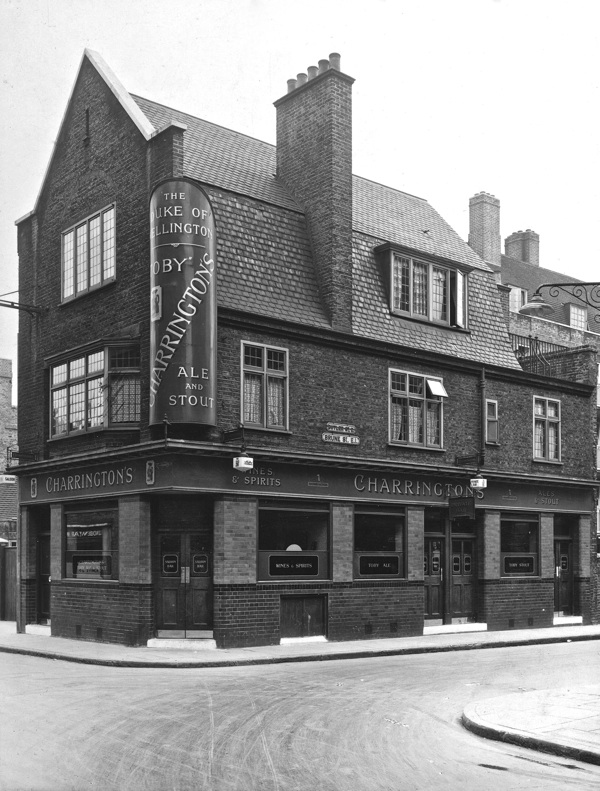
The Duke of Wellington, 1939 – courtesy of The National Brewery Centre, Burton on Trent
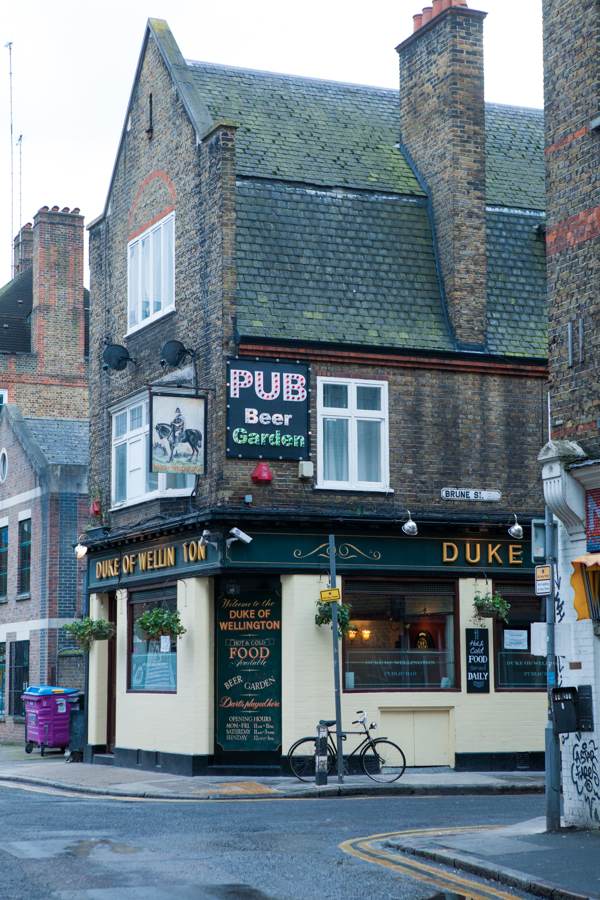
I have long admired The Duke of Wellington swaggering on the corner of Brune and Toynbee St, flaunting its eccentrically-pitched roof and tall chimney stack in the style of a Tudor cottage like a swanky hat. It was always a pleasure to leave the clamour of the street and enter the peace of the barroom, where a highly concentrated game of darts was in progress.
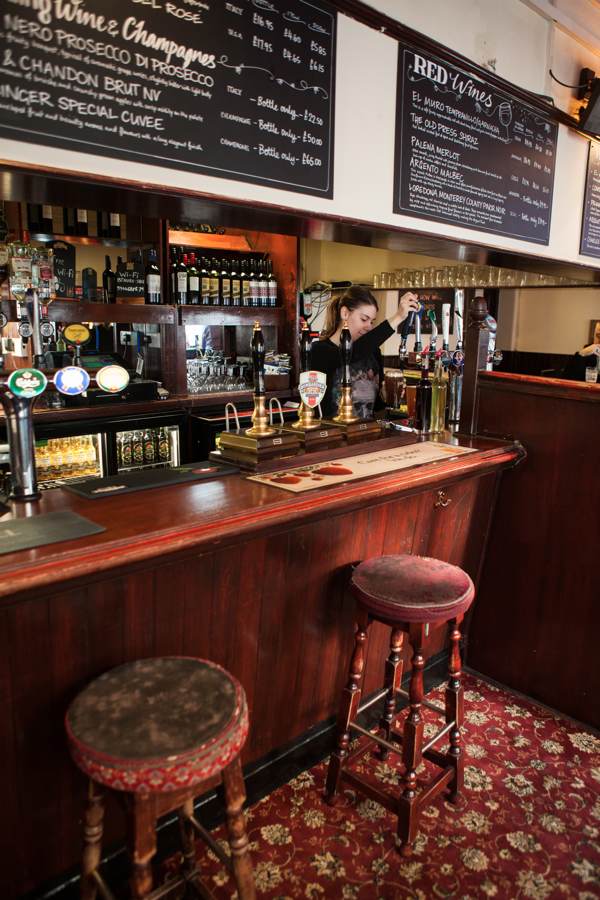
Nick Harris, who ran the pub with licensee Vinny Mulhern in recent years, greeted me and explained that eighty per cent of the customers were darts players. “We’ve got so many teams, there are matches every Monday, Wednesday and Thursday,” he admitted to me, “I first came here as a member of a team to play in a match.”
There has been a pub on this site since at least the eighteen-fifties yet it closed forever last week, joining the sorry ranks of almost half the pubs across the East End which have closed since 2000. Recent law permits alteration in use of pubs without the necessity of planning permission, generating an unprecedented number of closures, as pubs that are economically viable and valued community meeting places are snapped up by predatory developers, eager to shut them down and convert the buildings to other uses that will deliver a quick profit.
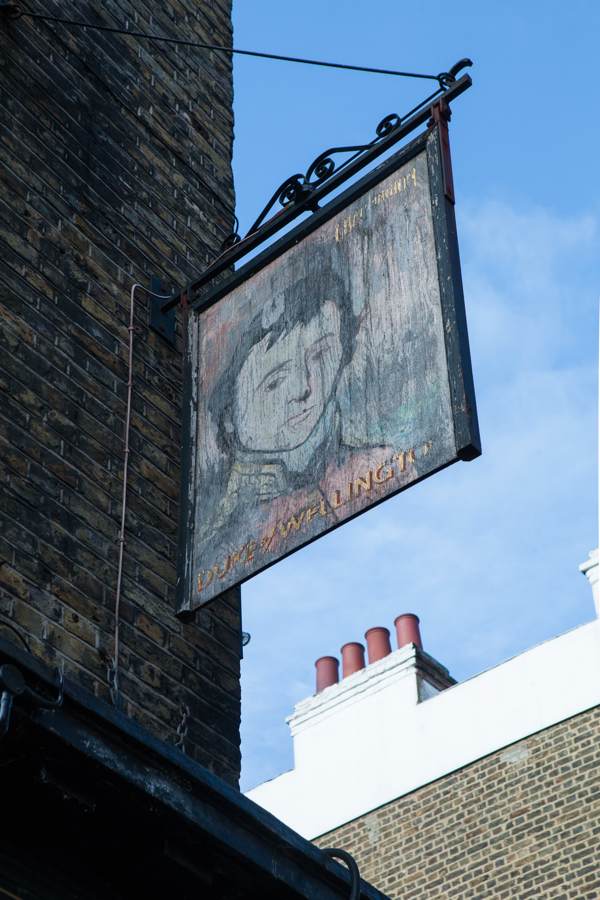
Already, the lettering has been removed from the fascia, the inn sign has been taken down and the hoardings have gone up. Problems began for The Duke of Wellington when property developers Mendoza Limited bought the freehold for fifteen million pounds a few years ago. As owners, they had the right to prescribe the list of suppliers that Vinny, the tenant landlord, could buy from. As a consequence, he had to pay £265 a barrel where he paid £130 previously. Meanwhile, Vinny discovered Mendoza Limited had acquired a string of twenty-seven pubs for ‘conversion,’ employing questionable tactics to further their purpose.
“They’re saying we’ve been buying from unapproved suppliers and they’ve sent in a stocktaker,” Nick revealed. I learned Vinny had his weekly rent returned the day after he paid it. “I think they are getting ready to send the bailiffs in to change our locks for not paying the rent,” Nick confessed to me, turning emotional, “They don’t care – they don’t realise how much it offends good honest people who are just trying to make a living.”
Despite a long campaign to save the pub, Vinny has now gone and Mendoza’s planning application has been approved upon appeal, granting permission to gut the building, demolish part of it and pack in as many pokey hotel rooms as possible, building upon the garden and adjoining land.
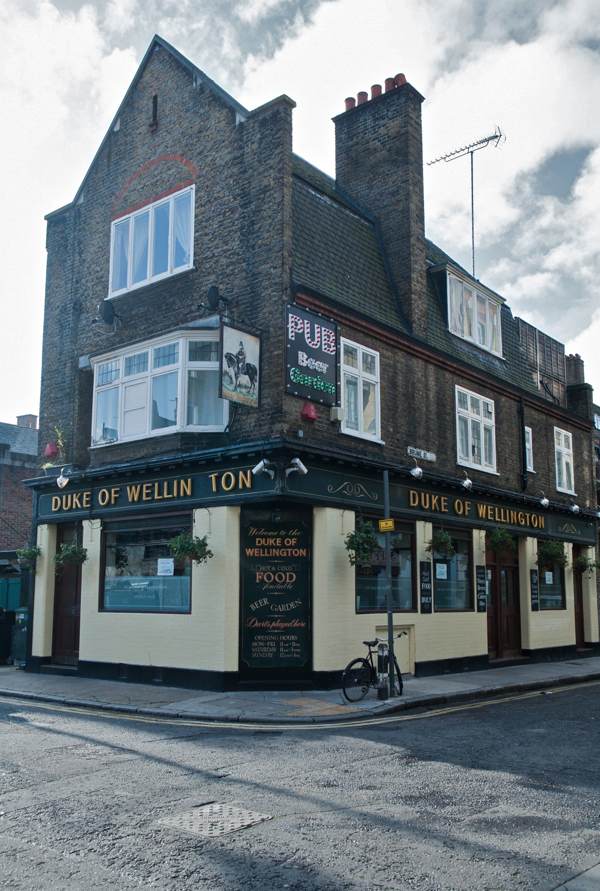
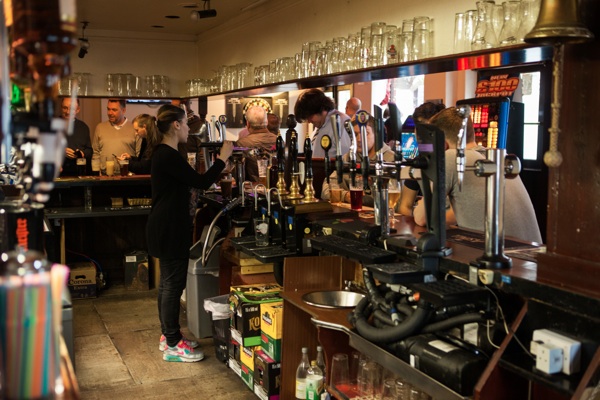
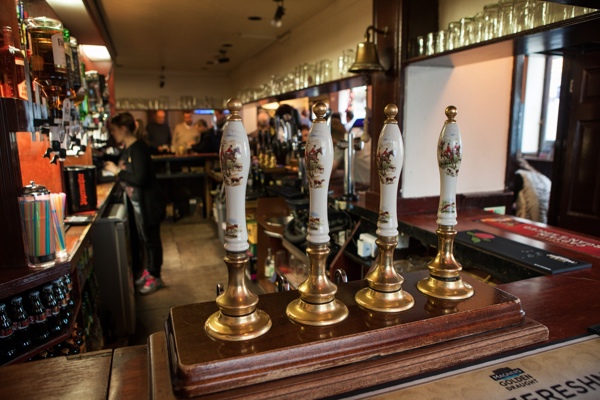
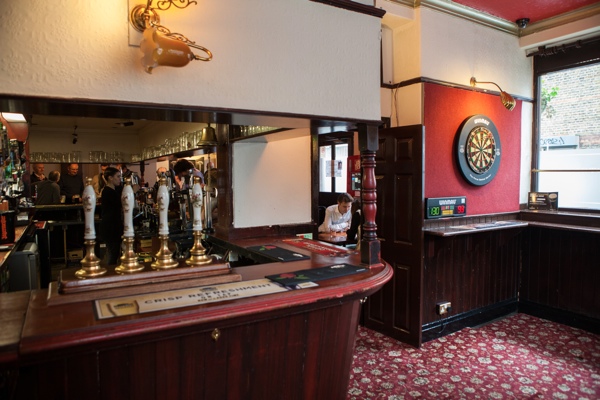
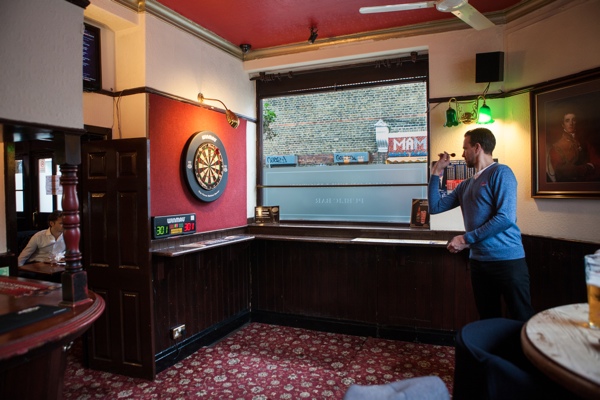
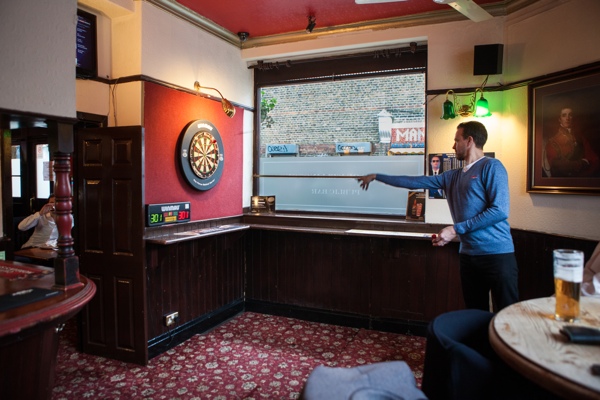
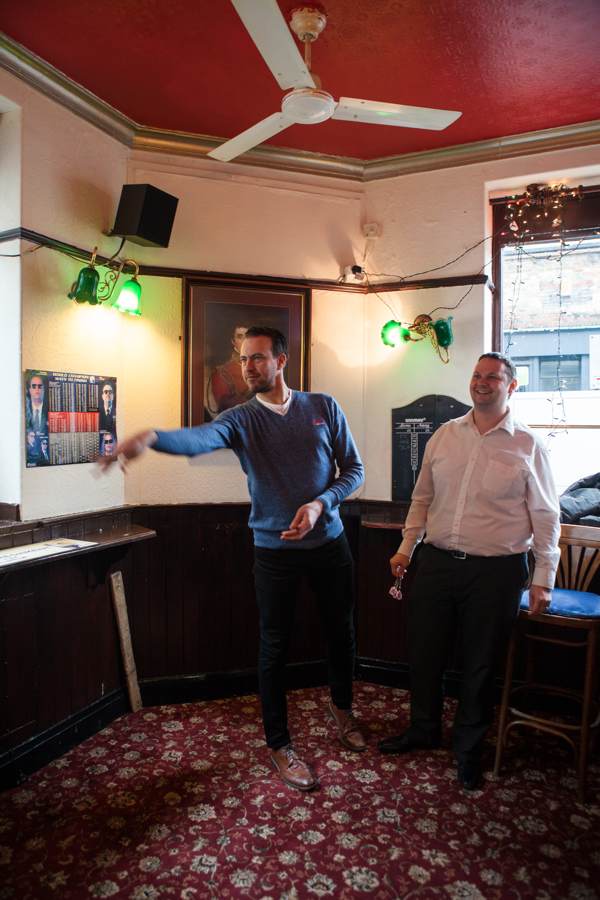
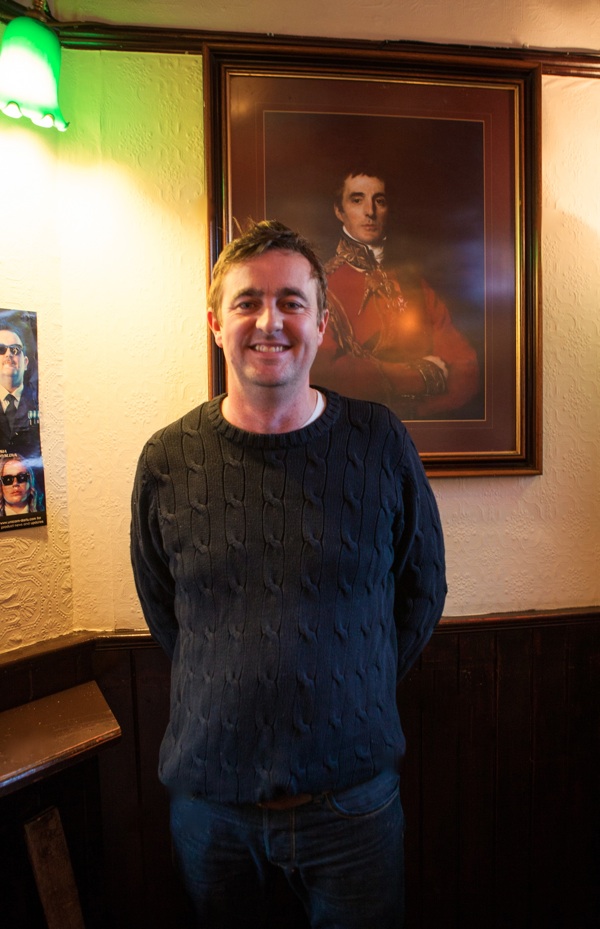
Vinny Mulhern, Publican
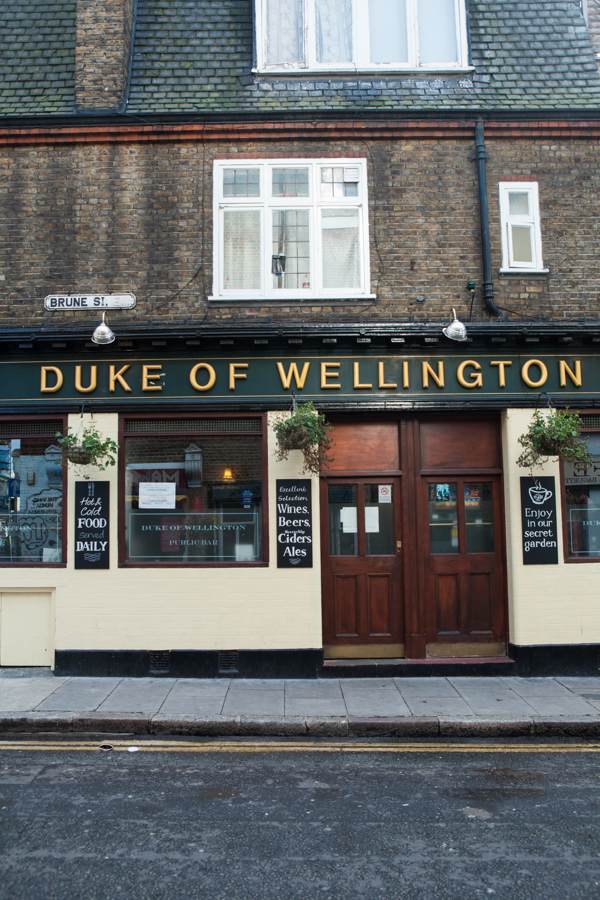
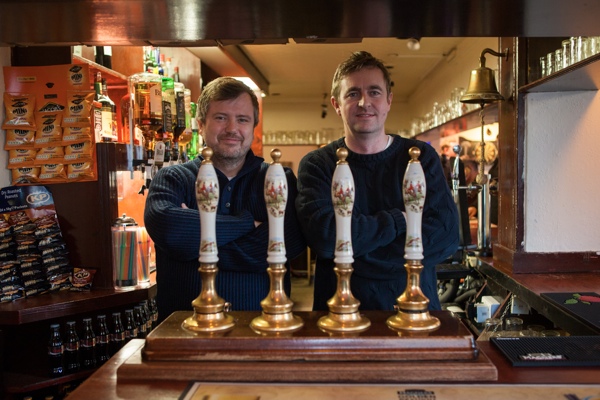
Nick Harris & Vinny Mulhern
Photographs copyright © Estate of Colin O’Brien
You may also like to take a look at
Arful Nessa’s Sewing Machine
Contributing Writer Delwar Hussain recalls the story of his mother’s sewing machine
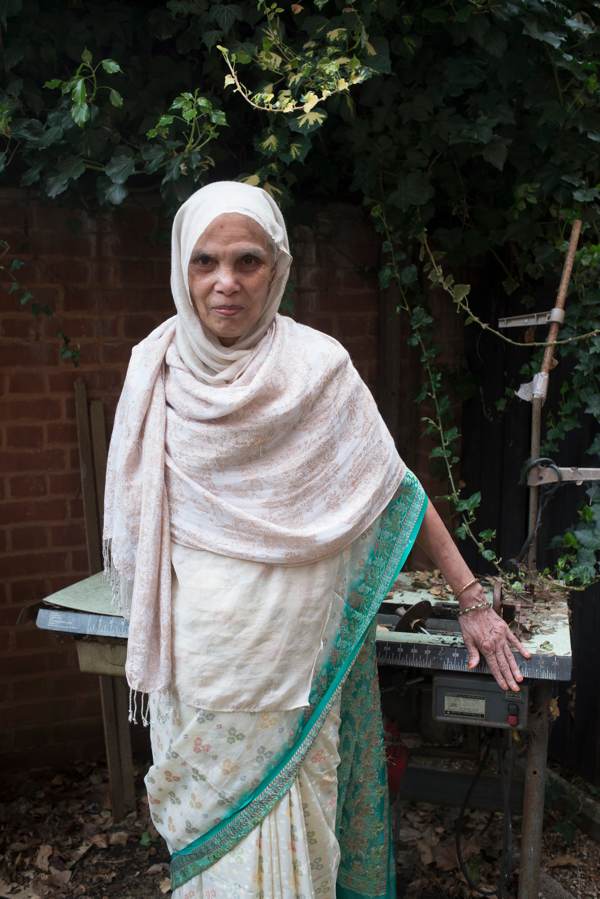
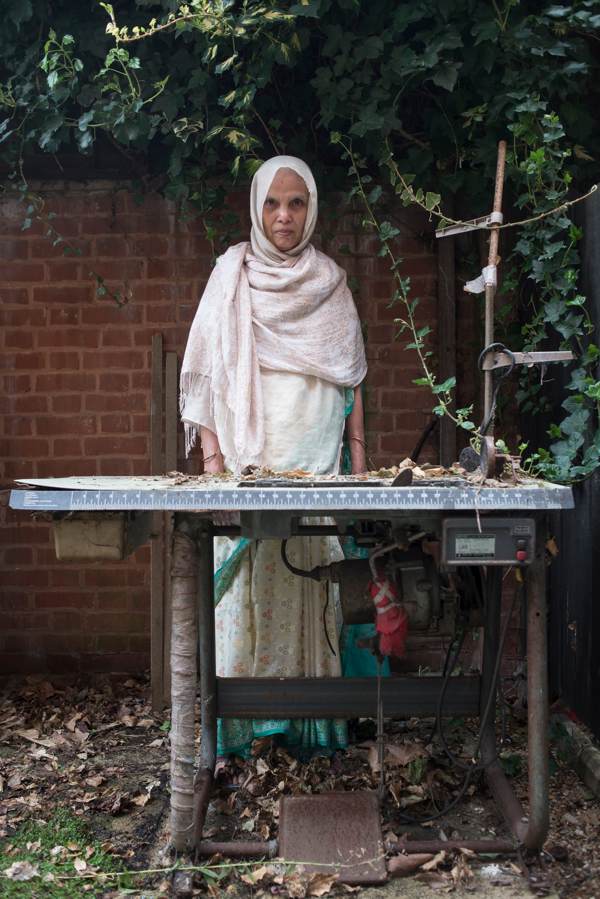
Arful Nessa with her sewing machine table
Rather than the sound of Bow bells, I was born to the whirring of sewing machines in my ear. Throughout most of my childhood, my mother did piecework while my father worked in a sweatshop opposite the beigel shop on Brick Lane, stitching together leather jackets for Mark & Spencer. The factory closed down long ago.
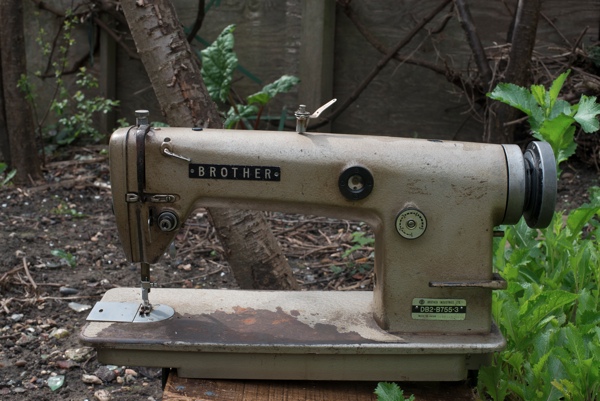
Initially my mother’s industrial-grade Brother sewing machine was in the kitchen, in between the sink and the pine wood table. But it took up too much space there and was also considered dangerous, once ambulatory children started populating the house. It was decided that it would be moved to one of the attic rooms on the top floor of our home, following the custom of the Huguenot silk weavers of the past. There the machine lived and there my mother would be found hunched over it, during all hours of the day and often late into the night. She says it was most hard on her back and shoulders, which would ache from the work.
“The men used to work in the factories. I preferred to do it at home because it was less work compared to what they did. They had to work harder,” she explains, “I began before the children were born. I wasn’t doing much at home, so I thought I should try it and earn a little money. Other women were working as machinists then and an old neighbour who had lived on Parfett St taught me how to operate the machine. I couldn’t do pockets, but I did pleats, belts and hems on skirts for women who worked in offices. I took in work for a factory on Cannon St Rd that made suits and another on New Rd that made blouses.”
For a while my mother sewed the lining into jackets and winter coats, working for a short Sikh man who had a clothes shop on Fournier St. He had quick steps and a bunch of heavy keys dangling from the belt on his trousers. The man still owes her money, she recalls. He would give her wages in arrears, promising to pay, but it never materialised. Following him, she worked for another man, who also did not pay. “Where would you go looking for them today?” my mother asks, “Everyone we used to know around here has left. So much has changed.”
I remember the almost-sweet smell of the machine oil, the thick needles, bundles of colourful nylon yarn, piles and piles of skirts in all shades and sizes, the metal bobbin cases and the sound of the sewing machine. When the foot peddle was down, the vibration could be felt throughout the house. Strangely, this provided a sense of comfort – the knowledge that my mother was upstairs and everything in the world was as it should be.
When I was around twenty, my brothers and sisters and I colluded with each other to get rid of the sewing machine. It had lain dormant in the attic room ever since my mother gave up taking in piecework some years previously. The work had slowly become more irregular and less financially rewarding. “When I first started, I was able to earn around seventy-five pence per skirt, then towards the end, when there were many more women working, it dropped to around ten pence per coat.” These were also the days when much of the manufacturing in East London was being shipped out to parts of the world where there was cheaper labour, including Bangladesh and Turkey.
With my mother’s working paraphernalia left as it was, the space resembled Rodinsky’s room – he was the mythical recluse who once lived a few doors down from us in the attic of 19 Princelet St and who had disappeared one day, leaving everything intact. I had an idea to turn our attic into a study, installing my PC which my mother had bought for me from the money she had saved from sewing. With a separate monitor, keyboard and large hard drive, it was almost as big as her Brother sewing machine.
She had always been a hoarder, so we knew that getting rid of it was going to be a delicate and difficult matter. We had given her prior warnings, but these had fallen on deaf ears. Then one night, when she had gone to bed, my siblings and I crept upstairs and, with a lot of effort, detached the head of the sewing machine from the table. Huffing and puffing, we carried it down three flights of stairs and delicately dumped it at the end of our street. We did the same with the table base.
Of course, she discovered the machine was missing the next day and was incredibly upset. She had “spent one hundred and forty pounds on it,” she said. “It still worked,” she said, “why had we not told her, she could have given it to someone at least, instead of it being thrown away” and “what had she done to deserve children who were so wasteful.” After that, I forgot all about the Brother sewing machine that once lived in our attic.
Once when I returned from a trip to Dhaka, researching a book about the people of that city and interviewing garment workers about their lives and fears, I was speaking with my mother when the subject of her earlier life as a machinist came up. And then she announced her revelation.
My mother and our Somali neighbour had managed to rescue the sewing machine from where my brothers, sisters and I had thought we had discarded the thing. The two women had somehow managed to shuffle the table base along, scraping hard along the pavement. But instead of bringing it back to the house, they took it to the neighbour’s, where it was to stay in the garden until they decided what to do with it. The machine head on the other hand was far too heavy for them to carry and they abandoned it.
This disclosure had to be investigated. My mother and I immediately knocked on our neighbour’s door, and asked if it was still there. The neighbour led us to the garden where, hidden behind wooden boarding and tendrils of ivy, we found the sewing machine my mother had spent so many years working on.
Considering it had endured years outdoors, it looked like it was still in relatively good health. Bits of it, such as the bobbin winder and the spool base were slightly rusty, but the address of the showroom on Cambridge Heath Rd where my mother bought it was clearly labelled and the motor looked in working condition.
She is still upset with my brothers and sisters and me for throwing it away. This confused me. “Why would you want to hold onto something that is a source of oppression?” I asked, high-mindedly. “The machine helped to feed and educate my family,” she answered quietly.
My mother then reminded me that my aunt, her sister, also had a Brother sewing machine and made skirts for many years from her kitchen in Bethnal Green. We went to speak to her. She no longer works as a seamstress and has resorted to keeping her dismembered machine on the veranda of her ground floor flat. The table now stores pots and pans, baskets containing seeds and drying leaves. The head was in the bottom drawer of a metal cabinet next to it, wrapped up in a Sainsbury’s shopping bag. My aunt still has some of the cloth which she would make into skirts and she showed me the pleats on a piece of salmon-coloured material.
“Most of the women in this block worked for different factories and one of them taught me how to do it. I worked for a Turkish man on Mare St for around seven years. I would get started around 7am after the morning prayer at 6am. I can’t remember where the skirts were being sold, but they were for well known shops in the West End. In one day, I could work on fifty or sixty pieces. Some days I made around a hundred. I received around forty or fifty pence per piece and could earn around three hundred pounds per week. But it was all irregular, nothing was fixed. My children would help by cutting the loops off when they got home after school. There is no work anymore, but I kept the machine in case I needed to fix things. It still works.”
While I took notes, sitting on the chair she would sit on whilst working, I could hear dregs of conversation between the two sisters, comparing the quality of oranges in Bethnal Green market to Asda and Iceland, as well as recalling what happened to other women whom they both knew that had worked as seamstresses. This industry, now gone, is a piece of the thread that joins the past with the present in the East End and, in turn, unites the people who have come to make this part of London their home.

My aunt with her sewing machine in Bethnal Green
Arful Nessa
Photographs copyright © Sarah Ainslie
You may like to read Delwar Hussain’s other story about his mother
Drag Artists Against Trump

Contributing Photographer Sarah Ainslie & I were thrilled to go down to Soho on Friday to rendezvous in Great Windmill St with the celebrated Cheddar Gorgeous, who had just arrived from Manchester to convene a multifarious gathering of drag artists that she was leading in a protest against Donald Trump.
Despite the festive atmosphere, the purpose of the day was a serious one and, when the drag artists posed for their portraits, many assumed their most pugnacious expressions. Yet all broke into the sweetest smiles when I congratulated them on their outfits, before I enquired what they might say to Mr Trump if they were to meet him.
At one o’clock, in three-inch heels and with a face painted like Grimaldi, Cheddar Gorgeous led her forces in triumph out of Soho and into Shaftesbury Avenue beneath a dazzling sunlit sky. Demonstrating a sense of leadership worthy of Henry V, she advanced to Piccadilly Circus as a great cheer arose from her excited throng of followers and passers-by applauded in delight. They encountered more joyous clamour from the direction of Regent St as the main march arrived to meet them, filling the circus with a euphoric cacophony, and the two columns became one as Cheddar Gorgeous led the entire retinue off down the Haymarket towards Westminster.
I stood in Piccadilly Circus and watched the parade pass for the next hour. I found it an emotional experience to witness the crowds from every walk of life who had come together to assert their belief in a decent society. Despite the grim circumstances, it was one of the most hopeful displays of humanity I have witnessed and I shall not forget it in a long time.

Cheddar Gorgeous – “This is a country where we celebrate diversity and our community is offended by your policies that punish and discriminate against it”
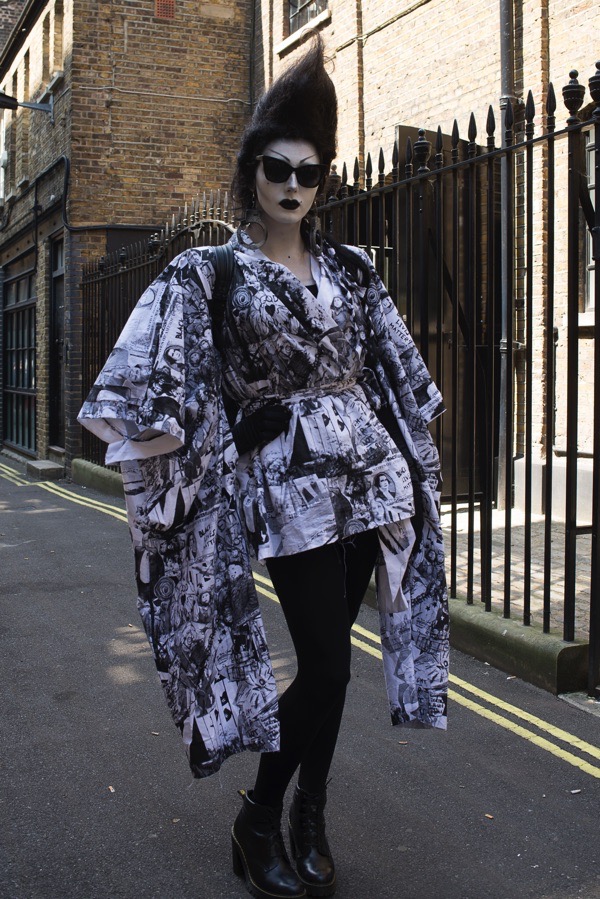
Liquorice Black – “Trump needs to learn celebrate diversity not try to divide it socially, physically and through laws”
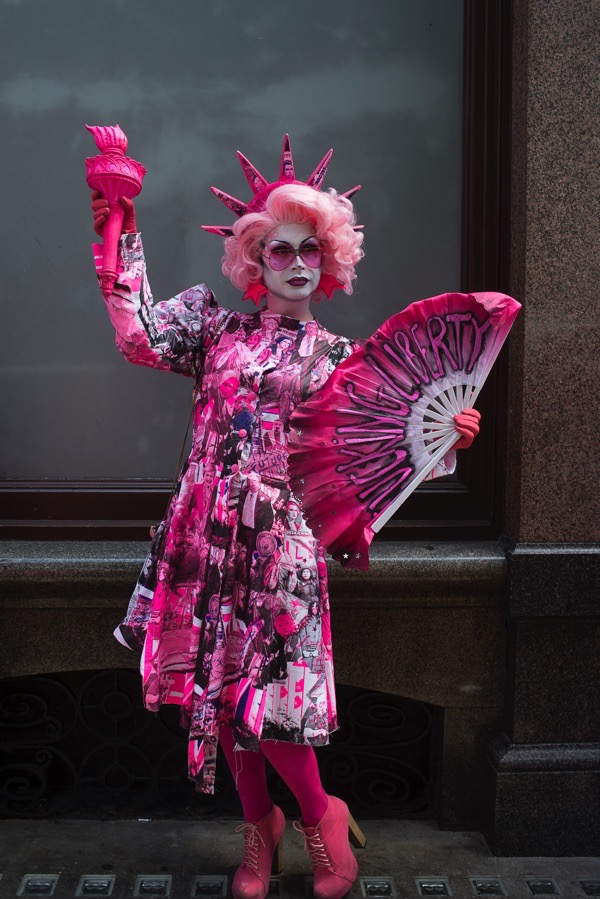
Anna Phylactic – “Why do you put so much hate in the world?”
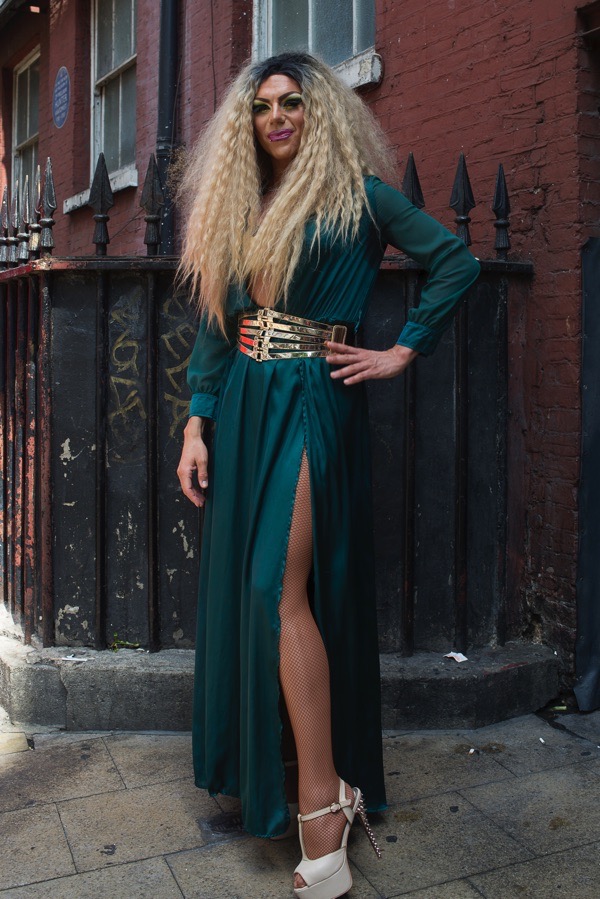
Verry Cherry – “Sort out your own country’s problems before you come over here criticising us”
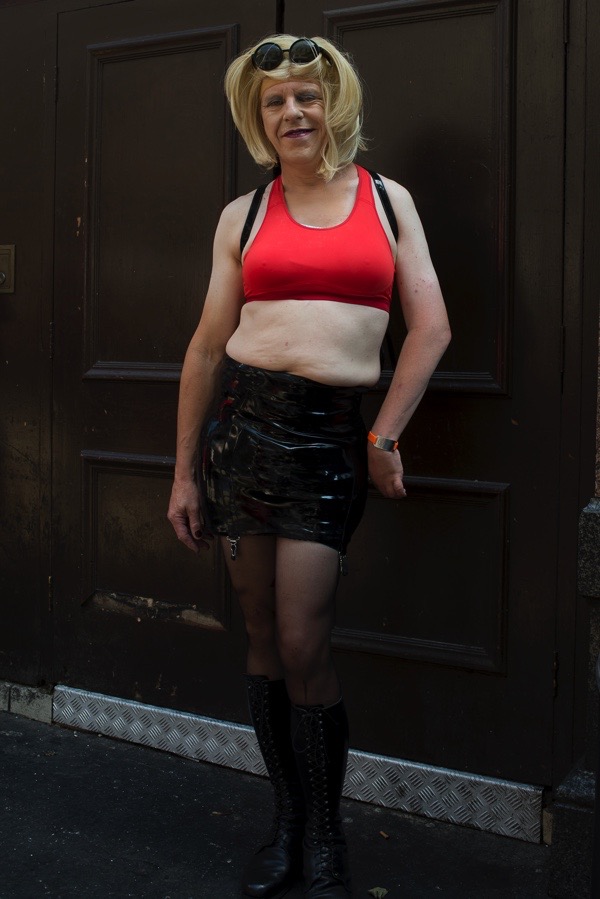
Marcia – “You would like to see us divided so your fascist policies can succeed but we have not forgotten Hitler”

Grace Anatomy – “Crawl back under a rock!”
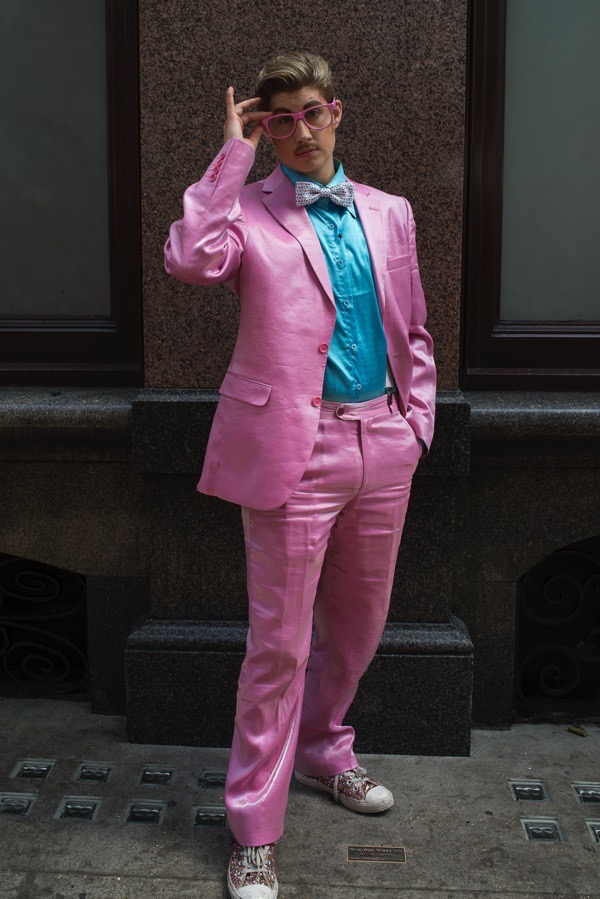
Adam All – “Piss off, mate!”

Jack The Lad – “Fascist presidents aren’t welcome”

Liam Asplen – “Stop inciting hatred, you small-penised misogynist”
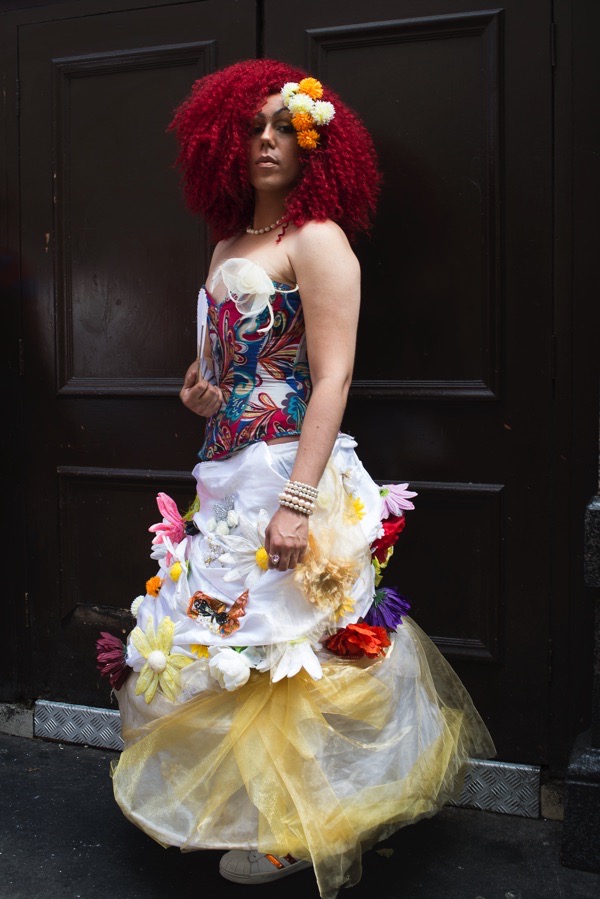
Beyonce Holes – “F**k off home!”

Glamrou La Denim – “You stole my bronzer!”
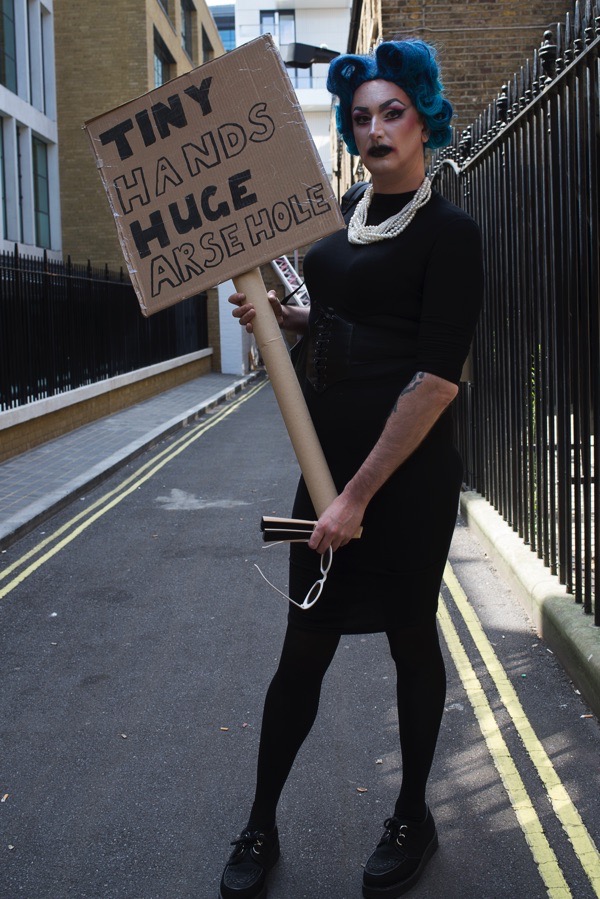
Mena Business – “You’re a pathetic old tyrant and you deserve to go to hell”
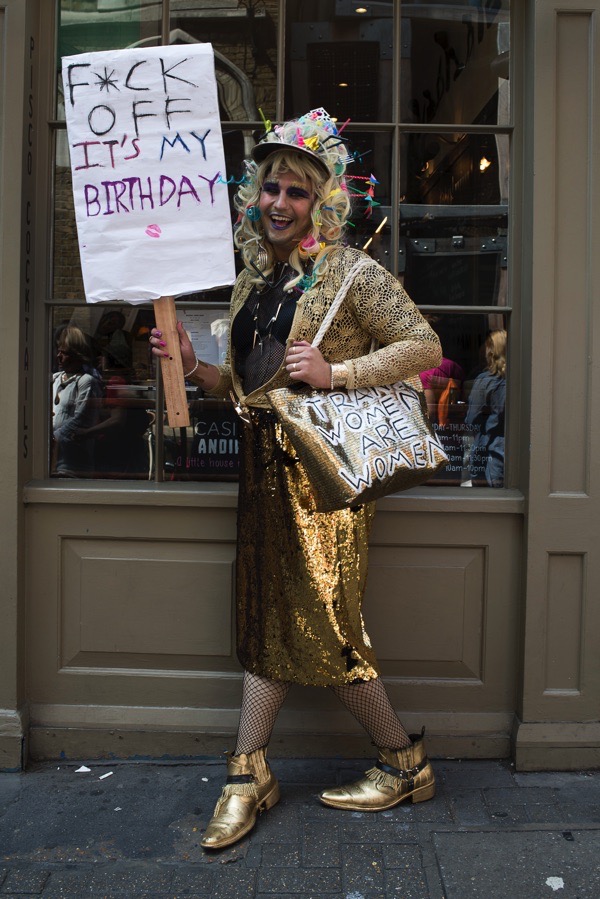
Will Jackson – “It’s my twenty-third birthday, so I’d prefer it of you’d not upstage me on my special day”

Photographs copyright © Sarah Ainslie
You may also like to read about
Mr Pussy In The Dog Days
With your help, I am producing a handsome collection of stories of my old cat, THE LIFE & TIMES OF MR PUSSY, A Memoir Of A Favourite Cat to be published by Spitalfields Life Books on 20th September. Below you can read an excerpt.
Support publication by preordering THE LIFE & TIMES OF MR PUSSY and you will receive a signed and inscribed copy when the book is published.
Click here to preorder your copy

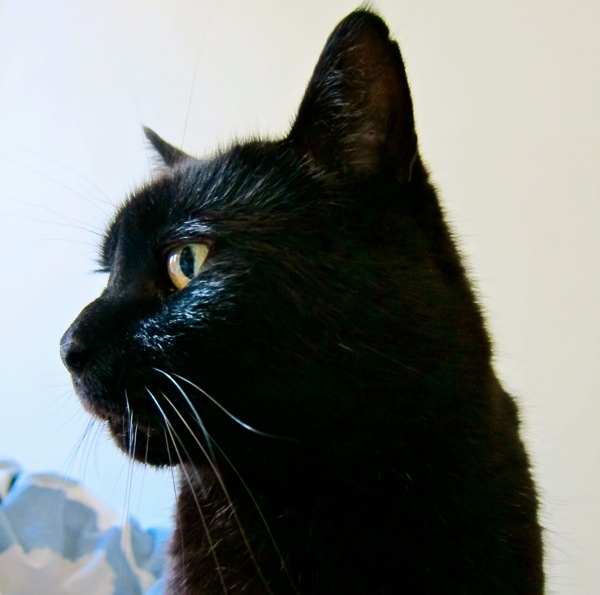
The sagacious Mr Pussy
There is an exceptional hush upon the East End, with with the heat and the football conspiring to empty the streets of locals and tourists alike. The clouds hang heavy and the atmosphere is quiet, and my cat Mr Pussy divides his time between dozing on the bed and dozing under a bush. The pace of the city is stilled and Mr Pussy finds the climate conducive to resting.
Mr Pussy observes me with doleful eyes as I go about my daily tasks, too gracious to be overtly critical, yet he hopes that I might one day learn to appreciate the virtue of sitting peacefully for extended periods of time without other occupation, as he does. To this end, Mr Pussy waits patiently until a suitable opportunity when I am settled at my work before he approaches me. Arriving silently like a ghost, Mr Pussy reaches out a soft paw to stroke my forearm gently while I am writing, as a discreet gesture of companionship, drawing my attention without interrupting my activity.
Settling at my side and savouring the tranquillity of the hour, a purr of contentment emanates from him. And if my concentration should wander from my page, searching for a word or casting around to seek the direction of my thought, then I chance upon his hypnotic golden eyes, meeting my gaze with their fathomless depth and opalescent gleam. He has my attention. He has an infinite capacity for staring. He knows I am a novice and he is an expert at it. He knows I cannot resist succumbing to his superior mesmeric powers. He has me spellbound and I share his stillness. The house is empty and we are alone. We look at each other eye to eye, without blinking, to see who flinches first.
Almost imperceptibly, Mr Pussy begins to lower his lids and I do the same. I follow along, as his supplicant. Our eyelids move in sync and we are nodding off to sleep, it seems. I might enter the feline realm, if I did not open my lids again momentarily – only to discover that his eyes are open too. It is a moment of mutual recognition. Mr Pussy was testing the quality of my will, exploring my susceptibility to mental control. Mr Pussy observes me. Mr Pussy is implacable, yet he wants me to follow his example. Mr Pussy knows how to be. Mr Pussy keeps himself. Mr Pussy seeks to be calm. Mr Pussy is always present in the moment. Mr Pussy is sufficient.
Equally, Mr Pussy is curious of me and the intriguing nature of my existence that revolves around things other than eating and sleeping. I am the object of his scrutiny, Mr Pussy is studying me. Mr Pussy is an anthropologist, living among those who are subject of his fascination. Mr Pussy’s research methods are unconventional, he thinks he may gain knowledge by osmosis if he sleeps close to me or he may imbibe understanding by lapping up my bathwater.
Not always an entirely conscientious student, Mr Pussy likes to contemplate his findings at length. Mr Pussy likes to sleep on it, and he is a grand master in the art of somnolence. Mr Pussy knows how to behave in these dog days.
CLICK HERE TO PREORDER A COPY OF THE LIFE & TIMES OF MR PUSSY
Anyone that has a cat will recognise the truth of this memoir of a favourite cat by The Gentle Author.
“I was always disparaging of those who dote over their pets, as if this apparent sentimentality were an indicator of some character flaw. That changed when I bought a cat, just a couple of weeks after the death of my father. “
THE LIFE & TIMES OF MR PUSSY is a literary hymn to the intimate relationship between humans and animals, filled with sentiment without becoming sentimental.
SPAB At Eastbury Manor
Kate Griffin author of the celebrated Kitty Peck novels, who works at the Society for the Protection of Ancient Buildings, introduces this year’s annual working party held at Eastbury Manor in Barking
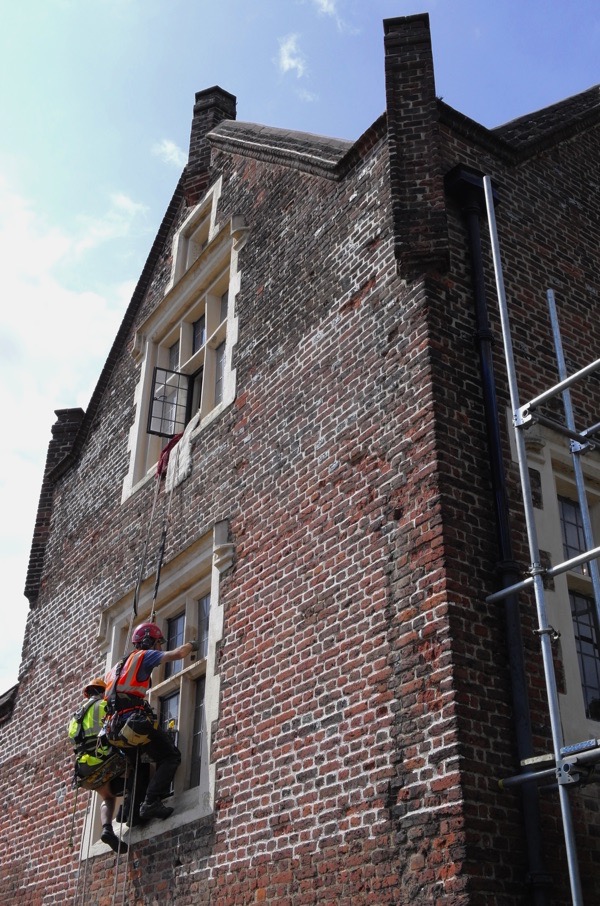
Lime-washing the lintels
Every year in high summer, the Society For The Protection of Ancient Buidings leaves its Georgian home in Spital Sq for one week to put its expertise into practice at a building in need and enlists a horde of volunteers to help for its annual working party. This week they are at Eastbury Manor in Barking, which is currently a hive of conservation activity where around a hundred enthusiasts are working on a variety of projects under the watchful eye of expert craftspeople.
Since it was established by William Morris in 1877, the Society has acquired more than a hundred and forty years of knowledge and experience in the care of old buildings. Director Matthew Slocombe told me, “In the past, we have visited a variety of locations including the cradle of the industrial revolution in Derbyshire, an ancient barn in Sussex and a medieval church at Greatham in Hampshire, so this year we are delighted to be working near to home on a building close to our heart and history.” The Society was a key player in the campaign to save Eastbury Manor from demolition in 1918, which made this invitation exactly a hundred years later irresistible.
The working party offers a rare opportunity to gain direct experience of traditional building skills in a collaborative environment and volunteers range from architectural professionals to those with a keen amateur interest, including participants as young as fourteen. This year’s activities include repairing the brickwork of the garden wall, lime-washing and renewing broken panes in the leaded lights. Carefully supervised, this work will help maintain the fabric for another century.
Yet a hundred years ago, the outlook for Eastbury Manor was quite different. It had declined from a grand Tudor mansion to a ramshackle farm and, by the middle of the nineteenth century, it was semi-derelict.
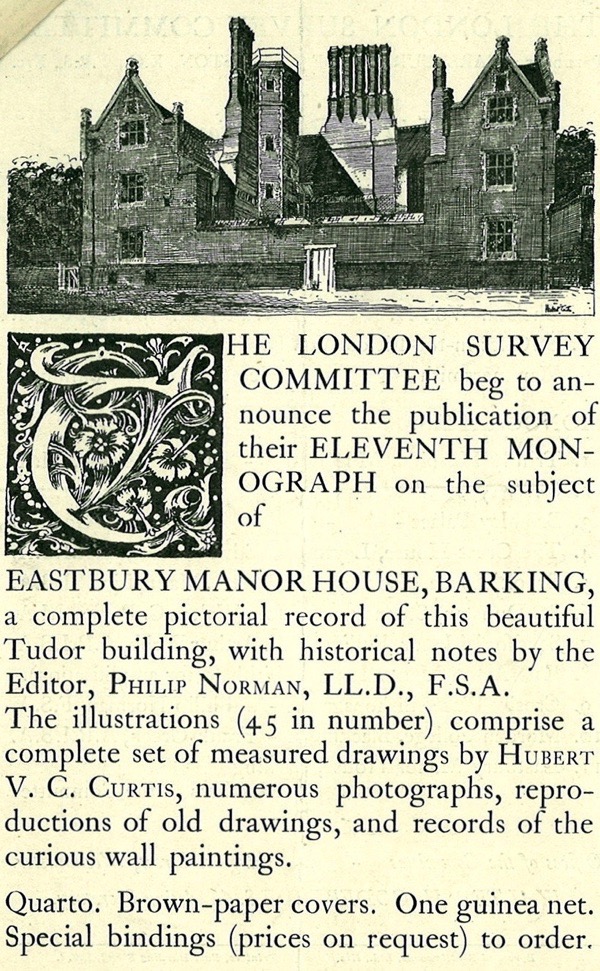
From its very beginning, the Society took a particular interest in East London, through connections with the East End Preservation Society set up by Arts & Crafts designer C.R. Ashbee. In 1894, while campaigning to save Trinity Green Almshouses in Whitechapel, he established the Survey of London to record the capital’s historic buildings and Eastbury Manor became the subject of an early monograph published by Ashbee’s Guild & School of Handicraft in 1917.
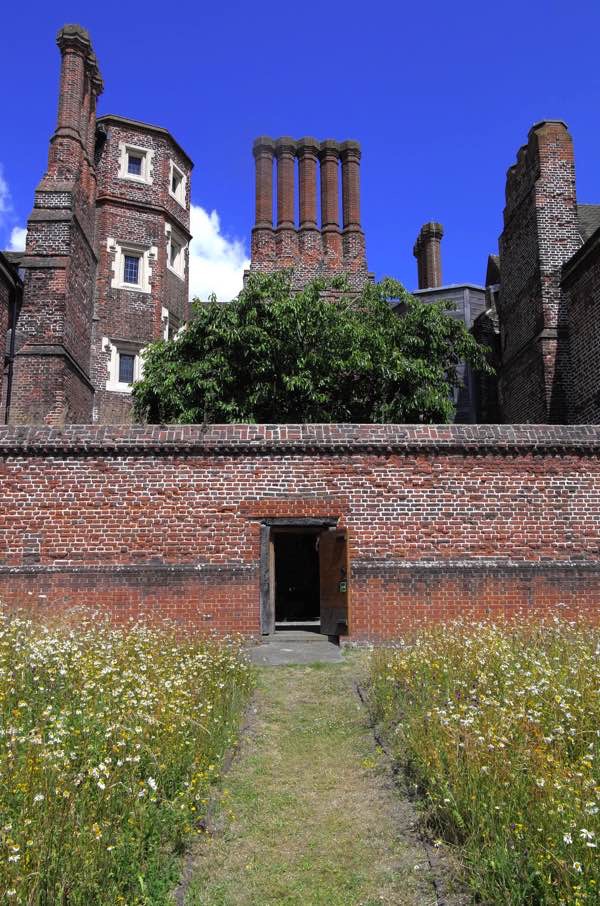
When World War I began, the Society was actively considering a better future for Eastbury Manor but the international conflict brought new threats. The war resulted in shortages of domestic materials, including timber, and by 1917 there was concern that the building’s panelling might be stripped out. In a stroke of bad luck, a lightning destroyed one of the impressive Tudor chimney stacks too. Further damage was caused when the army commandeered the house as a convalescent home. Yet, although this nearly proved to be the manor’s final undoing, it ultimately helped deliver its salvation.
Meanwhile, public recognition of Eastbury Manor’s importance was growing and the press called it ‘the Hampton Court of East London’ in 1917, even if the army had no qualms knocking it about. It was at liberty to do so, but fortunately an insider was present to look out for the house. That ‘insider’ was Society member Norman Wilkinson. In the army, he was a lowly lance corporal but in civilian life he was far more noteworthy – well-connected and a leading stage designer. His costumes for Twelfth Night at the Savoy Theatre in 1912 can be found today at the Victoria & Albert Museum.
Wilkinson appreciated the building’s beauty and significance, and he made it his business to encourage his commanding officer to ensure it was treated properly by supplying his own copy of the Survey of London’s monograph. His foresight bought time and allowed for a long-term solution to be found. After fundraising by Society and others to raise the £1500 required for purchase, a deal was struck with the owner and the house was passed to the National Trust.
Sadly, this did not include much of the surrounding land or the large barn and farmstead – all of which were lost to a housing estate in the twenties – but it was still a remarkable outcome. In 1918, the National Trust was still in its formative years and had only acquired a few properties. Taking on Eastbury Manor was a bold move that reflected its national importance and the deal proved to be the beginning of a long partnership between the National Trust, SPAB and Eastbury Manor. The Society put forward William Weir, one of its leading architects, to manage the repair for the National Trust, completed in 1920.
The Society had been in communication with Barking Council about the manor since WWI but it was not until the mid-thirties that they were prepared to take the bold step of securing a hundred year lease from the National Trust. In 1935, it was described as the “Real Civic Centre of Barking” when Barking Council acquired the lease on Eastbury Manor. This allowed Eastbury Manor a community function for the first time and it was opened with an exhibition of the English Arts & Crafts.
Ever since, this wonderful house has been an important focus for the people of Barking and this summer, exactly a century after it was saved, SPAB is delighted to play a continuing role in its story.
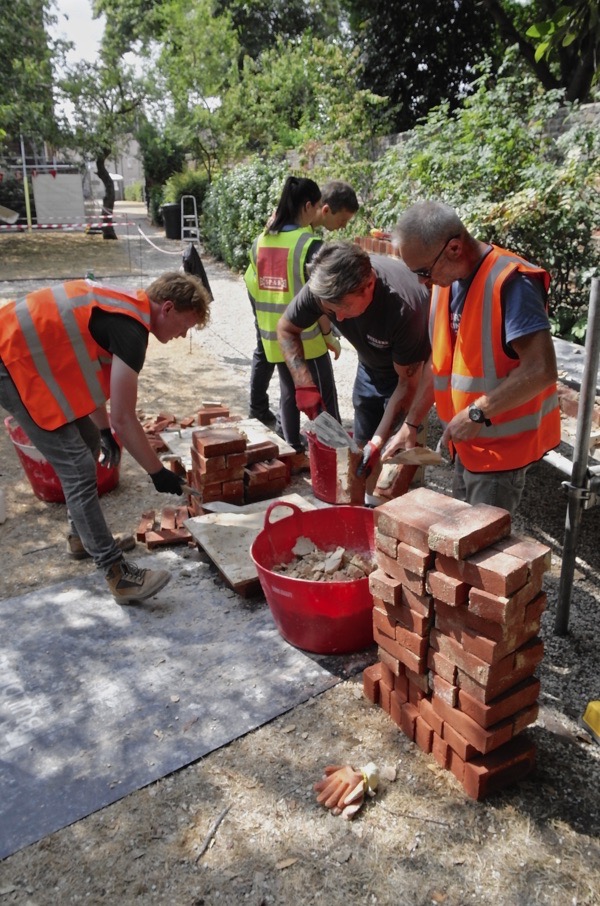
Learning bricklaying skills
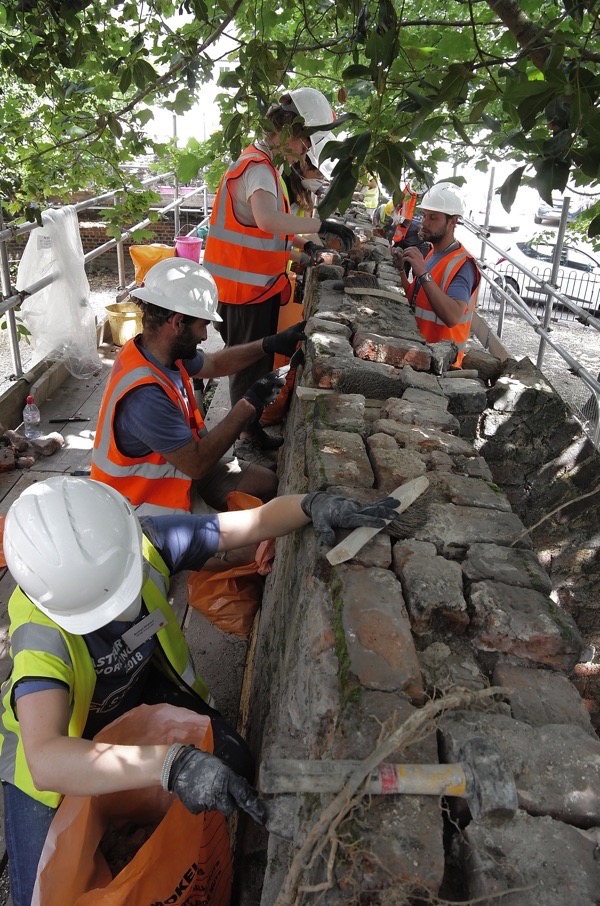
Repairing the Tudor garden wall
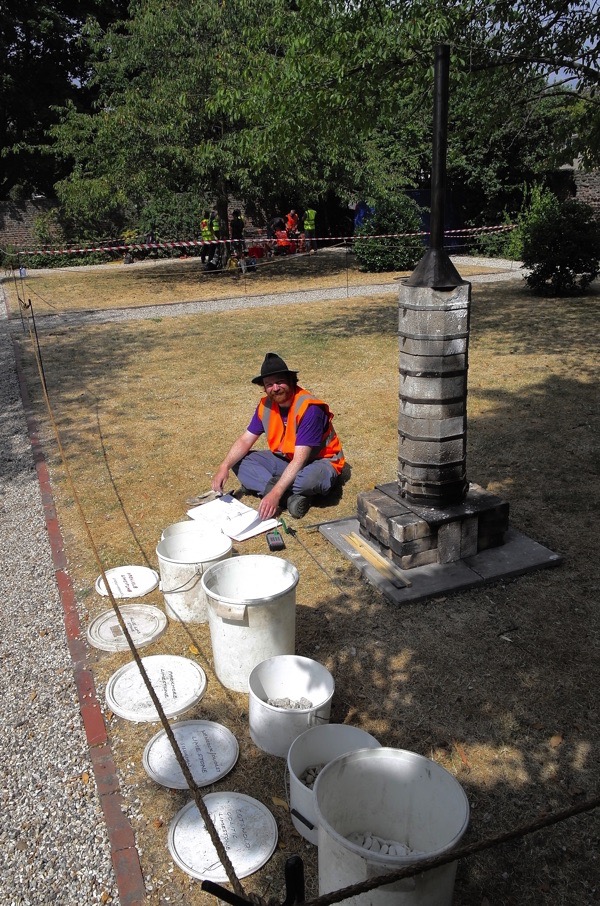
Hugh Conway Morris, Limeburner
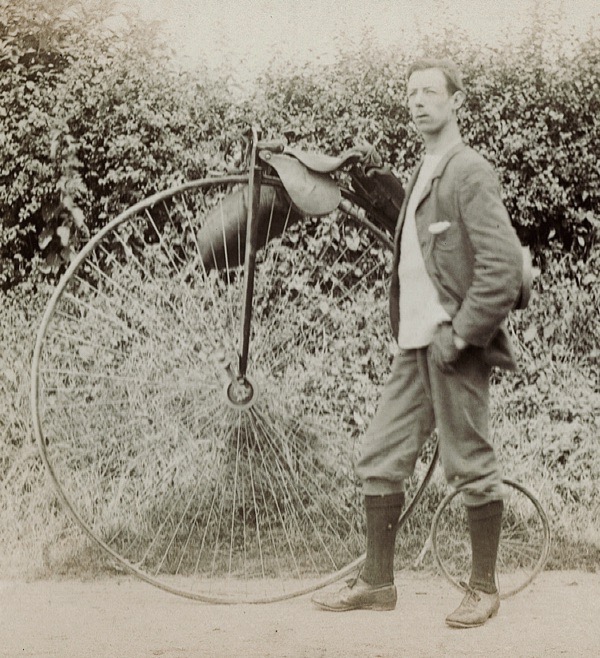
William Weir, architect of the repair of Eastbury Manor
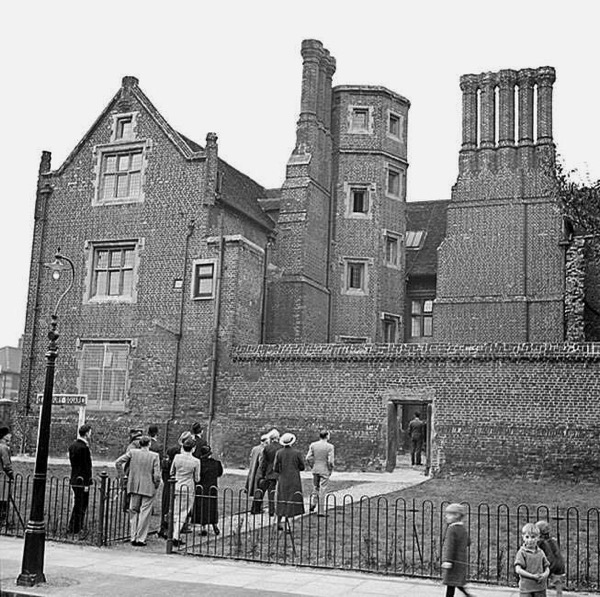
Visitors to Eastbury Manor in 1935
Archive images courtesy of SPAB
Readers are invited to this Sunday’s free open day at Eastbury Manor. Visit between 11am and 4pm to see conservation in action and enjoy a range of family activities
You may also like to read about
At The Old Schoolhouse
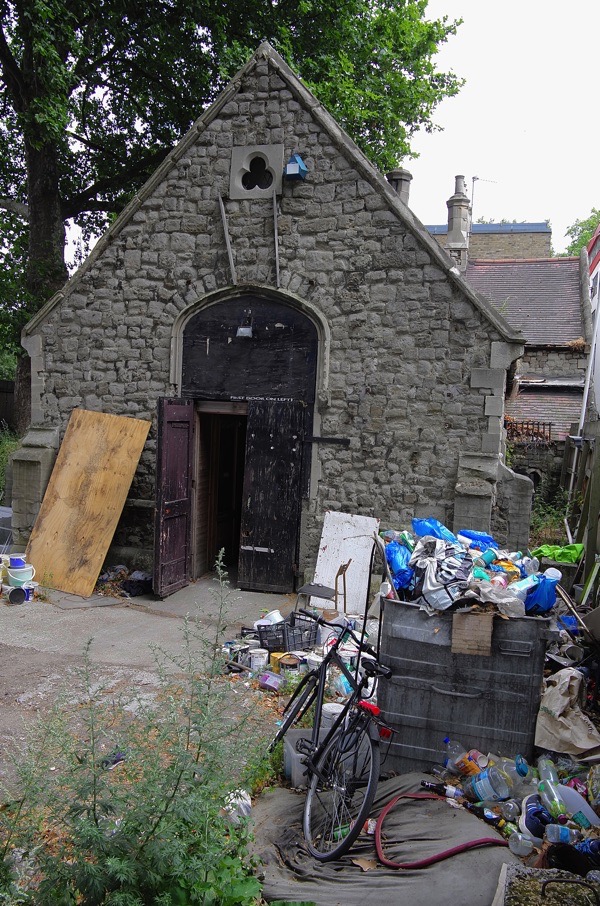
Nestled beside the Lea Bridge in Clapton is this attractive old schoolhouse built of Kentish ragstone in the eighteen-forties by Arthur Ashpitel and gifted in perpetuity by his family for the education of the children of Hackney. Yet his splendid Grade II listed building, which was conceived in a spirit of philanthropy and constructed with good quality materials as an act of belief in the necessity of education, has fallen into neglect in recent years.
Next week, the old schoolhouse reaches a nadir in its fortunes when – in contravention of the wishes of the Ashpitel family – it goes up for auction to the highest bidder. In disregard of the benefactors, the building was first sold off in the twenties and its fortunes have spiralled ever since. So I write today in the hope that someone with vision and resources will read this and be inspired to rescue the forlorn old schoolhouse and cherish it as it deserves.
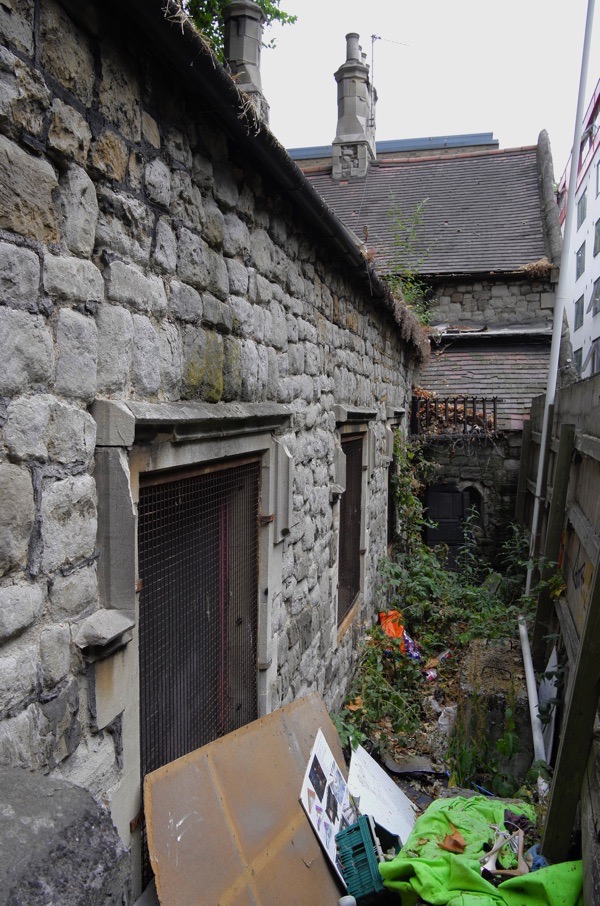
Battered wooden hoardings surround the site at present and you step through to be confronted by the imposing front wall which gives the impression of a chapel for learning, with its steep pitched roof, trefoil window and ogee arch. The entrance leads directly into the schoolroom which extends the length and height of the building with an attractive open roof of wooden beams and a large fireplace at the far end. Beyond lies modest accommodation for the teacher, extending over two floors liked by a single staircase. The dereliction of these spaces is pitiful when so many people need homes.
Arthur Ashpitel was born in Hackney in 1807, the son of architect William Hurst Ashpitel who as Surveyor to the Parish of St John played a significant role in the development of Hackney in the nineteenth century. Arthur was educated at Dr. Burnet’s School, which is now Sutton House, before training as an architect under his father. In 1845, he built the church of St Barnabas at Homerton and his career was notable for distinguished architecture in the creation of public buildings with a social purpose. Arthur was buried in 1869 in the family tomb in the churchyard of St John-at-Hackney Churchyard.
The old schoolhouse was once part of the everyday lives of the boatmen and bargees who made up the floating population of the River Lea – known to the Victorians as ‘watergipsies’ – providing free education for children with transient lives. A bell hung on the side of the building facing the River Lea to summon the pupils to their classes.
In recent years, Clapton Arts Trust has been in negotiation with Vision Homes, who own the old schoolhouse and developed the adjoining site, resulting in a commitment by the developer to lease the building to the Trust for use as a River Heritage & Arts Centre. The Heritage Lottery Fund supported a feasibility study, but this spring just as the Trust was poised to submit a full bid to the Fund for restoration – and despite a petition of over a thousand local people – Vision Homes obtained planning permission to redevelop the old schoolhouse into two flats and then put it up for auction.
There are public viewings today between 2:45 – 3:15 pm and on Tuesday 17th July 12:30 – 1pm
Click here to learn more information about the auction on Thursday 19th July
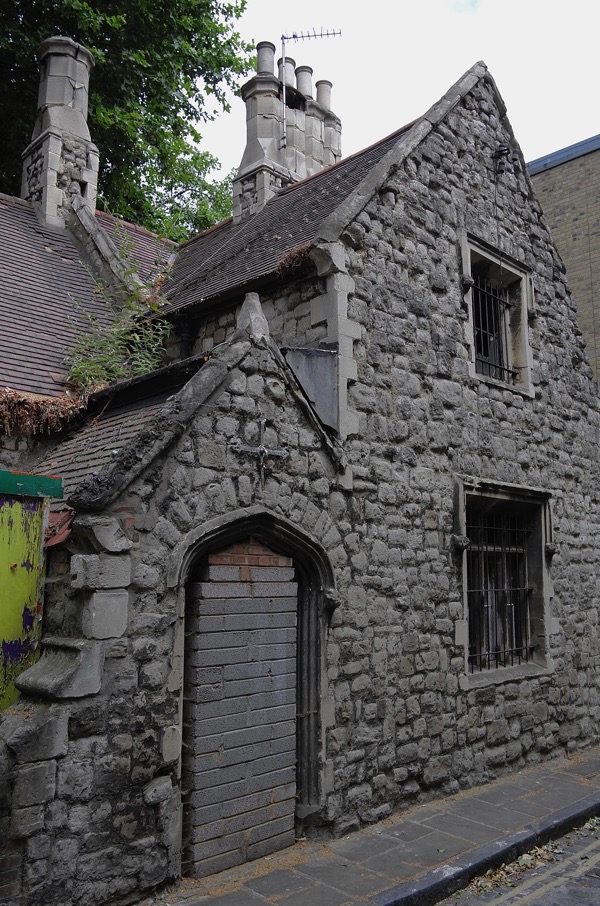
The teacher’s house
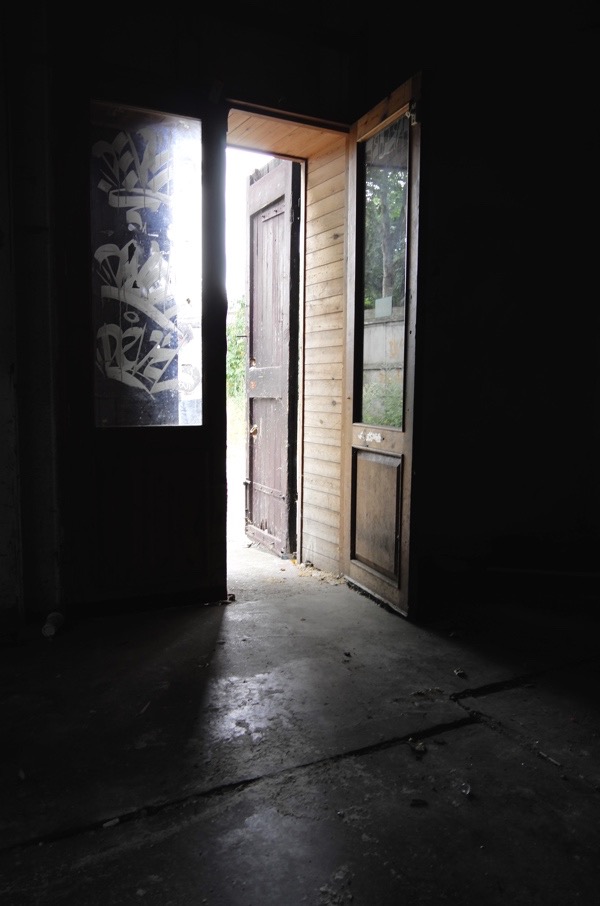
Main entrance
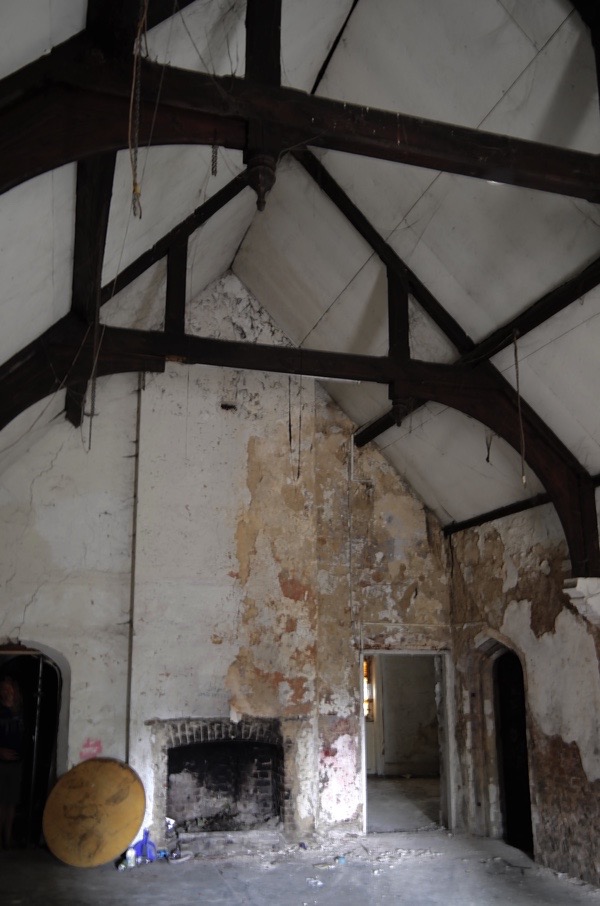
The schoolroom
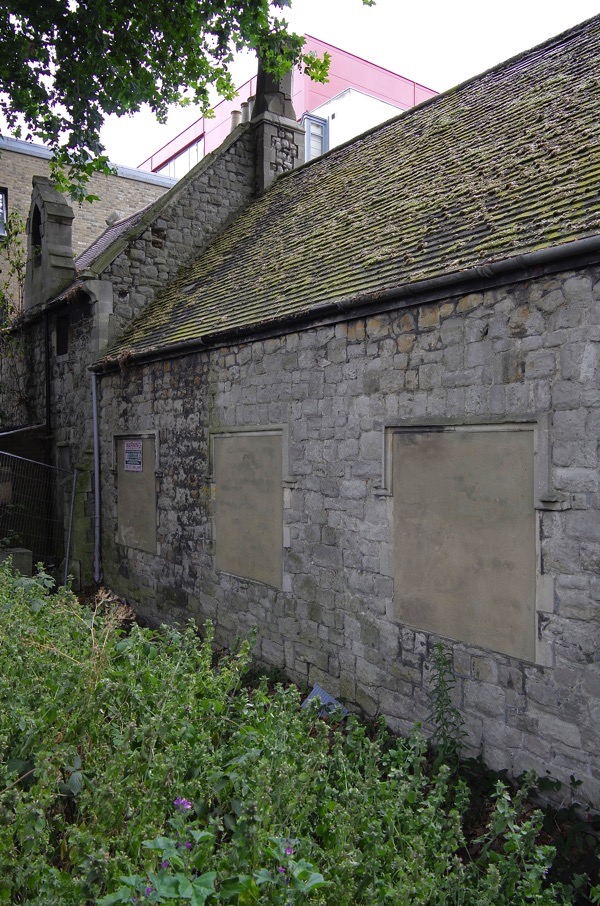
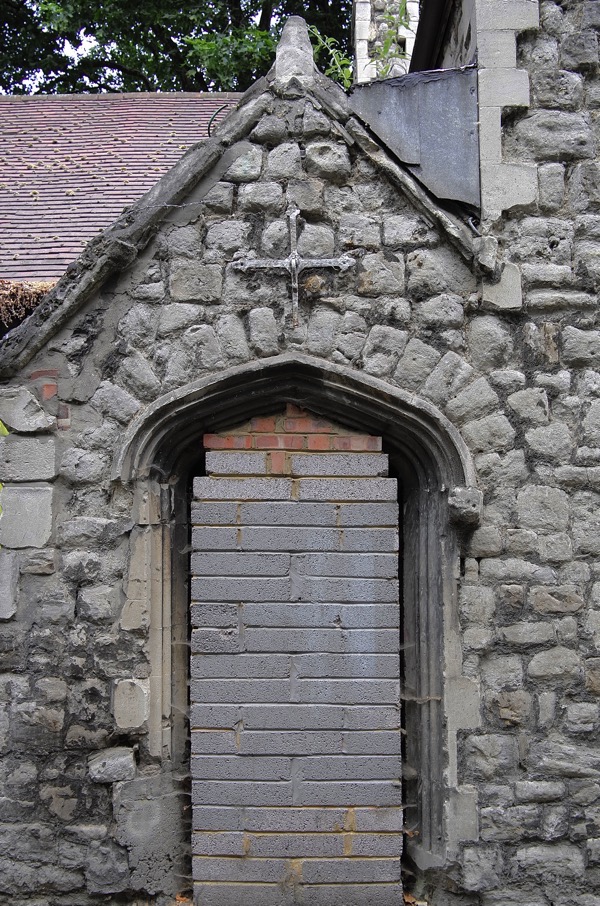
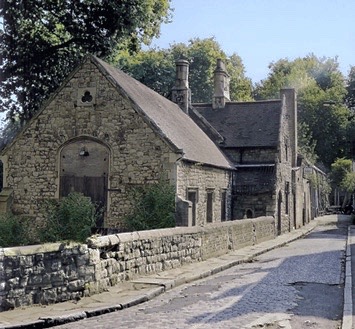
The schoolhouse before the land at the rear was redeveloped and the hoardings went up
The Old Schoolhouse, 142 Lea Bridge Road, Clapton, E5 9UB
You may also like to read about
David Prescott Of Commercial St
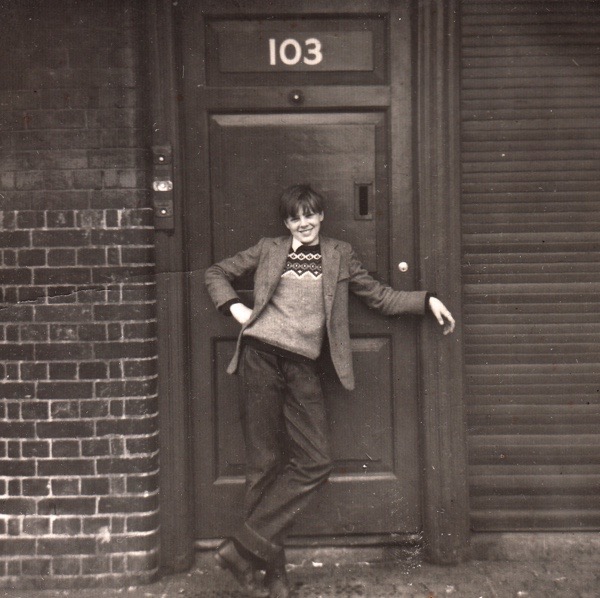
David standing outside 103 Commercial St in the mid-sixties
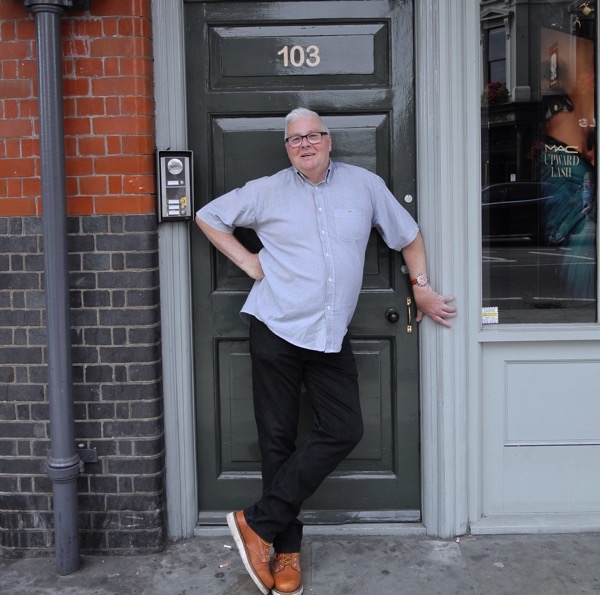
Growing up in the large flat above the Spitalfields Market at 103 Commercial St, with school and the family business nearby, David had run of the neighbourhood and he found it offered an ideal playground. One day in the sixties, David leaned out of the window and made his mark by spraying painting onto a flower in the terracotta frieze upon the front of the nineteenth century market building. Astonishingly, the white-painted flower is still clearly discernible in Commercial St half a century later, indicating the centre of David’s childhood world.
No wonder then that David chose to keep returning to his home territory, working in the Spitalfields Fruit & Vegetable Market until it closed in 1991. These days, he is amazed at the changes since he lived and worked here but – as long as the white-painted flower remains on Commercial St – for David, Spitalfields remains the location of his personal childhood landscape.
“Albert, my grandfather, ran fruit & vegetable shops down in Belvedere, and he used to come up to Spitalfields Market with his horse and cart to buy produce. So my father ‘Bert and his brother Reg decided to start a business in a little warehouse in Tenterground. Upstairs, there were prostitutes and men in bowler hats would come over from the City and look around, circumspect, before going upstairs.
They traded as R A Prescott, which was the initials of the two brothers, Reginald & Albert, but also my grandfather’s initials – which meant they could say they had been going over a hundred years already. They started in Spitalfields in 1952 but, when I was born in 1954, my father took the flat over the market at 103 Commercial St opposite the Ten Bells. Mickey Davis, who ran the shelter at the Fruit & Wool Exchange during the war lived in the flat below, but he had died in 1953 so we just knew his wife and two daughters.
I went to St Joseph’s School in Gun St and I loved it because all my friends lived nearby, in Gun St and Flower & Dean St, and I went to the youth club at Toynbee Hall. I used to walk through the market and everyone knew me – and since my sister, Sylvia, was six years older, they always teased – asking, ‘Where’s your sister?’
We never locked the doors except when we went to bed at night. One day, we came home and found a woman asleep in the living room and my dad sent her on her way. I used to climb up out from our flat and take my dog for a walk across the roof of the market, until the market police shouted at me and put up barbed wire to stop me doing it. Our mums and dads didn’t know what we were up to half the time. We made castles inside the stacks of empty wooden boxes that had been returned to the market.
I remember there was was a guy with a large bump on his head who used to shout and chase us. It would start on Brick Lane and end up in Whitechapel. There was another guy with a tap on his head and one who was shell-shocked. These poor guys, it was only later we realised that they had mental problems.We threw tomatoes, and we put potatoes on wires and spun them fast to let them fly.
In 1966, me and my pal Alan Crockett were in ‘The London Nobody Knows.’ They said, ‘Do you want to be in a film? We want you to run down the street and pile into a fight.’
My dad died of lung cancer when I was fifteen in 1969, but my mum was able to stay on in the flat. He got ill in April and died in August in St Joseph’s Hospice in Mare St. I left school and went to work with my uncle. By then, Prescotts had moved over to 38 Spital Sq. They weren’t part of the market, they supplied catering companies with peeled potatoes and they bought a machine to shell peas and were the first to offer them already podded. I worked with my elder brother Michael too, he set up on his own at 57 Brushfield St, but then he moved to Barnhurst in Kent and bought a three bedroom house. I became a van boy at Telfers, I used to leave home at half past two in the morning to get to Greenwich where they had a yard, by three to start work.
In 1972, we left the flat in Spitalfields and moved to a house in Kingston, and I worked for Hawker Siddley – they trained me as an engineer. But I missed the market so much, I had to come back. I got a job with Chiswick Fruits in the Fruit & Wool Exchange and then I went back to Prescotts. I was working at the Spitalfields Market in 1991 when they moved out to Leyton, but it was’t the same there and, by 2000, I’d had enough of the market. In those days, you could walk out of one job and straight into another. I must have had thirty to forty jobs.“
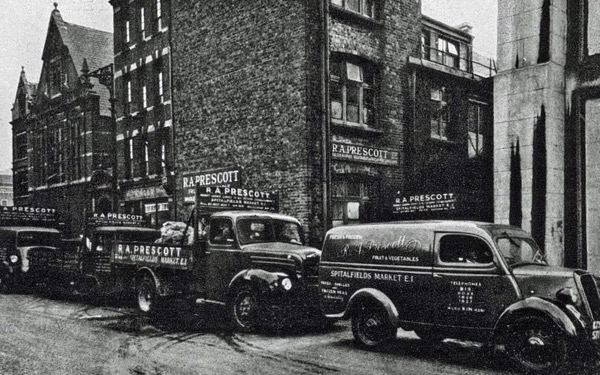
R A Prescott of 38 Spital Sq
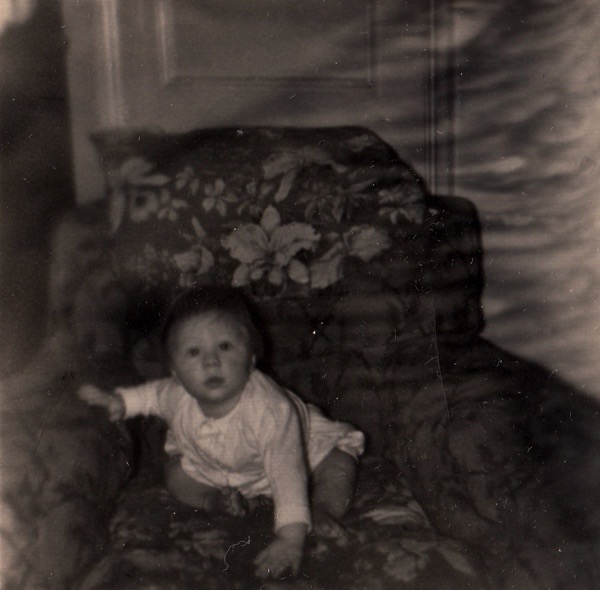
David as a baby at 103 Commercial St in 1955
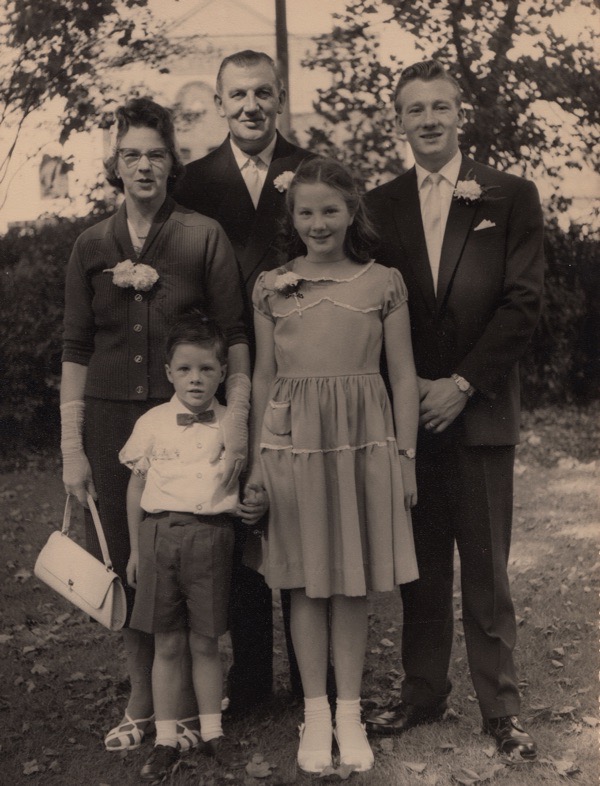
David at five years old at his brother Michael’s wedding in Poplar in 1959
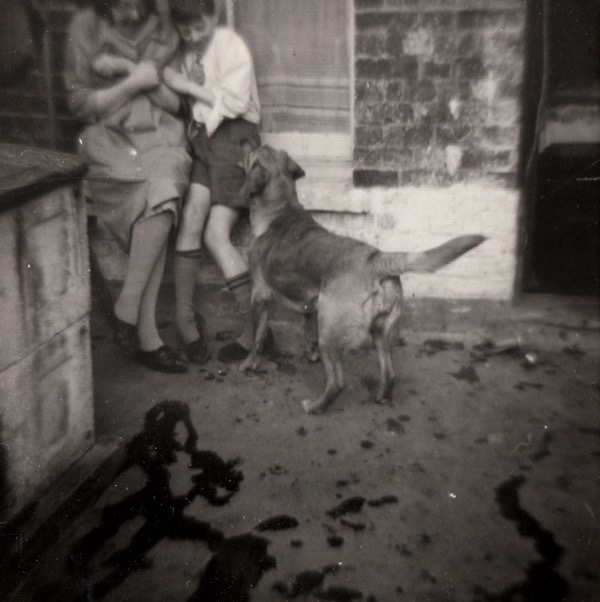
David with his mum, Kathleen, playing with the dog in the yard at the back of the market flat
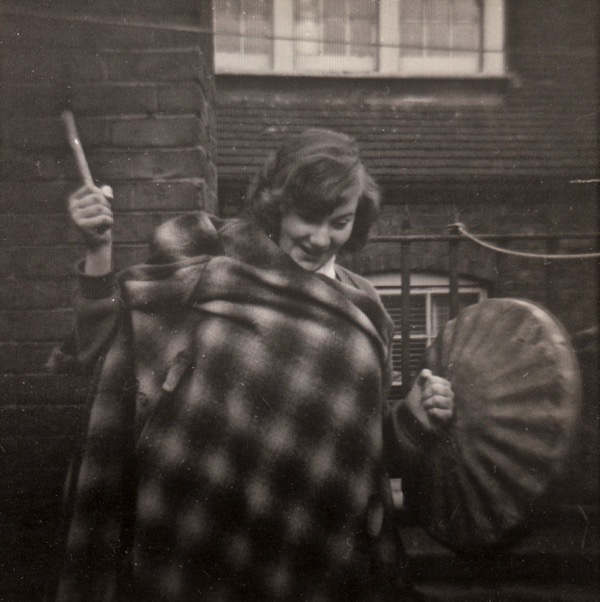
David’s sister Sylvia, who went to St Victoire’s Grammar School in Victoria Park
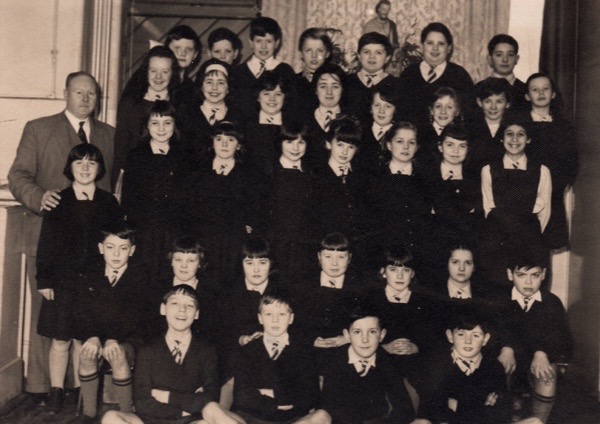
David is centre right in the front row at St Joseph’s School, Gun St
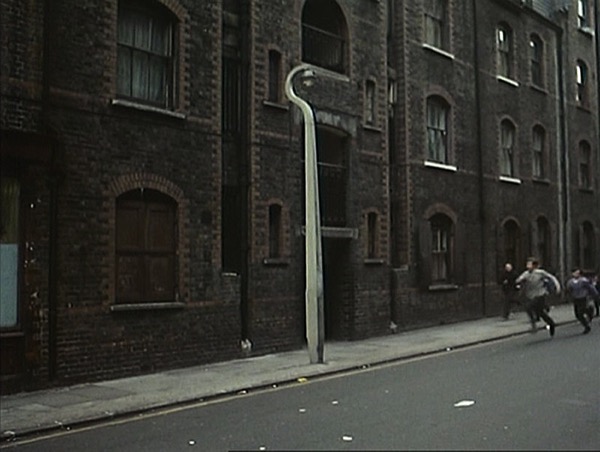
In 1966, David and his pal Alan Crockett were in ‘The London Nobody Knows.’ This shot shows Alan (leading) and David (behind) running down Lolesworth St.
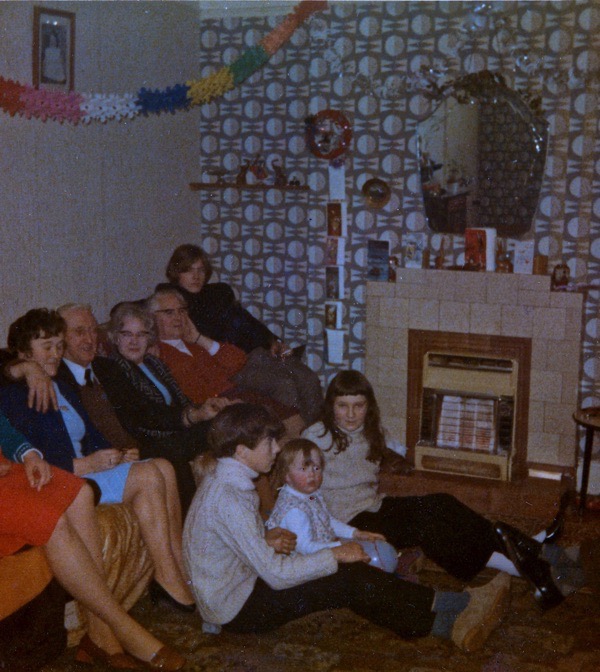
Christmas at 103 Commercial St in 1967
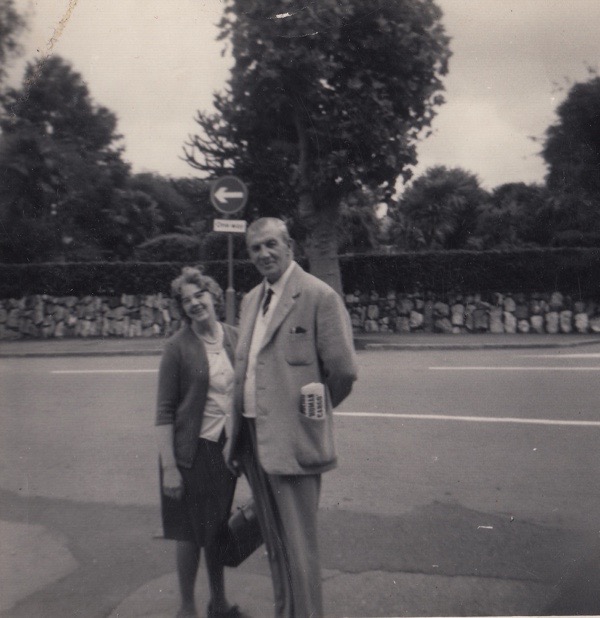
David’s mother Kathleen and his father ‘Bert on holiday in 1968
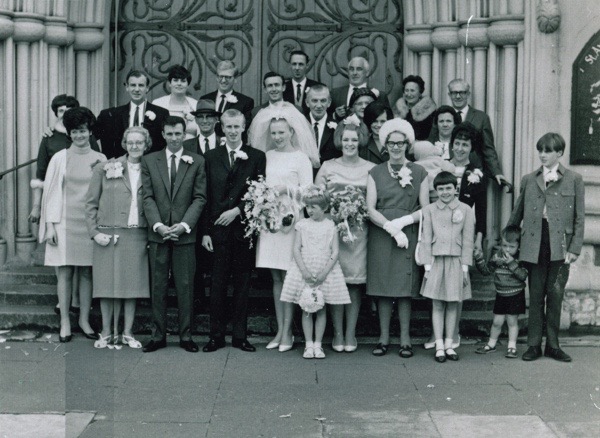
David stands on the far right at his sister Sylvia’s wedding at St Anne’s, Underwood Rd, in 1964
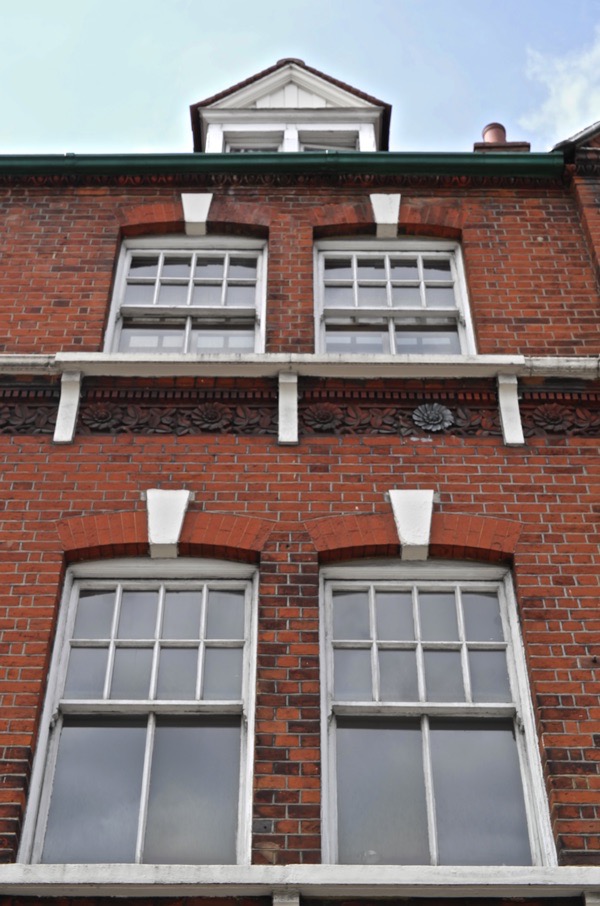
David leaned out of his window and sprayed paint onto this flower in 1964
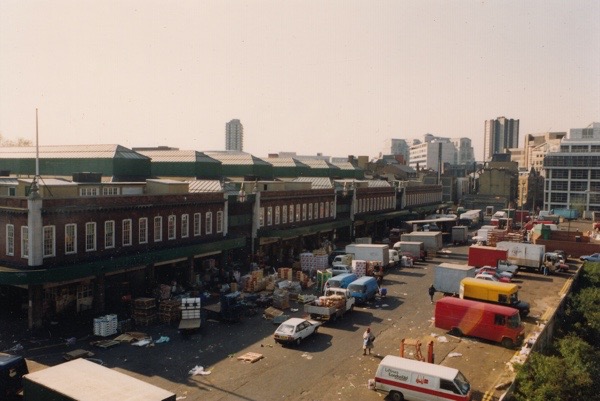
Looking south across the Spitalfields Market
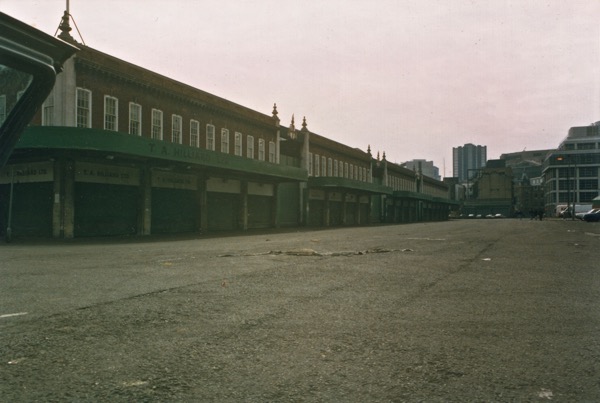
Spitalfields Market empty at the weekend
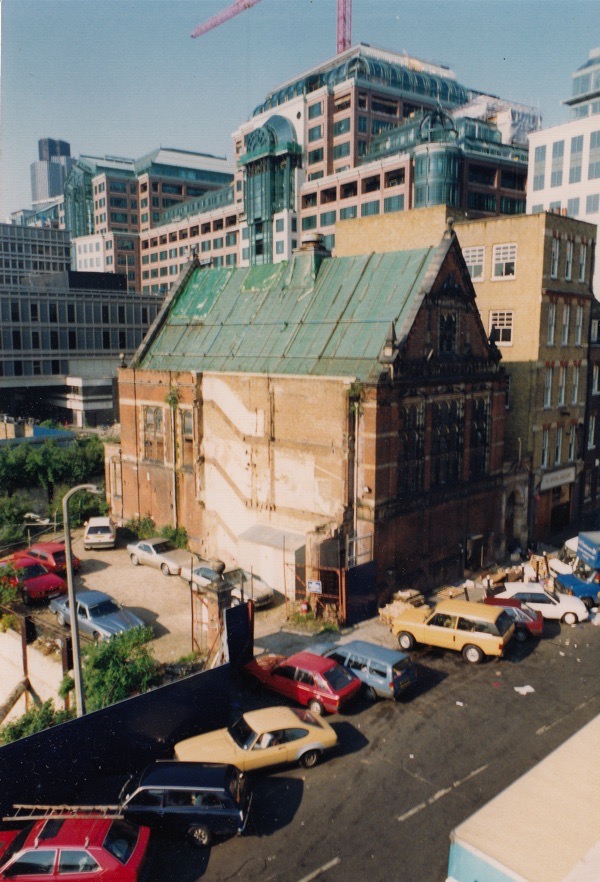
Spital Sq after the demolition of Central Foundation School
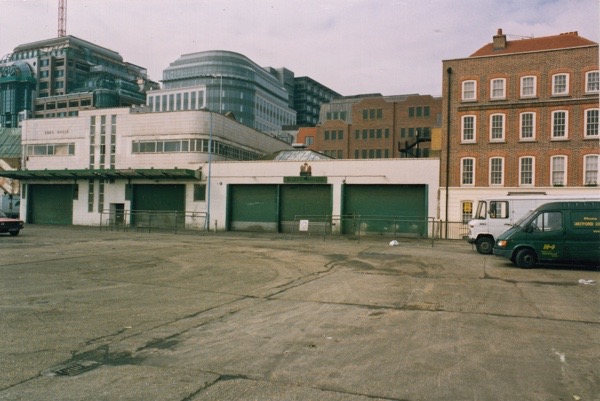
The Flower Market at Spitalfields Market
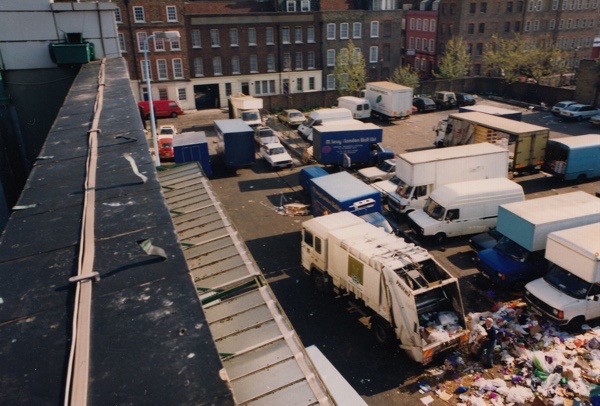
From the roof of Spitlafields Flower Market looking towards Folgate St
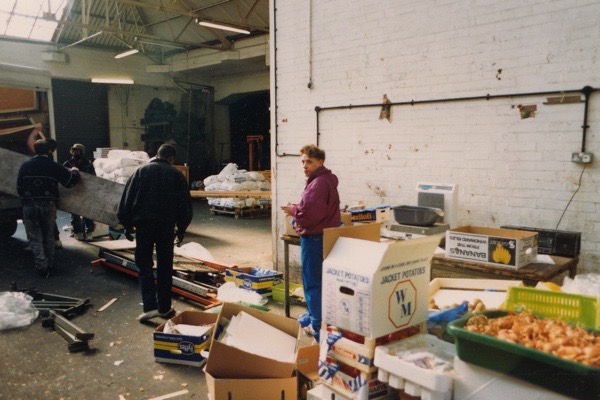
Clearing out on the last day of the Spitalfields Fruit & Vegetable Market in 1991
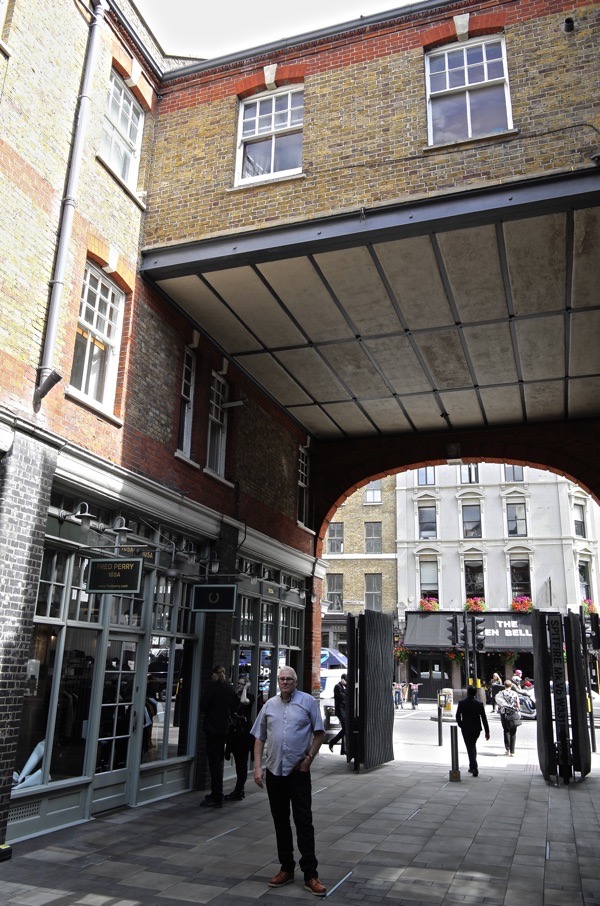
David stands in the Spitalfields Market today beneath the window that was once his childhood bedroom
You may also like to read about