On 22nd October, 1685
The history of Spitalfields is the history of immigration and that history begins on 22nd October 1685, when the Catholic Louis XIV revoked the Edict of Nantes of 1589 which permitted Protestants to practise their religion in France.
Escaping state-sanctioned persecution, 50,000 Huguenots fled to London in fear of their lives as Elizabeth Randall, Editor of the Huguenot Society Journal, explains below. Today it is claimed that an estimated 90% of the population of the South East of England has Huguenot ancestry.
Click here for details of the current Huguenot Festival which runs until 28th October

Paul Bommer’s commemorative plaque on the Hanbury Hall
The 22nd of October in 1685 is a date not easily forgotten by descendants of French Calvinist Protestants because from that day they were forbidden to practise their religion in their homeland. King Henri IV’s decree of 1598, which had protected the rights of his Huguenot subjects, ceased to be recognised after 22nd of October 1685 and all French citizens were obligated to become members of the Catholic Church.
This change in the law was not unexpected since – after Henri’s assassination in 1610 – the civil and religious freedoms set out in his 1598 Edict of Nantes were gradually eroded. Once his grandson, Louis XIV, had taken over the reins of government in 1661, it became clear that both Church and State were determined to remove what little tolerance the Huguenots still received. They were excluded from professions, their schools were closed and their assemblies abolished. In some cases, children were removed from their parents to be educated as Catholics. The destruction of their churches – built by ‘heretics’ – was ordered and in 1681 the dragonnades began: troops were billeted in Protestant homes with orders to treat them as roughly as possible and bully them into conversion.
According to Louis XIV’s Edict of the 22nd of October 1685, there were now no more Protestants in France. All remaining Huguenot churches were destroyed and Huguenot ministers were given fifteen days’ notice to leave the country. Anyone attempting to revive Protestant worship was severely punished with men sent to work as galley slaves and women imprisoned in Catholic convents. Even worse, no-one could emigrate without permission.
Faced with such threats, it might seems inevitable that all Huguenots would turn to Catholicism or at least make an outward show of doing so. Yet there were many who refused to bow to Louis XIV’s decree and were prepared to risk making the perilous escape from France, even though this would mean sacrificing their homes and livelihood. Between 1681 and 1720, as many as 200,000 Huguenots are estimated to have taken this course, with perhaps 50,000 of those coming to London.
England had become a haven for Protestant refugees since the early years of the Reformation and London’s busy commercial world was an attraction. A church for ‘strangers’ was founded by Edward VI in Threadneedle Street in 1550 and French-speaking immigrants made their homes outside the City walls in Bishopsgate, where they could pursue a cottage weaving industry without interference from the powerful City guilds. Thus a number of French Huguenot weavers already had connections in Spitalfields, Norton Folgate and Bethnal Green, and made it their destination in the years following October 1685.
Like his cousin Louis XIV, King Charles II of England was a grandson of Henri IV of France, but as king of a Protestant country he looked kindly on Huguenots escaping the dragonnades in 1681. He offered them privileges and immunities, granted them financial support and gave them the status of free denizens. But Charles died a few months before the 22nd of October 1685 and for a while English royal protection looked less certain. Yet the Huguenot refugees were reassured when the devoutly Calvinist William III came to the English throne in 1688. The Church of England also showed sympathy, organising collections on a national scale, and the Bishop of London was responsible for much of the relatively smooth passage of Huguenot settlement in the capital.
The large influx of Protestant strangers that arrived in England as the result of Louis XIV’s fateful decree of the 22nd of October 1685 was no doubt the cause of some protests, but on the whole the newcomers appear to have been well received. The English public were aware of the sufferings of French Huguenots and respected their firm beliefs, their perseverance and their fortitude. Early suspicions that the refugees might include a fifth column of French enemies were soon allayed by the immigrants’ demonstrations of loyalty to their host society and their hard work. By 1700, seven new French Reformed churches had been established in Spitalfields with more to follow. Within each of them, elders and ministers looked after the spiritual needs of members of the congregation and deacons assisted with their welfare. The Huguenots showed themselves to be a well-organised community who supported each other and – once the advantages of the skills they brought were appreciated – it was apparent that the nation could benefit from their presence.
The influx of Huguenot refugees introduced new techniques and methods to the home-grown weaving industry in Spitalfields. In particular, it expanded the production of silk fabric. Woven silk was first made in China in the Middle Ages and its manufacture moved slowly westwards until it reached France via Italy in 1521. Ironically, the introduction of the silk trade in France coincided with the beginnings of the Reformation and many of the workers employed in the French silk-weaving industry were Protestants who left France for England after Louis XIV’s decree.
There was limited knowledge of silk production in the English workshops in London and Canterbury, but the arrival of skilled Huguenot silk weavers from such centres as Tours and Lyons transformed the native industry beyond recognition. Sophisticated materials such as lustrings, velvets, brocades and damasks could now be made in Spitalfields, using raw silk delivered through the port of London. Entirely new colours and designs changed the nature of the market, and fed the contemporary English taste for fashionable silk garments and richly decorated domestic interiors.
Before long, several of the master weavers – for example those from Normandy – grew prosperous and could afford to own houses in Princelet St, Spital Sq and beyond. In this way, they created their own demand for luxury silk products. By the end of the eighteenth century, as many as 30,000 workers were employed in the Spitalfields silk trade. And, in spite of the drastic decline that the industry suffered later, there were still forty-six workshops in Bethnal Green in 1914 and some of those employees were of Huguenot descent.
The memory of the Huguenots continues to make itself felt in Spitalfields, although we can no longer hear their singing birds or their incantation of psalms, or see them tending the gardens. We are reminded of them by place-names such as Fournier St and Fleur de Lis St, and can find traces of their lives and deaths in Christ Church, where Peter Prelleur was the first organist in 1736.
On 22nd October, spare a thought for Louis XIV’s Edict of Fontainebleau of 1685 which was the catalyst for the mass Huguenot migration of the succeeding years.
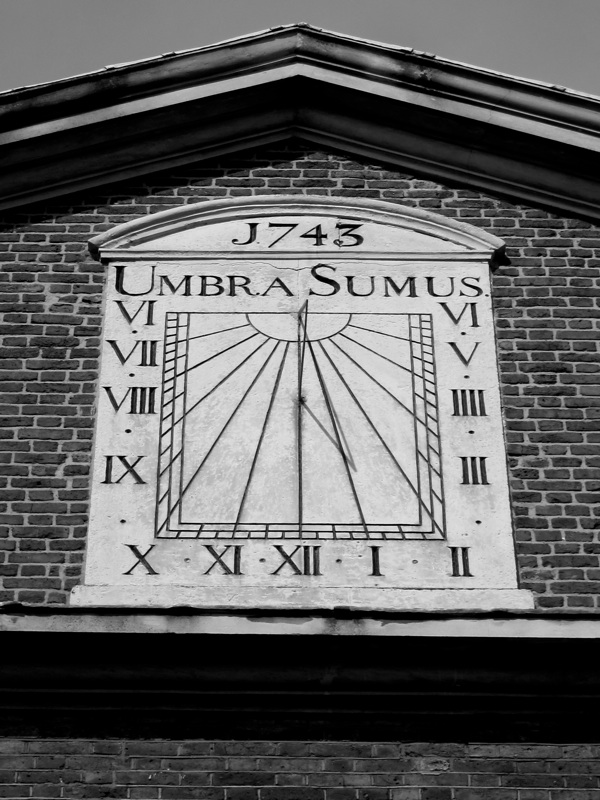
Sundial in Fournier St recording the date of the building of the Huguenot Church.
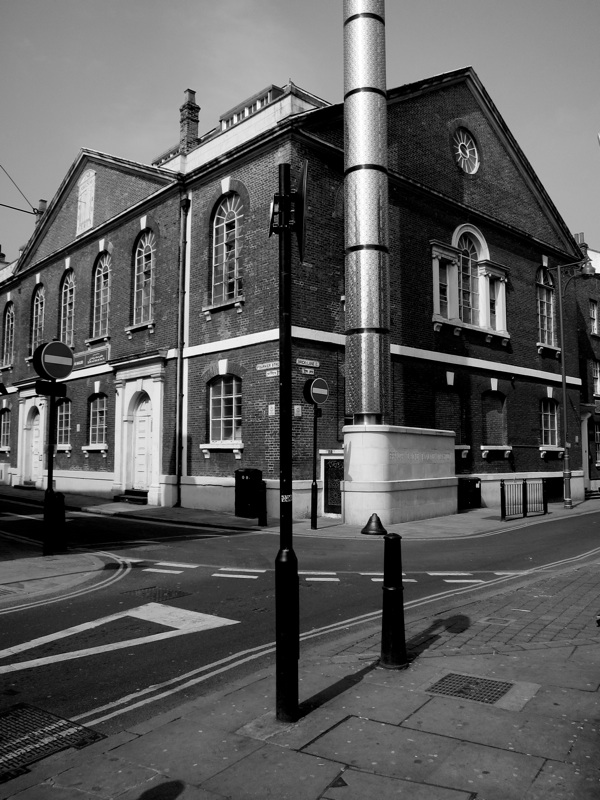
Brick Lane Mosque was originally built in 1743 as a Huguenot Church, “L’Eglise de l’Hôpital,” replacing an earlier wooden chapel on the same site, and constructed with capacious vaults which could be rented out to brewers or vintners to subsidise running costs.
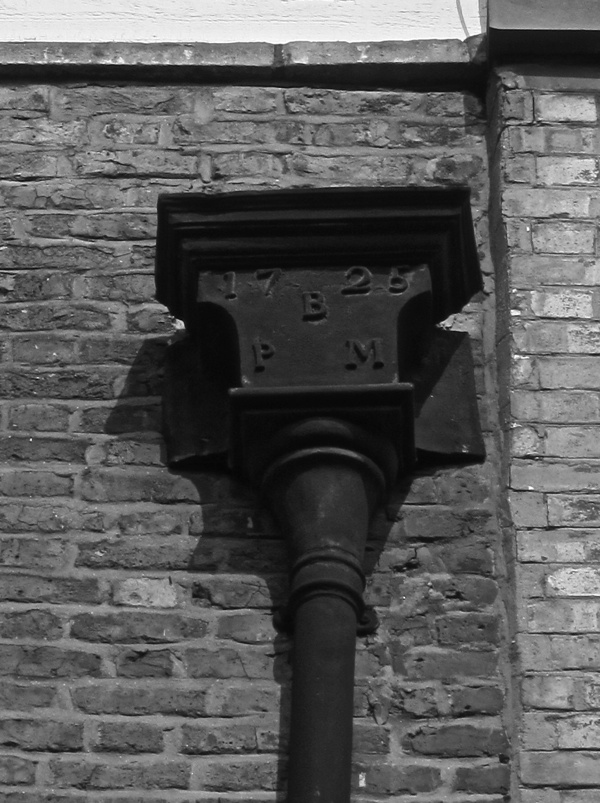
Water head from 1725 at 27 Fournier St with the initials of Pierre Bourdain, a wealthy Huguenot weaver who became Headborough and had the house built for him.
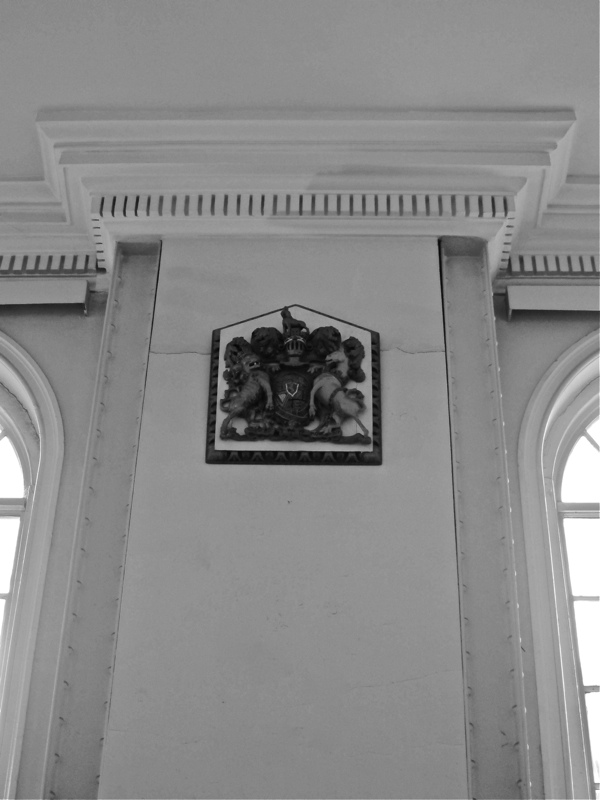
Coat of arms in the Hanbury Hall dating from 1740, when “La Patente” Church moved into the building, signifying the patent originally granted by James II.
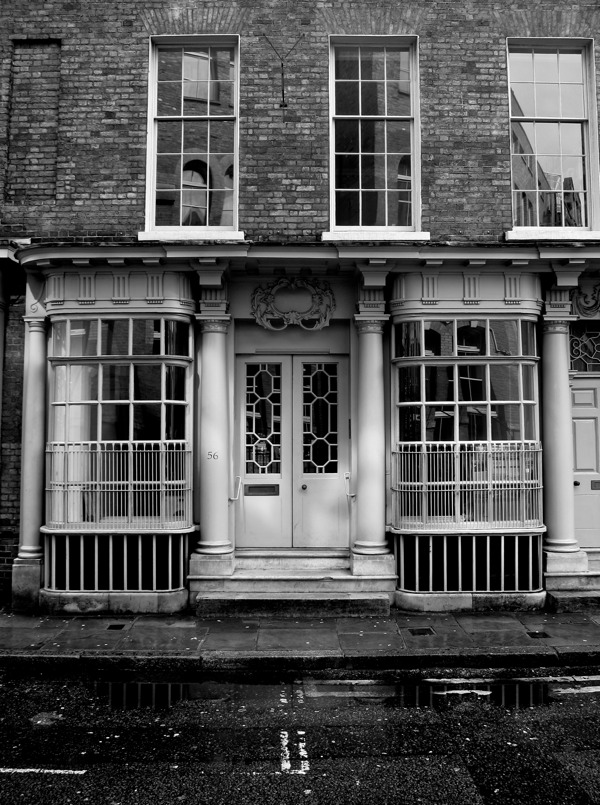
In Artillery Lane, one of London oldest shop fronts, occupied from 1720 by Nicholas Jourdain, Huguenot Silk Mercer and Director of the French Hospital.
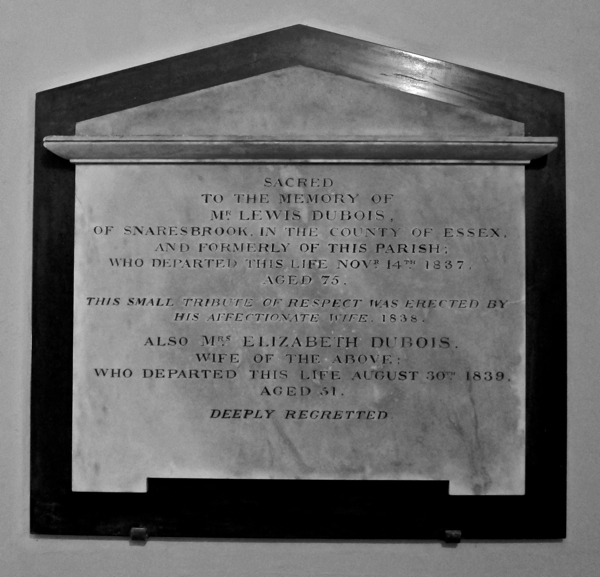
Memorial in Christ Church.
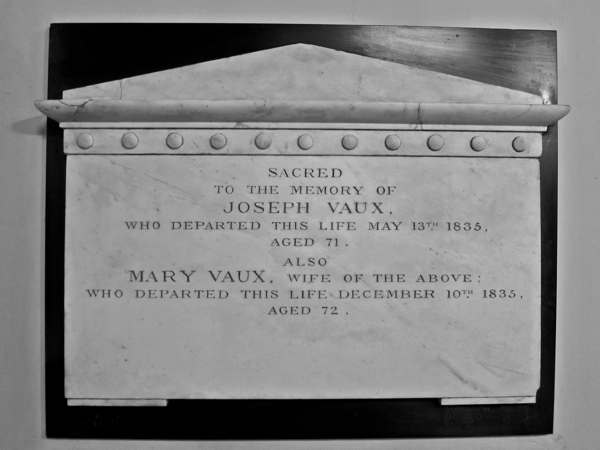
Memorial in Christ Church.
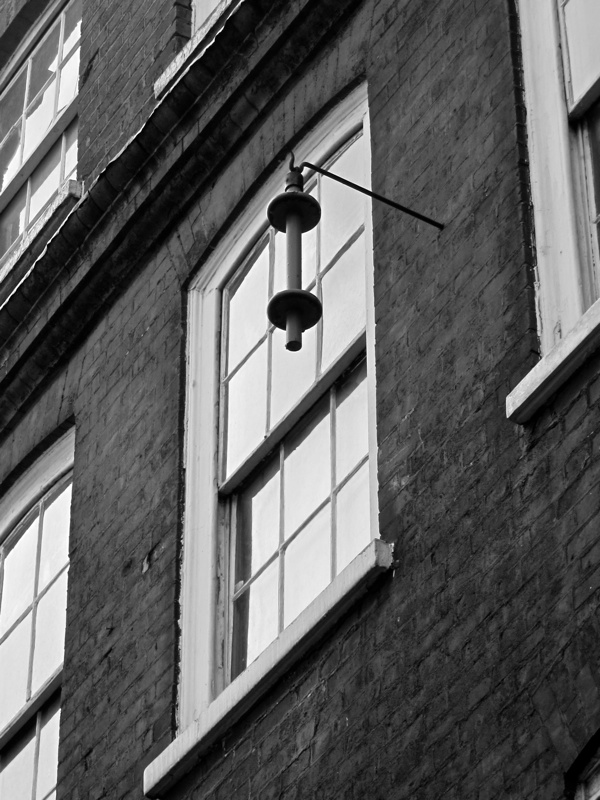
In Folgate St, a spool indicating a former Huguenot residence.
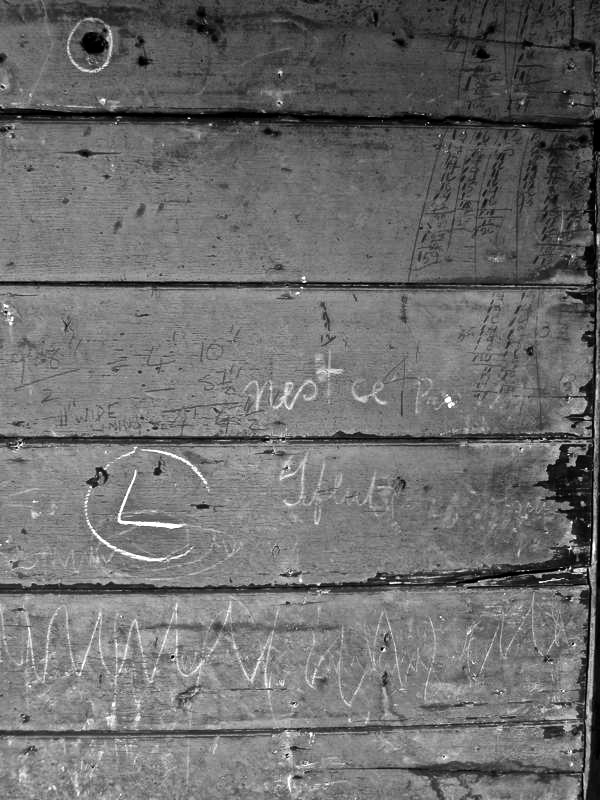
Graffiti in French in a weavers’ loft in Elder St
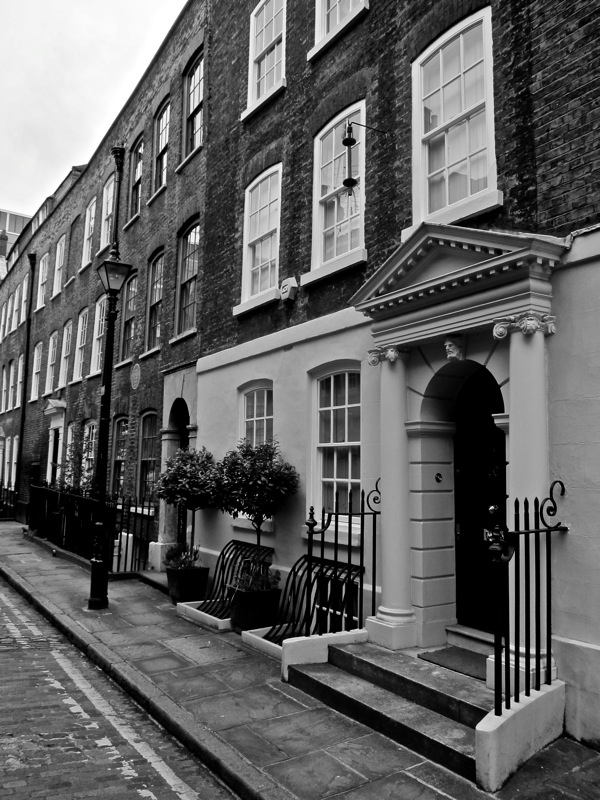
Former Huguenot residence in Elder St.
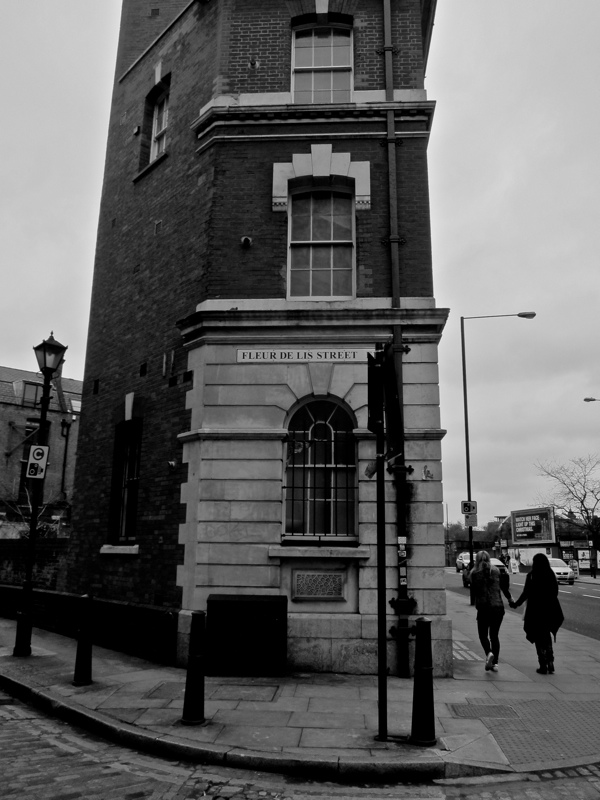
The Fleur de Lis was adopted as the symbol of the Huguenots.
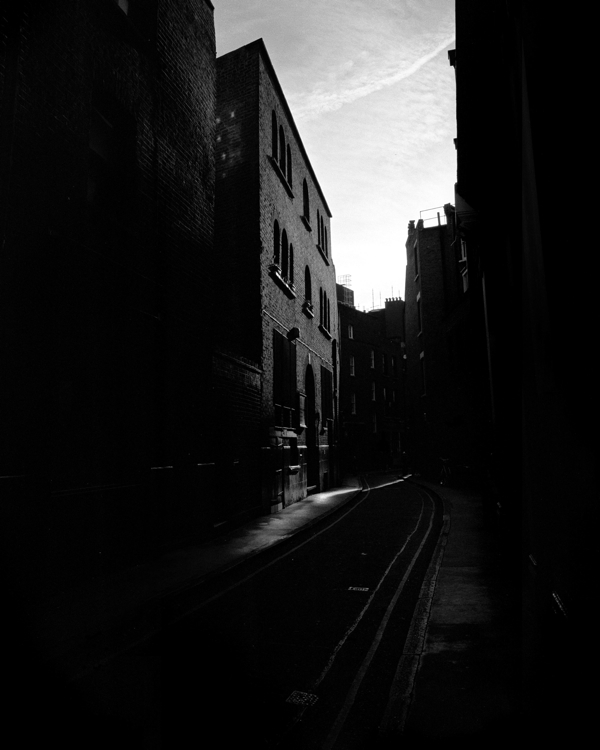
Sandys Row Synagogue was originally built by the Huguenots as “L’Eglise de l’Artillerie” in 1766.
Sandys Row Photograph copyright © Jeremy Freedman
You may also like to take a look at
So Long, Madge Darby Of Wapping
It is with sadness that I report the death of Madge Darby, Historian of Wapping, at the fine age of ninety-one in September. I am privileged to have met Madge who – more than anyone else you could find – originated from Wapping and spoke for the people of Wapping. Madge was the last of ‘the Darbys of Wapping.’

“People have always come here, either to convert us or to rip us off.”
No-one knew more about the history of Wapping than Madge Darby, a woman who made it her life’s imperative to recount the story of her people. And when Madge spoke of Wapping – as she did frequently – she used the word “us” or she simply said “we.” This was her natural prerogative, because there are records of her family beginning with an Elizabeth Darby, christened there in 1636, while on her mother’s side, her great-great-grandfather, Robert Petley, and his family were turned out of their home at the beginning of in the nineteenth century for the building of St Katherine’s Dock. Thus, the story of the Darbys is the story of the place and it is a narrative with a certain poignancy because, at ninety-one years old, after so many generations, Madge was the last of the Darbys in Wapping.
Yet Madge was not a sentimentalist and she occupied a central position in the neighbourhood – culturally, as chairman of the History of Wapping Trust and topographically, residing in an old terrace at Wapping Pierhead, cheek by jowl amongst the celebrities and bankers who have come to Wapping in recent years. It was here I visited Madge, discovering her in the dining room surrounded by the paperwork from the latest edition of her history of Wapping, “Piety & Piracy.”
“People have always come here, either to convert us or to rip us off,” she declared to me in explanation of the title of her book. And her eyes sparkled with emotion as she waved an estate agent’s circular which revealed that a neighbouring house had just sold for millions, thereby offering evidence of the nature of piracy in contemporary Wapping. Born in 1927 in Old Gravel Lane, five minutes walk away, Madge and her family were twice displaced from their home, once for a road widening that never happened and once as part of a slum clearance programme.
“I’m not in favour of the housing policy that has pushed most of the indigenous people out and broken up the community,” she admitted frankly, deeply disappointed that recent generations of her family have been unable to find homes in the neighbourhood. A situation that she ascribed to escalating property prices and a social housing programme which, for decades, made little provision for those without children, forcing them to seek homes elsewhere.
“We were lucky to find this before the prices went up,” she said, casting her eyes around her appealingly dishevelled terrace house that she moved into in 1975 with her brother and mother, both of whom she cared for until they died there. “These houses were built in 1811 for dock staff and when we came there was only one tap. It took us years to save up to get heating installed.” she recalled. As a child, Madge took piano lessons with a Miss Edith Pack in one of the adjoining buildings, overlooking the entrance to the docks, and was commonly distracted by the ships passing the window.
Apart from a brief period of evacuation to Whitchurch, Madge was in London for most of the war, attending Raine’s School which operated in Spital Sq before moving up to Dalston where Madge took her school certificates, prior to entering Queen Mary College to study History in 1945. In Madge’s memory, the streets of Wapping always smelled of spices, while in Spitalfields the smell of cabbages from the market prevailed.
Madge explained that her approach to history was based upon the evidence of surviving documentation. “Our dear mother used to say to us,’You’ll have to burn all those old letters in my bureau when I’m gone.'” Madge told me with a twinkle in her eye, “And I always replied, ‘Why? Where are you going dear?'” After her mother’s death, Madge published these letters in five volumes, comprising correspondence and diaries that tell the intertwining histories of her family and Wapping from 1886 until the beginning of our own century. The final volume was Madge’s personal memoir, commencing, “As soon as I became aware of the world around me, I found that I lived in Wapping. Wapping seemed to me a wonderful place and I could never understand how anyone fortunate enough to have been born there could wish to move away.”
We left the house and walked out to take a stroll upon the lawn at the Pierhead, overlooking the Thames, and we sat together overlooking the water in the sunshine. But while I only saw an empty expanse, Madge could remember when the docks were working at capacity and the river was busy with traffic. Madge told me about the previous inhabitants of the Pierhead before the current residents from the world of celebrity chatshows and bankers’ bonuses. Then, searching further in her mind, she spoke with excitement of Captain Bligh and Judge Jefferies in Wapping, both of whom are subjects of her books. “Wapping only became part of London in the seventeenth century,” she informed me with a tinge of regret, “Stowe describes it as one of the suburbs.”
With her thick white hair cropped into nineteen-thirties-style bob and her lively blue eyes, Madge was the picture of animation.“We carry on, we do our best,” she reassured me, speaking both of herself and of Wapping.
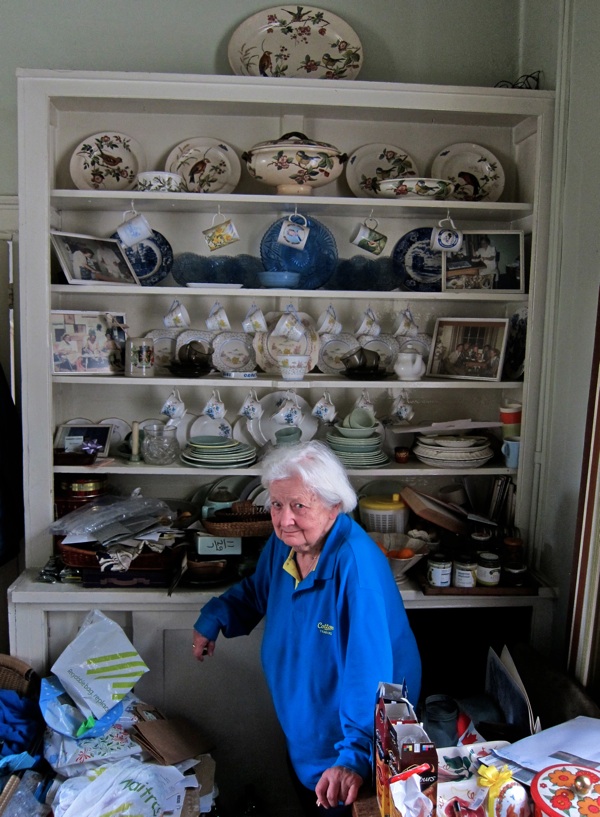
“As soon as I became aware of the world around me, I found that I lived in Wapping. Wapping seemed to me a wonderful place and I could never understand how anyone fortunate enough to have been born there could wish to move away.”

Madge’s house is one room deep, with windows facing onto the road and towards the river.

Madge in the rose garden at Wapping Pierhead outside the former Dockmaster’s House.
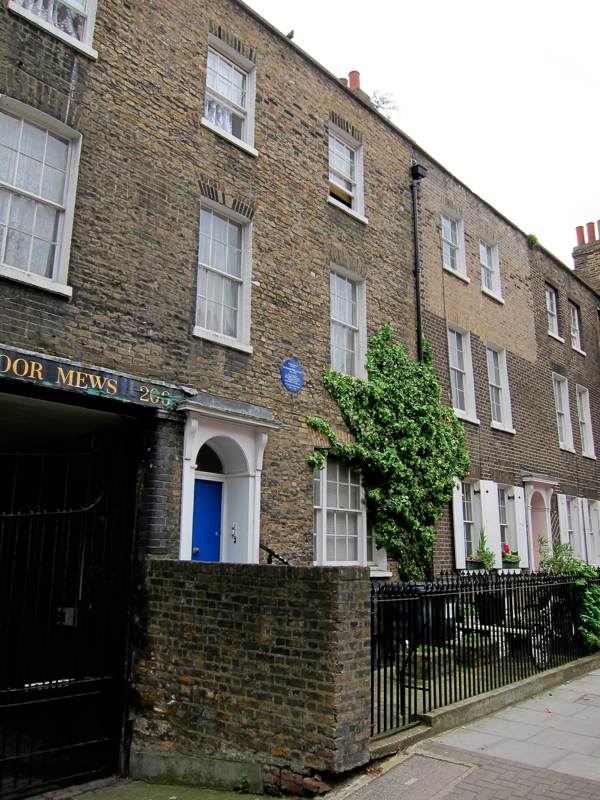
The house in Cable St where Madge’s father, Harry Darby, was born.
My Scrap Collection
For some time, I have been collecting Victorian scraps of tradesmen and street characters. I am especially fascinated by the mixture of whimsical fantasy and social observation in these colourful miniatures, in which even the comic grotesques are derived from the daily reality of the collectors who once cherished these images.

Street Photographer
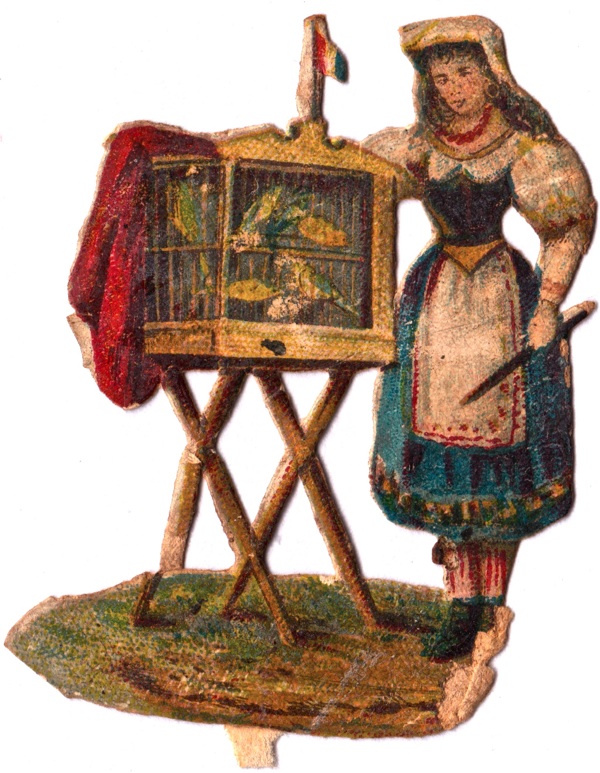
Exotic Birds
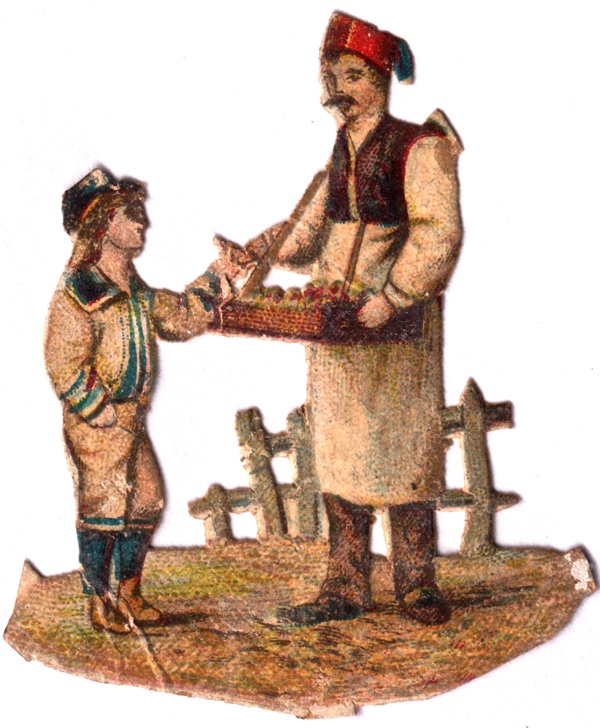
Sweets & Dainties
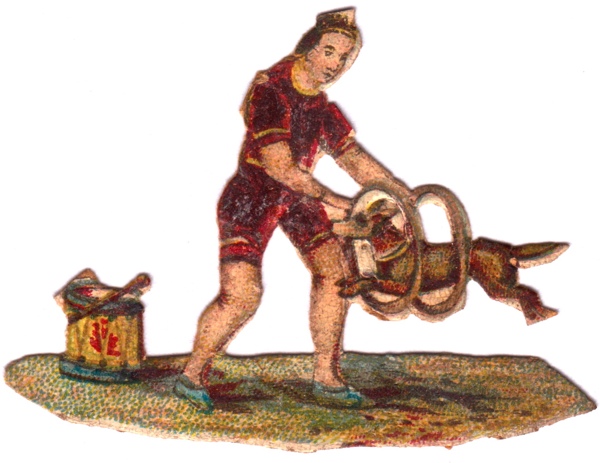
Acrobat & Performing Dog
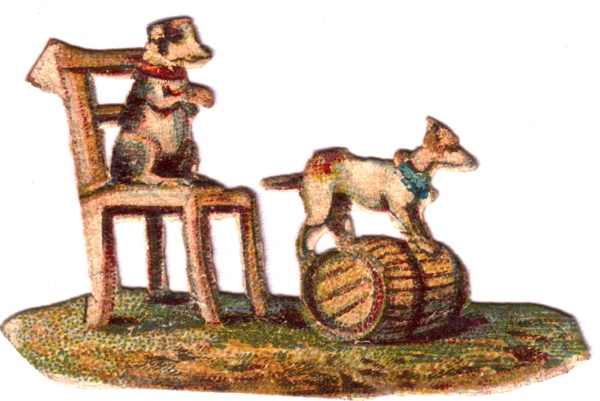
Performing Dogs
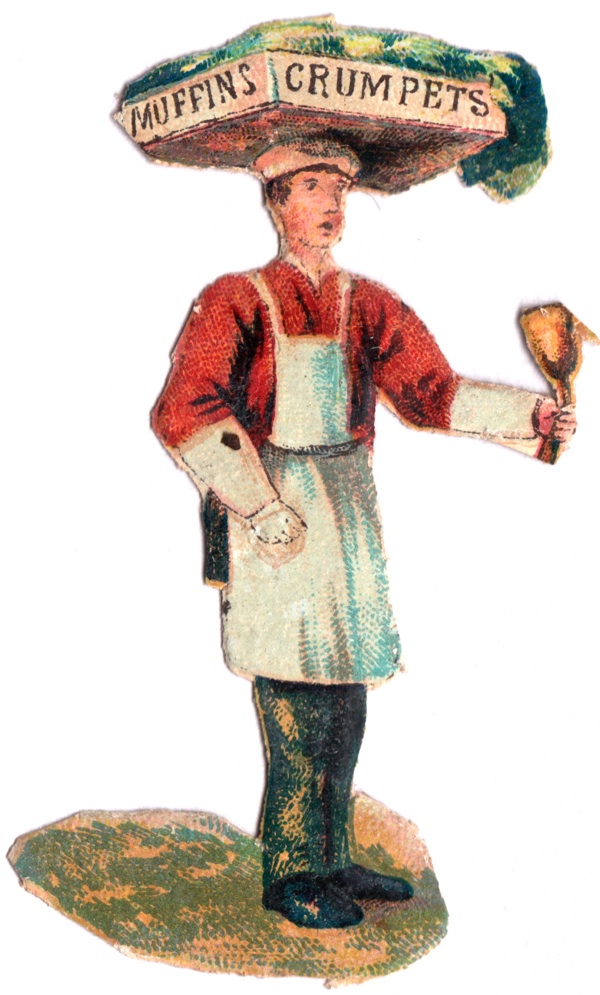
The Muffin Man

Street Musician

Street Musician

Baker

Smoker

Butcher
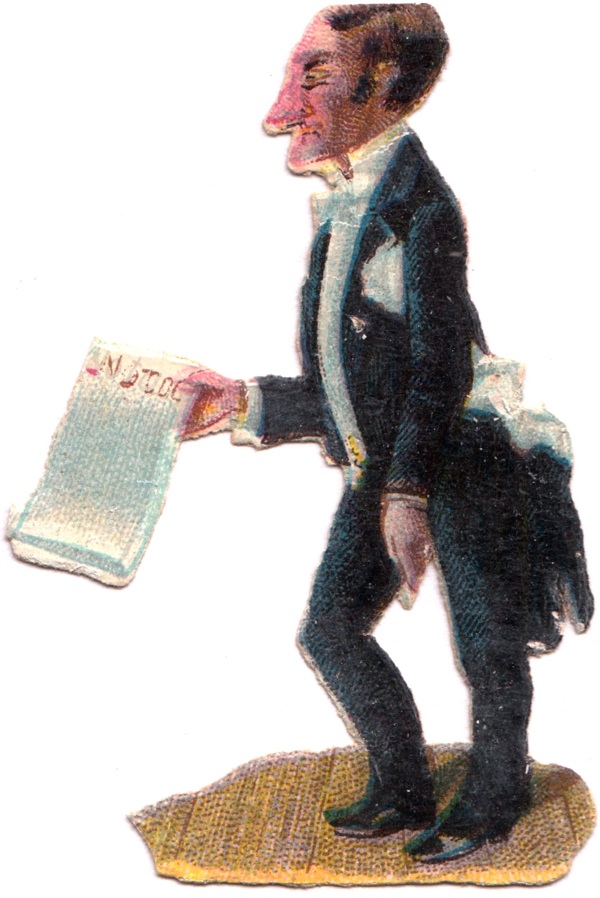
Waiter

Itinerant

Sweep

Naturalist

Lounge Lizard
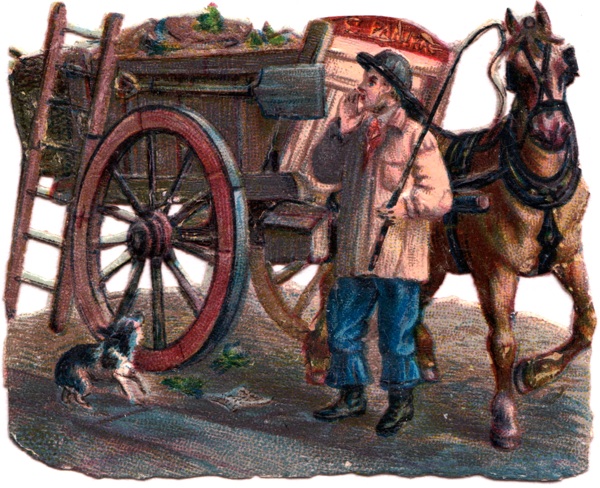
Dustman

Costermonger

Spraying the roads
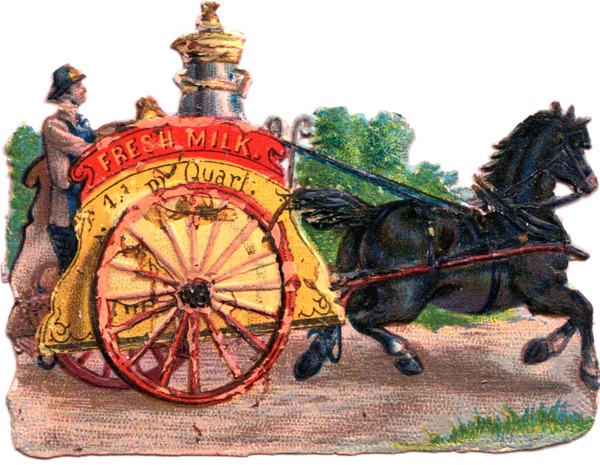
Milkman
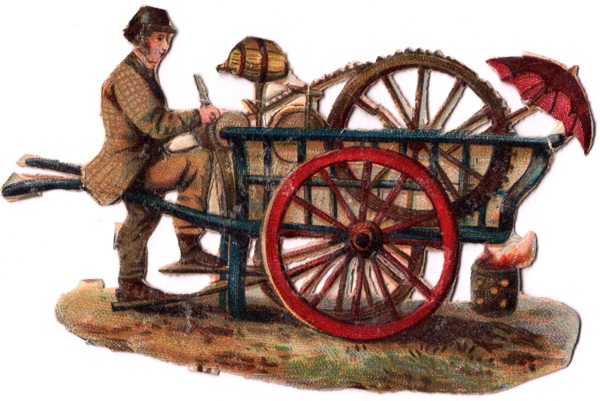
Knife Grinder
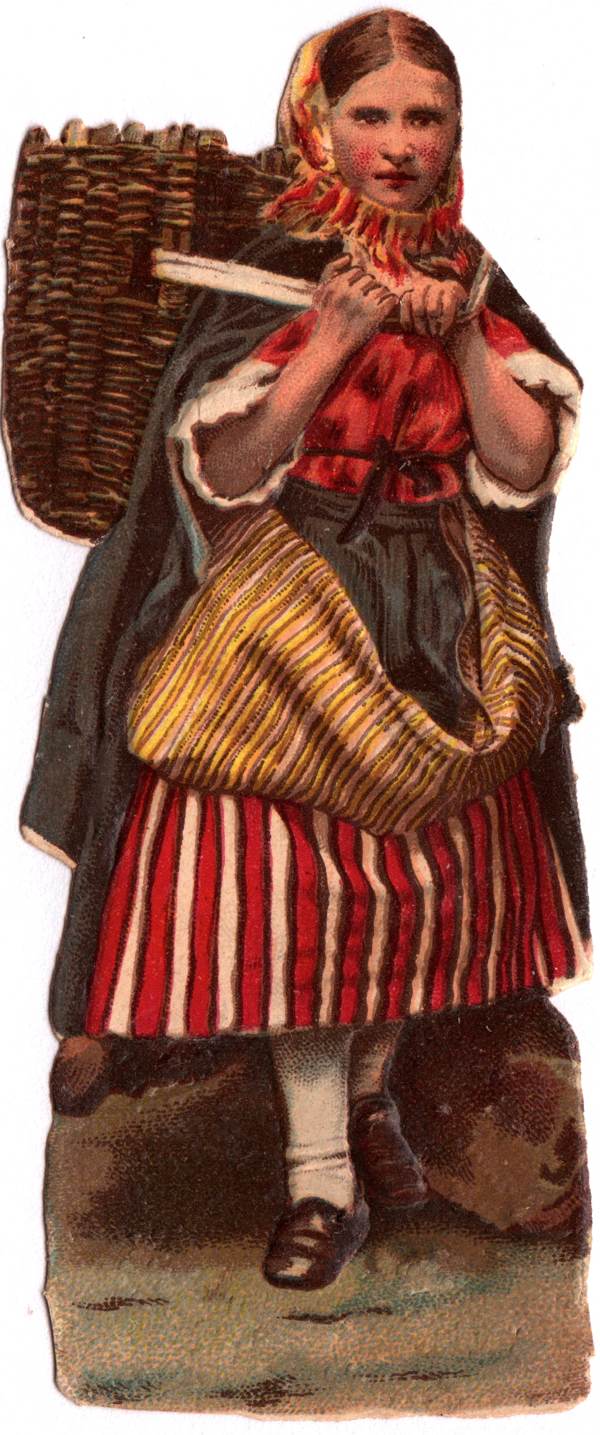
Scottish Herring Girls followed the shoals around the East Coast, gutting and packing the herring.
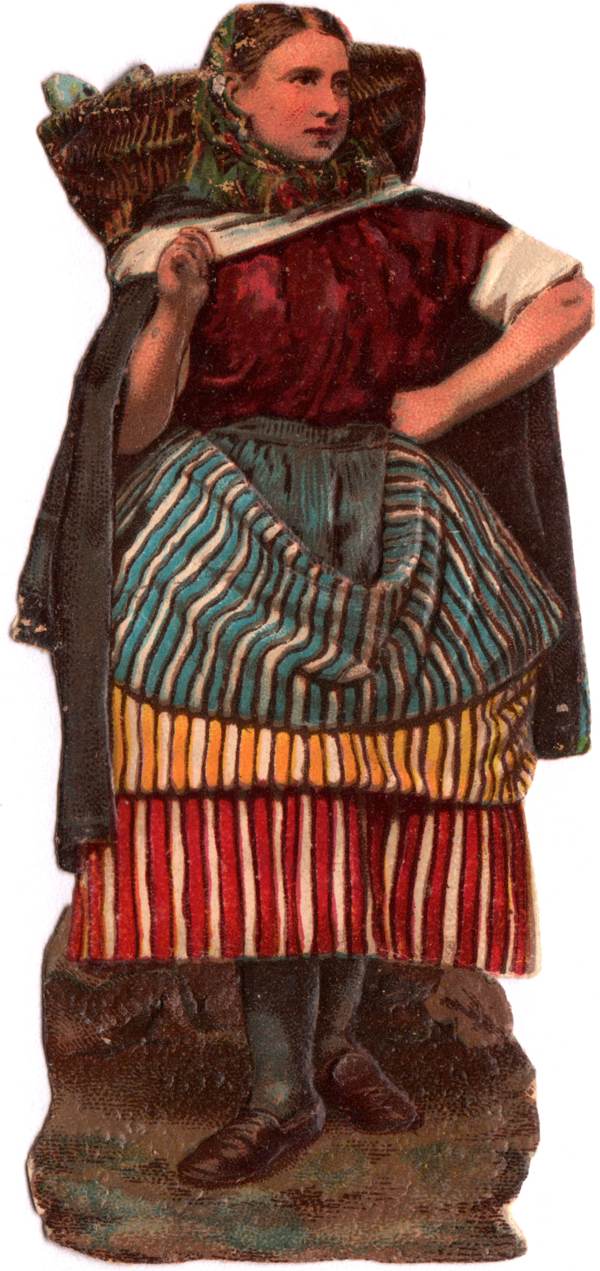
Herring Girl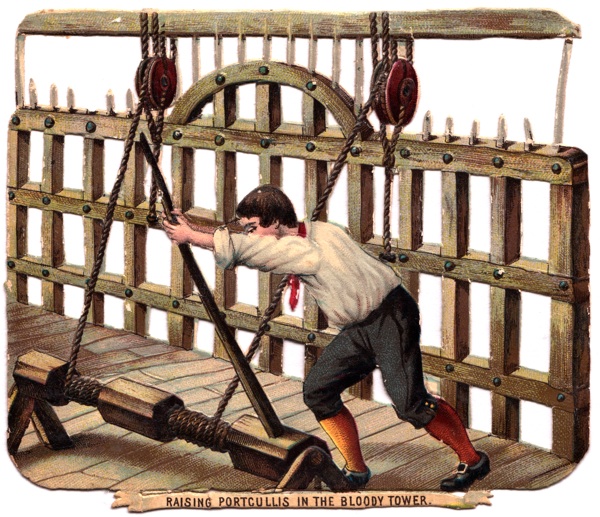
You may like to see these other scraps from my collection
At The Barbican
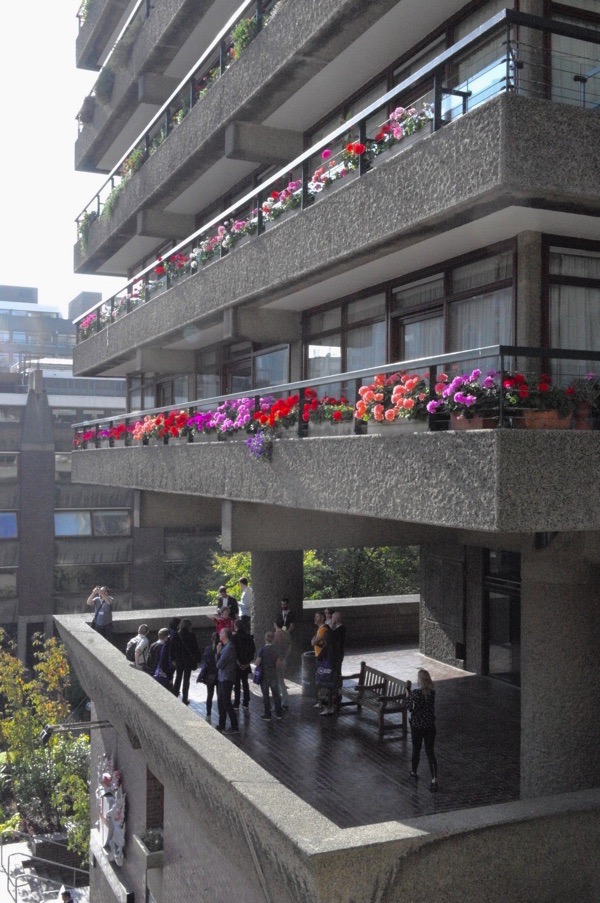
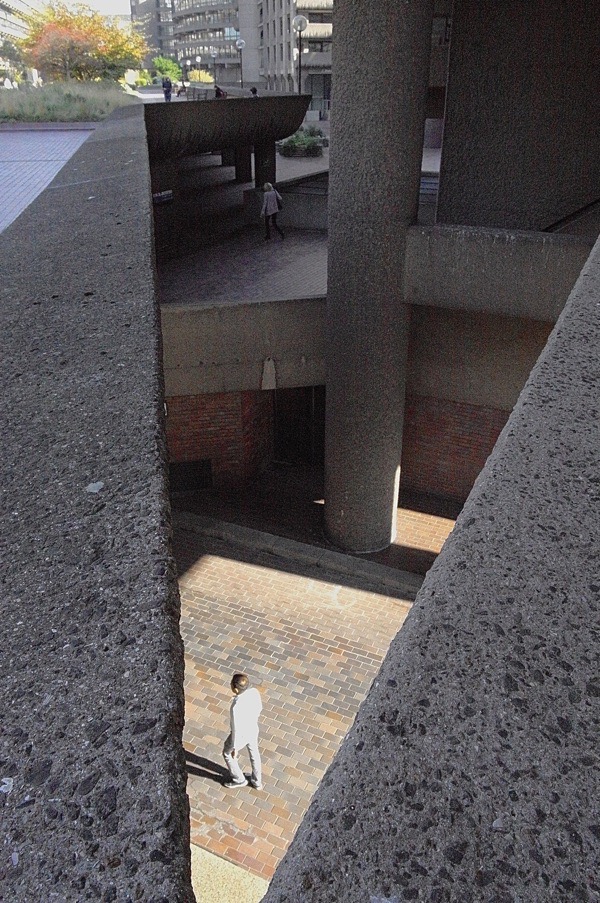
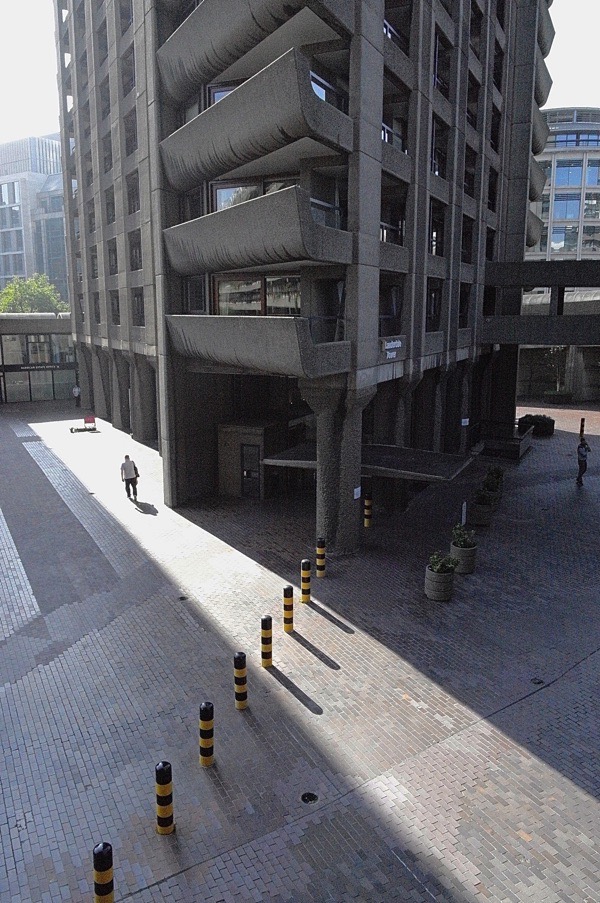
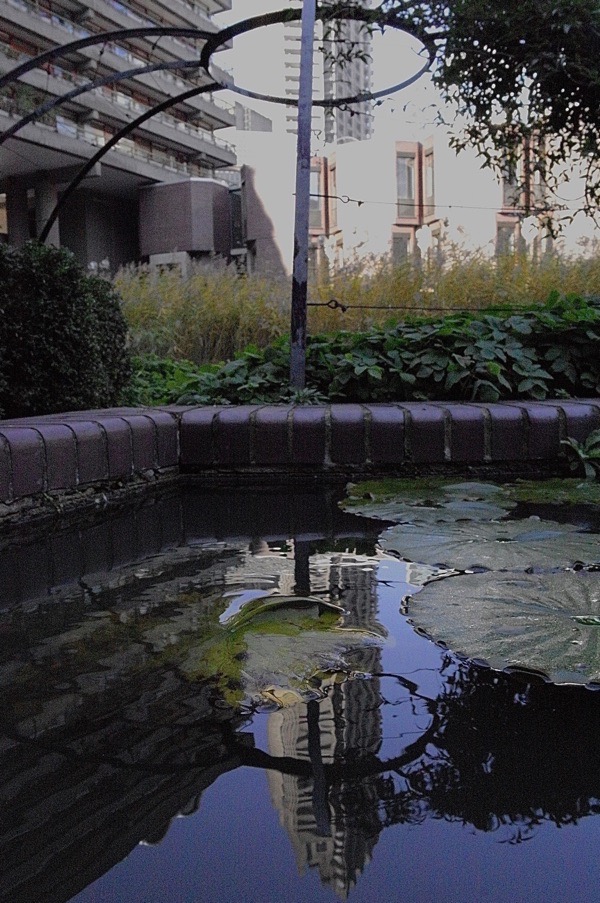
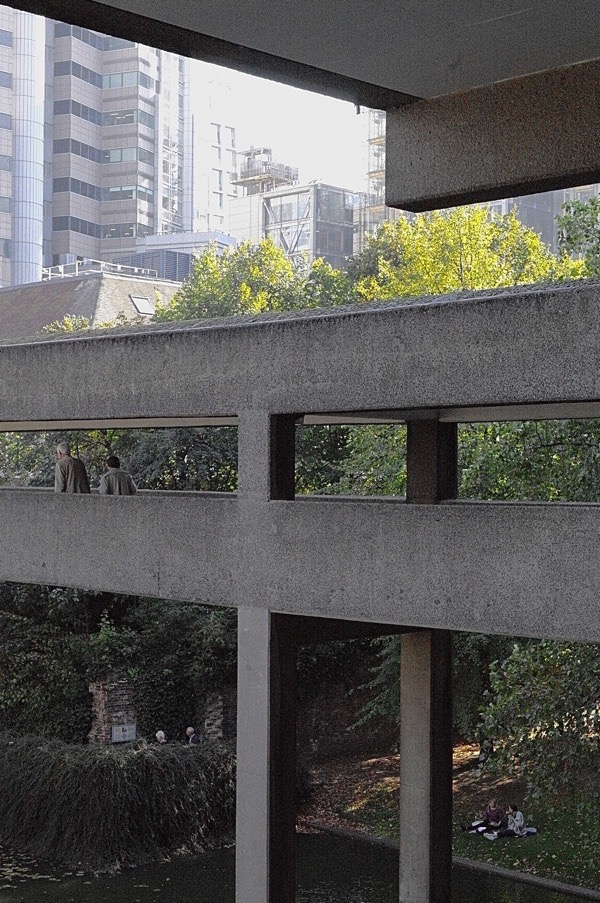
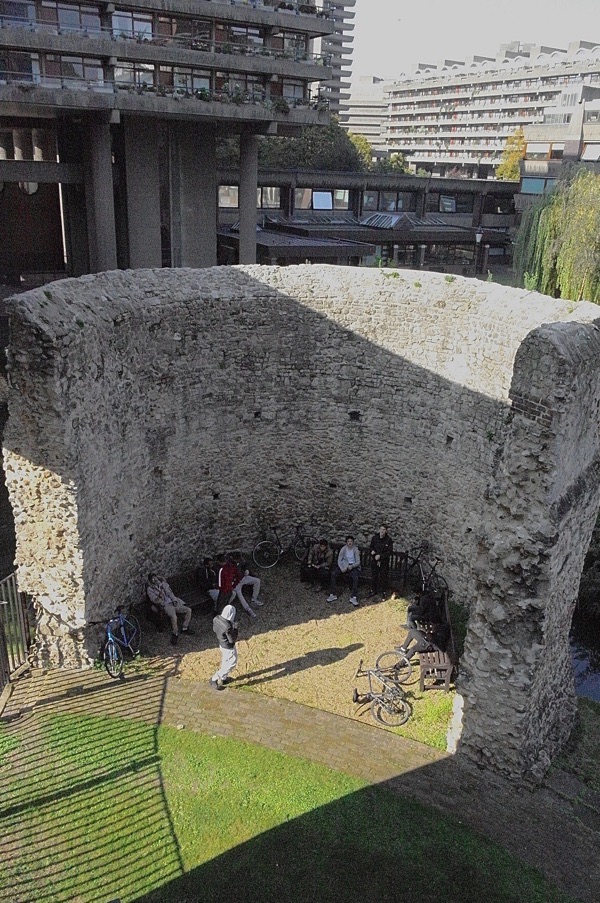
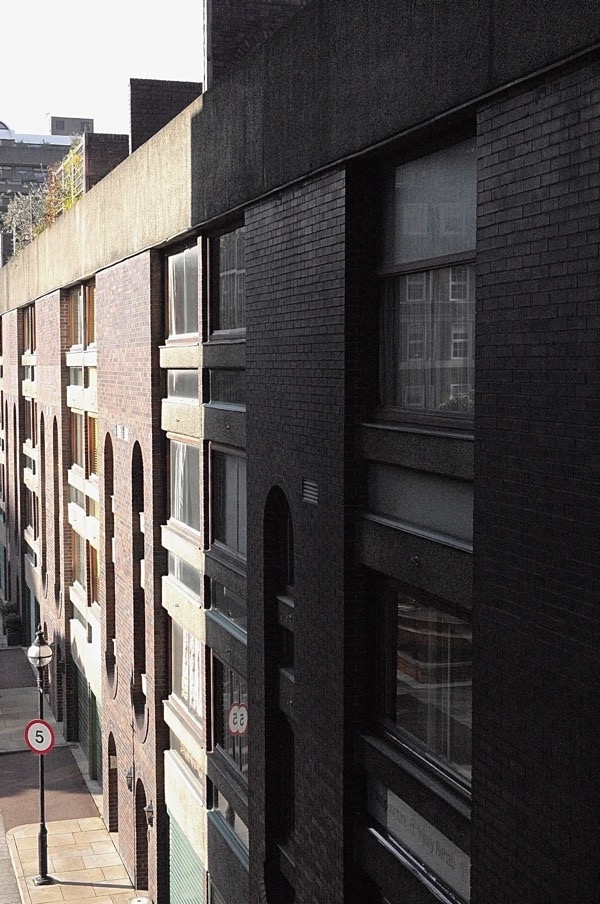
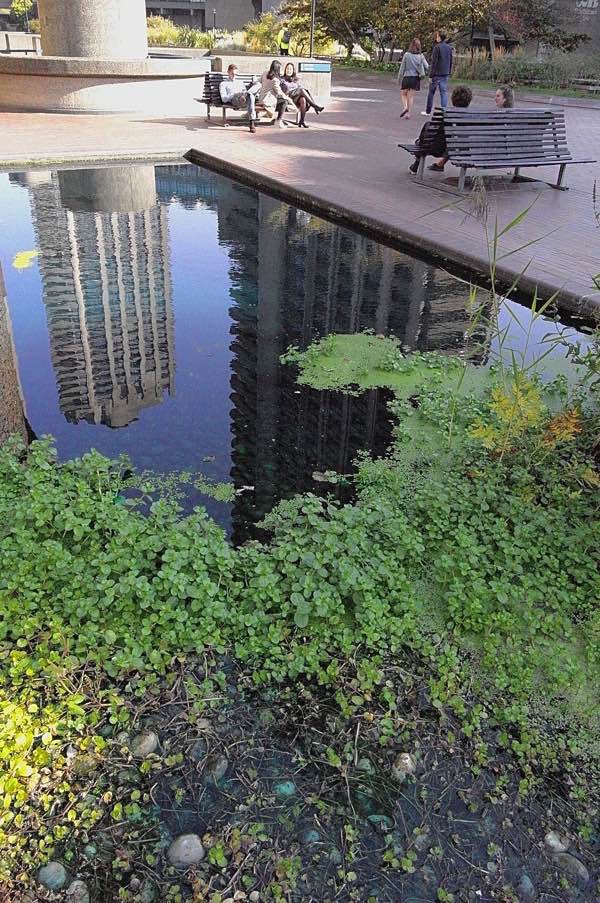
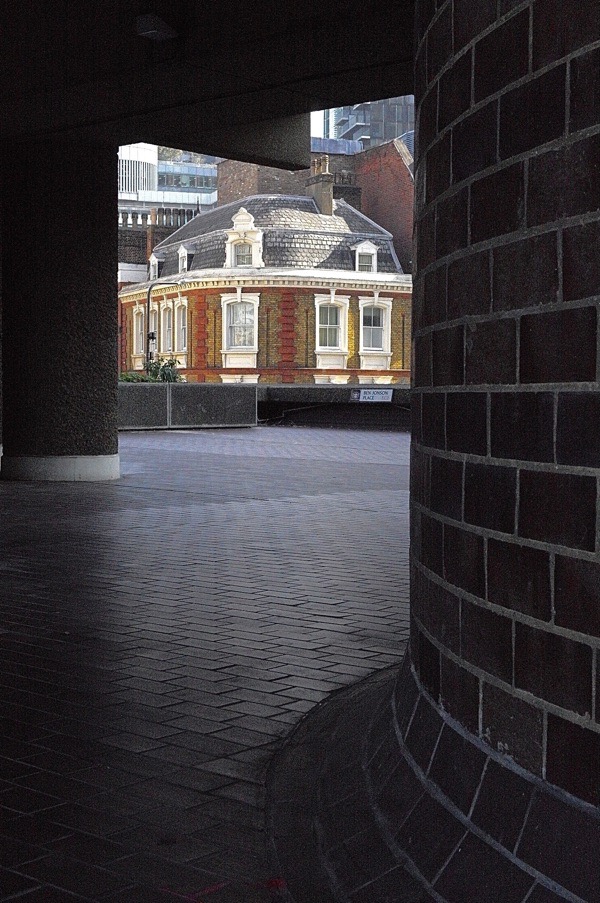
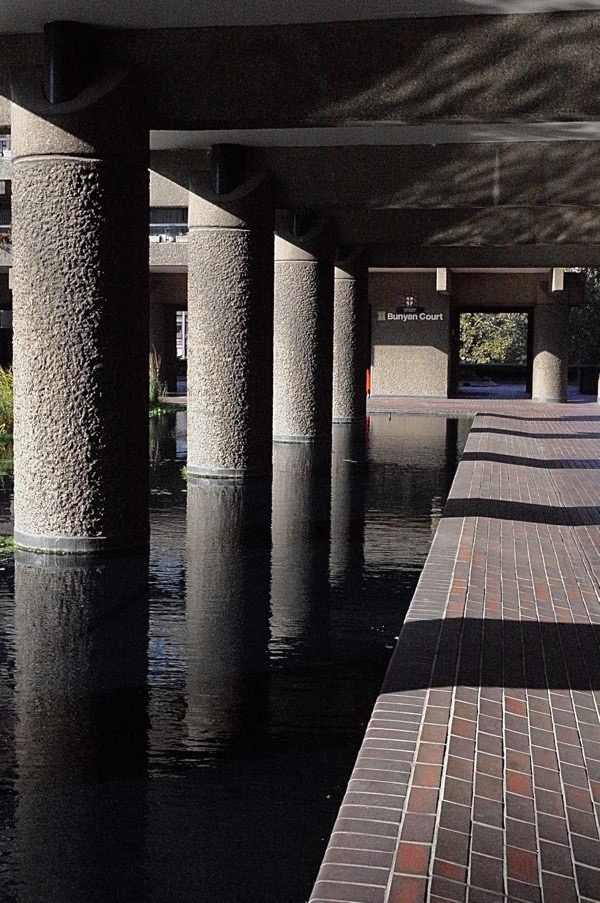
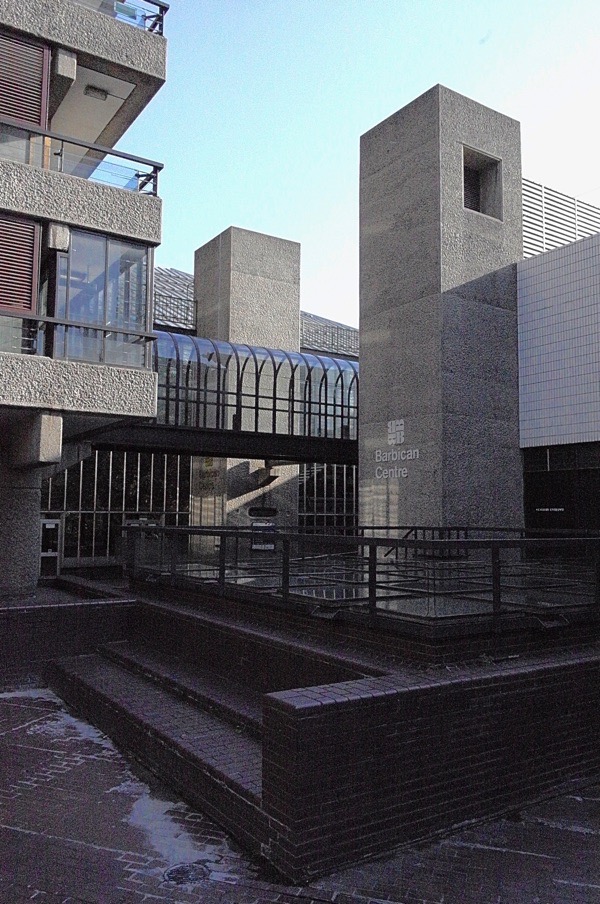
Polly Powell, whose father Geoffry was one of the architects of the Barbican, sent me this short memoir of growing up in the shadow of the design and construction of a Brutalist masterpiece. Inspired by Polly, I took a walk around the Barbican recently with my camera, trying to look with fresh eyes and seek photographs that are not the familiar images.
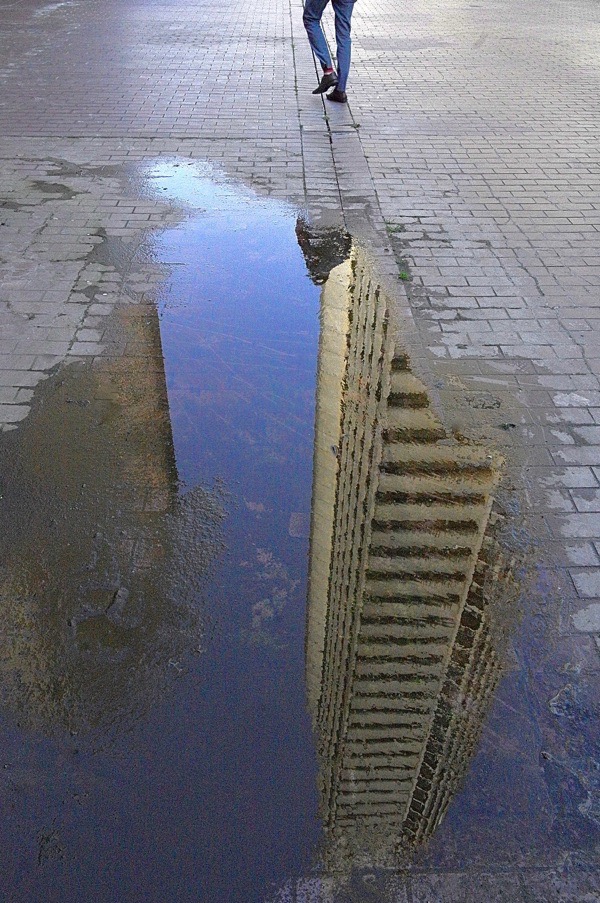
“The Barbican was never far away in our household. Beneath our feet were those distinctive maroon floor tiles so redolent of the place which my father, Geoffry Powell, had chosen for the entire seamless ground floor of our house, Glen Cottage in Petersham. Presumably he had got a rather good deal on them. But they absolutely epitomised what he liked. They were well-made, robust, richly coloured, with a nod to ancient Roman heritage, but mostly they responded well to polishing, a means by which light could be brought into the house.
But the tiles were not the only reason for the Barbican to loom large in our lives. The entire development, thirty-five years in the making, coincided with the formative years of the family. We were sheltered from most of the ups and downs of the development’s protracted gestation because my father was by nature a cheerful person and preferred to leave work at the door. I remember an occasion, however, towards the end of the building of the development, when he was required to make an inspection from the top of one of the towers. He described how he had had to do a little jump in order to get into the window-cleaner’s cradle. I was both admiring and terrified by this feat of bravery. In fact, I learned later that the purpose for his inspection had been prompted by the threat of litigation which was perhaps more frightening.
The main office of Chamberlin, Powell and Bon was in Lamont Rd Passage, situated behind the kink in the King’s Rd, Chelsea. The building was a late-Victorian print works which the partners chose because of its large north-facing windows that let in maximum light. The building was divided into two floors: the top floor had one enormous space with cubby-hole offices for each of the partners and a meeting room. It was accessed via a shaky double-height spiral staircase which was always exciting to climb. On the ground floor, where everyone else sat, there was an old parquet floor covered with huge ink splodges from its previous tenants. According to one of the architects who worked there, you could tell if the practice was busy by looking at the angle of the drawing boards. If the boards were flattish (with fewer people in the office), then it was quieter, but if the boards were at a jaunty angle (more people necessitating more squeeze) then business was good. Needless to say, the firm was largely busy throughout its life and was, reportedly, the largest architectural practice in Europe at one point. In due course, the practice opened a second Barbican site office in one of the early flats overlooking the lake.
The three partners – Jo, Geoffry and Christoph – maintained a life-long respect and admiration for each other, enjoying holidays and Sunday lunches together outside the office. An important ingredient in this was the role of Jean Chamberlin who was married to Jo. Jean was a warm but determined woman who ran the Lamont Rd Passage with a rod of iron and bustled around the place, more often than not with a dash of lipstick on her whiskery face. Christoph Bon lived with Jo and Jean for most of his adult life, the three of them sharing a triumvirate of beautiful homes – South Edwardes Sq in Kensington (including a self-contained flat for Christoph), Mas Gouge in Provence, and The Mill House, Sonning. Mas Gouge was a fortified farm, simple and solid with a large terrace overlooking the valley below. The main structure was an old farmhouse, the guts of which had been removed to create a soaring three-storey open atrium sitting area with bedrooms and studies overlooking the main space from the floors above. Walls were decorated with contemporary craft pieces, some created by their friends. Here at Mas Gouge, they went to relax and enjoy the local French food – the vast fully-equipped kitchen was Christoph’s domain and was designed with white square tiles and a large tiled island, long before such things became popular. Despite the grandiose nature of the house, it still required a small hand-pump to bring water into the building. Everyone who stayed there was required to spend ten minutes at the pump.
The Mill House in Sonning was set on an island in the Thames, and allowed them to keep an Edwardian launch which was chugged out on special occasions. In the garden, there was a concrete structure surrounding a fire pit, comprising two high-backed semi-circular concrete benches. The idea was that there would be a blazing fire which, once calmed, would comfortably heat the concrete seats. The Mill House was also the setting for the Practice’s retirement party, an occasion at which the partners insisted on serving everyone who had ever worked at the firm. The Mill House is better known now as the home of George and Amil Clooney. When Jo died, Christoph and Jean spent much time travelling with the Sri Lankan architect Geoffrey Bawa. Christoph personally financed a monograph on Bawa’s home Lunaganga.
My father and Christoph lived long enough to witness a new-found affection for Brutalism in general and the work of the practice in particular. The partners were from a generation that regarded architecture as a profession and as such were not self-promoters – indeed there are very few photographs of them other than holiday snaps. Arguably, their ambivalence towards PR was perhaps a factor behind the Barbican’s negative reception in the early years. So it is particularly gratifying to see the Barbican and other buildings by the firm being appreciated once more by people voting with their feet.” – Polly Powell


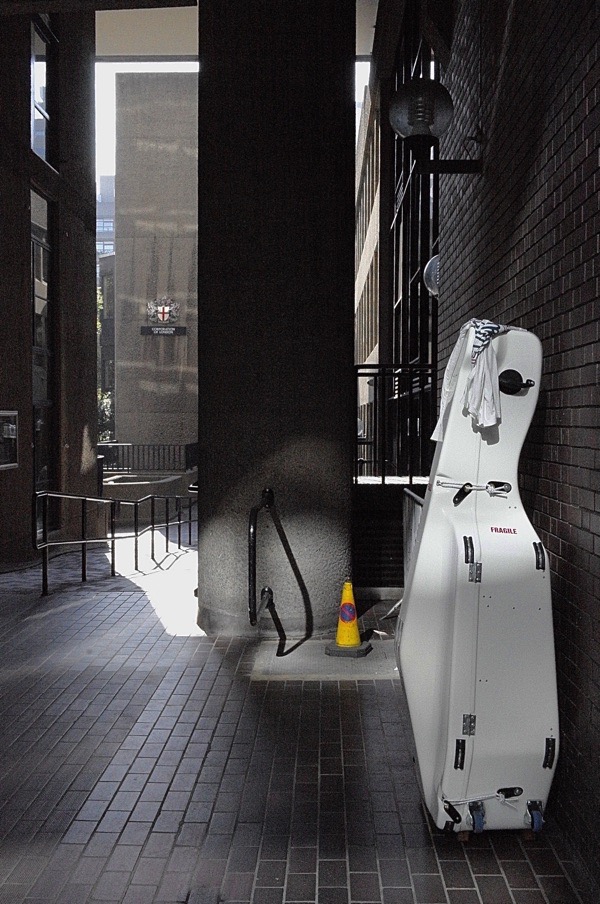
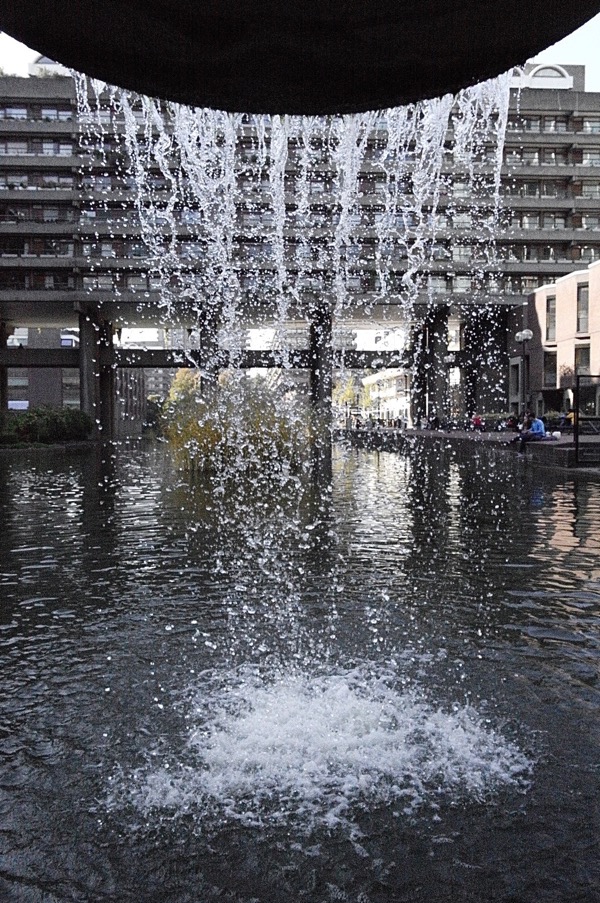
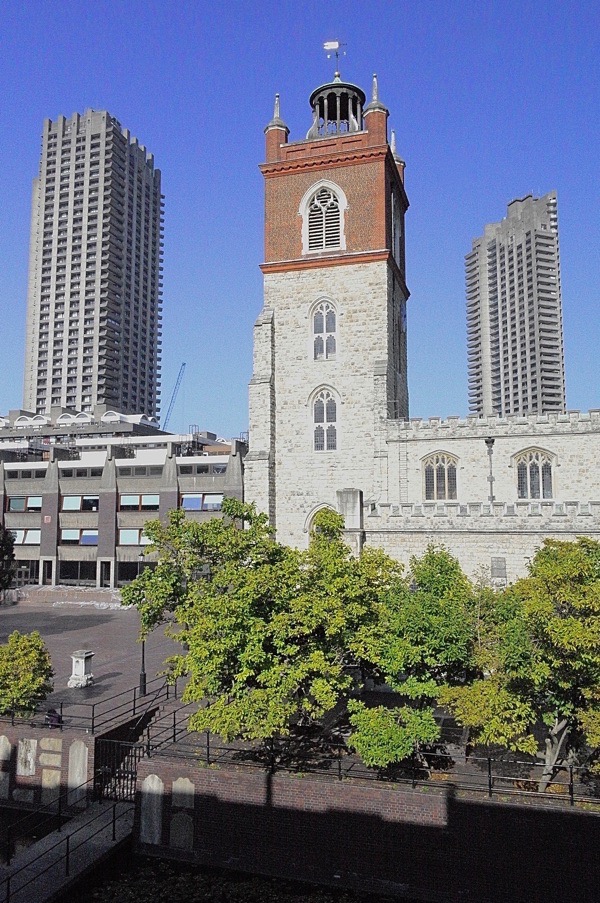
You may also like to read about
How To Make Prashad
To celebrate publication day for the very first London Sikh biography, A MODEST LIVING, MEMOIRS OF A COCKNEY SIKH by Suresh Singh, we are making prashad – the Sikh holy sweet – and two other delicious Punjabi recipes.
In the book, Suresh Singh’s chapters of biography are alternated with Jagir Kaur’s traditional recipes from the Punjab, as cooked in Spitalfields over the last seventy years at 38 Princelet St.

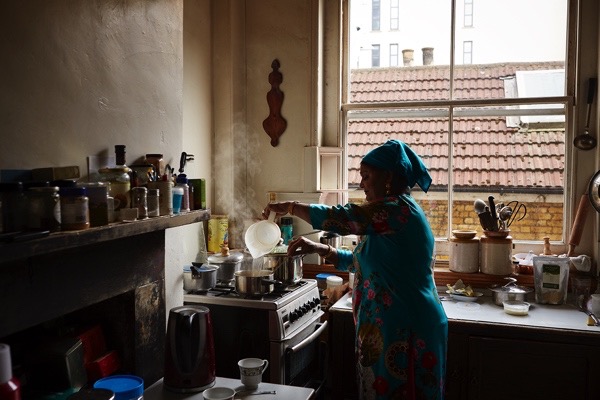
Prashad is made using butter, semolina, sugar, and water – four simple ingredients. Dad used to make this ‘gracious gift’ and we still make it today. It is always given out at gurdwaras whenever Sikhs gather, served to everyone irrespective of rank or caste. The offering must be served with and accepted with hands only. At 38 Princelet St, Dad said we could use plates. Before anyone eats, five portions of prashad representing each of the five beloved gurus, are taken out of the bowl and laid aside. Dad used to make us put these into the fire.
Traditionally, the person receiving prashad must be seated or low on the ground to humbly accept the offering with two hands. Both the person giving and the one receiving the offering should try to cover their heads. (At home, we used to have to run off to find something to cover ours.)
Makes about twenty portions
1 cup ghee or unsalted butter
1 cup coarse semolina
1 cup sugar
3 cups water
Add the sugar to the water in a pot and bring to the boil.
In another pan, melt the ghee or unsalted butter.
When the butter is melted, add the semolina to the melted butter and stir the mixture continuously to lightly toast the flour.
Continue stirring the flour and butter mixture while the sugar and water mixture boils to make a light syrup. The butter will separate from the toasted flour, turning a deep golden colour and emanating a godly aroma.
Pour the boiling sugar syrup into the toasted flour and butter, mixing it with a wooden spoon. Stir rapidly until the water is absorbed. Keep stirring the prashad as it thickens into a firm mix.
The prashad is ready when it slides easily from the pan into a bowl. We like serving each portion with a few raisins and then the blessing is complete.
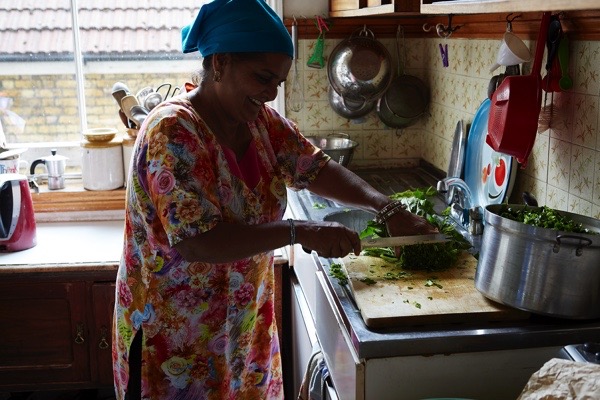
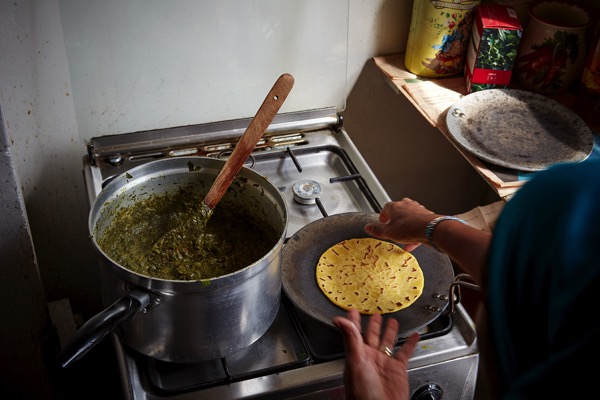
Sarson Da Saag is served in gurdwaras. Dad and all the family loved it because it is a distinctively Punjabi recipe and a glorious green colour. Yellow rotis are traditionally eaten with this dish.
Makes about twenty generous portions
FOR THE VEGETABLE BASE
4 bunches of saag (mustard leaves) 2 bunches of spinach
1 bunch of bathua (pigweed)
2 bunches of methi ( fenugreek)
1 leek
1 bunch of large spring onions, cleaned and chopped 1 bulb of garlic, (about 6–8 cloves) peeled, not chopped
FOR THE CARAMELISED ONION MIXTURE
mustard oil
butter/ghee
1 small onion, finely chopped
1 bulb of garlic (about 6–8 cloves), finely chopped 8–10 green chillies, finely chopped
salt
3 inch piece of ginger
1 teaspoon cumin seeds
1 cup makki atta (corn flour)
Wash and finely chop the mustard and spinach leaves, piling them into a large pot. Add the chopped onions and the whole garlic cloves. Add one litre of hot water to the greens and bring to a boil. Simmer for about half an hour until tender.
Meanwhile, in a smaller pan, add the onions, then the mustard oil, butter/ghee, garlic, ginger, green chilli and cumin seeds. Cook until the onions are caramelised and the mixture turns a golden brown (when I was young, the National Front used to beat me up for smelling of caramelised onion).
Add the onion mixture to the large pot with the greens and mix well together. Add the makki atta gradually, mixing thoroughly.
When everything is combined, blend the whole mixture in a blender, being careful not to make it too mushy and leaving some of the texture intact. Once the mixture is blended, simmer for another fifteen minutes, stirring occasionally.
Serve with yellow rotis.
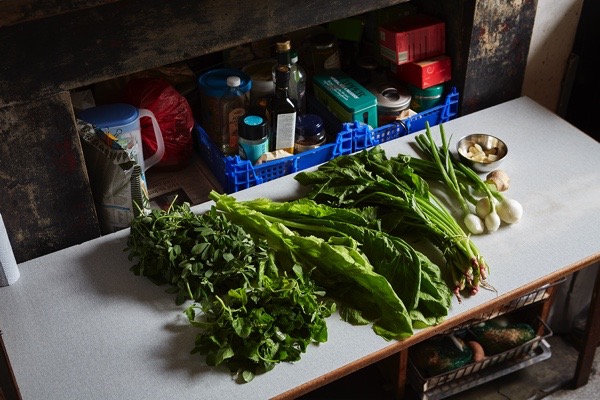
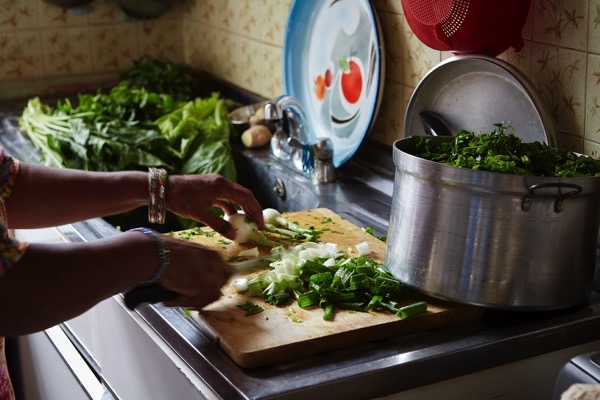
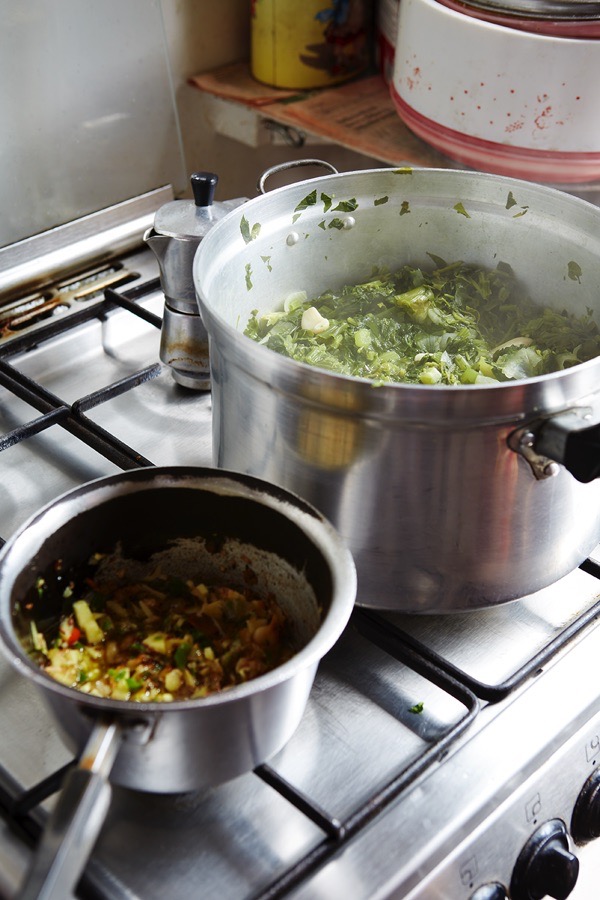
Kahdi – this Punjabi gurdwara yogurt fills you up. Turmeric gives it a beautiful yellow colour. When asked, I always say that this is our curry. The lovely thing about our yogurt is that you can add as many vegetables as you please to it.
Makes about twenty generous portions
FOR THE BASE
400g full fat yogurt
3–3.5 litres of hot water
1 cup besan flour (gram/chickpea flour) 1 teaspoon of turmeric powder
75g butter
FOR THE CARAMELISED ONION MIXTURE
butter/ghee or mustard oil
1 large onion, finely chopped
1 tomato, diced
1 can of tomatoes
1 whole bulb of garlic, finely chopped
7 green chillies, finely chopped
1 teaspoon of salt
1 pinch Hing-Asafoetida
1 teaspoon of cumin seeds
3 inch piece of ginger, finely chopped
5 curry leaves, rinse them under water if you use dried ones
1 teaspoon of turmeric powder
First make the base. In a large bowl, mix the yogurt, turmeric, besan flour and butter. Gradually add the water – do this slowly and mix well to make sure there are no lumps.
Pour this mixture into a large pot on a medium heat and bring to a boil. You need to stir the mixture all the time (I used to love doing this job for my mum). If you do not stir the mixture continuously, it will become lumpy and stick to the bottom of the pot. Once the mixture has come to the boil, reduce the heat. The base mixture must simmer for about two hours, and you need keep stirring it regularly.
To make the caramelised onion mixture, cook all the ingredients in the butter/ghee or mustard oil until golden brown.
Once the base mixture has been simmering for about two hours, add the caramelised onion mixture and simmer, stirring occasionally, for another fifteen minutes.
For added flavour, you can sprinkle some Garam Masala on top. Jagir uses a teaspoon each of jeera (cumin), coriander seeds, cardamom seeds, green cardamon, sunth (dried ginger powder), and two whole cloves of garlic, one cinnamon stick and three black peppercorns. She mixes and grinds this all together.
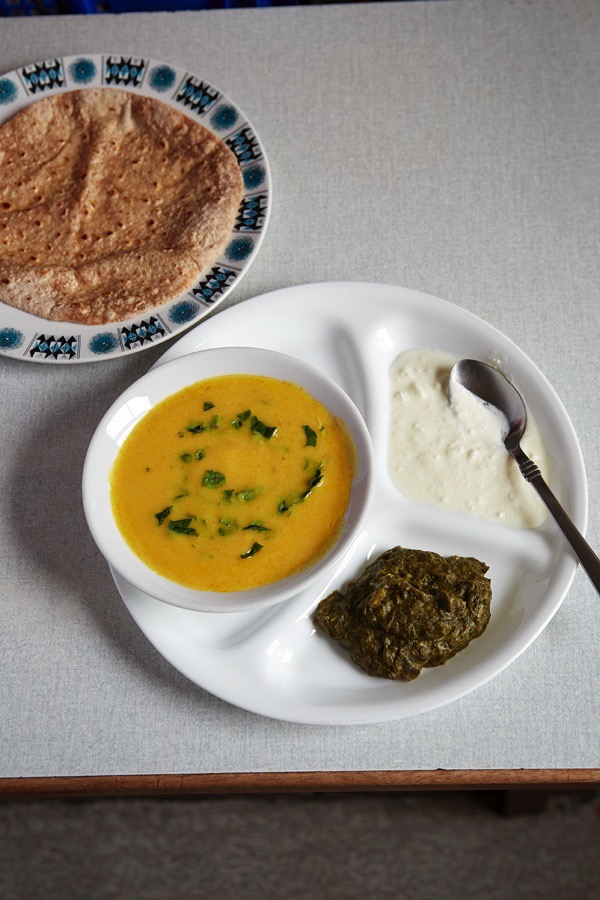
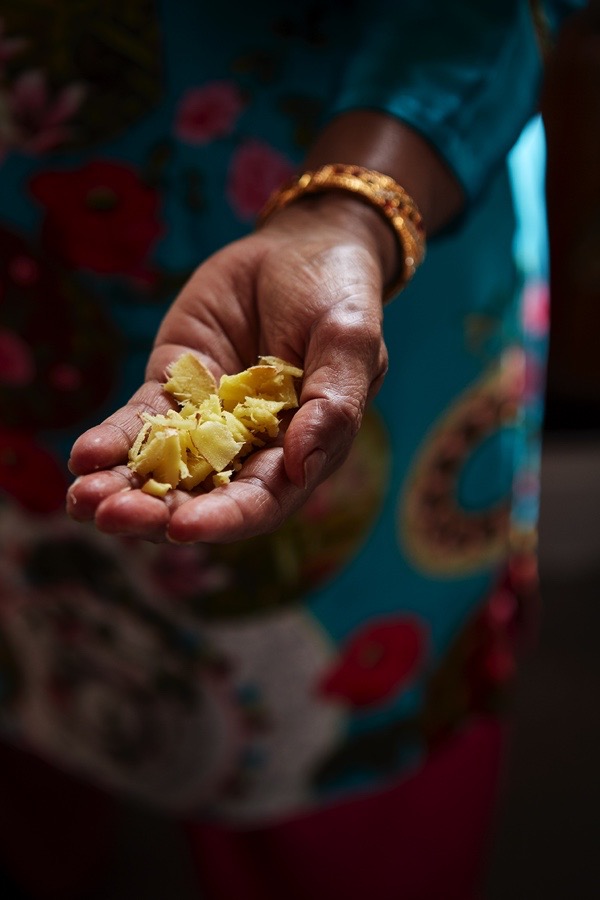
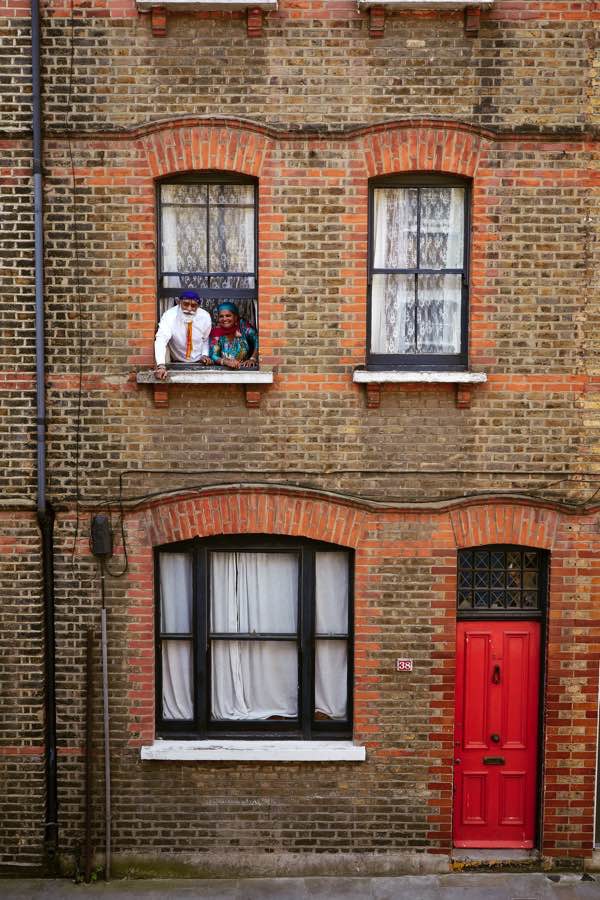
Suresh Singh & Jagir Kaur at 38 Princelet St this summer
Photographs copyright © Patricia Niven
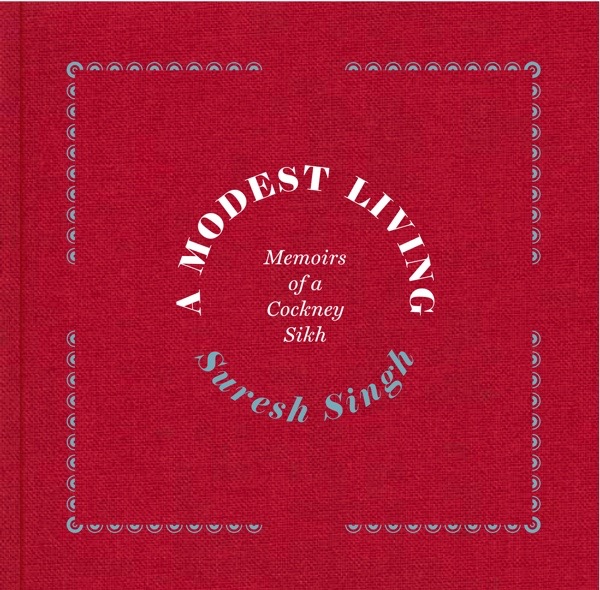
Click here to order a signed copy of A MODEST LIVING for £20

Suresh Singh will be in conversation with Stefan Dickers at the Write Idea Festival at the Whitechapel Idea Store on Saturday November 17th at 1pm. CLICK HERE TO BOOK A FREE TICKET
The Small Trades Of Spitalfields
This Saturday 20th October at 11am I am giving an illustrated lecture on THE SMALL TRADES OF SPITALFIELDS in the crypt of Christ Church, exploring how the culture of artisans created the identity of Spitalfields and how the small traders are faring today. This event is part of HUGUENOT SKILLS DAY which includes demonstrations, workshops and lectures. Click here for tickets and further information
When these die-cut Victorian scraps of small trades are enlarged to several times their actual size, the detail and characterisation of these figures is revealed splendidly. Printed by rich-hued colour lithography, glossy and embossed, these appealing images celebrate the essential tradesmen and shopkeepers that were once commonplace but now are scarce.
In the course of my interviews, I have spoken with hundreds of shopkeepers and stallholders – and it is apparent that most only make just enough money to live, yet are primarily motivated by the satisfaction they get from their chosen trade and the appreciation of regular customers.
Here in the East End, these are the family businesses and independent traders who have created the identity of the place and carry the life of our streets. Consequently, I delight in these portraits of their predecessors, the tradesmen of the nineteenth century – rendered as giants by these monumental enlargements.


You may also like to take a look at these other sets of the Cries of London
Geoffrey Fletcher’s Pavement Pounders
William Craig Marshall’s Itinerant Traders
H.W.Petherick’s London Characters
John Thomson’s Street Life in London
Aunt Busy Bee’s New London Cries
Marcellus Laroon’s Cries of London
More John Player’s Cries of London
William Nicholson’s London Types
Francis Wheatley’s Cries of London
John Thomas Smith’s Vagabondiana of 1817
John Thomas Smith’s Vagabondiana II
John Thomas Smith’s Vagabondiana III
Thomas Rowlandson’s Lower Orders
Lew Tassell At Charles & Diana’s Wedding
We join Detective Constable Lew Tassell of the Fraud Squad on duty on the roof of Ludgate House for the wedding of His Royal Highness Prince Charles & Lady Diana Spencer on 29th July 1981, thanks to his personal photographs published here for the first time
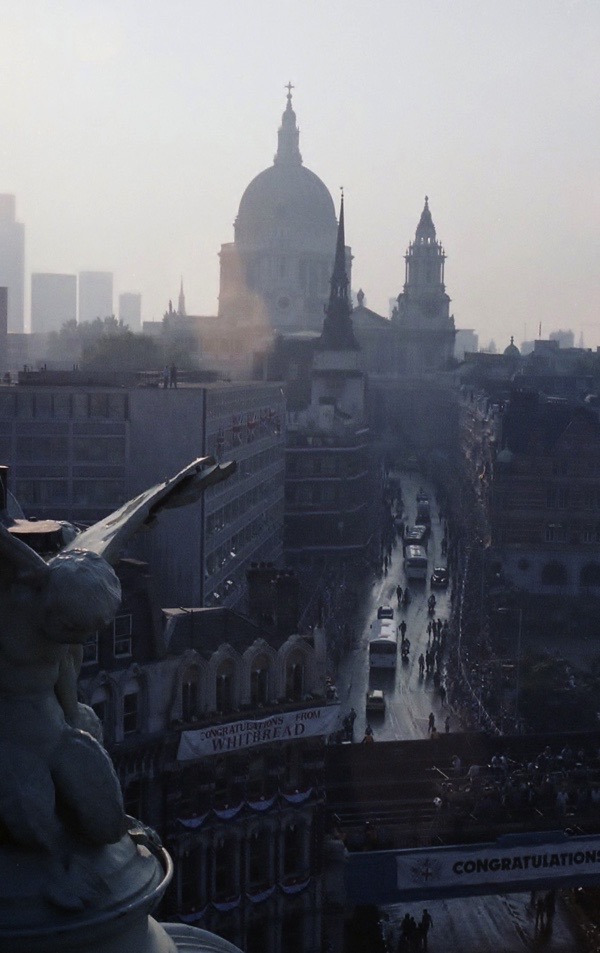
The view from Ludgate Circus at dawn
“In July 1981, I was a Detective Constable in the City of London Police attached to the Fraud Squad at Wood St Police Station. The City of London force was quite small and an occasion such as a royal wedding required every officer to be involved, as well as drafting officers from other forces for the day.
On the day of the wedding, I was based in Ludgate House on the north-west quadrant of Ludgate Circus. The night before I walked to Hyde Park to watch the fireworks and then back along the route to Wood St, where I spent the night sleeping on the floor of my office before a very early morning start. Following a shower and wearing my best suit, I walked to Snow Hill Police Station for a 5:45am muster.
Then I walked to Ludgate House taking my camera along. The procession along the Strand to St Paul’s did not just involve royalty and the military but also celebrities. The crowd loved that. Spike Milligan held the proceedings up on at least a couple of occasions in Fleet St and Ludgate Hill by stopping the car to interact with the crowd.
Although it was extra to my duties as an investigator in the Fraud Squad, I really enjoyed all the state duties I was involved with and I felt it was a privilege – I certainly got to meet some interesting people.”

Ludgate Hill
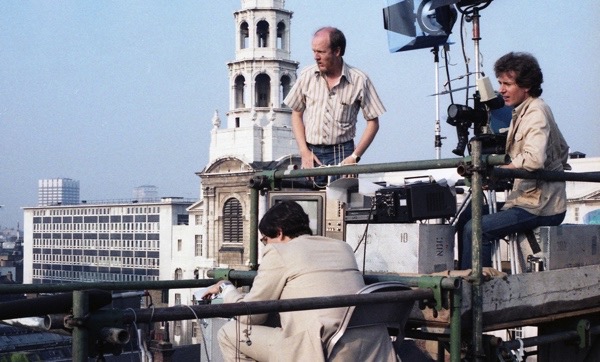
NBC TV crew on the roof of Ludgate House
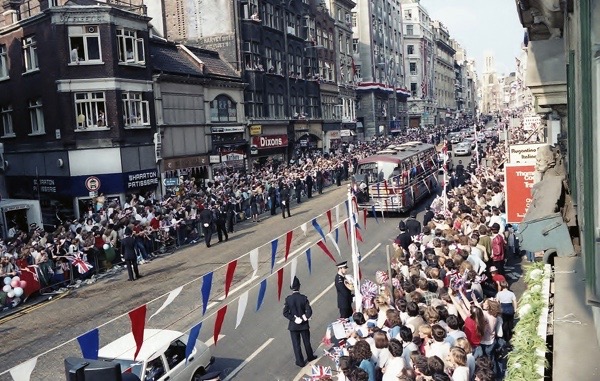
Fleet St
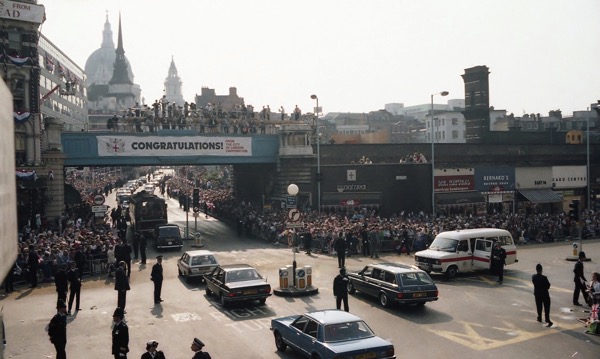
Ludgate Circus
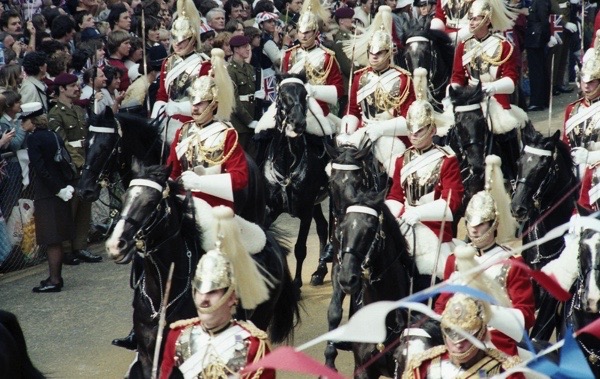
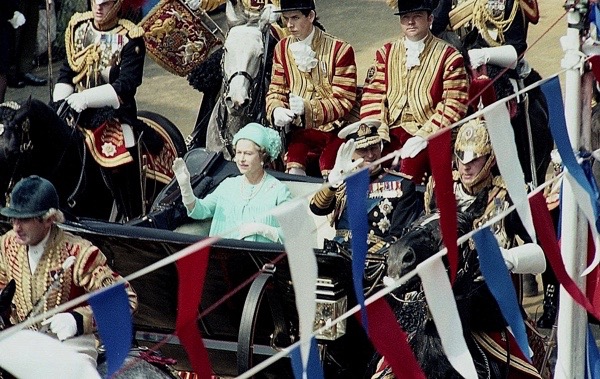
The Queen & Prince Philip
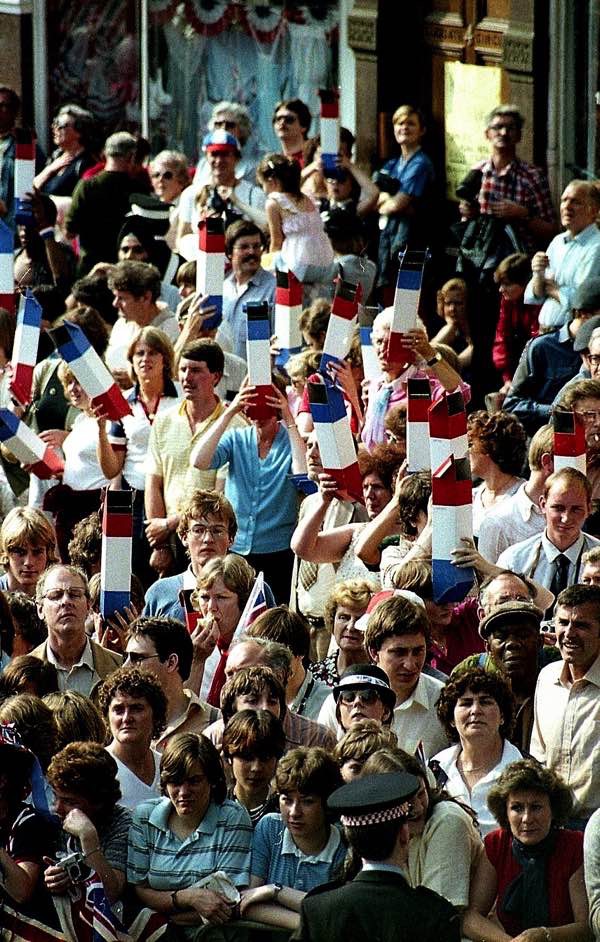
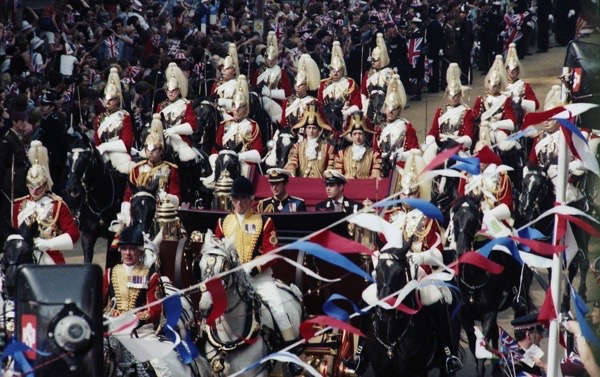
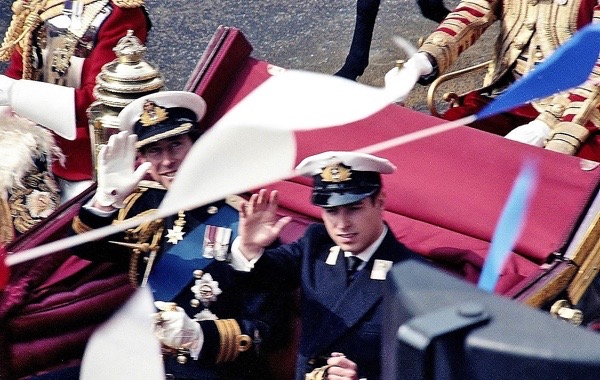
Prince Charles & Prince Andrew

Earl Spencer on the way to the Cathedral with Diana
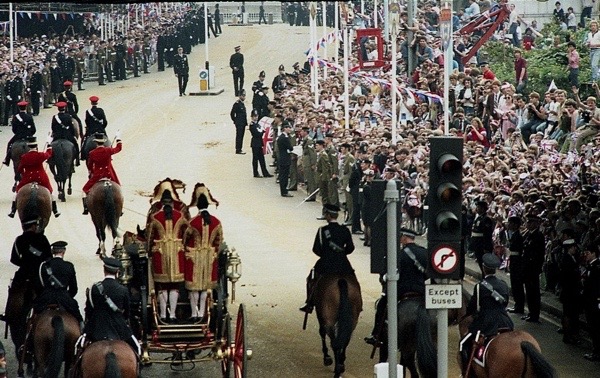
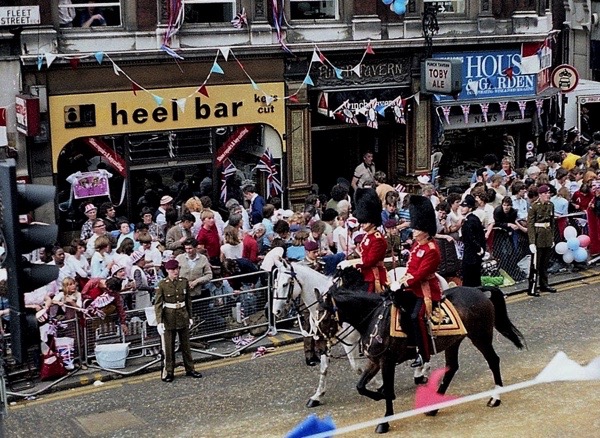

Awaiting the return procession
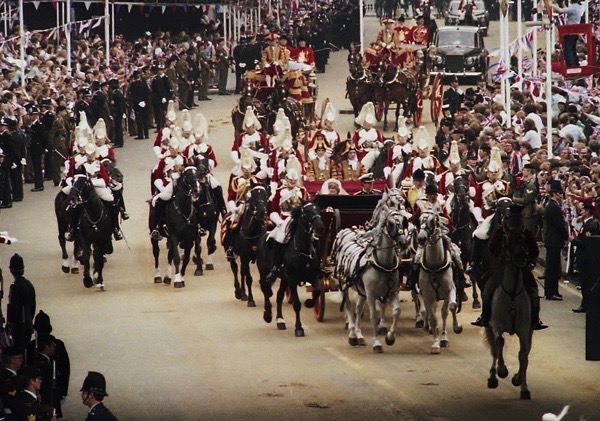

Charles & Diana
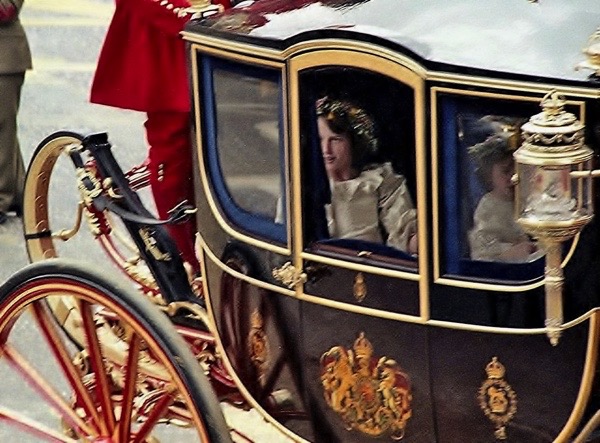
India Hicks, thirteen-year-old bridesmaid
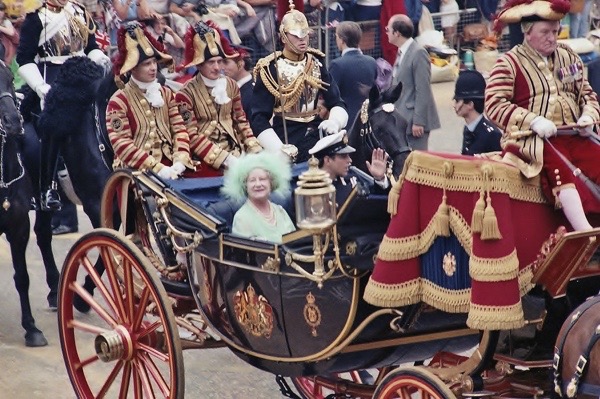
The Queen Mother & Prince Andrew
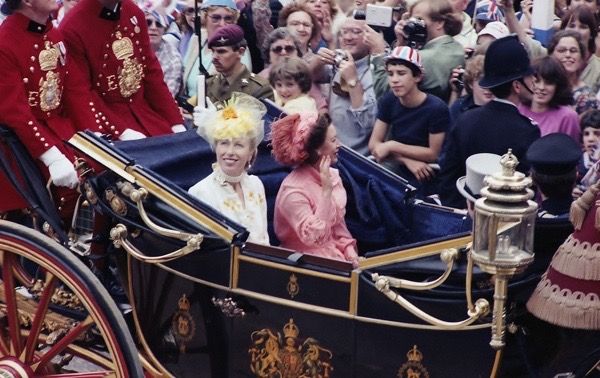
Princess Anne & Princess Margaret
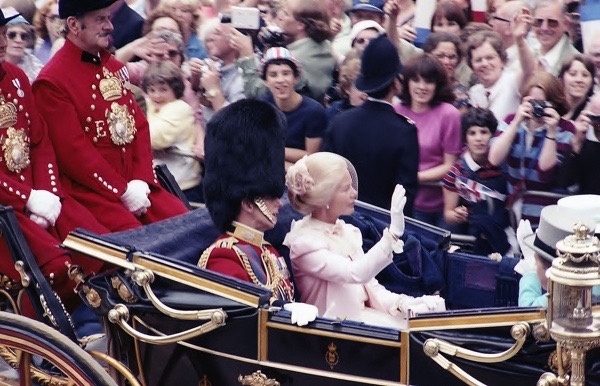
The Duke & Duchess of Kent
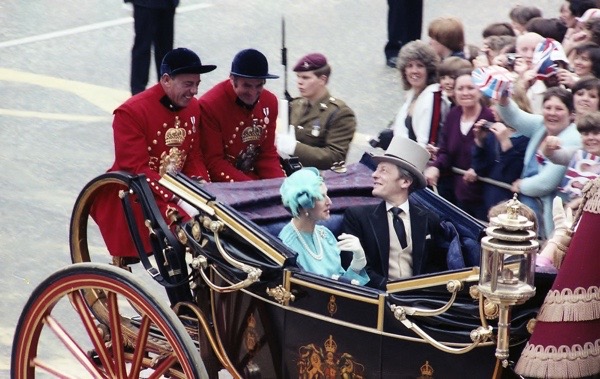
Princess Alexandra & Sir Angus Ogilvy
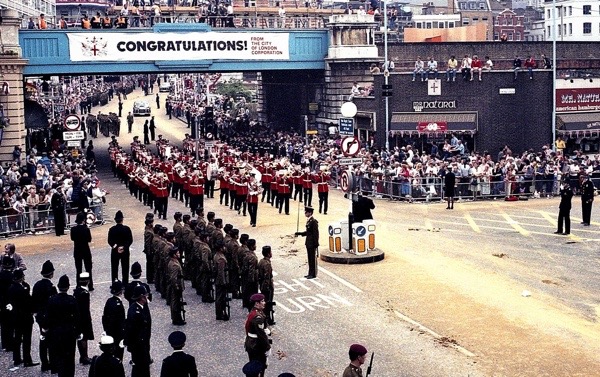
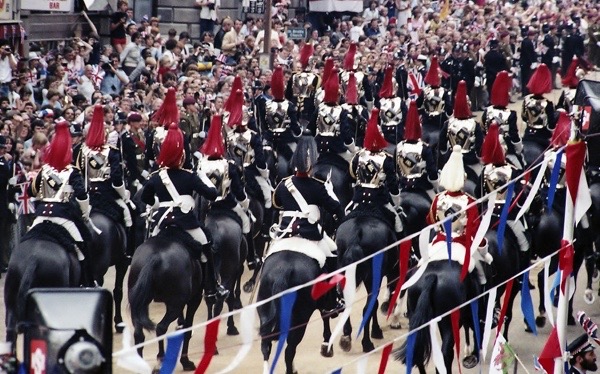
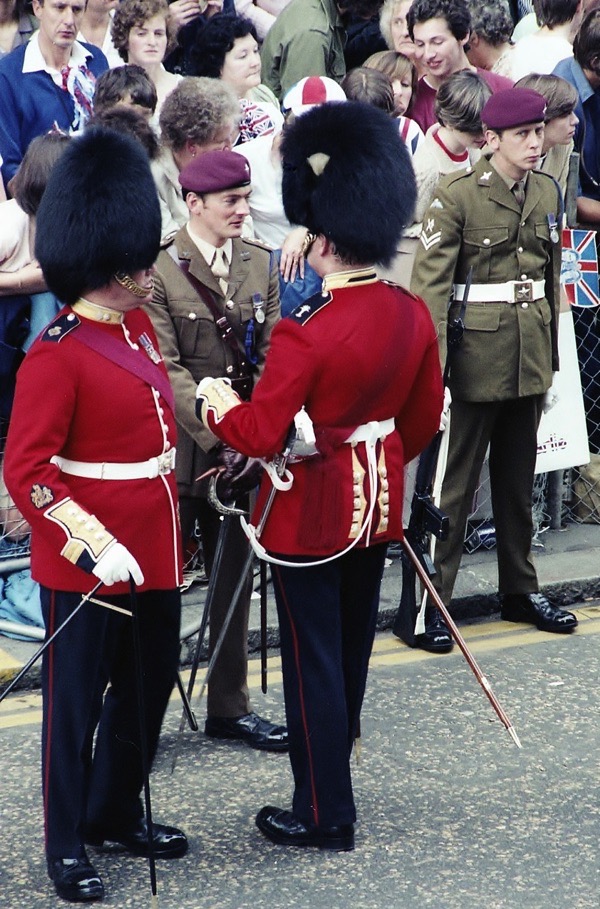

Detective Constable Lew Tassell of the Fraud Squad, 1981
Photographs copyright © Lew Tassell
You may also like to take a look at
On Night Patrol With Lew Tassell