
Yet More Doreen Fletcher Paintings
Today, we publish yet more of Doreen Fletcher’s paintings with her commentaries, revealing the stories behind the pictures.
One day in August, we gathered more than eighty of Doreen Fletcher’s paintings together to photograph them for her book. We photographed those in Doreen’s possession and Doreen’s husband Steve drove round London to borrow those in private collections.
The wonder of seeing all these paintings assembled was to discover the breadth of Doreen’s achievement for the first time and recognise that they added up to a complete vision. All these pictures will be brought back together for Doreen’s retrospective in January and you will be able to see them with your own eyes.
Doreen Fletcher & I will be in conversation, showing slides of her paintings, at the Wanstead Tap on Tuesday 18th December. Click here for tickets
Also, please make an entry in your 2019 diary to join us at the Private View of Doreen Fletcher’s RETROSPECTIVE at Nunnery Gallery, Bow Arts, on 24th January from 6pm. The exhibition runs until March 24th 2019.

Whit Sunday, Commercial Rd, 1989
“This is a painting that I thought I had lost forever. I had only a few blurred images of it and felt a pang of regret from time to time that I had not kept better records. I could not even remember when and where it was sold or what size it was. All I had was a date 1989 and a title ‘Whit Sunday, Commercial Road’.
Then, out of the blue, I was contacted by a man in Bristol who was in possession of a painting dated 1989 but unsigned. He inherited it from his parents who had bought it in the late eighties and he often wondered who painted it. Remarkably, he traced me by examining similar images on the internet.
Francis Walters, the famous East End funeral director with the horse-drawn carriages, has long since departed to Leytonstone where it now forms part of the Co-op. In 1989, East End Videos, was a state of the art enterprise renting out video cassettes of films that had been released a year or two earlier.
In retrospect, this painting appears an optimistic view of what was in reality, a dusty, dirty and polluted road in the days before the underpass linking the Highway to the docklands was built.”

Stepney Snooker Club by Day, 1986

Stepney Snooker Club by Night, 1986
“I was first drawn to the Stepney Snooker Club in 1985, when I noticed a mosaic floor at the entrance with the mysterious name ‘Ben Hur.’ This intrigued me since observed a certain contrast between the old mosaic and the newly plastered facade. Yet I never actually saw anyone go in or out of the snooker club when I passed it eack week on my way to an evening’s life-modelling at Smithy Street Adult Education Institute.
I discovered the snooker club was been the former location of the Palacedium Cinema, which was taken over in 1917 by a man named Ben Hur, a projectionist. This cinema is not to be confused with the Palaseum Cinema nearby. In 1962, the Ben Hur became a bingo hall and in 1985 the ‘Stepney Snooker & Social Club.’
I do not know what draws a painter to react to certain moments, a scene or event. In my mind, I can still recall one chilly night on my way home when I spotted a lone figure on the doorstep of the Club, smoking a cigarette, and I sensed an opportunity. I set my mind on creating two paintings that would contrast the ambience of the place during the day and at night.
The daytime painting is now in the collection of Tower Hamlets Local History Archive. Unfortunately, I do not know where the nighttime painting is but would love to find out. It is unlikely to be dated or signed since I thought it arrogant to sign paintings in those days.”

The Palaseum Cinema, 1985
“The Palaseum Cinema attracted my attention at first because of its façade, which in common with the Moorish appearance of the Star of the East was so much at variance with the others that lined Commercial Rd from Limehouse to Aldgate. In the main, the architecture is solid, Victorian and worthy, lacking in extraneous detail: Limehouse Library and Poplar Town Hall being typical.
The Palaseum and the Star of the East were places of entertainment and pleasure, and when the Palaseum was completed in 1912, it had a more distinctly exotic look. There was once a small dome on either side of the facade, as well as the large central globe you can see in the painting.
It originally opened its doors as Fienman’s Yiddish Theatre, but started screening films almost immediately. The buiding was renamed the Palaseum Cinema in 1913 and reincarnated as a Bollywood Picture House in 1965.
When I knew it, the Palaseum looked drab and forlorn with a shabby appearance during daylight hours. Yet it continued to attract my attention even though I did not see any people at all, entering or leaving. In retrospect, I should have gone inside, observed the decor and watched a film.”

Limehouse Library, 1988
“Limehouse Library was opened in 1901, endowed by John Passmore Edwards, the philanthropist. I painted it in 1988, the year after the completion of a mural of Limehouse Reach at the library and when Harold Wilson unveiled the statue of Clement Attlee outside. Yet despite the interest, the place already had an atmosphere of a bygone age. Today it stands boarded up, awaiting rebirth.”
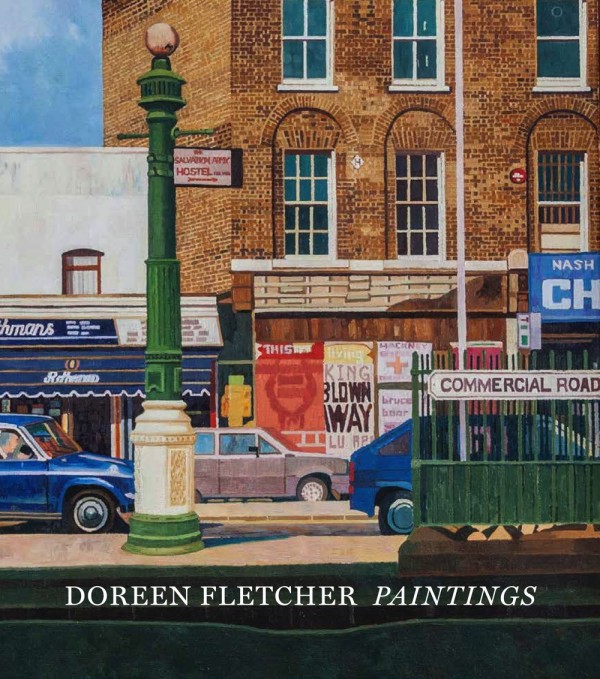
CLICK HERE TO ORDER A SIGNED COPY OF DOREEN FLETCHER’S BOOK FOR £20

More Doreen Fletcher Paintings
Artist Doreen Fletcher tells the stories behind more of her East End paintings today.
Doreen Fletcher & I will be in conversation, showing her paintings, at the Wanstead Tap on Tuesday 18th December. Click here for tickets
Also, please make an entry in your 2019 diary to join us at the Private View of Doreen Fletcher’s RETROSPECTIVE at Nunnery Gallery, Bow Arts, on 24th January from 6pm. The exhibition runs until March 24th 2019.

Mile End Church with Canal, 1986
“The spring of 1985 was very cold in London, but it was even colder in Amsterdam where I was visiting. Fortunately, the museums were warm and welcoming, havens from the outside weather, and the works in the Rijksmuseum entranced me.
Yet the experience that remains most vivid in my memory is my trip to the Mauritshuis Museum in The Hague, a short journey from Amsterdam. There, I was transfixed by works from the Dutch Golden Age of Painting, particularly the View of Delft by Vermeer. Dating from around 1600, it is one of the first known cityscapes. I find it difficult to imagine how Vermeer managed to paint such intense focussed works, given that his wife gave birth to fifteen children of which ten survived. He painted very slowly and meticulously and, although respected in his hometown, he was quickly forgotten after his death.
Once back in London I started a new series of works focussing on similar subject material in my vicinity and Mile End Park with Canal forms one of this series. The painting was sold in an exhibition the following year and I did not set eyes on it again for thirty-three years until it was photographed for my book this year.”
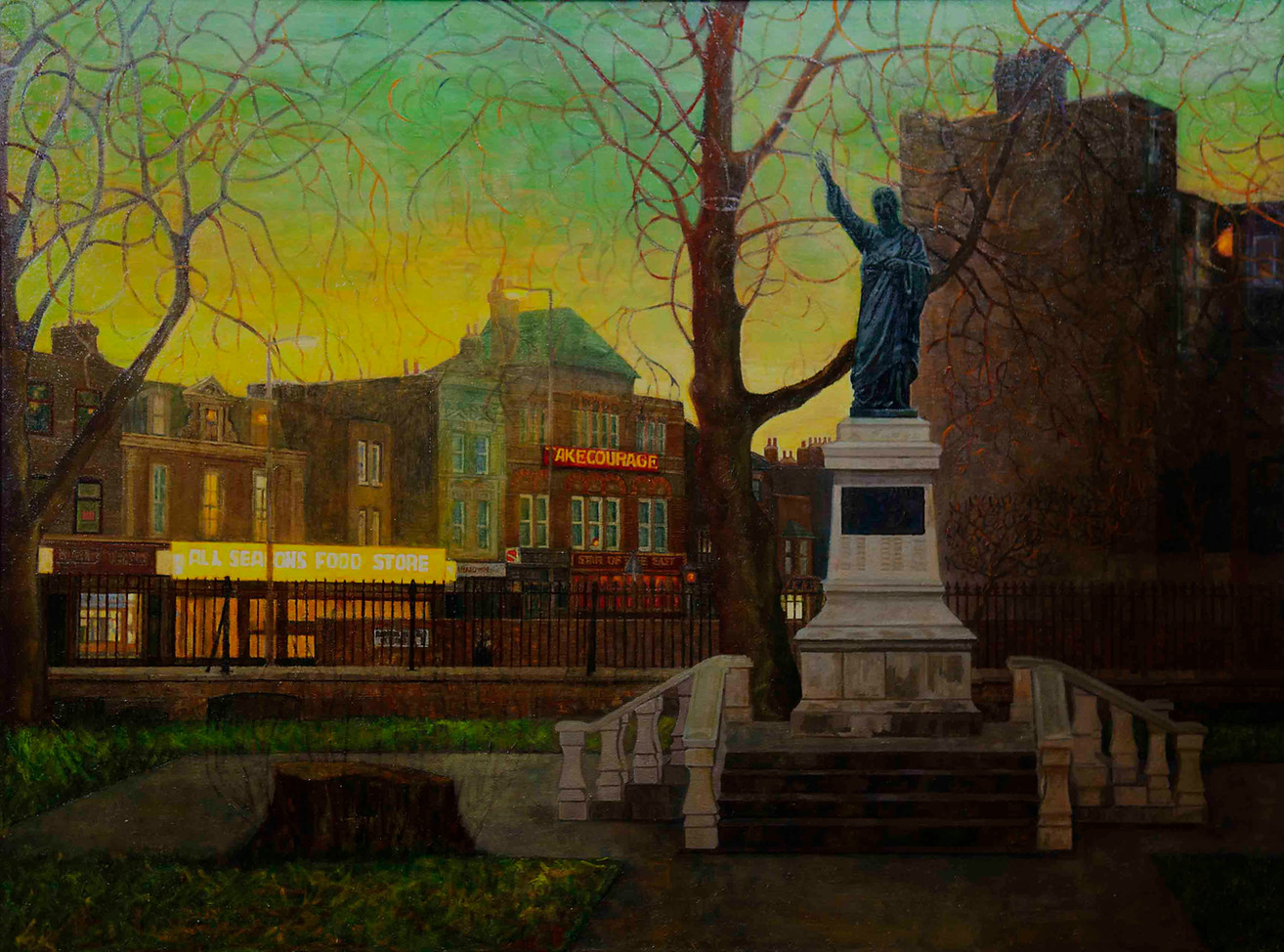
Twilight in St Anne’s Churchyard, Limehouse, 1998
“St Anne’s churchyard featured in my life throughout the eighties and nineties. I often took the path that led from the bus stop in the Commercial Road through the main gates and across the yard to the Five Bells. It was here that I met with other artists and friends, following a day’s painting or modelling for life-classes at art colleges.
The Five Bells was run by a colourful Scottish family headed by the patriarchal Jim and among the artists who drank there where Jock McFadyen and Peri Parkes, who were both regulars. The biker fraternity, all rather formidable in their black leathers, were also frequent visitors. This all made for a lively mix along with assorted local residents.
We engaged in lively debate after ‘lock out’ when Jim would only serve whisky and I must confess that on more than a few occasions I had to be dragged away from heated discussions with other artists, as we voiced the concerns we had been wrapped up in during the day’s painting. In those days I could become very passionate as my working practice progressed.
It was usually dark when I negotiated my way back home and I might be somewhat inebriated. So I recall very well the uneven path past the statue of Jesus on the First World War memorial. I would cross Commercial Rd and take a short cut home through the backs of the flats parallel to Salmon Lane.”

Grand Union Canal in Wintertime, Stepney, 1986

Grand Union Canal in Summertime, Stepney, 1986
“When I lived in Bow, I loved wandering up and down the tow path past the red chimney, watching the fishermen and observing the change of the trees through the seasons.
The light of the East End offers a clarity and definition of colour that is very evident along the canal, where the water reflects back the light from the sky. So I was constantly drawn to this subject.
In these two paintings I wanted to explore the contrast between the heady atmosphere of summer and the stark clarity of the same stretch of water in winter.”

The Condemned House, Poplar, 1985
“In 1983, I lived just around the corner from this house. At the time, the whole area was scheduled for demolition to make way for parkland, encouraged by the County of London Plan adopted by the Greater London Council. The ambition was to ‘refresh’ London’s housing stock of poorly-maintained terraces and improve sanitary conditions. This is now questionable, given that so much of the character of the place had to be destroyed. The house where I lived survived but The Condemned House became one of the last victims of the bulldozers in 1988. For five years, the street lamp outside was lit continuously day and night but, since the residents had been evicted, no-one complained to the council.”

After the Hurricane, Shadwell, 1987
“Like many others, I watched the weather man on October 15th 1987, reassuring us that reports of an impending hurricane were a false alarm. After a few glasses of wine with friends, I slept soundly until awakened by a phone call cancelling that morning’s art school modelling session. When I asked why, I was advised to take a look out of the window.
Fifty million trees were destroyed that night in England and France. A week or so later, I wandering down the canal, through the park, along Narrow St and onto the Highway. By now it was growing dark and a pinkish glow spread across the sky as the sun dropped below the horizon. As I walked through King Edward Seventh Park, this fallen tree came into view.
When I returned during the day to make studies, half the tree had already gone and the rest was neatly sawn into huge logs waiting to be taken away. So I had to rely on my initial quick sketches scribbled in the dark.”
CLICK HERE TO ORDER A SIGNED COPY OF DOREEN FLETCHER’S BOOK FOR £20
Last Orders At The Old Gun
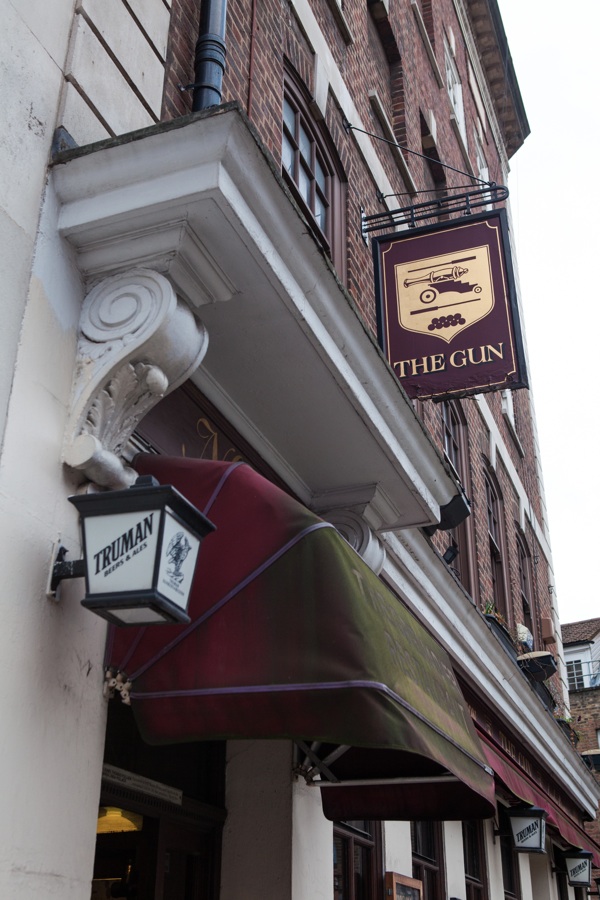
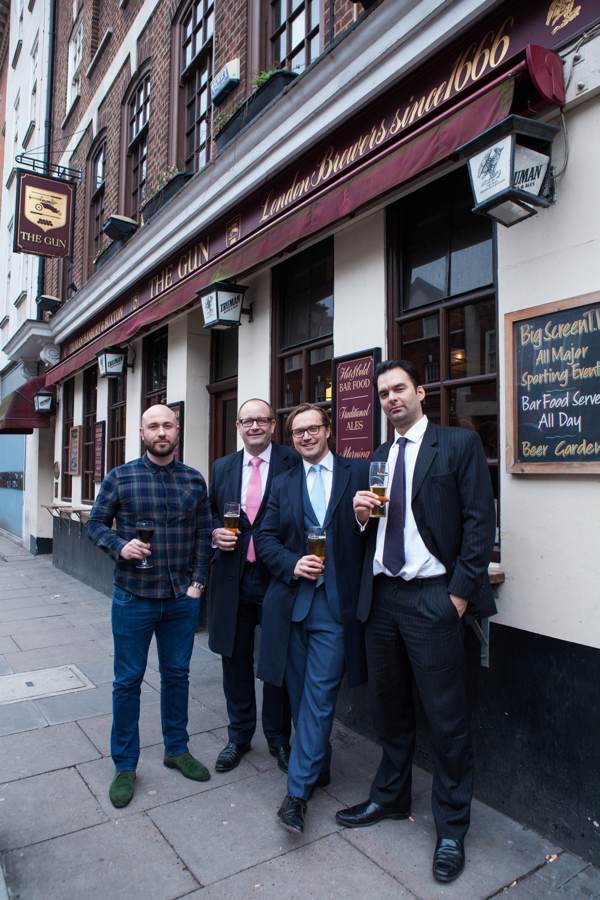
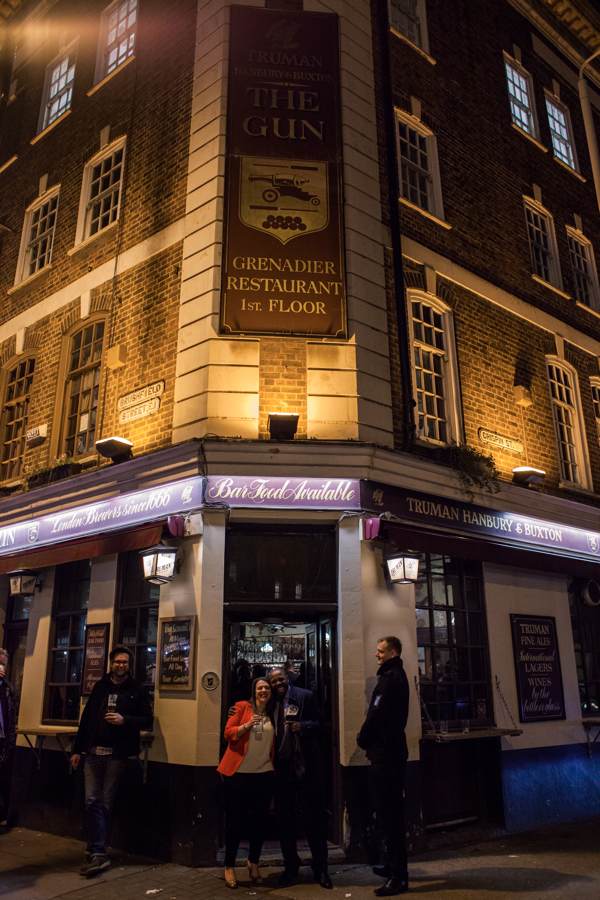
As a new pub named The Gun prepares to open next week in the Spitalfields Fruit & Wool Exchange development, I look back to the last night of the former establishment.
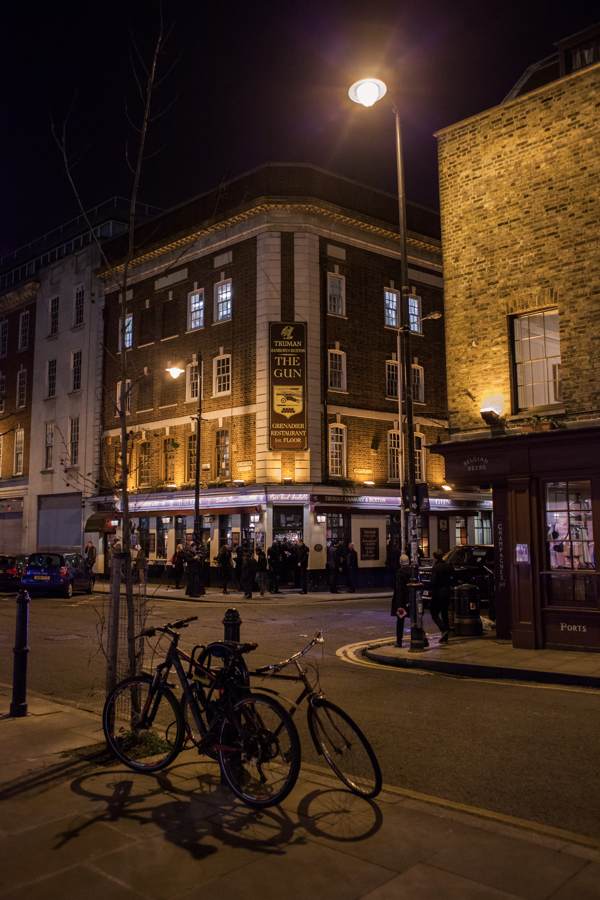
In 1946, a demobbed soldier walked into The Gun in Brushfield St and ordered a pint. Admitting that he had no money, he asked if he could leave his medals as security and come back the next day to pay for his beer. But he never returned, even though his medals were kept safely at The Gun, mounted in a frame on the wall, awaiting the day when he might walk through the door again.
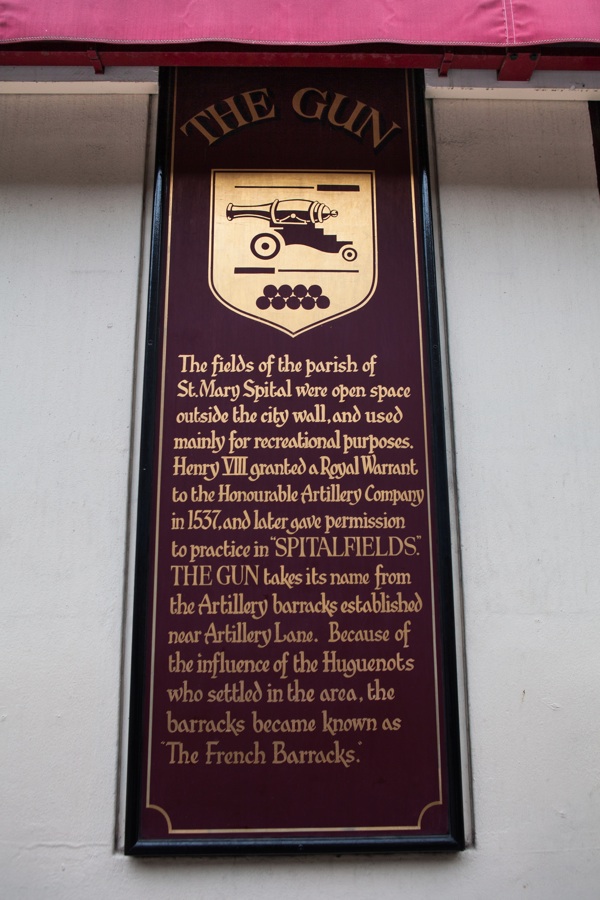
Now it is too late for the soldier to return because The Gun was demolished three years ago as part of the redevelopment of the London Fruit & Wool Exchange. Yet the military theme of this anecdote is especially pertinent, since it appears likely that The Gun originated as a tavern serving the soldiers of the Artillery Ground in the sixteenth century.
My friend, the much-missed photographer Colin O’Brien, & I joined the regulars for a lively yet poignant celebration on the last night, drinking the bar dry in commemorating the passing of a beloved Spitalfields institution. No-one could deny The Gun went off with a bang.
“We are the last Jewish publicans in the East End,” Karen Pollack, who ran The Gun with her son Marc, informed me proudly, “yet I had never been in a pub until I married David, Marc’s father, in 1978.” Karen explained that David Pollack’s grandparents took over The Bell in 1938, when it was one of eight pubs on Petticoat Lane, and in 1978, David’s father George Pollack also acquired the lease of The Gun, which was run by David & Karen from 1981 onwards.
“David grew up above The Bell and he always wanted to keep his own pub,” Karen recalled fondly, “It was fantastic, everyone knew everyone. We opened at six in the morning and got all the porters from the market in here, and the directors of the Truman Brewery used to dine upstairs in the Bombardier Restaurant – there was no other place to eat in Spitalfields at that time.”
“People still come back and ask me for brandy and milk sometimes,” she confided, “that’s what people from the market drank.”
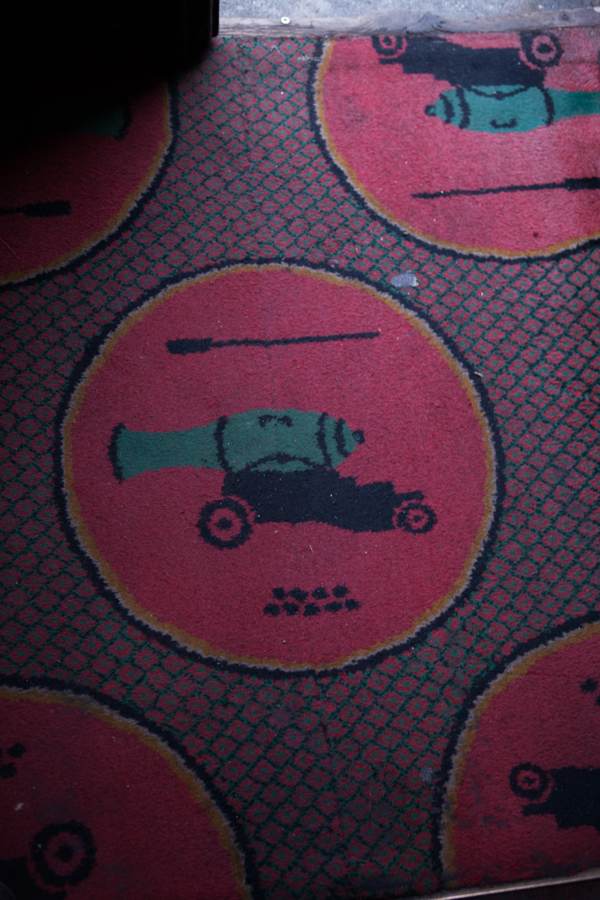
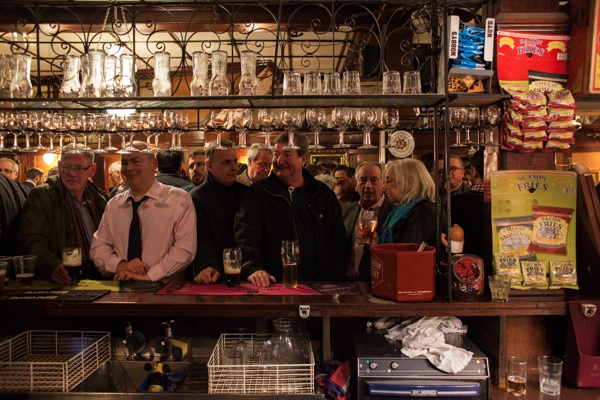
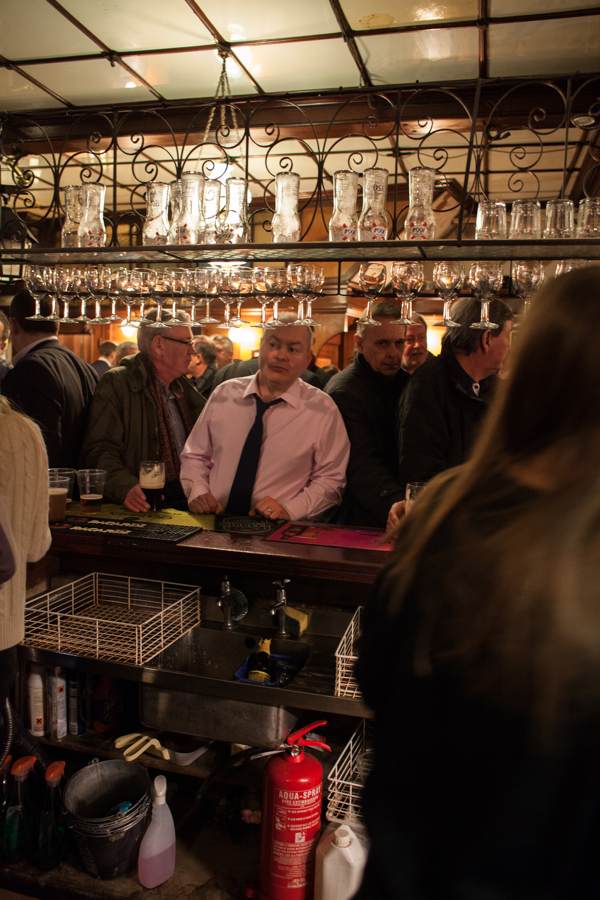
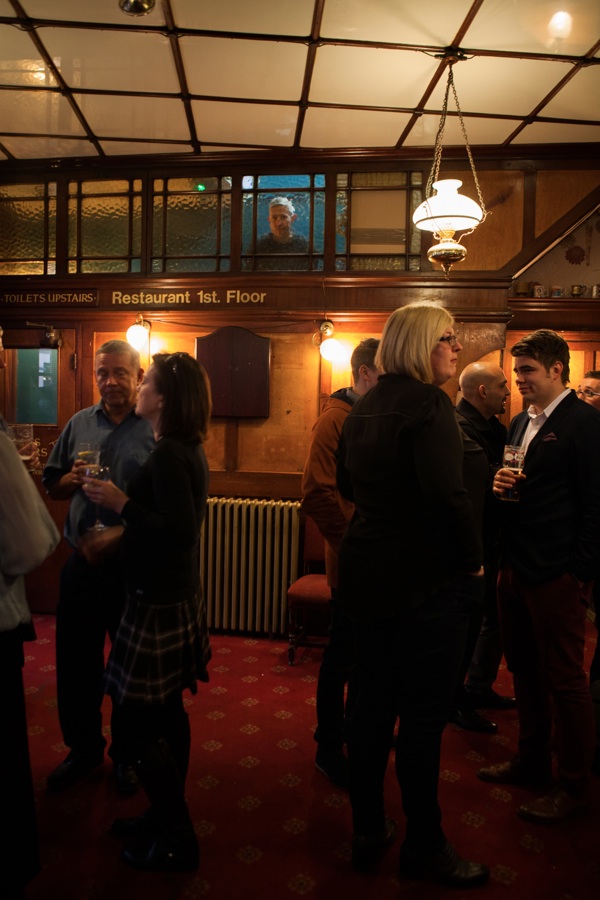
On that night, the beautiful 1928 interior of The Gun with its original glass ceiling, oak panelling, Delft tiles, prints of the Cries of London and views of Spitalfields by Geoffrey Fletcher, was crowded with old friends enjoying the intimate community atmosphere for one last time, many sharing affectionate memories of publican, David Pollack, who died just a few years ago. “We’ve had some good times here,” Karen confessed to me in quiet understatement, casting her eyes around at the happy crowd.
“I was always known as David Pollack’s son, I came into the pub in 2008 and it was second nature to me, “Marc revealed later, which led me me to ask him what this fourth generation East End publican planned to do with the rest of his life. “I’m going to open another pub and call it The Gun,” he assured me without hesitation. And I have no doubt Marc took the medals with him to keep them safe just in case that errant soldier comes back for them one day.
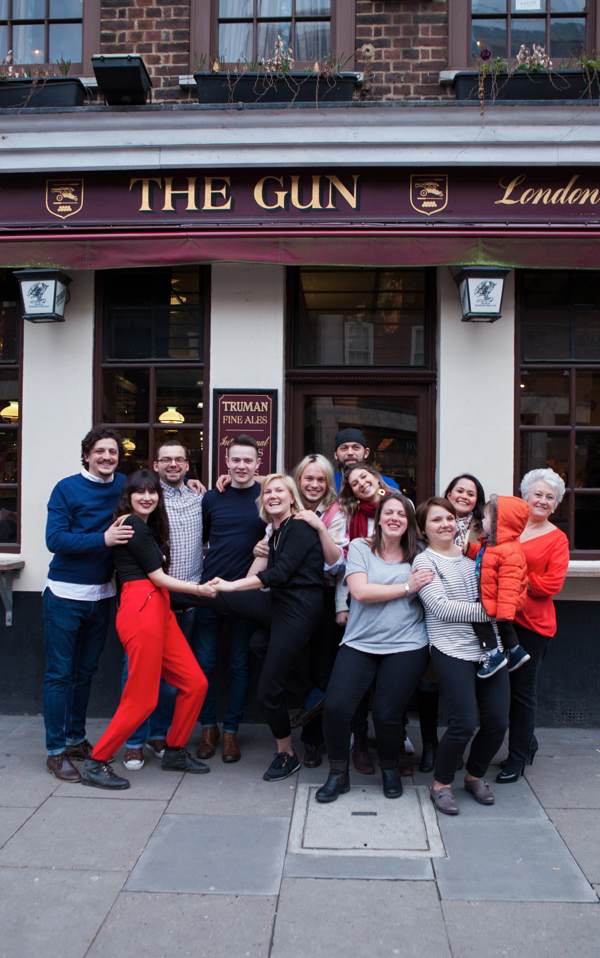
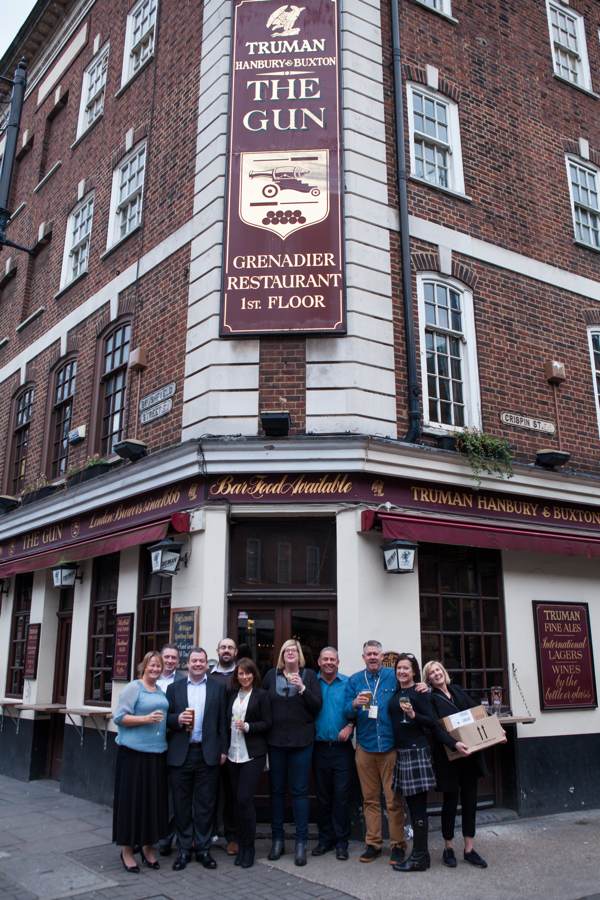
Fourth generation East End publican Marc Pollack, pictured here with his staff, stands on the left


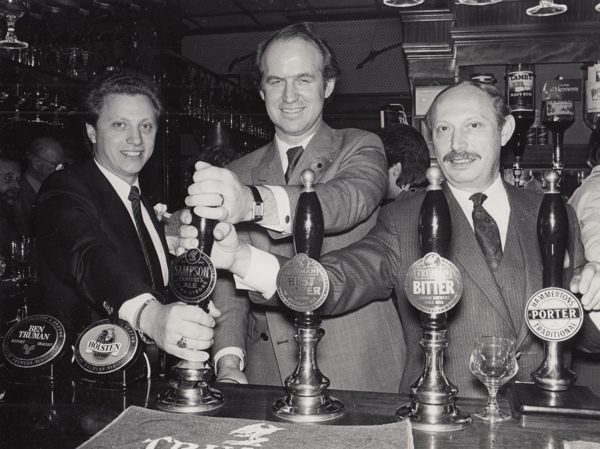
David Pollack, publican, Michael Aitken of Truman’s Brewery & George Pollack, publican in 1984
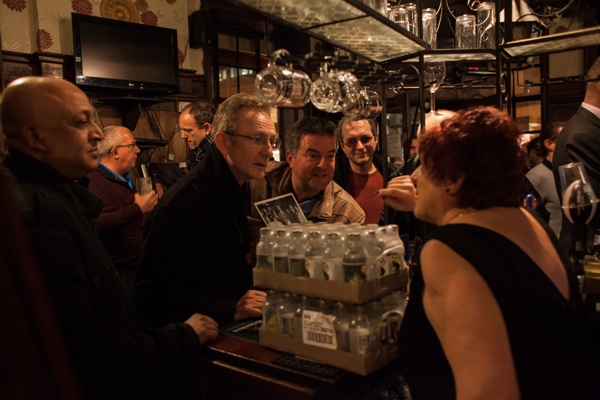
Karen Pollack shows customers the old photographs
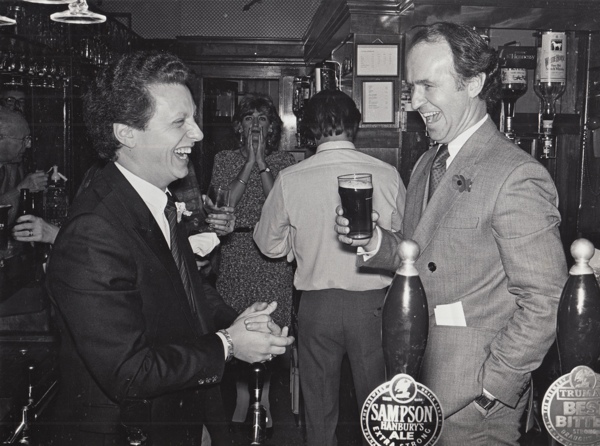

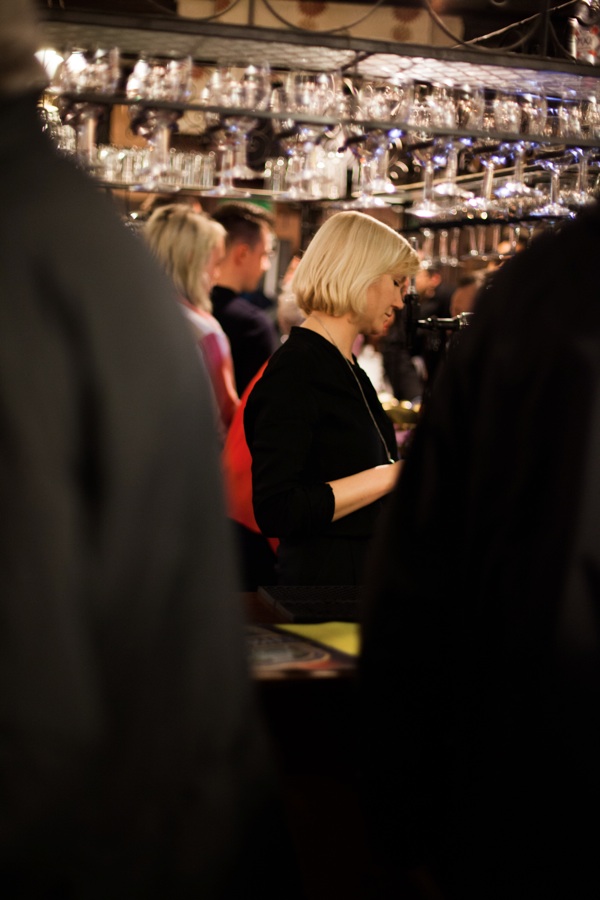
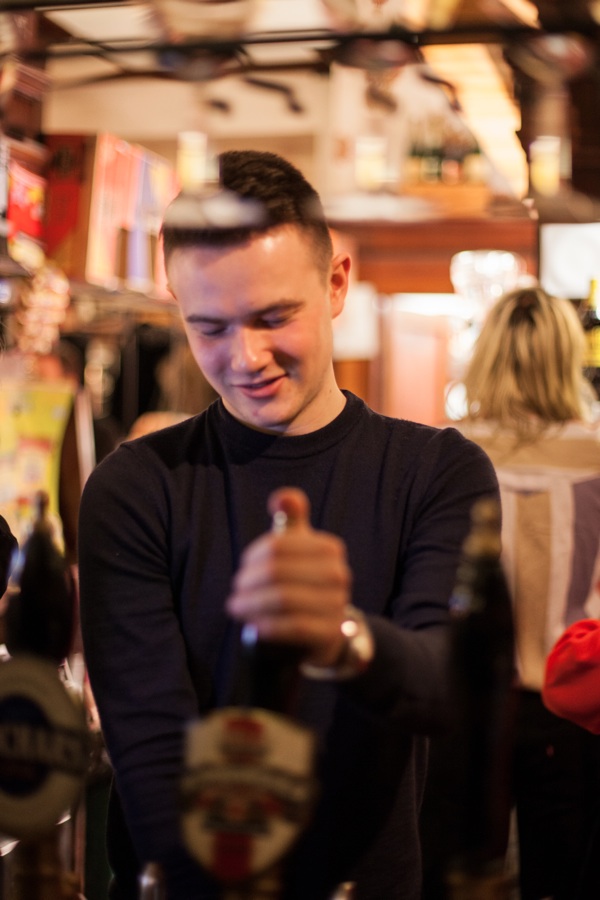
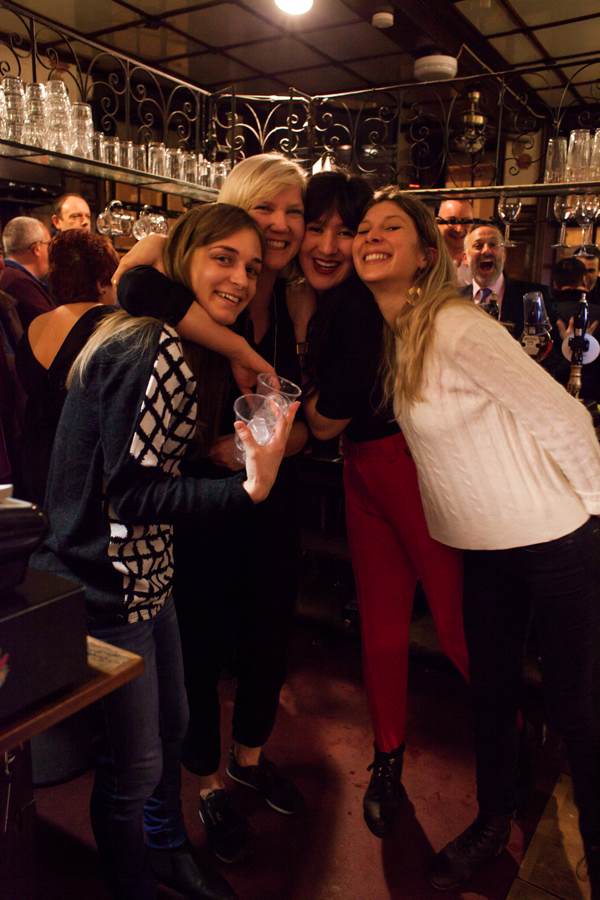
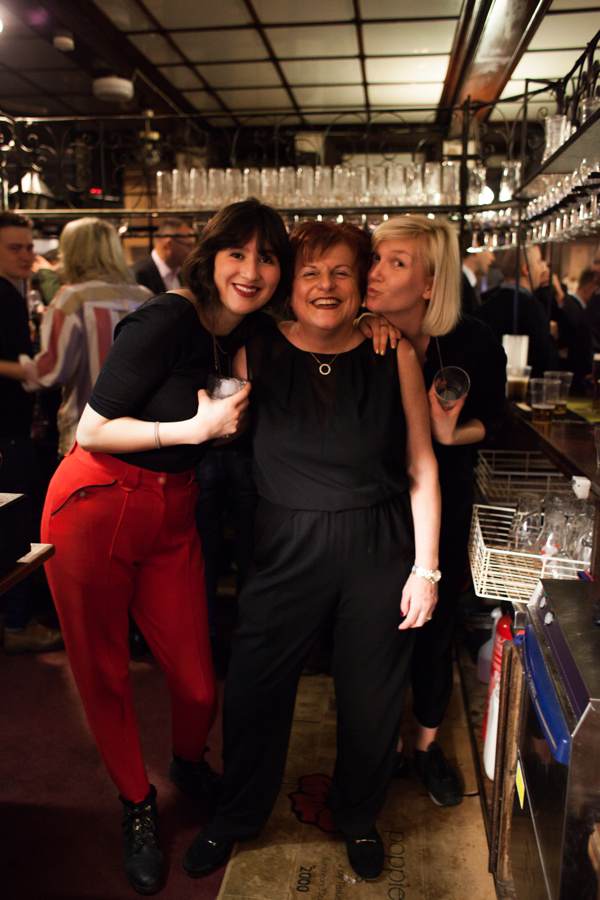
Karen Pollack and bar staff
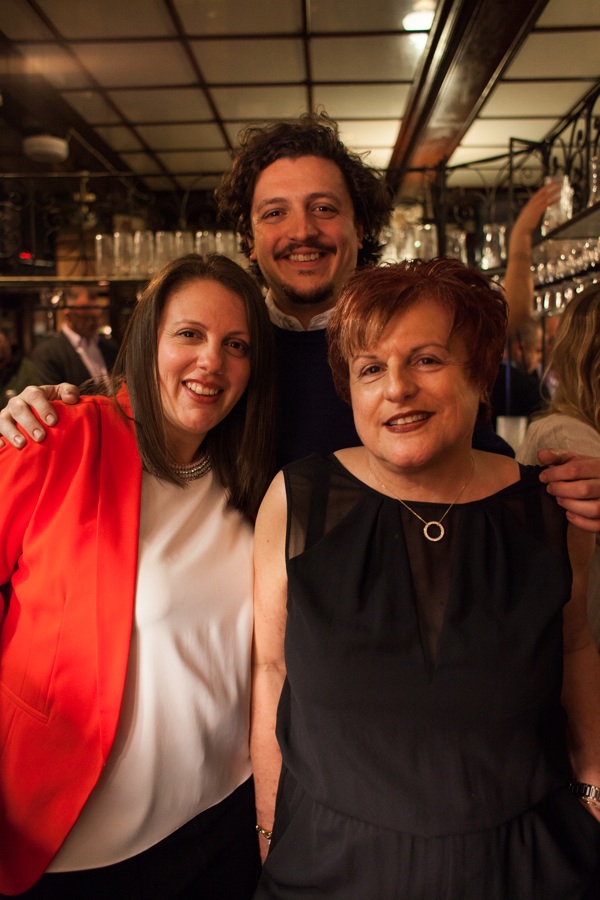
Emma, Marc and Karen Pollack
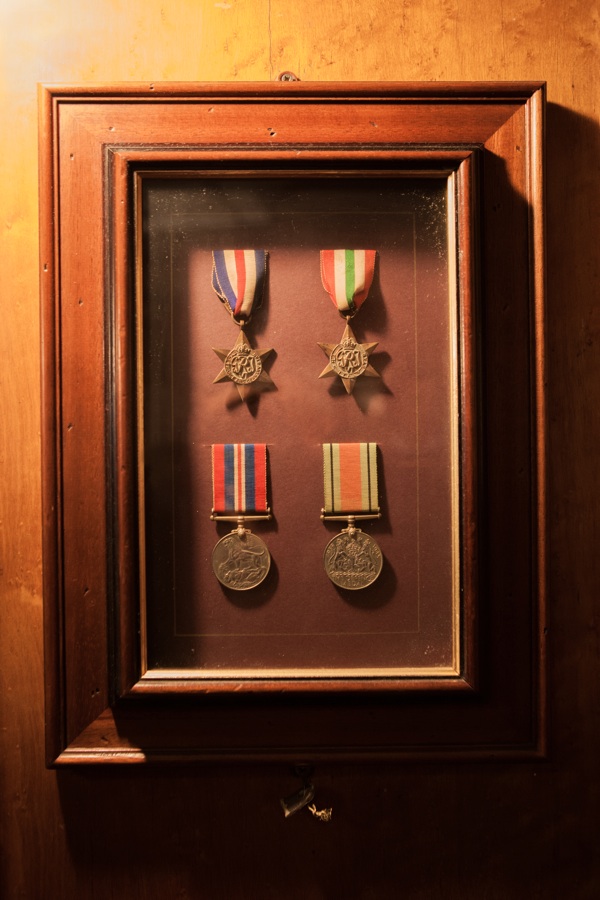
Medals awaiting the return of their owner
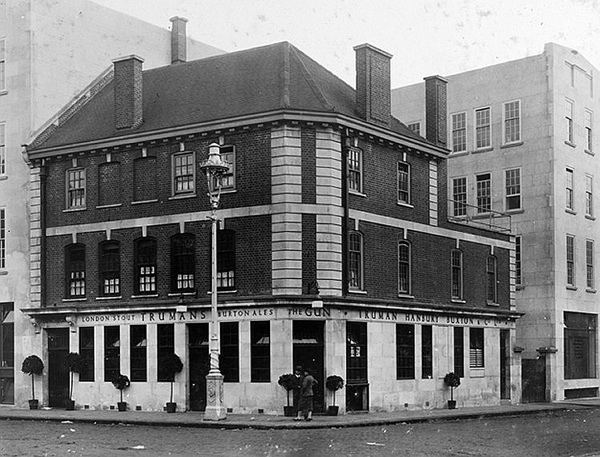
The Gun in 1950
Photographs copyright © Estate of Colin O’Brien
You may also like to take a look at
Along Old Street
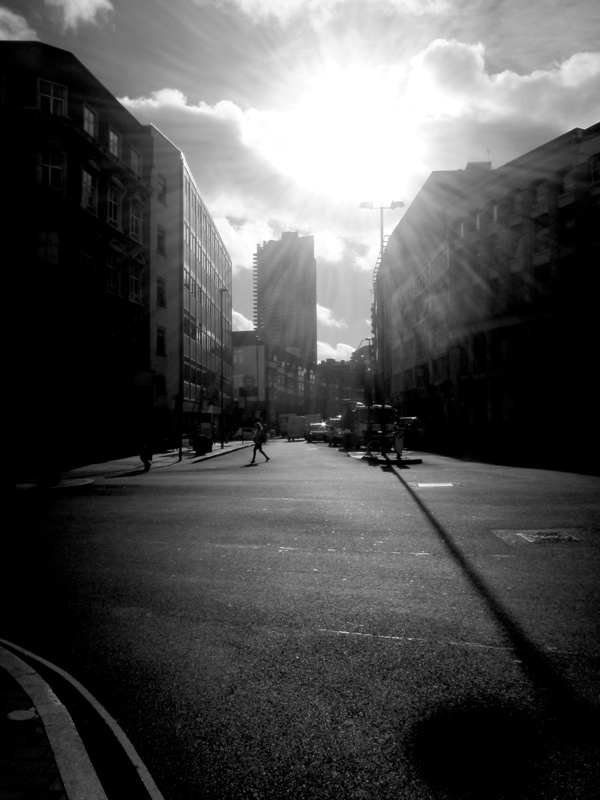
Old St
In my mind, Old St is interminably long – a thoroughfare that requires me to put my head down and walk doggedly until I reach the other end. Sometimes, the thought of walking the whole length of Old St can motivate me to take the bus and, at other times, I have been inspired to pursue routes through the side streets which run parallel, in order to avoid walking along Old St.
Yet I realised recently that Old St is short. It only extends from Goswell Rd, on the boundary of Clerkenwell, to the foot of the Kingsland Rd in Shoreditch – just a hop, skip and a jump – which leaves me wondering why it seems such a challenge when I set out to walk along it. Let me confess, I have no love for Old St – that is why I seek alternative routes, because even the thought of walking along Old St wears me down.
So I decided to take a new look at Old St, in the hope that I might overcome my aversion. Over the last week, I have walked up and down Old St half a dozen times and, to my surprise, it only takes ten minutes to get from Goswell Rd to Shoreditch Church.
Old St was first recorded as Ealdestrate around 1200 and as Le Oldestrete in 1373, confirming it as an ancient thoroughfare that is as old as history. It was a primeval cattle track, first laid it out as a road by the Romans for whom it became a major route extending to Bath in the west and Colchester in the east. No wonder Old St feels long, it is a fragment of a road that bisects the country.
Setting out from Goswell Rd along Old St on foot, you realise that the east-west orientation places the southerly side of the street in permanent shadow, only illuminated by narrow shafts of sunlight extending across the road from side-streets on the southern side. This combination of deep shadow and the ferocious east wind, channelled by the remains of the eighteenth and nineteenth century terraces that once lined Old St which are mostly displaced now by taller developments, can be discouraging.
Of course, you can take a detour along Baltic St, but before you know it you are at St Luke’s where William Caslon, who set up the first British Type Foundry here in Helmet Row, is buried. Nicholas Hawksmoor’s obelisk on the top of St Luke’s glows in the morning sunlight shining up Whitecross St Market, which has enjoyed a revival in recent years as a lunchtime destination, offering a wide variety of food to City workers.
Between here and the Old St roundabout, now the focus of new industries and dwarfed by monster towers rising to the north up City Rd, you can pay your respects to my favourite seventeenth century mystic poet Christopher Smart who was committed in his madness to St Luke’s Asylum and wrote his greatest poetry where Argos stands today. Alternatively, you can stroll through Bunhill Fields, the non-conformist cemetery, where Blake, Bunyan and Defoe are buried. Seeing the figure of John Bunyan’s Christian, the Pilgrim of Pilgrim’s Progress, upon the side of his tomb always reminds me of the figure of Bunyan at Holborn, and I imagine that he walked here from there and Old St was that narrow straight path which Christian was so passionate to follow.
Crossing the so-called Silicon Roundabout, I am always amused by the incongruity of the Bezier Building that for all its sophisticated computer-generated geometry resembles nothing else than a pair of buttocks. Taking a path north of Old St, takes you through Charles Sq with its rare eighteenth century survival, returning you to the narrowest part of our chosen thoroughfare between Pitfield St and Curtain Rd, giving an indication of the width of the whole street before it was widened to the west of here in the nineteenth century.
The figure on the top of Shoreditch Town Hall labelled ‘Progress’ makes a highly satisfactory conclusion to our journey, simultaneously embodying the contemporary notion of technological progress and the ancient concept of a spiritual progress – both of which you may encounter upon Old St.
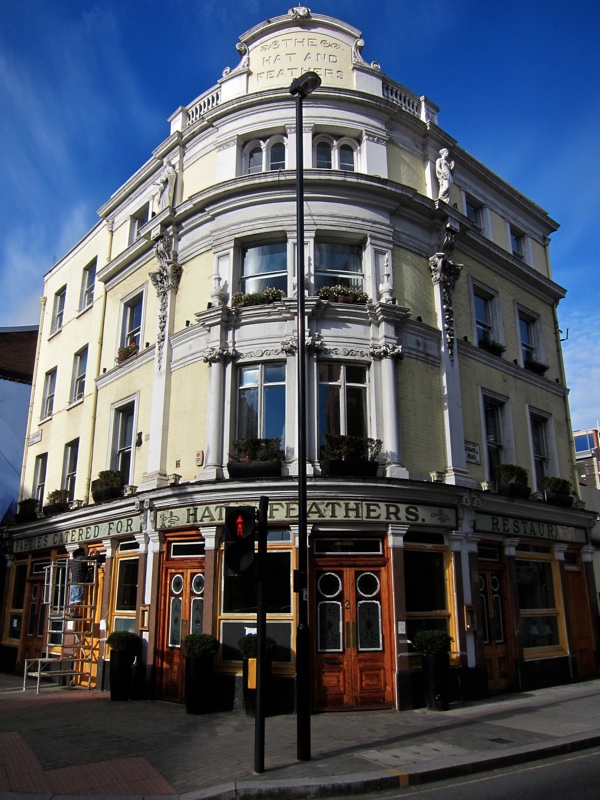
Hand & Feathers, Goswell Rd
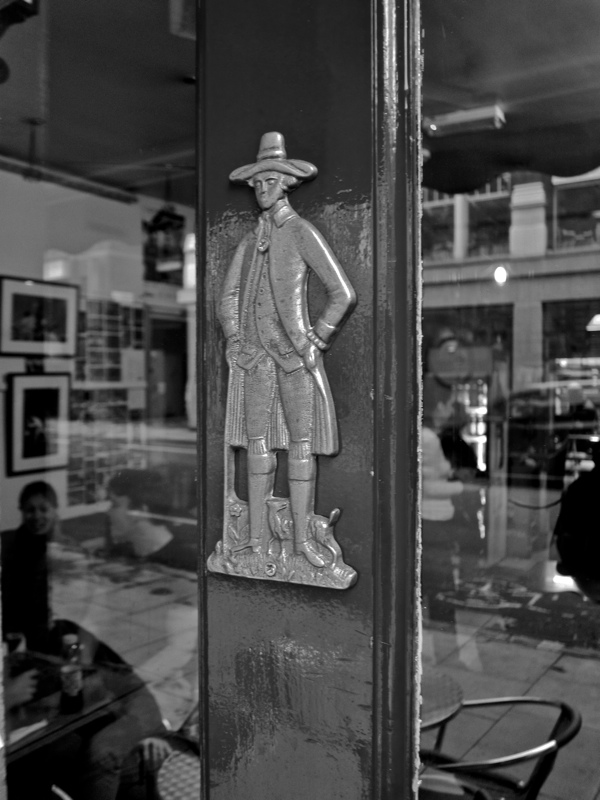
Central Cafe
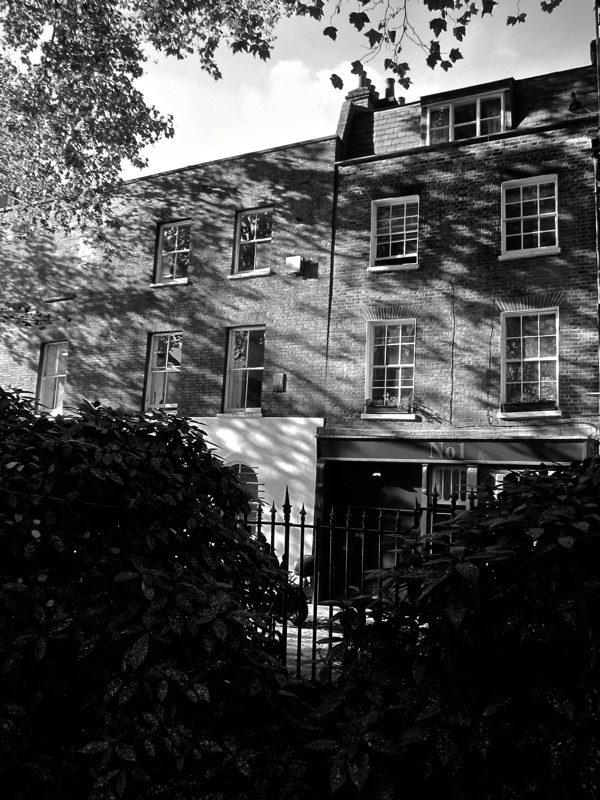
Helmet Row, where William Caslon established his first type foundry
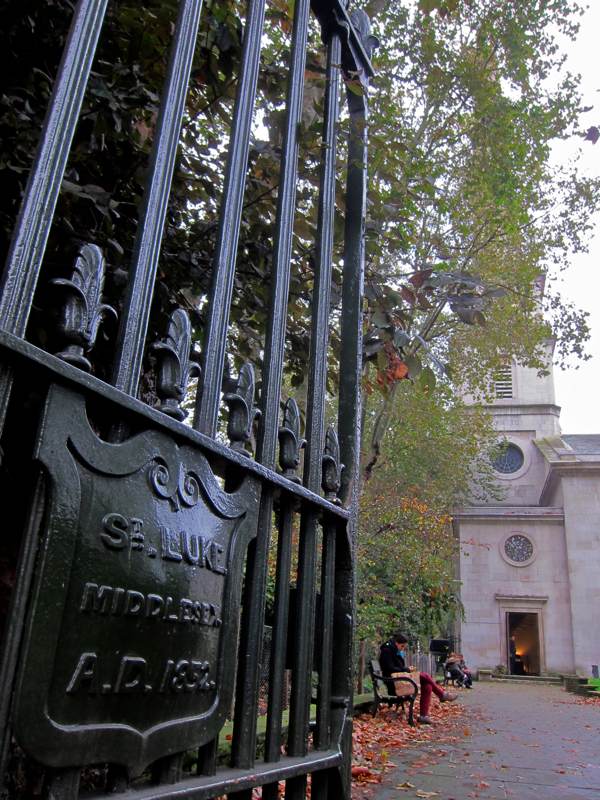
St Lukes Churchyard
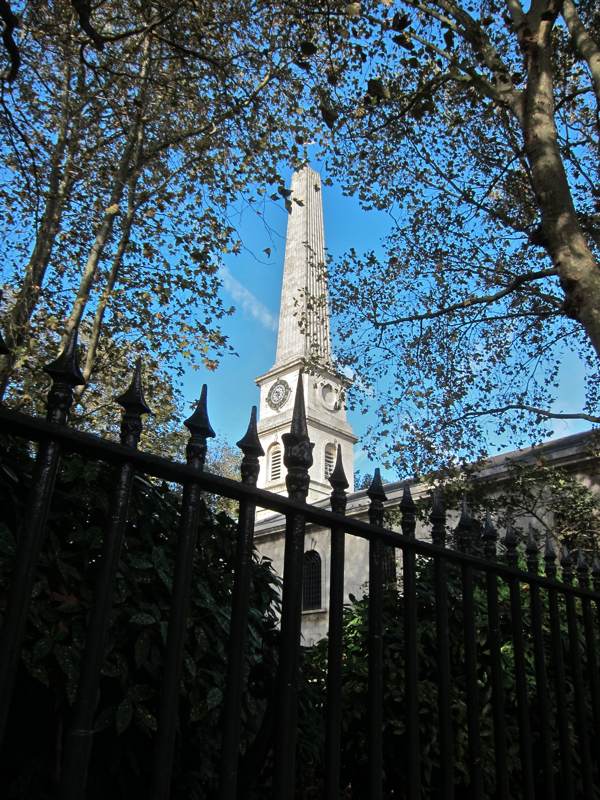
St Luke by Nicholas Hawksmoor
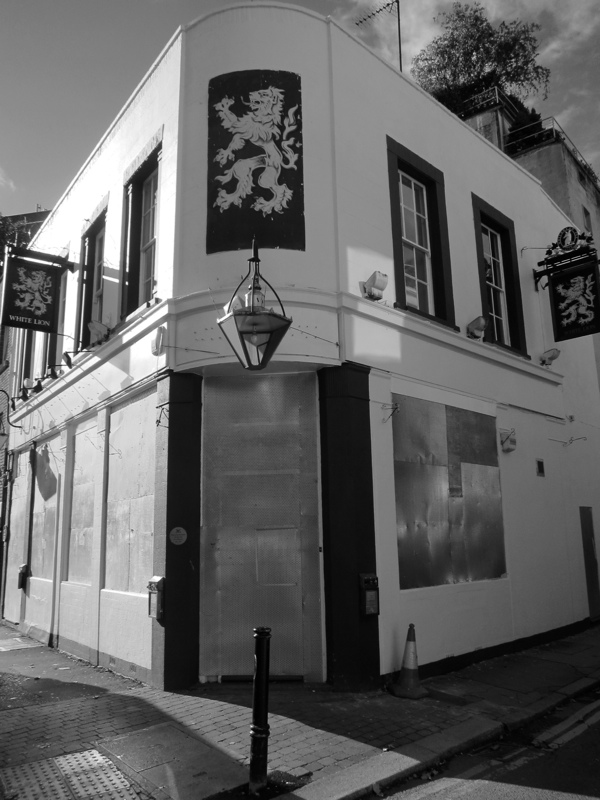
The White Lion, Central St
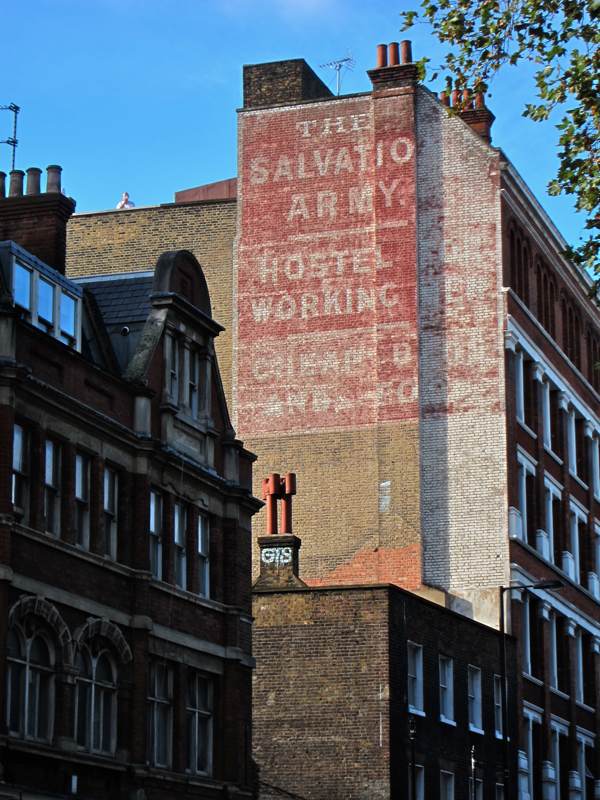
At Whitecross St
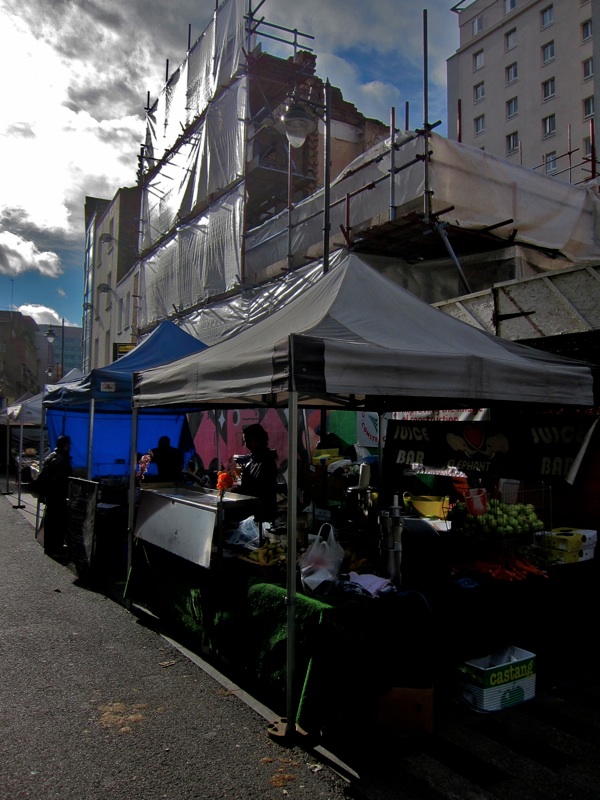
In Whitecross Market
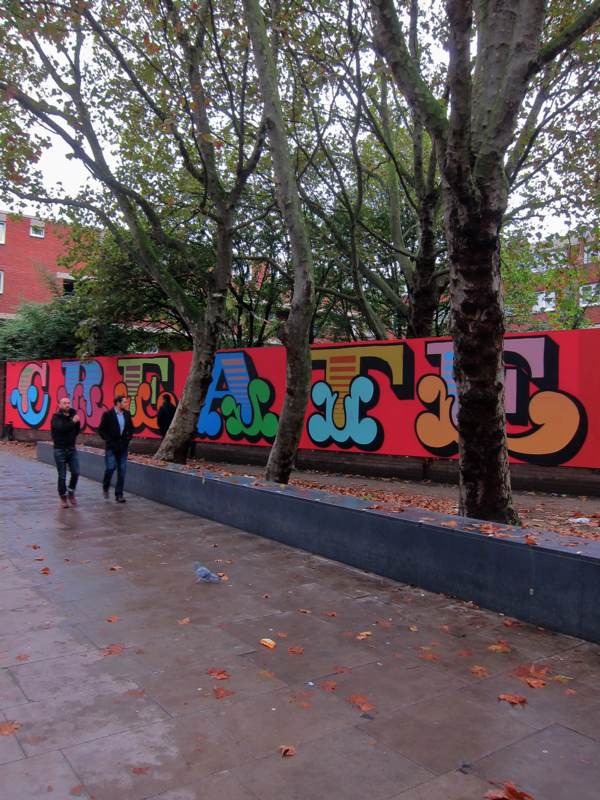
Mural by Ben Eine
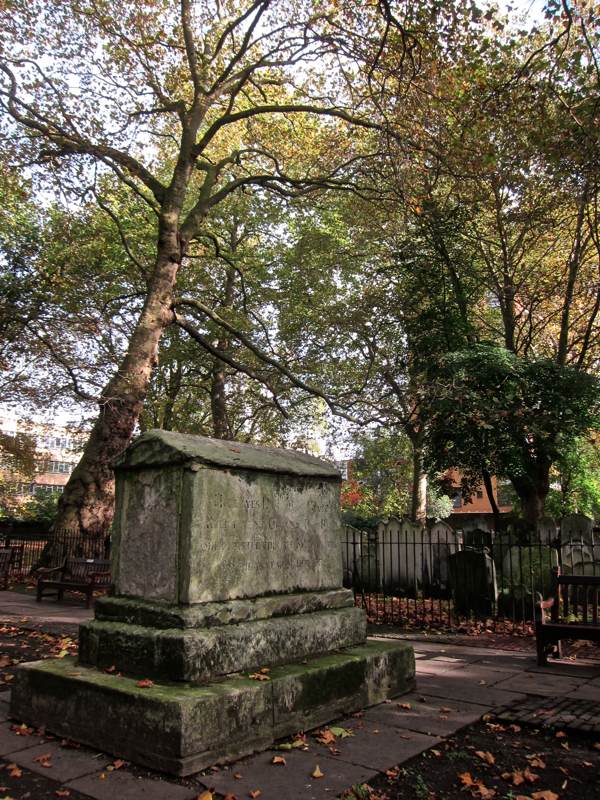
In Bunhill Cemetery
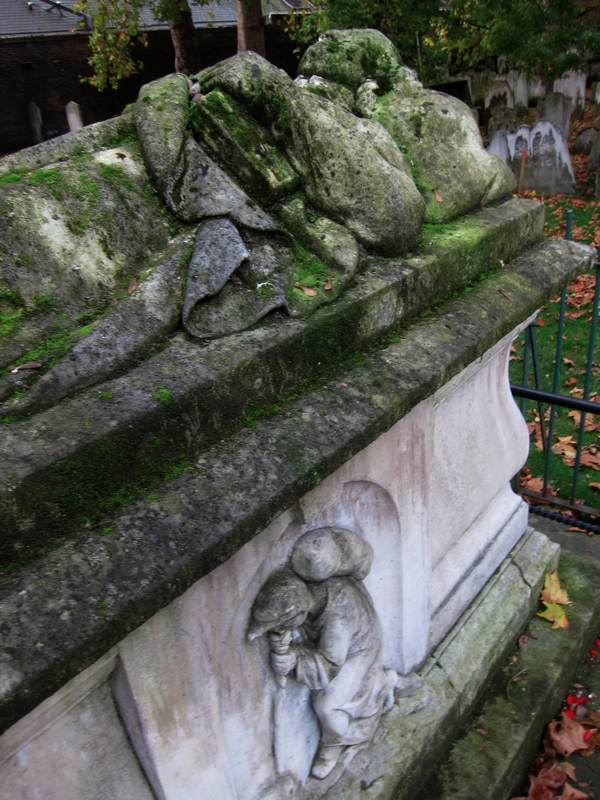
John Bunyan’s tomb in Bunhill Fields with the figure of the pilgrim
John Wesley’s House in City Rd
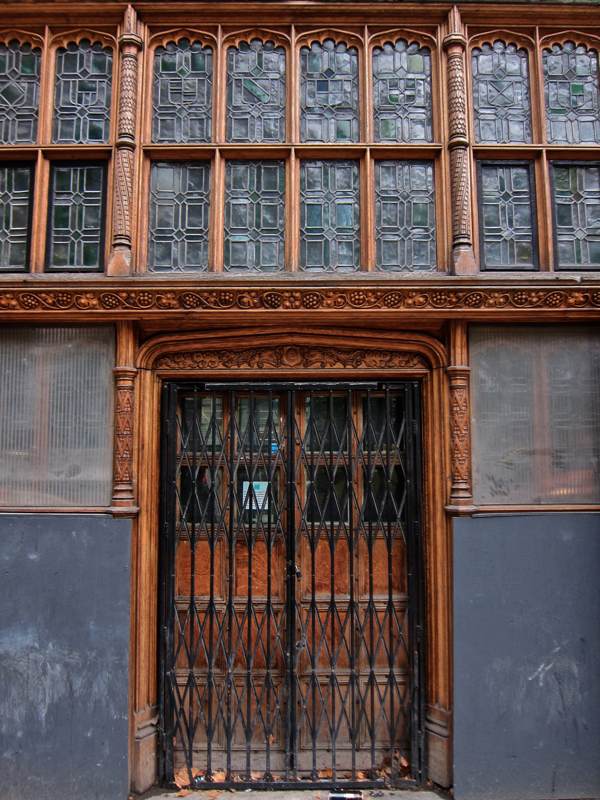
Old St Gothic on the former St Luke Parochial School
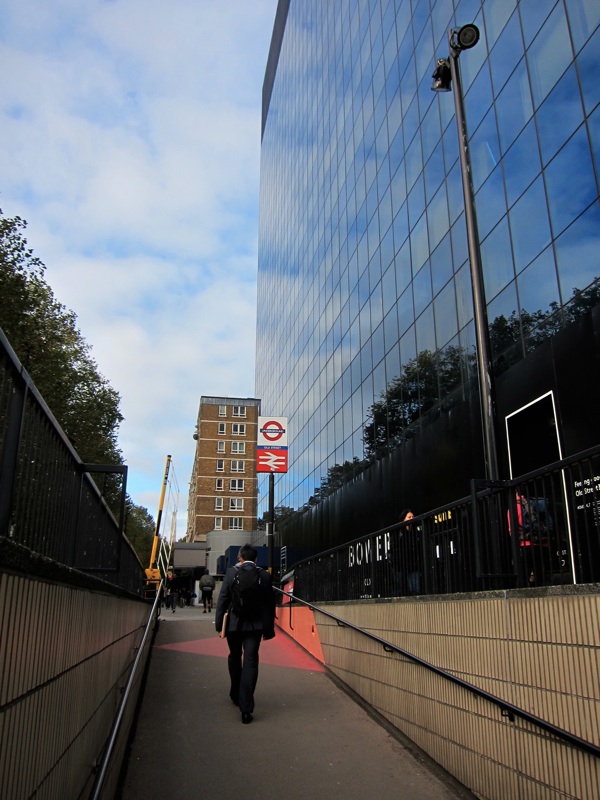
Emerging from Old St tube
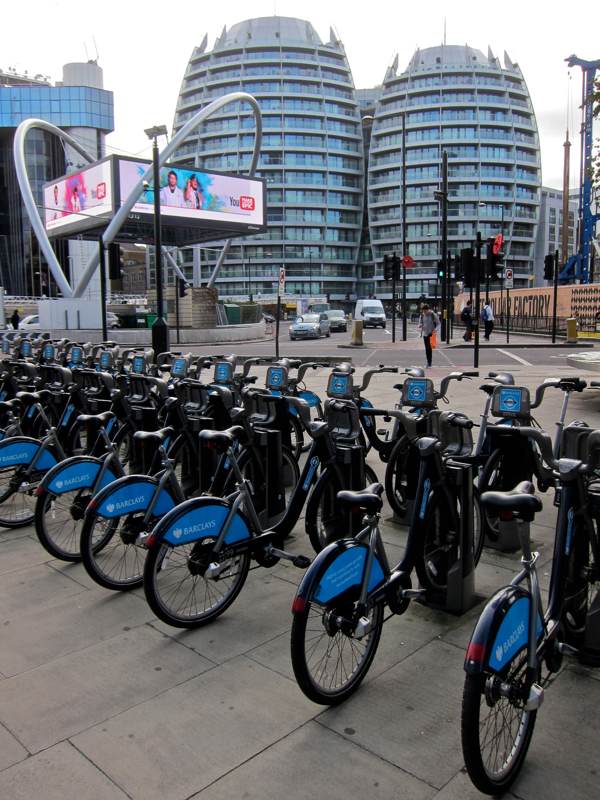
The Bezier Building has a curious resemblance to a pair of buttocks
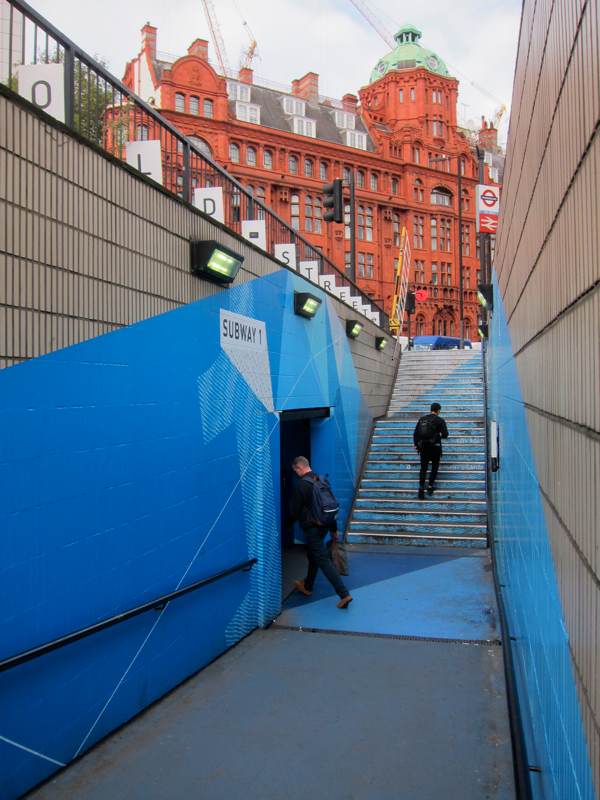
Entrance to Old St Tube
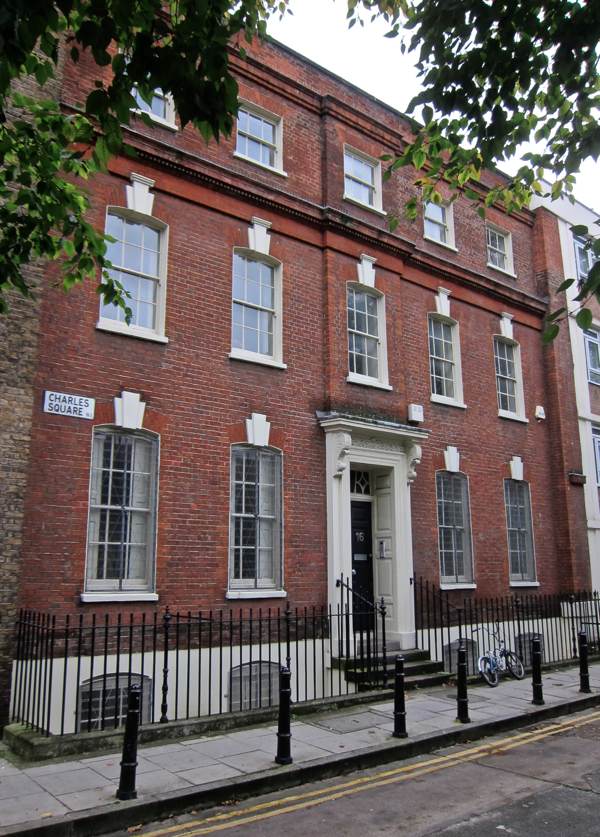
Eighteenth century house in Charles Sq
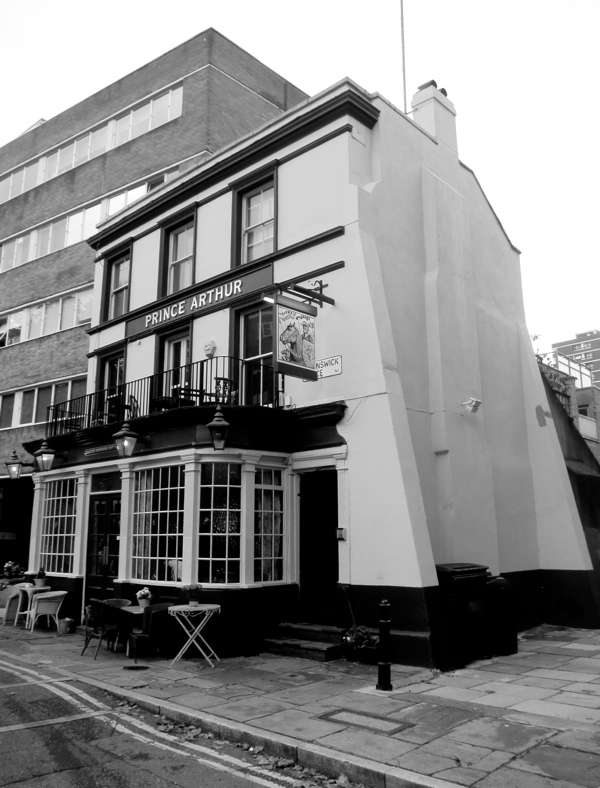
Prince Arthur in Brunswick Lane
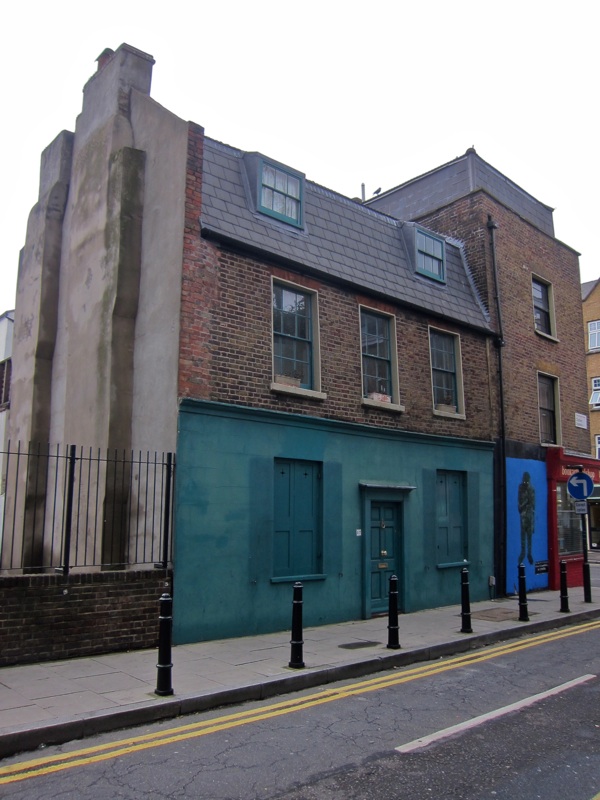
Old House in Charles St
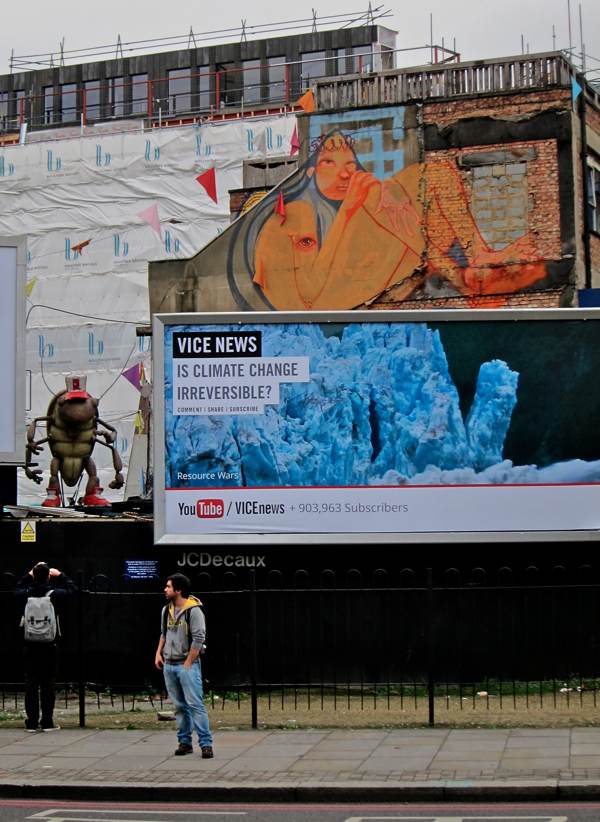
Street Art in Old St
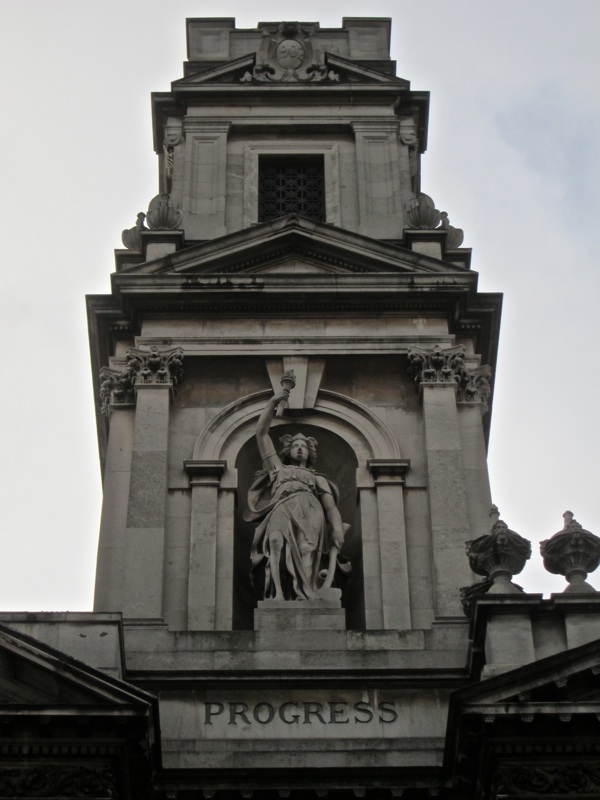
Figure of Progress on Shoreditch Town Hall
You may also like to take a look at
My Coin Collection
Around twenty years ago, I bought this coin from a street trader at the time of the excavation of the Roman cemetery in Spitalfields. In 1576, John Stow wrote about the Roman coins that were dug up here in Spitalfields and I suspect mine came from the same source. A visit to the British Museum confirmed that the coin had been minted in London and the piercing was done in the Roman era when it was the custom to wear coins as amulets. So somebody wore this coin in London all those centuries ago and today I wear it on a string around my neck to give me a sense of perspective.
As you can see, my collection has grown as I have discovered that coin collectors are eager to dispose of pierced coins at low prices and I have taken on the responsibility of wearing them on behalf of their previous owners. It was only when the string broke in Princelet St one dark night in the rain and I found myself scrabbling in the gutter to retrieve them all that I realised how much they mean to me.
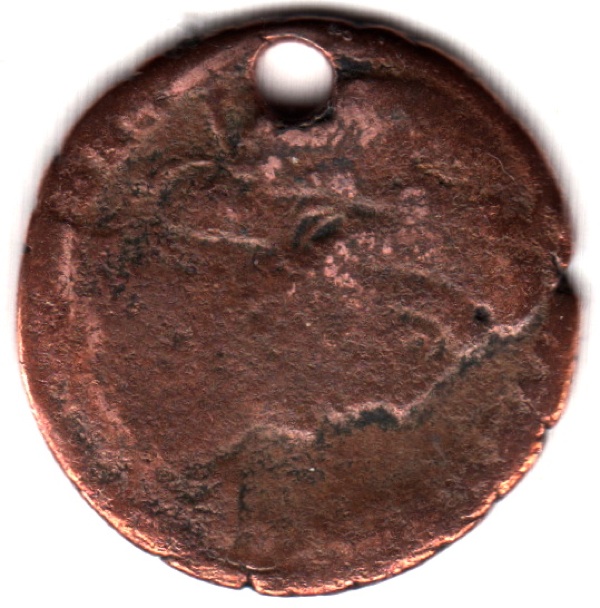
Coin of the Emperor Arcadius minted in London
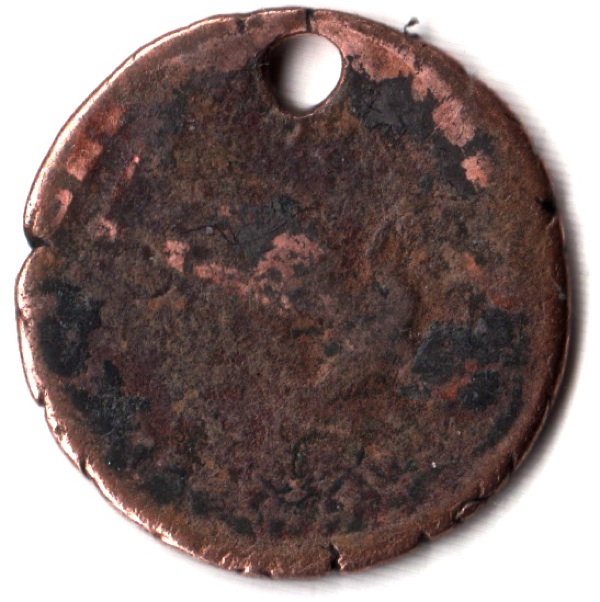
Figure of Minerva upon the reverse
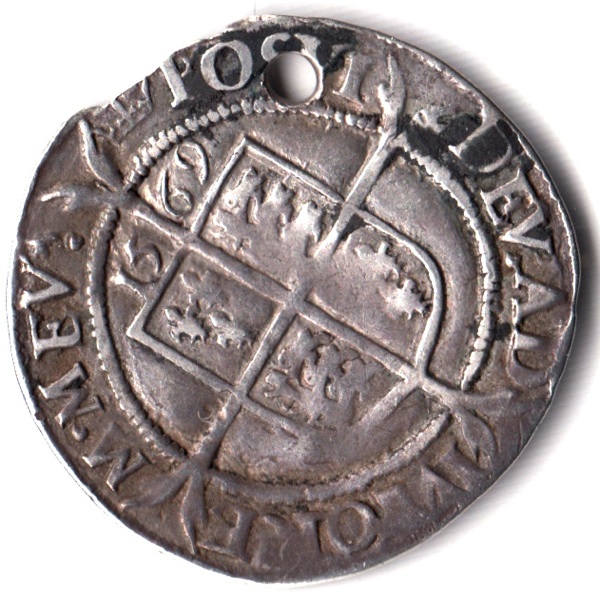
Silver sixpence minted at the Tower of London, 1569
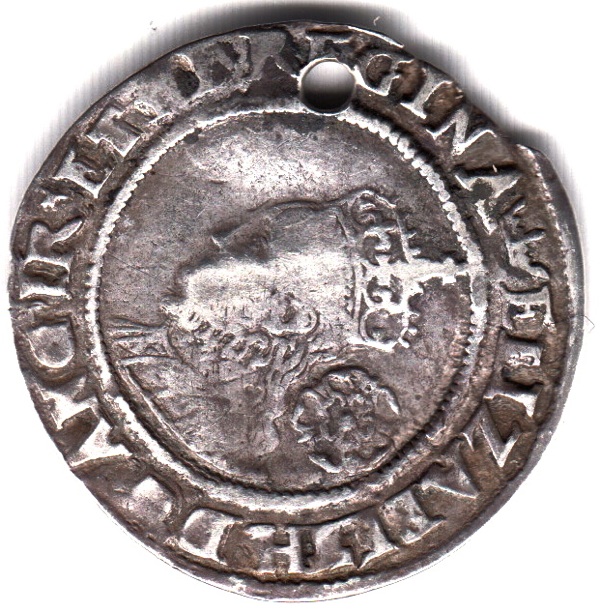
Head of Queen Elizabeth and Tudor rose
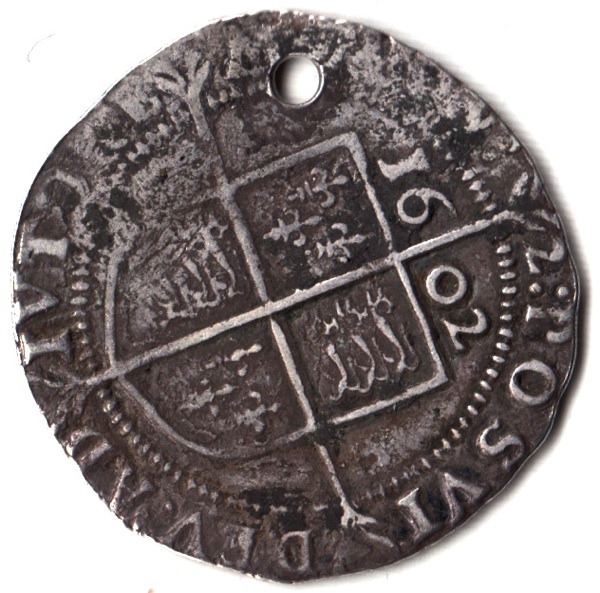
Silver sixpence minted at the Tower of London, 1602

Head of Elizabeth
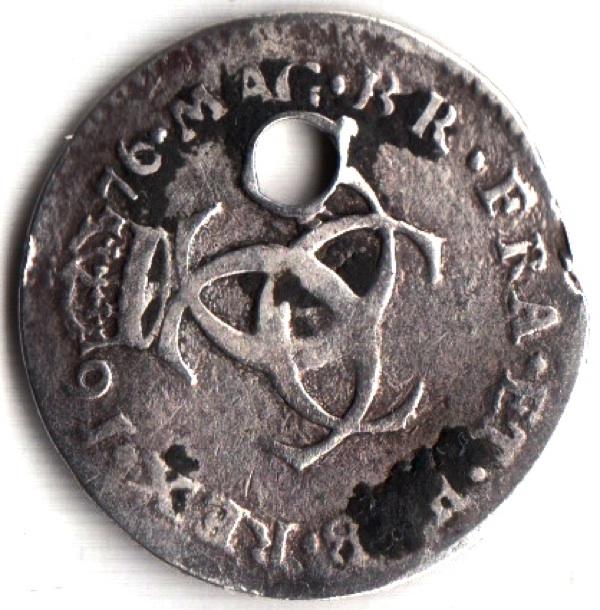
Silver sixpence, 1676
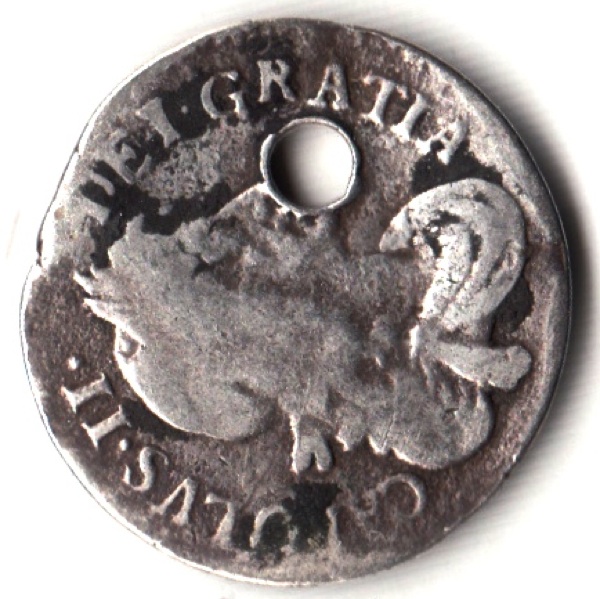
Head of Charles II
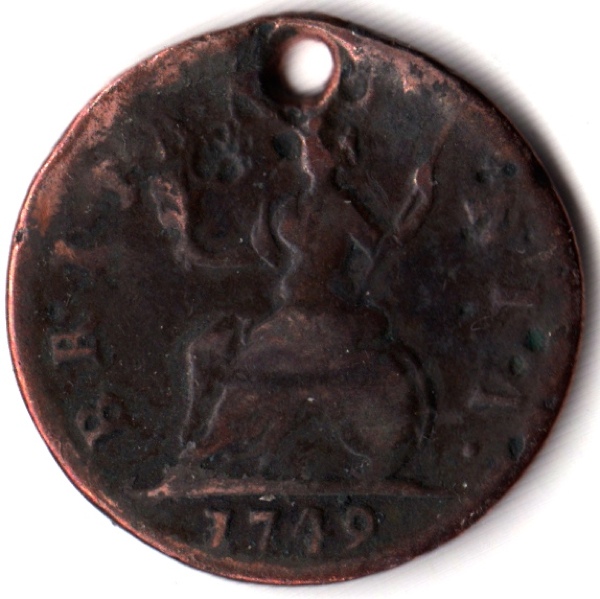
Farthing, 1749

Head of George II
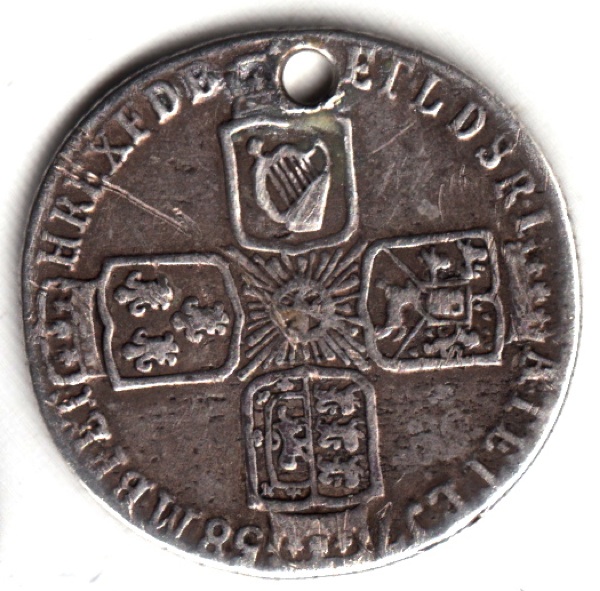
Silver sixpence, 1758
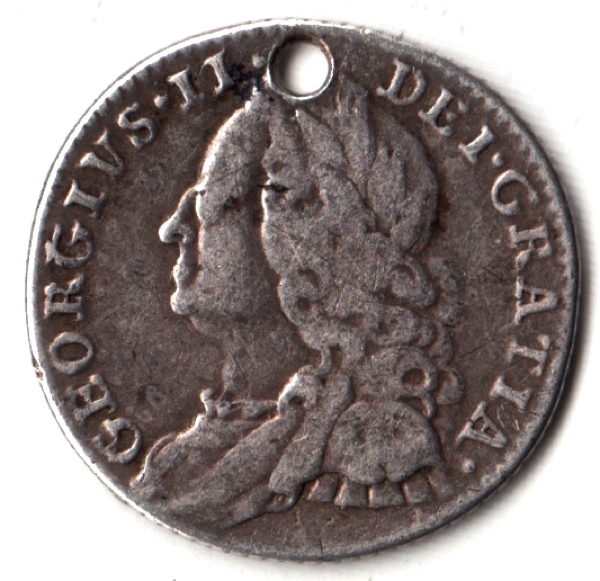
Head of George II
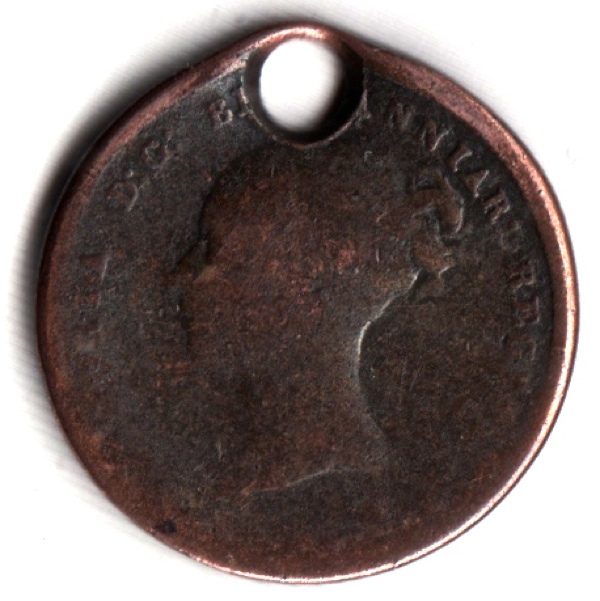
Young Queen Victoria
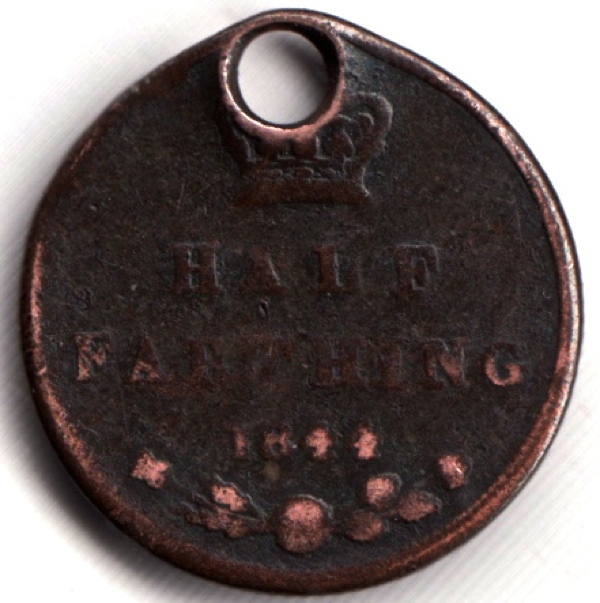

Head of Queen Victoria
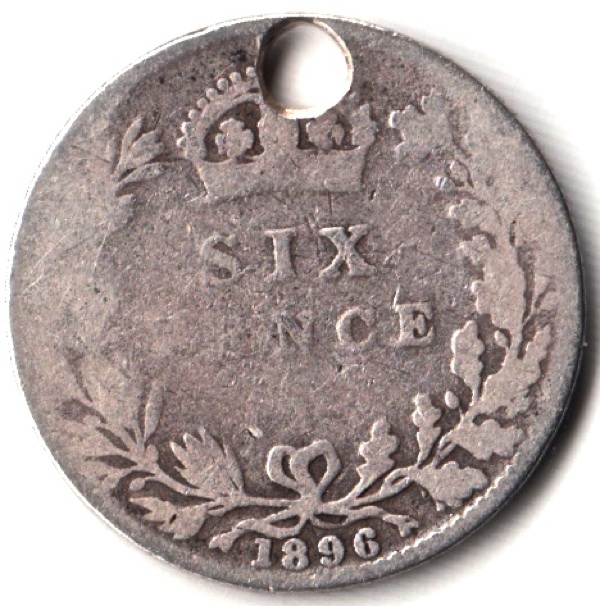
Silver sixpence, 1896
You may also like to read about
Long Nights At Old Spitalfields Market

Although they were taken only a quarter of a century ago, these photographs by Mark Jackson & Huw Davies preserved in the archive at Bishopsgate Institute, seem now to be images from the eternal night of history – with fleeting figures endlessly running, fetching and carrying, pushing barrows from the flaring lights out into the velvet blackness, where a bonfire burns beneath the great tower of Christ Church, Spitalfields, looming overhead.
Mark Jackson & Huw Davies were poets with cameras, aware that they were in an epic world with its own codes and customs, and they recognised the imperative to record it before it disappeared. No one asked them and no one paid them. As recent graduates, Mark & Huw shared a tiny flat and worked, as a courier and in a restaurant respectively, to buy film and subsidise their project. Each evening they took the last tube to Liverpool St Station and spent the night at the market, taking pictures and befriending the traders, before going straight back to work again in the morning, often without any sleep.
Like many of the most inspiring cultural projects, this remarkable body of photography was the result of individuals pursuing their own passion. Mark & Huw were committed to record what no one else was interested to look at. Neither became photographers and their greater project to record all the London markets was reluctantly abandoned when they went off to pursue other careers, but their Spitalfields Market photographs are unrivalled in the photography of markets.


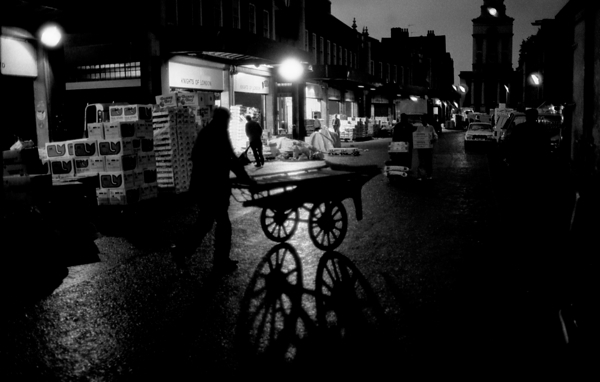


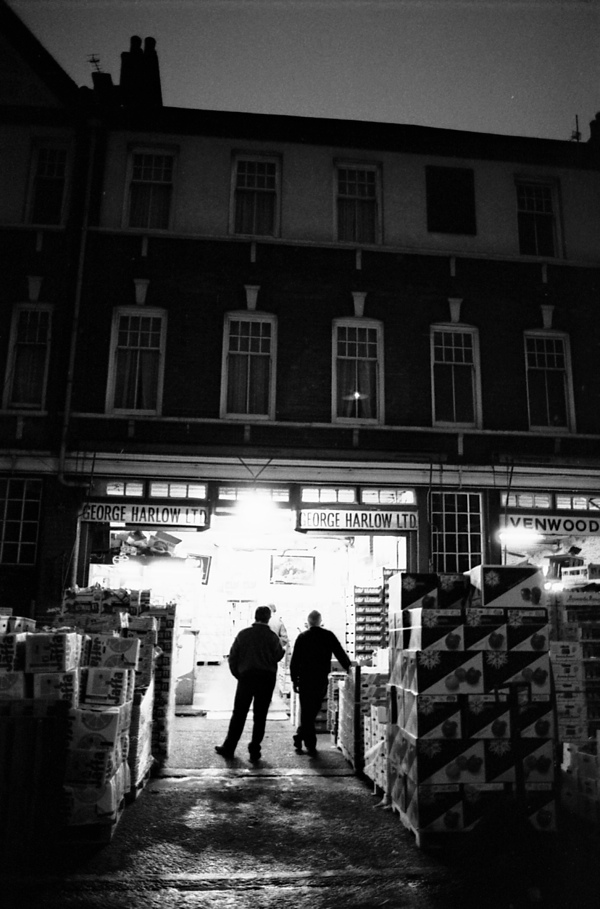


Photographs copyright © Mark Jackson & Huw Davies
You may also like to take a look at
Mark Jackson & Huw Davies at the Spitalfields Market
Ivor Robins, Fruit & Vegetable Purveyor
Some Doreen Fletcher East End Paintings
Doreen Fletcher & I will be at Waterstones Bookshop, 82 Gower St, from 6pm today Tuesday 4th December as part of their Christmas Jamboree. Doreen will be signing copies of DOREEN FLETCHER, PAINTINGS and I will be signing copies of THE LIFE & TIMES OF MR PUSSY.
Please also join us next year at the Private View of Doreen Fletcher’s RETROSPECTIVE at Nunnery Gallery, Bow Arts, on 24th January from 6pm. The exhibition runs until March 24th 2019.
Today Doreen Fletcher tells the stories behind some of her early East End paintings.
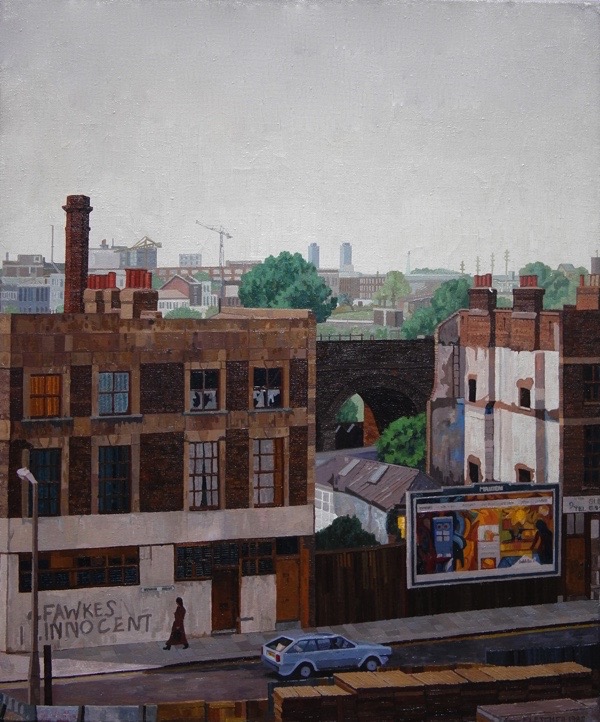
“Turners Road (1988) depicts the corner of a condemned street in Stepney and it is a reminder of a past gone forever, swept away by the tide of development. In 1988, there were reminders everywhere of the East End’s sub-cultures, from graffiti claiming ‘George Davis is innocent’ to the more anarchic ‘G. Fawkes is innocent.’
Behind the orange and blue curtains of the bomb-shattered windows lived a middle-aged recluse. He wore a detective’s mackintosh whatever the weather and worked obsessively each day on the engine of a rusty old van parked on the wasteland next to the sewer chimney. Even in those days, there was no hope of the vehicle ever becoming roadworthy and, each year, his mackintosh became grubbier as more bits of the engine were cast aside on the grass.
I moved to the East End in 1983 when local people were keen to move out of the bomb-damaged, crumbling terraces. They either wanted to leave the area completely or transfer into more modern compact dwellings that were being built at the time.
Many of the empty houses which remained were inhabited by artists on short-term tenancies and the house I lived in Clemence St was one of these. Directly opposite was a five-storey block of flats built in the fifties called Flansham House and I was particularly friendly with the couple who lived on the ground floor, Albert and June Brown. Albert lost a leg in an accident at the docks but on fine days he would sit on the step with his Pekingese dog Flossie and canary. Albert was also frequently to be found in the Prince Alfred at the end of the street and I always remember Albert telling me that the landlord was a foreigner, born in Bethnal Green!”

“Rene’s Café (1986) was situated at the opposite end of Turner’s Rd and formed part of the triangle of Locksley St, Clemence St and Turner’s Rd. When I first saw the café in 1983, it reminded me of the greasy spoon cafes in the Potteries where I grew up. The faded blue and white paintwork recalled seaside cafés lining the promenade at northern seaside resorts. The distinctive pale light of the East End and the austerity of the late nineteenth century building compounded these feelings.
The café opened early for the council workers and bin men before their day’s work. When I passed it in the morning on my way to the life-modelling sessions I undertook to keep myself at that time, the windows were steamed up and it exuded an aroma of bacon and cigarette smoke wafting on the frosty air. Sounds of raucous laughter emanated from within and, to my eternal regret, I never ate a ‘full English breakfast’ there as it seemed a male preserve. By the time I returned home the café was closed, shutting shortly after lunch.
Six months after my arrival, the café closed forever. It remained for some time before bulldozers came along and it fell victim to the encroaching tide of development, as did the nearby lino shop in my next painting.”

“I did not complete The Lino Shop (2003) until twenty years after I made my first studies. Like a lot of my subjects, the memory of the shop haunted me for a long time before I got around to the painting. In hindsight, with the knowledge of its closure in early 1984 and demolition a few years later, it is remarkable that the property lasted so long. Even during its existence, it appeared to be a throwback to a previous era – a lone outpost selling ‘fancy goods’ alongside ‘lino’ in a backwater.
I think the term ‘lino’ is outdated now, but I remember the excitement I felt when my mum and dad purchased lino for my bedroom. It was light grey with a geometric pattern of darker grey diagonals and red slashes. At the time, I thought it was very sophisticated.
I could not see any ‘fancy goods’ in the shop window but I do remember entering the shop once to buy a doormat. There were tall hourglass shaped vases and a few crudely-painted pottery figures. Finally, there were statues of goldfish with solid fins swooping hither and thither. These – I assume – comprised the fancy goods.”

“The Albion Pub (1992) in Bow, situated just beside the Railway Arch and next to the path through Mile End Park, was opened in 1881 and demolished in 2006. It was one of the first pubs I visited in the East End and I still remember the friendly atmosphere of the snug with leather benches and ancient rectangular tables. The walls were lined with decorative plates and shelves filled with gleaming ‘knick-knacks.’ The landlady was pleasant and welcoming, and I frequented it for several years until she told us that she and her husband were moving to Clacton.
I decided to paint The Albion because to me it was representative of everything that was worth preserving about the East End. The inclusiveness and welcoming of incomers like myself, the openness of the landlady and the pride she took in keeping her pub spotless.”
CLICK HERE TO ORDER A SIGNED COPY OF DOREEN FLETCHER’S BOOK FOR £20












