The Shops of Old London
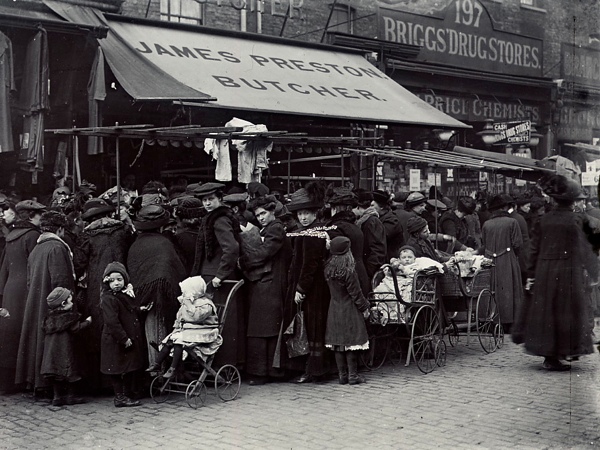
Lack of social distancing at the butchers, Hoxton St c.1910
Are you wary about going shopping? Why not consider visiting the shops of old London instead? There are no supermarkets or malls but plenty of other diversions to captivate the eager shopper, without the requirement of hand sanitiser.
These glass slides once used for magic lantern shows by the London & Middlesex Archaeological Society at the Bishopsgate Institute offer the ideal consumer experience for a reluctant browser such as myself since, as this crowd outside a butcher in Hoxton a century ago illustrates, shopping in London has always been a fiercely competitive sport.
Instead of wearing masks and gloves, we can enjoy window shopping in old London safe from the temptation to pop inside and buy anything – because most of these shops do not exist anymore.
Towering over the shopping landscape of a century ago were monumental department stores, beloved destinations for the passionate shopper just as the City churches were once spiritual landmarks to pilgrims and the devout. Of particular interest to me are the two huge posters for Yardley that you can see in the Strand and on Shaftesbury Avenue, incorporating the Lavender Seller from Francis Wheatley’s Cries of London, originally painted in the seventeen-nineties. There is an intriguing paradox in this romanticised image of a street seller of two centuries earlier, used to promote a brand of twentieth century cosmetics that were manufactured in a factory in Stratford and sold through a sleek modernist flagship store, Yardley House, in the West End.
Wych St, lined with medieval shambles that predated the Fire of London and famous for its dusty old bookshops and printsellers is my kind of shopping street, demolished in 1901 to construct the Aldwych. Equally, I am fascinated by the notion of cramming commerce into church porches, such as the C. Burrell, the Dealer in Pickled Tongues & Sweetbreads who used to operate from the gatehouse of St Bartholomew the Great in Smithfield and E.H. Robinson, the optician, through whose premises you once entered St Ethelburga’s in Bishopsgate. Note that a toilet saloon was conveniently placed next door for those were nervous at the prospect of getting their eyes tested.
So let us set out together to explore the shops of old London. We do not need to worry about social distancing. We do not need a shopping basket. We do not need a list. We do not even need to pay. We are shopping for wonders and delights. And we shall not have to carry anything home. This is my kind of shopping.
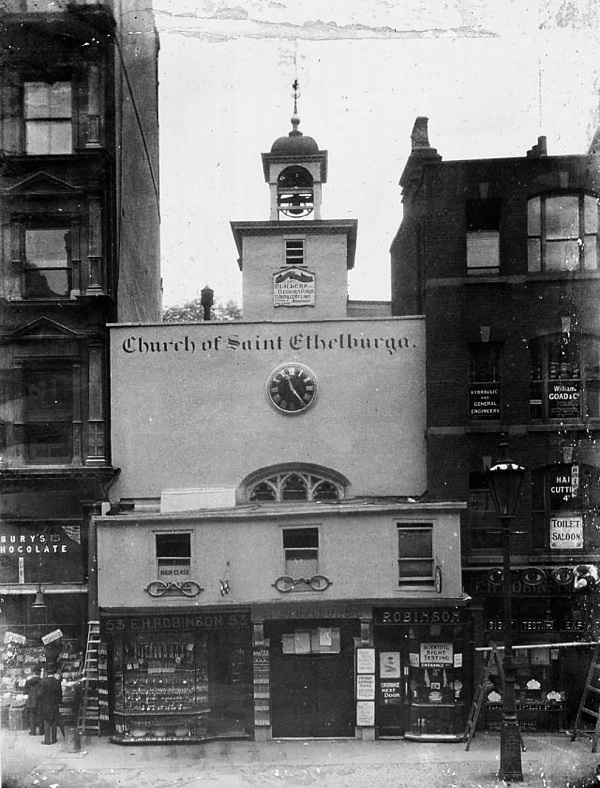
Optician built into St Ethelburga’s, Bishopsgate, c.1910
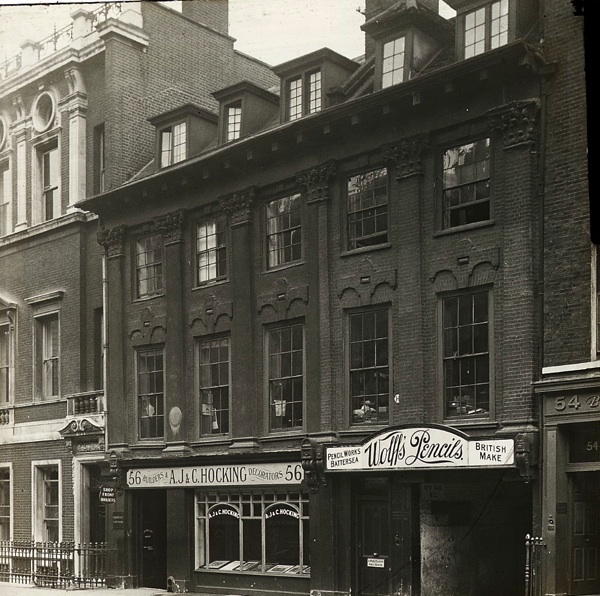
Decorators and Pencil Works, Great Queen St, c.1910
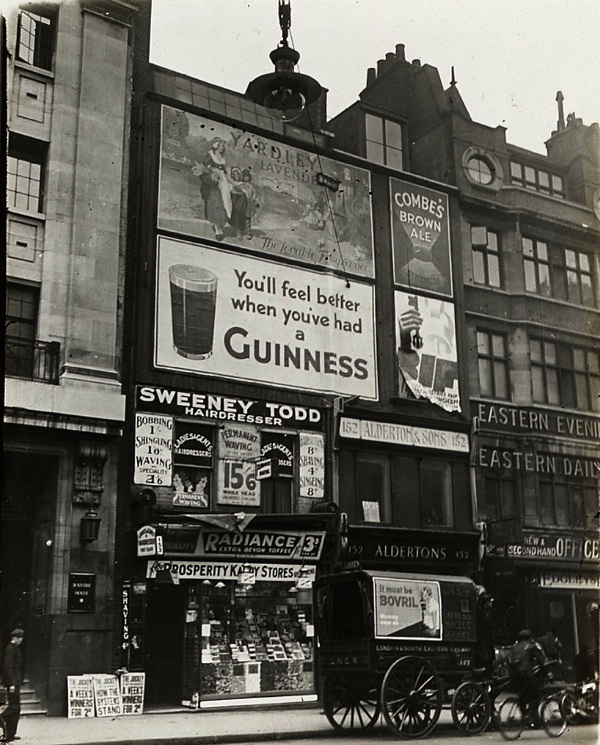
Newsagent and Hairdresser at 152 Strand, c.1930
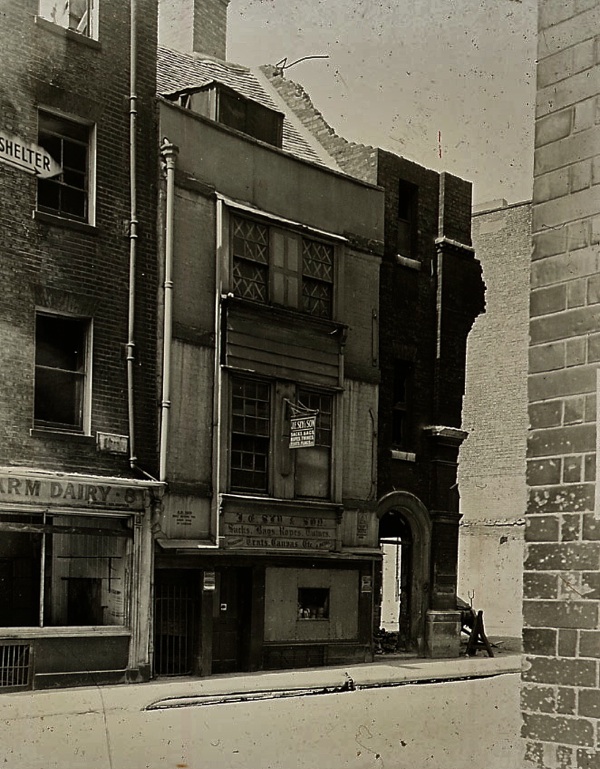
Dairy and ‘Sacks, bags, ropes, twines, tents, canvas, etc.’ Shop, c. 1940
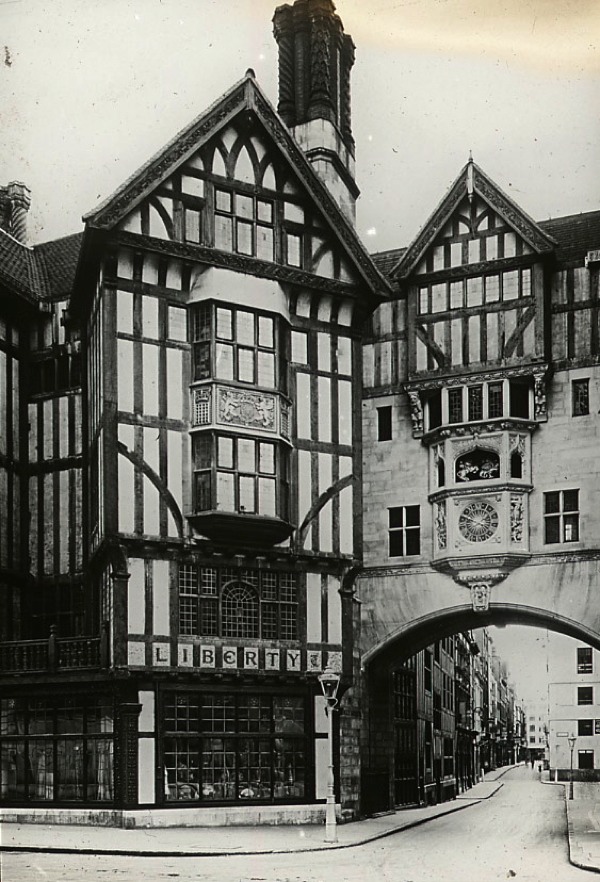
Liberty of London, c.1910

Regent St, c.1920.
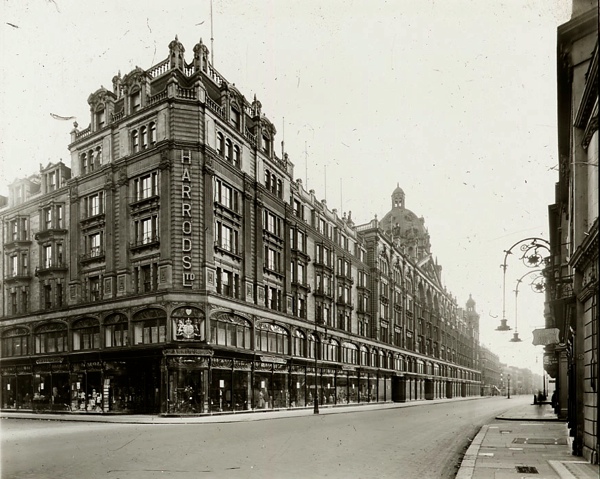
Harrods of Knightsbridge, c.1910

The Fashion Shoe Shop, c.1920 “Repetiton is the soul of advertising”
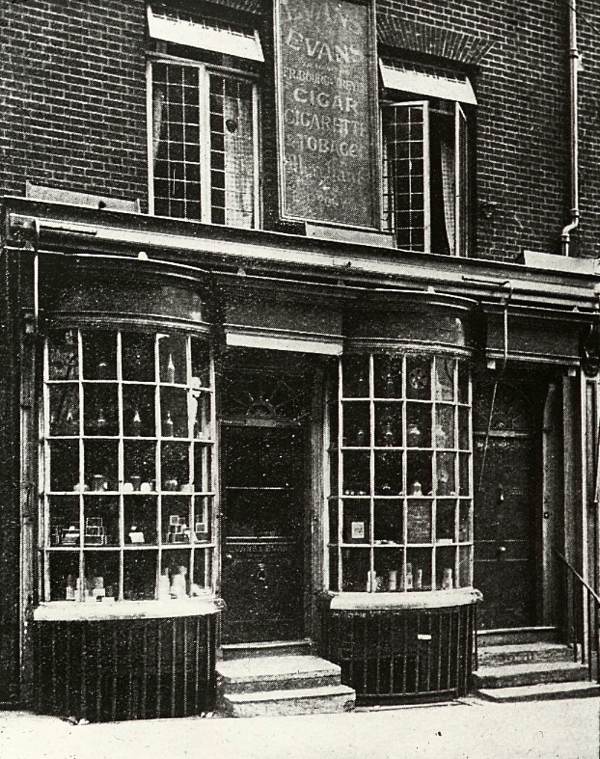
Evsns Tabacconist, Haymarket, c.1910
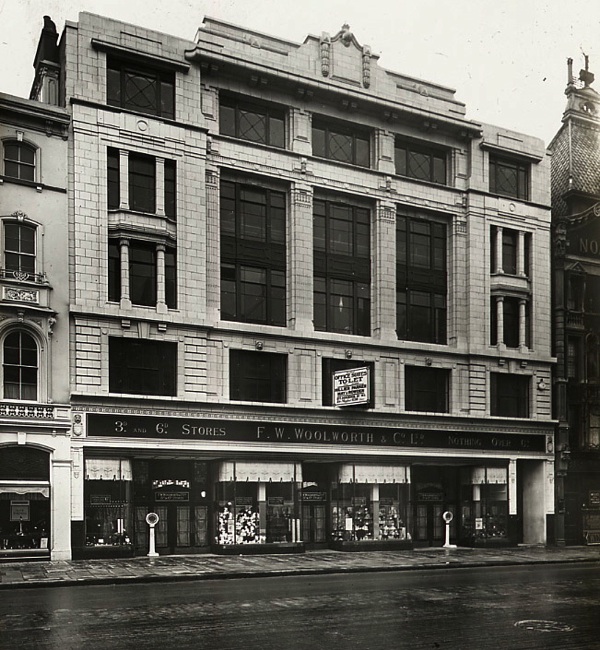
F. W. Woolworth & Co. Ltd. 3d and 6d store, c.1910
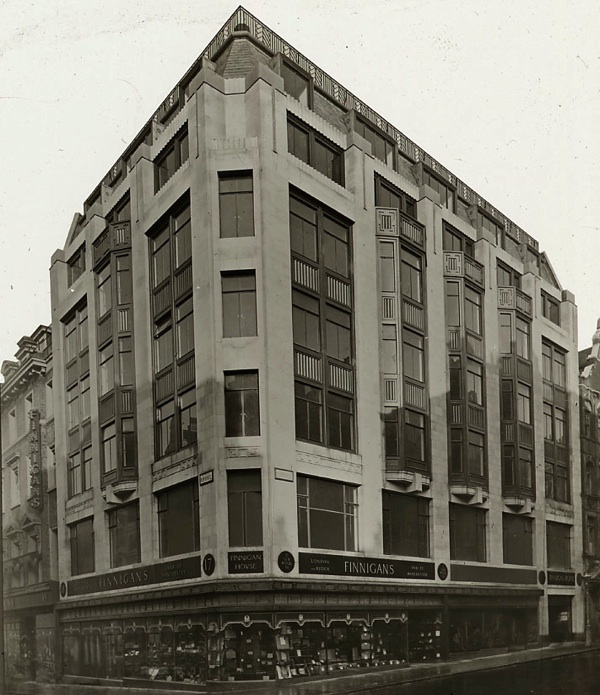
Finnigan’s of New Bond St, gold- & silversmiths, c.1910
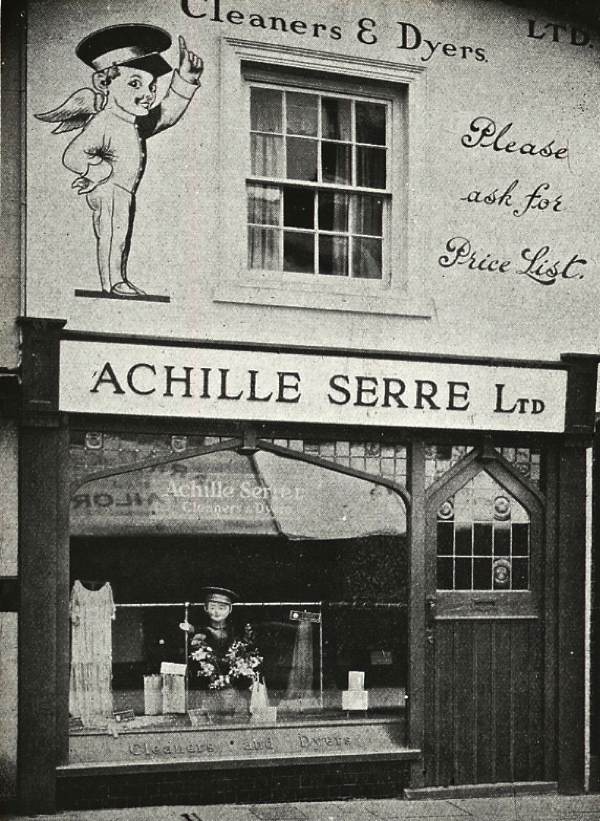
Achille Serre,Cleaner & Dyers, c. 1920
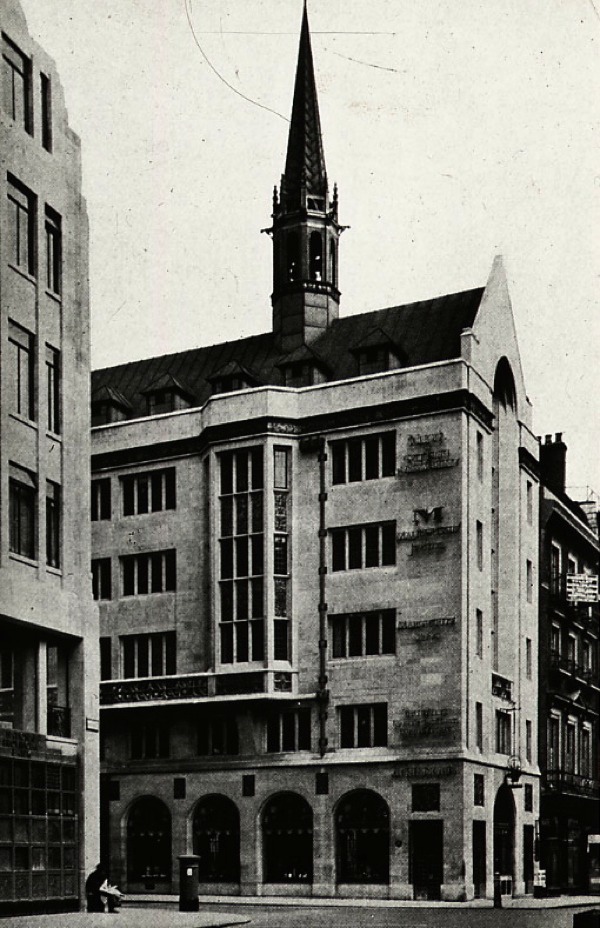
Old Bond St. c. 1910
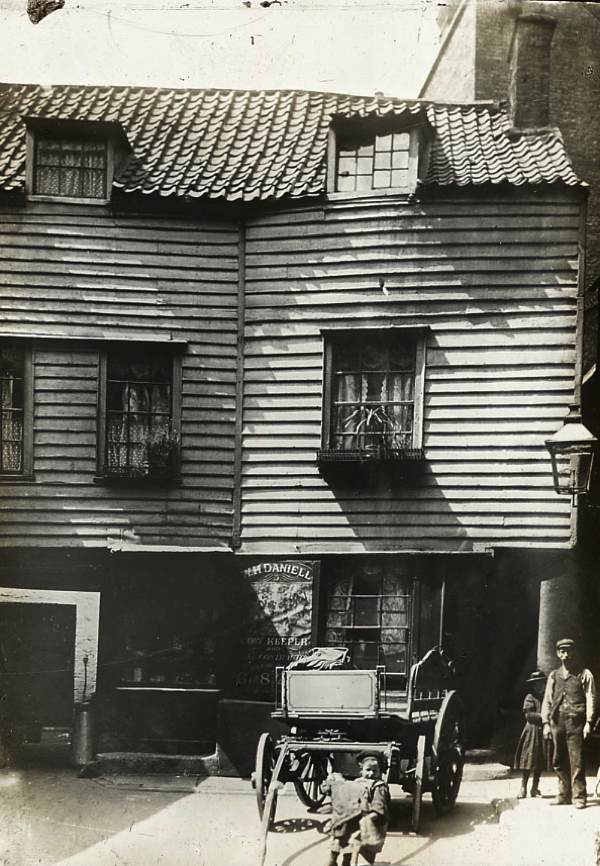
W.H.Daniel, Cow Keeper, White Hart Yard, c.1910
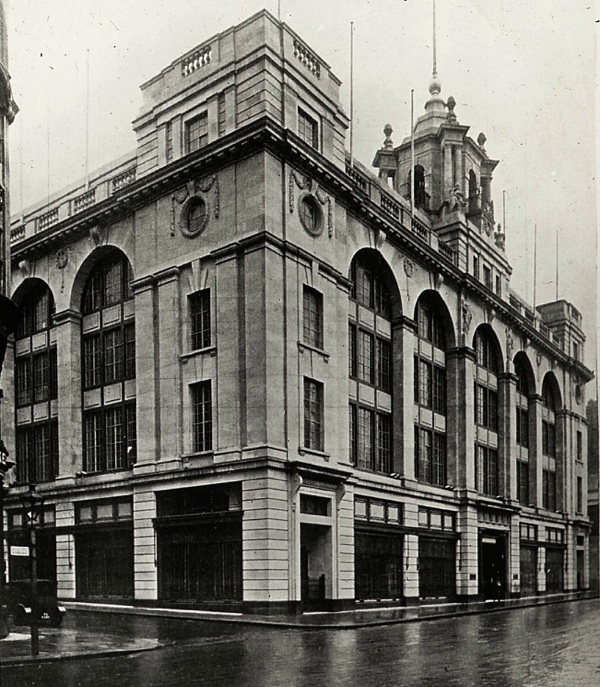
John Barker & Co. Ltd., High St Kensington, c.1910
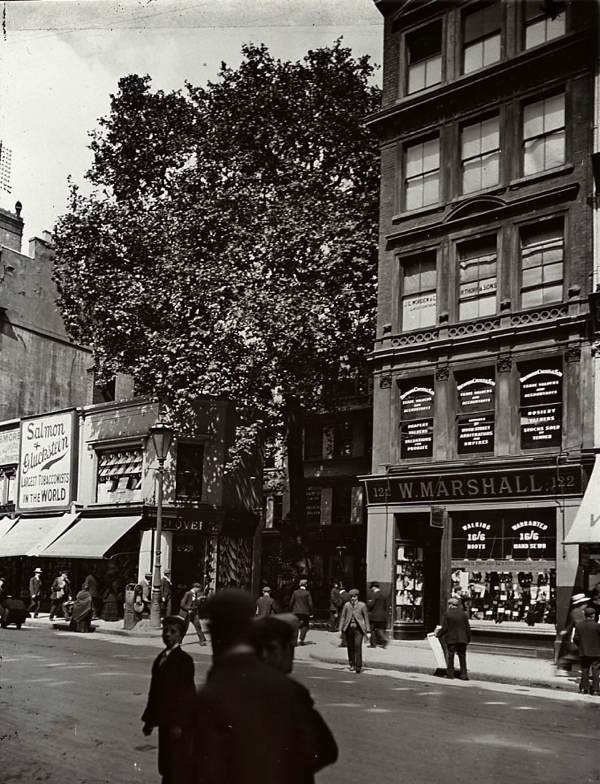
Tobacconist, Glovers and Shoe Shop, c.1910
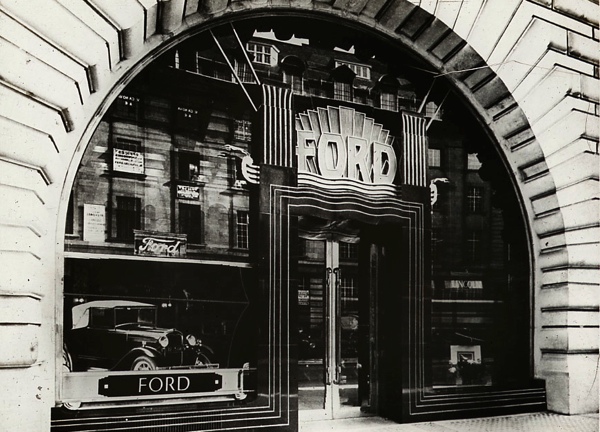
Ford Showroom, c.1925
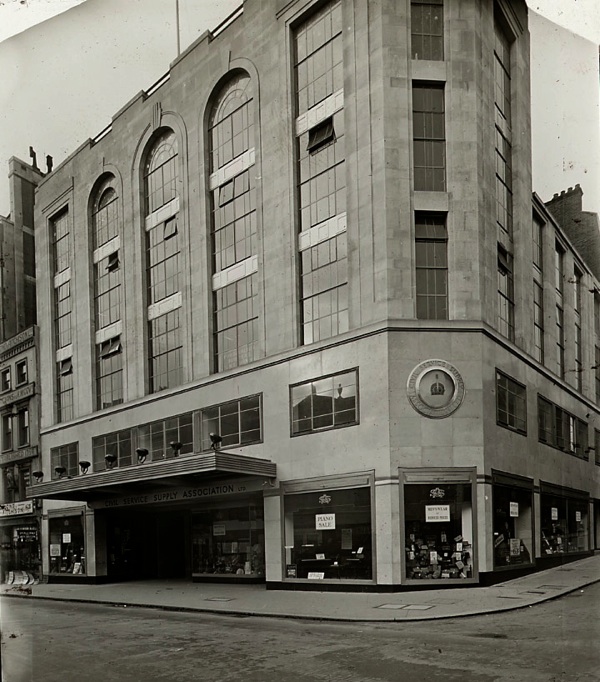
Civil Service Supply Association, c. 1930
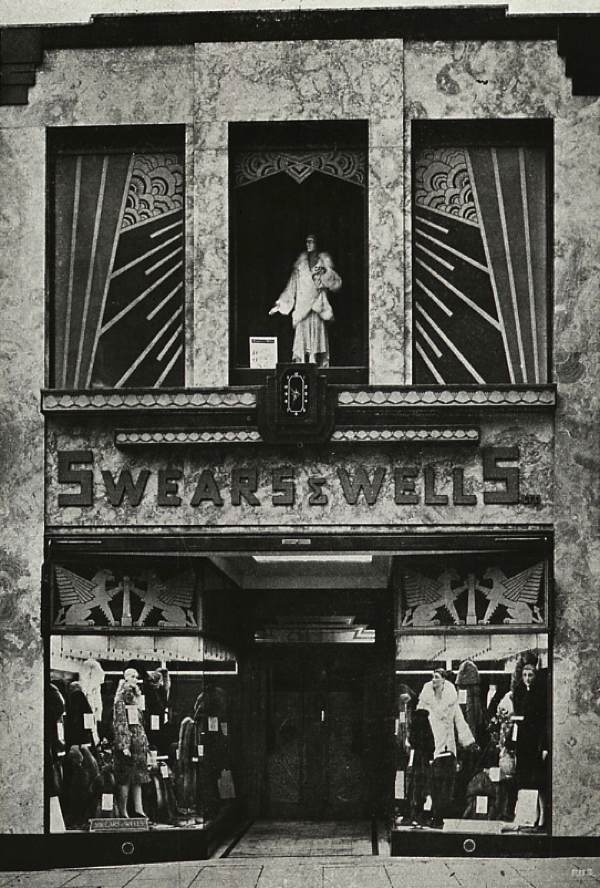
Swears & Wells Ltd, Ladies Modes, c. 1925
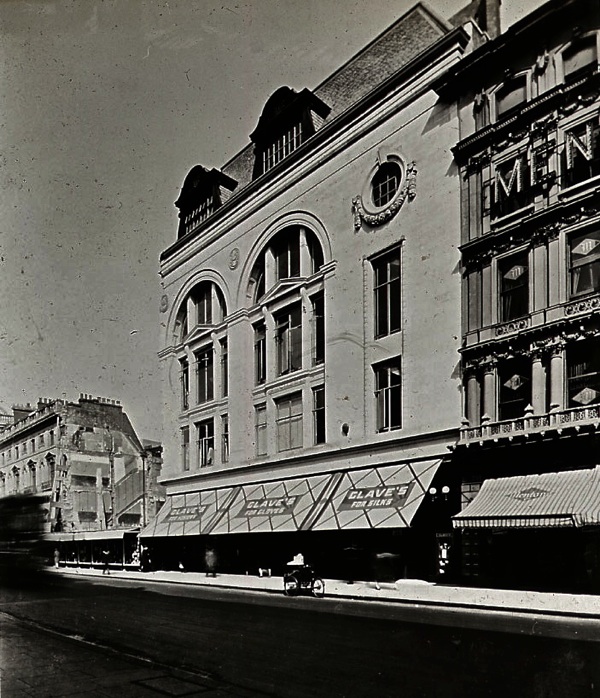
Glave’s Hosiery, c 1920
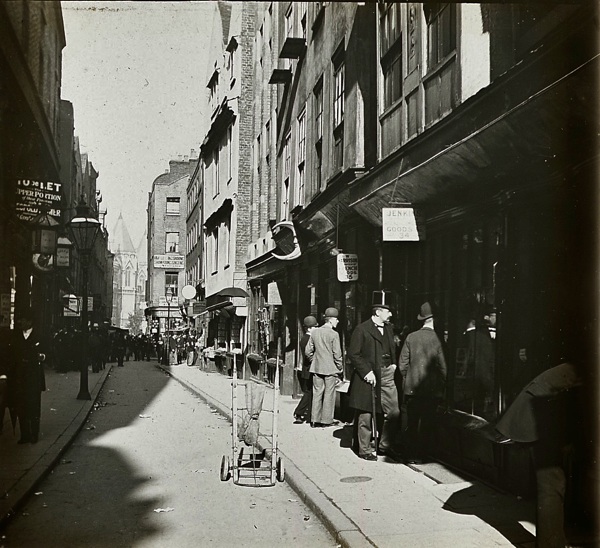
Shopping in Wych St, c. 1910 – note the sign of the crescent moon.
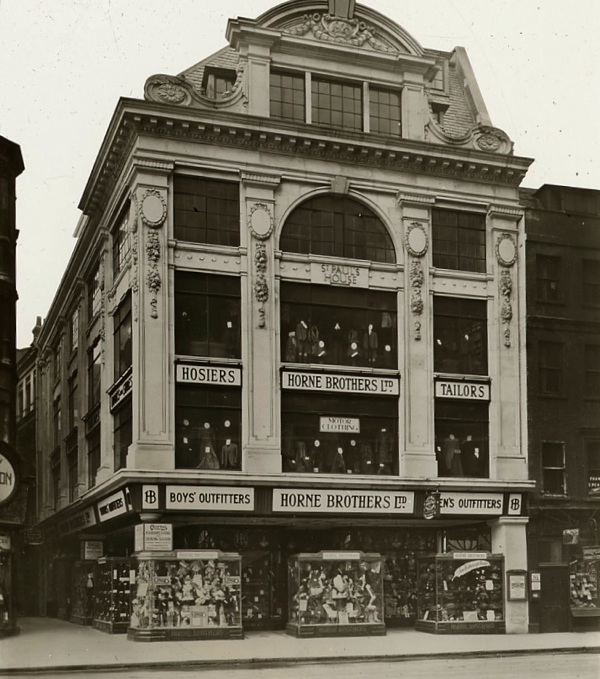
Horne Brothers Ltd, c. 1920
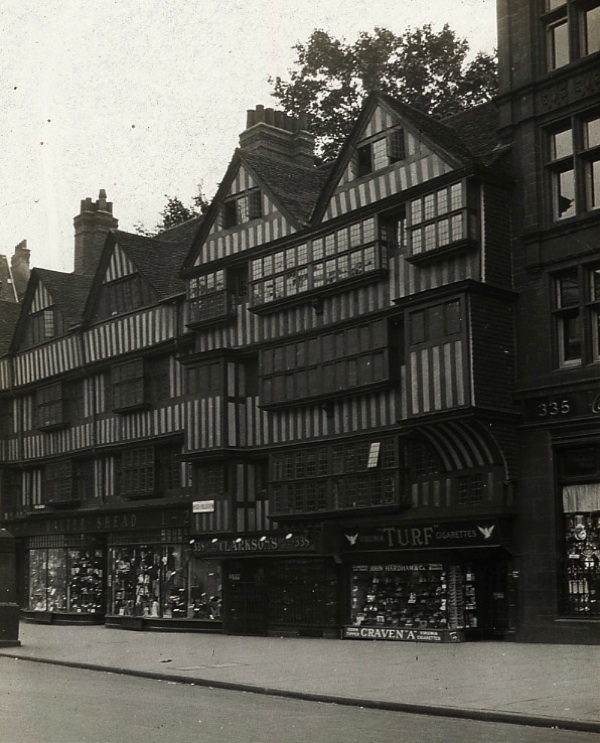
Tobacconist, High Holborn, c. 1910
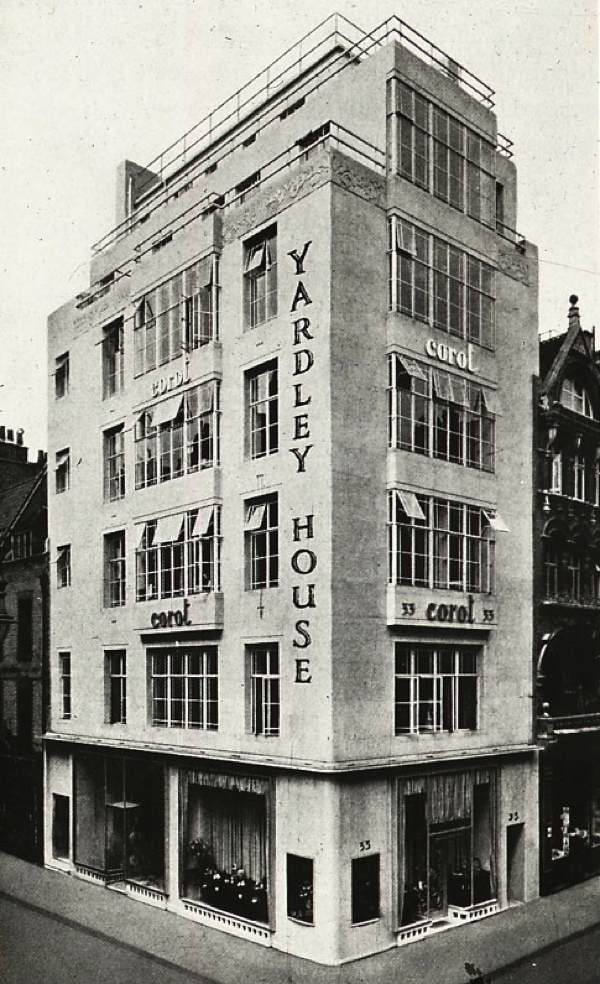
Yardley House, c. 1930

Peter Jones, Oxford St, c. 1920

Confectionery Shop, corner of Greek St and Shaftesbury Ave, c. 1930
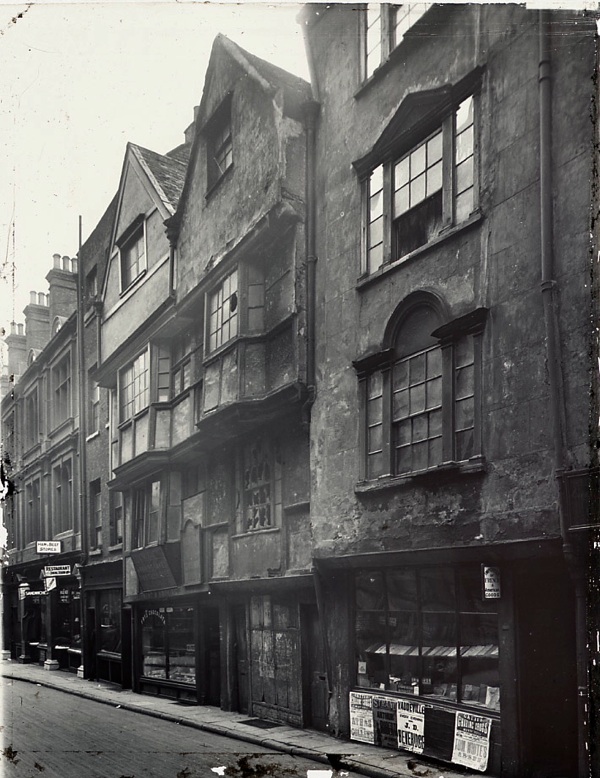
Bookseller, Wych St, c. 1890
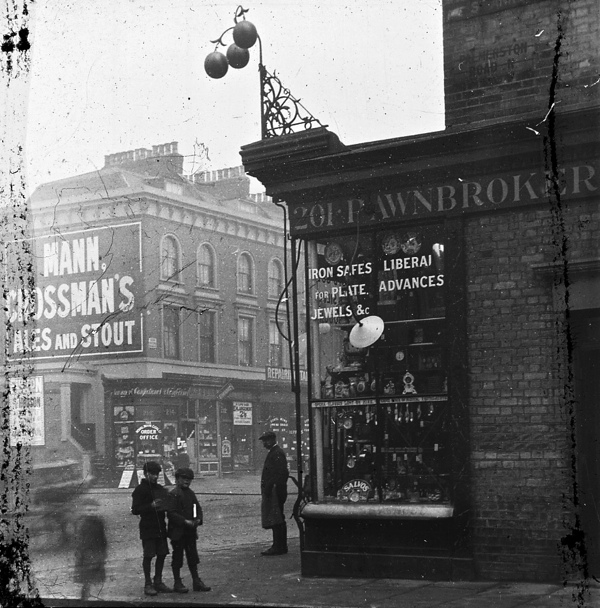
Pawnbroker, 201 Seven Sisters Rd, Finsbury Park, c. 1910
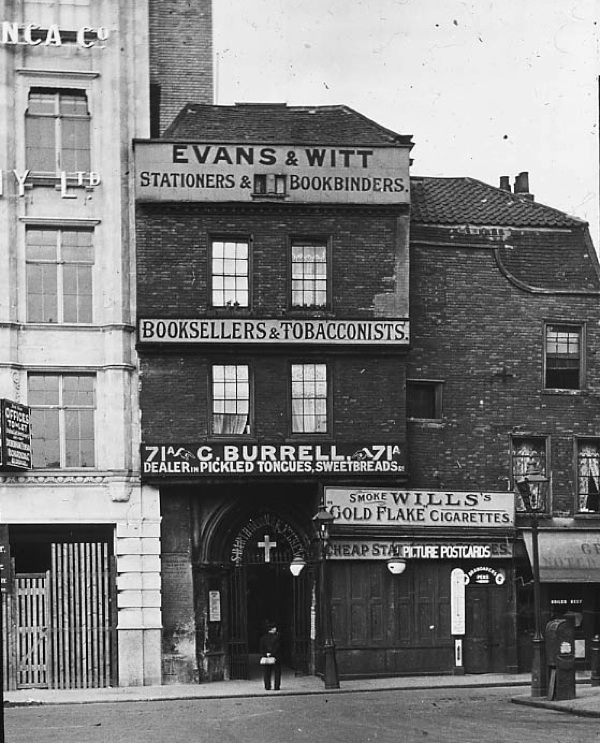
Bookseller & Tobacconist and Dealer in Pickled Tongues at the entrance to St Bartholomew’s, Smithfield, c. 1910

Oxford Circus, c. 1920
Glass slides copyright © Bishopsgate Institute
You may also like to take a look at
Summer At Bow Cemetery

At least once each Summer, I direct my steps eastwards from Spitalfields along the Mile End Rd towards Bow Cemetery, one of the “Magnificent Seven” created by act of Parliament in 1832 as the growing population of London overcrowded the small parish churchyards. Extending to twenty-seven acres and planned on an industrial scale, “The City of London and Tower Hamlets Cemetery” as it was formally called, opened in 1841 and within the first half century alone around a quarter of a million were buried here.
Although it is the tombstones and monuments that present a striking display today, most of the occupants of this cemetery were residents of the East End whose families could not afford a funeral or a plot. They were buried in mass public graves containing as many as forty bodies of random souls interred together for eternity. By the end of the nineteenth century the site was already overgrown, though burials continued until it was closed in 1966.
Where death once held dominion, nature has reclaimed the territory and a magnificent broadleaf forest has grown, bringing luxuriant growth that is alive with wildlife. Now the tombstones and monuments stand among leaf mould in deep woods, garlanded with ivy and surrounded by wildflowers. Tombstones and undergrowth make one of the most lyrical contrasts I can think of – there is a beautiful aesthetic manifest in the grim austerity of the stones ameliorated by vigorous plant life. But more than this, to see the symbols of death physically overwhelmed by extravagant new growth touches the human spirit. It is both humbling and uplifting at the same time. It is the triumph of life. Nature has returned and brought more than sixteen species of butterflies with her.
This is the emotive spectacle that leads me here, turning right at Mile End tube station and hurrying down Southern Grove, increasing my pace with rising expectation, until I walk through the cemetery gates and I am transported into the green world that awaits. At once, I turn right into Sanctuary Wood, stepping off the track to walk into a tall stand of ivy-clad sycamores, upon a carpet of leaves that is shaded by the forest canopy more than twenty metres overhead and illuminated by narrow shafts of sunlight descending. It is sublime. Come here to see the bluebells in Spring or the foxgloves in Summer. Come at any time of the year to find yourself in another landscape. Just like the forest in Richard Jefferies’ novel “After London,” the trees have regrown to remind us what this land was once like, long ago before our predecessors ever came here.
Over time, the tombstones have weathered and worn, and some have turned green, entirely harmonious with their overgrown environment, as if they sprouted and grew like toadstools. The natural stillness of the forest possesses greater resonance between cemetery walls and the deep green shadows of the woodland seem deeper too. There was almost no-one alive to be seen on the morning of my visit, apart from two police officers on horseback passing through, keeping the peace that is as deep as the grave.
Just as time mediates grief and grants us perspective, nature also encompasses the dead, enfolding them all, as it has done here in a green forest. These are the people who made East London, who laid the roads, built the houses and created the foundations of the city we inhabit. The countless thousands who were here before us, walking the streets we know, attending the same schools, even living in some of the same houses we live in today. The majority of those people are here now in Bow Cemetery. As you walk around, names catch your eye, Cornelius aged just two years, or Eliza or Louise or Emma, or Caleb who enjoyed a happy life, all over a hundred years ago. None ever dreamed a forest would grow over their head, where people would come to walk one day to discover their stones in a woodland glade. It is a vision of paradise above, fulfilled within the confines of the cemetery itself.
As I made my progress through the forest of tombstones, I heard a mysterious noise, a click-clack echoing through the trees. Then I came upon a clearing at the very heart of the cemetery and discovered the origin of the sound. It was a solitary juggler practicing his art among the graves, in a patch of sunlight. There is no purpose to juggling than that of delight, the attunement of human reflexes to create a joyful effect. It was a startling image to discover, and seeing it here in the deep woods – where so many fellow Londoners are buried – made my heart leap. In the vast wooded cemetery there was just me, the numberless dead and the juggler.


Find out more at Friends of Tower Hamlets Cemetery Park
You may also like to read about
The Statues Of Old London
London is a city of statues that we mostly ignore until their meaning is pointed out to us. Then we have to consider the suitability of those whom we choose to glorify in this way and thus we constantly renegotiate our relationship with history as culture evolves. Here are the statues of old London, photographed a century ago by the London & Middlesex Archaeological Society for magic lantern shows at the Bishopsgate Institute.
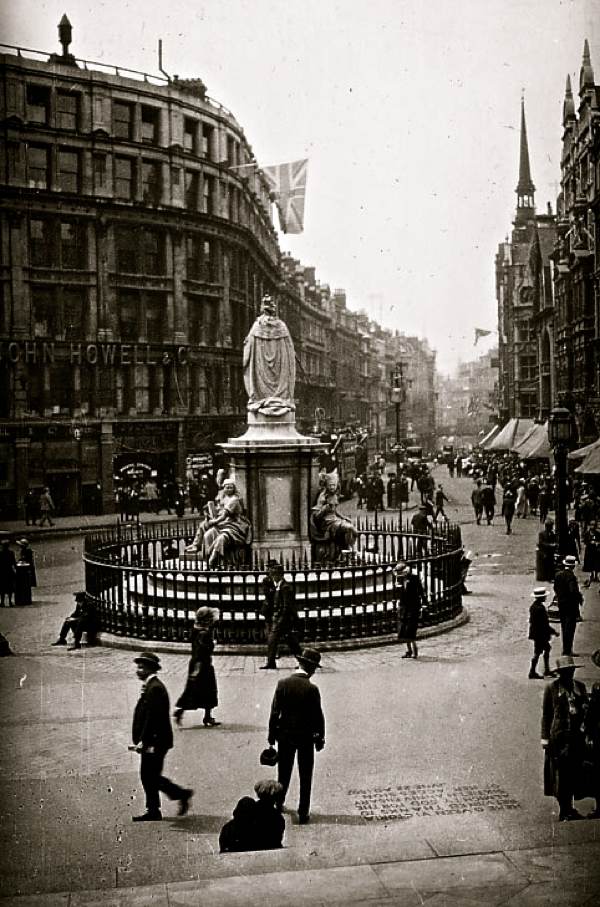
Queen Anne gazes down Ludgate Hill, c.1910
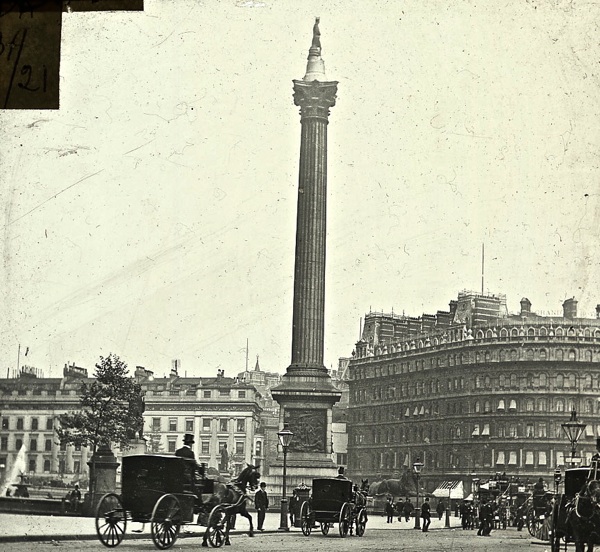
Nelson’s Column in Trafalgar Sq, c. 1910

Achilles in Hyde Park, c. 1910

Prince Albert, c. 1910

Alfred the Great in Trinity Sq, Southwark, c. 1910

Charles II, c. 1910

Caroline of Brunswick, c. 1910
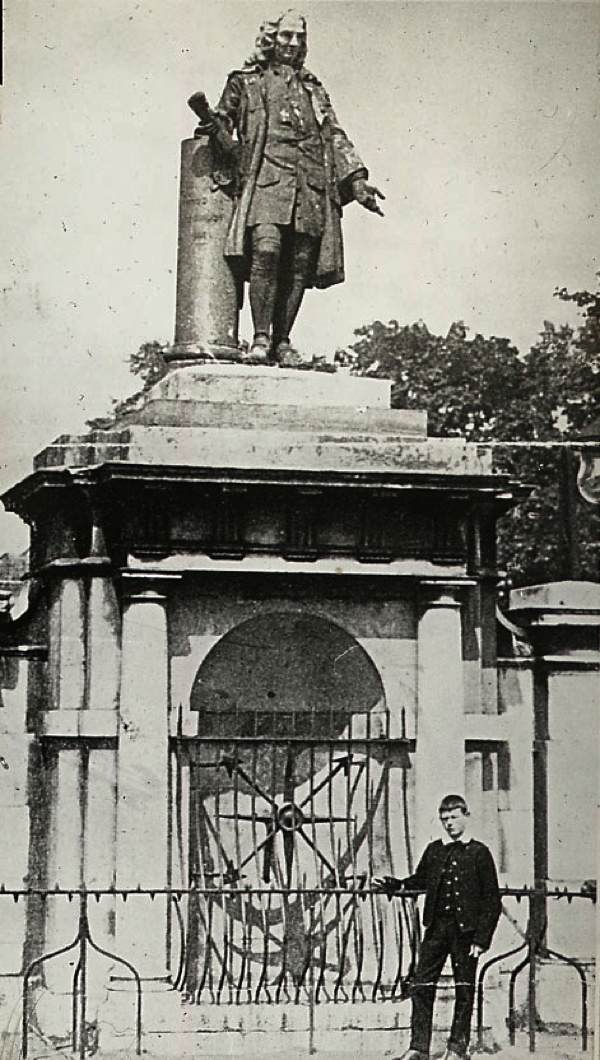
Thomas Coram, c. 1910

Charles Darwin in the Natural History Museum, c. 1910

John Franklin, c. 1910

General Gordon in Trafalgar Square, c. 1910

Crimean Memorial, c. 1900

Rowland Hill in King Edward St, c. 1910

Capt Maples at Trinity Almshouse, Mile End Rd, c. 1920

Gog at the City of London Guildhall, c. 1910 – note the box camera caught in the left corner of the frame

Magog at the City of London Guildhall, c. 1910

Richard the Lionheart in Palace Yard, c. 1910

Sir Hans Sloane in Apothecaries’ Gardens, Chelsea, c. 1920

Temple Bar, Fleet St, c. 1870

Queen Anne at St Paul’s Cathedral, c. 1920

James II, c. 1910

House of Parliament, St Stephen’s Hall, c. 1920

One of Landseer’s lions at the base of Nelson’s Column, c. 1910

George Peabody, c. 1910

Peter Pan in Kensington Gardens, c. 1915

Physical Energy in Kensington Gardens, c. 1910

Duke of Wellington, c. 1910

Wellington Arch at Hyde Park Corner, c. 1880

Duke of York’s Column at Waterloo Place, c. 1900
Images courtesy Bishopsgate Institute
You may also like to take a look at
Peta Bridle’s Gravesend Sketchbook
Gravesend offers an ideal day out from Spitalfields in my opinion, but since I cannot venture there at present it was like a breath of fresh sea air when Peta Bridle sent me these pages from her lockdown sketchbook.
“I have been unable to do etchings while the printers are shut and painting is out of the question with my son Billy bouncing off the walls, so I started going out with my sketchbook.
I was given a couple of Geoffrey Fletcher’s books and he inspired me. Unlike him I cannot stand and draw, therefore my choice of subjects have been governed by finding somewhere secluded to sit. Each picture brings back memories to me now of what I could hear or smell while I was drawing. I had always intended to make drawings of Gravesend, which has numerous picturesque corners, and the lockdown gave me the opportunity.”
Peta Bridle
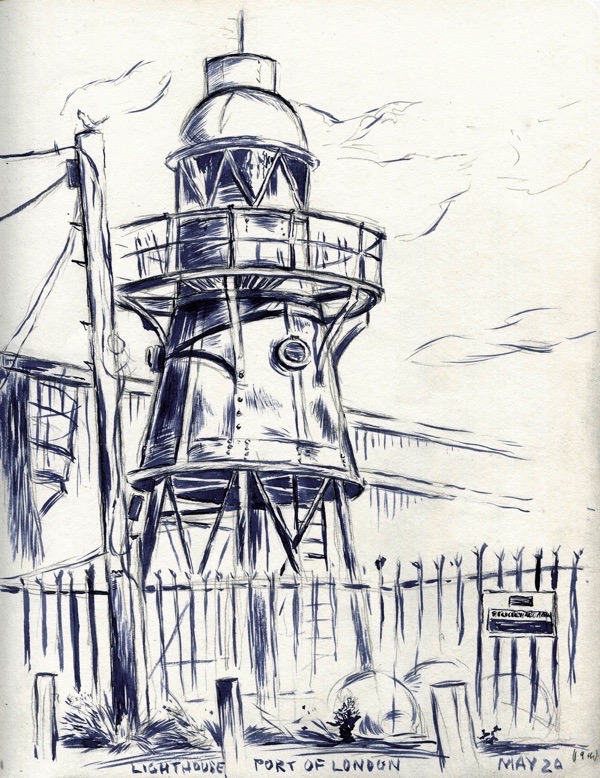
Shornemead Old Lighthouse
“It was a lovely warm evening when I sketched this lighthouse, built in 1913 to mark the river bank east of Gravesend and south of Tilbury. Today, the faded red metal tower is stored onshore in the Port of London Authority depot at Denton Wharf.”
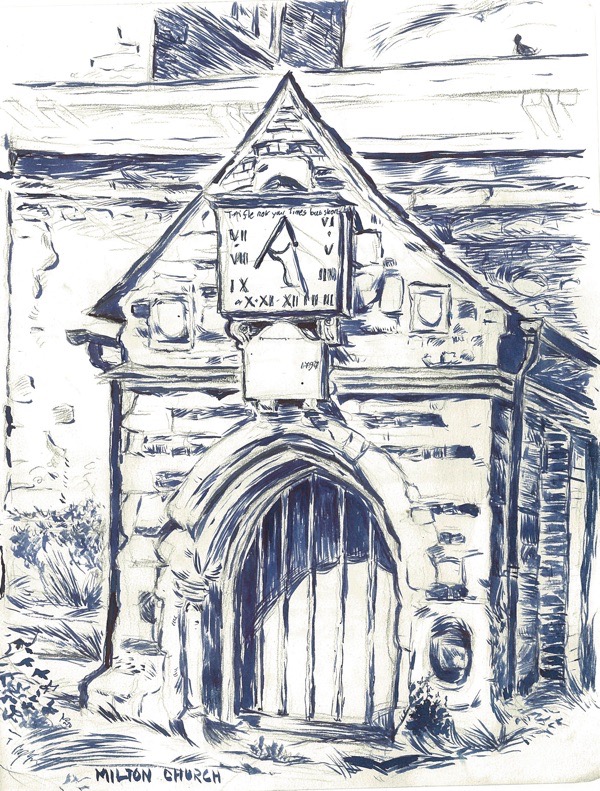
St Peter & St Paul Milton Church
“The sundial above the porch reads ‘Trifle now, your time’s but short,’ with two worn shields and a plaque beneath dated 1797. To the right is a stoop where people can dip their hands to make the sign of the cross before entering the church, which was built in the early fourteenth century. I sat hidden in the churchyard, and could only hear the odd car and people passing beyond the church wall.”
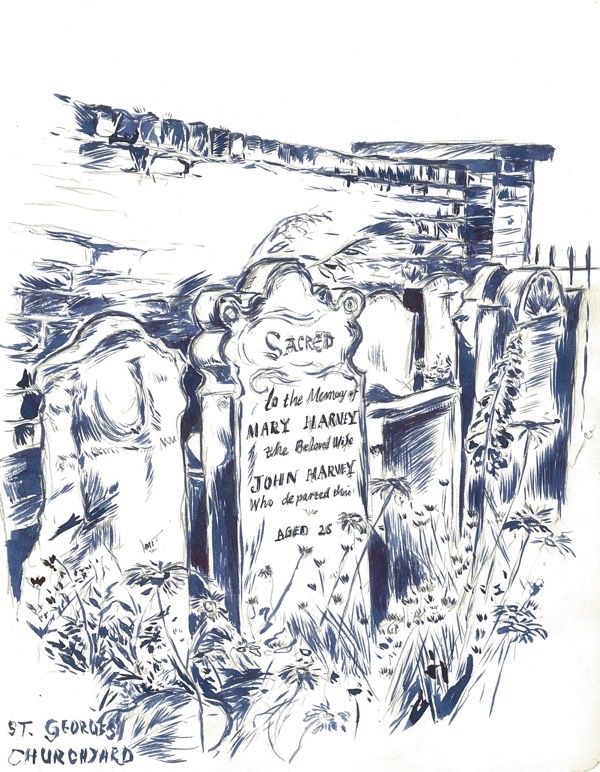
Gravestones at St George’s Churchyard
“Along the churchyard wall is a long line of headstones. Many are for ships’ captains and river pilots, and I noticed epitaphs to sailors lost at sea or on the Thames.”
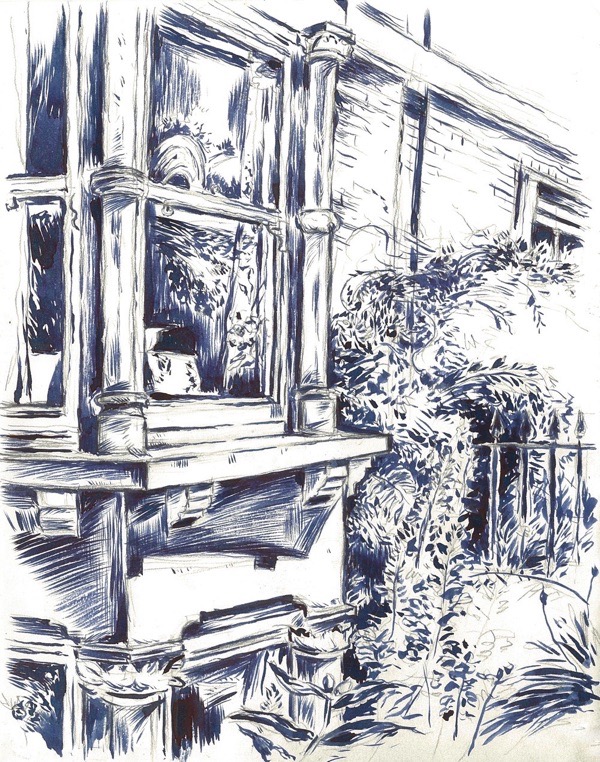
My Friend’s Garden
“I sat within my friend’s front garden next to a salvia bush alive with bees, while behind me I could hear workmen eating their lunch in a van and birdsong from the park across the road. Spot the rainbow in her window.”
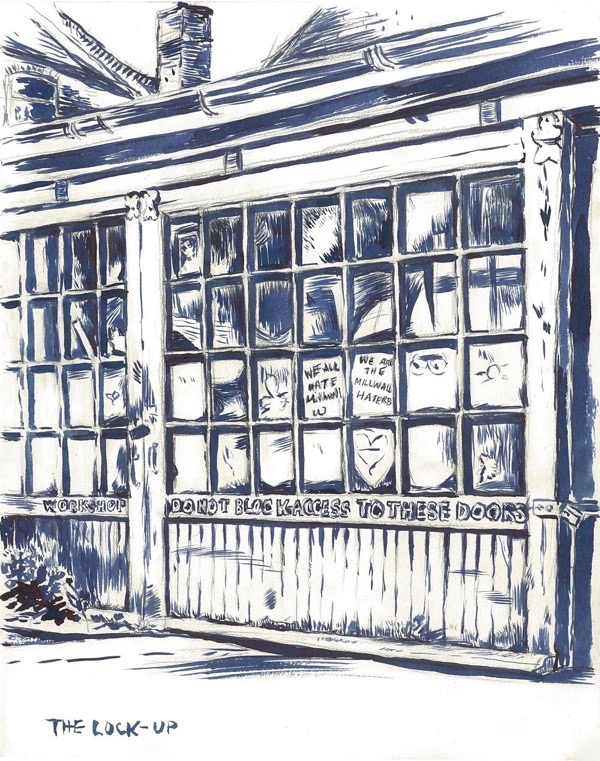
The Lock-Up
“This is in a secluded courtyard and I could not draw all of it because a van was parked in my way.”
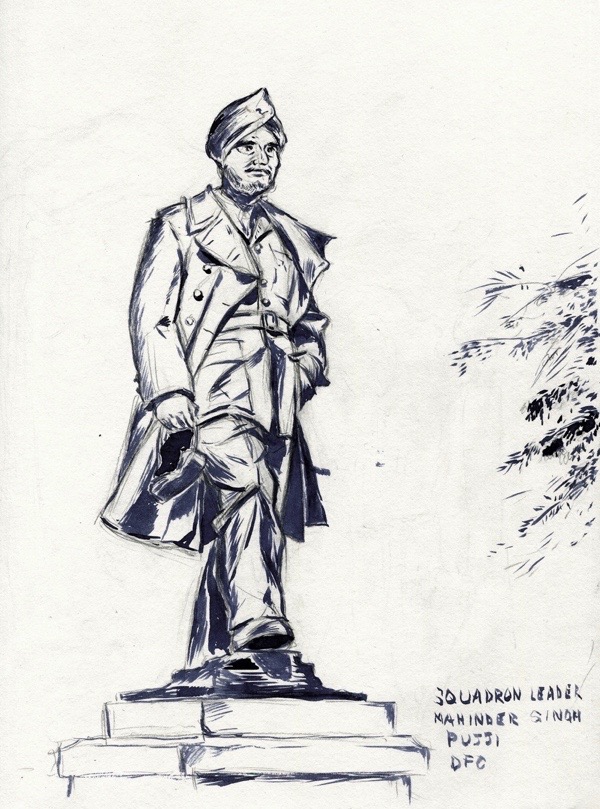
Statue of Squadron Leader Mahinder Singh Pujji DFC
“An heroic Royal Air Force fighter pilot and one of the first Sikh pilots to volunteer during the Second World War. He came to retire in Gravesend and today his beautiful statue can been seen in St Andrew’s Garden on the waterfront.”
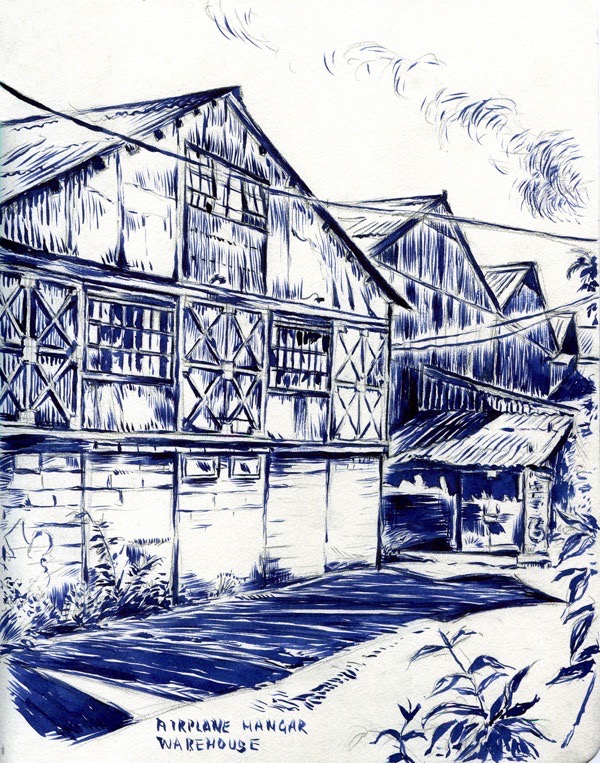
Warehouse at the Canal Basin
“When I was drawing this unusual warehouse, a cyclist stopped and told me it was once an aeroplane hangar at Gravesend Airport, which operated between 1932 and 1956. The faded green hangar sits on top of concrete breeze blocks today and forms a narrow street between the Thames and the canal basin, often used by filmmakers and photographers as an atmospheric location.”
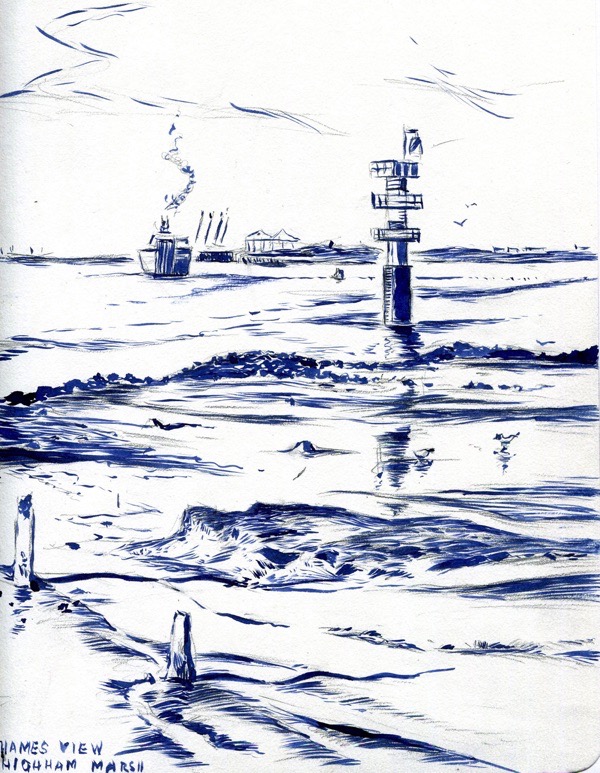
Thames From Shornemead Fort
“I cycled down to Shornemead Fort one evening and sat looking out over the Thames. Rivulets were hissing in the mud and the occasional ship slid past, heading out to sea. Shornemead Fort is home to marsh ponies and a playground for dirt bikers today, but it was built in the eighteen-sixties to guard the Thames against seaborne attack.”
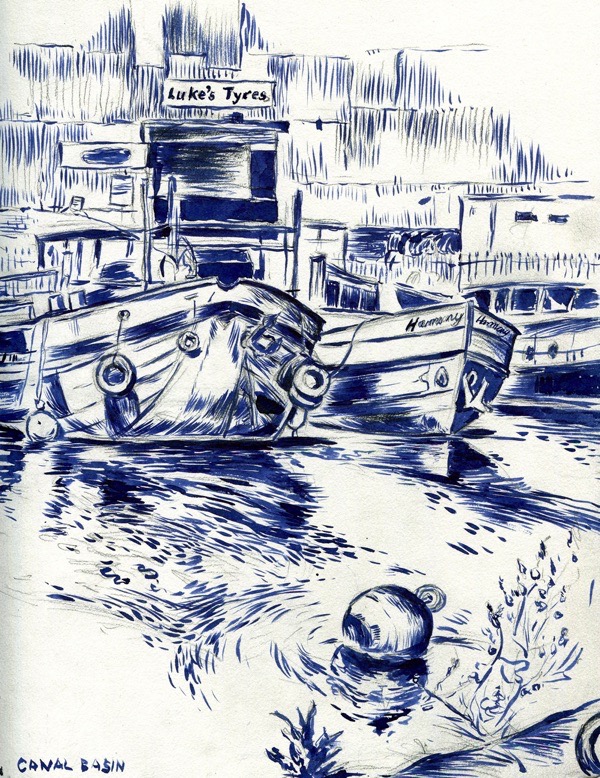
The Canal Basin
“I sat behind a low wall next to a road, where I got showered with grit every time a lorry went past, while I was drawing this view of the boats moored at the basin with the old corrugated iron warehouses behind.”
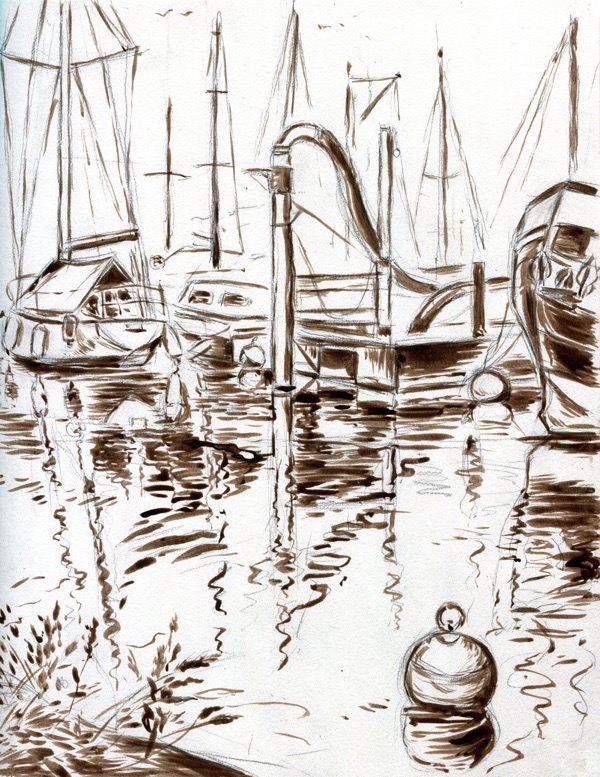
The Marina
“Another view of boats moored at the canal basin. This was made in a hurry due to the approaching clouds and I had to give up when the heavens opened, even though the wind rippled the water surface, creating lots of beautiful reflections. For this subject, I used a brown ink I found instead of my usual blue-black Quink.”
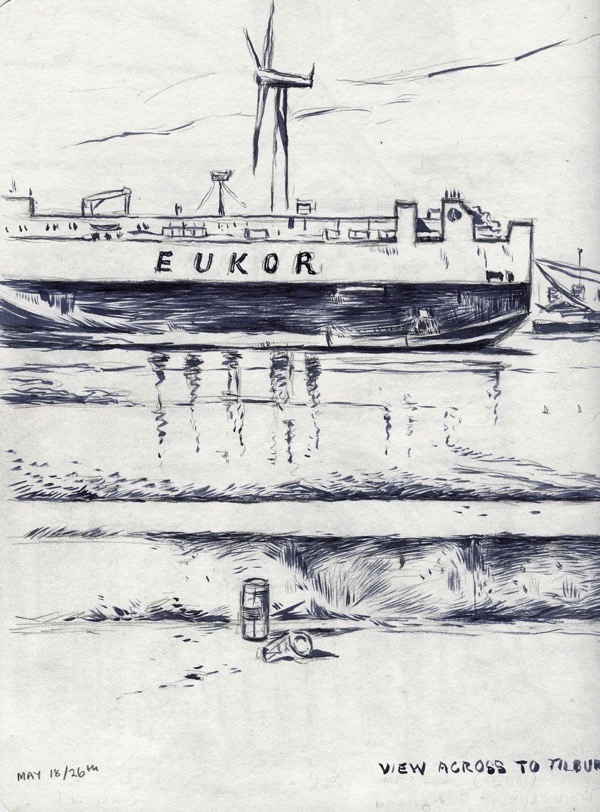
Eukor at the Tilbury Docks seen from Gravesend
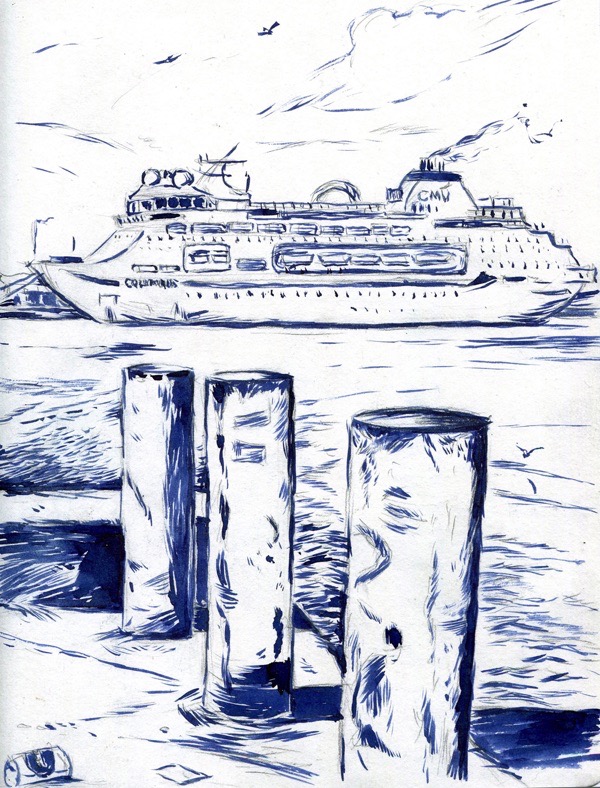
Cruise & Maritime Voyage Ship Berthed At Tilbury
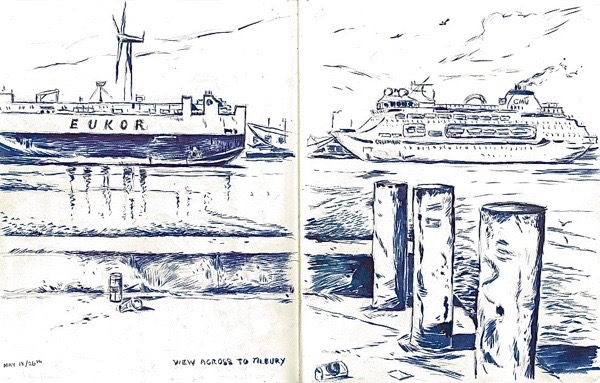
“This is the only double page spread in my sketchbook. It shows the view across to Tilbury Docks but I made two separate trips to draw each of the ships on different days, so the reflections in the water do not match up.”
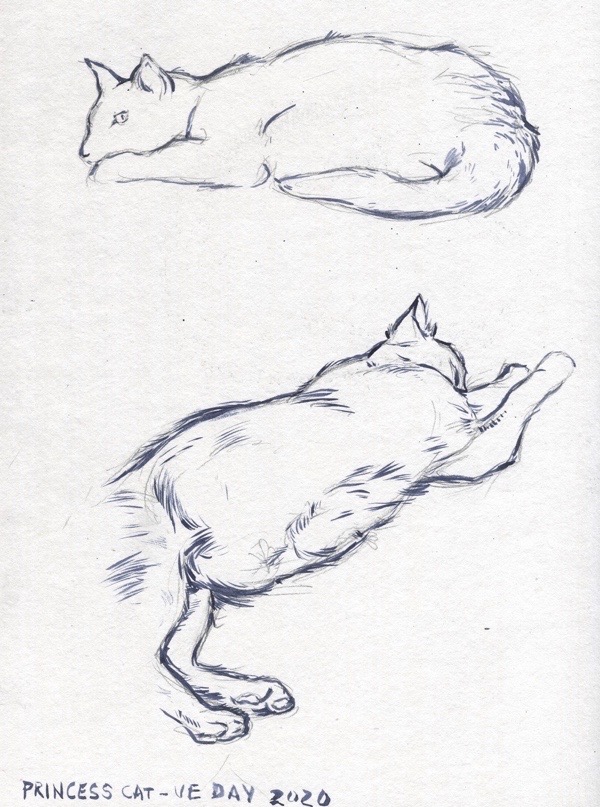
Princess Cat
“This is our new cat who appeared at my back door as a very persistent stray last summer. She has managed to get her paws well under the table since then and is now part of the family. She was my model but she kept moving, which was why I ventured out to find new subjects to draw once the lockdown allowed.”
Drawings copyright © Peta Bridle
You may also like to take a look at
Trouble At The Truman Brewery
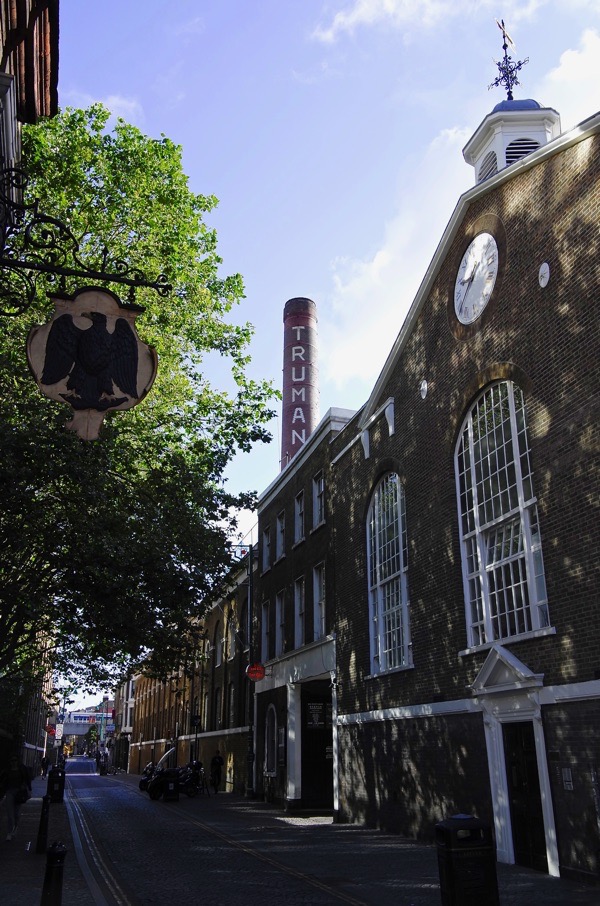
In recent years, Spitalfields has faced a wave of soulless corporate development spreading from the west, inflicting ugly steel and glass blocks that are entirely at odds with the narrow streets of old brick buildings here. First it was the Spitalfields Market, then the Fruit & Wool Exchange and Norton Folgate, and now the wave has reached the historic Truman Brewery, where a massive shopping mall with offices on top is proposed.
So far, these developments have all served as extensions of the business culture of the City of London and offer little to the residents of the East End where the priorities are for housing and affordable workspace. The Truman Brewery is the largest undeveloped site in Spitalfields and it needs a planning brief created in consultation with the community which reflects the needs of local people, rather than more bland corporate offices, chain retail and bars.
I am publishing a statement below by the Spitalfields Trust and I hope readers will support this important campaign for the future of Spitalfields.
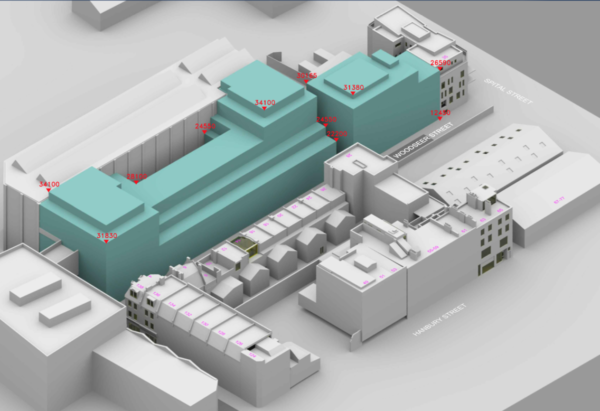
A big block on Brick Lane
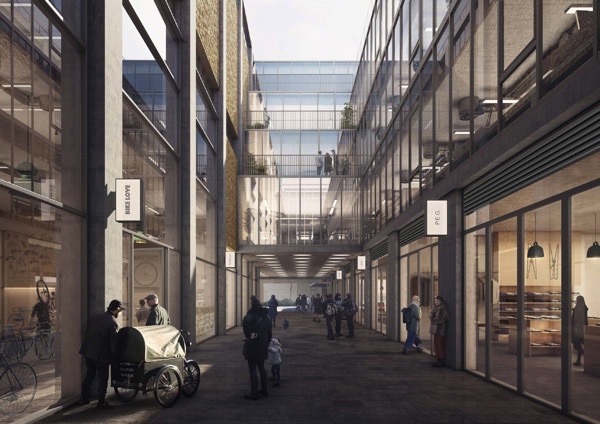
Shopping mall
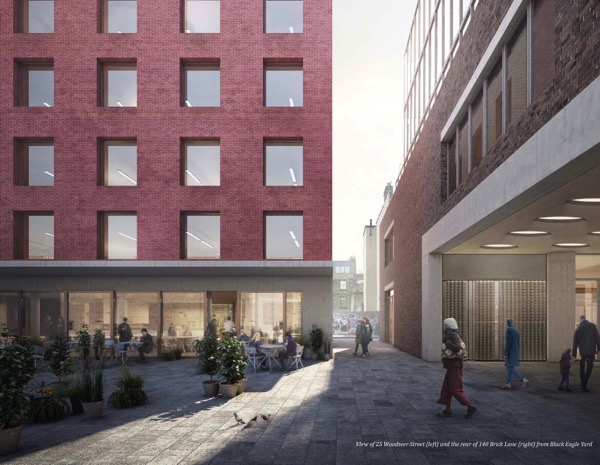
Corporate plaza
STATEMENT BY THE SPITALFIELDS TRUST
The vast Truman Brewery site needs a proper development brief from the London Borough of Tower Hamlets.
- For this large site in such an important location, it is usual for the local council to create a development brief, providing guidance on the type of uses which the area actually needs. This is an important opportunity for LBTH to focus on housing and affordable work space. They have the power to set parameters for the size, bulk and design of the buildings on this site.
This proposal slices off the south east corner of the Truman Brewery site for an ill-conceived development.
- Large glass-walled corporate offices with double-height foyers onto Brick Lane, adopting the architectural language of the City which has no place in the Conservation Area.
- A lamentable failure to address the pressing need for housing and affordable workspace in the area.
- A shopping mall spilling out into the small surrounding streets, bringing more than a thousand extra people into the narrow streets at peak weekend hours.
- Buildings that are too tall and bulky which will have a harmful impact on the character of Brick Lane and the characterful nineteenth-century terrace on the south side of Woodseer St, while obscuring views of the historic Truman Brewery chimney.
- Destroying the distinction between the vibrant, busy character of Brick Lane and Woodseer Street which is a quiet, residential backwater.
- Breaching the local planning guidance that new retail and restaurants should be resisted in the residential side streets off Brick Lane.
- This development focusses on commercial space at the expense of local residents interests, by overshadowing of local houses, creating up to 60% loss of light, and delivering a huge increase in the visitor numbers with all the associated noise and disturbance.
- Restaurants with open air spaces and three terraces for corporate entertainment.
- Very few residents have been consulted.
The Truman Brewery development is a short-sighted, poorly and insensitively designed scheme based on an antiquated business model. Rather than providing much needed housing and affordable workspace, it seeks to introduce buildings inappropriate to the Conservation Area, which will destroy its appearance and character to the detriment of residents and the local community.
Click here to see the planning application
HOW TO OBJECT EFFECTIVELY
- Quote Planning Application PA/20/00415/A1 (140 and 146 Brick Lane, and 25 Woodseer St, London E1).
- Please write in your own words your reasons for OBJECTION before Friday 26th June.
- Remember to include your postal address. Members of one household can each write separately. Anyone can object wherever they are in the world.
Send your objection to Patrick.Harmsworth@towerhamlets.gov.uk
Follow the Spitalfields Trust to keep up to date with this story
Twitter @SpitalfieldsT
Facebook /thespitalfieldstrust
Instagram @spitalfields_trust
Beigels Already
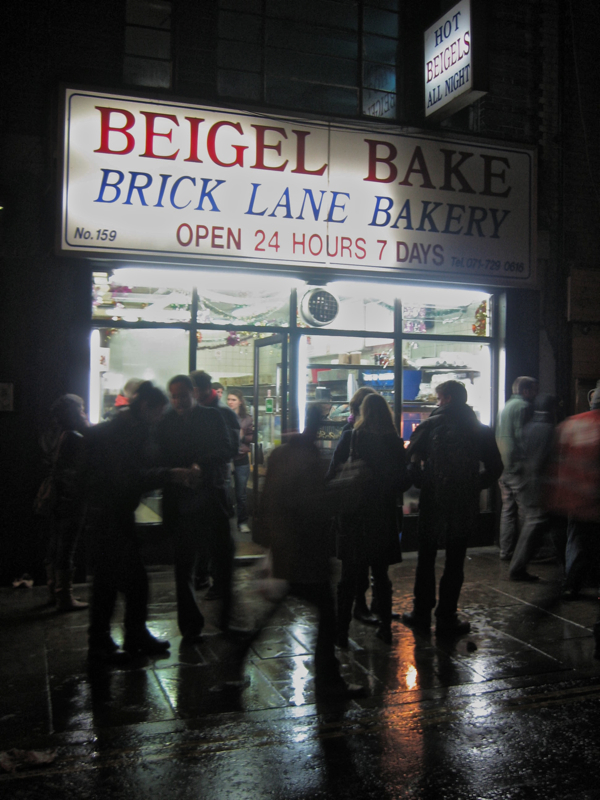
Debbie Shuter’s short film ‘Beigels Already’ was shot at Brick Lane Beigel Bakery in 1992. Watch out for appearances by some familiar local characters, including Mr Sammy looking youthful and sassy.
You may also like to read about
List Of Shops Open For Business
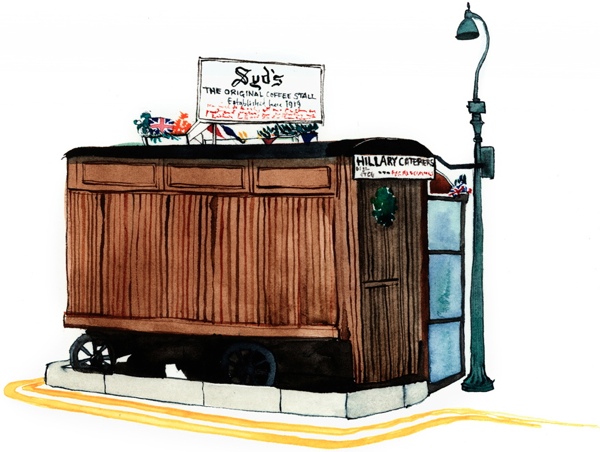
Syd’s Coffee Stall by Eleanor Crow
Every Wednesday, I publish the up to date list of stalwarts that are open in Spitalfields. Readers are especially encouraged to support small independent businesses who offer an invaluable service to the community. This list confirms that it is possible to source all essential supplies locally without recourse to supermarkets.
Be advised many shops are operating limited opening hours at present, so I recommend you call in advance to avoid risking a wasted journey.
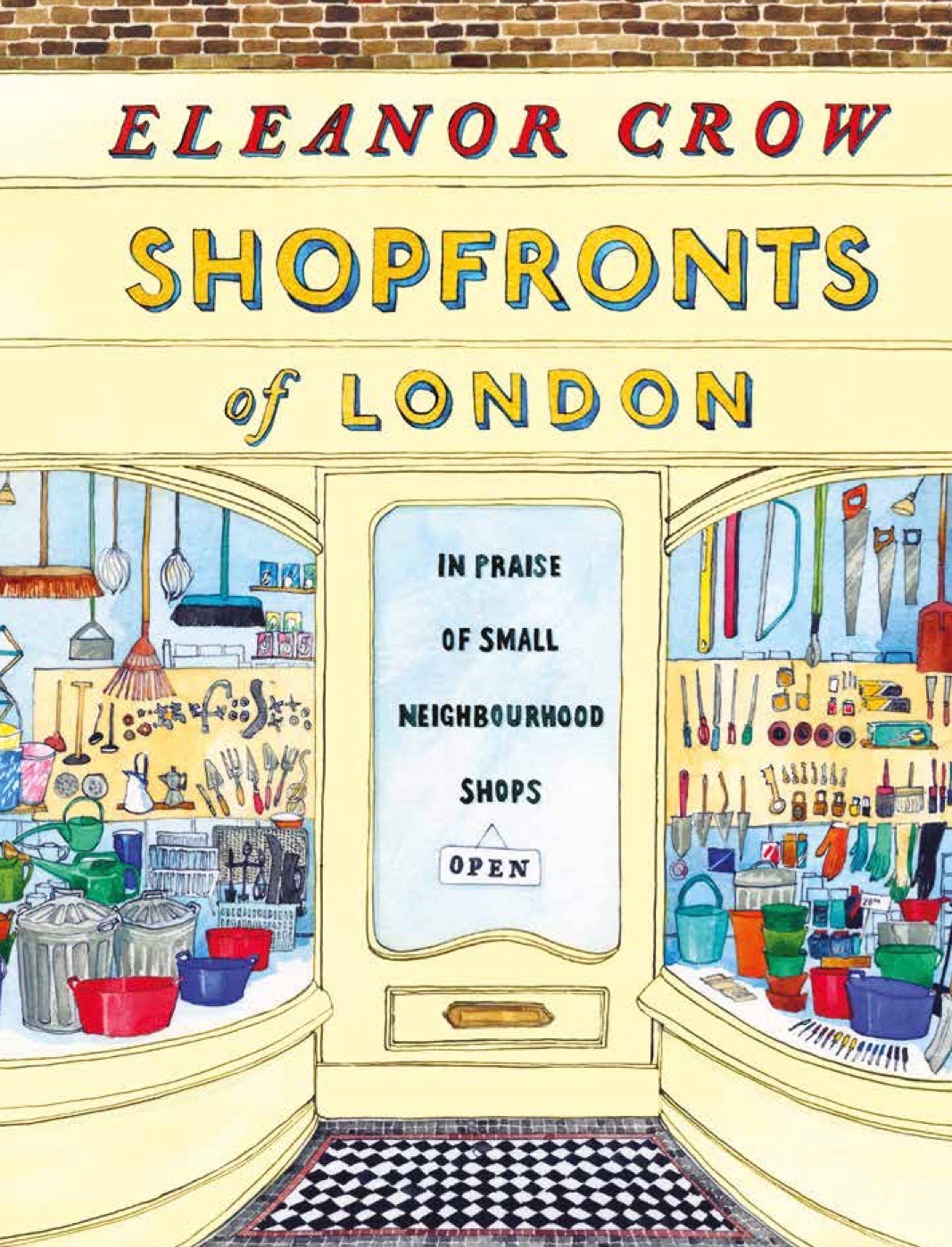
This week’s illustrations are by Eleanor Crow from her book SHOPFRONTS OF LONDON.
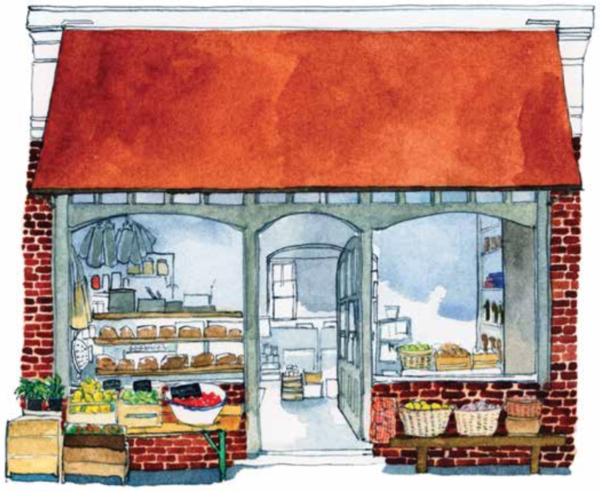
Leila’s Shop, Calvert Ave, by Eleanor Crow
GROCERS & FOOD SHOPS
The Albion, 2/4 Boundary St
Ali’s Mini Superstore, 50d Greatorex St
AM2PM, 210 Brick Lane
As Nature Intended, 132 Commercial St
Banglatown Cash & Carry, 67 Hanbury St
Breid Bakery, Arch 72, Dunbridge St
Brick Lane Minimarket, 100 Brick Lane
The Butchery Ltd, 6a Lamb St (Open Thursdays only)
City Supermarket, 10 Quaker St
Costprice Minimarket, 41 Brick Lane
Faizah Minimarket, 2 Old Montague St
JB Foodstore, 97 Brick Lane
Haajang’s Corner, 78 Wentworth St
Hackney Essentials, 146 Columbia Road
Leila’s Shop, 17 Calvert Avenue (Call 0207 729 9789 between 10am-noon on Tuesday-Saturdays to place your order and collect on the same day from 2pm-4pm)
The Melusine Fish Shop, St Katharine Docks
Nisa Local, 92 Whitechapel High St
Pavilion Bakery, 130 Columbia Rd
Rinkoff’s Bakery, 224 Jubilee Street & 79 Vallance Road
Spitalfields City Farm, Buxton St (Order through website)
Sylhet Sweet Shop, 109 Hanbury St
Taj Stores, 112 Brick Lane
Zaman Brothers, Fish & Meat Bazaar, 19 Brick Lane
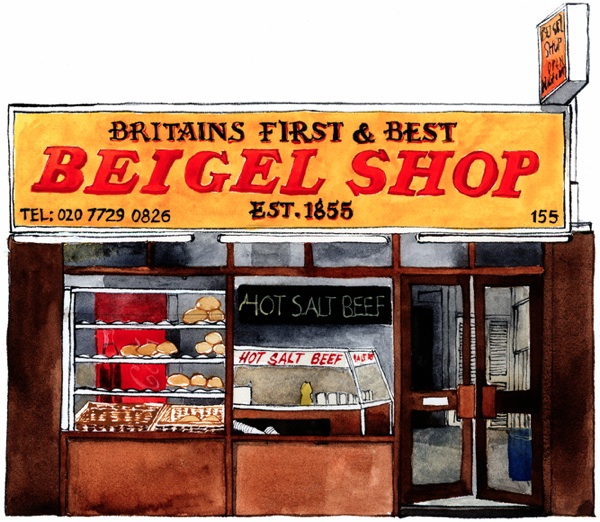
Beigel Shop, Brick Lane, by Eleanor Crow
TAKE AWAY FOOD SHOPS
Before you order from a delivery app, why not call the take away or restaurant direct?
Absurd Bird Fried Chicken, 54 Commercial St
Al Badam Fried Chicken, 37 Brick Lane
Allpress Coffee, 58 Redchurch St
Band of Burgers, 22 Osborn St
Beef & Birds, Brick Lane
Beigel Bake, 159 Brick Lane
Beigel Shop, 155 Brick Lane
Bellboi Coffee, 104 Sclater St
Bengal Village, 75 Brick Lane
Big Moe’s Diner, 95 Whitechapel High St
Burro E Salvia Pastificio, 52 Redchurch St
The Carpenters Arms, 73 Cheshire St (Open for take away beers)
China Feng, 43 Commercial St
Circle & Slice Pizza, 11 Whitechapel Rd
Crosstown Doughnuts, 157 Brick Lane
Dark Sugars, 45a Hanbury St (Take away ice cream and deliveries of chocolate)
Donburi & Co, Korean & Japanese, 13 Artillery Passage
Duke of Wellington, 12 Toynbee St (Open for take away beers)
Eastern Eye Balti House, 63a Brick Lane
Enso Thai & Japanese, 94 Brick Lane
Exmouth Coffee Shop, 83 Whitechapel High St
Grounded Coffee Shop, 9 Whitechapel Rd
Holy Shot Coffee, 155 Bethnal Green Rd
Hotbox Smoked Meats, 46-48 Commercial St
Jack The Chipper, 74 Whitechapel High St
Jonestown Coffee, 215 Bethnal Green Rd
Laboratorio Pizza, 79 Brick Lane
La Cucina, 96 Brick Lane
Leon, 3 Crispin Place, Spitalfields Market
Madhubon Sweets, 42 Brick Lane
Mooshies Vegan Burgers, 104 Brick Lane
Nude Expresso, The Roastery, 25 Hanbury St
E. Pellicci, 332 Bethnal Green Rd
Pepe’s Peri Peri, 82 Brick Lane
Peter’s Cafe, 73 Aldgate High St
Picky Wops Vegan Pizza, 53 Brick Lane
Polo Bar, 176 Bishopsgate
Poppies, 6-8 Hanbury St
Quaker St Cafe, 10 Quaker St
Rajmahal Sweets, 57 Brick Lane
Rosa’s Thai Cafe, 12 Hanbury St
Shawarma Lebanese, 84 Brick Lane
Shoreditch Fish & Chips, 117 Redchurch St
Sichuan Folk, 32 Hanbury St
String Ray Globe Cafe, 109 Columbia Road
Sushi Show, 136 Bethnal Green Rd
Ten Bells, 84 Commercial St (Takeway beer on Thursday, Friday & Saturday)
Vegan Yes, Italian & Thai Fusion, 64 Brick Lane
White Horse Kebab, 336 Bethnal Green Rd
Yuriko Sushi & Bento, 48 Brick Lane
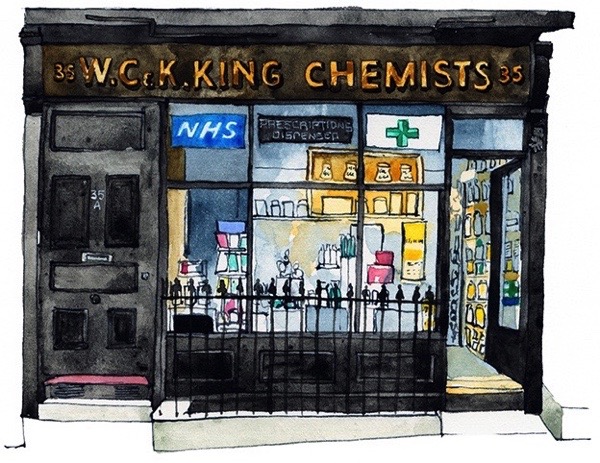
WC & K King, Amwell St, by Eleanor Crow
OTHER SHOPS & SERVICES
Analogue Films Photo Lab, 58 Hanbury St
Boots the Chemist, 200 Bishopsgate
Brick Lane Bookshop, 166 Brick Lane (Books ordered by phone or email are delivered free locally)
Brick Lane Bikes, 118 Bethnal Green Rd
Brick Lane Off Licence, 114/116 Brick Lane
Day Lewis Pharmacy, 14 Old Montague St
E1 Cycles, 4 Commercial St
Eden Floral Designs, 10 Wentworth St (Order fresh flowers online for free delivery)
Flashback Records, 131 Bethnal Green Rd (Order records online for delivery)
Harry Brand, 122 Columbia Road (Order gifts online for delivery)
Hussain Tailoring, 64 Hanbury St
iRepair, Phones & Computer, 94 Whitechapel High St
GH Cityprint, 58-60 Middlesex St
Leyland Hardware, 2-4 Great Eastern St
Mobile Clinic & Laptop Repairs, 7 Osborne St
Post Office, 160a Brick Lane
Quality Dry Clean, 151 Bethnal Green Rd
Rose Locksmith & DIY, 149 Bethnal Green Rd
Sid’s DIY, 2 Commercial St
Spitalfields Dry Cleaners, 12 Whites Row
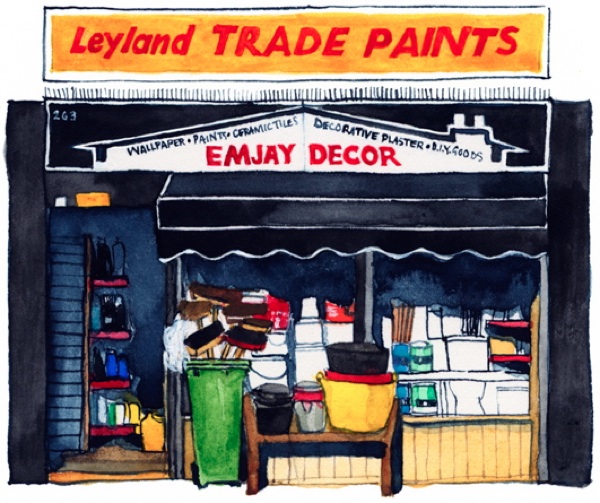
Emjay Decor, Bethnal Green Rd, by Eleanor Crow
ELSEWHERE
E5 Bakehouse, Arch 395, Mentmore Terrace (Customers are encouraged to order online and collect in person)
Gold Star Dry Cleaning & Laundry, 330 Burdett Rd
Hackney Essentials, 235 Victoria Park Rd
Quality Dry Cleaners, 16a White Church Lane
Newham Books, 747 Barking Rd (Books ordered by phone or email are posted out)
Region Choice Chemist, 68 Cambridge Heath Rd
Symposium Italian Restaurant, 363 Roman Road (Take away service available)
Thompsons DIY, 442-444 Roman Rd
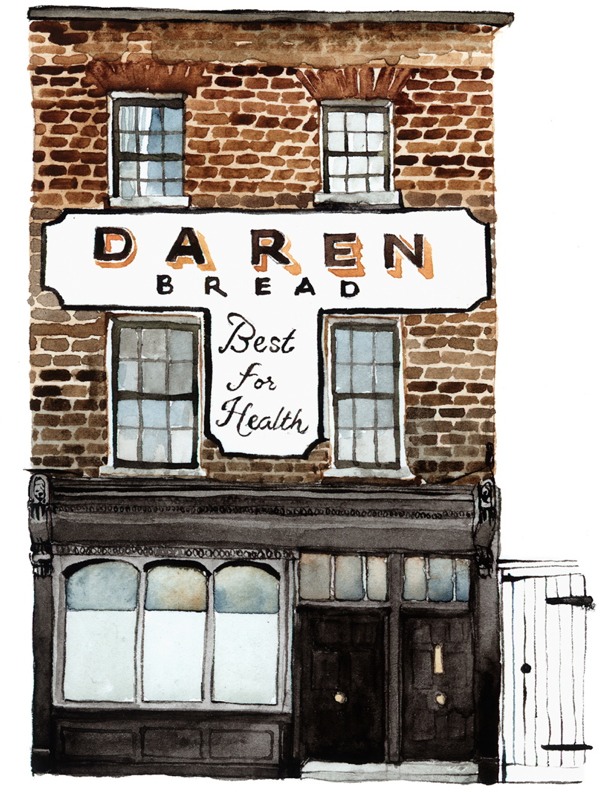
Daren Bread, Stepney Green, by Eleanor Crow
Paintings copyright © Eleanor Crow
You may like to see Eleanor Crow’s other shopfront paintings