John Thomas Smith’s Antient Topography

Bethelem Hospital with London Wall in Foreground – Drawn June 1812
Two centuries ago, John Thomas Smith set out to record the last vestiges of ancient London that survived from before the Great Fire of 1666 but which were vanishing in his lifetime. You can click on any of these images to enlarge them and study the tender human detail that Smith recorded in these splendid etchings he made from his own drawings. My passion for John Thomas Smith’s work was first ignited by his portraits of raffish street sellers published as Vagabondiana and I was delighted to spot several of those familiar characters included here in these vivid streets scenes of London long ago.
Click on any of these images to enlarge
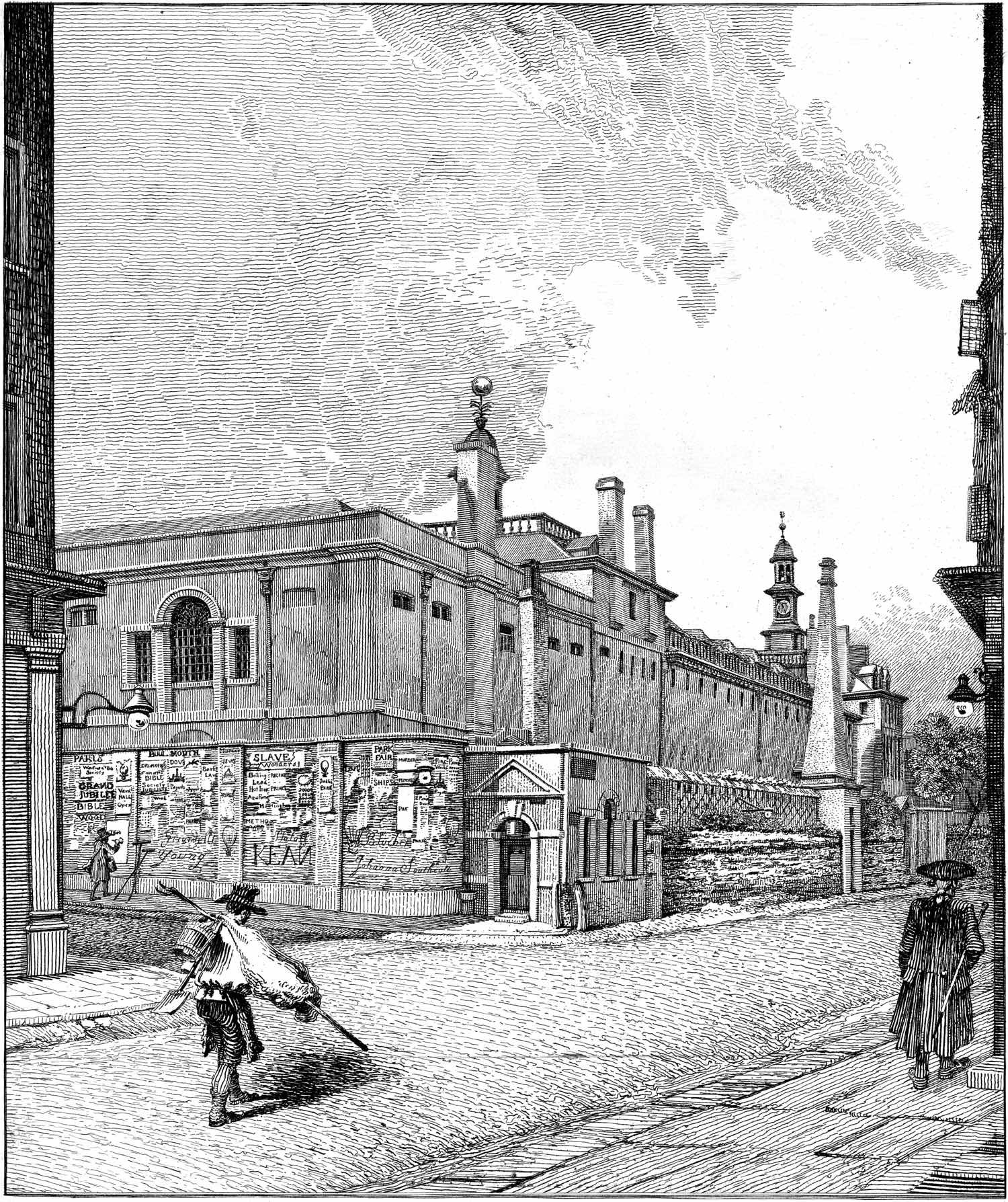
Bethel Hospital seen from London Wall – Drawn August 1844

Old House in Sweedon’s Passage, Grub St – Drawn July 1791, Taken Down March 1805
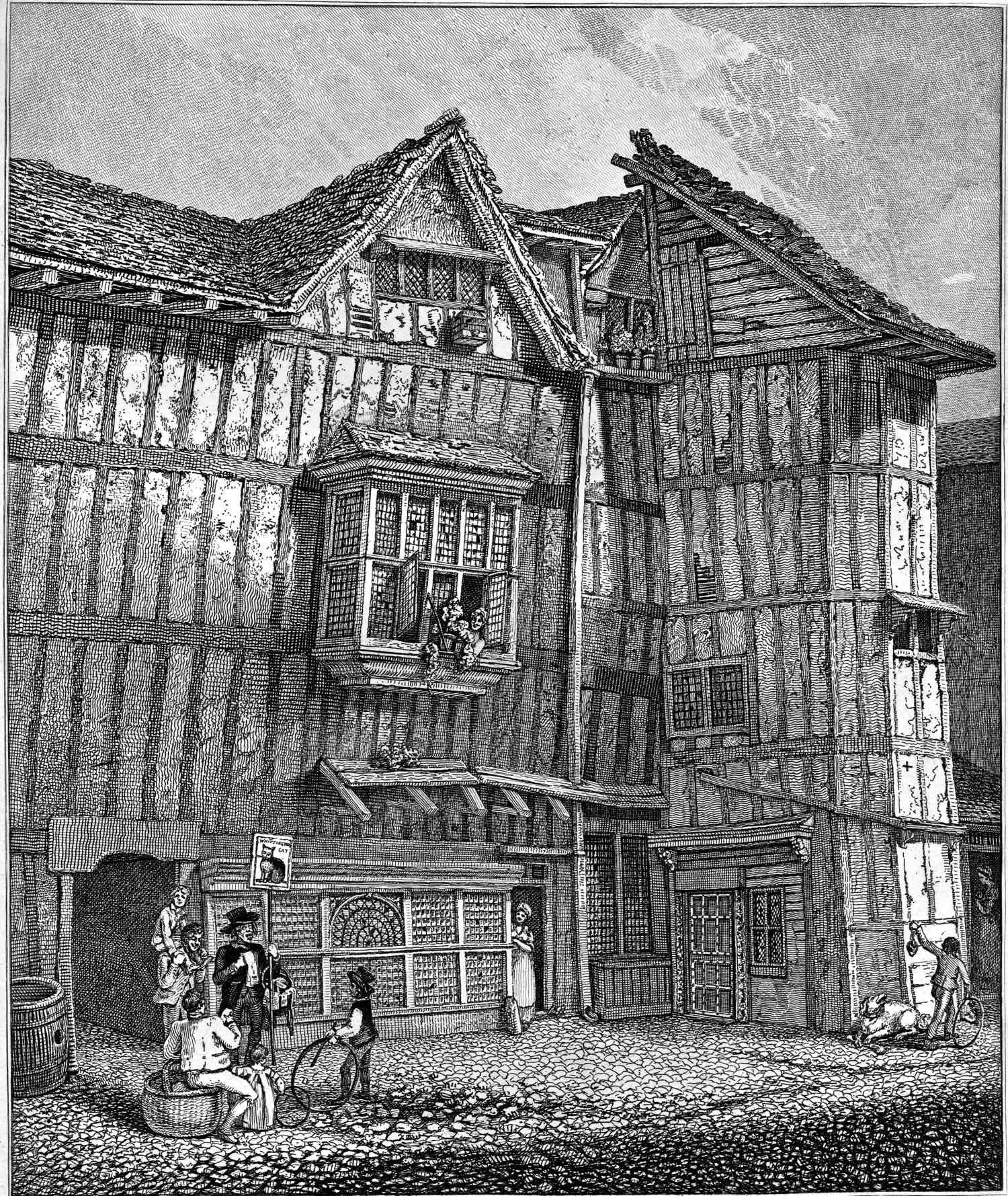
Old House in Sweedon’s Passage, Grub St – Drawn July 1791, Taken Down March 1805

London Wall in Churchyard of St Giles’ Cripplegate – Drawn 1793, Taken Down 1803
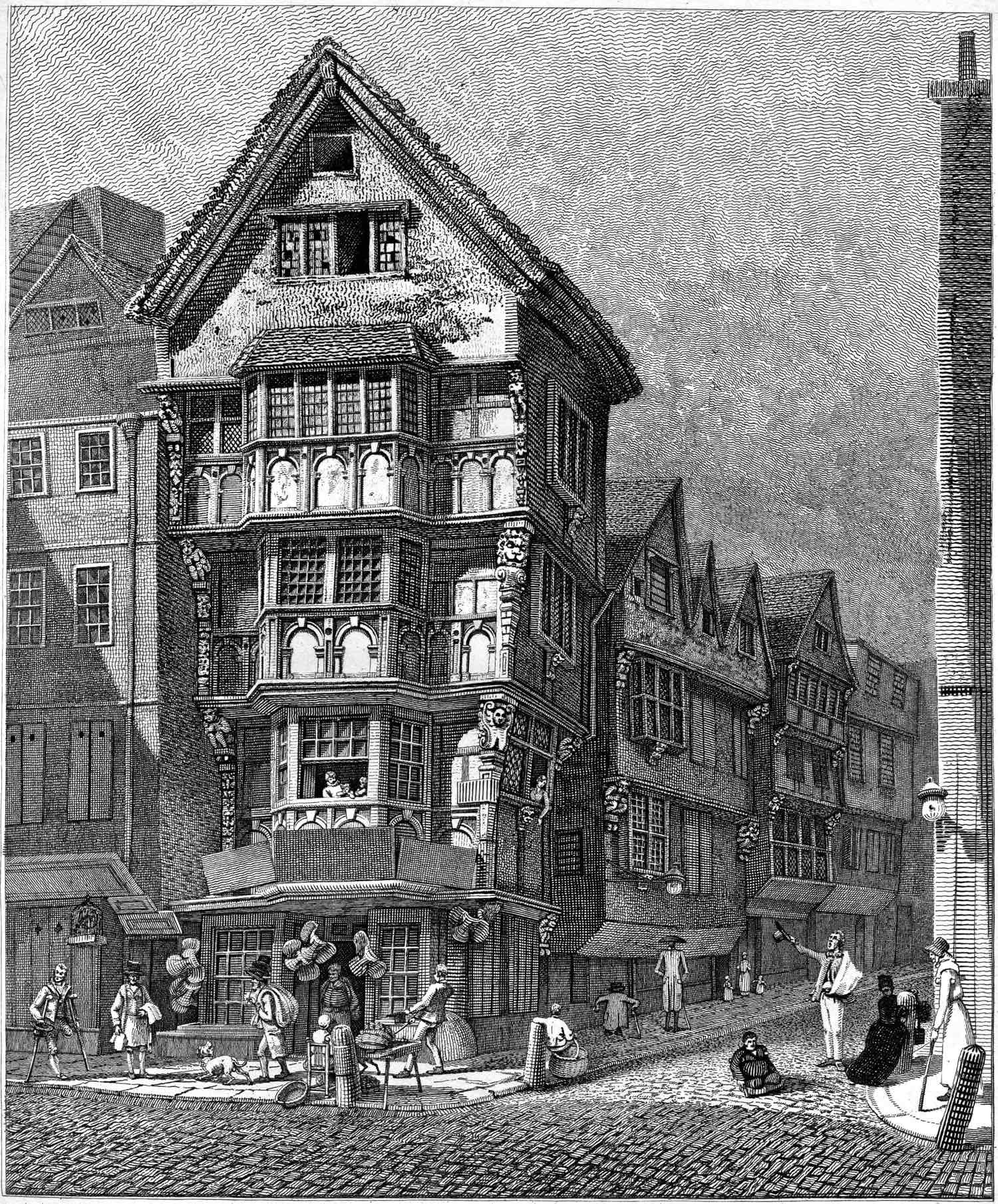
Houses on the Corner of Chancery Lane & Fleet St – Drawn August 1789, Taken Down May 1799

Houses in Leadenhall St – Drawn July 1796
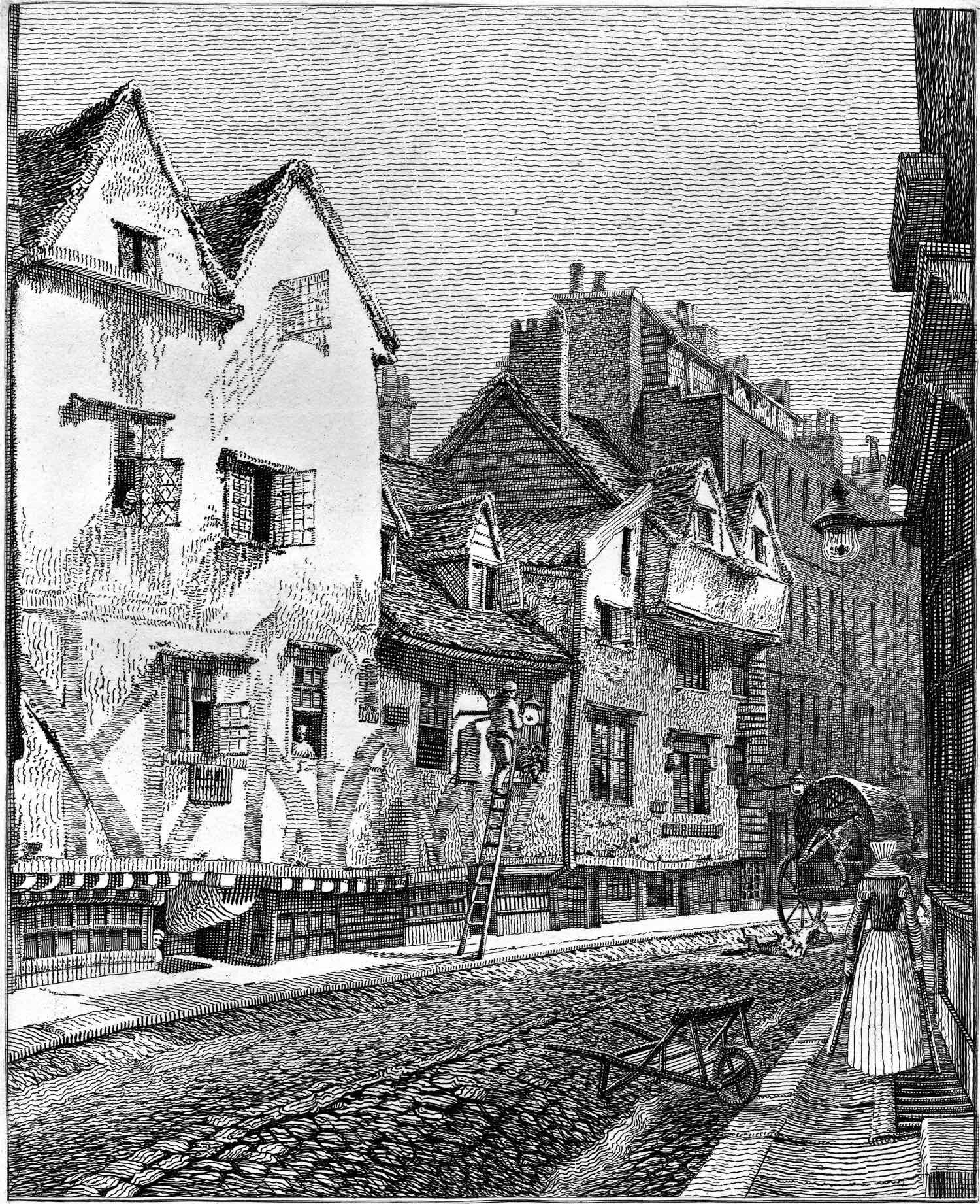
Duke St, West Smithfield – Drawn July 1807, Taken Down October 1809

Corner of Hosier Lane, West Smithfield – Drawn April 1795
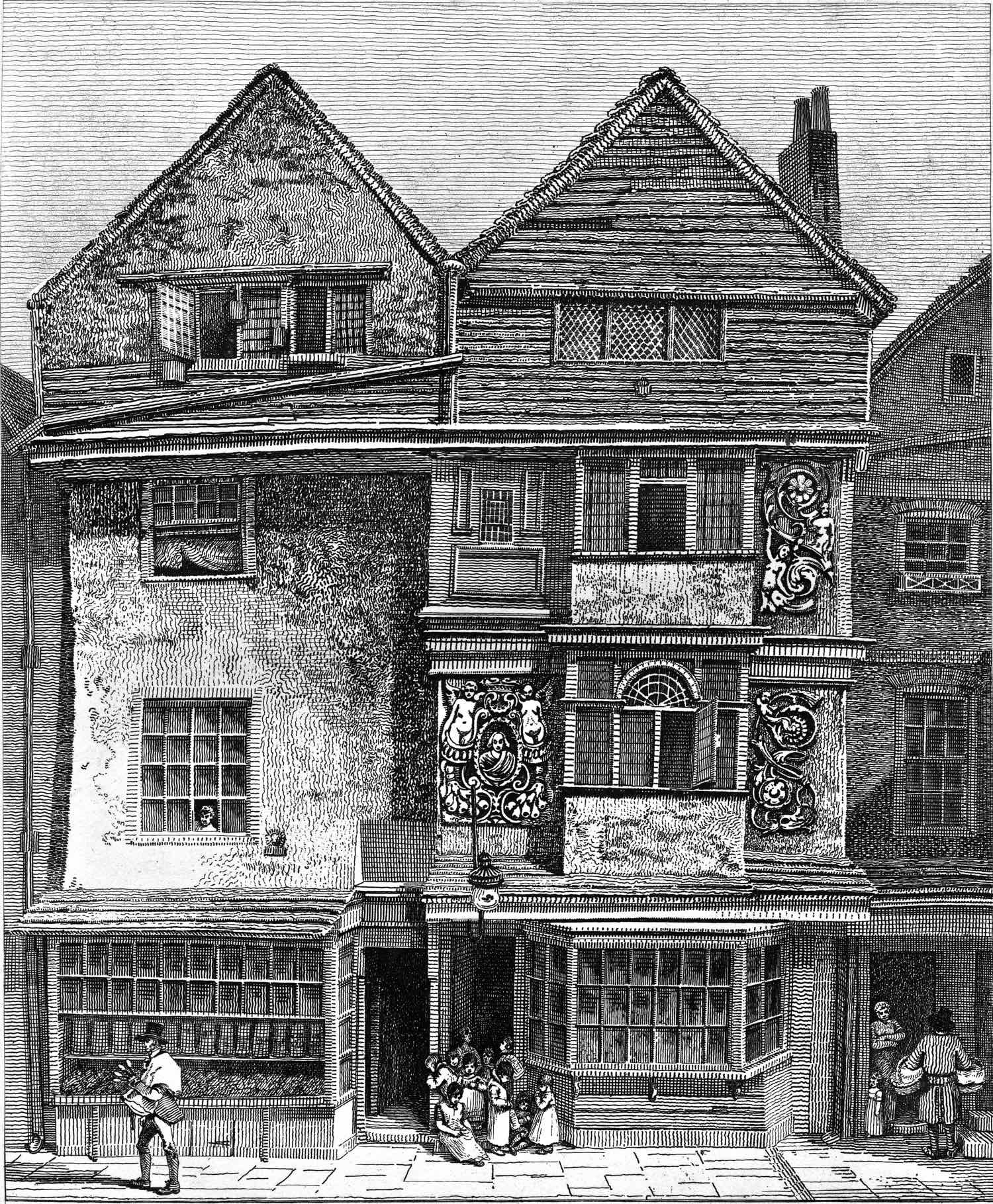
Houses on the South Side of London Wall – Drawn March 1808
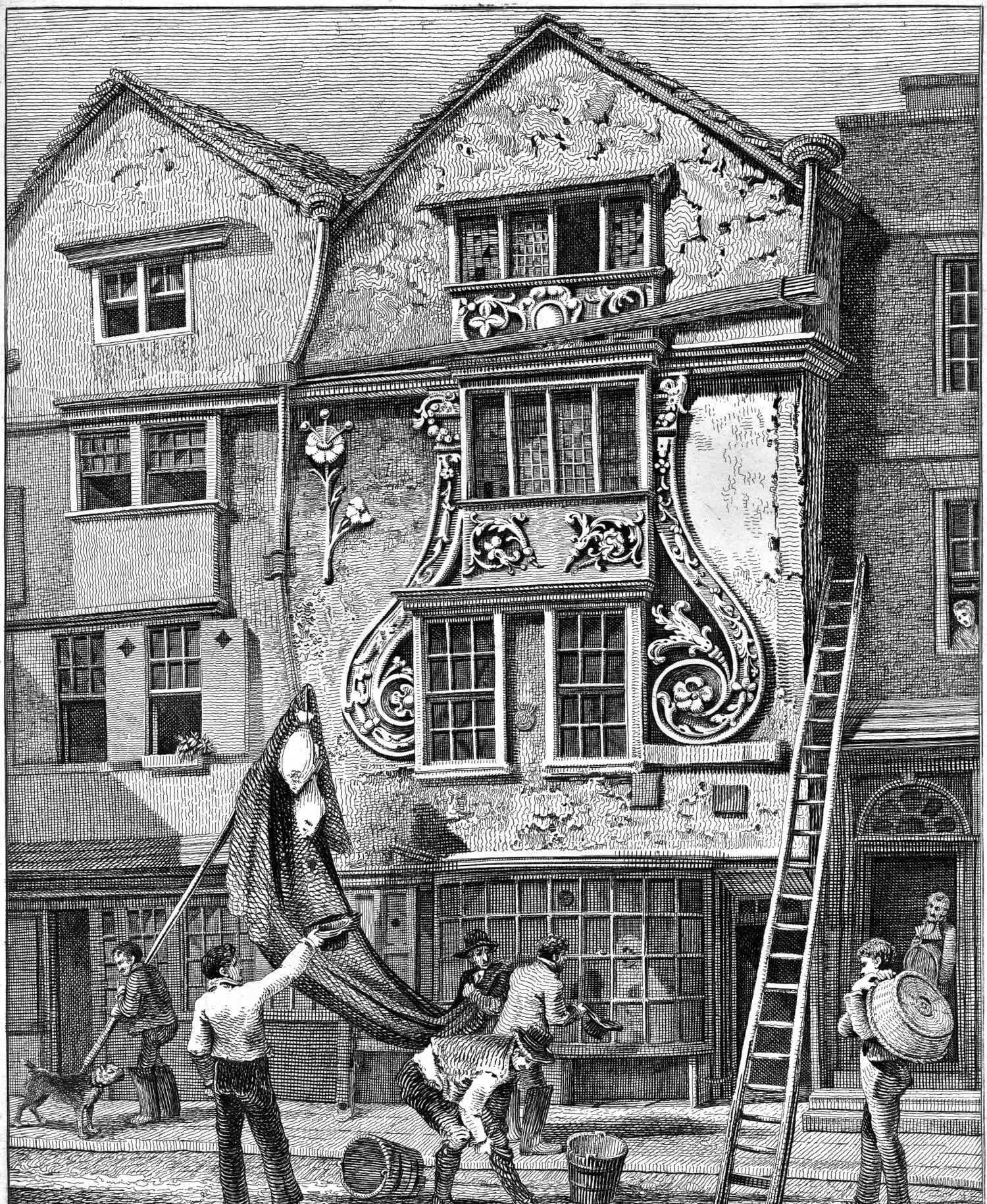
Houses on West Side of Little Moorfields – Drawn May 1810
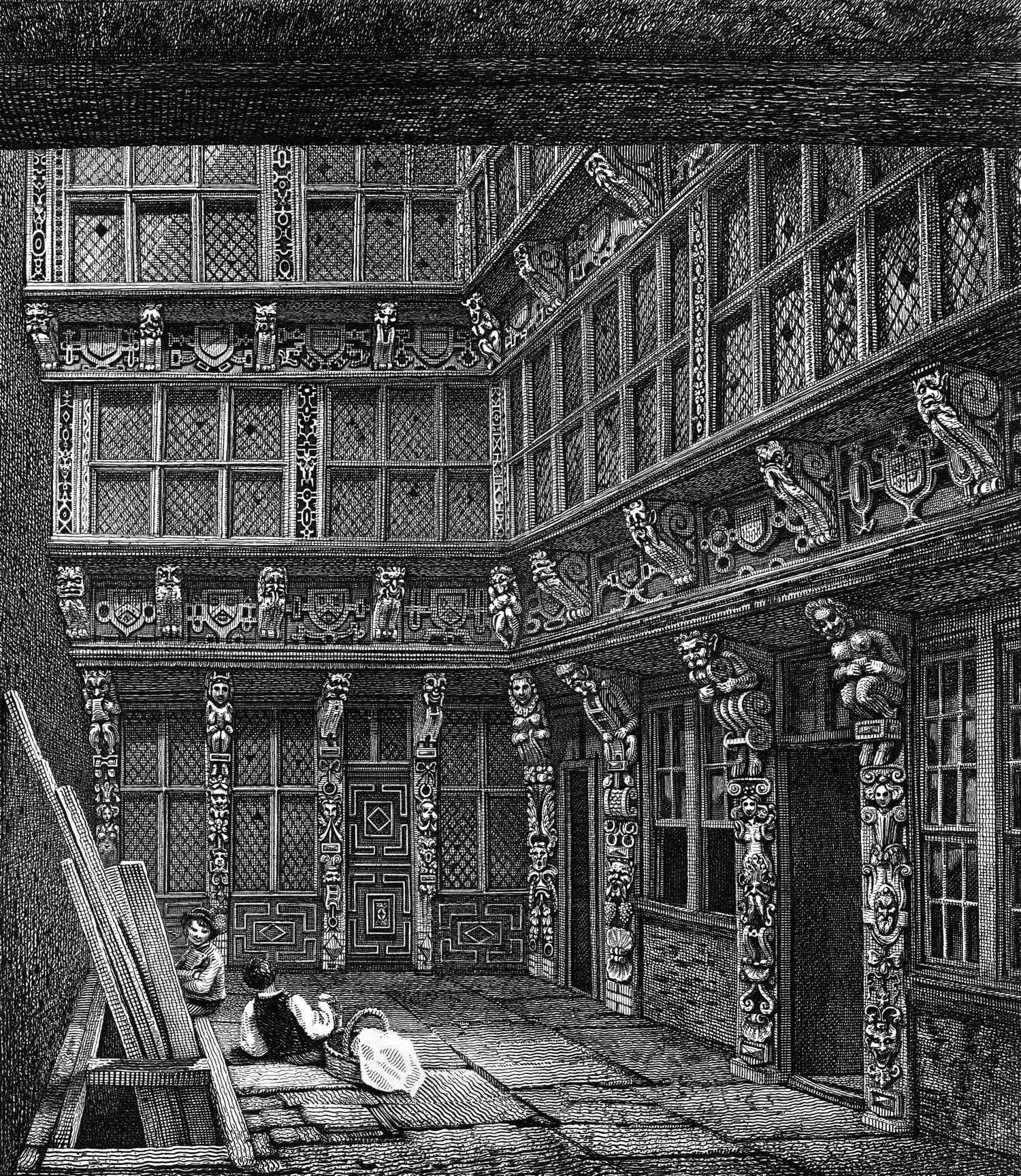
Magnificent Mansion in Hart St, Crutched Friars – Drawn May 1792, Taken Down 1801
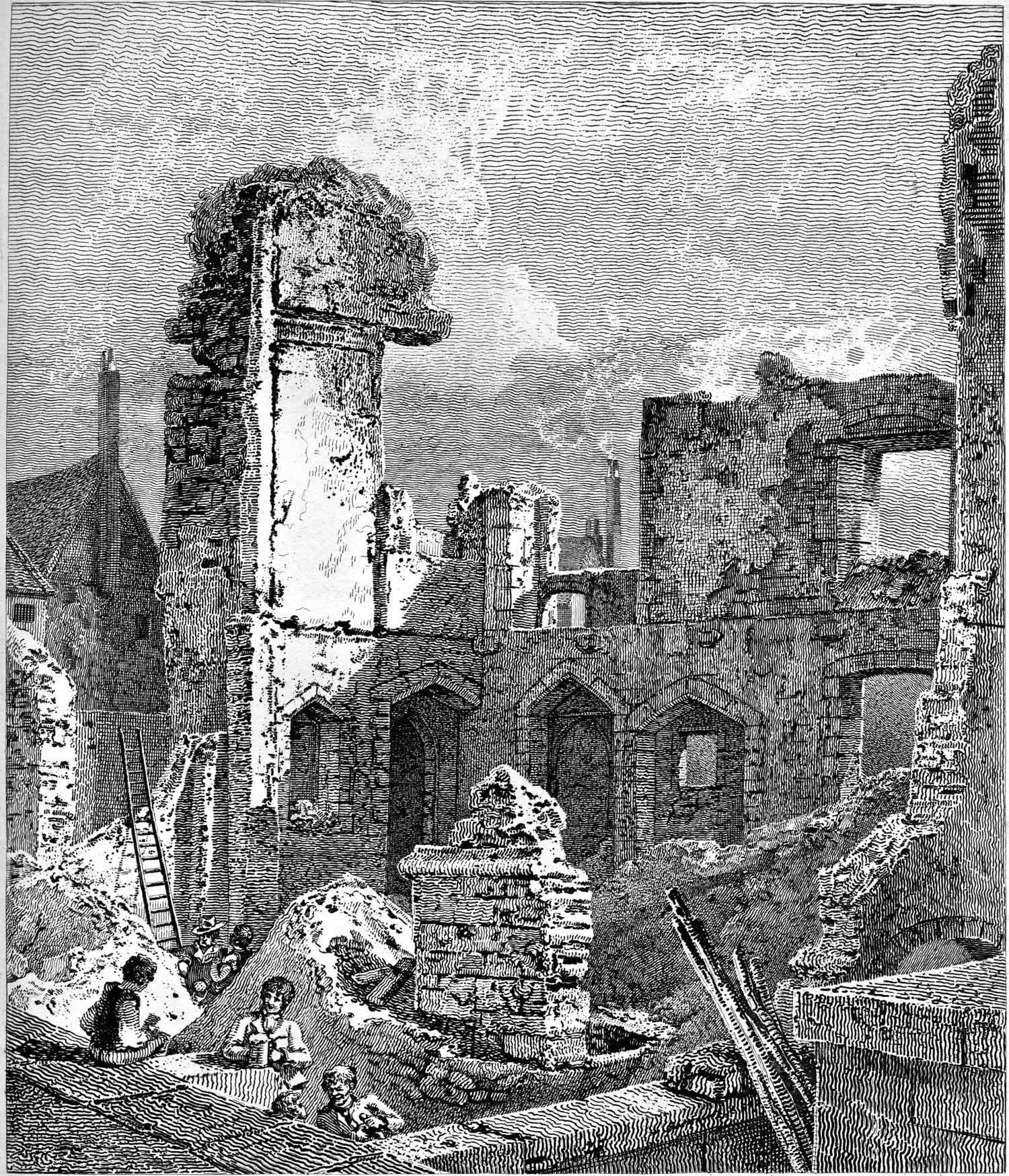
Walls of the Convent of St Clare, Minories – Drawn April 1797
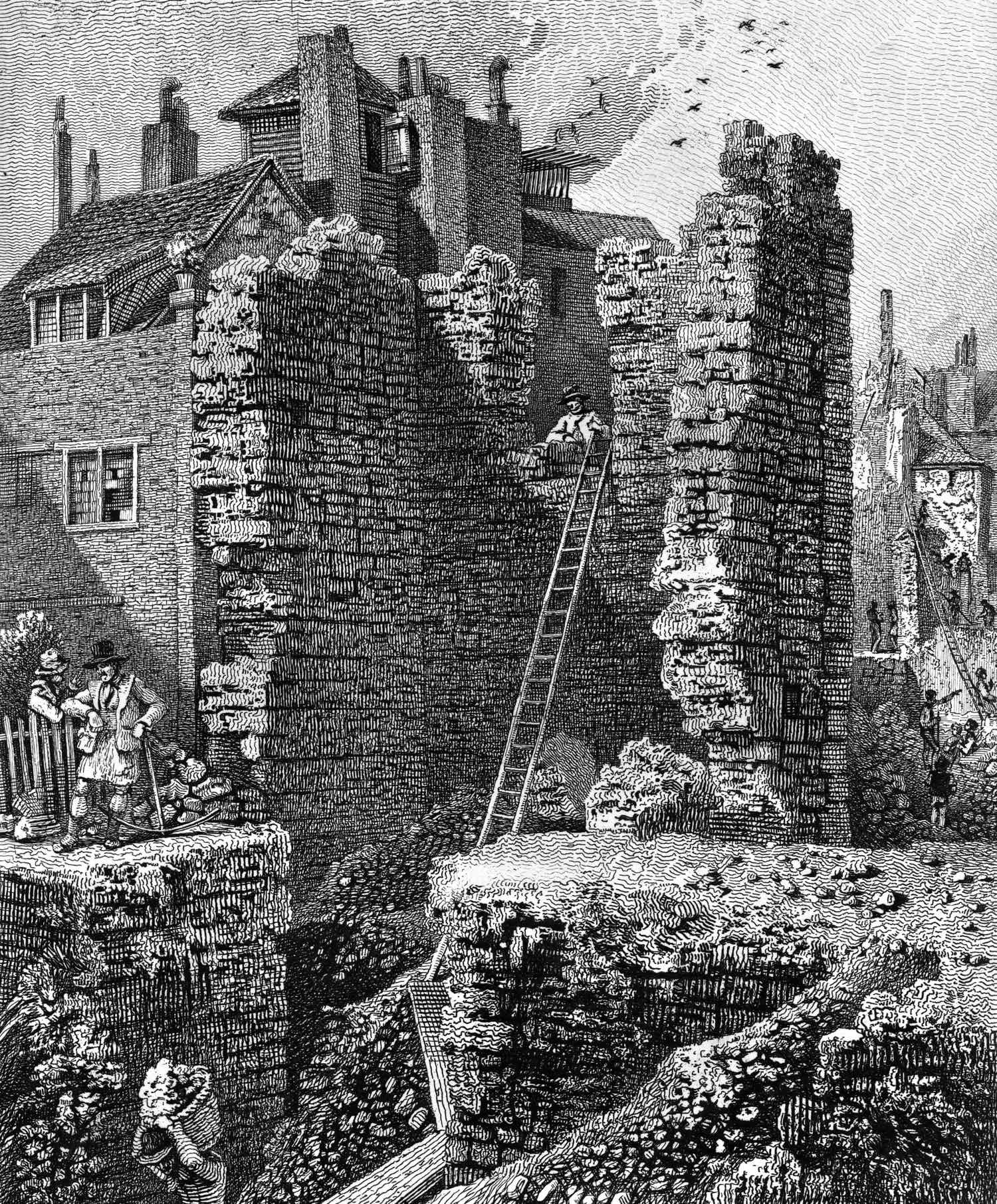
Watch Tower Discovered Near Ludgate Hill – Drawn June 1792
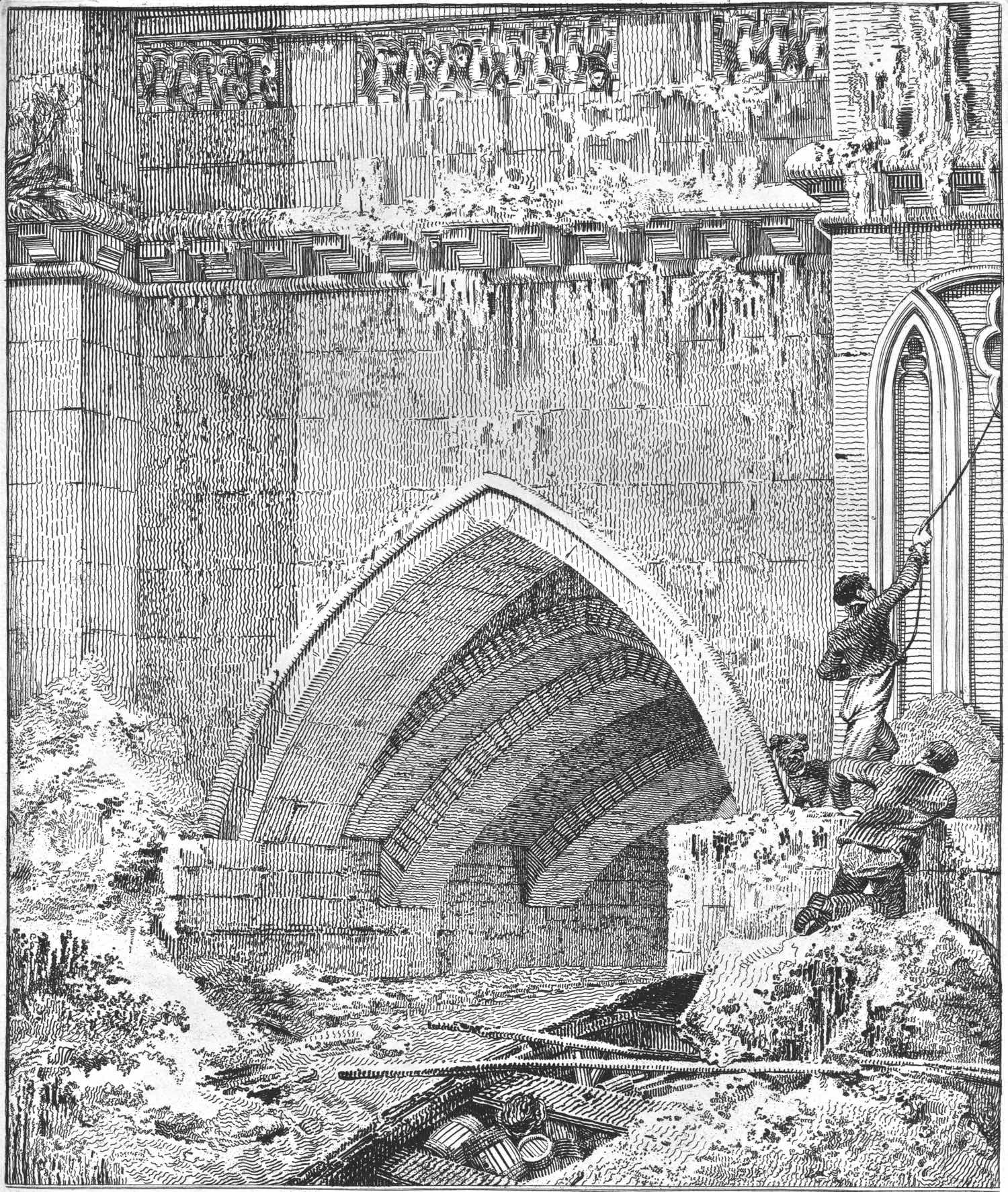
An Arch of London Bridge in the Great Frost – Drawn February 5th 1814
Images courtesy Bishopsgate Institute
You may also like to take a look at
John Thomas Smith’s Vagabondiana
On Top Of Britannic House With DC Tassell
In a new documentary series, Detective Constable Lew Tassell of the City of London Police Serious Fraud Squad reveals the truth of bribes and threats used to cover up corruption in seventies London.
Bent Coppers: Crossing the Line of Duty starts tonight, 14th April on BBC Two at 9pm.
Below you can enjoy a panoramic images of the City of London at this time as DC Tassell magically escorts us back thirty-five years and onto the roof of Britannic House in Ropemaker St to enjoy the view.

“In the summer of 1983, I was part of the City of London Serious Fraud Squad, operating from Wood St Police Station. A friend and ex-colleague of mine became head of security at British Petroleum in Britannic House, Ropemaker St and he invited me to photograph the views of London from the rooftop, so I took the opportunity. I went along one June morning and took my pictures.
Britannic House was the first building in the City of London to be taller than St Paul’s Cathedral and remained the tallest until the NatWest Tower was built in 1976. It is now known as City Point – since BP moved out some years ago – and has been refurbished with extra storeys, so it is even taller.” – Lew Tassell

Looking towards Christ Church, Spitalfields

Looking northeast towards the Bishopsgate Goodsyard with Bethnal Green beyond

Looking east to Old Broad St and Liverpool St Station with Spitalfields beyond.

Car park at Old Broad St Station where the Broadgate Estate is today

Looking east along Liverpool St towards Bishopgate and Dewhurst’s Butchers

Looking southeast to Finsbury Circus and the City of London

Looking southeast across the City of London towards Tower Bridge

Looking southwest along London Wall with St Paul’s Cathedral

The dome of St Paul’s with Westminster and Big Ben

Looking west towards Old Bailey and Trafalgar Sq

Looking northwest towards the Post Office Tower with the Barbican to the right

Looking northwest across Clerkenwell with St Pancras Station in the distance

Looking north to Whitecross St Market

Looking down onto the Barbican

St Giles Cripplegate

Looking down from the top of Britannic House

Looking down on Silk St

City of London mounted police in Fore St
Photographs copyright © Lew Tassell
You may also like to take a look at
At Annetta Pedretti’s House
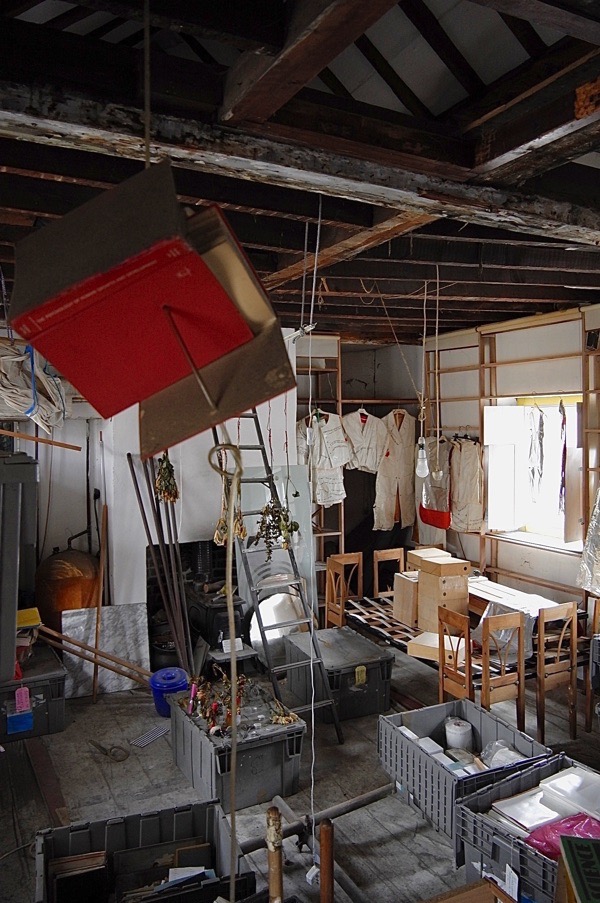
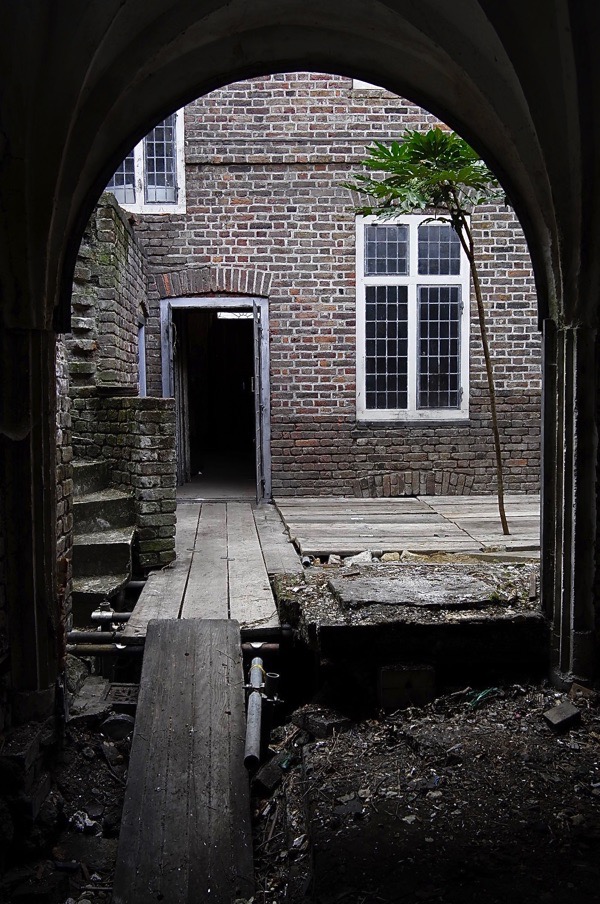
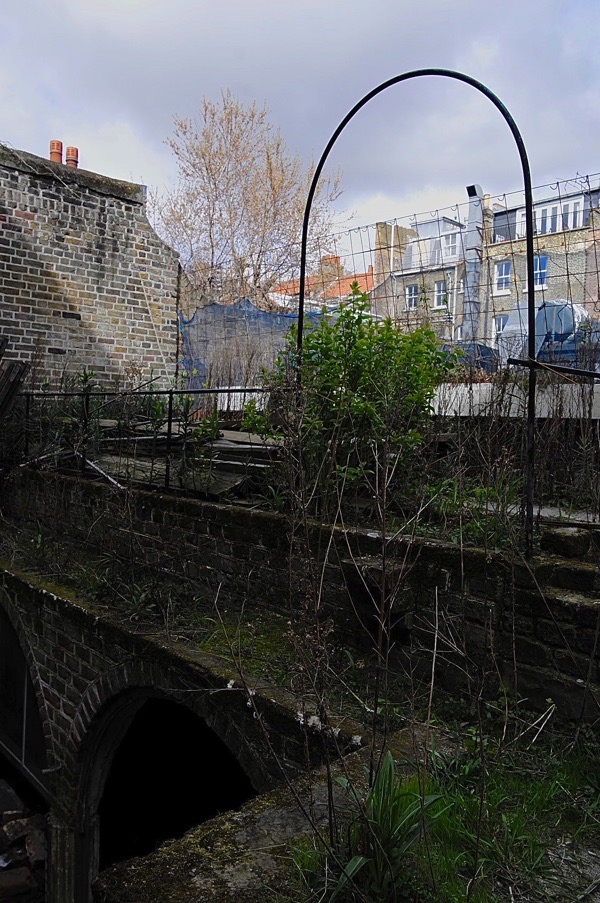
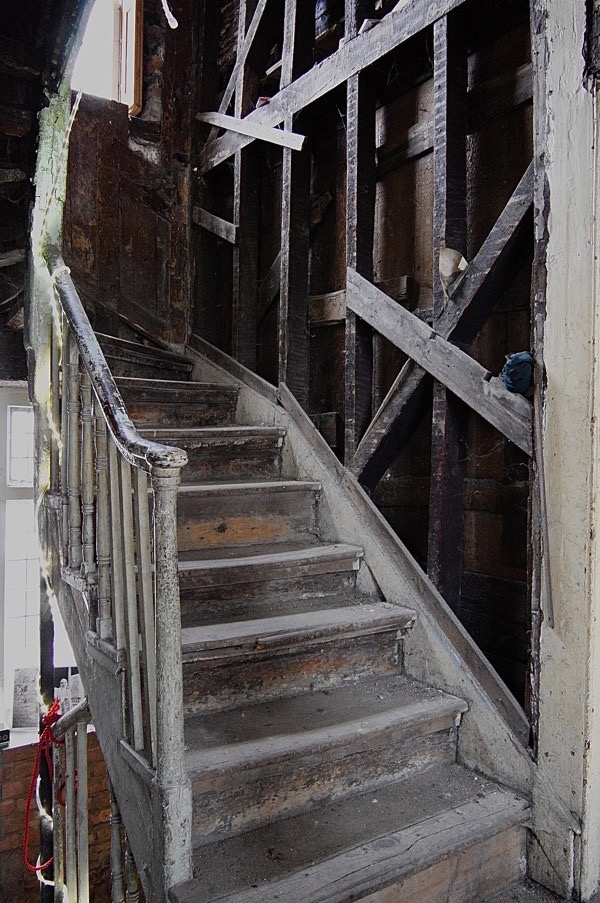
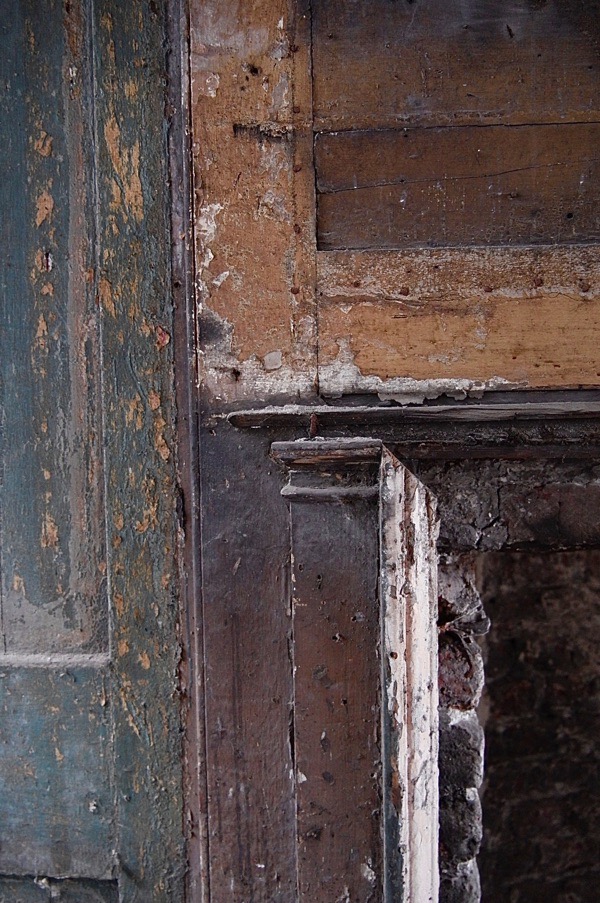
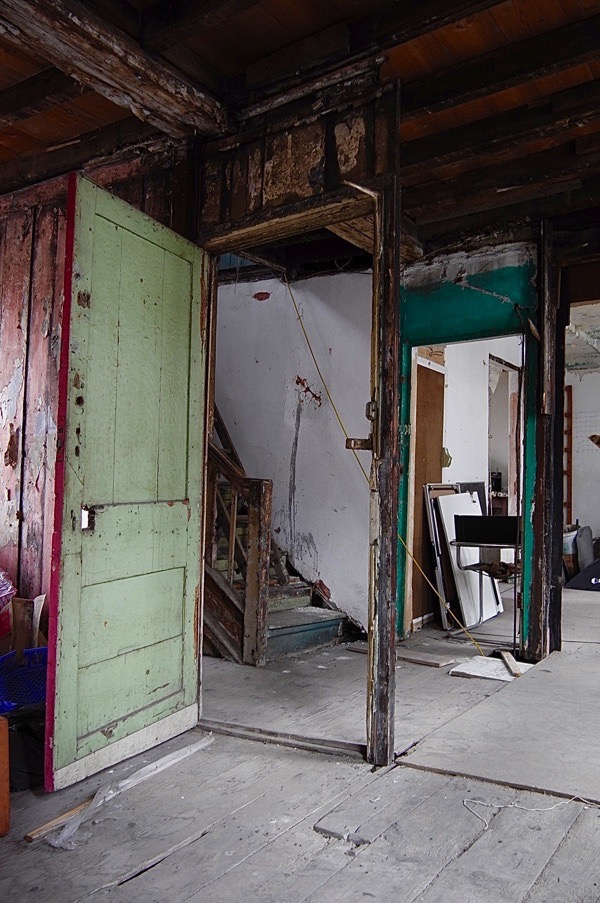
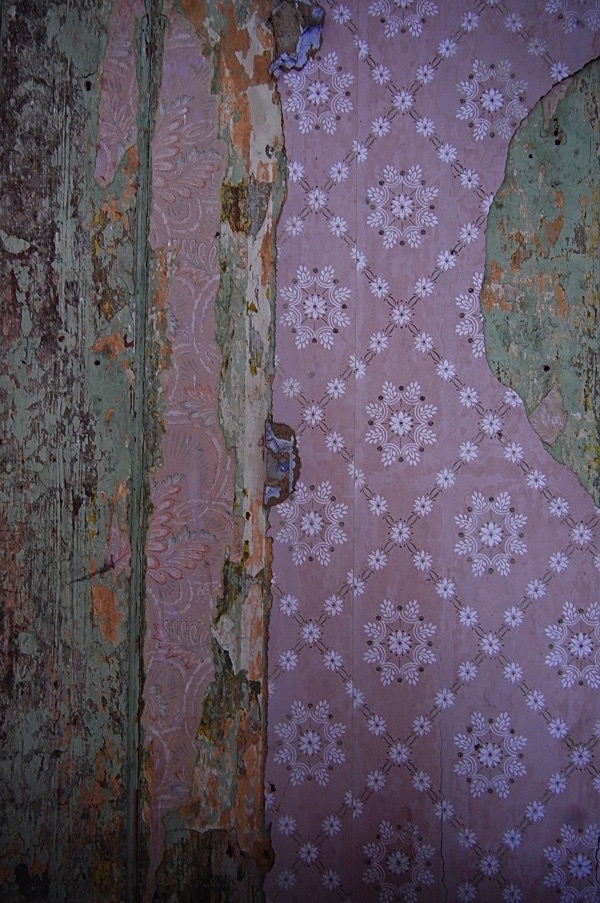
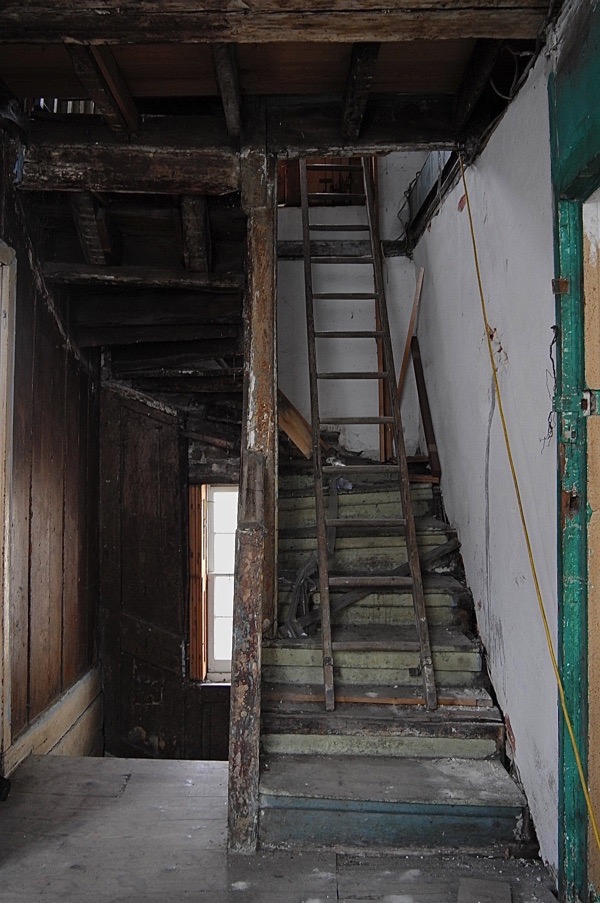
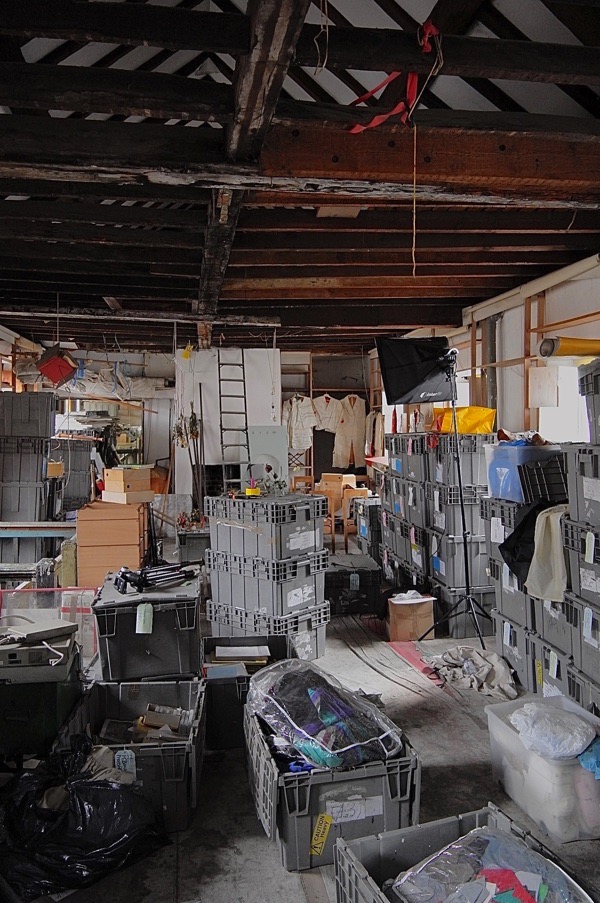
Yesterday I took these photographs of Annetta Pedretti’s eighteenth century house in Princelet St as an introduction to tonight’s free lecture by Louis Schulz of the architectural collective, Assemble. Louis will be telling the story of Annetta and her extraordinary house, and outlining plans for its future as a centre for campaigning and resistance against exploitative development.
Click here to register for HOUSE OF ANNETTA, A SITE OF RESISTANCE tonight, Tuesday 13th April at 7pm
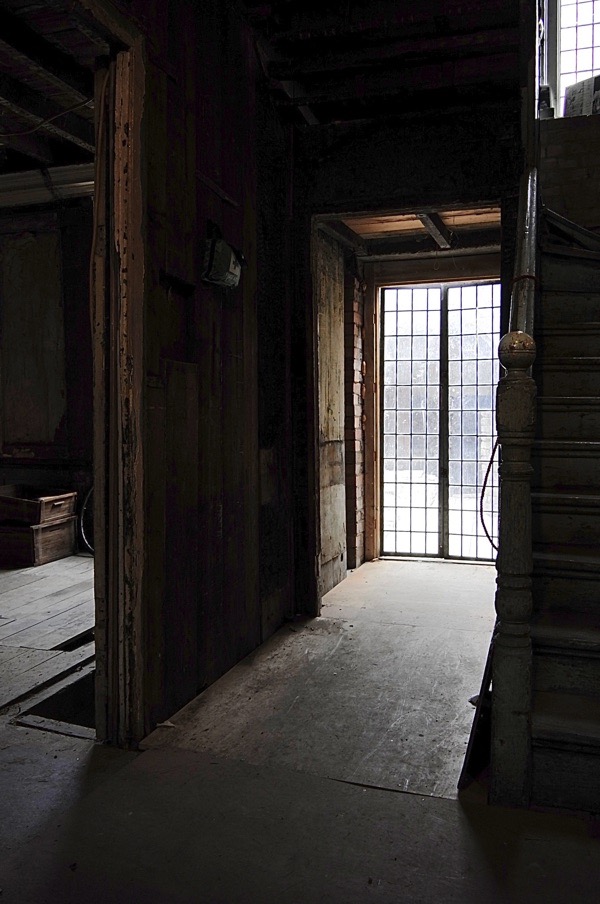
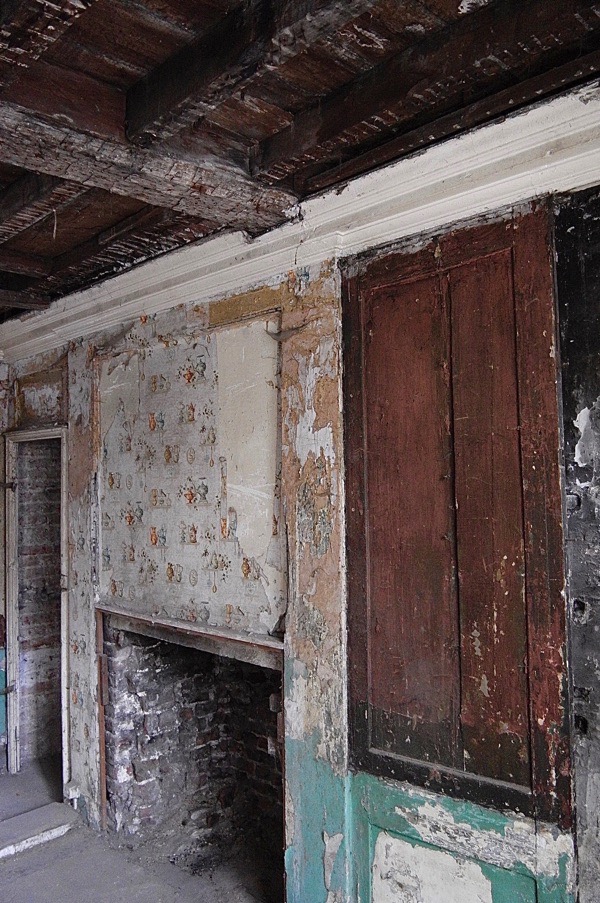
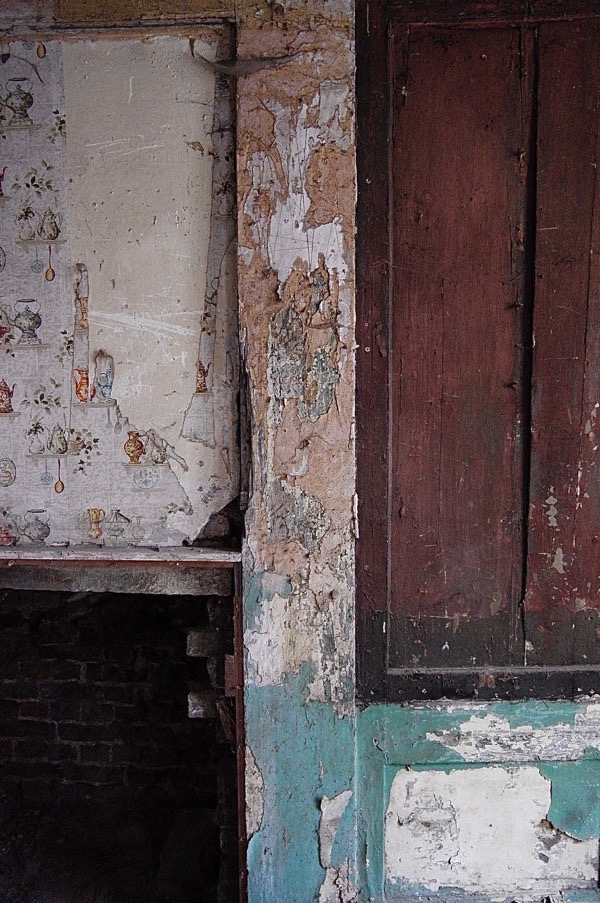
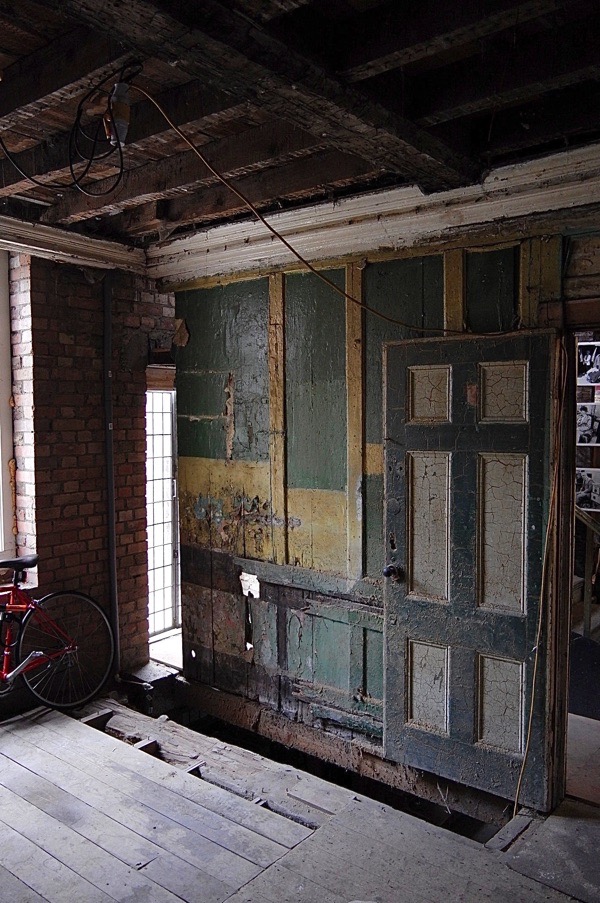
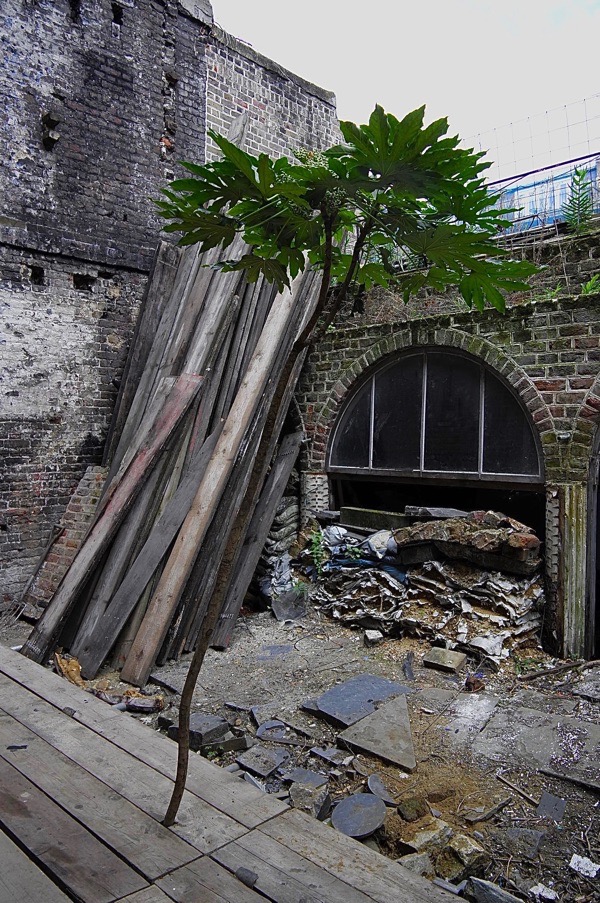
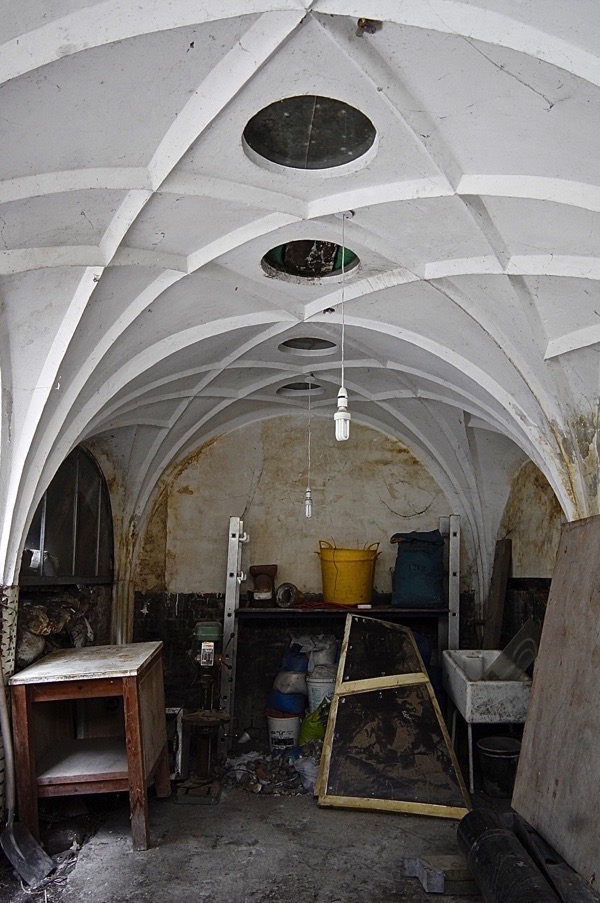
Annetta created this vaulting in her garden summer house
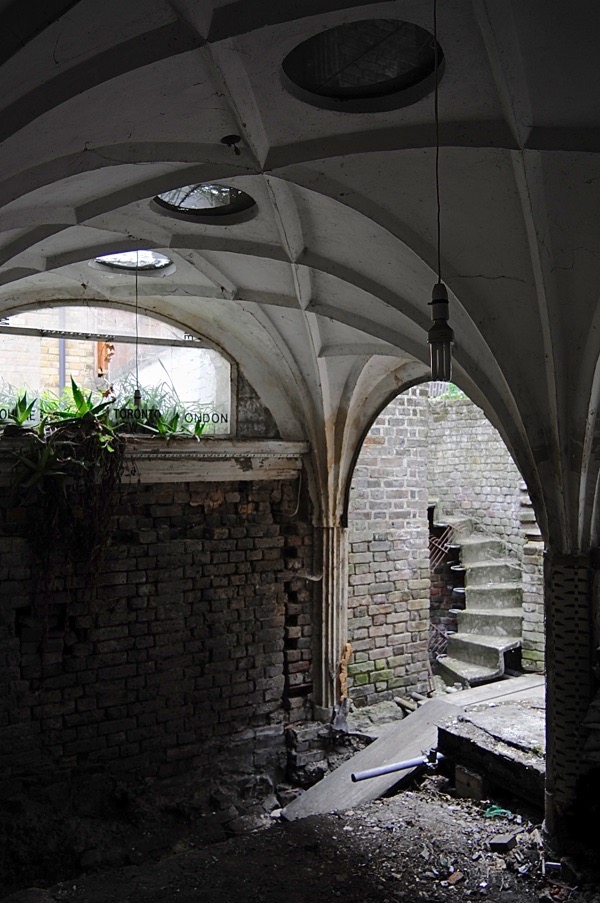
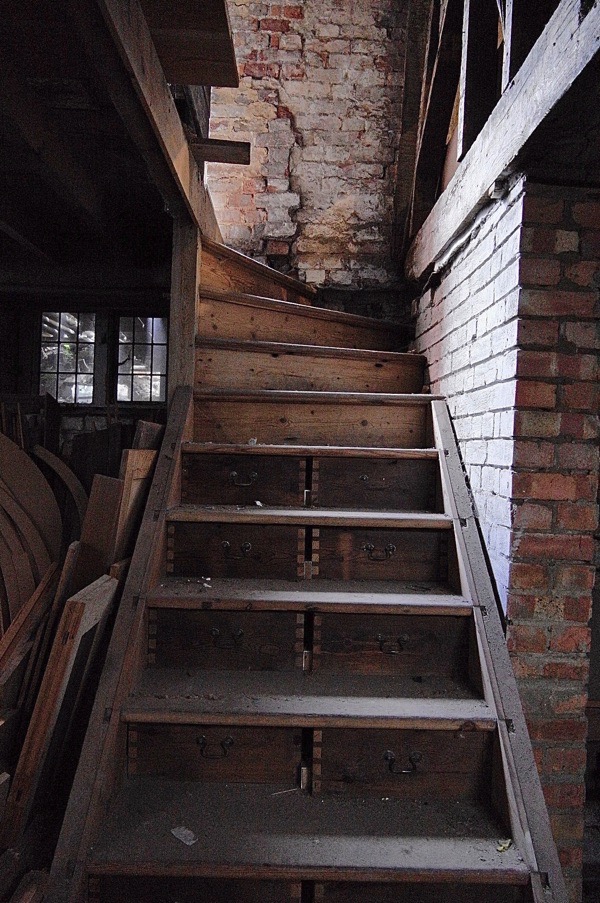
Annetta built these drawers into her staircase
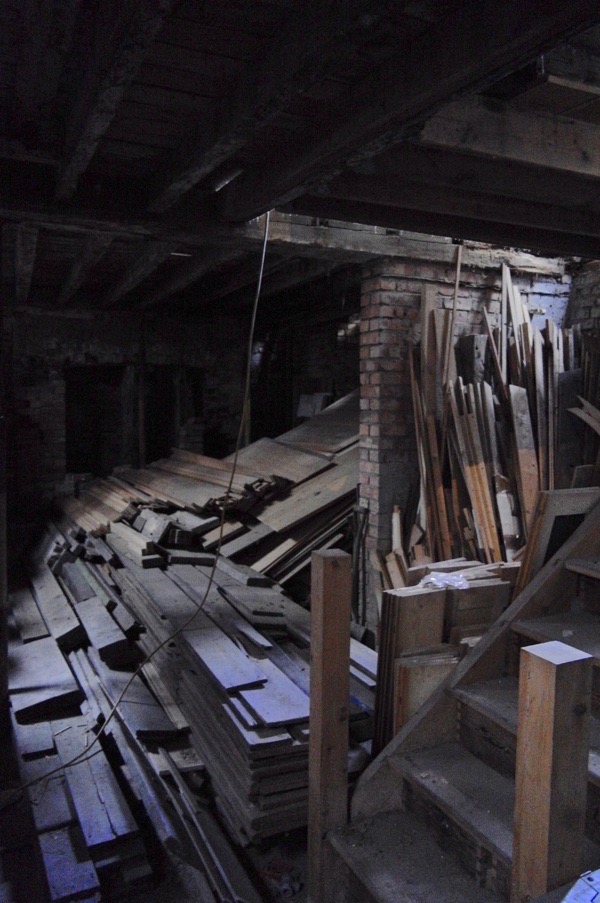
Annetta’s timber supply for repair of her house fills the cellar
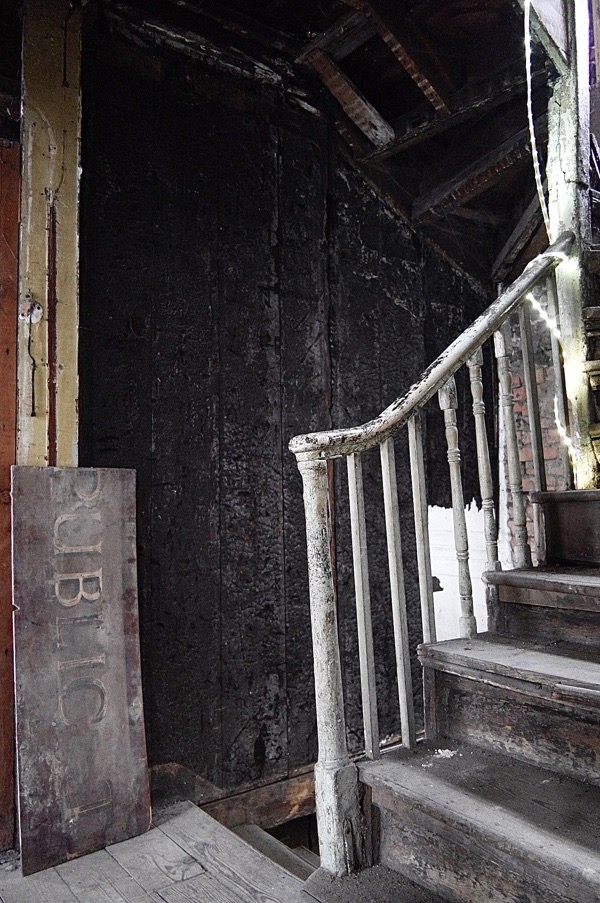
Fire damage on the first floor
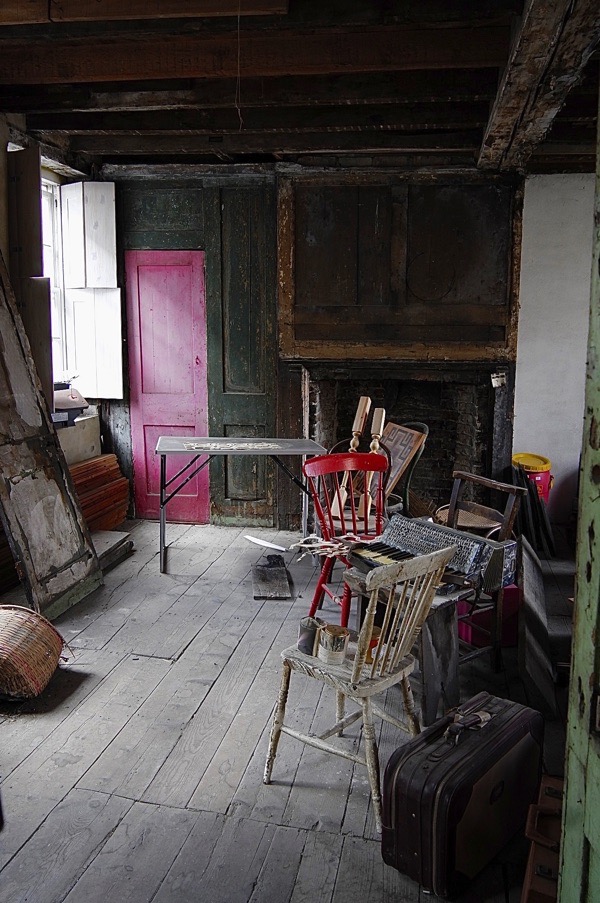
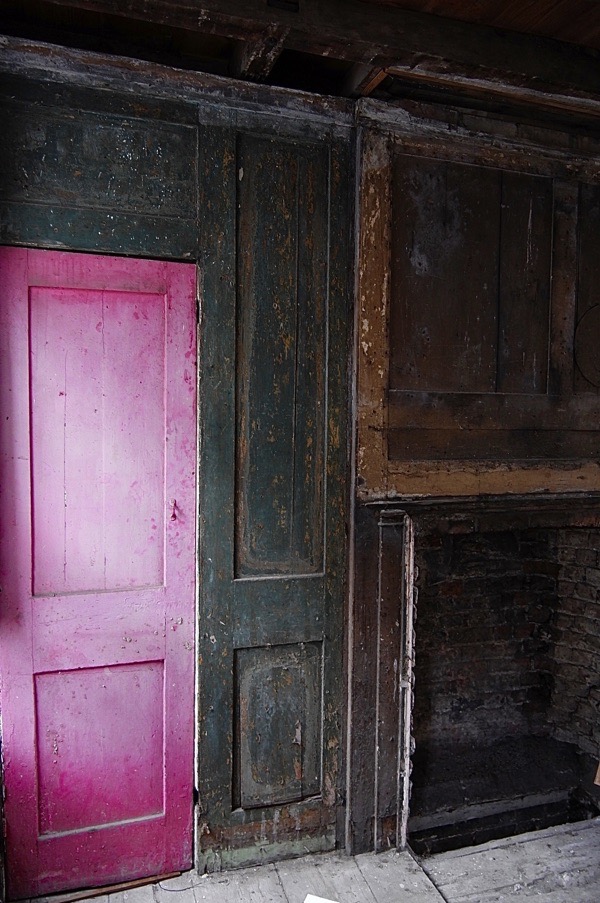
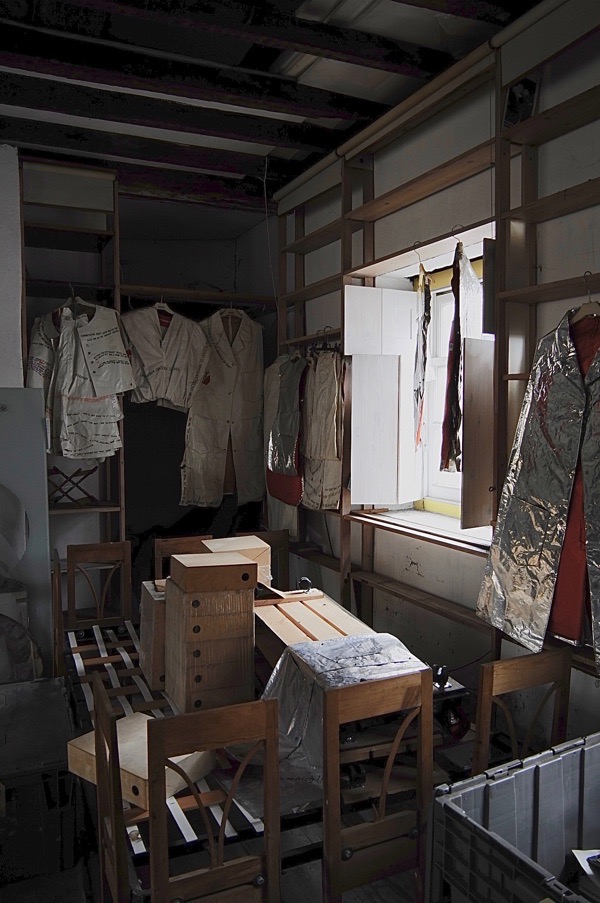
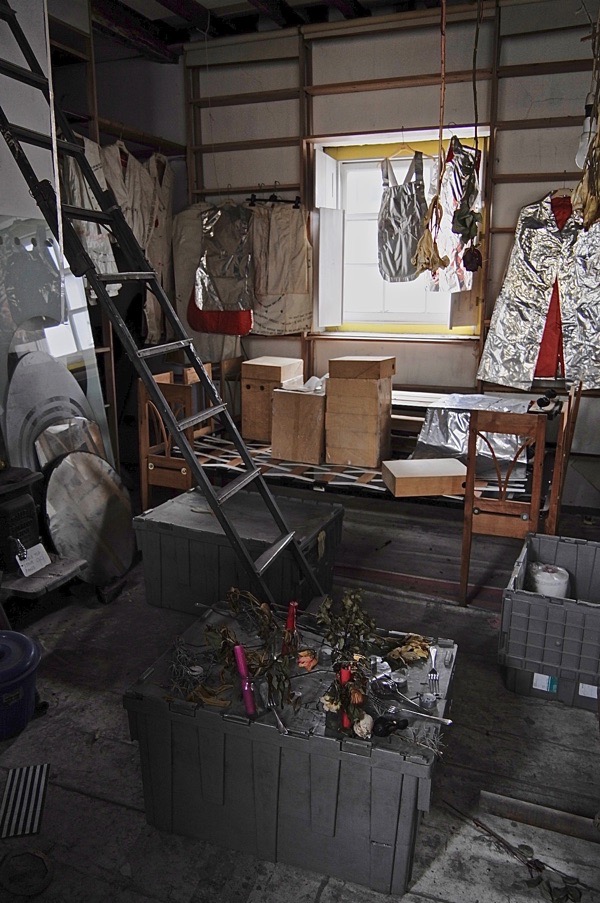
Annetta made her bed of chairs and designed the paper clothes hanging above
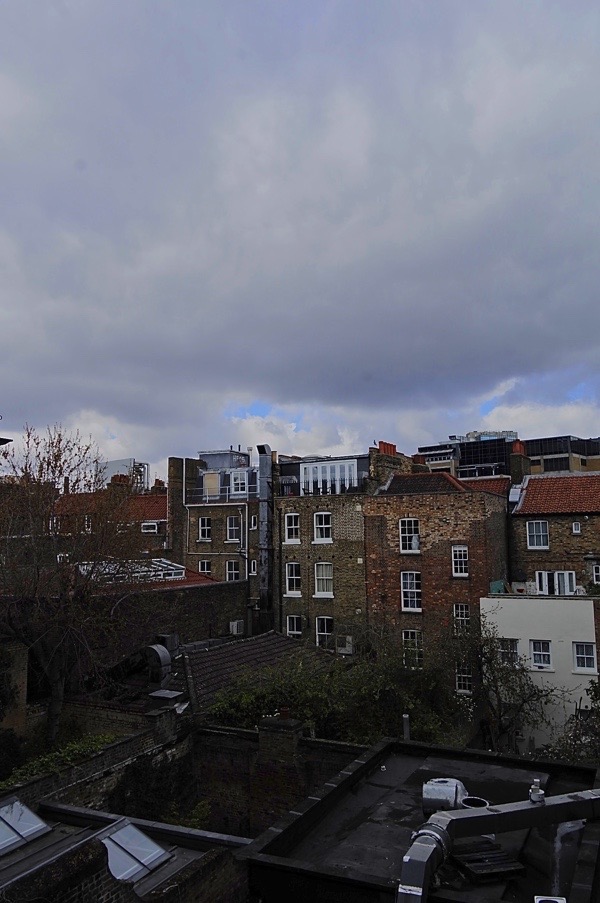
The view over Hanbury St from the attic

The Battle for Brick Lane exhibition curated by The Gentle Author at Annetta’s House reopens in May
VISIT WWW.BATTLEFORBRICKLANE.COM TO LEARN HOW TO OBJECT TO THE TRUMAN BREWERY DEVELOPMENT
Piggott Brothers Of Bishopsgate
With shops reopening today, bars and restaurants able to serve food and drink outdoors, and up to six people from two households permitted to meet in a garden, I thought this might be the ideal moment to draw your attention to Piggott Bros & Co of Bishopsgate, Tent and Marquee Makers.

Before banks and financial industries took over, Bishopsgate was filled with noble trades like J W Stutter Ltd, Cutlers, James Ince & Sons, Umbrella Makers and Piggott Bros, Tent Makers – whose wares are illustrated below, selected from an eighteen-eighties catalogue held in the Bishopsgate Institute. If this should whet your appetite for hiring a marquee, Piggotts are still in business, operating these days from a factory in Whitham.
Gentlemen, I have much pleasure in bearing testimony to the satisfaction given to my family and friends by the manner in which you carried out your contract, and also to the obliging manner with which your employees carried out their duties and our wishes. Considering the gale during the week in which the ball room was erected, the workmanship was most creditable to all concerned. Your &c, B Proctor (Glengariffe, Nightingale Lane, SW)

The Round Tent – 30ft circumference, 10 shillings for one day
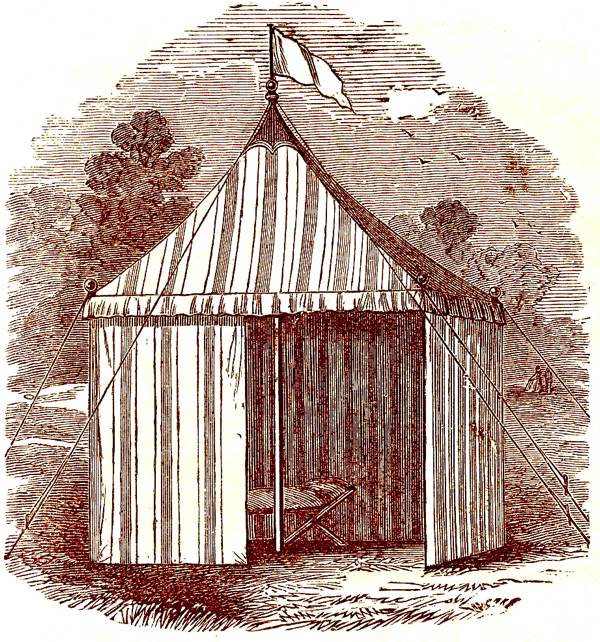
The Square Tent – 6ft by 6ft, ten shillings for one day
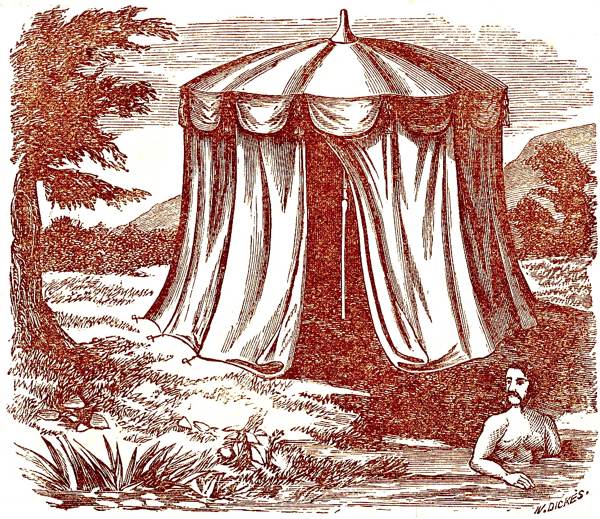
The Bathing Tent – 6ft across with a socketed pole, seven shillings for one day
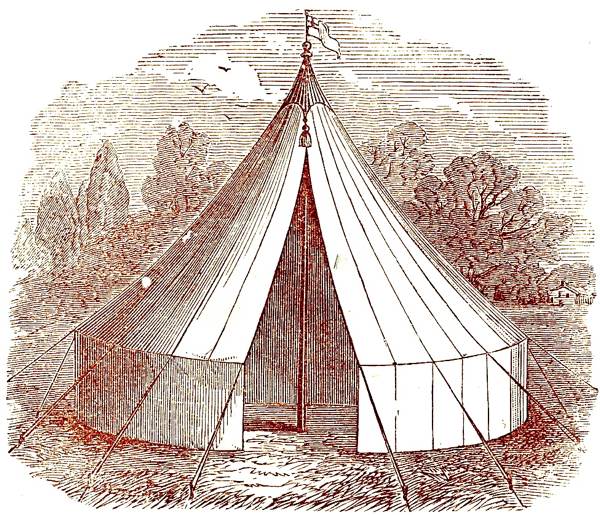
The Bell Tent – for one day six shillings & eightpence
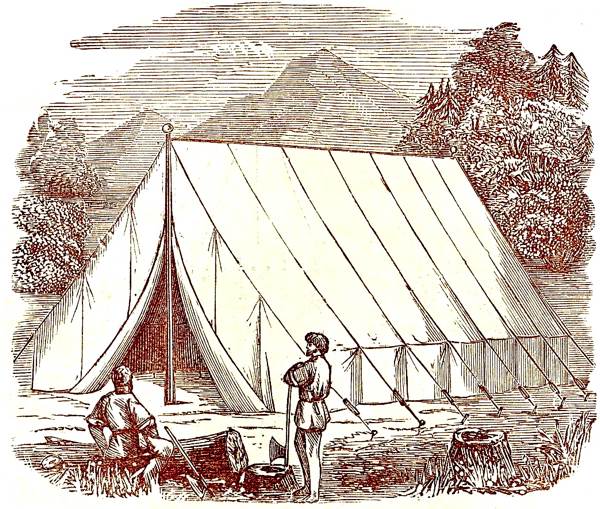
The Gipsy Tent – 9ft by 7ft, six shillings and eightpence for one day

The Boating or Canoeing Tent – 9ft by 7ft, six shillings and eightpence for one day

The Mildmay Tent –18ft by 9ft with lining, bedroom partition and awning, forty shillings for one day

Tarpaulins – 24ft by 18ft, two shillings and sixpence per week
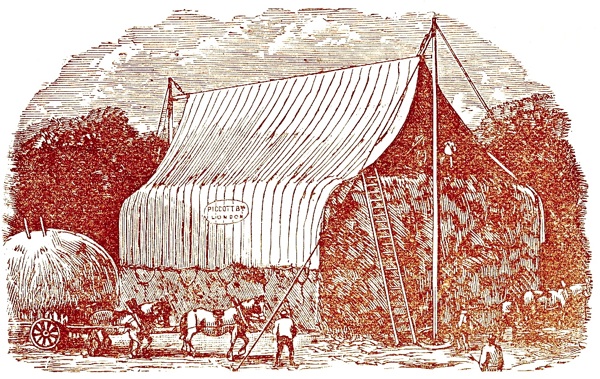
Rick Cloth – 12 by 10 yards for 40 loads, two shillings and fivepence for a fortnight
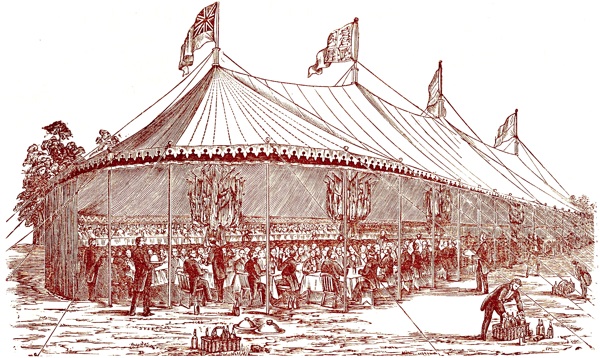
The Banqueting Marquee
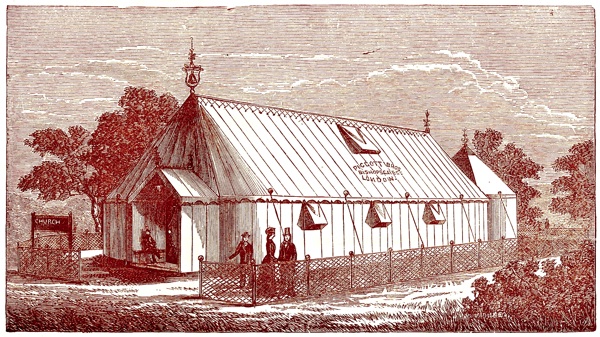
The Marquee fitted for the Church or Mission
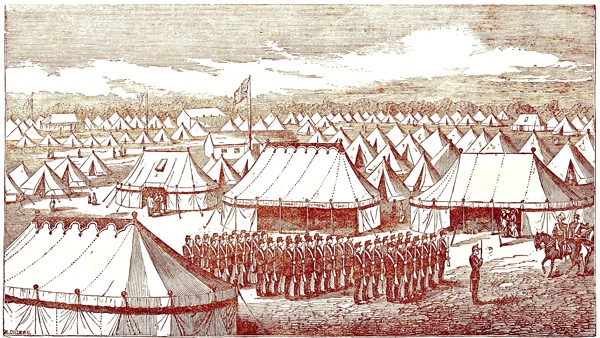
Wimbledon Camp – The Wimbledon Prize Meeting of the National Rifle Association
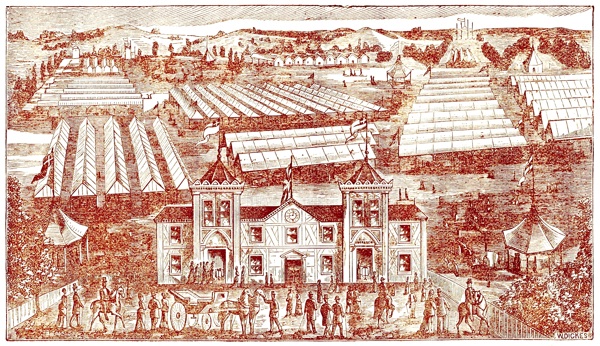
The Royal Agricultural Show at Bristol – Dear Sirs, I have much pleasure in testifying to the excellence of the temporary buildings erected by you for our Tottenham, Edmonton and Enfield Industrial Exhibition, held in October last. The light and ventilation were good, and the buildings warm and waterproof, and well adapted for the purpose. Yours Truly, J Tanner, Architect (24 Finsbury Circus)
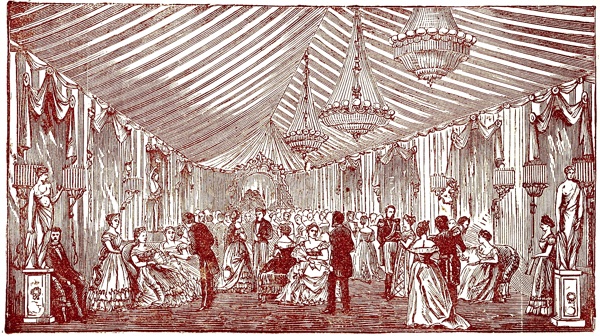
The Temporary Ball Room – Dear Sirs, Your Ball Room gave me every satisfaction, and I should have great pleasure in recommending you, should you ever care to apply to me. Yours faithfully A. Cantor (Trewsbury, Cirencester)
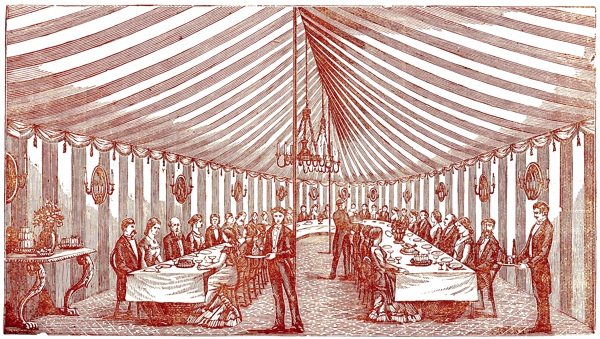
The Marquee for Wedding, Ball or Evening Party – In sending you my cheque for the contract price for the ballroom, I think is only due to state to you that the temporary room was a great success and my guests one and all expressed great admiration for the excellence of the arrangements and the perfection of the dance floor. It is only fair that I should state at the same time that your men carried out the arrangements well and with promptitude and in a quiet and orderly way, and I am quite satisfied with all they did. Yours faithfully, E Canes Mason (Reigate, Surrey)
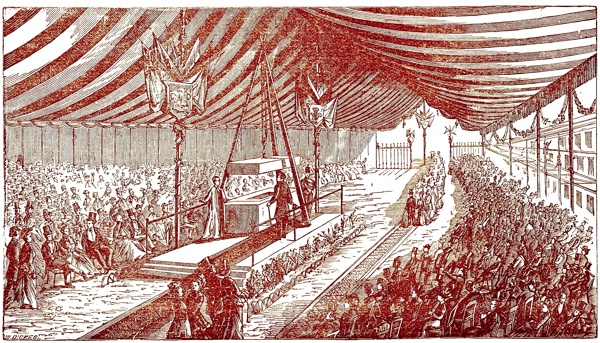
The Marquee for Laying a Foundation Stone
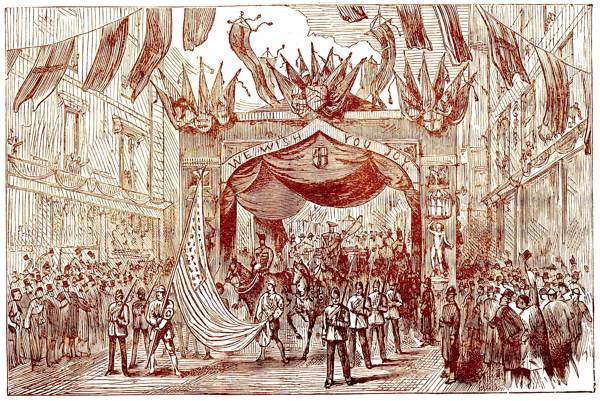
Lord Mayor’s Day, 1881
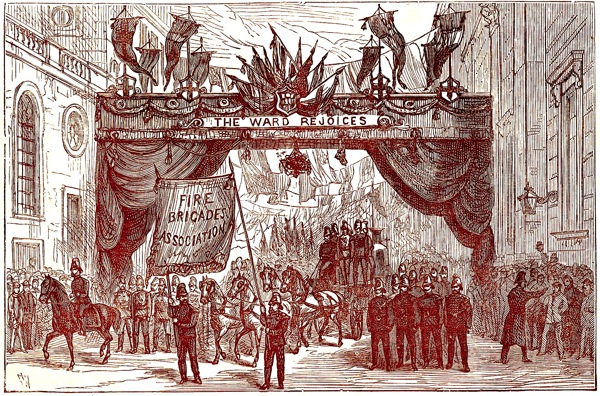
Lord Mayor’s Day, 1881 Lothbury
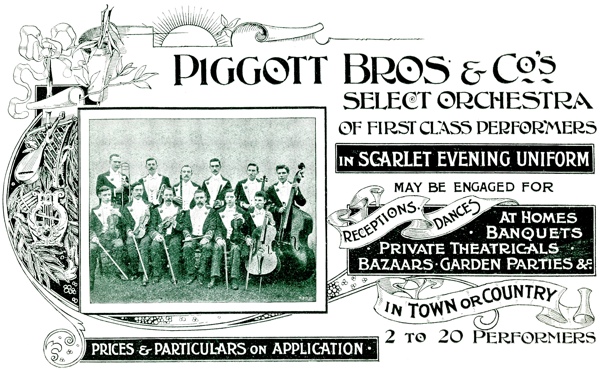
Piggott’s Orchestra

Piggots of Bishopsgate in the nineteenth century
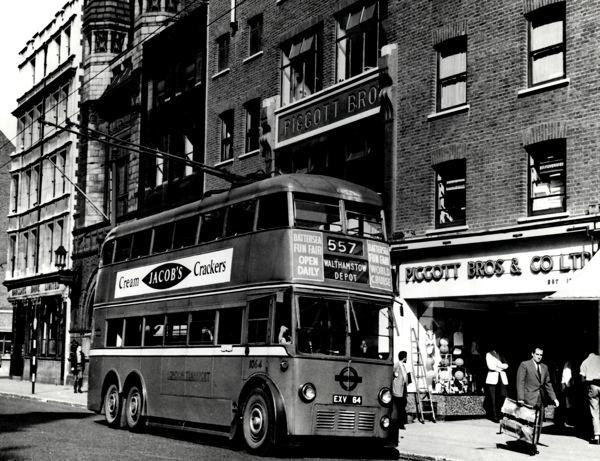
Piggots of Bishopsgate in the twentith century
Images courtesy of Bishopsgate Institute
You might also like to read these other stories about Bishopsgate
At James Ince & Sons, Umbrella Makers
Charles Goss’ Bishopsgate Photographs
More Of Fran May’s Brick Lane Photos
Shall we take another walk around Brick Lane with Fran May on a damp wintry Sunday in 1976? Responding to popular demand, here are more of Fran’s splendid photographs of Spitalfields which have recently been published in two books.
BRICK LANE by Fran May, published by Cafe Royal Books
FRAN MAY, PHOTOGRAPHY 1974-78 published by Storm Books


Photographs copyright © Fran May
You may also like to take a look at the earlier selection
Cruikshank’s London Almanac, 1835
In 1835, George Cruikshank drew these illustrations of the notable seasons and festivals of the year in London for The Comic Almanack published by Charles Tilt of Fleet St. Produced from 1835 – 53, distinguished literary contributors included William Makepeace Thackeray and Henry Mayhew, but I especially enjoy George Cruikshank’s drawings for their detailed observation of the teeming street life of the capital. (Click on any of these images to enlarge)
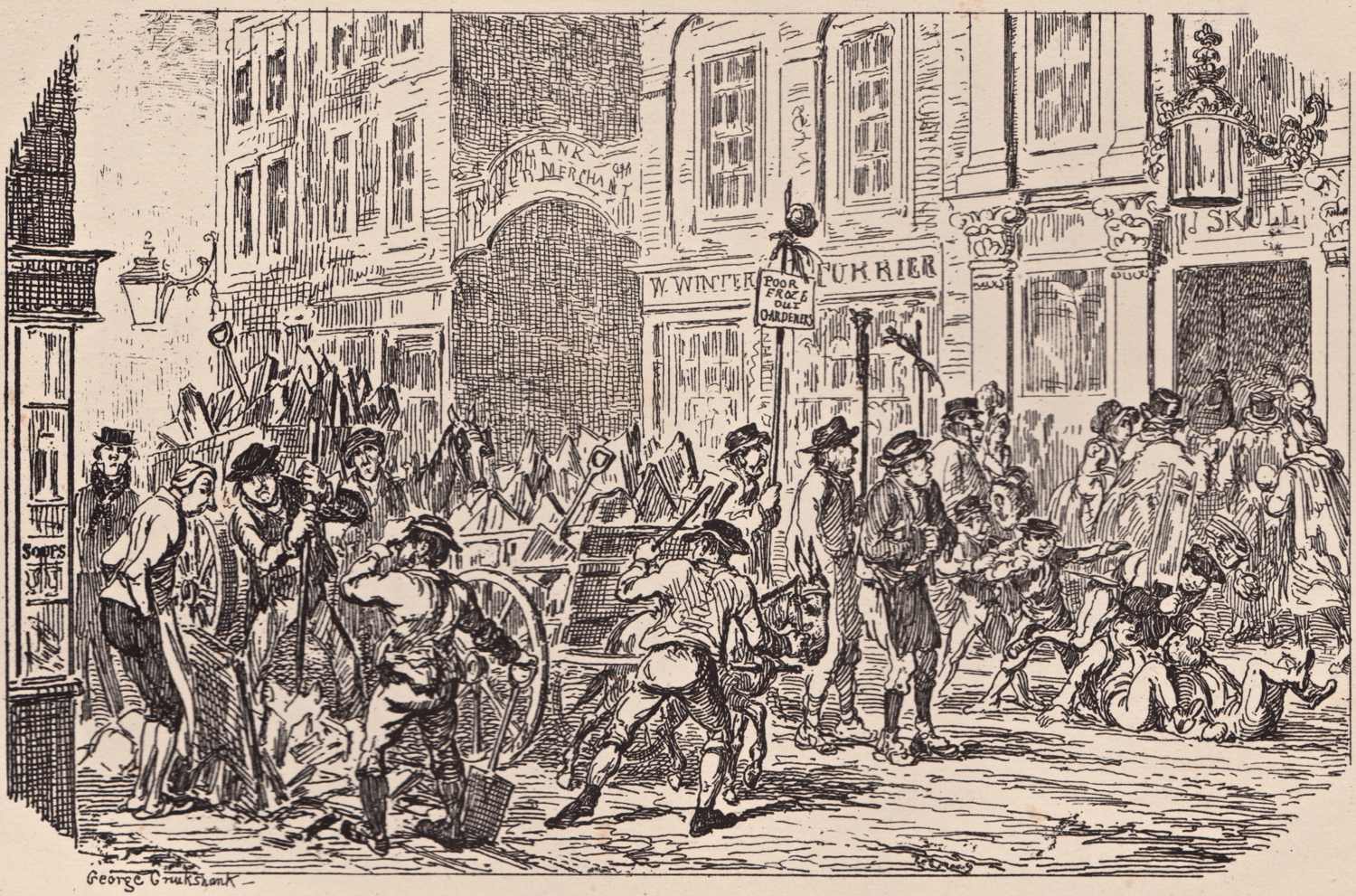
JANUARY – Everybody freezes
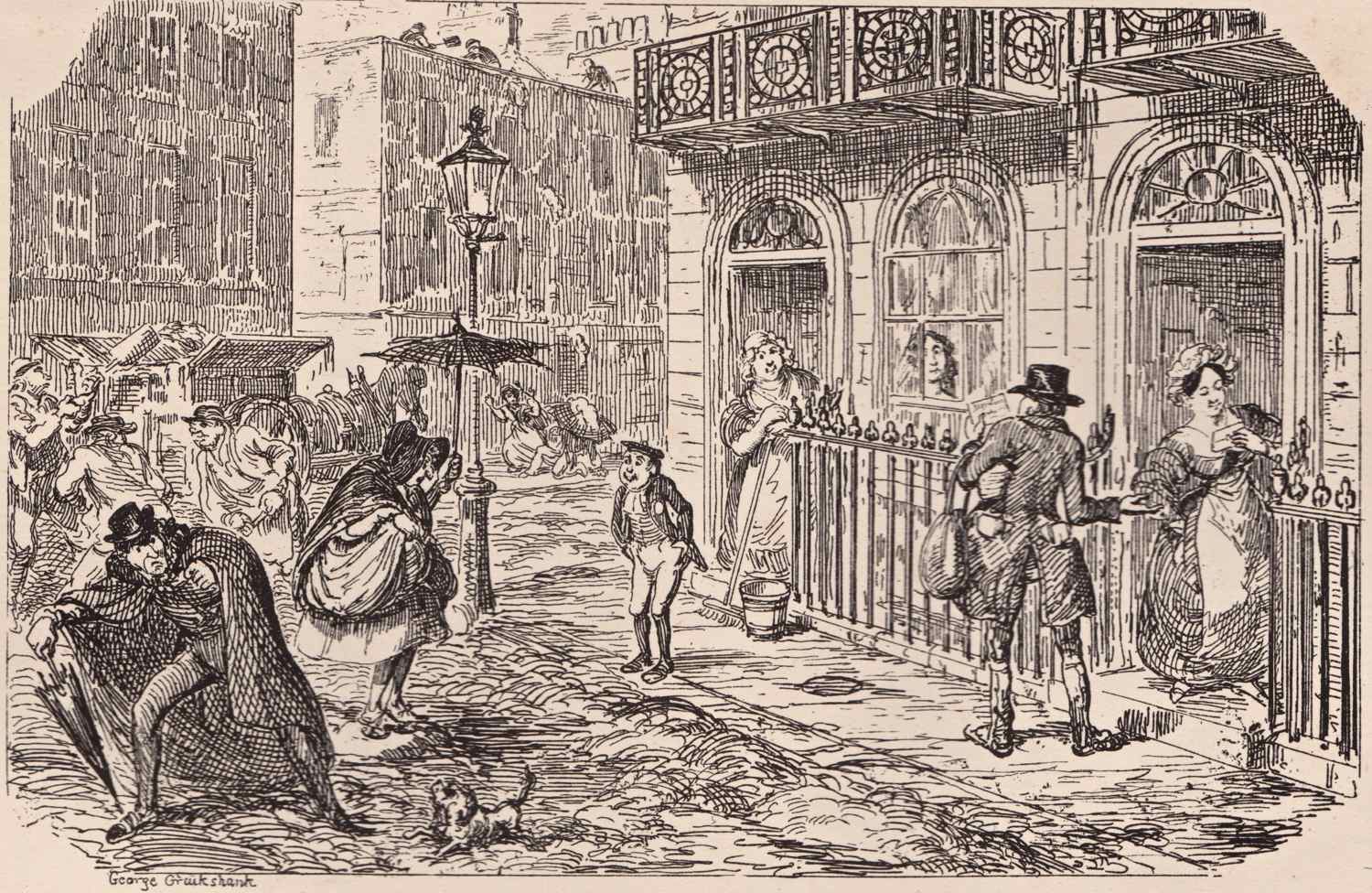
FEBRUARY – Valentine’s Day

MARCH – March winds
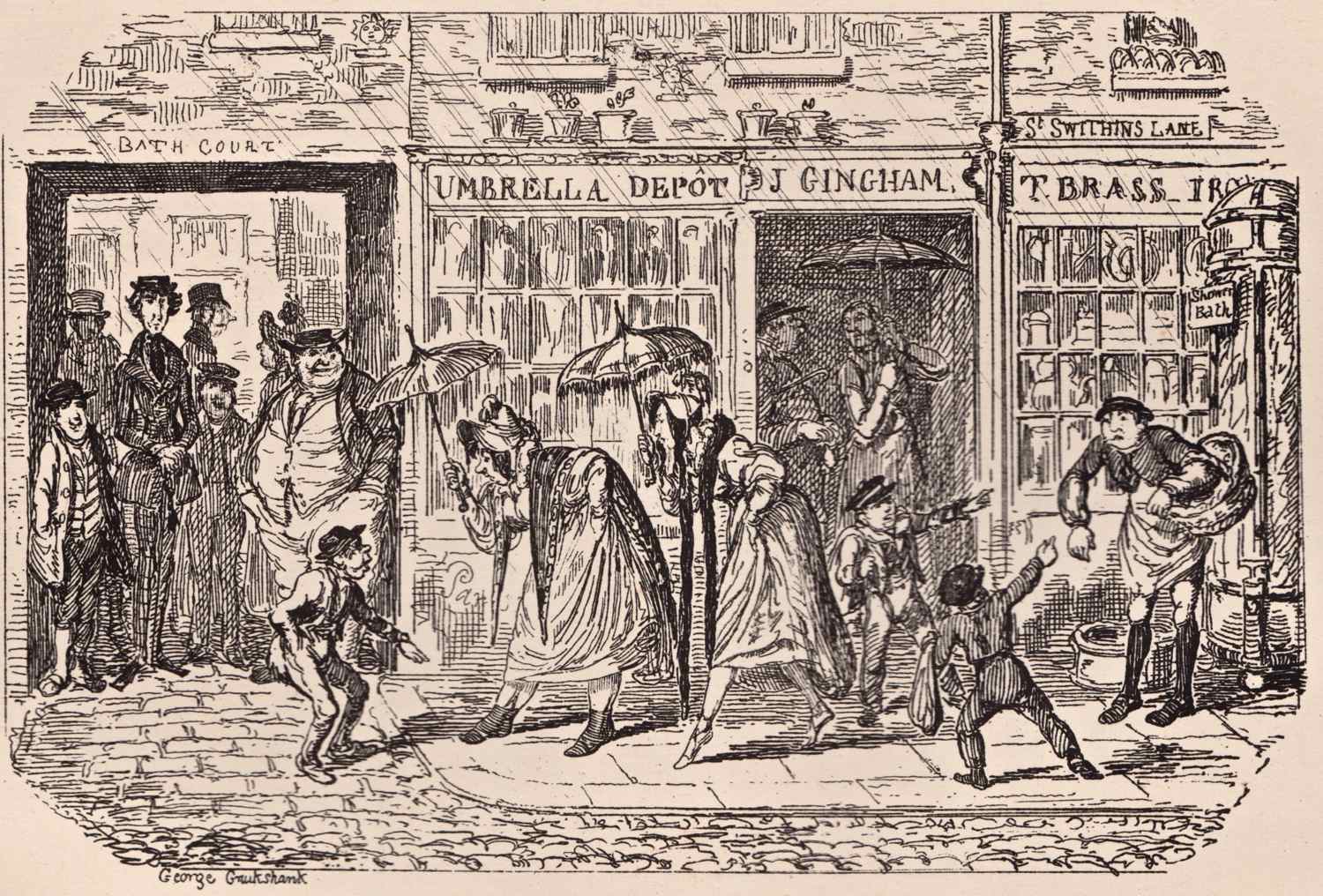
APRIL – April showers
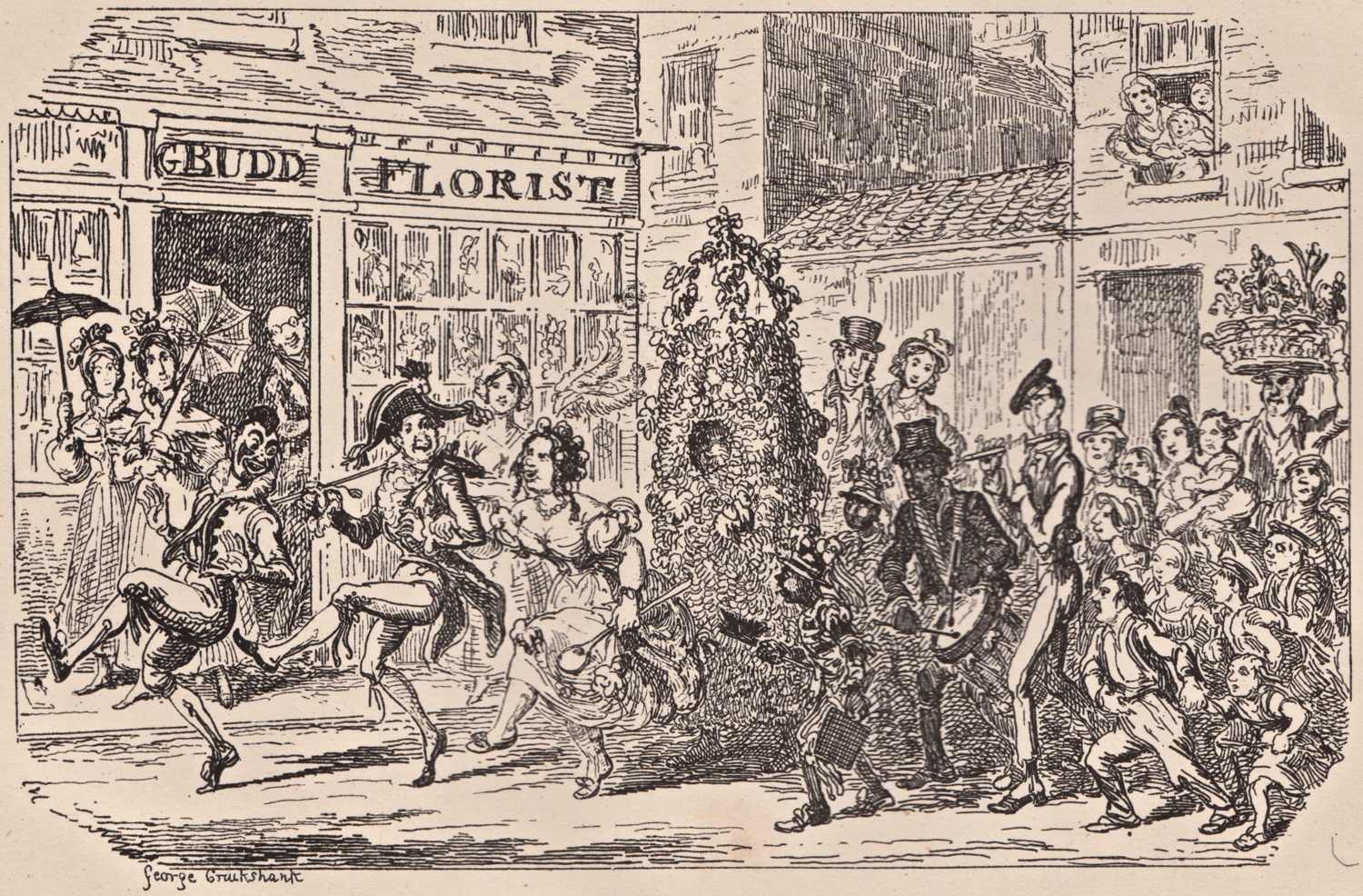
MAY – Sweeps on May Day

JUNE – At the Royal Academy

JULY – At Vauxhall Gardens
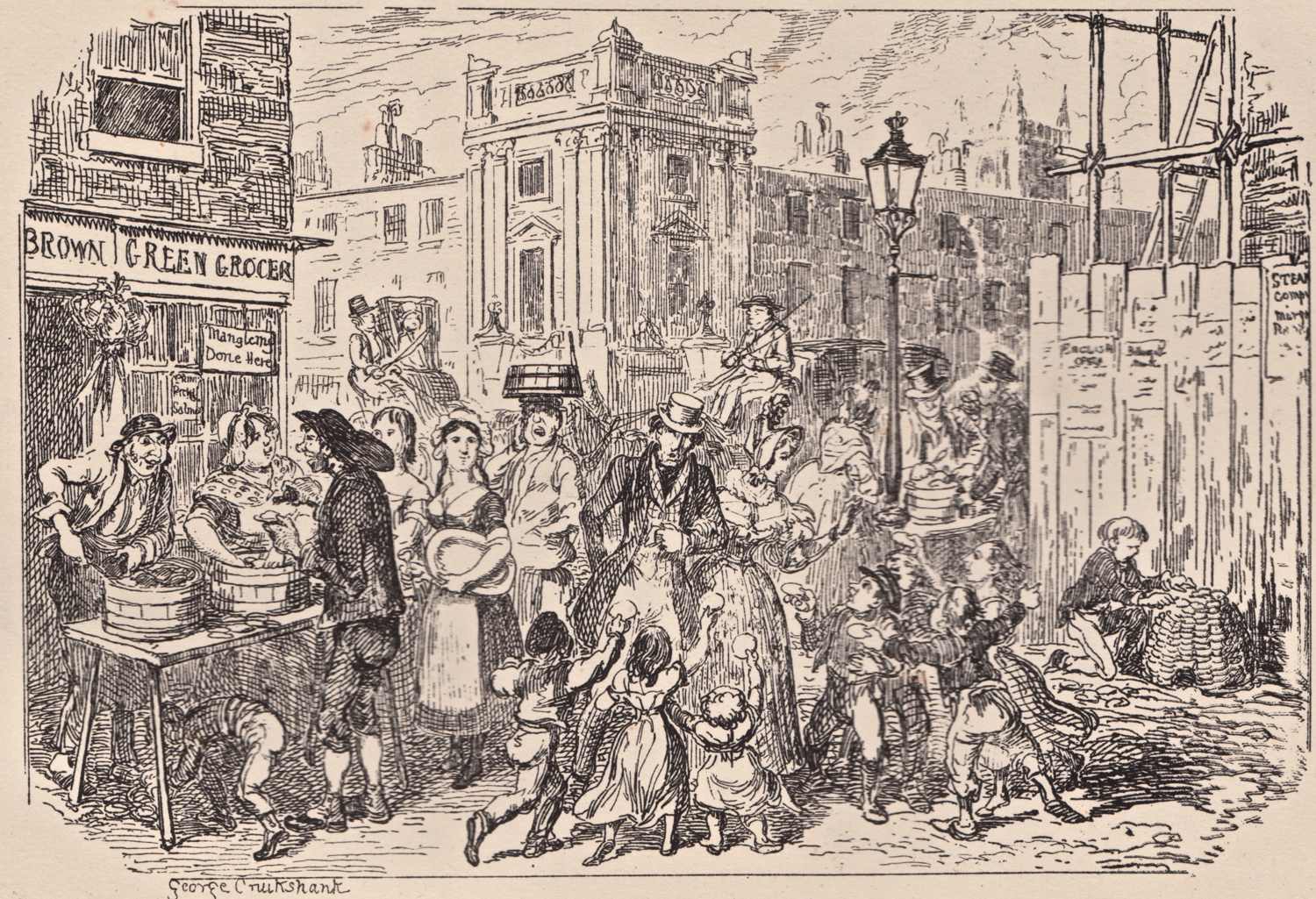
AUGUST – Oyster day

SEPTEMBER – Bartholomew Fair
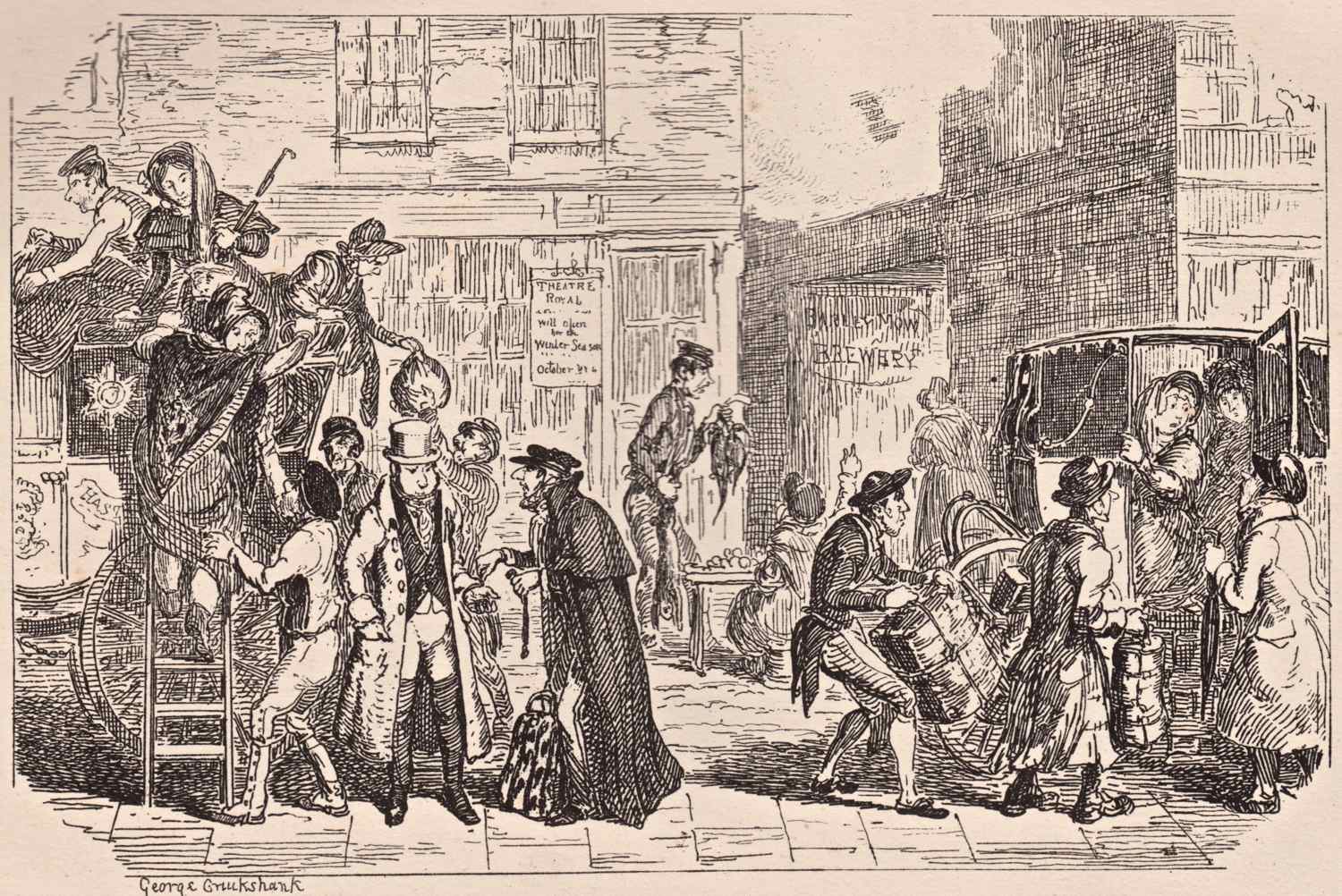
OCTOBER – Return to Town
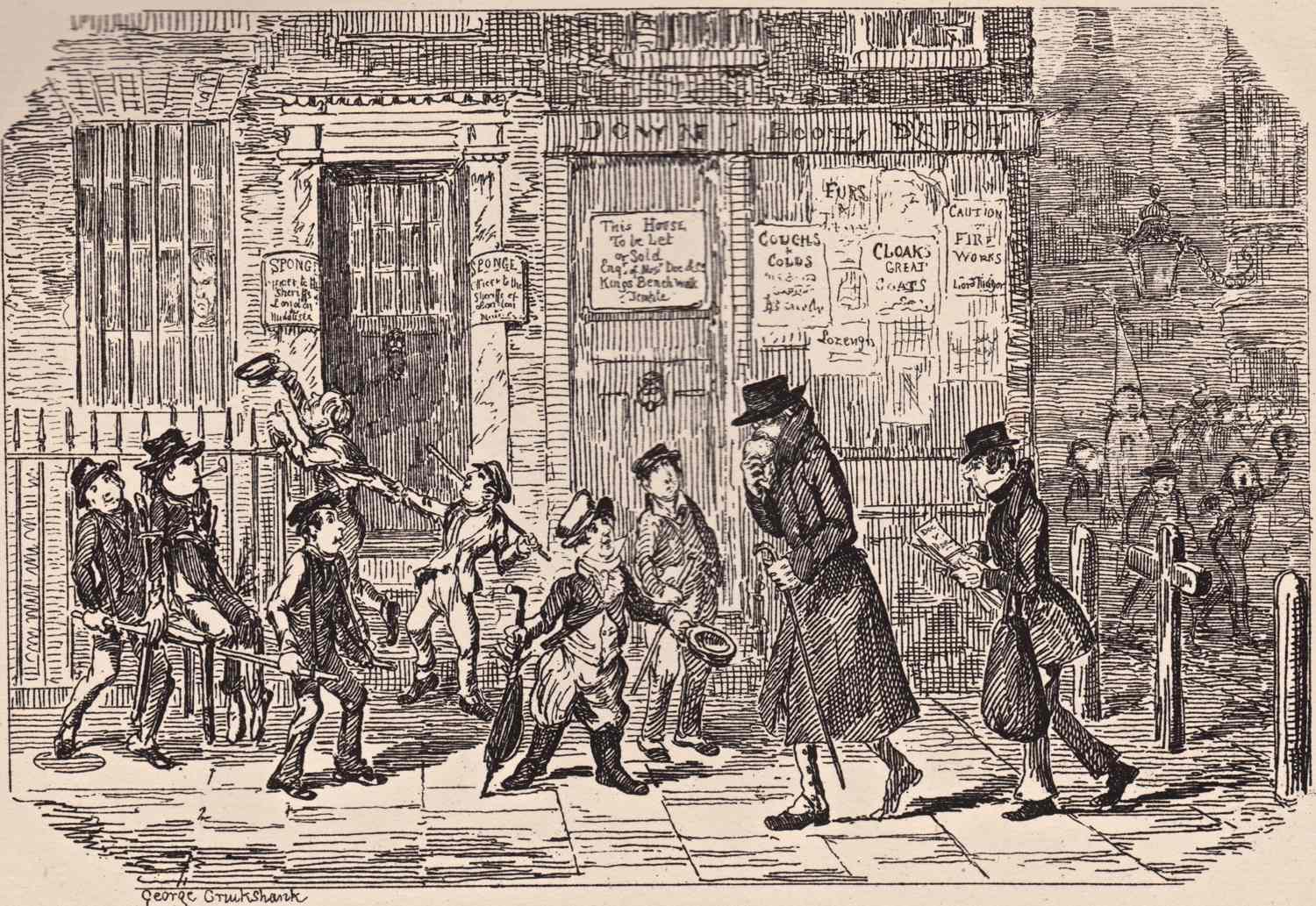
NOVEMBER – Penny for the Guy
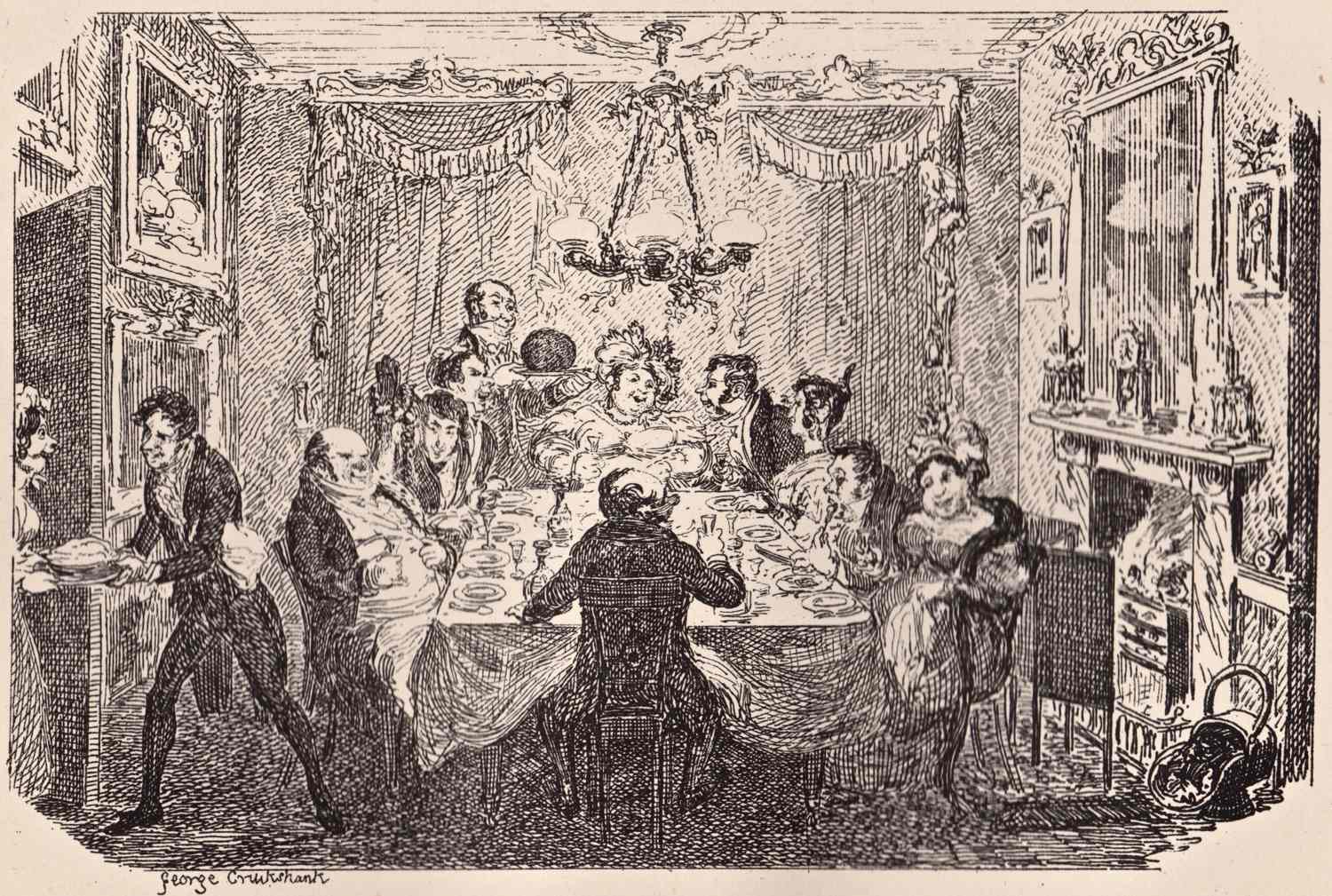
DECEMBER – Christmas
You may also enjoy
George Cruikshank’s Comic Alphabet
Matchbox Models By Lesney & Company
It is my pleasure to publish the Matchbox 1966 Collector’s Guide & International Catalogue by Lesney Products & Co Ltd of Hackney Wick (courtesy of Libby Hall). The company was founded by Leslie & Rodney Smith in 1947 , closed in 1982 and the Lesney factory was demolished in 2010.
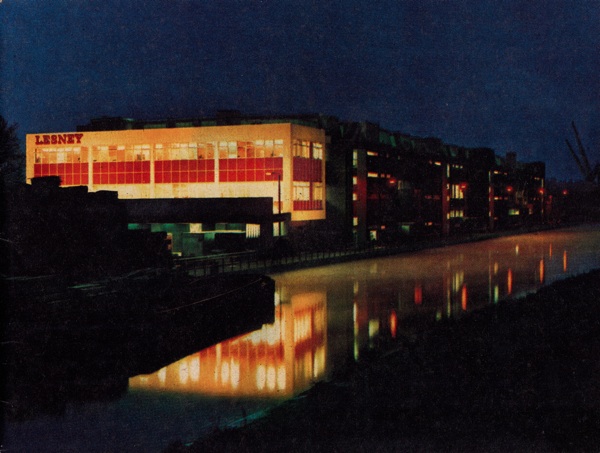
It all began in 1953, with a miniature diecast model of the Coronation Coach with its team of eight horses. In Coronation year, over a million were sold and this tremendous success was followed by the introduction of the first miniature vehicle models packed in matchboxes. And so the famous Matchbox Series was born.
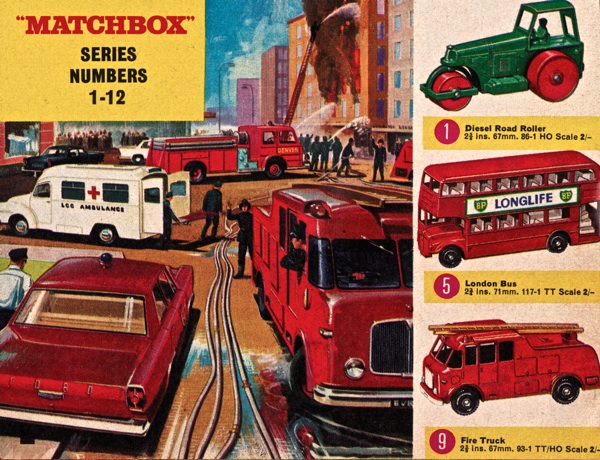
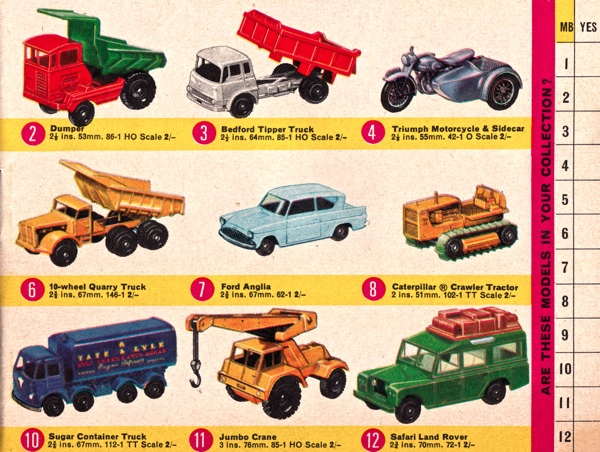


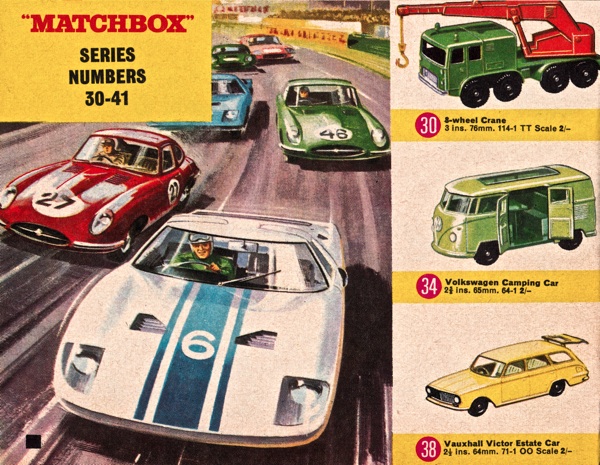


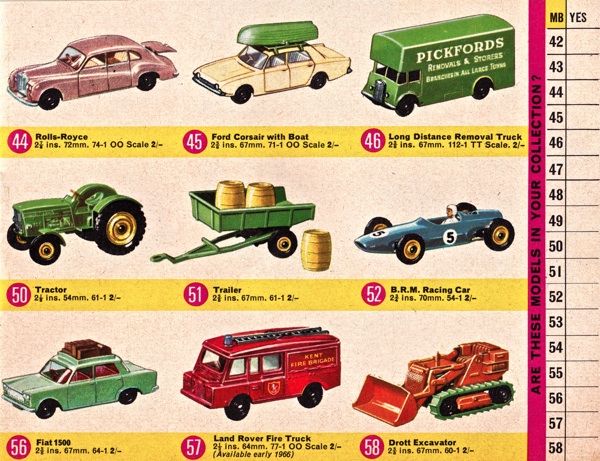

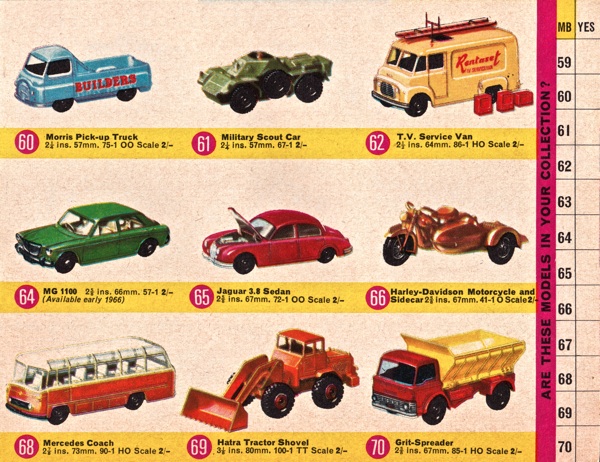
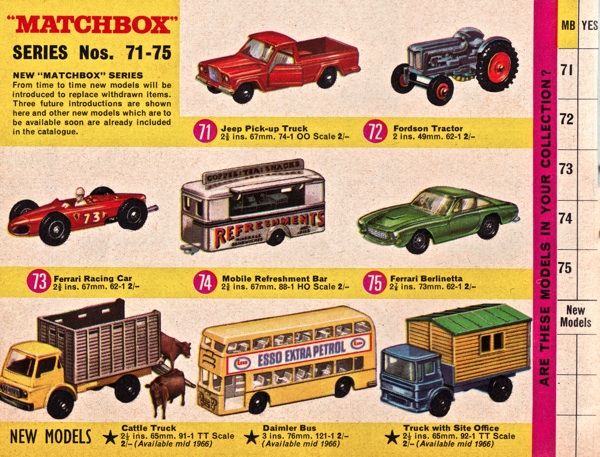
More than five hundred million Matchbox models have been made since the series was first introduced during 1953, and today over two million Matchbox models are made every week. The life of a new model begins at a design meeting attended by Lesney senior executives. The suitability of a particular vehicle as a Matchbox model is discussed and the manufacturer of the full-sized car is approached for photographs, drawings and other information. Enthusiastic support is received from manufacturers throughout the world and many top secret, exciting new cars are on the Matchbox drawings boards long before they are launched to the world markets.
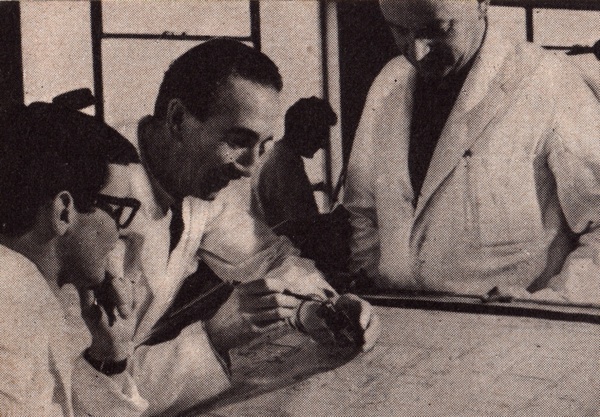
1. Once the details of the full-size vehicle have been obtained, many hours of careful work are required in the main drawing office in Hackney.
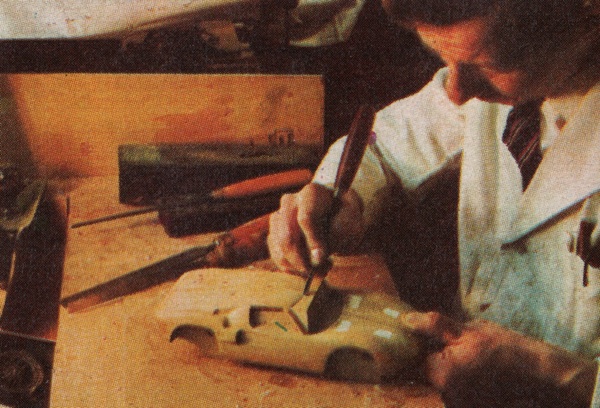
2. In the pattern shop, highly specialised craftsmen carve large wooden models which form the basic shape from which the miniature will eventually be diecast in millions.
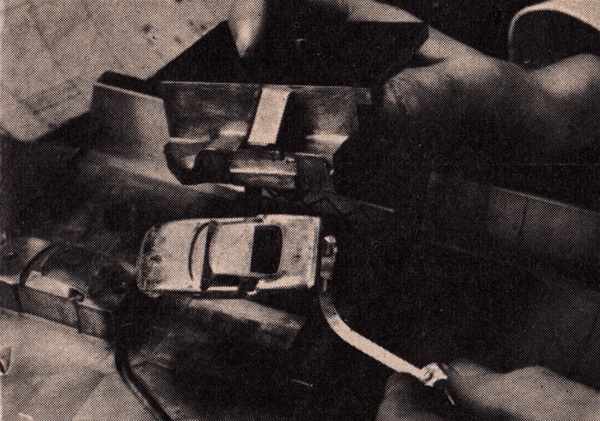
3. Over a hundred skilled toolmakers are employed making the moulds for Matchbox models from the finest grade of chrome-vinadium steel.
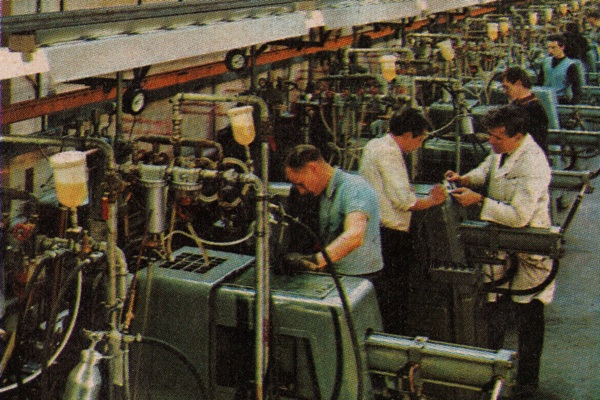
4. There are more than one hundred and fifty automatic diecasting machines at Hackney and all have been designed, built and installed by Lesney engineers.
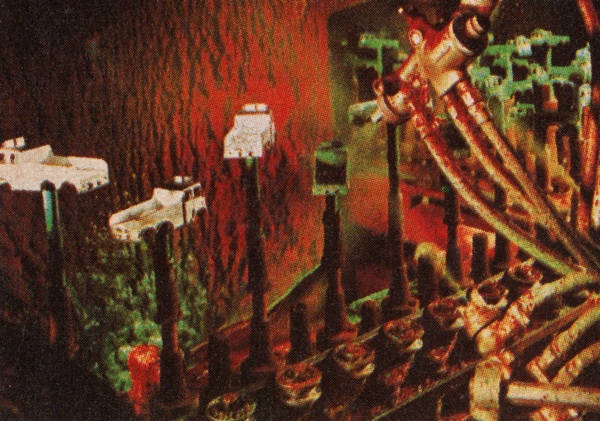
5. The spray shop uses nearly two thousand gallons of lead-free paint every week, and over two and a half million parts can be stove-enamelled every day.
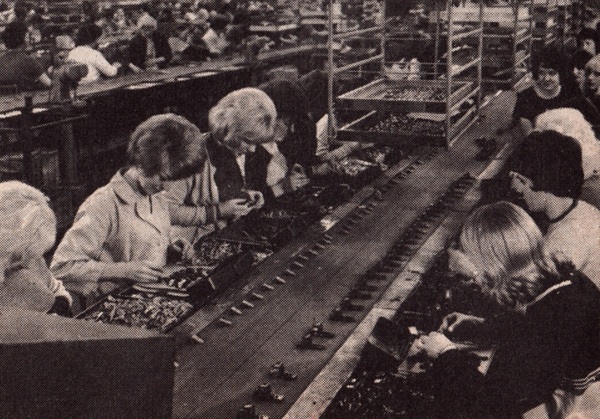
6. Final assembly takes place over twenty lines, and sometimes several different models and their components come down each line at the same time.
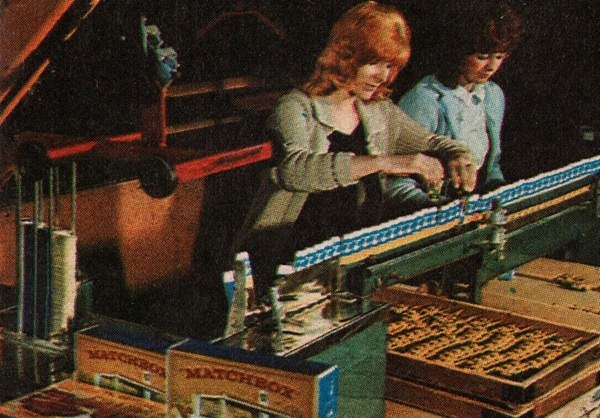
7. Ingenious packing machines pick up the flat boxes, shape them and seal the model at the rate of more than one hundred and twenty items per minute.
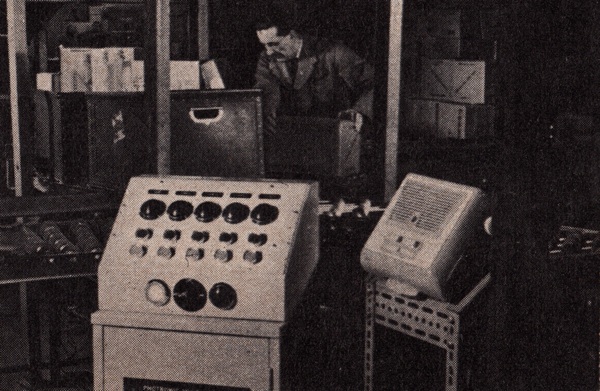
8. Ultra-modern, automatic handling and automatic conveyor systems speed the finished models to the transit stores where electronic selection equipment routes each package.
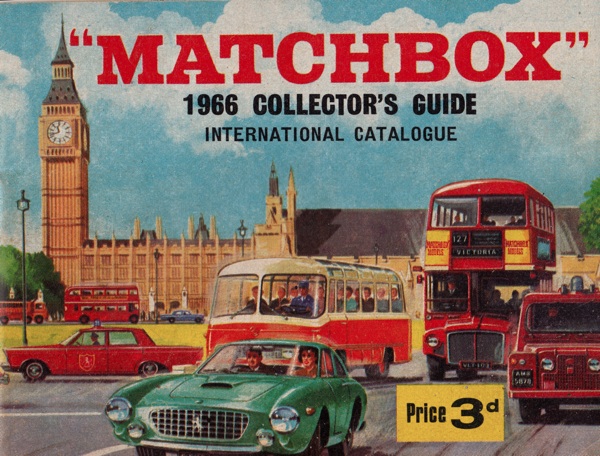
From the highly individual, skilled worker or the enthusiast who produces hand-made samples of new ideas, to the multi-million mass assembly of the finished models by hundreds of workers, this is the remarkable story of Matchbox models. Over three thousand six hundred people play their part in a great team with the highest score in the world – over a hundred million models made and sold per year. Enthusiasts of all ages throughout the world collect and enjoy Matchbox models today and it is a true but amazing fact that if all the models from a year’s work in the Lesney factories were placed nose to tail they would stretch from London to Mexico City – a distance of over six thousand miles!
You may also like to take a look at these other magnificent catalogues