
The Return Of Sail Cargo To The Thames
At the BLOOMSBURY JAMBOREE at the Art Workers’ Guild on 11th & 12th December we will be featuring produce from small farmers delivered to London by sail boat.
At 1:30pm on Sunday 12th December you can hear Gareth Maeer of Raybel Charters talk about the resurgence of sail cargo, explaining where this environmentally-inspired movement originated and the challenges that lie ahead.
Click here to book for THE RETURN OF SAIL CARGO

The Gallant arrives in Greenwich
Photographer Rachel Ferriman & I were at the shore to welcome the first sailing ship in more than a generation arriving at the London Docks with a cargo of provisions from overseas. We hope this will become a regular sight on the Thames with the Gallant bringing produce from Portugal and the Caribbean. Although it is a small beginning, we were inspired by this visionary endeavour which sets out to connect farmers directly with customers and make the delivery by sail power.
On board, we met Alex Geldenhuys who explained how she started this unique project.
“We are very excited because this is our first visit to London and we believe this cargo has not been delivered here by sail for forty years or more. We have olive oil, olives, almonds, honey, port wine from Portugal and chocolate and coffee from the Caribbean.
At first, we were working with ships crossing the Atlantic once a year bringing chocolate, coffee and rum but then I started the European voyages three years ago. We do two or three voyages a year which means we are learning more quickly.
With the captains, we decide when and where we will go and what we will pick up. We started in Portugal and most of our suppliers are based in the north of the country, small family farms producing olive oil. They give the best care for the land and contribute most to the local community. These farmers do mixed agriculture and so they also produce honey, almonds and chestnuts.
We look forward to working with Thames barges, meeting the Gallant in the estuary after the long distance voyage and delivering the cargo to London, just as they were designed to do. We will be back in the spring and customers can order online and then come down to the dock to collect their produce.”
The Gallant is a handsome schooner and we were delighted to explore this fine vessel moored in the shadow of Tower Bridge while the tanned and scrawny crew were unloading crates of olive oil, coffee and rum, loading them onto bicycle panniers for transport to the warehouse in Euston.
Down in the cabin, we met captains Guillaume Roche & Jean Francois Lebleu, studying charts of the estuary in preparation for their journey to Great Yarmouth, the next port of call. Guillaume began by telling me the story of the Gallant and revealing his ambition and motives for the undertaking.
“I am co-owner of the ship with Jean Francois, we take it in turns to be captain. The Gallant was built as a fishing boat in Holland in 1916, but, when we bought her two years ago to use her as a cargo vessel, she had been converted to carry passengers so we had to build a hatch for loading and enlarge the hold.
We are both professional seamen who have worked on big ships in the merchant navy and we want to do something about Climate Change, but the only thing we know is how to sail a ship. As well as delivering cargo by sail, we want to spread the word to encourage others so this can be the beginning of something bigger.”
Jean Francois outlined the pattern of their working year, making me wish that I could stow away on the Gallant.
“This summer we did two voyages to northern Europe from Portugal, two ports in France, a lot of ports in England – Bristol, Penzance, Newhaven, Ramsgate, London and Great Yarmouth. Next we go to Holland to deliver cargo there.
Over the winter, we will do maintenance before we sail across the Atlantic to the Caribbean and Central America to load rum, chocolate, coffee, mezcal and spices, and stop off in the Azores on the return voyage to pick up honey and tea. And we will bring this cargo back to London next year.”


The crew of the Gallant

Alex Geldenhuys, founder of New Dawn Traders

Guillaume Roche & Jean Francois Lebleu, Captains of the Gallant

Celestin, First Mate of Gallant

Davide, Deck Hand


The cargo is delivered to the warehouse by pedal power
Photographs copyright @ Rachel Ferriman
You may also like to read about
The Thames Of Old London

There is a dark and glistening river that flows through my dreams – it is the Thames of old London, carrying away the filth and debris of the city and, in return, delivering the riches of the world upon the flood tide rising. How much I should like to have known London as it is recorded in these photographs – with a strong current of maritime life at its heart.
The broad expanse of water in central London is curiously empty today, yet a century ago when many of these magic lantern slides from the Bishopsgate Institute were taken for the London & Middlesex Archaeological Society, it was a teeming thoroughfare with wharves and jetties lining the banks. In the (reversed) glass slide above, you see barges unloading their cargo next to the Houses of Parliament and you might deduce that this method of transport could provide an answer to the congestion problems of our own era, if it were not for the fact that all the wharves have gone long ago.
Each day the tide goes up and down by twenty feet. For half the day, the water flows in one direction and for the other half in the other direction, with a strange moment of stillness in between while the tide turns. Such is the surge engendered that the force of the current at the centre presents a formidable challenge to a lone rower and would defeat any swimmer. In spite of our attempt to tame it with the flood barrier, the Thames manifests a force of nature that deserves our respect, especially as the water level rises year by year.
You might think that the river has become merely a conduit for drainage and an itinerary for tourist trips these days, yet do not forget that this mighty river is the very reason for the location of London, here on the banks of the Thames.

Shipping near Tower Bridge, c. 1910

St Paul’s Cathedral from the river, c. 1920

Tower of London from the river, c. 1910

Wandsworth Creek, c, 1920

Off Woolwich, c.1920

Greenwich pier, c. 1920

Steamboat pier at Chelsea, c. 1870

St Paul’s Cathedral from Bankside, c. 1920

Billingsgate Market, c. 1910

Houses of Parliament from South Bank, c. 1910

Tower of London from the Thames, c.1910

Ice floes on the Thames, c. 1920

St Paul’s Cathedral from Bankside, c. 1910

Victoria Embankment, c. 1920

Oxford & Cambridge Boat Race at Putney Bridge, c. 1910

St Paul’s Cathedral from Waterloo Bridge, c. 1920

London Docks, c. 1920

Customs House, c. 1910

Lots Rd and Battersea Bridge, c. 1910

Somerset House was on the riverfront until the Victoria Embankment was constructed in 1870.
Images courtesy Bishopsgate Institute
You may also like to take a look at
Marion Elliot, Printmaker & Illustrator
I am delighted to introduce the work of Marion Elliot which will be featured at the BLOOMSBURY JAMBOREE. We hope you will come along and meet Marion at her stall on 11th & 12th December at the Art Workers’ Guild.

‘I have a great love of folk culture and popular art. I love shop fronts, fairgrounds, hand-painted signage, advertising imagery and typography, tattoos, workers’ guild banners, mottos, catch-phrases, religious iconography and paper ephemera.
I use printmaking techniques to produce densely-textured papers for my collage work and I am very fond of paper cutting, so my collage has developed from experiments with this technique.
I like collage because it offers me freedom to move all the elements around until I feel that the design looks right. I find creating the collages very contemplative, rather like making a large jigsaw puzzle and I can get lost for hours just moving bits around.’
Marion Elliot

Sailor’s pincushion
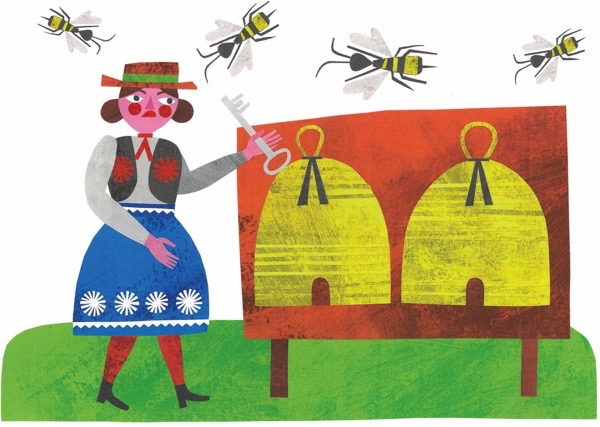
Telling the bees

Lammas Day

The Straw Bear

The ‘Obby ‘Oss

The Wicker Man

Fortune Teller

Wonder Cat

Perseverance

Prepare ye to meet thy God

Judy makes tea

Judy calls the police

Nuits de Paris

Hot Club

Mother and me

Bal-Musette

The sailor’s return
Illustrations copyright © Marion Elliot
Bloomsbury Jamboree Lectures & Readings

You are invited to our BLOOMSBURY JAMBOREE which runs from 11am-5pm on Saturday 11th & Sunday 12th December at Art Workers’ Guild, 6 Queen Sq, WC1N 3AT.
We are showing the work of our twenty favourite artists and makers, and we are proud to present this accompanying programme of talks and lectures.

Spitalfields Market by John Allin, 1973
EAST END VERNACULAR, An Art History of the East End
by The Gentle Author
Noon, Saturday 11th December
The Gentle Author gives an illustrated lecture based on ‘EAST END VERNACULAR, Artists Who Painted London’s East End Streets In The 20th Century‘ telling the stories behind the paintings.
Click here to book your ticket for EAST END VERNACULAR

RAVILIOUS, BAWDEN & BOUCHER
by James Russell
1:30pm, Saturday 11th December
To celebrate ‘BOUTIQUES’, a new publication from Mainstone Press, James Russell explores the life of French illustrator Lucien Boucher whose colourful twenties survey of Parisian shops influenced many artists including Edward Bawden and Eric Ravilious.
Click here to book your ticket for RAVILIOUS, BAWDEN & BOUCHER

ABBATT TOYS, Modern Toys for Modern Children
by Alan Powers
3pm, Saturday 11th December
Who can resist the beautiful wooden toys and puzzles created by Paul & Marjorie Abbatt? The story behind their creation is told by leading architectural and design historian, Alan Powers.
Click here to book your ticket for ABBATT TOYS

DESIGN IN MINIATURE
by Neil Hadfield
Noon, Sunday 12th December
Neil explores the work mid-century stamp designers and design featuring the work of David Gentleman, Jonny Hannah, Barnett Freedman and others.
Click here to book your ticket for DESIGN IN MINIATURE

THE RETURN OF SAIL CARGO TO LONDON
by Gareth Maeer
1:30pm, Sunday 12th December
Gareth Maeer is the director of Raybel Charters, a social enterprise company. He will talk about the resurgence of sail cargo, and how a new breed of sailors is restoring classic sailing ships to transport produce around the world. He will describe how sail cargo has come back to London, explaining where this environmentally-inspired movement originated and the challenges that lie ahead.
Click here to book for THE RETURN OF SAIL CARGO

CHRISTMAS STORIES
A reading by The Gentle Author
3pm, Sunday 12th December
To get you in a festive frame of mind, The Gentle Author beguiles you with seasonal stories from Spitalfields Life, including a magical account of a midnight walk through London on Christmas Eve and a poignant memoir of the author’s childhood Christmas.
Click here to book your ticket for The Gentle Author’s CHRISTMAS STORIES


Bloomsbury Jamboree 2021

In gleeful collaboration with Tim Mainstone of Mainstone Press and Joe Pearson of Design for Today, I am hosting the BLOOMSBURY JAMBOREE, a two-day festival of books and print, illustration, talks and seasonal merriment on SATURDAY 11th & SUNDAY 12th DECEMBER from 11am until 5pm.
It takes place at the magnificent ART WORKERS GUILD, 6 Queens Sq, WC1, which was founded in 1884 by members of the Arts & Crafts movement including William Morris and C R Ashbee. These oak panelled rooms lined with oil paintings in a beautiful old house in Bloomsbury offer the ideal venue to celebrate our books, and the authors and artists who create them.
There will be book-signings and a programme of ticketed lectures and readings, as well as live music and entertainment for all ages, plus we have invited twenty friends to exhibit, including print and paper makers, small press publishers, toy makers, potters and craft workers.
Silhouette artist Matyas Selmeczi will be cutting silhouette portraits for free and Pia Matikka writing your name on a card in a her beautiful copperplate calligraphy.
Among many other makers – Jill Green will be selling her purses manufactured in Brick Lane – Spitalfields Artist, Robson Cezar, has made light-up wooden houses out of fruit boxes from Whitechapel Market – favourite illustrators Alice Pattullo & Marion Elliot will be selling their prints – Matilda Moreton will be showing her ceramics – Sail Cargo London will be offering olive oil and other produce from small farmers in Portugal imported by sail power.
We need volunteers over the weekend – if you can help please email spitalfieldslife@gmail.com
Tomorrow I will publish the full programme of lectures and readings.


Art Workers Guild

Art Workers Guild

Art Workers Guild

Matyas Selmeczi will cut your portrait in silhouette (photo by Colin O’Brien)

Pia Matikka will write your name in copperplate (photo by Lucinda Douglas Menzies)

Wooden house made by Robson Cezar out of fruit boxes from Whitechapel Market

Hand bound notebooks from Judd St Papers

Aidan Saunders of Print Wagon will be demonstrating print techniques

Traditional Polish toys and folk art presented by Frank & Lusia

James Freemantle of St James Park Press

Toy Theatre by Clive Hicks-Jenkins published by Design for Today

Boutiques (shopfronts of twenties’ Paris) by Lucien Boucher published by Mainstone Press

Suede purse by Jill Green

Painted wooden decorations by Elizabeth Harbour

Bowls by Matilda Moreton

Autumn by Alice Pattullo

Wonder Cat by Marion Elliot

Sail Cargo London will be offering imports from small producers by sailing boat

The Language Of Beer
I offer this choice selection of the language of drinking lest it may be of use to any of my readers who might be planning to take a draught over the forthcoming festive season.

Life in the East – At the Half Moon Tap, 1830
Barrel – A cask built to hold thirty-six gallons.
Beer – There is no bad beer but some is better than others.
Binder – The last drink, which it seldom proves to be. Also used to describe the person who orders it.
Boiling Copper – Vessel in which wort is boiled with hops.
Boniface – Traditional name for an innkeeper, as used by George Farquhar in ‘The Beaux’ Stratagem.’
Bragget – A fancy drink made of fermented honey and ale.
Brewer – The artist who by his choice of barley and other ingredients, and by his sensitive control of the brewing process, produces beer the way you like it.
Butt – A cask built to hold one hundred and eight gallons.
Buttered Beer – A popular sixteenth century drink of spiced and sugared strong beer supplemented with the yolk of an egg and some butter.
Cardinal – A nineteenth century form of mulled ale.
Casual – An occasional visitor to the pub.
Cheese – A heavy wooden ball used in the game of skittles.
Chitting – The appearance of the first shoots while the barley is growing during the first stage of the malting process.
Coaching Glass – An eighteenth century drinking vessel with no feet that was brought out to coach travellers and consumed at one draught.
Collar – The frothing head on a glass of beer between the top of the beer and the rim of the glass.
Crinze – An earthenware drinking vessel, a cross between a tankard and a small bowl.
Crawler – One who visits all the pubs in one district, drinking a glass of beer in each.
Dipstick – An instrument used to measure the quantity of wort prior to fermentation.
Dive – A downstairs bar.
Dog’s Nose – Beer laced with gin.
Down The Hatch – A toast, usually for the first drink.
Finings – A preparation of isinglass which is added to the beer in the cask to clarify it.
Firkin – A cask built to hold nine gallons.
Flip – Beer and spirit mixed, sweetened and heated with a hot iron.
Fob – The word used in a brewery to describe beer froth.
Goods – The name used by the brewer to describe the crushed malted grains in the mash tuns.
Grist – Malt grains that have been cleaned and cracked in the brewery mill machines.
Gyle – A quantity of beer brewed at one time – one particular brewing.
Heel Tap – Term for beer left at the bottom of the glass.
Hogshead – A cask built to hold fifty-four gallons.
Hoop – A device displayed outside taverns in the middle ages to indicate that beer was sold. Later, it became the practice to display certain objects within the hoop in order to differentiate one tavern from another. eg The Hoop & Grapes
Kilderkin – Cask holding eighteen gallons.
Lambswool– A hot drink of spiced ale with roasted apples beaten up in it.
Liquor – The term used in the brewing industry for water.
Local – The pub round the corner.
Long Pull – Giving the customer more than they ordered, the opposite of a short pull.
Lounge – The best-appointed and most expensive bar of the public house.
Mash – The mixture of crushed malted grains and hot liquor which is run through the masher into the mash tun and from which is extracted liquid malt or wort.
Merry-Goe-Down – Old term describing good ale.
Metheglin – A spiced form of mead.
Mether Cup – A wooden drinking cup used by the Saxons, probably for Metherglin.
Mud-In-Your-Eye, Here’s – Traditional toast, with a meaning more pleasant than it sounds.
Nappy – Term describing good ale, foaming and strong.
Noggin – Small wooden mug, a quarter pint measure.
Noondrink – Ale consumed at noon when trade was slacker. Also, High Noon, drunk at three o’clock when street trading was finished.
One For The Road – Last drink before leaving the pub.
Pig’s Ear – Rhyming slang for beer.
Pocket – A large sack made to contain one and a half hundredweight of hops.
Porter – Popular in the late eighteenth and nineteenth centuries among London market porters, equivalent to a mixture of ale, beer and twopenny.
Public Bar – Where everything is cheapest and decoration and equipment is smiplest.
Puncheon – Cask built to hold seventy-two gallons.
Quaff – To drink in large draughts.
Regular – One of the mainstays of the public house.
Round – An order of drinks for more than one person.
Saloon Bar – Enjoying better amenities than a Public Bar and therefore more expensive to the customer.
Shandy – A drink of beer mixed with ginger beer, or sometimes beer and lemonade.
Short – A gin or whisky, usually taken before a meal.
Small Beer – A beer of lesser gravity, hence a trifling matter.
Smeller – A man employed in the brewery to examine casks after they have been washed and prior to their being filled with beer.
Snifter – Colloquial term for a drink.
Snug or Snuggery – Semi-private apartment in the pub, by custom reserved for use of the regulars.
Sparge – To spray hot liquor onto the grist in the mash tuns.
Spell, To Take A – To go round to the local for a beer, coined by Mr Peggotty in David Copperfield.
Stingo – A strong ale, similar to Barley Wine, popular during the winter months and usually sold in a bottle.
Stool – A useful piece of furniture for a customer who wants to stay at the bar, but is anxious to sit down.
Swig – To take a draught of beer, generally a large one.
Thirst – Suffering enjoyed by beer drinkers.
Tipple – To drink slowly and repeatedly.
Trouncer – The drayman’s mate who pushed and manhandled the wagon over potholes.
Tumbler – A flat bottomed drinking glass, derived from the Saxon vessel that could not stand upright and must be emptied in one draught.
Tun – Vessel in the brewery where the fermenting takes place.
Twopenny – A pale, small beer introduced to London from the country in the eighteenth century at fourpence a quart.
Wallop – Mild ale.
Wassail – Hot ale flavoured with sugar, nutmeg and roasted apples.
What’s Yours? – An invitation which sums up the companionable atmosphere of a public house.
Wort – The solution of mash extract in water, derived from the grist in the mash tuns.
Image from Tom & Jerry’s Life in London courtesy Bishopsgate Institute
Autumn At Spitalfields City Farm

The final of four features in collaboration with Contributing Photographer Rachel Ferriman, documenting the seasons at Spitalfields City Farm.
Autumn has been extended and mild this year, with a succession of sunny days lasting until the end of November. On such a day, Emma Poole, who has been working with the animals at the farm for seven years, led me on a personal tour around Spitalfields City Farm.
We began our stroll by paying a visit to Holmes, whose arrival as a piglet I recorded in the early days of Spitalfields Life. He has reached the grand old age of eleven now. ‘Holmes loves the autumn because he eats all the crab apples and forages through the leaves,’ Emma explained, ‘At night, we give him straw to keep warm and, since his brother, Watson, died in June, we will throw in a sleeping bag for him to bury himself underneath when it gets really cold.’
‘I prefer working with animals because they are so understanding,’ Emma admitted to me. ‘If you have had a bad day, an animal will never judge you. They are quick to forgive too. Even if we have to inflict pain for a medical reason, they will always forgive you and never hold a grudge. When I feel low, if I spend five minutes with a sheep or a donkey, it lifts my spirits..’
‘I love hosting school visits to the animals, especially for children who are new to them. If I had to sum up what the farm is for, I would say it is for education. Kids that struggle in a school environment thrive here. Everyone that comes here learns something. Many people do not realise where eggs come from.’
‘I could stand and watch the sheep all day, they are my favourite,’ Emma confided, ‘farmers will say that time spent staring at your animals is never wasted because when you know each one intimately and you can assess their well-being and health by their behaviour. Autumn is a good time for this.’
‘We are busy with maintenance now,’ Emma continued as we walked on, ‘this is when we mend the sheds and prune the fruit trees.’
‘After the harvest, we plant overwintering vegetables – kale, cabbage, sprouts and onions – or clear the land to lie fallow until spring. We spread manure and let all the home-grown nutrients go back into the soil. It’s our way of giving back and saying thank you to the garden for what it gave us this year. We have created a cycle without any chemical fertilisers and hopefully our good work will bear fruit next year.’

Harvest at the farm


Pond-dipping


Tanya measuring the sunflowers


Galena harvesting lettuce

Sam harvesting Jerusalem Artichokes

Simone who runs the Tea Hut with cosmos

George harvesting and trimming sweetcorn

Kudu


Produce at the farm shop

Ella with the stained glass panels she made

Bella

Th last cosmos of the year

Frank sweeping the autumn leaves


Gold Sebright hens


Donkey riding

‘Holmes loves the autumn because he eats all the crab apples’


“There is poetry in the unexpected presence of agriculture in the city and it always makes my heart leap to hear animal cries in this urban setting, connecting me to the rural landscape beyond and reminding us of the fields that were here before the streets were built up. Despite the tower blocks visible through the greenery at Spitalfields City Farm, it is nature that prevails here.”
The Gentle Author
The first Spitalfields Life calendar is produced in support of our beloved Spitalfields City Farm and features Rachel Ferriman‘s splendid photographs from her features published in these pages.
This handsome wall calendar is a collaboration between our friends Newmans Stationers who have done the printing, Baddeley Brothers who have donated handmade envelopes and Gardners Bags who have donated paper bags.
ORDER YOUR SPITALFIELDS LIFE 2022 CALENDAR NOW FOR £10

January
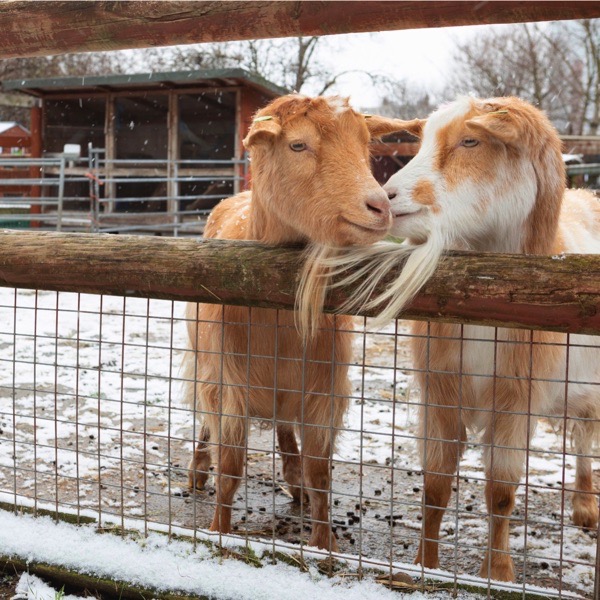
February

March

April

May

June

July

August

September

October

November

December
Photographs copyright © Rachel Ferriman
Retailers can order wholesale copies direct from q@newmans-stationery.co.uk
You may also like to take a look at
Winter At Spitalfields City Farm


