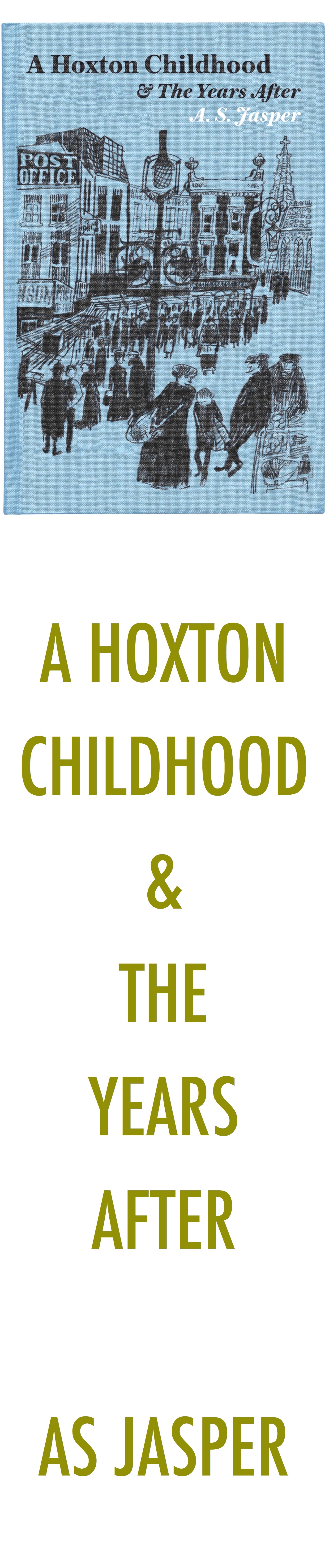
Crudgie, Motorbicycle Courier
Thank you to everyone who has contributed this week to my crowd-funder to launch a COMMUNITY TOURISM PROJECT in Spitalfields as a BETTER ALTERNATIVE to the serial killer tours that monetise misogyny. We still have a way to go, so please help by spreading the word.
CLICK HERE TO SUPPORT THIS PROJECT
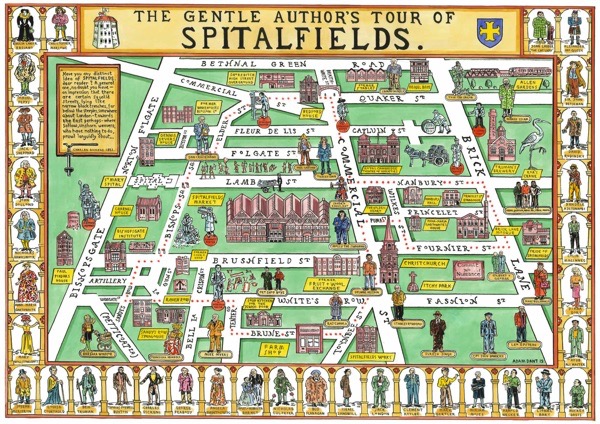
Map of The Gentle Author’s Tour of Spitalfields designed by Adam Dant
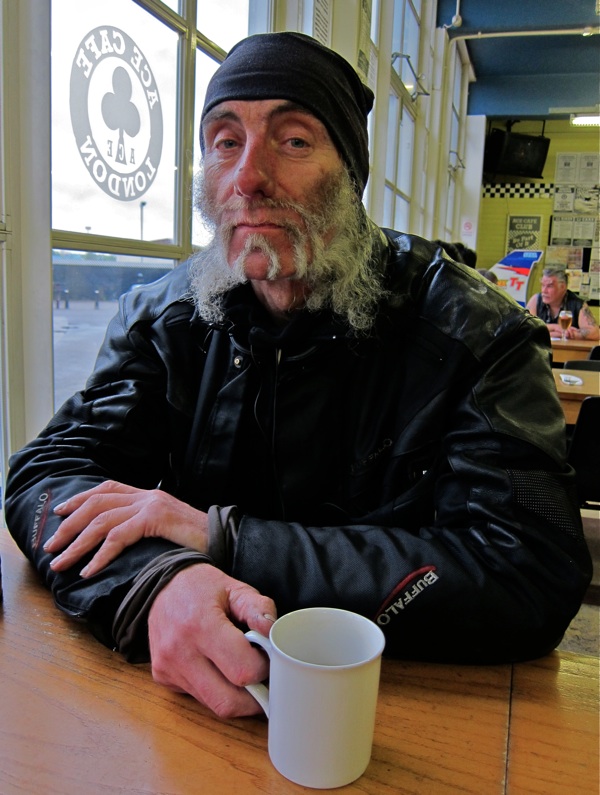
Behold the noble Crudgie!
I have been hoping for the opportunity to catch up with Crudgie ever since we were first introduced at the Fish Harvest Festival, so I was delighted to accept his invitation to meet at that legendary bikers’ rendezvous, the Ace Cafe on the North Circular.
Over six foot six in height, clad head to toe in black leather, with extravagant facial hair trained into straggling locks and carrying the unmistakable whiff of engine oil wherever he goes, Crudgie makes an unforgettable impression. Crudgie’s monumental stature, beady roving eyes and bold craggy features adorned with personal topiary, give him the presence of one from medieval mythology, like Merlin on a motorbike. Yet in spite of his awesome appearance and gruff voice, I found Crudgie a warm and friendly personality, even if he does not suffer fools gladly, issuing fearsome warnings to pedestrians not to get in his way.
“I’m only called by my surname, Crudgington. “Ington” means family living in an enclosed dwelling, and “crud” is a variation of curd, so they were probably cheesemakers. There’s a place in Shropshire named Crudgington, but there’s nobody buried in the church with that name, nobody living there with that name either and nobody that lives there has ever heard of anybody called Crudgington. The shortened version of my name came about when I went to play rugby and cricket where everyone gets a nickname ending in “ie.” I’ve swum for the county, and competed as an athlete in the four hundred metres and javelin, as well.
I grew up in Billericay, famous for being the first place to count the votes in the General Election. My father was builder called Henry but everyone knew him as Nobby. I went into banking for ten years in Essex but I couldn’t get on with it, even though I was the youngest person ever to pass the banking exam. So then I went to work in insurance in the City, I worked for Barclays for ten years and played for their rugby team until they couldn’t afford to fund it anymore. In the nineteen nineties, I felt I was getting nowhere in insurance so I started motorbicycle couriering. I got a motorbike from my parents for fifteenth birthday, so I’ve always been a biker and I do thousands of miles on it every year, going to sporting events, meet-ups and scrambles.
It’s the camaraderie of it that appeals to me, meeting up with your mates, but unfortunately you are perceived as an outlaw. I have been stopped eighty-nine times in twenty-one years by the police. Apparently, couriers are the second most-disliked Londoners after Estate Agents. It’s because people get scared out of their wits when they are not thinking where they are going and a courier brushes by and gives them the shock of their life. People should look where they are going. If you are going to hit a pedestrian, it’s best to hit them them straight on, that way they get thrown over the handlebars. A few cuts and bruises, but nobody gets killed by a motorbicycle. Whereas if you veer to either side to avoid them, the danger is you clip them with your handlebars and it sends you into a tailspin, and you fall off.
I’m a member of the most important biker club – The 59 Club, set up by Father Bill Shergold in 1959. He was a vicar who was a biker, and he wanted to bring the mods and rockers together, so he opened up in a church hall in West London in 1961 and on the first day he had Cliff Richard & The Shadows performing there. Then in 1985, it moved to Yorkton St, Bethnal Green. It was open three days a week, and you could go in and have a cup of tea after work. They had a bike repair workshop for maintenance, two snooker tables and a stage where lots of bands performed. And once a year, you could go to a church service. They moved to Plaistow now, but everybody that was in it is still in it – it’s the largest bike club in the world.
There’s only a few British couriers left, most are Brazilians now. It used to be Polish until they earned enough money and all went back home. Once upon a time, there was a lot of money in it though it’s gone down thanks to technology, but the beauty is you can work when you like and you get to go interesting places that you’d never go otherwise. I’ve picked up the Queen’s hair products from SW3 and driven into Buckingham Palace to deliver them. I do a lot of deliveries for film companies and quite often I stay around on set to watch, especially if it’s in some interesting stately home that you wouldn’t normally get to visit. If I have to go somewhere on a journey out of London, I always take time to visit the museum or castle or whatever there is to see.
I’ve worked from nine until seven for years, but I’ve decided I’m only going to do nine thirty to six because I’m getting old. If I had independent funds, I wouldn’t be riding anymore. I haven’t missed a day in quite a few years and I’ve only ever had one week off in twenty years…”
When I arrived at the Ace Cafe, I saw Crudgie’s bike outside and I spotted him through the window, head and shoulders above his fellows. Inside, a long counter ran along one wall, facing a line of windows looking out on the North Circular, and the space in between was filled by tables, scattered with helmets to indicate those which were reserved by customers. Once Crudgie had greeted me with a firm bikers’ handshake, we settled by the window where he squeezed every drop from his teabag to achieve a beverage that was so strong it was almost black. A characteristic Crudgie brew.
Like the questing knight or the solitary cowboy, Crudgie has no choice but to follow his ordained path through the world, yet he is a law unto himself and the grime he acquires speeding through the traffic is his proud badge of independence. A loner riding the city streets with his magnificent nose faced into the wind, Crudgie is his own master.
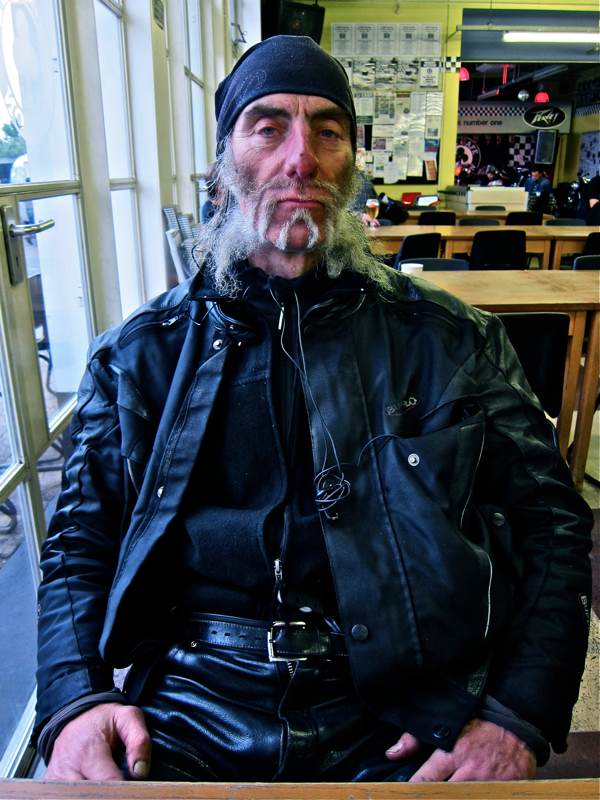
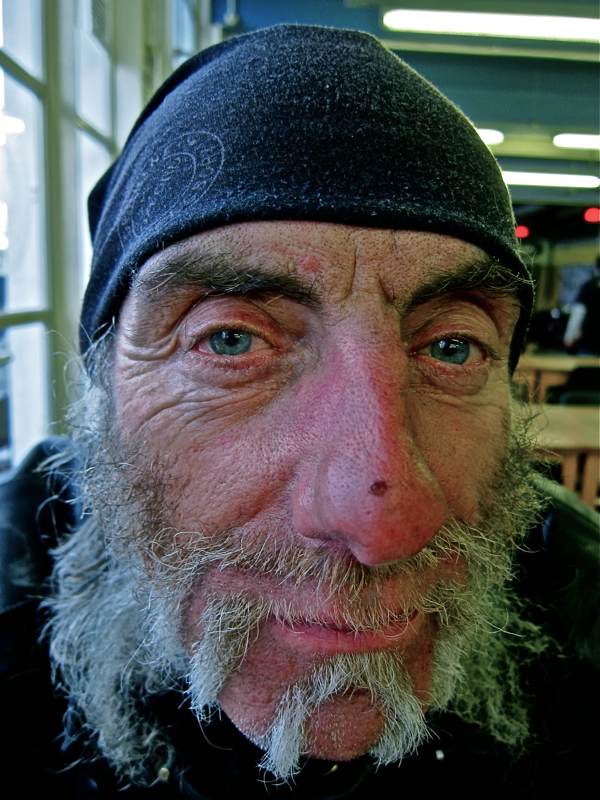

Crudgie at the Ace Cafe on the North Circular. “- Like Merlin on a motorbike.”
You may also like to read
The Weathervanes Of Old London
Thank you to everyone who has contributed this week to my crowd-funder to launch a COMMUNITY TOURISM PROJECT in Spitalfields as a BETTER ALTERNATIVE to the serial killer tours that monetise misogyny. We still have a way to go, so please help by spreading the word.
CLICK HERE TO SUPPORT THIS PROJECT
Map of The Gentle Author’s Tour of Spitalfields designed by Adam Dant
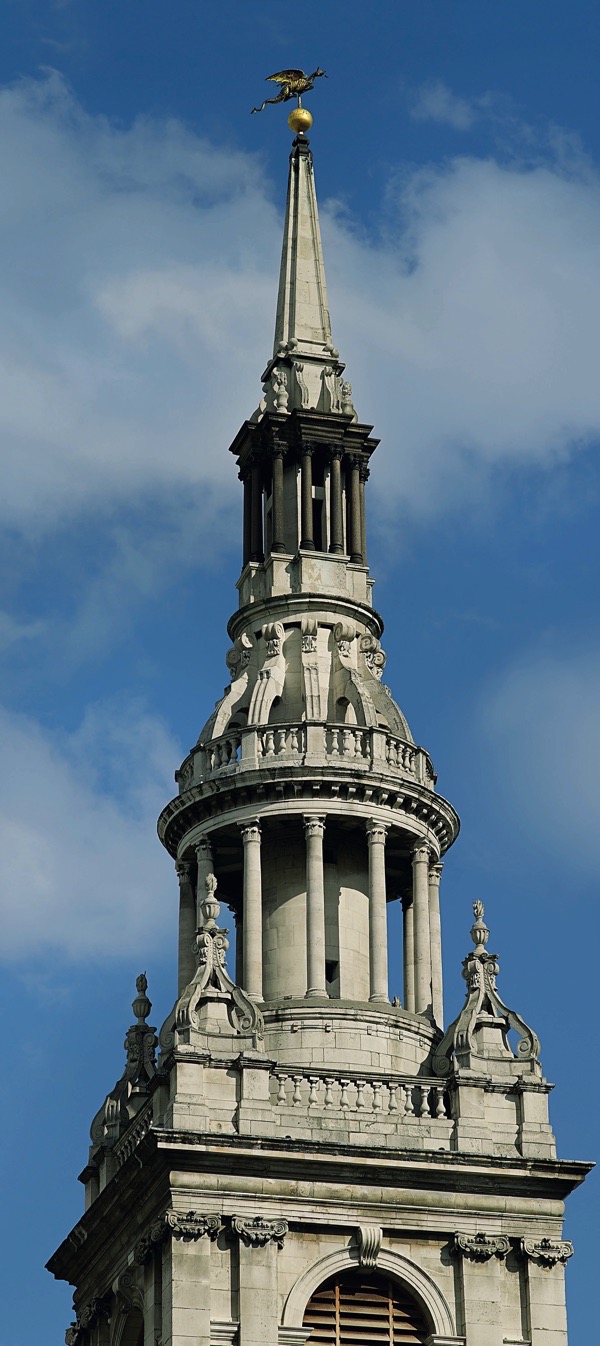
Spire of St Mary-Le-Bow, Cheapside, by Christopher Wren
Clinging on for dear life in the midst of the raging tempest, it occurred to me that this was the ideal moment to publish these weathervanes. There is no more magical sight to glimpse in a London street on a bright spring morning, after the storm has passed, than that of a gilded weathervane, glinting in sunlight high above the rooftops. At once – in spite of all the changes that time has wrought – you know you are sharing in a visual delight enjoyed by three centuries of Londoners before you and it makes your heart leap.
Consequently, I am grateful to Angelo Hornak who photographed this gallery of magnificent weathervanes in his book AFTER THE FIRE, London Churches in the Age of Wren, Hawksmoor & Gibbs published by Pimpernel Press.
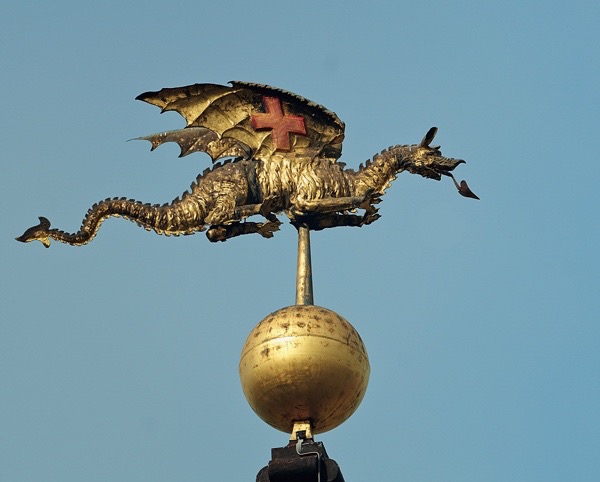
Dragon upon St Mary-Le-Bow, representing the City of London
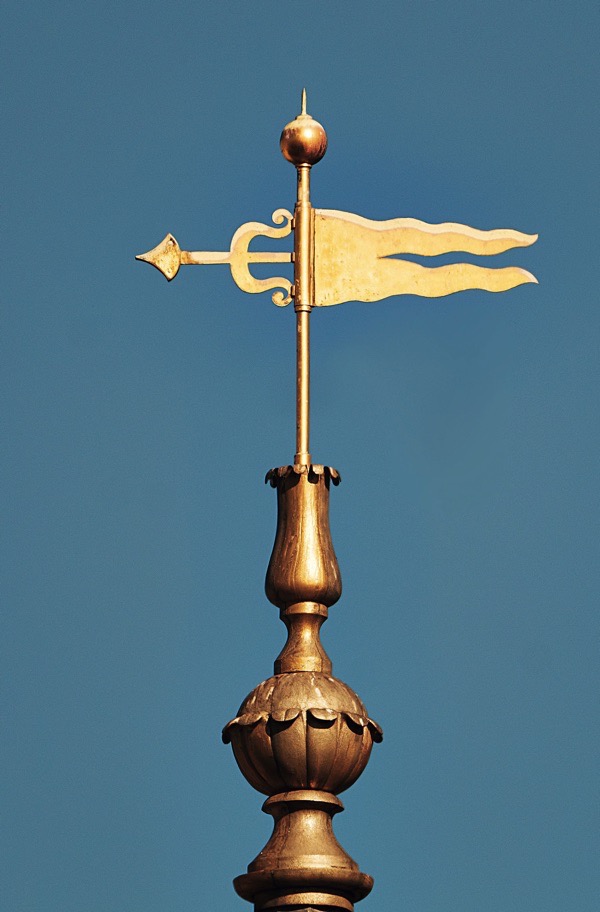
Arrow & pennant on St Augustine, Watling St
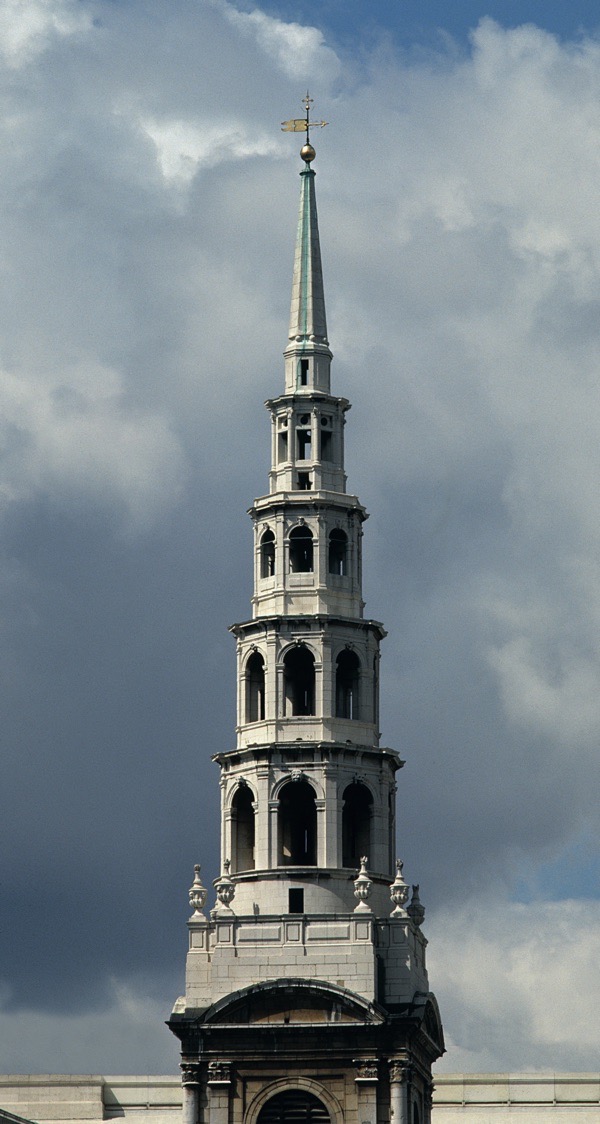
Spire of St Bride’s Fleet St by Christopher Wren
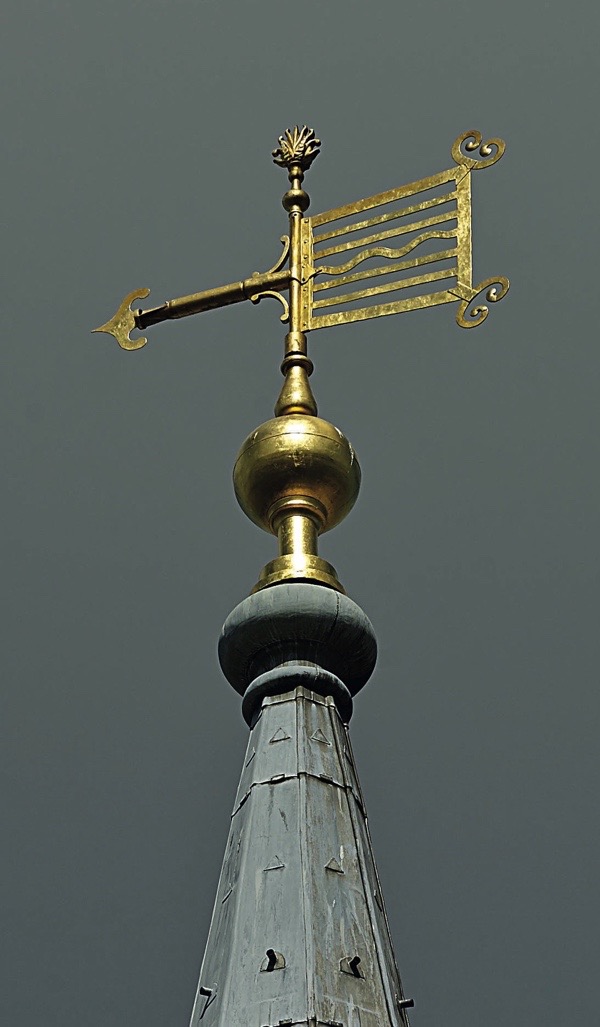
Gridiron on St Lawrence Jewry, symbol of the martyrdom of St Lawrence
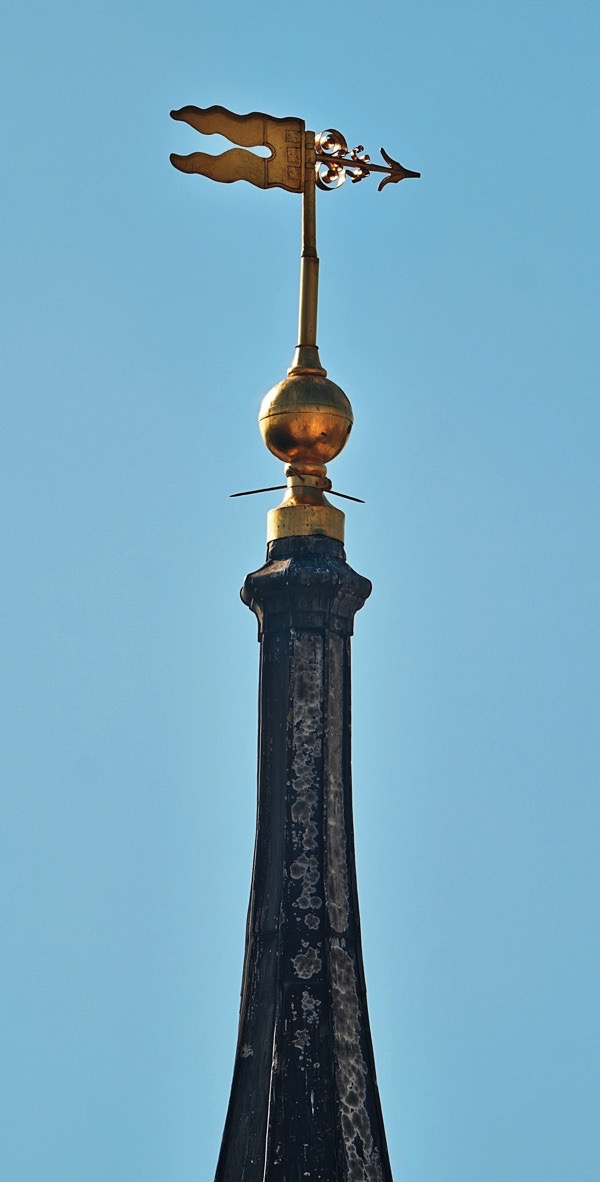
Weathervane on St Magnus the Martyr by Christopher Wren
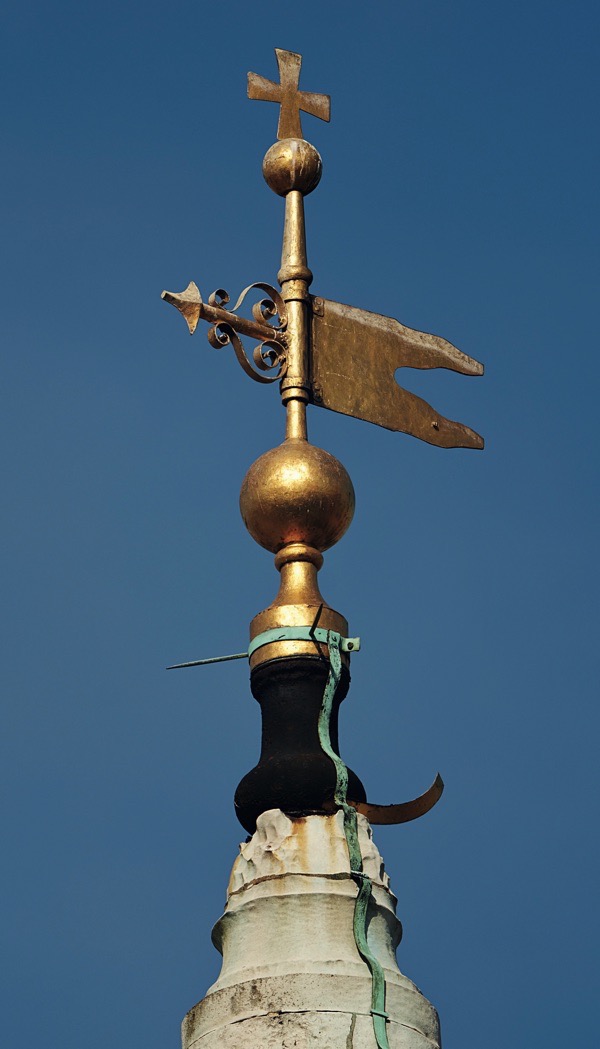
Weathervane on St Michael Paternoster Royal, College St

Galleon on St Nicholas Cole Abbey, moved from St Michael Queenhithe after demolition
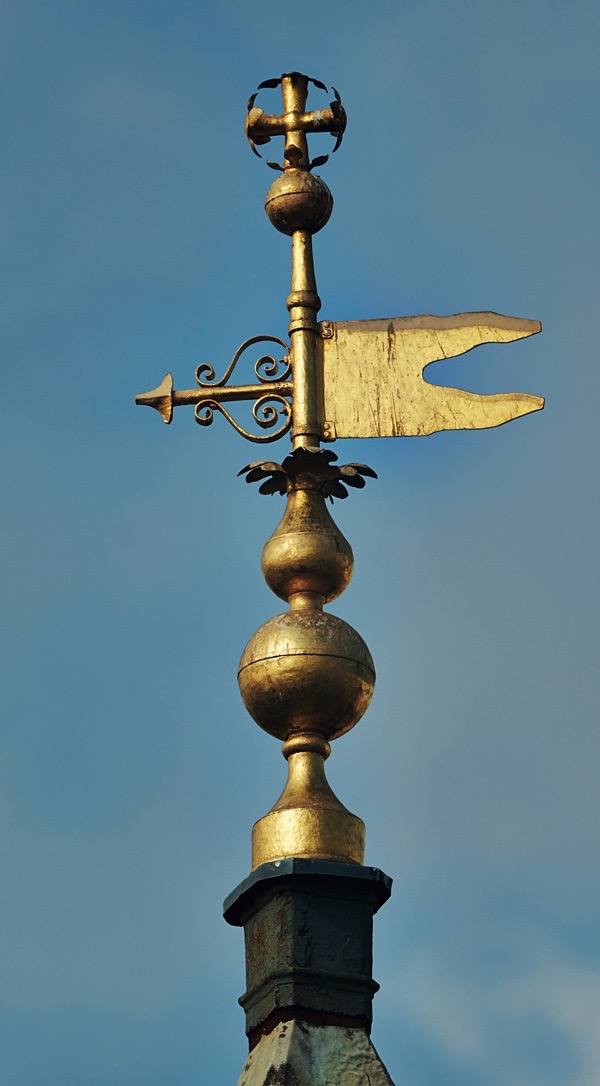
Weathervane on St James Garlickhythe
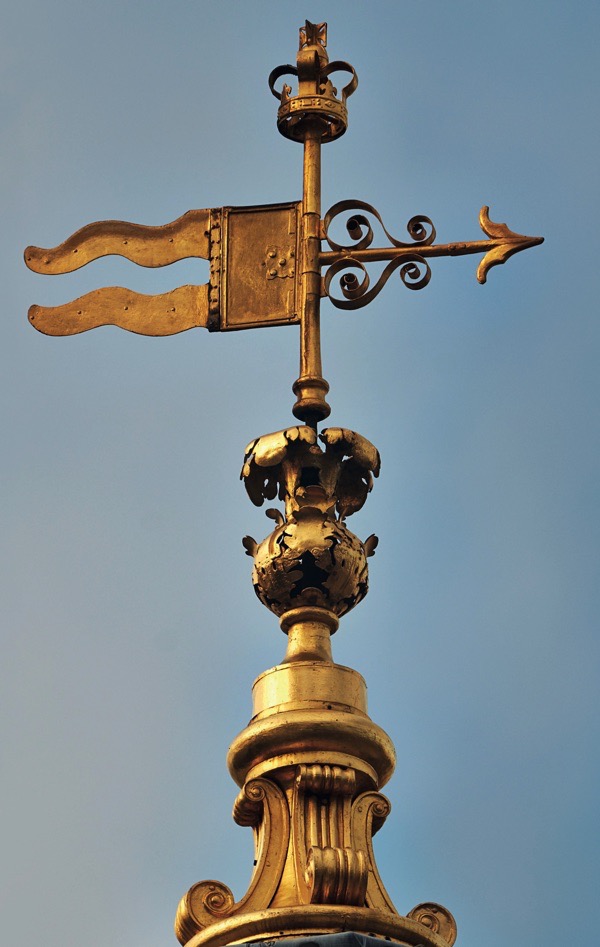
Crown on St Edmund King & Martyr, Lombard St
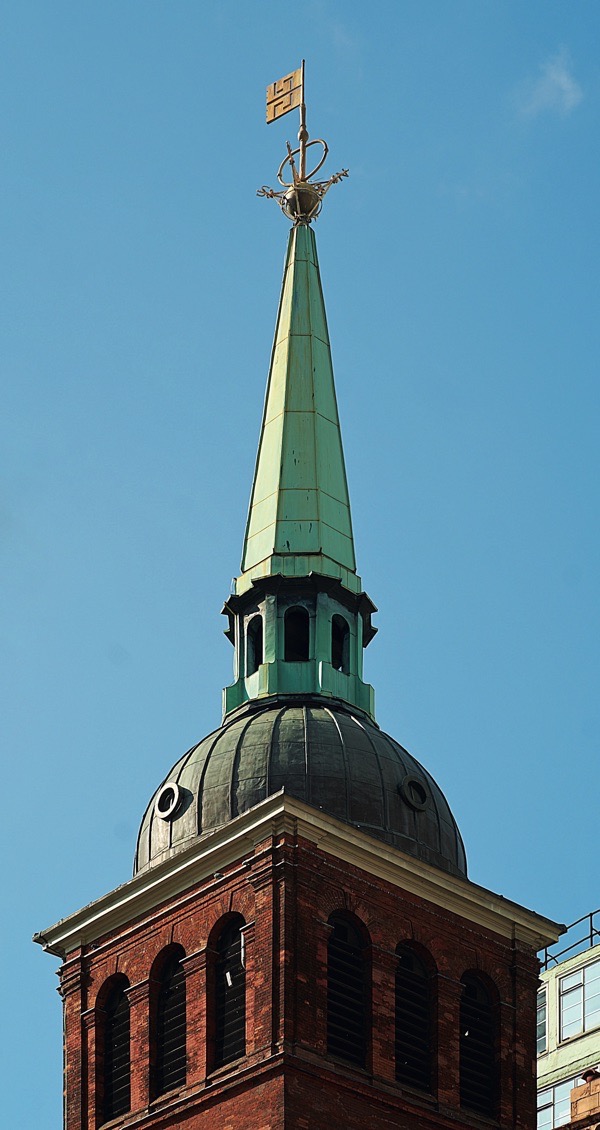
Key on the Tower of St Peter Cornhill
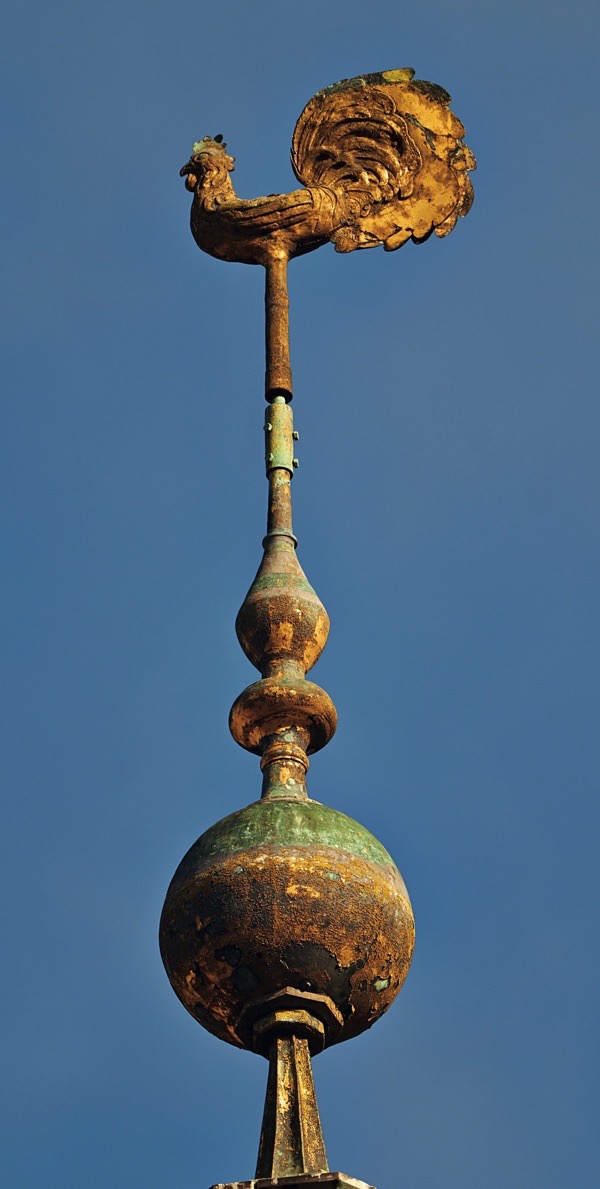
Cockerell on St Dunstan-in-the-East by Christopher Wren
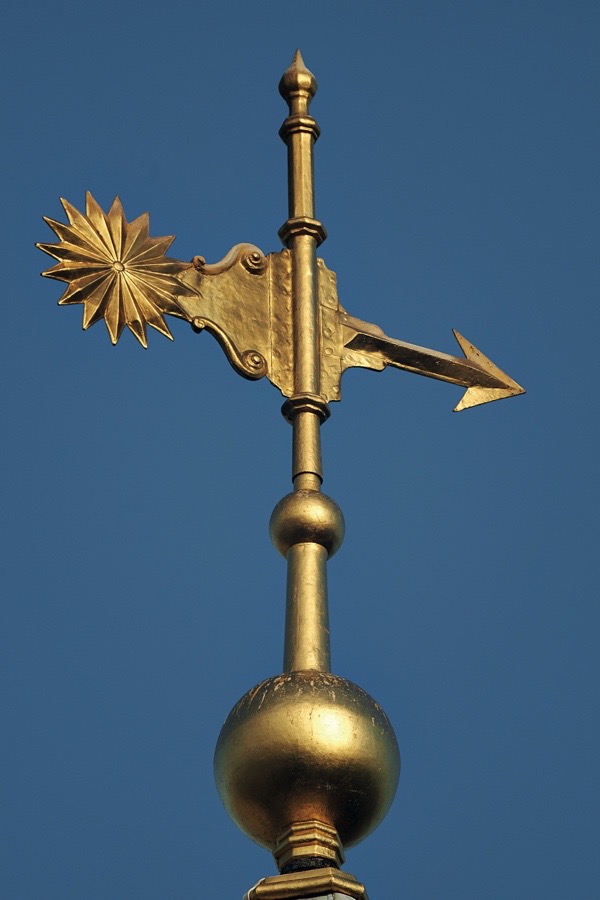
Comet on St Mary-Le-Strand
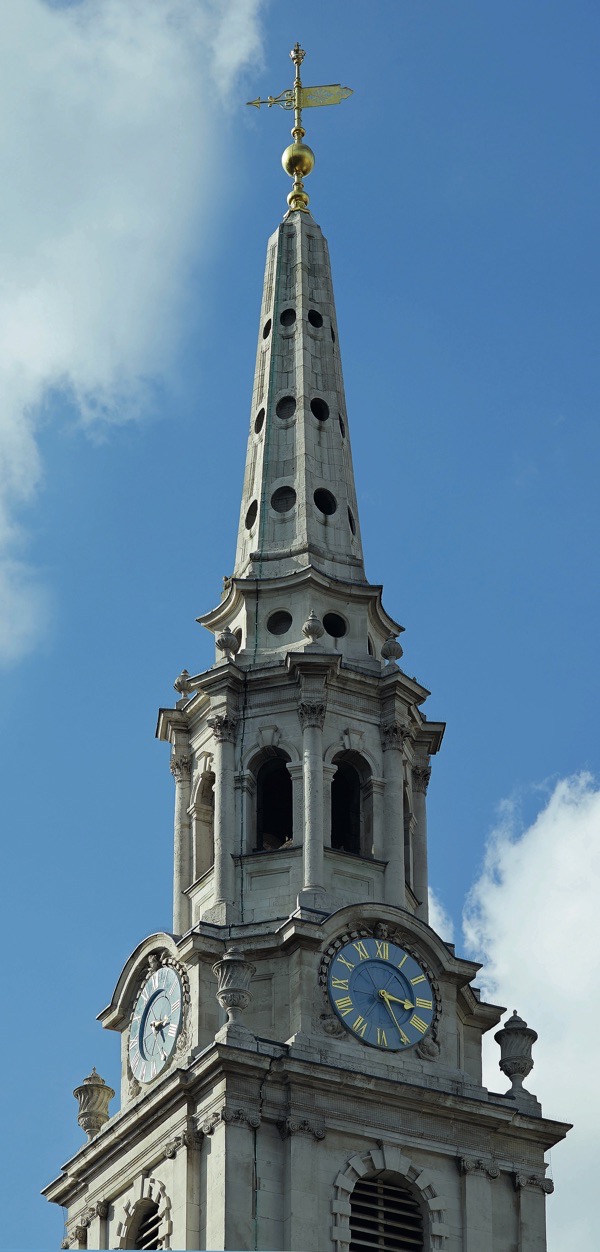
Spire of St Martin in the Fields by James Gibbs
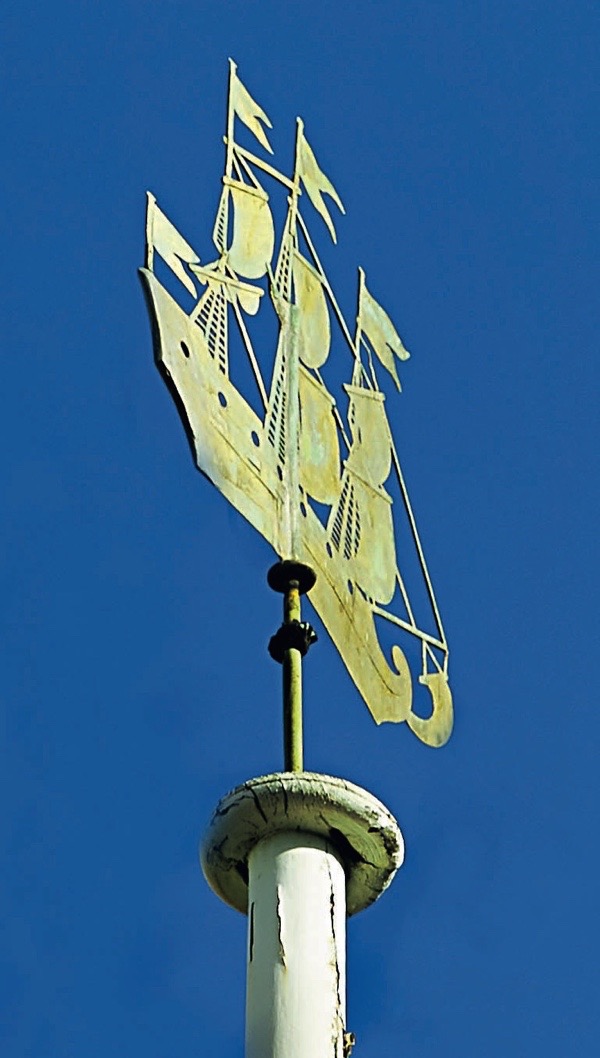
Square-rigged ship on St Olave Old Jewry
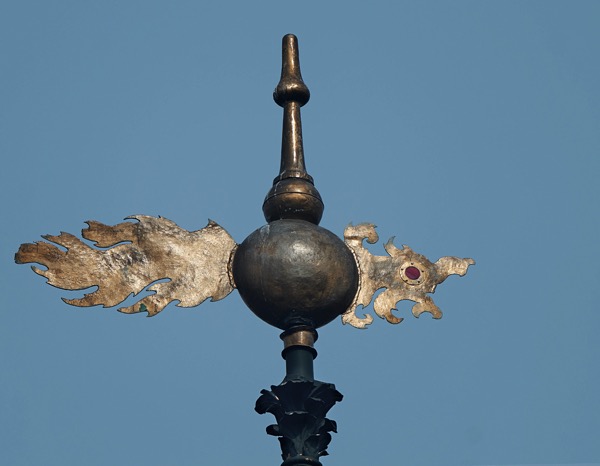
Flaming red-eyed dragon on St Luke, Old St, described as a flea in popular lore
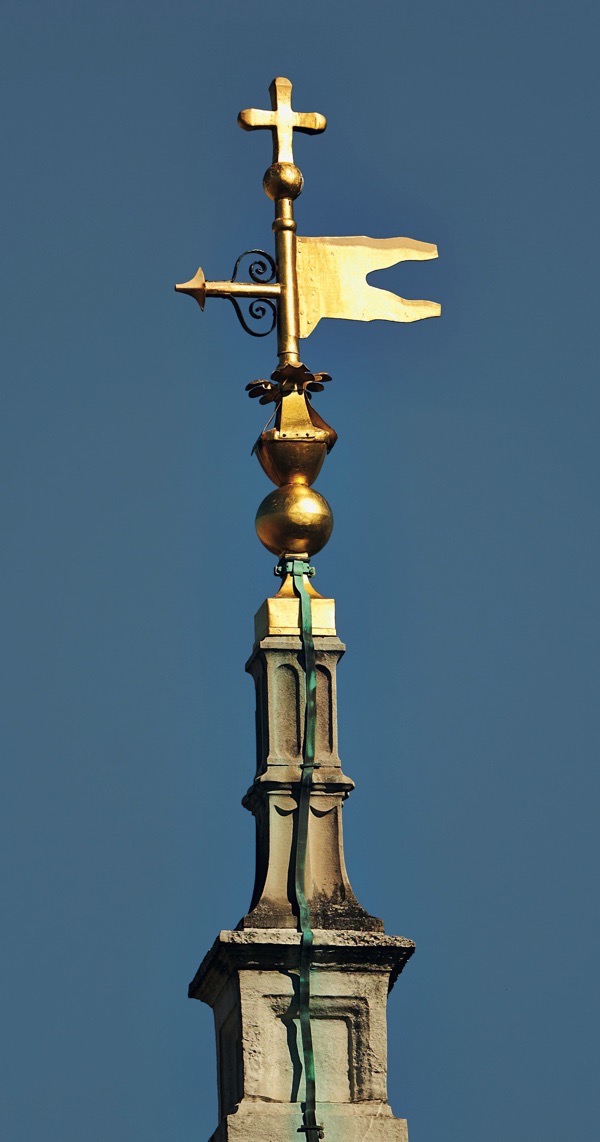
Weathervane on St Stephen Walbrook by Nicholas Hawksmoor
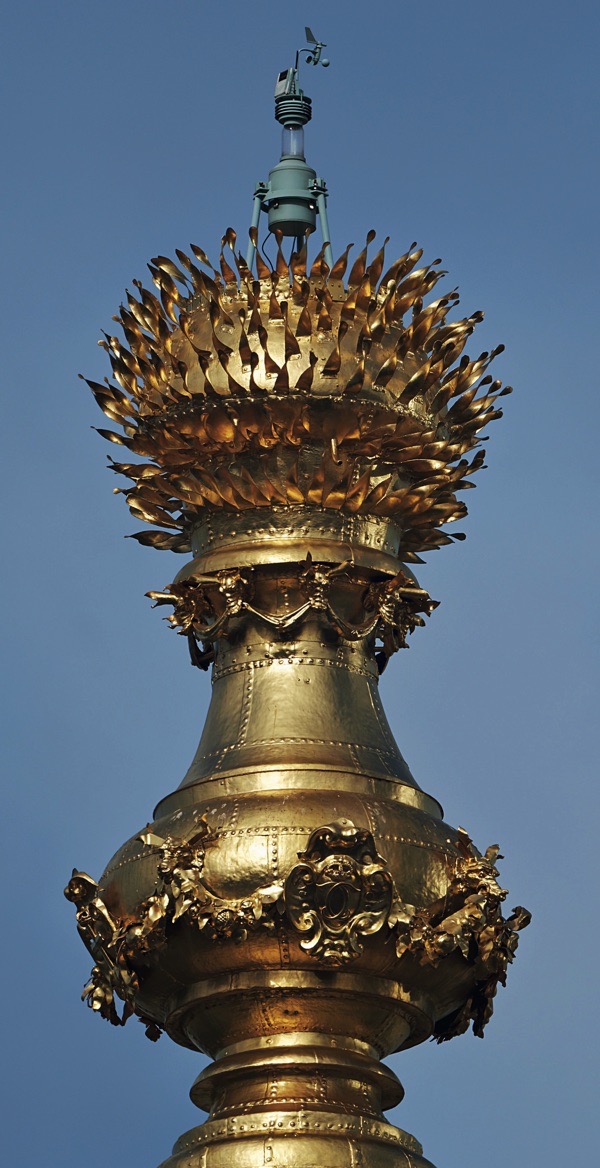
‘Flame’ on the top of the Monument by Christopher Wren
Photographs copyright © Angelo Hornak
You may also like to take a look at
Richard Dighton’s City Characters
Thanks to everyone who has contributed, we are now a third of the way towards my crowd-funder to launch a COMMUNITY TOURISM PROJECT in Spitalfields as a BETTER ALTERNATIVE to the serial killer tours that monetise misogyny. We still have a way to go to reach our target, so please help by spreading the word.
CLICK HERE TO SUPPORT THIS PROJECT
Map of The Gentle Author’s Tour of Spitalfields designed by Adam Dant
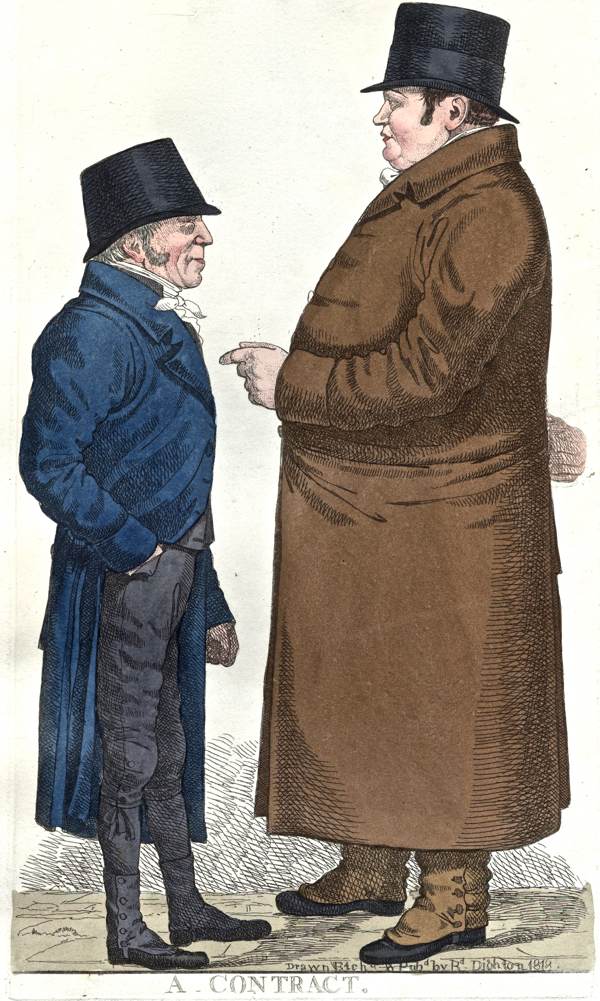
At the end of the week in which bumper bonuses for bankers were celebrated in the City of London, I thought I would publish Richard Dighton’s cartoons of their Regency counterparts from 1824 in the archive at the Bishopsgate Institute, thus testifying that fat cats are not a new phenomenon.
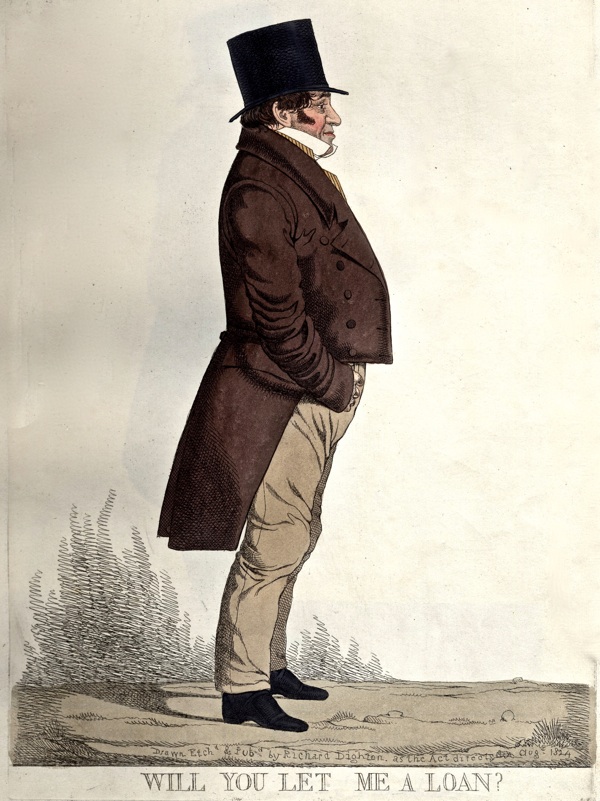
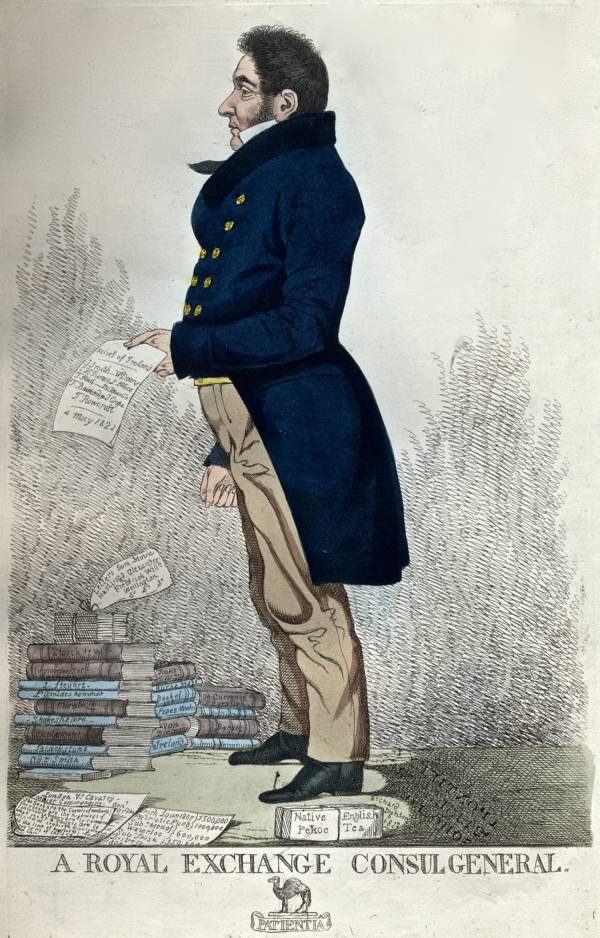
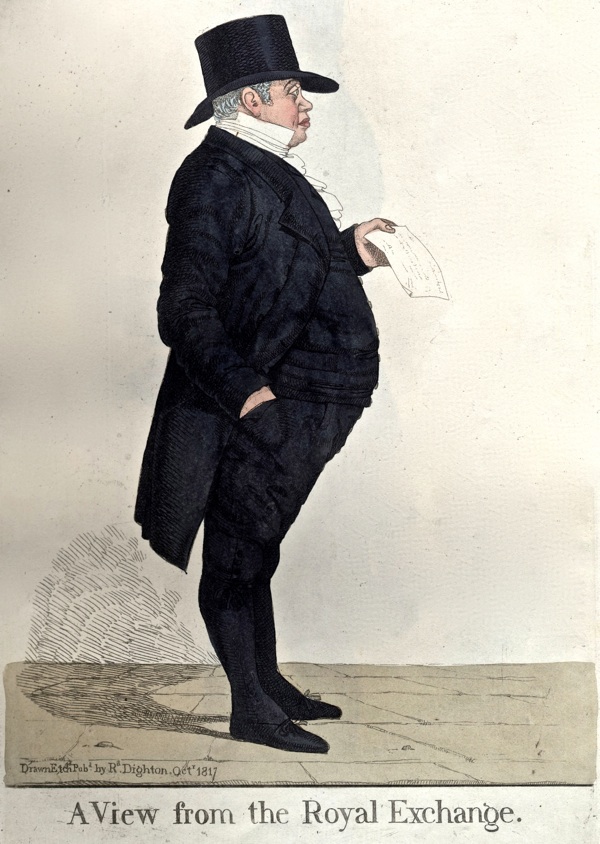
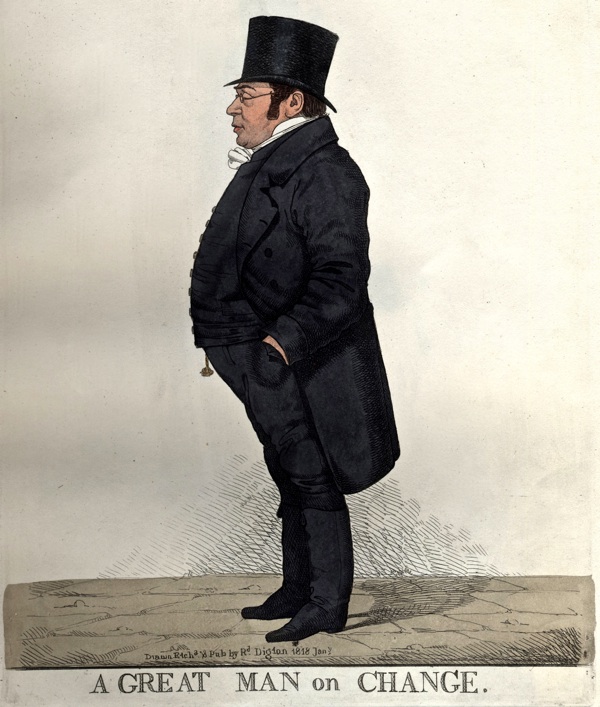

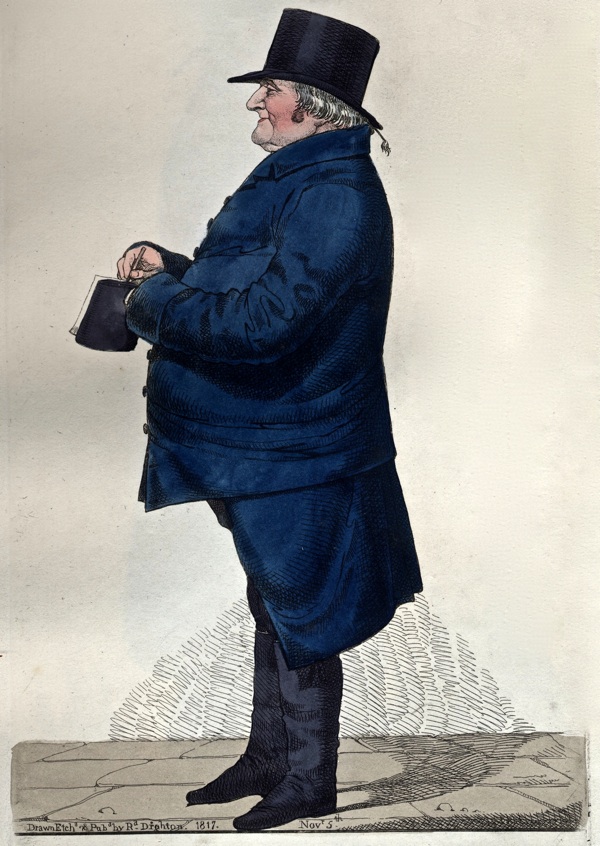
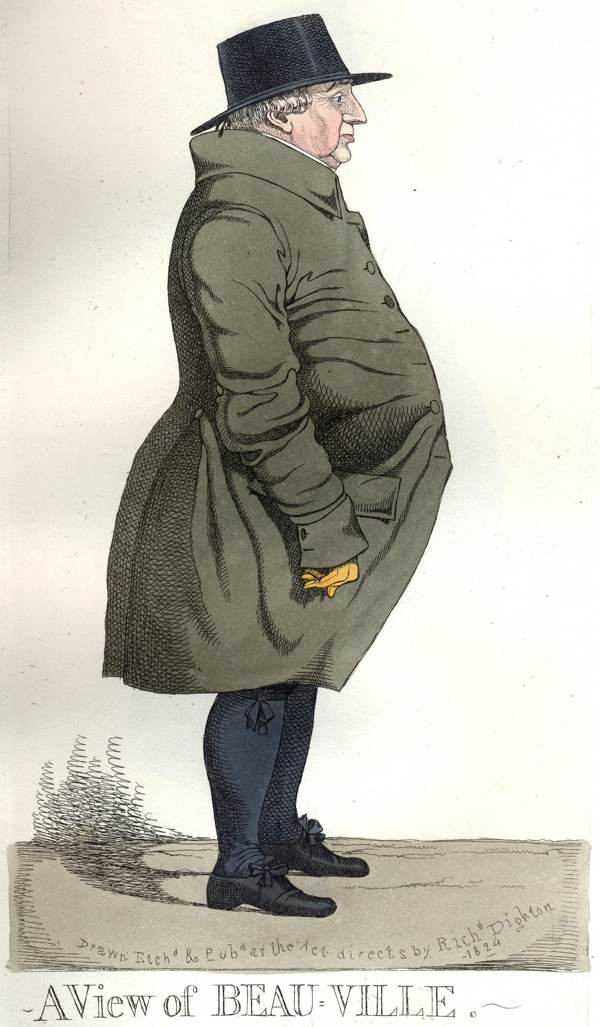

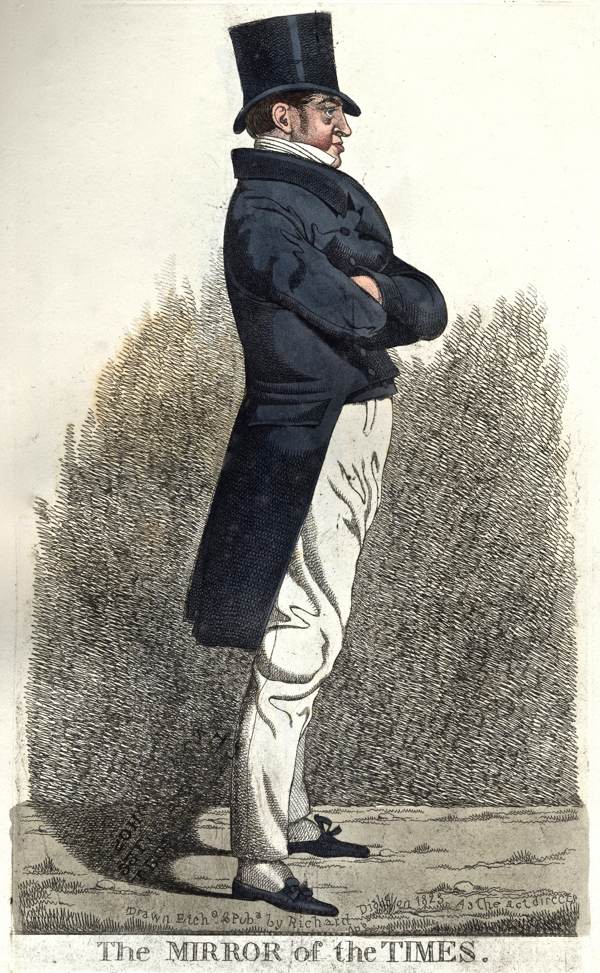
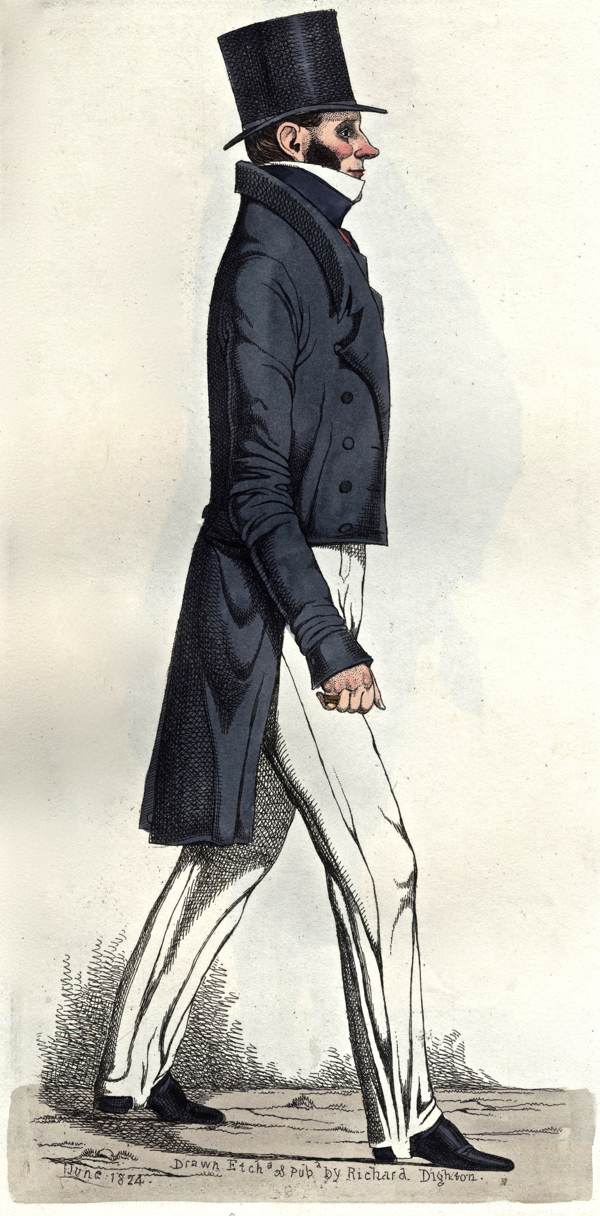
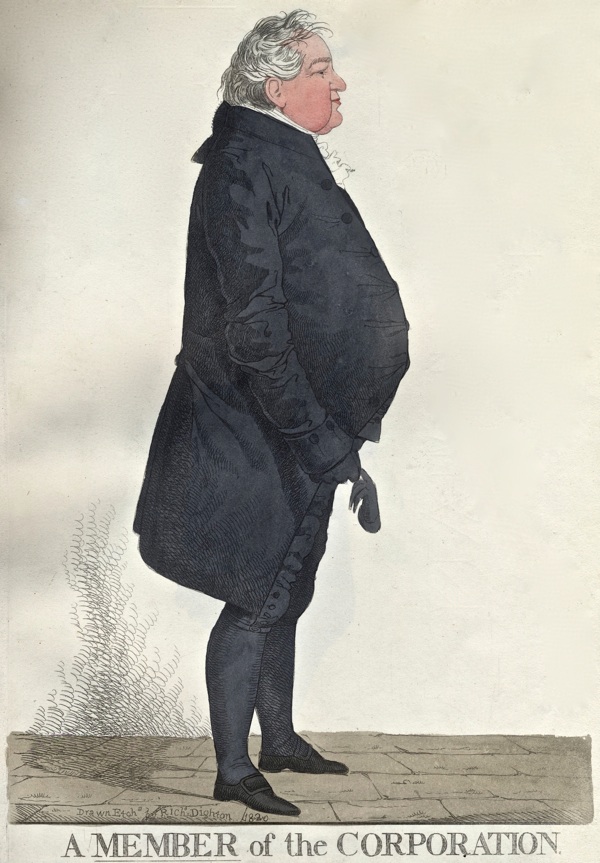
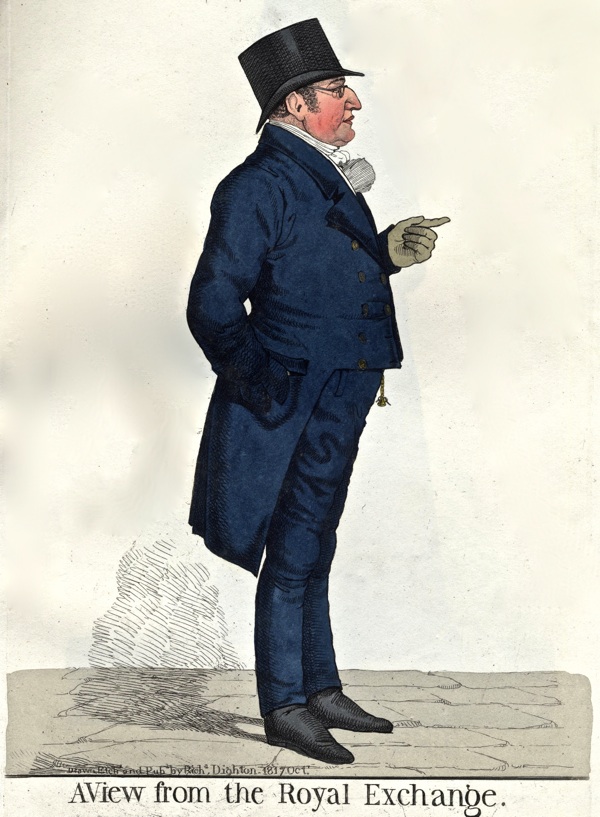
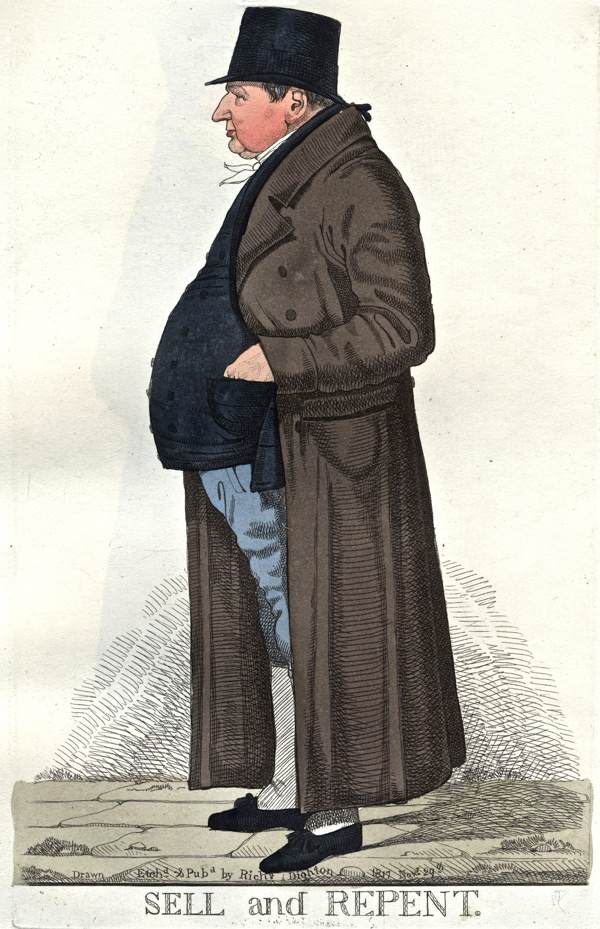
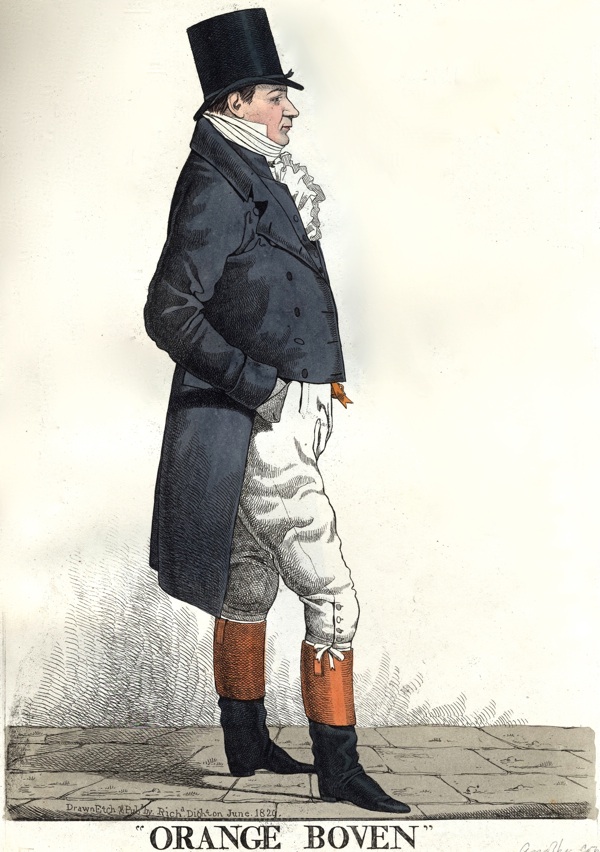
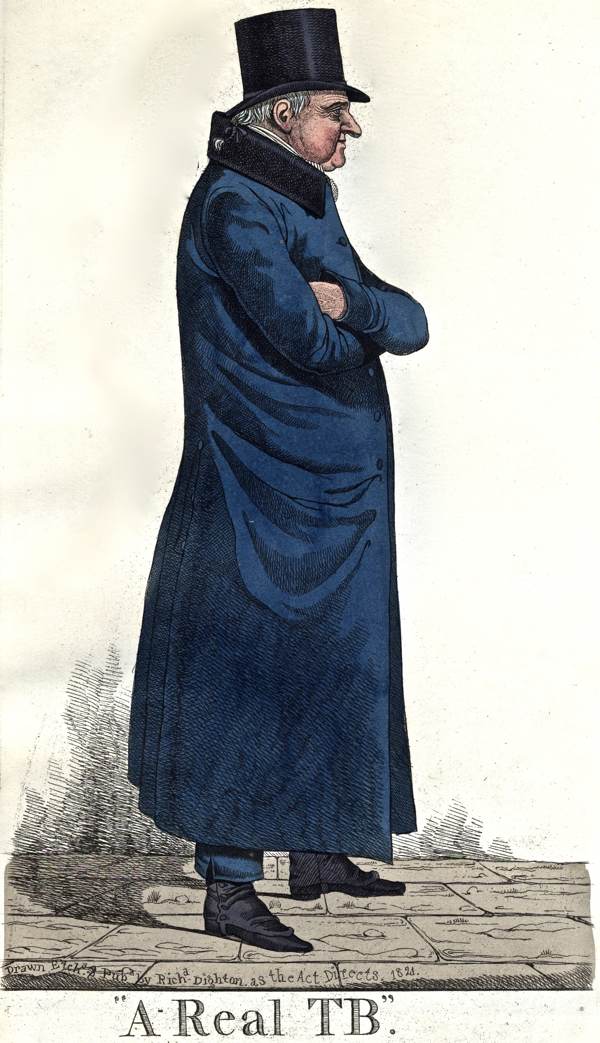
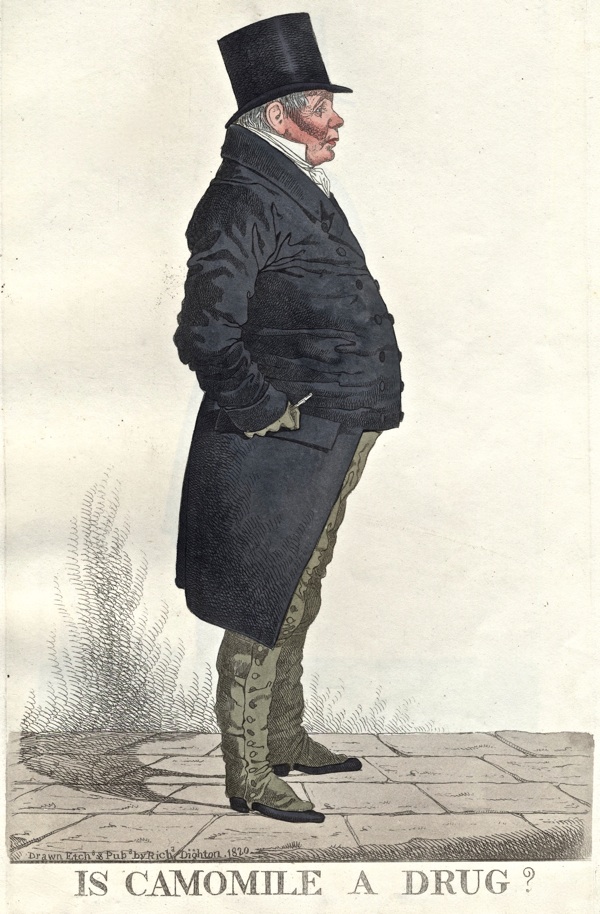

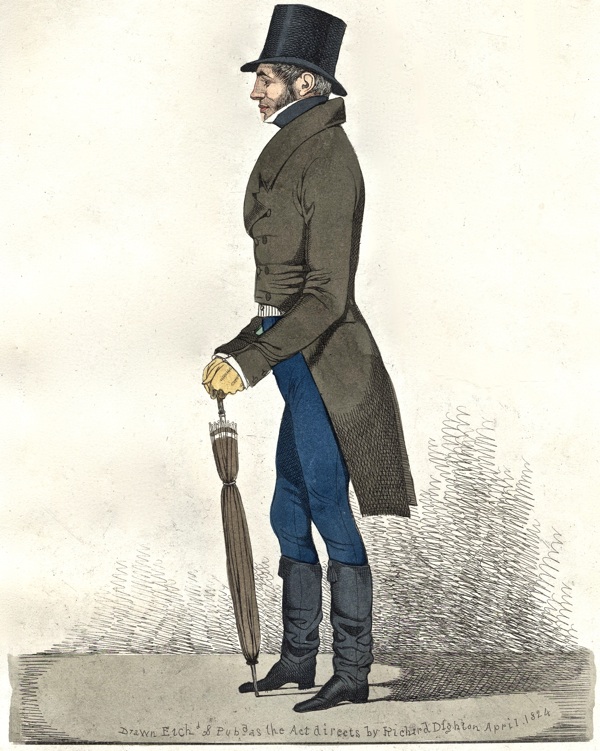
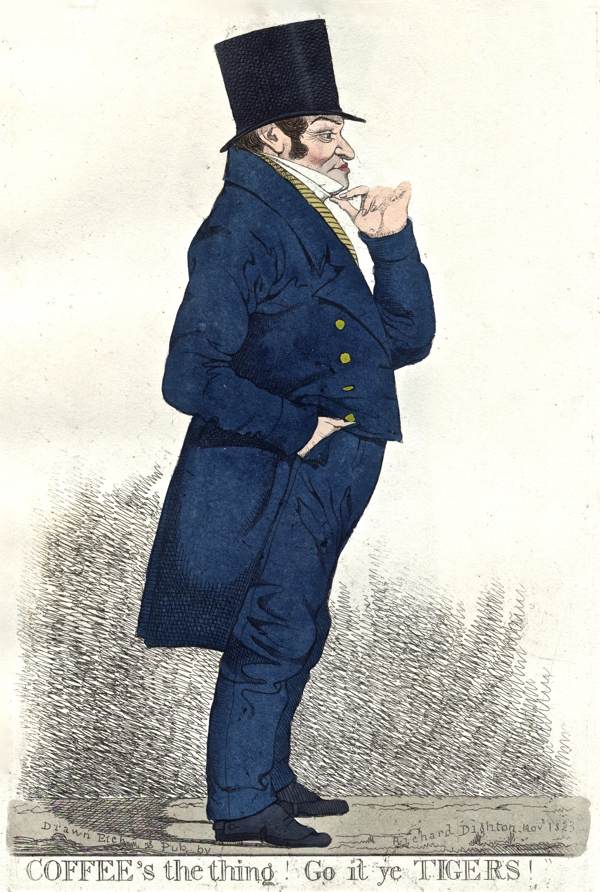
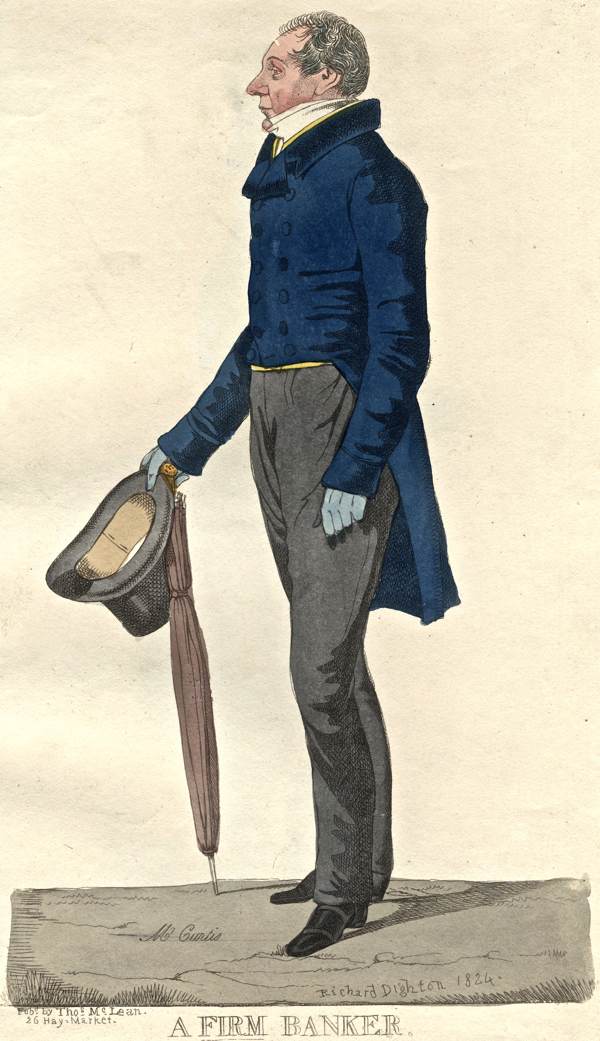
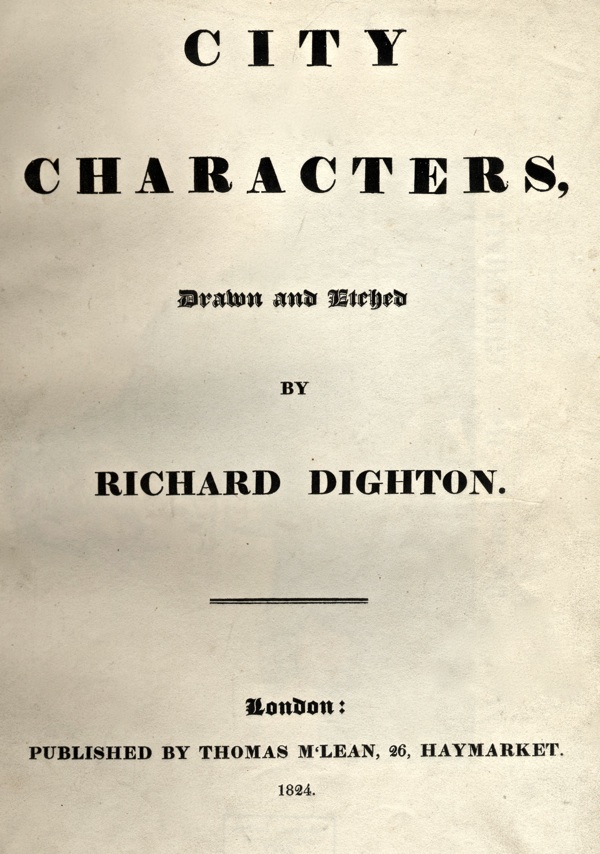
Images courtesy Bishopsgate Institute
You may also like to take a look at
A Walk Through Time In Spitalfields Market
Thanks to everyone who has already contributed towards my crowd-funder to launch a COMMUNITY TOURISM PROJECT in Spitalfields as a BETTER ALTERNATIVE to the serial killer tours that monetise misogyny. Please help me by spreading the word.
CLICK HERE TO SUPPORT THIS PROJECT
Map of The Gentle Author’s Tour of Spitalfields designed by Adam Dant
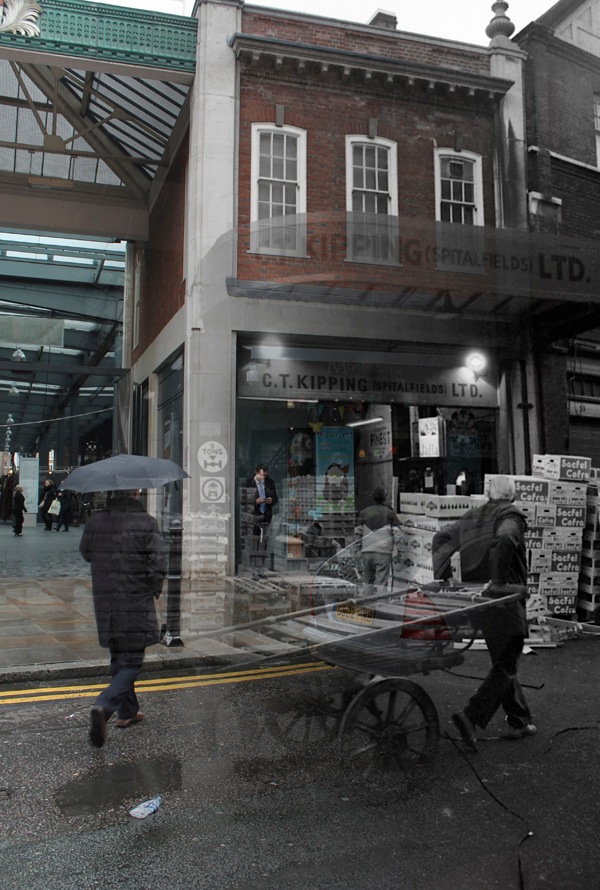
Once upon a time, the Romans laid out a graveyard along the eastern side of the road leading north from the City of London, in the manner of the cemetery lining the Appian Way. When the Spitalfields Market was demolished and rebuilt in the nineteen-nineties, stone coffins and funerary urns with copper coins were discovered beneath the market buildings – a sobering reminder of the innumerable people who came to this place and made it their own over the last two thousand years. Outside the City, there is perhaps no other part of London where the land bears the footprint of so many over such a long expanse of time as Spitalfields.
In his work, Adam Tuck plays upon this sense of reverberation in time by overlaying his own photographs upon earlier pictures to create subtly modulated palimpsests, which permit the viewer to see the past in terms of the present and the present in terms of the past, simultaneously. He uses photography to show us something that is beyond the capability of ordinary human vision, you might call it God’s eye view.
Working with the pictures taken by Mark Jackson & Huw Davies in 1991, recording the last year of the nocturnal wholesale Fruit & Vegetable Market before it transferred to Leyton after more than three centuries in Spitalfields, Adam revisited the same locations to photograph them today. The pictures from 1991 celebrate the characters and rituals of life within a market community established over generations, depicted in black and white photographs that, at first glance, could have been taken almost any time during the twentieth century.
In Adam Tuck’s composites, the people in the present inhabit the same space as those of the past, making occasional surreal visual connections as if they sense each others presence or as if the monochrome images were memories fading from sight. For the most part – according to the logic of these images – the market workers are too absorbed in their work to be concerned with time travellers from the future, while many of the shoppers and office workers cast their eyes around aimlessly, unaware of the spectres from the past that surround them. Yet most telling are comparisons in demeanour, which speak of self-possession and purpose – and, in this comparison, those in the past are seen to inhabit the place while those in the present are merely passing through.
Although only thirty years have passed since the market moved out, the chain stores and corporate workers which have supplanted it belong to another era entirely. There is a schism in time, since the change was not evolutionary but achieved through the substitution of one world for another. Thus Adam’s work induces a similar schizophrenic effect to that experienced by those who knew the market before the changes when they walk through it today, raising uneasy comparisons between the endeavours of those in the past and the present, and their relative merits and qualities.

Brushfield St, north side.

Lamb St, south side.
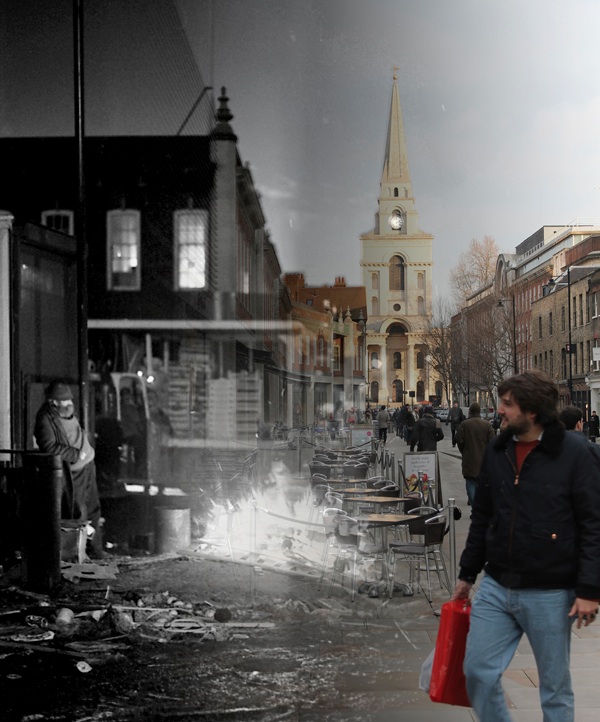
Brushfield St, looking east.

In Brushfield St.

In Gun St.

Brushfield St, looking south-east.

Looking out from Gun St across Brushfield St.

In Brushfield St.

Market interior.

Northern corner of the market.
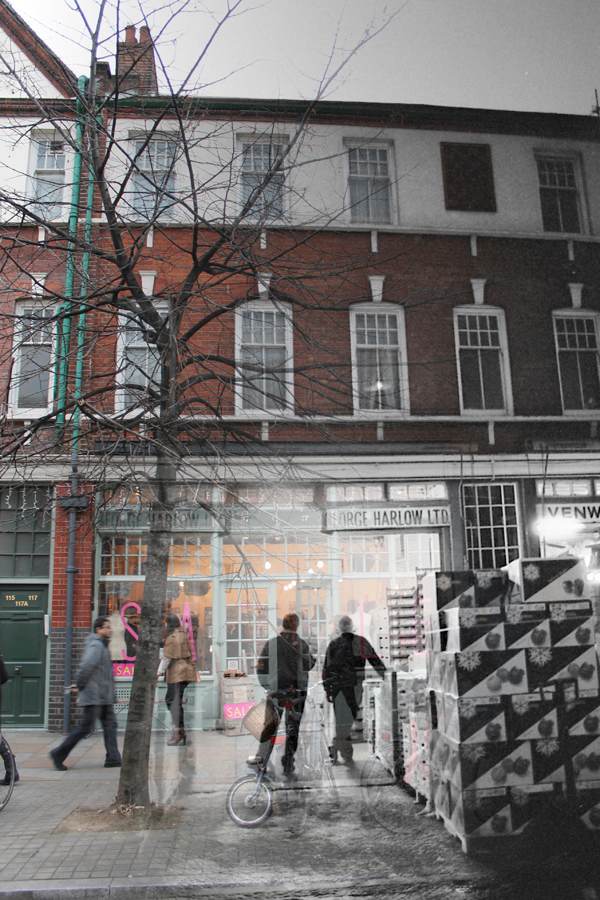
In Lamb St.

Lamb St looking towards The Golden Heart.
Photographs copyright © Mark Jackson & Huw Davies & Adam Tuck
Mark Jackson & Huw Davies photographs courtesy Bishopsgate Institute
You may like to look at more of Adam Tuck’s work
A Walk Through Time in Spitalfields
and Mark Jackson & Huw Davies pictures of the Spitalfields Market
Spitalfields Market Portraits, 1991
Night at the Spitalfields Market, 1991
Mark Jackson & Huw Davies’ Photographs of the Spitalfields Market
Spitalfields Market Portraits, 1991
Thanks to everyone who contributed yesterday to help me launch a COMMUNITY TOURISM PROJECT in Spitalfields as a BETTER ALTERNATIVE to the serial killer tours that monetise misogyny. Please help by spreading the word to your family, friends and workmates.
CLICK HERE TO SUPPORT THIS PROJECT
Map of The Gentle Author’s Tour of Spitalfields designed by Adam Dant
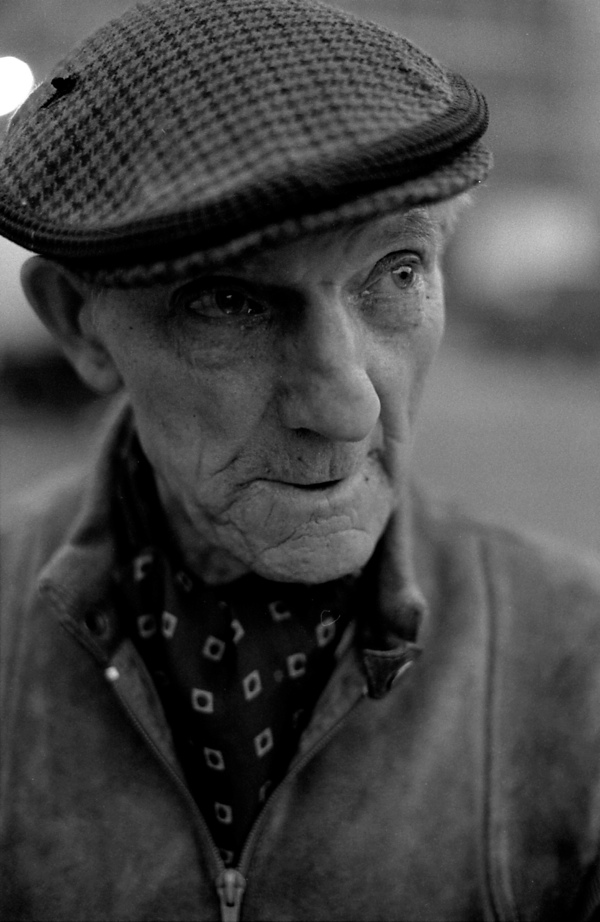
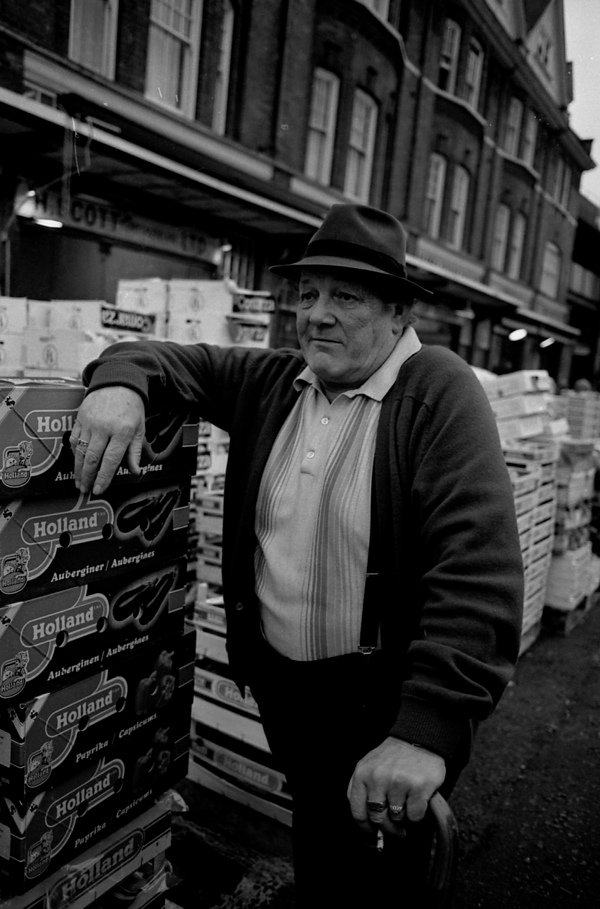
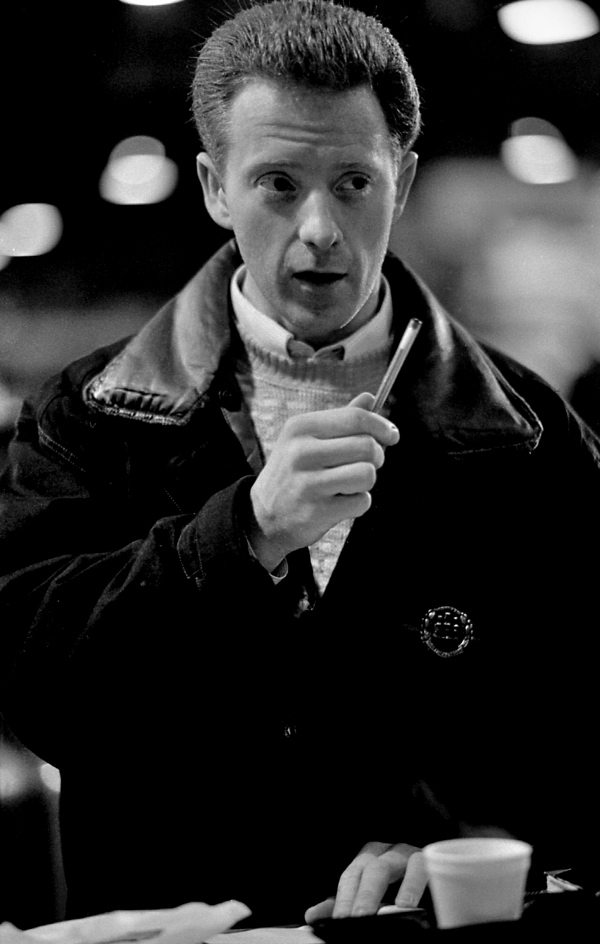
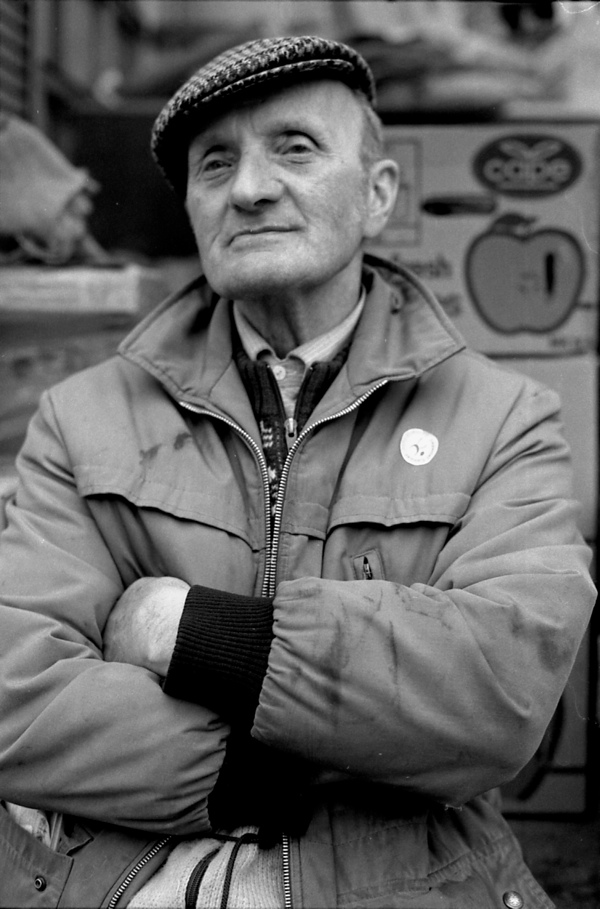
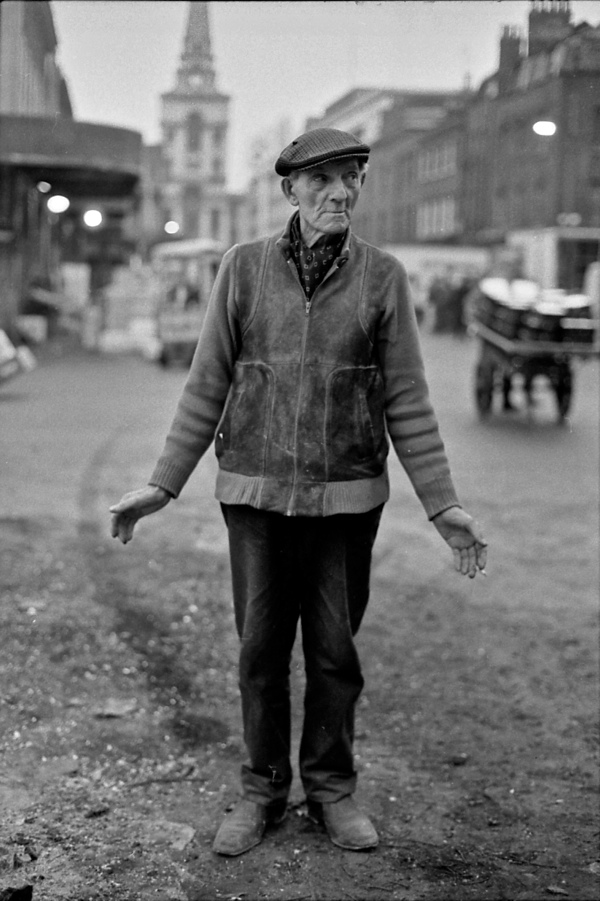
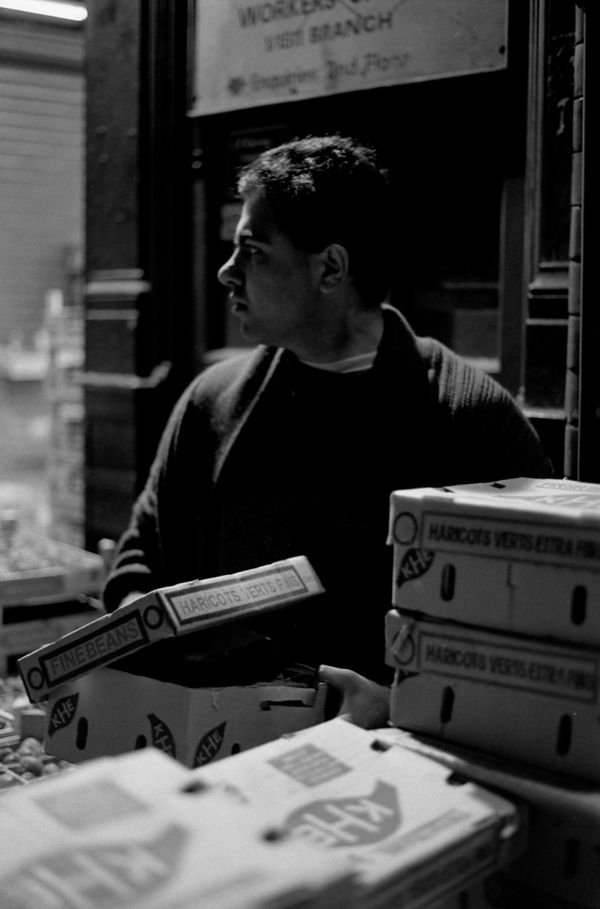
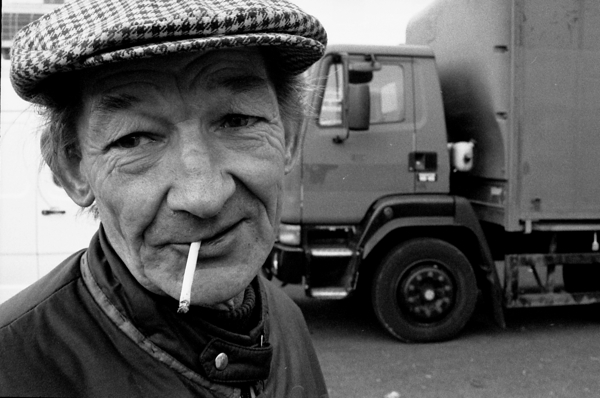
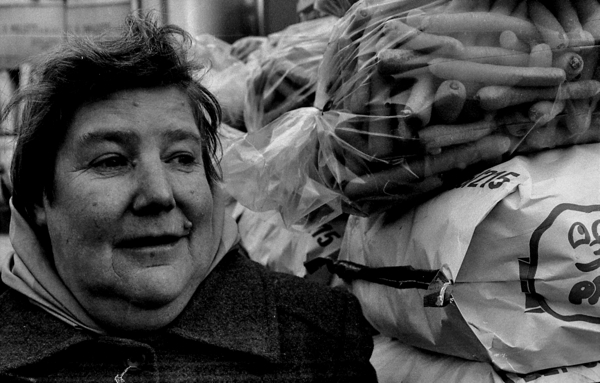
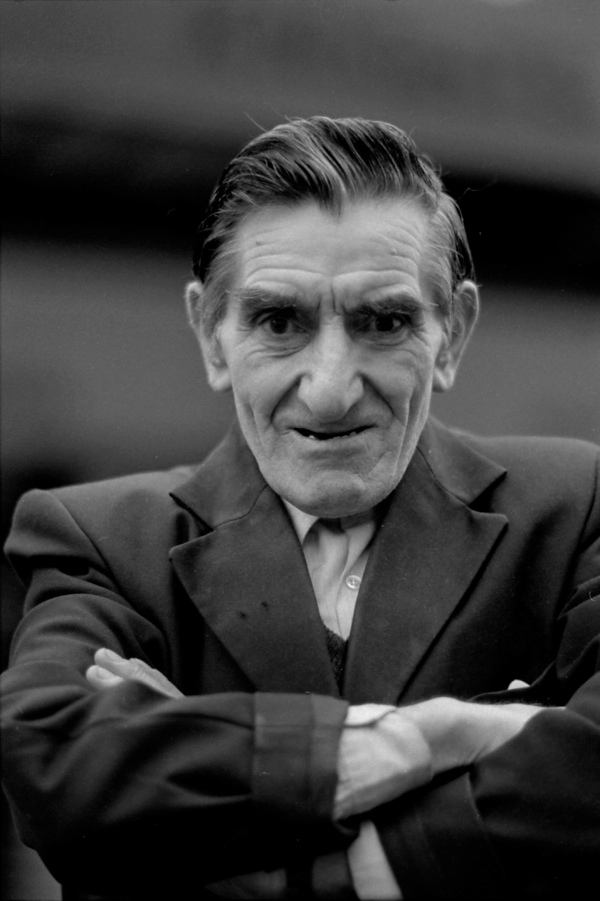
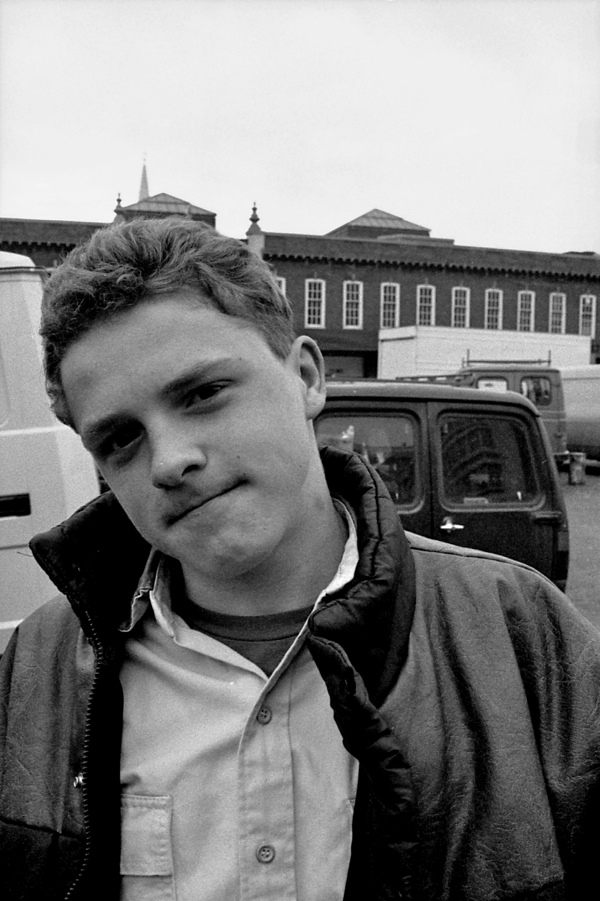
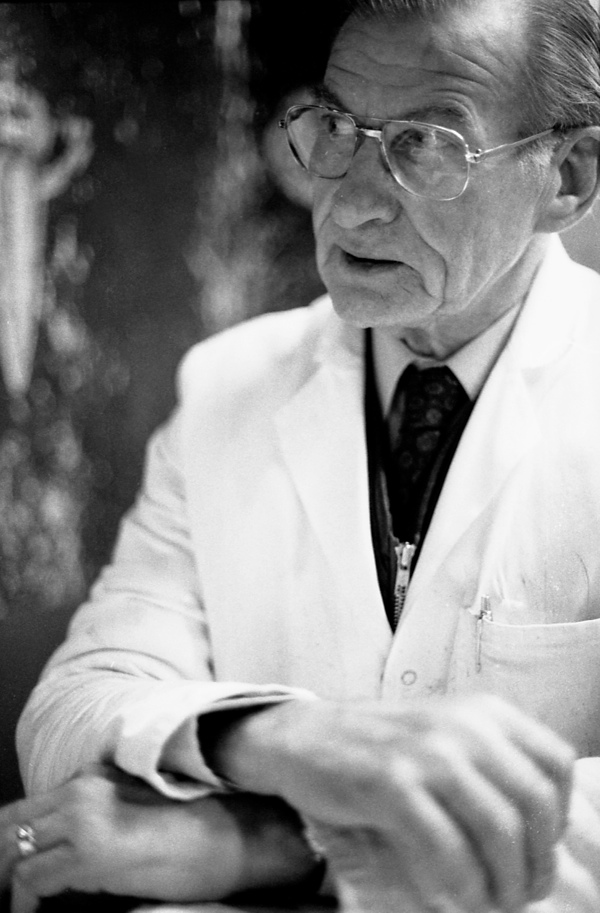
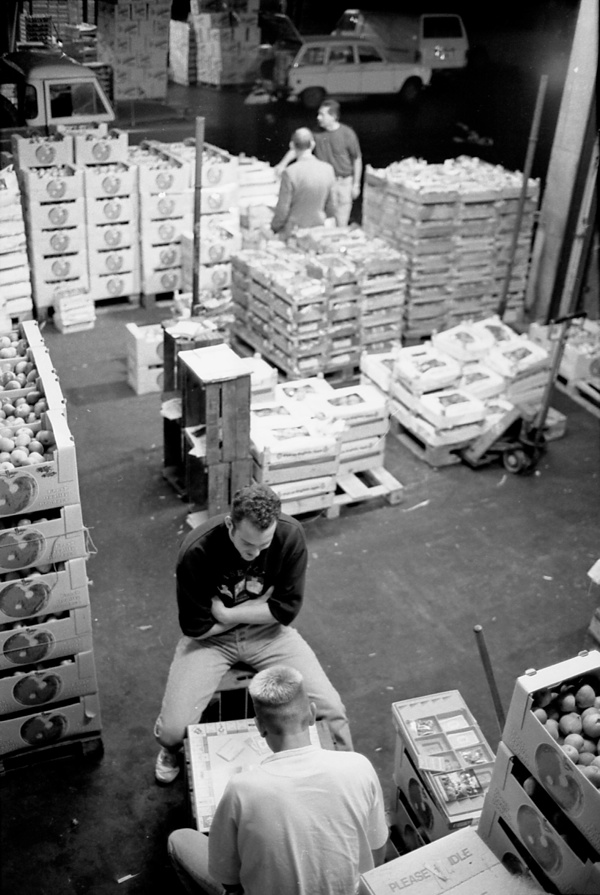
It is my pleasure to publish this gallery of portraits of Spitalfields Market traders chosen from more than three thousand photographs taken by Mark Jackson & Huw Davies in the last year of the Fruit & Vegetable Market in Spitalfields in 1991.
When Mark and Huw arrived at the market, they often separated to pursue different lines of inquiry, convened regularly through the night to compare results. Huw, the more more experienced photographer of the two, might set up the ambitious wide shots of the market and wait for figures to walk into the frame, while Mark, who did not even know how to load a camera at first, would chat with traders and snap portraits. And thus their different qualities complemented each other, so that today the body of pictures detailing the life of market exists as a totality in which the work of each photographer cannot be disentangled from the other.
All these portraits were the result of conversations as the photographers came to know their subjects. Always, conversation came first and once both parties were comfortable, the pictures were taken. As the traders came to appreciate the project, more were keen to have their portraits done, waving the photographers over and demanding a picture. It was an event that grew more frequent as the closure approached, and those who had spent their working lives there were desirous of being photographed in their market. They wanted their existence recorded along with their fellows.
There was a rigor imposed upon the endeavour by the cost of the film and the limitation of the budget, giving value to every single frame. At first, Mark & Huw bought cheap second hand cameras that broke and then they saved for months to buy new Nikon cameras and lenses, including a precious 35mm lens for portraits which they shared between them. And, to save money they bought great rolls of film and wound it into their cameras, but it quite often got damaged by fingerprints in the process.
Then, each weekend when the market was closed, Mark & Huw filled the bath in their tiny flat with smelly chemicals mixed up from powder and developed the week’s films, hanging them with clothes pegs on strings to dry – and sometimes the mix of the developer was wrong and the pictures came out too dark. Yet in spite of all these limitations, and the resultant pitfalls and mishaps, Mark & Huw were able to produce the splendid, emotionally-charged portraits which you see here and, thanks to them, we are able to meet the Spitalfields Market traders of 1991 face to face.











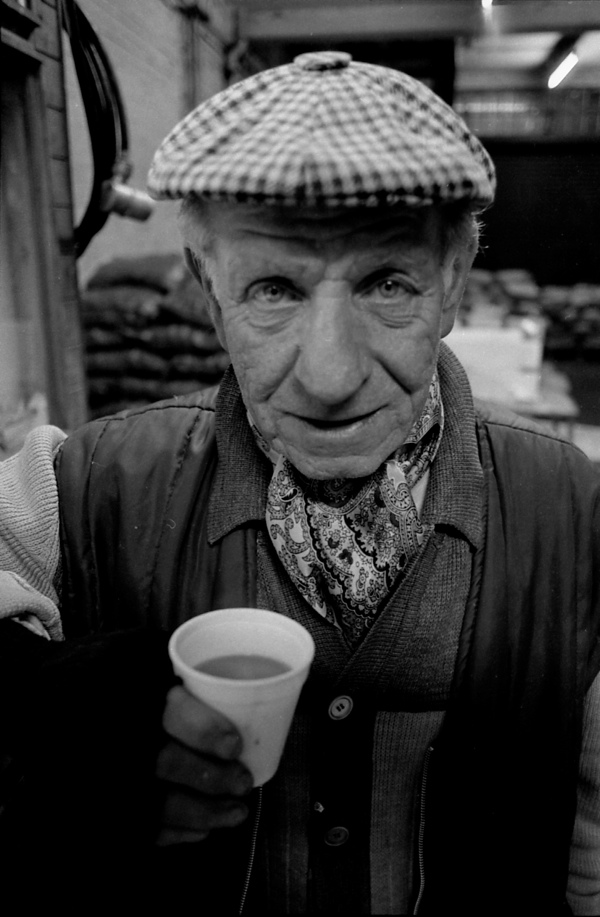

Photographs copyright © Mark Jackson & Huw Davies
You can see the original selection of
Mark Jackson & Huw Davies’ Photographs of the Spitalfields Market
and read about
Save Spitalfields From The Serial Killer!
Help me launch a COMMUNITY TOURISM PROJECT as a BETTER ALTERNATIVE to the serial killer tours that monetise misogyny.
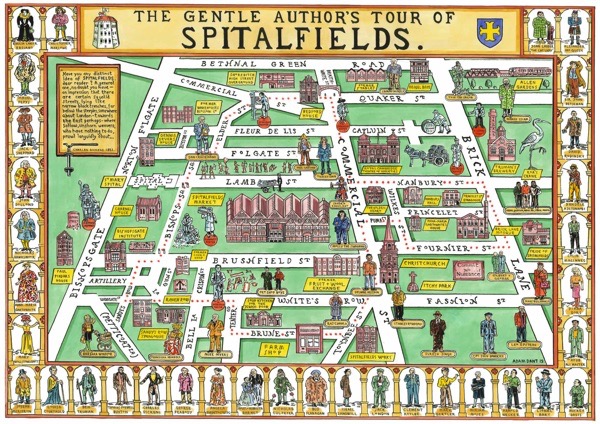
Map of The Gentle Author’s Tour of Spitalfields designed by Adam Dant
There are so many other stories of the people of Spitalfields over the past two thousand years which deserve to be told. Through the past twelve years, writing Spitalfields Life daily, I have published hundreds of the tales of the people – both past and present – who make this place so fascinating.
Now I am taking these stories onto the street to create tours that are more more engaging, more entertaining, more fun, more surprising, better storytelling – and do not trade off violence against women.
I am appalled that educational institutions send classes of students and school children on the exploitative serial killer tours which display autopsy photographs of women in the street, indulging in ghoulish humour at the expense of these victims.
Instead, I am offering visitors the opportunity to meet a member of the local community and learn something of the infinite variety of life that has evolved in London’s first suburb over two millennia. For the past two years, I have been developing and road-testing THE GENTLE AUTHOR’S TOUR OF SPITALFIELDS which I plan to launch this spring.
I am raising £20,000 to create a booking website, train local tour guides, print maps and buy targeted online advertising to reach tourists planning a visit. If everyone who reads Spitalfields Life daily gives just a few pounds we can reach our target in no time. Anyone who contributes £100 or more gets two complimentary tickets to experience the tour for themselves.
CLICK HERE TO SUPPORT THIS PROJECT
This project is a means to create local employment, draw attention to the distinctive wonders of the place and reclaim the true stories of our living community.
I want to celebrate a rich and diverse history of resourcefulness, driven by successive waves of migration from across the world – Huguenots, Jews, Irish and Bengalis, among many others – which tells the story of how modern Britain was created.
Help me SAVE SPITALFIELDS FROM THE SERIAL KILLER!
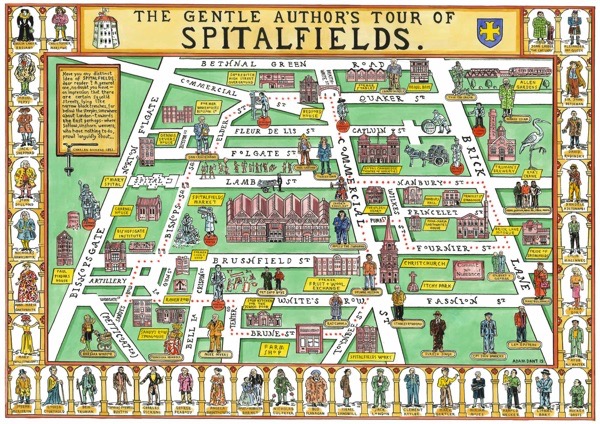
Here are some comments by people who have been on my trial tours:
“What a winner! The Gentle Author’s Tour is in a category of its own, illustrated by the historic buildings of Spitalfields and illuminated by stories of its residents uniquely brought to life by their friend and biographer, The Gentle Author. Book immediately, to avoid disappointment.” MP
“The walking tour felt like being invited into a very special “family gathering”! The pace and places we stopped were perfect, with so many stories, both personal and historical with the emphasis on the very humanity that has made this area what it is over so many centuries. It was such an antidote to the disconnection I’ve felt over the last eighteen months, thank you.” KB
“As an East Ender born and bred, I thoroughly enjoyed The Gentle Author’s Spitalfields walking tour. An excellent mixture of history and individual stories bringing alive the vibrant past and present of Spitalfields’s streets – in all its darkness and many triumphs of the human spirit. The tour is a magnificent counterblast to those tours and stories of the East End focusing only on the Ripper horrors and statistics of poverty. The Gentle Author takes you on a journey into what the real East End has always been about – survival, defiance, community, change. Listen and marvel.” MOL
“I spent almost two hours walking with The Gentle Author and twelve other people in the streets of Spitalfields. I am passionate about literature and history so it was the best combination of little vignettes from local people and, historical reflection on poverty, social classes and architecture. The Gentle Author is a specialist and I am very lucky I managed to spend some time listening to these stories in good company. Walking hors des sentiers battus felt like a privilege to me, as if our guide was able to lift off the veils of history and let us peep underneath to discover the real London.” MW
“From Roman times to the land of bones, to Henry VIII’s Brexit, to the waves of immigrants who have made Spitalfields so distinctive, The Gentle Author covered 2,000 years of history, with a personal twist in the tail at the end of the talk. Not only the past was covered, but also the present day – ghastly facadism and the plans for the Truman Brewery. A considerable amount of social history was covered during the walk. The duration of the tour was just right, the ending with tea & homemade cake in one of the houses in Fournier Street was a civilised way to conclude the visit to the ‘Hospital Fields’.” CE
“The Gentle Author’s Spitalfields Tour is a real treat. Resplendent storytelling brings the people and places of this magnificent blog to life with a quiet passion and humility. It’s a colourful journey through times past and present, provoking thought about the London we live in today and how we should preserve its history, characters and communities. To quote from Dickens Jnr’s Dictionary of London 1888 “it is something that no student of London life should miss seeing”. A wonderful experience that helps to reconnect us with the spirit of humanity and to cherish this wonderful city.” LW
“This is a must-do activity for London visitors and residents alike if you are keen to absorb the history of former generations as you walk around the cobbled streets of Spitalfields. From the Jewish soup kitchen to the site of the theatre where Chaplin trod the boards as a ten year old, The Gentle Author brings history to life over a very memorable two hours and I’m so glad that I experienced this.“ KU
“This brilliant, incisive walking tour with The Gentle Author around Spitalfields was packed with fascinating detail and well woven narratives about some of the people who’ve given this area its rich and singular history over the centuries. I would highly recommend this tour for anyone with the faintest interest in the area on the basis that it revealed much I didn’t know while being a perfect length and sufficiently succinct to maintain one’s interest throughout.” BG
“What a privilege to take part in your wonderfully evocative tour of an area we thought we knew pretty well. The tour gave us something really precious – a personal connection with people whose stories might otherwise be forgotten in a part of London that is in danger of becoming a theme park. We are very touched, and will be recommending the tour far and wide.Thank you.” NW
“What makes your tour so special is the weaving in of the history of people with that of buildings and streets, named people whose stories you knew. I loved seeing their photos and hearing what happened to them. I think that helped bring the group together, looking at all the photos (which worked very well) and reflectively on the human dimension. I honestly haven’t got any suggestions for improvements.” SL
“The Gentle Author’s walks are highly recommended for their informative content about the characterful pocket of London’s Spitalfields which should never be allowed to be swept away by major corporate developments and ghastly facadism!”. CJ
Vinegar Valentines
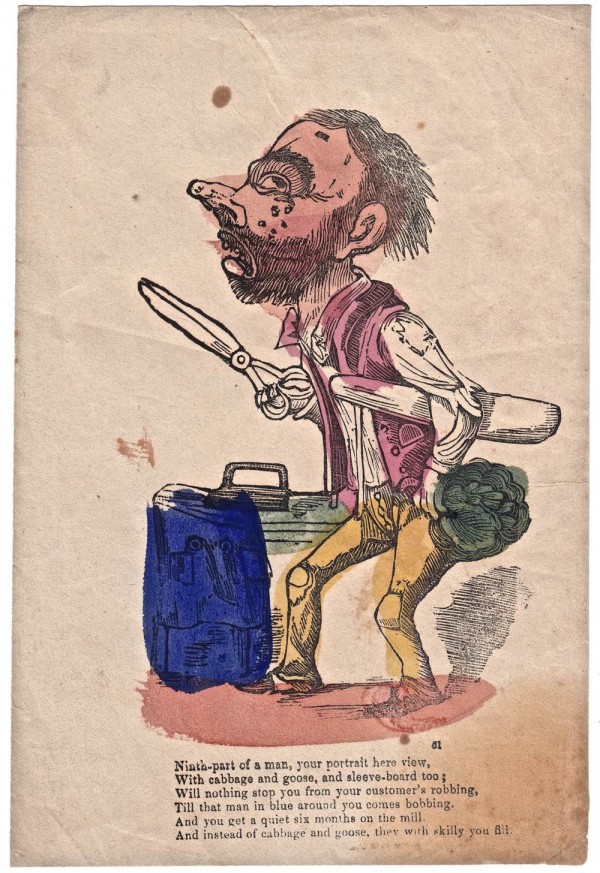
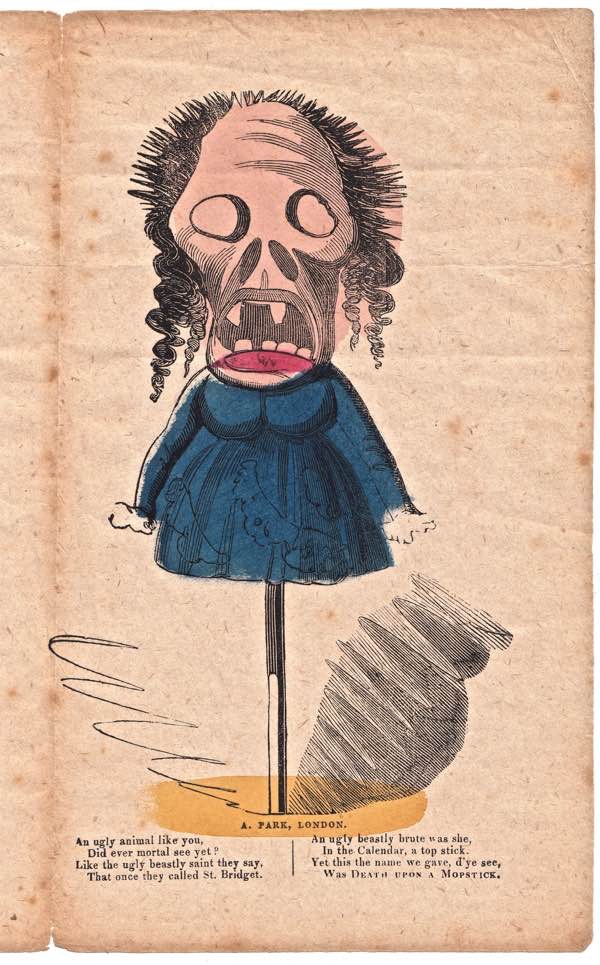
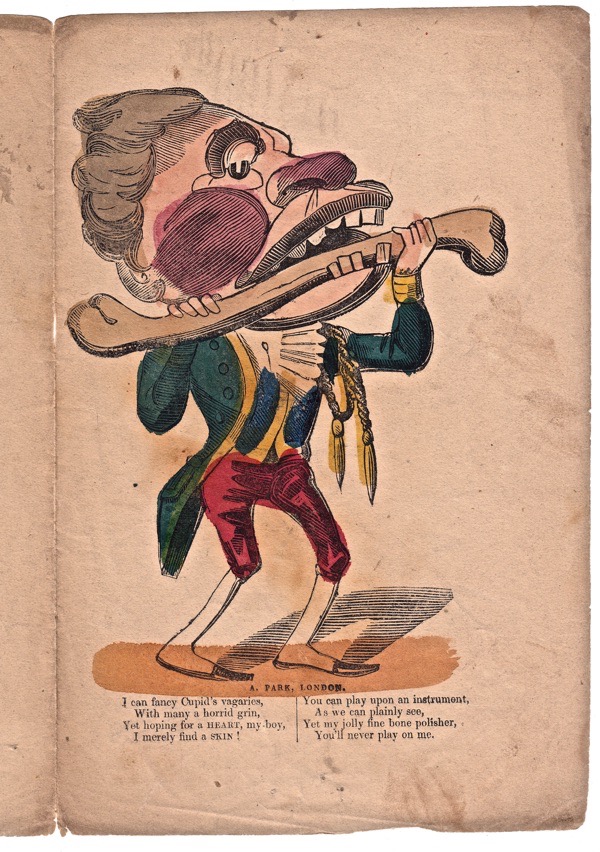
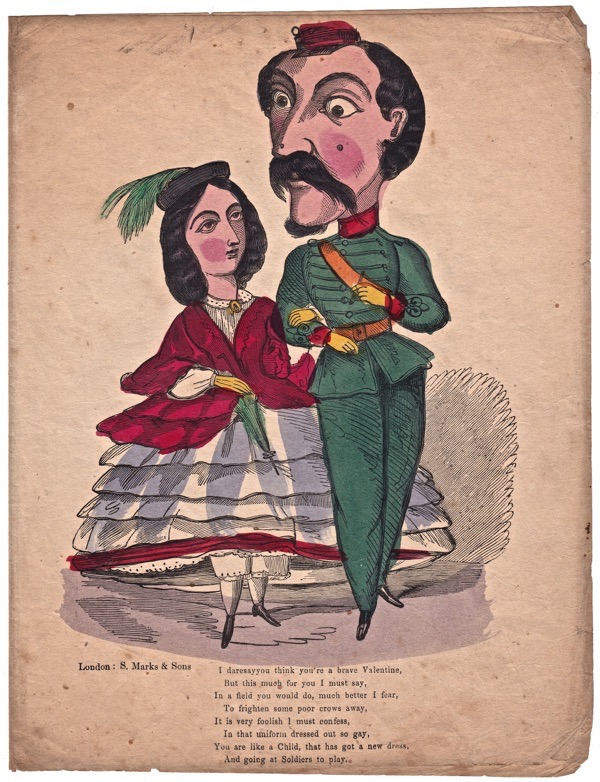
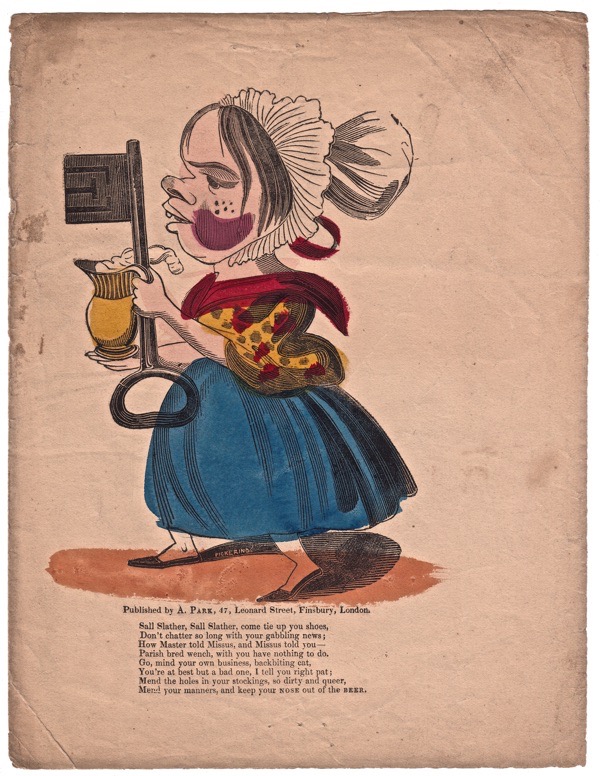
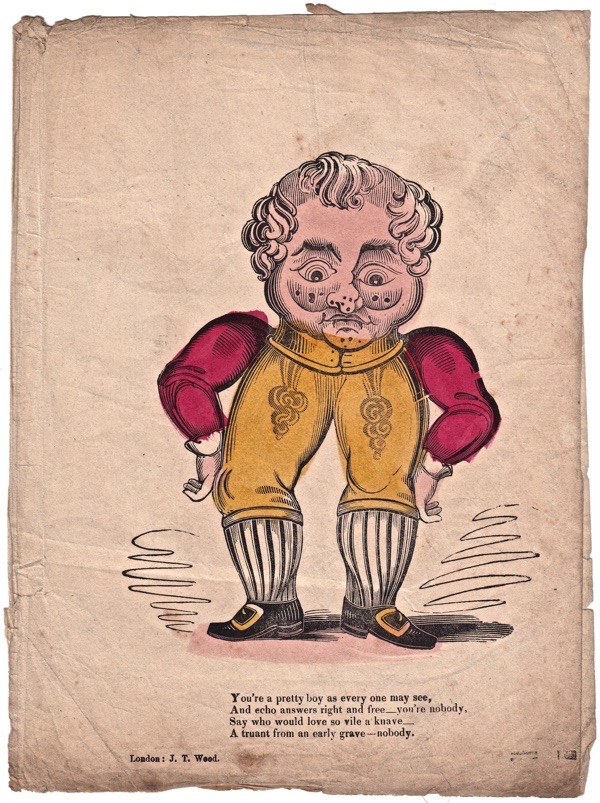
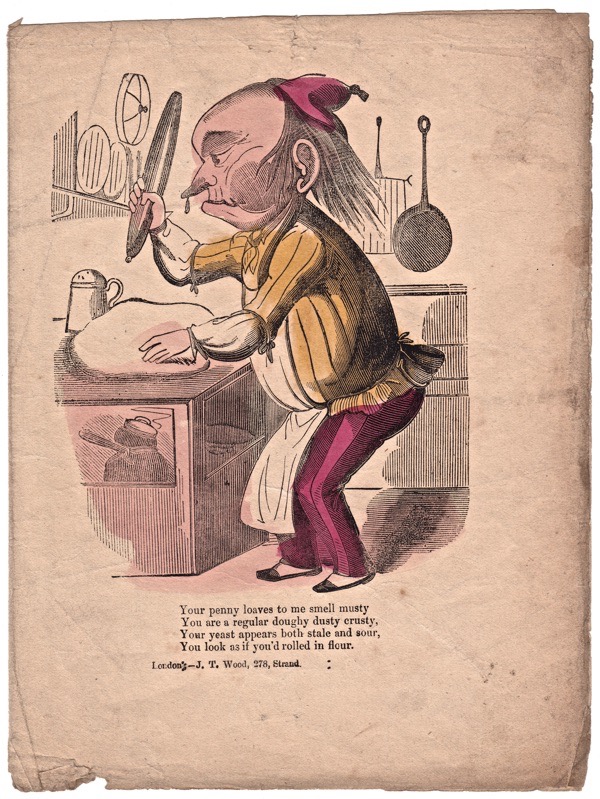
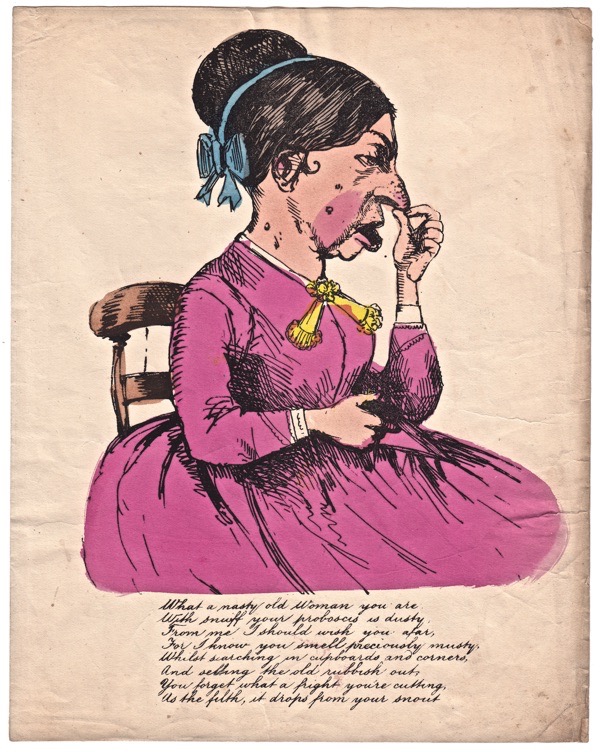
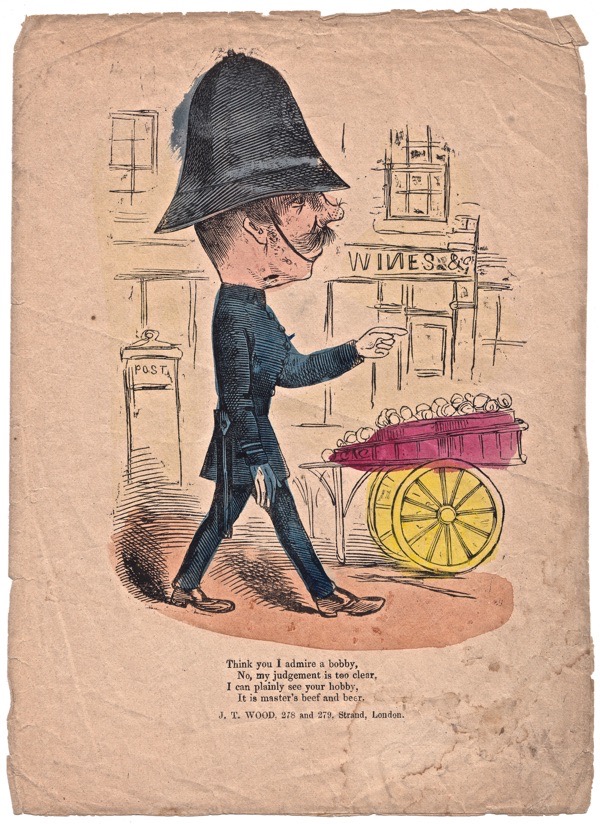
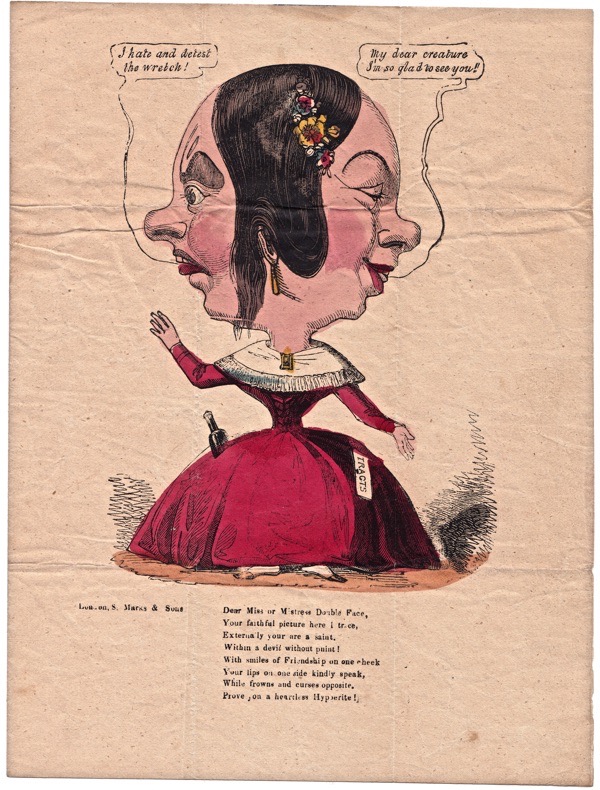
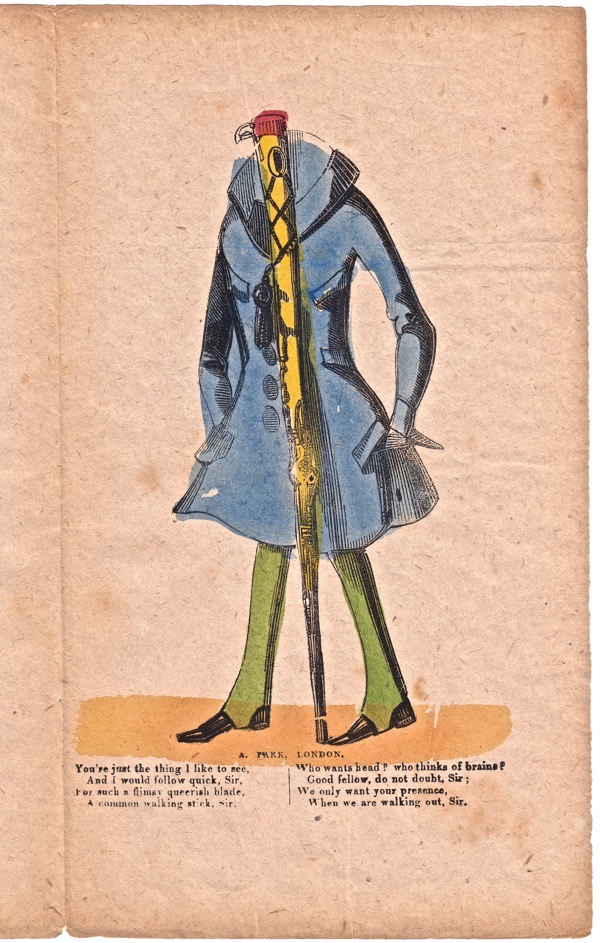
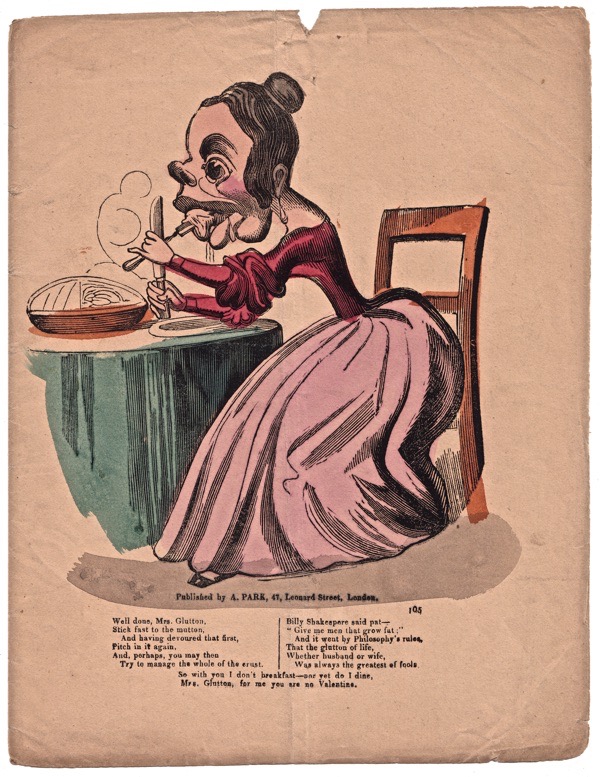
On Valentine’s Day when readers are contemplating billets-doux, perhaps some might like to consider reviving the Victorian culture of Vinegar Valentines?
When I met inveterate collector Mike Henbrey in the final months of his life, he showed me his cherished collection of these harshly-comic nineteenth century Valentines which he had been collecting for more than twenty years.
Mischievously exploiting the expectation of recipients on St Valentine’s Day, these grotesque insults couched in humorous style were sent to enemies and unwanted suitors, and to bad tradesmen by workmates and dissatisfied customers. Unsurprisingly, very few have survived which makes them incredibly rare and renders Mike’s collection all the more astonishing.
“I like them because they are nasty,” Mike admitted to me with a wicked grin, relishing the vigorous often surreal imagination manifest in this strange sub-culture of the Victorian age. Mike Henbrey’s collection of Vinegar Valentines were acquired by Bishopsgate Institute, where they are preserved in the archive as a tribute to one man’s unlikely obsession.
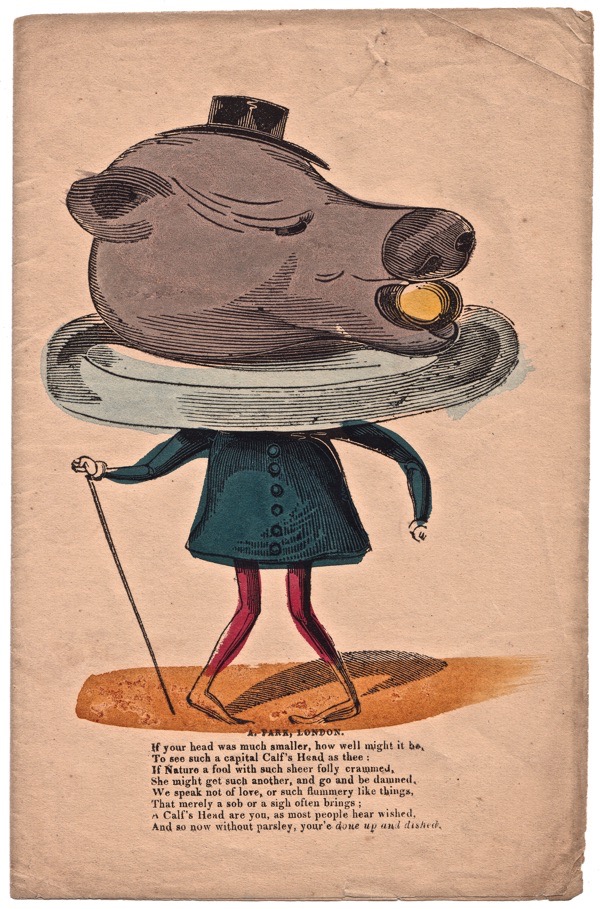
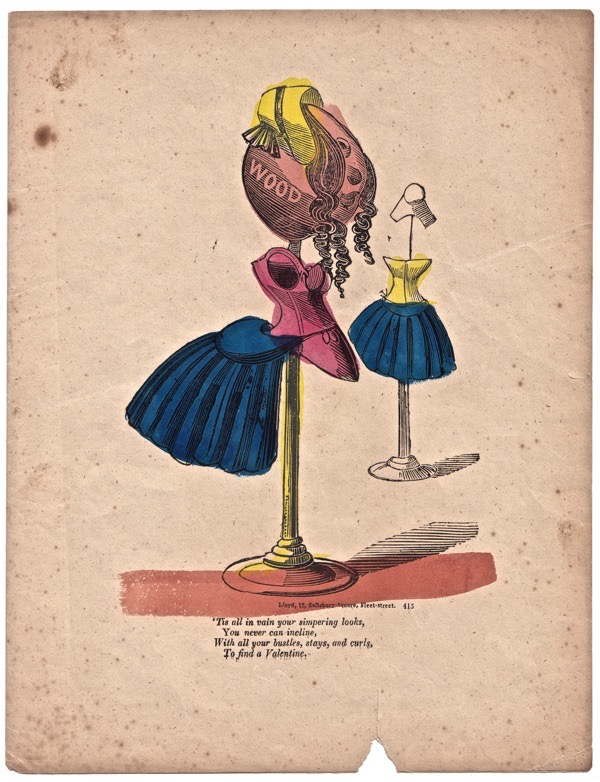
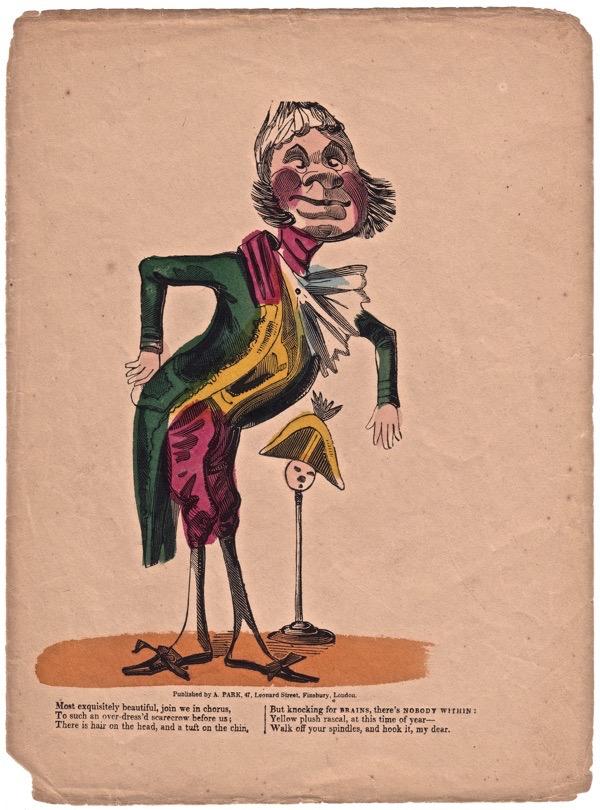
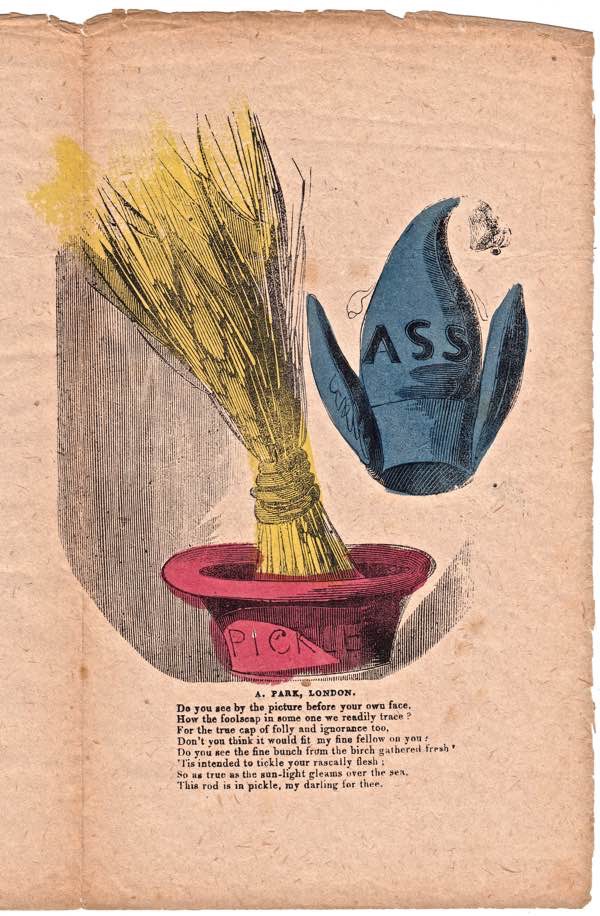
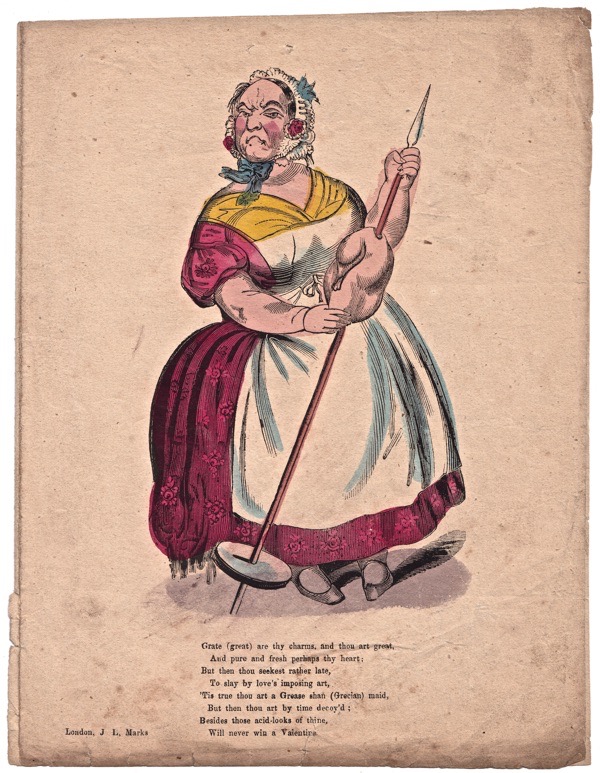
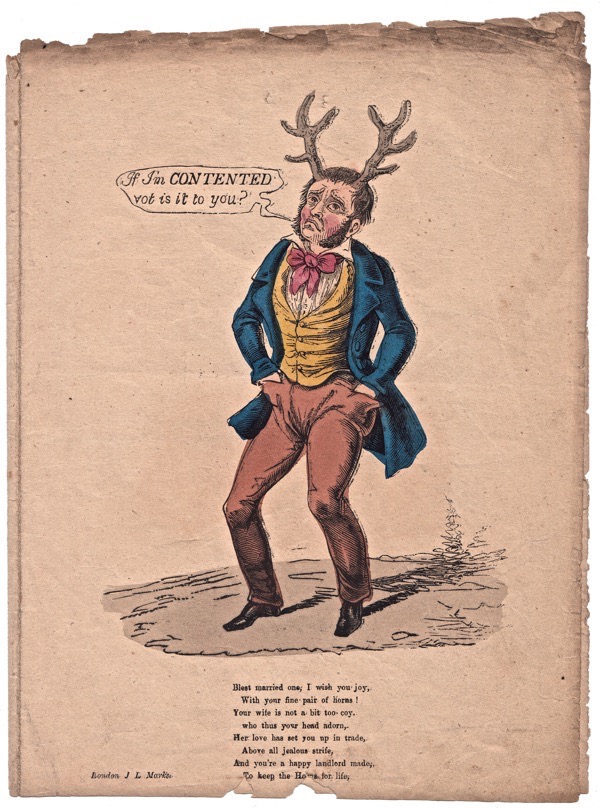
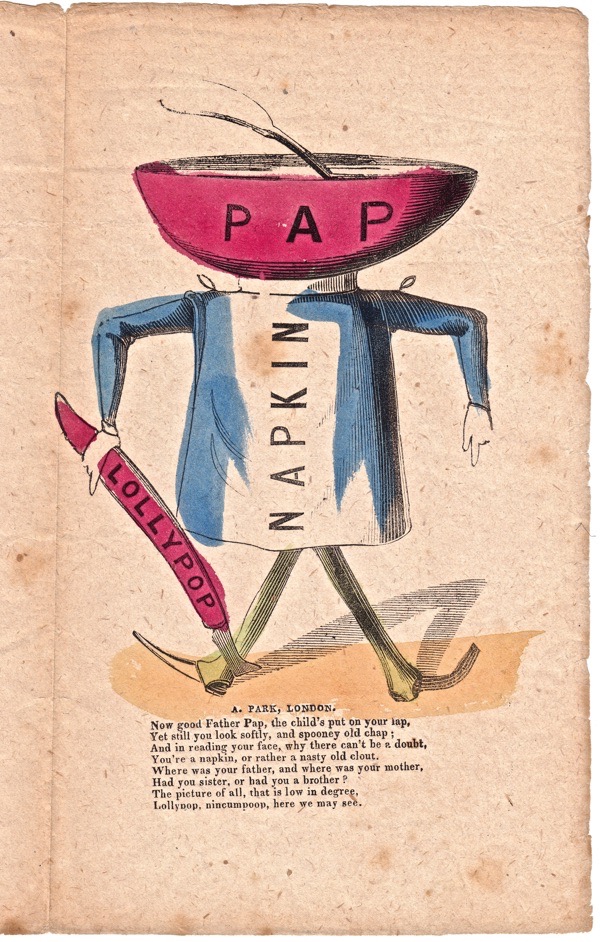
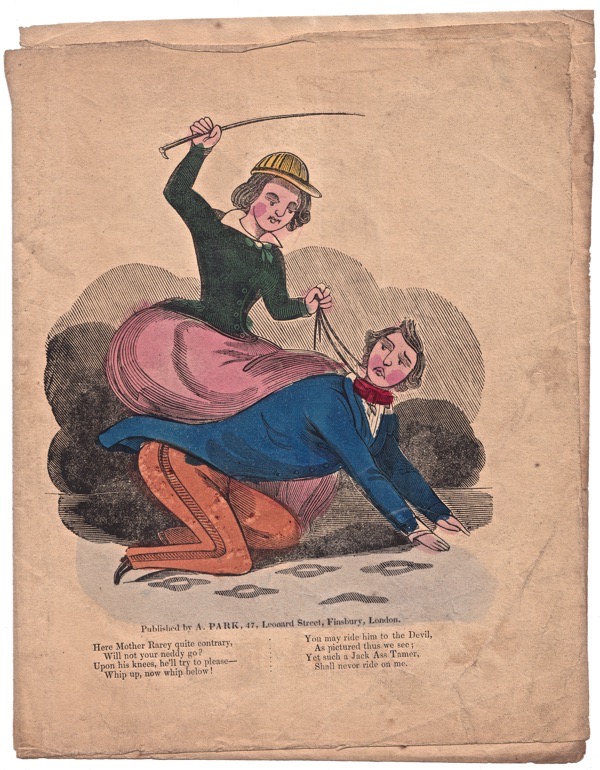
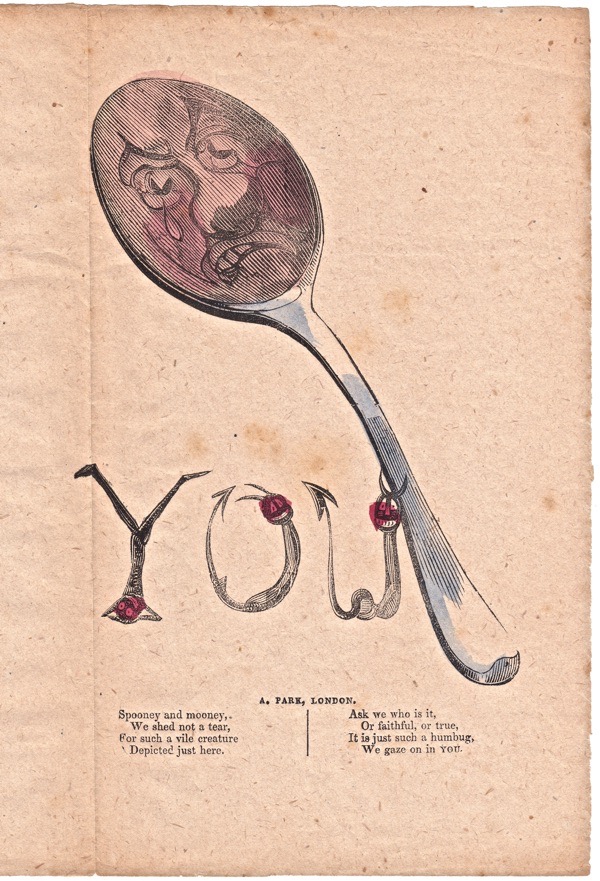
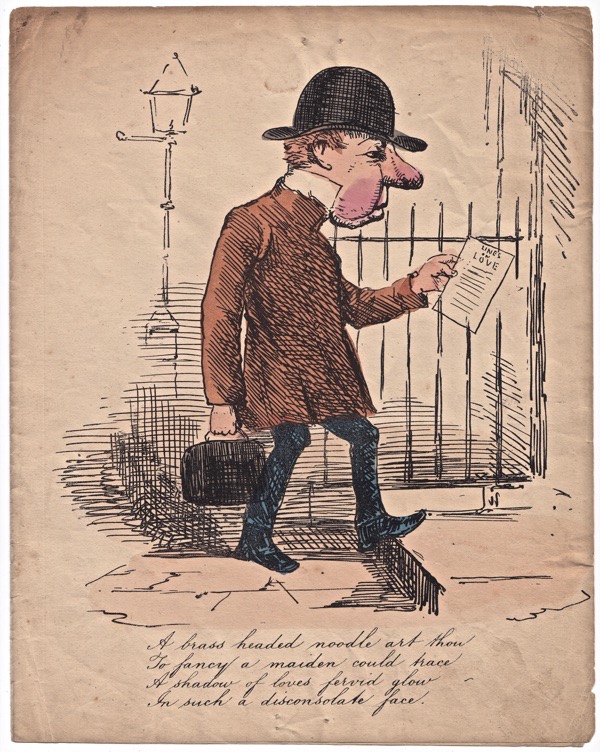
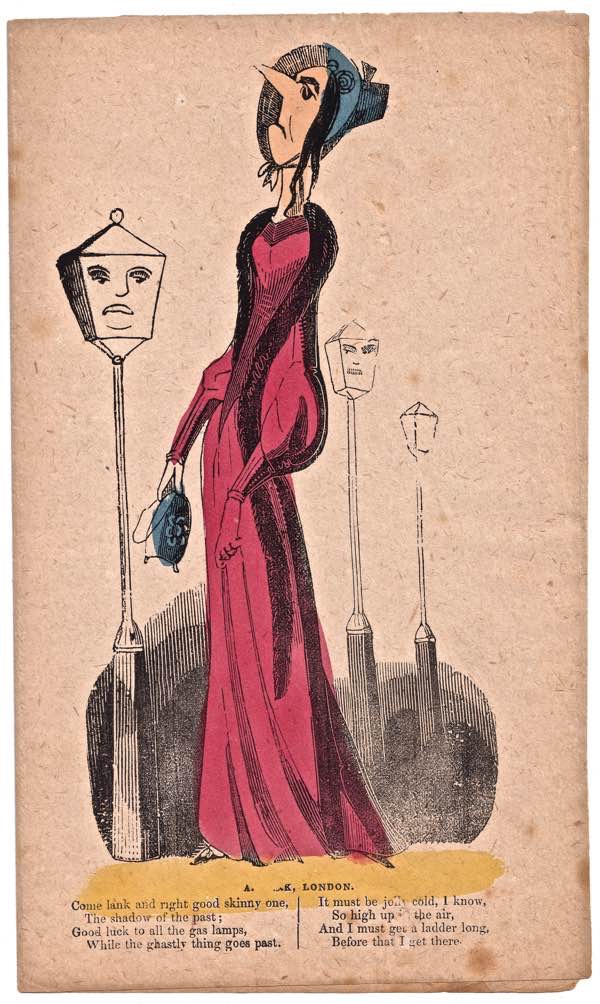

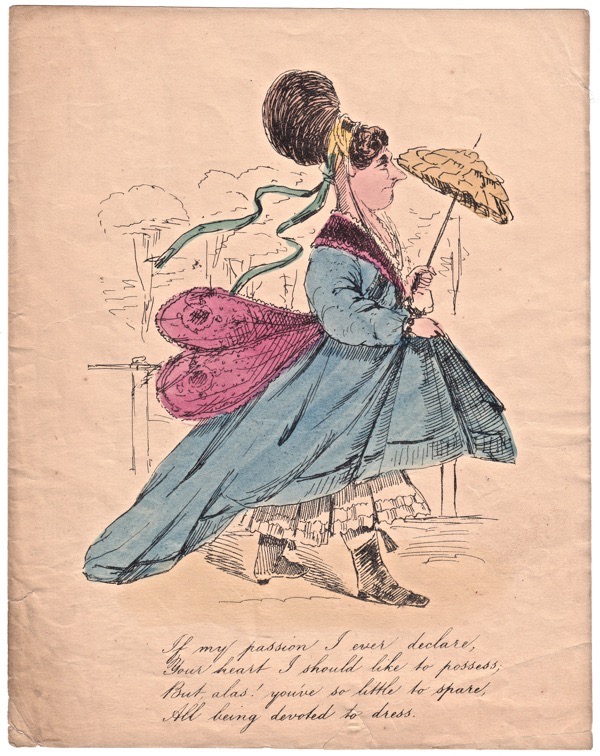
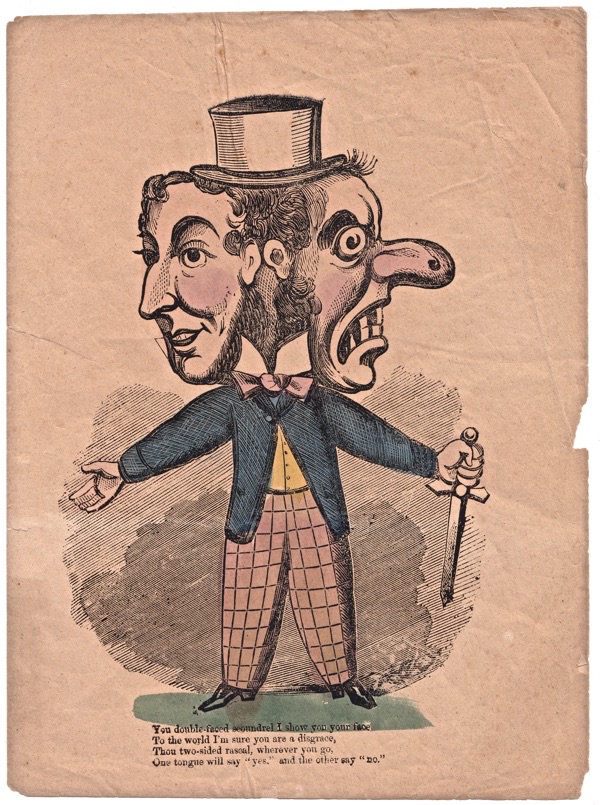
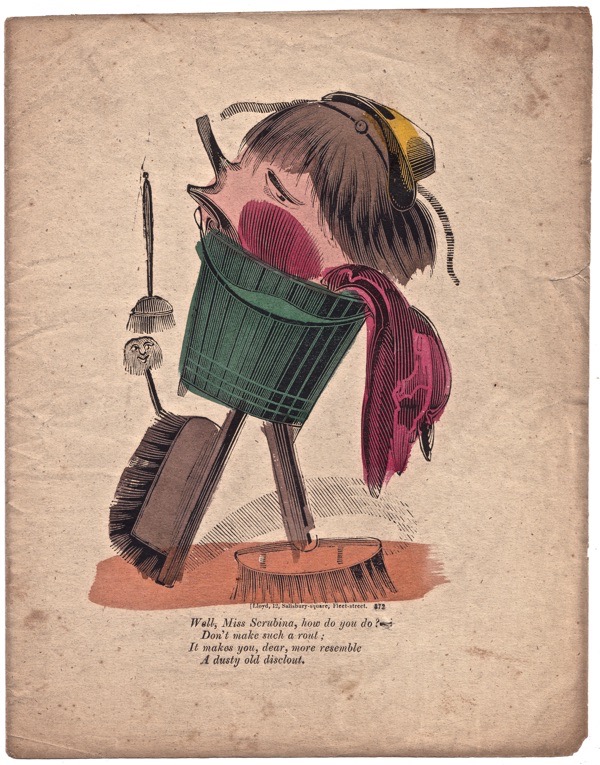
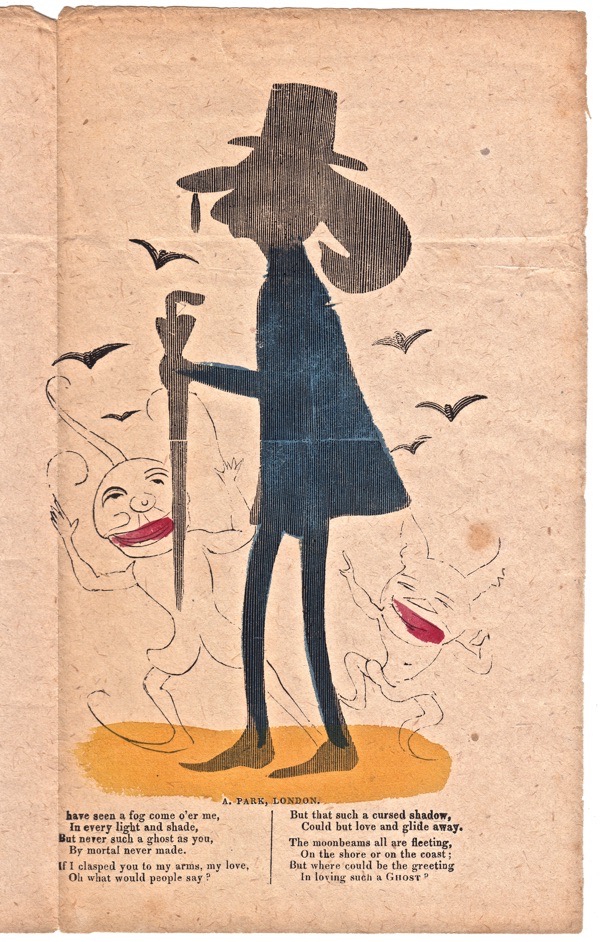
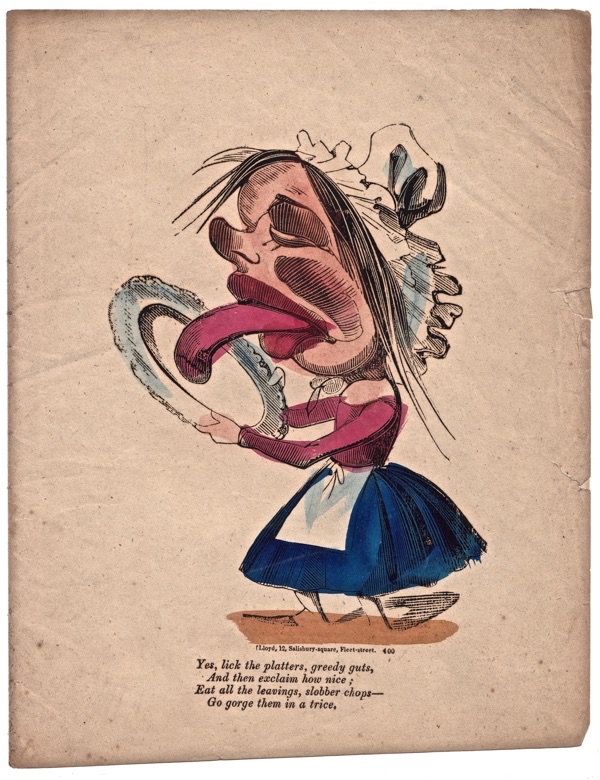
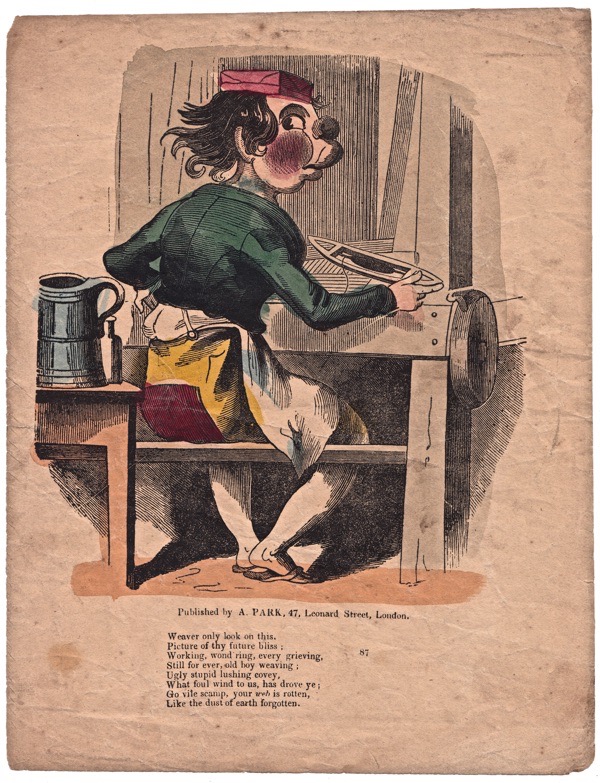
Images courtesy Mike Henbrey Collection at Bishopsgate Institute
You might also like to look at