
Spitalfields City Farm Calendar

“There is poetry in the unexpected presence of agriculture in the city and it always makes my heart leap to hear animal cries in this urban setting, connecting me to the rural landscape beyond and reminding us of the fields that were here before the streets were built up. Despite the tower blocks visible through the greenery at Spitalfields City Farm, it is nature that prevails here.”
The Gentle Author
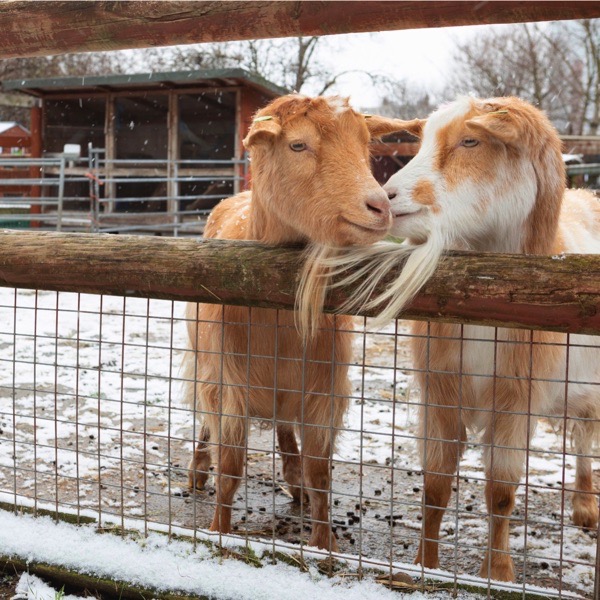
I am delighted to announce the first Spitalfields Life calendar, produced in support of our beloved Spitalfields City Farm and featuring Rachel Ferriman‘s splendid photographs from her features published in these pages.
This handsome wall calendar is a collaboration between our friends Newmans Stationers who have done the printing, Baddeley Brothers who have donated handmade envelopes and Gardners Bags who have donated paper bags.
ORDER YOUR SPITALFIELDS LIFE 2022 CALENDAR NOW FOR £10

January
February

March

April

May

June

July

August

September

October

November

December
Photographs copyright © Rachel Ferriman
Retailers can order wholesale copies direct from q@newmans-stationery.co.uk
You may also like to take a look at
Winter At Spitalfields City Farm
Alan Dein’s East End Shops

P.Lipman, Kosher Poultry Dealers, Hessel St
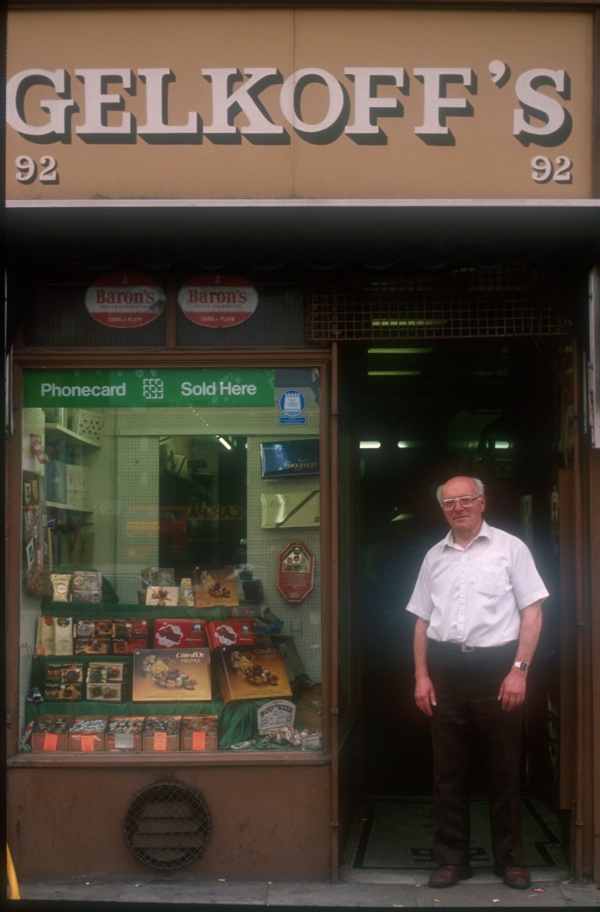
“In my twenties, I’d been doing a number of oral history recordings, working for the Museum of the Jewish East End which was very active recording stories of the life of Jewish people who had settled here.”explained Alan Dein, broadcaster and oral historian, outlining the background to his unique collection of more than a hundred photographs of East End shopfronts.
“My photographs of the derelict shopfronts record the last moments of the Jewish community in the area. The bustling world of the inter-war years had been moved into the suburbs, and the community that stayed behind was less identifiable. In the nineteen eighties they were just hanging on, some premises had been empty for more than five years. They were like a mouthful of broken teeth, a boxer’s mouth that had been thumped, with holes where teeth once were.”
Feeding his twin passions for photography and collecting, Alan took these pictures in 1988 while walking around the streets of the East End at a time when dereliction prevailed. Although his family came from the Jewish East End and his Uncle Lou was a waiter at Blooms, Alan was born elsewhere and first came to study. “As a student at the City of London Polytechnic in Old Castle St, I spent a lot of time hanging out here – though the heart of the area for me at that time was the student common room and bar.” he told me.
“Afterwards, in 1988, I moved back to live in a co-operative housing scheme in Whitehorse Rd in Stepney and then I had more time to walk around in this landscape that evoked the fragmentary tales I knew of my grandparents’ lives in the East End. The story I heard from their generation of the ‘monkey parade’, when once people walked up and down the Mile End Road to admire the gleaming shopfronts and goods on display. My family thought I was mad to move back because when they left the East End they put it behind them, and it didn’t reflect their aspirations for me.
The eighties were a terrible time for removing everything, comparable to what the Victorians had done a century earlier. But I have always loved peeling paint, paint that has been weathered and worn seafront textures, and this was just at the last moment before these buildings were going to be redeveloped, so I photographed the shopfronts because this landscape was not going to last.”
In many of these pictures, there is an uneasy contradiction between the proud facades and the tale of disappointment which time and humanity has written upon them. This is the source of the emotionalism in these photographs, seeing faded optimism still manifest in the confident choice of colours and the sprightly signwriting, becoming a palimpsest overwritten by the elements, human neglect and graffiti. In spite of the flatness of these impermeable surfaces, in each case we know a story has been enclosed that is now shut off from us for ever. Beyond their obvious importance as an architectural and a social record, Alan’s library of shopfronts are also a map of his exploration of his own cultural history – their cumulative heartbreak exposing an unlocated grief that is easily overlooked in the wider social narrative of the movement of people from the East End to better housing in the suburbs.
Yet Alan sees hope in these tantalising pictures too, in particular the photo at the top, of Lipman’s Kosher Poultry Dealers, in which the unknown painter ran out of paint while erasing the name of the business, leaving the word “Lip” visible. “A little bit of lip!” as Alan Dein terms it brightly, emblematic of an undying resilience in the face of turbulent social change.

Goulston St

In Whitechapel

Commercial Rd

Redchurch St

Stepney Green

Cheshire St

Alie St

Hessel St

Hackney Rd

Quaker St

Mile End Rd

Toynbee St

Alie St

In E2

Brick Lane

Great Eastern St

Commercial St

Hessel St

Mile End Rd

Relocated to Edgeware

Bow Common Lane

Brick Lane

Ben Jonson Rd

Wilkes St

Bow Rd

Ridley Rd

New Goulston St.
Whitechapel High St

Alderney Rd, Stepney
Photographs copyright © Alan Dein
You may also like to take a look at
In The Orchards Of Kent

Five years ago, when I first visited the National Collection of Fruit Trees at Brogdale outside Faversham in Kent to enjoy the spring blossom, I vowed to go back in the autumn to admire the crop. This year, I fulfilled my ambition in the company of Contributing Photographer Rachel Ferriman and we were blessed with a golden October afternoon in the North Kent Fruit Belt.
Nothing prepared me for the seemingly infinite variety of fruit that exists in nature. Walking into an orchard of two-thousand-two-hundred varieties of apple, all in fruit, is a vertiginous prospect that is only compounded by your guide who informs you this is merely a fraction of the over ten thousand varieties in existence.
What can you do? Your heart leaps and your mind boggles at the different colours and sizes of fruit. You recognise russets, laxtons and allingtons. Even if you had all day, you could not taste them all. Despite the cold spring, it has been a good year for apples. You stand wonderstruck at the bounty and resilience of nature. Then you start to get huffy at the pitiful few varieties of mostly-bitter green apples available to buy in shops, always sold unripe for longer shelf life. How is this progress?
Yet this thought evaporates as you are led through a windbreak into another orchard where five hundred varieties of pear are in fruit. By now your vocabulary of superlatives has failed you and you can only wander wide-eyed through this latter day Eden.
That afternoon there was no-one there but me, Rachel and the guide. We were delighted to have the orchards to ourselves. But this is when you realise the world has gone mad if no-one else is interested to witness this annual spectacle that verges on the miraculous. Walking on, as if in a medieval dream poem, you discover an orchard of medlars and another of quinces.
By now, your feet are barely touching the ground and you hatch a plan – as you munch an apple – to return at this same time of year, decide upon your favourite varieties and then plant your own orchard of soft fruit. When you stumble upon such an ambition, you realise that life is short yet we are all still permitted to dream.


Medlars

Quince

Plum

Mike Austen, our guide

Photographs copyright © Rachel Ferriman
The National Collection of Fruit Trees at Brogdale
You may like to read about my first visit
At Gardners’ Bags

The new stockroom
Paper bag seller Paul Gardner is a happy man these days. He has a new shop where he no longer has to pay rent and he is now free of the vile clutches of his greedy landlord in Spitalfields. Although there was widespread regret when Gardners Bags left Commercial St in early 2020, after one hundred and fifty years, it turned out to be perfect timing.
Such is the universal affection with which this family business, stretching over four generations, is cherished in the East End that Paul has kept most of his customers and now earns a profit from his labours rather than working merely to pay the rent.
Regulars will recognise Paul’s old counter, now installed in his new shop in Leyton along with the paraphernalia of previous generations – the block of wood for coins carved by his great-grandfather, the nineteenth century account books, the old photographs, his father’s designs for sales tickets, the wooden sieve, and all the various tributes from his loyal customers.
Wonder of wonders! Paul now has a tidy stockroom, organised by his son Robert in between studying for a PhD in Quantum Physics at Imperial College. In addition, Paul’s new shop is centrally-heated – gone are the days of shivering in sub-zero temperatures – and at the back is a cosy parlour with a sofa where Paul can relax and put his feet up in between customers.
Here Paul & I settled down with a cup of tea and a packet of custard creams while he outlined the changes for me.
“I wanted to reach one hundred and fifty years in our premises in Spitalfields, and we did. But I could not have timed my departure any better – it was unbelievable! I negotiated a deal with my landlord to leave and they let me out of my lease. That worked out very well in my favour and I moved over to this shop on January 6th 2020. It was sad going to hand the keys back and leaving, but no-one knew what was round the corner.
When I arrived here, I did not have any shelves, everything was just piled up, so we began organising. Within about six weeks of me leaving Spitalfields, the pandemic began and my old shop sat empty for a year and a half. Coming over to Leyton was a god-send because I would have gone bankrupt if I had stayed put. My overheads are next to nothing now compared to what they were before and I even received some grants.
Obviously, it has been a terrible time for a lot of my customers but I was permitted to stay open during the lockdown because I sell bags for food. Some of my customer pre-pack food for sale. I get a lot of customers from the New Spitalfields Fruit & Vegetable Market, here in Leyton, mainly Africans who have been the mainstay of my business for the past twenty or thirty years.
Apart from during the lockdown, I have kept about 70% of my customers. The only ones I have lost are the passing trade in Spitalfields but that would not have been there over the last eighteen months during the lockdown anyway. So it’s neither here nor there.
I have gained new customers from the New Spitalfields Fruit & Vegetable Market, not traditional greengrocers but Africans who run food shops as family businesses. So I have done well out of that. Today I had a guy come from Harlow to buy bags from me, I am still picking up new customers.
My son Robert lives upstairs and is helping me now while completing his PhD in Quantum Physics. He sees the people come through the shop and likes the concept of the family business. He has put everything on a computer so we can see if we are actually making any money whereas in the past I was in the dark, yet I used to get by. Because everything’s in my head, I have never done a stocktake in fifty years but now everything’s on a system. While I am going to keep on going as I always have done, Robert has brought us into the twenty-first century.
We have a new logo because it used to be four generations in the family business but now it’s five. So there is no way we will be packing it in any time soon.”

Paul Gardner, paper bag baron & founder of East End Trades Guild


Nineteenth century account books


Design for sales ticket by Paul’s father, Ray Gardner

Wooden block for coins, carved by Paul’s great-grandfather James in 1870

“I wanted to reach one hundred and fifty years in our premises in Spitalfields, and we did”


Paul’s grandfather Bertie with Paul’s father Ray outside the Commercial St shop

Mural on the side of Paul Gardner’s shop in Leytonstone

Photographs copyright © Rachel Ferriman
Gardners’ Bags, 78 Ruckholt Rd, Leyton, E10 5NP
You may like to read my other stories about Paul Gardner
At Gardners’ Market Sundriesmen
Paul Gardner Goes To Downing St
Paul Gardner Returns to Downing St
Joan Rose at Gardners’ Market Sundriesmen
James Brown at Gardners’ Market Sundriesmen
Vigil at Gardners’ Market Sundriesmen
Rodney Holt, Designer & Set Builder

It was my great delight to meet Rodney Holt of Mojo Productions, the creative mastermind responsible for London’s most famous window displays, at Fortnum & Mason for the past thirty years. This bright-eyed genius with a shock of white hair flits around his workshop in Brentwood, Essex, grinning excitedly as he oversees his extravagant creations and encourages his minions just like Father Christmas in that other fabled workshop at the North Pole.
Rod and his team of specialists were putting the finishing touches to the Christmas window displays before they were transported to Piccadilly. The walls were lined with huge wooden frames, the same size as the shop windows, and each one was filled with a sequence of exotic animated confections, rotating lobsters, flying puddings, champagne fountains, exploding crackers and a train set circling eternally. All around lay fragments of former displays, including golden carriages, giant nutcracker dolls and the man in the moon.
Wandering around this bizarre interior was like exploring the unconscious imagination of Santa himself – the workshop where dreams and fantasies are manufactured. Yet Rod’s crew of painters and model makers worked placidly at their tasks despite the phantasmagoric contents of their workplace. Readers will be relieved to learn that everything is under control for Christmas.
Rod & I retreated to his office, where a row of miniature shop windows contained the working models for this year’s displays. Here Rod told me his story and I was fascinated to learn how this overflowing of flamboyant creativity has its origins in the craft traditions of old East End.
“I was born in Bethnal Green but my family moved out to Essex after the war, when I was still a baby. There were jobs in Essex and my dad went to work at Ford’s in Dagenham and was there for forty years. Mum had ten children, so she was quite busy too. Her full name was Amy Rosina Goldring, so we think she might be Jewish. She came from an interesting family – one of her brothers was in the film industry in the early days, one did back-to-front sign writing with gold leaf, another had an accordion band in West End, The Accordionnaires, and her mother was a court dressmaker.
Dad was one of ten brothers and most of them worked in Spitalfields Market, some were traders but others used to make carts and barrows in the Hackney Rd. My dad was a French Polisher who kept a horse in Gibraltar Walk and used to make furniture deliveries on a flatbed cart. I remember him telling me that he used to deliver as far as Hampstead.
I left school and went to Hartley Green College, doing a course in Display & Exhibition Design. My career officer told me I should be a council tiler, that was the nearest they could get to an artistic career. So I said, ‘That’s no good,’ and I think it was my art teacher at school who suggested I do this. To be honest, I wanted to be a sculptor or a potter, but there were not many options then. If you wanted to be a potter, you worked on an assembly line in a pottery. I was at college for a couple of years and I did not learn a lot but I sorted out what I wanted to do. They did a day release scheme and I got sent to Selfridges in Oxford St. I got on well with everybody there and they said, ‘You’ve got a job here after you’ve taken your diploma.’ But I went to Paris instead of taking my diploma. I stole a mate’s bike out of an alleyway while he was away at university in Manchester and cycled off to France. When I came back, I went straight to Selfridges.
At Selfridges, I told them I knew nothing about fashion, so I could not be fashion dresser. I said, ‘I’d like to do all the toy windows and all the gardening windows,’ because those were the things I thought I could be more creative with. I was nineteen years old and they let me loose. I did one display where I had all the teddy bears marching out of the window which everybody liked. My idea was they were fed up and walking out. I got on alright there but I thought I do not really like this much. I wanted to join the team in the big studio up in the roof. I used to get on very well with all the guys there. After eighteen months, a couple of Australians who worked there and had come over land said, ‘We’re all fed up now, we think we should go off somewhere on a trip.’ I said, ‘That sounds good to me,’ and we went off to India. Mr Millard, the Managing Director, asked me, ‘Are you sure? Because the others have gone, you could move up the ladder.’ But I said, ‘No, I don’t want to go up the ladder, I’d rather go to India.’ He wished me all the luck in the world.
I only had a hundred quid but I made it to Kashmir by hitch-hiking, where my sister sent me another thirty quid to get home. It cost me six quid to get from Istanbul to London and I sold my blood to do it. When I got back, it all fell into place. Selfridges welcomed me back to work on the Christmas windows. I was lucky because it was the first time they were trying a different type of window. They did a set of windows that had no stock in them but told a story instead. The designer Peter Howitt had just finished the film of Alice in Wonderland and he was able to buy the sets. They gave us an old factory in Kensington where we sorted the scheme out. Pete asked for me, he said, ‘I’d like Rod because he doesn’t want to do window dressing really.’
Working freelance, I did all sorts – shops in the Kings Rd and themed pubs, clubs and bars. I worked for Peter on the original London Dungeon too. They gave me a mini with ‘London Dungeon’ on the side and an iron coffin on the roof! I had to be careful how I drove that about. I had quite a few contacts at Pinewood and Shepperton so I was able to purchase some great old props. We used to work overnight in the Dungeon and the stuff that happened was unbelievable.”


Rodney Holt, Designer, Set Builder & Model Maker
You may also like to read about
Looking Down On Old London

In my dream, I am flying over old London and the clouds part like curtains to reveal a vision of the dirty monochrome city lying far beneath, swathed eternally in mist and deep shadow.
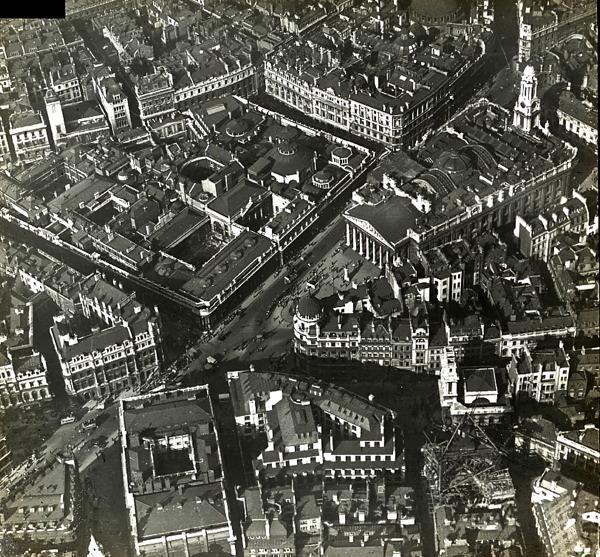
Although most Londoners are familiar with this view today, as the first glimpse of home on the descent to Heathrow upon their return flight from overseas, it never ceases to induce wonder. So I can only imagine the awe of those who were first shown these glass slides of aerial views from the collection of the London & Middlesex Archaeological Society at the Bishopsgate Institute a century ago.
Even before Aerofilms was established in 1919 to document the country from above systematically, people were photographing London from hot air balloons, zeppelins and early aeroplanes. Upon first impression, the intricate detail and order of the city is breathtaking and I think we may assume that a certain patriotic pride was encouraged by these views of national landmarks which symbolised the political power of the nation.
But there is also a certain ambivalence to some images, such as those of Horseguards’ Parade and Covent Garden Market, since – as much as they record the vast numbers of people that participated in these elaborate human endeavours, they also reduce the hordes to mere ants and remove the authoritative scale of the architecture. Seen from above, the works of man are of far less consequence than they appear from below. Yet this does not lessen my fascination with these pictures, as evocations of the teeming life of this London that is so familiar and mysterious in equal measure.

Tower of London & Tower Bridge

Trafalgar Sq, St Martin-in-the-Fields and Charing Cross Station

Trafalgar Sq & Whitehall

House of Parliament & Westminster Bridge

Westminster Bridge & County Hall

Tower of London & St Katharine Docks
Bank of England & Royal Exchange

Spires of City churches dominate the City of London

Crossroads at the heart of the City of London

Guildhall to the right, General Post Office to the left and Cheapside running across the picture

Blackfriars Bridge & St Paul’s

Hyde Park Corner

Buckingham Palace & the Mall

The British Museum

St James’ Palace & the Mall

Ludgate Hill & St Paul’s

Pool of London & Tower Bridge with Docks beyond

Albert Hall & Natural History Museum

Natural History Museum & Victoria & Albert Museum

Limehouse with St Anne’s in the centre & Narrow St to the right

Reversed image of Hungerford Bridge & Waterloo Bridge

Covent Garden Market & the Floral Hall

Admiralty Arch

Trooping the Colour at Horseguards Parade

St Clement Dane’s, Strand

Peter Pan in Kensington Gardens
Glass slides courtesy Bishopsgate Institute
You may also like to take a look at
The Lantern Slides of Old London
The High Days & Holidays of Old London
The Fogs & Smogs of Old London
The Forgotten Corners of Old London
The Statues & Effigies of Old London
Last Chance To Save The Custom House
I am delighted to report that we have successfully raised the £5000 needed to employ a lawyer to investigate Tower Hamlets’ dodgy decision-making over the Truman Brewery Shopping Mall and seek grounds for a Judicial Review to overturn the decision.
Now I need your help to save the eighteenth century Custom House on the riverfront in the City of London. An application has been submitted to turn it into a luxury hotel, trashing much of the historic interior including the magnificent long room overlooking the Thames.
It is obvious that this handsome building should be restored and given over to cultural use with public access, just as they have done at Somerset House in the Strand.
Please write a letter of objection before the decision meeting on Tuesday 26th October. You will find instructions for how to do this at the foot of the article below.

Custom House by Robert Smirke, 1825, with elements by David Laing, 1817
I walked down from Spitalfields to the Custom House. For years, I was unaware of the nature of this enormous austere building which presents an implacable front of Portland stone to the Thames between the Tower of London and old Billingsgate Market. Once I understood its purpose, then its commanding position over the Pool of London became evident.
For more than seven hundred years, this is where all cargoes passing through the Port of London were declared and duties paid, as well as serving as a passport office for migrants, registering upon arrival and departure. Perhaps no building is as central to our history as a seafaring nation than the Custom House. In recent years, we have come to re-evaluate the morality of the creation of Empire and the wealth it delivered. London was the financial capital of the system of slavery and the centre of the sugar trade, and the Custom House was part of this.
The evolution of the Custom House through the centuries follows the growth of Britain’s status as a trading nation, which makes this a pertinent moment to reflect upon the history of the building and the legacy it embodies.
In the eighteenth and nineteenth centuries, the epic Long Room – claimed to be the longest in Europe – at the heart of the Custom House was renowned as a wonder in its own right. Londoners came to observe the variety of races of traders from across the globe who attended to fulfil their obligations in the form of tariffs and taxes.
When Geoffrey Chaucer worked as Comptroller of the Customs of Wools, Skins and Tanned Hides in the Custom House, constructed by John Churchman in 1382, duties had formerly been collected since 1203 at Wool Quay just to the east. Tudor expansionism was reflected in an enlarged Custom House of 1559, destroyed a century later by the Great Fire.
Afterwards, the rebuilding of the Custom House was the first priority and it was Christopher Wren who established the pattern of the central Long Room surrounded by smaller offices, which has been maintained in the subsequent buildings each larger than the one before. It is a template that has been replicated in Custom Houses around the world.
Wren’s Custom House was destroyed by fire in 1717, initiating a series of ill-fated replacements that suffered multiple calamities. The next Custom House, designed by Thomas Ripley, caught fire in 1814, resulting in an explosion of gunpowder and spirits that dispersed paperwork as far as the Hackney Marshes. Simultaneously, the unfinished replacement, designed by David Laing, foundered when builder John Peto died unexpectedly leaving the project with insufficient financial backing.
Within two years of completion, Laing’s new Custom House developed structural problems, revealed when the ceiling of the Long Room partially collapsed in 1824. Canny architect Robert Smirke advised occupants to move out of the Long Room two days before it fell down and undertook an investigation which exposed shoddy workmanship and unstable riverfront foundations done on the cheap.
Unsurprisingly, Smirke was employed to rebuild and repair the Custom House, and he replaced the entire central section containing the Long Room in 1825. It is Smirke’s sober sensibility that prevails today, incorporating Laing’s east and west wings into an authoritative frontage of uniformity with an institutional restraint in embellishment and a spare, sombre proportion throughout.
For decades, the Custom House has been inaccessible to the public which is why a building of such central significance has become relatively unnoticed, yet it is publicly-owned. Now Her Majesty’s Revenue & Customs has vacated it and it has been leased to an offshore property developer based in the Bermuda tax haven. They have submitted a planning application for an unsympathetic conversion to a luxury hotel that will be destructive to the fabric of the grade I listed building, erasing its meaning and significance. In particular, suites of Georgian offices which are a unique survival will be destroyed and two light-box bars added to the roof, compromising the river frontage.
Meanwhile, SAVE Britain’s Heritage have prepared an imaginative alternative scheme which takes advantage of its spectacular location. The Long Room should be returned as a space for Londoners and south-facing quayside opened for permanent public access with riverside cafes, restaurants and bars, like a square in Venice.
The obvious precedents of Somerset House and Tate Modern demonstrate how the Custom House could be put successfully to public use again.

Christopher Wren’s Custom House

“The Custom House, in the uppermost of which is a magnificent room running the whole length of the building. On this spot is a busy concourse of nations who pay their tribute towards the support of Great Britain. In front of this building, ships of three hundred and fifty tons burthen can lie and discharge their cargoes.” From The Microcosm of London by Augustus Pugin & Thomas Rowlandson 1805 (Image courtesy Bishopsgate Institute)

Thomas Ripley’s Custom House from The Microcosm of London by Augustus Pugin & Thomas Rowlandson, 1805

David Laing’s Custom House, 1817

Plan of Laing’s Custom House

“Between London Bridge and the Tower, and – separating it from the Thames – a broad quay that was for long almost the only riverside walk in London open to the public, is the Custom House. Five earlier buildings on the same site were destroyed by fire, and the present structure was erected in 1814-17, the fine facade being designed by Sir R. Smirke. Some 2,000 officials are employed at the Custom House, and in its famous Long Room alone -190 ft by 66 ft – eighty clerks are habitually engaged. This is not surprising, for the trade of the Port of London is by far the greatest of any port in the world. The building, which is entered from Lower Thames St, contains an interesting Smuggling Museum.”
From The Queen’s London: a Pictorial & Descriptive Record of the Streets, Buildings, Parks & Scenery of the Great Metropolis, 1896

Custom House c. 1910 (Image courtesy LAMAS Collection, Bishopsgate Institute)


Boundaries of the parishes of All Hallows by the Tower and St Dunstan in the East, marked on the river wall which was designed by John Rennie, 1819

The Lower Thames St frontage with the main entrance


The Custom House as it appeared before the Great Fire by Wenceslas Hollar, 1647
PROPOSED REDEVELOPMENT OF THE CUSTOMS HOUSE
The offshore leaseholders of the Custom House want to undertake an unsympathetic and destructive conversion of this listed Grade I historic building into a luxury hotel when it should be put back to public use for all Londoners.
- The exclusivity of the luxury hotel development contradicts the City of London’s policy as outlined in the City Plan 2036, which gives preference to ‘office-led cultural use,’ as part of the City’s ambition to open heritage spaces to attract a wider cultural demographic.
- The hotel development will destroy suites of Georgian offices that are a unique survival.
- The hotel development will add two light box pavilions as bars on the roof which will compromise the principal frontage.
HOW TO OBJECT
Lodge an objection to the redevelopment by writing a personal letter to the City of London Corporation as soon as possible.
Please write in your own words and head it OBJECTION.
Quote Planning Applications 20/00632/LBC and 20/00631/FULMAJ
Anyone can object wherever they live. Members of one household can each write separately. You must include your postal address.
Email your objection to PLNComments@cityoflondon.gov.uk and copy it to Alastair.Moss@cityoflondon.gov.uk (Chair of Planning & Transportation Committee)
Or by post to:
The Department of the Built Environment,
City of London,
PO Box 270,
Guildhall,
London,
EC2P 2EJ


