
Visit The Secret Gardens Of Spitalfields
Bookings for THE GENTLE AUTHOR’S TOURS are now open for June & July

Gardens in Spitalfields are open for visitors on Saturday 11th June from 10am – 4pm. Find details at the website of the National Gardens Scheme.


You may also like to read about
John Claridge’s Spent Moments
Bookings for THE GENTLE AUTHOR’S TOURS are now open for June & July

Self-Portrait with Keith (standing behind with cigarette), E7 (1961).
“We still meet up for a drink and put the world to rights.”
Here is the young photographer John Claridge at seventeen years of age in 1961, resplendent in a blue suede jacket from Carnaby St worn with a polo neck sweater and pair of Levis, and bearing more than a passing resemblance to the character played by David Hemmings in ‘Blow-Up’ five years later.
On the evidence of this set of photographs alone it is apparent that John loves people, because each picture is the outcome of spending time with someone and records the tender moment of connection that resulted. Every portrait repays attention, since on closer examination each one deepens into a complex range of emotions. In particularly intimate examples – such as Mr Scanlan 1966 and the cheeky lady of 1982 – the human soul before John’s lens appears to shimmer like a candle flame in a haze of emotionalism. The affection that he shows for these people, as one who grew up among them in the East End, colours John’s pictures with genuine sentiment.
Even in those instances – such as the knife grinder in 1963 and the lady on the box in Spitalfields 1966 – in which the picture records a momentary encounter and the subjects retain a distance from the lens, presenting themselves with a self-effacing dignity, there is an additional tinge of emotionalism. In other pictures – such as the dance poster of 1964 and the windows in E1 of 1966 – John set out to focus on the urban landscape and the human subjects created the photographic moment that he cherished by walking into the frame unexpectedly. From another perspective, seeing the picture of the mannequin in the window, we share John’s emotional double-take on discovering that the female nude which drew his eager gaze is, in fact, a shop dummy.
For John, these photographs are not images of loss but moments of delight, savouring times well spent. If it were not for photography, John might only have flickering memories of the East End in his youth, yet these pictures capture the people that drew his eye and those that he loved half a century ago, fixing their images eternally.

Across the Street, E1 (1982) – “I did a double-take when I first saw this. In fact, it was a mannequin in the window. Still looked good.”

School Cap, Spitalfields (1963) – “I just found this surreal. It was as if the man behind was berating a nine-year-old who couldn’t care less.”

Two Friends, Spitalfields (1968) – “They were walking along sharing one piece of bread.”

The Box, Spitalfields(1960) – “I came across this lady sitting on an orange box, there was nothing else around. Then she got up and walked off with her box.”

Labour Exchange, E13 (1963) – “Never an uncommon sight.”

Ex-Middleweight Boxer, Cable St (1960) – “We were talking about boxing when he just gave me the thumps-up.”

Knife Grinder, E13 (1966) – “Every few weeks he would appear at the end of the street. Quite a cross-section of people had their knives sharpened!”

Mr Scanlon, E13 (1966) – “My next door neighbour. Always with a wicked sense of humour and an equally wicked smile.”

The Doorway, E2 (1962) – “To this day I would still like to know where her thoughts were.”

Crane Driver, E16 (1975) – “He could balance a crushed car on half a crown and still give you change.”

59 Club, E9 (1973) – “The noise of the pinball machines with the sound of the jukebox playing Jerry Lee.”

A 7/6 Jacket, E13 (1969) – “He had a small shed where he sold anything he could find, which he collected in a small handcart.”

A Portrait, E1 (1982) – “This special lady asked me ‘Why do you want to photo me?’ I replied ‘Because you look cheeky.’ This is the picture.”

Scrap Dealer, E16 (1975) – “This was shot in Canning Town, near the Terry Lawless boxing gym.”

The Step, Spitalfields (1963) – “A kid at play.”

Dance Poster, E2 (1964) – “I was taking a picture of the distressed posters when he glided past.”

The Windows, Spitalfields (1960) – “Behind every window.”

My Mum & Dad, Plaistow (1964) – “Taken in the backyard.”

Fallen Angel, E7 (1960) – “There were a lot of fallen angels in the East End.”
Photographs copyright © John Claridge
You may also like to take a look at
Jimmy Huddart, Spitalfields Market Porter
Bookings for THE GENTLE AUTHOR’S TOURS are now open for June & July

A market porter of forty years standing, Jimmy Huddart is proud to display the clothing of his trade. He keeps this apron pristine for ceremonial occasions now, but it is of the traditional design made of the full width of strong canvas, with leather straps and reinforcement across the front where the boxes cause most wear. In use, an apron like this would quickly acquire a brown tinge yet provide its owner with at least two years of wear, with prudent repairs. In the pocket, Jimmy always kept his porter’s knife and string to sew up broken sacks. And the offcuts from these aprons were used to make “cotchel” bags, which held all the fruit and vegetables that the porter might acquire for his own use, gathering it in the lining of his coat as he went about his work. “Cotchelling up,” they called it – and today, although employees in the market now get a vegetable box to take home, it is still referred to as a “cotchel.”
The most significant item in the outfit is the porter’s licence, indicated by the enamel badge. Throughout Jimmy’s time in the market, you could only work as a porter if you had one of these and it was a badge of office, denoting its own rights and privileges which had to be earned. At first, young men entered the market as “empty boys,” collecting and sorting empty wooden boxes and claiming the deposits, until they had earned the right to become licenced porters. Before the introduction of fork-lift trucks, this was intense physical work, manhandling crates of fruit and sacks of vegetables, and manoeuvring the heavy wooden barrows piled high with produce which had a life of their own once you set them going.
“I grew up in Bethnal Green, Brady St, and, at the age of twelve, I used to go to the market to watch all the tussle and bustle, and all the porters with their barrows. At school, I was very much interested in carpentry but I couldn’t get an apprenticeship, although by then I had already been introduced to the market. I loved to go up the Spitalfields with my Uncle Bill, he worked for a haulage company and we used to go around the farms in Kent to collect the English plums and apples and deliver them to the market. There was something about it, the atmosphere and the characters – a love of it developed inside me – and I wanted to become a porter. If you worked in the market or the docks you earned better than the average salary.
When I was fifteen, my uncle got me a job with Percy Dalton at the corner of Crispin St and Brushfield St. He was a well-dressed Jewish man, softly spoken, who had started his business with a barrow selling roast peanuts and he took me under his wing. The first day I started working for Percy Dalton, he showed me how to sweep the shop. He was that sort of person, hands on. He had a fruit shop at the front and in the warehouse there’d be eight people roasting peanuts. The peanut factory backed onto the alley where the lorries came, he had these red vans with Percy Dalton on the side that you always saw outside dog meetings and football matches. He was a likeable man, very popular, and people often came to him for advice. If you were in trouble you could go and speak to him, he would lend you money if you needed it. He always said, get a corner shop and you get two premises for the price of one.
I used to go out with the drivers all around the London Docks to pick up the fruit and make deliveries. I looked forward to it among my duties – being a boy, they took care of me and bought me breakfast, and they taught me how to stack a lorry. But I wanted to be a porter, so I asked in the market if I could work as an empty boy until I came of age. A job come up as a banana boy for Ruby Mollison, helping him to ripen the bananas, hanging them up in the ripening room. I used to wear a leather glove when I had to put my hand under the banana stalk because I was frightened of the spiders. When you cut a bunch of bananas, you cut a “v” shape and they come away from the stalk, and that’s where your spider might be. They could be very dangerous, especially if they were pregnant, and if you were bitten you’d have to go to hospital because your arm could get paralysed by the poison.
Then a chance came up at Gibson Pardoe as an empty boy with the view of getting a licence, and I worked with them for a year until Alf Hayes of the porters’ union came to me and said, “There’s an opportunity to work in the flower market as a porter, would you be interested?” and I was issued a porter’s licence at twenty-one. But there was decline in the fruit trade in the nineteen seventies and they brought in fork-lift trucks. The job changed, it became less physical and where you once needed four porters now you only needed two. I can recall the first time I was given an electric truck. It was one of two milk floats all sprayed up without a scratch on them and they said to me, “treat it like it was new-born baby.” My first trip with it was to go over to Commercial St, and I was making a delivery there when a forty-ton truck came past and clipped it, taking half the fibre-glass roof with it. Luckily, I wasn’t seriously injured, only shaken up. I explained to governor what happened, that it was an accident and he said, “Did you get the number plate ?” He never asked if I was hurt or injured in any way. I suppose you could say, that’s the market sense of humour.
I became elected to the union. In life, I always believed in fairness and I recognise there has to be give and take. I had to build up trust from my members and in dealing with the traders too, yet most of the problems were solved over a cup of tea and a handshake. I was the porters’ representative for ten years but Alf Hayes, who was my inspiration, he had been porters’ representative for forty years before me. The porters’ union was founded in the depression of the twenties and thirties. Although they had to keep it a secret, they invented a form of recognition so they could discuss it – it was “union” backwards, “you’ve got none.” It was lost on those who weren’t in the know, and the union became fully recognised in the late nineteen thirties.
My sport was road running and thirty-five of us formed the Spitalfields Market Runners. Celebrating the tercentenary of the market in 1982, we were supported by the traders and greengrocers and porters in a relay from the Spitalfields Market to Southend Pier and back. We each ran ten miles and the whole of the market came together to do something for charity.“
Jimmy remembers when unemployed porters once waited for work under the clock at the centre of the Spitalfields Market and how the union acquired an office so that traders seeking a porter could telephone, thereby saving the humiliation of the porters. Yet now, in common with the other London markets, the porters are becoming deregulated, losing their licences as the balance in the labour market shifts again. However, after forty years as a porter, Jimmy chooses to remain positive – because experience has granted him a broad perspective upon the endlessly shifting culture and politics of communal endeavour in market life.

Jimmy’s Huddart’s porter’s licence.

The final year of the licenced porters.

Jimmy’s first year as a porter at twenty-one years old.

Jimmy (right) with his predecessor in the porter’s union Alf Hayes, photographed in the 1980s.

Jimmy Huddart, Honorary Fruit Porter to the Worshipful Society of Fruiterers
You may also like to read about
Peter Thomas, Fruit & Vegetable Supplier
Ivor Robins, Fruit & Vegetable Purveyor
John Olney, Donovan Brothers Ltd
Jim Heppel, New Spitalfields Market
Blackie, the Last Spitalfields Market Cat
and take a look at these galleries of pictures
The Inescapable Melancholy Of Phone Boxes
Bookings for THE GENTLE AUTHOR’S TOURS are now open for June & July

Red phone boxes are a cherished feature of my personal landscape because, in my childhood, we never had a telephone at home and, when I first made a phone call at the age of fifteen, it was from a box. In fact, for the major part of my life, all my calls were made from boxes – thus telephone calls and phone boxes were synonymous for me. I grew up with the understanding that you went out to make a phone call just as you went out to post a letter.
Yet the culture of mobile phones is now so pervasive I was shocked to discover I had hardly noticed as the red telephone boxes have vanished from our streets and those few that remain stand redundant and unused. So I set out with my camera to photograph the last of them, lest they should disappear without anybody noticing. It was a curious and lonely pilgrimage because, whereas they were once on every street, they have now almost all gone and I had to walk miles to find enough specimens to photograph.
Reluctantly, I must reveal that on my pitiful quest in search of phone boxes, I never saw anyone use one though I did witness the absurd spectacle of callers standing beside boxes to make calls on their mobiles several times. The door has fallen off the one in Spitalfields, which is perhaps for the best as it has been co-opted into service as a public toilet while the actual public toilet nearby is closed forever.
Although I must confess I have not used one myself for years, I still appreciate phone boxes as fond locations of emotional memory where I once experienced joy and grief at life-changing news delivered down the line. But like the horse troughs that accompany them on Clerkenwell Green and outside Christ Church, Spitalfields, phone boxes are now vestiges of a time that has passed forever. I imagine children must ask their mothers what these quaint red boxes are for.
The last phone boxes still stand proud in their red livery but like sad clowns they are weeping inside. Along with pumps, milestones, mounting blocks and porters’ rests these redundant pieces of street furniture serve now merely as arcane reminders of a lost age – except that era was the greater part of my life. This is the inescapable melancholy of phone boxes.

Redundant in Whitechapel

Ignored in Whitechapel

Abandoned in Whitechapel

Rejected in Bow

Abused in Spitalfields

Irrelevant in Bethnal Green

Shunned in Bethnal Green

Empty outside York Hall
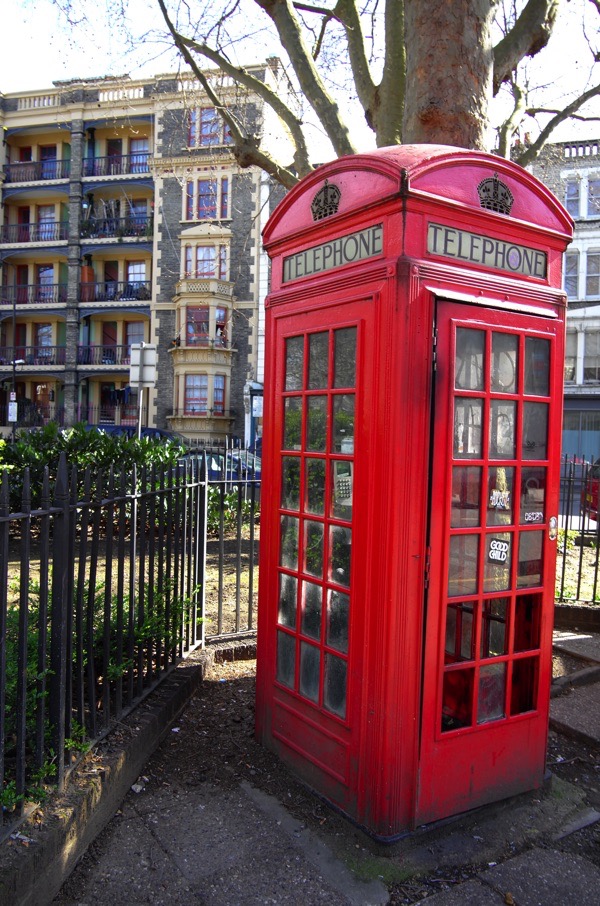
Desolate in Hackney Rd

Pointless in St John’s Sq

Unwanted on Clerkenwell Green

Invisible in Smithfield

Forgotten outside St Bartholomew’s Hospital

In service outside St Paul’s as a quaint location for tourist shots
You may also like to take a look at
Mavis Bullwinkle, Secretary
Bookings for THE GENTLE AUTHOR’S TOURS are now open for June & July

This is the earliest known photo of the remarkable Mavis Bullwinkle, seen here attending a Christmas party in 1932 at the Drill Hall in Buxton St, hosted by Rev Holdstock of All Saints’ Church, Spitalfields – Mavis can easily be distinguished to the left of the happy crowd, because she is a baby in her mother Gwendoline’s arms.
In this picture, you see her at the centre of life in Spitalfields and even though this hall does not exist anymore and the church it was attached to was demolished in 1951, and everyone else in this photo has gone now too, I am happy to report that Mavis is still alive and kicking, to carry the story of this world and continue her existence at the centre of things in the neighbourhood.
Mavis’ grandfather, Richard Pugh, was a lay preacher who came to Spitalfields with his wife and family from North Wales in 1898, where he held bible classes at All Saints and spoke at open air meetings and, in the absence of social workers, counselled men from the Truman Brewery in their family problems.
His mother paid for him to return alone to Wales to see her for two weeks annual holiday from the East End each year. But Mavis’ grandmother Frances never had a holiday, she said, “Why should people take notice of you when you talk of living the Christian life, when you have an easier time than they do?”
Then in 1905, Richard died unexpectedly of pneumonia and Frances was left almost bereft in Spitalfields. She had to leave the church house and take care of her seven children alone. She received a modest pension from the Scripture Readers’ Union until her youngest son, Albert, was fourteen, the Truman Brewery gave her a small grant twice a year and she took work scrubbing floors.
The family moved into Albert Family Dwellings, a large nineteenth century block in Deal St, where subsequently Mavis grew up, living there until it was demolished in 1975 when they were rehoused in a new block in Hanbury St. And today, when I visited Mavis in Hanbury St less than a hundred yards away from the site of Albert Family Dwellings and she described her grandmother who died when she was six, an extraordinary perspective became apparent, connecting our world with that of Spitalfields more than a century ago.“I remember her shape and her North Wales accent, a lilt.” Mavis told me, conjuring the image in her mind’s eye,” She would always call my father Alfred, when everyone else called him Alf. She was short of stature and she worked hard.”
Mavis’ testimony of life in the East End is one of proud working class families who strove to lead decent lives in spite of limited circumstances. “People like to think that they were all drunks who dropped their ‘h’s, and they were dirty,” she said, eager to dispel this misconception, “Years ago, people were poor but they were completely clean. You can wash without a bathroom, but it takes a lot of work. My father used to put the water on to boil and pour it into the bath. And in the Family Dwellings, it was very well maintained, low rents, strict rules and a uniformed superintendent. When my mother was small and people had large families, if the superintendent saw children playing after eight o’ clock, he’d say ‘Go to bed!’ and you had to do it. I often think of it now when I see children playing outside at eleven at night. Then, everyone used to know each other and help one another. If you were going away on holiday, you’d tell everyone and they’d wave you goodbye.”
Mavis’ story of her family’s existence in Albert Family Dwellings spans the original flat where her grandmother lived with her two maiden aunts, and then Mavis’ parents’ flat that she grew up in. Mavis took care of her mother and the two aunts, who lived to be eighty-six,ninety and ninety-five respectively, even after they all moved out – seventy years after they first moved in as an act of expediency. But by then the nature of the place had changed and it was condemned as part of a slum clearance programme. “It suddenly went down hill in the late fifties when the housing association sold it,” admitted Mavis with a regretful smile, looking from her living room window across the rooftops of Spitalfields to the space where Albert Family Dwellings formerly stood, a space that holds so much of her family history.
If Mavis had married, she would have left Spitalfields but instead she stayed to care for the elderly members of her family and worked for forty years as a secretary in the social work department at the Royal London Hospital, where she was born in 1932.
In Mavis’ personal landscape, Spitalfields’ neighbouring territory, the City of London holds an enduring fascination as a symbolic counterpoint to these streets where she makes her home. “I love the City because I went to school in the City at the Sir John Cass School,” she confided with pleasure, “and my father worked as a clerk in the City, at the Royal London Oil Company for fifty-one years. To go from Tower Hamlets to the City, crossing Middlesex St, was like crossing the River Jordan to the Promised Land. Everyone in Stepney used to dream of living in the City. Before the war, all kinds of people lived in the City, caretakers and such, not just rich people like now.” And then Mavis ran into another room to bring a framed certificate to show me and held it up with a gleaming playful smile of triumph. It read, “Mavis Gwendoline Bullwinkle, Citizen of the City of London.”
Mavis Gwendoline Bullwinkle – Citizen of Spitalfields – is a woman who makes no apology to call herself a secretary, because she is inspired by the best of that proud nineteenth century spirit which carried a compassionate egalitarian sense of moral purpose.

Mavis’ mother’s family, the Pughs of North Wales, photographed in Spitalfields in 1900. At the centre, Mavis’ grandmother Frances holds Mavis’ mother Gwendoline as a baby, with her grandfather Richard at her shoulder, a lay preacher who died unexpectedly of pneumonia four years later.


Handbill for one of Mavis’ grandfather’s bible classes at St Matthew’s Mission, Fulham.

Mavis’ mother Gwendoline and her sisters at All Saints School, Buxton St, Spitalfields, 1904. g – Gwendoline, l – Laura, a – Ada and h – Hilda.

Mavis’ father’s family, the Bullwinkles of Bow in 1917. Her grandmother Lousia sits on the left and her grandfather Edwin on the right. Mavis’ father Alfred stands between his two brothers Harry and Ted, both in Royal Air Corps uniform. The eldest daughter standing behind her mother was also Louisa but known as “Sis.”

Mavis, with her parents Gwendoline and Alfred, and younger sister Margaret in Barking Park, 1939 – before Mavis & Margaret were evacuated to Aylesbury.

Mavis stands on the extreme left of this picture of the All Saints Church Spitalfields choir, 1951.

Mavis sits at the centre of the picnic at this Christ Church, Spitalfields, Sunday School outing to Chalkwell in the late fifties – presided over by Mrs Berdoe (top centre).

Mavis Bullwinkle in her Hanbury St flat
You may also like to read about
Happy 90th Birthday Mavis Bullwinkle!

Mavis Bullwinkle
Today we are celebrating the birthday of one of Spitalfields’ best-loved residents, Mavis Bullwinkle. We count ourselves favoured that, apart from her six years enforced exile as an evacuee in Aylesbury during World War Two, Mavis has shown the good sense to spend her entire ninety years here.
In this picture, you can see her standing at the door of the church house in Buxton St where her grandfather Richard Pugh lived when he came from North Wales as a lay preacher in 1898 to minister to the people of the East End, and it was here that Mavis’ mother Gwen was born in 1899. I regret that we cannot turn back the wheels of time, so that Richard could step through this door to wish his granddaughter a happy birthday, but the unfortunate reality is that he died of pneumonia in 1905 and left Mavis’ grandmother to bring up seven children alone – an event which created repercussions that resonate to this day for Mavis.
Yet Mavis displayed her characteristic good humour, amplified by her bright red ankle-length raincoat, when I met her on an especially grey and cloudy morning. And it was my privilege to take a stroll around the neighbourhood with Mavis, as she pointed out some of the landmarks on her personal landscape, because after her ninety years, there are few who know Spitalfields as well as Mavis.
Although Mavis remembers Christ Church (or “Spitalfields Church” as she knew it) when her Uncle Albert Pugh was caretaker at during the nineteen thirties, she did not come here regularly until 1951 when her local church All Saints in Buxton St was shut. “I found it very gaunt with all that dark masonry,” she recalled, rolling her eyes dramatically and casting her gaze up to the tall spire looming over us. Then, in 1958, death watch beetle was discovered at Christ Church and this was shut too. “They found it on the Thursday and it was closed by the weekend,” Mavis revealed in a disappointed tone, “My sister Margaret was due to be married on the Saturday and she had to make do with the horrible hall in Hanbury St.”
Already the rain was setting in, so we set off briskly towards the Hanbury Hall and Mavis ameliorated her opinion of the place by the time we got there. “My uncle and his family lived here on the ground floor,” she explained, “the bedroom was on the right of the entrance and the living room and kitchen to left.”
Mavis told me there was so much unemployment in the nineteen twenties that young men were encouraged to go to Australia and, eager to relieve the burden on his mother, Albert emigrated at nineteen, only to have an accident in the Outback that left him with a curvature of the spine. On his return, he found it even harder to get work until the rector of Christ Church appointed him caretaker. And when he died young in 1943, leaving a wife and two girls, the Rector arranged for them to have a flat in the market building at the corner of Brushfield St. Mavis taught at the Sunday School here at the Hanbury Hall from 1951 until 1981, while the congregation was in exile, and she stood in the rain looking up at the building in disbelief that so much time could have passed.
Then we set off towards the the north-easterly quarter of Spitalfields, once known as Mile End New Town, to the small web of streets which Mavis counts as home and that remains the focus of her existence. Taking a minor detour down Brick Lane to visit the former Mayfair Cinema where Mavis came in her teens with her mother during the nineteen forties, “We didn’t come down here much otherwise,” she admitted with a shrug, “We did our shopping in Whitechapel or Bethnal Green.”
The nature of our odyssey caused Mavis to peer in wonder at her familiar streets. “When you live in a place so long you take it for granted, until it’s not there anymore and then you can’t even remember what was there before.” she confessed as we turned from Brick Lane into Buxton St, approaching Allen Gardens. Before the green field that we know today, Mavis recalls a warren of little streets here surrounding All Saints Church, the centre of her emotional and social universe growing up in Albert Family Dwellings in Deal St. This was the block her grandmother moved into in 1905 and Mavis moved out of in 1979 when it was demolished.
“The Reverend Holdstock used to give wonderful Christmas parties, and I had some of the happiest times of my life in here,” she confided to me as we stood outside the square rectory, one of the few old buildings remaining in the street today. “Around 1913, when my aunt Esther was young, she remembered meeting the cows coming up Buxton St to be milked, each morning as she was on her way to work at a factory in Shoreditch.” Mavis informed me, gesturing back towards the Lane and conjuring an image of the herd.
When Mavis’ grandfather died, her Aunt Esther had to give up her training to be a teacher, working first as a nanny in the vicarage and then at a clothing factory. “She never got over it that she never got to be a teacher,” recalled Mavis tenderly, “and when she used to go on about it, I’d remind her that if she’d never gone to work in the factory she’d never have met her husband, Uncle John.”
Then we reached the patch of green where the church of All Saints once stood. “It was a very pretty church, late Victorian,” she told me, “built at the same time as the terraces round here. In those days people wouldn’t live somewhere unless there was a church. It was damaged by the bombing and once, when the rain came in the roof, the vicar made a hole in the floor with his umbrella so that it could drain away.”
From here, we walked down Deal St where Albert Family Dwellings formerly stood on the south corner of Underwood Rd. Only the the iron bollards labelled M. E. N. T. remain today to indicate that this was once Mile End New Town. Yet in Mavis’ mind it all still exists – the Prince of Wales pub on the corner of Buxton St, Davis’ Welsh Dairy on the north corner of Underwood Rd and Mrs Finkelstein’s sweetshop opposite, where for penny you could put your hand in a bran tub and pull out a miniature gift for your dolls’ house.
Standing outside the former entrance of Albert Family Dwellings, Mavis recalled the evening of 2nd September 1939 when she and her sister Margaret were summoned to the school to be evacuated without being told where, and Mavis’ mother went home alone clutching a card with her daughters’ address in Aylesbury. Today, Mavis is the only witness to the former life of these streets that still resides in this location and the empty pavements are crowded with memories for her.
Mavis gave up a career in the City in preference to a lower paid job as a secretary at the Royal London Hospital because she wanted to be of service to people, and she worked there for forty years. Her grandfather Richard Pugh, the lay preacher from Wales, would have been proud of Mavis, following his example. The last of the Bullwinkles in Tower Hamlets, she fills with delight to speak of Spitalfields, and more than a century of striving and thriving in her family in this corner of the East End.
Out of almost everyone I know, Mavis could most be said to be of this place. With a self-effacing nature, she has shown moral courage and selflessness in her work at the hospital, and in caring for her mother and two aunts until they died at ripe old ages. After ninety years, Mavis Bullwinkle knows what it means to live, and we salute her example and applaud her spirit.

Gwen Bullwinkle holds up Mavis in Hanbury St in 1933. “Every time my mother saw this picture, she would say, ‘Fancy taking us outside a pub!'”

Mavis by the War Memorial at Christ Church which her father Alf tended. “He used to grow flowers around it and keep it tidy.”

All Saints Sunday School in 1939 – seven year old Mavis is in the second row on the extreme right and her five year old sister Margaret is on her right.

Mavis outside the former rectory of All Saints Church. “I had some of the happiest times of my life here.”


Mavis & Margaret’s evacuation card, 1939.

Mavis stands on the spot where All Saints Church used to be in Buxton St until 1951.


Spitalfields’ celebrations for the coronation of King George VI, 1937.

Mavis in Vallance Rd outside the house of Quaker philanthropist Mary Hughes, daughter of Thomas Hughes. “Mary Hughes came up to my mother pushing me in a pram in the Whitechapel Rd in 1932 and exclaimed ‘Oh you wonderful mother!’ She was a little old lady dressed in black silk, from the nineteenth century, and my mother pulled away in fear. Only later did she learn who it was.”

PLEASE LEAVE YOUR BIRTHDAY MESSAGES BELOW FOR MAVIS
John Stow’s Spittle Fields

I love to visit the Bishopsgate Institute to study the 1599 copy of John Stow’s Survey Of London. He was the first historian of London and his survey is the first history book of the capital.
It is touching to see the edition that John Stow himself produced, with its delicate type resembling gothic script, and sobering to recognise what a great undertaking it was to publish a book four hundred years ago – requiring every page of type to be set and printed by hand.
Born into a family of tallow chandlers, John Stow became a tailor yet devoted his life to writing and publishing, including an early edition of the works of Geoffrey Chaucer who had lived nearby in Aldgate more than a century earlier. In Stow’s lifetime, the population of London quadrupled and much of the city he knew as a youth was demolished and rebuilt, inspiring him to write and publish his great work – a Survey that would record this change for posterity. Consequently, on the title page of the Survey, Stow outlines his intention to include “the Originall, Antiquity, Increase, Modern estate and description of that citie.”
Yet in contrast to the dramatic changes he witnessed at first hand, John Stow also described his wonder at the history that was uncovered by the redevelopment, drawing consolation in setting his life’s experience against the great age of the city and the generations who preceded him in London .
SPITTLE FIELDS
There is a large close called Tasell close sometime, for that there were Tasels planted for the vse of Clothworkers: since letten to the Crosse-bow-makers, wherein they vsed to shoote for games at the Popingey: now the same being inclosed with a bricke wall, serueth to be an Artillerieyard, wherevnto the Gunners of the Tower doe weekely repaire, namely euerie Thursday, and there leuelling certaine Brasse peeces of great Artillerie against a But of earth, made for that purpose, they discharge them for their exercise.
Then haue ye the late dissolued Priorie and Hospitall, commonly called Saint Marie Spittle, founded by Walter Brune, and Rosia his wife, for Canons regular, Walter Archdeacon of London laid the first stone, in the yeare 1197.
On the East side of this Churchyard lieth a large field, of olde time called Lolesworth, now Spittle field, which about the yeare 1576 was broken vp for Clay to make Bricke, in the digging whereof many earthen pots called Vrnae, were found full of Ashes, and burnt bones of men, to wit, of the Romanes that inhabited here: for it was the custome of the Romanes to burne their dead, to put their Ashes in an Vrna, and then burie the same with certaine ceremonies, in some field appoynted for that purpose, neare vnto their Citie: euerie of these pots had in them with the Ashes of the dead, one peece of Copper mony, with the inscription of the Emperour then raigning: some of them were of Claudius, some of Vespasian, some of Nero, of Anthonius Pius, of Traianus, and others: besides those Vrnas, many other pots were there found, made of a white earth with long necks, and handels, like to our stone Iugges: these were emptie, but seemed to be buried ful of some liquid matter long since consumed and soaked through: for there were found diuerse vials and other fashioned Glasses, some most cunningly wrought, such as I haue not seene the like, and some of Christall, all which had water in them, northing differing in clearnes, taste, or sauour from common spring water, what so euer it was at the first: some of these Glasses had Oyle in them verie thicke, and earthie in sauour, some were supposed to haue balme in them, but had lost the vertue: many of those pots and glasses were broken in cutting of the clay, so that few were taken vp whole.
There were also found diuerse dishes and cups of a fine red coloured earth, which shewed outwardly such a shining smoothnesse, as if they had beene of Currall, those had in the bottomes Romane letters printed, there were also lampes of white earth and red, artificially wrought with diuerse antiques about them, some three or foure Images made of white earth, about a span long each of them: one I remember was of Pallas, the rest I haue forgotten.I my selfe haue reserued a mongst diuerse of those antiquities there, one Vrna, with the Ashes and bones, and one pot of white earth very small, not exceeding the quantitie of a quarter of a wine pint, made in shape of a Hare, squatted vpon her legs, and betweene her eares is the mouth of the pot.
There hath also beene found in the same field diuers coffins of stone, containing the bones of men: these I suppose to bee the burials of some especiall persons, in time of the Brytons, or Saxons, after that the Romanes had left to gouerne here. Moreouer there were also found the sculs and bones of men without coffins, or rather whose coffins (being of great timber) were consumed. Diuerse great nailes of Iron were there found, such as are vsed in the wheeles of shod Carts, being each of them as bigge as a mans finger, and a quarter of a yard long, the heades two inches ouer, those nayles were more wondred at then the rest of thinges there found, and many opinions of men were there vttred of them, namely that the men there buried were murdered by driuing those nayles into their heads, a thing vnlikely, for a smaller naile would more aptly serue to so bad a purpose, and a more secret place would lightly be imployed for their buriall.
And thus much for this part of Bishopsgate warde, without the gate.

A copper coin from the Spitalfields Roman Cemetery that I wear around my neck

Bishopsgate Ward entry by John Stow in his Survey of London


Monument to John Stow in St Andrew Undershaft
Archive images courtesy Bishopsgate Institute
Photograph of Stow’s monument copyright © Estate of Colin O’Brien
You may also like to read about


