
A Door In Cornhill
JOIN ME FOR FOR A WALK THROUGH SPITALFIELDS THIS EASTER
READ THE ASTONISHINGLY GOOD REVIEWS
CLICK HERE TO BOOK FOR SPRING & SUMMER TOURS

The Bronte sisters visit their publisher in Cornhill, 1848
An ancient thoroughfare with a mythic past, Cornhill takes its name from one of the three former hills of the City of London – an incline barely perceptible today after centuries of human activity upon this site, building and razing, rearranging the land. This is a place does not declare its multilayered history – even though the Roman forum was here and the earliest site of Christian worship in England was here too, dating from 179 AD, and also the first coffee house was opened here by Pasqua Rosee in 1652, the Turk who introduced coffee to London. Yet a pair of carved mahogany doors, designed by the sculptor Walter Gilbert in 1939 at 32 Cornhill – opposite the old pump – bring episodes from this rich past alive in eight graceful tableaux.
Walter Gilbert (1871-1946) was a designer and craftsman who developed his visual style in the Arts & Crafts movement at the end of the nineteenth century and then applied it to a wide range of architectural commissions in the twentieth century, including the gates of Buckingham Palace, sculpture for the facade of Selfridges and some distinctive war memorials. In this instance, he modelled the reliefs in clay which were then translated into wood carvings by B.P Arnold at H. H. Martyn & Co Ltd of Cheltenham.
Gilbert’s elegant reliefs appeal to me for the laconic humour that observes the cool autocracy of King Lucius and the sullen obedience of his architects, and for the sense of human detail that emphasises W. M. Thackeray’s curls at his collar in the meeting with Anne and Charlotte Bronte at the offices of their publisher Smith, Elder & Co. In each instance, history is given depth by an awareness of social politics and the selection of telling detail. These eight panels take us on a journey from the early medieval world of omnipotent monarchy and religious penance through the days of exploitative clergy exerting controls on the people, to the rise of the tradesman and merchants who created the City we know today.
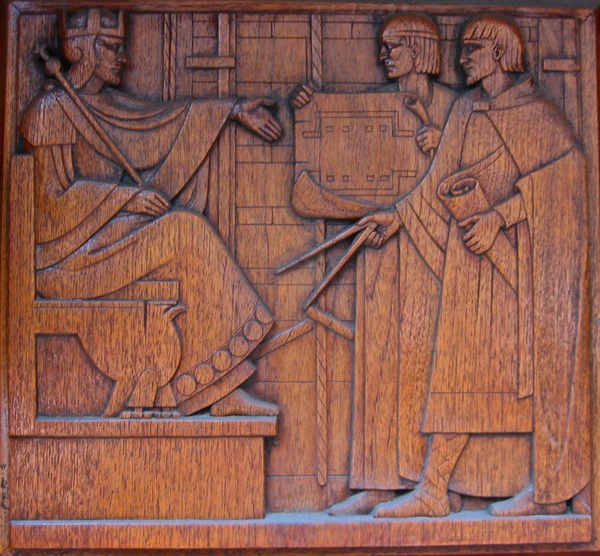
“St Peter’s Cornhill founded by King Lucius 179 AD to be an Archbishop’s see and chief church of his kingdom and so it endured for the space of four hundred years until the coming of Augustine the monk of Canterbury.”

“Eleanor, Duchess of Gloucester, did penance walking barefoot to St Michael’s Church from Queen Hithe, 1441.”

“Cornhill was an ancient soke of the Bishop of London who had the Seigneurial oven in which all tenants were obliged to bake their bread and pay furnage or baking dues.”
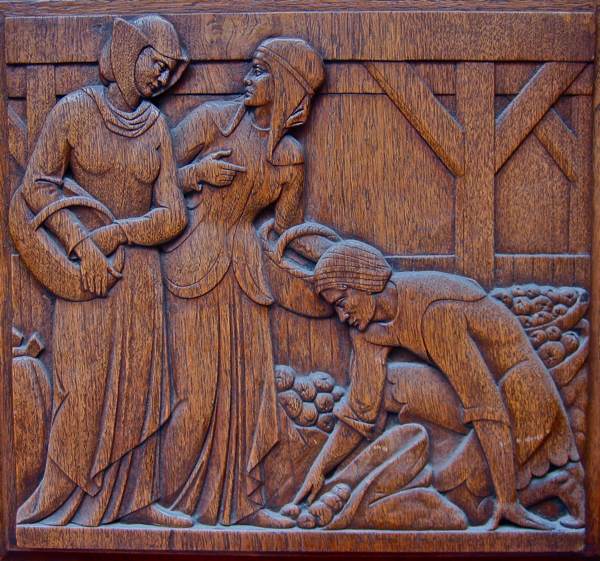
“Cornhill is the only market allowed to be held afternoon in the fourteenth century.”

“Birchin Lane, Cornhill, place of considerable trade for men’s apparel, 1604.”

“Garraway’s Coffee House, a place of great commercial transaction and frequented by people of quality.”

“Pope’s Head Tavern in existence in 1750 belonging to Merchant Taylor’s Company, the Vinters were prominent in the life of Cornhill Ward.”

You might also like to read about
Lament For The Bell Foundry
JOIN ME FOR FOR A WALK THROUGH SPITALFIELDS THIS EASTER
READ THE ASTONISHINGLY GOOD REVIEWS
CLICK HERE TO BOOK FOR SPRING & SUMMER TOURS
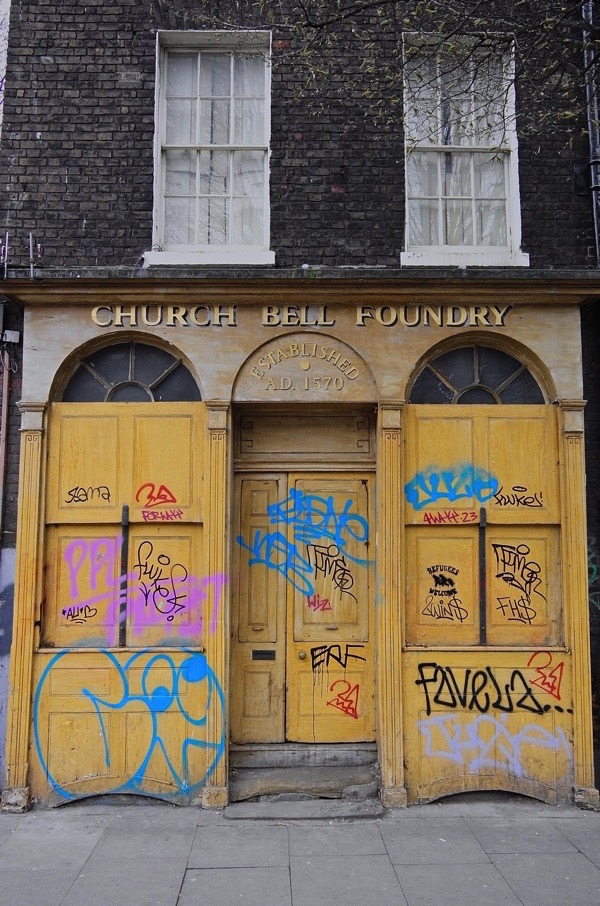
What a pitiful sight this is. Six years after it shut, graffiti is piling up on the wood-grained fascia of the world-famous Whitechapel Bell Foundry, revealing nothing at all is being done to care for it.
The scheme to redevelop the grade ll listed building into a boutique hotel has been abandoned and now it sits rotting and neglected. When it closed, despite an offer to acquire the foundry and reopen it making bells, Historic England instead misguidedly advocated the boutique hotel as offering the most sustainable future for the historic foundry.
Since the hoteliers have given up, they have put it up for sale. But there are no takers willing to fulfil the obligation imposed by the Secretary of State at the Public Inquiry that any future occupant continue foundry activity, which – you may recall – the developers promised to do by casting bells in a toy foundry in their cappuccino bar.
Yet when The London Bell Foundry, which was set up by those who have been campaigning to save the building as a fully-working foundry, made an offer at market value to acquire it last year, they were only met with indifference from the estate agents.
Has everyone forgotten that this is an international treasure of the greatest importance and a major asset for the Borough of Tower Hamlets and for London? It is evident from the state of disrepair that the developers care nothing for the bell foundry, yet a solution – in the form of The London Bell Foundry – sits waiting.
If you care about the future of the foundry, please write to Duncan Wilson, Director of Historic England, and Lutfur Rahman, Mayor of Tower Hamlets, asking them to intervene to save it.
Here are their emails: londonseast@historicengland.org.uk and mayor@towerhamlets.gov.uk
Copy in contact@thelondonbellfoundry.co.uk
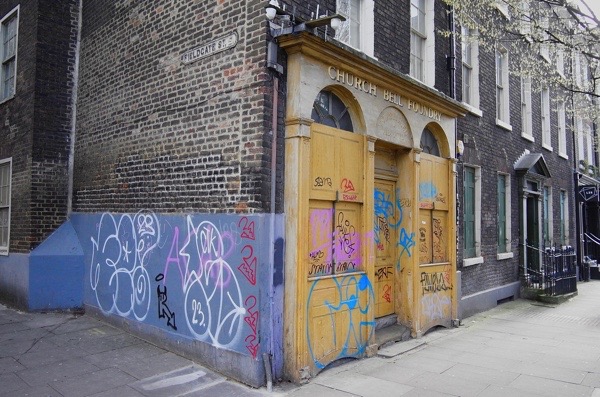
Graffiti is piling up on the grade II listed Whitechapel Bell Foundry
You may also like to take a look at
We Make An Offer For The Bell Foundry
The Whitechapel Bell Foundry Is For Sale
The Fate of the Whitechapel Bell Foundry
So Long, Whitechapel Bell Foundry
The Secretary of State steps in
A Letter to the Secretary of State
14 Whitechapel Bell Foundry Poems
Rory Stewart Supports Our Campaign
Hope for The Whitechapel Bell Foundry
Phil Mills, Steeplekeeper
JOIN ME FOR FOR A WALK THROUGH SPITALFIELDS THIS EASTER
READ THE EMBARRASSINGLY GOOD REVIEWS
CLICK HERE TO BOOK FOR SPRING & SUMMER TOURS
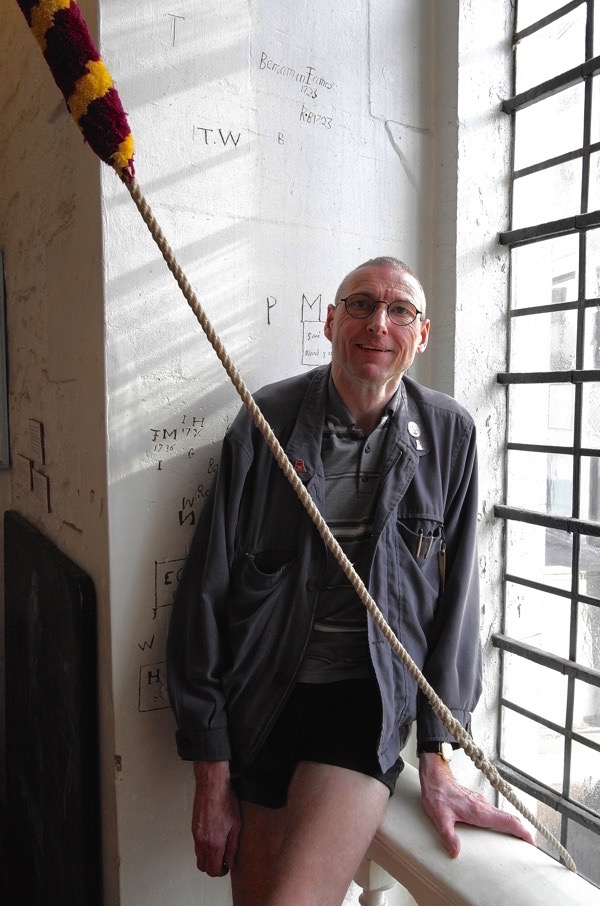
‘I was always very interested in church bells’
Walking around the City of London and admiring all the church steeples piercing the sky, you might imagine that they just stood there of their own accord. In fact, they need constant attention if they are to continue in use and it is the job of the steeplekeeper to care for them.
Recently I enjoyed the privilege of visiting the bell ringers in Christopher Wren’s handsome tower of St Vedast’s in Foster Lane next to St Paul’s Cathedral, where I had the pleasure of meeting steeplekeeper Phil Mills. Intrigued to learn more, Phil agreed to arrive early to meet me the following Monday at the church before bell-ringing practice and talk to me about his job.
It was fascinating to hear Phil speak with such passion and commitment about his chosen role, revealing a rare glimpse of the elaborate hidden world of bell maintenance and steeplekeeping.
“I became a bell ringer at Dorchester Abbey after we moved from Southampton to Oxfordshire in 1986 when I was twenty-two and I stayed a ringer at the Abbey for over thirty years. It took me a year to learn but – once I got the rope handling – I became a member of the Oxford & Diocese Guild of Church Bell Ringers and earned my certificate. Things hastened from there, I became a steeplekeeper in 1987 at twenty-five and I have been with it ever since.
Brian White of Whites, Bellhangers of Appleton Ltd, he thought I might make a good steeplekeeper after I got involved with the restoration of the bells at Dorchester Abbey. So I was appointed steeplekeeper with Alf Cooper as my deputy and – between the two of us – we looked after the bells, keeping them in good working order, and looking after the clock, the clock room, the ringing room and the bell chamber, and maintaining everything.
Brian White sent me on a tower maintenance course, I did a beginners’ one and then I went on to the more advanced one – and I just headed on from there! I was always very interested in church bells and I used to listen to them a lot in Southampton, especially when I went to family weddings. I was captivated by the sound and I already knew something about the different methods of ringing.
Being a steeplekeeper consists of looking after the tower and the bells, and maintaining the interior. Belfry maintenance includes greasing ball bearings and roller pulleys, checking the ropes, greasing the clappers, checking the stays, checking the slider and runner boards, checking the lighting, testing the emergency lighting, checking the tower roof drainage system and checking for ingress of water. The bell ropes also need looking after and many church towers have clock hammers that need to be looked after too.
Some towers do not have steeplekeepers, they can go for years and years without having any work done to them, then all of a sudden they go out of action. That is why you need a steeplekeeper. It is a labouring job but as long as we have got facemasks, proper overalls, hard hats and safety precautions, then we are ok. I can do the maintaining of the bells myself and undertake a full maintenance check, although in the case of replacing pulley wheels or clappers, I need to call in a contractor. Sometimes a tower can be a dangerous environment and this is why we have Health & Safety Issues. They only came out a few years ago but now we have to keep ourselves safe from dangerous activities like trying to put a new clapper in and it ending up landing on top of you. These are the things we have to look out for.
There was a steeplekeeper at Wallingford for quite a good number of years named Jim. Although he had been ringing for sixty-nine years, knew every single method in the book and how to compose and conduct, he also knew the ways of maintenance. He made a rope warmer by using a piece of drainage pipe, a wooden box, a light bulb and a flex. He wired it all up and put the ropes in there and it warmed them. It even had a timer so it came on before we were going to ring and all the ropes were nice and warm, ready for us. Jim died at seventy-nine and I took over from him. Steeplekeepers do not retire but he had already appointed me to take over, so I continue where he left off.
Back in 2006, I decided I was going to get myself a two-hundredth-visited tower because I had visited one hundred and ninety-nine. So I thought, ‘I wonder where I can get my two-hundredth?’ I decided to go to London and I had already seen the ringers at St Vedast’s because they are visible from Foster Lane through the windows of the ringing chamber and I thought, ‘They look a bit friendly.’ I was only down for a promenade concert but I saw them on a Friday doing their lunchtime quarter peals and I thought, ‘Oh this is fantastic, I’ll go along and see what it’s like.’ So I did that on 17th August 2009, I have still got the rail ticket from when I first came here. My instincts were happily right and after a couple of years Tom Lawrence, the ringing master, made me a member of the ringers at St Vedast’s.
I visit every Monday from Wallingford for bell-ringing practice. I always check the bells before we do the ringing. I have many favourite towers but St Vedast’s is definitely near the top of my list because it has such a wonderful ring of bells. I love the sound of them as it comes down through the ringing room. It is quite masterful. You hear this lovely sound coming down towards you and this is my favourite ring of six bells. My favourite ring of eight has got to be St Botloph’s Bishopsgate because the tower is on the move, so it wobbles about a lot as the bells are changing. It is seventeen hundred-weight ring of eight bells. The tower moves and it has a lot of character and that is why I enjoy ringing there, that is another favourite.
We only get paid for ringing when we do weddings but I am semi-retired and I live on my own in Wallingford. I usually get home about twelve or one o’clock on Monday night. I have been ringing for thirty-nine years now and I have visited two-hundred-and-fifty-seven towers. I can barely keep track of all these towers! I have definitely clocked up a lot and I am still visiting new ones. The immense pleasure I get out of it is putting something back into a community – that is why I like to keep the bells going through my work as a steeplekeeper.
There is a lot of atmosphere in towers. I could feel it when I was listening to LP I have of the ‘Bells Of London.’ I was listening to it on a Saturday afternoon, this was back in the days when I was still only a learner, and I thought, ‘There’s something strange, I’m beginning to get an atmosphere from this.’ That same atmosphere came back to me when I first rang for a wedding at St Vedast’s and I realised my instincts had been right because that is very, very strange. Ringing in London has definitely got a lot of atmosphere.”
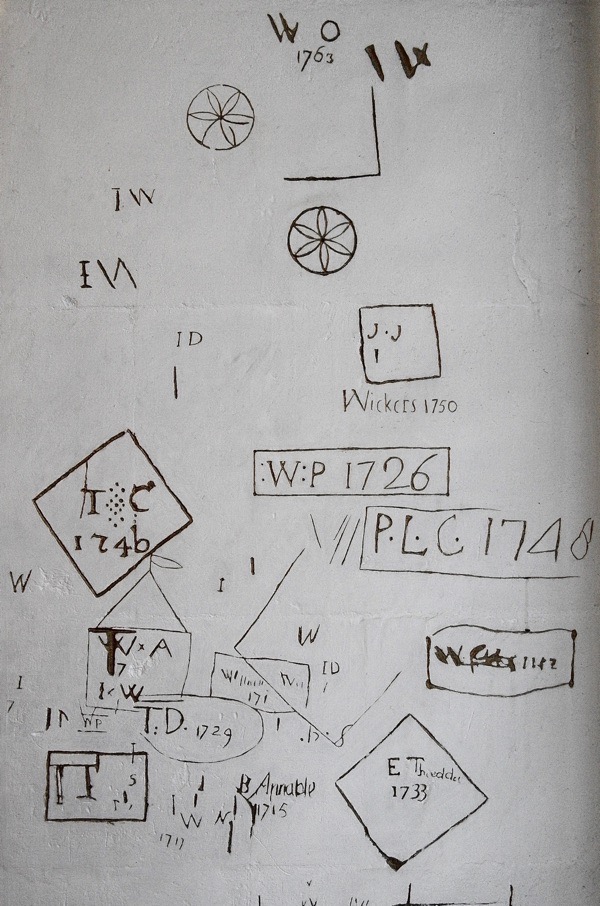
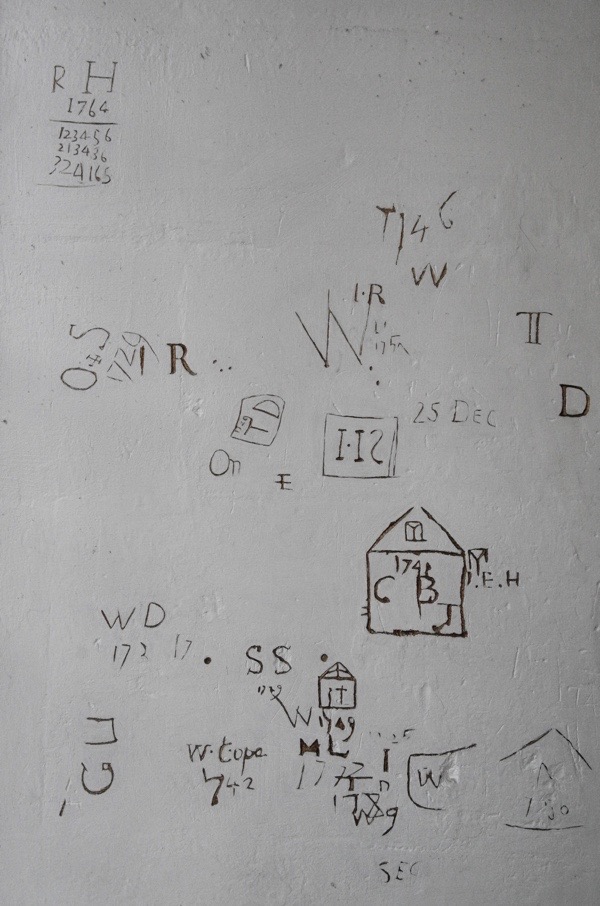
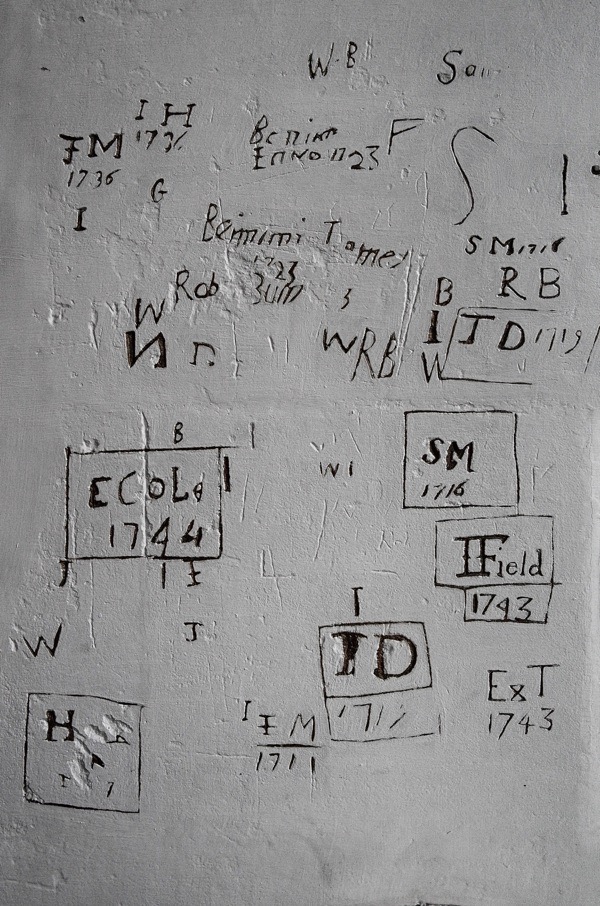
Eighteenth century graffitti in the ringers’ chamber
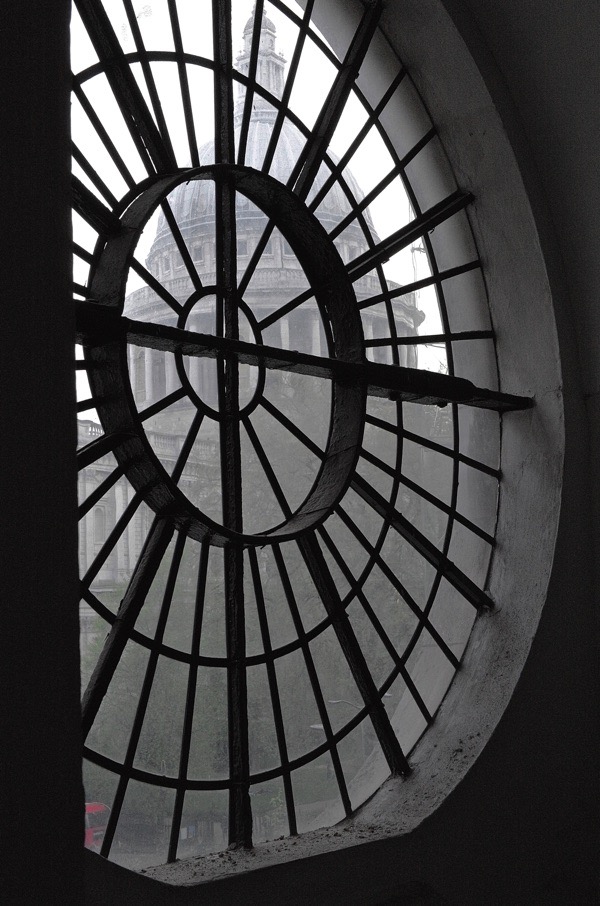
St Paul’s seen from St Vedast’s

St Vedast’s, Foster Lane
You may also like to read about
Alan Shipp, Hyacinth Grower
JOIN ME FOR FOR A WALK THROUGH SPITALFIELDS THIS EASTER
READ THE EMBARRASSINGLY GOOD REVIEWS
CLICK HERE TO BOOK FOR SPRING & SUMMER TOURS
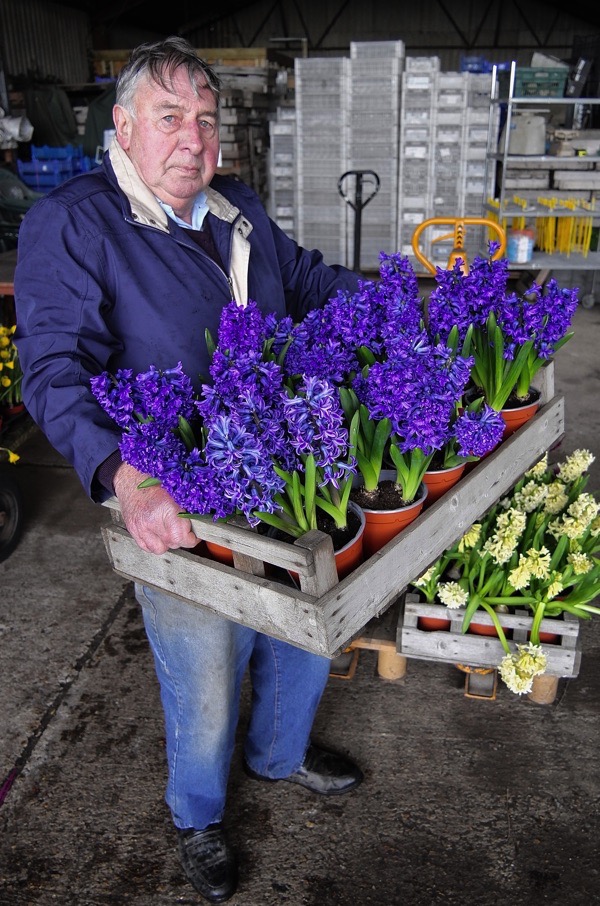
‘I could not imagine what my life would have been like without hyacinths’
One blustery day, I took the train up to Waterbeach outside Cambridge to visit Alan Shipp, Hyacinth Grower who cultivates two hundred and forty-three different varieties of this favourite flower, which are in bloom now. I stood in the rain, inhaling the fragrance of the gentle breeze wafting over Alan’s field of hyacinths, flourishing in the rich soil of the silted water-meadows of the River Cam.
Alan Shipp is Britain’s only Hyacinth Grower and is also the Custodian of the National Collection of Hyacinths. He has the world’s largest collection of varieties and knows more about this intriguing plant than anyone else alive. In other years, Alan has opened his hyacinth nursery to the public at peak flowering time, drawing international press attention to the tiny village of Waterbeach for this celebrated event in the horticultural calendar, which can attract over a thousand enthusiasts – travelling from far and wide to gawp at this incomparable hyacinth spectacle.
The lines of multicoloured hyacinths stretch to horizon. They seem to sing against the black soil. The rain makes them shine and then the sun makes them glow, luminous with light beneath a dark East Anglian sky. Alan Shipp & I stood alone together in the field contemplating the hyacinths in silent pleasure – until the storm broke, when we took shelter in Alan’s greenhouse where he told me the astonishing story of his life in hyacinths, as the rain hammered on the glass and the wind rattled the panes around us.
“In the eighteen-eighties my grandfather, Thomas Shipp, won a pony and whip in a raffle. To put it to some use, he managed to borrow a harness and cart, and went round door to door selling vegetables. Then he bought a piece of ground and started growing his own, and that is this piece of ground. That was how it all started, growing fruit and vegetables.
Eventually when my father, Kenneth Shipp, got involved, he started wholesaling the produce we grew ourselves. In the fifties, we started selling imported fruit too which we used to bring up from Spitalfields Market on Monday and Wednesday each week.
At the entrance to the Floral Market on Lamb St in Spitalfields was the Floral Cafe and I can still remember the bacon sarnies. It was a whole slice of fried gammon between two pieces of bread. We used to try and get there at four-thirty or five – it was a wonderful atmosphere. The owner was a chap called Leonard Swindley. I said to him once, ‘I’ve seen the porters just walk behind the counter, make themselves a jug of tea and disappear. You can’t carry on like that, you’re being robbed!’ He replied, ‘Can you think of a happier way of losing money?’ I left the argument defeated.
We stopped selling produce after one of our salesmen left and set up on his own in opposition. We had been growing acres and acres ourselves but the method of vegetable production changed out of all recognition. We would have a little plot of a couple of hundred square metres of leeks that we would plant by hand but today, two miles away, there is a field of one hundred and forty-five acres of leeks. To get a reasonable living, we needed a larger farm but I know of no land that has come up for rent in Waterbeach in the last thirty years.
So in 1985, I decided I could best increase the output per acre by becoming a hyacinth grower. It was just sheer chance. There was a clearance sale at a bulb nursery at the the other side of Cambridge, including hyacinth bulbs. So I bought one hundred, twenty each of five different varieties, and planted them because I had always been a very keen gardener. After the leaves died down, I dug them up and moved them elsewhere but there was one that I missed. It had rolled under a shrub. When I found it next summer, it had put its roots down but the rest of the bulb had been eaten away where it was exposed and, upon this surface, small bulbs had formed. The slugs had actually illustrated for me the method of propagating hyacinths.
I thought, ‘I wouldn’t mind doing this,’ so I got a planting stock from Taylors Bulbs of Holbeach. Their general manager gave me advice, he said, ‘Alan, don’t grow many varieties.’ I didn’t really heed his advice because I now have two hundred and forty-three. And that’s how I got started!
I discovered there was a National Collection of Hyacinths at Barnard Castle and I got in touch to say that, as I was the only hyacinth grower in the country, I was willing to propagate for them free of charge. They brought me two bulbs each of fifty varieties that I propagated and which became the nucleus of my collection. I seemed to come up against a wall, regarding getting more varieties, after one hundred and eight varieties. Then I got a letter from a lady in Lithuania who had a collection of hyacinths that she had assembled from all over the former Soviet Union – things I’ve never heard of, things that we thought were extinct! She’d got the names but knew nothing but about them so I sent her my research and we exchanged bulbs.
I thought I had missed double-flowered yellow hyacinths by one hundred years but lo-and-behold she had got two – one with a name and one unidentified. The one with the name was in catalogues from 1897 and the other I grew as ‘unidentified double-yellow hyacinth.’ Then in 2013, by sheer chance, a friend of mine came across an illustration of it by Mary Delany in the British Library. That was the world’s first double-yellow hyacinth, introduced in 1770! When it was introduced, it was £800 a bulb yet Mary Delany had painted it, so I wondered how she got access. But it was reported she had contact with Court and it was George III’s bulb that she illustrated at the time he was at Kew Palace in Kew Gardens. So that was a breakthrough.
I am on the Royal Horticultural Society’s Bulb Committee. It was the ‘Daffodil & Tulip Committee’ but, in 2012, the remit embraced all bulbs and we had an intake of other specialists. One of them was Alan Street from Avon Bulbs who regularly wins a gold medal at the Chelsea Flower Show. ‘Alan,’ he said, ‘I’ve got an unusual hyacinth, it’s red and white. I can tell you’ve heard of it by the look on your face.’ It was Gloria Mundi.
Hyacinth Mania was a hundred years after Tulip Mania. It was started by the Scottish Horticulturalist Peter Voorhelm who found a white double hyacinth with a rosy coloured centre in 1708. Previously, all double hyacinths had been discarded as inferior because they are deformed by extra petals in the middle, but he so liked this one that he propagated it and called it Konig Van Groot-Brettanje in honour of William of Orange – and that started Hyacinth Mania for white doubles with coloured centres.
Gloria Mundi was a lost variety of white double with a coloured centre in the catalogues in 1767. Alan Street had a friend in Switzerland called Ingrid Dingwell and Ingrid had a gardening friend who was a lorry driver called Theo, who took a load of humanitarian aid to Romania during the Ceaucescu era to remote village with a population of three hundred and seventy-odd souls. Theo’s friend fell in love with a local girl and married her, and Theo was given hospitality by the bride’s father at the wedding. To show his gratitude, Theo gave the bride’s father a pocket watch and the old man asked Theo to help himself to any plant growing in the garden, including bulbs of a hyacinth called Gloria Mundi. Theo gave them to Ingrid who sent them to Alan Street who grew them for fifteen years, oblivious of what he had. The year after I identified them, Alan took a pot to the RHS and they were given an award, two hundred and fifty years after the variety had been lost.
I cannot say that what I do is much of a business, it is more a hobby that gives a little bit of income and the selling of the bulbs has financed the conservation scheme. Without my work, the National Collection of Hyacinths would have just disappeared. I have saved well over a hundred varieties of hyacinths from extinction. At eighty-one years old, the next problem I have is who is going to carry it on after me? I am looking for someone.
I love hyacinths. There is their fragrance, there is their beauty. There is no other flower that can give you this range of colours at the end of March. If someone gave me a paint chart, I could match every colour on it with hyacinths. I would have a job to get black but I could get pretty close to it.
They are so fascinating. They are all evolved from just the one wild species growing from eight hundred to a thousand metres in the hills at the border of Iran, Iraq, Syria and Turkey. It is believed that the Romans may have brought them to Europe because there is a sub-species which grows on the Mediterranean coast of France. How did hyacinths get from the Levant to there, unless they were taken as bulbs by the Romans and gone feral?
The first recorded introduction of hyacinths to Europe was by the Flemish Botanist Carolus Clusius who was appointed Prefect of the imperial gardens in Vienna in 1573 by Ferdinand II. Ferdinand’s ambassador to Turkey was Ogier Ghiselin de Busbecq and he brought back tulips, crocuses, cyclamen and hyacinths to the palace gardens – all the bulbs from the Levant. Unfortunately, Ferdinand died that year but Clusius got a job at the botanic garden in Leyden and took the bulbs with him. That was the start of the Dutch bulb industry.
Clusius may have introduced hyacinths to Britain when he visited in 1590 and John Gerard records growing them in his garden in London in 1597. Hyacinths would undoubtably have been included among the ‘florists’ flowers,’ along with tulips, carnations, auriculas and roses, grown competitively in the East End during the eighteenth and nineteenth centuries. In the Victorian era, florists’ competitions were rampant up and down the country, and hyacinths always featured.
Hyacinths have formed my life. They have got me onto the RHS Bulb Committee, brought me lots of friends and won me worldwide recognition – probably got me into the Rotary Club too. To be honest, I could not imagine what my life would have been like without hyacinths. How did I ever live without them?”
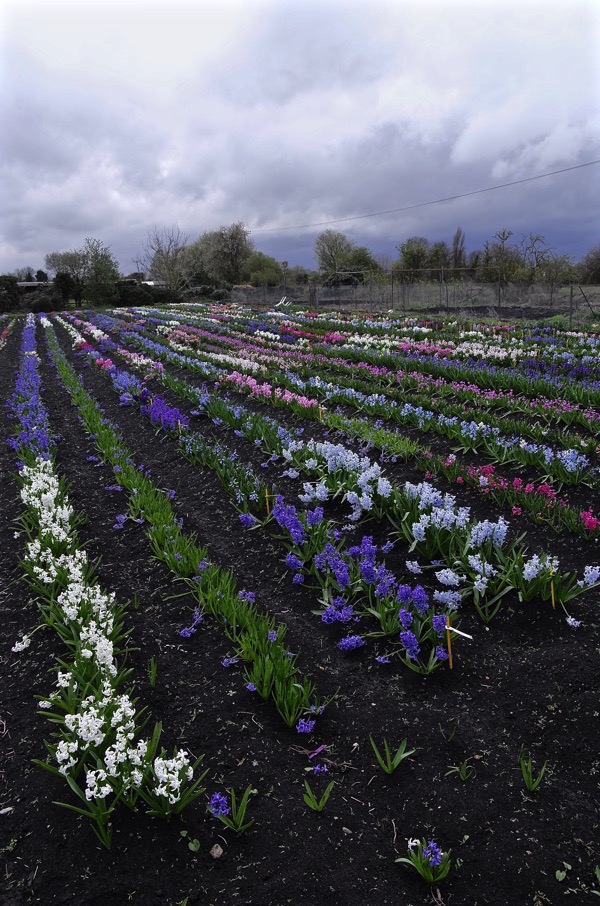
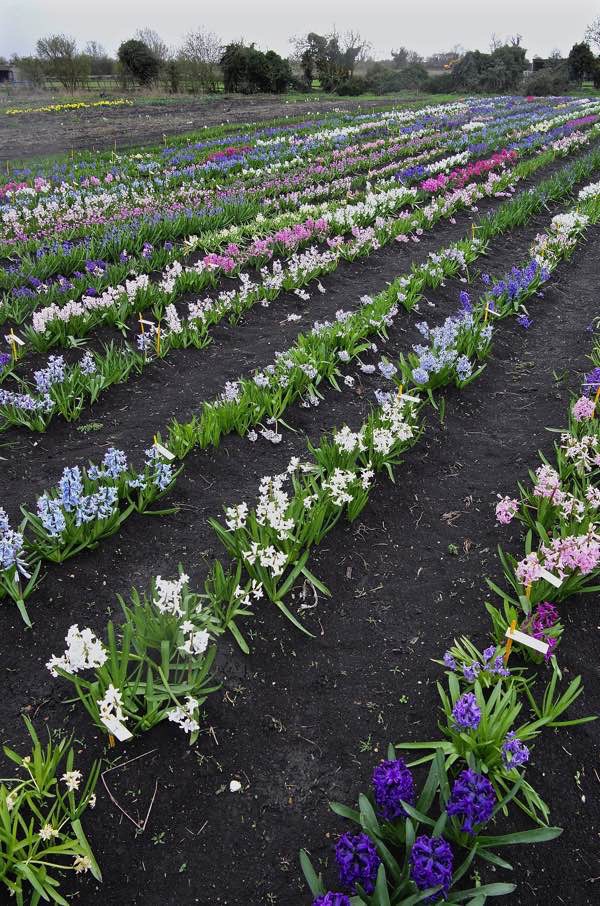
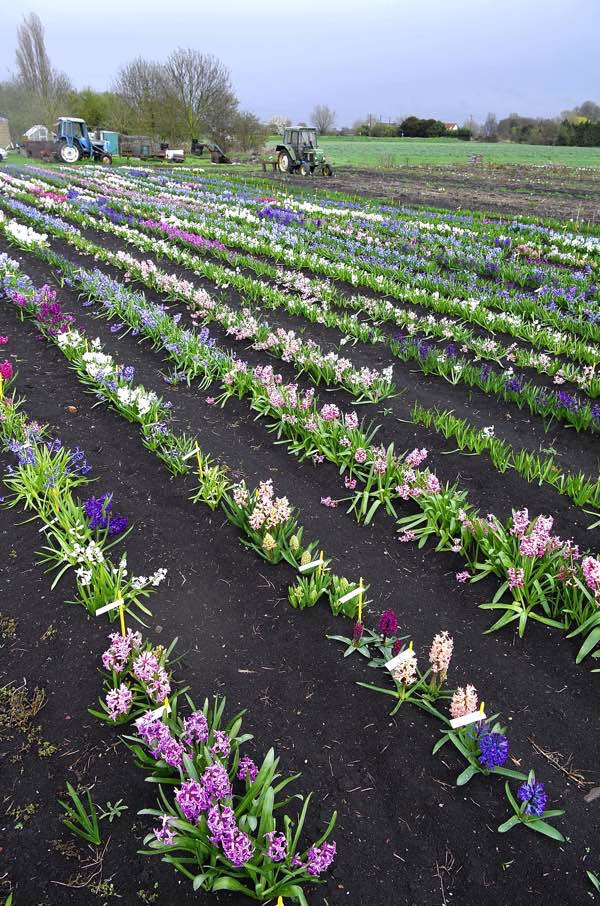
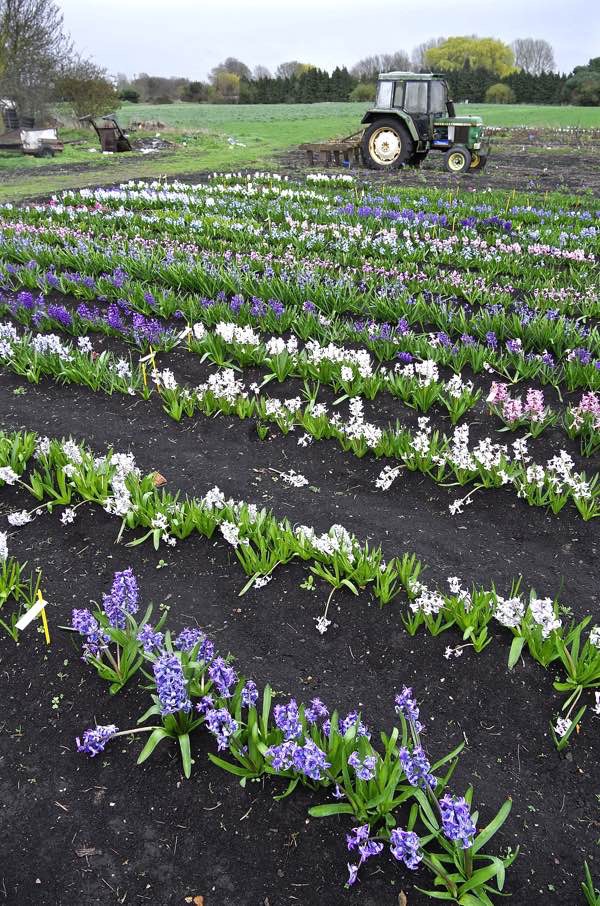
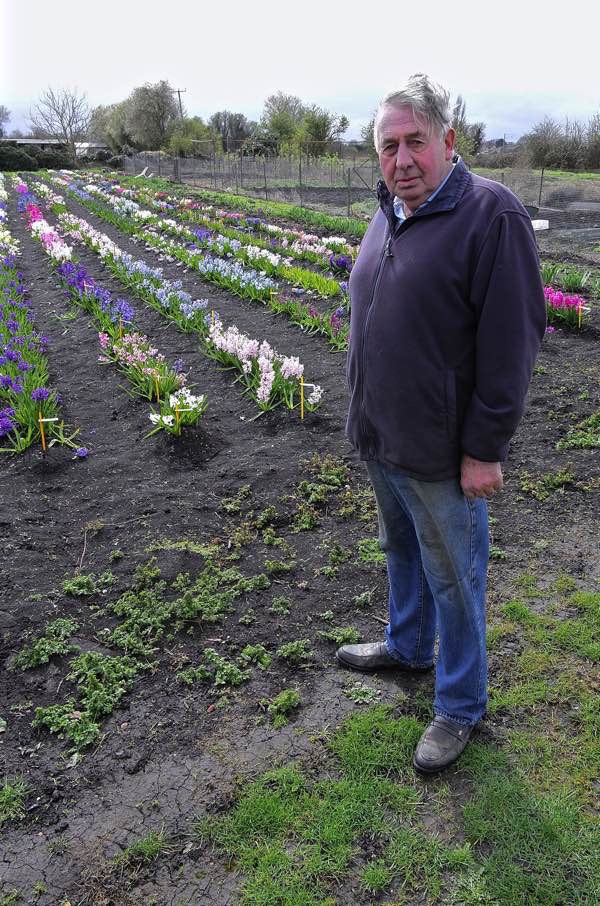
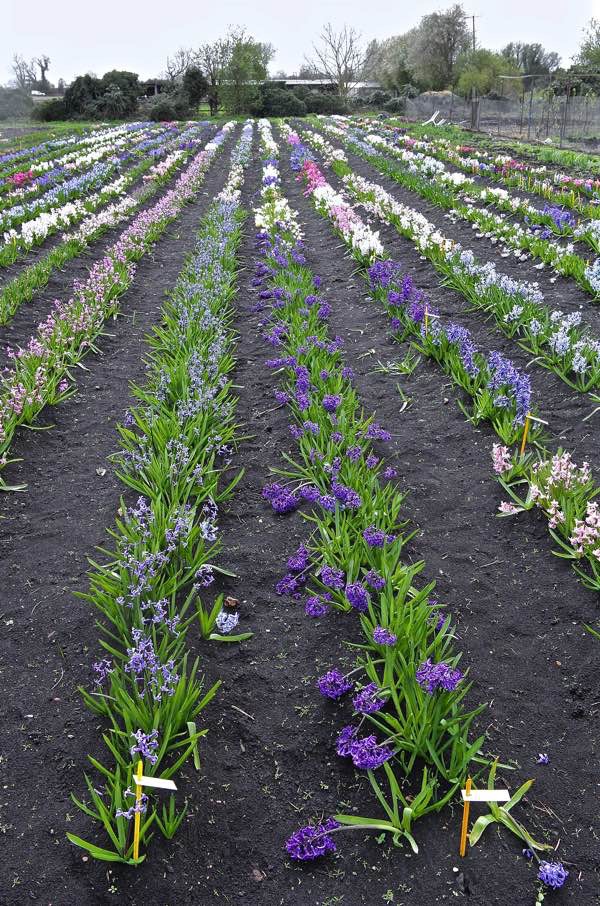
Alan Shipp, National Hyacinth Collection, Waterbeach, Cambridge, CB25 9NB.
You may also like to read about
In the Cherry Orchards of Kent
Ron McCormick’s Whitechapel
JOIN ME FOR FOR A WALK THROUGH SPITALFIELDS THIS EASTER
READ THE EMBARRASSINGLY GOOD REVIEWS
CLICK HERE TO BOOK FOR SPRING & SUMMER TOURS
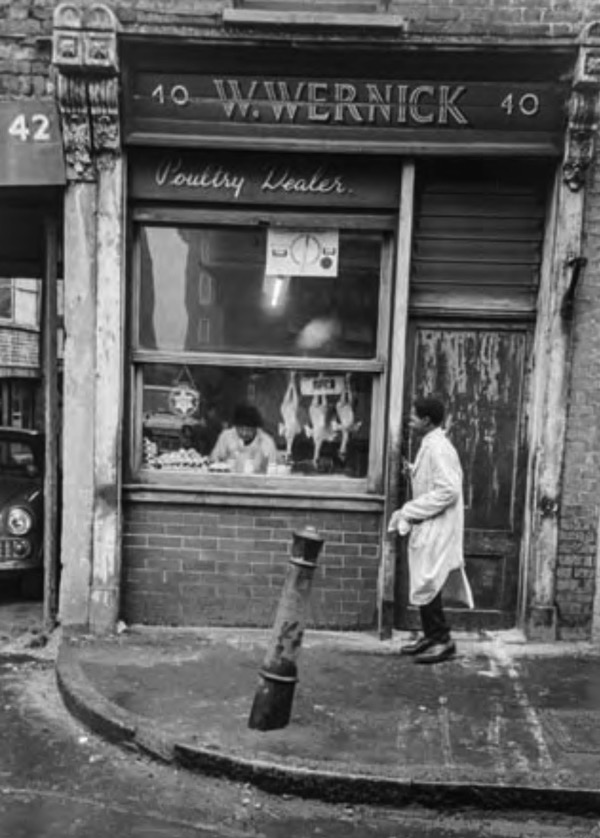
Ron McCormick photographed Whitechapel & Spitalfields in the early seventies and these pictures were exhibited at the Whitechapel Gallery in 1973.
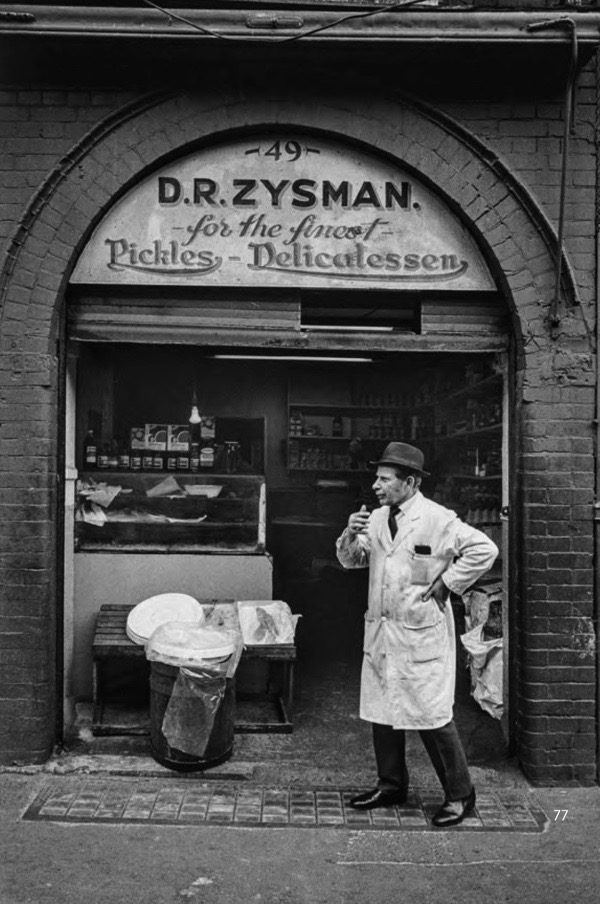
Hessel St
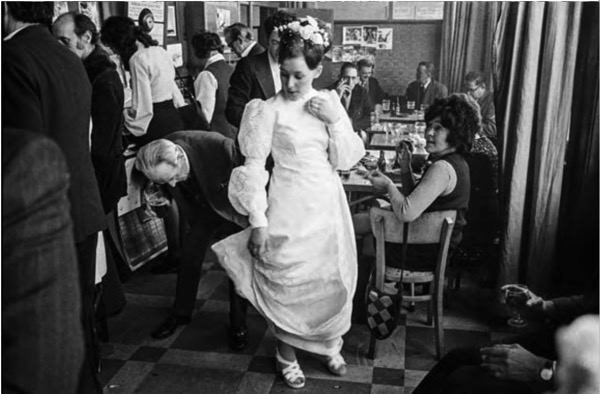
Royal Oak, Whitechapel Rd
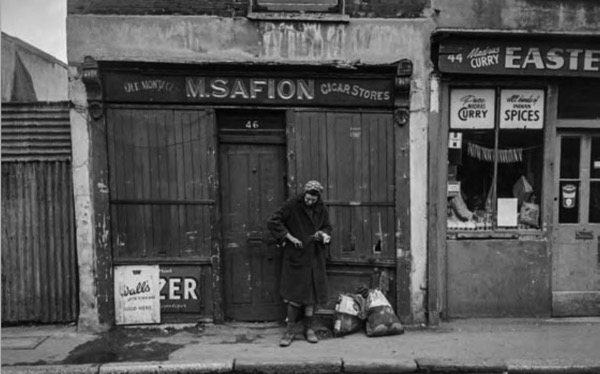
Old Montague St
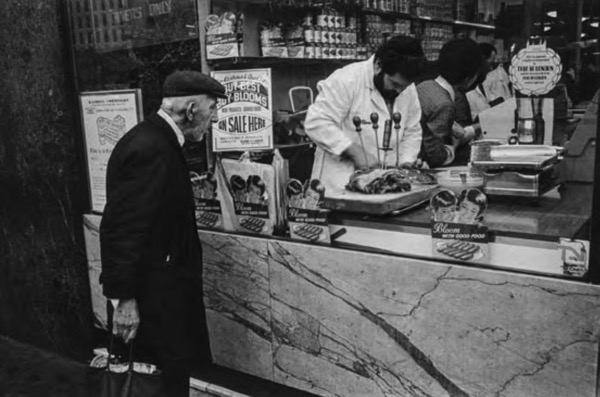
Blooms, Whitechapel High St
Old Montague St
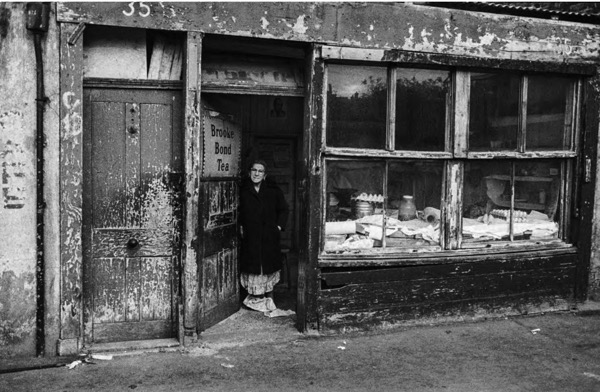
Old Montague St

Princelet St
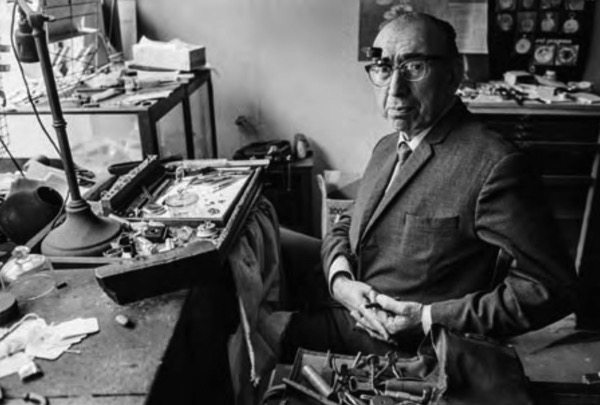
Black Lion Yard

Fournier St
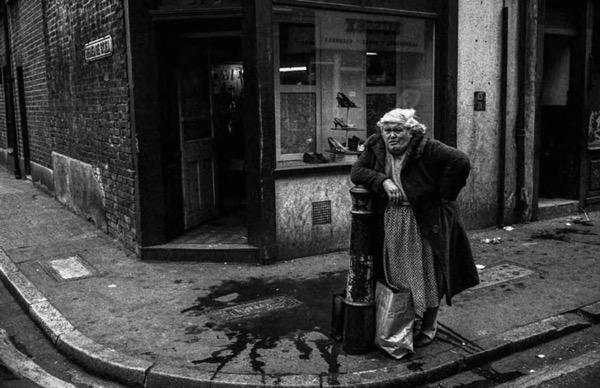
Brick Lane
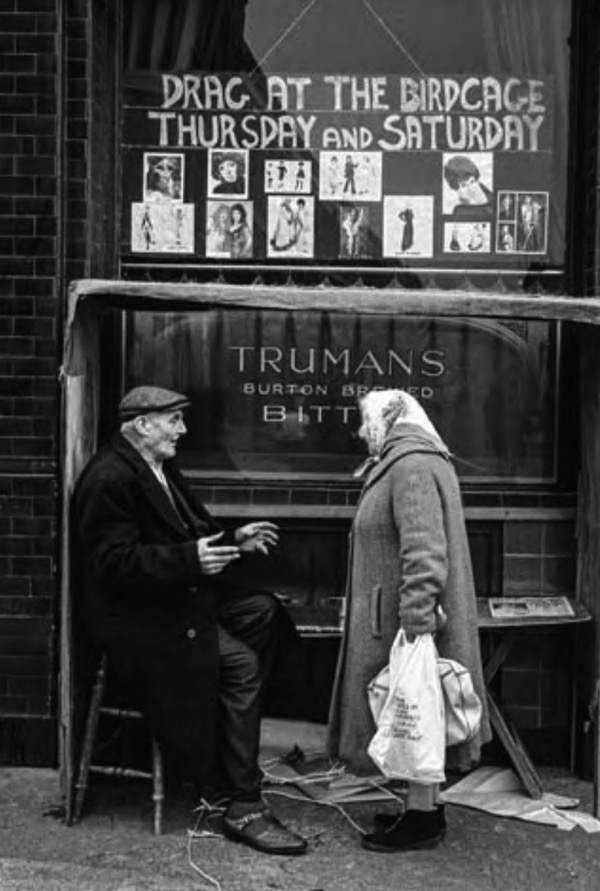
Club Row
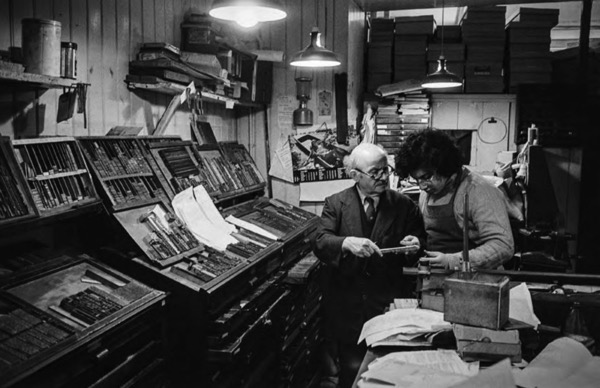
Brick Lane
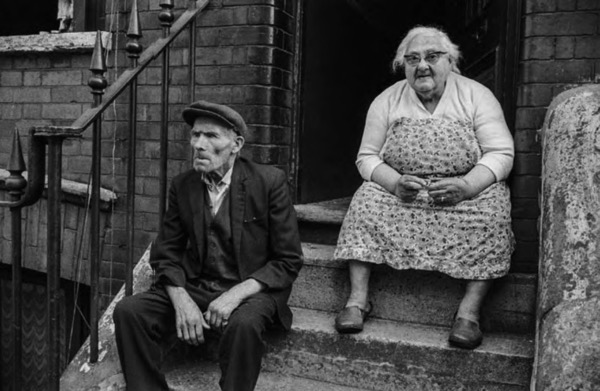
Settle St, Whitechapel
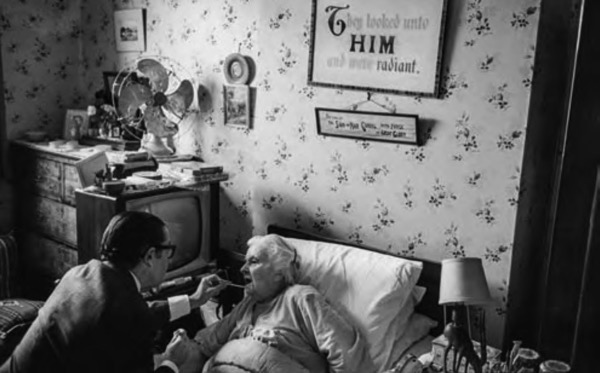
Great Eastern Buildings, Quaker St
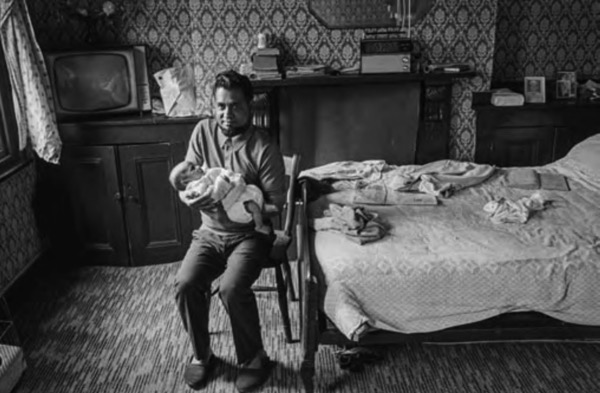
Woodseer St
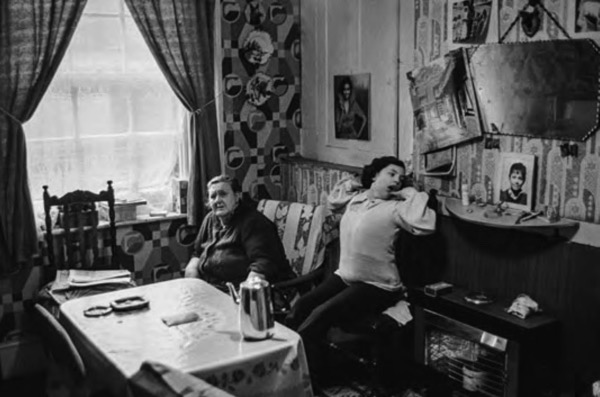
Great Eastern Buildings, Quaker St
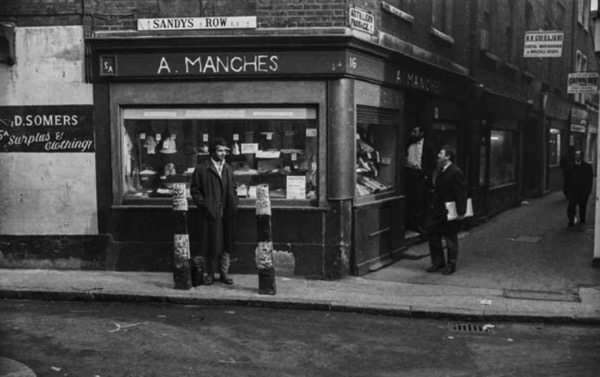
Sandys Row
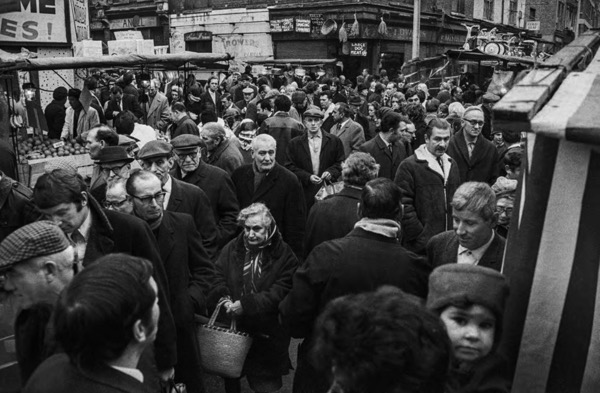
Brick Lane Market
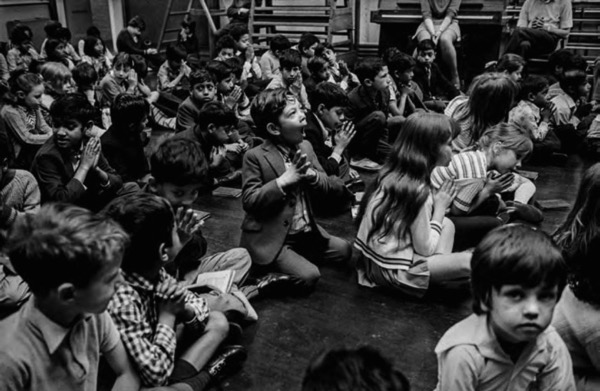
Christ Church School

Settle St, Whitechapel
Photographs copyright © Ron McCormick
You may also like to take a look at
Philip Marriage’s Spitalfields
People You May Meet On My Tour
JOIN ME FOR FOR A WALK THROUGH SPITALFIELDS THIS EASTER
READ THE EMBARRASSINGLY GOOD REVIEWS
CLICK HERE TO BOOK FOR SPRING & SUMMER TOURS
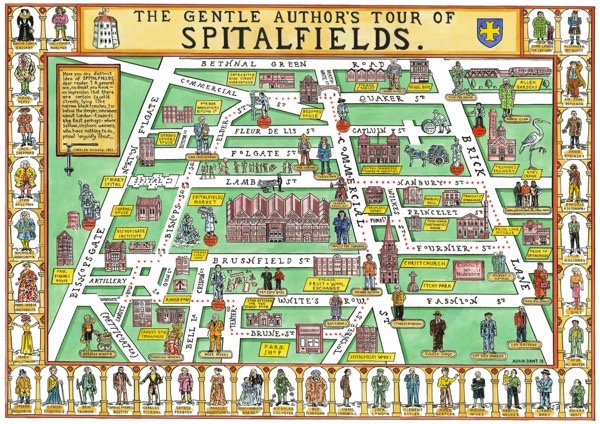
Map of the Gentle Author’s Tour drawn by Adam Dant
Join me on a ramble through Spitalfields taking no more than two hours, but walking through two thousand years of history and encountering just a few of the people who have made the place distinctive. Here is a selection of whom we may meet.
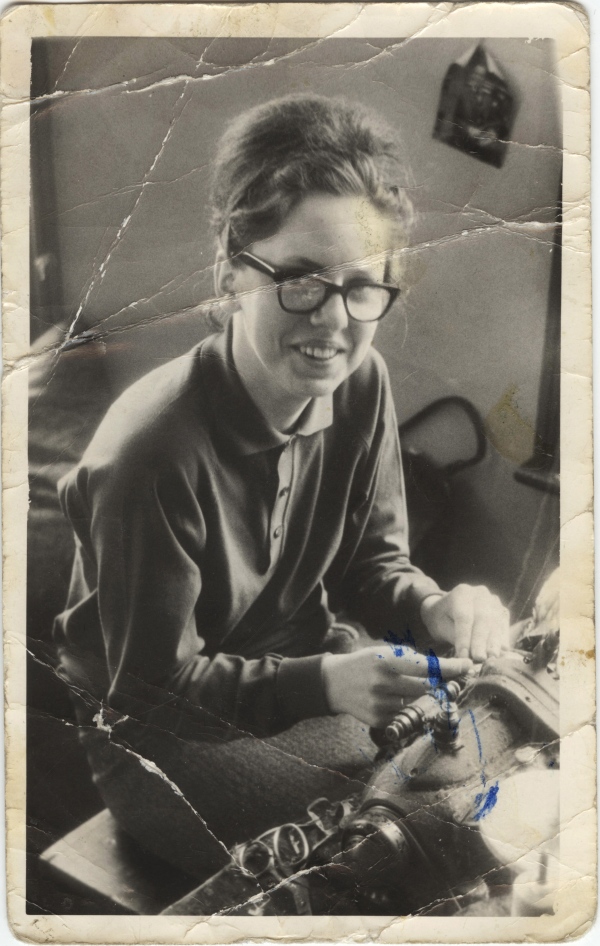
Linda Carney, Machinist

Harry Landis, Actor
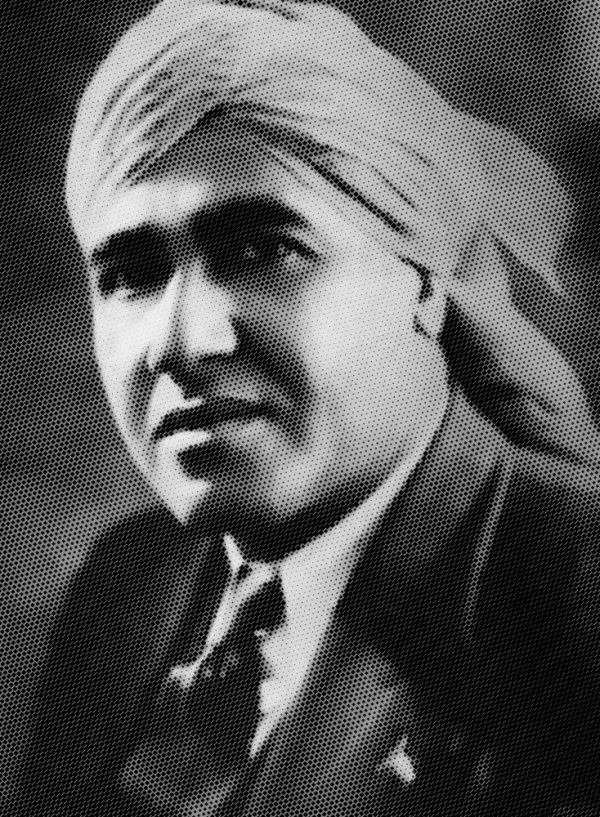
Udham Singh
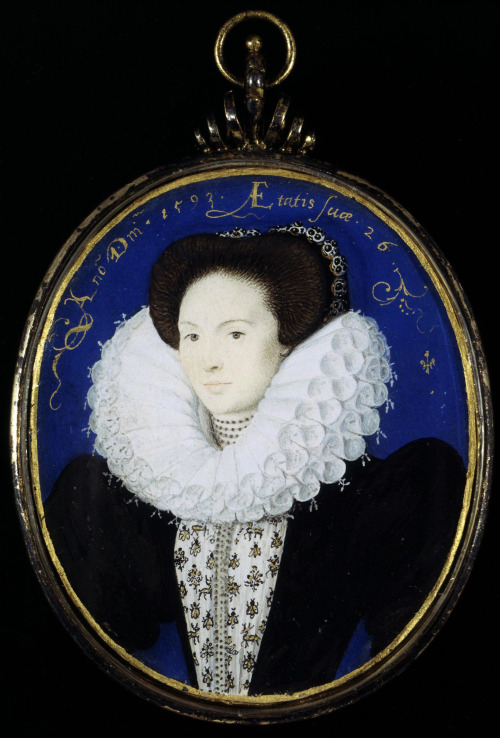
Emilia Bassanio Lanier (Portrait by Nicholas Hilliard)
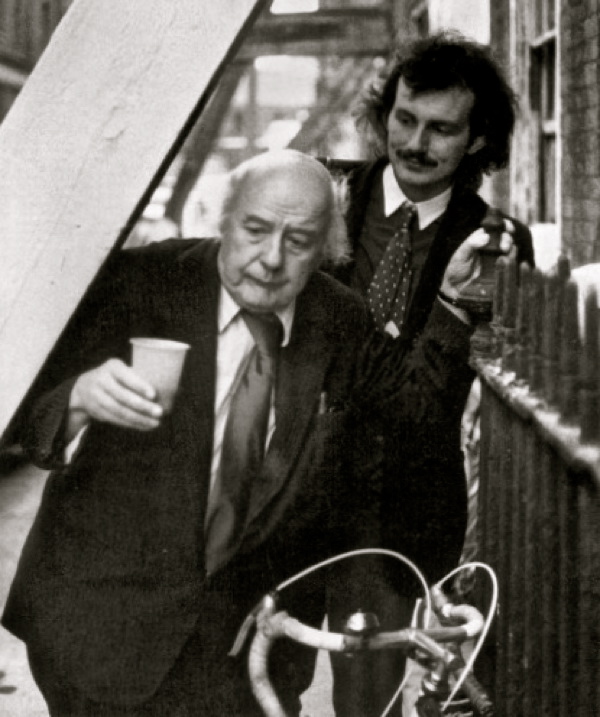
Sir John Betjeman & Dan Cruickshank
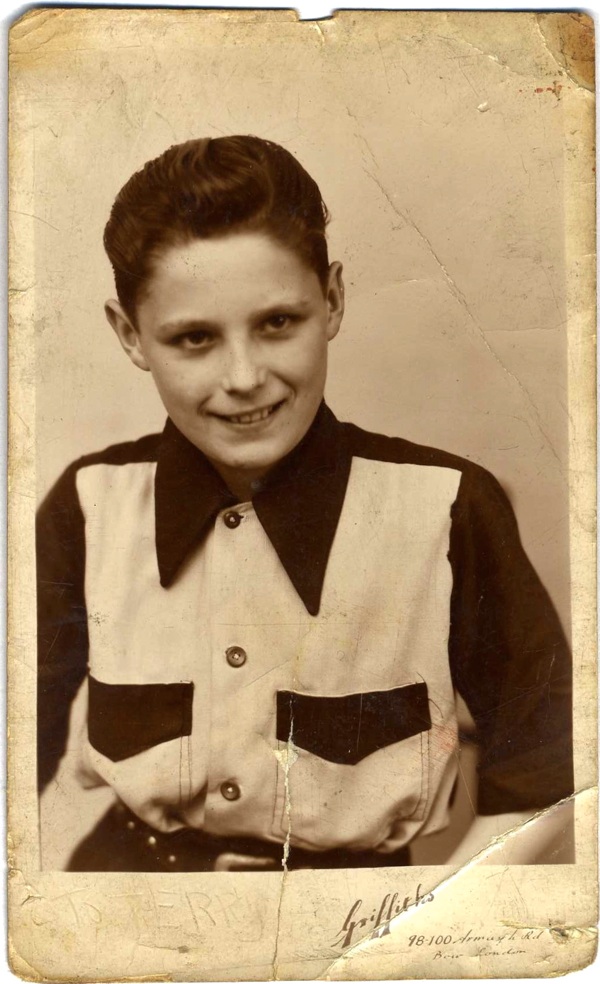
Neville Turner
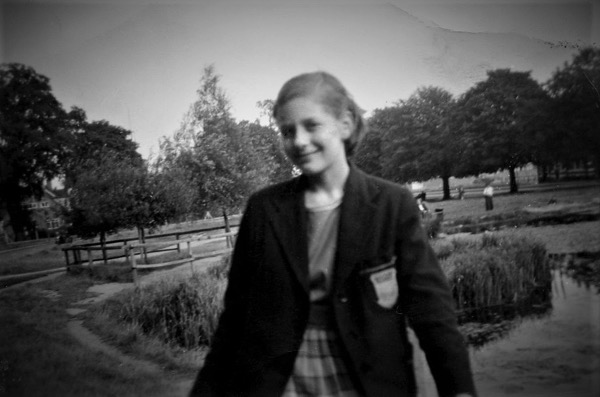
Audrey Kneller

Boy wearing Horace Warner’s Hat

Adelaide Springett
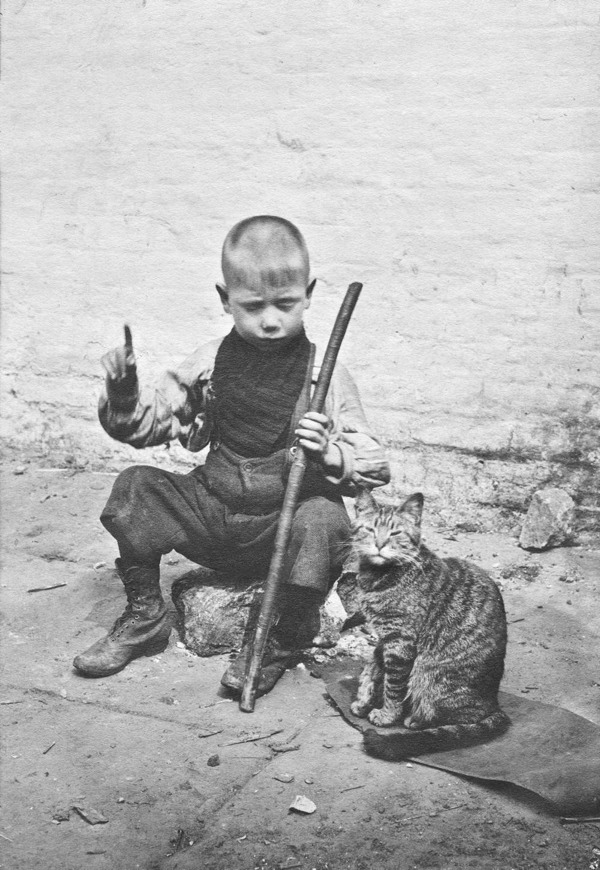
Jerry Donovan

Walter Seabrook
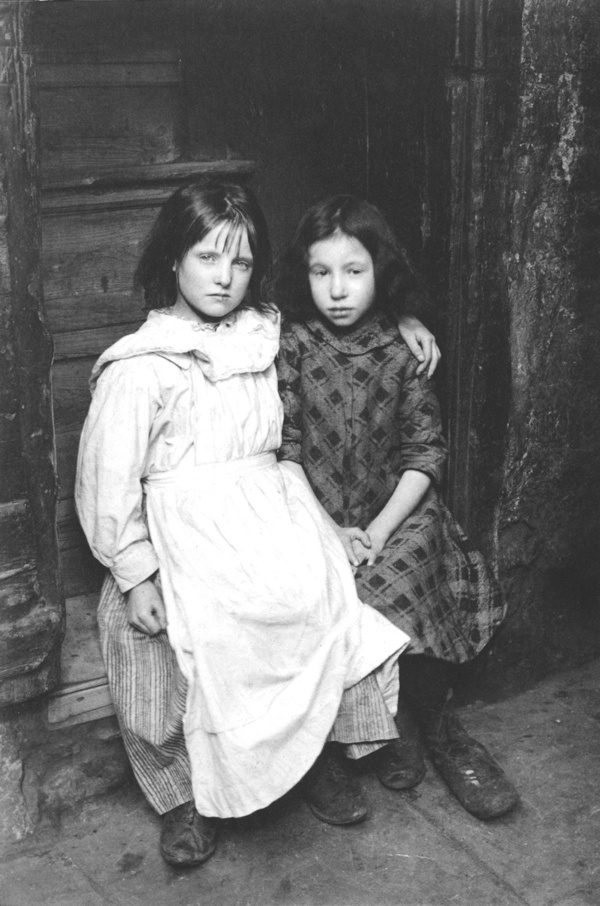
Jessica & Rosalie Wakefield
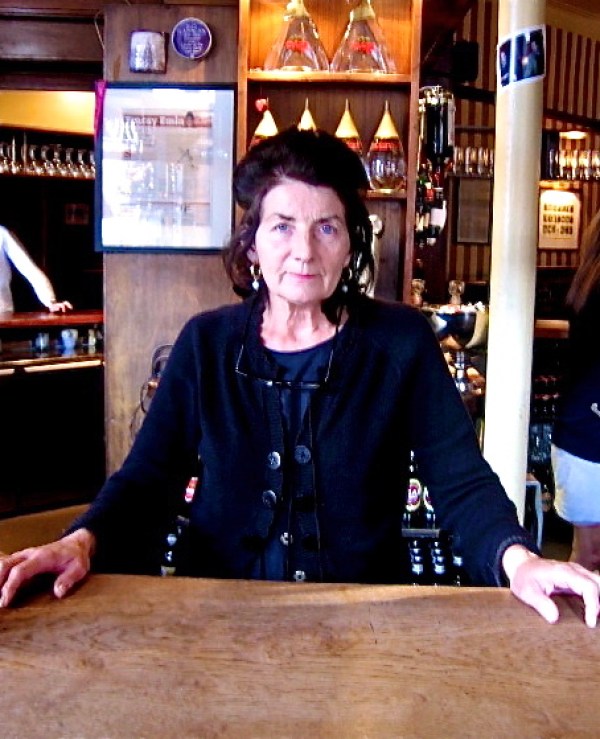
Sandra Esqulant
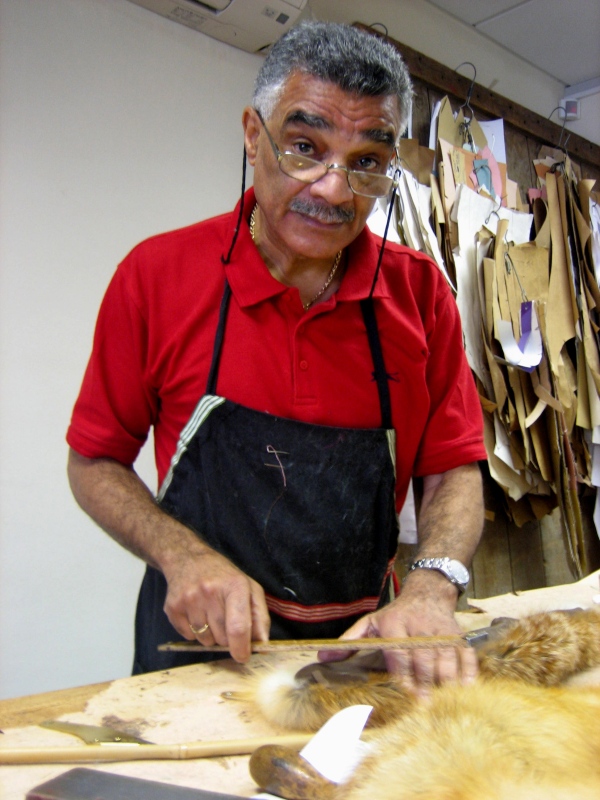
Danny Tabi
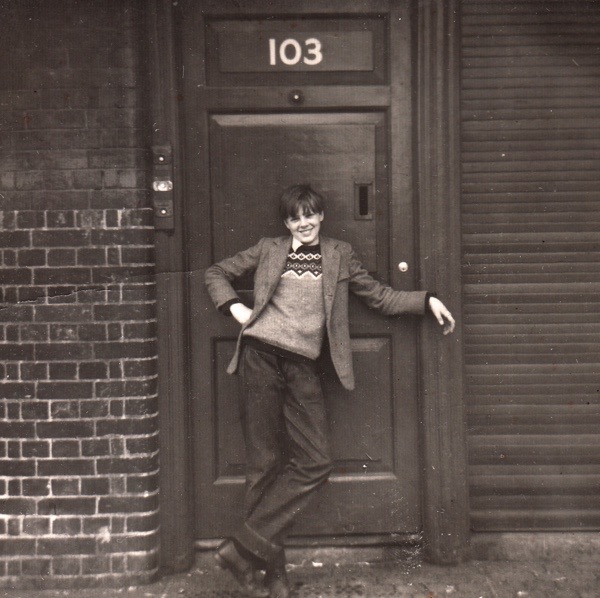
David Prescott
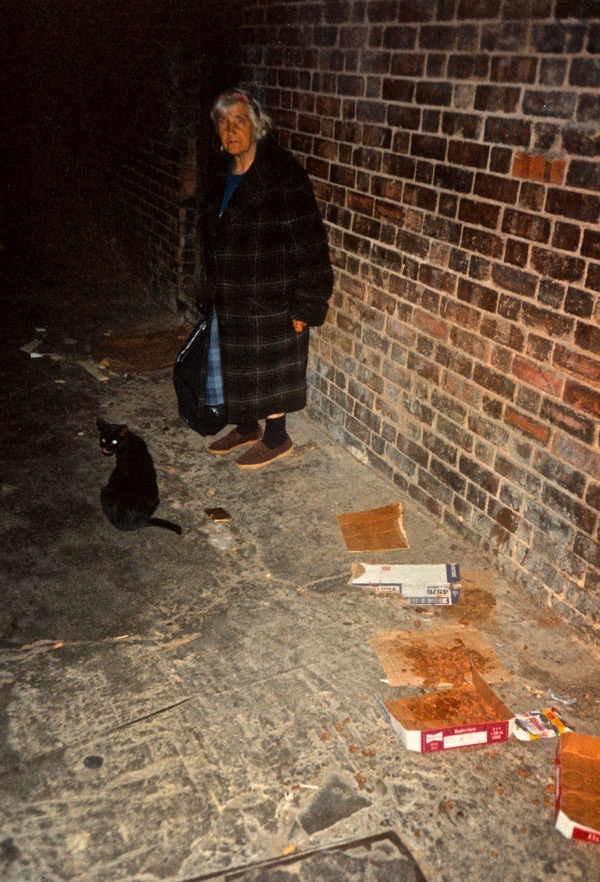
Joan Lauder, the cat lady of Spitalfields
Wonderful London’s East End
JOIN ME FOR FOR A WALK THROUGH 2000 YEARS OF HISTORY IN SPITALFIELDS THIS EASTER
READ THE EMBARRASSINGLY GOOD REVIEWS
CLICK HERE TO BOOK FOR SPRING & SUMMER TOURS
It is my pleasure to publish these evocative pictures of the East End (with some occasionally facetious original captions) selected from the popular magazine Wonderful London edited by St John Adcock and produced by The Fleetway House in the nineteen-twenties. Most photographers were not credited – though many were distinguished talents of the day, including East End photographer William Whiffin (1879-1957).
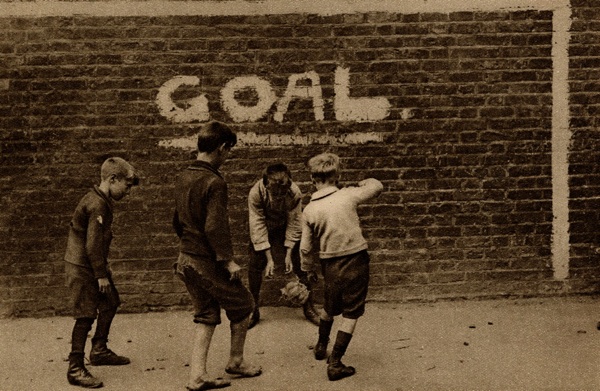
Boys are often seen without boots or stockings, and football barefoot under such conditions has grave risks from glass or old tin cans, but there are many urchins who would rather run about barefoot.
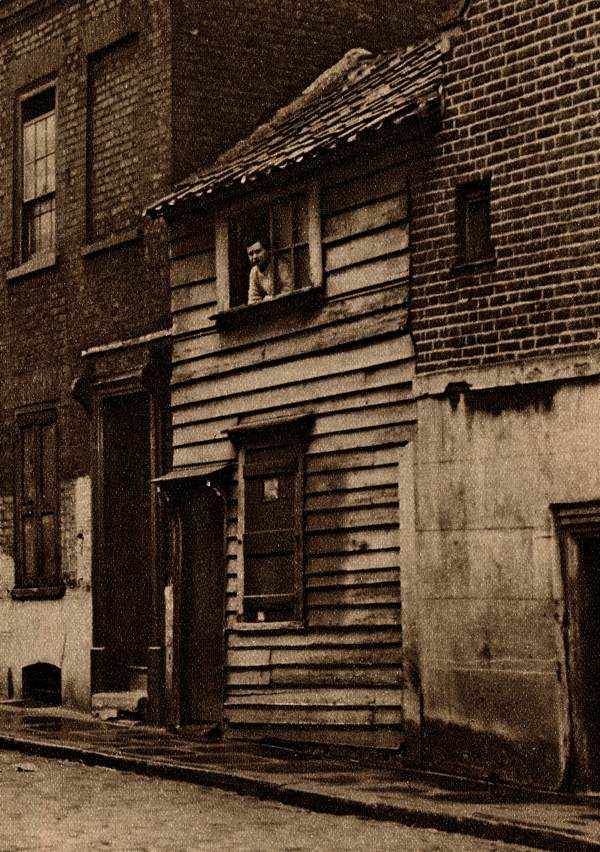
When this narrow little dwelling in St John’s Hill, Shadwell, was first built in 1753, its inhabitants could walk in a few minutes to the meadows round Stepney or, venture further afield, to hear the cuckoo in the orchards of Poplar.
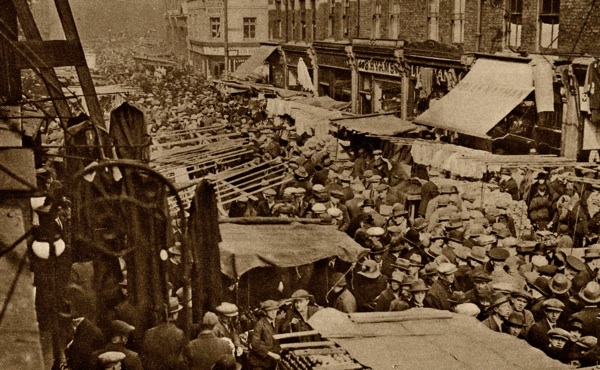
Middlesex St is still known by its old name of Petticoat Lane. Some of the goods on offer at amazingly low prices on a Sunday morning are not above suspicion of being stolen, and you may buy a watch at one end of the street and see it for sale again by the time you reach reach the other.
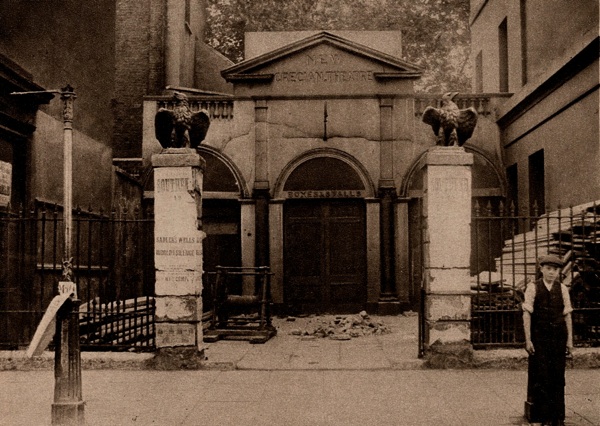
A vanished theatre on the borders of Hoxton, just before demolition, photographed by William Whiffin. In 1838, a tea garden by the name of ‘the Eagle Tavern’ was put up in Shepherdess Walk in the City Rd near the ‘Shepherd & Shepherdess,’ a similar establishment founded at the beginning of the same century. Melodramas such as ‘The Lights ‘O London’ and entertainments like ‘The Secrets of the Harem,’ were also given. In 1882, General Booth turned the place into a Meeting Hall for his Salvation Army. There is little suggestion of the pastoral about Shepherdess Walk now.
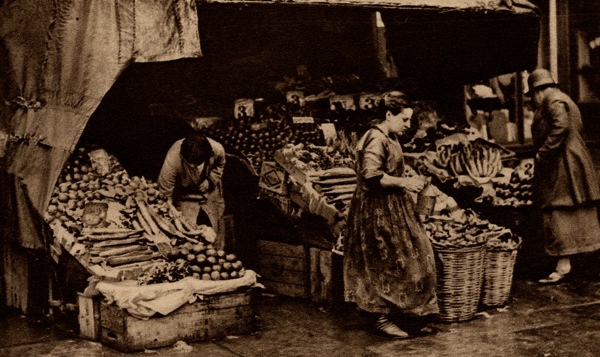
In the East End and all over the poorer parts of London, a strange kind of establishment, half booth, half shop, is common and particularly popular with greengrocers. Old packing cases are the foundation of a slope of fruit which begins unpleasantly near the level of the pavement and ends in the recess behind the dingy awning. At night, the buttresses of vegetables are withdrawn into shelter.
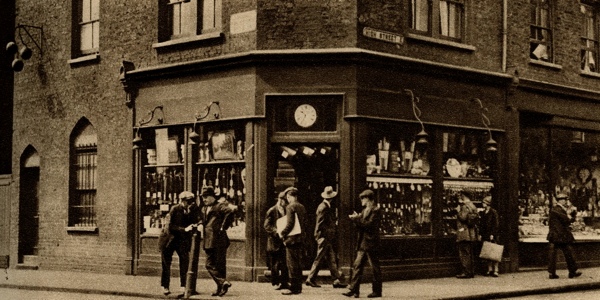
Old shop front in Bow photographed by William Whiffin. Pawnbroking, once as decorous as banking, has fallen from the high estate in the vicinity of Lombard St. Now, combined instead with the sale of secondhand jewellery, furniture and hundred other commodities, it is apt to seek the corners of the meaner streets.
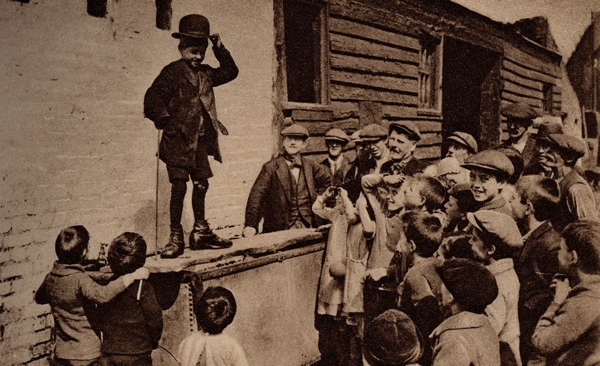
A water tank covered by a plank in a backyard among the slums is an unlikely place for a stage, but an undaunted admirer of that great Cockney humorist, Charlie Chaplin, is holding his audience with an imitation of the well-known gestures with which the famous comic actor indicates the care-free-though-down-and-out view of life which he has immortalised.
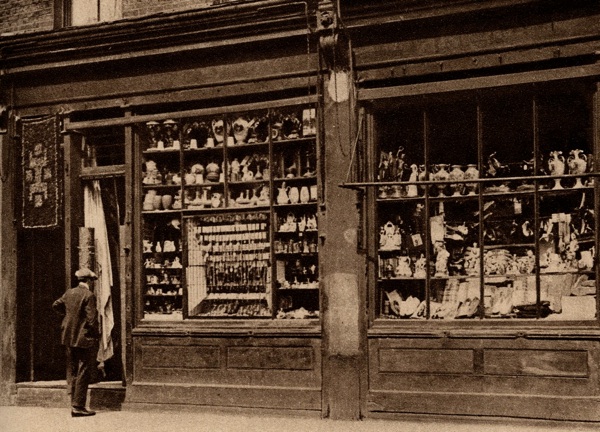
Old shop front in Poplar photographed by William Whiffin
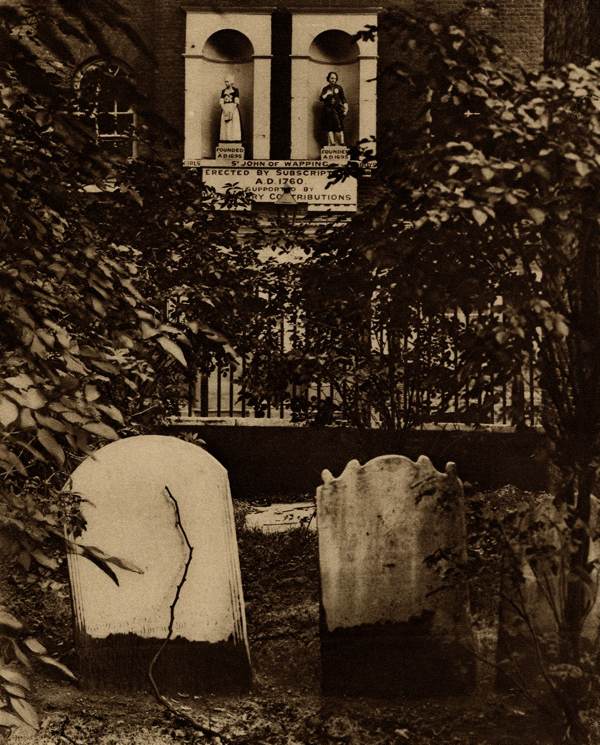
An old charity school for girl and boy down at Wapping founded in 1704. The present building dates from 1760 and the school is supported by voluntary subscriptions. The school provided for the ‘putting out of apprentices’ and for clothing the pupils.

The hunt for bargains in Shoreditch. A glamour surrounds the rickety coster’s barrow which supports a few dozens of books. But, to tell the truth, the organisation of the big shops is now so efficient that the chances of finding anything good at these open air book markets may have long odds laid against it.

The landsman’s conception of a sailing vessel, with all its complex of standing and running rigging that serves mast and sail with ordered efficiency, is apt for a shock when he sees a Thames barge by a dockside. The endless coils and loops of rope of different thickness, the length of chain and the litter of brooms, buckets, fenders and pieces of canvas, seem to be in the most insuperable confusion.
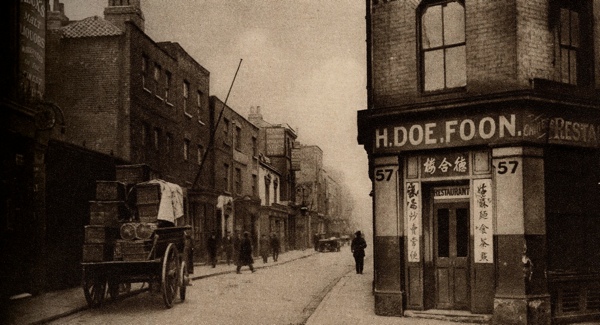
Gloom and grime in Chinatown. Pennyfields runs from West India Dock Rd to Poplar High St. A Chinese restaurant on the corner and a few Chinese and European clothes are all that is to be seen in the daytime.

The gem of Cornhill, Birches, where it stood for two hundred years. Towards the end of the eighteenth century, the brothers Adam erected its beautiful shop front. Within were old bills of fare printed on satin, a silver tureen fashioned to the likeness of a turtle and many other curious odd-flavoured things. Birches have catered for the inspired feasting of the City Companies and Guilds for two centuries but now this shop has moved to Old Broad St and, instead of Adam, we are to have Art Nouveau ferro-concrete.
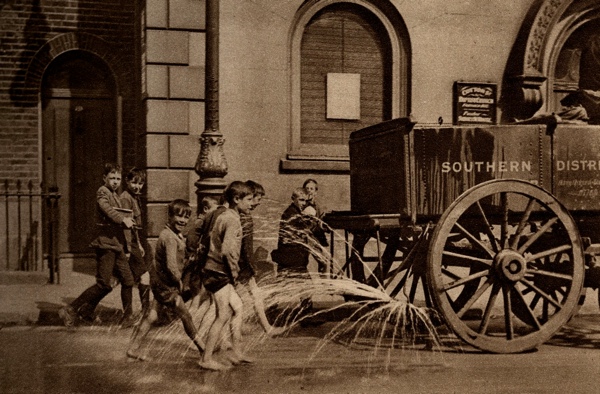
It is doubtful if the Borough Council of Poplar had any notion, when they supplied the district with water carts, that the supplementary use pictured in this photograph by William Whiffin would be made of them. Given a complacent driver, there is no reason why these children should not go on for miles.
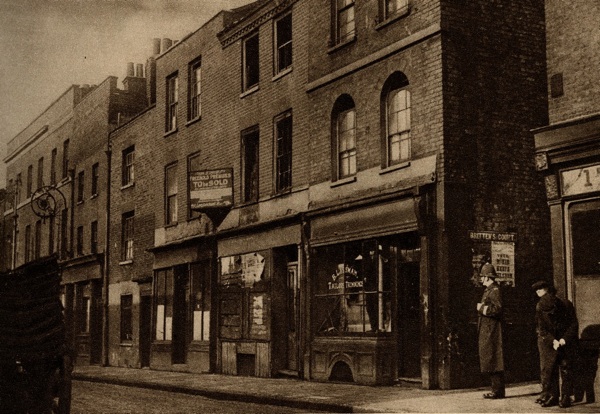
Grime and gloom in St George’s St photographed by William Whiffin. St George’s St used to be the famous Ratcliff Highway and runs from East Smithfield to Shadwell High St. It is a maritime street and contains various establishments, religious and otherwise, which cater for the sailor.
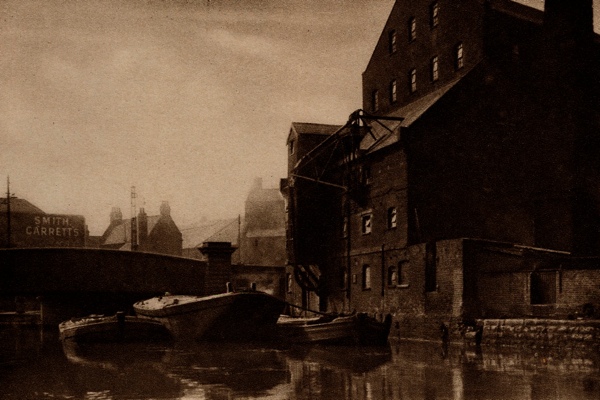
River Lea at Bow Bridge photographed by William Whiffin. On the right are Bow flour mills, while to the left, beyond the bridge, a large brewery is seen.

A view of Curtain Rd photographed by William Whiffin, famed for its cabinet makers. It runs from Worship St – a turning to the left when walking along Norton Folgate towards Shoreditch High St – to Old St. Curtain Rd got its name from a curtain wall, once part of the outworks of the city’s fortifications.
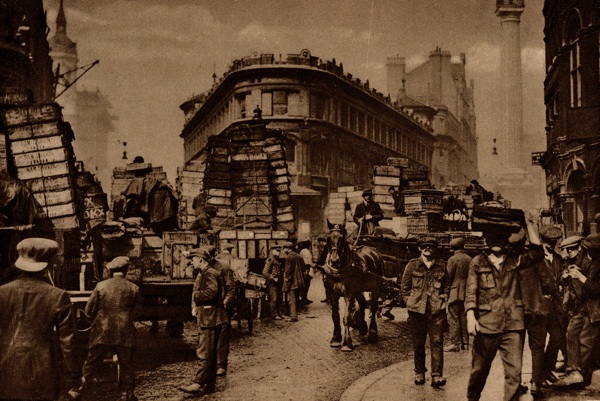
Fish porters of Billingsgate gathered around consignments lately arrived from the coast. At one time, smacks brought all the fish sold in the market and were unloaded at Billingsgate Wharf, said to be the oldest in London.
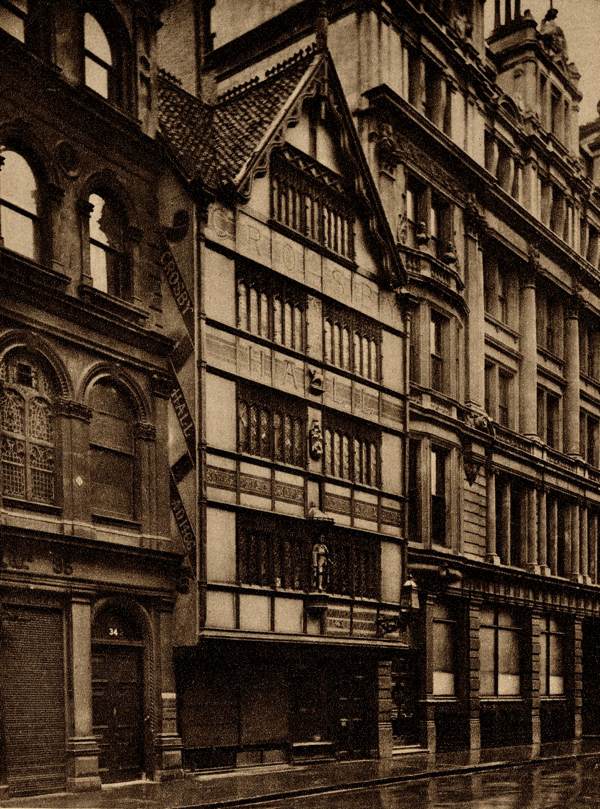
Crosby Hall as it stood in Bishopsgate. Alderman Sir John Crosby, a wealthy grocer, got the lease of some ground off Bishopsgate in 1466 from Alice Ashfield, Prioress of St Helen’s, at a rent of eleven pounds, six shillings and eightpence per annum, and built Crosby Hall there. It came into the possession of Sir Thomas More around 1518 and by 1638 it was in the hands of the East India Company, but in 1910 it was taken down and re-erected in Cheyne Walk.
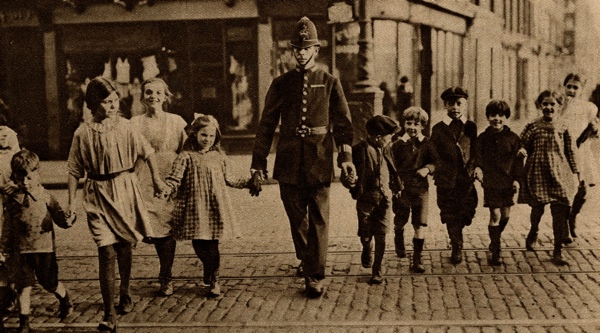
Whatever their relations with the Constable may come to be in later life, the children of the East End, in their early days, are quite willing to use his protection at wide street crossings.
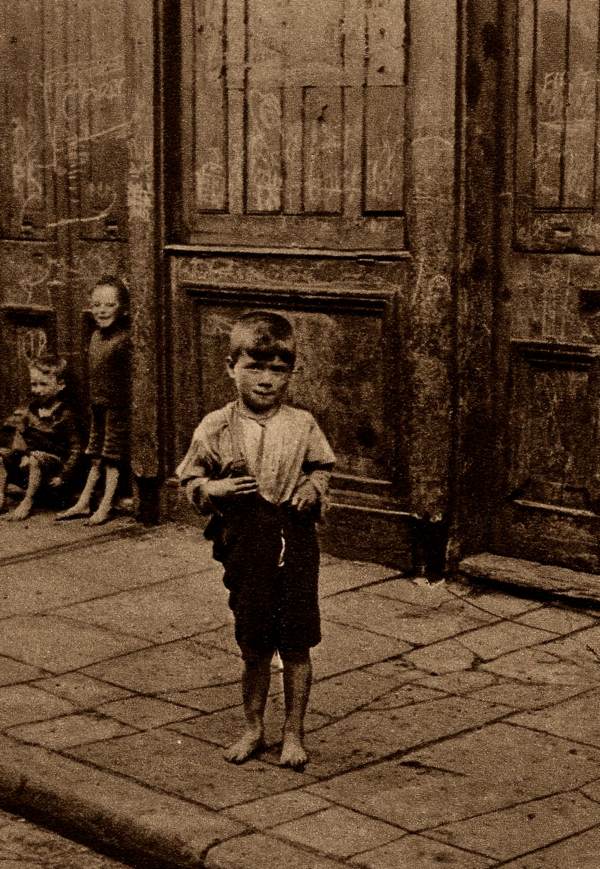
There is no more important work in the great cities than the amelioration of the slum child’s lot. Many East End children have never been beyond their own disease-ridden courts and dingy streets that form their playground.
Photographs courtesy Bishopsgate Institute
You may also like to take a look at












