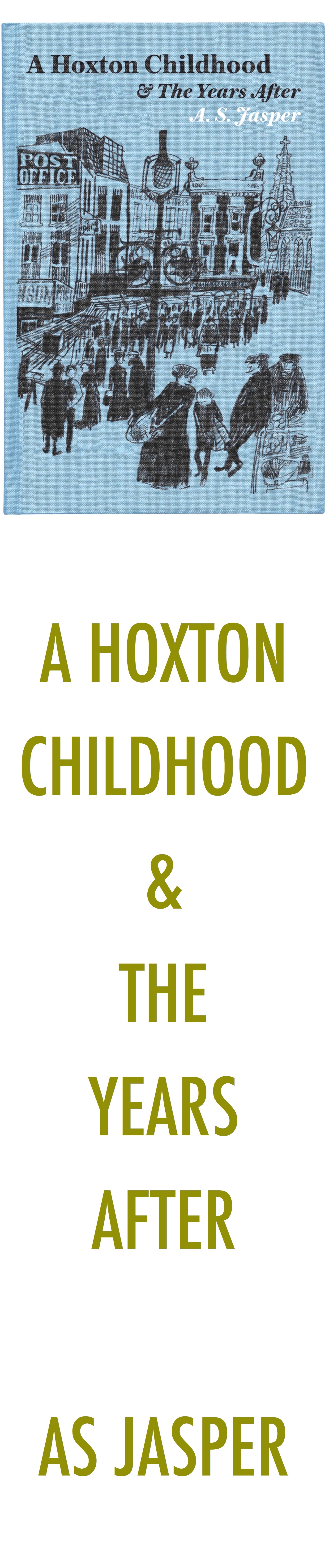
The Spitalfields Bowl
CLICK HERE TO JOIN ME FOR A WALK AROUND SPITALFIELDS
NEW FOR 2023: CLICK HERE TO JOIN ME FOR A TOUR OF THE CITY OF LONDON

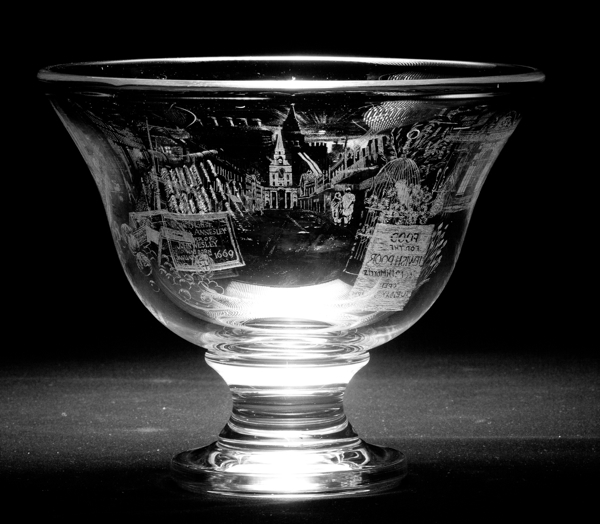
One of these streets’ most-esteemed long-term residents summoned me to view an artefact that few have seen, the fabled Spitalfields Bowl. Engraved by Nicholas Anderson, a pupil of Laurence Whistler, it incarnates a certain moment of transition in the volatile history of this place.
I arrived at the old house and was escorted by the owner to an upper floor, and through several doors, to arrive in the room where the precious bowl is kept upon its own circular table that revolves with a smooth mechanism, thus avoiding any necessity to touch the glass. Of substantial design, it is a wide vessel upon a pedestal engraved with scenes that merge and combine in curious ways. You have the option of looking down upon the painstakingly-etched vignettes and keeping them separate them in your vision, or you can peer through, seeing one design behind the other, morphing and mutating in ambiguous space as the bowl rotates – like overlaid impressions of memory or the fleeting images of a dream.
Ever conscientious, the owner brought out the correspondence that lay behind the commission and execution of the design from Nicholas Anderson in 1988. Consolidating a day in which the glass engraver had been given a tour of Spitalfields, one letter lists images that might be included – “1. The church and steeple of Christ Church, Spitalfields, and its domination of the surrounding areas. 2. The stacks, chimneys and weaving lofts. 3. The narrowness of the streets and the list and lean of the buildings with their different doorways and casement windows.”
There is a mesmerising quality to Nicholas Anderson’s intricate design that plays upon your perception, offering insubstantial apparitions glimpsed in moonlight, simultaneously ephemeral and eternal, haunting the mind. You realise an object as perilously fragile as an engraved glass bowl makes an ideal device to commemorate a transitory moment.
“It took him months and months,” admitted the proud owner,“and it represents the moment everything changed in Spitalfields, in which the first skyscraper had gone up and there were cranes as evidence of others to come. The Jewish people have left and the Asians are arriving, while at the same time, you see the last of the three-hundred-year-old flower, fruit and vegetable market with its history and characters, surrounded by the derelict houses and filthy streets.”
Sequestered in a locked room, away from the human eye, the Spitalfields Bowl is a spell-binding receptacle of time and memory.


The Jewish soup kitchen

To the left is the Worrall House, situated in a hidden courtyard between Princelet St & Fournier St


A moonlit view of Christ Church over the rooftops of Fournier St

The bird cage with the canary from Dennis Severs House


“He was a tinker who overwintered in Allen Gardens and used to glean every morning in the market…”

To the left is Elder St and the plaque commemorating the birth of John Wesley’s mother is in Spital Sq.

An Asian couple walk up Brushfield St, with the market the left and the Fruit & Wool Exchange and Verdes to the right
Photographs copyright © Lucinda Douglas-Menzies
The Broderers Of St Paul’s
CLICK HERE TO JOIN ME FOR A WALK AROUND SPITALFIELDS
NEW FOR 2023: CLICK HERE TO JOIN ME FOR A TOUR OF THE CITY OF LONDON
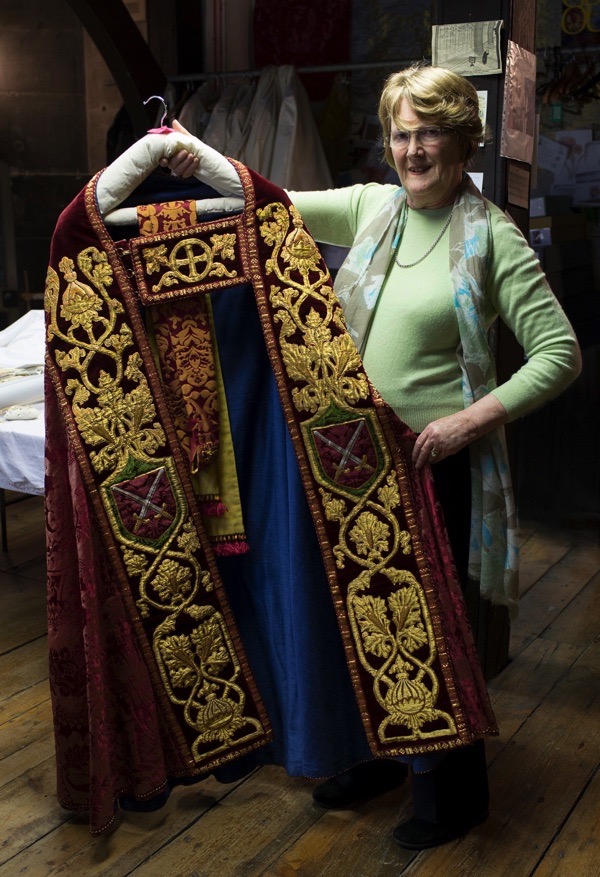
Anita Ferrero
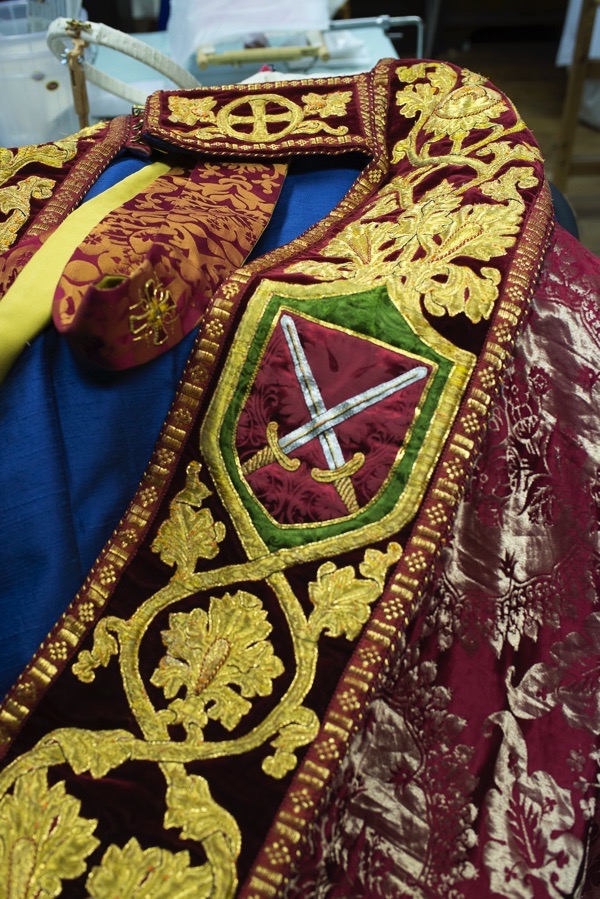
Like princesses from a fairy tale, the Broderers of St Paul’s sit high up in a tower at the great cathedral stitching magnificent creations in their secret garret. Contributing Photographer Sarah Ainslie & I climbed up one hundred and forty-one steps to pay a visit upon these nimble-fingered needleworkers.
‘There are fourteen of us, we chat, we tell stories and we eat chocolate,’ explained Anita Ferrero by way of modest introduction, as I stood dazzled by the glittering robes and fine embroidery. ‘It’s very intense work because the threads are very bright,’ she added tentatively, lest I should think the chocolate comment revealed undue levity.
I was simply astonished by the windowless chamber filled with gleaming things. ‘There are thirteen tons of bells suspended above us,’ Anita continued with a smile, causing me to cast my eyes to the ceiling in wonder, ‘but it’s a lovely sound that doesn’t trouble us at all.’
Observing my gaze upon the magnificent textiles, Anita drew out a richly-embellished cope from Queen Victoria’s Jubilee. ‘This is cloth of gold’ she indicated, changing her voice to whisper, ‘it ceased production years ago.’
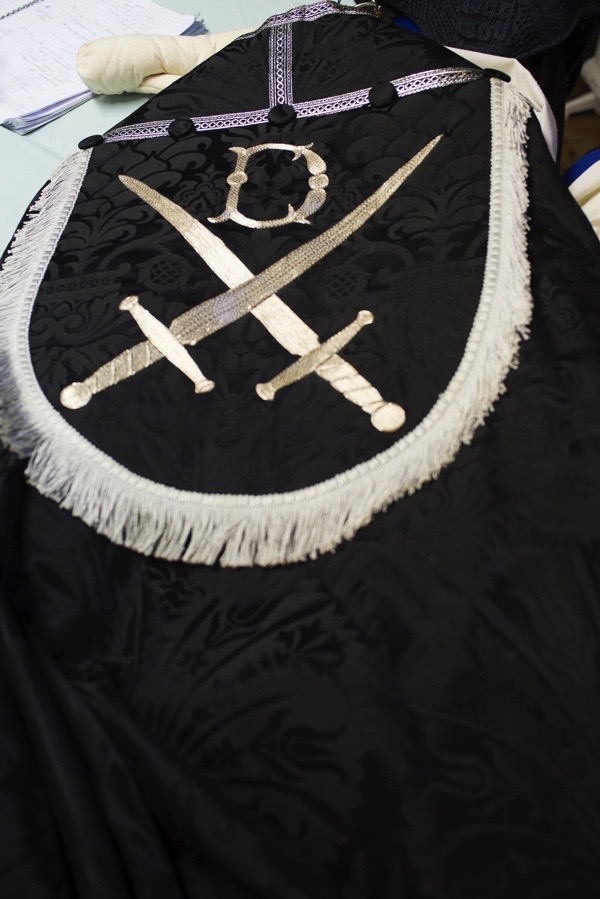
‘There are still wonderful haberdashers in Kuala Lumpur and Aleppo,’ she informed me as if it were a closely-guarded secret, ‘I found this place there that still sold gold thread. If someone’s going to Marrakesh, we give them a shopping list in case they stumble upon a traditional haberdashery.’ Next, Anita produced a sombre cope from Winston Churchill’s funeral, fashioned from an inky black brocade embroidered with silver trim, permitting my eye to accommodate to the subtler tones that can be outshone by tinsel.
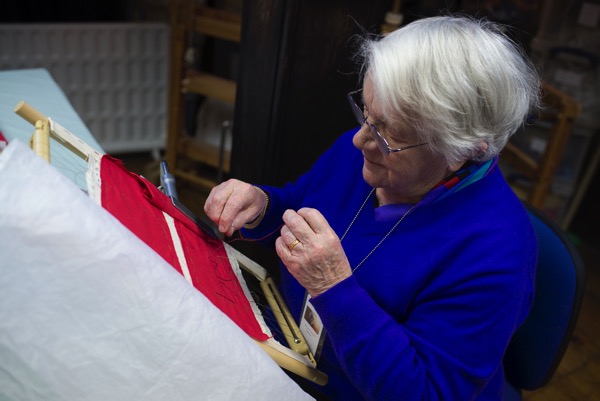
In this lofty chamber high above the chaos of the city, an atmosphere of repose prevails in which these needlewomen pursue their exemplary work in a manner unchanged over millennia. I was in awe at their skill and their devotion to their art but Anita said, ‘As embroiderers, we are thankful to have a purpose for our embroidery because there’s only so many cushions you can do.’
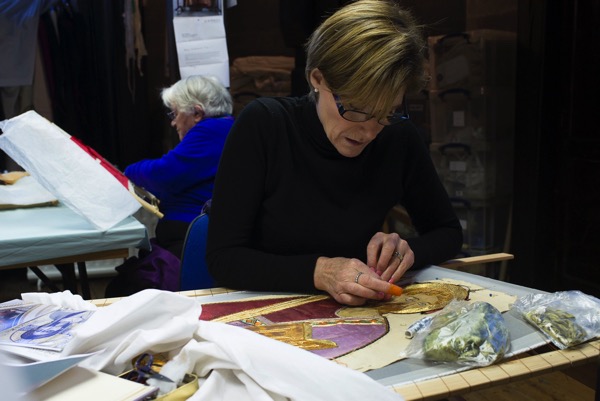
I walked over to a quiet corner where Rachel Rice was stitching an intricate border in gold thread. ‘I learnt my skills from my mother and grandmother, and I always enjoyed sewing and dressmaking but that’s not fine embroidery like this,’ she admitted, revealing the satisfaction of one who has spent a life devoted to needlework. Yet she qualified her pride in her craft by admitting her humanity with a weary shrug, ‘Some of the work is extremely tedious and it’s never seen.’
‘We are all very expert but our eyesight is fading and a few of us are quite elderly,’ confided Anita, thinking out loud for the two of them as she picked up the story and exchanged a philosophical grin with Rachel. Nowhere in London have I visited a sanctum quite like the Broderers chamber or encountered such self-effacing creative talents.
‘We not so isolated up here,’ emphasised Anita, lifting the mood with renewed enthusiasm, ‘Most people who work in the Cathedral know we’re here. We often do favours for members of staff, taking up trouser hems etc – consequently, if we have a problem, we can call maintenance and don’t have to wait long.’
I was curious to learn of the Broderers’ current project, the restoration of a banner of St Barnabas. ‘He’s the one saint I’d like to meet because he’s called ‘The Son of Encouragement’ – he looks like a nice guy,’ confessed Anita fondly, laying an affectionate hand upon the satin, ‘We’re restoring the beard of St Barnabas at present and we’re getting Simon the good-looking Verger up here to photograph his beard.’
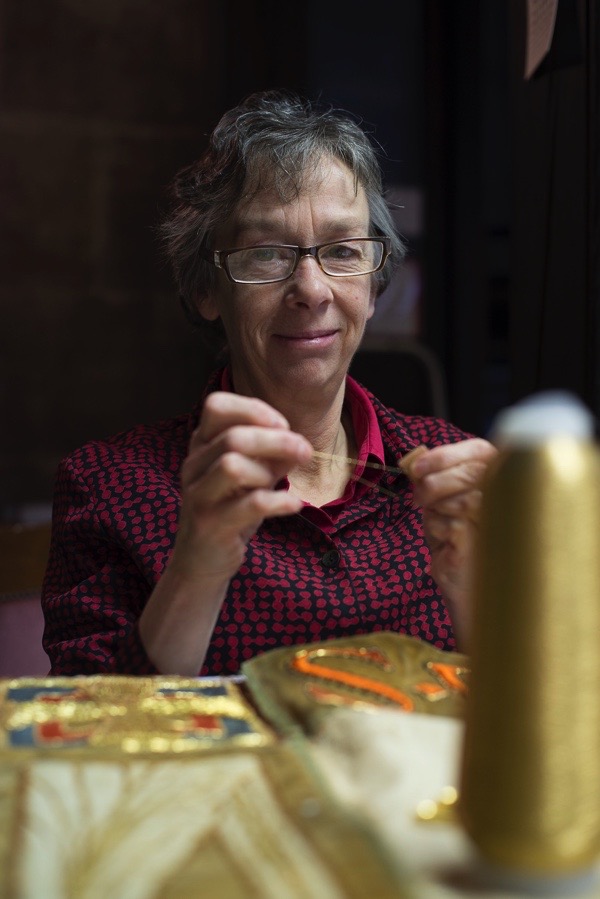
Rachel Rice – ‘I learnt my skills from my mother and grandmother’
Sophia Sladden
Margaret Gibberd

‘As embroiderers, we are thankful to have a purpose for our embroidery because there’s only so many cushions you can do.’
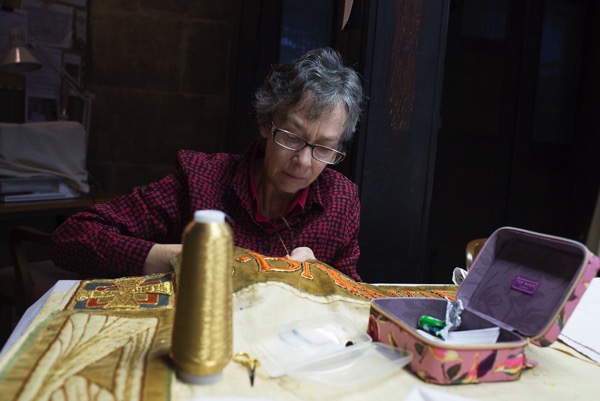
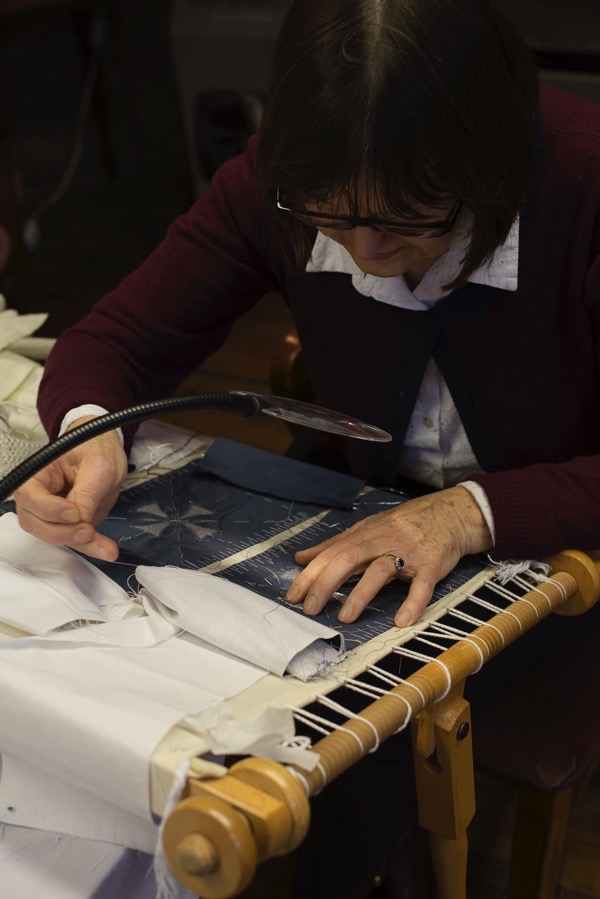
Judy Hardy
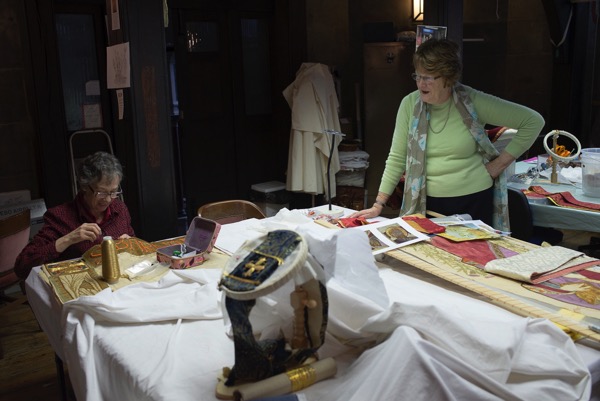
‘We chat, we tell stories and we eat chocolate..’
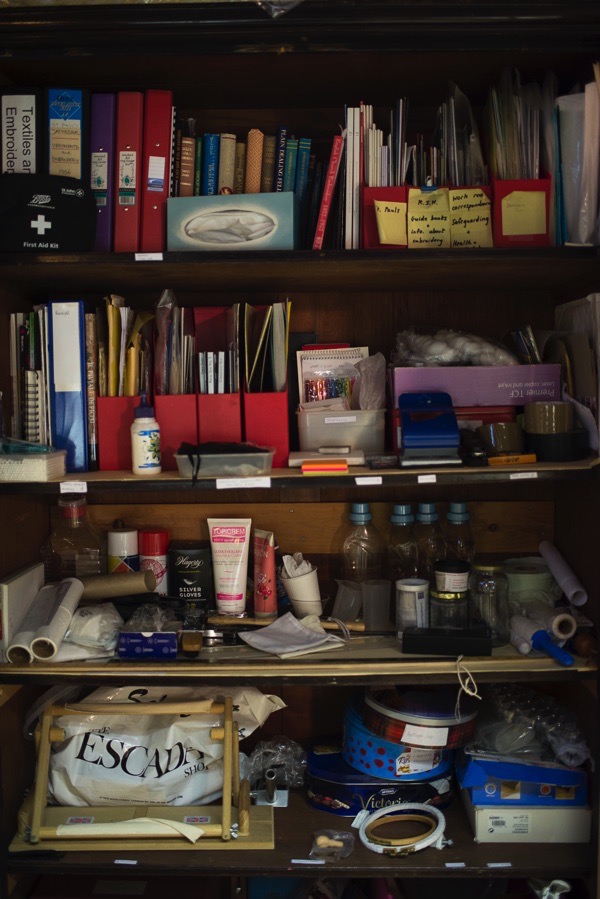
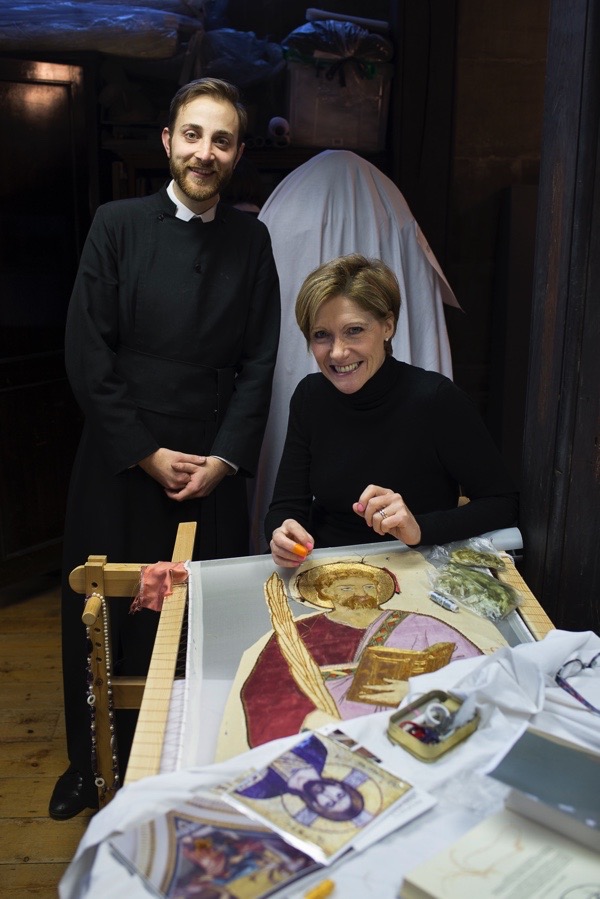
Virger Simon Brears is the model for the beard of St Barnabas
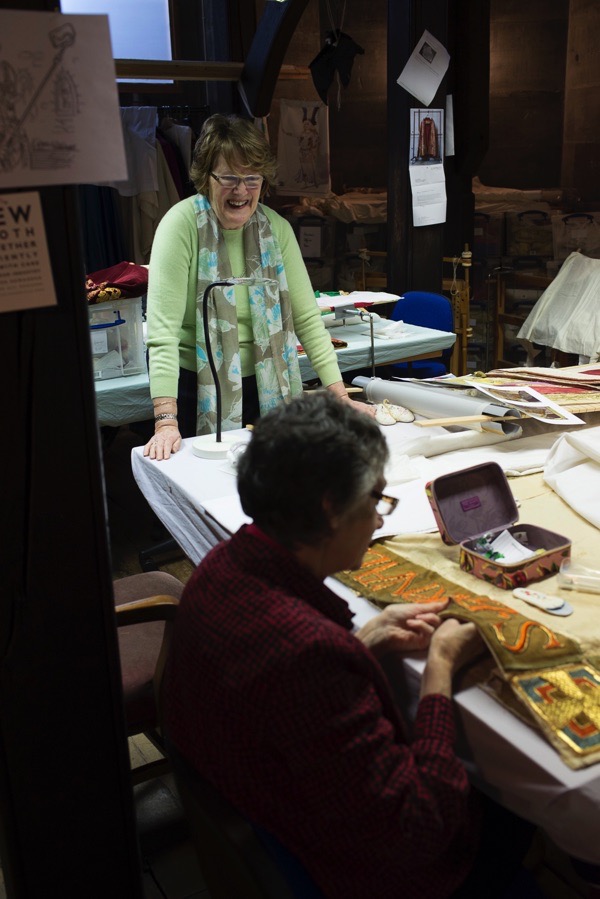
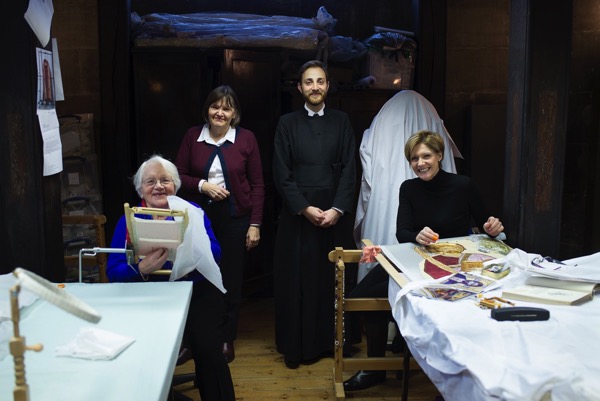
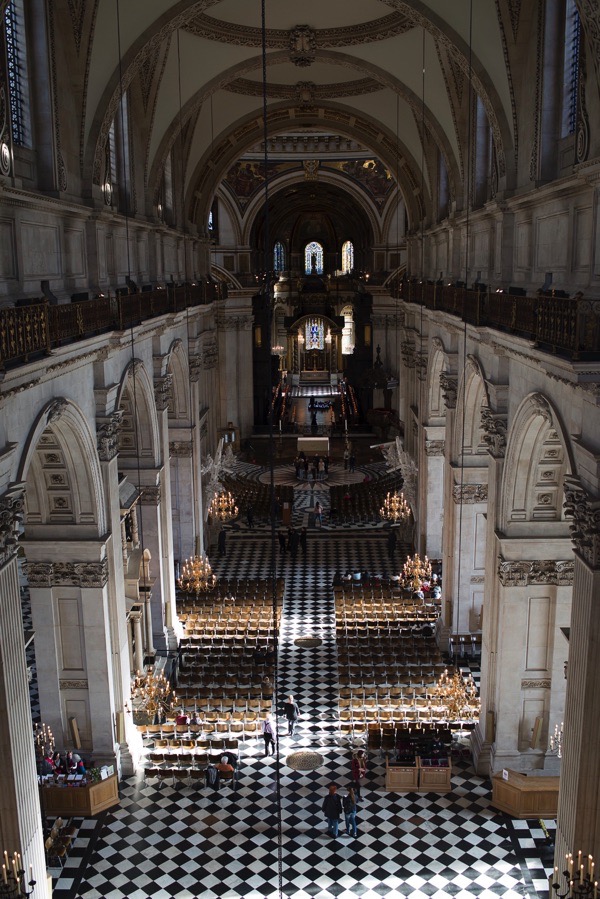
View from the Triforium
Photographs copyright © Sarah Ainslie
You may also like to take a look at
Ernest George’s London Etchings
CLICK HERE TO JOIN ME FOR A WALK AROUND SPITALFIELDS
NEW FOR 2023: CLICK HERE TO JOIN ME FOR A TOUR OF THE CITY OF LONDON
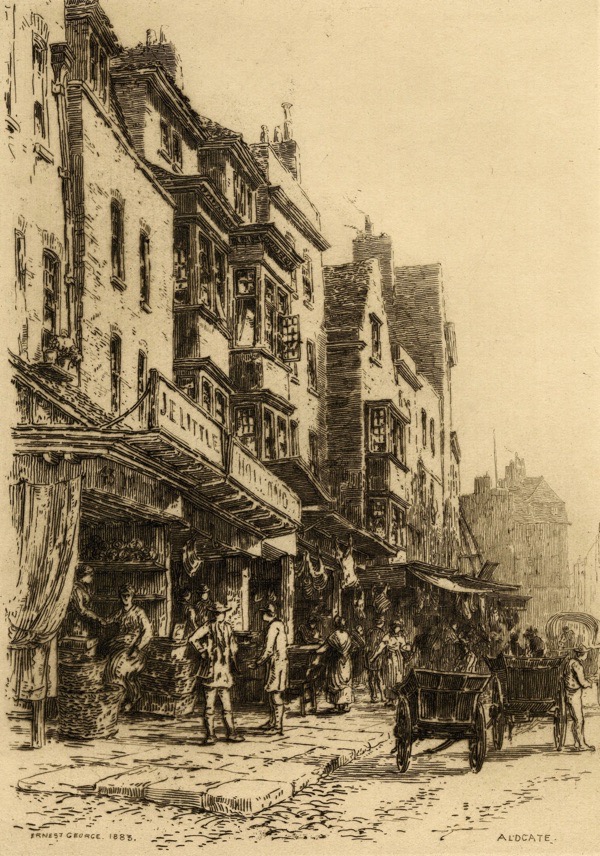
Aldgate
Stefan Dickers, Archivist at Bishopsgate Institute, introduced me to these fine copper plate etchings by Ernest George (1839-1922). In the eighteen-eighties, George set out to immortalise those fragments of London which spoke of times gone by and Londoners long dead, recording buildings and views which have for the most part now disappeared.
I realise that my affection for these images sets me in line with the generations of chroniclers who have made it their business to document the transience of the city, starting with John Stow who wrote the very first Survey of London between 1560 and 1598 to describe the streets of his childhood that were vanishing before his eyes.
Ernest George’s etchings were published by the Fine Art Society in New Bond St in 1884, a magnificent temple of culture designed by Edward William Godwin which survived through the twentieth century only to close in August 2018.
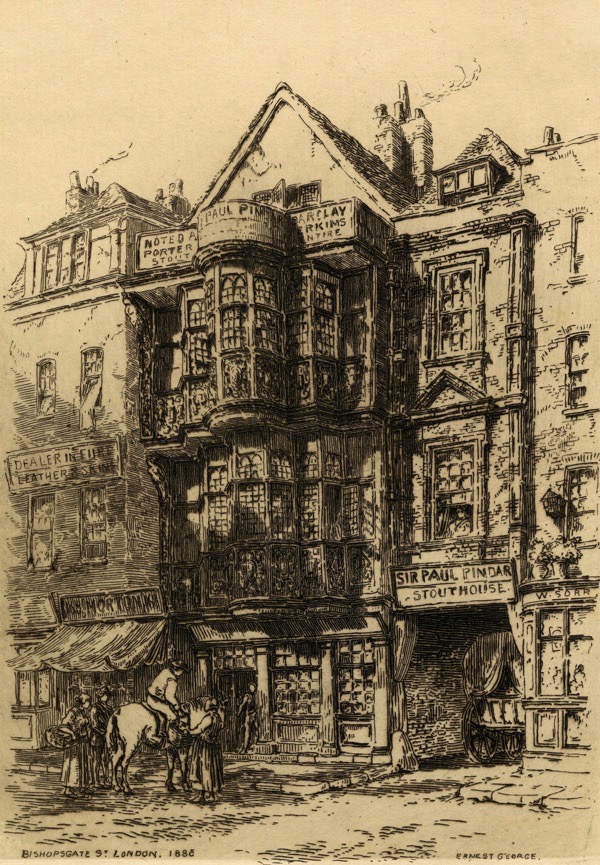
Bishopsgate
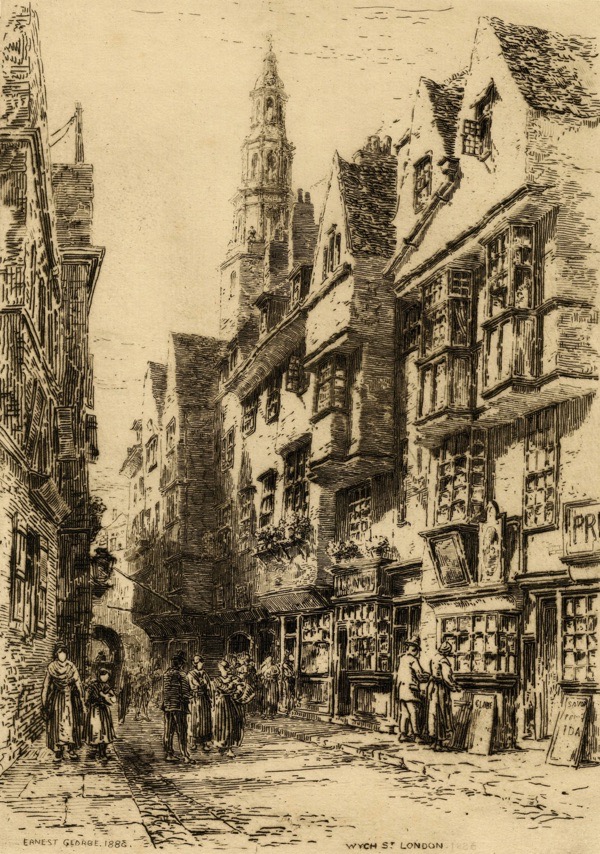
Wych St, Strand
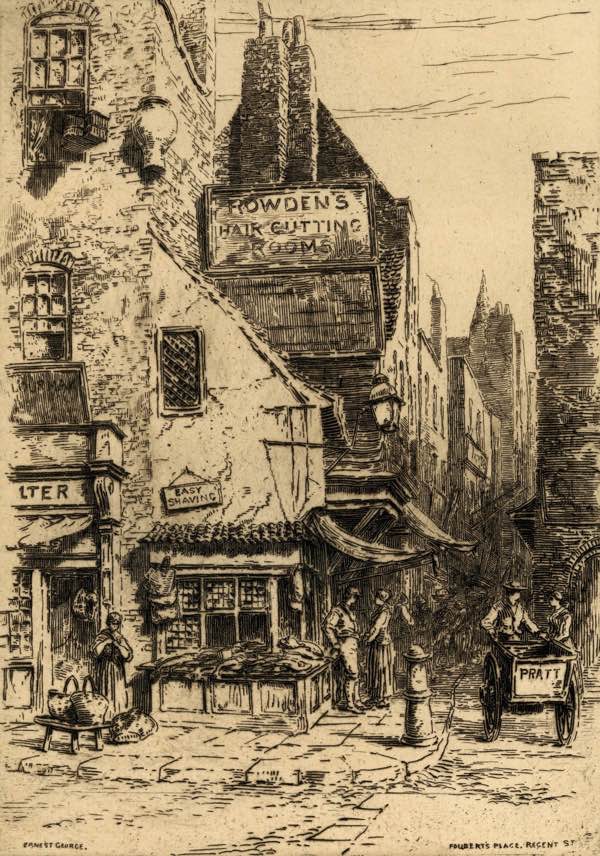
Fouberts Place, Soho
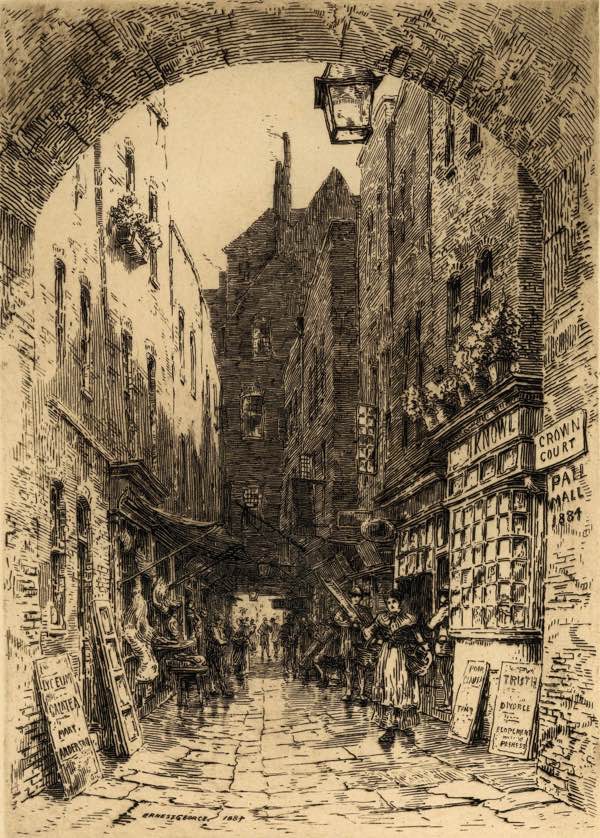
Crown Court, Pall Mall
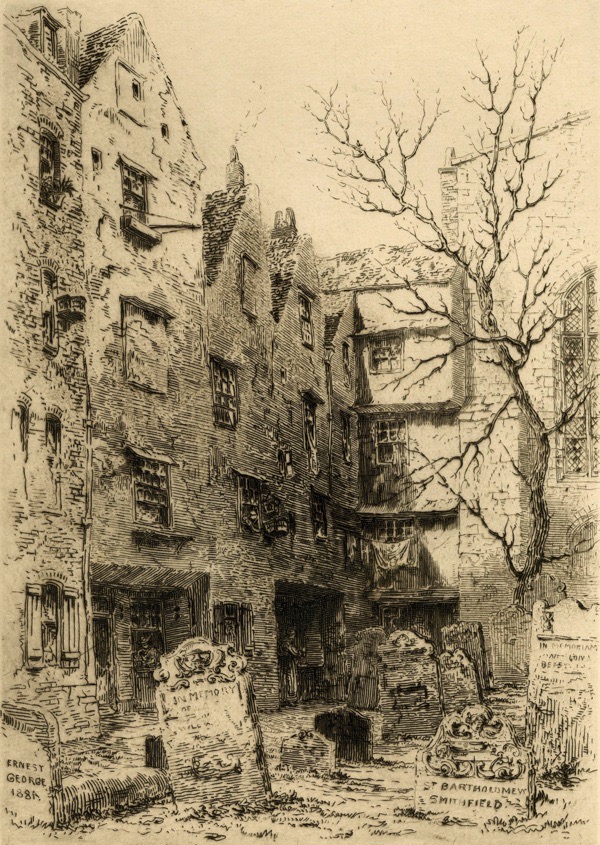
St Bartholomew, Smithfield
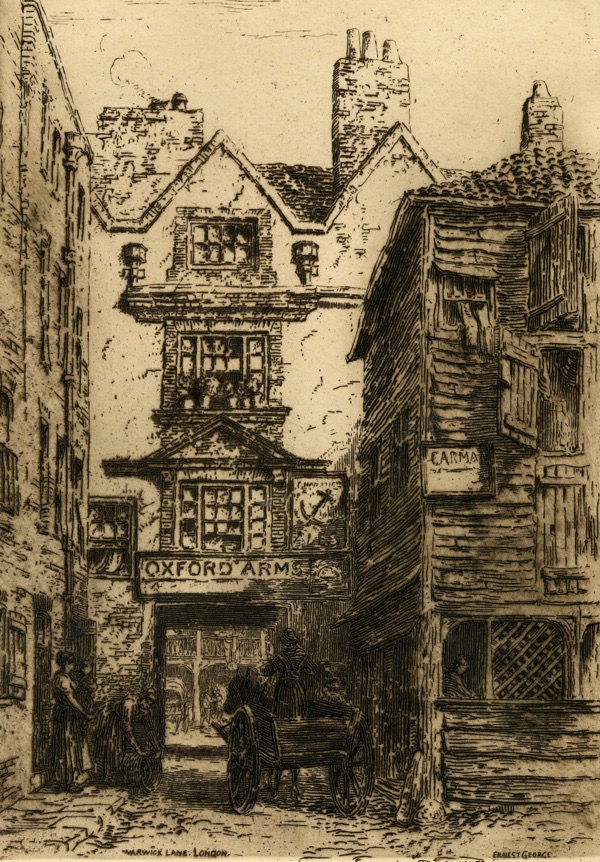
Warwick Lane, City
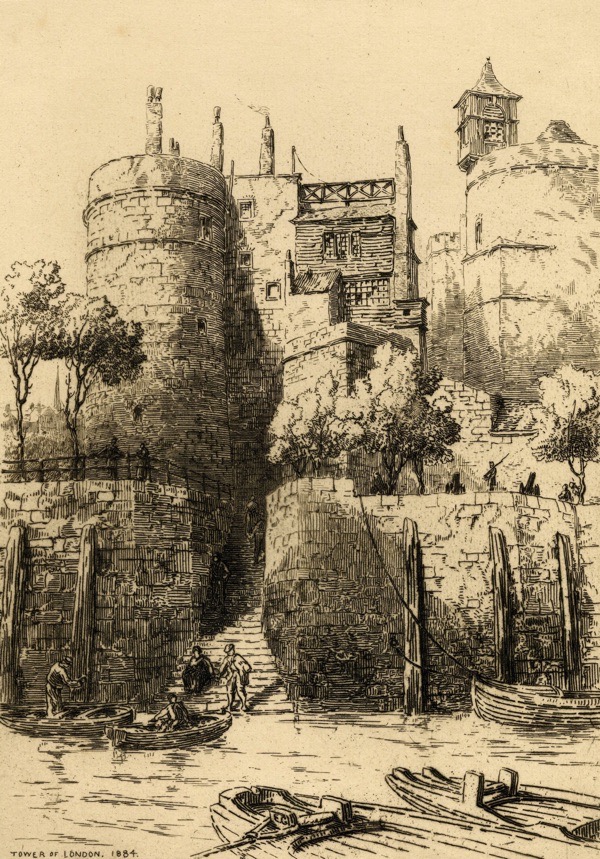
Tower of London
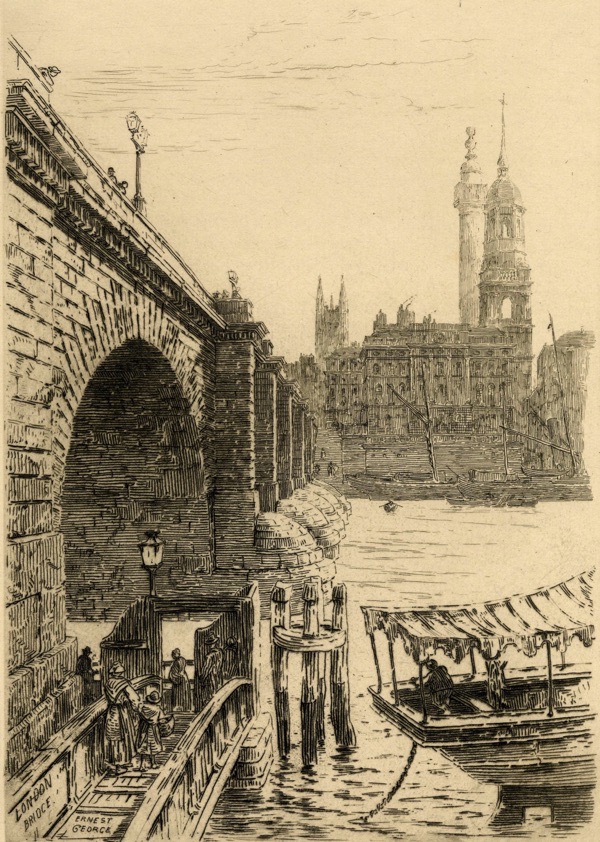
London Bridge
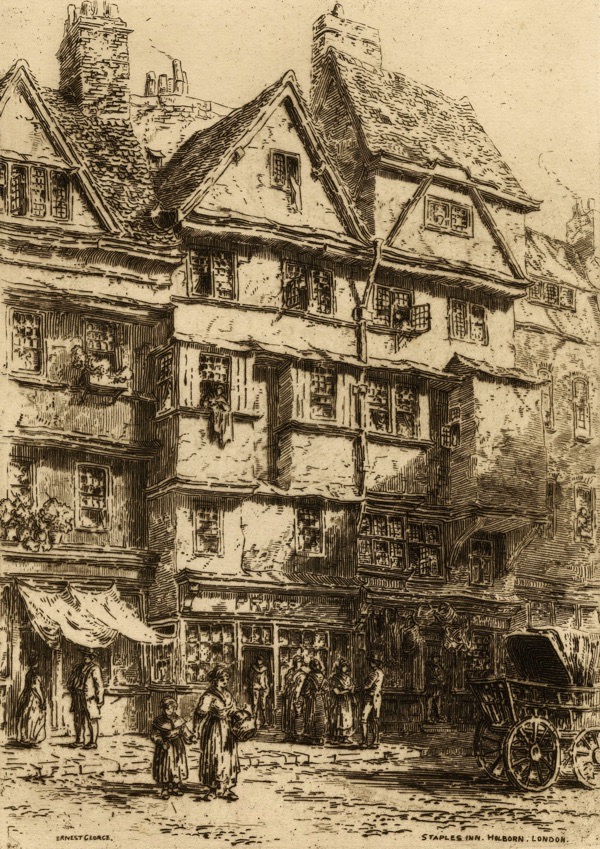
Staple Inn, Holborn
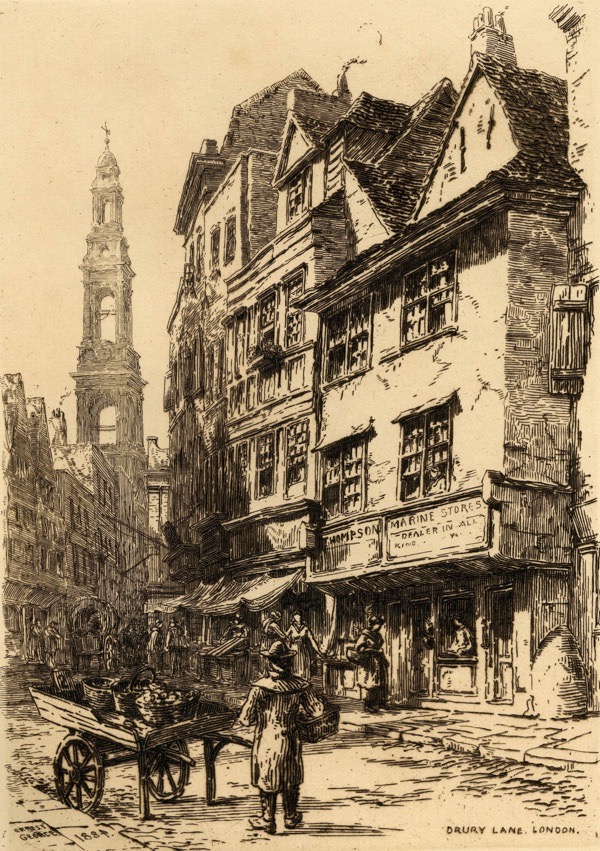
Drury Lane
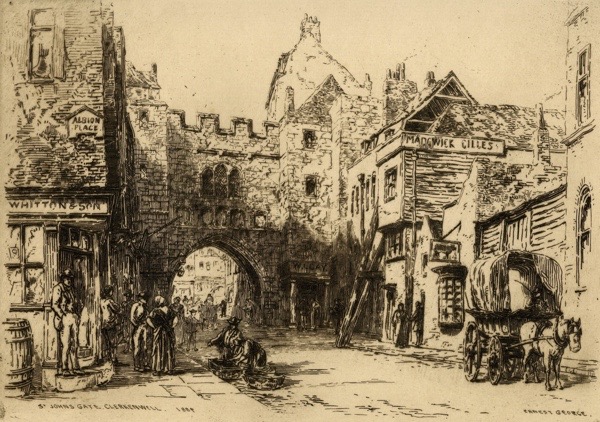
St John’s Gate, Clerkenwell
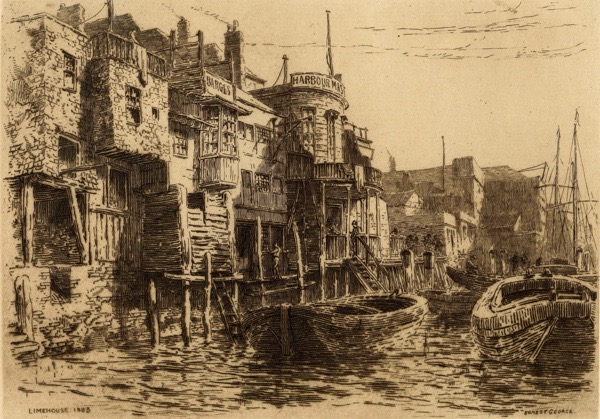
Limehouse

Shadwell
Images courtesy Bishopsgate Institute
You may also like to look at
The Bluebells Of Bow
CLICK HERE TO JOIN ME FOR A WALK AROUND SPITALFIELDS THIS SPRING
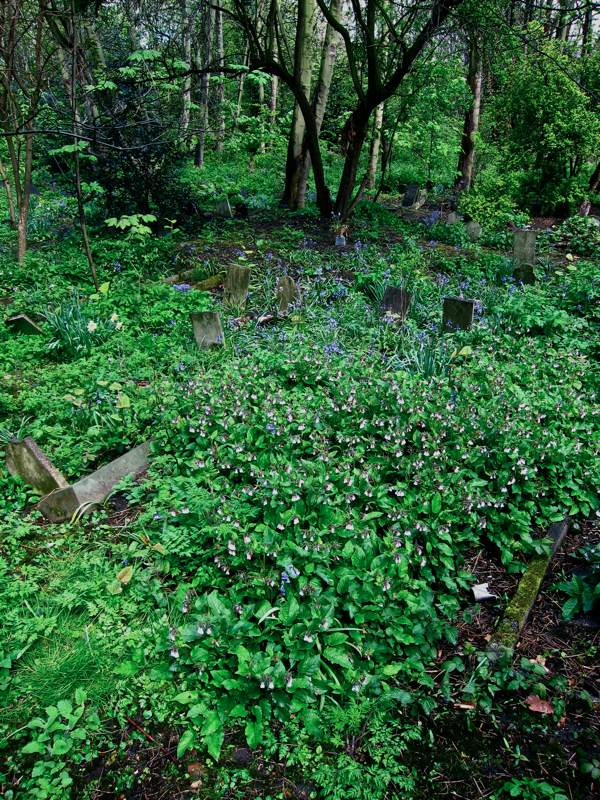
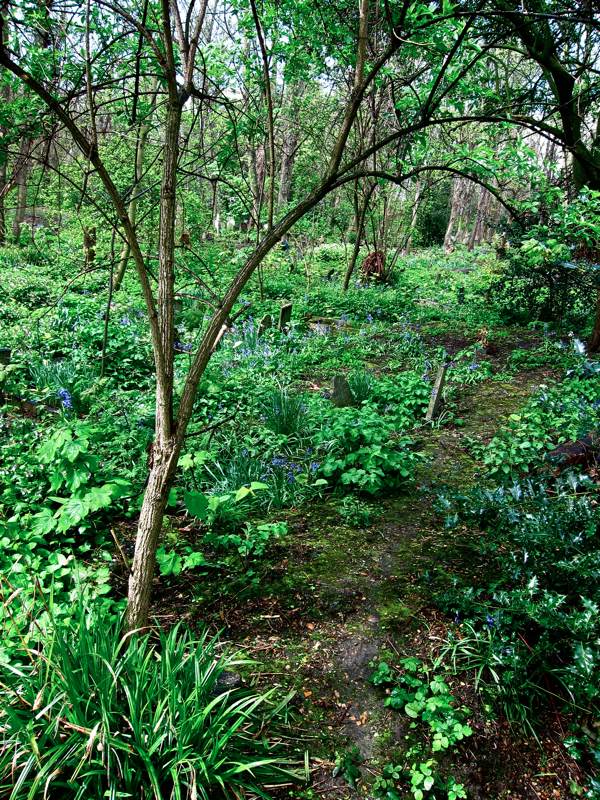
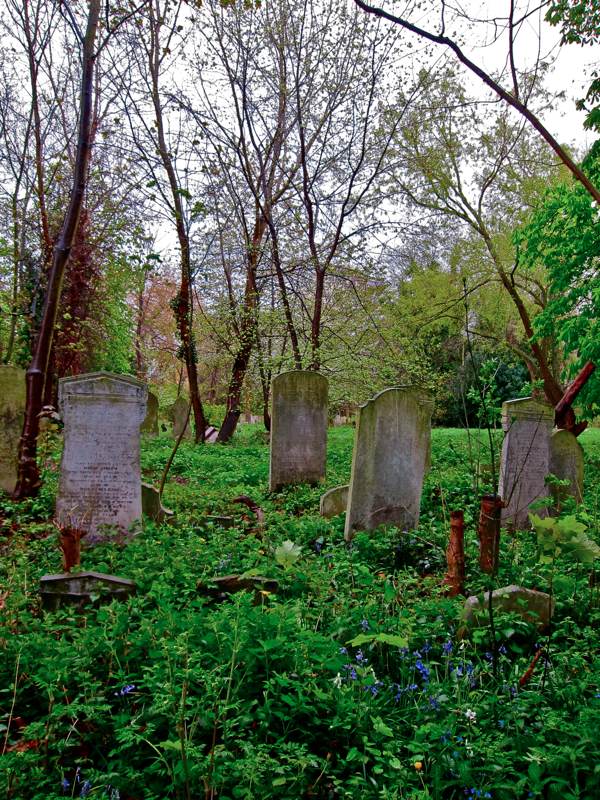
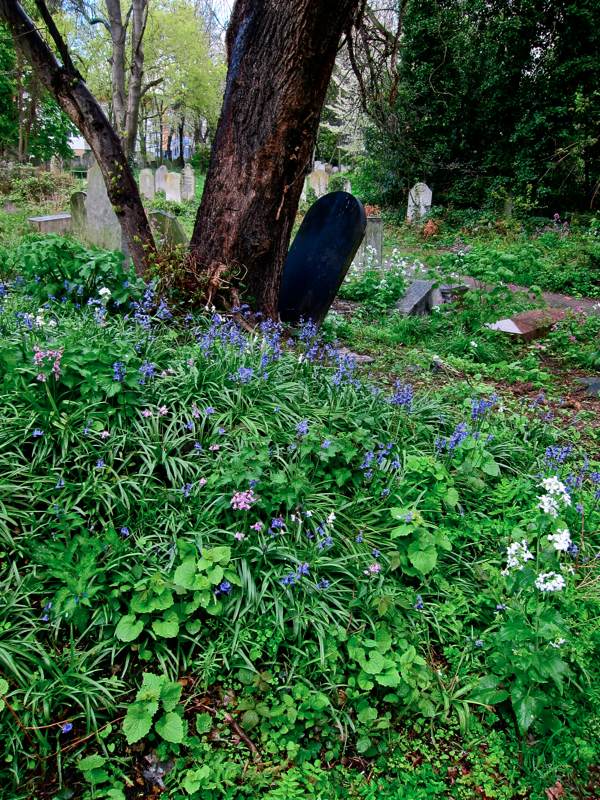
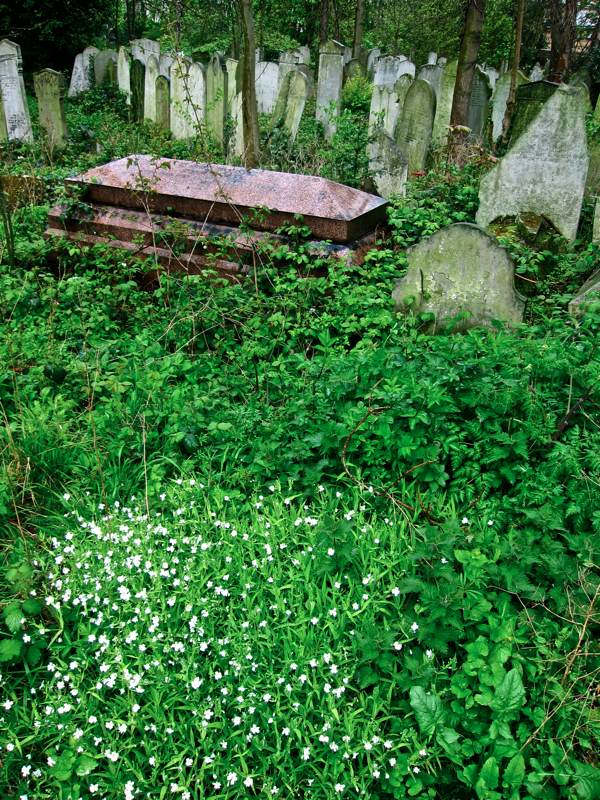
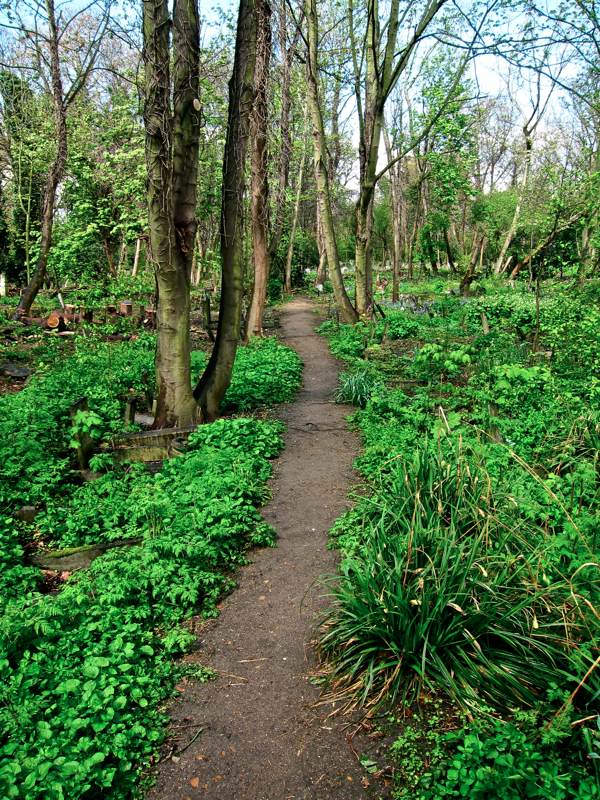
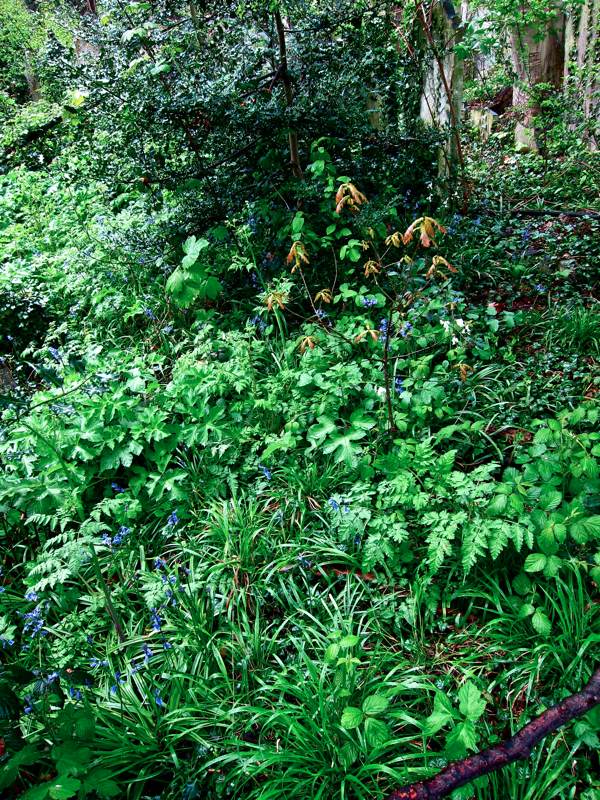
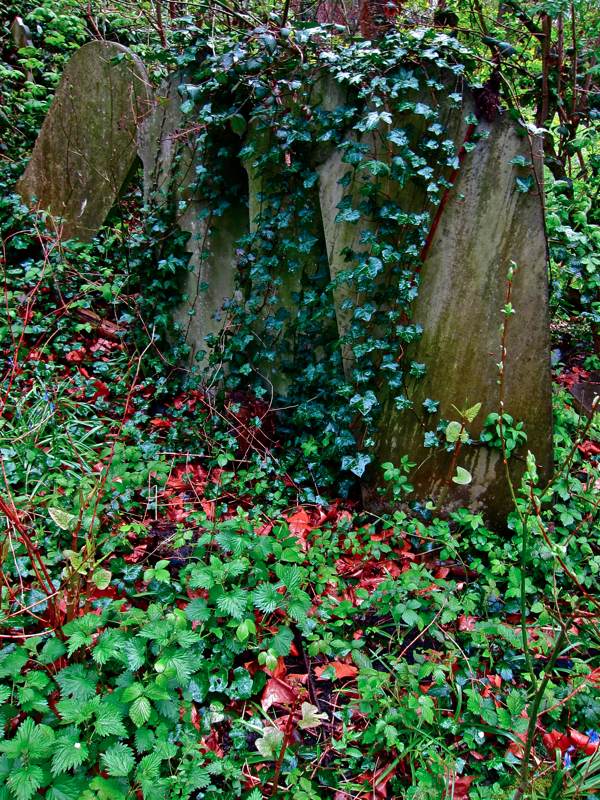
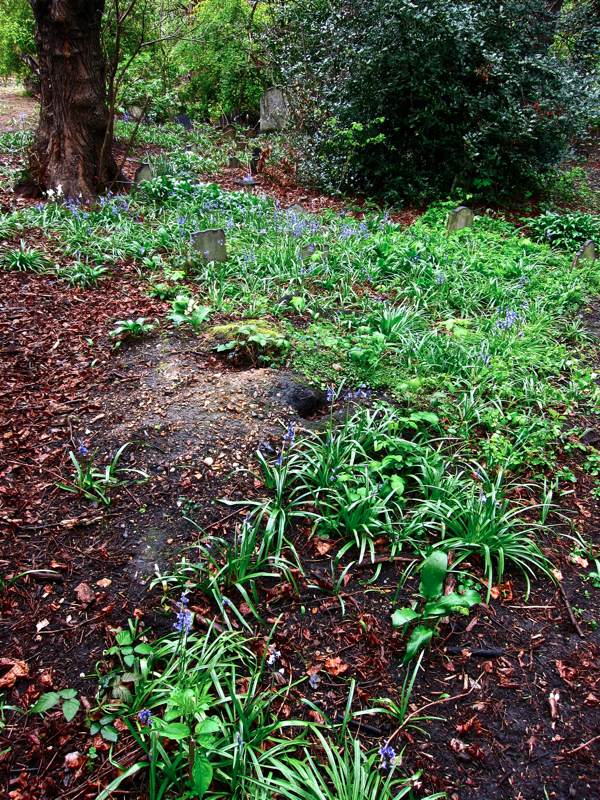
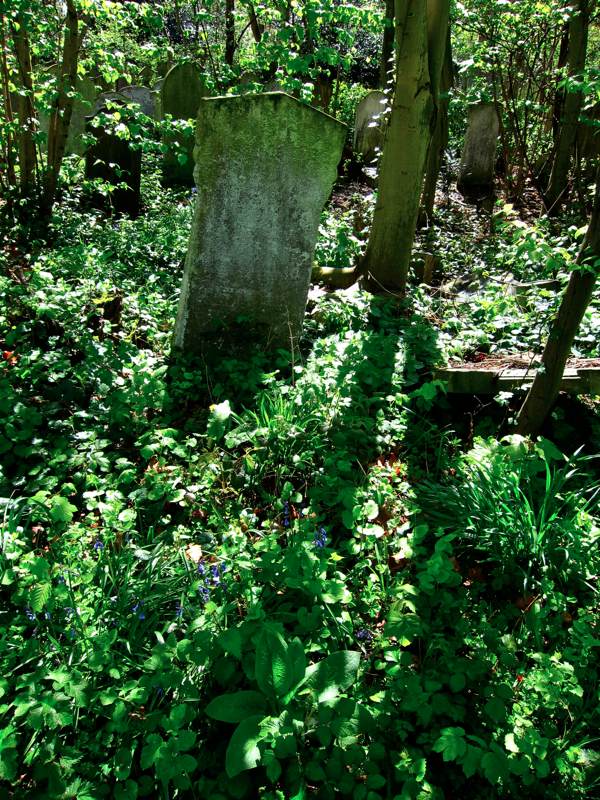
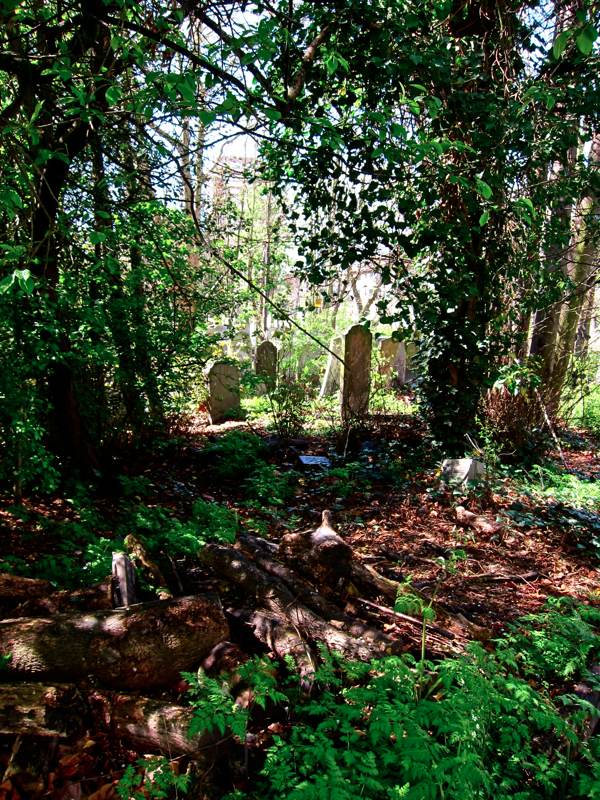
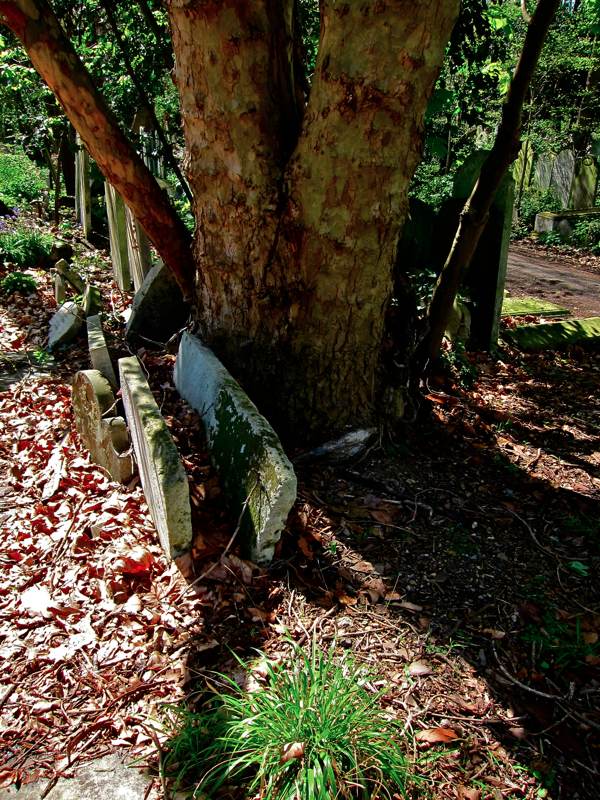
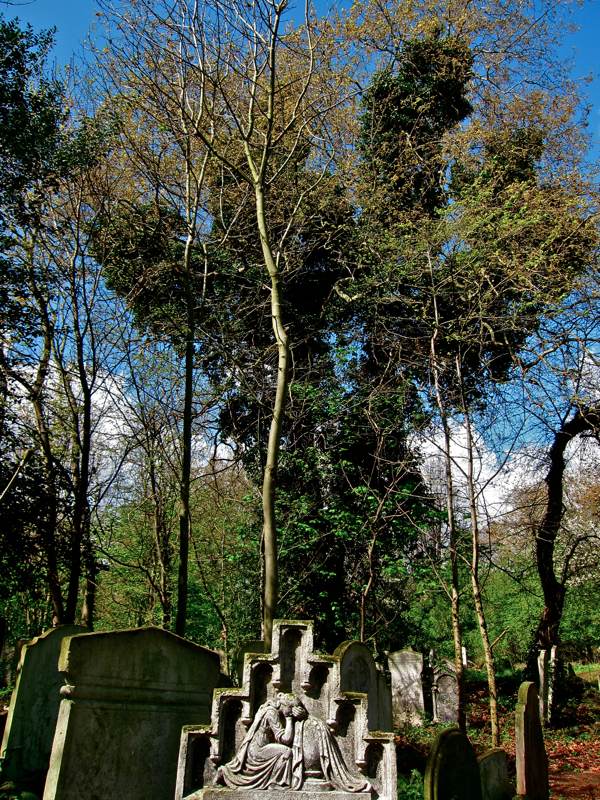
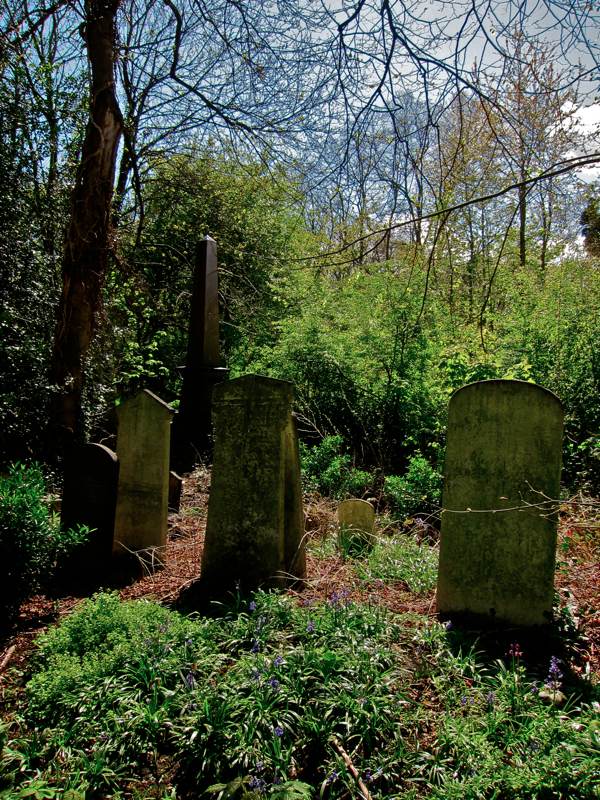
With a few bluebells in flower in my garden in Spitalfields, I was inspired make a visit to Bow Cemetery and view the display of bluebells sprouting under the tall forest canopy that has grown over the graves of the numberless East Enders buried there. In each season of the the year, this hallowed ground offers me an arcadian refuge from the city streets and my spirits always lift as I pass between the ancient brick walls that enclose it, setting out to lose myself among the winding paths, lined by tombstones and overarched with trees.
Equivocal weather rendered the timing of my trip as a gamble, and I was at the mercy of chance whether I should get there and back in sunshine. Yet I tried to hedge my bets by setting out after a shower and walking quickly down the Whitechapel Rd beneath a blue sky of small fast-moving clouds – though, even as I reached Mile End, a dark thunderhead came eastwards from the City casting gloom upon the land. It was too late to retrace my steps and instead I unfurled my umbrella in the cemetery as the first raindrops fell, taking shelter under a horse chestnut, newly in leaf, as the shower became a downpour.
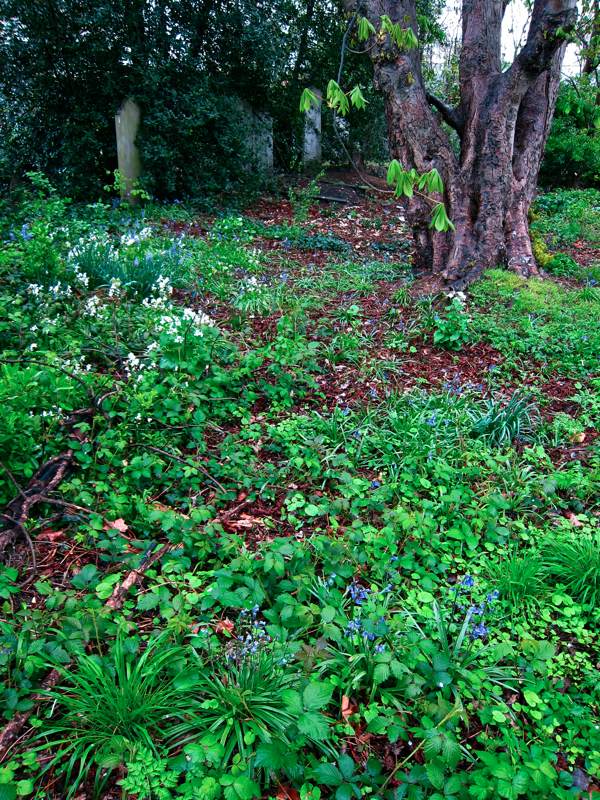
Standing beneath the dripping tree in the half-light of the storm, I took a survey of the wildflowers around me, primroses spangling the green, the white star-like stitchwort adorning graves, a scattering of palest pink ladies smock highlighting the ground cover, yellow celandines sharp and bright against the dark green leaves, violets and wild strawberries nestling close to the earth and may blossom and cherry blossom up above – and, of course, the bluebells’ hazy azure mist shimmering between the lines of stones tilting at irregular angles. Alone beneath the umbrella under the tree in the heart of the vast graveyard, I waited. It was the place of death, but all around me there was new growth.
Once the rain relented sufficiently for me to leave my shelter, I turned towards the entrance in acceptance that my visit was curtailed. The pungent aroma of wild garlic filled the damp air. But then – demonstrating the quick-changing weather that is characteristic of April – the clouds were gone and dazzling sunshine descended in shafts through the forest canopy turning the wet leaves into a million tiny mirrors, reflecting light in a vision of phantasmagoric luminosity. Each fresh leaf and petal and branch glowed with intense colour after the rain. I stood still and cast my eyes around to absorb every detail in this sacred place. It was a moment of recognition that has recurred throughout my life, the awe-inspiring rush of growth of plant life in England in spring.








You may also like to read about
Thierry Girard’s East End
Today it is my pleasure to show these photographs by Thierry Girard from 1976
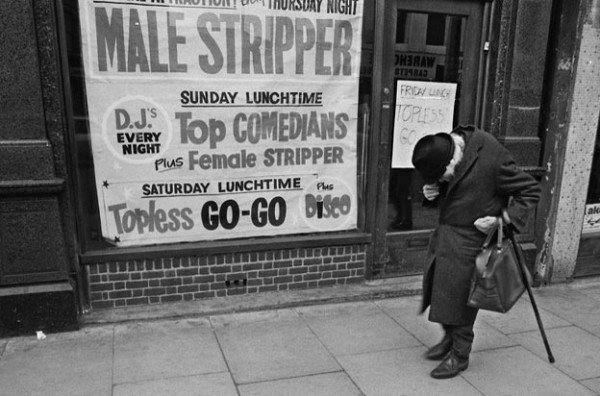
“More than simply pictures from my early years as a photographer, these are the starting point of my photographic work. At the beginning of 1976, when I was twenty-four, I had just graduated from Paris Institute of Political Studies and I had no specific idea about my future. I was very interested in photography, I bought my first photography books and I went to exhibitions, but I had very little experience.
At that time, my interest was in British photography and photographs taken in Britain by foreigners. I was an Anglophile. I was fond of Bill Brandt’s work, of course, and I was familiar with the photographs of Tony Ray-Jones, Homer Sykes and David Hurn – but the real catalyst was to be Robert Frank’s portfolio of London & Wales published in the 1975 edition of the Creative Camera International Yearbook. Knowing London rather well —I had stayed there several times in the previous years— I immediately related to the atmosphere of Frank’s pictures.
So I decided to go back to London for a challenge, a rite of initiation: to face the outside world and do photography. I stayed in the East End where I had lived as a student, although I did not intend to do a reportage about the East End or Eastenders. I just wanted to walk for hours and days in, snatching bits of life, passing through dilapidated districts, pushing doors of pubs, rambling through markets and playing with kids. I spent time with a wonderful couple, clever and cheerful people, but living in poverty in a damp basement flat while sewing ties for chic French companies. At lunchtime or in the evenings I went to strip pubs. The people attending the shows, both men and women, were locals.
I hope these photographs made in London in 1976 are worth revisiting. Very few of these pictures have ever been published or exhibited, but what I did there at the time has been decisive for my future as a photographer.” – Thierry Girard
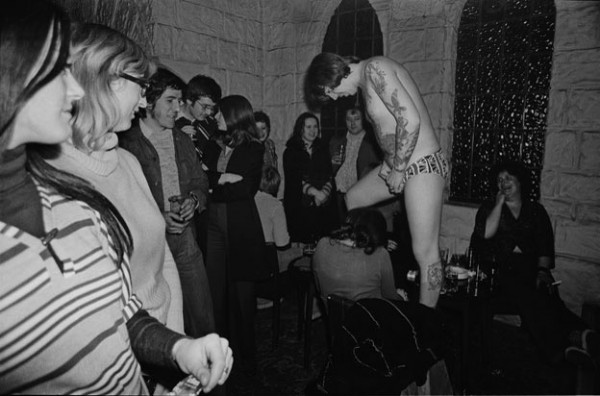
At the Elephant, Dalston
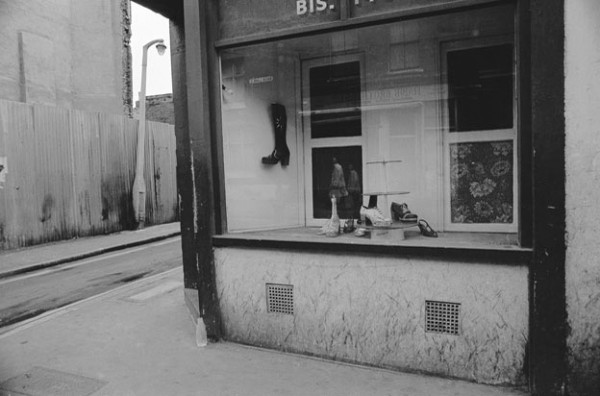
In Brick Lane
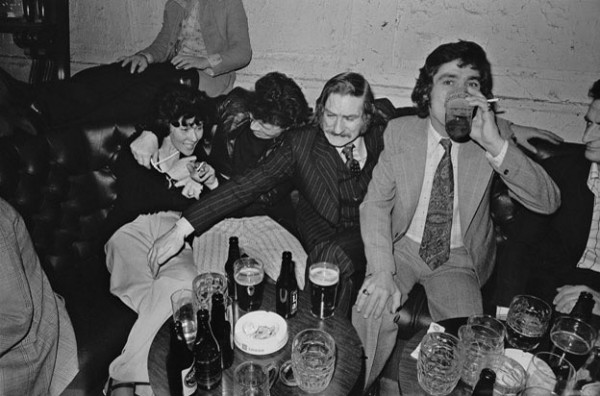
At the Elephant, Dalston
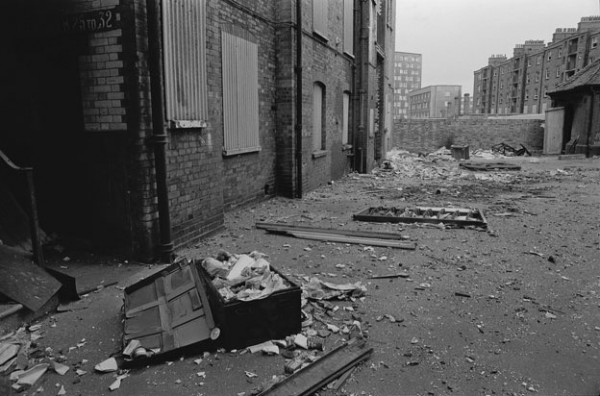
In Bethnal Green
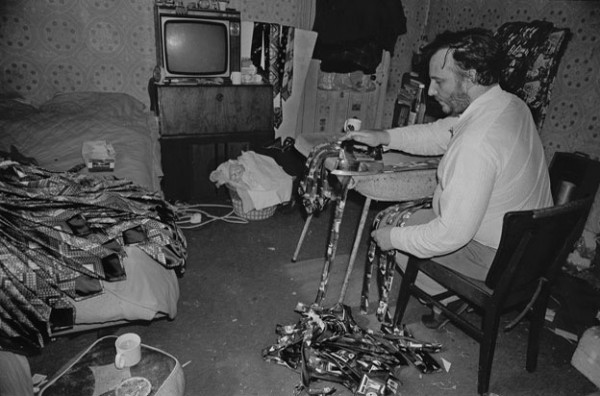
Alan B, homeworker in Graham Rd, Hackney
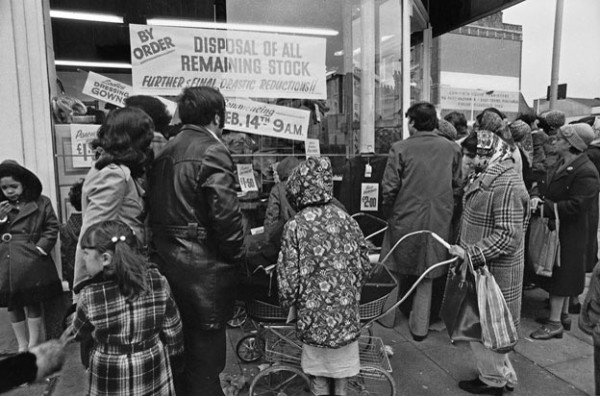
In Mare St
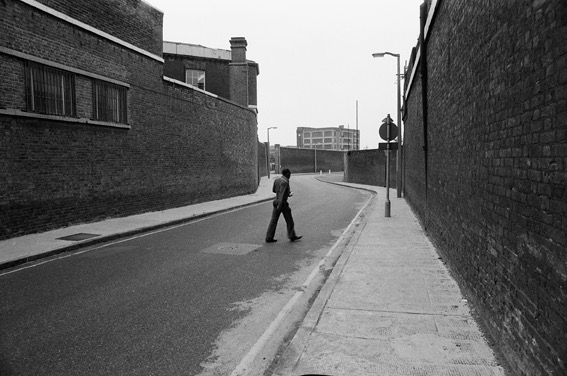
In Wapping
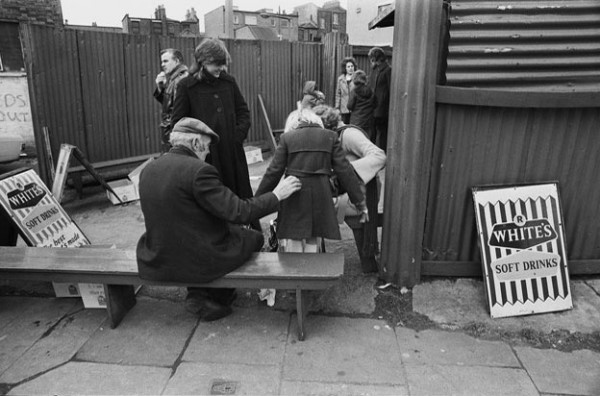
In Ridley Rd Market
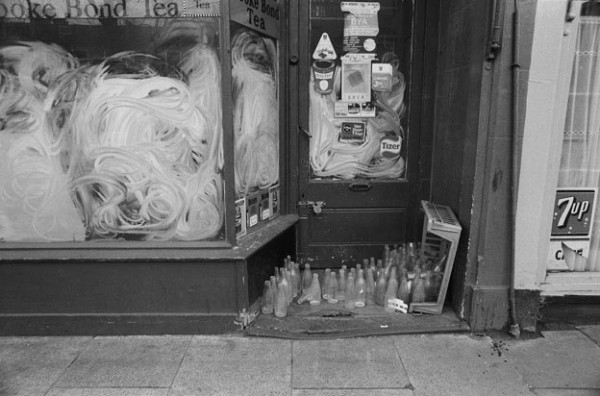
In Dalston
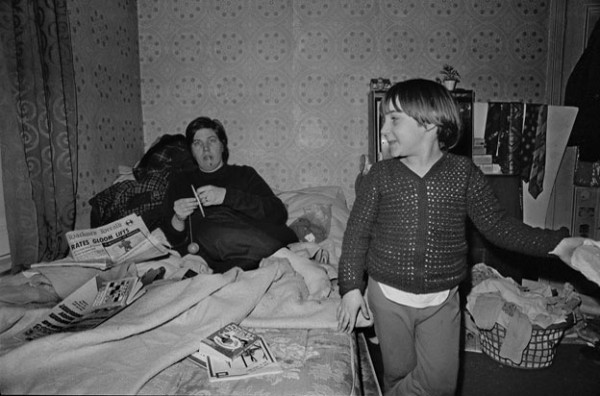
Betty & Penny B, Graham Rd, Hackney
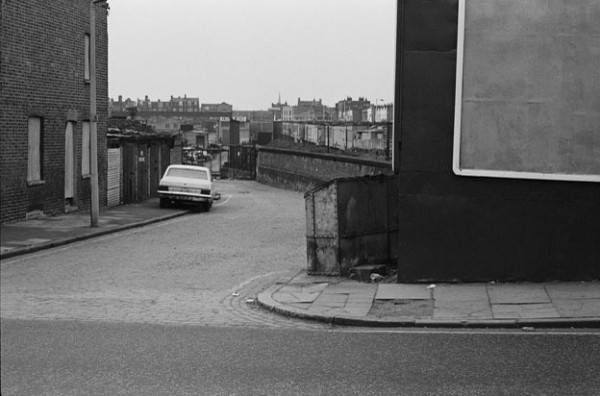
In Hackney
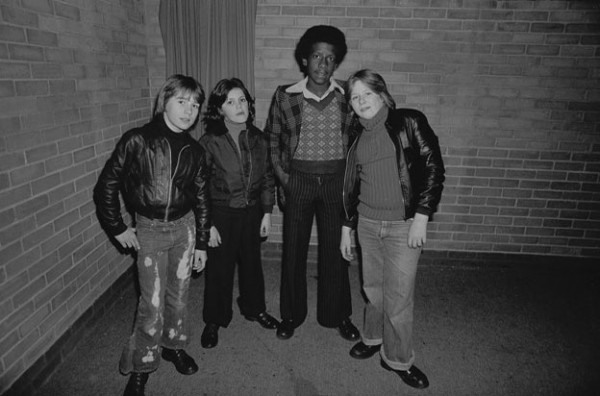
At Limehouse Social Club
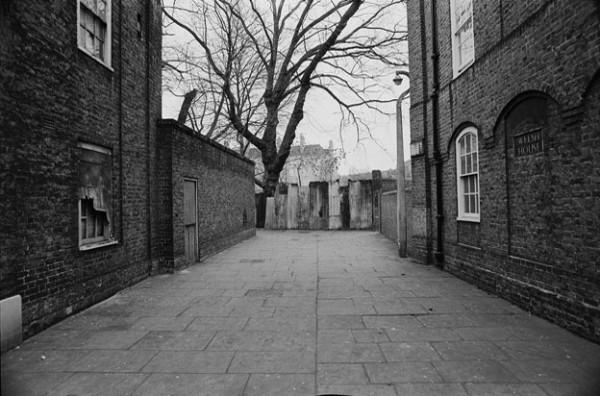
In Wapping
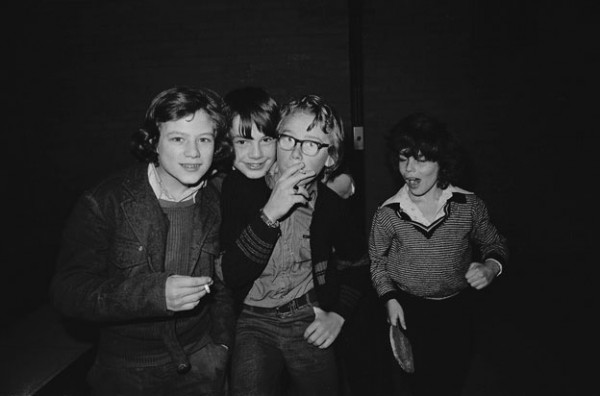
At Limehouse Social Club
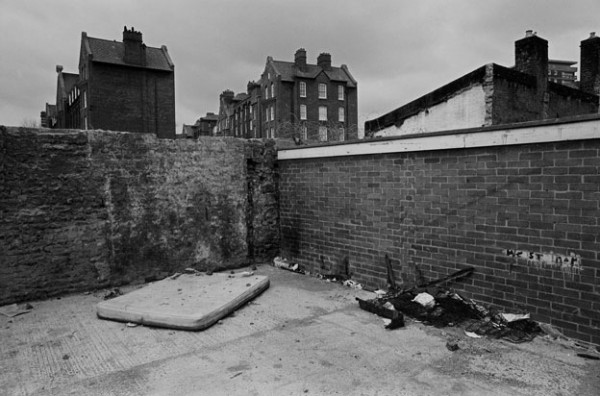
In Bethnal Green
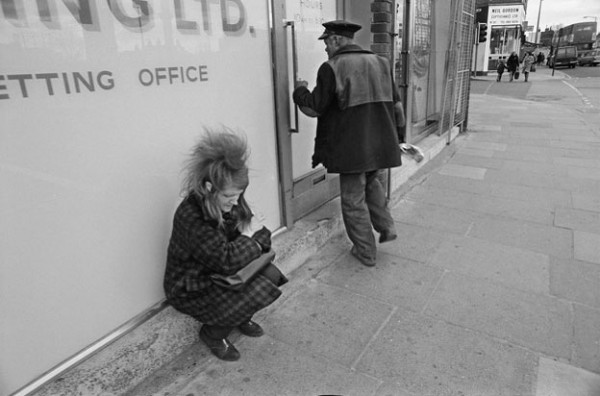
In Tower Hamlets
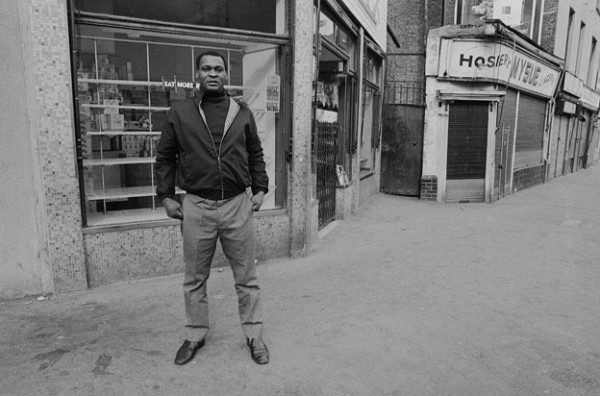
In Hackney
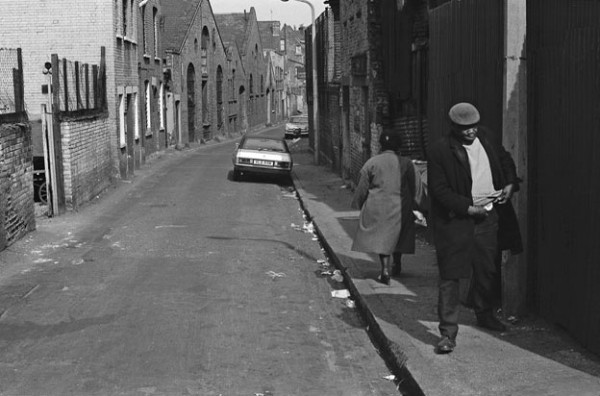
In Hackney
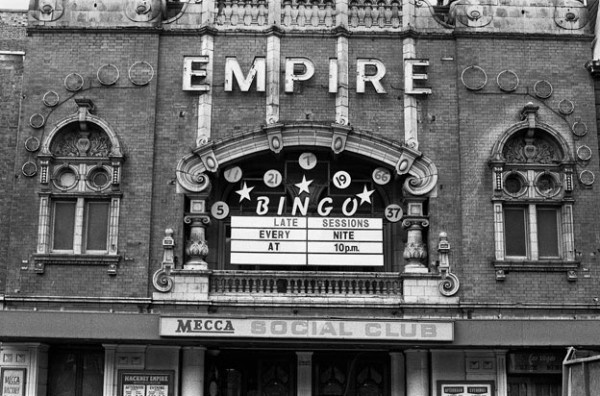
Hackney Empire
Photographs copyright © Thierry Girard
You may also like to take a look at
The Return Of Joseph Merceron
Can you think of a politician who lied so many times and was responsible for so many misdeeds that no-one could catch him out because the volume of his misbehaviour was too great?
Joseph Merceron was the East End’s first corrupt politician and also the East End’s first gangster, ruling Spitalfields and Bethnal Green for fifty years through the end of the eighteenth century and the early nineteenth century. Yet he was also an exploitative developer who built swathes of substandard housing, which ultimately led to cholera outbreaks and contributed to the human catastrophe of poverty and overcrowding in the nineteenth century East End.
Biographer Julian Woodford, author of The Boss of Bethnal Green, will be telling the breathtakingly appalling story of Joseph Merceron on Tuesday 2nd May 6pm at the Hanbury Hall in Hanbury St where Merceron was baptised in 1764.
CLICK HERE TO BOOK A TICKET FOR £6
By revealing the story of Joseph Merceron – the man who gave the East End the bad reputation which still lingers today and who created the templates of the mobster and of the political miscreant that we recognise in our own times – Julian Woodford’s shrewd biography makes an essential contribution to our understanding of the history of London.

Joseph Merceron by Joe McLaren
Julian Woodford introduces his research into Joseph Merceron
At 134 Brick Lane is the Cinnamon restaurant, the self-proclaimed ‘King of all Kings for curries on Brick Lane,’ but in 1764, this was a Huguenot pawnbroker’s shop and, on 29th January of that year, a baby boy was born there. His name was Joseph Merceron and he would grow up to be The Boss of Bethnal Green – the Godfather of Regency London.
My book was a decade in its gestation. I first came across Joseph Merceron’s name late in 2005, when I happened upon a brief reference to him in Roy Porter’s London: A Social History. Porter described Merceron as an early corrupt political ‘Boss’ who had dominated the East End some one hundred and fifty years before it became the home of the Kray twins. By a strange coincidence, I had seen Merceron’s name just the day before, listed as a defendant in a series of legal cases at the National Archives. I was intrigued: Merceron is not a common name in England. Was this the same man? The internet confirmed that it was, and revealed that he had clearly been a larger-than-life character. His story seemed to anticipate the plot of the Marlon Brando movie On the Waterfront, where a corrupt gangster is taken on – and eventually toppled – by a brave and determined local priest.
Over the next few days, I found that Merceron was name-checked by virtually every book about the history of London’s darker side, from academic classics like Dorothy George’s London Life in the Eighteenth Century to true-crime exposés like Fergus Linnane’s London’s Underworld. The facts given were always suspiciously similar, and I soon learned that all these accounts had their origins in The Rule of the Boss, a chapter in Sidney and Beatrice Webb’s seminal 1906 work on English local government, The Parish and the County. The Webbs, a husband-and-wife team of early socialists, were embarking on a nine-volume treatise still regarded as a classic by historians. They intended that the centuries of inefficiency and corruption they painstakingly described would be swept away by the statistical analysis and central planning espoused by the early Labour movement.
The Webbs’ impeccable research had unearthed parts of Merceron’s story, seeing him as the perfect illustration of corruption within English parochial self-government. The Marxist academic Harold Laski wrote that ‘they have added new figures to our history, the school books of the next generation will make Merceron [and his like] illuminating examples of what a democracy must avoid.’ As it turned out, Professor Laski was wrong: the Second World War intervened, and the subsequent prominence given to 20th century history in school curricula meant that Merceron’s story has been largely forgotten.
The Rule of the Boss is an intriguing read, but the Webbs were not biographers, and had no interest in dissecting the personal life behind Merceron’s rule. Their account leaves fundamental questions unanswered. Who exactly was Joseph Merceron? Where did he come from? What drove him? How did he become so wealthy? How did he gain power while so young, and retain it for so long? Frustratingly, all subsequent accounts I could find regurgitated parts of the Webbs’ story but failed to provide the answers. Even a brief reference to Merceron in the Dictionary of National Biography could shed no further light. In his excellent book of tales about Brick Lane, An Acre of Barren Ground (2005), Jeremy Gavron had drawn some interesting conclusions about Merceron’s links to the brewer Sampson Hanbury, but when we met Jeremy explained that, apart from this, he too had struggled to make headway with Merceron’s wider story.
Convinced that Merceron’s story was worth telling, I delved deeper. Searching through the births, marriages and deaths columns of The Times, with the help of the electoral register I traced Merceron’s family tree forwards and learned there were just a handful of families with that name living in the United Kingdom. I wrote to the most promising candidates, and a couple of days later was rewarded with a call from an elderly lady who introduced herself as Susan Kendall, Merceron’s great-great-granddaughter. Mrs Kendall added that she would be delighted to invite me to her home in Wiltshire but, she added, ‘You had better come quick, because I’m ninety-three!’
I rushed off to the pretty village of Ramsbury to meet Mrs Kendall and over a cup of coffee explained my plans. But when I mentioned Beatrice Webb, Mrs Kendall almost exploded. ‘That beastly woman,’ she exclaimed, had published Merceron’s story just before her own birth. The Mercerons were a wealthy and respected county family in Edwardian times, and Susan and her sisters were presented at Court to Queen Mary as teenagers. The Webbs’ story had not been helpful, to say the least, and Mrs Kendall expressed satisfaction that finally I was going to disprove it. This was not promising.
When I nervously explained that, based on my research to date, if anything Merceron had been even more of a tyrant than the Webbs had described, I wondered if I was about to be asked to leave. But Mrs Kendall reflected. ‘If that is the true story,’ she said, ‘then of course you must tell it.’ From that moment on, she gave me every support and we corresponded regularly until her death a few years later. She generously lent me the few family papers she had, but said I would need to meet with her nephew Daniel to see the rest.
Daniel Merceron was serving overseas with the army. It was a frustrating several months before he returned and I was able to visit him, but it was worth the wait. Daniel left me with a cup of tea while he disappeared into his attic, returning with Merceron’s two-hundred-year-old tin chest: full of deeds, letters and other papers which shed new light on Merceron’s misdeeds, added colour to his personal life and provided crucial clues to the existence and location of other original records of the Court of Chancery at the National Archives – heavy parchment rolls, encrusted with dust and unopened for two centuries. They told a fascinating story – the depths of an obsession with money which led Merceron to lock away his half-sister in a lunatic asylum and steal the inheritances of his nephews, as well as that of a mentally ill orphaned girl, all before he was twenty-three years old.
But even this was outshone by the other surprise Daniel had in store for me. He disappeared again, returning brandishing an old flintlock pistol that he announced was the weapon with which the madman James Hadfield tried to assassinate King George III at the Drury Lane theatre in 1800. Daniel was unclear how the gun had fallen into Merceron’s hands, but within an hour on the internet we had found the transcript of Hadfield’s trial and discovered that the key prosecution witness, who had picked up the pistol after Hadfield fired it at the King, was none other than Merceron’s clerk.
Pulling this thread further, I uncovered Merceron’s links to a network of government spies, set up to monitor the activities of underground revolutionary societies during the Napoleonic wars. This was the story the Webbs had missed. By keeping Merceron and his associates in power, successive British governments, desperate to stamp out radical republicanism after the French Revolution, repeatedly turned a blind eye to his criminal operations. In doing so, they abetted a social catastrophe. Joseph Merceron’s story turns out to be more than a tale about a man and his money. It is also about the origins of London’s East End, a world of riots, lynching, public executions and extreme poverty where whole families could easily starve or freeze to death.
As Merceron became extraordinarily wealthy, Bethnal Green became the epitome of the East End Victorian slum. By 1838, when young Charles Dickens chose it as the home of the murderer Bill Sikes in Oliver Twist, Bethnal Green was beset by wretched poverty, the bankrupt home of cholera and typhus, its rotting workhouse crammed with more than a thousand starving paupers.
Joseph Merceron’s name is commemorated today in Merceron St, Bethnal Green, and in Merceron Houses which were erected as ‘model dwellings’ for the poor on the site of Merceron’s garden off Victoria Park Sq, in 1901 just before the Webbs reminded the world of his darker deeds.
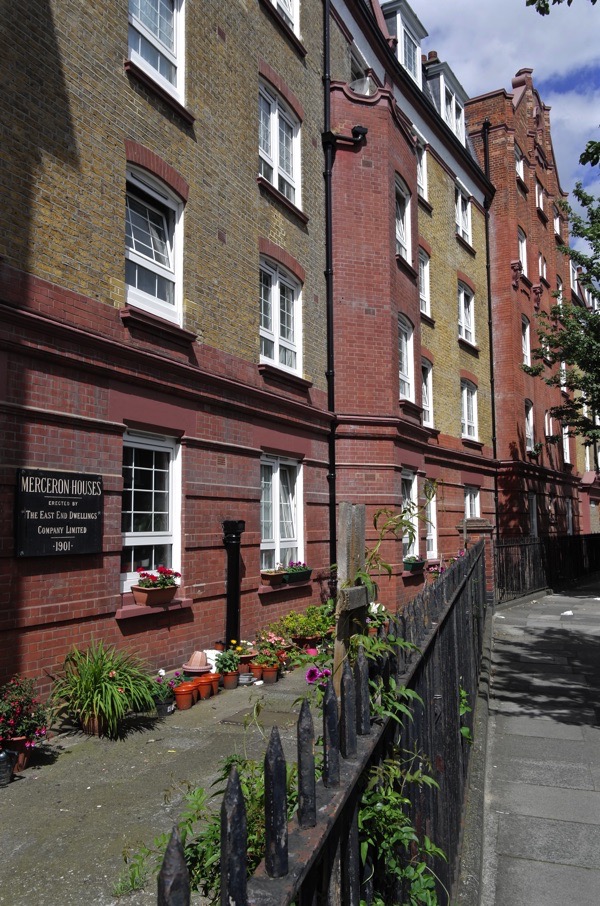
Merceron Houses in Bethnal Green built on the site of Joseph Merceron’s garden
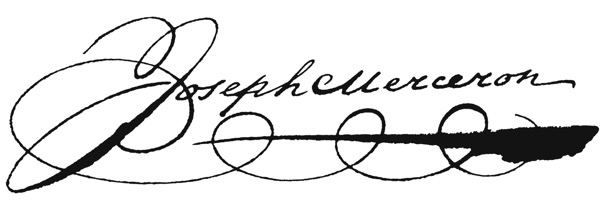
Joseph Merceron’s signature
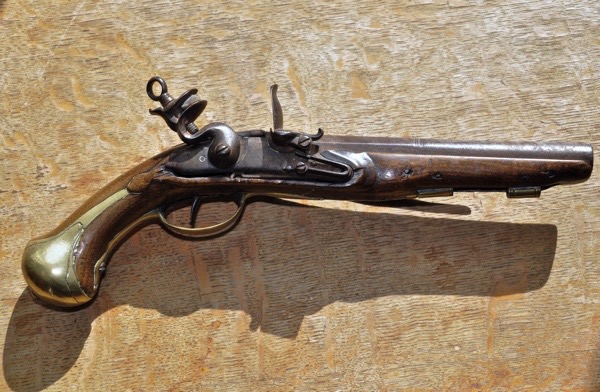
The pistol used in the assassination attempt upon George III at Drury Lane in 1800

Julian Woodford researched the life of Joseph Merceron for ten years (Portrait by George Woodford)
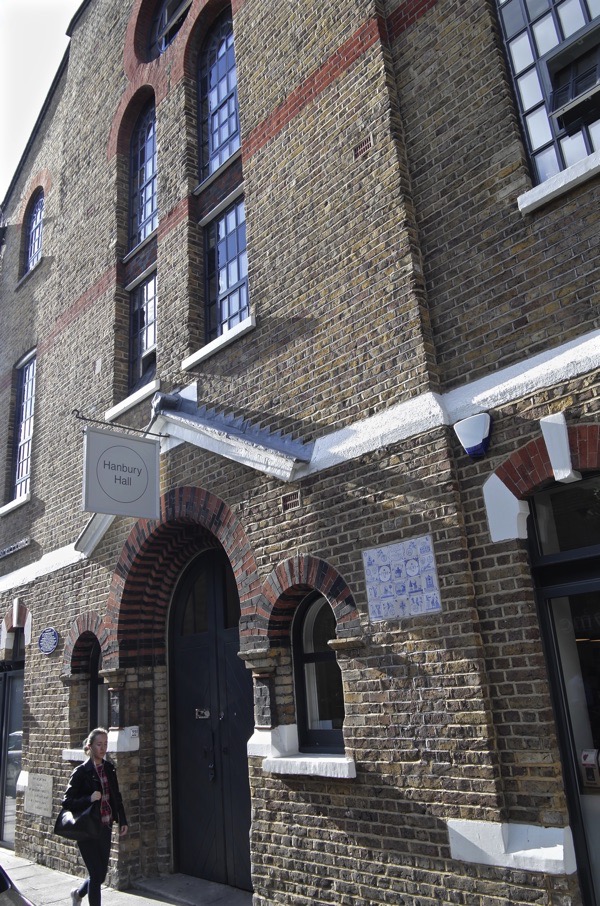
The lecture will be held at the Hanbury Hall where Joseph Merceron was baptised in 1764
Sarah Ainslie’s Hatton Garden Portraits
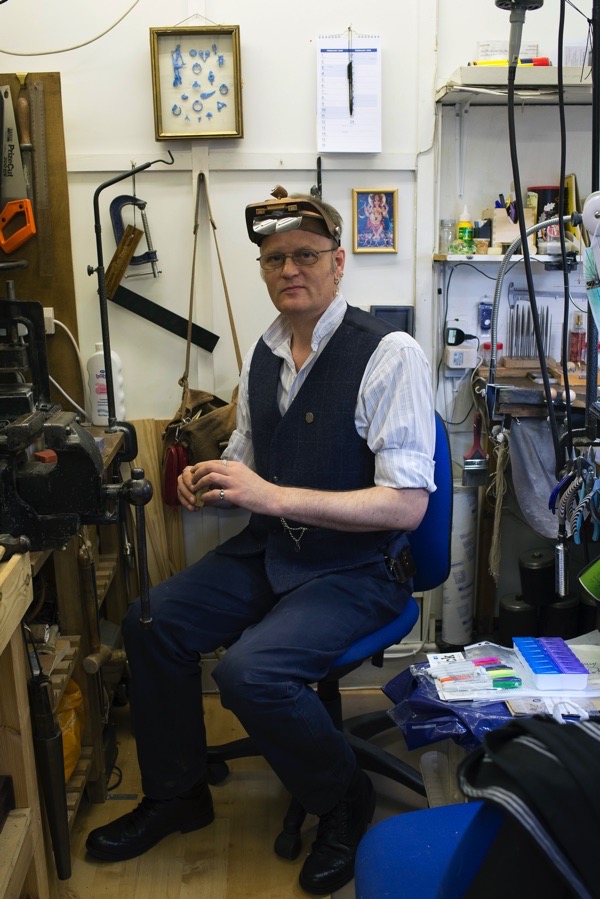
Russell Lownsbough, Designer, Wax-Carver & Goldsmith
I enjoyed the privilege of accompanying Contributing Photographer Sarah Ainslie into a number of high security workshops to meet some of the most skilled craftsmen and women working in the creation of precious jewellery in Hatton Garden and Clerkenwell.
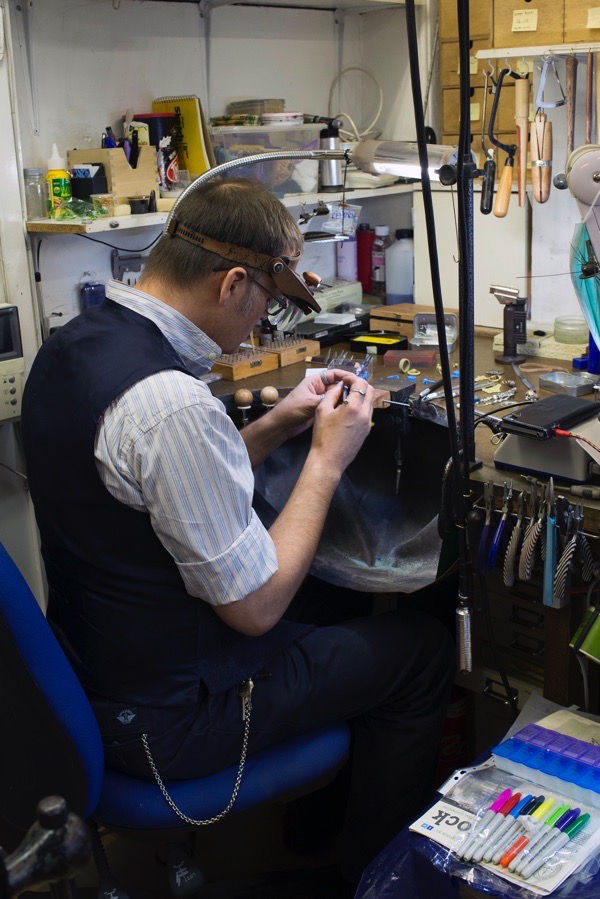
Russell Lownsbough
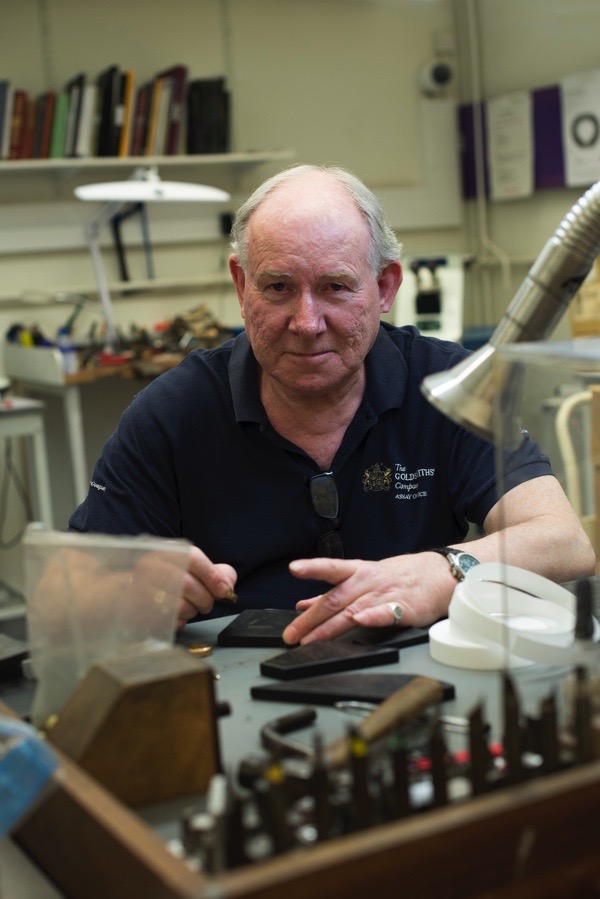
Dave Merry, Hallmarking Expert at the Assay Office, Goldsmiths Hall – “I am responsible for training and apprenticeships at the Assay Office but I am also a maker and a sampler. We employ twenty-two people and test six thousand articles every day. An exciting part of my job is going out on raids with the police to shops where they are selling counterfeit jewellery.”
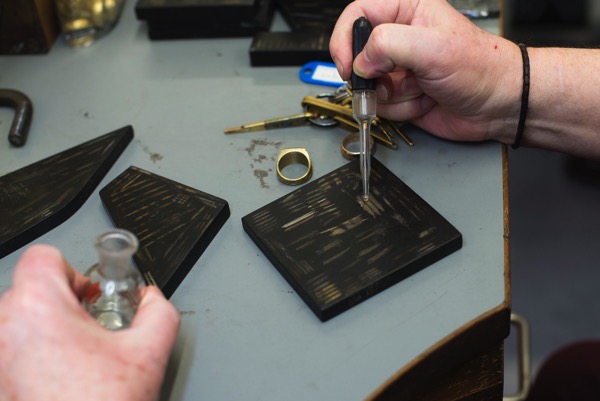
Dave Merry – “The phrase ‘up to scratch’ derives from the ancient practice of testing precious metals by rubbing them against a touchstone and applying aqua regia – known as ‘the acid test.’ I have had this stone for forty-seven years, since I was given it when I first walked in the door.”

John Taylor, Gemstone Cutter
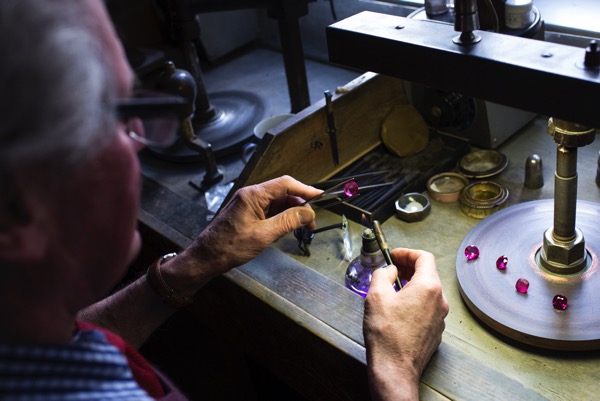
John Taylor
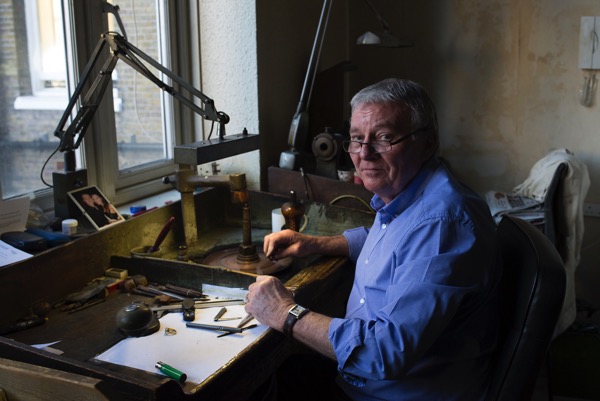
Pete Rome, Gemstone Cutter
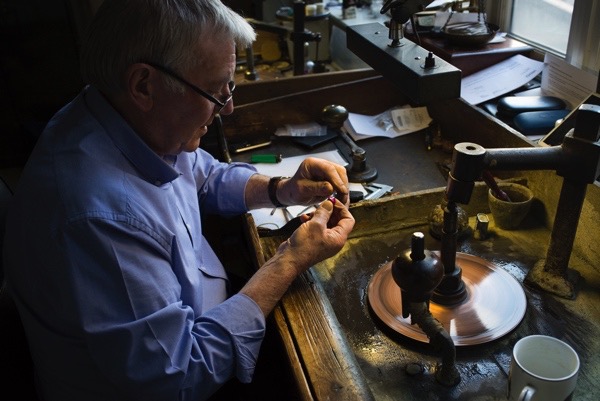
Pete Rome
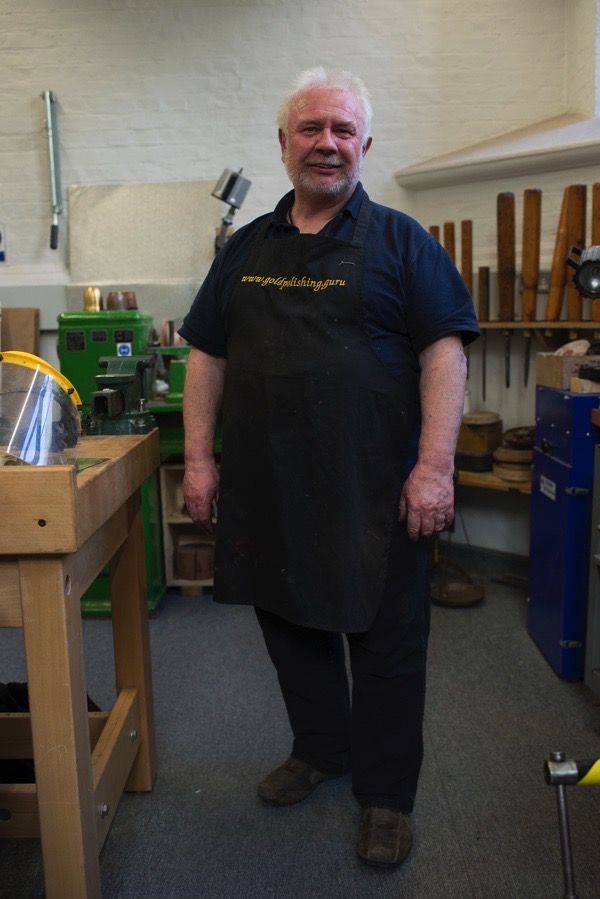
Steve Goldsmith, Polisher
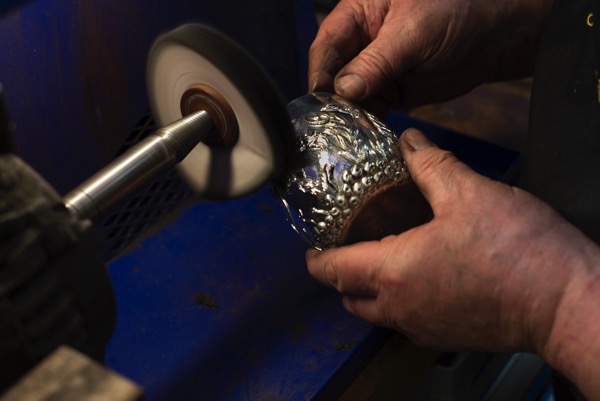
Steve Goldsmith
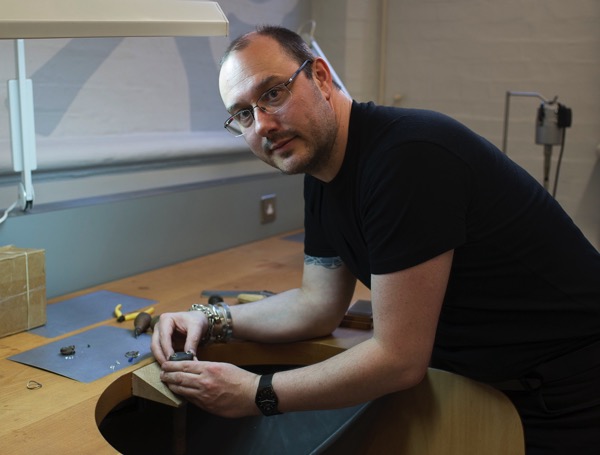
Niall Paisley, Diamond Setter – “I’ve been in the trade twenty-seven years, I started at sixteen. You learn a lot by heating stones, the hardness of the stones and the stress they will endure – diamonds can take any level of abuse whereas emeralds are brittle.”
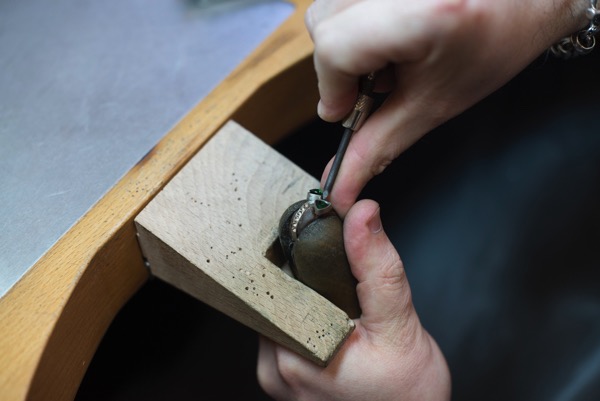
Niall Paisley
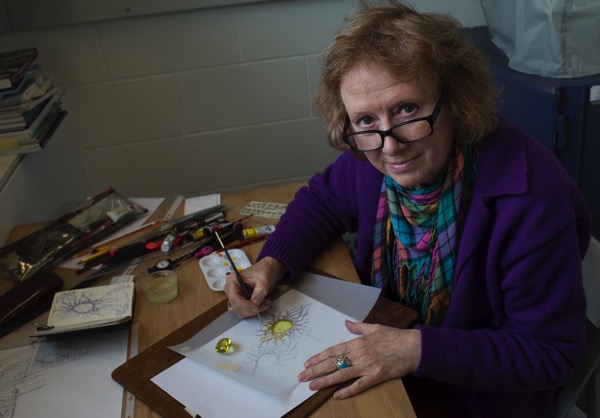
Jennifer Bloy, Designer of Jewellery, Silverware & Objet d’Art – “I wanted to be a smith but they wouldn’t let me because I am a woman, so I started making reproductions – but then there was a job going as a designer in Hatton Garden and I got it. Because I worked as a maker, I know how things are made, so I can design for making.”
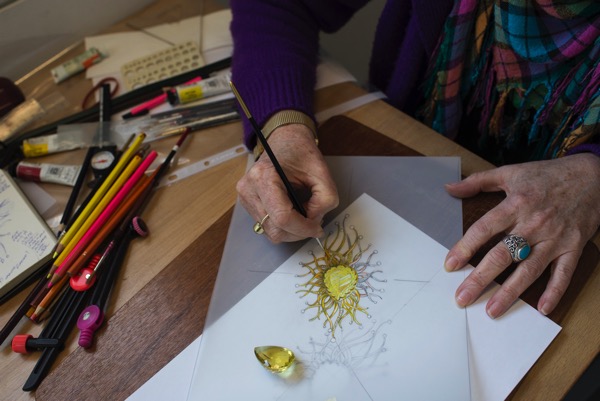
Jennifer Bloy – “I bought this stone, I love stones and I love colour.”
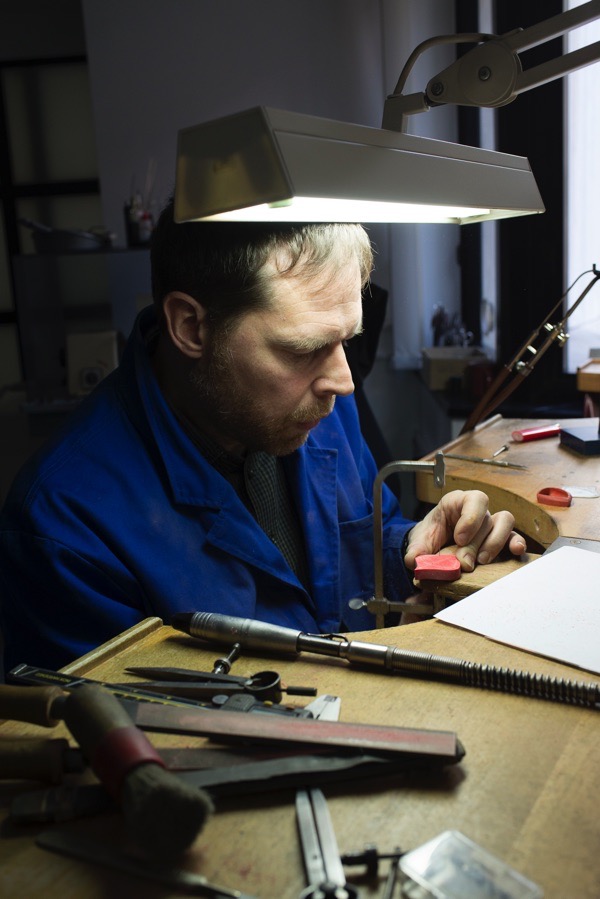
Ingo Henn, Master Goldsmith, Henn of London – “My great grandfather started in 1900, he was a stone cutter. He came from a family of fifteen and at twelve years old he was sent to be trained. When I was seventeen, I started as an apprentice in the family company but I have been designing since I was sixteen and I have been in London twenty-two years now. Any gemstone is valuable but it is not just down to its monetary value. The key is never to overpower a stone if the setting is too big or the design is too busy.”
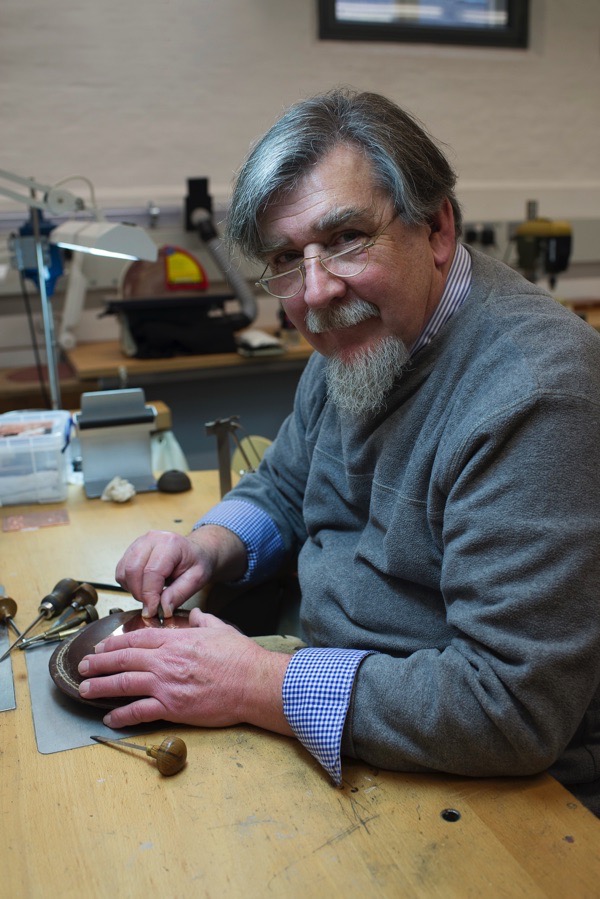
Wayne Parrott, Master Engraver – “In 1908, the security engravers at the Bank of England earned more than the governors. I began at thirteen years old, attending evening classes at Sir John Cass College and I was taught by George Friend. Later, I returned to the Cass as a teacher and lectured for over forty years. We are all artists in what we do and I have produced countless designs.”
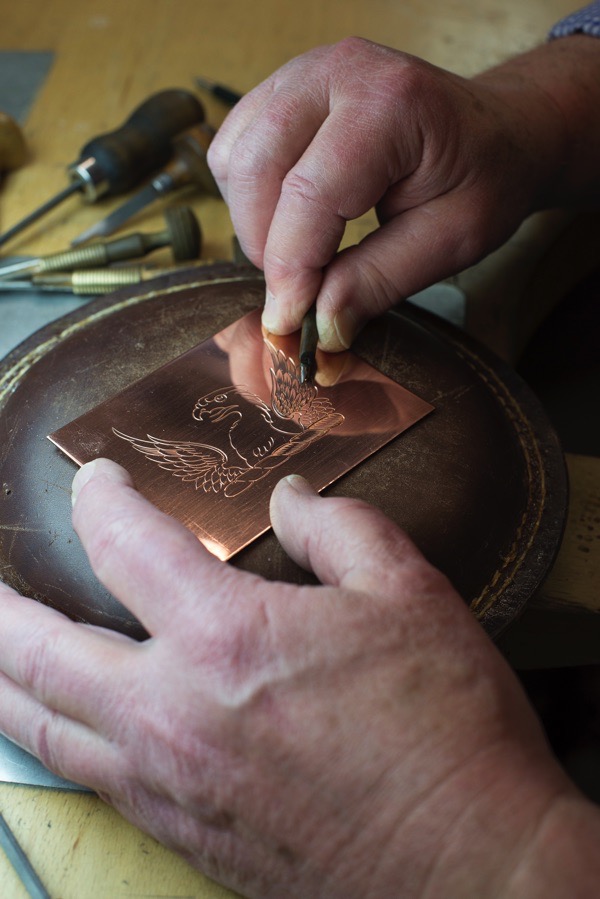
Wayne Parrott – “I specialise in designing seals.”
Photographs copyright © Sarah Ainslie
You may also like to read about