C A Mathew, Photographer
Click here to book THE GENTLE AUTHOR’S TOURS for June & July
On my tour, we visit some of the locations of C A Mathew‘s photographs to discover how Spitalfields has changed. One theory is Mathew took the photos to record the Jewish street life of Spitalfields and another is he took them to pass the time when his train from Liverpool St Station was delayed by two hours – but on my tour we reveal the truth behind the mystery of the photographer’s intentions.
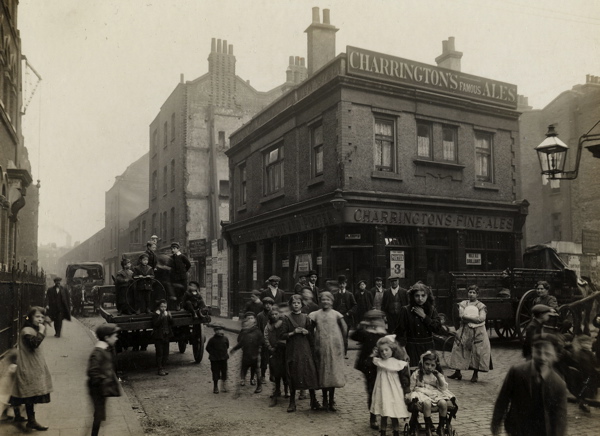
In Crispin St, looking towards the Spitalfields Market
On Saturday April 20th 1912, C.A.Mathew walked out of Liverpool St Station with a camera in hand. No-one knows for certain why he chose to wander through the streets of Spitalfields taking photographs that day. It may be that the pictures were a commission, though this seems unlikely as they were never published. I prefer the other theory, that he was waiting for the train home to Brightlingsea in Essex where he had a studio in Tower St, and simply walked out of the station, taking these pictures to pass the time. It is not impossible that these exceptional photographs owe their existence to something as mundane as a delayed train.
Little is known of C.A.Mathew, who only started photography in 1911, the year before these pictures and died eleven years later in 1923 – yet today his beautiful set of photographs preserved at the Bishopsgate Institute exists as the most vivid evocation we have of Spitalfields at this time.
Because C.A.Mathew is such an enigmatic figure, I have conjured my own picture of him in a shabby suit and bowler hat, with a threadbare tweed coat and muffler against the chill April wind. I can see him trudging the streets of Spitalfields lugging his camera, grimacing behind his thick moustache as he squints at the sky to apprise the light and the buildings. Let me admit, it is hard to resist a sense of connection to him because of the generous humanity of some of these images. While his contemporaries sought more self-consciously picturesque staged photographs, C.A.Mathew’s pictures possess a relaxed spontaneity, even an informal quality, that allows his subjects to meet our gaze as equals. As viewer, we are put in the same position as the photographer and the residents of Spitalfields 1912 are peering at us with unknowing curiosity, while we observe them from the reverse of time’s two-way mirror.
How populated these pictures are. The streets of Spitalfields were fuller in those days – doubly surprising when you remember that this was a Jewish neighbourhood then and these photographs were taken upon the Sabbath. It is a joy to see so many children playing in the street, a sight no longer to be seen in Spitalfields. The other aspect of these photographs which is surprising to a modern eye is that the people, and especially the children, are well-dressed on the whole. They do not look like poor people and, contrary to the widespread perception that this was an area dominated by poverty at that time, I only spotted one bare-footed urchin among the hundreds of figures in these photographs.
The other source of fascination here is to see how some streets have changed beyond recognition while others remain almost identical. Most of all it is the human details that touch me, scrutinising each of the individual figures presenting themselves with dignity in their worn clothes, and the children who treat the streets as their own. Spot the boy in the photograph above standing on the truck with his hoop and the girl sitting in the pram that she is too big for. In the view through Spitalfields to Christ Church from Bishopsgate, observe the boy in the cap leaning against the lamppost in the middle of Bishopsgate with such proprietorial ease, unthinkable in today’s traffic.
These pictures are all that exists of the life of C.A.Mathew, but I think they are a fine legacy for us to remember him because they contain a whole world in these few streets, that we could never know in such vibrant detail if it were not for him. Such is the haphazard nature of human life that these images may be the consequence of a delayed train, yet irrespective of the obscure circumstances of their origin, this is photography of the highest order. C.A.Mathew was recording life.
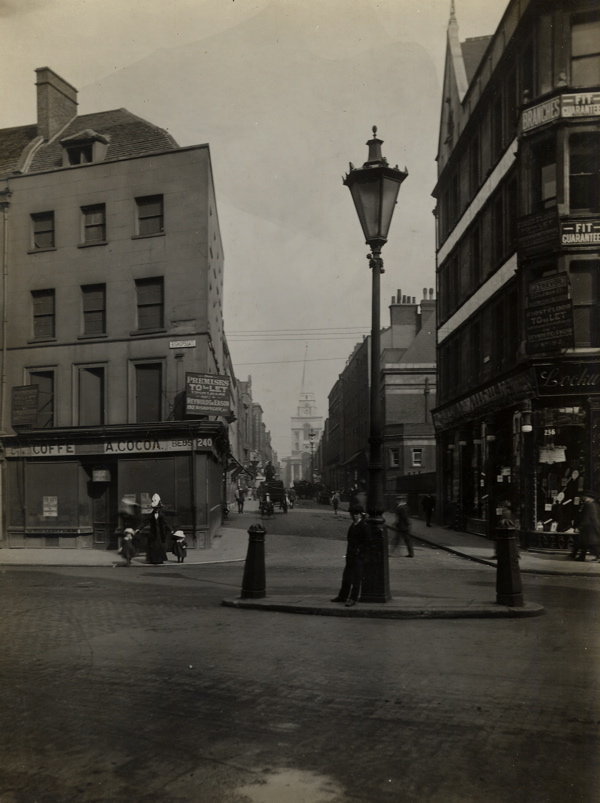
Looking down Brushfield St towards Christ Church, Spitalfields.
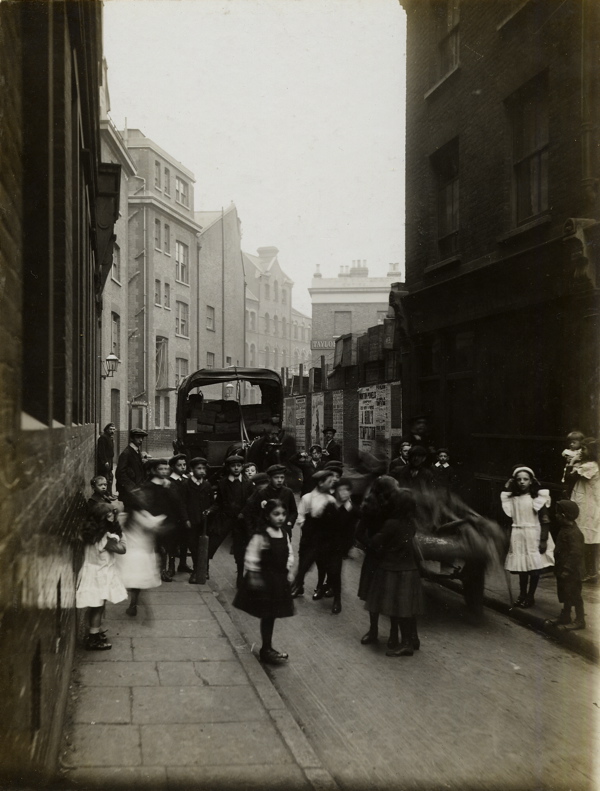
Bell Lane looking towards Crispin St.
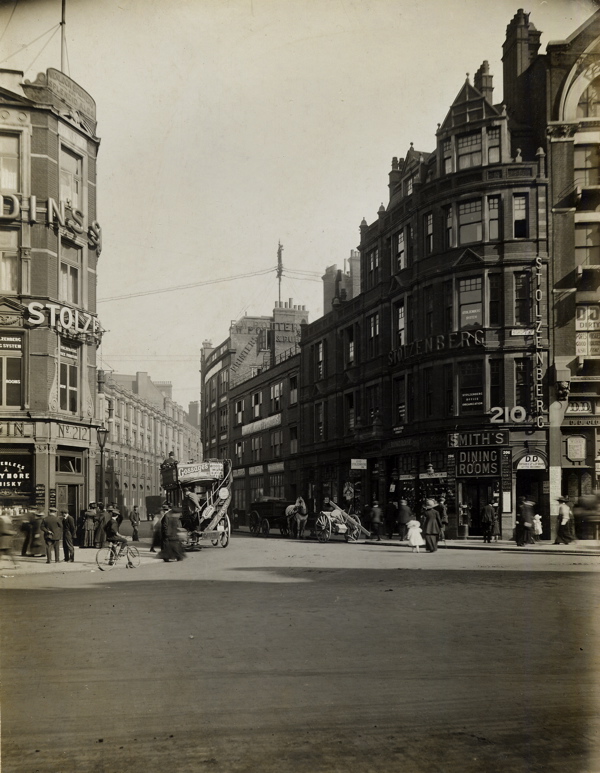
Looking up Middlesex St from Bishopsgate.
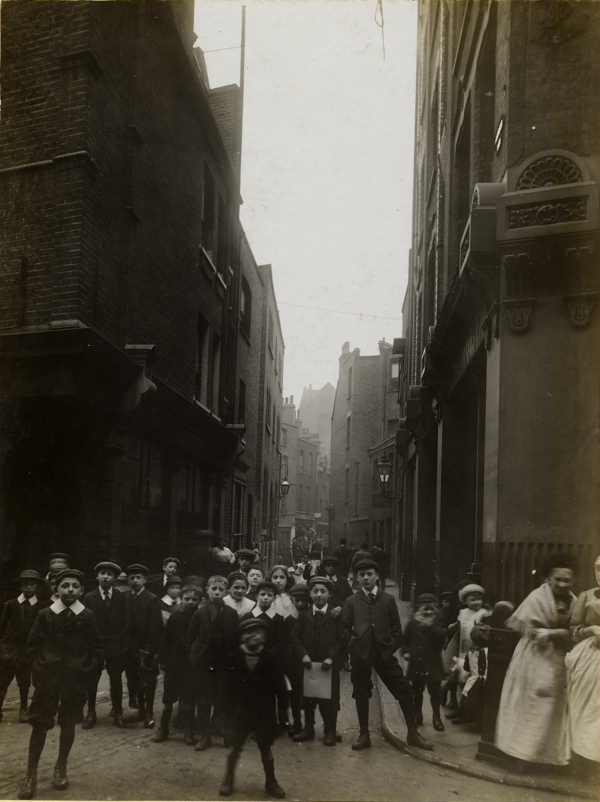
Looking down Sandys Row from Artillery Lane – observe the horse and cart approaching in the distance.
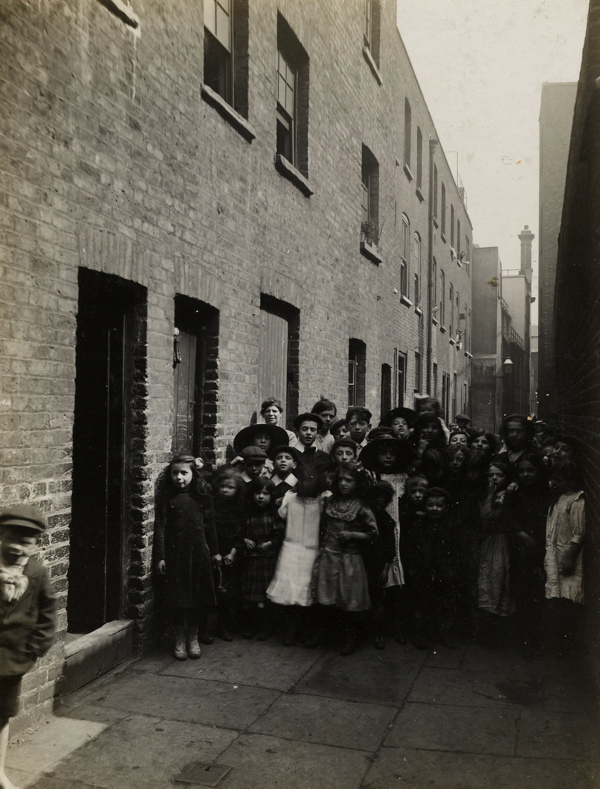
Looking down Frying Pan Alley towards Crispin St.
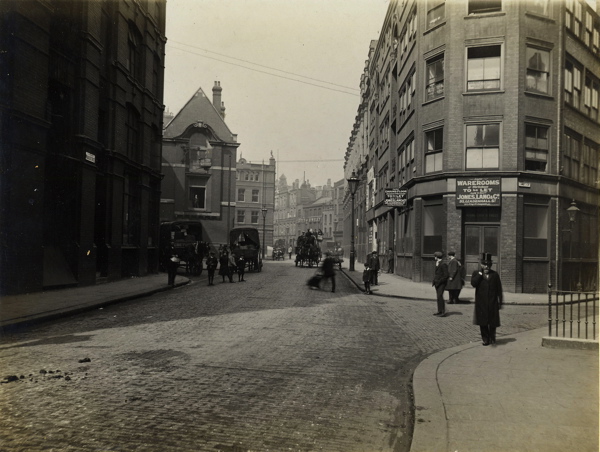
Looking down Middlesex St towards Bishopsgate.
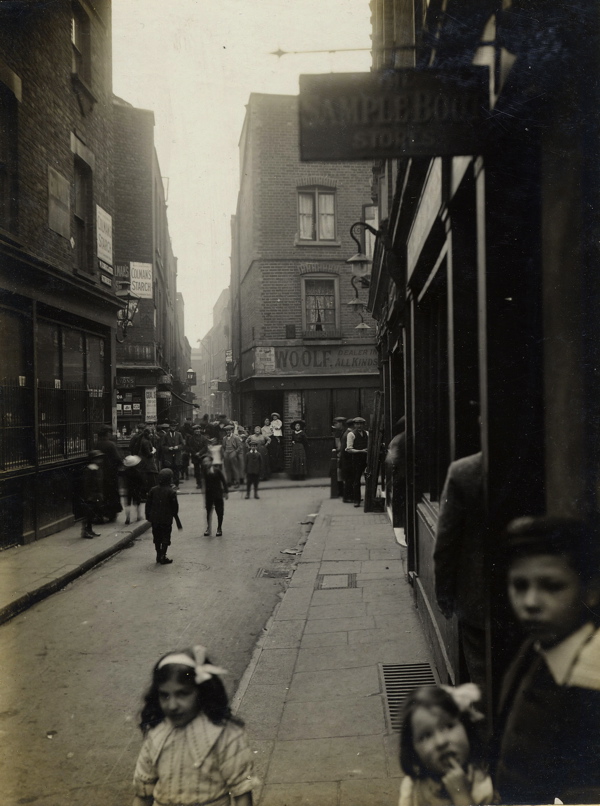
Widegate St looking towards Artillery Passage.
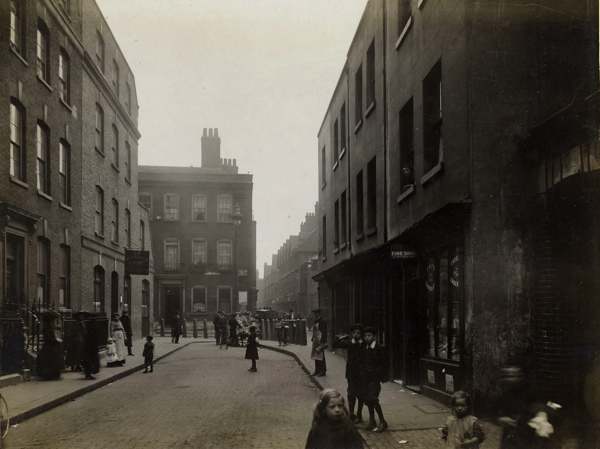
In Spital Square, looking towards the market.
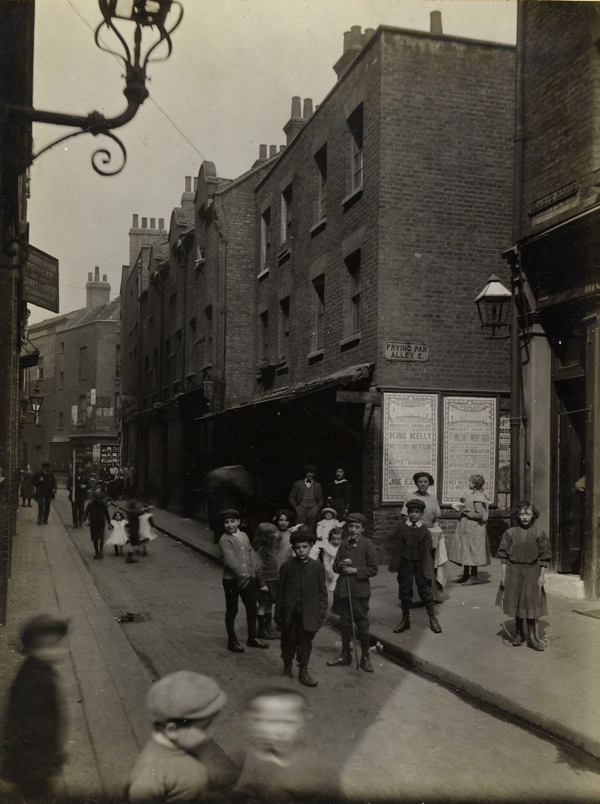
At the corner of Sandys Row and Frying Pan Alley.
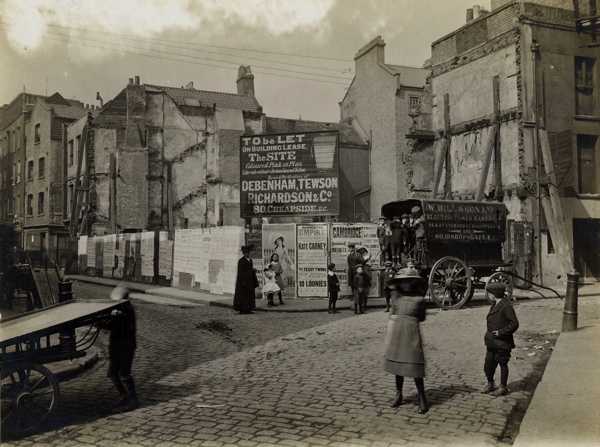
At the junction of Seward St and Artillery Lane.
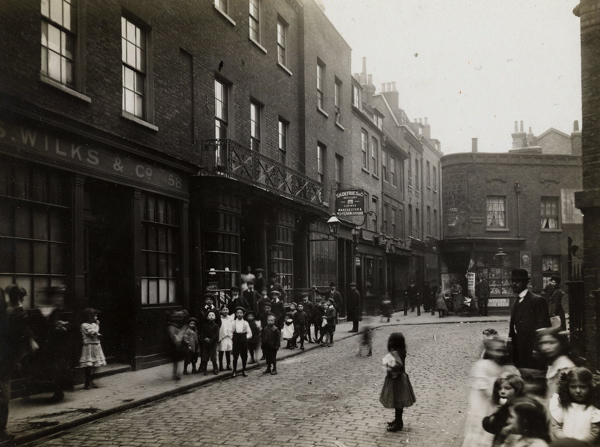
Looking down Artillery Lane towards Artillery Passage.
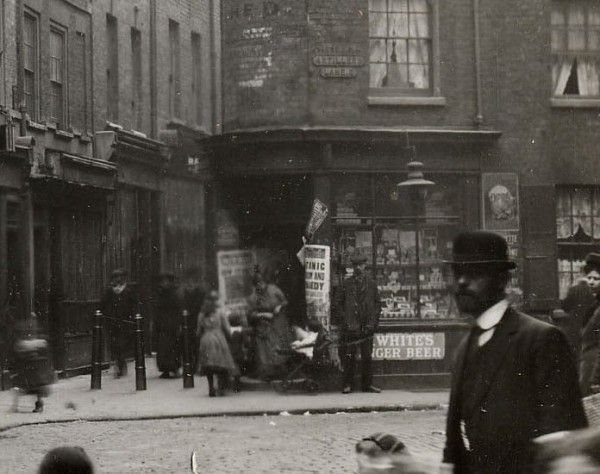
An enlargement of the picture above reveals the newshoarding announcing the sinking of the Titanic, confirming the date of this photograph as 1912.
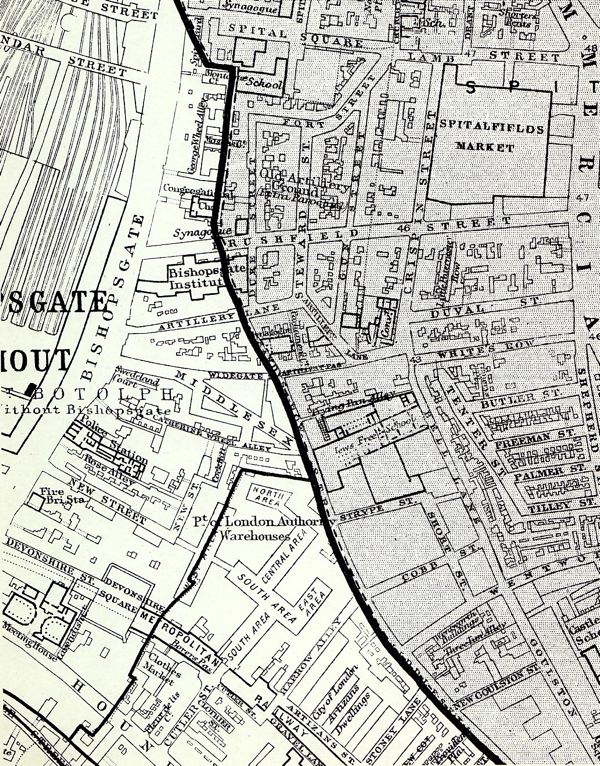
Spitalfields as C.A.Mathew found it, Bacon’s “Citizen” Map of the City of London 1912.
Photographs courtesy of Bishopsgate Institute
Tim Marten, Guitar Repairs
Click here to book THE GENTLE AUTHOR’S TOURS for June & July
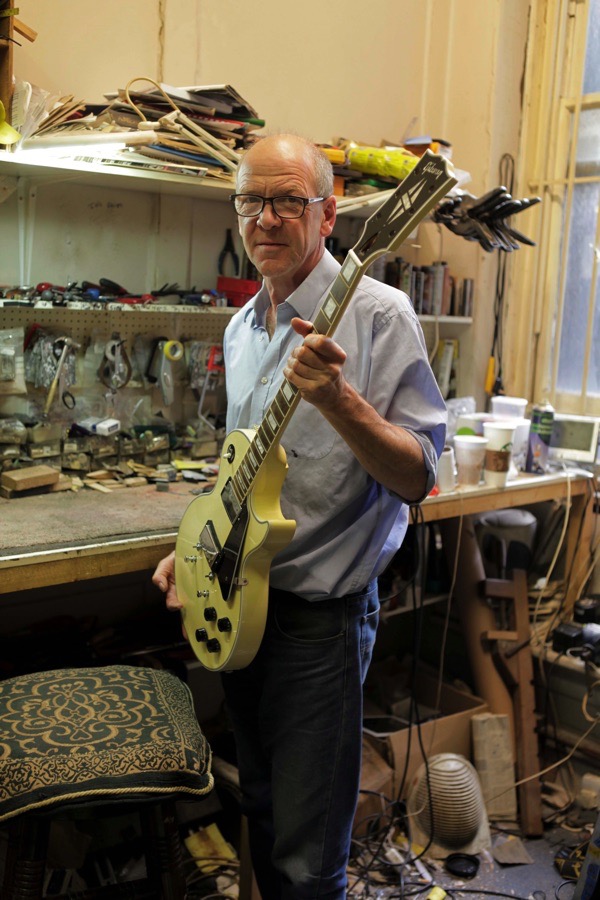
Tim Marten by Colin O’Brien
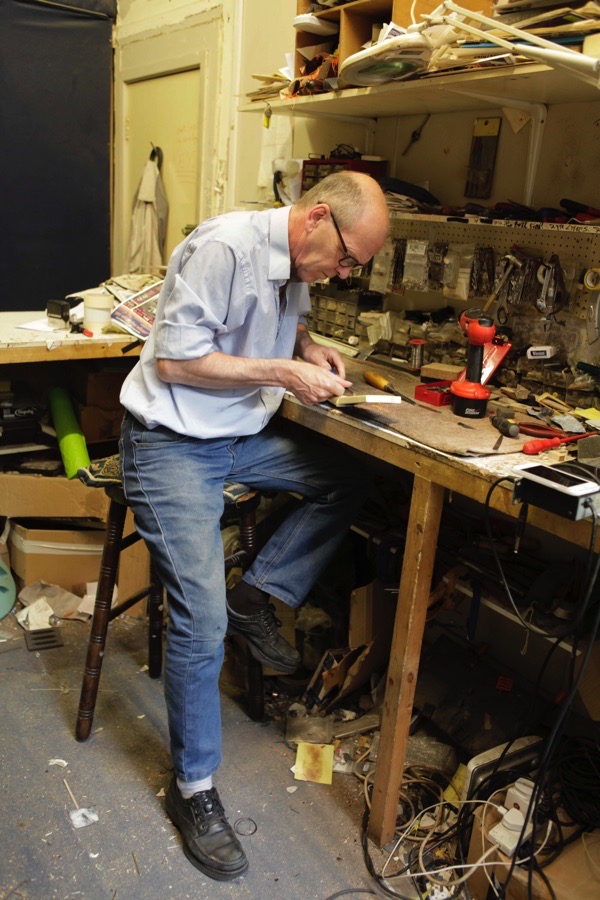
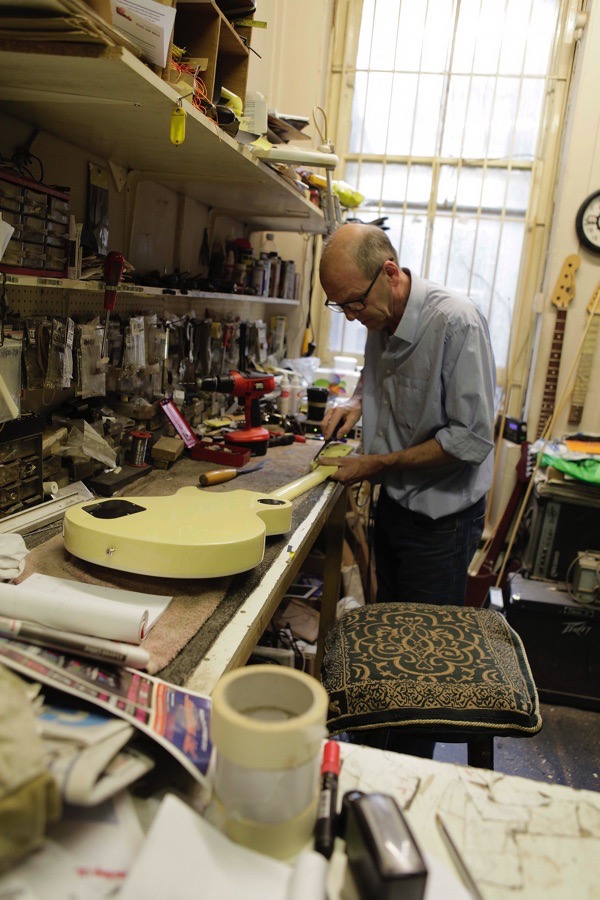
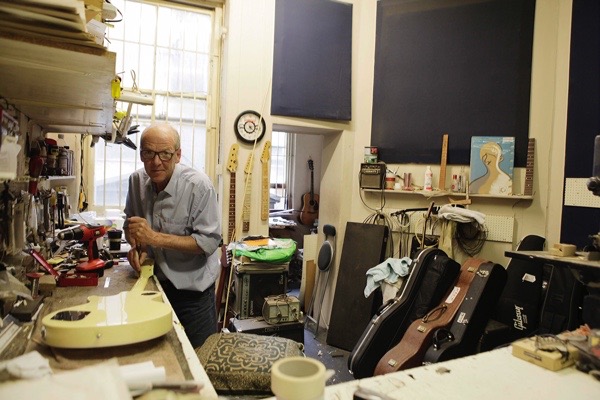
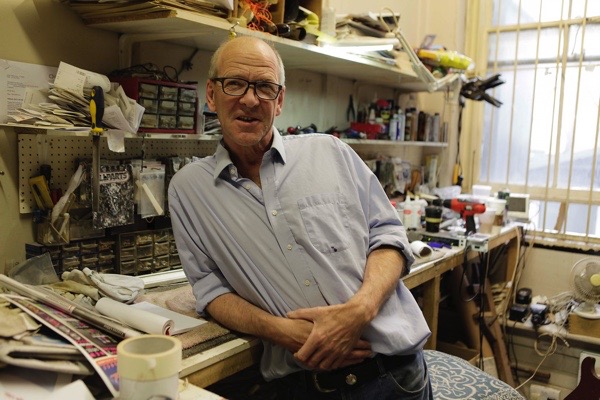
Guitars have been manufactured in St Giles since the days of Queen Anne but now – thanks to the redevelopment of Denmark St – Tim Marten is one of the very last to make and repair instruments in this corner of Soho. I visited Tim in the tiny panelled workshop in the beautiful sixteen-nineties house where he pursued his trade, prior to his move to new premises in Charing Cross Rd.
“When I was a teenager I wanted to learn to play guitar, and I couldn’t afford to buy one and I was reasonably good at woodwork, so I made one. It was horrible! As soon as I’d finished it, I began to understand where I’d gone wrong, so I embarked on my second one and I cured some of the mistakes I’d made the first time round. After about eighteen months – maybe longer – with the help of various other people, I’d finished my third, curing the mistakes I’d made the second time round. I refined it down and down, until I had a guitar I could actually go out and play. It held its own against factory-made bought guitars. That was quite a reasonable instrument, and I went from there!
I came from an engineering background. My father and my uncle were both very good engineers and I used to build Airfix kits and fly model aeroplanes. I was always interested in mechanics and quite good at understanding how things worked. I was one of those small boys whose immediate reaction after Christmas lunch was to start taking their toys apart to see how they worked.
I spent my late teens and early twenties playing in bands round London and Bristol and, if anyone had problems, I’d fix their guitars. It just escalated from there. I was fortunate to meet someone who worked behind the counter at Andy’s Guitar Workshop in Denmark St, just across the road from where I am now. It was the first specific guitar repair workshop in Central London. That was in 1979.
It was run by Andy Preston but it was called ‘Andy’s‘ because that was the name of the Greek greengrocers on the ground floor and we were in the basement. There were quite a few music shops in the street but Andy’s had flats above and a greengrocer at street level. Our customers had to go round the back and down the stairs to our workshop below. I was twenty-two and I had some ideas I was working on for designs for guitars, and my friend who was the counter hand said, ‘Why don’t you come down and speak to the guys I work with?’ So I did and we had a long chat, and I was offered my first job and I’ve been doing it ever since.
Then I joined Led Zeppelin as a guitar technician and went off touring for ten years. I worked for various other bands and had a shop of my own up in Church Lane, Hornsey, just underneath The Kinks‘ studio. So I got to know Ray Davies and did a lot of touring with The Kinks. I played guitar professionally and found I earned more money gigging three nights a week than I did mending guitars in my little workshop, so it became a necessity to go out each Thursday, Friday and Saturday and play. Back in those days, it was quite a lucrative thing to do.
Things went spectacularly wrong in 2000, and I lost the shop and my business. But within a couple of days of realising that was going to happen and wondering what on earth I was going to do with myself, Andy Preston rang up from his hugely-expanded guitar shop which had become internationally known and taken over the whole building. He asked me to come back and run his repair department because they needed somebody with experience. So the door opened and I walked into it.
I stayed there until Andy went bust and sold his shop onto Rick Harrison, when I started working independently and I’ve been independent ever since. I’ve had my workshop in this room for about six years, before that it was Central Sound recording studios. I have no proof but I have been told that David Gray recorded Babylon in this very room. The building has listed status and is as it was constructed after the Great Fire of London, one of four remaining buildings in Denmark St from that time. This was originally intended as housing and it is slated to be returned to housing. I am going to be booted out and this is going to be turned into luxury flats. I am on two months’ notice, so that could happen as soon as six months from now.
I don’t think the ethos of Denmark St has changed very much at all since I first came here in 1979. Up until four or five years ago, when Cliff Cooper sold out the leases to the current owners who are property developers, there was very little change in the street apart from the signs above the shops as businesses came and went. Denmark St has always been a bit of a shabby sideshow in very nice way.
From the fifties, it was always the centre for music, when the music publishers started moving in and then the recording studios followed. There were three recording studios here in the sixties. From the eighties, shops came and went but they were always music shops, and the place was in need of a lick of paint. It has always been like that and, to a certain extent, that is its charm. Now restaurants are moving in, the developers are taking over and we are being moved out. It’s coming to an end despite our loudest protests.
We got hit very hard by the internet and it took the industry a while to adapt. I think that was one of the reasons Andy got into financial difficulties. For the repair side of the business, the internet helps no end. I get a lot of work from people who have bought guitars online. They come in the door, I take one look at it and say, ‘You just got this on ebay, didn’t you?’ and they ask, ‘Yes, how did you know?’ and I say, ‘Because if you’d played it before you bought it, you’ never have bought it!’ I tell them, ‘Yes I can fix it for you but it’s going to cost more money than if you had bought it properly from a shop in the first place.’ So I view the internet as a mixed blessing, although I do make a lot of money out of people who buy stuff and find that it is not as described. I end up sorting it out.
It’s the tinkering side of things, the satisfaction of getting things right, that I like. I do mostly repairs now and only a little design work. There’s a lot of satisfaction in getting something working properly and you give it back to the customer, and a big smile comes over them. ‘Oh wow, that’s brilliant! I’ve been fighting this thing for years – if only I’d known you ten years ago!’
Like any job, it can become repetitive. There are certain repairs you do in your sleep. That’s what I call the bread-and-butter work. It’s well paid, so – if I spend three days a week doing that – I know that I’ve made enough to sit down and do something a bit more creative.
In this industry, it’s a great way to spend a day but it’s a lousy way to make a living. Especially making guitars, because it is so time-consuming and you can’t compete with the guys who have got all the machinery and industrial spraying facilities. The quality of the stuff coming out of the far east now is so good that you have to be able to charge a disproportionate amount of money for a guitar because it is handmade. Or you do bespoke work, I enjoy making things that you couldn’t buy in a shop.
If you look around my workshop, you will see that I am surrounded by projects that I have got halfway through but never got around to finishing. It’s what I do in the quiet periods, but I’ve acquired a reputation for being good at repairs and it’s getting to the point where I have more work than I can do. If you look around, there’s thirty guitars here waiting to be repaired. They are numbered up to fifty-seven and I am working on number twenty-six at the moment. Some of them will take five minutes but others will take me three weeks to fix.
I’ve always got three or four jobs on the go at once and, as you can see, there there are guitars lying around in various stages of repair. While I am waiting for glue or lacquer to dry, I will put it on one side and return to it tomorrow. Repairing instruments is a job where you don’t work on one at a time and finish it.
When I was running the repair department at Andy’s Guitar Workshop, I had four people working under my supervision and I enjoyed the responsibility and the teaching and the social life as well. Now it’s just me yet I am not alone because I have a constant stream of customers and the phone never stops ringing.”
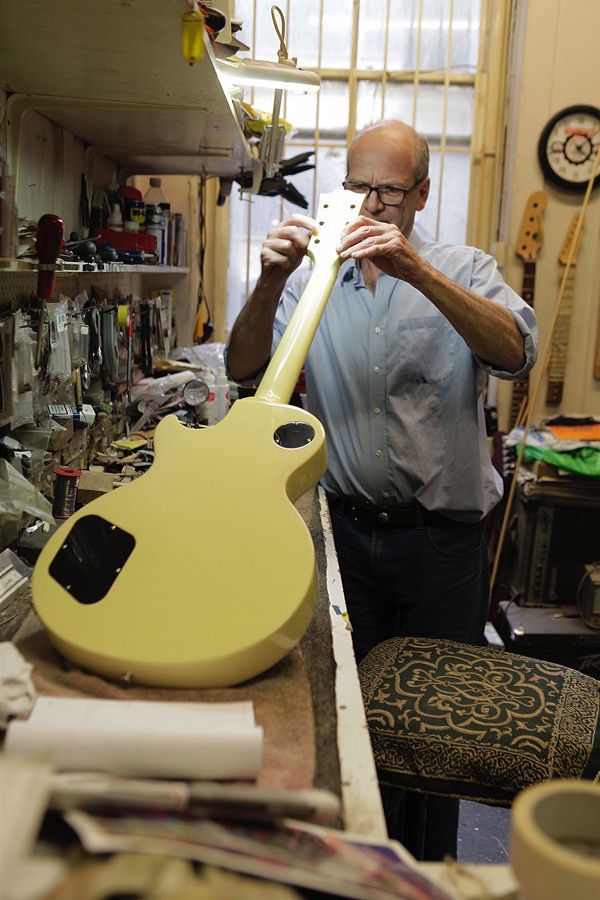
Photographs copyright © Estate of Colin O’Brien
Tim Marten, Guitar Repairs, 125 Charing Cross Rd, London, WC2H 0EW9
You may also like to read about
So Long, Beattie Orwell
Click here to book THE GENTLE AUTHOR’S TOURS for June & July
Beattie Orwell died last Thursday at the fine age of one hundred and five
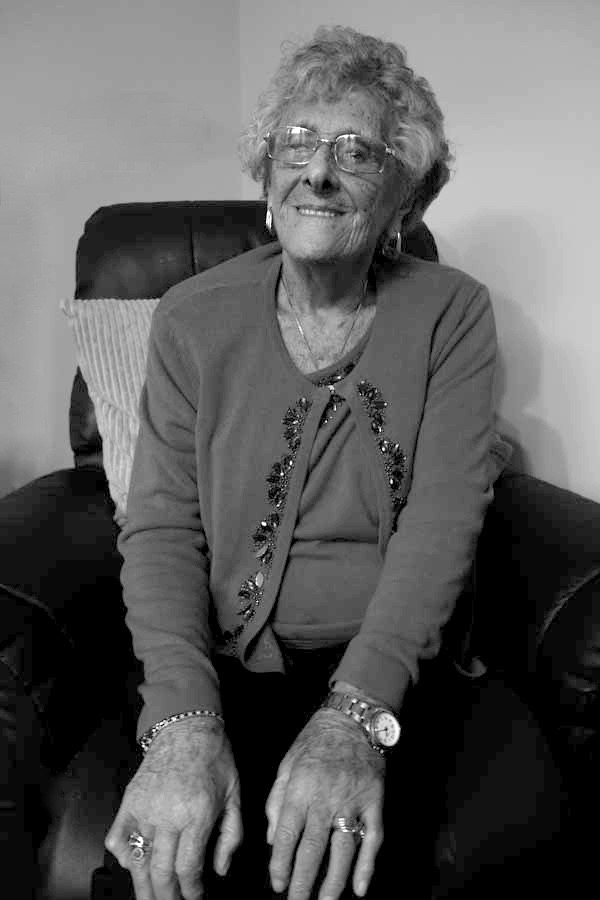
Portrait of Beattie Orwell by Phil Maxwell
It was my delight to accompany photographer Phil Maxwell to visit one hundred and five year old Beattie Orwell and sit beside her in her cosy flat while she talked to me of her century of existence in this particular corner of the East End.
A magnanimous woman who delighted in the modest joys of life, Beattie was nevertheless a political animal who is proud to be one of the last living veterans of the Battle of Cable St – a formative experience that inspired her with a fiercely egalitarian sense of justice and led to her becoming a councillor in later life, acutely conscious of the rights of the most vulnerable in society.
In spite of her physical frailty, Beattie’s moral courage granted her an astonishing monumental presence as a human being. To speak with Beattie was to encounter another, kinder world.
“I am Jewish and both my parents were East Enders, born here. My father’s parents came over from Russia. On my mother’s side, her parents were born here but her grandfather was born in Holland. So I am a bit of a mixture!
My father Israel worked as a porter at the Spitalfields Market and my mother Julia was a cigar maker at Godfrey & Phillips in Commercial St. I grew up in Brunswick Buildings in Goulston St, until I got bombed out. It was horrible, we had a little scullery, too small to swing a cat. My mother had one bedroom and, the three children, we slept in a put-you-up. I had two sisters Rebecca & Esther. Rebecca was the eldest, she very clever at dressmaking. When she was fifteen, she could make a dress. We needed her because my father died when he was forty-four, he had three strokes and died in Vallance Rd Hospital. I was only thirteen. He used to take me everywhere, he was marvellous. He took to me to the West End to visit my aunt, she was an old lady with a parrot and lived on Bewick St. We used to have a laugh with the parrot.
We moved to City Corporation flats in Stoney Lane and I went to Gravel Lane School. It was lovely school, they taught us housewifery. We had a little flat in the school and we used to clean it out, then go shopping in Petticoat Lane to buy ingredients to make a dinner, imagining we were married. The boys used to do woodwork and learnt to make stools and things like that. I loved that school. When I was twelve it closed and I went to the Jewish Free School in Bell Lane. It was very strict and religious. When the teacher wanted us to be quiet, she’d say, ‘I’m waiting!’ It was good, I enjoyed my school life.
I left when I was fourteen and I went to work right away, dressmaking in Alie St. I used to lay out material. I do not know why but I must have heavy fingers, I could not manage the silk. It used to fall out of my hands. I only lasted a week before I left, I could not stand it. Then I went to work with my sister at Lottereys in Whitechapel opposite the Rivoli Picture Palace, they used to make uniforms for solders. I went into tailoring, men’s trousers, putting the buttons on with a machine. We worked long hours and it was hard work. By the time I got married I was earning two pounds and ten shillings a week. I never earned big money. I worked all the way through the war. I gave all the money to my mother and she gave me a shilling back. I used to walk up to the West End. It was threepence on the trolley bus.
I was nineteen in 1936. I was there with all the crowds at the Battle of Cable St. I am Jewish and I knew we must fight the fascists. They were anti-semitic, so I felt I had to do it. I was not frightened because there were so many people there. If I was on my own I might have been frightened, but I never saw so many people. You could not imagine. Dockers, Scottish and Irish people were there. It was a marvellous atmosphere. I was standing on the corner of Leman St outside a shop called ‘Critts’ and everyone was shouting ‘ They shall not pass!’ I was with my friend and we stood there a long time, hours. So from there we walked down to Cable St where we saw the lorry turned over. I never saw the big fighting that happened in Aldgate because I was not down there, but I saw them fighting in Cable St near this turned over lorry. From there, we walked down to Royal Mint St, where the blackshirts were. They were standing in a line waiting for Oswald Mosley to come. So I said to my friend, ‘We’d better get away from here.’
We went back through Cable St to the place where we started. From there, the news came through ‘They’re not passing.’ We all marched past the place where Fascists had their headquarters – they threw flour over us, shouting – to Victoria Park where we had a big meeting with thousands of people. I had never seen anything like it in my life and I used to go to all the meetings. I never went dancing. My mother used to say, ‘I don’t know where I got you from!’ because I was only interested in politics. I am the only one like this in the whole family. I still know everything that is going on.
I used to go to Communist Party socials in Swedenborg Sq, off Cable St, and – being young – I used to enjoy it. Then I joined the Labour Party, the Labour League of Youth it was called. We used to go on rambles. It was lovely. We went to Southend once. I always used to march to Hyde Park on May Day and carry one of the ropes of our banner. I met my husband John in Victoria Park when I was with the Young Communists League, although I was not a member. They had a Sports Day and my husband was running for St Mary Atte Bowe because he was a Catholic. I met him and we went to a Labour Party dance. We got married in 1939.
We managed to get a flat in the same building as my mother, at the top of the stairs. They were private flats and I remember standing outside with a banner saying, ‘Don’t pay no rent!’ because the owners would not do the flats up. They did not look after us, it was horrible thing for us to have to do but it worked. I laugh now when I think about it. I was always brave. I am brave now.
We got bombed out of those flats while my husband was in the army. I had a baby so they sent me to Oxford where my husband was based with the York & Lancasters. We had a six-roomed house for a pound a week. My mother and sister came with me and they looked after my baby while I went to work in munitions. I was a postwoman too and I used to get up at four in the morning and walk over Magdalen Bridge.
I came back to the East End to try to get a flat here and I got caught in one of the air raids, but I knew this was where I had to live. My mother used to get under the stairs in Wentworth St when there was a raid and put a baby’s pot on her head. The war was terrible.
They sent my husband to Ikley Moor and it was too cold for him, so we came back for good. I managed to get two horrible little side rooms in Stoney Lane, sharing a kitchen between four and a toilet between two. I had no fridge, just a wooden box with chicken wire on the front. I used to go the Lane and buy two-pennorth of ice and put the butter in there. I had to buy food fresh everyday. There was a black market trade in fruit. These flats had been built for the police but the police would not have them, so they let them out to other people. All the flats were named after royalty, we were in Queens Buildings. I watched them building new flats in Cambridge Heath Rd but, before I could get one of them, I was offered a lot of horrible flats. Yet when I got there we were overcrowded, until we got a three bedroom flat at last, because I had two girls and a boy. I lived sixty-seven years there.
My husband never earned much money so I had to carry on working. He had twenty-two shillings a week pension from the army. He did all kinds of things and then got a job in the Orient Tea Warehouse. In 1966, when he was going to be Mayor of Bethnal Green and they would not give him time off, he went up to the Hackney Town Hall and got a job in the Town Clerk’s Office. He was always good at writing, he had lovely hand writing.
I became a councillor and I loved it. Our council was the best council, they were best to the old people. We used to go and visit all the old people’s homes. I never told them I was coming because I used to try and catch them out. We checked the quality of food and how clean it was. I organised dinners in York Hall for all the old people and trips to Eastbourne, but it has all been done away with – they do nothing now.
I was a councillor for ten years from 1972 until 1982. I had to fight to get the seat but I always loved old people, my husband was the same. He was known as the ‘Singing Mayor’ because he used to sing in all the old people’s homes. From when I was forty-two, I used to go round old people’s homes on Friday nights and I still do it. We have dinners together, turkey, roast potatoes and sausages, with trifle for afters.”
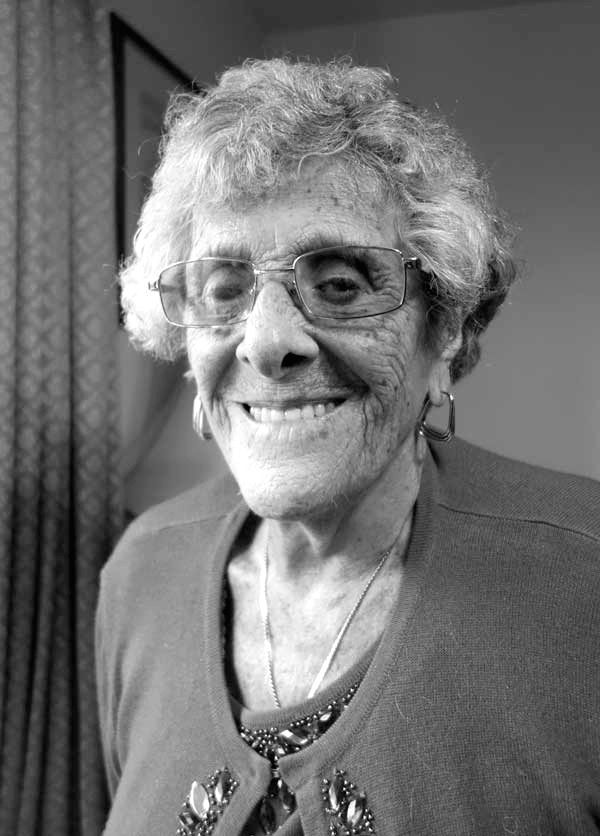
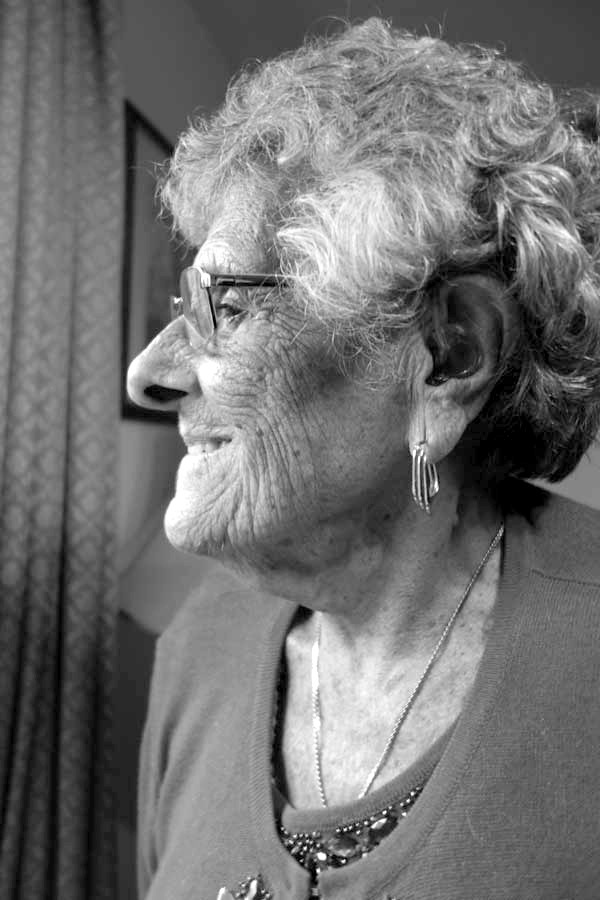
Beattie Orwell (1917-2023)
Photographs copyright © Phil Maxwell
Lucy Hart, Gardener
Click here to book THE GENTLE AUTHOR’S TOURS for June & July
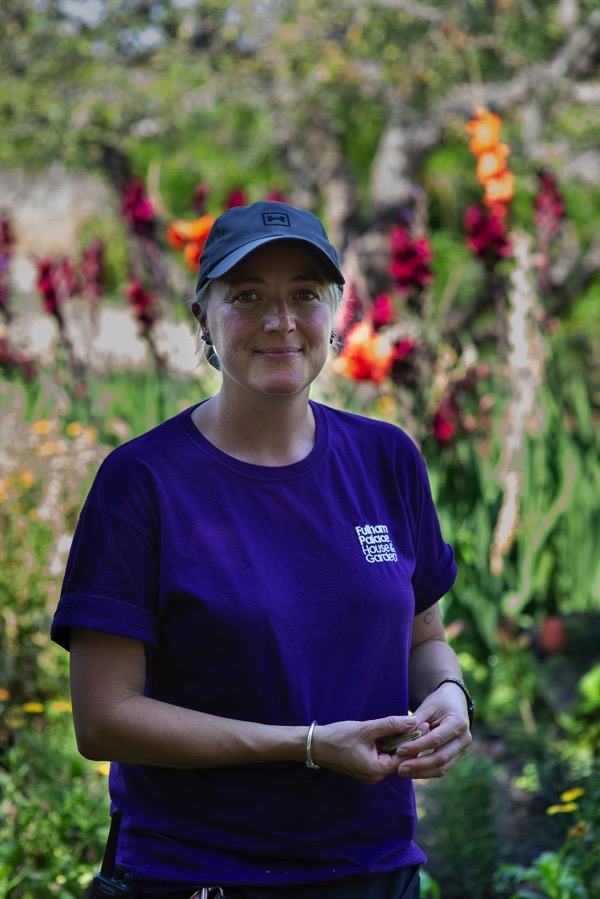
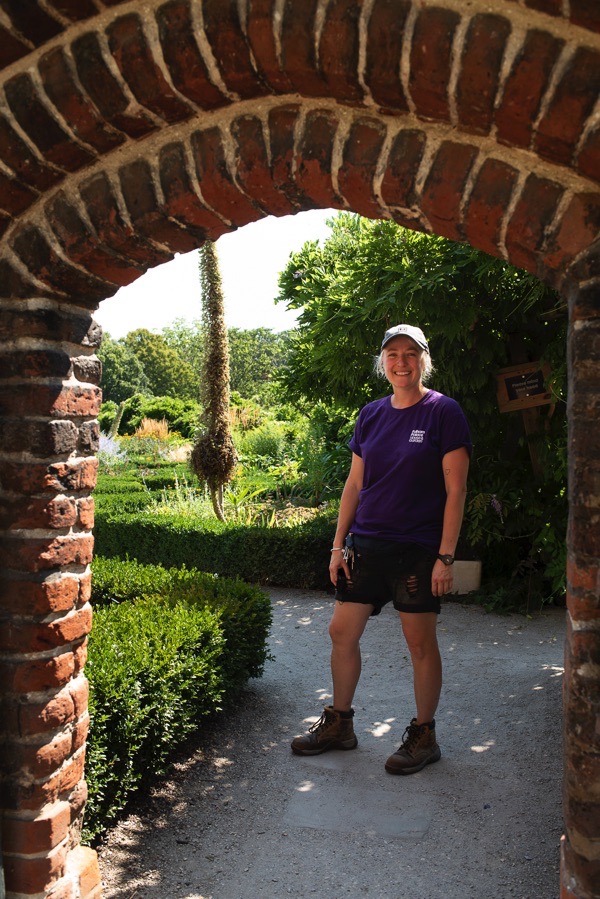
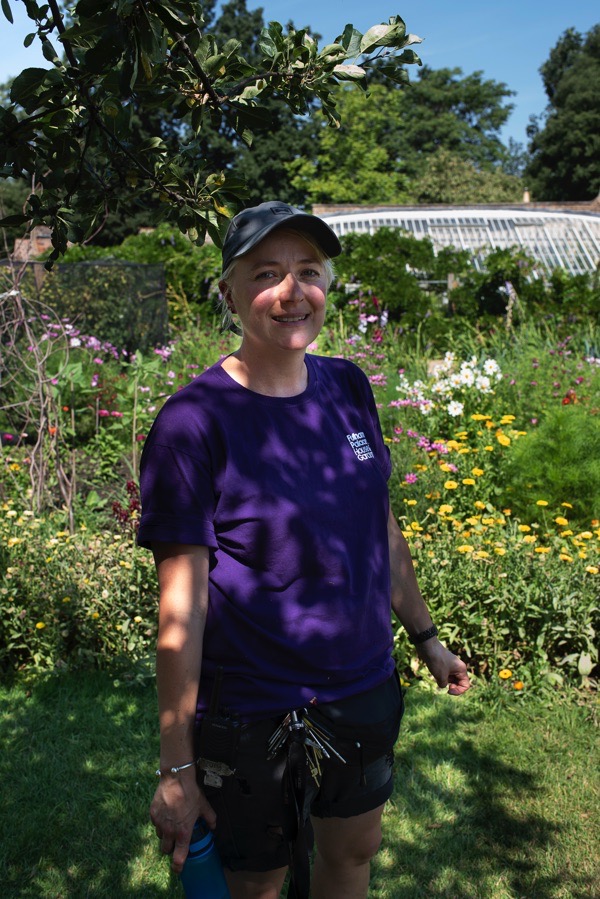
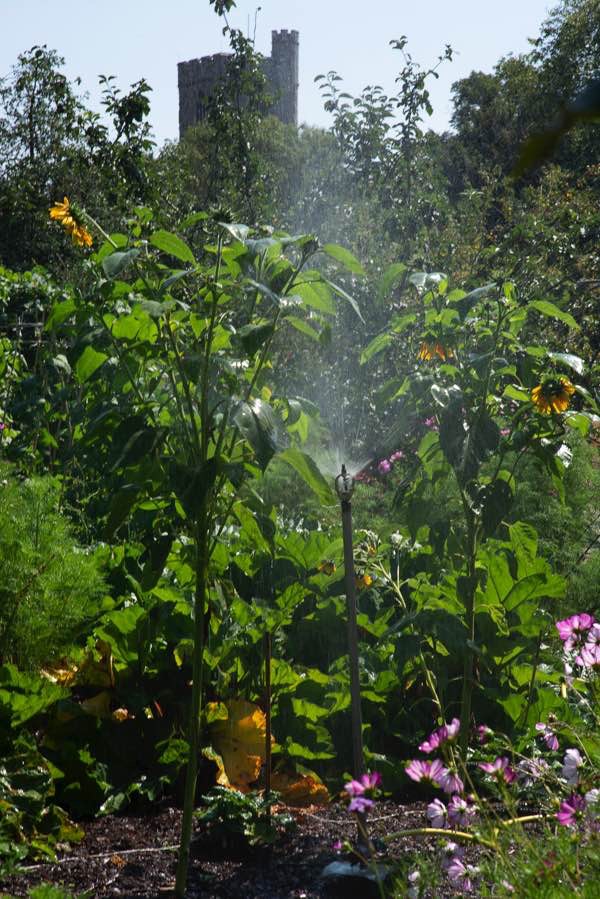
One of my favourite gardens in London is at Fulham Palace. So it was a great delight to cycle over from Spitalfields to meet the horticultural genius behind this wondrous creation, Lucy Hart, Head Gardener. Contributing Photographer Sarah Ainslie joined us, driving from Bethnal Green to create the accompanying photoessay.
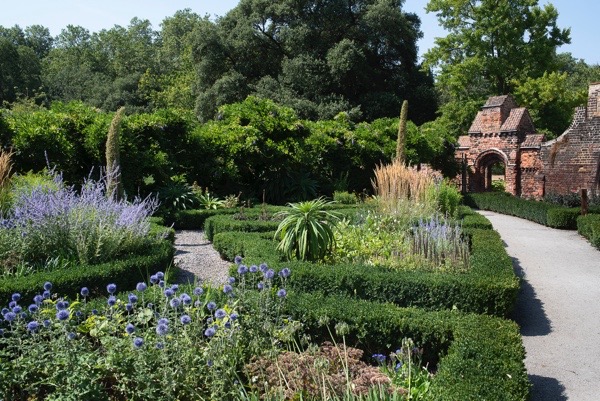
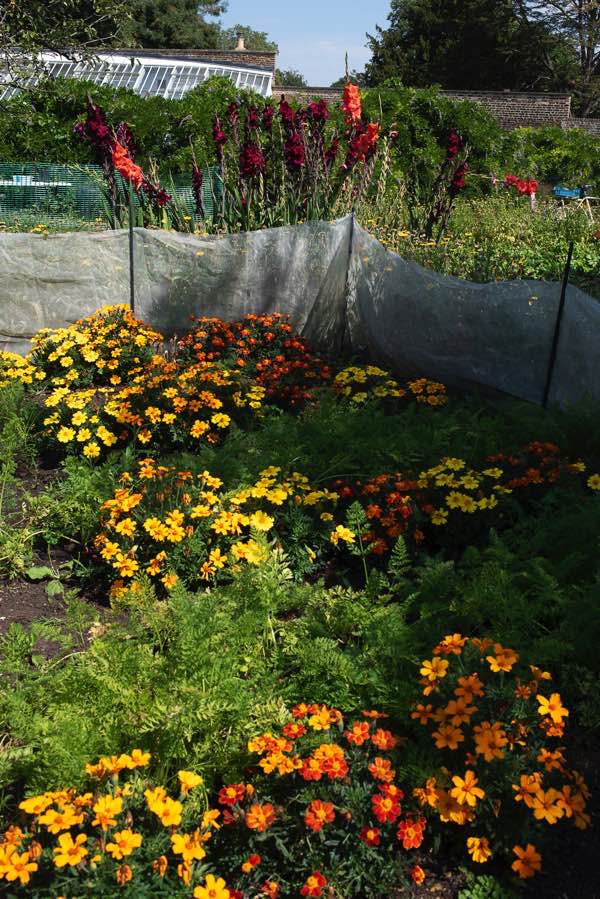
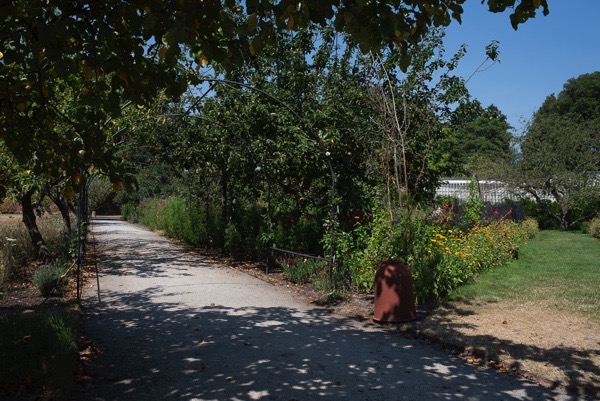
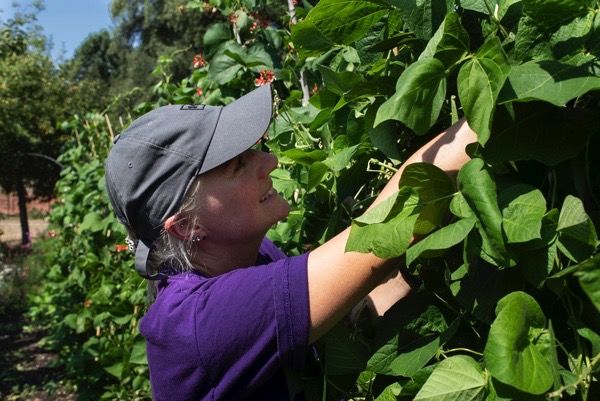
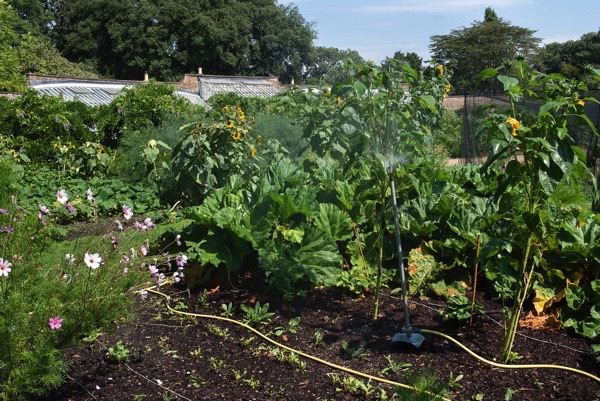
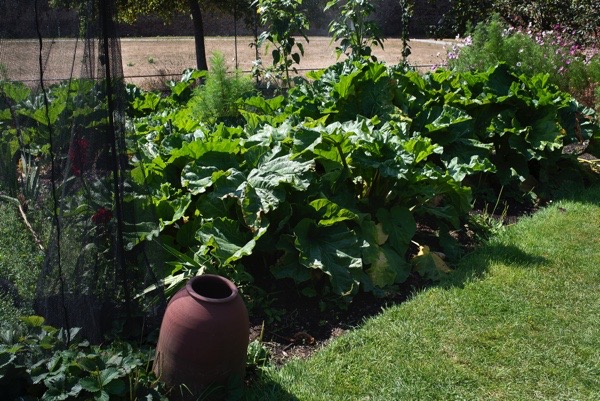
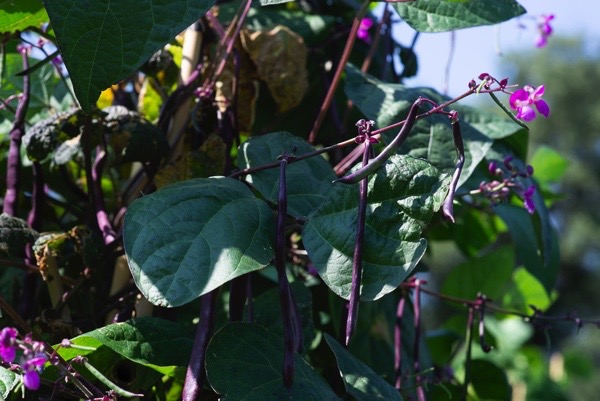
In recent years, Lucy has created an enchanted vegetable garden interwoven by flowers within the confines of this ancient walled enclave overlooked by the tower of All Saints, Fulham. I defy anyone not to be seduced by Lucy’s inspired planting combinations – purple gladioli and cabbages or carrots and marigolds – enfolded among old fruit trees and punctuated by long lines of runner beans.
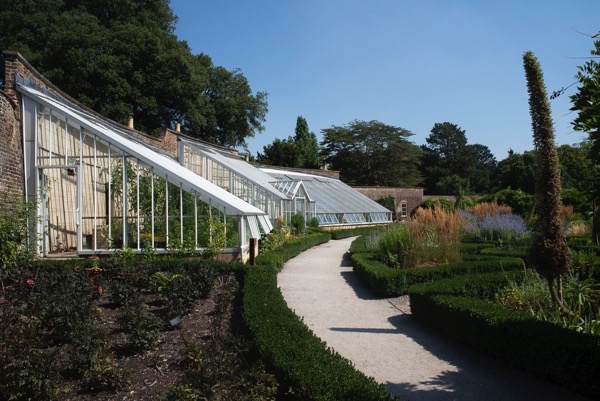
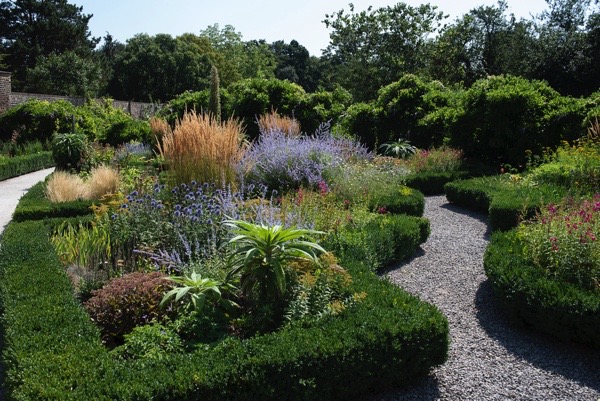
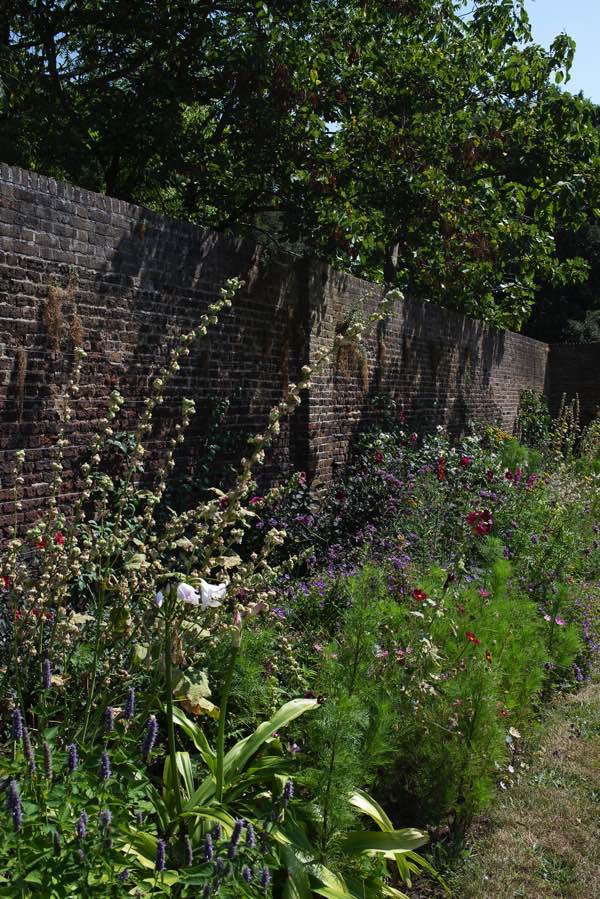
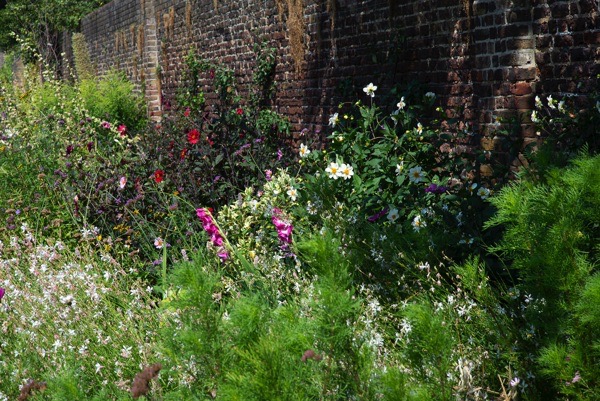
This is the ultimate walled garden of romance, recalling The Secret Garden or Tom’s Midnight Garden, with a fine knot garden and magnificent architectural glasshouses filled by the pungent fragrance of tomato leaves, all within the embrace of crumbling Tudor walls lined with deep herbaceous borders.
Escaping the blinding sunlight at noon, Lucy, Sarah & I sought refuge within the shadow of a venerable apple tree. Lucy told us her story, revealing her horticultural passions, while the sprinklers tick-ticked around us casting rainbows as their showers of waterdrops fell upon the verdant foliage.
“When I was thirteen, I started working on Saturdays at my local nursery in Wallington, Surrey, paying attention to the pelargoniums and seasonal bedding plants, salvias and busy lizzies. I took the job because I needed some cash but I thought, ‘I like this and I really quite enjoy it.’ I used to go home with my arms covered in little cuts from potting up roses but it was good fun.
I went to horticultural college at sixteen and worked at Merrist Wood for three years doing a diploma while living in halls. It was just so much fun and, for a year out, I worked on a nursery in Littlehampton. Then I did a degree in Horticulture at Writtle College and that broadened my horizons in terms of the scientific side. My background is in the production and propagation of plants.
It was then I started working in gardens, working for landscape companies doing domestic gardens, and got accepted for the Kew Diploma. That opened my eyes further to the botanical side of it all, which was a life-changing experience for me. I worked at Great Dixter, Powis Castle and for Beth Chatto, expanding my ideas of what a garden could be. Before that I was only working with seedlings, I never saw plants in flower!
I stayed at Kew Gardens for eight years before I got the job here at Fulham Palace Gardens. The walled garden was used to grow municipal wallflowers for the borough when I arrived. My brief was to bring the place back to life with a vegetable garden, involve the community and create a visitor attraction. The nineteenth century glasshouses had just been rebuilt and they dug out the moat. The wisteria was here and some old fruit trees, but otherwise it was quite empty.
Debs Goodenough, Head Gardener at Highgrove, came to give me advice and I remember walking round with her asking her, ‘Got any ideas?’ She had done a similar project at Osborne House.
We have a Tudor wall but the garden was laid out by Bishop Terrick in 1767 and planted by Bishop Longford in the eighteen-thirties. He put in the knot garden with box hedges, so I replanted that first. It means that when people walk through the gate, they immediately see flowers.
An archaeological investigation revealed that there were cross paths which we have reinstated. We did a big community archaeological dig, looking for garden archaeology revealing signs of how it might have been and we found these diagonal bed shapes, which inspired the layout for the vegetable garden we have today. But because there are no surviving plans I had free rein to do what I wanted, so it only has a loose relationship to an eighteenth century garden.
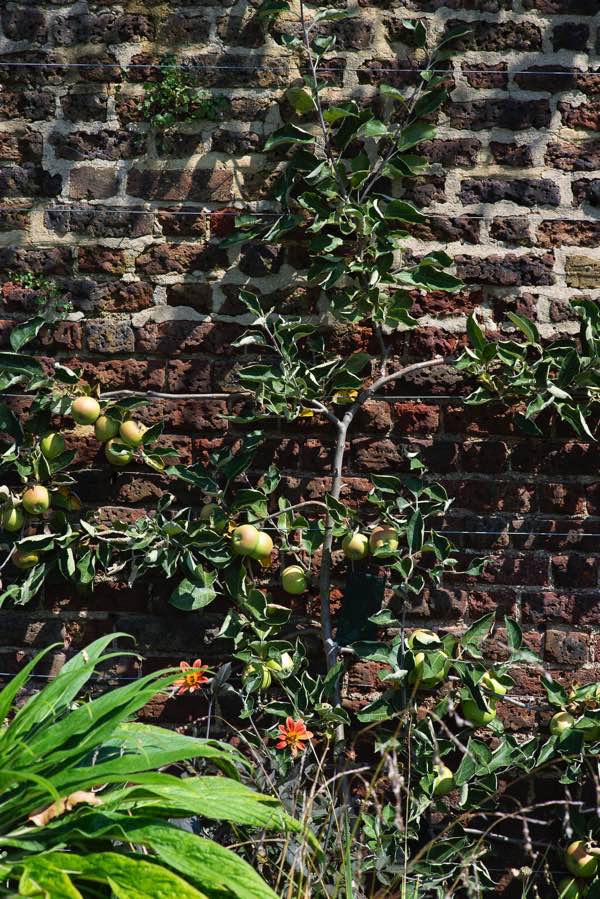
I was keen to plant around the existing trees and we also found old tree pits lined with clay to retain the moisture – it is so well drained here next to the Thames – so I decided to plant an orchard too. There is a record of there having been a plum orchard here. This garden is an ancient scheduled monument which brings some restrictions where we can plant trees. I have added espalier fruit trees – pears, quinces, apples, peaches, cherries and plums – and herbaceous borders along the walls, including the pollinators border which I only planted last year.
This garden has multiple roles. It is for education and I have three apprentices who each have a flower bed to grow their crop. They have to nurture and know it intimately, deciding when to water and when to thin it out. We also teach volunteers to grow vegetables and I do an introduction to vegetable growing for the general public too. The garden has a display value, people come to see the flowers and we sell our produce which is an important source of income.
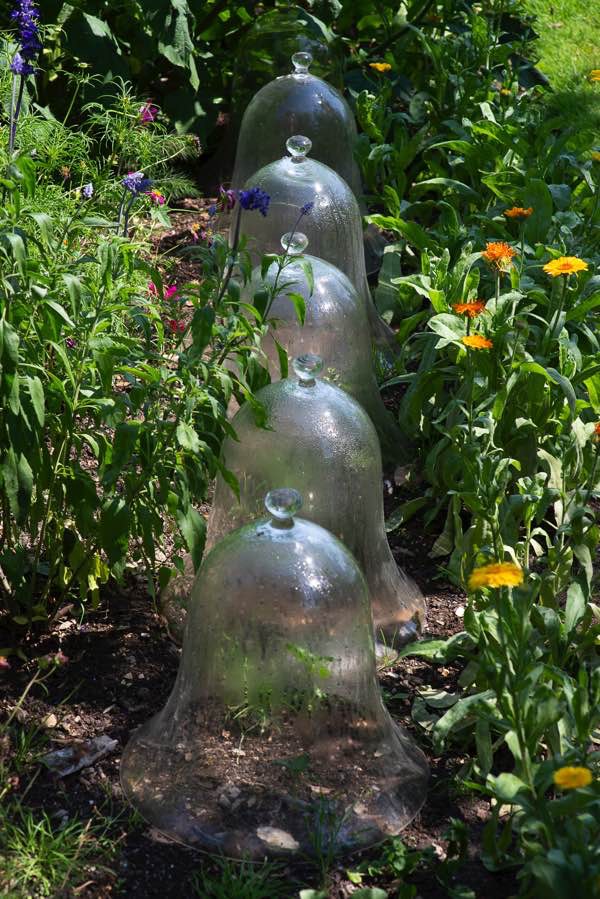
We plant flowers among the vegetables so that beds are not bare but these companion plants are selected to repel parasites. We plant French marigolds throughout because they have an oily fragrance which repels aphids and black fly. The calendula are also the host of a beneficial insect which predates on pests. We grow organically here without using pesticides. Our worst pests are the squirrels who eat all the apples and the parakeets who are such lazy eaters, they just take one bite out of each apple. We even have a rabbit that lives in the churchyard who gnaws the newly-planted trees. I have only seen the one and I am still trying to find his burrow.
We sell all our vegetables and flowers but do I get a bit funny about the cabbages and lilies because I think they are so beautiful growing in the ground. We count ourselves really lucky to have this walled garden of thirteen acres for gardening in the middle of London.”





Photographs copyright © Sarah Ainslie
You may also like to read about my first visit
Townhouse Open 2023 (Part One)
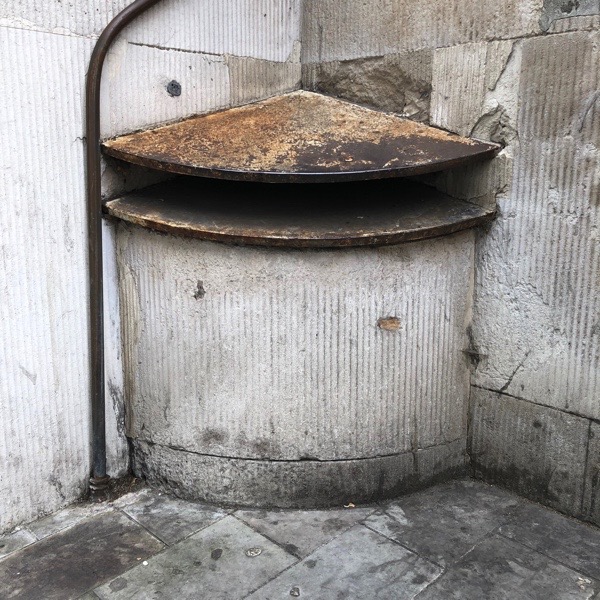
What is this curious architectural excrescence and why is it at the rear of the Bank of England? Join my City of London tour next weekend to find out. There are only two left this summer – Sunday 2nd July and Sunday 6th August at 2pm.
Enjoy a storytelling ramble across the Square Mile, from the steps of St Paul’s through the narrow alleys and lanes to the foot of old London Bridge, in search of the wonders and the wickedness of the City of London.
Click here to book THE GENTLE AUTHOR’S TOURS for June & July
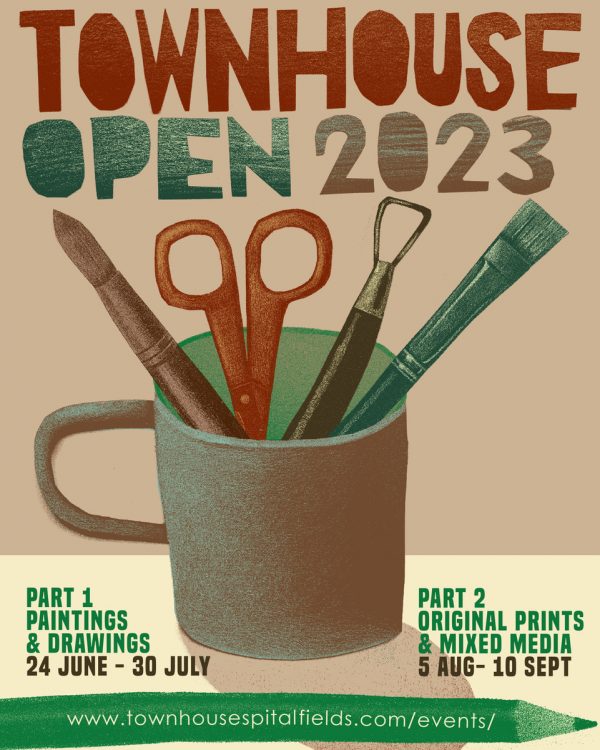
In celebration of Townhouse Open, Part One (Paintings & Drawings) which opens today, I have selected a few favourites to show you.
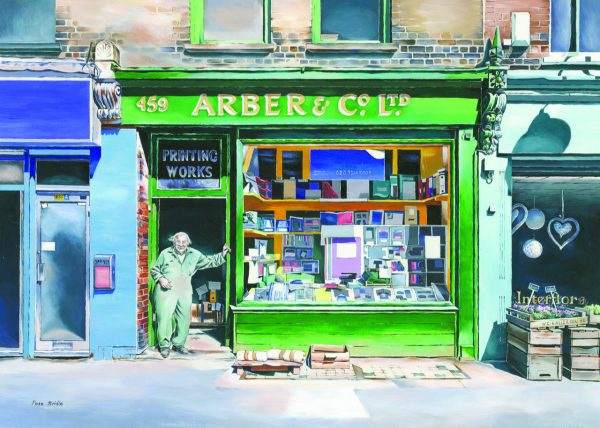
Gary Arber, Peta Bridle
‘I visited Gary during his last week of trading. Businesses and buildings close and disappear at an alarming rate in London, but Gary’s print works were opened by his grandfather in 1897 and shut in 2014. It was my privilege to meet Gary in person and make this visual record.’
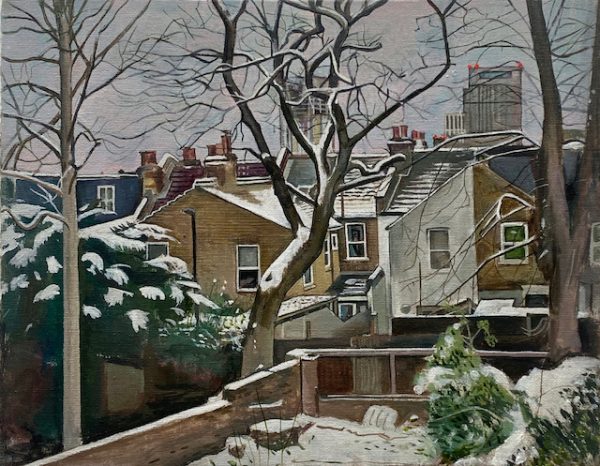
Lewisham Landscape (Snow), Amelia Power
‘Although my work begins with observation, memory and imagination form a crucial part of my process. I am interested in making the familiar seem strange. Many of my paintings explore the relationship between plants and the built environment and the tension between them. This painting is of the view from my window in South East London that I paint regularly throughout the year – I was mesmerised by the pink sky.’
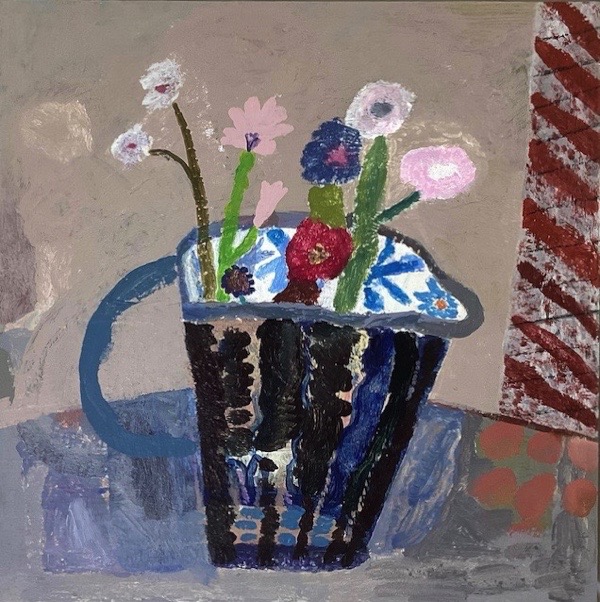
Wild Flowers, Andrea Humphries
‘My still lives often start with botanical drawings made outdoors in a park or garden when a plant or a flower catches my eye, and I take it back to the studio. I made Wild Flowers after a woodland walk where I noticed wild anemones and violets growing in the shade of oak trees, like tender sparks of hope. Flowers are restorative, evoking feelings of happiness and contentment, and I can imagine this jug of woodland stems on my kitchen table.’

Evening Shadows, Caroline Bowder-Ridger
‘My work is a response to the complex patterns, shapes and textures of the city. I am fascinated by the way human habitation leaves scars, textures and memories for future generations. Our needs and activities are constantly changing, feeding the energy of an ancient city. The act of mark-making, layering and creating texture as I rework the painting reflects my experience of the grain of the urban environment.’
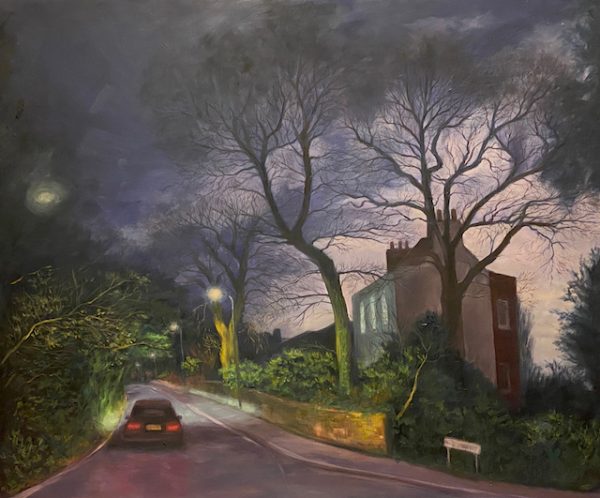
Corner of Page St, Diana Sandetskaya
‘I have been observing North London and reflecting on the emotional responses evoked by locations dependent on the time of day, weather or season, and coloured by moods and experience. This is a favourite corner in my neighbourhood. Walking there one evening, I loved the soft colours of the night with the streetlight and light from the car illuminating the tree … it was calm and peaceful but mysteriously enchanting at the same time.’
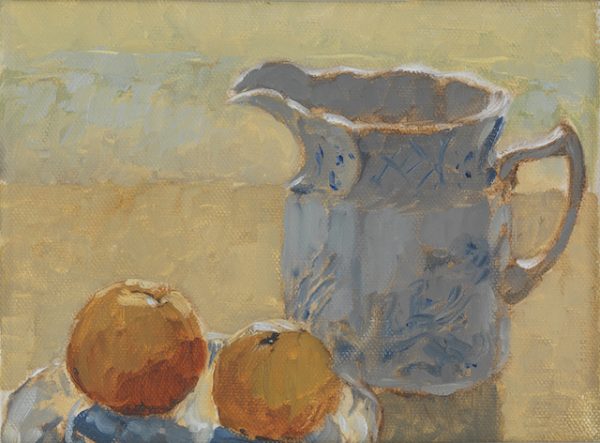
Jug with Two Apples, Eleanor Crow
‘This small still life is painted contre jour, against the light on a bright day in April. I was interested in the ochre and raw sienna of the small apples – the last of the year – against the blue and white china, and the light catching the rim of the jug and casting a strong blue shadow across the china plate. Simple objects that we handle daily suggest a human presence. I wanted to convey how they had just been placed there for a moment, in that particular position, in that particular light.’
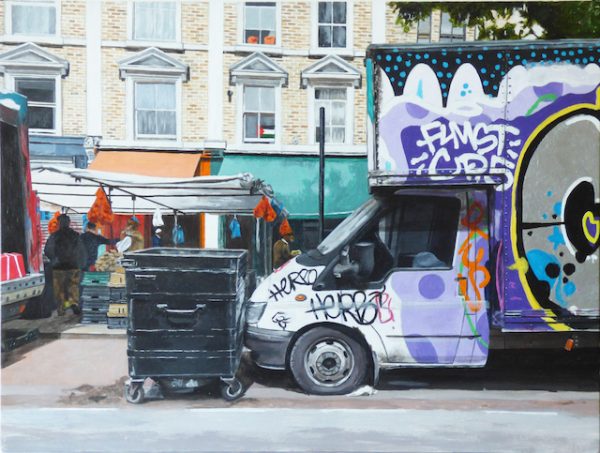
Whitechapel Market, Elizabeth Nast
‘I love the hustle and bustle of the markets of the East End. Every day they open up, just as thy have always done and the fact that the action of buying and selling continues to this day is a marvel. My personal connection with Whitechapel began in the 1890s with my great-grandfather, a police constable, whose beat consisted of Whitechapel and it was there he met his wife, a milkmaid from Wales. They never imagined that one hundred and thirty years later, one of their descendants would be walking the same streets.’

Little Ruby, Janet Keith
‘My approach is to begin without preconceived ideas. I activate the blank surface with spontaneous, intuitive marks and respond to them with others as the painting evolves – weaving together the spontaneous and the considered. Sometimes I can discern visual parallels to familiar surroundings, colours or contours of landscapes, cadences of birdsong, rhythms of music playing in the studio. But I do not speculate too much about where my paintings come from.’
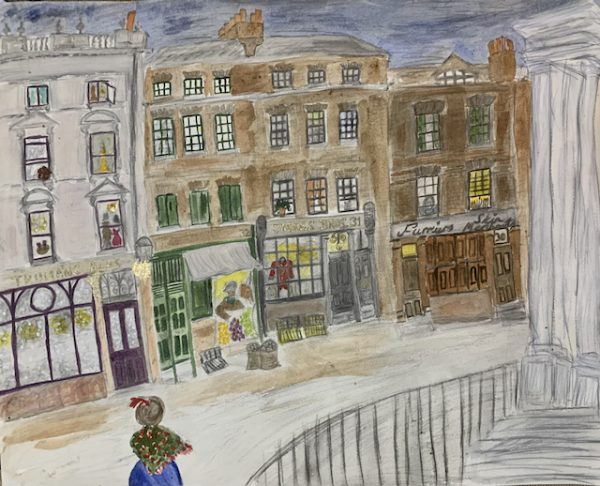
Church St at Dusk, Jane Young
‘I grew interested in Christ Church, Spitalfields, when it was suggested that my great grandparents were married there. This painting is a result of my research scribblings, an odd hybrid of thirty years of census returns and different editions of Kelly’s directories – a strange, imagined street spanning decades in one moment.’
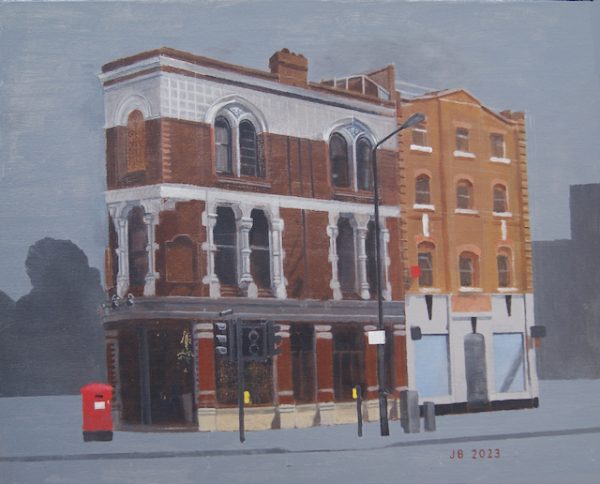
The Road to Whitechapel, John Bartlett
‘Whilst walking to the Whitechapel Art Gallery as a post-lockdown outing, I came across these buildings. At the time, London was just easing itself out of social distancing restrictions and people were tentatively returning to the streets. In Commercial St, these buildings stood alone as though the remnants of an abandoned film set, a backdrop waiting for life to unfurl again.’
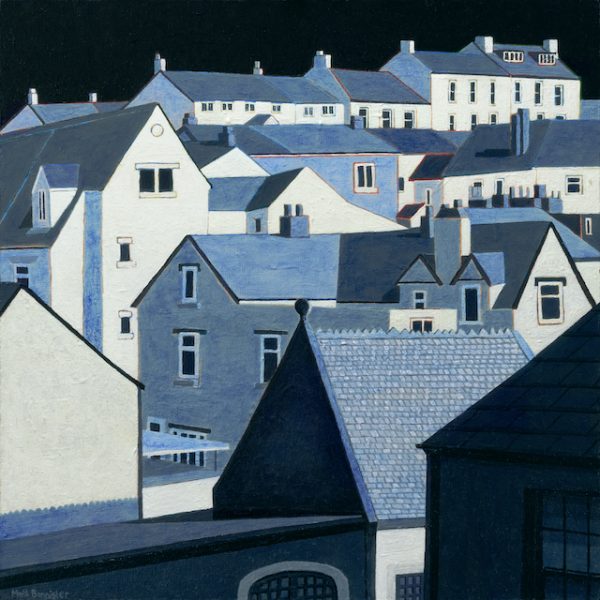
Pause (II), Matt Bannister
‘I am fascinated by urban life. The drama created by natural and artificial light attracts me. Strong shadows and highlights can transform the familiar into something more atmospheric and compelling, and this painting was inspired by the experience of time passing during the recent lockdowns.’
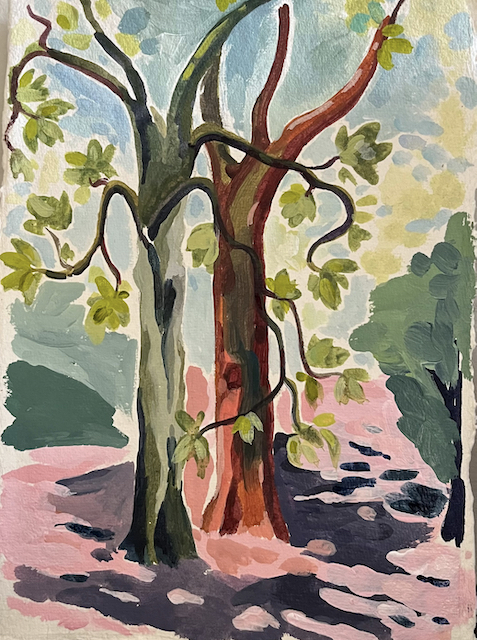
April Trees, Michelle Mason
‘Painting and sketching in Victoria Park, I worked on a series of small paintings to capture the low, spring light through the trees skirting the oldest part of the park. These mature trees are horse chestnut, oak and London planes with new leaves just emerging after winter.’
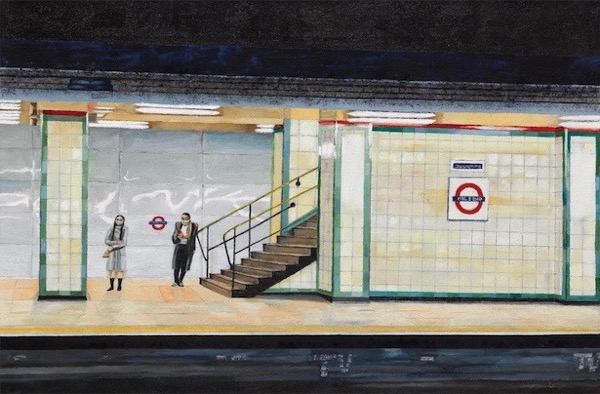
Mile End Station, Stewart Smith
‘I was born and brought up in Hackney, and am currently engaged in a series of oil paintings about East London. I have also painted the East End and Greenwich, where I live today. ’
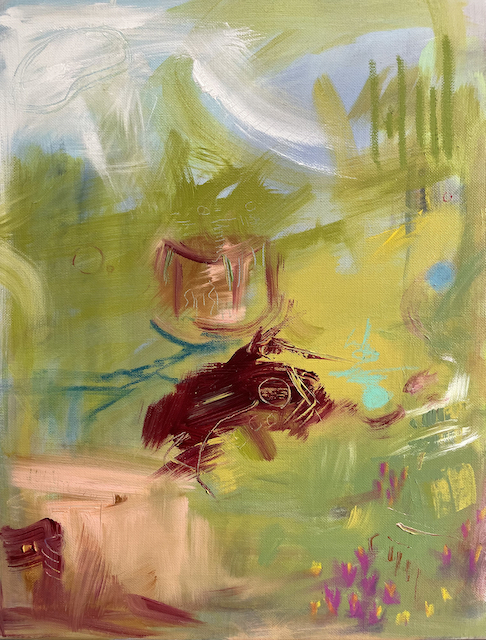
Kensington Palace to Marble Arch, Natalie Newsom
‘This painting captures my memories of a walk through Hyde Park from Kensington Palace to Marble Arch. It was March, and purple and yellow crocuses had broken through, parakeets were chattering, people were out and about enjoying the first signs of spring. All the while, I was taking in the smells, sounds and colours to create a visual representation. With the help of an audio recording, I created this painting from memory as an interpretation of my sensory experience, using marks to represent sounds like the thrum of a car engine or muffled chitter-chatter.’
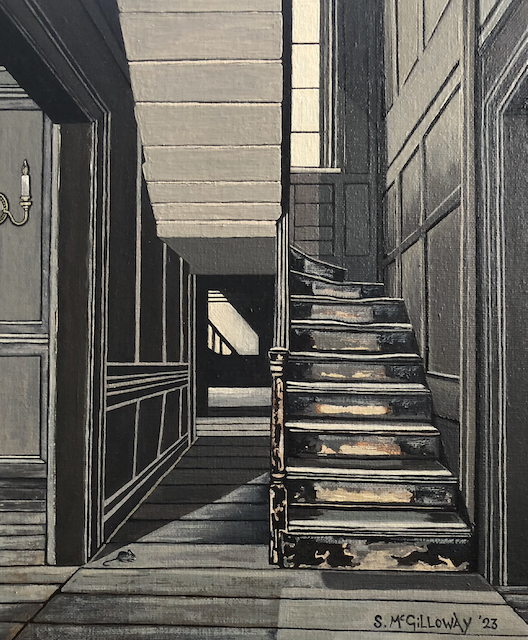
A Stolen Glimpse, Suzanne McGilloway
‘Well known for its shabby pink facade, this Spitalfields townhouse was built in 1723. Today it is rented for events and as a filming location. I peered through the hole in the door where the shiny brass doorknob had recently been stolen. I crouched and caught my breath. The view on the other side was so atmospheric, it was other-worldly. The light from the window flooded into the stairwell, the panelling and well-worn staircase, revealing evidence of centuries of immigrant families that made it their home.’
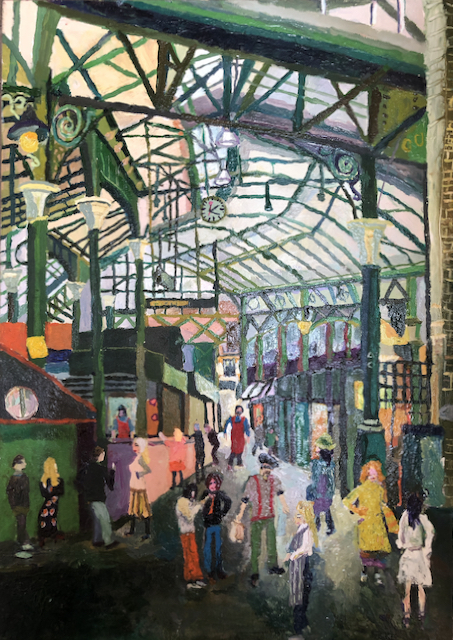
Borough Market, Nicholas Borden
This market has never been so busy with a constant flow of newcomers keen to sample what is on offer. After a thousand years of history, it remains a draw for visitors and sustains itself, stronger than ever, despite the setbacks of lockdowns and a terror attack.
In The Lavender Fields Of Surrey
Click here to book THE GENTLE AUTHOR’S TOURS for June & July
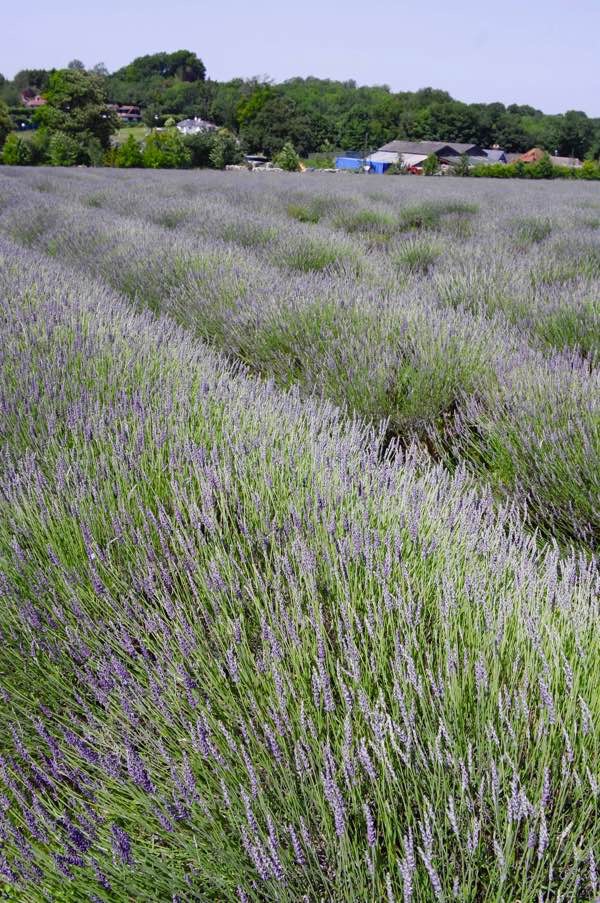
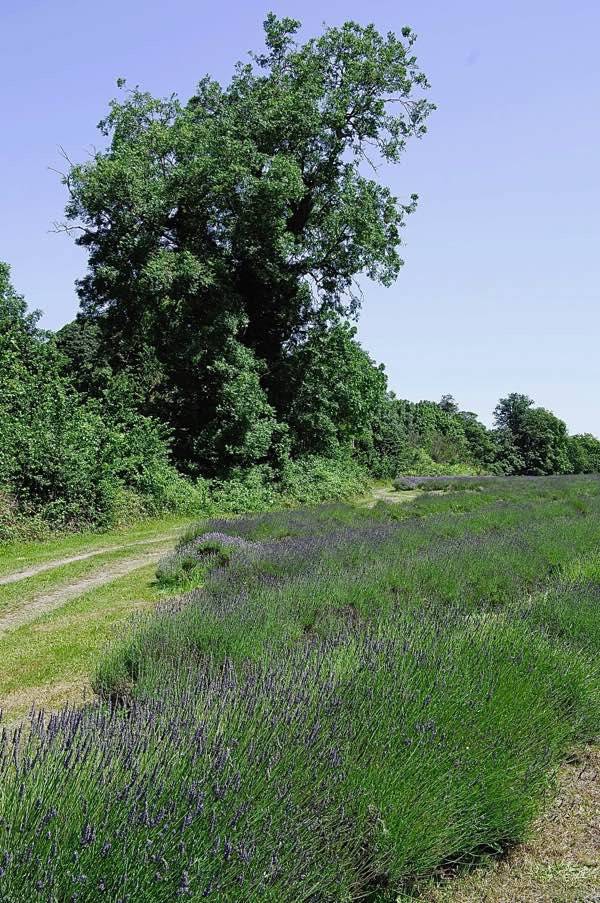
I cannot imagine a more relaxing way to enjoy a sunny English summer afternoon than a walk through a field of lavender. Observe the subtle tones of blue, extending like a mist to the horizon and rippling like the surface of the sea as the wind passes over. Inhale the pungent fragrance carried on the breeze. Delight in the orange butterflies dancing over the plants. Spot the pheasants scuttling away and – if you are as lucky as I was – encounter a red fox stalking the game birds through the forest of lavender. What an astonishing colour contrast his glossy russet pelt made as he disappeared into the haze of blue and green plants.
Lavender has been grown on the Surrey Downs for centuries and sold in summer upon the streets of the capital by itinerant traders. The aromatic properties and medicinal applications of lavender have always been appreciated, with each year’s new crop signalling the arrival of summer in London.
The lavender growing tradition in Surrey is kept alive by Mayfield Lavender in Banstead where visitors may stroll through fields of different varieties and then enjoy lavender ice cream or a cream tea with a lavender scone afterwards, before returning home laden with lavender pillows, soap, honey and oil.
Let me confess, I had given up on lavender – it had become the smell most redolent of sanitary cleaning products. But now I have learnt to distinguish between the different varieties and found a preference for a delicately-fragranced English lavender by the name of Folgate, I have rediscovered it again. My entire house is scented with it and the soporific qualities are evident. At the end of that sunny afternoon, when I returned from my excursion to the lavender fields of Surrey, I sat down in my armchair and did not awake again until supper time.


‘Six bunches a penny, sweet lavender!’ is the cry that invites in the street the purchasers of this cheap and pleasant perfume. A considerable quantity of the shrub is sold to the middling-classes of the inhabitants, who are fond of placing lavender among their linen – the scent of which conquers that of the soap used in washing. – William Craig Marshall’s Itinerant Traders, 1804

‘Delight in the orange butterflies dancing over the plants…’

Thomas Rowlandson’s Characteristic Series of the Lower Orders, 1820

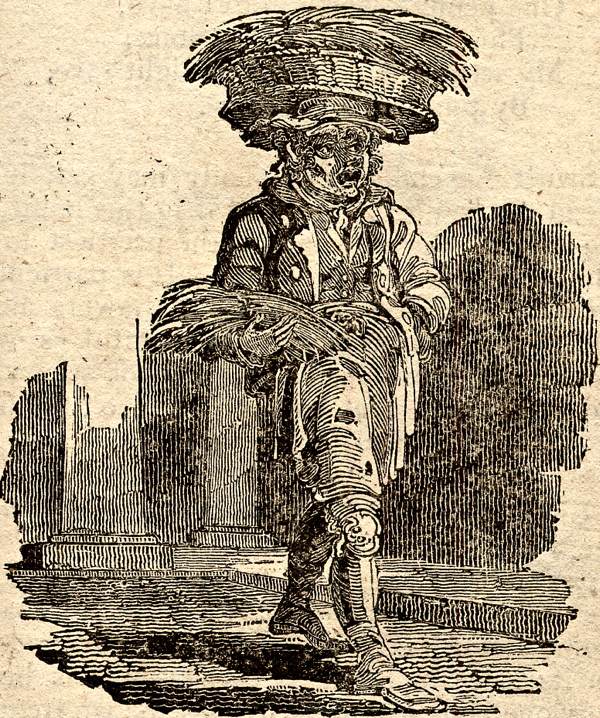
‘Six Bunches a-Penny, Sweet Lavender – Six Bunches a-Penny, Sweet Blooming Lavender’ from Luke Clennell’s London Melodies, 1812

‘Spot the pheasants scuttling away…’

From Aunt Busy Bee’s New London Cries

Card issued with Grenadier Cigarettes in 1902


WWI veteran selling lavender bags by Julius Mendes Price, 1919


Yardley issued Old English Lavender talcum powder tins from 1913 incorporating Francis Wheatley’s flower seller of 1792

Archive images courtesy Bishopsgate Institute
Leo Epstein, Epra Fabrics
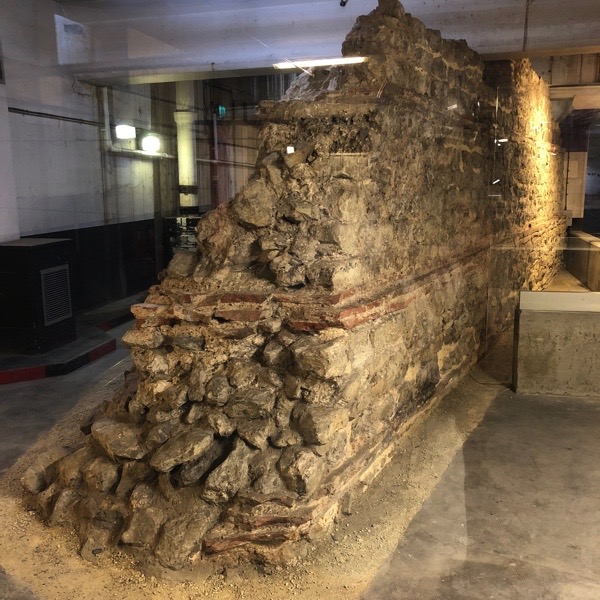
Let me take you underground and show you this lost fragment of the Roman Wall marooned in a subterranean car park. There are only two left this summer – Sunday 2nd July and Sunday 6th August at 2pm
Enjoy a storytelling ramble across the Square Mile, from the steps of St Paul’s through the narrow alleys and lanes to the foot of old London Bridge, in search of the wonders and the wickedness of the City of London.
Click here to book tickets for my Spitalfields and my City of London tours

Leo Epstein
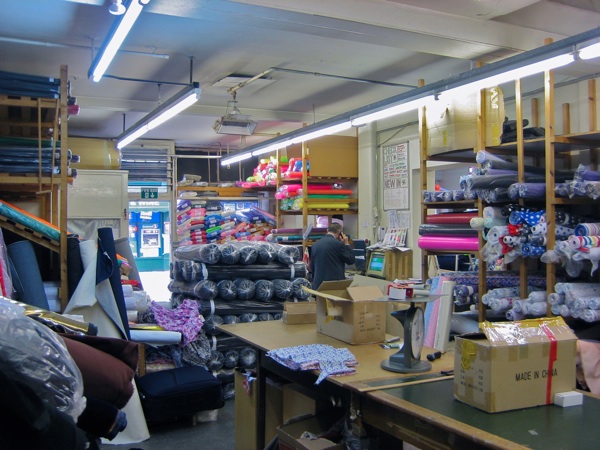
When the genial Leo Epstein, proprietor of Epra Fabrics said to me, “I am the last Jewish trader on Brick Lane,” he said it with such a modest balanced tone that I knew he was just stating a fact and not venturing a comment.
“If you’re not a tolerant sort of person you wouldn’t be in Brick Lane,” he added before scooting across the road to ask his neighbour at the Islamic shop to turn down the Friday prayer just a little. “I told him he can have it as loud as he wants after one o’clock when I’ve gone home,” he explained cheerily on his return. “We all get on very well,” he confirmed.”As one of my Bengali neighbours said to me, ‘On Brick Lane, we do business not politics.'”
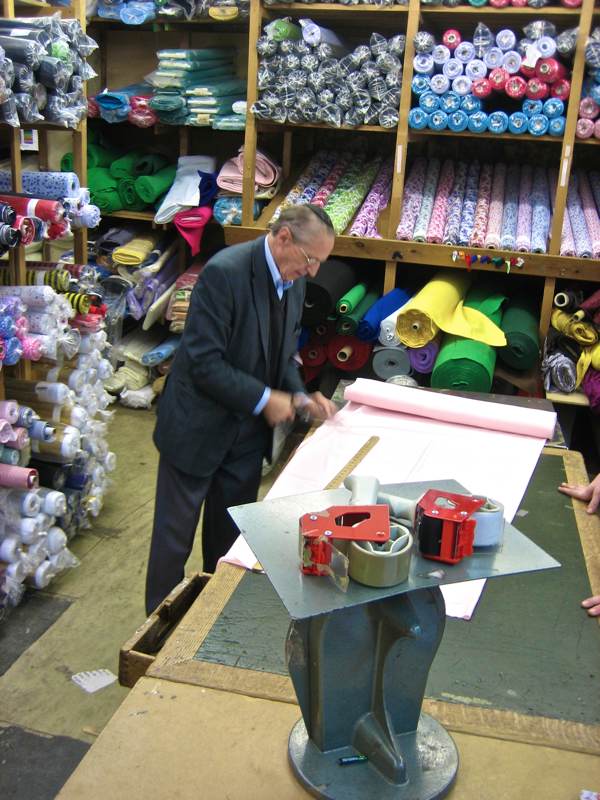
While his son was in Israel organising Leo’s grandson’s wedding, Leo was running the shop single-handedly, yet he managed – with the ease and grace of over half a century of experience – to maintain the following monologue whilst serving a string of customers, cutting bolts of fabric, answering the endless phone calls and arranging a taxi to collect an order of ten rolls of velvet.
“I started in 1956, when I got married. I used to work for a company of fabric wholesalers and one of our customers on Brick Lane said, “There’s a shop to let on the corner, why don’t you take it?” The rent was £6.50 a week and I used to lie awake at night thinking, “Where am I going to find it?” You could live on £10 a week then. My partner was Rajchman and initially we couldn’t decide which name should come first, combining the first two letters of our names, but then we realised that “Raep” Fabrics was not a good trade name and so we became “Epra” Fabrics.
In no time, we expanded and moved to this place where we are today. In those days, it was the thing to go into, the fabric trade – the City was a closed shop to Jewish people. My father thought that anything to do with rebuilding would be a good trade for me after the war and so I studied Structural Engineering but all the other students were rich children of developers. They drove around in new cars while I was the poor student who could barely afford my bus fare. So I said to my father, “I’m not going to do this.” And the openings were in the shmutter trade, I didn’t ever see myself working in an office. And I’ve always been happy, I like the business. I like the social part.
In just a few years, the first Indians came to the area, it’s always been a changing neighbourhood.The first to come were the Sikhs in their turbans, and each group that came brought their trades with them. The Sikhs were the first to print electronic circuits and they had contacts in the Far East, they brought the first calculators. And then came the Pakistanis, the brought the leather trade with them. And the Bengalis came and they were much poorer than the others. They came on their own, as single men, at first. The head of the family, the father would come to earn the money to send for the rest of the family. And since they didn’t have women with them, they opened up canteens to feed themselves and then it became trendy for City gents to come and eat curry here and that was the origin of the curry restaurants that fill Brick Lane today.
Slowly all the Jewish people moved away and all their businesses closed down. Twenty years ago, Brick Lane was a run down inner city area, people didn’t feel safe – and it still has that image even though it’s a perfectly safe place to be. I’ve always like it here.”
At any time over the last half a century, you could have walked up Fashion St, crossed Brick Lane and entered Epra Fabrics to be greeted by Leo, saying “Good morning! May I help you?’ with respect and civility. After all those years, it was no exaggeration when he said, “Everyone knows me as Leo.” A tall yet slight man, always formally dressed with a kippa, he hovered at the cash desk, standing sentinel with a view through the door and West along Fashion St to the towers of the City.
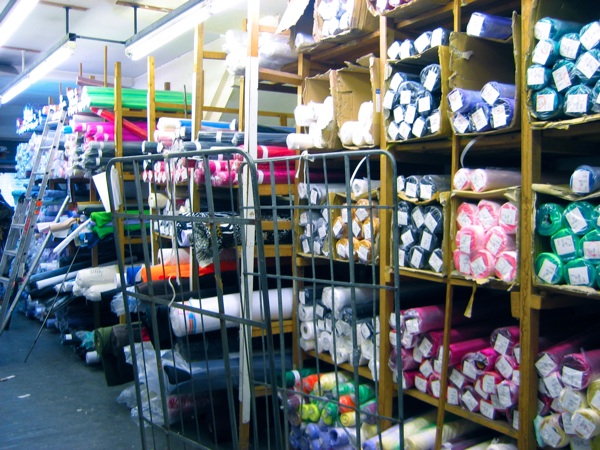
In his shop you found an unrivalled selection of silks and satins. “This is Brick Lane not Park Lane,” was one of Leo’s favourite sayings, indicating that nothing cost more than a couple of pounds a metre. “We only like to take care of the ladies,” was another, indicating the nature of the stock, which was strong in dress fabrics.
“I lived through the war here, so the attack wasn’t really that big a deal,” he said with a shrug, commenting on the Brick Lane nail bomb of 1999 laid by racist David Copeland, which blew out the front of his shop, “Luckily nobody was seriously hurt because on a Saturday everything is closed round here, it’s a tradition going back to when it was a Jewish area, where everything would close for the Sabbath.”
“Many of the Asian shop owners come in from time to time and say,’Oh good, you’re still here! Why don’t you come and have a meal on us?’ You can’t exist if you don’t get on with everybody else. It was, in a way, a weirdly pleasant time to see how everyone pulled together.” he concluded dryly, revealing how shared experiences brought him solidarity with his neighbours.
Leo Epstein was the last working representative of the time when Brick Lane and Wentworth St was a Jewish ghetto and the heart of the schmutter trade, but to me he also exemplified the best of the egalitarian spirit that exists in Brick Lane, defining it as the place where different peoples co-exist peacefully.