
My Cries Of London Scraps
As part of this year’s Bartholomew Fair in Smithfield, I shall be giving an illustrated lecture in St Bartholomew’s Church at 7pm on Friday 15th September about my love for the CRIES OF LONDON, showing my favourite images of four hundred years of street life in the capital.
These modest Victorian die-cut scraps are the latest acquisition in my ever-growing collection of the Cries of London. The Costermonger scrap has the name “W. Straker, Ludgate Hill” rubber-stamped on the reverse and – sure enough – by pulling the London Trade Directory for 1880 off the shelf, I found William Straker, Silver & Copperplate Engraver, Printer, Die Sinker, Wholesale Stationer & Stamp Cutter, 49/63 Ludgate Hill. These mass-produced images appeal to me with their vigorous life, portraying their subjects with their mouths wide open enthusiastically crying their wares – all leading players in the drama of street life in nineteenth century London.

Newspaper seller (The Star was published in London from 1788-1960)

Sandwich-board man (Dan Leno started his career in Babes in the Wood at Drury Lane in 1888)

Milkman

Sweep

Watercress seller

Crossing sweeper

Shoe-shine

Buttonhole seller

Costermonger

You may also like to take a look at these other sets of the Cries of London
Geoffrey Fletcher’s Pavement Pounders
William Craig Marshall’s Itinerant Traders
H.W.Petherick’s London Characters
John Thomson’s Street Life in London
Aunt Busy Bee’s New London Cries
Marcellus Laroon’s Cries of London
More John Player’s Cries of London
William Nicholson’s London Types
Francis Wheatley’s Cries of London
John Thomas Smith’s Vagabondiana of 1817
John Thomas Smith’s Vagabondiana II
John Thomas Smith’s Vagabondiana III
Thomas Rowlandson’s Lower Orders
More of Thomas Rowlandson’s Lower Orders
Adam Dant’s New Cries of Spittlefields
The Motor Mechanics Of Bow
Click here to book for my tour through September and October

Yaima at Bow Tyres
Over the years, Contributing Photographer Sarah Ainslie & I have visited many railway arches documenting the life of these charismatic spaces where people have sought the liberty of earning a living indepently and enriching the city in the process.
At Arnold Rd in Bow, we dropped in on a parade of a dozen arches where garages offering all aspects of motor repair have thrived over recent decades, supplying a reliable and conscientious service to local people.
In common with other railway arches across London and the entire country, we found these small businesses are subject to escalating rent increases which mean they are struggling to make a living and which threaten to destroy their livelihoods entirely.
Yet in spite of this crisis, we received a generous welcome from this mutually-supportive community of twenty-five to thirty mechanics who work together across their different garages, sharing skills and helping each other out as necessary.

Sultan Ahmed at Bow Motor Aid

Minar Uddin and his son Mostafa at Jonota Motors
Mostafa Uddin – “We do mechanics and some body work, small jobs. I have been working here for ten years, learning from my dad. I began by doing stuff with him and now I am running it. My dad set up the business thirteen years ago. He had another garage before this one in Bancroft Rd, but he had to leave that one because the rent was high. Now this rent is sky-high as well, our last recent increase was nearly double. With the amount of rent we have to pay, it is not worth us working for the small income we can make. If the business continues like this, we cannot carry on.”


Opal Meah, proprietor at S Motors
“I do car mechanics and electrics. I have been in business since I left school, over twenty-five years now, and I have been in this arch for about eight years. Every year the rent goes up and now they are increasing it more. I am not making any money. One month you are lucky and you make enough to pay the bills but other months are very hard. I don’t know what I am going to do, I don’t know anything else but car mechanics. I want to stay here, but if I cannot afford the rent how am I going to stay? Before it was good but now it is so tight.”

Mohammed Chowdhury at S Motors –
“It’s really close knit here – like a big family – and everyone looks after everyone else if anyone gets stuck. Everyone has their own speciality and their own trades, so we can always ask everyone else to help us out. Yesterday, I was not too sure how to remove a panel from a Volkswagen golf but the bodyshop next door gave me a hand and I had the job done in a matter of minutes. Round here, it is beautiful because you can rely on each other, if anyone needs help or a push for a car. It is brilliant.
Quite a few new businesses have established themselves here in small arches and then grown substantially and looked for bigger premises and are doing really well. Some of these arches have been renovated and everybody has enough business to keep themselves afloat and cover their wages. It is a great starting point.
Some customers are drive-throughs, other are local. Word of mouth and friends and family have built our business. No-one who works here lives too far off from here.
If someone has background knowledge and they are looking to get into it and pick up some skills, there are opportunities here for young people to learn, develop themselves and climb up the ladder.
Rents are increased here without any reasoning and the landlords want to move this place upmarket, trying to get in other kinds of businesses. But if they are constantly bumping the rent up, how are people supposed to survive? Everyone’s struggling to survive here now, to be honest.”

Faisal Siddiqi at Ali Auto Repairs

Shajhan at Jonota Motors

Arif Giulam at Reliance Motors

Tommy, Misa Sheink, Sayed Uddin, Arif Giulam and Naiem at Reliance Motors

Shajahan Ali at Ali’s Body Work

Ali Noor at Ali Auto Repairs

Ahmed Shuhel at Spanner Work
Photographs copyright © Sarah Ainslie
You may also like to take a look at
The World of the East End Car Wash
George Wells, Able Seaman
Click here to book for my tour through September and October
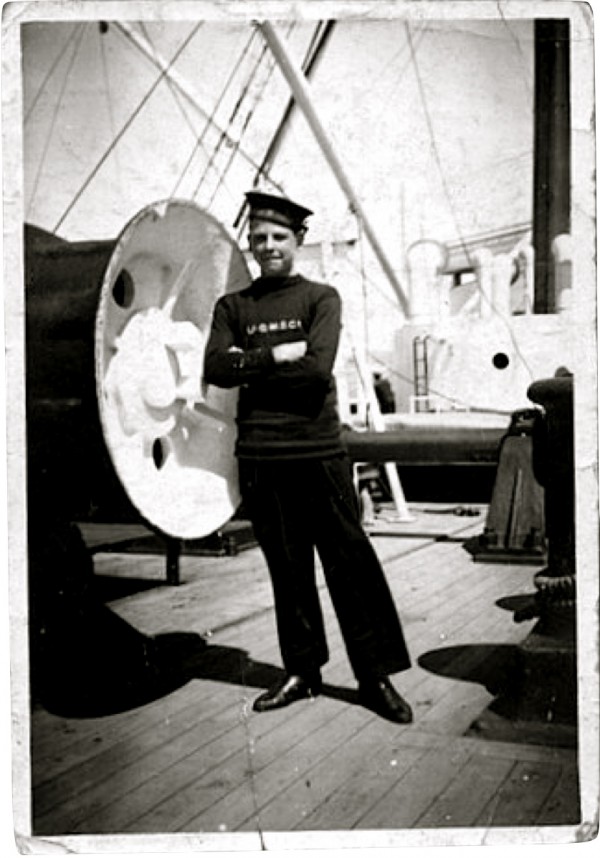
To Able Seaman George Wells, the modest cluster of buildings next to St Anne’s Church, Limehouse, will always be his training ship, and even today it still sports a cheery enamelled British Sailors’ Society sign as evidence of its former identity.
In 1938, fourteen year old George – a former sea scout from Dover – became a temporary East Ender, training here at the Prince of Wales Sea Training Hostel for Boys for just six months. Yet such was the intensity of this formative experience that George recalls it vividly seventy-five years later, even as he approaches his ninetieth birthday. “I suppose there’s not so many of us chaps left that remembers it?” he suggested to me when I paid a call upon him this week.
“I was fourteen years and five months old when I went up to Limehouse on 3rd January 1938. I always wanted to be in the Merchant Navy. I wanted to see the world and I knew that merchant ships went to many more places than the navy.
You walked into the main entrance where there was a bell and an ensign that you always saluted. You didn’t linger there, you walked straight through. On the left was the secretary’s office and on the right was the Commodore’s office. The two instructors were called Jack Frost and Freddie Painter, Jack was on the port watch and Freddie was on the starboard. They taught us everything to do with boatwork and navigation – signalling, semaphore and morse code – and things you could do with ropes. You had to be able to recite all thirty-two points of the compass from N to NE and back again.Your life depended on it and, if you couldn’t do it, you’d get horrible jobs to do.
We lived in dormitories at the top of the building, sleeping in iron bunks. You were given a horsehair mattress but no sheet, two blankets, one pillow and a counterpane. We got up at six in the morning and you folded your blankets with the pillow on top and the counterpane over it, like a pudding in the middle of the bed. We wore white duck trousers and a blue sailor’s top, plimsolls in winter and bare feet in summer. We would have a mug of tea and then we had to go out onto the signal deck – as we called the yard – for muster, where we were allocated jobs and between us we did all the cleaning. I remember they found one boy had a dirty neck on parade and he was put on report. He was taken below deck and stripped and washed by his fellows, and his skin was pink when he came back. When “Rigging, up and over!” was called, we had to run up the rigging and down the other side. One of us was chosen to be the “button boy,” he had to stand upon the very top. It was scary but we were young and when I got to sea they said, “Go aloft, you’re used to it.” because they knew where I had trained. I was given two pounds and seventeen shillings per month when I started with the corps.
Instructions continued until five daily and then we had homework. Two sideboys were on duty all day to attend the door. Saturdays and Sundays were the only days we were allowed out, and I learnt about the East End. We took the tram down to Tower Bridge, you could pick up girls there, but you had to be back by five. There were no cooks on Sunday, so we ate cold meat, pickles and mashed potato, plus trifle made of bread and jam with jelly and custard on top. We went out into the West India Dock, where we had a whaling ship and a gig. We used to learn to row in the dock, but it was a bit much pulling against the tide in the Thames. We had to carry sixteen foot oars on our shoulders, they were heavy when you got there.
It was very competitive. We had boxing matches under the big tree. It was known as “Grudge Day.” If you had a disagreement with someone, you informed the instructor and they put you in the ring together. They were all different sizes. I remember this big chap Wellham from Norfolk, he caught me with a bad one and split my eye open. Since I was appointed Chief Petty Office, everyone wanted to have a go at me and I’ve still got the scar under my eye from it.
The most embarrassing thing was when you were sent to have baths in the basement and then jump into the cold swimming pool. Captain Faulkner and his wife used to come and supervise us, but then he left and his wife – the matron – she stayed to watch us. All of us young boys in the buff, we had to go and stand in front of her. I think she enjoyed it more than we did.
Most of us were under fifteen, at fifteen you could go to sea. You were sent. The shipping companies funded the school to provide them with boys. I was actually on board my first ship, the Capetown Castle when I had my fifteenth birthday. It was a new ship, one of the biggest cargo ships afloat at 22,000 tons. Of the eight deck boys, there were two of us from the school, me and Alf. It was exciting. We left Southampton, we were going along the Channel and the officer said, “You’ve done signals. Call that ship over there and ask what it is.” It was the SS Beacon Grange, and it sent back the message “Capetown Castle, Bon Voyage!” I’ll never forget the first ship I spoke to on my first night at sea.
We used to go round the Cape on the mail run, Cape Town, Port Elizabeth, London. We carried wool, hides, chick peas, wine and fruit. And once we picked up crates of marmalade oranges from Madeira, so pungent they had to be kept stacked on deck. Next year – when the war came – we switched over to troop carrying. Starting as a deck boy, I became an ordinary seaman, then a sailor then an able seaman and a gunner. I stayed with the Capetown Castle until 1946, and I quit at twenty-three because, already, I could see the way the mercantile industry was going.
When I went to sea, I knew I could do it. You had responsibility at an early age in those days.”
Once the war began, the training school moved up to Norfolk, terminating its brief period in the East End. George married three times and enjoyed a very successful career as Supervisor of the three hundred workers at Newhaven Harbour, until he retired in 1986. After being empty and squatted for years, the buildings in Newell St were bought by the squatters and divided into homes with only minimal alteration to the buildings.
As you walk through these atmospheric rooms today, the worn floors and old staircases are reminders of the former life that was here. And if you go down to basement, an old sign that reads “British Sailors’ Society” greets you on the stairs. You will find the swimming pool in the cellar is still there too and was used by all the residents of the street until quite recently.

The Sea Training School in Newell St still stands largely unaltered today. The crown over the front door has gone, but the coloured enamel sign above advertising the British Sailors’ Society remains.
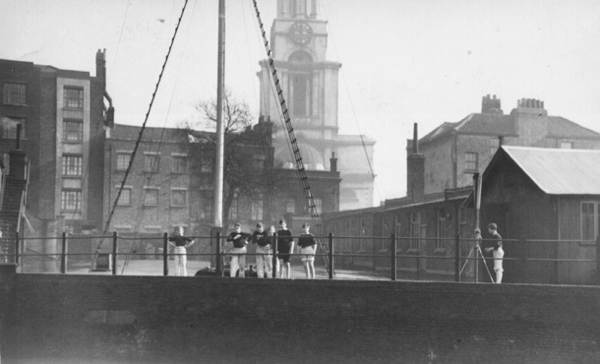
The Sea Training Hostel in Limehouse with St Anne’s in the background

Sea cadets show off their acrobatic skills in Limehouse

George’s membership card for the Old Boys’ Association as given on graduation in June 1938

Their motto was – “British boys for British ships.”

Daily Routine
6:30am Turn Out: wash down decks etc.
8:00am Breakfast: make up bunks.
9:00am Parade for inspection: daily prayers.
9:15 to 10:45am Instruction in signalling: physical jerks and organised games.
10:30 to 10:45am Stand easy: boys have bread and cheese, etc.
10:45 to 12:30pm Instruction in seamanship: boat pulling, washing clothes, etc.
12:45pm Dinner: boys have meat with two vegetables and pudding every day. One day each week fish instead of meat.
2:00pm Parade for kit inspection.
2:10 to 3:30pm Instruction in seamanship: making and mending kit, kitbag making and other useful subjects.
3:30 to 3:45pm Stand easy.
3:45 to 4:30pm Instruction as above.
4:45pm Tea.
6:30 to 7:30pm Instruction in swimming, lectures, gymnastics, etc.
9:00pm Turn in – 9:30pm Light out.

Sea cadets scale the rigging in Limehouse

George graduated as the top top student in June 1938 just before his fifteenth birthday.

The Duchess of York visits the Sea Training Hostel in 1934.

Candidates for admission to the hostel must –
1. Have excellent references as to character.
2. Be between the ages of fourteen and a half and sixteen, and be able to swim one hundred yards.
3. Obtain the Board of Trade Sight Certificate for both form and colour vision. This certificate can be obtained at the Board of Trade Mercantile Marine Offices in London and chief seaports.
4. Have passed a Medical Examination certifying that they are sound and strong and in all respects physically qualified for employment in the Merchant Navy.
5. Be at least five feet one inch in height
In the selection of boys for admission to the Hostel, the orphan sons of sailors have prior claim.
Fees –
Orphan sons of sailors will be trained free of charge.
Boys from Society’s Sea Cadets Units and sons of sailors at a minimum of five shillings per week, but they should pay more if possible.
Boys not from Units and who have no claim on the Society, not less than ten shillings per week.

On parade at Limehouse with the canal in the background
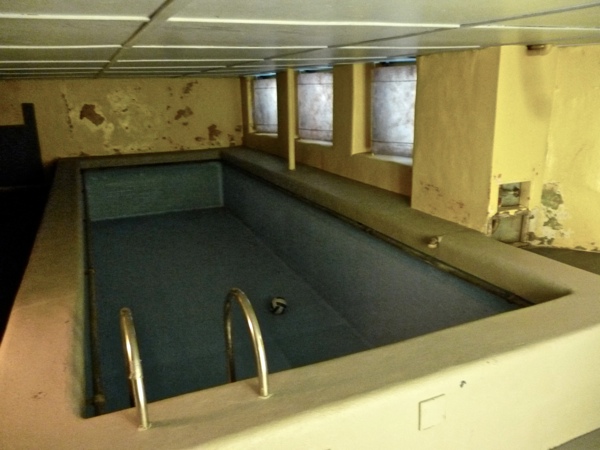
The pool in the basement at Newell St, Limehouse where George had the embarrassing experience

The Capetown Castle
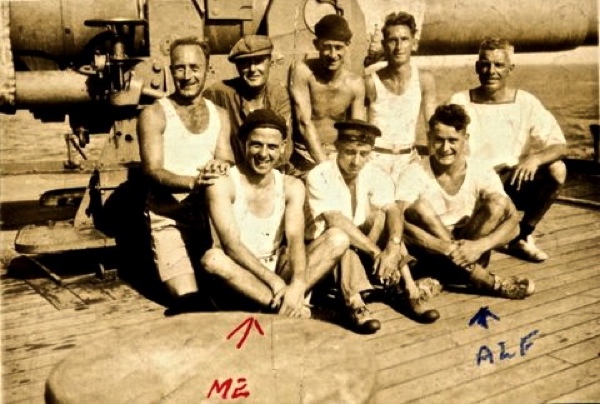
Pals on the Capetown Castle. Front Row – George Wells, Monty Dolan, Alf Everett. Back Row – Jumbo Jingles, Paddy Crawte, Les Harman, Ted Lane, Will Amy.

The Capetown Castle

Alf Everett & George Wells, best pals – Southampton 1939. George later married Alf’s sister.

On Capetown Castle during World War II, George stands on the extreme right

George’s Sea Training Society Old Boys’ Association badge

George Wells, Able Seaman
With thanks to Cynthia Grant and Prince of Wales Sea Training School for their assistance with this feature.
You may also like to read about
Captain Shiv Banerjee, Justice of the Peace
In City Churchyard Gardens
Click here to book for my tour through September and October

In the churchyard of St Dunstan’s in the East, Idol Lane
If ever I should require a peaceful walk when the crowds are thronging in Brick Lane and Columbia Rd, then I simply wander over to the City of London where the streets are empty at weekends and the many secret green enclaves of the churches are likely to be at my sole disposal. For centuries the City was densely populated, yet the numberless dead in the ancient churchyards are almost the only residents these days.
Christopher Wren rebuilt most of the City churches after the Great Fire upon the irregularly shaped medieval churchyards and it proved the ideal challenge to develop his eloquent vocabulary of classical architecture. Remarkably, there are a couple of churches still standing which predate the Fire while a lot of Wren’s churches were destroyed in the Blitz, but for all those that are intact, there are many of which only the tower or an elegant ruin survives to grace the churchyard. And there are also yards where nothing remains of the church, save a few lone tombstones attesting to the centuries of human activity in that place. Many of these sites offer charismatic spaces for horticulture, rendered all the more appealing in contrast to the sterile architectural landscape of the modern City that surrounds them.
I often visit St Olave’s in Mincing Lane, a rare survivor of the Fire, and when you step down from the street, it as if you have entered a country church. Samuel Pepys lived across the road in Seething Lane and was a member of the congregation here, referring to it as “our own church.” He is buried in a vault beneath the communion table and there is a spectacular gate from 1658, topped off with skulls, which he walked through to enter the secluded yard. Charles Dickens also loved this place, describing it as “my best beloved churchyard”
“It is a small small churchyard, with a ferocious, strong, spiked iron gate, like a jail. This gate is ornamented with skulls and cross-bones, larger than the life, wrought in stone … the skulls grin aloft horribly, thrust through and through with iron spears. Hence, there is attraction of repulsion for me … and, having often contemplated it in the daylight and the dark, I once felt drawn towards it in a thunderstorm at midnight.” he wrote in “The Uncommercial Traveller.”
A particular favourite of mine is the churchyard of St Dunstan’s in the East in Idol Lane. The ruins of a Wren church have been overgrown with wisteria and creepers to create a garden of magnificent romance, where almost no-one goes. You can sit here within the nave surrounded by high walls on all sides, punctuated with soaring Gothic lancet windows hung with leafy vines which filter the sunlight in place of the stained glass that once was there.
Undertaking a circuit of the City, I always include the churchyard of St Mary Aldermanbury in Love Lane with its intricate knot garden and bust of William Shakespeare, commemorating John Hemminge and Henry Condell who published the First Folio and are buried there. The yard of the bombed Christchurch Greyfriars in Newgate St is another essential port of call for me, to admire the dense border planting that occupies the space where once the congregation sat within the shell of Wren’s finely proportioned architecture. In each case, the introduction of plants to fill the space and countermand the absence in the ruins of these former churches – where the parishioners have gone long ago – has created lush gardens of rich poetry.
There are so many churchyards in the City of London that there are always new discoveries to be made by the casual visitor, however many times you return. And anyone can enjoy the privilege of solitude in these special places, you only have to have the curiosity and desire to seek them out for yourself.

In the yard of St Michael, Cornhill.

In the yard of St Dunstan’s in the East, Idol Lane.

At St Dunstan’s in the East, leafy vines filter the sunlight in place of stained glass.


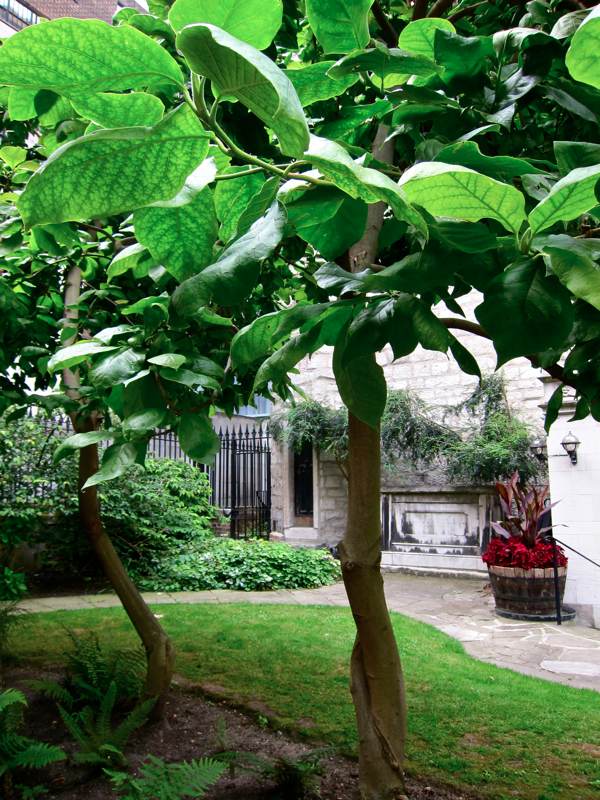
In the yard of St Olave’s, Mincing Lane.

This is the gate that Samuel Pepys walked through to enter St Olave’s and of which Charles Dickens wrote in The Uncommercial Traveller – “having often contemplated it in the daylight and the dark, I once felt drawn towards it in a thunderstorm at midnight.”

Dickens described this as ““my best beloved churchyard.”


In the yard of St Michael Paternoster Royal, College St.


In the yard of St Lawrence Jewry-next-Guildhall, Gresham St.

In the yard of St Mary Aldermanbury, Love Lane, this bust of William Shakespeare commemorates John Hemminge and Henry Condell who published the First Folio and are buried here.


In the yard of London City Presbyterian Church, Aldersgate St.


In the yard of Christchurch Greyfriars, Newgate St, the dense border planting occupies the space where once the congregation sat within the shell of Wren’s finely proportioned architecture.

In the yard of the Guildhall Church of St Benet, White Lion Hill.


In St Paul’s Churchyard.
You may also like to read about
The Secret Gardens of Spitalfields
The Secrets Of St Anne’s Limehouse
Click here to book for my tour through September and October
Tomorrow, Sunday 10th September, I am having a bookstall in Limehouse Town Hall from 12-6pm as part of Limehouse Creates. Please come and say hello, and take the rare opportunity to visit St Anne’s which is open to the public at the same time.
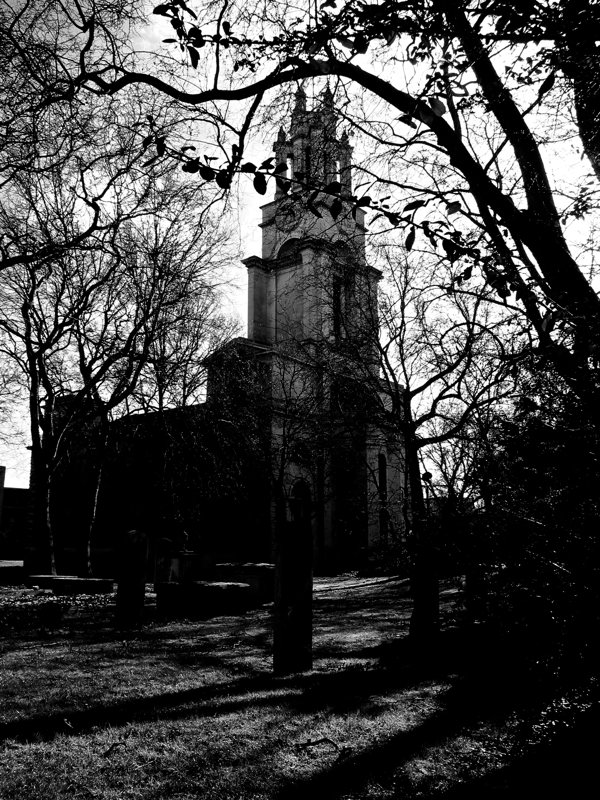
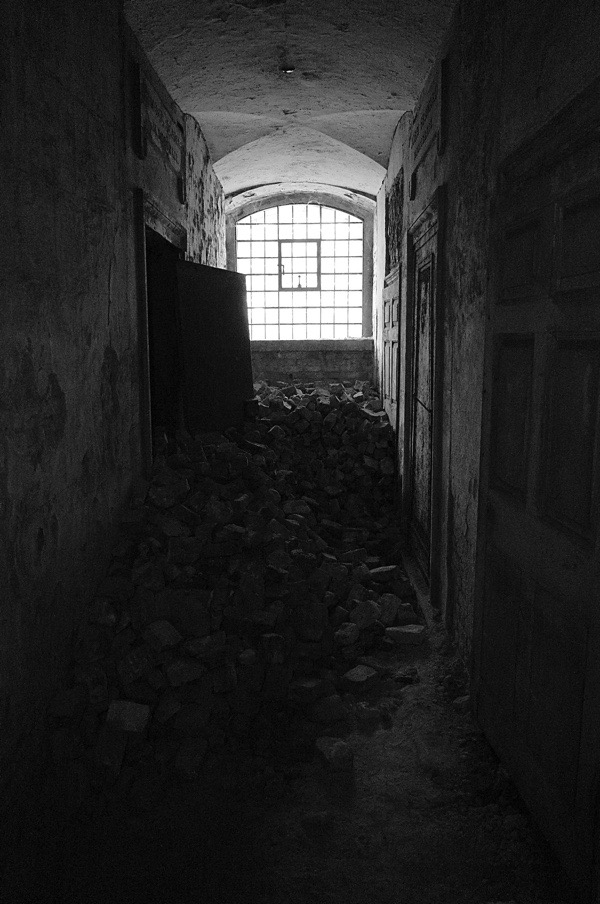
To me, St Anne’s Limehouse has always been the most mysterious of Nicholas Hawksmoor’s churches. So it was the fulfilment of a long-held ambition when I was granted the opportunity to visit the hidden spaces – from the secret chambers high up inside the tower, graven with eighteenth century graffiti, all the way down to the depths of the crypt which harbours the relics of a World War II Air Raid shelter.
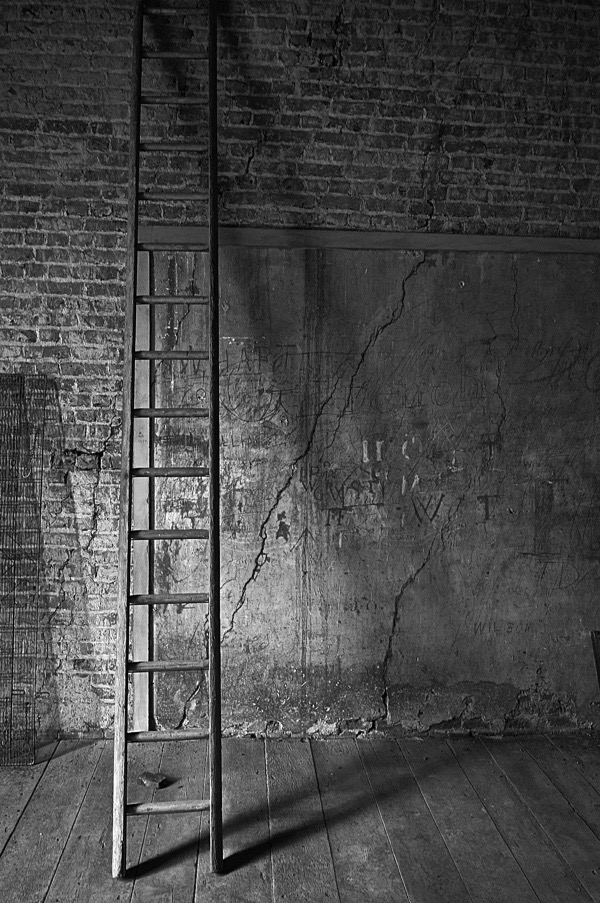
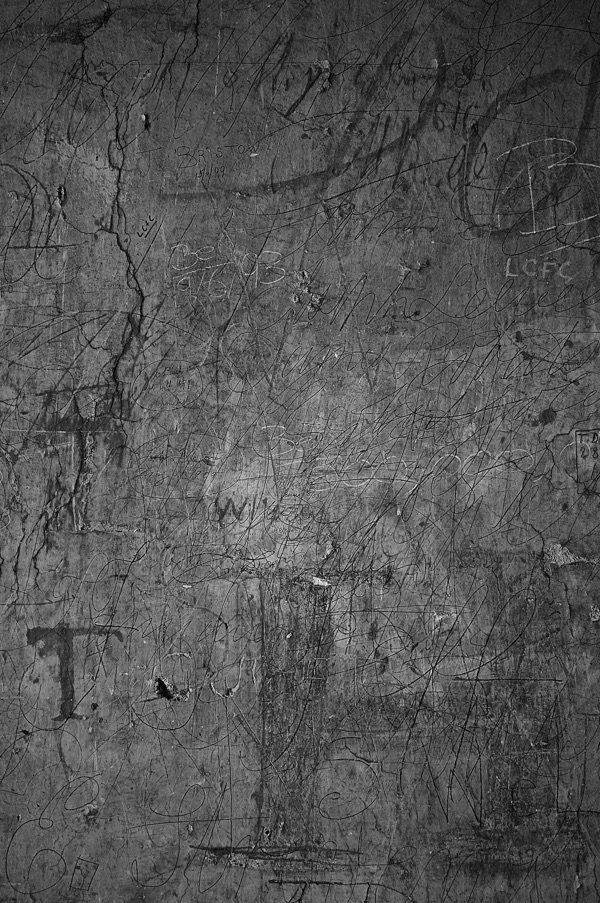
Chamber in the tower with a wall of eighteenth century graffiti
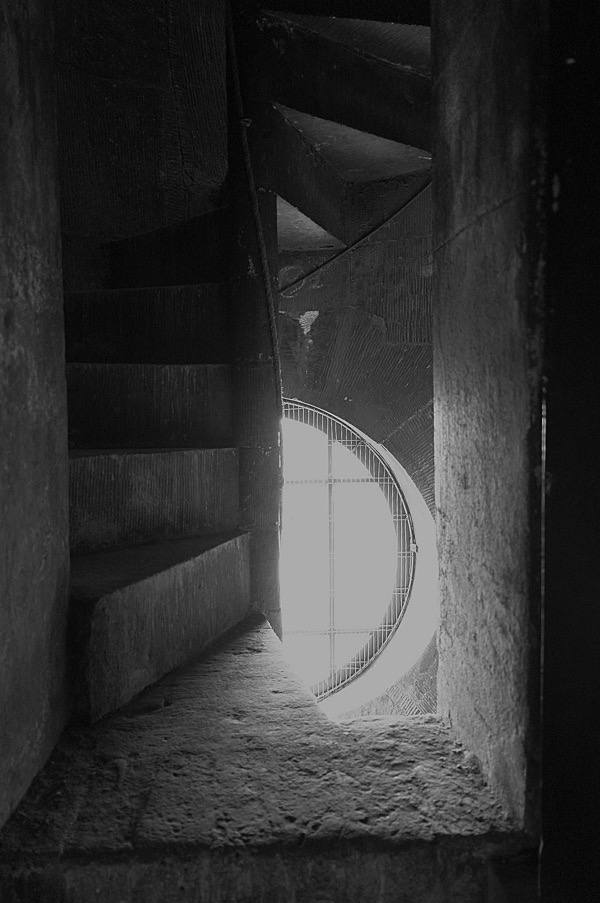
Staircase winding ever upward
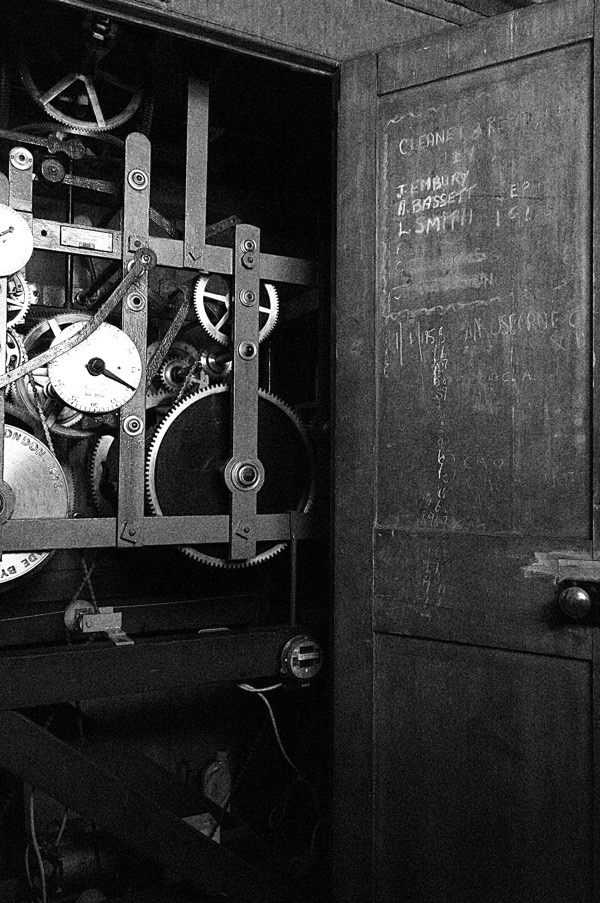
The workings of the clock with the names of clock-winders chalked on the door

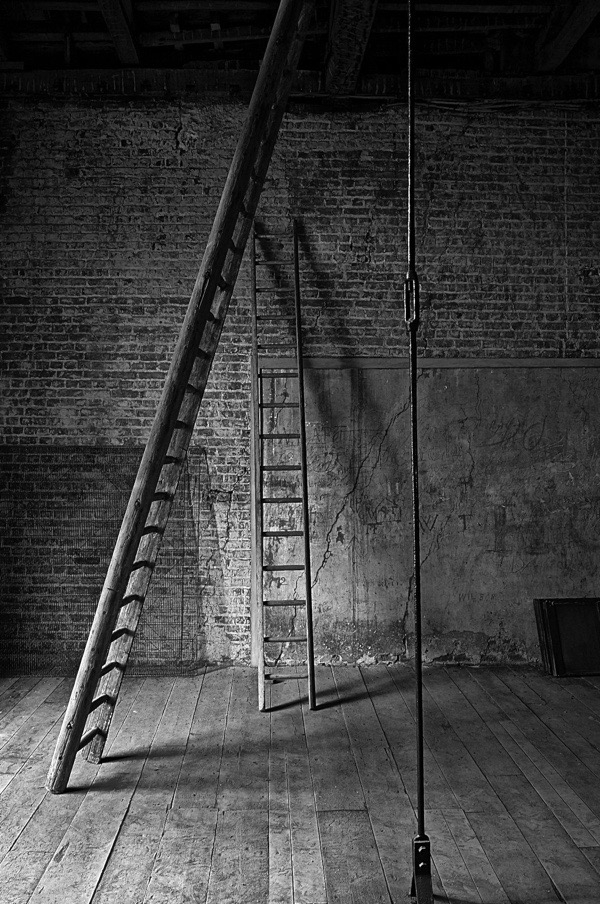
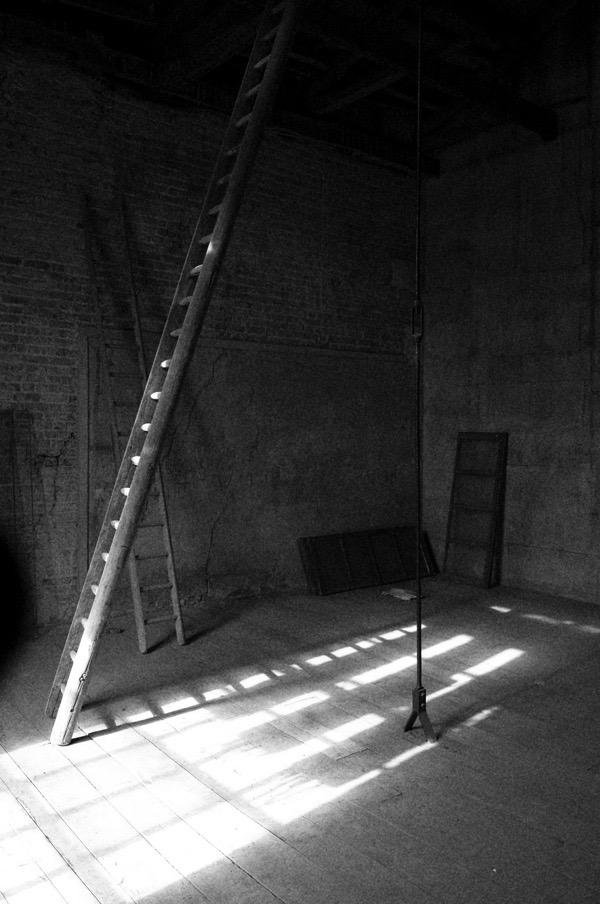
Ladder up to into the tower
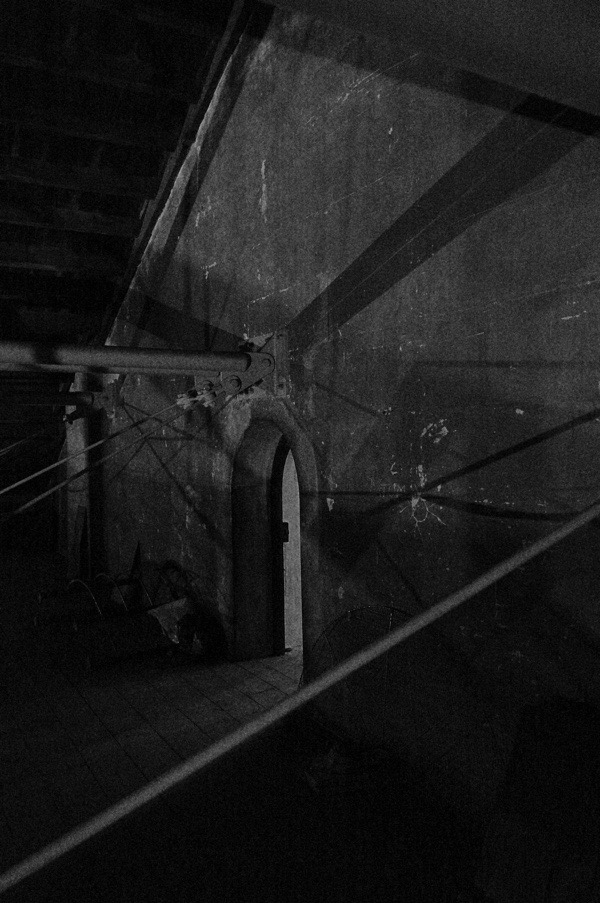
Door into the roof

Inside the roof
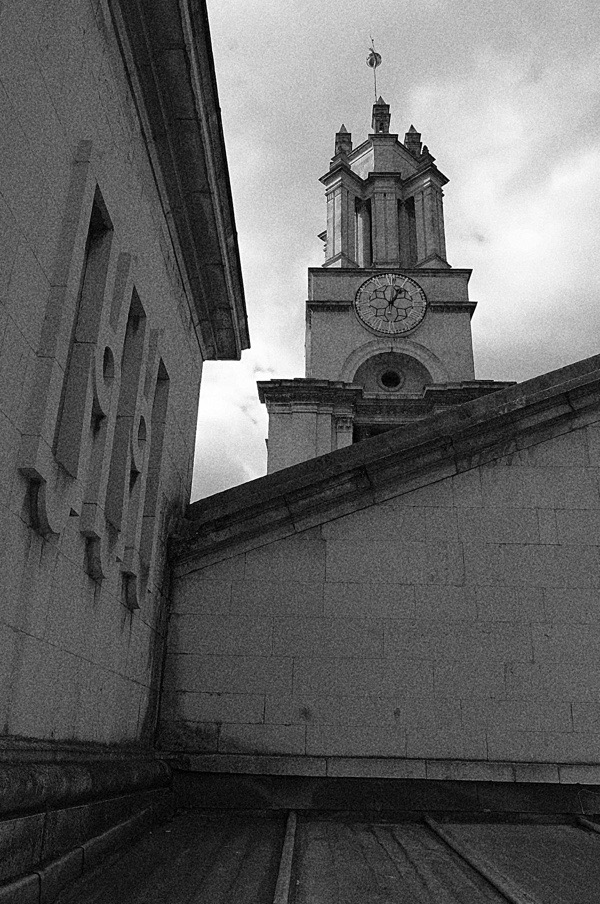
View from the rear roof towards the tower
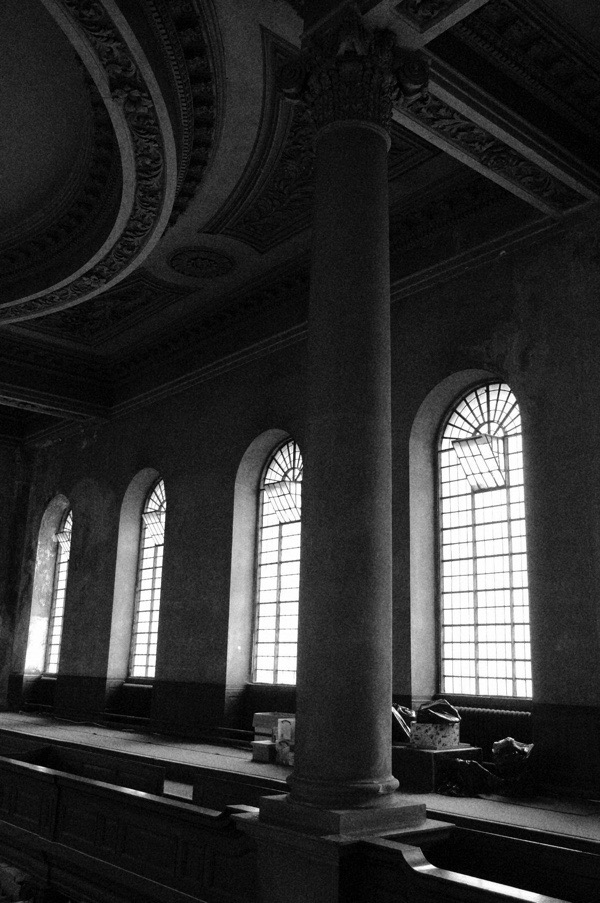
In the gallery
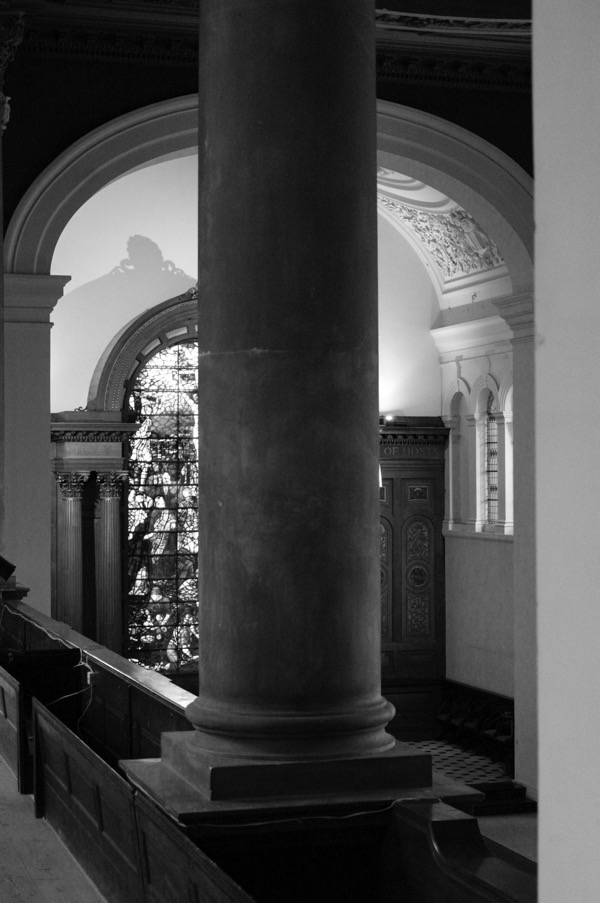
In the gallery
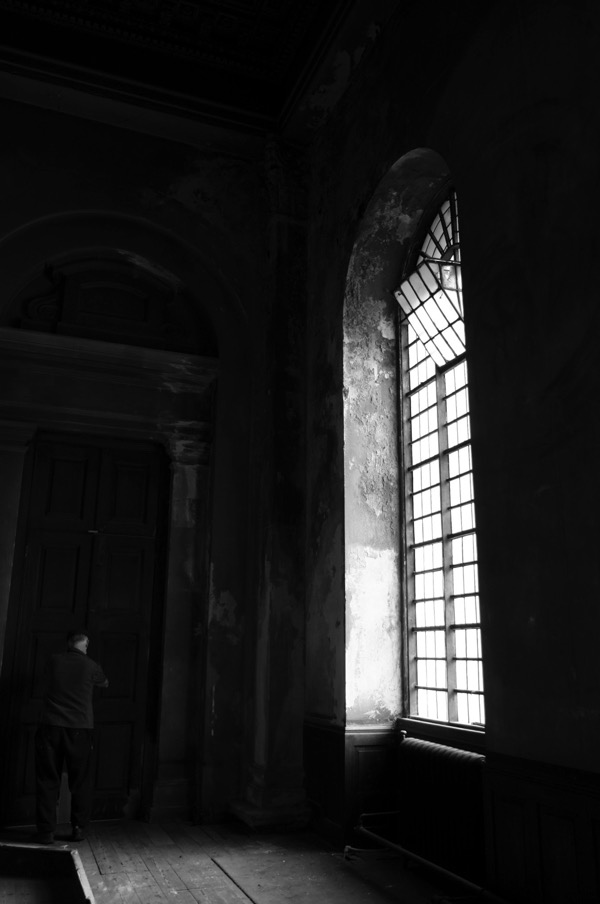
In the gallery
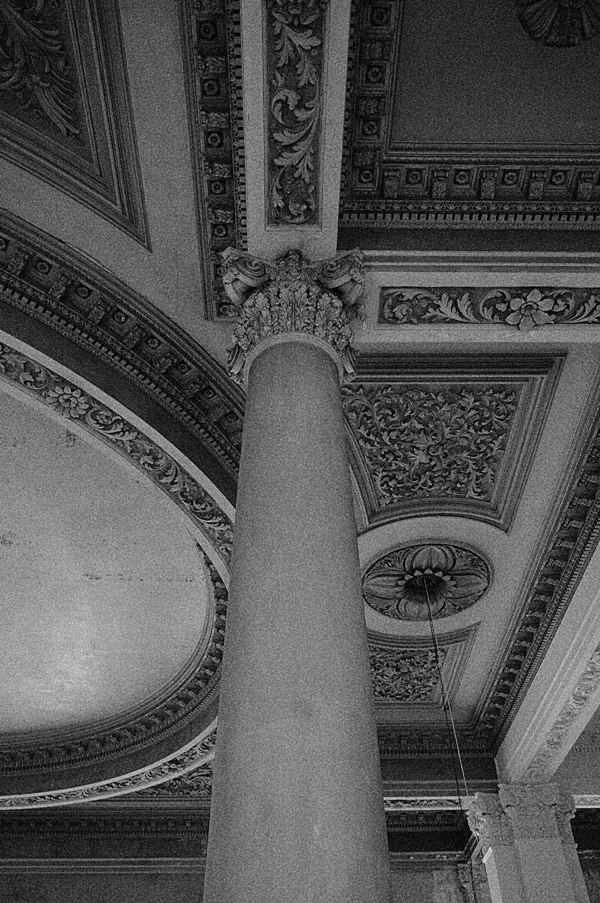
Plasterwork above the gallery
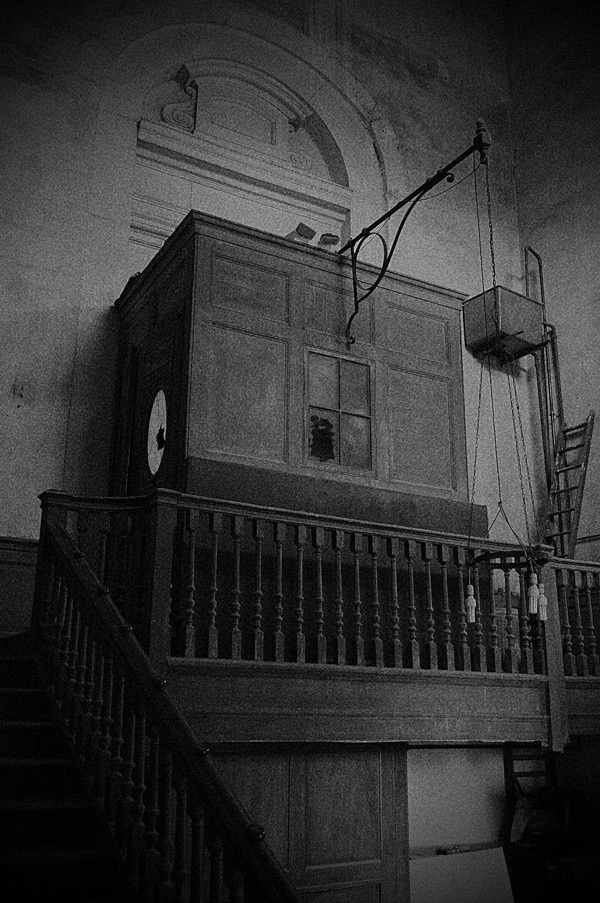
Stairs to the gallery
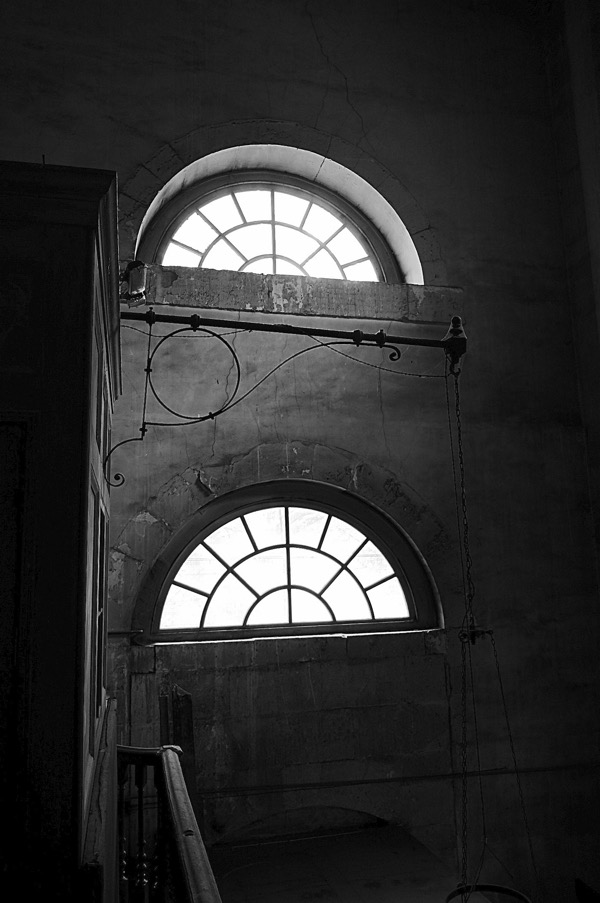
Lamp bracket in the rear vestibule
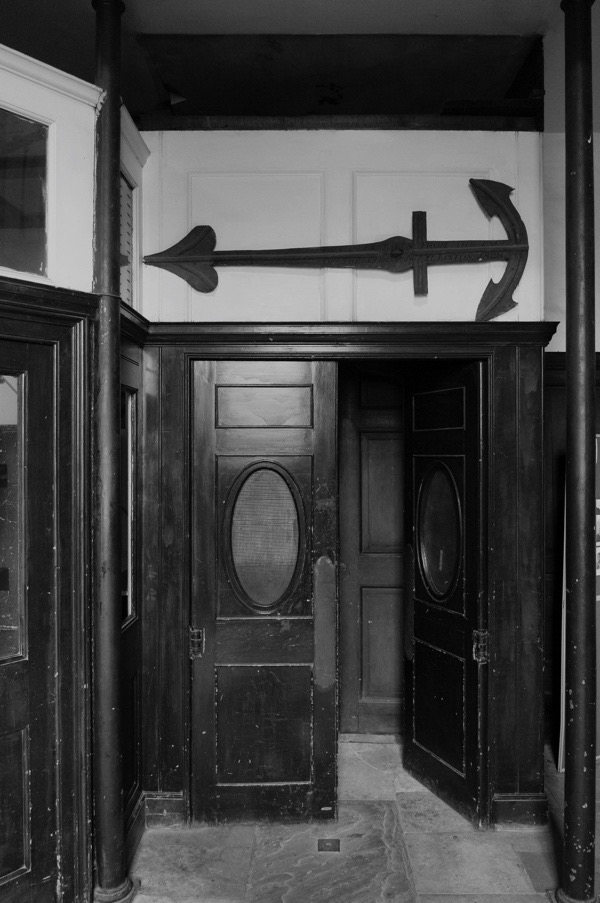
Clock hand in the shape of an anchor in the vestibule
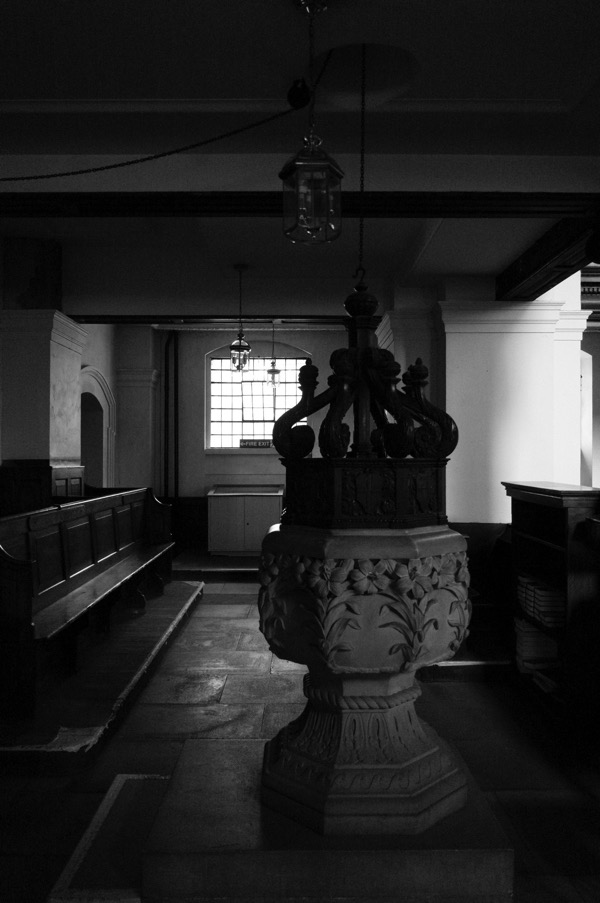
The font
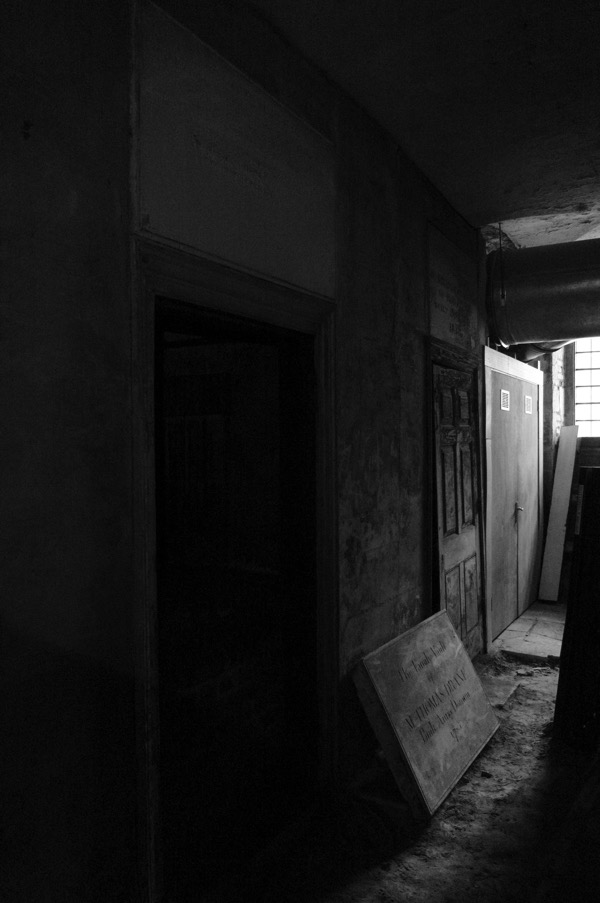
In the crypt
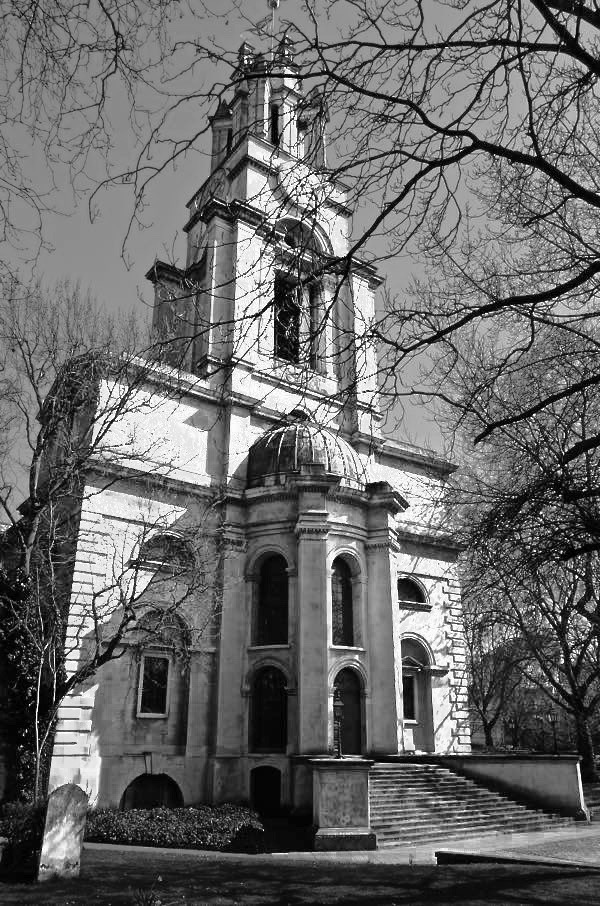
St Anne’s, Limehouse
You may also like to take a look at
The Secrets of Christ Church, Spitalfields
My Cries Of London Lecture At St Bartholomew’s
Click here to book for my tour through September and October
As part of this year’s Bartholomew Fair in Smithfield, I shall be giving an illustrated lecture in St Bartholomew’s Church at 7pm on Friday 15th September about my love for the CRIES OF LONDON, showing my favourite images of four hundred years of street life in the capital.
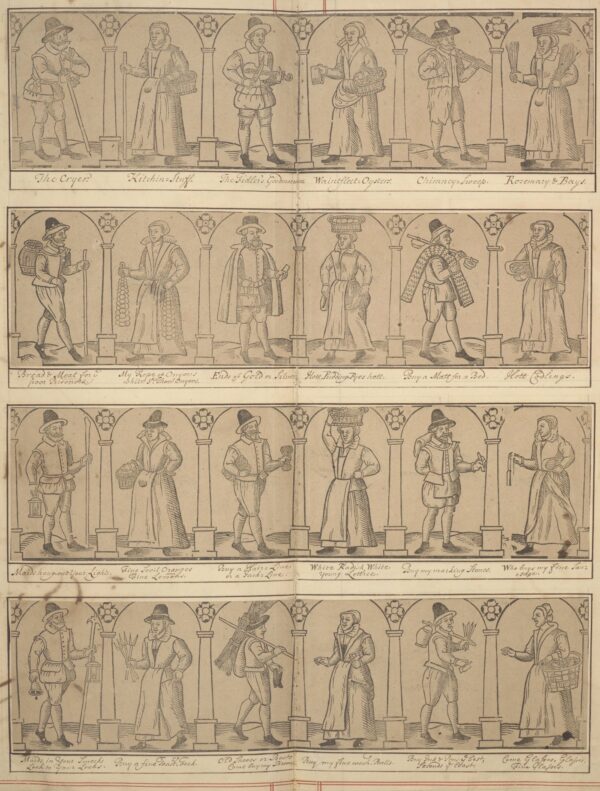
Cries of London 1600, reproduced from Samuel Pepys’ Album © Magdalene College, Cambridge
The dispossessed and those with no other income were always able to cry their wares for sale in London. By turning their presence into performance with their Cries, they claimed the streets as their theatre – winning the lasting affections of generations of Londoners and embodying the soul of the city in the popular imagination. Thus, through time, the culture of the capital’s street Cries became integral to the distinctive identity of London.
Undertaking interviews with stallholders in Spitalfields, Brick Lane, Columbia Road and other East End markets in recent years led me to consider the cultural legacy of urban street trading. While this phenomenon might appear transitory and fleeting, I discovered a venerable tradition in the Cries of London. Yet even this genre of popular illustrated prints, which began in the seventeenth century, was itself preceded by verse such as London Lackpenny attributed to the fifteenth century poet John Lydgate that drew upon an earlier oral culture of hawkers’ Cries. From medieval times, the great number of Cries in London became recognised by travellers throughout Europe as indicative of the infinite variety of life in the British capital.
Given the former ubiquity of the Cries of London, the sophistication of many of the images, their significance as social history, and their existence as almost the only portraits of working people in London through four centuries, it astonishes me that there has been little attention paid to this subject and so I have set out to reclaim this devalued cultural tradition.
I take my cue from Samuel Pepys who pasted three sets of Cries into his albums of London & Westminster in a chronological sequence spanning a century, thereby permitting an assessment of the evolution of the style of the prints as well as social change in the capital in his era. In my book, I have supplemented these with another dozen series published over the following centuries which trace the development of the Cries right into our own time. My policy has been to collate a personal selection of those that delight me, those that speak most eloquently of the life of the street and those created by artists who demonstrated an affinity with the Criers.
Through the narrow urban thoroughfares and byways, hawkers announced their wares by calling out a repeated phrase that grew familiar to their customers, who learned to recognise the Cries of those from whom they bought regularly. By nature of repetition, these Cries acquired a musical quality as hawkers improvised upon the sounds of the words, evolving phrases into songs. Commonly, Cries also became unintelligible to those who did not already know what was being sold. Sometimes the outcome was melodic and lyrical, drawing the appreciation of bystanders, and at other times discordant and raucous as hawkers strained their voices to be heard across the longest distance.
Over time, certain Cries became widely adopted, and it is in written accounts and songbooks that we find the earliest records. Print collections of pictures of Criers also became known as ‘Cries’ and although the oldest set in London dates from around 1600, there are those from Paris which predate these by a century. Characteristically, the Cries represented peripatetic street traders or pedlars, yet other street characters were also included from the start. At first, the Cries were supplemented by the bellman and the town crier, but then preachers, beggars, musicians, performers were added as the notion of the Cries of London became expanded by artists and print sellers seeking greater novelty through elaborating upon the original premise.
Before the age of traffic, the streets of London offered a common public space for all manner of activity, trading, commerce, sport, entertainment and political rallies. Yet this arena of possibility, which is the primary source of the capital’s cultural vitality has also invited the consistent attention of those who seek policing and social control upon the premise of protecting citizens from each other, guarding against crime and preventing civil unrest. It suits the interest of those who would rule the city that, in London, street traders have always been perceived as equivocal characters with an identity barely distinguished from vagrants. Thus the suspicion that their itinerant nature facilitated thieving and illicit dealing, or that women might be selling their bodies as as well as their legitimate wares has never been dispelled.
Like the internet, the notion of the street as a space where people may communicate and do business freely can be profoundly threatening to some. It is a tension institutionalised in this country through the issuing of licences to traders, criminalising those denied such official endorsement, while on the continent of Europe the right to sell in the street is automatically granted to every citizen. Depending upon your point of view, the itinerants are those who bring life to the city through their occupation of its streets or they are outcasts who have no place in a developed modern urban environment.
When I interviewed Tony Purser on his last afternoon after fifty-two years selling flowers outside Fenchurch Street Station in the City of London, he admitted to me that as a boy he assisted his father Alfie, and, before licences were granted in 1962, they were both regularly arrested. Their stock was confiscated, they were charged three shillings and spent the night in the cells at Bishopsgate Police Station, before going back to trade again next day.
Street trading proposes an interpretation of the ancient myth of London as a city paved with gold that is not without truth. Many large British corporate retailers including Tesco, started by Jack Cohen in 1919, Marks & Spencer, started by Michael Marks in 1884, owe their origin to single stalls in markets – emphasising the value of street trading to wider economic development.
In the twentieth century, the Cries of London found their way onto cigarette cards, chocolate boxes, biscuit tins, tea towels, silk scarves, dinner services and, famously, tins of Yardley talcum powder from 1912 onwards, becoming divorced from the reality they once represented as time went by, copied and recopied by different artists.
Yet the sentimentally cheerful tones applied by hand to prints that were contrived to appeal to the casual purchaser, chime with the resilience required by traders selling in the street. And it is our respect for their spirit and resourcefulness which may account for the long lasting popularity of these poignant images of the self-respecting poor who turned their trades into performances. Even now, it is impossible to hear the cries of market traders and newspaper sellers without succumbing to their spell, as the last reverberations of a great cacophonous symphony echoing across time and through the streets of London.
Surely none can resist the romance of the Cries of London and the raffish appeal of the liberty of vagabondage, of those who had no indenture or task master, and who travelled wide throughout the city, witnessing the spectacle of its streets, speaking with a wide variety of customers, and seeing life. In the densely-populated neighbourhoods, it was the itinerants’ cries that marked the times of day and announced the changing seasons of the year. Before the motorcar, their calls were a constant of street life in London. Before advertising, their songs were the jingles that announced of the latest, freshest produce or appealing gimcrack. Before radio, television and internet, they were the harbingers of news, and gossip, and novelty ballads. These itinerants had nothing but they had possession of the city.
The Cries of London have taught me the essential truth of London street traders down through the centuries, and it is one that still holds today – they do not need your sympathy, they only want your respect, and your money.
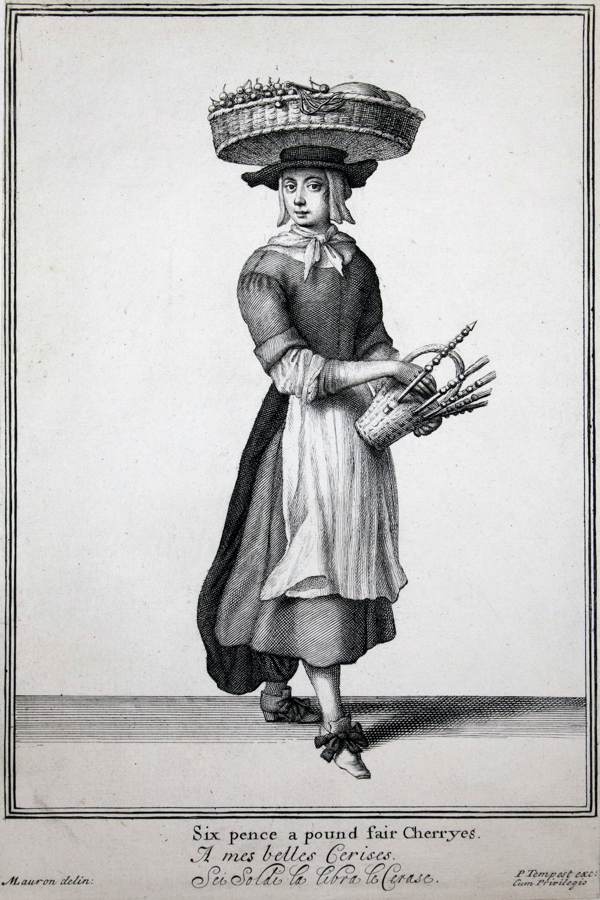
Costermonger by Marcellus Laroon, 1687 (courtesy Bishopsgate Institute)
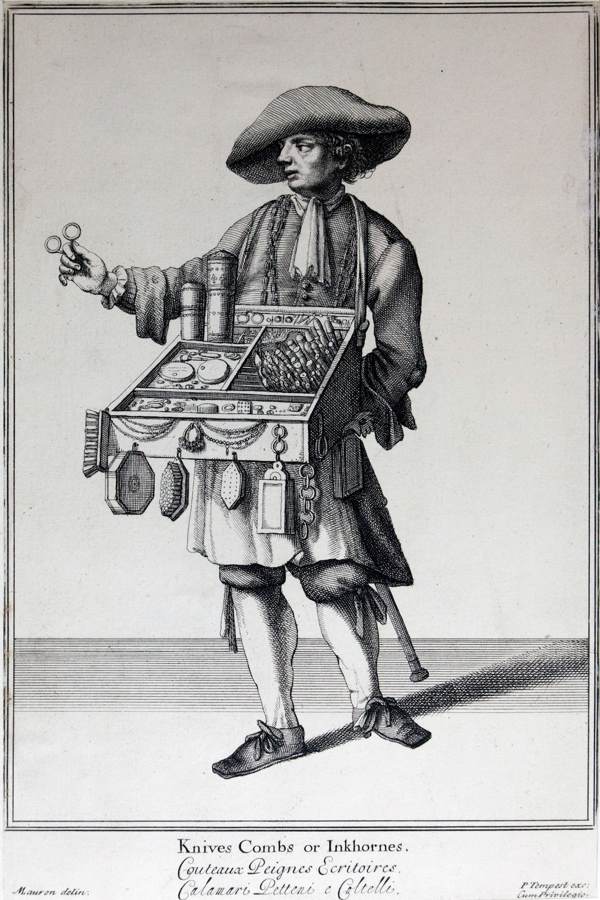
Pedlar by Marcellus Laroon, 1687 (courtesy Bishopsgate Institute)
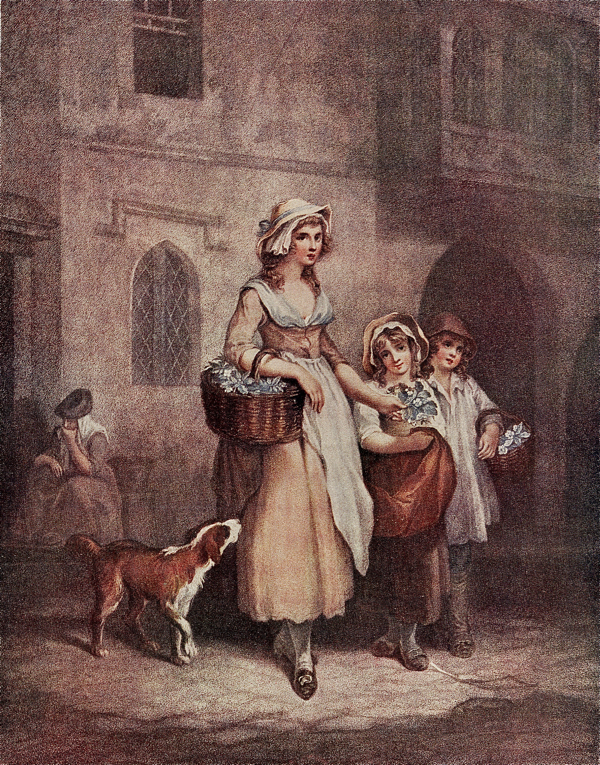
‘Two Bunches a Penny, Primroses, Two Bunches a Penny!’ The Primrose Seller by Francis Wheatley, 1793 (courtesy Bishopsgate Institute)

‘Strawberries, Scarlet Strawberries’ by Francis Wheatley, 1793 (image courtesy Bishopsgate Institute)
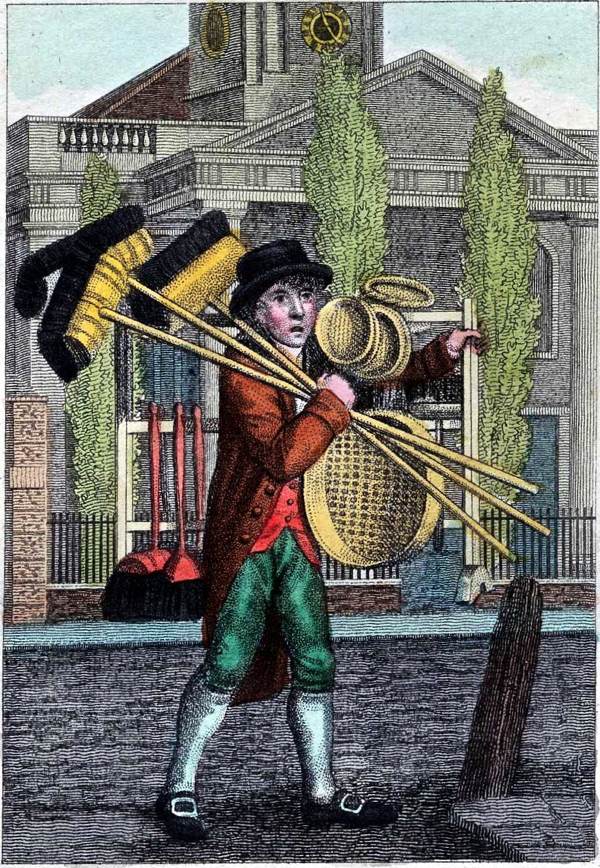
Hair Brooms outside Shoreditch Church by William Marshall Craig, 1804 (courtesy Bishopsgate Institute)
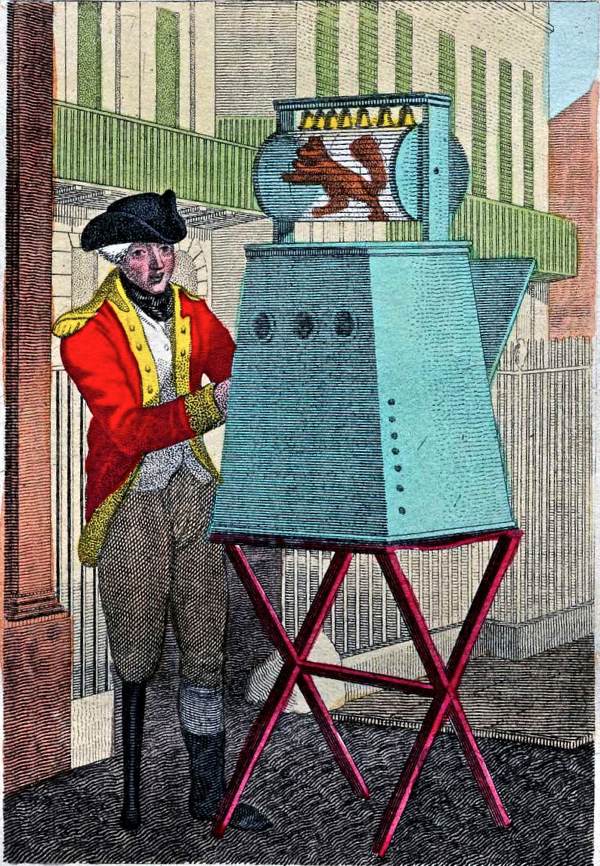
Showman with a raree show at Hyde Park Corner by William Marshall Craig, 1804 (courtesy Bishopsgate Institute)
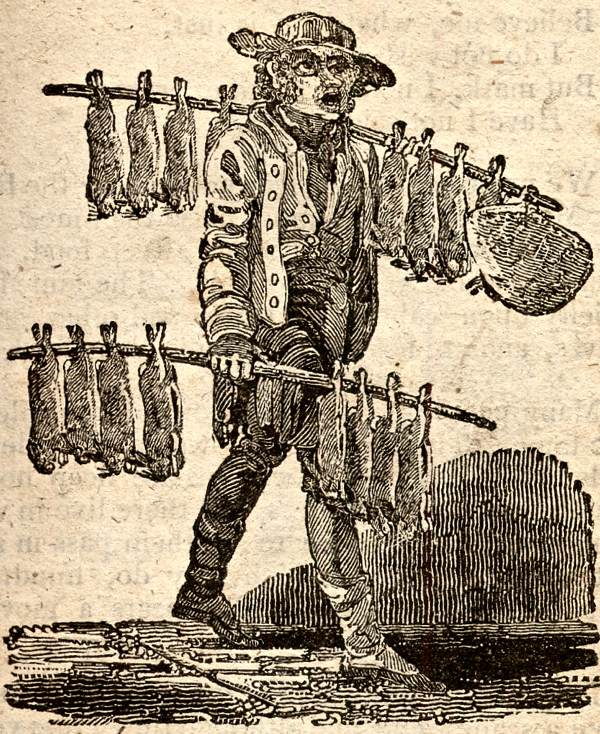
‘Rabbit, Rabbit – Nice fat Rabbit!’ by Luke Clennell 1812 (courtesy Bishopsgate Institute)
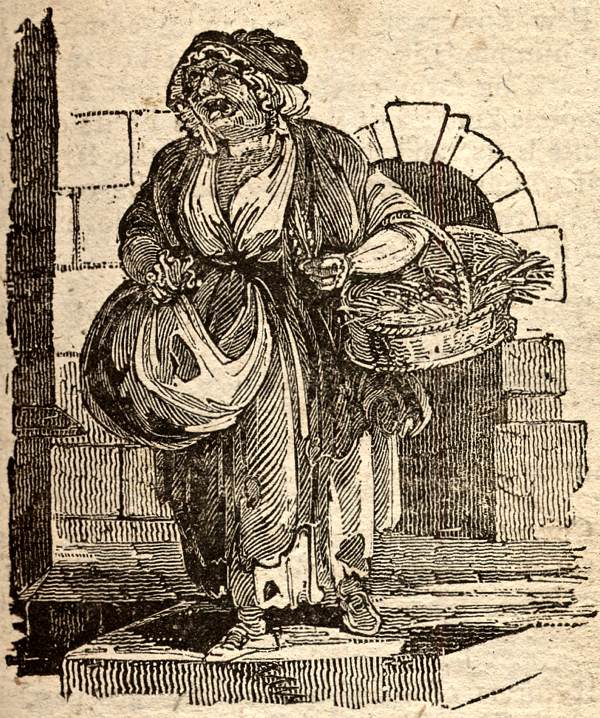
‘Lilies of the Valley, Sweet Lilies of the Valley’ by Luke Clennell 1812 (courtesy Bishopsgate Institute)
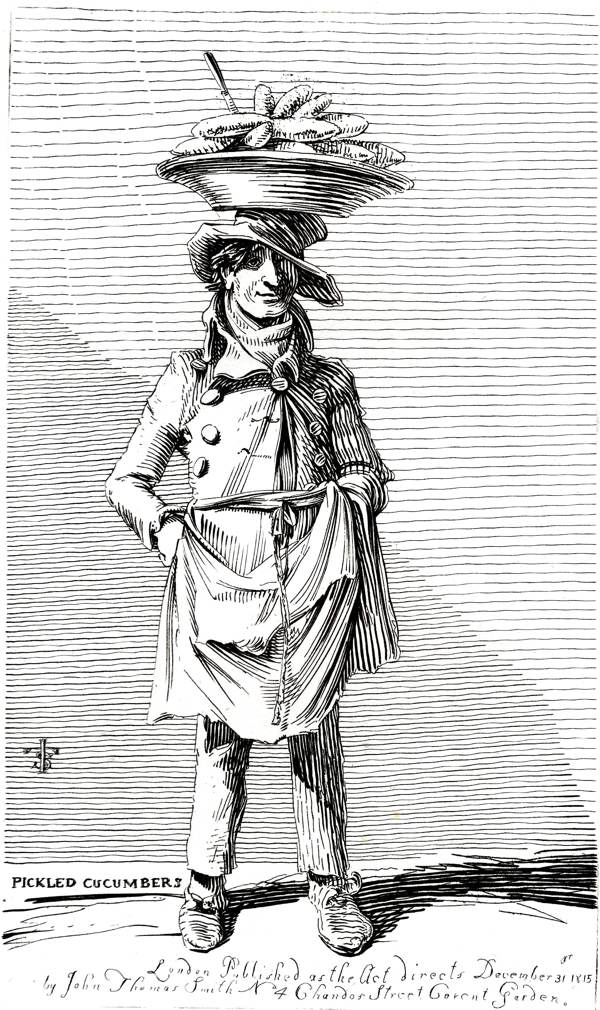
Pickled Cucumbers by John Thomas Smith, 1816 (courtesy Bishopsgate Institute)
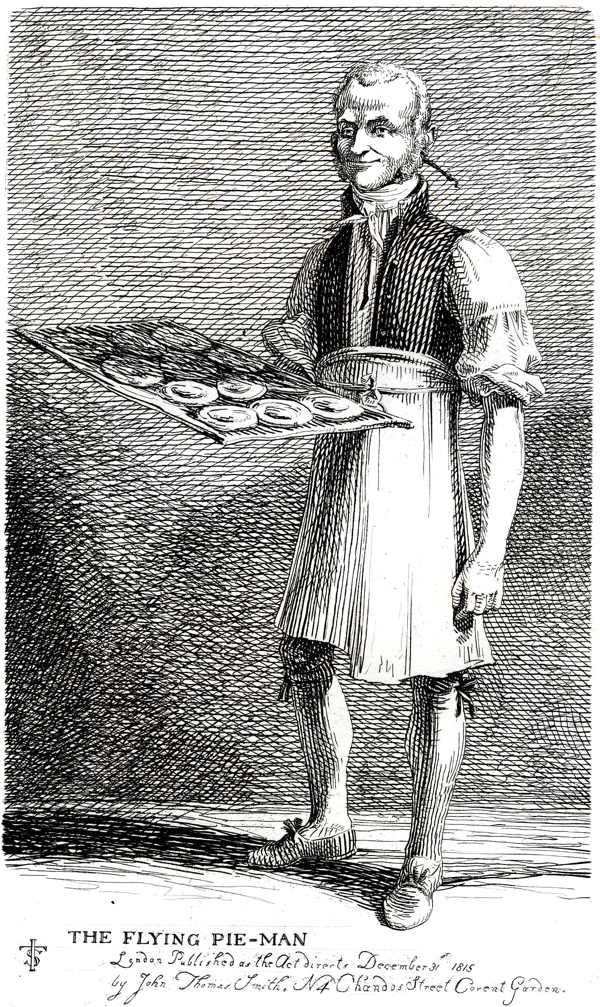
The Flying Pie Man by John Thomas Smith, 1816 (courtesy Bishopsgate Institute)
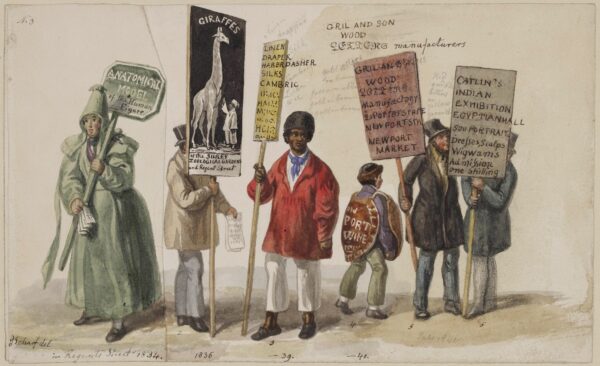
London boardmen & women by George Scharf 1825-33 © British Museum
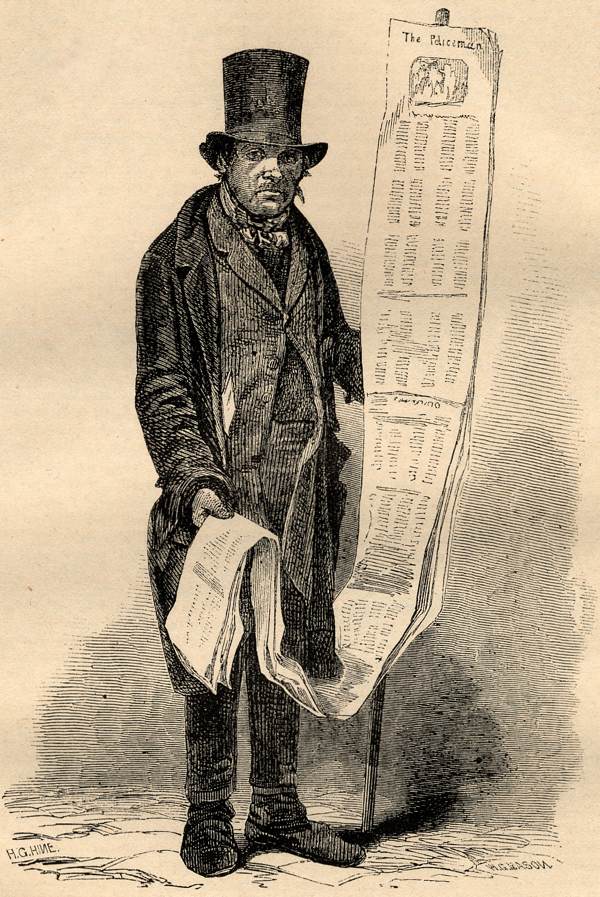
Long Song Seller, engraved from a photograph by Richard Beard, 1851 (courtesy Bishopsgate Institute)
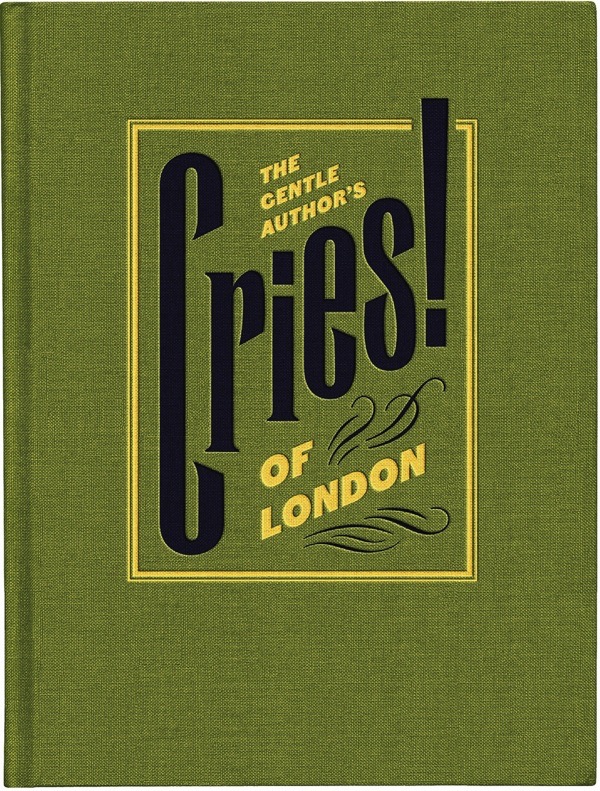
Click here to buy a copy of my book of CRIES OF LONDON for £20
The Tree Huts Of Epping Forest
Click here to book for my tour through September and October
Click here to discover more about this autumn’s blog course
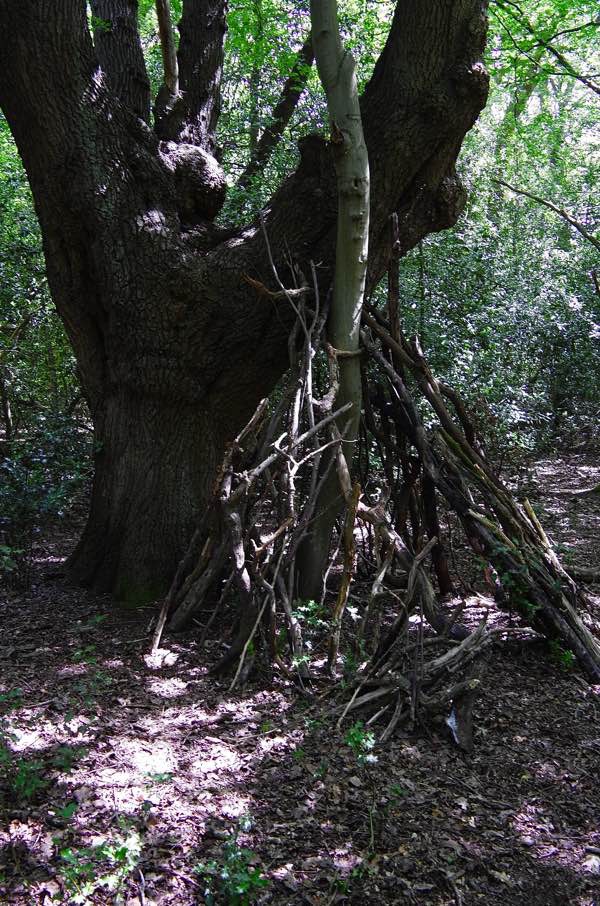
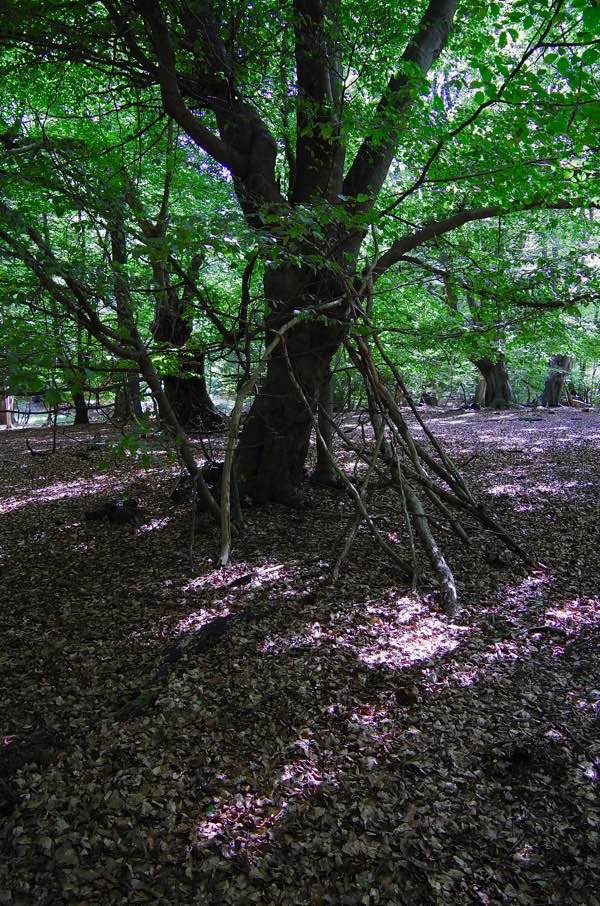
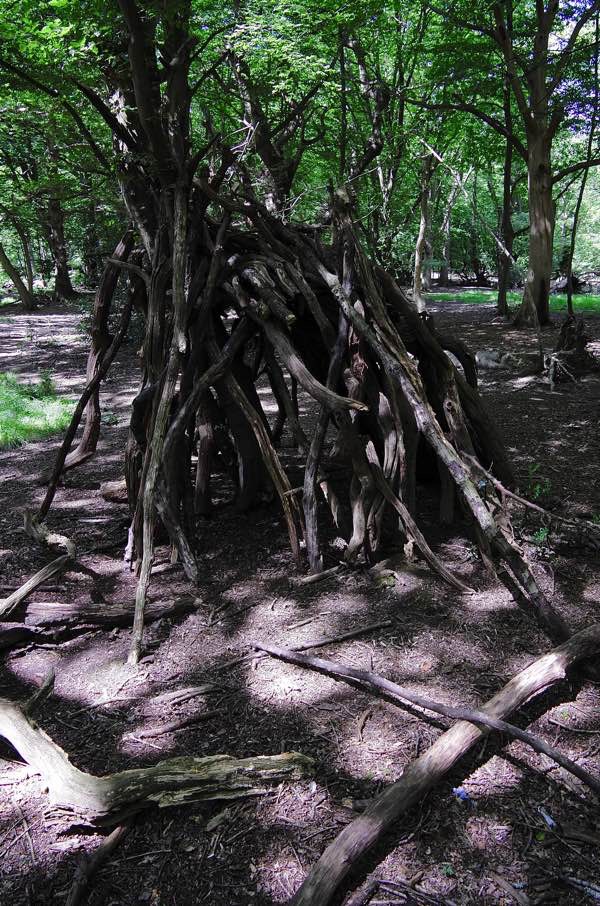
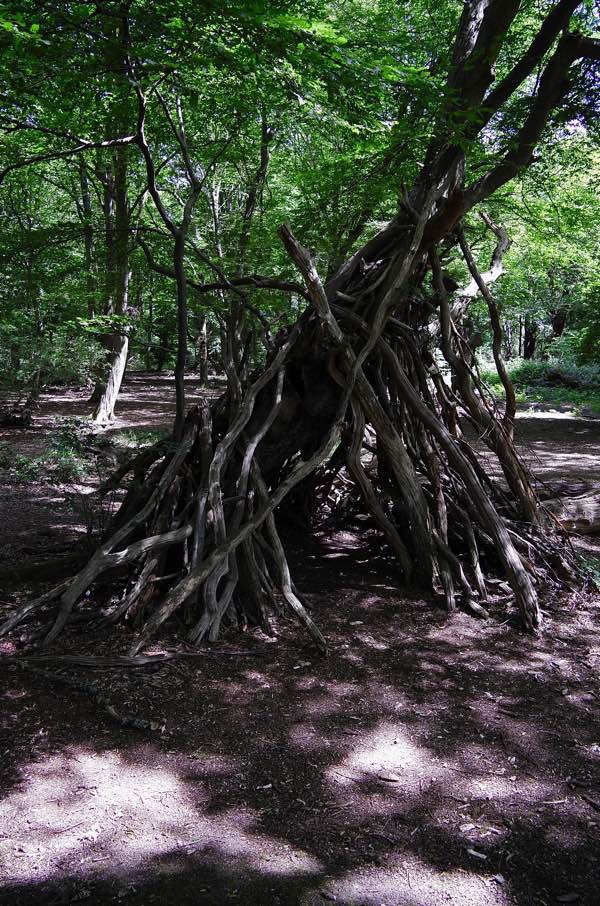
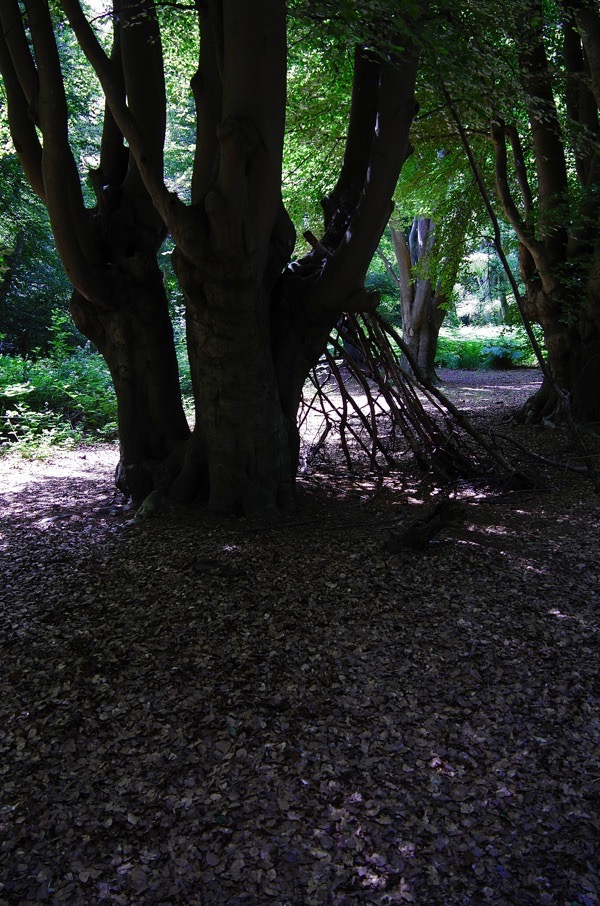
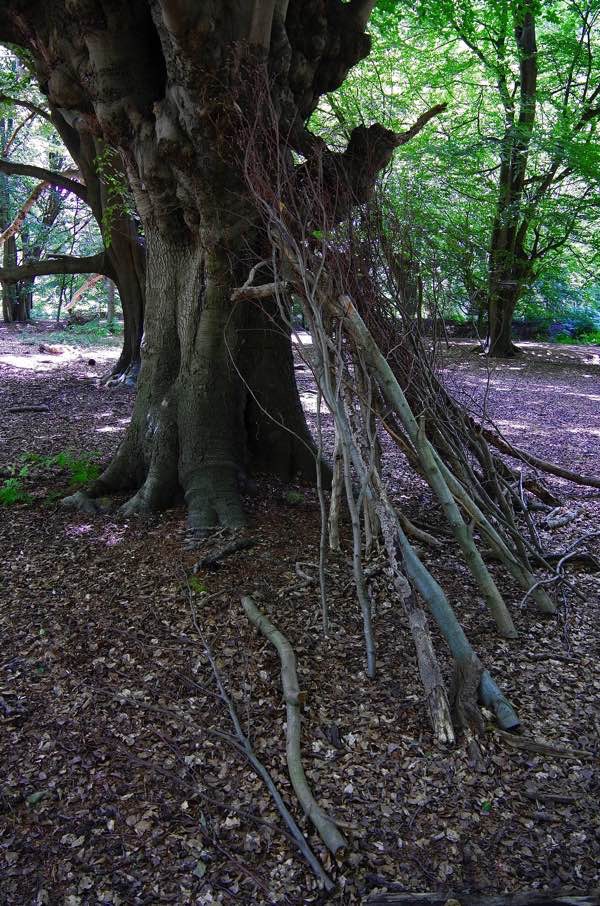
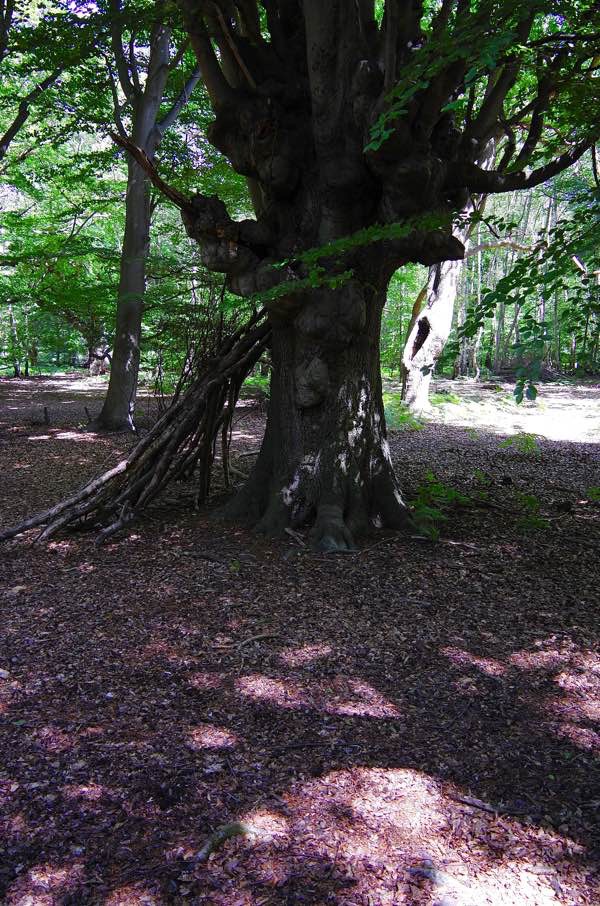
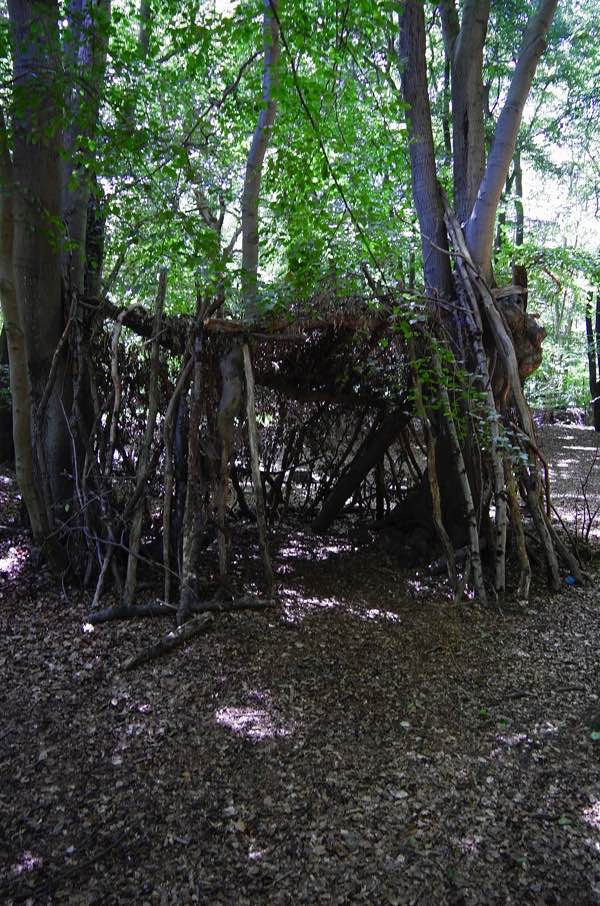
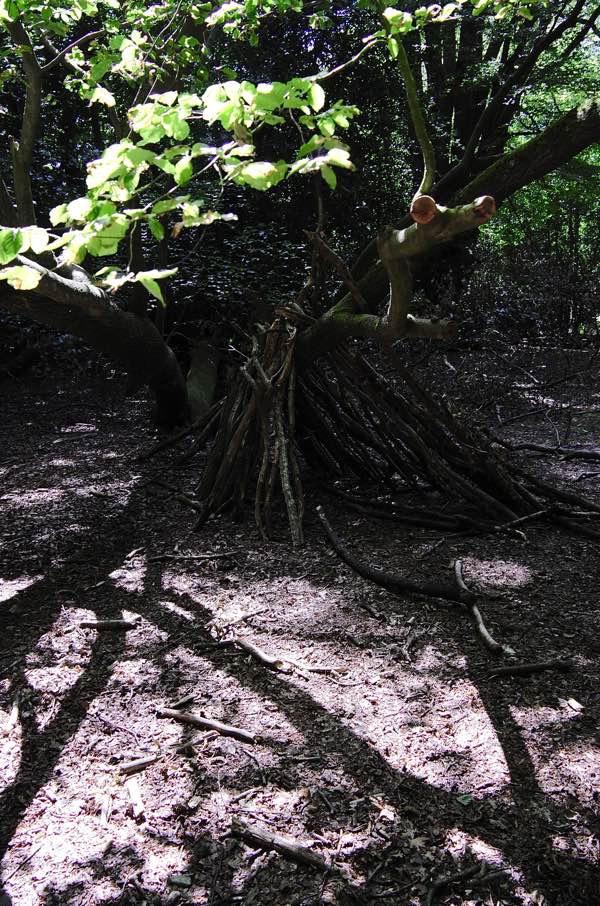
Who can resist the lure of the forest? Since Epping Forest is a mere cycle ride from Spitalfields, each year I visit to seek refuge among the leafy shades. And, in the depths of the forest, I come upon these makeshift tree huts which fascinate me with the variety and ingenuity of their design.
Who can be responsible? Is it children making dens or land artists exploring sculptural notions? Clearly never weatherproof, they are not human habitations. I wondered if the sprites and hobgoblins had been at work constructing arbors for the spirits of the forest. But then I remembered I had seen something similar once before, Eeyore’s hut at the edge of the Hundred Acre Wood.
Some are elaborate constructions that are worthy of architecture and others merely collections of twigs which tease the eye, questioning whether they are random or deliberate. They conjure an air of ritualistic mystery and, the more I encountered, the more intrigued I became. So much effort and skill expended suggest deliberate purpose or intent, yet they remain an enigma.















You may also like to take a look at












